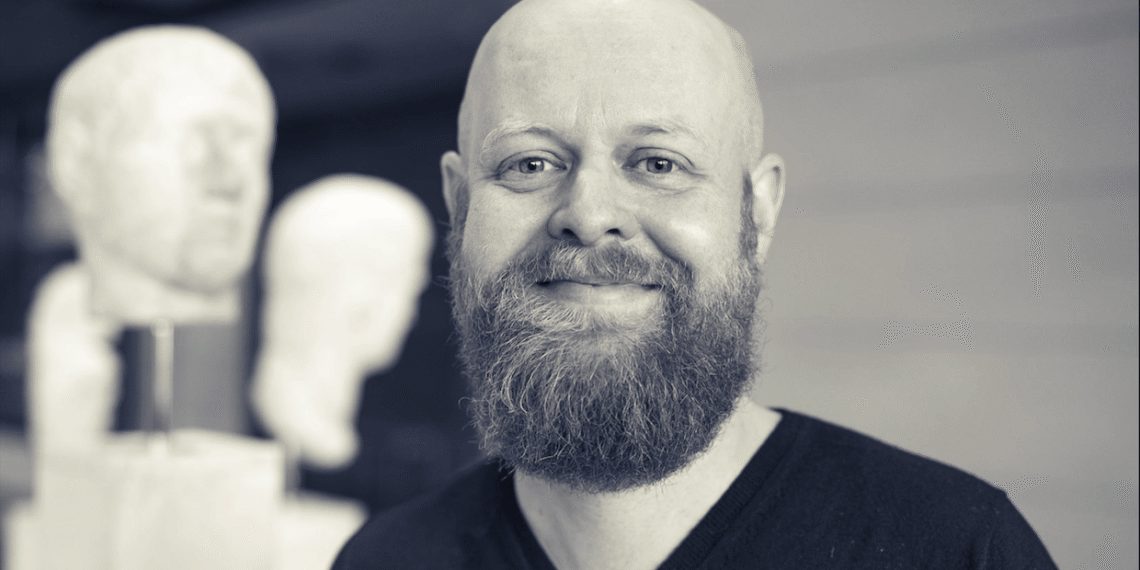
In this ECPS interview, Professor Alexandre Lefebvre of The University of Sydney argues that liberalism’s crisis is not merely institutional but also ethical and existential. Against populist and post-liberal portrayals of liberalism as morally hollow, elitist, and radically individualistic, Professor Lefebvre insists that liberalism historically rested on “freedom and generosity, liberty and liberality.” Yet neoliberalism, he argues, “forgot one half of this tradition,” narrowing liberalism into a doctrine of individual freedom, market rationality, and procedural neutrality. For Professor Lefebvre, liberal renewal requires recovering liberalism as a “way of life” grounded in fairness, reciprocity, moral self-reflection, and generosity. His remedy is clear: liberals must become “more generous with their resources and more generous in the attention they give to others.”
Interview by Selcuk Gultasli
At a moment when liberal democracy is confronting intensifying pressures—from populist radical-right mobilization and democratic backsliding to widening distrust in institutions and deepening social fragmentation—the future of liberalism has become one of the defining political and philosophical questions of our time. Across much of the contemporary world, liberalism is increasingly portrayed as morally exhausted, technocratic, elitist, and detached from the existential concerns of ordinary citizens. In political discourse, it is frequently reduced either to market orthodoxy or procedural neutrality, stripped of any deeper ethical or cultural substance. Against this backdrop, the work of Professor Alexandre Lefebvre offers a strikingly different interpretation of the liberal tradition.
In this wide-ranging interview with the European Center for Populism Studies (ECPS), Professor Lefebvre—Professor of Politics and Philosophy and Chair of Discipline, Philosophy at the Faculty of Arts and Social Sciences at The University of Sydney—argues that liberalism cannot survive as a purely procedural doctrine. Rather, it must recover its ethical, existential, and even spiritual dimensions if it is to respond effectively to the global rise of illiberalism and populism. Central to his argument is the claim that liberalism historically contained not only a commitment to freedom, but also to generosity. As he puts it, liberalism originally rested on “two fundamental values at its core,” namely “freedom and generosity, liberty and liberality.” Yet, according to Professor Lefebvre, neoliberalism emerged when liberal societies “forgot one half of this tradition” and elevated freedom while neglecting generosity, solidarity, and fairness.
Throughout the interview, Professor Lefebvre challenges widespread assumptions about liberalism’s moral emptiness. While acknowledging that many populist critiques rely on “an unfair and highly reductive interpretation of what liberalism actually stands for,” he nevertheless argues that liberals themselves have often “invited this criticism by effectively performing the role of the caricature.” Liberalism’s retreat into technocracy, proceduralism, and elite self-management, he contends, has weakened its emotional and moral appeal while intensifying public perceptions of inequality and exclusion. “Liberalism,” he warns, “has to rediscover generosity and solidarity through institutions rooted in justice and fairness.”
Drawing on thinkers ranging from John Rawls and Henri Bergson to Aristotle and John Stuart Mill, Professor Lefebvre develops a conception of liberalism not simply as a political arrangement, but as a “way of life” shaping everyday practices, relationships, and moral sensibilities. He argues that liberal democracies are facing not merely an institutional crisis, but “an existential crisis” rooted in the erosion of meaning, belonging, and ethical orientation.
Perhaps most strikingly, Professor Lefebvre insists that the renewal of liberal democracy depends less on technocratic management than on moral reconstruction. Liberalism, he argues, must once again become capable of inspiring attachment, solidarity, and self-reflection without succumbing to authoritarian perfectionism. In his concluding remarks, he summarizes this challenge with remarkable clarity: “If I had two wishes for liberalism, they would be these: that liberals become more generous with their resources and more generous in the attention they give to others.”
Here is the edited version of our interview with Professor Alexandre Lefebvre, revised slightly to improve clarity and flow.
Liberalism Beyond Markets
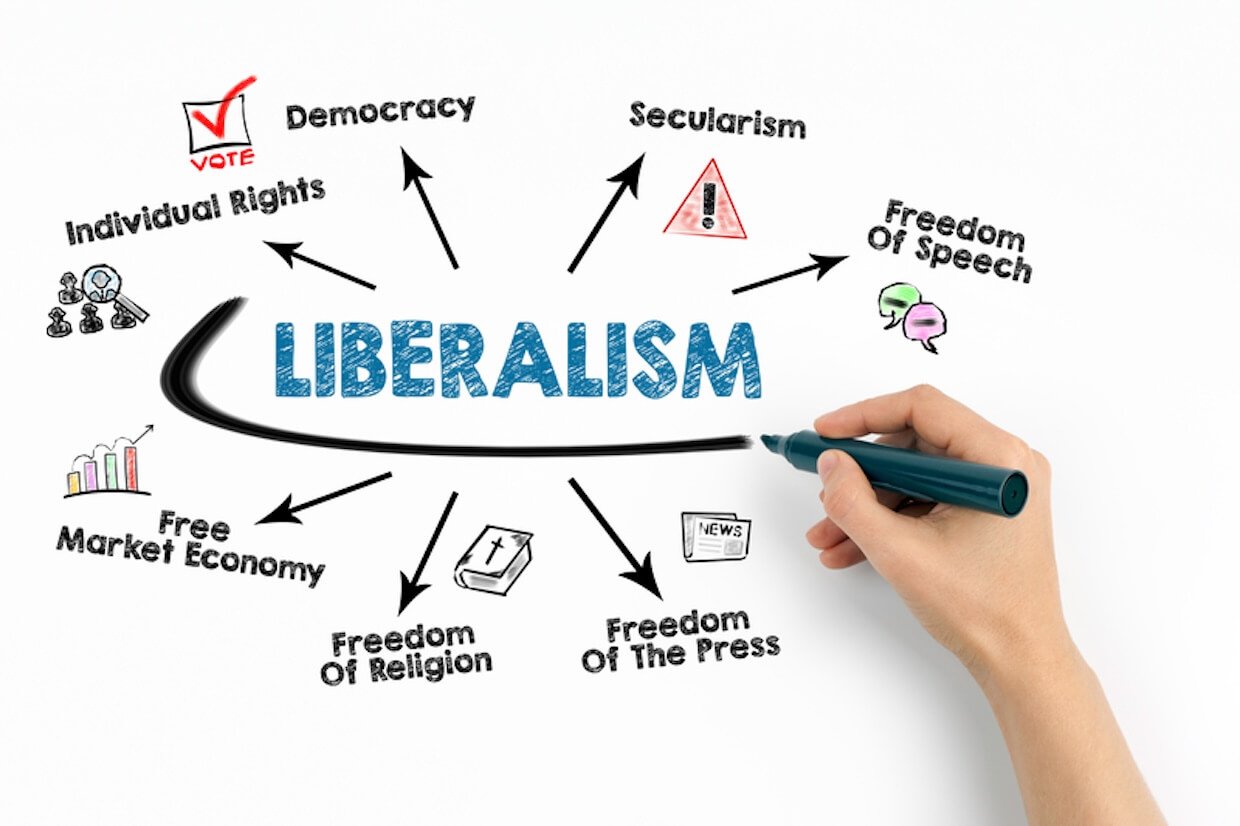
Professor Lefebvre, welcome. You emphasize the plurality of liberal traditions rather than a singular doctrine. How would you analytically distinguish ethical or perfectionist liberalism from neoliberalism, particularly in terms of their respective conceptions of freedom, subjectivity, and the role of the state? What conceptual clarifications are necessary to remedy the persistent conflation between them?
Professor Alexandre Lefebvre: That is a great—and very large—question. As I understand liberalism, it has two fundamental values at its core, and this goes back to the original meaning of the word “liberal,” which is a very old Latin term. It refers not only to being a free person, but also to being a generous person. Throughout the 19th century, and at various moments in the 20th century, these two dimensions were understood together as part of a shared ethical vision of what it meant to be both free and generous. So, when I speak of a robust ethical conception of liberalism, I am referring not only to freedom and liberty, but also to generosity and liberality.
The way I understand neoliberalism—and many strands of liberalism as they evolved during the 20th century—is that they forgot one half of this tradition and increasingly amplified the importance of freedom or liberty while neglecting the generosity aspect. They created institutions and mindsets designed to ensure that individuals would be free from constraint, reflecting a predominantly negative conception of liberty, especially in relation to market activity and marketplace freedoms. In my view, this development gave rise to neoliberalism. So, I would still place neoliberalism within the broader liberal family, but it seems to me to represent a narrowing of the tradition—a forgetting of half of what liberalism originally was.
Reclaiming Liberalism’s Ethical Mission
To what extent should neoliberalism be understood as a historical mutation internal to liberalism rather than an external distortion, especially given its reconfiguration of liberal values around market rationality and responsibilization—and how might liberal theory critically reclaim or disentangle itself from this legacy?
Professor Alexandre Lefebvre: That is a very good question. The history of the 20th century can be understood as a fascinating reworking of liberalism, marked by different episodes that all sought to make liberalism somewhat narrower. To answer your question about neoliberalism, however, I first need to make two short stops along the way.
The term “classical liberalism” is familiar to all of us, but when you stop to think about it, it is actually a rather strange expression. The people who invented liberalism in the 19th century did not describe themselves as “classical”; they were simply liberals. It would be like an original gangster referring to themselves as an “original gangster”—they are just gangsters, right? The same logic applies to liberalism.
What happened was that a “classical liberal” tradition was constructed in the early 20th century because certain liberals of that period— Ludwig von Mises, Milton Friedman, and Gary Becker, the proto-neoliberals—were deeply concerned about the socialistic, redistributive, and justice-oriented dimensions of liberalism. As a result, they narrowed the tradition, transforming liberalism into a doctrine centered primarily on individual freedom. That tradition then underwent multiple mutations throughout the 20th century, eventually yielding the form of neoliberalism that emerged in the late 20th and early 21st centuries.
What liberalism needs today—and this connects directly to the way you framed the introduction, namely that liberalism is currently on the defensive in the face of democratic backsliding and a range of political challengers—is to become both more robust and more attractive. Part of that involves reclaiming its ethical mission and once again presenting itself as an aspirational ethical doctrine. Another part involves recovering its more justice-oriented material dimension – “socialist” is probably too strong a word, but something closer to that tradition.
In these respects, liberalism could begin to offer something stronger and far more compelling than the version of neoliberalism currently on the table. Because I do not think neoliberalism is particularly well positioned to withstand the kinds of challenges we are seeing today, from populism to resurgent nationalism and related movements.
Why Neoliberalism Failed
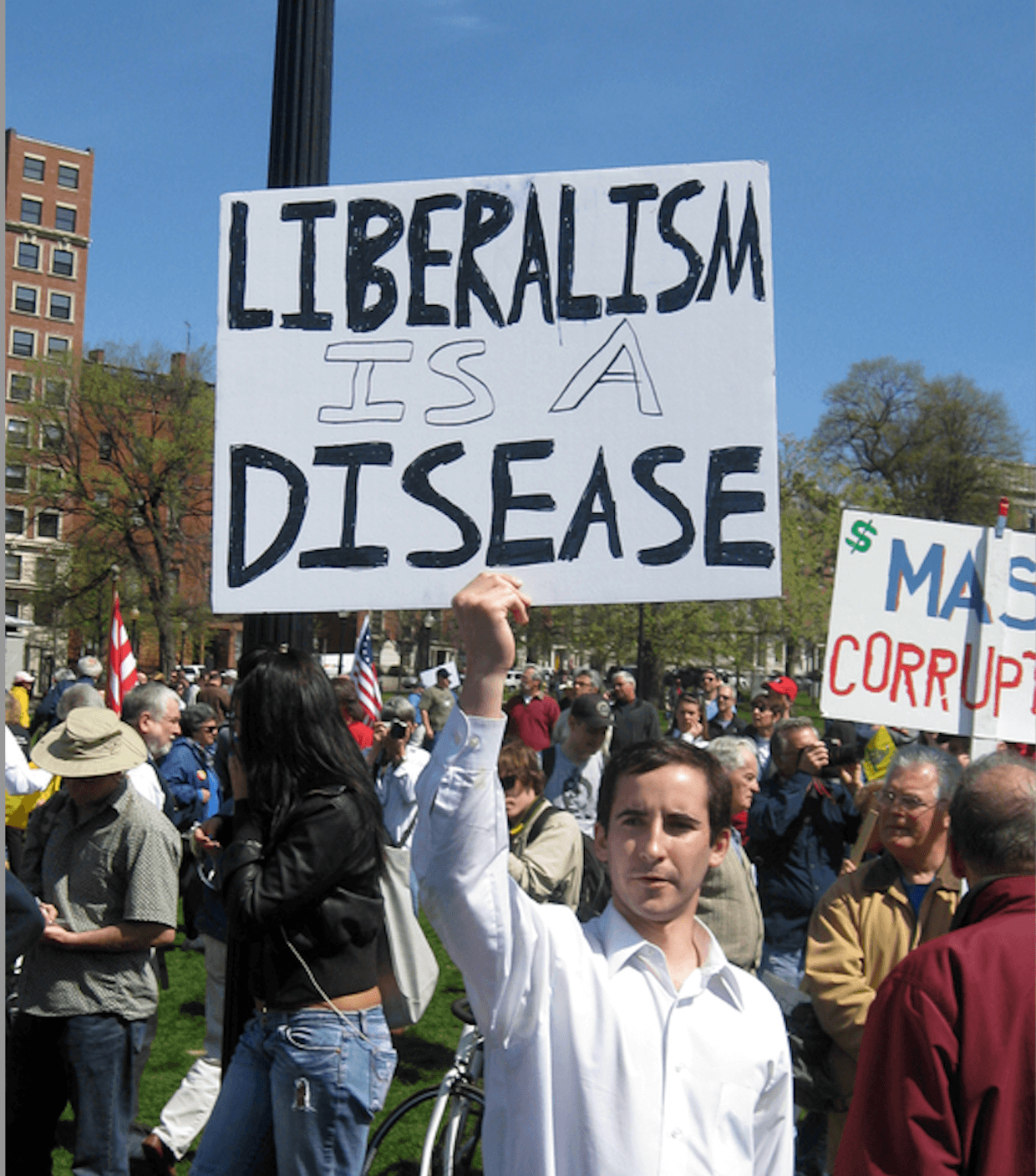
Illiberal populist actors frequently portray liberalism as morally hollow, elitist, and culturally corrosive. To what extent is this misrecognition rooted in liberalism’s own failure to articulate its ethical and existential dimensions—and how might liberalism reconstruct its normative language to counter such distortions?
Professor Alexandre Lefebvre: A book that made a major impact about a decade ago—and that, in many ways, helped launch the post-liberal movement—is Why Liberalism Failed by Patrick Deneen. But, for me at least, the book might have been more accurately titled “Why Neoliberalism Failed,” because what it primarily attacks is the idea that liberal subjectivity consists solely of an individualistic, atomized self-seeking to detach itself—or “him or herself,” or “itself,” as Deneen would put it—from all forms of particular attachment.
So, I do think that many post-liberal critiques rely on an ungenerous and somewhat strawman version of liberalism that fails to capture the richness and complexity of the tradition. That is one side of the story.
On the other hand, the critique is also partially correct. I wrote a book called Liberalism as a Way of Life, and while half of that book is a celebration of liberalism, the other half is a critique of how liberals themselves are often very poor practitioners of liberalism. Too often, they abandon its more demanding ethical, political, and economic aspirations and settle instead for something closer to neoliberalism.
So, when conservatives criticize liberalism as individualistic and morally thin, that criticism is, on the one hand, an unfair characterization of the broader liberal tradition. But on the other hand, it may also reflect, quite accurately, what liberalism has unfortunately become in many contemporary contexts.
The Betrayal of Fairness
How has the reduction of liberalism to procedural neutrality and technocratic governance contributed to its vulnerability to populist critique, particularly from the radical right—and what institutional or intellectual reforms could overcome this narrowing?
Professor Alexandre Lefebvre: What I find particularly devastating is that, if liberalism wants to pride itself on expertise, procedure, and economic management, it cannot continue to present itself as the party of fairness and opportunity while managing resources and opportunities in ways that disproportionately benefit elites. That is precisely what has so often happened with liberalism today. In the narrowing you describe; there is also a kind of class politics at work in which elites effectively self-deal.
What has contributed to this narrowing of liberalism is not simply a retreat into technocracy, but also a deeply toxic combination in which liberalism has come to signify many things. One of those meanings—particularly in the United States—is progressivism and a political movement ostensibly committed to fairness. Yet, at the same time, our societies have rarely been as unequal and structurally imbalanced as they are today.
So, on the one hand, you have a liberalism retreating into neutrality and proceduralism that fails to inspire much emotional attachment. On the other hand, you have a systemic betrayal of its promise of fairness, which generates enormous emotional energy—though in negative and rage-filled forms—because people come to feel that liberalism has betrayed the very principles through which it legitimizes itself as a political movement.
In that sense, liberalism—and liberals—need to put their money where their mouth is and genuinely live up to their commitment to fairness. At the same time, liberalism must move beyond mere proceduralism, not in order to impose a singular conception of the good life on citizens, but rather to articulate much more clearly what liberalism, morally speaking, actually stands for. Because, at the end of the day, I believe liberalism remains a powerful moral vision—one that is still capable of inspiring and attracting people.
Living Down to the Caricature
Could we say that contemporary populism thrives not only on opposition to liberal institutions but also on a caricature of liberalism as radically individualistic and morally empty—and how can liberalism rearticulate its moral substance without collapsing into moralism or exclusion?
Professor Alexandre Lefebvre: This goes back to what I was saying earlier with respect to Patrick Deneen. On the one hand, I do think this is an unfair and highly reductive interpretation of what liberalism actually stands for. But, on the other hand, liberals themselves have, in some ways, invited this criticism by effectively performing the role of the caricature. So, in that respect, the critique is simultaneously unfair and fair. It is therefore up to liberals to reconstruct the doctrine in such a way that these kinds of criticisms appear clearly caricatural rather than persuasive. We cannot continue to live down to them.
Liberal Values in Everyday Life
Your work reinterprets liberalism as an ethical practice oriented toward self-transformation, openness, and moral cultivation. How might this reconceptualization reshape contemporary debates about liberal democracy—and what practical steps are required to embed this vision in political and social life?
Professor Alexandre Lefebvre: That is a difficult question. The central premise of my work is that liberalism today is no longer merely a political doctrine. Rather, many of its core values and commitments have filtered deeply into the broader culture of liberal democracies. Liberal norms are not simply political principles that govern how citizens interact with one another; they now shape a wide range of institutions, from the media and universities to workplaces and everyday social life. More importantly, liberalism has come to influence how we understand ourselves and how we relate to others at a very ordinary and intimate level.
For example, it shapes how we approach romance, friendship, parenting, collegiality, and countless other dimensions of everyday life. In that sense, liberalism and liberal ideals have thoroughly colonized—if one wants to use a somewhat provocative term—the background culture of liberal democratic societies.
The aim of my book, then, was to encourage readers to recognize just how deeply liberal they already are, and at the same time to underscore the stakes involved in the current global backlash against liberalism. For me, this is not simply a matter of political displacement; it is an existential crisis, particularly for people whose values and ways of life are profoundly shaped by liberal ideals.
So, what liberalism needs to do first is to make both itself and liberals more self-conscious about the depth of their attachment to that tradition. That awareness can provide people with a clearer sense of orientation and something genuinely worth defending.
Beyond Justice as Fairness
How does your existential reading of liberalism challenge dominant Rawlsian interpretations that prioritize justice as fairness over questions of personal moral development—and can this tension be resolved without undermining liberal pluralism?
Professor Alexandre Lefebvre: That is a great question, though also a very complicated one, because John Rawls himself changed his mind on these issues over time. The framing of your question seems to point especially to the later Rawls, particularly the work from Political Liberalism onward, where he became very clear that liberalism should be understood as a political doctrine and institutional framework rather than a comprehensive moral vision concerned with defining the good life. However, Rawls’s earlier work—especially A Theory of Justice—contains a remarkably rich moral psychology that addresses not only what it means to be a liberal citizen, but also what it means to be a liberal person. For me, then, the central challenge for liberalism is how to recover that richer vision of the liberal person without liberalism itself becoming illiberal. And that is the crucial point.
Liberalism’s rivals—whether traditionalist, religious, conservative, or otherwise—generally have no principled objection to using the state and political power to promote and privilege particular ways of life. There is no deep internal resistance within those traditions to that kind of orientation. Liberals, however, by virtue of our own doctrine, are deeply hesitant about using state power to impose any singular ethical vision of the good life, precisely because we believe individuals must be free to determine such matters for themselves.
So, liberalism finds itself in a very difficult predicament. On the one hand, it must reaffirm and articulate its ethical vision. On the other hand, it must avoid imposing that vision from above, because doing so would ultimately be nothing short of illiberal.
Liberalism’s Personal and Spiritual Renewal
What are the implications of conceiving liberalism as a form of ethical cultivation for addressing contemporary crises of meaning, belonging, and political alienation—and what institutional or cultural mechanisms could sustain such cultivation?
Professor Alexandre Lefebvre: At its core, liberalism is grounded in a set of values that, in my book, I identify as freedom, fairness, and reciprocity. One could also add values such as tolerance or even, if one wanted to push in that direction, irony and a sense of self-distance. For me, these qualities together constitute something like the liberal personality.
Now, I do not think this vision will appeal to everyone. Conservatives, traditionalists, or people with strong religious commitments may find other values far more meaningful and fulfilling than liberal ones. So, I am certainly not presenting liberalism as a one-size-fits-all solution. Rather, what I am trying to do is encourage readers who are already sympathetic to liberalism to recognize the depth of their own liberal commitments and to recommit themselves to those values more seriously.
This is something I want to make absolutely clear: my book is not an attempt to persuade non-liberals—whether conservatives or others—to become liberals. That may well be a worthwhile project, but it is not my project. My aim is instead to encourage liberals themselves to take their own values more seriously and, through that process, to rejuvenate liberalism not only at the institutional level, but also at the personal and even, in some respects, the spiritual level.
Liberalism’s Double Game
Do you see John Rawls’s project as incomplete in its account of moral psychology and the formation of liberal subjects, and if so, how might it be reconstructed to address democratic fragility and polarization today?
Professor Alexandre Lefebvre: That is an interesting question, especially because Rawls himself eventually became critical of aspects of his own earlier moral psychology. In many ways, the later Rawls began arguing against the earlier Rawls. To put it in the terms of your question, what concerned the later Rawls was not that the moral psychology and ethical vision developed in his earlier work were incomplete, but rather that they were too complete.
He came to believe that he had articulated a highly specific—and perhaps even somewhat prescriptive—account of what it means to live well as a liberal. As a consequence, he sought to reduce liberalism’s dependence on any singular conception of the good life in order to create more space for pluralism.
So, what can liberalism do in response to this tension? I think it has to play a kind of double game. On the one hand, liberalism must acknowledge that it does possess a rich and relatively comprehensive moral psychology. On the other hand, it must remain sufficiently open and porous to allow for alternative ways of life and different forms of human flourishing, while also resisting the temptation to impose its own moral psychology through liberal institutions.
Comprehensive but Not Coercive
Can liberalism incorporate a more substantive account of the good life without compromising its commitment to neutrality and pluralism—and how might this balance be normatively and institutionally secured?
Professor Alexandre Lefebvre: What you are pointing to here is the idea that liberalism itself contains a vision of the good life and a conception of ethical fullness. Those who hold this view—and I would count myself among them—are often described as comprehensive liberals. Now, comprehensive liberals can go one step further and become what the literature calls perfectionist liberals, meaning liberals who are willing to use state power to promote their preferred way of life.
Liberalism can incorporate a more substantive vision of the good life, but we have to distinguish carefully the level at which this takes place. If we are speaking about personal life and the broader social and civic sphere, then liberals can certainly promote their values and way of life quite robustly, including through institutions. But liberals must remain very cautious about advancing those values through the direct use of state power. Liberalism has always been deeply uneasy with that possibility, and for two distinct reasons.
Interestingly, those reasons vary depending on which phase of the liberal tradition we are discussing. Early liberals resisted the state promotion of any singular way of life because they elevated freedom above all other values. For example, John Stuart Mill viewed individuality, while Immanuel Kant emphasized autonomy, as central to human flourishing. From that perspective, it would be entirely contrary to the liberal ethical vision for the state to impose or privilege one conception of the good life over others.
Later liberals, however, arrived at a similar conclusion through a somewhat different line of reasoning. They argued that because democratic societies are composed of political equals, all citizens are co-holders of political power. Consequently, for the state to use that shared political power to advance one particular way of life would be unjustifiable to the citizenry as a whole, and therefore illiberal.
So, my broader point is that the liberal tradition has long contained a deep resistance to paternalism and perfectionism when it comes to the state-led promotion of any particular ethical way of life.
Populism and Virtue Politics
To what extent do contemporary patterns of democratic backsliding reflect not merely institutional erosion but a deeper normative exhaustion within liberal societies—and what resources within liberal thought might counter this decline?
Professor Alexandre Lefebvre: This question is actually at the center of my new research project. I am currently studying illiberal political movements and actors by traveling to countries that are either openly non-liberal or increasingly moving in a post-liberal direction, in order to understand the moral sources that animate these political movements.
I recently spent two months in Hungary working with the government of Viktor Orbán, and in December I will travel to China. Next year, I will continue to India, along with several other countries. What strikes me is that, despite their many differences, these political systems and movements share one important feature: a willingness to use state power to promote a substantive vision of the good life.
Naturally, the content of that vision differs from one context to another. In Hungary, for example, Orbán and the Fidesz government use the state to advance a conception of the good life centered on family, national loyalty, and religious faith. In China, I expect to encounter a very different moral framework, one emphasizing harmony, filial piety, respect for hierarchy, and related values. Yet, despite these differences, all of these regimes are participating in a broader attempt to revive what may be the oldest tendency in political thought and institutional design: the idea that the state should promote a particular conception of the good life.
You can already see this in the opening pages of Aristotle’s Politics. Aristotle asks a fundamentally Aristotelian question: why do we have political communities at all? He considers answers that contemporary liberals might regard as self-evident—security, trade, or the protection of individual rights—but ultimately argues that the true purpose of political life is to cultivate and sustain a particular vision of human flourishing grounded in ethical life.
What I am suggesting, then, is that liberals often assume—or perhaps hope—that the neutral, pluralist state represents the natural or default condition of politics. That assumption is mistaken. The liberal, neutral, inclusive, pluralist state is historically very recent, perhaps only about 200 years old. It emerged out of difficult historical experiences, including the Reformation and the wars of religion. But to imagine that this arrangement is somehow the natural resting point of political life is historically inaccurate.
What we are witnessing today, particularly through the rise of populism, may therefore be understood as the return of a much older tradition of political thought—one centered on ideas such as the common good, the good life, teleology, perfectionism, or virtue politics. In many respects, that is the deeper political tradition to which contemporary politics is now returning.
Liberalism’s Difficult Position
How can liberal democracies respond to illiberal and populist challenges without reverting to defensive technocracy or mimicking the affective and identity-based strategies of their opponents—and what alternative modes of democratic engagement might be envisioned?
Professor Alexandre Lefebvre: Liberalism currently finds itself in a very difficult position. It possesses a moral core, but it cannot promote that moral core in the same way that its teleological rivals do. Liberalism therefore has to find ways of demonstrating its moral attractiveness without succumbing to the temptation to advance itself through the direct use of institutional political power. As for concrete strategies, however, that is probably a question better addressed to constitutional theorists. I will leave it there for now, because I do not yet have a fully developed answer to that question.
Liberalism’s Self-Correcting Resources
At the global level, how should we interpret the crisis of liberalism in light of its entanglements with colonialism, exclusion, and geopolitical hierarchy—and what normative or institutional transformations are needed to restore its legitimacy?
Professor Alexandre Lefebvre: Liberalism has, of course, a long and deeply troubling entanglement with colonial projects. Indeed, even some of the most celebrated liberal thinkers were implicated in them. In the 19th century, for example, two of the most important and influential liberals were John Stuart Mill and Alexis de Tocqueville. Neither was merely sympathetic to colonialism in an abstract sense; both were directly involved in administering aspects of the European colonial project. Mill served as secretary to the East India Company, while Tocqueville, during his brief tenure as France’s foreign minister, was involved in the administration of colonial rule in North Africa.
So, liberalism undeniably possesses deep colonial roots, and these should not be dismissed as historical anomalies. They were tied to an early liberal belief that people could only enjoy freedom once they had attained certain “civilizational” standards or qualifications.
At the same time, however, I do not think that liberalism’s historical entanglement with colonial violence and exclusion means that it is permanently condemned to reproduce those legacies. In fact, I would argue that liberalism contains within itself the intellectual and moral resources necessary to criticize and reject its own colonial past on explicitly liberal grounds. So, at the level of political and moral theory, my view is that although liberalism may have emerged in close connection with colonialism, it is not irredeemably bound to that history.
Bergson, Rawls, and Liberal Spirituality
Your Bergsonian account suggests that human rights must break with “closed moralities” rather than extend them. Could this insight help explain why liberal democracies struggle to counter exclusionary populism—and how might human rights be re-grounded to overcome this limitation?
Professor Alexandre Lefebvre: That is a difficult question. One of the central themes connecting my earlier work on human rights with my later work on liberalism is the idea that what we often regard as merely political or legal institutions are, in fact, also moral and even spiritual doctrines. In my earlier work, this concerned human rights; in my later work, it concerns liberalism. In both cases, my argument is that these are not simply systems concerned with rights, judges, constitutions, or institutional arrangements. They also contain implicit visions of what it means to live well, decently, and aspirationally.
Henri Bergson, one of the major French philosophers of the early 20th century, turned in his later work toward questions of politics and morality and developed a fascinating conception of human rights. Bergson himself was closely connected to the intellectual milieu surrounding the creation of the League of Nations, and he understood human rights in a rather unusual way. For him, the true purpose of human rights was not simply to protect vulnerable populations or defend individuals from harm. Rather, he saw them as institutions designed to initiate human beings into a form of universal love—a mode of attachment and affection capable of breaking beyond closed communities. In that sense, our obligations and affections would no longer remain confined to people like ourselves, to family members, friends, or fellow citizens, but would instead become universal in scope.
In my own work on liberalism, I have tried to pursue a similar line of thought. Bergson himself regarded this vision as a secularized form of a Christian doctrine. He understood human rights as a secular recreation of the Christian ideal of universal or agapeic love. Likewise, when I examine liberalism, I see a doctrine whose roots lie partly in Christianity, especially in early Protestant and Reformed traditions. These institutions may appear secular, legal, and political on the surface, but they remain deeply shaped by a Christian moral inheritance and continue to carry many of its ethical orientations.
My own reading of John Rawls is that, at the deepest level, he was someone who had lost his Christianity but nevertheless wanted to preserve an ethical vision that emerged from it. In that sense, Rawls attempted to construct a liberal political philosophy capable of recovering or redeeming aspects of Christianity within a secular framework.
So, when I speak about “closure,” whether in relation to human rights or liberalism, I am implicitly drawing on this hidden or cryptic Christian inheritance. And although I am myself secular and not Christian, I nevertheless believe that this inheritance remains internal to the functioning of these institutions even today, in the 21st century.
Resources, Attention, and Justice
And finally, Prof. Lefebvre, if liberalism is to be revitalized as a transformative ethical practice rather than a purely procedural doctrine, what combination of institutional reform, civic education, and cultural rearticulation is required—and where do you ultimately locate the most promising remedy for liberalism’s current crisis?
Professor Alexandre Lefebvre: If I could wave a magic wand, I would do two things. And that magic wand takes us directly back to the point I made at the beginning: liberalism is grounded in two core ethical ideas—freedom and generosity, liberty and liberality. My sense is that liberalism has largely forgotten the generosity and liberality side of its own tradition, and my imaginary intervention would be aimed at recovering precisely that dimension.
The first thing I would do to restore the liberal ethos of generosity would be to pursue comprehensive tax reform, especially reforms oriented toward fairness. I am pleased to see that my own country is beginning to move in that direction. I am both Canadian and Australian, but in Australia, at least, new measures are currently being introduced to address intergenerational justice more seriously. This is absolutely essential if liberalism is to regain vitality, because people—particularly younger generations—need to see why these institutions are worth believing in and investing in. In other words, liberalism has to rediscover generosity and solidarity through institutions rooted in justice and fairness.
The second thing I would do is encourage liberals to become more generous not only materially, but also in the way they extend attention and judgment toward others. One of the most damaging tendencies within liberalism today is its inclination toward condescension—the habit of scolding others and assuming that liberals possess a monopoly on correct opinion. First of all, we do not. And second, in a democratic culture that values equality and encourages people to speak for themselves, nothing is more corrosive to public support than appearing as a self-righteous know-it-all intent on prescribing the one correct way to live.
So, if I had two wishes for liberalism, they would be these: that liberals become more generous with their resources and more generous in the attention they give to others.