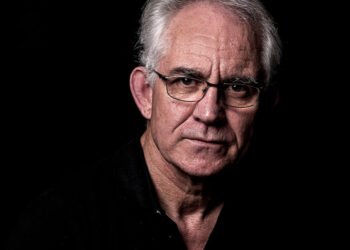

In an interview with the ECPS, Professor Patricio Navia underscores a defining paradox of Chile’s 2025 election: “Chileans ended up voting for two radical candidates in the first round, but they want them to govern as moderates.” He stresses that the apparent right-wing surge is less ideological than punitive, describing the first round as “a punishment vote against the left-wing ruling party.” Professor Navia highlights how insecurity reshaped the campaign, noting that the right “successfully turned the migration issue into an issue of insecurity and crime,” yet simultaneously embraced moderate positions on social rights. While Kast’s discourse may appear Trumpian, Professor Navia cautions that “Trump is a protectionist; Kast is a free-market advocate.” Ultimately, he argues, Chileans remain centrist in expectations: “They expect those candidates to govern as moderates.”
Interview by Selcuk Gultasli
In a wide-ranging interview with the European Center for Populism Studies (ECPS), Professor Patricio Navia — Full Professor of Liberal Studies and Adjunct Assistant Professor in the Center for Latin American and Caribbean Studies at New York University — offers a penetrating analysis of Chile’s 2025 presidential election, an election defined, paradoxically, by radical electoral choices and enduring moderate expectations. As Professor Navia succinctly puts it, “Chileans ended up voting for two radical candidates in the first round, but they want them to govern as moderates.” This apparent contradiction lies at the heart of his interpretation of Chile’s shifting political dynamics, voter psychology, and institutional constraints.
Professor Navia begins by challenging simplified readings of the first-round results. While over 70% of voters opted for right-wing presidential candidates, he warns that this does not signal a deep ideological realignment. Rather, it reflects what he calls “a punishment vote against the left-wing ruling party,” noting that legislative voting patterns remained more balanced. This reflects a chronic feature of Chilean politics: electorates punish incumbents but do not necessarily embrace the ideological alternatives they vote for.
A central axis of Professor Navia’s argument is the politicization of insecurity. The right has, in his words, “successfully turned the migration issue into an issue of insecurity and crime,” capitalizing on fears that have intensified alongside Chile’s unprecedented migration influx. Yet even here, the story is not one of unbounded radicalization. Professor Navia notes that right-wing candidates simultaneously “promised to keep the social rights and the growing welfare system” and signaled restraint on moral issues—evidence of a moderated right adapting to a centrist electorate.
In discussing José Antonio Kast’s rise, Professor Navia cautions against superficial comparisons to Donald Trump. “Trump is a protectionist; Kast is a free-market advocate,” he argues, stressing both the distinct historical context of Chilean immigration and the ways Kast has fused crime-control narratives with nativist appeals. Still, he highlights the limits of this strategy: policy promises such as deporting large numbers of undocumented migrants are unrealistic and risk generating “discontent against this government that promised easy solutions.”
Crucially, Professor Navia emphasizes the resilience of Chile’s institutions. Despite concerns about authoritarian drift, he argues that “Congress will curtail the president significantly,” given its growing assertiveness and Kast’s lack of a congressional majority. For that reason, he sees no scenario in which Kast successfully expands executive power or revives Pinochet-era nostalgia: “If he says Pinochet was good, then he’s going to lose popular support.”
Ultimately, Professor Navia’s analysis underscores the stability of Chile’s political center—less visible electorally, but palpable in voter expectations. Voters may choose radicals, he argues, but “they expect those candidates to govern as moderates.” This tension will shape not only a Kast administration but the trajectory of Chilean politics in the years ahead.

Here is the edited transcript of our interview with Professor Patricio Navia, slightly revised for clarity and flow.
Punishment Vote, Not Ideological Shift
Professor Patricio Navia, thank you very much for joining our interview series. Let me start right away with the first question: Given that the combined vote for right-wing candidates exceeded 70% in the first round, how do you analyze the process of vote consolidation behind José Antonio Kast in the runoff, and what does this transference suggest about the strategic flexibility and ideological cohesion of the right-wing bloc in Chile’s two-round system?
Professor Patricio Navia: If we look at the presidential election, there is clearly a punishment vote against the left-wing ruling party or ruling coalition government of President Gabriel Boric. And if we look at the legislative election results, we see that candidates from left-wing parties performed better than the presidential candidates of the same coalition. So, while it is true that 70% of voters in the presidential election supported a right-wing candidate, the picture is more nuanced in the legislative vote, where left-wing candidates did better. This suggests that many voters chose a left-wing legislative candidate and a centrist or right-wing presidential candidate. Now, among the right-wing presidential contenders, only three explicitly defined themselves as right-wing. But there was another candidate, Franco Parisi, who ended up in third place. He campaigned as an opposition figure but also actively criticized the right-wing candidates. He attempted to position himself as a centrist opposition alternative. So, in that sense, I would qualify the idea that right-wing candidates collectively received 70% of the vote.
Crime Politics Eclipse Social Rights
Your work has explored the powerful role of the perception of insecurity on vote choice. To what extent has the political salience of crime and immigration, which the far right has successfully framed as a crisis, fundamentally eclipsed the progressive, social-rights agenda that characterized the recent elections and the ‘estallido social’?
Professor Patricio Navia: The right tends to do better whenever the main issue is insecurity and crime, and the right has successfully turned the migration issue into an issue of insecurity and crime. Migration used to be more of a labor issue, and it has now become an issue of crime. So, migration and crime go together. And that favors the right, which usually campaigns on Iron Fist, law-and-order policies, and that tends to attract more voters under those conditions.
But I would underline the fact that right-wing candidates made sure that, in their campaign, they also promised to keep the social rights and the growing welfare system that Chile has created over the past few years. Even on moral issues, right-wing candidates were very careful to commit themselves—and to signal clearly—that they would not change existing legislation on women’s access to abortion, for example. So, we do see a shift to the right, but that shift is moderated by the fact that, on many dimensions, right-wing candidates actually embraced more moderate positions. They remained far right on crime and immigration, but on other issues, they moved significantly toward more moderate stances.
A ‘Trumpian Feel’ with Chilean Characteristics
Is Kast’s “Trumpian feel”—manifested in slogans like “put Chileans first” and the emphasis on a “Border Shield”—primarily a strategic, populist communication style intended to mobilize an “angry electorate,” or does it reflect a deeper, more permanent ideological mutation of the Chilean far right?
Professor Patricio Navia: That’s a great question. I think this trend of trying to make every right-wing candidate everywhere into a Trumpian candidate can lead to some misconceptions. Trump is a protectionist; Kast is a free-market advocate. Trump has embraced some conservative values; Kast has always lived by those conservative values. So, there are some significant differences.
The issue of migration in the US has been around for a long time, whereas in Chile it is a much more recent phenomenon. About 20 years ago, only 1 or 2% of Chile’s population consisted of migrants; now it is more than 10%. So, migration has become a major social issue in Chile over the past few years, precisely because so many migrants have arrived.
Kast has successfully connected the issue of migration with the issue of insecurity, and thus the border-protection message he promotes is associated with insecurity more than with migration itself. It is not that Chileans don’t want migrants; it is that they don’t want criminals coming through the border. So, I would qualify that statement a bit.
However, it is true that as the two issues become intertwined, an anti-crime platform also becomes an anti-immigration platform, and it becomes more nationalist and more nativist. That merging of crime and migration is what makes Kast’s policies feel Trumpian, because Trump—and the broader far right—advanced the idea that migration and crime are essentially the same thing.
But some of Kast’s border-protection proposals are actually more sensible, given that Chile had never really dealt with such a large migration wave. The country needed a policy update to address massive, and especially undocumented, migration. Some of the measures Kast proposes are similar to those proposed by the left. There are aspects of his agenda that are clearly far right, but others are far more reasonable.
Mandatory Voting Reshapes Chile’s Electorate

Your research has analyzed the explanatory power of ideology and economic perceptions, particularly among moderates and non-aligned voters. How has the reintroduction of compulsory voting impacted the distribution of this "elastically" voting segment, and to what degree is the far right’s current success a function of this institutional change?
Professor Patricio Navia: That’s a great question, because participation rates in Chile were about 45–50% in previous elections, but with mandatory voting in this election, participation increased to about 85%. And most of the new voters are people who do not identify themselves on the right–left scale, or the left–right scale. These are voters who don’t really care that much about politics. They’re discontent, and they can be mobilized on an anti-elite platform. That probably explains why one of the candidates, Franco Parisi, ended up in third place as the anti-elite, anti-establishment candidate.
So, these voters are not well defined by the left–right scale, but they are discontent with the elites. It is important to keep that in mind, because discontent with the elites often manifests itself as discontent with the incumbent government. So, as soon as Kast wins the election, if he does win in the runoff, he will become the personification of the elites. These people who have voted against the elites will end up voting against Kast. So, this is not a case of the Chilean electorate moving to the right; the Chilean electorate is punishing those in power. When Kast becomes the president in power, that electorate will turn against him just as it has turned against the left-wing president, Gabriel Boric. So, those who think that Chileans have now become rightist, and will support a right-wing president, will probably be in for a surprise, because the same voters who threw the left-wing administration out of power—or are about to—are the voters who will later disapprove of President Kast when he personifies the political and business elite.
Why the Crime–Migration Link May Backfire
The dominance of law-and-order issues, security, and immigration has marked the 2025 campaign. How does the far right’s ability to seamlessly link transnational crime with undocumented migration reinforce a nativist, anti-elite populist narrative, and how does this challenge establish theories of issue ownership in comparative politics?
Professor Patricio Navia: That’s also a great question, because the right has campaigned on a strong anti-crime platform. But given the globalization of criminal networks and given the ease with which you can access weapons in Chile and other countries, it is not altogether clear what the right can actually do to reduce levels of crime and the perception of insecurity. Even if the right were to enforce policies that restricted individual liberties, it wouldn’t be easy to control crime, because crime responds to other phenomena, including technological developments, the ease of accessing weapons, and globalization.
So, I think that by promising they will solve the economic issue and the crime and insecurity issue, right-wing candidates are setting themselves up for a task that will not be easily accomplished—and that will eventually lead to a punishment vote against them. That doesn’t mean that the left will necessarily return to power; it might be that a populist left comes to power instead. But we know that governments should not promise things they cannot deliver.
One of the issues here is that the right has promised things that cannot be delivered. I mean, President—soon to be president, I suppose—Kast has suggested that he will ask undocumented immigrants in Chile to pay for their own plane tickets to return to their home countries. We know that’s not going to happen. But he is generating this expectation that you can pretty much kick out of the country 10% of the population, or half of them, or a third of them, who are undocumented immigrants. Many immigrants do have documents and have the right to stay in Chile. But this idea that you can easily solve problems will eventually channel the discontent against this government that promised easy solutions—solutions that are not materializing.
Sociotropic Anxiety and the Right’s Advantage
Given your findings on the economic vote in the 2021 election, when no incumbent candidate was running, how does the economic performance under the Boric government shape the socio-tropic and ego-tropic perceptions of voters deciding between two ideologically extreme opposition candidates in the 2025 runoff?
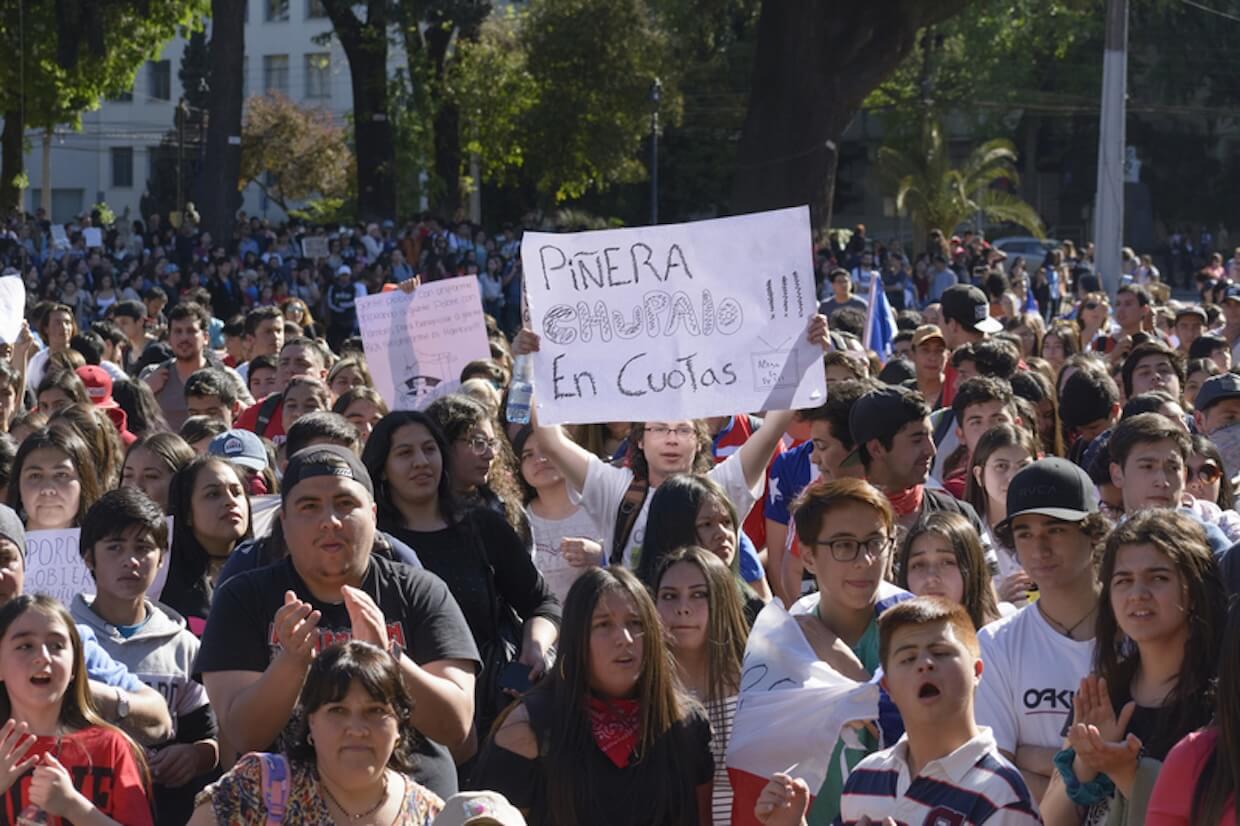
Professor Patricio Navia: I’ve been thinking about that point exactly over the past few days. We know that people who have positive ego-tropic perceptions normally think they will do better than the country. So, they are more optimistic about what will happen to them personally, as opposed to what happens to the country. But people with negative economic perceptions, particularly socio-tropic perceptions, tend to vote against the incumbent government. I think that favors all the right-wing candidates, including Franco Parisi, who positioned themselves as opposition candidates. So, when people are dissatisfied with the direction of the country, they vote for the opposition, and that’s exactly what happened this time around.
But people also want hope. So, they ended up voting for an opposition that offered a way out—or a way forward—for Chile in the coming years. That distinction matters, because people care about the economy, they look back and reward or punish the government, but they also look forward and decide which of the available options they find more convincing. Now, right-wing candidates in general have very similar economic policy proposals. So, the main difference between them ended up being their views on crime, not their economic proposals about how to put Chile back on the right track economically.
Kast Navigates Pinochet’s Legacy—Carefully

Your work has mapped the incidence of authoritarian values on vote choice in the constitutional process. Has Kast’s repeated electoral performance effectively mainstreamed the defense of Augusto Pinochet’s economic or public-order legacy, or is this defense still a liability that can be mobilized by the left to curb the far right’s potential?
Professor Patricio Navia: I think time does have an effect. It’s now been almost 40 years since the end of the military dictatorship. Pinochet died in 2006, and even though there is still a Pinochet legacy—and, in general, Chileans don’t want to support somebody who defends Pinochet—Chileans have come to terms with the positive aspects of the economic reforms that Pinochet implemented during military rule. Chileans are strongly against the dictatorship’s human rights violations and authoritarian legacy, but they are supportive of the economic model implemented under military rule. And they are now somewhat more favorable toward law-and-order policies, as Pinochet is perceived to have been tough on crime. So, there is some support for tough-on-crime policies.
But Kast has been very careful not to express support for the Pinochet dictatorship. He will normally say, “I support the economic reforms that Pinochet implemented, but I oppose human rights violations.” In this way, he seeks to differentiate the two things. The fact that he is relatively young—he was just an adolescent during the Pinochet years—makes it easier for him to distance himself from Pinochet, because he entered politics after Pinochet had left office. So, time helps him a bit. Some of the other right-wing candidates, particularly Evelyn Matthei, were much closer to the military dictatorship than Kast was, and that makes it more difficult for her to distance herself from the Pinochet legacy. But the one positive thing about this is that not even the most right-wing candidate today has good things to say about Pinochet, and I think that is good for democracy in Chile. Kast has good things to say about the economic reforms Pinochet implemented, but not about the other aspects of the Pinochet legacy.
How the Far Right Mastered New Media

Given your research on political participation and online efficacy, how has the far right, in particular, leveraged digital media to bypass traditional gatekeepers and translate specific patterns of "online efficacy" into real-world political mobilization, particularly among first-time or "angry" voters?
Professor Patricio Navia: This is very important, because a lot of people continue to fight over legacy media—traditional media and access to traditional media. But I think one of the strategies that Kast tried very successfully, and that other people like Parisi or Johannes Kaiser, the other far-right candidate, also used, was to bypass legacy media and go straight to new media, online media, to reach voters, particularly discontented voters. One of the problems of the traditional right-wing candidates, like Evelyn Matthei, is that she relied way too much on traditional media and didn’t do nearly as well on online media.
Now, most people who don’t care about politics don’t pay attention to traditional media, particularly political programs. So if you want to reach those voters—especially the discontented, and even those who might be economically successful but still indifferent to politics—you have to use online media and work around issues of internal efficacy (how people feel about the political system) and external efficacy (how people perceive the political system responding to them).
And there’s an important side note: Chile grants permanent residents the right to vote if they have lived in the country for at least five years. So, what’s fascinating is that many of the immigrants at the center of the campaign also had the right to vote. José Antonio Kast therefore had to criticize undocumented immigrants or criminal migrants on the one hand, while on the other hand catering to new immigrants who do have the right to vote—offering them economic policies and proposals promising employment opportunities and social inclusion.
The advantage of online media is that you can tailor different messages to different audiences if you understand how the algorithms work. One big lesson is that if you want to win elections, you have to understand new media. The left understood new media well in the 2021 election; this time around, they also performed well online, but it was difficult because discontent with the outgoing government was very high. So, even if they reached those voters, convincing them that the country was on the right track was very difficult, because people perceive every day that the country is not on the right track.
Kast, Bolsonaro, Milei: Similar Style, Different Substance
The news links Chile’s shift to the right with regional trends. How does the specific architecture of the populist discourse employed by Kast (combining social conservatism, nativism, and Pinochet nostalgia) structurally compare to the neo-populism of figures like Bolsonaro or Milei, particularly regarding the role of economic vs. cultural grievances?
Professor Patricio Navia: Bolsonaro was not a free-market advocate in the way that Milei or Kast are. In style, Kast is far more conservative and traditional than Milei. You don’t see Kast with a chainsaw. Kast is not a former member of the military, as Bolsonaro is, but they do share this anti-woke discourse—this idea that the far left has captured the cultural debate in the country and that the country has to go back to traditions and to a kind of simpler moral order where there is good and there is bad. So, in that dimension, the cultural anti-woke discourse is where Kast and the other right-wing candidates in Chile connect with this nativist international right in ways that are truly concerning for the rights of different minorities. In that sense, I think there is a lot of similarity, but they are all anti-woke. Yet Kast is pro-market, Kast is pro–law and order, and Kast is certainly not against globalization in many other dimensions. He is probably against the idea of globalization in that cultural dimension—what they define as wokeism.
Moderate Congress to Block Kast’s Social Conservatism
Given your findings on gender-affinity voting in legislative elections, how might the gender cleavage (and the mobilization of women voters) impact the legislative support for Kast’s socially conservative agenda, particularly in a potentially polarized Congress?
Professor Patricio Navia: In the short run, I don’t think Kast can advance his conservative social agenda simply because he’s just not going to have the votes in Congress. There is significant representation for moderate right-wing parties, and those parties are not going to embrace that socially conservative agenda. So, I don’t see that as a big threat. I do see the government, in the public discourse, going against wokeism and against what they define as gender ideology that grants rights to gender or sexual minorities. I do see them going in that direction from the executive branch, but not legislatively.
Now, part of the problem—or the advantage—for the right-wing parties in Chile today is that during the constitution-writing process, the push to go to the other extreme in terms of gender identity was perhaps a bit too much. So, Chileans are now more supportive of gradual changes rather than radical ones. In Chile, historically, the notion of gender issues or a gender perspective is associated with the left. And now the right is offering a different take on gender views. Traditional gender roles are also gender views, and they are saying that when you talk about gender, you are not necessarily talking exclusively about feminism—you can also talk about traditional gender roles for women. So, I think we’re going to see a significant intellectual and cultural debate about what gender roles actually mean in today’s society.
Kast’s Victory Depends on Moderation, Not Radicalism
If Kast wins, what are the irreversible consequences for the moderate/traditional Chilean center-right? Will the far right become the new, dominant ideological center of the right-wing bloc, or are there historical and institutional mechanisms that could force a moderation of the far right’s most extreme stances?
Professor Patricio Navia: I think that for Kast to win in the runoff, he’s going to have to embrace more moderate views in many areas. He has already done so. I mean, we just had the first-round vote, and he has adopted the more moderate economic policies of the traditional right-wing candidate. So, I think Kast understands—particularly after the Boric administration—that if he wants to maintain a majority, he has to become somewhat more moderate.
The lesson from the Boric administration is that every time the outgoing president took far-left positions, he lost support. And when he adopted more moderate left-wing positions, he regained support. So, I think Kast is going to have to learn from that as well, because Chileans ended up voting for two radical candidates in the first round, but they want them to govern as moderates. That is one of the ironies of Chilean politics: voters choose a radical left-wing candidate, and when he starts governing as a radical leftist, they abandon him and push him toward more moderate positions.
I think the same will happen with Kast. If Kast tries to govern as a radical right-wing leader, people will abandon him, and they will push him into more moderate positions. That means that, in the end, the right-wing parties that Kast represents will probably end up competing with the traditional right-wing parties for moderate right-wing support, because there are far more voters in centrist positions in Chile than in radical positions.
Kast Faces Constitutional Walls, Not Blank Checks

If a Kast administration were to implement authoritarian-leaning security measures, what is the most critical risk to Chile’s democratic stability: the specific policies themselves (e.g., military deployment, mass incarceration), or the normalization of executive power expansion justified by the populist mandate of public security?
Professor Patricio Navia: I think that in Chile, institutions are strong enough. I don’t see the president taking power over Congress. In fact, over the past years, we have seen Congress becoming more powerful than the president, relative to what the Constitution prescribes. The Constitution is very presidentialist, but over the past decade Congress has exerted a great deal of control—even beyond what the Constitution formally grants—over the president.
So, I don’t see how Kast could move outside of that framework, because he is not going to have a majority in Congress. In the US, President Trump was able to push boundaries because he had a majority in both chambers of Congress. But in Chile, Congress will significantly curtail the president, and he is not going to be able to accumulate more power.
The president will certainly take on some of the anti-crime agenda in order to deliver on the promises he has made. But I don’t think he will be able to go beyond what the Constitution allows, simply because he won’t have the necessary support. He will win the runoff—but he received only 24% in the first round, so he will win the runoff because the alternative is worse for many voters. Chileans are going to vote more against the Communist Party candidate than for Kast. So, I don’t see a power grab as a plausible scenario for José Antonio Kast.
I also don’t see him bringing back Pinochet nostalgia, because Chileans are simply not supportive of Pinochet. If he were to say that Pinochet was good, he would lose popular support. He will try to implement a strict law-and-order agenda, but Chileans are also very much in favor of private property and individual freedom. So, I think there will be a tension there. Everybody wants to be safe, but nobody wants to have police officers searching them. There will have to be a balance between this promise of law and order and the well-established demands of Chileans for individual freedom and liberty.
Rebuilding the Center: A Supply Problem, Not Demand
If the election results demonstrate the weakness of the political center (with the runoff between the two extremes), what long-term mechanisms—perhaps drawing on the history of political stability you studied—must Chileans rely upon to rebuild a viable and moderate political center?
Professor Patricio Navia: I don’t know how you can rebuild a political center. The problem is more a problem of supply than of demand. We just don’t have strong enough centrist political parties that attract voters. But polls do tell us, time and again, that voters are far more moderate than the choices they make in presidential elections. So, even though it looks as if Chile is deeply polarized between a far-left and a far-right presidential candidate, most voters remain significantly moderate. They defend market-friendly values; they also defend individual rights and a strong system of social protection. So, voters, in their preferences, are far more moderate; they may vote for radical left- or right-wing candidates, but they expect those candidates to govern as moderates.
As to whether political parties will emerge that represent moderate voters, I don’t know, and I think the electoral rules are not really conducive to moderates winning elections. But I do know that once a president comes into office, the electorate exerts centripetal pressure that pushes the president toward more moderate positions. Four years ago, Chile elected a far-left president who had promised he would destroy the neoliberal economic model, and here we are, four years later, with everyone saying the president was mostly a moderate center-left—though he didn’t start out that way. Voters ended up pushing him in that direction. I think the same will happen with José Antonio Kast.
No Majority, No Radicals: The Limits of a Kast Presidency

If a Kast presidency faces a hostile or fragmented Congress, how might the use of the partial presidential veto—which you analyzed as an executive-legislative bargaining tool in the post-Pinochet era—be employed to push forward security and immigration legislation, potentially exacerbating confrontations between state powers?
Professor Patricio Navia: I don’t think there will be much confrontation, precisely because the president has the veto. Most of the bills that pass are presidential bills, so the president is going to send bills to Congress. Congress will water those bills down, because they will need to be moderated in order to achieve a majority. But if legislators go too far, the president will threaten to issue a veto on a bill he doesn’t like. And yes, he might be able to veto some bills introduced by legislators.
But for the most part, there will have to be negotiation between Congress and the president, and the median voter in Congress is a centrist senator or a centrist member of the Chamber of Deputies. So, even if the president wanted to pass more radical right-wing proposals, he’s not going to be able to. The same happened with President Boric. He sent bills that were far to the left, and Congress moderated them. We will see pretty much the same dynamic this time around. We do have a fragmented Congress, but the decisive legislator in each chamber is a centrist. So, if you want to pass bills, you’ll have to rally the support of centrist legislators to get them through.
Chile Won’t Choose Between the US and China
Given Chile’s vital economic importance (copper/lithium) and its trade balance with China, how would a Kast presidency—which seeks closer "Trump-style" alliances in the region—navigate the inevitable geopolitical tension between its security and trade partners?
Professor Patricio Navia: I find that to be the most fascinating challenge for President Kast—or for any president in Chile. Because Chile has historically been an ally, at least for the past 35 years, of the United States. But our main trade partner is China. So, every time we see Chile, or the United States and China, sort of going at each other, Chileans are like: please, please stop. Because you are my friend, and you are my main trade partner, so I want you to get along, because I cannot and will not take sides.
And the same thing happened with Argentina with President Milei. President Milei is really pro-Trump, but the main trade partner for Argentina is still China, and it will continue to be. So, Chile’s main trade partner is going to be China, and that will likely remain the case. Chile will tell the US: look, if you want to engage more in trade, we’ll be happy to do it with you, but we live off the trade we have with China, so we cannot abandon China. We want to be friends with you and with China. Don’t force us to take sides, because if you do, we’re going to have to really think about it—because we truly depend economically on the goods that China buys from us.
Chile’s Populism Isn’t Pinochetist—It’s Anti-Elite
And lastly, Professor Navia, should the term “populism” in the Chilean context be redefined to more explicitly account for the unique synthesis of Pinochet-era nostalgic authoritarianism with modern, “Trumpian” nativist and anti-globalist communication, rather than relying solely on traditional models of economic clientelism or personalistic charismatic leadership?
Professor Patricio Navia: Populism is always a disputed concept. I think the most appropriate way to understand populism in Chile today is really the opposition against the elites, the anti-elite sentiment, and the perception that the population is abused by this corrupt elite. So, it’s not really about Pinochet or not Pinochet. The authoritarian component is more about conservative views than about populist views. We see populism on both the left and the right offering people this idea that “we are going to get rid of these corrupt elites so that you can be free.” In that dimension, Kast was probably far less of a populist than Kaiser, the other far-right candidate, or Parisi. So, the one piece of good news about Chile is that even though there is still a lot of support for populism, the non-populist candidates ended up doing a bit better.
I wouldn’t consider Kast a populist. I would probably consider him a religiously conservative, somewhat authoritarian, nostalgic-authoritarian leader, but not a populist. He campaigns on cutting the budget by 6 points of GDP. He campaigned on tightening social spending. He didn’t campaign on increasing services and subsidies for people. So, in that sense, he’s more of an authoritarian and very conservative figure than, in the traditional sense, a populist candidate. He won the vote among foreigners in Chile—foreigners who have the right to vote. So, he uses a nativist discourse, but not against immigrants. He frames the issue as being against criminals—many of whom are immigrants and come from other countries—but he also catered to the immigrant community, winning a majority of the immigrant vote in Chile.