
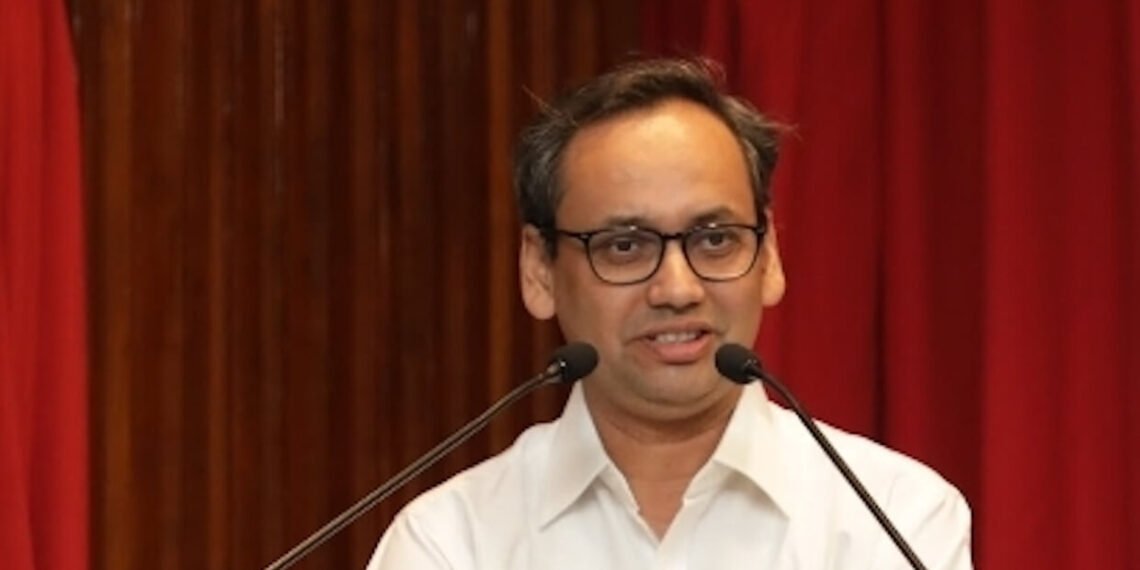
In this ECPS interview, Dr. Amir Ali, Assistant Professor at Jawaharlal Nehru University, offers a sobering assessment of India’s democratic trajectory after the 2026 state elections. He argues that while democratic backsliding is global, India’s crisis is unfolding on “a particularly worrying scale,” driven by polarized electoral mobilization, institutional weakening, and Hindutva majoritarian consolidation. Dr. Ali examines the BJP’s breakthrough in West Bengal, anti-Muslim rhetoric in Bengal and Assam, voter-roll deletions, and the narrowing of Indian pluralism into a majoritarian national project. Comparing India with Turkey, Hungary, Brazil, and Trump-era America, he warns that India is increasingly marked by institutional complicity, shrinking opposition space, and the remaking of “the people” around Hindutva identity.
Interview by Selcuk Gultasli
Over the past decade, India has increasingly become central to global debates on populism, democratic erosion, nationalism, and the transformation of liberal constitutionalism. Once widely celebrated as the world’s largest democracy and as a paradigmatic example of postcolonial pluralism, India now occupies a far more contested position within comparative political analysis. The 2026 state elections—marked by the BJP’s (Baharatiya Janata Party) historic breakthrough in West Bengal, the consolidation of Hindu majoritarianism in Assam, and the continued dominance of Narendra Modi’s political project—have intensified concerns regarding institutional capture, majoritarian citizenship, the shrinking space for dissent, and the future of secular democracy in South Asia.
In this context, the insights of Dr. Amir Ali, Assistant Professor at Jawaharlal Nehru University, offer a powerful and deeply unsettling diagnosis of India’s current political trajectory. Drawing on his extensive scholarship on populism, Hindutva nationalism, democracy, secularism, inequality, and the transformation of the public sphere, Dr. Ali situates India’s democratic crisis within a broader global wave of democratic backsliding, while insisting that the Indian case now possesses a uniquely dangerous scale and intensity.
“Democratic backsliding,” he argues, “is certainly not unique to India; it is occurring across the world. But in India, it is unfolding on a particularly worrying scale.” For Dr. Ali, what distinguishes India is not simply the electoral success of the BJP, but the convergence of “a highly polarized form of electoral mobilization together with the apparent complicity of constitutional institutions.” In his view, this combination signals “the deteriorating condition of Indian democracy.”
Throughout this wide-ranging interview with the European Center for Populism Studies (ECPS), Dr. Ali examines how Hindutva has evolved from a project of symbolic domination into what he describes as an attempt at “the complete erasure of many aspects of Muslim society.” Reflecting on recent developments in West Bengal, he argues that the public sphere is no longer merely being “imprinted with Hindutva national symbols,” but is increasingly shaped by efforts to erase Muslim cultural, symbolic, and religious visibility altogether.
The interview also explores the transformation of Indian nationalism itself. According to Dr. Ali, the BJP has systematically narrowed the “bandwidth” of Indian nationalism, replacing the plural and inclusive vision associated with Gandhi, Nehru, and Ambedkar with a far more exclusionary conception of national belonging. The rhetoric of the “infiltrator,” he argues, functions as a mechanism of otherization designed to portray Muslims as outsiders who do not truly belong to the nation.
Equally significant is Dr. Ali’s analysis of institutional decline. He contrasts the relative independence once exercised by figures such as T. N. Seshan and James Michael Lyngdoh with the contemporary weakening of institutional autonomy under BJP dominance. In his assessment, the Election Commission increasingly appears “an instrument in the hands of the ruling party,” while electoral revision exercises have contributed to the disenfranchisement of Muslim voters.
At the same time, Dr. Ali situates India within a broader comparative landscape alongside Recep Tayyip Erdoğan, Viktor Orbán, Jair Bolsonaro, and Donald Trump. Yet he argues that India differs in one crucial respect: unlike Brazil, Hungary, or the United States, he currently sees no realistic possibility of Narendra Modi being electorally removed from power in the foreseeable future.
What emerges from this conversation is not simply an analysis of electoral politics, but a broader meditation on nationalism, democracy, populism, austerity, institutional decay, and the remaking of “the people” in contemporary India. Dr. Ali’s reflections offer a sobering portrait of a democracy increasingly defined by majoritarian consolidation, emotional polarization, and narrowing citizenship—while also illuminating the profound global significance of India’s political transformation.
Here is the revised version of our interview with Dr. Amir Ali, lightly edited for clarity and readability.
The BJP Now Seeks Domination from Parliament to Panchayat
Dr. Amir Ali, welcome! To begin, how do you interpret the BJP’s 2026 breakthrough in West Bengal, a state historically shaped by anti-colonial cosmopolitanism, Left politics, and subaltern mobilization? Does this mark the consolidation of Hindutva as a truly national hegemonic formation?
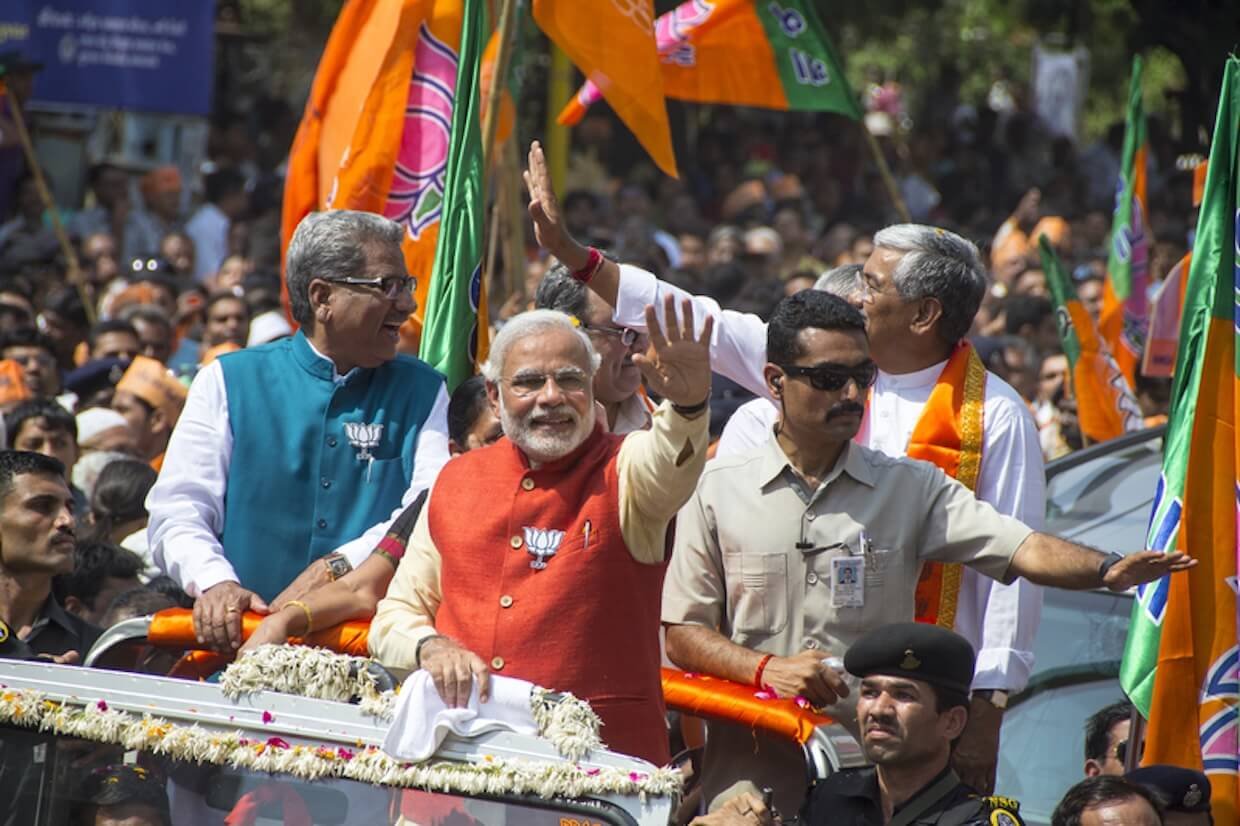
Dr. Amir Ali: The electoral dominance of the BJP now appears almost invincible. What the BJP has managed to do is to perfect the art of winning at the ballot box. This ambition is captured very clearly in the slogan “Parliament to Panchayat”—with Parliament referring to the national legislature and panchayat referring to local government institutions. The slogan reflects an almost insatiable desire to dominate every level and aspect of Indian politics. In terms of electoral strategy and political consolidation, the BJP has become extraordinarily effective.
At the same time, there is a growing sense of resentment in India regarding the seeming invincibility of the BJP. This stems not only from its electoral mobilization, but also from what has become a major complaint of the opposition—one with which I am largely sympathetic—namely, the existence of an uneven playing field. Even institutions such as the Election Commission, which is constitutionally expected to function as a neutral body, are increasingly perceived as taking decisions that favor the ruling BJP. This dynamic broadly summarizes the recent elections in major states. You mentioned West Bengal, which was of course the most significant case, but we also saw similar patterns in Kerala and Puducherry.
What is particularly worrying is that this points toward a form of near-total political domination. In any parliamentary or electoral democracy, it is unhealthy when a single party becomes so dominant that the opposition is effectively shut out from meaningful avenues of dissent and political expression. That is how I would interpret the current moment.
Hindutva Now Seeks to Erase Muslim Visibility
In your work on the Indian public sphere, you argue that Hindutva seeks to institutionalize its own symbols, norms, and values as the legitimate markers of the Indian state. How does the BJP’s victory in West Bengal alter the symbolic architecture of India’s public sphere?
Dr. Amir Ali: That is a very good question. My work on the public sphere is now almost two decades old, and at the time the Hindutva project was not nearly as aggressive as it is today. Back then, I was trying to understand the attempt not only to inflect the public sphere, but also to create a form of cultural domination within it. What we see today, under this much more assertive form of Hindutva associated with Modi’s BJP, is an attempt at the complete erasure of many aspects of Muslim society in particular.
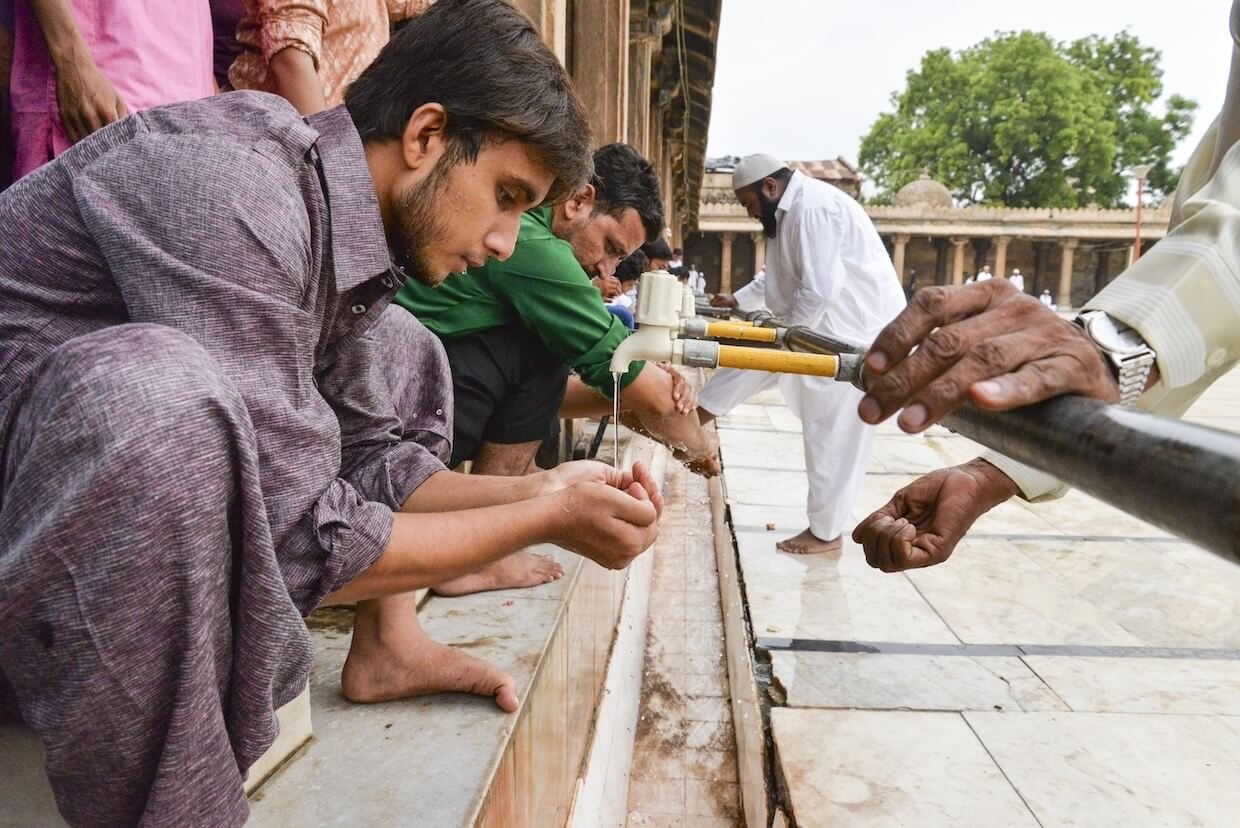
In West Bengal, for example, one of the most recent flashpoints has concerned the offering of namaz, Friday prayers. There was a confrontation between the police and Muslim worshippers in the Park Circus and Park Street areas of Calcutta, which are Muslim-majority neighborhoods.
Compared to the period when I wrote that earlier work on the public sphere, the current attempt to dominate public space is now characterized by a drive toward the disappearance and erasure of aspects of Muslim society and culture. This includes the renaming of streets, for example, as well as the use of bulldozers, which I find deeply troubling. These bulldozers have frequently been used to target Muslim properties under the justification of anti-encroachment drives.
So, the public sphere today is no longer merely about imprinting it with Hindutva national symbols. It has escalated into an effort to erase aspects of Muslim symbolic, cultural, and religious practices altogether. And that is extremely worrying.
Anti-Muslim Rhetoric Has Become Progressively Harsher
To what extent do the results in West Bengal and Assam reveal the BJP’s capacity to forge cross-class Hindu consolidation while deepening the political marginalization of Muslims, migrants, and minorities?
Dr. Amir Ali: In both West Bengal and Assam, the election campaigns were marked by some of the most vitriolic political rhetoric I have ever witnessed. The Assam Chief Minister, Himanta Biswa Sarma, employed a particularly dangerous form of language. Muslims were openly targeted, and there was a clear suggestion that they somehow needed to be made to suffer. Although these remarks were made in Assamese, that was broadly the substance and political effect of what was being communicated.
Similarly, in West Bengal—which for decades was shaped politically by the Left Front and, over the last fifteen years, by the Trinamool Congress—both political formations had at least attempted to maintain a relatively inclusive approach toward Muslims.
What I observed in the BJP’s rhetoric, however, was a very systematic, deliberate, and deeply aggressive targeting of Muslims. That constituted one major dimension of the party’s electoral mobilization. The more troubling dimension, however, concerned what became known in West Bengal as the “special intensive revision” of the electoral rolls. As a consequence of that exercise, a significant number of Muslim names were reportedly removed from the voter rolls. Several political analysts examining the constituency-level data pointed out that, in some constituencies, the BJP’s margin of victory was actually smaller than the number of voters who had been deleted. Now, electoral revision is, of course, a legitimate administrative exercise. But it should never be conducted immediately before elections, as happened in Bihar in 2025 and again in Bengal.
So, the concern is not only the escalation of increasingly vicious anti-Muslim rhetoric. Over the years, I have observed a very clear trend in which the BJP’s electoral language toward Muslims has become progressively harsher and more hostile. But the even more serious concern is the role of constitutional institutions—particularly the Election Commission of India, which was once widely regarded as a highly trusted institution. In this case, however, it appeared unwilling to stand up to the BJP government and was increasingly perceived, in the words of some commentators, as the BJP’s “B team.” Even the Supreme Court of India appeared reluctant to intervene decisively or raise difficult questions regarding the Election Commission’s conduct.
To my mind, this combination—a highly polarized form of electoral mobilization together with the apparent complicity of constitutional institutions—represents another sign of the deteriorating condition of Indian democracy. Democratic backsliding, as political scientists describe it, is certainly not unique to India; it is occurring across the world. But in India, it is unfolding on a particularly worrying scale.
The ‘Infiltrator’ Rhetoric Places Muslims Outside National Belonging
How should we understand the rhetoric of “infiltration” in Bengal and Assam—as electoral strategy, civilizational anxiety, bureaucratic exclusion, or a new grammar of majoritarian citizenship?
Dr. Amir Ali: It is fundamentally an attempt to otherize—to create a sense of fear within the Hindu electoral base regarding Muslims. The problem with nationalism, especially when it operates within a narrow bandwidth, is that it often produces precisely this kind of otherization. Historically, India witnessed different forms of nationalism, particularly during the anti-colonial struggle against British rule. The independence movement led by Gandhi, Nehru, and Ambedkar articulated a broader and more inclusive nationalism—one capable of incorporating Muslims and emphasizing the country’s diversity. Indian secularism itself was often understood through this principle of inclusivity: the coexistence of Hindus, Muslims, Sikhs, Christians, and numerous other religious communities within a shared political framework.
What we see under the BJP, however, is a deliberate narrowing of that nationalistic bandwidth. And that narrowing inevitably involves a systematic process of otherizing Muslims. The rhetoric of the “infiltrator” fits directly into this logic. One of the most effective ways for the BJP to consolidate its electoral base is to cultivate fear and insinuate that Muslims somehow do not truly belong in India.
Statistically, the idea of the infiltrator does not correlate with the actual number of people entering the country. Of course, there will always be cases of undocumented migration. But the manner in which this rhetoric has been mobilized and deployed during elections serves a different purpose: it seeks to portray Muslims as ghuspetia—to use the Hindi term—meaning outsiders or intruders who do not belong here. This reflects a broader nationalist framework in which Muslims are not regarded as fully part of India because Islam is perceived as a religion that is not indigenous to the subcontinent. In that sense, the rhetoric appeals to an extremely narrow conception of nationalism. And any nationalism with a narrow bandwidth becomes deeply divisive. The purpose of nationalism should be to include, incorporate, and encompass diverse peoples. But the “infiltrator” rhetoric, and the way it has been deployed, represents a clear process of otherization and a systematic attempt to place Muslims outside even the boundaries of national belonging.
Indian Pluralism Is Being Replaced by National Oneness
You have written about the fragility of diversity in liberal polities. Do these elections suggest that Indian pluralism is being transformed from a constitutional ideal into a conditional concession granted by majoritarian power?
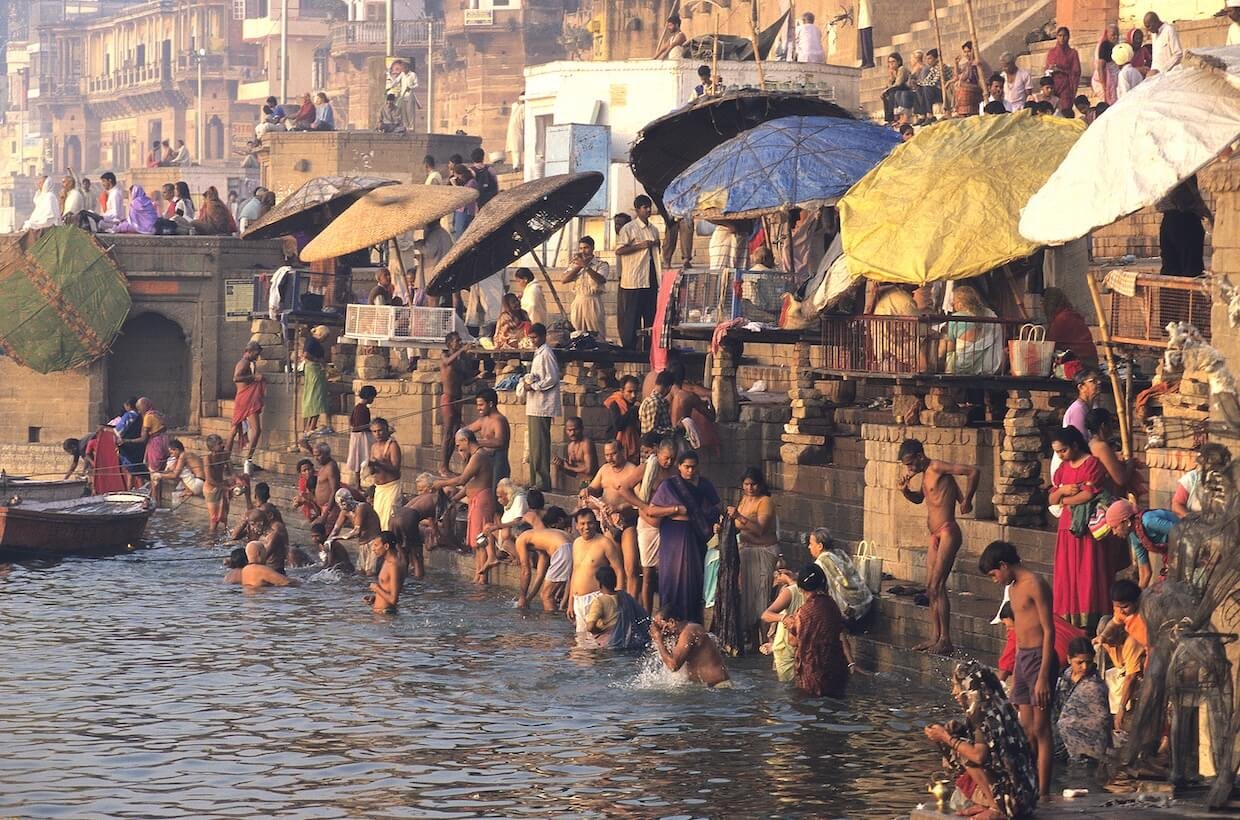
Dr. Amir Ali: I would think so, yes. That is a very important question. India has always been regarded as a deeply plural and diverse country. We have many languages, many religions, and many different kinds of people across the country. Historically, it was precisely this diversity that was celebrated. Quite often, that celebration may have been symbolic, but at least the principle existed. The idea of “unity in diversity,” for instance, was one of the central ways in which India understood itself.
What we are witnessing now, however, is an attempt to construct the idea of a certain kind of oneness. Prime Minister Modi’s rhetoric has consistently revolved around this notion. He repeatedly invokes slogans such as “one nation, one election,” which appears likely to become the next major political development if the BJP succeeds in implementing it—and, of course, the BJP has largely succeeded in advancing its broader agenda.
So, what we are seeing is a movement away from the celebration of plurality and diversity toward the assertion of a singular national identity. Modi also speaks of “one nation, one ration card” and “one nation, one tax.” This emphasis on national oneness stands in sharp contrast to the pluralism you are referring to.
I would, however, add a slight twist to your question. I do not think this is even about conditional concession anymore. The emerging message is that Muslims simply do not belong. A concession would still imply that minorities are allowed to exist on the condition that the majority accepts them. But the trajectory of the BJP’s electoral and ideological rhetoric increasingly casts Muslims as outsiders altogether.
If we return to major Hindutva ideologues such as Savarkar and Golwalkar, they were very explicit in arguing that Muslims should occupy the position of second-class citizens. Their argument was that although a Muslim’s birthplace may happen to be India, the center of his or her religious allegiance lies outside India, thereby rendering Muslims inherently suspect.
So, I think we have moved beyond the idea of conditionality. What we are now witnessing is an attempt to portray Muslims as complete outsiders who do not belong here at all. And if they are allowed to continue existing within the nation, it is only under conditions determined by the BJP and its Hindutva majoritarian base. In other words, Muslims are expected to conform entirely to the ideological and political framework established by the BJP’s Hindutva nationalist agenda.
Administrative Majoritarianism Is Reshaping Indian Democracy
Does the controversy over voter-roll deletions in West Bengal signal a shift from electoral majoritarianism to administrative majoritarianism, where democratic exclusion is achieved through procedural and bureaucratic means?
Dr. Amir Ali: Yes, I think so. It is very unfortunate, because I have observed the Election Commission over many years. Before the BJP government came to power—which has now been in office for twelve years—the Election Commission was regarded as a very powerful and independent institution.
Let me give you two examples. Back in the 1990s, there was a highly assertive Chief Election Commissioner, T. N. Seshan. Many of his reforms were extremely significant. For example, he introduced photo identity cards in the early to mid-1990s. Election commissioners such as Seshan were able to stand up to politicians, including ruling parties, and make it clear that they were not beholden to the government of the day, but were instead accountable to the Constitution and the Indian state.
Then, in the early 2000s, there was another assertive Chief Election Commissioner, James Michael Lyngdoh. In 2002, following the Gujarat riots, when Mr. Modi was Chief Minister of Gujarat, Lyngdoh openly resisted pressure from the government and insisted that state assembly elections could not be held immediately after the riots. He argued that elections should only take place once those who had been displaced and were living in refugee camps had returned to their homes.
My point is that, in earlier periods, the powers granted to the Election Commission under Articles 324 and 325 of the Indian Constitution were exercised independently and, at times, even in opposition to the government in power. As a result, India had elections that were widely regarded as free, fair, and clean.
Now, however, with the Election Commission no longer acting with the same degree of independence—and with the current Chief Election Commissioner, Gyanesh Kumar, often accused of siding with the BJP government—we are witnessing the Commission itself becoming, to a significant extent, an instrument in the hands of the ruling party.
The Special Intensive Revision (SIR) exercise, which resulted in the large-scale disenfranchisement of Muslim voters in particular, is one example of this broader trend in which Muslim citizens of this country are being denied something as fundamental as the right to vote.
Hindutva Narrows What It Means to Be Hindu
How do you assess the relationship between Hinduism and Hindutva in the wake of these elections? Is Hindutva further narrowing the philosophical and plural traditions of Hinduism into a more disciplined nationalist ideology?
Dr. Amir Ali: Yes. I think Hindutva is a form of religious nationalism and the problem with this particular form of nationalism is that it offers only one way of interpreting what it means to be Hindu. You referred to the broader philosophical confidence that Hinduism historically possessed—the idea that there are multiple ways of being Hindu. Many scholars have written about this. I am not deeply familiar with the full literature, but I have encountered arguments emphasizing Hinduism’s certain catholicity, its all-encompassing nature. What Hindutva has done, as a form of Hindu nationalism, is essentially to tell Hindus that this is the only legitimate way to be Hindu. And many people who do not subscribe to the Hindutva ideology have made precisely this point.
In my response to your earlier question, I referred to the idea of a narrowing bandwidth. I would bring that idea back here. What Hindutva nationalism is doing is significantly narrowing this bandwidth. It is not only imposing conditions upon Muslims—the point I made in an earlier answer—but also imposing conditions upon adherents of the broader Hindu philosophical tradition itself. It effectively tells believers that this is the only acceptable way to be Hindu, and that if you do not behave in this particular manner, then you are somehow not a good enough Hindu.
This is very unfortunate because the philosophical foundations of these traditions run very deep within Indian civilization. They represent centuries upon centuries of gradual intellectual and spiritual development. Hindutva, by contrast, as a form of nationalism—like nationalism more generally—is a relatively recent development. As a political scientist, I would argue that nationalism is a modern phenomenon that emerged largely over the past two centuries alongside processes of modernization. So, what we are witnessing is a kind of tyrannical logic inherent in modern nationalism imposing itself upon a philosophical and religious tradition that is far richer and more historically layered than the rigid framework Hindutva seeks to enforce.
To return to your point about narrowing: yes, there is clearly such a narrowing taking place. But quite remarkably, and intriguingly, the condition is not only being imposed upon Muslims, who remain the principal targets of Hindutva politics. It is also being imposed upon believers within the Hindu philosophical and religious tradition itself, by insisting that this alone is the proper way to be Hindu.
The important thing about India, however, is that many people have pushed back against this. Many have defended the broader spirit of catholicity and the all-encompassing character of Hindu traditions. But yes, this narrowing bandwidth, as I keep describing it, is a matter of profound concern. And one hopes that India will generate a philosophical and intellectual response capable of confronting this particular form of politics.
Populism and Austerity Are Pushing India Toward Fascistic Politics
In your analysis of populism and austerity, you describe Modi’s politics as a “populism of the fiscally tight-fist.” How do welfare schemes, direct transfers, and beneficiary politics reshape the relationship between citizenship, dependency, and political loyalty?
Dr. Amir Ali: That is a good question, and I will try to answer it in two different parts. Let me begin with Mr. Modi’s populism. His populism is not a redistributive form of populism. Rather, it is a populism based on a certain kind of targeted largesse—a targeted distribution of very meager material benefits. This is meant to keep the targeted population at a basic level of subsistence and sufficiently beholden to return and vote for Mr. Modi. That is how his populism functions.
It is unlike, for example, the redistributive populisms of mid-twentieth-century Latin America. What we see instead is a form of populism combined with a very conservative fiscal stance. That is why I describe it as a “fiscally tight-fisted populism.” It is not willing to distribute substantial material benefits broadly. Rather, it relies on the targeted dispersal of very limited material largesse. The purpose is to keep a certain segment of the population beholden to Mr. Modi so that they continue voting for him. The Hindi term for this category of people—the immediate beneficiaries of this populism—is labharthi. In Hindi, labharthi refers to a kind of beholden beneficiary. The logic behind this benefaction is that Mr. Modi’s electoral support base remains consolidated. That is one dimension of his populism.
The other aspect is that it also veers, rather strangely, toward a form of austerity. I am one of those people who believes that austerity is a very dangerous idea. When I describe it that way, I am drawing on the work of the Brown University economic historian Mark Blyth, who famously called austerity a “dangerous idea.” It is dangerous because austerity politics tends to push societies in a much more fascistic direction. This argument about austerity moving politics toward fascism is also made by the Italian economist Clara Mattei in her work on austerity, where she argues that economists invented this idea and paved the road to fascism. So, Mr. Modi’s populism is a very curious mixture: on the one hand, a highly limited and meager distribution of material benefits, and on the other hand, a form of fiscal conservatism—hence my characterization of it as fiscally tight-fisted populism.
The third point I would add is that all of this ultimately leads toward a form of austerity politics. The most recent example came only last week, when Mr. Modi urged Indian citizens to refrain from traveling abroad, to stop buying gold, and appealed to farmers not to purchase fertilizers because fertilizer supplies were allegedly being constrained by developments in the Strait of Hormuz. So, once again, what we saw was Mr. Modi using this language of austerity to engage in a kind of virtue signaling toward the Indian public, telling citizens what they should and should not do.
On the one hand, many of us believe that the government has made a series of poor policy decisions, and then the government turns around and instructs citizens, in an almost didactic manner, about how they ought to behave. So, this is a very unusual form of populism—one that combines populism with austerity. And this fusion of populism and austerity creates a deeply unsettling kind of politics that travels dangerously far down the road toward fascism.
Aspirational Politics Has Fused with Anti-Muslim Otherization
Does the BJP’s model combine neoliberal individual aspiration with majoritarian collectivism? How was this tension visible in the 2026 state elections?
Dr. Amir Ali: To answer that question, let me go back to 2014, when Mr. Modi first came to power at the parliamentary level and became Prime Minister. Around that time, his rhetoric was almost completely devoid of any communal appeal. He was not talking about religious symbolism or anything of that kind. Instead, he consistently emphasized the language of development.
He appealed to an aspirational middle class. The political message being conveyed was that the middle class should improve its standard of living. The aspiration being promoted was a rather narrow one: owning a car, owning a flat, securing a good job, and earning a decent amount of money. There is nothing inherently wrong with those aspirations. But the problem is that this approach denies the idea that politics is ultimately about a broader form of solidarity.
So, I agree with the premise of your question. It is indeed a form of political appeal in which a narrow conception of material advancement is emphasized. But by 2026, this developmental logic — if we can call it that way — had fused with a far more vicious form of what I earlier described as the otherization of Muslims. What we have in India right now is a very curious combination. On the one hand, the BJP’s electoral appeal continues to focus on improving people’s material conditions. But at the same time, in an almost cruel manner, it suggests that the conditions of some people can only improve if the conditions of certain other people are simultaneously degraded. And the group being targeted in this way is obviously Muslims. This particular form of targeting, which became especially visible during the 2026 state assembly elections, was not present when Mr. Modi first came to power in 2014.
So, over these twelve years under Mr. Modi’s leadership, the earlier aspirational appeal has gradually fused with a much harsher political logic—one that implies that the only way for some people to live better is to ensure that others do not. And that, to my mind, is the most worrying and unfortunate development in Indian politics over the past twelve years.
Modi’s ‘People’ Excludes Muslims and Dissenters

You have argued that populism creates a caricature of “the people.” In Modi’s India, who counts as “the people,” and who is rendered suspect, external, or anti-national?
Dr. Amir Ali: The phrase “caricature of the people” actually comes from the political theorist Hannah Arendt in her work The Origins of Totalitarianism. What we see in India right now is the mobilization of a particular kind of highly excitable public. Quite often, this mobilization takes place on the streets. When “the people” are invoked, the term obviously refers to Mr. Modi’s electoral base. It certainly does not include Muslims, nor many of the other groups to whom the Hindutva logic does not appeal. So, this caricature consists of a very voluble, excitable, and frenzied support base that Mr. Modi commands.
Let me give you one example. Recently, a video circulated widely on social media showing a Trinamool Congress politician and Member of Parliament, Mahua Moitra, being heckled on a flight. She is a very prominent and articulate parliamentarian who has been outspoken in her opposition to the regime. When we speak about the caricature of “the people,” it is precisely this kind of public that can be easily mobilized to heckle anyone who opposes the regime’s political agenda. The fact that this incident occurred on a domestic flight is also significant. In India, only a certain section of society can regularly afford air travel. Poor people generally travel by train or bus. So, the fact that this kind of heckling is taking place on flights suggests that the caricature of “the people” includes a sizable segment of people who possess the financial means to travel by air as well.
So, it is not confined only to the labharthi, or the beholden beneficiary. It extends across the economic spectrum. And again, this ability to easily mobilize and rouse people into targeting anyone who opposes the BJP’s political agenda captures, to my mind, what this construction of “the people” is really about.
Let me add one more thing. It is certainly not “We, the People,” the phrase used in the Preamble to the Constitution of India. “We, the People” is a constitutionally mediated appeal to the people; it is not this. What we are seeing instead is a set of people who can very easily be mobilized through the BJP’s mechanisms of political mobilization.
The Opposition Is Playing with Loaded Dice
Do the opposition’s defeats in West Bengal and elsewhere reveal not only organizational weakness, but a deeper inability to articulate an emotionally compelling counter-public to Hindutva nationalism?
Dr. Amir Ali: That is partly true. The opposition does seem to suffer from a lack of political imagination. Its major agenda appears to revolve around constructing some form of anti-Modi platform. But the problem with relying entirely on an anti-Modi position is that it ultimately ends up reinforcing Mr. Modi himself, and the opposition needs to recognize this.
Having said that, I also believe we have now reached a stage in Indian politics where the electoral route has, more or less, been closed off to the opposition. The problem with attempting to play the game of electoral democracy against the BJP is that it resembles playing with loaded dice. The dice are clearly weighted in favor of the BJP, particularly given the enormous resources the party commands. In terms of financial resources alone, the Congress Party is a very distant second.
But beyond the BJP’s sheer material advantages, there is also the manipulation of the electoral mechanism itself in ways that increasingly favor the ruling party. As I mentioned earlier, the Election Commission of India, which was once an exceptionally powerful constitutional institution, no longer appears to possess the same degree of independence, authority, or institutional strength.
So, this is a very bleak situation for the opposition. There is certainly a lack of political imagination. But the more troubling reality is that the political playing field itself is no longer level. It is now so heavily tilted in favor of the BJP that even if the opposition were able to develop a very powerful counter-narrative—which, so far, it has failed to do—it still might not be sufficient to bring the opposition back to power in the foreseeable future. That would be my rather bleak assessment.
India Lacks the Institutional Pushback Seen Elsewhere
How do India’s 2026 state elections compare with global cases such as Recep Tayyip Erdoğan’s Turkey, Viktor Orbán’s Hungary, Jair Bolsonaro’s Brazil, or Trump-era America in terms of institutional capture, emotional polarization, and the remaking of “the people”?
Dr. Amir Ali: That is a really good question. Let me take those countries one by one. Turkey, for example—of course, Erdoğan has been in power for over twenty-three years now. There are similarities, but those similarities only go so far.But let me take the case of Bolsonaro and Brazil. The fact that Bolsonaro was voted out of power is significant. Similarly, Mr. Trump was voted out of power after his first term—although he later returned following the Biden interlude. And in Orbán’s Hungary, the fact that Mr. Orbán was eventually voted out of power also represents an important distinction.
What we see in India right now is very different. As far as I can tell, sitting here in late May 2026, I do not see any realistic possibility of Mr. Modi being voted out of power in the foreseeable future. That is the difference with Brazil, where Bolsonaro was removed electorally. That is the difference with Hungary, where Orbán was voted out of power quite decisively. And it is also the difference with the United States, where after the first Trump presidency there was significant institutional pushback. To my mind, that is what fundamentally distinguishes those cases from India.
As a political scientist, I also have not witnessed the kind of institutional pushback that many scholars anticipated would emerge in India. Instead, what we have seen is a kind of complete institutional folding-in. And that represents something deeply unfortunate—something that the framers of the Constitution may never even have envisioned. Back in 1975, when Indira Gandhi imposed the Emergency, which was a very unfortunate chapter in Indian politics, elections were eventually held, and Mrs. Gandhi was voted out of power. Today, however, the possibility of the BJP being voted out of power does not appear to exist anywhere in the near future. And that, to my mind, represents the deeply unfortunate situation in which India currently finds itself.
India Remains in the Mist and Fog of Hindutva Domination

Finally, do these elections indicate the emergence of a durable Hindutva “historic bloc” linking welfare beneficiaries, aspirational middle classes, sections of subaltern groups, and corporate power—or do you see contradictions that could destabilize this project before 2029?
Dr. Amir Ali: I do not see any kind of destabilization of this bloc, as you call it, happening before 2029. I may be wrong, and I hope I am wrong. But right now, what we do see is precisely the kind of mobilization that you referred to. There is a certain form of subaltern Hindutva that Mr. Modi has been able to stitch together.
If I may answer this question with some historical perspective, I would go back three decades. In the 1990s, what prevented the BJP from coming to power was a particular set of social groups in India referred to as the OBCs, the Other Backward Classes. There were political parties opposed to the BJP in Bihar and Uttar Pradesh, the two most important and populous states in northern India, politically speaking.
What we have seen under Mr. Modi has been the ability to bring the OBC vote very much onto the Hindutva side. Earlier, the OBC vote would go to parties such as the Samajwadi Party in Uttar Pradesh, which is still a significant political force, or in Bihar to the Rashtriya Janata Dal under the charismatic politician Lalu Prasad Yadav.
What has emerged over the last three decades, and especially during Mr. Modi’s twelve years in power, is this very unusual alliance between corporate capital and a certain form of subaltern Hindutva. Now, obviously, contradictions will emerge, because what we have witnessed in India is a very clear transfer of resources toward certain business houses that support Mr. Modi. When these business groups are disproportionately favored, the life prospects of people lower down the social hierarchy are inevitably adversely affected.
When exactly these contradictions will begin to play themselves out politically is anybody’s guess. I do not think one can ever fully predict, prophesy, or foresee politics. But clearly, what we are seeing in India is an economy that is increasingly under strain. There have been decisions taken by the Modi government that have clearly been damaging for the economy.
Ten years ago, for example, there was demonetization, when ninety-seven percent of the currency in circulation was effectively invalidated within six hours in the name of combating terrorism and other stated objectives. There was no convincing economic rationale behind it. So, the contradictions will eventually emerge, especially as the appeasement of corporate capital intensifies and the worsening life conditions of subordinate social groups become too glaring to ignore.
To my mind, however, this would represent a political process much larger than the logic of five-year electoral cycles. That logic of periodic elections is something that Mr. Modi and the BJP have mastered and dominated very effectively. The transformation, when it comes, will not necessarily manifest itself through elections alone, but through a much broader societal transformation. And that transformation is tied to larger global developments. We are witnessing a transformation of the world order itself. It is only within that broader transformation that we may eventually see a major shift within India as well. Perhaps that will ultimately mark the end of Hindutva domination. But right now, we remain very much within the mist and fog of Hindutva domination. We do not yet know how or when it will end.