
Armenia stands at a critical crossroads. In the aftermath of the loss of Nagorno-Karabakh, amid efforts to normalize relations with Azerbaijan and Turkey, and against the backdrop of declining Russian influence, the country faces profound questions about democracy, national identity, state-building, and geopolitical orientation. In this ECPS interview, political analyst Eric Hacopian offers a candid and often provocative assessment of Armenia’s democratic trajectory. He examines the risks of democratic backsliding, the criminalization of political opposition, the implications of the government’s “Real Armenia” narrative, and the challenges of preserving freedom in a region dominated by authoritarian regimes. More broadly, Hacopian reflects on democratic resilience, national trauma, and the enduring struggle to build a competent and genuinely democratic state.
Interview by Selcuk Gultasli
The aftermath of the loss of Nagorno-Karabakh, the pursuit of a peace agreement with Azerbaijan, the normalization process with Turkey, the erosion of Russian influence, and Armenia’s gradual reorientation toward Europe have transformed the country’s political landscape and raised fundamental questions about the future of Armenian democracy. At the same time, debates over national identity, state-building, democratic resilience, constitutional reform, and the limits of geopolitical accommodation have become increasingly central to public life. As Armenia seeks to navigate a volatile regional environment marked by authoritarian neighbors, unresolved security dilemmas, and profound national trauma, the country has emerged as an important case for understanding the challenges facing democracies under conditions of war, defeat, and external pressure.
Against this backdrop, Eric Hacopian offers a critical and often unconventional assessment of Armenia’s current trajectory. An Armenian-American political analyst, public affairs consultant, and prominent commentator on Armenian politics, democracy, state-building, and regional geopolitics, Hacopian has become one of the most outspoken voices examining the consequences of the post-war political order. In this interview, he challenges many of the dominant assumptions shaping international discussions of Armenia, arguing that the country’s political divisions cannot be reduced to a simple choice between Russia and the West. Instead, he contends that deeper questions concerning sovereignty, accountability, national memory, and democratic legitimacy lie at the heart of contemporary Armenian politics.
Throughout the conversation, Hacopian warns against the growing tendency to frame political disagreement as evidence of foreign influence. While acknowledging Russian efforts to shape Armenian politics, he argues that democracies must avoid adopting authoritarian methods in response. As he puts it, “You cannot use Russian methods to fight Russian disinformation,” emphasizing that transparency and due process remain essential safeguards against democratic backsliding. In his view, the criminalization of opposition figures and the use of vague accusations of foreign influence risk undermining the very democratic principles that Armenia seeks to protect.
The interview also explores the contentious debate surrounding the government’s “Real Armenia” narrative and the legacy of the Nagorno-Karabakh struggle. Hacopian argues that attempts to reinterpret the Karabakh movement as a historical mistake are generating new forms of political polarization. More broadly, he warns that linking military defeat to democratization and westernization risks alienating younger generations and creating future instability. “Because Nikol Pashinyan is unwilling to take responsibility for his own failures,” Hacopian argues, the government is increasingly “identifying failure and defeat with democratization and westernization.”
At the same time, Hacopian reflects on Armenia’s efforts to build a more competent state, the historic decline of Russian influence after 2023, and the broader geopolitical pressures confronting the country. Yet despite his concerns, he remains optimistic about Armenia’s democratic future. For him, the country’s greatest strength lies not in any particular leader or government but in a deeply rooted political culture. “Countries become democracies—or become free—because the people in them demand it and are willing to fight for it,” he argues. This conviction underpins his broader belief that Armenia’s long-term resilience will ultimately depend less on geopolitics than on the continued determination of its citizens to defend their freedoms and democratic institutions.
Here is the revised version of our interview with Armenian-American analyst Eric Hacopian, edited lightly to enhance clarity, readability, and overall flow for publication.
The Real Issue Was Not Russia but the Finlandization of Armenia
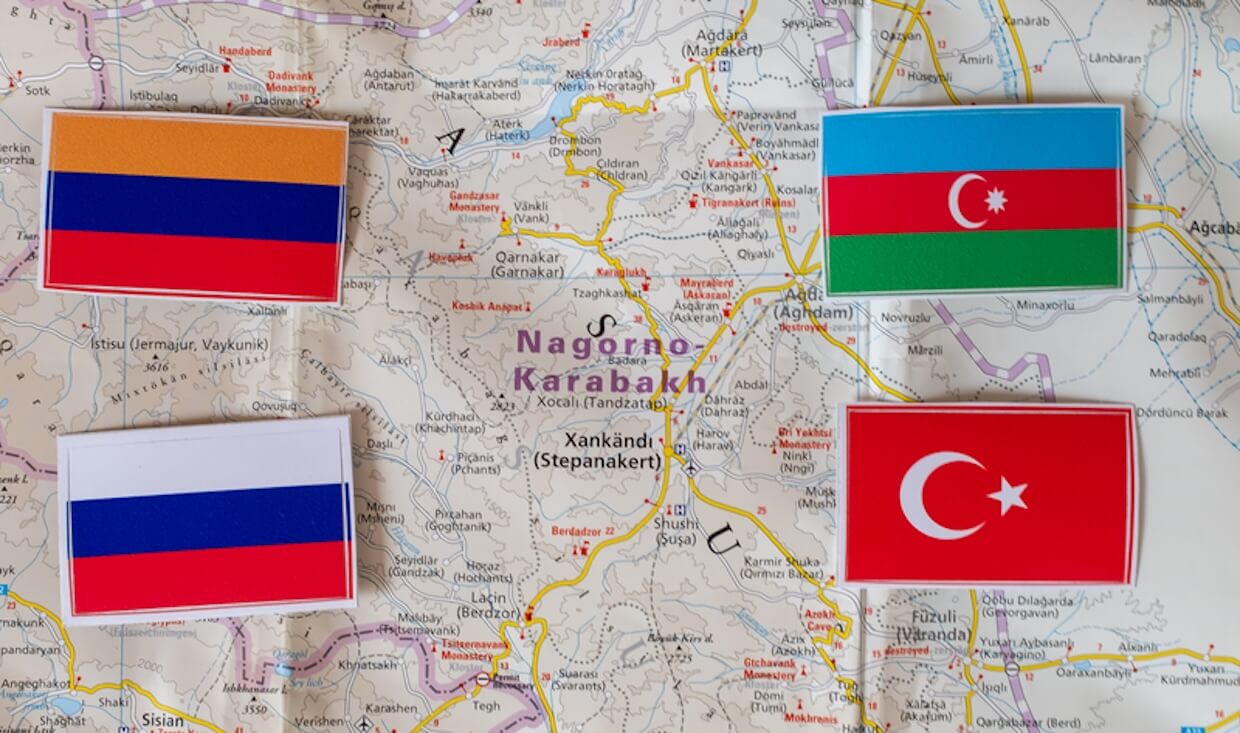
Eric Hacopian, welcome! To begin, Armenia’s 2026 parliamentary election has been widely interpreted as a public endorsement of Prime Minister Nikol Pashinyan’s peace agenda and strategic reorientation toward Europe. Do you see the result primarily as a democratic mandate for peace, a geopolitical rejection of Russia, or evidence that Pashinyan’s brand of anti-establishment populism continues to resonate despite the trauma of Nagorno-Karabakh?
Eric Hacopian: There’s a simplistic narrative, which is very easy to understand in the West, that the elections were simply about Russia: you go towards Russia, or you go towards Europe and the West. But it’s much more complicated than that. One of the keys to understanding our election results is recognizing that multiple, sometimes contradictory or overlapping things can be true at the same time.
There was obviously an attempt by Russia to interfere in the elections here. You would have to be very naive not to believe that happened. One of the primary candidates—actually the leading person in the opposition now—was someone who made his fortune in Russia and has never been involved in politics. So, it’s highly unlikely that he would have gotten involved in this, running in any elections here, if he had not been encouraged by the Kremlin. That’s just not how the Russian system works.
However, the gist of the opposition to Mr. Pashinyan and his party was not based on support for Russia; it was based on his policies. For the first time ever, more than half the country voted against the current government and the current Prime Minister.
What they are aghast at is what’s perceived to be the Finlandization of the country, in which the country’s national interests are not pursued, and the country is entirely pursuing policies that are orchestrated or demanded by a very unpleasant regime in Baku. Some people in the West—obviously this government and some of their Western allies—want to portray this differently because they don’t want to talk about that. That’s the 800-pound gorilla in the room because it’s not comfortable.
The Russian narrative is much more saleable because people are used to it, especially in the West, because of Moldova and other places, and because of real and supposed Russian attempts at interfering in other elections. And I don’t want to dismiss it. But it’s much more complicated than that, because all of these foreign and domestic forces have absolutely no problems with the Finlandization of Armenia, which is something that many voters object to.
They, sort of, sweep everything under the rug by labeling it pro-Russian, but that’s not the case. The pro-Russian position in Armenia is actually much, much smaller than it is, for example, in Moldova. The Russian influence here, if I was to guess, and if you do a poll, is probably no more than 15–20 percent of voters who can be called “pro-Russian.” If you have spent any time in this part of the world, you will understand that some of that pro-Russian sentiment is actually pro-Soviet nostalgia.
It’s older people who remember a time when they were younger, they were prettier, and they remember all the good things and none of the bad. It’s just a normal, natural reaction. This is true of all of Eastern Europe and all of the former Soviet countries, whether it’s Armenia, Azerbaijan, Uzbekistan, or Lithuania. There’s always that element among people.
So, to simply portray this as pro-Russian is misleading. This government wants to hide its own, essentially, compliance and Finlandization by the Baku regime by portraying any opposition to it as pro-Russian, which is simply intellectually dishonest.
You Cannot Use Russian Methods to Fight Russian Disinformation
You have argued that Armenia is experiencing “dangerous democratic backsliding” and warned against the criminalization of political opposition under the banner of combating Russian influence. How should democracies defend themselves against foreign interference without undermining democratic pluralism and civil liberties?
Eric Hacopian: The question you just asked is really the ultimate question, not just for here, but for everywhere. I always start with this one simple rule: You cannot use Russian methods to fight Russian disinformation. Because if you do, they win. Because part of the Russian effort in these areas is really not to have certain people win, but to discredit democratic systems. Because that’s also a win. If you’re a totalitarian system, you don’t want any kind of democratic development. People thinking that the democratic system is not legitimate is a victory. It’s a victory for all kinds of authoritarians, whether it’s China, Russia, or, in certain cases, the Erdogans of the world.
So, what you need—it’s a very fine balancing act. If you’re serious about it, where it really starts is by putting the light on people. For example, if you have proof of Russian interference, you out it. In a very open manner. I’ll give you a perfect example. We have the head of the opposition, Samuel Karapetian. Right at this point, he’s under house arrest. Do I believe the Russians were involved in pushing him to run? Yes, but if you never put out any public evidence of it and then you go after the second person, you go after the third person on the same issue without providing any evidence of it, what are we supposed to think of it?
Obviously, I believe a Russian oligarch moving to Armenia to run is directed by the Russian state. But what about the second, or the third, or the fourth party? Or they’ll use this blanket claim: “Russia’s funding this.” Let’s just take it theoretically. What if Russia is funding someone who is not pro-Russian to disrupt our electoral process? Should that person be punished? It could easily be done, and I’ve seen it. Different sides were spending money promoting or attacking people who were going to finish fourth or fifth for that particular reason. So, on the one hand, you have to fight this interference, but you need to do it openly. You can’t just say, “Well, these are state secrets, and we don’t want to harm relationships with Russia.” Well, if Russia is attacking your political system, what’s more harmful than that? You have to do it openly.
Transparency Is the Only Democratic Answer to Russian Influence
At the same time, it cannot be an excuse to criminalize almost all of the opposition that you don’t like by connecting them, on the thinnest of evidence, to Russia. What we had, which was quite disturbing, is that there are a lot of Russian dissident sites that frankly do very good work exposing things that happen in Russia and between Russia and Ukraine. Many of these places were being used to dump blanket accusations. Imagine if I came up with a document claiming that you and three of your friends are involved in trafficking cocaine from Colombia. I put the name of a person who actually is trafficking cocaine from Colombia. And they have all of these schemes that they were going to ask you to help them, but there’s no evidence of them ever talking to you. Then, you understand, in the political context, you become a drug dealer. Because this is not a court. There’s no evidence. You’re in a document that’s put up on some credible site that has done good work. But who produced this? Obviously Western intelligence, whoever is involved, consultants that work for the current government.
So, it’s this very muddy situation where you need to fight disinformation without allowing governments like ours to use it to criminalize the opposition, or anybody they don’t like, by connecting them to Russia—which happened. Both of these things happened.
Is there a way out? To be honest with you, there’s no clean way out. There’s no perfect formula. It’s really a question of how you approach it in principle. If you’re going to maintain transparency while fighting this interference, that’s the best way to approach it. But holding these kangaroo courts, where evidence is never shown, is a very difficult process. It needs to be done in a way that, fundamentally, always goes back to this question: Is this what Russia would do to its own opponents?
I mean, you cannot use their methods. It’s a hard balancing act, but if you’re principled about it, you should come close to achieving it without ever arriving at a perfect formula, because it’s designed to be disruptive.
The Closest Political Figure to Pashinyan Is Actually Erdoğan
In your recent writings, you drew parallels between developments in Armenia and the post-2016 trajectory of Turkey. Do you believe Armenia faces a genuine risk of sliding toward a majoritarian or security-driven form of governance despite its democratic achievements since the Velvet Revolution?
Eric Hacopian: There are similarities to Turkey, and there are things that are clearly not similar. I do not think that we are heading in the same direction. Erdogan, for example, is essentially dismantling the last facade of a normal democratic process in Turkey, as we know it, by criminalizing the opposition. There’s some element of that here, but I don’t think we’ll get there.
What we’ll get is what we have today, only more magnified—this sort of demagoguery of “it’s me or Russia, it’s me or war.” The less popular he gets over time—and in almost any democratic system, you win your first election at 70, then you’re at 50, then you’re at 45—the problematic election comes when you could actually lose.
That’s when you’ll find out who’s a Democrat and who’s not, and who will be willing to leave. The similarity is actually not between countries; it’s between people. The closest political figure to Pashinyan is actually Erdogan. In their style and in their base. Erdogan has a base of 30 percent of voters who will never leave him under any circumstance. Because that base is really not about him; it’s about who he’s against. He’s the guy who broke the Kemalist white Turk world that oppressed them, however you want to describe it, for 70 or 80 years.
For Pashinyan, his base is rural, poor, and old—which is the same Erdogan base—and it’s based on social resentment over what was done to them by the old regime for 30 years. So, they’re both built on negative identity, or on what they’re historically against.
In that way, they’re quite similar. Mr. Erdogan had the famous line that democracy is a train, and I’ll get off when it takes me where I want to go. He’s already gotten off. Pashinyan is on the way.
Armenian political culture is anti-totalitarian. It always has been. There’s a difference between being pro-democratic and being anti-totalitarian. You cannot, for example, have the system they have in Azerbaijan, where you worship Heydar Aliyev or something. If you do that here, they’ll laugh at you. Political figures here are meant to be laughed at. They’re not there to be worshipped. So that authoritarian gene is very weak here.
So, I think where he’ll go is to use the system and, essentially, create these false binaries, between either being for Russia or being for him, or being for war or being for him. He will just take that to further and further extremes. By any measure, most of the elected opposition has been criminalized.
What does that tell you? Even during the periods when Erdogan didn’t do that, he only recently started doing it. Now, you can say they have evidence of this. Well, if you have evidence, show it. If you’re saying he’s a plant by the FSB, then bring it out and show it.
So, there are similarities, but there are also dissimilarities, and they have to do with cultural factors. There are lines that you cannot cross here. Those lines are further down the road in Turkey, unfortunately.
So, I don’t think Pashinyan will go there. It’ll be more a matter of manipulating the system to get the results that you want.
Nagorno-Karabakh Cannot Be Reduced to a Historical Mistake
Pashinyan has increasingly advanced a “Real Armenia” narrative centered on the internationally recognized Republic of Armenia rather than historical territorial claims. Is this the emergence of a new civic patriotism, or does it represent a new form of populist nation-building that seeks to redefine Armenian identity around a different conception of “the people”?
Eric Hacopian: It’s much more basic than that. It’s really about a leader not taking responsibility for his failures. The ethnic cleansing in Artsakh, or Nagorno-Karabakh, is the greatest disaster in Armenian history since 1915. So, you have two ways of approaching it. Obviously, he was not singularly responsible for that result. There are many other people responsible for that result, but you’re the leader of the country at the time. So, you have two options. You can take moral responsibility for your own failures in that outcome, or you can attack and try to discredit a very noble cause.
What was the noble cause? The noble cause is that, in 1988, the Armenian people as a collective decided that what happened to them in 1915 cannot repeat itself. That was the struggle of Nagorno-Karabakh. It was nothing beyond that. Now, how that would shape up in the end, what would it mean? Is Karabakh part of Azerbaijan? Is there a third option? Those are different things. But fundamentally, what drove millions of people to sacrifice, endure no heat, no water, and all of these things for all these years was that idea.
He is essentially saying that it was an illegitimate goal, or that it was a mistake. He is essentially saying that everybody who died, died for a no-good cause. That backfired entirely. This is a guy who was supposed to win by 60% of the vote, and not only did he not win by 60% of the vote, but he was also denied even a constitutional majority, which he’s trying to cheat his way into.
There were two kinds of opposition. There were these third-way, pro-Western, anti-Pashinyan parties, none of which made it into Parliament because they killed each other off. But the traditional old parties got 39% of the vote, and what happened is that 200,000–300,000 people came out who would have never voted and voted against him. Supporting people, they don’t even like.
So, this “Real Armenia” concept entirely backfired politically. Because it’s not seen as legitimate, and it isn’t legitimate. There are intellectual cases to be made for what he’s saying, but he’s not the person to make them. Because if he’s making them, you’re simply not taking responsibility for your own failures.
This refusal to take responsibility for one’s own failures is a classic Armenian political-class trait. Nobody does it. Maybe nobody does around the world, to be perfectly honest, but nobody thinks that they need to take moral responsibility for their failures.
Now, good or bad, you can just say, “This is my portion of it. It’s not 100% my fault, but 20% of it is mine, and I take it, and I own it.”
Instead, what he does is to attack people while running away. You cannot convince 80–90% of Armenians that Nagorno-Karabakh is not Armenian, in the sense that Armenians have lived there since time immemorial. You’re not going to win that war.
What he’s done, actually, is that he’s got the 20–30% base—that’s his strong base. What he managed to do during this election was to create an equal base that hates him with the same fervor that his base likes him. Because he’s crossed too many red lines with those kinds of people by attacking history, by falsifying history.
Now, we can have a thousand discussions about the issue of Artsakh and this and that. But to say that the initial instinct of the people acting there was not correct is intellectually dishonest.
Armenia May Be Laying the Groundwork for a Future War Without Realizing It
You have posed a series of pointed questions regarding the government’s reinterpretation of the Karabakh movement. More broadly, can a stable Armenian democracy be built on a political narrative that treats the Karabakh project as a historical mistake, or does such a narrative risk deepening social polarization?
Eric Hacopian: Pashinyan is making a classic mistake, one for which we and our region will probably pay for another two generations. Because he’s unwilling to take responsibility for his own failures, he is identifying failure and defeat with democratization and westernization.
There’s a big age gap in Armenia. There are only two generally democratic countries in the world in which younger people are more conservative than their elders. It’s Armenia and Israel. Under-30s in this country opposed this government by a factor of 3 to 1, 4 to 1. They oppose the peace agreement because they see it as a humiliation of the country.
What he’s doing is seeding a future generation that is not going to accept this framework. They would have accepted this framework if he had been honest about it. But they came out and voted against him to defend historical narratives and what they conceive to be the truth, or what their friends died for.
Essentially, in Armenia, voters are now divided into two blocks. I call one the Weimar group, which is this government. This government is closer to the Weimar Republic than any other example in history because it’s a period of democratization, economic growth—especially in the early years—and all of that. But it’s also a deeply, ideologically anti-nationalist state, which is quite rare in this part of the world.
It’s anti-nationalist ideologically. Some of the things they do—taking Ararat off stamps, stupid things—I’m sure no Turkish official ever asked for that. It’s almost ideological with them.
They’re right now the bare majority, or the largest minority. Against them are the people who came out and voted against this government, not to support the opposition. It’s what I call the Armenian Likud. That tends to be younger, better educated, and have more money. In the long run—five years, ten years—Armenian Likud is going to beat Armenian Weimar.
This is a country that is becoming more technologically adept. Per capita income has doubled in this country. It’s a country that’s getting wealthier and stronger over time. It’s projected that by 2035; Armenia’s per capita income is going to be larger than Turkey’s and Russia’s. It probably already is larger than Turkey’s, depending on whose numbers you believe, because of inflation and half a dozen other factors.
You’re going to have a situation where this country is more functional, wealthier, technologically more adept, with AI centers, cutting-edge IT, and half a dozen different things, at the same time that Azerbaijan is literally moving into the post-oil era. That is a recipe for war. At some point, the Aliyev regime, as it starts moving into its debt spiral, may start a war to save itself.
We know there’s a history of this, whether it’s the Greek colonels in 1974 or Argentina in 1982, where regimes try to solve domestic problems externally. One of the reasons Ilham Aliyev will never sign a peace treaty is because he needs to have that card.
His regime, without an Armenian mythical enemy, becomes quite problematic. Because the moment Azerbaijan signs a peace treaty with Armenia, every issue in that country becomes domestic. Domestically, what does he have to point to? They’re less free than Iranians, according to the US government. They’re getting poorer and poorer compared to their resource-poor neighbors, Georgia and Armenia.
One of the things you’ve got to look at economically is the way the income gap between these countries is starting to open up—where Armenia and Georgia are going, and where Azerbaijan is going. Post-2035, according to their energy minister, they’re essentially moving into the post-oil era. Because oil, as a major export commodity, essentially will no longer be there, as production is declining by about 10 percent a year.
What we’re dealing with here is that we’re setting up a future war, except no one knows it. Pashinyan’s brand of anti-nationalism just drives that even further. Because when the new generation comes back to power, their entire ethos will be to undermine what they perceive to be the humiliation of the country over the last five or six years. It’s a very historically predictable scenario. We’ve seen it countless times.
Unfortunately, we’re probably heading toward a very uncertain world for the next twenty years. If you really want to understand our world today, we’re somewhat in a period resembling the era between the two World Wars—a setting in which there are rules, but there really aren’t rules. There’s a hegemon, but the hegemon has gone crazy.
You have these perceptions of different powers rising. Actually, that isn’t the case. Everyone is declining, in a way. The US is declining. China is going to have half the population it has today fifty years from now. How is that rising?
Turkey itself—everybody with brains wants to leave the country. I always love it when people talk about Turkey as a rising power. A rising power with an Argentine economy just doesn’t work.
So, this is a very uncertain timeframe, which means the threat of war is much greater. You can go from zero to war in three months. That’s my fear. My fear is that my objection to him and to his regime is that unbeknownst to them, they’re laying the groundwork for a future war.
The Biggest Challenge Facing Armenia Is Not Ideology but Competence
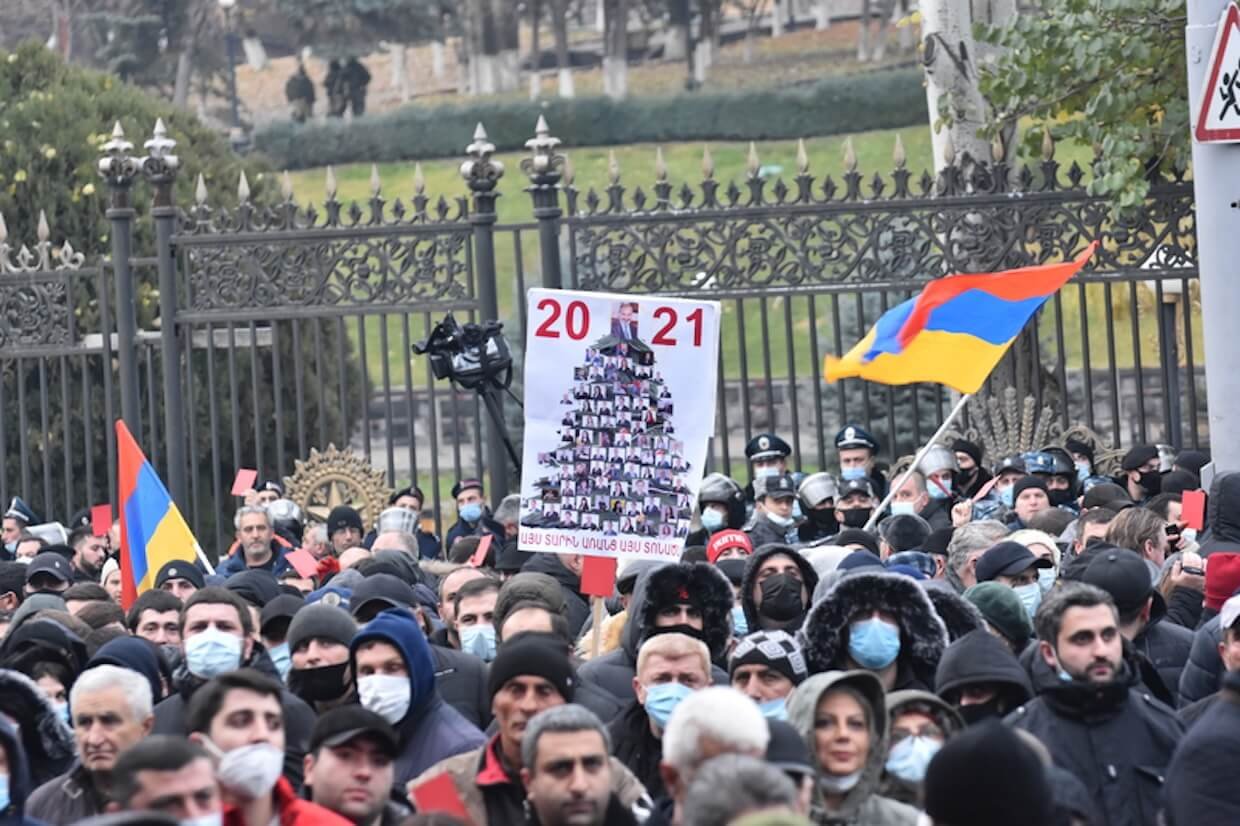
One of your recurring themes is the need for Armenia to build a competent state. Looking back on the years since the Velvet Revolution, where has Armenia succeeded in strengthening state capacity, and where has it fallen short?
Eric Hacopian: I was born in Iran, lived in the United States most of my life, and then moved to Armenia. I learned one thing: there are three kinds of states in the world. There are the complete failed states—the Somalias and Syrias of the world—which are very few. Then you have the top 20 or 30 countries in the world, which have planning capacity, where you can actually think about where you want to be 20 years from now and plan for the future. Then you have this vast number of countries, and Armenia is one of them, that fall somewhere in between. You have a functional state. The police work. If you get assaulted, you can go to them. You can resolve property disputes. But you don’t have planning capacity.
State capacity in certain sectors in Armenia has vastly improved since 2018, mostly because taxes are being collected much more honestly. The budget has almost tripled. We now have a budget that’s close to the $8–10 billion range. It used to be in the $2–3 billion range. So, some things are actually starting to work. Some of that is a reflection of a private sector in this country that is far more functional than the public sector, as is true in almost every country in this region. Private sectors are always way ahead of the public sector in their capacity to function.
So, I would say that in certain areas—whether it’s setting up a new intelligence agency or reforming parts of the military—progress is happening. You’re getting a slightly more competent state. However, it’s nowhere near first-world standards, and it’s nowhere near progressing as fast as it should. Mostly because the talent level isn’t there.
One of the realities in countries like this is that the best and the brightest left the country for 30 years. Over time, that starts affecting what I would call the middle-management layer. Every political and economic system in the world is run by middle management. It’s not the Steve Jobses of the world. You’ll have the Elon Musks and the Steve Jobses, but then you also need 500,000 competent people who can run whatever they built. That’s what’s missing in this country. It’s missing in most of the countries in our region because of the brain drain.
The biggest issue in state-building in Armenia is competence. It’s not even ideological. We can say that Mr. Pashinyan may have the best intentions. I believe he actually does want to build a competent state—except in the realm of the judiciary, because he wants to keep that politicized. After all, which political actor doesn’t want the opportunity to politicize or criminalize their opponents? But for the most part, he genuinely wants to build a competent state. The cadre just aren’t there yet, or they’re still in the pipeline. So, yes, there has been some level of improvement in state-building, but it is nowhere near where it should be.
Russia Turned Armenia into the Most Pro-Western Country in the Region
Russia appears to have failed in its effort to prevent Pashinyan’s re-election. Does the election mark a decisive decline in Russian influence, or does Moscow still retain substantial leverage through economic ties, media networks, and security structures?
Eric Hacopian: I always tell our Russian colleagues or friends who visit that, in two years, Mr. Putin undid 200 years’ worth of work by the Tsars and the commissars. A Russia that allowed the ethnic cleansing of Nagorno-Karabakh and the imprisonment of its leaders is not a Russia that’s worth anything to Armenia. Russia died in those few weeks in September 2023. The Russian position has collapsed, and it will not be rebuilt for generations. They actually managed to take the least hostile country toward them in the region and turn it into the most pro-Western country in the region. It’s entirely their doing.
I have no sympathies for that state. Not for the people—for the state. I have absolutely no sympathies for them because they get everything they deserve. But do they have leverage? Yes, they absolutely have leverage, mostly for economic reasons. Through natural gas and many other areas, we’re still very closely tied to Russia. So, they can activate their capacity to cause problems here—by not allowing goods to pass through and through half a dozen other measures. They can do all of that. And they are doing it. But that essentially speeds up the death cycle of their influence.
The thing with the Russians is that it’s all sticks and never any carrots. The West, at least, will promise carrots and, in many cases, deliver carrots. With them, it’s just sticks. “This will happen to you if…” Who wants to live that way?
Then you have to understand, from the perspective of most people here—or most young people here—and in societies like ours, young people matter a lot more than older people because they’re the competent ones. If you ask an average person in Armenia, or anybody in this region, “Do you want Poland or do you want Belarus?” Poland is going to win 90–10. The problem with Russia is that its position collapsed long ago on an ideological level because it’s simply not an attractive model.
So, all that’s left are these forms of leverage: “We won’t allow your apricots to go through.” Well, you can endure that for one or two years, but eventually you’ll find other markets. It’s not easy, and it will harm a lot of people, granted. I don’t want to understate the problems. But I also think that the Russians do not want to burn the last bridges they have here. So, they’ll go to a certain extent, but they won’t go beyond that. Because if you want to understand the Russian approach, they do not understand democratic societies, or specifically democratic peoples. Interfering directly in elections here is the stupidest thing you could do. Absolutely the stupidest thing you could do. Because then the governing power makes you the issue. They turn the election into a referendum on you, and you’re not popular. I see this country moving west for many different reasons. Frankly, most of our region is moving west—not because the West is nirvana or because it has some great, bright future, but because the Russian system is collapsing and is no longer viable.
You Cannot Satisfy Authoritarians by Giving Them What They Want
Azerbaijan continues to demand constitutional changes as a condition for a final peace agreement. Should Armenians view such demands as a legitimate component of conflict resolution, or as an unacceptable intrusion into Armenia’s sovereign constitutional order?
Eric Hacopian: Absolutely, it should be rejected if you understand the purposes behind it. What Aliyev is demanding, technically, is actually not even in the Constitution; it’s in the Declaration of Independence. So, it’s not even a constitutional issue. The Armenian courts have essentially ruled that that statement is not binding on the Constitution, so that’s already been settled.
Mr. Aliyev needs a reason not to sign the peace treaty, and this is the best one. Demanding a constitutional vote serves several purposes for him. First of all, it takes away the onus of him not signing. When the Armenian side is willing to sign, it shifts the issue onto us.
Second, it causes a political civil war inside Armenia because he understands how difficult it is to pass a constitutional amendment. You not only need to win; you need a certain number of votes to win. You can get 58 percent of the vote and still not pass. You need to get to 650,000 votes, so it’s a difficult process. He knows that. He knows this will cause a political civil war inside Armenia, and he knows that if it fails, he can turn around and tell the world, “See, the Armenian people voted against peace.”
So, it’s a complete trap.
For this government to accept this as anything legitimate, when it actually violates one of the 17 points of the agreement—that you do not interfere in the other country’s internal political process—tells you the extent to which they’re Finlandized by the other side.
But if you really want to understand it, I’m sure you’re well aware of how totalitarian systems work. Totalitarian systems fundamentally operate through humiliation. This is an attempt to humiliate our population, not the leaders. This is an attempt to get people to vote for their own humiliation. That’s what he wants.
There’s a psychological component here. One of the reasons totalitarian systems work is that they force you to do things you don’t want to do, or to lie about things. By lying, you’re weakening yourself.
Why does North Korea have elections? Because they want to humiliate the population. They want to force you to participate in something that you know is a farce. So, based on everything I’ve outlined, any democratic society would need to reject his demand, because this will not be the last demand. He will come back and say, “Well, you know what? Now you need to allow 300,000 people to come back to Western Azerbaijan.”
Just yesterday, they held a giant festival—the Western Azerbaijan Festival. They were talking about the right of return and all of these other issues. So, what are we really talking about here?
This is an attempt to humiliate our population. If we have any democratic sense, we should vote against this if it’s ever put before us. It needs to be rejected.
It’s also completely illegitimate. If this was so important to you, why didn’t you negotiate it into the 17 points? You didn’t. You accepted the agreement without it. So, you’ve already initialed a peace agreement without this provision. What’s the logic here?
But as a small-d democrat—and by that I mean someone who believes in democratic systems and democratic processes—to me, it’s completely unacceptable for people who do not come from democratic processes to impose conditions and demands on democratic peoples. I don’t care if it’s Putin, I don’t care if it’s Aliyev, I don’t care who it is.
Because we know what those people think. We know what they want, and you can’t satisfy them by giving them what they want. They will always come back for more—and for more humiliation.
Armenia Can Remain an Oasis of Freedom in a Region of Authoritarians
In several of your writings, you have argued that Armenia should define itself internationally as an “island of freedom in a sea of tyrannies.” How sustainable is that vision when Armenia must normalize relations with increasingly authoritarian neighbors such as Azerbaijan and Turkey?
Eric Hacopian: Let’s be honest. I sit here, and I’m very critical of this government. I’m critical of our military, I’m critical of our prime minister, I’m critical of our intelligence services, and no one’s ever knocked on my door. It doesn’t mean that that moment won’t come.
That’s what you struggle against. But if you are principally dedicated to preserving freedom, there’s freedom and there’s democracy, and they’re completely different things sometimes. They’re not always the same.
If you have a culture of freedom—and this country, in a way, does have a culture of freedom—freedom is almost like a birthright. Armenians do not do tyrants. It just doesn’t work here.
If you have that resistance gene, you can likely protect a good part of your freedoms, even if you don’t have a completely democratic system, while living in an area surrounded by authoritarians.
Frankly, there are countless examples of this in history. You go to Amsterdam in the sixteenth and seventeenth centuries, and there were places that functioned as small islands of freedom in vast seas of tyranny, yet they managed to preserve that character. Even today, you go to Holland, and they still have that culture of freedom. It’s defined in different ways, but it still exists.
You walk down the street here and you’ll see dissidents from Uzbekistan, dissidents from Chechnya, dissidents from Russia, and people from Ukraine. So, we already are that oasis. You’ll see Iranians everywhere.
I don’t think we lose that, because it’s not really tied to a government. It’s tied to a culture. I can say this, I can say that, or I can insult someone. We protect our right to insult our leaders very strongly. So, I think we can preserve it, but because of the cultural background of the country, not because of the political system.
Authoritarianism Has No Market in Armenia
And lastly, at a time when democratic backsliding, geopolitical coercion, and populist mobilization are reshaping politics across the world, Armenia remains one of the few competitive democracies in the post-Soviet space. What lessons—both positive and cautionary—does Armenia offer for understanding the relationship between populism, democratic resilience, military defeat, and national renewal under conditions of external pressure and profound national trauma?
Eric Hacopian: One of the things that I’ve learned, and that we’ve learned in a really hard way through the recent elections, is that countries become democracies—or become free—because the people in them demand it and are willing to fight for it. Freedom in Armenia was brought about by Armenians struggling for their own freedom, in the same way that one day freedom will come to Iran because Iranians have struggled for it, and one day it will come to Turkey because Turks have struggled for it.
So, I do not believe in any of these external forces “bringing you democracy”—these NGO complexes or whatever. We have a democracy because we were willing to fight for it, and we’re willing to keep it. People need to understand that.
I see this among our Georgian friends. They think that you go toward the EU and magically transform the country into Germany. It doesn’t work like that. What is your culture? Are you building a democratic culture? Are you building a culture in which the person who loses leaves, or a culture in which people don’t prosecute the opposition?
People always have to struggle against the state. The state is always the enemy, no matter how good it is. It’s always an enemy of people’s fundamental rights. So, you always have to have that struggle in you. I think we have that. We have to have that capacity to fight, and hopefully we can become an example for other people by fighting, because everybody has to win their own struggle.
As far as the trauma of war is concerned, Armenia faced a very fundamental choice after Azerbaijan lost the war in 1993–94. They decided to sacrifice freedom for safety by turning the country over to a corrupt family dynasty. But normally, at the end of that, you either get freedom, prosperity, or security. Because every Aliyev-type regime has an Assad- or Gaddafi-type ending. There’s always the last day when you’re on a plane to Ankara or you’re on a plane to Moscow. That’s how it’s going to end. There are no other scenarios in that scheme.
Armenia made a very conscious decision that, yes, we lost the war, but we don’t want to lose our freedoms, and we don’t want to lose our democracy. It was a very conscious decision. In a way, it was a very brave one. Because it was very uncertain. It is very easy at a moment like that to say, “I want the strong hand.” This country rejected the strong hand and took the risks. It might pay off; it might not pay off. I can’t say. The verdict is still out. But it was a fundamental choice.
People in this part of the world instinctively understand that authoritarianism does not have a future, and that you cannot build the future you want for your children—economically, politically, or even militarily—through authoritarianism. Because the corruption that accompanies these systems eventually leads to what it always leads to: some level of collapse. So, we made that decision. History will judge whether it was the correct one. But people here understand that. One of the reasons I’m confident about freedom in this country is that authoritarianism has no market here, and people understand that you cannot build the future you want by being corrupt, oligarchic, or non-democratic.