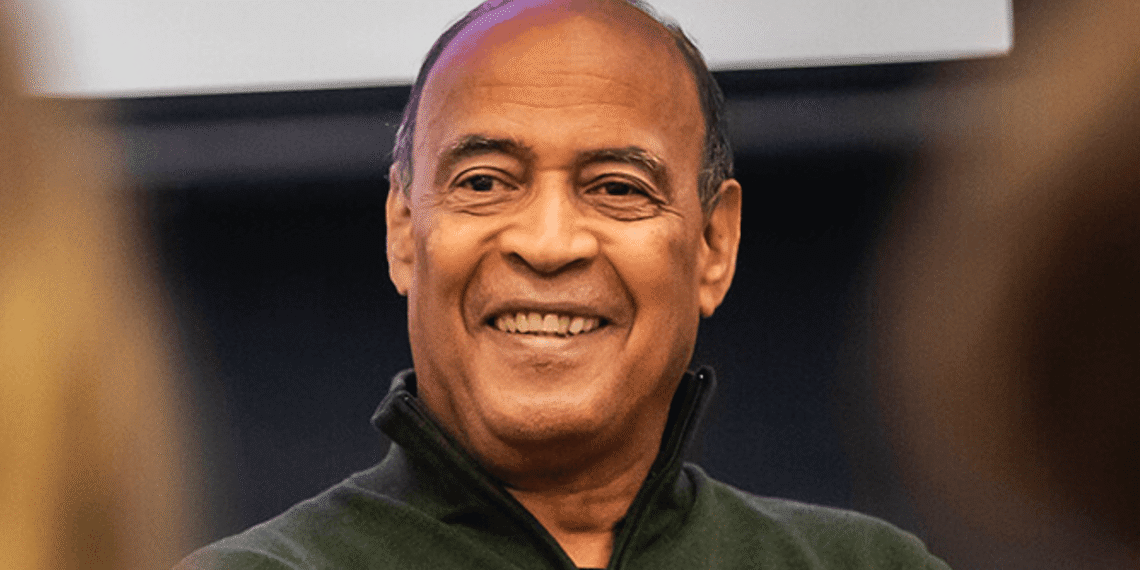
As the United States approaches the 2026 midterm elections, Professor Adolph Reed Jr. offers a critical political-economic interpretation of Trumpism, arguing that the structural contradictions underlying authoritarian nationalism remain fundamentally unresolved. In this wide-ranging interview with the ECPS, Professor Reed examines the tensions between capitalist accumulation and democratic legitimacy, challenges race-reductionist explanations of inequality, and critiques neoliberalism’s displacement of class-based politics. Warning that “the threat of another version of Trumpism will continue to be there,” he emphasizes the limitations of electoral mobilization without durable working-class organization. Drawing on his experience with the Bernie Sanders campaigns, Professor Reed advocates rebuilding solidaristic, universalist politics capable of confronting both economic inequality and authoritarianism through sustained political organization and democratic-socialist transformation.
Interview by Selcuk Gultasli
As the United States approaches the November 3, 2026, midterm elections, fundamental questions persist about the political-economic foundations of Trumpism, the durability of authoritarian nationalism, and the declining capacity of the American left to articulate a transformative alternative. In this wide-ranging interview with the European Center for Populism Studies (ECPS), Professor Adolph Reed Jr., Professor Emeritus of Political Science at the University of Pennsylvania and Distinguished Visiting Professor of Politics at Mount Holyoke College, offers a historically grounded critique of Trumpism, neoliberalism, racial politics, and the erosion of working-class political organization.
One of the most distinctive voices in American political thought, Professor Reed challenges interpretations that privilege political personalities, demographic identities, or ideological labels over the structural contradictions of capitalist democracy. Rather than becoming preoccupied with whether Trumpism should be classified as populism or fascism, he emphasizes its political consequences and underlying material conditions. “Trumpism is clearly a form of authoritarianism,” he argues, while observing that it remains loosely aligned with authoritarian tendencies emerging across Europe and Latin America.
Crucially, Professor Reed cautions against assuming that Trump’s departure would eliminate the political forces associated with his presidency. “The structural contradictions aren’t going anywhere,” he insists, identifying the increasingly fraught relationship between capitalist accumulation and political legitimation as a defining tension within neoliberal democracies. Unless these contradictions are addressed through an alternative political vision capable of providing security and well-being, Professor Reed warns, “the threat of another version of Trumpism will continue to be there.”
The interview also explores Professor Reed’s longstanding critique of race-reductionist explanations of political behavior and inequality. Questioning the treatment of racial categories as coherent political constituencies, he argues that contemporary social science has been “more or less willfully making class and political economy disappear from our understanding of American politics.” His historically specific approach to racism and white supremacy challenges explanations that detach racial ideologies from material interests, institutional structures, and political mobilization.
Turning to democratic socialism, Professor Reed reflects on his involvement in both Bernie Sanders presidential campaigns and the organizational limitations that constrained their transformative potential. “You can’t elect your way to social transformation, at least not without an organizational base,” he observes. Despite these setbacks, he identifies growing skepticism toward capitalism among working people as evidence of changing political possibilities.
Ultimately, Professor Reed argues that confronting authoritarianism and neoliberalism requires sustained organizing beyond electoral cycles. His central message emphasizes the patient reconstruction of working-class solidarity, institutional capacity, and universalist politics. As he concludes, “You’ve got to be able to focus both on what needs to be done to stop the bleeding right now, to keep things from getting worse, and on where we’re trying to go in the long run.”
Here is our interview with Professor Adolph Reed, edited lightly to enhance clarity, readability, and overall flow for publication.
Trumpism Is Clearly a Form of Authoritarianism
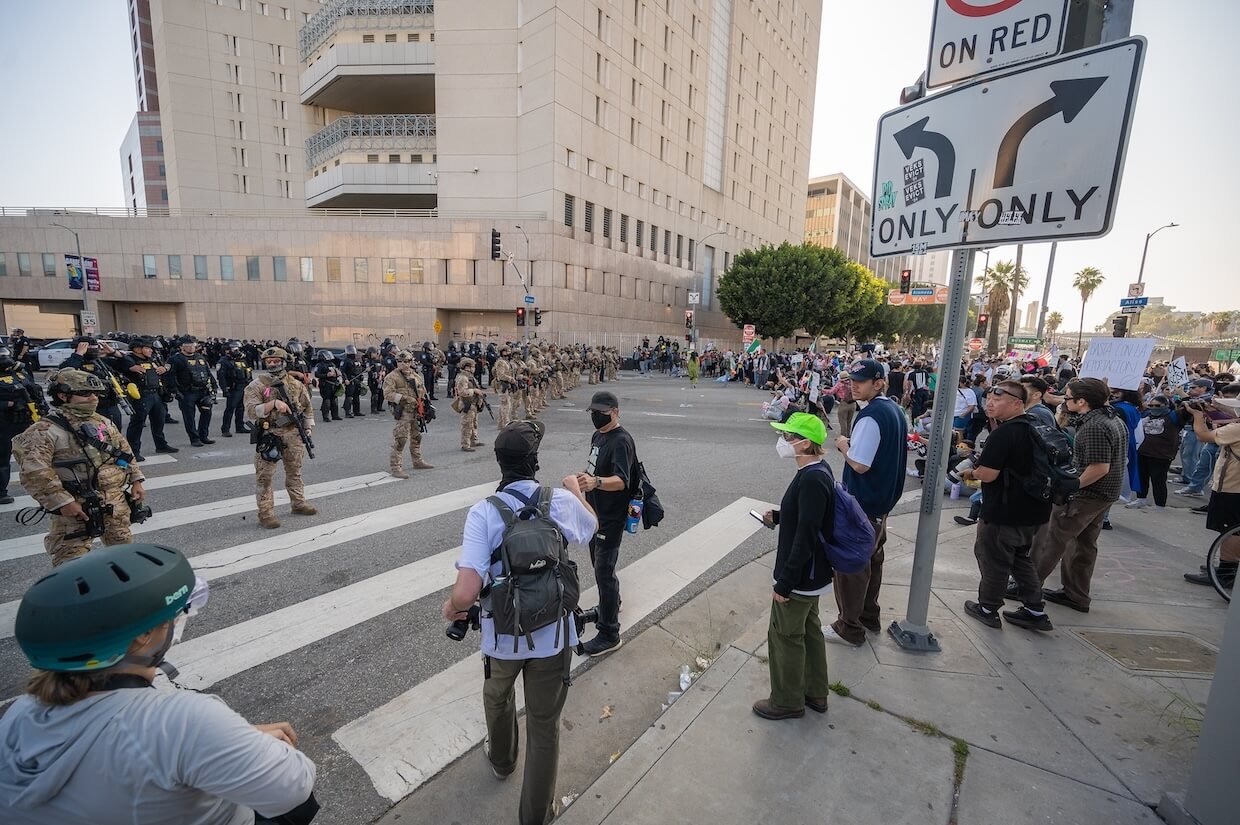
Professor Reed, welcome, and thank you for joining us. Let me begin with how we should conceptualize Trumpism itself. You have recently referred explicitly to the rise of “Trumpist fascism” and elsewhere described Trumpism as the “point of the lance” of a broader fascist international. At the same time, much of the political science literature analyzes Trump through the language of populism, authoritarian populism, or the populist radical right. So, what is obscured when Trumpism is understood primarily as populism rather than as fascism? And what political-economic criteria, in your view, should distinguish fascism from right-wing populism in the contemporary United States?
Professor Adolph Reed: That’s an important question because a lot of ink has been spilled over a debate that, often enough or all too often, shifts the lens away from examining the pragmatic or practical political impacts of the shift and toward a taxonomic exercise, which is academics really like to do. From that perspective, I won’t quibble about whether Trump should most properly or most effectively be understood as a fascist, because that automatically opens up a second-order argument about how we delineate the most important features of fascism.
I would say two things. One is that Trumpism is clearly a form of authoritarianism, politically. While it’s not necessarily directly coordinated, it seems to be more or less loosely aligned with other variants and expressions of authoritarianism that have been rising across the world, not just in Europe, where it’s most conspicuous, but also now in Latin America.
I am concerned about what feels to me like a promiscuous usage of populism, and this is another problem that American social scientists often have. Going back to the 2016 presidential campaign, there was a tendency in public intellectual life, and all too frequently in political science, to define populism in such a way that it would capture any political tendency that’s either somewhat to the right of the conservative coalition or somewhat to the left of the center-left coalition. I found that quite unhelpful and ideological.
Trump’s political persona and performance, as well as the performance of his minions, show characteristics or behaviors that make us think of fascism or other authoritarian movements, past or present. But I’m not really hung up on taxonomizing Trumpism. I’m more concerned with trying to make sense of it within the context of contemporary politics and the dangers it poses to us.
So, it feels a little bit like you may have asked me what time it is, and I gave you a disquisition on how to make a watch. I apologize if that’s true. My son says one of our problems, his and mine, is that we tend to speak in paragraphs.
Trumpism Beyond Trump: Structural Contradictions and Capitalist Interests
Trumpism is frequently interpreted as a highly personalized movement built around Donald Trump’s charisma, grievances, and domination of the Republican Party. Your analysis, however, places much greater emphasis on the destruction of working-class political capacity, neoliberal hegemony, and the absence of an effective anti-capitalist left. How important is Trump himself to explaining Trumpism? If Trump disappeared from American politics tomorrow, how much of the political formation identified with his name would actually disappear with him?
Professor Adolph Reed: That’s a very good question because Trump aspires to be a caudillo, or a dictator, in his fantasy life. Unfortunately, for Trump, the distinction between fantasy life and reality is always blurred. So, I don’t know. Partly because Trump insists on surrounding himself with incompetent sycophants, I don’t think the movement, Trumpism, has institutional constituents so much as a gaggle of free-rider billionaires and hustlers who share with him a mean-spirited take on the world in general, along with no shortage of avarice and a propensity for corruption.
But I don’t know whether Trumpism per se could survive his demise as a movement. That may be wishful thinking, too. But it is also the case that those forces are still going to be out there. To the extent that they have grounded material interests, those interests aren’t going away. Alliances could potentially develop from the affiliations that have come together under the banner of Trumpism, and they could reorganize.
It’s certainly the case that the structural contradictions aren’t going anywhere, especially the increasingly fraught tension between the imperatives of accumulation and political legitimation, principally in neoliberal democracies.
We’re also seeing more and more signs that we’ve come to a point at which the Democratic Party is, by default, more generally favored by large capital and governing elites. I have some friends, like Sam Gindin in Canada, who’ve been stressing this point all along. The Democrats provide a certain stability and seem to be better able, at least on the surface, to navigate the tension between the accumulation and legitimation imperatives than Republicans are, although they aren’t particularly successful either. That, as I’ve argued, is one of the factors that led to the rise of Trumpism in the first place.
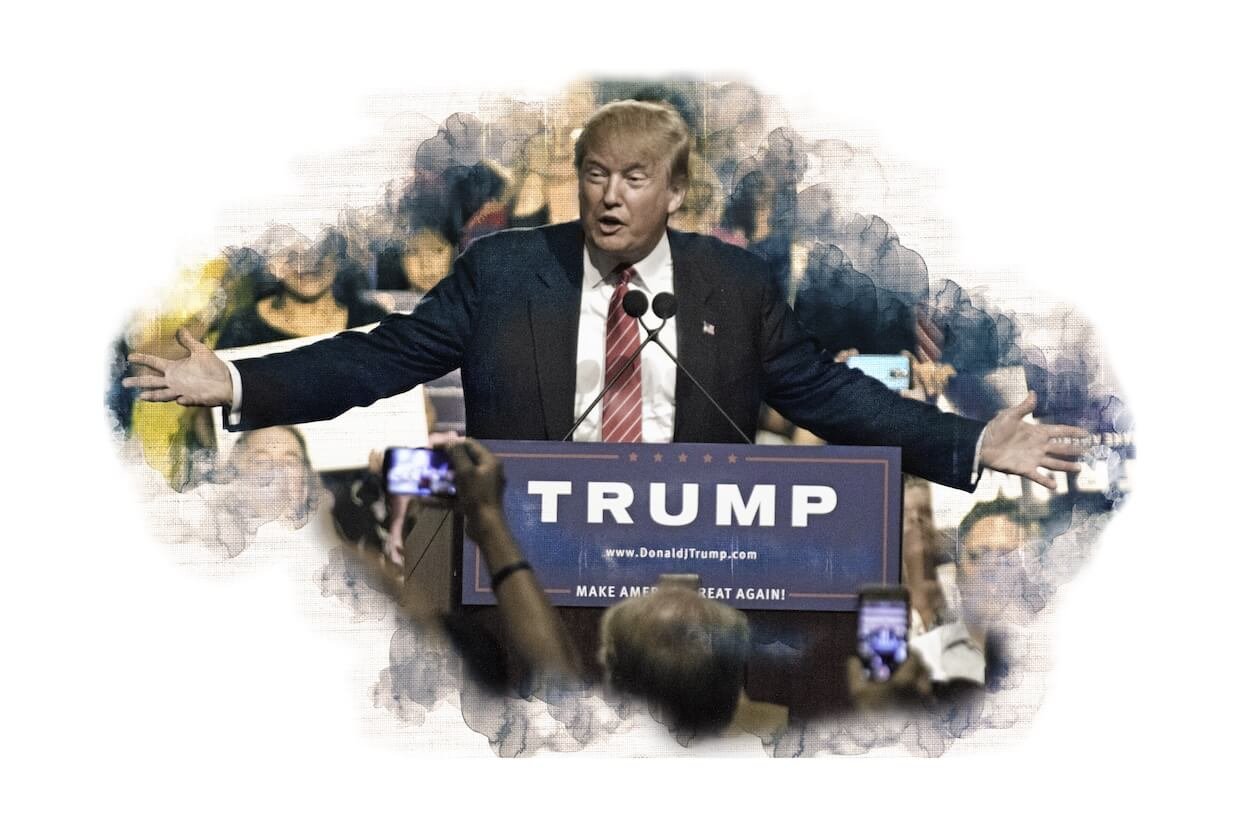
So, in a nutshell, I would say that the structural contradictions that have given space for the rise of authoritarian nationalist, fascist, and populist tendencies around the world remain unresolved. Until those are actually addressed, there will continue to be enough dissatisfaction, desperation, and a sense of undesirable or frightening uncertainty among the general population that, unless there’s some political voice offering a different view of the world and a different strategy for realizing security and well-being, the threat of another version of Trumpism will continue to be there.
Economic Insecurity and Status Insecurity Are Not Really Separable
After the 2024 election, you rejected the widespread claim that Trump had assembled a genuinely “new coalition,” arguing that pollsters and political strategists reify demographic categories into supposedly coherent constituencies. How should we therefore interpret shifts toward Trump among segments of Black, Latino, immigrant, or working-class voters? Do these shifts reveal an ideological realignment, or do they demonstrate the limitations of treating race, ethnicity, gender, and education as ready-made political blocs?
Professor Adolph Reed: That’s a very important question, and some of your readers might consider my response completely off the wall. But I’ve argued that those blocs of voters, defined by the pollsters’ ways of aggregating data, are themselves basically artificial. Black male voters under 40… What sort of category is that? What does that tell us about any set of individuals and what motivates them? Or Hispanic voters, even Hispanic Catholic voters… I think those categories are too idealized and unwieldy to be really useful to us and are more attuned to producing outcomes than to measuring them. That is to say, these formulations of pre-given voting blocs reflect as much an effort to bring those blocs together as meaningful political categories as an effort to help us predict outcomes. They encourage people to understand themselves and their concerns within the taxonomy of those big blocks and act accordingly.
I think that’s the first problem. Over the last 10 or 15 years, I’ve become increasingly impressed by how actively the social sciences, or the various disciplines within them, have been more or less willfully making class and political economy disappear from our understanding of American politics, even making the idea of a working class disappear. I don’t count economics and psychology in this.
One way to punctuate that last point is to note that, for the two or three decades after World War II in the US, my discipline, political science, along with sociology and, to a lesser extent, perhaps anthropology, hinged largely on the invention of a middle class as a baseline category in American politics. The middle class is a notion that defies scientific specificity. It’s all over the place. It’s a category that now has to do with attitudes and social position, but almost never with one’s place in political economy.
That said, going back to the 2024 election, there seemed to be some loss of support among what are categorized as Black or Hispanic constituencies, with some movement from the Democrats to the Republicans. Especially among Black voters, the move toward Trump has always been overstated. What the same pollsters are telling us now is that Black and Hispanic voters who had flirted with Trump seem to have become disaffected with him.
This may seem too tendentious, but I think one of the most meaningful features of this horse-race, post-game handicapping that dominates political interpretation in American life, both in the media and in the academy, is that, consciously or not, it’s more about producing outcomes and constituencies that fit into the abstract categories we’ve made up for them than about understanding what people are actually concerned about.
One other point on this: a former colleague of mine, who’s a very smart, insightful, and talented scholar, contended quite militantly after the 2016 election that the bulk of Trump voters were motivated not by economic insecurity but by status insecurity. I thought about that for a minute and wondered: What part of the solar system do you have to live on not to notice that those two aren’t really separable?
That just suggests to me, as a critical intellectual historian and a student of the history of ideologies, that there’s some ideology at work in that argument. Again, I feel like I’ve gone all around Robin Hood’s barn, as my grandmother would say. I’m sorry if it’s not directly responsive enough.
White Supremacy, Racism, and Historical Explanation

One of your most persistent criticisms of contemporary political analysis is that concepts such as “white supremacy” and “racism” are often treated as autonomous causal forces rather than historically specific ideologies embedded in concrete social relations. In your 2020 discussion of socialism and race, you criticized explanations of Trump’s appeal that presume an enduring racial motivation among white workers without sufficient historical or causal specification. How, then, should scholars determine when white supremacy is genuinely explanatory rather than simply descriptive?
Professor Adolph Reed: That’s also a very good question. I don’t think I have methodological advice to offer. But a big step forward would be to pose the question you’ve raised at every step along the way, at every compass point, and to interrogate the notion of an abstraction. First, what does one mean when one says white supremacy? Or, for that matter, what does one mean when one says racism?
I’m a pretty historicist scholar, and I’m always conscious that the same phrase can mean radically different things in concrete terms at different historical moments and in different historical contexts. One facet of a perverse strain in liberal intellectual discourse over the last 20 or 25 years, which I feel is an American export product in the same way that Air Jordans are, but with the heft of foundation money behind it, is the premise that such abstractions as white supremacy or racism, and one could even say sexism, are primordial and, as some sociobiologists would argue, even hardwired or in some ways fashioned on the Pleistocene plains, or whatever.
It seems to me that if we refrain from constructing accounts of the past and its relation to the present that conform to what the sociologist Loïc Wacquant described as the logic of the trial, it might help us jettison an approach to explanation driven by an ideological or moral imperative to demonstrate the existence of racism, whatever we mean by it. Instead, we could start from historical specificity, first trying to root these expressions in their own contexts, to see what they’re responding to and who’s trying to mobilize these ideologies.
The sociologist Rogers Brubaker, whose work is really very important, has made the point that race, ethnicity, and nationality are all basically different labels for the same phenomenon. But he also notes that we all have multiple ethnic or ethnic-like identities that we experience and carry around all the time. They tend to rise to the conscious mind, or come to the foreground, or retreat into the background in response to cultural and contextual stimuli.
For instance, if my postal worker was raised Catholic and I was raised Catholic, then we’re Catholics with each other. Or if someone has family in Cuba and I have family in Cuba, then we’re Cubans together. What’s especially powerful is his argument that ethnic identities, or a particular ethnic identity, are likely to come to the foreground when mobilized by political entrepreneurs who want to pursue agendas that require the support of a population substantially larger than the number of people who would benefit concretely from the realization of those agendas.
If we think about the fantasized notion of ethnic war, to which people revert to provide evidence for the claim that there are ancient, primordial hatreds, that’s a very good illustration of this. So-called ethnic wars are almost invariably prompted by the actions of self-interested elites. The Lebanese Civil War is a classic case of this. You attack another group, which then retaliates by attacking members of your group. You can then put yourself in the position of telling your group that we, the militia, the ethnically or religiously defined militia, are your only hope for salvation. It’s almost like a mafia extortion racket.
So, I’ll draw a line under this by returning to the presumption that there are these primordial identities. To take another illustration, say I have a Polish grandparent, and you have a Polish grandparent, and we’re somehow capable of sensing that we share a Polishness. That kind of thinking, like Afro-pessimism and stories of tragic, primordial, intractable ethnic hatreds, is basically the quintessence of what racism is.
I’d be happy to be a foot soldier in a campaign to eliminate, or at least counter, that form of thinking, which is best done by trying to organize around a different conception of what shared interests are.
Race Is One Species Within a Broader Genus of Ideologies of Ascriptive Hierarchy
You have argued that Marxism’s crucial contribution to understanding race is “demystification”: treating race not as an eternal social substance but as a historically specific ideology that develops within particular relations of production and power. How does this perspective change the way we should understand racial politics under Trump, especially when explicitly racialized rhetoric, immigration politics, and unequal outcomes plainly remain politically consequential?
Professor Adolph Reed: I’ll tell you one thing: during both of Trump’s presidencies, I’ve said to friends that I’ve occasionally wondered what it would have been like to live through the last decades of the 19th century in the American South, not necessarily to have been alive then, but at least to have watched how the wounded Southern planter-merchant capitalist class, weakened by the capital-P Populist insurgency from below in the early 1890s, regrouped, self-consciously constructed a white supremacist ideology, imposed it institutionally through the deployment of as much violence, fraud, and intimidation as necessary, and established it as the hegemonic ideology.
Because it’s clear that while committed white supremacists in the Jim Crow-era South were certainly committed to racial hierarchy and the establishment of a racist regime, and I would never challenge the sincerity of that commitment, white supremacy was simultaneously a discourse of mobilization. It helped divide the potential electorate and the forces that had been arrayed against that dominant class, while deploying scapegoating in much the same way that the Trumpists do now.
Both things are true. The commitment to a white supremacist ideology was genuine, but it was simultaneously a technique for imposing a dominant order that was skewed toward representing only the interests of the upper class. Both things happen in all these movements.
I’m trying to finish a document now, and I may discuss this in the piece you mentioned. What is most helpful is to see race as a subset of, and I’m often inclined toward the evolutionary metaphor here, a species within a genus of discourses and ideologies of ascriptive hierarchy. That is, taxonomies of hierarchy based on what sets of people, who are themselves partly constructed through the discourse, are by nature rather than what they do.
There have been kazillions of these. Christians versus Muslims, for instance, and we could go on with a whole bunch of them. I’ve always found the eugenics era intellectually interesting because the power of this genus of ideologies was so great, for a variety of reasons during that period, that it became basically disconnected even from phenotype. So, you could see the character of constructed ascriptive hierarchy operating a little more clearly.
If you look at race that way, it becomes a little easier to see the historical function of different expressions of this ideological genus over time, rather than focusing on just one species.
Most People Cannot Imagine a Genuinely Egalitarian Society
In your formulation, contemporary anti-racism can function as “a neoliberal alternative to a left” when politics becomes centered on proportional representation within existing hierarchies rather than transforming the structures that generate inequality. How would you apply that critique today, when corporations, universities, liberal institutions, and political parties have simultaneously embraced some forms of diversity politics while economic inequality has remained deeply entrenched? Where is the boundary between necessary opposition to racism and what you regard as race-reductionist politics?
Professor Adolph Reed: That’s the $64 question. There’s a lot of undoing that needs to be done, unfortunately. There’s a much more complex account to be given of the disappearance of a left grounded in a political-economic understanding of inequality. But we all know it’s happened. It’s happened even within social democratic parties in Europe, where those traditions have always been stronger than their counterparts in the US.
There was a brief period when I was fairly close to Die Linke through a North American left dialogue, and it was possible to see, even then, a tendency within that movement toward a division between what could be summarized as a class-based left and an identity-based left.
Frankly, the victory of what we understand as neoliberalism helped establish the hegemony of a notion of actionable inequality that comes down to disparities or disparate outcomes, and the dynamics and practices that produce those outcomes among ascriptively defined groups. This is essentially about their ability to participate in, or take advantage of, equal opportunity under capitalism.
We’ve now reached a point where capitalist class rule is so dominant that it’s not even possible for most people to imagine a genuinely egalitarian way of organizing society that’s actually different from what currently exists. I don’t know why I’m trying to be quiet about this, but that’s what I think the ultimate problem is.
But if you’ll pardon the plug, an online academic journal I’m associated with, nonsite.org, is publishing a three-part symposium called Capitalism 1996 to 2026. The first installment came out just this past week, and I strongly encourage all your readers and listeners to take a look at it. There are four really strong articles.
There Is No Such Thing as Black Wealth and White Wealth
Your work with Merlin Chowkwanyun criticizes a discourse of racial disparity that carefully documents unequal outcomes but can leave their causal mechanisms underspecified. In the current political environment, how should researchers analyze racial disparities in wealth, health, policing, education, or incarceration without either minimizing racism or converting statistical disparities themselves into proof of a singular racial cause?
Professor Adolph Reed: The first step is always to interrogate whether what seems like a racial disparity is, in fact, a racial disparity. Because it could simply be a statistical artifact that conceals other dynamics producing the apparent unequal outcome, which don’t necessarily have anything to do with race.
In the COVID case, for instance, what initially appeared to be massive racial differences in both incidence and morbidity became much more clearly attributable to environmental factors as time went on and more data came in. These included the jobs people have, where they live, the transportation they depend on, and underlying tendencies or morbidity factors. These factors may be racial to the extent that a history of inequality positions some groups as structurally, on average, more vulnerable than others.
But part of our argument was to question what we gain, even in areas like health and criminal justice, including police killings, by defining these outcomes as definitively caused by racial disparity. The typical approach begins by identifying evidence of racial disparity, which often requires goosing the data, as it were, or inflecting its interpretation toward race as an abstraction. This also functions to justify the abstract claim that racism is a political force that needs to be dealt with. But there’s no causal mechanism there. That’s part of the problem.
I also find the emergence of the racial wealth gap as another significant part of this discourse especially fascinating. First of all, roughly 70 to 75 percent of so-called white wealth is controlled by the richest 10 percent of white people. Between 70 and 75 percent of so-called Black or Hispanic wealth is also controlled by the richest 10 percent of Black and Hispanic people. So, what does racial wealth mean in this context?
I’ve said in talks and even in my classes that we’re ideologically predisposed to believe, at least in the United States, that all Black people think with one brain and share every aspiration, and therefore what’s good for any one Black person is ipso facto good for all Black people, for one tortured reason or another.
So, I suggest stepping outside that predisposition. Let’s assume a white female nurse loses her job, has no independent source of funds, and is on the verge of being evicted from her apartment. Where is the pot of white wealth she gets to go to? Where is the teacup, presumably, from which she can get her rent money? When you think of it that way, the idea of racial wealth seems all the more preposterous. So, I’d say there is no such thing as Black wealth, white wealth, or any other group wealth. To that extent, there can’t be a racial wealth gap.
My good friend and colleague Walter Benn Michaels and I started saying, even before we knew each other and quite independently of each other, that when you hear the word race, you should think unicorn, because race is as real as unicorns are. Just as you can taxonomize races, you can taxonomize unicorns in any way you want because you’re not really constrained by having to approximate the empirical reality of the unicorn. Race is the same way. Let’s get that mixed-up stuff straight.
Universalism, Anti-Discrimination, and Working-Class Solidarity
Your work repeatedly returns to the possibility of solidaristic, universalist politics organized around shared material interests. Critics of this approach often argue that universal programs can reproduce racial inequalities unless they are explicitly designed around historically specific forms of disadvantage. How would you answer that objection? What would a genuinely multiracial democratic-socialist universalism look like institutionally rather than rhetorically?
Professor Adolph Reed: It seems to me, frankly, that this argument is a red herring. It’s simply a matter of committing to conscious and active anti-discrimination within the framework of universalist politics. The presumption of essential solidarity is what provides the basis for challenging prejudice, which is, after all, an attitude, as well as discriminatory practices. So, I think it’s a non-issue. It’s a smokescreen, much like the idea that there are people out there called class-first Marxists or whatever.
No Social Transformation Without an Organizational Base
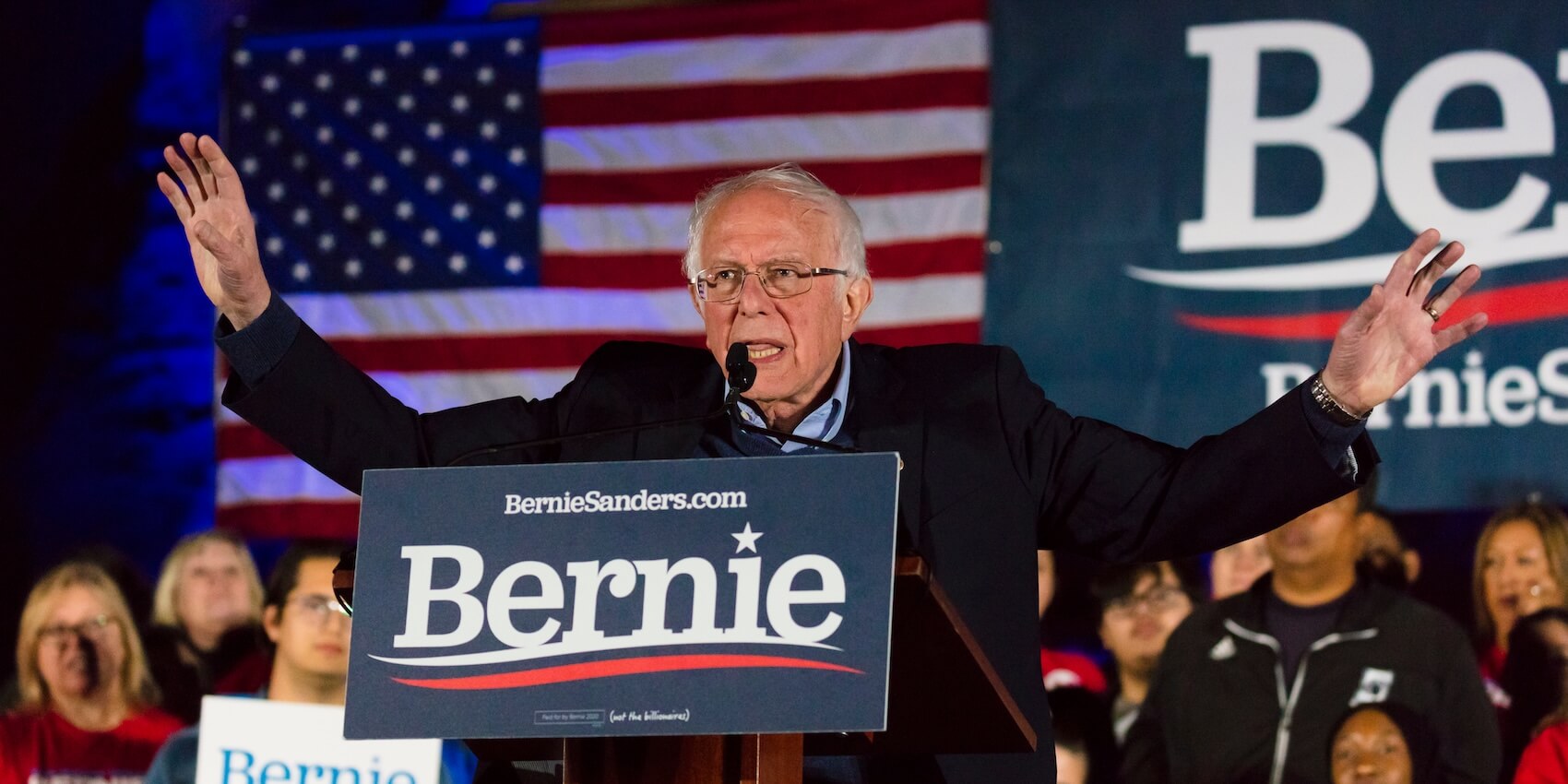
The Sanders campaigns appeared, briefly, to revive mass interest in democratic socialism and decommodified public goods such as universal healthcare and free higher education. Yet the organizational breakthrough many supporters anticipated did not follow. Was Sanders primarily evidence that a latent constituency for social democracy exists in the United States, or did the movement around him reveal how weak the organizational infrastructure necessary for democratic socialism has become?
Professor Adolph Reed: I think both things are true. In the spirit of full disclosure, I worked on both Sanders campaigns. Also, much of the Sanders program actually came straight from the Labor Party in the US, founded in 1996, in which I was also deeply involved.
Very few people believed that Sanders actually had a chance to win either nomination, though some of us thought that if he could somehow win the nomination, he would have a better chance of winning the presidency than Hillary Clinton did. We’ll never know. But many of us also thought it was really just as well that he didn’t win the presidency, because you can’t elect your way to social transformation, at least not without an organizational base.
What we thought the campaigns could do, both times, was publicly dramatize the problem of intensifying inequality and insecurity in the US, show that it was possible to imagine confronting those problems, and stimulate institutionally grounded organizing that could generate another political formation capable of pushing the struggle forward. But I was disappointed.
During the first campaign, seven unions formed a Labor for Bernie group, and they acted in solidarity and coherently throughout the campaign. Interestingly, most of those unions had also been part of the Labor Party 20 years earlier. But for various reasons, some of which had to do with the debasement of American politics already underway, we came out of the 2016 presidential election and went straight into state elections, which were crucial to the unions’ concerns. So, the momentum generated through Bernie’s first campaign dissipated into politics as usual among the left trade unions. That’s one sense in which I say both of the possibilities you mentioned were correct.
Something similar happened the second time. We were a little closer to gaining traction after 2020. Then COVID hit, and the country immediately went into lockdown. I’d been working in South Carolina with my colleagues, trying to build on a grassroots base in support of single-payer healthcare, Medicare for All, on which we’d made a lot of headway during the campaign, notwithstanding the fact that Sanders was badly beaten in the primary. COVID tended to undercut those efforts.
But I’ll say this: I work with the Debs-Jones-Douglass Institute, a nonprofit we created with the Labor Party to undertake worker education, political education, cultural activities, and research on behalf of working-class politics. We’ve been doing this since the early 1990s, and the materials we produced in the 1990s, just a few years after the end of the Cold War, had to tiptoe around even using the word capitalism or being at all critical of it.
That environment has changed radically. I even had to apologize to my undergraduate students for a course I’m teaching this semester because it didn’t assume they were as attuned to criticisms of capitalism as they actually were. The majority of the students in this class are just second-year college students, albeit precocious ones.
One of the quips in the labor movement is that often the best organizer you have is the boss. That’s the case here. Thirty more years of going down the neoliberal road, especially since 2008, have made working people in general more skeptical and more open to critiques that begin by explaining how capitalism works and how those processes are connected to their insecurity.
We Must Stop the Bleeding Now Without Losing Sight of Our Long-Term Goals
And finally, Professor Reed, you have argued that there is “no effective substitute for an anti-capitalist left” and that confronting the far right requires the patient construction of a real working-class constituency rather than episodic mobilization around elections. Whatever happens on November 3, what should democratic socialists, trade unionists, and the broader left actually do the morning after the midterms? What would count, over the next five or ten years, as evidence that an organized political force capable of contesting both neoliberalism and the far right is genuinely being built?
Professor Adolph Reed: I have a pat answer to that: the same thing they did the morning before the election. Let me offer an illustration. During the 2020 campaign, the Sanders campaign sent me on a labor tour of South Carolina. South Carolina is probably the most reactionary state in America, though that changes from day to day, and perhaps often has the lowest trade union density in the entire country.
One of my stops was at a steelworkers’ union hall in Georgetown, South Carolina, on the coast. Among those in attendance were a couple of white rank-and-file members who had come to the hall on either a Saturday or Sunday morning. One of them was a younger guy, maybe 40 at most. He volunteered that he liked the Sanders economic program but couldn’t understand why the Democrats kept getting bogged down in what he called moral issues.
We had a little back-and-forth about what he meant, and it turned out he was referring to same-sex marriage and abortion. I was there as a supplicant, so I wasn’t going to be combative with him in any way. I tried a number of soft-pedaling approaches, like live and let live, or whatever, but nothing worked.
Finally, I asked, what’s more important to you? Having a good, secure job, good wages, benefits, access to desirable housing, adequate healthcare, the ability to provide your kids with a good education, and the opportunity to go back to school if you want? Or ensuring that no two people of the same sex can ever marry and that no woman can ever end an unwanted pregnancy? No, that didn’t convert him, but I didn’t expect it to, because I was just some fast-talking clown from Philadelphia. But it stopped him in his tracks for a few seconds.
I couldn’t help thinking: What if I were his brother-in-law, his kids’ soccer coach, his neighbor, or a co-worker on his shift, someone who had some standing in his eyes and could have this conversation with him repeatedly over time?
No, I don’t think the ideal outcome would necessarily be for him to become a militant advocate of reproductive rights. But at least over time, and on the basis of solidarity, he could come to accept that other people have different ways of seeing these issues, even though they’re committed to the same fundamental program of transforming society in the interests of working people. That’s where real tolerance of difference could come from.
You only get that through building a solidaristic movement over time. We haven’t had anything like that in the US, at least during my adult life. In fact, for most of my adult life, we haven’t even had the benefit of direct connections to people who knew it was possible to have a world like that and who had fought for that solidarity, both inside and outside the trade unions, in the period before World War II.
I may be old-fashioned, but I just don’t see any other way to do it. There’s no other way to get there. Now, that’s not to say that you shouldn’t pay attention to elections at all. I vote in every election.
There’s a phrase the Maoists used to use a long time ago: walking on two legs. You’ve got to be able to focus both on what needs to be done to stop the bleeding right now, to keep things from getting worse, and on where we’re trying to go in the long run. That’s my argument for everybody.