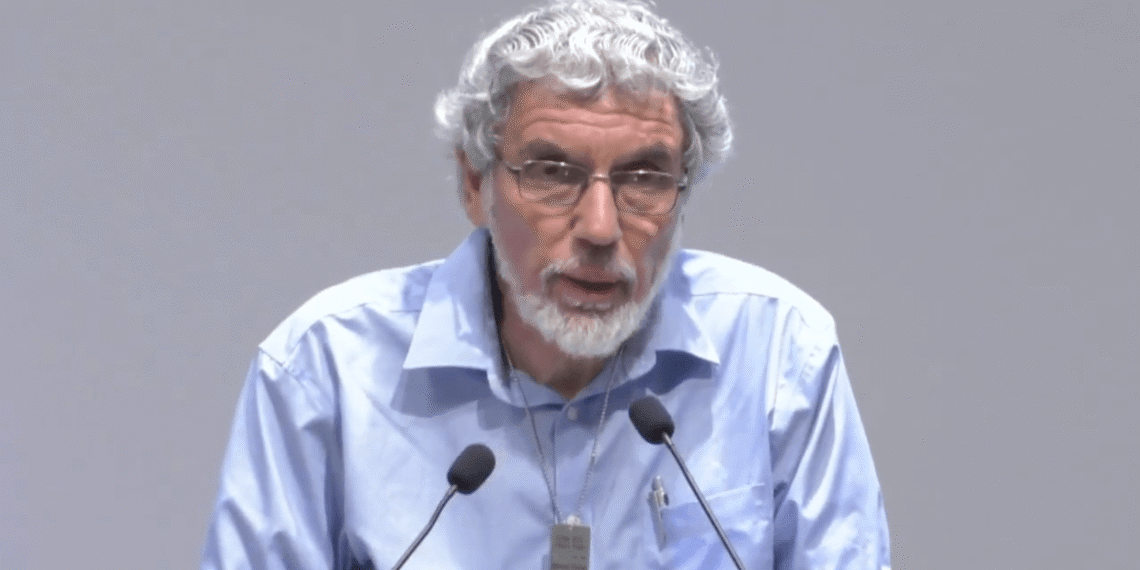
In an in-depth interview with the ECPS, Professor Yoav Peled, Professor Emeritus of Political Science at Tel Aviv University, warns that Israel’s October 27 elections could accelerate the erosion of liberal democracy rather than reverse it. Examining Netanyahu’s enduring populist appeal, the growing influence of religious nationalism, and the weakening of judicial independence, Professor Peled describes Israel’s transition from “a sort of semi-liberal democracy to a majoritarian democracy.” He argues that the opposition’s reluctance to cooperate with Palestinian parties and its unwillingness to address Palestinian statehood severely constrain prospects for democratic renewal. Warning that “any remaining resemblance to a liberal democracy is going to be erased,” Professor Peled maintains that without addressing Palestinian rights, “Israeli democracy cannot be sustained.”
Interview by Selcuk Gultasli
As Israel approaches its October 27 elections, the country faces profound political and societal divisions shaped by the aftermath of October 7, the devastating war in Gaza, intensifying religious nationalism, and persistent challenges to democratic institutions. Prime Minister Benjamin Netanyahu’s political resilience, the growing influence of the radical right, and the opposition’s uncertain alternatives raise fundamental questions about Israel’s democratic future and its relationship with Palestinians. Against this backdrop, Professor Yoav Peled, Professor Emeritus of Political Science at Tel Aviv University, offers a sobering assessment of Israel’s democratic trajectory, warning that “any remaining resemblance to a liberal democracy is going to be erased.”
In an extensive interview with the European Center for Populism Studies (ECPS), Professor Peled situates Israel’s democratic deterioration within the longer historical evolution of ethno-national populism, religious Zionism, and differentiated citizenship. Drawing on his influential scholarship, he argues that Netanyahu’s political resilience cannot be understood solely through electoral competition or governmental performance. Rather, it reflects deeply embedded ethno-class resentments, particularly among segments of the Mizrahi population, and an emotional identification with populist leadership that transcends conventional assessments of political accountability.
Central to Professor Peled’s analysis is the erosion of the institutional foundations of liberal democracy. He characterizes Netanyahu’s judicial reform initiative as “really a regime coup against the system that prevailed until then,” describing a transition from “a sort of semi-liberal democracy to a majoritarian democracy.” In his interpretation, the systematic weakening of judicial independence and other institutional checks threatens the constitutional limitations that protect individual and minority rights against unrestricted majority rule.
Yet Professor Peled emphasizes that Israel’s democratic crisis extends beyond institutional restructuring. He identifies the unresolved Palestinian question as a fundamental contradiction within the country’s political order. Reflecting on his earlier scholarship with Gershon Shafir, he acknowledges that their previous optimism regarding the reconciliation of Zionism and democracy proved “completely unwarranted.” For Professor Peled, continued occupation, settlement expansion, and Palestinian political marginalization make democratic renewal increasingly difficult.
The interview also examines the growing influence of religious nationalism, the transformation of the West Bank under Bezalel Smotrich, and the consequences of October 7 for Israeli political culture. Professor Peled argues that the opposition’s reluctance to cooperate with Palestinian parties, combined with its limited commitment to Palestinian statehood, demonstrates the narrow ideological boundaries of electoral competition.
Moreover, Peled presents the October 27 elections not as an opportunity for democratic restoration but as a potential accelerator of existing transformations. Warning that Israel is moving toward what he calls a “religious-nationalist state,”he maintains that without fundamentally addressing Palestinian equality and self-determination, “Israeli democracy cannot be sustained.” His assessment raises a broader question about whether electoral competition can preserve democratic institutions when the underlying structures of ethnonational exclusion remain largely uncontested.
Here is our interview with Professor Yoav Peled, edited lightly to enhance clarity, readability, and overall flow for publication.
In Populism, Emotions Matter More Than Facts
Professor Peled, thank you for joining us. Let me begin with your research on the foundations of Israeli populism. In your article, The Ascendance of Ethno-National Populism in Israel, 1977–2022, you emphasize historical ethno-class resentment, competition with Palestinians, and existential insecurity rather than conventional economic grievances. Ahead of the October 27 elections, how does this framework explain Netanyahu’s enduring support despite the failures of October 7 and the prolonged Gaza war? Has the war reinforced these divisions or created new political identities that could reshape the electoral landscape?
Professor Yoav Peled: As you know, in populism, facts—or the cognitive level—are not that important. What is crucial is the emotional level that motivates people. Among the Mizrahim in Israel, whose families came from the Muslim world, maybe 60 to 70% support Netanyahu, according to studies.
They support Bibi (Netanyahu) because he has assumed the position of a populist leader, and a populist leader can do no wrong(!) If anything goes wrong, it is not his fault(!) A whole lot of other people are to blame for his mistakes, mishaps, misdoings, corruption, and incompetence—all of those things(!)
So, the facts of the matter do not affect him or his support. He is therefore in a very powerful position to win these elections, in spite of everything you just mentioned.
Anti-Ashkenazi Resentment Shapes Political Behavior
You demonstrate how the historical marginalization of Mizrahim under Labor Zionism fostered their enduring identification with Likud, even amid upward socioeconomic mobility. Why does anti-establishment resentment persist across generations, and how has Netanyahu transformed this historical cleavage into a durable political identity that transcends economic performance and security failures? Could the upcoming elections reveal any significant erosion of this longstanding ethno-class alignment?
Professor Yoav Peled: It’s actually the same explanation, the same dynamic. The resentment is not only maintained; it grows over time. The third generation of Mizrahim is more resentful of the labor movement than their parents and grandparents. I’m saying this on the basis of two public opinion polls I conducted, one just before the November 2022 elections and the other this July.
You can see that the third generation is more resentful and more supportive of Bibi, or the right wing in general, than the previous two generations. So, this resentment is not going away. Of course, I’m not talking about all Mizrahim, but about a significant portion of this population.
This resentment—again, I’m saying this on the basis of very profound studies conducted by other researchers—turns into hatred of Ashkenazim, who are identified with the labor establishment, even though that establishment has not been in power since 1977. This remains a very strong emotion, and it is really what shapes their political behavior.
The Opposition Is Politically Similar and Incompetent
You trace Israeli right-wing populism from Menachem Begin’s 1977 breakthrough to Netanyahu’s personalized leadership. How can Likud, after decades in government, still mobilize against the judiciary, media, and liberal establishment as enemies of the authentic people? Does Netanyahuism represent a transformation of Revisionist Zionism or the culmination of its longstanding populist tendencies, and how might this shape Likud’s electoral appeal on October 27?
Professor Yoav Peled: Their electoral appeal declined after October 7. Likud itself lost about one-third of its support, while the Netanyahu coalition lost perhaps one-fifth or one-sixth of its support, so the overall decline is not very significant. On the other side, the opposition, which is not that different politically and has shown great incompetence in campaigning, is not gaining traction. It has a slight advantage over the Netanyahu coalition, but not enough to win this election.
So, based on everything we’ve discussed so far, it’s very likely that Netanyahu will win this election. Winning would mean either persuading part of the opposition to join him in a coalition government or, failing that, a tie between the two blocs. Such a tie would mean that he continues as prime minister for at least three months. During that period, he would have more freedom than under normal circumstances, which would be great for him.
Military Exemptions Are Netanyahu’s Weakest Point
In your study of Shas, you argue that religious identity enabled marginalized Mizrahim to challenge the secular establishment while integrating into mainstream Israeli society. How has this strategy evolved under Netanyahu, and could disputes over ultra-Orthodox military exemptions undermine the cohesion and electoral prospects of the religious-nationalist coalition?
Professor Yoav Peled: The exemption of ultra-Orthodox young men is really the big issue. Nobody is talking about women. Normally, Israeli women serve in the military, but nobody is talking about ultra-Orthodox women, only ultra-Orthodox young men.
This is a very big issue because those who have served since October 7 have faced a tremendous burden. It is really the weakest point in the Netanyahu bloc’s electoral prospects because many people, including many Mizrahim, resent the fact that they have to serve. Some have served 300 or 400 days in the military reserves since October 7. Many of them are Mizrahim, and many are Netanyahu supporters.
This is the main reason why support for Netanyahu, Likud, and the coalition has declined. It is the main controversial issue as far as they are concerned. But, as we see in all the polls, it is not enough to weaken Netanyahu to the point where the opposition will win.
Violence in the West Bank Is State Action
In From Safe Haven to Messianic Redemption, you explain how Religious Zionism evolved from Labor Zionism’s junior partner into an increasingly hegemonic force committed to incorporating the West Bank into Israeli sovereignty. How far has this project advanced under Netanyahu, Smotrich, and Ben-Gvir? Has messianic nationalism become normalized within mainstream Israeli politics, and what might the upcoming elections reveal about its popular appeal?
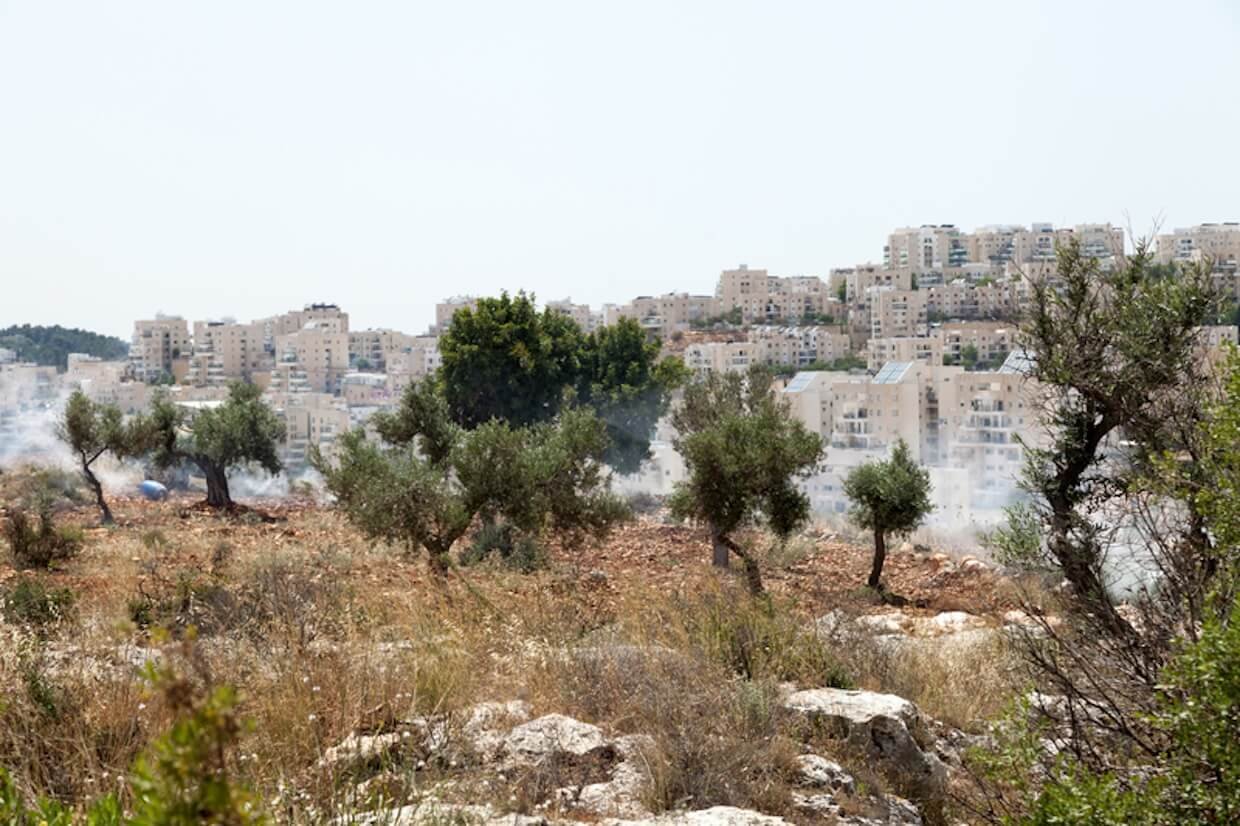
Professor Yoav Peled: You’ve seen what’s been happening in the West Bank over the last few days. They try to portray it as the actions of misfits, misguided youth, and so on, but this is really state action. If the state didn’t want it, it could suppress it very easily. But the state wants it. Under Netanyahu, Likud, and his coalition, they want to get rid of the Palestinians in Gaza and the West Bank. It’s not going to happen in the immediate future, but they’re trying to make their lives unbearable so that they will leave. They call it “voluntary immigration.” That’s the code word.
It’s important to note something that isn’t frequently discussed. The whole idea of peace between Israel and the Palestinians died in 2000. Ehud Barak killed it at Camp David in 2000. That was the end of the Oslo peace process. Since then, nobody has been talking about peace or any kind of solution to the Israeli-Palestinian conflict other than continued Israeli occupation, continued Israeli suppression of the Palestinians, and occasional outbursts of violence.
Growing Religiosity Strengthens Support for Likud
Drawing on Gramsci, you argue that Religious Zionism increasingly defines the boundaries of legitimate Israeli political discourse, extending its influence beyond religious constituencies. Has October 7 consolidated this ideological hegemony around territorial sovereignty and rejection of Palestinian statehood, or exposed contradictions within the religious-nationalist historic bloc? How might these dynamics influence electoral behavior across Israel’s political spectrum?
Professor Yoav Peled: October 7 gave a tremendous push to the process of religionization that was already underway. Now, it’s almost mandatory for every entertainer, singer, actor, actress, or other public figure to say that they’re becoming “strengthened.” When people become more religious, they call it being “strengthened,” meaning that their devotion to the Jewish religion has increased. Even if they haven’t become fully religious, they’ve become more religious. This is now a recurring theme in public pronouncements by many of these people.
You see all kinds of young women, barely dressed in anything, who nevertheless swear that they’ve become more religious, that they follow these strictures, and that they believe in God. Everybody believes in God, and so on. So, October 7 really accelerated the process of religionization.
Politically, this is interesting. The Religious Zionist political parties—there’s one with that name and others that come from the same milieu—haven’t gained that much political power. Much of this religionization process, this increased devotion to religion, is expressed politically through support for Likud or other parties in the Netanyahu coalition, rather than necessarily for Religious Zionism itself. This is due to all kinds of minor reasons related to the political landscape.
Ben-Gvir Has Turned the Police into His Private Militia
The incorporation of Ben-Gvir and Smotrich into government has brought ultranationalist and religiously maximalist movements into positions of executive authority. How do their ideological projects differ from Netanyahu’s populism? Have they fundamentally transformed Israeli institutions, or primarily shifted the boundaries of acceptable political discourse toward previously extremist positions? What will their electoral performance reveal about the mainstreaming of the far right?
Professor Yoav Peled: The major changes they have brought about are in the West Bank, where Smotrich has assumed responsibility for its administration as a minister within the Defense Ministry—not as defense minister, but as a minister in charge of the West Bank.
He’s pouring millions and millions of dollars into supporting what they call ranches, these settlement outposts. He has bought them many vehicles, the very vehicles they use to carry out these pogroms against the Palestinians. He also provides them with arms and money. More than a hundred additional ranches like these have been established since Smotrich joined the government.
So, the project of incorporating the West Bank into Israel and driving the Palestinians out has progressed tremendously, thanks especially to Smotrich. Ben-Gvir is more focused on that than anything else, although he has also completely corrupted the police. The police are now essentially his private militia.
But in terms of major policy areas, Smotrich has been very successful. By the way, he’s an effective administrator. Previously, when he was Minister of Transportation, he did very good things. He’s capable, and his capabilities are now directed toward completely transforming the situation in the West Bank.
October 7 Intensified Religious Nationalism
In The Religionization of Israeli Society, you examine the growing influence of religious nationalism within the military, education, and public culture. How has October 7 intensified the relationship between messianic beliefs, military authority, and perceptions of so-called legitimate violence? Could the upcoming elections further legitimize the intertwining of national security with religious understandings of territorial sovereignty and collective redemption?
Professor Yoav Peled: Yes, the short answer is yes. Everything you just said is exactly what’s happening, and it’s what will continue to happen as a result of next week’s elections. That’s exactly what’s going to happen.
The Anti-Netanyahu Protest Movement Died on October 7
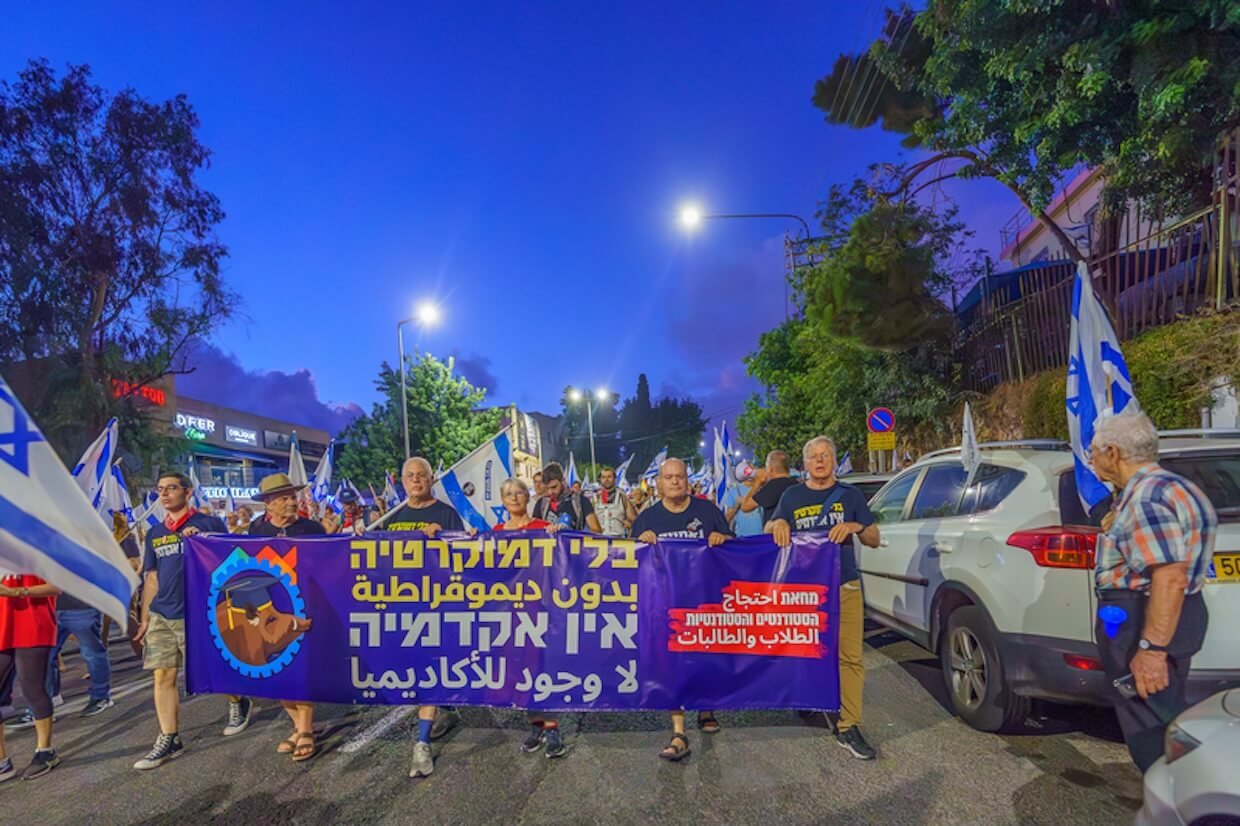
You argue that October 7 and the subsequent wars weakened the anti-Netanyahu protest movement. How have these events transformed Israeli attitudes toward existential insecurity, national solidarity, and political dissent? Ahead of the elections, have they strengthened exclusionary ethnonationalism, or could they generate renewed democratic opposition capable of reshaping the political landscape?
Professor Yoav Peled: Again, it’s the former. The anti-Netanyahu protest movement died on October 7. Many of its members—and this is interesting—turned to carrying out state functions because the state was immobilized. Netanyahu himself was in shock; he was hysterical and couldn’t function. The military was trying to get itself together, while many government functions simply stopped working. As a result, much of the protest movement, particularly its major elements, essentially took it upon themselves to run the country during the first weeks and months after October 7.
The movement’s entire orientation shifted from opposition to support. They did not say they were supporting Netanyahu, but in effect, they saved him. Without them, the malfunctioning of the entire state system might have brought Netanyahu down at that time. They saved him in that respect.
On the political level, Benny Gantz and Gadi Eisenkot, who joined his government after October 7, also saved him politically. Both were former chiefs of the IDF General Staff. They knew how to run a war, while Bibi was totally disoriented. So, they saved him.
It’s ironic, but perhaps understandable, that the opposition saved Netanyahu, his government, and his regime when all circumstances pointed toward their downfall. Everybody expected that, including Netanyahu himself. Right after October 7, Smotrich said, “We’re not going to last more than two weeks now.” But with the help of the opposition forces, they survived, recovered, and became stronger. Unfortunately, it looks like they’re going to continue.
October 7 Ended Israeli-Jewish Empathy for Palestinians
Despite the humanitarian catastrophe in Gaza, much of the Israeli opposition focuses on Netanyahu’s security failures and institutional conduct rather than Palestinian rights. How do you explain this disconnect between opposition to Netanyahu and opposition to Israeli policies toward Palestinians? Has October 7 further marginalized anti-occupation politics and public concern for Palestinian suffering, and is there any indication that the upcoming elections could reverse this trend?
Professor Yoav Peled: Yes, October 7 completely ended any kind of empathy among Israeli Jews toward Palestinians in general, and particularly those in Gaza. People here either don’t know what happened in Gaza because they don’t want to know, don’t care about what happened, or are happy about it. So, it’s really a complete non-issue.
There are all the accusations of genocide and all the reports in the international media. Although the international media have not been granted access to the Gaza Strip, information and photographs nevertheless continue to emerge. What the whole world sees happening in Gaza, including Israel’s actions there, is either unknown to the Israeli-Jewish public, supported by them, or met with indifference.
Of course, this will not have any negative effect on the electoral prospects of Netanyahu’s coalition in the upcoming elections.
Israel Is Shifting Toward Majoritarian Democracy
Your work with Gershon Shafir identifies competing liberal, republican, and ethnonational conceptions of Israeli citizenship. How can Israel’s Jewish national character be reconciled with democratic equality amid occupation, settlement expansion, and differentiated Palestinian rights? Are today’s contradictions inherent in the Zionist state-building project, or have religious-nationalist populists fundamentally intensified them? To what extent are these questions reflected in the current electoral debate?
Professor Yoav Peled: When Shafir and I wrote that book in the early 2000s, we were still under the impression of the Oslo peace process. At that point, we believed that Zionism could be reconciled with democracy. But events since then have proven us very wrong. As it turned out, the optimism we expressed in that book was completely unwarranted.
So, what you’re suggesting is correct. The idea of a Jewish state in which 20% of its citizens are Palestinian, while an entire Palestinian population lives under military occupation, with more and more atrocities and horrors being inflicted upon them—I don’t think this can be reconciled with democracy.
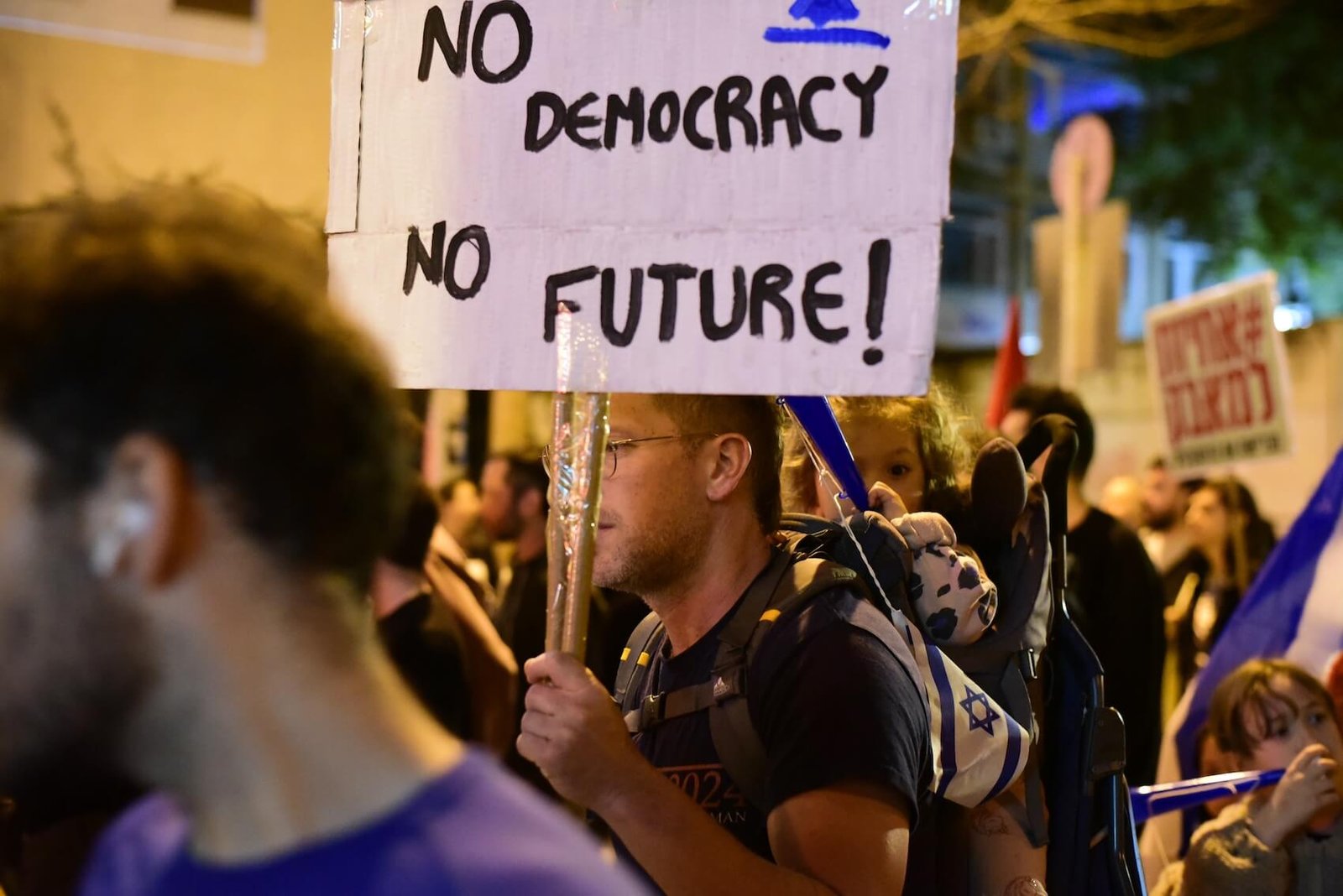
The process we’ve been witnessing since the current government came to power in January 2023, when it launched what it calls judicial reform—which is really a regime coup against the system that prevailed until then—represents primarily a shift from some kind of semi-liberal democracy toward majoritarian democracy. This involves paralyzing all the gatekeeping institutions, including the entire judicial system, especially the Supreme Court.
So, we’re really becoming less and less democratic, if by democracy you mean liberal democracy, which is what people usually mean when they use that term. We’re moving from a sort of semi-liberal democracy to a majoritarian democracy.
This is also something I wrote about with my colleague Doron Navot a good number of years ago. We identified this process back then, but October 7, of course, accelerated it a great deal.
The Two-State Solution Died with Rabin and Was Buried by Barak
You identify permanent Israeli sovereignty over the West Bank as the central objective of activist-Messianic Religious Zionism. Have settlement expansion and annexation-related policies rendered the two-state solution structurally unviable? If so, could equal citizenship, binationalism, or confederation offer a realistic alternative for reconciling Jewish and Palestinian self-determination? Do any significant political forces contesting the elections offer a credible alternative to the existing territorial status quo?
Professor Yoav Peled: As I said before, the two-state solution died in 2000. Since then, every discussion about it has been nothing but empty noise. The Americans kept talking about it, the Europeans kept talking about it, and some people in Israel kept talking about it, but it was all total nonsense. Actually, I would say, more accurately, that the two-state solution died with Rabin’s assassination and was buried by Barak in 2000. So, it’s really off the table.
Now, all the other alternatives you mentioned are completely unviable politically. There are no political forces in Israel that either want to or could bring about any of those solutions. What we’re heading toward is basically more of the same, with even harsher conditions for the Palestinians. I’m not talking only about Gaza, where it’s a total disaster, but also about the West Bank, as we’re seeing.
Of course, there will be more and more suppression of political dissent, even among Jewish Israeli citizens. Not that there is much dissent—there isn’t—but the little that exists will be increasingly suppressed as time goes on. Any remaining resemblance to a liberal democracy is going to be erased.
Opposition Parties May Join Netanyahu but Reject Palestinian Parties
Your scholarship demonstrates how formal citizenship can coexist with entrenched ethnonational inequality. What does the reluctance of major Zionist parties to depend on Palestinian Arab parties for governing coalitions reveal about the boundaries of Israeli democracy? Could the upcoming elections make Palestinian political representation decisive in coalition formation, and would greater participation transform these boundaries or merely reproduce existing inequalities?
Professor Yoav Peled: Three of the four opposition parties have declared that they will not cooperate with the Arab parties in the Knesset to form a government. In other words, they have effectively declared that they will not be able to form a government. Without the support of the Arab parties, which are expected to gain perhaps 13 to 15 of the 120 seats in the coming election, the opposition bloc will not be able to form a government. In effect, most of the opposition bloc, except for one party, has already said, “We’re not going to be able to form a government. We’ve given up that idea.” Of course, they speak as if this were not the case, but everybody can see the numbers.
Palestinian citizen political parties and Palestinian citizen political participation are already marginalized, and they will become increasingly marginalized and less meaningful as time goes by.
I actually expected—and I was wrong—that the two Palestinian political parties would be excluded from participating in these elections. In the end, only one person was excluded: the head of Balad, the political party founded by Azmi Bishara years ago. There was actually a friendly suggestion from the Chief Justice that he resign, and he did. The two parties were allowed to participate in these elections, but they will be totally insignificant because the opposition has already declared that it will not cooperate with them.
Now, you may say, as many people do, that what politicians say before elections does not necessarily mean they will act accordingly afterward. But I think—and I may be wrong; hopefully I am—that these opposition politicians will keep their word about not cooperating with the Palestinian parties.
However, I don’t think they will keep their word about refusing to cooperate with Netanyahu. Some of them may eventually join Netanyahu and enable him to form a government. This could very well happen. So, I don’t believe them when they say they will not sit with Netanyahu, but I do believe them when they say, “We’re not going to cooperate with the Palestinian parties.” Again, this is my prediction, and it could be wrong. Hopefully, it is wrong.
The Elections Could Further Weaken Liberal Institutions
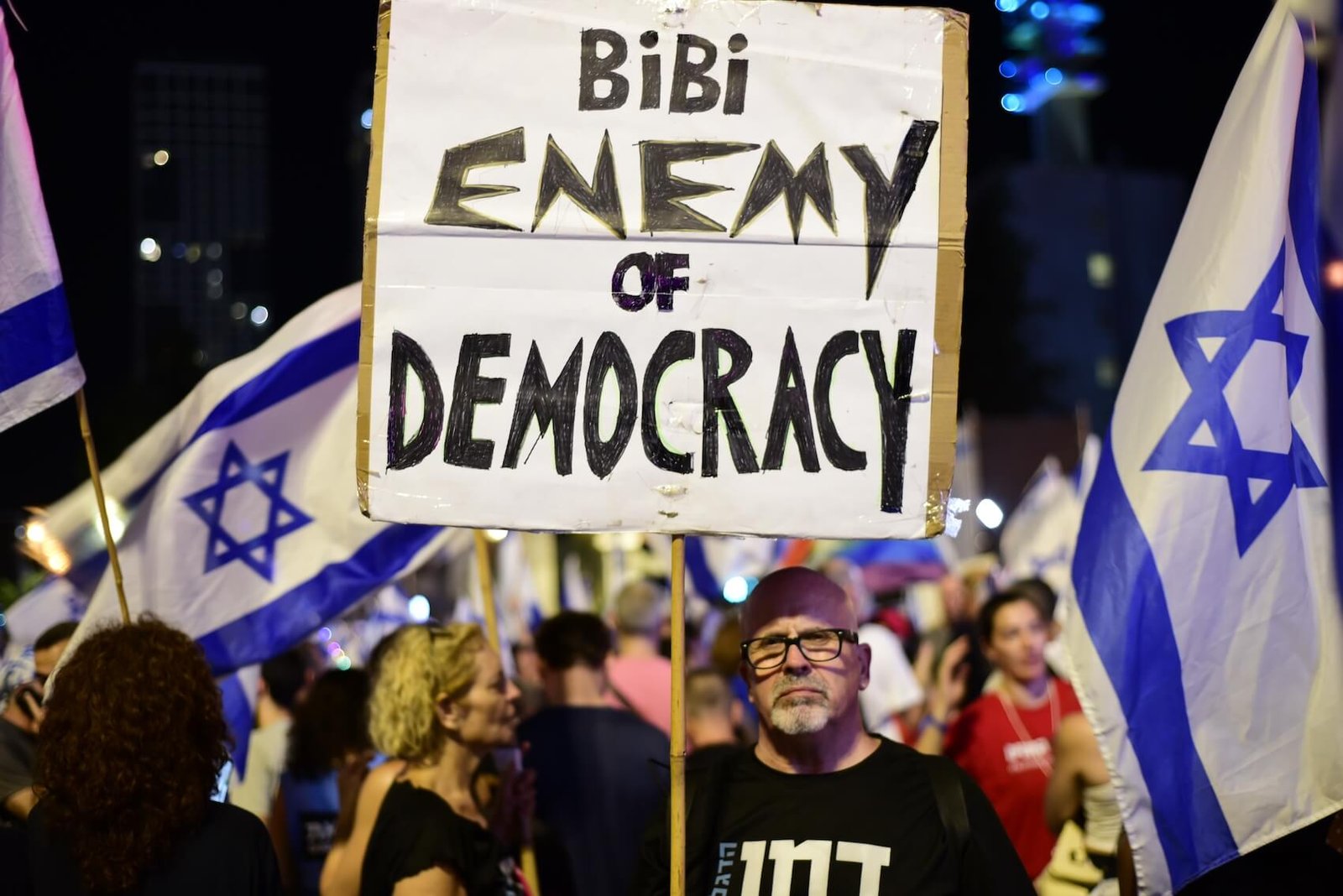
Your work on nationalist constitutionalism and ethno-national populism highlights the danger of Israel’s transformation into a hybrid regime. How far have Netanyahu’s judicial reforms and confrontations with independent institutions advanced democratic backsliding? Is the fundamental problem the erosion of institutional checks and balances, or the deeper contradiction between democracy and ethnonational sovereignty? Could the October elections meaningfully reverse these institutional developments?
Professor Yoav Peled: Again, the short answer is no. Given the currently predicted outcome, the elections would only reinforce the process of weakening the gatekeeping and liberal institutions that, in effect, limit democracy. After all, the whole idea of liberal democracy is majority rule constrained by individual and minority rights. These institutions, above all the judicial system, are intended to serve as checks on the power of the majority.
As these institutions are increasingly undermined, if Netanyahu wins, as I predict, they will be weakened even further. Consequently, the remaining elements of liberalism in Israeli democracy will become weaker and weaker. I think next week’s elections will only accelerate this process because, as I have said many times already, I predict that Netanyahu will emerge as the winner.
Palestinian Statehood Has Long Been Off the Table
Ahead of the October 27 elections, opposition figures such as Gadi Eisenkot emphasize institutional restoration and governmental integrity while remaining cautious about Palestinian statehood. Does this suggest a genuine ideological realignment or merely competition over who governs within an established Jewish-national security consensus? What would distinguish Netanyahu’s electoral defeat from a substantive transformation of Israeli politics?
Professor Yoav Peled: What would prevent Netanyahu’s electoral defeat from representing a substantive transformation is the fact that the opposition is not that different in terms of its broad political orientation. Palestinian statehood is off the table and has been for a long time. Any kind of peaceful arrangement with the Palestinians in the West Bank is also off the table. Gaza, of course, is a total disaster, but even in the West Bank, such an arrangement is not on the opposition’s agenda.
The only exception is one opposition party, the Democrats, which talks rather weakly about some kind of arrangement with the Palestinians. But they don’t emphasize it or make it a major issue.
So, basically, the political program of the opposition is to get rid of Netanyahu. What concerns them, and a very large part of the Israeli electorate, is not Netanyahu’s aggressiveness toward the Palestinians or Iran, which they mostly support. Sometimes, opposition figures even argue that he is not aggressive enough.
What concerns them, rightly so, is the corruption and incompetence of his government, which have reached unbelievable heights. Almost every corner of the state system you look at today is corrupt and dysfunctional. This is the main issue the opposition raises in these elections, rather than anything to do with relations with the Palestinians, the Arab world in general, or Iran.
Israeli Democracy Cannot Survive Without Addressing Palestinian Rights
And lastly, Professor Peled, your scholarship traces Israeli ethno-national populism to structural transformations extending beyond Netanyahu: the decline of Labor Zionism, Mizrahi political realignment, religious-nationalist hegemony, and stratified citizenship. Regardless of the October 27 election results, how much of this transformation is likely to endure? Can Israel develop a genuinely democratic alternative without fundamentally addressing Palestinian equality, sovereignty, and self-determination?
Professor Yoav Peled: Again, the short answer to your question is no, of course. Without addressing the Palestinian issue in the way, you just described—which is not going to happen—Israeli democracy cannot be sustained. The process of deterioration will continue because the Palestinian issue is not going to disappear, however much most Israeli Jews would like to ignore it, as all the major political parties do. It continues to undermine every attempt to restore even some elements of liberalism to the system.
So, we’re moving increasingly toward what I would call a religious-nationalist state, with more and more religion, greater suppression of Palestinians, including Palestinian citizens of Israel, and less and less tolerance of any kind of criticism, even from Jewish citizens.
Unfortunately, this is the direction we’re heading in, and the outcome of the upcoming elections will make this trajectory even clearer and more threatening.