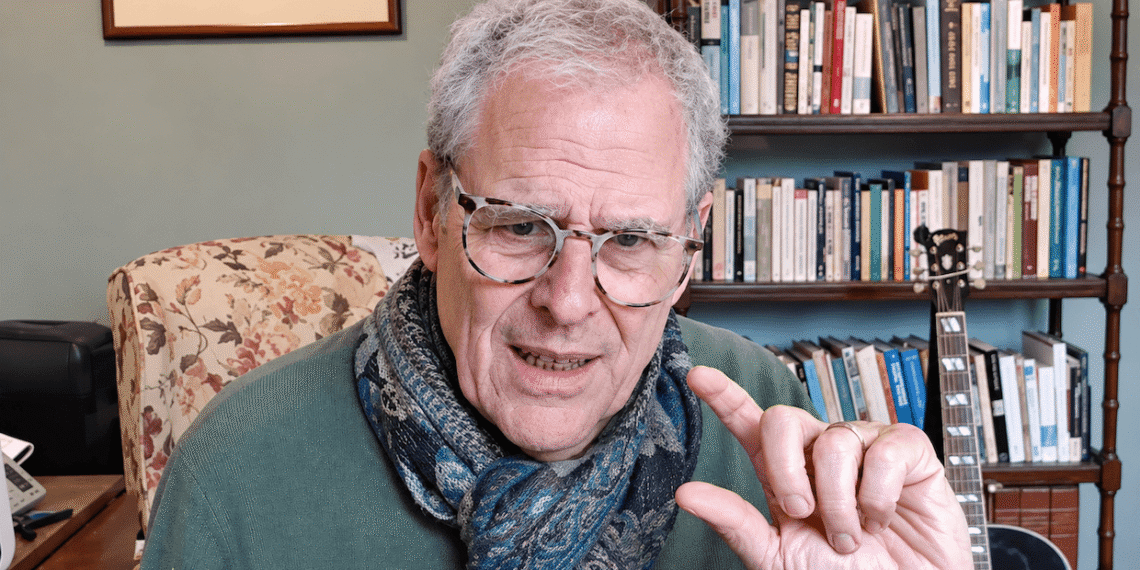
In an exclusive interview with the European Center for Populism Studies (ECPS), Professor Bernard Avishai of Dartmouth College warns that Benjamin Netanyahu’s removal from power could intensify political violence in Israel. Examining the enduring influence of Netanyahuism, religious nationalism, and the settler movement, Professor Avishai argues that Israel’s democratic crisis extends beyond electoral politics. He highlights the deepening confrontation between “Greater Israel theocrats” and “global Israel liberals and cosmopolitans,” cautioning that meaningful democratic reforms could provoke violent resistance. Advocating constitutional reform, judicial independence, universal civic obligations, and Arab political inclusion, he calls for a fundamental rethinking of Zionism and citizenship. Professor Avishai also emphasizes that lasting democratic renewal requires ending the occupation and establishing reciprocal political rights for Israelis and Palestinians.
Interview by Selcuk Gultasli*
Israel faces profound political uncertainty following the October 27 elections. Although Benjamin Netanyahu’s Likud remains the largest party, his right-wing and religious coalition has lost its parliamentary majority. Gadi Eisenkot’s efforts to form an alternative government confront deep divisions over Arab political participation, ultra-Orthodox military exemptions, and the enduring influence of religious nationalism. Beyond coalition arithmetic, fundamental questions persist concerning judicial independence, Palestinian rights, and Israel’s democratic identity.
In an extensive interview with the European Center for Populism Studies (ECPS), Professor Bernard Avishai, visiting professor of political economy at Dartmouth College and former technology and strategy editor of the Harvard Business Review, warns that Netanyahu’s departure could intensify rather than resolve Israel’s political and institutional crisis. “The potential for violence here is really great, regardless of whether Bibi remains in power,” he cautions. “The prospect of violence might be even greater if he’s removed from power.”
For Professor Avishai, the underlying conflict extends beyond Netanyahu’s personalized leadership. “I think Bibi’s world will outlive Bibi,” he argues, emphasizing the entrenched religious-nationalist constituencies and institutional arrangements sustaining Netanyahuism. Comparing a possible Eisenkot government to Abraham Lincoln’s accession to power in 1860, he suggests that substantial democratic reforms could threaten communities whose political identities and material interests depend on the existing order.
Professor Avishai anticipates particularly fierce resistance from ultra-Orthodox communities and armed West Bank settlers. “If the opposition takes power and tries to introduce genuine changes,” he warns, “there will be violence.”Invoking Yitzhak Rabin’s assassination, he underscores the historical precedents for political extremism: “These people have already killed a prime minister. Let’s not forget that.”
Nevertheless, Professor Avishai rejects political violence as a justification for postponing democratic renewal. He advocates constitutional reform, an empowered independent judiciary, universal schooling, and equal civic obligations. A new Basic Law enshrining Israel’s Declaration of Independence, he argues, could establish the foundations for a more inclusive democratic republic.
Central to this transformation is the struggle between what Professor Avishai calls “Greater Israel theocrats” and “global Israel liberals and cosmopolitans.” Arab political participation becomes a defining democratic test. “There’s absolutely no reason why Hebrew Republicans cannot cooperate with Arab parties,” he insists, framing Israel’s predicament as a fundamental choice between “a Jewish theocracy and a Hebrew democracy.”
Drawing on his longstanding scholarship on Zionism and secular republicanism, Professor Avishai also maintains that lasting democratic renewal ultimately requires ending the occupation and developing reciprocal political rights with Palestinians.
The interview thus explores a central paradox of Israel’s post-election moment: electoral alternation may create an opportunity for democratic reconstruction while simultaneously provoking resistance from the very forces that such reconstruction seeks to constrain.
Here is our interview with Professor Bernard Avishai, edited lightly to enhance clarity, readability, and overall flow for publication.
Netanyahu Mobilizes Voters Through Fear and Hatred of Arabs

Professor Avishai, thank you for joining us. In The Tragedy of Zionism, you argued that unresolved contradictions within Zionism threatened Israeli democracy. Four decades later, how much of Israel’s current crisis reflects these foundational tensions, and how much is attributable to Netanyahu’s personalized, populist style of leadership?
Professor Bernard Avishai: That’s an excellent question. If I understand you correctly, you’re asking how much of Israel’s current crisis we should attribute to an inherent, underlying crisis in the state’s constitutional structure, and how much to Netanyahu’s peculiar, aggressive populist ideas. It’s a little like asking, when somebody gets the flu, how much is attributable to the virus and how much to a lack of antibodies.
So why don’t we start with Netanyahu? Netanyahu has built his career on fomenting suspicion and considerable loathing toward Palestinian Arabs in particular, and the Arab world more generally, although this has been moderated by his efforts in the Gulf. But we can return to that later. Historically, he has fomented fear and loathing toward Palestinian Arabs, both within Israel’s borders, including Palestinian Arab citizens, and among Palestinians living in the territories occupied in 1967.
The question, then, is how this fomenting of hostility produces a strong, nationalist, I would even say ultranationalist, mobilized population. Where does he get his support? People say, “Oh, well, as a politician, he’s a magician,” and so on. He’s not a magician; he’s a one-trick pony. That’s his trick. And to the extent that you study populism, I think we know that this is the trick of populists almost everywhere: to take a country’s difficulties and find someone to hate and someone to blame.
So how does he mobilize this constituency? First of all, Netanyahu’s own supporters are not the only ones who have brought him to power. There are two components of his coalition that have consistently supported him.
Religious Zionists and the Ultra-Orthodox Sustain Netanyahu’s Theocratic Coalition
One is the national Orthodox Religious Zionist world, centered on very hermetically sealed yeshivot and, essentially, the settler community, which has grown almost by inertia over the past 50 years. There were perhaps 5,000 settlers at the end of the 1970s, and now there are more than 650,000, including over 450,000 in the West Bank outside East Jerusalem. That’s a huge constituency, and its members have an inherent interest in maintaining what is now called a right-wing government, although the word “right” is being stretched somewhat here. These are theocrats. They want a messianic version of the country, and they don’t care about democracy. For them, Netanyahu and Likud have always been a ticket to punch.
Then there are the ultra-Orthodox within the Bibi coalition, who were not originally Zionists. These are communities that have inherited the mantle of religious Jews who lived continuously in Jerusalem, in Israel and Palestine, even before Zionist colonies began. Early on, they made a pact with the state apparatus under which the state would support yeshiva study for young men. In many of these religious schools, particularly those for boys, core subjects such as math, English, civics, and science receive limited instruction. Students are essentially kept in a cloister.
Originally, these communities were thought to be a kind of nature preserve that would gradually disappear with modernization. When Ben-Gurion first recognized this group and allowed it to maintain independent study and school systems, there were about 400 young men engaged in Torah study. There are now more than 100,000, and the community around them has grown so substantially, particularly in Jerusalem, that approximately 60% of children entering first grade in the city attend ultra-Orthodox schools. The cost of supporting ultra-Orthodox families is approximately 38 billion shekels annually. It’s effectively three shekels to the dollar. That’s a third more than all the money spent on hospitals and universities in the country. This represents a tremendous burden on the state, and these communities regard Netanyahu and his theocratic allies as their allies.
Historical Resentment and Ethnonationalism Sustain Likud’s Political Base
Together, the national Orthodox and ultra-Orthodox constitute about half of Netanyahu’s Knesset coalition. Then there’s another group: those who vote for Likud and its ultranationalist ideal, who think of Jews largely in terms of a permanent affirmative action program. It’s as though Israel represents a permanent form of retaliation against antisemitism and the Arab world.
The question becomes: Who supports this outlook? Historically, a substantial share of Likud’s support has come from North African Jews who regard themselves as refugees from the Arab world, having been expelled in much the same way that Palestinian Arabs understand their displacement from Palestine during the Nakba. They think, “Why are they complaining? We are also refugees, and we know the Arabs. We understand them. They hate us. They created this terrible dislocation in our lives, so what’s their complaint? We found life here; let them go find life in Arabia.” And it’s important to remember that Israel is a very small sliver of Arabia.
On top of that, they tend to harbor resentment toward the European socialist, secular establishment they encountered in 1956, 1957, and 1958. Their own wives were generally illiterate, and they entered a society dominated by a labor aristocracy that controlled everything. This produced a kind of anti-elitist sentiment, a belief that Europeans looked down their noses at them. Likud became their form of retaliation.
Then there are “the Russians” who arrived in the 1990s. That’s another constituency that tends to support Likud, as well as its own party, including Avigdor Lieberman, whom we’ll probably return to later. Russians, in my view, believe their role is to disabuse us of our fantasies and illusions. They see the world in terms of power politics. They want their Putin, and they think Israel should have its own Putin. They’re not exactly democrats. They’re secular, they like their ham, but that doesn’t mean they believe in a secular, democratic world. They believe the world consists of tribes and power politics, and that Jews are a tribe that must remain strong in the face of their enemies.
War Trauma and Fear of Arabs Reinforce Netanyahu’s Political Support
Finally, there are young people who have been through this war. Young people experience war without necessarily having processed everything they’ve done. Take the documentary film NAZA, which has generated enormous attention in Europe but is received very differently in Israel. The reaction is something like: “What? You’re calling us war criminals? You’ve asked us to serve for three years, and now you’re going to call us war criminals? I’ve just lost my friend, I’ve lost my cousin.” Tens of thousands are suffering from PTSD right now. They see Arabs as having come and killed and slaughtered people on October 7, and they regard themselves as part of the effort to rid the country of that threat. Now they’re being accused of war crimes.
This is not the time, from their perspective. It’s like approaching the American Army during the bombing of Dresden in World War II and asking, “You don’t really feel very bad for the Germans, do you?” That’s simply not how they’re thinking. I’m not trying to justify the commission of war crimes. I’m saying that you have to understand where these people are coming from.
So if you ask how this one-trick pony manages to foment hatred, fear, and loathing toward the Arab world, or to create this Likud constituency whose voters seem unshakable, that’s how he does it. And these votes are not easily shaken.
Can Israel Privilege Jews Over Arabs and Still Be Democratic?
In your October 19, 2026, New York Times essay, you distinguish political, religious, and cultural Zionism, arguing that only the latter is fully compatible with liberal democracy. Has Netanyahuism fundamentally transformed Zionism, or does it represent the political ascendancy of its historically illiberal currents?
Professor Bernard Avishai: In a way, that’s the same question in a different guise, because it raises the question of whether there is a form of Zionism that’s compatible with democratic norms. What I’ve described so far is a view of the country that tends to define itself retrospectively in terms of a Zionist challenge. That challenge is to survive in a world where Jews are at risk and, as I said before, to define the state apparatus as a kind of permanent affirmative action program.
So, for anybody who isn’t Jewish, it’s identity politics taken to the level of ideology. You define Jews in ethnic and religious terms, privilege Jewish life on that basis, and use the state apparatus to do so. That’s not really compatible with democratic norms. It’s especially incompatible when you have a population that’s 20% Arab. How can you privilege Jewish life in ethnic and religious terms on the one hand, have a minority population on the other, and still call yourself democratic?
There is, however, a whole other line of Zionist thinking that saw the problem not as, “The bastards won’t let us assimilate. The bastards victimize us; therefore, we need to create a state apparatus to defend ourselves.” Rather, it said, “No, no, our problem is modernization. Our problem is our own rabbis. Our problem is our own inability, as Jews, to confront the challenge of modernization.” And modernization means secular, liberal life, which our religion cannot possibly survive. Because Jewish religion, in spite of all the ways—or maybe because of all the ways—in which it anticipated a certain style of thinking, a liberal style of thinking, modernization subverts us from within. We need a way of surviving in the modern world that the rabbis could not possibly provide.
Cultural Zionism Offers a Path to Arab Equality and a Democratic Israel
At the turn of the 20th century, cultural Zionists began to realize that their real Zionist project was to develop the Hebrew language, put down roots in Palestinian colonies, and create little incubators of Hebrew language and culture as the foundation for a new culture. Ahad Ha’am, the original mentor of the cultural Zionists, said that when he visited Palestine in 1911–1912, he saw these little colonies as cultural generating stations in a grid. They were generating Hebrew culture and would eventually link up in a network, which is exactly what happened.
That kind of Zionism—the notion that you create a Hebrew-speaking republic and that this constitutes the Jewish state—can accommodate a minority that assimilates into it. Consider the Russians who came after the fall of the Soviet Union. Many of them aren’t really Jews. Of the million who came, about 300,000 were Christian, or at least had Christian families. But they could assimilate into Hebrew culture and become members of, as it were, the Israeli nation. And don’t forget, this is called Israel. It’s not called Ishmael. It’s the State of Israel, and Hebrew is the primary language of work, culture, and education in the country.
You now have three generations—actually, four by now—of Arab young people, three of whom were born in the country and speak Hebrew as well as, if not better than, I do. They constitute a fifth of the doctors, a quarter of the nurses, and half the pharmacists in the country. They live in this Hebrew-Israeliness and are knocking at the door, saying, “We want to live fully as citizens in this country. We voted in this election.” They came out in very large numbers in the last election and are saying, “We want to be part of this game. We want a democratic country.” It’s a little like Black people in Mississippi now finally electing a senator. They want to overcome aspects of the state that have been discriminatory against them.
They want to be part of it. And yes, to that extent, Zionism can create a legacy of Hebrew-speaking, secular civil society that can assimilate others and be fully democratic—not only for Arabs but also for idiosyncratic people like myself.
Israel Must Move Beyond Ethnoreligious Supremacy
Your Hebrew Republic envisions a secular, democratic Israel grounded in Hebrew culture rather than ethnoreligious supremacy. Can this vision accommodate full equality for Palestinian citizens while preserving Jewish national self-determination, or does that require a more fundamental constitutional transformation?
Professor Bernard Avishai: I’ve just answered that question, but the issue of constitutional reform relates to the question of antibodies that I never got to in the first place. The Israeli state apparatus rests on a series of Basic Laws that don’t really amount to a liberal constitution. In Israel, you have no immigration law to speak of. What you have is something called the Law of Return.
The Law of Return allows any Jew anywhere in the world—and I don’t know what “Jew” means here—to enter the country and become a citizen immediately. You basically have to sign papers and so on, but you can become a citizen immediately. That devalues Israeliness, doesn’t it? You don’t arrive in America without speaking English and immediately become an American citizen. You have to go through a process of naturalization. Naturalization to what? In Israel, naturalization would mean becoming part of the Hebrew language, Hebrew culture, and Israeliness. But that is not recognized by Israel’s constitutional framework. There is no immigration law to speak of.
All you need to prove is that you had one Jewish grandparent. Why? Why, I ask you, one Jewish grandparent? Because that was the Nuremberg Law. If you had one Jewish grandparent, you were considered a Jew and therefore qualified to be shot. The Israeli state apparatus in the early 1950s determined that if you were someone Hitler would have hunted, you could find a place in Israel. You could become a citizen of Israel. So that’s why we have no immigration law. It made perfect sense in 1950 to have this kind of immigration law. It makes no sense in 2026.
There are other things. There’s the Israel Land Authority, which has borrowed some of the practices of the pre-state Jewish National Fund. This means that if you acquire land from the Israel Land Authority, you can’t sell it to a non-Jew. We still haven’t defined what a Jew is. Okay, but you can’t sell it to a non-Jew. Could you imagine? That made sense in the 1930s and 1940s, when the Jewish National Fund was buying land for colonies and didn’t want people to turn around and sell it to somebody else. They wanted those who acquired land from the Jewish National Fund to actually farm it and live on it rather than turn around and sell it. So it made sense in the 1930s and 1940s. It makes no sense in 2026.
Netanyahu Fears an Independent Judiciary That Could Dismantle His Political Order
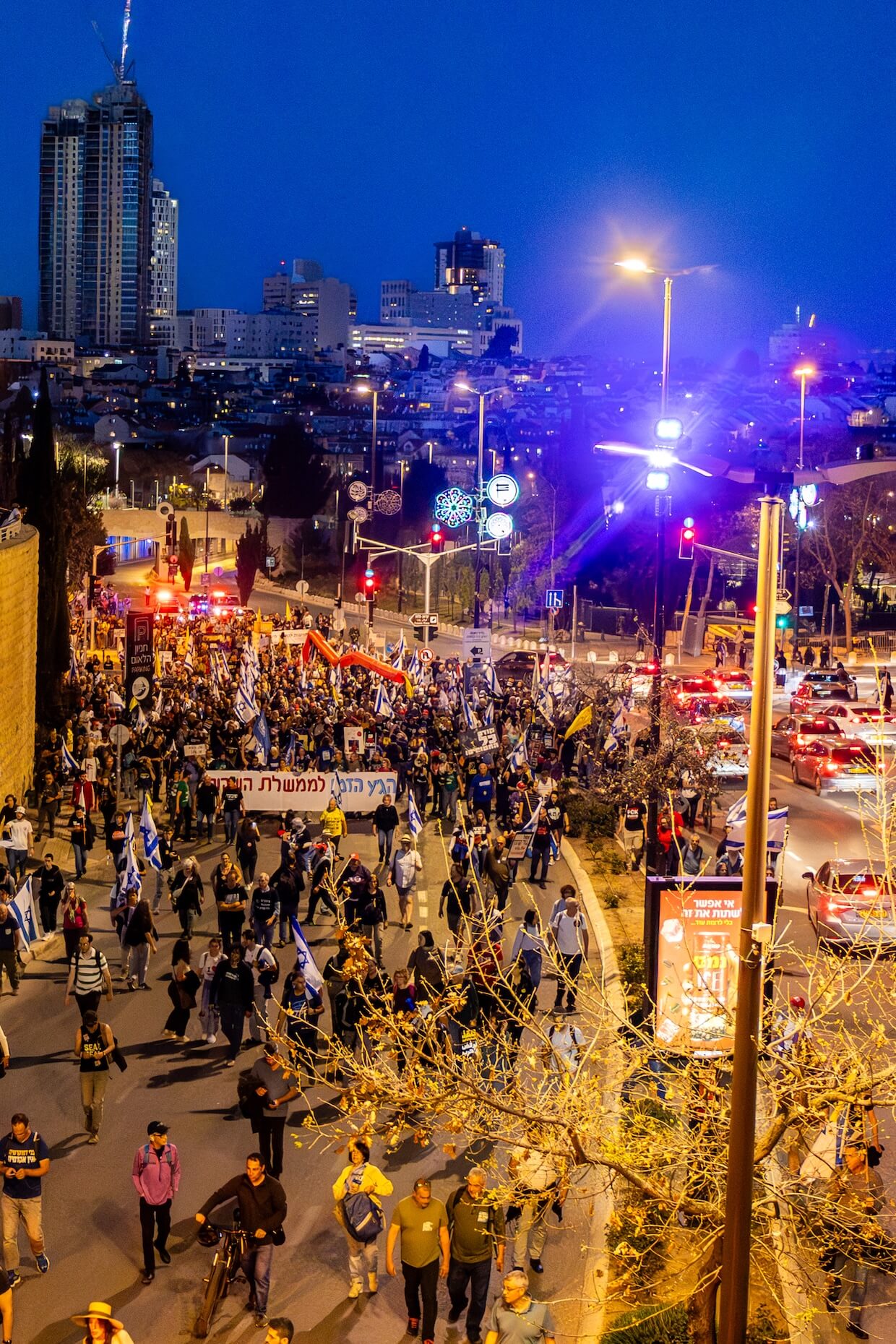
So, when I talk about constitutional reform, I’m talking about empowering the judiciary to rely on a liberal democratic constitution, which we would have had if, in 1949, we had enacted a constitution based on the Declaration of Independence. The Israeli Declaration of Independence could have been written by Eleanor Roosevelt. If Israel had enacted a constitution based on its Declaration of Independence, we could have a judiciary today that could examine something like the Law of Return, the Jewish Nation-State Law, or the Israel Land Law and say, “This is unconstitutional. We have to move forward toward Israeliness and away from this ethnic, religious, theocratic solidarity that was somehow allowed to develop within the state over all these years.”
I haven’t even mentioned the occupation yet. Obviously, that has also had an enormous impact on Israeli society because Jerusalem and its immediate settler suburbs have become something like an apartheid state. That’s not true of Tel Aviv, Herzliya, and Haifa. You can’t simply say, “Israel is an apartheid state.” The world of Herzliya, Tel Aviv, and Haifa supports the state apparatus. Seventy-five to 80% of taxes are paid by companies operating in global Israel along the coast, not by the Greater Israel population in Jerusalem and the settlements. But along the coast, people are much more liberal. They don’t want this, yet it’s the people of Jerusalem who have captured the state apparatus and have been exploiting the coastal cities for as long as Bibi has been in power.
Right now, the people of Greater Israel have created this world that the judiciary would be dismantling if it were empowered to do so by a constitution. That’s why constitutional reform is one of the things being promised by the opposition, and why Bibi has taken on the task of disempowering the Supreme Court. He speaks of an activist Supreme Court in much the same way that segregationist senators in the American South were always confounded by the activist Supreme Court in Brown v. Board of Education and similar cases. What they really mean by an activist Supreme Court is a court that overturns laws that should never have been part of a democratic state in the first place.
That’s why the judiciary is so dangerous to the Bibi world.
Netanyahu’s Political World Will Outlive Him
Netanyahu’s Likud lost its parliamentary majority in October but remains Israel’s largest party. Does this outcome suggest the erosion of Netanyahu’s personal political dominance, or has the populist, anti-institutional political culture associated with Netanyahuism become entrenched beyond his leadership?
Professor Bernard Avishai: I think Bibi’s world will outlive Bibi. I don’t think there’s any question about that. But it’s also true that he’s become the face of it. We have exactly the same issue with Trump in America. Will MAGA outlive Donald Trump? It will, but it will survive on a much smaller scale. The people who voted for Bibi in the last election are a fairly good indication of his residual support. Without Bibi, that support may decline to 30% of the vote instead of 40%. But there will continue to be a political world that outlasts Bibi. The culture war in Israel is not just personal.
If Eisenkot takes over in Israel today, if he manages to take over, it’ll be like Lincoln taking over in 1860. The people who feel threatened by Eisenkot taking over are not simply people who think, “Oh, well, he’s going to cut taxes by 12%. I don’t like that,” or “He’s going to raise taxes.” No, no, we’re talking about people whose entire way of life is profoundly threatened by a government that challenges their commitment to the status quo and to an occupation that gives them a foothold across the entire historic, biblical Land of Israel.
They see themselves in messianic terms, want a kind of theocracy, and fear that if their settlements stop expanding, they will come under siege. They’re desperately afraid of what will happen to them. They live in a world where, unless they continue to make demographic gains and continue not just to colonize the West Bank but also to colonize the Knesset, they’re in a lot of trouble.
One also has to remember that there is a demographic and geographic division here. I spoke earlier about Jerusalem, Tel Aviv, and the coast. Something like 75–80% of Bibi’s vote came from Jerusalem and the settlement areas, as well as some development towns where North African Jews lived. But what I’m saying is that, if you look at Jerusalem and its surrounding areas, 75–80% voted for Bibi and the various parties in his coalition. In Tel Aviv, it’s exactly the reverse. Seventy-five to 80% voted for the opposition parties. These places may be separated by only 40 kilometers, but politically and culturally, they’re worlds apart.
Israel’s Culture War Could Turn Violent
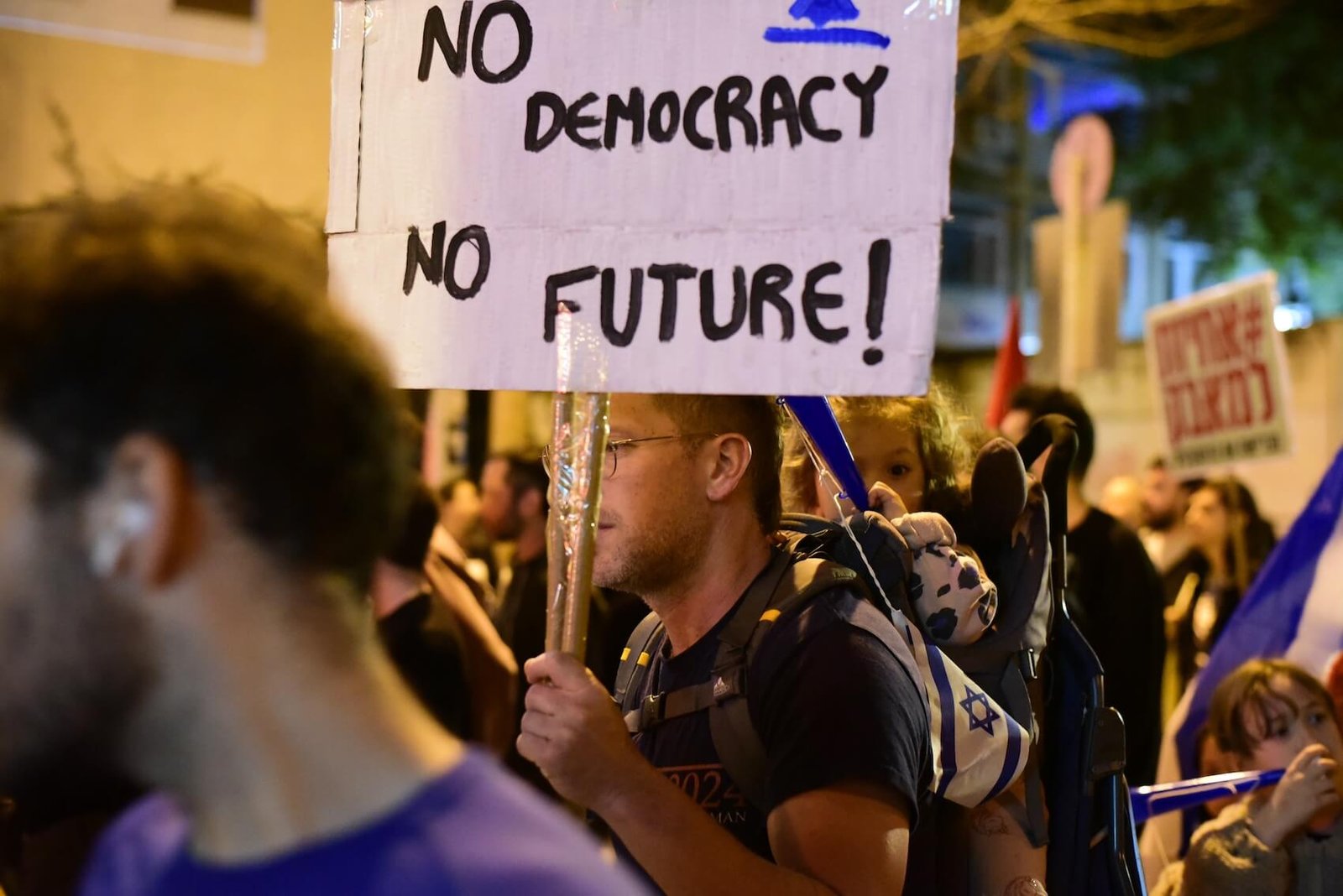
And this division could become violent. It absolutely could. If the opposition takes power and tries to introduce genuine changes—and we can discuss in a moment what those changes might be—there will be violence. There will be talk of, I won’t say secession, but certainly resistance in Jerusalem to whatever the new government tries to impose. The Haredim, the ultra-Orthodox of Jerusalem, can shut down the country in a heartbeat simply by occupying the streets, mobilizing tens of thousands of protesters, and blocking highways and railroad lines. It wouldn’t be difficult to shut down the country. And as far as the West Bank settlers are concerned, they’re armed! The army that would be required to suppress their provocative terrorist acts against Palestinians includes many junior officers who are very sympathetic to them and who have been through their own yeshivot and training.
The potential for violence here is really great, regardless of whether Bibi remains in power. The prospect of violence might be even greater if he’s removed from power. I’m not saying that’s a reason not to remove him. I’m just saying we have to be prepared for a tremendous amount of dislocation. These people have already killed a prime minister. Let’s not forget that. They killed the prime minister for exactly this reason. It was a prime minister whose government relied on Arab votes in the Knesset. This is not new.
The Settler Movement Has Become Politically Uncontrollable
Your writings distinguish Israel’s secular national traditions from the increasingly influential religious-nationalist right. How did movements associated with Ben-Gvir and Smotrich progress from ideological marginality to governmental influence, and what explains their continuing electoral resilience?
Professor Bernard Avishai: That’s really the question I was implying earlier. If you don’t have the antibodies to nip this in the bud, these movements just continue to grow. In the early 1970s, when the settler movement was just getting off the ground, there was an opportunity to stop it.
In 1976, during the first Rabin government, when Rabin was a younger man—he had been prime minister since the end of 1974, before resigning over a banking issue involving his wife. Anyway, he resigned, and Shimon Peres ran against Menachem Begin in May 1977. When Rabin’s first government faced a group of settlers trying to establish a settlement near Nablus, called Kedumim or Elon Moreh—it had various names—the government could have stopped it then. But the chief of staff, Mordechai Gur, reported back to the cabinet and said, “There’ll be blood. Do you want to have Jewish blood on your hands?” So the government refrained from ending the settlement project outside the border settlements, which were really not problematic. But that’s what governments always did. The more brazen the settlers’ actions became, the less willing governments were to act against them.
We saw what happened when Ariel Sharon, who had been the architect of the settlement movement in the late 1970s and early 1980s, finally decided, as prime minister, to remove the settlers from Gaza. Only about 6,000–7,000 people were removed from Gaza, yet it tore the country apart. You cannot remove that many people from the settlements without enormous upheaval. So, the settlements have now become an enormous political obstacle that the government is unable to deal with. They have grown and grown in the absence of a government prepared to stifle them and stop them.
They’ve also been able to exploit the sort of quasi-theocratic ideas that the state apparatus has tolerated. In Jewish Israel, there’s no civil marriage. A Jew cannot marry a non-Jew in the State of Israel because marriage, divorce, and burial have all been left in the hands of the rabbinate. That has been true since 1948. It was another compromise made early on, like giving ultra-Orthodox children separate schools.
So, we have a continuing marriage of democratic institutions, on the one hand, with these quasi-theocratic legacy institutions from before the state was formed. How do you resolve this without one side winning and the other losing? The theocratic side has been winning because the occupation has blown back into the country in a way that makes it very difficult to defeat.
But today, it’s absolutely clear that this is a choice. This new government, if it’s formed, had better start acting. It has to act to extend the boundaries of liberal Israeliness against this theocratic world, which has faced no resistance for so long and has had the power and moral prestige of the occupation, of the status quo, behind it.
It’s a very dangerous moment.
Israel’s Real Struggle Is Between Theocrats and Liberals
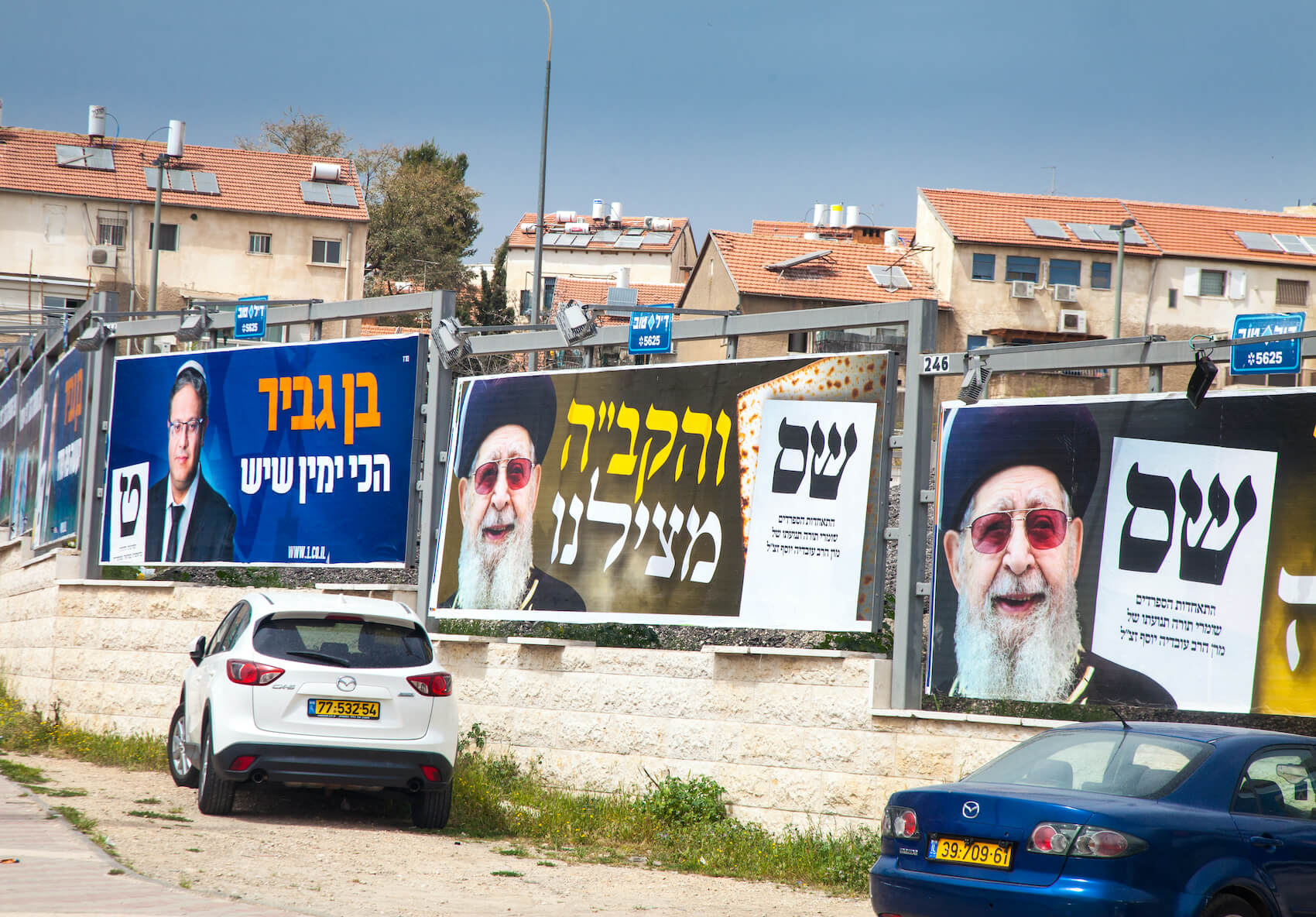
In your August 2026 New Yorker essay on Lior Schleien, you examine how religious nationalism challenges secular culture and democratic freedoms. Has Israel’s central political cleavage shifted from territorial security toward a deeper struggle between secular citizenship and religious authority?
Professor Bernard Avishai: I absolutely think so, and I’ve explained why. The territorial issue is a dependent variable, not an independent variable. There’s a culture war going on. The real question is: Who’s going to win? Greater Israel theocrats or global Israel liberals and cosmopolitans?
Both groups think of themselves as patriots. Both see themselves as rooted in a Zionist past. But the global Israel types are the country’s elites. They’re more highly educated and tend to be more European, with roots going back to the original pioneering settlements.
That’s the irony. You listen to people on campuses today who think they’re offering highly sophisticated critiques of Israel by invoking the colonialism of the 1920s and 1930s. But actually, those pioneers, along with their grandchildren and great-grandchildren, are the liberals of the country.
They’re the ones who believe in a secular, liberal commonwealth that provides opportunities for the assimilation and integration of all minorities as full citizens. It’s really the people who came after them who tend to support the more ultranationalist and theocratic forces in the country.
Israel Needs Sweeping Reforms to Restore Democracy
Netanyahu’s confrontations with the judiciary have been justified by supporters as restoring democratic accountability, while critics view them as executive aggrandizement. How should we distinguish legitimate institutional reform from populist constitutionalism that undermines judicial independence and liberal democracy?
Professor Bernard Avishai: This raises the larger question of what any new government can do. A new government would have a profound and urgent agenda if Israeliness, Hebrew republicanism, and democratic norms are to prevail.
A new government would have to undertake a series of immediate steps. First, it would establish a judicial commission of inquiry into what happened on October 7. This is symbolically important because it re-empowers the state apparatus, rather than just politicians, and creates the evidentiary basis for determining how to proceed in the future.
You immediately repeal all the laws Netanyahu and his government passed that subvert the Supreme Court and the Attorney General. You also repeal all the laws that subordinate the press and universities to government politicians. You appoint new heads of the police, a new governor of the Bank of Israel, and a new head of the Secret Service.
You create a national system of state schools in which all schools are required to teach core curricula. In effect, no funding would go to religious schools that fail to teach civics, math, science, history, and English.
You introduce universal conscription or national service so that everyone in the country, including Arabs and the ultra-Orthodox, serves for the same number of years that, right now, basically only secular Israelis serve in the army. But if you don’t want to serve in the military—and I presume most Arabs would not, and most Haredim might not—you could perform national service instead, working in hospitals, cultural centers, and so forth.
You’d also have to pass a new Basic Law that enshrines the Declaration of Independence and its democratic norms, giving an independent judiciary a legal basis for determining the constitutionality or unconstitutionality of undemocratic laws.
That’s a huge agenda, but it’s all very doable. And none of it has anything to do with the occupation. People outside the country tend to think that the division between right and left in Israel is entirely about whether you support or oppose a Palestinian state. That’s not really how it’s viewed in Israel.
Right now, if you asked Israelis whether they favor a Palestinian state, you’d probably get 90% saying no, simply because they associate a Palestinian state today with empowering Palestinians to do to them from the West Bank what was done to them from Gaza. So the next Al-Aqsa Flood could come from Qalqilya instead of Gaza. That doesn’t feel like something anyone wants to risk.
But there is nevertheless a distinction within the country. There are people who believe that being part of global Israel means maintaining good relations with the Gulf states and who also believe that a regional plan for Gaza’s reconstruction may, in fact, be possible. Even though you’d be paying the price of allowing a Palestinian Authority-adjacent administration to enter Gaza and take responsibility for administering the territory, you’d do so knowing that Hamas is basically giving its tacit consent. And you’d allow the disarming of Hamas in Gaza to become more a matter of telling its members to take off their Hamas uniforms and put on the uniforms of a new Palestinian administration. Then you give them back their guns and provide them with new leaders.
Hamas will still be influential. Its members will still obviously see themselves within the framework of having joined Hamas, of having joined the steadfast warriors in the first place. That’s inevitable. You can’t avoid that now. But a new administration would mean that the Arab League would essentially provide a moral foundation for that administration. The Arab League would also have the support of Qatar and Turkey, and these are not people Hamas members would want to fire on.
Do you know what I mean? There’s the possibility of an administration that has the endorsement of the Palestinian Authority but is really supported by an outer ring of Arab countries, forcing the issue and pushing Israel and the Palestinians toward some kind of pathway to compromise in which the Palestinians accept Israel and learn to live with it. In the same way, America, under some new administration, would be pushing Israel to accept a pathway to Palestinian independence.
Israeli Democrats Have No Reason to Exclude Arab Parties
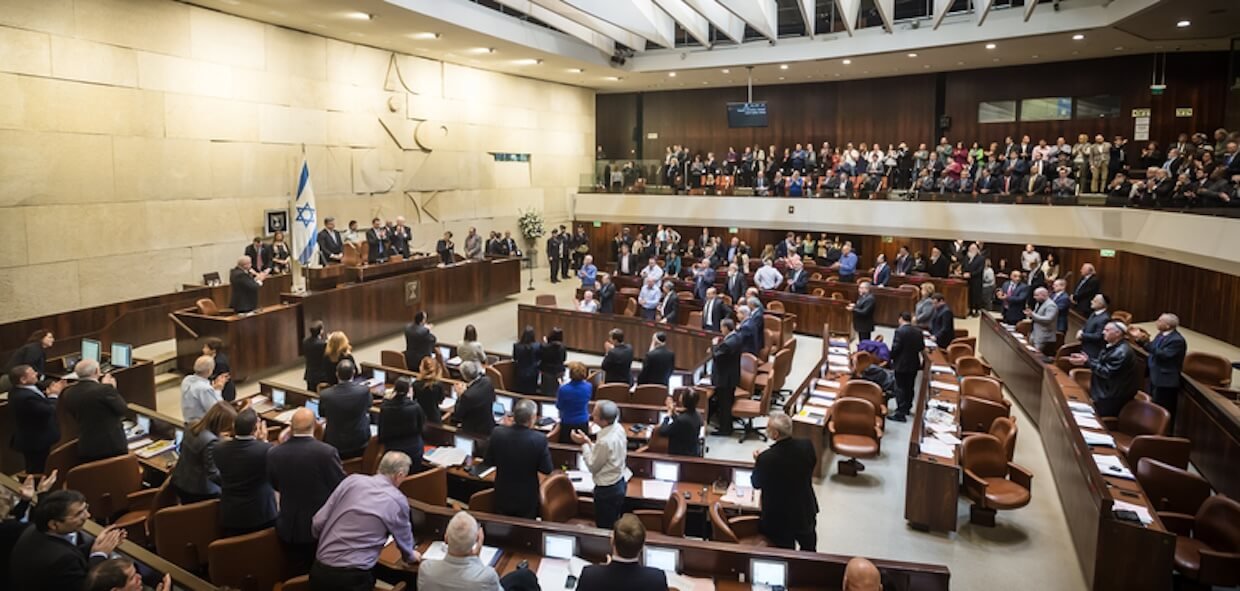
Following the October 27 elections, Gadi Eisenkot has received the mandate to form a government, yet his potential majority depends partly on Arab parliamentary support. Does the reluctance of major Zionist opposition parties to cooperate with Arab representatives reveal a deeper contradiction between electoral democracy and ethnonational conceptions of political legitimacy?
Professor Bernard Avishai: The answer is simply yes. There’s absolutely no reason why Hebrew Republicans cannot cooperate with Arab parties.
Golda Meir’s coalition, back in the late 1960s, had four Arab members who were part of an independent Arab party affiliated with the Labor Zionist world. We’ve had minority governments in the past, including Rabin’s government, that relied on Arab parties.
Rabin was asked about this in 1994 or 1995. I saw a short video clip of Rabin talking to a group of reporters. One of them, a very distinguished Arab affairs correspondent who remains highly respected, asked him, “Do you think it’s okay to have Arab parties supporting your government when these parties may, in fact, be beholden to Arafat or perhaps be supporters of Arafat?”
Rabin visibly tensed up and said, “This question infuriates me.”
“Just imagine,” he said, “that an American senator, a Jew, decides to vote to provide money for Israel. How would you feel if the argument were, ‘Oh, this Jewish senator is taking his orders from Jerusalem, taking his orders from Israel’? How would you feel if that were said about Jews in America? Jews have always hated racism, opposed racism, and suffered from racism. And now you’re telling me that, in the Jewish state, we’re going to default to these racist ideas?”
No opposition member right now, except for one, Yair Golan from the Democrats, would say that to a reporter. It kind of breaks my heart. But the truth is, there’s only one opposition party that is absolutely adamant that the opposition should not form a government with the help of Arab parties, and that’s Avigdor Lieberman’s party. It’s largely a hardline secular party that appeals to Russian voters, those Russians I mentioned earlier, who generally vote for Likud but have also voted for Lieberman.
Arab Participation Could Redefine Israeli Democracy
In your October essay, you question whether politicians can meaningfully claim to support a Jewish and democratic state while excluding Arab parties from governing coalitions. Does the record representation of Arab voters in the new Knesset create an opportunity to redefine the boundaries of legitimate democratic participation?
Professor Bernard Avishai: Absolutely. This is what I’m counting on. This is a critical moment for Israel, there’s no question about it. If an opposition government forms today with the support of 19 Arab members, it’s going to redefine what Israeli liberalism means for the liberal world of Israel. It’s a moment to recognize the difference between a kind of Jewish theocracy and a Hebrew democratic republic, a Hebrew democracy. A Jewish theocracy versus a Hebrew democracy. This is a fundamental decision, and we have the possibility of seeing it today.
But I must tell you, the opposite is also true. If, for some reason, Lieberman prevails and doesn’t change his mind, and the opposition groups decide to form a government with the Haredim, the ultra-Orthodox, rather than allow liberals from the Arab bloc in Israel to help form the government, Arab citizens are going to see this as a moment somewhat like the way Herzl viewed the Dreyfus case.
Arab liberals are going to say, “What do you want from us? We’ve done everything we can to prove to you—not just the doctors at Hadassah Hospital and so on, but everything we can—that we want to be, and can be, part of this Hebrew-speaking civil society. We want equality, and you’re telling us that no matter what we do, we’ll always be viewed as a fifth column?” My fear is that they’ll say, “You want to know what a fifth column really looks like?”
We had a measure of that in May 2021, with the so-called War of the Walls, or whatever it was called. There was a Gaza war in May 2021, and there were riots in Acre, Lod, and some Israeli-Arab towns. Sinwar, in my view, was counting on that when he attacked in October 2023. He was counting on the Arabs of Israel rising up, and they didn’t. Among other things, they were so appalled by the terrorism on the border. But they also saw that this was a test for them. They weren’t going to join in that kind of crusade against Israel. They saw themselves as citizens of the country. They’ve proven ever since that they are citizens of the country. Israeli Arabs died on October 7. They die when missiles fall on the northern towns. They’re part of Israel’s world.
If they see that they’re going to be swatted away at a moment like this, they’re not going to vote in these numbers next time. You can see that young people are going to start reevaluating whether integration into Israel is really something they should be contemplating.
Israel’s Future Requires Universal Schooling and Civic Obligations

The dispute over ultra-Orthodox military exemptions has become central to post-election coalition negotiations. Does this conflict expose a broader crisis of citizenship, in which competing religious and secular communities increasingly reject a common understanding of civic obligations and political equality?
Professor Bernard Avishai: Of course. If the opposition, in order to take power, makes a deal with the Haredim, the ultra-Orthodox, and refuses to impose universal schooling and a universal draft on them, it will be another missed opportunity. You have to impose these requirements on the ultra-Orthodox, not only for reasons of civic responsibility but also for the country’s economic future. You can’t have such a large population unqualified to participate in public life.
My fear—and it’s not just my fear—is that if the Haredim are not drawn into the wider world, the problem will extend beyond the question of how citizenship is defined. You’re going to have 100,000, 200,000, or even 300,000 of the country’s most educated people leaving. Many of the global Israelis have opportunities elsewhere. They may have an entrepreneurial company registered in Delaware, or they may head a department of urology, and there’s a need for urologists in Buffalo, New York, or elsewhere. These people have the qualifications to leave and find plenty of opportunities elsewhere.
Israeli Democracy Requires Ending the Occupation
Your writings have consistently linked Israeli democracy to Palestinian self-determination. Could an Eisenkot-led government restore domestic democratic safeguards without substantially changing policies toward Gaza and the West Bank, or is democratic renewal inseparable from ending the occupation?
Professor Bernard Avishai: In the long run, obviously, yes. In order to have a democratic Israel, you ultimately have to end what the occupation has become.
The problem is the phrase “self-determination.” I don’t like that phrase. I don’t like “Jewish self-determination,” and I don’t like “Palestinian self-determination.” It’s hubristic to talk about self-determination in the first place, even on an individual level, let alone a national level. The real questions are: What institutional commitments are you making? What norms do you live by? And how do these allow you to thrive as a human being?
We have to end the occupation of the West Bank. That doesn’t necessarily mean saying, “Oh, we care about our democracy, so let’s get out of the West Bank. Maybe they’ll leave us alone.” That’s not going to happen, and I must tell you, I don’t think it should be that way. In order to redeem Israeli democracy, you’ve got to look for and work with democratic and liberal forces in the Palestinian community and find reciprocal ways of creating political institutions that will allow both sides to have the same rights. In other words, neither side should have rights that the other doesn’t have.
But that doesn’t mean complete independence from one another, because that’s ridiculous. You can’t have complete independence when you’re sharing water, bandwidth, spectrum, sewage systems, epidemiological problems, roads, bridges, and financial services. You have to remember that Israel and Palestine together are basically the size of Greater Los Angeles. So the idea that the two can separate, like Japan separates from Korea or something like that, is preposterous. You can’t have that.
What you need to think about is how each side can have rights and responsibilities that are reciprocal with those of the other society. These are two distinct countries. You live in Brussels; you know what the European Union is. This has to be resolved in ways that, in some respects, draw on what the European Union has taught us.
Do all settlers have to leave the West Bank? I think that any settler who thinks of himself as a violent messianist intent on expanding and oppressing neighboring shepherds and Arab towns should obviously be taken and thrown in jail if necessary. But the idea that all Israelis currently living in the West Bank have to come back?
Or that Palestinians whose families lost their homes in 1948 and who have a claim to a particular piece of land can’t possibly live in the Valley of Jezreel if that land is currently unoccupied?
I’m not saying Palestinians should have a claim to the land underneath the Azrieli Towers in Tel Aviv. I’m just saying that, in individual cases, it’s perfectly reasonable for these people to stay in place. But they’ll stay in place in the way we’ve learned from the European Union: you can be a resident, even a permanent resident, of a country without being a citizen of that country. Palestinians can be residents of Israel without being citizens of Israel. Israelis can be residents of Palestine without being citizens of Palestine. And if an Israeli living in Ma’ale Adumim, across the Green Line, wants to vote in an Israeli election, the drive to the Hebrew University to vote would take about seven minutes. So, let’s remember the scale here.
Democratic Reforms Could Fundamentally Transform Zionism
And finally, Professor Avishai, considering Netanyahuism alongside the experiences of Trump, Erdogan, Orbán, and other populist leaders, what makes Israel’s democratic crisis distinctive? Can electoral alternation dismantle entrenched authoritarian practices and religious-nationalist power structures, or does lasting democratic renewal require a fundamental rethinking of Zionism, citizenship, and Palestinian self-determination?
Professor Bernard Avishai: I think the two will go hand in hand. If a new government in Israel implemented all the reforms I outlined earlier, a rethinking of Zionism would be the natural result. Sometimes, intellectual and ideological change comes from reflecting on realities that you now have to deal with. It’s true, to some extent, that there will be forces in a new government that have already undergone that change, experienced an ideological shift toward a more liberal and secular Zionist ideal, and will use this shift to justify and push for these reforms.
But once the reforms come, they take on a life of their own. They begin to shape people’s expectations. Just look at the civil rights movement in the South. You needed ideological champions. But once you have legal changes and new generations growing up and getting used to new realities, the ideological shift happens more broadly. I don’t know if I’m answering your question, but I feel that the idea that you need to have this sort of revolution in thinking before you can have these new realities is inconsistent with my understanding of how human change happens.
Even on the right, you initially had champions of a certain kind of settlement movement. Then, as the settlements grew and grew, and their footprint in the West Bank became bigger and bigger, this began to shape expectations on the Israeli side more generally. That’s what I was trying to say earlier.
I remember in 1974, when I first saw someone use the term “Judea and Samaria” in a liberal newspaper, Haaretz, without scare quotes. I thought, “Oh, they’re winning.” They’re winning because now we’re talking about these territories as though they’re part of this country, and we’re not even questioning it. We’ve stopped calling them “occupied territories” or “the West Bank” and started calling them “Judea and Samaria.” The same can be true in reverse. You start to address new realities, and those realities begin to shape the ways in which you develop political norms and refine your institutions.
If there is a new government that empowers the judiciary through constitutional reform, with a Basic Law that enshrines the Declaration of Independence and its commitment to full equality irrespective of religion or gender, and if that commitment becomes enshrined in law and the judiciary is given the power to begin reinterpreting laws accordingly, it could have the same impact as Brown v. Board of Education had on the American South.
It doesn’t change things immediately. I mean, Brown v. Board of Education was in 1954. The first Black senator from Mississippi was last night. These things take a lot of time. Consider the confessional school system in Quebec, where Protestants were taught in English and Catholics were taught in French. I grew up in Montreal. I went to the Protestant School Board of Greater Montreal because I was learning English. I wasn’t Protestant; I was Jewish. We were sort of honorary Protestants in Montreal. The Quiet Revolution in Quebec began in the 1960s, but the confessional school system was finally ended in 1990. So these things take time. But you’re on the right path when you make a certain shift.
(*) This interview was academically curated and edited by Dr. Bulent Kenes.