

In an exclusive interview with the ECPS, Professor Maya Tudor, Professor of Politics and Public Policy at the University of Oxford, examines democratic backsliding, authoritarian resilience, and the challenges of democratic restoration across India, Hungary, Serbia, Brazil, the United States, and Pakistan. Challenging electoral-minimalist conceptions of democracy, Professor Tudor argues that “if you do not have substantial liberal rights, you don’t have a democracy.” She explains how elections can survive while political freedoms erode and warns that defeating authoritarian incumbents does not necessarily dismantle the systems sustaining their power. Emphasizing independent media, political equality, opposition coordination, and institutional safeguards, she concludes that democracy’s ultimate test is whether future opposition forces can compete freely.
Interview by Selcuk Gultasli*
As democratic institutions confront intensifying pressures worldwide, a fundamental question has returned to the center of scholarly debate: Can a political system remain democratic when elections survive but the liberal rights that make political competition meaningful are systematically undermined? In an in-depth interview with the European Center for Populism Studies (ECPS), Professor Maya Tudor, Professor of Politics and Public Policy at the Blavatnik School of Government and Fellow at St. Hilda’s College, University of Oxford, offers a compelling comparative assessment of democratic erosion, authoritarian resilience, and the conditions necessary for genuine democratic restoration.
The discussion unfolds against a paradoxical global backdrop. Recent electoral developments in Hungary, Serbia, Brazil, and the United States demonstrate the continuing potential for democratic resistance, even as authoritarian populism, institutional capture, and majoritarian nationalism remain formidable challenges. India’s democratic decline under Narendra Modi and Pakistan’s enduring military dominance further expose the fragility of democratic institutions. Together, these developments raise fundamental questions about the boundaries between democracy and autocracy and the prospects for reversing democratic backsliding.
Drawing on her research with Andrea Vaccaro, Professor Tudor challenges electoral-minimalist conceptions of democracy. Her central argument is unequivocal: “If you do not have substantial liberal rights, you don’t have a democracy.” As she explains, democracy concerns not merely elections but what citizens are entitled to do between them. India illustrates this distinction particularly clearly: “Democracy can be hollowed out without elections ever being abolished or becoming meaningless.” Restrictions on opposition mobilization, media independence, and minority rights can fundamentally undermine electoral competition without formally eliminating it.
Turning to Hungary, Professor Tudor cautions against conflating electoral victory with institutional transformation: “Defeating an authoritarian government is not the same as dismantling the authoritarian system the incumbent constructed.” Similar dilemmas emerge in Serbia and Brazil, where civic mobilization and opposition coordination must develop into durable political organization. As she emphasizes, “Power has to be organized before it can be used.”
The United States presents another critical test. Reflecting on Trump’s second presidency and the 2026 midterm elections, Professor Tudor warns that “Elections will certainly interrupt that process, but they cannot, by themselves, repair the institutions and norms weakened by democratic erosion.” Institutional checks, political pluralism, and the recovery of loyal opposition therefore remain indispensable.
Her policy recommendations emphasize independent media, freedom of association, political equality, transparent electoral procedures, and meaningful alternation in power. Ultimately, she argues, democratic restoration must be measured against a demanding standard: “The ultimate test is also whether tomorrow’s opposition will be allowed to compete freely.” Across these cases, Professor Tudor advances a central proposition: democracy’s resilience depends not simply on removing authoritarian incumbents, but on ensuring that their successors cannot monopolize power.
Here is our interview with Professor Maya Tudor, edited lightly to enhance clarity, readability, and overall flow for publication.
Elections Alone Cannot Distinguish Democracy from Electoral Autocracy
Professor Tudor, thank you for joining us. Let me begin with your recent Democratization article, coauthored with Andrea Vaccaro, “Why Liberal Rights Define Democracy.” In this article, you argue that substantial liberal rights are constitutive of democracy. Does this make “illiberal democracy” a conceptual contradiction, and where should we draw the boundary between electoral democracy and electoral autocracy?
Professor Maya Tudor: It’s an important question. We should start with the fundamental insight that many people equate democracy with elections, although many of us know that democracy is much more than just what happens on election day. It also involves what citizens have a right to do between elections.
When you’re able to cast a ballot, but the opposition isn’t on the ballot because it hasn’t been able to organize, key opposition figures have been intimidated, or the media doesn’t give airtime to their stories, that affects democracy. And that’s not a marginal issue; it’s a really core issue for democracy. The core argument of our paper is that if you do not have substantial liberal rights, you don’t have a democracy.
The reason this is an important issue to raise is that research and scholarship increasingly use the term “illiberal democracy” to describe regimes that have elections but substantially lack civil rights.
You asked the really interesting question of how we should think about the difference between electoral democracy and electoral autocracy. Those are labels that democracy watchdog organizations use. Notice that both have elections, but there’s a distinction—and a gray area—between regimes that have substantial civil rights and those that don’t.
It is a gray area, and you’re going to have to make some judgment calls. Many of these democracy watchdogs do a very good job of making those calls. I just think we’re misleading people when we call something an electoral democracy when it actually substantially lacks civil liberties. And that was the point of the paper.
Democracy’s Benefits Are Cumulative, but Its Shortcomings Are Immediately Visible
In “What Democracy Does… And Does Not Do,” you find that democracies generally outperform autocracies in health, education, economic growth, and security. Why, then, is public confidence in democracy declining while authoritarian alternatives are gaining legitimacy?
Professor Maya Tudor: Democracy is no guarantee of good government, but neither is autocracy. The fastest-growing regimes in the world are disproportionately likely to be autocracies, but so too are the worst-performing regimes. That’s what the article discusses: on average, democracies provide a kind of insurance against the absolutely worst outcomes.But many democracies around the world have been declining in quality. We know this from the democratic backsliding literature: they’re becoming less democratic, even while remaining democracies. This links to your previous question because civil rights are often eroding, the independence of non-executive institutions is weakening, and the quality of democracy is declining.
What we’ve been seeing in recent events around the globe, whether in Serbia, Bangladesh, Nepal, or Sri Lanka, are youth-led movements pushing back against institutions that are often captured by older generations. When the opportunities available to younger generations are found wanting, people become dissatisfied with the system that produced that lack of opportunities.
Democracy’s benefits are cumulative, while its shortcomings are immediately visible. One of those shortcomings is that democracies govern, by definition, on electoral timelines. This makes it harder for democratic governments to develop longer-term plans that they can implement over multiple electoral cycles. But that doesn’t mean they perform worse, and this is why I wrote the article. I wrote it because I teach in a very international environment. This year, we have 59 countries represented in the cohort I teach. Many of those students say, “Well, why should we? Democracy doesn’t deliver.” I wrote this article to say that, actually, yes, it does. It delivers on average, and in many ways, it delivers better than you might think.
Autocracies Can Project Decisiveness While Concealing Their Failures
The analogy I use in the article concerns COVID. In 2020, autocratic regimes looked remarkable in their capacity to deal with COVID. Take China, for example. It shut down, traced people very effectively, built hospitals and infrastructure in a matter of weeks, and sequenced the genome. It seemed to demonstrate what capable authoritarian regimes were able to do. Fast-forward to 2022, though, and the picture looks very different. Interestingly, in 2021, a slew of articles appeared asking, “Do autocracies do better in times of crisis?”
By 2022—and most people around the world would agree that COVID, on and off, lasted from 2020 to 2022—if you look across those three years, what democracies generally did better than autocracies were adapted to changing circumstances on the ground. As it became clear that children who were out of school were suffering in terms of their learning, and that lockdowns were having negative mental health effects, for example, authoritarian governments generally pivoted. Now, that’s a different story. If you look, for example, at how China performed during COVID in terms of deaths per capita, independently verified estimates vary, but within that range, China doesn’t look better than neighboring democracies such as Japan and South Korea.
So, I would ask your audience, students, and others thinking about this to be consistent in how they approach the question: How should we judge whether democracies are better or worse? That doesn’t mean democracies will always deliver, and we need to be careful here. Autocracies can often present a very compelling narrative of decisiveness and quick action. They can also censor, so their failures are often hidden. One of the studies I cite in the article shows that authoritarian governments tend to overstate their GDP per capita by around one percentage point. One percentage point! It’s extraordinary. So, we need to carefully distinguish between the narrative and what we know to be true on the ground.
The final thing I’ll say is something I think is relatively obvious: there is now a growing number of powerful countries around the globe whose own legitimation depends on delegitimizing democratic forms of government. That is another reason why we’re seeing this narrative. It’s also worth adding that democratic governments, such as the United States, have often used democracy as a cudgel while turning a blind eye to authoritarian governments’ misbehavior when doing so serves their interests. That has undermined the legitimacy of the democratic norm.
Exclusionary Nationalism Creates Second-Class Citizens by Definition
Your research with Dan Slater and Harris Mylonas emphasizes how inclusive and exclusionary national narratives shape political regimes. Under what conditions does nationalism strengthen democratic solidarity, and when does it become an instrument of authoritarian majoritarianism, as seen in Modi’s India, Erdogan’s Turkey, Orbán’s Hungary, or Trump’s America?
Professor Maya Tudor: Nationalism is a narrative of “we the people.” But what building blocks do we use to define this group we call “we the people”? That’s not inherently democratic or autocratic. It depends on how the nation is defined and who’s included in it.
One of the things I argue, both in my work with Dan Slater and in my work with Harris Mylonas, is that all national narratives draw boundaries between “we the people” and everybody else. That’s the boundary of the nation. But many countries also draw internal hierarchies of belonging. Take the United States, for example. For most of American history, if you were a Black American, you were a second-class citizen. You were not fully included in this narrative of belonging, either at the founding or during the Civil War.
Exclusionary nationalism, as we argue—and as I argue in some of my earlier work as well—is a nationalism that creates those internal hierarchies by fusing a fixed narrative of the nation with religion, race, ethnicity, or other social categories that we can’t choose. When those social categories become the basis for belonging to the nation, you create second-class citizens by definition.
The argument we make is that majoritarian nationalism—nationalism that governs in the name of a majority—is particularly dangerous when it becomes fused with exclusionary nationalism. You always have majorities, but those majorities are electorally fluid when they’re not fixed to a social category. But when you say that to be Malaysian is to be Malay, with its ethnic and religious markers, or that in Myanmar, to be Burmese is to be Buddhist and of Bamar ethnicity, you’re creating second-class citizens. And that creates ideological resources for political entrepreneurs who come to power to exclude those second-class citizens.
My theory of politics is that politicians, including would-be politicians in democracies, are always trying to come to power with new narratives. When the history we all share and our sense of who we are become fused with a fixed category, it becomes very easy—even incentivized—for politicians to “other” the group that is not core to the definition of the nation.
India Shows How Elections Can Remain Meaningful but Deeply Unfair
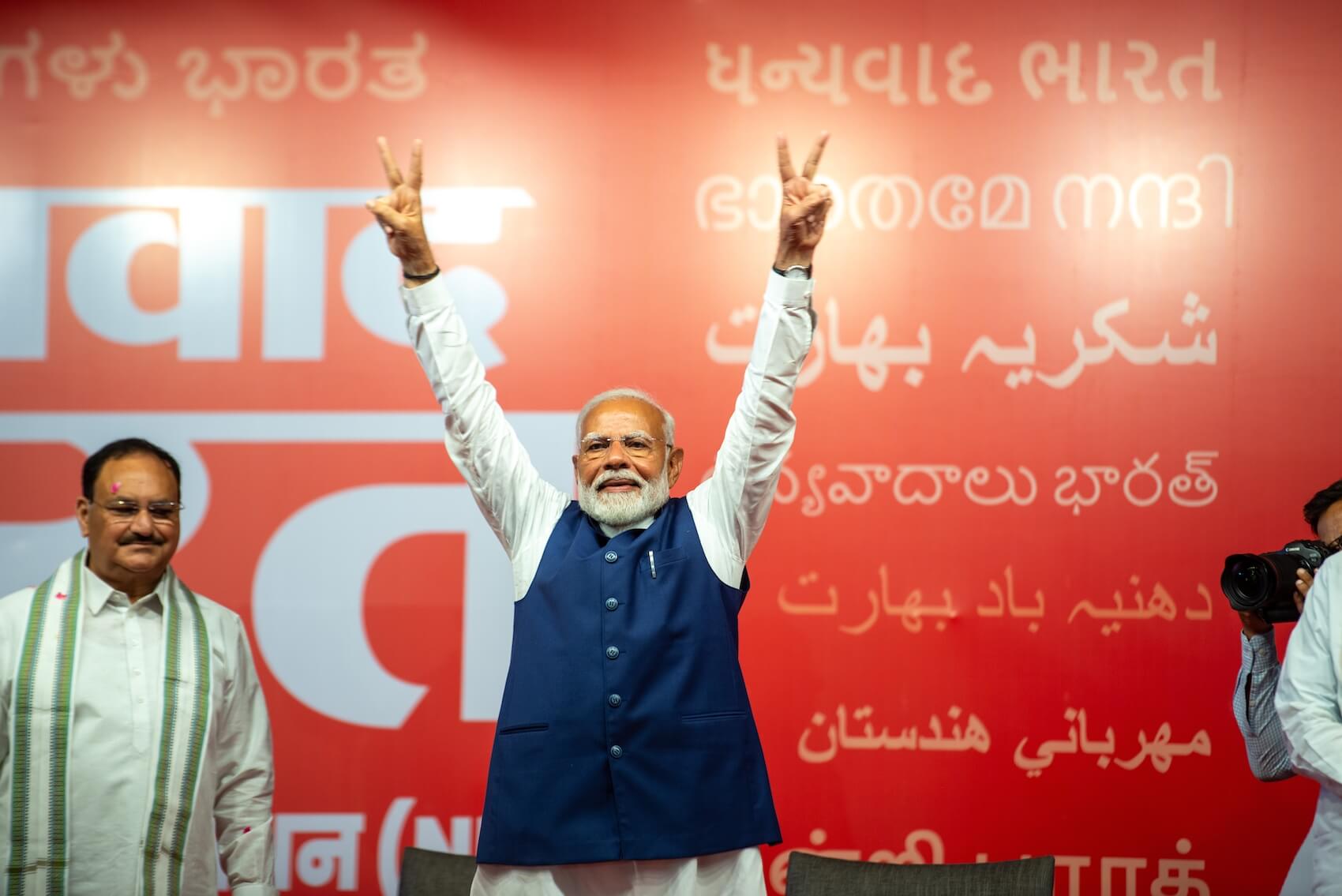
In “Why India’s Democracy Is Dying,” you explain how democratic institutions can survive formally while their underlying norms deteriorate. Has Modi’s India now crossed the threshold from democratic backsliding into consolidated electoral autocracy, or does meaningful democratic competition remain?
Professor Maya Tudor: I think meaningful democratic competition still remains, but India is an example that reminds us that democracy can be hollowed out without elections ever being abolished or becoming meaningless. In all competitive authoritarian regimes, elections are still meaningful, and incumbents sweat them because, as long as the act of voting is protected, it’s always possible for incumbents to be voted out.
But many of the liberal rights that define a democracy have been substantially eroded. That erosion has occurred through restrictions on the opposition’s ability to mobilize on the streets, as we’ve seen in recent protests; pressure on the media; the acquisition of independent media houses such as NDTV by businessmen close to the government; attacks on minorities, especially when it’s electorally fruitful ahead of state elections; and the use of state institutions, such as the Enforcement Directorate, to target and investigate political opponents through tax proceedings and the like.
However, the existence of competition doesn’t necessarily mean that the process is entirely fair. The analogy I like to use is a football match. Imagine a football match where no one is saying that the players can’t go out and play, but the referee calls all the fouls on only one team. Maybe he’s not allowing one team to practice in advance, while the other team is allowed to practice. Maybe there are penalties called. There are all kinds of ways to tilt the playing field in favor of one side while still respecting the rules of the game.
That’s really important, but it’s hard for people who aren’t paying close attention to see because this is a gray and foggy area. It’s difficult to tell exactly what’s going on because the media itself is captured to a large degree. So, these labels—electoral autocracy versus electoral democracy—are less important because what they have in common is that both have elections and civil liberties have been substantially diminished. Where exactly that boundary lies is less important than the fact that this is a regime in which democracy as a system of government is struggling to survive.
India’s Electoral Rolls and the Manipulation of Political Equality
India’s controversial Special Intensive Revision (SIR) of electoral rolls has generated accusations of mass voter exclusion and politicization of the Election Commission. Does this illustrate a broader authoritarian strategy of manipulating electoral competition through formally legal procedures rather than openly abolishing elections?
Professor Maya Tudor: This is a tricky one. There is absolutely no clarity on this question. For people who may not be familiar with the Indian context, the Special Intensive Revision (SIR) of electoral rolls removed 130 million voters in a country of 1.4 billion. That’s almost 10% of the population.
India is a young country, and those electoral rolls certainly needed some attention and updating. No one is doubting that. But if this had been done properly, you would expect openness and transparency about the process. There would also be a means of redress for citizens who had been removed from the electoral rolls, and that is missing.
The state of Bengal held an election earlier this year. The key question people are asking about that election concerns the deletion of voters, which occurred to a greater degree in Muslim-majority districts. According to national voting patterns, one could infer that Muslim-majority districts were less likely to vote for the BJP. Did those deletions swing the state election in favor of the ruling party? This is a state that the Modi government’s party, the BJP, had never ruled. It won for the first time in Bengal’s history.
So, there’s at least prima facie reason to believe that something nefarious might be going on here. And then there’s the situation within India’s Election Commission, which historically had a very different role. India was a country with high levels of illiteracy when the Election Commission came into being, and its job was to go out and register every voter. It wasn’t to say, “Show me your documents.”
The move toward a system that asks voters to show documents, when large proportions of the population are still illiterate and documentation is scarce, changes the situation. Asking people to prove their eligibility to vote changes the function of the Election Commission and the way it operates.
The key issues here are transparency, independent oversight, and appeals. The reason this became such a major issue in India this year is that the Indian Express reported 14 instances in which commissioners within the Election Commission, which led the Special Intensive Revision, had raised objections. These were not outsiders; they were insiders whose objections were overruled by the chief election commissioner. That’s why many of the recent protests called for the chief election commissioner’s resignation.
This is absolutely an ongoing process, and it highlights, in many ways, why modern democratic erosion often operates through the law rather than outside it. The question is whether legal procedures protect political equality or undermine it.
Social Media Can Launch a Movement, but Organization Sustains It
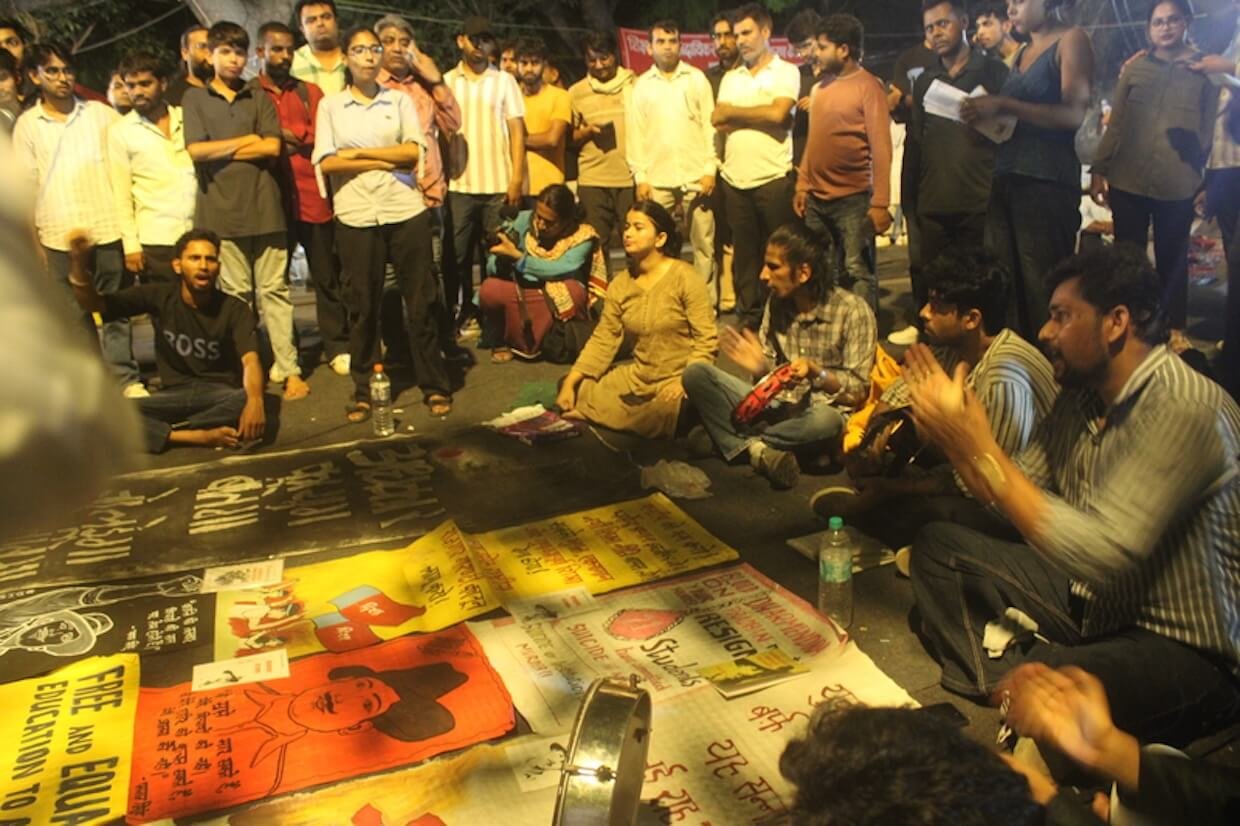
The emerging Cockroach Janta Party (CJP) movement has mobilized young Indians against alleged electoral manipulation and institutional capture. Drawing on your work on political organization and democratic resilience, can such movements generate lasting democratic renewal without coordinated opposition parties, durable grassroots networks, and clearly defined political demands?
Professor Maya Tudor: That is the million-dollar question. Social media can launch a movement, but organization is what allows it to survive and change politics at the ballot box. What we don’t yet know is whether the CJP can produce that kind of lasting democratic renewal.
Look, we’re seeing this play out in Serbia right now as well. Can a movement that brought people together and threw out an autocratic incumbent actually govern instead? That is very difficult. One reason it’s difficult is that there’s a different logic of politics when you’re banding together to overthrow an existing government or regime. You have all these different groups of people coming together, and what they share is the belief that the government is a problem. So, the governing logic is unity: let’s come together, let’s mobilize, and let’s throw that government out.
Imagine that the government is actually thrown out, as it was in Serbia, and this group of very disparate people then has to govern. Unless they’ve spent some of that time while they were united trying to hammer out what they’ll do when they come to power, governing becomes very difficult because the groups start pulling apart. Some say, “Well, let’s do this policy,” while others say, “No, let’s do that policy.”
When agreement on matters of policy hasn’t been worked out under a logic of unity, it’s much harder to reach that agreement once the logic of unity has given way to people tussling for political power. So, one of the things I teach my students is that power has to be organized before it can be used. Online mobilization is not the same as durable political organization.
Independent Media Are the Connective Tissue of Democratic Resistance
In your recent Journal of Democracy article, “How to Protect the Media in Eroding Democracies” (2026), you characterize independent media as the connective tissue of democratic resistance. How can opposition movements challenge authoritarian dominance over digital platforms, advertising revenues, and information networks, particularly in countries such as India, Turkey, and Hungary?
Professor Maya Tudor: This article examined four countries: India, Sri Lanka, Poland, and Hungary. Two of them have experienced much more severe democratic backsliding in the media space, while the other two have experienced more moderate backsliding. I was trying to compare these two sets of countries, with two countries in each region, to understand the differences between those that experienced much more complete media capture and those that experienced more moderate capture.
I identified five strategies that made a difference. The first was effective digital distribution; the second was diversified funding sources; the third was legal defense; and the fourth was a networked media ecosystem, with journalists and editors well connected across the media space. The fifth was connecting democratic erosion to everyday life, as Peter Magyar had done in Hungary. For example, he connected the decline in EU funding to a lack of investment in hospitals, thereby linking democratic erosion to citizens’ everyday concerns.
One of the things I highlight in that article is that media plays an even more important role in protecting democracies today than it did a generation or two ago. And here’s why. I think of public opinion formation as taking place 100 years ago in physical public squares. People would pass through a public square in the center of a town, where speakers in different corners expressed different views on the politics of the time. We all had a sense of what was being said in one corner or another. We might have gravitated toward one corner more than another, but these conversations were generally in dialogue with one another.
That’s what it looked like when a country had a couple of newspapers and everyone read that handful of newspapers. But now, younger generations are getting all their content online. Even when they follow national media sources, they do so through online platforms. Those platforms have different algorithmic structures that funnel them into smaller and smaller communities. That means we no longer have this public square where people are connected to one another, even if only loosely. Now, you can have very small subcultures that never speak to each other. As I put it, it’s like a mansion with a thousand rooms, and nobody knows what the conversation is like in the next room.
These communities are really siloed, which means our ability as a public to have conversations about what is in the public interest is also much more siloed. That’s a real problem because independent journalism is critical infrastructure for holding governments accountable and providing independent evaluations of what’s actually happening out there that we can trust. So, the core point of that article was to make clear that independent media is like the connective tissue—the highway upon which citizens must travel to discover their mutual interests.
Defeating an Authoritarian Government Is Not Dismantling Its System

Viktor Orbán’s defeat by Péter Magyar in April 2026 demonstrated that even deeply entrenched illiberal governments can lose elections. What explains the limits of Fidesz’s authoritarian resilience, and how can Hungary restore liberal-democratic institutions without reproducing the executive concentration of power that enabled democratic erosion?
Professor Maya Tudor: It’s a great question, and it’s one we all need to think much more about. I don’t have a silver-bullet answer here. One thing this makes very clear is that defeating an authoritarian government is not the same as dismantling the authoritarian system the incumbent constructed. Orbán achieved extensive media and institutional capture, and Péter Magyar showed us the importance of opposition coordination, bringing together disaffected ruling-party supporters, and providing credible alternatives.
But winning an election is only the beginning of this process, which is very difficult. Some of the events in Poland have shown just how difficult it can be. The danger is often that the new government uses its electoral mandate to concentrate power in precisely the manner it previously condemned.
Here’s where being clear about what you were elected to do—what the people elected you to do—is very important, because you cannot achieve everything in one term of government. But if you could choose just a couple of things that you promise to deliver on, then, presumably, that would be enough to win you an electoral mandate to continue doing what you were elected to do in the next term.
Opposition Coordination Converts Protest into Power at the Ballot Box
Serbia’s October 2026 elections delivered a parliamentary majority to the student-backed movement, challenging Vučić’s personalized authoritarianism. What can Serbia and Hungary teach us about the relative importance of opposition coordination, civic mobilization, elite defections, and institutional safeguards in reversing democratic backsliding?
Professor Maya Tudor: The central lesson here is that authoritarian governments can lose when social mobilization connects discontent with credible electoral alternatives. That connection is essential. There’s always discontent bubbling up in any society at any given time.
One of the Achilles’ heels of authoritarian governments is that they don’t actually understand how much disaffection there is. By definition, there is a cost to speaking the truth in an electoral regime where people’s rights and civil liberties are not protected. People are not going to speak truth to power because there’s a cost to doing so. That means authoritarian governments don’t understand what people are frustrated by as well as the opposition coordinating on the ground does.
So, protests generate pressure on the government, but it’s opposition coordination that converts that pressure into political power at the ballot box. I think that’s what Serbia and Hungary teach us.
Democratic Restoration Cannot Depend on the Continued Success of One Leader

Lula’s narrow October 2026 reelection victory over Flávio Bolsonaro demonstrated both the resilience of electoral competition and the enduring strength of radical-right populism. Does Brazil suggest that defeating authoritarian-populist candidates at the ballot box is insufficient to reverse the social polarization and institutional vulnerabilities sustaining their movements?
Professor Maya Tudor: You can defeat an authoritarian populist at the ballot box without defeating the political conditions that made that candidate appealing. Brazil was lucky to have Lula around, but who is Lula’s successor? Lula’s 81, isn’t he?
I think polarization isn’t necessarily a problem for democracy in the way the average person might assume when they say, “Oh, it’s a problem; we’re deeply polarized as a society.” One of our key theorists of democracy, Robert Dahl, argued that democracy can resemble a heated family feud. People can disagree deeply about policies, but they need to agree on the boundaries of the nation and recognize that we’re all part of the same political community. Once that shared understanding disappears, polarization really becomes a problem.
When I look at Lula and his victory, I think having these older statesmen who’ve been around for a while is great because it has helped protect some of the core democratic institutions, as illustrated by the court’s decision to send Bolsonaro Sr. to prison. But democratic restoration cannot simply depend on the continued success of one leader.
That’s not a party. So, what is the party beyond Lula? This is true of many opposition parties. The same applies to India’s opposition party, the Indian National Congress. Rahul Gandhi is at the helm, and he’s done some work to bring in opposition voices. He’s also coordinating with the Cockroach Janta Party that we discussed earlier. But ultimately, he needs to make space for young people to reinvigorate the ranks of opposition movements.
Elections Alone Cannot Repair Institutions Weakened by Democratic Erosion
Trump’s second presidency has intensified concerns over executive power, institutional independence, and liberal rights. The November 3, 2026, midterm elections delivered Democratic majorities in both chambers of Congress. Does this electoral setback constrain authoritarian tendencies, or can democratic erosion continue despite renewed institutional checks?
Professor Maya Tudor: Elections will certainly interrupt that process, but they cannot, by themselves, repair the institutions and norms weakened by democratic erosion.
It looks like the latest count is that, if Alaska goes Democratic, there will be 56 Democratic senators in the US Senate.That still means there are over 40 Republican senators, and during these first two years of Trump’s second presidential term, they have served as no check whatsoever on his power. That represents real institutional erosion because these systems work only if checks and balances continue to hold, and they haven’t held during the first half of Trump’s second term.
So, the deeper test going forward is whether political actors across party lines defend their opponents’ right to disagree. To me, the very concept of loyal opposition needs to be recovered. You can be a Trump supporter and vote for Trump, or a supporter of the Democratic Party and vote for the Democratic Party. But are these groups of people loyal citizens to one another? That is something that needs to be recovered.
Pakistan’s Military Can Lose Legitimacy Without Losing Power

In The Promise of Power and your research with Adeel Malik, you examine Pakistan’s historical authoritarian foundations and emerging challenges to military dominance. Can generational change, an aspirational middle class, and digitally mobilized opposition weaken the military establishment without fundamental institutional transformation?
Professor Maya Tudor: Unlikely. The military can lose legitimacy without losing power, and that’s certainly what happened in the last election. The real question is whether societal change can be translated into changes in civilian institutions. As I wrote in The Promise of Power, Pakistan’s military dominance is rooted in an early historical pattern of state formation, when there was considerable political instability and the military stepped into power.
What we know from research is that once the military steps into power and governs, especially for a prolonged period, it’s very difficult to reverse that pattern. The conditional probability of another coup is much higher once you’ve had a first coup. The military often develops very strong economic interests. This is not just true of Pakistan, but also of Myanmar, Egypt, and Thailand. It was also true of Indonesia, and probably still is, even though the military has left power there, at least for the foreseeable future. These vested interests in particular patterns of the economy make it even harder to undertake electoral reforms. If you had a regime that was somewhat independent of those vested interests, such reforms might be easier to undertake.
In my piece with Adeel Malik, I talked about the emergence of a new aspirational middle class, the weakening of traditional authority structures, and mounting economic pressures, particularly those related to climate, as future sources of crises in Pakistan. But that doesn’t mean the military is going to step out of power. The past is not always the best indication of the future, but you have to see something really change. Right now, I don’t see any incentive for the military to relinquish any of its power.
The Ultimate Test of Democracy Is Whether Tomorrow’s Opposition Can Compete Freely
Looking across India, Hungary, Serbia, Brazil, the United States, and Pakistan, what distinguishes temporary electoral setbacks for authoritarian-populist forces from genuine democratic restoration? Which institutional and societal conditions are most essential for sustaining democratic resilience?
Professor Maya Tudor: The process of democratic restoration begins with the removal from office of an incumbent who has eroded democracy. But the ultimate test is not simply whether the opposition can win. That is an important step—a critical step. The ultimate test is also whether tomorrow’s opposition will be allowed to compete freely. That is something we have to watch for whenever there is a turnover in power. There’s a great deal of attention—a glare of attention—focused on electoral moments in any country. But what happens after the election?
An election may represent a setback for an authoritarian-populist movement, but genuine restoration requires protecting the political equality of all citizens. It requires independent media that, by definition, are able to criticize the government. It also requires freedom of association, especially when groups assemble to protest against the government. If they’re simply supporting the government, then those freedoms aren’t, in a sense, really needed.
Genuine restoration requires the possibility of alternation in power and recovering the idea that you can oppose the government while still being a loyal citizen. Democracy is strongest when electoral losers retain their rights and winners accept constraints on their power in future electoral cycles. Democratic restoration should therefore be judged not just by whether an incumbent loses, but by whether the next government makes it harder for any future leader to monopolize power.
(*) This interview was academically curated and edited by Dr. Bulent Kenes.