In this interview with the ECPS, Professor Nandini Sundar (Delhi School of Economics, Delhi University) delivers a stark assessment of India’s institutional trajectory under the BJP and its ideological parent, the RSS. Her central claim is unequivocal: “Almost every institution in this country has now collapsed, or has been subverted, in order to further the supremacist agenda.” She situates current developments within the longer history of Hindutva ideology, emphasizing the RSS’s founding goal of a Hindu supremacist state. Professor Sundar argues that a narrative of majoritarian victimhood underpins historical revisionism, institutional capture, and restrictions on academic freedom. She also highlights transnational pressures, noting that a “very active Hindutva diaspora” has targeted scholars abroad, constraining research and debate globally.
In this wide-ranging interview with the European Center for Populism Studies (ECPS), Professor Nandini Sundar— Professor of Sociology at the Delhi School of Economics, Delhi University, and one of India’s most prominent sociologists and a leading voice on democracy, violence, and state power—offers a stark assessment of the trajectory of Indian institutions under the rule of the Bharatiya Janata Party (BJP) and its ideological parent, the Rashtriya Swayamsevak Sangh (RSS). Her central claim is unequivocal: “Almost every institution in this country has now collapsed, or has been subverted, in order to further the supremacist agenda.” Situating contemporary developments within the longer history of Hindutva ideology, Professor Sundar argues that the BJP cannot be understood apart from the RSS, “an unregistered, secretive organization” founded in 1925 “to establish a Hindu supremacist state in which all others would be second-class citizens.”
At the heart of this project, she explains, lies a powerful narrative of majoritarian victimhood. RSS discourse portrays Hindus as historical victims of “800 years of colonialism,” conflating Muslim rule with British imperialism and mobilizing a sense of lost civilizational pride. This paradox—an overwhelming majority imagining itself as dispossessed—underpins a wide array of policies, from historical revisionism to institutional capture. According to Professor Sundar, the claim to represent a wronged majority translates into concrete restrictions on academic freedom through ideological appointments, funding pressures, surveillance, and curricular transformation. Universities, in particular, have been reshaped to ensure that “only our narrative, only our voice, should count,” transforming spaces once associated with pluralism into arenas of political conformity and patronage.
The interview highlights how Hindutva governance operates not only through formal state mechanisms but also through diffuse networks of affiliated organizations and vigilante actors. Student groups such as the ABVP (the Akhil Bharatiya Vidyarthi Parishad) and other RSS-linked formations function simultaneously as political mobilizers and instruments of intimidation, embedding campuses within what Professor Sundar calls a broader “ecosystem of vigilantism.” Meanwhile, democratic institutions—from courts to electoral bodies and media regulators—are portrayed as formally intact yet substantively hollowed out, enabling what she describes as the preservation of democratic form alongside the erosion of democratic substance.
Professor Sundar also draws attention to the transnational dimension of these dynamics. A “very active Hindutva diaspora,” she notes, has targeted scholars abroad, orchestrating harassment campaigns and reputational attacks that restrict academic inquiry on India globally. As a result, she warns, it has become “very difficult for anyone working on India to be able to research, write, and think freely, whether inside the country or outside the country.”
Taken together, her analysis presents Hindutva not merely as a domestic political ideology but as a comprehensive project of institutional transformation, cultural redefinition, and epistemic control. By foregrounding the links between majoritarian resentment, institutional subversion, and the policing of knowledge, this interview offers a sobering account of how democratic systems can be repurposed to sustain exclusionary rule while maintaining the appearance of constitutional continuity.
Here is the edited version of our interview with Professor Nandini Sundar, revised slightly to improve clarity and flow.
The BJP Cannot Be Understood Apart from the RSS and Its Supremacist Project
A man chanting songs with a dummy cow in the background during the Golden Jubilee celebration of VHP – a Hindu nationalist organization on December 20, 2014 in Kolkata, India. Photo: Arindam Banerjee.
Professor Nandini Sundar, thank you very much for joining our interview series. Let me start right away with the first question: In your recent work on majoritarian resentment and the inversion of victimhood, how do you conceptualize the BJP’s claim to represent a historically wronged “majority,” and how does that claim translate into concrete restrictions on academic freedom (appointments, funding, policing, curricula)?
Professor Nandini Sundar: The BJP was founded by the Rashtriya Swayamsevak Sangh (RSS), an unregistered, secretive organization that has proliferated into many different fronts—education, labor, and virtually every sector, each with its own affiliated bodies. The BJP is the political wing of the RSS, which was founded exactly 100 years ago, in 1925, to establish a Hindu supremacist state in which all others would be second-class citizens.
If you look at RSS literature, it consistently portrays Hindus as victims suffering from what they call 800 years of colonialism, because they conflate periods of Muslim rule with British colonialism. This reflects a deep sense that India was ruled by Muslim rulers for many centuries and that a lost Hindu pride must now be regained. The past they invoke—often framed as a glorious Vedic age—overlooks the fact that ancient India consisted of many different communities practicing a variety of religions, rather than a unified “Hindu” civilization.
This constructed sense of victimhood, despite Hindus being the overwhelming majority—over 80 percent of the population—translates into efforts to rewrite history, for example by erasing the Mughal period. Yet it is impossible to understand India without considering the Mughal era or the various sultanates that existed from the 12th to the 18th centuries.
It also manifests in demographic anxieties, such as claims that Hindus are being overtaken by Muslims due to allegedly higher Muslim fertility rates—claims that are not supported by empirical evidence, since fertility rates among Muslims have declined sharply and vary across regions. In short, historical narratives, demographic fears, and broader perceptions of victimhood are mobilized together.
As noted, this translates first into historical revisionism. Second, in universities, vacancies have been systematically filled with individuals aligned with their ideology. This is not simply a matter of feeling victimized, because in the past, although the system was not always perfect, there was at least a perception that appointments were based on merit. If their candidates were not selected, it was often due to a lack of scholarly expertise rather than ideological exclusion.
Now, victimhood is invoked to claim that “our people” were neglected while positions were monopolized by the left. In reality, universities have been systematically reshaped to reflect their ideological preferences, and this has also become a source of patronage for their cadre.
Taken together, these developments reveal not only a discourse of victimhood but also a broader assertion of dominance—the belief that they are now the only legitimate force, and that only their narrative and voice should prevail.
Democratic Institutions Have Been Hollowed Out from Within
Indian Prime Minister, Shri Narendra Modi addressing the Nation on the occasion of 75th Independence Day from the ramparts of Red Fort, in Delhi on August 15, 2021.
In “Inside Modi’s Assault on Academic Freedom,” you trace how formally democratic institutions can be repurposed to discipline dissent. What are the key mechanisms—legal, bureaucratic, and vigilante—through which democratic form is preserved while democratic substance is hollowed out?
Professor Nandini Sundar: Almost every institution in this country has now collapsed, or has been subverted, in order to further the supremacist agenda. If you look at the judiciary—take the Supreme Court, for instance—we have had several BJP chief ministers issuing hate speeches. There was a recent incident involving the chief minister of Assam, which has quite a sizable Muslim minority, putting out a video of him shooting Muslims with a gun, targeting them so that you could see Muslims in the viewfinder being shot at. People took this to the Supreme Court, and the Court refused to intervene, saying that you are only targeting BJP chief ministers, and has basically refused to do anything about hate speech coming from the highest constitutional authorities. If you look at any number of judicial pronouncements in the last decade and a half, they have consistently favored the BJP.
If you look at the Election Commission, which again has been packed with chosen bureaucrats, right now they are conducting a massive exercise across the country to register voters. Historically, everybody who has been living here has been considered a voter, apart from immigrants or others. The onus used to be on the state to find and register voters. Now the onus is on voters to prove that they are citizens of this country and produce birth certificates of their parents, grandparents, their own exam mark sheets, and a whole range of certificates to show that they are indeed genuine citizens. That has led to the disenfranchisement of large numbers—hundreds of thousands of people in each state. For example, about 600,000 in one state. It is just ridiculous, because these are all actual, genuine voters who have not been able to produce the right certificates, often because they are poor, or especially women who migrate. So, you can see that elections, too, are completely controlled by the BJP.
When it comes to the media, if you look at the Modi government’s spending on advertisements, the amount that goes to favored media, and the way that media critical of the government has repeatedly had court cases slapped on them, with independent journalists arrested—every field is under attack. Universities are one major field—higher education in particular, but education more generally—where the BJP and the RSS have been attacking all conventions, all democratic procedures, and installing their own people.
Precarity in Universities Is Undermining Academic Freedom
How do budget cuts, contractualization, and precaritization in higher education function as governance tools—producing compliance not only through ideology, but also through material dependence and career risk?
Professor Nandini Sundar: There’s been a change in the way universities are funded. Many university colleges are being asked to go autonomous, which means that they will be responsible for raising their own funding. This increases fees for students, and at the same time, minority students—say Muslims and Christians who were receiving fellowships—have seen those fellowships cut down. So, there has been a general reduction in student fellowships.
In terms of faculty recruitment, we see that even earlier there were a number of precarious positions—contractual teachers—and that still continues quite widely across private colleges. Precarious teachers, those without fixed contracts, obviously find it hard to be critical of anything that is going on and hard to teach freely. But you also see that now, whenever the precarity issue among teachers has been addressed, those positions have been filled with their own people.
So, in either situation, both among students and among faculty, contractualization and the reduction of fellowships are making it difficult for there to be a strong autonomous voice from students and faculty.
Terror Laws Are Weaponized Against Democratic Protest
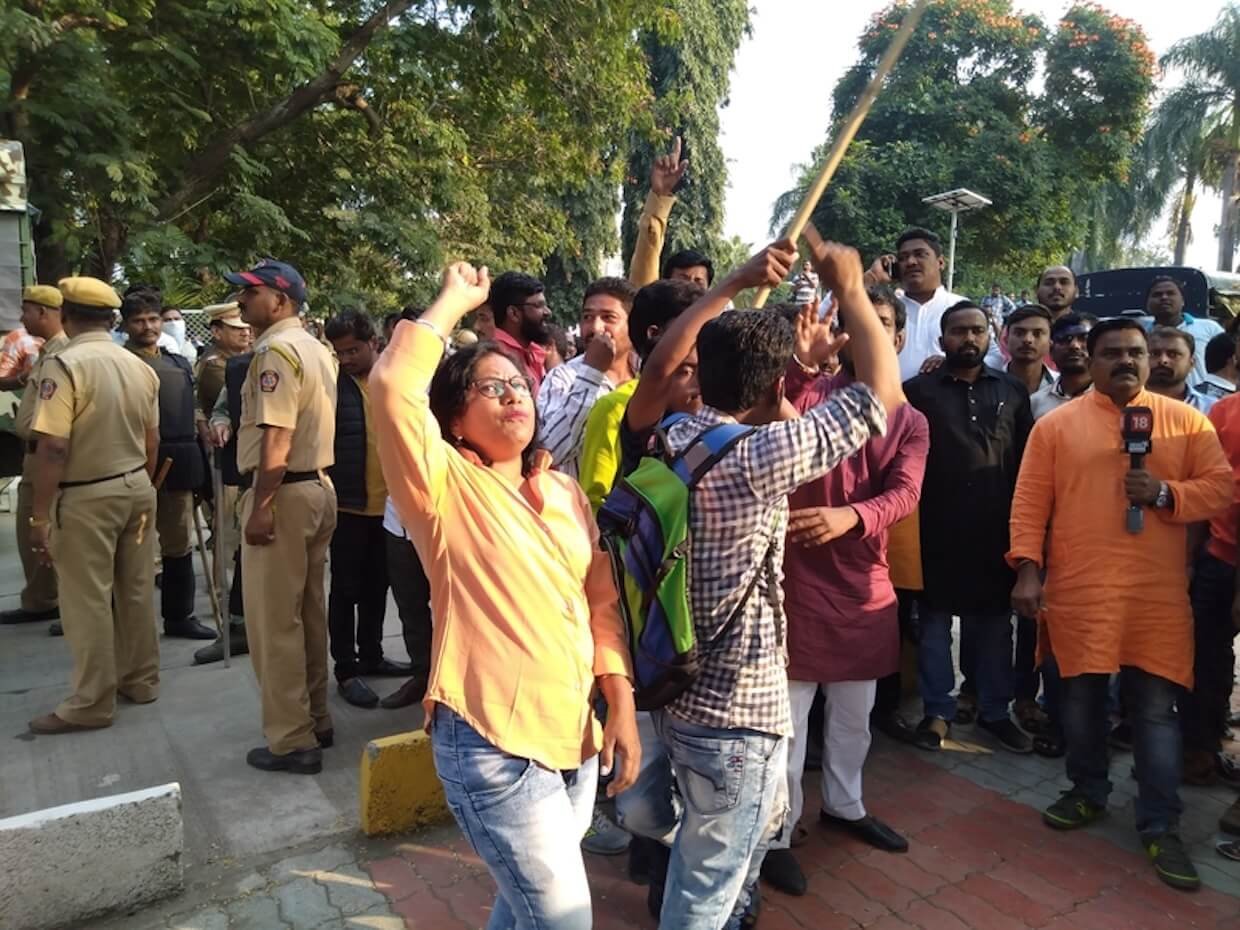
Protest against the CAA and NRC at Dr. Babasaheb Ambedkar Marathwada University (BAMU), Aurangabad, Maharashtra, India, as students and citizens demonstrate in defense of constitutional rights. Photo: Imran Shaikh.
Many accounts emphasize arrests, sedition/terror charges, and prolonged pre-trial detention. Analytically, how should we understand “process as punishment” as a populist-authoritarian technique of rule in India?
Professor Nandini Sundar: Absolutely. The whole judicial system is designed for process without punishment. If you take the case of Sharjeel Imam and Umar Khalid, two student leaders who have been arrested for over five years now without the case even coming to trial. The charges relate to their involvement in a movement for equal citizenship. In 2019, the government passed an act that would grant citizenship to refugees from every other country except Pakistan and Bangladesh, and to every other religion except Islam. This was also seen as the first step toward disenfranchising Indian Muslims, and there was a massive protest against it—a huge, peaceful, democratic protest, predominantly led by women in many parts of the country, but especially in Delhi.
These students, both from JNU (Jawaharlal Nehru University) and from Jamia (Jamia Millia Islamia), were involved in this democratic protest, and it was actually a very powerful democratic moment in this country’s history. But many students—predominantly Muslim students—were arrested. There were many people who took part in that protest, Muslims and Hindus, but only the Muslim students were arrested, and they have been in jail for the last five years. We have recorded speeches from them talking about the need for unity, upholding the Constitution, and love, yet they have been accused under the Unlawful Activities Prevention Act, which deals with terror.
They have been accused of terror conspiracies, which is completely ludicrous. The case has not even come to trial, and the evidence against them is completely flimsy. But everyone knows that they are being kept in jail because they are articulate student leaders who had a democratic vision for this country.
Campuses Are Embedded in a Wider Ecosystem of Vigilantism
How do you interpret the role of affiliated organizations (student wings, vigilante groups, informal “sentiment” enforcers) in expanding state capacity to intimidate universities while maintaining deniable distance?
Professor Nandini Sundar: The RSS has the biggest student wing in the whole country, the ABVP, the Akhil Bharatiya Vidyarthi Parishad, which has been engaged in a number of attacks on other student organizations. It has also attacked various seminars that have gone against BJP ideology. It functions both as a student wing—providing the kind of membership and mobilization for ordinary student activities that any student organization does—and as a vigilante force.
There are also a number of other fronts of the RSS—the Bajrang Dal, the Vishwa Hindu Parishad, and various other wings—which intimidate students and faculty on campuses. This is part of a more generalized surge in vigilantism, as vigilantes have been attacking Muslim traders, Muslims transporting cattle across state boundaries, Muslim shopkeepers, and Christian pastors. There is a whole range of vigilante forces that the RSS tacitly supports and grants immunity and impunity. So, the university is not free of this; it is completely embedded in that wider ecosystem of vigilantism.
Universities Modeling Diversity Became Central Adversaries
Jawaharlal Nehru University (JNU), a public central university in New Delhi, India. Photo: Mrinal Pal.
Why do institutions like JNU become such central targets in majoritarian projects? Is it their historical role in mass politics, their social composition, their epistemic authority—or the way they model pluralism?
Professor Nandini Sundar: All of the above, I should say. Many universities in India were set up as part of a nationalist project. For instance, Jamia, which was established before independence, was founded by nationalist leaders to provide an alternative form of education to the British colonial model, and it has had a very long, rich tradition of scholarship and student mobilization.
JNU was set up in the 1970s on a very distinct model of higher education, where the effort was to bring in students from all across the country, especially from underserved regions. It had an extremely interesting system of deprivation points, whereby students from backward regions would receive extra marks in addition to whatever they obtained in the entrance test. In this way, it managed to achieve a real plurality of students from across the country. They also had excellent faculty, and some departments were truly the best in the country, known for their academic excellence. Even today, it remains one of the strongest universities academically in India.
Partly because of this academic excellence and the pluralism of its students, JNU also developed a very strong left tradition. It is one place where left student unions have consistently won student elections, and it has had a distinctive style of politics in which debates on a wide range of national issues would continue late into the night, alongside campus concerns such as hostel bills, food, accommodation, and fees. So, it has been a very unusual kind of university, an iconic institution for liberal-left education, and that was something the BJP felt it had to attack and destroy.
Rewriting the Past to Control the Nation’s Narrative
How do textbook “rationalization” and selective historical erasure operate as a struggle over national temporality—who gets to narrate the past, and who is authorized to speak for the nation?
Professor Nandini Sundar: The RSS thinks that it is authorized to speak for the nation, and since it has control over the government and textbooks—because under the Indian system education is a matter both for the central (federal) government and for the states—there are also some boards that operate nationally, in addition to the state boards. So, the major producer of textbooks in India is the NCERT, the National Council of Educational Research and Training, which produces textbooks that are then used by these different boards or even used by state boards as models.
What the BJP has been doing is systematically changing these NCERT textbooks. For instance, removing references to caste, removing all traces of Mughal history from middle school textbooks, and giving more space to certain false narratives that promote Hindu rulers at the expense of others. So, it has huge power. I mean, the central government has enormous power to rewrite historical narratives. It is also, if you look at other fields—archaeology, for instance—it underplays the contributions of the South in historical research.
I don’t know how to put it, but it is enormously powerful in rewriting history and rewriting sociology, rewriting politics—everything, really.
National Security as a Catch-All Tool of Suppression
The state’s framing of “internal affairs,” “sensitive issues,” and “national security” often appears deliberately expansive. What does this elasticity reveal about authoritarian boundary-making in the knowledge sphere?
Professor Nandini Sundar: It also reveals something about authoritarian fragility. Just to give you a very recent example.The Wire, which is a news portal, ran a 52-second clip showing Prime Minister Modi running away from Parliament. This was during a debate in Parliament about how he had not taken a resolute stand when the Chinese were coming into India in 2020, and then he claimed that women MPs were threatening to bite him, and that’s why he didn’t attend Parliament. So, this was just a somewhat humorous video about how Modi was supposedly scared of being bitten by women MPs. The Wire’s Instagram page was shut down, there was a privilege motion against them from Parliament, and it was described as a national security issue. Now, there was nothing remotely related to national security about a small cartoon of Modi running away from women MPs.
But anything and everything can be described as a national security issue. People are being arrested, especially journalists in Kashmir, or students in Kashmir, who are really living under a state of terror. It is such a loosely applied concept, and the problem is that the law puts the onus squarely on the person who is accused under such laws. It is very hard to get bail under UAPA (Unlawful Activities (Prevention) Act), which is why people like Umar and Sharjeel and other human rights activists in what is called the BK16 case (the 16 individuals locked up without a trial in the Bhima Koregaon case. S.G.), or across the country more generally, are finding it very difficult to get out of this, because they are accused under national security acts.
So, it is a very expansive definition. It is very, very open to abuse, and these laws should have no place in any democracy.
Food, Caste, and Control under Hindutva Governance
Volunteers of Rashtriya Swayamsevak Sangh (RSS) on Vijyadashmi festival, a large gathering or annual meeting during Ramanavami a Hindu festival in Ghaziabad, Uttar Pradesh on October 19, 2018. Photo: Pradeep Gaurs.
Beyond overt ideological control, what is the relationship between Hindutva governance and everyday disciplinary practices (food regimes, hostel rules, policing intimacy), and how do these practices intersect with gendered and caste-based hierarchies?
Professor Nandini Sundar: One of the things that the RSS, the Hindutva regime, has been trying to promote is the idea that India is a vegetarian country, and that people who eat meat are in some way inferior or should not be eating meat. They have been trying to associate that with Muslims and use it to target Muslims or Dalits, who were formerly called untouchables and who are still treated very badly and exploited by the system.
In fact, about 80% of India is non-vegetarian. But this has become a big issue in certain hostels. For instance, some of the Indian Institutes of Technology have had separate messes in hostels for vegetarians and non-vegetarians. In the past, people were free to eat whatever they wanted, and they could sit together and eat, but this kind of segregation creates a hierarchical divide in which those who eat pure vegetarian food are seen as somehow superior, because historically it has also been a caste issue.
There have been student movements against this segregation and hierarchy, but they have again been suppressed by the administration. A lot of what the Hindutva regime is doing is feeding into existing caste and religious prejudices, aggravating them, and creating a hierarchy in which Hindu upper-caste voices are seen as representing the whole nation.
Just another example: for some strange reason—because it is inconceivable that this government would do anything that progressive—the University Grants Commission (UGC), which governs the higher education space, issued rules mandating equity for students from historically discriminated backgrounds, such as Scheduled Castes, Scheduled Tribes, minorities, and OBCs (The Other Backward Classes). There was a huge protest against this by upper-caste students, who have been coming out on the streets saying that they are under threat and in danger from this equity movement. The Supreme Court has stayed the equity regulations, and the BJP government is really happy, because it has got the Supreme Court to do so. On the one hand, they put out these UGC equity regulations, but they actually did not want to implement them; their constituency of upper-caste people is against it, and fortunately for them, it has been stayed by the Supreme Court.
So, there is a very neat dovetailing between Hindutva upper-caste ideology and the various practices of this government.
Masculinist Power and the Politics of ‘Teaching a Lesson’
How do masculinist styles of leadership and majoritarian “strength” narratives shape state behavior toward universities—especially in the public performance of punishment, humiliation, and “teaching a lesson”?
Professor Nandini Sundar: It is a very masculinist ideology, and historically the RSS did not have room for women as part of its cadre; there was a separate women’s wing.
If you look at the state of Kashmir, for instance, and education in Kashmir—higher education in particular—the entire process has been about this. In 2019, the state of Jammu and Kashmir was stripped of its constitutional autonomy and reduced from a state to a union territory. The whole thing was couched in terms of teaching them a lesson, because it was seen as a source of terrorism, since it is the only Muslim-majority state in India, and there was a conscious effort to show them their place.
When it comes to universities, Kashmiri students in different parts of the country have been especially targeted and victimized, and again this is very much part of showing Muslims their place, showing Kashmiris their place in India. When it comes to women, there are many more subtle ways in which women have been affected. If you look at the entrance exams, thanks to a new system of multiple-choice entrance exams, the number of women entering colleges has dramatically declined. Even if the government officially says that its policy is inclusive of women studying, in fact many of its practical policies discriminate against women.
People wait in queues to cast votes at a polling station during the 3rd phase of Lok Sabha polls, in Guwahati, India on May 7, 2024. Photo: Hafiz Ahmed.
Targeting Scholars Abroad: Hindutva’s Reach Beyond India
To what extent do you see an externalization of repression—through harassment campaigns, institutional pressure, and reputational attacks—aimed at shaping scholarship on India outside India?
Professor Nandini Sundar: There’s a very active Hindutva diaspora that has been targeting academics who work on India in the US, the UK, and Europe. There was this conference called Dismantling Hindutva some years ago, where the active Hindutva diaspora went after the organizers of the conference. They flooded universities with so much hate mail against faculty members who were part of this conference that some of their servers collapsed.
It is really an organized, very virulent Hindutva diaspora, especially in the US, which has links with Zionists and follows the same sorts of procedures as some of the American far right. Unfortunately for them, the American far right, because they are Christian fundamentalists, has no regard for Hindu fundamentalists, so they are not really sure where they stand now. But they are just a very vicious, virulent lot when it comes to attacking people who are working on India.
For instance, there is an American historian called Audrey Truschke, who writes on Aurangzeb, the last Mughal emperor, and she has been relentlessly attacked. One could name various other people who have been singled out and attacked. The Indian government has also denied visas to a lot of academics working on India. This is really kind of inexplicable, because some of these academics have hugely contributed to the understanding of subjects the government itself promotes. For instance, there is a historian who works on Hindi. Now, the BJP government is insistent that everybody in the country should speak Hindi, that everybody should replace their own languages and know Hindi, yet this historian, who has contributed greatly to the understanding and study of Hindi, was denied a visa. There is absolutely no sense in this, even from their own perspective, because it is not like she was studying anything they would consider anti-national; she was studying Hindi literature.
So, it has become very difficult for anyone working on India to be able to research, write, and think freely, whether inside the country or outside the country.
Recasting the Past for Power
How has the language of decolonization and cultural authenticity been retooled to delegitimate critique—both within India and in global academia—while recoding censorship as civilizational self-defense?
Professor Nandini Sundar: That’s a really good question, because if you look at some of these Hindutva ideologues, they’ve adopted the language of decoloniality to claim that whatever has been done in Indian history, for instance, is colonial because it does not go back to ancient Hindu roots or does not adopt an Indic perspective.
In fact, the BJP or the RSS version of history is itself following a completely colonial template. They have adopted a periodization of Indian history based on Hindu, Muslim, and British India, which is a colonial construct, and that is what they have been following in the name of decolonization.
If you look at one major thrust of their programs, it has been to develop what they call Indic knowledge systems. By Indic knowledge systems, they basically mean Hindu and Vedic knowledge systems. This is something they have been pushing in every syllabus revision process, along with organizing a wide variety of seminars on Indic or Indigenous knowledge systems.
They have actually ignored all the work that has been done over the years, because scholars have already been working on different versions of Indian history and Indian society from a variety of perspectives, many of them indigenous. So, to say that they are coming up with some new framework is actually reinventing the colonial wheel while at the same time claiming that they are adopting some kind of great decolonial epistemology.
A Global Crisis of Academic Freedom Requires Collective Resistance
And lastly, Professor Sundar, given the risks of speaking, organizing, and even researching “sensitive” themes, what forms of collective strategy (professional associations, transnational solidarity, union politics, legal defense infrastructures) do you see as most effective—and what ethical obligations do scholars outside India have in confronting these dynamics without reproducing paternalistic frames?
Professor Nandini Sundar: I don’t think it is about scholars outside India or inside India. I think that scholars across the world are now facing similar threats, whether in Turkey, the US, or Europe. We are all being censored. We are all facing the Palestinian exception—nobody can talk about Palestine or teach about Palestine, not just in the US but in Germany and everywhere.
So, I don’t think there are any easy answers as to what can be done. We are all facing similar kinds of issues, so we need to share across countries how people have dealt with this, and work out ways in which we can collectively keep the university going as a space for research and critical thinking, and above all for teaching freely.
And I have hope that students—not the ABVP type, but ordinary students—are keen and curious about what is actually happening in the world, and I have great hope that students will be the ones who keep the university going. That is something that I think we will all have to face collectively, together across the world.
Professor Benjamin Carter Hett, a leading historian of Nazi Germany at Hunter College and the Graduate Center, CUNY, joins ECPS to reflect on the promises—and pitfalls—of historical analogy in an age of democratic stress. Grounded in his research on Weimar collapse and authoritarian mobilization, Professor Hett argues that humiliation remains a key driver of populist politics, pointing to Trump’s insistence, “I am your retribution,” as a revealing signal of grievance politics. He also draws sharp structural parallels between Nazi attacks on “the system” and contemporary slogans such as “the swamp,” which work to delegitimize democracy from within. Yet Professor Hett resists false equivalence: Trump, he emphasizes, is “vastly less astute and vastly less ruthless than Hitler,” and lacks “any compelling ideological vision,” remaining “totally improvisatory.” The interview probes elite accommodation, “reality deficits,” and backlash dynamics.
In an era increasingly shaped by populist insurgencies, democratic erosion, and polarized historical analogies, few scholars are better positioned to assess the uses—and abuses—of the past than Professor Benjamin Carter Hett. A leading historian of Nazi Germany at Hunter College and the Graduate Center, CUNY, Professor Hett has devoted his career to analyzing how democratic systems collapse from within. In this wide-ranging interview with the European Center for Populism Studies (ECPS), he reflects on the dynamics of authoritarian mobilization, the politics of grievance, and the limits of historical comparison—culminating in his striking assessment that “Trump is, of course, vastly less astute and vastly less ruthless than Hitler.”
Professor Hett’s analysis begins not with institutions but with emotions. Drawing on his research into the Nazi rise to power, he argues that humiliation—rather than ideology alone—often supplies the combustible fuel of authoritarian movements. A “core explanation” for Nazism’s ascent, he explains, was a widespread perception among supporters that they had been “humiliated by domestic elites” and by the settlement of World War I. He sees echoes of this dynamic today: “Substantial segments of the electorate in the United States and in European countries appear to be experiencing a sense of humiliation reminiscent of that felt by many Germans in the interwar period.” Trump’s campaign rhetoric, especially the promise “I am your retribution,” exemplifies how perceived loss of status can be politically weaponized.
Yet the interview’s central theme—highlighted by its title—is not crude equivalence but analytical differentiation. Professor Hett repeatedly underscores that, despite structural parallels, Trump lacks the strategic capacity and ideological coherence that made Hitler historically transformative. Whereas Nazism fused charismatic authority with a totalizing worldview—what Nazis called “the Idea”—Trumpism appears improvisational, transactional, and deeply personalist. This distinction, Professor Hett suggests, limits its authoritarian potential. Trump, he argues, possesses “no compelling ideological vision behind him” and is “totally improvisatory,” driven more by a desire for adulation and material reward than by a programmatic project of domination.
The interview also revisits Professor Hett’s influential argument that democratic breakdown can stem from “hollow victory” as well as defeat. Despite America’s triumph in the Cold War, many citizens experienced globalization, automation, and rising inequality as loss rather than success, producing resentment analogous to the disillusionment that followed World War I. Such grievances, once reframed as cultural humiliation rather than economic hardship, become fertile ground for populist mobilization.
Equally significant is Professor Hett’s discussion of elite miscalculation. Just as conservative elites in Weimar believed they could harness Hitler’s popularity, many contemporary political and economic actors initially treated Trump as a manageable aberration. History, he warns, shows how such bargains can backfire—even when the leader in question is less capable than his predecessors.
Ultimately, Professor Hett’s cautiously optimistic conclusion is that the very differences highlighted in the title—Trump’s relative lack of ruthlessness, ideological depth, and strategic discipline—may also constitute democracy’s resilience. Historical patterns may rhyme, he suggests, but they do not mechanically repeat.
Professor Benjamin Carter Hett, a leading historian of Nazi Germany at Hunter College and the Graduate Center, CUNY, joins ECPS to reflect on the promises—and pitfalls—of historical analogy in an age of democratic stress. Grounded in his research on Weimar collapse and authoritarian mobilization, Professor Hett argues that humiliation remains a key driver of populist politics, pointing to Trump’s insistence, “I am your retribution,” as a revealing signal of grievance politics. He also draws sharp structural parallels between Nazi attacks on “the system” and contemporary slogans such as “the swamp,” which work to delegitimize democracy from within. Yet Professor Hett resists false equivalence: Trump, he emphasizes, is “vastly less astute and vastly less ruthless than Hitler,” and lacks “any compelling ideological vision,” remaining “totally improvisatory.” The interview probes elite accommodation, “reality deficits,” and backlash dynamics.
In an era increasingly shaped by populist insurgencies, democratic erosion, and polarized historical analogies, few scholars are better positioned to assess the uses—and abuses—of the past than Professor Benjamin Carter Hett. A leading historian of Nazi Germany at Hunter College and the Graduate Center, CUNY, Professor Hett has devoted his career to analyzing how democratic systems collapse from within. In this wide-ranging interview with the European Center for Populism Studies (ECPS), he reflects on the dynamics of authoritarian mobilization, the politics of grievance, and the limits of historical comparison—culminating in his striking assessment that “Trump is, of course, vastly less astute and vastly less ruthless than Hitler.”
Professor Hett’s analysis begins not with institutions but with emotions. Drawing on his research into the Nazi rise to power, he argues that humiliation—rather than ideology alone—often supplies the combustible fuel of authoritarian movements. A “core explanation” for Nazism’s ascent, he explains, was a widespread perception among supporters that they had been “humiliated by domestic elites” and by the settlement of World War I. He sees echoes of this dynamic today: “Substantial segments of the electorate in the United States and in European countries appear to be experiencing a sense of humiliation reminiscent of that felt by many Germans in the interwar period.” Trump’s campaign rhetoric, especially the promise “I am your retribution,” exemplifies how perceived loss of status can be politically weaponized.
Yet the interview’s central theme—highlighted by its title—is not crude equivalence but analytical differentiation. Professor Hett repeatedly underscores that, despite structural parallels, Trump lacks the strategic capacity and ideological coherence that made Hitler historically transformative. Whereas Nazism fused charismatic authority with a totalizing worldview—what Nazis called “the Idea”—Trumpism appears improvisational, transactional, and deeply personalist. This distinction, Professor Hett suggests, limits its authoritarian potential. Trump, he argues, possesses “no compelling ideological vision behind him” and is “totally improvisatory,” driven more by a desire for adulation and material reward than by a programmatic project of domination.
The interview also revisits Professor Hett’s influential argument that democratic breakdown can stem from “hollow victory” as well as defeat. Despite America’s triumph in the Cold War, many citizens experienced globalization, automation, and rising inequality as loss rather than success, producing resentment analogous to the disillusionment that followed World War I. Such grievances, once reframed as cultural humiliation rather than economic hardship, become fertile ground for populist mobilization.
Equally significant is Professor Hett’s discussion of elite miscalculation. Just as conservative elites in Weimar believed they could harness Hitler’s popularity, many contemporary political and economic actors initially treated Trump as a manageable aberration. History, he warns, shows how such bargains can backfire—even when the leader in question is less capable than his predecessors.
Ultimately, Professor Hett’s cautiously optimistic conclusion is that the very differences highlighted in the title—Trump’s relative lack of ruthlessness, ideological depth, and strategic discipline—may also constitute democracy’s resilience. Historical patterns may rhyme, he suggests, but they do not mechanically repeat.
Here is the edited version of our interview with Professor Benjamin Carter Hett, revised slightly to improve clarity and flow.
Humiliation as the Hidden Engine of Authoritarian Politics
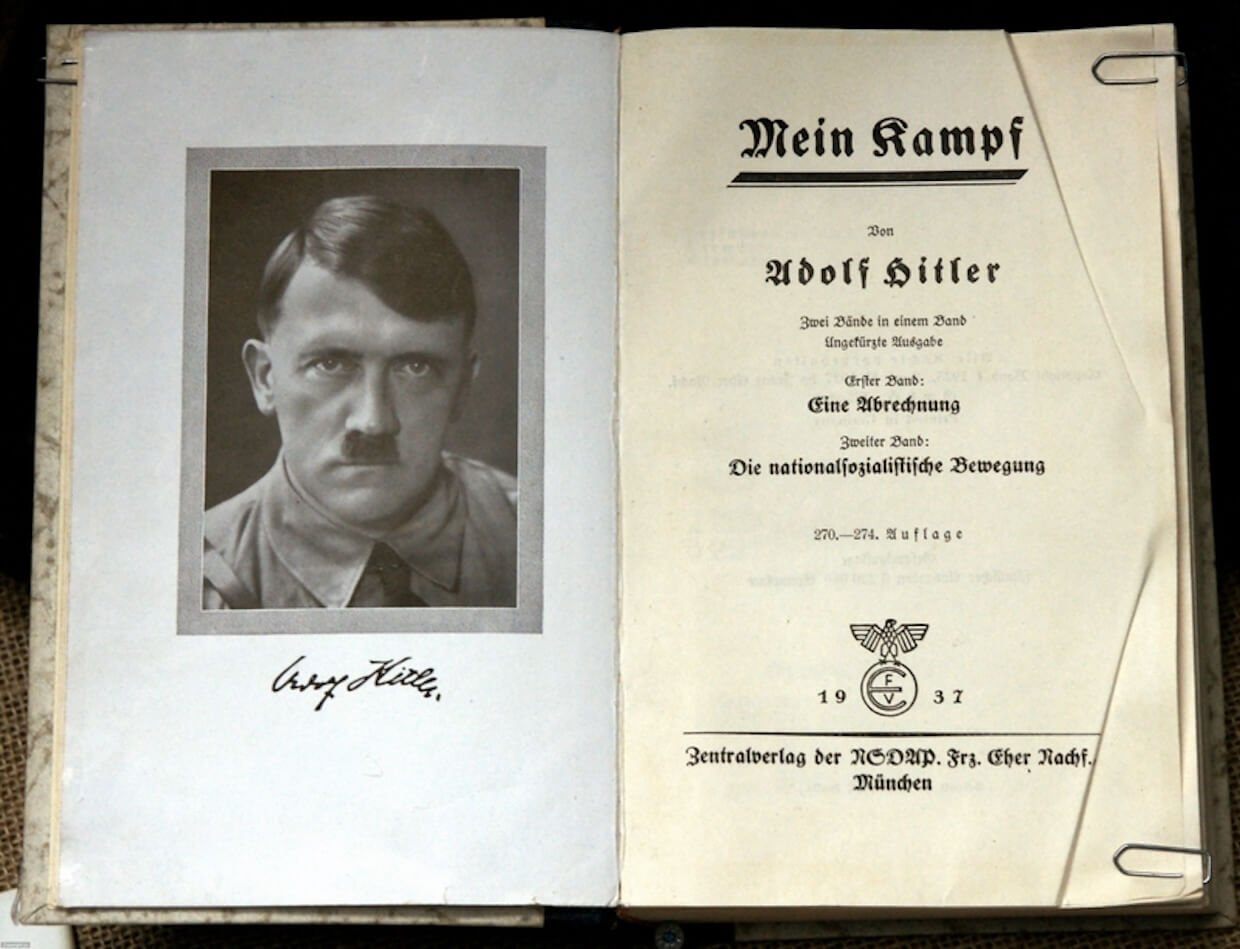
A copy of Adolf Hitler’s Mein Kampf (My Struggle), displayed alongside a portrait of the author at the Technology, Aviation and Military Museum in Sinsheim, Germany. Photo: Gepapix | Dreamstime.
Professor Benjamin Carter Hett, thank you so much for joining our interview series. Let me start right away with the first question: In “The Power of Grievance,” you frame humiliation as the animating force behind authoritarian mobilization. How does this concept refine—or challenge—more institutional explanations of democratic breakdown in The Death of Democracy, particularly in the US case where institutions remain formally intact?
Professor Benjamin C. Hett: Let me begin by saying that I am primarily a historian and a scholar of 20th-century Germany, particularly of the rise of the Nazis. From extensive research on the Nazis’ ascent in Germany during the 1920s and 1930s—I’ve written three books on the subject, among other works—I came to the conclusion that a core explanation for their rise was a widespread sense of humiliation among their constituency: humiliation at the hands of domestic elites, humiliation imposed by the victorious Allies of World War I, and so on.
Given what I do for a living, and the times we are living in, I am often asked about parallels between that historical episode and contemporary developments. The more I examined current events and read widely on American and European politics today, the more I felt that the explanation for much of what is happening now is broadly similar. Substantial segments of the electorate in the United States and in European countries appear to be experiencing a sense of humiliation reminiscent of that felt by many Germans in the interwar period.
As for how this perspective modifies the outlook: there are, of course, countless possible explanations for the rise of authoritarianism. Some are economic-structural, others political, social-psychological, or cultural—suggesting that certain societies may be predisposed to particular forms of authoritarian politics. Nothing in scholarship is ever absolute, and elements of all these factors are likely present in any given case where authoritarianism gains electoral traction.
But, for what it is worth, I am persuaded that if you return to what politicians are actually saying to people—and examine the resulting voting behavior in context—you repeatedly encounter the theme of humiliation. There are many examples we could discuss, but one is particularly telling: the fact that Trump campaigned so heavily on the claim, “I am your retribution.” What do his voters need retribution for? It suggests that they feel they have experienced a significant degree of humiliation in recent years or decades. I think there are many other such examples, but that one captures the point quite clearly.
From ‘The System’ to ‘The Swamp’: Recycling Anti-Democratic Rhetoric
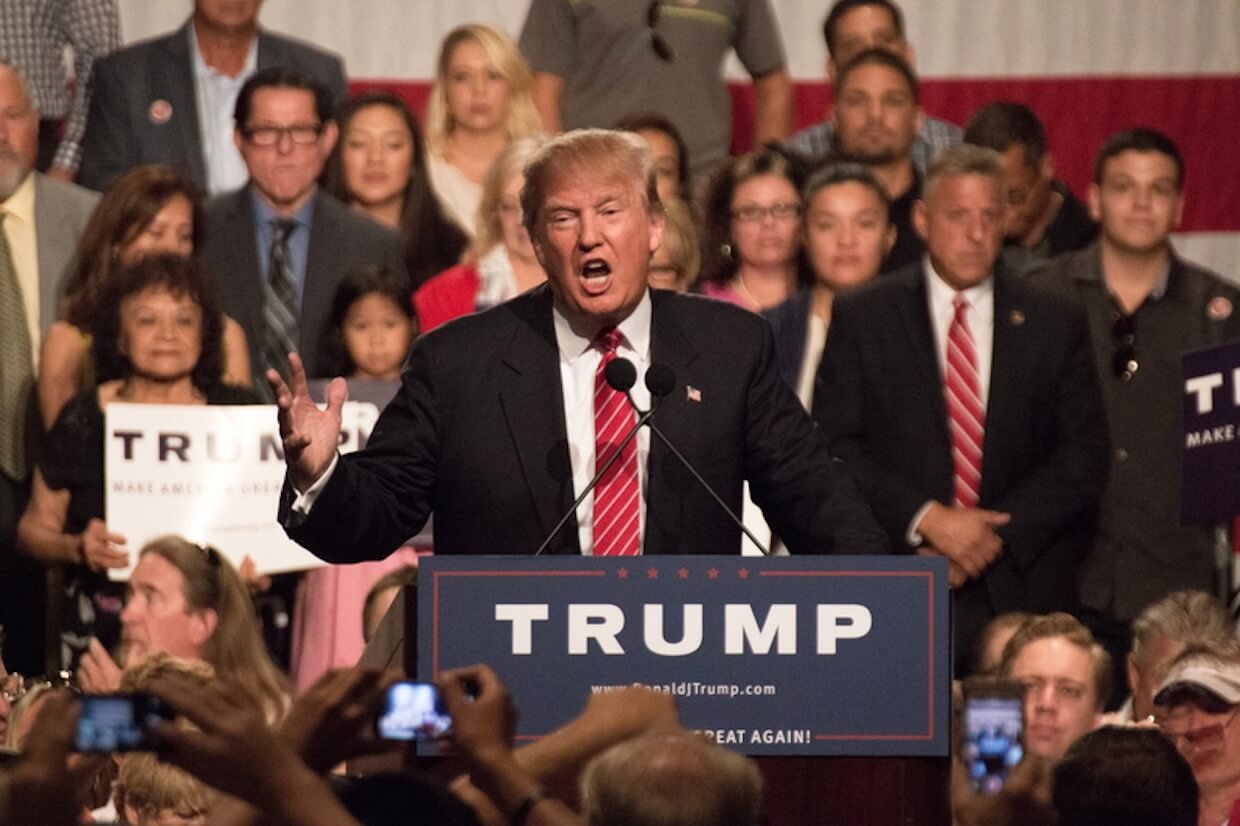
Donald Trump’s first presidential campaign rally at the Phoenix Convention Center, where thousands gathered to hear him speak as protesters demonstrated outside. Photo: Danny Raustadt.
You show how Nazi contempt for “the system” delegitimized Weimar democracy from within. To what extent do contemporary slogans such as “the swamp” or “deep state” perform a structurally similar function in Trumpism, even without an explicitly revolutionary ideology?
Professor Benjamin C. Hett: That’s a great point, and you’re quite right, too, about the lack of an explicitly revolutionary ideology. But when Trump talks about draining the swamp and campaigns on that, it is doing exactly—indeed 100% of what Nazi rhetoric in Germany in the 1920s and 1930s did.
Just to give you an example, the Nazis always talked about “the system,” a kind of capital-S System. “The System” was their code word for Weimar democracy, which they worked very hard to paint as corrupt and weak, in very much the sort of Trump-like “swamp” rhetoric they used. Nazi propaganda would, for instance, always highlight what they saw as corruption by the democratic parties, especially by the Social Democrats, the dominant democratic party at that time. They would emphasize corruption, weakness, dysfunction, and the incompetence of democracy, always using corruption as a wedge to say: look how this system is paying off fat cats and criminals; look how this system stands behind war profiteers and gangsters. This is a fundamentally illegitimate system; therefore, you should turn to us, because we represent, in their words, cleanliness and decency.
And Trump makes exactly the same argument. Despite the—to put it mildly—rather glaring corruption of his administration, which probably even outdoes the Nazis in corruption (and the Nazis were plenty corrupt), the rhetoric is just that: rhetoric that conceals, in both cases, a much more profound kind of corruption.
Why Cold War Triumph Did Not Prevent Democratic Discontent
You emphasize that authoritarian grievance can emerge not only from defeat but also from “hollow victory.” How analytically useful is this idea for understanding American populism, given that the US emerged as the undisputed Cold War victor?
Professor Benjamin C. Hett: One thing I think is a bit of a puzzle is why the United States could have achieved, in a sense, a kind of unmitigated triumph at the end of the Cold War, and yet have pretty quickly, in historical time after the end of the Cold War, fallen prey to a movement like Trump’s—a demagogic campaign of resentment that seems to speak to people who feel they are losing from the system. So, for a historian like me, the question arises: this actually looks rather like the 1920s, an increasingly dark time that followed a seemingly spectacular democratic triumph. So, what is it about that?
If you look a little more closely, you find that, for many Americans, the end of the Cold War did not deliver anything that looked like a victory. This is largely due to economic orthodoxy and, to some extent, technological change, which have taken hold since the end of the Cold War. The two things combined—the move to greater globalization, which for many Americans meant offshoring jobs and/or losing domestic jobs in competition with foreign manufacturers—and, coupled with that, technological change, including increasing automation of the workplace. God only knows what AI is going to do to all of us, but there has been a narrative of technological change replacing jobs for some decades now.
What this has done is essentially deprive the vast majority of Americans of real economic gains over a period of the last 50 years. I think it has become acute since the 1990s, but it has been going on since the 1970s. There is quite clear data on this, and it is breathtaking that, for 99% of Americans, there has been no real gain in income or net worth since the 1970s, whereas the top 1% has achieved spectacular gains in income over the same period. And this is a result of politics. It is not anything inevitable in the economic order; it is a result of political decisions that have been made. Although many people who vote for Trump do not really know or understand this, they experience its effects, and that creates a kind of justifiable anger.
But the subtle point—and this is one of the arguments of my piece—is that it then becomes, politically, not exactly a literal economic grievance, because it gets transmuted into something else. What people receive is the message: my country, my society, does not care about me. My society does not pay attention to me; it neglects my interests. There is an elite interest that is taking precedence. That mood has increasingly taken hold in America since the 1990s, at a time when we should have been basking in democratic triumph, but it has not worked that way.
Much as—and here there is a very close parallel again—at the end of World War I, similar things happened. Following a democratic victory, various kinds of economic crises beset the Western democracies. To give an illustrative quote, I remember reading something a British veteran of World War I said, I think sometime in the 1920s: “We were promised homes for heroes at the end of World War I.” This was an election promise by British Prime Minister David Lloyd George in 1918, when he proposed a massive housing program for returning veterans. “So, we were promised homes for heroes. Well, actually, it took a hero to live in it. I would never fight for my country again.” That speaks exactly to the kind of anger—what I call a hollow victory—that Americans have experienced in large numbers since the end of the Cold War.
Hostility to Globalization, Alliance with Wealth
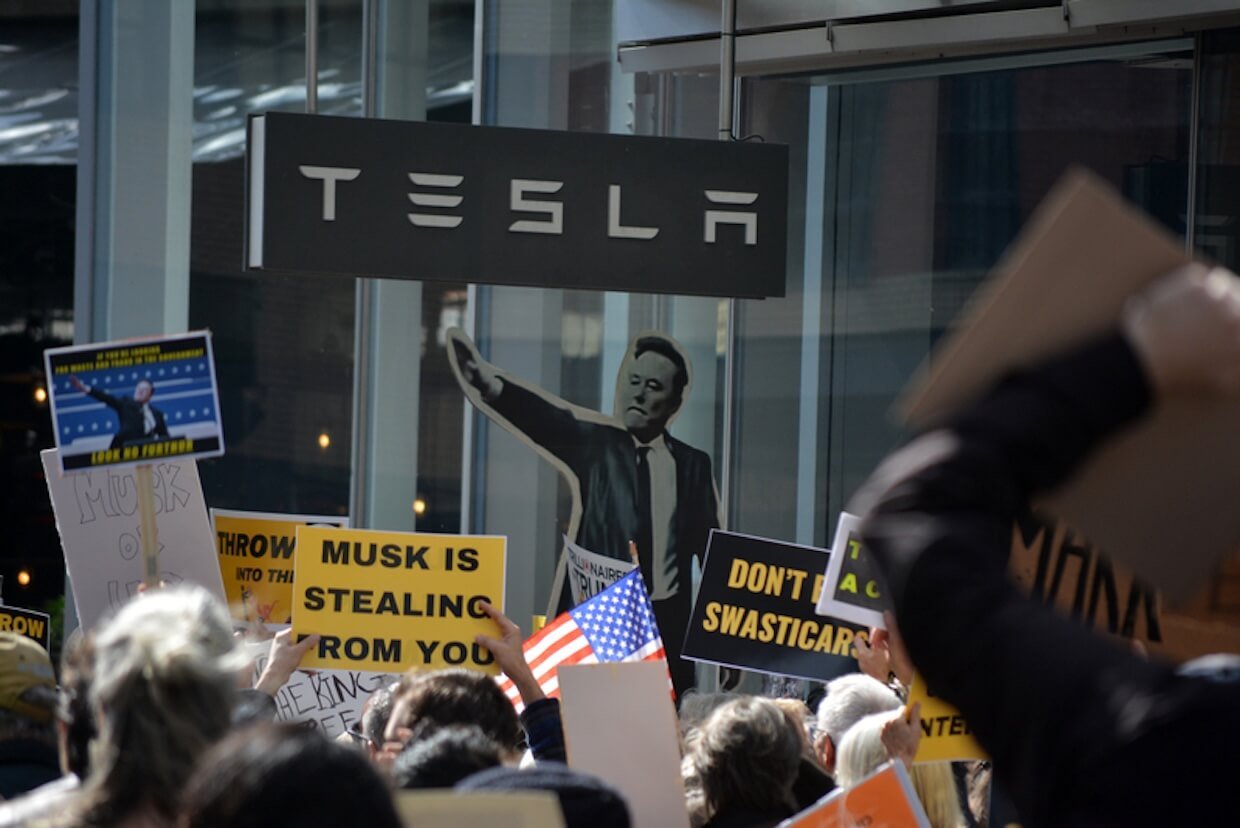
Protesters demonstrate against Elon Musk and DOGE over cuts to government funding outside a Tesla showroom in New York City, March 1, 2025. Photo: Dreamstime.
Your work highlights how fascist movements selectively appropriated anti-capitalist and socialist rhetoric. How should scholars interpret Trumpism’s simultaneous hostility to globalization and embrace of oligarchic capitalism without collapsing the analogy into false equivalence?
Professor Benjamin C. Hett: In the historical case of fascism in the 1920s and 1930s, the scholar who has put this most clearly and effectively is the great Robert Paxton, who has a terrific book called The Anatomy of Fascism. What Professor Paxton says, quite astutely, is that fascist movements historically moved into the political space where there was room for them, making whatever alliances worked to move them forward at that moment. In the earlier days—you see this with Mussolini in the very early phase of Italian fascism, and with Hitler a few years later—the available space was one of resentment, especially among working- or lower-middle-class people, about the nature of the economic order, with many feeling they were being shafted by a certain kind of capitalism.
So, the Nazis rhetorically moved into that space and positioned themselves as anti-capitalists, some more sincerely than others. There were, weirdly enough—you may have heard the term—we sometimes speak of “left-wing Nazis,” those who took anti-capitalism and anti-elitism more seriously. Hitler was not one of those people; he was what we call a right-wing Nazi. But he was willing to let the left-wing Nazis rhetorically have some leash, as it was politically useful. And then, of course, famously later, he had them all murdered in 1934, which shows what he really thought of that.
Trump is doing something similar without quite realizing it. What is interesting about Trump is that he is so extraordinarily stupid and tactically inept that he does these things on a very obvious level. He is tactically astute enough, usually, to figure out what he can say that will be electorally successful, but he is in no way a strategic thinker capable of putting it into any coherent package. So, with Trump you get, day by day, whatever has just passed through his mind. Especially when he was campaigning, particularly in 2016, you heard not only anti-globalization but quite directly anti-capitalist rhetoric from him.
But, of course Trump is also extremely corrupt, so once in power he wants to find ways for people to give him money. In practice, he cozies up to tech moguls and others; for example, Jeff Bezos giving $40 million for that awful movie about Melania, or Trump receiving a $400 million jet from Qatar. It is sort of mind-blowing.
Trump is both so corrupt and so devoid of tactical sense—and, I guess, of any sense of tact or taste—that he simply does all these things out in the open. So, you see it extremely clearly with Trump. You can see similar patterns with Hitler and Mussolini, though they were astute enough to slightly conceal the extent of their hypocrisy about anti-capitalism. With Trump, what you see is what you get, and what you get is what you see. It is all out there. But the basic tactical and rhetorical pattern is very much the same.
The Illusion of Control: When Elites Enable Authoritarianism
In Weimar Germany, conservative elites believed they could control Hitler. Do you see comparable patterns among US political, judicial, or economic elites who initially treated Trump as a manageable aberration rather than a systemic threat?
Professor Benjamin C. Hett: Yes, very much. Perhaps a bit less now than some years ago. This was particularly an issue in Trump’s first term in office. Back then, I wrote a book called The Death of Democracy, which is actually an account of the Nazis’ rise to power. One of the main themes in that book is that there was a sort of Faustian bargain between what you might call the establishment elites in Weimar Germany—particularly business elites and military elites—who did not like Hitler, did not like his party, and did not respect it, but couldn’t help noticing that Hitler got votes. Especially by 1932, he was getting about a third of the votes, and his party was by far the biggest in terms of electoral support. So, these elites were astute enough to think this was maybe something they could use.
They could make a deal with him, arrange for his electoral constituency to come in behind them, and that would advance their agenda—an agenda of deregulation and anti-union approaches for business, and an agenda of an arms buildup for the armed forces. Notoriously—probably no one needs me to tell them this—that deal didn’t work out very well, because many of these elite gentlemen profoundly underestimated Hitler. They underestimated his cunning and his ruthlessness. It took arguably not much more than about four weeks for them to be captured by him in power and then pushed aside from all influence.
When I wrote my book—it came out in 2018—although I never mention Trump or current politics anywhere in it, there is meant to be a rather loud subtext, and I’m pretty sure no one who has read the book has missed it. It is about parallels, and the parallel I thought was strongest and most telling was exactly this kind of elite accommodation of a dangerous and potentially authoritarian political movement that they believed would advance their own agenda and that they could control. I had a feeling the same thing would happen—that Trump would overwhelm them. Trump is, of course, vastly less astute and vastly less ruthless than Hitler. But much of the same thing has, in fact, happened. He has basically destroyed the Republican Party as an actual conservative party. There are virtually no moderate Republicans left anymore, certainly at the congressional level.
It has become very much his party, because those elites, in fact, failed to control him. They have failed to control him even more, certainly in his second term. He has done things that most elites don’t want, like tariffs and many other policies. No one is happy about his threats to Greenland; no conventional conservative is happy about his downgrading of America’s alliances or trade interests, but they simply can’t control him anymore.
I do think at least they are starting to become aware of it. There is less self-delusion among American elites now about what Trump is. It’s kind of too late. If we are going to stop this guy from doing more damage, it is not going to be the business elites who do it. We’ve seen in Minneapolis who is going to do it, but that is another question.
From the Big Lie to Algorithmic Disinformation
You describe the Weimar Republic as suffering from a fatal “reality deficit.” How does this concept translate into an era of algorithmic misinformation, partisan epistemologies, and the collapse of shared factual baselines?
Professor Benjamin C. Hett: It’s a great question. One of the things that I say a lot—and I don’t know if anyone ever agrees with me, and it’s fine if no one does—but as a historian, I tend to think there is actually never anything really new. The environment we live in of social media– and internet-driven disinformation is not incredibly new. You don’t need the internet for that. As Exhibit A for my contention, I would point to the Weimar Republic, which had a very vigorous media environment.
You see different figures, and it depends how you count them, but there were something like 40 or 50 daily papers in Berlin in the 1920s, covering the whole political spectrum—from communist to Nazi and everything in between. There was also pioneering radio, films—there were many ways for information to circulate. Posters were a very big deal. In my book The Death of Democracy, I discuss how the Nazi propagandist Joseph Goebbels placed enormous emphasis on posters, saying, “Our election campaign is going to be all about posters.” So, there were all these ways to disseminate information.
And just because something appears in a newspaper does not mean it is not disinformation, and there was plenty of that in Weimar. A prime example is what was called, even then, the Big Lie: the idea that Germany did not really lose World War I—that Germany was on the verge of victory when cowardly, treasonous politicians, liberals, and socialists betrayed the country by surrendering to the Allies. This narrative originated with military leaders such as Field Marshal Hindenburg and General Ludendorff and was then eagerly adopted by figures like Hitler.
There are striking parallels here to Trump’s narrative about the 2020 election, claiming he did not really lose but was betrayed by a democratic establishment. That narrative has been widely circulated, and many Republicans and people on the American right believe it. It has effectively become a loyalty test: if you are to play any role in Trump’s party or administration, you must affirm that he actually won the 2020 election.
Similarly, perhaps half of Germans in the 1920s and 1930s believed that Germany had been on the verge of winning World War I—which is nonsense to exactly the same extent that it is nonsense to claim Trump won the 2020 election. Germany was, in fact, being militarily crushed when the armistice was signed in 1918.
So that Big Lie spread extremely effectively using the media technologies of the time. If the internet had existed then, it is hard to imagine it being more effective than what already existed in propagating that narrative. There is obviously an advantage today in the speed with which electronic communication spreads, but I do not think it represents a profound, fundamental difference from the past.
I do think America today is also a country suffering from a massive reality deficit, much as Weimar did in the 1920s, and for many of the same reasons: dishonest politicians exploiting the media available to them. In that sense, it is very much the same.
Personalist Power Without a Guiding Doctrine
Hitler combined charismatic authority with a coherent—if grotesque—ideological worldview. Trumpism appears far more improvisational and transactional. Does this weaken the authoritarian analogy, or does it suggest a more flexible and therefore resilient form of personalist rule?
Professor Benjamin C. Hett: Probably both, but I’m one of those people who, on these issues, is more of a glass-half-full than a glass-half-empty type. I am, for a number of reasons, fairly optimistic about the longer-term prospects of American democracy. I think we will get through Trump and continue operating as a democracy. One reason for that is exactly your point: It weakens Trump’s ability to be an effective authoritarian that he has no compelling ideological vision behind him. He is, as you put it, exactly right—totally improvisatory.
Part of what made Hitler successful—certainly with his base, his core followers who became the spine of his regime—was his ability to convince them that he was the spokesperson for a powerful idea. The Nazis talked about “the Idea” all the time, a kind of capital-I, the Idea. They internalized it deeply, and that motivated a great deal of their conduct. There is nothing remotely comparable with Trump.
As a matter of fact, the distinguished historian Timothy Snyder wrote a piece sometime last fall that I thought was spot on. He made this point, noting that one of the differences between Trump and Hitler is that Hitler had a sweeping, deeply embedded, fairly all-encompassing ideological worldview. That, in a sense, not only attracted followers but also gave a blueprint for his actions and pushed him toward what he ultimately did.
Trump has nothing remotely like that. Trump basically—among his many attributes is a shockingly profound inferiority complex—just wants to be flattered all the time. He wants to ride around in Air Force One, and he wants people to give him money. It does not go much farther than that. Honestly, for Trump, that is it. Hitler—though I do not think anyone would suggest I am advocating for him—did have a sweeping ideological vision that he worked very hard to fulfill. Trump does not. As I said, Trump wants to ride around on Air Force One, be told he is wonderful, and be given money. Ultimately, that is not something you can really package as a compelling ideology for which people would be willing to die.
The US Supreme Court building at dusk, Washington, DC. Photo: Gary Blakeley.
Drawing on your research into emergency decrees and legal normalization under Nazism, how should we interpret contemporary efforts to weaponize prosecutions, executive orders, or “law-and-order” rhetoric in ostensibly constitutional systems?
Professor Benjamin C. Hett: That has definitely been a feature of Trump’s second term. This kind of comes back to what he said about how he would be retribution for his followers. I think what he really means is that he will be retribution for himself. So, we have obviously seen targeted prosecutions of people that Trump feels have insulted him or hurt him in some way.
There is a weak parallel here to Hitler, in the sense that in the famous event of the Night of the Long Knives in 1934, when, as I mentioned earlier, Hitler had a number of people who could be seen as left-wing Nazis murdered, he also, on the same occasion, had murdered a number of people against whom he had some particular kind of grudge, going back in some cases a decade or more. He had been holding these grudges for a while. Trump is like that, except here is where we get to the difference, which is really important.
We still, basically, in America, have a democracy. We still basically have a legal system, although Trump is trying to erode it and is eroding it to an extent, but it is still basically functioning. So, he has to try to prosecute these people through the legal system, and we have seen that it does not work very well, because the legal system basically takes his efforts to corrupt it and spits them out. There have been any number of such cases. He keeps bringing, or getting his Justice Department to bring, charges against people like the former FBI Director Comey or the New York State Attorney General Letitia James. Grand juries that need to approve an indictment will not approve them, or judges will throw them out. Just yesterday, a judge threw out a case against Senator Mark Kelly, who is in a legal battle with the Defense Secretary, Hegseth, for things that he said in a video. Again, the justice system is basically rejecting these efforts. If Trump were more Hitlerian, if he were more ruthless, he would find ways to get these people anyway, but he is not doing that.
The system is, in a sense, holding against his efforts to abuse it. So, I think, so far, so good on that. I mean, what he is doing is horrific. His Attorney General, Pam Bondi, is the most corrupt and probably most incompetent Attorney General the United States has ever had, and she just does whatever he wants her to do. But it is failing. Something we need to keep in mind about Trump is that he does any number of awful things, but most of the awful things he does fail, and they fail because they run up against something in American society that resists them, as in this case with the justice system.
Public Resistance and the Constraints on Authoritarian Consolidation
Weimar politics were marked by overt paramilitary violence, whereas contemporary American politics often operates through a mix of performative menace and state-sanctioned coercion, including the expanded mobilization of US Immigration and Customs Enforcement (ICE) and the deployment of the National Guard in ways critics describe as intimidating or terrorizing civilian populations. In your view, how much actual violence—or credible threat of violence exercised through formal state institutions—is necessary for authoritarian consolidation in a mature media democracy?
Professor Benjamin C. Hett: The answer is lots. And here again, I’m sort of a glass-half-full guy. Let me say that there is no one in this country who is more angry than I am about ICE, the Immigration and Customs Enforcement agency, basically a police agency, or the somewhat similar organization Customs and Border Patrol, which also has police officers of a sort that have been on the ground, notably in the last month or so in Minneapolis. There is no one who abhors that more than I do or is more angry about the violence, including the murders they have perpetrated, or the myriad abuses of the Constitution—breaking into homes without a warrant, breaking into cars without a warrant. ICE is basically a criminal organization. That said, I am actually working on writing something right now about this.
The parallel to the violence of the historical fascist era basically fails simply on scale alone. The numbers would go something like this—I have just been looking this up. There are right now about 22,000 ICE agents in the United States. We could compare ICE and the kind of violence it creates and its style—being in military-style uniforms, patrolling the streets, marauding, conducting violence rather randomly against people. That all looks quite a bit like what the Nazi stormtroopers, the famous Brownshirts, were doing in 1933 and 1934.
Except that in 1933 and 1934 there were between 3 and 4 million young men in the Brownshirts in a country that at that time had about 66 million people. If you multiplied that out to be proportional to the American population now, you would have somewhere between 16 to 21 million uniformed paramilitary people roaming the streets of the United States. What we have is 22,000. So, we need to keep in mind the actually quite mind-blowing scale of the violence that the Nazi regime in 1933 and 1934 was meting out to its own people through these stormtroopers and through agencies like the secret police, the Gestapo. In comparison to what we have in the United States now, as terrible as the violence in, for instance, Minneapolis and the murders there have been, the scale is minuscule compared to what the Nazis did. I think we need to keep that in mind.
It would probably take Nazi-scale mobilization and violence for the Trump administration to get itself into the league of being a real dictatorship, and that is just not going to happen. The other thing I want to say quickly is that, as a very close student of what happened in Germany in 1933 and 1934, I can say there was nothing remotely like the mobilization of ordinary people in Minneapolis to create networks to push back against ICE. It has been remarkable how we have been reading and seeing about this in the last month or two—the way these spontaneous networks have gotten organized, where people communicate via cell phones or whatever, and as soon as ICE agents go anywhere, people notify that neighborhood, follow and track them, film them, and put videos on social media.
All of this has hindered ICE in doing what it wants to do, but it has also shredded its public reputation. Americans now are overwhelmingly—polls show roughly two-thirds—against what ICE is doing, and as that has happened, it has also shredded Trump’s approval rating, which is now at pretty much record lows for any president. The only competition Trump has right now for a low approval rating among other presidents is himself in his first term. So, the spectacle of what ICE is doing is really not selling with Americans, and they are pushing back commendably, in ways that one did not see in Germany in 1933 and 1934. All of those differences are quite important.
Can Democratic Pushback Contain Authoritarian Populism?
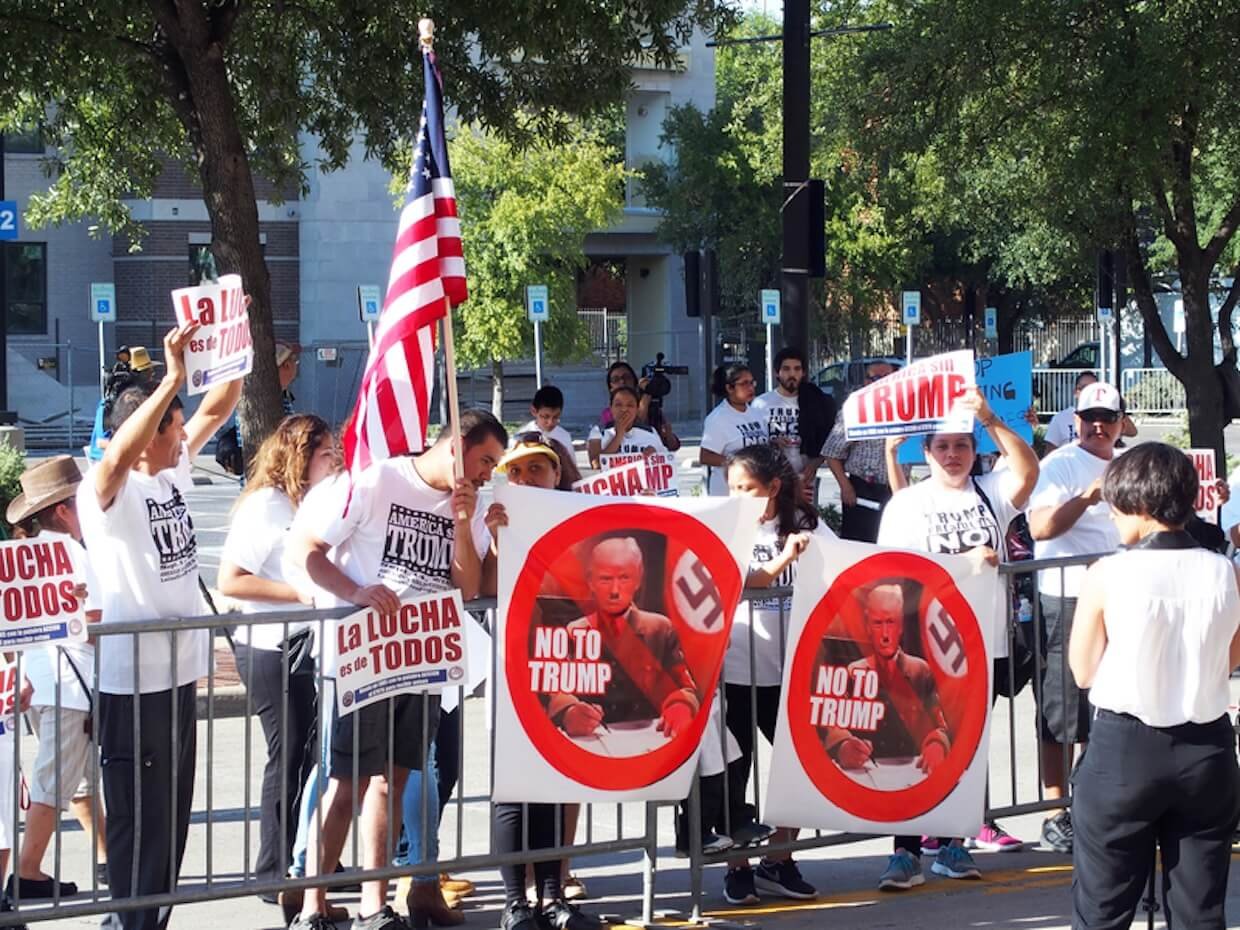
Protesters demonstrate outside a Donald Trump presidential campaign rally, many criticizing his immigration stance; some hold signs depicting Adolf Hitler alongside other messages and an American flag. Photo: Dreamstime.
Drawing on your work on Weimar Germany and the dynamics of authoritarian mobilization, how resilient do you judge Trumpism and a Trump-led administration to be in the face of potential democratizing backlash—whether through electoral defeat, judicial resistance, elite defection, or mass civic mobilization? More specifically, do historical analogies suggest that such backlash tends to constrain authoritarian projects, or can it paradoxically strengthen them by reinforcing grievance narratives and siege mentalities?
Professor Benjamin C. Hett: That’s an interesting question. As I said before, I am fairly optimistic that we’re going to get through Trump. And in 2028, we’ll have a better president, and we’ll be more or less okay as a country. I don’t want to minimize the people who are really suffering the brunt of this, especially people in immigrant communities or communities of color. There is damage being done to people that is not fixable, but American democracy is going to get through this.
I have also said, pretty much since the beginning of this second Trump term, that although I cannot quite foresee the shape it will take, I do not think we’re going to get through this without a crisis of some kind. The crisis would take the form of Trump doing something—whether it is ordering soldiers onto the streets of American cities, resulting in large-scale violence (this has already happened to an extent), or trying to interfere with a free election. There is, of course, a lot of talk now about ways in which Trump is working to steal the 2026 midterms that we should be having in November. There may well be some crisis around those elections.
My hunch is that when that crisis comes, Trump’s side will lose. If, for instance, he tried to do something to subvert the elections, there would be riots in the streets to such an extent that he would have to back down—which, by the way, he usually does. Notice that on many of the worst things Trump does, he often ends up backing down. This has been true of the Greenland situation. Just yesterday, they announced they are pulling ICE out of Minneapolis. We’ll see if they actually do, but they have announced that. They have quietly pulled National Guard soldiers out of cities they had deployed them to, like Los Angeles and Chicago. They do not really admit they are doing that, but they have, in fact, done it.
Trump is a classic bully who is also weak, and when he meets pushback, he tends to retreat. So, if he tried, or when he tries, to do something questionable about the midterms this November, there will be pushback, and he will be forced off what he is trying to do.
To the other part of your question, Trumpism was not invented yesterday. This is a long current in American history. The ingredients that go into Trump and his constituency have manifested throughout American history. They appeared in the form of the Klan in the 1870s and again revived in the 1920s. They showed up in the form of Jim Crow in the South. They appeared in the form of McCarthyism in the early 1950s. This complex of nativism, racism, hostility to individual rights, and, to some extent, hostility to democracy has always been there in America. It is always going to be there. There will be a core of Trump supporters who will never abandon what they see him standing for. They may reach a point where they abandon him personally, perhaps—especially if there are further revelations from Epstein—but they will not abandon that package of ideas.
There will always be, whatever it may be, 20% or 30% of the American electorate attached to these ideas. My hope is that we can move toward a politics that contains it, so that we can still function as a liberal democracy where rights are protected, minorities feel safe, and we work with our allies. My hope is that we can contain it. I am somewhat optimistic that we can.
Telling Difficult Truths in a Polarized Age
And finally, Professor Hett, given your dual role as historian and public intellectual, how do you navigate the tension between scholarly restraint and moral urgency when historical patterns begin to rhyme in politically dangerous ways?
Professor Benjamin C. Hett: That’s a great question. I do wrestle with that a lot, to be quite honest. Sometimes I feel there are things I could say as a public-facing activist that I don’t really believe as a scholar, so I always feel that tension. I have been quite active in the last year or two. I was active in the election campaign last year with a group called Democracy First, which recruited a bunch of people like me—basically historians, political scientists, journalists, and so on—to speak about some of these issues and parallels at meetings and rallies, especially in swing states. So, I’ve been quite out there saying this stuff.
In a certain sense, to achieve the political effect I want—to rally people to democracy—I might be tempted to play up the threat more. I mean, I could say, oh, Trump’s super scary, he’s winning and so on, which I actually don’t believe. So, I try to be honest about that. I’ll give you another example of a tricky issue I navigate. I was actually just talking to some of my students about this the other day.
There are people on the right in America—Dinesh D’Souza is a prominent one—who argue that Nazism was a movement of the political left, not the right. People like D’Souza do this because they want to use that claim to discredit the political left in the present. They basically say, you liberals call Trump a Nazi, but actually you are the Nazis, and the Nazis were liberals and socialists like you, so you are the ones who bear this bad legacy.
Saying the Nazis were on the left is, in some basic way, wrong. In their time, the Nazis were seen as being on the far right by everyone in the political community. That’s why they found coalition partners on the right, why business and military elites were interested in working with them, and why the German Reich president, von Hindenburg, was willing to bring Hitler into government. They were seen as being on the right. However, it is also not entirely untrue that they drew some elements from the left. If you read the Nazis’ 25-point political program from 1920, there are many ideas that are quite congruent with a kind of social-welfare liberalism, if not something further left—profit sharing in big corporations, better health insurance programs, better educational opportunities for children from poorer backgrounds, old-age pensions, and so forth. There is a social-welfare element there.
And if you look at the name of the party—the full name was the National Socialist German Workers’ Party—if you took the “national” off and had a party called the Socialist German Workers’ Party, you would conclude that it was clearly a party of the left, probably a Marxist party. Once you add “national,” it becomes more complicated—complicated rather than coherently a party of the right. So, I feel, as a historian, that I need to acknowledge that complexity, even though I regret that this may give some oxygen to bad-faith actors like Dinesh D’Souza, who will say, “See? Even Hett says the Nazis were on the left.” That is the kind of thing I feel I am always navigating.
In this interview with the ECPS, Professor Werner Pascha—Emeritus Professor of East Asian Economic Studies—examines Japan’s evolving political economy amid electoral volatility, fiscal strain, and geopolitical uncertainty. Reflecting on the LDP’s supermajority, he cautions against reading the outcome as systemic rupture, arguing instead for “continuity” and warning of a possible “popularity bubble.” Professor Pascha also clarifies how populism operates differently in Japan, where elite–people antagonism is “very rare,” and highlights the persistence of technocratic governance, noting that “the technocratic model remains very much alive.” Framing Japan’s approach as “strategic pragmatism,” he argues that Western democracies should look beyond “short-term electoral cycles” and take East Asia seriously as “highly instructive.”
In a wide-ranging interview with the European Center for Populism Studies (ECPS), Professor Werner Pascha—Emeritus Professor of East Asian Economic Studies (Japan and Korea) and Associate Member of the Institute of East Asian Studies (IN-EAST) at the University of Duisburg-Essen—offers a nuanced assessment of Japan’s contemporary political trajectory under Prime Minister Sanae Takaichi. At a time when many advanced democracies are grappling with populist insurgencies, fiscal strain, and geopolitical fragmentation, Professor Pascha suggests that Japan’s experience—particularly under Takaichi’s unexpectedly strong mandate—deserves closer scrutiny: “we should not only look at Europe or the US, but also keep East Asia in mind, as it is highly instructive.”
PM Takaichi’s landslide electoral victory, which delivered a two-thirds supermajority for the Liberal Democratic Party (LDP) and its coalition partner, has dramatically consolidated executive authority and provided her government with an exceptional legislative cushion. As Japan’s first female prime minister, she combines a programmatic ideological profile with a distinctive leadership style that voters perceive as both “diligent and tough-speaking.” Her rapid ascent and decisive electoral endorsement have reshaped the political landscape, strengthening conservative forces and enabling her to advance an ambitious policy agenda. This includes large-scale fiscal stimulus, proposed consumption-tax cuts, a renewed industrial strategy focused on technological innovation and artificial intelligence, and a more assertive security posture in East Asia. Her leadership has also been marked by a willingness to take politically risky positions—particularly regarding Taiwan and China—that have resonated domestically while heightening regional tensions.
At the same time, PM Takaichi’s policy agenda has raised significant concerns about fiscal sustainability and market confidence. Japan’s already elevated public debt—among the highest in the developed world—has made investors sensitive to expansionary fiscal measures, and early market reactions to her proposals have underscored the tension between electoral mandates and macroeconomic credibility. Nevertheless, her overwhelming electoral mandate may also provide political space for policy recalibration and more cautious implementation, a dynamic that Professor Pascha identifies as characteristic of Japan’s long-standing pattern of governance.
Crucially, Professor Pascha cautions against interpreting Sanae Takaichi’s rise as evidence of systemic transformation. Rather than signaling a structural rupture in Japan’s political economy, he emphasizes continuity: “I would regard it as continuity. I do not really see a major change developing in Japan.” Even the scale of the LDP’s victory, he suggests, may partly reflect “a kind of popularity bubble” surrounding Takaichi rather than a durable realignment.
Importantly, Professor Pascha resists simplistic narratives about Japan’s supposed technocratic decline. Despite electoral promises and fiscal pressures, “the technocratic model remains very much alive.” While no longer operating in the rigid form of the postwar developmental state, policymaking continues to rest on strategic planning—particularly in areas such as artificial intelligence and economic security.
This continuity is best captured, in Professor Pascha’s view, by the concept of “strategic pragmatism”: the capacity to pursue long-term goals while remaining adaptive in implementation. Japan’s 2022 economic security legislation, he observes, reflects a broader and longstanding logic dating back to the 1980 doctrine of “comprehensive security.” The pattern is strikingly consistent: Japan adapts without abandoning strategic orientation.
This framework helps explain how Japan can accommodate electoral responsiveness, conservative policy shifts, and technocratic governance without sacrificing institutional stability. It also highlights the broader relevance of Japan’s experience for Western democracies facing shorter electoral cycles and increasingly volatile political environments. As Professor Pascha suggests, Japan’s model of calibrated, long-term political management—now embodied in Takaichi’s leadership—offers an instructive counterpoint to the reactive and polarized dynamics visible across Europe and North America. In his view, “Western countries might do well to study this concept more closely and to look beyond short-term electoral cycles.” Japan’s political economy, often underestimated, may thus provide a model of long-term calibration under conditions of uncertainty.
In this interview with the ECPS, Professor Werner Pascha—Emeritus Professor of East Asian Economic Studies—examines Japan’s evolving political economy amid electoral volatility, fiscal strain, and geopolitical uncertainty. Reflecting on the LDP’s supermajority, he cautions against reading the outcome as systemic rupture, arguing instead for “continuity” and warning of a possible “popularity bubble.” Professor Pascha also clarifies how populism operates differently in Japan, where elite–people antagonism is “very rare,” and highlights the persistence of technocratic governance, noting that “the technocratic model remains very much alive.” Framing Japan’s approach as “strategic pragmatism,” he argues that Western democracies should look beyond “short-term electoral cycles” and take East Asia seriously as “highly instructive.”
In a wide-ranging interview with the European Center for Populism Studies (ECPS), Professor Werner Pascha—Emeritus Professor of East Asian Economic Studies (Japan and Korea) and Associate Member of the Institute of East Asian Studies (IN-EAST) at the University of Duisburg-Essen—offers a nuanced assessment of Japan’s contemporary political trajectory under Prime Minister Sanae Takaichi. At a time when many advanced democracies are grappling with populist insurgencies, fiscal strain, and geopolitical fragmentation, Professor Pascha suggests that Japan’s experience—particularly under Takaichi’s unexpectedly strong mandate—deserves closer scrutiny: “we should not only look at Europe or the US, but also keep East Asia in mind, as it is highly instructive.”
PM Takaichi’s landslide electoral victory, which delivered a two-thirds supermajority for the Liberal Democratic Party (LDP) and its coalition partner, has dramatically consolidated executive authority and provided her government with an exceptional legislative cushion. As Japan’s first female prime minister, she combines a programmatic ideological profile with a distinctive leadership style that voters perceive as both “diligent and tough-speaking.” Her rapid ascent and decisive electoral endorsement have reshaped the political landscape, strengthening conservative forces and enabling her to advance an ambitious policy agenda. This includes large-scale fiscal stimulus, proposed consumption-tax cuts, a renewed industrial strategy focused on technological innovation and artificial intelligence, and a more assertive security posture in East Asia. Her leadership has also been marked by a willingness to take politically risky positions—particularly regarding Taiwan and China—that have resonated domestically while heightening regional tensions.
At the same time, PM Takaichi’s policy agenda has raised significant concerns about fiscal sustainability and market confidence. Japan’s already elevated public debt—among the highest in the developed world—has made investors sensitive to expansionary fiscal measures, and early market reactions to her proposals have underscored the tension between electoral mandates and macroeconomic credibility. Nevertheless, her overwhelming electoral mandate may also provide political space for policy recalibration and more cautious implementation, a dynamic that Professor Pascha identifies as characteristic of Japan’s long-standing pattern of governance.
Crucially, Professor Pascha cautions against interpreting Sanae Takaichi’s rise as evidence of systemic transformation. Rather than signaling a structural rupture in Japan’s political economy, he emphasizes continuity: “I would regard it as continuity. I do not really see a major change developing in Japan.” Even the scale of the LDP’s victory, he suggests, may partly reflect “a kind of popularity bubble” surrounding Takaichi rather than a durable realignment.
Importantly, Professor Pascha resists simplistic narratives about Japan’s supposed technocratic decline. Despite electoral promises and fiscal pressures, “the technocratic model remains very much alive.” While no longer operating in the rigid form of the postwar developmental state, policymaking continues to rest on strategic planning—particularly in areas such as artificial intelligence and economic security.
This continuity is best captured, in Professor Pascha’s view, by the concept of “strategic pragmatism”: the capacity to pursue long-term goals while remaining adaptive in implementation. Japan’s 2022 economic security legislation, he observes, reflects a broader and longstanding logic dating back to the 1980 doctrine of “comprehensive security.” The pattern is strikingly consistent: Japan adapts without abandoning strategic orientation.
This framework helps explain how Japan can accommodate electoral responsiveness, conservative policy shifts, and technocratic governance without sacrificing institutional stability. It also highlights the broader relevance of Japan’s experience for Western democracies facing shorter electoral cycles and increasingly volatile political environments. As Professor Pascha suggests, Japan’s model of calibrated, long-term political management—now embodied in Takaichi’s leadership—offers an instructive counterpoint to the reactive and polarized dynamics visible across Europe and North America. In his view, “Western countries might do well to study this concept more closely and to look beyond short-term electoral cycles.” Japan’s political economy, often underestimated, may thus provide a model of long-term calibration under conditions of uncertainty.
Here is the edited version of our interview with Professor Werner Pascha, revised slightly to improve clarity and flow.
East Asia Is Highly Instructive for Western Democracies
The Sangiin is the upper house of the National Diet of Japan, comprising 242 members. Photo: Sean Pavone / Dreamstime.
Professor Werner Pascha, thank you very much for joining our interview series. Let me start right away the first question: From a political-economy perspective, do the recent election results suggest a structural transformation in Japanese politics, or are we witnessing an adaptive recalibration of long-standing LDP dominance? How should we distinguish between systemic change and elite-managed continuity in Japan’s case?
Professor Werner Pascha: First of all, thank you very much for having me. We are speaking three days after this spectacular election result in Japan, in which the LDP earned a supermajority—two-thirds of the seats in Parliament. I find this very interesting, particularly at a time of significant economic and geopolitical challenges. In an established democracy, for the leading party to secure two-thirds of the vote raises many important questions and lessons for other advanced economies. So we should not only look at Europe or the US, but also keep East Asia in mind, as it is highly instructive.
Now, is this continuity or systemic change? I would regard it as continuity. I do not really see a major change developing in Japan. Why? If we look back at recent elections, there have been quite a few. We had the 2024 general election for the lower house, and in 2025, the upper house elections. So there are several elections to refer to.
The results have been shifting, so there is no clear stability. If there were a systemic change, I would expect something to develop year after year, culminating in a breakthrough of this kind. Instead, this appears to be a somewhat surprising result. There are even voices suggesting that it may represent a kind of popularity bubble surrounding Prime Minister Takaichi.
So while this is an important event, the next election may already look different, depending on the extent to which Takaichi is able to meet the enormous expectations currently placed upon her in Japan.
National Security Is a Long-Term Position, Not Populism
To what extent can the LDP’s current policy mix—large-scale fiscal stimulus combined with nationalist security rhetoric—be analytically described as populist rather than pragmatic? Where would you draw the line between crisis-driven redistribution and populist economic signaling?
Professor Werner Pascha: First of all, I should perhaps explain what I understand by populism. I think there are three important dimensions. The first is a kind of ideology that posits the elite on the one hand and the people—the “true” people—on the other, in whose name policy should be made. The second is a performative style of politics, often involving assertive positioning by politicians. The third consists of rather simplistic ideas about how to solve complex issues.
Taking this into account, if we look at national security, this has long been a view held in Japan. I would therefore not argue that this is populist; rather, it reflects a long-term position that has consistently been maintained.
As regards economic policymaking, the issue is somewhat more difficult. The government’s slogan of pursuing “a proactive and responsible fiscal policy” is a very tricky formulation. It almost appears too simplistic, in my view, because achieving both goals at the same time—being proactive, given the enormous public debt Japan already has, while also being responsible and not overdoing it—is no easy matter.
On the one hand, one might say that Japanese governments under LDP leadership have pursued this approach for many years, suggesting continuity. On the other hand, trying to win an election with that slogan, without a really clear-cut understanding of what it implies, sounds somewhat populist.
Elite vs. ‘True People’ Framing Is Rare in Japan
Crowds on Nakamise Dori, Asakusa, Tokyo, Japan on May 24, 2016. Visitors shop and walk along the historic street leading to nearby temples. Photo: Dreamstime.
How does Japan’s brand of populism—if we can call it that way—differ from European or American populism in terms of its relationship to technocracy, bureaucracy, and expertise?
Professor Werner Pascha: Perhaps it is helpful to return to the earlier distinction—the three aspects of populism I mentioned before. Regarding the contrast between the elite and the “true people,” this is very rare in Japan. We do not often encounter this kind of populist framing, except perhaps to a limited extent on the fringes. Among the more established parties, it is quite uncommon. I think the reason is that Japanese politics and society are not particularly confrontational, and politicians would not gain many votes by being highly controversial. That style is generally not appreciated. People do not behave that way in their everyday lives, and they do not wish to see it reflected in politics.
With respect to the other two dimensions, I do not see major differences compared to the West. In terms of personalities and political performance, we do have some unusual figures—you might describe them as strange or simply interesting—but this is true in other countries as well. Such personalities can be found on the fringes, but also within the political establishment. For example, former Prime Minister Koizumi was known for his somewhat flamboyant hairstyle and was sometimes referred to as “the Lion.” Similar phenomena can be observed in many parties.
As for simplistic views, I also do not think Japan differs significantly from other countries. So, while there is a clear distinction along the first dimension, beyond that Japan is not particularly unique—although that first aspect remains noteworthy.
Economic Factors Alone Do Not Explain Japan’s Resilience
What explains the relative resilience of Japan’s political institutions against anti-system mobilization, despite rising inequality, precarity, and demographic stress? Is this resilience cultural, institutional, or economic in nature?
Professor Werner Pascha: Economic—no. Today, the Japanese economy is not fundamentally different from those of other countries in terms of the macroeconomic and socio-economic challenges it faces. Its underlying mechanisms do not really support the idea that this is the decisive factor.
As for institutional and cultural explanations, I tend to view culture as part of institutions in a broader sense. My understanding of institutions is that they consist of patterns of behavior and mutual expectations among actors that create certain regularities. These can be formal institutions, such as Parliament, or informal ones, such as culture.
Regarding formal institutions, I would argue that the differences compared to other countries are not particularly striking. Take the electoral system as an example. Japan has a mixed system that combines proportional representation with single-member constituencies. If anything, it falls somewhere in the middle of the spectrum of arrangements found in advanced economies.
What remains, then, is culture in the sense of informal institutions. Here, I would again emphasize the lack of a confrontational style. This is also visible in public life. Large-scale demonstrations are rare, and when they do occur, they usually involve very clearly defined groups. They have never really spread to the broader population. This kind of sustained pressure from the streets is simply not present in Japanese politics, and I think that is a very important factor.
Japanese business culture—corporate professionals showing respect in a formal setting. Photo: Dreamstime.
Gender Was Not the Decisive Factor
Japan has elected its first female prime minister. Beyond symbolic representation, does this shift meaningfully alter power relations within the LDP or Japanese political institutions more broadly?
Professor Werner Pascha: Frankly, no, I do not think so. I do not believe that Ms. Takaichi’s election was based on her gender. She has not emphasized it, and in fact, some of her policies run counter to what might be considered feminist ideas. In many respects, she is quite traditional.
What people seem to appreciate about her is her image as a hard worker. She is characterized as diligent and also tough-speaking. In that sense, she brings a certain freshness to what has often been described as a rather stale environment of blue-suited older men in Japanese politics. So yes, gender may play a role, but it is more about style than gender itself.
If anything, her election conveys the message that being hardworking and capable of delivering results can lead to success. Beyond that, however, I do not see any major implications.
Do you see Prime Minister Takaichi’s leadership style as substantively programmatic, or does it rely more on personalized authority and symbolic politics? How does gender intersect with this dynamic?
Professor Werner Pascha: As I mentioned regarding gender, I do not think it has a strong implication in this context.Her leadership style is programmatic in the sense that she has held her views for many years. If you look at her career, it has experienced ups and downs—at times she has been more successful, at others less so. For example, during the most recent government under the former prime minister, she declined a major party or cabinet position.So her approach is programmatic, and I think most people believe that what she says genuinely reflects her own convictions. Of course, that does not mean she cannot also be very strategic, but this would be the main characterization.
Cabinet Appointments Reflect Merit, Not Symbolism
Could the prominence of a female conservative leader paradoxically reinforce rather than disrupt Japan’s deeply gendered political economy?
Professor Werner Pascha: No, I do not think so, because the reasons why Ms. Takaichi is in office are not related to her being female. The way she is conducting her policies, to the extent that we can already observe, also supports this view.
One aspect to consider is the composition of the cabinet, particularly the role of female ministers. She has appointed only two women, although before the election she indicated that she would look to the example of Northern European states and the number of women in their cabinets. Nevertheless, she appointed only two.
After the election, she explained that she wants to uphold a merit-based system, meaning that positions should be given to those who are genuinely qualified. To some extent, this is reflected in her choices. The more prominent of the two female cabinet members is Ms. Satsuki Katayama, who serves as finance minister—a highly powerful position in Japan. She has the appropriate background, having been a career bureaucrat in the Ministry of Finance for many years. She even worked in the Budget Bureau, which is considered the most powerful department within the ministry. She is clearly an expert and knows what she is talking about. In that sense, this approach reflects the merit-based system that Ms. Takaichi seeks to follow.
A Decisive Victory as Political Cushion
Japan’s post-election fiscal agenda has unsettled markets. How do you assess the tension between electoral mandates and market discipline in Japan today? Is Japan approaching a critical limit in reconciling democratic responsiveness with macroeconomic credibility?
Professor Werner Pascha: Yes, it is certainly a critical situation. So far, many observers have been surprised that fiscal stimulus measures in Japan have been so significant without triggering a market backlash. Japan’s public debt is enormous—around 250% of GDP.
Now, however, we may be seeing the limits of this approach. After Ms. Takaichi announced in late 2025 that she would lower taxes—an important electoral pledge—markets reacted strongly. Long-term interest rates rose, and the exchange rate declined further. This should be understood as a warning signal.
Given the scale of public debt, rising interest rates—reflecting market distrust and doubts about the sustainability of government policy—would significantly increase interest payments. That, in turn, would leave the government with very limited fiscal room for maneuver. In this sense, the market reaction clearly serves as a cautionary sign.
On the other hand, once it became clear how the election would unfold, interest rates eased somewhat and the exchange rate stabilized. Despite the remarkable electoral victory, markets did not appear to fear a turn toward outright fiscal irresponsibility.
Why might that be? It is always difficult to interpret market expectations, but one possible explanation is that the decisive nature of the victory provides the government with a substantial cushion of public support. This may reduce the need to adopt overly expansionary or politically risky policies in the near term, allowing for a more cautious course. Whether this expectation proves justified remains to be seen.
Demographic Pressure Drives Fiscal Strain
Daytime view of Akihabara in Tokyo, known as “Electric Town” for its many electronics shops, duty-free stores, and vibrant youth culture. Photo: Dreamstime.
Given Japan’s debt levels, aging population, and productivity constraints, are current redistributive promises economically sustainable—or politically unavoidable?
Professor Werner Pascha: To some extent, I think the promises being made are politically unavoidable.
In the past, Japan was often described as a middle-class society in which everyone could enjoy a decent standard of living. However, under the impact of globalization and other structural changes, the Japanese system has evolved. Poverty has become more prevalent, including old-age poverty. It may not be highly visible—if you walk through Tokyo, you may not immediately notice it—but it exists, and old-age poverty in particular is a serious issue.
At the same time, demographic aging is driving substantial increases in healthcare and pension costs. In this sense, efforts to address these challenges are difficult to avoid.
Nevertheless, there are clear limits. How to reconcile these commitments with the promise of a responsible and proactive fiscal policy, as mentioned earlier, remains an open question. So far, no concrete policy framework has been presented. I think Mr. Minoru Kiuchi (Minister of State for Economic and Fiscal Policy) intends to establish a new council to discuss the issue, but that may already be a warning sign. If there is a need to set up a council, it suggests that a very clear-cut strategy is not yet in place.
No Fundamental Shift Toward Short-Termism
Is Japan drifting away from its historically technocratic model of economic governance toward a more voter-responsive, short-term policy framework? What risks and opportunities does this shift entail?
Professor Werner Pascha: I am not entirely convinced that Japan is undergoing a fundamental shift toward more short-term, voter-responsive policymaking. Of course, the country faces serious challenges, and the government must respond. During election periods, promises are inevitably made. However, I would not characterize this as a structural transformation. Such dynamics have always accompanied elections, and when challenges intensify, the number of promises tends to increase. This may reflect correlation rather than a deeper change.
In my view, the technocratic model remains very much alive—albeit no longer in the more rigid form seen in the 1950s and 1960s, when the Ministry of Economy (then MITI, now METI), together with the Bank of Japan, largely shaped the direction of major corporate investment. That era has clearly passed.
Nevertheless, the ambition to guide the economy forward continues to rest on technocratic foundations. In recent years, there has even been renewed interest in a new style of industrial policy, and Japan appears inclined to pursue this course. A key term in this context is artificial intelligence. Japan possesses favorable conditions for supporting AI and its industrial base, and the government seems prepared to move in this direction.
That would be my assessment. There are already signs of a technocratic strategy aimed at advancing this field through a proactive industrial policy.
From Strategic Ambiguity to Clear Signaling
Photo: Dreamstime.
Recent hardline rhetoric toward China has played well domestically. From a political-economy perspective, how risky is this strategy for Japan’s trade-dependent economy?
Professor Werner Pascha: It is certainly risky, but the broader context itself is risky. We are living in very difficult times, characterized by geopolitical tensions involving the US, China, Russia—you name it. In such an environment, any course of action carries inherent risks.
Japan’s specific position is shaped by the peace clause in its constitution, the well-known Article 9, which stipulates that Japan maintains only self-defense forces and, beyond that, should not possess armed forces. Since 2014, under the Shinzo Abe government, this has been reinterpreted to allow for collective self-defense. But the scope of that concept has remained subject to debate.
In the autumn, Ms. Takaichi clarified that this interpretation could entail Japan supporting Taiwan if it were subjected to aggression by China. In many respects, this aligns with prevailing views within the Japanese political environment, yet her statement nevertheless provoked considerable discussion.
Was it a mistake? I do not necessarily think so. By clarifying Japan’s potential stance, it signals to other actors in the region what the stakes would be in the event of a Taiwan contingency, thereby increasing the costs for any potential aggressor. Under certain circumstances, strategic ambiguity can be advantageous. However, given the current geopolitical climate and the specific constraints of Article 9, raising the costs of aggression in East Asia may serve as a deterrent. This appears to be the government’s underlying intention.
Foreign Policy Was Not a Top Voter Priority
How should we interpret Japan’s current China policy: as strategic signaling shaped by electoral incentives, or as a durable reorientation driven by structural geopolitical change?
Professor Werner Pascha: As you may have inferred from my earlier remarks, I would lean toward the latter interpretation. Regarding the electoral dimension, an opinion poll conducted before the election asked voters which issues mattered most to them. Around 46%, if I recall correctly, cited the economic and social situation—particularly high inflation and related concerns. Only about 16% mentioned international matters, such as peace and security in the Western Pacific.
This suggests that foreign policy issues were not at the forefront of voters’ minds. Therefore, such statements were likely not primarily driven by electoral considerations—unless one interprets them as a simple miscalculation. Some observers have proposed that explanation, although I do not find it particularly convincing.
I do not believe that electoral incentives were foremost in Ms. Takaichi’s thinking. If anything, her stance may have worked in her favor not because of the China issue itself, but because it reinforced the perception that she is outspoken and clear about her intentions. This sets her apart from more traditional politicians, and that clarity appears to have resonated with many voters in this election.
The LDP’s Strategy of Absorbing Fringe Agendas
To what extent does the rise of parties like Sanseito—and movements such as Reiwa Shinsengumi on the opposite flank—indicate latent populist demand that the LDP is strategically absorbing?
Professor Werner Pascha: Yes, I think that is a very valid point. Parties on the fringes are indeed more populist than the mainstream parties. This is particularly evident in the simplicity of their ideas—again, if we return to the question of what constitutes populism.
On the right wing, there are very simple proposals targeting the role of foreigners in Japan, arguing that their presence should be reduced. On the left wing, there are equally simplistic claims that increasing income for poorer people will resolve broader economic problems. So we do see populist notions on both fringes.
At the same time, the governing LDP has been quite successful in absorbing some of these tendencies. The party has adopted elements of an anti-foreigner agenda—for example, proposing closer monitoring and regulation of foreign purchases of Japanese real estate. In that sense, it is taking up certain issues raised by the right. On the left, promises such as lowering taxes, particularly for lower-income groups, have also been part of its platform. This strategy appears to have worked, as reflected in the election results.
Both the left- and right-wing parties you mentioned lost votes considerably; in some cases, their support was reduced by half compared to previous elections. There were also specific factors at play. For instance, the somewhat flamboyant chairman of the left-wing Reiwa Shinsengumi fell seriously ill in January, which may partly explain the party’s weaker performance.
More generally, however, your point stands. It is also worth noting that new parties continue to emerge. In this election, a new party called Team Mirai—“Mirai” meaning “future”—won almost four million votes. It promotes artificial intelligence and advocates a more participatory political style. I am sure the LDP will respond to this development in one way or another.
A Dual Strategy: Preserve Washington, Diversify Partnerships
Flags of the Quad countries—Japan, Australia, the United States, and India—symbolizing strategic cooperation in the Indo-Pacific. Photo: Sameer Chogale.
How has the return of Donald Trump altered Japan’s strategic calculus regarding the US alliance, especially in relation to Taiwan and regional security guarantees? Is Japan being pushed—implicitly—toward greater strategic autonomy?
Professor Werner Pascha: Yes, certainly. The challenge posed by Trump—particularly the question of whether the United States will remain a reliable partner—is perceived in Japan much as it is in Europe. Perhaps even more so, since Japan has relied heavily on the US nuclear umbrella since the Second World War. In that sense, it is indeed a shock to consider that this arrangement can no longer be taken for granted.
How, then, should Japan respond? There is clearly a move toward greater strategic autonomy—but not in the sense of complete self-reliance. Japan is fully aware that, given potential adversaries such as China and Russia in the region, it cannot manage alone.
Instead, Japan seems to be pursuing a dual strategy. On the one hand, it seeks to preserve strong relations with the United States as far as possible. In this context, Ms. Takaichi’s role as a female leader may even prove advantageous, somewhat comparable to the case of Ms. Meloni in Italy. On the other hand, Japan is reinforcing alternative partnerships. Ties with Australia, for example, have deepened in a manner broadly consistent with US interests. At the same time, Japan maintains longstanding cooperation with European partners such as the UK, France, and Germany, among others.
For now, this dual approach does not appear to create significant tensions. Looking ahead, however, it remains uncertain whether strains might arise—particularly if so-called middle powers, as suggested by the Canadian prime minister at the Davos Conference, move toward closer coordination. Such developments could potentially complicate Japan’s close relationship with the United States.
Transcending Electoral Cycles Through Long-Term Statecraft
And lastly, Professor Pascha, would you characterize Japan’s current response to the converging pressures of rising populist currents, geopolitical fragmentation, and persistent economic uncertainty as one of underreaction or overreaction? More importantly, what underlying political, institutional, or economic logics help explain the nature of Japan’s response at this particular historical moment?
Professor Werner Pascha: You are leaving me with a very difficult question—thank you very much for this.First of all, I would not characterize Japan’s response as either an underreaction or an overreaction. Rather, I would describe it as an appropriate response to the challenges the country is currently facing.As for the underlying logic shaping Japan’s actions, that is more difficult to address, as it touches on broader theoretical considerations. How should we interpret these processes? What conceptual framework is most useful?
Personally, I find the idea of Japan’s so-called “strategic pragmatism” quite persuasive. This term was introduced some 20 or 30 years ago by a German diplomat together with his wife, an international relations specialist. It suggests that Japan pursues long-term strategic objectives while remaining highly pragmatic and adaptive in the way it implements them.
Let me briefly illustrate this with the example of economic security. In response to rising tensions in the Western Pacific, Japan introduced economic security legislation in 2022. Germany, for example, has examined this legislation very closely. The approach moves beyond a narrow focus on military capabilities and instead seeks to strengthen international stability through economic instruments and secure supply chains.
Yet in Japan’s case, this is not an entirely new development. As early as around 1980, under Prime Minister Zenko Suzuki, the concept of “comprehensive security” was introduced. Even then, Japan recognized that relying solely on a military umbrella—even from a close ally such as the United States—was insufficient to protect its interests. A broader, more comprehensive understanding of security was required, encompassing economic dimensions and supply-chain resilience. The continuity is quite striking.
Of course, it is not always easy to distinguish strategic pragmatism from simply muddling through—to differentiate adaptive flexibility from a lack of clear direction. That remains a challenge. Nevertheless, to return to my earlier remarks, Western countries might do well to study this concept more closely and to look beyond short-term electoral cycles, which, as we know, pose considerable challenges for advanced democracies.
Please cite as: ECPS Staff (2026). “ECPS Panel at European Parliament: Populism, Trump, and Changing Transatlantic Relations.” European Center forPopulismStudies (ECPS). February 11, 2026. https://doi.org/10.55271/rp00143
The ECPS panel held at the European Parliament on 3 February 2026 marked a critical intervention into debates on the future of transatlantic relations amid the resurgence of right-wing populism in the United States. Convened to launch the report “Populism and the Future of Transatlantic Relations: Challenges and Policy Options,” the event brought together policymakers, scholars, and civil society actors to assess how Donald Trump’s re-election has reshaped Europe’s strategic environment. Discussions highlighted the simultaneous erosion of security cooperation, trade norms, multilateral institutions, and shared democratic values. Rather than treating these developments as temporary disruptions, the panel framed them as structural challenges requiring European agency, strategic autonomy, and democratic resilience. The report positions Europe not as a passive responder, but as a decisive actor capable of shaping a post-assumptive transatlantic order.
Reported by ECPS Staff
On 3 February 2026, the European Parliament hosted an ECPS panel convened to launch the report Populism and the Future of Transatlantic Relations: Challenges and Policy Options, a timely intervention into the accelerating strain on the post-war Atlantic order. Held in the Spinelli building in Brussels and hosted by MEP Radan Kanev, the event assembled Members of the European Parliament, scholars, policy practitioners, journalists, and civil society observers around a shared concern: the extent to which renewed US right-wing populism—crystallized in Donald Trump’s re-election in 2024—has shifted the premises of Europe’s external environment and, increasingly, its internal political equilibrium.
The discussion proceeded from the report’s core proposition that transatlantic relations cannot be understood only as a matter of diplomacy or foreign policy. Rather, domestic political dynamics—polarization, institutional capture, disinformation, and the reconfiguration of party systems—now shape the external posture of states and alliances. Against this backdrop, the panel examined how pressures on the four foundational pillars of the liberal international order—security cooperation, free trade, international institutions, and shared democratic values—are unfolding simultaneously and interactively. The report, coordinated under the ECPS and produced through a transatlantic academic collaboration involving the University of Illinois Urbana–Champaign, UC Berkeley, the University of North Carolina at Chapel Hill, and ARENA at the University of Oslo, offers a structured assessment of these developments and outlines policy options aimed at risk reduction and strategic adaptation.
Co-moderated by ECPS Honorary President Irina von Wiese and former MEP Sir Graham Watson, the event opened with reflections that framed the moment as one of geopolitical reordering and democratic vulnerability. Von Wiese situated Europe’s predicament within a wider shift in power relations, while Sir Watson emphasized the immediacy of populist mobilization and the need for democratic coordination beyond Europe. MEP Kanev’s hosting remarks foregrounded the entanglement of European domestic politics with US leadership change and warned of new forms of external meddling in Europe’s internal affairs. Further political interventions by MEP Valérie Hayer (The Chair of the Renew Europe Group) and MEP Brando Benifei (Chair of the EP Delegation for relations with the United States) underscored the ideological nature of Trumpism’s challenge to “liberal Europe,” the necessity of European firmness and credibility, and the growing imperative of strategic autonomy across trade, technology, and security.
The report’s editors—Marianne Riddervold, Guri Rosén, and Jessica Greenberg—then presented the report’s analytical architecture and central findings, before a wide-ranging Q&A tested its implications against questions of narrative, coalition-building, European divisions, and the operationalization of democratic resilience. Collectively, the panel framed the report not as a lament for a weakening alliance, but as a call to clarify Europe’s agency under uncertainty—and to translate unity, leverage, and values into durable policy choices.
Irina von Wiese: Opening Reflections on Populism and a Changing Geopolitical Order
ECPS Honorary President Irina von Wiese delivers opening remarks as co-moderator of the panel, framing the discussion on populism, Donald Trump, and changing transatlantic relations. Photo: Ümit Vurel.
In her opening remarks as co-moderator of the panel, ECPS Honorary President Irina von Wiese set an reflective tone, situating the discussion of populism, Donald Trump, and changing transatlantic relations within both institutional and geopolitical contexts. Von Wiese noted that the report under discussion had been initiated well before its public launch, remarking on the striking extent to which unfolding global developments had amplified its relevance. She suggested that the themes addressed would likely remain salient for the foreseeable future, given the enduring transformations underway in global politics.
Drawing on a personal yet analytically resonant observation from her vantage point in central London, von Wiese referred to the construction of the new Chinese “super embassy” as a symbolic marker of broader geopolitical shifts. This development, she argued, encapsulated the pressures facing Europe as it navigates a rapidly evolving international order characterized by intensifying competition between emerging and established superpowers. Without pre-empting the panel’s substantive debates, she framed Europe’s position as increasingly constrained, compelled to recalibrate its strategic choices amid rival spheres of influence.
Concluding her remarks, von Wiese emphasized the importance of dialogue and multidisciplinary engagement, before inviting MEP Kanev to proceed and introducing Sir Graham Watson, her predecessor as Honorary Chair of ECPS, as a special guest.
Sir Graham Watson: Europe’s Populist Moment and the Imperative of Democratic Unity
Sir Graham Watson, founding honorary president of the ECPS, delivers opening remarks in a concise and candid tone. Photo: Ümit Vurel.
In his opening remarks, Sir Graham Watson, founding honorary president of the ECPS, adopted a deliberately concise and candid tone. Sir Watson expressed strong appreciation for the participation of Valerie Heyer and Radan Kanev, emphasizing that their support for the report had been exemplary. He underlined their importance as political actors actively resisting the advance of populism within Europe, describing such engagement as both timely and essential.
He then drew attention to the immediacy of the populist challenge by noting that, at that very moment, a gathering of European populist actors was taking place nearby. Sir Watson warned that these movements were seeking to replicate in Europe the political dynamics associated with Donald Trump in the United States. Countering this trend, he argued, required firm and value-based cooperation with democratic partners committed to the rule of law and structured multilateral engagement, specifically referencing countries such as Canada and South Korea.
Sir Watson further criticized what he described as incoherence in European trade policy, pointing to the inconsistency of rejecting an unfair trade agreement with the United States while subsequently referring the Mercosur agreement to the Court of Justice. He stressed the need for Europe to “de-risk” its relations with populist-led governments, proposing closer engagement with democratic governments in countries such as Brazil and Argentina.
Sir Watson clarified that while these broader issues framed the discussion, the report itself offered a more focused analysis of the populist challenge and concrete guidance for policymakers, which he warmly commended to the audience.
Openning Remarks by MEP Radan Kanev: “The Importance of Re-evaluating Transatlantic Relations in the Current Global Political Climate”
MEP Radan Kanev, host of the event, delivers opening remarks highlighting the timeliness and political significance of the discussion. Photo: Ümit Vurel.
In his opening remarks as host of the event, MEP Radan Kanev emphasized both the timeliness and the political significance of the discussion, expressing sincere appreciation for the opportunity to host what he described as an extremely important initiative. He thanked fellow Members of the European Parliament, including Valerie Hayer and Brando Benifei, for their participation, highlighting their presence as evidence of the cross-party character of the meeting and of a shared concern that transcended partisan boundaries.
Kanev opened substantively by citing the very first premise of the report being launched: that, under current conditions, domestic politics may matter more than foreign policy. He expanded this proposition by arguing that what is at stake is not merely domestic politics in general, but specifically Europe’s internal political dynamics and their growing entanglement with leadership developments in the United States. To illustrate this point, he turned to the political situation in his home country of Bulgaria, describing a striking competition among three prominent political figures—an influential oligarch, a long-standing dominant political leader, and a recently resigned president-turned-political actor—each openly vying for the favor of Donald Trump.
This dynamic, Kanev suggested, had reached an unprecedented point with the decision of Bulgaria’s already resigned pro-European prime minister to sign the so-called “Charter of the Board of Peace,” making Bulgaria—alongside Hungary—the only representatives of the European Union to do so. He underscored the paradox of this situation, noting that one of the signatories belonged to the European People’s Party (EPP) rather than to the political families typically associated with extremist or openly anti-European positions.
Kanev stressed that populism alone did not sufficiently explain the gravity of the current moment. Drawing on his own long political experience, he observed that Bulgaria, like many European countries, had been governed by various forms of populism—left-wing, right-wing, and centrist—for decades. The rise of populist movements, he argued, was therefore not in itself a novel or alarming development, nor an inevitable cause for panic. What Europe was facing, however, was something more profound and more destabilizing than the circulation of populist rhetoric.
To clarify this distinction, Kanev urged the audience to acknowledge several uncomfortable but necessary truths. From a European perspective, he argued, every Republican US president could historically be perceived as a form of right-wing populist, and indeed every American president since Andrew Jackson could be seen as populist to some degree. Moreover, US foreign policy had long been difficult for Europeans to accept, well before the Iraq War of 2003. Yet, Kanev insisted, Donald Trump represented a qualitatively different phenomenon.
This difference, he argued, could not be reduced simply to right-wing populism, domestic authoritarian tendencies, or aggressive rhetoric abroad—traits that many Europeans had, rightly or wrongly, long associated with US leadership. European leaders, Kanev suggested, might have been willing to tolerate Trump’s domestic agenda, despite its damaging effects on American institutions, and even his confrontational, transactional style in transatlantic relations, as evidenced by recent trade and security negotiations.
What fundamentally distinguished the present situation, in Kanev’s view, was the unprecedented level of direct meddling in Europe’s internal political affairs. Historically, while the United States had supported authoritarian or unsavory regimes elsewhere, it had never done so in Europe. On the contrary, US policy had consistently promoted democracy, market economies, free trade, and, crucially, European integration. Kanev emphasized that Bulgaria’s own accession to the European Union had been made possible largely through strong US pressure, a fact well known both in Western Europe and in the Balkans.
This longstanding pattern, he argued, had now been reversed. The current US administration, Kanev maintained, was actively working toward European disunity, seeking to transform Europe into an insecure and fragmented space of competing client projects—an approach previously seen in other regions of the world, but never within Europe or the transatlantic partnership. He cautioned against overemphasizing ideology or values in explaining this shift, suggesting instead that many European leaders aligning themselves with Trumpist positions were motivated less by genuine conservatism or nationalism than by personal authoritarian ambitions or corruption.
Kanev concluded by stressing that the challenges identified in the report—particularly in the areas of security and trade—were not confined to Brussels but affected national and pan-European levels alike, extending even beyond the EU to partners such as Norway, the United Kingdom, and Canada. Addressing Europe’s right-wing nationalist and conservative movements directly, he posed a series of rhetorical questions to underline the contradictions inherent in their current alignments. He argued that the emerging political cleavage in Europe would no longer be defined by traditional ideological labels, but by a stark choice between accepting Europe as a chaotic sphere of multiple foreign influences or defending European solidarity as a matter of fundamental security and prosperity.
MEP Valérie Hayer: “Reflections on the Implications of Renewed US Populism for European Policies, Democratic Values, and Foreign Relations”
MEP Valérie Hayer, Chair of the Renew Europe Group, speaks on renewed US populism and its implications for transatlantic democracy. Photo: Ümit Vurel.
In her address, Valérie Hayer, Chair of the Renew Europe Group in the European Parliament, situated the discussion of renewed US populism within a broader transatlantic and democratic framework. Opening with expressions of gratitude to the organizers and contributors to the report, she emphasized both the importance and urgency of the initiative. She extended particular thanks to Radan Kanev for the invitation, noting that her remarks were shaped by her recent visit to Bulgaria, where she had met with civil society actors, journalists, advocates of judicial independence, and public authorities.
Drawing on this experience, Hayer pointed to the role of entrenched oligarchic power in undermining the rule of law, arguing that such dynamics posed threats comparable to, or even exceeding, those posed by the current US administration within its own institutional context. This observation served as an entry point into her central argument: that attacks on democracy are intensifying globally, including in the United States, long regarded as a bastion of freedom. The return of populism to the center of American power, she stressed, constituted not merely a domestic political development but a transatlantic shockwave with direct implications for European policies, democratic resilience, and Europe’s global position.
Hayer framed her intervention around three interrelated questions: what US populism means for Europe, how it operates, and how Europeans must respond. She argued that understanding these implications required conceptual clarity about Trumpism itself. While Donald Trump’s initial election in 2016 had often been interpreted in Europe as an anomaly driven by protest voting and institutional fatigue, his return to power in 2024 decisively shattered this assumption. Rather than an accident, it represented confirmation that Trumpism had evolved into a consolidated and ideologically coherent movement exercising near-total control over the Republican Party. Populism in the United States, she argued, had proven structural and resilient, capable of returning even after electoral defeat.
Trumpism Does Not Oppose Europe Per Se; It Opposes Liberal Europe
A central clarification in Hayer’s analysis concerned the object of Trumpism’s hostility. The Trumpist movement, she contended, is not directed against Europe as a civilization or geographical entity, but against liberals, moderates, pluralists, and defenders of democratic norms wherever they are found. In this sense, Trumpism does not oppose Europe per se; it opposes liberal Europe. This distinction explained why Trump and his allies often appeared ideologically closer to European far-right parties than to large segments of their own domestic electorate. Hayer noted that Trumpism displayed greater affinity with parties such as Germany’s AfD or France’s National Rally than with US Democrats or moderate Republicans, a pattern reflected in Trump’s hostility toward liberal European leaders and his praise for illiberal ones.
This ideological divide, she argued, was starkly exposed by the events of January 6, 2021. The assault on the US Capitol was not simply a security failure but a test of democratic allegiance. Those who unequivocally condemned it affirmed their commitment to liberal democracy, while those who minimized or justified it revealed a different set of priorities. Trump’s subsequent return to power sent a powerful signal to populist actors worldwide: violations of democratic norms could be politically survivable. This message, Hayer warned, emboldened illiberal movements in Europe as much as in the United States.
She further argued that the first norm eroded by Trumpism was truth itself. Trump’s governance, she observed, was marked by apparent contradictions: claims to uphold law and order while attacking judges and prosecutors; rhetorical support for democratic protesters abroad while repressing dissent at home; denunciations of corruption alongside the rewarding of personal loyalty over legality. These were not inconsistencies, she maintained, but defining features of transactional populism, in which loyalty and expediency outweigh institutions and rules. Such an approach destabilizes alliances by replacing predictability with improvisation and shared values with ad hoc deals.
This logic, Hayer argued, extended directly into foreign policy. Trump’s hostility toward the European Union was not merely economic or strategic, but ideological. The EU embodies regulation, multilateralism, minority protection, climate governance, and judicial independence—precisely the elements Trumpism frames as illegitimate liberal overreach. Consequently, EU laws are portrayed as constraints, European unity as a threat, and even territories such as Greenland as negotiable assets. In this worldview, European leaders are divided not by nationality but by ideology—classified as allies or adversaries depending on their stance toward liberal democracy.
Faced with this reality, Hayer called for a strategic, rather than emotional, European response. Europeans cannot determine US electoral outcomes, she acknowledged, but they retain agency in shaping their own reactions. She cited recent European initiatives—the Carbon Border Adjustment Mechanism, the Digital Services Act, and the Digital Markets Act—as examples of necessary assertions of sovereignty in a hostile global environment. At the same time, she identified a major European failure: complacency following the election of Joe Biden, which led many to assume that Trumpism had been definitively defeated.
This misjudgment, she argued, contributed to delayed investments in European autonomy and resilience, particularly in defense, financial integration, and industrial capacity. She emphasized that the current US administration responds primarily to leverage rather than goodwill. When Europe demonstrated resolve—through trade instruments, deterrence signals, or legal firmness—the tone of engagement shifted. When it hesitated or sought appeasement, pressure intensified. The episode surrounding Greenland illustrated the necessity of firmness, not escalation, but credible dissuasion grounded in clear red lines.
Hayer concluded that European independence is no longer optional. Dependence creates vulnerability, whereas strategic autonomy enables resilience. She stressed that Europe possesses substantial industrial, technological, and economic assets, naming key actors across defense, energy, and technology sectors. Europe’s weakness, she argued, lies not in a lack of resources but in fragmentation, underinvestment, and political hesitation.
The decisive battleground, however, remains internal. While Europe cannot prevent populism in the United States, it can prevent it from governing Europe. Hayer warned against European populist leaders who align themselves ideologically with Trumpism, describing them as conduits rather than defenders of European sovereignty. Trumpism, she concluded, is not an external imposition but a project that survives in Europe only if Europeans legitimize it. The ultimate question, therefore, is not whether populism exists, but whether Europeans allow it to rule them.
MEP Brando Benifei: Taking Europe Seriously in an Era of Populism and Uncertainty
MEP Brando Benifei, Chair of the European Parliament’s Delegation for Relations with the United States, reflects on the present and future of transatlantic relations from a practitioner’s perspective. Photo: Ümit Vurel.
In his address, MEP Brando Benifei, Chair of the European Parliament’s Delegation for Relations with the United States, offered a practitioner-oriented reflection on the state and future of transatlantic relations, grounded in his direct and ongoing engagement with US counterparts. Benifei expressed particular gratitude to Radan Kanev and Valérie Hayer for convening the meeting in cooperation with the ECPS, emphasizing the importance and timeliness of the report being launched. He briefly previewed the report’s analytical framework, noting that it focused on four core pillars currently under strain: security, trade, international institutions, and democratic values. These themes, he suggested, captured the multidimensional nature of the present challenges, which would be explored in greater depth by the report’s authors.
Drawing on his role as chair of the transatlantic delegation, Benifei underlined the value of sustained dialogue with US political actors, highlighting both his frequent visits to the United States and the presence of representatives from American think tanks in the audience. He described the European Parliament as a “House of Democracy” and welcomed the opportunity for open exchange within this institutional setting.
Turning to the substance of the report, Benifei referred to the three scenarios it outlines for the future of transatlantic relations: potential disintegration, functional adaptation, or reorganization on new foundations. Based on his recent experiences with US administration officials, members of Congress, and other stakeholders, he argued that all three scenarios remained plausible in the current complex context. He emphasized, however, a central lesson drawn from these interactions: the European Union must be taken seriously. This requires clarity of position, internal unity, and—crucially—consistency between declarations and actions.
Benifei warned that recent patterns of announcing positions and subsequently retracting or failing to implement them had undermined the EU’s credibility in the eyes of US interlocutors. While he shared the view, often expressed by members of the US Congress, that Europeans should not overreact to daily rhetoric or shifting statements, he stressed that words had, at times, translated into concrete actions requiring firm responses.
In this context, he echoed the importance of European legislative sovereignty, particularly in relation to digital regulation. Referring to the Digital Services Act and the Digital Markets Act, Benifei expressed concern that US counterparts had explicitly urged changes to these laws in formal meetings. He rejected this approach, arguing that Europe must stand firm in defending its regulatory choices.
In concluding, Benifei argued that confronting populism and redefining transatlantic relations requires clarity about Europe’s own political project. Citing remarks by Mario Draghi delivered the previous day, he endorsed the view that the era of the EU as a loose confederation had ended. In a relationship increasingly shaped by political and security considerations, rather than commerce alone, Europe must strengthen its sovereignty and internal organization if it wishes to engage the United States on a more equal footing. The report, he concluded, offers a valuable contribution to understanding both Europe’s current position and the strategic paths ahead.
Professor Marianne Riddervold: The Four Pillars of the Atlantic Order Under Strain
Professor Marianne Riddervold presents the report’s analytical framework and key findings on transatlantic relations under renewed US right-wing populism. Photo: Ümit Vurel.
In her presentation as one of the three editors of the ECPS report, Professor Marianne Riddervold, affiliated with ARENA at the University of Oslo, NUPI, and the University of California, Berkeley, introduced the report’s core analytical framework and key findings concerning the evolving state of transatlantic relations under renewed US right-wing populism.
Professor Riddervold grounded the report’s intellectual motivation in an observation made as early as 2018 by John Peterson, who argued that the future of US–European relations and the liberal international order depended less on foreign policy choices than on domestic democratic politics in both Europe and the United States. In light of Donald Trump’s reelection in 2024, she suggested that this assessment had proven prescient. Contemporary news coverage, she noted, is dominated by developments that appear to challenge the very foundations of the transatlantic relationship, including disputes over tariffs, divergent approaches to Ukraine, tensions surrounding international treaties and voting behavior in the United Nations, uncertainty about NATO’s future, and deep disagreements over free speech norms. These tensions have been further exacerbated by Trump’s public threats to annex parts of the territory of NATO allies.
At the same time, Professor Riddervold emphasized that Europe and North America remain more closely interconnected than any other regions of the world, with over eight decades of dense cooperation behind them. The transatlantic relationship, she reminded the audience, has weathered major crises in the past and has at times emerged stronger as a result. Against this backdrop, the report set out to address a series of fundamental questions: how to make sense of current developments; how right-wing populism under Trump is affecting transatlantic relations; whether the present moment represents a qualitatively different rupture; and whether Europe is facing a more serious and long-term breakdown of a relationship long taken for granted.
To answer these questions, the report deliberately steps back from the volatility of the daily news cycle in order to provide a more systematic analysis. Professor Riddervold highlighted that the volume brings together leading experts on transatlantic relations, each drawing on extensive scholarly research to offer concise, focused analyses of how the relationship is changing and what these changes imply for Europe. She then outlined the structure of the report, explaining that it is organized around four foundational pillars that have historically underpinned the post-war transatlantic order: security, trade, international institutions, and liberal democratic values.
This framework draws on the work of G. John Ikenberry, who conceptualized the “Atlantic order” as resting on these four interlinked pillars, established under US leadership after the Second World War. The first pillar is the security alliance system; the second concerns trade and finance; the third encompasses multilateral institutions and rules; and the fourth consists of shared liberal democratic norms. Professor Riddervold further explained that Ikenberry identified two mutually reinforcing bargains underpinning the relationship. The “realist bargain” involved European acceptance of US leadership in exchange for security guarantees and access to US markets, technology, and resources within an open global economy. The “liberal bargain” linked security and economic openness to shared commitments to multilateralism and democratic governance, institutionalized through NATO, the World Trade Organization, and other international bodies. Together, these arrangements placed transatlantic relations at the core of the broader liberal international order.
Professor Riddervold stressed that the transatlantic relationship has never been based solely on strategic or economic interests. It has also functioned as a security community rooted in shared values, often described as part of the Pax Americana. Although US foreign policy has long been criticized for inconsistencies and double standards, she observed that successive administrations and Congresses prior to Trump broadly shared the conviction that democracies possess a unique capacity for cooperation and that European integration served US as well as European interests.
To capture possible trajectories of change, each chapter in the report distinguishes between three future scenarios. The first is outright disintegration or breakdown of transatlantic relations, potentially affecting one or multiple policy areas, driven by domestic political pressures and structural geopolitical shifts. However, Professor Riddervold emphasized that the relationship is also sustained by deep economic, institutional, and cultural bonds that may help stabilize it even under strain. This recognition led the authors to explore two additional scenarios: a second scenario in which the relationship weakens but “muddles through” via functional adaptation in areas of mutual interest, and a third scenario in which the relationship is redefined and potentially revitalized, for example through external shocks such as war or crisis, or through the emergence of a more united and capable Europe seen as a valuable partner by Washington. She also noted the possibility, explored later in the report, of a redefined transatlantic relationship shaped by right-wing populist convergence.
A Deep and Potentially Durable Rift in Transatlantic Relations
Across all four pillars, the report’s overarching conclusion is stark: transatlantic relations are experiencing what it terms a deep and potentially durable rift. Professor Riddervold identified two main reasons for this assessment. First, weakening is occurring simultaneously across security, trade, institutions, and values—a pattern unprecedented in earlier crises. Second, Trump does not perceive a strong transatlantic relationship as valuable, marking a sharp departure from post-war US policy traditions. Even beyond Trump, she argued, US domestic polarization and shifting strategic priorities mean that a return to previous patterns of relations is unlikely in the foreseeable future.
Despite this sobering diagnosis, Professor Riddervold emphasized that the report also identifies sources of cautious optimism. Several authors highlight functional adjustments that may allow cooperation to persist in specific areas, such as trade frameworks or defense-industrial cooperation linked to increased European defense spending. While the relationship may be weaker, such adaptations could gradually lead to a redefined partnership. Crucially, the report stresses that Europe has agency. When united, Europe possesses the capacity of a global power and can decide which values, institutions, and partnerships it seeks to uphold.
Concluding her presentation, Professor Riddervold summarized the report’s findings in the security and defense domain. Across multiple chapters, the authors argue that transatlantic security relations are entering a “post-American” phase, in which Europe can no longer rely on stable US leadership and must assume greater responsibility for its own defense. Whether the relationship muddles through or weakens further, the implication for Europe is the same: it must strengthen its security, defense, and strategic autonomy, reduce dependence on US military enablers, prepare for potential weakening of NATO commitments, and fully exploit its institutional, budgetary, and legal capacities. She concluded by stressing the need for a more unified and firmer European stance toward Washington before passing the floor to her co-editor for the subsequent sections of the report.
Assoc. Prof. Guri Rosén: Trade, Multilateralism, and the Erosion of the Rules-Based Order
Associate Professor Guri Rosén discusses the report’s analysis of trade and international institutions. Photo: Ümit Vurel.
In her presentation as one of the three editors of the ECPS report, Guri Rosén, Associate Professor of Political Science at the University of Oslo and Senior Researcher at ARENA – the Centre for European Studies – focused on the sections of the report addressing trade and international institutions. Building on the analytical framework outlined by her co-editor, she emphasized that transatlantic relations have historically rested on shared commitments to liberal trade principles and to rules-based institutions such as the World Trade Organization (WTO). A central conclusion emerging from the report’s trade section, she noted, is that the rise of populism has significantly weakened domestic support for trade liberalization, thereby accelerating a shift—particularly under the Trump administration—toward protectionism, unilateral tariff policies, and a transactional approach that challenges the foundations of the global trading system.
Dr. Rosén explained that the trade section of the report examines several interrelated dynamics: the growing tension between globalization and domestic autonomy, the dual shocks posed by China and the United States to the international trading system, the new disruptions following the second Trump administration, and the broader collapse of the WTO’s authority. She then provided a structured overview of the individual chapters.
The first chapter, authored by Eric Jones of the European University Institute, traces the evolution of the international trade system after the Second World War. Jones highlights the enduring tension between the international division of labor and the need for domestic policy autonomy. He revisits the post-war “embedded liberalism” compromise, which enabled global trade while allowing governments to protect welfare states and manage social dislocation. As globalization deepened, however, capital mobility increasingly overshadowed trade, constraining governments’ policy autonomy and generating domestic discontent—conditions that, Jones argues, have fueled contemporary populist movements. Two key insights emerge from this analysis: first, the existence of a “control dilemma,” reflecting the structural conflict between a globally integrated economy and national social protection; and second, the growing contestation of institutions designed to coordinate economic interdependence. While intended to prevent governments from exporting domestic political problems to one another, such institutions increasingly address politically sensitive issues, reinforcing perceptions that critical decisions are being removed from democratic control.
Against this backdrop, Alasdair Young of the Georgia Institute of Technology examines the drastic shift in US trade policy during Trump’s second term. Young argues that the Trump administration views trade as a zero-sum game in which the European Union is portrayed as benefiting unfairly at America’s expense. From this perspective, the existing EU–US trade framework appears highly fragile, a vulnerability underscored by recent disputes such as those surrounding Greenland. Young emphasizes that the Trump administration has repeatedly returned with new demands even after agreements have been reached, undermining trust and predictability. He raises the question of how the EU should respond, concluding that retaliation would likely inflict comparable economic costs on Europe and the United States. This assessment helps explain why the EU has largely pursued a strategy of waiting out the Trump period while focusing on internal reforms.
The third chapter in the trade section, written by Kent Jones of Babson College, analyzes the breakdown of the multilateral trading system. Dr. Rosén noted that Jones characterizes recent developments as a systemic rupture. The Trump administration, he argues, has abandoned core WTO principles, including the most-favored-nation clause, and has invoked national security exceptions to justify measures aimed primarily at reducing trade deficits. By bypassing WTO dispute settlement mechanisms and imposing discriminatory tariffs, the United States has violated the multilateral norms it once championed. This shift from rule-based governance to transactional bargaining forces the EU to negotiate on a sector-by-sector basis rather than relying on treaty-based frameworks.
The final chapter in the trade section, authored by Arlo Poletti of the University of Trieste, examines the political consequences of the “China shock”—the surge of Chinese imports since the early 2000s—on European labor markets and party systems. Poletti argues that this shock has contributed to the rise of far-right populist parties across Europe. As a result, the EU now finds itself constrained between a protectionist United States and an increasingly assertive China, a position made more difficult by Europe’s continued reliance on US security guarantees. Poletti contends that the EU should be prepared to credibly commit to retaliation in response to further US protectionist escalation, while also strengthening relations with other trade partners and fully deploying its expanded economic policy toolkit.
Dr. Rosén acknowledged that there are some differences of emphasis among the authors, but she stressed that their analyses converge on a shared strategic orientation. Taken together, the trade section recommends that the EU build economic strength and resilience while remaining anchored in a rules-based system. This entails prioritizing domestic objectives—growth, employment, and security—through the use of market power and regulatory tools, thereby forming the basis of a more competitive strategic autonomy. At the same time, member states must coordinate more effectively to avoid shifting the costs of globalization onto one another and to prevent a fragmented patchwork of national measures. Diversifying trade and investment ties across regions is also essential to reduce vulnerability to pressure from either the United States or China. Strengthening supply chains, technological capacity, and defense-related industrial bases is presented as integral to this effort, alongside continued engagement to keep the WTO functioning and to update its rules wherever possible.
Managing Multilateral Crisis without Escalation
Turning to the section on international institutions, Dr. Rosén explained that the report analyzes how right-wing populism and the “America First” agenda have disrupted the rules-based international order. While the EU regards multilateralism as central to its identity, the current US administration portrays international institutions as inefficient, elitist, and restrictive of national sovereignty. Mike Smith of the University of Warwick provides a conceptual framework for understanding what he terms a revolutionary assault on established international norms. Smith argues that while the first Trump administration was constrained by limited preparation, Trump’s second term operates with a far more radical and unconstrained agenda. He identifies three strategic options facing the EU: accommodating US demands, standing up to them, or working to build a more resilient form of multilateralism, potentially without US participation.
A further chapter by Edith Drieskens of KU Leuven examines the turbulence confronting the United Nations system. Dr. Rosén noted that a series of US executive orders mandating reviews of international organizations and foreign aid have resulted in severe budget cuts, pushing many UN agencies into survival mode. Organizations such as UNESCO have been singled out for defunding or potential withdrawal, while US support for the Sustainable Development Goals and for diversity and inclusion norms has been curtailed. Drieskens argues that the EU has adopted a cautious posture, refraining from overt criticism of the United States to avoid retaliation in areas such as trade or NATO cooperation.
Climate governance is addressed in a chapter by Daniel Fiorino of American University, who analyzes the consequences of the United States’ second withdrawal from the Paris Climate Agreement. Fiorino argues that the administration has shifted from mitigation toward an “energy emergency” posture, dismantling regulatory constraints on fossil fuel development. While the most immediate effects are domestic, he suggests that US disengagement risks ceding technological and economic leadership in the green transition to Europe and China. From his perspective, the EU’s most pragmatic strategy is to maintain its Green Deal policies while waiting for potential change in the US political cycle.
The final chapter, by Frode Veggeland, examines the US withdrawal from the World Health Organization in 2025. Veggeland argues that global health governance is experiencing turbulence as funding becomes increasingly fragmented and earmarked. In this context, the EU must deepen cooperation with like-minded partners and assume a more prominent role in global health security, potentially filling the vacuum left by US disengagement through coalition-building as a form of soft power.
Dr. Rosén concluded by emphasizing that, across both trade and international institutions, the report’s authors view multilateral frameworks as core instruments of European power and legitimacy. Rather than waiting passively for renewed US engagement, the EU should combine short-term adaptation with selective pushback and long-term institutional strengthening. This approach, she argued, would allow Europe to protect its agency, defend core norms and interests, and contribute to more resilient international institutions capable of withstanding funding shocks, obstruction, and shifting power balances.
Professor Jessica Greenberg: Moving from Muddling Through to EU Leadership
Associate Professor Jessica Greenberg presents and synthesizes the report’s final section on democratic values. Photo: Ümit Vurel.
In her presentation as one of the three editors of the ECPS report, Jessica Greenberg—Professor of Anthropology at the University of Illinois, Urbana-Champaign, and a political and legal anthropologist specializing in Europe, human rights, social movements, democracy, and law—introduced and synthesized the report’s final section on democratic values. She described the report as both rewarding and collaborative to produce alongside her co-editors and contributing authors. She framed her remarks under the title “Moving from Muddling Through to EU Leadership,” signaling an intention to offer a more forward-looking assessment, even while acknowledging the gravity of the present transatlantic moment.
Professor Greenberg first underscored the methodological distinctiveness of the democratic values section. Unlike the report’s other sections, which are anchored primarily in international relations, political economy, or institutional analysis, this section is heavily shaped by sociological and anthropological approaches to institutions. She observed that democracy and populism are notoriously difficult to define and practice, often triggering a familiar “we know them when we see them” reaction. The aim of the section, she argued, is to move beyond such first-blush recognitions by probing how democracy, liberalism, and rule of law are lived, practiced, and reproduced inside institutions. Populism, in turn, is examined not merely as rhetoric or political style but as a “lifeworld”—an everyday, granular set of perceptions, dispositions, and practices. This emphasis, she explained, is critical for understanding democratic resilience, since democracy and rule of law operate through daily, practice-based dimensions that can be eroded gradually and normalized in subtle ways.
To illustrate the section’s conceptual framing, Professor Greenberg referenced a striking passage by Douglas Holmes, one of the contributors, which characterizes populism as a creative force capable of shaping not only politics but also feelings, thoughts, moods, intimacies, actions, and even perceptions of justice and reality. For Professor Greenberg, this formulation captured the section’s analytical ambition: to understand how populism works from the inside out, at the level where institutions and everyday life intersect.
She then turned to the first two chapters of the section—by Douglas Holmes and Saul Newman—which she described as mapping “populism’s paradoxes.” These chapters, she argued, establish the institutional and cultural terrain on which any effective response to populist capture must be built. Among the key paradoxes is that populist politics often presents itself as anti-elitist, anti-establishment, and anti-institutional, yet simultaneously relies on institutional frameworks at the international and European Union levels and pursues institutional capture domestically. The chapters emphasize that populist actors do not simply confront institutions from the outside; they rework them from within, altering their internal logics and operational “genetic code.” Understanding this reconfiguration, Dr. Greenberg suggested, is indispensable to designing meaningful responses.
A second paradox concerns populism’s relationship to nation and network. Populist politics tends to focus on national frameworks and racialized, homogeneous notions of “the people,” yet it is also increasingly transnational in practice. Populist movements share strategies, repertoires, discourses, and social media memes across borders, producing an internationalized—and in a counterintuitive sense, “cosmopolitan”—populist landscape. A third paradox, as Professor Greenberg presented it, is that populism functions as a critique of liberalism: it directly challenges liberal claims to provide representation, solidarity, care, justice, and inclusive political membership. Recognizing how populism positions itself against liberal institutions is, she argued, central to understanding its appeal and operational power.
Professor Greenberg proceeded to summarize the subsequent chapters, each offering a different window onto the erosion and contestation of democratic values. Reuben Anderson’s chapter, “The Liberal Bargain on Migration: Convergence in Securitizing Borders,” examines how framing migration as a security problem undermines meaningful integration and constrains democratic commitments to pluralism, rule of law, and inclusive governance. Professor Greenberg highlighted Anderson’s analysis of a “two-faced” migration regime on both sides of the Atlantic: migrants are funneled into labor-hungry economies, including through illegalized and exploitable work, while governments simultaneously stage “tough” crackdowns at physical borders and in third countries. The result, Anderson argues, is the expansion of an enforcement industry and a self-reinforcing spiral of securitization, displacing opportunities to address migration rights and labor-market needs in a more transparent and democratic manner.
The following chapter, Robert Benson’s “Illiberal International: The Transatlantic Rights Challenge to Democracy,” develops the theme of transnational far-right mobilization. Professor Greenberg emphasized Benson’s argument that such movements cannot be understood in isolation because they are deeply networked across borders. Think tanks, party foundations, legal advocates, and online platforms form alliances that circulate strategies, legal models, ideological frames, and digital tactics aimed at weakening democratic norms. Professor Greenberg drew attention to Benson’s description of a “transnational ecosystem of distrust” that corrodes confidence in electoral integrity, journalism, and scientific expertise. In her account, the chapter portrays this as intentional, organized, sophisticated, and strategically coordinated—requiring both place-based countermeasures and broader transnational coordination.
The final chapter in the section, by Albena Azmanova, centers on precarity and democratic resilience. Professor Greenberg presented this chapter as demonstrating how inequality, social vulnerability, and the affordability crisis fuel distrust in government and create fertile ground for grievance politics. She suggested that Azmanova’s analysis reinforces a core implication running through the section: robust social welfare policies are not peripheral to democratic stability but central to it. In this view, social policy is a key component of democratic resilience and a substantive counter-politics to populist mobilization.
The Transatlantic Alliance “As We Know It” Is Effectively Over
Having summarized the chapters, Professor Greenberg widened the lens to offer concluding reflections that also drew together threads from the report’s other sections. She argued that the transatlantic alliance “as we know it” is effectively over, citing President Trump’s threats to invade Greenland and the possibility that NATO itself could be destabilized. In her formulation, Trump’s repudiation of multilateral cooperation in trade and security, rejection of rule of law domestically and international law abroad, and nativist political stance collectively undermine the foundational commitments of the post-war alliance. The United States, she argued, has replaced cooperation and liberal trade with zero-sum protectionism and tariffs, while Trump’s disdain for democracy and global legal order finds affinity with populist forces on both sides of the Atlantic.
Yet Professor Greenberg also insisted on a crucial counterpoint: the alliance was never merely a technocratic handshake among bureaucrats. It was a living set of commitments that provided institutional architecture for multilateral cooperation, created pathways to respect sovereignty while binding national interests through shared visions of peace and security, and linked prosperity to democratic participation, human rights, constitutional guarantees, and equality. She invoked the breadth of actors who helped realize these commitments—from local communities and policymakers to human rights advocates and entrepreneurs—turning abstract principles into lived realities.
From this diagnosis, Professor Greenberg drew a stark strategic imperative: as long as Donald Trump remains president, he will continue to destabilize whatever trust remains in the decades-long alliance, and Europe cannot afford to wait, minimize the danger, or adopt a posture of denial. Europe, she argued, must “go it alone,” and it must act immediately. While she acknowledged that calls for a more unified Europe are not new, she argued that far more specificity is needed, and that the report’s four-pillar framework remains a useful guide for action. The EU, she maintained, is well positioned to lead in international cooperation, trade, security, and democratic values—if it consolidates internal integration, strengthens economic and financial coordination, and takes a firmer, more coherent line toward Washington beyond appeasement and passive wait-and-see strategies.
Professor Greenberg emphasized that the EU possesses political and financial leverage and should be prepared to use it. The United States, she argued, needs a unified EU in responding to Russia and China, in both security and trade, which positions Europe to advance strategic autonomy while serving as the most credible partner for strengthened bilateral and plurilateral arrangements. She reiterated themes of the report’s security recommendations: a more coherent long-term European security strategy, a stronger European defense industrial base, and more predictable support and guarantees for Ukraine—combined with careful management of relations with China and other partners. Strength, flexibility, and conviction, she argued, must guide the EU’s posture, enabling it to seize opportunities for cooperation when aligned interests arise—even as the United States becomes less reliable.
At the domestic level, Professor Greenberg echoed the report’s emphasis on prioritizing internal policy goals and using the EU’s market power and regulatory tools to support growth, jobs, and security at home, while avoiding race-to-the-bottom dynamics that reward fragmentation. Such an approach, she argued, would foster unity and build collective solutions to shared challenges—from precarity and public health to climate crisis. She also underscored the importance of sustaining international institutions as central to European power, legitimacy, and interests, with multilateral networks promoting rule-setting, transparency, and democratic procedures.
Finally, Professor Greenberg returned to the normative core of her section: a unified Europe must be defined by reasoned action and a strong ethical foundation. Democracy, pluralism, and rule of law cannot function as afterthoughts or merely procedural commitments. In her assessment, EU approaches to precarity, migration, and climate have at times reflected backsliding or even capitulation to populist pressures. Across the report, she noted, experts emphasize the necessity of confronting inequality, affordability crises, and institutional distrust if Europe is to lead democratically. Values, she concluded, must be made credible through concrete action: rule-of-law commitments, inclusion, human-rights-compliant migration, and renewed commitments to sustainability, health, and well-being across both urban and rural spaces.
In Professor Greenberg’s closing argument, Europe cannot outpace populist “shock and awe” tactics—rapid policy shifts, disregard for legal norms, and conspiratorial narratives designed to overwhelm and demobilize. Instead, Europe must counter destabilization with substance, endurance, clear communication, pragmatic hope, and institutional leadership. She ended on a horizon of conditional optimism: if Europe acts now to uphold the promise of the broken alliance, it can preserve a democratic home to which a future United States might one day return.
Q&A Session
Audience members pose questions during the panel’s Q&A session. Photo: Ümit Vurel.
The Q&A session opened with an intervention by Robert Benson, affiliated with the Center for American Progress (CAP), who posed two interrelated questions to the editors and panelists. First, he observed that the discussion had not drawn a clear analytical distinction between left-wing and right-wing populism and asked whether populism could function as an emancipatory political force—or even as a potential antidote to the form of populism associated with the Trump White House. Referencing ongoing debates within the US Democratic Party, Benson framed the issue as a strategic dilemma between more radical or more centrist political pathways.
His second question addressed the apparent contradiction inherent in transnational nationalism. Benson queried how nationalist parties such as Germany’s AfD could simultaneously align with the Trump administration and with counterparts like France’s National Rally, given nationalism’s ostensibly inward-looking logic. He suggested that such alliances might be better understood as instrumental rather than ideological, serving common ends such as profiteering, corruption, and the extraction of political or economic concessions from a fragmented Europe—an interpretation he linked to recent US national security thinking.
Responding first, Jessica Greenberg emphasized that, for the purposes of the report, the key analytical takeaway was not the normative distinction between left- and right-wing populism, but the observable political energy generated by both. She noted that populist movements across the ideological spectrum have mobilized significant loyalty, grassroots participation, and youth engagement, effectively capturing a sense of renewed citizenship and political agency. Greenberg argued that liberal democratic institutions cannot afford to relinquish this mobilizing capacity, stressing that liberalism must inspire hope and engagement rather than operate solely as a reactive force.
The second response came from Riccardo Alcaro, who addressed the question of transnational nationalist convergence. He argued that while alliances between nationalist parties and the Trump administration are inherently unstable, they persist because of a shared understanding of political enemies—primarily internal rather than external. This convergence, he suggested, transforms transatlantic relations from a strategic partnership into a politicized and ideologized framework. In such a configuration, transatlantic ties serve less to advance shared interests than to legitimize domestic political struggles against migrants, liberal institutions, and perceived “globalist” elites, a dynamic with particularly far-reaching implications for Europe.
The second round of the Q&A session was initiated by Kristo Anastasov, who framed his intervention from a geopolitical and historical perspective. Commending the panel for avoiding an exclusively ideological reading of contemporary transatlantic tensions, he argued that the report compellingly invited deeper engagement. Anastasov contrasted the current political landscape in the United States—characterized, in his view, by the existence of “two American nations” and a level of polarization historically associated with civil conflict—with the European situation. Despite the rise of populism and persistent divisions, he maintained that Europe continues to rest on a cross-ideological basis of consensus that prevents systemic rupture, with Hungary standing as a partial exception rather than the rule.
From this perspective, Anastasov suggested that Europe’s strategic task is not to replicate the American experience but to position itself as a stabilizing counterpoint—restoring damaged transatlantic links where possible while simultaneously forging new ones. He cited the European response to the Greenland crisis as illustrative of both strengths and weaknesses in Europe’s approach. On the one hand, Europe demonstrated unity and institutional capacity; on the other, he argued that hesitation—such as the decision not to seize frozen Russian assets held in Belgium—was interpreted by the Trump administration as weakness, prompting renewed rhetorical escalation. By contrast, Anastasov pointed to initiatives such as the Mercosur agreement and negotiations with India as examples of effective demonstrations of European strength, though he lamented that these efforts had been partially undermined by internal institutional delays. He concluded by asserting that appeasement and coexistence are ineffective in dealing with a deal-breaking counterpart, insisting that consistency and credible displays of strength are essential.
Responding, Marianne Riddervold thanked Anastasov for his remarks and for encouraging engagement with the report. She reiterated that the report’s objective was precisely to provide a systematic, conceptually grounded analysis rather than reactive commentary. Riddervold emphasized that all contributing authors converge on the recommendation that Europe must act firmly and collectively. At the same time, she acknowledged the structural dilemma facing Europe: persistent dependencies on the United States, particularly in security and defense, necessitate continued cooperation even as Europe works to reduce those dependencies. She noted that the Trump administration’s tendency to conflate trade and security—such as linking trade negotiations to Ukraine—poses an unprecedented challenge. Nevertheless, she observed that the European Union has demonstrated increasing speed and cohesion in responding to successive crises. While acknowledging delays and internal disagreements, she characterized the EU as an exceptionally flexible system capable of adapting creatively within its legal framework, including through partial or staged implementation of contested agreements.
Guri Rosén added that divergences among the report’s authors reflect real strategic tensions rather than analytical weakness. Some contributors stress the importance of demonstrating strength and leadership, while others argue that a “wait-it-out” strategy minimizes economic and political costs. Rosén argued that the report’s four-pillar framework—security, trade, institutions, and values—reveals the necessity of integrated thinking across policy domains. The central challenge for Europe, she concluded, lies not only in responding to external pressures but also in overcoming internal coordination difficulties. Determining whether to assert strength or exercise restraint ultimately depends on evaluating Europe’s collective interests across all sectors simultaneously, rather than in isolation.
The third round of the Q&A broadened the discussion to questions of strategy, narrative, internal European divisions, and the structural meaning of contemporary populism. Sandra Kaduri opened by asking whether a political tipping point might be emerging in the United States and whether European actors were fully exploiting this moment. Referring to subnational engagement at the most recent COP in Brazil—where over one hundred US governors and officials participated—she suggested that Europe might bypass the Trump administration by engaging more systematically with American actors beyond the federal executive. Kaduri also emphasized the potential of public opinion, polling, and values-based communication, arguing that majorities remain concerned about polarization and receptive to democratic norms, and questioning whether existing opportunities for narrative leadership were being missed.
A related intervention came from Becky Slack, who welcomed the report’s attention to framing and narrative. She posed a practical question regarding implementation: how the report’s recommendations on narrative could be operationalized, and which actors—political, institutional, or societal—would need to serve as partners in translating analytical insights into concrete communicative strategies capable of reducing polarization and strengthening democracy.
Reinhard Heinisch shifted the focus inward, challenging what he perceived as an overly homogeneous portrayal of Europe. He asked the panel to address persistent divisions between Eastern and Western Europe, their interaction with transatlantic relations, and the extent to which the United States might exploit these internal fractures—alongside what Europe could do to mitigate such vulnerabilities.
Offering a reflective comment rather than a direct question, Douglas Holmes introduced a historical and anthropological perspective. Drawing on his long experience interviewing Members of the European Parliament, he cautioned against linear or moralized readings of history. Holmes noted the paradox that the framers of the US Constitution—figures he described provocatively as religious fanatics and populists—produced one of the world’s most liberal political documents. From this, he suggested that the current moment may also contain unexpected possibilities, and he concluded by characterizing Trumpism less as an expression of American strength than of systemic weakness—an interpretation he offered as a potential source of strategic confidence.
Responding on behalf of the panel, MEP Radan Kanev addressed several of the themes raised. He argued that cooperation among European nationalist forces presents a greater challenge for those actors themselves than alignment with American dominance. Illustrating this point, he recounted the Romanian elections, where Hungarian Prime Minister Viktor Orbán’s support for a Romanian far-right candidate backfired, alienating ethnic Hungarian voters and inadvertently strengthening a liberal candidate. Such missteps, Kanev suggested, are likely to recur in attempts to build a coherent “nationalist international.”
At the same time, Kanev warned that history offers many examples of nationalist leaders willingly subordinating themselves to stronger external powers, citing Vichy France as a paradigmatic case. He expressed particular concern about Eastern Europe, where post-communist power structures have normalized dependency, making alignment with distant American power appear safer than genuine sovereignty.
Kanev concluded with a controversial but central argument: building a strong Europe requires distinguishing between nationalist and populist actors based not on ideological sympathy, but on their commitment to an independent Europe. Given the fragmentation of today’s political landscape and the erosion of traditional grand coalitions, he argued that European consensus-building must expand beyond familiar alliances to include Greens and selected conservative forces unwilling to act as external proxies—an inherently difficult but unavoidable task for Europe’s political future
Conclusion
The ECPS panel at the European Parliament underscored a central and sobering conclusion: transatlantic relations are no longer governed by inherited assumptions of stability, convergence, or automatic solidarity. The re-election of Donald Trump has not merely revived earlier tensions but has accelerated a deeper structural shift in which populism, domestic polarization, and transactional power politics increasingly define the terms of engagement. As the discussions repeatedly emphasized, this transformation affects not only external relations between Europe and the United States, but also the internal cohesion, democratic resilience, and strategic self-understanding of the European Union itself.
Across the panel, a clear analytical consensus emerged around three interlinked insights. First, the weakening of transatlantic relations is occurring simultaneously across security, trade, international institutions, and democratic values—an unprecedented convergence of pressures that cannot be addressed through isolated or short-term fixes. Second, Europe retains agency. While it cannot shape US domestic politics, it can determine whether fragmentation, dependency, and narrative passivity define its response, or whether unity, strategic autonomy, and institutional leadership prevail. Third, populism must be understood not only as a political style or ideology, but as a governing logic capable of reshaping institutions from within, eroding norms gradually, and normalizing democratic backsliding unless actively countered.
The report and the panel discussions converge on the necessity of moving beyond reactive “muddling through.” Strengthening European defense capacity, asserting regulatory sovereignty, reinforcing multilateral institutions, and addressing socioeconomic precarity are not parallel agendas but mutually reinforcing dimensions of democratic resilience. Equally, narrative and coalition-building emerged as indispensable tools: Europe’s response must speak not only to elites and institutions, but to publics increasingly vulnerable to polarization, distrust, and grievance politics.
Ultimately, the panel framed the current moment not as the end of transatlantic cooperation, but as the end of its taken-for-granted form. The future relationship—if it is to endure—will depend on a more autonomous, coherent, and values-grounded Europe capable of engaging the United States as a partner when possible, resisting it when necessary, and leading where leadership is absent. The challenge, as the report makes clear, is no longer whether Europe should act, but whether it can act decisively enough, and soon enough, to shape the order emerging around it.
Riddervold, Marianne; Rosén, Guri & Greenberg, Jessica R. (2026). Populism and the Future of Transatlantic Relations: Challenges and Policy Options. European Center for Populism Studies (ECPS). January 20, 2026. https://doi.org/10.55271/rp00140
“Populism and the Future of Transatlantic Relations: Challenges and Policy Options” is a comprehensive ECPS report examining how the resurgence of right-wing populism—most notably under Donald Trump’s second presidency—reshapes the foundations of EU–US relations. Bringing together leading scholars, the report analyses the erosion of trust and shared norms across four pillars of the Atlantic order: security, trade, international institutions, and democratic values. It shows how domestic polarisation and illiberal trends now pose deeper, longer-term challenges than traditional diplomatic disputes. Combining theoretical insight with concrete policy recommendations, the volume outlines how the European Union can adapt strategically to a more volatile partner while defending multilateralism, democratic principles, and European strategic autonomy. An essential resource for scholars, policymakers, and practitioners navigating a changing transatlantic landscape.
The report offers a timely and comprehensive examination of how contemporary populism is reshaping one of the most consequential relationships in global politics. Published by the European Center for Populism Studies (ECPS), it brings together leading scholars from both sides of the Atlantic to assess the structural impact of right-wing populism—most visibly under Donald Trump’s second presidency—on EU–US relations.
In this project, ECPS collaborates with the ARENA at the University of Oslo, the European Union Center at the University of Illinois Urbana-Champaign, IES at the University of California, Berkeley, and CES at the University of North Carolina, Chapel Hill. The report is partially funded by the Jean Monnet-TANDEM and Transat-Defence Projects.
Moving beyond episodic diplomatic disputes, the report advances a central argument: the most serious long-term threat to transatlantic cooperation today stems from domestic political transformations. Rising polarisation, illiberal democratic practices, and populist challenges to multilateralism on both sides of the Atlantic increasingly undermine the shared norms and institutional foundations that have sustained the postwar Atlantic order. In this context, transatlantic relations are no longer strained merely by diverging interests, but by a growing clash over values, rules, and the meaning of democracy itself.
Analytically, the report is anchored in a four-pillar framework—security, trade, international institutions, and democratic values—derived from the liberal foundations of the Atlantic political order. Each section combines historical perspective with forward-looking analysis, examining how populist governance affects NATO and European security, rules-based trade and the WTO, multilateral institutions such as the UN and WHO, and the liberal-democratic norms that once underpinned mutual trust. Across these domains, contributors identify patterns of erosion, adaptation, and selective cooperation, highlighting a shift toward a more transactional, fragmented, and unstable relationship. Overall, the EU–US relationship is entering a phase best described as “muddling through”: selective cooperation where interests align, paired with growing divergence elsewhere.
While acknowledging areas of continued collaboration, the authors emphasise that any future stability will depend less on restoring past arrangements than on Europe’s capacity to adapt strategically without abandoning its commitment to multilateralism, democracy, and the rule of law.
The report concludes with detailed, policy-oriented recommendations aimed at EU institutions and member states. These include strengthening European strategic autonomy, reinforcing democratic resilience, investing in defence and industrial capacity, and building new coalitions to sustain global governance in an era of populist disruption. As such, the volume serves not only as an analytical diagnosis of a transatlantic relationship at a crossroads, but also as a practical guide for navigating an increasingly contested international order.
Please see the Introduction, 17 chapters, and Conclusion of the report presented separately below.
The interactive case study session of the UNTOLD Europe Workshop (Brussels, 21 October 2025) translated critical discussions on colonial legacies, migration narratives, gender, and human rights into comparative policy analysis. Participants worked in four groups examining labour migration to Greece, the EU Migration Pact, the EU–Tunisia Memorandum, and Spain–Morocco circular migration schemes. Across cases, recurring patterns emerged: securitization over protection, racialized labour hierarchies, gendered recruitment structures, and externalisation practices rooted in asymmetrical power relations. By combining structural analysis with creative reframing, the session encouraged participants to challenge dominant narratives and articulate rights-based alternatives. The findings underscore how colonial continuities remain embedded in contemporary migration governance—and highlight the need for dignity-centred, inclusive policy approaches across the Euro-Mediterranean space.
Case Study Session Overview
The case study session, held during the UNTOLD Europe Workshop on Migration Narratives on 21 October 2025 in Brussels, constituted a central interactive component of the workshop and was designed to translate the workshop’s conceptual discussions on colonial legacies, migration narratives, gender, and human rights into concrete and comparative analysis.
Participants were divided into four small working groups of 5-person, each focusing on a distinct case reflecting contemporary forms of migration governance and externalisation in the Euro-Mediterranean context. The session combined collective analysis, critical reflection, and creative reframing, encouraging participants to interrogate how historical power asymmetries and colonial continuities remain embedded in current migration frameworks.
Objectives of the Case Study Session
The case study session pursued three interrelated objectives: – To analyse how colonial legacies, racialised hierarchies, and unequal power relations shape present-day migration policies and narratives; – To examine the implications of these frameworks for labour rights, gender equality, and human rights; – To encourage participants to reframe dominant migration narratives and develop alternative, rights-based perspectives.
Structure and Methodology
The session was conducted in two stages. In the first stage, groups familiarised themselves with their assigned case and identified key narrative frames, policy mechanisms, and governance logics. In the second stage, groups shifted from analysis to reflection and creative reframing. Each group concluded by formulating key observations and insights, which were later shared in the closing plenary.
Case Study Groups and Thematic Focus
Group 1: Labour Migration from Egypt and Bangladesh to Greece
This group examined labour migration pathways from Egypt and Bangladesh to Greece, focusing on temporary and irregular labour regimes in sectors such as agriculture and construction. Discussions highlighted how colonial and postcolonial labour hierarchies shape recruitment practices, legal precarity, and working conditions. Particular attention was paid to racialisation, the commodification of migrant labour, and limited access to rights and legal protection.
Group 2: The EU Migration Pact
This group analysed the EU Migration Pact as a framework reshaping migration governance across the European Union. Discussions focused on securitisation, border procedures, and differentiated treatment of migrants, as well as the broader narrative implications of managing migration primarily through control-oriented approaches.
Group 3: The EU–Tunisia Memorandum of Understanding
This group explored the EU–Tunisia Memorandum of Understanding as an example of migration externalisation. The analysis centred on asymmetrical power relations, the delegation of border management, and the implications for accountability and human rights protection.
Group 4: Spain–Morocco Circular Migration
This group focused on Spain–Morocco circular migration schemes, particularly in seasonal agricultural labour. Discussions examined how controlled mobility regimes reproduce colonial patterns of labour extraction, gendered recruitment, and structural dependency.
Conclusion
Across all four case studies, participants identified recurring themes, including the persistence of colonial and racialised hierarchies, the prioritisation of labour and security concerns over rights, and the gendered dimensions of migration governance. The session enabled participants to connect theoretical discussions with concrete cases and to reflect collectively on alternative narratives grounded in dignity and inclusion.
The case study session underscored the value of participatory and comparative analysis in understanding contemporary migration dynamics. By engaging with diverse cases, participants contributed to a shared reflection on how migration narratives can be critically examined and reimagined beyond colonial continuities.
This policy paper, developed from the Untold Europeworkshop (Brussels, 21 October 2025), examines structural imbalances in European migration governance across three domains: circular labour migration, external migration cooperation, and internal EU asylum systems. While each field operates within distinct legal frameworks, comparative analysis reveals a recurring tension between control-oriented management tools and the consistent safeguarding of rights. From employer-dependent seasonal labour schemes to accountability gaps in external partnerships and uneven asylum protection standards within the EU, the findings highlight the need for stronger monitoring, legal clarity, and enforceable safeguards. The paper argues that sustainable migration governance requires integrating mobility management with equal treatment, transparency, and human rights-based benchmarks—ensuring coherence, credibility, and long-term legitimacy across EU migration policies.
Executive Summary
This policy paper synthesises findings from three thematic case studies examined during the Untold Europe workshop in Brussels on 21 October 2025. Each case examined a different layer of European migration governance: circular labour migration, external migration cooperation, and internal asylum governance. Through comparative analysis, the workshop identified recurring structural patterns in how mobility is managed, how responsibilities are distributed, and how protection standards are implemented.
While each policy field has its own legal and institutional logic, the cases revealed common tensions between management objectives and rights safeguards. This paper consolidates those findings into a coherent policy analysis aimed at supporting more balanced, sustainable, and legally consistent migration governance within and beyond the European Union.
Case Study 1 – Circular Labour Migration and Agricultural Work
The first case study focused on circular migration schemes in the agricultural sector, discussed during the workshop as an example of labour mobility designed to address seasonal workforce shortages. Participants examined how such programmes operate in practice, particularly in Southern Europe, and how recruitment, residence status, and working conditions are structured. The discussion highlighted that while these schemes offer employment opportunities and address labour market needs, they frequently rely on highly temporary statuses and employer-dependent residence arrangements.
Workshop participants concluded that this structural design could limit workers’ bargaining power, restrict mobility between employers, and create differentiated access to social and labour rights. The case demonstrated how labour migration governance can unintentionally contribute to segmented labour markets if mobility, equal treatment, and access to remedies are not adequately safeguarded. These findings informed the broader policy recommendation that labour migration frameworks should integrate stronger rights protections alongside economic objectives.
Case Study 2 – External Migration Cooperation and Responsibility Distribution
The second case study addressed EU cooperation with third countries on migration management, examined through the lens of recent partnership frameworks discussed at the workshop. Participants analysed how operational responsibilities related to border control and containment are shared between the EU and partner countries. The discussion focused on governance capacity, accountability mechanisms, and the alignment between financial support and protection standards.
The workshop concluded that external cooperation could contribute to migration management objectives but also creates potential responsibility gaps where monitoring, legal safeguards, and access to remedies are limited. Participants emphasised that policy effectiveness depends not only on reducing movements but also on ensuring that protection outcomes are verifiable and consistent with international and EU legal standards. These conclusions shaped the recommendation that external partnerships should be systematically linked to transparency, independent monitoring, and rights-based benchmarks.
Case Study 3 – Internal EU Asylum Governance and Solidarity Mechanisms
The third case study examined recent developments in EU asylum governance, with particular attention to solidarity mechanisms, procedural harmonisation, and the treatment of vulnerable applicants. Workshop participants explored how reforms aim to improve system functionality and coordination among Member States while managing pressures on national systems.
Discussions highlighted that while solidarity tools are intended to distribute responsibilities more evenly, protection standards and reception conditions remain unevenly implemented across the Union. Participants noted that procedural obligations for asylum seekers are increasingly detailed, whereas enforcement of Member State compliance with protection standards can be inconsistent. The workshop, therefore, concluded that solidarity and system functionality must be closely linked to enforceable protection guarantees to ensure long-term system credibility and legal coherence.
Integrated Analysis
Across the three cases, the workshop identified a shared governance pattern: migration is frequently addressed through instruments designed to manage distribution, containment, and procedural compliance. By contrast, mechanisms ensuring participation, equal treatment, and consistent protection standards often develop more slowly or unevenly.
The comparative discussion showed that these dynamics are not confined to one policy field but arise across labour migration, external cooperation, and asylum governance. This insight underpins the paper’s central argument: strengthening accountability, legal clarity, and rights consistency across all migration governance domains is essential for effective and sustainable policy.
Policy Directions
Building on the workshop conclusions, the paper proposes policy directions aimed at better aligning management tools with protection standards. Strengthened monitoring and accountability mechanisms, clearer procedural standards, and improved access to remedies are key elements across all governance areas.
In labour migration, ensuring mobility rights and equal treatment would support fair labour market outcomes. In external cooperation, linking funding and partnerships to verifiable protection benchmarks would reduce legal and reputational risks. Within the EU, solidarity mechanisms should be directly tied to minimum protection standards to ensure that responsibility-sharing also guarantees rights consistency.
The workshop-based comparative approach demonstrates that structural imbalances between control-oriented measures and protection safeguards can emerge across different migration governance fields. Addressing these imbalances does not require abandoning management objectives but integrating them more closely with legal certainty, accountability, and protection standards.
A more coherent and rights-consistent migration governance framework would strengthen the EU’s capacity to manage migration sustainably and credibly while upholding its legal and normative commitments.
Session 11 of the ECPS Virtual Workshop Series examined the tension between democratic inclusion as a normative promise and inclusion as an everyday institutional practice. Bringing together interdisciplinary perspectives, the panel explored how belonging is constructed, experienced, and contested across administrative, participatory, historical, and theoretical domains. Contributions highlighted how exclusion often operates through subtle mechanisms—bureaucratic encounters, identity-based narratives, digital mobilization, and post-revolutionary boundary drawing—rather than overt denial. Across cases from the United States, Sub-Saharan Africa, Iran, and liberal democracies more broadly, the session underscored that democratic legitimacy today depends on both representation and effective, fair governance. Collectively, the discussions illuminated why gaps between democratic ideals and lived experiences continue to fuel distrust, polarization, and populist mobilization.
Reported by ECPS Staff
On Thursday, February 5, 2026, the European Center for Populism Studies (ECPS) convened Session 11 of its Virtual Workshop Series, “We, the People” and the Future of Democracy: Interdisciplinary Approaches, under the theme “Inclusion or Illusion? Narratives of Belonging, Trust, and Democracy in a Polarized Era.” The session brought together scholars working across political theory, political sociology, comparative politics, and historical analysis to examine a central tension of contemporary democracy: the growing disjuncture between formal promises of inclusion and the everyday experiences and institutional practices through which belonging is granted, denied, or conditionally recognized.
The workshop opened with welcoming and framing remarks by ECPS intern Stella Schade, who situated the panel within the broader aims of the series: to scrutinize how invocations of “the people” can function both as a democratic claim-making device and as a mechanism of boundary drawing that facilitates exclusionary politics.
Associate Professor Andreea Zamfira (University of Bucharest) chaired and moderated the session, providing an interpretive frame that foregrounded the duality between the “defined” and the “definers.” Her introduction emphasized that inclusion operates simultaneously as an affective, lived experience of belonging and as a political-institutional process through which elites, parties, bureaucracies, and other authorities define legitimate membership in the demos. This perspective oriented the panel toward subtle mechanisms—discursive, administrative, legal, and historical—through which democratic inclusion may become performative, selective, or strategically narrowed.
The papers collectively illuminated how legitimacy and exclusion are produced at multiple levels of governance and across distinct contexts. PhD candidate Ariel Lam Chan (Stanford University) examined citizen engagement with the administrative state through a conjoint experimental design that tested how procedural and performance cues shape “approach intention” toward public-facing agencies.
Dr. Dieudonné Mbarga (Independent Researcher) brought a comparative Global South perspective to democratic resilience, analyzing how active citizenship and participatory governance can strengthen accountability while also risking polarization and instrumentalization—particularly in digitally mediated political environments.
Dr. Ali Ragheb (University of Tehran) offered a historically grounded account of the Iranian Constitutional Revolution (1905–1906), arguing that democratic breakdown followed from the post-victory narrowing of “the people,” especially through the exclusion of women and minorities.
Complementing these empirical interventions, PhD candidate Saeid Yarmohammadi (University of Montreal) developed a theoretical argument about how identity politics and contested procedures of social justice can unintentionally intensify populist dynamics by deepening “us/them” boundaries within liberal democracies.
The session’s discussion was enriched by interventions from Professor Jennifer Fitzgerald (University of Colorado) and Dr. Russell Foster (King’s College London), whose feedback linked the presentations to wider debates on legitimacy, polarization, civic participation, and the variable meanings of “the people.”
Taken together, Session 11 offered a cohesive and analytically layered exploration of how contemporary democracies confront not only the challenge of governing effectively, but also the deeper question of who is recognized as belonging—and on what terms—in an increasingly polarized political age.