Italian Prime Minister Giorgia Meloni and EU Commission President Ursula von der Leyen meet in Brussels, Belgium on November 03, 2022. Photo: Alexandros Michailidis.

Professor Wiesner: Von Der Leyen and EPP Are Playing a Dangerous Game by Preferring Far-right to Greens

Professor Claudia Wiesner voices her concerns regarding the troubling trend of the European People’s Party (EPP) and Ursula von der Leyen, showing a preference for collaborating with populist far-right groups over the Greens. Professor Wiesner argues that this strategy is fraught with risks for the European Union. She questions the strategic interest behind such alliances, emphasizing, “These parties would not support strong European integration. They favor a weaker Europe, whereas the Greens support a stronger Europe. It would be in the interest of a strong European Commission to align with parties favoring a stronger European Union.” Wiesner further highlights the potential legitimacy crisis the EU might face if it continues down this path.

Interview by Selcuk Gultasli

In an intriguing interview with the European Center for Populism Studies (ECPS), Dr. Claudia Wiesner, Jean Monnet Chair and Professor for Political Science at Fulda University of Applied Sciences, discussed the concerning trend of the European People’s Party (EPP) and its leader, Ursula von der Leyen, showing a preference for collaborating with far-right groups such as Giorgia Meloni’s Fratelli d’Italia over the Greens. Professor Wiesner argued that this strategy is fraught with risks for the European Union. She questioned the strategic interest behind such alliances, emphasizing, “These parties would not support strong European integration. They favor a weaker Europe, whereas the Greens support a stronger Europe. It would be in the interest of a strong European Commission to align with parties favoring a stronger European Union.”

Wiesner further highlighted the potential legitimacy crisis the EU might face if it continues down this path. “If the major faction in the European Parliament collaborates with groups that have previously acted against these principles and the rule of law, it will create a legitimacy problem for the EU,” she warned. She raised critical concerns about how citizens could trust von der Leyen’s commitment to defending democracy when she collaborates with leaders like Meloni, who has been accused of undermining media liberty in Italy, or the Polish Law and Justice Party (PiS), known for driving democratic backsliding in Poland.

The issue of coalition-building in the European Parliament is another significant challenge. According to Wiesner, the volatility of majorities necessitates a coalition of at least four political groups, including Conservatives, Social Democrats, Liberals, and Greens, to achieve consensus. However, current debates suggest the possibility of excluding the Greens in favor of the European Conservatives and Reformists (ECR), which could further complicate efforts to foster a unified and strong European Union.

Professor Wiesner’s insights underscore the complexities and potential pitfalls of current political maneuvers within the EU. Her critique serves as a stark reminder of the importance of adhering to the EU’s foundational values and the risks involved in straying from these principles for short-term political gains. “If the European Union wants to be credible in defending its values, it needs to defend these values internally as well,” she concluded, highlighting the need for consistency and integrity in EU governance and policymaking.

Dr. Claudia Wiesner, Jean Monnet Chair and Professor for Political Science at Fulda University of Applied Sciences.

Here is the transcription of the interview with Professor Claudia Wiesner with some edits.

Rising Populist Parties Seek to Redefine European Identity or Values

How do you define European identity? Is there a European identity? What are the problems and contradictions when we try to define a European identity? Has the EU been successful in constructing a European identity?

Professor Claudia Wiesner: This is a difficult question to answer briefly. So, let me start with a yes or no. The answer isn’t strictly no, but it does resemble the “glass half full or half empty” perspective. 

There are elements of European identity. For instance, people identify with the European Union (EU) as a polity, participate in European elections, and the relatively high turnout in the last European Parliament (EP) elections shows that people find the EU politically relevant. Additionally, events like the current football competition in Germany, with participants from all over Europe and coverage by the German tabloid Bild calling Europe a great country, indicate elements and dimensions of European identity. Eurobarometer data shows that EU citizens feel European and believe that membership in the EU is beneficial. These indicators suggest there is something to this concept of European identity.

Early research on European identity often compared it to national identity, a comparison I believe is unattainable. The question isn’t whether people would die for the European Union, as they might for a nation-state. We must recognize that identification with the EU differs from identification with a nation-state. European identity is a dual identity; people might say, “I’m a German and a European,” or even, “I’m from Frankfurt, I’m German, and I’m European.”

In conclusion, the answer is complex. Despite this complexity, there is a certain degree of European identity.

How does the rise of populist movements within the EU challenge the formation of a cohesive European identity, and what strategies can be employed to mitigate these challenges while promoting democratic values?

Row of EU Flags in front of the European Union Commission building in Brussels. Photo: VanderWolf Images.

Professor Claudia Wiesner: You mentioned three key points here: the rise of populism, European identity and the defense of democratic values. The rise of populism has multiple causes and is a significant field of research, with contributions from many colleagues. There are various triggers for the rise of populism, including social inequality, dissatisfaction with the government, a surge of nationalism and an anti-migration stance.

The success of populist parties and actors generally mobilizes a feeling of “us versus them,” often articulated in nationalist terms. I am currently leading a work package in a Horizon project on resilient social contracts and we recently finished data collection on the European elections. We collected TikTok videos, revealing how populist arguments work. In Germany, a strong right-wing extremist/populist party uses mobilization to emphasize this “us versus them” narrative. In their rhetoric, “us” represents the hardworking German citizens, the taxpayers, and the average citizen, while “them” includes governmental allies portrayed as incompetent or corrupt, and sometimes the European Union.

Interestingly, the “others” are no longer other nations, like the French, the Greeks, or the Belgians, but everyone who doesn’t fit into a right-wing populist worldview. This conflict is not necessarily against European identity but is about defining a different European identity. This is where values come into play. The European Union’s values, outlined in Article 2 of the Treaty on European Union, include liberal representative democracy, freedom, the rule of law, human rights and equality between men and women.

Right-wing extremists or populists criticize these values to some extent but mainly attempt to reformulate them. They might say, for instance, that they support democracy, but it should be democracy as they define it. Or they might claim to support equality between men and women but insist on traditional gender roles, arguing that women staying at home to care for children is natural and doesn’t mean inequality.

Therefore, rising populist parties do not necessarily oppose European identity or values but seek to redefine them, arguing that current practices are not in favor of the good citizens or hardworking people and need reformation.

They would add that this perspective doesn’t mean treating women and men unequally but recognizing their differences. So, rising populist parties wouldn’t explicitly state that they are against European identity or values. Instead, they would seek to redefine these values, arguing that their current enactment is not beneficial for good citizens or hardworking people and thus needs reformation.

Viktor Orban Engages in Conceptual Politics

Ursula von der Leyen, President of the European Commission arrives for a EU Summit, at the EU headquarters in Brussels, on June 30, 2023. Photo: Alexandros Michailidis.

In the light of your article titled “Actors, concepts, controversies: the conceptual politics of European integration,” how do the conceptual politics of European integration influence the formation of a European identity, especially in the context of increasing populism across member states?

Professor Claudia Wiesner: Conceptual politics is a well-established concept and a significant research focus. It provides a way of looking at and analyzing phenomena in the political realm. Conceptual politics involves being sensitive to how people frame, use, describe and contest political concepts.

For example, the reinterpretation of European values, such as democracy within the European Union, is a case of conceptual politics. It involves the EU claiming certain meanings for concepts like democracy, while others, such as Victor Orban, argue that these concepts should mean something else.

Orban is a case in point. The European Court of Justice has numerous rule of law cases and infringement procedures against Hungary based on the values outlined in Article 2 of the EU Treaty. The Court has ruled against Hungary in many of these cases, questioning Hungary’s adherence to these values.

Orban engages in conceptual politics by claiming he is not against democracy but upholds it more robustly than the EU bureaucrats. He redefines democracy, coining the term “illiberal democracy,” suggesting this is the true form of democracy. Whether he personally believes this or not, his actions exemplify conceptual politics by presenting an alternative idea of democracy. This contestation around the concept of democracy is a common feature in current populism.

In what ways do populist movements challenge the existing conceptual frameworks of EU integration, and how does this affect the EU’s ability to foster a cohesive European identity? Could you please elaborate on the role historical narratives and past conceptual controversies play in shaping current debates on identity and populism within the EU?

Professor Claudia Wiesner: I think it’s okay if we leave out the historical context for a moment and start with a concrete example. I just read about the debate regarding the alignments and collaborations in the next European Parliament. Specifically, there is a discussion on whether the European People’s Party (EPP), the classical Conservatives, will collaborate with the right-wing populists or the very conservative fringe of the Conservatives, such as the European Conservatives and Reformists (ECR), which includes the Polish Law and Justice Party (PiS) and Giorgia Meloni’s Fratelli d’Italia. Broadly speaking, they can be classified somewhere between very conservative and right-wing populist.

The European Conservatives and Reformists, along with the even more right-wing Identity and Democracy (ID) group, have voted jointly with the European People’s Party on issues like the NextGenerationEU and REPowerEU, the two main policy packages currently in focus. This suggests the emergence of a de facto coalition between the classical conservatives and right-wing populists when it comes to energy policy. They have voted against harsh climate conditions and measures for energy transformation.

There is also a debate on whether all these measures against climate change are necessary. Right-wing populists often argue against climate change measures, pointing out the economic challenges of restructuring industries. These arguments are evident in the ongoing debates.

The challenge for the European Union is clear: the Commission, led prominently by Ursula von der Leyen, has put forward the idea that the EU needs to become the leading world region in climate protection. To achieve this, the EU must change the way its economy is organized, promoting more green industries. This approach faces opposition, especially from the German car industry, which will need to undergo significant changes. Interestingly, this opposition comes from within von der Leyen’s own camp. The European People’s Party wants to dilute this goal, mixing classical populist arguments against climate protection.

I would say it’s a very new cleavage around climate change and climate protection that we see at work here. This cleavage and the debates around it obviously impact the EU and its policies because the EU has promoted this goal and it has been concluded. However, when it comes to the nitty-gritty details, the laws that follow from it, we see a watering down in the European Parliament.

No Tension between National and European Identities

How do the conceptual politics of EU integration address the issues raised by populist rhetoric, especially regarding sovereignty and national identity and what role do these politics play in either exacerbating or alleviating the tensions between national and European identities?

Professor Claudia Wiesner: The interesting thing is that I don’t see many tensions between national and European identities at the moment. Interestingly, not even Marine Le Pen or Giorgia Meloni want to leave the European Union. Viktor Orbán doesn’t want to leave the European Union either, as it is too beneficial.

What we see is that political actors like these tend to say “Hungary first,” “France first,” or “Italy first.” It’s not exactly placing national identity against European identity but rather establishing a priority, saying “Italy first” and then the European Union or “Italy first” meaning Italy needs to lead the European Union.

For instance, Giorgia Meloni would make strong claims for a restrictive migration policy, advocating that the European Union should adopt a policy modeled after Italy’s approach. This is essentially an Italian model, driven by Meloni as the current leader of Italy, suggesting the EU should adopt policies reflecting Italy’s stance.

So, the conceptual politics here don’t create an opposition but rather establish priorities, implying that national identity and interests come first, followed by European interests.

Regarding historical parallels, this prioritization of national identity over European interests is not new. It has been a recurring theme ever since European integration began.

If the EU Wants to Be Credible, It Should Defend Its Values Internally as Well

How would you assess the recent European Parliament elections compared to former elections of EP? Do the results of the EP elections point to a serious crisis of the EU in terms of legitimation?

Professor Claudia Wiesner: Yes and no.

On one hand, we have a very high turnout with many people genuinely interested in European Parliament elections. There isn’t a majority of anti-EU voices in the European Parliament. The estimates regarding the outcome of the European Parliament election were initially much more critical for the Democratic camp. For instance, prognoses predicted a higher percentage for Identity and Democracy than what they actually achieved. So, we have a pro-European majority in the European Parliament, composed of a multi-party coalition.

Given the volatility of majorities in the European Parliament, it is necessary to have four political groups in this majority, which raises difficulties in finding consensus. This coalition would need to bring together Conservatives, Social Democrats, Liberals, and Greens under one common roof. Alternatively, the current debate suggests excluding the Greens in favor of the European Conservatives and Reformists.

This brings me to the challenges these parliamentary elections present. It’s a dangerous game, seemingly still pursued by von der Leyen and the European People’s Party, which shows strong sympathies for collaborating with Meloni’s Fratelli d’Italia rather than with the Greens. I struggle to understand the strategic interest behind this, as these parties would not support strong European integration. They favor a weaker Europe, whereas the Greens support a stronger Europe. It would be in the interest of a strong European Commission to align with parties favoring a stronger European Union.

Additionally, the European Union is based on the principles outlined in Article 2 and there are existing rule of law conflicts. If the major faction in the European Parliament collaborates with groups that have previously acted against these principles and the rule of law, it will create a legitimacy problem for the EU. How can citizens trust von der Leyen’s commitment to defending democracy when she collaborates with Giorgia Meloni, who is undermining media liberty in Italy or with Polish PiS, which has driven democratic backsliding in Poland?

Obviously, this idea of defending the rule of law might even appear as a lie. People recognize this issue. I have been in many public discussions and it’s something that even average citizens—not just EU scholars—realize: there is a problem. My point is that if the European Union wants to be credible in defending its values, it needs to defend these values internally as well.

In your book “Politicisation, Democratization and the European Identity,” you argue that the EU appears as a kind of defective democracy. Where do these deficiencies stem from and how can they be fixed? What can be done to reduce democratic deficiency of the EU?

Professor Claudia Wiesner: This is a crucial question. The concept of a “defective democracy” doesn’t originate from EU research but from political science research on the quality of democracy. It refers to a system that falls between fully fledged representative democracies and autocracies. A defective democracy lacks some of the criteria of a fully functioning liberal representative democracy.

An EU politician famously stated that if the EU were to apply for membership, it would have to decline because it doesn’t meet its own rule of law standards. There’s a long-standing debate on the democratic deficit in the European Union, with many criticisms still valid.

My main point at the moment is the lack of transparency and accountability within the European Union (EU). The EU is too complicated and complex, which is a recurring issue. Citizens often don’t understand what’s going on, leading to a legitimacy problem. How can a political system be considered legitimate if people don’t understand how it works? Additionally, this complexity creates an accountability problem because it’s unclear who is responsible for decisions. To support this, I need several research projects that examine citizen views on the European Union.

Brussels, as a political hub, houses many actors, making it challenging to identify who exactly makes decisions. There’s also a transparency deficit, with many political decisions made behind closed doors during negotiations. This lack of visibility makes it difficult for citizens to oversee EU decisions.

One main point is the need to increase transparency and accountability in the EU. This isn’t just about formal accountability but about visible transparency that citizens can perceive. People feel that if they wanted to hold someone accountable, they wouldn’t know where to start.

The remedy would be treaty reform, which is an optimistic perspective at present and fostering more public reasoning and debates within EU institutions.

Critics: “EU Does Not Adhere to Its Own Ideals”

In your article, “The War Against Ukraine, the Changing World Order and the Conflict Between Democracy and Autocracy,” you argue that a world structured around a maximum of two hegemonic great powers has been successively replaced by a world order in which several poles of larger and smaller states confront and compete with each other—politically, territorially, economically, militarily and ideologically. For the EU, this means that its previous global political strategy, which focused strongly on ‘change through trade’ and its role as a ‘normative power Europe,’ no longer looks promising. In this multi-order world, what should EU do to regain its clout and stay relevant?

Professor Claudia Wiesner: In the lecture series that I conduct every winter term, I invite politicians and academics to discuss various topics with my students. About a year ago, we had a Green MEP from Germany who remarked that the European Union must decide whether it wants to “sit at the table or be on the menu.” While this is a harsh way of putting it, the point is significant.

The EU has lost importance, economic power and ideological influence in the world and there isn’t an easy solution to regain it. This challenge encompasses ideological, economic and geopolitical battles. If the EU wants to regain influence, it needs to be attractive and convincing across all these policy fields.

I think this is quite a challenge without an easy answer. A key issue is credibility. Many students from the Global South at my university are strongly critical of the EU. Interestingly, even my German and other European students share this critical view, believing the EU lacks credibility in its defense of democracy and human rights.

When discussing the EU’s role in non-EU countries, former developing countries and the Global South, there is significant criticism and dissatisfaction with the EU’s actions. They argue that the EU does not adhere to its own ideals and is unconvincing in its efforts.

To regain confidence, the EU needs to address this issue. They must work diligently to appear convincing and uphold their promises.

In the same article, you argue that there are several signs that liberal democracy is under threat, not only from outside the EU, but from within the EU itself. What does the recent EP elections tell us about the internal challenges of EU against the liberal democratic order?

Professor Claudia Wiesner: I believe I made my point quite strongly. One internal challenge is the democratic backsliding in several EU member states. Today, I read about a new law passed in Slovakia that restricts media freedom. They dissolved the public TV station and created a new one to replace journalists who did not report favorably on the government. This is similar to what we’ve seen in Hungary and Poland. Interestingly, the government in Slovakia is of a different political color than those in Poland or Hungary.

The European Commission addresses these issues through rule of law reports and, if necessary, infringement procedures, with the Court of Justice of the European Union stepping in. This highlights why the EU and any incoming European Commission and Commission President need to be highly attentive in this area.

In Germany, there is currently a debate about maintaining a “firewall” against right-wing extremists, emphasizing that conservative parties should not collaborate with them. This principle is crucial for the European Union. Right-wing populists, such as Giorgia Meloni in Italy, often limit media freedom and pose significant internal challenges to democracy in the EU.

If centrist politicians, including the European People’s Party (EPP), disregard this firewall and collaborate with right-wing extremists, it becomes more than a matter of political color. It supports democratic backsliding and strengthens the internal threats to democracy in the EU, which is very dangerous for anyone who supports liberal democracy.

Possible Implications of a Probable Le Pen Victory

Marine Le Pen and Jordan Bardella are seen at the end of a polical meeting in Marseille for Rassemblement National party on March 3, 2024. Photo: Obatala-photography.

How do you think a likely victory of Le Pen in France would change the EU and EP in particular?

Professor Claudia Wiesner: A likely victory of Le Pen in France would not change the European Parliament immediately because it has just been elected, and its composition is set. Le Pen’s potential victory wouldn’t affect this.

I’m not certain about a likely victory for Le Pen except for the next Presidential elections in France, which are in three years. The next parliamentary elections in France are more uncertain.

I, along with many French commentators, don’t understand why Emmanuel Macron called for snap elections. It seemed like a bad moment for his party, which performed poorly in the EP elections, especially when right-wing extremists in France are strong.

Interestingly, the left in France united very quickly, within four days, forming joint lists and joint candidacies. This sets up an intriguing opposition between Le Pen, Jordan Bardella and the “Nouvelle Union Populaire.” We might see a victory for the left or the extreme right, but it’s unlikely we’ll see a strong showing from Macron’s camp.

If we look at the election results in France, they are not very strong in the French Parliament because the French Parliament is elected through a majority voting system based on constituencies. This means that to win a seat in the National Assembly, you need to win a constituency. Even in this scenario, it’s going to be difficult for Rassemblement National (RN) to win a majority of the constituencies because they are alone. They don’t have many experienced partners with them, except probably the party of Éric Zemmour. So, really, we’ll have to see because there is a right-wing extremist potential of between 35 and 50% in France. Yes, but you need to realize it in every constituency. And I’m not 100% sure this will be the case, so I wouldn’t set my thoughts entirely on a victory of the right-wing extremists.

But, if they win, there would be a Prime Minister from Rassemblement National. I think it wouldn’t be Le Pen, it would be Jordan Bardella, so, the young president of Rassemblement National. It would mean that there would be another right-wing populist government in Europe, in a big founding member state along with Italy. So, probably they would work very well together.

Interestingly, what we see is that collaboration in the European Union has a kind of moderating influence even on those right-wing populists. So, as long as there is no right-wing populist majority in the Council, there wouldn’t be such a massive effect. There would be some effect, but it would be moderated, especially because there is no right-wing majority in the European Parliament.

Dr. Othon Anastasakis is the Director of the European Studies Centre and South East European Studies at Oxford (SEESOX) at St Antony’s College, Oxford University.

Dr. Anastasakis: Biggest Risk in the EU is Far-right Parties Deciding to Unite in the EP

From a historical perspective, Dr. Othon Anastasakis acknowledged that the rise of far-right parties in the European elections does not represent a significant rupture from the past. The mainstream political context still dominates European politics, which he finds reassuring. However, he sees two main risks for the future: the unification of far-right parties within the European Parliament and the potential alliance of center-right parties with far-right elements, which could normalize extremist rhetoric.

Interview by Selcuk Gultasli

Following the European Parliament elections, Dr. Othon Anastasakis gave an interview to ECPS, discussing the risks confronting the European Union and European liberal democracies. Dr. Anastasakis, the Director of the European Studies Centre and South East European Studies at Oxford (SEESOX) at St Antony’s College, Oxford University, stated, “What I see in Europe today is a process of securitization and the geopoliticization of the European Union. This shift is largely a response to the wars in neighboring regions, especially Russia’s full-scale invasion of Ukraine. In the face of these realities and a multipolar global environment, there is a turn towards a defense-oriented agenda.” He emphasized that this process of geopoliticization is shaping the EU’s future direction.

Dr. Anastasakis underscored the significant risk to the EU’s normative agenda, noting that the EU, as a democratic club, shares specific values, rules, and procedures. He expressed concern that as the EU faces increased geopolitical and security challenges, it may struggle to maintain its commitment to these normative values, particularly in external relations, trade, and foreign policy decisions. He highlighted the risk that the EU might compromise its democratic credentials to bring in countries that may not yet be ready for membership.

Another risk Dr. Anastasakis highlighted is the potential for far-right parties in Europe to unite within the European Parliament to create obstacles on issues such as migration and climate change. He also pointed out the risk that center-right parties, particularly those in the Christian Democrat bloc, might be tempted to ally with far-right parties on certain issues or adopt parts of their discourse, leading to the mainstreaming of far-right rhetoric. He noted that this has already been observed in the field of migration, where mainstream parties are often influenced by far-right narratives.

However, from a historical perspective, Dr. Anastasakis acknowledged that the rise of far-right parties in the European elections does not represent a significant rupture from the past. The mainstream political context still dominates European politics, which he finds reassuring.  Overall, Dr. Anastasakis cautioned that while the current situation does not mirror the catastrophic rise of far-right movements in the early 20th century, it poses significant challenges that require vigilant attention to safeguard the EU’s democratic values and stability.

Here is the transcription of the interview with Dr. Othon Anastasakis with some edits.

Populism and the Far-Right Are Broad Umbrella Concepts

How do you see the historical evolution of populism and far-right movements in Europe influencing current political landscapes, particularly in the context of the recent European Parliament elections?

Dr. Othon Anastasakis: Populism and the far right are two broad umbrella concepts that encompass a wide variety of parties and formations. Due to their broad nature, they are understood in different ways and include many different far-right parties and movements. This makes it very challenging to group them together or understand them as a single entity.

Far-right parties themselves are not united as a whole. Their intrinsic nationalism means they have very specific goals related to their own nation-states. When observed collectively, especially in contemporary Western and European politics, they can be highly disruptive and reactionary to mainstream democratic politics, which has been the norm in Europe for the past eight decades or so.

Far-right politics are also evolving, often softening their positions when they are close to power. As long as nationalism and the nation-state remain central in international politics, far-right parties will continue to advocate their extreme nationalistic, racist and populist discourse. They are particularly influential during times of low economic growth and increasing economic inequality, as they find audiences receptive to their messages.

Finally, when democratic leadership is weak or lacks determination, it creates an environment where far-right parties can infiltrate, penetrate and promote their ideas.

What happened in the European Parliament elections regarding populism and the far-right? Is this a watershed moment in European history?

Dr. Othon Anastasakis: I wouldn’t call it a watershed moment. Yes, there was an expectation and a lot of publicity about the rise of far-right politics during these European elections. However, the outcomes showed no massive change overall. While there was some rise of far-right parties in various national European settings, the Christian Democrats managed to increase their position in the Parliament, the Liberals lost somewhat, and the Social Democrats remained more or less the same. Mainstream parties maintained their numbers and power within the European Parliament.

That said, what we did see was significant: the rise of the far right in two particularly influential countries in Europe. In France, the far right gained ground, impacting national politics and leading to immediate elections under Macron. Similarly, in Germany, the AfD’s rise weakened the Social Democratic Party. These developments in France and Germany, which are often pivotal in shaping European politics, are more indicative of the rise of the far right than the overall European Parliament spectrum.

One Lesson from History Is the Danger of Appeasement

Poster of Vladimir Putin looking like Hitler in a demonstration against the invasion of Ukraine by Russia in Valencia, Spain on February 27, 2022. Photo: Shutterstock.

Considering the rise of far-right parties across Europe as proved once again by EP elections, can we draw parallels with similar movements in the early 20th century? What historical lessons should we keep in mind to understand and address these modern developments?

Dr. Othon Anastasakis: First, let me say that history never repeats itself in exactly the same way, which is important to keep in mind. We never encounter identical circumstances that produce the same outcomes repeatedly. However, understanding what happened in the past helps us comprehend why the present has unfolded as it has.

Given that history doesn’t repeat itself precisely, we can still draw valuable lessons from it. One common question we face today is whether we are seeing a repeat of the 1930s with the rise of the far right, and to what extent. The 1930s were unique in European history due to the circumstances that led to the rise of many fascist parties, especially the Nazi party in Germany.

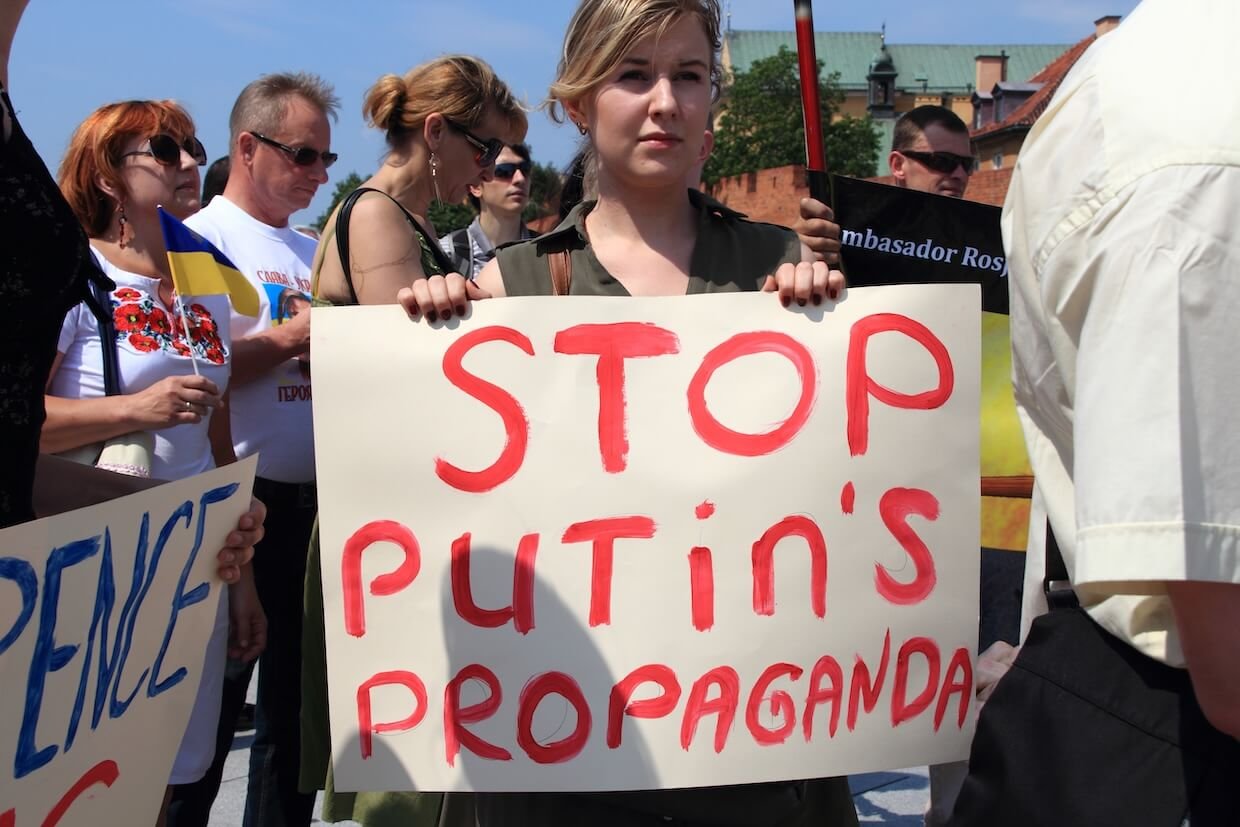
One lesson from history is the danger of appeasement during moments of aggressive behavior. The 1938 appeasement of Hitler serves as a lesson not to follow a similar path with someone like Putin, who has invaded Ukraine. Negotiating with aggressive behavior can lead to further territorial ambitions.

Another lesson is that persistent economic inequality, especially during times of economic crisis, can bolster the strength of far-right parties. This was evident in the 1930s following the 1929 economic crisis. These historical insights remind us to address economic disparities and avoid appeasement to prevent similar political outcomes today.

In your 2001 article “Post-communist extremism in Eastern Europe: The nature of the phenomenon,” you discussed the emergence of far-right parties in Eastern Europe, particularly in Poland and Hungary, years before the governments of Kaczynski and Victor Orbán. Do you think the dynamics that led to the rise of far-right parties have changed in Eastern Europe? What patterns can you identify?

Dr. Othon Anastasakis: First, let me say that while far-right politics is a wider European phenomenon, it is not exclusively a Central European issue. In my reading of the European continent, three main factors may create divergences between Western Europe and Eastern Europe.

First, there is the Communist legacy. This long and totalitarian history has created circumstances that can sometimes lend themselves to a lingering appeal of authoritarianism. The Communist legacy remains a significant point of reference in these regions.

Second, we must consider the legacy of empires versus those who were colonized. When discussing post-Empire Europe, we often assume all countries were colonizers, which is not the case. Western European countries like Britain, France, Italy, Spain, and the Netherlands had overseas empires. In contrast, many Eastern European countries, from Poland down to Greece, were part of empires. This division affects the development of politics, particularly nationalistic politics.

Third, connected to the second point, is the division between civic and ethnic nationalism. The understanding of national development and the way citizens are embedded within this context vary significantly. In Western Europe, there is often a more civic understanding of nationalism, whereas, in Eastern Europe, there is a longer historical experience of ethnic nationalism. This influences how far-right nationalism behaves and forms its ideology in these regions.

How has the narrative and strategy of far-right parties evolved from the post-communist era in Eastern Europe to the present day? Are there historical factors that continue to play a significant role in their resurgence?

Dr. Othon Anastasakis: Even in Eastern Europe, where we can roughly divide nationalism into civic versus ethnic types, history plays a very important role in the development of far-right parties and politics in general. The national experiences of these countries significantly impact how their politics evolve.

For example, Hungary, part of the Austro-Hungarian Empire, became a nation-state after World War I, leaving many ethnic Hungarians outside its borders. This created a unique brand of Hungarian nationalism. In contrast, Poland, which also faces issues with the rule of law similar to Hungary, has a different historical background. Poland, often caught between Russia and Germany, has experienced its territory being divided and annexed by these powers. This historical context results in a far-right experience that can be either anti-German or very much anti-Russian.

Thus, the historical experiences of these countries influence how far-right parties develop and form their own versions of nationalism.

Meloni Is Not Mussolini, the AfD Is Not Comparable to Hitler’s Germany

Giorgia Meloni, Italy’s prime minister, speaks at the Atreju convention in Rome, Italy on December 16, 2023. Photo: Alessia Pierdomenico.

In the same article, you discuss four theses about the rise of far-right extremism, one of which is the revival of the fascist era. With the rise of Giorgia Meloni in Italy and her party, Brothers of Italy, and the rise of the AfD in Germany, do you see a revival of the fascist era?

Dr. Othon Anastasakis: Not in the way that it happened in the 1930s. As I mentioned earlier, history doesn’t repeat itself exactly. There are lessons to be learned, but the context is always different. In the 1930s, the aftermath of World War I played a significant role. The experience of being winners or losers, especially in Germany’s case, where it was a clear loser, defined how the country developed during the turbulent interwar period. This era saw the testing and eventual failure of liberal politics, leading to the authoritarian regimes of the 1930s.

Today, the background is very different. We have the European Union, which provides a unique context of political and economic integration among its member countries. Any attempt by far-right parties or anti-European, protectionist forces to gain power would first have to involve dismantling the EU, which is not an easy task.

In this sense, we are in a different historical moment. Meloni is not Mussolini, and the AfD is not comparable to Hitler’s Germany. However, these parties do contain elements that make them susceptible to fascist ideas, language, and rhetoric.

One important and common issue that enables these parties to develop their discourses is migration. Unlike in the 1930s, today’s migration context has been developing for a few decades, but under conditions of crisis, it becomes a significant scapegoat. Migration is an issue that many far-right parties across Europe use to their advantage.

In your article “Europeanization of the Balkans,” you underline how the EU membership process has transformed Balkan countries in terms of consolidating democracy and the rule of law. When you consider the surge of far-right populism in Western Europe, can we talk about the Balkanization of Europe?

Dr. Othon Anastasakis: Overall, I don’t use the term “Balkanization” because I think it’s a stereotypical and simplistic way of understanding a region. It doesn’t accurately reflect the true complexity of the area. My thesis back then was that the conditionality imposed by the European Union, particularly in the political context, was crucial. This conditionality made the countries accept and adopt certain norms required for EU membership. In this sense, Europeanization—a much broader concept—was able to take root in those countries.

What I see in Europe today is not Balkanization, but a process of securitization and the geopoliticization of the European Union. This shift is largely a response to the wars in neighboring regions, especially Russia’s full-scale invasion of Ukraine. In the face of these realities and a multipolar global environment, there is a turn towards a defense-oriented agenda. This shift could change the nature and spirit of the EU, moving it beyond its historical focus on economic integration and soft power.

One significant risk I see is the potential impact on the EU’s normative agenda. The EU is a democratic club, a group of countries that share specific values, rules and procedures. As the EU faces increased geopolitical and security challenges, it may struggle to maintain its commitment to these normative values. This concern is particularly relevant in its external relations, trade and foreign policy decisions. Even with the enlargement agenda, there is a risk that the EU may compromise some of its democratic credentials to bring in countries that may not yet be ready for membership.

So, while I do not fear Balkanization, I do see a process of geopoliticization that is shaping the future direction of the European Union.

In your doctoral thesis “Authoritarianism in 20th Century Greece,” you examine the authoritarian ideology and educational policy of two dictatorial regimes in 20th century Greece: the Metaxas dictatorship of 1936-1941 (the 4th of August regime) and the military junta of 1967-1974 (the 21st of April regime). What interactions do you observe between these two periods and the rise of Golden Dawn in the 2010s and the Greek Solution party now?

Dr. Othon Anastasakis: Dictatorships, particularly in the Greek context, belong to the past and do not present themselves as viable alternatives for political power and governance after the transition from dictatorship to democracy in 1974. The periods of the 1930s and 1960s were different as the military was a significant force in Greek politics. During political or party crises, the military often positioned itself as an alternative, intervening in politics multiple times. For instance, Metaxas, a military man, managed to influence politics in the interwar years, and the colonels in 1967 abruptly halted the democratic process.

The rise of far-right parties like Golden Dawn in Greece is not reminiscent of those military interventions. Golden Dawn, which gained prominence during the severe economic crisis in Greece, is also a criminal organization and most of its members are now imprisoned, rendering it unable to operate as a political party. Other nationalistic and far-right parties, such as the Greek Solution, exist but are often not sustainable. Over the past three decades, we have seen how some far-right parties have managed to raise their percentages. For instance, the Orthodox Popular Rally led by Georgios Karatzaferis in the 1990s and early 2000s, and the Independent Greeks, who cooperated with Syriza during the mid-2010s crisis. These far-right parties experienced a rise but eventually descended, demonstrating a pattern of emergence and decline.

These parties tend to be disruptive, reactionary and extremely nationalistic. They often gain support during times of political crisis or when mainstream parties struggle to address issues. This pattern of rise and fall is evident in the Greek Solution and two other extreme nationalist parties that secured seats in recent elections. The fact that these three far-right parties collectively garnered around 18-19% of the vote is concerning, indicating a particular situation in the Greek political context.

Populism and Populist Leaders Will Continue to Exist

In your research on authoritarian regimes in Greece, what historical patterns do you see re-emerging in contemporary European politics? What impact do you think, as an historian, the resurgence of far-right populism will have on the future of European integration and the EU’s democratic values? Are we witnessing a cyclical pattern of populist surges similar to previous historical periods?

Dr. Othon Anastasakis: Populism and populist leaders will continue to exist, whether they are on the far-right, far-left or somewhere in between. Populism, as a broad umbrella term, encompasses various parties and movements, making it an enduring feature of the political landscape. A specific example of this is Brexit, which was a significant populist moment in Europe. Brexit challenged the European edifice as the UK, driven by populist sentiments, decided to leave the EU. This move was representative of both Euroscepticism and Europhobia.

Brexit demonstrates both the potential and the drawbacks of populism. On one hand, it successfully led a country out of the EU, showcasing populism’s power. On the other hand, it highlighted the immense challenges and turbulence associated with such a move. This experience serves as a lesson to other Eurosceptic parties that exiting the EU is not a straightforward endeavor.

Today’s far-right parties, which are often very Eurosceptic and reactionary, face a dual challenge. They must navigate their national political landscapes, creating an environment of opposition to their own elites while also dealing with the supranational context of Europe. They are limited in how reactionary they can be because pushing too hard against the EU could lead to their countries leaving the union, something that most populations do not desire. This tension makes it difficult for far-right parties to fully adopt their reactionary, nationalistic and racist rhetoric.

From a historical perspective, how concerned are you about the rise of far-right parties in the European elections? Many pundits argue that the center-right and center-left have held strong, and there is not much to worry about. Do you agree with these pundits?

Dr. Othon Anastasakis: I agree that this is not a significant rupture from the past. We haven’t seen a massive surge that could radically change the landscape. The mainstream context still dominates European politics, which is reassuring. However, I see two risks for the future.

The first risk is whether far-right parties in Europe will decide to unite within the European Parliament to create obstacles on issues such as migration or climate change. While it’s challenging for them to achieve unity, it is not entirely out of the question.

The second risk involves the extent to which center-right parties, particularly those in the Christian Democrat bloc, might be tempted to ally with far-right parties on certain issues or adopt parts of their discourse. This could lead to the mainstreaming of far-right rhetoric. We have already seen this in the field of migration, where mainstream parties are often influenced by far-right narratives.

A notable example is the European People’s Party (EPP), which for many years included Hungary’s Fidesz party. Although they eventually decided to expel Viktor Orbán’s party, they tolerated his presence for some time to maintain their numbers and votes. This indicates a potential risk where center-right parties might seek alliances with far-right parties to further their own interests.

Slovak Prime Minister Robert Fico and EU Commission President Jean-Claude Juncker hold a press conference after their meeting at the EU Commission headquarters in Brussels, Belgium on July 27, 2017. Photo: Alexandros Michailidis.

Professor Haughton on Fico Assassination Attempt: Polarization Boosts Charged Political Climate in Slovakia

In an illuminating interview Professor Tim Haughton assessed the recent assassination attempt targeting Slovakian Prime Minister Robert Fico and underlined that the camp around Fico has pushed numerous polarizing narratives that could be categorized under the populism label. “This polarization has contributed to the charged political atmosphere in Slovakia,” he noted, highlighting the environment that led to the assassination.

Interview by Selcuk Gultasli

Dr. Tim Haughton, Professor of Comparative and European Politics and Deputy Director of the Centre for Elections, Democracy, Accountability, and Representation (CEDAR) at the University of Birmingham, stated that the camp around Robert Fico has pushed numerous narratives that could be categorized under the populism label. “This polarization has contributed to the charged political atmosphere in Slovakia,” he noted, highlighting the environment that led to the assassination attempt targeting Fico.

In an illuminating interview he gave, on Friday, to the European Center for Populism Studies (ECPS), sheds light on the complex and evolving political landscape of Slovakia. With a deep understanding of Central and Eastern European politics, Professor Haughton provides insightful analysis on the rise of radical right and far-right movements, the influence of populism, and the role of national identity and immigration in shaping political rhetoric. He discusses the significant impact of Robert Fico’s leadership, the challenges facing Slovak democracy, and the broader implications for European politics.

Professor Haughton begins by addressing the characteristics of radical right parties in Slovakia, noting the historical roots of the Slovak National Party and the more recent emergence of neo-fascist parties like those led by Marian Kotleba and Republika. He emphasizes the shift in focus from ethnic Hungarians to non-European elements, particularly in response to the migration crisis, aligning these parties with broader European trends.

Regarding Robert Fico, Professor Haughton highlights the nuanced nature of his political stance, combining leftist economic policies with nationalist rhetoric. According to him, this complexity makes it difficult to categorize Fico simply as a far-right populist. Professor Haughton also delves into the polarization of Slovak politics, exacerbated by populist narratives and the divisive rhetoric surrounding the war in Ukraine.

The assassination attempt on Fico and its aftermath underscore the fragility of democracy and the deep-seated tensions within Slovak society. Professor Haughton discusses the influence of Russian disinformation, the significance of journalist Jan Kuciak’s murder, and the broader discontent with liberal democracy. Through his thoughtful analysis, Professor Haughton paints a comprehensive picture of the challenges and dynamics at play in Slovakia, offering valuable perspectives on the region’s political future.

Here is the transcription of the interview with Professor Tim Haughton with minor edits.

A Strong Stance Against Muslim Immigration Creates a Common Cause

Hungarian government’s anti-immigration billboard says “STOP the refugees” in Budapest, Hungary on April 4, 2018.

Professor Haughton, thank you so very much for joining our interview series. Let me start with the first question. What are the main characteristics of the radical right and far-right movements in Slovakia, and how do they compare to similar movements in other European countries?

Tim Haughton: It’s worth emphasizing that Slovakia has a number of radical right parties and movements. For example, the Slovak National Party, which has been a significant political force in Slovakia for the past 30 years, actually traces its roots back to the 19th century. This party has consistently maintained a radical right agenda.

In more recent times, particularly in the past decade, we have seen the emergence of parties that could be labeled as neo-fascist. These include the party led by Marian Kotleba and the party that split off to form Republika. These parties have a much sharper and stronger nationalist message and a more discriminatory stance towards specific minorities.

When comparing these Slovak parties to other radical right parties across Europe, there are notable similarities. Many radical right parties, especially in Central and Eastern Europe, have historically focused their criticism on neighboring countries or ethnic groups. For instance, the Slovak National Party has been very critical of ethnic Hungarians in the past. However, this focus has shifted more towards a common criticism of non-European elements, particularly in response to the migration crisis. This has included a strong stance against Muslim immigration into Slovakia, or even the perceived threat of it. This shift aligns these Slovak parties with many other radical right parties in Europe, creating a common cause among them.

How has Robert Fico’s leadership influenced the rise of populism and far-right politics in Slovakia? Additionally, how significant a role, do you think, populism played in the assassination attempt on the Slovak Prime Minister Robert Fico?

Tim Haughton: I should probably stress at the outset that, while I appreciate speaking to the European Center for Populism Studies, I am not the biggest fan of the term “populism” as a label. I prefer examining populist appeals rather than labeling particular politicians or parties as populist.

When considering broad populist appeals, such as the notion of a pure nation versus a corrupt elite, these have been utilized by Robert Fico over time. It’s also important to note that there have been increasing links between Robert Fico and parties or politicians known for using populist appeals. Fico has certainly played a role in promoting these messages in Slovakia.

Regarding the shooting involving Fico and the role of populist appeals, two key points are worth emphasizing. First, we can distinguish between the individual who was arrested and his motivations, which appeared to center on criticism of Robert Fico’s domestic policies, particularly changes to the state broadcaster. This was highlighted in the video he shared on social media.

Second, it’s essential to understand the broader context of Slovak politics, which has become highly polarized in recent times. The camp around Robert Fico has pushed numerous narratives that could be categorized under the populism label. This polarization has contributed to the charged political atmosphere in Slovakia.

PM Fico and His Party Can Not Be Classified As Far-Right

Protesters hold signs during an anti-government demonstration demanding a change in government in Bratislava, Slovakia on March 16, 2018. Photo: Ventura.

What is the role of immigration and national identity in the political rhetoric of Slovakia’s far-right parties? How do they use these issues to gain support, and what strategies have populist and far-right parties in Slovakia used to gain and maintain political power? How effective have these strategies been?

Tim Haughton: Firstly, I want to emphasize that I wouldn’t classify Robert Fico’s party as far-right. When discussing other parties that fit that description, the theme of immigration is very important. For these radical right parties, it’s not just about actual immigration but often a perceived threat or worry about its cultural and political impact on Slovakia.

This fear of the outside, or fear of the other, is something that far-right parties and politicians have exploited. However, it’s also crucial to note that their appeal hinges significantly on domestic issues. They rally support by focusing on what they perceive as the negative impacts of liberals and progressives on Slovak politics. This opposition to liberal and progressive agendas has been a significant rallying point for the far-right in Slovakia.

In your article ‘The Return of Robert Fico,’ you argued that the fate of democracy was at risk with the ‘Orbanization’ of Slovakia. Can you please elaborate on the future of Slovakian democracy after the assassination attempt?

Tim Haughton: In that particular article, my remarks referred to observations about Orbanization and the situation in Slovakia. Since the election, specifically, we have seen the creation of a government that has implemented measures which conflict with our understanding of liberal democracy. For example, there have been changes to the criminal code, efforts to alter the state broadcaster, and measures that have impacted funding for the NGO sector. This indicates a movement in a concerning direction.

I want to emphasize both the immediate and longer-term reactions to these developments. Initially, I was very concerned because several key politicians close to Fico blamed liberals and progressives, exacerbating the polarization of Slovak society. Efforts by leaders like incoming President Peter Pellegrini and current President Zuzana Čaputová to encourage unity among political party leaders were snubbed by several politicians, which was worrying.

In the last few days, however, the situation appears to have calmed somewhat, which is slightly reassuring. Nevertheless, Slovak politics is at a critical juncture, heavily influenced by Robert Fico himself. He has been the dominant figure in Slovak politics for the past 20 years and controls his political party. Currently, there are differing voices within his party on how to respond to recent events. Some, like the de facto Prime Minister Robert Kaliňák, advocate for a pragmatic approach, while others, like politician Ľuboš Blaha, push a more pro-Russian stance.

Slovakia’s future direction depends significantly on the language and rhetoric used by politicians around Fico. Although the rhetoric has recently toned down, making me feel a bit more optimistic, it’s challenging to judge the situation so soon after these events.

Slovakia Can Not Be Described As a “Black Hole” in Central Europe

Former US Secretary of State Madeleine Albright called Slovakia a ‘black hole in the center of Europe’ back in 1997. What do you think of this characterization? Does Slovakia still deserve to be labeled as the black hole in the center of Europe?

Tim Haughton: It’s worth emphasizing that Albright came up with that label during the time when Vladimir Mečiar and his government were in power. At that time, Slovakia wasn’t invited to begin accession negotiations to join the European Union in 1997, unlike the Czech Republic, Hungary, and Poland. It seemed as if Slovakia was diverging in a different direction, so the label may have been reasonably apt then.

However, it’s important to note that Slovakia has been a member of the European Union for 20 years now. It is more integrated into European structures than some of its Visegrád-4 Group partners. For instance, Slovakia is part of the eurozone, which is not true for all neighboring states. Thus, Slovakia is very much part of the European mainstream.

There have been some recent question marks since Fico took power, particularly regarding Slovakia’s stance on the war in Ukraine. The country has shifted from being a strong advocate and supporter of Ukraine to becoming critical of military involvement under Fico. While this indicates that Slovakia may be currently less aligned with the ideological core of the EU, I certainly wouldn’t describe it as a “black hole” in Central Europe.

Strong Polarization of Politics in Slovakia

From Left: Hungary PM Viktor Orban, Poland PM Beata Szydlo, Czech PM Bohuslav Sobotka and Slovakia PM Robert Fico pose prior their meeting in Prague on February 15, 2016. Photo: Shutterstock.

What does the assassination attempt on Slovak Prime Minister Robert Fico tell us about the political culture, the level of polarization, and populism in Slovakia?

Tim Haughton: So again, I would distinguish between the actual event itself and the reaction to it, which is important. Regarding the event itself, according to what we know about the individual who was arrested and charged for the assassination attempt, he seems to have been motivated by a strong political disagreement with Fico. However, various images and narratives about this individual have circulated on social media, making it difficult to say definitively.

More broadly, the reaction to these events highlights the strong polarization of politics in Slovakia. The country is quite divided. I was reading an article today that examined polling data on a range of political questions and policies introduced by the Fico government. It is very clear that there are significant numbers of people who strongly support the government’s agenda and those who strongly oppose it. What’s striking about this polarization is the strong overlap between the groups in favor of particular measures. This division underscores the significant polarization in Slovak society.

Interior Minister Matus Estok stated that the country was ‘on the doorstep of a civil war’ right after the shooting, suggesting that the assassination attempt on the prime minister confirmed this. Do you believe Slovakia, a member of the European Union and NATO, is truly on the brink of a civil war, or do you find this assertion a bit far-fetched?

Tim Haughton: I don’t think that particular characterization is accurate. Slovakia is a country where there are tensions and strong differences of opinion, but it’s much too strong to suggest that the country is on the verge of civil war. That phrase was uttered in the immediate aftermath of the shooting and was likely driven more by emotional reaction than by careful judgment. While Slovak society is divided, I don’t believe it is accurate to depict it as on the brink of civil war.

Senior officials in Fico’s governing Smer party have accused liberal journalists and opposition politicians of motivating the shooter to open fire. Rudolf Huliak, an ally of the government from the far-right Slovak National Party, claimed progressives and journalists “have Robert Fico’s blood on their hands.” Is there any truth in these accusations?

Tim Haughton: Obviously, that’s a very emotive phrasing, and I certainly wouldn’t want to use such language. If we step back and look at it in a more scholarly way, we can see that polarization in Slovak society has stemmed from the rhetoric and language used by both sides of the political spectrum. The liberal progressive media is very critical of the steps taken by Robert Fico, arguing that it is their right as journalists to call out what they see as wrong and to highlight the harmful actions taken by the Fico government.

However, there are critical voices and certain politicians who assert that we need to stop Robert Fico. We must be careful with this rhetoric, as it can be interpreted as providing some justification for what happened. I don’t think that’s true. This heightened rhetoric creates a context in which the stakes of politics seem much higher, contributing to the polarization of Slovak society and politics.

It Is Challenging to Categorize Fico Definitively

Mr. Fico is pushing a strongly contested overhaul of the judiciary to limit the scope of corruption investigations, reshape the national broadcasting system to purge what the government calls liberal bias, and crack down on foreign-funded non-governmental organizations. He opposes military aid to Ukraine, LGBTQ rights, and the power of the European Union, while favoring friendly relations with Vladimir Putin’s Russia. Do you agree that all these points indicate that Fico is a far-right populist leader par excellence or not?

Tim Haughton: I would not classify Robert Fico as a far-right populist politician. Reflecting on his political career and policies, it is challenging to categorize him definitively. At the core of Fico and his party, Smer, are leftist economic policies focused on the welfare state and supporting the poorer segments of society. Many of his socioeconomic measures, such as free travel for pensioners and increased pensions, have populist characteristics but are fundamentally left-leaning.

In recent years, particularly since the migration crisis in 2015, Fico has adopted more nationalist rhetoric. This shift is also reflected in the evolution of his party’s name. Originally called just Smer (meaning “Direction”), it briefly adopted the name Smer – Tretia Cesta (Direction – Third Way), echoing the era of Tony Blair and Gerhard Schröder. In the mid-2000s, it became Smer – Sociálna Demokracia (Direction – Social Democracy), emphasizing its social democratic roots. Recently, it has been rebranded as Smer – Slovenská Sociálna Demokracia (Direction – Slovak Social Democracy), which conveys both a Slovak version of social democracy and a stronger national emphasis.

This combination of leftist economics, nationalist appeal, and Fico’s leadership makes it difficult to classify his policies neatly. While my explanation may be lengthy, it underscores the complexity of Fico’s political stance. It is essential to recognize this nuance and understand that Robert Fico is not a far-right politician.

Russia Plays Substantial Role in Shaping Debate in Slovakia

An elderly lady is looking at the advertising newspaper of the presidential candidate Peter Pellegrini ahead of elections in Bratislava, Slovakia on April 2, 2024. Photo: Shutterstock.

How have pro-Russian media and the issue of Ukraine shaped Slovakian politics?

Tim Haughton: Regarding the war in Ukraine, it became a significant theme in domestic Slovak politics leading up to the elections. Robert Fico’s criticism of Western military involvement in the war played an important role in his re-election in 2023. While domestic factors were primarily at play in his 2023 campaign, the Ukraine war did have some influence.

Since taking power, Fico has implemented policies such as halting Slovakia’s military contributions to the war in Ukraine, stating that not another bullet would be sent. However, he has emphasized his support for Ukraine’s reconstruction and economic recovery. For instance, there was a meeting about a month ago in Michalovce, in the far east of Slovakia, where ministers from both the Slovak and Ukrainian governments agreed on deals regarding infrastructure, energy, and other areas.

Opponents of Robert Fico, particularly from the progressive side, have criticized his stance as moving Slovakia away from the European mainstream. They advocate for a stronger pro-Ukrainian position. This division was evident during the Presidential elections in Slovakia earlier this year, highlighting the differing views on military involvement in Ukraine.

Regarding Russia and Russian disinformation, numerous studies suggest that disinformation from Russian sources is influential in Slovakia. A significant number of Slovaks get their news from alternative media sources, many of which are believed to be influenced by Russian interests and funding. This impact on the media sphere translates into people’s views and attitudes, affecting actual politics. While it is challenging to provide concrete scholarly evidence for these influences, there seems to be a substantial role played by Russia in shaping debate and discussion in certain sections of the media. Additionally, Russian influence on social media platforms is also believed to be significant.

In 2018, Fico had to resign as prime minister in the face of enormous street protests following the murder of investigative journalist Jan Kuciak, who was investigating government corruption, and his fiancée, Martina Kusnirova. What has been the significance of Kuciak’s murder in Slovakian politics?

Tim Haughton: It was a very significant event with major consequences. It led directly to Robert Fico resigning as Prime Minister in 2018, although he remained the leader of his party. This event also played a crucial role in the defeat of Smer in the 2020 parliamentary elections. Broadly speaking, it has been a pivotal moment often used by anti-Fico forces to mobilize and rally support.

In the immediate aftermath of the murder, there were major demonstrations on the streets of Slovakia. The campaign “For a Decent Slovakia” became significant in mobilizing anti-Fico sentiment. This event was also instrumental in bringing together opposition forces after the 2020 election to form a government. It remains a key event in Slovak history, frequently invoked to rally anti-Fico forces. Even six years later, it still has significant resonance.
The Sense of Disappointment with Democracy Is Quite Widespread

Lastly, according to The New York Times, Slovakia has the highest proportion of citizens who view liberal democracy as a threat to their identity and values among all the countries in Central and Eastern Europe that shook off communist rule in 1989. Additionally, 27 percent of Slovaks see Russia as a key strategic partner, the highest level in the region. What does this tell us about the political culture of Slovakia compared to other Central and Eastern European countries?

Tim Haughton: This situation highlights some important factors. A significant proportion of the population in Slovakia feels that the system hasn’t delivered or hasn’t delivered well enough for them. This indicates that we need to be aware of the threats and dangers to democracy, as it is fragile in many respects—not just in Slovakia, but in many other countries across the region and even across Europe as a whole.

Concerns about the state of democracy are widespread. The data from Slovakia illustrates underlying tensions, problems, and challenges that many European countries face. The sense of disappointment with democracy is quite widespread. However, I don’t want to exaggerate or suggest that all democracies in Europe are on the verge of collapsing. Rather, it’s important to recognize that a significant portion of the population is dissatisfied with what democracies are delivering.

In Slovakia, this dissatisfaction is particularly evident. When large segments of the electorate are unhappy with the current political system, they may be more open to the appeals of politicians advocating for changes, whether minor or more extensive.

Sir Graham Watson is a liberal European politician and Advisory Board member of ECPS.

Sir Graham Watson: We Must Persuade Younger People to Go to the EP Polls

As opinion polls indicate a potential surge in support for far-right parties in the European Parliament elections scheduled for June 6-9, Sir Graham Watson emphasizes the critical need to persuade younger people to vote. “In recent years, we have seen significant abstention among younger voters. This was a major factor in Brexit,” Watson explains. “We desperately need everyone eligible to vote, especially those over 18 across the European Union, to exercise their democratic rights. Perhaps the younger generation does not fully grasp that freedom must be actively used, or it can be lost. If they do not use their freedom to vote and participate in democratic society, they risk losing that freedom in the future,” he warns.

Interview by Selcuk Gultasli

In an exclusive interview with the European Center for Populism Studies (ECPS), Sir Graham Watson, a liberal politician and Advisory Board member of ECPS, emphasizes the urgent need for mainstream parties to intensify their efforts in the upcoming European Parliament elections. “It is particularly important to persuade younger people to go to the polls,” Sir Watson asserts, highlighting a critical factor that influenced the Brexit vote. “In recent years, we have seen significant abstention among younger voters. This was a major factor in Brexit, where older voters, who largely supported leaving the EU, turned out in high numbers, while younger people, who favored remaining, did not vote in large numbers.”

As opinion polls indicate a potential surge in support for far-right parties in the elections scheduled for June 6-9, Sir Watson shares his concerns about the implications for the European Union’s future. He acknowledges the far-right’s growing presence in countries like Germany and Italy, where parties such as Fratelli d’Italia and Lega Nord are gaining traction. “Clearly, the next Parliament will include a larger far-right group,” Sir Watson notes. However, he believes that mainstream democratic forces will still hold a majority, provided they collaborate effectively to counteract the far-right’s influence.

Sir Watson, a former leader of the Liberal Group in the European Parliament, also addresses the broader threat posed by the far-right and populist radical right parties, arguing that their potential success does not signal the end of liberal democracy but represents a significant danger. “A lot of people think ‘Oh, well, it’s only the European Parliament. It’s not national parliaments.’ They underestimate the European Parliament’s role in shaping public policy in every Member State,” he explains. Watson warns that the presence of nationalistic and anti-democratic forces could lead to the fragmentation of the EU and a rollback of social progress.

Highlighting the external threats to the EU, Watson points to Russia’s aggression in Ukraine and its financial support for far-right politicians like Salvini in Italy and Marine Le Pen in France. “The Russians are trying to destabilize the European Union to reestablish their hegemony on the continent,” he warns. Sir Watson underscores the necessity for EU member states to recognize and respond to this threat.

Addressing strategies to boost voter mobilization, particularly among the youth, Sir Watson stresses the importance of leveraging technology and social media algorithms to counter the far-right’s influence. “We need to use this technology ourselves to get our message across,” he says, emphasizing that mainstream parties must defend the principles of liberal tolerance and democracy more effectively.

As Sir Watson prepares to stand in Italy for the European Parliament elections, his commitment to combating the rise of the far-right and promoting European unity is clear. “We must persuade younger people to go to the polls,” he reiterates, underscoring the critical role of voter participation in safeguarding the future of the European Union.

Here is the transcription of the interview with Sir Graham Watson with minor edits.

Mainstream Democratic Forces Need to Collaborate Much More Effectively 

European Union flags against European Parliament in Brussels, Belgium.

Many polls and pundits argue that there is a significant possibility of a far-right surge in the upcoming European Parliament elections scheduled for June 6-9. Given the current political climate and recent events in Europe, how likely do you think a far-right victory is, and what would be its implications for the future of the EU?

Sir Graham Watson: I think the far-right will certainly perform better than they have in the past. Opinion polls suggest their growth in several countries, particularly in Germany and Italy, where I’m a candidate. In Italy, we see strong support for Fratelli d’Italia and Lega Nord, both of which can be considered far-right parties. There’s also Vox in Spain and the far-right in the Netherlands. Clearly, the next Parliament will include a larger far-right group. The question is whether they will have a majority and if they can organize themselves well enough to influence policy. Currently, the far-right is divided among two or three different political groups, making them less effective. I believe mainstream democratic forces will still hold a majority in the European Parliament, but they will need to collaborate much more effectively to minimize the far-right’s impact.

If the far-right and populist radical right parties win in the upcoming elections, do you think this will signal the end of liberal democracy as we know it?

Sir Graham Watson: I don’t think it will signal the end of liberal democracy as we know it, but it does represent a far greater threat than most people realize. A lot of people think “Oh, well, it’s only the European Parliament. It’s not national parliaments.” Many dismiss the significance of the European Parliament, thinking it doesn’t impact national parliaments. They underestimate the European Parliament’s role in shaping public policy in every Member State and the influence a strong performance in European Parliament elections can have on national elections. I am very worried about the immediate future of the European Union because of the presence of forces that are not only nationalistic, which can lead to the fragmentation of the EU, but are also fundamentally anti-democratic and aim to reverse social progress achieved in many areas.

People Have Not Yet Fully Grasped How Dangerous The Situation Is

Marine Le Pen, from the Front National, a national-conservative political party in France in meeting for the presidential election of 2017 at the Zenith of Paris on April 17, 2017. Photo: Frederic Legrand.

In an interview with The Guardian, you argued that the rise of the far-right and the threat Russia posed to the EU compelled you to accept the invitation to stand in Italy. How serious do you think the Russian threat to the EU is, and how do you assess the strong relations between Russia and far-right parties in Europe?

Sir Graham Watson: We see the military threat every day on our television screens in Ukraine. Although Ukraine is not a member state of the European Union, it is a candidate country, and Russia’s attack on Ukraine and attempts to seize more territory demonstrate that no European country is safe from expansionist policies. Alongside this, we see Russian money supporting figures like Salvini in Italy and Marine Le Pen in France, and previously Nigel Farage in the United Kingdom. The Russians are trying to destabilize the European Union to reestablish their hegemony on the continent. People have not yet fully grasped how dangerous this situation is.

There are stories in the European media that far-right voters are very well mobilized for the upcoming elections compared to the voters of mainstream parties. What strategies do you believe pro-European parties should adopt to increase voter mobilization, particularly among the youth?

Sir Graham Watson: Clearly, we, the mainstream parties, need to put much more effort into the campaign. It is particularly important to persuade younger people to go to the polls. In recent years, we have seen significant abstention among younger voters. This was a major factor in Brexit, where older voters, who largely supported leaving the EU, turned out in high numbers, while younger people, who favored remaining, did not vote in large numbers. We desperately need everyone eligible to vote, especially those over 18 across the European Union, to exercise their democratic rights. Perhaps the younger generation does not fully grasp that freedom must be actively used, or it can be lost. If they do not use their freedom to vote and participate in democratic society, they risk losing that freedom in the future.

European Council on Foreign Relations (ECFR)’s research in March argued that the agenda of the European Union will not be defined by far-right parties as they are divided on their aims and ambitions. Do you agree with this finding?

Sir Graham Watson: I’m not sure I agree with it, but I understand where they’re coming from. Their arguments suggest that the far-right is not sufficiently unified at the European level, and that the parties comprising the far-right groups in the European Parliament are not well-coordinated. These parties may not recognize the same priorities, whereas the democratic forces in the European Parliament tend to be well-organized, accustomed to working together, developing common agendas, and reaching agreements even when compromises are needed on policies such as energy and transport. In contrast, the far-right tends to be more splintered and less effective. However, we should not let studies indicating the far-right’s lack of effectiveness make us any less concerned about the potential consequences of a far-right victory.

President of the European Commission Should Be Elected Directly

Viktor Orban, Hungary’s prime minister arrives for a meeting with European Union leaders in Brussels, Belgium on Dec. 13, 2019. Photo: Alexandros Michailidis.

As a former leader of the liberals and a candidate running in the EP elections, what are the basic promises you present to the electorate? What are your plans to combat the surge of far-right parties?

Sir Graham Watson: I think the most important thing is to make the European Union work properly. Currently, we have a Confederal Europe, where any country can veto important policies. For example, Viktor Orban can veto crucial developments in European defense policy needed to defend against Russia in Ukraine. We need majority voting by qualified majority in the Council of Ministers, rather than allowing individual states to have a veto. Additionally, we should see the President of the European Commission elected directly by the people, similar to how the President of the United States is elected. This would ensure a proper ideological debate during European elections and a President elected on a clear program for government. This is more understandable for most voters than the current situation, where individual parties present their programs, which are not always well understood.

It has been announced that the far-right Dutch politician Geert Wilders will be forming the next coalition in the Netherlands. Do you think this is a milestone in terms of far-right parties’ ability to form governments?

Sir Graham Watson: I believe they will not be forming a government on their own, as they don’t have the numbers to do so. We already have an example in Europe with a far-right party, the so-called Sweden Democrats, who are part of the governing coalition but have no ministers. They are part of the governing majority, but without ministerial positions. I hope we see a similar outcome in the Netherlands. I don’t think anyone is seriously considering Geert Wilders as Prime Minister, and I hope his party will not have any ministers. However, I believe parties should avoid participating in governments with the far-right if it is at all possible.

How concerned are you that mainstream parties might imitate far-right rhetoric to garner more votes? In other words, are you concerned that the values of far-right parties will be mainstreamed by center-right parties?

Sir Graham Watson: I’m very worried about what is happening within the European People’s Party (EPP), where member parties in some countries are shifting to the right on policy issues like immigration, abortion, and LGBTQ+ rights. They are doing this to try to protect their vote share, essentially saying, “We don’t want to lose votes to the far-right, so we’ll adopt their policies.” This approach is absolutely wrong. These parties need to defend the society built on principles of liberal tolerance against the far-right’s attacks. In other words, they need to advocate for their positions much more effectively rather than fearing voters on the far-right.

Democracy Is Now Being Undermined by Far-right Forces

From Left: Hungary PM Viktor Orban, Poland PM Beata Szydlo, Czech PM Bohuslav Sobotka and Slovakia PM Robert Fico pose prior their meeting in Prague on February 15, 2016. Photo: Shutterstock.

The recent assassination attempt on Slovakian PM Robert Fico has raised concerns about political stability and violence in Europe. How do you think the EU should respond to such incidents to ensure the safety and security of its political leaders, including the populist radical right or far-right ones, and maintain democratic integrity?

Sir Graham Watson: I think this is a big challenge. As we saw in the 1930s—although few people remember that time directly—politics can become very nasty. During that decade, we witnessed the assassination of numerous mainstream politicians as the far-right gained power. I’m very concerned about the current situation, not only with the attempt on the life of Robert Fico but also with attacks on candidates in Germany and other countries. Through the European Union, we have established something rare and incredible in European politics: a peaceful, secure, stable, liberal democracy. This democracy is now being undermined by far-right forces, often financed by the Russians, and it’s something we must defend. That’s why I’m a candidate. It was not in my life plan to run again at my age, having already served 20 years in the European Parliament. But I’m so worried about what’s happening and the failure of young people to stand up against it that I’ve decided to confront people like Matteo Salvini directly.

Considering the potential long-term challenges that the EU faces, including the rise of soft and hard Euroscepticism, anti-European sentiments, and anti-EU political parties, what strategies do you recommend for maintaining the EU’s resilience, strengthening European unity, to protect democratic values and institutions across member states?

Sir Graham Watson: First, we need to communicate all the remarkable achievements of the European Union, many of which people take for granted. It’s not just about programs like Horizon for scientific cooperation or Erasmus for student exchanges. It’s also about having Airbus, a leading aircraft manufacturer that competes with Boeing, and world-leading pharmaceutical companies thriving due to Europe’s single market freedoms. In emergencies, such as a major terrorist attack, we can seamlessly move human blood supplies across borders. These are all results of laws adopted at the European level.

When I was in the European Parliament, I helped pass the European Arrest Warrant, allowing police and judicial services from different countries to collaborate in arresting criminals and tackling international organized crime. However, very few people understand these achievements. We must first help them recognize what Europe is capable of and what it has already accomplished, especially as we seek to grant Europe more powers to achieve even more.

Additionally, we need to be smarter and acknowledge that the far-right has succeeded by effectively using social media algorithms, an inexpensive but powerful way to influence people against the European Union. When you lose a battle, it’s often because your enemy has better technology. We need to leverage this technology ourselves to get our message across.

Dr. Kai Arzhemier, Professor of Political Science at the University of Mainz, Germany.

Professor Kai Arzheimer: Exposed AfD Meeting Echoes Ideologies of 1930s-1940s, Reminiscent of Plans to Exterminate Jews 

In an exclusive interview, Professor Kai Arzhemier assessed the recent exposure of a meeting involving right-wing extremist AfD politicians and neo-Nazis, where discussions about deporting millions of people with a non-German ethnic background, including citizens, took place. Professor Arzheimer characterize this meeting as echoing the ideologies of the 1930s-1940s, reminiscent of the Nazis’ plans to exterminate Jews. Arzheimer underscores that the meeting adds to the concerns about the AfD’s trajectory over the past few years, aligning with right-wing extremism.
Interview by Selcuk Gultasli

In an exclusive interview with the European Center for Populism Studies (ECPS), Dr. Kai Arzhemier, a Professor of Political Science at the University of Mainz, discussed the evolving landscape of populist radical right movements in Europe, with a specific focus on the rise of the Alternative for Germany (AfD). The interview delves into various aspects, including the historical context of Germany’s resistance to right-wing populism, the ideological transformation of the AfD, and its impact on German and European politics.

One of the key highlights is the recent exposure of a meeting involving AfD politicians and neo-Nazis, where discussions about deporting millions of people with a non-German ethnic background, including citizens, took place. Professor Arzheimer framed this meeting as echoing the ideologies of the 1930s-1940s, reminiscent of the Nazis’ plans to exterminate Jews. According to Arzheimer, the meeting adds to the concerns about the AfD’s trajectory over the past few years, aligning with right-wing extremism.
The discussion also touches on the upcoming European Parliament elections and the potential performance of the AfD. Dr. Arzhemier suggests that, based on current polling trends and the historical pattern of European elections with lower turnout, the AfD could replicate the success of Geert Wilders’ party in the Netherlands, securing a robust performance ranging between 20-30 percent of the vote.

There are calls from the Social Democratic Party (SPD) to ban the AfD due to the presence of individuals within the party who openly talk about remigrating people based on ethnic criteria. Dr. Arzhemier discusses the arguments both in favor of and against banning the AfD, emphasizing the high legal hurdles involved and the potential risks of the party exploiting such actions to portray themselves as victims of political suppression.

The interview explores Dr. Arzhemier’s research on the impact of ‘place’ on populist radical right sentiment in Germany. He discusses how regional disparities, especially in the former German Democratic Republic (GDR), still influence political sentiments. Factors such as authoritarian remnants, low immigration rates and a sense of “place resentment” contribute to increased support for the radical right in these regions.

Dr. Arzhemier reflects on his prediction from five years ago, stating that the rise of a right-wing populist party in Germany has made the country less flexible and more inward-looking. While acknowledging Germany’s increased flexibility in response to external factors like the war in Ukraine and Brexit, he suggests that debates about the AfD have absorbed significant political energy that could have been directed elsewhere.

Here is the transcription of the interview with Professor Kai Arzheimer with some edits.

Radical Right’s Influence in Europe Is on the Rise

Your research focuses especially on the populist radical right in Europe. How have you observed the evolution of far-right parties across different European countries in recent years? How do you see the impact of economic factors on the rise of these movements, and to what extent do cultural and identity issues play a role?

Kai Arzheimer: First and foremost, I think the radical right’s influence in Europe is on the rise. Across various countries, we observe an increase in the vote share of these parties, marking a shift from the political margins to the mainstream. This evolution is evident not only in their electoral significance but also in their impact on other parties and in the shaping of public discourse. The discourse, influenced by the radical right, centers around the concept of crisis. Consequently, the transformations in different European countries, both in terms of societal composition and economic structures, are portrayed as crises. The radical right positions itself as the defender of ordinary people against these perceived threats, contributing to its growing prominence.

Regarding the second part of your question, the two aspects of this perceived crisis are closely intertwined. It is not solely about concerns over immigrants potentially taking away jobs or jobs relocating to regions like China or Central Eastern Europe. Additionally, it involves the perception that immigration and other transformative economic processes, such as the decline of traditional industries like mining and the phase-out of internal combustion engines, are altering our way of life in a manner framed as a threat to the native population. Analyzing public opinion data makes it empirically challenging to separate the effects of economic anxieties from cultural threat perceptions. While they are not identical, these factors are intricately linked in the minds of voters.

Germany was considered an exception to the success of populist radical right and far-right parties until the rise of the Alternative for Germany (AfD). What factors contributed to Germany’s resistance to right-wing populism for an extended period, and how did the AfD manage to break this trend? In other words, how do you explain the success of ‘cordon sanitaire’ until very recently and what factors could contribute to its demise?

Kai ArzheimerYou are right. The AfD, established just a decade ago, represents the first successful national radical right party in Germany since at least the 1960s. The establishment and maintenance of a ‘cordon sanitaire’ against the radical right in Germany can be attributed to several factors. Firstly, right-wing and far-right actors in Germany have often adopted extreme approaches. Unlike the most successful radical right parties in Western Europe, such as those in Scandinavia, the PVV in the Netherlands, and even the National Rally (formerly the National Front) in France, which have moderated their stances over time to appeal to a broader electorate, far-right actors in Germany have tended to adhere closely to the roots of German right-wing extremism from the 1930s and 1940s. This historical connection, understandably, has been repugnant to most Germans, limiting the success of such parties.

Another contributing factor has been the historical division within the far-right in Germany. Numerous relatively small parties competed with each other, preventing any single one from surpassing the 5 percent threshold. Additionally, the mainstream right party, the Christian Democrats, has traditionally embraced a broad spectrum of ideologies, ranging from center-left to robust conservatism. Over the decades, they successfully appealed to a wide array of voters, some of whom later shifted to the far-right AfD once it emerged as a viable alternative.

One crucial aspect to consider is how the AfD successfully broke through the ‘cordon sanitaire,’ especially given that they did not initially identify as a radical right party. When they emerged in 2013, their platform primarily centered around soft Euroscepticism. The most notable member and co-founder, a former Christian Democratic Union of Germany (CDU) member, contended that the CDU had left him due to a perceived leftward shift under Merkel’s leadership. This initial positioning made them acceptable to voters who had previously supported mainstream right parties like the Free Democratic Party (FDP), CDU, and Christian Social Union (CSU).

It was only over the first three years of their existence that it became evident that the AfD was transforming into a fully-fledged radical right party. By that point, they had already secured a presence in Parliament, become a significant political force, and garnered considerable media coverage. Through this evolution, they managed to establish themselves despite the long-standing ‘cordon sanitaire.’

Political Landscape Underwent Significant Changes with Influx of Refugees from Syria

Co-chairpersons of the populist right-wing Alternative for Germany (AfD) Alice Weidel and Tino Chrupalla at a meeting in Berlin, Germany on July 4, 2023. Photo: Shutterstock.


Your research discusses the transformation of the AfD from its moderately Eurosceptic beginnings to a more radical right-wing stance. Can you elaborate on the key factors and events that led to this ideological shift within the AfD?

Kai Arzheimer: First and foremost, it’s crucial to acknowledge that right from its inception, the party encompassed various right-wingers with diverse perspectives. While the individuals I mentioned in my earlier response, those with previous ties to the CDU or FDP, were more prominently featured, they represented just a segment of the broader ideological spectrum within the party. These individuals took center stage as front-row politicians for the fledgling party.

As early as 2014, a power struggle emerged within the AfD, pitting the more moderate proponents against the growing influence of radical elements within the party. By 2015, this internal conflict had escalated to the point where one of the co-founders and arguably the party’s most prominent figure decided to leave, taking approximately 10 percent of the membership with him. Notably, this group comprised a disproportionately high number of individuals from the middle management level of the party, contributing significantly to a division between the more moderate faction and the increasingly influential radical forces within the party.

Moreover, the political landscape underwent significant shifts with the arrival of numerous refugees from Syria and the broader Middle East in 2015 and 2016. This influx propelled the issue of immigration to the forefront of public discourse, providing an opportunity for the AfD to strategically capitalize on this altered agenda. Concentrating on immigration and multiculturalism emerged as a key strategy for success. This emphasis not only resonated with a segment of the electorate but also bolstered the influence of more radical voices within the party.

Finally, the party had solidified its position to such an extent that even more radical elements within its ranks, openly connected to traditional right-wing extremism both outside and inside the party, prominently rose to the forefront. This was exemplified by the regional leader in one of the Eastern States, who has become the face of the ultra-radicals within the party. Despite numerous attempts to expel him, none have succeeded, solidifying his status as a significant figure within the party. It is now challenging to envision any significant developments within the party occurring without his approval.

AfD Pushes Other Parties to Adopt a Tougher Stance on Immigration

Apparently, the AfD has emerged as a formidable force in German politics. How has the party altered the political landscape, and what repercussions does its presence carry for German politics? What impact is the AfD likely to have on the political trajectory of the CDU and CSU? Considering the broader context, what implications does the AfD’s prominence hold for the European Union?

Kai Arzheimer: Firstly, the AfD wields significant influence in several State Parliaments in Germany, particularly in the Eastern States, where it currently stands as the predominant party, commanding around 35 percent of the vote. This success has compelled the CDU to engage in unconventional coalitions with the Greens, SPD, and FDP at the state level, forming heterogeneous and oversized coalitions to avoid collaborating with the AfD. This impact is enduring, with three upcoming state elections, and the possibility that the AfD might even contend for State Premiership, potentially becoming the leading force in one of the Eastern States.

Secondly, the AfD has exerted substantial pressure on the CDU, as many politicians within the party feel a loss of both support and a portion of their conservative identity to the AfD. A discourse has emerged within the CDU asserting that Chancellor Angela Merkel’s leadership of the party and the country was detrimental. Some argue that she shifted the party too much towards the center or even the left during her 16-year tenure as chancellor. Despite her prolonged majority control, this is perceived as a problem by a faction within the party, prompting a desire to adopt a tougher stance on immigration and cultural issues, aiming to realign the CDU with positions now advocated by the AfD. On the other hand, opposing voices within the CDU contend that societal changes have been significant, and Merkel’s success lies in her recognition of these shifts, allowing her to strategically reposition the CDU to maintain its political dominance for one and a half decades. This presents a second impact of the AfD’s success.

I believe the third impact is even more significant. In response to the AfD’s successes, there is now a discussion within the SPD and the FDP about the necessity for these parties to reposition themselves. The prevailing sentiment is that they must adopt a tougher stance on immigration and reconnect with their traditional constituencies. For the SPD, this involves appealing more to industrial workers and working-class individuals, while downplaying emphasis on issues such as gender equality or climate protection. This signifies a notable shift in the overall discourse towards a more right-leaning perspective.

The implications for Europe pose a distinct question. Personally, I don’t foresee the AfD entering into any form of coalition at the national level. There remains a broad consensus within the German political landscape that European integration, if not unification, is generally beneficial. While there is a push for fiscal prudence in Germany’s European relationships, it doesn’t undermine the fact that both major German political parties and the population, broadly speaking, are pro-European. Even the AfD, despite their criticisms of the European Union, doesn’t attribute a significant part of their current success to this issue. Strangely enough, the impact on the matter of European integration seems rather minimal at the moment.

A potential consequence could be that successful German governments may lean towards supporting more restrictive European policies on integration. Historically, the German government has maintained a relatively liberal stance within the European Union. However, there is a shift occurring, as a minority of European governments still support this more liberal approach. Domestically, there is pressure on the German government to adjust its position, and to some degree, this adjustment has already taken place.

Anti-Immigration Sentiment: A Fundamental Driver of AfD Support

EU elections campaign of Alternative for Germany (AfD) in Munich, Germany in May 2019. German nationalist, right-wing populist and Eurosceptic AFD is the largest opposition party in Bundestag. Photo: Shutterstock.

Could you explain how the AfD’s current support aligns with the typical image of European radical right voters? What fundamental motivations drive support for the AfD among its voters? How significant is the role of anti-immigration sentiment in the AfD’s ascension?

Kai Arzheimer: It is absolutely essential for the support of the AfD, just as it is for other European radical right parties. Concerns about immigration, particularly from non-European countries, play a pivotal role in driving support for these parties. While not every individual skeptical about immigration aligns with radical right policies, a close examination of the AfD’s electorate in Germany, as well as that of comparable parties like the PVV in the Netherlands and others across Europe, reveals a notable correlation: it is challenging to find a supporter of these parties who views immigration as a positive development.

There are other motives as well. A range of secondary issues, including climate change denial, concerns about gender equality, and opposition to same-sex marriages, among others, align closely with support for the radical right. While Euroscepticism is present, it is essentially a secondary motive. Stripping away these secondary concerns reveals that the primary and most significant factor for the AfD, and many similar parties, is resistance to immigration and the apprehension towards European societies becoming more diverse and multicultural.

One of your studies explores the impact of ‘place’ on populist radical right sentiment in Germany. Regarding the impact of ‘place’ on populist radical right attitudes, how do regional disparities, such as those in the former GDR (German Democratic Republic), still influence political sentiments, and what policy implications does this have? 

Kai Arzheimer: That’s a very interesting question. What we observe across Europe is a concentration of support for these parties in specific regions, often in rural areas or smaller, economically challenged towns. In our study, we sought to quantify the impact of objective indicators of deprivation, such as demographic changes, declining public infrastructure, high unemployment, and significant immigration rates, among other factors. Even after accounting for the demographic composition of the local population—for example, recognizing that younger, more educated individuals are less likely to support the radical right, while older men with lower levels of formal education tend to support it disproportionately—we discovered a persistent effect related to places being in the former GDR 30 years after reunification. There seems to be something enduring about this part of Germany that contributes to increased support for the radical right, and there are various possible explanations for this phenomenon.

One possible explanation is the lingering influence of the authoritarian regime in the former GDR, which might have left behind an authoritarian mindset. Additionally, the low levels of immigration into the GDR, even up to the present day, could contribute to the phenomenon. Rural parts of the former GDR, in particular, have relatively few immigrants, leading residents to be less accustomed to exposure to individuals who look different or have a different culture. There’s also the argument that individuals in the former GDR, having been ridiculed, treated as second-class citizens, may harbor a backlash against perceived Western superiority.

While all these potential explanations seem to align in a similar direction, disentangling them from each other proves challenging. However, a noteworthy factor that stands out is what we term “place resentment”—the sentiment that the area, town, or region where one lives lacks sufficient recognition and resources. This sense of being overlooked, especially in terms of recognition, appears to be a significant contributing factor to the peculiar and enduring GDR effect observed to the present day.

Hurdles for Banning AfD are Exceptionally High

Photo: Shutterstock.

Given the growing strength of the AfD, there are calls from the SPD to ban the party. How do you evaluate the arguments and considerations behind these calls for banning the AfD?

Kai Arzheimer: The hurdles for banning a party in Germany are exceptionally high, with only three institutions—the Federal Council, Federal Government, and Federal Parliament—having the authority to initiate such a process. However, they lack the power to enact a ban; they can only request the highest court, the Federal Constitutional Court, to consider it. Convincing the court requires demonstrating that the targeted party poses a threat to the existence of democracy in Germany, and even if this argument is made, a supermajority of the court, two-thirds of the sitting judges is needed for approval. The last successful attempt to ban a party was in 1956 when the Communist Party was prohibited, and even then, it was a controversial decision. There have been two subsequent attempts to ban the National Democratic Party of Germany (NPD), another far-right party, which is now relatively small. Despite being labeled a real neo-Nazi party openly aligned with Nazi ideology, the Federal Constitutional Court concluded that, while they may espouse neo-Nazi views, they are essentially a tiny political sect and not a significant threat to the constitutional order of Germany, preventing their ban.

The potential for failure in this process is substantial, and many politicians are concerned that it could be perceived as restricting political competition. Such an attempt would likely align with the AfD’s narrative of victimization and marginalization in German politics. The party could exploit the situation to portray themselves as suppressed, with the establishment resorting to legal means to limit competition and disenfranchise their supporters. The risk of this narrative gaining traction is significant, and even if the process were initiated, it might turn out to be a protracted endeavor. Furthermore, there’s no guarantee of success, as the Federal Constitutional Court could ultimately decide against banning the party, which would, in essence, be seen as a tacit endorsement. Given these concerns, many German politicians and the government are highly reluctant to pursue this course of action.

The argument in favor of a ban stems from the presence of individuals within the AfD who pose genuine threats to the constitutional order. They quite openly talk about remigrating people, suggesting that individuals with a German passport, those who have legally resided in the country, or even their parents, should be expelled because their skin color is the “wrong tone,” or their surname is of the “wrong kind.” This sparked considerable controversy in German politics last week, although such sentiments are not new. These voices have persisted for an extended period, with concrete evidence such as a book authored by Björn Höcke in 2020 where these individuals actively campaigned for reprehensible ideas. The potential elevation of figures like Björn Höcke to significant positions, such as Minister, President, or State premier of a German State, is particularly concerning. Additionally, if the AfD emerges as the dominant political force in various parts of the German East, it raises legitimate concerns about the threat to liberal democracy.

This is why some politicians, journalists, professors, and others argue that we should, at the very least, contemplate the possibility of banning the AfD before it reaches a point of irreversibility. These are the key arguments both in favor of and against such actions. Despite the substantial political risks and the lengthy process involved, proponents argue that it might be a necessary step due to concerns that some individuals within the AfD are actively attempting to undermine the democratic principles that define Germany.

The last sentence of your article titled “Don’t Mention the War! How Populist Right-Wing Radicalism Became (Almost) Normal in Germany” reads: “Therefore, my prediction is that as in other countries, the rise of a right-wing populist party will make Germany less flexible and more inward-looking than it already is. This does not bode well for German and for European Politics.” It is an article written in 2019. Five years later, do you believe your prediction has been vindicated, or has Germany, in fact, become more flexible and outward-looking?

Kai Arzheimer: In a sense, my perspective has been vindicated, as Germany has indeed devoted significant energy to discussions about the rise of the AfD. The debates on accommodating voters, considering more restrictions, and emphasizing national interests have absorbed the attention of German elites and political energy that could have been directed elsewhere. In a sense, yes, Germany is even more inward-looking than it was five years ago. However, it’s crucial to acknowledge that the geopolitical landscape has undergone radical changes, marked by the war in Ukraine, Brexit, and the need to contemplate European security in light of a possible second Trump presidency. In response to these external factors, Germany has shown increased flexibility in its approach to using military power, providing military support to Ukraine, collaborating with European neighbors, and welcoming Ukrainian refugees. However, Germany was compelled to take these actions due to external factors. While I may not have been entirely accurate in my predictions, there is a sense of vindication in understanding the context behind Germany’s decisions.

AfD Poised to Secure 20-30 Percent of the Vote in EP Elections

How do you assess the recently exposed meeting involving AfD politicians and neo-Nazis, where discussions about deporting millions of people with a non-German ethnic background, including citizens, took place?

Kai Arzheimer: Well, I’ve already touched upon that. It sparked public outcry, and rightly so, given its disturbing resemblance to the ideologies of the 1930s and 1940s, particularly the Nazis’ plan to exterminate Jews. This development is significant, aligning with the trajectory of the AfD over the past 5 to 6 years. Martin Sellner, a prominent figure in right-wing extremism from Austria and former leader of the Identitarian movement, attended the meeting, adding weight to the concerns.

Officially, the AfD asserts an incompatibility between membership in the Identitarian movement and the AfD. However, in reality, numerous members, especially within the youth wing of the AfD, are affiliated with the Identitarian movement. Furthermore, individuals from the Identitarian Movement have been hired as staffers for AfD members of Parliament. During the recent party conference for the upcoming European Parliament election, when the list of candidates was drawn up, many expressing similar ideas were present. The party leadership was in attendance, and no one seemed oblivious to the implications. While not entirely surprising news, it does contribute to a growing public awareness of these concerning tendencies within the AfD.

And lastly, what is your prediction regarding the AfD’s potential performance in the upcoming European Parliament elections? Do you believe the AfD could replicate the success of Geert Wilders’ party in the Netherlands?

Kai Arzheimer: I think that’s quite possible. Currently, the AfD stands at approximately 20-21 percent in national polls. However, European elections typically witness lower turnout, as some individuals may not view them with the same seriousness as national elections. The lower threshold becomes relevant for the AfD in this context. Consequently, people might be more inclined to experiment with their votes and support outsider parties. As a result, I anticipate a robust performance by the AfD in the European election, ranging between 20-30 percent of the vote.