Please cite as:
ECPS Staff. (2026). “ECPS Symposium 2026 / Panel 2: Institutions Under Pressure — Rule of Law, Executive Power, and Democratic Defense.” European Center for Populism Studies (ECPS). April 28, 2026.https://doi.org/10.55271/rp00150
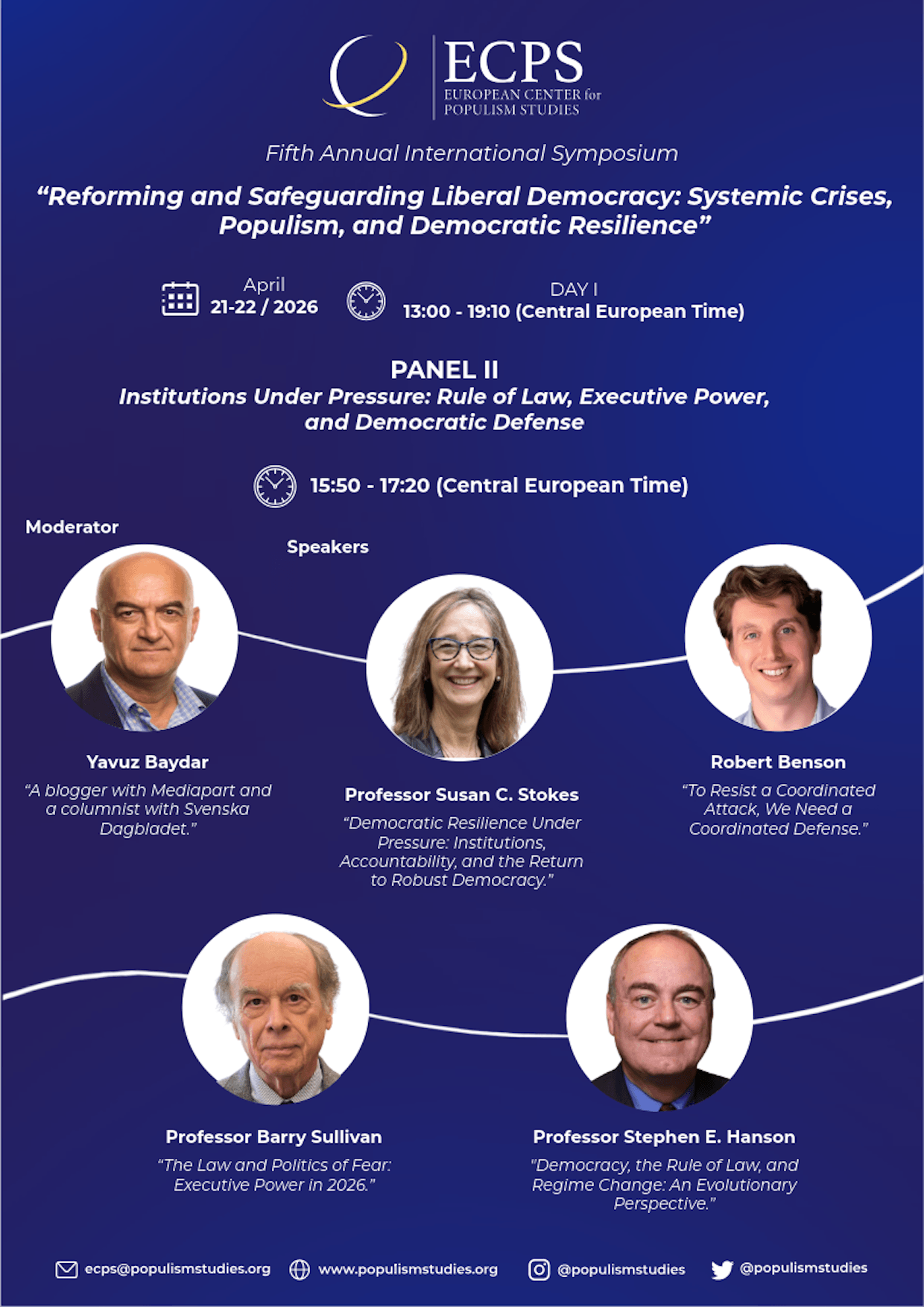
Second panel of ECPS Fifth Annual International Symposium examined how democracies confront coordinated pressures on courts, bureaucracies, electoral systems, and constitutional safeguards. Moderated by Yavuz Baydar, the session brought together Professor Susan C. Stokes, Dr. Robert Benson, Professor Barry Sullivan, and Professor Stephen E. Hanson to analyze both democratic erosion and possibilities for recovery. The panel moved from comparative evidence on how backsliding leaders leave office, to the transnational coordination of illiberal actors, the expansion of executive power under Trump’s second administration, and the patrimonial assault on rational-legal state institutions. Together, the speakers underscored that democratic defense requires coordinated resilience, institutional renewal, civic mobilization, and a renewed commitment to rule-bound governance.
Reported by ECPS Staff
Panel 2 of the ECPS Fifth Annual International Symposium, “Reforming and Safeguarding Liberal Democracy: Systemic Crises, Populism, and Democratic Resilience,” convened under the title “Institutions Under Pressure: Rule of Law, Executive Power, and Democratic Defense.” Moderated by Yavuz Baydar, blogger with Mediapart and columnist with Svenska Dagbladet, the panel examined how liberal democratic institutions respond when the rule of law, bureaucratic autonomy, constitutional safeguards, and electoral accountability come under sustained pressure.
Baydar framed the discussion around the urgent question of whether democratic systems possess the institutional and civic resources necessary to resist coordinated attacks from within. His moderation emphasized that contemporary democratic backsliding rarely takes the form of a single rupture. Rather, it unfolds through cumulative pressure on courts, civil services, electoral institutions, media systems, and oversight mechanisms. This framing gave the panel a coherent analytical direction: to understand not only how democracies erode, but also how they may recover, defend themselves, and rebuild resilience.
The first speaker, Professor Susan C. Stokes, Tiffany and Margaret Blake Distinguished Service Professor and Director of the Chicago Center on Democracy at the University of Chicago, shifted attention from the causes of democratic erosion to the question of how backsliding leaders leave power. Drawing on comparative evidence, she explored elections, term limits, party dynamics, protests, and impeachment as mechanisms of accountability and democratic recovery.
The second speaker, Dr. Robert Benson, Associate Director for National Security and International Policy at the Center for American Progress (CAP), widened the discussion to the transnational level. His presentation argued that attacks on liberal democracy are increasingly coordinated across borders through far-right networks, ideological circulation, institutional repurposing, and strategic inversion, requiring an equally coordinated democratic defense.
The third speaker, Professor Barry Sullivan, Raymond and Mary Simon Chair in Constitutional Law and George Anastaplo Professor of Constitutional Law and History at Loyola University, examined executive power in the United States under Trump’s second administration. His analysis focused principally on the erosion of separation of powers, the weakening of institutional guardrails, and the expansion of presidential authority through legal, political, and judicial developments during the first year of the second Trump administration.
The final speaker, Professor Stephen E. Hanson, Lettie Pate Evans Professor of Government at William & Mary, offered a broader theoretical reflection on democracy, state power, and regime change. Moving beyond the concept of populism, he argued that patrimonialism and the assault on rational-legal state institutions provide a more precise lens for understanding contemporary authoritarian drift.
Together, the panel offered a rich interdisciplinary account of institutional vulnerability and democratic defense. It showed that safeguarding liberal democracy requires not only electoral resistance, but also coordinated institutional renewal, civic mobilization, and a renewed commitment to the rule-bound democratic state.
Yavuz Baydar: From Democratic Erosion to Democratic Defense

The steering of moderator Yavuz Baydar provided a unifying and conceptually incisive thread throughout the second panel, shaping the discussion into a coherent exploration of democratic fragility and resistance. Opening the session, he framed the core themes—rule of law, executive power, and democratic defense—not as abstract principles, but as hard-won achievements now under visible strain. His invocation of a contemporary protest slogan, contrasting “right and wrong” rather than traditional ideological “right and left” divides, set a normative tone that underscored the gravity of current democratic challenges.
Baydar’s moderation was marked by a careful balance between diagnosis and inquiry. Rather than treating democratic backsliding as a singular phenomenon, he consistently emphasized its multi-layered and cumulative character. He drew attention to how erosion unfolds through coordinated pressure across institutional domains—judiciaries, bureaucracies, and electoral systems—thereby resisting simplistic explanations. This framing allowed subsequent speakers to situate their analyses within a broader architecture of systemic vulnerability.
Between interventions, Baydar sharpened the discussion by redirecting attention to points of institutional stress and potential resilience. His transition following Susan Stokes highlighted the need to move beyond identifying patterns of decline toward examining the conditions under which democratic actors can effectively respond. By foregrounding the role of civil servants, courts, and civil society networks, he articulated a key proposition: that coordinated attacks on democratic institutions require equally coordinated forms of defense. This emphasis on alignment—between institutional safeguards and civic mobilization—introduced a forward-looking dimension to the panel.
His subsequent remarks extended the discussion into the transnational implications of democratic resilience, suggesting that domestic institutional outcomes reverberate beyond national borders, particularly within the European context. This widened the analytical lens, linking internal democratic health to broader geopolitical consequences.
In his later intervention, Baydar adopted a more probing and critical tone when addressing the political trajectory of Donald Trump. By referencing recent statements on the limits of executive authority, he distilled a central tension between personalist leadership and established legal norms. Yet he avoided reductive critique, instead posing a more demanding question: how such an approach has achieved political traction and institutional impact. His framing of this dynamic as a “success story,” regardless of normative evaluation, compelled a deeper examination of the mechanisms—polarization, narrative saturation, and strategic defiance of constraints—that enable such transformations.
Professor Susan C. Stokes: Democratic Resilience Under Pressure — Institutions, Accountability, and the Return to Robust Democracy
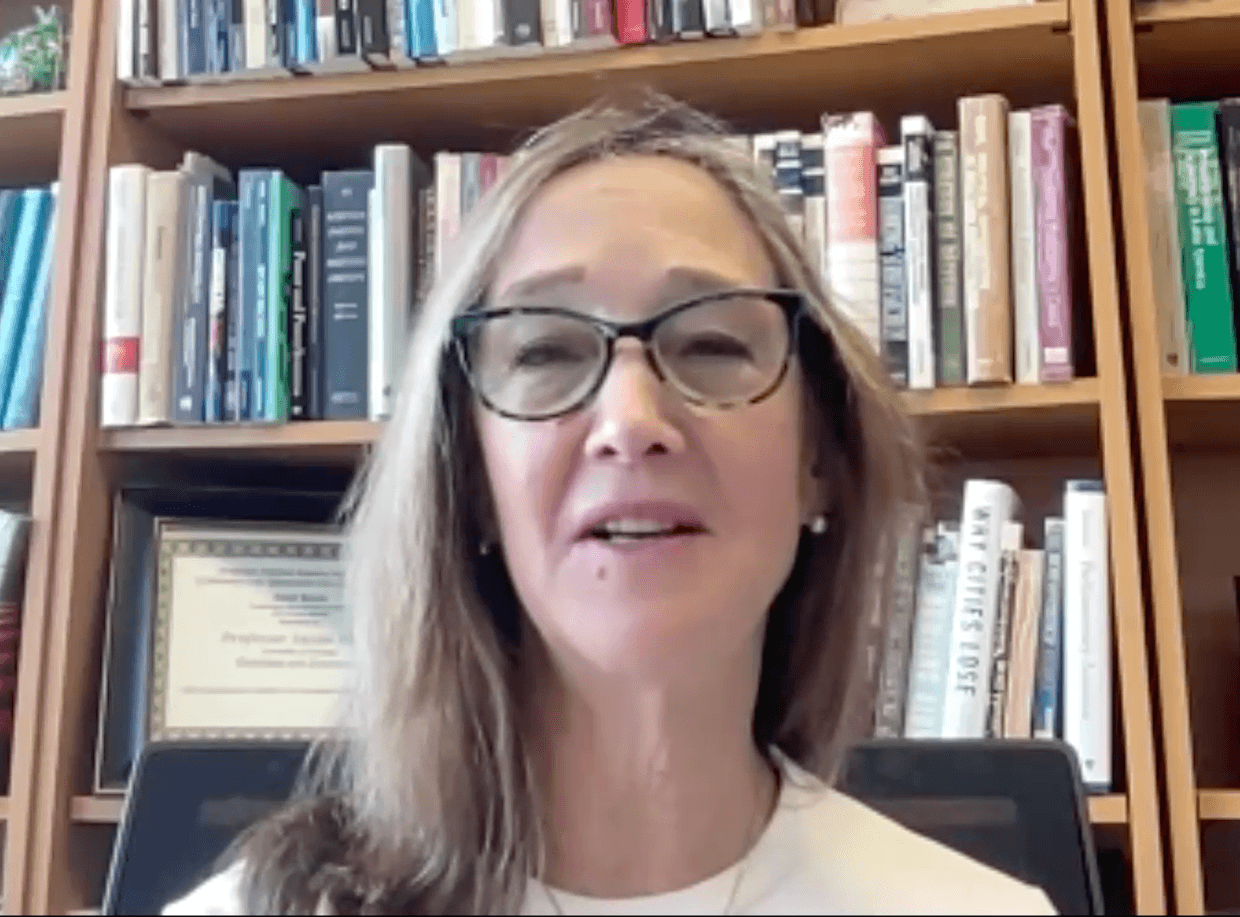
Professor Susan Stokes opened the second panel with a deliberately reframed analytical focus that shifted the discussion from the well-established causes of democratic erosion to a more strategically consequential question: how backsliding leaders leave power. This move marked a subtle but important departure from conventional debates. While acknowledging her own extensive scholarship linking income inequality to democratic decline, Professor Stokes chose instead to concentrate on the conditions under which democratic systems recover—or fail to recover—from sustained institutional weakening. In doing so, she oriented the discussion toward the practical dynamics of democratic resilience.
Her presentation was grounded in a systematic comparative framework. Drawing on a dataset of 27 cases of democratic erosion across 22 countries since 1999, she offered a structured and empirically informed assessment of leadership exit patterns. Contrary to prevailing narratives of democratic collapse, her findings introduced a cautiously optimistic perspective. A clear majority of backsliding leaders do not remain in power indefinitely. Of the cases examined, only a small number continue to govern, while most eventually leave office. Even more significantly, in the majority of these instances, their successors have demonstrated stronger commitments to democratic norms and the rule of law. These findings suggested that democratic erosion, while serious, does not typically culminate in permanent authoritarian consolidation.
Electoral Exit and the Limits of Autocratization
This empirical baseline framed her discussion of recent political developments, most notably the electoral defeat of Viktor Orban. Hungary had long been regarded as a critical test case for the durability of democratic institutions under prolonged illiberal governance. With extensive media control, electoral engineering, and more than a decade in power, Orban’s government appeared to many observers to have entrenched itself beyond the reach of meaningful electoral accountability. Yet his loss revealed that, even under adverse conditions, electoral mechanisms can retain their corrective function. Professor Stokes emphasized that this outcome does not imply a fully restored democracy, but it does demonstrate that the boundary between democratic erosion and authoritarian consolidation remains contingent rather than predetermined.
From this point, she developed a broader typology of exit pathways, identifying elections as the most consistent and effective mechanism for removing backsliding leaders. Across multiple regions and political systems, voter-driven electoral defeat has repeatedly served as the primary form of accountability. Cases such as the defeat of Jair Bolsonaro in 2022 and the earlier electoral loss of Donald Trump illustrated how even highly polarized environments can produce outcomes that interrupt autocratizing trajectories. While such leaders may contest results or attempt to mobilize resistance, the resilience of electoral institutions and judicial systems has, in several cases, prevented these efforts from overturning democratic outcomes.
Constraining Power: Term Limits, Parties, and Protest
Professor Stokes also highlighted the role of term limits as a secondary but significant constraint. In some contexts, leaders have adhered to constitutional restrictions and stepped down accordingly, reinforcing democratic norms of rotation in power. However, she noted that attempts to weaken or abolish term limits are a recurring feature of autocratizing strategies. Leaders such as Hugo Chavez and Evo Morales pursued such reforms to extend their tenure. Yet these efforts have not always succeeded unchallenged. Public resistance, including referendums rejecting constitutional changes, indicates that citizens often retain a strong normative commitment to limits on executive power, even in contexts of broader democratic strain.
Beyond formal electoral mechanisms, Professor Stokes examined the role of intra-party dynamics. Although less common, there are instances where ruling parties themselves have facilitated leadership change. These cases typically arise when incumbents become politically costly liabilities, particularly in anticipation of future elections. Party elites, seeking to preserve broader electoral viability, may compel leaders to resign or step aside. This dynamic underscores the importance of internal political incentives and the ways in which even dominant parties can act as constraints under certain conditions.
The role of mass protest was treated with analytical nuance. Professor Stokes acknowledged that backsliding leaders almost invariably encounter resistance from civil society, often in the form of large-scale demonstrations. Examples from multiple countries illustrate how protests challenge narratives of inevitability and signal widespread dissatisfaction. However, she emphasized that such mobilization rarely leads directly to leadership removal. The notable exception of Ukraine’s Euromaidan protests, which forced the departure of Viktor Yanukovych, remains atypical. More often, protests function indirectly, shaping political conditions rather than producing immediate institutional outcomes.
A particularly striking aspect of her analysis concerned the limited effectiveness of impeachment. Despite its prominence in constitutional design, impeachment has not successfully removed a backsliding leader in the contemporary wave of democratic erosion. This absence suggests a gap between formal institutional tools and their practical application in highly polarized political environments. In contrast, electoral mechanisms—though imperfect—have proven more consistently consequential.
Reversing Backsliding: Pathways to Democratic Renewal
Throughout her presentation, Professor Stokes maintained a careful balance between optimism and caution. While the data indicate that full authoritarian consolidation is relatively rare, it remains a real possibility. Cases such as Nicolas Maduro in Venezuela and developments in Nicaragua demonstrate that democratic breakdown can occur when institutional safeguards are sufficiently weakened. Moreover, she highlighted the ambiguity surrounding countries such as Turkey, where regime classification remains contingent on future political developments. The decisive factor, in her view, lies in how incumbents respond to electoral defeat—whether they accept loss and relinquish power or refuse to do so.
The broader significance of Professor Stokes’s intervention lies in its strategic implications. By focusing on exit rather than entry, she provided a framework for understanding how democratic systems can recover from periods of erosion. This perspective shifts attention toward the interplay of institutions, political actors, and societal forces that shape outcomes over time. It suggests that while democratic decline is often gradual and cumulative, reversal is possible through multiple, interacting pathways.
In concluding, Professor Stokes underscored that democratic erosion should not be understood as a linear or irreversible process. The trajectory from weakened democracy to authoritarian rule is neither uniform nor inevitable. Instead, it is shaped by contingent choices, institutional resilience, and the capacity of political and social actors to mobilize in defense of democratic norms. By mapping the varied routes through which backsliding leaders exit power, her analysis offered both a sobering recognition of democratic vulnerability and a measured basis for cautious optimism about its potential renewal.
Dr. Robert Benson: To Resist a Coordinated Attack, We Need a Coordinated Defense

Dr. Robert Benson delivered a sharply focused and strategically oriented intervention as the second speaker of the panel, advancing a central claim that reframed contemporary democratic backsliding as an increasingly transnational phenomenon. Moving beyond country-specific analyses, he argued that the present moment is defined not by parallel national crises, but by the emergence of a coordinated, cross-border ecosystem of illiberal actors. In this context, the defense of liberal democracy, he contended, can no longer remain confined within national boundaries.
At the outset, Dr. Benson situated his remarks within a practitioner’s perspective, drawing on recent engagements with pro-democracy networks in Europe. This grounding lent immediacy to his broader analytical argument: that policymakers have been slow to recognize the extent to which far-right movements have developed transnational linkages. Where earlier frameworks treated democratic erosion as a series of discrete national trajectories—Hungary, Poland, France, or Germany—he suggested that such compartmentalization is now analytically inadequate. What has emerged instead is a structured system of coordination, characterized by the circulation of narratives, strategies, and increasingly, institutional resources.
Transnational Circulation and the Institutionalization of the Far Right
Central to Dr. Benson’s intervention was the concept of “circulation” as distinct from mere imitation. The contemporary far right, he argued, does not simply replicate successful tactics across contexts; it actively exchanges and amplifies them through networks that span political parties, digital platforms, and ideological communities. This circulation encompasses rhetorical frames—such as anti-migration panic, anti-elite resentment, and civilizational decline—as well as operational strategies, including the use of legal mechanisms, media ecosystems, and political patronage. In this sense, democratic backsliding is sustained not only by domestic conditions but by transnational reinforcement.
A key escalation in this dynamic, according to Dr. Benson, lies in the growing involvement of state actors, particularly within the United States. He presented evidence suggesting that elements of the American state apparatus have begun to function as amplifiers of European far-right movements. This development, he argued, marks a significant shift from earlier patterns of ideological diffusion, introducing a new layer of institutional backing. The implications are substantial: what was once a network of loosely connected actors now appears increasingly supported by formal diplomatic and financial channels.
To illustrate this shift, Dr. Benson pointed to recent reporting on activities within the US State Department, highlighting the roles of figures such as Samuel Sampson and Sarah Rogers. While careful not to reduce the analysis to individual actions, he treated these cases as indicative of a broader pattern. Meetings with European far-right actors, interventions in debates on migration and regulation, and efforts to reframe human rights discourse were presented as components of a larger strategy. The significance, in his account, lies not in isolated provocations, but in the apparent institutionalization of these efforts within official channels.
This process, Dr. Benson argued, reflects a deeper phenomenon of institutional repurposing. Historically, bodies such as the State Department’s Bureau of Democracy, Human Rights, and Labor have served as instruments of liberal internationalism, promoting civil rights, electoral integrity, and press freedom. However, he suggested that these institutions are now being reoriented toward alternative normative frameworks, including a shift from human rights language to concepts framed as “natural rights.” This redefinition, he emphasized, is not merely semantic but reflects an attempt to reshape the ideological foundations of democratic governance.
Asymmetry and Coordination in Transnational Illiberal Networks
Equally consequential is the financial dimension of this transformation. Dr. Benson highlighted what he described as a reallocation of resources away from traditional democracy-support programs toward initiatives aligned with far-right priorities. Programs that once funded digital tools for activists and journalists in authoritarian contexts have reportedly been scaled back or dismantled. In their place, resources are being directed toward campaigns challenging regulatory frameworks in democratic societies, particularly in areas such as content moderation and platform governance. This shift, he argued, represents a form of strategic inversion: mechanisms originally designed to protect democratic pluralism are now deployed to contest it.
From this analysis, Dr. Benson derived four conceptual tools for understanding the current moment. First, transnational diffusion captures the movement of ideas and practices across borders through sustained interaction. Second, institutional repurposing describes the transformation of established democratic bodies into vehicles for illiberal agendas. Third, asymmetrical coordination highlights the imbalance between highly organized far-right networks and comparatively fragmented democratic responses. Finally, strategic inversion denotes the reorientation of democratic instruments against their original purposes.
These concepts collectively supported his broader argument regarding strategic asymmetry. While illiberal actors have invested in building durable, cross-border infrastructures—encompassing funding networks, media platforms, and political alliances—democratic actors, he suggested, continue to operate in a reactive and largely uncoordinated manner. Initiatives such as international conferences and ad hoc coalitions, while valuable, remain insufficient to match the scale and coherence of the challenge.
In the latter part of his intervention, Dr. Benson turned to the implications of this asymmetry. He argued that democratic resilience must be reconceptualized as a matter of transatlantic security. The weakening of democratic institutions within individual states has cascading effects on broader alliances, including NATO cohesion and collective responses to geopolitical challenges. In this sense, democratic erosion is not only a domestic concern but a factor shaping international stability.
Transnational Challenges, Coordinated Responses
He further emphasized the need to move beyond purely normative defenses of democracy. While appeals to values remain important, they must be complemented by the development of concrete institutional capacities. This includes building sustainable funding mechanisms, strengthening independent media ecosystems, and fostering long-term networks among pro-democracy actors. Without such infrastructure, democratic responses risk remaining episodic and insufficiently grounded.
A final theme of his remarks was the importance of temporal perspective. Dr. Benson cautioned against viewing democratic backsliding as a series of discrete crises that can be resolved through singular events, such as elections or judicial decisions. Instead, he described it as a long-term process involving gradual institutional capture, normalization of exclusionary rhetoric, and reinforcement across national boundaries. Effective resistance, therefore, requires a similarly sustained and strategic approach.
In sum, Dr. Benson’s intervention offered a compelling reframing of democratic backsliding as a transnational and increasingly institutionalized phenomenon. By highlighting the interplay between ideological circulation, state involvement, and structural asymmetry, he underscored the need for a more coordinated and durable response. His analysis suggested that the future of democratic resilience will depend not only on national political dynamics but on the capacity of democratic actors to recognize and respond to the cross-border nature of the challenge.
Professor Barry Sullivan: The Law and Politics of Fear — Executive Power in 2026

As the third speaker of the panel, Professor Barry Sullivan offered a penetrating and historically grounded analysis of the early trajectory and broader constitutional implications of Donald Trump’s second administration. Professor Sullivan situated his intervention within the conceptual vocabulary of executive power, institutional erosion, and the fragility of constitutional constraints, advancing a compelling argument about the unprecedented acceleration of presidential authority in contemporary American governance.
Professor Sullivan began by invoking the notion of “flooding the zone,” a strategic concept popularized during Trump’s first presidency by Steve Bannon and later revisited by journalist Luke Broadwater in early 2025. According to Professor Sullivan, the first week of Trump’s second administration provides a paradigmatic illustration of this strategy in action—yet in an intensified and more systematized form. Broadwater’s observation that the “flood is bigger, wider, and more brutally efficient” served as an entry point for Professor Sullivan to examine how the administration deployed a rapid succession of executive actions to overwhelm institutional opposition, fragment public scrutiny, and reshape the political agenda.
A key analytical insight offered by Professor Sullivan concerns the deliberate blurring of constitutional categories. He underscored the significance of Broadwater’s use of the term “enacted” to describe executive actions—a term traditionally reserved for legislative processes. In Professor Sullivan’s interpretation, this linguistic shift is not incidental but emblematic of a broader strategy to obscure the distinction between executive and legislative authority. By staging highly publicized signing ceremonies for executive orders—most notably in a large public arena rather than the conventional Oval Office setting—Trump symbolically elevated executive directives to the status of legislative acts, thereby reinforcing an image of unilateral presidential governance.
Executive Expansion and the Transformation of Governance
Expanding on this theme, Professor Sullivan provided a detailed account of the administration’s early actions, emphasizing both their scope and their institutional implications. Within the first days of the presidency, Trump issued a torrent of executive orders, dismissed politically independent inspectors general, pardoned individuals involved in the January 6 Capitol attack, and initiated investigations into perceived political adversaries. Additional measures included revoking security clearances, freezing federal hiring, restricting immigration, dismantling diversity initiatives, and rescinding large-scale federal funding commitments. For Professor Sullivan, the cumulative effect of these actions lies not merely in their individual substance but in their collective capacity to transform the operational logic of governance.
Over the course of the first year, Professor Sullivan observed, this pattern of executive activism continued to expand, incorporating both symbolic and substantive dimensions. He highlighted instances of overtly nativist and racially charged rhetoric, as well as unprecedented interventions in civil society, including attacks on universities, law firms, and media institutions. Structural changes to the federal bureaucracy—such as the reclassification of tens of thousands of civil service positions into politically controlled roles—further exemplify what Professor Sullivan described as a systematic effort to consolidate executive control over the administrative state.
In interpreting these developments, Professor Sullivan drew a provocative historical parallel to Richard Nixon’s conception of presidential authority. Nixon’s claim that the president functions as a quasi-monarchical figure—accountable only through impeachment—serves, in Professor Sullivan’s analysis, as a conceptual precursor to Trump’s governing philosophy. However, where Nixon ultimately failed to institutionalize this vision, Professor Sullivan argued that Trump appears, at least provisionally, to have succeeded in operationalizing it.
Unitary Executive Ascendant: Law, Courts, and Concentrated Authority
Turning to the question of causation, Professor Sullivan identified several interrelated factors that help explain the administration’s capacity to expand presidential power so rapidly. While acknowledging contingent elements—such as prior planning, partisan control of Congress, and the organizational weakness of the opposition—he emphasized a deeper, structural explanation grounded in three mutually reinforcing dynamics.
First, Professor Sullivan pointed to the failure of the separation of powers as a functional constraint. Contrary to the expectations of the constitutional framers, institutional checks have proven insufficient to counterbalance executive overreach. Second, he highlighted what he described as a relative indifference to the rule of law among the president and his supporters. This normative shift, in Professor Sullivan’s view, facilitates the reconfiguration of both governmental and societal institutions in line with ideological projects such as “Project 2025,” a comprehensive blueprint for administrative transformation.
The third factor, Professor Sullivan argued, lies in the evolving jurisprudence of the Supreme Court under Chief Justice John Roberts, which has significantly expanded presidential power through the consolidation of the unitary executive theory. This doctrine posits that all officials within the executive branch must remain directly accountable to the president and subject to removal at his discretion, thereby denying the legitimacy of genuinely independent agencies. While this perspective gained prominence during the Reagan administration, Professor Sullivan traced its intellectual and political origins to post-Watergate discontent among figures associated with the Nixon and Ford administrations, who viewed institutional reforms as unjust constraints on executive authority. Key proponents of this view included Dick Cheney, Donald Rumsfeld, and notably Justice Antonin Scalia, whose influential dissent articulated a maximalist conception of executive power as fully vested in the presidency. Chief Justice Roberts himself, as a young White House lawyer, had advanced similar arguments advocating the dismantling of independent agencies. In Professor Sullivan’s assessment, the jurisprudence of the Roberts Court represents the institutional culmination of these long-standing ideas. He emphasized that this development manifests in two critical dimensions: the judicial endorsement of a strong unitary executive and the expansion of presidential immunity, effectively shielding the office from civil and criminal accountability.
In synthesizing these elements, Professor Sullivan presented a sobering assessment of the contemporary American constitutional order. The convergence of institutional fragility, ideological transformation, and judicial reinforcement has enabled a form of executive governance that challenges long-standing assumptions about the resilience of liberal democratic systems.
In conclusion, Professor Sullivan’s presentation offered a rigorous and multidimensional account of the Trump administration’s second term, illuminating the mechanisms through which executive power can be rapidly expanded within a formally democratic framework. By situating current developments within both historical and theoretical contexts, Professor Sullivan provided a critical lens through which to assess the evolving balance between authority and constraint in modern constitutional democracies.
Professor Stephen E. Hanson: Democracy, the Rule of Law, and Regime Change — An Evolutionary Perspective
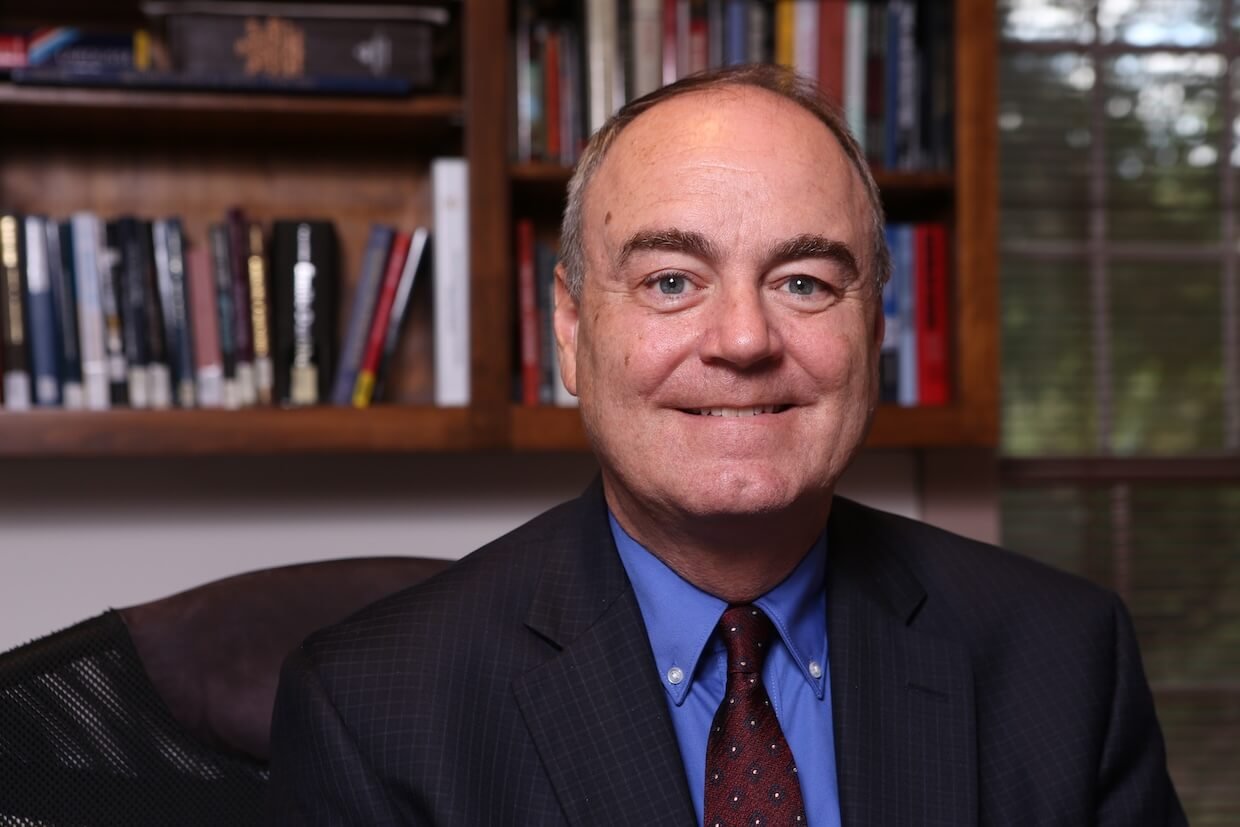
As the final speaker of the panel, Professor Stephen Hanson delivered a wide-ranging and theoretically ambitious presentation that sought to reframe prevailing explanations of democratic backsliding. While acknowledging the analytical value of populism as a concept, Professor Hanson advanced a more nuanced argument: that the contemporary crisis of democracy is better understood not primarily through the lens of populism, but through the resurgence and diffusion of patrimonial forms of state-building that challenge the rational-legal foundations of modern democratic governance.
Professor Hanson began by situating current political developments within a broader global context characterized by sustained democratic decline. Drawing on widely cited datasets such as Freedom House, Polity and V-Dem, he noted that the world has experienced approximately two decades of continuous erosion in democratic quality. This trend, he emphasized, unfolds alongside intensifying geopolitical instability, including interstate conflicts and military interventions—from Russia’s war in Ukraine to ongoing conflicts in the Middle East and Africa. For Professor Hanson, these developments are not merely coincidental but constitute the structural backdrop against which democratic institutions are being weakened.
Conceptual Precision in Democratic Backsliding
Building on arguments developed in his co-authored book The Assault on the State (2024), Professor Hanson turned to the conceptual foundations of democratic theory. He questioned whether “authoritarian populism,” a term widely used to describe contemporary political dynamics, adequately captures the causal mechanisms driving democratic erosion. While recognizing that elected leaders increasingly undermine democratic norms from within—echoing arguments familiar from the literature on democratic backsliding—Professor Hanson warned against over-reliance on the concept of populism due to its analytical ambiguities.
One major concern, he argued, is what Giovanni Sartori termed “conceptual stretching.” The term populism has been applied so broadly that it risks losing explanatory precision. As Professor Hanson observed, political actors as ideologically diverse as Vladimir Putin and Alexei Navalny, Donald Trump and Bernie Sanders, or Jair Bolsonaro and Luiz Inácio Lula da Silva have all been labeled populists in various scholarly accounts. Such indiscriminate usage obscures critical distinctions between episodic, charismatic mobilizations and sustained projects of institutional power consolidation. For Professor Hanson, this distinction is crucial: not all populist movements produce durable authoritarian transformations.
A second limitation identified by Professor Hanson concerns the rhetorical paradox embedded in anti-populist discourse. The call to “defend democracy” by mobilizing “the people” against populists can inadvertently reproduce the very populist logic it seeks to oppose. This paradox underscores the need for a more precise analytical framework capable of distinguishing between democratic contestation and authoritarian transformation.
To develop such a framework, Professor Hanson traced the intellectual origins of contemporary regime classification systems. He highlighted that the now-dominant dichotomy between democracy and authoritarianism is a relatively recent development, gaining prominence only after World War II. Earlier political thought, he noted, focused more on distinctions between monarchy and republic, with democracy itself often viewed with ambivalence. The postwar ascendancy of liberal democracy, reinforced by modernization theory and the perceived triumph of the West following the Cold War, led to the institutionalization of democracy as the normative endpoint of political development.
Within this intellectual tradition, Professor Hanson emphasized the enduring influence of Robert Dahl’s concept of polyarchy, which sought to operationalize democracy through measurable institutional criteria such as political participation and contestation. While this approach underpins contemporary indices like Freedom House and V-Dem, Professor Hanson argued that it risks neglecting deeper philosophical questions about the meaning of democratic rule. Specifically, the focus on institutional form may overlook whether political systems genuinely reflect “rule by the people” in a substantive sense.
Patrimonial Power and the Erosion of Liberal Democracy
This critique led Professor Hanson to reintroduce the concept of the state as a central analytical category. He argued that much of the democratization literature has treated the state as a secondary concern, emphasizing instead electoral processes and civil liberties. Yet, as Professor Hanson underscored, democracy presupposes a functioning state capable of enforcing rules and maintaining order. Without such a state, the notion of popular rule becomes hollow.
Drawing on Max Weber’s typology of legitimate authority, Professor Hanson identified three distinct bases of political legitimacy: rational-legal, traditional, and charismatic. Modern liberal democracies, he noted, are grounded in rational-legal authority, where governance is structured by impersonal rules and institutional procedures. However, contemporary challenges to democracy often involve a shift toward traditional and charismatic forms of legitimacy. In such contexts, political leaders claim to embody the authentic will of a historically rooted community or present themselves as uniquely capable figures whose authority transcends institutional constraints.
It is within this theoretical framework that Professor Hanson introduced his central concept: patrimonialism. Unlike populism, which primarily describes a style of political mobilization, patrimonialism refers to a mode of state organization in which authority is personalized and governance is conducted through networks of loyalty, kinship, and patronage. In patrimonial systems, the boundary between public and private authority collapses, and the state is effectively transformed into an extension of the ruler’s household.
Beyond Populism: The Rise of Personalized State Power
According to Professor Hanson, the contemporary global trend is not merely toward populist rhetoric but toward the reconstruction of states along patrimonial lines. This process involves systematic efforts to undermine the rational-legal bureaucracy, replace meritocratic criteria with personal loyalty, and delegitimize independent institutions by labeling them as components of a “deep state.” Leaders who pursue such strategies often invoke traditional values—such as family, religion, and national identity—to justify their actions, framing them as expressions of the true will of the people.
Professor Hanson traced the diffusion of this patrimonial model to Vladimir Putin’s Russia, which he identified as a central node in the global spread of alternative governance paradigms. From this core, patrimonial practices have influenced political developments in various regions, including Eastern Europe, the Middle East, and even established democracies. Figures such as Viktor Orbán, Benjamin Netanyahu, and Donald Trump, in Professor Hanson’s analysis, exemplify different manifestations of this broader trend, despite their varying ideological profiles.
Importantly, Professor Hanson distinguished between cases where populist mobilization remains episodic and those where it culminates in structural transformation. Movements such as Syriza in Greece or Podemos in Spain, he suggested, may channel popular discontent without fundamentally altering state institutions. By contrast, regimes that successfully embed patrimonial practices within the state apparatus pose a far more significant challenge to democratic governance, as they create enduring institutional barriers to reform.
The implications of this analysis are both theoretical and practical. For Professor Hanson, defending democracy requires more than countering populist narratives; it necessitates the preservation and reconstruction of rational-legal state institutions. This includes protecting the autonomy and professionalism of bureaucracies, reaffirming the value of expertise, and resisting efforts to politicize public administration. At the same time, he acknowledged the rhetorical difficulty of defending state institutions in societies where distrust of elites and bureaucracies is widespread.
Revitalizing Democratic Governance
Professor Hanson also emphasized the importance of engaging younger generations, many of whom have become disillusioned with formal politics. Revitalizing democratic governance, he argued, depends on cultivating a renewed commitment to public service and demonstrating that state institutions can serve as instruments of collective empowerment rather than domination.
In his concluding remarks, Professor Hanson called for a broader reorientation of political science. He advocated moving beyond static dichotomies between democracy and authoritarianism toward a more dynamic, historically grounded understanding of regime change. By examining how different forms of political organization diffuse across time and space, scholars can better anticipate emerging threats and identify pathways for institutional renewal.
Ultimately, Professor Hanson suggested that the current crisis of democracy, while profound, also opens the possibility for innovation. Rather than assuming a linear trajectory toward liberal democracy or its inevitable decline, he encouraged scholars and practitioners alike to imagine alternative forms of democratic governance that reconcile institutional stability with meaningful popular participation.
Discussions
In In the discussion segment, Professor Susan Stokes offered a precise reflection on the preceding presentations, expressing strong appreciation while gently pushing back on elements of Professor Barry Sullivan’s account. She noted that, until recently, she would have largely agreed with such an interpretation, but suggested that developments over the past months invite a more qualified assessment of the trajectory of autocratization in the United States.
At the center of Professor Stokes’ intervention was a clarifying question: what would genuine success look like for a leader or movement seeking to autocratize a democratic system? In her view, such success would involve a leader who sustains broad and durable popular support, commands loyalty across the political class, and faces no meaningful defections within their own party. Against this benchmark, she argued, the current situation does not fully meet the criteria of consolidated success.
Professor Stokes pointed to indicators that complicate the narrative of unchecked executive dominance. She emphasized that the president’s polling numbers remain weak and that, while party cohesion largely persists, there have been sufficient defections to obstruct key initiatives. As an example, she referred to ongoing hearings concerning a nominee for Federal Reserve chair, where opposition from within the president’s own party—linked to concerns about the politicization of the Justice Department—could jeopardize the appointment. Such moments, she suggested, reveal the continued presence of institutional and intra-party constraints.
While acknowledging that some of these difficulties may stem from individual characteristics—such as poor strategic judgment, emotional impulsiveness, or a preoccupation with personal grievances—Professor Stokes emphasized that deeper structural dynamics are also at play. Leaders who seek to undermine legal and constitutional norms, she argued, often surround themselves with advisors whose primary asset is loyalty rather than professional credibility. This, in turn, limits the quality of counsel and increases the likelihood of strategic errors. Professor Stokes stressed that, although significant changes have occurred and the challenges of re-democratization will be substantial, the current trajectory does not yet represent a fully successful autocratizing project.
Incompetence, Loyalty, and the Dynamics of Executive Power
In response, Professor Barry Sullivan largely agreed with the preceding remarks while raising questions about the president’s underlying motivations. He expressed uncertainty as to whether the president is genuinely concerned with long-term political outcomes, such as the maintenance of an authoritarian-style regime following his own term of office, suggesting instead a primary focus on present personal power and status. This, he noted, raises doubts about the depth of commitment to specific policy agendas, such as immigration, compared to more ideologically driven actors within the administration.
Professor Sullivan acknowledged some recent erosion of popular support and small pockets of Republican congressional resistance. Reflecting on the first term, however, Professor Sullivan observed that the president showed little interest in expanding his electoral base, often foregoing opportunities to broaden support. In his view, the key distinction in the second term lies not in strategic expansion but in organizational learning. The intervening years appear to have been used to reassess perceived constraints of the first administration. Most notably, Professor Sullivan emphasized a deliberate shift in personnel strategy: the conscious exclusion of advisors inclined to uphold institutional guardrails, replaced by individuals less likely to restrain executive action.
The discussions evolved into a focused exchange on the resilience of authoritarian tendencies and the challenges of democratic recovery, initiated by Dr. Bulent Kenes. Drawing on contemporary developments in countries such as Poland, Hungary, the United States, and Brazil, Dr. Kenes raised a critical concern: while democratic systems appear vulnerable and often slow to respond, autocratic or authoritarian formations seem to exhibit a striking degree of resilience. He pointed to the difficulties faced by democratic actors—such as Donald Tusk in Poland and democratic forces in Hungary—in attempting to reverse entrenched institutional transformations implemented by prior governments. Framing this as a structural asymmetry, Dr. Kenes invited Professor Stephen Hanson to reflect on how such resilience might be effectively countered.

Building on this theme, Professor Kent Jones introduced a complementary line of inquiry centered on the role of incompetence within populist and authoritarian governance. Referring to Max Weber’s concept of patrimonialism, he suggested that the reliance on loyal but often unqualified appointees may lead to policy failures that undermine regime performance. At the same time, he described a “race” between the negative political consequences of such incompetence—potentially alienating voters—and efforts by leaders to entrench their power by weakening electoral accountability. If electoral mechanisms remain intact, incompetence may ultimately facilitate democratic correction; if not, it risks being politically insulated.
From Ephemeral Populism to Patrimonial Durability
In response, Professor Stephen Hanson acknowledged both questions as analytically significant and interrelated. Addressing the issue of democratic vulnerability, he argued that part of the problem lies in the absence of sustained strategic coordination among democratic actors. The assumption that historical trajectories naturally favor democracy, he suggested, has contributed to a degree of complacency, obscuring what is in fact a systemic and global shift requiring deliberate and organized responses. He further emphasized that segments of the political left have been reluctant to engage positively with the concept of the state, often associating it with overreach or surveillance. This hesitation, Professor Hanson argued, weakens the capacity to articulate a robust democratic alternative capable of governing effectively.
Turning to the question of incompetence, Professor Hanson distinguished between two forms. In cases of what he termed “ephemeral populism,” incompetence can quickly erode support, as seen in movements that fail to deliver basic governance outcomes. However, in more entrenched “patrimonial” systems, incompetence is embedded within networks of loyalty, where allegiance to the leader supersedes expertise. Such systems, he noted, are more durable precisely because they rest on historically grounded principles of legitimation, making them more resistant to collapse.
Nevertheless, Professor Hanson underscored that even within patrimonial contexts, systemic policy failures can generate political backlash. Poorly managed policies—particularly those affecting everyday economic life—can serve as focal points for mobilizing broader electoral opposition. If effectively articulated, these failures may help shift voter preferences, suggesting that incompetence, while not automatically destabilizing, remains a potential avenue through which democratic forces can regain ground.
Conclusion
Panel 2 has underscored that liberal democracy’s current crisis is not merely electoral, but institutional, legal, administrative, and transnational. Across the presentations and discussion, a central insight emerged: democratic backsliding advances through cumulative pressure on the rule-bound state, while democratic recovery depends on the capacity to rebuild institutions that can withstand personalist power, ideological capture, and coordinated illiberal mobilization.
Professor Susan Stokes’s comparative analysis introduced an important note of guarded optimism by showing that many backsliding leaders do eventually leave office, often through elections and election-related pressures. Yet her remarks also made clear that exit from power does not automatically restore democracy; undoing institutional damage remains a long and difficult process. Dr. Robert Benson’s intervention widened this problem by showing that illiberal actors increasingly operate through cross-border networks, making democratic defense a matter of transnational coordination rather than isolated national response. Professor Barry Sullivan’s analysis of executive power highlighted how quickly constitutional limits can be weakened when legal restraint, institutional guardrails, and political accountability erode simultaneously. Professor Stephen Hanson then deepened the theoretical frame by arguing that the challenge lies not only in populism, but in patrimonial assaults on rational-legal state institutions.
The discussion further clarified the scale of the task ahead. Democratic actors must confront not only charismatic leaders and polarizing rhetoric, but also durable networks of loyalty, weakened bureaucracies, politicized law, and public distrust of expertise. At the same time, the panel suggested that authoritarian projects are not invulnerable. Their dependence on loyalty over competence can produce policy failures, social backlash, and renewed openings for democratic mobilization.
In sum, the panel showed that democratic defense requires more than resisting individual leaders. It demands coordinated institutional renewal, protection of professional public service, civic vigilance, and a persuasive democratic language capable of reconnecting citizens to the rule-bound state. In this sense, the defense of liberal democracy is both a political struggle and a project of institutional reconstruction.