Ahead of the 2026 US midterms, Professor Lane Kenworthy argues that Trumpism’s apparent dominance should not be mistaken for permanence. Although the Republican Party has acquired “an entirely new identity,” he stresses that this “could easily change after Trump,” especially if a more appealing political agenda emerges. Professor Kenworthy places MAGA within a longer cycle of ideological realignment, cultural backlash, and generational change, while cautioning against reading election outcomes as durable historical trends. He is equally skeptical that rising billionaire influence necessarily amounts to a new plutocratic order. Instead, he points toward Nordic-style social democratic capitalism—combining markets, public provision, economic security, and liberal democracy—as a more promising long-term model. Politically, however, he reduces the path forward to a simple proposition: “Democrats need to win elections.”
Interview by Selcuk Gultasli
Ahead of the 2026 US midterm elections, the durability of Trumpism—and the political future of the Republican Party after Donald Trump—has become one of the central questions confronting American democracy. In an interview with the European Center for Populism Studies (ECPS), Professor Lane Kenworthy, Distinguished Professor of Sociology and Yankelovich Chair in Social Thought at the University of California, San Diego, argues that the institutionalization of Trumpism should not be taken for granted. His scholarship on inequality, social policy, political economy, and shared prosperity provides the broader framework for a conversation that ranges from MAGA and executive power to plutocratic influence, democratic socialism, and the prospects for social democratic capitalism in the United States.
Professor Kenworthy cautions against interpreting the current Republican transformation as necessarily permanent. Reflecting on the rapid succession from George W. Bush’s “compassionate conservatism” to the Tea Party and then to Trumpism, he stresses how unusually vulnerable the two major American parties are to sudden ideological takeover. “The two major American political parties are so weak, so hollow,” he observes, adding that they are “unusually susceptible to takeover in unpredictable ways.” Although the Republican Party has acquired “an entirely new identity” after a decade of Trump’s dominance, Professor Kenworthy emphasizes that “that could easily change after Trump.”
This uncertainty is even more pronounced when considering whether MAGA can survive its founder. Professor Kenworthy notes the “extraordinary passion” Trump supporters display toward him, but remains skeptical that this necessarily translates into a deeply rooted and durable ideological project. Historical precedents suggest caution: political agendas that once appeared dominant—Bush-era conservatism or the Tea Party—evaporated far more quickly than expected. J.D. Vance and others may attempt to preserve Trumpism, he argues, but its future will depend on whether the movement’s ideological commitments are genuinely deep or merely contingent. “It’s quite possible that it could disappear very easily,” Professor Kenworthy says, “if somebody with a more appealing agenda and a more appealing election campaign comes along.”
Professor Kenworthy also situates Trumpism within a longer cultural transformation. Drawing on the Inglehart-Norris thesis, he suggests that MAGA relies heavily on cultural traditionalists whose relative weight may decline through generational replacement. If that argument is correct, Trumpism “maybe survives another couple of election cycles, but after that, it could simply disappear.”
The interview ultimately places the 2026 midterms within a wider debate over American political economy. Professor Kenworthy questions both alarmist assumptions about an inevitable plutocracy and claims that democratic socialism offers a fundamentally different policy model. Instead, he repeatedly returns to the Nordic-inspired social democratic capitalism he has long advocated: combining markets with strong public provision, economic security, and liberal-democratic institutions. For Professor Kenworthy, the most plausible path toward that model remains politically straightforward, even if institutionally difficult: “Democrats need to win elections.”

Here is our interview with Professor Lane Kenworthy, edited lightly to enhance clarity, readability, and overall flow for publication.
Trumpism, MAGA, and the 2026 Midterms
Professor Kenworthy, welcome! The 2026 midterms are increasingly being framed as a referendum not simply on President Trump’s second administration but on the durability of Trumpism itself. You have argued that the rise of right-wing populism is driven less straightforwardly by economic hardship or inequality than by effective political entrepreneurs who mobilize already-existing cultural and political dispositions. If Republicans suffer substantial losses in November, should we interpret that as a rejection of Trump himself, a cyclical midterm correction, or evidence that the political coalition sustaining Trumpism has reached its limits? Conversely, if Republicans retain control of Congress despite Trump’s low approval ratings, what would that tell us about the depth and institutional durability of the MAGA transformation of the Republican Party?
Professor Lane Kenworthy: Interesting question. My view about the increased electability of right-wing populist parties comes mainly from Larry Bartels’s book from a few years back. I think the story of improved leadership among these types of parties is less about charismatic personalities like Trump—although that certainly played a role in the United States—and more about leaders who are willing to make their parties more acceptable to ordinary voters: shedding ties with neo-Nazis, embracing the welfare state, and taking moderate positions on some other issues.
I don’t think we know how things will play out over the midterms here in the United States. For a while in the early 2000s, it looked as though George W. Bush’s so-called compassionate conservatism was going to become the core Republican identity, replacing Reaganism and the idea that the central goal was to shrink the government. Then the Tea Party came into vogue after the 2010 wave elections, with its obsession with the national debt, the government deficit, and so on. And then came Trumpism, more or less out of the blue.
So, these things are very difficult to predict because the two major American political parties are so weak, so hollow. They are strong in some respects, but they are unusually susceptible to takeover in unpredictable ways, and that is basically the story of what happened with Trump in 2016. Almost nobody saw it coming. He entered the presidential nomination contest somewhat late, ended up winning the nomination narrowly, and then won the general election narrowly. Now we have had 10 years of this, and the Republican Party has an entirely new identity. But that could easily change after Trump. I don’t know if it will, but I think these things are very difficult to predict.
The other thing I would mention is that American elections since around 2000 have been somewhat unusual in that the country has been pretty closely divided—something along the lines of 45% Democrat, 45% Republican, and perhaps 10% of voters who may change their vote depending on what is happening. As a result, a lot of marginal, unpredictable factors can end up swinging election outcomes in ways that are very difficult to predict in advance. I also think it is dicey to interpret those outcomes as long-term trends—ones that are going to last or that are deeply embedded or deeply held among American voters.
Congressional Control and the Limits of Presidential Power
Republicans currently hold only a very narrow House majority, while Democrats need a net gain of four seats to take the Senate. How consequential is the congressional arithmetic for the trajectory of Trump’s presidency? If Democrats capture one or both chambers, would divided government meaningfully constrain what critics regard as Trump’s illiberal or executive-centered tendencies, or has presidential power expanded to the point that congressional control is less consequential than conventional separation-of-powers theory assumes?
Professor Lane Kenworthy: Here too, we don’t really know the answer to this question. Right now, it looks like Democrats will end up with a majority in the House of Representatives, although we’re still a little ways off from the election. Normally, in this kind of situation, when a president’s party holds majorities in both legislative bodies during the first two years, they get some things done but then typically lose one or both chambers in the midterm elections. The party that holds the presidency almost always loses one or both legislative bodies in the United States in the midterms. Then, typically, the president is able to get far less done, so his attention turns to foreign policy, where he has somewhat more autonomy and is able to take more action.
So I suspect that should be our default prediction for what happens in the last two years of this presidency. But this presidency has so far been very different. Trump has been trying much more aggressively to do things outside Congress, even though Republicans hold a majority in both houses. It’s a narrow majority, and Trump wants to do things that many Republicans in the Senate or House of Representatives don’t necessarily favor. So he has been trying to do a great deal through executive actions and concocting all sorts of justifications to get the Supreme Court and other judicial decision-makers to allow them. Sometimes they have; sometimes they haven’t.
My best guess is that he would continue along this path. But at the same time, because he has done so much outside what we have traditionally understood to be the bounds of presidential authority, my guess is that, especially if Democrats win the House of Representatives, they’ll launch a large number of investigations into actions he has taken in this first term, and possibly into things he did even before taking office. A lot of attention and time will be consumed by these investigations, as a great deal of media coverage, and the president—or the administration—will be forced to spend considerable time responding and reacting to them. So both the reality of what the administration will try to do and what it can do, and the narrative ordinary Americans are exposed to and think about, will shift pretty significantly.
But again, we’re in somewhat uncharted territory here with Donald Trump, so it’s difficult to have much confidence in predicting what’s going to happen in these last two years—hopefully the last two years.
Can Trumpism Survive Trump?
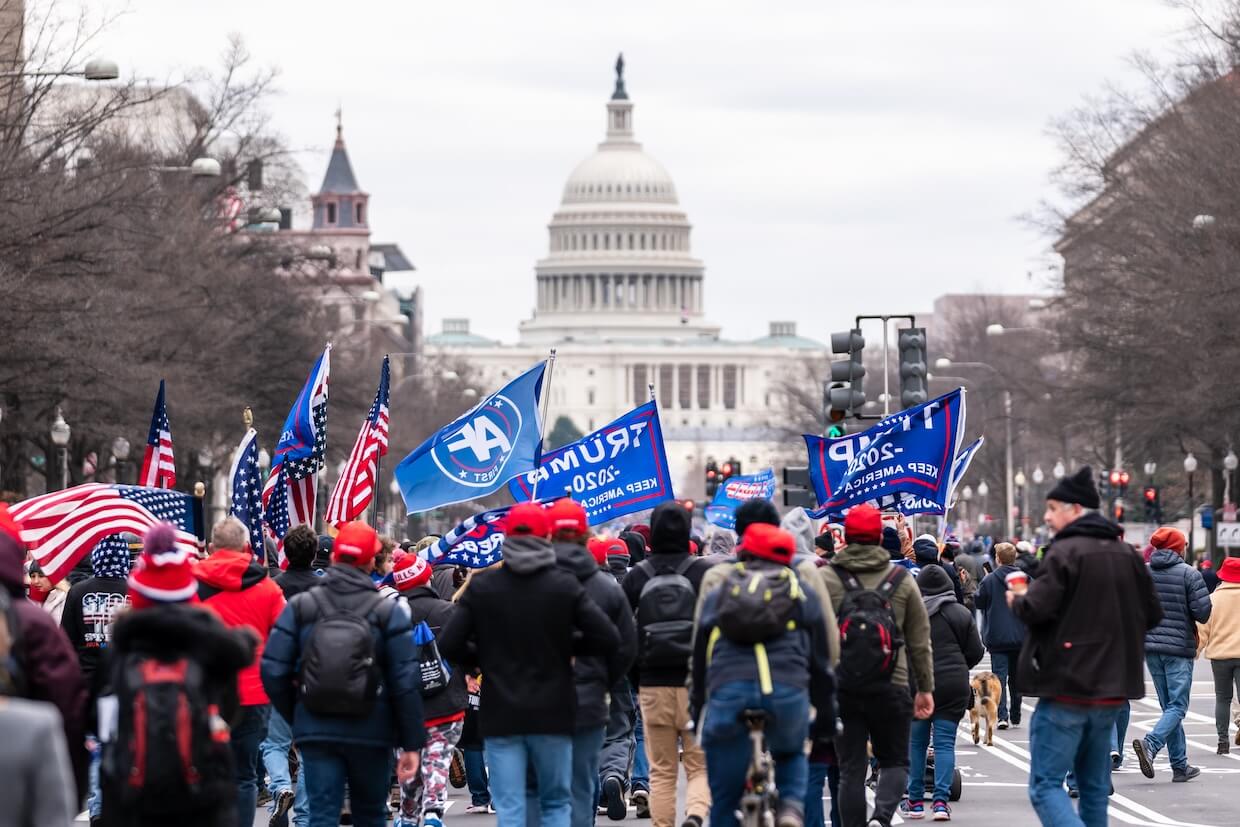
Trump cannot constitutionally seek another term in 2028, yet the Republican Party remains organized to an extraordinary degree around his political identity. You emphasize the importance of capable populist leaders in converting latent cultural conservatism into electoral support. Does that imply that Trumpism may prove unusually dependent on Trump as an individual political entrepreneur? Or has he already constructed a sufficiently durable ideological coalition—around immigration restriction, protectionism, nationalism, hostility to liberal elites, and executive power—that figures such as JD Vance could successfully institutionalize Trumpism after Trump?
Professor Lane Kenworthy: Here I’ll go back to what I said in response to the first question, which is that the most important answer is that we just don’t know. It’s very difficult to predict this. Given the seemingly extraordinary passion that Trump supporters—or MAGA supporters—evince for Donald Trump, one might think there is a deep passion not only for him but also for his political project among a sizable segment of the American population.
But my best guess is that, as with almost all ideologies, movements, public philosophies, or whatever you want to call the set of policy proposals and the sort of aggressive approach to the presidency that Trump has pursued in his second term, it’s really difficult to know whether this is deep or lasting. Again, support for George W. Bush’s agenda seemed really strong, and public opinion surveys suggested that in 2001, 2002, 2003, and 2004. But then, when the Iraq War went sour, it evaporated really quickly, and Democrats won a huge election in 2006 and an even bigger landslide in 2008.
The same thing happened with the Tea Party. It was widely thought to represent the overwhelming wave of the future. Members of the Tea Party, or those running on the Tea Party agenda, defeated some of the best-known and longest-serving Republican members of the House of Representatives in Republican primaries. And yet it, too, went away almost overnight in 2016 when Trump came along.
So J.D. Vance will certainly try, because he believes in a number of the same things that Trump does. But whether because of his limited skill as a politician, his limited ability to create the same passion among followers, or simply because commitment to this particular set of policy views is actually fairly thin, it’s quite possible that it could disappear very easily if somebody with a more appealing agenda and a more appealing election campaign comes along.
I should also say that there’s a view espoused most clearly by political scientists Ron Inglehart and Pippa Norris in a book they wrote about five years ago, which offers a long-term perspective on shifts in attitudes, especially on cultural and social issues. It suggests that since roughly the end of World War II, as rich democratic countries like the United States have become richer and richer, we’ve seen a slow but steady process of liberalization in views on all kinds of social and cultural issues. This happens mostly through cohort replacement.
Their hypothesis about the rise of right-wing populism is that we’re at a point in the evolution of this long-term shift where support for more traditionalist views on social and cultural issues is still fairly strong. It has been declining, but it remains fairly strong, and so this backlash against cultural liberalism, or social liberalism, is particularly fervent and particularly strong because we’re right at the point where this view is about to become—not disappear, but become—a clearly distinct minority.
Here too, Trumpism—the MAGA approach to politics—relies very heavily on cultural traditionalists in the United States. It’s not the only thing central to Trumpism, but it’s a really important part of that approach. If the Inglehart-Norris hypothesis is correct, maybe it survives another couple of election cycles, but after that, it could simply disappear. So there are lots of possibilities here, and again, I think we just don’t know.
Plutocracy and the Political Influence of the Rich
In your work on capitalism, inequality, and democracy, you acknowledge that affluent Americans have substantially more political influence than lower-income citizens, but you are cautious about concluding that increasing economic inequality has produced an ever-deepening plutocracy. How should we reassess that argument in the contemporary United States, where billionaire donors, super PACs, private political networks, and extraordinarily wealthy officeholders have become increasingly visible? At what point does disproportionate influence cease to be an inequality within democracy and become something more accurately described as oligarchic or plutocratic rule?
Professor Lane Kenworthy: Here too, I would say this is a possibility, but we don’t know. The problem with trying to draw any firm inference from what has happened during the first two years of this second Trump presidency is that he is a very idiosyncratic elected official. As a businessman, he strongly favored a transactional approach, and he has shown that he favors the same approach to politics. He is very interested in increasing the financial assets of himself and his family. He is also comfortable rewarding supporters and flatterers with positions in his company or, in this case, in his administration.
So, does the apparent rise in the influence of rich Americans and certain corporations in this second Trump administration represent a new era of plutocracy? Or is this simply an aberration, something unique to Trump? We won’t really know the answer until he’s gone.
One other thing to keep in mind is that although Trump has put billionaires in his cabinet and allowed Elon Musk to effectively destroy US foreign aid, the administration’s biggest policy changes have been in immigration and tariffs. And it is not America’s rich who have driven those policy commitments. Rather, it has been Trump himself and a few of his other non-billionaire advisors, such as Stephen Miller.
Tech Billionaires and New Forms of Political Power
The 2026 cycle has seen unprecedented political spending from technology, AI, cryptocurrency, and related sectors, while figures such as Elon Musk, Peter Thiel, and other Silicon Valley billionaires have moved from financing politics to attempting to shape its ideological and institutional direction. Does the emergence of these “tech bros” represent merely another iteration of wealthy interest group influence, or are we witnessing the formation of a qualitatively new political elite whose control over capital, platforms, algorithms, artificial intelligence, and information infrastructure gives it forms of power that earlier industrial magnates did not possess?
Professor Lane Kenworthy: Yes, once again, this is a possibility, but it’s too early to know. One thing that makes me skeptical is that, because the United States is such a large country, the landscape of sources of influence—including mainstream media, social media, think tanks, universities, and more—is quite broad and fairly diverse. Even if a conservative billionaire like Larry Ellison buys a major media outlet such as CBS or Paramount, or Elon Musk buys Twitter, there are still plenty of other sources and alternatives, including new ones that emerge all the time for people to turn to.
So, yes, it is very much possible that we are seeing new forms of influence and new ways—and degrees—in which affluent individuals or companies can exert influence. But it is also possible that they will try and fail, or at least not succeed very much.
Does Extreme Wealth Produce Unlimited Political Power?

One of your more counterintuitive arguments is that although money clearly produces unequal political influence, there may be diminishing returns to additional wealth: once affluent actors already possess substantial access and influence, further increases in inequality may not produce proportionately greater political power. Does the extraordinary concentration of wealth at the very top—and the ability of individual billionaires to spend hundreds of millions of dollars on elections—challenge that thesis? Is there perhaps a threshold beyond which wealth ceases to yield merely diminishing returns and instead produces new forms of agenda-setting, institutional capture, and veto power?
Professor Lane Kenworthy: Possibly, yes. Like all the other questions or issues we’ve gone through so far, this is very much an empirical question, and we’ll have to see how it plays out. Here, I would emphasize that income and wealth inequality in the United States have been rising for roughly half a century, and the richest tend to give disproportionately to the Republican Party.
Despite that, and despite the Citizens United Supreme Court decision in 2010, which made it even easier for big money to enter politics—especially elections in the United States—Democrats have so far matched Republicans in campaign contributions and election spending.
It’s also important that a great deal of messaging and advertising now goes through the free channel of social media, so it’s simply not clear. Again, it’s quite possible that things will play out as your question suggests, but I also think there is reason for skepticism. Ultimately, we just have to wait and see how this plays out.
Non-Inclusive Growth and the Rise of Populism
You have described the United States since the late 1970s as a paradigmatic case of “non-inclusive growth,” in which economic growth continued while wages and middle-class incomes stagnated and a disproportionate share of gains flowed to the top 1 percent. How politically consequential is this “great decoupling” today? Even if inequality itself is not the primary cause of right-wing populism, has the failure to translate aggregate prosperity into broadly shared improvements weakened the legitimacy of liberal capitalism and made both Trumpist nationalism and democratic socialism more politically plausible?
Professor Lane Kenworthy: I strongly suspect that it has contributed, but I don’t think we know by how much, because there are so many competing explanations for the rise in support for right-wing populism and left-wing populism more generally, not only in the United States but in other countries as well. In addition to economic inequality, there is income stagnation. There is also regional and local decline—decline in particular cities, areas, and regions—which cannot be reduced simply to incomes or inequality.
There is cultural backlash, the pervasive negativity of social media, and rising loneliness and mental health concerns, especially among teenagers and people in their twenties. There has also been a strong reaction to the inflation of the early 2020s, which was relatively new. Inflation had been very limited for almost a generation, so many people grew up in a world where it simply was not a major concern. Then, all of a sudden, it returned, much as it had in the 1970s.
And then there is the interaction of these factors, perhaps alongside others. So, yes, I do believe economic inequality has contributed, but I’m not at all certain that it has been the main factor driving these political developments.
Inequality Versus Improving Ordinary Lives
Your work repeatedly makes a distinction that is often blurred on the American left: inequality is not necessarily the same problem as poverty, insecurity, weak opportunity, or stagnant living standards. Indeed, your recent framework treats inequality reduction as “sensible but secondary.” In an era of extraordinary billionaire wealth, is that distinction still politically and normatively sustainable? Should progressives concentrate less on how much Elon Musk or other billionaires possess and more on whether ordinary Americans enjoy secure healthcare, housing, education, employment, childcare, and rising incomes?
Professor Lane Kenworthy: In terms of actual policy, I strongly favor focusing on the latter—that is, secure healthcare, housing, and so on: bringing up the bottom and ensuring that as many people as possible have access to these critical components of a good life.
In terms of winning elections, the question may be somewhat separate. It’s possible that the same approach—focusing on particular policies—will also help you win elections. But it’s also quite possible that, especially at this moment in the United States, you’re more likely to win by focusing on inequality, billionaire wealth, and the evils of particular billionaires like Elon Musk.
So it may be that this more extreme or radical approach is better for winning elections. But once you do win, I’m very much convinced that the way forward is to bring up the bottom and expand access to these goods and services, rather than focusing first and foremost on reducing inequality or the income and wealth of billionaires.
Rawls, Billionaires, and the Least Well-Off

Your approach to distributive justice draws significantly on John Rawls, particularly the proposition that inequality can be justified if it improves the absolute position of the least well-off. But how should the Rawlsian “difference principle” be applied to an economy in which the wealth of the top has multiplied while many households still struggle with housing, healthcare, childcare, and economic insecurity? Is the relevant Rawlsian question whether billionaires deserve their fortunes, or whether the institutions that permit those fortunes simultaneously generate the best realistically attainable conditions for those at the bottom?
Professor Lane Kenworthy: Good question. My view on this is loosely inspired by Rawls’ emphasis on lifting up the floor first and reducing inequality of outcomes second. If it turns out that the best way to lift up the floor is to prevent people from becoming billionaires, or perhaps to tax away a substantial share of their wealth once they become billionaires, then I’d be in favor of doing that. If, however, a society can allow people to become billionaires—even mega-billionaires—while still doing a very good job of ensuring a high floor and a good life for the rest of the population, then I don’t worry as much about billionaires.
For me, it’s ultimately a pragmatic question. The experience of the Nordic countries in particular, but also some other Western European countries and, in historical comparative terms, even the United States—where things have improved considerably over the past 100 years, even if we are still a long way from performing as well as the best countries—suggests that the latter is possible. It is possible to have a good society even in the presence of individuals or corporations with enormous wealth and power.
But perhaps we are reaching a point where that is changing—where extreme wealth has become so concentrated that it prevents the United States, or perhaps other societies, from achieving good outcomes. Or perhaps the power of these unelected wealthy individuals and corporations will prevent further policy progress. If that is the case, then, again, for purely pragmatic reasons, we would be in a situation where we need to worry much more about inequality.
Democratic Socialism and the Nordic Model
In “Would Democratic Socialism Be Better?”, you argue that democratic socialism would likely reduce inequality but may not outperform social democratic capitalism across most dimensions of well-being. Yet Sanders, AOC, Mamdani, El-Sayed, and others have made democratic socialist ideas increasingly viable. Are they diagnosing the right problems—concentrated wealth, insecurity, weak worker power, and corporate influence—but prescribing too radical a remedy, or does their success suggest that incremental social democracy is no longer enough for much of the Democratic electorate?
Professor Lane Kenworthy: The so-called democratic socialists you mentioned actually favor something very much like the Nordic model in terms of the policies they would like the United States or New York City to adopt and implement. The fact that they call themselves socialists is an idiosyncrasy of American politics. Bernie Sanders came of age in the 1970s, at a time when it was acceptable in parts of the American left to call yourself a socialist, and he has consistently run for election in Vermont, where that has not hurt him politically. So he simply kept doing it. Because he received so much attention and support when he ran for president in 2016, some others followed in his path and called themselves democratic socialists. In some cases, they have not paid a political price for it either.
That has very much been the case with Alexandria Ocasio-Cortez (AOC), and it also turned out to be the case with Mamdani in New York. We’ll see how that plays out with the Michigan Senate election in November. So, for the most part, I think they are prescribing the correct remedy because, in policy terms, they basically favor the Nordic model. Are they diagnosing the problems correctly? Here again, we should distinguish between what will make for effective policy and what will get people elected. I’m not convinced that concentrated wealth and monopolies are the main obstacles to getting better policy enacted in the United States, but focusing on them when you’re running for election might be a very effective strategy for getting yourself into office in at least some districts and states in the US at the moment.
Social Democratic Capitalism as a Democratic Governing Project
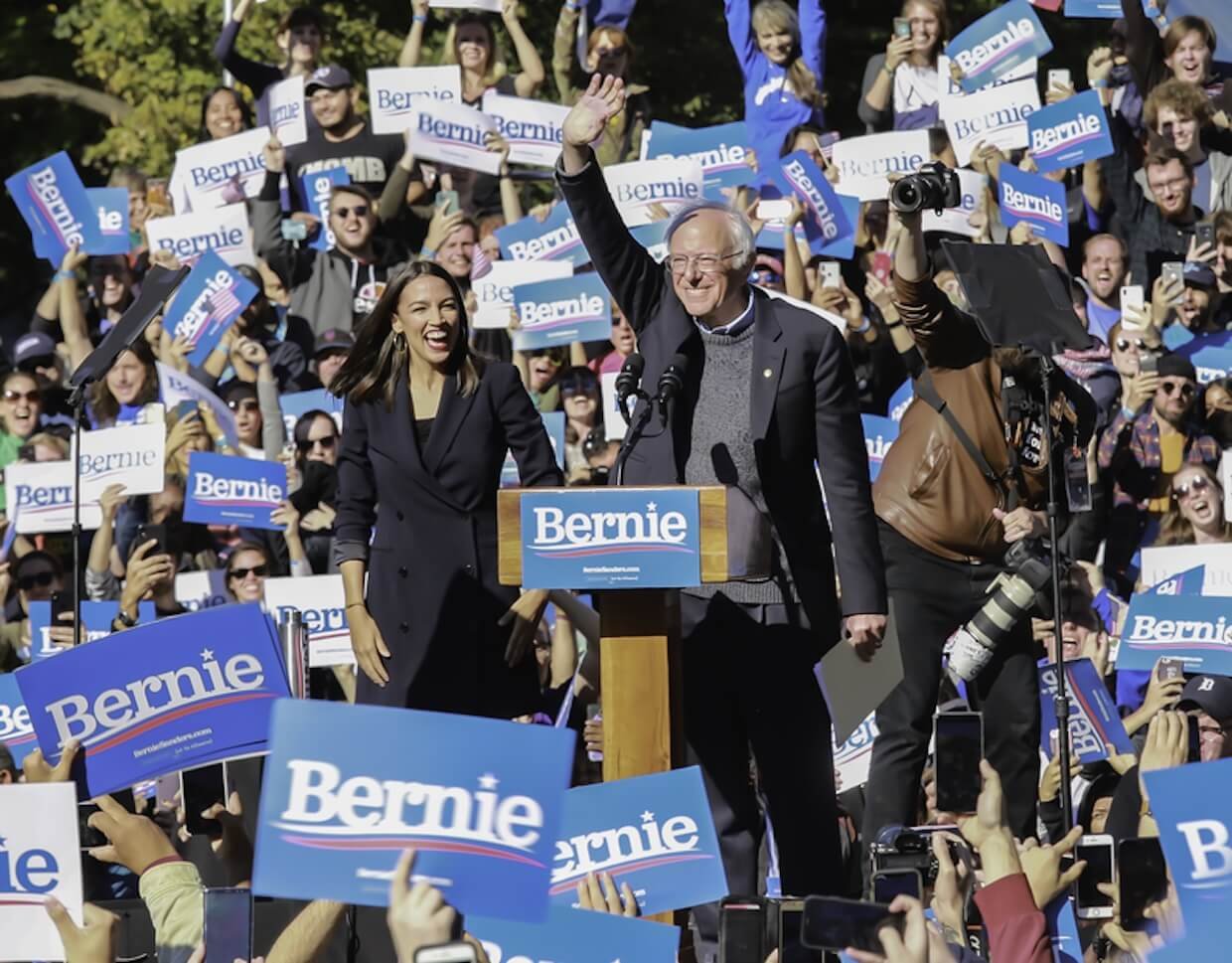
You describe “social democratic capitalism” as a democratic polity combined with a mostly capitalist economy, strong education, extensive public insurance, employment-promoting services, and moderate regulation. Could this provide the Democrats with a more coherent post-neoliberal governing philosophy than either technocratic centrism or democratic socialism? And if so, why has the Democratic Party struggled to articulate such a model as a recognizable political project capable of competing emotionally and symbolically with the much clearer identity offered by Trumpism?
Professor Lane Kenworthy: Here too, I think we want to distinguish between the policies that are actually being enacted, implemented, and favored by many who call themselves Democrats, and what seems to resonate with at least a certain share of voters in the country at this moment. I do think movement toward the Nordic model, or what I call social democratic capitalism, is the direction the Democratic Party has been heading in, especially since around 2020, but to some degree even before that.
During the Biden administration, from 2021 to 2024, much of the policy emphasis was on expanding healthcare and childcare, creating a child allowance, and considering other elements of these public services. The administration and its Democratic allies in Congress ultimately chose to emphasize the transition to clean energy over these services, at least in terms of their rhetoric and symbolism, and I think they were right to do so. This is a really important and time-limited policy focus, whereas shifting toward the Nordic model can be done over a longer period.
But there is actually much more support within the party and in adjacent organizations for expanding public services and public goods these days than there used to be. As I just said, this is mainly what so-called democratic socialists are advocating in policy terms. If we look at Democratic Party-dominated states across the country—California, Massachusetts, New York, and some others—we also see real movement in this direction, through the enactment and implementation of these types of public services and public goods, or their expansion where they already exist.
But this policy approach might not have the same emotional resonance for many voters as right-wing or left-wing populism. So it could be that we’ll see more Democrats getting elected as so-called socialists while nevertheless governing as normal Social Democrats.
I would characterize what we see so far in the Mamdani administration as exactly that. He is governing mostly as a normal left-of-center Democrat, or what you might call a social democrat, while rhetorically continuing his commitment to what he calls democratic socialism and to certain issues that resonate strongly, especially with younger left-wing voters. Yet, in policy terms, those issues turn out to be secondary to what he is doing as an executive in a very large and important city.
Predistribution, Public Provision, and the Future of Wages
You have been skeptical that “predistribution” alone—raising wages through market institutions, stronger bargaining power, or labor-market reform—can solve the problem of stagnant earnings, and you have emphasized public insurance and transfers as essential mechanisms for ensuring shared prosperity. Given the long-term weakening of unions and the changing structure of work, should Democrats stop promising to reconstruct the mid-twentieth-century wage bargain and instead build a twenty-first-century social settlement in which government more explicitly socializes the costs of healthcare, childcare, education, retraining, and income security?
Professor Lane Kenworthy: I do think that’s partly true—that Democrats should focus more on the public provision of these services and public goods, and, to some extent, on transfers. As I just said, I do think that’s the direction many who consider themselves Democrats are moving in.
But at the same time, I also think government needs to step in more actively on the predistribution side to try to ensure that wages, as much as possible, rise more or less in sync with the economy. In the absence of strong labor unions and collective bargaining, I think this means using monetary and fiscal policy to keep the labor market tight.
We know that tends to be effective here in the United States. We saw it in the late 1990s, and we’ve seen it in the period since around 2015 or 2016. When the unemployment rate is below 5%, we almost always see wages rise—in many cases, or in fact most cases, faster than inflation. And that’s true all the way down to the bottom of the distribution.
This probably means doing more with minimum wages, and we’ve seen a lot of action at the state and local level in the United States. Going forward, we probably need to think more about shifting toward a system in which, instead of a crude universal minimum wage, we have occupation-specific or sector-specific minimum wages. Here in California, the state government has just enacted a specific minimum wage for the food service industry, and so we probably need to go further in that direction.
The Earned Income Tax Credit is another mechanism that can help. This is a government transfer, but it’s closely tied to wages and pay. There should perhaps also be more support for the widespread adoption of profit sharing.
So yes, I do think predistribution can also be critical. We see movement in this direction in Western Europe as well, with greater emphasis on minimum wages, first and foremost, as labor unions in many countries appear to be weakening. Not quite as dramatically as here in the United States, but nonetheless significantly, and in some cases collective bargaining is weakening as well.
CEO Pay, Bargaining Power, and Corporate Governance
Your comparative work on executive compensation shows that market forces alone cannot explain enormous differences in CEO pay and that the relative power of labor and executives matters significantly. Does this imply that today’s extreme top-end inequality should be understood less as an inevitable reward for productivity and innovation than as an institutional outcome shaped by bargaining power, corporate governance, taxation, and political choices? If so, what reforms would most effectively rebalance power without undermining the dynamism that you believe capitalism can provide?
Professor Lane Kenworthy: Bargaining power, corporate governance, taxation, and political choices have all mattered, and the rise of top incomes and top wealth is not simply a story about the economy or supply and demand.
So, what would help? I’m pretty pessimistic about resurrecting labor union strength. I hope I’m wrong about this, but the fact that union membership has declined so much in nearly all rich democratic countries, not just here in the US, suggests that the story we’ve told for half a century in the United States—that we have bad laws that make it too easy for employers to fend off unions or get rid of them when they exist—no longer seems very compelling, given declining union membership in so many other rich democratic nations.
A shift in corporate governance back toward emphasizing stakeholders rather than only shareholders would be really good, but here, too, I have trouble seeing the path forward. The governance model that was in place in the decades right after World War II was heavily influenced by the fear among business leaders and politicians of a return to economic depression, and especially by the fear of communism becoming more attractive. As a result, they were willing to give workers rising wages and a seat at the bargaining table in order to ensure that the whole system survived. But that is long gone now.
I think policies requiring works councils within firms and allowing employees to elect a third or half of the board of directors would be helpful. To get more money from those at the top, taxes are our main recourse at the moment.
I don’t want to see another world war if that’s what it takes to get business leaders or conservative politicians to say, “Oh yeah, okay, we need to go back to accommodating labor unions.” But in the absence of that, I don’t really see what the path is.
I think the focus probably has to be on these two institutional requirements—work councils and workers being allowed to elect board members—and then on taxes.
Liberalism and the Contemporary Backlash
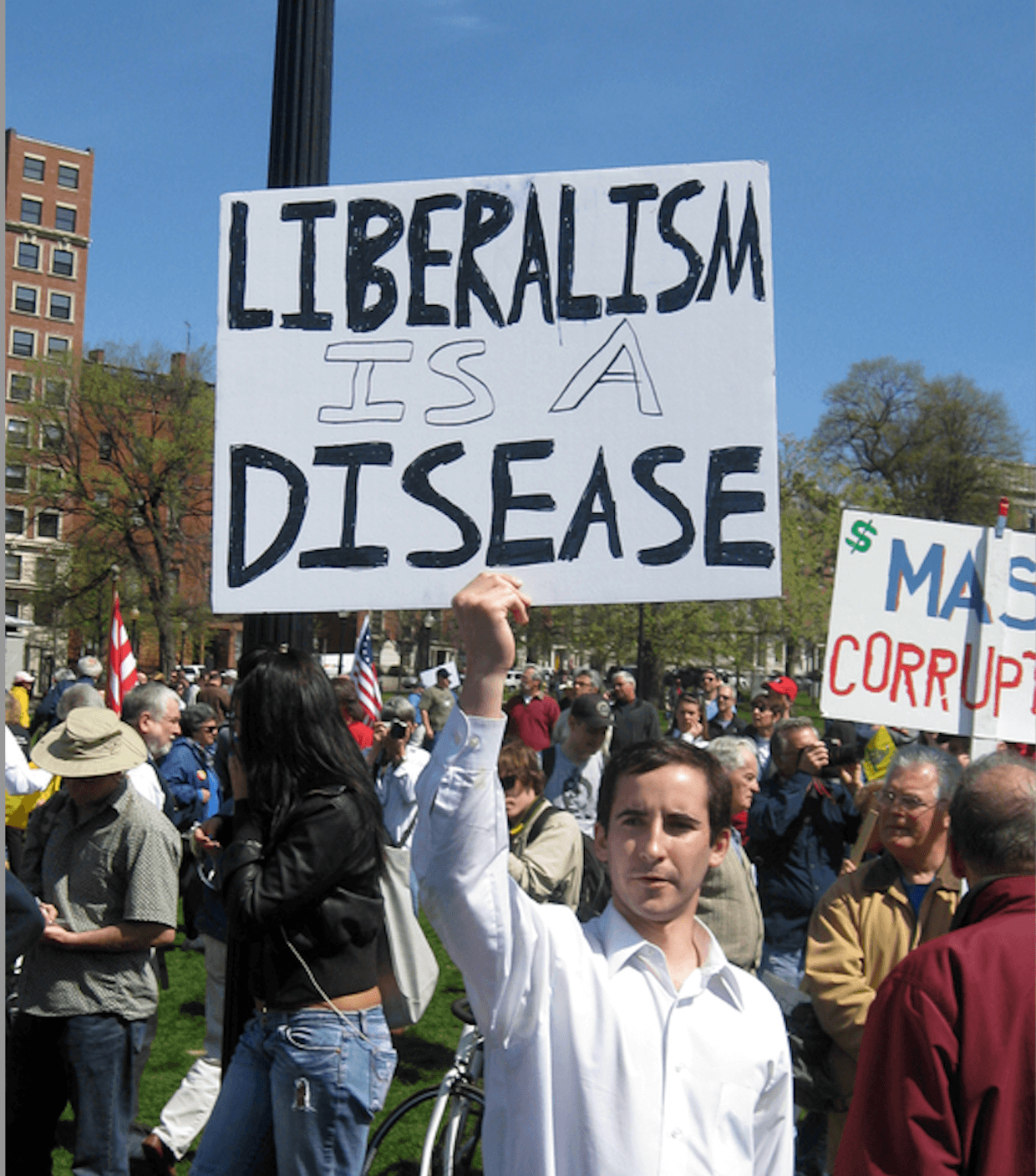
Your conception of liberalism places individual well-being, equal moral worth, and evidence-based reasoning at its core. Yet contemporary populists increasingly portray liberalism as an ideology of technocratic elites, cultural cosmopolitanism, weak borders, and indifference to community and national belonging. Does liberalism today suffer primarily from a communication problem, a problem of institutional performance, or a deeper philosophical tension between individual autonomy and citizens’ demands for solidarity, identity, order, and collective membership?
Professor Lane Kenworthy: This is a very difficult question for me, and I don’t have a strong view on it—or, I should say, a confident one. The main point I would make is that liberalism has been criticized and challenged for centuries, and I’m not convinced that the negative views of it today are any more widely or deeply held than they were during previous periods of backlash.
Unlike some people, I’m not fully convinced that liberalism needs a dramatic reappraisal or fundamental shift. It’s possible that, 10 years from now, much of this backlash will have weakened or disappeared, and we’ll look back and say that the period from the mid-2010s through the mid- to late 2020s was simply another episode in a long history of intense criticism, rethinking, and backlash. These things ebb and flow.
I might be wrong. There are quite a number of thinkers making the case for a more dramatic reconsideration. I’ve just been reading Daron Acemoglu’s book, What Happened to Liberal Democracy. It is a very new book and one among many arguing for a significant shift or reappraisal of liberalism, but I’m simply not convinced that such a shift is actually warranted. And I hope I’m right, though I might turn out to be wrong.
Toward an Expanded Rawlsian Conception of Social Justice
A striking implication of your work is that a society can tolerate substantial income or even wealth inequality and still achieve high levels of economic security, opportunity, freedom, inclusion, and subjective well-being—as the Nordic cases suggest. Does that mean the left should reconceptualize social justice away from equality of outcomes and toward what might be called an “expanded Rawlsian” framework: strong basic liberties, genuine opportunity, income security, universal public goods, and steadily improving living standards for the least advantaged? What, then, becomes of the traditional egalitarian aspiration to narrow the distance between the top and the rest?
Professor Lane Kenworthy: Yes, that is exactly my view. I do consider myself an egalitarian, and I think reducing inequality of outcomes remains a goal worth pursuing, especially in a high-inequality nation like the United States. But I do think it should be secondary to the other goals you mentioned.
The Deeper Choice in the 2026 Midterms
And lastly, Professor Kenworthy, stepping back from individual races, what do you see as the deeper political choice represented by the 2026 midterms? Is the United States choosing between Trumpist right-wing populism and a liberal-democratic alternative, between plutocratic capitalism and a more egalitarian political economy, or between competing visions of how capitalism itself should be governed? And if your evidence is correct that social democratic capitalism remains the most successful institutional arrangement yet devised, what would have to happen politically for the United States to move in that direction rather than toward either more radical market nationalism on the right or democratic socialism on the left?
Professor Lane Kenworthy: Because the United States is so large and geographically diverse, and because in our elections we vote for individual candidates rather than parties, I think very few US elections actually pose such a clear, big-picture choice between competing visions of policy, capitalism, liberalism, or democracy. We often over-interpret elections here in exactly those terms. But in most cases, people are voting for many different reasons. It may be about individual candidates, a single issue, or a particular set of issues, or they may simply have picked their party and stick with it no matter what.
Now, if that’s true, then for the United States to move toward something like the Nordic model in policy terms, Democrats need to win elections. It’s more complicated than that, of course, but basically, that’s how we’ve seen the country move historically over the last century in the direction of something like social democratic capitalism.
That’s also what we see at the state and local levels today. I mentioned before that a number of states have moved quite aggressively in this direction. There are limits to what states and cities can do, both because they have limited money at their disposal and because they face institutional constraints. They can’t do certain things that only the federal government can do. But they can do a lot.
When Democrats hold the governorship and both houses of the legislature, as they have in California, Massachusetts, Washington, Oregon, and elsewhere, we see substantial movement in this policy direction. My guess is that this will continue. And if and when Democrats again control all three decision-making bodies at the federal level, they’ll probably move in that direction again, as they did in 2021 when Biden came in, and in 2009 when Obama came in with Democratic majorities.
They’ll make limited progress, but they’ll probably make some real progress, and in most cases that progress lasts. There are no guarantees, of course. But it turns out that this is a pretty simple story, and I think it’s the right one.