
Professor Howard Lavine argues that the Democratic Party’s path to renewal lies less in ideological repositioning than in economic populism, political energy, and credible material outcomes. While MAGA remains rooted in status threat and a revanchist politics of cultural restoration, Professor Lavine sees greater opportunity for Democrats in focusing on affordability, wages, healthcare, and economic security. He cautions that the “socialist” label may create unnecessary electoral vulnerability, even as the Sanders–AOC–Mamdani current helps reorient the party toward working-class concerns. For Professor Lavine, most voters are not moved primarily by ideological sophistication but by whether political leaders deliver tangible improvements. The strategic imperative is therefore clear: Democrats should “pivot purely to economics” and demonstrate what they can concretely achieve for working-class voters.
Interview by Selcuk Gultasli
In an interview with the European Center for Populism Studies (ECPS), Professor Howard Lavine, Professor of Political Science at the University of Minnesota and former Director of the Center for the Study of Political Psychology, argues that the Democratic Party’s central challenge is less one of ideological definition than of political branding, economic credibility, and mobilizational energy. His assessment is particularly relevant ahead of the 2026 US midterm elections, as Democrats confront both a weakened but still deeply entrenched Trumpism and the growing influence of figures associated with democratic socialist and economic-populist politics. For Professor Lavine, however, the label itself may be more liability than asset: “The Democrats are making themselves vulnerable to some degree by using the socialist label.”
Professor Lavine draws a sharp distinction between the cultural politics underpinning MAGA and the economic terrain on which Democrats may have greater room to rebuild. MAGA, he argues, remains rooted in status threat and “a revanchist impulse to restore the prior order in which white Christian men feel comfortable in their dominant status.” Yet he does not believe racial and cultural identities necessarily foreclose an economic realignment. Swing voters, he stresses, are generally not those most deeply embedded in MAGA ideology. For Democrats, the crucial question is whether they can translate economic-populist appeals into tangible results: “What matters is the economic outcomes.” Policies themselves are comparatively less important because “most people aren’t going to understand what you say. They’re going to understand what’s happening on the ground.”
This emphasis on economics also shapes Professor Lavine’s interpretation of the Sanders–AOC–Mamdani current. He resists treating it primarily as an ideological socialist project, describing it instead as an effort to rebrand Democrats as more clearly aligned with working-class interests. Indeed, he argues that “the energy is in economic populism. It’s nowhere else.” At the same time, he warns that invoking socialism risks obscuring that advantage: “Too many people don’t like it; it’s not helping Democrats.”
More broadly, Profesor Lavine questions whether ideology itself is what moves most voters. “It’s really not about ideology,” he says of progressive candidates’ recent appeal; what voters are responding to is energy, anger, and a clearer sense of political purpose. In his view, Democrats should therefore move away from cultural issues that animate the academic left and “pivot purely to economics.” The strategic lesson is straightforward: “The more it focuses on economics, the better.” But electoral success ultimately requires more than rhetoric or branding. Once in power, Democrats must demonstrate “what they can do,” and, crucially, “what they can do specifically for the white working class.”
Here is our interview with Professor Howard Lavine, edited lightly to enhance clarity, readability, and overall flow for publication.
The Trump Administration Is Ginning Up Status Threat
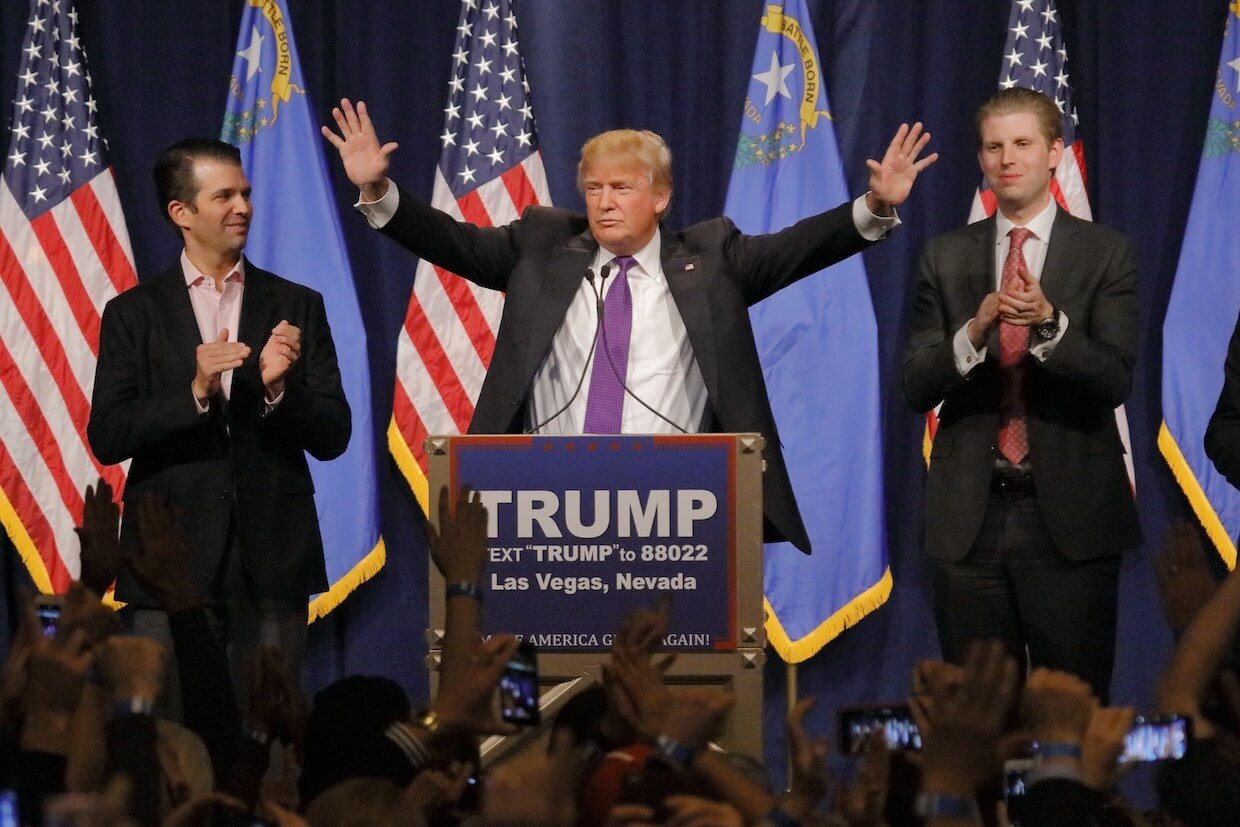
Professor Lavine, welcome! Your recent work with Christopher Parker describes MAGA as a reactionary movement driven substantially by “status threat”—the perception among historically dominant groups that social change has diminished their standing. Two years ago, Trumpism returned to governing power. Does holding power reduce that sense of threat, or can MAGA continually regenerate feelings of cultural dispossession even while controlling the presidency?
Professor Howard Lavine: It’s a very good question. One could reasonably assume that when the party in power is doing everything it can to restore the dominance of heritage groups—white Christian men—status threat would be assuaged. Howvere, we don’t find any evidence of that. We’ve been tracking status threat since the beginning of the Biden administration through July of this year, and status threat scores have not changed.
It hasn’t changed in part because Trump is ginning it up. And I don’t mean just Trump, but the entire apparatus within the MAGA movement. These are independent actors that are coordinating with one another and reaching millions and millions of people, continuing to present them with evidence that social and demographic change is going to lead to the decline of men, the decline of Christians, and the decline of whites.
Now, part of that is demographic change that no political party can control. Whites will become a minority of the population in about 2045, and Christians sometime between 2040 and 2060. So it’s not entirely related to partisan politics. But, the Trump administration is—whether it is doing this wittingly or not, consciously or not—ginning up status threat.
The Republican Party Has Been Captured by MAGA
You describe MAGA as a movement that ultimately “has taken over a party.” Should we therefore understand today’s Republican Party as a case of movement capture rather than ordinary ideological evolution? And what particular difficulties does that create for Democrats trying to oppose a Republican Party whose identity has become so closely fused with Trumpism?
Professor Howard Lavine: No, it’s the former. The movement has captured the party. Ideological evolution would suggest something different. Think about the change in 2016. I know that most of your readers might not have seen the Republican debates in 2015, but there were 17 people on the stage, and almost all of them were presenting themselves as Reaganite Republicans. Except for Trump.
Now, what Trump might have known—again, consciously or not—was that the Republican Party was no longer a party of Reaganite supporters. It had become a party of ethno-nationalists, concerned with immigration and with the prestige of heritage Americans, who felt besieged not only by the Obama presidency but by the longer sweep of American politics since the 1990s. So, things like political correctness and other sorts of mostly insular academic movements have reverberated somewhat beyond academia, but this is too abrupt a shift to consider it cultural evolutionary change. No, it’s an abrupt capture by a movement.
What this has to say for Democrats is what you began to see under George W. Bush, was an educational realignment, mostly among whites. Whites without a college education moved over to the Republicans. Whites with a college education who were Republican moved over to the Democrats. So, that was an early indication that the Democratic Party was going to be realigned, just as the Republican Party has been captured by MAGA.
But if you’re thinking about this in narrow electoral terms, in American politics, midterm elections are really referendums on the president. What we have in 2026 is just a very clear sense of dissatisfaction with issues related to affordability and the war in Iran.
Under Biden, let’s say in 2022, inflation was 8%, and that crashed his popularity. That was the case all over the West. Inflation was just as high in Belgium, France, and Germany. So, I guess the point I’m making here is that what people are seeing now is not just that gas prices are too high, but that Trump’s actions are clearly responsible. Inflation in Western Europe is half to a third of the size that it is in the United States. And people—not only those who are highly attentive to politics, but those who are around the median, even below the median—are very angry.
So, Trump is underwater everywhere, and I don’t think it much matters. We can get more into the Democratic split, but I don’t think what the Democrats say or do matters very much.
It’s Really Not About Ideology—It’s About Energy
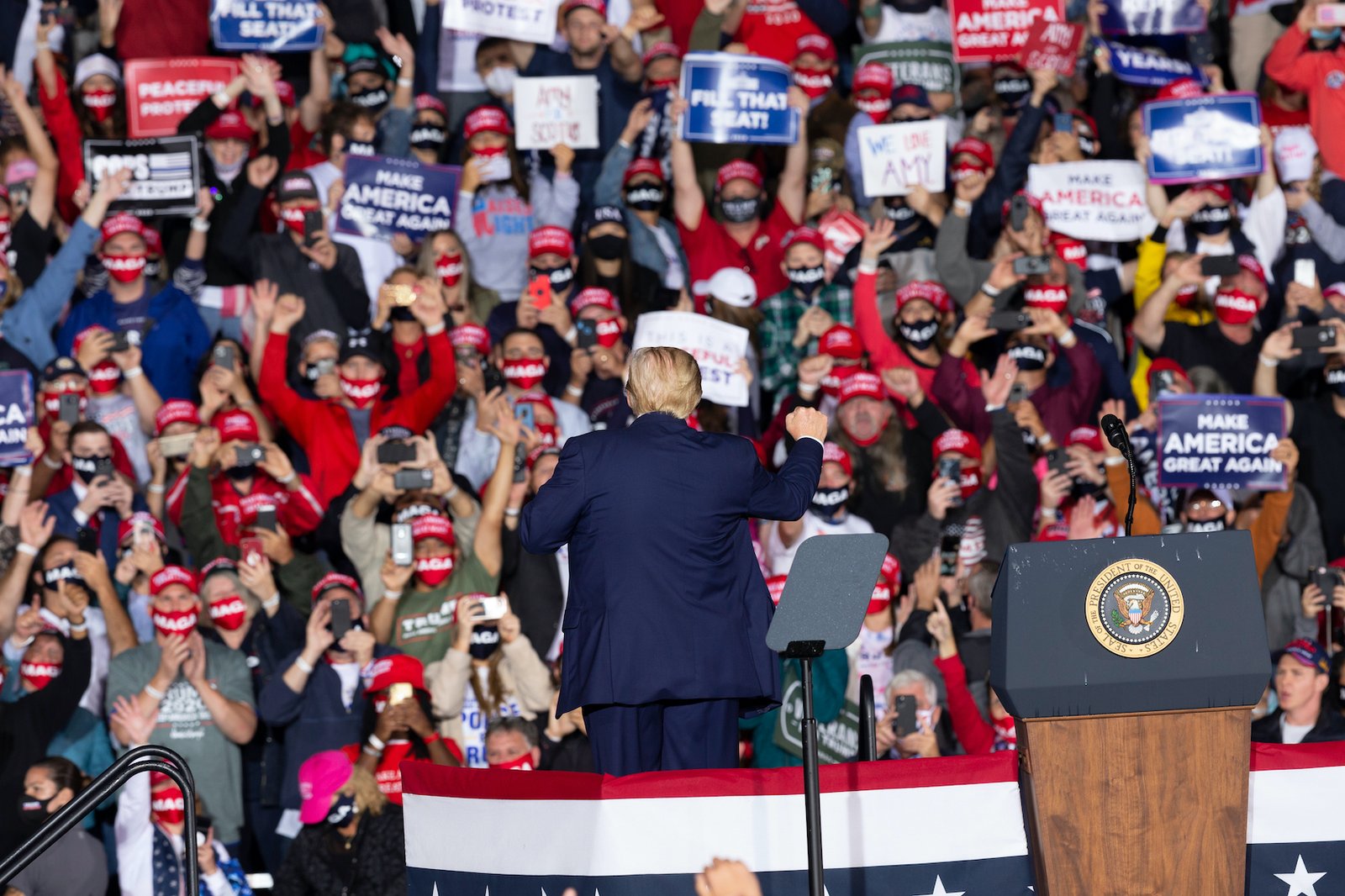
MAGA offers supporters a powerful account of who “the people” are, what they have lost, and who is responsible. Democrats have a much more heterogeneous coalition and often lack an equally clear organizing narrative. Is this one of their principal psychological disadvantages—a coalition broad enough to win elections but too fragmented to generate a comparably strong political identity?
Professor Howard Lavine: The Democrats are, right now, in a very specific place: voters want to see energy. They want to see their representatives and candidates express outrage. But the public is not ideologically informed, apart from a very small stratum at the top. Ten or 15% understand left and right. So, it’s really not about that. It’s more about candidates who, in the past, mostly campaigned in a way that was not as sharply critical of the other party as Democrats are craving now. They want that. To the extent that progressive or Democratic Socialist candidates are winning—for example, in Michigan, House seats in Manhattan, and a couple of other places, including Colorado—it’s mainly about the energy and the sort of tough talk. It’s really not about ideology.
Now, you have other people surrounding the insurgent candidates, and Sean Piker, for example, and these people have millions of followers. They’re much more likely to couch their preferences in ideological terms, but they’re much less salient. They’re only reaching people who are already going to vote for Democrats, especially in a year when Democratic enthusiasm is extremely high. They’re not reaching the voters who swing elections—mostly independents and unhappy members of the incumbent party, of whom there are now more.
So it’s really not about ideology. It’s about, especially among younger voters, wanting to see their candidates become more animated, more angry, and meet Trump’s rhetoric from the opposite perspective. Mamdani is somewhat like AOC, too, but Mamdani is an executive and can do more. He’s a mayor. He has more of a socialist policy agenda, but that doesn’t really translate outside New York. The policy agenda is very concrete and easy to understand. It’s about affordability, subsidized housing, and government-owned grocery stores that will bring prices down and such. That isn’t really what the Democratic Socialists are mostly about. AOC and Mamdani are exceptions.
Democratic Inversion Is a Bad Thing
Your concept of “democratic inversion” suggests that citizens increasingly adjust their policy beliefs to fit their partisan identity rather than choosing parties on the basis of prior beliefs. If so, does ideological uncertainty within the Democratic Party become especially costly because the party itself is less able to provide clear cues about what being a Democrat means?
Professor Howard Lavine: The parties are extremely polarized. When the choice presented to the electorate is simply Republican versus Democrat, it doesn’t really matter what the policy is. Democrats will prefer the Democratic policy. They’re not going to scrutinize it terribly deeply, and most of them won’t understand much about its specifics. Even Democrats running for Congress realize that it’s not really about policy. It’s about showing energy to counter Donald Trump.
The idea of democratic inversion has been around for decades. It’s probably a little bit higher among Democrats, but it’s very high among partisans of both parties, in part because the structure of choice is simply one party or the other. You’re not invited to make up your own policy. Democratic inversion is a bad thing. People should arrive at their political judgments before they pick a party and a candidate. But most of the population—nearly all of it—doesn’t do that. If any sector or stratum of the population does, it’s surprisingly people who are not politically sophisticated. They don’t know what the party’s messages are, so they can’t conform to them, and therefore inversion can’t occur.
Which is ironic. You’d think that the people who are most sophisticated, most knowledgeable, and most aware would start with their own beliefs. It’s just the opposite. I’m only saying this because this is what the research shows over and over again: the most aware partisans are willing simply to adopt the positions of their parties.
Elections Turn Very Much on Recent Economic Change
The November midterms provide an unusually important test. Democrats currently appear more energized than Republicans, and Trump’s approval remains weak. Should the election primarily be understood as a referendum on Trump, or will it also tell us whether Democrats have developed a compelling affirmative identity of their own?
Professor Howard Lavine: Again, largely a referendum on Trump. People are very angry. If you look at it, the issues are inflation and affordability. It’s not about democratic decline. Americans care about democracy, but not that much. Elections turn very much on recent economic change. What we’re seeing here is not only an average 50% increase in gas prices, but also high inflation that can be traced directly to Trump’s policies. And he only seems to be making it worse.
So, a lot of Republican candidates do not want to be seen with him, which is often the case when the president has a low approval rating. Trump’s approval rating is anywhere from the mid- to high 30s, but the most recent polls are in the low 30s, so we might be seeing a decline to a point that we almost never see. Bush left office in 2008 with a 32% approval rating. That’s historic. Nixon did for other reasons, but Bush did because of the economy, and Trump for the same reason.
He’s even underwater on immigration, meaning more people oppose than support his immigration policy, and that is his most important policy. People don’t like the way it’s being implemented. They don’t believe that what was advertised is anything like what Trump is currently doing. They’ve tried to make it more on the quiet. They turned Minneapolis into Fallujah for a couple of months, realized that was unpopular, but the number of arrests and deportations is at an all-time high.
But no, I don’t think the Democrats have much. It may be that in Michigan, some voters might look at Al-Sayed somewhat more negatively than they would his more establishment opponent, but he’s ahead in all the polls. There hasn’t been a single poll where Mike Rogers was ahead, but I think the energy matters. I think Trump has really engulfed the field. There’s really almost nothing outside of Donald Trump.
The Word Socialism Is Just a Very Bad Choice
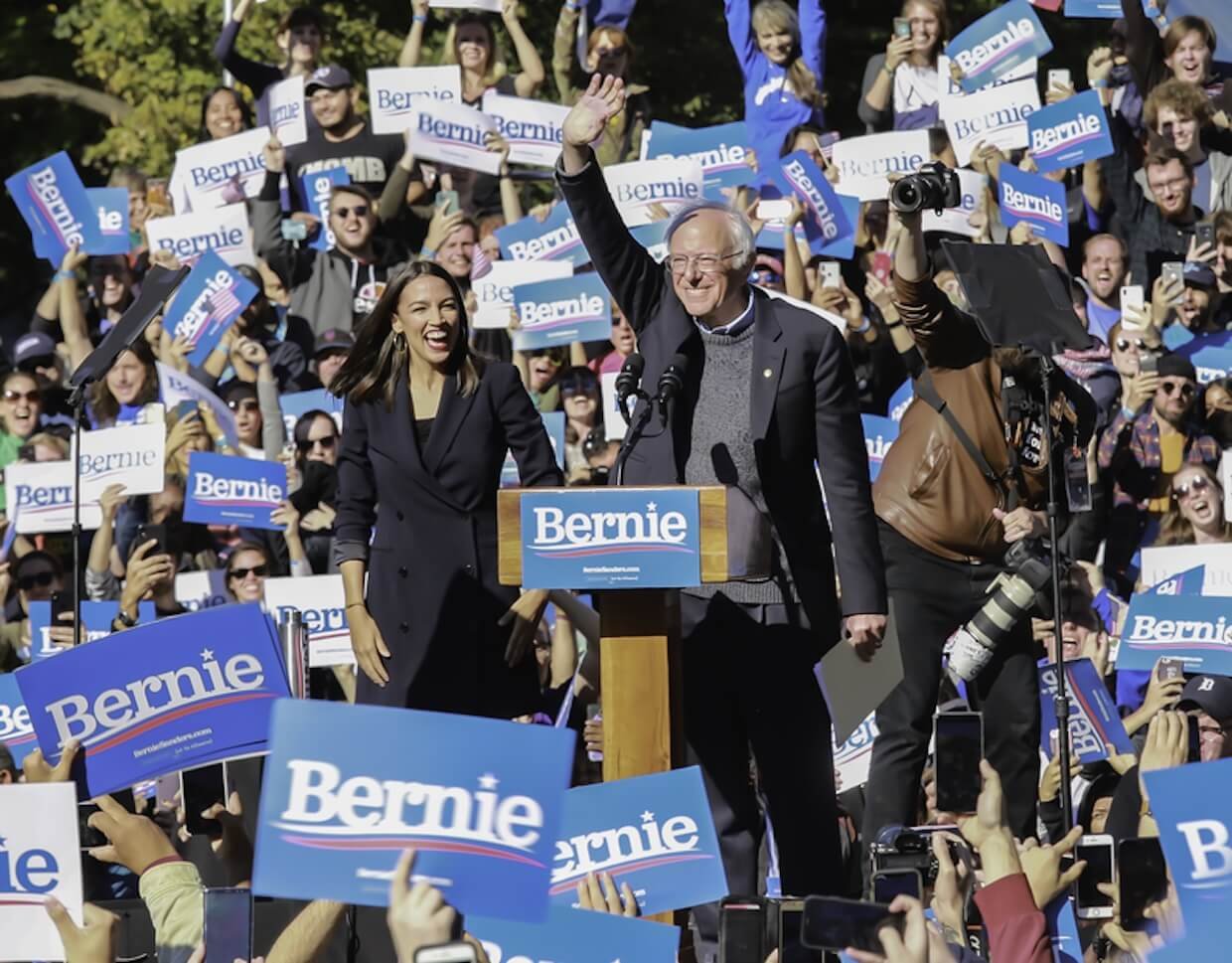
That question becomes especially important as democratic socialist figures seek to shape what that affirmative identity might look like. Before assessing their electoral and organizational potential, however, it may be useful to clarify the concept itself. What distinguishes contemporary democratic socialism in the United States from classical socialism and communism, but also from European-style social democracy? Is the Sanders–AOC–Mamdani current best understood as a genuinely socialist project seeking a deeper transformation of capitalism, or as a more radical version of social democracy operating within a liberal-democratic framework?
Professor Howard Lavine: I don’t even think it’s a radical version of European social democracy. It’s simply projecting a brand—a reputational brand within the Democratic Party—to be more favorable toward the working class, which is probably both morally admirable and strategically correct. The Democrats did a lot better when they were able to win the working class. Since the party inverted, the Republicans have done considerably better. The Democrats simply prefer to be the party of the working class rather than the party of expensively educated elites. Because, there aren’t as many of them. They have cultural and economic power, but they don’t have political power because there aren’t enough of them.
I think the rhetoric—the word socialism—is just a very bad choice. Not that Americans know what it means; they just know they don’t like it. Socialism, Nazism, all the -isms are unpopular. What they want to hear is that the party cares more about them than it does about the more culturally based concerns of highly educated people. The Democrats have gone through a woke period, which AOC recently condemned as crazy, mostly because she realizes that there’s just no political profit in continuing to push wokeism. But because Europe is so substantially to the left in its social democratic ideology and provision, the Democrats simply want to change their brand to attract working-class people who might be disenchanted with Trump.
Meanwhile, there is a crack in the MAGA movement. A lot of MAGA voters—three-time MAGA voters—are beginning to wonder whether the Trump administration cares more about tech oligarchs than the working class. So, it’s a strategically advantageous pivot, both because it does seem to be more squarely focused on the working class economically rather than the upper middle class culturally, and also because, in the late Trump years—he’s about to be a lame duck either way—he’s losing support among Republicans specifically on economic issues.
The Republican Party has mostly been about social or cultural issues, and now the party has captured a group of people who are concerned about economic issues, but the Republicans are not delivering. That’s not just Trump; that’s standard Republican policy from the time of Reagan: cut taxes, reduce them on the wealthy, and reduce the social safety net. So it is not Trump; it’s the Republicans.
Trump probably wouldn’t have wanted to do this, but the Republicans cut Medicaid, which is a social safety net policy that does a lot of things for the elderly and the non-elderly poor, and that will reverberate over the next 12 months. Benefits will be eliminated or substantially lower for MAGA people as much as for non-MAGA people, and so MAGA people are probably looking more than they were in 2016 at specifically economic issues.
Democratic Socialism Is No Longer a Fringe
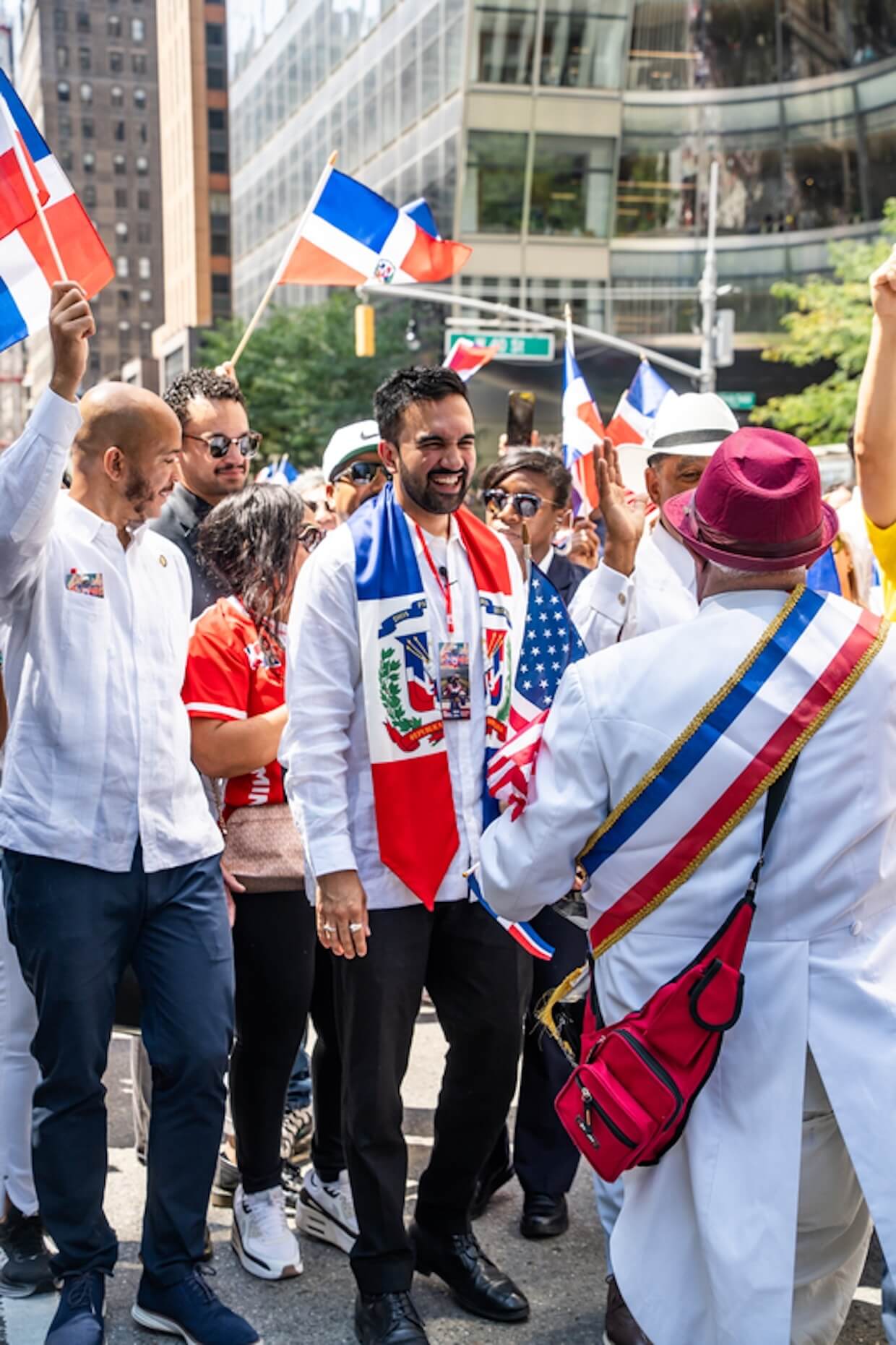
Bernie Sanders and Alexandria Ocasio-Cortez have been joined by the success of Zohran Mamdani and a broader insurgent left, while Abdul El-Sayed’s Michigan Senate primary victory demonstrates the appeal of similar progressive economic politics even beyond explicitly democratic socialist candidates. Are we reaching the point where this tendency can no longer be regarded as the Democratic Party’s fringe?
Professor Howard Lavine: That’s a great question. I would like to think that will be true by the time of the 2028 election. That’s the goal: to rebrand the party. The party is seen by younger voters in particular—and this might include voters under 50—as somewhat ideologically stagnant. They’re not providing as strong a contrast to the Republican Party as younger voters need.
Again, this is both about energy and anger, which is what the Democratic base wants to see. But it’s also, as voters will come to find out, about preserving the safety net and refocusing the party on the working class. So, to answer the question provisionally, yes. I think it is no longer a fringe. It will become stronger.
The Democrats Have Lost Energy in the Trump Years
How seriously should we take the analogy between MAGA’s rise within the Republican Party and democratic socialism’s growing influence among Democrats? Could a movement once considered peripheral eventually reshape the Democratic Party’s agenda, candidate selection, activist base, and political vocabulary as profoundly as MAGA transformed the GOP—or are the two cases fundamentally different?
Professor Howard Lavine: No, I don’t think so. They’re fundamentally different in the sense that they’re somewhat apples and oranges. One is more focused on culture, which the Republicans always were. Now it’s ethno-nationalism. Now it’s pitting white Christians against everyone else.
It is about rebranding, as I said, and it’s about recapturing energy. The Democrats have lost energy in the Trump years. They were excited in 2020 because Trump was weakened, people were generally dissatisfied, and his approval rating was low. But the Democrats now realize they can’t rely on that. They need, as you say, an optimistic vision. They need not just to rely on negative partisanship.
I hate to refer to it as democratic socialism. They’ll drop the socialism part at some point, but that’s the only game in town. By 2028, the goal is to rebrand the party around something much more energetic. I hesitate to say policy, because policy doesn’t really move voters very much, but rather a brand, a reputation, an understanding of what the Democrats are. They need something more active.
The Democrats are also beholden to what we now call the Epstein class: billionaires. The Democrats need to shed that. Once they win the House, most likely—and they could win the Senate—but either way, they could start issuing subpoenas to people who are implicated in the Epstein situation, and that’s what Democrats want to see.
This is why Obama’s popularity, after he got into office, just plummeted, because he refinanced the banks and let ordinary Americans go bankrupt. That was very unpopular and a bad move, and I think you would agree with that now. But it’s what the Democrats need to do to re-energize their brand. Nobody knows what they stand for, at least outside of the people who are already gonna vote, no matter what.
The Energy Is in Economic Populism
From a more positive perspective, could democratic socialism help resolve the Democratic Party’s current deadlock? Sanders, AOC, and Mamdani offer ideological clarity, recognizable adversaries, grassroots enthusiasm, and a straightforward economic agenda centered on affordability, housing, healthcare, wages, and inequality. Could this provide the political identity and mobilizational energy mainstream Democrats have struggled to generate?
Professor Howard Lavine: Yes, absolutely. They need to do that. If they don’t, it will be strongly to their detriment. With a 50-50 electorate, the last three elections have basically been ties. Now, you can’t have an exact tie, so one party wins. But I think that, for the Democrats to break out and attempt to become the majority party, which they once were, that’s exactly what they’ll need to do. The energy is in economic populism. It’s nowhere else. There’s no other alternative being proposed.
Revanchist Impulse Getting Worse and Worse
Your work emphasizes that status threat is revanchist: it seeks to recover a social hierarchy perceived as lost. Democratic socialist rhetoric generally points in the opposite direction, promising future material gains and greater equality. Could this allow the left to channel dissatisfaction through an aspirational politics rather than the nostalgic politics of restoration that characterizes MAGA?
Professor Howard Lavine: It’s quite likely that what you’ll see as the result of a re-energized Democratic Party around social change is increased polarization. No, I don’t think that revanchist impulse is going to go away, because demographic change doesn’t require social change, which is what you’re talking about.
But as we get closer to becoming a majority-minority country, it will become inevitable that whites and Christians, both declining in numbers and as percentages of the population, are headed toward minority status. So, I don’t think the revanchist impulse is likely to disappear anytime soon. The question is how it’s packaged.
Trump is a rather crude communicator. I don’t mean crude simply in the sense that he says crude things, although of course he does, and that’s his calling card. But he’s not doing it in a way that, say, J.D. Vance or somebody else could, which runs counter to the conventional wisdom that Vance can’t hold together the MAGA movement.
But the MAGA movement is underpinned by what we would call status threat, as well as by a revanchist impulse to restore the prior order in which white Christian men feel comfortable in their dominant status. Right now, they’re not feeling that. So, I don’t see that revanchist impulse disappearing. I see it getting worse and worse as we move toward a more multiracial America.
What Matters Is the Economic Outcomes
Could a stronger economic-populist message help Democrats shift political conflict away from terrain favorable to Trump—race, immigration, cultural hierarchy, and status loss—and toward wages, housing, healthcare, corporate power, and economic insecurity? Or are racial and cultural identities now too deeply embedded in partisan politics for such a strategic shift to succeed?
Professor Howard Lavine: No, I don’t think they are, because the voters who swing elections are not those who are deeply embedded in MAGA’s ideology. But it’s not really about the policies. They can say anything they want; the policies will be understood only in some fractional sense. What matters is the economic outcomes. If they deliver on what they promise, they will do well. If they promise the moon and deliver none of it, they won’t. And the same is true with Mamdani. So, it’s really about economic outcomes.
But you have to start with policies, and policies have to start with branding. Of those three—branding, policies, and outcomes—policies are the least important. Most people aren’t going to understand what you say. They’re going to understand what’s happening on the ground. Are prices getting higher? Are they steadying out? Is the social safety net becoming stronger? Or is it always on the brink of leaving millions and millions of people in poverty?
If the outcomes are achieved, the brand will become more legitimate and longer-lasting, and will become more deeply embedded in the consciousness of the top 40–50% of aware voters.
Cultural Identities Versus Economics

Your experimental research found that racial cues pushed Trump supporters and opponents in sharply different directions. Does this suggest a limit to the democratic-socialist assumption that material politics can reunify working-class voters? Can class-based appeals actually weaken status threat, or will economic questions themselves continue to be interpreted through racial and partisan identities?
Professor Howard Lavine: That’s another great question. I think the answer depends first on the economic context. Right now, the answer is yes. Under more prosperous conditions, I think it won’t. Then you tend to get cultural politics.
Right now, there’s a clamoring that is all about economics. I mean, not among the MAGA group. They’re concerned with restoring what they perceived—and what was, in reality—a country that privileged whites and Christians and where men ruled the roost. So, if economic times continue to be difficult, an economic-populist message will take root and be competitive.
At some point—and this is perhaps one of the largest debates in political science and political psychology—it comes down to identities, cultural identities versus economics. It really depends. At the end of the Clinton years, everything was looking great. People had every opportunity to say, “We can ignore economics because we’re all fine, and now we can become a party of identitarians,” which the Democrats began to do.
But I don’t see economics falling away from the top of the agenda anytime soon. I think it’ll dominate the 2028 elections, which will be to the great detriment of the Republican Party. I don’t think those cultural messages will be as important when people can’t afford gas, groceries, or their medical bills. People living on the edge are living much further on the edge, and I think that will matter, at least for 2028.
American politics doesn’t stay the same. It could be different in 2030, just as it was in 2010 and 2018, for that matter. Those were the first midterms of Obama and Trump. They got wiped out.
So, when we come back to outcomes, parties realize that the first Congress they have—which is when they most often have unified control of government—is the only time they’ll be able to do anything. By the end of a president’s first term, those effects are generally exhausted. And there’s usually no opportunity to do anything big again because you have lost the House of Representatives in your first midterm. That’s what happened to Clinton, that’s what happened to Obama, that’s what happened to Trump, and Biden didn’t even control the House.
Democratic Voters Will Continue to Push an Economically Populist Message
The 2026 midterms offer a particularly important test because insurgent-progressive candidates must now move from Democratic primaries into general elections. Michigan’s Senate race is especially significant. Will November help determine whether this politics can expand beyond safe urban constituencies into the competitive states and districts Democrats need to control Congress?
Professor Howard Lavine: Michigan’s gonna be looked at very carefully. But it’s one election, and it’s one state, and its dynamics are bounded by time and context. If Al-Sayed loses, I don’t think the entire apparatus of the Democratic left is going to collapse. There will be other interpretations.
So, no, I don’t think one example will be decisive. I think voters will become disenchanted if they see that the slate of candidates they regard as qualitatively different, or different in kind, from Democratic establishment candidates loses across the board. If they lose across the board, maybe they’ll come back to the drawing board.
But one election—the Michigan election—no, I don’t think that’s enough, because I think Democratic voters who control the brand of the party, to the extent that voters control the party’s brand, which I think they increasingly do, will continue to push an economically populist message.
I’d rather label it that way than democratic socialism. The word socialist is going to have to be excised. Too many people don’t like it; it’s not helping Democrats. It’s the influencers outside of party strategists who love the socialist label. Aside from that, it’s supporters of Bernie. Sadly. Trust me
A Vague Term Like Socialism Just Can’t Compete
Republicans are already trying to make socialism itself an issue in the midterms, including through congressional resolutions explicitly linking Democrats to democratic socialist politics. Does that indicate genuine electoral vulnerability for Democrats, or does it show that Republicans recognize the left’s potential to construct a competing populist narrative around economic inequality and concentrated wealth?
Professor Howard Lavine: I think both are true, but more importantly than either of those things, the Republicans don’t have much to campaign on. The running joke is that the only thing they can do is talk about trans athletes, of which there are about five in the country. They don’t really have much to say, but the Democrats are making themselves vulnerable to some degree by using the socialist label.
There will be some people who hesitate to vote for Democrats and may refuse to do so on that basis. It remains to be seen whether this is almost entirely a referendum on Trump or whether the Republicans gain any traction simply by using the word socialism. They’ve used that since Obama, and I don’t think it’s really done much, because most voters don’t understand it, and those who do are already committed to voting for one party or the other.
But this year, voters are so singularly concerned with their economic pocketbooks that a vague term like socialism just can’t compete.
Young MAGA Voters Are Unstable
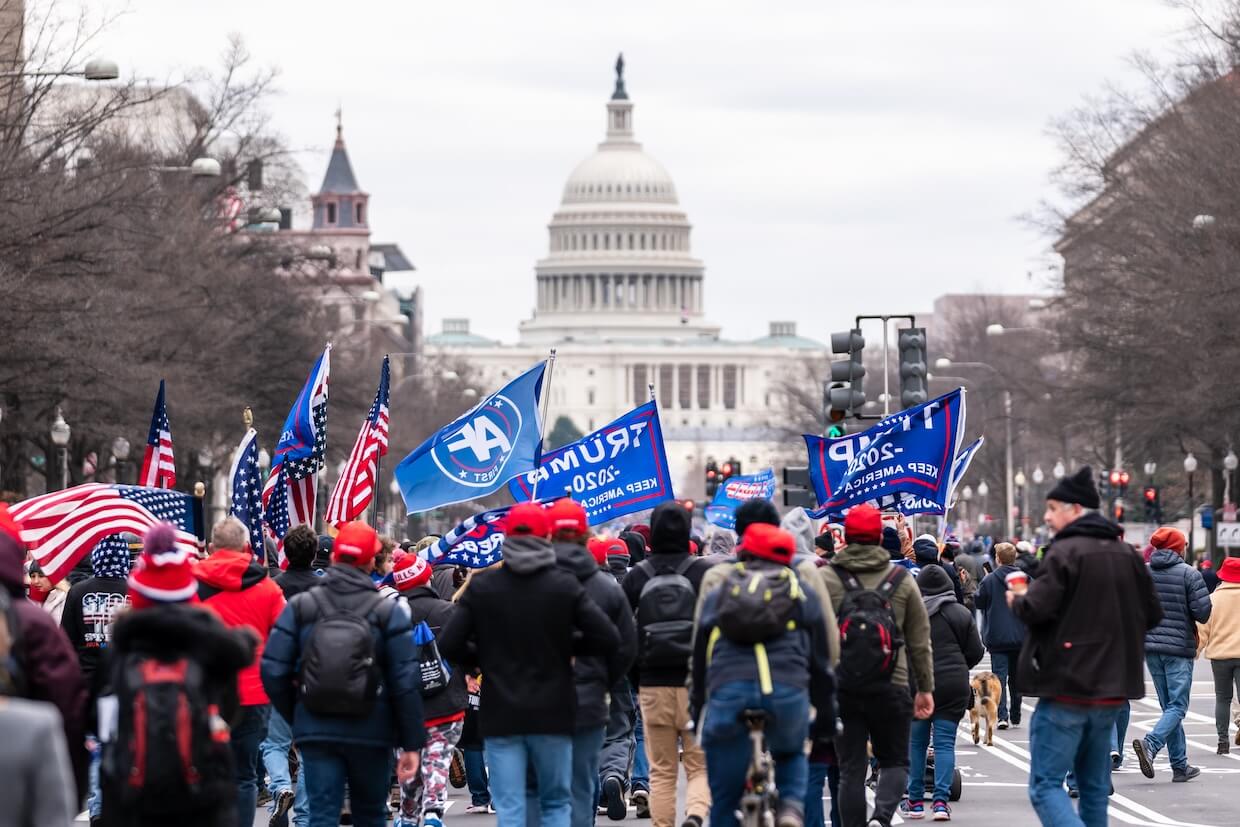
Your work on resistance to persuasion shows that politically engaged voters are particularly capable of rejecting counter-attitudinal messages, sometimes becoming even more certain of their existing views. Does that mean Democrats waste too much effort trying to win committed MAGA voters? Should their priority instead be less-engaged citizens, irregular voters, younger voters, and those whose partisan identities remain relatively weak?
Professor Howard Lavine: Young MAGA voters are unstable. They haven’t formed strong partisan identities. Once they do, it’ll become a lot harder. But there is always competition for swing voters, meaning voters who don’t have a strong party identification. Then there are young voters who are not socialized into the party system. They might vote Republican, and they might even identify as MAGA, but they’re not so deeply embedded in both a belief system and a social world that they can’t be persuaded. So there is such a thing as the persuadable voter, and it’s not a trivial portion of the electorate. I think resistance to persuasion and backfire are generally seen when you’re talking about people who have strong priors.
The Persuadable Voter Is Less Burdened by Strong Party Ties
There is also a normative danger in the MAGA analogy. If democratic socialists became dominant within the Democratic Party, could they eventually reproduce the “democratic inversion” you identify on the right—where movement loyalty determines policy beliefs and internal dissent becomes suspect? What separates healthy ideological renewal from another form of partisan capture?
Professor Howard Lavine: Democratic inversion has been so robust and stable for so long that it’s a permanent feature of the dynamics of democratic citizenship, so it’s a failure of democratic citizenship. But that’s not something that’s going to go anywhere. Again, what I said earlier is that those people who tend to follow the leader, who are inverted, tend to be voters who are, first, certain to vote, second, certain to vote for their party’s candidate. So those people are lost to democratic inversion. And again, those are the people who are most aware and most interested in politics.
The persuadable voter is one who is less burdened by strong party ties and is willing to weigh the evidence, come to a conclusion, and then, potentially, move into a party based on a non-inverted process, meaning that they have come to believe certain values, hold certain policy preferences or goals for the country, and see one party or the other as the basis of that.
We see that already with respect to the growing influence of a fairly heritable personality trait called authoritarianism. That is more strongly structuring American politics, and that’s not inversion. That’s a personality—a deep, heritable personality characteristic—that is sorting the public, mostly the white public, into the Democratic and Republican Party, so inversion isn’t everything. But it’s a dominant dynamic, and there are non-inversion dynamics that are occurring as well. The authoritarianism-to-partisan-identity process is one of them.
The More It Focuses on Economics, the Better
Finally, the November midterms may offer an early answer to the Democratic Party’s larger dilemma. Could the Sanders–AOC–Mamdani phenomenon provide the economic narrative, organizational energy, and political purpose needed to rebuild the party against Trumpism? Or could moving too far toward democratic socialism sacrifice precisely the moderate and cross-pressured voters Democrats need to regain Congress and eventually the presidency?
Professor Howard Lavine: Another great question. I would say the answer is the first one. What they realized—and AOC has, by stating that woke was crazy, or woke one was crazy—is that focusing on cultural issues, especially cultural issues that animate the academic left, is extremely damaging to the party’s brand. So, what AOC and others recognize is that you have to pivot purely to economics. Again, it’s less about how extreme the policies are and more about what they do with power if they take it, and how successful they are with it.
Biden was pretty successful. But inflation and the perception of him as elderly and not fit to run again—which he had promised he wouldn’t do before changing his mind—will probably determine whether the next democratic-left projects succeed. So, the bottom line is: the more it focuses on economics, the better. Beyond that, once they take power, they have to show what they can do, and specifically what they can do for the white working class.
