
Switzerland’s rejection of the Swiss People’s Party’s proposal to cap the country’s population at ten million has been widely interpreted as a crucial test of contemporary European politics. While the referendum exposed persistent anxieties about immigration, housing, infrastructure, and national identity, it also revealed an emerging counter-narrative centered on demographic aging and labor-market needs. In this interview with the ECPS, Professor Georg Lutz examines the referendum’s implications for direct democracy, populism, and the future of liberal democracy. He discusses the resilience of the populist radical right, the role of issue ownership in electoral politics, and the opportunities and limits of direct democracy. Professor Lutz also reflects on political distrust, misinformation, democratic participation, and the evolving relationship between popular sovereignty and constitutional liberalism.
Interview by Selcuk Gultasli
Switzerland is frequently portrayed as the world’s most sophisticated laboratory of direct democracy—a political system in which citizens regularly decide major policy questions through referendums and popular initiatives. Yet the country’s June 2026 referendum on the Swiss People’s Party’s (SVP) proposal to cap the population at ten million revealed that even Switzerland’s celebrated democratic model is increasingly shaped by the same tensions confronting liberal democracies across Europe: migration, demographic change, economic insecurity, national identity, and the rise of the populist radical right.
Although voters ultimately rejected the initiative, the campaign exposed deep divisions over immigration and the future direction of Swiss society. More importantly, it highlighted a significant shift in public debate. As Professor Georg Lutzargues in this interview, discussions about immigration are no longer driven solely by concerns over cultural identity or social cohesion. For the first time, a prominent counter-argument emerged around demographic realities and economic necessity. In his words, “all populations in European countries are aging,” and immigration was increasingly discussed as “something that is also necessary for the labor market.” As he notes, “we see a bit of a shift in this debate compared to what we have seen in previous times.”
In this wide-ranging conversation with the European Center for Populism Studies (ECPS), Professor Lutz—Director of FORS, the Swiss Centre of Expertise in the Social Sciences, and Professor of Political Science at the University of Lausanne—offers a nuanced assessment of the referendum, the resilience of the SVP, and the broader relationship between direct democracy and populism. Rejecting simplistic interpretations, he argues that the referendum result represented both a setback and a success for the SVP. While the initiative failed, “45 percent of the Swiss population voted in favor of limiting the population to 10 million,” a figure substantially higher than the party’s own electoral support.
The interview also explores whether direct democracy serves as a safeguard against populism or inadvertently empowers it. Professor Lutz challenges common assumptions on both sides of the debate. While acknowledging concerns about minority rights and majoritarian pressures, he argues that “the reality is much more nuanced” than many critics suggest. Direct democracy, he contends, is deeply intertwined with representative institutions and often acts as an indirect mechanism of accountability rather than a revolutionary alternative to parliamentary politics.
Perhaps most importantly, Professor Lutz shifts attention away from institutional design and toward what he sees as the more pressing threats facing contemporary democracies: the fragmentation of information systems, the spread of misinformation, growing political distrust, and systematic efforts to undermine confidence in democratic institutions. In an era of polarization and populist mobilization, his reflections offer important insights into both the strengths and vulnerabilities of democratic governance in Switzerland and beyond.
Here is the revised version of our interview with Professor Georg Lutz, edited lightly to enhance clarity, readability, and overall flow for publication.
The Result Was Both a Defeat and a Success for the SVP

Professor Lutz, welcome! To begin, Switzerland has just rejected the SVP’s proposal to cap the country’s population at ten million, despite widespread public concerns about immigration, housing, and infrastructure pressures. How should we interpret this outcome: as a defeat for the populist radical right, a rejection of anti-immigration maximalism, or evidence that Swiss voters remain more pragmatic than ideological?
Professor Georg Lutz: It’s probably a mixture of all three. If you looked at the leaders of the People’s Party (SVP) on Sunday when the results came in, you could see that they looked rather disappointed. They had hoped that the proposal could be won, because the party has succeeded with similar anti-immigration votes in the past, and the polls were quite favorable at the beginning.
On the other hand, the party was also, to some extent, satisfied. After all, 45 percent of the Swiss population voted in favor of limiting the population to 10 million, and that is significantly higher than the party’s own vote share, which is only about 28 percent. So, the party mobilized well, particularly in rural areas, around one of the key issues on which it has been campaigning for more than 30 years now.
Many Swiss Voters Chose Stability Over Uncertainty
The referendum campaign was widely described as a “Swiss Brexit” moment because of its potential implications for relations with the European Union. Why did voters ultimately choose continuity over rupture, and what does this tell us about the limits of sovereigntist populism in Switzerland?
Professor Georg Lutz: It is probably a correct interpretation that, to some extent, the majority voted for stable relations with the European Union and also stability in terms of the labor market. There was a big debate about how limiting migration in Switzerland could potentially harm the labor market in the long term.
But the campaign against the initiative also warned about the chaos that could result. It argued that it would create a great deal of bureaucracy for regulating the market, as in the health sector, as well as higher crime because of ending the Schengen Agreement. There would also be chaos because asylum seekers could simply come in. So, to some extent, it was a vote against this kind of chaos, which was a defining feature of the ‘No’ campaign.
Few Populist Parties Have the Historical Foundations of the SVP
The Swiss People’s Party remains one of Europe’s most successful right-wing populist parties despite this setback. What explains the long-term resilience of the SVP, particularly when many comparable populist parties elsewhere experience cycles of rapid ascent and decline?
Professor Georg Lutz: For this, it’s important to look a little bit into the history of the party, and you’re right, the Swiss People’s Party is quite unique in this respect. It is the strongest party in Switzerland. It has been the strongest party for many years, and it doesn’t experience as many fluctuations as other populist right-wing parties.
The party was founded around 100 years ago. It used to be an agrarian, more centrist, small-business-owner party and wasn’t a radical right-wing party at the very beginning. The party has also been in the Swiss government for almost 100 years, and that’s a very unique feature of Switzerland. Switzerland has a multi-member government with seven members, and the Swiss People’s Party now has two of these members. So, the party still has a strong foundation in the countryside, along with some more moderate voters.
It then started to transform, turning into a radical right party from the 1990s onward. It lost the more moderate wing and became a party strongly focused on anti-immigration, anti-EU, and anti-establishment sentiments—the classic features of other populist right-wing parties you see across the continent.
The Real Victory Was Keeping Immigration at the Center of Politics
Your research on issue ownership suggests that parties gain electorally when they are perceived as the most competent actors on salient issues. Has immigration become such a deeply “owned” issue for the SVP that even referendum defeats can reinforce its broader political influence?
Professor Georg Lutz: That’s actually not just a unique feature of the SVP; it’s a feature of all radical right parties. That’s something you see in modern campaigns. Modern political campaigns are not so much about positioning a party on all kinds of different issues that might attract voters; rather, they are about pushing the key issues with which a party is identified.
Again, it’s not unique to populist right parties. The same applies to Green parties, which are heavily identified with environmental and ecological issues. Liberal parties are generally aligned with economic issues, and social democrats, at least partially, with social issues. And that’s what the debate is about. That’s also why this vote has been a success for the party. They were able to campaign on a key issue, put it on the political agenda, and they are hoping that it will help them in the next national elections and in the many regional elections that we constantly have.
Migration Is Seen as Both a Cultural and an Economic Threat
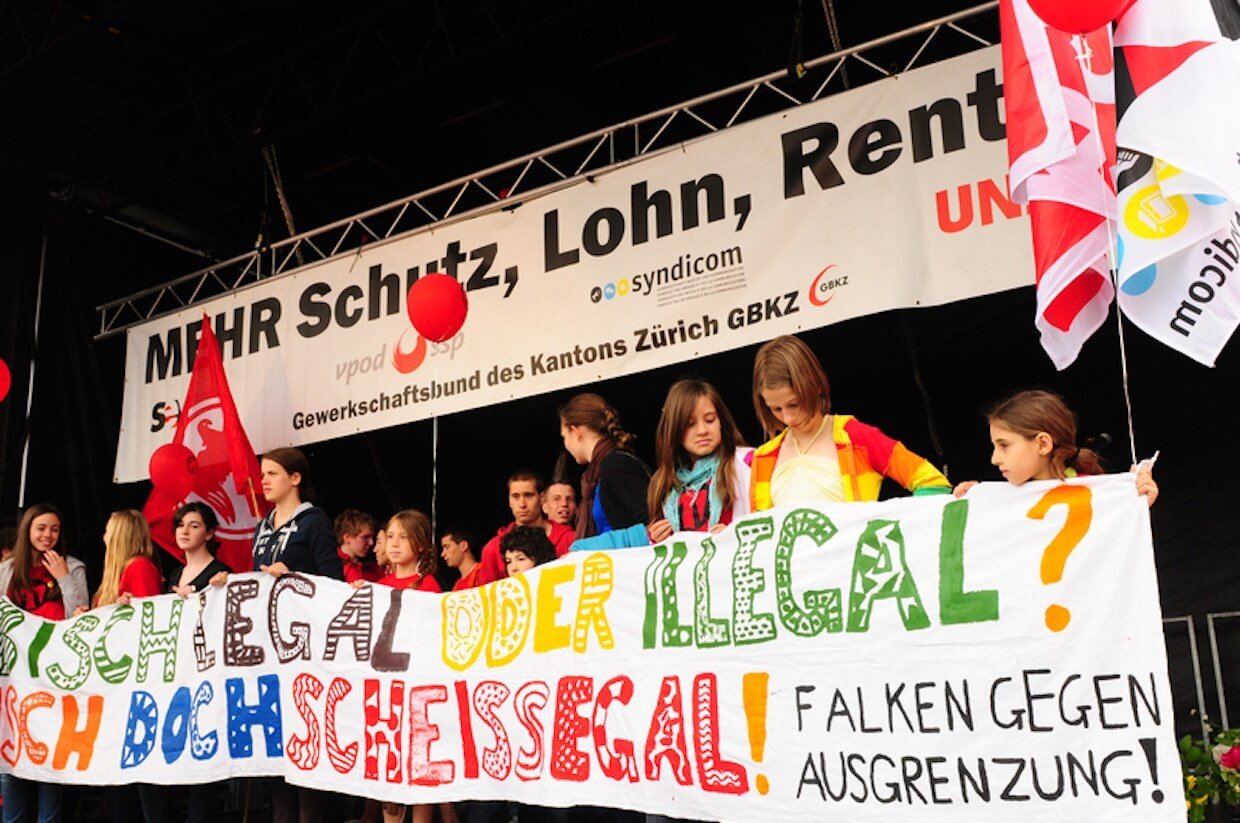
Across Europe, populist radical-right parties increasingly frame immigration not merely as an economic issue but as a question of national identity, demographic survival, and cultural continuity. How closely does the Swiss case resemble developments in countries such as France, Italy, Austria, Germany, and the Netherlands?
Professor Georg Lutz: I would probably argue that this is not necessarily a new development. It has been the defining feature explaining the success of many right-wing parties: their ability to frame migration as a cultural threat, as a threat to the cultural identity of a country. But I do believe it also goes, to some extent, a little beyond this.
There is also a perceived economic threat among part of the population, mainly those from lower income and educational backgrounds. That’s also usually the type of electorate that votes for radical right-wing parties, and it used to be, in many Western countries, a traditional social democratic stronghold. So, it’s not just cultural; it also has an economic component.
What was interesting in this campaign—and I, maybe, should have mentioned it before—is that there was also, for the first time, quite a strong debate about the need for immigration. All populations in European countries are aging. There is a demographic change. Viewing immigration as something that is also necessary for the labor market was quite prominent in this debate, and it is also one of the features that probably explains the strong opposition, or majority opposition, to this vote. So, we see a bit of a shift in this debate compared to what we have seen in previous times.
The Reality of Swiss Direct Democracy Is Far More Nuanced Than Its Critics Suggest
One of the recurring criticisms of direct democracy is that complex policy questions are often reduced to emotionally charged slogans and binary choices. Does the recent population referendum illustrate the strengths or the weaknesses of plebiscitary democracy?
Professor Georg Lutz: But, coming from Switzerland, we have a fairly relaxed approach to direct democracy. In Switzerland, you don’t find any politician who publicly opposes direct democracy. It’s so strongly embedded in the national identity and political culture, and Swiss people are quite proud of it. On the other hand, if you look abroad, direct democracy is indeed often seen as a threat and as an instrument of populism.
But, I think, the reality is much more nuanced if you look at what’s actually going on. On the one hand, direct democracy in Switzerland is very strongly interconnected with the representative system. The idea that outside political actors somehow dominate direct democracy with a populist agenda is far removed from reality. It is parties—even established parties—that usually launch direct democratic initiatives. They are also part of the campaign. All the major interest groups that intervene in the representative system are likewise part of the direct democratic campaign. So, there is a very strong interconnection.
It’s also important to say that, here, we are talking about popular initiatives—proposals that can be made by citizens with a certain number of signatures. They usually get defeated. Only about 10 percent, or one out of ten, ultimately find a majority. And usually, there is a ‘no’ vote, as was the case with this initiative.
The other thing is that if you assess the outcomes of direct democracy, you also have to assess them against the outcomes of representative democracy. You also see many radical right-wing parties pushing, sometimes successfully, for similar positions on immigration and anti-asylum-seeker policies. They, too, find majorities, and that has nothing to do with direct democracy.
Concerns About Minority Rights Are Real but Often Exaggerated
Switzerland is frequently celebrated as the world’s most advanced system of direct democracy. Yet critics argue that repeated referendums on immigration, asylum, religious minorities, and citizenship can place minority rights at the mercy of majority preferences. How serious is this concern in the Swiss context?
Professor Georg Lutz: It is a recurring concern in the Swiss context, but to some extent it is also kind of exaggerated. If you look at the track record, there have been some votes recently to ban minarets or burqas, and also some anti-immigration votes that found a majority. But they are still quite rare. There are also votes where minority protection is usually quite strong. When it comes to language minorities, there is broad acceptance that these minorities should be protected.
I think the problem is not so much direct democracy as such, but rather the absence of safeguards in the form of constitutional limitations. The constitution can be changed quite easily, and what is in the constitution cannot be challenged by any court. That is a defining feature of how the system is implemented in Switzerland.
But again, what is important is to consider what the benchmark is. Some similar initiatives, such as banning burqas, have passed in France or Denmark through purely representative systems, and these were indeed limitations on minority rights. Similarly, LGBTQ rights have been restricted in Poland and Hungary through purely representative systems. It happens, but it is not specific to direct democratic systems.
There Are Very Few Institutional Safeguards in the Swiss System
Some theorists warn of a potential tension between popular sovereignty and liberal constitutionalism. Can direct democracy become a vehicle through which majorities gradually undermine liberal norms and minority protections while remaining formally democratic?
Professor Georg Lutz: It can happen in theory because, as I just mentioned, Switzerland has very few limitations. Only binding international law—such as prohibitions against genocide or torture—is really excluded from being the subject of a popular vote, and even then, it requires a parliamentary decision. It’s not a court decision. Parliament could potentially decide that a proposal violates binding international law and, as a consequence, cannot be put to a vote. So, there are very few safeguards. As a result, there is, within this system, a kind of hope that voters are wise enough to respect minority rights, which, in fairness, in many cases also happens.
Campaigns Have Always Been About Mobilizing Emotions
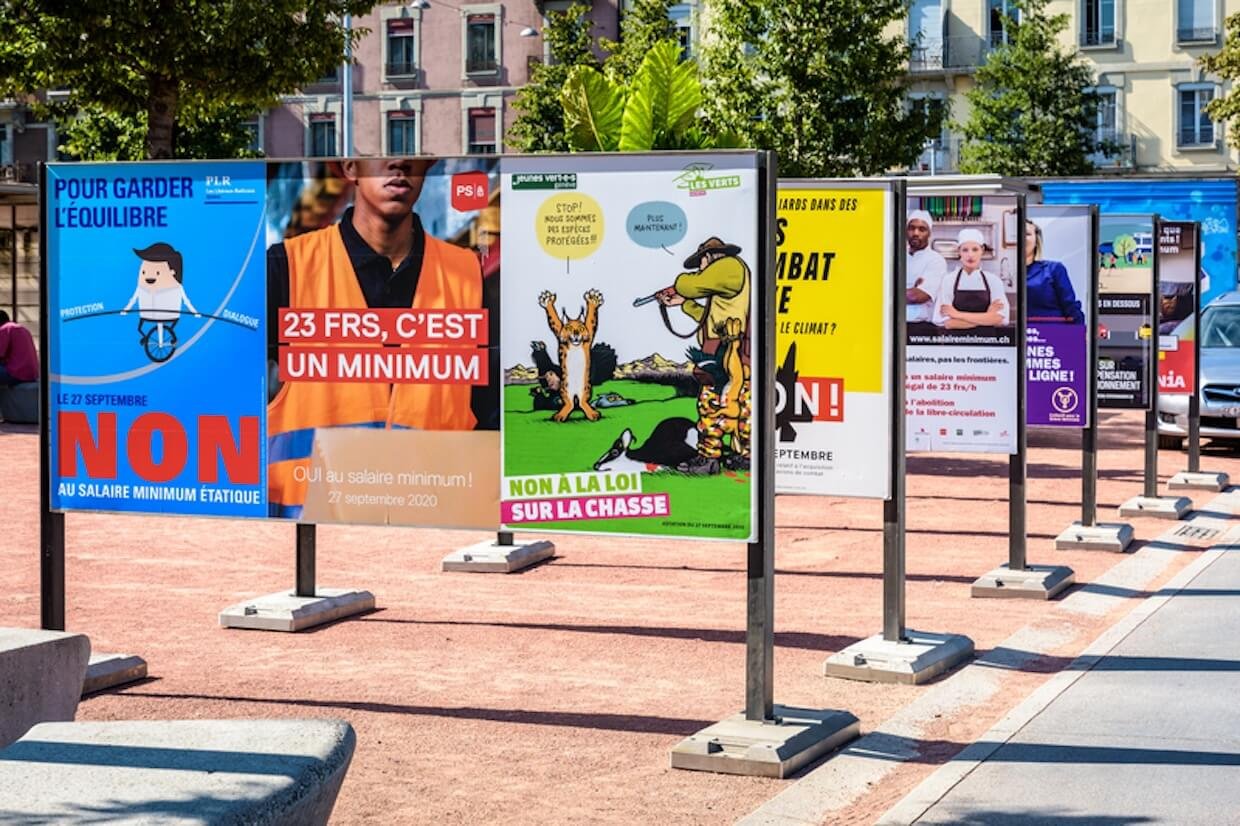
Your work on turnout and direct democracy suggests that information levels may matter as much as participation rates. In an era increasingly shaped by social media, misinformation, disinformation, manipulation, and political polarization, are contemporary referendums becoming more vulnerable to emotional mobilization and simplistic narratives?
Professor Georg Lutz: I also studied history at some point in my life, and I would argue that campaigns—whether in direct democracy or in elections—have never really been the moment when a sophisticated exchange of arguments and public deliberation takes place. They are always the moment when parties or campaigners try to steer emotions and mobilize people, and that’s something you usually do with emotions rather than with complicated arguments. In fairness, this is not a unique feature of the radical right. Left parties have been doing this for more than 100 years as well, if you look at some campaigns in the early twentieth century.
There is, nevertheless, a big difference in how this is done between left- and right-wing parties. Right-wing parties use a lot of elements of exclusion and construct politics in terms of “us against the other,” and that is typically not what left parties do. They are much more likely to campaign on other dimensions, such as the idea that certain proposals threaten people’s well-being. That is the big difference—not that campaigns are trying to be emotional.
Much of Direct Democracy’s Influence Is Indirect Rather Than Direct
Many populist actors claim that referendums represent the purest expression of “the will of the people.” Do you agree that direct democracy offers a corrective to representative institutions, or does this claim underestimate the complexity and diversity of modern societies?
Professor Georg Lutz: It probably does. As I argued before, the outcomes of direct democratic decisions are often quite similar to the outcomes and decisions you could see in purely parliamentary systems, in any direction. So, in a way, the people are not fundamentally different from what elites choose.
I think that’s a strong argument in Switzerland. A lot of the effects of direct democracy are indirect. In any parliamentary decision and parliamentary deliberation, it is known that any law must potentially pass a majority in the population. So that often leads to oversized majorities in Parliament because it is known that, if there is a narrow result, it may lead to a referendum, and there is a risk that the proposal will be defeated. In that sense, referendums create indirect reality checks all the time. But they also, of course, create quite direct reality checks, because a proposal is either approved by Parliament or not. In terms of initiatives, the people, then, vote in favor of or against them.
Direct Democracy Both Empowers and Constrains Populism
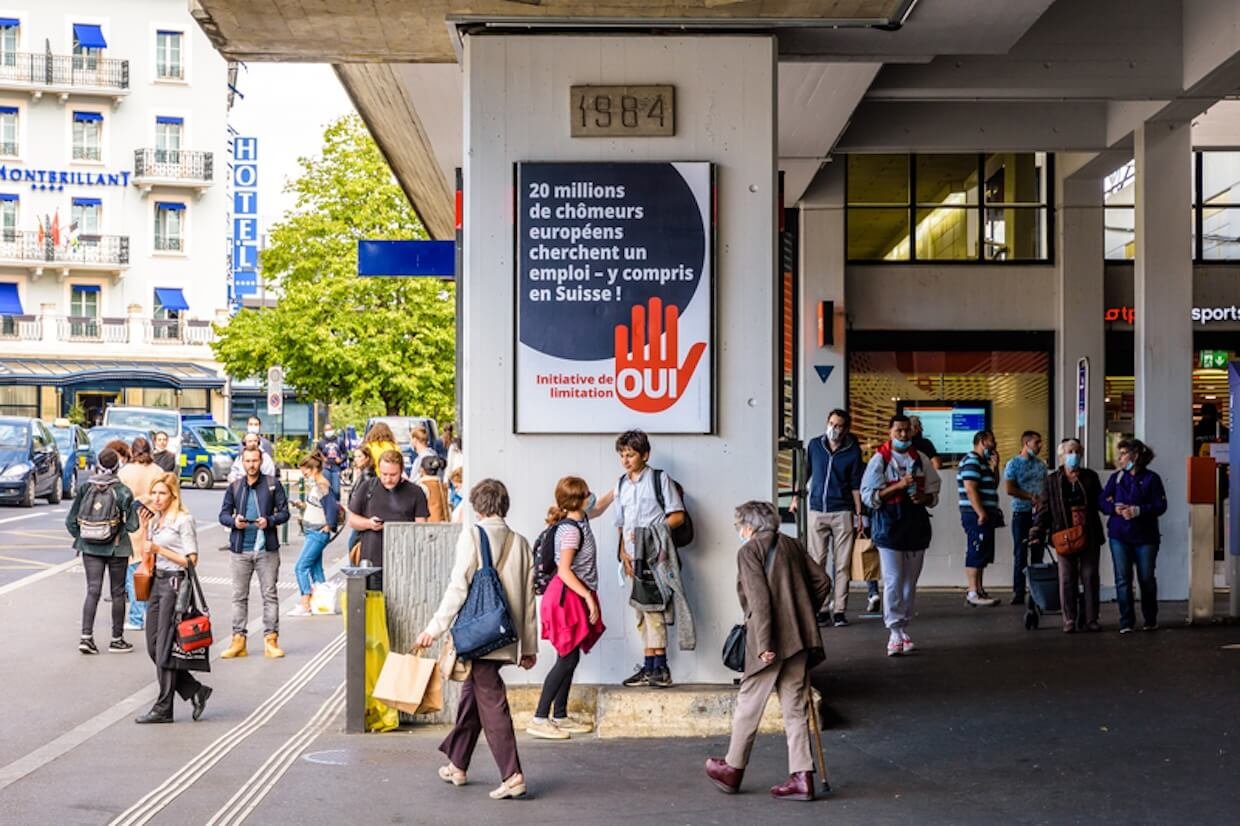
Switzerland’s direct-democratic institutions are often presented as antidotes to populism because they provide citizens with regular opportunities to express grievances. Yet populist parties have also become some of the most successful users of these instruments. Does direct democracy ultimately contain populism or empower it?
Professor Georg Lutz: Again, it’s both. Direct democracy has been used by populist parties on the right and on the left, more so than by centrist parties or interest groups. They use it for agenda setting, and they also use it to try to push their proposals and find a majority in the population.
On the other hand, and this is really interesting, what happens constantly in Switzerland is that whenever there is a protest movement of any kind, it immediately becomes the subject of a public debate. The response is essentially: sure, it’s an interesting proposal—try to find a majority.
What then happens is that these groups start collecting signatures, which is a demanding logistical and, to some extent, financial endeavor. The proposal then enters a parliamentary decision-making process. It cannot be stopped by Parliament or the government, but both Parliament and the government issue recommendations. Sometimes they also formulate counter-proposals.
Then it comes to a vote. So, these kinds of protests are immediately channeled into institutionally embedded mechanisms that form part of the direct democratic decision-making process. Because the process takes so long—usually several years between the launch of an initiative and the final vote—it also modulates and dampens, to some extent, very heated movements.
You Cannot Defeat Populists by Dismissing People’s Concerns
Recent research, including work to which you have contributed, links political distrust, life dissatisfaction, and anti-immigration attitudes to support for right-wing populist parties. To what extent is contemporary populism driven less by ideology than by broader feelings of dissatisfaction and alienation?
Professor Georg Lutz: It’s probably both, assuming that I would call nationalism an ideology, which you could probably argue against. But it has many defining features of an ideology, and it is what right-wing populist parties are capitalizing on. They are trying to mobilize those who are dissatisfied with the establishment and the elite, as well as those who feel disadvantaged in the labor market, also compared to foreigners, and threatened by globalization. These are all issues that these parties put forward.
To some extent, the causality actually goes the other way around. Right-wing populist parties constantly convey the message that voters should be dissatisfied with governments, the establishment, and immigration, so that’s also part of the connection. That’s why some of their voters hold such strong views.
But, in fairness, I would nevertheless argue that there is also a political economy of radical right-wing voting. It’s not just a purely cultural issue. The cultural dimension is what drove the success of these parties, and it remains quite dominant. At the same time, many people feel left behind by the establishment, also economically. So, they have concerns, whether perceived or real is a different debate. Often, especially in Switzerland, which has such a low unemployment rate, it is much more a perception of threat than an actual threat.
But I also think this is important to take seriously. And there is a lesson here for other parties that disagree with this notion of grievance: they need to provide answers to these perceived threats as well. You can’t simply say that populist right-wing parties are wrong. These concerns exist, and you have to offer an alternative if you want to be successful against populist right-wing parties.
Mass Voting Remains the Most Democratic Form of Participation
Looking beyond Switzerland, many governments are experimenting with referendums, citizen assemblies, deliberative mini-publics, and other participatory innovations. Which of these mechanisms do you believe are most promising for strengthening democratic legitimacy without sacrificing minority protections?
Professor Georg Lutz: Overall, a lot of countries would benefit from having more meaningful referenda. A lot of referenda are not simply bottom-up instruments; they are often top-down instruments used by governments to legitimize their own propositions. But, referenda can be a good mechanism if they are well moderated and integrated into the broader decision-making process on key issues. Everybody has become a bit worried since Brexit that things can go wrong—and can go horribly wrong. But there are also cases where referenda work quite well at the national level. To some extent, they are more transparent than parliamentary decision-making, where the influence of lobbies is often enormous and quite well hidden. In direct democracy, that influence comes to light more prominently.
I’m a bit more skeptical about other forms of participatory democracy, such as mini-publics or deliberative citizens’ assemblies. They are very difficult to scale up. They tend to become isolated features, and it is hard to make them a systematic part of decision-making. They also lack the legitimacy needed for decision-making because participation is usually limited to a selected number of people, and that’s not sufficient to make binding decisions.
One thing I am also somewhat skeptical about is that the moment these forms of participatory democracy become truly meaningful, they would likely be hijacked by established political actors. That’s what happens in direct democracy. Direct democracy has very little to do with “the people.” To a large extent, it is an elite instrument used by the same actors who are part of any representative system. I always worry that if these forms of decision-making become meaningful, you would see the same thing happening.
Then there is one final reason why I remain somewhat skeptical. There is a paradox of participatory democracy. The more forms of participation you introduce—and especially when those forms are demanding, as citizens’ assemblies are, requiring people to deliberate for several hours or even days—the more selective they become. As a result, they tend to become biased toward those who are already more interested and engaged.
There is a risk—it does not have to happen, but it is a risk—that new forms of participation simply create additional channels for those who already participate more. It is very difficult to design mechanisms that genuinely give voice to the underrepresented in these forms of decision-making. So, mass decision-making processes, such as voting in elections or referenda, remain by far the most democratic.
Switzerland’s Direct Democracy Was a Historical Accident
Some observers argue that Europe is witnessing a gradual transition from representative democracy toward increasingly plebiscitary forms of politics. Do you see this as a democratic renewal or as a development that could unintentionally strengthen majoritarian and populist tendencies?
Professor Georg Lutz: I’m not sure that I can really see a big, strong push in that direction. Referenda are certainly happening, but they were happening in previous decades as well, so it is not as if there has been a massive increase. You also see other forms of participatory democracy emerging, but I have not seen them becoming a systematic part of decision-making processes. I do see potential there, but we also have to be realistic. Political institutions are shaped by elites and political actors, and they always do this in ways that maximize their influence. This is not something new. It has been a defining feature of institutional engineering from the very beginning.
To some extent, the fact that Switzerland has so much direct democracy is a historical accident. It was adopted at a very early stage, when political parties were not yet strong and dominant actors. And once established, the country never got rid of it. That is the key reason why this is not happening in many other countries. Existing elites control decision-making, including decisions about political institutions, and as a consequence, they do not want to give up power—especially power that they cannot easily control.
As a result, I don’t really see this happening on a widespread scale, neither in the form of referenda nor through any other form of political participation.
Being in Government Has Not Weakened Swiss Right-Wing Populism
Comparative research often finds that voters support populist parties for different reasons across countries. What aspects of the Swiss experience are genuinely unique, and what broader lessons does it offer for understanding the rise of the populist radical right across liberal democracies?
Professor Georg Lutz: What is unique in Switzerland is that you can be a populist right-wing party using direct democracy while being in government. The Swiss People’s Party is the strongest party and has been in government all along. The lesson from this is that there are hopes and ongoing discussions suggesting that, once right-wing populist parties are integrated into government, they become more moderate. There is also an expectation that they will become less popular because they usually cannot deliver on the promises they put forward—which is actually the case for most parties, not just populist right-wing parties. But we don’t see this happening in Switzerland. They remain strong, they maintain their position, they do not become more moderate, and they often do not get blamed for failed policies.
Information Fragmentation and Distrust Are Bigger Threats Than Institutional Design
And lastly, Professor Lutz, looking ahead, how do you foresee the relationship between direct democracy and liberal democracy evolving over the next decade? Are mechanisms of direct citizen participation likely to become safeguards against democratic backsliding, or could they increasingly become instruments through which illiberal and exclusionary projects gain legitimacy?
Professor Georg Lutz: Again, as I just argued, I don’t see a big push toward direct democracy for all the reasons I have already mentioned. As I’ve also tried to highlight, I have a pretty pragmatic view. Direct democracy is not a major threat to representative democratic systems, but neither is it much of a cure. It can certainly become part of a political decision-making system, but it is never going to fundamentally change how decision-making is conducted. In fairness, I also don’t see the greatest threat to our democracies today in the form of decision-making itself.
The biggest threat lies in the fragmentation of the information system, fueled by social media platforms and the algorithms that, to some extent, drive polarization. None of this is transparent, and it is very difficult to understand what is actually going on. There is also the spread of misinformation, increasingly facilitated by AI systems that can produce and distribute it in an automated and controlled way. As a result, we no longer have the common understanding of facts or major trends that existed for a long time.
The other major threat I see is that some parties, particularly on the right, seek to systematically undermine the credibility of and trust in key democratic institutions. You see this most clearly in the United States, where attacks on the media, the courts, electoral integrity, and the electoral system have been extremely systematic.
This creates a climate of distrust toward the foundations of democracy and democratic institutions that will be difficult to repair. Rebuilding that trust will take considerable time and require a strong effort. But again, this is something that is largely disconnected from the decision-making process and from direct democracy itself. It is something we see in Switzerland just as we see it in any other form of democracy.