Please cite as:
ECPS Staff. (2026). “Keynote by Professor Staffan I. Lindberg: The Chicken-and-Egg Dilemma — Systemic Crises and the Rise of Populism.” European Center for Populism Studies (ECPS). April 28, 2026. https://doi.org/10.55271/rp00148
The opening session of the ECPS Fifth Annual International Symposium offered a timely and intellectually rigorous entry point into one of the central dilemmas of contemporary politics: how liberal democracy can be defended, renewed, and reimagined amid systemic crisis and accelerating autocratization. Moderated by Professor Ibrahim Ozturk, the session combined normative urgency with empirical depth. In her opening remarks, Irina von Wiese underscored the geopolitical immediacy of democratic strain, while Professor Staffan I. Lindberg’s keynote, grounded in V-Dem data, traced the global scale of democratic erosion and challenged simplistic readings of populism by foregrounding anti-pluralism as a more precise analytical category. The discussion that followed further enriched the session, probing the measurement, lived experience, and reversibility of democratic decline across contexts.
Reported by ECPS Staff
The opening session of ECPS Fifth Annual International Symposium opened on April 21, 2026 within a carefully structured intellectual framework that brought together empirical rigor, normative urgency, and interdisciplinary reflection. Moderated by Professor Ibrahim Ozturk, the opening segment of the symposium set out to interrogate one of the defining challenges of contemporary politics: how liberal democracies can be reformed and safeguarded in an era marked by systemic crises, populist mobilization, and intensifying pressures on institutional resilience.
From the outset, the session positioned itself at the intersection of scholarly analysis and real-world political developments. The framing emphasized that democratic backsliding is no longer a peripheral or regionally confined phenomenon, but a global trend with profound implications for governance, legitimacy, and international order. In this context, the symposium’s thematic focus—linking systemic crises to populism and democratic resilience—provided a coherent lens through which to examine both structural drivers and political responses.
The opening remarks by ECPS Honorary President Irina von Wiese underscored the urgency of the moment, situating the symposium within a rapidly evolving geopolitical landscape. Her reflections highlighted the accelerating pace of political change, particularly in transatlantic relations, and the difficulty of keeping analytical frameworks aligned with unfolding realities. This sense of temporal compression—where events outpace interpretation—reinforced the need for sustained, collective intellectual engagement.
The keynote address by Staffan I. Lindberg, Professor of Political Science, University of Gothenburg, Founding Director (2012–2025) of V-Dem Institute, further anchored the session in empirical analysis, offering a data-driven diagnosis of global democratic decline. By questioning conventional interpretations of populism and emphasizing the role of anti-pluralism, the keynote set the stage for a deeper exploration of the mechanisms underlying democratic erosion.
The discussion segment that followed extended the analytical depth of the opening session by bringing empirical findings, methodological concerns, and lived political experience into direct dialogue. Participants engaged critically with the keynote’s claims, probing the interpretation of data, the pace and nature of democratic decline, and the conditions under which institutional resilience may still operate. The exchange moved fluidly between macro-level indicators and context-specific realities, revealing both the strengths and limits of comparative measurement in capturing complex political transformations. In doing so, the discussion underscored a central theme of the symposium: that understanding democratic backsliding requires not only robust data, but also careful attention to institutional nuance, temporal dynamics, and the contested nature of political change.
Taken together, the opening session established both the analytical foundations and the normative stakes of the symposium. It framed the subsequent discussions around a central tension: while the challenges facing liberal democracy are systemic and far-reaching, the possibilities for resilience and renewal remain contingent on timely, informed, and collective responses.
Opening Remarks

Irina von Wiese: Collective Intellectual Engagement in an Age of Uncertainty
At the opening of the ECPS Fifth Annual International Symposium, ECPS Honorary President Irina von Wiese set a reflective yet urgent tone, situating the event within a rapidly shifting global landscape marked by political volatility and democratic uncertainty. Addressing a geographically dispersed audience, she welcomed participants with a sense of continuity—recalling previous in-person gatherings—while underscoring the heightened significance of this year’s theme: reforming and safeguarding liberal democracy amid systemic crises, populism, and pressures on democratic resilience.
Her remarks were anchored in the immediacy of unfolding geopolitical transformations. Drawing on the recent launch of ECPS’s annual report on transatlantic relations—presented in Brussels and subsequently in Washington, D.C.—she emphasized how swiftly the international environment has evolved, to the point that even the most up-to-date analyses risk rapid obsolescence. This acceleration of change, particularly in relations between the United States and Europe, was described as both profound and disorienting, challenging not only scholars but also policymakers striving to interpret and respond to events in real time.
A central thread in her intervention was the interplay between domestic political dynamics and global geopolitical shifts. Developments within major democratic actors, especially the United States and European Union member states, were identified as key drivers reshaping international alignments. Within Europe itself, she noted ongoing political flux, including leadership changes and the persistent influence of populist forces, suggesting that the broader trajectory remains tilted toward autocratization rather than democratic renewal.
While deferring to the scholarly expertise of the symposium’s participants, von Wiese highlighted the normative and practical urgency of the symposium’s core question: whether contemporary populist surges signal a failure of liberal democracy or reflect more complex, reciprocal dynamics between institutions and political mobilization. This question, she implied, resists simplistic causal narratives and demands sustained interdisciplinary inquiry.
Importantly, her reflections were not confined to abstract analysis but grounded in lived political experience. Referencing her engagement in local electoral campaigning in the United Kingdom, she illustrated how broader patterns of populist mobilization are increasingly evident even in contexts once considered relatively resilient. Conversations with voters revealed familiar themes—disaffection, polarization, and shifting political allegiances—underscoring the diffusion of populist dynamics across national contexts.
In closing, von Wiese reaffirmed the value of collective intellectual engagement at a moment of uncertainty. By bringing together scholars and practitioners, the symposium was framed as a necessary space for critical reflection, exchange, and the generation of ideas capable of informing both academic debate and political practice.
Keynote Speech
Professor Staffan I. Lindberg: “The Chicken-and-Egg Dilemma: Systemic Crises and the Rise of Populism”
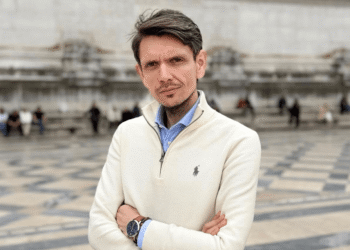
Professor Staffan I. Lindberg delivered a comprehensive and empirically rich keynote that addressed one of the most pressing questions in contemporary political science: how should we understand the relationship between systemic crises and the rise of populist—or more precisely, anti-pluralist—politics? Framed as a “chicken-and-egg dilemma,” the lecture did not seek a simplistic causal answer. Instead, it mapped a complex, mutually reinforcing relationship between structural transformations, political agency, and institutional erosion, grounded in extensive cross-national data and longitudinal analysis.
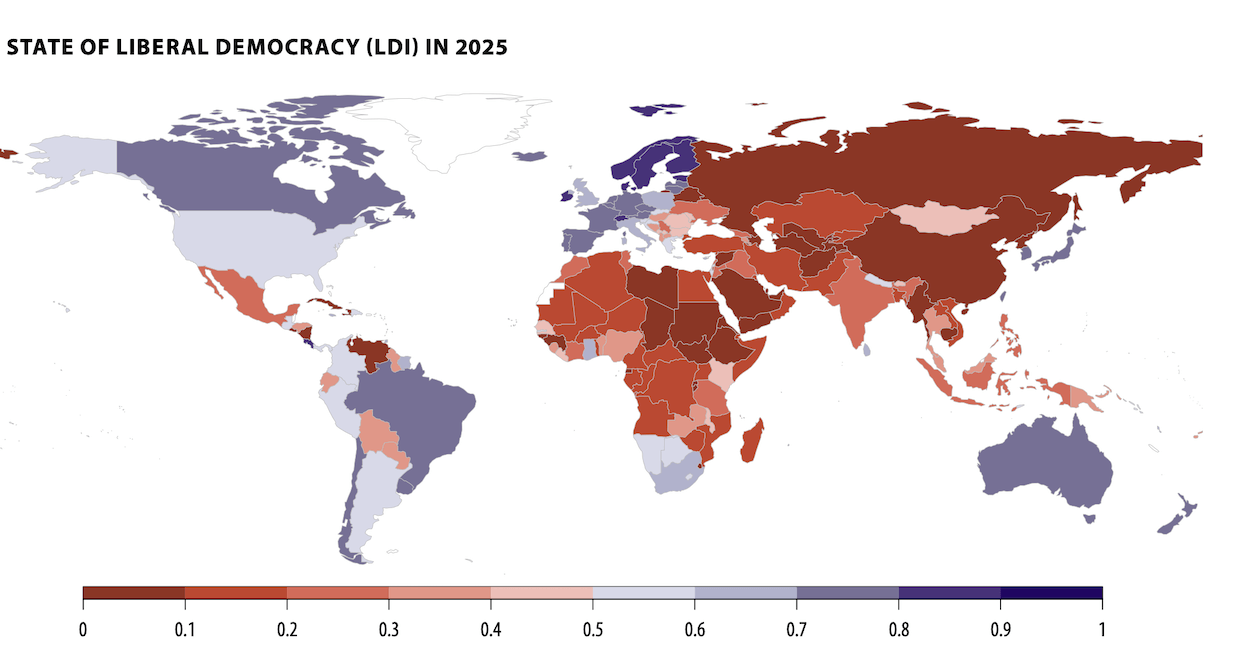
Professor Lindberg began by situating his remarks within the broader findings of the V-Dem Institute’s 2026 Democracy Report, drawing on an expansive dataset that captures global developments in democratic governance, civil liberties, and institutional integrity. He presented a stark visual overview: a world increasingly marked by autocratization. Compared to the optimism that followed the “third wave” of democratization—beginning in the mid-1970s and extending through the end of the Cold War—the contemporary landscape is characterized by a reversal of democratic gains. The spread of red across global maps, indicating declining democratic quality, is not merely symbolic but empirically substantiated.
Yet, as Professor Lindberg emphasized, the interpretation of this decline depends critically on how democracy is measured. Conventional country-averaged indicators suggest a gradual, statistically significant downturn over the past two decades. On the surface, this might appear concerning but not catastrophic. However, such averages treat all countries equally, regardless of population size or global influence. This methodological limitation, he argued, obscures the true magnitude of the crisis.
When democracy is measured in terms of the average citizen’s experience—weighting countries by population—the picture changes dramatically. Under this lens, global democratic standards have regressed to levels last seen in the late 1970s. This implies that the cumulative gains achieved during decades of democratization have effectively been erased for the majority of the world’s population. Alternative weightings, including territorial size and share of global GDP, further reinforce this conclusion. In particular, the GDP-weighted measure reveals that economic power is increasingly concentrated in less democratic contexts, underscoring the geopolitical implications of democratic decline.
The New Era of Accelerating Autocratization
From this perspective, Professor Lindberg advanced a central claim: the world is experiencing a systemic crisis of democracy. This is not a localized or temporary fluctuation but a structural transformation affecting a majority of the global population. Indeed, approximately three-quarters of humanity now live under autocratic regimes. Such a statistic, he suggested, fundamentally alters the baseline assumptions of both scholarly analysis and policy discourse.
To deepen this diagnosis, the keynote shifted from static measurements to dynamic processes. Rather than focusing solely on aggregate levels of democracy, Professor Lindberg examined the number of countries actively democratizing or autocratizing at any given time. This approach revealed a striking asymmetry. During the mid-1990s, the peak of the third wave, over 70 countries were simultaneously advancing democratic reforms. Today, that number has dwindled to fewer than 20. In contrast, the number of countries undergoing autocratization has risen sharply, reaching levels unprecedented in modern history.
This comparative perspective led to one of the keynote’s most provocative assertions: the current wave of autocratization surpasses that of the 1930s in both scale and intensity. While acknowledging differences in the number of sovereign states across periods, Professor Lindberg noted that the proportion of countries and the share of the global population affected by democratic decline are now higher than during the interwar era. Moreover, the duration of the current trend—spanning approximately 25 years—exceeds that of earlier waves, suggesting a more entrenched and potentially more resilient pattern.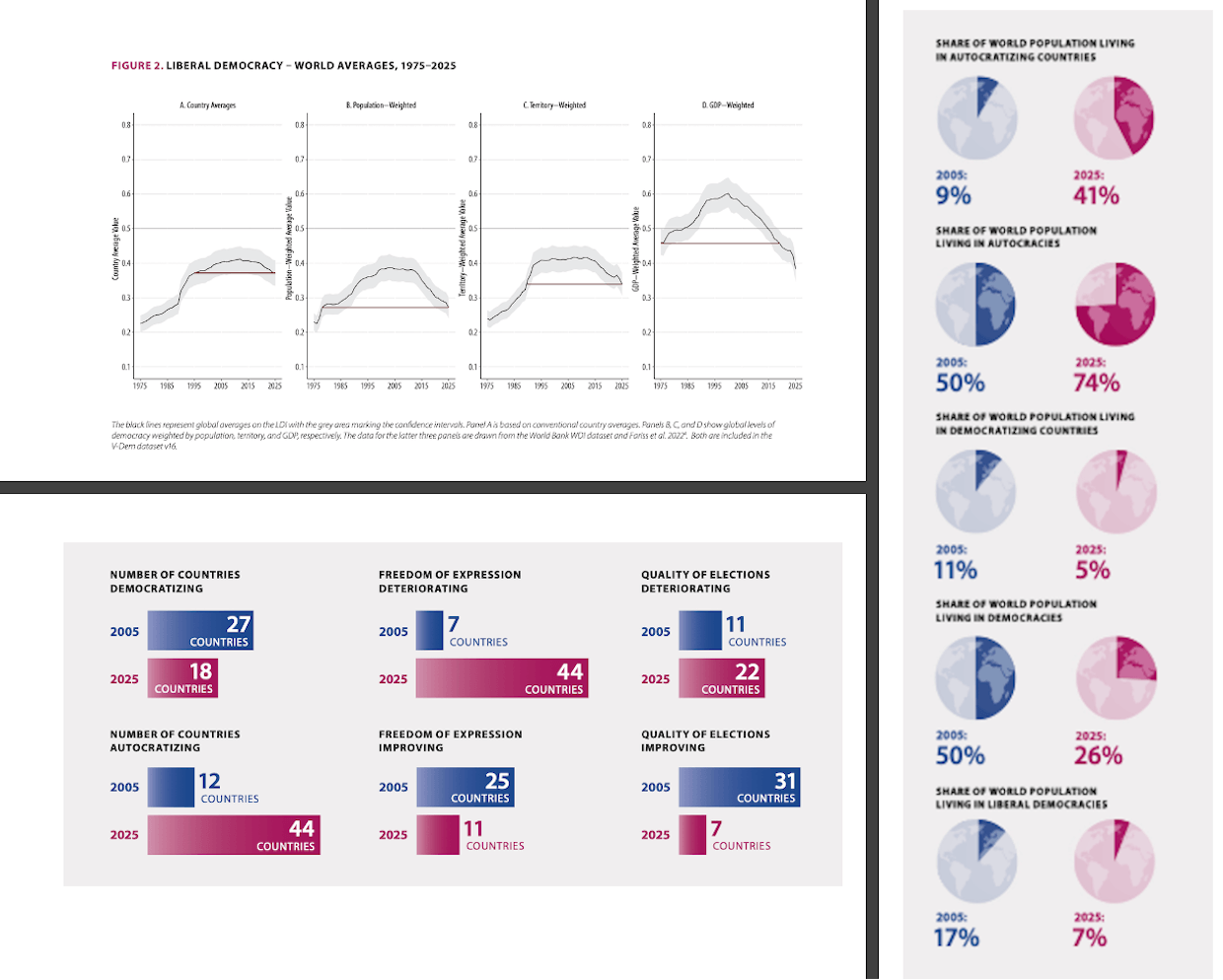
The cumulative nature of this transformation was further illustrated through a longitudinal analysis of autocratization episodes since the year 2000. Over this period, approximately 85 countries—nearly half of the world—have experienced significant democratic erosion. Importantly, the majority of these countries remain less democratic today than they were at the onset of the century. Even in cases where temporary reversals have occurred, the overall trajectory remains downward.
Democratic Resilience Amid Global Decline
Despite this bleak global picture, Professor Lindberg acknowledged instances of democratic recovery. Countries such as Brazil and Poland were highlighted as examples where broad-based political coalitions succeeded in reversing autocratizing trends. These cases demonstrate that democratic resilience is possible, particularly when diverse political actors unite around a shared commitment to institutional norms. However, such reversals remain the exception rather than the rule.
Having established the scale and depth of the crisis, the keynote turned to its underlying drivers. Professor Lindberg identified two interrelated mechanisms as particularly significant: the spread of disinformation and the intensification of political polarization. Drawing on both macro-level patterns and a growing body of micro-level experimental research, he argued that these factors play a central role in facilitating autocratization.
The relationship between disinformation and democratic decline is not merely correlational but strategic. In autocratizing contexts, governments and aligned actors systematically increase the production and dissemination of misleading or false information. This is not an accidental byproduct of political competition but a deliberate tactic. By flooding the information environment with contradictory narratives, these actors undermine citizens’ ability to distinguish between truth and falsehood. The resulting epistemic uncertainty erodes trust in institutions, media, and even the possibility of objective knowledge.
This process, Professor Lindberg suggested, has profound psychological effects. Faced with uncertainty about fundamental issues—national identity, economic prospects, security—individuals may become more receptive to appeals for strong leadership. In such contexts, the promise of clarity and decisiveness can outweigh concerns about democratic norms. Disinformation thus creates the conditions under which anti-democratic appeals become politically effective.
Disinformation, Polarization, and Democratic Breakdown
The second stage of the process involves the targeted use of disinformation to delegitimize political opponents. By portraying adversaries as existential threats—enemies of the nation, culture, or way of life—political actors can intensify polarization to a “toxic” level. At this point, the boundaries of legitimate political competition collapse, and the exclusion or repression of opposition becomes justifiable in the eyes of supporters. This dynamic, in turn, facilitates the concentration of power and the erosion of democratic checks and balances.
Importantly, Professor Lindberg cautioned against attributing these developments solely to “populism.” While the term is widely used to describe contemporary political movements, he argued that it lacks sufficient conceptual precision. Instead, he proposed focusing on “anti-pluralism” as the key analytical category. Drawing on data from the V-Party project, he demonstrated that political actors who reject pluralism—manifested in rhetoric that delegitimizes opposition, undermines democratic procedures, and concentrates authority—are significantly more likely to initiate autocratization once in power.
This finding has important implications. While populist rhetoric may coexist with anti-pluralist tendencies, it is not in itself a reliable predictor of democratic breakdown. Rather, it is the erosion of pluralist commitments—the willingness to accept political competition, institutional constraints, and the legitimacy of dissent—that signals the greatest danger. In this sense, anti-pluralism represents a more precise and normatively grounded concept for analyzing contemporary democratic challenges.
Empirical Evidence of Anti-Pluralist Democratic Decline
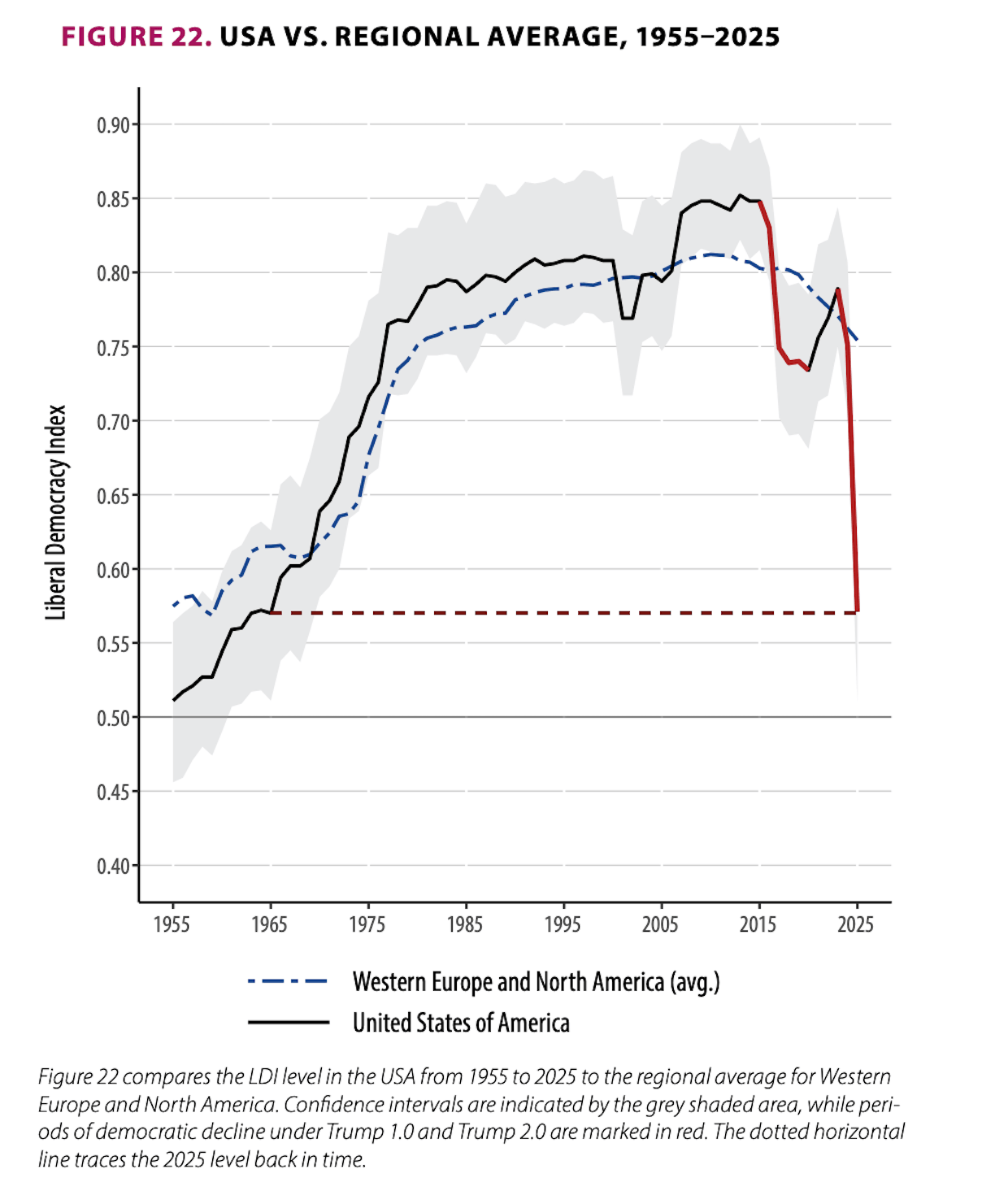
The empirical analysis supporting this argument was extensive. By operationalizing indicators derived from classic theoretical frameworks, including Juan Linz’s work on democratic breakdown, Professor Lindberg and his colleagues were able to track the evolution of party rhetoric over time. The results revealed a strong and consistent relationship between anti-pluralist discourse and subsequent democratic decline. This pattern holds across regions and political systems, underscoring its general applicability.
A particularly striking illustration of these dynamics was provided through the case of the United States. Using the Liberal Democracy Index, Professor Lindberg traced a sharp decline in democratic quality in recent years. While acknowledging the historical resilience of American institutions, he argued that the scale and speed of the current erosion are unprecedented. When compared to other cases of autocratization—such as Hungary, Turkey, and India—the United States stands out for the rapidity of its decline.
In comparative terms, the extent of institutional erosion observed in the United States over approximately one year is equivalent to processes that took several years in other countries. This includes the weakening of judicial independence, constraints on media freedom, and the concentration of executive power. Such developments, he noted, are not isolated but part of a broader pattern of executive aggrandizement—a gradual but systematic dismantling of democratic safeguards.
To convey the magnitude of this shif, Professor Lindberg drew a historical parallel with the early years of authoritarian consolidation in 1930s Germany. While careful to distinguish between contexts, he emphasized that the comparison is based on measurable indicators rather than rhetorical analogy. In terms of the speed and depth of democratic decline following an electoral victory, the current US trajectory is among the most dramatic recorded in modern datasets.
At the same time, the keynote emphasized that these processes are neither inevitable nor irreversible. The existence of democratic recoveries, albeit limited, points to the the importance of political agency and institutional resilience. Broad coalitions, civil society mobilization, and the defense of pluralist norms can counteract autocratizing trends. However, such efforts require both analytical clarity and sustained commitment.
Mutual Reinforcement of Crisis and Anti-Pluralism
In concluding his remarks, Professor Lindberg returned to the “chicken-and-egg” dilemma. Rather than resolving it definitively, he suggested that systemic crises and anti-pluralist mobilization are mutually constitutive. Economic inequality, cultural anxiety, and geopolitical instability create fertile ground for political actors who exploit division and uncertainty. In turn, the strategies employed by these actors—disinformation, polarization, institutional manipulation—exacerbate the very crises that enabled their rise.
This recursive dynamic, he argued, lies at the heart of the current democratic crisis. Understanding it requires moving beyond simplistic narratives and engaging with the complex interplay of structure and agency. By combining large-scale data analysis with theoretical insight, the keynote provided a robust framework for such engagement.
Ultimately, Professor Lindberg’s address offered both a sobering diagnosis and a call to action. The erosion of liberal democracy is neither abstract nor distant; it is a lived reality for the majority of the world’s population. Yet the tools for understanding and responding to this challenge—empirical data, comparative analysis, and interdisciplinary dialogue—are more developed than ever. The task, as framed in this keynote, is to deploy these resources with urgency, precision, and a renewed commitment to the principles of pluralism and democratic governance.
Discussions
During the Q&A session, von Wiese opened the discussion by expressing strong appreciation for the V-Dem Institute’s work, highlighting its importance as a reliable empirical resource for both scholars and practitioners. She then raised a pointed methodological question concerning the visual representation of democratic decline, particularly the apparent similarity in how Russia and the United States were depicted in one of the keynote slides. While explicitly acknowledging the seriousness of democratic backsliding in the United States, she noted that assigning similar visual intensity to two historically and institutionally distinct cases seemed counterintuitive, and invited clarification on the underlying classification criteria.
Responding to this query, Professor Lindberg emphasized that different slides captured different dimensions of democratic change. He clarified that in the principal map depicting current levels of democracy, the United States is still categorized as a democracy—albeit a declining one—while Russia occupies a markedly lower position. He acknowledged ongoing scholarly debate on this classification, noting that some experts consider the United States to have already crossed into competitive authoritarianism. However, according to V-Dem’s methodology, electoral indicators—updated during election cycles—still sustain its formal democratic classification pending further data.
Turning to the slide likely referenced, Professor Lindberg explained that it illustrated not absolute levels of democracy but the magnitude of change over time. In this context, countries are visually grouped according to the extent of their democratic decline rather than their current regime type. As such, the United States and Russia may appear similarly marked because both have experienced substantial downward shifts, albeit from very different starting points. Crucially, he underscored that the United States, despite recent erosion, remains significantly more democratic than Russia at comparable points in its trajectory.
Institutional Dynamics and the Limits of Executive Power

The exchange between Professor Bruce E. Cain and Professor Lindberg brought into sharp focus an important tension between macro-level measurement and context-sensitive interpretation of democratic change. While both scholars agreed on the seriousness of contemporary democratic pressures, their dialogue revealed differing emphases regarding how to interpret the pace, depth, and institutional consequences of recent developments, particularly in the United States.
Professor Cain began by acknowledging the significance of Professor Lindberg’s research, while nonetheless expressing concern about what he perceived as potentially misleading visual representations. Speaking from the vantage point of lived political experience in the United States, he argued for a more nuanced reading of recent trends. In his view, it is essential to distinguish between rhetorical ambition, temporary political advantage, and enduring institutional transformation. While conceding that the trajectory described in the data might reflect the intentions of political leadership, he cautioned against equating those intentions with fully realized outcomes.
Central to Professor Cain’s intervention was the institutional variability of the American political system. He emphasized the importance of differentiating between periods of “trifecta” government—where executive and legislative power are unified—and periods of divided government. In an era of heightened polarization, he argued, these configurations produce more pronounced effects than in the past. Under unified control, executive authority can be rapidly expanded through coordinated legislative support and administrative action. However, this expansion is contingent rather than permanent. Once political control becomes divided, institutional resistance intensifies, slowing or reversing policy initiatives and reasserting checks and balances.
Professor Cain further highlighted the role of judicial processes, particularly the strategic use of procedural mechanisms such as the “shadow docket,” which can temporarily enable controversial executive actions. In his interpretation, some policies advanced under these conditions may ultimately be overturned, suggesting that the system retains corrective capacities. He also pointed to additional constraints—including public opinion, partisan opposition, and market reactions—that continue to shape political outcomes. Taken together, these dynamics suggest a more fluid and contested process than a linear model of democratic decline might imply.
In response, Professor Lindberg clarified that the contested visualizations were intended to capture the magnitude of democratic change rather than absolute regime equivalence. The similarity in color intensity, he explained, reflects the scale of decline relative to each country’s starting point, not a convergence in regime type. The United States, despite significant erosion, remains at a substantially higher level of democratic performance than historically autocratic regimes.
At the same time, Professor Lindberg defended the empirical basis of his broader argument, stressing that the pace and scope of institutional change in the United States are historically unprecedented. He pointed to the extensive use of executive orders, the shifting balance of power toward the presidency, and the systematic weakening of oversight mechanisms as indicators of substantial transformation. While acknowledging the presence of resistance and institutional friction, he maintained that these developments collectively represent a significant and measurable shift.
The exchange underscored the value of analytical pluralism. Professor Lindberg emphasized the importance of examining democratic change from multiple perspectives—both in terms of measurement and interpretation—while Professor Cain’s intervention highlighted the need to remain attentive to institutional dynamics and contextual variation. Together, their dialogue illuminated the challenges of capturing complex political realities through aggregate indicators, while reaffirming the importance of rigorous, multi-layered analysis in understanding contemporary democratic trajectories.
Erosion of Accountability in Practice
The discussion deepened as Professor Jack A. Goldstone entered the exchange, shifting the focus from methodological interpretation to the lived realities of political transformation in the United States. Speaking from his position in Washington, D.C., Professor Goldstone offered a vivid account of how institutional and symbolic changes are experienced on the ground, reinforcing and, in some respects, intensifying the concerns raised in the keynote.
He described a political environment marked by increasingly visible assertions of executive authority, from the personalization of public institutions to the reshaping of national symbols and spaces. These developments, he suggested, go beyond abstract indicators of democratic decline and manifest as tangible shifts in the character of governance and public life. Particularly striking in his account was the cumulative effect of such changes: taken individually, each might appear limited, but together they signal a broader reconfiguration of political norms.
Professor Goldstone placed special emphasis on pressures facing key pillars of democratic society, including universities, media, and civil liberties. He pointed to growing constraints on academic freedom, financial pressures on public institutions, and a climate in which both scholars and journalists may feel compelled to exercise caution in their speech. These dynamics, he argued, are compounded by structural changes predating the current administration, notably judicial decisions that have expanded executive immunity and facilitated the increasing influence of private and opaque funding in electoral politics. Such developments, in his view, have altered the institutional landscape in ways that extend beyond any single political actor.
While acknowledging the persistence of resistance, particularly at the level of state governments, local authorities, and lower courts, Professor Goldstone noted that these countervailing forces often face limitations, including judicial reversals and procedural constraints. The cumulative effect, he argued, is a system in which traditional mechanisms of accountability are increasingly strained, even if not entirely dismantled.
Responding briefly, Professor Lindberg affirmed the relevance of these observations, noting that many of the developments described are reflected in the empirical findings of the Democracy Report. He highlighted, in particular, the significance of recent judicial interpretations regarding presidential authority, which, in his assessment, effectively shift elements of legal accountability toward the executive. This, he suggested, represents not merely a policy shift but a structural reallocation of institutional power.
The Narrow Window for Democratic “U-Turns”
The discussion took a more forward-looking turn as Irina von Wiese raised the question of irreversibility in processes of democratic backsliding. Moving beyond diagnosis, her intervention focused on a critical concern for both scholars and practitioners: at what point does autocratization become so entrenched that democratic reversal is no longer realistically achievable through electoral means? Referencing recent political developments in Hungary and Poland, she highlighted both the possibility of reversal and the uncertainty surrounding its limits, asking whether there exists a threshold beyond which democratic recovery becomes unlikely.
In response, Professor Lindberg drew on empirical research conducted with colleagues on what he termed “U-turns,” or instances in which countries successfully reverse autocratizing trajectories. His findings suggest that such reversals tend to occur within a relatively narrow temporal window. Specifically, the likelihood of democratic recovery is highest within the first one or two electoral cycles following the onset of autocratization. Beyond this period, the probability declines sharply, indicating that time plays a decisive role in shaping political outcomes.
Professor Lindberg noted that cases such as Hungary, where a reversal occurred after a prolonged period of entrenched rule, are exceptional rather than typical. In most instances, once autocratizing actors consolidate control over key institutions, electoral competition becomes increasingly constrained, reducing the viability of democratic change from within the system. This observation aligns with broader research on electoral authoritarianism, which shows that repeated electoral cycles under such conditions tend to stabilize rather than undermine authoritarian rule.
Applying this framework to contemporary contexts, Professor Lindberg suggested that the window for democratic reversal in countries currently experiencing backsliding may be limited. Early intervention—whether through electoral mobilization, institutional resistance, or coalition-building—is therefore crucial. While he acknowledged that outcomes remain uncertain and contingent on multiple factors, the evidence points to a clear pattern: the longer autocratization persists, the more difficult it becomes to reverse.
Conclusion
The opening session of the ECPS Fifth Annual International Symposium made clear that the current crisis of liberal democracy cannot be understood through narrow institutional or purely electoral lenses alone. What emerged instead was a layered picture of democratic erosion as a structural, political, and epistemic process shaped by anti-pluralist mobilization, disinformation, polarization, and the weakening of institutional constraints. By placing empirical measurement in dialogue with political experience and comparative reflection, the session demonstrated that democratic backsliding is both globally patterned and nationally specific.
A particularly important contribution of the session lay in its refusal of easy binaries. Rather than presenting democracy and authoritarianism as fixed categories, the speakers and discussants illuminated the gradations, accelerations, and contingencies that define contemporary regime change. At the same time, the discussion underscored that analytical precision matters: the distinction between populism and anti-pluralism, between absolute democratic levels and the magnitude of decline, and between reversible erosion and entrenched authoritarian consolidation all bear directly on how the present moment is interpreted.
The session also highlighted that democratic resilience cannot be assumed as an automatic property of established institutions. It depends on timing, coalition-building, civic vigilance, and the continued legitimacy of pluralist norms. If autocratization is indeed cumulative and self-reinforcing, then democratic defense must be equally deliberate, coordinated, and sustained.
In sum, the opening session provided more than an introduction to the symposium. It established a conceptual and normative framework for the discussions that followed, reminding participants that the defense of liberal democracy demands not only diagnosis, but also intellectual clarity, institutional imagination, and political resolve.