Colombia’s 2026 presidential election has reignited fundamental debates about populism, democratic resilience, institutional legitimacy, and the future of representative democracy in Latin America. Is the country experiencing a conventional ideological shift, or does the election reveal a deeper transformation in democratic politics? In this ECPS interview, Professor Michael Shifter argues that Colombia’s election was driven less by ideology than by widespread anti-establishment sentiment rooted in persistent insecurity, weak state capacity, and public frustration with successive governments’ failure to deliver results. Examining the rise of security populism, the erosion of political moderation, the resilience of Colombian democratic institutions, and the evolving relationship with the United States, Professor Shifter offers a nuanced assessment of Colombia’s political trajectory and its broader implications for comparative studies of populism and democratic governance.
Interview by Selcuk Gultasli
Colombia’s 2026 presidential election marks one of the most consequential political turning points in contemporary Latin America, raising fundamental questions about populism, democratic resilience, institutional legitimacy, and the future of representative government. The election of Abelardo de la Espriella, following the historic presidency of Gustavo Petro, has frequently been interpreted as evidence of a regional shift from the left toward the populist radical right. Yet such an interpretation, while politically intuitive, risks overlooking the deeper structural forces reshaping democratic politics across the hemisphere. Is Colombia witnessing an ideological realignment, or does the election reveal something more profound about the changing nature of democratic representation itself? As insecurity, organized crime, institutional distrust, and dissatisfaction with political elites intensify across Latin America, electoral competition increasingly appears to revolve less around competing ideological projects than around public demands for effective governance, security, and political renewal.
Few scholars are better positioned to interpret these developments than Professor Michael Shifter, Adjunct Professor at the Center for Latin American Studies (CLAS) at Georgetown University and Senior Fellow at the Inter-American Dialogue. For decades, his scholarship has examined the intersections of democratic governance, state-building, political violence, US–Latin American relations, and institutional development. In this wide-ranging interview with the European Center for Populism Studies (ECPS), Professor Shifter offers a nuanced interpretation of Colombia’s election that challenges conventional narratives about ideological polarization and instead places anti-establishment politics at the center of democratic change.
Professor Shifter argues that the conventional interpretation of Colombia’s 2026 election as simply a shift from left to right overlooks a deeper transformation taking place in the country’s democratic politics. "The conventional narrative… is that we’re seeing a turn to the right… I think that’s only part of the story," he explains. "If we focus only on that, we’re missing something more profound and more fundamental," namely "profound discontent, widespread anger, and a strong anti-establishment sentiment." In his view, Abelardo de la Espriella’s victory represents not merely a rejection of Gustavo Petro’s left-wing government but the continuation of the same anti-establishment dynamic that first brought Petro himself to power in 2022. "It is not simply a shift from the left to the right," he observes, "but a continuation of anti-establishment politics."
Throughout the interview, Professor Shifter explores how declining confidence in traditional political parties, the rise of social media-driven campaigning, persistent insecurity, and frustration over governments’ inability to deliver tangible results are transforming democratic competition throughout Latin America. He explains why contemporary electoral behavior is increasingly shaped by emotional appeals rather than coherent political programs; why "security populism"has become an increasingly powerful electoral force; why the apparent rise of a unified global populist right often conceals significant ideological differences among its leaders; and why Colombia’s political center continues to erode under the combined pressures of institutional failure and rejectionist voting. At the same time, he cautions against reducing contemporary Latin American politics to simplistic ideological categories, emphasizing instead the diversity of populist experiences across the region.
Despite his concern about growing populist pressures, Professor Shifter ultimately offers a measured assessment of Colombia’s democratic future. One of the most important—and, in his view, most overlooked—developments of the Petro years was "the resilience of Colombian institutions: Congress, the courts, civil society, and the press." While acknowledging the serious challenges posed by insecurity, polarization, and anti-establishment politics, he concludes on a cautiously optimistic note, expressing confidence that Colombia’s democratic institutions remain capable of preserving constitutional order and maintaining effective checks and balances in the years ahead.
Here is the revised version of our interview with Professor Michael Shifter, edited lightly to enhance clarity, readability, and overall flow for publication.
The Real Story Is Colombia’s Deep Anti-Establishment Anger
Professor Shifter, welcome! Let me begin with your recent New York Times essay, in which you describe Colombia’s 2026 presidential election not simply as a swing from left to right but as "a leap into the void." Why do you believe this election represents something more profound than an ordinary alternation of power? What does it reveal about the current relationship between democratic representation, institutional legitimacy, and public demand for radical political change?
Professor Michael Shifter: The conventional narrative in Colombia, as well as in other recent elections in Latin America, is that we’re seeing a turn to the right, from governments of the left to governments of the right. I think that’s only part of the story. If we focus only on that, we’re missing something more profound and more fundamental, which is illustrated very clearly by Colombia’s recent election. That is the existence of profound discontent, widespread anger, and a strong anti-establishment sentiment.
If we look at the Colombian case in particular, we can go back to the elections four years ago, in 2022, with the election of Gustavo Petro from the left. It’s also worth remembering that his opponent in that election was Rodolfo Fernández, who was himself something of a political outsider and largely unknown. He lost the election, and Petro won, marking the first time Colombia had elected a leftist government. But that outcome clearly reflected widespread discontent with the establishment political parties and their failure to address the country’s profound problems.
Petro did some things that were positive. He put his finger on some legitimate grievances. He increased the representation and inclusion of previously excluded groups—Afro-descendants, Indigenous communities, women, and others who had long lacked access to political power in Colombia. That was an important achievement. But he also leaves behind a rather problematic record, particularly on the issue of security. We now see Abelardo de la Espriella tapping into that same discontent and anti-establishment sentiment, which is quite widespread in Colombia and elsewhere, and capitalizing on it very effectively and skillfully, principally through social media—not through a political party or any traditional organizational structure, but through social media.
So, I don’t think this is simply a turn toward a more conservative political option. It is, rather, a reflection of something much deeper: an anti-establishment sentiment that, in some ways, represents a continuity with Gustavo Petro. It is not simply a shift from the left to the right, but a continuation of anti-establishment politics.
Colombia demonstrated remarkable resilience under Petro, and the central question—which I try to highlight in that essay—is whether Colombia will be able to demonstrate the same resilience over the next four years under De la Espriella.
Frustration with Failed Governments Is Reshaping Democratic Competition
You argue that contemporary Colombian politics is increasingly driven by anti-incumbent sentiment rather than ideological commitment. To what extent does Colombia illustrate a broader transformation of democratic politics in which electoral behavior is shaped less by coherent political programs than by frustration, distrust, and a desire to punish governing elites?
Professor Michael Shifter: What we are witnessing, not only in Colombia but across Latin America and even globally, is politics that is driven and shaped less by coherent political platforms than by emotional appeals that tap into how people feel about not receiving the results that candidates promised on security, economic issues, and governance. It is also driven by the growing frustration that fundamental problems are not being addressed effectively or successfully. That’s precisely what we’re seeing in Colombia, and that’s why there was both an anti-incumbent and an anti-establishment sentiment, which De la Espriella very skillfully and astutely capitalized on to win the presidency.
Now, of course, we’ll have to see how he governs. But, more importantly, we’ll see whether Colombia’s institutions and civil society are truly up to the challenge of keeping in check any temptation to go beyond the country’s constitutional and institutional limits. That’s what we’ll be watching very closely. Hopefully, De la Espriella will prove to be someone who respects democratic norms and institutions. If so, that will lessen the burden on Colombia’s Congress, the courts, civil society, and the press. But we’ll simply have to wait and see.
Traditional Parties Failed to Learn the Lessons of 2022
Abelardo de la Espriella and Gustavo Petro emerged from opposite ends of the ideological spectrum, yet both successfully presented themselves as anti-establishment outsiders. Does this suggest that contemporary Colombian populism is increasingly ideologically flexible—less a coherent doctrine than a performative strategy built around anti-elite rhetoric, moral polarization, and promises of national redemption?
Professor Michael Shifter: Of the two candidates and political figures—Petro on the left and De la Espriella on the right—the more ideological is Petro. After all, I don’t think they should be put in the same category. Petro has a long political history. He’s been in Congress for many years, and he was the mayor of Bogotá. He is clearly an ideologue of the left.
De la Espriella, by contrast, is someone who is new to politics. He has held no political office and has no administrative experience. He saw an opportunity to embrace positions that are considered to be on the right. But he is less of an ideological figure than someone who is simply very skillful and, much like Donald Trump in some ways, adept at capitalizing on public discontent and championing issues that resonate with the Colombian people—in the case of 2026, the deterioration of the security situation in Colombia.
They belong to different categories of leaders. But, both of them were very astute in sensing anti-establishment sentiment and riding that wave. Petro rode it in 2022, and De la Espriella did so, this year.
What I find astonishing—and unfortunate—is that some of the more centrist and traditional political parties and figures were not sufficiently responsive to the message that Petro sent in 2022. That message was that they had to become serious about addressing the country’s persistent problems of violence, inequality, and the lack of state presence across much of the country. They didn’t do that. Even if you look at the platforms in 2026, there was not sufficient attention to, or focus on, the social agenda. That is a clear lesson of Petro’s presidency that was not adequately heeded by the more traditional political figures and parties.
Strengthening State Capacity Remains Colombia’s Unfinished Democratic Project
More than two decades ago, you warned that Colombia’s central challenge was not simply defeating insurgent groups but strengthening state capacity and public institutions. Looking back at your earlier work on state-building, do the 2026 election results suggest that Colombia’s institutional weaknesses remain fundamentally unresolved despite years of security gains?
Professor Michael Shifter: This is the perennial question in Colombia, one that nobody has been able to answer adequately: Why has it been so difficult to extend an effective and legitimate state presence across much of the country over such a long period of time? Is it a lack of capacity? A lack of political will? This remains a subject of enormous debate, and I don’t think there are any definitive answers.
It’s important not to be too sweeping in our criticism or assessment of Colombia, because one has to recognize that there were some gains—although they were too modest—under Uribe in the early 2000s, and later under the government of Juan Manuel Santos, who served as president for eight years and oversaw both a peace agreement and a peace process. Those efforts did address some of these long-standing structural problems, but clearly not enough. They were not completely successful, nor have they been sustained.
So, it’s important to acknowledge the progress that has been made, while also recognizing that it has not been sufficient and that something fundamental has remained lacking. Many of the issues I identified years ago remain unresolved today. In 2000, I wrote a report on Plan Colombia, which, on balance, I considered a positive initiative, although I was critical of many of its elements and aspects. In that report, I emphasized the importance of strengthening state capacity across much of the country. Unfortunately, the conclusions of that report remain remarkably relevant 26 years later.
Colombia’s Crisis Reflects Both Structural Weaknesses and Government Failure
Your scholarship has long emphasized that persistent violence, inequality, and weak state presence have undermined democratic legitimacy in Colombia. How much of today’s electoral volatility reflects unresolved structural problems rather than the successes or failures of any single government?
Professor Michael Shifter: One has to recognize that it’s a complex picture. There is a combination of longer-term, chronic structural problems in Colombia that persist, coupled with the inadequate—or simply poor—performance of particular governments, in this case the Petro administration. There certainly was a rejection of Petro by many voters. Many of them had concerns about De la Espriella, but they really did not want continuity—another four years of the Historic Pact, the leftist coalition created by Petro and from which Iván Cepeda, the candidate of the left, emerged.
So, I think it’s a combination of dissatisfaction with the government’s performance. Petro promised a great deal. He was a very good campaigner and a good orator, but he wasn’t very effective at governing or delivering results. That is clearly part of the explanation for why his candidate lost, although it should be emphasized that it was by a razor-thin margin. This was not a decisive victory for De la Espriella. The country is divided in two, and it’s important to keep that in mind.
But it also reflects a broader sense of discontent with yet another government that, like those preceding Petro, failed to deliver on its promises, as well as a desire to try something different—to see whether someone like De la Espriella, who had no record in government and about whom relatively little was actually known, might offer an alternative. Many Colombians seemed to think: we tried the traditional political parties, and that didn’t work very well; then we tried a leftist alternative, and that also wasn’t very successful. So, let’s go in another direction. I think that was the way many Colombians approached their vote.
Populism Is Often Better at Making Promises Than Delivering Them
Throughout Latin America, citizens increasingly appear willing to prioritize effectiveness over procedural liberalism. Are we witnessing the rise of a populist conception of democratic legitimacy, in which leaders claim direct authorization from “the people” to bypass institutional constraints if they can promise security, economic stability, and public order?
Professor Michael Shifter: This is unquestionably a global trend. People increasingly give priority to results and tangible benefits as a source of political legitimacy. It’s not that democratic norms or institutions are unimportant; rather, they are simply not as important as achieving results. We’ve seen this reflected for many years in polling and surveys across Latin America. When people are asked whether they would be willing to sacrifice some democratic safeguards in exchange for a government that effectively addresses security, economic problems, and other pressing issues, many of them say yes.
Perhaps the clearest example is El Salvador, where you have a president who enjoys approval ratings of 80 to 90 percent despite showing very little regard for democratic or human rights norms. So, I don’t think this phenomenon is peculiar to Colombia. Of course, we’re seeing it in my own country, the United States. I’m from the United States, and this fits very well with that analysis and interpretation. People want results, and they are willing to sacrifice some democratic protections in order to achieve them.
In that sense, populist legitimacy is defined by the ability to deliver. The problem is that populism, by its nature, is often very good at making promises but much less effective at delivering on them. As a result, the legitimacy gains that initially appear possible often fail to materialize because populist leaders—we see this in the case of Hugo Chávez in Venezuela—promise dramatic transformation but ultimately fail to govern effectively.
Look at Venezuela today. One can go back even before Maduro, to Hugo Chávez, who governed for 13 years and made enormous promises of transforming the country. Today, Venezuela is in a disastrous situation and is now trying to cope with the aftermath of these horrific and tragic earthquakes. That situation derives from the populism of Hugo Chávez, who was a great orator, promised a great deal, but did not know how to govern and failed to deliver.
So, populism generates legitimacy only if it produces concrete results that people can actually experience. But, with very few exceptions, I don’t think populism has a particularly strong record of providing that kind of legitimacy.
Law-and-Order Leaders Still Have to Deliver Results
The 2026 campaign unfolded amid worsening insecurity and renewed concerns about organized crime. How do rising levels of violence reshape democratic competition? Do they create fertile ground for law-and-order populism or penal populism, where candidates transform fear into demands for strongman leadership, militarized security policies, and executive concentration of power?
Professor Michael Shifter: I think no one denies that we’re seeing, in country after country across Latin America, the spread of what I would call security populism, driven by the expansion of organized crime and violence in many countries, including some that, until recently, were relatively safe and secure but are now facing enormous threats to public order. This tends to favor candidates with a more right-leaning agenda—the so-called mano dura, or iron-fisted, approach. We’re seeing political figures capitalizing on that. We saw it in Chile, we saw it in Ecuador, and, of course, we saw it in Colombia. We’ll also see what happens in Brazil in October. We saw it in Peru with the recent election of Keiko Fujimori. This issue, which is becoming increasingly salient and a greater concern for many voters, tends to favor candidates and political figures who advocate law-and-order policies and come from the political right.
That being said, they still have to deliver. They have to produce results. And I’m not sure why people assume that these political figures are necessarily going to be more effective than those from the center, or even the left, in reducing criminality and violence in their countries. If you set Bukele aside—which reflects the very particular circumstances of El Salvador, a small country with the specific phenomenon of gangs rather than the massive transnational organized crime you see in Ecuador, Colombia, Mexico, or Brazil, which are very different cases—you are not seeing many successful examples of these right-wing governments.
We’ll see what happens in Colombia, but certainly in Ecuador, which has become more militarized and where there has been greater cooperation and joint military operations with the United States, you’re not really seeing results. If there are no results, people will once again become frustrated and disappointed, and they’ll begin looking for other alternatives. Those alternatives could come from any point on the ideological spectrum.
I don’t think this is fundamentally an ideological question. It’s a question of effectiveness and efficacy. Some of these right-wing governments that are now coming to power may prove to be quite short-lived because people are impatient. They want results quickly, and when they don’t see them, they begin looking for other alternatives. So, there may be an immediate political effect stemming from the crisis of insecurity and organized crime in some countries, but it’s important to be cautious about interpreting this as a long-term trend that will necessarily reshape politics in Latin America for many years to come.
The Central Lesson of Petro’s Presidency Is That Competence Matters
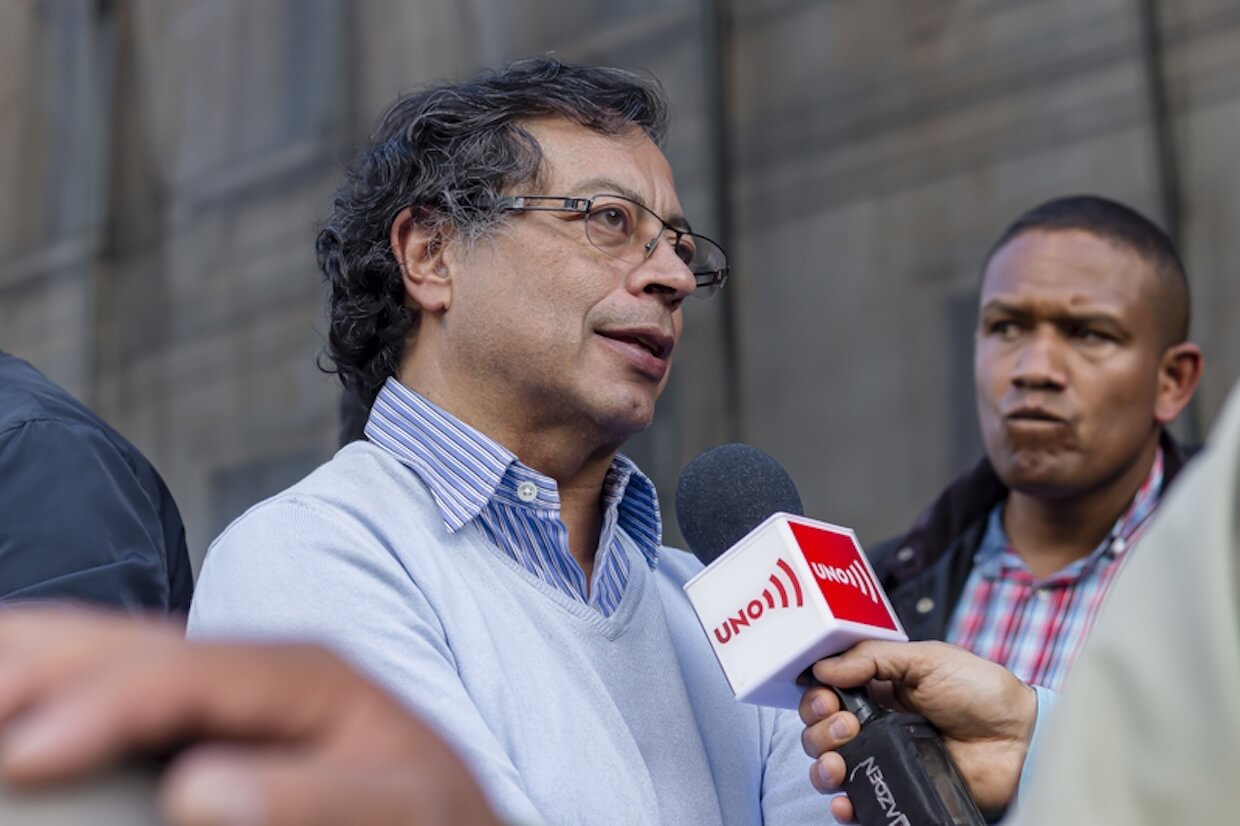
You have argued for many years that Latin American democracies often struggle to reconcile demands for social inclusion with effective governance. Looking at Gustavo Petro’s presidency, what lessons should future reformist governments draw about the relationship between ambitious political agendas, institutional constraints, and governing capacity?
Professor Michael Shifter: The central lesson of Gustavo Petro’s presidency is that competence matters. It’s not simply about ideology. You may have your heart in the right place. You may take important steps to include people who have long been excluded from power and incorporate them into the political process, and that’s an important achievement. But it’s not enough.
You also have to demonstrate governing capacity and competence, and that was lacking during Gustavo Petro’s presidency. His candidate carried the burden of that record into the 2026 election. Again, even though the election was extremely close, and even though there was a very strong political party—perhaps the strongest political party in Colombia today is the left-wing Pacto Histórico, which Petro created—the party machinery worked only up to a point. In the end, it was not enough to secure victory.
So, there does need to be a reformist agenda to tackle issues such as inequality, informality, and the other longstanding problems that have bedeviled Colombia and much of Latin America. But I’m not sure this was truly a reformist presidency. It was an administration that brought new voices to the table, and that deserves a great deal of recognition and credit. I’m hopeful that future Colombian governments will preserve that aspect of the Petro presidency while combining it with a genuine commitment to reform and a greater capacity to address the country’s long-term challenges. I don’t think the Petro administration was very successful in that regard, because achieving those goals requires a level of competence that this president did not demonstrate.
The Global Populist Wave May Be Losing Momentum
Donald Trump’s endorsement of Abelardo de la Espriella inevitably invited comparisons with the global circulation of right-wing populist ideas. To what extent are contemporary Latin American populisms becoming embedded within transnational populist networks that share anti-left, anti-elite, nationalist, and security-centered narratives?
Professor Michael Shifter: There has unquestionably been an increase in, and strengthening of, globalized networks. Latin American populist right-wing leaders have participated in meetings in Europe and elsewhere alongside other leaders of the right. But it’s important to make two qualifications.
First of all, there may well be increased networking, greater contact, and more sharing of ideas and experiences. I’m not sure, however, that this has enormous significance in terms of effective policy coordination, because I don’t really see many signs of that. One thing is to talk about shared ideas and shared visions. Another is to work together effectively to address the problems these leaders articulate in their campaigns, and I don’t see much evidence of that happening, either within Latin America or in cooperation with other figures around the world, including President Trump.
The second point is that I’m not sure where this global swing toward populism stands at the moment. There have been some setbacks. We see the most striking case in Hungary. We also see changes in Donald Trump’s relationship with Prime Minister Meloni in Italy, and so on. So, the picture is much more complex. One really has to examine it on a country-by-country basis. I’m simply not sure where this trend stands at the moment. It may well be losing some momentum.
Again, there is a great deal of emphasis on performance, media, and projecting a sense of unity. But I don’t think that will be sufficient to generate broader support for these ideas unless these leaders can actually produce results. I don’t think they have been very effective in doing so. Donald Trump is a clear example. People are having a difficult time, and the promises he made during his 2024 campaign have not been fulfilled. As a result, there is considerable disillusionment, and every indicator we have—from opinion polls to other studies—points in that direction.
So, I’m just not sure about the strength or durability of this trend. Moreover, if you scratch beneath the surface and move beyond the superficial similarities, you find enormous differences among these leaders. To describe them as a single bloc, even within Latin America, is misleading. If you compare Bukele with Milei, for example, José Antonio Kast is very different from either of them, yet people tend to place him in the same basket as part of this broader shift to the right. But they are, in fact, very different. Daniel Noboa, President of Ecuador is also very different. A deeper analysis would show that there are at least as many differences as similarities among these so-called right-wing populist political figures.
Not All Populists Belong in the Same Category
Your work on Latin American populism has consistently cautioned against treating all populist leaders as a single phenomenon. How does the current Colombian experience refine our understanding of the similarities—and equally important differences—between left-wing and right-wing populism across the region?
Professor Michael Shifter: One thing we can say about the Colombian example is that De la Espriella, although he clearly had extensive contacts and some support from establishment figures during his campaign, and of course now that he’s president-elect, really is an outsider with virtually no political experience. So, we can make a lot of distinctions. Nayib Bukele was the mayor of San Salvador. José Antonio Kast served in Congress for many years. Jair Bolsonaro in Brazil was a member of Congress for many years. Even Javier Milei served in Congress. The backgrounds and biographies of each of these leaders are very different.
Obviously, Hugo Chávez was a military leader. Each of them comes from a different background, and that shapes, quite significantly, the way they approach the presidency and the way they govern.
De la Espriella is someone about whom there is a genuine debate among analysts. To what extent does he really hold strong ideological convictions, or is he simply a very skillful opportunist who saw an opening in Colombia, recognized widespread discontent, knew how to capitalize on it, and proved extremely effective in using social media and his considerable talents as a showman?
That is quite different from José Antonio Kast in Chile, who is not a showman but rather a more traditional conservative, clearly on the right, with long-standing ideological convictions. The same could be said, in different ways, of Jair Bolsonaro in Brazil.
It’s understandable that there is a temptation to group all of these leaders together. That is valid in some respects. But, it’s important to look beneath the surface, because then you begin to see very different positions.
Take Javier Milei, for example, the president of Argentina, who is probably the leader most closely aligned with Donald Trump and who openly admires him. His foreign policy is largely in lockstep with Donald Trump’s. Yet they hold vastly different positions on economic and trade policy. Milei is a champion of free markets, whereas Donald Trump is a protectionist. Trump has said that his favorite word in the English language is "tariffs." He calls it the most beautiful word, and, if there is one thing he has consistently believed in throughout his life, it is tariffs. That is diametrically opposed to Javier Milei’s economic philosophy. So, it is important to take these differences into account as well.
Traditional Parties Lost Credibility Because They Failed to Deliver
One striking feature of Colombia’s recent politics is the apparent collapse of the political center. What explains the declining electoral appeal of moderate, institution-oriented parties across Latin America, and is this erosion primarily driven by structural socioeconomic factors, institutional failures, or changing political communication?
Professor Michael Shifter: Political communication, particularly social media, is undoubtedly a new and growing factor shaping Latin American politics and global politics. I don’t think it favors centrist, sensible, moderate political options or political figures. Instead, it tends to favor the extremes and to radicalize sectors on both the hard left and the hard right, which contributes to increasing polarization. I think that is certainly a factor. It’s not the only explanation, but it is one that is hard to deny and has become increasingly important over the last five to ten years in shaping politics.
But I think the more important explanation is simply the failure of these traditional parties, which became calcified and discredited in the eyes of their constituents because people felt that they were not performing well, were not fulfilling their promises, and were not delivering results. As a consequence, people became disillusioned with those options and increasingly turned toward the more extreme alternatives that we are seeing across many countries.
What we’re also seeing in elections—and I think this is important to emphasize—is the growing importance of the anti-vote, or rejectionist vote. More and more people voted for De la Espriella because they feared the left remaining in power under Iván Cepeda and his agenda. At the same time, many people voted for Cepeda because they were fearful of what De la Espriella would mean for Colombia.
We saw the same pattern in Peru. A very strong anti-Fujimori vote explains why Roberto Sánchez, the candidate of the left, actually received more votes within Peru than Keiko Fujimori. She won because she received more votes from Peruvians living abroad. But much of her support also reflected fear of the left, fear of Roberto Sánchez, and fear of communism coming to Peru.
We’re seeing the same dynamic in the Brazilian election as well. There has always been an anti-vote that helps explain electoral outcomes, but it strikes me that it is becoming an increasingly important factor in explaining how voters make their decisions.
Bogotá and Washington Are Likely to Enter a Period of Closer Cooperation
For many years you have examined the interaction between domestic political developments and US–Latin American relations. How might the return of a Trump-aligned government in Bogotá reshape bilateral relations, regional diplomacy, and Colombia’s role within the wider Western Hemisphere?
Professor Michael Shifter: There’s no question—and really no debate—that we’re going to see a stronger alliance between Bogotá and Washington, at least while Trump is in power and has control of Congress, which he does today, than we saw over the last four years under Gustavo Petro. There is going to be greater engagement and closer cooperation between the two governments. It’s not only President Trump, but there are also members of the US Congress, including Senator Bernie Moreno of Ohio and representatives from Florida, who are very enthusiastic about this new presidency and very relieved that they will not have to deal with Iván Cepeda. They see significant opportunities for deeper cooperation and collaboration.
That said, it’s important to be cautious. It’s easy to get carried away and become overexcited, but caution is warranted. Trump no longer has the political capital he enjoyed when he first came to power in the United States. He has lost a considerable amount of support, and many people have become disillusioned with him. Moreover, it appears most likely that Democrats will control the House of Representatives, and possibly the Senate as well, next January, meaning that De la Espriella will have to work with a Democratic-controlled Congress.
There may be a degree of irrational exuberance, to borrow an old phrase, surrounding this new relationship. It would be wise for the new government in Bogotá to take advantage of its alignment with Trump. There are clear benefits for Colombia. At the same time, however, it should avoid turning the relationship into an entirely partisan issue. For many years, Colombia has enjoyed bipartisan support in the United States. It would be extremely unfortunate and very damaging for both Colombia and the De la Espriella administration—if the relationship became tied exclusively to one party in an increasingly polarized US political environment, particularly one that is itself changing. It’s changing in a direction where Trump may no longer enjoy the complete control and dominance that characterized the first year and a half of his presidency.
I also think it’s important for Colombia to exercise caution from a regional perspective in its relations with other Latin American governments. It’s true that a number of leaders are now aligned with Trump, but there are also sharp differences among them. Some of them are hedging their bets. They are aligning themselves with Trump because they don’t want a confrontation or a fight with him—or with the United States—and that’s completely understandable. But Trump has also shown that he is not an entirely trustworthy partner. He can change his mind and turn on leaders at any moment.
It’s also unclear how many meaningful resources the United States will actually make available to assist governments struggling with an array of challenges, including organized crime and security. So, there are a great many caveats, and I hope the De la Espriella administration will develop a more sophisticated approach to managing its relationship with Washington.
Democratic Political Culture Remains the Strongest Defense Against Populism
Finally, Professor Shifter, stepping back from Colombia itself, what broader lessons does the 2026 presidential election offer for scholars of populism, democratic resilience, and political representation? Does Colombia represent an exceptional national case, or has it become an important window into the wider transformation of democracy taking place across Latin America and beyond?
Professor Michael Shifter: The 2026 elections in Colombia are very instructive in a number of ways. One is that they underscore the cost of failing to address long-standing problems by traditional, establishment-oriented, more centrist political parties and leaders.
This is what happens when you fail to heed what the electorate is telling you, which is clearly what voters were telling political leaders in 2022, if not earlier. Yet the inability to adjust and take those messages into account proved very costly. Colombia ended up with two options at opposite ends of the ideological spectrum, even though many Colombians were not particularly happy with either of them. So, that is one important lesson.
On the more positive side—and I really want to emphasize this because I think it was perhaps the most underreported story of the Petro presidency—is the resilience of Colombian institutions: Congress, the courts, civil society, and the press. To me, that’s the other major lesson.
Populism is emerging in places like Costa Rica, where one never would have expected it to emerge. It also emerged in Colombia, and there were various attempts by President Petro to go beyond the limits of his office, to interfere in government, and to disregard certain constraints and checks on his power. It certainly wasn’t for a lack of trying. What was striking, however, was the degree of pushback and resistance that Colombia demonstrated. That is an important lesson: democratic political culture is not trivial.
Countries that possess that democratic experience and tradition are going to be tested, just as Colombia was tested between 2022 and 2026, and they will continue to be tested in the years ahead. But I’m confident they will be able to preserve the democratic order and keep checks and balances intact, despite all the pressures and strains that will inevitably arise.