
In this ECPS interview, Associate Professor Ov Cristian Norocel of Lund University examines how the Sweden Democrats’ electoral decline can coexist with the continued normalization of their political agenda. He argues that Sweden’s mainstream right has itself shifted, noting that on immigration “the other parties [are] radicalizing themselves, rather than the Sweden Democrats normalizing their political messaging.” Norocel discusses the emergence of a Swedish “right-wing continuum,” welfare chauvinism, differential grievability, the racialized reinterpretation of the folkhem, gender equality, masculinities of crisis, and youth radicalization. His central argument is that SD’s influence cannot be measured by vote share alone: even as the party loses electoral ground, ideas it helped mainstream remain politically powerful and continue to shape debates over migration, welfare, belonging, and Swedish identity.
Interview by Selcuk Gultasli
Giving an interview to the European Center for Populism Studies (ECPS), Associate Professor Ov Cristian Norocel of the Department of Sociology at Lund University argues that the Sweden Democrats’ (SD) electoral decline in Sweden’s 2026 election should not be mistaken for a retreat of the political ideas the party has helped normalize. Rather, he emphasizes that the more consequential development may be the transformation of Sweden’s mainstream right itself. As he puts it, on immigration “we see the other parties radicalizing themselves, rather than the Sweden Democrats normalizing their political messaging.”
At the center of Norocel’s analysis is what he calls the crystallization of a Swedish “right-wing continuum” bringing together SD, the Moderates (M), the Christian Democrats (KD) and, to a certain extent, the Liberals (L). While the SD have moderated elements of their presentation in pursuit of governmental legitimacy, Norocel stresses that this has occurred alongside movement in the opposite direction by established center-right parties: “the M, KD, and L, to a certain extent, have radicalized their political messaging.” The result, he argues, is a convergence in which parties that once occupied more distinct ideological positions “have been drawn to one another.”
This convergence is particularly pronounced on migration. Norocel notes that SD has remained “very persistent and consistent” on the issue, while other parties have moved increasingly closer to it. He therefore rejects a simple interpretation of the 2026 result as evidence that the radical right’s influence is waning. Indeed, he argues that “the party had already achieved part of its policy agenda,” as ideas associated with welfare chauvinism and restrictive migration policy have been “appropriated and transformed into policies by the parties in power.”
The interview also broadens the discussion beyond immigration alone. Drawing on his work on “differential grievability,” Norocel explains how political discourse ranks some lives as “more deserving of the state’s concern than others,” linking migration politics to welfare, ethnicity, race and national belonging. He similarly traces how SD’s reinterpretation of the folkhem has become increasingly “narrow and nationalistic,” turning the welfare-state ideal of “the people’s home” into “a home only for the Swedish people.”
Taken together, Norocel’s analysis points to a central paradox of contemporary Swedish politics: SD may be losing votes while the ideological terrain it helped reshape remains firmly in place. The crucial question, therefore, is no longer only how many voters support the SD, but whether mainstream conservative parties will “continue along the path of further radicalization and closer alignment with the SD” in the post-Tidö period.
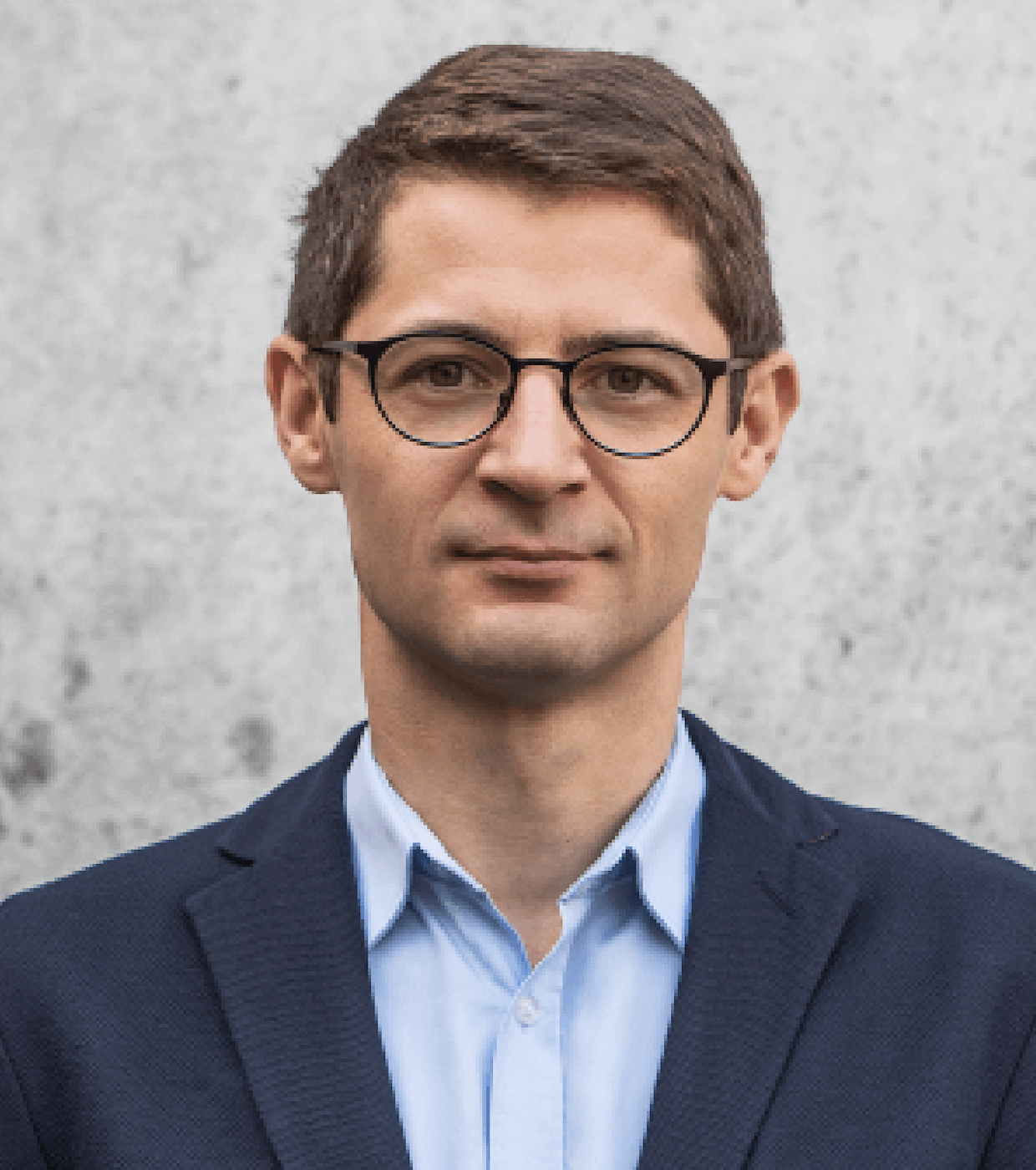
Here is our interview with Assoc. Prof. Ov Cristian Norocel, edited lightly to enhance clarity, readability, and overall flow for publication.
The Sweden Democrats Have Already Achieved Part of Their Policy Agenda
Professor Norocel, welcome! Let me begin with the idea of normalization, which runs through much of your work. You have shown how the Sweden Democrats moved from fringe nationalism and open racism toward welfare chauvinism, cultural racism, and a more acceptable conservative language. Yet SD lost support in the September 13 elections after four years of major influence through the Tidö Agreement. Does this electoral setback tell us very little about normalization? Could SD be losing votes while the political ideas it helped normalize are becoming more deeply rooted?
Assoc. Prof. Ov Cristian Norocel: Yes, this is a very interesting question, because if we look at the results and how electoral support has been distributed among the mainstream parties, but also pay attention to the parties that have fallen below the 4% threshold, the picture becomes quite complicated.
On the one hand, we could argue that the universe of ideas—of welfare chauvinism, of an increasingly restrictive migration policy, and also of a very aggressive migration policy, have gained a solid foothold among the mainstream parties. Here, of course, it is worth bearing in mind that the Tidö Agreement, and thus the government that had been in power until now, had been deeply dependent on the support of the Sweden Democrats, and the Sweden Democrats have had a major impact on the policy agenda of that government.
That conceptual universe had been appropriated and transformed into policies by the parties in power. So, this means that, in a sense, the party had already achieved part of its policy agenda. At the same time, their ambition to be able to nominate their own ministers and to hold specific portfolios in a future Tidö 2 agreement had not materialized. So, on the one hand, the ideas had been appropriated and had partly been transformed into policies. We have seen clear avenues for these to be continued further by the Sweden Democrats, and they were very explicit about what they were planning to do should the Tidö Agreement continue into a Tidö 2. However, at the same time, if we look further to the right of the party, particularly at the parties that have landed below the 4% threshold, we see an even higher radicalization of the same kind of ideological content as that of the Sweden Democrats. This is something that tells us that, across the ideological—or ideational—continuum of these parties, certain ideas have seeped into the mainstream and gained political currency. At the same time, the Sweden Democrats, as the vehicle of this ideological content, are considered not radical enough, particularly among the voters of Alliance for Sweden (AfS) or the Örebro Party—the local regional party in Örebro city and county.
So those 50,000 votes that basically made the difference between the red-green side of the political spectrum and the conservative side could have come from those voters who voted further to the right. On the other hand, I am quite skeptical that those votes would automatically have been transferred to the Sweden Democrats.
So, my argument would be that the Sweden Democrats actually suffered a significant defeat. If we look at the final data, they registered a decrease of 3.05% in voter share. And I would argue that those 50,000 that went to the smaller parties do not really account for that entirety, but that actually a lot of these votes, most probably went to the main conservative right party, the Moderates (Moderaterna / M), as well as the conservative-right Christian Democrats, or Kristdemokraterna (KD).
A Clear Right-Wing Continuum Is Crystallizing in Swedish Politics
That brings us to your idea of a “right-wing continuum.” In your work with Felicia Hägerbäck, you describe the growing alignment between SD, the Moderates, and the Christian Democrats, especially on migration and welfare. In the 2026 elections, SD declined while M and KD gained. Does this suggest that voters can now move between these parties without leaving the broader restrictive policy framework? Has the deeper change taken place in the mainstream right rather than simply in SD’s vote share?
Assoc. Prof. Ov Cristian Norocel: I think part of my earlier answer was pointing exactly to this aspect: on the one hand, we see the crystallization of a clear right-wing continuum in which not only the conservative-right Moderates, or the conservative-right Christian Democrats, and, to a certain extent, the so-called Liberal Party are included, but also the Sweden Democrats.
What I find extremely interesting—and this is something that I am working on at present in a manuscript—is paying attention to the dual forces in the creation of this right-wing continuum. On the one hand, we have a normalization of the radical-right populist parties. So, in our case, we have the Sweden Democrats, which, in pursuit of being perceived as more ready to be part of a governmental coalition, had toned down some of their more radical messaging. At the same time, what has happened is that the other parties themselves—Moderaterna, Kristdemokraterna, and Liberalerna to a certain extent—have radicalized their political messaging. So, we see how, from rather different positions on the ideological map these parties have been drawn to one another.
What I find interesting, however, is that on the issue of immigration, which is the core issue of the Sweden Democrats, they have not moderated their messaging. So, they have accepted negotiations and compromises on other policy areas. However, immigration has actually been an issue on which we see the other parties radicalizing themselves, rather than the Sweden Democrats normalizing their political messaging.
So, this also leads me to be rather skeptical of the interpretation that the Sweden Democrats have lost at the hands of the small radical parties. I would rather argue that their voters had perhaps been attracted to a more mainstream packaging of the same anti-immigration message.
Certain Lives Are Considered More Deserving of the State’s Concern Than Others
This convergence is also visible in debates about welfare and belonging. Your concept of “differential grievability” shows how migrants can be presented as less deserving of welfare protection and social concern. After four years of the Tidö framework, has welfare chauvinism moved beyond SD and become more firmly embedded in Swedish center-right politics?
Assoc. Prof. Ov Cristian Norocel: I would argue that it very much has. To explain in lay terms what grievability means—and this is a concept for which I am very much indebted to the scholarship of Judith Butler, who articulated it—my colleague Felicia and I have used the concept in our research to examine how, in political debates in the Swedish Parliament, certain lives are considered more valuable, and certain lives are considered more deserving of the state’s concern than others.
In that context, we noticed that when it comes to welfare provision, the lives of Swedish citizens and of Swedes, narrowly defined as an ethnic and racial community, are clearly placed higher on a hierarchical ladder than the lives of people of migrant descent, first-generation migrants, and people whose allegiance to the Swedish state and its values is constantly questioned. That is the distinction we identified.
What we also noticed in that research, and what I am continuing to explore at the moment, is that while the Sweden Democrats had accepted certain compromises in other policy areas—such as tax reduction, privatized schools, and privatized welfare infrastructure—they have been very persistent and consistent on migration. By the same measure, we noticed how both Moderaterna and Kristdemokraterna, and, to a certain extent, Liberalerna, had moved closer and closer to the Sweden Democrats.
In that context, we saw—and now we have tangible evidence of this, because our article was written before the Tidö Agreement came into force and before we could see its political effects—that the anti-immigration policies pursued over the past couple of years have become increasingly repressive. We also see policies that question the sincerity of people who have gone to great lengths to demonstrate, to a certain extent, even assimilation into Swedish society. Their sincerity is still being questioned.
That manifests itself, for example, in very young children from migrant families being expelled from the country, or in people who do not meet a rather high threshold of self-sufficient employment being forced to leave for that reason. So, we see how, on the issue of immigration, the right-wing continuum is very clearly taking shape. Not only that, but we also see how the mainstream parties have actually moved in a more radical direction, rather than the Sweden Democrats budging in any way on this issue.
SD’s Migration Agenda Endured Even as Voters Prioritized Other Issues
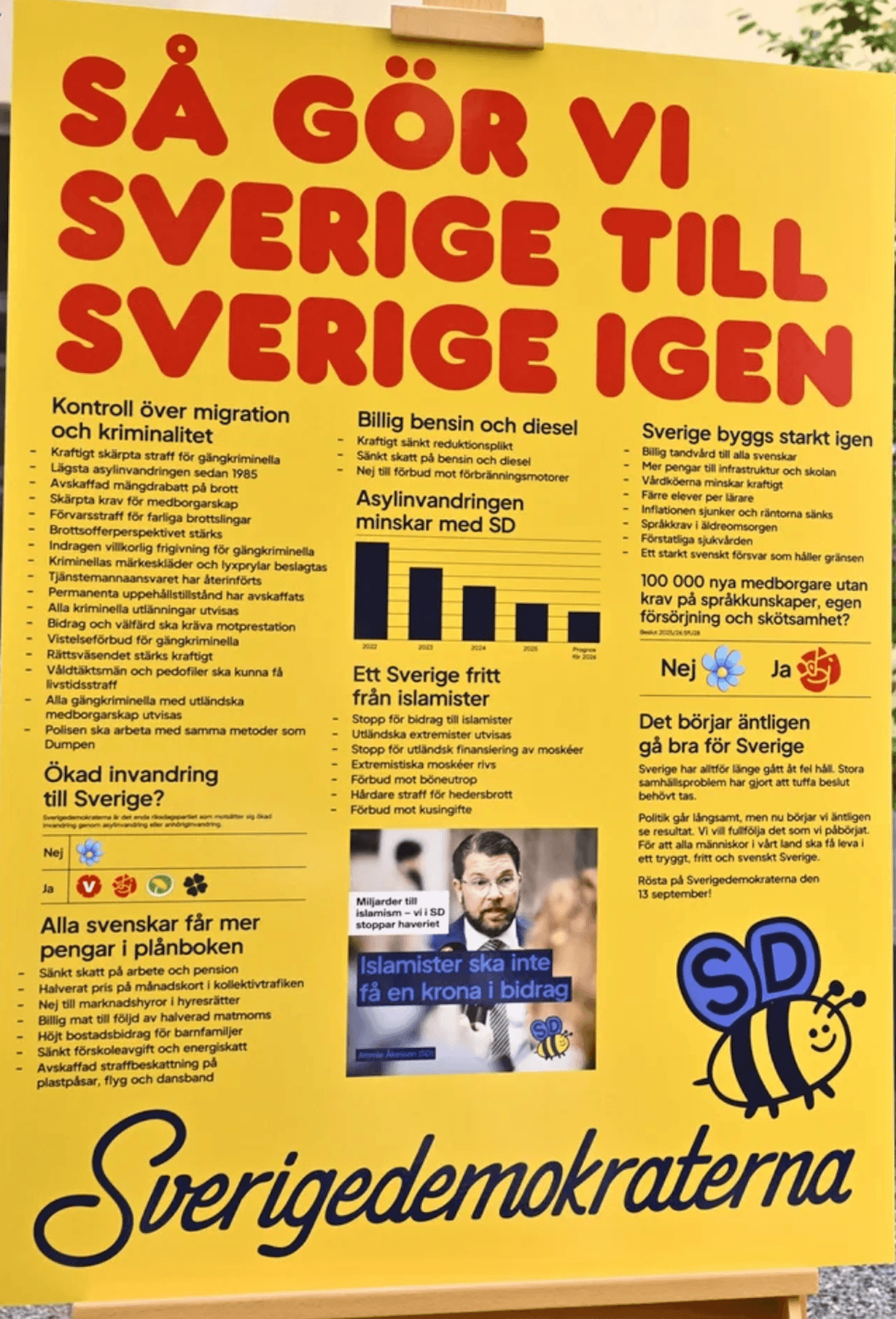
This creates an important paradox. SD lost around three percentage points, but migration, crime, citizenship, integration, and welfare deservingness remain central political issues. Could this be a case of electoral weakness combined with broader ideological success? How should we distinguish between losing votes and successfully changing the boundaries of acceptable political debate?
Assoc. Prof. Ov Cristian Norocel: Here we need to take a step back and acknowledge that, on the one hand, the Sweden Democrats had been rather successful in imposing their understanding of migration matters on the Tidö parties. To a certain extent, the Social Democrats have also started talking more about, and leaning more toward, a restrictive approach to migration.
However, in the context of the 2026 elections in Sweden, migration as a specific policy issue was not highest on the agenda of the Swedish electorate. There were other topics that voters considered much more important, and here one could point to two in particular: the economy and economic matters, and the climate and the issue of climate change. Matters of migration and law and order therefore ranked significantly lower on the political agenda of the electorate.
We could then argue, perhaps—and my colleagues, like Anders Hellström, would perhaps agree on this matter—that the party had been out of sync with the wider electorate. Even though the Sweden Democrats maintained their direction on migration and remained very critical on migration matters and law-and-order issues, the electorate had moved on and prioritized slightly different topics.
The Liberal Party Is Becoming a Party Without an Electorate of Its Own
The Liberals offer another interesting example of this normalization. After facing the risk of falling below the electoral threshold, they reached around 5.4 percent and moved toward accepting SD participation in government. Does this show that normalization can happen not only through ideological change but also through coalition strategy and political survival? How important is it when a liberal party begins to see cooperation with the radical right as necessary?
Assoc. Prof. Ov Cristian Norocel: On this matter, the Liberal Party has had a very surprising journey. If you think back to the 2022 elections, and even earlier, the Liberals were one of the parties that took a very clear stance against allowing the Sweden Democrats to have any influence on governmental matters whatsoever. However, it seems that, under a series of party leaders, this red line has been crossed several times: from actively trying to prevent the Sweden Democrats from gaining any meaningful influence on governmental matters, to presenting themselves as the party that would guarantee, in a governmental constellation like the Tidö Agreement, that the Sweden Democrats’ policy influence would not be as significant as if the party were itself in power and in government; and, nowadays, to the present leader of the Liberals physically embracing the Sweden Democrats’ leader and saying that a vote for the Liberal Party actually secures a continuation of the Tidö political agenda.
So, we see how the party, at least its leadership, seems to have dropped any ethical concerns regarding its policy guidelines, what sits at its core, and what the core values of the party are. From this point of view, if I may go back to the electoral results, and particularly the VALU research on the party’s voter profile, what I find extremely telling is that, if we compare the 2022 elections with the 2026 elections, only around a third of the original electorate that had voted for the Liberal Party in 2022 continued to vote for the party in 2026.
This means that support for the Liberals had come from elsewhere. Interestingly, that elsewhere was actually the Moderate Party. People who had voted for the Moderate Party in 2022 constituted approximately 40% of the Liberal Party’s new voters in 2026. So it seems that, at present, one could even go so far as to argue that the Liberal Party is no longer a party with a clear ideology of its own or an electorate of its own. Rather, it is a party without its own electorate and is supported mainly by a specific wing that previously backed the conservative-right Moderate Party.
The Folkhem Is Becoming a Home Only for the Swedish People

Let me turn to SD’s use of the Swedish welfare tradition. Your earlier work shows how SD reinterpreted the ‘folkhem’ around a distinction between a deserving national “us” and outsiders. Have the September 13 elections changed this strategy, or shown how durable it has become? Is SD support about more than immigration—about a wider idea of who belongs within Swedish welfare and solidarity?
Assoc. Prof. Ov Cristian Norocel: It is becoming increasingly clear that the way the Sweden Democrats understand and deploy the concept of the folkhem—which, in plain English, means “the house of the (Swedish) people”—makes it self-evident that it is about Swedish people. In this sense, it is becoming more and more of a right-wing project.
Previously, the party had used the concept of the folkhem to mobilize an electorate around the idea that the Social Democrats—the party that had dominated Swedish politics for most of the 20th century and the early 21st century—had forgotten the ideals of the folkhem. The Sweden Democrats then sought to present themselves as its true defenders. Nowadays, however, this use of the concept is becoming increasingly narrow and nationalistic. We are no longer talking simply about a home of the people, as the concept itself would be translated, but increasingly about a home only for the Swedish people. It is defined within the confines of the national community, with a very clear racial and ethnic dimension.
At the same time, and also as part of their participation in the Tidö Agreement, the Sweden Democrats have moved further to the right. The folkhem, as it is now used and deployed by the party, is not only becoming more racialized—a project for the Swedish nation, ethnically and racially defined—but also increasingly a right-wing project in which tax reductions, punitivity, and privatization have become more important.
Even within this understanding of a folkhem for the Swedish people, a certain hierarchy appears to be constructed, in which only certain Swedish people are included in the Sweden Democrats’ folkhem: those who are comfortably middle class and who live in specific locations across Sweden—not in areas with significant migration, but in places with a rather distinct profile, somewhere between rural and highly urbanized areas, in peri-urban locations across the country.
SD’s Vision of Future Sweden Is Necessarily Ethnically and Racially Swedish
Your intersectional research broadens this question further. You show that radical-right ideas about “us” and “them” are shaped through gender, class, ethnicity, race, sexuality, welfare, and traditional values at the same time. Does this help explain why SD can remain strong even when immigration is not always the top concern? Are voters responding to a broader social and moral worldview rather than one issue alone?
Assoc. Prof. Ov Cristian Norocel: At least in the research I’ve been publishing over the past decade or so, gender has been a very important lens for better understanding the ideological universe of the Sweden Democrats. Gender, and intersectionality in particular, has been one of the main theoretical lenses that has allowed me to understand the articulation and re-articulation of the folkhem concept. It is through this intersectional perspective that I became aware of the growing stratification of the folkhem.
As I was just saying, I became aware of a certain racial stratification that excludes migrants, regardless of how much they attempt to become integrated or even assimilated into Swedish society. There is always a distinction, as reflected in statements by several highly ranked Sweden Democrats who have basically argued that no one of migrant descent will ever be able to consider themselves fully Swedish.
This extends to a certain social stratification within the folkhem, and this is part of what I have described as the mainstreaming of the radical-right populist party in Sweden. The moment tax reductions become important for the party or at least become part of the governmental package that the party supports, this leads to a tacit stratification of the folkhem. Comfortably middle-class Swedes become the preferred members of the folkhem, as opposed to working-class Swedes who may live in highly diverse neighborhoods and who, together with people of migrant background, have other, more socially acute political priorities, such as rent control, redistribution of resources, proper schools, and proper welfare infrastructure.
From that point of view, intersectionality has been very important because it has allowed me to see this stratification and how the concept of folkhem has, little by little, undergone a similar process in which certain people are discursively sorted out and the concept becomes focused on a rather narrowly defined group, not only in terms of ethnicity and race, but also in terms of class.
The issue of gender is also very important here, because we have seen how the party, over at least the past 10 or 15 years, has become increasingly adamant not only about preserving Sweden as it is, but also about ensuring that future Sweden—the future generations of citizens living in this country—will necessarily be ethnically and racially Swedish. This means that there is a very purposeful idea, in rather mechanicistic terms, about who is to be encouraged to reproduce.
Here, of course, this goes back to the idea of turning their gaze toward women and defining their task narrowly as those entrusted with reproducing the Swedish nation and ensuring that this traditional worldview continues into future generations that are, according to the Sweden Democrats, necessarily ethnically and also racially Swedish.
From that point of view, we can see how this understanding of the folkhem, and of the tasks allocated respectively to men and women, has also had certain electoral consequences, because the party still has a significant gender imbalance among its members. We can also look at the leadership, which is dominated by men, with very few women in positions of power. Those few women who do reach positions of power generally leave after a relatively short time, so there are very few who were promoted within the party from the beginning and have continued to occupy a central place in it.
This has also allowed me to see how gender has repercussions both in the way it is articulated politically by the Sweden Democrats and in the party’s internal structure. We see how the party structure does not allow women to progress easily into the leadership, and we also see the consequences among the electorate. There is still a significant difference between how men and women across all age groups and across the country vote for the Sweden Democrats, with a clear imbalance toward the male electorate across all age groups.
SD Presents Itself as Returning to What “Gender Equality Once Meant”
Gender equality is a particularly interesting part of this picture. You have shown how radical-right actors can support gender equality rhetorically while using it to contrast a supposedly modern Swedish majority with a racialized and patriarchal migrant “other.” Has this way of speaking spread beyond SD? Has gender equality itself become a way of drawing boundaries around migration, Islam, citizenship, and Swedish identity?
Assoc. Prof. Ov Cristian Norocel: This is also part of an ongoing research project that I’m working on at the moment. Together with a colleague from Sciences Po, we have been very interested, on the one hand, in the crystallization of the right-wing continuum and, on the other hand, specifically in the issue of gender equality: how and to what degree this concept has been used both by the Sweden Democrats and by the other parties along the right-wing continuum, and how it has changed over time.
It is rather interesting because, when it comes to gender, the party clearly takes a stance against what it considers to be” feminism that has gone too far.” The various efforts toward emancipation pursued by feminist actors, including civil society organizations and political parties that have embraced such an agenda, have been portrayed by the Sweden Democrats as their enemies. The party has instead consistently claimed to promote a return to what “gender equality once meant.”
They have a rather mechanicistic understanding of gender equality in this respect. Their approach is, on the one hand, to count very strictly how many men and how many women have access to specific positions and, on the other hand, to emphasize that gender quotas are not something to be pursued. The party has consistently opposed gender quotas across all sections of society, arguing that every individual, whether woman or man, should demonstrate their own qualities and that this assessment should be reflected in the positions they are able to attain in society.
In this sense, they are largely impervious to questions of structural inequality and the structural barriers that prevent women from reaching certain positions in Swedish society. Interestingly, parties that previously supported a rather different and more encompassing approach to gender equality, women’s advancement, and emancipation—such as the Liberal Party and, to a certain extent, the Moderate Party—are now also gradually moving toward this narrower understanding of gender equality.
Gender equality thus comes to mean, basically, having a certain number of women and men in particular positions in society, while emphasizing that this balance should be achieved not through state intervention or governmental policies, but through each individual’s own qualities and willingness to attain those positions. It is a very interesting change in tone among these parties.
The Far-Right Has Been Quicker to Incorporate Crisis into Its Political Agenda
Your work on far-right masculinities also focuses on the politics of crisis. You describe a “masculinity of crises,” in which repeated crises help create an embattled “us” and strengthen ideas of hierarchy and protection. Sweden has faced debates framed around migration, crime, welfare, energy, and security crises. Has crisis become a permanent political language through which authority, masculinity, and national belonging are organized?
Assoc. Prof. Ov Cristian Norocel: Unfortunately, we are living through very interesting times, and these times are indeed marked by a continuing series of crises. This means that all parties in Parliament, as well as those outside it, have to develop their own strategies for dealing with these issues and package those responses in ways that make sense to their potential electorate. My analyses have led me to argue that, along this right-wing continuum, and even further to the right, these actors have been much quicker to incorporate crisis into their political agendas.
Looking specifically at gender, I noticed a clear resonance between the idealized masculinities these actors promote and the politics of crisis. This led me to develop the concept of “masculinities of crises” as a way of conceptualizing these idealized models circulating in these political circles. Put simply, masculinities of crisis refer to a type of masculinity articulated along the ideological continuum further to the right that is not merely a reaction to repeated crises, but a specific construct that actually thrives in a context of crisis. I would go so far as to say that these masculinities would not have the same political impact they have today if there had not been so many crises in recent years.
What we are witnessing in relation to economic inequalities, insecurity, climate denialism, and war very close to our borders has therefore been conducive to the type of masculinity that is crystallizing and being promoted in these circles.
Young Men Are Being Attracted to Parties Further to the Right of SD
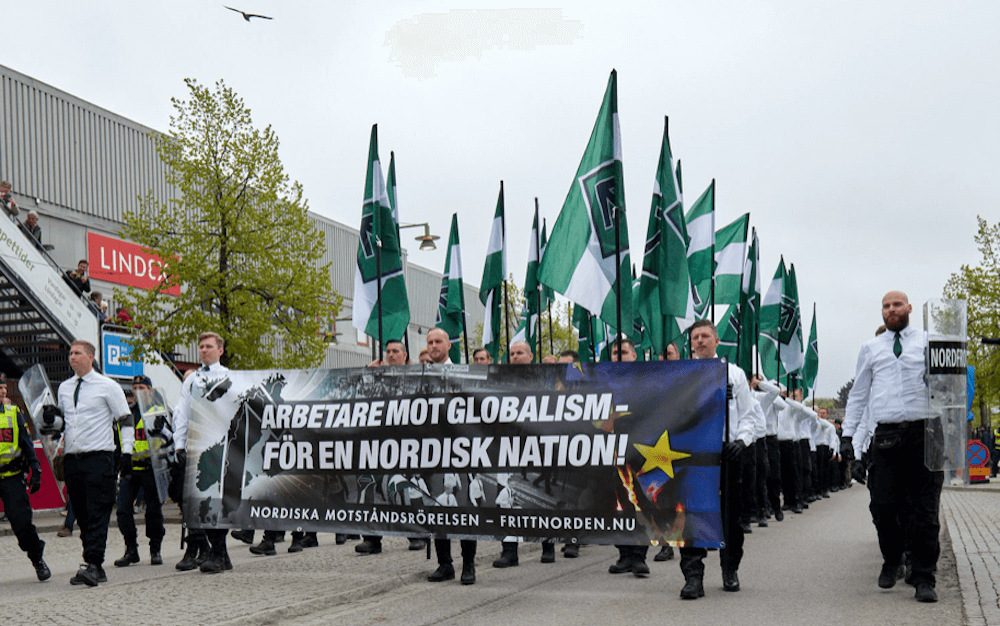
The youth vote adds another dimension. SD appears to have lost support among the youngest voters, while young men remain more right-leaning than young women. Should we distinguish between support for SD as a party and the wider spread of nativist or anti-egalitarian ideas among young men? Could younger men move to other right-wing parties while keeping political identities partly shaped by radical-right discourse?
Assoc. Prof. Ov Cristian Norocel: I haven’t had a very close look at exactly how young men and young women, respectively, are voting for and supporting right-wing populist parties, as well as parties further to the right. But from the little I have already seen, a very interesting picture is taking shape. The Sweden Democrats are beginning to lose their appeal as outsiders on the political landscape, while younger men in particular are being attracted to parties further to the right of the Sweden Democrats.
What I find extremely telling is the episode playing out in one of the most privileged social settings in Sweden: Manillaskolan, one of the most prestigious schools in central Stockholm. Interestingly—“interesting” in quotation marks—the Nordic Resistance Movement (NRM) received votes from a significant number of young people at the school.
This raises questions about the interaction between, on the one hand, a younger generation, particularly men, who find the messaging of the more extreme manifestations of right-wing and far-right ideology more appealing, and, on the other hand, class distinction, because Manillaskolan is actually a setting for highly privileged segments of Swedish society. So we see a stronger resonance between social class, upper-class distinctions, and far-right ideology.
The Key Question Is Whether the Mainstream Right Will Continue Its Radicalization
And finally, Professor Norocel, let me return to the larger question of political success. SD lost votes and seats in the September 13 elections, yet many ideas it helped introduce about migration, welfare, belonging, and national identity remain influential, and cooperation with SD has become more accepted. Should we therefore look beyond SD’s vote share and ask how deeply its ideas about belonging, deservingness, gender, welfare, and Swedish identity have entered the political mainstream?
Assoc. Prof. Ov Cristian Norocel: Yes, this is something we will definitely have to research in the coming years. As we can see from the results, the party registered a significant decline, with the Sweden Democrats losing around 3% of the vote and experiencing a notable decrease in parliamentary representation. This is not the first time such a decline has occurred, as it was already evident in the [2024] European Parliament elections. So, for the time being, the party appears to be on a downward trajectory.
However, these ideas will remain important in the years to come, because it is still unclear how the conservative parties—both Moderaterna and the Christian Democrats—will react in a post-Tidö context. We are still at a very early stage. At the moment, we do not know what the future governmental constellation that will lead Sweden during the coming mandate will look like. This is still to be decided.
The Social Democrats will be the ones to lead the first negotiations on forming a government. We do not yet know exactly whether all the parties involved will be willing to negotiate and agree on a governmental formula. So, it remains to be seen whether, in this post-Tidö context, the social-conservative Moderaterna and the conservative Christian Democrats will return to their previous positions on migration, social welfare, gender equality, and so on, or whether they will continue along the path of further radicalization and closer alignment with the Sweden Democrats in preparation for another decisive moment, perhaps in 2030, with the next national elections.