Fourth Annual International Symposium on Civilizational Populism: National and International Challenges’
May 22–23, 2025 | University of Warsaw
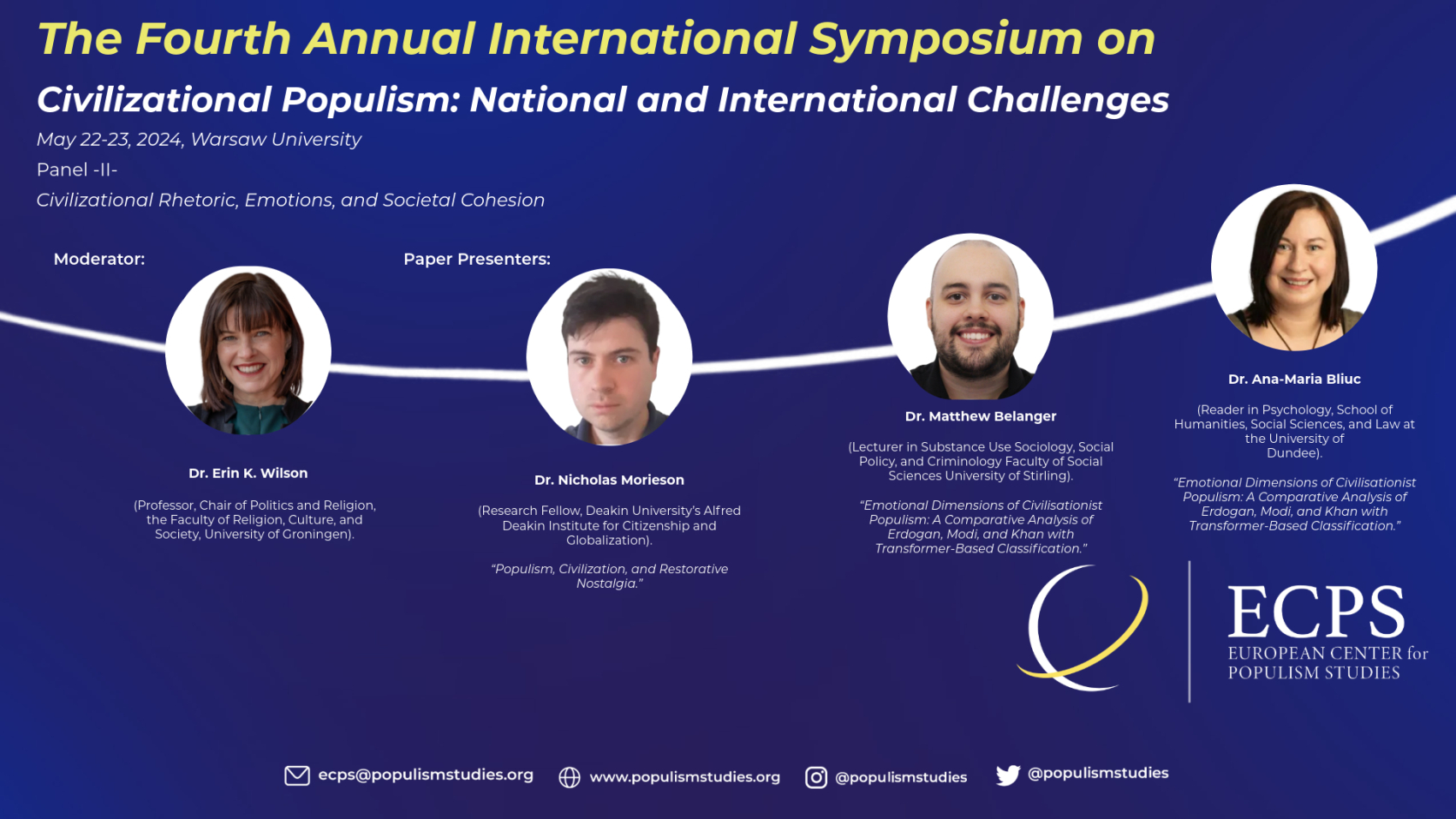
Moderator
Dr. Erin K. Wilson(Professor, Chair of Politics and Religion, the Faculty of Religion, Culture, and Society, University of Groningen).
Paper Presenters
“Populism, Civilization, and Restorative Nostalgia,” by Dr. Nicholas Morieson (Research Fellow, Deakin University’s Alfred Deakin Institute for Citizenship and Globalization).
“Emotional Dimensions of Civilisationist Populism: A Comparative Analysis of Erdogan, Modi, and Khan with Transformer-Based Classification,” by Dr. Matthew Belanger(Lecturer in Substance Use Sociology, Social Policy, and Criminology Faculty of Social Sciences University of Stirling) and Dr. Ana-Maria Bliuc (Reader in Psychology, School of Humanities, Social Sciences, and Law at the University of Dundee).
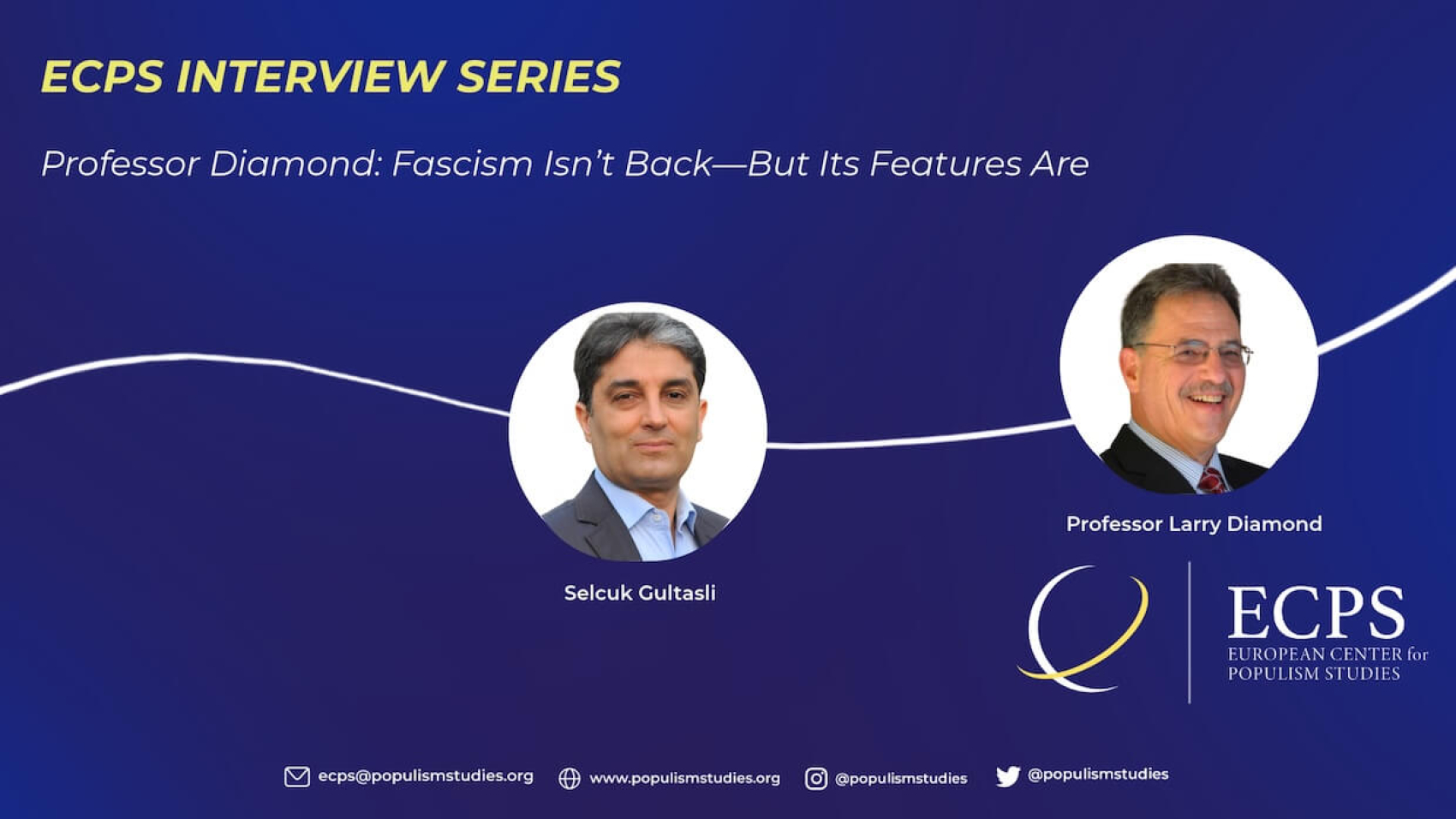
In this timely and wide-ranging interview, Stanford University’s Professor Larry Diamond explores the resurgence of authoritarianism and the global diffusion of fascistic features. “We don’t have the fully formed, classic version of fascism today,” he explains, “but there is a lot of fascistic behavior, organization, and intent spreading worldwide.” Drawing on his democratic theory expertise and recent support for an international declaration warning that “the threat of fascism is back,” Professor Diamond dissects how elected strongmen exploit polarization, subvert institutions, and erode epistemic authority. From Erdoğan to Orbán to Trump, he examines the authoritarian playbook and offers paths forward—through institutional reform, global alliances, and deliberative democracy—to defend liberal norms before they are incrementally strangled into irrelevance.
In an age of democratic erosion and the rise of authoritarian populism across continents, Professor Larry Diamond, one of the world’s foremost scholars on democracy, joins the European Center for Populism Studies (ECPS) to assess the contemporary mutations of fascism. As a senior fellow at Stanford University’s Hoover Institution and Freeman Spogli Institute for International Studies, Professor Diamond brings a deeply informed and historically grounded perspective to the question that frames this conversation: Are we witnessing a return of fascism—or something disturbingly adjacent?
Reflecting on the recent international declaration signed by Nobel laureates and leading intellectuals warning that “the threat of fascism is back,” Professor Diamond strikes a careful but urgent tone. “I think it’s better to talk about fascistic properties or features rather than fascism per se,” he explains, “because I don’t think we have the fully formed, classic version of it in many places today. But there is a lot of fascistic behavior, organization, and intent that’s spreading around the world today.”
Throughout the interview, Professor Diamond underscores the ways in which elected strongmen—from Narendra Modi in India to Viktor Orbán in Hungary, from Recep Tayyip Erdoğan in Turkey to Donald Trump in the United States—gradually dismantle liberal-democratic norms. This process, which he calls the “incremental strangulation” of democratic institutions, shares strategic continuities with the fascist playbook of the 20th century, even if it is less overtly violent in form.
The interview also addresses the weaponization of cultural and religious norms, the co-optation of far-right discourse by centrist parties, and the epistemic breakdown that enables authoritarian actors to dominate public narratives. Professor Diamond warns of “a mode of thinking and reasoning that puts blind faith in a single leader and party,” a dynamic echoed in the declaration’s call to “uphold facts and evidence” in the face of disinformation.
The Declaration Against the Return of Fascism, published on the centenary of the original 1925 anti-fascist manifesto, serves as a timely and powerful backdrop to this conversation. Signed by a wide array of Nobel laureates, leading scholars, and cultural figures, the declaration urges renewed commitment to democratic values, multilateralism, and human rights. It warns of a “renewed wave of far-right movements” that threaten to erode hard-won liberties under the guise of nationalism and moral purity.
As Professor Diamond makes clear, the danger we face today is not merely political—it is civilizational. And while the forms may differ from the 1930s, the stakes are every bit as high.
Fourth Annual International Symposium on Civilizational Populism: National and International Challenges’
May 22–23, 2025 | University of Warsaw
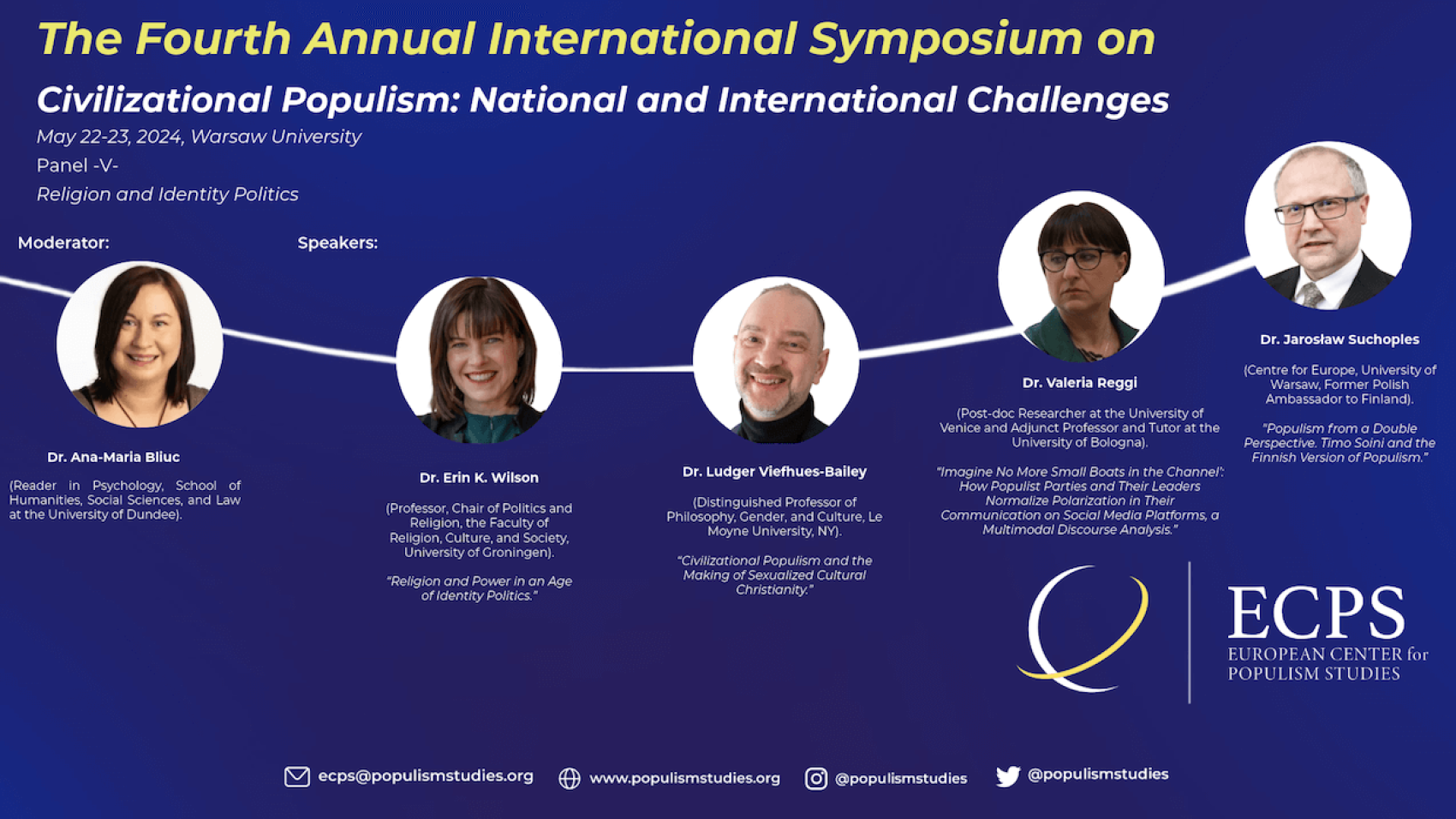
Moderator
Dr. Ana-Maria Bliuc(Reader in Psychology, School of Humanities, Social Sciences, and Law at the University of Dundee).
Speaker
“Religion and Power in an Age of Identity Politics,” byDr. Erin K. Wilson(Professor, Chair of Politics and Religion, the Faculty of Religion, Culture, and Society, University of Groningen).
Paper Presenters
“Civilizational Populism and the Making of Sexualized Cultural Christianity,” byDr. Ludger Viefhues-Bailey(Distinguished Professor of Philosophy, Gender, and Culture, Le Moyne University, NY).
“Imagine No More Small Boats in the Channel’: How Populist Parties and Their Leaders Normalize Polarization in Their Communication on Social Media Platforms, a Multimodal Discourse Analysis,” byDr. Valeria Reggi(Post-doc Researcher at the University of Venice and Adjunct Professor and Tutor at the University of Bologna).
“Populism from a Double Perspective. Timo Soini and the Finnish Version of Populism,” byDr. Jarosław Suchoples(Centre for Europe, University of Warsaw, Former Polish Ambassador to Finland).
Fourth Annual International Symposium on Civilizational Populism: National and International Challenges’
May 22–23, 2025 | University of Warsaw
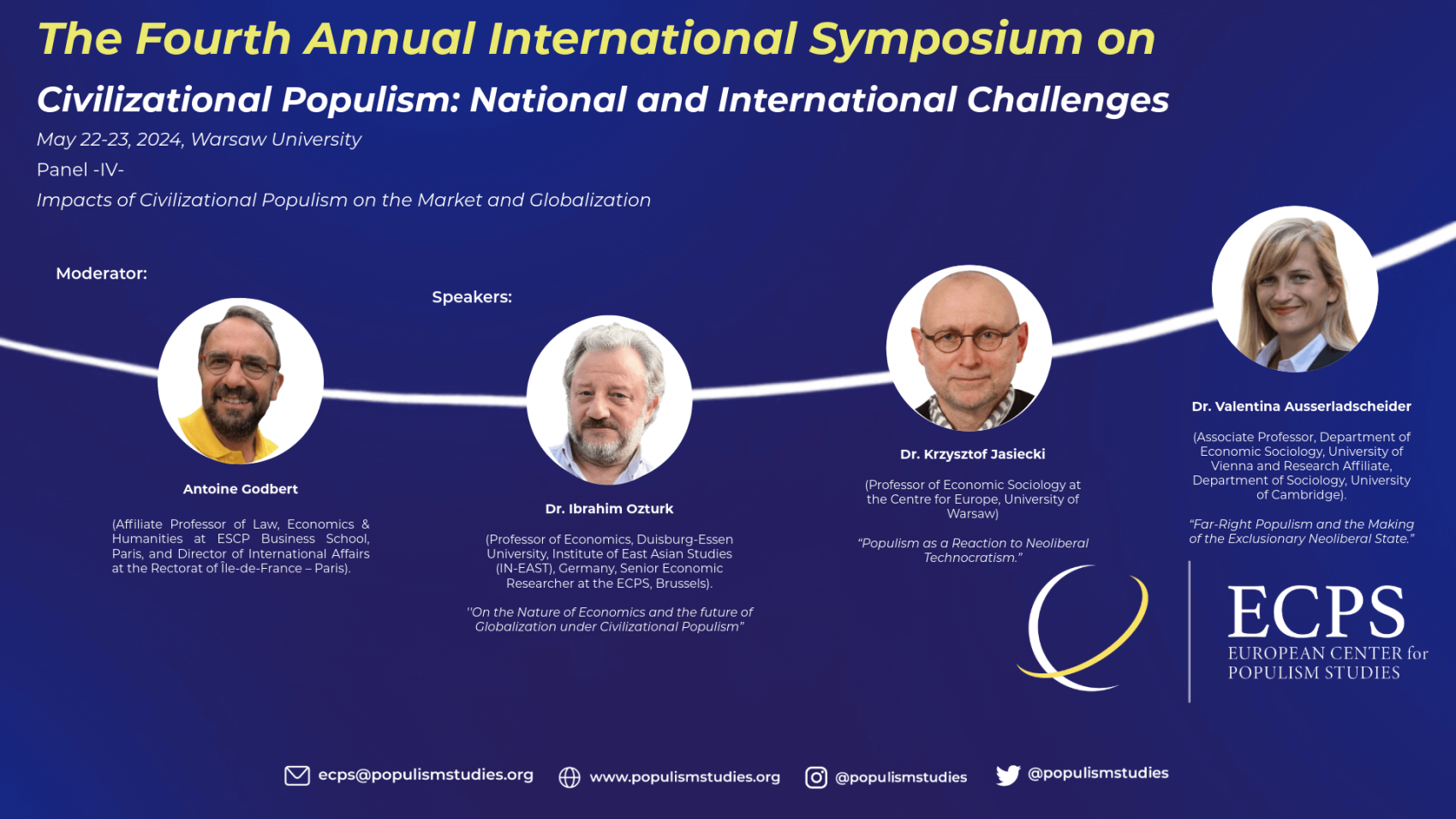
Moderator
Antoine Godbert(Affiliate Professor of Law, Economics & Humanities at ESCP Business School, Paris, and Director of International Affairs at the Rectorat of Île-de-France – Paris).
Speakers
“On the Nature of Economics and the future of Globalization under Civilizational Populism,” by Dr. Ibrahim Ozturk (Professor of Economics, Duisburg-Essen University, Institute of East Asian Studies (IN-EAST), Germany, Senior Economic Researcher at the ECPS, Brussels).
“Populism as a Reaction to Neoliberal Technocratism,” by Dr. Krzysztof Jasiecki(Professor of Economic Sociology at the Centre for Europe, University of Warsaw).
“Far-Right Populism and the Making of the Exclusionary Neoliberal State,” by Dr. Valentina Ausserladscheider (Associate Professor, Department of Economic Sociology, University of Vienna and Research Affiliate, Department of Sociology, University of Cambridge).
Fourth Annual International Symposium on Civilizational Populism: National and International Challenges’
May 22–23, 2025 | University of Warsaw
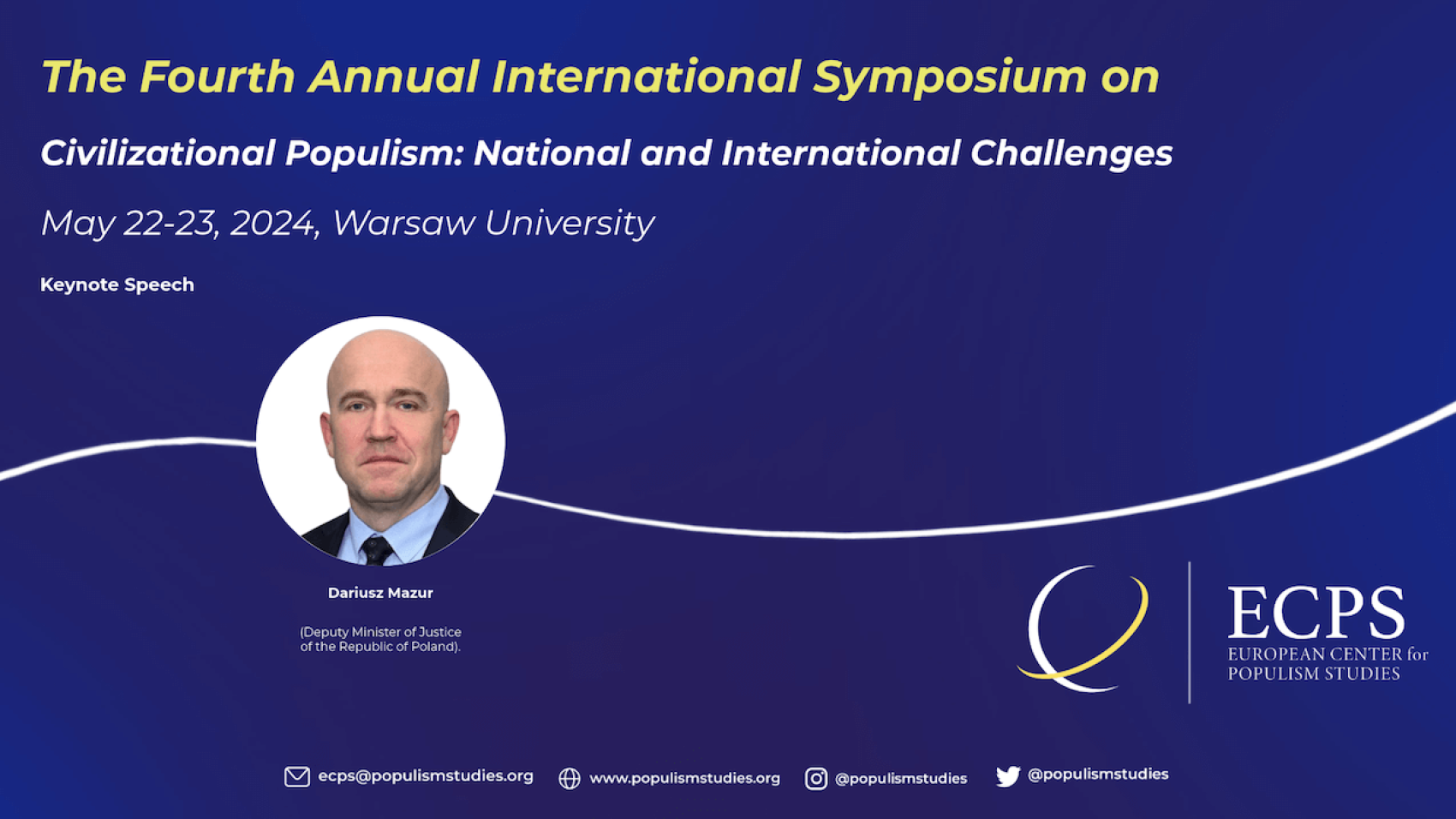
The European Center for Populism Studies (ECPS) was honored to host Deputy Justice Minister Dariusz Mazur as a keynote speaker at its Fourth Annual International Symposium on “Civilizational Populism: National and International Challenges.”
In his address, Deputy Minister Mazur delivered a powerful reflection on the state of the rule of law and judicial independence in Poland. Drawing from over 25 years of service in the Polish judiciary, Mazur addressed how legal institutions can resist authoritarian tendencies and safeguard democratic values in an era of increasing polarization and populist pressure.
Born in Krakow in 1970, Dariusz Mazur began his judicial career at the District Court for Krakow-Podgórze, eventually serving as a judge at the Regional Court in Krakow. From 2010 to 2020, he chaired the 3rd Criminal Division and served as the Coordinator for International Cooperation and Human Rights in Criminal Matters. He has been actively involved in legal education through the European Judicial Training Network (EJTN) and the National School of Judiciary and Public Prosecution, and has authored numerous publications in Polish, English, German, and Czech.
In 2016, he was named “European Judge 2015” by the Polish Section of the International Commission of Jurists for his landmark decision rejecting the extradition of Roman Polanski to the United States. In 2020, he received the Badge of Honor from the Polish Judges’ Association Iustitia for his efforts in defending the judiciary’s independence and raising international awareness about the challenges facing Poland’s legal system.
Deputy Minister Mazur’s keynote emphasized the vital role of judges, legal institutions, and international collaboration in resisting illiberal populism and upholding constitutional democracy.
Outside the courtroom, Mazur has a keen interest in history, rock music, and capoeira regional, a traditional form of Brazilian martial arts.
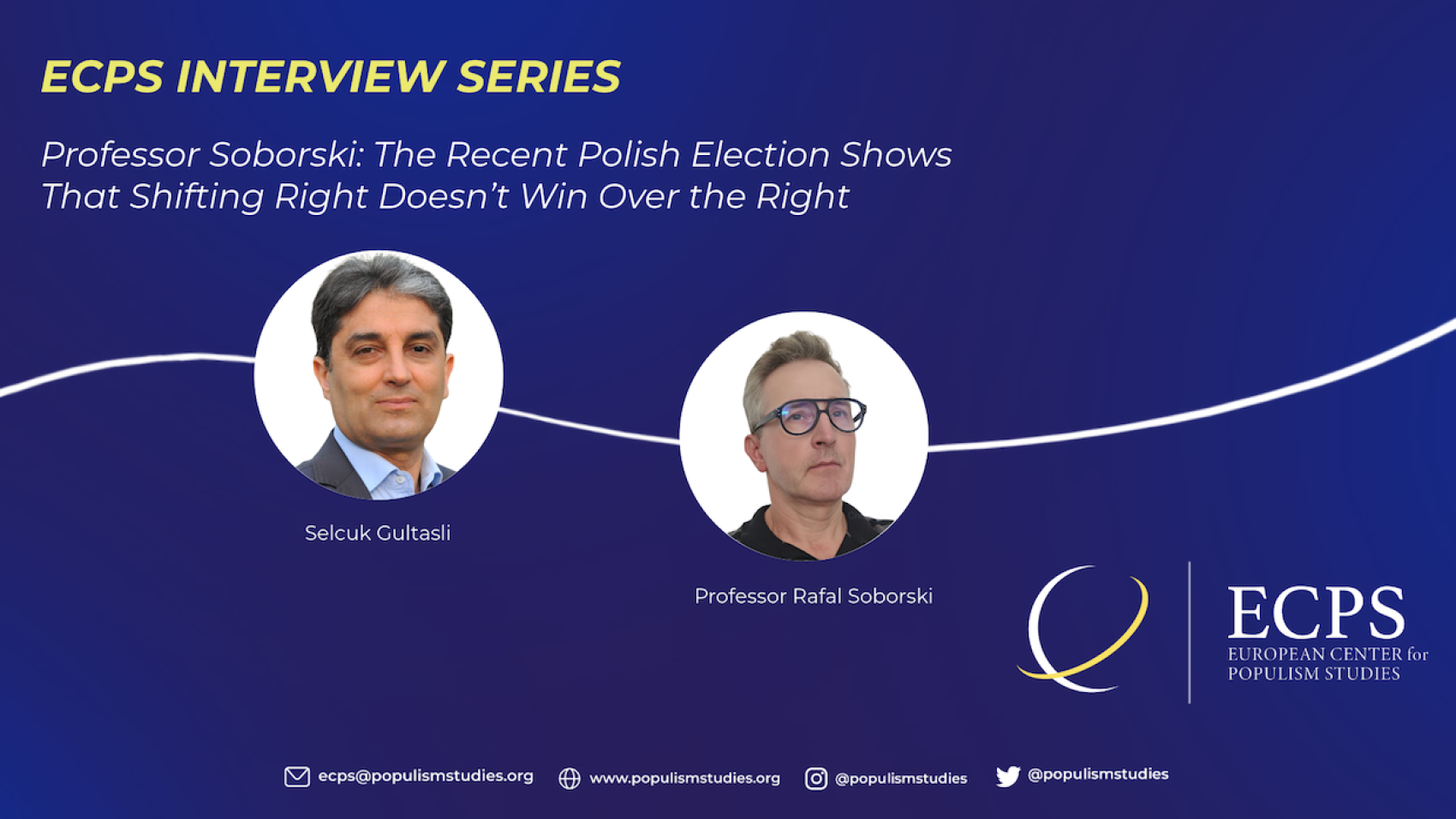
In this compelling interview, Professor Rafal Soborski critiques Poland’s liberal democratic actors for mimicking right-wing rhetoric in a failed attempt to broaden appeal. “Shifting right doesn’t win over the right—it alienates the left,” he warns, urging pro-democratic forces to adopt bold, progressive agendas rooted in class justice and social solidarity. Drawing comparisons to political centrists across Europe, Soborski emphasizes that ideological clarity—not cautious managerialism—is key to countering the far right’s emotional narratives and mobilizing mythologies. His insights offer a timely call for a renewed progressive vision amid the turbulent political landscape in Poland and beyond.
In a wide-ranging interview with the European Center for Populism Studies (ECPS), Professor Rafal Soborski offers a trenchant critique of the Polish liberal democratic actors’ strategic missteps in the recent presidential election, arguing that centrist attempts to mimic the right not only fail to capture conservative voters but also alienate the progressive base. “Shifting right doesn’t win over the right—it alienates the left,” he asserts, summarizing what he sees as a recurring failure of liberal parties not only in Poland but across much of Europe.
Professor Soborski, who teaches International Politics at Richmond American University and serves as a Senior Research Fellow at the Global Diversities and Inequalities Research Centre at London Metropolitan University, situates this analysis within a broader critique of what he calls “managerial centrism.” For him, this style of governance—technocratic, uninspiring, and devoid of ideological ambition—has become a default mode for centrist parties. “Even when the center wins elections, it then limits itself in office to this very managerialism… without a compelling vision of its own,” he explains.
This was evident in the performance of Civic Platform’s candidate, Rafał Trzaskowski, who lost narrowly to the nationalist Karol Nawrocki in a deeply polarized race in Poland. Rather than galvanizing progressive voters with bold policies, Trzaskowski, Professor Soborski suggests, hedged his ideological bets and made symbolic missteps that demoralized key constituencies. “I don’t think he convinced anyone by hiding the rainbow flag handed to him by Nawrocki during one of the debates,” Professor Soborski notes. “This alienated many people on the left… while not convincing anyone on the right.”
In his view, such political positioning reflects a deeper failure to recognize the need for ideological clarity and courage. Drawing comparisons to Germany’s Olaf Scholz and Britain’s Keir Starmer, Professor Soborski warns that when liberal parties attempt to neutralize far-right narratives by parroting them, they lose both authenticity and voter trust. “It tends to mimic instead the narratives of the right,” he laments.
For Professor Soborski, the path forward lies not in cautious centrism but in a reinvigoration of progressive values—rooted in social justice, pro-Europeanism, and recognition of class dynamics. “I would like to see pro-democratic forces in Poland challenging the right,” he concludes, “rather than hoping in vain that they can occupy some of the right’s discursive territory.”
This interview reveals not only the ideological contours of Poland’s political battleground but also the urgent need for liberal democratic actors to rethink their strategy before the far right consolidates its recent gains.
Fourth Annual International Symposium on ‘Civilizational Populism: National and International Challenges’
May 22–23, 2025 | University of Warsaw
Keynote Speech
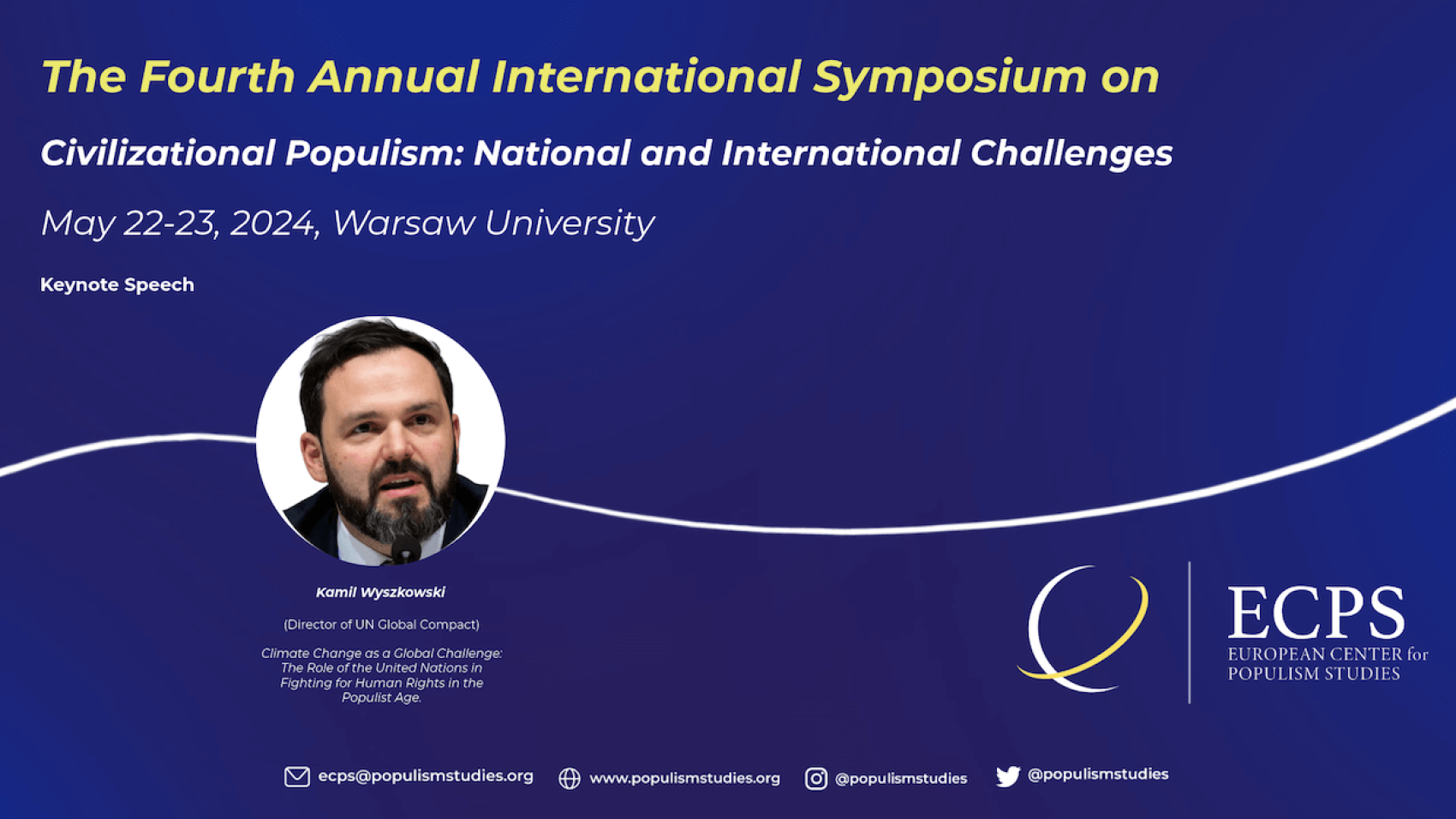
The Role of the UN in Fighting for Human Rights in This Populist Age,” by Kamil Wyszkowski (Director of UN Global Compact).
Kamil Wyszkowski has been working for the United Nations. He currently serves as the Representative and Executive Director of the UN Global Compact Network Poland and as the Representative of UNOPS in Poland. He is an expert on UN and EU policies, particularly in areas intersecting business and public administration.
From 2002 to 2009, he worked at the United Nations Development Programme (UNDP), where he was responsible for international and multilateral cooperation and for developing programs across Europe and Asia. He has implemented development projects in dozens of countries, including Iraq, India, Thailand, and Romania, drawing on knowledge transfer from Poland. He has also worked at UNDP headquarters in New York and its regional center for Europe and the CIS in Bratislava. From 2009 to 2014, he was the Director of the UNDP Office in Poland. Since 2004, he has been the National Representative and Chair of the Board of the UN Global Compact Network Poland (GCNP), which coordinates cooperation between the UN and business, academia, cities, public administration, and NGOs in Poland. He has also led the Know How Hub (a UNDP Poland initiative, now under GCNP) since 2011.
He lectures at institutions including Central European University (Bucharest), Ukrainian Catholic University (Lviv), Warsaw School of Economics, Kozminski University, Collegium Civitas, SWPS University, the Paderewski Institute of Diplomacy, and the University of Warsaw.
Fourth Annual International Symposium on ‘Civilizational Populism: National and International Challenges’
May 22–23, 2025 | University of Warsaw
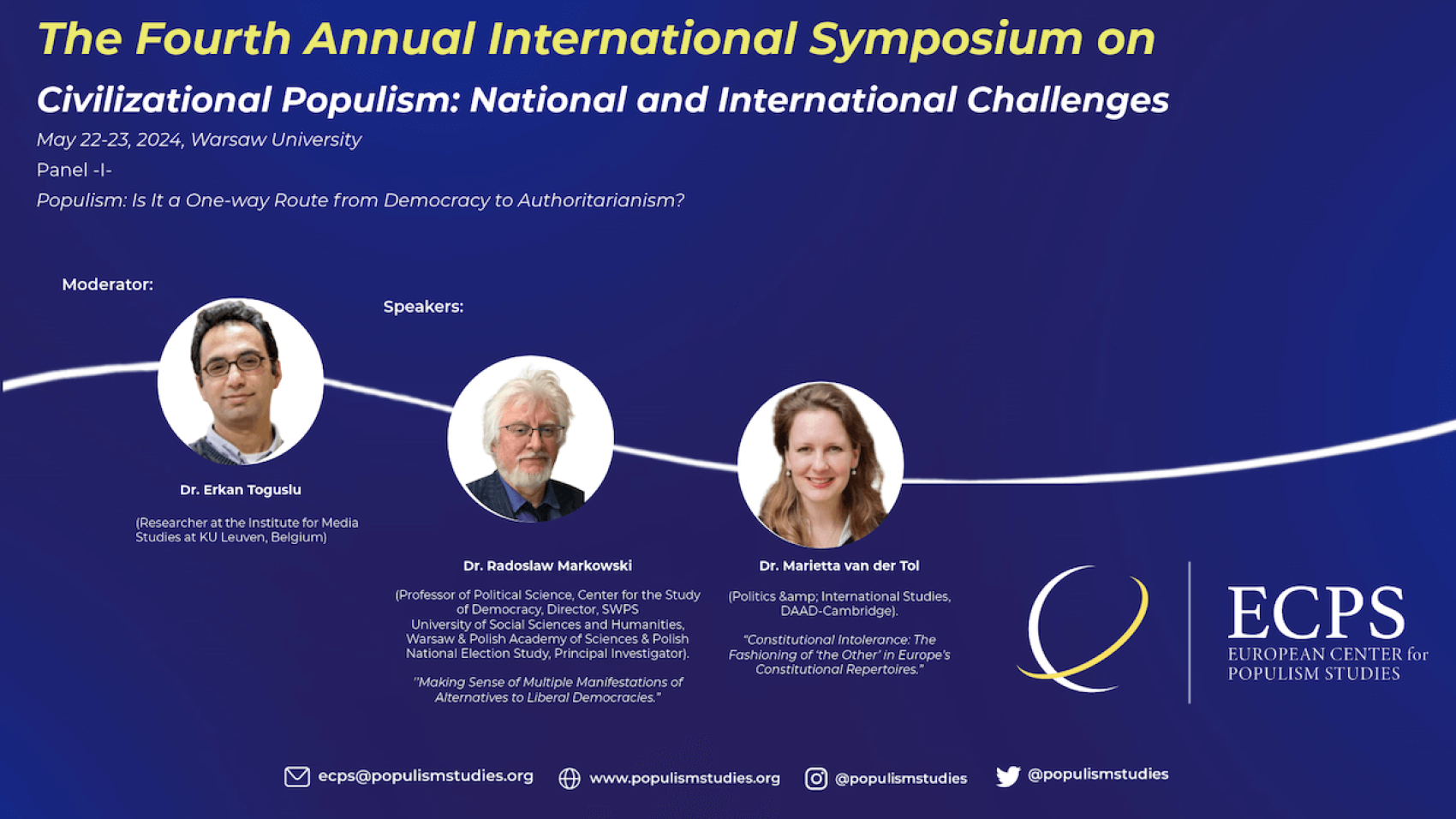
Moderator
Dr. Erkan Toguslu (Researcher at the Institute for Media Studies at KU Leuven, Belgium).
Speakers
“Making Sense of Multiple Manifestations of Alternatives to Liberal Democracies,” by Dr. Radoslaw Markowski (Professor of Political Science, Center for the Study of Democracy, Director, SWPS University of Social Sciences and Humanities, Warsaw & Polish Academy of Sciences & Polish National Election Study, Principal Investigator).
“Constitutional Intolerance: The Fashioning of ‘the Other’ in Europe’s Constitutional Repertoires,” by Dr. Marietta van der Tol (Politics & International Studies, DAAD-Cambridge).
Fourth Annual International Symposium on ‘Civilizational Populism: National and International Challenges’
May 22–23, 2025 | University of Warsaw
Moderator
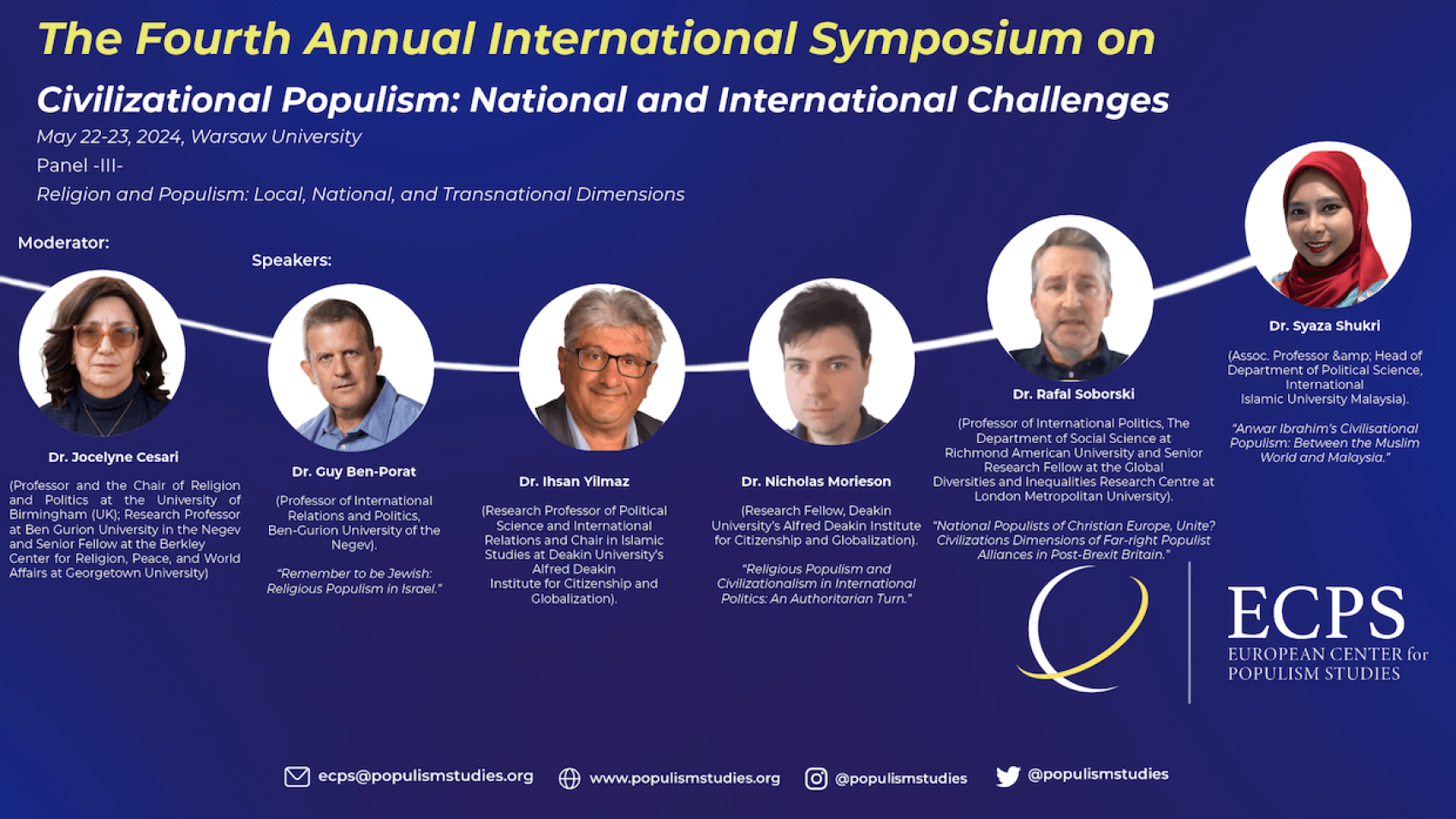
Dr. Jocelyne Cesari(Professor and Chair of Religion and Politics at the University of Birmingham (UK) and Senior Fellow at the Berkley Center for Religion, Peace, and World Affairs at Georgetown University).
Speakers
“Remember to be Jewish: Religious Populism in Israel,” by Dr. Guy Ben-Porat (Professor of International Relations and Politics, Ben-Gurion University of the Negev).
“Religious Populism and Civilizationalism in International Politics: An Authoritarian Turn,” by Dr. Ihsan Yilmaz(Research Professor of Political Science and International Relations and Chair in Islamic Studies at Deakin University’s Alfred Deakin Institute for Citizenship and Globalization) & Dr. Nicholas Morieson (Research Fellow, Deakin University’s Alfred Deakin Institute for Citizenship and Globalization).
Paper Presenters
“National Populists of Christian Europe, Unite? Civilizations Dimensions of Far-right Populist Alliances in Post-Brexit Britain,” by Dr. Rafal Soborski(Professor of International Politics, The Department of Social Science at Richmond American University and Senior Research Fellow at the Global Diversities and Inequalities Research Centre at London Metropolitan University).
“Anwar Ibrahim’s Civilisational Populism: Between the Muslim World and Malaysia,” by Dr. Syaza Shukri(Assoc. Professor& Head of Department of Political Science, International Islamic University Malaysia).
Fourth Annual International Symposium on Civilizational Populism: National and International Challenges’
May 22–23, 2025 | University of Warsaw
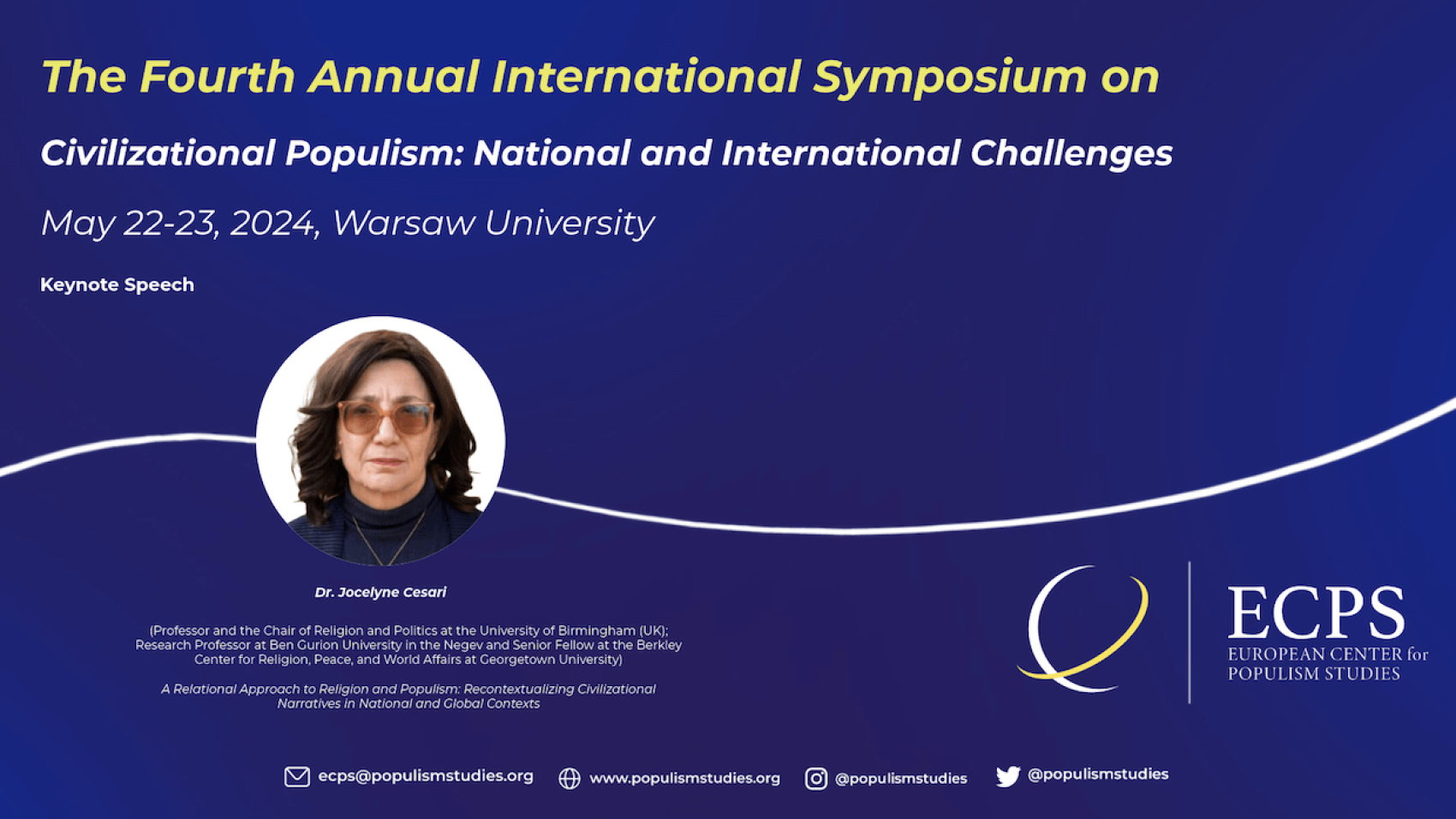
We are honored to present the keynote address by Professor Jocelyne Cesari, a leading authority on religion and politics, whose lecture, “A Relational Approach to Religion and Populism: Recontextualizing Civilizational Narratives in National and Global Contexts,” offered a groundbreaking exploration of how religious narratives and civilizational imaginaries are co-opted and reframed by populist movements in both national and transnational arenas.
Drawing on her extensive comparative research and most recent book We God’s Nations (Cambridge University Press, 2022), Professor Cesari challenges static interpretations of religious identity and civilizational tropes. Instead, she proposes a relational framework to understand how populists reconfigure religion and belonging in response to political, geopolitical, and social anxieties—often turning religion into a marker of national authenticity and global resistance.
This keynote engages deeply with the symposium’s central theme: how civilizational populism transforms the political landscape across continents, and how religious claims are mobilized to draw boundaries between ‘us’ and ‘them.’ Professor Cesari’s insights illuminate how populists selectively mobilize Christianity, Islam, or Hinduism—not simply as belief systems, but as civilizational signifiers—to justify exclusionary politics and cultural hierarchies in an increasingly interconnected but divided world.