
In this ECPS interview, Professor Craig Calhoun, Professor of Social Sciences at Arizona State University, revisits Brexit a decade after the 2016 referendum, arguing that it has revealed “regret, weakened influence, and intensified backsliding.” While Brexit was presented as a remedy for national decline, Professor Calhoun notes that “there is now a degree of regret,” as its economic costs—shrinking growth, declining investment, and reduced productivity—have become clearer. Yet his analysis moves beyond economics, situating Brexit within deeper struggles over English identity, regional inequality, democratic legitimacy, and geopolitical decline. He argues that Brexit has acted as a “catalytic event,” intensifying existing democratic malaise while exposing Britain’s unresolved tensions over belonging, representation, and national purpose in an increasingly unstable global order.
Interview by Selcuk Gultasli
A decade after the 2016 referendum, Brexit remains a defining fault line in British politics, shaping not only institutional trajectories but also the deeper contours of political identity, democratic legitimacy, and geopolitical orientation. In this wide-ranging interview with the European Center for Populism Studies (ECPS), Professor Craig Calhoun, Professor of Social Sciences, Arizona State University, offers a striking reassessment of Brexit’s long-term implications, foregrounding a central paradox captured in the headline insight: “Brexit reveals regret, weakened influence, and intensified backsliding.” While the referendum was initially framed as a corrective to perceived national decline, Professor Calhoun underscores that “there is now a degree of regret,” as its economic consequences—“shrinkage of the economy, loss of investment and productivity”—have become increasingly apparent.
Yet Brexit’s significance extends beyond material outcomes. Professor Calhoun situates it within a broader transformation of democratic politics, arguing that it has functioned not merely as an event but as an accelerant: “Brexit has functioned as a catalytic event… it has made things worse and intensified democratic backsliding.” In this respect, the UK’s trajectory reflects a wider pattern across Western democracies, where populist mobilization intersects with declining institutional trust and growing dissatisfaction with representation. Although Britain retains relatively robust institutional foundations, he notes a discernible erosion, with the country becoming “less democratic… to a noticeable degree.”
A key contribution of Professor Calhoun’s analysis lies in his emphasis on the persistence of underlying structural and cultural drivers. Far from resolving political tensions, Brexit has entrenched them. “Many of the same factors are still in place,” he observes, pointing to regional inequality, anxieties over English identity, and unresolved questions regarding immigration and belonging. These dynamics have not only sustained polarization but have also contributed to a fragmented party system and a growing perception that “organized politics does not express the concerns that ordinary people have in their lives.”
At the same time, Brexit has come to symbolize a broader narrative of national and geopolitical decline. As Professor Calhoun notes, “the UK appears less powerful, less economically prosperous, and less influential globally,” a perception that has become more visible in the post-2016 period. Crucially, while the Leave campaign acknowledged decline, it promised reversal—a promise that, in his words, “has not occurred.” This disjuncture between expectation and outcome has reinforced both disillusionment and the continued appeal of populist narratives centered on “the people” rather than systemic or institutional considerations.
By placing Brexit at the intersection of populism, nationalism, and democratic transformation, Professor Calhoun’s reflections illuminate the enduring reconfiguration of political subjectivity in contemporary democracies. His analysis suggests that Brexit is not an isolated case but part of a wider shift toward more unstable, contested, and fragmented political orders—where regret, polarization, and uncertainty coexist with persistent demands for recognition, representation, and belonging.
Here is the edited version of our interview with Professor Craig Calhoun, revised slightly to improve clarity and flow.
Britain Remains Stuck on Brexit’s Cultural Divisions

Professor Calhoun, welcome. In your early interpretation of Brexit as “a mutiny against the cosmopolitan elite,” how should we reassess that diagnosis a decade on, particularly in light of the persistence of identity-based polarization and the consolidation of Brexit as a durable axis of political subjectivity rather than a transient electoral cleavage?
Professor Craig Calhoun: Many of the same factors are still in place: regional inequalities and disparities in Britain; anxieties about English identity—often more than British identity—and about White racial identity, though not always openly expressed; and concerns about the place of immigrants and minorities in the country. These factors help explain the Brexit vote and why it was possible to mobilize people for this decision.
What has changed? I think there is now a degree of regret, as it has become apparent that the decision has been economically counterproductive. It has contributed to the shrinkage of the economy, loss of investment and productivity, and even declines in household income and trade. So, there are clear material consequences.
In terms of cultural politics, however, Britain remains stuck on many of the same issues. Efforts to reposition politics after the Brexit vote included an attempt to reassert class in Labour Party politics during the Corbyn years, followed by a reaction against that, such that the Labour Party now can hardly mention it.
More broadly, British politics has become increasingly fragmented. The current government came in with a large majority but has been unable or unwilling to take bold action, making it a weak government despite its numbers.
At the same time, the Conservative Party has been weakened by the rise of Reform UK and defections. There has been some growth in the Liberal Democrats, but not enough to offset this. Britain once appeared closer to a two-party system; now it is more complex, with significant intra-party conflicts.
As a result, fewer people feel that organized politics reflects their concerns. Across the political spectrum, there is widespread frustration that politics in Westminster does not address the everyday issues people face—whether healthcare, the cost of living, immigration, or, for some, race and anxieties about Islam.
These concerns continue to mobilize people but lack clear expression within party politics, generating ongoing tensions. This dynamic was central to Brexit itself, which represented a move outside the party system. David Cameron allowed the referendum but did not support the outcome, campaigned ineffectively, and assumed it would placate public discontent. It did not. The discontents persist, as do the cultural divisions that drive them. In that sense, Britain remains, in many ways, stuck.
Brexit Reasserted Majority English Identity
To what extent has Brexit transformed political preference into what might be theorized as a “thick” identity—embedding itself in everyday social belonging and moral worldviews in ways analogous to the forms of nationalism you describe as constitutive of modern political communities?
Professor Craig Calhoun: I would say there is a tendency in that direction, but so far it has not fully succeeded. One complication is that strong nationalism, or ethno-nationalism, in this context is English rather than British. Brexit reflected a shift away from foregrounding British identity as inherently multinational—Scots, Irish, Welsh, as well as English—toward a reassertion of a majority English identity.
This kind of majoritarianism is common across countries. Nationalist politics that constitute political communities are rarely without an element of majority identity, which often excludes certain minorities from its conception of the nation. It is never as simple as claiming that everyone is fully united by a single vision. That vision must be reflected in everyday life in multiple ways, which is why it develops over time. At the same time, it is always partly organized around projects of power or domination.
For example, one would not say that Turkish political subjectivity is completely unified by the idea of Turkish identity. It is strong in majoritarian terms, but there are significant minorities, and even within the majority there are differing interpretations of what that identity means. The same is true in Britain, and particularly in England, though the English focus further complicates the situation.
Over a fairly long period, Britain made significant progress in expanding opportunities for minorities to succeed—to attend university, gain employment, and participate in the economy. At the same time, however, there are large concentrations of minority populations, particularly Muslim communities, in specific geographic areas. This makes them highly visible and can generate dynamics of relatively closed communities.
Because populations are not evenly distributed across the country, the development of a unifying democratic nationalism is impeded. These “islands” of difference are reinforced by the dominance of London and a few other metropolitan areas. Cities such as London, and to some extent Manchester, offer more opportunities, enabling people—including minorities—to improve their socioeconomic position.
These relatively cosmopolitan centers tend to favor undoing Brexit, renewing solidarity with Europe, or embracing a more global identity, rather than English nationalism. English nationalism is relatively weak in London but stronger in other regions, and this divide is reinforced by economic disparities. Growth is concentrated in cities rather than in the countryside, which fuels resentment in areas that feel left behind.
This does not necessarily imply poverty. Much of the shift from the Conservative Party to Reform UK involves suburban populations who feel their status and prospects are declining. They are not poor, but they no longer see themselves or their children as future leaders or beneficiaries to the same extent.
As a result, there is a continuing, if partial, alliance between disaffected working-class populations and disaffected suburbanites in various parts of the country. Nigel Farage and Reform UK have been quite effective in building a kind of semi-party that mobilizes these groups through shared fears and resentments, but without offering a clear positive program.
Leave and Remain Became Struggles Over National Identity

Does the enduring entrenchment of “Leave” and “Remain” identities empirically reinforce your argument that nationalism—and adjacent identity formations—are not residual cultural artifacts but actively produced through ongoing political contestation and discursive construction?
Professor Craig Calhoun: Absolutely. The period leading up to Brexit, and even more so the period since the referendum, has been heavily shaped by efforts to forge a stronger sense of national identity. This includes self-declared nationalists—more often English than British—but also those who are concerned about national identity without adopting that label. As a result, the question of who the British people are has become a central political struggle, reinforced not only by the Leave–Remain divide but also by the persistence of the underlying issues that produced it.
Recent polling suggests that around 58 percent of Britons would now vote Remain if given the chance again, indicating that opinions have shifted. This change is largely driven by a growing recognition that people were misled about the material consequences of Brexit. The Leave campaign promised substantial economic benefits—recovering funds sent to Europe, compensating for lost trade through the Commonwealth—but these claims have not been borne out.
The symbolic and cultural dimensions, however, are different. While there is now greater clarity about the material effects of Brexit, identity-related frustrations remain strong for many. Yet political debate has focused primarily on economic conditions, often neglecting the importance of identity and cultural concerns.
It is also important to recognize that these dynamics are not confined to one side. In Scotland, for example, identity politics often take a more cosmopolitan, pro-European form in contrast to English nationalism. Identitarian concerns, therefore, exist across the divide.
At the same time, these issues have not been fully engaged in public debate. For many Britons, they remain somewhat uncomfortable or even taboo. This has enabled right-wing populists to address them more openly than actors on the left. During the Corbyn era, there was greater space for what might be called left-wing populism, but this was followed by a reassertion of control within the Labour Party that marginalized those voices.
For many working-class and less well-off Britons, this shift was experienced as exclusion, reinforcing the perception that urban professional elites dominate Labour and fail to represent their concerns. While the removal of Corbyn increased internal cohesion within the party, it also deepened disaffection among segments of the working class.
These groups engage in identity politics as well. They were not uniformly anti-European a decade ago, nor are they now. The key issue is which political actors provide them with a platform to express concerns that are not merely abstract but tied to lived experiences and ways of life.
Such concerns often originate locally rather than in explicitly national or European debates. For instance, the closure of a local pub due to regulatory or economic changes may be experienced as a loss of community and identity. These grievances can later be framed in nationalist terms, but they typically begin as local concerns.
Frustration intensifies when national political debates appear divided between an urban, metropolitan elite—perceived as disconnected from local realities—and a right-wing populist camp that becomes the primary voice engaging directly with those communities.
Polarization Now Shapes How People Understand Reality
In light of your work on the “degenerations of democracy,” how should we interpret Brexit-era polarization as a case of hyper-partisanship in which epistemic disagreement increasingly shades into ontological division, with opponents cast not merely as adversaries but as existential threats?
Professor Craig Calhoun: You raise three important points, and I agree with all of them. Let me separate them slightly differently, though, and raise a complication about one. I think Britain is highly polarized. The breakdown of the party system means that this polarization is not merely partisan in the traditional sense of competition between major political parties. There are sharp differences in views about how the world works, how things are going, and what is desirable, but these divisions often follow lines such as metropolitan versus non-metropolitan, rather than aligning neatly with party affiliation.
Second, you rightly emphasize the epistemic dimension. People’s basic understandings of how society works—what they take to be facts and valid knowledge—are increasingly contested. The widely discussed breakdown in trust is not simply about attitudes toward politicians; it concerns whether people believe that mainstream media, social institutions, and educational systems provide an accurate account of reality. Many do not, and they question dominant claims about what is true.
This was a major factor in Brexit. Many people accepted statements—often misleading or plainly false—about issues such as the financial relationship between Britain and the EU. Although most academics and journalists demonstrated that these claims were incorrect, this did not persuade a large portion of the electorate. Instead, such corrections were often dismissed as the opinions of pro-European elites, lacking any special epistemic authority. Being an economist or political scientist no longer confers greater credibility than figures such as Nigel Farage.
The erosion of epistemic authority is real. This is not to suggest that experts are always right, but rather that there once existed a broader social consensus about what counts as knowledge and how it should be verified. Today, when individuals encounter claims, the growing tendency is to “do their own research,” not by consulting established media or academic sources, but by browsing a handful of websites or following social media influencers. In this environment, information that is not systematically verified often prevails over more reliable forms of knowledge. This is not unique to Britain; it reflects a broader global trend.
What we often describe as the rise of populism is partly driven by the discrediting of elite claims to knowledge. This, however, raises an immediate question: where can people turn for alternative perspectives that reflect popular concerns while remaining epistemically sound? There is a clear shortage of institutions capable of fulfilling that role. Rather than the emergence of a strong new press, we have seen a proliferation of influencers.
There is, of course, a significant right-wing press, but it is not uniformly populist. It includes some who support more populist positions, alongside others who define themselves as traditional conservatives. This produces a somewhat fragmented and ambiguous informational landscape.
Finally, as you note, this is also the terrain on which political subjectivity is formed. This is not simply about electoral choices; it shapes how individuals understand who they are. Part of the process of polarization involves the development of durable identities. These are not limited to “Leave” and “Remain,” but encompass broader frameworks through which people interpret themselves, their fellow citizens, and what counts as credible knowledge about the world.
To reiterate, the extent to which established mainstream sources have been discredited among large segments of the population is significant. This includes major parts of the media, academia, and political parties. In the past, people tended to trust institutions such as party research offices or political leaders to provide reliable information. That trust has diminished. Many now assume they are receiving partisan messaging from politicians seeking to remain in power, fostering distrust not only toward opponents but also toward those they once supported.
Britain Still Has Institutions, But Democratic Norms Are Eroding
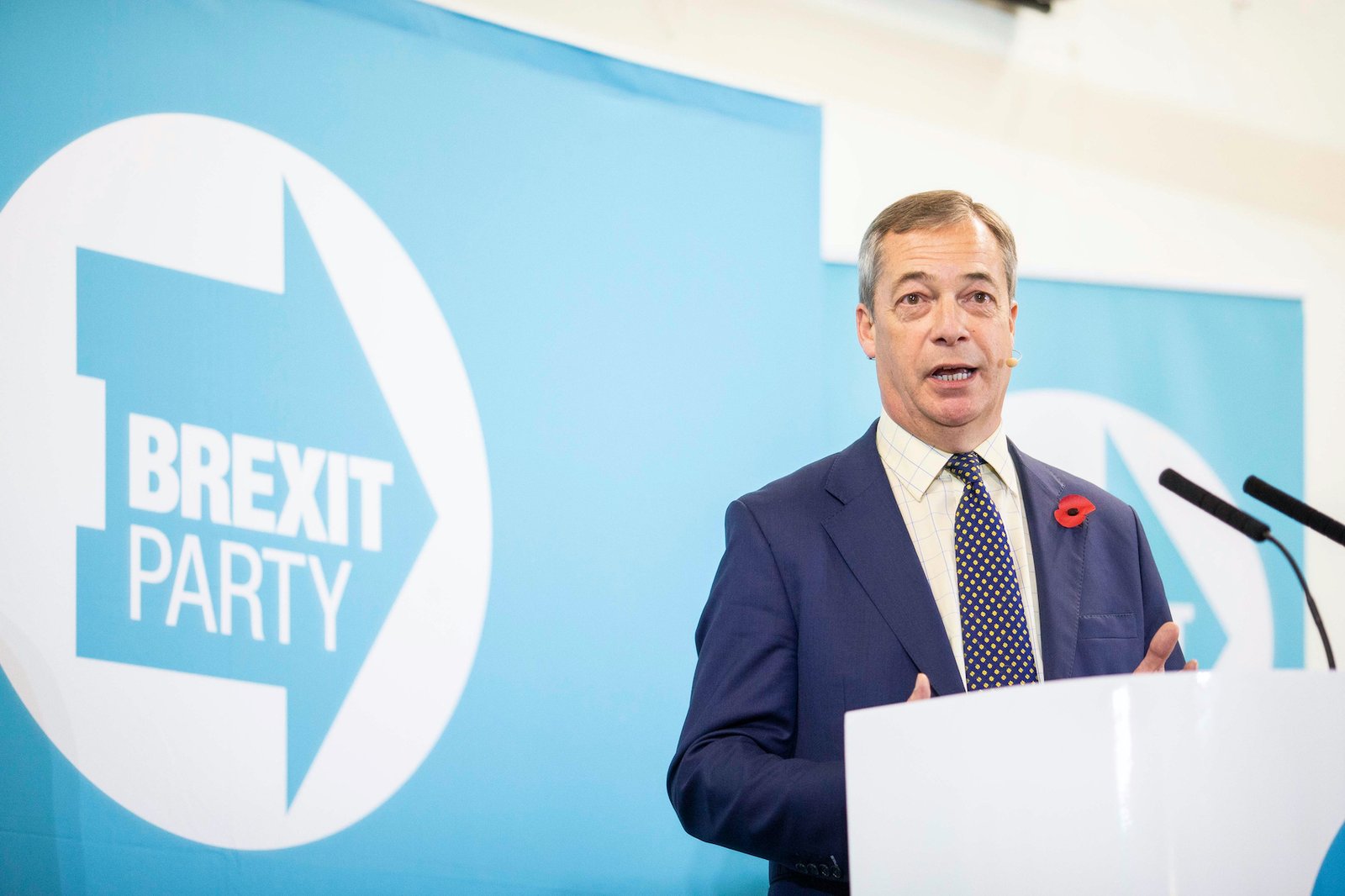
The continued mobilization of Brexit sentiment by actors such as Nigel Farage and the electoral positioning of Reform UK suggest that populism remains a potent force in British politics. Do these developments represent a stabilization of populism within democratic competition, or do they exemplify the longer-term erosion of liberal-democratic norms you associate with populist mobilization?
Professor Craig Calhoun: I think there is a longer-term destabilization of democratic norms. I would hasten to add, however, that norms are not very strong if they exist only as free-floating beliefs rather than being embedded in institutional practices. The good news is that Britain still has relatively strong institutions. The courts, by and large, continue to function with a reasonable degree of independence from politics and with a serious grounding in legal reasoning and precedent.
Although it has suffered some decline, the National Health Service remains an institution to be valued and rebuilt. More broadly, Britain retains institutional foundations that help sustain the norms of a functioning democratic society.
That said, there has been erosion and decline. There are real problems, even if substantial institutional strength remains. I should also note a conceptual concern regarding how populism is often used. It is sometimes treated as a coherent body of thought, analogous to leftism or rightism, socialism or capitalism. I do not think this is accurate. Populism can appear across different points on the political spectrum because it is better understood as a style of mobilization centered on defining “the people” in opposition to elites.
In that sense, one can have both left- and right-wing populism. For example, the Corbyn campaigns represented a more populist alternative to the Starmer approach, even if this is not always recognized. Populism, in this view, prioritizes “the people” over systems—over the economy, the state, or other institutional frameworks—and centers politics on how ordinary people understand their lives and interests.
This helps explain why, during the Brexit debate, few people abandoned a Leave position when it was argued that Brexit would harm the City of London. The response was not to contest the economic analysis but to reject its relevance. Many simply did not care about the City of London; they cared about the English people. While economic consequences may shape material conditions over time, the core populist impulse remains focused on the people rather than on systemic or elite concerns.
Brexit Intensified Britain’s Democratic Backsliding
Would you characterize Brexit primarily as a symptom of deeper democratic malaise—rooted in declining perceptions of citizen efficacy, institutional trust, and representational legitimacy—or as a catalytic event that has itself intensified democratic backsliding in the UK?
Professor Craig Calhoun: I would say the former, though there is also an element of the latter. Brexit has functioned as a catalytic event: it has exacerbated existing problems and intensified democratic backsliding. In some respects, Britain has become less democratic—not to the same extent as the United States, but to a noticeable degree. Other developments, such as the pandemic, have also contributed to this trajectory.
That said, the core issue lies in what Brexit expressed: a prior deterioration in the conditions for democratic solidarity, which the 2016 vote both revealed and reinforced. This includes the factors you mentioned, but it also extends to material foundations and lived conditions. When I refer to metropolitan and non-metropolitan Britain, I use it as shorthand to highlight that people do not simply hold different views; they live under very different material circumstances that shape their priorities and values.
For many living outside major urban centers, aggregate indicators such as gross national product do not meaningfully reflect their experience of prosperity. Much of economic growth is concentrated in London, Manchester, and other large cities, with limited diffusion into local communities. This is not merely an abstract disagreement over economic metrics; it reflects everyday realities. These indicators feel distant from lived experience for material reasons, not simply due to informational deficits.
People’s outlooks are shaped by conditions in their immediate environments—the state of local labor markets, opportunities for younger generations, and access to housing. The housing crisis is particularly illustrative. Rising unaffordability has repeatedly influenced British politics and has eroded what was once a relatively stable upper working-class and middle-class position, weakening the social center.
In the 1970s, Margaret Thatcher promoted homeownership as a means of fostering a society of stakeholders, premised on the idea that property ownership would encourage long-term social commitment. Whatever one makes of that vision, subsequent developments have altered the landscape. After a period of relative accessibility, housing has become increasingly unaffordable due to insufficient supply, higher interest rates, regulatory constraints, and the geographic mismatch between affordable housing and employment centers. These material conditions play a central role in shaping how people interpret what might otherwise appear as abstract or theoretical propositions.
Brexit Made Britain’s Decline More Visible
How does Brexit illuminate the reconfiguration of political identity in ethnonational terms—what you have described as the contemporary shift toward the construction of “majority ethnicities” as politically salient categories?
Professor Craig Calhoun: There are two parts to this. In general, the rise of majoritarian identity politics—whether in Germany, France, England, or elsewhere—is a significant part of what is happening. It is shaping a new right wing that already has considerable political influence and may gain even more, including in the United States.
In framing it this way, I want to emphasize that it is not simply a matter of majorities uniformly embracing such identities. Rather, it involves politically mobilized majoritarian activism carried out in the name of the majority. Actors such as Reform in the UK are not themselves representative of the majority of the population—certainly not of all those who might be categorized as part of the English majority—but they claim to speak for it and mobilize around that claim. This form of mobilization has been growing in importance for decades.
The second part of the story, more specific to the UK, is that the period after Brexit coincides with a perception of decline. The UK appears less powerful, less economically prosperous, and less influential globally. One can debate whether this decline predates Brexit, but it has become more visible since 2016. The Leave campaign itself acknowledged a sense of decline but argued that Brexit would reverse it. That reversal has not occurred.
For many people who are not at the center of political or economic debates, Brexit has come to symbolize this trajectory of decline. At the same time, Europe more broadly is also experiencing challenges and, in some respects, decline. Brexit affected both the UK and the European Union, and the EU has faced internal divisions, including over migration, the war in Ukraine, energy policy, and rearmament.
More broadly, both the UK and Europe are grappling with shifting global power dynamics. The rise of China and India, increasing economic integration across Asia, and a more assertive Russia have all altered the geopolitical landscape. At the same time, the United States has become a less predictable partner, pursuing policies that have at times destabilized international relations and strained alliances.
These geopolitical shifts coincide with economic uncertainty. There is little clarity that current economic transitions will lead to improved outcomes. Even countries like Germany face employment challenges. The long-term decline of skilled manufacturing work continues, and its replacements have not fully materialized. Emerging technologies, including AI, may further intensify these pressures. As a result, personal economic insecurity is increasingly linked to a broader perception that one’s country—and the wider region—is in relative decline compared to rising global powers.
Brexit Encourages a Dangerous National Myopia

In the current geopolitical context, do you see any viable synthesis between nationalism and cosmopolitanism capable of sustaining the liberal international order, or are we witnessing their progressive decoupling under the pressures of populism and sovereigntism?
Professor Craig Calhoun: We are witnessing a breakdown of the liberal international order. Whether it can be renewed remains an open question. It is not impossible, but what we have seen is a continued erosion in the context of the war in Ukraine, energy politics, conflicts in the Middle East, and related developments.
One feature of the Brexit debates—both in 2016 and in the years since—is that they have reduced attention to the broader ways in which global changes are affecting Britain. If everything is framed in terms of Leave versus Remain, then less attention is paid to ongoing conflicts in the Middle East or to the structural causes of migration. For example, migration is often discussed as simply a matter of people arriving, rather than as the consequence of specific events such as the war in Syria, which displaced large populations.
In this sense, the framing of Brexit encourages a kind of national myopia. A similar pattern can be observed in the United States, where political debates were long focused on internal issues even as international dynamics were shifting significantly. This makes it more difficult to address fundamental questions about what would make a country secure, prosperous, or resilient in a changing global context.
This raises the question of whether the renewal of the liberal international order is either feasible or desirable. It may be possible to reconstruct elements of it, but it could also take a different form. Some argue for protecting the West as a privileged space, accepting reduced global influence while maintaining internal stability. Others point to alternative visions of world order, including those centered on China, which emphasize order rather than liberal norms.
It is not clear that the breakdown of the liberal international order necessarily implies the absence of order altogether. It could lead to a transition toward a new multilateral arrangement or even to a form of hegemonic order. At the same time, there remains the risk of continued fragmentation, with more frequent and proximate conflicts.
These dynamics also affect national self-understandings. In Britain, for instance, there has long been a perception of maritime strength, encapsulated in the idea that “Britannia rules the waves.” The postwar decline of empire already challenged this view, but more recent events have further exposed limitations in military capacity. Such realizations can undermine confidence and reinforce a sense of vulnerability.
This, in turn, raises difficult questions about how national success should be understood in the post-Brexit context. If expectations of renewed strength and autonomy are not matched by material capabilities, the tension between nationalist aspirations and geopolitical realities becomes increasingly apparent.
Populism, Nationalism, and War Politics Are Converging
Finally, looking beyond the British case, do you see Brexit—and the continued resonance of figures like Farage—as indicative of a broader transformation across Western democracies, where populism, nationalism, and democratic dissatisfaction are converging into new, potentially unstable political equilibria?
Professor Craig Calhoun: I think they may not be equilibria. So, instability, yes. There is a very widespread shift away from more or less conventional left-right party politics, and in particular from the dominance of the liberal center, into an unstable era of problematic domestic politics, with parties themselves becoming unstable, new parties emerging, and increasing influence of what is commonly called the populist right, but also of non-populist right-wing currents. Not all of the right wing is automatically populist. There are a variety of extreme right-wing ethno-nationalist movements, particularly on the European continent and in the United States, that are not clearly populist. Some of these operate within frameworks that call for a return to a kind of right-wing, quasi-medieval vision of Europe.
There is also a rise of orthodoxy, not only in regions traditionally associated with it, such as Russia or Greece, but also in the West, where some right-wing thinkers and voices have converted to Orthodoxy. Some have even relocated to other countries and view Orthodoxy as a framework for rethinking the future. Others, like Rod Dreher, have advocated what he calls the “Benedict Option,” a return to forms of quasi-monastic community life. My point is simply that there are multiple kinds of emerging right-wing formations. They vary in how populist they are: some are clearly populist, while others are more explicitly elitist, focused on preserving elite authority.
There has not yet been a corresponding revitalization of left-wing thought. There are strong thinkers on the left, and such a renewal may come, but for now the intellectual and political dynamism appears more pronounced on the right. This development dovetails with broader shifts in international politics and geopolitics. Policies such as increasing tariffs and dismantling trade agreements are nationalist in one sense but are often driven by domestic political concerns that spill over into international relations.
At the same time, the spread of wars and aggressive international actions—sometimes pursued for their own sake, or because they help leaders remain in power—adds another layer of instability. In certain respects, figures like Putin and Netanyahu are in similar positions, where being at war helps sustain their political authority. This kind of dynamic is domestically rooted in nationalist configurations but poses wider global risks.
These actors are not identical to figures like Farage, but they are part of a broader global rise of various right-wing movements, some of which are primarily oriented toward power, while others are more explicitly concerned with the moral state of society. Notably, many of these pro-military, assertive right-wing movements are also strongly masculinist. They express concerns about declining birth rates, oppose expanded roles for women in public life, and often adopt homophobic positions. These stances reflect anxieties rooted in personal and social life within their respective societies, yet they are increasingly linked to broader geopolitical projects.
In that sense, questions that may seem unrelated—such as the connection between foreign policy actions and attitudes toward sexuality—are tied together through a shared emphasis on strength, both in individual, gendered terms and in national terms.