
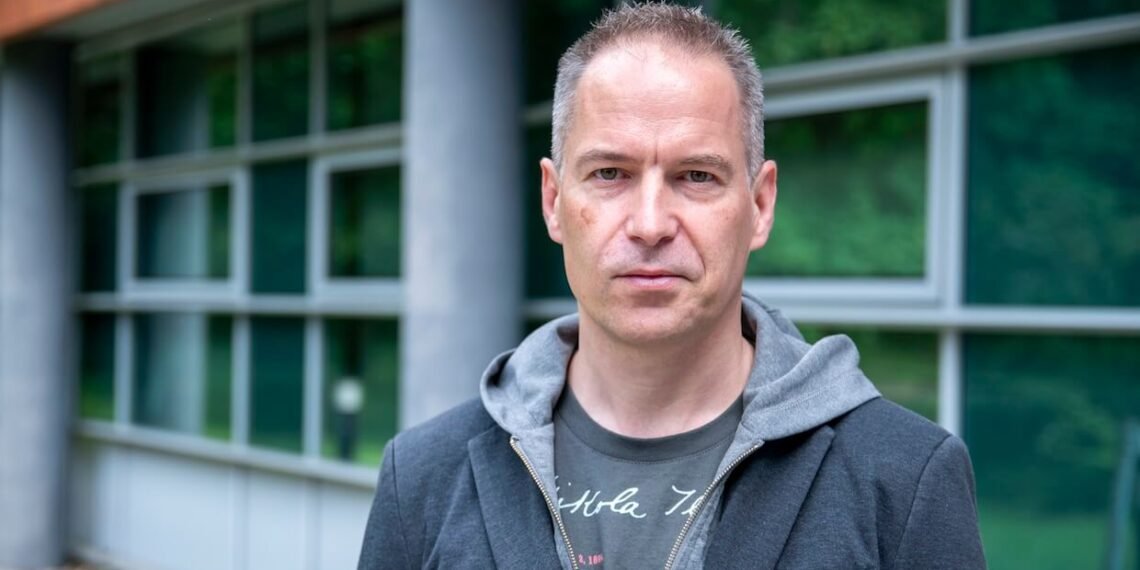
Hungary’s democratic transition after Viktor Orbán may begin where his regime was once strongest: the centralized media and propaganda machine that sustained sixteen years of illiberal rule. In this ECPS interview, Assoc. Prof. Péter Krekó argues that Orbán’s highly professional disinformation apparatus has suffered a striking collapse, opening new possibilities for democratic renewal, media pluralism, and a more critical public sphere. At the same time, he warns that concentrated political power, polarization, and the dangers of re-autocratization remain serious challenges. Drawing on his expertise in political psychology, populism, and informational autocracy, Assoc. Prof. Krekó examines Hungary’s transformation within broader debates on post-truth politics, democratic resilience, and authoritarian adaptation—asking whether Hungary can evolve from a model of illiberalism into a model of democratic recovery.
Interview by Selcuk Gultasli
The collapse of Viktor Orbán’s Fidesz government after sixteen years in power has shaken one of Europe’s most influential illiberal regimes and raised a defining question: can Hungary’s democratic renewal begin where Orbán’s system was strongest—its centralized media and propaganda machine? For more than a decade, Hungary served as a laboratory of democratic backsliding, populist governance, and state-sponsored informational manipulation. Yet, as Assoc. Prof. Péter Krekó argues in this ECPS interview, Orbán’s once highly professional disinformation apparatus has suffered a striking failure, losing its capacity to shape public opinion as effectively as before.
Assoc. Prof. Krekó—Associate Professor at Eötvös Loránd University, Director of the Political Capital Institute, and Senior Budapest Open Society Fellow at the CEU Institute for Advanced Study—examines how this collapse opens new possibilities for pluralism, democratic reconstruction, and a more critical public sphere. At the same time, he warns that democratic renewal is not guaranteed. Concentrated power, one-sided tribalism, and the risk of re-autocratization remain serious dangers.
Drawing on his interdisciplinary expertise as both a political scientist and social psychologist, Assoc. Prof. Krekó situates Hungary’s transformation within broader debates on populism, post-truth politics, democratic resilience, and authoritarian adaptation. He argues that Orbán’s system relied not primarily on overt repression, but on the creation of what became “the most centralized and politicized media environment in the entire European Union,” where hundreds of media outlets operated within a politically controlled ecosystem reproducing state-sponsored narratives, fear campaigns, and disinformation.
Yet despite these highly asymmetrical conditions, the Orbán regime’s informational dominance appears to have reached its limits. As Assoc. Prof. Krekó explains, the very machinery that once enabled Fidesz to consolidate power ultimately failed to maintain public trust and political legitimacy. The interview therefore examines not only the weakening of Orbán’s media empire, but also the broader unraveling of the patronage networks, ideological loyalties, and communicative structures that sustained Hungary’s illiberal order for more than a decade.
At the same time, Assoc. Prof. Krekó repeatedly cautions against simplistic narratives of democratic restoration. While Orbán’s centralized propaganda system may be collapsing, the institutional and psychological legacies of illiberalism remain deeply embedded within Hungarian political culture. The conversation explores the persistence of conspiracy narratives, anti-immigration attitudes, and pro-Russian disinformation, as well as the dangers that can emerge when overwhelming electoral legitimacy becomes concentrated in the hands of a new political force.
Importantly, the interview also highlights the possibility that Hungary could evolve from a model of informational autocracy into a model of democratic recovery. Assoc. Prof. Krekó reflects on the prospects for rebuilding media pluralism, depolarizing public discourse, strengthening democratic norms, and resisting the temptation to reproduce the very forms of centralized power that characterized Orbánism.
Ultimately, this conversation presents Hungary not merely as a case of authoritarian decline, but as a crucial test case for understanding whether democracies damaged by prolonged informational manipulation can successfully reconstruct pluralistic political life. Whether Hungary becomes a model for democratic renewal—or drifts toward new forms of hybrid governance—remains uncertain. But as Assoc. Prof. Krekó suggests throughout this interview, the striking collapse of Orbán’s centralized media and propaganda machine has opened political possibilities that only a few years ago appeared unimaginable.
Here is the edited version of our interview with Associate Professor Péter Krekó, revised slightly to improve clarity and flow.
Orbán’s Informational Autocracy Meets Its Limits
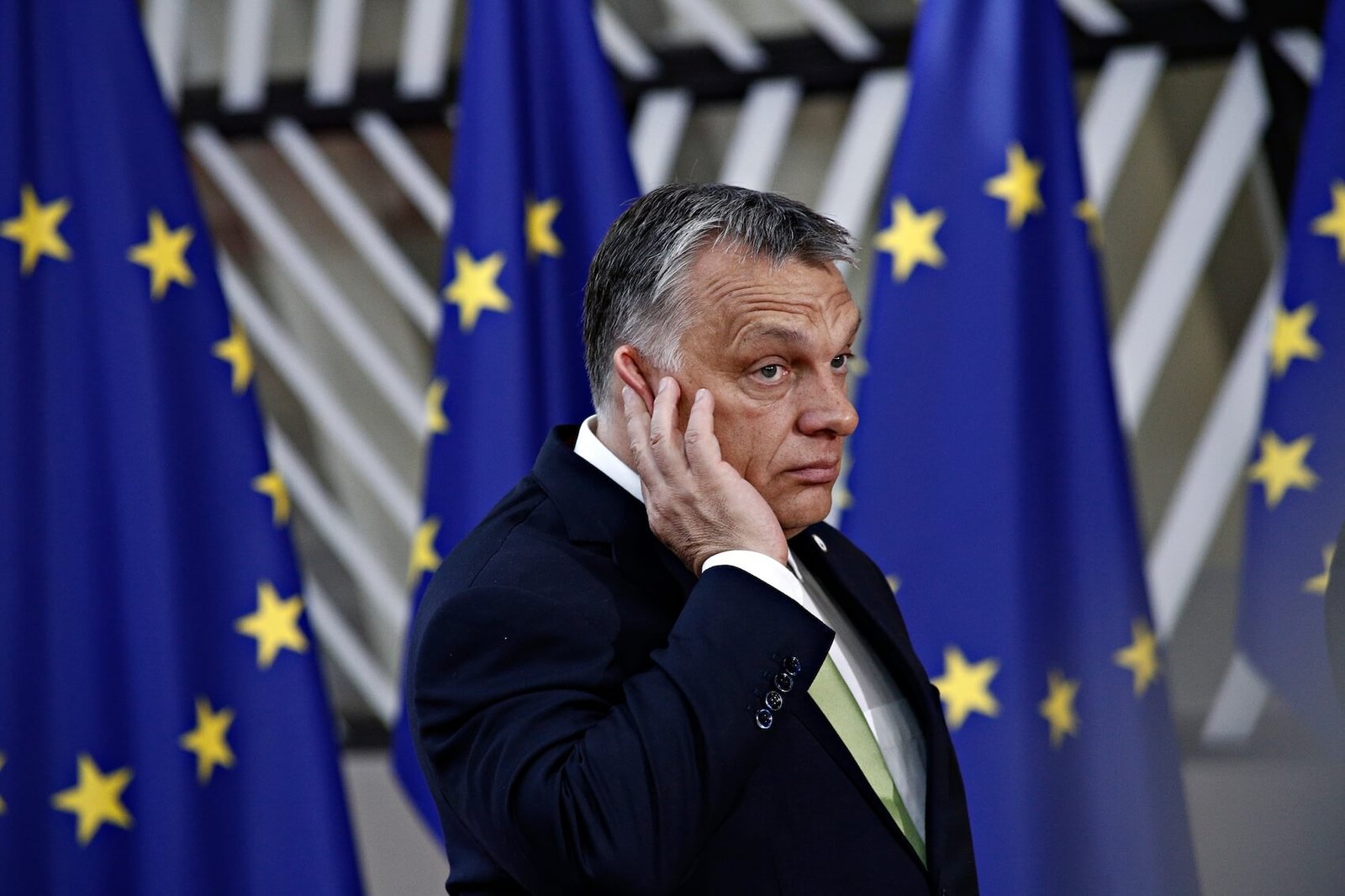
Professor Krekó, welcome. In your work, you conceptualize Hungary as an informational autocracy, where media control and narrative manipulation underpin regime stability. To what extent does Magyar’s electoral victory represent a structural rupture in this system, rather than merely an elite turnover?
Associate Professor Péter Krekó: Thank you very much. It’s a brilliant question. Just as a disclaimer at the outset, the term “informational autocracy,” or “spin dictatorship,” was coined by Sergei Guriev and Daniel Treisman. I merely applied it to Hungary and wrote an article on the subject. So, unfortunately, the term itself is not my brainchild. Nevertheless, I think it is a very important concept, and when it comes to understanding the nature of the Orbán regime, it is definitely helpful.
What has happened in Hungary challenges some of our traditional concepts for describing certain kinds of non-liberal—and indeed non-democratic—regimes. In many respects, the Hungarian regime under Viktor Orbán was a non-democratic system, but that did not mean it was impossible to defeat through elections.
Regarding your question about informational autocracy and systemic rupture, Viktor Orbán never systematically used violence during his rule. There was no imprisonment of political opponents, no imprisonment of journalists, and no violent crackdown on opposition protests. However, he developed an extremely centralized media system. Hungary had the most centralized and politicized media environment in the entire European Union, with more than 400 media outlets concentrated in a pro-government foundation called KESMA (Central European Press and Media Foundation), all under political control. In a country of only 8 million voters, this represented a massive media conglomerate. Combined with the so-called public media and additional aligned outlets, there were nearly 500 media organizations altogether, practically all parroting the same narratives, spreading politically controlled and state-sponsored disinformation.
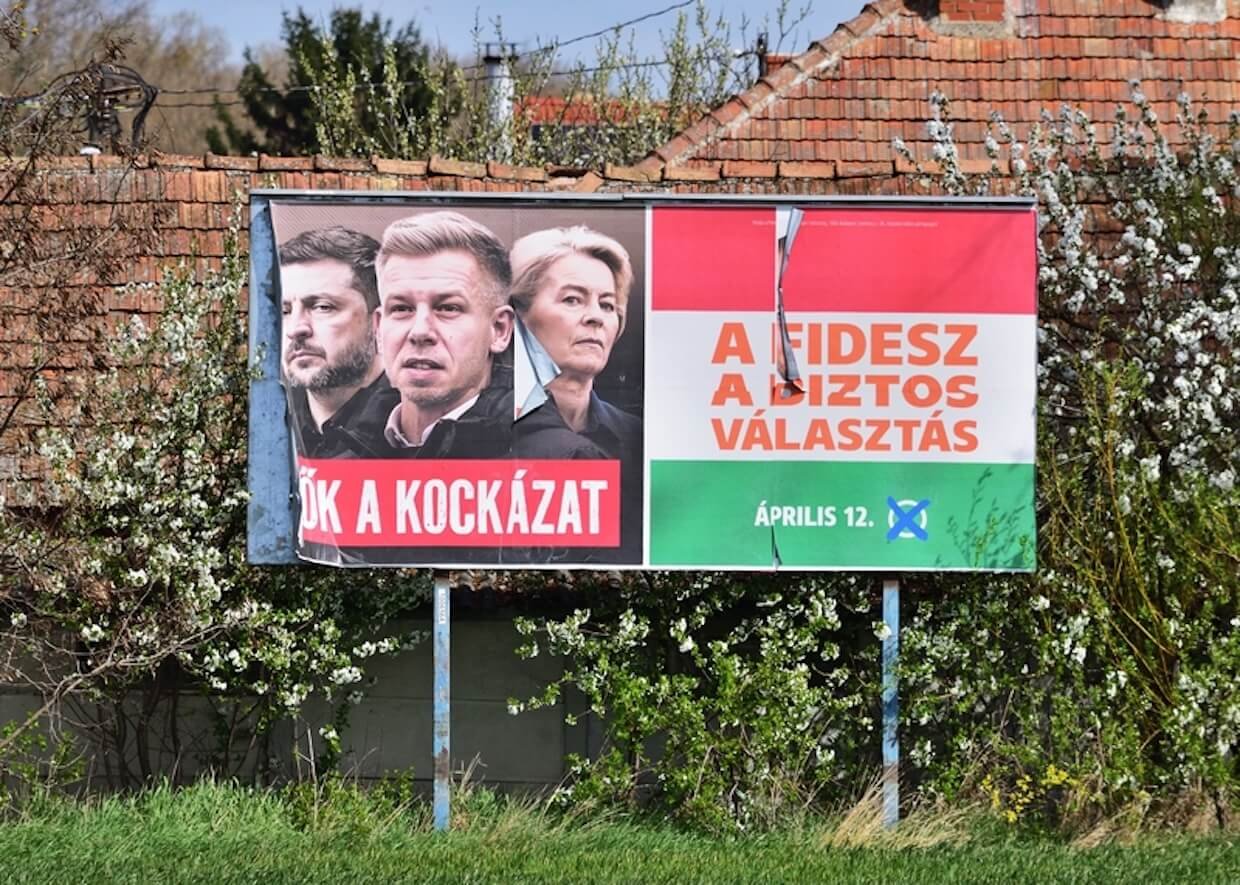
The manipulation and spinning of information through television, billboards, and social media became the regime’s most important tool for reproducing its legitimacy. Yet Péter Magyar was still able to challenge this informational autocracy. One key rule of informational autocracies is that the side with greater resources generally enjoys greater support. Viktor Orbán possessed enormous resources in terms of media ownership and money spent on political advertising. Although the most recent elections were somewhat affected by social media self-regulation, in earlier elections the government could deploy far more billboards and advertising resources than its opponents.
In the 2022 elections, for example, the governmental side was able to display eight times as many billboards in public spaces as the opposition. So, while the competition appeared formally fair, in reality it was highly unequal. Despite this highly asymmetric and unfair environment, Péter Magyar was nevertheless able to challenge the government.
What we saw in the latest elections was that the highly professional media and disinformation machinery constructed by Orbán and his cronies was ultimately unable to spread its narratives effectively or shape public opinion in the way it once had.
Dismantling Informational Autocracy Requires More Than Victory
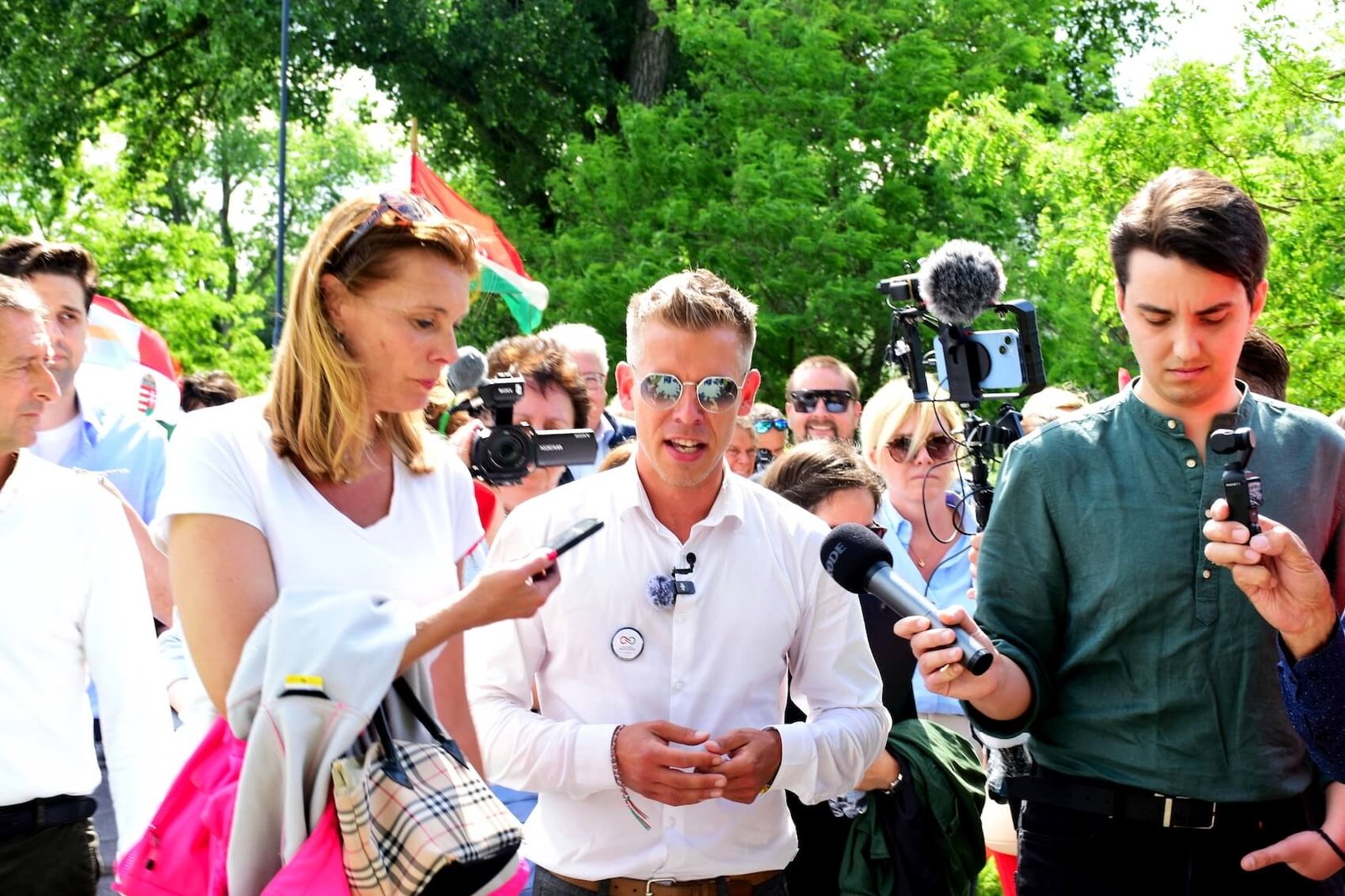
Given the deep institutional embedding of Orbán’s system—including media capture and electoral engineering—how reversible is this model in practice, even with a constitutional supermajority?
Associate Professor Péter Krekó: This is a great question. I would argue that it will be possible to dismantle this informational autocracy through a set of measures. First of all, of course, you have to somehow guarantee the plurality of the media environment. Second, you have to reform the state-sponsored media and its editorial standards, because it has effectively functioned as the cheapest pro-government propaganda imaginable. Third, you have to break up the information monopolies, even in the public domain, because many media mergers on the pro-government side were made legal and possible by the authorities, whereas attempts by independent media outlets to merge often faced institutional obstacles. Fourth, you also have to re-regulate the issue of state advertisements. In Hungary, state advertising became a major tool for financing pro-government media, with 95 percent of state advertisements going to pro-government outlets. In addition, substantial investment in media literacy education is necessary, alongside efforts to address hybrid threats. So, this is a multi-sectoral issue that requires a complex response.
I am hopeful that the new government, understanding that this monopolized and highly over-politicized media system primarily served Viktor Orbán’s interests, will recognize that it is not necessarily in their own interest to maintain it. In that sense, I remain cautiously optimistic. At the same time, however, there are also clear dangers ahead.
When you are in government, you are typically less interested in maintaining a diverse and critical information space than when you are in opposition. I do not need to elaborate on that because it is obvious. But with a constitutional majority, a very large parliamentary group full of political novices appointed by Péter Magyar himself, and no real parliamentary alternative outside the right side of the political spectrum, there are clear risks.
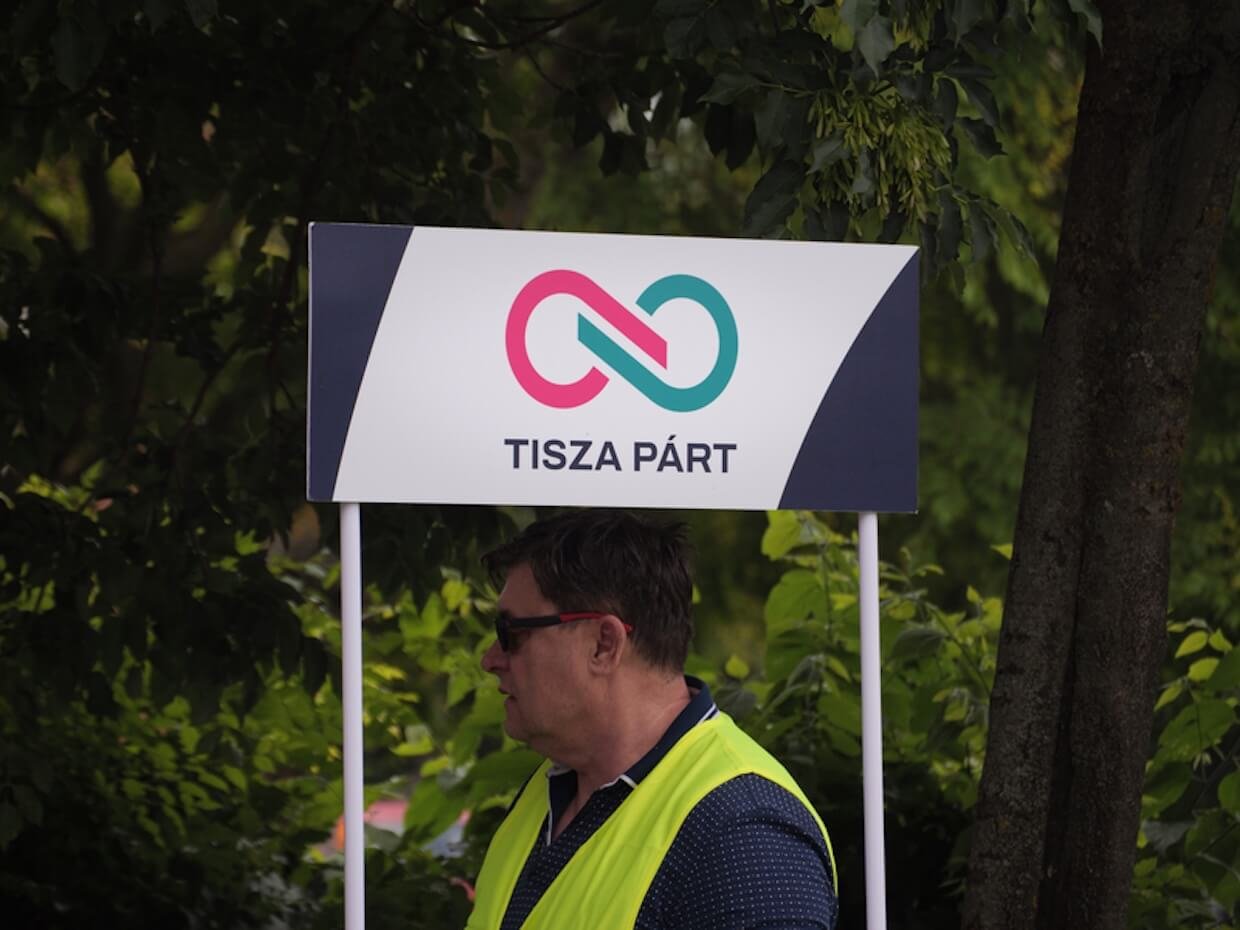
In Hungary today, you have the center-right TISZA party, the far-right Fidesz party, and the extreme-right Mi Hazánk party. So, you have one party from the European People’s Party, one from the Patriots group, and one from the European Sovereignists. In other words, only the right exists in parliament. The alternatives being articulated therefore emerge almost exclusively from one side of the political spectrum, often with authoritarian leanings.
Therefore, I think there are dangers ahead—dangers of re-autocratization and of abuse of power. Again, we have to wait and see. The TISZA movement has a much more diverse, younger, and more pro-democratic voter base than Fidesz had, and that gives some reason for optimism. It suggests that they may genuinely wish to dismantle the information monopoly and move toward a form of informational democracy rather than informational autocracy. But again, we have to wait and see.
We can also note that some competent ministers have been appointed, which is another reason for cautious hope. Moreover, the TISZA government is not entirely homogeneous; it includes many civic actors and some liberal public figures as well. So, we will see, but I think there is at least some basis for optimism that the information monopoly will be broken and that Hungary may move toward a more diverse, more pluralistic, and, in many respects, more critical information space.
Orbán’s Networks Are Collapsing Before Our Eyes
How should we theorize the resilience of illiberal governance when formal power changes hands but informal networks of patronage and influence remain intact? Moreover, to what extent might segments of the electorate remain psychologically invested in Orbánism, even after its electoral defeat?
Associate Professor Péter Krekó: Again, a brilliant question, and I think we will see the answer in the next few months. When it comes to patronage systems and the hidden networks that Fidesz has built up, they have been extremely important. But as we can see at the moment, the Orbán regime and the remnants of Orbán’s networks and patronage system are collapsing as we speak. Former government spin doctors, for example, have come out and criticized the Orbán regime, while also acknowledging that they themselves were victims of this system.
We can also see leading politicians beginning to criticize Fidesz’s internal affairs, while intellectuals who had been close to Fidesz—mostly for pragmatic reasons—seem to be abandoning it. Generally speaking, the fabric of the Fidesz network appears to be unraveling. Perhaps the reason is that Fidesz became a highly pragmatic and cynical organization driven primarily by nepotistic corruption, while ideology became secondary. And if you lack a strong ideological foundation and suddenly find yourself in opposition, with no more resources to distribute, many former loyalists will inevitably turn against you. That is exactly what we are witnessing in Hungary at the moment.
So, I would say this is definitely a systemic transformation, and Viktor Orbán’s chances of returning to power have diminished almost to zero in the recent period. It is fascinating because no one really expected such an abrupt collapse of Fidesz’s networks, yet it is happening before our very own eyes. In that sense, dismantling the system may prove easier than many anticipated.
At the same time, this also gives even more power to the TISZA Party and Péter Magyar, because their main opponent—Fidesz, now moving into opposition—is collapsing and weakening dramatically.
Coming back to your second question—how loyal Orbán’s core supporters will remain—this is something we still have to see. I would expect Fidesz to become a party with around 20 percent of the vote, or roughly one million votes in a country of eight million voters. Thus, it would become a party with significantly lower support than before, perhaps a medium-sized party. It may even shrink further.
The major challenge, connecting your previous question to this one, is how much Fidesz will be able to preserve voter loyalty if it no longer controls the public media. Many older Fidesz voters, according to research, remained loyal because they consumed only public media. And the public media essentially functioned as a mouthpiece for the Hungarian government and Fidesz, spreading anti-Ukrainian, anti-Brussels, and anti-Western propaganda, alongside a great deal of disinformation.
If those same voters continue watching public television, but public television becomes more independent—or perhaps even more pro-TISZA—then their attitudes may also begin to change. Hungary has been a major experimental laboratory of post-truth politics, and it is now going to become a major experimental laboratory of post-post-truth politics as well in the coming period. What the outcome will be is very difficult to predict at the moment.
Can Hungary Unlearn Illiberalism?
Your research shows that authoritarian environments can distort perceptions of democratic quality, making illiberal systems appear more democratic than they are; in this context, how might such cognitive biases shape public reactions to reform efforts under Magyar, and to what extent can a new government effectively recalibrate citizens’ understandings of democracy after prolonged exposure to manipulated informational environments?
Associate Professor Péter Krekó: This is again a very good question, but a difficult one—because, on the one hand, we can say that the voter base of the TISZA Party seems to be somewhat more aware of what democracy really means, and this kind of democratic consciousness appears to be at a higher level in that voter camp than it was among Fidesz voters. Within Fidesz, we could observe a strange combination of authoritarian attitudes among voters and a simultaneous denial of authoritarian malpractices.
On the one hand, the argument was that the Hungarian system was absolutely democratic—nothing to see here. In fact, this is the message they continue to repeat: “We could be defeated in elections, therefore the whole regime was democratic.” Any suggestion of authoritarianism was dismissed as far-fetched.
On the other hand, Fidesz clearly had authoritarian instincts. It wanted, for example, to crack down much more brutally on the independent media, NGOs, and think tanks than it ultimately could, but it was constrained by fears of public backlash before the election. So, there was an interesting duality in that respect. Perhaps this is something we can observe in other hybrid regimes as well. On the one hand, such regimes are willing to use authoritarian tactics; on the other hand, they insist that their systems are fully democratic.
Here again, we face both certain dangers and certain opportunities. One opportunity is that Hungary replaced Viktor Orbán’s party with the highest electoral turnout ever recorded in post-transitional Hungarian political history. Turnout reached almost 80 percent, which is nearly 10 percent higher than ever before. Previously, the highest turnout had been 72 percent. During the transition from socialism to democracy in 1989–1990, turnout was only 64 percent, so the level of political enthusiasm this time was significantly greater.
Of course, polarization was also much higher than before, but political engagement—as well as resistance to and rejection of the authoritarian practices of the Fidesz government among opposition voters—was extremely strong. The opposition gained 53 percent of the vote, which is a very substantial majority in raw electoral terms, and this was then translated into a constitutional majority.
This rejection of authoritarian practices opens up avenues for some form of re-democratization—at the level of institutions, public life, and perhaps, in the medium and long term, toward a more pluralistic party system, which would certainly be welcome in Hungary. The Hungarian political and electoral system is highly majoritarian, and it typically produces constitutional majorities, which I personally think is unhealthy.
So, I do believe there is a path toward re-democratization, but again, we have to see what Péter Magyar’s actual goals are. He is not yet in office, so at this stage we can only speculate. He certainly employs a great deal of democratic rhetoric, and if we take that seriously, then he is probably aware that creating a new authoritarian regime would not only be extremely difficult, but also contrary to his own interests.
At the same time, given that he currently possesses almost absolute political power, along with the capacity to redraw the constitutional system, there is always the danger of abusing such a high level of legitimacy. I would not say that we should automatically assume Hungary will simply return to another hybrid regime similar to Orbán’s. But I do think that if TISZA and Péter Magyar lose popularity over time, there is a possibility that he could misuse his overwhelming parliamentary majority, assuming he is able to keep the party united.
So, we will see. My hope is that Hungary, after serving as a model of illiberalism for sixteen years, might instead become a model for re-democratization. But at the moment, I would say that remains somewhat wishful thinking, because we truly have to wait and see. As political scientists, we understand that whenever someone possesses too much power, there is always the danger that they may use that power not only to democratize the system, but also to entrench themselves within it.
Hungary’s Post-Truth Legacy Will Not Disappear Overnight
You argue that misinformation has a “lingering effect” and that even debunked narratives continue to shape attitudes. In a post-authoritarian transition, how can democratic actors overcome the durability of Orbán-era narratives embedded in collective memory?
Associate Professor Péter Krekó: This is one of the biggest challenges we face at the moment, mostly because, in some areas, we can clearly see the damage done to people’s hearts and minds by the Orbán propaganda machinery. State-sponsored disinformation has shaped public attitudes in many domains. To give just a few examples: Islamophobic and anti-immigration attitudes were already strong before the 2014–2015 migration crisis, but they were amplified even further by the Orbán regime. According to international polls, Hungary is one of the most prejudiced countries even within Central and Eastern Europe (CEE), which is already a relatively contaminated region in that respect.
The question is how much public opinion can be shifted toward a more open and nuanced position on immigration, and why this is necessary. No European countries are able to reproduce themselves demographically. Without immigration, European societies would eventually die out, to put it bluntly. And yet, the narratives coming from Péter Magyar and the TISZA Party still remain close to the idea of zero migration, much like their predecessors. So, in that domain, I definitely hope there will be a shift toward a more nuanced and complex approach—one where you do not simply say that everyone is welcome, but where you acknowledge that our economy and society require a certain level of immigration and that immigrants must be properly integrated. Any modern society has a far more diverse population than what we typically observe in Hungary.
The other major issue is Russian disinformation—anti-Ukrainian narratives and this highly hypocritical “peace narrative,” according to which Brussels and the West supposedly want to wage war against Russia, while Ukraine, together with Brussels, is portrayed as the warmonger rather than the Russian Federation itself. Over the last few years, many conspiracy theories have also been spread about foreign powers allegedly conspiring against Hungary, while the victim mentality that nationalist politics typically exploits has become very strong within Hungarian public discourse.
So, I would point especially to these two examples: anti-immigration attitudes and pro-Russian conspiracy theories, both of which have had a long-lasting impact on Hungarian society. Undoing this damage requires, on the one hand, political will. The new government, for example, should speak in a more nuanced way about immigration. But on the other hand, it also requires institutional responses—particularly regarding public media, media pluralism, public education, and so on.
Education itself has become increasingly politicized and ideological in recent years, somewhat following the Turkish model. There have even been attempts to make elementary and public education more ideologically indoctrinating. So, it also requires a certain degree of courage to remove some of the harmful nationalist narratives that are now deeply ingrained in the Hungarian curriculum.
Pre-bunking as a Democratic Defense
In your work on countering conspiracy theories, you highlight the epistemic, moral, and democratic dilemmas of debunking, including the risk of reactance and backfire effects. How should a Magyar-led government design interventions against disinformation without reinforcing polarization or appearing to curtail pluralism?
Associate Professor Péter Krekó: I would say that the party now coming to government, as well as Péter Magyar, the leading figure of this movement, has already used certain anti-disinformation techniques during the campaign in a very clever way. What do I mean by that? First of all, they relied heavily on pre-bunking and preemptive communication while campaigning against Viktor Orbán before the elections.
For example, they warned in advance that Russian disinformation could spread fake stories about Péter Magyar’s private life, that kompromat (compromising) materials might emerge, and that deepfake videos related to his personal life could appear. They also cautioned voters that the other side might falsely claim that TISZA intended to introduce measures such as pension cuts—things they had never promised and never intended to implement. In other words, they prepared their supporters in advance for the kind of disinformation they expected from their opponents.
One important consequence of this strategy was that governmental disinformation and Russian influence proved highly ineffective during the elections. We could clearly see that the government’s narratives no longer resonated with the public in the way they once had. And I do think—and this is also my hope—that these tools can continue to be used in the future, not only against foreign disinformation but also, to some extent, against domestic disinformation. In the political domain, they handled the disinformation challenge very skillfully.
Of course, once you are in government, you need a much broader toolkit for combating disinformation, including forms of misinformation that affect everyday life—pseudoscience, miracle cures, and COVID- and vaccine-related disinformation, all of which spread extensively during the pandemic in Hungary. There is even an anti-vaccine party, Mi Hazánk, which has been extremely vocal in opposing mandatory vaccinations, including long-established vaccines against diseases such as rubella and polio.
Governments therefore also need to confront geopolitical disinformation originating abroad. For that, institutional responses are necessary. Media literacy education, for example, could incorporate pre-bunking and other new tools designed to teach people about disinformation and strengthen their critical thinking skills when consuming information.
I also believe there is a need for some kind of hybrid threat center capable of addressing the geopolitical disinformation Hungary is facing. During the last elections, for example, Vladimir Putin made serious attempts to influence the outcome through military intelligence services, foreign security networks, and the so-called Social Design Agency—a social media company running dark online PR campaigns using bots, trolls, and disinformation.
Ultimately, these efforts were unsuccessful. But I think they failed partly because European countries helped expose some of Russia’s plans, and also because TISZA used preemptive communication and pre-bunking very effectively during the campaign. Hopefully, these practices can now be incorporated into a broader anti-disinformation strategy.
The Risk of Reproducing Elite Privilege
To what extent does Magyar’s background as a former insider complicate the narrative of democratic rupture and renewal, and in light of recent accusations surrounding his nomination of his brother-in-law as justice minister, how might such decisions affect the legitimacy of a government that claims to restore the rule of law, potentially reproducing patterns of elite privilege associated with the previous regime?
Associate Professor Péter Krekó: Thank you for this question, because I think it is extremely important for two reasons. First of all, yes, there is always a danger of abusing power, and there is also the danger of falling into clientelistic and, in some respects, nepotistic practices that were widespread under the previous government and are becoming increasingly common around the world. We can even look at the United States as an example.
So, that danger certainly exists. At the same time, I do not think that the mere fact that Péter Magyar was once a regime insider automatically makes him a born or socialized autocrat. I am also a social psychologist, so I tend to believe that human beings—not only groups, but individuals as well—can change over time depending on the environment and circumstances surrounding them.
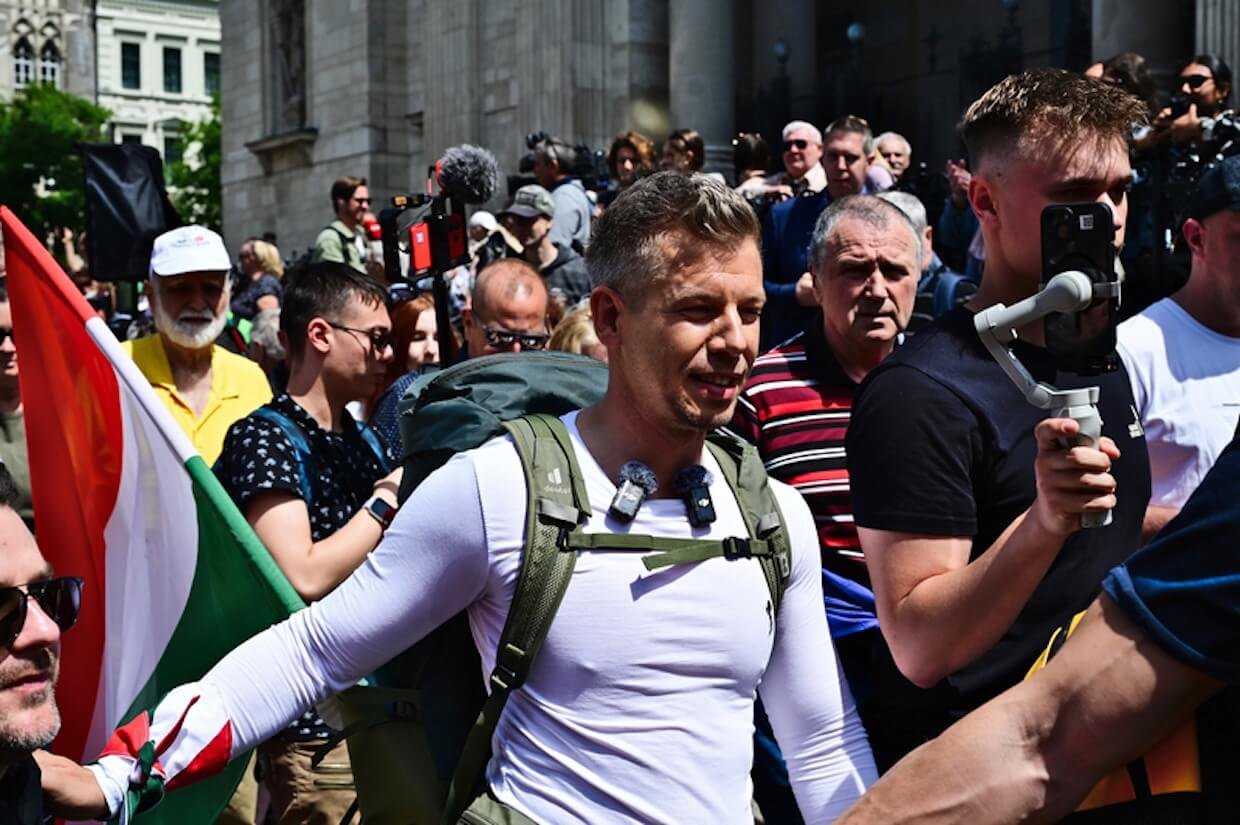
Over the last two years, Péter Magyar has spent a great deal of time among voters, traveling throughout the country, and he has clearly become more socially sensitive. His program has also become much more left-leaning in terms of policy proposals than it was before. At the same time, he has also become somewhat more liberal—even if he remains fundamentally a conservative politician—and somewhat more democratic in the way he talks about institutional reforms and the restoration of autonomy within society.
So, I think he has changed considerably over the last two years, and everyone working closely with him, including his chief campaign manager, has said that he is probably no longer the same person he was two years ago. We have to give people the opportunity to change. So yes, he has changed significantly, and I do not believe that being a former regime insider is necessarily a problem in itself. However, the huge majority he gained in the elections definitely creates certain risks in that respect.
But there is another danger here, and this is the danger of political tribalism—political tribalism that overrides universal norms in politics and turns every principle into something particular and instrumental for gaining and maintaining political power.
What do I mean by that? I genuinely hope that opposition voters, opposition opinion leaders, and the independent media will remain just as strict regarding nepotism, abuses of power, possible corruption, and similar issues under the future government as they were under the previous one. Because there is a danger that, after sixteen years of Orbánism and widespread frustration with it, some voters may begin to believe that any tool is acceptable if it helps dismantle the remnants of the Orbán regime. That is a very dangerous way of thinking.
I sincerely hope that this transition in Hungary will not become a shift from one hybrid regime to another hybrid regime, but rather a transition from a hybrid regime toward a more democratic one. But for that to happen, you need not only self-restraint from politicians in power, but also voters who are willing to punish leaders if they depart from a democratic path.
Again, after sixteen years of increasingly authoritarian rule, this is going to be a huge experiment. I would not be able to predict exactly what will happen. We have to wait and see, but we must maintain the same critical attitude toward the new government that we had toward the previous one, in the sense that the same rules and the same norms must continue to apply.
The Loss of a Role Model for the International Far Right

Given your argument that Orbán’s model has served as a “teacher” for other illiberal regimes, what are the implications of its apparent collapse for transnational populist networks, and does his electoral defeat signal a broader vulnerability in populist radical-right regimes or rather an exceptional case that such movements may reinterpret as a temporary setback and adapt to—particularly in the realm of narrative and identity politics?
Associate Professor Péter Krekó: The main challenge here is that we are witnessing two contrasting tendencies simultaneously. On the one hand, especially within the European Union, we can clearly observe the rise of illiberal, highly nativist populist parties on the right. Across the last three European Parliamentary elections, populist radical-right parties have steadily expanded their representation in the European Parliament.
We also see upcoming national elections in several countries where these forces are currently leading the polls. In France, for example, Rassemblement National (RN) is ahead. In Germany, the AfD is leading. In Austria, the FPÖ is also leading. So, in many important Western European countries, populist right-wing forces with illiberal tendencies are clearly gaining support. The United Kingdom is not an exception either, where the Reform Party is also leading in the polls.
So, this is one very visible broader trend within Europe. What are the main drivers behind it? There is a growing anti-establishment mood, declining public morale linked to economic stagnation, and immigration continuing to remain a major political issue throughout the European Union. At the same time, there are exporters of illiberalism—such as the United States, Russia, to some extent China, and several other countries as well.
And yet, despite this broader zeitgeist, Viktor Orbán was defeated in the Hungarian election. My most important point here is that perhaps we sometimes overestimate the importance of global political trends and zeitgeists. Domestic issues may ultimately be much more decisive in determining the outcome of national elections.
Viktor Orbán was defeated despite being openly supported by Donald Trump, Vladimir Putin, Xi Jinping, and Benjamin Netanyahu. In the end, it was a sovereign decision made by Hungarian voters. And, in many European elections—and elections elsewhere in the world as well—we may increasingly discover that excessive support from foreign ideological allies can backfire just as much as it can help.
For example, when Donald Trump attempted to intervene politically in Canada, the liberal candidate won. Something similar happened in Australia. In Hungary, J.D. Vance visited the country shortly before the election, but this did not help Viktor Orbán at all.
So, the soft power and sharp power of authoritarian actors—including Trump, but also Orbán himself—may now be diminishing. Viktor Orbán will most likely lose his position as an international role model, and he will no longer be able to use Hungarian state resources to spread his ideology and political influence abroad.
In that sense, this represents both the loss of a symbolic role model and the loss of a financial and ideological resource for the international far right. However, I do not think we can automatically conclude from this that, for example, Marine Le Pen’s party in France is now less likely to win elections. Ultimately, elections are still decided largely by domestic concerns and the priorities of national electorates.
And I think we, as political scientists—myself included, since I am very much part of this field—sometimes place too much emphasis on global tendencies. Of course, such tendencies do exist, but there are also many important exceptions. Hungary was definitely one such exception. But perhaps it is an exception that could itself become a broader rule in the future.
The Danger of One-Sided Tribalism
And finally, Prof. Krekó, in your work on populism in power, you show how populist governance fosters Manichean, tribal political identities that resist compromise. What are the prospects for depolarizing such “tribalized” political cultures after a regime change, and what institutional or discursive tools might facilitate this transition?
Associate Professor Péter Krekó: Thank you again for this question. Many important and fascinating research topics are emerging through this discussion, so it is truly inspirational.
When it comes to polarization and tribalism, you generally need two sides to sustain it. In Hungary, however, I believe the biggest danger in the future may not be symmetrical polarization—where you have a very strong governmental camp and a very strong opposition camp constructing competing realities—but rather one-sided polarization, in which TISZA becomes so dominant in shaping the public narrative that, as we discussed earlier, its supporters may gradually become willing to tolerate democratic transgressions if they are not vigilant enough, simply because they remain focused on fighting the legacy of Fidesz, even if Fidesz itself becomes significantly weaker than before.
So, there is clearly a danger of one-sided tribalism and polarization. At the same time, we cannot exclude the possibility that a new political force may emerge, or that the Mi Hazánk Party—the extreme-right party I mentioned earlier—could become stronger. Polarization therefore depends partly on the direction in which both the political system and the party system evolve. And since these dynamics are changing as we speak, they remain very difficult to predict.
What I would particularly emphasize, however, is the importance of political voluntarism. If you want to weaken polarization and tribalism, you need political will. You have to stop relying on hate rhetoric against your opponents. You have to invest in messages that are more unifying than divisive. And you also have to strengthen the political center.
I actually think that all the preconditions for such a process are currently present. This is a historic opportunity for depolarization—for rebuilding not only the political center, but also the social center, because the center has almost disappeared in vertical economic terms as well. The middle class has weakened considerably in recent years. So, since the democratic transition, there has never been a better opportunity to reconstruct this center.
I can only hope that the new government and Péter Magyar will take advantage of this historic opportunity. But doing so requires self-restraint in the exercise of executive power, and it also requires restraint in the use of campaign strategies and political rhetoric toward opponents. Whether Péter Magyar and the TISZA Party will actually be capable of exercising such restraint remains an open question. Let us hope so.