As South Korea’s Constitutional Court reviews President Yoon Suk Yeol’s impeachment following his martial law declaration, Dr. Meredith Shaw highlights the deep-rooted issues plaguing the nation’s politics. Speaking with the ECPS, Dr. Shaw explains that a “tit-for-tat dynamic” of political retaliation has hindered systemic reforms, while populist appeals during economic crises fuel disillusionment. Drawing on South Korea’s history of authoritarian rule, she emphasizes the need for reform-minded leadership to restore public confidence. “Both sides have behaved in ways that don’t inspire confidence,” Dr. Shaw remarked, urging systemic change to strengthen democratic institutions amid this critical moment for South Korea’s democracy.
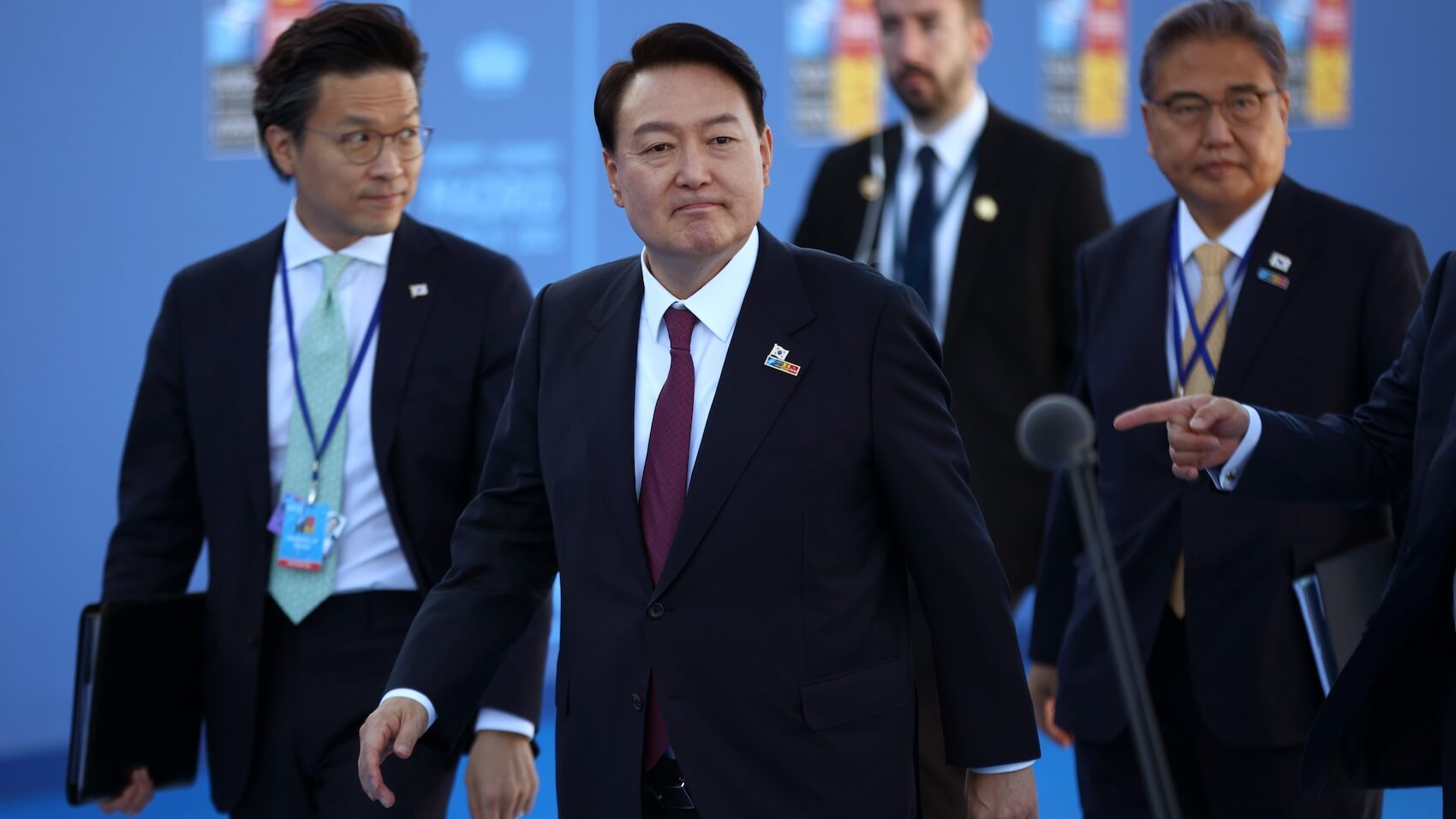
As South Korea’s Constitutional Court begins reviewing President Yoon Suk Yeol’s impeachment following his controversial attempt to impose martial law on December 3, 2024, Dr. Meredith Shaw highlights that both sides of South Korean politics have failed to inspire public confidence. According to Dr. Shaw, a tit-for-tat dynamic continues to hinder systemic reforms while entrenching disillusionment with establishment politicians.
South Korea’s political landscape, shaped by its history of authoritarian rule and rapid democratization, faces persistent challenges rooted in populism, economic inequality, and geopolitical tensions. In an interview with European Center for Populism Studies (ECPS), Dr. Shaw, a leading expert on East Asian politics, shared her invaluable insights into South Korea’s current crisis, historical patterns, and the implications for its democracy.
“South Korea has significant experience with authoritarian, particularly military, regimes,” Dr. Shaw noted, referencing the martial law imposed under Park Chung-hee and Chun Doo-hwan that lasted nearly 15 years. These experiences, she explained, left a lasting legacy on political and social movements. “The so-called ‘386 generation,’ who fought courageously against martial law, still lean left-wing and remain deeply skeptical of right-wing leaders.”
Dr. Shaw also addressed the cycles of political retaliation and corruption that have plagued South Korea’s governance. “There’s a historical pattern of people in power helping friends and family in ways that most would consider corrupt, followed by the opposition prosecuting and jailing members of the previous administration,” she explained, adding that this dynamic has obstructed meaningful reform.
Economic instability further complicates the political landscape. “South Korea, like most places, tends to be drawn to populist appeals during times of economic crisis and change,” Dr. Shaw observed. Recent backlash against gender equality movements and perceptions of economic inequality have also fueled populism and anti-feminist sentiment.
Geopolitical narratives amplify these issues. “North Korea is always in the background—not just as a security threat but as a perceived economic burden,” Dr. Shaw remarked. She noted that South Korea’s emphasis on national identity often intertwines anti-communism with anti-Japanese sentiment, allowing political leaders to exploit these narratives.
As South Korea navigates the aftermath of Yoon’s impeachment, Dr. Shaw emphasized the importance of reform-minded leadership. “Both sides have behaved in ways that don’t inspire confidence,” she said, calling for systemic change to strengthen democratic institutions. With the Constitutional Court set to hold its first public hearing on December 27, 2024, this interview offers a comprehensive analysis of South Korea’s ongoing political challenges and the lessons that could shape its future.
As South Korea’s Constitutional Court reviews President Yoon Suk Yeol’s impeachment following his martial law declaration, Dr. Meredith Shaw highlights the deep-rooted issues plaguing the nation’s politics. Speaking with the ECPS, Dr. Shaw explains that a “tit-for-tat dynamic” of political retaliation has hindered systemic reforms, while populist appeals during economic crises fuel disillusionment. Drawing on South Korea’s history of authoritarian rule, she emphasizes the need for reform-minded leadership to restore public confidence. “Both sides have behaved in ways that don’t inspire confidence,” Dr. Shaw remarked, urging systemic change to strengthen democratic institutions amid this critical moment for South Korea’s democracy.
As South Korea’s Constitutional Court begins reviewing President Yoon Suk Yeol’s impeachment following his controversial attempt to impose martial law on December 3, 2024, Dr. Meredith Shaw highlights that both sides of South Korean politics have failed to inspire public confidence. According to Dr. Shaw, a tit-for-tat dynamic continues to hinder systemic reforms while entrenching disillusionment with establishment politicians.
South Korea’s political landscape, shaped by its history of authoritarian rule and rapid democratization, faces persistent challenges rooted in populism, economic inequality, and geopolitical tensions. In an interview with European Center for Populism Studies (ECPS), Dr. Shaw, a leading expert on East Asian politics, shared her invaluable insights into South Korea’s current crisis, historical patterns, and the implications for its democracy.
“South Korea has significant experience with authoritarian, particularly military, regimes,” Dr. Shaw noted, referencing the martial law imposed under Park Chung-hee and Chun Doo-hwan that lasted nearly 15 years. These experiences, she explained, left a lasting legacy on political and social movements. “The so-called ‘386 generation,’ who fought courageously against martial law, still lean left-wing and remain deeply skeptical of right-wing leaders.”
Dr. Shaw also addressed the cycles of political retaliation and corruption that have plagued South Korea’s governance. “There’s a historical pattern of people in power helping friends and family in ways that most would consider corrupt, followed by the opposition prosecuting and jailing members of the previous administration,” she explained, adding that this dynamic has obstructed meaningful reform.
Economic instability further complicates the political landscape. “South Korea, like most places, tends to be drawn to populist appeals during times of economic crisis and change,” Dr. Shaw observed. Recent backlash against gender equality movements and perceptions of economic inequality have also fueled populism and anti-feminist sentiment.
Geopolitical narratives amplify these issues. “North Korea is always in the background—not just as a security threat but as a perceived economic burden,” Dr. Shaw remarked. She noted that South Korea’s emphasis on national identity often intertwines anti-communism with anti-Japanese sentiment, allowing political leaders to exploit these narratives.
As South Korea navigates the aftermath of Yoon’s impeachment, Dr. Shaw emphasized the importance of reform-minded leadership. “Both sides have behaved in ways that don’t inspire confidence,” she said, calling for systemic change to strengthen democratic institutions. With the Constitutional Court set to hold its first public hearing on December 27, 2024, this interview offers a comprehensive analysis of South Korea’s ongoing political challenges and the lessons that could shape its future.
Dr. Meredith Shaw, a leading expert on East Asian politics, shared her invaluable insights into South Korea’s current crisis, historical patterns, and the implications for its democracy.
Here is the transcription of the interview with Dr. Meredith Shaw with some edits.
South Korea’s Struggles with Populism, Retributive Politics, and the Legacy of Authoritarianism
Professor Shaw, thank you very much for joining our interview series. Let me start right away with the first question: How have South Korea’s historical experiences with authoritarian regimes, such as those under Park Chung-hee and Chun Doo-hwan, shaped the contemporary interplay between populism and authoritarianism in its political landscape?
Dr. Meredith Shaw: South Korea has significant experience with authoritarian, particularly military, regimes. As you know, it has had considerable experience with martial law in the past. Martial law was imposed under the Park Chung-hee dictatorship in 1972 and continued almost continuously for about 15 years until 1987.
People over 50 in Korea today would have some memory of this period, particularly the generation that was in college during the last years of martial law, the so-called “386 generation.” They remember fighting very courageously against martial law. As a result, they tend to lean left-wing, are generally very skeptical of right-wing leaders, and oppose the current Yoon administration, which is associated with the right-wing People Power Party (PPP). The real leaders of the anti-martial law movement from that generation, now in their sixties, along with younger activists, often continue to hold these views.
On a deeper level, South Korea has a historical pattern of people in power helping friends and family members in ways that most would consider corrupt. Then, after those individuals are removed from power, the opposition conducts prosecutions and jails members of the previous administration. This has normalized the idea of a tit-for-tat dynamic, where each power shift from left to right (and vice versa) results in retaliatory prosecutions. While one might hope this cycle would encourage honesty, it instead perpetuates an ongoing issue of retributive justice on both sides, which has become particularly problematic in recent years.
Finally, the legacy of authoritarian regimes has contributed to the development of a strong leftist coalition in South Korea, consisting of unions, student activists, and agricultural cooperatives. This coalition retains the ability to quickly mobilize mass protests in response to public outrage. However, while one might expect such a coalition to strengthen democratic institutions, it often seizes on emotional triggers—such as the Itaewon tragedy, the Sewol Ferry disaster, or similar incidents—rather than pushing for systemic reform.
As a result, we often see massive protests, sometimes involving a million people in the city square, yet these demonstrations rarely translate into meaningful systemic changes. This creates a puzzle: the legacy of South Korea’s authoritarian past has left.
To what extent do economic factors, such as income inequality or economic crises, contribute to the rise of populist and authoritarian leaders in South Korea? Are these patterns similar to those seen in other countries?
Dr. Meredith Shaw: I think South Korea, like most places, tends to be drawn to populist appeals during times of economic crisis and change. There have been some economic struggles and downturns in recent years.
Thinking most recently, President Yoon rose to power partly on a wave of male South Korean backlash against the gender equality movement and the perception that men are being left out of the economy as the feminist movement secures more opportunities for women. This has led to a strong anti-feminist and men’s rights backlash, which can inevitably be tied to economic inequality and uncertainty.
On the other hand, South Korea faces serious issues of opportunity and equality, particularly regarding access to higher education and career advancement. The opposition Leftist Democratic Party tends to champion these issues more, but they haven’t offered real solutions during their time in power. They often seem to get bogged down in expensive programs related to North Korea, which has not inspired much confidence.
Additionally, leaders from both parties tend to be beneficiaries of the entrenched institution of crony capitalism. As a result, many Koreans have lost faith in establishment politicians on both sides, making them more susceptible to populist appeals.
How Anti-Communism and Anti-Japanese Sentiment Shape South Korean Politics
How does South Korea’s emphasis on national identity, often tied to anti-communism and anti-Japanese sentiment, influence the populist rhetoric of political leaders? Are these cultural narratives being manipulated to consolidate power?
Dr. Meredith Shaw: In South Korea, I would say North Korea is always in the background as a political presence—not just as a security threat, but also due to the perceived economic damage caused by lost investment as a result of that threat and past administrations’ massive aid projects, which often went nowhere and cost taxpayers a lot of money. This contributes to a sense of grievance, a strong sense of anti-communism, and the belief that things would be better if North Korea didn’t exist.
On one hand, the ongoing threat from North Korea makes it very difficult for South Korea to eliminate some of the legacy Cold War legal institutions designed to crack down on alleged pro-North Korean elements in society. These include still fairly draconian laws against distributing North Korean materials or making statements perceived as pro-North Korean. These laws can be easily abused by the political right wing, but it’s hard to remove them because North Korea is undeniably a real and persistent threat.
More so than European countries, South Korea struggles to shed this Cold War legacy. For example, President Yoon referenced “anti-state forces” in his declaration of martial law, which is essentially a euphemism for pro-North Korean forces. The fact that he was even able to declare martial law in the first place is partly due to these legacy institutions that grant the government stronger powers when it perceives or claims there is a threat from North Korea. In an ideal democratic society, the government shouldn’t have the ability to do such things, but this is a reality South Korea continues to grapple with.
On the other side, because North Korea exists and is often associated with the left being more sympathetic to it, the leftist opposition has difficulty countering that rhetoric without invoking a similar boogeyman of their own. This is where Japan sometimes comes into play. The right is often perceived as being too forgiving of Japan, and the left can exploit this by emphasizing that Japan has historically been a serious enemy and arguing that its history with South Korea needs to be addressed more strongly.
These two historical narratives—anti-communism and anti-Japanese sentiment—often play off each other in South Korean politics. President Yoon, for instance, has been seen as particularly pro-Japan and has made some rhetorical gaffes that reinforce this perception. However, because he has so many other scandals and gaffes unrelated to Japan, the opposition hasn’t focused on this issue in recent years. Still, anti-Japan sentiment could easily become a factor if the opposition needs further ammunition against him.
Considering South Korea’s history of democracy emerging from periods of anti-communism and anti-Japanese sentiment, what historical and socio-political factors have contributed to the rise of populism and authoritarian tendencies in the country? How might the current crisis surrounding President Yoon influence these trends?
Dr. Meredith Shaw: The rise of populism and authoritarian tendencies in South Korea, I would say, is influenced primarily by the strong role of personalities in South Korean politics. The most powerful politicians on both sides often have family histories tied to being pro-Japan or associated with past dictatorships.
South Korea, more than most countries, tends to focus on who is related to whom, whose patronage a politician has received, and how those relationships might make them beholden to special interests. This scrutiny often leads people to become extraordinarily skeptical of legacy politicians and more inclined to support newcomers with less experience who claim to be anti-establishment. However, once those newcomers gain power, they quickly become part of the establishment themselves, almost immediately losing the anti-establishment appeal they once had.
If you look at President Yoon’s career trajectory, this pattern is clear. He comes from a very unusual background—he was never a legislator but a former prosecutor who was heavily involved in prosecuting the last conservative presidential scandal. This gave him a degree of independence from the political groups involved in that scandal and allowed him to claim he was anti-establishment.
When the liberal Moon administration became deeply unpopular, people wanted conservative leadership again. However, the mainstream conservatives were still tainted by connections to the previous scandal involving Park Geun-hye. This allowed Yoon to set himself apart and win the presidency. But now, as the establishment leader, he is at the center of scandals himself and appears to be rapidly losing support, even within his own party.
This situation could provide an opportunity for the conservative People Power Party to rebrand itself, though it’s hard to predict what will happen. The broader trend, however, remains consistent: the “outcast” or anti-establishment politician tends to gain popularity initially but loses that appeal very quickly once in power.
Lessons from South Korea’s Struggle to Preserve Democracy
South Korea has a long history of authoritarian military regimes, including extensive periods under martial law. Photo: Shutterstock.
From a historical perspective, how have populist and authoritarian tendencies impacted democratic institutions in South Korea, including governance, civil liberties, the rule of law, and the broader democratic framework? Given South Korea’s history of overcoming authoritarian regimes, what lessons from its political and social movements can inform the response to the current crisis and safeguard democratic governance?
Dr. Meredith Shaw: There is a legacy of suspending civil liberties in the name of defending against the communist threat from North Korea. This legacy, however, has also been retroactively intertwined with the idea of high economic growth. South Korea experienced its highest economic growth during the period of military dictatorship, and some people have come to associate authoritarian, somewhat imperialist leadership with stability and economic prosperity.
When economic concerns arise, or when instability is seen as driving away investment, there is a tendency to believe that a stronger president with more powers is necessary to overcome gridlock in the National Assembly. This perspective is linked to the fact that South Korea’s high economic growth coincided with its period under military dictatorship.
In contemporary times, South Korea has a very strong and evenly matched political competition between the left and the right. However, both sides have a tendency to use the tools of the Justice Ministry and the National Intelligence Service for political retaliation when in power. As a result, almost all surviving ex-presidents—if they don’t pass away soon after leaving office—end up in prison at some point. It has almost become an expectation, and the current president seems likely to face a similar fate.
The current crisis can be seen as part of this ongoing pendulum shift, swinging from right to left. We can likely anticipate more tit-for-tat prosecutions, but unfortunately, no real systemic reform to address this underlying issue. That said, one possible legacy of the current crisis is that no South Korean president is likely to attempt declaring martial law again for quite some time.
South Korea’s President, or rather, we should say, former President Yoon, declared martial law to save the country from what he called anti-state opposition parties, accusing them of using their legislative majority to paralyze the nation. Who are these anti-state parties, and what specific actions or strategies have they allegedly employed to paralyze the government?
Dr. Meredith Shaw: No, Yoon is still the President. He has been impeached by the National Assembly, but he remains President until the Constitutional Court removes him from power. When he made this announcement, referring to what you mentioned as “anti-state parties,” this is essentially code for leftists and those perceived as pro-North Korea.
In fact, I believe it’s enshrined in the Constitution that “anti-state” essentially refers to individuals or groups supporting North Korea or advocating for the overthrow of the democratic government in the name of communism. That’s the understood meaning of the term.
In his subsequent speech, President Yoon clarified further, and it seems he is primarily targeting the Democratic Party majority in the National Assembly. Since the last election, they have held a sizable majority, and they’ve been blocking his budget proposals, his appointees, and generally making it difficult for him to govern. Additionally, they have been prosecuting the President’s wife for bribery scandals that have been following him for quite some time.
Moreover, President Yoon has been attempting to investigate the National Election Commission (NEC) over allegations that his opposition somehow rigged the last election. He appears to be partially justifying his actions as necessary to uncover the truth about what happened at the NEC. However, the idea of using martial law as a solution to these challenges is, frankly, bizarre. I believe it stems from Yoon’s background as a former prosecutor. He seems inexperienced in dealing with the National Assembly and appears to have little patience for the normal gridlock expected in a democratic system—especially when the opposition holds such a significant majority in the Assembly.
There is also speculation about whether martial law was initially President Yoon’s idea or if it was suggested to him by the Defense Minister. This is something that will likely be explored in the court cases over the coming months.
Ultimately, martial law is supposed to be reserved for instances of imminent crisis, such as a genuine threat from anti-state actors or pro-North Korean forces actively working to undermine democracy. It’s not a tool meant to resolve legislative disagreements or to push through a budget. This entire episode suggests inexperience and a fundamental misunderstanding of democratic governance. By associating his political opposition with North Korea, President Yoon appears to be attempting to justify his actions.
Comparing Yoon Suk Yeol’s Declaration to Past Dictatorships
Martial law declarations in South Korea have been tied to periods of dictatorship and significant political upheaval. How does Yoon Suk Yeol’s martial law declaration compare with past instances under leaders like Park Chung-hee and Chun Doo-hwan?
Dr. Meredith Shaw: In the past, during that 15-year period of martial law under military leaders like Park Chung-hee and Chun Doo-hwan, the declarations meant full military government with no functioning National Assembly. For ordinary people, it meant curfews imposed at night, harsh crackdowns on any form of student activism or gatherings, and strict state control of the media. The government provided the media with official talking points, and there was no deviation from them until the transition to democracy.
This most recent martial law declaration by Yoon Suk Yeol is extremely tame in comparison, although it was too short-lived to fully understand where it might have headed. Essentially, it amounted to a few hours of trying to seize control of the National Assembly and block legislators from voting, as well as an attempt to take control of the Election Commission, which the President wanted to investigate. There was no effort to restrict the media, the internet, or public gatherings, and only a few hundred troops were involved.
President Yoon is now retroactively trying to portray the martial law declaration as a mere warning rather than an actual implementation, claiming it was symbolic rather than substantive. However, it was martial law, and there was a serious attempt to prevent legislators from voting it down. How long he intended it to last, or what he hoped to achieve, is hard to say.
The key difference, in my mind, lies in the backgrounds of the leaders. Previous dictators like Park Chung-hee and Chun Doo-hwan were former military officers. They understood the military chain of command and thought in military terms. Yoon, on the other hand, is a prosecutor and a lawyer with no command experience. He seemed to lack a clear understanding of what he was doing, and the enforcement of the declaration was extremely inept.
For example, the commander of South Korea’s martial law command claimed he had not been given any advance notice and did not know what the military was supposed to be doing during those six hours. It seems the Defense Minister was effectively in charge of the situation, which is not how it is supposed to work. In several ways, this declaration was destined to fail. It’s hard to discern what it was meant to accomplish, and it doesn’t compare in scale or severity to the martial law of the past era.
What factors contributed to the rapid collapse of martial law? What roles did political parties and the broader public play in ending military rule?
Dr. Meredith Shaw: First of all, the immediate response from the lawmakers was crucial. The declaration occurred on a weeknight around 6 PM, so many lawmakers were still in town. They quickly rallied to do their jobs, backed by public support and local residents who, upon hearing the news, gathered to break down police barricades.
This was coupled with what I would describe as lukewarm participation by the troops involved. Political science has an entire branch of theorization about when troops will follow orders to fire on a crowd or choose to defy those orders. This situation will likely become an interesting case study for that field. In this instance, the words “martial law” elicited such a strong and visceral reaction in the South Korean public that opposition was immediate and resolute. The troops didn’t appear to fully support the declaration, and there was no indication they would fire on the crowd. It’s puzzling to consider what the administration’s expectations were in this scenario.
Yoon’s own political party, the People Power Party, did not seem to rally around him either. In fact, they now appear to be distancing themselves significantly, as evidenced by the impeachment vote. While his party might prefer for him to step down voluntarily rather than endure a drawn-out impeachment process in court, their support for him has been far weaker than one might expect if this were simply a party-line issue.
South Korea’s Democratic Institutions Face a Critical Test
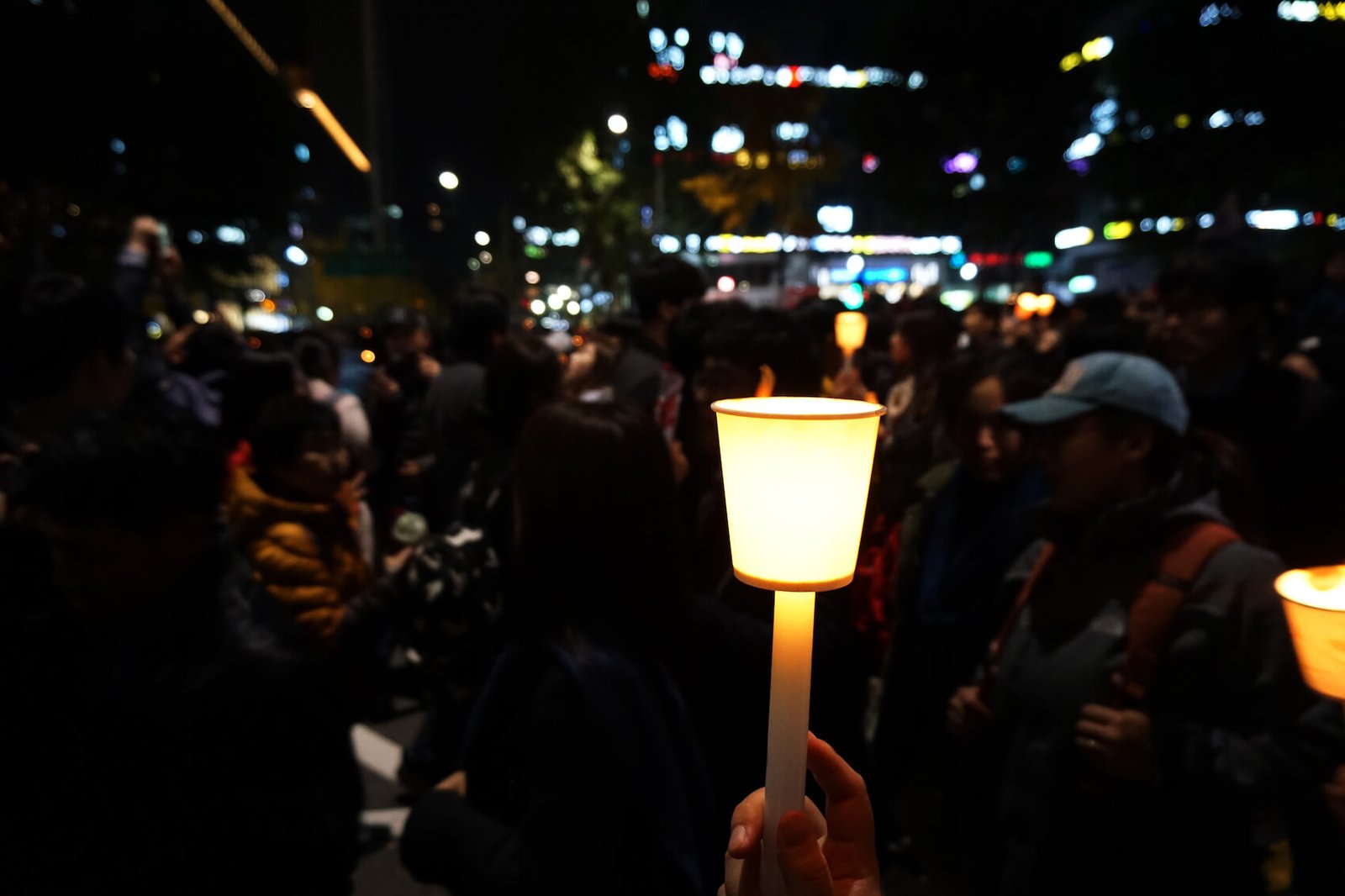
A photograph which was taken during Candlelight March in South Korea. Photo: Shutterstock.
And lastly, Professor Shaw, now that President Yoon has been impeached by the South Korean Parliament, what perspectives do you foresee for the stability of democratic institutions, and what is the significance of this impeachment in the history of South Korea’s democratization process?
Dr. Meredith Shaw: For South Korea, this is the third time a President has been impeached. The most recent one was just eight years ago. I was in South Korea at the time, and I vividly remember it. They’ve survived this before, and they will survive it again.
I think this will be an opportunity for both parties to get their houses in order. Both major parties have recently gone through a phase of populist leadership, with Yoon on the conservative side and Lee Jae-myung leading the Democratic Party. Both leaders have become extremely unpopular. While it’s still a bit too early to predict, I believe the public might now be looking for steadier, more establishment-oriented leadership—especially with the uncertainty surrounding the incoming Trump administration and North Korea’s increasingly unpredictable behavior over the past year. Nobody seems to want a rabble-rousing, anti-establishment leader to emerge from this situation.
If this process unfolds similarly to the last impeachment, we can expect a winter of continuous protests. However, protests in South Korea often have the character of a peaceful, celebratory demonstration of democracy, almost like a festival. There will likely be a police presence to maintain safety, but not to crack down on crowds. If the Constitutional Court chooses to remove President Yoon from power, a snap election will follow. I believe there’s a short period—perhaps two or three weeks, though it could be longer—for parties to organize their campaigns and select candidates.
Currently, the Conservative Party is very splintered, which may result in multiple contenders vying for leadership. Meanwhile, their main rival, the Democratic Party, is also embroiled in scandals, and its leadership is highly unpopular. In fact, one reason some people hesitate to support impeachment is because the current leader of the Democratic Party is himself extremely unpopular.
Given this, we may see lesser-known figures emerge, and hopefully, some steadier leadership will arise as a result of these latest shocks. That said, South Korea fundamentally needs a strong left-wing party to address systemic inequalities in society and a strong right-wing party to defend against the very real threat from North Korea.
Unfortunately, in recent years, both sides have behaved in ways that fail to inspire confidence. I expect a much needed reckoning in the upcoming election, which I anticipate will take place in the spring.
Yilmaz, Ihsan & Morieson, Nicholas. (2024). Authoritarian Populist ‘Civilization-States’ and Their Influence in Africa: Hard and Soft Powers of TRIC. European Center for Populism Studies (ECPS). December 11, 2024. https://doi.org/10.55271/rp0092
Turkey, Russia, India, and China (TRIC) are reshaping the power dynamics in Africa, challenging Western dominance and promoting alternative development models. These nations leverage their untarnished histories with Africa and emphasize shared anti-colonial struggles to position themselves as allies of the Global South. However, their competition is far from altruistic. Beneath promises of “no-strings-attached” aid lies a strategic pursuit of resources, trade, and influence. While they share a common goal of diminishing Western power, TRIC nations also compete fiercely with each other, making Africa a critical battleground in the quest for a multipolar world order.
Africa has become the focal point of a new great power struggle, reminiscent of the Cold War but with a distinctly civilizational dimension. Unlike the colonial powers of the past, today’s major actors—Turkey, Russia, India and China (TRIC)—position themselves as allies of the Global South, presenting alternative paths to modernization that challenge Western dominance. This competition is driven by the pursuit of Africa’s vast natural resources, strategic geographic positions, and potential economic partnerships.
The new great power competition in Africa is reshaping the continent’s political, economic, and security landscape. Unlike the colonial era, this competition is characterized by a narrative of anti-Western solidarity, TRIC states present themselves as alternatives to the Western model of development. Each position itself as a partner of Africa, offering infrastructure investments, trade, and security assistance without the liberal democratic conditions often attached to Western aid. At stake are billions of dollars in trade, access to critical minerals, and influence over strategic regions.
Turkey leverages its Ottoman heritage and cultural ties, combining soft power initiatives like education and humanitarian aid with increasing defense exports. Russia, through its Wagner Group and strategic partnerships, combines military assistance with anti-colonial rhetoric. India emphasizes historical ties and South-South cooperation while expanding its trade and energy partnerships across Africa. China leads this competition with extensive infrastructure projects, debt financing, and its Belt and Road Initiative, offering a model of authoritarian modernization.
These nations share a common goal: diminishing Western influence and promoting a multipolar world order. Their efforts resonate in Africa, where Western powers are criticized for their colonial past and for attaching conditions to aid. However, the involvement of these new great powers is not purely altruistic. Their strategies often involve competing among themselves for resources, markets, and geopolitical influence, with some adopting hard power tactics that echo the imperialism of the past.
This report provides actionable recommendations for policy makers, NGOs, and academics in both liberal democracies and African nations, aiming to navigate this evolving geopolitical landscape while prioritizing Africa’s autonomy and development goals. It underscores the importance of collaboration, transparency, and shared values to ensure a balanced and equitable future for Africa in the global order.
Shared Motivations: Turkey, Russia, India and China seek to diminish Western influence, particularly that of the United States, in Africa. Each nation emphasizes a historical absence of colonial exploitation in Africa, contrasting their engagement with the imperialist history of the West.
Civilizational Narratives: China and Turkey assert the superiority of their civilizational values over Western norms, presenting themselves as models of development without liberal democratic constraints. Russia and India leverage their shared anti-colonial history with Africa, portraying themselves as partners in the broader fight against Western imperialism.
Strategies: Soft Power – All four nations employ development aid, infrastructure projects, and educational programs to gain influence. China leads in infrastructure, while Turkey and India focus on cultural and educational ties. Hard Power – increasing military engagements, such as China’s Djibouti base and Turkey’s defense agreements with African states, demonstrate a willingness to use force to secure interests. Russia’s Wagner Group and India’s naval presence underscore their strategic ambitions.
Opportunities and Risks: These powers offer no-strings-attached aid and economic partnerships, appealing to African leaders wary of Western conditionality. However, their growing use of hard power raises concerns about neo-imperialism, resource exploitation, and authoritarian influence, challenging the narrative of altruistic partnership.
Competing Interests: Despite a shared goal of diminishing US hegemony, China, Russia, Turkey, and India increasingly compete with one another for influence, creating potential flashpoints in regions like East Africa.
The new great power competition in Africa represents a complex struggle involving economics, geopolitics, and ideology. While China, Russia, Turkey, and India align in their opposition to Western dominance, they also vie against each other for strategic advantage. This competition challenges the liberal democratic order, offering Africans alternative development models rooted in authoritarian governance and civilizational narratives.
As these powers expand their presence, the risk of militarization and resource-driven exploitation grows, underscoring the complexity of Africa’s geopolitical landscape. For liberal democracies, this competition highlights the need for a recalibrated approach to African engagement. Transparent partnerships, infrastructure investments, and strengthened support for democratic institutions can counterbalance authoritarian models.
For African nations, this dynamic presents both opportunities and challenges. Leveraging this competition to secure fairer terms for trade, development aid, and security assistance is essential to preserving sovereignty and fostering sustainable growth. Engaging with these emerging powers could accelerate development, but it may also erode democratic governance and foster dependency.
Meanwhile, the United States and its allies must reassess their strategies to remain relevant in a multipolar Africa. This evolving contest reflects a broader global shift toward multipolarity, with Africa positioned as a pivotal arena in the battle to reshape the post-Cold War world order.
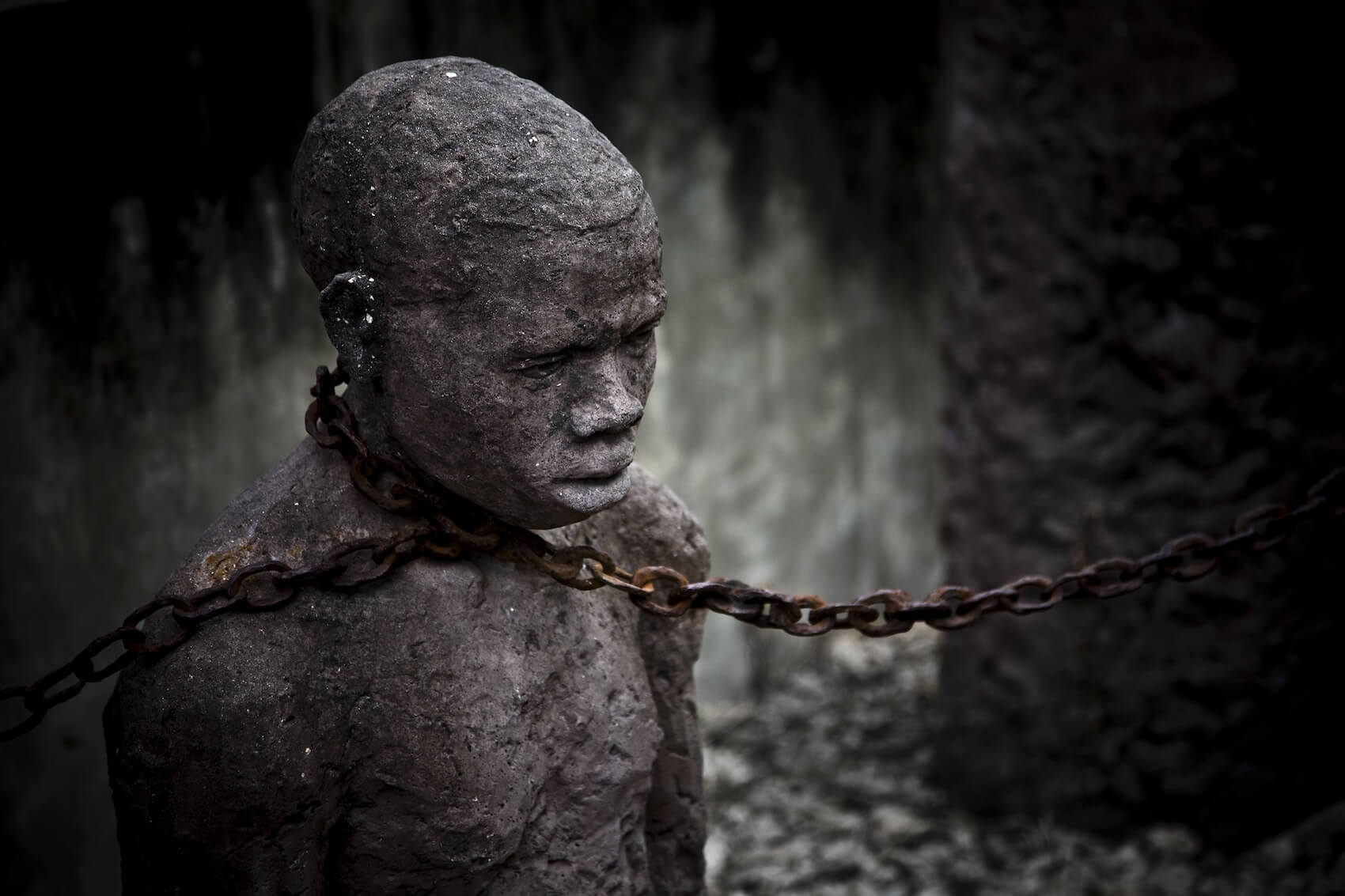
Statue of a child slave in Zanzibar. Photo: Shutterstock.
In the 19th century, the competition among Europe’s major powers led to the invasion and colonization of almost the entire African continent. However, drawing a direct analogy between today’s great power competition in Africa and the colonial era oversimplifies the dynamics at play. Unlike the previous scramble for Africa, the so-called “New Scramble for Africa” (The Economist, 2019) might bring tangible benefits to ordinary Africans.
Africa, despite being the poorest inhabited continent, remains a region of immense potential. Its vast oil and mineral wealth, coupled with significant agricultural resources, are juxtaposed with widespread poverty. Yet, there are reasons for cautious optimism about Africa’s future. The continent is increasingly recognized as a region of strategic importance by global powers such as China, Russia, and the United States, as well as regional actors like Turkey and India. Africa’s importance is rooted in its rapidly growing population—projected to be the largest globally by the end of the century—and its abundant natural resources, including minerals essential for emerging technologies like electric vehicles and mobile phones. While much of the developed world grapples with aging populations and declining fertility rates—some, like China, even confronting the paradox of growing old before achieving widespread prosperity—Africa’s demographic trends point to a youthful and dynamic future.
Between 2000 and 2020, African nations experienced stable economic growth (Zajączkowski & Kumar, 2020), a trend that has continued largely uninterrupted in sub-Saharan Africa, except during the COVID-19 pandemic. By the mid-2010s, Africa’s economic performance surpassed that of other developing regions such as Latin America and Southeast Asia (UNECA, 2015; African Development Bank, 2014, 2015). This growth has often been driven by internal demand, including private consumption, public infrastructure investment, and expanding trade ties with emerging markets (African Development Bank, 2019). Projections estimate that by 2060, Africa’s middle class will reach 1.1 billion people—approximately 50% of the continent’s population (UNECA, 2015; African Development Bank, 2012).
Despite these promising trends, Africa currently accounts for just 3% of global trade (African Development Bank, 2012; UNECA, 2013). However, the continent’s youthful population, rapid urbanization, and expanding educated middle class are transforming it into an increasingly attractive destination for foreign investment. Nations such as China, Russia, India, Turkey, the United States, and European powers are deepening their engagement with Africa, driven by a mix of strategic, economic, and geopolitical interests.
The competition among these major powers has the potential to create a win-win scenario for Africans. By leveraging rivalries, African nations could secure better investment deals and improved terms of engagement. However, there are risks. This competition could result in increased external support for corrupt or oppressive leaders as foreign powers prioritize their strategic goals over good governance. Nevertheless, the potential benefits are evident: increased investment can create jobs, improve infrastructure, and enhance Africa’s influence within global institutions. For emerging global powers, Africa represents an opportunity not only to boost national wealth and secure access to critical raw materials but also to expand their global influence and military reach, often at the expense of established powers like the United States.
China, Russia, Turkey, and India, in particular, are deepening their economic, diplomatic, and military ties with African states using a mix of soft power, sharp power, and, occasionally, hard power.
The civilizational populism promoted by emerging powers like Turkey, China, and others provides a distinct alternative to the Western liberal democratic model. These nations seek to position themselves as “civilization-states,” claiming to reconnect with the values and traditions that historically made their societies great. This strategic positioning not only challenges the hegemony of liberal democratic norms but also resonates with African states seeking development paths that reject Western-imposed conditions and values.
In Turkey, the ruling Justice and Development Party (AKP) under Recep Tayyip Erdogan exemplifies this civilizational populism. Erdogan’s leadership employs a dual narrative: domestically, he positions himself as the defender of Islamic values against secularist elites, and internationally, he portrays Turkey as the protector of Muslim interests against Western dominance (Yilmaz & Bashirov, 2018; Yilmaz & Morieson, 2022). By framing Turkey as the heir to Ottoman-Islamic civilization, Erdogan not only consolidates his domestic support but also positions Turkey as a leader of the Muslim world (Yilmaz & Morieson, 2023). Central to this strategy is the AKP’s rhetoric, which invokes collective historical traumas and fears. This securitization narrative portrays Turkey as a nation under constant threat from internal and external enemies, including Western powers, secularists, and minority groups (Yilmaz & Shipoli, 2021). By doing so, Erdogan legitimizes authoritarian measures, silences dissent, and garners support for Turkey’s active role in global anti-Western coalitions (Yilmaz, Shipoli, & Demir, 2021).
In addition, civilizational populism heavily relies on narratives of victimhood. Erdogan’s political strategy has evolved to incorporate both national and manufactured victimhood narratives, which resonate deeply with his base. These narratives amplify historical grievances and create a sense of solidarity among supporters, portraying the AKP and its leader as the only forces capable of defending the “true” Turkish identity (Morieson, Yilmaz, & Kenes, 2024). These strategies extend beyond domestic politics to foreign policy. By aligning with anti-colonial sentiments and emphasizing solidarity with historically marginalized nations, Turkey appeals to African states as a partner that understands their struggles. Unlike the West, which ties aid and investment to democratic reforms, Turkey offers “no-strings-attached” assistance, furthering its influence in regions seeking alternatives to Western conditionalities (Yilmaz & Morieson, 2022). This model of civilizational populism not only undermines liberal democratic norms but also demonstrates the AKP’s ability to adapt its messaging to different audiences. By emphasizing shared grievances and cultural pride, the AKP constructs a narrative of unity and resistance that resonates globally while reinforcing its domestic authority (Yılmaz, 2021).
These civilization-states emphasize anti-colonial solidarity and highlight their success in achieving economic growth without adhering to Western norms. Their strategies are designed not only to challenge American hegemony but also to position their governance models as viable alternatives to liberal democracy.
This report examines the strategies employed by China, Russia, Turkey, and India in Africa, focusing on their use of soft and hard power and their framing of themselves as civilization-states offering alternatives to Western liberalism. By analyzing their approaches, this report seeks to understand how these powers influence Africa’s development trajectories and what this means for the future of global power dynamics.
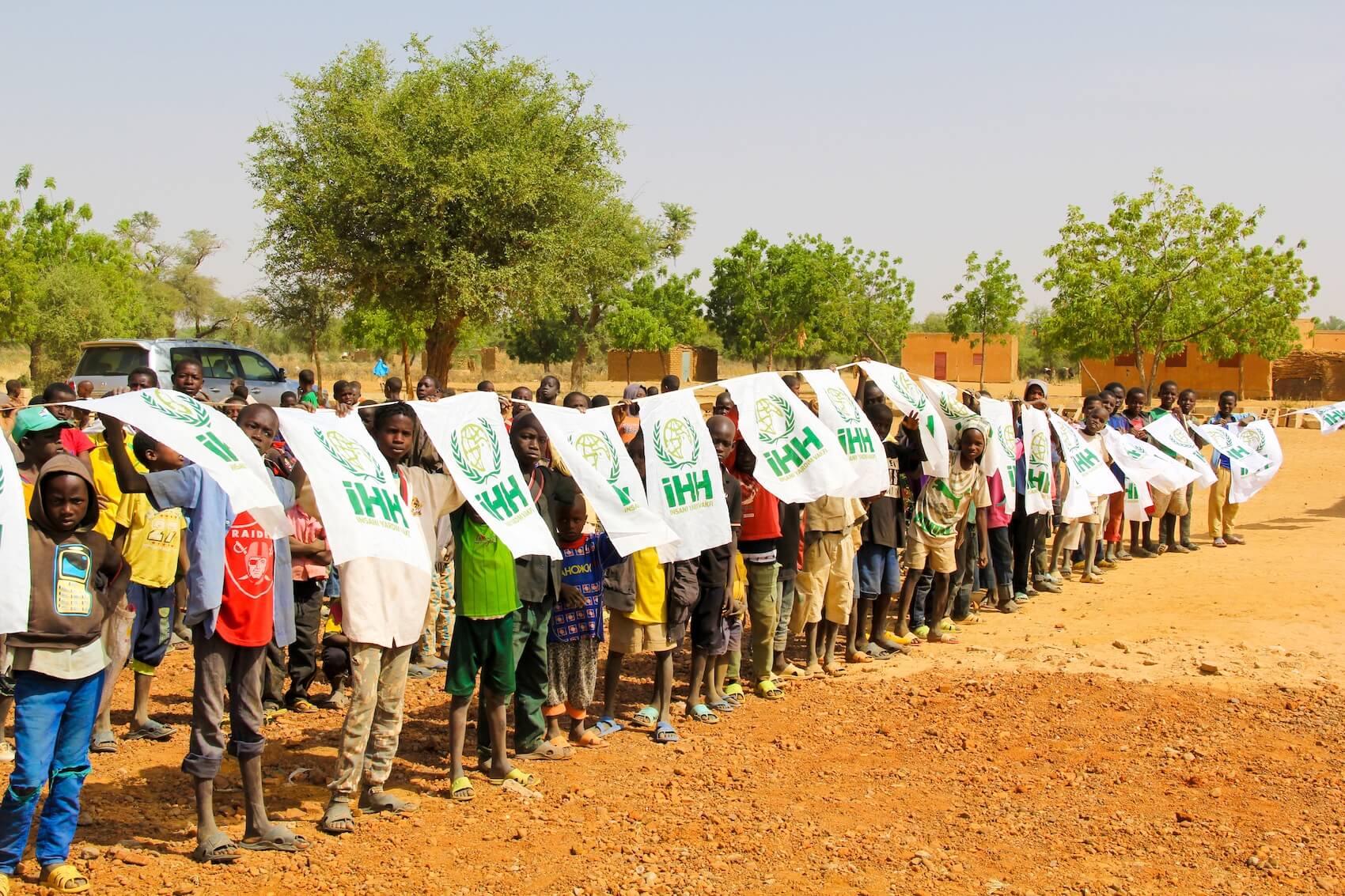
The Turkish Islamist humanitarian aid foundation IHH serves as one of the key instruments of the Erdogan regime’s policies in Africa. African children participate in activities promoting IHH in Niamey, Niger, on December 20, 2017. Photo: Burak Tumler.
Turkey’s Erdogan-led AKP government has demonstrated unprecedented interest in Africa, establishing 26 new embassies and 12 consulates across the continent since 2010, bringing the total to 44 (The Economist, 2019). This outreach aligns with Erdogan’s increasingly anti-Western national ideology, which portrays Turkey as both a defender of Islam and the downtrodden peoples of the global south (Yilmaz and Morieson, 2023). For Erdogan, Africa represents a region with deep-seated resentment toward Western powers and a positive perception of Turkey and the Ottoman Empire, offering opportunities to cultivate trade partnerships and secure diplomatic support in international bodies, including the United Nations.
Historically, Turkey’s engagement with Africa was limited. While the Ottoman Empire maintained ties with North Africa, the Republic of Turkey largely ignored the continent, focusing instead on Europe until the 1990s (Tepecikliogu, 2017). This neglect was shaped by Africa’s colonial history, Turkey’s pro-European orientation under Kemalist rule, and Cold War dynamics that placed much of Africa under American or Soviet influence.
Erdogan has contrasted Turkey’s approach with that of Western powers, emphasizing solidarity over exploitation. During the COVID-19 pandemic, he criticized Europe’s failure to provide vaccines to Africa, contrasting it with Turkey’s medical aid (Aydın-Düzgit, 2023). He has frequently highlighted Europe’s selective application of universal values, pointing to the neglect of African refugees and Western double standards on human rights. According to Erdogan, “The EU is not in a position to defend all its self-proclaimed universal moral values while it turns a blind eye to sinking boats in the Mediterranean, building wire fences, and adopting a push-back policy” (Aydın-Düzgit, 2023).
Erdogan positions Turkey as a country free from colonial baggage, committed to anti-imperialism, and sharing values with Africa. He frames Turkey’s engagement as rooted in sincerity, brotherhood, and solidarity, rejecting “old colonial practices with new methods” (Aydın-Düzgit, 2023). Erdogan’s rhetoric emphasizes a “unique economic and development model” that Turkey can export to help Africa prosper without adopting exploitative or neo-colonial practices.
This narrative blend promises of mutual economic growth with appeals to shared values and opposition to the West. Erdogan adeptly connects Europe’s colonial legacy with its modern policies, particularly in redistributive justice. For instance, he has contrasted Turkey’s pandemic aid with Europe’s vaccine withholding, presenting Turkey as a genuine partner in Africa’s development (Aydın-Düzgit, 2023).
Turkey’s African policy underwent a significant transformation in the post-Cold War era. After the European Union (EU) rejected Turkey’s membership, Ankara adopted a multidimensional foreign policy, moving away from exclusive Western alignment (Tepecikliogu, 2017). The “Opening to Africa Policy” of 1998 marked the beginning of this shift, with economic priorities playing a growing role. This approach intensified under the AKP government, which, after facing resistance to EU membership, turned to cultivating alliances in non-Western regions, including Africa.
In 2005, Erdogan’s government declared “The Year of Africa,” with Erdogan becoming the first Turkish prime minister to visit Sub-Saharan Africa. Turkey’s economic growth under AKP leadership enabled the country to pursue a proactive foreign policy, focusing on the African continent as a region of strategic importance (Tepecikliogu, 2017). Today, Turkey positions itself as a reliable partner, offering an alternative to Western dominance while strengthening its presence in Africa through economic, cultural, and diplomatic initiatives.
Turkey’s soft power initiatives in Africa have been complex, leveraging humanitarian aid, education, religion, media, and infrastructure development. This aligns with President Erdogan’s increasingly anti-Western national ideology, which frames Turkey as both a defender of its people and Islam, as well as a spokesperson for the downtrodden peoples of the global south (Yilmaz & Morieson, 2023). In Africa, Erdogan perceives a continent harboring understandable resentment toward Western powers and views it as a region where Turkey and the Ottoman Empire are remembered positively. This creates opportunities for Turkey to gain trade partnerships and secure diplomatic support in international organizations such as the United Nations.
Historically, the Ottoman Empire maintained close ties with North Africa, but the Republic of Turkey largely ignored the continent, focusing instead on Europe until the 1990s (Tepecikliogu, 2017). This neglect stemmed from Africa’s colonial history, Turkey’s pro-European orientation under Kemalist rule, and Cold War dynamics that left Africa under American or Soviet influence. However, Turkey’s interest in Africa increased following the Cold War, particularly as its relevance to the US and Europe waned and its bid for EU membership was rejected. In 1997, Turkey adopted a multidimensional foreign policy, diversifying its alliances beyond the West (Tepecikliogu, 2017). This shift included the 1998 “Opening to Africa Policy,” which coincided with the rise of a new Turkish bourgeoisie influencing foreign policy through economic priorities.
Under the Erdogan-led AKP government, which came to power in 2002, efforts to enhance trade and relations with non-Western states, including African nations, accelerated. When it became clear that the EU was reluctant to accept majority-Muslim Turkey, Erdogan sought to build alliances in regions like Africa. Economic growth under AKP rule enabled a proactive foreign policy, and 2005 was declared “The Year of Africa.” Erdogan became the first Turkish prime minister to visit Sub-Saharan Africa, signaling Turkey’s increasing focus on the continent.
In a 2011 speech in Mogadishu, Erdogan underscored Turkey’s commitment to Africa, describing the continent as “the cradle of civilization and one of the epicenters of the future of humanity.” He expressed support for “African ownership of African issues” and highlighted Turkey’s role as a “strategic partner of the rising Continent of Africa” (Ministry of Foreign Affairs, 2011). This rhetoric emphasized Turkey’s distinction from Western powers often viewed as exploitative (Voice of America, 2024). Unlike Western nations, Turkey’s aid comes with few or no conditions regarding governance or human rights reforms, a stance that resonates with many African governments (GIS Reports, 2024). Erdogan has presented Turkey as an alternative to the West, emphasizing sincerity and partnership rather than exploitation (Voice of America, 2024).
Turkey’s engagement in Africa has primarily centered on humanitarian aid and development assistance, which complement its commercial interests (Tepecikliogu, 2017). Selin Gucum of the Observatory of Contemporary Turkey noted that Turkey has capitalized on African efforts to reduce reliance on former colonial powers for aid and security (Voice of America, 2024). Analysts like Teresa Nogueira Pinto highlight that Turkey avoids making its assistance conditional on governance or human rights, a key factor distinguishing it from Western aid models (GIS Reports, 2024).
Education has played a pivotal role in Turkey’s soft power strategy. Initially, the Gulen movement opened schools across Africa, but following the failed 2016 coup, which the AKP blamed on Gulen, these schools were replaced by the Maarif Foundation, which now operates 140 schools in Africa, educating 17,000 students (Daily Sabah, 2021). Additionally, approximately 60,000 African students currently study in Turkey, fostering cultural and educational ties (TRT Africa, 2023).
Religion is another significant element of Turkey’s approach, particularly in Muslim-majority countries or those with sizable Muslim minorities. Turkey-funded mosques and schools promote socially conservative values that resonate with many Africans, especially in opposition to Western liberal norms. Erdogan’s rhetoric against LGBTQ+ rights and his emphasis on traditional family values often find a receptive audience in Africa (Voice of America, 2024).
Media has become an avenue for Turkish influence, with state broadcaster TRT reaching African audiences in multiple languages, including local African dialects. This allows Turkey to promote pro-Turkish narratives and portray itself as a friend to Africa while casting its adversaries as enemies of the African people.
Turkey has also invested in diplomatic training to strengthen ties with African nations. Since 1992, its Diplomacy Academy has trained 249 African diplomats through its International Junior Diplomats Training Program, aimed at capacity building and enhancing human resources upon requests from African foreign ministries (Ministry of Foreign Affairs, 2022).
Infrastructure development further cements Turkey’s presence in Africa. Turkish Airlines (THY), for example, flies to 62 African cities, including Mogadishu, Somalia, where its planes land at an airport built with Turkish funds and expertise. This demonstrates Turkey’s commitment to connecting Africa with global markets and boosting tourism (Němečková & Varkočková, 2024).
Humanitarian aid, particularly disaster relief, has been another cornerstone of Turkey’s soft power. During Somalia’s 2011 famine, Turkey provided substantial aid, with Erdogan himself visiting the country to highlight the crisis and Turkey’s role in alleviating it. This not only improved Turkey’s image but also opened doors for Turkish businesses and NGOs to contribute to Somalia’s reconstruction. Somalia became a litmus test for Turkey’s Africa policy, with Ankara playing a mediating role in the country’s internal conflicts (Tepecikliogu, 2017).
Turkey’s initiatives extend beyond aid. It is exploring oil and gas opportunities off the coasts of Libya and Somalia in partnership with local governments (Daily Sabah, 2024). Like other rising powers, Turkey’s involvement in Africa is driven by both economic ambitions and a desire to expand its influence on the continent.
Erdogan’s rhetoric and policies have effectively positioned Turkey as a unique and reliable partner for African nations, contrasting sharply with Western approaches and emphasizing shared values, solidarity, and mutual growth. Through complex soft power initiatives, Turkey has carved a significant role for itself in Africa’s development narrative while pursuing its broader geopolitical and economic interests.
Turkey’s engagement in Africa extends well beyond disaster and famine aid. Today, Turkey is actively exploring oil and gas opportunities off the coasts of Libya and Somalia in collaboration with local governments (Daily Sabah, 2024). Like the BRICS group and Western powers, Turkey’s initiatives in Africa aim to achieve both economic gains and growing geopolitical influence on the continent.
Turkey has earned a reputation as a reliable partner in delivering major projects on time, which has enhanced its value across Africa. According to the Turkish Ministry of Foreign Affairs, Turkey-Africa trade reached $34.5 billion annually in 2022, up from $5.4 billion in 2003—an extraordinary increase that underscores the economic rise of African nations and Turkey’s expanding interest in the region (Ministry of Foreign Affairs, 2022). President Erdogan’s anti-colonial rhetoric further positions Turkey as a trusted ally of Africa, contrasting its sincerity with the perceived exploitation by Western powers. Erdogan also emphasizes Turkey’s unique economic model as a potential roadmap for Africa’s development (Aydın-Düzgit 2023).
Turkey’s hard power approach became more prominent in the 2010s, particularly during the Arab Uprisings and subsequent conflicts. The 2020 Libyan civil war marked a significant shift in Turkey’s foreign policy, as Ankara supported the Tripoli-based government by deploying unmanned aerial vehicles (UAVs) and naval forces to counter Russian-backed factions. This intervention showcased the effectiveness of Turkish military technology, especially drones, which have since become highly sought after by African nations (GIS Reports, 2024).
The defense industry has been a major beneficiary of improved Turkey-Africa relations. Turkey has increasingly signed arms deals with African governments, leading to a fivefold growth in defense and aerospace exports to the continent—from $82.9 million in 2020 to $460.6 million in 2021 (Ministry of Foreign Affairs, 2022; Demirdirek & Talebian, 2022). While still a small fraction of total arms sales to African states, this growth highlights Turkey’s expanding role as a defense partner. Despite its focus on humanitarian assistance and economic partnerships, Turkey’s security and defense sectors see Africa as a growing market for military goods.
Turkey’s intervention in Libya likely had two main objectives: securing access to the Libyan coast and maritime boundaries, and countering Arab and Russian influence in the region. Turkey’s successful defense of the Tripoli government relied heavily on-air superiority and UAV technology, demonstrating both the effectiveness of its military prowess and the utility of its hardware in modern conflicts.
Following the Libya intervention, Turkish UAVs gained popularity in Africa. Analysts note that Turkish defense products offer significant advantages to African countries—they are affordable, reliable, and battle-tested in Libya, Syria, and Ukraine (GIS Reports, 2024). For nations grappling with insurgent movements, porous borders, and under-resourced armies—such as Togo, Niger, Nigeria, and Somalia—Turkey’s drones and counterterrorism expertise have become especially valuable.
Turkey is primarily a supplier of arms and military training rather than an active combatant in Africa’s wars. It has signed defense agreements with countries including Somalia, Ethiopia, Ghana, Kenya, Nigeria, and Rwanda, with expected agreements in Uganda and Mozambique. These agreements often encompass security provisions, technical support, and arms sales, though some, like the Mozambique deal, also involve sharing military intelligence (GIS Reports, 2024).
Somalia remains Turkey’s closest partner in Africa. In 2017, Turkey established a large foreign military base in Mogadishu and has since provided extensive training to Somali soldiers engaged in the fight against al-Shabaab, a terrorist group linked to al-Qaeda (Atlantic Council, 2024). Such defense agreements serve not only Turkey’s strategic interests but also reinforce its image as a significant ally of African stability. Alper Aktas, Turkey’s ambassador to Somalia, remarked, “[Turkey] never considered Somalia’s stability separately from our own country’s stability” (ADF, 2024). Erdogan describes Turkey as an “Afro-Eurasian” country, sharing common values and interests with African nations (Politics Today, 2022).
Turkey has positioned itself as a reliable alternative to Russia, China, France, and the United States in supplying arms to Africa. Abel Abate Demissie, an associate fellow at Chatham House, observes that “Turkey provides a means of actually purchasing military hardware” (DW, 2022a). African nations are particularly interested in Turkish-manufactured armored vehicles, naval equipment, infantry weapons, and drones (DW, 2022a).
By deepening its defense partnerships and increasing arms sales, Turkey not only enhances its influence in Africa but also pushes back against competing powers like Russia and China. These efforts underscore Turkey’s broader strategy to carve out its sphere of influence on the continent while presenting itself as a reliable and cooperative partner to African states.
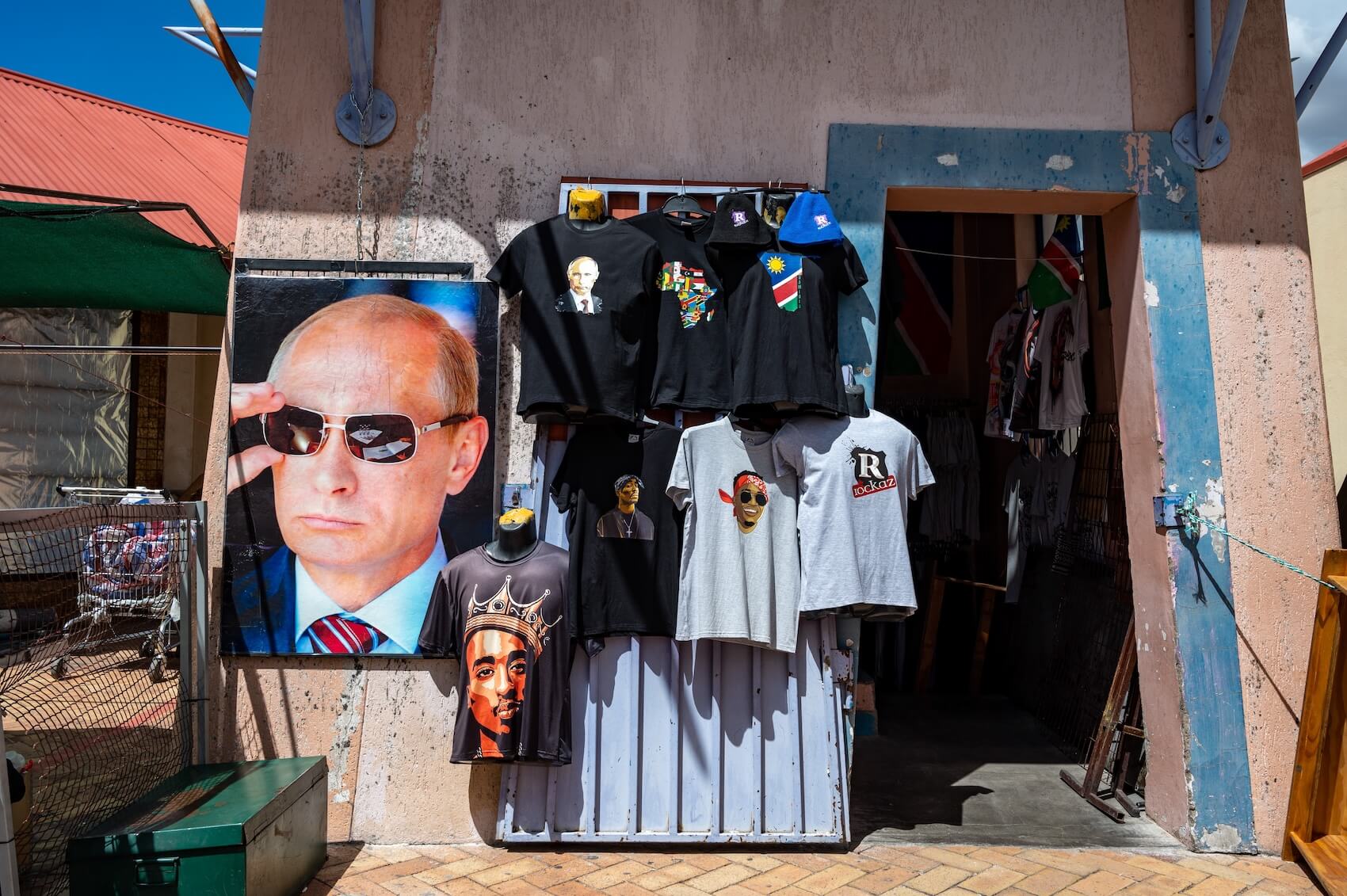
T-shirts for sale at Windhoek Market alongside a portrait of Putin in Windhoek, Namibia, on March 26, 2023. Photo: Shutterstock.
Russia developed strong relationships with African states during the Soviet era, competing with the United States to gain influence across the continent and spread its communist ideology. The Soviets offered development aid and, crucially, solidarity with leftist regimes fighting colonialism and Western imperialism, effectively capitalizing on widespread anti-Western sentiment in Africa (Bienen, 1982). After the collapse of communism, however, Russia struggled to compete with the United States in terms of soft and hard power, as it lacked the resources and global reach of its Soviet predecessor. Nonetheless, because Russia had minimal involvement in the colonization of Africa in the 19th and early 20th centuries, it continued to be perceived by many Africans as a friend to their people and an opponent of Western colonialism and exploitation.
In the post-Soviet era, Russia has consistently sought to maintain its influence in Africa, with efforts expanding significantly under Vladimir Putin’s regime. Putin’s government emphasizes Russia’s historic ties to Africa and its opposition to Western colonialism. For instance, at the second annual Russia–Africa Summit held in St. Petersburg in July 2023, Dmitry Medvedev, Deputy Chairman of the Security Council of Russia, declared that Russia would “pursue avenues that would liberate sovereign states from their colonial heritage.” This statement underscored Russia’s ongoing strategy of supporting anti-Western dictatorships and regimes that defy liberal norms. In exchange for Russian development and military aid, these regimes provide diplomatic backing for Russian initiatives in international bodies, including the United Nations Security Council.
In a 2022 speech in Moscow, Putin elaborated on his anti-Western narrative, blaming the “West,” particularly the “Anglo-Saxons,” for colonialism and the slave trade (Meduza, 2022; President of Russia, 2022). He portrayed the Soviet Union and Russia as leaders of the 20th-century anti-colonial movement—a legacy, he argued, that the West has never forgiven. Putin framed Russia’s current opposition to Western liberalism and atheism as a continuation of its historic resistance to colonialism. According to this narrative, the West seeks to eradicate traditional ways of living and religious practices, while Russia, as a civilization-state, stands as a protector of Orthodox Christianity, Islam, and other faiths (Meduza, 2022; President of Russia, 2022).
Putin further claimed that the promises of democracy and wealth from the West have consistently led to poverty, imperialism, and the erosion of cultural and religious traditions in societies they influence. He argued that the West’s quest for “total domination” drives it to eliminate “sovereign centers of global development,” even by force if necessary (Meduza, 2022; President of Russia, 2022). While this rhetoric may not carry the same ideological weight as it did during the Soviet era—when communism provided a compelling alternative to capitalism—it resonates in regions like Africa, where anti-Western sentiments remain strong, and where Western promises of democracy and development often fail to meet expectations.
In Africa, Putin’s anti-Western narrative finds an audience, particularly in areas with strong religious conservatism and enduring memories of colonial humiliation. Russia’s framing of itself as a champion of traditional values and a defender against Western imperialism bolsters its appeal, even as its actual resources and influence remain limited compared to its Soviet predecessor. This narrative continues to shape Russia’s engagement with African states, aligning with its broader geopolitical goals of challenging Western hegemony and asserting its role as a sovereign center of global influence.
The Putin regime does not, of course, rely solely on rhetoric to spread its influence across the African continent. Instead, it employs a range of soft and hard power programs designed to elicit support and back friendly nations in Africa. However, the institutions that Russia builds across Africa consistently promote a narrative blaming the West for Africa’s challenges and portraying Russia as an opponent of Western imperialism.
Russia’s overall strategy in Africa can be summarized as a combination of stabilizing the region to facilitate mineral extraction, opening alternative markets for its energy exports, and leveraging anti-colonial rhetoric and aid to win the support of African nations. While Russia does not actively seek to suppress democracy in Africa, the Putin regime has no qualms about supporting repressive regimes and often prefers dealing with authoritarian governments over democracies. Russia is particularly interested in competing with other global powers, including the United States, France, China, and Turkey, for influence in Africa. To this end, it portrays itself as a long-standing ally of the African people, emphasizing its history of supporting independence movements.
The Putin regime maintains ties with friendly African states by fostering collaboration between Russian and African educational institutions, building schools and training facilities, and assisting in securing mining operations and combating insurgencies. This latter aspect often involves the Wagner Group, whose activities in Africa have a mixed record. In 2024, the Wagner Group’s operations were incorporated into Russia’s Ministry of Defense’s African Corps.
Russia’s soft power efforts in Africa primarily focus on spreading Russian culture and language. Russian cultural centers operate in over 80 countries, including South Africa, Tanzania, and Ethiopia, offering Russian language courses and promoting Russian literature. Since 2019, Russia has expanded its language education initiatives to include 28 nations, with a goal of reaching at least 50. It also aims to follow the lead of China and France in admitting talented Africans to its universities to strengthen Africa-Russia ties.
Although Russia has succeeded in garnering support from some African states, including abstentions during votes condemning Russia’s invasion of Ukraine, it would be misleading to assume uniform support across the continent or consistent alignment with Russia in UN General Assembly voting (Carnegie Endowment, 2023). Russia’s popularity is not universal in Africa. Despite mostly positive relationships with some countries, it faces competition from wealthier nations better equipped to facilitate development.
Since 2003, Russia has established physical Russian language schools in Africa under the Russky Mir Foundation (Russian World Foundation). These schools teach Russian language and culture, often in collaboration with African governments and universities, such as those in the Democratic Republic of Congo, Zambia, and Namibia (African Digital Democracy Observatory, 2024). In return, Russia has pledged to teach African languages in Moscow schools, signaling respect for African cultures and languages (African Digital Democracy Observatory, 2024).
Russia has also increased its engagement with higher education institutions in Africa, launching the Russian-African Network University consortium in 2023. This initiative includes agreements with various Malian institutions, such as the National School of Engineering, the University of Humanities and Social Sciences, and the Private University Ahmed Baba (African Digital Democracy Observatory, 2024). These projects complement earlier Soviet-era initiatives, such as the university established in Egypt in 1960, underscoring Russia’s historical and ongoing interest in African education.
Olena Snigyr argues that Russian educational and cultural initiatives aim to expand a shared knowledge base and foster ideological alignment. Educational cooperation, Russian language and culture programs, and journalist training are central to Russia’s strategy of disseminating its narratives and ideas (FPRI, 2024). According to Snigyr, Russia’s narrative of “modernization with Russia” appeals to African nations struggling with poverty despite resource wealth, offering a partnership model distinct from the conditional aid frameworks of Western countries.
Russia positions itself as a protector of African interests, advocating for fairer representation in international organizations such as the UN, opposing foreign interference in political regimes, and supporting traditional values in African societies (FPRI, 2024). However, its impact remains limited. Only about 35,000 African students are currently enrolled in Russian universities, and the Russian-African Network University involves just 75 Russian and 27 African institutions, with significant participation from Zimbabwe (FPRI, 2024). Nonetheless, initiatives like the Consortium of Universities “Subsoil of Africa” at St. Petersburg Mining University, which includes over 130 organizations from 42 African countries, demonstrate Russia’s ambition to deepen collaboration with Africa on its own terms (FPRI, 2024).
In 2023, Russia diversified its educational initiatives, including courses in religion and journalism. For example, it signed an agreement with Burkina Faso to collaborate on secular and Islamic education to combat radical Islam (Russian Mufties Council, 2023). Additionally, partnerships with Nigeria focus on advanced technological education, such as robotics, microelectronics, and 3D printing, while negotiations with South Sudan involve constructing a refinery (African Digital Democracy Observatory, 2024). Events like robotics and astronomy workshops in Tanzania, which featured a cosmonaut and attracted 800 students, further underscore Russia’s investment in portraying itself as a technological power in Africa (RT, 2023; Daily News, 2023).
These soft power efforts, while not unique to Russia, are integral to its strategy of portraying itself as a non-imperialist, anti-colonial partner to Africa. Russian Foreign Minister Sergei Lavrov has emphasized Russia’s appreciation for African states that resist Western pressure, framing the partnership as one of mutual respect and shared interests (Kornegay, 2023). This rhetoric has helped Moscow persuade some African states to resist Western sanctions imposed on Russia after its invasion of Ukraine. However, many African states continue to trade with Russia out of necessity, as food and energy shortages leave them little choice but to prioritize their immediate needs over geopolitical alignments.
Russian use of hard power in Africa has become increasingly prominent since 2017, largely through the activities of the Wagner Group, a private military company advancing Russian interests across the continent, often in opposition to Western priorities. The Wagner Group has been active in several African states, most notably the Central African Republic (CAR), Sudan, and Libya.
The Wagner Group, founded by Yevgeny Prigozhin, gained prominence during Russia’s 2014 invasion of Ukraine and annexation of Crimea. While commonly referred to as a single entity, it is better described as a complex network of businesses and mercenary groups operating in conflict zones and even in alleged peacekeeping operations worldwide (Council on Foreign Relations, 2023). Before 2023, the Wagner Group operated somewhat independently of the Kremlin. However, following its apparent rebellion against the Putin regime and Prigozhin’s mysterious death in an air crash, the group has operated as an instrument of the Russian state, with much of its operations absorbed into the Ministry of Defense in 2024. Even prior to these events, the Wagner Group was closely aligned with Kremlin objectives, despite its profit-driven motivations.
In Africa, the Wagner Group has approximately 5,000 personnel, including former Russian soldiers, convicts, and foreign nationals (Council on Foreign Relations, 2024). Among its most significant campaigns is its involvement in CAR, where Wagner soldiers were deployed in 2018, initially as military instructors. Their numbers later swelled to 1,500–2,000, transforming into a fighting force tasked with securing the country’s lucrative mining industry and protecting the pro-Russian government from rebels (Granta, 2024).
In 2019, Wagner began stationing forces around gold mines in central and eastern CAR and later expanded its presence to the north. Russian officials claim their operations have brought “peace and security” to CAR, but these claims are contested. The US State Department reports that Wagner has engaged in indiscriminate killings, abductions, and sexual violence in its efforts to control mining areas near Bambari (US State Department, 2024). UN experts further accuse Wagner of harassing journalists, aid workers, and international peacekeepers (OHCHR, 2021).
For instance, in October 2024, Wagner forces reportedly executed at least a dozen civilians in the gold-mining town of Koki, allegedly targeting artisanal miners. Witnesses recounted how Russian paramilitaries arrived by helicopter, indiscriminately opening fire on locals (Al Jazeera, 2024). Such violence is not isolated; it aligns with a broader pattern of Wagner’s operations, where violence often accompanies lucrative mining agreements between Russian companies and the CAR government. For example, the CAR government revoked mining licenses from a Canadian company and awarded them to Midas Resources, a Wagner-affiliated entity (Al Jazeera, 2024).
At times, Wagner’s priorities in CAR appear more focused on securing mineral resources than protecting the government. Wagner reportedly collaborated with the rebel group Union for Peace (UPC) to ensure the safety of its mining operations but later turned against the group, launching a counteroffensive targeting both rebels and local civilians (Al Jazeera, 2024).
CAR’s former Prime Minister Martin Ziguele expressed regret over inviting Wagner into the country, describing the group as a “criminal organization” now dominating CAR’s economic, security, and political spheres (BBC, 2023). Despite these criticisms, many in CAR view Wagner’s presence favorably, believing it has brought a degree of stability. In Bangui, the CAR government erected a monument honoring Wagner forces, depicting Russian troops protecting a woman and her children, accompanied by tributes to Yevgeny Prigozhin (BBC, 2023).
The Wagner Group’s activities in CAR exemplify both the potential and the pitfalls of Russia’s paramilitary strategy in Africa. On one hand, it highlights the failure of US and European initiatives to bring security and democracy to the continent. On the other hand, it demonstrates how Russian soft power effectively garners local support for the presence of its hard power. This growing influence strengthens Russia’s alliances in Africa, securing votes in the UN General Assembly and helping to shield Russia from Western economic sanctions and diplomatic pressures. However, these developments also underscore the precarious balance between Russian objectives and the well-being of African states under Wagner’s shadow.
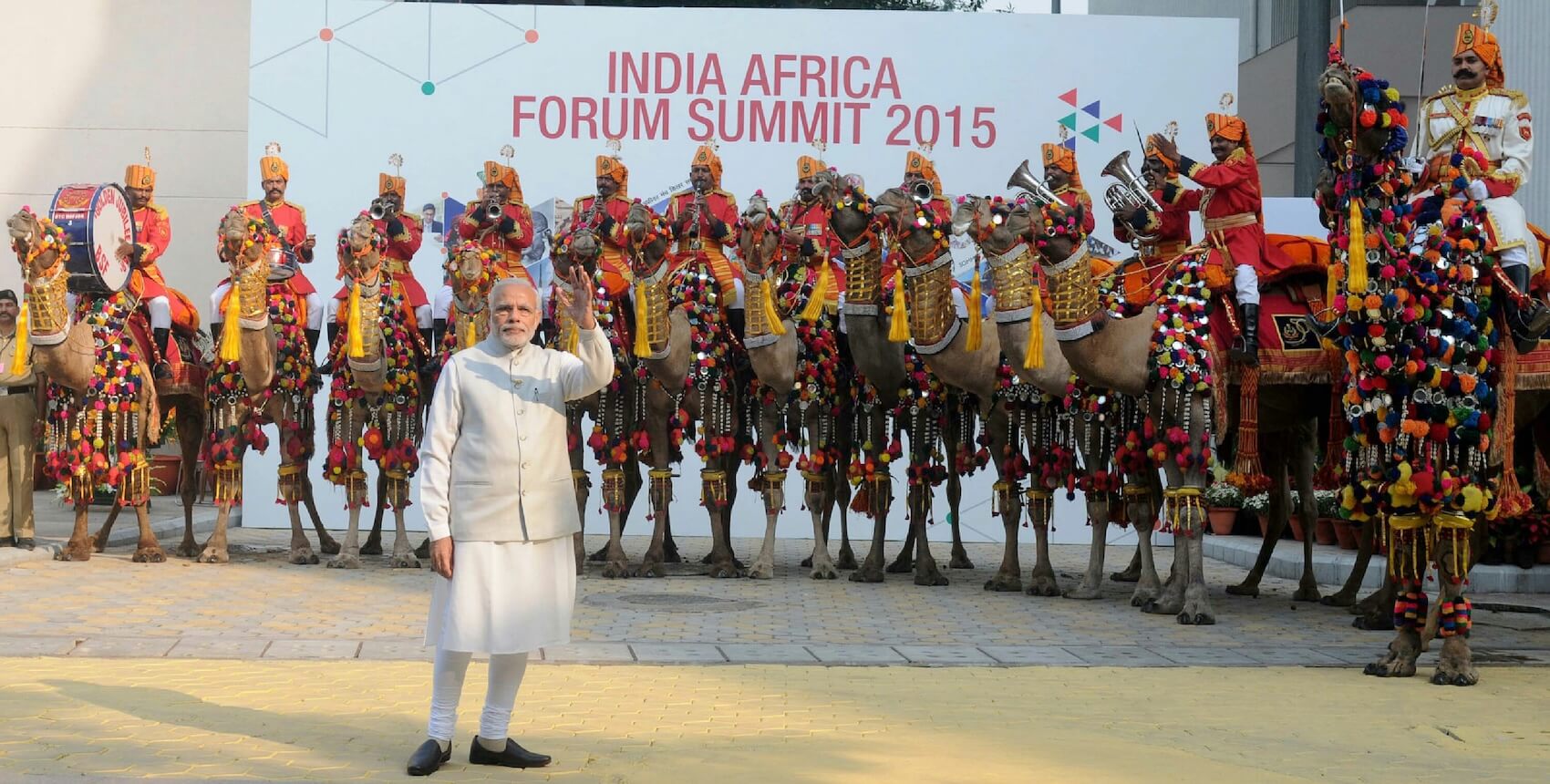
India’s Prime Minister Shri Narendra Modi greets heads of delegations at the alighting point during the 3rd India-Africa Forum Summit in New Delhi on October 29, 2015. Photo: Shutterstock.
India’s relationship with post-colonial Africa is longstanding and predates that of many other nations, including Turkey. Since the 1950s, India has actively engaged with African nations, with Prime Minister Nehru famously describing Africa as a “sister” continent. The establishment of the Non-Aligned Movement (NAM), which included India and all African nations except South Sudan, further solidified this bond. Shared opposition to European colonialism provided a strong foundation for collaboration, fostering a sense of solidarity and shared purpose.
In the post-World War II period, India and African states were united by their mutual aspiration to chart independent foreign policies, a vision that became even more pronounced during the Cold War era (Kidwai, 2023: 359). During this time, both India and African nations sought to strengthen bilateral and regional ties to advance their collective interests. India has been a consistent partner, offering humanitarian aid, disaster assistance, and cooperating on defense and security matters. For example, as early as 1956, Emperor Haile Selassie requested India’s assistance in establishing a military academy in Harar, marking the beginning of India’s significant security cooperation with African states (Kidwai, 2023: 359).
Since the end of the Cold War, India’s engagement with Africa has deepened, especially under Prime Minister Narendra Modi, who assumed office in 2014. Modi has portrayed himself as a leader of the ‘Global South’ and has positioned India as a steadfast ally of developing nations. This approach has been reflected in Modi’s initiatives, such as his advocacy for the African Union’s inclusion in the G20 during India’s presidency of the group. Modi’s rhetoric underscores the importance of Africa in India’s global strategy. “When we say we see the world as a family, we truly mean it,” Modi stated, emphasizing Africa’s significance in shaping a more inclusive global dialogue (CNN, 2023).
The inclusion of the African Union in the G20 was, according to Modi, a “significant stride towards a more inclusive global dialogue” (X., 2023). While this move demonstrated India’s commitment to amplifying African voices on the global stage, India’s interest in Africa is not purely altruistic. Like other major powers, India seeks to bolster its influence and expand trade relations with Africa to further its own strategic and economic interests.
Africa has become India’s fourth-largest trading partner among global regions. Trade between India and sub-Saharan Africa has grown significantly, rising from $47 billion in 2012 to nearly $90 billion in recent years (African Business, 2023). Total trade with all African nations reached $98 billion in 2024 (Confederation of Indian Industry, 2024). Energy is a cornerstone of this relationship, with African nations supplying roughly a quarter of India’s crude oil imports. Nigeria, in particular, has become India’s largest supplier of oil (African Business, 2023).
This increasing dependency on African energy resources underscores the continent’s importance to India’s economic security and growth. Consequently, the Indian government has prioritized building stronger ties with African nations through trade, security partnerships, and diplomatic initiatives. India’s strategy also seeks to challenge the influence of other powers, such as the United States, China, Europe, and Russia, in the region. Africa’s growing economic potential and its strategic significance make it a focal point for India’s foreign policy ambitions.
India’s soft power in Africa is rooted in a shared history of anti-colonialism, trade, and humanitarian assistance. While India has historically provided aid to African nations, its primary focus has been on neighboring countries or, paradoxically, on receiving aid itself, such as from Great Britain. However, under Prime Minister Narendra Modi, India has increasingly directed aid to African nations, particularly Tanzania, Kenya, and Mozambique—countries where China also has a significant aid presence. This reflects growing competition between India and China for influence in Africa.
Prime Minister Modi emphasizes that India’s engagement in Africa is aimed at fostering cooperation rather than rivalry. He stated, “As global engagement in Africa increases, [India and Africans must work] together to ensure that Africa does not once again turn into a theatre of rival ambitions but becomes a nursery for the aspirations of Africa’s youth” (Ministry of External Affairs, 2020). This sentiment underscores India’s aim to position itself as a sincere partner to Africa, untainted by exploitative motives.
India’s foreign aid to Africa has grown significantly, with a compound annual growth rate of 22% over the past decade. Initiatives like the Indian Technical and Economic Cooperation (ITEC) program exemplify this approach, offering training and education to leaders and scholars from developing countries. With 40,000 alumni globally, ITEC serves as a soft power tool to cultivate goodwill and a generation of leaders with favorable views of India.
India’s soft power also extends to trade. Modi has often emphasized that India’s development partnership with Africa will be guided by African priorities. For example, he remarked that India’s support will “liberate your potential and not constrain your future” (Nantulya, 2023). India seeks to leverage its expertise in areas like the digital revolution to support Africa’s development, including expanding financial inclusion, improving education and health services, and mainstreaming marginalized communities.
Although trade between India and Africa is growing, it remains overshadowed by China-Africa trade. In 2023, China-Africa trade amounted to $282 billion, significantly surpassing India’s $90 billion in trade with sub-Saharan Africa and $98 billion overall (Indian Confederation of Industry, 2024). Nevertheless, certain sectors illustrate the growing depth of India-Africa economic ties. India imports significant amounts of minerals from Africa, while African nations benefit from India’s mining expertise and investment. Conversely, African countries import pharmaceuticals from India, with $3.8 billion worth of medicines and healthcare products purchased in 2020-2021.
India’s trade imbalance with Africa, particularly in manufacturing, is utilized as a soft power advantage. Modi has promised to keep Indian markets open to African goods and to support Indian industries investing in Africa. Furthermore, India is making strides in exporting green energy technology to Africa, positioning itself as a valuable partner in addressing climate change.
One of India’s unique advantages in Africa is the presence of a significant Indian diaspora in countries like Seychelles, South Africa, and Mauritius. Modi’s visits to African countries with large Indian communities underscore this connection. Under Bharatiya Janata Party (BJP) rule, India has sought to engage the diaspora to advance its foreign policy objectives, including addressing security concerns and facilitating trade. However, Modi’s message to African audiences diverges from his focus on Hindu civilizational rejuvenation for the diaspora. Instead, he portrays himself as a leader of the Global South, emphasizing solidarity with Africa in advocating for a “just, representative and democratic global order” (Ministry of External Affairs, 2020).
In sum, India’s soft power in Africa is a mix of historical ties, developmental cooperation, and strategic engagement. While India’s initiatives are dwarfed by China’s influence, they are nonetheless significant in cultivating goodwill and expanding India’s footprint across the continent. Through trade, aid, and a focus on shared aspirations, India positions itself as a genuine partner and advocate for Africa on the global stage.
India is not a major military power in Africa. Instead, its strength lies in its soft power—the perception that India is a trustworthy and benevolent partner to African nations—which gives it an advantage over rivals like China and the United States. Nevertheless, as India’s economic power grows, so too does its military capacity, and it is increasingly likely that India will expand its hard power presence in areas of strategic importance, including parts of Africa.
India’s hard power in Africa is primarily focused on the Indian Ocean region, which acts as a strategic corridor between the African continent and the Indian subcontinent. Indian military facilities have been established in key locations, including Madagascar, which hosts a radar and listening facility; Oman, where Indian Navy vessels have docking rights; Mauritius, where India is constructing an airfield and facilities for stationing soldiers; and the Seychelles, where India has installed a surveillance system to monitor surrounding waters (Military Africa, 2023; Voice of America, 2024; Deccan Herald, 2024; The Geostrata, 2021). These facilities, while modest compared to the expansive presence of the United States or even Russia in Africa, serve critical functions. They help India secure its interests in the region, combat piracy, and contribute to the stability of vital maritime routes.
India’s hard power initiatives are deeply tied to its aspirations as an Indo-Pacific power. The Modi administration has emphasized the importance of securing Indian influence in the region to counter the expanding presence of China and, to a lesser extent, the United States. India’s strategic focus on the Indo-Pacific includes establishing partnerships with African nations along the eastern shores of Africa, particularly in areas near the Indian Ocean.
Indian military engagements in Africa also highlight its collaborative approach to regional security. Prime Minister Modi has underscored India’s commitment to addressing shared security concerns, stating that India will prioritize “strengthen[ing] …cooperation and mutual capabilities [between India and Africa] in combating terrorism and extremism; keeping our cyberspace safe and secure; and supporting the UN in advancing and keeping peace” (Ministry of External Affairs, 2020). Modi’s rhetoric often emphasizes that Indian military activities are driven by the need for stability and collaboration rather than competition, asserting that “the world needs cooperation and not competition in the eastern shores of Africa and the eastern Indian Ocean” (Ministry of External Affairs, 2020).
While India’s military footprint in Africa is currently limited, its actions signal a gradual but deliberate increase in its regional hard power. India’s presence in the Indian Ocean is likely to expand further, as the country seeks to position itself as a key player in global maritime security and a counterbalance to Chinese and American influence in the region. Partnerships with African nations on counterterrorism, cybersecurity, and peacekeeping missions will likely be pivotal in shaping India’s military strategy in Africa.
A Chinese yuan placed on a map of Africa symbolizes trade, tourism, economy, and investment between China and African countries. Photo: Oleg Elkov.
China’s rise is arguably the most consequential event of the late 20th and early 21st centuries. Before the 2000s, it was commonplace in Western capitals to believe that China’s embrace of market capitalism would inevitably transform the country into a liberal democracy. This ahistorical and naïve belief shaped American policy towards China throughout the 1980s and 1990s, which facilitated China’s economic growth by dismantling barriers to trade. However, this approach failed to transform China into either a democracy or a reliable ally of the United States. Instead, following a period of economic reform and relative social liberalization under Deng Xiaoping, Jiang Zemin, and Hu Jintao, Xi Jinping’s leadership has transformed China into a surveillance state governed by an authoritarian populist regime, which portrays itself as the culmination of “5,000 years of Chinese civilization” (Liu Qingzhu, 2023).
China’s growing economic strength, while it has created a large middle class, has not led to its transition into a liberal democracy. Although China’s middle class enjoys economic freedom, it remains either unwilling or unable to demand freedom of expression and other liberal reforms. From one perspective, it would seem irrational for Chinese citizens to challenge a regime that has delivered unprecedented prosperity. Indeed, China is arguably the world’s largest economic powers and its second greatest military power, giving its citizens a sense of prestige and influence not experienced for centuries. The Communist Party of China (CCP) continuously reinforces this narrative of national ascendancy, framing China’s increasingly assertive behavior in Asia—including its claims over maritime territories belonging to Vietnam and the Philippines—as part of a legitimate effort to reclaim territories historically taken from China by imperial powers (Zhang, 2019).
Simultaneously, China positions itself as a model for the Global South and is instrumental in building economic blocs such as BRICS (Brazil, Russia, India, China, and South Africa), aimed at countering the influence of the US and EU in global economic affairs (Char, 2024). For the CCP and its supporters, China’s rise is evidence of the superiority of its civilizational model over Western civilization and proof that modernization can occur without Westernization (Char, 2024). The CCP adopts a deeply civilizational perspective on global affairs and has repeatedly urged the US to respect civilizational differences and cease imposing liberal democratic values on non-Western nations (Brown & Bērziņa-Čerenkova, 2018).
China appears to recognize that liberal democracies tend to act peacefully toward one another but view the rise of non-liberal powers as existential threats, often responding with hostility. Xi Jinping has warned the US not to provoke a “clash of civilizations” by attempting to stifle China’s rise. Instead, he has called for an acceptance of China’s autocratic system and its hegemony in Asia as natural outcomes of its civilizational rejuvenation. To achieve harmony between civilizations, Xi advocates replacing “estrangement with exchange, clashes with mutual learning, and superiority with coexistence” (Zhang, 2019: 19).
China’s rise serves as an inspiration to many developing nations, particularly in Africa, as it demonstrates rapid development achieved without capitulating to Westernization. Aware of this, China leverages its position as a rising non-Western power through soft power initiatives, presenting itself as a non-Western civilization that has risen above the West. The CCP claims that China is inherently more peaceful and civilized, emphasizing that it has never colonized or invaded other nations. While this narrative is not entirely accurate, it resonates with many Africans who continue to feel the historical pain of colonization. China’s claim of never having invaded African territory is particularly appealing, as it contrasts sharply with the history of European colonial powers.
China’s relationship with Africa is shaped by this self-image. The CCP portrays China not merely as a nation-state but as a rejuvenated 5,000-year-old civilization capable of serving as a role model for other developing, non-Western societies. By positioning itself as an alternative to Western imperialism, China fosters goodwill and deepens its influence across the African continent.
Chinese soft power in Africa, particularly in sub-Saharan Africa, is considerable. China has opened more than 50 embassies across the continent—more than the United States—and has become the most significant trade and aid partner for a variety of African nations (Committee on Foreign Affairs, 2022).
China provides infrastructure, including roads and railways, in areas where the US often does not, and facilitates development through aid and debt forgiveness. However, China also offers a different path to development and modernity, one that does not insist on compliance with liberal democratic norms and at times challenges, rather than imitates, Africa’s former colonial masters.
China is heavily involved in infrastructure development in Africa. For instance, in Kenya, China was responsible for the construction of the Nairobi to Mombasa Standard Gauge Railway, a project costing $4.7 billion, with plans to build industrial parks connected by the railway, which was also supposed to extend to Uganda (BBC, 2023). However, the railway is underused and widely considered unnecessary, leading to accusations that China has deliberately trapped Kenya in unmanageable debt to gain influence over the African state (BBC, 2023). Despite this, only 19.4% of Kenya’s debt is owed to China (BBC, 2023).
In Ethiopia, China has invested in hundreds of projects valued at over $4 billion (Cabestan, 2019). China has been instrumental in constructing roads and railways. Beyond infrastructure, China supported the Ethiopian government in December 2021 by voting against a UN resolution condemning human rights abuses in the Tigray region (South China Morning Post, 2021).
China also constructed the African Union headquarters in Addis Ababa, Ethiopia, at a cost of $200 million (South China Morning Post, 2018). Unsurprisingly, the building was reportedly bugged, and its servers were regularly hacked by CCP operatives (South China Morning Post, 2018). Nevertheless, China continues to build critical infrastructure across the continent. In 2018, China announced plans to build the Economic Community of West African States (ECOWAS) headquarters in Abuja, Nigeria (Xinhua, 2022). In 2022, China completed construction of the African Centre for Disease Control Headquarters (CIDCA, 2023). Additionally, Chinese-owned companies have built or financed dozens of presidential, prime ministerial, and other government buildings throughout Africa (Heritage Foundation, 2020).
China is also seeking control over African ports. For instance, Djibouti nationalized its Doraleh Container Terminal in 2018 (Bloomberg, 2018). However, China owns 25% of the port, gaining significant control over regional shipping. Chinese companies have also established large cargo facilities near the port, and hundreds of Chinese soldiers are stationed there. The People’s Liberation Army Navy uses the terminal for anti-piracy and anti-terrorism operations and likely other intelligence and power-projection activities (Bloomberg, 2018).
Reports suggest that China is looking to build a large maritime base, potentially in Malabo, Equatorial Guinea, or Gabon (The Diplomat, 2024). Although these plans have not yet materialized, they indicate China’s intent to expand its military power in African waters to protect its lucrative fishing industry and extend its influence over African states (The Diplomat, 2024).
China has also invested in space programs in nine African states as part of its Belt and Road Space Information Corridor. China launches satellites for African states and trains Africans to work in the space industry (United States Institute of Peace, 2023).
Huawei, a Chinese telecommunications technology company, is thought to provide around 70% of Africa’s telecommunications and information infrastructure (DW, 2022; Feldstein, 2020). Across the continent, Chinese companies build telecommunication networks, including government networks. Nine African countries have adopted Chinese-designed and built surveillance projects as part of China’s “Smart City Surveillance” initiative, involving the installation of vast numbers of cameras. Whether the CCP has access to these cameras remains unclear (Financial Times, 2021; The Wall Street Journal, 2019).
China does not merely build infrastructure in Africa but also invites Africans to live and study in China, often at the Chinese state’s expense. This effort aims to create a generation of educated African elites with favorable opinions of China and its development model. For example, Xi Jinping’s approach to Africa, articulated in an editorial by China’s ambassador to the Seychelles, emphasizes “South-South cooperation” and building a China-Africa community based on “sincerity, real results, amity, and good faith” (Embassy of the People’s Republic of China in the Seychelles, 2023).
China’s efforts to develop relationships with emerging African elites align with its broader goal of exporting the “China model” of development, which emphasizes industrialization and modernization without democratization or the adoption of Western liberal values. Initiatives like the Sino-Africa Political Party Leaders program bring young African politicians to China for training in governance and economic development based on Chinese principles (Brookings, 2016). Additionally, in 2022, the CCP financed the Mwalimu Julius Nyerere Leadership School in Tanzania, which educates political leaders from six Southern African countries (FPRI, 2022).
Confucius Institutes, which aim to teach Chinese language and promote Chinese culture, are widespread in Africa, though they have been criticized for spreading CCP propaganda. China has overtaken the United States in hosting African students, making it the second most popular destination after France for Africans pursuing higher education.
China measures its success in Africa partly by examining voting patterns in international organizations. African states are increasingly aligning with China in the UN, with many voting against resolutions critical of Beijing’s policies, such as its South China Sea claims or human rights abuses in Xinjiang (Committee on Foreign Affairs, 2022).
China’s growing popularity in Africa reflects its strategy of combining infrastructure development, educational outreach, and alignment with African priorities. Despite criticisms of its authoritarian model and accusations of debt-trap diplomacy, many Africans view China as a reliable partner offering an alternative path to development. As African nations increasingly adopt aspects of the “China model,” it becomes evident that China’s influence in Africa is reshaping the continent’s political and economic landscape.
Military relations between the People’s Republic of China and Africa began during the Cold War, as China sought to combat both Soviet and American influence across the continent and portray itself as a fellow non-white society resisting white global power. During this period, China encouraged national liberation and socialist movements in Africa. Although it no longer attempts to foment communist revolutions in Africa, China continues to present itself as a non-white power naturally aligned with and sympathetic to Africans.
Under Deng Xiaoping, China adopted a policy of “hiding our capabilities” and projecting a friendly or benign face to the world. This approach meant that, while China was a significant arms supplier to African nations, it rarely involved itself directly or indirectly in African conflicts. Xi Jinping has broken with this policy, declaring that “China now stands tall and firm in the East” and should “take center stage” in global affairs (Nantulya, 2019).
As a result, China has adopted a more assertive foreign policy, particularly in Southeast Asia and along its border with India, largely driven by efforts to reclaim land and maritime territories that once belonged to the Chinese Empire (e.g., Taiwan and the South China Sea). At the same time, China has long been involved in African conflicts and is eager to assert its military might in support of its national interests, as well as to “protect” ethnic Chinese and Chinese nationals living in Africa. China’s use of hard power in Africa is deeply tied to the CCP’s civilizational rejuvenation project, its conception of all Chinese globally as belonging to the “Chinese people,” and its efforts to restore China to its rightful place at the center of global affairs. For example, Xi (2017) emphasizes China’s “more than 5,000 years of civilized history,” portraying the Chinese as a people who “created a brilliant civilization, made outstanding contributions to mankind, and became a great nation of the world.” Xi claims that the Chinese people are now being “rejuvenated” and will soon achieve a “moderately prosperous society” while becoming a global power.
Expanding its hard power influence in Africa helps China present itself as a global power and a civilization with its own development models and norms, which other nations may follow to achieve similar prosperity. Furthermore, this expansion allows China to protect friendly African regimes, prevent American-led coups or interventions, and secure its strategic interests.
China is also exporting its governance model to African states, most notably to Ethiopia, often referred to as the “China of Africa.” Many African countries, including Angola, Ethiopia, Mozambique, and Tanzania, have made “observable changes to their governance styles and models as a result of these deepening engagements.” These changes reflect the adoption of elements from the Chinese development model, including strong export-led growth, significant state involvement in the economy, and the promotion of labor-intensive industries (Nantulya, 2018). China is also believed to be exporting principles like “democratic centralism,” the establishment of special economic zones, and the concept that the military should remain loyal to the ruling party rather than the state or its citizens (Nantulya, 2018).
Despite considerable attention to China’s military footprint in Africa, it remains relatively small compared to that of the United States, which maintains military bases in 26 African nations under the auspices of the United States Africa Command. In contrast, China has just one military base in Africa, located in Djibouti. Nevertheless, given China’s global ambitions, it is likely to establish additional bases in Africa to defend its interests and challenge US, Russian, and Turkish influence in the region.
Though China has only one base in Africa, it has conducted military drills in Cameroon, Gabon, Ghana, and Nigeria. Its military medical units have collaborated with counterparts in Ethiopia, Sierra Leone, Sudan, and Zambia to improve combat casualty care as part of long-standing relationships involving arms sales and intelligence cooperation (Nantulya, 2019). China is also developing military ties with Burkina Faso, which recently ceased recognizing Taiwan as a sovereign state (Nantulya, 2019).
In 2018, China held a Defense and Security Forum with officials from 50 African nations, resulting in a comprehensive security framework. Through this framework, China pledged to provide military and intelligence support to combat pirates, terrorists, and criminals, as well as to participate in peacekeeping operations. China committed $100 million toward building the African Union Standby Force and the African Capacity for Immediate Response to Crisis and contributed to the China-UN Peace and Development Fund and various training programs (ISPI, 2018).
China’s increasing interest in African security and defense reflects its desire to protect friendly regimes, facilitate trade, ensure the success of the Belt and Road Initiative (BRI), and safeguard ethnic Chinese and Chinese nationals in Africa. While China’s actions often align with African interests, such as infrastructure development and security enhancement, the establishment of Chinese police stations and other security facilities across Africa is also part of projecting China as a civilization-state that protects Chinese people globally and maintains their loyalty to the CCP.
China has openly expressed its intentions in Africa. A 2015 Chinese policy paper emphasized “deepened military engagement, technological cooperation, and capacity building for Africa’s security sectors” (Nantulya, 2019). As a result, China has become sub-Saharan Africa’s largest weapons supplier (SIPRI, 2018). Its exports include not only small arms but also tanks, armored personnel carriers, maritime patrol craft, aircraft, missiles, unmanned aerial vehicles, and artillery (Nantulya, 2019).
China is also deeply involved in educating African military officers. Approximately 2,000 African officers train annually with the People’s Liberation Army (PLA), with an additional 500 attending the PLA Naval Medical University and another 2,000 receiving policing and law enforcement training at China’s People’s Armed Police (PAP) schools (Nantulya, 2023). The PLA and PAP, as extensions of the CCP, advance the party’s ideological and political goals in Africa.
While China avoids direct military intervention in Africa, it increasingly leverages UN Peacekeeping Operations (UNPKOs) to expand its influence. In West Africa, China has steadily increased the number and variety of personnel it contributes, including medics, engineers, and armed infantry. In Mali, China’s involvement in the MINUSMA mission is seen as symbolic but marks a new willingness to deploy combat troops (Merics, 2020). China’s peacekeeping activities are not politically neutral. Instead, they aim to promote a “Chinese approach” to peacekeeping, prioritizing regime stability and economic development while avoiding interventionism and democratization (Merics, 2020).
Not all Africans welcome China’s growing influence. For example, Khalil Ibrahim, leader of Sudan’s Justice and Equality Movement, once complained that “China is trading petroleum for our blood” (Pant & Haidar, 2017). Anti-China violence has occurred in Ethiopia, Mali, and other nations, demonstrating that China’s activities are not universally accepted. Nonetheless, China continues to strengthen its position in Africa, often at the expense of democratic norms. These developments are part of the CCP’s broader civilizational rejuvenation project, aimed at reshaping the global order in favor of a multipolar world with China at its center.
The Debswana Jwaneng Diamond Mine pit in Jwaneng, Botswana, on November 15, 2022. Photo: Bashi Kikia.
The new great power struggle for influence in Africa contains a distinct civilizational element. However, rather than claiming to bring civilization to Africa, each non-African nation involved in this struggle presents itself as a representative of a broader civilization in conflict with the West, offering a new, non-Western path to development. At stake in this competition are billions of dollars in trade revenue, access to vital minerals, and control over key military staging points and geographically strategic areas.
Turkey, Russia, India and China (TRIC) share a common goal: to expand their influence across the African continent and weaken Western—particularly American—power in Africa. Their advantage over the West lies in their relatively untarnished history with Africa, their lack of a colonial legacy tainted by bloodshed, and their ability to point to their own economic successes as evidence that nations can achieve wealth and power without adhering to Western norms and governance models.
Each of these nations offers Africa—often addressing it as though it were a monolithic culture—friendship and ostensibly “no-strings-attached” development aid and direct investment, something the liberal West has traditionally refused to provide. They frequently cite the evils of the colonial period and the West’s insistence that aid be contingent on liberal democratic reforms as examples of Western arrogance and imperialism.
Turkey and China claim that their own civilizations possess values superior to those of the West, demonstrated by their peaceful engagement with Africa. Meanwhile, Russia and India emphasize their shared anti-colonial struggle and present themselves as allies of the Global South in its resistance to Western imperialism. All four nations position themselves as voices for the Global South in its ongoing struggle against the global North.
Yet, these nations are not altruistic actors. They, too, seek Africa’s mineral wealth and view the continent as a key territory for expanding their influence. Although their methods are not as violent or oppressive as those of the European colonial powers, their actions reveal a similar underlying motivation. The increasing reliance on hard power by Turkey, Russia, India and China in Africa highlights that these “new” great powers are not so different from the old ones.
Ultimately, the competition for influence in Africa pits Turkey, Russia, India and China not just against the West but also against one another. Yet, these four nations share a critical objective: constructing a multipolar world in which American power is no longer hegemonic. Winning greater influence in Africa is integral to this project, as is persuading Africans to reject reliance on Western assistance for economic growth and infrastructure development. Instead, the emerging powers argue that Africans should turn away from the values of their former colonial masters and draw on the experiences of rising civilization-states to develop their economies and construct vital infrastructure. Given the West’s failure to facilitate African development and the ongoing challenges faced by liberal democratic societies globally, it would not be surprising if Africans began to distance themselves from liberal democratic norms.
However, the United States remains by far the most powerful foreign nation in Africa, capable of projecting hard power across the continent at a level unmatched by any other nation.
From an Anglo-American—and broadly Western—perspective, the competition between the West and its old and new rivals may appear to be a confrontation between democratic and autocratic regimes. To some extent, the language used by states like TRIC, when presenting themselves as “civilization-states” with unique values, serves to legitimize authoritarianism. However, these regimes perceive the competition differently. They view it as a struggle to construct a new world order in which the US is no longer the central power and the ancient civilizations of TRIC regain the power and prestige they enjoyed before.
These nations are serious about displacing the US and dismantling the liberal norms and global order that have defined the world since the end of the Cold War. They, along with their growing number of allies, believe this shift is desirable, marking the end of Western imperialism and the notion that Western values—such as liberal democracy—are universal. At the same time, they compete with one another in Africa. For instance, if China’s base in Djibouti signals plans to establish further bases in East Africa, India may feel compelled to respond by increasing its military presence to counter Chinese influence, lest it risk an East Africa dominated by China and potentially hostile to Indian interests.
While it is possible that TRIC could find avenues for cooperation in Africa, it is far more likely that their competition will intensify. Despite sharing the common goal of diminishing American power in Africa and globally, their conflicting interests are likely to make Africa a critical arena of rivalry among these new global powers.
– Liberal democracies should emphasize the unique value of transparent, accountable governance and rule of law as part of their development partnerships.
– Shift from conditionality-based aid to partnerships that prioritize mutual benefits without sacrificing democratic values.
Strengthen Infrastructure Investments!
– Compete with China and others by funding large-scale infrastructure projects with transparent terms to counter debt-trap diplomacy narratives.
– Prioritize renewable energy, digital infrastructure, and transport networks to align with Africa’s long-term goals.
Increase Support for Democratic Governance!
– Offer robust support for democratic institutions in Africa through capacity-building programs for judiciary, electoral, and civil society.
– Collaborate with African governments to counter the spread of authoritarian governance models, such as China’s “democratic centralism.”
Develop Cultural and Educational Ties!
– Expand scholarships and exchange programs for African students in liberal democracies to compete with Chinese and Turkish educational initiatives.
– Support local language media and cultural initiatives to counter disinformation and propaganda from authoritarian states.
Enhance Military Cooperation!
– Strengthen military partnerships focused on combating terrorism, piracy, and organized crime while avoiding neo-imperialist optics.
– Support African-led peacekeeping missions and regional security initiatives to offer alternatives to Russian mercenary involvement.
Collaborate with African Nations on Resource Management!
– Promote sustainable development models by partnering with African nations on equitable resource extraction and environmental conservation.
– Ensure that development initiatives include local community benefits to counter the exploitative practices of other powers.
Support Multipolar Engagement!
– Avoid framing the engagement as a “new Cold War”; instead, focus on inclusive global partnerships where African nations have agency in decision-making.
– Advocate for reforms in international institutions (e.g., UN, IMF) to increase African representation.
– Use the competition between great powers to negotiate better terms for aid, trade, and investment agreements.
– Insist on infrastructure projects that prioritize local employment, technology transfer, and long-term sustainability.
Diversify Economic Partners!
– Avoid over-reliance on any single country (e.g., China) by fostering diversified trade relationships with liberal democracies, BRICS nations, and regional blocs.
– Strengthen intra-African trade through the African Continental Free Trade Area (AfCFTA) to reduce dependence on external powers.
Protect Sovereignty and Avoid Dependency!
– Resist pressures to adopt authoritarian governance models in exchange for development aid.
– Develop robust legal frameworks to prevent resource exploitation and ensure fair terms for foreign investments.
Invest in Regional Security Cooperation!
– Strengthen African Union (AU) and regional security mechanisms to reduce reliance on external military support, such as Russia’s Wagner Group.
– Build partnerships with global allies that respect African sovereignty and promote peacekeeping capabilities.
Promote Transparency in Aid and Trade Deals!
– Publicize the terms of agreements with external powers to foster public accountability and prevent corruption.
– Work with civil society organizations to monitor the social and environmental impacts of foreign-funded projects.
Expand Educational and Technological Opportunities!
– Collaborate with all partners to build higher education institutions, vocational training centers, and tech incubators.
– Develop programs to train a new generation of African leaders who can engage strategically with global powers.
Strengthen Civil Society and Democratic Institutions!
– Support NGOs and academic institutions to monitor and counter authoritarian influences from foreign actors.
– Foster dialogue on governance models that prioritize African values while safeguarding individual freedoms.
Build Alliances with Liberal Democracies!
– Partner with liberal democracies to balance authoritarian influences and ensure that Africa’s development aligns with global democratic values.
– Engage in diplomatic efforts to ensure African nations have a greater voice in multilateral forums like the G20 and UN Security Council.
These recommendations aim to balance the opportunities presented by the new great power competition with safeguards against exploitation, authoritarianism, and loss of sovereignty. Both liberal democracies and African nations must work collaboratively to create a mutually beneficial, sustainable, and democratic framework for Africa’s development.
Funding: This work was supported by the Australian Research Council [ARC] under Discovery Grant [DP220100829], Religious Populism, Emotions and Political Mobilisation and ARC [DP230100257] Civilisationist Mobilisation, Digital Technologies and Social Cohesion and Gerda Henkel Foundation, AZ 01/TG/21, Emerging Digital Technologies and the Future of Democracy in the Muslim World.
Aydın-Düzgit, Senem. (2023) “Authoritarian middle powers and the liberal order: Turkey’s contestation of the EU.” International Affairs, Volume 99, Issue 6, November 2023, Pages 2319–2337, https://doi.org/10.1093/ia/iiad225
BBC. (2024). “Wagner in Africa: How the Russian mercenary group has rebranded”. BBC Newsnight & BBC Eye Investigation. Joe Inwood & Jake Tacchi.February 20, 2024. https://www.bbc.com/news/world-africa-68322230.
Bienen, Henry. (1982) “Soviet political relations with Africa.” International Security 6, no. 4: 153-173. https://doi.org/10.2307/2538682.
Brown, Kerry, and Una Aleksandra Bērziņa-Čerenkova. (2018). “Ideology in the era of Xi Jinping.” Journal of Chinese Political Science 23, no. 3: 323-339.
Cabestan, Jean-Pierre. (2019). “China’s Military Base in Djibouti: A Microcosm of China’s Growing Competition with the United States and New Bipolarity.” Journal of Contemporary China. 29. 1-17. 10.1080/10670564.2019.1704994.
Char, James. (2024). “China, the Global South and the Struggle for Hegemony.” In: Braveboy-Wagner, J.A. (eds) Diplomatic Strategies of Rising Nations in the Global South. Palgrave Macmillan, Cham. https://doi.org/10.1007/978-3-031-52629-9_3
Demirdirek, M., & Talebian, H. (2022). “Bolstering the Bromances: Turkey’s and Iran’s Tightening Ties with Africa”. (GIGA Focus Global, 6). Hamburg: German Institute for Global and Area Studies (GIGA) – Leibniz-Institut für Globale und Regionale Studien. https://doi.org/10.57671/gfgl-22062
Liu, Qingzhu. (2023). “Introduction: Interpreting ‘China’s Un-fractured Civilization of 5000 Years’.” In: A History of Un-fractured Chinese Civilization in Archaeological Interpretation, pp. 1-24. Singapore: Springer Nature Singapore.
Maalım, S. A. (2023). “Implications of Realist Defensive Foreign Policy: Towards a Turkish Intervention in Libya During the First and Second Libyan Crises.” Journal of International Relations and Political Science Studies, (8), 27-50. https://dergipark.org.tr/en/download/article-file/3116665.
Morieson, Nicholas; Yilmaz, Ihsan & Kenes, Bulent. (2024). “From National to Manufactured: The Evolution of the AKP’s Victimhood Narratives.”Populism & Politics (P&P). European Center for Populism Studies (ECPS). September 6, 2024. https://doi.org/10.55271/pp0040
Němečková, Tereza, and Martina Varkočková. (2024). “Turkish Airlines: Facilitating Türkiye’s Soft Power in Africa.” Canadian Journal of African Studies / Revue Canadienne Des Études Africaines, 1–23. doi:10.1080/00083968.2024.2353605.
Russian Mufties Council. (2023). “Muslims of Russia and Burkina Faso signed a Cooperation Agreement.” September 23, 2023. https://www.muslim.ru/articles/283/38018/.
Tepecikliogu, Elem Eyrice. (2017). “Economic relations between turkey and Africa: challenges and prospects.” Journal of Sustainable Development Law and Policy (The) 8, no. 1: 1-33. https://dx.doi.org/10.4314/jsdlp.v8i1.2
X. (2023). Narendra Modi on X: “The inclusion of @_AfricanUnion in the G20 underscores its pivotal role in global progress. We stand ready to further collaborate and boost our shared aspirations. We will keep working closely for global well-being.” https://x.com/narendramodi/status/1700692438501990480?s=20.
Yilmaz, I., & Bashirov, G. (2018). “The AKP after 15 years: Emergence of Erdoganism in Turkey.” Third World Quarterly, 39(9), 1812–1830. https://doi.org/10.1080/01436597.2018.1447371
Yilmaz, I., & Shipoli, E. (2021). “Use of past collective traumas, fear and conspiracy theories for securitization of the opposition and authoritarianisation: the Turkish case.” Democratization, 29(2), 320–336. https://doi.org/10.1080/13510347.2021.1953992
Yilmaz, I., Shipoli, E., & Demir, M. (2021). “Authoritarian resilience through securitization: an Islamist populist party’s co-optation of a secularist far-right party.” Democratization, 28(6), 1115–1132. https://doi.org/10.1080/13510347.2021.1891412
Yilmaz, Ihsan, and Nicholas Morieson. 2023. “Civilizational Populism in Domestic and Foreign Policy: The Case of Turkey.” Religions 14, no. 5: 631. https://doi.org/10.3390/rel14050631
Yılmaz, I. (2021). Creating the Desired Citizen: Ideology, State and Islam in Turkey. Cambridge: Cambridge University Press.
Zajączkowski, Kumar, & Kumar, Arvind. (2020). “Prospects of India-European Union Cooperation in Africa.” International Studies, 57(3), 240-258. https://doi.org/10.1177/0020881720934338
Zhang, Feng. (2019). “The Xi Jinping Doctrine of China’s International Relations.” Asia Policy. 14(3): 7–24. https://www.jstor.org/stable/26773952.
Zhang, Ketian. (2019). “Cautious bully: reputation, resolve, and Beijing’s use of coercion in the South China Sea.” International Security 44(1): 117-159. https://doi.org/10.1162/isec_a_00354.
This paper examines the intricate relationship between populism, culture wars, and fundamental rights. It explores how the rise of populist movements and the intensification of culture wars reshape the interpretation and implementation of fundamental rights, often polarizing societal values and threatening democratic principles. By delving into the mechanisms underlying these phenomena, the paper highlights how populism amplifies ideological divides, leveraging culture wars to contest principles of equality, freedom of expression, and social justice. The study categorizes populism into economic, political, and cultural strands, analyzing their combined effects with culture wars on the discourse and practices of democracy. Using examples such as the rollback of reproductive rights in the United States and the use of nationalist narratives in Brazil and India, the paper underscores the tangible consequences of these dynamics. This exploration reveals the challenges these contentious forces pose to the principles of democracy, human rights, and social cohesion, as well as their influence on competing democratic models: liberal, majoritarian, and minoritarian.
Keywords: populism, culture wars, fundamental rights, democracy.
By João Ferreira Dias
Introduction
Populism, characterized by its dynamic appeal to ‘the people’ against perceived elite or establishment forces, has gained significant traction worldwide, manifesting in diverse forms. These range from economic populism, with its emphasis on wealth redistribution and anti-establishment sentiments, to political populism, which focuses on governance and anti-elite narratives, and cultural populism, which capitalizes on identity politics and nationalistic sentiments. Each strand intersects uniquely with culture wars, conflicts that revolve around competing values, beliefs, and identities, deepening societal polarization.
The synergy between populism and culture wars presents substantial challenges to interpreting and protecting fundamental rights such as freedom of expression, equality, and the right to privacy—cornerstones of democratic and human rights principles. Within this polarizing framework, these rights are contested, their interpretation shaped by ideological biases that reflect broader political struggles.
Furthermore, this dynamic interplay fuels competing concepts of democracy. The traditional model of liberal democracy, defined by individual rights, checks and balances, and inclusive governance, now contends with majoritarian democracy, which emphasizes the will of the majority, and minoritarian democracy, which seeks to protect marginalized groups and their social identities over common ground.
This paper aims to explore the intricate connections between populism and culture wars and their collective impact on fundamental rights. By examining how these forces challenge the principles of democracy, human rights, and social cohesion, we provide a framework for understanding and addressing the threats they pose to safeguarding fundamental rights in an era marked by these ideological confrontations.
Please cite as: Koskina, Stavroula. (2024). The Challenging Dynamics of Democracy, Authoritarianism and Populism in the Southern Caucasus. European Center for Populism Studies (ECPS). December 9, 2024. https://doi.org/10.55271/rp0091
The 16th session of the Mapping Global Populism (MGP) Panel Series, hosted by the ECPS, critically examined the interplay of populism, democracy, and authoritarianism in the Southern Caucasus. Featuring six distinguished scholars, the discussion focused on Armenia, Azerbaijan, and Georgia, analyzing how populism drives democratic backsliding and institutional fragility in hybrid regimes. Common themes included the erosion of liberal norms and the entanglement of political and economic power among elites. Panelists also examined the influence of global power dynamics, particularly Russia’s invasion of Ukraine, on regional politics, highlighting how external pressures shape domestic strategies and policy orientations.
The 16th session of the Mapping Global Populism Panel Series hosted by the European Center for Populism Studies (ECPS) critically examined the interplay of populism, democracy, and authoritarianism in the Southern Caucasus. Featuring insights from six distinguished scholars, the event focused on Armenia, Azerbaijan, and Georgia, offering a detailed analysis of their respective political landscapes. Moderated by Dr. Cengiz Aktar, an Adjunct Professor of Political Science at the University of Athens and Advisory Board Member of ECPS, this session underscored the broader implications of populist and authoritarian trends on regional stability and global democracy.
The panelists emphasized how populism contributes to democratic backsliding and institutional fragility in hybrid regimes. While each country reflects unique manifestations of populism, shared patterns include the erosion of liberal democratic norms and the increasing fusion of political and economic power within ruling elites. The discussions highlighted how regional actors navigate shifting global power structures, particularly under the shadow of Russia’s invasion of Ukraine. These external pressures exacerbate domestic challenges, influencing political strategies and policy orientations across the region.
Country-Specific Analyses
The presentation of Thomas de Waal, Senior Fellow with Carnegie Europe, specializing in Eastern Europe and the Caucasus region, provided a comprehensive analysis of Azerbaijan’s political trajectory and its broader implications for the South Caucasus. He highlighted Azerbaijan as a model of hegemonic authoritarianism, emphasizing its consolidation of power through a fusion of political and economic interests within the ruling elite. He noted Azerbaijan’s skepticism toward multilateral institutions and its alignment with illiberal regional actors like Russia and Turkey. De Waal underscored the Azerbaijani regime’s strategic use of sovereignty discourse to legitimize its dominance while curtailing civil liberties, media freedom, and opposition activity. He also addressed the geopolitical influence of the Ukraine war on the region, arguing that Azerbaijan’s approach reflects a broader trend of illiberalism gaining ground globally. Finally, he pointed to Azerbaijan’s vulnerabilities, including its reliance on declining oil revenues and the absence of mechanisms for political feedback, which pose challenges to the sustainability of its centralized authoritarian model.
The presentation of Dr. David Aprasidze,a Professor of Political Science at Ilia State University, critically assessed the damaging impact of populism on democracy in Georgia, particularly under the Georgian Dream Party. He argued that populism undermines democratization in hybrid regimes by eroding weak institutions, corrupting political actors, and suppressing opposition forces. Tracing the Georgian Dream’s transformation from a progressive, left-leaning populist movement into a conservative, nationalist entity, he highlighted its increasing alignment with illiberal models, such as Viktor Orbán’s Hungary. This shift has been accompanied by attacks on the European Union, restrictions on civil society and media, and the systemic manipulation of institutions to consolidate power. Dr. Aprasidze underscored that populism in hybrid regimes exacerbates public demoralization, weakens democratic resilience, and facilitates authoritarian consolidation. He concluded that the Georgian Dream’s trajectory exemplifies the broader risks of populism in hybrid regimes, portraying Georgia’s democratization as increasingly fragile and imperiled.
The analysis of Dr. David Matsaberidze, an Associate Professor at Department of International Relations at Ivane Javakhishvili Tbilisi State University, explored the evolution of populism in Georgia through the concept of the “empty signifier,” tracing its progression from nationalist mobilization during the dissolution of the Soviet Union to the current rule of the Georgian Dream Party. He identified a pattern in Georgian politics of leaders utilizing populist narratives to consolidate power, emphasizing shifts from Zviad Gamsakhurdia’s nationalist independence rhetoric to Eduard Shevardnadze’s focus on order and stability and later Mikheil Saakashvili’s anti-corruption-crusade. Dr. Matsaberidze highlighted the Georgian Dream’s strategic pivot from left-leaning populism to conservative nationalism, blending Orthodox Christian values with populist sovereignty discourse to challenge the European Union’s liberal framework. He also criticized the party’s institutional manipulation, drawing parallels with Viktor Orbán’s Hungary and Vladimir Putin’s Russia, noting the use of restrictive legislation, anti-LGBTQ+ policies, and attacks on NGOs and academia to erode democratic spaces. The party’s success, he argued, lies in its ability to exploit public concerns while fostering ambiguity between aligning with Brussels or Budapest, thereby undermining Georgia’s pro-Western orientation. Concluding with a pessimistic outlook, Dr. Matsaberidze warned that the Georgian Dream’s populist tactics and institutional control present significant obstacles to democratization and resistance by the opposition.
The presentation of Dr.Jody LaPorte from Department of Politics and International Relations at University of Oxford, examined Azerbaijan’s political regime, categorizing it as a hegemonic authoritarian model distinct from competitive authoritarianism due to the absence of meaningful opposition or electoral competition. She highlighted how Azerbaijan’s leaders, particularly President Ilham Aliyev, consolidated this regime through the marginalization of inherited opposition parties, extensive use of formal and informal mechanisms to suppress political activities, and active repression of emerging opposition groups. The regime’s centralized political economy, heavily reliant on oil revenues and controlled by the ruling elite, has further entrenched its authority by linking economic opportunities and upward mobility to political loyalty. Dr. LaPorte also noted the regime’s proactive measures to adapt to changing circumstances, including investments in green energy and economic diversification, which aim to sustain its authoritarian model amid declining oil revenues. While discussing potential vulnerabilities such as socio-economic inequalities and the finite nature of hydrocarbon resources, she emphasized the regime’s strategic efforts to reinforce its stability. Reflecting on the populism theme, she argued that Azerbaijan’s case is characterized more by a disconnect between politics and the populace than by populist appeals, with citizens largely feeling unrepresented by any political party.
The presentation of Dr. Ashot S. Aleksanyan, a Professor and Chair of Political Science at Faculty of International Relations at Yerevan State University, analyzed the impact of hybrid populism on postwar Armenia, its democratization efforts, and European integration. He employed a theoretical framework rooted in post-Soviet populist studies, drawing from definitions by scholars like Cas Mudde and Ernesto Laclau to highlight populism’s ideological and moral dimensions. Dr. Aleksanyan emphasized the unique challenges faced by Armenia, including the lack of robust political party infrastructure, weak ideological foundations, and an underdeveloped civil society, all exacerbated by the fallout from the 2020 Nagorno-Karabakh war. He identified hybrid populism as a critical factor in Armenian politics, characterized by divisive rhetoric framing issues through binary oppositions such as war versus peace, pro-Western versus pro-Russian, and democracy versus authoritarianism. He also explored the influence of external factors like the COVID-19 pandemic, the Russia-Ukraine war, and regional pressures from Russia, Turkey, and Azerbaijan, which have collectively hindered Armenia’s European integration and democratization. Using a textual analysis of political speeches and party rhetoric, Dr. Aleksanyan demonstrated how populist discourse destabilizes democratic institutions, undermines reform efforts, and fuels societal polarization. He concluded by stressing the importance of addressing Armenia’s geopolitical vulnerabilities and strengthening its political and societal structures to advance its European integration and democratic aspirations.
The presentation of Dr. Nerses Kopalyan, an Associate Professor of Political Science at the University of Nevada, Las Vegas, analyzed the limited influence of populism in post-Velvet Revolution Armenia, emphasizing the country’s democratic resilience despite its challenging geopolitical environment. He highlighted three primary factors that have curtailed populism: a robust civil society acting as a safeguard, the development of a democratic political culture, and the transitional government’s deliberate avoidance of populist rhetoric and practices. Unlike other contexts where populism thrives on anti-establishment and nationalist narratives, Armenian leaders have refrained from scapegoating elites, ethnicization of conflicts, or exploiting societal cleavages for political gain. Instead, the government has pursued pragmatic, often unpopular decisions, such as emphasizing peace and concessions, which reinforce democratic consolidation. Dr. Kopalyan contrasted Armenia’s approach with illiberal populist leaders elsewhere, noting the absence of tactics like undermining institutions, exploiting nationalism, or promoting cultural wars. He concluded that Armenia’s unique governance model, anchored in civil society, democratic norms, and a refusal to weaponize populism, has strengthened its democratization process and served as a critical component of its security architecture amid external pressures from Azerbaijan and Russia.
Concluding Reflections
The panel provided critical insights into the destabilizing effects of populism and authoritarianism in the Southern Caucasus. Across the region, the confluence of weak institutions, contested sovereignty, and geopolitical pressures fosters environments where populism thrives, further undermining democratic governance and societal resilience.
The event underscored the need for targeted international engagement to bolster democratic institutions, support civil society, and promote regional cooperation. Recognizing the distinct challenges each country faces, panelists stressed the importance of tailored strategies that address domestic vulnerabilities and external influences.
Stamoglou, Anastasia. (2024). The Rise and Reign of Autocratic Populism and Islamist Nationalism in Turkey. European Center for Populism Studies (ECPS). December 9, 2024. https://doi.org/10.55271/rp0090
On November 28, 2024, ECPS hosted the 17th session of the Mapping Global Populism Panel Series, titled “The Rise and Reign of Autocratic Populism and Islamist Nationalism in Turkey.” This session examined the transformative political strategies of Recep Tayyip Erdogan, exploring their impact on Turkey’s political and social fabric. A distinguished panel of experts discussed key topics, including the evolution of national identity, media manipulation, the gendered impacts of authoritarianism, and Turkey’s global influence through sharp power. The session offered critical insights, enriching the series’ mission to deepen understanding of populism’s global effects.
The European Center for Populism Studies (ECPS) hosted the 17th session of the Mapping Global Populism (MGP) Panel Series, “The Rise and Reign of Autocratic Populism and Islamist Nationalism in Turkey,”on November 28, 2024. The session explored the intricacies of populism, authoritarianism, and nationalism in Turkey. Bringing together a distinguished panel of scholars and practitioners, it delved into the transformative political strategies of Recep Tayyip Erdogan’s leadership, with a particular focus on how these strategies have reshaped Turkey’s political and societal landscapes.
Moderated by Dr. Jocelyne Cesari, an authority on religion and politics, the panelists included Dr. Spyros Sofos, whose research examines Turkish populism through a historical lens; Dr. Emre Erdogan, an expert on political participation and populist dynamics in contemporary Turkey; Hafza Girdap, a gender studies researcher focusing on the intersection of political Islam and patriarchy; Ergun Babahan, a veteran journalist with deep insights into Turkey’s media landscape; and Dr. Aleksandra Spancerska, who analysed Turkey’s use of sharp power in international relations. Together, they provided a comprehensive and multi-disciplinary exploration of the challenges posed by autocratic populism in Turkey.
The discussion critically examined topics ranging from the evolution of national identity and the strategic use of media to the gendered impacts of authoritarianism and Turkey’s sharp power influence on the global stage. This session contributed significantly to the series’ goal of fostering a comprehensive understanding of populism’s global impact.
Panel Overview
Dr. Jocelyne Cesari, Chair of Religion and Politics at the University of Birmingham (UK) and Senior Fellow at the Berkley Center for Religion, Peace, and World Affairs at Georgetown University opened the discussion by contextualizing Erdogan’s rise within the broader trends of political Islam and populist ideologies. She highlighted the fluid interplay between nationalism and religion in Erdogan’s narrative, tracing its evolution from a seemingly democratic framework to an increasingly authoritarian model. Dr. Cesari emphasized how Erdogan’s governance reflects a strategic adaptation of populist tools, balancing appeals to religious identity with nationalist pride, in a bid to consolidate power while managing internal and external challenges.
Speaker Contributions
Dr. Spyros Sofos, Assistant Professor at Department of Global Humanities at Simon Fraser University, Vancouver, Canada, initiated the panel with a presentation titled “In Search of the ‘Infant People’: Continuity and Rupture in Turkey’s Political Landscape.” His analysis centered on the historical construction of “the people” in Turkish political discourse, which he described as a dualistic symbol of innocence and incapacity. Dr. Sofos traced this metaphor’s roots back to Mustafa Kemal Ataturk’s republican reforms, where the populace was envisioned as a collective in need of guidance and reformation. This patronizing approach to the masses, Dr. Sofos argued, established a political tradition in which the people are alternately celebrated and marginalized. Moving to the contemporary era, he examined how Erdogan has repurposed this narrative, framing the people as both sovereign and subservient, a dichotomy legitimizing autocratic governance. Dr. Sofos underscored how this discourse has facilitated the exclusion of perceived “enemies” of the state while deepening divisions within Turkish society, situating Turkey’s case within a broader global pattern of populist authoritarianism.
Dr. Emre Erdogan, Professor of Political Science at Istanbul Bilgi University, followed with a detailed exploration of Turkey’s recent electoral cycles in his presentation, “Populism in Transition: Continuities and Shifts in Turkey’s Political Landscape (2023–2024).” He provided a nuanced analysis of the dynamics that shaped the 2023 presidential and 2024 local elections, highlighting the persistence of populist rhetoric rooted in nationalism and religious symbolism. His discussion revealed how the opposition adopted elements of populism to challenge Erdogan’s dominance, a strategy that produced mixed results. Dr. Erdogan examined how economic instability, natural disasters, and the migration crisis became pivotal themes in political campaigns, serving as both challenges and opportunities for populist actors. He argued that while Erdogan has maintained his core narratives, the rise of new actors and shifting voter behavior reflect a changing political landscape. The presentation offered valuable insights into the mechanisms through which populism continues to shape governance, polarization, and political alliances in Turkey.
Hafza Girdap from Women’s, Gender, and Sexuality Studies, Stony Brook University, New York brought a critical gendered perspective to the discussion with her presentation, “Autocratic Practices of the Gendered Regime in Turkey.”She dissected how the Justice and Development Party (AKP) has leveraged patriarchal and Islamist ideologies to consolidate power while systematically oppressing women and marginalized groups. Girdap traced the intersection of political Islam, nationalism, and patriarchy, demonstrating how these forces reinforce traditional gender roles and limit women’s participation in public life. Drawing on examples such as the withdrawal from the Istanbul Convention, Girdap highlighted the state’s failure to address gender-based violence and its role in perpetuating systemic inequalities. She also explored the compounded discrimination faced by Kurdish women, LGBTQ+ individuals, and other minorities, emphasizing the use of gender as a tool of social control. Her analysis provided a powerful account of how authoritarian regimes exploit gendered hierarchies to maintain power and suppress dissent.
The presentation of Ergun Babahan, a veteran journalist, Former Editor-in-Chief of Sabah daily and Ahval news, “Erdogan’s Media Capture Strategies and Their Role in Founding and Consolidating Autocracy in Turkey,” offered a deep dive into the strategic manipulation of Turkey’s media landscape under Erdogan. Babahan, drawing from his extensive experience as a journalist, described how Erdogan has systematically co-opted both state and private media to serve his autocratic agenda. He traced this trend back to Erdogan’s early political career, highlighting his strategic alliances with media proprietors and the use of state resources to undermine journalistic independence. Babahan argued that Erdogan’s media dominance now rivals the control exerted by military regimes in Turkey’s past, enabling the administration to shape public discourse and marginalize opposition voices. His discussion illuminated the broader implications of media suppression for democracy and public accountability, situating Turkey within a global context of declining press freedoms.
Dr. Aleksandra Spancerska, Research Fellow at the Polish Institute of International Affairs, concluded the panel with her presentation, “Erdogan Regime as Emerging Sharp Power.” She introduced the concept of sharp power to describe Turkey’s growing influence on the international stage, particularly through technology, censorship, and diaspora politics. Dr. Spancerska analyzed how Erdogan’s regime has leveraged these tools to suppress dissent both domestically and abroad while projecting power internationally. She examined the strategic use of digital platforms and surveillance technologies to monitor and control political dissidents, as well as the mobilization of the Turkish diaspora to extend Erdogan’s ideological reach. By positioning Turkey as a counterweight to Western liberalism, Erdogan has crafted a narrative that appeals to nationalist sentiments while justifying his autocratic practices. Dr. Spancerska’s presentation offered a critical perspective on the intersection of domestic authoritarianism and global power dynamics, underscoring the implications for international relations and democratic governance.
Conclusion
The 17th session of the Mapping Global Populism Panel Series provided a comprehensive examination of the mechanisms through which populism, Islamism, nationalism, and authoritarianism intersect in Turkey. Each speaker brought a unique perspective to the discussion, collectively painting a nuanced picture of how Erdogan’s leadership has transformed Turkey’s political, social, and international landscapes. The panel emphasized the broader implications of these trends for Turkey and the global struggle against populist authoritarianism.
Through its insightful analysis and interdisciplinary approach, the session reinforced ECPS’s commitment to fostering critical discourse on populism’s impact worldwide. The insights shared during the event will undoubtedly serve as a valuable resource for understanding the complexities of Turkey’s political trajectory and the challenges facing democratic governance in an era of rising authoritarianism.
Dr. Rajni Gamage highlights the decline of Buddhist civilizational populism in Sri Lanka, noting its diminished public resonance following the transformative 2022 protests. These protests, she explains, challenged both the political elite and Sinhala-Buddhist nationalism, creating a moment of reckoning. However, Gamage warns that if Anura Kumara Dissanayake’s government fails to deliver on its promises of progressive politics and economic recovery, opposition groups may exploit public discontent to revive Buddhist civilizational populism. “This phase of decline,” she says, “could shift if promises remain unmet, fueling alternative populist narratives.”
In a thought-provoking interview with the European Center for Populism Studies (ECPS), Dr. Rajni Gamage, a Research Fellow at the Institute of South Asian Studies, National University of Singapore (NUS), offered an incisive analysis of Buddhist civilizational populism in Sri Lanka. She highlighted how this ideological force has shaped the country’s political and social dynamics, particularly its impact on the marginalization of minority communities.
According to Dr. Gamage, Buddhist civilizational populism, deeply intertwined with Sinhala-Buddhist nationalism, has historically emerged in waves. Currently, Sri Lanka appears to be in a receding phase, evidenced by a diminished public resonance and the reluctance of political movements to mobilize this rhetoric extensively. She attributed this decline, in part, to the transformative 2022 protests, which delegitimized both the political elite and hegemonic narratives like Sinhala-Buddhist nationalism.
Reflecting on the contemporary landscape, Dr. Gamage remarked, “The 2022 protests created a moment of reckoning, challenging not only the established political order but also the ideological frameworks that sustained it.” However, she cautioned that if the current government, led by Anura Kumara Dissanayake, fails to deliver on its promises of progressive politics and economic recovery, alternative opposition groups might capitalize on public discontent to revive Buddhist civilizational populism as a political tool.
In tracing the roots of this ideology, Dr. Gamage explored its colonial-era antecedents. She noted that early 20th-century Sinhala-Buddhist nationalism emerged as a reaction to British colonial rule, mimicking colonial logics to frame minority communities as inferior and responsible for the majority’s material impoverishment. These exclusionary tendencies, she argued, have persisted in post-independence Sri Lanka, finding renewed expression during the Rajapaksa regime.
Discussing the political trajectory of President Anura Kumara Dissanayake and the National People’s Power (NPP), Dr. Gamage underscored the transformative role of economic populism in their rise to power amidst the socio-economic fallout of the 2022 crisis. She observed, “The anti-establishment narrative of corruption and inequality was pivotal in mobilizing grassroots support.”
Dr. Gamage examined the broader implications of these populist narratives for Sri Lanka’s democratic governance. She warned that securitization efforts, such as anti-drug campaigns and moral panics, could risk undermining civil liberties while consolidating political power. The interview with Dr. Gamage not only sheds light on Sri Lanka’s evolving political dynamics but also offers critical insights into the interplay between populism, nationalism, and democracy in the context of economic and social crises.
Olivares-Jirsell, Jellen. (2024). “Recalibration, Not Austerity: Welfare States and the Struggle for Liberalism.” Populism & Politics (P&P). European Center for Populism Studies (ECPS). December 6, 2024. Doi: https://doi.org/10.55271/pp0044
Abstract
Welfare states have acted as societal equalisers. They have reduced poverty, improved living standards, promoted equality, and supported democracy. However, their alignment with market imperatives and exclusionary definitions of deservedness threatens the welfare state’s role as a social equalising force. This paper aims to diagnose a challenge facing welfare states through two arguments. The first is that four recalibrations have taken place within welfare states: settling for universality, redefining universality, outsourcing, and reducing public spending. These recalibrations aim for market compliance, savings, and competitiveness. The second is that welfare states may prevent unequal distributions and promote equity by focusing beyond universality and prioritising socially liberal policies. By examining OECD countries and beyond, the paper highlights the pitfalls: a myopic focus on universality exacerbates inequalities; neoliberal criteria that align welfare states with populism and lend credence to welfare chauvinism; and outsourcing and privatisation that increase costs without improving service quality, weakening democratic capacity due to reliance on private providers.
(Received June 7, 2024, Published December 6, 2024.)
By Jellen Olivares-Jirsell*
Introduction
The establishment of welfare states has significantly impacted societies. The incredible achievements in social equality that welfare states have created cannot be overlooked. The package of wealth redistribution, services, and programmes has successfully reduced poverty in the places where it has been implemented (Kenworthy, 1999), thereby improving the living standards of millions of people.[1]
Welfare states record of success includes transforming democracies’ form and character (King, 1987) by producing high levels of income and gender equality (Swank, 2000) as well as supporting the consolidation of democratic rule (Pestoff, 2006). The role of the welfare state as a societal equaliser and creator of a critically engaged populous, confident in challenging and scrutinising policy, is widely acknowledged and understood (Patrick, 2017); the inclusion of Target 1.3 – ‘Social Protection Systems for All’ in the Sustainable Development Goals (SDG) is evidence of this ideological consensus of welfare states as essential for society.
However, welfare states currently survive precariously and face the consistent and erroneous idea that deficits are always bad, and that the welfare state is an expensive luxury that can only exist in exchange for sacrificing economic competition(Wren-Lewis, 2018). They have nonetheless endured and—mostly—remained in place (King, 1987), lifting their populations out of poverty and protecting them from external shocks, especially during crises (Bhambra & Holmwood, 2018), but they sacrifice much in the process.
When we think about the most celebrated welfare systems, we may consider their universal provision. Our minds may also drift to generous parental leave, free healthcare, education, and support. Unfortunately, this rosy picture of welfare states describes a non-existent utopia, as even the most celebrated welfare states now face issues with their provision.
This paper makes two main points: First, welfare states are not retrenching due to austerity but are recalibrating to align more with market imperatives. This recalibration, often mistaken for austerity, has shifted the focus from real accountability to delivering provision. It has narrowed perceptions such that funding issues are considered the only reason welfare states struggle to support their citizens. Second, this paper argues against the conventional view of the universality of provision as a north star for welfare states. Instead, the analysis guides the argument by focusing beyond universality and towards the prioritisation of socially liberal policies. Specifically, welfare states may prevent unequal distributions and promote equity within universal welfare programs. In doing so, welfare states may also prevent populists and neoliberals from redefining their inclusion criteria. The specific dynamics of these redefinitions will also be elaborated upon.
The goal of this paper is not prescriptive; welfare states are as varied as countries. Hence, a generic solution would not address local needs. Alternatively, it highlights the maladies our communal abandonment of liberalism and prioritisation of market imperatives have caused.
The two main arguments challenge the idea that citizens should accept subpar support, as welfare states are adequately funded. Social spending takes up more than a quarter of the GDP of OECD countries (Ortiz-Ospina & Roser, 2023). Instead, they argue that welfare states may effectively safeguard their citizens if liberal priorities precede market competition.
The paper challenges the notion that welfare states are expendable luxuries, advocating instead for a reimagined role beyond essential provision, which can address deeper societal needs beyond mere bodily survival. After providing an overview of the debate around social public expenditure, this point is demonstrated by examining changes in public spending, the move towards outsourcing, and the redefined criteria of deservedness. Using examples within the OECD and beyond, emphasising Northern European countries, the paper illustrates how welfare states are recalibrating rather than simply cutting back. It underscores the essential role of welfare states in protecting the most vulnerable and maintaining social stability. The paper also critiques overemphasis on universality, arguing that this metric alone can mask underlying inefficiencies and exclusions in welfare provision. Instead, it calls for a broader evaluation of welfare states based on their impact and outcomes, not just their coverage.
A Few Words on Welfare States and Austerity
Welfare states are complex and multifaceted, sometimes seen as burdens or saviours, expendable or essential depending on the observer. In a first understanding of the welfare state, as King (1987) described, the welfare state embodies non-market criteria. It exists only to provide essential public goods and services to gain or maintain at least minimal well-being standards in a population. In a compromise between capitalist and socialist ideologies, welfare states look after their citizens so that they can be part of a healthy, educated and capable society, with the added benefit that healthy, educated and capable individuals make great contributors to the financial markets and democracies (Begg et al., 2015; Crosland, 1964). This represents a mutually beneficial relationship between citizens, markets and states. Another view on the welfare state is that it is costly, inefficient, creates dependence on government, and burdens markets, hence needs transforming to serve the market, generate growth and benefit society through generalised economic prosperity (Alesina et al., 2019).
Neither the idealised nor vilified version of the welfare state exists. Welfare states compile liberal goals of social protection and betterment with older themes, including the ubiquitous condemnation of the ‘unworthy poor’. At one point, these notions were used to justify the ‘progressive opinion’ that saw eugenics as a legitimate tool for raising the general quality of the population (Pierson & Leimgruber, 2010).
Moreover, welfare states determine who is part of society and deserves safety and security. This creates a sense of inclusion and trust for those considered members. At the same time, those outside are excluded, fitting well with the political manifestos of populists (Bergman, 2022; Busemeyer et al., 2021). As Zakaria (2007) warns, liberalism, the progressive force behind inclusive and fair societies and democracies, which endorses social justice and the expansion of civil and political rights, has been slowly extracted from liberal institutions such as welfare states. These ideas over the deservedness of some over others led over thirty years ago, to coining the term ‘welfare chauvinism’ to describe some Norwegians and Danes’ belief that welfare services should be restricted to the country’s own (Andersen & Bjørklund, 1990). In short, welfare states are complex and multifaceted, capable of much good but also capable of reproducing and sustaining unfair structures.
In a purely economic sense, the welfare state costs countries large chunks of their GDP (Ortiz-Ospina & Roser, 2023), and at times, when welfare states do not uphold liberal values, they can solidify or even widen societal cleavages (Kenworthy, 1999; Parolin et al., 2023). This means that despite the good they do, they are imperfect institutions that are both essential and need improvement.
Overall, welfare states are state institutions that deliver interventions that help a population achieve or maintain at least minimal well-being standards. Their aims, however, may vary. Variously, it focuses on protecting the population, the market, the societal order, or something else. These differences are defined by the social and political priorities governing the state at that moment in time, as the upcoming examples will shortly show. In truth, welfare states are intrinsically political entities, defining acceptable and deserving versions of their citizens and responding to political priorities as they occur. This means that welfare states are subject to the ebb and flow of politics and the changing norms around deservedness, the role of the state in individual life and the multiple political priorities of contemporary politics.
Among said political priorities, governments may be concerned with creating surpluses in their cyclical primary balance adjustments (austerity), requiring – among other measures – reduced social spending. As hinted in the introduction, the constant push and pull between economic and social needs have caused significant changes to welfare states; these economic forces permeate politics and democratic institutions. Austerity measures have been one of the most favoured economic interventions since the normalisation of neoliberal economics in the 1980s.
There are different forms of austerity measures governments can introduce. Although raising or decreasing taxes is part of the austerity arsenal (Union of International Associations, 2024), we have come to understand austerity to mean cuts in spending rather than tax adjustments. The general idea of austerity measures is to cut down on luxuries and unnecessary spending, work on paying back debt, and even create a surplus in the budget. However, especially in countries like the UK, the everyday use of austerity is almost always equated with spending cuts (The Guardian, 2024). It rarely includes consideration of tax increases or reductions in the public lexicon. This leads to a frequent conflation of austerity with cuts to the welfare state.
Despite this frequent confusion, austerity measures refer to policies that aim to reduce government budget deficits by decreasing spending but may also involve tax increases, decreases, or a combination of these. The creation of surplus or reduction of deficit that austerity measures aim to create can be pretty confusing, as at times, it may even include increasing funding of certain areas of the economy – for example, by providing subsidies to industries that are expected to create growth (GOV.UK, 2023) – and cuts in other areas not deemed to help with economic growth – typically social spending. However, it is essential to understand that austerity measures aim to reduce budget deficits.
The effectiveness of austerity policies is subject to much debate. According to Keynesian economists, since one person’s spending is another person’s income, reductions in government spending during economic downturns worsen economic crises (Fazzari et al., 2013). Further, these reductions pass down debt to the working classes (Blyth, 2013) and severely affect physical and mental health (Barr et al., 2015; Loopstra et al., 2016; Patrick, 2017). Others believe reducing government budget deficits through spending cuts is more effective than increasing taxes. They argue that such policies demonstrate a government’s financial discipline to creditors and credit rating agencies, making borrowing easier and less expensive (Alesina et al., 2019).
Austerity is engaged with here because welfare states are often written and discussed in relation to austerity. This is central to the argument about recalibration. Austerity means more than cuts to the social spending budget; it has become a shorthand for welfare states’ funding challenges. In this paper, it is put forth that the issue lies beyond cuts to public social spending and that austerity (colloquially understood as cuts to the welfare state) is not the cause of the perceived retrenchment of welfare states; instead, recalibration is.
This paper aims to diagnose a challenge facing welfare states. The idea that welfare states have been reduced to nothing due to a lack of funding is as pervasive as the idea that deficits are bad. Both these ideas have severe implications for welfare states and their operations. However, as this paper argues, the strategies adopted to keep welfare states alive are geared around four central recalibrations: settling for universality, redefining universality, outsourcing and monetising public provision and reducing public spending on social protection. All these recalibrations are, in one way or another, based on the idea that welfare states ought to comply with market imperatives, making savings and operating competitively. To analyse welfare state recalibration empirically, some examples of countries facing these challenges are reviewed to assess how these recalibrations have taken shape.
The Recalibration Strategies
Settling for and Redefining Universality
Welfare states are permanently forced to justify their existence based on market imperatives due to the pervasive idea that governments should always grow, maintain a surplus and avoid debt at all costs (Wren-Lewis, 2018). There is a consistent thread of welfare provision as a value-for-money exercise: citizens are trained and kept sheltered and healthy to become productive members of society, but these protections must always cost less than citizens produce.
Considering this, welfare states are constituted as providers of social protection floors, overlooking their potential role in promoting liberalism through equality (Swank, 2000) and democracy (Patrick, 2017; Pestoff, 2006). Following the UN’s SDG, welfare states have been correctly lauded as basic protection floors with universal distribution as a deterrent to poverty and inequality.
The absence of a safety net can predispose the most vulnerable populations to extreme poverty; thus, implementing a basic yet universal provision may effectively mitigate this risk. However, in welfare states that have (or aim to have) universal coverage of those deemed deserving, citizens miss out on the broader societal benefits that welfare states provide when they instead focus on basic universal provision. Moreover, inequality and poverty may go unnoticed in places where universality of coverage exists as long as universality alone is the metric used to assess our welfare state outcomes (Patrick, 2017).
A case in point is that of the Netherlands, a country with a very high social expenditure budget and one of the most celebrated welfare states in the world. This country, however, has the highest level of outsourcing of social provision globally (Ortiz-Ospina & Roser, 2023). It is also a place with very high levels of wealth inequality (Van den Bossche, 2019), a growing opportunity gap in education based on ethnicity and socio-economic class and issues of accessibility for service users due to significant restrictions to cover, resulting in the duality of provision, known as welfare chauvinism (de Koster et al., 2013).
In the Netherlands, for-profit nursing home care is banned, but changes in the policy have enabled for-profit nursing homes to circumvent the for-profit ban. This leads to exclusionary practices. For example, selecting clients based on the severity of their disease and not hiring expensive staff for specialist care, then moving people out if they become too ill and need specialist care (Bos et al., 2020). Similarly, childcare was privatised in 2005 to make provision efficient. However, there is inequality in childcare use by family type, and the quality of provision has decreased since privatisation and outsourcing started (Akgunduz & Plantenga, 2014).
In the case of the Netherlands, the services are technically more widely available than before, at least in terms of spaces in nursing homes or childcare; thus, the universality of provision has yet to be challenged. However, even as the provision of nursing homes and childcare has increased since the private sector incursion (Akgunduz & Plantenga, 2014; Bos et al., 2020), the examples evidence, universality is caveated to exclude those very sick from nursing homes or certain family groups from childcare. In this case, it is clear that the goal of universality has been kept, but focusing only on universality alone obscures important aspects of accessibility for specific groups.
Sweden provides another example of this duality of high social expenditure with disparities in outcomes. This country has privatised and outsourced much of its schooling provision and now observes a significant drop in the performance of these schools (OECD, 2023; West, 2014). The metric of universality is met since Sweden provides universal coverage to its population (Janlöv et al., 2023). However, considering the performance variations between schools in low and high-income areas, especially since 2003 (OECD, 2015), the universal provision of education clearly evidences a Matthew Effect, whereby provision is most beneficial to those who need it the least (Bonoli & Fabienne, 2018). Besides the inequitable distribution of public goods, an additional challenge in the Swedish educational landscape is the establishment of lobbying. Private actors have evolved from holding purely economic roles to being strong political actors engaged in policymaking, adversely affecting transparency and democracy (Jobér, 2023). Moreover, this type of lobbyism can enhance existing socio-economic divisions, as schools with the capacity to lobby for more resources are also those in the wealthier areas.
The point here is not to minimise the achievements of welfare states; both the Netherlands and Sweden boast some of the best social well-being metrics in the world. Indeed, these two countries have some of the most acclaimed welfare systems in the world (Hutt, 2019; OECD, 2024a; OECD, 2024b). Sweden, particularly, was seen as the model for most welfare states in the post-war era for the rest of Europe. However, as the above examples show, the universality of public provision does not equate to better outcomes, and, at times, it may even perpetuate or exacerbate unequal societal constructions.
Moreover, the Netherlands and Sweden are not isolated cases. In the EU, native workers obtain the highest economic prosperity and employment returns from education, followed by EU workers, leaving non-EU workers last. Similar trends can also be observed in the US between natives and non-natives (Gamito, 2022). The universality of provision, therefore, does not signify equality in outcomes when inequity is built into the infrastructure of provision. Thus, universal provision may enhance societal cleavages and create or enhance a Matthew Effect.
This Matthew Effect exists in various forms in all welfare states (Heckman & Landersø, 2021; Pavolini & Van Lancker, 2018). If anything, the Netherlands and Sweden have been somewhat protected from adverse outcomes because of the societal duress and resilience created before these services were privatised and outsourced (OECD, 2018) and their goals were rearranged.
I have so far argued that welfare states have adopted universality as their central goal, even though focusing on universality conceals issues with exclusionary practices that may perpetuate and even enhance social crevices. I will build upon this argument on universality as a central goal and posit that, besides focusing on universality as a central goal, welfare states have also redefined universality, at least to some degree, due to producerism.
Producerism emphasises the importance of productive labour and the contributions of producers to society (Bergman, 2022). It often advocates for policies and attitudes that prioritise the interests of producers, such as workers, farmers, and entrepreneurs, over consumers or other groups. Producerism can manifest in various forms, including support for protectionist trade policies, subsidies for domestic industries, and efforts to promote self-sufficiency and national economic independence. It also lends credence to exclusionary forms of provision.
This emphasis on work participation within welfare programs dovetails producerism, underscoring the significance of productive labour and workers’ contributions to society through increasing adherence to workfare initiatives. Workfare refers to government programs or policies requiring individuals receiving welfare benefits to participate in some form of work or job training as a condition of assistance (Crisp & Fletcher, 2008). Unlike traditional welfare programs, which may provide financial support without a work requirement, workfare aims to promote self-sufficiency and reduce dependency on government assistance by encouraging recipients, via specific participation requirements, to gain job skills and enter the workforce. These requirements are often a combination of activities intended to improve the recipient’s job prospects and force the unemployed to contribute to society through unpaid or low-paid work comparable to community work (Ibid.). Forms of workfare programs include job placement services, subsidised employment, and mandatory community service or work assignments. Through workfare programmes, governments seek to enhance recipients’ employability and instil a sense of societal obligation to be productive members of society.
While employment can have a positive effect on well-being, the issue is not that the workfare approach may find jobs for those who want them; rather, it lies in that liberal protections are taken out of the equation as the main point of the welfare state, creating perverse incentives for the welfare state to become the surveyor and punisher of uncompliant citizens. This approach discourages fairness and social justice (Bonoli, 2010) because if all that matters is productivity, pensions serve little purpose, as does education beyond vocational training and services that cover sectors of the population that cannot access employment, such as those caring for family members and those with disabilities that prevent them from gaining employment. The issue is not that people will be encouraged to work but that this becomes a primary consideration of the welfare state, putting all others aside. In other words, welfare states have been recalibrated towards market imperatives and stripped of liberal notions.
Producerism can be said to be the ideological force behind workfare policies and is linked to welfare chauvinism (Van der Waal et al., 2013). Geva (2021), Cinpoeş and Norocel (2020) identify a producerist shift that coexists with welfare chauvinism in some post-communist countries. These authors argue that with the fall of the Soviet Union, post-communist countries like Poland, Hungary, and Romania aimed to shed anything resembling communism, hurriedly embracing neoliberal values to better fit into the rest of Europe. This symbolic return to Europe was so complete that the reconstructions of national membership and identity were combined with notions of entrepreneurship and self.
The vilification of people with low incomes is evidenced in Romania with the use of ‘asistat’ as a slur, a term referring to social assistance recipients; in Hungary, a Roma-specific welfare policy targeted Roma minorities who were construed as unwilling to work and carry their weight in society; and in Poland, this was articulated as lazy guests freeloading onto their hard-working hosts (Ibid.).
Other times, producerism can work to articulate the caveats of universality by allowing proxy exclusions. That is to say, producerism has redefined what universality is. Moral gymnastics have always surrounded universality considerations; at another time in history, being impious may have rendered someone unworthy of assistance and access to an almshouse (Lambeth Archives, 2024). What is novel about the redefinition of universality is that it is underpinned by neoliberal ideas, which claim to be unbiased and rational approaches to defining deservedness (Davies, 2014). By claiming rationality, producerism can help implement exclusionary policies that might otherwise create a political backlash by liberals and progressives.
Of course, it was a matter of economic competition. In that case, a purely homo-economicus approach to the ageing population challenges in many countries would involve welcoming migrants in any country they wished to work in, as they would contribute to the competitiveness of the nation and pay into the tax systems that fund the welfare state (Marois et al., 2020). However, producerism has been used to legitimise exclusionary welfare provisions that may ultimately operate against market efficiency. These neoliberal justifications for exclusion are most efficient as they sanitise and depoliticise prejudiced views under economic imperatives. The depoliticisation of prejudice enables governments to exclude significant portions of their residents from support. For instance, they may deny some individuals access to legal work and then claim those individuals are ineligible for assistance because they lack contributions or the required legal status.
Denmark, for example, currently has a two-tiered welfare system, one for Danish citizens and another for the rest (Van der Waal et al., 2013). Denmark prides itself on its universalist welfare regime; however, the universality of its provisions is truly exclusionary when considering that only some residents are included within this universal provision.
In the UK, the government, on the one hand, takes part in women empowerment campaigns (UN Women, 2023) and actively implements gender equality in the workplace regulations (UK Legislation, 2023) while at the same time actively restricting women from seeking help when experiencing domestic violence when they are not UK nationals and are stamped ‘no recourse to public funds’ in their passports. These actions can be justified under producerism because these groups are excluded only due to their lack of contributions (Pennings, 2020).
Producerism suggests that workers are virtuous and hard-working but are being squeezed by non-productive others both above them, such as bureaucrats, politicians, elites, bankers, and international capital, and below them, such as immigrants and undeserving poor who rely on benefits paid for by the labour of others. Moreover, it articulates and justifies divisions in a language many understand as unbiased and rational.
According to Larsen (2008), how welfare regimes are structured can impact how the public views those who are poor or unemployed. Van der Waal et al. (2013) have observed that various welfare regimes handle the provision/restriction duality differently but that, for the most part, producerist ideas of deservedness come to the fore. Guentner et al. (2016) find that groups framed as economically unproductive start to be considered a kind of human surplus and are, therefore, undeserving. In a UK example, a group of low-income individuals were pushed out of London’s social housing, resulting in their displacement because they were considered not to contribute sufficiently to the city to maintain their place in it (ibid.). Jingwei He (2022) finds the same concerning Chinese people’s attitudes toward welfare entitlements for rural-to-urban migrants.
Ward and Denney (2021) document a consistent rhetoric of abuse towards migrants framed around myths of them as less productive than nationals. Thus, we see here that producerist logic has been amalgamated with populism to create a type of welfare chauvinism that is both economic and cultural. This is crucial because, as argued, welfare states undergo producerist reconstructions whereby market-based logics are applied to social provision. This reconstructs the welfare state and the definition of universal provision upon caveated universal criteria – where universal does not mean everybody but those considered deserving. Hence, it is essential to re-examine welfare policies to ensure they promote fairness and social justice universally.
This section has discussed the evolution and challenges of welfare states, with a particular focus on the idea of universality in social protection. The argument is that welfare states have increasingly prioritised market-driven goals such as productivity and cost-efficiency over liberal objectives like equality and democracy. This shift has led to welfare systems that, while offering universal social protection, may fail to address underlying issues of inequality and poverty. Additionally, producerism was introduced as a factor contributing to the narrow and exclusive redefinition of universality. It rationalises social provisions that are only accessible to those considered deserving based on their productivity.
Outsourcing, Monetising and Reducing Public Spending on Social Protection
Thus far, this paper has mentioned privatisation and outsourcing only in relation to the universality of provision. Welfare states have undergone recalibrations that have made them settle for the simple goal of extended coverage. However, this may conceal issues with the quality of provision. I have argued that welfare states have always had an exclusionary criterion of deservedness disguised as logical and unbiased; the current iteration has been based on economic competition, best encapsulated under producerism. This has lent credence to policies of exclusion that affect the range, coverage and quality of welfare provisions.
In this section, I argue that welfare states have become privatised and outsourced to continue to exist. In the process, they have prioritised market imperatives instead of the liberal protections liberal democracies declare to prioritise. Nevertheless, this shift has not necessarily resulted in cost savings, improved service quality, or decreased public spending.
Public-private partnerships are becoming increasingly popular among governments to finance, design, build, and operate infrastructure projects and outsource goods and services, sometimes fully delivered by third parties but financed by governments (Jobér, 2023). The idea that the private sector is more efficient than the public sector and hence services ought to be outsourced, or else be done poorly and at more cost by the state, has prompted commissioning and subcontracting structures that are not necessarily more supportive of people’s needs, as I will shortly elaborate. Moreover, these outsourced services are not ipso facto cheaper than direct provision. This has resulted in for-profit companies becoming the primary or exclusive providers of public employment services in several countries (McGann, 2023) and failing to deliver the expected reduction in public spending on social protection.
Between 2005 and 2010, the total value of partnership projects in low and middle-income countries more than doubled (Ortiz-Ospina & Roser, 2023). In OECD countries, around 36 per cent of total general spending is dedicated to public social protection, of which around 9 per cent is outsourced to private providers (Ortiz-Ospina & Roser, 2023). In other words, a significant portion of OECD countries’ GDP is outsourced to the private sector. Swank (2000) argues that the structural transformations of welfare states include privatisation, decentralisation of authority, segmentation of benefit equality, and an increased emphasis on outsourcing provisions to non-state actors such as charities or private organisations through publicly commissioned services and are taking place worldwide. These changes align social policy with market-oriented values, emphasising work and market efficiency.
Whether these changes can be considered efficient depends on their goal. A 2018 OECD report showed that the rationale for privatising public provisions has mainly been geared towards economic stabilisation, improving the efficiency of the markets, or raising fiscal resources. The criteria for privatisation are based on two critical assumptions. First, it assumes that private markets are the most efficient way to provide public services. Second, it assumes that privatisation is the default option; those against it are tasked to prove why public services should remain state-owned (OECD, 2018).
With that in mind, the goal has been largely achieved if the rationale for privatising public provision is to improve market structures or economic efficiency. The state has effectively subsidised the private sector by providing extensive and profitable government contracts. Public sector privatisation and outsourcing have created millionaires and significant money transfers from the public to the private sector, especially during the COVID-19 pandemic (Lilly et al., 2020).
The OECD report is interesting because it presents how disjointed the rationales for privatisation are from public protection. The report shows evident market prioritisation over the protection of liberal values that countries in the OECD area may otherwise claim to prioritise.
The second argument in this section is that the goal of reducing public spending on social protection through privatisation and outsourcing of social protection has not materialised. As shown in the examples above, public spending is at its highest despite recent fluctuations. While raising fiscal resources by making savings in social public spending may be one of the rationales provided for privatisation, the outcomes do not necessarily give the taxpayer the opportunity for a discount (OECD, 2018). Countries continue to dedicate large sections of their GDP to social spending, but the savings expected due to the privatisation and monetisation of welfare provision have not been fulfilled. Moreover, welfare provision has not improved either; headlines abound about funding losses and service deterioration (Bambra, 2019; Boylan & Ho, 2017; Konzelmann, 2019; Pentaraki, 2017).
This increase in privatisation and outsourcing of public provision means that the state has less direct control over the provision of public services but oversees the delivery of these services through monitoring and surveillance. Many local authorities in the UK have shifted to commissioning-only or at least commissioning-heavy provisions (Dickinson, 2014), with staff overseeing the contracts and ensuring goals are met. Commissioning aims to decrease the government’s involvement in providing services. This encourages public authorities to act as enablers with a strategic oversight function that assesses the needs of defined populations and the outcomes delivered by third parties. The commissioning economy comprises an extensive network of public bodies, private firms, and third sector organisations that are variously involved in providing services (Macmillan & Paine, 2021). The state has thus reconfigured its mission as a regulator rather than a direct provider of welfare and other crucial services (Yeung, 2010).
This shift from rowing to steering (Osborne & Gaebler, 1992) has had two notable outcomes; the first is that, as we have seen, no saving has occurred. Since 1995, government social spending has increased in many countries (The World Bank, 2024). While several countries appear to be decreasing their social spending recently, they have maintained a very high level of social expenditure (Ortiz-Ospina & Roser, 2023). Governments still have to employ people to manage the commissioned services, and these private contracts are not cheaper for the public purse or better for the service user, as seen in the Swedish and Dutch examples.
The Netherlands is a valuable reminder of this reality as the country has a very high social expenditure budget and the highest level of outsourcing of social provision globally (ibid.). It has been very active in privatisation for around 30 years; between 1980 and 2015, the expenditure on health was around 5 per cent. Around the late 1990s, when privatisation and outsourcing began in earnest, the country spent around 1% less on health than it had a decade before. However, at the beginning of the 2000s, the number increased to around 6 per cent, peaking at 6.5 per cent in 2015, and currently at around 5.7 per cent (OECDc, 2024).
At the same time, the service provision became conditional and monetised, resulting in all persons residing in the Netherlands and all non-residents working in the Netherlands being required to buy private healthcare insurance (Pennings, 2020). In short, the Netherlands pays more now for a health provision that requires insurance premiums and deductibles (co-pays) to access (Government of the Netherlands, 2024). This diminished (in terms of accessibility) health provision is paid twice, once through taxes and again directly when patients require provision.
The second notable outcome is the loss of democratic capacity. The capacity-building exercise of democratic institutions occurs daily when providing goods and services to its citizens. When managing these social goods and services is outsourced, so is the daily exercise of liberal provision. As a result, welfare states lose their ability to maintain the liberal institutions that underpin democracies. Capacity building is essential for successfully navigating, adapting, and flourishing in a rapidly changing world (United Nations, 2024). When this is outsourced, governments become dependent on private provision and lose the ability to deal with complex challenges.
In the UK, outsourcing accelerated during the COVID-19 pandemic, when the government contracted various private providers to manage the logistics of and store personal protective equipment, the national drive-in testing centres and super-labs, run the contact tracing programme, build the COVID-19 datastore and onboard returning health workers (British Medical Association (BMA), 2020). The BMA report (Ibid.) shows that continued outsourcing of the national health service in the UK significantly limited the government’s ability to mount a coordinated response during the public health emergency. Paradoxically, outsourcing was used to fill gaps created by sustained outsourcing and privatisation.
Of course, the changes in privatisation and outsourcing of public provision are not unique to the Netherlands, the UK, or health. Indeed, this process is taking place widely (Jobér, 2023) and over various areas of social protection spending (Ortiz-Ospina & Roser, 2023). Meanwhile, private sector involvement in public provision trend is on the rise with no apparent slowdown on the horizon (British Medical Association, 2020; OECD, 2018); all the while, public spending on social protection has stayed at very high levels, and state capacity has become dependent on the private sector.
This section has examined the trend of privatisation and outsourcing in welfare states, arguing that these practices have shifted the focus from liberal protections to market imperatives. Welfare states, driven by the belief in the private sector’s efficiency, have increasingly turned to public-private partnerships and outsourcing to deliver public services. This shift has not necessarily resulted in cost savings or improved service quality. Instead, as commissioning and outsourcing increase, so does public spending, with significant portions of GDP now directed to private providers, furthering a disconnect between the goals of economic efficiency and the quality of social protection. Welfare states have increasingly become commodification engines, prioritising market-driven goals such as productivity and cost-efficiency over liberal objectives such as equality and democracy.
Moreover, the reliance on private sector provision has undermined democratic capacities by reducing the state’s direct control over public services and eroding the daily exercise of liberal provision. This dependence on private providers has also compromised the state’s ability to handle complex challenges. Privatisation and outsourcing have thus not achieved the intended economic efficiencies or service quality improvements. Instead, public spending remains high, and state capacity has become increasingly reliant on the private sector, raising concerns about the future of social protection and democratic governance.
Conclusion
Welfare states are complex and multifaceted. They have inherent issues, and their goals of social betterment coexist with older themes, including the condemnation of the ‘unworthy poor.’ Moreover, welfare states are costly, consuming significant portions of GDP, and can sometimes reinforce societal divides instead of bridging them. Welfare states are intrinsically political, defining acceptable and deserving versions of citizens.
However, they are also essential for equality and democracy and for lifting many out of poverty. This paper acknowledged that welfare states’ strengths are more potent than their weaknesses and aimed to identify the nature of the challenges facing them today.
Welfare states have fared rough neoliberal waters in some ways through recalibration strategies. By submitting to market imperatives and focusing on and redefining universality, outsourcing, and monetising public provision, they have managed to keep their place in society. However, these recalibrations have not met the promised savings to the taxpayer nor the desired liberal outcomes in protecting society’s most vulnerable. Welfare states have kept their places in society, but much has been lost in adapting to market imperatives.
These recalibrations have aligned welfare states with market imperatives, emphasising cost savings and competitive operation and forfeiting liberal priorities in the following ways. For example, focusing solely on universality has obscured and exacerbated existing inequalities. Second, by redefining universality through neoliberal criteria, welfare states have lent credence and inadvertently aligned themselves with the populist ‘us versus them’ criterion of difference. Third, outsourcing has led to higher costs without improved service quality. Lastly, such outsourcing has eroded democratic capacity as governments become dependent on private providers, losing the ability to manage social challenges independently.
In this paper, two main points were presented. The first is that the welfare state is undergoing recalibration, not austerity. This was illustrated through explanations around social public expenditure, the move towards outsourcing, and the redefined criteria of deservedness. Despite some small recent dips, the expenditure has increased overall. Social public spending is among the highest it has ever been, but what has changed is how it is spent. With that in mind, the issue is not austerity. Thus, the problem is that social spending is financing the private sector through outsourcing contracts instead of focusing on improving its provision.
As articulated here, welfare states are not luxuries; they can reduce poverty, protect citizens against shocks, and embolden citizens to be capable, educated, and healthy protectors of democracy, especially during crises and economic downturns. However, the essential liberal values that welfare states aim to protect are compromised when market imperatives become the priority. The public sector has effectively subsidised the private sector through commissioning contracts that do not necessarily provide cheaper or better support for service users compared to what governments can offer. This is because the primary incentive for the private sector is profit-making and contract renewal rather than focusing on reducing poverty and inequalities, protecting citizens from shocks, or empowering citizens to be capable, educated, and healthy protectors of democracy.
We now know that outsourcing and privatising public provision have not resulted in savings for the taxpayer; decades of data show that welfare states are not spending less (Ortiz-Ospina & Roser, 2023). However, when citizens inquire about what has happened to their community services, schools, or health services, a word frequently used is austerity. Used colloquially, austerity refers to budget cuts for public social spending. Still, if these budgets have expanded, then this means that the challenges faced by welfare states are not only due to austerity.
In the second point, I have demonstrated that governments’ focus on the universality of welfare states is at the expense of achieving liberal goals. The universality of provision, as shown, may create the illusion that it is worth having a welfare state just for its own sake, even if it barely functions as a social equaliser and poverty-reducing tool.
I reiterate that my argument is not for eliminating universality in welfare states but rather for implementing policies that prevent the unequal distribution of benefits within universal welfare programs. Specifically, I posited that governments might reconsider financing the private sector via outsourcing contracts and instead exercise their liberal muscle by working on improving their provision, not just coverage.
So much institutional knowledge has been lost through outsourcing, knowledge that may help adapt services to assist better those slipping through the cracks. By creating or rebuilding their institutional capacity, governments are better placed to deal with emerging crises instead of relying on the private sector, as was the case during the COVID-19 pandemic. By engaging with and prioritising market imperatives, liberal values have been put to one side, and producerism has entered welfare provision, shaping welfare programmes and objectives. However, this focus on universality is a recalibration emerging from an erroneous understanding that welfare states must trim their goals due to limited funding.
The two arguments presented challenge the idea that citizens must settle for scraps, as welfare states are suitably funded to provide the required provisions. Since the issue is not austerity, I suggest that citizens consider whether their welfare states suitably protect them under the current provision or if market imperatives have been prioritised.
The recalibration of welfare states often comes at the expense of service quality, equity, and democratic capacity, raising concerns about welfare states’ future direction. In truth, citizens are paying dearly for a poor product and are losing their capacity as capable, educated, and healthy protectors of democracy to reject a poor deal.
Confusion over the real cause of welfare state retrenchment obscures potential solutions. This diagnosis and the suggestion that welfare states may look beyond universality and stop working towards market imperatives are more straightforward said than done, as welfare states are intrinsically political and politicised entities. Still, I propose that by suitably diagnosing the issue, societies might have a fighting chance to save welfare states and, in turn, strengthen liberal democracies
(*) Jellen Olivares-Jirsell is a Doctoral candidate in Politics at Kingston University London. Her scholarly contributions include publications in the Global Affairs and Populism journals. Research activities include roles with the Trust Lab project at Swansea University and EUscepticOBS and Populism in the Age of COVID-19 at Malmo University. Research interests encompass politics, norms and ideologies, populism, neoliberalism, welfare states, trust, and polarization.
References
Andersen, J., & Bjørklund, T. (1990). Structural Changes and New Cleavages: The Progress Parties in Denmark and Norway. Acta Sociologica, 33(2), 195-217. https://doi.org/10.1177/000169939003300303
Akgunduz, Y., & Plantenga, J. (2014). Childcare in the Netherlands: Lessons in privatisation. European Early Childhood Education Research Journal, 22(3), 379–385. https://doi.org/10.1080/1350293X.2014.912900
Alesina, A., Favero, C. & Giavazzi, F. (2019). Austerity: When It Works and When It Doesn’t. Princeton: Princeton University Press.
Bambra, C. (2019). Health in Hard Times: Austerity and Health Inequalities. Bristol: Policy Press.
Barr, B., Kinderman, P., & Whitehead, M. (2015). Trends in Mental Health Inequalities in England During a Period of Recession, Austerity and Welfare Reform 2004 to 2013. Social Science & Medicine, pp. 147, 324–331. https://doi.org/10.1016/j.socscimed.2015.11.009
Begg, I., Mushövel, F., & Niblett, R. (2015). The Welfare State in Europe, Visions for Reform. Chatham House. https://www.chathamhouse.org/sites/default/files/publications/research/20150917WelfareStateEuropeNiblettBeggMushovelFinal.pdf
Bergman, M., (2022). Labour Market Policies and Support for Populist Radical Right Parties: The Role of Nostalgic Producerism, Occupational Risk, and Feedback Effects. European Political Science Review, 14(4), 520–543. https://doi.org/10.1017/S175577392200025X
Bhambra, G., & Holmwood, J. (2018). Colonialism, Postcolonialism and The Liberal Welfare State. New Political Economy, 23(5), 574-587. https://doi.org/10.1080/13563467.2017.1417369
Blyth, M. (2013). Austerity: The History of a Dangerous Idea. Oxford: Oxford University Press.
Bonoli, G. (2010). The political economy of active labour market policy. Working Papers on the Reconciliation of Work and Welfare in Europe, RECWOWE Publication, Dissemination and Dialogue Centre, Edinburgh. https://era.ed.ac.uk/bitstream/handle/1842/3290/REC-WP_0110_Bonoli.pdf
Bonoli, G., & Fabienne, L. (2018). Good Intentions and Matthew effects: Access Biases in Participation in Active Labour Market Policies. Journal of European Public Policy, 25(6), 894-911. https://doi.org/10.1080/13501763.2017.1401105
Bos, A., Kruse, F., & Jeurissen, P. (2020). For-Profit Nursing Homes in the Netherlands: What Factors Explain Their Rise? International Journal of Health Services, 50(4), 431-443. https://doi.org/10.1177/0020731420915658
Boylan, R., & Ho, V. (2017). The Most Unkindest Cut of All? State Spending on Health, Education, And Welfare During Recessions. National Tax Journal, 70(2), 329–366. https://doi.org/10.17310/ntj.2017.2.04
Busemeyer, M., Rathgeb, P., & Sahm, A. (2021). Authoritarian Values and the Welfare State: The Social Policy Preferences of Radical Right Voters. West European Politics, 45, 77 – 101. https://doi.org/10.1080/01402382.2021.1886497
Crisp, R., & Fletcher, D. (2008). A Comparative Review of Workfare Programmes in the United States, Canada and Australia. Department for Work and Pensions. https://www.shu.ac.uk/-/media/home/research/cresr/reports/r/review-workfare-usa-canada-australia.pdf
Crosland, C. (1964). The Future of Socialism. Michigan: University of Michigan.
Davies, W. (2014). Neoliberalism: A Bibliographic Review. Theory, Culture & Society, 31(7/8), 309–317. https://doi.org/10.1177/0263276414546383
de Koster, W., Achterberg, P., & van der Waal, J. (2013). De Koster, W., Achterberg, P. and van der Waal, J. (2013). ‘The New Right and the Welfare State: The Electoral Relevance of Welfare Chauvinism and Welfare Populism in the Netherlands’,. International Political Science Review / Revue Internationale de Science Politique, 34(1), 3–20. https://doi.org/10.1177/0192512112455443
Dickinson, H. (2014). Public Service Commissioning: What Can be Learned From the UK Experience? Australian Journal of Public Administration, 73(1), 14–18. https://doi.org/10.1111/1467-8500.12060
Fazzari, S., Ferri, P., Greenberg, E., & Variato, A. (2013). Aggregate Demand, Instability, and Growth. Review of Keynesian Economics, 1(1), 1–21. https://doi.org/10.1007/s10614-011-9277-8
Gamito, C. (2022). Returns-to-Education Gaps Between Native and Migrant Workers: The Influence of Economic Integration on Their Drivers. Are Active Labour Market Policies (ALMPs) an Effective Remediation Tool? A Case Comparison: Italy, Germany, Denmark and Cyprus. Bulletin of Geography. Socio-economic Series, 56, 63–81. https://doi.org/10.12775/bgss-2022-0013
Geva, D. (2021). Orban’s Ordonationalism as Post-Neoliberal Hegemony. Theory, Culture & Society, 38(6), 71–93. https://doi.org/10.1177/0263276421999435
GOV.UK. (2023). Billions of Investments for British Manufacturing to Boost Economic Growth. Retrieved 07 03, 2024, from https://www.gov.uk/government/news/billions-of-investment-for-british-manufacturing-to-boost-economic-growth
Government of the Netherlands. (2024). Standard Health Insurance. Retrieved 09 05, 2024, from https://www.government.nl/topics/health-insurance/standard-health-insurance
Guentner, S., Lukes, S., Stanston, R., Vollmer, B., & Wilding, J. (2016). Bordering Practices in the UK Welfare System. Critical Social Policy, 36(3), 391–411. https://doi.org/10.1177/0261018315622609
Heckman, J., & Landersø, R. (2021). Lessons for Americans from Denmark About Inequality and Social Mobility. Labour Economics. https://doi.org/10.1016/j.labeco.2021.101999
Hutt, R. (2019). Sweden is a Top Performer in Well-Being. Here’s Why. World Economic Forum. https://www.weforum.org/agenda/2019/05/sweden-is-a-top-performer-on-well-being-here-s-why/
Janlöv, N., Blume, S., Glenngård, A., Hanspers, K., Anell, A., & Merkur, S. (2023). Sweden: Health System Review 2023. Health Systems in Transition, 25(4). https://eurohealthobservatory.who.int/publications/i/sweden-health-system-review-2023
Jingwei He, A. (2022). The Welfare Is Ours: Rural-to-Urban Migration and Domestic Welfare Chauvinism in Urban China. Journal of Contemporary China, 31(134), 202-218. https://doi.org/10.1080/10670564.2021.1945735
Jobér, A. (2023). Private Actors in Policy Processes. Entrepreneurs, Edupreneurs and Policyneurs. Journal of Education Policy, 39(1), 20–39. https://doi.org/10.1080/02680939.2023.2166128
Kenworthy, L. (1999). Do Social-Welfare Policies Reduce Poverty? A Cross-National Assessment. Social Forces, 77(3), 1119–1139. https://doi.org/10.1093/sf/77.3.1119
King, D. (1987). The State and the Social Structures of Welfare in Advanced Industrial Democracies. Theory and Society, 16(6), 841–868. https://doi.org/10.1007/BF00138071
Konzelmann, S. (2019). Austerity. Cambridge, UK : Polity.
Lambeth Archives. (2024). Behind the Blue Doors. Brixton, London: Lambeth Archives. https://www.lambeth.gov.uk/events/behind-blue-doors
Larsen, C. (2008). The Institutional Logic of Welfare Attitudes: How Welfare Regimes Influence Public Support. Comparative Political Studies, 41(2), 145–169. https://doi.org/10.1177/0010414006295234
Lilly, A., Tetlow, G., Pope, T., & Davies, O. (2020). The Cost of Covid-19 The impact of Coronavirus on the UK’s Public Finances. London: Institute for Government. https://www.instituteforgovernment.org.uk/sites/default/files/publications/cost-of-covid19.pdf
Loopstra, R., McKee, M., Katikireddi, S., Taylor-Robinson, D., Barr, B., & Stuckler, D. (2016). Austerity and Old-Age Mortality in England: a Longitudinal Cross-Local Area Analysis, 2007–2013. Journal of the Royal Society of Medicine, 109(3), 109–116. https://doi.org/10.1177/0141076816632215
Macmillan, R., & Paine, A. (2021). The Third Sector in a Strategically Selective Landscape – The Case of Commissioning Public Services. Journal of Social Policy, 50(3), 606–626. https://doi.org/10.1017/S0047279420000355
Marois, G., Bélanger, A., & Lutz, W. (2020). Population Aging, Migration, and Productivity in Europe. Proceedings of the National Academy of Sciences PNAS, 117(14), 7690–7695. https://doi.org/10.1073/pnas.1918988117
McGann, M. (2023). The Marketisation of Welfare-to-Work in Ireland Governing Activation at the Street-Level. Bristol: Bristol University Press.
Norocel, C., & Cinpoeş, R. (2020). Nostalgic Nationalism, Welfare Chauvinism, and Migration Anxieties in Central and Eastern Europe. In C. Norocel, A. Hellström, & M. Jørgensen (Eds.), Nostalgia and Hope: Intersections between Politics of Culture, Welfare, and Migration in Europe. Springer open /IMISCOE research series. https://doi.org/10.1007/978-3-030-41694-2_4
OECD. (2015). Improving Schools In Sweden: An OECD Perspective. OECD.
OECD. (2018). Privatisation and the Broadening of Ownership of State-Owned Enterprises 2008-2018. OECD. Retrieved 09 09, 2024, from https://www.oecd.org/corporate/Privatisation-and-the-Broadening-of-Ownership-of-SOEs-Stocktaking-of-National-Practices.pdf
Ortiz-Ospina, E., & Roser, M. (2023). Government Spending. Retrieved 04 16, 2024, from https://ourworldindata.org/government-spending
Osborne, D., & Gaebler, T. (1992). Reinventing Government: How the Entrepreneurial Spirit is Transforming the Public Sector. New York: Penguin Books.
Parolin, Z., Desmond, M., & Wimer, C. (2023). Inequality Below the Poverty Line since 1967: The Role of the U.S. Welfare State. American Sociological Review, 88(5), 782–809. https://doi.org/10.1177/00031224231194019
Patrick, R. (2017). For Whose Benefit? The Everyday Realities of Welfare Reform. Bristol: Bristol: University Press.
Pavolini, E., & Van Lancker, W. (2018). The Matthew Effect in Childcare Use: A Matter of Policies or Preferences? Journal of European Public Policy, 25(6), 878-893. https://doi.org/10.1080/13501763.2017.1401108
Peck, J., & Theodore, N. (2010). Recombinant Workfare, Across the Americas: Transnationalizing “Fast” Social Policy. Geoforum, 41(2), 195–208. https://doi.org/10.1016/j.geoforum.2010.01.001
Pennings, F. (2020). Migrants’ Access to Social Protection in the Netherlands. In J. Lafleur, & D. Vintila (Eds.), Migration and Social Protection in Europe and Beyond (Volume 1) Comparing Access to Welfare Entitlements. IMISCOE Research Series.
Pentaraki, M. (2017). “I Am in a Constant State of Insecurity Trying to Make Ends Meet, like Our Service Users”: Shared Austerity Reality between Social Workers and Service Users—Towards a Preliminary Conceptualisation. The British Journal of Social Work, 47(4), 1245–1261. https://doi.org/10.1093/bjsw/bcw099
Pestoff, V. (2006). Citizens and Co-Production of Welfare Services: Childcare in Eight European Countries. Public Management Review, 8(4), 503–519. https://doi.org/10.1080/14719030601022882
Pierson, C., & Leimgruber, M. (2010). The Oxford Handbook of the Welfare State. In F. Castles (Ed.), Intellectual Roots (pp. 32–44). https://doi.org/10.1111/j.1467-9515.2011.00775_1.x
Swank, D. (2000). Social Democratic Welfare States in a Global Economy: Scandinavia in Comparative Perspective. In R. Geyer, C. Ingebritsen, & J. Moses (Eds.), Globalization, Europeanization and the End of Scandinavian Social Democracy?. London: Palgrave Macmillan
The Guardian. (2024). The latest News and Comments on Economic Austerity. Retrieved 07 03, 2024, from https://www.theguardian.com/business/austerity
The World Bank. (2024). DataBankWorld Development Indicators. The World Bank. https://databank.worldbank.org/source/world-development-indicators
UK Legislation. (2023). The Equality Act 2010 (Gender Pay Gap Information) Regulations 2017. Retrieved 05 18, 2023, from https://www.legislation.gov.uk/ukdsi/2017/9780111152010
UN Women. (2023). Partner spotlight: United Kingdom. Retrieved 05 17, 2023, from https://www.unwomen.org/en/partnerships/donor-countries/top-donors/united-kingdom
Union of International Associations. (2024). Austerity | The Encyclopedia of World Problems. Retrieved 04 19, 2024, from http://encyclopedia.uia.org/en/problem/austerity
United Nations. (2024). Capacity-Building. Retrieved 06 05, 2024, from https://www.un.org/en/academic-impact/capacity-building
Van den Bossche,, C. (2019). Inequalities in the Netherlands. Women Engage for a Common Future. https://www.sdgwatcheurope.org/wp-content/uploads/2019/06/10.1.a-factsheet-NL.pdf
Van Der Waal, J., De Koster, W., & Van Oorschot, W. (2013). Three Worlds of Welfare Chauvinism? How Welfare Regimes Affect Support for Distributing Welfare to Immigrants in Europe. Journal of Comparative Policy Analysis: Research and Practice, 15(2), 164-181. https://doi.org/10.1080/13876988.2013.785147
Ward, P., & Denney, S. (2022). Welfare Chauvinism Among Co-Ethnics: Evidence from a Conjoint Experiment in South Korea. International Migration, pp. 60, 74–90. https://doi.org/10.1111/imig.12937
West, A. (2014). Academies in England and Independent Schools (‘Fristående Skolor’) in Sweden: Policy, Privatisation, Access and Segregation. Research Papers in Education, 29(3), 330–350. https://doi.org/10.1080/02671522.2014.885732
Wren-Lewis, S. (2018). ‘Mediamacro’ Why the News Media Ignores Economic Experts. In The Media and Austerity. London: Routledge.
Yeung, K. (2010). The Regulatory State. In R. Baldwin (Ed.), The Oxford Handbook of Regulation (pp. 64–84). https://doi.org/10.1093/oxfordhb/9780199560219.001.0001
Zakaria, F. (2007). The Future of Democracy. Illiberal Democracy at Home and Abroad. New York: W.W. Norton.
[1]Acknowledgement: I am grateful for the feedback this paper received during and after the workshop and the anonymous reviewers. I am also incredibly thankful for Hannah Geddes’s full engagement as a discussant.
Tostes, Ana Paula. (2024). “Enemies Inside: European Populism and Dimensions of Euroscepticism.” Populism & Politics (P&P).European Center for Populism Studies (ECPS). December 5, 2024. Doi: https://doi.org/10.55271/pp0043b
Abstract
The article seeks to investigate the EU crises impacting electoral support for new right-wing and left-wing extremist ideologies with populist characteristics. We examine populist political parties’ performances in national elections in 15 Western European countries to understand better the current state of specific and diffuse Euroscepticism (Kopecky & Mudde, 2002). Finally, we confirm that Euroscepticism increases in periods of crisis and can be identified as expressions of those contesting EU policies related to the economy, specifically, or social and political integration when it encompasses a more generalized attitude against the EU.
Keywords: populism, Euroscepticism, EU crises
(Received June 6, 2024, Published December 5, 2024.)
By Ana Paula Tostes*
Introduction
Despite the ambiguities of the concept of populism (Judis, 2016; Müller, 2016; Kaltwasser, 2012), in this article, we discuss its emergence in the context of the EU integration process, reflected in the increase in Euroscepticism. Popular support for EU institutions and policies has been the primary measure of the legitimacy of the authority of the European institutions, as it provides greater transparency on the coherence between the expectations and perceptions of European citizens and EU governance (Cmakalová & Rolenc, 2012). Public opinion and voter preference for pro-European political parties have been considered relevant in the conditions under which direct elections are held only for the European Parliament, and supranational institutions have been created without public participation and sufficient understanding of the European public.
For this study, we used the national electoral results of extremist political parties from the time the new European far-right ideology emerged in the late 1980s to 2023. We examined the electoral platforms, political strategies, and electoral support of populist political parties in 15 Western European countries to understand better the current state of Euroscepticism in the region and extremist far-right and far-left political parties.
There is a significant amount of literature about the impact of regional integration on European societies, domestic politics, and party systems. Scholars have engaged in lengthy debates on its impact levels, limits and importance (e.g. Kitschelt, 1992; Gabel, 2000; Mair, 2005, 2007; Poguntke & Scarrow, 1996). Taggart (1998) and Marks et al. (2002, 2006) examined voter preferences in national elections based on the level of support for regional integration. They found that national political parties’ position on the regional integration process in Europe is an important variable in explaining voter preferences. Marks et al. (2002, 2006) rated European electors’ ideological and party positions according to the level of support for integration in the economic, political and social spheres. Issues related to identity, sovereignty, security, etc. – that is, “non-material” elements in ideological positions on both the right and the left – proved to be variables that influence the preferences of European voters.
Since the early single market consolidation until the euro crisis in 2008-2009, views that strongly oppose economic integration, such as the ones voiced by far-left political parties, have not received much support from voters. Criticisms of the liberal model for a single market have not been enough to convince citizens that the integration process could cause actual harm, especially those who are distant from it and do not feel that it threatens economic losses. On the contrary, throughout the 1990s, the countries affected the most by the 2008 financial crisis benefitted from the European Structural Funds resource transfers. The situation was similar during the COVID-19 pandemic, which resulted in an unprecedented economic contraction in 2020. In both cases, the EU transfer of benefits and funds was fast, forceful and well-coordinated at all levels.
The same cannot be said about the opponents of social and political integration, the same groups in European societies that see the migration crisis as a critical element causing intolerance and populism to grow in the region. Since the European migration crisis began in 2015, there has been a considerable increase in the politicization of the defence of national identity and culture due to the stances of new far-right political parties.
We have researched public documents and sources and political party manifestos to classify populist political parties by country and, according to Marks et al. (2002, 2006), scale for the consideration of ideological positions impacting the support for integration in the economic sphere and the political and social spheres. Then, we collected the number of votes each party received in each national (Parliamentary) election in the 15 Western European countries to apply the dimensions of Euroscepticism (Kopecky & Mudde, 2002).[1]
EU Contestation and Populism
No crisis in the history of the European Union (EU) compares to the massive wave of migration to Europe, which reached its highest point in 2015 and has not yet come to an end. The EU is a complex and long-term construction, which would only be possible to build continuously or without route changes. There have been essential crises in recent decades, including the Maastricht crisis in the 1990s, the attempt to approve the Constitutional Treaty in 2005 and the series of crises triggered by the economic and financial collapse that affected all the countries in the eurozone in 2009. The EU’s crises have been the object of research and theories to explain different features, contexts, and impacts on the legitimacy and stability of its institutional structure and policies (Brack & Gürkan, 2020). However, a common consequence of the economic and migration crises was the growth of political radicalism and EU contestation. Over the last two decades, the resurgence of terrorism and political radicalism has contributed to the emergence of a socio-political scenario that has become a new normal for Europe: one fraught with assuming populisms and nationalisms that have chosen the EU as a target of criticism.
This article does not ignore a broader, global wave of conservatism that uses populist political platforms, affecting political environments across the Americas, from the United States to Argentina, Brazil and other Latin American countries. However, in the case of the EU, which represents the most critical and successful regional organization and is mentioned as a model for other regions such as South America, it is important to understand under which political circumstances greater integration among states generates opposition. In other words, when does support for regional institutions and norms turn into criticism and skepticism?
Populism found fertile ground to develop during the two major recent crises in the EU: when the euro crises shook the eurozone’s member states (2008-2009) and during the peak in European immigration levels (2015). Although this new acceptance and recognition of criticisms of the excesses of EU institutionalization and the distance between it and national civil society sectors had different effects on different groups, EU contestation was a common strategy for many of them. Criticisms about accountability and participation in building European architecture have always existed. Still, the “nudges” (Sunstein, 2020) are not capable of generating a new set of critical positions articulated around a narrative that accuses elites and representative models of usurping nativist and identity preferences. We now know, especially after the Brexit experience, that criticism of the EU is stronger among portions of the UK population that do not feel that they benefit from globalization or integration, not even the way they facilitate the circulation of people, goods, services and capital within the European Single Market region.[2] Disapproval of the representative model, which extends to the EU, has come mainly from those who possibly (or apparently) perceive themselves as having been harmed by European regional integration or not benefitting from it, even if their dissatisfaction with political, social or economic issues are not related to regional integration itself.
Marks, Wilson, and Ray (2002) examined voter preferences in national elections and the relations, if any, to regional integration. The authors rated voters’ ideological and party positions according to their level of support for European integration in the economic, political and social spheres. Themes related to identity, sovereignty, security, etc. – that is, “non-material” issues found in ideological positions on both the right and the left – proved to be variables that influence the preferences of European voters. Based on their categorization of political parties’ party family by ideology (Mair & Mudde, 1998; Marks et al., 2002), we expect that economic crises are more likely to affect voters with critical views from the left and alternative side of the ideological spectrum, while those related to immigration affect more conservative and nationalist voters, whose ideological preferences are similar to those of the new extreme right-wing political parties.
In both cases, parties at the opposite ends of the political spectrum promise immediate and easy solutions to complex problems, which they frame in similar, comparable scenarios while evoking “fears,” “frustrations,” “anger,” or “resentments” (Müller, 2016, p. 12). Although populism is on the rise in different social and political contexts around the world, this article discusses a possible correlation between critical events associated with EU politics and policies and the increase in votes for populist electoral platforms fueled by social groups related to the new political cleavages identified with the extreme left and the extreme right (Marks et al., 2002; Kurt, 2013). When we look at national electoral results, we find that political and social turmoil is conducive to the success of populist strategies in EU member states’ national elections.
For this article, we used data from the 15 Western European member states (EU15) on electoral support for extremist political parties over nearly 40 years. These countries allow us to consider similarities in their political party ideologies and systems, as the period of the research enables us to identify changes in support for extremist political parties in national elections, as it goes from the time the new European far-right parties emerged in the 1980s (Ignazi, 1996) in the EU15 to recent days.[3]We do not consider their success in obtaining seats in national parliaments, but rather the votes they obtained to indicate voter support for the extremists’ platforms.
Theoretical and Conceptual Framework
The EU represents the status quo for liberal democracy, and it claims to be the promoter of the rule of law and Western values, both within the region of integration and outside it, through its international relations policies and strategies. Anti-establishment voters who fuel criticisms of representative institutions in national elections ground their positions on the regional model of EU institutionalization based on representation without any mechanisms for direct participation. The European Parliament is the only directly elected EU institution, and the European Parliament elections are seen as “second-order” (Reif & Schmitt, 1980; Reif & Norris, 1997) and less important than national ones. To support our argument, we revisited the literature on populism to find signs of populist political strategies in national elections that feed on dissatisfaction with supranational governance and regional integration.
Euroscepticism and Populisms
Euroscepticism has become a “catch-all term” (Bertoncini & Koenig, 2014) broadly used by society and the media, but also by the academic world that seeks to classify and conceptualize it to clarify positions on and the dimensions of skepticism towards Europe and its model of economic and political integration. As a result, there is a point where Euroscepticism and populism overlap. The latter is an older concept with several historical and methodological variations but no single unambiguous definition. Thus, in recognition of the conceptual difficulties related to the term “populism”, it is necessary to clarify how the term will be used and the limits of its use in this article. While we do not consider Euroscepticism a subcategory of populism, Eurosceptic parties have used populist strategies in their campaigns and accused Brussels of many economic problems and the migration crisis.
Although there is no single definition of populism, two common affirmations in the literature are that the term is generally used to discredit political opponents associated with an elite that has expropriated the power of the people and that the populist leader appears as an alternative for reclaiming legitimacy and the authority to represent the “popular will” (e.g., Taggart, 2000, 2002; Laclau, 2005; Mudde, 2007, 2016, 2017; Stanley, 2008; Müller, 2016).
Political scientists use the term “populism” to refer to the call for the “people” to assume their place as historical actors. The social sciences field originally coined the term “populism” in the Weberian sense of “charismatic” leadership: in other words, a populist is a leader who seeks to have his actions legitimized directly by the people and replace institutions. Even so, new populism aims to use public consultations strategically to restore democratic legitimacy. A common conclusion in the literature is that populists attract voters who are “frustrated” with traditional politics and “angry” with or “resentful” towards elites that allegedly did not heed their demands (Müller, 2016). This helps to understand why populists demand public consultations to evade institutional control. This is not a novelty in the contemporary world, as Max Weber had already identified back in the 19th century in England (in “Politics as a Vocation”, published in 1919 in Germany) the practice of “charismatic leaders” holding direct consultations with the people. These leaders use plebiscitary democracy and direct dialogue with the masses, without the intermediation of institutions, to seek legitimacy to bypass procedures and representative institutions. Therefore, the most significant danger of contemporary populism is that it adopts democratic procedures and values to denounce the illegitimacy of democracy. They promise to rescue the people’s “will” while opposing an “elite”.
The “real” power of the people will not, however, be “democratically rescued” by promises of ongoing political participation nor by an “open-ended process of deliberation among actual citizens to generate a range of well-considered popular judgments” (Müller, 2016, p. 29). Populists use referendums to ratify what populist leaders have already chosen as the real issue for people to approve or disapprove to regain their lost identity (Müller, 2016). Popular participation is to substitute the action of representative institutions. It should be noted, however, that populism is not necessarily a prerogative of populist leaders or parties but rather a strategy that mainstream political groups can adopt. For instance, David Cameron’s promise to hold the British referendum on Brexit during the 2014 campaign to guarantee his victory in 2015 has been classified as a populist act committed by a non-populist leader.
Another example is the referendum held on July 5, 2015, in Greece, in which the “no” to the European bailout plan won. Prime Minister Alexis Tsipras, leader of Syriza, promoted the referendum while he continued to negotiate austerity packages for Greece. Tsipras opposed leaving the EU but allowed the referendum, as he did not believe the popular consultation would produce the outcomes it did. The people of Greece did not realize that the agreements on the rescue plan were already on the negotiating table with the Troika and that the alternative to austerity measures was the Grexit. Those who voted against the measures did not necessarily support the idea of Greece withdrawing from the EU. This is a clear case, then, where the oversimplification of an issue during a referendum can produce results that go against the people’s will and threaten the future of the EU. In any case, the strategic use of plebiscitary democracy in the EU to gain popularity and power is a topic of research that warrants further study.
Finally, populism is based on the promise of salvaging morality. The moralization of political discourse and the idea of recovering dignity lost or threatened by corrupt or mistaken politicians justify replacing institutions and procedures with calls for the people to make general decisions on often complex and multifaceted problems. Müller (2016) describes well the difference between “participation” and “the use of referendums” to approve predetermined ideas that do not always reflect the complexity of the solution to a political problem.
A Perfect Match: The EU’s Institutional Complexity and Populist Strategies
The EU is one of the most vital innovations in international relations in the 20th century, mainly due to its institutional network and the regionalization of domestic policies. The creation of the EU intensified diplomatic ties in the region and increased intergovernmental cooperation on national policy issues such as justice and security. It also established a supranational legal framework and regional governance. However, this institutional development was not accompanied by a proportional increase in the different societies’ understanding and information about the European model of integration’s impacts on the social and political life of the citizens of EU member states.
Created only in the 1990s, nearly four decades after the first steps towards regional integration were taken, European citizenship was to contribute to the consolidation of social integration. The existence of European citizenship was to generate a compelling connection between individuals and supranational institutions, such as European Community Law, which organizes not only relations between member states but also between the EU, its institutions and individuals. All this institutional construction was, however, the result of diplomatic action between national governments without the direct participation of the European public. Public consultations were rare, and significant reforms and regional policy innovations were carried out without efforts to raise public awareness about the impacts they would have on national societies.[4] Intergovernmental and diplomatic negotiations used the instruments of representation and indirect democracy to their fullest. This partly explains why mistrust and rejection of European policy grows as EU institutions become more consolidated and visible to citizens.
Ignazi (1996; 2003) and Kitschelt (1994, 1995) associate the force of the new extreme right in Europe with the significant changes in the political spectrum in the region. These authors consider the new European far-right parties a by-product of post-industrial societies and thus classify them as “anti-system parties”. Stefano Bartolini (2007) highlights another critical event in the development of post-industrial European societies. The author sustained that no other issue in “post-war electoral history” has had the same broad and standardizing effects across the European party system as the regional integration process has.
In this integration scenario, when immigration started to increase considerably, we witnessed anti-immigration policies become one of the main points on the platform of new far-right populist parties in the region when they reformulated the focus of their arguments and criticism of democratic institutions. At a lower level, anti-immigration attitudes have emerged since the signing and implementation of the Schengen Agreement in 1985,which generated the slow (but consistent) growth of this new far-right ideology throughout the 1990s. Between 1989 and 1999, in response to the occupancy of seats in the EP by representatives of the far-right, racism and xenophobia began to be monitored regularly in the region, which led to the publication of the first report on the issue in June 1999.[5] It was clear, then, that European citizens’ coexistence with different cultures and nationalities generated social integration and defensive and xenophobic reactions. Around that time, the National Front, the most consolidated political party of the new far-right in Europe, founded in 1972 by Jean-Marie Le Pen (father of Marine Le Pen, president of the party since 2011), began to win seats in the French parliament in 1986. Jean-Marie Le Pen was elected to the European Parliament for the first time in 1984 and has not lost electoral support to represent French extremists in the EU since then.[6]
There is a wealth of theoretical works and empirical studies that establish definitions for and characterize a new right-wing ideology that emerged in Europe in the 1980s and its refinement and organization into parties in the 1990s (e.g., Ignazi, 1996; 2003; Kitschelt, 1988; 1994; 1995; Mudde, 2007, 2016, 2017; Taggart, 1996, 1998). While regional integration has undeniably impacted domestic politics, societies and party systems in Europe, there are different views. Scholars eventually reached a consensus that national political parties’ position on regional integration is essential in explaining voter preferences (Taggart, 1998; Marks et al., 2002; 2006).
The literature identifies a “new political cleavage” from industrial capitalism’s transformation into post-industrial capitalism (Betz, 1994; Ignazi, 1996; Marks et al., 2002). As this cleavage resulted from positions critical of globalization and the liberal model of representative democracy, the region of European integration became fertile ground for new ideas on identity and demands related to the expropriation of sovereignty by “an elite” or threats to local and national culture. Common populist rhetorical strategies seek to incorporate these ideas in their justification for alternatives to liberal democracy based on representation and the rule of law.
In the early 2000s, Marks, Wilson, and Ray (2002) used the cleavage theory (Lipset & Rokkan, 1967) to create a new definition of transnational cleavage. Later, transnational cleavage was accepted by the literature related to the rise of the supranational governance of the EU and the benefits and criticisms of the high level of regional institutionalization (Hooghe & Marks, 2018). They argue that contestation on European integration can structure political competition focusing on two faces of the EU: political (and social) integration and economic (liberal) integration. The result is that on the far-left, Euroscepticism appears stronger concerning measures of economic integration (the far-left is firmly against economic integration and moderately against political integration). Euroscepticism appears diffusely on the far-right (or the “new” far-right, as the authors described). In other words, no support is expected at all for the EU policies from the new far-right.
Kopecky and Mudde (2002) identified two categories of European scepticism that complement the classification of the European political parties described above: diffuse Euroscepticism and specific Euroscepticism. Looking at national elections in Europe in recent decades, we see that the difference between the two sides of Euroscepticism is reproduced in the Eurosceptic ideological positions defended by the left and the right. Diffuse Euroscepticism refers to a “support for general ideas of European integration that underlie the EU” (Kopecky & Mudde, 2002, p. 300), which is more present in the ideas and platforms of the far-right parties. In contrast, in the case of the far-left, we found more specific criticisms of the EU by denoting support for reforming more general practices or rules. The critics are about “the EU as it is and as it is developing” (Kopecky & Mudde, 2002, p. 300). In other words, they can demand reforming the EU politics but not eliminate it (specific Euroscepticism).
Analysis & Discussion
Analyzing the national elections of the 15 Western European countries that were part of the EU before 2004—known as the EU-15—provides a clearer understanding of the changes in European voters’ positions regarding extremist and populist political parties and potential future changes in voter preferences. The exclusion of Eastern European countries in this article is justified by the need for different approaches for East and West countries.
We classified extremist political parties according to the party family typology proposed by Marks et al. (2002) and the identification of a new transnational cleavage in the EU region (Hooghe & Marks, 2015). However, in the case of the far-left, we excluded traditional communist parties aligned with a clear ideology advocating changes in the economic model as they are not necessarily populist. We are interested here in the emergence of a new far-left populism.
Selection Criteria and the Lists of Political Parties
During the time frame chosen for this study, political parties emerged, while others disappeared, and some changed their names. Tables 1 and 2 below list all extremist parties that received more than 1% of votes in elections between the late 1980s and 2023 by country. We did not describe the history of each political party in detail, which would require a large amount of space.[7] The selection criteria were based on two sources of classification: i) recognition of the party as far-right or far-left and as having populist characteristics in the literature, and ii) examination of political party manifestos (when available in the Manifesto Project’s data[8] or on the political parties’ official websites).
There are cases of what Ignazi (1996; 2003) refers to as the “renewal of political parties”. This is when, without changing their name, a few political parties became more radical and started to designate themselves as the new (and no longer traditional) extreme right, as was the case of the Portuguese National Renewal Party (NRP). From 2009 onwards, the NRP started to assume more populist characteristics and changed its political orientation, describing itself as a “new right-wing”. The same thing happened on the far-left, although in fewer cases. Here, we consider political parties far-left based on their adoption of rhetoric and themes such as anti-elitism, opposition to the establishment and other signs of anti-systemic stances. Some are openly nationalist, anti-immigrant, sovereigntist (radical), and in favor of the country leaving the European Union, while others identify as Eurosceptic and anti-EU.
Table 1- List of far-left parties
Country
Political parties*
Lifetime (first year they received votes/or the few years in which the party received votes)*
Austria
N/A
N/A
Belgium
N/A
N/A
Denmark
N/A
N/A
Finland
N/A
N/A
France
La France Insoumise (FLI/FI)Left Front
since 2017since 2012
Germany
Die Linke
since 2009
Greece
SYRIZA
since 2004
Ireland
United Left Alliance (more traditional left)
since 2011
Italy
M5SPRCProletarian Democracy
since 20131992-20061983, 1987
Luxembourg
N/A
N/A
Netherlands
N/A
N/A
Portugal
B.E.
since 1999
Spain
PodemosUnidos Podemos (electoral alliance of left-wing parties)
2015since 2016
Sweden
N/A
N/A
United Kingdom
N/A
N/A
* Only political parties that received more than 1% of the votes are listed, and the table only contains the years within the article’s time frame.
Populist Characteristics and Their Impact on Support for the EU
As well summarized by Carlos de la Torre (2019), right- or left-wing populists share the same anti-institutional political logic, which is “based on the construction of a political frontier” (de la Torre, 2019, p. 66) between people and institutions. Despite their different narratives on who “the people” are, both right-wing and left-wing populist leaders and political parties use “similar politicizations of grievances and emotions” and they “aim to rupture exclusionary institutional systems to give power back to the people” (de la Torre, 2019, p. 68). The difference is in how they define “the people.”
“Right-wing populists use essentialist criteria of ethnicity to exclude minority populations. The people as constructed by Donald Trump, for example, face ethnic and religious enemies such as Mexicans, Muslims, or militant African American activists (de la Torre, 2017). Similarly, rightwing European populists defend the ordinary people against those below, such as immigrants, refugees, and former colonial subjects, and the privileged cosmopolitan New Class above. An alternative conceptualization of the people is primarily political and socioeconomic. Left-wing populists construct the category of the people as the majorities of their nations that were excluded by neoliberal policies imposed by supranational organizations like the IMF or the Troika. Hugo Chávez, Rafael Correa, Pablo Iglesias, and Alex Tsipras face the oligarchy.” (de la Torre, 2019, 67
We then calculated the votes cast for all political parties classified as far-right and far-left in national elections over the last 40 years.[9] Populist parties on the far-right were selected based on criteria used in the literature on this subject (Mudde, 2007, 2016, 2017; Ignazi, 2003; Marks et al., 2002; Poguntke & Scarrow, 1996), especially the terms they use in their political platforms. In some cases, the parties openly label themselves as the “new far-right”. For other parties that were not as forthcoming, we analyzed their history and platforms first to determine what the “new” and “old style” of far-right is (such as Nazi and antisemitic political parties, although the latter were not included in our analyses) and we classified them accordingly. Far-left populist parties were selected based on their demagoguery and their promises of simplistic solutions to complex problems and crises, often accusing neoliberal policies and the EU market of being responsible for the social and economic ills of member countries.
The election results were selected for far-left parties (FLPs) and far-right parties (FRPs) for approximately 40 years –from the first elections held in the early 1980s in the EU-15 until recent elections. After collecting data, to illustrate our findings and give a broader overview of the impact of crises on the shift in behavior in the countries studied, we divided the countries into two groups to identify the growth of votes on populist political parties from the left and the right: i) the countries affected the most by the 2008-2009 economic crisis (Greece, Italy, Portugal, Spain, and Ireland), and ii) the countries less affected by the 2008-2009 economic crisis (Austria, Belgium, Denmark, Finland, France, Germany, Luxembourg, the Netherlands, Sweden and United Kingdom).
The international crisis had the most significant impact on the eurozone countries between 2009 and 2013. Table 3 includes countries with four years of negative growth, measured by GDP (Gross Domestic Product), between 2009 and 2013, plus Ireland. Ireland was an exception in this group because it suffered from the effects of the economic crisis earlier, experiencing negative growth as early as 2008 (as did Italy). It had the highest negative growth rate (-7.8% in 2009).
Table 3- Growth of populist votes in countries affected the most by the 2008-2009 economic crisis
Votes for FLPs
Votes for FRPs
GreeceTend to a more specificEuroscepticism
growth in period of the economic crisis
growth in period of migration crisis
ItalyTend to a more diffuseEuroscepticism
growth in period of the economic crisisgrowth in period of migration crisis(syncretic with economic platform)
growth in period of the economic crisisgrowth in period of migration crisis
From the election results of the group of countries in Table 3, we conclude that once the euro crisis erupted in the region in 2008-2009, voters who supported left-wing ideology became more critical of EU austerity policies and rules (specificEuroscepticism). However, as the economy returned to a certain degree of normality and the migration crises emerged as a new source of regional instability, left-wing populist parties began to lose strength in most EU 15 countries, and far-right populism gained ground.
In cases such as in Portugal and Greece, it is essential to say that once far-left party leaders had been elected to government or stabilized themselves in coalitions to govern, they changed their strategies. Previously considered populist leaders, they lost space in their political parties or abandoned old narratives that accused the EU of all their ills and started to defend responsible policies as soon as they arrived in government. A new scenario followed the euro crisis in these two countries. The political parties of the Bloco de Esquerda (Left Bloc) in Portugal could no longer be classified as populist since they gained the government coalition. The old populist narratives in economic promises have been replaced by a responsible government that maintained leadership in the country until recently. A similar situation was seen in Greece when the split in Syriza generated by the rupture between Prime Minister Alexis Tsipras and Yanis Varoufakis, the minister of finance, occurred during the peak of the sovereignty crisis and the impasses in the negotiations with the Troika.[10] The result can be interpreted by what Judis (2016) has developed very well and de la Torre (2019) has considered as a de-radicalization of Syriza since 2015 and Podemos since 2018.
Ireland was the only country from Table 3 whose results showed no Euroscepticism in political parties’ positioning (considering the selection criteria of the political parties and level of public support). Until a few years ago, many questioned why Ireland seemed immune to the influence of populism. The country has far-right parties, such as the National Party, but they exist on the margins and have never won seats in the Irish Parliament. As for the new migration crisis, there was a kind of cooperation and an attitude of shared responsibility by the political elites and society. There is a general feeling of national pride and solidarity with refugees in the Irish public opinion.
More recently, Russia’s invasion of Ukraine generated an influx of Ukrainian refugees and asylum seekers to Ireland. While many welcomed them, an increase in anti-immigrant protesters in the country has been reported. Far-right populists saw this as an opportunity to spread feelings of rejection towards refugees and to be more critical of European and national governments due to a devastating housing crisis in the country.
Italy and Spain were cases of diffuse Euroscepticism that appeared among countries in Table 3. Left-wing populism in Spain (as in Greece and Portugal) found space in the government coalition in 2016, becoming less radical and less populist. Although Italy was significantly impacted by the immigration crisis, even before 2015, we highlight that far-right ideology in the country has already existed since the 1980s. It is also important to emphasize that Italy was the only case in which we saw the emergence of a populism already associated with the left (as shown in the table). Still, it is better associated with a syncretic position, as the more alternative and anarchist Italians self-designated themselves. A syncretic populist spectrum grew significantly during the euro crisis, behaving as a good example for the Green/alternative/libertarian (GAL) spectrum of the new political alignments addressed by Hooghe, Marks, and Wilson (2002). Here, we emphasize that we consider the votes for the Five Star Movement (M5S) not aligned with a left/right dimension of political ideology. Exceptionally, in our research, the movement professed the desire to “stay to change the Union from within” with a populist and economic platform, as the defence of a referendum on the euro in Italy (Zotto, 2017), but with a more GAL political dimension designed by the M5S’ leaders as a “syncretic” position.
We investigate the influence of a second dimension, a new political dimension that we conceive as ranging from Green/alternative/libertarian (GAL) to traditional/authoritarian/nationalist (TAN). We find that this dimension is the most general and powerful predictor of party positioning on the issues that arise from European integration.
As explained above, the countries in Table 4 are selected as those that were (comparably in the EU15 region) least affected by the euro crisis, having presented less than four years of growth, measured by negative GDP, between 2009 and 2013. Also, the countries in Table 4 appeared to have been more impacted by the migration crisis, which reached its highest point in 2015, than the economic one. In this case, the far-right ideology legitimated intolerant attitudes and xenophobia in the face of the humanitarian catastrophe that Europe was in the middle of.
Table 4 – Growth of populist votes in countries less affected by the 2008-2009 economic crisis
Votes for FLPs
Votes for FRPs
AustriaTend to a more diffuseEuroscepticism
growth in period of migration crisis
growth in period of the economic crisisgrowth in period of migration crisis
BelgiumTend to a more diffuseEuroscepticism
growth in period of the economic crisis
DenmarkTend to a more diffuseEuroscepticism
growth in period of the economic crisis
growth in period of migration crisis
FinlandTend to a more diffuseEuroscepticism
growth in period of the economic crisisgrowth in period of migration crisis
FranceTend to a more diffuseEuroscepticism
growth in period of the economic crisisgrowth in period of migration crisis
growth in period of the economic crisisgrowth in period of migration crisis
GermanyTend to a more diffuseEuroscepticism
growth in period of the economic crisis
growth in period of the economic crisisgrowth in period of migration crisis
LuxembourgTend to a more diffuseEuroscepticism
growth in period of the economic crisisgrowth in period of migration crisis
NetherlandsTend to a more diffuseEuroscepticism
growth in period of the economic crisisgrowth in period of migration crisis
Most of the countries, as expected, presented a trend to increase vote preference for FRPs during the immigration crises. They tend to have a more diffuse Euroscepticism.[11] Also, Although Belgium presented no growth of votes for FLPs during the period of the euro crisis, we saw an increase of FRPs in the two moments of crises considered in this article. Austria appeared as an outsider. The Austrians presented a new trend to vote for the populist far-left during the immigration crisis. However, there has been a decrease in radical votes since the legislative election of 2019, when the Free Party of Austria (populist far-right) lost 20 seats in the Parliament.
The UK results show a clear relationship between populists of the far-right and the referendum that resulted in Brexit, followed by a quick decrease in support after the June 2016 event. Interestingly, the strength of populism in the country was evident in public manifestation, and the use of the media to promote an oversimplified view of the social problem raised by the rise in immigration in the country was not reflected in elections for the British Parliament. Even so, the case of the Brexit referendum is the clearest example of the influence of populism on electoral behavior and its consequences. The post-referendum shifts in public opinion from criticism to support for the EU revealed an apparent lack of understanding of the brutal consequences of Brexit for the British.[12]
Finally, when we look at the impact of migration crises on voter behavior, tables 3 and 4 illustrate that populism explains the growth of the far-right more than the economic crisis does. By separating the countries into ones affected the most and ones affected the least by the financial crisis (tables 3 and 4), we found that although the far-left grew more significantly in countries that suffered the most from the economic crisis, in most cases, left-wing radicalism tended to lose ground after the crises. While the rise of the far-right is prevalent during crises in general, the increase in votes for far-right parties occurred in 13 of the 15 countries analyzed during the migration crisis. Support for the far-left, however, increased during the migration crisis in Austria, France and Italy only.
Concluding Remarks
The article aims to investigate if and to what extent two decisive crises in the region affected support for political parties with Eurosceptic characteristics, which are more commonly aligned with extremist right or left-wing populist positions. The article sought to identify patterns in the growth of far-right and far-left populist parties to confirm the general perception that Euroscepticism and populism benefit from regional crises. We thus aimed to further the discussion on the risk of crises in the EU contributing to the increase in Euroscepticism and the tendency to vote for political parties that can weaken the European model based on the principles of liberal democracy, representation and the rule of law. The best predictor of the growth of Euroscepticism is migration issues. Our findings revealed the growing resistance in EU societies to the increasing number of immigrants in the region.
Also, in general, the results of this study show that populist agendas (both from the left or the right) found fertile ground in environments where support for democratic measures based on liberal institutions and representation was on the decline, “revealing hidden preferences that might have existed all along, but individuals were discouraged from making them public” (Brescia, 2019). We have seen a decline in the approval of EU institutions and norms and the emergence of intense hostility towards representative politics in countries during the period when populism was on the rise. However, to understand variations in the performances of populist political parties radically opposed to the EU, we analyzed them in the context of the two most significant crises challenging EU policies and politics in the last 40 years. Each country’s electoral findings in this article deserve a more in-depth analysis that could be better explored and developed in future works.
EU crises are seen as events that impact the behavior of European voters, and we assume that the growth of populism is harmful to democracy, even when populist parties and leaders are not elected (Müller, 2016). This is because the ability to spread ideas that discredit politics and representation as a norm of democracy has been dramatically strengthened by digital media, enabling populists to coordinate and promote these ideas transnationally, often linking them to conspiracy theories and denialism. In this context, the EU bureaucracy and its complex governance model are a clear target of populists. The EU adds supranational and intergovernmental institutional constraints to national ones (Müller, 2016, p. 95) and becomes an easy ‘punching bag’ for populist rhetoric.
We conclude that in a wave of growth of support for far-left parties in Western Europe, there are now signs of a bonanza for specific Euroscepticism (Kopecky & Mudde, 2002), which is more centered on criticisms of typical changes and reforms in the EU’s economic model of integration and more specific EU politics affecting the far-left political platforms. However, DiffuseEuroscepticism (Kopecky & Mudde, 2002), which is associated with a general contestation of the EU, involves its representative model of integration with supranational institutions and policy coordination. This side of Euroscepticism seems to be more closely associated with far-right populist narratives that are very much alive in the region.
(*) Dr.Ana Paula Tostes is Jean Monnet Chair at the Rio de Janeiro State University (UERJ), Brazil. Professor at the Graduate Program in Political Science at the Institute of Social and Political Studies (IESP/UERJ) and the Department of International Relations (DRI/UERJ). She is a Senior Fellow at the Brazilian Center of International Relations (CEBRI) and was a visiting researcher at the Free University of Berlin (FUB). She holds a PhD in Political Science (IUPERJ/IESP) and a Postdoc at the University of São Paulo (USP). She was a visiting researcher (2016-2017) at the Free University of Berlin (FUB) and an associate professor at Michigan State University (MSU). Currently, she is the coordinator of the Project for International Cooperation (PROBRAL CAPES/DAAD, 2023-2026) between IESP/UERJ and the German Institute of Global and Area Studies (GIGA), Hamburg, Germany. Results of research supported by the European Union (JMC Project EUgac n. 101127443), Productivity Scholarships from FAPERJ (Prociência/UERJ) and CNPq (n. 316785/2021-0).
References
Benfield, Jack. (2012). Populism in Europe: Sweden. Open Society Foundations. February 2012. https://www.opensocietyfoundations.org/publications/populism-europe-sweden (accessed on September 27, 2024).
Betz, Hans-Georg. (1994). Radical Right-Wing Populism in Western Europe. New York, St. Martin’s Press.
Borzel, Tanja & Risse, Thomas (2009). “Conceptualizing the Domestic Impact of Europe”. In: Featherstone, Keith & Radaelli, Claudio (eds.) The Politics of Europeanization. Oxford: Oxford University Press.
Brack, Nathalie & Gürkan, Seda. (2020) Theorising the Crises of the European Seda. New York: Routledge.
Brescia, Raymond H. (2019-2020). “On Tipping Points and Nudges: Review of Cass Sunstein’s How Change Happens”. Notre Dame Journal of Law, Ethics and Public Policy, vol. 55, n. 3. https://papers.ssrn.com/sol3/papers.cfm?abstract_id=3389471 (accessed September 24, 2024).
Cmakalová, K. & Rolenc, Jan Martin. 2012. “Actorness and legitimacy of the European Union”. Cooperation and Conflict, vol. 47, n.2, pp.260-210 doi:10.1177/0010836712443176
Gabel, M. J. (2000). “European Integration, Voters, and National Politics.” West European Politics. vol. 23, n. 4, pp. 52–72. doi.org/10.1080/01402380008425400
Hooghe, Liesbet; Marks, Gary; Wilson, Carole J. (2002). “Does Left/Right structure party positions on European Integration?” Comparative Political Studies. vol. 35, no 8, pp. 965-989. doi:10.1017/CBO9780511492013.008
Ignazi, Piero. (1996). “The Intellectual Basis of Right-Wing Anti-Partytism”. European Journal of Political Research, vol. 29, no 3, pp. 279–296. doi.org/10.1111/j.1475-6765.1996.tb00653.x
_____. (2003), Extreme Right Parties in Western Europe. Oxford: Oxford University Press.
_____. (1992), “The silent counter‐revolution: Hypotheses on the emergence of extreme right‐wing parties in Europe”. European Journal of Political Research vol. 22, n.1. pp. 3- 34.
Judis, John B. (2016). The Populist Explosion. How the Great Recession Transformed American and European Politics. Columbia Global Reports: New York.
Kaltwasser, C. Rovira. (2012) “The ambivalence of populism: threat and corrective for democracy.” Democratization. vol. 19, no 2, pp. 184-208. doi.org/10.1080/13510347.2011.572619
Kitschelt, Herbert. (1994). The Transformation of European Social Democracy. New York: Cambridge University Press.
_____. (1995), The Radical Right in Western Europe: A Comparative Analysis. Michigan: University of Michigan Press.
______. (2002), “Popular Dissatisfaction with Democracy: Populism and Party Systems”. In: Mény, Y & Y. Surel, Y. (ed.) Democracies and the Populist Challenge. New York: Palgrave.
Kopecky, Petr & Mudde, Cas. (2002) “The Two Sides of Euroscepticism. Party Position on European Integration in East Central Europe.” European Union Politics. vol. 3, no 3, pp. 297-326. doi:10.1177/1465116502003003002
Lipset, Seymour M. & Rokkan, Stein. (1967). “Cleavage Structures, Party Systems and Voter Alignments: An Introduction” In LIPSET, Seymour M. & Rokkan, Stein. (eds.) Party System and Voter Alignments: Crossnational Perspectives. New York: Free Press.
Laclau, Ernesto. (2005). On Populist Reason. London, New York: Verso.
MANIFESTO PROJECT. (2024). MARPOR, Manifesto Research On Political Representation. WZB. https://manifesto-project.wzb.eu/ (accessed on September 30, 2024).
Mair, P. (2005). “Popular democracy and the European Union polity.” Working Paper, European Governance Papers C-05-03 https://cadmus.eui.eu/handle/1814/3292 (accessed September 24, 2024).
______. (2007), “Political opposition and the European Union.” Government and Opposition, vol. 42, 1, pp. 1-17.
Marks, Gary; Hooghe, Liesbet; Nelson, Moura; Edwards, Erica. (2006), “Party Competition and European Integration in East and West. Different Structure, Same Causality”. Comparative Political Studies, vol. 39, no 2, pp. 155-175. doi.org/10.1177/0010414005281932
Mudde, Cas & Kaltwasser, C. Rovira. (2017) Populism. A Very Short Introduction. Oxford: Oxford University Press.
Mudde, Cas. (2017). “Populist Radical Right Parties in Europe Today”. In: Abromeit, John; Chesterton, G. Marotta; Norman, York. (eds.) Transformations of Populism in Europe and the Americas. London: Bloomsbury. pp. 295–307.
_______. (2016) On Extremism and Democracy in Europe. New York: Routledge.
______. (2007), Populist Radical Right Parties in Europe. New York: Cambridge University Press.
Müller, Jan-Werner (2016), What is Populism? Philadelphia: University of Pennsylvania Press.Norris, Pippa; Inglehart, Ronald. Cultural backlash: Trump, Brexit, and authoritarian populism. Cambridge University Press, 2019.
Poguntke, Thomas & Scarrow, Susan. (1996). “The Politics of Anti-Party Sentiment: Introduction”. European Journal of Political Research, vol. 29, no 3, pp. 257–262. doi.org/10.1111/j.1475-6765.1996.tb00651.x
Reif, Karlheinz & Schmitt, Herman. (1980). “Nine Second-Order Elections – A Conceptual Framework for Analysis of European Elections Results” European Consortium for Political Research, vol. 8, pp. 3-44. doi.org/10.1111/j.1475-6765.1980.tb00737.x
Reif, Karlheinz; Norris, Pippa; Schmitt, Hermann. (1997). “Second-order elections”. European Journal of Political Research. vol. 31, pp. 109-124. doi.org/10.1111/j.1475-6765.1997.tb00768.x
Risse, Thomas. (2003). “The Euro between National and European Identity”. Journal of European Public Policy, vol. 10, no 4, pp. 487–505. doi.org/10.1080/1350176032000101235
Stanley, Ben. (2008). “The Thin Ideology of Populism” Journal of Political Ideologies. vol. 13, no 1, pp.95-110. doi.org/10.1080/13569310701822289
Sunstein, Cass R. (2020). How Changes Happen. Cambridge: The MIT Press.
Taggart, Paul. (1998). “A Touchstone of Dissent: Euroscepticism in Contemporary Western European Party Systems”. European Journal of Political Research, vol. 33, no 3, pp. 363–388. doi.org/10.1111/1475-6765.00387
________. (1996), The New Populism and the New Politics. Chippenham: Antony Rowe Ltd.
________. (2000), Populism. Buckingham, PA: Open University Press.
________. (2002), “Populism and the Pathology of Representative Politics”. In: Mény, Y. & Surel, Y. (ed.) Democracies and the Populist Challenge. New York: Palgrave.
Weyland, Kurt. (2013). “The Threat from the Populist Left” Journal of Democracy. Vol 24, pp. 18–32. doi:10.1353/jod.2013.0045
[3] This includes national elections held up until the writing of this article.
[4] Since the 1970s, the Eurobarometer has been measuring the European public’s level of knowledge about regional integration. It shows that the level of information increased when the EU was in operation and its supranational institutions were being consolidated.
[6] Le Pen is currently in his tenth consecutive mandate. He was elected during the last EP elections, which were held in 2014.
[7] We included the data of the first general election in which the political party received support (but did not necessarily win seats in a national parliament). The information in the database constructed to conduct the analyses on the votes cast in each election for each political party in each country is broader and more complex than what is shown in Tables 1 and 2. However, they provide minimal information to show why the parties were selected.
[8] Cf. MANIFESTO PROJECT. (2024) MARPOR: Manifesto Research On Political Representation. WZB. https://manifesto-project.wzb.eu/ (accessed on September 30, 2024).
[9] Parties that did not obtain more than 0.01% of votes were excluded from our calculations.
[10] Syriza is a party created in 2013, based on an anti-EU agenda and a populist narrative. In 2012, the country’s GDP had collapsed by 25%, unemployment reached almost a third of the population (28%) and hundreds of thousands of companies went bankrupt. Between 2010 and 2015 alone, Greece received three emergency rescue packages from the European Union (EU), totalizing more than 320 billion euros. After such negotiations, Prime Minister Tsipras accepted the EU’s conditions as a better option than bearing the consequences of leaving the eurozone. Despite the disappointment of many of populist leaders associated with Syriza, Greek voters chose to vote for moderate politicians without populist narratives than to take risks with the old elites or baseless promises.
[11]Sweden deserves to be studied as a separated case. A report (Demos Report), conducted by an Open Society Foundations initiative represents a pilot project tackling innovative approaches to keeping societies open in Europe. Findings revealed that since 2010, when far-right populists in Sweden entered the national parliament, their voters already showed a different profile from the rest of Europe. A large proportion of voters for the Swedish far-right, especially those who already followed the populist party Sweden Democrats on Facebook, were young people between 16 and 20 years old. In a 2010 survey, 63% of the party’s Facebook followers (the main social media platform at the time in the country) voted for the party – leaving out mainly those who were not old enough to vote in the country. (see Benfield, Jack. Populism in Europe: Sweden. Open Society Foundations. February 2012. https://www.opensocietyfoundations.org/publications/populism-europe-sweden accessed on September 27, 2024).
Dr. Rajni Gamage highlights the decline of Buddhist civilizational populism in Sri Lanka, noting its diminished public resonance following the transformative 2022 protests. These protests, she explains, challenged both the political elite and Sinhala-Buddhist nationalism, creating a moment of reckoning. However, Gamage warns that if Anura Kumara Dissanayake’s government fails to deliver on its promises of progressive politics and economic recovery, opposition groups may exploit public discontent to revive Buddhist civilizational populism. “This phase of decline,” she says, “could shift if promises remain unmet, fueling alternative populist narratives.”
In a thought-provoking interview with the European Center for Populism Studies (ECPS), Dr. Rajni Gamage, a Research Fellow at the Institute of South Asian Studies, National University of Singapore (NUS), offered an incisive analysis of Buddhist civilizational populism in Sri Lanka. She highlighted how this ideological force has shaped the country’s political and social dynamics, particularly its impact on the marginalization of minority communities.
According to Dr. Gamage, Buddhist civilizational populism, deeply intertwined with Sinhala-Buddhist nationalism, has historically emerged in waves. Currently, Sri Lanka appears to be in a receding phase, evidenced by a diminished public resonance and the reluctance of political movements to mobilize this rhetoric extensively. She attributed this decline, in part, to the transformative 2022 protests, which delegitimized both the political elite and hegemonic narratives like Sinhala-Buddhist nationalism.
Reflecting on the contemporary landscape, Dr. Gamage remarked, “The 2022 protests created a moment of reckoning, challenging not only the established political order but also the ideological frameworks that sustained it.” However, she cautioned that if the current government, led by Anura Kumara Dissanayake, fails to deliver on its promises of progressive politics and economic recovery, alternative opposition groups might capitalize on public discontent to revive Buddhist civilizational populism as a political tool.
In tracing the roots of this ideology, Dr. Gamage explored its colonial-era antecedents. She noted that early 20th-century Sinhala-Buddhist nationalism emerged as a reaction to British colonial rule, mimicking colonial logics to frame minority communities as inferior and responsible for the majority’s material impoverishment. These exclusionary tendencies, she argued, have persisted in post-independence Sri Lanka, finding renewed expression during the Rajapaksa regime.
Discussing the political trajectory of President Anura Kumara Dissanayake and the National People’s Power (NPP), Dr. Gamage underscored the transformative role of economic populism in their rise to power amidst the socio-economic fallout of the 2022 crisis. She observed, “The anti-establishment narrative of corruption and inequality was pivotal in mobilizing grassroots support.”
Dr. Gamage examined the broader implications of these populist narratives for Sri Lanka’s democratic governance. She warned that securitization efforts, such as anti-drug campaigns and moral panics, could risk undermining civil liberties while consolidating political power. The interview with Dr. Gamage not only sheds light on Sri Lanka’s evolving political dynamics but also offers critical insights into the interplay between populism, nationalism, and democracy in the context of economic and social crises.
Dr. Rajni Gamage, a Research Fellow at the Institute of South Asian Studies, National University of Singapore (NUS).
Here is the transcription of the interview with Dr. Rajni Gamagewith some edits.
Traces of Authoritarianism and Nationalism in Sri Lanka
Dr. Gamage, thank you very much for joining our interview series. Let me start with the first question. What historical periods did authoritarianism have in Sri Lanka? Can you explain the key themes and developments from a historical perspective?
Dr. Rajni Gamage: I think that’s a very pertinent question when we consider the current political moment in Sri Lanka. Looking at authoritarianism within politics and governance in Sri Lanka, we can identify several key historical periods shaped by distinct developments.
First, colonial legacies, especially British colonialism, left a significant imprint. During British rule, colonial powers consolidated authority in Ceylon (now Sri Lanka) through specific laws, the establishment of state institutions, and the deployment of ideological discourses aimed at maintaining their control. These authoritarian elements—embedded within institutions, laws, and ideologies—continued to influence the post-colonial state formation process in Sri Lanka.
The British colonial period is thus a critical moment to examine in the history of authoritarian politics in Sri Lanka. In the post-independence period, authoritarianism became intertwined with the democratic institutions formed after colonial rule. A key example is the executive presidency established under the 1978 Constitution. Significant scholarship highlights how this institution centralized power and legitimized authoritarian practices, reaching its peak during the Mahinda Rajapaksa regime from 2005 to 2015.
Another significant aspect of authoritarianism was its explicit manifestation during the ethnic conflict from 1983 to 2009. The militaristic approach to resolving the conflict culminated in the state’s victory in 2009, characterized by the dominance of majoritarian Sinhala-Buddhist nationalism. This ideology shaped both state governance and popular discourse during and after the civil war, fostering an exclusionary and hegemonic nation-building process. Consequently, many minority groups—whether ethnic, religious, or gender-based—were marginalized in the state’s formation and development.
Mahinda Rajapaksa attends the National War Memorial commemoration ceremony marking the 10th anniversary in Battaramulla, Colombo, Sri Lanka, on May 19, 2019. Photo: Ruwan Walpola.
How has the historical encounter of Sinhala-Buddhist nationalism with colonial modernity shaped the exclusivist tendencies of contemporary Buddhist nationalist movements, such as the Bodu Bala Sena (BBS), particularly in framing the Muslim “Other”? In what ways has this discourse intersected with and reinforced the authoritarian populism observed during the Rajapaksa regime, contributing to the marginalization of minority groups in nation-building and the evolution of Islamophobia in recent years?
Dr. Rajni Gamage: When we examine Sinhala-Buddhist nationalism gaining significant momentum under the Rajapaksa regime, and compare it to the early 20th-century Sinhala-Buddhist nationalism spearheaded by figures like Anagarika Dharmapala, we can see a clear lineage. This early nationalism emerged as a reaction to the racial hierarchies and colonial logics imposed by British colonial forces at the time.
Nationalism was formed in response to the racial and developmental politics of the colonial administration. For example, early 20th-century Sinhala-Buddhist nationalism often mimicked colonial logics, identifying minority groups in Ceylon as inferior to the majority Sinhala group and as being responsible for the material impoverishment of the local population.
These exclusionary logics of Sinhala-Buddhist nationalism have continued to be reproduced in the post-colonial context. Under the Rajapaksa regime, particularly in the post-war period, the military victory over the ethnic conflict brought an increase in military jingoism and majoritarian nationalism, which received significant state patronage. Groups like the Bodu Bala Sena (BBS) gained momentum, especially with their amplified presence on social media, further marginalizing minority groups and fostering Islamophobia. The future trajectory of nationalism is perhaps something we could explore further in another discussion, but I will conclude here for now.
NPP’s Evolution Reflects Moderation in Economic Policies and Emphasis on Inclusivity
How do you interpret Anura Kumara Dissanayake’s presidential victory as a reflection of Sri Lanka’s populist political trends, particularly in the context of economic crises and disillusionment with traditional elites? What does this suggest about the relationship between economic instability and populism in the country and what does this signify for the future of populist politics in Sri Lanka?
Dr. Rajni Gamage: The election of Anura Kumara Dissanayake, the current president of Sri Lanka, occurred in the context of the 2022 economic crisis and the country declaring itself bankrupt. His presidential campaign was largely built on an anti-establishment narrative and an economic populist message of “us versus them,” where the corrupt elite were portrayed as being in opposition to the ordinary people.This narrative proved to be very powerful, as it followed the largest economic crisis Sri Lanka has faced since independence. The crisis was widely attributed to a governance failure by a political elite seen as disconnected from the public and deeply corrupt—an elite accused of misusing and stealing public finances to the point of bankrupting the country.
Within President Dissanayake’s political rhetoric, we can clearly identify elements of economic populism. This is evident both in the issues he and his party highlighted and in the solutions they proposed. For example, during the campaign, we saw populist promises such as salary increases for public servants and tax cuts. However, it’s important to note that this form of economic populism did not start with President Dissanayake. We observed similar trends in earlier left-oriented governments from 1994, and even with Gotabaya Rajapaksa, the president elected in 2019 and later ousted by popular protests. Rajapaksa, too, was a populist politician, coming from outside the traditional establishment and running on a narrative of cleaning up a corrupt and inefficient political system.
Situating President Dissanayake’s populist politics within this longer trajectory of populism in Sri Lanka helps us understand its evolution and its potential future impacts.
The Janatha Vimukthi Peramuna (JVP) has evolved significantly from its past. What role has this transformation played in its appeal as part of the National People’s Power (NPP) coalition, and how does this align with global trends in left-wing populism? In your view, how has the JVP transformed its populist appeal to distance itself from its violent past, and what lessons can other populist movements learn from this evolution?
Dr. Rajni Gamage: I think this is a question that has sparked significant interest, especially among external observers of Sri Lankan politics. The coalition called the National People’s Power (NPP), formed in September this year, is primarily driven by the Janatha Vimukthi Peramuna (JVP), which, as you mentioned, is its main and only political party.
The JVP has a complex history, having led two Communist insurgencies in 1971 and 1988. After the failure of these uprisings, the party re-entered parliamentary politics in the 1990s. Historically, the JVP has been associated with revolutionary left-wing politics and Sinhala nationalist ideologies. However, the NPP is observed to have shifted towards the center in its economic policies, effectively positioning itself as a center-left party. This shift towards centrism and pragmatism has become more apparent, particularly since the NPP came into power.
Regarding issues of race and Sinhala-Buddhist nationalism, the NPP has adopted a much more progressive stance, including advocating for power devolution to minority-dominated areas. In terms of lessons for other populist parties, especially those seeking to access state power, the NPP’s evolution demonstrates that moderating economic policies and adopting a more inclusive approach can resonate more effectively with both the public and important international stakeholders, such as the International Monetary Fund (IMF).
The Clock Is Also Ticking for the Current Government
Anti-government protesters gather to stage a demonstration in Colombo on July 9, 2022, demanding the resignation of Sri Lanka’s president and prime minister. Photo: Ruwan Walpola.
What is your assessment of the populist strategies used by Dissanayake and the NPP, particularly in mobilizing grassroots support through anti-corruption and transparency narratives? How sustainable are these approaches in governance? How does the NPP navigate the tension between economic nationalism and international obligations, particularly in the context of foreign policy and development projects?
Dr. Rajni Gamage: This kind of mobilization through an anti-corruption narrative is one of the key strategies that Dissanayake and his party effectively utilized during these elections. When we observe other examples of left-wing populist movements gaining popularity globally, this approach is not uncommon. Anti-corruption is a particularly powerful narrative. Within Sri Lanka itself, we’ve seen past governments, such as the Yahapalana government in 2015, rise to power on a good governance and anti-corruption platform.
However, as powerful as the anti-corruption narrative is, sustainability remains a critical question. When corruption is identified as the main problem, it implies that the current system can function with minor fixes to governance. This framing, on one hand, prevents broader discussions about structural reforms and, on the other, primes the public to expect immediate and short-term outcomes.
So far, the NPP government has demonstrated this to some extent. While there have been highly publicized low-level legal cases, significant progress on high-level corruption remains absent. Delivering accountability and justice on large-scale corruption involving powerful figures from the old political establishment is both politically challenging and legally complex. For instance, while the NPP has pledged to recover stolen assets from capital flight, the question remains whether the necessary legal frameworks are in place to enable the identification and recovery of such assets.
The clock is ticking for the current government. If it cannot deliver substantial economic growth in the short term, it must at least demonstrate progress on its anti-corruption mandate to maintain public trust and legitimacy.
How do you see the collapse of Tamil legacy parties and the emergence of new political actors reshaping Tamil nationalism within Sri Lanka’s broader political landscape? Could this fragmentation weaken or strengthen the Tamil political struggle?
Dr. Rajni Gamage: This is a significant development, especially in light of the recent parliamentary elections in Sri Lanka. For the first time in the country’s history, mainstream Tamil and Muslim political parties suffered considerable electoral setbacks. There are several reasons for this. One key factor is the fragmentation within these parties due to internal infighting. Additionally, there is a broader delegitimization of establishment parties, driven in part by the NPP and the powerful narrative of the 2022 popular protests. These protests highlighted the failures of the political establishment and criticized the state’s capture by a small elite.
This context has contributed to the setbacks faced by the legacy of Tamil and Muslim political parties. However, it is also important to note the emerging sentiment that Tamil nationalism, like Sinhala nationalism, is on the decline. This assumption, I believe, warrants closer scrutiny. Sri Lanka has experienced waves of nationalism throughout its history. While Sinhala nationalism appears to have slightly waned in the post-2022 period and did not emerge as a dominant campaign theme during the elections, history suggests that nationalism—both Sinhala and Tamil—tends to resurface in cycles. Therefore, it is reasonable to expect a resurgence of Tamil nationalism in the future, even as new political actors continue to reshape the landscape.
Risk of Social Unrest Rises Amid Revenue Growth Challenges
In light of Dissanayake’s pledges to renegotiate IMF loan terms and focus on economic recovery, what challenges and opportunities do you foresee in balancing populist promises with the realities of austerity-driven economic policies?
Dr. Rajni Gamage: During the campaign, similar to the other main opposition party, the SJB, the NPP was highly critical of the debt sustainability agreement (DSA) forming the framework for the IMF program. They argued that it was not negotiated on terms favorable to Sri Lanka, particularly for the working and poorer classes. One of the NPP’s key promises was that, upon coming to power, they would renegotiate the DSA’s terms to adjust conditions such as tax thresholds and revenue-raising measures.
However, the government has now been in power for over two months, and there are no clear indications that such renegotiations are underway. Instead, there has been notable continuity with the existing economic program, despite the previous Ranil Wickremesinghe government being arguably one of the most neoliberal in Sri Lanka’s history, and the NPP having campaigned on left-leaning economic policies.
The question of whether President Dissanayake can sustain austerity-driven policies under the IMF program while maintaining popular support remains crucial. Currently, the government enjoys a strong mandate and significant popularity. However, if it fails to generate sufficient revenue through alternative means—such as boosting domestic industrialization, tourism, and local cooperatives—social unrest similar to what previous governments faced may resurface.
Operation Yukthiya: Moral Panics as Tools of Political Control
What role does the securitization of issues like drug control and trade union action play in consolidating power under the current Sri Lankan government, and how does this framing of extrajudicial measures as tools for justice shape public opinion and political legitimacy, particularly through the creation of “moral panics” such as Operation Yukthiya, and how do these strategies align with broader patterns of populist governance globally?
Dr. Rajni Gamage: I think it’s a very common aspect of populist politics, whether right-wing or left-wing, to identify specific social dynamics and frame them as threats to society or as the root causes of material or security crises. This strategy allows populist leaders to consolidate power and redirect public attention.
During the Wickremesinghe government, we observed the introduction of campaigns like Operation Yukthiya, an anti-drugs initiative that created “moral panics” to legitimize an expanded role for the police and increase the securitization of social spaces. These strategies were framed as necessary for justice but often functioned to enhance political control and suppress dissent.
The current NPP government has indicated that it will continue with such programs. However, as I mentioned earlier, the current administration remains highly popular. Historically, we see governments resorting to creating or amplifying moral panics when their popularity begins to decline. Whether this government will emphasize issues like drug control or other security concerns to maintain its legitimacy will likely depend on shifts in its public support in the future.
How do populist narratives in Sri Lanka address or sideline ethnic and minority issues, and what implications does this have for long-term reconciliation and inclusive governance in the country? Are there similarities with other populist leaders across the World?
Dr. Rajni Gamage: This is a very important issue and one that is quite distinctive in the NPP’s left politics, especially when compared to past Sri Lankan left-nationalist politics. The “othering” of Tamil and Muslim minorities has historically been a popular political instrument used by past governments, including left-nationalist administrations such as the Mahinda Rajapaksa government, if we can characterize it as such.
However, the NPP was distinct in the 2024 elections for not mobilizing a strong Sinhala-Buddhist nationalist narrative. Instead, it advocated for greater ethnic inclusivity. This was evident in the November 2024 elections, where the NPP secured a mandate across the island, including in minority-dominated areas. This represents a unique moment for Sri Lanka, perhaps paralleling the political atmosphere of 1994, when a similarly inclusive national space was created.
In response to your question, while the NPP’s politics can be characterized as left-populist on an economic level, it has maintained a strong inclusive narrative regarding ethnic and religious groups. This is reflected in its proposals for a new constitution and its push for power devolution to smaller territorial units as a more sustainable solution for reconciliation. Whether these measures will provide a lasting resolution to the ethnic question in Sri Lanka, however, remains to be seen.
How has ‘one-country-one law’ principle been instrumentalized by the political leaders in Sri Lanka in terms of democracy and civil liberties? How has securitization been employed by the political leaders to empower the police force? How do these populist narratives manipulate public frustration to justify anti-democratic measures, and what long-term risks does this pose to civil liberties?
Dr. Rajni Gamage: The “one-country-one-law” principle, to briefly explain for those unfamiliar with Sri Lanka, was a political campaign mobilized during the 2019 presidential elections. The idea was to address perceived heterogeneity within Sri Lanka’s legal framework, particularly concerning ethnic communities. For instance, there was the Muslim Marriage and Divorce Act (MMDA) and other legal regimes specific to certain communities. The argument was that there was a need to homogenize laws in Sri Lanka to promote equality.
However, underlying this drive was a strong Sinhala-Buddhist nationalist sentiment aimed at reinforcing the mandate of the majority ethnic group. The “one-country-one-law” initiative ultimately failed, largely due to the timing of its implementation. In 2019, Gotabaya Rajapaksa came to power with this mandate, but by 2020 the COVID-19 pandemic hit, followed by the economic crisis, preventing the campaign from gaining momentum.
While these sentiments suffered a significant defeat, especially after the 2022 protests, it is possible they could resurface if the current NPP government fails to meet the high expectations it has fostered. For example, in neighboring India, the idea of a uniform civil code has gained considerable public legitimacy. Whether such a mandate could re-enter Sri Lanka’s political discourse remains a possibility in the future.
How has the socio-economic fall-out in 2022 played into the hands of victory of Anura Kumara Dissanayake, leader of the leftist National People’s Power (NPP)?
Dr. Rajni Gamage: As I mentioned earlier, the economic inequality and dispossession of people were significantly exacerbated by the 2022 economic crisis. While Sri Lanka already had high levels of inequality and poverty, the crisis accelerated these issues dramatically. People felt the impact immediately, particularly due to the long hours of power cuts and disruptions in access to essentials like gas and fuel.
This economic crisis, which severely disrupted everyday livelihoods, fueled widespread anger and anti-establishment sentiment among the populace. People attributed their struggles to the poor governance of the political elite at the time. Anura Kumara Dissanayake effectively mobilized this anger, even though the NPP did not play a direct leadership role in the protests. The party skillfully channeled the public’s frustration, which contributed to their landslide victory in November.
Risk of Populist Resurgence Looms
Sri Lankan protesters storm the prime minister’s office in Colombo on July 13, 2022, demanding the resignation of President Gotabaya Rajapaksa and Prime Minister Ranil Wickremesinghe. Photo: Ruwan Walpola.
Given the global rise of religious and civilizational populism, what lessons can Sri Lanka draw from its history to foster inclusivity and prevent the recurrence of divisive politics in the context of current economic and social crises?
Dr. Rajni Gamage: The idea of civilizational populism refers to political actors identifying themselves and their state beyond the boundaries of the nation-state. In the context of pre-independence Ceylon, we observe certain nationalist leaders framing the island as a Buddhist civilizational state. This rhetoric legitimized the notion of a once-prosperous society and statehood—idealized as the birthplace of great ideas about governance and social organization—that had been lost. These leaders argued for a return to such a golden age, attributing its decline to colonial forces and the perceived collusion of ethnic minorities with those forces.
In the post-independence era, Sinhala-Buddhist nationalism has frequently drawn on civilizational populist narratives, even as it operates within the framework of the nation-state. These sentiments continue to feed into nationalist discourse, especially during times of economic and social upheaval. As Sri Lanka confronts its current economic crisis, there is an increasing tendency to invoke the idea of a broader, more successful Buddhist civilizational entity. This rhetoric becomes particularly appealing to leaders as the nation’s prospects seem diminished.
And lastly, Dr. Gamage, how has Buddhist civilizational populism shaped the political and social dynamics of post-war Sri Lanka, particularly in the othering of minority communities, and how does its contemporary manifestation compare with colonial-era Buddhist revival movements in terms of goals, rhetoric, societal impact and the enduring influence of colonial legacies?
Dr. Rajni Gamage: As I mentioned in a previous response, Buddhist civilizational populism certainly informs Sinhala-Buddhist nationalism, but it emerges in waves. Currently, we seem to be in a receding phase of nationalism. This is evident not only in the reluctance of political movements to mobilize it extensively but also in its diminished resonance with the public.
One reason for this decline is the 2022 protests, which not only delegitimized the political elite of that period but also discredited certain hegemonic narratives, including Sinhala-Buddhist nationalism. These protests created a moment of reckoning, where dominant ideologies were challenged alongside the established political order.
However, as you noted, the current government has presented itself as promoting progressive politics on the ethnic front while also making economically populist or left-leaning promises. If it fails to deliver on these fronts, there is a possibility that alternative opposition groups may seize the opportunity to re-mobilize Buddhist civilizational populism to gain political traction.