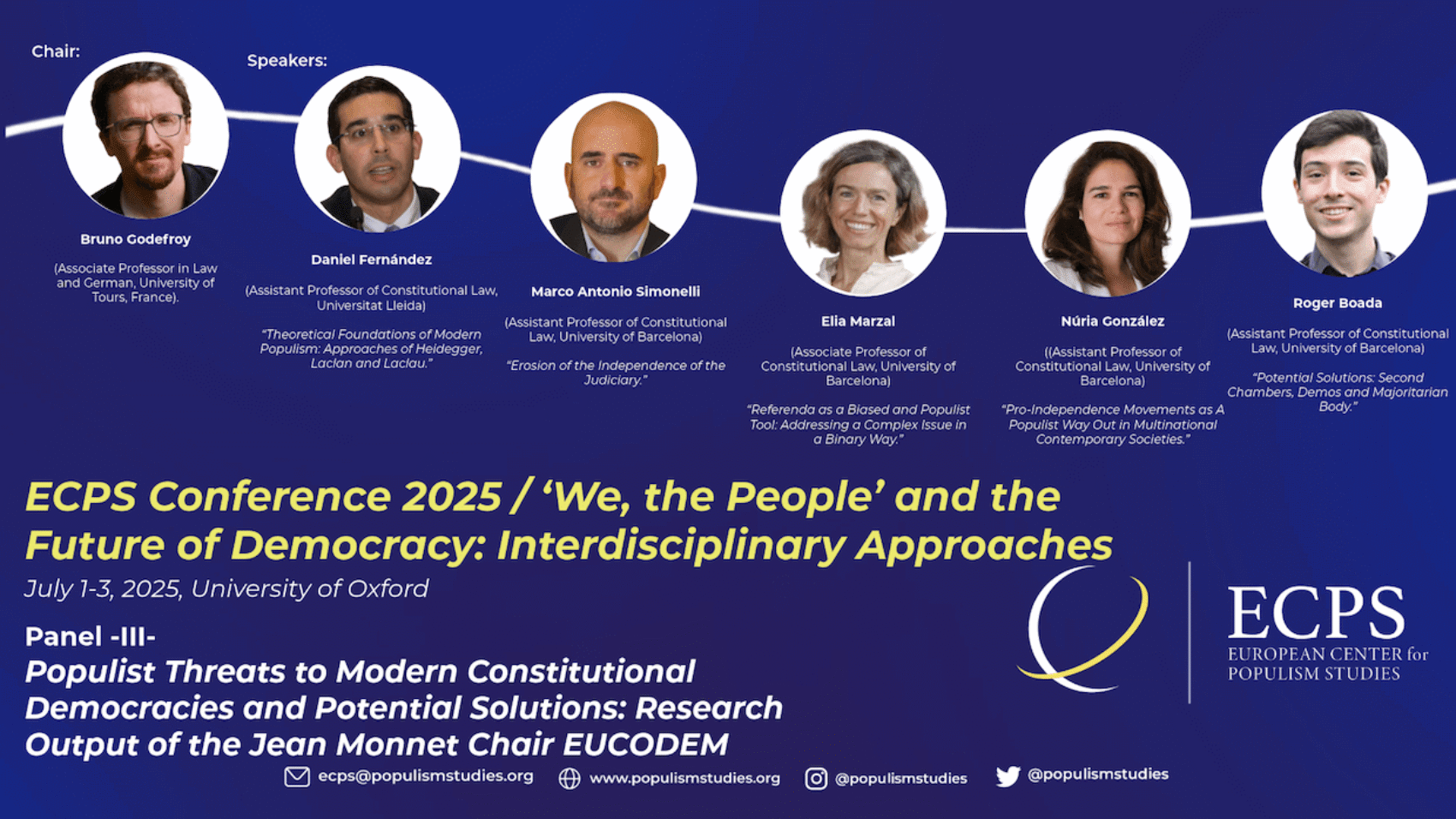
Panel III of the ECPS Conference 2025, held at the University of Oxford, gathered five scholars from the Jean Monnet Chair in European Constitutional Democracy (EUCODEM) at the University of Barcelona to explore how populist forces are challenging liberal-democratic norms—and what institutional remedies might resist them. Chaired by Dr. Bruno Godefroy, the session addressed threats to judicial independence, the populist appropriation of secessionist demands, and the theoretical underpinnings of populism as a political strategy. It also examined the role of parliaments and second chambers in preserving constitutional order. Drawing from both comparative and case-specific perspectives—ranging from Spain and Scotland to Canada and the United States—the panel provided a timely and interdisciplinary diagnosis of populism’s constitutional impact and offered potential avenues for democratic resilience in increasingly polarized societies.
Reported by ECPS Staff
Panel III of the ECPS Conference 2025 at the University of Oxford brought together a group of distinguished scholars from the Jean Monnet Chair in European Constitutional Democracy (EUCODEM) at the University of Barcelona. Titled “Populist Threats to Modern Constitutional Democracies and Potential Solutions,” the session explored some of the most pressing challenges facing contemporary liberal democracies, from the erosion of judicial independence and the weaponization of secessionist demands, to the theoretical foundations of populist strategy and the underutilized potential of second chambers in democratic governance.
Chaired by Dr. Bruno Godefroy, Associate Professor in Law and German at the University of Tours, the panel featured five papers, each delving into different dimensions of populist encroachment on liberal-democratic norms.
Kicking off the session was Dr. Daniel Fernández, who traced the intellectual lineage of populism through the works of Heidegger, Lacan, and Laclau, offering a conceptual map of populism as a strategic response to post-hegemonic pluralism. Following this, Dr. Marco Antonio Simonelli examined how populist regimes strategically erode judicial independence, using comparative cases from Europe and the United States to illustrate how institutional autonomy can be dismantled under the banner of democratic legitimacy. Dr. Núria González then shifted the focus to secessionist populism, comparing Catalonia and Scotland to argue that the method of pursuing independence—via institutional fidelity or populist defiance—has long-term consequences for democratic cohesion.
In the final two presentations, Dr. Elia Marzal and Dr. Roger Boada explored structural alternatives to populist polarization. Marzal emphasized the Canadian model of parliamentary centrality in mediating secession, while Boada critically assessed Spain’s second chamber as a cautionary tale of underperformance and political vulnerability.
Collectively, the panel offered a rich interdisciplinary dialogue that blended constitutional theory, comparative jurisprudence, and political analysis—illuminating the risks posed by populism and the democratic pathways that might still be reclaimed.
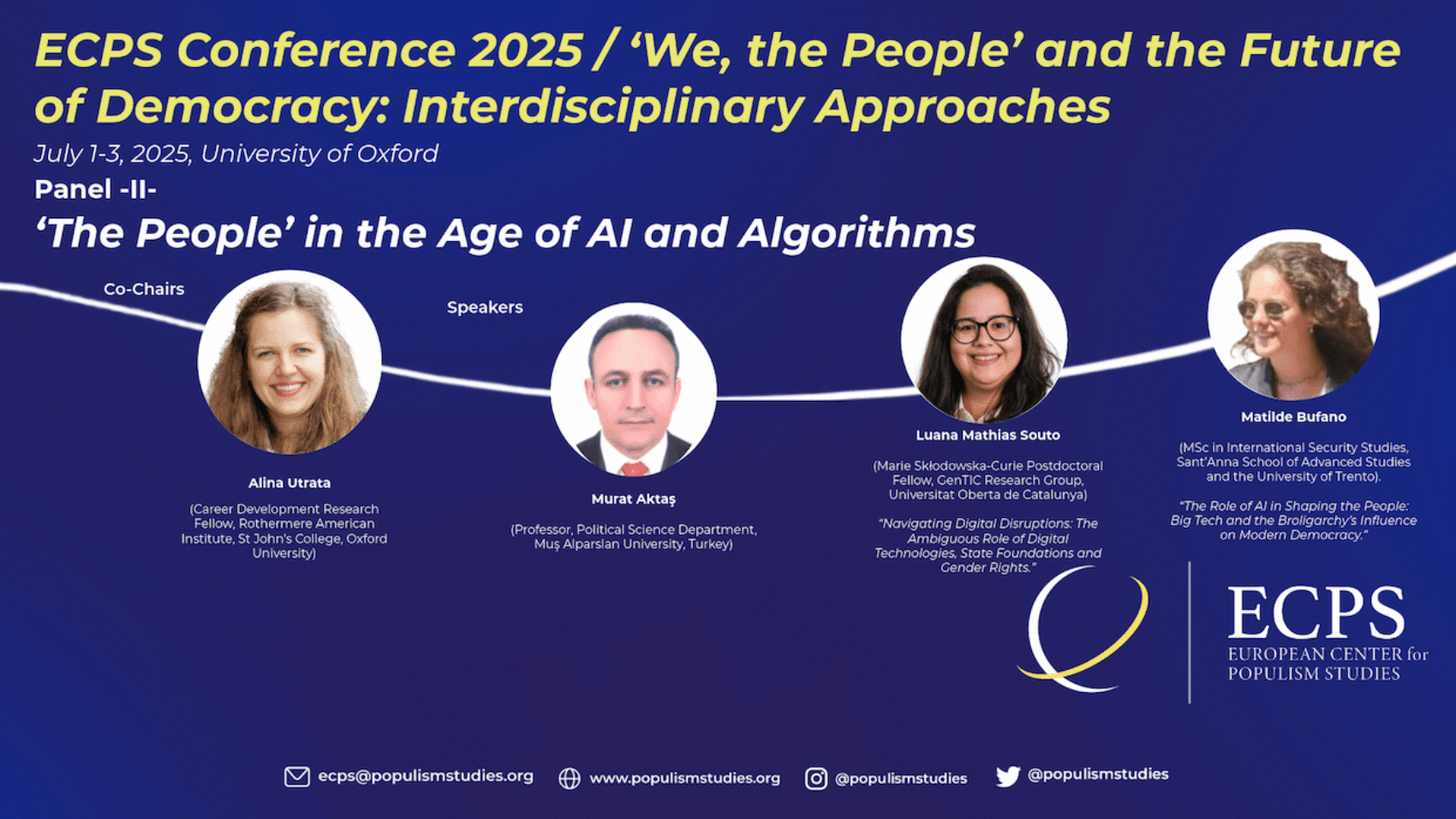
Panel II: “‘The People’ in the Age of AI and Algorithms”explored how digital technologies and algorithmic infrastructures are reshaping democratic life. Co-chaired by Dr. Alina Utrata and Professor Murat Aktaş, the session tackled questions of power, exclusion, and political agency in the digital age. Together, their framing set the stage for two timely papers examining how algorithmic filtering, platform capitalism, and gendered data practices increasingly mediate who is counted—and who is excluded—from “the people.” With insight and urgency, the session called for renewed civic, academic, and regulatory engagement with the democratic challenges posed by artificial intelligence and transnational tech governance.
Reported by ECPS Staff
As our technological age accelerates, democracy finds itself in an increasingly precarious position—buffeted not only by illiberal politics but also by opaque digital infrastructures that quietly shape how “the people” see themselves and others. Panel II, titled “The People in the Age of AI and Algorithms,” explored how artificial intelligence, social media, and digital governance are reconfiguring the foundations of democratic life. Far from being neutral tools, these technologies actively structure political subjectivity, reshape the boundaries of inclusion and exclusion, and deepen existing inequalities—often with little accountability.
This timely and incisive session of the ECPS Conference at the University of Oxford, held under the title “‘We, the People’ and the Future of Democracy: Interdisciplinary Approaches” between July 1-3, 2025, was co-chaired by Dr. Alina Utrata, Career Development Research Fellow at the Rothermere American Institute and St John’s College, Oxford University, and Professor Murat Aktaş from the Department of Political Science at Muş Alparslan University, Turkey. Together, they provided complementary perspectives that grounded the panel in both international political theory and real-world geopolitical shifts.
Dr. Alina Utrata opened the session by noting how technology corporations—many based in the United States and particularly in Silicon Valley—play a crucial role in shaping today’s political landscape. Referencing recent headlines such as Jeff Bezos’s wedding, she pointed to the growing entanglement between cloud computing, satellite systems, and global power dynamics. She emphasized the importance of discussing AI in this context, particularly given the intense debates currently taking place in academia and beyond. Her remarks framed the session as an opportunity to critically engage with timely questions about artificial intelligence and digital sovereignty, and she welcomed the speakers’ contributions to what she described as “these thorny questions.”
Professor Murat Aktaş, in his opening remarks, thanked the ECPS team and contributors, describing the panel topic as seemingly narrow but in fact deeply relevant. He observed that humanity is undergoing profound changes and challenges, particularly through digitalization, automation, and artificial intelligence. These developments, he suggested, are reshaping not only our daily lives but also the future of society. By underlining the transformative impact of these technologies, Aktaş stressed the importance of discussing them seriously in this panel.
The panel brought together two compelling papers that tackled these questions from interdisciplinary and intersectional perspectives. Dr. Luana Mathias Souto examined how digital infrastructures exacerbate gender exclusion under the guise of neutrality, while Matilde Bufano explored the political dangers of AI-powered filter bubbles and the rise of the “Broliarchy”—a new digital oligarchy with profound implications for democratic governance.
Together, the co-chairs and presenters animated a rich discussion about how emerging technologies are not only transforming democratic participation but also reshaping the very concept of “the people.”
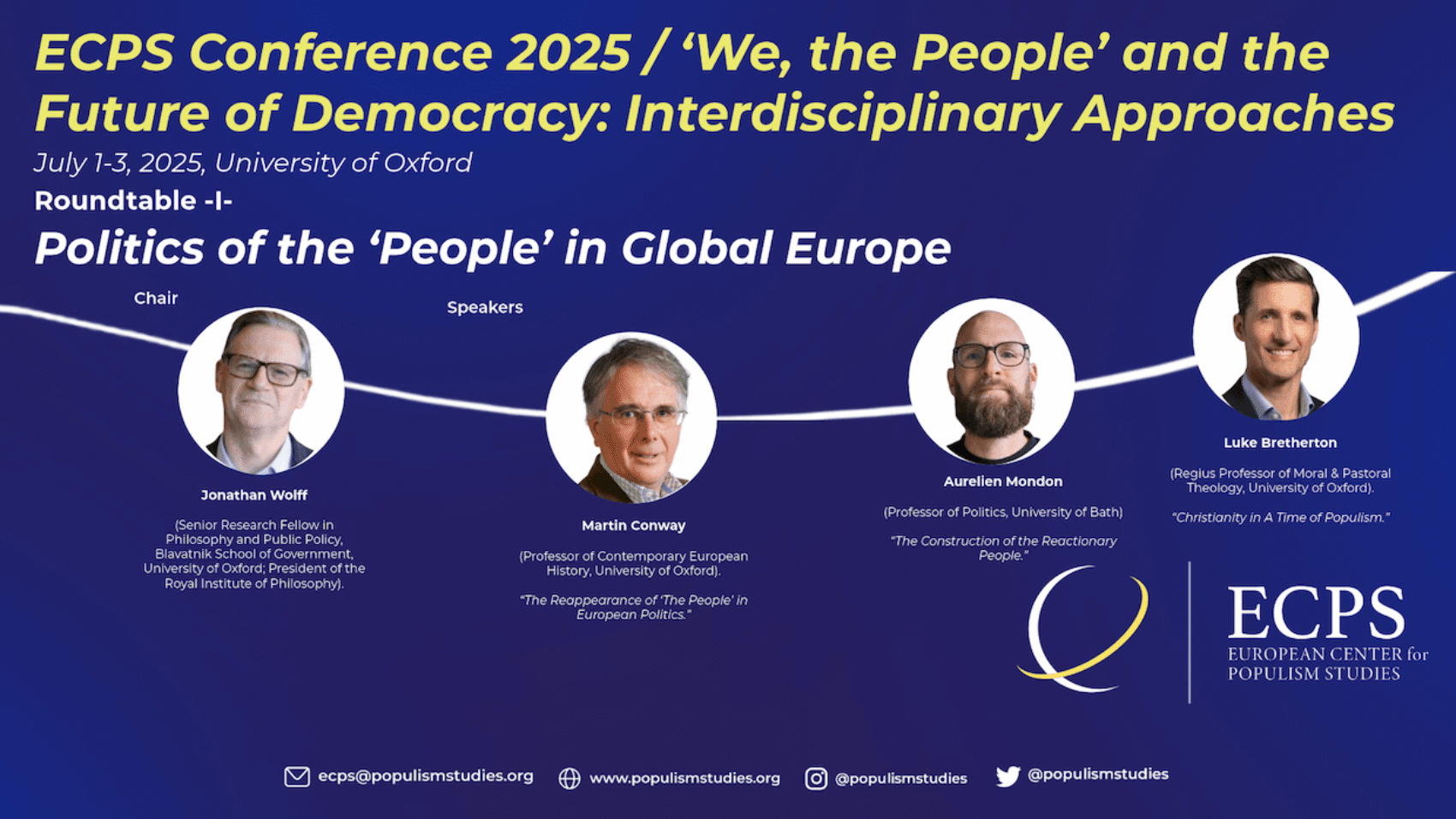
Held at the University of Oxford on July 1, 2025, Roundtable I of the ECPS Conference launched the discussions of “‘We, the People’ and the Future of Democracy.” Chaired by Professor Jonathan Wolff, the session explored how “the people” is constructed, contested, and deployed in contemporary European and global politics. Presentations by Professors Martin Conway, Aurelien Mondon, and Luke Bretherton examined the historical resurgence of popular politics, the elite-driven narrative of the “reactionary people,” and the theological dimensions of populism. Together, the contributions offered a nuanced, interdisciplinary account of how populism’s democratic and anti-democratic potentials shape the political imagination and institutional realities of the 21st century.
Reported by ECPS Staff
Roundtable I of the ECPS Conference, hosted at the University of Oxford on July 1-3, 2025, brought together leading scholars to explore the shifting meanings and political uses of “the people” in contemporary Europe and beyond. Titled “Politics of the ‘People’ in Global Europe,” this session opened the in-person component of the Conference “‘We, the People’ and the Future of Democracy,” an interdisciplinary initiative addressing the democratic backsliding, populist resurgence, and the pathways toward civic resilience in the 21st century.
Chaired by Professor Jonathan Wolff (Senior Research Fellow, Blavatnik School of Government, University of Oxford; President, Royal Institute of Philosophy), the roundtable featured three distinguished speakers: Professor Martin Conway (University of Oxford), Professor Aurelien Mondon (University of Bath), and Professor Luke Bretherton (University of Oxford). Their presentations tackled the historical re-emergence of “the people” as a political category, the elite construction of the so-called reactionary public, and the theological undercurrents of populist discourse—particularly in relation to Christianity.
Taken together, the presentations demonstrated that “the people” is not a static or universally democratic force. Rather, it is a flexible and contested category, often constructed, instrumentalized, and redefined by elites, political movements, and media systems. While it can serve as a source of democratic renewal—as in historical instances of resistance to authoritarian regimes—it can also be mobilized to undermine pluralism, dismantle institutions, and sacralize exclusionary forms of nationalism.
The roundtable emphasized that populism is neither inherently democratic nor inherently authoritarian. Its normative direction depends on how “the people” are imagined, who is included or excluded, and whether political participation is broadened or curtailed. The session challenged participants to move beyond reductive narratives that blame “the people” for democratic erosion, instead urging deeper inquiry into how elites, ideologies, and media infrastructures shape public discourse and democratic practice.
As Europe and its transatlantic partners grapple with polarized electorates, declining trust in institutions, and re-enchanted political imaginaries, understanding the politics of “the people” remains central to safeguarding and reimagining democratic life in our time.
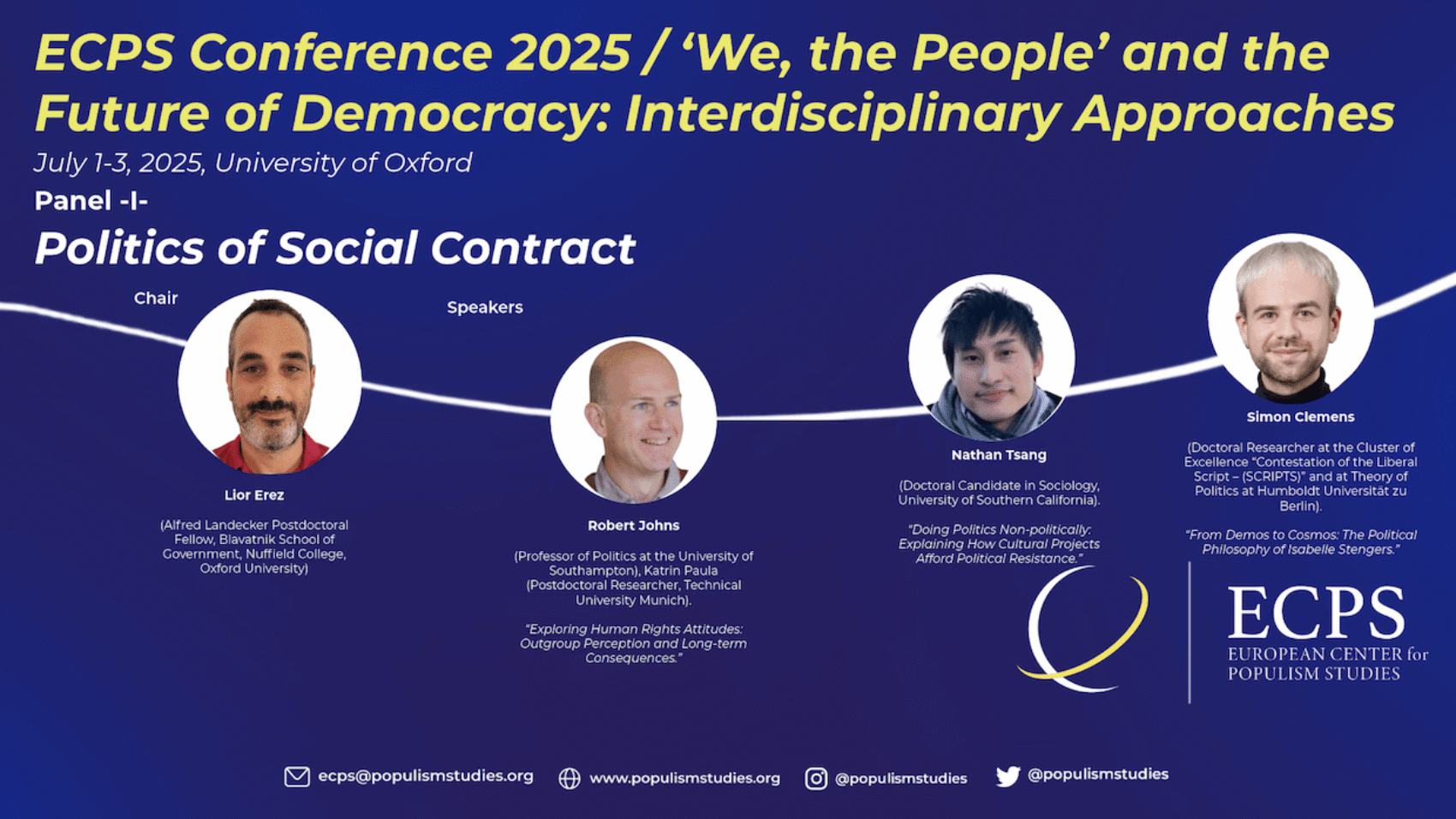
Panel I – Politics of the Social Contract at the ECPS Conference 2025 brought together diverse approaches to examine how democratic legitimacy, resistance, and pluralism are evolving in the face of global democratic backsliding. Chaired by Dr. Lior Erez (Oxford University), the panel featured Professor Robert Johns and collaborators presenting experimental research on public support for human rights under repression; Nathan Tsang (USC) explored how Hong Kong diaspora communities engage in covert resistance through cultural expression; and Simon Clemens (Humboldt University) introduced Isabelle Stengers’ cosmopolitical philosophy, proposing a radical politics of coexistence over consensus. Together, the presentations reflected on how the idea of “the people” is being contested, reimagined, and mobilized across social, empirical, and philosophical registers.
Reported by ECPS Staff
Panel 1 of the ECPS Conference “‘We, the People’ and the Future of Democracy,”—titled Politics of the Social Contract—offered a rich, interdisciplinary exploration of how democratic legitimacy, group identity, and political resistance are being reimagined in response to the erosion of liberal democratic norms. Held at St. Cross College, Oxford, and chaired by Dr. Lior Erez(Alfred Landecker Postdoctoral Fellow at the Blavatnik School of Government and Nuffield College, Oxford), the session brought together empirical, ethnographic, and philosophical perspectives on the contested meanings of citizenship and coexistence in our contemporary moment.
The social contract—once the symbolic foundation of liberal democracy—has come under intense pressure in recent years. The rise of exclusionary populist movements, the securitization of public discourse, and the erosion of trust in institutions have all complicated the relationship between citizens and the state. Yet, even as these developments undermine traditional models of political legitimacy, new forms of democratic practice and resistance are emerging. This panel offers an interdisciplinary examination of how these tensions play out in empirical and philosophical terms.
The panel began with a presentation by Professor Robert Johns (University of Southampton), who—alongside co-authors Sabine Carey, Katrin Paula, and Nadine O’Shea—shared findings from an innovative survey experiment conducted in Germany. Their study investigated public support for police violence across various protest scenarios and tested whether different rhetorical frames—rooted in human rights, democracy, or universalism—could reduce support for repression. Strikingly, they found that traditional rights-based arguments were only modestly effective, and that democratic appeals had greater persuasive power. The research revealed the fragility of rights discourse and the challenge of mobilizing public support across group divides.
The second paper, by Nathan Tsang (University of Southern California), shifts the focus to diasporic resistance under authoritarian threat. Drawing from rich ethnographic fieldwork with Hong Kong communities in the US, Tsang reveals how cultural activities can serve as subtle yet powerful platforms for political expression—especially under the shadow of transnational repression. His analysis shows how everyday practices blur the line between political and non-political, reshaping our understanding of what resistance can look like.
Finally, Simon Clemens (Humboldt University of Berlin) invites us into the philosophical realm of cosmopolitics, drawing on the work of Isabelle Stengers to rethink pluralism, coexistence, and the political beyond the demos. Clemens challenges both liberal and radical democratic assumptions, offering a vision of politics rooted in heterogeneity, co-presence, and what he calls “cosmic proceduralism.”
Together, these papers open vital questions about power, belonging, and democratic futures in an unsettled world.
In this wide-ranging interview with the ECPS, Professor Steven Friedman critiques dominant liberal democratic paradigms that prioritize constraining state power while ignoring the dangers of unregulated private power. “Private power exists and poses significant challenges,” he argues. Professor Friedman warns against the myth that today’s authoritarian surge simply threatens well-functioning democracies, pointing instead to the alienation of citizens by systems failing to meet their needs. He also critiques the hypocrisy of the so-called “rules-based international order,” emphasizing that “if we do not have international law that applies equally to everyone, then we do not have international law at all.” For Friedman, democratic renewal must address inequality and defend universal principles of participation and inclusion.
In this interview conducted for the European Center for Populism Studies (ECPS), Professor Steven Friedman, Research Professor in Politics at the University of Johannesburg, offers a rigorous critique of prevailing liberal democratic paradigms and their limitations in addressing structural inequalities, especially in postcolonial contexts such as South Africa. While affirming his commitment to democracy, Professor Friedman challenges the tendency among many scholars and policymakers to frame the current authoritarian surge as a simple rupture in otherwise well-functioning democracies. As he puts it: “We need to recognize that statements like the one we signed have become necessary precisely because that older model of democracy is being rejected—not primarily by converts to authoritarianism, but by citizens alienated by a democratic system that failed to respond to their needs.”
A central theme in Professor Friedman’s analysis is the narrow theoretical focus of dominant democratic models, which historically have prioritized constraining state power while neglecting the role of concentrated private economic power in undermining democracy. “Private power exists and poses significant challenges,” he observes. “If we fail to regulate private power, we end up with today’s reality: vast concentrations of economic power in the hands of a few individuals.”This critique resonates powerfully in South Africa, where democracy has unfolded in conditions of stark inequality deeply rooted in racialized histories of dispossession.
Professor Friedman also reflects critically on South Africa’s place in global debates about authoritarian populism, noting that local authoritarian trends often imitate those in the global North—particularly xenophobic politics centered on immigration—even though they arise from different historical trajectories. He emphasizes that this mimicry, combined with a homegrown narrative that dismisses constitutional democracy as a Western imposition, has created fertile ground for anti-democratic forces. Professor Friedman warns against this false equivalence: “Democracy is for everyone. It is not just for white Western people.”
In addition, Professor Friedman interrogates the concept of the “rules-based international order,” a central theme in liberal internationalism. While acknowledging that breaches of international law—such as Russia’s invasion of Ukraine—are serious, he argues that the real problem is the hypocrisy of this order’s application: “In Africa, as elsewhere in the global South, the suspicion is not that we do not need a rules-based order, but that the rules only apply to some.” He draws on personal experience of apartheid South Africa to highlight the corrosive effects of legal double standards, concluding that “if we do not have international law that applies equally to everyone, then we do not have international law at all.”
Throughout the conversation, Professor Friedman underscores the responsibilities of intellectuals in confronting both authoritarian populism and the failures of democratic systems themselves. He insists that defending democracy today requires scholars and public intellectuals not only to protect constitutional principles but also to advocate for a more inclusive, participatory model that recognizes and addresses entrenched inequalities—particularly those shaped by private economic power.
By foregrounding these themes, this ECPS interview invites a broader rethinking of how we understand authoritarian threats globally and how democratic renewal must involve far more than defending electoral institutions: it must include grappling with the material inequalities that undermine democratic legitimacy.
Dr. Steven Friedman is Research Professor in Politics at the University of Johannesburg.
Here is the transcript of our interview with Professor Steven Friedman, edited lightly for readability.
Decolonization Means Adding Voices from the Global South, Not Excluding the North
Professor Steven Friedman, thank you so very much for joining our interview series. Let me start right away with the first question: As a signatory to the declaration published on June 13, 2025, which invokes the history of 1925 Italy to characterize contemporary authoritarian populism globally, how persuasive do you find this analogy for understanding authoritarian threats in postcolonial contexts such as South Africa—particularly in the light of your own critique of applying Northern paradigms to Southern democracies?
Professor Steven Friedman: Before I answer directly, just a word about that critique you mentioned. What I’m trying to do in that critique is not close down but open up. In other words, I don’t want to be misunderstood as one of those voices who say, “We don’t want to learn anything from the global North; only what happens in the global South matters.” And then you get a whole lot of essentialism about what is really, authentically African or Asian, or whatever the case may be. My concern has always been that a particular way of thinking and a particular experience has been foisted on the rest of us, but that certainly doesn’t mean that experience is irrelevant. I wrote a long article a couple of years ago on decolonization, in which I made the point that decolonization was not about excluding voices from the global North—it was about adding voices from the global South to those voices.
So, as you correctly say, fascism was an Italian experience about a century ago. But it’s an experience which is relevant for us today. We are passing through a moment globally where the extinguishing or severe weakening of existing democracies is certainly a global concern at the moment, on all continents. And therefore that it’s appropriate. It happened to be enforced around the anniversary of the Intellectuals’ Declaration. But I don’t think the fact that it happened in Italy in the 1920s excludes the possibility that it speaks to a reality today which affects us just as it affects everybody else.
Scholars Must Engage in Public Debate
The declaration calls on intellectuals, artists, and scholars to “act” as a bulwark against authoritarianism. From your perspective on intellectual responsibility in transitional societies, what forms of scholarly engagement are most ethically and politically effective in confronting democratic erosion today?
Professor Steven Friedman: I think just one point: it was probably quite normal to talk about us as transitional societies 10 or 15 years ago. Today, I’m not quite sure that’s appropriate, because I think right now, just about everywhere is a transitional society. We’re at a moment in which those certainties—which, as you correctly point out, I’ve written and criticized a great deal—that idea that there are democracies that have “made it” and democracies that are still “trying to make it,” that there are democracies that are secure and democracies that are not secure, all of that is no longer appropriate. There are very few places in the world—Costa Rica and Botswana spring to mind—that probably aren’t under great threat at the moment. But it’s a problem just about everywhere else. Therefore, what I’m going to say applies generally.
I think it’s very important—though this may sound trite but is often forgotten—that scholars and intellectuals cannot play their role from the classroom or the library alone. They have to be willing to engage in the public debate. And once engaged, they must carefully consider key strategic questions: Are you talking down to people? Are you saying things that seem insensitive to their circumstances? Are you assuming that because you’ve read many books and they haven’t, you are superior? It’s crucial to participate in public debate in ways that open conversations rather than close them down. Too often, intellectuals are guilty of saying, “Yes, of course I participated; I explained to them why they were all wrong and I was right.” You don’t need a psychology degree to see how that’s going to offend people.
I also think it’s important for intellectuals to engage—let me phrase this carefully—with citizens’ organizations and citizens themselves. I certainly don’t mean becoming an uncritical messenger for everything a particular organization or group says, but it’s essential to keep channels open and remain available for dialogue. I’m not suggesting that intellectuals have unlimited influence; I’m well aware of the limits of their role. But we shouldn’t underestimate their impact either. One can move from the illusion of having more power than one actually does to the equally misguided belief that only material power matters and ideas don’t—which I don’t think is true.
Evidence and Argument Are More Essential Than Ever
A key theme of the declaration is the defense of “facts and evidence” in a climate of disinformation. Given your critique of how elite-driven narratives often delegitimize popular grievances, how can intellectuals defend epistemic rigor without reinforcing social exclusion or epistemic inequality?
Professor Steven Friedman: My critique of these narratives stems precisely from their disregard for evidence and argument. If they accurately reflected empirical realities, I would have little cause to criticize them. What one often encounters, however, is the repetition of entrenched prejudices, presented as if they were grounded in evidence and argument.
In the field of democracy studies, for instance, a striking example is the paradigm of democratic consolidation—a concept that was highly influential and arguably remains so, even if the term is now invoked less frequently. I have written extensively on this topic because, for many years, scholars researched, wrote, and published on democratic consolidation as though its meaning were self-evident and its foundations empirically robust.
Yet, when I subjected this concept to detailed critical scrutiny some years ago, I discovered something remarkable: despite its prominence, it had never been coherently defined. To illustrate, at one point some eminent scholars claimed that “democracy is consolidated when it’s the only game in town.” But if you examine that carefully, it’s an extremely vague, untestable notion of how to determine whether a democracy is consolidated.
So I think it is important to emphasize that while much of my work critiques the imposition of global North perspectives, this should never be taken to imply that evidence and argument are unimportant. On the contrary, it underscores that evidence and argument are more essential than ever. We must remain vigilant to the extent to which conventional wisdom—particularly the orthodoxies that dominate the academy—are not grounded in evidence and argument.
Indeed, I would contend that all my critiques of what some call Western or global North bias have fundamentally been arguments in favor of rigorously applying evidence and argument. I see no contradiction in this position.
This is a particularly pressing concern today. I do not subscribe to the view that digital media—and I deliberately use the term “digital media” rather than “social media,” which I regard as an odd label for large, well-resourced corporations marketing products—possess an extraordinary, autonomous power to transform our lives. Rather, what is transforming our lives is that these media amplify preexisting prejudices and misrepresentations.
Centuries ago, people burned women as witches, based on rumors very similar to the misrepresentations we encounter today. But those tended to spread in small, localized communities. Today, you can put a lie into the world and reach millions of people within minutes. That is a tremendous challenge, and it’s a challenge everywhere. But I certainly don’t think the problem lies in evidence and argument being culturally biased. Quite the contrary—the cultural biases we face tend to eliminate or weaken evidence and argument.
Participation Must Be Continuous
Thousands of protesters march for social justice and women’s rights in Atlanta, January 21, 2017, the day after President Trump’s inauguration. Protest signs rise above the crowd. Photo: Dreamstime.
The declaration warns against authoritarian leaders claiming an “unlimited popular mandate.” In your scholarship, you’ve emphasized democratizing participation rather than limiting it—how would you suggest navigating the tension between majoritarian legitimacy and the protection of pluralism?
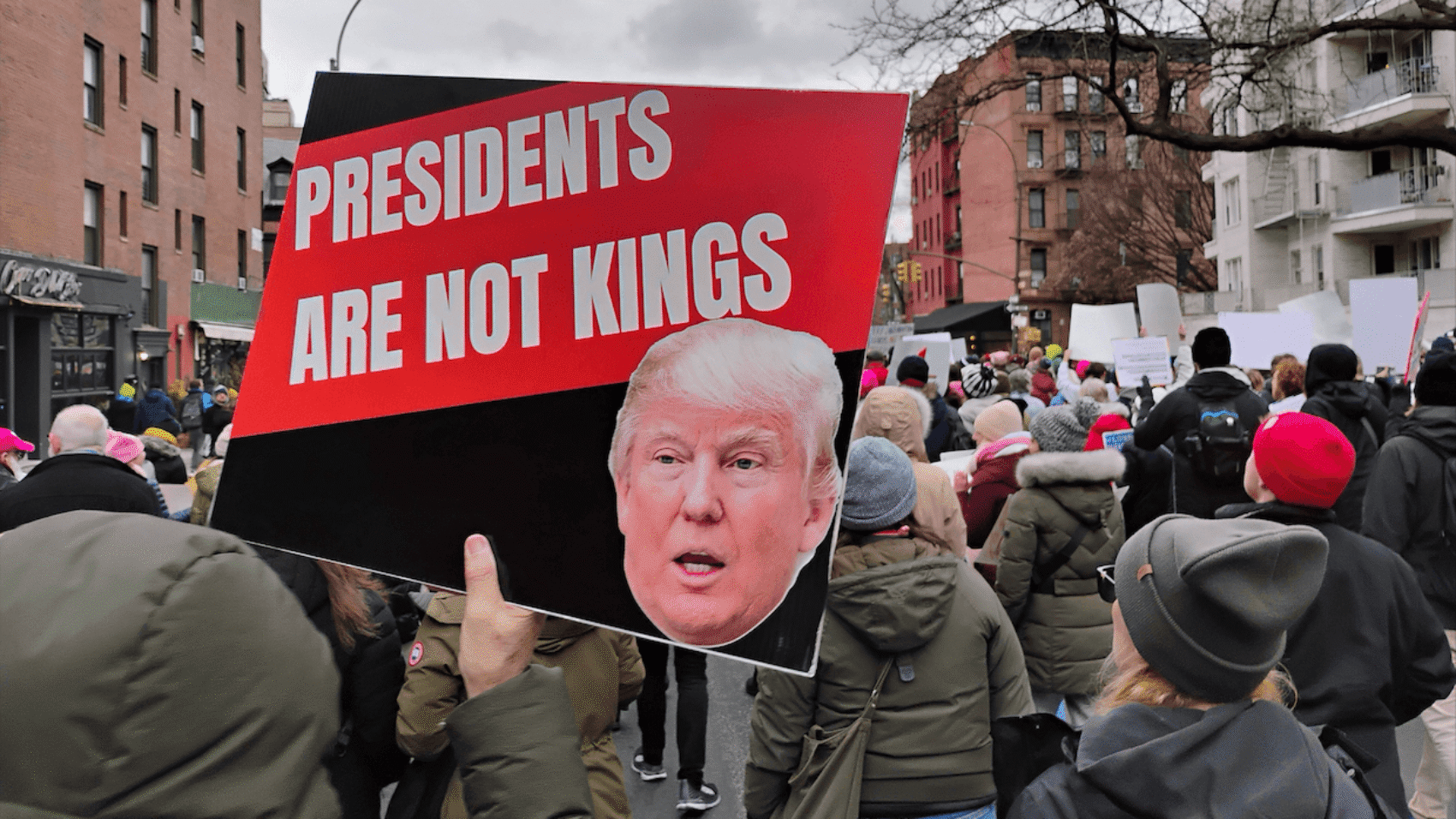
Professor Steven Friedman: Majoritarianism tends to exclude public participation. To put it bluntly, that is precisely what’s wrong with it: majoritarian populism asserts, “We won an election, so we have an unlimited mandate to do whatever we like for the next five years.” In some cases, of course, they manipulate the system to ensure that their rule lasts far longer than five years. At present, in the United States—a case that understandably concerns many around the world—we see a situation where a president who, let us recall, did not win a majority of the popular vote in a system where the popular vote does not determine the winner, nonetheless claims an overwhelming mandate to disregard constitutional constraints.
In my work, I have consistently emphasized that one of the key reasons we need participation is precisely because electoral mandates are inherently limited. I have argued—though this is by no means an original observation—that in multi-party democracies, very few voters agree with every position their chosen party advances. Most citizens select the party that most closely aligns with their preferences but do not endorse its entire platform. Therefore, no party can assume that any specific policy or legislative initiative enjoys popular support simply because it won an election. That support must be demonstrated and actively sought—this is precisely where the principle of participation begins.
The problem with majoritarianism, which the declaration rightly rejects, is not the familiar cliché of the “tyranny of the majority.” The problem is elites claiming that an electoral mandate gives them a blank check to determine what becomes law. Moreover, given the nature of electoral cycles—even in countries where elections are held every two years—a great deal can happen between elections. Governments frequently face circumstances that did not exist at the time voters cast their ballots, so they cannot plausibly claim a mandate to act in those situations.
One of the key points I have long stressed—and why I found that part of the declaration so appropriate—is that we need rules, we need constitutions, and we need power to be subject to constraints. When power is unconstrained, it inevitably acts as it pleases. History shows that utopian democratic experiments without rules tend to become authoritarian very quickly.
The Real Danger Is Alienation from a Democracy
In equating today’s far-right movements with “fascism,” is there a danger of universalizing European historical experiences at the expense of recognizing the structural drivers of discontent in contexts of ongoing inequality, such as South Africa and other postcolonial states?
Professor Steven Friedman: There are certainly dangers, and I think you’ve identified something important here. In itself, I don’t see a problem—as I noted earlier—because by signing a statement that refers to fascism, neither I nor anyone else is suggesting that only the European experience of a century ago is instructive. Rather, we are acknowledging it as one instructive historical experience.
The danger you highlight lies in the framing: that what we are witnessing today is often understood—particularly by many mainstream scholars—as an intrusion upon democracies that had supposedly been serving their citizens well. That assumption, I believe, is widespread but profoundly problematic.
I would argue strongly—and you rightly highlight inequality, which is central to my concerns—that these democracies were not, in fact, adequately serving their citizens. To be clear, I would not have signed the statement if I did not believe democracy is worth defending. But what we are witnessing now is, unfortunately, a challenge posed by anti-democrats, not by more engaged democrats. This challenge emerges against the backdrop of an attenuated form of democracy—one that failed to address people’s needs. It was a thinner version of democracy than the postwar models in the global North, which incorporated stronger constraints on private power.
At a theoretical level, this dominant democratic model focused solely on constraining the relationship between citizen and state, while largely ignoring private power. Yet private power exists and poses significant challenges. If we fail to regulate private power, we end up with today’s reality: vast concentrations of economic power in the hands of a few individuals.
This is not an inevitable feature of democracy. Postwar European societies—even conservative models like Germany’s social market economy—recognized the need to constrain private power. When Elon Musk can spend $250 million to influence a US election in favor of Donald Trump, this reflects a model of democracy that accepts influence as legitimate as long as it is directed at the state, without demanding constraints on private concentrations of power.
One important but under-discussed finding from recent US elections illustrates this point: Democratic Party candidates who campaigned on platforms addressing private power—through competition policy, price regulation, or related measures—performed about eight percentage points better than those who did not. This helps explain otherwise puzzling outcomes, such as Democratic victories in certain Midwestern states despite national Republican dominance. Those candidates were speaking directly to popular concerns about inequality and economic insecurity.
So, to return to your question: the real danger of invoking this model uncritically is that it encourages a simplistic narrative—“we had a good democracy, and now bad people are threatening it.” We need to recognize that statements like the one we signed have become necessary precisely because that older model of democracy is being rejected—not primarily by converts to authoritarianism, but by citizens alienated by a democratic system that failed to respond to their needs.
Another myth I’m concerned about is the claim that large numbers of people are suddenly embracing authoritarian or anti-democratic ideas. In most countries, this is not what is happening. More prominent is the phenomenon of citizens who value democracy but feel so alienated by its attenuated form that they no longer participate.
This connects back to the issue of majoritarianism. The problem is not, as some critiques suggest, an illiberal mass dictating to a liberal elite. The real problem is that citizens who would strongly support a robust democracy feel unheard, alienated, and excluded from meaningful participation.
To return to the recent US election—a key reference point because of its global resonance—the Republicans didn’t win; the Democrats lost. Nineteen million voters who had supported the Democrats in 2020 did not vote in this election. This reflects profound discontent among potential supporters of democracy itself. If we fail to acknowledge this, then democracy is in even more trouble than we already recognize.
International Law That Applies Unequally Is No Law at All
The Hague, Netherlands — February 14, 2018: Entrance sign of the International Criminal Court (ICC) at the ICC building. Photo: Robert Paul Van Beets.
The declaration’s robust defense of multilateralism aligns with a liberal internationalist vision. How should scholars reconcile this with postcolonial critiques of global governance institutions as sites of inequality and dependency, particularly from an African vantage point?
Professor Steven Friedman: From any vantage point, the problem is not that liberal internationalism—if we want to call it that; it’s as good a name as any—is a bad idea. The problem is that it has largely been honored in the breach: it is often invoked but rarely practiced.
This connects to another myth we should interrogate today: the notion that anti-democrats alone are responsible for tearing up the international order. In fact, part of the reason they are doing so is because the self-proclaimed elite democrats undermined that order long ago.
So, when Russia invades Ukraine, we hear that this is a breach of the “rules-based international order.” And indeed, if such an order truly functioned, it would be a serious breach. But the issue is not that anything Russia did was justified—it was not. The issue is the double standard.
Beyond the oft-made point that, apparently, in the rules-based order it is permissible to bomb civilians if they happen to be Palestinian, there is the fact that when Putin decimated Grozny in Chechnya—full of Russian Muslims—the international order was silent. When Russian forces bombed Aleppo into rubble, again, there was no response. Only when Putin attacked white Europeans did the “rules-based order” suddenly become important.
In Africa, as elsewhere in the global South, the suspicion is not that we do not need a rules-based order, but that the rules only apply to some. A specific and highly relevant example is the International Criminal Court (ICC). In principle, an international court that intervenes when states fail to prosecute human rights abuses is an excellent idea. But until very recently, the ICC was used almost exclusively to prosecute Africans. There was one notable exception—Bosnia and the prosecution of figures such as Radovan Karadžić—but overwhelmingly, the focus was on Africa, despite abundant evidence of war crimes elsewhere. And now, as the ICC attempts to fulfill its intended role more broadly, that effort is frustrated. When the Court issues arrest warrants for individuals favored by Northern elites, it faces sanctions. For instance, when the ICC indicted Israeli and Hamas figures, it was widely reported that a prominent politician remarked that the ICC “is only for Africans and thugs like Putin.”
This underscores a very basic point I have made many times: if you or I lived in a country where the law clearly applied to some people but not to others, we would consider that unacceptable. I speak from personal experience—before 1994, I lived in a country where there was one law for some people and another for others. Fortunately, after sustained international pressure, that system was deemed intolerable.
So, I was quite happy to sign a statement acknowledging that the international rules-based order is in trouble, because I believe it is in more than trouble. But not all signatories would agree on what precisely the problem is or how it should be addressed. My own view is simple: if we do not have international law that applies equally to everyone, then we do not have international law at all. It’s a straightforward proposition.
Authoritarian Populism in South Africa Imitates Northern Patterns
Lastly Professor Friedman, do you see a distinctively South African form of authoritarian populism emerging today? If so, how would you differentiate it analytically from global trends, given your emphasis on the rootedness of South African democratic struggles in racial and economic inequality?
Professor Steven Friedman: Yes, it’s a significant problem here today. Let me first say something more about this issue of global experiences and the influence of particular ideas and ways of seeing the world. A few years ago, I wrote a book on COVID-19, arguing that South Africa failed to deal effectively with the pandemic because we insisted on responding in exactly the same way as the US and Europe, despite the fact that those countries had some of the highest infection and fatality rates globally. It would have seemed far more rational to look at countries like South Korea, which had far lower rates. The broader point is that much of the discourse in South Africa simply repeats what is said in the global North, and that has profound influence on local thinking.
As a result, much of the authoritarian populism we now face imitates Northern patterns, despite arising in a very different environment. A clear example is immigration. As in many parts of the global North, hostility to immigration has become a major threat to democracy in South Africa. Anecdotally, I was invited to speak at the Human Rights Commission and noted to the audience that during the 20-minute drive to the event, I heard xenophobic attacks on immigrants roughly 30 times on talk radio. Even unrelated issues were immediately framed as problems caused by “foreign nationals.” This xenophobia is particularly bizarre in our context, given that the difference between a South African and a Zimbabwean is often simply which side of a colonial border drawn at the Berlin Conference they happen to have been born on.
This underscores a point I have made repeatedly: many of the Northern attitudes of superiority I criticize are absorbed and internalized by people in the global South, as we see here in the xenophobic discourse.
Another feature of South African authoritarian populism that mirrors global patterns is the deep cynicism toward government. Uniquely, in South Africa today, one is considered “brave” for even mildly defending the government. About 30% of the population—those most visible in political debate—express pervasive hostility to government. While a critical citizenry is generally preferable to a compliant one, in our context this cynicism is weaponized by anti-democrats.
Democracy Is Not a Western Construct — It Is for Everyone
Two queues of people at a polling station during the 2011 general elections in Zambia. Photo: Dreamstime.
Our official opposition party currently campaigns on a platform that explicitly seeks to abolish the Constitution, precisely because they object to the democratic freedoms it enshrines. Given widespread cynicism, anti-democratic actors know that if they wish to undermine a democratic politician, they need only make corruption allegations—regardless of whether they are true—because public discourse will presume their truth.
A current example illustrates this: a senior police officer recently held a press conference alleging widespread corruption among politicians and judges, naming only two individuals: the Minister of Police (a leading pro-constitution figure) and a senior police officer at odds with the populist president. The President announced a commission of inquiry to investigate the claims, but was pilloried for doing so; the public narrative suggests that the allegations themselves suffice to prove guilt. This creates fertile ground for anti-democrats: all they need to do is make accusations to damage democratic figures.
Another dimension of authoritarian populism in South Africa is the misuse of anti-imperialist rhetoric. The opposition party argues that the Constitution itself is a Western imperialist imposition—that the rule of law and democratic accountability are inventions of Western elites designed to enslave Africans. This is a deeply problematic claim that must be confronted.
I have consistently argued that democracy is not a Western or white construct. Certain core democratic principles are universal. I define democracy, rather idealistically, as a society in which every adult has an equal say in every decision affecting them. While no such society has ever existed, this provides a normative standard that clearly transcends any particular culture or geography: democracy, properly understood, cannot be exclusively white or Western because it affirms the equal right of all individuals to participate in decision-making.
This argument must be won here in South Africa because there is a persistent refrain that democracy was imposed by the West and that abandoning democracy would somehow liberate us. Just to be anecdotal again, because I think it illustrates the point: I have served for several years on an awards committee that recognizes outstanding Africans. Recently, I had a major debate with my colleagues because they wanted to give an award to a man who had staged a military coup. I was in the minority, but I said, “I don’t care how fine his speeches are—if he staged a military coup, he is out of the question.” In the end, they accepted the point.
What I found striking was that my colleagues are not right-wing, authoritarian populists by any means. The reason they wanted to give him the award was precisely because he claimed he sought to free his country from Western influence.
This reflects the idea—widespread here—that being anti-democratic is somehow authentically African. It is something we must resist. I believe the way to resist it is to insist, consistently, that democracy is for everyone. It is not just for white Western people.
The ECPS Conference 2025 at the University of Oxford began with a timely and thought-provoking opening session that explored the evolving meaning and political utility of “the people” in democratic discourse. Sümeyye Kocaman offered a nuanced welcome, highlighting how the term has been used across history to empower, exclude, and politicize identity. Kate Mavor, Master of St Cross College, underscored the value of interdisciplinary exchange in addressing democratic challenges, noting how the College’s diverse academic environment aligned naturally with the conference’s aims. Baroness Janet Royall then delivered a compelling keynote, warning of the double-edged nature of “the people” as both democratic ideal and populist tool. Her address emphasized the need for inclusion, institutional integrity, civic renewal, and interdisciplinary cooperation in the face of democratic erosion. The session set the stage for critical and globally relevant dialogue across disciplines.
Reported by ECPS Staff
The opening session of the ECPS Conference 2025 at the University of Oxford commenced with a series of remarks that collectively set an intellectually rich and politically urgent tone for the days ahead. Sümeyye Kocaman, DPhil candidate at St. Catherine’s College and conference coordinator on behalf of the European Center for Populism Studies (ECPS), offered a thoughtful and inclusive welcome, grounding the event in the contested and evolving significance of “the people.” She reflected on how this concept—invoked across diverse historical, geographical, and ideological contexts—has served both emancipatory and exclusionary purposes. Drawing on her research and recent electoral analyses, she highlighted the growing resonance of populist narratives and the imperative to examine how democratic rhetoric shapes lived experience beyond the ballot box.
Following Kocaman, Kate Mavor, CBE, Master of St Cross College, welcomed participants on behalf of the host institution. Emphasizing the interdisciplinary character of St Cross—a graduate college home to scholars from over 60 fields—she noted the alignment between the conference’s aims and the College’s commitment to cross-disciplinary dialogue.
Baroness Janet Royall of Blaisdon, Principal of Somerville College, then delivered an incisive keynote, urging participants to confront the dual nature of “the people” as both democratic foundation and potential populist weapon. Her address called for rigorous, interdisciplinary engagement and collective democratic renewal.
In his lecture at the ECPS Academy Summer School 2025, Professor Robert Huber examined how populist parties across Europe construct climate skepticism, emphasizing that populism’s “thin-centered ideology” (as defined by Cas Mudde) pits “the pure people” against “corrupt elites.” This framing makes climate science and policy institutions prime targets for populist critique. Professor Huber’s expert survey of 31 European countries showed a clear trend: the more populist a party, the more skeptical it is of climate policy and climate science, regardless of its left- or right-wing orientation. He cautioned participants to disentangle populism from related ideologies like nationalism or authoritarianism, underscoring that populism’s challenge to climate politics is complex, context-dependent, and shaped by deeper struggles over legitimacy, authority, and representation.
Reported by ECPS Staff
The ninth lecture of the ECPS Academy Summer School 2025, titled “Populism and Climate Change: Understanding What Is at Stake and Crafting Policy Suggestions for Stakeholders,” was held online from July 7 to 11, 2025. On Friday, July 11, Professor Robert Huber delivered his lecture on “Populist Narratives on Sustainability, Energy Resources and Climate Change,” offering participants a rigorous exploration of the complex intersections between populist politics and climate discourse.
The Summer School convened scholars, students, and practitioners from around the world to engage in critical discussions about how populism shapes—and is shaped by—the politics of climate change. It provided a unique interdisciplinary forum to analyze these global dynamics and to develop policy-relevant insights for stakeholders navigating the overlapping crises of climate and democracy.
The session was moderated by Dr. Susana Batel, Assistant Researcher and Invited Lecturer at the University Institute of Lisbon’s Center for Psychological Research and Social Intervention. Dr. Batel’s own research focuses on the green transition and its relationship to socio-environmental justice, exploring how climate and energy policies may reproduce or challenge entrenched social inequalities. More recently, she has turned her attention to the relationship between green transition efforts and far-right populism, particularly in Portugal. In her introduction, Dr. Batel underscored the relevance of Professor Huber’s expertise for these pressing questions, noting that his work has become central to ongoing debates on how populist actors respond to climate policies and narratives.
Dr. Robert Huber is Professor of Political Science Methods at the University of Salzburg. His research expertise lies at the intersection of populism, political methodology, and climate politics, and he has become a leading figure in the emerging field studying how populist parties and leaders engage with environmental and energy issues. As Dr. Batel observed in her remarks, Professor Huber has helped illuminate how populist actors contest not only the facts of climate change but also the legitimacy of the processes through which climate policy is made and implemented.
In his lecture, Professor Huber tackled the core question of why populists, both on the right and left, have often adopted a skeptical or adversarial stance toward climate action. He emphasized the importance of distinguishing populism from adjacent ideological forces such as nationalism, authoritarianism, or economic liberalism, arguing that only careful conceptual and empirical work can reveal the mechanisms through which populism interacts with climate skepticism. His lecture offered participants a comprehensive framework to understand the diversity of populist climate narratives, setting the stage for deeper discussion and analysis of this timely and globally significant phenomenon.
Why Populists Target Climate Issues
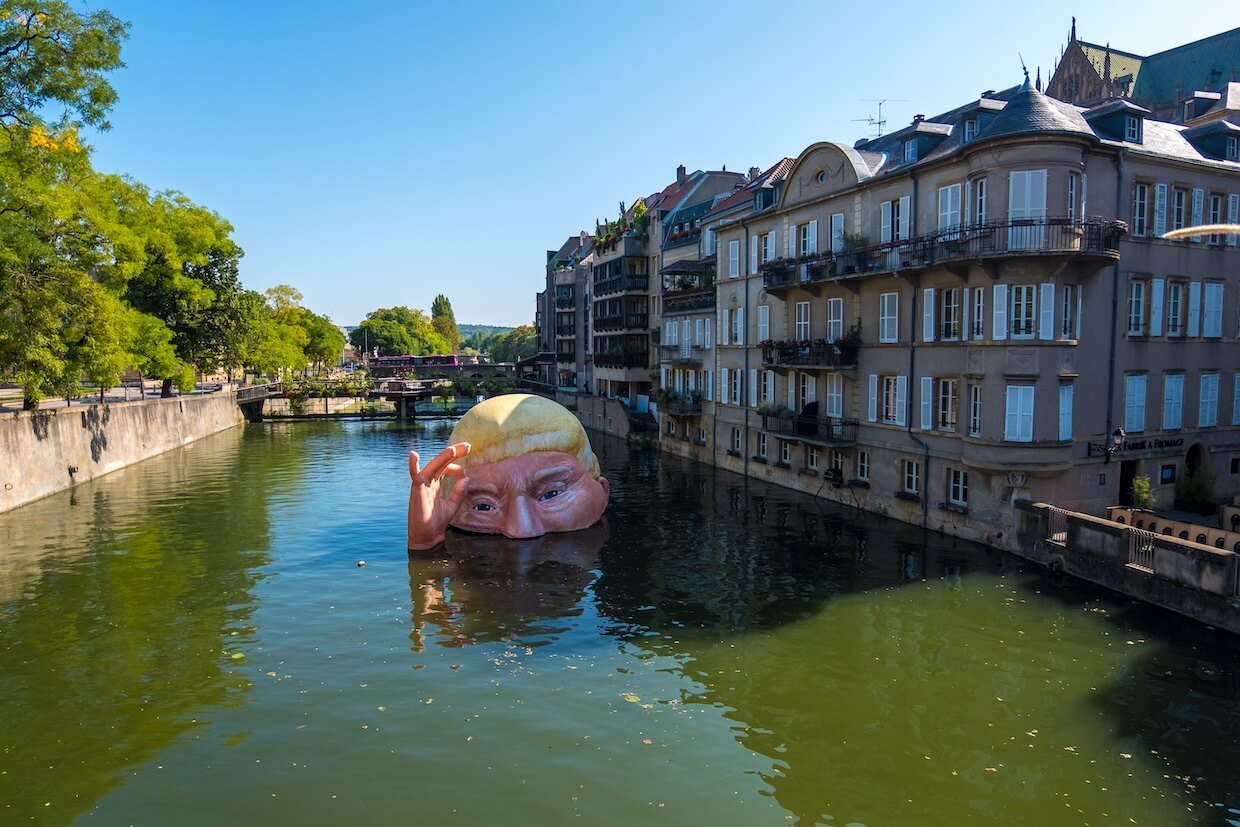
Installation of Donald Trump’s head by artist Jacques Rival floating on the Moselle River, Metz, France, August 31, 2019. Photo: Kateryna Levchenko.
In his lecture, Professor Huber provided a rigorous and insightful analysis of why populist actors engage with climate issues, highlighting the complexity and nuance often overlooked in popular discussions. Professor Huber opened his talk by reflecting on the emerging nature of this research agenda, noting, “When I started studying populism and climate change back in 2016, there was not much on that—very little research and few opportunities to think about how these two pressing societal issues intersect.”His remarks underscored both the novelty of the topic and the importance of its exploration.
Professor Huber’s central inquiry revolved around understanding the mechanisms through which populist parties and leaders construct skepticism toward climate action. He acknowledged that figures such as Donald Trump inevitably dominate discussions of climate populism, citing one of Trump’s early tweets: “NBC News just called it the great freeze – coldest weather in years. Is our country still spending money on the GLOBAL WARMING HOAX?” While this is a classic example of conflating weather with climate, Professor Huber emphasized that such rhetoric also reflects broader concerns about public spending and government priorities.
To illustrate variation within populist climate skepticism, Professor Huber turned to European populists, including Thierry Baudet, the leader of the Dutch radical-right party Forum for Democracy. Baudet framed climate action as futile and wasteful, complaining that billions were being spent “just to decrease global warming by 0.007 degrees,” which he characterized as “madness.” Similarly, Marcel de Graaff, formerly a member of the European Parliament, attacked EU climate policy as deceitful, claiming that elites benefited financially from “green lies.” Professor Huber observed that while all three cases reflect skepticism toward climate action, they differ in emphasis—Trump’s framing centered on economic competitiveness, Baudet on policy effectiveness, and de Graaff on political betrayal.
These examples led Professor Huber to ask the central question driving his lecture: “Why is it that populist politicians are so often skeptical about climate change?” He insisted that an analytical approach is required to move beyond anecdote and description, seeking instead to understand underlying patterns and causal mechanisms.
Professor Huber introduced the audience to Van Rensburg’s (2015) typology of climate skepticism, which distinguishes between skepticism about the evidence (whether climate change is real and human-caused), the process (whether decision-making and knowledge-production are legitimate), and the response (whether proposed policies are desirable). While populists may sometimes question the reality of climate change itself, Professor Huber suggested that their skepticism more often targets the process and response dimensions—expressing distrust toward scientific expertise, democratic legitimacy, and the distributive impacts of climate policy.
A particularly vivid example of this process skepticism emerged from the “Yellow Vests” protests in France, where demonstrators opposed carbon taxes not only for their economic burden but also because they perceived climate policy as undemocratic and detached from ordinary people’s needs. Professor Huber noted how one protester’s sign declared: “I want my democracy now,” reflecting the sentiment that climate decisions are made by remote technocratic elites without sufficient public input. As Professor Huber remarked, “For some people, climate policy really feels out of touch with their everyday needs.”
Professor Huber emphasized that much of this skepticism appears on the political right but cautioned against equating populism with right-wing ideology. “It may just be that they are right-wing,” he observed, highlighting that climate skepticism among populists could stem from other ideological commitments—such as nationalism, conservatism, or libertarianism—that overlap but are analytically distinct from populism itself.
Nonetheless, Professor Huber acknowledged that left-wing populism can also intersect with climate discourse in distinct ways. He pointed to emerging instances of “green populism” on the left, where actors such as Jean-Luc Mélenchon or Podemos in Spain critique climate policies for failing to address social inequalities or for being captured by corporate interests. Professor Huber explained, “Recent examples suggest that left-wing populists may foster a pro-climate populism that emphasizes social justice and corporate accountability.”
Huber structured his presentation around three guiding questions:
What features of climate change and climate politics make them attractive targets for populist narratives?
Are populists systematically different from non-populists in their climate attitudes?
What recurring patterns can we identify in the narratives that populists employ when discussing climate issues?
He emphasized that populist climate skepticism should be understood as multifaceted and context-dependent. In Western Europe, outright denial of climate science (so-called “trend skepticism”) is rare; more commonly, populists challenge the legitimacy of scientific expertise, international institutions, and the distributive fairness of climate policies. Professor Huber summarized this dynamic: “What we often see is that populists are not necessarily denying climate change itself—they are contesting who makes the decisions and who pays the price.”
However, Professor Huber urged his audience to avoid conflating populism with far-right ideology and to disentangle populism’s distinctive contributions to climate skepticism from other ideological factors. He called for systematic, empirically grounded research that recognizes the diversity of populist climate narratives while remaining attentive to their common thread: a distrust of elites and a framing of climate policy as a battleground between “the pure people” and “corrupt elites.”
Theoretical Explanations for the Populism–Climate Link
Then, Professor Huber delved into the theoretical underpinnings that help explain why populist actors so often engage in climate skepticism. He posed a central question: “What is it essentially about populism that links it to climate change?” His objective was not only to describe the phenomenon but also to dissect its causal mechanisms, emphasizing the need to distinguish populism from overlapping ideologies like nationalism or authoritarianism.
Professor Huber began by outlining three principal ways of conceptualizing populism, noting that each offers different implications for understanding populist positions on climate change.
The first perspective defines populism as a political strategy. Drawing on the work of Kurt Weyland, Professor Huber explained that this approach sees populism as a mode of leadership in which a charismatic leader builds “direct, unmediated, uninstitutionalized support from large numbers of unorganized masses.” This definition, more prevalent in Latin America, highlights the personalistic and anti-institutional nature of populist movements. However, as Professor Huber observed, “this kind of definition doesn’t contain much information about how populist leaders should think about climate change,” suggesting that skepticism in this context may arise from opportunistic attempts to mobilize supporters rather than a core ideological stance.
The second conceptualization frames populism as a political style, a view associated with scholars such as Benjamin Moffitt. Here, populism is performative: it relies on provocation, transgression, and signaling difference from mainstream elites. Populists may adopt a combative tone or deliberately violate elite norms as a way of connecting with “the people.” According to Professor Huber, this style is often visible in populist climate rhetoric, where actors deny climate science not necessarily because they disbelieve it, but as a way of “demonstrating that one is different… to distance themselves from the mainstream elite.” He offered the example of Boris Johnson’s disheveled appearance as a performative signal of outsider status, adding that similar tactics are evident when populists question the legitimacy or value of climate action.
The third and most analytically productive definition, according to Professor Huber, treats populism as an ideology or a thin-centered set of ideas that divides society into two antagonistic groups: the pure people and the corrupt elites. This binary worldview, he noted, is key to understanding the climate-populism link. Populists “excel at framing politics as a struggle between good and evil,” and thus are predisposed to portray climate elites—whether scientists, international organizations, or bureaucrats—as self-serving actors imposing policies that harm ordinary citizens. As Professor Huber explained, “It’s here where we can most clearly see how populism might shape climate skepticism: elites are seen as either failing to implement climate action or doing so at the expense of the people.”
However, Professor Huber emphasized that many factors commonly associated with populism are distinct causal forces that must not be conflated with populism itself. “We often fall into the trap of saying populism and meaning the far right,” he warned, underscoring the importance of disentangling populism from other ideological dimensions such as authoritarianism, nationalism, or economic left-right positions. For example, he noted that nationalist skepticism toward international climate agreements arises not from populist anti-elitism but from a preference for national sovereignty. Similarly, authoritarian discomfort with lifestyle changes required by climate action (e.g., promoting veganism) stems from a rigid adherence to tradition, not necessarily from populist ideology.
Professor Huber also observed that left-wing populists might oppose climate policy from a different ideological position: they may view climate measures as economically regressive or damaging to the working class. Thus, left-wing and right-wing populist critiques of climate policy differ in content but share a populist framing that pits “the people” against elites.
Moreover, Professor Huber called for analytic precision in research on populism and climate politics: “We need to disentangle what is populism and what are other things that are related to populism but are not necessarily the same thing.” His careful mapping of different conceptualizations and mechanisms underscored the value of distinguishing populism from adjacent ideologies when explaining its impact on climate discourse—a message of particular relevance for scholars seeking to understand the heterogeneity of populist climate narratives.
Empirical Evidence: The Expert Survey
During his lecture, Professor Huber also presented original empirical findings from an expert survey he conducted with two colleagues across 31 European countries. The survey, fielded in 2023, sought to provide systematic insights into how populism relates to political parties’ climate positions, shifting the discussion from anecdotal observations to measurable patterns.
Professor Huber began by stressing the survey’s scope and methodology. He explained that experts—primarily political science scholars—were asked to rate the degree of populism and the climate positions of parties in their own countries. The goal was to move beyond speeches and manifestos to capture a broader and more nuanced reputational assessment of where parties stand. “This is not an absolute measure of where parties stand, but rather what experts think where this party stands,” he clarified, noting that reputational measures offer insight into parties’ perceived orientations while acknowledging their limitations in detecting recent or subtle shifts.
Populism in the survey was operationalized through a widely used definition: attitudes towards elites, attitudes towards “the people,” and belief in a unified popular will. For climate positions, the survey asked about two dimensions: (1) the extent to which parties prioritized long-term climate gains over short-term socioeconomic costs, and (2) whether parties supported a stronger role for climate science in policymaking. These two questions, he explained, were designed to tap into different aspects of skepticism: what he termed “response skepticism” (about policies) and “process skepticism”(about science and institutions).
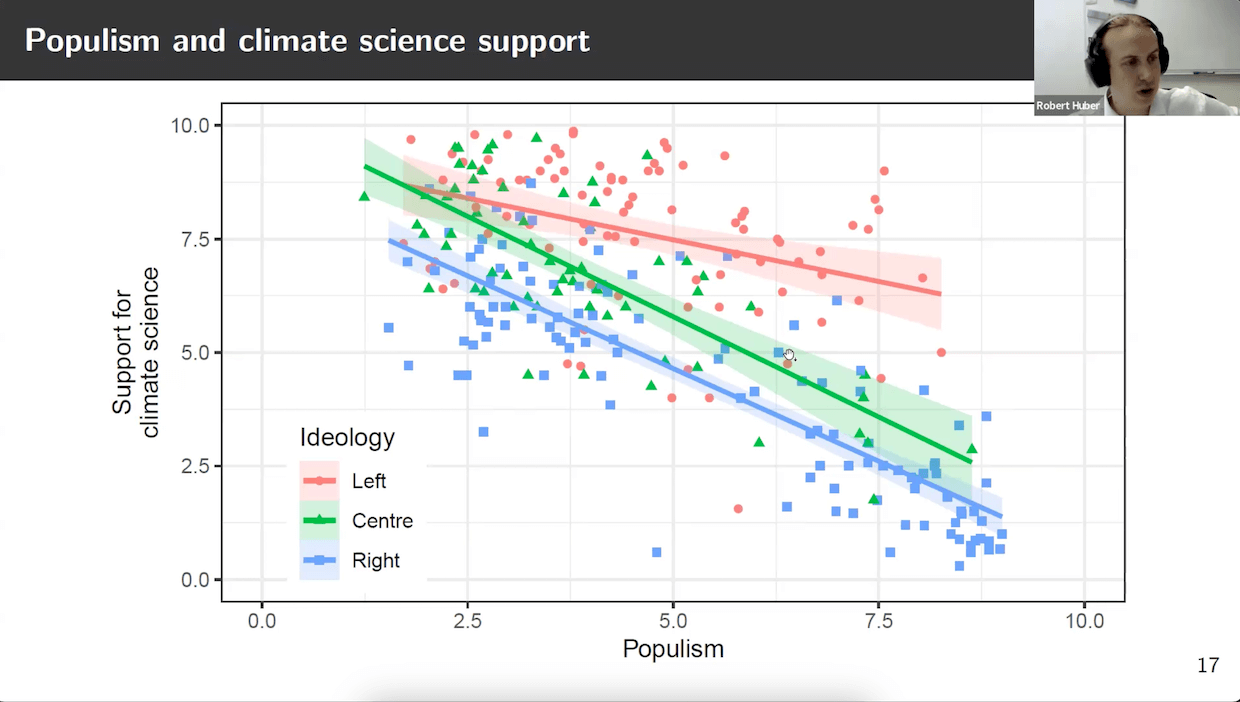
Professor Huber then turned to the findings. Presenting a scatterplot, he pointed out that “the more populist parties get, the more climate-skeptic they get in terms of not supporting climate policy.” A clear downward-sloping trend line indicated a negative relationship between degree of populism and support for climate action. This pattern was echoed when looking at parties’ support for the role of climate science: populist parties tended to express greater skepticism about scientific expertise, too.
However, a more granular analysis yielded even more striking insights. When Professor Huber divided parties into three ideological families—left, center, and right—he found that in all groups, increased populism correlated with greater climate skepticism. “What I find quite stunning,” he remarked, “and what runs a bit against this narrative of left-wing populist parties being a force for climate action, is that in all three groups we see a negative slope.” In other words, while right-wing populist parties were the most skeptical overall, even left-wing populists displayed less enthusiasm for climate action than their non-populist counterparts on the left.
This nuanced finding complicates common assumptions that left-populists are natural allies of ambitious climate policy. Professor Huber acknowledged that this pattern might partly reflect comparisons between left-populist parties and strongly pro-climate Green parties, but insisted it was a meaningful result nonetheless: “On average, left-wing populist parties are not that much more progressive when it comes to climate action than conservative or centrist parties that are not populist.”
Turning to right-wing populist parties, Professor Huber observed that these were the most skeptical of climate policy and science, but emphasized that this reflected their right-wing ideological orientation as much as their populism. “That’s not the effect of populism—that’s the effect of left-right orientation,” he cautioned, reiterating a key theme of his lecture: the need to disentangle populism from adjacent ideological factors such as authoritarianism, nationalism, or economic liberalism.
Professor Huber also reflected on the broader literature, acknowledging a “Western Europe focus” in both his own data and much existing research. He pointed out that this geographic concentration raises questions about generalizability, noting, for example, that Indian Prime Minister Narendra Modi represents a case that does not fit typical European populist patterns.
To illustrate how populist narratives manifest in practice, Professor Huber concluded by revisiting some familiar and varied examples. Tweets by Donald Trump highlighted skepticism framed around economic competitiveness and confusion between weather and climate. French Yellow Vest protesters exemplified resistance to climate policies perceived as unfair to working-class citizens, captured in the now-famous phrase “end of the world vs. end of the month.” Meanwhile, left-wing populists like Bernie Sanders and Spain’s Podemos criticized elites for blocking strong climate action—what Professor Huber termed “pro-climate populist frames.” However, he cautioned that such pro-climate populism remains relatively rare empirically. “Empirically, as the expert survey data shows, we don’t see this that often—it seems to be more isolated,” he concluded.
Professor Huber’s closing reflections emphasized the complexity of the populism-climate relationship. Populism’s “thin-centered” nature allows it to take multiple forms—right, left, pro-climate, or anti-climate—depending on context and adjacent ideologies. The task for scholars, he urged, is to avoid simplistic conflations and instead carefully disentangle the multiple drivers behind populist parties’ climate positions: “There is a lot of variation, and we need to systematically analyze this and disentangle the different underlying reasons for these narratives and frames.”
Conclusion
Professor Robert Huber’s lecture offered participants of the ECPS Academy Summer School 2025 a deeply analytical and empirically grounded understanding of the complex relationship between populism and climate politics. His key contribution was to disentangle populism from adjacent ideologies—such as nationalism, authoritarianism, and economic left-right positioning—insisting on analytical precision when examining why populist actors often exhibit climate skepticism.
Importantly, drawing on the work of Cas Mudde, Professor Huber distinguished populism as a “thin-centered ideology” that frames politics as a moral struggle between the “pure people” and “corrupt elites,” providing fertile ground for contesting the legitimacy of climate science, policy processes, and institutions. Populism’s anti-elitist orientation predisposes it to target those perceived as technocratic or detached from “the people,” such as climate scientists, international organizations, and bureaucratic policymakers. However, as Professor Huber emphasized, this predisposition manifests differently depending on ideological context: while right-wing populists typically reject climate action as a threat to national sovereignty, tradition, or economic competitiveness, left-wing populists may frame climate policy as failing to address social justice concerns or as captured by corporate elites.
Professor Huber’s empirical findings, drawn from an original expert survey spanning 31 European countries, provided systematic evidence that higher degrees of populism correlate with greater climate skepticism across left, center, and right ideological groups—a pattern that challenges assumptions that left-wing populism is inherently pro-climate. His analysis revealed that while right-wing populist parties are the most climate-skeptic overall, even left-wing populists tend to express less support for climate policy and climate science than their non-populist counterparts.
Professor Huber’s closing call for researchers to avoid simplistic conflations and instead carefully disentangle the multiple drivers of populist climate narratives underscored a central lesson for Summer School participants: populism’s engagement with climate change is multifaceted, context-dependent, and inseparable from broader struggles over democracy, legitimacy, and trust in expertise.
The eighth lecture of the ECPS Academy Summer School 2025 was delivered online by Professor Stephan Lewandowsky, a globally recognized expert on misinformation and political psychology. His presentation offered a penetrating analysis of how climate disinformation is fueled by an organized infrastructure of vested interests and amplified by populist politics, which undermine trust in science. Professor Lewandowsky highlighted that ideological commitments—particularly free-market conservatism—strongly shape public acceptance of climate science. He emphasized that communicating the overwhelming scientific consensus on climate change can be a powerful corrective but cautioned that disinformation thrives in an environment where politics and identity outweigh facts. His lecture underscored the urgent need to confront these structural and ideological barriers to effective climate action.
Reported by ECPS Staff
The eighth lecture of the ECPS Academy Summer School 2025, titled “Climate Change, Populism, and Disinformation,” took place online on July 11, 2025, as part of a week-long program dedicated to exploring the intersection of populism and climate change under the theme “Populism and Climate Change: Understanding What Is at Stake and Crafting Policy Suggestions for Stakeholders.”The lecture was delivered by Professor Stephan Lewandowsky, a globally renowned cognitive scientist and Professor of Psychology at the University of Bristol.
ProfessorLewandowsky’s research spans political psychology, misinformation, and the relationship between human cognition and digital media, focusing particularly on how misinformation about critical issues—such as climate change—takes hold and persists. His expertise has earned him numerous accolades, including fellowships from the Royal Society and the Academy of Social Science, a Humboldt Research Award, and election to the prestigious German National Academy of Sciences (Leopoldina). He has authored hundreds of scholarly publications, many of which appear in leading journals, and is a frequent contributor to policy discussions and media commentary on the challenges posed by misinformation to democracy and public understanding.
Moderating the session was Neo Sithole, a Research Fellow at ECPS, whose work focuses on the relationship between populist politics and global governance.
Professor Lewandowsky’s lecture addressed one of the most urgent and challenging phenomena of our time: the proliferation of disinformation in the climate domain and its entanglement with populist politics. The lecture provided participants with a comprehensive framework structured around four key themes: (1) contextualizing today’s “post-truth” condition; (2) examining the supply side of climate disinformation, including the institutional and financial networks that propagate it; (3) analyzing the demand side—why certain segments of the public are receptive to misinformation; and (4) exploring potential strategies to counteract the spread and influence of climate-related falsehoods.
In doing so, Professor Lewandowsky offered a penetrating analysis of how populism not only fosters skepticism about climate change but also contributes to the erosion of the very idea of factual truth itself. His presentation challenged participants to think critically about the deeper cultural, political, and epistemological forces at play in shaping public attitudes toward climate change, making it an essential contribution to the Summer School’s interdisciplinary exploration of populism’s global impact.
Populism, Propaganda, and the Collapse of Truth
Donald J. Trump, the 47th President of the United States, at his inauguration celebration in Washington, D.C., on January 20, 2025. Photo: Muhammad Abdullah.
Professor Lewandowsky began by setting the scene with a trenchant analysis of today’s so-called “post-truth world.” He described this condition as exemplified by US President Donald Trump, who “during his first presidency made more than 30,000 false or misleading claims—about one an hour, 24/7 for four years.” Yet despite this unprecedented torrent of misinformation, Professor Lewandowsky noted a striking paradox: “About three-quarters of his voters considered him to be honest during that time, and that to me is a real conundrum.”
This conundrum, he argued, reveals that misinformation today is not simply about factual disputes but reflects a deeper collapse in the very notion of truth itself. He illustrated this through the infamous controversy surrounding Trump’s inauguration crowd size. Using photographs that plainly demonstrated that Obama’s inauguration had far higher attendance, Professor Lewandowsky posed the question: “The falsehood is so easily disproven that you wonder why anybody would even bother with this.” The answer, he suggested, lies in what has been termed “shock and chaos disinformation”—an intentional blizzard of lies whose purpose is not to persuade but to undermine the very idea of factual reality.
Indeed, a revealing study conducted immediately after Trump’s inauguration showed that “Trump voters, and in particular those who are highly educated, were more likely to pick the wrong picture.” This led Professor Lewandowsky to conclude that this behavior reflects “participatory propaganda,” where individuals knowingly repeat falsehoods to signal political allegiance rather than out of ignorance. “They knew there were fewer people attending Trump’s inauguration, but it didn’t matter, because they wanted to support him,” he explained.
Professor Lewandowsky then situated this phenomenon within a broader critique of populism. At its core, populism asserts an artificial and often arbitrary division between “the people” and “the elites,” a division which, he noted, “negates pluralism because any opposition to the people is by definition bad, so it is anti-democratic.” Crucially, he highlighted that populism undermines epistemic standards by elevating intuition and “common sense” above empirical evidence. Citing Trump’s baseless attribution of a plane crash to diversity hires in air traffic control, Professor Lewandowsky observed: “There’s no evidence for that—complete, utter nonsense—and when he was asked about it, he said, ‘Well, it’s common sense.’”
This epistemological posture, he argued, renders populism “by design incompatible and in constant conflict with science,” because it rejects the principle that “evidence matters to adjudicating the state of the world.” As a result, even in contexts where survey data show that a majority of Americans accept anthropogenic climate change, Professor Lewandowsky cautioned that “what this obscures is the amazing divergence… less than a quarter of Republicans think climate change is a big deal or should be taken seriously.” He concluded that the Republican Party had “mutated into this populist-slash-fascist organization that has little resemblance to the Republican Party that I’m used to when I was living in the United States.”
Through this analysis, Professor Lewandowsky made clear that contemporary climate denialism and disinformation cannot be understood apart from the populist assault on truth itself. His lecture highlighted how misinformation serves as a political identity marker, shielding adherents from empirical falsification and entrenching ideological divides.
The Supply Side: The Infrastructure of Climate Disinformation
Illustration: Shutterstock / Skorzewiak.
In his incisive lecture, Professor Lewandowsky devoted significant attention to what he termed the “supply side” of climate disinformation—the institutional, financial, and rhetorical infrastructure fueling public misunderstanding about climate change. He began by posing critical questions: What forces drive disinformation? Who is shaping the narratives that mislead the public? Drawing on empirical research, he argued that climate disinformation is not random but anchored in a visible network of organizations operating predominantly in the United States and Europe. This infrastructure, while “in broad daylight,” often escapes the public’s attention.
At the core of this infrastructure is a striking financial commitment from vested interests, particularly fossil fuel industries and their affiliates. Professor Lewandowsky observed that these actors receive almost a billion dollars annually—a figure that, though not exclusively devoted to climate denial, reflects the depth of resources sustaining disinformation campaigns. In addition, lobbying efforts aimed at blocking climate policy in the US Congress account for approximately two billion dollars more, illustrating the immense scale and persistence of attempts to distort climate discourse.
Professor Lewandowsky highlighted a study by Justin Farrell that mapped relationships among organizations engaged in climate denial. This research demonstrated that institutions known to be funded by Exxon or the Koch Brothers tend to occupy central positions in these disinformation networks. This finding underscores how denial campaigns are not simply ideological but orchestrated, with financial and strategic backing from corporate interests.
He turned next to media dynamics that amplify this disinformation. Professor Lewandowsky critiqued the enduring journalistic tendency toward false balance: while balance is appropriate in political contexts, it becomes problematic when applied to science, where the balance should be “between evidence and not between opinions.” He illustrated how mainstream media for years gave equal time to climate scientists and fringe voices opposing the science, sometimes to absurd extremes—such as featuring an astrologist predicting cats’ personalities while dismissing climate change as a hoax.
Although this problematic media practice has improved marginally, Professor Lewandowsky argued that a disproportionate voice is still granted to contrarians. He pointed out that press releases from conservative think tanks attacking climate science continue to receive more media attention than university research highlighting the scientific consensus.
Having described this infrastructure of disinformation and amplification, Professor Lewandowsky turned to the disinformation content itself. He acknowledged that it is commonly assumed—sometimes too casually—that the claims spread by think tanks are inaccurate, but he insisted on demonstrating this rigorously. He introduced a taxonomy of science denial rhetoric, highlighting cherry picking as one of the most pervasive techniques.
To illustrate cherry picking, Professor Lewandowsky described a notorious example: a British opinion piece that cited a short-term drop in global temperature between two Januarys in 2007 as proof that climate science was wrong. This claim ignored long-term warming trends in favor of a trivial fluctuation—a classic instance of cherry picking. Professor Lewandowsky explained that natural variability, when isolated from broader trends, can be rhetorically exploited to mislead, despite the overwhelming evidence for global warming.
Recognizing that simply pointing out such fallacies often fails to persuade in a polarized environment, Professor Lewandowsky recounted a creative study he and colleagues designed to test denialist reasoning in an ideologically neutral way. They translated climate-denialist claims into an unrelated context—village population trends—and presented these translated claims, accompanied by corresponding graphs, to professional statisticians. The statisticians overwhelmingly found that the denialist interpretations were inaccurate and not suitable for informing policy, whereas the scientific consensus interpretations aligned with the data. This experiment compellingly demonstrated that denialist arguments fail not because of political contestation but because they are empirically incorrect.
Professor Lewandowsky concluded this portion of his lecture with a sobering observation: the public is being actively denied the right to accurate information about an existential risk. This is not simply a matter of competing narratives, he argued, but a profound ethical and political problem. The public is being misled through a coordinated and well-funded campaign, obstructing collective action on one of the most urgent challenges of our time.
Overall, Professor Lewandowsky’s analysis exposed a sophisticated, well-resourced, and tightly coordinated infrastructure of climate disinformation, showing that climate denial is not simply ignorance but an orchestrated political project closely tied to populist movements and vested interests. His lecture called on participants to recognize the structural forces behind disinformation and underscored the need for rigorous, empirically grounded responses that hold these forces accountable.
The Demand Side: Why People Believe Climate Misinformation
In this part of his lecture, Professor Lewandowsky explored the “demand side” of climate disinformation, focusing on the question of why significant segments of the public are receptive to misinformation about climate change. Rather than attributing this to simple ignorance or lack of information, Professor Lewandowsky argued that the primary driver is ideology: people’s deeply held worldviews and political identities shape how they interpret and accept information, including scientific evidence.
He began by underscoring a striking pattern from decades of research: attitudes toward climate change are strongly determined by an individual’s ideological orientation, particularly their endorsement of free-market principles. Whether measured as conservatism, libertarianism, or party affiliation, the relationship is consistent globally: individuals who favor small government and deregulated markets are much more likely to reject the scientific consensus on climate change. As Professor Lewandowsky summarized, this pattern is “pervasive,” observed not only in the United States and other English-speaking countries but also in diverse contexts worldwide.
One particularly counterintuitive finding Professor Lewandowsky emphasized was that increased education does not necessarily reduce skepticism about climate change; instead, it amplifies existing ideological divides. In the United States, for example, more educated Democrats are more likely to accept climate science, while more educated Republicans become even more dismissive. This suggests that higher education may provide the cognitive tools for individuals to selectively reinforce beliefs aligned with their political identities—a phenomenon known as “motivated reasoning.”
Professor Lewandowsky encouraged participants to think not only about political ideology but also about the relationship between science itself and certain ideological outlooks. He pointed out that science, over the centuries, has displaced humanity from its perceived centrality in the universe, challenging beliefs in human exceptionalism. For those who maintain strongly anthropocentric or hierarchical worldviews—a tendency more common among conservatives—this can be profoundly unsettling.
Moreover, Professor Lewandowsky highlighted how the core norms of science may conflict with conservative values. Drawing on classical sociological analysis, he explained that science rests on principles such as universalism, communal sharing of knowledge, and disinterestedness. He noted that even the language—terms like “communism” and “universalism”—can sound alien or even threatening to those who value national sovereignty, individualism, and hierarchy. This creates a deeper tension: resistance to climate science may not only reflect skepticism about a particular set of facts but discomfort with the very norms and practices of scientific inquiry.
To substantiate this, Professor Lewandowsky described empirical work examining correlations between individuals’ conservatism, their acceptance of scientific norms, and their attitudes toward climate change and vaccination. The results revealed that people who strongly endorsed conservative values were less likely to accept both climate science and vaccines and were also less likely to endorse the core norms of science itself. This association existed independently of exposure to specific scientific findings, suggesting that a general distrust of the scientific enterprise plays a significant role in shaping attitudes.
Professor Lewandowsky also noted that this distrust is exacerbated by the policy implications of climate science: addressing climate change requires government interventions in the market, such as carbon pricing or emissions regulations—policies fundamentally at odds with libertarian or free-market worldviews. Thus, opposition to climate science is often inseparable from opposition to perceived threats to economic freedom.
Communicating Consensus and Political Realism
In the final part of his lecture, Professor Lewandowsky addressed possible strategies for countering climate misinformation, with a focus on the communication of scientific consensus. He began by acknowledging a fundamental challenge: simply providing accurate information is often ineffective in today’s polarized environment. Ideological commitments, he noted, strongly shape whether people accept or reject scientific evidence, meaning that facts alone are unlikely to change minds.
Nevertheless, Professor Lewandowsky argued that one communicative strategy stands out as particularly promising—emphasizing the overwhelming consensus among climate scientists. To illustrate this point, he used an analogy: “Would you eat oysters if 97 out of 100 microbiologists told you they were contaminated and unsafe to eat? I wouldn’t touch these damn things,” he remarked, underscoring how consensus messaging taps into a basic human intuition about expert agreement.
Professor Lewandowsky stressed that the scientific consensus on climate change is similarly robust: over 97 percent of climate scientists agree that human activity is driving global warming, a level of agreement comparable to other widely accepted scientific facts. Importantly, he explained, communicating this fact has been empirically shown to be effective. “Consensus information can be a very powerful tool to shift people’s perceptions,” he noted, citing meta-analyses and recent studies across 27 countries that found this approach particularly helpful in reaching audiences with low institutional trust and right-leaning ideological commitments.
He highlighted his own collaborative work, including the production of a handbook explaining how consensus messaging works, why it matters, and how it can be deployed effectively. However, Professor Lewandowsky offered a sobering caveat. “Everything I’m saying about communication needs to be assessed against the harsh political realities we’re facing,” he warned. These realities include the global retreat of democracy and the increasing concentration of power among unaccountable elites who actively oppose climate action, even when market-based.
In this context, he cautioned against overestimating what better communication can achieve: “We’re living in a world in which people aren’t waiting for scientists to inform them. It’s a political battle. It’s about power, not science or communication.” While communicating consensus remains a useful tool, he concluded, it is not a panacea. The struggle over climate change is ultimately embedded in larger political and ideological conflicts that extend far beyond the reach of scientific expertise.
Professor Lewandowsky’s closing reflections captured the dilemma facing climate communicators today: opportunities exist, particularly because most people still trust scientists, but these must be pursued with humility about the limits of persuasion in a polarized and increasingly illiberal political environment.
Conclusion
Professor Stephan Lewandowsky’s lecture provided a powerful analysis of how climate denialism is rooted not simply in ignorance or confusion but in the intersection of populist politics, ideological worldviews, and deliberate disinformation campaigns. His four-part framework—contextualizing the post-truth environment, analyzing the disinformation infrastructure, understanding ideological drivers of belief, and offering communicative responses—equipped participants of the ECPS Academy Summer School with critical tools for diagnosing and confronting climate denial.
At its core, Professor Lewandowsky’s argument underscored that the climate crisis is as much a political and epistemological challenge as it is a scientific one. As he emphasized throughout, combating disinformation will require more than facts—it will require confronting the ideological and institutional forces that weaponize misinformation to obstruct climate action.
His insights resonated deeply with the Summer School’s overarching theme, illuminating the complex entanglements between populism and climate politics in an age of disinformation. The lecture not only dissected the mechanisms of denial but also pointed toward the political struggle ahead, reminding participants that defending climate science ultimately means defending democracy itself.
Professor Philippe Le Billon’s lecture critically examined how climate-related conflicts emerge from three sources: the impacts of climate change itself, contestation over climate inaction, and backlash against climate action. He argued that climate change operates as a “threat multiplier,” intensifying pre-existing inequalities and vulnerabilities rather than acting as an isolated trigger of violence. He explored how climate activism—while driven by moral urgency—can be framed as elitist and provoke populist opposition, and how the implementation of climate policy can generate new conflicts when perceived as unjust or technocratic. Professor Le Billon warned that “green capitalism” risks reproducing extractive logics, creating new “green sacrifice zones,” and underscored that climate justice requires confronting colonial legacies, class inequality, and structural power relations.
Reported by ECPS Staff
The seventh lecture of the ECPS Academy Summer School 2025—titled “Populism and Climate Change: Understanding What Is at Stake and Crafting Policy Suggestions for Stakeholders”—took place online on July 10, 2025. The day’s featured lecturer was Professor Philippe Le Billon, an esteemed scholar of political geography and political ecology at the University of British Columbia (UBC). Prior to joining UBC, Professor Le Billon worked with prominent institutions including the Overseas Development Institute (ODI) and the International Institute for Strategic Studies (IISS), as well as with environmental and human rights organizations. His research has long focused on the political economy of natural resources, extractivism, and the connections between environment, development, and security—especially in conflict settings. His current work engages closely with environmental defenders, small-scale fisheries, and the socio-political dimensions of the so-called “green transition.”
Though Professor Le Billon modestly framed himself as “not a major expert on climate change,” his extensive scholarship on the political economy of resource sectors, conflict, and environmental governance provided a compelling framework for analyzing climate-related conflicts in relation to populism. His lecture, titled “Climate Change, Natural Resources and Conflicts,” examined how climate-related conflicts increasingly shape and are shaped by populist mobilizations globally.
Professor Le Billon invited participants to think critically about climate conflict through a tripartite analytical lens: conflicts driven by the impacts of climate change; conflicts driven by perceived climate inaction; and conflicts triggered by the implementation of climate action itself. Framing his talk within what he described as the current era of “polycrisis”—marked by intertwined crises of climate, inequality, and governance—Professor Le Billon emphasized that climate change must be understood as a political issue embedded in structures of power, inequality, and historical injustice.
By drawing on case studies from around the world, his lecture challenged participants to reflect on the multifaceted relationship between populism and climate politics, showing how climate change is at once a driver of conflict and a contested arena where competing visions of justice, sovereignty, and socio-ecological futures play out.
Conflicts over Climate Impacts: From Environmental Stress to Political Violence
Hundreds of climate activists lie down in front of News Corp Australia headquarters in Sydney calling the Murdoch press liers on January 31, 2020.
Professor Le Billon reflected on the prevailing focus in academic and policy circles on conflicts attributed to the material impacts of climate change itself. He framed this discussion within the literature that examines how climate-induced environmental stress—particularly droughts, altered rainfall, and extreme weather—affects resource availability and contributes to tensions over land, water, and livelihoods.
As he explained, “generally, the drivers have been portrayed and naturalized as fitted with things like higher temperature, altered rainfall patterns, more frequent and intense disasters, sea level rise, etc. So droughts in particular have been a major focus.” To this list, he added lesser-discussed ecological dynamics such as “shifts in resources—so grassland seasonality, but also fish migrations. Every fish species has a temperature range that they like, and so they’ll migrate as temperatures warm up or cool down, and that can lead to fishing conflicts.”
Professor Le Billon was careful to emphasize that while climate change is an important contextual factor, it is rarely the sole or primary driver of violent conflict. He invoked the now widely accepted notion that climate change acts as a “threat multiplier,” noting that it “amplifies existing vulnerabilities” where poverty, inequality, livelihood insecurity, and political exclusion already prevail. He stressed that scholars and policymakers must avoid simplistic causality and instead attend to these intersections as the crucial sites of analysis.
To illustrate this argument, he cited several case studies, including the recurrent droughts in Syria, which “had a nasty effect on communities in Syria, and would have been part of the lead-up to the Syrian civil war. Of course, this is by far not the only factor, but it would have been an aggravating one.” He similarly highlighted the Sahel, where tensions between farmers and herders reflect a long history of land disputes now exacerbated by environmental pressures.
Professor Le Billon also drew attention to lesser-known cases of ecological disruption, such as fisheries conflicts prompted by species migration as ocean temperatures change. These examples underscore that climate change is interwoven with complex social and economic dynamics rather than being an external or autonomous driver of violence.
Critically, Professor Le Billon challenged dominant frameworks for analyzing these conflicts, identifying two key forms of reductionism: the naturalization of climate change itself and the culturalization of conflict. He argued that “what it has done also is generally depoliticized the inequalities that are at play in those countries, the kind of colonial legacies that have led to the type of property rights or absence of property rights,” and the “type of extractivist legislation that is in place.” Such framings, he cautioned, obscure the historical and structural conditions that have made many communities in the Global South so vulnerable to environmental shocks in the first place.
This depoliticization, he warned, enables securitized responses, particularly in the Global North, where governments increasingly treat climate-affected populations as threats—especially potential climate migrants—rather than as subjects of justice and solidarity. As Professor Le Billon put it, “many of these conflicts take place in, and affect, populations in the Global South which are the least responsible for what has happened.” Yet Northern discourse tends to focus on fears of migration, feeding into anti-immigration agendas and populist narratives of external threat.
Professor Le Billon’s intervention here was also a normative one: he argued that these conflicts should not be framed as technical problems requiring security solutions, but rather as calls for climate justice. He proposed that “rather than seeing [them] as a conflict,” these phenomena “should be seen as a call for justice rather than a call for militarized protection from Northern societies against those climate and conflict migrants.”
Moreover, he drew attention to the way populist actors at the domestic level have manipulated identity politics to escalate these conflicts. In many contexts, governments have “legitimated violence against those groups,” by framing nomadic herders or marginalized populations as scapegoats for broader socio-economic grievances. He noted that this dynamic is mirrored at the international level, where right-wing populists in the Global North leverage the specter of mass climate migration to bolster anti-immigration policies.
Conflicts over Climate Inaction: The Rise of Climate Activism and Eco-Populism
No Mining protest sign in Kaeo, New Zealand, September 15, 2013. While coal mining produced 5.3 million tonnes in 2010, acid mine drainage remains a serious environmental problem. Photo: Rafael Ben Ari.
The second broad category explored by Professor Le Billon concerned conflicts motivated by perceived inaction on climate change. These conflicts, while often nonviolent and institutional in form, represent an important and increasingly contentious terrain of political struggle. Professor Le Billon traced the rise of protests, demonstrations, and civil disobedience aimed at governments and corporations failing to address climate change. These movements, such as Fridays for Future and Extinction Rebellion, have emerged as potent social forces, demanding rapid action to avert climate catastrophe and often invoking the urgency of saving humanity and the planet. As Professor Le Billon put it, these movements are driven by “concerns for current and future impacts of climate change… it’s often a call for saving humanity and the planet in general, and in itself it can be sometimes quite problematic.” This universalist framing, he noted, is both rhetorically powerful and politically vulnerable.
While recognizing the moral force and legitimacy of these movements, Professor Le Billon offered a critical reflection on their social composition and political rhetoric. “Very often the people participating in the protests also have a relatively privileged background, and so it’s relatively easy to frame them as essentially privileged elites not being too preoccupied with the immediate concerns of some of the other population,” he observed. This tension, he argued, can be—and often is—instrumentalized by populist actors who portray climate activists as out-of-touch elites imposing burdens on ordinary people.
At the same time, Professor Le Billon highlighted the distinctive populist inflection of much climate activism itself, particularly in its critique of fossil fuel lobbies, global corporations, and corrupt elites. In this framing, “the climate inaction is framed as a result of decisions made by corrupt elites, greedy corporations, elitist global institutions that are done at the expense of local communities and the planet.” Thus, progressive eco-populism casts “the people” as aligned with the planet against an oligarchy of corporate and political actors who block meaningful climate action. This framing frequently intersects with indigenous and peasant movements, as seen in opposition to pipelines and extractive projects in North America and beyond.
However, as Professor Le Billon noted, these movements are not without internal tensions and external challenges. He pointed out that their demands often shift toward more radical critiques of the underlying political economy: “Essentially when people start not only to claim that there is climate inaction on the part of governments, but that the current system means that the government is incapable of acting… thus there is a need for a system change—that’s when we see a lot of violence taking place in different ways.”
This dynamic helps explain why such movements are subject to escalating repression and criminalization, particularly when they adopt disruptive tactics such as blockades and sabotage. Professor Le Billon discussed how governments in liberal democracies such as Australia, the UK, and Norway have responded with “very high arrest rates… while police violence has tended to be relatively low,” in contrast to countries like France, South Africa, or Peru, where “the rate of arrest is very low but the rate of police violence is very high.”
He emphasized that repression tends to correlate with movements that shift their critique beyond specific policies to systemic structures of capitalism and fossil fuel dependence: “It’s essentially when they start to challenge the system itself that we see an intensification of violence and repression.” Thus, his lecture illuminated the complex relationship between climate activism, eco-populism, and state repression. Professor Le Billon’s analysis underscored both the promise and the perils of contemporary climate movements, situating them as key arenas where conflicts over climate inaction are contested not only between activists and the state but also within broader struggles over privilege, legitimacy, and systemic change.
Conflicts over Climate Action: Green Transitions and Class Struggles
Protest against lithium mining in Belgrade, Serbia, August 10, 2024. A protester holds a placard reading “Stop Rio Tinto” during a demonstration opposing the company’s lithium mining plans. Photo: Dreamstime.
The third type of conflict examined by Professor Le Billon concerned resistance to climate action itself. Paradoxically, he noted that even as climate movements demand urgent measures, the implementation of climate policies can generate backlash and new sites of conflict—especially when these policies are perceived as unjust, unequal, or technocratic. As he remarked, “it’s common sense to intervene and change our system so that we’ve got more climate action—but the common sense also is that this transition cannot happen overnight,” capturing the contested terrain of climate policy.
He discussed the removal of fossil fuel subsidies in countries such as Nigeria, where the International Monetary Fund (IMF) and climate policy imperatives have converged in advocating for subsidy reforms. While the removal of subsidies might advance climate objectives on paper, they also provoke protests from populations who view them as essential to their livelihoods and who see such reforms as anti-poor. “Many people see material well-being and the imperative of social reproduction as being very important,” he observed, underscoring why such reforms often spark resistance.
Similar tensions have emerged around carbon taxes, electric vehicle subsidies, and renewable energy projects. In Canada, for example, carbon taxation became a major electoral issue in 2025, with fierce populist opposition portraying it as an attack on the working class. In France, Marine Le Pen’s far-right party has opposed offshore wind farms, portraying them as an imposition on local fishing communities—a populist strategy that, Professor Le Billon noted, mirrors narratives used in the American context around coal miners and oil workers. He pointed out that such movements tap into a grievance that “green liberalism puts a lot of focus on individual responsibility,” leading to perceptions that environmental policies disproportionately burden working-class populations while privileging elites.
Professor Le Billon introduced a critical perspective on what he termed “green capitalism” and “green extractivism”: the reproduction of extractive logics in the pursuit of green growth. Renewable energy infrastructure and low-carbon technologies, he observed, rely heavily on critical minerals such as lithium, often extracted from indigenous lands or ecologically sensitive regions in the Global South. These new “green sacrifice zones,” as he put it, “frame the climate crisis as resolvable through resource-intensive technological fixes” while perpetuating inequality and ecological harm. He noted that “about 70% of the energy transition mineral projects are near land that can be qualified as sites with indigenous people or traditional peasants,” a statistic that lays bare the colonial patterns embedded in the green transition.
He referenced resistance movements in the Andes, where lithium extraction has threatened fragile ecosystems and indigenous communities, as well as protests in Serbia against a Rio Tinto mining project. These conflicts illustrate how green transitions, if pursued within the existing capitalist framework, may perpetuate old injustices even as they address carbon emissions. As one protester quoted by Le Billon put it, “Green mining doesn’t exist… Politicians need to stop trying to get rid of pollution in cities by polluting our villages instead,” a vivid expression of the local-global tensions animating these struggles.
Professor Le Billon argued that the articulation of populism in these conflicts often turns on competing definitions of “the people.” In some cases, populist rhetoric is mobilized from the right, defending local or national sovereignty against globalist green agendas. In others, it emerges from the left, articulating an anti-elite critique of corporate greenwashing and imperialism. Both forms, he suggested, reflect deeper class struggles over who bears the costs and reaps the benefits of the energy transition: “We see a kind of two main categories… one is a critique of green liberalism… and the second one is against green extractivism, pushing back against the so-called extractivist imperative.”
In sum, Professor Le Billon’s analysis illuminated the complex and often contradictory ways in which climate action itself generates conflict, highlighting how struggles over green transitions are increasingly shaped by narratives of class, sovereignty, and justice. His lecture invited participants to recognize that without attention to these underlying dynamics, climate policy risks reproducing precisely the inequalities and exclusions it seeks to remedy.
Conclusion
In concluding his lecture, Professor Le Billon underscored the importance of understanding climate conflicts in all their complexity—not simply as environmental disputes but as deeply embedded in histories of inequality, structures of capitalism, and struggles over power and justice.
His three-part framework highlighted that conflicts emerge not only from the material impacts of climate change but also from contestation over climate inaction and from the contested implementation of climate policies themselves. Across these domains, populism plays an ambivalent role: sometimes reinforcing reactionary politics and obstruction, sometimes animating progressive alliances around climate justice.
Throughout the lecture, Professor Le Billon emphasized the need to critically examine the political economy of the green transition. He warned against narratives that frame climate mitigation as a purely technocratic project, disconnected from questions of inequality, colonialism, and class power. Without confronting these deeper structures, he argued, climate action risks reproducing the very injustices it seeks to redress.
His analysis also illuminated the paradoxical dynamics at play: climate policy can simultaneously be a site of progressive mobilization and conservative backlash; climate discourse can empower grassroots movements but also invite repression; and the pursuit of sustainability can generate new forms of extractivism and environmental sacrifice.
In sum, Professor Le Billon’s lecture made an invaluable contribution to the ECPS Summer School’s exploration of the nexus between populism and climate change. It provided participants with critical tools for understanding how climate conflicts are not simply about environmental degradation but also about contested visions of justice, sovereignty, and the political future. His call to recognize the uneven and contested terrain of climate politics resonated with the overarching theme of the Summer School: the urgent need to craft policy responses that are attentive not only to ecological imperatives but also to the demands of social and global justice.
In his compelling lecture, Professor Erik Swyngedouw offered a radical critique of contemporary climate discourse, describing it as trapped in a “climate deadlock” where knowledge and activism coexist with deepening ecological crisis. He argued that mainstream and radical climate narratives mirror the structure of populism, constructing simplistic binaries while displacing attention from capitalism’s core role in driving environmental destruction. Professor Swyngedouw challenged participants to recognize that the environmental apocalypse is not an imminent future but an unevenly distributed present reality for much of the world. His provocative call to dismantle the comforting fantasy of a unified humanity urged a re-politicization of the climate crisis, demanding systemic transformation and solidarity grounded in confronting global inequalities.
Reported by ECPS Staff
The sixth lecture of the ECPS Academy Summer School 2025, titled “The Climate Deadlock and The Unbearable Lightness of Climate Populism,” was delivered as part of the broader program, “Populism and Climate Change: Understanding What Is at Stake and Crafting Policy Suggestions for Stakeholders,” held online from July 7 to 11, 2025.
The lecture was presented by ProfessorErik Swyngedouw, a globally respected scholar in the fields of political ecology and critical social theory. He is Professor of Geography at the University of Manchester and Senior Research Associate at the University of Johannesburg’s Centre for Social Change. His work interrogates the political dimensions of environmental crises, urbanization, and social power. Among his major publications are Promises of the Political: Insurgent Cities in a Post-Democratic Environment (MIT Press), Liquid Power: Contested Hydro-Modernities in 20th Century Spain (MIT Press), and Social Power and the Urbanisation of Nature (Oxford University Press). His forthcoming book Enjoying Climate Change (Verso), co-authored with Lucas Pohl, extends his critical inquiry into the paradoxes of contemporary climate discourse.
Moderating the session wasJonathan White,Professor of Politics at the London School of Economics. Professor White is a prominent scholar of democracy, political temporality, and European politics. His books include In the Long Run: The Future as a Political Idea (2024), Politics of Last Resort: Governing by Emergency in the European Union(2019), and The Meaning of Partisanship (2016, with Lea Ypi). As moderator, Professor White introduced the speaker, contextualized the discussion within contemporary debates on populism and climate change, and facilitated a lively and thoughtful discussion by drawing connections between climate discourse, democratic politics, and visions of the future.
In his lecture, ProfessorSwyngedouw advanced a provocative and unsettling critique of contemporary climate discourse. He argued that despite widespread scientific consensus, institutional action, and activist mobilization, the condition of the planet continues to deteriorate—a paradox he termed the “climate deadlock.” Drawing on a psychoanalytically informed, Marxist perspective, Professor Swyngedouw contended that mainstream climate discourse functions in ways structurally parallel to populism, constructing binary narratives of virtuous “people” versus villainous “elites” or “external threats” (such as CO₂), while masking the real systemic drivers of ecological catastrophe: capitalism’s relentless imperative for accumulation and growth.
Professor Swyngedouw’s central claim—that both liberal and radical climate discourses reproduce depoliticization by focusing obsessively on carbon emissions as a fetish object—challenged participants to rethink familiar narratives. He argued that the obsessive focus on CO₂ reduction displaces attention from the deep class antagonisms and material inequalities at the root of the climate crisis, allowing societies to “act as if” they are responding to climate change while leaving intact the socio-economic structures that cause environmental destruction. This displacement, he explained, generates what he termed the “unbearable lightness of climate populism”—an empty consensus that obscures the political transformations truly required.
This lecture, rich in theoretical rigor and critical insight, provided a powerful contribution to the Summer School’s objective of fostering critical debate about populism and climate change. It invited participants to reflect on how even well-intentioned environmental discourses can perpetuate depoliticization and obstruct radical action, urging a re-politicization that directly confronts the systemic drivers of ecological crisis.
Focusing on the Climate Obscures the Politics
Flooding in Bangladesh’s delta region: Villagers on Charkajal Island endure rising waters, sea-level rise, and intense monsoon rains—making Bangladesh one of the world’s most climate-vulnerable nations. Photo: Dreamstime.
In his lecture, Professor Erik Swyngedouw delivered a provocative opening that set the tone for his critical analysis of climate discourse. Speaking with characteristic wit and candor, Professor Swyngedouw began by emphasizing a paradoxical but central claim: if we truly want to take the climate crisis seriously, we must stop focusing on the climate itself. This counterintuitive assertion framed his argument that the mainstream climate consensus—shared across liberal, radical, and even activist sectors—has become trapped in what he described as a “climate deadlock.”
According to Professor Swyngedouw, this deadlock emerges not from ignorance but from a deep structural dynamic. While knowledge and consensus about the seriousness of climate change are widespread, genuine transformative action remains absent. He argued that climate discourse today is structured in ways that parallel populist discourses: it constructs a binary narrative of virtuous “people” versus villainous “elites” and simplifies complex socio-economic realities by reducing them to fetishized objects—greenhouse gases like CO₂, methane, and nitrous oxides.
Drawing on psychoanalytic theory, Professor Swyngedouw contended that greenhouse gases have come to function as a “fetish” in the classic sense: a symbolic object that absorbs collective anxiety while allowing the underlying socio-political structures that drive ecological crisis—especially global capitalism and accumulation—to remain intact. In this view, the obsessive focus on CO₂ reduction serves as a form of displacement that assures that nothing fundamentally changes. Thus, Professor Swyngedouw’s core proposition was that mainstream and even radical climate discourses have become part of a pervasive depoliticization process, obscuring the real sources of the crisis while creating the illusion of action.
Mapping the Climate Deadlock
Professor Swyngedouw offered a penetrating analysis of what he termed the “climate deadlock,” a paradoxical condition in which global awareness and consensus about climate change coexist with mounting environmental degradation and policy failure. Professor Swyngedouw underscored that, despite widespread knowledge, sophisticated technologies, radical activism, and repeated calls for urgent action, climate parameters continue to worsen, with greenhouse gas emissions rising relentlessly. He framed this as a profound political and psychological impasse demanding a different conceptual lens.
To illuminate this impasse, Professor Swyngedouw employed a Marxist-Lacanian, psychoanalytically informed perspective, focusing especially on the psychology of those most committed to climate action: radical activists and conscientious citizens alike. He argued that many such actors—while passionately advocating for change—are caught in forms of what psychoanalysis calls “surplus enjoyment” and “hysterical acting out,” manifested in both symbolic protests and personal lifestyle adjustments, such as reducing air travel or adopting vegetarianism. These practices, while seemingly transformative, actually sustain an underlying attachment to the existing socio-ecological order.
Fetishistic Disavowal and the Object Cause of Desire
Drawing inspiration from the French philosopher Alain Badiou, Professor Swyngedouw suggested that the dominant climate discourse operates as a new “opium of the people”: a depoliticizing ideology that channels political energies into managing “the climate” as a technical object while obscuring the deeper power structures—especially capitalism—that drive ecological crisis. Central to this critique is the concept of “fetishistic disavowal,” where societies simultaneously acknowledge the reality of climate change yet act as if they do not know, displacing transformative political struggle onto the technical management of greenhouse gases, which have been fetishized as the primary cause of crisis.
Professor Swyngedouw thus identified a dangerous cognitive dissonance: even as greenhouse gas concentrations reach record highs, mainstream discourse congratulates itself on partial regional successes, such as EU emissions reductions, while ignoring how these reductions are offset by increases elsewhere to sustain global consumption patterns. This displacement allows societies to avoid confronting the “real” socio-political antagonisms and material inequalities embedded in the climate crisis.
Professor Swyngedouw argued that climate discourse and activism are not only shaped by the urgent need to address ecological breakdown but also marked by a libidinal attachment to the very socio-ecological order they critique. He suggested that many climate activists, while sincerely desiring a socially just, democratic, and environmentally sustainable world, displace this larger, daunting desire onto a “small object” that stands in for systemic transformation: the reduction of CO₂ emissions.
Professor Swyngedouw likened this displacement to the structure of fetishism in psychoanalysis, where desire attaches to a fragment or object—such as a shoe—allowing the subject to avoid confronting the whole, more difficult reality of a relationship. In this case, he contended that CO₂ becomes the “little object of desire,” the symbolic focal point around which hopes for ecological and social renewal revolve. This focus allows activists and institutions alike to engage in practices like recycling, dietary changes, and ethical consumption—actions that offer partial satisfaction but ultimately fail to address the root cause of the crisis: the capitalist drive for endless growth.
Professor Swyngedouw maintained that this fetishization ensures that the true trauma at the heart of the climate crisis—the need for radical political and socio-economic transformation—remains disavowed. By focusing on CO₂ as the manageable object, climate discourse paradoxically enables enjoyment of critique and activism while leaving intact the structures that produce ecological harm, thereby sustaining the status quo under the guise of transformation.
The Unbearable Lightness of Climate Populism
Respect Indigenous Peoples’ Rights: A group representing Indigenous communities marches during a climate protest in Copenhagen, Denmark. Photo: Dreamstime.
Professor Swyngedouw advanced a critical argument about what he termed “the unbearable lightness of climate populism.” He began by asserting that, despite widespread calls for change, many subjects do not truly desire a different socio-ecological order. Instead, their desire becomes articulated around CO₂ reduction as the privileged object of action. This displacement, Professor Swyngedouw argued, leads to a discourse whose architecture mirrors the logic of populism—a framework typically associated with right-wing nationalism but, in his analysis, equally at work within liberal and even radical climate discourses.
Professor Swyngedouw described how climate populism unfolds through the consensualization of the climate question, the mobilization of an apocalyptic imaginary, and the reliance on technocratic and managerial solutions. Central to this process, he contended, is the commodification of greenhouse gas emissions, the encouragement of individualized responsibility and guilt, and a focus on technical fixes rather than systemic change. In this way, climate discourse parallels right-wing populism’s structure, even as it espouses different substantive aims.
He outlined that both right-wing populism and mainstream climate discourse frame their arguments around a virtuous “people” threatened by a dangerous “other”—whether migrants or greenhouse gases—while externalizing the root causes of crisis. Both deploy narratives of existential threat and call for decisive action but stop short of confronting the real systemic drivers of inequality and ecological degradation. In Professor Swyngedouw’s formulation, this amounts to a profound depoliticization, where urgent rhetoric masks an incapacity to challenge the socio-ecological status quo.
Professor Swyngedouw summarized the hegemonic view underlying climate populism as a narrative where a global humanitarian threat—caused by idle elites or external invaders like CO₂—requires urgent mitigation using precisely the market-conforming technologies and governance structures that caused the crisis in the first place. This narrative sustains the illusion that catastrophe can be averted, that humanity can be saved, and that a lost Arcadian socio-ecological harmony can be restored if CO₂ levels return to 300 parts per million (ppm)—a formulation that he dismissed as a populist fantasy.
Expanding on this critique, Professor Swyngedouw presented twelve theses illustrating the structural parallels between right-wing populist discourse and climate populism. He invited his audience to imagine substituting the term “migrant” for “CO₂” to recognize the architectural similarity. Both discourses invoke “the people” or even “humanity” as a whole, presupposing a unity that he argued does not exist, as demonstrated by the vast disparities between, for instance, Gaza or Ukraine and wealthier regions. Both posit a direct relationship between public participation and the legitimacy of governance while short-circuiting genuine political conflict by reframing structural issues as matters of technical management.
Professor Swyngedouw pointed out that climate discourse has no privileged subject of transformation—no agent akin to the proletariat for socialists or women for feminists. Instead, it defines the enemy in externalized, fetishized terms: CO₂ becomes an ambiguous, socially empty, homogenized object that obscures the historical and material conditions of its production. A ton of CO₂ is treated as identical regardless of its source or context, encouraging a depoliticized response aimed at trimming “excess” emissions so that business-as-usual can continue.
He warned that dominant climate policies express demands addressed to elites to “act decisively,” rather than seeking to transform the elites themselves or the structures of accumulation and inequality that they defend. As an illustration, Professor Swyngedouw cited the exponentially expanding energy demand driven by artificial intelligence, whose corporate proponents are already ensuring that energy provision—including nuclear energy—will meet future AI growth. This example, he argued, epitomizes how climate discourse moves problems around rather than solving them.
Professor Swyngedouw then probed the appeal of climate populism, asking why so many—from radicals to mainstream actors—are drawn to this discourse. He suggested that its attraction lies in its function as a form of fetishistic disavowal: it allows individuals and societies to take the climate question seriously while avoiding the need for fundamental change. It enables solutions to be located within the familiar contours of technical and managerial governance arrangements while preserving existing socio-ecological power relations.
He cited Alain Badiou’s claim that environmentalism has become the “new opium of the people,” a soothing discourse that ensures things can go on as normal. The result is a climate debate that depoliticizes environmental matters by shifting attention away from what Professor Swyngedouw called “the mad dance of accumulation and its constitutive class dynamics”—the real drivers of climate breakdown. Instead, focus is displaced onto the symptom: CO₂, a fetish object that can be measured, traded, and managed, while the systemic causes remain unchallenged.
Professor Swyngedouw concluded that this logic leads to forms of “obsessive or hysterical climate activism,” which he characterized as “impotent acting out”—a pattern of behavior that allows society to appear engaged while keeping the underlying disease intact. He argued that this practice is supported and reproduced through the deployment of “empty signifiers” like sustainability, mitigation, adaptation, transition, and resilience. These terms enjoy universal approval yet lack substantive content, generating a hollow consensus that depoliticizes the climate question even further.
For Professor Swyngedouw, this configuration exemplifies the depoliticizing and uncannily populist phantasmic narrative and practice of what he termed “the climate catastrophe consensus.” His critique invited participants to reflect critically on the ideological architecture of mainstream climate discourse and the ways in which it allows a destructive socio-ecological system to persist under the guise of environmental concern.
The Real of the Climate Condition
Then, Professor Swyngedouw turned to “the real of the climate condition,” aiming to expose the systemic drivers of climate breakdown often concealed by mainstream discourse. He began by emphasizing the near-perfect correlation between GDP growth and greenhouse gas emissions. For Professor Swyngedouw, this relationship reflects how economic growth—understood as capitalist accumulation—is not merely an obsession but a structural necessity for the sustainability of modern societies. Without growth, crises ensue; thus, attempts by eco-modernists to claim that economic expansion can be decoupled from environmental degradation are, in his words, “fantasy land.” This illusion is starkly challenged by phenomena such as the environmental footprint of artificial intelligence, whose rapid rise portends escalating energy and resource demands.
To illustrate the material reality underpinning climate change, Professor Swyngedouw provided examples that disrupt the common narrative of an immaterial, post-industrial economy. Internet use, often celebrated for replacing carbon-intensive travel, accounts for approximately 2% of global climate emissions, rivaling aviation. The proliferation of smartphones and tablets adds to this footprint: each device represents 22 kilograms of CO₂ emissions, with over 3.5 billion devices globally. Their manufacture also embodies grim socio-ecological consequences, notably in Central Africa, where coltan mining—vital for ICT equipment—occurs under exploitative and violent conditions, often at the hands of militias and through the involvement of Chinese corporations. Professor Swyngedouw noted the irony that while Western societies discuss “decolonization,” they outsource contemporary extractive imperialism elsewhere, absolving themselves of direct responsibility.
Furthermore, he pointed to the extreme inequality of emissions: the top 10% of emitters are responsible for nearly half of global energy-related CO₂ emissions, while the poorest 10% contribute a mere 0.2%. The richest 0.1% alone emitted ten times more than the rest of the richest 10% combined, exceeding 200 tons of CO₂ per capita annually. These empirical facts reveal a deeply unequal, class-driven structure at the heart of the climate crisis. Yet, Professor Swyngedouw argued, this “real” is systematically disavowed in public discourse, displaced onto fantasies centered on technical management and abstract targets.
This fetishistic disavowal, Professor Swyngedouw explained, allows societies to “know very well” the facts of climate breakdown while continuing to “act as if we do not know.” In this paradox, knowledge itself becomes complicit in maintaining a socio-ecological order premised on endless growth, inequality, and environmental destruction. He warned that unless this structure is confronted, climate discourse will remain trapped in what he called a “populist climate fantasy.”
To move beyond this impasse, Professor Swyngedouw identified two key fantasies that must be transgressed. The first is the dystopian imaginary of an imminent catastrophe that can still be averted. For decades, climate narratives have proclaimed that we are five minutes to midnight, yet never past it, perpetuating an atmosphere of fear that serves neoliberal governance by depoliticizing conflict and presenting climate breakdown as a universal humanitarian threat. This framing enables techno-managerial responses while disavowing the combined and uneven realities of climate impact, where some communities are already experiencing collapse.
The second fantasy revolves around the idea that “humanity” itself is at risk. Professor Swyngedouw questioned the very notion of a singular humanity, pointing to stark global inequalities and conflicts that belie the fiction of a unified global subject. By invoking the danger to an imagined humanity, dominant discourse displaces recognition of the structural antagonisms that produce ecological catastrophe and directs political attention toward generalized, abstract fears.
Professor Swyngedouw underscored that rejecting the apocalyptic narrative—asserting instead that for many, the catastrophe has already occurred—is a necessary step toward politicizing the climate condition. Only by confronting these repressed traumas and dismantling the fantasies that sustain depoliticization can we begin to envision a genuinely transformative ecological politics.
Toward Political Ecologies
Drought in Indonesia: Residents collect murky water from a well in the dried-up reservoir of Kradenan village, Central Java. Photo: Dreamstime.
In this concluding section of his lecture, Professor Swyngedouw advanced a stark and provocative argument: the environmental apocalypse so often framed as an impending future catastrophe has, in fact, already occurred—but unevenly. For many across the world, especially in vulnerable regions, the dystopian conditions of climate collapse are not abstract scenarios but the lived reality of water conflicts, food insecurity, forced displacement, extractivism, and unlivable environments. These conditions, he argued, demonstrate that the “socio-ecological embroglio” has long passed the point of no return.
Professor Swyngedouw insisted that it is precisely this realization—that the apocalypse is both “combined and uneven”—that must become the foundation for any future politics. The comforting idea of returning to some lost Arcadian climate balance, or maintaining a stable global environment, he rejected as a fantasy that displaces the real conflicts and inequalities underlying ecological crisis. Even ostensibly sustainable practices in affluent societies, such as driving an electric vehicle in Amsterdam, are entangled in ecological destruction elsewhere—a global interdependence often obscured.
He then addressed what he termed the second “fantasy”: the very idea of “humanity” as a singular global subject deserving salvation. Drawing on Maurice Blanchot’s critique from the Cold War era, Professor Swyngedouw argued that this notion of humanity is itself a construct, masking deep antagonisms of class and geopolitical violence. From Gaza to Ukraine, the fractured, conflict-ridden nature of the world belies the fantasy of a coherent, unified human community. Professor Swyngedouw called for the construction of a “real humanity”—a project that does not presuppose unity but seeks to forge solidarity from division. Referencing Blanchot, he described this task as “Communism”: the transformative political process of creating humanity where it does not yet exist.
Conclusion
In concluding his incisive lecture, Professor Erik Swyngedouw left participants of the ECPS Academy Summer School 2025 with a profound and challenging set of reflections. His critique of contemporary climate discourse invited attendees to reconsider how mainstream and even radical environmental narratives have become complicit in reproducing a depoliticized consensus—a consensus that sustains the very socio-ecological structures responsible for the crisis. By exposing the fetishization of CO₂ reduction as a displacement of attention from systemic drivers like capitalist accumulation and class inequality, Professor Swyngedouw urged a reframing of the climate challenge as a fundamentally political, not merely technical, struggle.
Central to his lecture was the insistence that the environmental apocalypse often depicted as a looming future catastrophe is, in fact, already here—unevenly distributed and deeply entangled with global inequalities. He argued that for millions across the Global South and other marginalized communities, the dystopian conditions of water scarcity, extractivism, forced migration, and environmental degradation are an everyday reality, not an impending threat. Recognizing this uneven, ongoing catastrophe is essential for any honest and transformative political response.
Professor Swyngedouw’s provocative claim that “humanity” itself is a fantasy—masking deep divisions and antagonisms—challenged the audience to reject the comforting notion of a unified global subject requiring salvation. Instead, he called for the active construction of a “real humanity”: a project of solidarity forged from division, attentive to class, geopolitical violence, and the histories of imperialism and exploitation that underpin today’s ecological breakdown.
In sum, this lecture pushed participants to interrogate the ideological architecture of climate populism and reflect on what genuine politicization of the climate condition would entail. It provided not only a critique of prevailing discourses but also an invitation to imagine and enact a more radical, just, and emancipatory ecological politics.