Associate Professor Robert Csehi.

Assoc. Prof. Csehi: Hungary’s Election to Test the Resilience and Limits of Populist Rule in Europe

Assoc. Prof. Robert Csehi argues that Hungary’s April 12 election represents a critical test of whether entrenched populist rule can be electorally challenged. While he notes that “it will definitely be a test of incumbency survival,” he emphasizes that deeper dynamics—“ideological adaptation, state resource asymmetries, and narrative control”—remain decisive. Assoc. Prof. Csehi highlights growing limits in Orbán’s populist discourse, which “has lost its novelty,” alongside shifting political conditions marked by economic grievances and the rise of the Tisza Party as a credible challenger. Yet, even in the event of electoral turnover, he cautions that deeply embedded institutional structures may persist, potentially leading to “a prolonged struggle over state capacity.” Hungary thus offers a crucial case for assessing the resilience and limits of populist governance in Europe.

Interview by Selcuk Gultasli

Giving an interview to the European Center for Populism Studies (ECPS), Dr. Robert Csehi, Associate Professor and Program Director of the Political Science Doctoral Program at the Corvinus University of Budapest, offers a nuanced and theoretically grounded assessment of Hungary’s evolving political landscape on the eve of a pivotal electoral contest.

As Hungary approaches its parliamentary elections on April 12, 2026, the country stands at a critical juncture. After sixteen years of rule under Viktor Orbán, the election has come to signify more than routine democratic competition. It represents a broader test of whether entrenched populist governance—characterized by institutional consolidation, discursive dominance, and asymmetrical resource control—can be meaningfully challenged through electoral mechanisms. The campaign unfolds amid deep polarization, intensifying geopolitical tensions, and mounting concerns over democratic resilience, media pluralism, and institutional fairness. At the same time, the emergence of Péter Magyar and the Tisza Party has introduced a new dynamic into Hungary’s political competition.

Against this backdrop, Assoc. Prof. Csehi underscores that “it will definitely be a test of incumbency survival,” while emphasizing that the stakes extend beyond electoral turnover to questions of “ideological adaptation, state resource asymmetries, and narrative control.” In his view, the durability of Hungary’s populist system is no longer assured. He identifies emerging cracks within the governing discourse, noting that “the supply of the populist worldview… has become less creative” and “has lost its novelty,” with the government increasingly relying on repetitive narratives—particularly around the war in Ukraine—to sustain mobilization.

At the same time, structural shifts on both the supply and demand sides of politics are reshaping the electoral terrain. The rise of the Tisza Party, Assoc. Prof. Csehi observes, has created “a new channel for people to express their grievances,”while also reactivating political engagement at the grassroots level. Concurrently, worsening economic conditions have intensified public discontent, as “people’s everyday grievances are rising,” and the government finds it increasingly difficult to externalize responsibility for inflation, corruption, and declining public services.

Assoc. Prof. Csehi’s analysis situates Hungary within a broader comparative framework, highlighting the uncertain trajectory of mature populist regimes. While electoral defeat could mark “the end of the Orbán regime” in formal terms, he cautions that deeply embedded institutional structures may persist, generating “a prolonged struggle over state capacity and institutional de-capture.” Conversely, a renewed victory for Fidesz would signal that such regimes retain significant resilience, even under conditions of economic strain and ideological fatigue.

Ultimately, as Assoc. Prof. Csehi concludes, the Hungarian case offers a critical empirical test: whether “a mature, populist-authoritarian regime can still be changed… in an electoral process.” In this sense, Hungary’s 2026 election stands as a defining moment not only for the country itself, but for understanding the resilience—and limits—of populist rule across Europe.

Here is the edited version of our interview with Associate Professor Robert Csehi, revised slightly to improve clarity and flow.

Populist Discourse Losing Creativity

Fidesz, Soros.
Poster from political party Fidesz showing the opponents of Hungarian PM Viktor Orban surrounding billionaire philanthropist George Soros, Budapest, April 8, 2017.

Professor Csehi, welcome. Let me begin with the broader picture: In your scholarship, you argue that Hungarian populism has endured through the continuous reconstruction of “the people,” the redefinition of “the elite,” and the rearticulation of popular sovereignty. In the current campaign, do you still see this triadic logic operating effectively, or are its mobilizational limits beginning to emerge?

Assoc. Prof. Robert Csehi: I don’t think we do see some limitations to the effectiveness of this renewed populist discourse in Hungary. I think there are fundamentally three changes that actually challenge Orban’s effective populist discourse.

The first one is, in essence, that the supply of the populist worldview in the discourse has become less creative. It has lost its novelty. There were references to the war, for example, in Ukraine already in the 2022 elections—so four years ago. I mean, the war had just broken out, and they already used warmongering during that period. They pushed the campaign to the extreme in 2024 during the European parliamentary elections. They used essentially the same narrative, the same discourse. And they haven’t managed to really renew this discourse, and they keep talking about the same thing. They keep appealing to people’s fear of the war now. So, in comparison to previous elections, where every four years you had a new enemy and a new elite that was conspiring against Hungary and the government, we don’t really see that in 2026 compared to 2022 or 2024. So that’s one major change.

The second one obviously also affects, or concerns, the supply side of politics, and you already mentioned the rise of the opposition Tisza Party, which means there is actually a new channel for people to express their grievances and to mobilize their political demands behind a party which seems to have more legitimacy. It’s probably not the right word, but it resonates with people much better than the old opposition parties, which, on many grounds, have lost the trust of the people over the years—not only because they were ineffective, but also because they were involved in all sorts of scandals throughout the years. And now there is a new party which actually effectively challenges the government on a lot of issues and calls attention to many things that previously the old opposition, as we refer to it now, had not done. Plus, they really go down to the countryside, and they really do talk to people. They are engaging with the people and the electorate, and that makes a huge difference. So these are on the supply side, which are extremely relevant.

And then there is one demand-side feature which really has had a great effect. Since 2022, the Hungarian economy has not been doing very well. So, this has put a lot of things on the political agenda. People’s everyday grievances are rising, from inflation to public services, corruption, etc. It is not like Fidesz or Orban is able to cover these up anymore. We had skyrocketing inflation in the past few years, and it has become extremely difficult for the government to externalize these kinds of problems. And so people don’t shove it off anymore, like, “Oh, well, we’re still doing better no matter what the government does.” “Yeah, they might be corrupt, they might be wrong on certain policy issues, et cetera, et cetera, but we’re still better off than we were four years ago.” They don’t say that anymore. So, effectively, the economy plays a huge role in this entire story as well.

Election Tests Incumbency Survival

To what extent should the April 12 election be understood not merely as a contest between Fidesz and Tisza, but as a broader test of whether long-term populist incumbency can withstand mounting economic pressures, corruption fatigue, and shifting voter expectations?

Assoc. Prof. Robert Csehi: That’s a good question. It will definitely be a test of incumbency survival, in a sense, but, in the background, it is really about ideological adaptation, state resource asymmetries, and narrative control—namely, the extent to which these can still be maintained and used to hold power. I’m not sure to what extent these can actually withstand all the structural- and agency-based challenges that I’ve mentioned previously. So, it is going to be an interesting test from a political science perspective as well, to see whether they actually manage to survive or not, and to what extent a mature, populist-authoritarian regime can still be changed or won over in an electoral process. The jury is still out, and I’m really looking forward to seeing what happens afterwards.

EU Framed As Background Enemy

Viktor Orban
Viktor Orban, Hungary’s prime minister arrives for a meeting with European Union leaders in Brussels, Belgium on Dec. 13, 2019. Photo: Alexandros Michailidis.

You have shown that Orbán’s Eurosceptic populism often adopts an anti-imperialist framing, portraying Brussels as an external elite constraining Hungarian sovereignty. How central is this narrative in the current campaign, and does it retain its resonance in a context where access to EU funds and economic stability are increasingly salient concerns?

Assoc. Prof. Robert Csehi: It’s a very important point in the elections. Not in terms of the EU being a central topic—by all means, that’s not the case. Really, Orbán’s campaign is focusing on the war in Ukraine. Still, they have managed to somehow link this up with the EU. They have had billboard campaigns showing Ursula von der Leyen and Manfred Weber together with Volodymyr Zelensky, suggesting that the EU is taking the money of Hungarians and channeling it to Ukraine and to President Zelensky. So, they try to mingle these things together, mix them, and bring in the EU as, again, this sort of background power that is mistaken and on the side of war.

They have populist, moralist, discursive division, where Orbán portrays himself as a pro-peace political actor, whereas everybody else who does not agree with him, by definition, becomes pro-war, even if it does not really make sense.

So, in a sense, the EU is still there; it is referenced as, once again, occupying a pro-war position. As I said previously, they try to repeat the same claims as they did in the 2024 European parliamentary elections—drawing these very fine lines between who is on the side of peace and who is on the side of war, and they clearly place Brussels and the EU on the side of the war. And as I said, it is not only about the war per se. They also try to refer to the financial side of it, bringing this back repeatedly—claiming that the EU is taking your money, holding back funds, and channeling them to Ukraine. So, they frame it as financing the war instead of supporting Hungarian people, etc.

So, it is not center stage—I would say it is still the sort of antagonistic relationship between Ukraine and Hungary at the moment—but they do try to bring this into the discussion: that the EU is somewhere in the background, conspiring and doing all sorts of shady and harmful things. And the reason why they do that is that over the past years they have managed to convert their electorate into the most Eurosceptic segment of the population. In comparison to all other party supporters—with the exception of Our Homeland, the far-right party—probably the most Eurosceptic electorate is behind Fidesz at the moment. So it is just natural that they also play those tunes for their voters.

Tisza Promises Policy Reset
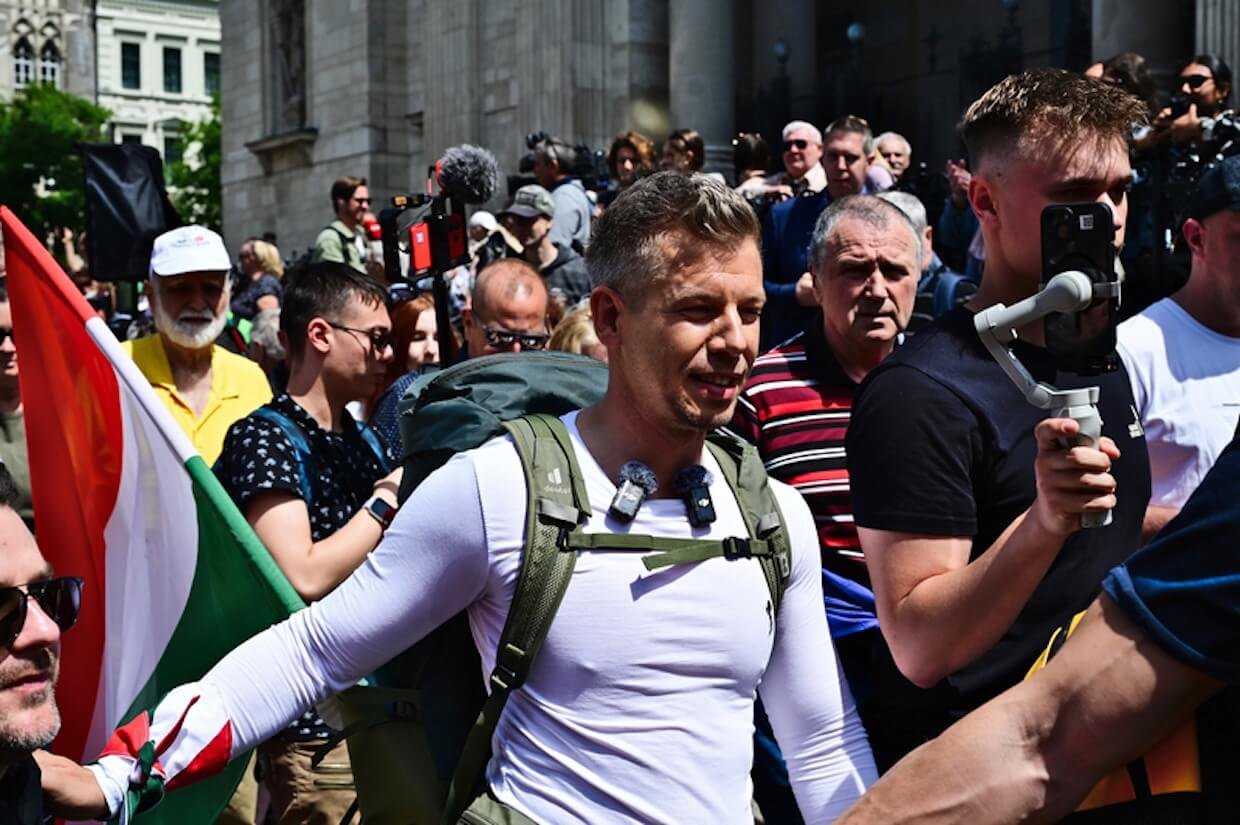
Tisza leader Péter Magyar
Tisza leader Péter Magyar begins a symbolic “one million steps” march to Nagyvárad, Romania, addressing reporters with supporters in Budapest, Hungary on May 14, 2025. Photo: Istvan Balogh / Dreamstime.

From the perspective of European integration, do you interpret this election as a confrontation between two competing models of EU membership—one sovereigntist and illiberal, the other oriented toward re-integration through rule-of-law compliance and institutional alignment?

Assoc. Prof. Robert Csehi: Yes and no. On the one hand, I would agree that Orban has had a very particular idea of defending sovereignty in the EU. He has thought that the defense of national sovereignty and national interest could only be pursued in a confrontational way. You have to use the channels of the European Council or the Council itself to block things and not really participate in negotiations and deliberations.

There have been multiple occasions where Orban was not present—they sent him out to have a coffee. From research, we know that Council negotiations have shifted somewhat in recent years. What we would describe as a kind of de-Europeanization in the Hungarian approach to EU affairs is what has occurred on multiple fronts.

Compared to that, Tisza and Magyar’s approach are definitely different from Orban’s on some issues. You mentioned the rule of law. Tisza claims that it will join the European Public Prosecutor’s Office as soon as it is in government. It also promises to resolve some of these rule-of-law issues and to bring back the funds that have been frozen under Orban’s regime. So, we can expect a return to more normal relations with the EU. This promise is also supported by the personnel envisioned to lead foreign and European affairs within the party.

That said, I say yes and no because I do think that Tisza also supports a model of European integration based on strengthening intergovernmental relations, as opposed to a supranational takeover in multiple areas. We have seen this time and again. They have run into conflicts on different policy measures, even within the European Parliament and within their own faction in the European People’s Party.

So, on the one hand, there is likely to be an effort to restore relations and the credibility of Hungary as a partner within the EU. On the other hand, there will be areas where they confront and challenge the direction of European policy. It is not going to be a return to the old days where Hungarian representatives simply nodded to everything the European Union demanded from the government. Rather, it will involve a stronger representation of national interests, but in a more cooperative—as opposed to confrontational—manner than Orban has pursued.

Turnover Won’t End Orbánism

If Péter Magyar and the Tisza party were to win, would that necessarily signify the end of the Orbán era, or has Orbánism become sufficiently institutionalized within the state, the media landscape, and patronage networks to persist beyond electoral turnover?

Assoc. Prof. Robert Csehi: The easy answer, obviously, is that electorally this would be the end of the Orbán regime, at least temporarily. But when we really look into the structural features, I would say no. This will, in fact, be a very interesting period to study, to see how deep the roots of the regime actually went and grew, and how these roots actually act and behave under a new government. I would say there is fundamentally a deeper institutional structure here, which could make the life of the new government miserable on multiple accounts—from financial oversight to judicial oversight, etc. There are many aspects where the government has to govern effectively with its hands tied behind its back. So it is going to be difficult.

I would imagine that this will be something like a prolonged struggle over state capacity and institutional de-capture. They will try to take back some of these institutions with whatever legal means there are. Nevertheless, the government will have greater room for maneuver in terms of policies in many areas, and I do think that they can make changes that could have a positive outcome or resonance with the public.

And one thing we cannot really exclude as a possibility—again, the poll numbers are all over the place—but most independent pollsters show a 15 to even 20 percentage point lead for the opposition party, which could effectively also mean that Tisza would gain a two-thirds, or constitutional, majority. That would be a completely different ballgame, because with that, they could de-capture those institutions more easily. To what extent this would be done in a democratic way, or whether they would repeat something similar to what we have seen during the Fidesz era, I am not sure. I am just saying that there might be an opportunity for the new government to actually de-root the system, provided that they have a constitutional majority.

No Majority, No Regime Change

Some observers suggest that even a Tisza-led government could face significant institutional constraints stemming from constitutional engineering and entrenched loyalist networks. How should we conceptualize the possibility of electoral alternation without substantive regime transformation?

Assoc. Prof. Robert Csehi: This goes in line with my previous answer. Without a constitutional majority, what you will see is that there is likely to be governmental turnover, but there is not going to be a regime transformation. And then, there are different scenarios as to what will happen. If there is a constitutional majority, then we see a re-orientation or a re-democratization. If there is only governmental turnover without real regime transformation, what kind of room for maneuver does the new government have?

How do we conceptualize this? So this is definitely going to be an interesting case to analyze in terms of re-democratization attempts—whether they actually go deep or whether they are just going to hover at the surface, which we have seen before. We even had a study on this, on local governments, examining how they try to re-democratize even under a populist authoritarian regime. We might actually see something of this sort at the national level. But once again, the possible measures might be more confined if there is only a simple majority in Parliament, and that would definitely limit the options of the next government.

Loyalty And Shielding Protect Fidesz

Hungarian Prime Minister Viktor Orbán gives a speech to convince his respondents in Szeged on March 4, 2014.

Your work on populist resilience to corruption highlights how such regimes adapt to and withstand scandal. In Hungary today, which mechanisms—discursive reframing, institutional shielding, or partisan loyalty—appear most crucial in sustaining support for Fidesz?

Assoc. Prof. Robert Csehi: Given that the regime has reached its peak and is really a mature system, from a populist regime perspective, I would say, in line with our theoretical frame, that it is mostly the institutional shielding and the partisan loyalty that dominate at the moment. Let me give you an example, which is essentially a reflection of both. There is this huge scandal about the former governor of the National Bank (György Matolcsy) and his son. There is a scandal going around that hundreds of billions of forints were actually channeled out into private funds—essentially, they were just paid out to… we do not even necessarily know whom. We do know that the governor’s son really benefited from this. And what is happening now is that there is practically no police investigation going on, or, if there is, it is extremely slow. We do not really know what is happening. In the meantime, we already know that, for example, the governor’s son has tried to, or has already started to, ship his luxury car collection to Dubai, and these kinds of things.

So wealth is going out, and in the meantime, nothing is really happening. And nobody is really talking about the Matolcsy family, etc. So there is this partisan loyalty going on, and there is this institutional shielding, which does not allow these institutions to actually do anything about it. There is no prosecution going on. There might be some prosecution, but we do not really know why it is so limited, why it is so slow, why it is kept secret, and why they basically let the governor’s son do anything he pleases, given the fact that we know that hundreds of billions of forints were, in a sense, privatized. So, I do think that these two mechanisms are the most dominant ones.

Discursively, they do not even really try anymore. It is more like, “Well, we have nothing to do with the issue—let the institutions run their course,” but the institutions are not doing anything. So, it is just a sort of bogus narrative behind it.

What has really changed, on the other hand, is Péter Magyar’s rise in politics, because he is essentially an insider. And when he appeared, that was one of his biggest assets in politics, since this insider status was extremely relevant. When he talks about corruption claims against the government, it seems to mobilize anger much more effectively. This is what really matters here, because, on many issues, anger is a very strong motivational factor in politics, including in unseating incumbent governments. This is absolutely not a good feeling, I have to say, but it does trigger mobilization, and mobilization is key, obviously.

Peace Narrative Masks Polarization

The campaign has been strongly shaped by geopolitical narratives, particularly regarding Russia and Ukraine. Has Orbán’s positioning as a “peace-oriented” leader maintained its electoral appeal, or is his perceived proximity to Moscow becoming a source of political vulnerability?

Assoc. Prof. Robert Csehi: That’s not an easy question to answer. First of all, his portrayal of himself as “peace-oriented” is really just buying into his populist discourse of being a pro-peace person, while everybody else who does not agree with him is, by definition, pro-war. So, once again, you have this Manichean, moralistic kind of division within politics that populists are very fond of. Essentially, this type of division turns every political discussion and agenda point into a life-or-death situation. Here, it is literally portrayed as such: if we do not want this, then the next day, everybody is sent to the Ukrainian front and people will die there.

But I would not buy into this “peace-oriented leader” narrative at all. There is a columnist in one of the Hungarian weeklies who consistently describes Orbán as aggressor-oriented, and I think that is probably a better portrayal of what he actually is—without taking any normative position. If you ask what he means by peace, the government does not really have a clear idea of what peace would entail or how it should be achieved. In that sense, the aggressor-oriented description may be more accurate.

As for whether this narrative still works, I think it holds up quite well among the core electorate. We know from sociological and political studies that most of Orbán’s supporters come from the countryside, with lower levels of education and generally more limited economic means. Among these groups, the message still resonates. Talking about the war—through fearmongering, warmongering, and similar appeals—continues to be effective.

What they have also done quite effectively, and this is why they remain competitive, is to turn uncertainty around the war into anger. Studies on populism show that fear is not the main driver; anger is. Fear reflects uncertainty, whereas anger is directed—it needs a target. They have managed to convert uncertainty and fear into anger.

To some extent, President Zelensky also inadvertently contributed to this dynamic. A particular quote was picked up and amplified by pro-government media, portraying it as a threat to Orbán. This helped channel anger toward Zelensky and Ukraine.

They also continue to layer in additional discursive elements, such as claims that “they are taking your money.” Recently, the prime minister held town hall meetings across the country, where he accused protesters of siding with Ukraine and attempting to divert Hungarian resources there. This reflects a level of political rhetoric that is, frankly, quite unprecedented. Similarly, incidents such as damage to the Druzhba gas pipeline have been reframed as evidence that Ukraine is withholding Hungary’s energy supplies and weaponizing resources. This contributes to a constant, artificially orchestrated sense of anger directed at Ukraine. In that sense, the narrative still resonates with certain segments. There is some degree of creativity, but in terms of the broader narrative, they have not significantly shifted away from the war-centered discourse seen in 2022 and 2024.

Regarding Trump and Moscow, the situation is more complicated. Trump’s own actions—particularly the wars associated with his leadership—no longer support the earlier framing of him as a “pro-peace” figure. As a result, the government has largely stopped emphasizing this aspect and instead downplays it. Attempts to reinterpret such developments rhetorically have not been particularly convincing.

As for relations with Moscow, recent leaks concerning communications between Hungarian and Russian officials have raised questions. Depending on interpretation, these either reflect pragmatic diplomacy or suggest alignment with Russian interests, including the sharing of sensitive information.

Overall, both the Trump factor and the Russian connection appear to increase the government’s political vulnerability.

Trump Effect Mostly Symbolic
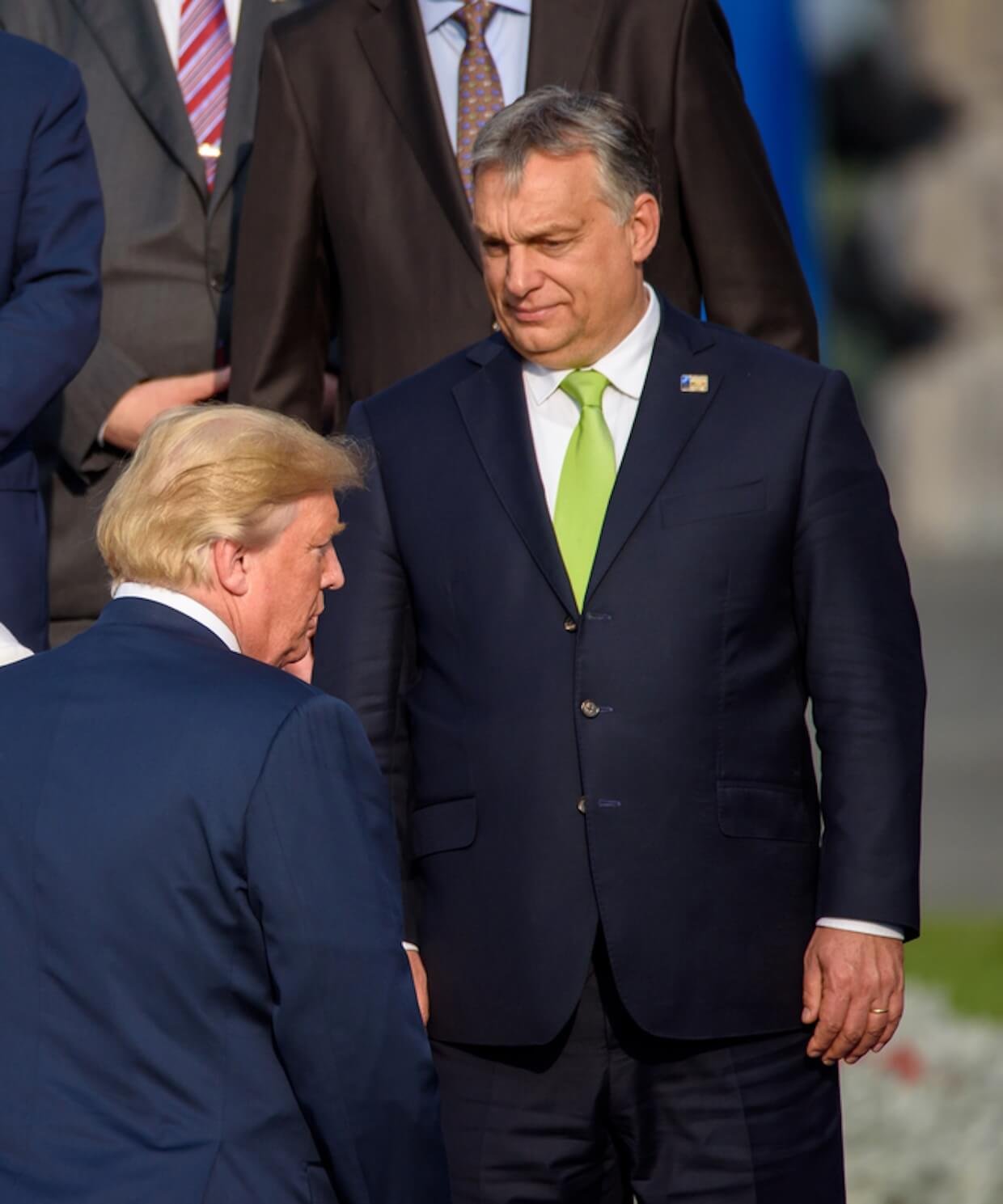
US President Donald Trump and Hungarian Prime Minister Viktor Orbán arrive for a working dinner at the NATO Summit in Brussels, Belgium on July 11, 2018. Photo: Gints Ivuskans / Dreamstime.

Hungary has long been embedded in a broader transnational network of right-wing populist actors. How significant is the “Trump effect” and Musk’s influence in this election, both in terms of symbolic validation and in reinforcing Orbán’s model of governance?

Assoc. Prof. Robert Csehi: I think it is really symbolic. I am not sure that, in terms of governance features, there is much there. Quite the reverse, I would say. It is really some American governors and high-ranking politicians who keep talking about copying this or that from Orbán, when it comes to, for example, dealing with LGBTQ issues in their states, etc. So, Orbán tries to position himself—and to some extent successfully—as a governance genius who should and could be copied by some of these international partners.

On the other hand, the extent to which they actually contribute to Orbán’s success is largely symbolic. As I said, the campaign is mainly about the war at this moment, so it is not really a question of whether there is transnational conservative endorsement or not—it does not matter that much. I do not see it that way. We had CPAC (the Conservative Political Action Conference) Hungary, which is a sort of mimic meeting of CPAC in the US where they invite right-wing politicians and intellectuals. It is a significant event. Just a couple of days ago, they announced that J.D. Vance, the US Vice President, is coming next Tuesday to Hungary. They probably wanted Trump to come but could not manage it, so it will be J.D. Vance. And the American government has already signaled that it supports Orbán’s re-election.

But, what matters most, once again, for the future—or for the short-term political room for maneuver of the government—is really the European partners. The EU and other European right-wing leaders are closely watching the election, because it could fundamentally change dynamics within the European Council and more generally within the integration process in the EU.

Hungary Tests Populism’s Limits

Finally, Professor Csehi, from a comparative perspective, what would each plausible outcome—a renewed Fidesz victory, a Tisza-led breakthrough, or a contested post-election scenario—tell us about the broader trajectory of populist rule in Europe and the capacity of democratic systems to dislodge entrenched illiberal incumbents?

Assoc. Prof. Robert Csehi: If Fidesz wins, this is still going to be an interesting scenario and an interesting political experience, which would tell us that, despite economic strains and despite the ideological fatigue that the government shows, and despite a strong challenger—a new challenger party emerging—the system still has some resilience. Then we would need to find out what actually triggered this resilience, or what made this resilience possible.

Now, this resilience, obviously, would send a message that electoral challenge is still possible, even with a populist regime that is extremely mature in its institutional design and structural features, etc. Therefore, none of these populist regimes are actually immune to a more systemic fatigue, and, if they want to survive, they need to be more creative in how they maintain the system.

But definitely, with a Tisza win, we would get very good information on how much democratic backsliding there actually was in the system, across different aspects. Most likely, this would generate immense knowledge that we could gain, and that would be extremely valuable for future studies. So I am very much looking forward to seeing what will happen. Those are my two cents on this point.

Dr. Thomas Carothers.

Dr. Carothers: When Institutions Fail, Protest Becomes the Last Line of Democratic Defense

In this interview with ECPS, Dr. Thomas Carothers offers a nuanced reassessment of contemporary democratic backsliding, challenging dominant explanations that prioritize socioeconomic grievances over political agency. He argues that elite opportunism and institutional permissiveness are central drivers of democratic erosion, cautioning against overgeneralizing from Western experiences. Emphasizing that “when institutions fail, protest becomes the last line of democratic defense,” Dr. Carothers highlights the enduring role of civic mobilization in constraining authoritarian drift. At the same time, he resists declinist narratives, noting that democratic “guardrails” continue to hold in many contexts. The interview ultimately frames global democracy as entering a new phase of contested resilience, shaped by the dynamic interplay of elites, institutions, and citizen action.

Interview by Selcuk Gultasli

At a time when democracies across the globe face mounting pressures—from intensifying polarization in the United States and Europe to the growing assertiveness of authoritarian powers—the question of how democratic systems erode, endure, and renew themselves has taken on renewed urgency. In this context, Dr. Thomas Carothers, Director of the Democracy, Conflict, and Governance Program and Harvey V. Fineberg Chair for Democracy Studies at the Carnegie Endowment for International Peace, offers a timely and nuanced intervention. Speaking to the European Center for Populism Studies (ECPS), Dr. Carothers challenges prevailing explanatory frameworks and calls for a more differentiated understanding of democratic backsliding and resilience.

Central to his analysis is a critique of the widely invoked “democracy-not-delivering” thesis. As he observes,“democratic backsliding has been spreading around the world for over 20 years, but we’re still struggling to figure out why it’s occurring,” urging “a bit of humility” from both scholars and policymakers. Rather than attributing democratic erosion primarily to socioeconomic grievances, Dr. Carothers emphasizes the role of “power holders—elites and elite agency” in actively constraining democratic choice. He cautions against generalizing from the American and European experience, noting that in many contexts, citizens are not opting for extremist alternatives but are instead “not being allowed to make those choices” due to authoritarian interventions.

This analytical shift foregrounds the importance of political agency and institutional dynamics over structural determinism. Dr. Carothers expresses skepticism toward rigid dichotomies, arguing that the “structure-versus-agency framework… is not a particularly useful way” to understand contemporary democratic crises. Instead, he advocates for context-sensitive analysis that recognizes the interplay between institutional vulnerabilities and strategic elite behavior.

It is within this framework that Dr. Carothers advances one of his most compelling claims: “When institutions fail, protest becomes the last line of democratic defense.” In settings where courts, media, and civil society are systematically undermined, public protest emerges as a residual yet powerful mechanism of accountability. While acknowledging that even protest can be violently suppressed—as in cases like Tanzania or Nicaragua—he underscores that, in many democracies, mass mobilization continues to function as a critical constraint on executive overreach.

At the same time, Dr. Carothers resists overly pessimistic narratives. While democratic backsliding persists, he notes that “the rapid wave of backsliding has slowed somewhat,” and that in numerous cases institutional “guardrails have been holding up.” Drawing on comparative examples from Brazil, Senegal, and beyond, he highlights the capacity of civic mobilization and institutional resilience to counteract authoritarian drift.

Taken together, this interview situates contemporary democratic challenges within a broader landscape of contestation, adaptation, and uneven resilience. Rather than signaling an inevitable decline, Dr. Carothers suggests the emergence of a more complex equilibrium—one in which democratic erosion and renewal coexist, and where the future of democracy will depend on the dynamic interaction between elites, institutions, and citizens.

Here is the edited version of our interview with Dr. Thomas Carothers, revised slightly to improve clarity and flow.

We Still Don’t Fully Understand Democratic Backsliding

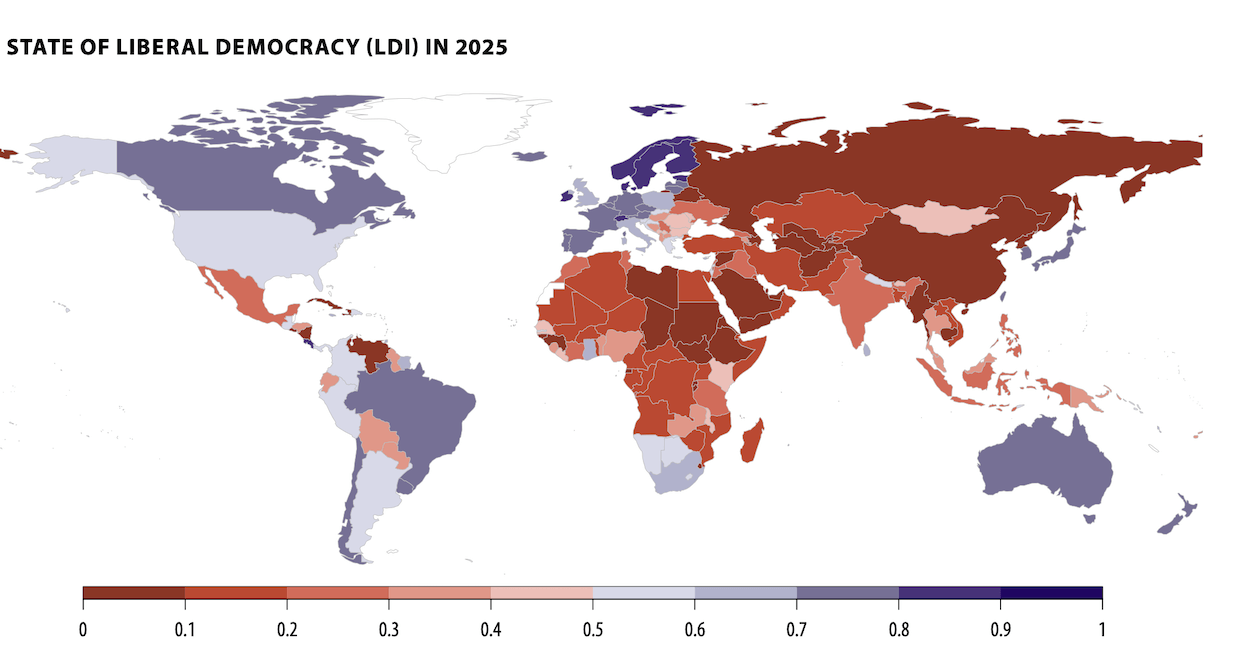
Figure from the V-Dem Institute Democracy Report 2026.

Dr. Carothers, welcome. Let me begin with the broader picture: In your recent work, you challenge the “democracy-not-delivering” thesis by emphasizing elite opportunism and institutional permissiveness over socioeconomic failure. In light of current developments—from democratic strain in the United States to governance crises elsewhere—how does this shift reshape dominant explanatory frameworks, and what does it imply for the balance between structural and agency-based accounts?

Dr. Thomas Carothers: I appreciate this broad question. It’s surprising if we step back. Democratic backsliding has been spreading around the world for over 20 years, but we’re still struggling to figure out why it’s occurring. It’s interesting, and in a way surprising, that we haven’t really figured it out yet, and that there isn’t as much consensus as you might think there would be. I start with that. I think a bit of humility for all of us is in order here. If the policy community is looking to experts and saying, “Give us some answers,” I’m not sure the expert community is doing all that well, and I count myself in that.

But I would start by saying that, in a broad sense, Americans and Europeans—who have been experiencing a lot of democratic uncertainty and tremors, and in the case of the United States, some real backsliding in the last 5–10 years—are tending to take a pattern of events in their own countries and turn that into a very general explanation that I don’t think works very well in many places. What do I mean by that?

In the United States and Europe, broadly speaking, what you have seen over the last 20 years are societies where economic growth has slowed. A lot of people are angry about that, especially middle classes who don’t feel they are doing very well. At the same time, there has been significant sociocultural change in the form of immigration and broader progressive shifts across these societies. It turns out that many people are uncomfortable with that. So, many people are not happy economically, they feel quite unsettled socio-culturally, and in some cases they are opting for politicians or parties outside the mainstream, on both the right and the left. They are moving away from conventional center-left and center-right parties toward alternatives at the extremes, and that is unsettling for democracy.

But this is not a good explanation for what is happening with democratic backsliding in many other parts of the world. Let me take one case: Tanzania. Tanzania was a kind of so-so democracy in Africa—not very democratic, but not very autocratic—for a fairly long time.

Western Explanations Misread Global Democratic Decline

In the last year, however, it has undergone severe backsliding. There was an election, and people challenged the president, seeking some change. The president and her team essentially stole the election. When people protested, she cracked down in an unprecedented way. Hundreds of people were killed by security services. That is democratic backsliding. It had nothing to do with the Tanzanian middle class choosing alternatives at the extremes. They simply wanted decent reform and governance. What we see instead is a predatory power holder hanging onto power and violently suppressing dissent.

This is similar to what we see in Nicaragua, where Daniel Ortega, over the last 10 years, has been challenged because he governs for the benefit of himself, his family, and a small circle of allies. When large-scale protests erupted in 2018, there was a severe crackdown—violence, repression, and more.

So, taking the American-European experience and assuming that this must be what is happening everywhere—that people are choosing the “wrong” politicians because they are unhappy with democracies not delivering—is misleading. Yes, people are unhappy in many countries, but in large parts of the world they are not choosing extremes; rather, they are choosing democratic alternatives and are not being allowed to make those choices because power holders—elites and elite agency—block them.

For this reason, I am very uncomfortable with the structure-versus-agency distinction. If we come in as analysts and say, “I think it’s mostly structure” or “I think it’s mostly agency,” we risk oversimplifying. Instead, we should take each case on its own terms, try to understand what is happening, and relax the insistence on categorizing it as one or the other. It is usually a combination of both.

Moreover, the concept of “structure” often covers a range of analytic ambiguities. Do we mean religious divisions? Immigration patterns? Social class structures? The term itself is quite vague.

In short—though I realize this is a long opening—the American-European experience is quite different from that of many other parts of the world. In those contexts, democratic backsliding often involves predatory power holders cracking down and steamrolling countervailing institutions and public protests. And the structure-versus-agency framework, in my view, is not a particularly useful way to approach such situations.

Public Protest Remains the Hardest Constraint on Elite Power

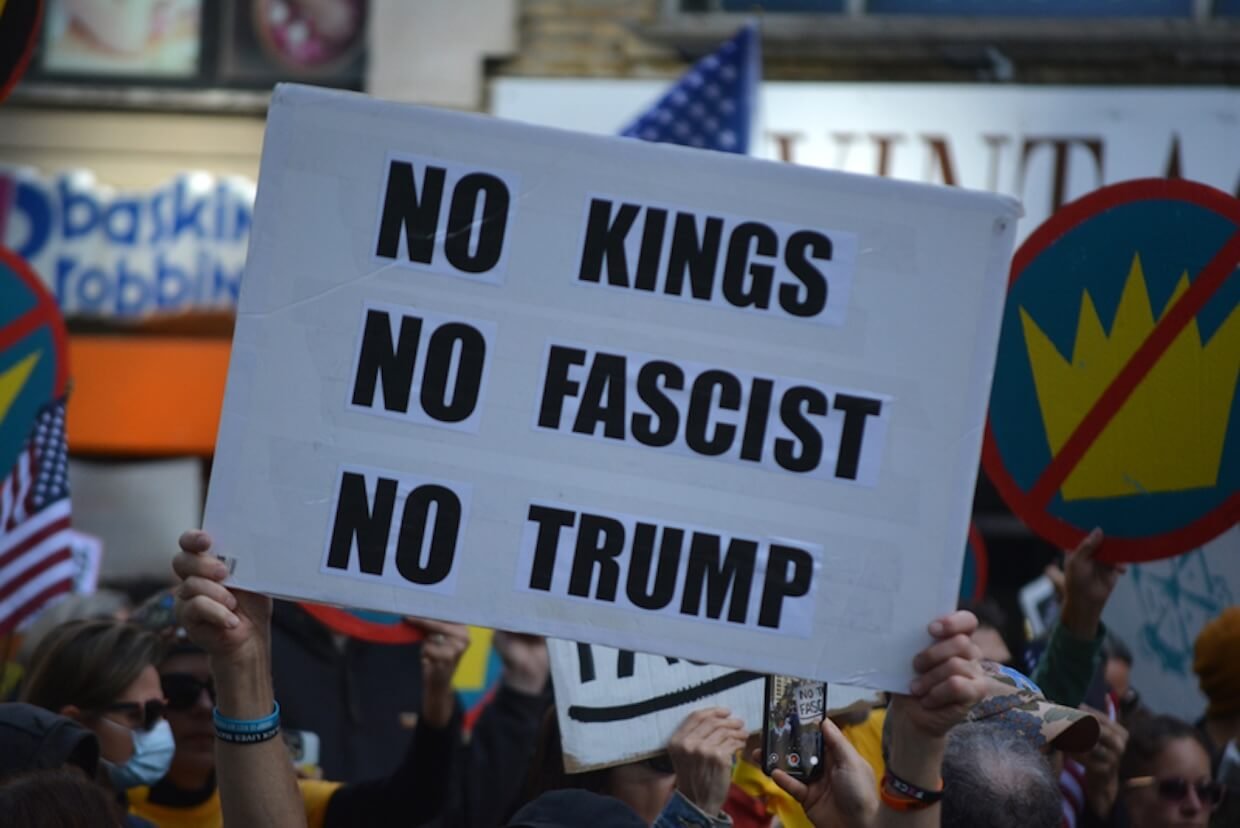
No Kings Protests.
No Kings protest in New York City, USA, October 18, 2025—demonstrators rally against authoritarian policies and corruption in Donald Trump’s administration. Photo: Dreamstime.

If democratic erosion is primarily elite-driven, how should we reconceptualize citizen agency today—especially in highly polarized societies like the US and parts of Europe—where publics may appear simultaneously mobilized, constrained, and politically fragmented?

Dr. Thomas Carothers: If we recognize the power of elites to overturn constraints on their power—which is what’s happening in a lot of places, and it startles us when it happens, say, in India—we had tended to think that the rule of law in India was pretty well established. India had a very good court system for a long time. It had a high degree of judicial independence and a judicial excellence. Of course, there is a lot at the lower levels, a lot of backlogs, and all that kind of stuff, but India was a country with pretty solid rule of law in certain ways.

However, Modi has been able to undercut that in ways that have really unsettled people in India and that they did not expect. That’s through elite agency—through structure, it’s through his determined decision-making to think, I can say this, I can do that, I can put these people here, I can defy this—that’s elite agency in action.

Given that, what we have to think is: wow, the power of elite agency in many cases is formidable. And what can stop that? What can stop that is a very strong fortification of those norms, and also people protesting when that is happening, and people saying, we won’t take this. That’s why I focus so much on protests, because when elites steamroller the different institutions, they undercut the courts, they close down the media, they strangle civil society, they go through all the independent sources of power, strangle them one by one, asphyxiate them, cut them off.

The one thing they have trouble overcoming is public protest, because it’s not really an institution they can just undercut. Now, they can, once it happens, as in Tanzania or Nicaragua, get police and security services of different types to come out, detain people, arrest them, beat them up, and kill them. Unfortunately, they can override public protest. But that is, fortunately, at least in some democracies, a line that leaders don’t cross. They don’t go that far, and protests therefore have a really powerful effect, as in Nepal or Bangladesh, where protesters were able to overcome attempts to stop them, and they pushed for some really democratic change. So elite agency—the power of it—should make us think hard about what powers can stop it, and what we can do, if we care about democracy, to try to fortify those things that can limit elite agency.

Economic Development Still Stabilizes Democracy

To what extent does ongoing backsliding in relatively affluent democracies challenge modernization theory’s assumption that economic development stabilizes democracy, particularly under conditions of cultural backlash and identity-driven politics?

Dr. Thomas Carothers: It has certainly been a surprise for many political scientists that the United States is experiencing significant backsliding. The recent V-Dem report on democracy in the world charted an 18-point decline for the United States, which is a very large drop in the last year. The Freedom House report shows only a 3-point decline, but even 3 points is quite significant in the Freedom House methodology. So, we do have the case of the United States, which raises questions about the crucial work that Adam Przeworski did—showing the relationship between the level of economic development and the absence of democratic breakdown—but I think we need to be very careful.

The United States is the only wealthy established democracy—other than perhaps Israel. By “established,” I mean a pre-1989 democracy. I am not including Hungary and Poland in that category, as they are post-1989. Among long-established democracies at a certain level of wealth, it is the only one that has experienced significant backsliding in the last 10 to 15 years.

It is true that many Europeans feel unsettled by the rise of illiberal political forces in their societies, but none of those countries is experiencing significant backsliding yet. Now, it may come—there is no question that it might. So, I do not think modernization theory, or the idea that once you reach a certain level of economic development you are bound to be more stable democratically, has been overturned by events. Rather, I think the United States is a head-scratching case as to why this is happening there. What is more interesting analytically is not to discard modernization theory, but instead to ask: what is it about the United States that is so different from all the other wealthy established democracies—Canada, Australia, Ireland, the Netherlands, Italy, Greece, and so on—that makes it so democratically fragile at this moment?

So, modernization theory, or at least the theory about the relationship between economic development and democracy, is still holding. However, we do have this powerful and unusual case of the United States, which requires very careful thought.

Executive Aggrandizement, Not Populism, Drives Backsliding

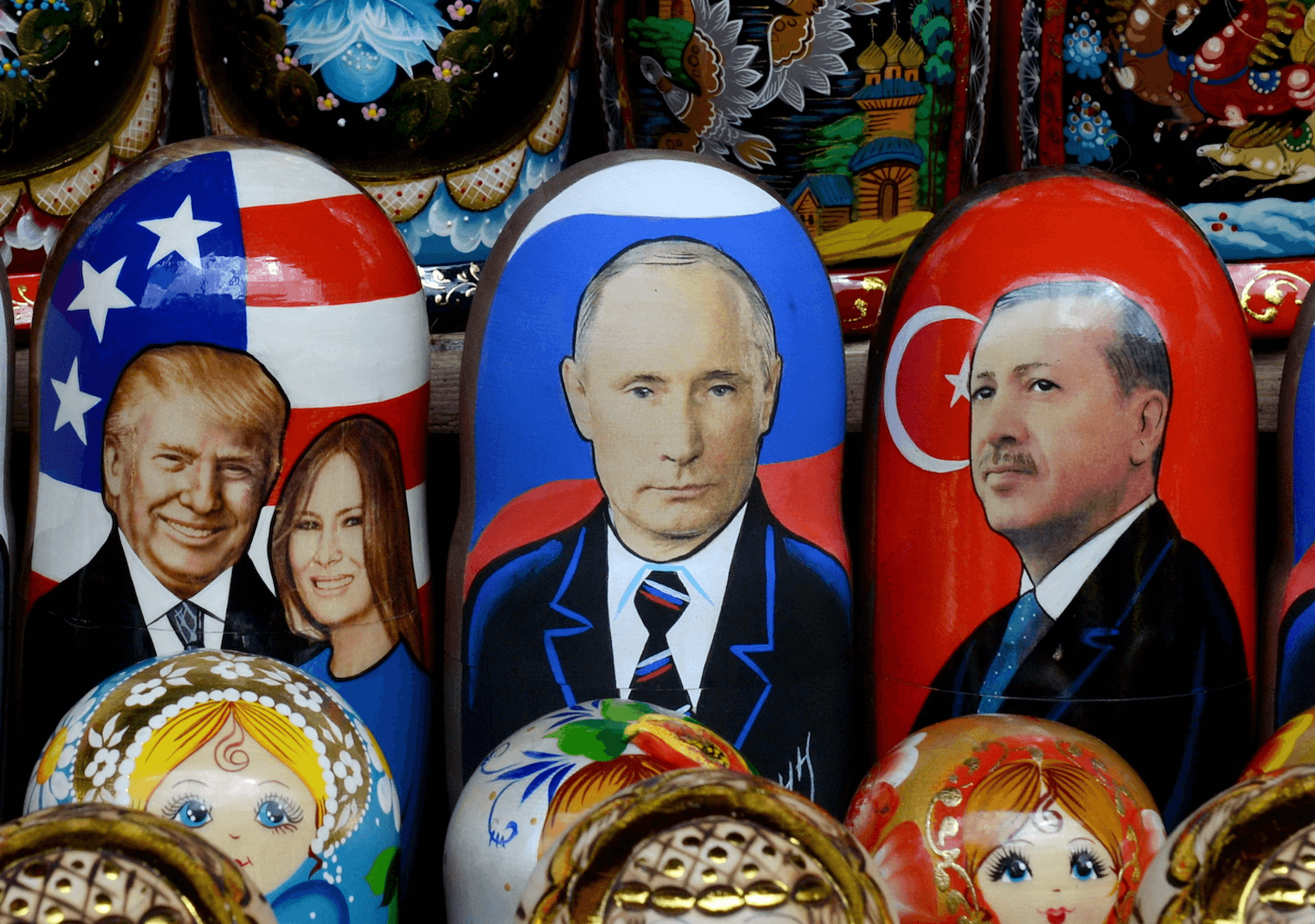
Nested dolls depicting authoritarian and populist leaders Vladimir Putin, Donald Trump, and Recep Tayyip Erdogan displayed among souvenirs in Moscow on July 7, 2018. Photo: Shutterstock.

How can we analytically disentangle populism as a discursive logic from executive aggrandizement as an institutional process, especially when contemporary leaders employ formally legal mechanisms to incrementally erode democratic norms?

Dr. Thomas Carothers: Wow, there are a lot of questions here; they’re very compact. Executive aggrandizement, which is the core pattern of backsliding that we see in many places, is where an executive amasses overweening power that is able to subvert the rest of the democratic system. Executive aggrandizement is the tool by which de-democratization and greater autocratization are occurring in a whole bunch of countries. But that’s not the same as populism, and we have to be really careful here. Some of these leaders who are carrying out executive aggrandizement are populists. Hugo Chávez was such a leader—he was elected, dismantled democracy, and engaged in executive aggrandizement; he was populist to the core.

Vladimir Putin has been aggrandizing the power of the executive in Russia over the last 25 years. In my view, he is not a populist. President Putin came from within the system. A populist is someone who comes from outside the system, divides, and says, “I’m going to attack the elite; I represent the people.” President Putin was not about the people versus the elite. He was the security service rising back up and asserting its power over Russian life—hardly a populist. He rode around on a horse once with his shirt off and had a picture taken, which some Russians felt made him look pretty good. I guess you could call that a populist technique. But I hardly think of him as a populist.

President Xi in China has been carrying out executive aggrandizement by removing term limits and by attempting, for example, to bring the military under greater political control. It is classic executive aggrandizement. Again, President Xi is not someone from outside the system who is dividing the country into old elites and the new people. He is the system. He rose up—his father was a grandee—he is a very well-integrated, well-embedded part of the system.

Therefore, executive aggrandizement is a process that leaders are using, both elected leaders and non-elected leaders, as in the case of President Xi. It is a form of taking over systems that is different from military coups and from state collapse, and so forth. It is the process that is defining democratic backsliding and autocratization in many countries. It is not the same thing as populism. Some populists engage in executive aggrandizement, not all. Some figures who engage in executive aggrandizement are populist, not all. So, it is very important to keep these concepts fairly clearly separate from each other.

Deep Structural Divides Drive America’s Polarization

In the current US context—marked by renewed Trumpism, institutional contestation, and electoral polarization—should we interpret developments as a case of “backsliding from within,” or as the exposure of long-standing structural vulnerabilities in American democracy?

Dr. Thomas Carothers: That gets to the question of what constitutes a structural vulnerability. The United States has some very basic fissures in society that have long been at the root of severe episodes of polarization in American life. The country has experienced waves of extreme polarization throughout its history. The Civil War was a period of intense polarization, and the country later moved beyond it. There was less polarization afterwards. The 1930s and the New Deal were also tremendously polarizing, followed by a period of lower polarization through World War II. In the 1960s and 1970s, polarization began increasing again and has reached very high levels over the past 10 to 20 years. So, the United States has this recurrent pattern of extreme polarization.

These waves tend to be rooted in the same underlying fissures—three in particular. One is a racial divide, which has been deeply divisive, not only in Black-white terms but also in a broader sense between those who support a more inclusive society and those who prefer a less inclusive one.

Second, religion in politics. The United States is, in many ways, a fairly religious society, and there has long been debate over the role of religion in public and political life. This debate continues today and remains highly divisive. Some believe religion should play a greater role, while others advocate for a clearer separation between religion and the state.

Third, the question of federal versus state control. Should the country have a strong federal government, or should power reside primarily with the states? This debate goes back to the founding of the Republic and was deeply embedded in the Civil War. It has remained a persistent and contested issue.

So, the United States has these structures. You could describe racial realities as a structure. You could consider federal versus state power as a structure. Religion—can that be called a structure? In some sense, yes. These factors provide a foundation that is distinct from Europe, where all three are generally less pronounced as basic fissures. They help explain why the United States, unlike many European countries, has experienced recurring waves of polarization.

I think what we are seeing in the United States today is the product of the latest episode of extreme polarization. Is this due to structure or agency? As I noted, there are underlying structural features of American society that contribute to the current divisions. At the same time, elite agency is clearly playing a role. When people discuss polarization in the United States, they often point to specific political actors—this politician did this, that politician did that—as polarizing forces. So, elite agency is also part of the picture.

When Politics Turns Tribal, Democracy Suffers

To what degree does affective polarization—visible in both US and European politics—function as a permissive condition for democratic erosion, enabling citizens to tolerate or justify norm violations by co-partisan leaders?

Dr. Thomas Carothers: Affective polarization—when one side basically hates the other, doesn’t trust it, and doesn’t think it should be allowed to come to power—is no longer just “I don’t like their tax policy.” Instead, it becomes, “I think they are bad Americans and would do terrible things to the country if they came to power, and I don’t want my daughter or son marrying one of them.” Affective polarization of that type is incredibly corrosive.

Because if it is based on the idea that the people on the other side—I hate them, I don’t trust them, and I think they are going to do harm to the country if they run it—then, when an election comes along, I may say: well, the choice is between a leader who is tidy-whitey and is going to follow every democratic norm but might let the other side in, versus someone who is really strong and willing to break the dishes needed to stay in power and keep those dangerous other people out. In that case, unfortunately, people trade off democratic norms for the sake of protecting their tribe, as people like to say.

In the United States, the very distinguished political scientist at Yale University, Milan Svolik, has done fundamental work showing that under conditions of extreme polarization, people are willing to trade away democratic norms for the sake of protecting their side.

Citizen Mobilization Can Halt Democratic Backsliding

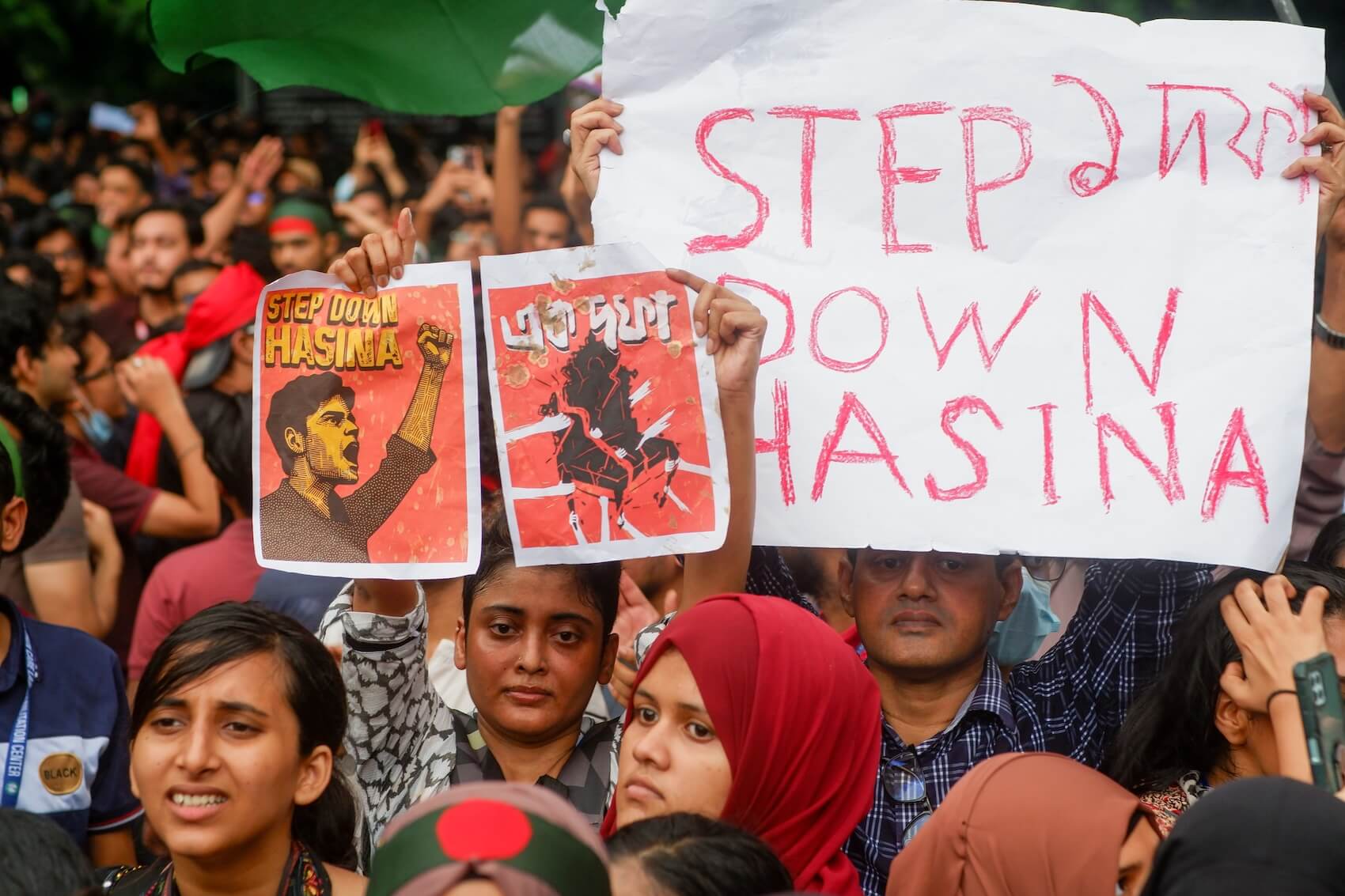
Large protests demand the resignation of Prime Minister Sheikh Hasina’s government as part of the Anti-Quota Movement and Bangladesh Quota Reform Protests. Thousands took to the streets in Dhaka, Bangladesh, on August 4, 2024. Photo: M.D. Sabbir.

Your work suggests that protests serve both as indicators of democratic strain and as potential agents of renewal. How should we theorize this dual role in light of recent protest waves in the United States, the United Kingdom, and other countries?

Dr. Thomas Carothers: At Carnegie, we run something called the Global Protest Tracker, which tries to keep track of every major anti-government protest in the world. If you go to it, you’ll see a list, and you can click on a country, and it turns out, oh, look, the Philippines just had major protests last month. Why? What were they about? And so forth. So, we’ve been watching protests very closely for a while. We’ve been running the tracker for seven years, and you learn a lot just by reading it every month.

Our researchers produce—Judy Lee, who works with us, is our main researcher on this—a tremendous memo every month analyzing the latest protests around the world. And you see that a good share of protests is about democracy. They are about citizens responding to executive overreach, often in the form of a stolen or compromised election. Sometimes they respond to attempts by a leader to remove a constitutional limit on power – “I’m going to serve a third or fourth term, no matter what the Constitution says. My ally at the Supreme Court will say that’s perfectly fine.”

So, citizens are protesting a great deal about democratic backsliding. Those protests are a sign of democratic strain, as you put it in your question, or even a sign of democratic breakdown. In many cases, they are also a major source of hope for stopping that process. They have stopped a number of efforts to extend constitutional term limits and have blocked some attempts to manipulate elections, although unfortunately not in other cases, such as Georgia or Belarus.

Protests like these reflect democratic strain, but they are also an embodiment of hope for something better. In more extreme cases, such as Bangladesh—extreme in the sense that events went very far—protesters swept out an autocratic regime and called for a return to a period when the country was at least reasonably democratic. Protests are key here. 

Of course, many protests today are driven by economic grievances—fuel prices rise, people cannot afford to feed their families, and they protest about that, understandably. But there are linkages. In many places, protests are sparked by some kind of economic or governance trigger. In Serbia, for example, a specific incident occurred—a train station roof collapse, if I recall correctly. People then took to the streets and said, “This government stinks, it ought to go—I’ve had it with this regime.” A protest that begins over a particular trigger can then snowball into a broader anti-regime movement that pushes a government out or at least tries to.

Nepal was somewhat similar—an initial spark related to a government attempt to limit access to social media platforms. People began protesting, and one thing led to another, and soon the prime minister was out.

So, protests are critical in this age—particularly in an era of hard-headed leaders dismantling many of the institutions that might otherwise constrain them. As I said before, protests are critical here.

Some Movements Make Democracy More Exclusionary

In these contexts, how can we distinguish between mobilizations that deepen democratic accountability—such as rights-based or institutional reform protests—and those that instead amplify anti-system, populist, or illiberal dynamics?

Dr. Thomas Carothers: Be careful about that distinction. You can have an anti-system protest that is quite rights-based. For example, the Serbian protests have turned into anti-system protests, but they are also based on the idea that there should be greater rights. Nepal was similar – “Don’t take away our right to access this information”—and that, too, turned into an anti-system protest.

Now, as you are alluding to, there are protests that, if you look at their goals or the issues that have stirred them up, may be quite different. There might be an anti-immigrant protest—an immigrant is involved in a crime, and people go out and protest, saying, “We hate these people who look like this or talk like this.” That is not especially good for democracy; it could shrink democracy and make it more exclusive.

Or people may protest against efforts to make vaccines widely available, arguing that they are dangerous and opposing public health policies. That could be described as rights-based in some sense, but it is probably not going to do much to further democracy in that country.

There are certainly many protests that pursue goals other than what we would consider core democratic rights. It is more a matter of looking at the cause—what people are trying to advance through the protest—and then deciding whether it is pro-democratic or whether it is pushing democracy in a more exclusive or limited direction.

Decentralization Empowers Protest but Weakens Strategy

With the growing prevalence of decentralized, leaderless movements, does organizational horizontality enhance democratic inclusivity and resilience, or does it risk weakening strategic coherence and long-term political impact?

Dr. Thomas Carothers: A lot of protest movements are what analysts like to call leaderless protests these days, and leaderless protests are often a reality in countries that are fairly repressive, where people are afraid or unable to form leadership councils or to organize in a very visible way, and so they are leaderless by necessity. Some are more leaderless; others are leaderless simply because that is how they arose. They may begin with a group of students who are very unhappy about something, and someone texts, “Let’s all meet at the square at 9 p.m.,” and people surge out and start protesting. Then someone else says, “Tomorrow at 3 o’clock in the afternoon, let’s meet here,” and it starts to grow. The protest becomes a movement, but there was no real guiding council at any point.
Because of technology that facilitates organization in many countries, this encourages a decentralization of authority within protest movements, which can make for quick, unpredictable, and, in some cases, powerful protests. But as you suggest in your question, once a protest is successful, there comes a point when demands have to be formulated. There also comes a point when negotiations with those in power become necessary, or when something must happen to focalize the discontent into a platform for specific change.

I remember Tahrir Square during the protests in Egypt and the Arab Spring. It was a surge of people. There were many civic groups involved, so it was not entirely leaderless, but there were many different actors trying to mobilize. At a certain point, the military said to the protesters, “We need to talk seriously about what is going to happen with Mubarak—we are ready to talk. With whom do we talk?”

A group of people did emerge within the protest. One of them happened to be a friend of mine, an Egyptian. I remember being in my office in Washington, picking up the phone, and it was him calling me from Cairo. He said, “I’m with a group of protesters, and we’ve been asked to go talk to the military. What should we ask for? What is our demand with respect to Mubarak?” That was the moment when I thought that what had started as a kind of leaderless protest—or a protest with many different elements—was now focalizing. The military wanted to negotiate with someone and say, “If we agree that Mubarak is going to step down and go to Sharm el-Sheikh or somewhere else, will you leave Tahrir Square and go home?” They needed to negotiate with someone.

It is hard to negotiate with a leaderless octopus. So, there is a moment when these movements have to coalesce, and then, if they are successful—as in Nepal, where the government is out—who is in charge? Something has to happen. Leaderlessness can be beneficial for a while, but then things need to move forward, and there needs to be a concretization of the movement into some form of institutionalized action and development.

How States Respond to Protest Defines Democracy

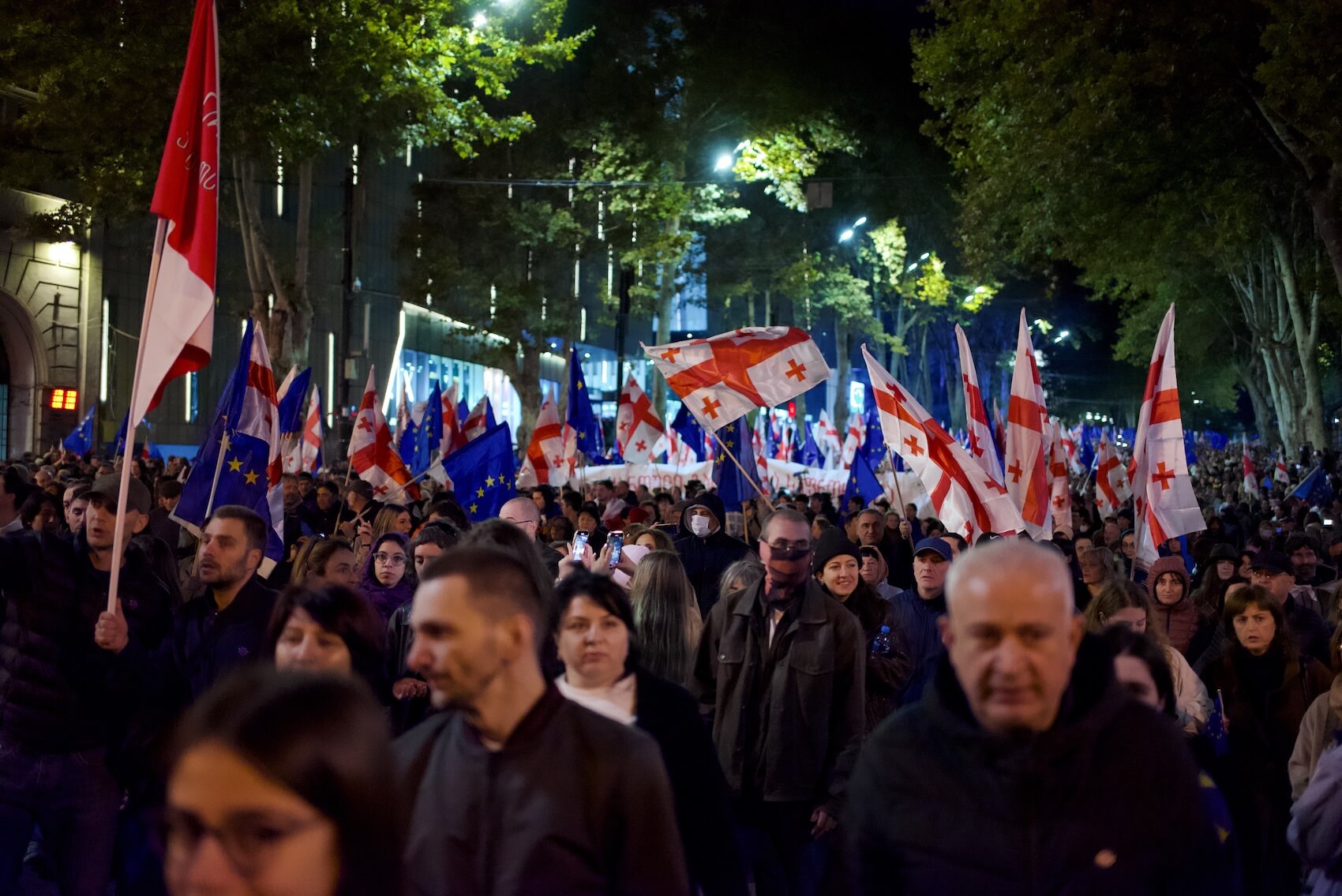
‘March for Europe’ demonstrations in support of EU integration and membership at Liberty Square in Tbilisi, Georgia, on October 20, 2024. Photo: Mirko Kuzmanovic.

How do different state responses—from accommodation and co-optation in liberal democracies to repression in more authoritarian settings—shape protest trajectories, and what do these patterns reveal about regime adaptability?

Dr. Thomas Carothers: There is a pretty sharp line. A protest occurs in a country; it is large, it challenges the system, and it asks for fundamental change. And here is the line: do you turn the security services on the protest and say, “We are going to detain you, arrest you, beat you up, and kill you”? Or do you say, “We are a democracy, people have rights here, and you have the right to protest, and we will talk with you and try to address your concerns so that you will go away?” At that moment, when the regime really has its back to the wall and protests are surging, do they respond with repression, or do they respond through negotiation, patience, or some other non-repressive approach? That is a defining test of whether you are in a democracy or not.

In Georgia—Georgia was a democracy for a while—protests emerged and were then fueled by the alleged stealing of elections by Georgian Dream. The political system, or the regime, began cracking down on this protest movement, detaining and arresting people and allowing a certain degree of violence. That is a sign that Georgia was moving off the democratic path and into a more repressive direction.

This is a defining moment—how protests are treated—and I pay very close attention to it. There is not always a clear threshold: sometimes three protesters are killed—is that enough? But in extreme cases like Iran, where tens of thousands appear to have been killed by security services, that is a clear sign of a profoundly repressive, anti-democratic regime in which democracy has been entirely suffocated. Georgia is suffocating its democracy. Belarus has asphyxiated and suffocated its democracy.

Whereas other countries have remained on the other side of that line. Hungary, for example, has had significant protests over the last 5–10 years. Many people are unhappy with the Fidesz government, but it has not responded with outright repression. It has taken many steps to undercut civic groups, tilt the playing field, and use state resources for party purposes. These are anti-democratic actions, but it has not turned the guns on protesters, because Hungary is still on this side of that repressive line. So that line is very fundamental to understanding the overall trajectory of a country.

Broad Mobilization Creates a Firewall Against Authoritarianism

Your research highlights the importance of civil society mobilization and opposition coordination in reversing backsliding. How do these factors interact with institutional legacies in determining whether democratic erosion can be halted or reversed?

Dr. Thomas Carothers: It relates to what I’m saying. Civil society mobilization is critical in many places, such as Brazil in 2022. Bolsonaro had been in power for four years; he was an anti-democratic leader, disrespectful of democratic norms. He sought to undercut the courts, and there were real doubts about whether he would respect an electoral outcome. Later evidence suggested that he was trying to overturn the electoral result through coup planning and so forth.

In early 2022, as elections were on the horizon, there was very broad-scale citizen mobilization. It was civic mobilization, which included a political role for established political actors, but it was civic in the sense that it brought together a broad tent of people with many different views, united around the idea that Brazil should reject an undemocratic path and pursue a democratic one. Most of those involved believed this meant voting for Lula da Silva, but it was nonetheless a civic mobilization that proved quite effective in creating a firewall against the de-democratization of Brazil.

Poland was somewhat similar before the 2023 elections. There was extensive civic mobilization, with people frustrated by the PiS government and its anti-democratic characteristics.

Civic mobilization in cases of significant backsliding is very important. In the United States, you are seeing an increasing number of protests. Recently, there was another round of the “No Kings” protests; I think up to 8 million people were involved last time. That is a significant number—about 2–3 percent of the US population—engaged in protest activity. This kind of broad-based civic mobilization is often a critical element in pushing back against democratic erosion.

Democracy Support Faces a Moment of Profound Rethink

In an international environment shaped by intensifying great-power competition, declining Western commitment, rising authoritarian influence, and intensifying geopolitical competition and conflicts such as the Iran crisis, and the global diffusion of authoritarian practices, how should democracy promotion be reimagined—does it require normative re-legitimation, institutional reinvention, or a fundamentally new model of transnational democratic support?

Dr. Thomas Carothers: International democracy support needs a lot of things. International democracy support had been struggling for 10 or 15 years in the face of democratic backsliding in the world. Backsliding was happening, and people were saying that whatever amount of democracy support we were giving—both the amount and the nature of it—was not solving the problem. Backsliding was still spreading. What we were doing was not enough, and maybe it was also not the right thing.

There was already a lot of questioning of international democracy support and then came the arrival to power of Donald Trump in January 2025. He and his team rapidly put an end to almost all US democracy aid that was directly sponsored by the government. The United States had been, by far, the largest funder of such aid in the world. It simply walked away from that field and said: no election monitoring support—we do not do that anymore; support to civic groups—we do not do that anymore; we are going to close down our public broadcasting in other places; human rights support—no, we do not do that anymore. So that was a tremendous blow to the field of international democracy support.

Unfortunately, in that same year, a number of European governments, for different reasons, also faced significant pressure on their aid budgets. There was a great deal of strain on those budgets, partly because of the need to allocate resources to support Ukraine in its war against Russia. As a result, aid budgets in Europe were tight, and 2025 was a bad year for international democracy support.

Now the field, a year on, is in a period of reassessment. My colleague Richard Youngs and I, together with Rachel Kleinfeld, are working on this issue. We published a paper last year titled What Future for International Democracy Support?, and we are preparing an updated version later this year to assess how the field is evolving.

What we are finding so far is that there is a great deal of ferment. You mentioned the need for institutional rejuvenation, normative re-legitimation, and new methods. People are actively asking these questions: what narratives should we use to describe democracy more effectively? Given the sharp decline in available aid dollars and euros, we need new forms of engagement that are more localized and more network-oriented. We need to move away from the traditional model of “the West has the answers, and the rest of the world has the problems.” Today, everyone faces challenges. How can we work on a more horizontal basis? How can we move beyond the notion of aid as a one-way process and instead recognize that we are all confronting shared difficulties?

There is a great deal happening in the field, but it is constrained by limited resources. It is on the back foot and still in a state of shock after developments over the past year or two. Many people are out of work, many are frustrated, and many are disappointed. The field is therefore in a period of reconsolidation.

At the same time, it is not disappearing. Many organizations and democratic governments still want to support democracy beyond their borders. There are also regional organizations in Africa, Latin America, Europe, and elsewhere that maintain pro-democratic norms. There are multilateral institutions at the global level that remain engaged, as well as numerous international non-governmental organizations. So, there is still a substantial international democracy support community, but it is undergoing a profound process of rethinking and reorientation.

Democratic Backsliding Has Slowed—but Risks Remain

Protesters protest for the freedom of Luiz Inácio Lula da Silva on Avenida Paulista in São Paulo, Brazil on April 7, 2019. Photo: Cris Faga.

And lastly, Dr. Carothers, looking ahead, given the coexistence of democratic erosion, persistent polarization, and emerging forms of resistance, do you foresee a trajectory of continued democratic decline, adaptive resilience, or the emergence of a new equilibrium of “contested democracy” in the coming decade?

Dr. Thomas Carothers: That last question of yours is common in the final questions that I get, which are basically, you’re walking across a bridge as a democracy specialist—do you jump off into the river in despair, or do you keep walking and think, we’ll probably come through this? But you put it much more elegantly than I just did.

I think over the last 5 to 7 years, the rapid wave of backsliding has slowed somewhat. There is still a lot of backsliding occurring, but there are also a number of countries where guardrails have been holding up. Brazil was an important case of that in 2022–23. One could name many others. Senegal managed to withstand a fairly concerted attack on its democratic institutions by its president in the last couple of years. The Philippines came out of the Duterte period. The successor leader is not the world’s most democratic leader, but he is not Duterte. Bangladesh is undergoing some kind of renovation. Bolivia came through a period in which the government was trying to undercut democratic norms and institutions. So, there are many countries where democracy is holding up.

I was in a conversation the other day with the research director at Freedom House, who made the important observation that about three-quarters of the countries in the world do not change their democratic status year in, year out. We tend to think, it’s like our phone, where every app is jiggling and moving around. The world is not really like that. There is actually a fair amount of stability, and the number of cases that are moving rapidly in one direction or the other is quite small. So, I’m walking across the bridge—I’m not jumping off—but, it’s going to be difficult.

Professor Johannes Andersen.

Prof. Andersen: Danish Democracy Grows More Volatile as Voters Drift and Parties Chase Them

In this insightful ECPS interview, Professor Johannes Andersen offers a sobering diagnosis of Denmark’s evolving political landscape following the 2026 general election. He argues that the country is undergoing a profound structural transformation marked by voter de-alignment, declining trust, and increasingly fragmented party competition.  While voters remain loosely anchored within traditional blocs, many no longer feel represented by specific parties, resulting in growing electoral volatility. At the same time, political parties are shifting from long-term representation toward short-term, issue-driven strategies. As Professor Andersen warns, this dynamic creates a paradox: expanded democratic choice coexists with rising confusion and distrust—pointing to a more unstable, yet still functioning, democratic system.

Interview by Selcuk Gultasli

Giving an interview to the European Center for Populism Studies (ECPS), Johannes Andersen, Professor of Political Science at Aalborg University, offers a sobering and analytically rich assessment of Denmark’s evolving political landscape in the aftermath of the 2026 general election. Professor Andersen’s diagnosis captures a deeper structural transformation unfolding beneath the surface of what has long been considered one of Europe’s most stable democratic systems.

In the wake of Denmark’s closely contested 2026 general election, the country stands at a pivotal political moment—marked by fragmentation, the resurgence of the populist radical right, and renewed geopolitical tensions over Greenland. While the campaign was driven largely by domestic concerns such as the cost-of-living crisis and migration, the results also point to deeper shifts in political trust, voter alignments, and the structure of democratic competition. Professor Andersen’s analysis situates these developments within a broader transformation of democratic politics, emphasizing that Denmark is no longer experiencing episodic volatility but a sustained process of structural change.

At the core of his argument lies the claim that both voters and political parties are undergoing simultaneous and mutually reinforcing transformations. As he underscores, “we are witnessing really fundamental changes in this system,” driven by evolving voter attitudes and shifting party strategies. Voters, while still loosely anchored within traditional bloc structures, are increasingly detached from specific party identities – “voters no longer feel represented by a political party”—resulting in unprecedented levels of electoral fluidity. The fact that roughly half of the electorate has changed party allegiance in recent elections, with even higher volatility anticipated, illustrates the depth of this de-alignment.

At the same time, political parties have adapted by moving away from long-term representational commitments toward short-term, issue-driven competition. Rather than defending stable constituencies, they increasingly seek to maximize electoral appeal through targeted policy responses – “we are the best at solving this problem”—thereby reinforcing a political logic in which responsiveness replaces representation. This transformation is particularly visible in the growing centrality of migration politics, which now structures competition across both left and right.

Professor Andersen also highlights the gradual erosion of the welfare state as a unifying political project. Once the cornerstone of Danish social democracy, it has receded from the center of political discourse, replaced by fragmented issue politics and competing populist narratives. In this context, even strong executive performance does not necessarily translate into electoral gains, as demonstrated by the limited political returns from Denmark’s handling of the Greenland crisis.

Taken together, these dynamics point to what Professor Andersen describes as a new and inherently unstable political equilibrium—one defined by expanded voter choice but declining trust. As he cautions, “we are developing a new political culture based on growing confusion among voters,” where democratic dynamism coexists with increasing alienation. 

The interview that follows explores these tensions in depth, beginning with the question of whether Denmark’s fragmentation reflects a temporary fluctuation or a more profound transformation of democratic politics.

Here is the edited version of our interview with Professor Johannes Andersen, revised so slightly to improve clarity and flow.

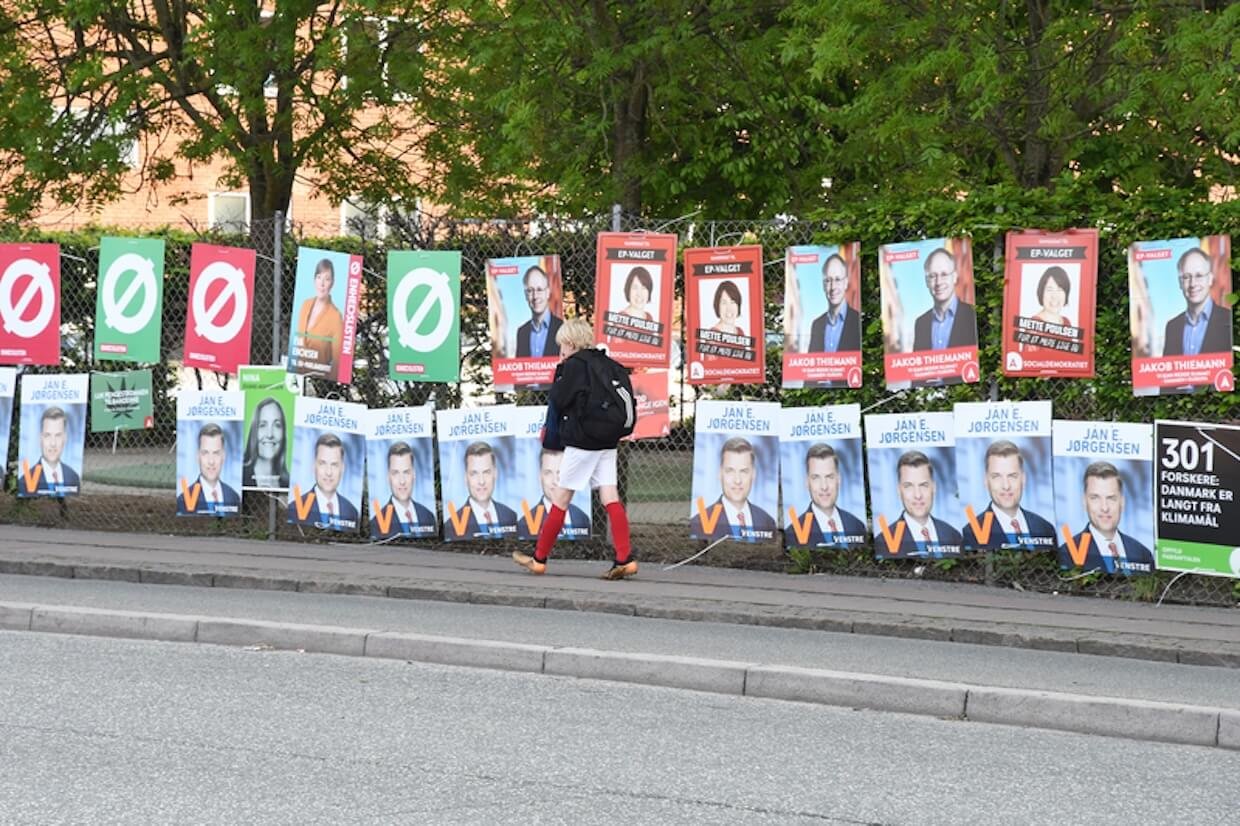
Politics Has Shifted from Representation to Competition for Voters Across Issues

The Danish nation has cast its votes in the parliamentary elections. Photo: Dreamstime.

Professor Johannes Andersen, welcome. Let me begin with a foundational question: The 2026 election produced a highly fragmented outcome that appears to unsettle Denmark’s historically stable party system. Drawing on your work on political trust and voter attitudes, would you interpret this as a conjunctural fluctuation, or as evidence of a deeper process of de-alignment—where traditional cleavages and partisan loyalties are being replaced by more individualized, volatile, and contingent forms of political engagement?

Professor Johannes Andersen: I would go for the second half of your question, because we are witnessing really fundamental changes in this system, and this has been going on for 10-20 years—perhaps even longer. There are two structural elements here that are very important. The first is that voters have changed their way of looking at politics, partly because political parties, at the same time, have changed their way of thinking about politics, developing politics, and approaching these questions more broadly. So, we have two structural elements that are both changing, and they are intertwined. I will try to explain that a little further.

When it comes to the voters, in the last election, half of the Danish electorate voted for a new political party. They changed their position in that sense. But most of them are still located within the blocs we know: the red bloc, or socialist bloc, and the blue bloc, the liberal or conservative bloc. So, voters are still, to a very large degree, positioned within these blocs. But they are changing parties within the blocs. As I mentioned, half of the voters changed their party in 2022. This time, my guess is that even more people—perhaps 55 percent of the voters—will change political parties.

So, in a way, you can see that voters no longer feel represented by a political party. This is one aspect of the fundamental change we are dealing with: people are becoming more confused and more insecure. They may still have a basic feeling that they are red or blue, but they are no longer linked to a particular political party.

That means that when election time comes, you see a great many voters searching for guidance. Last time, in 2022, up to 70 percent of voters used those tests published in newspapers, where they try to determine which party they should vote for. And many of them, on their first attempt, simply refused to choose the party the test suggested. But this is actually revealing. It points to a fundamental change: the feeling that one is not represented by a political party. That has changed profoundly for voters.

On the other hand, we have the political parties which are no longer oriented toward a particular group they want to defend, fight for, and help build a better society for. They are not trying to represent such groups in the best way they can. Instead, they are trying to compete for voters. They are becoming broader and broader in their appeal, and they are becoming better and better at identifying what a particular group wants. Then they propose political measures accordingly: we are the best at solving this problem; we are the best at solving that problem.

When it comes to issues, for example, water has been very important in the 2026 election. It could be pollution of the water. It could be the question of an ageing population—how should we deal with that? Or it could be the rising prices in the shops, where parties propose giving people a check, an amount of money they can use to buy groceries, especially food.

So, political parties are becoming more and more occupied with single issues, rather than with any structural or strategic project aimed at defending particular groups. On the one hand, then, we have voters who are becoming more insecure and who do not feel represented in any deeper sense. On the other hand, we have political parties that are increasingly eager to win more and more voters, no matter what.

And one of the issues that has become especially important for political parties—both in the red and blue, blocs—is immigration. The immigration question has become central even for the Social Democrats, and now also for the Socialist People’s Party, which is a left-wing party. They are becoming more and more interested in signaling that they do not want immigrants, especially those with a Muslim background. This issue has become very important for all of them, and they are now in competition over who is most eager to throw people out if they are involved in any kind of illegal activity—or perhaps even just visible Muslim religious activity. In that sense, they are eager to expel them, or even to throw them out.

The immigration issue—and especially immigration from Muslim countries—is, in a way, central. All these other issues they deal with—wanting to give people more money so they can buy food, wanting clean water, and so on—are linked to the immigration question in one way or another. They have to make sure that this does not become a way of scaring people.  This is the fundamental structural situation in Denmark: on the one hand, people feel unrepresented; on the other hand, political parties are no longer truly interested in representing anyone. This is the issue, the structural issue, for understanding many of the details.

The Welfare State Has Faded from the Center of Danish Politics

Denmark votes in parliamentary elections in Copenhagen.
Denmark votes in parliamentary elections in Copenhagen, Kastrup, Denmark, on November 1, 2022. Voters head to polling stations to cast their ballots in the general election. Photo: Francis Joseph Dean / Dean Pictures / Dreamstime.

The electoral decline of the Social Democrats raises questions about the durability of catch-all party strategies. To what extent does this trajectory reflect not only the exhaustion of social democratic “big tent” politics under conditions of late modernity, but also a broader erosion of long-term voter attachments and collective identities that historically underpinned social democratic dominance?

Professor Johannes Andersen: I have reflected quite a bit on this question, because it opens up many important dimensions. One of the great strengths of the Social Democratic Party has been its development of the central idea of welfare rights. Citizenship has been understood not only in political and democratic terms, but also in terms of welfare-based social citizenship. The Social Democrats were able, as a strategic defense of workers and society more broadly, to build and expand the welfare state in increasingly comprehensive ways.

However, almost without anyone clearly noticing, this perspective has gradually been left out of both their political practice and public debate. Both the Social Democrats themselves and the organizations behind them, such as the unions, have become less focused on the welfare state—although unions and civil society actors still tend to emphasize universal welfare rights more than political parties do. At the same time, social organizations continue to defend welfare rights, but they face an increasingly difficult struggle. This is largely because the Social Democrats, historically the central defenders of the welfare state, have shifted their focus, becoming more and more preoccupied with the immigration issue.

This creates a highly uncertain electoral trajectory. On the one hand, the Social Democrats could regain support in future elections, perhaps reaching around 30 percent—high by contemporary standards, though still below their historical peak of around 40 percent, when they were the dominant force in defending the welfare state. On the other hand, they could also decline further, potentially falling to 15 percent or even lower. Such volatility is now entirely conceivable.

What we see, then, is a party increasingly focused on maximizing its electoral support by targeting specific issues. The Social Democrats, like other parties, recognize that voters can be mobilized around short-term concerns. If they can create the impression that they are capable of addressing these issues effectively, they may gain support—but they are doing so in direct competition with a growing number of parties.

This helps explain why there are now 12 political parties represented in Parliament. They are competing across a wide range of issues, and in the process, two key elements are eroding: first, the sustained defense of the welfare state system, and second, the belief among voters that the welfare state will reliably support them in times of need.

In turn, this opens the door to what we might describe as a more populist mode of politics. Parties increasingly link specific issues to direct promises – “we will solve this problem,” “we will address that concern”—while often adopting a critical stance toward elites. This dynamic is particularly evident among right-wing parties, especially those drawing support from rural constituencies, but it is also visible among left-wing parties, which similarly frame themselves as defenders of “the people” against elites or against the erosion of welfare state protections.

In short, this is a complex and evolving situation. The welfare state—both its defense and its development as a foundational pillar of Danish politics—has largely receded from the political agenda. Instead, across the 12 parties now represented in Parliament, there is a growing tendency to focus on short-term issues.

Geopolitical Leadership No Longer Guarantees Electoral Reward

Mette Frederiksen
Denmark’s Prime Minister Mette Frederiksen at a press conference during the COVID-19 crisis, Copenhagen, March 17, 2020. Photo: Francis Dean | Dreamstime.

Despite a potential “rally-around-the-flag” dynamic linked to the Greenland crisis, Mette Frederiksen did not translate geopolitical leadership into electoral gains. Does this indicate a growing decoupling between executive performance and electoral reward, suggesting that political trust has become more conditional, situational, and less anchored in traditional forms of leadership legitimacy?

Professor Johannes Andersen: Yes, that is correct. The Greenland issue did not ultimately help, although it appeared to do so at the outset. One of the reasons the election was called is that Mette Frederiksen saw an opportunity to gain additional support, and initially it seemed plausible that this could be achieved. However, the international crisis unfolded within the context of a centrist government composed of the Social Democrats, the Moderates, and the Liberals. While this coalition formally spans traditional bloc divisions, an analysis of Moderate voters suggests that they closely resemble those in the blue bloc. In that sense, one could argue that the government effectively contained two blue bloc parties alongside one from the red bloc.

During the Greenland crisis, the foreign minister was highly visible and active in defending Denmark’s interests as a kingdom, particularly in relation to Greenland. His performance was widely recognized, and voters appeared to acknowledge that he was doing a good job. Yet, when it came to the election, this did not translate into electoral gains. Support shifted within blocs—some voters moved toward the blue bloc, others toward the red—but there was no significant transfer of support across blocs. In effect, the situation resulted in a draw: neither side was able to capitalize electorally on the crisis.

This outcome likely came as a surprise to the government. Mette Frederiksen, who personally decided on the timing of the election, may have expected a more favorable result than what ultimately materialized.

A New ‘Center’ Is Emerging as a Strategic Position Against Extremes

Election campaign posters featuring Liberal leader and former Prime Minister Lars Løkke Rasmussen displayed on a street during the campaign period in Copenhagen, Denmark on June 15, 2015. Photo: Francis Joseph Dean / Dean Pictures / Dreamstime.

With Lars Løkke Rasmussen occupying a pivotal position, how should we rethink the notion of “the center” in fragmented multiparty systems? Is it still a sociologically grounded median space, or increasingly a strategic and discursive construction emerging from systemic fragmentation?

Professor Johannes Andersen: As I mentioned, when we look at the voters of the Moderates, their profile is almost identical to that of voters in the blue bloc. Their support base aligns closely with the average blue bloc voter, and their appeal increasingly reflects this orientation. At the same time, they emphasize that they do not belong to either the traditional right or the left. Instead, they construct an image of both sides as “extremes,” positioning themselves as an alternative to these perceived poles.

However, Denmark has a long tradition of a different kind of center, represented by the Radical Left (Radikale Venstre), which is a particularly interesting case. Historically, this party emerged from socially engaged small farmers in the countryside who were struggling to sustain their livelihoods. It represented their political voice during a period of hardship. On the other hand, the party advocated for social rights; and it supported economic liberalism. In this sense, it embodied a form of social liberalism that has been deeply rooted in Danish political tradition. Indeed, social liberalism played a significant role in the development of the welfare state, even if the Social Democrats were the primary force advancing and defending it. This combination of social and liberal ideas constituted what we might call the “classic” center in Danish politics.

Today, with the Moderates and Lars Løkke Rasmussen in the lead, we observe a markedly different conception of the center. Their position is defined less by a substantive ideological synthesis and more by a strategic stance against what they label as “extremism.” They seek to exclude the political extremes and present themselves as the responsible and pragmatic alternative within the system.

In this sense, we are witnessing the emergence of a new kind of center. Unlike the traditional social-liberal center, this formation reflects a different logic of political competition. It could even be described as a form of “centrist populism,” should this tendency continue to develop. In some respects, the Moderates may display more pronounced populist features than some of the traditional right-wing populist parties in Denmark.

Their approach involves defending what might be termed “the good people” and their interests—specifically, those who do not identify with more radical positions. They portray themselves as protecting these citizens from the uncertainty and instability generated by both radical left- and right-wing actors. Rather than targeting conventional elites, they construct a political elite associated with extremism, against which they position themselves as defenders of ordinary citizens.

In this way, we can observe the emergence of a new form of centrism—one that is no longer anchored in a stable sociological base but instead arises from a strategic and discursive effort to represent “the common people” against perceived political extremes.

Stability Is Promised, but Volatility Defines the New Political Landscape

How should we normatively and sociologically assess the growing role of centrist kingmaker parties in proportional systems? Does their pivotality enhance pluralist representation, or does it risk distorting democratic accountability while reshaping citizens’ perceptions of fairness and representation?

Professor Johannes Andersen: You raise an important point, particularly with regard to stability. If we look more closely at the Moderates, for example, a year ago they were close to the threshold of parliamentary representation. Their level of support fluctuates significantly—it rises and falls, almost in a “U-shaped” pattern, if you will—and at present they happen to be near a peak.

However, they have emerged from a position where they were not even represented in some of the polls. It is entirely possible that they could return to that position in the future. This reflects a broader dynamic I mentioned earlier: on the one hand, voters increasingly feel unrepresented, and on the other, parties no longer see themselves as representing clearly defined constituencies. The result is a highly fluid political system.

This is what some scholars describe as “hyperpolitics,” where a wide range of actors are constantly communicating, mobilizing, and competing. In such a context, it becomes possible, within a very short time frame, for new centrist parties or initiatives to emerge. Their strategic objective is often to prevent so-called “extremists” from gaining political influence.

My expectation is that even if the Moderates were to disappear, another actor could readily assume the same role. This is because the underlying logic is politically attractive: it acknowledges the existence of conflict but downplays its depth and seeks to avoid polarization. The core argument is that allowing “extremists” to shape political outcomes would generate uncertainty and instability.

In this sense, these parties offer voters a promise of security and stability. At the same time, however, they are themselves embedded in the same uncertainty that characterizes the broader system. Voters are unsure where to turn, and parties are continuously introducing new issues and policy proposals in an effort to remain competitive.

Overall, this points to an increasingly unstable political landscape—one in which volatility, rather than equilibrium, may become the defining feature.

The Danish People’s Party Has Shifted to a More Symbolic, ‘Aristocratic’ Populism

Denmark politics.
Election posters from various Danish political parties ahead of the June 2019 parliamentary election, Copenhagen, May 20, 2019. Photo: Deanpictures / Dreamstime.

The resurgence of the Danish People’s Party suggests renewed populist energy without systemic takeover. Does Denmark exemplify a model of “contained populism,” and to what extent should this be understood less as a party phenomenon and more as a set of diffuse attitudes embedded within the electorate?

Professor Johannes Andersen: To be honest, I am not entirely sure. The reason is that we are witnessing some rather specific developments in Denmark. The Danish People’s Party, for instance, has undergone a noticeable transformation in its political outlook and style of communication. It has become fundamentally critical of all other political parties, positioning itself as the only authentic representative of “the people.”

At the same time, it has adopted a style that could be described as almost aristocratic. It presents itself as more conservative than even the Conservative People’s Party and seeks to stand above the rest, while claiming to defend all Danes. This stylistic shift is significant. Although it may appear merely rhetorical, it reflects a broader repositioning: the party now frames itself as a guardian of the nation as a whole, rather than as the representative of a specific social group.

In this sense, while the strategy retains a familiar populist logic—defending “the people” against others—it does so in a more generalized and symbolic manner. This marks a departure from earlier, more targeted forms of representation.

At the same time, the Danish People’s Party faces growing competition from the Danish Democrats, who have adopted a more concrete and socially grounded approach. Their focus is on rural communities—people living in small towns who are directly affected by the closure of local shops, medical facilities, and other welfare institutions. These voters often feel that development is bypassing them, that their communities are in decline, and that their economic prospects are increasingly uncertain.

The Danish Democrats seek to give voice to these concerns by advocating for rural development and emphasizing respect for farmers and local livelihoods. In this sense, they represent a more specific, socio-economic form of populism, in contrast to the broader, more symbolic approach of the Danish People’s Party.

What we see, therefore, are two distinct models of populism operating within the right wing of the blue bloc. One is generalized and national in scope; the other is more targeted and rooted in particular social groups. The interaction between these two forms generates a certain degree of turbulence within the political landscape. Rather than cooperating, these parties are engaged in direct competition, each seeking to outmaneuver the other.

Democratic Dynamism Paired with Growing Alienation

And the final question, Professor Andersen. Would you characterize Denmark’s current trajectory as one of adaptive democratic resilience, or do these developments reveal underlying reservoirs of distrust and alienation that could, under specific conditions, enable a more decisive populist radical-right breakthrough?

Professor Johannes Andersen: In a way, I would say that we are developing a new political culture based on growing confusion among voters, with more and more people becoming increasingly uncertain. At the same time, we have what I would call central, government-based mass political parties that are primarily focused on attracting as many voters as possible, without being particularly concerned with their voters’ underlying interests.

This creates a situation in which voters and political parties are constantly moving in and out of alignment with one another. Some voters feel they can no longer trust politicians, while some politicians seek support by claiming to defend all people, fundamental rights, and citizens against major threats. This dynamic opens new opportunities for political parties to gain access to power, while also expanding the range of choices available to voters. As we can see, there are now 12 political parties represented in Parliament, and voters are continually trying to determine which party to support—often changing their choice from one election to the next.

This results in a new and inherently unstable situation which, at its best, may be seen as reflecting positive democratic dynamics, since voters have the freedom to choose among a wide array of alternatives. That is a strength. However, this same instability is also contributing to growing distrust toward politicians. People are becoming increasingly critical of politics and political actors.

As we can observe, the level of voter participation is relatively low and continues to decline. If this trend persists, it could become a serious problem. The Danish electoral system has traditionally been characterized by a high level of voter turnout, but this willingness to participate is now decreasing. We are therefore facing a fundamental challenge.

On the one hand, the system can still be described as a functioning democracy, with voters willing to explore different political options. On the other hand, it is producing increasing confusion among voters, who are becoming more critical of the democratic system as such.

Professor Tomaž Deželan.

Prof. Deželan: Democratic Forces in Slovenia Are Fighting Populism with Populism and Losing Ground

In this interview with the ECPS, Professor Tomaž Deželan offers a sobering assessment of Slovenia’s post-2026 electoral landscape, portraying it as a microcosm of broader European democratic tensions. While the election outcome reflects a degree of democratic resilience, it simultaneously reveals deepening fragmentation, rising anti-establishment mobilization, and the normalization of populist political styles. Professor Deželan argues that Slovenia is undergoing a structural transformation in political competition, marked by leader-centric mobilization, evolving campaign strategies, and the growing influence of digital communication. Most strikingly, he contends that mainstream and center-left actors are increasingly adopting populist tactics themselves, thereby weakening their normative advantage. In this sense, Slovenia exemplifies a wider trend in which democratic actors risk eroding liberal-democratic standards while attempting to counter populism.

Interview by Selcuk Gultasli

In the aftermath of Slovenia’s closely contested 2026 parliamentary elections, the country has emerged as a revealing case for scholars of democratic resilience, party-system transformation, and the adaptive capacity of populism in contemporary Europe. Long regarded as one of the more stable and institutionally consolidated post-socialist democracies, Slovenia now appears to be entering a more uncertain phase marked by electoral fragmentation, ideological polarization, and the growing normalization of political styles once associated primarily with the populist radical right. The narrow result of the election may have prevented an outright illiberal breakthrough, yet it also exposed how fragile the liberal-democratic center has become under mounting domestic and transnational pressures.

In this wide-ranging interview with the European Center for Populism Studies (ECPS), Professor Tomaž Deželan, Chair of Policy Analysis and Public Administration at the University of Ljubljana, offers a nuanced and sobering interpretation of Slovenia’s evolving political landscape. Rejecting simplistic binaries, he argues that the current moment reflects both “a sign of democratic resilience” and the simultaneous emergence of “competitive illiberalism” within a formally democratic order. In his account, the 2026 election did not simply confirm the endurance of liberal democratic forces; it also revealed the strengthening of alternative actors and strategies that challenge the older political equilibrium from multiple directions.

A central theme of Professor Deželan’s analysis is the structural transformation of political competition itself. Slovenia’s fragmented party system, he suggests, can no longer be understood merely through the lens of episodic volatility. Instead, it points toward a deeper reconfiguration in which traditional party collusion, leader-centered organization, new gray zones of funding, and increasingly unregulated campaign practices coexist with novel forms of mobilization through civil society, digital platforms, and technocratic-populist appeals. Particularly striking is his observation that “we are bringing the messy world into Slovenia,” as strategies pioneered elsewhere in Europe and beyond increasingly shape domestic political behavior.

The interview’s central insight emerges most sharply in Professor Deželan’s comparative reflection on the changing repertoire of democratic actors themselves. As right-wing populists gain confidence, sophistication, and digital reach, he argues, mainstream and center-left forces have struggled to articulate a compelling non-populist response. Instead, they have increasingly adopted emotional and adversarial tactics of their own. Hence his stark conclusion: “democratic forces have, to some extent, responded to populism with populism,” and in doing so, they risk ceding further ground rather than reclaiming democratic initiative. This diagnosis is especially important because it shifts attention away from populist actors alone and toward the strategic exhaustion of those who claim to defend liberal democracy.

Professor Deželan also situates Slovenia’s trajectory within a broader European and transatlantic context. He traces the reconceptualization of Europe in more sovereigntist and ethno-national terms, the continued resilience of Janez Janša’s SDS (Slovenian Democratic Party) through leader-centric and affective mobilization, and the rise of anti-establishment formations such as Resnica as symptoms of deeper crises of trust and representation. 

Taken together, Professor Deželan’s reflections suggest that Slovenia is not an outlier but a condensed laboratory of wider democratic tensions. This interview therefore offers not only an interpretation of one national election, but also a timely warning about how liberal-democratic systems may erode when their defenders begin to mirror the very logics they seek to resist.

Here is the edited version of our interview with Professor Tomaž Deželan, revised so slightly to improve clarity and flow.

Slovenia Shows Both Democratic Resilience and Emerging Competitive Illiberalism

Slovenia-Ballot
Photo: Dreamstime.

Professor Deželan, let me begin with the broader picture: In light of the razor-thin electoral margin between liberal and right-wing blocs, how should we theorize Slovenia’s current trajectory—as a case of democratic resilience under stress, or as an early-stage manifestation of competitive illiberalism within a formally consolidated democracy?

Professor Tomaž Deželan: First of all, thank you for the invitation. It is actually both. Obviously, there are different dynamics going on in Slovenian society, and they have been present for quite some time. But you are right: the latest election does show, in a way, a sign of democratic resilience, which has always been the case, particularly with support for the center-left liberal parties. Because, basically, when the center-right parties did not end up as at least relative winners of the national election, it was usually the case that the center-left liberal parties managed to secure at least a relative majority, often due to some sort of fear of autocratization of society or growing illiberalism. So, in that sense, we can see a clear demonstration of democratic resilience.

This is particularly evident in the fact that it was the first case since 1996 that the main governmental party ended up as the winner of the election. But it was a tight one, as you said—razor-thin—so there are also other things going on.

We also have to recognize that, even though the main governmental party, Gibanje Svoboda, ended up as a relative winner, there was, during the election campaign, a very clear idea that the left bloc is the key safeguard against growing illiberalism and autocratization. For example, Slavoj Žižek described it as a civilizational decision, and in many ways a lot of Slovenes, particularly supporters of the center-left, felt this way.

However, we also have to acknowledge that this party and the current Prime Minister did demonstrate some authoritarian actions or styles of governing, which were quite heavily criticized within the public. The current government also faced corruption scandals that were not fully examined and concluded in the period leading up to the election.

Moreover, we observed some visible steps by the current government and the Prime Minister that clearly portrayed big business, as well as certain professions, as parts of the elite, which indicates elements of populism. So, in that sense, the bloc that is supposed to defend democracy and liberal democratic values does demonstrate some problematic features.

At the same time, there is competitive illiberalism emerging, particularly in the form of two parties that can claim some degree of electoral success. This is especially true of the Christian Democrats, a minor center-right party that managed to gain support even though they did not strongly differentiate themselves from the dominant center-right Slovenian Democratic Party (SDS) and its leader Janez Janša. This suggests that appearing as a close competitor, but also as an ally of the main illiberal force in the system, can be a successful strategy. As a result, we now have two alternatives that clearly support a more illiberal agenda and can generate more than 10% of the vote, which is quite significant in Slovenian terms. 

So, in that sense, we can claim that there is a sign of democratic resilience—the democratic forces did not lose the election, if not outright winning it. At the same time, there is a clear indication of emerging alternatives to the well-established model of Janez Janša and SDS, and that is something new.

Fragmentation Signals a Shift Toward Post-Cartel Politics 

To what extent does the pronounced fragmentation of Slovenia’s party system reflect a structural reconfiguration of political representation—perhaps akin to a transition toward “post-cartel party” dynamics—rather than episodic electoral volatility?

Professor Tomaž Deželan: There’s something going on there as well. For example, it’s true that political parties still heavily depend on the state, and obviously they are almost completely funded by the state. They also really try to avoid competition. Particularly the traditional parties like the Social Democrats, the Christian Democrats and the conservatives, such as the Slovenian Democratic Party, try to avoid heavy competition. This kind of collusion is a pattern. There is also quite a lot of professionalization, particularly in terms of new ways of communication with the public, especially among the larger parties. Particularly the Slovenian Democratic Party, which has the upper hand here.

But obviously, there is also a clear response to a failure of the current model, and basically we can see that the calls for this kind of technocratic style of government mixed with populism are very clear, particularly with the two—I already mentioned the Christian Democrats—with this party that particularly calls for better governance of the economic system. This is their main kind of—I won’t say a differentiating point from the Slovenian Democrats, as they are actually supporting the same agenda—but it is obvious that they have managed to set the pace in that area, so basically this is their salient topic.

But at the same time, the new party, Democrats, led by Anže Logar, former foreign minister in the Janša government, has managed to instill this response to a failure of communication between the two camps. Basically, he is very much into this technocratic model of governance. He also kind of demonstrates this general—I won’t say shift of Slovenian parties, because more or less they have always been like that—but a very clear feature of centralized power concentrated around the leader or a very close leadership.

And then, not all of these new parties demonstrate this pattern of alliances with social movements. At the same time, however, the relatively new Gibanje Svoboda party, like the Liberal Democrats, does exhibit something that is not a feature of the traditional cartel model—namely, close alliances with social movements. In this sense, it was actually social movements that decided the election, as they effectively shaped the campaign leading up to it, which was at least partly run by external advisors from companies linked to both private and publicly affiliated Israeli organizations.

Basically, civil society actually alerted to this campaign that was supposedly also linked to the Slovenian Democratic Party, even though this has not been confirmed yet. There have been some connections—this is clear now—but the rest is still open and up in the air. But anyway, it was civil society that managed to mobilize a large part of the center-left voters to get to the polling stations and actually defend this democratic resilience bloc.

In a way, we can definitely see some sort of post-cartelization of Slovenian parties, but there is no clear model here, because different strategies are employed by different parties that do manifest this, I would say, important move toward a different kind of model. Particularly due to new avenues of funding for Slovenian political parties, it is very clear that even though almost all funding comes from the state, there have been and there are clear avenues and clear indications of funding that is quite a gray area. For example, there are links to different foreign agents or foreign interests that invest in companies supporting one or the other options. As well as what we have clearly seen is that the regulation of the electoral campaign is far too narrow and has basically opened up a field for a longer, at least medium-term campaign that is quite unregulated, as well as quite prone to abuse in terms of funding, and also of some conventions that were usually, or prior to these elections, quite well abided by.

So, in a way, we are bringing the messy world into Slovenia, which is getting messier by the minute, and obviously we are also seeing the strategies of other political parties—particularly populist and right-wing parties that we have been observing across Europe and the world—entering the Slovenian political arena. This was not the case during our period of independence; it started to appear in the middle of the past decade, but now it is very clearly present, and basically all parties are employing those tactics.

Slovenia Is Not Turning Eurosceptic—It Is Reimagining Europe

Slovenia-EU
Photo: Marko Bukorovic / Dreamstime.

Drawing on your work on Europeanization, how do you interpret the increasingly salient tension between pro-European liberalism and nationalist-populist contestation? Does this indicate a recalibration of Slovenia’s embeddedness within the EU’s normative and institutional order?

Professor Tomaž Deželan: Unfortunately, you could say so even though there is still very strong support for European integration and for the EU, citizens have always been quite fond of Europe as such, because it has long been seen as a signal or a concept of progress. Europe was the alternative to Yugoslavia during the communist period and has remained so, which is why there has always been a positive notion of Europe.

That said, particularly after entry into the EU and following various crises, people have learned that Europe can also be a messy thing. Many people have become at least somewhat disillusioned, especially when they observed similar political dynamics reappearing at the European level as those seen in the national arena—particularly the rise of populism and right-wing themes. Europe had always been perceived as something better for Slovenes: more civilized, more democratic, and more committed to respecting democratic values.

However, when Eastern European leaders and countries began to demonstrate behavior that most Slovenians rejected—whether in the European Parliament or other EU institutions—this created a degree of public disappointment. This also provided an opportunity for conservative parties to take advantage of such sentiments, although it should be noted that the radical left—or simply the left—has occasionally attempted to capitalize on this kind of resentment as well. Primarily, however, it was the main party on the right, the Slovenian Democrats, that began to reshape this image of Europe—maintaining support for the EU but advocating for a different kind of Europe. For instance, another center-right party, which also has a member of the European Parliament and a former president, promotes a more economically oriented, arguably neoliberal, but still globally competitive Europe.

By contrast, the main party on the right has redefined Europe in terms more aligned with the Visegrád model—a Europe that is sovereigntist and strongly ethno-national. In a sense, this represents a Europe that is no longer Europe as it was previously understood by Slovenians. Therefore, I would not necessarily describe this as growing Euroscepticism or outright disappointment with Europe per se. Rather, it reflects a reconceptualization of Europe shaped by a certain degree of disillusionment—one that aligns more closely with authoritarian models in the East, envisioning a Europe that allows Central and Eastern European countries to thrive without imposing democratic reforms or rule-of-law constraints, which are perceived as limiting its global effectiveness.

This is what we have been observing, and it was not the case during Slovenia’s accession to the EU or in the early stages of membership. Of course, these developments should also be understood in relation to broader trends across Europe—particularly in Hungary, Slovakia, the Czech Republic, and Poland—which serve as important benchmarks. More recently, especially with the Trump administration, this shift has gained an entirely new level of legitimacy.

Janez Janša Mobilizes Both Supporters and Opponents

Janez Janša.
Prime Minister Janez Janša delivers a keynote speech at a protest in support of Ukraine in Ljubljana, March 2, 2022. Photo: Dreamstime.

Right-wing populist leader Janez Janša’s Slovenian Democratic Party (SDS) demonstrates enduring electoral resilience. How might we explain the persistence of its support base in terms of ideological anchoring, leader-centric mobilization, and affective polarization?

Professor Tomaž Deželan: That’s quite a challenging question, but it is actually all of the things you mentioned, because there is no party without the leader—there is no Slovenian Democratic Party without Janša. There simply is not, even though this is the best-organized party in the country. This mobilization around the leader is as strong as possible. In that sense, having a figure like him—who has led the government three times, in different periods, often during crises—is crucial. It is discussed and debated, but his role during Slovenia’s independence is undeniable. So, in that sense, this is the key programmatic point and also the central element that mobilizes the public in a very effective manner. Supporters of Janša become highly emotional when it comes to him, but even those who oppose him react emotionally as well. He also has a strong mobilizing effect on the left.

And sometimes this proves to be crucial when competing with him. In a way, it is a very strong party organization from the ground to the top, with a clear hierarchy and a rather authoritarian style of leadership and governance that resonates with voters who want to see a strong leader. I would not necessarily say authoritarian, but certainly a strong leader, especially given that, across the board, we have often had leaders who did not demonstrate the same level of leadership skills. He does, and that resonates well within the center-right camp.

What is particularly interesting now is that they are gaining support—becoming more and more successful—with what I would call unusual constituencies. Previously, their base consisted largely of more traditional voters from non-urban environments—older and less educated—but now they are achieving quite significant success with the youth vote, which they did not demonstrate in the past. At the same time, they continue to retain their traditional voters.

So, Janša and the party are being transformed in line with what we are seeing with the MAGA movement in the US. They have developed a very sophisticated network of individuals who are highly effective in communicating their messages to different audiences, and this is also evident in their outreach to younger voters. In that sense, they have reinforced the image of Janša as a clear leader and the best possible choice, particularly through effective youth mobilization. This is largely due to their youth wing, as well as networks of influencers who are not their traditional supporters but whom they have managed to bring on board. They are clearly thriving in this area.

So, you could say there is no party without Janša, but you could also say that they are developing a sophisticated model that does not rely solely on mobilizing their traditional base but is also bringing in new constituencies—and this is what frightens the left the most.

Anti-Establishment Politics Is Filling the Vacuum Left by Institutionalized Parties

The parliamentary entry of anti-establishment actors such as the right-wing populist movement Resni.ca suggests a widening space for anti-systemic politics. To what extent does this reflect deeper crises of institutional trust and political representation?

Professor Tomaž Deželan: You’re right—“Resnica” actually means “truth” in direct translation, and it clearly reflects a lack of trust, or distrust, in virtually everyone. Slovenian society suffers from low levels of trust in politicians, political parties, state institutions, other social institutions, and even fellow citizens. In that sense, Slovenians trust no one.

Resnica, which originates from resentment toward the Janša government and its actions during the pandemic, embodies this dynamic. Initially, it was expected to be a temporary, post-pandemic phenomenon that would eventually fade. However, that has not been the case. The movement managed to secure a visible share of votes in elections immediately after the pandemic, and although its momentum appeared to stall for a time, it re-emerged in this national election.

At this point, it has successfully reasserted its anti-establishment position, largely because all other parties are perceived as part of the establishment. Even Janša and New Slovenia—the Christian Democrats—cannot credibly claim to be anti-establishment, as they have all been in government at least once. In fact, every party currently represented in parliament has governed at some point. This is where Resnica holds a clear advantage.
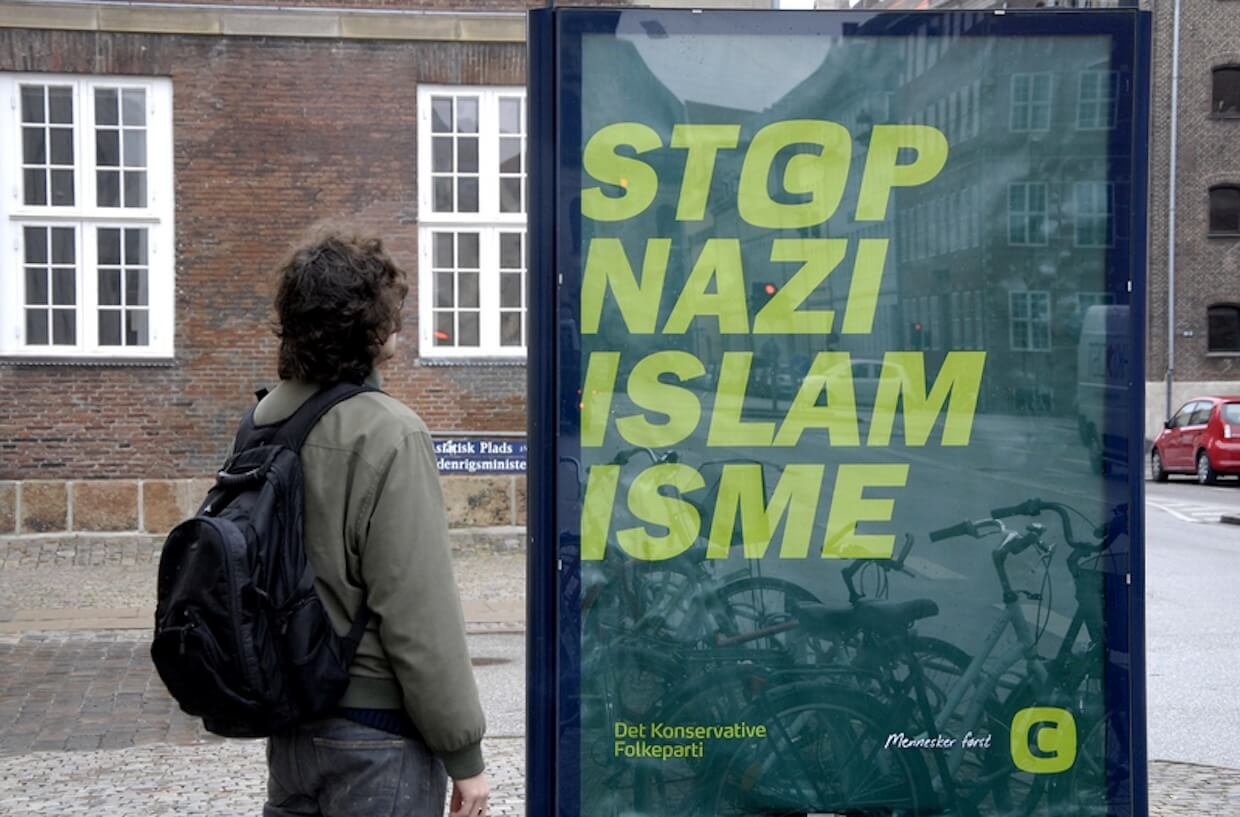
This is also how it generates support and secures votes. While it is not the only party with anti-establishment origins, parties such as the Left—now part of the government and previously a supporting actor—have lost much of that appeal. As they became more institutionalized and integrated into formal politics, they relinquished their anti-establishment identity, which Resnica has effectively appropriated. As a result, Resnica draws support from across the ideological spectrum. Some of its voters come from the radical left, others from the extreme right, but its core appeal lies in its anti-establishment, anti-elite positioning.

Looking ahead, its role could be pivotal in government formation. Without Resnica, it may be difficult to form a government, regardless of its composition. However, participation in government would require the movement to transform itself, effectively becoming part of the establishment it opposes.

Immediately after the elections, Resnica signaled that it would push its priorities, but within a short time, it became apparent that such participation could fundamentally alter its identity and mode of operation. It is now publicly stating uncertainty—or even reluctance—about cooperating with any party associated with the elite, which effectively includes all other actors. This makes its future trajectory highly uncertain.

There is also the possibility that its support base could grow further, particularly if new elections were held due to a failure to form a government, although this scenario seems unlikely. What remains to be seen is how any engagement with the establishment would affect its electorate.

What is clear, however, is that this represents a new pool of voters in Slovenian politics. Even though some center-left voters abstained, overall turnout remained stable because these are voters who typically do not participate but were mobilized by Resnica. In that sense, it represents a genuine game changer in Slovenian politics.

Slovenia, riot police.
Riot police guard Slovenia’s parliament in Ljubljana as protesters rally against corruption, government policies, and economic crisis, November 27, 2012. Photo: Markspickz | Dreamstime.

Consensus Politics Is Eroding Under Pressure for Structural Reform

Slovenia has historically been viewed as a relatively stable post-socialist democracy. Do current developments indicate convergence with more polarized Central European trajectories, or does Slovenia retain distinctive institutional and cultural buffers?

Professor Tomaž Deželan: That’s a very good question. Of course, Slovenians value stability and appreciate periods without crises. This is also why the anti-Janša sentiment is so strong in Slovenia, as Janša is often associated with disruption, and Slovenians generally do not want disruptions. In that sense, this consensual style of governing—without major breakthroughs but also without major crises—is very much preferred in Slovenian society. Stability therefore remains very high on the priority list for virtually all political parties, even though some of them, particularly Janša’s SDS, are sometimes tempted to pursue more radical steps when in government.

I would expect stability to remain the dominant feature this time as well, particularly given the configuration of parties that have entered parliament, as well as the patterns of political behavior that Slovenians are accustomed to among their political elite. Stability is likely to be the primary objective, and it is already very high on the agenda in post-election negotiations, partly due to the global situation and conflicts such as those in Iran, Gaza, and Ukraine, but also in terms of internal dynamics.

At the same time, things are changing. In particular—though not exclusively—center-right political parties are increasingly prioritizing major reforms, that is, broader structural changes, which were often avoided in the past because people tend to resist change. In this sense, we may be witnessing a gradual transformation of Slovenia’s traditionally consensual, stability-oriented system toward a more erratic, but perhaps also more consequential, political arena—one that is being actively pushed, in particular, by some of the current opposition forces.

Slovenia Is Following a Populist Script Written Elsewhere

From a comparative perspective, how does Slovenia’s 2026 election refine our understanding of the evolving drivers of populist radical right (PRR) mobilization across Europe?

Professor Tomaž Deželan: As I said before, we are seeing a script that has been written elsewhere. In particular, the links of some party leaders to populist regimes or populist leaders abroad show how they benchmark their behavior and, at times, even rely on similar infrastructures. So, the script has clearly been written elsewhere. As I noted earlier, the success of Trump—rather than the Trump administration itself, but his re-election—along with the subsequent actions of his administration, has amplified what Slovenian populist agendas had already been in the past. As a result, these actors are now more willing and more confident in openly articulating positions that they previously sought to conceal or at least soften.

What we are seeing now is the growing importance of social networks and digital platforms, along with a hybridization of political communication in which traditional modes are reinforced by more postmodern forms, and vice versa. This has been accompanied by a higher degree of sophistication and a significant increase in resources devoted to these strategies—something that was not evident before.

We also observe a clear emphasis on emotional mobilization, particularly through fear. Notably, fear has also become a feature of what we might describe as left-wing populism. In this sense, democratic forces have, to some extent, responded to populism with populism. Center-left parties, which traditionally did not rely on such strategies, have struggled to develop effective alternatives to counter the populist dynamics emerging on the right.

This is also where civil society, as mentioned earlier, has played a role. Although civil society organizations—especially those advocating for democracy and the rule of law—are typically among the most active and vigilant actors, the intensity of the electoral contest has led to the widespread adoption of populist tactics across the political spectrum. And this trend is unlikely to reverse.

In essence, the democratic resilience bloc appears to have concluded that, at least for now, populism is the only effective means of countering populism on the right. More broadly, this suggests that pro-democratic forces currently lack the tools necessary to engage effectively with the forms of populism we are witnessing—not only globally, but also in Slovenia.

Without Compromise, Slovenia Risks Majoritarian Polarization

Looking ahead, do you anticipate a re-consolidation of liberal-democratic governance through coalition pragmatism, or a continued expansion of anti-systemic and populist actors under conditions of fragmentation, digital disruption, and socio-economic uncertainty?

Professor Tomaž Deželan: I would like to be an optimist. Of course, many Slovenians hope—and across the board, particularly those on the center-right who did not support the radical right but rather the moderate right—hope to see liberal-democratic institutions to consolidate as we have experienced them over the past three decades, and even their further deepening. They genuinely feel this way and hope for it.

But I am not such an optimist. I think the current result represents an opportunity, even though the outcome is highly uncertain and it is unclear who will ultimately form the governing coalition. Still, I would say this may be a last opportunity to return to a more consensual, albeit sometimes unstable, form of government. In such a scenario, we may again see changes in government in the final year before elections, as was usually the case in the past, though not this time.

At the same time, there would be a renewed necessity for negotiation, deliberation, and dialogue within the system. What I fear—and what many Slovenians seem to fear—is that, if new elections are held, we may end up with clearly defined blocs and a type of system that we do not want: one dominated by majoritarian logic, lacking deliberation, and prone to creating disruptions in society, ultimately further polarizing the Slovenian political community, which is already highly strained.

So, in a way, there is a broad hope that political forces will come together. The most viable configuration for such an outcome would likely involve cooperation between the Social Democrats, the center-left liberals such as Gibanje Svoboda, the Christian Democrats, and the Democrats of Anže Logar, a center-right liberal party. In other words, bringing together Christian Democrats, liberals, and Social Democrats to form a stable, moderate center.

Such a coalition may not produce dramatic transformations or elevate Slovenia into a dominant position in any particular domain, but it could respond to the expectations of the Slovenian public—namely, stability, a moderate style of governance, and responsiveness to ongoing crises without generating new divisions. At present, there is a widespread concern about deepening divisions and a strong desire to avoid them.

Professor Marco Tarchi.

Prof. Tarchi: The Legacy of Fascism Continues to Structure Political Conflict in Italy

In this ECPS interview, Professor Marco Tarchi offers a nuanced interpretation of Italy’s recent referendum defeat, arguing that the outcome reflects not merely institutional disagreement but a deeper political conflict shaping democratic contestation. Rather than a technical rejection of judicial reform, the vote became a broader judgment on government authority, where competing visions of democracy—majoritarian mandate versus constitutional constraint—collided. Professor Tarchi underscores how political narratives, rather than policy details, drove voter behavior, with opposition forces successfully framing the reform as a threat to institutional balance. At the same time, he highlights the enduring role of historical memory and ideological legacies in structuring contemporary debates, while emphasizing that the result ultimately reveals both the resilience of Italy’s constitutional order and the limits of governing authority in a polarized political environment.

Interview by Selcuk Gultasli

Italy’s Prime Minister Giorgia Meloni has suffered her first major political setback after voters rejected her proposed judicial reform in a referendum, with around 54% voting “No.” Although framed as a technical institutional change, the vote quickly evolved into a broader judgment on her government, revealing growing political vulnerability ahead of next year’s general election. High turnout—close to 60%—underscored strong public engagement, yet failed to deliver the mandate Meloni sought. Opposition forces have seized on the result as evidence that she can be defeated, while analysts suggest the loss has weakened her image of political invincibility and complicated her wider constitutional ambitions, including proposals to strengthen executive authority. Amid economic pressures, geopolitical tensions, and escalating rhetoric toward the judiciary, the referendum signals a more competitive and uncertain political landscape.

Answering written questions from the European Center for Populism Studies (ECPS), Marco Tarchi, Professor Emeritus at the Faculty of Political Science at the University of Florence, offers a sharply contextualized reading of the outcome—one that shifts attention away from institutional technicalities toward the primacy of political conflict and historical memory. For Professor Tarchi, the referendum cannot be understood as a straightforward assessment of judicial reform. Rather, it was “heavily influenced by the political conflict between the center-right government and the center-left opposition,” a confrontation that “overshadowed the discussion on the specific content of the reform.”

At the core of this conflict lies a deeper struggle between competing conceptions of democracy and legitimacy. The government framed the reform as the fulfillment of an electoral mandate—“a commitment to those who had granted it the legitimacy to govern”—thus advancing a majoritarian understanding of democratic authority. By contrast, opponents invoked the limits of the rule of law and the post-fascist constitutional order, effectively denying that “the people [are] the ultimate and primary source of government legitimacy” when institutional balances are at stake. In this sense, the referendum crystallized a long-standing tension between popular sovereignty and constitutional constraint.

Crucially, Professor Marco Tarchi situates this tension within Italy’s enduring historical framework, noting that “the appeal to anti-fascism has certainly served to mobilize left-wing voters” and continues to influence political contestation, particularly given the post-fascist lineage of Brothers of Italy (Fratelli d’Italia, FdI). In this respect, historical memory operates not merely as rhetorical strategy but as a durable structuring force in contemporary Italian politics.

Far from signaling institutional fragility, however, Professor Tarchi interprets the outcome as evidence of systemic resilience: the referendum demonstrates that popular will can “grant a mandate” but also “revoke it,” reaffirming the solidity of Italy’s constitutional architecture. Yet politically, the message is unmistakable. What prevailed, as he concludes, was “a purely political conflict”—one that has re-opened Italy’s competitive political arena and exposed new limits to governing authority.

Here is the edited version of our interview with Professor Marco Tarchi, revised so slightly to improve clarity and flow.

Green ballot paper for Italy’s constitutional referendum.
Green ballot paper for Italy’s constitutional referendum on judicial reform, with pencil. Photo: Michele Ursi / Dreamstime.

The Referendum Reflected a Politicized Clash, Not a Technical Judgment

To what extent should the recent referendum defeat be interpreted not simply as a rejection of a specific judicial reform, but as a broader refusal of an attempt to redefine the constitutional equilibrium between popular mandate and judicial autonomy?

Professor Marco Tarchi: It should be noted that the referendum result was heavily influenced by the political conflict between the center-right government and the center-left opposition, which overshadowed the discussion on the specific content of the reform. The issue of the constitutional balance between the popular mandate and the autonomy of the judiciary was raised by the opposition to accuse the government of seeking an authoritarian shift—an accusation obviously rejected by those who had voted for the reform in Parliament. The referendum result demonstrates that supporters of the “No front” succeeded in convincing a majority of the electorate that the reform would alter this balance.

In your view, what does this referendum reveal about the political risks that populist-led governments incur when they seek to transform anti-elite rhetoric into concrete institutional engineering?

Professor Marco Tarchi: Since I don’t consider the Meloni government populist, this question makes no sense to me.

Opponents Denied That Popular Mandate Alone Could Justify Institutional Change

The Meloni government presented the reform as a necessary correction to judicial corporatism, while its opponents depicted it as a threat to the post-fascist architecture of checks and balances. How should we understand this clash of narratives in light of competing conceptions of democracy, sovereignty, and the rule of law?

Professor Marco Tarchi: In the Meloni government’s view, the reform—having been included in the program presented to voters in 2022—constituted a commitment to those who had granted it the legitimacy to govern. It thus reflected a substantive interpretation of the concept of democracy, one also implicit in the use of a popular referendum to approve or reject choice made by the parliamentary majority.

Opponents, however, invoked the limits of the rule of law and, in this case, denied the government the right—despite its adherence to parliamentary procedures—to alter the existing balance of power. In doing so, they signaled that they do not regard the people as the ultimate and primary source of governmental legitimacy.

Does the outcome suggest that, in Italy, the judiciary still retains a distinctive symbolic status as a constitutional counter-power, such that reform projects in this domain are almost inevitably judged through the prism of democratic suspicion?

Professor Marco Tarchi: “Democratic suspicion” toward the reform was expressed only by opposition parties and the association representing the judiciary, which proved to be a de facto political counter-power, significantly contributing to the referendum result.

References to Anti-Fascism Will Continue to Shape Opposition Strategy

Giorgia Meloni.
Giorgia Meloni, Prime Minister of Italy and leader of the Fratelli d’Italia party, speaks at an electoral rally ahead of the national elections in Turin, Italy, September 13, 2022. Photo: Antonello Marangi / Dreamstime.

To what extent did the referendum confirm that constitutional politics in Italy remains deeply shaped by historical memory, particularly the legacy of fascism, anti-fascism, and the constitutional settlement designed to prevent the concentration of power?

Professor Marco Tarchi: The appeal to anti-fascism has certainly served to mobilize left-wing voters, but it has already been used on numerous other occasions since the creation of the Meloni government, due to the post-fascist ideological affiliation of Fratelli d’Italia, and will most likely continue to be used by the opposition to counter the government’s actions in many other areas.

How far can this vote be read as a test of the limits of majoritarianism in contemporary Italy—namely, the point at which electoral strength ceases to confer legitimacy for altering institutions intended to restrain executive dominance?

Professor Marco Tarchi: This vote demonstrates that the concept of popular will can be used either to grant a mandate to transform the institutional structure—as happened in the 2022 elections—or to revoke it, as in the referendum.

Majoritarian Reform Has Occurred Before Without Any Populist Label

How does the politicization of judicial reform in this case illuminate the tension between majoritarian conceptions of democracy and liberal-constitutional principles within populist radical right governance?

Professor Marco Tarchi: On a previous occasion—the 2001 reform passed by the Amato government, which radically modified Articles 114 to 133 of the Constitution without making concessions to the opposition’s proposals—the “majoritarian conception of democracy” was applied without there being any populist party in government and without any denunciation of a violation of liberal constitutional principles.

In the Italian case, where populism has often thrived on the denunciation of intermediary powers, does the referendum reveal that the rhetoric of popular sovereignty is more effective when directed against institutions than when deployed to restructure them?

Professor Marco Tarchi: Beyond this specific case, many examples in other countries – from the Austrian case of 2000 onwards – show us that this is one of the typical limits of populist action.

Political Conflict Overshadowed the Substance of the Reform

How should we interpret the high turnout in this referendum? Does it suggest that a significant segment of the electorate understood the vote as a constitutional choice of first-order importance, or that the referendum was successfully transformed into a plebiscitary judgment on the government itself?

Professor Marco Tarchi: The judgment on the government certainly prevailed, but it is impossible to empirically calculate how much the specific content of the reform influenced the outcome.

How should we situate this referendum within the longer trajectory of Italian populism, particularly the enduring distrust toward political and judicial institutions since the crisis of the First Republic?

Professor Marco Tarchi: Italian populism, especially during the crisis of the First Republic, extolled the judiciary’s role as a bulwark against political corruption. If the referendum vote was viewed from this perspective, one would paradoxically argue that it marked a success for the populist vision of the relationship between professional politicians and judges. But I repeat, what prevailed in this case was a purely political conflict.

No Political Actor Has Easily Translated Support into Structural Reform

Could the defeat be seen as evidence that populist radical right actors are more successful at politicizing dissatisfaction than at building broad consent for complex institutional redesign, especially when such redesign touches the judiciary?

Professor Marco Tarchi: With the already stated reservations about the alleged populist nature of the Meloni government— which I dispute —I would answer yes. I would add, however, that other political actors also found it difficult to transform the dissatisfaction that had fueled their success into consensus for the institutional overhaul. This was demonstrated by the failure in 2016 of Matteo Renzi, then both head of the government and the Democratic Party, to pass his constitutional reform to abolish the Senate.

To what extent can the referendum be read as a test of “state capture” dynamics, and does its outcome suggest resilience or fragility in Italy’s institutional architecture? 

Professor Marco Tarchi: Given the result, one should deduce a substantial solidity of the Italian institutional architecture.

In comparative perspective, how does this referendum differ from those moments in which governments in Turkey, Hungary or Poland were able to advance far-reaching judicial transformations? Does Italy’s constitutional culture still provide stronger antibodies against that trajectory?

Professor Marco Tarchi: I see no substantial similarity between the Italian situation and the others mentioned, which are also very different from each other.

The Future of Reform Now Depends on the Next Election Outcome

To what extent might this result affect Meloni’s wider constitutional ambitions, especially proposals aimed at strengthening executive authority or introducing direct popular legitimation for the premiership?

Professor Marco Tarchi: This certainly represents a setback to Meloni’s proposed reform of the role of Prime Minister. Whether it can be revived or permanently shelved will depend on the outcome of the next general election.

Finally, what does this referendum tell us about the medium- and long-term trajectory of Italian and European politics: are we witnessing a momentary setback for a successful populist radical right government, or an early sign that constitutional resistance can still interrupt projects of hegemonic consolidation?

Professor Marco Tarchi: I repeat that I do not consider the Meloni government a “radical right-wing populist government,” and therefore this question is irrelevant to me.

Gas-Nigeria

When Fuel Prices Turn Political: Trust, Climate Reform, and Everyday Populism in Nigeria

This commentary examines how fuel pricing in Nigeria has become a central site of democratic contestation, linking economic reform to everyday political experience. Drawing on recent scholarship, Dr. Oludele Solaja shows that the removal of fuel subsidies is interpreted less through macroeconomic logic than through lived realities—rising transport costs, food inflation, and declining purchasing power. In this context, fuel policy functions as a visible test of state credibility and fairness. The analysis highlights how “everyday populism” emerges as citizens frame reforms through moral distinctions between suffering publics and detached elites. Crucially, the study argues that climate and fiscal reforms cannot succeed without trust: where institutional credibility is weak, even economically rational policies risk generating political backlash and deepening democratic discontent.

Dr. Oludele Solaja*

In Nigeria, fuel isn’t simply a commodity but perhaps one of the most immediate points through which Nigerians engage with the state. Changes at the pump influence transport prices, the distribution of food, the nature of informal work, substitutes to electricity, household coping mechanisms. Any significant change at the pump is rapidly translated through market and commuters’ routes, domestic budgets, turning fiscal policy into political experience. Consequently, fuel pricing has evolved into perhaps the most visible site of democratic validation and of state-society trust (Gbadebo, 2025; Okonkwo & Ezenwegbu, 2024). 

The lifting of a long-standing petrol subsidy as part of recent reforms re-ignited an ever recurrent and sensitive national debate around governance, fairness and burden-sharing. The declared rationale for subsidy removal was correction of unsustainable fiscal spending, drain on public finances and constraint on welfare and infrastructure investment (Gbadebo, 2025). Nevertheless, macroeconomic rationales never fully determine political meaning. In the view of many Nigerians, what is primarily being assessed in post subsidy withdrawal policy aren’t ratios in macro-economic indicators, but transport fare hikes, food price volatility, diminishing purchasing power and pervasive uncertainty; studies found mitigation measures to be inadequate and unevenly distributed, which compounded distrust in the government (Gbadebo, 2025; Okonkwo & Ezenwegbu, 2024). 

This dilemma reveals the more important sociological aspect of the problem: economic reform easily gains political meaning in fragile trust situation. Populism is not merely about elite discourse or electoral tactics, but also everyday interpretation where citizens divide the social world along the moral lines of “normal citizens in suffering” and “detached politicians.” Petrol pricing is one aspect where it comes into the citizen vocabulary as its impact is immediate, transparent, and social inequal (Yang et al., 2021; Moerenhout et al., 2021). Rather than seeing it as the market correction, for many citizens the rising of petrol price is viewed as an indication of their anxieties over issues of justice, elite benefit and the credibility of the state. 

Public conversations often return to questions such as: Why must austerity begin with ordinary households? Why do reforms demand sacrifice where visible political restraint appears limited? These questions contribute to what may be called everyday environmental populism — a form of public meaning‑making in which environmental and economic reforms are judged through moral experiences of inequality and institutional betrayal (Gbadebo, 2025). While classic fuel subsidy literature focuses on economic costs and distributional effects, political economy research highlights that reform success depends on public trust and the social contract between state and citizens (Yang et al., 2021). 

The contradiction is clear: long‑term fiscal rationality collides with short‑term social hardship. In principle, subsidy removal may improve efficiency and reduce distortions in consumption. But in an unequal society with fragile institutional credibility, citizens encounter “energy transition” through transport costs, generator fuel, food inflation, and daily mobility (Esekpa, 2024). 

Within an urban environment, such as Lagos, rises in fuel price can rapidly influence commuter patterns, market costs and flow of informal economy money. In peri-urban and rural settings electricity is already unreliable, with generators being extensively used. Here price of fuel is likely to define the profitability of a micro business. In a local study within Nigeria, increases in fuel price are seen to correlate with economic suffering and an increase in the cost of living, therefore reinforcing the public opinion that the burden of reforms is primarily on the common man (Abaddah, 2025). 

This explains why trust becomes central to policy legitimacy. Historical memory matters: earlier reforms were often accompanied by promises of safety nets, infrastructure improvements, or welfare expansions that many citizens believe were never fully realized. Consequently, new fuel adjustments are interpreted not in isolation but against accumulated experiences of unfulfilled government commitments and governance shortfalls (Okonkwo & Ezenwegbu, 2024). 

Public reactions in both formal surveys and public commentary reflect this complex interpretation. A nationally representative household study finds that opposition to fuel subsidy reform is strongly linked with beliefs about government corruption and capacity to deliver compensatory programs; respondents were more likely to support reform only where they believed in transparent governance and effective social protection (Yang et al., 2021). 

There is also a profound communication gap in Nigerian fuel governance. Policy announcements often emphasize fiscal necessity while underestimating how reforms are emotionally and morally received. Citizens rarely oppose reform simply because they reject technical economics; rather, they resist because they doubt institutional fairness. This creates fertile ground for populist framing and political contestation around trust and governance (Gbadebo, 2025; Yang et al., 2021). 

The political symbolism is intensified by Nigeria’s oil‑dependent identity. In a major oil‑producing country, public expectations remain shaped by the belief that resource wealth should translate into broad social benefit. When hardship deepens in an oil-rich economy, citizens often interpret such contradictions politically. Research on global subsidies also shows that fuel subsidy reforms often generate political controversy where institutional quality is low and trust weak (Droste et al., 2024). 

While some assessments confirm that reducing subsidies can yield macroeconomic benefits, these gains do not automatically produce democratic legitimacy where hardship expands faster than visible welfare delivery. The result is a politics of resentment, where state actions are judged through everyday experiences of inequality rather than abstract fiscal reasoning (Gbadebo, 2025). For this reason, fuel policy should be understood not merely as economic reform but as democratic communication. The challenge is not only whether subsidy should exist, but whether citizens can trust that reform burdens are socially shared, publicly justified, and institutions remain accountable (Yang et al., 2021). 

This is where Nigeria’s climate politics becomes especially instructive. The democratic sustainability transition in developing democracies can no longer be carried out through technocratic sequencing. It will demand overt distribution, convincing social protection and credible assurance that burdens are not unilateral (Gbadebo, 2025). Fuel becomes politicized in the sense that it encapsulates a variety of societal fears including inequalities, citizenship, institutional trust and the moral narrative of the state itself. Therefore, the sociology of petrol prices illustrates how the politics of environment is evaluated by “the governed,” in relation to everyday politics of trust, fairness and public meaning (Yang et al., 2021; Esekpa, 2024). 

The lesson here is stark: climate and fiscal reforms implemented without democratic trust are politically dangerous, even when economically defensible. For the citizen in Nigeria asks the basic and obvious question of who bears the cost, who reaps the reward, and to whom should believe (Gbadebo, 2025; Okonkwo & Ezenwegbu, 2024).


(*) Dr. Oludele Solaja is an Environmental Sociologist and Developmental Scholar based in Olabisi Onabanjo University, Nigeria. His research focuses on environmental governance, climate policy, and everyday political populism in African contexts. He is a Nonresident Research Fellow at the European Center for Populism Studies (ECPS) and has published extensively on climate governance, citizen trust, and socio-political interpretations of environmental reforms. 


References

Abaddah, G. A. (2025). Effect of fuel subsidy removal on the Nigerian economy: Implications for households in Nigeria. BIMA Journal. https://journal.pdmbengkulu.org/index.php/bima/article/view/1984

Droste, N., Chatterton, B., & Skovgaard, J. (2024). A political economy theory of fossil fuel subsidy reforms in OECD countries. Nature Communications, 15, 5452. https://www.nature.com/articles/s41467-024-49835-4

Esekpa, O. I., Ekarika, W. A., & Njama, G. J. (2024). Economic implications of fuel subsidy removal in Nigeria: Challenges and prospects. Journal of Public Administration, Policy and Governance Research.https://jpapgr.com/index.php/research/article/view/131

Gbadebo, A. D. (2025). The political economy of fuel subsidy removal: Governance and sustainable development in Nigeria. Journal of Social Political Sciences, 6(3), 206–224. https://doaj.org/article/e97ce91a0aff459a9106ff8fc6cff551

Okonkwo, A. E., & Ezenwegbu, J. C. (2024). Removal of petrol subsidies and its impact on democratic governance in Nigeria. Nnamdi Azikiwe Journal of Political Science, 9(3), 38–47. https://najops.org.ng/index.php/najops/article/view/267

Yang, J., Moerenhout, T., & others. (2021). Fuel subsidy reform and the social contract in Nigeria: A micro‑economic analysis. Energy Policy, 156, 112336. https://www.sciencedirect.com/science/article/pii/S0301421521002068

Donald Trump.

How Communication Style Shapes Political Trust More Than Populist Content in Domestic and International Politics

This commentary advances a critical intervention in debates on political persuasion by foregrounding original pilot research on communication and trust. Based on an online experiment with 322 UK participants, the study isolates the effects of communication style from semantic content by comparing responses to a still image, an untranslated video, and a subtitled populist message. The findings are striking: trust in political leaders is shaped more by audiovisual and paralinguistic cues—such as tone, gesture, and perceived authenticity—than by populist content itself. Notably, participants reported higher trust when exposed to communication they could not understand than when presented with translated political messaging. These results challenge conventional assumptions about persuasion and highlight the central role of communication form in shaping political judgement.

By Ihsan Yilmaz*, Ana-Maria Bliuc**, Tetsuro Kobayashi*** & John Betts****

Public debate often assumes persuasion comes from ideology, populist rhetoric, or misinformation. When people worry about political manipulation, propaganda, or foreign interference, they usually focus on what is being said. Is a message false? Is it extremist? Is it conspiratorial? Is it anti-democratic?

Those questions matter. But they do not capture the full problem.

Political influence may depend as much on how messages are communicated as on what they say. In the digital attention economy, communication format, emotional cues, and presentation style shape political judgement. Citizens do not encounter political communication as detached analysts. They encounter it as viewers, listeners, social media users, and members of social groups, responding not only to claims and arguments but also to tone, confidence, visual presence, rhythm, repetition, and emotional force. Research has shown that falsehood spreads rapidly online, that emotional processing can increase belief in misleading information, and that anger can heighten partisan vulnerability to political misperceptions (Vosoughi et al., 2018; Martel et al., 2020; Weeks, 2015).  

How Communication Shapes Trust Beyond Content

That matters not only for domestic politics but also for international politics. Strategic narratives research in IR has long argued that actors exercise power by shaping stories about who “we” are, what kind of crisis we face, and what political future is possible (Freedman, 2006; Miskimmon et al., 2013). Sharp power research has shown that authoritarian influence often works not through open persuasion alone but through manipulative, coercive, and opaque forms of projection that distort democratic information environments (Walker, 2018; Nye, 2018; Pinto, 2023). And scholarship on emotions in world politics has demonstrated that fear, resentment, nostalgia, pride, and humiliation are not peripheral to politics. They are part of how power works, both domestically and internationally (Hutchison & Bleiker, 2014; Valentino et al., 2011; Van Rythoven, 2021).  

If this is right, then the key issue is not only whether citizens encounter false claims. It is how political messages are delivered, processed, remembered, and made to feel credible. That is where our pilot research becomes important.

Our pilot study, which serves as the basis for this commentary, examines how a political leader’s communication style shapes trust. In an online experiment, participants (322 UK residents) were exposed to three versions of the same political message, varying in communication richness: a still image of a (Romanian) political leader taken from a video (control condition), the video in Romanian without translation, and a subtitled version containing populist content. The aim was to disentangle the effects of visual and paralinguistic cues—such as tone, gestures, facial expressions, and emotional cadence—from those of semantic content. Put simply, the study asks whether people respond more to how a leader communicates than to what the leader actually says. It measures perceptions of the leader’s credibility, trustworthiness, appeal, and emotional impact, alongside relevant moderating variables.

Media Modality, Memory, and the Construction of Trust

The result is striking. Communication condition significantly affects trust in the candidate. Video with content but no meaning produces the highest trust, while the static picture produces the lowest. Trust in the leader is also higher when people are exposed to communication only (foreign language), compared to when they are exposed to the translated message. Just as importantly, perceptions of populism do not mediate trust in the speaker. Instead, trust appears to be shaped more by delivery cues—such as tone, credibility, authenticity, and leader appeal—than by populist framing alone.

This should make us stop and think.

A dynamic audiovisual performance can make a political figure appear stronger, more sincere, more persuasive, or more leader-like even when audiences cannot understand the words being spoken. A still image, by contrast, strips away much of what creates immediacy and emotional connection. This does not mean content is irrelevant. It means content is not the whole story. Political trust may be built through cues that sit alongside semantic meaning and sometimes outrun it.

The significance of this finding becomes even clearer when placed beside Kobayashi’s broader work on modality, memory, and political processing. The basic point is simple but important: people do not process text, still images, and video in the same way. Different media formats shape attention differently. They influence what is encoded, what is remembered, and what lingers as a political impression. Visual and multimedia formats can strengthen memory and recall, even when the content itself is weak, misleading, or only partly understood. This means that persuasion is not only about the literal content of a message. It is also about how the message enters cognition and what remains afterward.

That insight matters in domestic politics because democratic contestation now unfolds across short-form video, reels, clips, speeches, memes, livestreams, and highly personalized feeds. In such settings, communication style is not a surface feature. It becomes part of the mechanism through which trust is built. A leader who appears authentic may be granted credibility beyond the evidence. A speaker who appears forceful may seem persuasive even when the argument is thin. A compelling audiovisual fragment may leave a stronger impression than a detailed correction delivered later as plain text. Recent work also shows that democratic publics can become receptive to illiberal narratives under certain conditions, including aversion to protest and responsiveness to authoritarian framing (Kobayashi, Toriumi & Yoshida 2025; Kobayashi et al. 2025). 

Strategic Narratives, Emotion, and the Transnational Politics of Influence

But this also matters for foreign policy and IR. Contemporary influence campaigns do not simply try to convince publics through formal argument. They work through strategic narratives, emotional resonance, symbolic performance, and technologically amplified circulation. States and state-aligned actors increasingly compete not only over territory, institutions, or material resources, but also over meaning, perception, and legitimacy. Public diplomacy, strategic communication, soft power, sharp power, and digital authoritarian influence all operate in this wider environment of mediated political judgement (Miskimmon et al., 2013; Walker, 2018; Nye, 2018; Roberts & Oosterom, 2025; NED, 2024).  

The domestic and the international are not separate spheres here. They overlap through digital platforms, diasporas, transnational narratives, and emotionally charged content that travels across borders and is then reinterpreted in local settings. IR scholars have long argued that ideas, norms, and frames do not simply move intact from one place to another. They are localized, contested, adapted, and selectively internalized (Acharya, 2004; Wiener, 2008). That matters enormously today. A communication style that builds trust at home can also be effective abroad. A leader’s visual authenticity, emotional cadence, and symbolic performance can travel transnationally through clips, commentary networks, subtitled fragments, and influencer ecosystems. Narratives that appear domestic can be amplified internationally; narratives projected from abroad can be domesticated by local actors.

This is one reason why the distinction between domestic polarization and foreign influence is often less clear than policymakers assume. Influence is not just broadcast. It is processed through emotion, identity, memory, and media form. That is also why our broader scholarship has focused on how digital politics, civilizational narratives, and sharp-power dynamics travel through both domestic and transnational channels. Yilmaz and Morieson have shown how civilizational narratives are politically mobilized through crisis, victimhood, moral hierarchy, and claims of threatened identity (Yilmaz & Morieson, 2023; Yilmaz & Morieson 2025). Yilmaz and Shakil have shown that soft and sharp power do not circulate as neutral content but are received through affect, identification, and local meaning-making (Yilmaz & Shakil, 2025). Yilmaz, Bliuc, Betts, and Morieson (2025) have argued that foreign interference can remain hidden in plain sight when it works through sharp power rather than obvious coercion.  

The same is true of the work by Bliuc and Betts on online communities, identity, cohesion, and polarization. Bliuc and colleagues have shown how online communities intensify collective identity, emotional alignment, and hostility under certain socio-political conditions (Bliuc et al., 2019; Bliuc et al., 2020; Bliuc, Smith, and Moynihan 2020). Betts and Bliuc have shown how influencers can shape polarization dynamics, and later work by Betts, Bliuc, and Courtney extends this to charismatic digital actors (Betts & Bliuc 2022; Betts et al., 2025). Taken together, this body of scholarship suggests that political persuasion operates through social context, emotional cues, memory, and communication form, not simply ideological content.  

Rethinking Persuasion: Trust, Media Form, and Democratic Resilience in the Digital Age

That is why the pilot matters for IR as much as for political psychology. It offers a small but important piece of evidence about a much larger problem: how trust is manufactured in mediated politics. If citizens can form more trusting evaluations of a political figure from audiovisual performance even when they do not understand the message itself, then we need to rethink what persuasion means in a digital and internationalized public sphere.

The implications are significant.

First, media literacy needs to move beyond the simple binary of true versus false. Citizens need tools to ask harder questions: Why does this message feel persuasive? Why does this speaker seem credible? What role is tone playing in my judgement? What is the visual format doing to my attention and memory? What impression is being created before I have even evaluated the substance of the claim?

Second, policymakers need to treat communication form as a matter of democratic resilience and national security, not merely as a media issue. If audiovisual style can shape trust independently of content, then strategies to counter misinformation and foreign interference cannot focus only on debunking claims after the fact. They must also address the affective and cognitive mechanisms through which trust is built in the first place. This is particularly relevant in democracies facing sustained information pressure from domestic polarization, transnational propaganda, and digitally enabled authoritarian influence. Democratic resilience is not only about institutional robustness. It is also about how citizens process and evaluate political communication under conditions of emotional and informational strain (Lieberman et al., 2021).  

Third, IR needs to take communication psychology more seriously. Strategic narratives are not only elite texts. They are delivered through media systems, performances, visual formats, emotional triggers, and infrastructures of circulation. Sharp power does not only manipulate facts; it manipulates the conditions under which facts are judged, remembered, and trusted. Foreign policy analysis, therefore, needs to pay closer attention to modality, cognition, affect, and platformed attention. A narrative that fails as a written claim may succeed as a clip. A weak argument may become potent when fused with charisma, symbolism, and repetition. In an age of generative AI, synthetic media, and personalized feeds, these questions will only grow more urgent (NED, 2024; Roberts & Oosterom, 2025).  

Conclusion: Hidden in Plain Sight

To support democratic resilience, countering disinformation requires more than factchecking. Democracies must address how political messages influence cognition and emotion. Research priorities should include identifying communication formats that increase susceptibility, understanding how trust is shaped by nonverbal and audiovisual cues, and designing interventions that strengthen public resilience without drifting into censorship or paternalism. That is not only a domestic challenge. It is also a foreign policy challenge, because contemporary influence operations work precisely by blurring the line between internal debate and external manipulation.

The key question is no longer simply, “What messages are citizens exposed to?” It is, “How are those messages delivered and processed?”

If we fail to ask that question, we will continue to underestimate how persuasion works in contemporary politics. And if we continue to treat manipulation only as a problem of obvious lies, we will miss the subtler but often more effective techniques that shape trust, memory, and judgement in plain sight.


Funding: This work was supported by the Australian Research Council [ARC] under Discovery Grant [DP220100829], Religious Populism, Emotions and Political Mobilisation and ARC [DP230100257] Civilisationist Mobilisation, Digital Technologies and Social Cohesion.


(*) Professor Ihsan Yilmaz is Research Professor of Political Science and International Relations, Research Chair in Islamic Studies and Intercultural Dialogue, and Deputy Director at the Deakin Institute for Citizenship and Globalization, Deakin University, Australia. He is a leading scholar of authoritarianism, civilizational populism, digital authoritarianism, political Islam, and transnationalism. His recent research examines the diffusion of authoritarian practices, the weaponization of civilizational narratives, and the emotional and cognitive effects of disinformation in democratic and hybrid regimes.  

(**) Dr. Ana-Maria Bliuc is an Associate Professor of Social and Political Psychology in the School of Humanities, Social Sciences and Law at the University of Dundee. She joined Dundee in 2019 after holding academic positions at Western Sydney University, Monash University, and the University of Sydney. Her research examines the role of social identity in shaping behavior across health, environmental, and socio-political contexts, including collective action, social change, and political polarization. More recently, her work has focused on online communities and digital environments, investigating how collective identities and behaviors are formed, sustained, and transformed through online interaction. 

(***) Dr. John Betts is a Senior Lecturer in the Faculty of Information Technology at Monash University, Australia. He specializes in computational modelling, optimization, simulation, and data science, with applications across the social sciences, health, and industry. His research focuses on understanding complex systems, variability, and resource allocation, and he has contributed to interdisciplinary work on political polarization, online behavior, and agent-based modelling, alongside projects in areas such as medicine and manufacturing.  

(****) Dr. Tetsuro Kobayashi is a Professor in the School of Political Science and Economics at Waseda University, Japan. He holds a PhD in Social Psychology from the University of Tokyo. Before joining Waseda University in 2023, he held academic positions at the National Institute of Informatics and City University of Hong Kong and was also a visiting researcher at Stanford University. His research lies at the intersection of political communication, political psychology, and public opinion, with a particular focus on how media environments shape political attitudes and behavior. His work has been published widely in leading journals across political science, communication, and psychology.  


References

Acharya, A. (2004). “How Ideas Spread: Whose Norms Matter? Norm Localization and Institutional Change in Asian Regionalism.” International Organization. 58(2): 239–275.

Betts, B. and A.-M. Bliuc. (2022). “The Effect of Influencers on Societal Polarization.” Proceedings of the Winter Simulation Conference.

Betts, J. M.; A.-M. Bliuc and D. S. Courtney. (2025). “The Effect of Charismatic Influencers on Polarization Online: An Agent-Based Modeling Approach.” Technology in Society.

Bliuc, A.-M.; J. Betts; M. Vergani; M. Iqbal and K. Dunn. (2019). “Collective Identity Changes in Far-Right Online Communities: The Role of Offline Intergroup Conflict.” New Media & Society, 21(8): 1770–1786.

Bliuc, A.-M.; J. M. Betts; N. Faulkner; M. Vergani; R. J. Chow; M. Iqbal and D. Best. (2020). “The Effects of Local Socio-Political Events on Group Cohesion in Online Far-Right Communities.” PLOS ONE, 15(3): e0230302.

Bliuc, A-M.; L. G. E. Smith and T. Moynihan. (2020). “‘You Wouldn’t Celebrate September 11’: Testing Online Polarisation Between Opposing Ideological Camps on YouTube.” Group Processes & Intergroup Relations, 23(6): 827–844.

Freedman, L. (2006). The Transformation of Strategic Affairs. London: Routledge.

Hutchison, E. and R. Bleiker. (2014). “Theorizing Emotions in World Politics.” International Theory, 6(3): 491–514.

Kobayashi, T.; F. Toriumi and M. Yoshida. (2025). “Cross-Ideological Acceptance of the Illiberal Narrative of the 2019 Hong Kong Protests in Japan: Aversion to Protests as a Key Facilitator.” Chinese Journal of Communication.

Kobayashi, T.; Y. Zhou; L. Seki and A. Miura. (2025). “Autocracies Win the Minds of the Democratic Public: How Japanese Citizens Are Persuaded by Illiberal Narratives Propagated by Authoritarian Regimes.” Democratization. 32(6): 1474–1495.

Lieberman, R. C.; S. Mettler and K. M. Roberts, eds. (2021). Democratic Resilience: Can the United States Withstand Rising Polarization? Cambridge: Cambridge University Press.

Martel, C., G. Pennycook and D. G. Rand. (2020). “Reliance on Emotion Promotes Belief in Fake News.” Cognitive Research: Principles and Implications, 5(1): 47.

Miskimmon, A.; B. O’Loughlin and L. Roselle. (2013). Strategic Narratives: Communication Power and the New World Order. New York: Routledge.

National Endowment for Democracy (NED). (2024). Manufacturing Deceit: How Generative AI Supercharges Information Manipulation.

Nye, J. S. Jr. (2018). “How Sharp Power Threatens Soft Power.” Foreign Affairs, January 24.

Pinto, J. F. (2023). “Populist Sharp Power: How the World Entered in a New Cold War.” In: Politics Between Nations.Cham: Springer.

Roberts, T. and M. Oosterom. (2025). “Digital Authoritarianism: A Systematic Literature Review.” Information Technology for Development, 31(4): 860–884.

Valentino, N. A.; T. A. Brader; E. W. Groenendyk; K. Gregorowicz and V. L. Hutchings. (2011). “Election Night’s Alright for Fighting: The Role of Emotions in Political Participation.” Journal of Politics, 73(1): 156–170.

Van Rythoven, E. (2021). “A Feeling of Unease: Diasporas, Emotions, and Security.” International Political Sociology, 15(2): 187–204.

Vosoughi, S.; D. Roy and S. Aral. (2018). “The Spread of True and False News Online.” Science, 359(6380): 1146–1151.

Walker, C. (2018). “What Is ‘Sharp Power’?” Journal of Democracy, 29(3): 9–23.

Weeks, B. E. (2015). “Emotions, Partisanship, and Misperceptions: How Anger and Anxiety Moderate the Effect of Partisan Bias on Susceptibility to Political Misinformation.” Journal of Communication, 65(4): 699–719.

Wiener, A. (2008). The Invisible Constitution of Politics: Contested Norms and International Encounters. Cambridge: Cambridge University Press.

Yilmaz, I.; A.-M. Bliuc; J. Betts and N. Morieson. (2025). “Foreign Interference Can Be Hidden in Plain Sight: Here’s How Countries Use ‘Sharp Power’ in Australia.” The Conversation.

Yilmaz, I. and K. Shakil. (2025). Reception of Soft and Sharp Powers: Turkey’s Civilizational Populist TV Dramas in Pakistan. Singapore: Springer.

Yilmaz, I. and N. Morieson, eds. (2023). Religions and the Global Rise of Civilizational Populism. Singapore: Springer.

Yilmaz, I. and N. Morieson. (2025). Weaponizing Civilizationalism for Authoritarianism: How Turkey, India, Russia, and China Challenge Liberal Democracy. Singapore: Springer.

Le Pen & Bardella

Prof. Marlière: Local Elections Show Polarization in France Amplifies the Mainstreaming of the Far Right

In an era marked by intensifying polarization and electoral fragmentation, France’s 2026 municipal elections offer a revealing lens into the country’s shifting political equilibrium. In this ECPS interview, Professor Philippe Marlière argues that while mainstream parties retain urban strongholds, the populist radical right continues to consolidate its territorial and sociological base. Crucially, he underscores that “polarization… tends to benefit the far right,” enabling the National Rally to advance its normalization strategy within an increasingly conflictual political environment. Beyond electoral outcomes, the interview highlights deeper structural transformations—from cross-class realignment to the erosion of centrist politics—suggesting that France is not experiencing a rupture, but a gradual reconfiguration that may decisively shape the dynamics of the 2027 presidential contest.

Interview by Selcuk Gultasli

Giving an in-depth interview to the European Center for Populism Studies (ECPS), Philippe Marlière, Professor of French and European Politics at University College London, offers a nuanced and empirically grounded assessment of France’s evolving political landscape in the wake of the 2026 municipal elections.

Held against the backdrop of an increasingly polarized European political environment, the elections revealed a fragmented yet structurally revealing electoral map. While mainstream parties retained control of major metropolitan centers such as Paris, Marseille, and Lyon, the populist radical right—anchored by the National Rally (RN)—continued to expand its territorial base across smaller municipalities and peripheral regions. Notably, the RN and its allies consolidated support in medium-sized towns and traditional strongholds in northern deindustrialized zones and the Mediterranean southeast, while also making inroads into previously resistant regions such as western France. At the same time, opinion polls suggest that RN candidates remain above the 30 percent threshold ahead of the 2027 presidential race, underscoring their growing electoral competitiveness.

As Professor Marlière emphasizes, these results must be understood through the dual lens of fragmentation and consolidation. “The French electoral landscape is deeply fragmented and also polarized,” he observes, highlighting the coexistence of institutional instability with the strengthening of ideological blocs. Indeed, he notes a “consolidation of the two blocs at the extremes,” with both the far right and the radical left reinforcing their positions without producing a decisive electoral rupture.

At the core of his analysis lies a striking argument captured in the headline insight: polarization itself has become a structural driver of far-right normalization. “This kind of polarization tends to benefit the far right,” Professor Marlière explains, as it enables the RN to position itself as a seemingly “reasonable, ‘moderate’ political force” within an increasingly conflictual political field. In this context, the long-term strategy of dé-diabolisation appears to be advancing, albeit unevenly. While the RN remains constrained in major urban centers, it has become, in Professor Marlière’s words, “a party that is increasingly on course to become normalized.”

Equally significant is the sociological transformation of the far-right electorate. No longer confined to economically marginalized groups, the RN now draws support across a broader cross-class coalition, including professionals and retirees—a shift he identifies as a critical turning point since the 2024 European elections.

Taken together, the 2026 municipal elections do not signal a dramatic rupture but rather a deepening of structural trends. As Professor Marlière cautions, “the tectonic plates… are aligning in a way that looks favorable for the National Rally,”even as electoral uncertainty persists. In this interview, he unpacks the implications of these developments for democratic resilience, party competition, and the high-stakes trajectory toward 2027 presidential elections in France.

Philippe Marlière is a Professor of French and European Politics at University College London.

Here is the edited version of our interview with Professor Philippe Marlière, revised slightly to improve clarity and flow.

France’s Electoral Landscape Is Fragmenting While Extremes Consolidate Their Ground

Professor Marlière, welcome, and let me start right away with the first question: The 2026 municipal elections seem to have produced a fragmented but revealing map of French politics; the far right advanced in many provincial towns, mainstream parties held key metropolitan strongholds, and the left remained unevenly competitive. From your perspective, what do these results tell us about the current stage of France’s populist realignment?

Professor Philippe Marlière: I think the main lessons of that local election are, first of all, the very high level of abstention. That confirms that, when it comes to voting, the French are voting less and less. Some would call it civic disengagement. It does not necessarily mean that the French are no longer interested in politics; it simply means that they vote less. Turnout was also lower in 2014, which was the last “normal” local election, as the previous one took place during the COVID pandemic and is therefore not really comparable.

The second point, as you mentioned, is fragmentation. The French electoral landscape is deeply fragmented and also polarized. I think we will return to this later.

Thirdly, there is a form of consolidation of previous electoral trends. I am thinking here of the two major elections in 2024—the general election and the European election. There was no major upset or breakthrough, but rather a continuation of existing dynamics. Notably, as you pointed out, there is a consolidation of the two blocs at the extremes: on the far right with the National Rally, and on the far left—the radical, populist left—with Jean-Luc Mélenchon’s France Insoumise. Both camps can claim gains, and their positions appear to have strengthened.

So, overall, that would be my general assessment of this local election.

The National Rally Consolidates Territorially but Still Struggles in Major Cities

The National Rally expanded its local presence but again struggled to convert momentum into decisive victories in major cities. Should this be read as evidence that the populist radical right is becoming structurally embedded in French politics, or do these results still reveal significant sociological and territorial ceilings to its expansion?

Professor Philippe Marlière: I think for the National Rally it is hard to say that this was a bad election. It is not a fantastic election, because a fantastic result would have meant winning a number of large cities, and in France a big city is one with over 100,000 people. They did not manage to do that. They had hoped to win the city of Toulon. That said, they did win one, and, to be fair, that is at least a good result in Nice, which is, of course, one of the bigger French cities. They won in Nice with Éric Ciotti. Technically, he is not a member of the National Rally, but he is the former leader of Les Républicains, who left the party in 2024 and now runs a small party allied with the National Rally. So that is a significant gain.

Apart from that, however, the election highlighted the weakness of the National Rally in big cities and urban areas, which are now strongholds of the left. My assessment, therefore, is that this was not a breakthrough in terms of winning major cities; it did not achieve that. What it did do, however, is to consolidate its power base in medium-sized cities—places with around 20,000 inhabitants or fewer. It is now a party with a solid and territorially widespread base.

There are also three regions where it is particularly dominant: in the north, especially in former mining areas that were once socialist bastions but are now strongholds of the far right; in the southeast, which has long been a strong area for the National Rally; and in parts of the southwest as well. So I would not describe this as a setback, but neither is it a major victory. It is a party that is increasingly on course to become normalized—people in small towns now vote for the National Rally in ways that were not typical before.

At the same time, when you look at opinion polls—which is what ultimately matters for a presidential election in a year’s time—they are very favorable for the National Rally. Any candidate, whether Marine Le Pen or Jordan Bardella, is polling well above the 30% threshold, while all other competitors remain significantly behind.

A Weakening Center and Identity-Driven Politics Reshape French Populism

The crowd and supporters with French flags during the campaign meeting (rally) of French presidential candidate Eric Zemmour, on the Trocadero square in Paris, France on March 27, 2022. Photo: Victor Velter.

In your work, you have emphasized that populist projects must be understood in relation to their national political cultures rather than as interchangeable European phenomena. What, in your view, is specifically French about the current configuration of populism and the populist radical right revealed by these municipal elections?

Professor Philippe Marlière: It is an important point to contextualize the rise, or sometimes the setback, of the populist far right across Europe. You cannot compare all situations; they are not entirely similar. However, there are similar trends. There are differences, but also common patterns.

So, while sharing similarities with other national contexts, the French case may be specific in the sense that it exacerbates some of these trends. One example is polarization. The French political landscape is extremely polarized, and that makes a very significant difference. Polarization means that you have left-wing parties, right-wing parties, and a political center, which in France is weakening—Macron’s party did not perform well in this election, which is not a surprise.

When polarization intensifies, it creates a climate of tension in which debates revolve less around economic and social issues and more around personalities and questions of identity. We have seen a great deal of that. In the end, this kind of polarization tends to benefit the far right. The far right has used this climate to position itself as a reasonable, “moderate” political force, in contrast to other parties that have contributed to this polarized environment. I am thinking here in particular of the populist radical left associated with Jean-Luc Mélenchon.

This dynamic becomes a tool that enables the National Rally to present itself—rightly or wrongly—as a more mainstream party. The mainstreaming of the National Rally is still ongoing. It is a process that could potentially enable the party to win the presidential election in a year’s time.

So far, there has been what is often described as a “glass ceiling” in presidential elections: the far right could not win because it was perceived as too extreme, prompting a counter-reaction from voters. This time, however, if the party succeeds in presenting itself as part of the mainstream—regardless of whether that perception is accurate—it may facilitate its path to electoral victory.

From Peripheral Protest to Nationwide Presence, the RN Vote Is Expanding

The far right’s local breakthroughs were especially visible in smaller towns, deindustrialized areas, and parts of Mediterranean France. How far do these results confirm that support for the populist radical right continues to be rooted in a combination of territorial abandonment, social insecurity, and cultural anxiety?

Professor Philippe Marlière: There are aspects of the National Rally vote which clearly underline what you have just said—social insecurity, anxiety, and a feeling of being abandoned by the central state. There are some strong indicators, such as people feeling that when you live, for instance, in a small town, or in a suburban or peri-urban area, you lack many of the things that make life easier, such as good public transport and good public services. There are issues around that, and studies have shown that this feeds and strengthens the National Rally vote in general. So there is clearly that aspect.

But I think what is new, and something which will worry anyone concerned about a major National Rally victory in France in a year’s time, in the presidential election, is that this vote has not only nationalized. You mentioned the three zones of strength of the National Rally in the north, in the southeast, and the southwest—that is true—but it is also present in other parts of France. Think, for instance, of Brittany in the western part of France, a place where traditionally the National Rally would get very few votes. Now, the party can also get very decent scores in that part of France.

So, there is a nationalization of the vote, but it is also a vote that has spread across different social classes. It is no longer only the vote of the young, unemployed, relatively uneducated working class, or the working class in general. It also includes professionals and retired people, which is a new development. The turning point was the European election of 2024, when, for the first time, retired people—who had been the main supporters of Macron—switched en masse to the National Rally. That is a sign of electoral strength, because retired people tend to vote more than younger people, who abstain more.

All in all, the tectonic plates, so to speak, are aligning in a way that looks favorable for the National Rally. That said, I am not suggesting that the presidential election is a foregone conclusion or that the far right will win. A great deal can happen between now and April 2027, notably a last-ditch reaction from French voters who might prefer to vote for another candidate simply to prevent the far right from winning the highest political office in France. Much will also depend on the candidate who faces the National Rally in the second round.

Education and Class Remain Key Barriers to Far-Right Urban Expansion

French university students.
University teachers, research staff, and students demonstrate against French government reforms to the academic system in Paris, France on April 2, 2009. Photo: Olga Besnard / Dreamstime.

Conversely, the RN’s continuing weakness in many large metropolitan centers suggests that urban France still resists the populist radical right. To what extent is this an effect of class composition, educational attainment, immigration-linked demography, or the continued political toxicity of the far-right label?

Professor Philippe Marlière: There are very strong sociological variables or indicators that explain why some populations and categories of voters support the far right, and why others distrust and resist it. I think there are such sociological variables at play.

Gender is one of them. Women still tend to vote less, in general, than men for the far right. The gender gap has narrowed compared to 20 or 30 years ago, but it remains. Interestingly, among younger voters—the 18–24 age group, for instance—the gender gap is even wider. There is a broader trend, not only in Europe but globally, of young men being more attracted to the far right than young women. Women, in fact, are often put off by the far right and tend to resist it.

The second variable is education, and here again the French case is not particularly unique. It is a pattern observed in many countries. The general sociological rule is that the more educated you are, the more likely you are to vote for the left. Conversely, those with lower levels of education—primary or secondary schooling, possibly the baccalaureate but no university education—are more likely to support the National Rally.

This also applies to younger voters. While Jean-Luc Mélenchon does appeal to the youth, his support is concentrated among more educated young people—those pursuing higher education and living in urban areas—as opposed to young salaried workers who left school early and live in rural areas, who tend to support the National Rally. In this sense, education is an even more decisive factor than age.

This helps explain why France’s major cities are now governed by the left. Paris and Marseille have socialist mayors, while Lyon has re-elected a Green mayor. This reflects the sociological profile of urban electorates, which tend to be more educated and relatively well-off, and therefore more inclined to support left-wing parties. By contrast, in smaller localities across France—where there is a lack of public services and higher unemployment—the National Rally performs more strongly.

The RN’s Normalization Is Aided as Much By Opponents as by Strategy

In light of these municipal results, do you think Marine Le Pen’s long strategy of dé-diabolisation has reached its limits at the local level? Or has it succeeded enough to normalize the RN in parts of France even if it still falls short of full urban legitimacy?

Professor Philippe Marlière: De-demonization is to start with—yes, you are right to stress that—a process. If it is a process, it has been initiated by political forces, and obviously, the forces that want de-demonization to happen are the National Rally, to begin with. Marine Le Pen has been very clear about this in the past. “We have been demonized,” she has said several times, and that has to stop.

So, what do you do about that? You adopt a strategy. First, you try to appear less radical, less far-right in the way you conduct your political activities and in your discourse. You remove the more radical, extremist elements within your party. This has been done.

However, I would say this has mainly been implemented among RN officials—that is, those in elected positions, particularly at the national level. For instance, considerable effort has been made by the National Rally to ensure that, within its group of MPs in the National Assembly, there are no sympathizers of extremist or fascist groups, and that no one makes anti-Semitic or Islamophobic statements. A great deal of work has gone into this. Marine Le Pen herself and Jordan Bardella present a very polished image to the public, unlike Jean-Marie Le Pen, who was repeatedly convicted for racist or anti-Semitic statements. That marks a clear difference.

Nonetheless, there are still, among supporters and even at the local level, elected RN representatives who occasionally—and quite often—make such statements. So the process is not entirely complete. Much has been achieved, but it remains ongoing.

There is also another dimension to de-demonization. It can only succeed if it receives some assistance from opponents, and in France, opponents of the far right have, in fact, contributed to this process. This is not a recent development; it began some time ago. Parties on the center-right and the right have progressively adopted elements of the RN’s discourse, and sometimes even aspects of its policy agenda. By doing so, they contribute to making the RN appear more moderate and more mainstream. If mainstream parties frame issues in similar terms to the far right, then the far right no longer appears as extreme or dangerous.

A certain degree of support has also come from the media. French media, as studies suggest, have shifted to the right. Some private channels, such as CNews, owned by the billionaire Bolloré Family, as well as formerly mainstream radio stations with large audiences, have clearly moved in that direction, if not toward the radical right. In such a context, de-demonization becomes more likely.

However, as you pointed out, there is still resistance, particularly at the grassroots level. We saw this again in 2024. After the first round of the general election, the far right was ahead and appeared on track to secure a possible absolute majority. Then what the French call a “Republican front” emerged, involving significant tactical voting between left-wing parties and also between the left and Macron’s supporters. This tactical coordination led to the defeat of many RN candidates, and in the end, the RN did not win.

So, overall, de-demonization has been underway and has been quite successful for the RN. However, the process is not yet complete. There remains a kind of anti–far-right reflex among the electorate, which has so far prevented the RN from winning major elections.

The Boundary between Mainstream Right and Far Right Is Increasingly Blurred

Les Republicains.
Photo: Dreamstime.

One of the most striking outcomes of the elections was Éric Ciotti’s victory in Nice and the broader sense that parts of the mainstream right are moving closer to the RN. Do you see this as a local anomaly shaped by specific rivalries, or as a more durable sign that the boundary between mainstream conservatism and the populist radical right is eroding?

Professor Philippe Marlière: That is a very important point, and it concerns the future not only of the far right—whether it will eventually win a major election, such as a presidential or general election—but also the future of the mainstream right, the post-Gaullist right, which is what Les Républicains represent, with their legacy of de Gaulle and Chirac. I would say it also concerns the future of French politics in general, because having a far-right president and government would be a major development not only in French politics, but also in European and even global politics.

The mainstream right, notably Les Républicains (LR), plays a pivotal role in this, because figures and studies show that there is a porosity between the LR electorate and the far-right electorate. In some constituencies, voters from both sides support each other’s candidates when needed, for instance in the second round of an election. If the only candidate facing a left-wing contender is from the National Rally, you will often see a significant transfer of votes from LR voters to RN candidates, and vice versa. So it works both ways.

However, the rising and dominant force is not LR. LR is now a shadow of what used to be the dominant party on the right in French politics, particularly until the Sarkozy era. It is a party that has been losing votes and representation with each election.

As a result, LR finds itself in a kind of impossible situation. If it forms an alliance with the far right—which some within the party are now considering—it risks accelerating its own decline. That was Éric Ciotti’s choice in 2024, when he was leader of LR. He argued that the party should form an alliance and work with the far right. This represented a complete break with the tradition of figures like Charles de Gaulle and Jacques Chirac, who were firmly opposed to the far right. When the party rejected this line, Ciotti left, taking with him more than 20 MPs. Yet this has not resolved LR’s dilemma, as there remains a strong temptation among some of its officials and elected representatives to cooperate with the RN.

The problem is that by working closely with the far right, LR further legitimizes it and signals to voters that there is little difference between the two. This could lead to a scenario similar to what happened on the left in the 1970s, when the Socialists, under François Mitterrand, formed an alliance with the Communists and eventually became the dominant force.

In the current context, however, with a de-demonized far right and potentially a figure like Jordan Bardella running a relatively mainstream campaign, not very different from LR on socioeconomic issues, there is a real risk that what remains of the LR electorate could shift further toward the RN.

So, it is a very complex situation for LR. What we may be witnessing is a broader recomposition of the right, with the RN potentially becoming the dominant party and LR relegated to the role of a junior partner. This would represent a complete reversal of the post-war political order, where the far right becomes the main party, and what is considered the mainstream right becomes a junior partner.

The Macronite Center Has Given Way to a Reconfigured Right-Wing Bloc

More broadly, do these elections suggest that the French right is moving toward a process of recomposition in which traditional conservatism, Macronite liberalism, and the populist radical right are being forced into a new and unstable relationship?

Professor Philippe Marlière: Yes, the striking thing about that local election is that it really marks the end—although we already knew this—of the Macronite center. It was, in a way, positioned both on the left and on the right. Macron wanted to strike a balance between the moderate left and the moderate right. That was his project in 2017, when he was first elected. We saw that during his first term there was a shift to the right, and in his second term nothing has changed. The Macron party is now firmly on the right and has been governing with right-wing forces. It has been in power with LR, for instance. So there is no doubt that this marks the end of the attempt to find a kind of centrist position in French politics, where one could combine elements of the center-right and the center-left. That is over. The Macron party is firmly on the right.

Moreover, the local election showed that the electorate of Macron, in general, clearly supports the forces of the right in the second round when their candidate cannot run. So this very original attempt to create a genuine center that synthesizes the moderate left and right has come to an end.

As for the rest of the right, I have already addressed this in my previous answer. LR finds itself between a rock and a hard place. It has tried to cooperate with the Macron party in government, but that has not really helped, as it continues to lose votes. At the same time, it faces the major and direct challenge from the RN. So it is a very complex situation for the right.

Just one more point about LR: it did relatively well in this local election, and the reason is the same as for the Socialist Party—they entered the election from a position of strength. They already governed many cities across France. LR is the party that runs the greatest number of cities. The difference with the Socialist Party is that the latter tends to be strong in large cities with over 100,000 inhabitants, whereas LR is stronger in medium-sized cities with fewer than 100,000 inhabitants, where it governs many municipalities. So it has managed to survive this election and perform relatively well.

This illustrates the paradox of French politics. The two parties that dominated French politics from the 1970s until 2017, when Macron was elected—the Socialists and LR—are no longer in a position to win national elections. However, they remain dominant at the local level, where they still have strong territorial bases.

French President Emmanuel Macron.
French President Emmanuel Macron at the Cotroceni Palace in Bucharest, Romania on August 24, 2017. Photo: Carol Robert.

Republican Discourse Now Normalizes Formerly Far-Right Themes

Your work on laïcité and the “islamo-gauchisme” controversy has shown how republican language can be reworked in increasingly exclusionary ways. Do you think the municipal campaign confirmed that themes once associated with the far right have now migrated into broader mainstream discourse, thereby indirectly strengthening the populist radical right?

Professor Philippe Marlière: Yes, you are right on that. It is not only the far right, the National Rally, that has been normalized and mainstreamed; a certain type of racist discourse has also become quite mainstream, particularly around Islamophobia. But that is not new. This is part of the debate on so-called Islamo-gauchisme. Islamo-gauchisme was essentially directed at French academics or intellectuals who were allegedly in cahoots with Islamists in France. That was never demonstrated, but nonetheless it became a central claim. And, of course, when such claims are made, they give a significant boost to the far right, because the far right does not even need to intervene in that debate. That debate was largely carried out by the Macron government and by LR. So this is where we are.

What is interesting is that the election also showed that, in some areas—particularly in the outskirts of major cities, including several cities around Paris—mayors from ethnic minorities were elected. They are French citizens, but they come from minority backgrounds. The most notable example is Saint-Denis, a large city of around 150,000 inhabitants. It was traditionally a communist stronghold, then governed by a socialist mayor for one term, and has now been won by a La France Insoumise candidate who is Black. This is very good news for Mélenchon, who has recently advanced the idea of a “new France.”

What does this “new France” represent? It is a multicultural France shaped by immigration. France has long been a country of mass immigration, and the sons and daughters of migrants—born on French soil and holding French citizenship—are now increasingly involved in political life. Some have been elected as mayors, local councillors, and even MPs, which marks an important shift. Twenty years ago, the French political class was overwhelmingly white. While this remains the case for some parties, others—particularly on the left—have increasingly incorporated this diversity.

This is what Mélenchon has gained. He won a number of cities, I believe up to seven, which is a solid result. It is not a major breakthrough, given that La France Insoumise is a relatively young party that started from scratch, but moving from zero to seven is significant. These include important cities such as Saint-Denis, Roubaix, Vénissieux, Vaulx-en-Velin, La Courneuve, and Créteil—places with substantial populations of ethnic minorities.

What La France Insoumise is doing is quite specific. It reflects Mélenchon’s broader strategy of mobilizing young voters—particularly those pursuing higher education and living in urban areas—alongside ethnic minority communities in the banlieues. He believes that by consolidating this electorate, he can position himself to reach the second round of the presidential election.

Without Alliances, the Far Right’s Path to the Second Round Appears Assured

Torn campaign posters of Jean-Luc Mélenchon during the French presidential election in Bordeaux, France on February 19, 2022. Photo: Jerome Cid / Dreamstime.

And finally, Professor Marlière, looking ahead to the 2027 presidential election, do these municipal results suggest that France is still moving toward a contest structurally shaped by the RN and the populist radical right, or do they also reopen the possibility that broader democratic coalitions—of the mainstream left, center, and moderate right—can still contain that trajectory?

Professor Philippe Marlière: That is an important question. It is also a difficult one to answer, because the situation is so fluid and things can change from one month to another. It will very much depend on the work on the ground by political parties. Can they enter into an alliance? It seems that, if you want to defeat—or to qualify for the second, decisive round of the presidential election, you need to enter into an alliance. If you go it alone, if you do not make an alliance on the left or on the right, you will further split the total vote of your political family. And if you further split the vote, everyone expects the far right to qualify, given how strong it is in the polls.

There are two places in the second round, and it seems that one is already taken by the far right. It used to be a major upset when the far right qualified for the second round; now it would be a major upset if it did not. So, let us assume the far right will be in the second round. The question then becomes: who will face it? I think there are three possible scenarios.

One appears to be a lose-lose scenario, but paradoxically it is quite plausible today. This would be the qualification of Jean-Luc Mélenchon. He is a well-known figure who can appeal to highly mobilized segments of voters—particularly young people and ethnic minorities. In a fragmented electoral landscape, the threshold to qualify for the second round could be relatively low, around 15–17 percent, which he could reach. However, this would be a lose-lose scenario because, despite the de-demonization of the far right, Mélenchon himself has been heavily demonized. According to polls, he is the most disliked political figure in France, even more so than far-right leaders. In such a case, he would likely be defeated, and the far right would have a relatively easy path to victory.

The two other scenarios would involve either a candidate from the center-left or from the right reaching the second round. For the center-left, this would likely require unity, possibly through a primary election to select a common candidate. I am quite pessimistic about this, as the left remains highly fragmented. Some support the idea of a primary, while others oppose it. For instance, former President François Hollande may be considering another run and does not favor a primary.

On the right, a similar question arises: will they unite and organize a primary to choose a candidate? There are significant differences between figures such as Édouard Philippe, a former prime minister under Macron, and Bruno Retailleau, the leader of LR, whose discourse and policies are closer to the RN. So there is a clear gap.

Without such unity, the first scenario remains plausible. In that case, one could say, as a scholar of populism, that the two populisms in France are converging—one on the radical left and the other on the far right. And, unfortunately, it seems that of these two, the one that repels more voters is Mélenchon.

Dr. Frederik Møller Henriksen.

Dr. Henriksen: Strict Migration Policy in Denmark Fails to Contain the Radical Right

In this ECPS interview, Dr. Frederik Møller Henriksen offers an in-depth assessment of Denmark’s 2026 general election, highlighting both continuity and change in one of Europe’s most stable democracies. He characterizes the outcome as “a very poor election for the traditional governing parties,” underscoring the historic decline of established actors alongside the emergence of “a highly fragmented parliament.” While domestic concerns dominated the campaign, Dr. Henriksen emphasizes that strict migration policies have not contained the populist radical right, as evidenced by the resurgence of the Danish People’s Party. At the same time, he cautions against overstating democratic crisis, noting Denmark’s enduring institutional trust. Instead, he points to media fragmentation and digital communication as key forces reshaping political competition and voter alignment.

Interview by Selcuk Gultasli

In the aftermath of Denmark’s closely contested 2026 general election on March 24, the country stands at a critical political juncture—marked by fragmented blocs, the resurgence of the populist radical right, and renewed geopolitical tensions over Greenland. While domestic issues such as the cost-of-living crisis and migration shaped the campaign, deeper transformations in political communication and democratic contestation are also unfolding. Giving an in-depth interview to the European Center for Populism Studies (ECPS), Dr. Frederik Møller Henriksen, a postdoctoral researcher at Roskilde University working at the intersection of politics, media, and digital society, whose research on digital counter-publics, alternative media ecosystems, and anti-systemic populism, offers important insights into these developments. 

Reflecting on the election outcome, Dr. Henriksen underscores that “this was a very poor election for the traditional governing parties,” pointing to the historically weak performance of both the Social Democrats and the center-right Venstre. He further highlights that “we now have a highly fragmented parliament,” a development that is likely to render coalition-building both complex and protracted. Indeed, the emergence of multiple competitive actors across the political spectrum has produced what some observers describe as “Dutch conditions” of party fragmentation and even “Belgian conditions” of prolonged government formation.

At the same time, Dr. Henriksen draws attention to the resurgence of the populist radical right, particularly the Danish People’s Party, emphasizing that restrictive policy convergence has not neutralized such forces. As he notes, the Danish case illustrates that strict migration policies do not necessarily diminish the electoral appeal of the radical right, but may instead coincide with renewed voter mobilization around issues of identity, economic anxiety, and national direction.

Beyond electoral dynamics, the interview also engages with the transformation of political communication in digitally mediated environments. While cautious about attributing direct causal effects to alternative media, Dr. Henriksen observes that “it has been very difficult to define” the election in terms of a coherent overarching narrative, suggesting that media fragmentation and hybrid communication systems are reshaping how political competition is structured and understood.

Importantly, despite these shifts, Dr. Henriksen does not interpret recent developments as signaling a systemic crisis of democracy. Denmark, he argues, remains a high-trust society with robust institutional foundations. Yet, it is increasingly “no longer isolated from trends we see elsewhere in Europe,” including fragmentation, anti-incumbent voting, and the growing salience of populist communication.

Taken together, Dr. Henriksen’s reflections situate the Danish election within a broader European trajectory, where established party systems are under pressure, populist actors continue to adapt, and democratic politics is being reshaped by both structural and communicative transformations.

Here is the edited version of our interview with Dr. Frederik Møller Henriksen, revised slightly to improve clarity and flow.

Voters Reward Clearer Political Profiles on Both Sides

Denmark votes in parliamentary elections in Copenhagen.
Denmark votes in parliamentary elections in Copenhagen, Kastrup, Denmark, on November 1, 2022. Voters head to polling stations to cast their ballots in the general election. Photo: Francis Joseph Dean / Dean Pictures / Dreamstime.

Dr. Henriksen, thank you very much for joining our interview series. Let me begin with the electoral outcome itself: How should we interpret the 2026 Danish election results, where both the red and blue blocs fell short of a majority? Does this fragmentation signal a structural transformation of Denmark’s party system?

Dr. Frederik Møller Henriksen: Thank you for this question—it is a very broad one. I will try to narrow it down to a few key takeaways, and then we can elaborate further during the interview.

The first takeaway is that this was a very poor election for the traditional governing parties. The Social Democrats, for instance, remained the largest party, but they fell to a historic low—their worst result since 1903. The center-right party, Venstre, as it is called in Danish, also suffered a historically weak result.

The second takeaway is that we now have a highly fragmented parliament. This means that coalition-building will be unusually difficult and potentially lengthy—at least, that is what commentators are suggesting at the moment.

The third point is that overall voter turnout was lower than usual, although still high by international standards. I interpret this as a sign that voters have been dissatisfied with the centrist government we have had over the past four years.

The fourth point is that there were clear winners outside the old or established center. The Danish People’s Party, for example, performed strongly with 9.1%, and the Socialist People’s Party on the left became the second-largest party.

Thus, the election did not simply produce fragmentation for its own sake; rather, it suggests that voters rewarded parties with clearer profiles on both sides of the political spectrum. In this sense, the Danish People’s Party can be seen as one of the main winners.

I also heard a commentator suggest that these are “Dutch conditions,” in the sense that we now have many parties represented in parliament. There is a political science measure for the effective number of parties, and it has reportedly never been higher in the Danish parliament. Another commentator added that we may face “Belgian conditions,” meaning that it could take a very long time to form a government with so many parties involved. I find this framing quite insightful.

Regarding whether this signals a structural transformation, I would say it is important to view the situation in light of the decline of the Social Democrats. They have been in government for an extended period—first leading a left-leaning government and then a centrist coalition. This development should therefore be understood in the context of their weakening position, including their time in power during COVID-19. It appears they have struggled to maintain momentum, which is reflected in the election results. At the same time, we do see clear signs of fragmentation—this is quite evident.

We can also observe that centrist parties, such as the Moderates, have become highly important in the coalition-building phase. Although relatively small, both blocs—the left and the right—depend on their mandates to form a government. As a result, they are likely to play a very prominent role.

Finally, this election also points to the growing importance of person-driven politics rather than party-driven politics. For voters, the election itself has been quite fragmented. It is not entirely clear what the main issues have been; instead, individual political figures have played a central role. We can see that some of the key figures, such as Martin Messerschmidt and Lars Løkke Rasmussen, have attracted a significant share of the vote. This indicates a broader shift toward more person-driven politics and person-driven electoral outcomes.

Unpopular Reforms Cost the Social Democrats Voter Support

Mette Frederiksen
Denmark’s Prime Minister Mette Frederiksen at a press conference during the COVID-19 crisis, Copenhagen, March 17, 2020. Photo: Francis Dean | Dreamstime.

The Social Democrats emerged as the largest party but recorded one of their weakest results in over a century. To what extent does this outcome reflect voter fatigue with incumbency, and to what extent does it point to deeper shifts in political trust and democratic legitimacy?

Dr. Frederik Møller Henriksen: It’s a very good question. There is clearly an incumbency story here. It is important to situate the Social Democrats’ decline in voter support within a broader anti-incumbent mood among voters, which I alluded to, earlier. After nearly seven years in power, the party has been carrying the burdens of office. As we know from political science, this is challenging for governing parties, particularly when they are associated with unpopular reforms. One notable example is the abolition of a national holiday in 2024, known as the Great Prayer Day. This decision appears to have resonated strongly with voters across the political spectrum, and the party has been penalized for it. I think that when the government abolished the holiday, it did not anticipate the extent of its electoral impact. That is an important factor to consider.

At the same time, it would be too narrow to interpret the result solely as voter fatigue. The Social Democrats were squeezed from both sides. Some left-leaning voters felt that the party had become too restrictive on immigration, while some right-leaning voters continued to distrust it on economic issues. In this sense, the outcome reflects both incumbency effects and the limits of a centrist repositioning, which is relatively unusual in the Danish political context. So, while the party remains electorally dominant in relative terms, its broad coalition appears thinner and more fragile than before. 

That said, I do not see strong evidence—at least at this stage—of a more generalized crisis of democratic legitimacy. Denmark still has stable political institutions, and the economy is in relatively good shape compared to some other EU countries. Voter turnout also remained relatively high, and the election process was fair. Therefore, framing this as a general crisis of democratic legitimacy may be an overstatement. However, much will depend on what kind of government ultimately emerges.

The Danish People’s Party Re-Emerges as a Major Force

The election saw a notable resurgence of the Danish People’s Party and other anti-immigration actors. How do you explain this revival in light of your research on anti-systemic populism? Does it indicate that such movements have successfully re-entered the electoral mainstream?

Dr. Frederik Møller Henriksen: That is a good question. There is clearly a strong case to be made that the Danish People’s Party has re-emerged as a significant force. They moved from around 2–3% to 9.1% of the vote, effectively tripling their support compared to the previous election. They have campaigned on issues such as zero net Muslim migration and cost-of-living concerns, including proposals like abolishing petrol taxes. They have been very successful in doing so, and I would also argue that they have run one of the most effective social media campaigns, which likely contributed to their performance.

This revival suggests that anti-immigration politics have not disappeared; rather, they were partially displaced and fragmented. This election indicates that when economic anxiety, migration, and broader questions about national direction become salient again, these constituencies can be remobilized electorally.

In relation to my own research, I have focused less on elections per se and more on anti-systemic movements and forms of mobilization. From that perspective, the Danish People’s Party has been particularly successful in tapping into this kind of anti-systemic mobilization.

At the same time, we also see another far-right party, the Danish Democrats, led by former minister Inger Støjberg. While they share a similar anti-immigration stance, they have not been as successful in converting this into electoral support. To me, this suggests that additional factors are at play. One key element appears to be the effectiveness of social media campaigning, particularly on the part of the Danish People’s Party and Morten Messerschmidt.

A Key Lesson for Social Democratic Parties in Europe

The Danish case has often been cited as an example of mainstream parties absorbing far-right agendas—particularly on immigration. In light of the latest election results, do you see this strategy as containing or, paradoxically, legitimizing populist radical right discourse within mainstream political competition? Do the election results suggest that this strategy has reached its limits—or even backfired?

Dr. Frederik Møller Henriksen: Yes, I definitely think this election lends support to the argument that the strategy of normalizing far-right rhetoric and policies within the center and the center-left has its limits—perhaps even backfiring to some extent. For example, Denmark has maintained one of Europe’s toughest migration policies, and yet the Danish People’s Party still achieved a very strong electoral result.

When we examine the data, particularly in comparison to the 2022 election, we also observe one of the largest estimated voter shifts from one party to another—specifically from the Social Democrats to the Danish People’s Party. This is based on the data currently available, although it will require further analysis. At the very least, this suggests that voters are moving from the Social Democrats to the Danish People’s Party, and that this shift is closely linked to the migration issue.

What this indicates is that a strict mainstream migration policy does not automatically neutralize the radical right or the far right in electoral terms. This is an important lesson for other social democratic parties across Europe that are observing the Danish election and seeking to shape their own positions on migration and anti-immigration policies in light of these developments.

Far-Right Digital Counter-Publics Remain Highly Active

Your work emphasizes the role of alternative news media in shaping political perceptions. To what extent do you think digital counter-publics and alternative information environments influenced the electoral performance of populist and radical right actors in this election?

Dr. Frederik Møller Henriksen: Let me begin with alternative news media. I would say that, in themselves, they do not have a significant impact on electoral outcomes. I have been collecting articles from Danish alternative news media throughout the election, and only one outlet—one that is somewhat close to the Social Democrats, called PUPU—has actively covered the election. I have also followed debates on national television, where at least one editor from a right-leaning outlet was invited to participate in discussions on migration, particularly concerning Muslims and the Danish Muslim population. So, there is certainly something to this, but it is not an impact that we can clearly observe. 

When it comes to digital counter-publics connected to alternative news media, it is becoming increasingly difficult for researchers to obtain reliable data from platforms, which makes this question quite challenging to answer. Based on my intuition, however, these counter-publics—especially those associated with the far right and the Danish People’s Party—are highly active. I am quite confident that the Danish People’s Party’s social media strategy has aimed to mobilize some of these digital counter-publics. How successful these efforts have been, and the extent of their overall impact, remains difficult to determine—particularly given the ongoing challenges of accessing data from different platforms.

No Electoral Impact from the Greenland Issue

Election campaign posters featuring Liberal leader and former Prime Minister Lars Løkke Rasmussen displayed on a street during the campaign period in Copenhagen, Denmark on June 15, 2015. Photo: Francis Joseph Dean / Dean Pictures / Dreamstime.

Despite intense international attention on the Greenland crisis, domestic issues ultimately dominated the campaign. How do you interpret this gap between geopolitical salience and voter priorities? Was the so-called “Greenland effect” electorally significant or overstated?

Dr. Frederik Møller Henriksen: As I see it, the only politician who really managed to benefit from the “Greenland effect,” or to gain something from it, was the former Minister of Foreign Affairs, Lars Løkke Rasmussen, from the Moderates. There was a documentary film about the days leading up to and during the crisis, when it was at its peak, and Lars Løkke Rasmussen traveled to Washington to meet with American politicians. 

I think he was the only one who really gained something from this in electoral terms, at least. I am not entirely sure why. Mette Frederiksen was certainly in a position to benefit as well, since she played a significant role in managing the situation and coordinating with European counterparts. However, we do not see this reflected in the numbers, at least not in the electoral outcome.

If we consider the Greenland case more broadly, it mattered quite a lot in the run-up to the election. Mette Frederiksen called the election while still benefiting from the visibility and leadership image created by Trump’s pressure over Greenland. During the campaign itself, however, the issue was clearly overshadowed by domestic concerns. These included rising costs of living, the green transition, debates over clean drinking water, healthcare for an aging population, and, of course, immigration. These issues ultimately dominated the campaign. The established parties struggled to mobilize effectively across all of them, although the Social Democrats were more successful on issues such as the green transition and welfare, while the Danish People’s Party mobilized strongly on immigration as well as welfare and healthcare-related concerns.

Potential Spillover into Populist Narratives

At the same time, could the Greenland issue have indirectly shaped the election by reinforcing narratives of sovereignty, external threat, and national unity—particularly within populist communication frames?

Dr. Frederik Møller Henriksen: As I mentioned earlier, perhaps—but not to a very strong extent. I think it is, to some degree, a matter of time. We will have to see whether concerns over Greenland spill over into broader, more classic right-wing populist debates regarding border control, security, national cohesion, and immigration. That said, I would still be somewhat hesitant to answer definitively in the affirmative. It is also a question of timing—we will have to see, especially as the formation of a coalition government will likely take a few months, according to some political analyses. These topics could certainly resurface.

Fragmentation Elevates the Moderates to Kingmaker Status

The Moderates, now positioned as a pivotal kingmaker at the political center, occupy a decisive role in post-election coalition building. From your perspective, does this development represent a stabilizing corrective within Danish democracy, or does it instead point to a deeper fragmentation of political representation?

Dr. Frederik Møller Henriksen: I think it points to a deeper fragmentation of political representation, as you suggest. Today, the left-leaning bloc has chosen the Moderates as the kingmaker, which is entirely new information. However, the left-leaning bloc still needs the mandates from Lars Løkke Rasmussen’s party to succeed, so the most likely scenario is a left-leaning government with the Moderates as part of it—although I would not put my head on the block for that.

It is somewhat striking, because leading up to the election, many expected that Lars Løkke Rasmussen and the Moderates would assume the kingmaker role. However, learning from the last election, the Social Democrats appear to have tried to avoid that situation, as it would have placed considerable pressure on them—even as the largest party—within an increasingly fragmented party system. Time will show what role the Moderates and Lars Løkke Rasmussen—who hold 14 seats in parliament—will ultimately play in forming the government.

One additional point is that Lars Løkke Rasmussen has been the clearest advocate for forming another centrist government. He has maintained this position consistently from the outset. If the government formation process drags on, he may find himself in a particularly strong position, as having a clear and consistent stance can be advantageous in such a fragmented political landscape. There is a great deal at stake, and forming a government will be a difficult political process. It could prove especially interesting for the Moderates.

No Clear Narrative Defines This Election

Danish daily newspapers
Various major Danish daily newspapers in Copenhagen, Denmark, on April 17, 2015 displayed on a table. Photo: Francis Joseph Dean / Dean Pictures / Dreamstime.

Your research highlights how digital environments can foster echo chambers and partisan homophily. Do you see evidence that such dynamics contributed to the electoral polarization—or fragmentation—observed in this election? How might these dynamics have influenced voter alignments in this election, particularly regarding contentious issues such as immigration, economic redistribution, and national sovereignty?

Dr. Frederik Møller Henriksen: The short answer is no, but I think the fact that it was not possible for either political parties or the media to construct a very clear storyline for this election—for voters, at least—really says a lot. It is something that political commentators across the spectrum agree on: this has been an election that has been very difficult to define. It has been unclear whether the election was about policies related to the green transition, immigration, or other issues. It has been highly fragmented, and none of the parties has been able to set the agenda in a decisive way.

My hypothesis—perhaps also from a researcher’s perspective—is that we are witnessing the long-term effects of media fragmentation. Legacy media and social media together are making it increasingly difficult, within this hybrid media environment, for the media to establish a coherent narrative for voters—one that clearly identifies the main dividing lines between parties and presents the election as a unified communicative and political process. Of course, social media is not new to this election, but we may now be seeing its longer-term effects more clearly.

I do not have a definitive answer as to why it has been so difficult for the media. Denmark still has a high-quality, high-trust media system, with outlets that voters generally trust. So it is somewhat puzzling why it has been so difficult to formulate a cohesive narrative about the election.

European Trends Reshape Danish Politics

Denmark is often described as a high-trust, low-polarization society. Yet your work suggests that even such contexts are not immune to the rise of anti-systemic communication. Do the current election dynamics indicate an erosion of this “Nordic exceptionalism,” or rather its adaptation under new digital conditions?

Dr. Frederik Møller Henriksen: I think the fact that the far-right party, the New Right—which we have not discussed—entered parliament in the last election is indicative of this—an erosion of Nordic exceptionalism, at least to some extent. They only entered with 2.1% of the vote, so Denmark remains a high-capacity democracy with fairly high turnout, as we have said—a little lower than in the last couple of elections—and there is still broad institutional legitimacy.

On the other hand, one could argue that Denmark is no longer isolated from trends we see elsewhere in Europe. The fragmentation we discussed, anti-incumbent voting patterns, migration-centered competition, and increased pressure on mainstream, established parties all point in that direction.

However, my analysis is that much of the anti-systemic mobilization and communication has been picked up and channeled very successfully by the Danish People’s Party, particularly through social media campaigns. The Danish People’s Party has been one of the parties that has gained the most from this election. So, it has not been a landslide erosion of democratic trust; rather, it is a sign of an increasingly polarized political landscape. We may also be observing some longer-term effects, particularly the difficulties faced by the media system in providing a clear and coherent narrative of the election for voters.

Nativist Strategies Can Backfire Electorally

Pakistani or Indian migrants in Copenhagen.
Pakistani or Indian migrants in Copenhagen, Denmark, September 22, 2017. Photo: Dreamstime.

In your view, how does the Danish election contribute to our understanding of populism beyond the traditional left–right spectrum? Do we observe forms of “valence” or “anti-systemic” populism that cut across ideological divides, especially in digitally mediated environments?

Dr. Frederik Møller Henriksen: I will have to give a somewhat boring answer to this—and also one that is not particularly favorable for my own research on anti-systemic populism—but I do not see it as the main case here. It is not the central story of this election. There is, however, an interesting argument in how the Social Democrats appropriated a far-right nativist discourse, which appears to have backfired in terms of voter transitions to the Danish People’s Party. I think this is partly because the Danish People’s Party was effective in exploiting the opportunities it was given. What I mean by this is that we do not observe the same voter transition to the Danish Democrats, who did not achieve the electoral success they had anticipated. So, to a large extent, this comes down to the social media campaigning of Morten Messerschmidt and the Danish People’s Party.

Anti-Centrist Voting Defines the Election

The election results indicate gains both for the populist radical right and for certain left-wing actors. Does this suggest that populism in Denmark is increasingly transcending the traditional left–right divide? From a comparative perspective, how does Denmark’s experience relate to broader European trends in populist radical right mobilization? Does the Danish case still represent a distinct model, or is it converging with patterns observed in countries like Germany, Austria, or Sweden?

Dr. Frederik Møller Henriksen: First of all, I would not say that the Danish case shows that populism has fully transcended the left–right divide, at least not in a symmetrical sense. What we do see, however, is a clear revolt against the status quo and the established parties. A more accurate formulation is that this represents a kind of anti-centrist voting, spread across the spectrum on both the left and the right.

On the right, we have the Danish People’s Party, whose recovery was clearly tied to classic populist radical right themes such as immigration, national protection, and related issues. They campaigned on zero net Muslim migration and on cost-of-living grievances. On the left, we see the Socialist People’s Party, which mobilized around classic welfare issues and a stronger green profile.

In comparative terms, Social Democrats in countries such as Sweden, Germany, and perhaps the Netherlands are likely looking at this election and drawing lessons from it—particularly that they should avoid adopting strategies that appropriate nativist tropes from far-right parties. I think that would be my answer to this question.

No Strong Cordon Sanitaire in Danish Politics

A Conservative Party election billboard reading “Stop Nazi Islamism” draws public attention and criticism during the campaign period in Copenhagen, Denmark on April 15, 2015.. Photo: Francis Joseph Dean / Dean Pictures / Dreamstime.

Denmark’s far right has historically been constrained by institutional and cultural factors, including elements of a cordon sanitaire. Do recent developments suggest a weakening of these barriers, particularly through digital mainstreaming processes?

Dr. Frederik Møller Henriksen: Good question. Historically, when we compare Denmark to Sweden and Germany, for instance, we do not have as strong a cordon sanitaire tradition as we see in the German context, where certain parties, such as the AfD, are very actively and explicitly excluded.

The Danish political scene is characterized by a relatively wide spectrum of voices that are allowed in. So, I do not think that the 2% threshold for entering parliament necessarily prevents a broader range of parties from gaining representation; rather, it allows for what one might call a “long tail” of parties. So, I tend to disagree slightly with that premise.

Regarding whether this relates to digital mainstreaming processes, there has certainly been a mainstreaming of nativist discourse. That is quite clear to me. And, as I mentioned before, it is now up to Social Democrats across Europe to consider whether they want to follow the same path as the Social Democrats in Denmark. 

A Left-Leaning Government Is Likely to Emerge

And finally, looking ahead: Based on these election results, what are the key risks and opportunities for Danish democracy? Do you foresee a consolidation of mainstream politics, or further growth of anti-systemic and populist forces in future elections?

Dr. Frederik Møller Henriksen: For this election, and for the government coalition-building process currently underway, I think we will see a left-leaning bloc entering government. As for the long-term effects, this relates more to how difficult it can be to form a centrist government, especially in a political party system that does not have a strong tradition of doing so. I think the three parties that formed the previous government were not very successful in this regard, and we can see that reflected in voter turnout—the voters simply did not like it.

On the other hand, this did not translate into strong anti-systemic mobilization. I think this is more closely related to Denmark being a high-trust society, where people are not concerned about fraud and are not worried about being misinformed by state media, for instance.

I think we need to center our attention on the core pillars of democracy that sustain it, rather than focusing solely on a specific election outcome. Of course, that is also very important, but to understand why we do not see strong anti-systemic mobilization on either the left or the right, we need to look at trust in the media system and the political system.

MarineLe Pen

French Court Ruling Convicting Marine Le Pen: Implications for the Future of the Far Right in France

DOWNLOAD ARTICLE

Please cite as:
Al-Sheikh Daoud, Emad Salah & Al-Dahlaki, Khudhair Abbas. (2026). “French Court Ruling Convicting Marine Le Pen: Implications for the Future of the Far Right in France.” Populism & Politics (P&P). European Center for Populism Studies (ECPS). March 26, 2026. https://doi.org/10.55271/pp0052 


Abstract
This article examines the political and institutional repercussions of the French court ruling convicting Marine Le Pen, leader of the National Rally, of embezzling public funds and barring her from holding public office. Using a case study approach, the study analyzes how the verdict reshapes the trajectory of the French far right, the internal dynamics of the National Rally, and broader debates on judicial independence and democratic legitimacy. It explores competing interpretations of the ruling—as either a manifestation of rule-of-law accountability or an instance of political targeting—while assessing its impact on public opinion and electoral prospects ahead of the 2027 presidential election. Drawing on polling data and political reactions, the article argues that the ruling may paradoxically reinforce populist narratives of victimhood in the short term, even as it introduces strategic uncertainty for the party’s future leadership. Ultimately, the study highlights the tension between legal accountability and symbolic politics, positioning the case as a critical moment in the evolution of contemporary European populism.

Keywords: French judiciary, National Rally, Marine Le Pen, Jordan Bardella, European Parliament, Populism, Far-right politics, Political polarization, Rule of law


By Emad Salah Al-Sheikh Daoud* & Khudhair Abbas Al-Dahlaki

Introduction

Marine Le Pen, leader of the far-right National Rally party in France, has long been a controversial figure in French and European politics. Since succeeding her father, Jean-Marie Le Pen, as party leader, the party has seen its presence grow in the political and media landscape, even making gains in French legislative elections and European Parliament elections. It now holds the largest bloc in the National Assembly (the French lower house), and Marine Le Pen herself reached the second round of the French presidential elections, facing President Emmanuel Macron in both 2017 and 2022.

However, qualification for the second round of the presidential election did not prevent Marine Le Pen and 12 members of her party from being convicted of embezzling public funds by the Paris Criminal Court on March 3, 2025. The total damage was estimated at approximately €2.9 million, relating to funds from the European Parliament that were used to pay individuals who were in fact working for the far-right party. The French judiciary ruled that Le Pen would be barred from running for public office for five years, effectively preventing her from contesting the 2027 presidential election. She was also sentenced to four years in prison, two of which are to be served under electronic monitoring.

The significance of this research lies in its analysis of the repercussions of the French court’s decision to convict Marine Le Pen on France’s social and political landscape. It examines how major judicial rulings shape the trajectory of political parties—particularly the party under study—and how French public opinion responds to such decisions. In doing so, the study adds an important dimension to understanding the relationship between the judiciary and politics in democratic systems.

Research Objective

This research aims to analyze the details of the conviction issued by the French judiciary, its repercussions for the political and personal future of the leader of the National Rally (RN), and to assess the impact of this decision on the party’s popularity and political discourse, particularly in the context of preparations for upcoming elections.

Research Problem

This research seeks to address the central question: “Was the French court’s decision influenced by hidden political pressures, or was it a fully independent judicial ruling based solely on legal evidence?”

To explore this, the study further examines two sub-questions: How independent is the judiciary in cases with clear political dimensions? And how do such decisions shape public trust in judicial institutions?

Research Hypothesis

The main hypothesis of this research is that the popularity of the National Rally will not decline significantly and may even increase among certain groups. This is based on the possibility that the party’s supporters may interpret the decision as part of a “political conspiracy” against them, thereby reinforcing the cohesion of their base and strengthening loyalty to the party and its leadership.

Research Methodology

The topic will be studied using the case study method in dissecting the details of the French court’s decision and its political repercussions.

The Origins and Ideology of the National Rally and Its Political Role

France is the home of the emergence of extreme right-wing movements and parties. One of the repercussions of the French Revolution was the emergence of forces and figures who adopted radical visions, positions and policies accompanied using armed violence and repression against opponents. This led to the division of political forces into a right–left dichotomy, which has persisted and become deeply entrenched in shaping the French political system across all historical periods up to the present.

In this regard, Article (4) of the French Constitution issued on October 4, 1958, specifies the function of political parties: “Political parties and groups participate in the exercise of the right to vote. They are formed and carry out their activities freely. They must respect the principles of national sovereignty and democracy. The laws guarantee the right to express different opinions and the fair participation of political parties and groups in the democratic life of the nation,” (French Constitution, 1958). The freedom of formation and exercise granted to them by the Constitution did not prevent successive governments from banning small local or national extremist parties, whether right-wing or left-wing.

The National Rally, previously known as the National Front, has been—and remains—a controversial and divisive force in the French political scene due to its extreme right-wing ideology, ideas, and programs, as well as the political influence and personal charisma of its founder, the late Jean-Marie Le Pen, and his daughter and successor, party leader Marine Le Pen, along with the political and media discourse they have advanced. Therefore, the party can be regarded as a significant and influential actor in France’s political, social, and cultural landscape.

The National Rally is widely regarded as one of the most successful right-wing populist parties and a source of inspiration for similar movements across Europe, having achieved notable gains both domestically in France and in European Parliament elections. The party has undergone several phases of development and political influence, which can be broadly divided into two main periods. The first is the founding phase, led by its founder Jean-Marie Le Pen, beginning with the party’s establishment in 1972 and lasting until 2011, when leadership passed to his daughter, Marine Le Pen.

This initial period saw significant transformations in the party’s orientation, organizational structure, and political activity, alongside growing electoral success at both national and European levels. Marine Le Pen’s rise to the presidency not only resolved internal leadership questions but also clarified the party’s future direction. Her leadership strengthened the party’s effectiveness, improved its public image, and facilitated its integration into the French political mainstream. Moreover, the party expanded its agenda beyond security and immigration, presenting itself as a credible alternative to governing parties rather than merely a source of political disruption (Ivaldi & Maria Elisabetta, 2016: 138).

Marine Le Pen’s first task after being elected party leader was to implement a “de-demonization” agenda aimed at shedding the party’s far-right image and enhancing its credibility. However, the changes introduced also reflected the continuation of a dynastic model of leadership characterized by strong centralization and hierarchical organization. Marine Le Pen capitalized on this transformation, particularly through media and social media engagement—appearing frequently on television and radio—to reshape the party’s ideological discourse and adopt a more “populist,” or at least “neo-populist,” orientation.

The party increasingly positioned itself as a defender of “the people” against globalization, outsourcing, and mainstream parties such as the Union for a Popular Movement and the Socialist Party, which it accuses of betraying the public (François, 2014: 52–53). At the same time, it has been argued that Marine Le Pen’s populism also reflects resistance to sharing welfare benefits, perceived by supporters as hard-won entitlements (Marcus, 1995: 105).

The ideology, policies, and programs of the National Rally are based on several key principles, most notably:

Emphasis on national identity: The party highlights the perceived existential threat to French identity posed by foreigners and immigrants. This threat is framed as coming from two directions: historically from the east, associated with communist ideology in the former Soviet model, and from the south, associated with what is described as an Islamic threat (Marcus, 1995: 103).

National preference: A fundamental element of its economic doctrine, “national preference” prioritizes French citizens in access to limited state resources such as healthcare, housing, and social welfare benefits (Marcus, 1995: 103).

Foreign and security policy vision: The party’s outlook is grounded in the idea that France has a unique global mission. It advocates restoring national independence and prioritizing French national interests, arguing that relations with European Union should not come at the expense of sovereignty and that ties with the United States should remain balanced.

Rejection of globalization and market liberalization: The party views the ideology of globalization as an embodiment of the hegemony of a global superpower, particularly the United States. At the same time, despite elements of neoliberal rhetoric and some criticism of the welfare state, “the party adopts a pro-market liberal economy and combines traditional left-wing themes of social and economic protectionism and anti-globalization with strong working-class appeal” (Ivaldi & Elisabetta, 2016: 17).

Regarding the electoral performance of the National Rally, since its founding, the party has participated in all elections for the National Assembly (Parliament/Lower House) and the European Parliament, aiming to consolidate its presence on the political scene. However, it was unable to surpass the 5% threshold required for entry into the National Assembly during the 1970s and until the mid-1980s, as it remained in a formative stage, seeking to attract and persuade different segments of French society of its political project and socio-economic program.

At the same time, the French party system was characterized by strong polarization and competition between two major blocs—the right and the moderate left—which by the mid-1980s had shifted toward the ideological center, limiting the party’s electoral gains. The number of seats the party won in the 2017 elections was insufficient to form a parliamentary group, as the rules of the National Assembly require at least fifteen deputies, with groups playing a central role in parliamentary organization and committee formation.

In the 2022 legislative elections, however, the National Rally achieved a major breakthrough, securing 17.30% of the vote and forming, for the first time, a significant parliamentary bloc with 89 seats (Al-Dahlaki, 2024: 250).

In French presidential elections, and in the context of demonstrating the strength and popularity of the party and his ambitions as the party’s leader, Jean-Marie Le Pen participated in several electoral cycles and achieved notable gains. Most prominently, in the 2002 election, he secured an unprecedented result with 16.9% of the vote, advancing to the second round against Jacques Chirac, which he ultimately lost, receiving 17.8% of the total vote. This outcome was described as a political earthquake and a wake-up call for moderate French political forces, underscoring the need to unite against the far right. At the time, many voters resorted to “punitive voting,” supporting Chirac despite reservations (Shields, 2007: 196).

In the 2012 presidential election, opinion polls indicated that Marine Le Pen was a serious contender, though she did not advance to the runoff. She ran again in 2017, reaching the second round, where she faced Emmanuel Macron, who won with 65.82% of the vote compared to her 34.18% (Nordstrom, 2017). In the 2022 presidential election, she once again reached the second round but was defeated by Macron, despite achieving the highest result for a far-right candidate under the Fifth Republic, established in 1958. Macron received 58.5% of the vote, compared to 41.5% for Le Pen (Al-Dahlaki, 2022).

In this regard, we refer to the accusation leveled by President Emmanuel Macron against Marine Le Pen during the televised debate ahead of the 2017 presidential elections, when he accused her of “financial subservience and dependence on Putin’s broader project, and submission to values that are not our own.” This allegation stemmed from a loan Le Pen obtained from the First Czech-Russian Bank, which she denied (Vie Publique, 2017). The National Rally party also reportedly received a loan of eight million euros from Laurent Foucher, a French businessman with investments in the Republic of Congo. These funds were channeled through the UAE-based financial company Noor Capital and deposited into the party’s accounts at the end of June 2017, shortly before being transferred to Le Pen’s presidential campaign account (Laske & Turchi, 2019).

It is also worth noting that French prosecutors questioned billionaire Pierre-Édouard Stérin in June 2024 as part of an ongoing investigation into campaign finance violations linked to the National Rally. According to the Marseille prosecutor’s office, the inquiry concerns loans totaling 1.8 million euros granted to several party candidates for the 2020 municipal and 2021 regional elections, including in major cities such as Lyon and Nice. In parallel, the European Public Prosecutor’s Office has opened an investigation into alleged misuse of funds by the now-defunct Identity and Democracy group in the European Parliament, of which the National Rally was a member (Goury-Laffont & Solletty, 2025).

It is also worth noting that French prosecutors questioned a French billionaire in June 2024 who was allegedly seeking to use his wealth to promote a radical liberal and anti-immigrant agenda, as part of an ongoing investigation into campaign finance violations involving the National Rally party. The Marseille prosecutor’s office stated that it had questioned Pierre-Edouard Sterin, a media mogul who made his first millions with the gift card company Smartbox.

The questioning formed part of an investigation into loans totaling 1.8 million euros granted to several National Rally candidates to finance campaigns in the 2020 municipal and 2021 regional elections, including in major cities such as Lyon and Nice. In parallel, the European Public Prosecutor’s Office has launched an investigation into alleged misuse of funds by the now-defunct Identity and Democracy group in the European Parliament, of which the National Rally was a member (Goury-Laffont & Solletty, 2025).

Details of the European Funds Embezzlement Case

In a French court ruling considered by political and media circles to be a political earthquake with far-reaching repercussions on the French political scene, and potentially even at the European Union level, the French judiciary issued a verdict convicting Marine Le Pen of embezzling public funds. The court also ruled to disqualify her from running for office, with the sentence to be carried out immediately. Alongside Le Pen, the Paris court convicted eight other members of the European Parliament from her party in connection with the same case. As a result, Le Pen will, most probably, be unable to run in the upcoming presidential elections. The court estimated the total damage at €2.9 million, as the European Parliament was charged with the costs of individuals who were effectively working for the far-right party. Although her seat in the French parliament will not be threatened, Marine Le Pen may be barred from running in the 2027 presidential election. This follows the confirmation of her political disqualification, which will be enforced immediately (Le Monde, 2025).

Le Pen’s National Rally received money from the European Parliament for parliamentary assistants who were working either partially or wholly in favor of the party. These allegations, relating to the years 2004 to 2016, have haunted Marine Le Pen and her party for years. The total number of defendants in the case is 28. The amount of money involved is approximately €7 million ($7.3 million). Le Pen repaid €330,000 to the European Parliament in 2023; however, her party insisted that this was not an admission of wrongdoing.

A conviction for Le Pen would have serious consequences. The prosecutor requested a five-year ban from holding public office if she were found guilty, which would effectively end her hopes of running again in the 2027 presidential election. The prosecution also called for the sentence to be applied immediately, not only after a legally binding ruling from a higher court. The investigation into the case began in 2015, involving the National Rally’s head of personnel along with 24 other members, and extended to contracts for political aides between 2004 and 2016. It also included figures such as an assistant and a secretary of Marine Le Pen who received their salaries from recruitment bonuses under false and fabricated pretexts (Eremnews, 2025).

As part of the campaign targeting the National Rally, on July 9, 2025, French authorities raided the headquarters of the National Rally as part of a major investigation into whether the party violated campaign finance laws during the last election. Prosecutors said the investigation, which began the previous year, is examining whether the party partially financed its campaigns through illegal loans between January 1, 2020, and July 12, 2024.

Party leader Jordan Bardella confirmed this on platform X, stating that the National Rally headquarters, “including the offices of its leaders,” had been searched. Bardella described the raids as “unprecedented” and “a serious attack on pluralism,” although several other party headquarters in France have been raided in recent years, including those of the center-right Republicans and the far-left France Unbowed. He added that “emails, documents, and accounting records belonging to the party” were confiscated, and later claimed in a subsequent post on X that the investigations were based on “a vague, undefined criminal offense” and were politically motivated (Jory-Lafont, 2025).

Echoes and Reactions to the Court’s Decision

Reactions to the French court’s decision varied and were marked by a clear division between those who supported and endorsed the ruling and those who condemned and rejected it, describing it as political targeting aimed at preventing Marine Le Pen from running in the 2027 presidential elections. This division was not confined to the French political and media scene but extended to differing positions among far-right leaders in Europe and the United States, as well as the Russian stance on the matter. We will review these positions as follows:

The Positions of Marine Le Pen and the National Rally

Marine Le Pen appeared in a television interview hours after the verdict, during which she commented on the ruling. Speaking on TF1, she demanded a swift appeal hearing and affirmed that she would not retire from politics, describing the verdict against her as a “political decision.” “I will not allow myself to be eliminated in this way,” she declared, referring to practices she believed were “the preserve of authoritarian regimes.” In a hearing before the National Assembly the following day, she asserted that the judiciary had used a “nuclear bomb” to prevent her from winning the 2027 presidential election.

Jordan Bardella, the leader of the National Rally and a potential replacement for Le Pen in the 2027 presidential election, said the court had “sentenced French democracy to death.” Bardella called for popular protests, stating, “Through our peaceful mobilization, let us show them that the will of the people is stronger.”

The Positions of French Political Actors

Regarding political actors’ positions on the ruling, they were varied and divided between those who considered it a purely judicial decision and others who viewed it as an unprecedented political targeting of a political figure. Sources close to the right-wing French Prime Minister Francois Bayrou reported that he expressed his “displeasure” with the ruling, although his entourage added that he does not intend to comment publicly on the court’s decision. Bayrou had previously been tried for defrauding European Parliament assistants, who were suspected of actually working for the MoDem party, and was acquitted in February 2024.

Former French President Francois Hollande stated that the “only response” to the condemnation of Marine Le Pen was “to respect the independence of the judiciary,” adding that “it is unacceptable in a democratic system to attack judges and the court.” Following Le Pen’s conviction, the Socialist Party issued a press release calling for “respect for the independence of the judiciary and the rule of law” (Henley, 2025).

Jean-Luc Melenchon, leader of the far-left France Unbowed party, stated in a television interview following Marine Le Pen’s conviction: “The decision to dismiss an elected official should be in the hands of the people” (Le Monde, 2025).

External Reactions and Positions

Several leaders and heads of far-right parties in the European Union and the United States have expressed anger and condemnation over the French court’s decision, describing the ruling as politically motivated and personally targeting Marine Le Pen. In any case, the sympathetic and supportive reactions toward Le Pen are likely to remain limited to media appearances, social media posts, and press conferences. Among these reactions are:

Leaders of far-right European parties have declared their support for Marine Le Pen, including Hungarian Prime Minister Viktor Orban, who expressed his solidarity by writing “Je suis Marine!” on platform X. Geert Wilders, leader of the Dutch far-right Party for Freedom (PVV), also expressed his shock at what he described as an extremely harsh sentence (Le Point, 2025). Meanwhile, Matteo Salvini, leader of the far-right League party and Italy’s deputy prime minister, considered the ruling a declaration of war from Brussels and a conspiracy by leaders of EU institutions, stating that “the exclusion of individuals from the political process is particularly troubling in light of the aggressive and corrupt legal battle being waged against President Donald Trump.”

In the United States, billionaire Elon Musk said that the decision to prevent Marine Le Pen from running “will backfire,”adding: “When the radical left cannot win through democratic voting, it uses the judicial system to imprison its opponents. This is how it operates all over the world.”

As for the Russian position, it was reflected in a statement expressing regret over what was described as a violation of democratic standards. Kremlin spokesman Dmitry Peskov stated that a growing number of European capitals are moving toward “a violation of democratic standards,” while also describing the ruling as a French internal matter (Mediapart, 2025).

Strategic Options for Marine Le Pen and the National Rally

Marine Le Pen announced that she would not give up and would appeal the decision, while working to garner support from her followers and political forces opposed to the ruling. Simultaneously, she planned a media campaign and public mobilization to pressure the judiciary to reverse its decision. Le Pen reiterated this in her address to the French National Assembly, stating that the French people would not accept the verdict. Indeed, her party organized demonstrations in several French cities.

A potential appeal to the Court of Cassation could be decided within six months. With the presidential elections approaching in mid-April 2027, approximately five to six months would remain. However, the chances of overturning the verdict before the presidential elections are slim. Le Pen’s problem lies in the fact that there is no real guarantee that the Court of Appeal will reach a different conclusion than the lower court. However, theoretically, there are three possible outcomes:

The first option is acquittal on appeal. However, given the well-documented nature of the system in question, achieving this outcome would be difficult. The second, and more plausible, option is that the appeals court reduces the period of ineligibility to one and a half or two years. Since this period would run from the date of the lower court’s decision, it could expire in time for her to meet the eligibility requirements for candidacy. The third option is that the lower court’s ruling is upheld—the likelihood of the appeals judges refraining from imposing ineligibility is low, as, under existing jurisprudence, disqualification from holding office is typically imposed in similar cases (Schmitt-Leonard, 2025).

The Paris Court of Appeal confirmed that it had received three appeals against the decision issued by the Paris Court of Justice and stated that it would examine the case “within a timeframe that allows for a decision in the summer of 2026.” If these deadlines are met, the decision will therefore be issued several months before the 2027 presidential election. The party’s lawyer also announced that he had filed an appeal on behalf of the party and its former treasurer (Wallerand de Saint-Just, 2025).

The Impact of the Decision on Le Pen’s Popularity and Presidential Prospects

Following the French court ruling, there is a possibility of increased public support for the party in the short term. This is because what occurred aligns closely with the National Rally’s narrative that the populist right is a victim of “the system.” It is likely that many of those who voted for the party do not seriously blame Marine Le Pen for the illegal funding of her party with money from the European Parliament, for which she was convicted. It is widely perceived that many French political parties have, at times, resorted to similar practices.

Similarly, her “harsh” punishment—the ban on running for president—may be interpreted as a badge of honor, reinforcing the idea that she is the only one standing up to the establishment. In the long run, however, this level of support may diminish, especially if Marine Le Pen fails to prove her innocence (Schofield, 2025).

The results of polls conducted by various media outlets and polling centers regarding Marine Le Pen’s popularity and chances of running for president varied as follows:

Marine Le Pen tops the list of political figures with whom the French feel the most sympathy, with an approval rating of 37%, according to an Odoxa poll conducted by the Mascaret Institute for the Senate and the regional press. A majority of the French do not believe she received special legal treatment: 53% felt she was treated “like any other person subject to the law,” according to the same poll.

Around 24% of the French (and 25% of National Rally supporters) even view the situation as an opportunity for the party, as it could allow it to turn the page on Le Pen. In this context, Jordan Bardella has entered the race for the Élysée Palace. The young MEP also surpasses Le Pen in popularity: 31% of the French prefer him to Marine Le Pen, a figure that rises to 60% among National Rally supporters.

Nearly one in two French people (49%), a 7-point increase in one month, want Marine Le Pen to be a candidate in the next presidential election, according to a poll conducted by Ifop-Fiducial for Sud Radio. On the other hand, 51% of French people said they do not want the National Rally leader to be able to run for the Élysée Palace, a result that has dropped by 7 points compared to a previous survey conducted at the end of February 2025.

However, according to the same poll, only 37% of French people believe that Marine Le Pen will ultimately be a candidate, a figure that has fallen by approximately 37 points in one month. Only supporters of the Republicans (69%) believe their candidate will be competitive. An overwhelming majority of respondents (79%) consider Marine Le Pen to be far-right, including 76% of supporters of the Republican Party. The poll was conducted via an online self-administered questionnaire among a sample of 1,000 people representative of the French population aged 18 and over (quota sampling method), with a margin of error between 2.8 and 3.1 points (RTBF, 2025).

A poll conducted by the Ifop-Opinion polling institute in early April 2025 predicted that Marine Le Pen, the long-time leader of the French far right, would garner up to 37% of the vote in the 2027 presidential election—more than 22 points higher than in 2022 and 10 points ahead of any other candidate. Frédéric Dabi, the institute’s president, stated that “the page has certainly been turned.” The poll was widely interpreted as confirmation of Le Pen’s successful rebranding strategy in her effort to normalize the far right (Al Jazeera, 2025).

Conclusion

The French court’s decision against Marine Le Pen was a legal and political blow. However, it did not weaken her influence or undermine the credibility of her party. Instead, the trial became a platform for Le Pen to reaffirm her political narrative. Despite the legal condemnation and moral tarnishing, the National Rally maintained its political relevance by framing the verdict as an act of political persecution, and Marine Le Pen proved resilient in the face of public opinion. This resilience is rooted in a post-truth populist strategy that prioritizes narrative over norms and emotional appeal over factual reality. It has been particularly evident among her supporters, who view the ruling as a symbol of political oppression and an attempt to preempt the 2027 election.

If the French judiciary fails to overturn the appeal and instead upholds the verdict against Marine Le Pen, the options available to the National Rally—and its margin for maneuver to remain politically competitive and enhance its candidate’s prospects in the presidential elections—will, in our estimation, be reduced to one of two:

The first option is to nominate Jordan Bardella, the current party leader. Being young, he could help attract younger voters, and the party may present him as a model of youth leadership. He has already played a significant role in increasing support among younger voters in France; within two years, the percentage of 18- to 24-year-olds who voted for the National Rally in parliamentary elections doubled. However, this option may carry risks for the party, given Bardella’s limited political experience and relatively less developed debating and public speaking skills. He may require time and effort to reach the level of Marine Le Pen. At the same time, he holds somewhat different positions on key issues, such as immigration, where he is more hardline, while in economic policy he appears more liberal and supportive of a laissez-faire approach.

The second option is to nominate Marion Marechal, Marine Le Pen’s niece. She left the party a few years ago to join the far-right party led by Eric Zemmour, from which she has recently separated, and she enjoys considerable acceptance and popularity among the party’s voters.

The case of Marine Le Pen and her party members is not merely a corruption case being examined by the judiciary; it is a test of the ability of European institutions and judicial authorities to confront populist rhetoric that thrives on mobilizing the public and fostering an atmosphere of distrust. It is not simply a matter of reframing a single political figure’s conviction as a form of persecution; rather, it is a case study of how the legal process can be transformed into an arena of competing realities shaped by partisan political struggles.

At its core, this case reveals a deeper tension between practical accountability and symbolic politics, and represents a new chapter in the struggle between moderate and more radical forms of populism.


(*) Dr. Emad Salah Al-Sheikh Daoud is a Professor of Public Policy and Sustainable Development, College of Political Science, Al-Nahrain University.


References

Al-Dahlaki, Khudhair. (2022). Analysis of the speeches of the French presidential candidates after the announcement of the results. https://www.bayancenter.org/2022/04/8397 /

Al-Dahlaki, Khudhair. (2024). The European Populist Right: Vision, Role and Influence. Dar Al-Shamel for Publishing and Distribution, Ramallah, 1st Edition.

Constitution française. (1958).

Erem News. (2025, March 31). “French court convicts Marine Le Pen of embezzling public funds.” https://www.eremnews.com/news/world/5bvifr4

François, Stephane. (2014). “Recent developments in the French far right, The Far Right in Europe.” European Summer University for Social Movements, Rosa Luxburg Stiftung Brussels Office.

Goury-Laffont, Victor & Solletty, Marion. (2025). “French billionaire interrogated as part of probe into National Rally campaign financing.” Politico. July 11, 2025. https://www.politico.eu/article/french-far-right-billionaire-interrogated-in-probe-into-le-pen-partys-campaign-financing /

Goury-Laffont, Victor. (2025). “French police raid far-right National Rally’s headquarters.” Politico. July 9, 2025. https://www.politico.eu/article/national-rally-france-marine-le-pen-jordan-bardella-police-raids-headquarters /

Henley, John. (2025). “Le Pen vows to fight ‘political’ ruling, as France’s main parties stage rival rallies.” The Guardian.April 6, 2025). https://www.theguardian.com/world/2025/apr/06/le-pen-vows-to-fight-political-ruling-as-frances-main-parties-stage-rival-rallies

Ivaldi, Gilles & Maria Elisabetta. (2016). The French National Front: Organizational Change and Understanding Populist Party Organization the Radical Right in Western Europe, Adaptation from Jean-Marie to Marine Le Pen,Macmillan Publishers Ltd. London.

Laske, Karl & Turchi, Marine. (2019).   Un prêt émirati de 8 millions d’euros a sauvé le Rassemblement national.” Mediapart. October 4, 2019.  https://www.mediapart.fr/journal/france/041019/un-pret-emirati-de-8-millions-d-euros-sauve-le-rassemblement-national

Le Monde. (2025, April 1). “Condamnation de Marine Le Pen : la cour d’appel de Paris envisage un procès avec « une décision à l’été 2026 ».” https://www.lemonde.fr/politique/live/2025/04/01/en-direct-condamnation-de-marine-le-pen-la-cour-d-appel-de-paris-envisage-un-proces-avec-une-decision-al-ete-2026_6588724_823448.html

Marcus, Jonathan. (1995). The National Front and French Politics, The Resistible Rise of Jean-Marie Le Pen, Macmillan Press LTD, London.

Mediapart. (2025, March 31). “Marine Le Pen condamnée: le Kremlin déplore une « violation des normes démocratiques.»” https://www.mediapart.fr/journal/fil-dactualites/310325/marine-le-pen-condamnee-le-kremlin-deplore-une-violation-des-normes-democratiques

Nordstorm, Louise. (2017). ”Les Patriotes: How Le Pen’s ex-protégé hopes to win over French far right.” France 24.December 18, 2017. https://www.france24.com/en/20171218-france-philippot-les-patriotes-le-pen-ex-protege-win-over-french-far-right-party

Schmitt-Leonard, Charlotte. (2025). “Dictatorship of the Court vs. Will of the people? Marine Le Pen’s Embezzlement Conviction.” Verfassungsblog. April 7, 2025. https://verfassungsblog.de/marine-len-pen-verdict/   

Schofield, Hugh. (2025). “Comment l’extrême droite française se présente-t-elle après la condamnation de Marine Le Pen (et qui peut la remplacer en tant que candidate à l’élection présidentielle)?” BBC News Afrique. April 2, 2025. https://www.bbc.com/afrique/articles/cvgq3rrgjzvo

Shields, JG. (2007). The Extreme Right in French from Petian to Le Pen, Routledge, London and New York.

Stuber, Sophie. (2025). “Le Pen’s conviction in France: Career-ending or fuel for a new far right?” Al-Jazeera. April 1, 2025. https://www.aljazeera.com/news/2025/4/1/le-pens-conviction-in-france-career-ending-or-fuel-for-a-new-far-right

Vie Publique. (2017, May 13). “Débat télévisé entre M. Emmanuel Macron, et Mme Marine le Pen, candidats à l’élection présidentielle 2017, le 3 mai 2017, sur les projets et propositions des deux candidats. https://www.vie-publique.fr/discours/203174-debat-televise-entre-m-emmanuel-macron-et-mme-marine-le-pen-candidats

Vignaud, Juliette. (2025). “« La démocratie française est exécutée » : les réactions politiques à la condamnation de Marine Le Pen.” Le Point. March 31, 2025. https://www.lepoint.fr/politique/la-democratie-francaise-est-executee-les-reactions-politiques-a-la-condamnation-de-marine-le-pen-31-03-2025-2586146_20.php#11