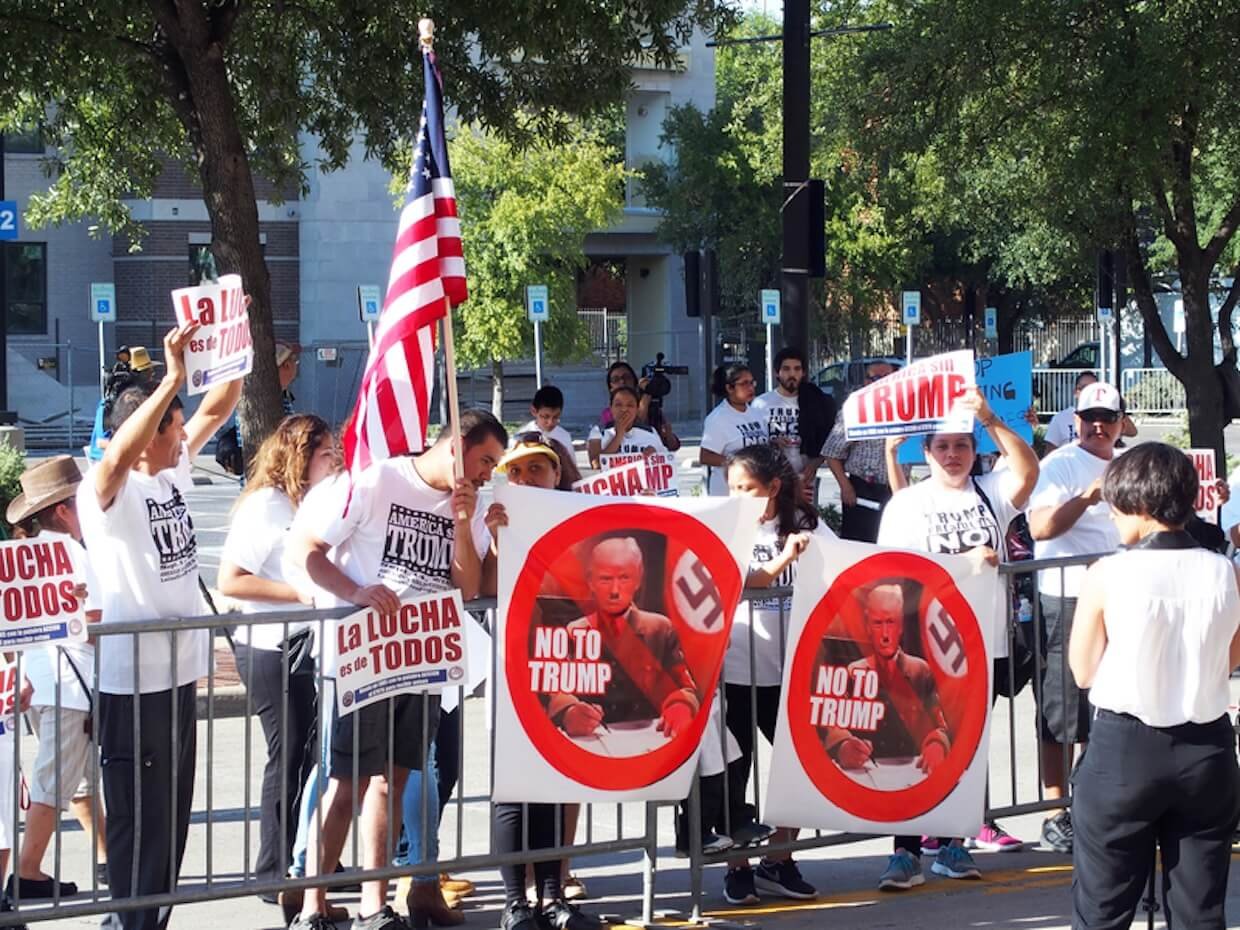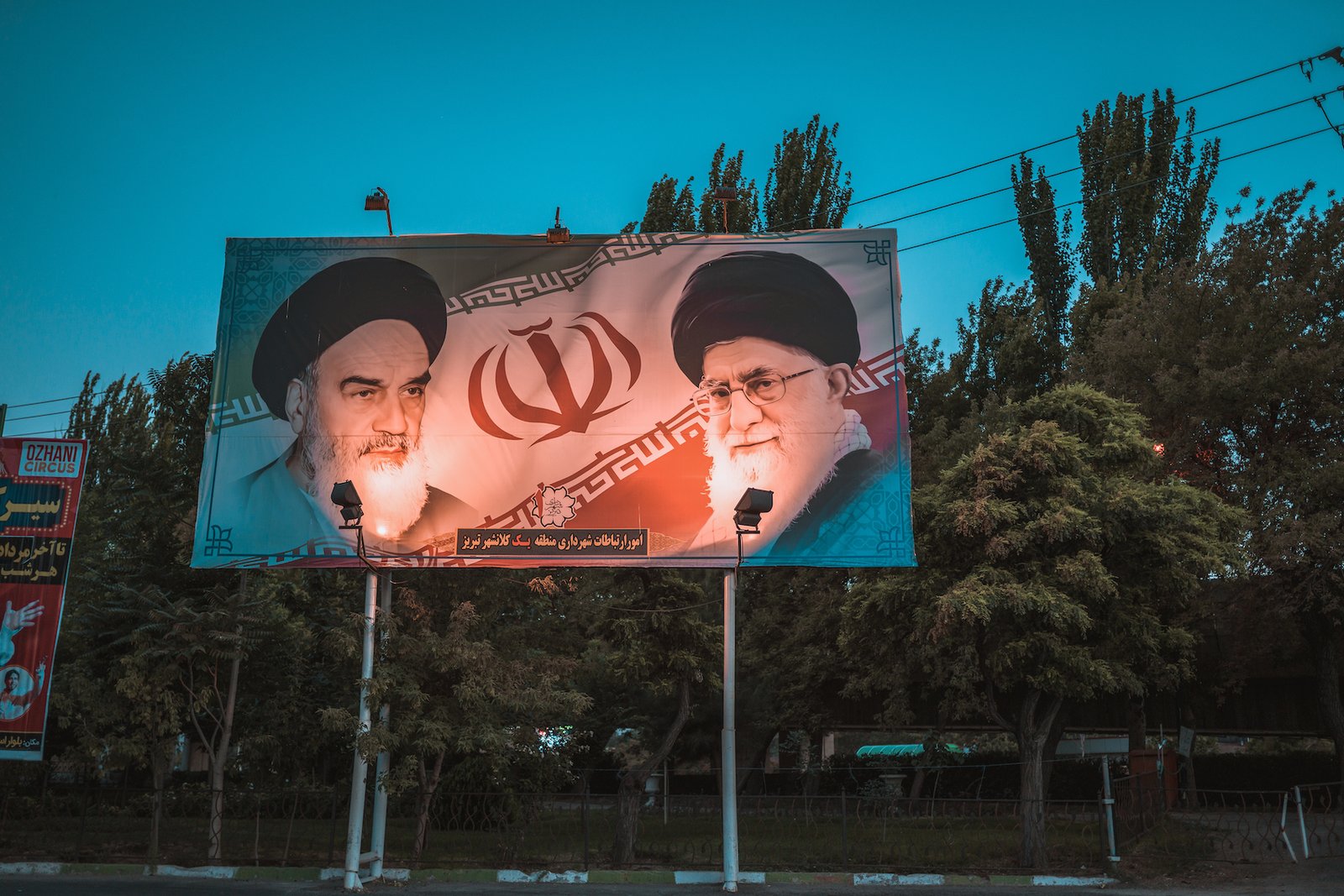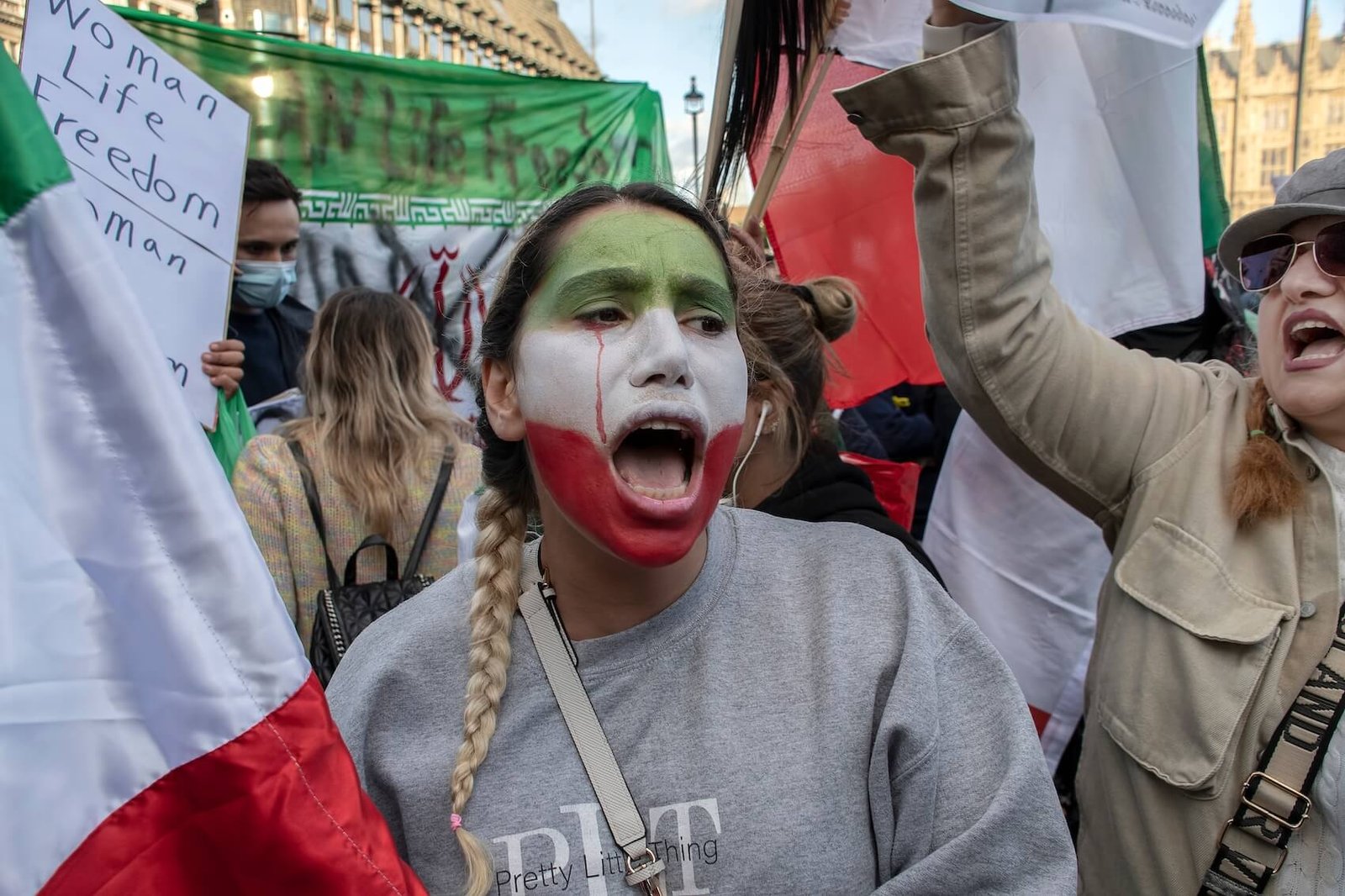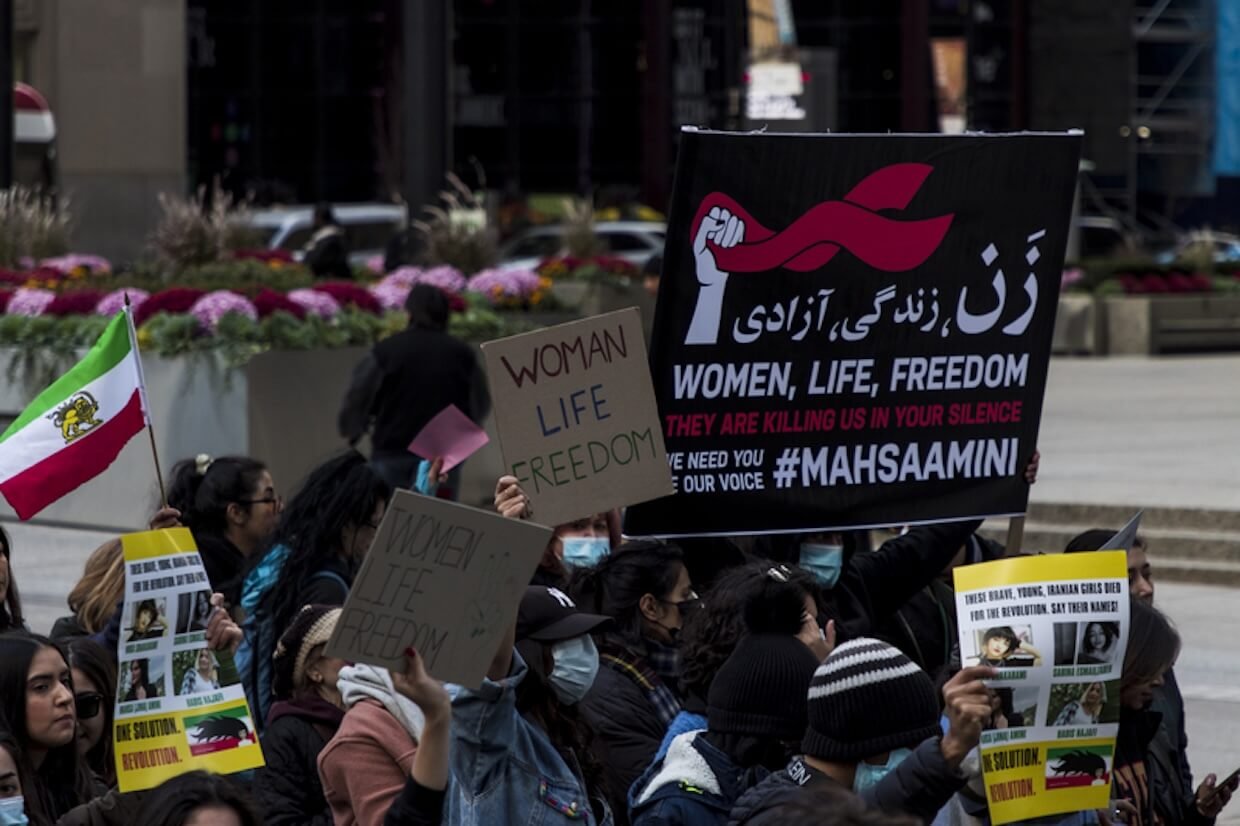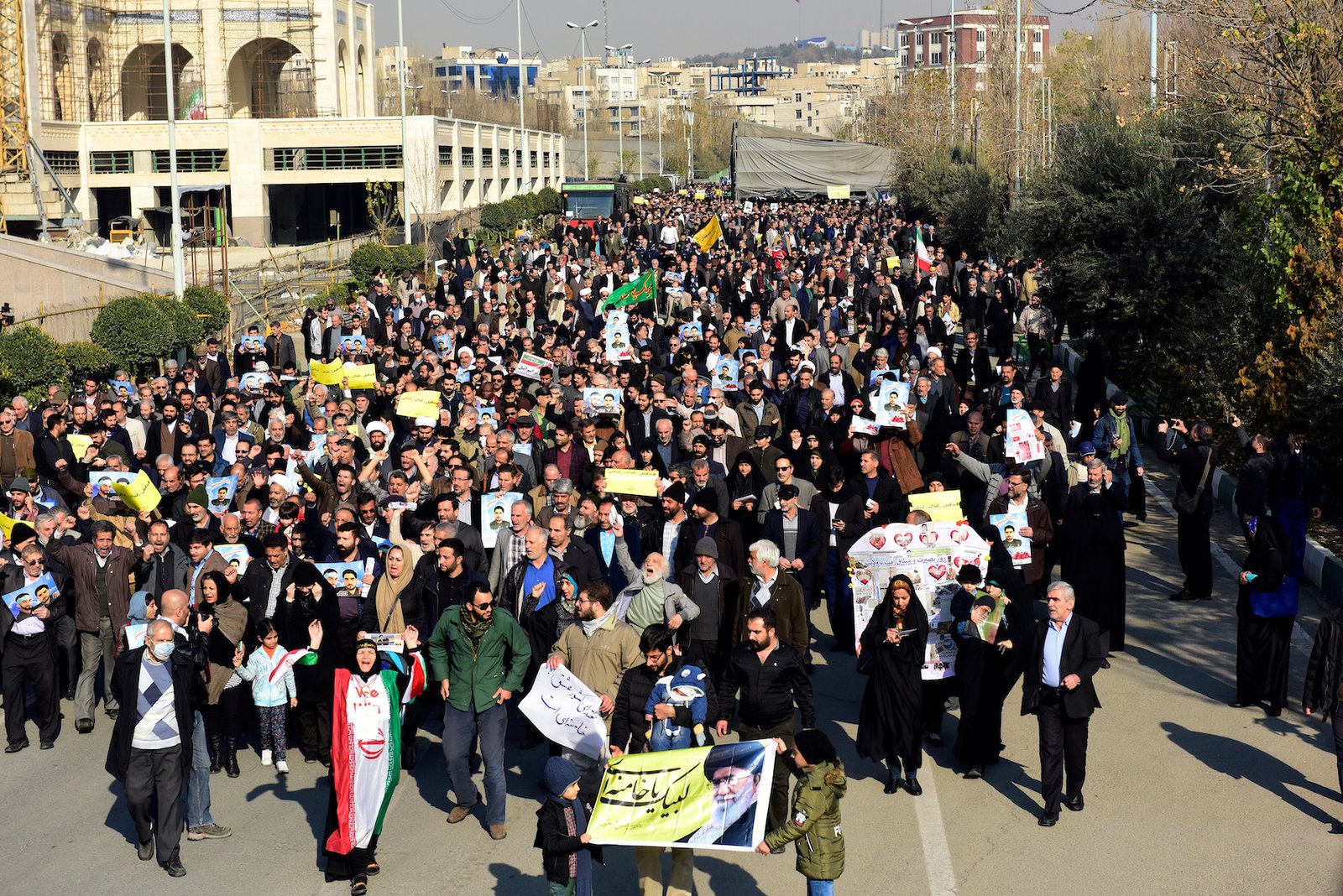
Large protests demand the resignation of Prime Minister Sheikh Hasina’s government as part of the Anti-Quota Movement and Bangladesh Quota Reform Protests. Thousands took to the streets in Dhaka, Bangladesh, on August 4, 2024. Photo: M.D. Sabbir.

Prof. Cheeseman: Mass Mobilization Is Critical When Institutions Fail to Contain Authoritarianism

In an interview with the ECPS, Professor Nic Cheeseman dissects the global resurgence of authoritarian populism and the uneven pathways of democratic backsliding. Warning against the “temporal fallacy,” he argues that crises unfolding simultaneously do not share a single cause—from Europe’s far-right surge to West Africa’s coups. Professor Cheeseman spotlights the twin pillars of democratic defense: resilient institutions and organized civic resistance. “In countries where institutions are weak, mass mobilization becomes absolutely critical—often the only mechanism left to stop populist or authoritarian leaders from consolidating power,” he says. Citing Ghana, Kenya, and Zambia, he urges context-specific democracy support that amplifies local strengths over one-size-fits-all templates.

Interview by Selcuk Gultasli

Giving an interview to the European Center for Populism Studies (ECPS), Dr. Nic Cheeseman, Professor of Democracy at the University of Birmingham, and the Director of the Centre for Elections, Democracy, Accountability and Representation (CEDAR), offers a comprehensive analysis of the global resurgence of authoritarian populism, democratic backsliding, and the vital role of civic resistance in fragile democracies. As a signatory of the June 13, 2025, anti-fascist declaration, Professor Cheeseman warns against the normalization of exclusionary, illiberal politics and highlights the need to rethink strategies for safeguarding democracy in the 21st century.

Professor Cheeseman emphasizes that democratic decline is not uniform but highly context-specific, urging caution against what he calls the “temporal fallacy”—the assumption that simultaneous crises share common causes. While far-right populism is reshaping politics in Europe, democratic erosion elsewhere often follows different patterns, such as military coups in West Africa or institutional capture in Latin America. “What we’re seeing is a highly complex set of processes pushing countries away from democracy, but these processes do not necessarily share a common underlying theme,” he explains.

A central theme of the interview is Professor Cheeseman’s analysis of the relationship between institutional resilience and mass mobilization in resisting authoritarianism. Drawing on Afrobarometer data and recent case studies, he underscores that strong institutions remain the first line of defense against creeping autocracy. However, in contexts where institutional capacity is weak, civic resistance becomes decisive: “In countries where institutions are weak, mass mobilization becomes absolutely critical—often the only mechanism left to stop populist or authoritarian leaders from consolidating power,” Professor Cheeseman asserts.

This argument resonates particularly in African contexts, where frustration with democratic performance—stemming from economic hardships, governance failures, and elite corruption—has fueled coups and populist takeovers. Yet, Professor Cheeseman points to inspiring counterexamples like Kenya, Ghana, and Zambia, where citizens have mobilized successfully to safeguard democratic norms. In Zambia, for instance, “hundreds of thousands of citizens turned out to vote, even believing the election wouldn’t be fully free and fair, because they knew collective action could bring political change—and it did.”

Professor Cheeseman also critiques “one-size-fits-all” democratization strategies, urging international actors to develop context-specific approaches grounded in local realities, civic strengths, and the dynamics of populist narratives.

Overall, the interview highlights Professor Cheeseman’s central thesis: defending democracy requires a dual strategy of institutional strengthening and societal mobilization. Where one falters, the other must rise.

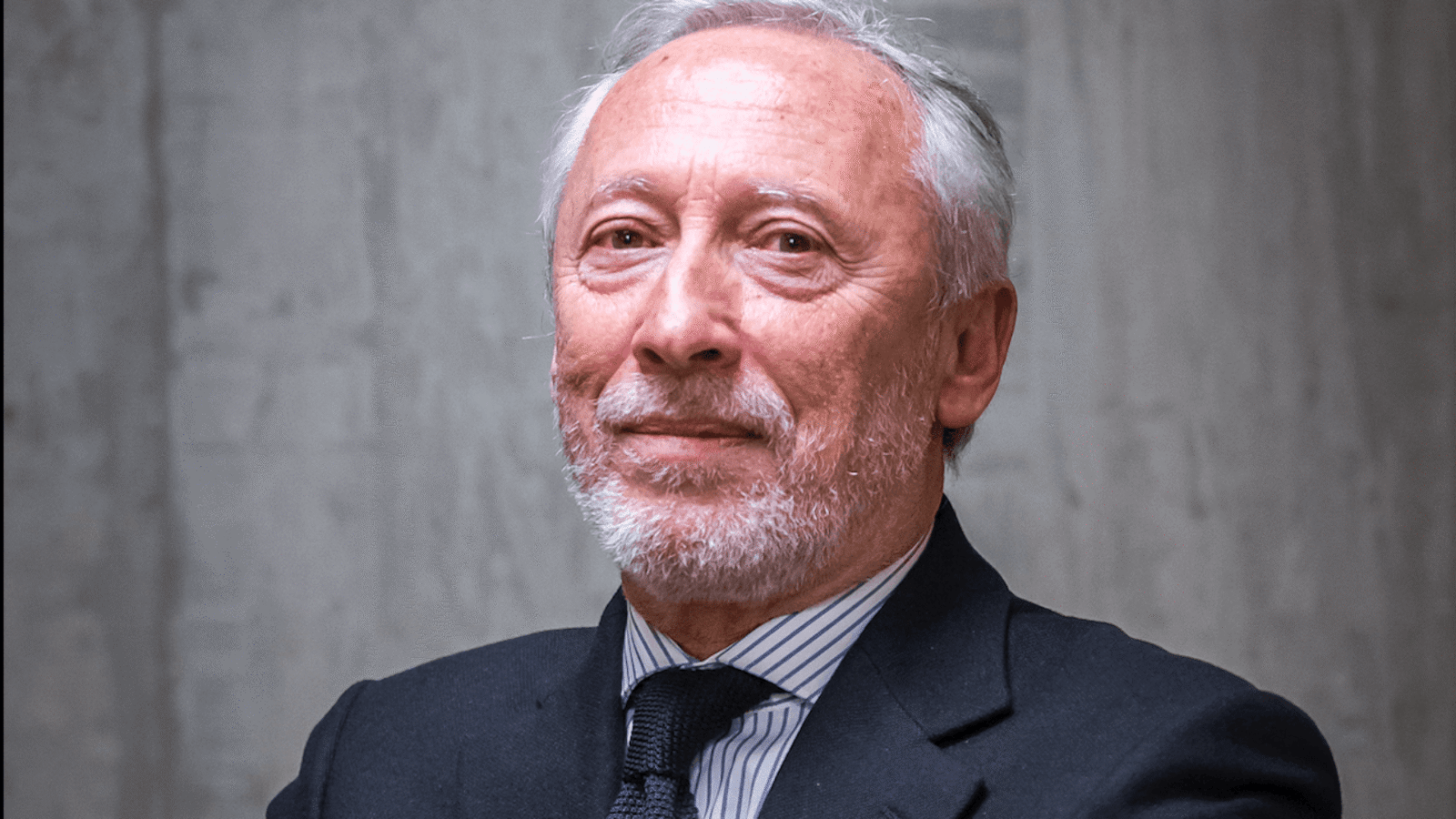
Dr. Nic Cheeseman, Professor of Democracy at the University of Birmingham and Director of the Centre for Elections, Democracy, Accountability, and Representation (CEDAR).

Here is the transcript of our interview with Professor Nic Cheeseman, edited lightly for readability.

Beware the ‘Temporal Fallacy’: Mapping the Varied Paths of Authoritarian Populism

Professor Cheeseman, thank you very much for joining our interview series. Let me start right away with the first question: As a signatory of the June 13, 2025, anti-fascist declaration, how do you interpret the resurgence of authoritarianism and illiberal populism globally? Do contemporary far-right movements represent a new form of “neo-fascism,” or are they better understood as populist-authoritarian hybrids adapted to 21st-century democracies?

Professor Nic Cheeseman: That’s a big question to start with. I’ll begin by reiterating something I often emphasize when discussing the recent phase of global politics and the authoritarian trend: we must be cautious of what I call the temporal fallacy. The temporal fallacy is the assumption that, because many developments are occurring simultaneously, they must be driven by the same underlying causes. For example, if we examine the challenges to democracy worldwide and the rise of authoritarian leaders, we see that some of these leaders fit into a proto-populist, right-wing, exclusionary politics mold.

We can observe the rise of the far-right across Europe, and, of course, we should note that right now, as we speak, far-right candidates or parties are leading in opinion polls in France, Germany, and the United Kingdom—something unprecedented in my lifetime. However, this trend applies only to a certain set of countries. In other contexts, democratic decline has occurred for very different reasons. For example, in West Africa, we’ve seen junta leaders seize power with little connection to right-wing populism. In some cases, there’s instead a pan-African, almost leftist form of old-school populism, modeled more on figures like Ghana’s Jerry Rawlings than on Europe’s fascist traditions. Similarly, in parts of Latin America and elsewhere, we observe yet different dynamics. Overall, what we’re seeing is a highly complex set of processes pushing countries away from democracy, but these processes do not necessarily share a common underlying theme.

So, in that sense, even if we were to agree that some of these cases provide a strong parallel to the fascist movements of the 1930s–1940s, we would, of course, be talking about only a small subset of them. And that brings us to the question of why sign a letter against the rise of fascism. I think what we wanted to do in the letter—and obviously, I can only speak for myself, not for the other signatories—was to raise a warning flag and say: we are beginning to see the early signs of something that increasingly resembles the kind of outright hostility toward other cultures and migrants that we have witnessed before in history.

At present, I think it’s fair to say that we are not yet at that scale. But what we are seeing—and this is what truly concerns me—is that both from senior political figures, like Nigel Farage or Donald Trump, and from below, through social media and conversations among people who share similar views, we now have an almost full legitimization of exclusionary, racist, and hostile discourse happening simultaneously from the top and the bottom. Social media is emboldening people, and the rhetoric of leaders is emboldening people. These two dynamics, unfolding together, mean that things people would not have dared to say 10 or 20 years ago, they now feel confident expressing publicly, believing that others will support them. 

Now, the final point I want to make is that we must be very careful not to assume that the values and prejudices we’re hearing today are somehow new. In many cases, people are simply feeling emboldened to express views they have held for a long time. One mistake we must avoid is interpreting these new expressions as evidence that we had previously solved these issues and that they have suddenly reemerged. My sense is that we never effectively addressed many of these underlying problems; instead, they were allowed to fester beneath the surface. What’s different now is that these prejudices are being emboldened and amplified in this particular moment. So, we face a dual challenge: how to confront the current manifestation of exclusionary politics and why we failed to tackle the root causes and reduce these prejudices more effectively over the last 20 to 30 years.

Frustration with Democracy Fuels Support for Military Intervention 

Thai military seizes control from Prime Minister Thaksin Shinawatra in a coup in Bangkok, Thailand, on September 22, 2006. Photo: Charlie Milsom.

Drawing on your work in “War and Democracy” in 2018, to what extent do rising authoritarian movements exploit institutional weaknesses and democratic fatigue, particularly in post-colonial states? How might these dynamics explain the erosion of liberal norms both in Africa and globally?

Professor Nic Cheeseman: I think frustration with democracy is a really important factor in many parts of the world. Some people believe that they once had a good-quality democracy and that it was taken away, while others feel that democracy was strong but ultimately failed them. For example, in the United States, many might feel that, on the one hand, they have been told they live in a functioning democracy, but on the other hand, they have seen class mobility decline and their ability to achieve a better life than their parents diminish—leading, in a sense, to the erosion of belief in the American dream. Alternatively, we can look at societies in Africa that have never truly been granted democracy. In that article, we discussed countries like Uganda and Rwanda, where we have essentially seen prolonged periods of authoritarian rule.

Now, today, for example, in Uganda, we have a system that is called a multi-party electoral system; it is described as a democracy by the government, but the opposition has never been allowed to win. We know that the game is systematically stacked against the opposition. There was even a survey that found a majority of Ugandan people did not believe that power could be changed through the ballot box. So, when you reach a situation where most voters don’t believe they can actually remove the government through elections, that creates a very dangerous dynamic. It gives people an incentive to start contemplating and supporting alternative ways of changing power—for example, through armed force. And if we were to ask what conditions led to the coups in West Africa, one of the key factors was that citizens had become frustrated and fed up with democracy, no longer believing that it would deliver, and no longer necessarily believing that democratic systems or electoral processes would enable them to elect better leaders in the future. Under those conditions, support for the military and for military intervention becomes something that people are more willing to contemplate.

So, if we look at the Afrobarometer data, for example—survey data across West Africa—one of the things it shows us is that most people are still against military rule. However, even those who oppose military rule in principle are sometimes willing to say that the military has a right to intervene if civilian-led leaders have abused their power. In other words, what people are telling us is: we don’t want the military to govern, but if civilian leaders undermine their own legitimacy, perhaps the military is necessary to provide a clean break and a new opportunity to rebuild the system. I think some of that frustration with the performance of democracy—in terms of its failure to shield people from economic hardships, provide meaningful jobs, and offer a sense that people’s lives have worth and value—is also at the heart of some of the challenges facing democracy in Europe and North America, today.

When Populism Meets Ethnic Exclusion, the Risk of Proto-Fascism Rises

Entrance to the National Genocide Memorial in Kigali, Rwanda, on March 2, 2017. Photo: Karen Foley.

In your article “Ethnopopulism in Africa” in 2015, you describe how African leaders fuse populist economic narratives with ethnic mobilization. How do you assess the risks of ethnopopulism evolving into proto-fascist politics in fragile democracies, particularly where leaders invoke existential threats to justify state violence?

Professor Nic Cheeseman: I think the threat is really significant. But we have to be very careful about approaching this on a case-by-case basis. For example, we wrote that article with certain parts of sub-Saharan Africa in mind, where, on the one hand, you see leaders trying to mobilize in a more populist fashion using economic issues, but on the other hand, mobilizing along ethnic lines because they also recognize the need to carry their ethnic community with them. This results in piecing together a complex constituency that is, at times, inherently contradictory. If you want to deliver broad populist goals and improve the lives of citizens and the average person, you’re appealing to everyone—the common man. But if you then make an ethnic appeal and promise to deliver primarily to your own ethnic community, you narrow your focus to just that constituency. In that sense, it creates an internally contradictory approach.

And what we tried to address in that article is when this approach holds together and when it doesn’t. We essentially pointed out that it is more likely to hold together when a leader’s own ethnic community—perhaps due to historical experiences or socialization into certain values and ideas—is more inclined toward populism and actually shares populist values. This could involve supporting strong state intervention in the economy to deliver rapid change or desiring a “big man” leader and being willing to sacrifice democratic checks and balances to achieve those goals.

So, there’s a kind of tension there that can be overcome, and leaders can use it effectively. But, where those identifications are different, where the ethnic constituency of a leader wants something very different from what perhaps the common person on the street wants, or when there’s a real tension and polarization around ethnic identity, it can be extremely difficult to make them consistent, and actually, a lot of these strategies don’t end up winning power. They collapse under the weight of their own internal contradictions.

Now, where I think this becomes really dangerous—and we see this clearly in other parts of the world, including parts of Europe and Asia—is when you get that combination of a populist leader mobilizing around ethnicity, an exclusionary version of ethnicity, and using the demonization of either external countries or internal minorities as a way to unify their support base. When that happens, you get a particularly troubling form of proto-fascist mobilization. On the one hand, you are deliberately using that community as the glue holding your coalition together, making it impossible to abandon this strategy since it sustains the regime. On the other hand, the populist nature of this mobilization further erodes checks and balances, making it easier for human rights abuses to occur and putting the targeted community in particular danger. That’s where this exclusionary form of politics risks boiling over into something far more violent and repressive. That said, it’s important to remember that this pattern is not universal: some right-wing populists in power have not yet led to severe attacks on minorities, while others clearly have. There is, in other words, significant variation.

One of the things that’s quite interesting to me at the moment is looking at where we see leaders like this who seem genuinely interested in reshaping multiple levels of society, versus those who don’t. In Italy, for example, it seems to me that the government isn’t particularly interested in controlling what academics think or say, nor does it appear heavily involved in censoring universities or seeking to control society down to the grassroots. I could be wrong, but from talking to friends, that seems to be the case. By contrast, in the United States, you have a government that is actively waging war with some of its own universities—trying to impose forms of censorship, remove certain issues from the agenda, and push its own values onto it. 

So, one of the things I think we need to reflect on more carefully is the question: why? Why do we have some movements and leaders who focus primarily on marginalizing communities within an exclusionary narrative, while others are far more invested in intervening directly to reshape society, including academia, universities, and cultural institutions? And why do we have some leaders who seem more focused on controlling the commanding heights of the state without necessarily pursuing deeper social transformation? What drives these different kinds of regimes, and what distinct consequences do they produce for their own societies?

Populists Rise on Anti-Corruption Rhetoric but Often Deepen Clientelism and Corruption

Brazilian citizens take to the streets demanding the impeachment of President Dilma, the arrest of former President Lula, and the fall of the Workers’ Party (PT), amid corruption scandals, in São Paulo, Brazil, on March 13, 2016. Photo: William Rodrigues Dos Santos.

In your 2016 article “Patrons, Parties, and Political Linkages, and the Birth of Competitive-Authoritarianism in Africa,” you highlight the role of clientelist networks in shaping political behavior. How do you see clientelism interacting with populism to facilitate creeping authoritarianism, especially when leaders frame loyalty to the state as loyalty to “the people”?

Professor Nic Cheeseman: It’s a very good question and I think there are two different parts to it. I mean, one is that, in a sense, classic populist leaders face a challenge when it comes to clientelism. Because, of course, if you’re arguing that people should support you because you embody the will of the people, you should be arguing, in a sense, that they should vote for you because they recognize you as the embodiment of the will of the people, and because of your agenda, platform, and personality. And that slightly cuts against the idea that you should, of course, mobilize people through clientelistic models, either by offering them very specific services in order to assist them. For example, the kind of model that we understand in the United States, where we see the government historically delivering specific localized services—for example, for the House of Representatives and so on—in return for votes, or, in sub-Saharan Africa, where we might expect there to be a relationship between leaders and their own ethnic community, exchanging resources in that way. And that, kind of, cuts against the logic of populist mobilization if we think about classic populist thought.

But of course, in reality, we know that these two things have often gone hand in hand, and clientelistic machines have often been the underpinnings of populists who use this kind of rhetoric but actually rely on clientelism to stay in power. Moreover, one of the things that we don’t think about enough is what happens to corruption when populists win power. So, for example, we know that one of the ways that populists mobilize support is that they claim that the state is corrupt. They claim the political elite is corrupt. They make great hay out of any corruption scandals.

Trump, of course, did this. It’s been a current theme in American politics: drain the swamp, reduce the corruption in the government. It’s true more broadly that people have a suspicion about government being corrupt and being inefficient, and so populists have understood that and play on that as a key part of their message. Of course, corruption is a particularly valuable message if you’re a populist leader. Because what you can say to people is: the system is so corrupt, it’s endemic, and it’s pervasive, and therefore, the only way we can deal with it is by electing someone who’s an outsider. And therefore, you have to elect me because I’m the outsider populist. None of those people in the system can be trusted to actually deal with it. So, you get corruption and anti-corruption as one of the key mobilizing messages of populists.

But, of course, when populists are in power, they then often prove to be just as corrupt, or even more corrupt, than the people they’ve replaced. One reason for that, of course, is that populists tend to remove checks and balances, they weaken institutions, they rule in a more spontaneous way, and often in a more individual and personalized way that undermines systems of accounting and systems of audit. Therefore, what you often see is the same populists who get elected on anti-corruption messages then commit greater corruption, partly for personal aggrandizement and wealth, partly to drive the clientelistic networks that were also part of your question. When they leave power, they actually also leave the states and the government more vulnerable to corruption in the future, precisely because they’ve weakened the institutions that were designed to prevent corruption.

So, in some countries, we’ve even seen more corruption when the populist leader has left power and someone else has come in who has been more corrupt-minded but then faces a situation with far fewer constraints. So, corruption and clientelism are fundamental to populism and the rise of populist leaders, both in terms of the mobilization of voters and getting into power, and then in terms of how they sustain power and the legacy they have for political systems.

Mass Mobilization: The Last Defense Against Authoritarianism

Peaceful protests on Niezaliežnasci Street in Minsk, Belarus. Demonstrators rally and march toward Independence Avenue on August 23, 2020. Photo: Shutterstock.

Based on your research on Kenya’s 2022 elections, to what extent can constitutional reforms and decentralization act as safeguards against authoritarian populism? Or do populist leaders inevitably find ways to co-opt democratic institutions?

Professor Nic Cheeseman: I think this depends a lot on how strong the institutions are before a populist leader comes to power, and it also depends on the balance of power. To what extent does the populist leaders get a parliament that is loyal to them? And there are two dimensions to that. One is the extent to which MPs, as part of the populist leader’s party or aligned with them, are elected so that they get an easy ride with Parliament. The other is how easy it is for them to buy over MPs in the context of weak legislatures and weak party systems. So, I think this varies significantly across different places. It seems so far that European countries that have experienced populism—with the exception, obviously, of Hungary—have managed to withstand it to some extent.

Partly because electoral commissions have remained credible, we’ve actually seen democratic institutions withstand some of the challenges, leading to cases of democratic bounce-back. For example, we might think of Poland, where an authoritarian-minded government took power and was later defeated. Similarly, we might expect a more significant prospect of the current government in Italy losing power in the future than in other contexts where institutions have been much weaker and more compromised from the start. Of course, that’s not to say that Italian political institutions are free of corruption or particularly strong. 

But if we compare them, for example, to some countries in sub-Saharan Africa that I work on—where legislatures have historically been extremely weak, and presidents have used corruption and patronage to demobilize scrutiny and opposition within the legislature—we see very quickly that institutions there are often far less able to operate as effective checks and balances. And in the cases of the coups we’ve discussed, we often see Parliament dissolved, political parties banned, and constitutions suspended, leaving political institutions with no real capacity on their own to constrain the new government. 

So, it’s a very mixed picture, and one that gives us important things to consider when it comes to democratic resilience. Some states are going to have much greater resilience than others because of the institutional strengths they possess.

The other thing that’s important to say briefly about this is that we need to think about both democratic resilience—that is, the extent to which institutions can cope with a shock, deal with a non-democratic leader, constrain them, and ensure the rule of law is followed—and resistance, meaning citizens on the streets, civil society mobilization, and people protesting against the government. Particularly in countries where institutions are weak, it is often this form of civil society mobilization and mass protest that prevents authoritarian takeovers. So, I think it’s really interesting to look at this combination. In some countries, institutions hold power; in others, institutions cannot, but mass mobilization can. And in that context, mass mobilization becomes absolutely critical, because it is almost the only mechanism left to stop populist or authoritarian leaders from consolidating their hold on power.

Democracy Can’t Be Saved with One-Size-Fits-All Solutions

Israelis protest in Tel Aviv against Netanyahu’s Judicial Coup in Israel. Photo: Avivi Aharon.

In your co-authored 2018 article “Ten Challenges in Democracy Support,” you warn against “one-size-fits-all” democratization models. How should international actors adapt their strategies when confronting populist movements with explicitly anti-democratic tendencies?

Professor Nic Cheeseman: One of the things I’ve done with some colleagues at CEDA—the Center for Elections, Democracy, Accountability, and Representation at the University of Birmingham—is to think through the different pathways of autocratization. We’ve identified at least four or five ways in which states can become more authoritarian. One is executive aggrandizement, where the incumbent leader expands their power and weakens checks and balances. Another is military interventions—violent takeovers, such as the Taliban retaking power or coups. A third involves state capture, with pervasive corruption corroding the system, though not necessarily led by a single political figure. Finally, there’s populist takeover, where outsider, anti-system candidates win power and then subvert democratic institutions. Understanding these pathways is essential for assessing the biggest threats to democracy and determining how best to build democratic resilience and support systems that uphold democratic norms.

Those strategies or pathways that I outlined are, of course, often overlapping, so they’re not mutually exclusive. For example, you could have executive aggrandizement occurring alongside state capture. But thinking about them carefully is important because it helps identify the biggest challenge in a given context. For instance, if you believe the primary threat in a particular country is a military coup, then the strategy should focus on coup-proofing: How can we professionalize the military? How can we deter it from seizing power through force? Conversely, if the main threat is executive aggrandizement, the priority becomes strengthening checks and balances—ensuring that legislatures and judiciaries are robust enough to hold the president accountable. 

So, the potential solutions, or where you might emphasize investment, depend on assessing the specific threat. One of the risks, however, is that as a global community, we keep repeating the same approaches—supporting elections, legislatures, and civil liberties—without recognizing the need to be more problem-driven, focused, and context-specific. Within the policy community, everyone acknowledges that every reform and program should be tailored to context. But in practice, this is very difficult to achieve. It’s easy to say, “let’s adapt to context,” but much harder to determine what that context actually is and how best to respond to it. Thinking carefully about the most likely pathway of autocratization—and how to insulate against it—is, I believe, one way to encourage a more distinctive and effective approach in different settings.

Of course, you also need to consider other factors, such as identifying the main strengths of the democracy movement in a given country. In which areas is it powerful, and in which areas is it weak? How can we harness these strengths to build a truly effective coalition? That, again, depends on fully understanding which forces on the ground are most influential. In some countries, these might be trade unions, while in many parts of the world, trade unions have been so weakened that they can no longer play this role. In other contexts, religious organizations or other forms of civil society might serve as the driving forces. Ultimately, developing a clear understanding of the local context is critical for identifying the biggest threats and designing the best solutions.

Negative Messaging Can Strengthen Populist Narratives

In your 2024 article “Opening the Door to Anti-System Leaders,” you show how anti-corruption campaigns can paradoxically empower populist outsiders who then undermine democratic institutions. How do you interpret this dynamic in the broader resurgence of authoritarian populism, and are there parallels in Kenya, Zambia, or Tanzania?

Professor Nic Cheeseman: This is one of the things that, in some ways, is the most depressing: some of the things we try to do for good can end up having negative effects. It’s worth taking a step back for a moment from our specific research on corruption to explain why this happens and why it’s so important more broadly. One of the things researchers have started to find is that public awareness messaging—things like “don’t smoke, it’s bad for you,” “don’t drink and drive,” or “follow COVID rules”—can sometimes do more harm than good. One reason, we think, is that by telling people that lots of others are not doing something, you may subconsciously make them think that behavior is more acceptable, easier to get away with, and more socially legitimate.

For example, if I say to you, “lots of people are not following COVID regulations, so COVID is escalating, and we need to follow these regulations,” part of what you may be thinking, perhaps subconsciously, is: “well, if lots of people are not following COVID regulations, then maybe I shouldn’t either, because the norm is not to follow them.” And you might also think, “I won’t get in that much trouble, because loads of other people are already not following them.”

What you need to be really careful about when putting out messages is avoiding language that exacerbates or reinforces people’s sense that the behavior you’re warning against is pervasive, widespread, and normal. This is especially true when it comes to corruption. If you create an advert or message that makes people believe the country is even more corrupt than they already thought, or if you make them focus too heavily on the extent of corruption, you risk encouraging a sense of helplessness and powerlessness. That, in turn, can make people feel they should simply “go with the flow” rather than resist.

We’ve conducted research in a number of countries—Albania, Nigeria, and others—on what happens when this kind of messaging is used, where the focus is on how bad things are, employing what we call a “negative message.” In general, these messages not only fail to encourage people to do what you want—whether following COVID rules, quitting smoking, or, in our case, fighting corruption—but they also often have backlash effects. What we frequently observe is a backfiring effect, where people who receive these messages actually become more willing to engage in corruption rather than less. We believe this happens because such messaging fosters apathy rather than activism and reinforces people’s pre-existing skepticism about the state.

So, what this means is that anti-corruption messages themselves can unintentionally create the very foundations that populists exploit. For example, if anti-corruption messaging makes people more concerned about the extent of corruption but also more apathetic about their ability to change it—feeding a sense that the situation is hopeless—then people may become more willing to accept populist alternatives. In the paper you’re referencing, that’s exactly what we show: people who were exposed to some of these messages—which were intended to encourage anti-corruption activity—actually demonstrated increased support for populist values and attitudes. That’s an unintended and unwanted side effect.

So, we have to be very careful with how we fight, not just in anti-corruption campaigns but across many other areas. If we rely too heavily on negative messaging that focuses on how bad problems are, we may not only fail to achieve positive outcomes but also risk creating backfiring effects—making people more willing to tolerate corruption and other harmful behaviors.

For example, we’ve found associations between negative messaging and declining support for paying taxes, as well as reduced support for other critical elements of the social contract. I think this has significant implications for how we fight back against authoritarianism and sustain democracy. Messages like “everywhere is authoritarian” are ineffective because they reinforce the perception that authoritarianism is pervasive and widely tolerated. Instead, we need to craft messages that highlight how many citizens actually believe in the values we care about—how many support fighting corruption, how many believe their country would be better if it were less corrupt, and how many value democracy. These kinds of positive messages can mobilize people and build solidarity. Negative messaging, however, is really dangerous, and we need to avoid it.

Africa Offers Inspirational Lessons in Democratic Resilience

Two queues of people at a polling station during the 2011 general elections in Zambia. Photo: Dreamstime.

As a follow-up to our discussion on democratic backsliding and a final question, is there, in your view, any notable example of successful democratization across the African continent that offers inspiration amid the rising threats of resurgent fascism, populist mobilization, and authoritarian consolidation? What lessons can ailing democracies—both within Africa and globally—draw from such cases? 

Professor Nic Cheeseman: There are a number of really inspirational cases. Ghana, for instance, springs to mind. It is a country that experienced a series of coups and instability in the 1970s and 80s, followed by a period under military leader Jerry Rawlings, and then managed to emerge in the 1990s with a solid constitution that institutionalized a separation of powers. Rawlings then stepped down when his two-term limit came up, leading to a peaceful transfer of power. Since then, there have been a succession of such transfers. Now, that’s not to say Ghana’s democracy is fully consolidated. In some ways, we need to move away from the idea that democracy can ever be fully consolidated and recognize that, in a sense, it is always under threat, always being challenged. But one of the most striking things about Ghana is that it successfully made the transition from military to democratic rule, and the military has returned to the barracks and stayed out of politics ever since. In terms of one of the biggest trends in West Africa, the Ghanaian experience is a particularly valuable one to learn from. 

I also think we have really interesting examples elsewhere. For example, two countries very close to my heart—Zambia and Kenya. Kenya, on the one hand, is in the middle of a very intense period right now. On one side, you have a government trying to push through very unpopular economic policies, and on the other, there is mass citizen engagement against them—mass protests led largely by youths—alongside significant human rights abuses and violations in the government’s attempts to repress those protests. And so, again, I’m not for a second saying that Kenya has “got it sorted” or reached a point where democracy is fully protected and safe. But if you think about where Kenya was 40 years ago—as a one-party state dominated by Daniel arap Moi—or then move forward to 2007, when Kenya suffered serious ethnic violence after a controversial election, the progress is striking.

In response to that flawed 2007 election and the violence that followed, Kenya built a new constitution that was more inclusive, devolved power to 47 counties, and created a Supreme Court that not only exists but was one of the first courts in the world to nullify the election of a sitting president on the basis that the election didn’t meet the necessary standards. The fact that Kenya has gone through all of that—and that, in some ways, the multi-party system today could be said to be more robust than it was 20 years ago, with a stronger constitution—means that Kenya has the potential to ride out the current challenges, struggle through them, and move forward by instituting new reforms.

And I think it’s that process that gives me inspiration. It’s not easy. People have fought for it every step of the way. People have risked their lives; many have died, trying to push forward democracy, to build a more accountable and effective system, and to resist authoritarian leaders. But at the same time, that process of struggle has actually generated a situation where, over time, the institutions have become stronger. And while they still need to be strengthened considerably from here on, Kenya is in a much better position than it was—despite all the challenges the country faced in the early 1990s, coming out of its period of strongman rule.

And the same, very briefly, to an extent, applies in Zambia. Zambia, too, is struggling with the question of democracy, the government’s commitment to it, and the challenge of making progressive reforms. But at the last election, Zambia actually managed to remove an authoritarian—or increasingly authoritarian-minded—leader, President Edgar Lungu, and witnessed a peaceful transfer of power as hundreds of thousands of Zambians went out to vote. They did so even though many did not believe the election would be completely free and fair, because they believed that if they came out together in their hundreds of thousands, they could bring about political change—and they did, by voting for a change of government.

It’s also worth keeping in mind, especially for those skeptical about the feasibility of democracy in Africa, that only two countries globally moved toward greater democracy during the COVID-19 pandemic, according to major democracy ratings indices. And those two countries were Malawi and Zambia—both in Africa. So, I do think Africa provides some genuinely inspirational examples where the struggle for democracy is very much ongoing. These are countries that have not lapsed into pure authoritarianism; their institutions are gradually becoming stronger, and citizens are consistently mobilizing to safeguard their rights and liberties.

And that, I think, is a good model for other countries in different parts of the world that are now beginning to face their own democratic difficulties.

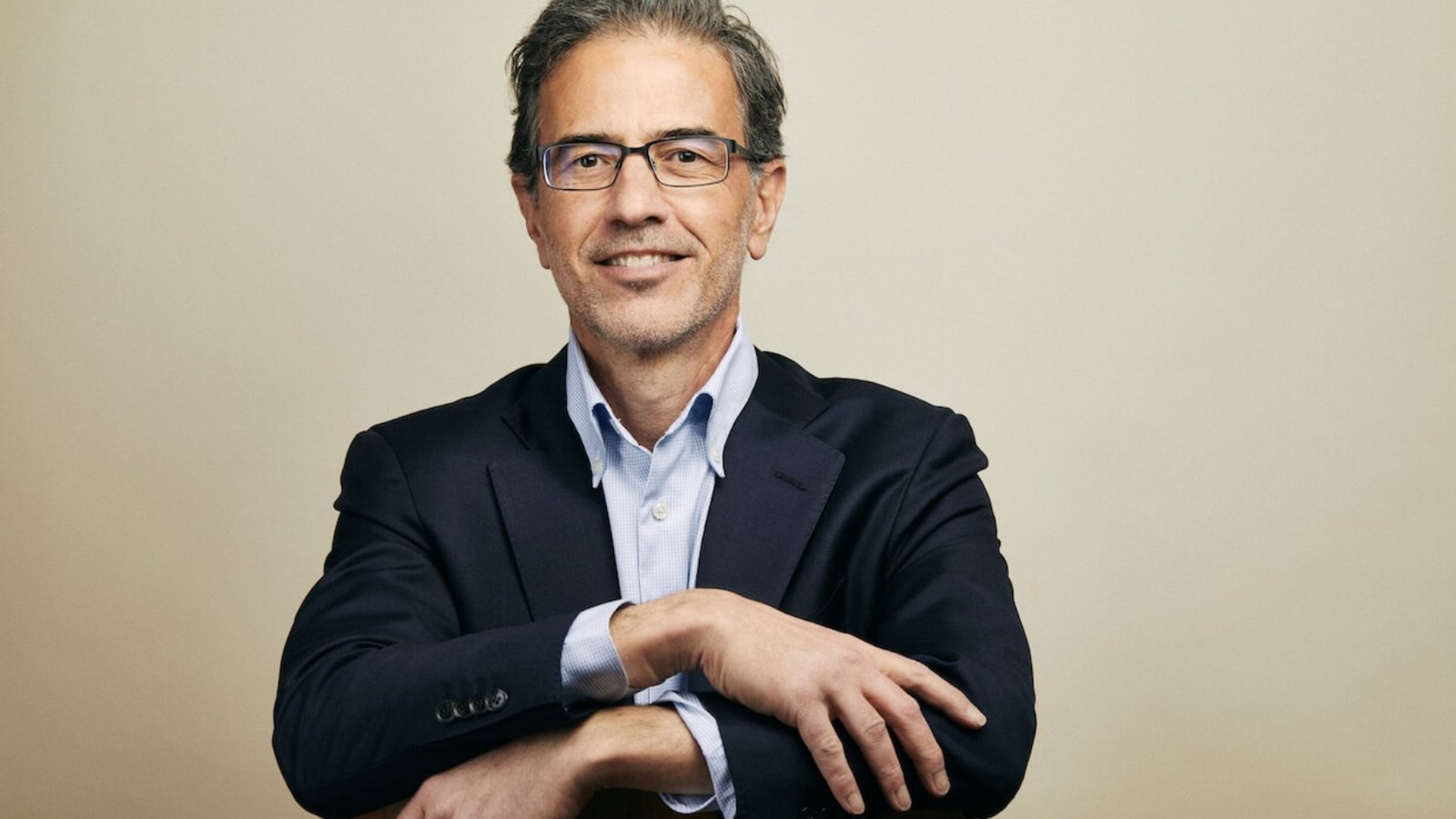
Coming from a family of Holocaust survivors, Professor William Schabas is one of the world’s foremost authorities on international criminal law and genocide studies, and a professor at Middlesex University.

Professor Schabas: US, Germany, and Others Could Be Held Liable as Accomplices to Genocide in Gaza

In an exclusive interview with ECPS, Professor William Schabas, one of the world’s foremost authorities on genocide and international criminal law, warns that the Gaza crisis represents a “litmus test” for the credibility of international justice. He argues that the case filed by South Africa against Israel at the ICJ is “arguably the strongest case of genocide ever brought before the Court,” citing Israeli military actions and statements by senior officials as evidence of genocidal intent. Professor Schabas also highlights Prime Minister Netanyahu’s populist rhetoric, framing Gaza’s population as an existential threat, which he links to patterns of incitement fueling atrocities. Crucially, he stresses that third-party states, including the US, Germany, and others risk legal liability as “accomplices to genocide.”

Interview by Selcuk Gultasli

In an extensive interview with the European Center for Populism Studies (ECPS), Professor William Schabas—one of the world’s foremost authorities on international criminal law and genocide studies, and a professor at Middlesex University—offers a detailed assessment of the unfolding crisis in Gaza through the lens of international law, populist politics, and global governance. Coming from a family of Holocaust survivors, Professor Schabas warns that Gaza represents a “litmus test” for the credibility of international justice and the authority of global legal institutions.

At the heart of his analysis is a stark conclusion: the case brought by South Africa v. Israel before the International Court of Justice (ICJ) is “arguably the strongest case of genocide that has ever come before the Court.” He argues that evidence of genocidal intent can be inferred not only from Israel’s military conduct but also from statements by senior Israeli officials, such as Defense Minister Yoav Gallant’s remarks about cutting off food, water, and electricity in Gaza. “We have more than just a pattern of conduct—we also have statements and clear indications of policy. All of these must be considered together when making a final judgment,” said Professor Schabas.

Professor Schabas also highlights how Prime Minister Netanyahu’s populist framing of Gaza’s population as an existential threat has intensified concerns about incitement and mass atrocity crimes. “Racist populist rhetoric has often been part of genocidal contexts, mobilizing mass support for atrocities. We see elements of that dynamic in Israel today,”he said. Drawing comparisons to Rwanda (1994) and the Namibia genocide (1904–1906), he underscores both the parallels and distinctions, warning against simplistic analogies while emphasizing recurring patterns where populist narratives fuel extreme violence.

Importantly, Professor Schabas stresses that third-party states—including the US, Germany, Canada, and others—risk being held legally accountable under Article III of the Genocide Convention for aiding and abetting Israel through military and political support. He warns: “To the extent that they are providing material assistance of a significant nature, they can be held responsible as accomplices to genocide.”

Finally, he frames Gaza as a defining moment for international justice mechanisms like the ICJ and ICC, warning that failure to apply consistent standards risks entrenching a “two-tier system of international law” and undermining human rights globally: “These institutions are absolutely vulnerable, and they are aware of it. Gaza is a test for their credibility and authority.”

This interview situates Gaza within broader debates about populism, authoritarianism, and international accountability, offering an urgent call to rethink legal, institutional, and political frameworks for preventing mass atrocities in an era of resurgent populist authoritarianism.

Here is the transcript of our interview with Professor William Schabas, edited lightly for readability.

Destruction in Shejayia, Gaza City, Gaza Strip. Photo: Dreamstime.

Gaza Is a Litmus Test for the Credibility of International Justice

Professor Schabas, thank you very much for joining our interview series. Let me start right away with the first question: As a leading genocide scholar and coming from a family of Holocaust survivors, before delving into the legal and political complexities, how would you characterize the current situation in Gaza from the perspective of international law? Considering the patterns of conduct, the scale of destruction, and official statements by Israeli leaders, do the unfolding events appear to meet the legal thresholds of genocide, crimes against humanity, or ethnic cleansing under Article II of the Genocide Convention, or are we still at a stage where these legal categories remain indeterminate?

Professor William Schabas: There’s always going to be debate about legal categories, and you’re asking me, as a scholar and specialist in the field, to make an assessment. Ultimately, the International Court of Justice (ICJ) will deliver its judgment, primarily in the case filed by South Africa against Israel. In my view, South Africa’s case is exceptionally strong—arguably the strongest case of genocide ever brought before the ICJ. Of course, I have not seen South Africa’s full submissions, as these remain confidential until the hearing begins, which is likely to take place in two or three years. However, based on the information and material currently available in the public domain, I believe their case rests on a very solid foundation.

Based on that, I think South Africa is likely to prevail in the case, and Israel will lose and be found to have violated the Genocide Convention. You mentioned some of the factors that will be part of that assessment—the notorious statements by Israeli politicians, declarations of various kinds that continue. These all contribute to identifying the policy of the State of Israel. But there are other factors as well, mainly the conduct of Israel, which indicates that its policy is directed towards the elimination of the presence of the Palestinian Arab people in Gaza. That leads to genocide. You also mentioned other terms, like “ethnic cleansing,” which, technically speaking, is not covered by an international treaty and is not, strictly speaking, a crime under the Rome Statute of the International Criminal Court (ICC). However, it is used to describe a type of conduct that borders on the crime of genocide—in other words, the expulsion of people from a territory so that another population can prevail there.

I think it’s often misunderstood that there is not a bright line between genocide and ethnic cleansing. The ICJ, in its important judgments on the Genocide Convention, has clearly stated that, while ethnic cleansing is not necessarily genocide, it can also amount to genocide. So, there’s a zone between the two concepts—it’s not a sharp division.

Another commonly misunderstood point concerns intent. One of the arguments we hear from those defending Israel is that “they could have killed more people, and they haven’t,” suggesting that this proves there is no intent to commit genocide. We have encountered similar claims in assessments of the Holocaust and other historical examples of genocide, where it was argued that the absence of even greater killings indicates a lack of intent. However, this reasoning has never been accepted by courts. So, briefly—though I could speak on this subject for much longer—that is my assessment.

US and European Devotion to Israel Has Undermined International Law

Election billboard showing Netanyahu shaking hands with Trump, with the slogan “Netanyahu. Another League,” in Jerusalem on September 16, 2019. Photo: Dreamstime.

In your work on preventive obligations, you highlight that early warning mechanisms are underutilized in atrocity prevention. In Gaza, where warnings have existed for years, what explains the persistent inaction by international bodies like the UN and the ICC?

Professor William Schabas: Well, a significant problem with the United Nations is that it is ultimately guided by the political views of its member states, particularly the most powerful ones—the permanent members of the Security Council. I am talking here mainly about the United States, but I would not overlook the United Kingdom and France either. Other wealthy and influential states, primarily in Europe or European settler states elsewhere, such as Canada and Australia, are also deeply devoted to Israel. They have been reluctant to take measures that would rein Israel in and, on the contrary, have often encouraged and emboldened it, frequently turning a blind eye when Israel has engaged in particularly troubling actions. As a result, they have significantly constrained the United Nations’ ability to address Israel’s violations of international law effectively.

I think we can trace that position back a century or more, even before the creation of Israel, to when the mandate was given to the British at the end of the First World War. The British had long coveted the territory of Palestine and had encouraged Zionism for decades before receiving the mandate. In effect, what they sought was a settler state in the Middle East that would allow them to influence and control the region as much as possible.

I don’t believe that underlying objective has changed. This explains the deep devotion to Israel not only by the United States but also by the major European powers, for whom the Middle East remains of immense economic and strategic importance. They need to maintain control over the region, and they cannot rely on other governments there in the same way they can rely on Israel—although some, like Saudi Arabia, are also closely aligned with and loyal to the European powers and the United States. But they cannot count on them in the same way they can with Israel.

Israel Cannot Invoke Self-Defense While Acting Unlawfully in Gaza

Drawing on your analysis of the ICJ’s evolving jurisprudence, how might the Court balance Israel’s claims of “self-defense” with its responsibilities as an occupying power under the Fourth Geneva Convention, especially after its 2024 advisory opinion reaffirming Gaza’s occupied status?

Professor William Schabas: Israel has invoked the notion of self-defense, and this is echoed in the defenses of Israel that we hear from countries like Germany, the United Kingdom, France, and the United States. I really don’t think—I’ve thought a lot about this—that Israel can legitimately invoke self-defense in relation to what it’s doing in Gaza. Regarding the attacks that took place in October 2023, there is an element of self-defense they could claim, as this was an incursion into their territory by various Palestinian forces. However, Israel’s response in Gaza is entirely disproportionate to what self-defense would require.

Moreover, the International Court of Justice has declared the occupation of Gaza to be unlawful. You cannot claim self-defense while engaging in unlawful actions. It’s like a bank robber who fires on the police because they’re firing on him—he can’t go to court and invoke self-defense, because he is, by definition, acting unlawfully. In the same way, I don’t think Israel can credibly rely on self-defense here. In my view, this is simply a bogus argument.

Evidence of Genocidal Intent in Gaza Goes Beyond Circumstantial Patterns

Morning bombing attack on Gaza near the Al-Saraya buildings. Photo: Ahmed Fraije.

Given your argument that genocidal intent can be inferred from patterns of conduct and policy, rather than explicit declarations, how do you assess Israel’s military strategy in Gaza in the light of Article II of the 1948 Genocide Convention? To what extent do statements by Israeli leaders, such as Yoav Gallant’s remarks about cutting off food, water, and electricity, strengthen claims of genocidal intent?

Professor William Schabas: The proof of genocidal intent is almost always at the core of legal debates about whether genocide is occurring. It has been central to the judgments of the International Court of Justice in cases from the former Yugoslavia, as well as to rulings of the International Criminal Tribunal for the former Yugoslavia in prosecutions of individuals for genocide. The case law is quite consistent: when evidence of genocidal intent relies exclusively on conduct—in other words, on what is known as circumstantial evidence—you must be able to rule out any other reasonable explanation for that conduct. If ambiguity remains, the claim of genocide must be rejected. This principle, derived from basic criminal law, is applied in most jurisdictions when dealing with crimes of this nature and cases based entirely on circumstantial evidence.

The point, however, is that we have more than just circumstantial evidence here. We have more than a mere pattern of conduct—we also have statements and other indications of policy. All of these elements must be considered together when making a final judgment. Ultimately, this assessment rests with judges or, in some contexts, juries, depending on the legal framework. They will need to determine whether the totality of this evidence amounts to genocide.

As I mentioned at the outset of the interview, my own conclusion is that it does. However, we will have to see how the judges respond. They may not be unanimous; there could be a majority either for or against. Time will tell how they weigh the evidence. In my view, there is already sufficient evidence in the case to reach a conclusion. We must also see what arguments Israel presents in its reply and what its defense entails. If their primary claim is that they are acting in self-defense, for the reasons I’ve already explained, I don’t think they’re going to fare very well.

The ICJ Is Becoming a Forum for Issues Once Left to Politics

You have noted that international law is moving toward a broader interpretation of genocide, as seen in the ICJ’s handling of the South Africa v. Israel case. Do you believe this shift represents a new phase in international jurisprudence? How might it redefine accountability for powerful states in future conflicts?

Professor William Schabas: Yes, I think there is something significant happening at the International Court of Justice (ICJ), particularly regarding the interpretation of genocide, which is likely to make proving genocidal intent somewhat easier. I base this view not only on the conduct of the Court in some of its recent decisions dealing with genocide cases—it currently has four such cases before it—but also on the attitude taken by governments.

One of the striking features of recent litigation before the ICJ, not just in the case brought by South Africa against Israel but also in The Gambia’s case against Myanmar and Ukraine’s case against Russia, is the unprecedented number of state interventions. In the entire 80-year history of the Court, there had only been a handful of interventions in any cases until 2022–2023. Now, we have around 50 states intervening in ongoing genocide-related cases. This level of engagement has never happened before—not even in the Yugoslavia cases.

I think this indicates that states now expect the Court to do more with the Genocide Convention than it has done in the past, which may involve a somewhat more liberal interpretation of genocidal intent. However, this does not mean there is pressure to expand the definition of genocide itself; states are not seeking to add political groups or new categories to the Convention. Rather, they are calling for the Court to be more receptive to evidence indicating genocidal intent, and if the Court responds to this expectation, it will likely be reflected in its final decisions.

Time will tell, of course, but ultimately, the ICJ is the states’ court—it is, in a way, their institution. By choosing to participate, states are signaling their trust in the Court and their expectation that it will deliver justice. What is also remarkable and relatively new is that states are increasingly turning to the Court on matters that were traditionally settled in political forums like the UN General Assembly, the Human Rights Council, or the Security Council.

Now, they are asking the ICJ to decide on issues beyond genocide, such as climate change, occupation of territory, decolonization, labor rights, and even the right to strike. Instead of negotiating these matters politically, states are effectively saying: “We will let these 15 judges decide, based on the law, what should be done.” That marks a significant shift compared to how things were handled 10, 15, or 20 years ago.

The entrance sign of the International Criminal Court (ICC) at its headquarters in The Hague, Netherlands, on February 14, 2018. Photo: Robert Paul Van Beets.

Western Inconsistencies Expose a Two-Tier System of International Justice

In one of your interviews, you highlighted the selective application of the genocide label, noting that “our enemies commit genocide, not our friends.” Considering Western reluctance to describe Israel’s actions in Gaza as genocide—while readily applying the term to cases like Russia in Ukraine or China with the Uyghurs—and reflecting on your 2013 article “The Banality of International Justice” where you discuss the ICC’s tendency to target weaker states while avoiding powerful ones, do you believe this dynamic risks reinforcing perceptions of a two-tier system of international justice and undermining the credibility of international law?

Professor William Schabas: Double standards have been a feature of international law forever, really. International law was created by European colonialist states and used, in large part, to govern the rest of the world that they controlled as a result of colonization. Over time, it has evolved and changed, largely because states—particularly those that were not initially considered “states” in the European sense—have insisted that the same standards be applied to wealthy, powerful states as to what we now call the Global South.

I could give a lengthy demonstration of these double standards, particularly in the conduct of the political bodies of the United Nations. For example, when we have a political body like the Security Council and a government like the United States says, “South Africa is committing genocide against the white population”—this was President Trump’s claim a few months ago—that’s an absurd suggestion and profoundly insulting to the people of South Africa, who endured apartheid for so long. At the same time, the US dismisses South Africa’s application to the International Court of Justice against Israel as “meritless,” to use Secretary Blinken’s term. When this happens in a political forum, people tend to shrug and say, “Well, that’s politics.” Terms like genocide are used politically to condemn enemies and dismissed when it comes to allies.

The International Court of Justice and the judicial route are not entirely immune to double standards, but they are less vulnerable than political bodies. For example, in The Gambia’s case against Myanmar at the ICJ, several Western states—Canada, Germany, France, the UK, Denmark, and the Netherlands—filed a joint intervention in late 2023, before South Africa filed its case against Israel. In that intervention, they called for a more liberal approach to genocide, suggesting that genocidal intent could be inferred from factors like forced displacement within a territory—something we see regularly in Gaza—or the victimization of children, which we also see very dramatically in Gaza.

Of course, these states didn’t have Gaza in mind when they submitted that intervention, and they would likely reject any argument applying their position there. But they are now, in a sense, stuck with their own words. For instance, Germany later intervened in the Ukraine v. Russia case and took a different stance. There, Germany did not call for a broader interpretation of genocide; instead, it leaned toward a stricter interpretation, because it suited their position defending Ukraine’s claim that Russia was misusing the term “genocide.”

This inconsistency will likely embarrass Germany and others before the ICJ when lawyers point out that they argue one thing in one case and the opposite in another. In a judicial environment, it is harder to sustain such contradictions than in a political environment, where people can simply dismiss it as “just politics.”

Populist Incitement Can Mobilize Mass Support for Atrocities

Benjamin Netanyahu, Prime Minister of Israel visits the Synagogue of Copacabana in Rio de Janeiro, Brazil on December 28, 2018.

Considering Prime Minister Netanyahu’s populist framing of Gaza’s population as an existential threat, how do you assess the relationship between populist political rhetoric, incitement, and the potential establishment of genocidal intent? Can parallels be drawn with earlier contexts—such as Rwanda in 1994—where inflammatory discourse played a decisive legal role, and to what extent do such political narratives influence judicial assessments at the ICJ?

Professor William Schabas: This is a complicated question to answer because you’re asking me to make parallels or equivalences between what happened in Rwanda in 1994 and what’s going on in Israel today. Parallels are always difficult to draw, and I see this increasingly in discussions about genocide. There is a tendency, when we talk about genocide, to treat the concept—and the Genocide Convention itself—as something premised mainly on the Holocaust, the Shoah of the Second World War.

People often say that the Genocide Convention resulted from the Holocaust, as a direct reaction to it. But that’s not entirely accurate. I’ve examined the drafting history of the Genocide Convention in great detail, and the convention itself explicitly points out that genocide has been committed at all times in human history. The same is true of the General Assembly resolution that preceded it. In 1946, 1947, and 1948, when the Genocide Convention was being adopted, there was a very clear desire to emphasize that genocide is not only about the Holocaust but also about other historical examples.

When we compare different genocides and attempt to draw parallels, we find significant differences among them, which makes it hard to generalize. You mentioned populism, and indeed, racist populist rhetoric has often been part of genocidal contexts. Mobilizing mass support for atrocities is common, and we do see elements of that in Israel. There is opposition, of course, but it is relatively subdued. Many within the Israeli population, without explicitly endorsing what Netanyahu and his government are doing, are primarily focused on rescuing captives—the hostages in Gaza—rather than on acknowledging the scale of crimes and abuses being perpetrated against Palestinians.

One analogy I’ve found striking comes from my recent reading for an article I’m writing on what is widely recognized as the first genocide of the 20th century: the genocide perpetrated by Germany in Namibia, then called Southwest Africa, between 1904 and 1906. That conflict began with a rebellion by the local indigenous people against German colonial rule, during which, according to German accounts, serious atrocities were committed by the rebels. The rebellion itself was not peaceful; it was quite brutal. Germany’s response, however, was genocidal. Today, Germany acknowledges this as genocide, though it classifies it as a “historic genocide” to distinguish it from genocides covered by international law and to limit its legal obligations.

But what I find striking are the parallels between the genocide that took place in Namibia in 1904 and what has happened in Gaza over the last two years. Not that Germany would want to draw this parallel, of course, but there are undeniable similarities. The German brutality was a response to a rebellion by the people of Namibia, yet Germany does not claim it was acting in self-defense. Instead, it has since apologized and officially acknowledged that it committed genocide between 1904 and 1906.

That said, there are also important differences between these cases. There are some similarities between the Rwandan genocide and what we see in Gaza, but Rwanda’s genocide was largely a mass atrocity carried out by irregular forces. In contrast, the situation in Gaza involves actions conducted by the Israeli army, using highly advanced and modern weaponry. Rwanda’s context was also quite different because it did not involve the colonial settler-state dynamics that are present in Gaza.

Each case of genocide has its own distinctions and unique historical circumstances. I think we must be very careful about expecting them all to follow a single pattern or model.

Article III Makes Enablers Responsible: US and Germany Face Legal Exposure

Given the ICJ’s clarification that states party to the Genocide Convention have obligations both to prevent genocide and to avoid complicity, how should countries like Germany and the United States—as major suppliers of military aid to Israel—be held accountable under international law? Moreover, how should international legal frameworks evolve to better define the responsibility of third-party enablers, particularly when geopolitical alliances influence states’ actions and responses?

Professor William Schabas: The Genocide Convention specifies explicitly in Article III that you violate the Convention by complicity—by being an accomplice to genocide—and what you’ve referred to as “enablers.” You’ve mentioned the United States and Germany, but there are other states as well that have been enabling Israel in different ways.

To the extent that they are providing material support of a significant nature—and there’s no doubt this applies to the United States, Germany, and others—they can be held responsible as accomplices to genocide. In fact, there is currently a case before the International Court of Justice (ICJ) where Germany is being charged with complicity in genocide, filed by Nicaragua.

There is another important facet you’ve raised regarding the prevention of genocide. The treaty is formally titled the Convention on the Prevention and Punishment of the Crime of Genocide, yet its provisions largely concern punishment. However, in the landmark 2007 judgment in Bosnia v. Serbia, the ICJ developed a significant doctrine on prevention. The Court emphasized that the obligation to “prevent” genocide is meaningful and binding. States party to the Convention—including Germany, the United States, and more than 150 others—have a duty to use their influence on other states or entities perpetrating genocide.

In Bosnia v. Serbia, the Court clarified that states are not required to send troops but must take all lawful measures available to prevent genocide. For example, in 1994, when France stood by as the Rwandan government perpetrated genocide against the Tutsi population, there was arguably a legal obligation to act—even though no case has yet been brought before the ICJ on that matter.

Importantly, the Court also ruled that this duty arises not only when genocide is being committed but when there is a serious risk of genocide. That sets a lower threshold. In Gaza, there is, at the very least, a serious risk of genocide. This means that states like Germany and the United States have a legal obligation to use their influence on Israel to prevent it.

Furthermore, because the ICC has jurisdiction over the territory of Palestine, this opens the possibility that German and American leaders could be investigated and potentially prosecuted as individuals for failing to prevent genocide or for aiding and assisting Israel.

Finally, much of this has implications for domestic litigation as well. Activist lawyers in various countries are already pursuing cases, and the legal principles developed by the ICJ and ICC are increasingly being used to support these efforts.

European Hypocrisy on Gaza Undermines Decades of Human Rights Advocacy

You have suggested that Gaza represents a “litmus test” for the credibility of international justice mechanisms. If the ICJ and ICC fail to apply consistent standards to Israel as they have in other contexts, what are the long-term implications for global governance, human rights protection, and the authority of international law?

Professor William Schabas: Yes, it’s a test for the courts. There have been similar tests in the past, and I’ll give you an example of a historic one involving the International Court of Justice in the 1960s. The Court was confronted with a case filed by two African states, Ethiopia and Liberia, both of which had also been members of the League of Nations. They brought a case against South Africa concerning Namibia and the administration of the mandate—and later the trusteeship—over Namibia by the South African government, which had imposed apartheid there.

The case was ultimately thrown out by the International Court of Justice by a single vote. It was a very close decision, but it severely discredited the Court. Well, not everywhere. In South Africa, and probably in the United Kingdom, the United States, and some other European colonial powers like Belgium and perhaps France, there was a sigh of relief when that ruling came down. But in most parts of the world, countries and people were deeply shocked by the Court’s decision.

For the next 20 years, the ICJ had very little work. It went years without holding any trials because the world, in a sense, had voted its disapproval. It was terribly disappointing, and the Court had lost its credibility. Slowly, it has regained that credibility, and the judges today are well aware of this history.

I think at the International Criminal Court, the judges and the prosecutor are also aware that, for too long, the ICC has been seen as a court dealing primarily with situations in Central Africa and resisting opportunities to engage with cases involving major powers. Even as it has begun to shift away from that focus, it remains vulnerable to criticism—especially since it has concentrated so much of its efforts on Russia and Ukraine while devoting relatively few resources to Gaza.

It has now taken some steps with the issuance of two arrest warrants, and I believe there are probably two more—against Smotrich and Ben-Gvir—that have either been issued or are about to be issued, though it’s unlikely that will be made public. We won’t know for sure until, or unless, those individuals are apprehended, which could happen at some point in the future.

But yes, these institutions are absolutely vulnerable, and they are aware of it. I should also note that it’s not only the United States that is being discredited for its attitude towards Gaza—it’s also many European states. For the last 20 or 30 years, European countries have enjoyed a position of moral authority, lecturing others around the world about human rights violations, calling them to account, and supporting NGOs in these efforts—many of which I’ve supported myself.

But this reveals a profound hypocrisy, and it’s becoming increasingly transparent. This damages the credibility of their broader efforts to promote human rights globally. I won’t limit this critique to the so-called “Global South” either; even in the United States, there have been human rights violations, and European states have occasionally intervened—for example, in death penalty cases before the US Supreme Court.

Nonetheless, Europe’s sanctimonious attitude—this assumption of being the “most human rights-friendly” part of the planet—is now exposed as deeply inconsistent, particularly due to its unwillingness to apply the same standards to Gaza. That said, there are exceptions. A few European states, such as Ireland, Spain, Norway, and Slovenia, have taken more principled positions. But for many others, their stance has been quite shocking, and I believe they will ultimately pay a price for it.

Restoring Trust in International Justice Depends on Enforcing the Law

The flag in front of the International Criminal Court in The Hague, Netherlands on March 27, 2016. Photo: Dreamstime.

And lastly, Professor Schabas, looking forward, what mechanisms—legal, institutional, or political—do you believe are necessary to restore trust in international justice, ensure accountability for Gaza, and prevent future atrocities where powerful states are involved?

Professor William Schabas: I think I’ve largely addressed that question in my previous responses. I certainly have high expectations for the International Criminal Court (ICC) and the International Court of Justice (ICJ), but, based on their historical performance, I am also prepared for disappointment. What I’m ultimately hoping for are meaningful and positive contributions from these institutions, which would—this is really the key test—demonstrate their continued relevance and authority.

People often lament that judgments are ignored. I think that’s somewhat overstated when we look, for example, at the ICJ’s orders in the South African case. While they’ve been largely disregarded by Israel, they have nonetheless had significant political impact elsewhere. The same can be said of the work of the ICC.

However, all of this underscores an important reality: the ICJ—and, to a large extent, the ICC as well—remain fundamentally dependent on states and international organizations for the enforcement of their decisions.

In both cases, the ICC can only arrest people if states assist them in doing so. And in the case of the arrest warrants against Netanyahu and Gallant, we’ve had some ambiguous statements from certain governments about whether or not they would actually arrest them if given the opportunity. Hungary openly defied the order of the Court by inviting Netanyahu—Hungary is a special case, of course, because of its government and its head of state—but there were also ambiguous statements from other governments.

That’s really the test. And it’s the same for the International Court of Justice. There is already more room for enforcement, for example, of the advisory opinion of the International Court of Justice of July 2024, which confirmed the illegality of the occupation—not just of Gaza, but also of the occupied West Bank and East Jerusalem. That needs to be addressed, and states could do a lot more in terms of implementing the conclusions of that advisory opinion.

Professor Ruth Wodak is Emerita Distinguished Professor of Discourse Studies at Lancaster University, affiliated with the University of Vienna, and a member of the ECPS Advisory Board.

Professor Wodak: Autocracy Has Become a Global Economic Corporation Backed by Oligarchs and Social Media Power

In this powerful interview with ECPS, Professor Ruth Wodak warns that “autocracy has become a global economic corporation”—a transnational network where oligarchs, libertarians, and tech barons control discourse, distort truth, and undermine democracy. From Trump’s incitement of violence to Orbán’s fear-based migrant scapegoating, Professor Wodak outlines how authoritarian populists weaponize crises and social media to legitimize regressive policies. Yet she also defends the vital role of public intellectuals, urging them not to give in to “preemptive fear.” With deep insight into the politics of fear, techno-fascism, and discursive normalization, Professor Wodak’s reflections serve as both an alarm and a call to resistance in our increasingly volatile democratic landscape. A must-read for anyone grappling with today’s authoritarian turn.

Interview by Selcuk Gultasli

In a time when liberal democracies are increasingly challenged by authoritarian populism, far-right, disinformation, and escalating political violence, the voice of critical scholars has never been more urgent. In this in-depth interview with the European Center for Populism Studies (ECPS), Professor Ruth Wodak—Emerita Distinguished Professor of Discourse Studies at Lancaster University, affiliated with the University of Vienna, and a member of the ECPS Advisory Board—provides a sobering assessment of our contemporary moment. With decades of pioneering work on discourse, racism, and the far right, Professor Wodak, who is also one of the signatories of the International Declaration Against Fascism,” published on June 13, 2025, alongside Nobel laureates, public intellectuals, and leading scholars of democracy and authoritarianism, brings both scholarly rigor and moral clarity to an increasingly fraught public debate.

At the heart of this conversation lies a stark warning: “We are facing a kind of global kleptocracy and oligarchy that owns social media and is, in some cases, part of governments,” Professor Wodak says. Drawing on Anne Applebaum’s recent book Autocracy, Inc., she argues that autocracy has evolved into a global economic corporation—one where power, capital, and algorithmic control are intertwined and weaponized against democratic norms. This nexus, she explains, enables “very powerful individuals, libertarians, and oligarchs—supported by governments—to wield enormous influence.”

Professor Wodak also elaborates on what she calls the “politics of fear,” a strategy used by populist and authoritarian actors to exploit or fabricate crises in order to manufacture scapegoats and position themselves as national saviors. “It’s a very simple narrative,” she explains. “There is danger, someone is to blame, I am the savior, and I will eliminate the threat.” From Donald Trump’s MAGA slogan to Orbán’s anti-migrant rhetoric, such narratives are not only emotionally charged but “discursively effective in obscuring regressive agendas while appearing to restore order.”

The interview further explores how fascist traits—particularly state-sponsored or paramilitary violence—are resurfacing even in democratic societies. Professor Wodak points to cases in the United States, Germany, Turkey, and Greece as troubling examples. “We do see that the government in the US is taking very violent actions,” she warns, referring to ICE raids and militia-linked violence under Trump. Similarly, she notes how “Golden Dawn in Greece only became scandalized after the murder of a pop singer—despite its long history of violent attacks on migrants.”

Yet amid these challenges, Professor Wodak emphasizes the indispensable role of public intellectuals. Despite increasing hostility, she insists, “one shouldn’t be afraid to speak out.” Indeed, she urges scholars and citizens alike not to succumb to what she calls “preemptive fear,” which “leads you to accommodate to some kind of danger which you envision—but which is actually not there.”

In this urgent and wide-ranging dialogue, Professor Wodak offers a powerful analysis of how authoritarianism is being normalized—and how it can still be resisted.

Here is the transcript of our interview with Professor Ruth Wodak, edited lightly for readability.

Fascist Rhetoric and Violence Are Reemerging Across Democracies

Border Patrol agents monitor an anti-ICE protest in downtown Los Angeles, June 8, 2025. Demonstrators rallied against expanded ICE operations and in support of immigrant rights. Photo: Dreamstime.

Professor Ruth Wodak, thank you so very much for joining our interview series. Let me start right away with the first question: How do you interpret the contemporary resurgence of fascist traits in democratic societies, especially in light of the anti-fascism declaration you co-signed on June 13, 2025? In your view, what are the key discursive markers we should be most vigilant of, both conceptually and in concrete political communication? Could you provide some recent illustrative examples—from campaign speeches, media discourse, or policy debates—that exemplify these traits in action?

Professor Ruth Wodak: I think that’s a huge question. There are, unfortunately, many examples of what you explained just now and asked about. First, I would like to say that we should be careful when using the term fascism, because it always leads us to associate it with the 1930s, National Socialism, Mussolini, etc. So, we should be aware of what the main characteristics of fascism are, and one important point to mention is the existence of violence and paramilitary movements that support a fascist movement or government.

What we can observe right now is an increasing level of violence. For example, in the US, quite recently, there was violence in Los Angeles, where Immigration and Customs Enforcement (ICE), along with the National Guard, were called in by President Trump to apprehend so-called illegal migrants and deport them to camps in El Salvador and other South American countries. These camps, in some ways, resemble concentration camps. Most surprisingly and disturbingly, Donald Trump had photos taken of himself at one such camp, appearing to be proud of these actions.

Now, when we think back just a few years—if you remember Charlottesville and the riots that took place there due to the attempt to remove the statue of a so-called hero of the Confederacy—the Proud Boys, a truly fascist movement of young, mainly male supporters, killed a young woman. Trump then said, “Well, actually, both the protesters and the Proud Boys were to be seen in an equal way.” So, we do see that currently the government in the US is taking very violent actions. These are still visible as snapshots—yes, they are localized in places like Los Angeles or elsewhere; they’re not yet covering the entire country. But of course, this could be a sign of what is to come. I think it’s very dangerous. And if you look back, you asked me about speeches and rallies—there was a speech by Trump where a protester entered the rally, and Trump just said, “Beat him up.” So, you can really also observe a rhetoric that orders or supports people to implement violence.

But this is not only the case in the US—it’s just a case we are all very aware of. If you look at Turkey, for example, where the Mayor of Istanbul was taken into prison, we again see violence enacted by the government. It’s not as if he was taken to court, there was a trial, and then democratic procedures were followed. No—this mayor was simply taken to prison, and as far as I know, nobody knows how long he will remain there. I depend on the media—you know much more about this.

We also saw violence—though again, very localized—in Germany, where there is no significant fascist mass movement that we can observe, except for very small groups of neo-Nazis and identitarians. But we do see assassinations and attacks on prominent politicians. There was an attack on a Social Democratic politician before the election. There are attacks on Green politicians. A mayor was actually shot. So, this is all very disconcerting.

Moreover, if we look back a little further—if you remember Golden Dawn, which was clearly a paramilitary fascist movement that was very strong in Greece around 2010 and a bit later—they enacted a great deal of violence against migrants. In fact, this only became widely scandalized when they killed a well-known Greek pop singer. Then, suddenly, it was talked about. But Golden Dawn had long used symbols of fascism, and so forth.

So, there is a trend that is leading up to the violence we see enacted today. And of course, I don’t even want to talk about Russia, because there, violence against protesters or opposition politicians has been ongoing for decades.

We’re Witnessing the Rise of Techno-Fascist Capitalism

Elon Musk speaks at the Conservative Political Action Conference (CPAC) at the Gaylord National Resort & Convention Center on February 20, 2025, in Oxon Hill, Maryland. Photo: Andrew Harnik.

The declaration highlights “techno-fascist enthusiasts” among media barons. How do you conceptualize the role of digital platforms and algorithmic governance in sustaining what you call the “politics of fear”?

Professor Ruth Wodak: First, let me explain what the politics of fear is about. It refers to how political groups or parties instrumentalize existing crises—or exaggerate them—and sometimes even create crises artificially through fake news and disinformation. They use these crises to construct scenarios of threat and fear—very dystopian visions of decay, collapse, and terrible events looming ahead.

Then, the leader of the party or group—because there are also women who do this—presents him or herself as the savior. So, there is a kind of link: on the one hand, creating a fearful scenario, and on the other, projecting a vision or utopia where the savior will rescue the country and eliminate those deemed responsible for the crisis.

This strategy also involves the creation of scapegoats, because someone must be blamed—someone must be guilty of the major problems that exist. The identity of these scapegoats depends on the context. Sometimes they are Turks and migrants, sometimes Jews and Roma. It all depends on who is available to be constructed as the scapegoat.

In this way, the narrative becomes very simple: there is danger, someone is to blame, I am the savior, and I will eliminate the threat—then everything will be fine.

It’s a very simple narrative and a very simple argument. But many people who are currently very insecure—because of the polycrisis we are all experiencing—seem to be easily manipulated into believing such a narrative.

And now we come to social media, which plays a very big role in this manipulation and in this propaganda. If we think of the big social media networks—for example, X—and Elon Musk, who is obviously the richest man on earth, we have someone who owns such a vast platform and who can actually manipulate the content.

In this way, dangerous content and disinformation are widely distributed, while evidence and factual counter-narratives are either deleted or not distributed—or at least distributed far less. Beyond that, there are also trolls and bots who amplify this content even further. So the whole—I would say—secondary discourse world of social media is saturated with disinformation.

There isn’t enough counter-information. We do now have Bluesky, for example, which tries to counter X—quite successfully in some ways. Many people have switched from X to Bluesky as a form of protest. But still, X remains more powerful because it is backed by an enormous amount of money.

In that way, I would say, power and money are going hand in hand right now in a really unpredictable way. We haven’t experienced something like this for a long time. I would point to the Russian oligarchs after 1989—but that was more localized. Now we are facing a kind of global kleptocracy and oligarchy that owns social media and is, in some cases, part of governments.

I would also mention a recent and very interesting book by Anne Applebaum, Autocracy, Inc.—yes, “the corporation.” So autocracy has become a big economic corporation, because power is now linked to money and to specific groups of libertarians, very powerful individuals, and oligarchs who are supported by governments and who wield enormous power.

Fear of Losing Control and Status Fuels the Far Right’s Rise

White nationalists and counter protesters clash in during a rally that turned violent resulting in the death of one and multiple injuries in Charlottesville, VA on August 12, 2017. Photo: Kim Kelley-Wagner.

The declaration refers to fabricated enemies and the weaponization of security. How have right-wing populist actors used crisis narratives (e.g., migration, pandemics) to justify authoritarian measures?

Professor Ruth Wodak: We see that happening all the time. I mean, migration has become such an important agenda in this construction of fear. And looking at recent EU barometers, it’s actually quite interesting that other topics also generate a lot of fear but are not instrumentalized in the same way. The statistics show us that, for example, the fear of the cost-of-living crisis, the energy crisis, the climate crisis, and the fear of wars—yes, we have, for the first time since the 1990s and the Yugoslavian wars, a war very close to or even within Europe, namely Ukraine—all of that could also be talked about extensively and used to create fear. But it seems to be migration that is, for the far right, the so-called best agenda to be instrumentalized. And that is the case across the board. I mean, I cover especially the Austrian and German debates, but I also follow the French and British debates.

I just read The Guardian yesterday, where there were reports of anti-foreigner riots in Manchester and another city in the north of England, and I was really disturbed—because, as you know, I’ve lived in the UK for 12 years in the North, and I had never encountered anything like that. I mean, there’s xenophobia everywhere, yes, but to have these riots, which were triggered by far-right groups—this is really very scary in the UK.

And again, if you look at Austria, the extreme right, far-right party—the Austrian Freedom Party—has been leading the polls since 2022 and won the last national election. They are not in government, but right now they are still leading the polls. Their main agenda is constructing the fear of migrants, and it’s really a paradox because, on the one hand, it’s obvious that in all European countries—or all countries of the European Union—specialist workers and people with expertise in various professions are needed. There are special ways of allowing them to enter the various countries—special permits and so on—and, on the other hand, this fear of migration still seems to resonate strongly.

We have to ask why the construction of this scapegoat is so successful. And it’s especially—and again, not only—targeted at Muslim migrants. Because this fear of migrants has already been a huge manipulative device, so to speak, since as early as 1989. If you recall the fall of the Iron Curtain in 1989—the end of the so-called Eastern Bloc—you’ll remember that many people from Czechoslovakia, Hungary, Romania, and Poland entered the West—yes, the so-called West. The Freedom Party in Austria, and especially Jörg Haider—who was quite a charismatic and very clever rhetorician—constructed his entire agenda against foreigners and became very successful.

And that was not during a time of crisis. There was no economic crisis at that time. We did a big study back then, and we found that the discursive patterns used at that time are very similar to those used now—except that at the time, the migrants were white Christian people, and now we have Muslims coming from Syria, Iraq, or elsewhere as refugees. But basically, the discourse of exclusion is very similar.

And if you ask yourself what triggers this enormous fear, I think there are basically two—possibly many more—but two really important points. One is the fear of losing control, which has become salient in the context of the polycrisis, but was also very visible during the Brexit campaign. So, the fear of losing control—because so many people are coming—and then you don’t know what’s happening anymore. The slogan at that time in the UK, “Take back control,” was very successful.

The second big issue is the fear of losing your social welfare—all the benefits, your jobs—they will take things away. So you haven’t lost them yet, but you might lose out. It’s not just the people who have already lost out, as is often discussed. It’s the fear among the middle class and the lower middle class of losing their status, their benefits, their way of living. That also explains why, for example, in very rich countries like Austria, Denmark, Switzerland, and Sweden, the far right is so prominent.

Authoritarianism Thrives on Silence; Intellectuals Must Refuse It

The open letter evokes the historical memory of anti-fascist intellectuals in 1925. How do you see the role of public intellectuals and discourse scholars today in resisting what you have termed “shameless normalization”?

Professor Ruth Wodak: I think it’s a hard job, and it really is difficult to summarize—or even observe—what impact public intellectuals might have, because they are, of course, part of the elite—the so-called elite—that the far right is fundamentally campaigning against. So public intellectuals form a group that is not wanted by the far right.

That said, it’s really important that people speak out. And the more people do so—and are listened to, and their voices are heard in social media, newspapers, and so forth—the more others become aware that there is a different position, a counter-discourse. I believe that to be very important, even if it isn’t widely distributed by platforms like X or other major channels.

So the more people speak out, the better it is—and one shouldn’t be afraid of doing so. Of course, this really depends on where you live. If you are in a dictatorship or a classically authoritarian state, public intellectuals may have a very hard time—they might be imprisoned, as has happened, or even killed, as we see in countries like Russia or China. And if we look at Turkey, they are imprisoned—just like many journalists—so they are forced into exile and speak out from abroad.

But if you live in a country that still allows freedom of opinion and supports human rights and the Human Rights Charter, then it is even more important to speak out—because you have the right to do so. And you shouldn’t be afraid.

Personally, I’ve never been afraid to speak out. Of course, I’ve encountered a lot of opposition. I’m not liked by everyone—but I tell myself, I don’t have to be loved by everybody. I also see many colleagues in the US or in Germany who speak out—not only at conferences and in academic settings, but who also leave the ivory tower and engage with the public, speak in schools or wherever they’re invited.

And I believe that it’s very important not to be frightened preemptively, especially in countries where freedom of opinion exists, where you don’t have to fear imprisonment or worse. There’s no reason to silence yourself out of imagined fear. Preemptive fear is dangerous, because it makes you accommodate to a threat that you envision—but which may not actually be there.

So in that way, I encourage scholars and intellectuals who are able to speak out—to do so.

Slogans Like MAGA Obscure Regressive Agendas Through Nostalgia

A Trump supporter holds up a “Make America Great Again” sign at presidential candidate Donald Trump’s rally in the convention center in Sioux City, Iowa, on November 6, 2016. Photo: Mark Reinstein.

How would you analyze the role of Trump’s “Make America Great Again” narrative and the narratives of Erdoğan, Putin, Netanyahu, Modi, Orban etc.—not just rhetorically but also in terms of its affective and mobilizing power? What makes such slogans so resonant across diverse audiences, and how do they function discursively to both obscure and legitimate regressive political agendas?

Professor Ruth Wodak: These slogans—and I would say these are really slogans—
MAGA, for example, resonates because, as I already said, many people are afraid and feel insecure—legitimately so—because there are existential crises right now. And these slogans construct a past that seems to have been much better. I say “seems” because it never was much better. There were always problems, always crises, etc.

We once conducted a study that looked at all the crises the European Union had experienced up until 2009, and it clearly showed a continuity of crises. There were always crises, so you could say the EU was essentially moving from one crisis to the next.

It’s basically what Bauman calls “retrotopia”—a fantasy, an imaginary past that is perceived as better. Now, we can think about what Trump actually—or what he might—mean when pointing to such a past. And it’s quite obvious that the past being invoked might be the period before the civil rights movement—a time when traditional gender roles were still enforced, when there was no political correctness, and so forth.

So, a past that some people would really like to return to, or at least evoke again. But of course, this is impossible. We cannot turn the clock back, and in that sense, it remains a complete fantasy or imaginary. Yet it resonates—because there is so much nostalgia. There is nostalgia, there is a lot of anger, and there is also, as Eva Illouz puts it, a lot of love and patriotism. This imaginary—where “we all were together” in some kind of imagined white community in the US, where all these values were still upheld—resonates strongly.

The same applies, of course, in other contexts, where one has to look at the specific historical elements that are being invoked.

Meloni’s Soft Fascism Balances Between Brussels and Trump

Italian Prime Minister Giorgia Meloni and EU Commission President Ursula von der Leyen meet in Brussels, Belgium on November 03, 2022. Photo: Alexandros Michailidis.

And lastly, Professor Wodak, you’ve researched the discourse of the European far right extensively. How would you compare the current discourse strategies of far-right and populist actors in Austria or Hungary with those in the United States, Turkey, or India?

Professor Ruth Wodak: I have not researched Turkey and India extensively, because I don’t speak the languages. And it is, of course, for us as linguists and discourse analysts, always important to look at the original texts—visual, written, oral—because we need to understand all the nuances, the intonation, the latent meanings, and so forth. So translation is not enough.

But if I now speak about what is reported, what I can read about, and if I look—as I already cited examples from the US—there is a difference between these authoritarian or neo-authoritarian countries and the still liberal democracies.

So, for example, if we look at Italy, where Giorgia Meloni is leading the government and comes from a fascist movement which she claims to have left completely, we see an example of soft fascism. She balances between the EU—she is still also a friend of Trump—but she wants the EU funds to continue, so she negotiates in a nice way with von der Leyen and with the European People’s Party. She is for Ukraine and against Russia, and so forth. So there are many interesting positions. But in the actual domestic policies in Italy, her party attacks journalists. There are attacks on press freedom, freedom of opinion, freedom of assembly, and so forth.

However, civil society in Italy is very strong, so this is also being resisted. And this marks a difference—at least in some ways—from Hungary, where Orbán has really implemented an authoritarian state. But there too, civil society and the opposition are now growing. So it’s not clear what will happen in the elections next year, because there is a conservative opposition party led by Magyar, which has been leading the polls for several months.

And if we look at Austria and Germany again, this kind of explicit, violent speech would not be possible—or at least, when it occurs, it is scandalized. Certain politicians might say such things, but they are often suspended from their parties, especially if they make statements that invoke the fascist past. There are strict laws against that, and those laws are enforced. You cannot use these symbols or rhetoric freely.

Whereas—and this marks a major difference from the US—Trump openly violates such laws, human rights norms, and taboos, and yet there is comparatively little opposition—not the kind we see here. So I think the difference lies in EU legislation and national contexts, where violence and the breaking of taboos are still scandalized, prohibited, and prosecuted—unlike in countries where the government can break these taboos and act unlawfully, and it seems everything goes.

Omer Bartov, Dean’s Professor of Holocaust and Genocide Studies at Brown University-

Professor Bartov: Making Life Impossible in Gaza Is a Deliberate Strategy of Slow-Moving Genocide

In a powerful interview with ECPS, genocide scholar Omer Bartov argues that Israel’s military campaign in Gaza amounts to a “deliberate strategy of slow-moving genocide.” Drawing on the legal framework of the UN Genocide Convention and field reports from Israeli human rights groups, Professor Bartov contends that the Israeli government is intentionally making Gaza uninhabitable through starvation, displacement, and destruction of civilian infrastructure. He warns of a broader system of international complicity—what he calls a “diplomatic Iron Dome”—shielding Israel from accountability. As he dissects settler-colonial logic, media self-censorship, and the erasure of Palestinian voices, Professor Bartov issues a clear call: it is time for the world to confront both the scale of the violence and its own enabling silence.

Interview by Selcuk Gultasli

In a searing and uncompromising interview with the European Center for Populism Studies (ECPS), Omer Bartov—Dean’s Professor of Holocaust and Genocide Studies at Brown University—offers a stark diagnosis of the ongoing war in Gaza: a deliberate strategy of “slow-moving genocide.” Drawing on decades of scholarship on genocide, historical memory, and the politics of violence, Professor Bartov asserts that Israel’s military campaign is not merely excessive or misguided but rather exhibits clear patterns of intent to destroy Palestinian society in Gaza through starvation, forced displacement, and the systematic destruction of essential infrastructure. “Making life impossible,” he warns, “has become a central strategy—not an accidental consequence—of Israeli policy.”

Professor Bartov’s assessment, rooted in both empirical observation and the legal definitions enshrined in the UN Genocide Convention, challenges conventional narratives that frame the Gaza campaign solely as a response to Hamas’s October 7 attacks. While condemning massacre as a war crime and crime against humanity, Professor Bartov insists that it must be placed within a broader context of occupation, siege, and settler-colonial ideology that predates the current conflict. By May 2024, he argues, the Israeli Defense Forces had clearly shifted from their stated war aims to a policy of intentional devastation aimed at rendering Gaza uninhabitable.

What makes this analysis all the more urgent, Professor Bartov notes, is not only the scale of the destruction, but the active complicity of powerful international actors. He draws particular attention to what he calls the “diplomatic Iron Dome”—a term he uses to describe the protective shield provided by the United States and its European allies, who have continued to supply arms and political cover to Israel despite growing evidence of atrocity crimes. “This is extraordinary,” he says, “because the very countries that present themselves as guardians of international law are those facilitating what may well amount to genocide.”

Professor Bartov does not exempt the Israeli media from this dynamic of obfuscation. He highlights the role of pervasive self-censorship in shaping Israeli public opinion, describing a near-total internalization of the government’s narrative that casts all Gazans as complicit in terrorism. And yet, he also sees hope in first-person Palestinian accounts—testimonies that survive, sometimes only fleetingly, before their authors are killed. These narratives, he suggests, may ultimately reshape our collective understanding of the Gaza war and expose the moral cost of international silence.

In this wide-ranging interview, Professor Bartov unflinchingly dissects the ideological, political, and historical forces behind Israel’s war in Gaza—and calls on the world to reckon with its own responsibility.

Here is the transcript of our interview with Professor Omer Bartov, edited lightly for readability.

The Intent to Destroy Gaza Is No Longer Hidden—It’s Being Systematically Implemented

Destruction in Shejayia, Gaza City, Gaza Strip. Photo: Dreamstime.

Professor Omar Bartov, thank you very much for joining our interview series. Let me start right away with the first question: Given your extensive work on the complexities of defining genocide and the centrality of intent, how should we evaluate the Israeli military campaign and mass killings in Gaza through the lens of genocide studies—particularly when patterns of indiscriminate force, dehumanizing rhetoric, and systematic targeting of civilians are framed by the Netanyahu government as necessary and legitimate acts of self-defense?

Professor Omer Bartov: Thank you for that question. First of all, the most important thing to understand when you try to determine whether genocide is happening is that you need to show that there’s an intent—an intent to destroy a particular group, in whole or in part, as such—and that that intent is being implemented.

Now, all regimes or organizations that commit genocide typically employ alternative rhetoric. They claim it is a matter of security, that they have no other choice, that war is inherently brutal, and that terrible actions are sometimes necessary in such contexts. Therefore, it is essential to cut through this rhetoric to determine whether there is a demonstrable intent to destroy a group, and whether that intent is being actively implemented on the ground.

I concluded that that intent was both expressed and then implemented in May of 2024. The reason was that already in October, immediately after the Hamas attack of October 7th, statements were made by Israeli politicians and generals that appeared to have genocidal content—statements that spoke about flattening Gaza, cutting off water, food, and energy; that nobody was uninvolved; and describing people there as human animals. But the government also then declared that its war goals were to destroy Hamas and to release the hostages, and that seemed to be a more limited kind of objective.

By May, it became evident to me that the IDF was no longer pursuing its stated war goals, but rather carrying out precisely what had been declared in the immediate aftermath of October 7th—namely, a systematic and deliberate destruction of Gaza, aimed at rendering it uninhabitable for its population. This became particularly clear when the IDF moved into Rafah, ordering the evacuation of a million people—most of whom had already been displaced at least once or multiple times—and relocated them to the Mawasi area along the coast, which lacked any form of humanitarian infrastructure. Following this forced displacement, the IDF proceeded to destroy Rafah.

That seemed to indicate that the pattern of operations—which is one way to assess whether genocide is occurring—was aimed not only at making Gaza uninhabitable through its physical destruction, but also at systematically eliminating all essential infrastructure. As we now know from a recent report by Physicians for Human Rights in Israel, this included the deliberate destruction of health services, universities, schools, and mosques—effectively targeting everything necessary for a population to care for its health, receive an education, and ultimately reconstitute itself as a community, once the violence ends—if it ever does.

That’s a conclusion I reached as early as May 2024. I wrote about it that August, but since then, of course, we’ve seen much more evidence supporting it, along with numerous additional expressions of intent to carry out ethnic cleansing in Gaza. This is a form of ethnic cleansing that, notably, cannot be fully accomplished—because there is no place for the population to flee. Consequently, we are increasingly witnessing not only the killing of large numbers of people and the creation of conditions that make life unsustainable, but also—as outlined in one of the subsections of the Genocide Convention—the severe diminishment of the ability to give birth or deliver healthy children. This is due, among other factors, to starvation, food shortages, and the collapse of medical services. One striking figure: there has been a 300% increase in miscarriages among women in Gaza since October 7th.

Israel’s Most Far-Right Government Is Mainstreaming Extremism

Billboard reading “The Looting Government,” part of a protest campaign against the conservative coalition’s policies in Ra’anana, Israel, May 2023. Photo: Rene Van Den Berg

In your 2023 Guardian op-ed, you describe the Israeli far right as increasingly theocratic and exclusionary. How does this ideological shift, when coupled with populist rhetoric, justify or normalize indiscriminate violence?

Professor Omer Bartov: I would say that the current Israeli government is the most far-right government the country has ever had. It includes not only Netanyahu—who himself has become much more extreme, while remaining a savvy and cynical politician—but also members of parties that, until the coalition was formed in late 2022, had been anathema to Israeli politics and considered marginal. This includes the party led by Bezalel Smotrich, a settler who promotes an ideology rooted in Jewish supremacy, and Itamar Ben-Gvir, who represents another strain ideologically connected to Rabbi Meir Kahane—a figure often described as a Jewish Nazi. Kahane was banned from running for the Knesset by the Supreme Court, and Ben-Gvir is widely regarded as his ideological descendant.

These two people are now the most powerful ministers in Netanyahu’s government. However, I would add that alongside these figures—who are religious fanatics, anti-democratic, and openly racist—there are also other members of the government who are secular. While they do not belong to the religious camp, they are nonetheless extremely radical in their views. The current Minister of Defense, Israel Katz, for instance, has openly proposed the creation of what he calls a “humanitarian city” over the ruins of Rafah—which, in fact, would function as a vast concentration camp. Into this space, approximately 600,000 Palestinians—those who were displaced last year and sent to the Mawasi area—would be crammed, and they would only be allowed to leave if they exited the Gaza Strip altogether. Figures like Katz, and Levin, the current Minister of Justice, are extremely radical both in terms of their ambitions to transform Israel’s political system and in their approach to the treatment of Palestinians. Yet, they are not part of the religious-messianic faction.

Genocide Is Framed as Justified Retaliation in Israeli Public Discourse

In your article “Israel’s War in Gaza and the Question of Genocide” (2025), you argue that Israeli policies in Gaza are shaped by settler-colonial logic and a dehumanizing view of Palestinians, often perceived by many Israelis as a collective threat. In the light of Hamas’s October 7 massacre, how should we interpret the moral and legal boundaries of state response—especially when that attack is used to legitimize large-scale military campaigns that may constitute genocide? 

Professor Omer Bartov: There are two levels here that you need to think about. One is what most people who are trying to defend Israel would like to forget—that the Hamas attack of October 7th, however heinous it was—and to my mind, it was a massacre, a war crime, and a crime against humanity—came within a broader context, which we should not ignore. That context includes, first of all, the siege of Gaza, which has gone on for 16 years by Israel since Hamas took over, and more generally, the occupation of Palestinians since 1967. So, for most of the existence of the State of Israel— I was 12 when Israel won the 1967 War and began the occupation. That’s the occupation. 

By the way, most of the Palestinians who were living then in the Gaza Strip and the West Bank were people or descendants of people who had been expelled from Israel in 1948. So, they had already become refugees. Now I’m 71. It’s most of my lifetime that Israel has occupied those people. When you occupy large numbers of people—and there are equal numbers of Jews and Palestinians between the river and the sea—this has a dehumanizing effect on both sides. Obviously, the occupier dehumanizes those they occupy, because that’s the only way they can justify it to themselves. And they, too, are dehumanized by that process. So that’s the broader context that helps explain, in part, why the Israeli public is so indifferent to what is happening in Gaza.

But the second, of course, is the attack itself. The Hamas attack created a sense of trauma, confusion, and insecurity within the Israeli public that seemed to justify any kind of response to such an extent. Now there is more discussion of that—both around the world and even in parts of Israel—to the extent that people were willing to entertain the idea of genocide in response to a massacre—which, of course, is not only illegal under international law but is plainly unethical. So, the situation we find ourselves in now is that, for large parts of the Israeli public over all those months, it appeared that, because of the attack of October 7th, the only guilty party in starving the population, destroying Gaza altogether, and killing large numbers of people was Hamas. And that’s a typical dynamic in these kinds of situations. Usually, organizations carrying out genocide—and the public that supports them—see their victims as the main perpetrators. That’s a very common aspect of genocide. And that is what we’re seeing now in Israel.

A Deliberate Strategy to Render Gaza Uninhabitable Is Unfolding Before Our Eyes

Ramallah, Palestine, surrounded by the controversial Israeli wall that separates the State of Israel from West Bank.
Photo: Giovanni De Caro.

Two prominent Israeli human rights organizations, B’Tselem and Physicians for Human Rights, recently reported that Israel is committing genocide in Gaza by targeting civilians based solely on their Palestinian identity—causing severe, and in some cases irreparable, harm to Gazan society. As a genocide scholar, could you evaluate how such assessments reinforce or complicate international legal debates surrounding intent, proportionality, and the criteria for defining state violence as genocide?

Professor Omer Bartov: First of all, what is important to point out is that both the report—which I was reading drafts of over the last few weeks—and Physicians for Human Rights in Israel, these are Israeli NGOs. And it’s the first time that Israeli NGOs, made up of Israeli physicians, scholars, legal scholars, have said openly, with a huge amount of evidence, that what they’re seeing is genocide. They make slightly different arguments, but it comes down to the same thing. That as such is very important, because this is coming from within Israeli society itself.

The debate over whether this constitutes genocide has gone on for a long time. As I wrote in The New York Times, I believe there is a growing consensus among both genocide scholars and legal experts that this is, in fact, genocide. It’s true that genocide can be difficult to identify, and it’s also true that if the debate focuses solely on whether this is genocide, there is a risk of overlooking the fact that—even if the classification remains uncertain—clear war crimes and crimes against humanity are being committed on a daily basis. Thus, the ongoing debate may actually divert attention from the criminality of the war itself, as we remain preoccupied with the question: “Is it genocide or not?”

But by now, I think intentionality is clearly there. In fact, one curious aspect of this event is that intentions were declared very early on, and that’s not always the case. The question was whether these declared intentions were being implemented. And as I said, that to me became clear well over a year ago, right in May last year.

And by now, I think it’s clear that what the IDF tried to do between October and January was to ethnically cleanse Northern Gaza and the area north of the Netzarim Corridor. Since breaking the ceasefire in March, its focus has shifted to starving the population—not merely as an unintended consequence, but as a deliberate tactic to force people to move south. That was the objective: first, to withhold food from the North so that people would leave; and second, once distribution points were finally established—four in total—three were located in the South, clearly intended to draw people there and concentrate them in preparation for the next phase, which would be to push them out altogether.

So, I think these reports contribute significantly to the discussion. I would say that the report by Physicians for Human Rights is especially valuable, in addition to the other report, because it clearly demonstrates—for the first time—that there was a deliberate destruction of the entire healthcare system in Gaza. This, even more than the ongoing famine, will have long-term repercussions. It’ll be very hard to rebuild it, if ever, and the consequences for the life and health of the population will be very long term.

And so, it speaks about a sort of slow-moving genocide, among other things, explaining why, as they understand it, the Israeli government refrained from killing larger numbers of people that might have brought more public attention and international pressure on Israel, but rather doing it in a slower version that is more difficult to prove, at least while it is happening. So, you can see a tactic here—and a deliberate one—to make life impossible in Gaza for its Palestinian population.

Israel Is Operating Under a Diplomatic Iron Dome While Advancing Ethnic Cleansing

Election billboard showing Netanyahu shaking hands with Trump, with the slogan “Netanyahu. Another League,” in Jerusalem on September 16, 2019. Photo: Dreamstime.

In your 2021 article “Blind Spots of Genocide,” you critique the Western-centric orientation of genocide studies and call for the inclusion of settler-colonial violence and victim perspectives. How should these frameworks be revised to more accurately reflect the dynamics of Israeli state violence in Gaza? Moreover, how does the international community’s muted response to this violence- especially in contrast to its swift condemnation of Hamas’s October 7 massacre- highlight enduring asymmetries in how global discourse defines and recognizes victimhood and perpetration?

Professor Omer Bartov: There’s a lot in your question, so I’ll focus on at least part of it—perhaps the most crucial part right now, or maybe two aspects. The first is that it is absolutely extraordinary that, since October 7th, Israel has operated with complete impunity in its actions in Gaza—and, of course, also in the West Bank, which we can discuss in a moment. This is not merely impunity in the sense that no one intervenes to stop it, but active facilitation through massive military assistance. The Israeli IDF could not have carried out its operations without a constant supply of arms and munitions from the United States, as well as from European allies—most notably Germany, which is the second-largest supplier of arms to Israel—and substantial diplomatic cover.

You know that Israel is living under a diplomatic Iron Dome—protected by the United States, which, as a permanent member of the UN Security Council, vetoes any attempt to sanction Israel for its actions. This is extraordinary, because the countries facilitating Israel’s actions in Gaza are the very ones most strongly identified as defenders of international law and human rights—that is how they describe themselves. And Israel is not Syria, Russia, China, or Somalia; it is a country described by itself and its allies as the only democracy in the Middle East, as a protector of human rights. It is, therefore, an exceptional case that receives exceptional support from the very actors who champion the rules and norms of the international legal order—rules that Israel is now in severe breach of. That’s an extraordinary situation. There are reasons for this, and they are somewhat complex, but that is the reality.

The second issue, of course, is: why is Israel doing what it is doing? Israel is doing this because, I would say, until October 7th, Netanyahu had managed to persuade most of the Israeli public—and, in fact, much of the international community—that Israel could, so to speak, manage the occupation. That there was no need for any territorial compromise or further negotiations, because the occupation was containable. One way he did this was by supporting Hamas. We tend to forget that Hamas was seen by the Israeli right—by figures like Smotrich, and very much by Netanyahu himself—as an asset. Israel persuaded Qatar to provide millions of dollars to Hamas, which were literally handed over in large cash bags by Israelis to Hamas. A fair amount of that money, in fact, was used to build Hamas’s tunnel infrastructure.

The rationale was: it’s advantageous to have Hamas, because Hamas is widely viewed as a terrorist and fundamentalist organization, one that seeks to replace Israel with an Islamic state. Therefore, it is not considered a viable partner for negotiations. In contrast, the Palestinian Authority (PA) is recognized internationally—which is not favorable for Israel—but it is also perceived as weak and corrupt, and thus not a significant threat. Moreover, the PA collaborates with Israel in the West Bank, which further diminishes any urgency for diplomatic engagement from Israel’s perspective.

That all blew up on October 7th, when Hamas launched its attack. Initially, the Israeli government and military were quite shocked by the events, and it took them a few days to recover. Then, figures like Netanyahu, Smotrich, and Ben-Gvir suddenly realized—at least in their minds—that this was an opportunity rather than merely a fiasco. They saw it as a chance to resolve the issue by other means. If the occupation could no longer be effectively managed, then the alternative, in their view, was to ethnically cleanse the population—using the global consensus that Israel had been attacked and that hundreds of Israeli civilians had been massacred as a justification to now “solve” the problem.

But for Netanyahu, of course, there is a dilemma. And the dilemma is this: if, as he claims, he needs absolute victory—total victory—what does that actually mean? If Hamas is eliminated from Gaza, who takes over Gaza? Who would govern it? The IDF does not want to assume that role—for good reason. It would be too costly, both in lives and in resources; it would be unsustainable. So, who would govern? The natural choice would be the Palestinian Authority—perhaps a reconfigured version of it—but ultimately, it would need to be ruled by Palestinians. And that would defeat the entire purpose of this government, which is to maintain the separation between Gaza and the West Bank, complete the operation in Gaza, and then accelerate the creeping ethnic cleansing of the West Bank. This is the situation we find ourselves in now. The dynamic this government is pursuing is the completion of ethnic cleansing and, to the extent possible, the annexation of territories in both Gaza and the West Bank.

Holocaust Memory Has Been Turned Into a License for Extreme Violence

In your New York Times and Guardian commentaries, you warn against the instrumentalization of Holocaust memory as a means of shielding the Netanyahu regime from accountability. How has the Israeli far right- particularly figures like Netanyahu and Ben-Gvir- invoked Holocaust analogies to deflect allegations of war crimes and genocide in Gaza? 

Professor Omer Bartov: I want to point out that it’s not only the far right in Israel that uses these analogies. The phenomenon is much broader. In fact, there is almost a consensus in Israeli society—ranging from the left to the far right. This has been a long process. I would argue that the use of the Holocaust as both a unifying memory for Israeli society and a license to exercise extreme violence against anyone perceived to be resisting Israeli rule and occupation, accelerated particularly in the late 1970s and early 1980s. You may recall that Israeli Prime Minister Menachem Begin—the first right-wing prime minister of Israel and a disciple of Ze’ev Jabotinsky—remarked in 1982, following the Israeli invasion of Lebanon, that Arafat, who was then in Beirut, was hunkering down in his bunker like Hitler in Berlin during World War II. These kinds of associations between Palestinians, the PLO, Hamas—and Nazis—have become embedded in the fabric of Israeli politics.

If you listen to mainstream Israeli media—which never shows images of the horrors in Gaza—they consistently refer to Hamas as Nazis. This triggers, within the Israeli public, a perception that the threat is existential, that Auschwitz is just around the corner. And if Auschwitz is around the corner, then Israel must do everything it can to prevent it and to destroy its enemies entirely. To hell with what the international community says, to hell with international law—we are fighting for our very existence. That’s the kind of rhetorical mechanism that has been perfected.

To this, Netanyahu has added a crucial element: the weaponization of anti-Semitism. Any protest against Israel—regardless of whether it comes from Jewish students on American campuses demonstrating against the atrocities in Gaza—is immediately labeled as anti-Semitism. He has succeeded in doing this to such an extent that, both in Europe—particularly in Germany—and in the United States, there has been a clampdown on these protests in the name of combating anti-Semitism.

This Isn’t Censorship—It’s Self-Mobilization

Israeli newspapers and magazines on display in the streets of Tel Aviv, December 12, 2018. Photo: Jose Hernandez.

In “Blind Spots of Genocide” (2021), you stress the need to center victims’ perspectives. In Gaza, how do Israeli media censorship and the framing of all Gazans as “Hamas” obscure or erase civilian experiences?

Professor Omer Bartov: It does, of course. But again, I want to say—when you say censorship, you’re being kind. Because on mainstream outlets, such as the public TV channel Kan 11, there is no formal censorship. There is military censorship—they can’t reveal certain information—but they have every right to report on what’s happening to Palestinians in Gaza. They choose not to, out of self-censorship. And self-censorship is a much more effective mechanism, one that has existed in the Israeli media for a long time.

My father was a journalist, and I remember that kind of self-censorship since I was a child under the Labor governments. This was not invented today. But now, at this point, it’s extraordinary—the extent of both self-censorship and the mobilization of the entire spectrum of the Israeli media—with two very small but important exceptions: Haaretz newspaper, which is reporting very bravely (in fact, some of the best reporting on the war in Gaza is coming from Haaretz itself), and Local Call or +972, which is an even smaller group of intrepid reporters.

But by and large, this is not censorship; this is self-censorship and self-mobilization. And that’s something much more difficult to fight against. In part, it has to do—as so much does in the world today—with ratings. They don’t want to alienate their own viewers by saying things the audience doesn’t want to hear. But in part, it’s that they themselves have internalized the narrative. And while they may not be particularly supportive of Netanyahu, and certainly not of the far-right elements in his government, they generally view this as a just war, and they tend to regard the killing in Gaza as, at best, lamentable collateral damage. And that’s a far worse situation than the kind of censorship that could be removed simply by changing the government.

First-Person Testimonies Will Redefine How the World Remembers Gaza

And lastly Professor Bartov, in “Between Integrated and First-Person History” (2021), you advocate for incorporating personal narratives. How might first-person Palestinian accounts reshape dominant narratives about the Gaza war and its moral consequences?

Professor Omer Bartov: So, about the Gaza war itself—I think, look, it’s deeply tragic, because so many of the reports that have come out of Gaza are not only heartbreaking; often, they are accounts by people who were themselves killed shortly afterward. But I do think these reports are increasingly having an effect around the world. Clearly, there has been a widespread failure—perhaps not an intentional one, but nonetheless real—on the part of the international media, which, being denied access to Gaza, has largely accepted this absence of reporting. It has not pressed hard enough to provide objective coverage of events inside Gaza and has, in general, paid insufficient attention to what is happening.

This has changed somewhat now because of the widespread starvation. And, as has happened in many past genocides and other forms of war crimes, there often comes a moment when certain images begin to shift public perception and draw global attention. This occurred during the war in the former Yugoslavia, for example, with the photographs of Bosniaks behind barbed wire. It also happened during the Vietnam War with the iconic image of the girl burned by napalm. Similarly, the recent images of starving children have had a profound effect—a different kind of narrative, in a way. At the very least, you see the people themselves. You see what is happening to obviously innocent children. You simply can’t present that as anything other than what it is.

I think in the future—I’ve read several such texts by people who were there and who, fortunately, managed to get out and write accounts. As a strong believer in first-person narratives—which convey what you will never hear or understand if you rely solely on top-down documentation—I believe there will be more of these stories. And I think that, eventually, our understanding of what is going on—and, once it’s over, what had gone on—will deepen significantly, and the horror will be revealed to have been even greater than we could have imagined.


Professor Tariq Modood, the founding Director of the Bristol University Research Centre for the Study of Ethnicity and Citizenship.

Professor Modood: A ‘Multiculturalist International’ Needed to Counter ‘Far-Right International’

In this wide-ranging interview with ECPS, Professor Tariq Modood calls for the creation of a “multiculturalist international” to counter the rise of far-right transnational networks and exclusionary nationalisms. Highlighting the dangers posed by xenophobia, Islamophobia, and authoritarian populism across Europe and beyond, Professor Modood argues that multiculturalism is “not simply a reaction to populism… it is a positive vision” that affirms shared citizenship while respecting diversity. He contrasts his model of “moderate secularism” with French laïcité and Hindu nationalist secularism, emphasizing inclusivity and equality. Brexit, he notes, weakened the EU’s capacity for multicultural integration: “We need to create a multiculturalist alliance across countries, in the way that the far right is creating its own transnational network.”

Interview by Selcuk Gultasli

In an era marked by the transnational rise of far-right populism, exclusionary nationalism, and algorithmically amplified xenophobia, Professor Tariq Modood, the founding Director of the Bristol University Research Centre for the Study of Ethnicity and Citizenship, offers a deeply considered and nuanced account of how multiculturalism can serve as both a critique of and alternative to these reactionary forces. As one of Europe’s leading theorists of multicultural citizenship, Professor Modood’s work insists on reconciling respect for ethno-religious group identities with an inclusive and reconstituted national identity—a project he characterizes as “multicultural nationalism.”

In this interview with the European Center for Populism Studies (ECPS), Professor Modood, who is also one of the signatories of the International Declaration Against Fascism,” published on June 13, 2025, alongside Nobel laureates, public intellectuals, and leading scholars of democracy and authoritarianism, explains that his vision of multiculturalism is “not simply a reaction to populism, nor a political strategy against it; it is a positive vision.” For Professor Modood, multiculturalism affirms that “we are not just individuals” but also members of groups whose identities have historically been marginalized or excluded from full membership in national life. Yet this project is integrative, not separatist: “We must not become anti-national. We must oppose the exploitation of national identity to exclude, racialize, or degrade others,” he emphasizes, rejecting both monocultural nationalism and cosmopolitan detachment.

A key element of Professor Modood’s thought is his advocacy for “moderate secularism,” which contrasts sharply with both French laïcité and authoritarian appropriations of secularism in places like India. Unlike the rigid secularism that seeks to privatize or marginalize religion, moderate secularism recognizes the public role of religious identities while embedding them in democratic equality and inclusion: “Moderate secularism can be inclusionary and potentially develop in a multiculturalist direction,” he explains.

In response to the global diffusion of far-right discourse—whether through social media networks or coordinated political strategies—Professor Modood argues for an explicitly internationalist response rooted in multicultural values. “I would like to say that one way of resisting that is trying to create a multiculturalism international—not just a far-right international, but a multiculturalism international,” he asserts. Brexit, in this regard, represented a significant setback: “When we left the European Union, much against my wishes, the European Union became weaker in relation to multiculturalism and anti-racism.”

Throughout this wide-ranging conversation, Professor Modood emphasizes that multicultural nationalism requires a “rethinking of our national identity and national story so that minority identities can become part of the national identity,” offering examples from Britain’s imperial history and inclusive popular culture, such as the 2012 London Olympics. His vision ultimately calls for a democratic, pluralistic, and solidaristic reimagining of national belonging—an urgent project in a time of resurgent authoritarianism.

Here is the transcript of our interview with Professor Tariq Modood, edited lightly for readability.

Religious tolerance-themed graffiti in Bristol, UK. August 31, 2009. Photo: Dreamstime.

Multiculturalism Is a Positive Vision, Not Just a Strategy Against Populism

Professor Tariq Modood, thank you very much for joining our interview series. Let me start right away with the first question: As a signatory of the June 13, 2025 anti-fascism declaration, how would you theorize the contemporary far-right populist phenomenon as an incipient form of fascism—particularly in the light of Viktor Orbán’s “illiberal democracy” in Hungary and Donald Trump’s authoritarian revival in the US—and what normative resources does your conception of multicultural nationalism offer for resisting this resurgence while preserving democratic pluralism?

Professor Tariq Modood: Thank you very much for inviting me onto your site. I should explain that while I was a signatory to that letter—which I thought was important and was glad to sign—it is not, as such, an example of my own research or thinking.

You asked how I see multicultural nationalism relating to the fight against fascism and populism. The first thing to say is that I see them as connected, but not directly or immediately; they are connected through several layers of unpacking. For me, multiculturalism—the central theoretical and political idea I work with—is a positive idea and a value in itself. It is not simply a reaction to populism or a political strategy against it; it is a positive vision.

And what is this positive vision? It is the idea that we are not just individuals. We have various group identities that are important to us, and some of these identities have been the basis for exclusion from rights, opportunities, participation, and full membership in citizenship and national identity.

Multiculturalism asserts that if these identities are important and valuable to their bearers, then not only must they not be a basis for exclusion or discrimination, but they should also be valued within our common citizenship. These group memberships and identities are part of who we are—not merely abstract individuals as understood by law.

Another important identity for multiculturalism is national identity. Why? Because multiculturalism, in order to get people to respect group identities, has to work with a strong concept of citizenship. Citizenship requires respect for group identities as a basis of inclusion because citizenship is egalitarian and inclusive. But this is not just liberal citizenship focused on equality before the law and individual rights; rather, it is a stronger concept of citizenship as a collectivity with shared identity and significance for its members. Citizenship and national identity are tied together. When we appeal for multicultural equality, we appeal to citizenship, but we need a strong sense of citizenship—identifying with and insisting on our right to belong to that national identity.

That is why multiculturalism works with two identities: respect for group identities (e.g., British Pakistani, Jewish, Hindu, Black) and respect for national identity, which should bring us all together. Multiculturalism must also resist exclusion when it occurs. Once we understand this, we see that multiculturalism is diametrically opposed to monocultural nationalism, which is exclusionary and creates two tiers of citizenship: “real” nationals and second-class citizens who do not really belong. Multiculturalism is totally against that idea and, therefore, against nationalist populism—but it opposes it because of its own value commitments. It is not simply a political strategy for opposing fascism.

Multiculturalism as an Alternative Nation-Building Project

What do you take to be the normative and institutional obligations of democratic polities in mediating the tension between protecting minorities from processes of “othering” and responding to legitimate concerns of cultural majorities—particularly in contexts where populist narratives exploit these tensions?

Professor Tariq Modood: Some people who are anti-right-wing and anti-populism misunderstand the situation. You referred to those who exploit national identity and tensions within our national community—the key word being exploit. We must not become anti-national; we must oppose the exploitation of national identity to exclude, racialize, or degrade others. The national itself is not the problem. That’s why I say some anti-populists misunderstand this issue: they declare themselves anti-nationalism.

Well, I am certainly not anti-nationalism, because I support multicultural nationalism. I believe in an alternative conception of national belonging and identity that contrasts with populist, divisive, monocultural nationalism. I’m not anti-national or anti-nationalist.

The key is to reclaim the idea of the national. We mustn’t allow right-wing figures like Nigel Farage in Britain, Marine Le Pen in France, and others to define themselves as the “true nationalists” while casting people like me—and perhaps you—as anti-nationalists. No, I want to assert that I am a nationalist too, but with a better understanding of who we are today and who we can become in the future—how we can unite our nation rather than divide it, not to transcend our nation but to transform it.

In this sense, multiculturalism is an alternative nation-building project, and that’s how we counter those who exploit tensions within our national community.

Moderate Secularism as an Inclusive Alternative to Authoritarian Models

Muslims demonstrating against Islamophobia outside the Grande Mosquée de Paris, France. Photo: Tom Craig.

In what ways does your model of “moderate secularism” serve as a corrective to both French laïcité and Hindu nationalist instrumentalizations of secularism in India, and how can it safeguard against appropriation by exclusionary or authoritarian iterations of secularism emerging from the populist right?

Professor Tariq Modood: This is quite a complicated question you’ve asked me because it brings in something new—namely, the idea of moderate secularism. So, I first need to explain that idea before I can answer the rest of the question.A lot of people—liberals and progressives—say that we live in secular societies and therefore shouldn’t have religion in politics or shouldn’t have the state recognizing religious groups, Christians or Muslims or Hindus. But that’s not the reality of the societies we live in.

France is somewhat different, but Britain, the Netherlands, Germany, Sweden, Norway—these are all secular societies. No one can say they’re not secular polities, but they accommodate religion or some religions within the public sphere. They often fund various aspects of organized religious activity, whether it’s education, maintaining cathedrals and church heritage, or expecting religious organizations to provide welfare work. Germany, for instance, has an enormous welfare budget that it hands over to churches as well as collecting taxes to give to the churches.

So, I say we need a concept to describe this relationship. We are clearly secular polities—we are not run by religious organizations. Britain is not governed by the Church of England, and the Church of England is not a powerful institution. So, we are secular countries—but what kind of secularism is this? It’s not like the laïcité of France; it’s not like the secularism of the Soviet Union or the People’s Republic of China. Those are forms of radical secularism.

By contrast, this is a form of moderate secularism. One of the things moderate secularism can do is serve as a platform for recognizing excluded or newly settled religious minorities, like Muslims, for instance. Therefore, moderate secularism can be inclusionary and potentially develop in a multiculturalist direction, so that it doesn’t have to be exclusionary, as it is in France. Laïcité is hardening—it’s not being moderated; it’s being hardened in order to discipline or exclude Muslims, to confront them in the name of so-called secular values, national culture, or national identity. 

We have to oppose those kinds of authoritarian secularisms. Sometimes these secularisms are not quite like France in that they are not anti-religious, but rather in alliance with the majority religion. This fits the example you gave of India, where the majority religion is being reconceptualized as a national ideology: everyone has to belong, in some way or another, to this Hindu nation; otherwise, they’re not a true Indian. So that’s a kind of secularism, because otherwise India has a very pluralistic tradition—a pluralistic secularism—which is now being defeated, pushed aside by the current Modi government; they’ve been doing this for about 15 years.

That’s how moderate secularism can be inclusive—unlike the radical secularism of France or China, and unlike the majoritarian religious nationalism of countries like India or, for that matter, Turkey. Quite a few Sunni Muslim countries also move in that direction. India has taken it even further, but this kind of authoritarian religious majoritarianism is, at present, all too common in Muslim countries around the world.

Rethinking National History as a Shared Story of Inclusion

To what extent does multicultural nationalism necessitate a historiographical reconstitution of national narratives, and how can such reconstructions avoid exacerbating cultural polarization or being dismissed as an elite project of historical revisionism?

Professor Tariq Modood: That’s a good question, and I don’t really have a fully satisfactory answer, because we really do need to rethink our history. Take Britain: British Empire, British glory, conquered the world, and so on. Well, we can’t tell that story in a simplistic way, as if the British were simply on top, a superior race, doing all this to the rest of the world. We need to tell a story that is about domination and conquest, but also about mixing—how India became part of Britain because the British went out there and ruled India but did so by connecting with Indians in various ways. They certainly modified India in major ways, but there was influence coming back as well. Just think about the number of Urdu and Hindi words in the English language—it’s enough to fill a big dictionary, and these dictionaries exist.

In any case, we need to tell that history to explain how we came to be the current population of Great Britain. There’s an old political slogan: “I’m over here because you were over there.” So yes, we need to tell this story of how the British made Indians British, because my story of being a Briton does not begin when I came to Britain as a child; it’s older than that. It belongs to the British making India British—that includes my dad, my grandparents, my ancestors, and so on. I became part of the British story through a historical formation of domination and conquest—but not only so. 

In any case, we have to tell that story. I can see there are difficulties in how we tell it because it can be conflictual, and that’s something we want to avoid because multicultural nationalism is about bringing people together, respecting each other, and treating each other as equal members. So, there will be some revision and tension—I don’t think we can avoid it—but we need to try, bite the bullet, and think our way through. But there can be positive presentations; it doesn’t have to be just an elite project.

One of the best examples of a non-elite presentation of this project is the opening ceremony of the London Olympics of 2012. Have you seen it? You really should, and your readers really should. It’s not very long—about 45 minutes or so—and it told, in a dramatic, playful, and friendly way, to British people and the rest of the world, “this is the country we are.” It was a very inclusive Britain, which included people from the West Indies, Africa, Pakistan, India, Bangladesh, and so on—and the youth culture they have created today. So, I think there are non-elitist ways of telling this story. Probably sport is actually the main vehicle at the moment through which this story is being told—or if it’s not a story, these emotions and sensibilities are being formed. We have lots of Black players in our football teams, followed all over the world, and in our national team as well. We have multi-ethnic cricket teams and other sports. Entertainment is a real melting pot or mixing place for people of different heritages and colors, who then put on an England shirt or a British badge and are cheered and recognized as such by all the fans. So that’s another way of doing it in a non-elitist way.

Respect for Group Identities Must Go Hand in Hand with Shared National Belonging

Women in festive costumes with decorative flowers in their hair dance through the streets during the annual Belfast Mela Carnival Parade, celebrating multiculturalism and diversity in Belfast, UK, on August 17, 2024. Photo: Dreamstime.

How do you address critiques that your emphasis on the public recognition of ethno-religious identities risks entrenching communitarian enclaves, as critics argue may be occurring in parts of Belgium or Germany, potentially impeding the development of integrative civic identities?

Professor Tariq Modood: Yes, I can see that sometimes ethnic community identities, based on flows of migrations over 50 years or so, can sometimes become segregated parts of cities and can be quite inward-looking. There are a number of aspects to this. One is that when people come to a city or country, they obviously need to meet people who speak their language and who can guide them, assist them, advise them about housing, work, schools for their children, where to shop for food they want, and about places of worship—they may want to live near a temple or mosque. So, all these things lead to a certain amount of clustering, and that’s very understandable.

But they may also feel unsafe because they fear racist abuse against themselves, the elderly, or their children. So again, they may huddle together for safety. We also have the phenomenon of white flight: when significant numbers of ethnic minorities move into a neighborhood or street, white residents begin to leave. That, of course, makes it more of a ghetto, more segregated. So, we do have to avoid segregated communities—it is an issue. We have to encourage people to mix more. Certainly, we have to protect them from racist abuse in the street and in workplaces, and from violence against themselves, their property, cultural centers, mosques, and so on. All those things need to be done to enable people to more freely spread out and not be so concentrated together.

Moreover, there are issues to do with identity. Going back to the beginning helps me round this off. I said it is important for multiculturalists to respect group identities that their bearers value, but at the same time, to allow everyone to join in, share in, and take pride in our national identity and citizenship. Similarly, when it comes to what are called divisive identities or communitarianism, we need to encourage these dual identities—they are not just dual, really, they are multiple. But the key point is that we need to encourage identities that matter to individuals as members of a group, while also encouraging identities that matter to them as members of their country.

For multiculturalism in particular, the important thing is that these aren’t just two things we do in parallel, but that we bring them together and do them together. One way of doing this is by rethinking our national identity and national story so that minority identities can become part of the national identity. I gave you examples of how the British coming to India made my ancestors and my family part of Britain—and so we need to recognize that. I also gave you the example of the London Olympic opening ceremony, which celebrated an idea of what it is to be British that was not tied to being white, Christian, or secular. It was tied to other identities important to people as well, not forgetting national identities such as Scottish, Welsh, and Northern Irish. These are ways we can avoid narrow identities, because we want to respect identities—but within a national framework of equality, inclusion, recognition, and valuing ourselves as members of a national community.

Multiculturalist International vs. Far-Right International

Given the anti-fascist imperative to “defy authoritarianism globally,” how might multicultural frameworks respond to transnational threats such as algorithmic disinformation networks amplifying xenophobia, global Islamophobia intensified by networks stretching from India to Europe, and exclusionary imaginaries promoted by far-right parties like Alternative für Deutschland or Italy’s Fratelli d’Italia?

Professor Tariq Modood: Your question brings together a number of things. Firstly, some fascist and racist messages become transnational. I understand that, of course, because the social media we are using is global and things go viral on it—it’s a real problem. But of course, the opposite—positive messages—can also become global and viral. For example, Black Lives Matter wasn’t simply a local Minnesota thing or even just a US movement; it became very important in Britain, parts of Europe, and other parts of the world. So clearly, social media has both positive and very negative, divisive aspects.

Another part of your question was about the power of certain projections like Alternative für Deutschland, because AfD is really quite a national project—they’re not trying to be transnational—but various kinds of far-right groups are connecting in a transnational way. That is obvious, often led by the American far right or by Hungarian-sponsored conferences and networks because of Orbán. So yes, they want to group together, and it’s quite paradoxical that they do, because they all want to say their country is the most important—make America great again, make Germany great again, leave the EU, make Britain great again, etc.—and yet they see they can best cooperate because they have a similar message in their own countries.

I would like to say that one way of resisting that is trying to create a multiculturalism international—not just a far-right international, but a multiculturalism international. In this regard, Brexit was really very disappointing for people like me, because I think that Britain is the most multiculturalist country in Europe. So, when we left the European Union, much against my wishes and for other reasons as well, the European Union became weaker in relation to multiculturalism and anti-racism. So, I do think we need to create a multiculturalist alliance across countries, in the way that the far right is creating its own kind of exclusionary nationalism within a transnational network.

Chloé Ridel, Member of the European Parliament from the Socialist Group and Rapporteur for transnational repression, during her interview with ECPS’s Selcuk Gultasli. Photo: Umit Vurel.

EP Rapporteur Ridel: EU Should Expand Sanctions Regime to Effectively Target Transnational Repression

In an exclusive interview with ECPS, MEP Chloé Ridel, rapporteur for the European Parliament’s forthcoming report on transnational repression, underscores the urgent need for the EU to confront transnational repression—state-organized efforts by authoritarian regimes such as Russia, China, Turkey, and Iran to silence critics abroad. Ridel calls for expanding the EU’s Global Human Rights Sanctions Regime to explicitly include transnational repression and highlights the procedural challenge posed by unanimity voting: “The only people we manage to sanction are mostly Russian… we will have difficulties applying the values we believe in.” She stresses that this is a human rights, security, and democratic issue requiring coordination, oversight of enablers, and stronger protection for vulnerable groups.

Interview by Selcuk Gultasli

In a context of intensifying authoritarian encroachment beyond national borders, transnational repression has emerged as a growing threat to Europe’s democratic integrity, sovereignty, and human rights commitments. Authoritarian regimes—including Russia, China, Turkey, and Iran—have refined techniques of intimidation and control targeting exiles, dissidents, and diaspora communities residing in democratic states, employing legal tools such as Interpol Red Notices, coercion-by-proxy against relatives, and increasingly sophisticated forms of digital harassment. In her capacity as rapporteur for the European Parliament’s forthcoming report on transnational repression, MEP Chloé Ridel of the Socialists and Democrats Group has foregrounded the urgency of a robust, coordinated European response.

In this interview with the European Center for Populism Studies (ECPS), MEP Ridel makes a compelling case for expanding the EU’s Global Human Rights Sanctions Regime to address transnational repression explicitly. She explains that “there is already an EU sanctions regime that exists, and we want this regime to also apply to states that commit transnational repression.” MEP Ridel’s recommendation is clear: the EU must recognize transnational repression as a distinct pattern of authoritarian interference, codify it in sanctions policy, and ensure it can be enforced consistently across Member States.

MEP Ridel is also critical of the procedural obstacles that blunt the effectiveness of EU sanctions, pointing to the unanimity requirement that has resulted in skewed enforcement patterns: “The only people we manage to sanction are mostly Russian; 70% of those sanctioned under the EU sanctions regime are from Russia.” Without reforms enabling qualified majority voting for sanctions decisions, she warns, “we will have difficulties applying the values we believe in on human rights.”

This approach, MEP Ridel emphasizes, is inseparable from broader efforts to coordinate intelligence, protect vulnerable groups such as women, human rights defenders, and hold enablers—particularly social media platforms—accountable. “States rely on enablers such as social media platforms and spyware businesses, and these enablers must also be held accountable,” she argues. In advocating for expert focal points on transnational repression in both EU delegations and national administrations, Ridel calls for the EU to develop institutional expertise to “help victims of transnational repression” who often “don’t even know they are victims” until attacked.

This interview provides an incisive analysis of the tools and frameworks required to confront transnational repression effectively. EP rapporteur Ridel’s proposals offer a principled roadmap for embedding human rights and democratic sovereignty at the heart of EU foreign and security policy.

Chloé Ridel, Member of the European Parliament from the Socialist Group and EP Rapporteur for transnational repression.

Here is the transcript of our interview with MEP Chloé Ridel, edited lightly for readability.

Transnational Repression Must Be Defined Properly

Chloé Ridel, thank you very much for joining our interview series. First of all, can you please tell us about the fate of the report? You submitted it to the subcommittee on human rights. What will happen next?

MEP Chloé Ridel: I submitted my draft report in June to the Committee on Human Rights, which is a subcommittee of the Foreign Affairs Committee here in the European Parliament. Time was then allowed for other political groups to table amendments, which will be discussed throughout September. We will have a vote in the Foreign Affairs Committee in October, followed by the final vote in the plenary session of the European Parliament at the end of November.

Your draft report acknowledges the lack of a universally accepted definition of transnational repression. How should the EU conceptualize this phenomenon in legal and policy terms, especially considering the practices of regimes like Turkey, Iran, China, and Russia, to ensure both legal precision and operational flexibility?

MEP Chloé Ridel: Yes, you’re absolutely right. There is no definition of transnational repression in EU law or international law. Recently, the UN adopted a definition for transnational repression because it’s a growing phenomenon, as I tried to describe in my report. So, I suggest an EU definition for transnational repression because if we don’t know what it is, we cannot fight it properly. We define transnational repression as “state-organized actions that cross borders to coerce, control, or silence individuals through physical, legal, or digital means.”

This is a growing and quite concentrated phenomenon: 80% of all transnational repression actions are committed by just 10 states. Among these states are China, Turkey, Iran, Tajikistan, Uzbekistan, Belarus, and Russia. It is committed by authoritarian regimes that seek to silence members of their diaspora, political opponents, or journalists. For the EU, it’s a significant challenge because it constitutes foreign interference, is a security matter, and targets human rights defenders whom we have an interest in protecting — and we are not doing enough to protect them.

Transnational Repression Is a Security Issue, a Human Rights Issue, and a Democratic Issue

Given that transnational repression by authoritarian and repressive regimes blurs the lines between external authoritarian influence and internal security threats, should the EU frame this challenge primarily as a human rights issue, a security concern, or a hybrid phenomenon demanding an integrated policy response?

MEP Chloé Ridel: I think this is all of it at once. It is a human rights issue, of course, because it targets human rights defenders, and I will return to that. It is also a security and sovereignty issue because we cannot accept that foreign authoritarian regimes come to our streets to threaten people who are legal residents and under our protection. It becomes a threat to us as well. Unfortunately, transnational repression continues to occur in Europe. It includes physical threats, poisoning, and digital surveillance. Take the example of the Russian diaspora: after the invasion of Ukraine in 2022, more than 90 Russian journalist agencies came to Europe to continue their work freely. It is in our interest to protect these journalists because they are the last free Russian journalists in the world, and they still speak to the Russian people. We know that Putin expands his power by controlling people’s minds, and if we want to fight this kind of war with Putin, we need free journalism that can still speak to the Russian people back home. So yes, it is a security issue, a human rights issue, and also a democratic issue.

EU’s Digital Services Act Must Hold Platforms Accountable

Authoritarian regimes including China, Russia, Turkey and Iran have weaponized digital platforms to target exiles. How can the EU ensure that the Digital Services Act is effectively enforced to mitigate these risks, particularly protecting vulnerable groups like women human rights defenders from online harassment orchestrated by authoritarian actors?

MEP Chloé Ridel: As you pointed out very well, digital transnational repression is growing and authoritarian regimes use social media to harass opponents, often targeting women, sometimes through the circulation of sexualized content. This is a specific and growing form of violence, and social media platforms are enabling it. They are not doing enough to prevent transnational repression online, and they should. By companies, I mean the platforms themselves, because they now constitute major public spaces where public debate happens. 

We need rules because we cannot have such impactful public spaces controlled by private companies without oversight. In Europe, we voted for a strong legislative framework, the Digital Services Act (DSA), but we are still waiting for it to be effectively enforced. For example, an investigation was opened against X (formerly Twitter) two years ago, but there are still no conclusions or sanctions, despite clear violations of the DSA—there is no content moderation, widespread disinformation, and manipulation of algorithms to boost certain types of content. We need effective enforcement of the DSA to hold these big companies accountable. While transnational repression is state-organized, states rely on enablers, such as social media platforms and spyware businesses, and these enablers must also be held accountable for that repression.

Iran, Egypt, Turkey and Tajikistan are notorious for coercion-by-proxy, targeting relatives of exiles to silence dissent abroad. What practical measures can the EU adopt to recognize, document, and respond to this diffuse and intimate form of repression?

MEP Chloé Ridel: You are right, transnational repression can occur when authoritarian regimes target family members who remain in the home country while someone goes abroad to seek exile or refuge. And it’s very difficult. Currently, the EU does not protect family members who may be threatened by authoritarian regimes simply because they are related to a prominent human rights defender or similar figure. So, I think we should enable the EU program called ProtectDefenders.eu to also protect family members of a defender, not just the defender themselves, because we know that authoritarian regimes use threats against family to repress human rights defenders.

A Coordinated EU Response Needed to Stop Abuse of Red Notices

Given that Turkey, Russia, and China systematically abuse Interpol Red Notices and extradition treaties to pursue political exiles, what reforms should the EU promote within its judicial cooperation frameworks and at Interpol to prevent instrumentalization while safeguarding legitimate law enforcement cooperation?

MEP Chloé Ridel: The abuse of Interpol Red Notices is a very important matter for me, and it’s a key part of my report because, as you mentioned, even though Interpol is aware of abuses, the problem persists. Authoritarian regimes continue to send or request Red Notices against human rights defenders, even though these notices are supposedly intended to target terrorists or very serious criminals. For example, there are currently more than 200 Red Notices from Tajikistan targeting human rights defenders living in the EU. So, we need to raise awareness among member states not to arrest or execute these notices and to develop a coordinated EU response on this issue.

In my report, I suggest that transnational repression be included in Europol’s mandate, so that Europol can assess the relevance of Red Notices when they target human rights defenders and provide assessments to member states, exerting pressure on national governments not to execute abusive Red Notices. 

For example, there was the case of an Iranian activist in Italy in 2017 who was arrested based on a Red Notice from Iran and later freed. There was also the case of Paul Watson, an environmental activist defending whales, who was targeted by a Red Notice from Japan. He could live freely in France and Germany but was ultimately arrested by Denmark based on this Red Notice. What kind of coordination is this? He was eventually freed, but only after months in jail, and clearly the Red Notice against him was abusive.

We need to stop this abuse, and one way to do so is to involve the EU—not by giving the EU the power to execute Red Notices, which remains a national competence—but by enabling it to assess and declare when a Red Notice is abusive and should not be executed.

“We Must Coordinate at EU Level to Tackle Transnational Repression”

Chloé Ridel, Member of the European Parliament from the Socialist Group and EP Rapporteur  for transnational repression.

How can the EU promote harmonization of national legal frameworks to ensure that no Member State becomes a permissive jurisdiction or “safe haven” for authoritarian actors from regimes such as Belarus or Egypt, while respecting national sovereignty and legal diversity?

MEP Chloé Ridel: We need more coordination at the EU level to tackle transnational repression. Transnational repression should be more widely discussed among ministers of internal affairs, security, foreign affairs, and heads of state as well. It was discussed recently at the G7 forum, and it is a matter for all democracies because we can see a kind of authoritarian internationalism building itself, notably through transnational repression, where authoritarian regimes help each other control, coerce, and silence their political opposition. We have an interest in protecting this political opposition because they are sometimes the last free voices of civil society in some countries.

We need to do more to coordinate at the European level and to raise awareness at the European level. Sometimes I have noticed during my work on this report that security services have difficulty assessing and recognizing transnational repression. So, I suggested in my report having an expert on transnational repression in each security administration in each member state—a contact point or something like that. For instance, this exists in Canada, Australia, and the US, where they have teams specifically responsible for transnational repression involving many different ministries. It is important that we build expertise within each nation on transnational repression and that all of this be coordinated at the European level.

Oppressive states like Turkey and China often use religious, cultural, and educational institutions abroad as instruments of covert surveillance and influence. How should EU policy distinguish and regulate these activities to protect democratic norms without stigmatizing legitimate diaspora engagement?

MEP Chloé Ridel: Sure. I think this is indeed a problem, and we need to control funds that go to religious institutions, for instance. We cannot allow authoritarian or adverse regimes to fund NGOs or religious institutions on European soil without oversight of how those funds are used. This is something we must address because it’s a growing and concerning phenomenon.

Prevent Discrimination and Promote Integration to Counter Radicalization

Given that authoritarian regimes actively manipulate divisions within diasporas—for example, Turkey’s polarization of Turkish communities in Europe—how should EU integration and anti-radicalization strategies respond to these fractures to avoid inadvertently amplifying authoritarian influence?

MEP Chloé Ridel: This is another topic—it’s not transnational repression per se, but rather manipulation of diasporas to harm a country or create conflict. We can see it in my country, France, where there is a Turkish association called the Grey Wolves, a very dangerous group that was ultimately banned and dissolved. It’s an example because there were violent demonstrations by members of this group, and they exerted a kind of control over the Turkish diaspora in France, dictating how they should behave, which also prevented good integration into French society for Turkish immigrants.

We need to fight back and have state solutions against such extremist associations. We must also ensure that public services and integration services—through work, language learning, and civic values—are available so that we can prevent radicalization. Radicalization happens when there is discrimination; extremists target marginalized people and say, “France is discriminating against you, it doesn’t want you here, so you should abide by this ideology instead.” To prevent that, we must prevent discrimination and ensure that these individuals feel part of the national community in Europe. It’s a matter of integration to fight radicalization, and also a security matter: to be able to identify and prohibit such associations and groups when they form, if they are dangerous.

Coordinated EU Action Key to Protecting Rights Defenders

Your report recommends focal points on human rights defenders within EU delegations. What skills, mandates, and resources will these officers need to respond effectively to transnational repression, particularly from aggressive regimes like Russia and China, in high-risk environments?

MEP Chloé Ridel: It’s important that we have contact points in every EU delegation throughout the world that can gather information on how authoritarian regimes exert transnational repression. Coordination is key to fighting this growing phenomenon. We need contact points both in EU delegations and in each national administration, and through the exchange of information we can tackle it. We are stronger together in Europe; if we gather information and experts across different countries and Europe plays a coordinating role, we can collect valuable intelligence and help victims of transnational repression. Sometimes they don’t even know they are victims—there are people being followed or surveilled until the day they are attacked; people who have spyware on their phones and don’t know it because they are not trained in cybersecurity.

In my report, I want to incentivize and raise awareness about spyware, to emphasize that, first, the EU should ban the export of spyware technologies produced in Europe to authoritarian regimes, because we know this will be used against us and against human rights defenders on our soil. We should also, when we know that a human rights defender is at risk of transnational repression, say: come to our office, we will explain a few security rules to you as a matter of prevention so you can regularly check your phones or computers to ensure there is no spyware, because nowadays it’s very easy to hide spyware on a phone or computer.

And lastly, do you see a role for the EU in spearheading an international legal instrument specifically addressing transnational repression, modeled on Magnitsky-style sanctions, to confront regimes such as Belarus, Saudi Arabia, China and Turkey? How might this enhance global accountability and norm-setting?

Chloé Ridel: Actually, there is already an EU sanctions regime that exists and we want this regime to also apply to states that commit transnational repression. So, I call in my report to enlarge the EU sanctions regime so that it effectively targets transnational repression. There is also a longstanding demand from our group, the Socialists and Democrats group, that EU sanctions be decided by qualified majority and not unanimity, because with unanimity, often you go nowhere. The only people we manage to sanction are mostly Russian; 70% of those sanctioned under the EU sanctions regime are from Russia. I’m sure many more countries I’ve described to you could be sanctioned in the name of human rights and under the EU sanctions regime. So, if we don’t move toward qualified majority, we will have difficulties applying the values we believe in on human rights. 

Demonstrators at The People’s March, an evolution of the Women’s March, NYC, January 18, 2025. A protester holds a sign reading “Presidents Are Not Kings.” Photo: Erin Alexis Randolph.

Professor Friedman: We Need to Recognize That the Older Democratic Model Is Being Rejected

In this wide-ranging interview with the ECPS, Professor Steven Friedman critiques dominant liberal democratic paradigms that prioritize constraining state power while ignoring the dangers of unregulated private power. “Private power exists and poses significant challenges,” he argues. Professor Friedman warns against the myth that today’s authoritarian surge simply threatens well-functioning democracies, pointing instead to the alienation of citizens by systems failing to meet their needs. He also critiques the hypocrisy of the so-called “rules-based international order,” emphasizing that “if we do not have international law that applies equally to everyone, then we do not have international law at all.” For Friedman, democratic renewal must address inequality and defend universal principles of participation and inclusion.

Interview by Selcuk Gultasli

In this interview conducted for the European Center for Populism Studies (ECPS), Professor Steven Friedman, Research Professor in Politics at the University of Johannesburg, offers a rigorous critique of prevailing liberal democratic paradigms and their limitations in addressing structural inequalities, especially in postcolonial contexts such as South Africa. While affirming his commitment to democracy, Professor Friedman challenges the tendency among many scholars and policymakers to frame the current authoritarian surge as a simple rupture in otherwise well-functioning democracies. As he puts it: “We need to recognize that statements like the one we signed have become necessary precisely because that older model of democracy is being rejected—not primarily by converts to authoritarianism, but by citizens alienated by a democratic system that failed to respond to their needs.”

A central theme in Professor Friedman’s analysis is the narrow theoretical focus of dominant democratic models, which historically have prioritized constraining state power while neglecting the role of concentrated private economic power in undermining democracy. “Private power exists and poses significant challenges,” he observes. “If we fail to regulate private power, we end up with today’s reality: vast concentrations of economic power in the hands of a few individuals.”This critique resonates powerfully in South Africa, where democracy has unfolded in conditions of stark inequality deeply rooted in racialized histories of dispossession.

Professor Friedman also reflects critically on South Africa’s place in global debates about authoritarian populism, noting that local authoritarian trends often imitate those in the global North—particularly xenophobic politics centered on immigration—even though they arise from different historical trajectories. He emphasizes that this mimicry, combined with a homegrown narrative that dismisses constitutional democracy as a Western imposition, has created fertile ground for anti-democratic forces. Professor Friedman warns against this false equivalence: “Democracy is for everyone. It is not just for white Western people.”

In addition, Professor Friedman interrogates the concept of the “rules-based international order,” a central theme in liberal internationalism. While acknowledging that breaches of international law—such as Russia’s invasion of Ukraine—are serious, he argues that the real problem is the hypocrisy of this order’s application: “In Africa, as elsewhere in the global South, the suspicion is not that we do not need a rules-based order, but that the rules only apply to some.” He draws on personal experience of apartheid South Africa to highlight the corrosive effects of legal double standards, concluding that “if we do not have international law that applies equally to everyone, then we do not have international law at all.”

Throughout the conversation, Professor Friedman underscores the responsibilities of intellectuals in confronting both authoritarian populism and the failures of democratic systems themselves. He insists that defending democracy today requires scholars and public intellectuals not only to protect constitutional principles but also to advocate for a more inclusive, participatory model that recognizes and addresses entrenched inequalities—particularly those shaped by private economic power.

By foregrounding these themes, this ECPS interview invites a broader rethinking of how we understand authoritarian threats globally and how democratic renewal must involve far more than defending electoral institutions: it must include grappling with the material inequalities that undermine democratic legitimacy.

Dr. Steven Friedman is Research Professor in Politics at the University of Johannesburg.

Here is the transcript of our interview with Professor Steven Friedman, edited lightly for readability.

Decolonization Means Adding Voices from the Global South, Not Excluding the North

Professor Steven Friedman, thank you so very much for joining our interview series. Let me start right away with the first question: As a signatory to the declaration published on June 13, 2025, which invokes the history of 1925 Italy to characterize contemporary authoritarian populism globally, how persuasive do you find this analogy for understanding authoritarian threats in postcolonial contexts such as South Africa—particularly in the light of your own critique of applying Northern paradigms to Southern democracies?

Professor Steven Friedman: Before I answer directly, just a word about that critique you mentioned. What I’m trying to do in that critique is not close down but open up. In other words, I don’t want to be misunderstood as one of those voices who say, “We don’t want to learn anything from the global North; only what happens in the global South matters.” And then you get a whole lot of essentialism about what is really, authentically African or Asian, or whatever the case may be. My concern has always been that a particular way of thinking and a particular experience has been foisted on the rest of us, but that certainly doesn’t mean that experience is irrelevant. I wrote a long article a couple of years ago on decolonization, in which I made the point that decolonization was not about excluding voices from the global North—it was about adding voices from the global South to those voices. 

So, as you correctly say, fascism was an Italian experience about a century ago. But it’s an experience which is relevant for us today. We are passing through a moment globally where the extinguishing or severe weakening of existing democracies is certainly a global concern at the moment, on all continents. And therefore that it’s appropriate. It happened to be enforced around the anniversary of the Intellectuals’ Declaration. But I don’t think the fact that it happened in Italy in the 1920s excludes the possibility that it speaks to a reality today which affects us just as it affects everybody else. 

Scholars Must Engage in Public Debate

The declaration calls on intellectuals, artists, and scholars to “act” as a bulwark against authoritarianism. From your perspective on intellectual responsibility in transitional societies, what forms of scholarly engagement are most ethically and politically effective in confronting democratic erosion today?

Professor Steven Friedman: I think just one point: it was probably quite normal to talk about us as transitional societies 10 or 15 years ago. Today, I’m not quite sure that’s appropriate, because I think right now, just about everywhere is a transitional society.
We’re at a moment in which those certainties—which, as you correctly point out, I’ve written and criticized a great deal—that idea that there are democracies that have “made it” and democracies that are still “trying to make it,” that there are democracies that are secure and democracies that are not secure, all of that is no longer appropriate. There are very few places in the world—Costa Rica and Botswana spring to mind—that probably aren’t under great threat at the moment. But it’s a problem just about everywhere else. Therefore, what I’m going to say applies generally. 

I think it’s very important—though this may sound trite but is often forgotten—that scholars and intellectuals cannot play their role from the classroom or the library alone. They have to be willing to engage in the public debate. And once engaged, they must carefully consider key strategic questions: Are you talking down to people? Are you saying things that seem insensitive to their circumstances? Are you assuming that because you’ve read many books and they haven’t, you are superior? It’s crucial to participate in public debate in ways that open conversations rather than close them down. Too often, intellectuals are guilty of saying, “Yes, of course I participated; I explained to them why they were all wrong and I was right.” You don’t need a psychology degree to see how that’s going to offend people.

I also think it’s important for intellectuals to engage—let me phrase this carefully—with citizens’ organizations and citizens themselves. I certainly don’t mean becoming an uncritical messenger for everything a particular organization or group says, but it’s essential to keep channels open and remain available for dialogue. I’m not suggesting that intellectuals have unlimited influence; I’m well aware of the limits of their role. But we shouldn’t underestimate their impact either. One can move from the illusion of having more power than one actually does to the equally misguided belief that only material power matters and ideas don’t—which I don’t think is true.

Evidence and Argument Are More Essential Than Ever

A key theme of the declaration is the defense of “facts and evidence” in a climate of disinformation. Given your critique of how elite-driven narratives often delegitimize popular grievances, how can intellectuals defend epistemic rigor without reinforcing social exclusion or epistemic inequality?

Professor Steven Friedman: My critique of these narratives stems precisely from their disregard for evidence and argument. If they accurately reflected empirical realities, I would have little cause to criticize them. What one often encounters, however, is the repetition of entrenched prejudices, presented as if they were grounded in evidence and argument.

In the field of democracy studies, for instance, a striking example is the paradigm of democratic consolidation—a concept that was highly influential and arguably remains so, even if the term is now invoked less frequently. I have written extensively on this topic because, for many years, scholars researched, wrote, and published on democratic consolidation as though its meaning were self-evident and its foundations empirically robust.

Yet, when I subjected this concept to detailed critical scrutiny some years ago, I discovered something remarkable: despite its prominence, it had never been coherently defined. To illustrate, at one point some eminent scholars claimed that “democracy is consolidated when it’s the only game in town.” But if you examine that carefully, it’s an extremely vague, untestable notion of how to determine whether a democracy is consolidated.

So I think it is important to emphasize that while much of my work critiques the imposition of global North perspectives, this should never be taken to imply that evidence and argument are unimportant. On the contrary, it underscores that evidence and argument are more essential than ever. We must remain vigilant to the extent to which conventional wisdom—particularly the orthodoxies that dominate the academy—are not grounded in evidence and argument.

Indeed, I would contend that all my critiques of what some call Western or global North bias have fundamentally been arguments in favor of rigorously applying evidence and argument. I see no contradiction in this position.

This is a particularly pressing concern today. I do not subscribe to the view that digital media—and I deliberately use the term “digital media” rather than “social media,” which I regard as an odd label for large, well-resourced corporations marketing products—possess an extraordinary, autonomous power to transform our lives. Rather, what is transforming our lives is that these media amplify preexisting prejudices and misrepresentations.

Centuries ago, people burned women as witches, based on rumors very similar to the misrepresentations we encounter today. But those tended to spread in small, localized communities. Today, you can put a lie into the world and reach millions of people within minutes. That is a tremendous challenge, and it’s a challenge everywhere. But I certainly don’t think the problem lies in evidence and argument being culturally biased. Quite the contrary—the cultural biases we face tend to eliminate or weaken evidence and argument.

Participation Must Be Continuous

Thousands of protesters march for social justice and women’s rights in Atlanta, January 21, 2017, the day after President Trump’s inauguration. Protest signs rise above the crowd. Photo: Dreamstime.

The declaration warns against authoritarian leaders claiming an “unlimited popular mandate.” In your scholarship, you’ve emphasized democratizing participation rather than limiting it—how would you suggest navigating the tension between majoritarian legitimacy and the protection of pluralism?

Professor Steven Friedman: Majoritarianism tends to exclude public participation. To put it bluntly, that is precisely what’s wrong with it: majoritarian populism asserts, “We won an election, so we have an unlimited mandate to do whatever we like for the next five years.” In some cases, of course, they manipulate the system to ensure that their rule lasts far longer than five years. At present, in the United States—a case that understandably concerns many around the world—we see a situation where a president who, let us recall, did not win a majority of the popular vote in a system where the popular vote does not determine the winner, nonetheless claims an overwhelming mandate to disregard constitutional constraints.

In my work, I have consistently emphasized that one of the key reasons we need participation is precisely because electoral mandates are inherently limited. I have argued—though this is by no means an original observation—that in multi-party democracies, very few voters agree with every position their chosen party advances. Most citizens select the party that most closely aligns with their preferences but do not endorse its entire platform. Therefore, no party can assume that any specific policy or legislative initiative enjoys popular support simply because it won an election. That support must be demonstrated and actively sought—this is precisely where the principle of participation begins.

The problem with majoritarianism, which the declaration rightly rejects, is not the familiar cliché of the “tyranny of the majority.” The problem is elites claiming that an electoral mandate gives them a blank check to determine what becomes law. Moreover, given the nature of electoral cycles—even in countries where elections are held every two years—a great deal can happen between elections. Governments frequently face circumstances that did not exist at the time voters cast their ballots, so they cannot plausibly claim a mandate to act in those situations.

One of the key points I have long stressed—and why I found that part of the declaration so appropriate—is that we need rules, we need constitutions, and we need power to be subject to constraints. When power is unconstrained, it inevitably acts as it pleases. History shows that utopian democratic experiments without rules tend to become authoritarian very quickly.

The Real Danger Is Alienation from a Democracy

In equating today’s far-right movements with “fascism,” is there a danger of universalizing European historical experiences at the expense of recognizing the structural drivers of discontent in contexts of ongoing inequality, such as South Africa and other postcolonial states?

Professor Steven Friedman: There are certainly dangers, and I think you’ve identified something important here. In itself, I don’t see a problem—as I noted earlier—because by signing a statement that refers to fascism, neither I nor anyone else is suggesting that only the European experience of a century ago is instructive. Rather, we are acknowledging it as one instructive historical experience.

The danger you highlight lies in the framing: that what we are witnessing today is often understood—particularly by many mainstream scholars—as an intrusion upon democracies that had supposedly been serving their citizens well. That assumption, I believe, is widespread but profoundly problematic.

I would argue strongly—and you rightly highlight inequality, which is central to my concerns—that these democracies were not, in fact, adequately serving their citizens. To be clear, I would not have signed the statement if I did not believe democracy is worth defending. But what we are witnessing now is, unfortunately, a challenge posed by anti-democrats, not by more engaged democrats. This challenge emerges against the backdrop of an attenuated form of democracy—one that failed to address people’s needs. It was a thinner version of democracy than the postwar models in the global North, which incorporated stronger constraints on private power.

At a theoretical level, this dominant democratic model focused solely on constraining the relationship between citizen and state, while largely ignoring private power. Yet private power exists and poses significant challenges. If we fail to regulate private power, we end up with today’s reality: vast concentrations of economic power in the hands of a few individuals.

This is not an inevitable feature of democracy. Postwar European societies—even conservative models like Germany’s social market economy—recognized the need to constrain private power. When Elon Musk can spend $250 million to influence a US election in favor of Donald Trump, this reflects a model of democracy that accepts influence as legitimate as long as it is directed at the state, without demanding constraints on private concentrations of power.

One important but under-discussed finding from recent US elections illustrates this point: Democratic Party candidates who campaigned on platforms addressing private power—through competition policy, price regulation, or related measures—performed about eight percentage points better than those who did not. This helps explain otherwise puzzling outcomes, such as Democratic victories in certain Midwestern states despite national Republican dominance. Those candidates were speaking directly to popular concerns about inequality and economic insecurity.

So, to return to your question: the real danger of invoking this model uncritically is that it encourages a simplistic narrative—“we had a good democracy, and now bad people are threatening it.” We need to recognize that statements like the one we signed have become necessary precisely because that older model of democracy is being rejected—not primarily by converts to authoritarianism, but by citizens alienated by a democratic system that failed to respond to their needs.

Another myth I’m concerned about is the claim that large numbers of people are suddenly embracing authoritarian or anti-democratic ideas. In most countries, this is not what is happening. More prominent is the phenomenon of citizens who value democracy but feel so alienated by its attenuated form that they no longer participate.

This connects back to the issue of majoritarianism. The problem is not, as some critiques suggest, an illiberal mass dictating to a liberal elite. The real problem is that citizens who would strongly support a robust democracy feel unheard, alienated, and excluded from meaningful participation. 

To return to the recent US election—a key reference point because of its global resonance—the Republicans didn’t win; the Democrats lost. Nineteen million voters who had supported the Democrats in 2020 did not vote in this election. This reflects profound discontent among potential supporters of democracy itself. If we fail to acknowledge this, then democracy is in even more trouble than we already recognize.

International Law That Applies Unequally Is No Law at All

The Hague, Netherlands — February 14, 2018: Entrance sign of the International Criminal Court (ICC) at the ICC building. Photo: Robert Paul Van Beets.

The declaration’s robust defense of multilateralism aligns with a liberal internationalist vision. How should scholars reconcile this with postcolonial critiques of global governance institutions as sites of inequality and dependency, particularly from an African vantage point?

Professor Steven Friedman: From any vantage point, the problem is not that liberal internationalism—if we want to call it that; it’s as good a name as any—is a bad idea. The problem is that it has largely been honored in the breach: it is often invoked but rarely practiced.

This connects to another myth we should interrogate today: the notion that anti-democrats alone are responsible for tearing up the international order. In fact, part of the reason they are doing so is because the self-proclaimed elite democrats undermined that order long ago.

So, when Russia invades Ukraine, we hear that this is a breach of the “rules-based international order.” And indeed, if such an order truly functioned, it would be a serious breach. But the issue is not that anything Russia did was justified—it was not. The issue is the double standard.

Beyond the oft-made point that, apparently, in the rules-based order it is permissible to bomb civilians if they happen to be Palestinian, there is the fact that when Putin decimated Grozny in Chechnya—full of Russian Muslims—the international order was silent. When Russian forces bombed Aleppo into rubble, again, there was no response. Only when Putin attacked white Europeans did the “rules-based order” suddenly become important.

In Africa, as elsewhere in the global South, the suspicion is not that we do not need a rules-based order, but that the rules only apply to some. A specific and highly relevant example is the International Criminal Court (ICC). In principle, an international court that intervenes when states fail to prosecute human rights abuses is an excellent idea. But until very recently, the ICC was used almost exclusively to prosecute Africans. There was one notable exception—Bosnia and the prosecution of figures such as Radovan Karadžić—but overwhelmingly, the focus was on Africa, despite abundant evidence of war crimes elsewhere. And now, as the ICC attempts to fulfill its intended role more broadly, that effort is frustrated. When the Court issues arrest warrants for individuals favored by Northern elites, it faces sanctions. For instance, when the ICC indicted Israeli and Hamas figures, it was widely reported that a prominent politician remarked that the ICC “is only for Africans and thugs like Putin.”

This underscores a very basic point I have made many times: if you or I lived in a country where the law clearly applied to some people but not to others, we would consider that unacceptable. I speak from personal experience—before 1994, I lived in a country where there was one law for some people and another for others. Fortunately, after sustained international pressure, that system was deemed intolerable.

So, I was quite happy to sign a statement acknowledging that the international rules-based order is in trouble, because I believe it is in more than trouble. But not all signatories would agree on what precisely the problem is or how it should be addressed. My own view is simple: if we do not have international law that applies equally to everyone, then we do not have international law at all. It’s a straightforward proposition.

Authoritarian Populism in South Africa Imitates Northern Patterns

Lastly Professor Friedman, do you see a distinctively South African form of authoritarian populism emerging today? If so, how would you differentiate it analytically from global trends, given your emphasis on the rootedness of South African democratic struggles in racial and economic inequality?

Professor Steven Friedman: Yes, it’s a significant problem here today. Let me first say something more about this issue of global experiences and the influence of particular ideas and ways of seeing the world. A few years ago, I wrote a book on COVID-19, arguing that South Africa failed to deal effectively with the pandemic because we insisted on responding in exactly the same way as the US and Europe, despite the fact that those countries had some of the highest infection and fatality rates globally. It would have seemed far more rational to look at countries like South Korea, which had far lower rates. The broader point is that much of the discourse in South Africa simply repeats what is said in the global North, and that has profound influence on local thinking.

As a result, much of the authoritarian populism we now face imitates Northern patterns, despite arising in a very different environment. A clear example is immigration. As in many parts of the global North, hostility to immigration has become a major threat to democracy in South Africa. Anecdotally, I was invited to speak at the Human Rights Commission and noted to the audience that during the 20-minute drive to the event, I heard xenophobic attacks on immigrants roughly 30 times on talk radio. Even unrelated issues were immediately framed as problems caused by “foreign nationals.” This xenophobia is particularly bizarre in our context, given that the difference between a South African and a Zimbabwean is often simply which side of a colonial border drawn at the Berlin Conference they happen to have been born on.

This underscores a point I have made repeatedly: many of the Northern attitudes of superiority I criticize are absorbed and internalized by people in the global South, as we see here in the xenophobic discourse.

Another feature of South African authoritarian populism that mirrors global patterns is the deep cynicism toward government. Uniquely, in South Africa today, one is considered “brave” for even mildly defending the government. About 30% of the population—those most visible in political debate—express pervasive hostility to government. While a critical citizenry is generally preferable to a compliant one, in our context this cynicism is weaponized by anti-democrats.

Democracy Is Not a Western Construct — It Is for Everyone

Two queues of people at a polling station during the 2011 general elections in Zambia. Photo: Dreamstime.

Our official opposition party currently campaigns on a platform that explicitly seeks to abolish the Constitution, precisely because they object to the democratic freedoms it enshrines. Given widespread cynicism, anti-democratic actors know that if they wish to undermine a democratic politician, they need only make corruption allegations—regardless of whether they are true—because public discourse will presume their truth.

A current example illustrates this: a senior police officer recently held a press conference alleging widespread corruption among politicians and judges, naming only two individuals: the Minister of Police (a leading pro-constitution figure) and a senior police officer at odds with the populist president. The President announced a commission of inquiry to investigate the claims, but was pilloried for doing so; the public narrative suggests that the allegations themselves suffice to prove guilt. This creates fertile ground for anti-democrats: all they need to do is make accusations to damage democratic figures.

Another dimension of authoritarian populism in South Africa is the misuse of anti-imperialist rhetoric. The opposition party argues that the Constitution itself is a Western imperialist imposition—that the rule of law and democratic accountability are inventions of Western elites designed to enslave Africans. This is a deeply problematic claim that must be confronted.

I have consistently argued that democracy is not a Western or white construct. Certain core democratic principles are universal. I define democracy, rather idealistically, as a society in which every adult has an equal say in every decision affecting them. While no such society has ever existed, this provides a normative standard that clearly transcends any particular culture or geography: democracy, properly understood, cannot be exclusively white or Western because it affirms the equal right of all individuals to participate in decision-making.

This argument must be won here in South Africa because there is a persistent refrain that democracy was imposed by the West and that abandoning democracy would somehow liberate us. Just to be anecdotal again, because I think it illustrates the point: I have served for several years on an awards committee that recognizes outstanding Africans. Recently, I had a major debate with my colleagues because they wanted to give an award to a man who had staged a military coup. I was in the minority, but I said, “I don’t care how fine his speeches are—if he staged a military coup, he is out of the question.” In the end, they accepted the point.

What I found striking was that my colleagues are not right-wing, authoritarian populists by any means. The reason they wanted to give him the award was precisely because he claimed he sought to free his country from Western influence.

This reflects the idea—widespread here—that being anti-democratic is somehow authentically African. It is something we must resist. I believe the way to resist it is to insist, consistently, that democracy is for everyone. It is not just for white Western people.

Professor Dominika Kasprowicz, a leading scholar of political communication at the Faculty of Management and Social Communication, Jagiellonian University.

Professor Kasprowicz: Despite Polarization and Populist Gains, Poland’s Democratic Potential Remains Intact

In an in-depth interview with ECPS, Professor Dominika Kasprowicz of Jagiellonian University offers a measured assessment of Poland’s political trajectory following Karol Nawrocki’s narrow presidential victory. While acknowledging the rise of populism and deepening polarization, she maintains that “there is still substantial democratic potential within the system and society.” Professor Kasprowicz highlights the role of affective campaigning, the normalization of populist narratives, and the growing impact of disinformation as structural challenges to liberal democracy. Yet, she points to the resilience of civil society—especially youth and feminist movements—as a critical bulwark against authoritarian drift. “Civic involvement is one of the most important factors behind societal resilience,” she argues, emphasizing the importance of renewed mobilization in the face of rising illiberalism.

Interview by Selcuk Gultasli

In a wide-ranging and analytically rich conversation with the European Center for Populism Studies (ECPS), Professor Dominika Kasprowicz—a leading scholar of political communication at the Faculty of Management and Social Communication, Jagiellonian University—offers a nuanced assessment of Poland’s evolving political terrain in the aftermath of Karol Nawrocki’s narrow presidential victory. While acknowledging the rise of populist narratives and affective polarization, she resists the notion that Poland has definitively succumbed to democratic backsliding. “In spite of the many political turbulences along the way,” she states, “I’m convinced there is still substantial democratic potential within the system and society.”

Professor Kasprowicz contends that although Nawrocki’s victory signals a “U-turn” from recent liberal governance, it must be viewed within a broader cycle of disillusionment with the ruling coalition and not solely as an affirmation of authoritarian consolidation. Rather than reading the outcome as a clear-cut shift toward autocracy, she underscores the resilience of democratic institutions and civil society, pointing to the alternation of power as a key indicator: “We saw it happen after the 2023 parliamentary elections, and the recent presidential election also demonstrated this.”

The interview also engages with the civilizational framing and symbolic politics that increasingly shape Polish electoral behavior. Professor Kasprowicz highlights how Nawrocki’s campaign “aligned—both in tone and policy—with figures like Donald Trump and, at times, Viktor Orbán,” tapping into deep-seated cultural cleavages and reframing electoral appeals through affective channels rather than technocratic reasoning. Against this backdrop, she observes that emotions have overtaken policy in shaping political allegiance: “Mr. Nawrocki’s emotionally driven strategy proved more effective… even moderate voters seemed to seek a more assertive, emotionally resonant message.”

Still, Professor Kasprowicz cautions against overlooking structural forces, particularly foreign information manipulation (FIMI), which she describes as “a third actor” in recent Polish elections. Poland, she argues, has become a “testing ground” for new forms of disinformation that remain understudied and underacknowledged politically.

Yet amid the challenges, Professor Kasprowicz finds hope in civil society—particularly youth movements, feminist organizations, and rights-based NGOs. Despite prior government hostility, she emphasizes their enduring relevance: “Engaged, well-trained, highly capable, and deeply connected to European and global networks,” these actors form the backbone of what she terms Poland’s social resilience. Whether this will suffice to resist authoritarian normalization remains uncertain, but one thing is clear: the democratic story in Poland is far from over.

Here is the transcript of our interview with Professor Dominika Kasprowicz, edited lightly for readability.

This Is Not the End of Polish Democracy

President-elect Karol Nawrocki campaigning ahead of Poland’s 2025 presidential election in Łódź, Poland, on April 27, 2024. Photo: Tomasz Warszewski.

Professor Dominika Kasprowicz, thank you so very much for joining our interview series. Let me start right away with the first question: How do you interpret Karol Nawrocki’s narrow presidential victory within the broader trajectory of democratic backsliding in Poland? Does it reflect a recalibration of populist dominance despite the 2023 parliamentary setback for PiS, or does it suggest the consolidation of a hybrid regime model that blends electoral competitiveness with authoritarian resilience?

Professor Dominika Kasprowicz: That’s a very interesting and complex question that has several underpinnings. To answer it, we should start from the very beginning.

As of mid-2025, Poland as a country—and Poles as a society—are in an unprecedented situation and facing unprecedented global circumstances. I believe that the overarching evaluation of both the society and the political system proves that it’s not as bad as is occasionally suggested in the media, particularly across electronic and online outlets.

Let me begin with a brief reminder that for years, especially in terms of economic growth and political developments, Poland has been seen as a frontrunner among the then-new EU Member States. In spite of the many political turbulences along the way, I’m convinced there is still substantial democratic potential within the system and society.

To support this, I would point out that despite the growing cleavage and deepening political polarization, we still observe alternation of power. We saw it happen after the 2023 parliamentary elections, and the recent presidential election also demonstrated this. The course of events suggests that, while the notion of democratic backsliding is certainly a valid concern, at this moment I would not find enough persuasive arguments to fully agree with that interpretation.

Nevertheless, the result of the presidential election—and the victory of Mr. Karol Nawrocki—is clearly a U-turn, following just a few years of a pro-European, more liberal government in power. It was a narrow but decisive win for opposing narratives.

What we often emphasize when commenting on presidential elections in Poland is that, while it’s certainly about the politicians and candidates, it is mostly about the government in power at that time. What I mean is that, to better understand the wider context of this victory—or the lack of victory—it’s crucial to consider the performance or underperformance of the current government.

This growing sense of disillusionment and the slow but steady loss of public support for the coalition government were clearly reflected in the presidential election. Of course, that’s not the only reason for the 2025 electoral outcome, but without including that variable in the analysis, it’s very difficult to fully understand what actually happened.

Civilizational Realignment and Shifting Cleavages Are Redefining Polish Politics

To what extent did Nawrocki’s ideologically coherent messaging and symbolic alignment with figures such as Donald Trump and Viktor Orbán transcend conventional party cleavages and reconfigure voter alignments along deeper cultural or civilizational lines?

Professor Dominika Kasprowicz: It’s an interesting question, because since the early 2000s, what we see in Poland is shifting cleavages and changing trajectories. Until then, it was quite obvious—there was a post-communist versus pro-European sentiment among the electorate. Since the early 2000s, when the formerly aligned center and right-leaning parties became the two main opponents, these cleavages have been changing. This shift is actually happening, and the direction and dynamic are quite interesting.

Over the past 25 years, we’ve seen quite a lot of empirically driven studies and commentary pointing to changing moods and trends within the Polish electorate. Nevertheless, the cleavage I believe is now most salient is the one between traditional and liberal lifestyles, and between more socially oriented or liberal economic worldviews.

What is somewhat surprising—or at least unexpected—is the combination of pro-social yet traditional lifestyle attitudes found on the right or among the populist radical right. In contrast, what is more centrist and liberal in terms of economic views—and pro-European, pro-progressive—belongs to the parties currently governing, including centrist and what remains of the left in Poland.

You asked about civilizational realignment. During the electoral campaign, these were indeed prominent reference points, particularly emphasized by Mr. Nawrocki, who frequently aligned—both in tone and policy—with figures like Donald Trump and, at times, Viktor Orbán. It’s important, however, to analyze these two associations separately. Regarding the US and Donald Trump: beyond personal sympathies, Mr. Nawrocki was, in fact, the only candidate in the campaign to be received—albeit briefly—at the White House. Nevertheless, the meeting did take place.

We must keep in mind Poland’s geopolitical situation—as a country on the so-called eastern flank of the EU and NATO. Despite recent political turbulence in the US, Poland has very limited room for maneuver when it comes to security policy. Poland has long been a close ally of the US. Our NATO membership and the US military presence in this part of Europe have been critically important. I believe both candidates—whether openly or subtly—aligned themselves with the American ally. So, I don’t think anyone here was particularly surprised by Mr. Nawrocki’s open and positive stance toward the US and its president. This broader global security context played a significant role.

When it comes to the Hungarian case and Viktor Orbán, it’s no secret that the former government—as well as the outgoing President Mr. Duda and the Law and Justice Party—maintained friendly relations with Orbán and his party. However, if you look at the actions taken in the European Parliament or the European Commission, the relationship was not always as smooth or friendly as campaign rhetoric might suggest.

Still, the model of strong, charismatic populist leadership remains a point of reference for Mr. Nawrocki—and likely will continue to be. But again, we should take a step back and view the situation from a distance.

Just to remind you: Prime Minister Donald Tusk, later this year, visited Serbia and was actively involved in shaping the priorities of the Polish EU Presidency—including efforts to sustain momentum in the EU enlargement process.

The complex nature of the region, and the growing threat from the East—particularly from Russia—add many shades of grey to the performance of all political leaders, not just the presidential candidates during the June 2025 Polish election.

Donald Tusk speaks at an election rally after a televised debate on government television at the end of the campaign in Warsaw, Poland on October 9, 2023. Photo: Shutterstock.

Emotional Politics Has Overtaken Technocratic Appeals

What structural and discursive limitations inhibited the effectiveness of the liberal-centrist coalition in this electoral cycle? In particular, how might Trzaskowski’s electoral underperformance reflect a broader crisis of technocratic centrism and the limits of rationalist appeals in an emotionally polarized political landscape?

Professor Dominika Kasprowicz: Of course, emotions play a role. This is not only the case in Poland—I believe we are living in an era of emotional politics.

There is a growing body of academic research showing the short- and long-term impact of political messaging, both offline and online, on social attitudes. An interesting aspect of this phenomenon is that a significant part of this process—the persuasive effects on individual and group behavior—often occurs beneath the surface. It is not necessarily a conscious experience for those receiving the message.

We can say that the recent presidential campaign in Poland clearly tapped into pre-existing emotional undercurrents among the electorate. If you examine the main themes of past electoral campaigns in Poland, you’ll notice that none lacked an emotional appeal—often built on imagined threats, mythical enemies, or existing, highly salient cleavages between centrist-liberal voters and those aligned with the traditionalist/populist/radical right.

There is already a strong emotional charge embedded in the political landscape, and Mr. Nawrocki was definitively more effective at triggering those emotions throughout the campaign. By contrast, Mr. Trzaskowski focused on reconciliation. He promised to be a president for all Poles—a unifying figure capable of bridging the deep divisions shaping contemporary Polish society.

So, if you ask whether emotions played a role in the campaign, the answer is unequivocally yes. Mr. Nawrocki’s emotionally driven strategy proved more effective. In times of crisis, war, and growing polarization, even moderate voters seemed to seek a more assertive, emotionally resonant message—which Mr. Trzaskowski’s campaign failed to deliver.

I would also add that there was a significant imbalance between the two candidates in terms of their online presence and social media strategy. Although both were active on popular platforms, it is clear that Mr. Trzaskowski’s team did not prioritize his social media visibility. As we know, social platforms are not only crucial for reaching younger voters but also for shaping narratives, including the spread of false information, disinformation, or misinformation. I believe this was one of the key strategic missteps in Mr. Rafał Trzaskowski’s campaign.

Systemic Constraints Undermine Technocratic Governance

From a political communication perspective, did the 2025 presidential campaign mark a paradigmatic shift from policy-based deliberation to symbolic and affective personalization? If so, how might this transformation affect democratic accountability and voter agency?

Professor Dominika Kasprowicz: Poland is a parliamentary system, which means that while the recent presidential elections—held under a majoritarian formula—are important for several reasons, I would not consider them the most crucial factor in the processes you are asking about.

Nevertheless, considering the prerogatives of the President of the Republic, and the ongoing situation of cohabitation between two opposing sides, this will not contribute to the stabilization of the Polish political system, which has already undergone significant destabilization over the past eight years. By this, I mean the changes that have occurred within the judiciary and media systems, as well as in less visible yet important areas of social and political life, such as education and culture.

If you were to ask what supports or undermines a technocratic model of policymaking, I would point to the systemic obstacles that have been left behind—constraints embedded within the system itself—which continue to prevent its stabilization. By stabilization, I also refer to the difficulty of reversing some of the reforms introduced by the Law and Justice Party during their two terms in power.

Nawrocki’s Campaign Mobilized Memory, Fear, and Identity to Activate a Populist Base

Pro-Ukrainian demonstrators protest against Russian President Vladimir Putin’s policies during a rally titled “Stop Putin” in Warsaw, Poland on July 27, 2014. Photo: Tomasz Bidermann.

Your work has emphasized the affective potency of populist grievance narratives. How did Nawrocki’s campaign instrumentalize national identity and mnemonic politics to mobilize affective loyalty and consolidate a post-ideological populist base?

Professor Dominika Kasprowicz: Oh, it’s a very interesting question. When you look at the numbers, Poland to this day remains an example of unprecedented success—whether in terms of GDP per capita, quality of life, or the growing quality of infrastructure. Of course, this is a large country with a sizable population, and that doesn’t mean everything is perfect or without problems. Nevertheless, when you consider and compare the situation of the average Polish citizen over the past 20 years—across almost all demographic groups, whether by age, location, or education level—you can observe enormous progress.

Of course, the war in Ukraine, the Russian invasion, and the escalation of conflict have added an additional layer of anxiety, which now influences political attitudes and behaviors. But when you think about the typical populist message and the typical populist voter in Poland today, the external enemy—Russia—is no longer a dividing line. It’s a point of consensus across the political spectrum. Both Nawrocki and Trzaskowski, both Law and Justice and Civic Platform and their coalition partners, agree that Russia poses the greatest threat to Poland. This was also an important element in Nawrocki’s campaign.

Mr. Nawrocki, formerly Director of the Institute of National Remembrance—a public institution responsible for historical archival research and the promotion of Poland’s national narrative—integrated historical memory into his messaging. He strategically appealed to specific resentments and grievances, which, while not shared by the majority of society, still provided fuel for his campaign, depending on the region in which he was speaking. One example is the historical grievance between Poland and Ukraine over the Volhynia massacres during the final years of World War II—mass killings of Polish citizens that remain a sensitive and painful issue. This theme was used to tap into regional resentment. The second element involved anxiety and fear around refugees and illegal migrants—an ongoing and unresolved issue at the Polish-Belarusian border.

As for other grievances, while they may lack strong empirical grounding, they tap into an anti-EU rhetoric aligned with the idea that Poland should maintain as much independence as possible within the EU—prioritizing national interests and resisting pressure, especially from the European Commission.

None of these three elements—historical resentment (e.g., Polish-Ukrainian relations), fear of migrants or refugees, and anti-EU sentiment—are new in Polish politics. They have been present, more or less visibly, for the past 25 years. But they proved effective again, especially when directed at specific segments of Nawrocki’s electorate. I would not say these are overarching or widely shared attitudes across Polish society—on the contrary. Yet they worked for this specific purpose in this specific context.

Disinformation Is Among the Main Actors Shaping Poland’s Political Landscape

Would you argue that the nationalist-populist rhetoric encapsulated in slogans like “Poland First” has become hegemonically embedded in the Polish political imaginary? If so, what counter-hegemonic discursive strategies remain available to liberal-democratic actors?

Professor Dominika Kasprowicz: As I said before, these themes and motifs can be seen as recurring ones. I wouldn’t say that they are of growing importance. What is of growing importance is the changing political environment. And this is an unprecedentedly new framework that we should take into consideration when interpreting the course of political action in Poland.

We haven’t yet touched on a topic that is something of an elephant in the room—disinformation and FIMI (foreign information manipulations), the foreign interference that is present not only in Poland. Nevertheless, Poland should be considered a testing ground for many new strategies of that kind. While we are mostly discussing recent electoral outcomes and the two political figures—Mr. Trzaskowski and Mr. Nawrocki—what is overshadowing not only the Polish elections is, let’s say, a third actor or third agent. And I don’t mean only one country, but rather an important and salient factor behind past and current political developments.

And despite the fact that the long-lasting and very effective impact of disinformation during electoral campaigns has been acknowledged—we have examples and plenty of data coming from Ukraine, but also from other countries such as Georgia, Romania, the Balkan countries, and Slovakia—there is still very little research, and far too little political acknowledgment of the importance of this element.

Civil Society Remains the Backbone of Poland’s Democratic Resilience

March of a Million Hearts. Hundreds of thousands march in anti-government protest to show support for democracy in Warsaw, Poland on October 1, 2023. Photo: Shutterstock.

And lastly, Professor Kasprowicz, in light of the apparent demobilization among progressive constituencies, what role can civil society—particularly youth movements, feminist groups, and rights-based NGOs—play in resisting authoritarian normalization and restoring democratic engagement?

Professor Dominika Kasprowicz: Let me start with a quick reminder that the parliamentary elections which brought pro-European, more liberal political parties back to power were—putting it simply—won by the youngest voters and by women. This happened with important support from social movements and the NGO sector, which in Poland is large, fairly well institutionalized, and has managed to remain operational despite the previous government’s unfavorable attitude.

It’s not that all NGOs were opposed to the government. Of course, we witnessed the mushrooming of NGOs and mirroring institutions—similar to what we saw earlier in Hungary. But in fact, despite two terms in power, the populist radical right government did not succeed in dismantling the pro-European, liberal-oriented NGO sector, which played a significant role. At the moment, the presence of this segment of society—engaged, well-trained, highly capable, and deeply connected to European and global networks—is of great importance.

On the other hand, when thinking about Polish civil society and the largest NGOs on the ground, they are generally not political. Poles involved in the NGO sector, according to available data, tend to engage more in other forms of activism.

Still, whether political or not, civil involvement—or civic engagement—is one of the most important factors behind societal resilience. And I refer to resilience not only in terms of the political struggle between Law and Justice and the Civic Coalition, but more broadly, as the capacity of society to face global challenges—not just the war in Ukraine and the growing threat from the eastern flank, but also the climate crisis, migration, and other challenges faced by societies worldwide. So, this foundation and interconnectivity of citizens—whether engaged in political or non-political NGOs—is crucial, and it remains intact.

If you ask me whether, in mid-2025, this could serve as a kind of remedy against the rise of populist radical right parties—well, it’s hard to say. As you noted, we are witnessing disillusionment with current policies and growing impatience regarding reforms that were promised but have yet to be delivered. So, it may come down to renewed mobilization—or the search for a political alternative.

Professor Arend Lijphart, one of the most influential political scientists of the past and present century and Professor Emeritus of Political Science at the University of California, San Diego.

Professor Arend Lijphart: Presidentialism Creates a Greater Risk of Democratic Collapse

In a wide-ranging interview with ECPS, renowned political scientist Professor Arend Lijphart warns that the design of democratic institutions plays a decisive role in democratic resilience or erosion. Drawing from over 50 years of comparative research, Professor Lijphart argues that presidential and majoritarian systems—as seen in the US, India, and the UK—enable dangerous concentrations of power. “Some electoral systems make the concentration of power much more likely,” he states. In contrast, parliamentary systems with proportional representation foster inclusion, accountability, and stability. His core message is urgent: consensus democracy is not just more effective—it’s essential in resisting authoritarian backsliding. “Strong governments may decide faster,” he notes, “but they often decide wrongly.”

Interview by Selcuk Gultasli

Giving a wide-ranging interview to the European Center for Populism Studies (ECPS), Professor Arend Lijphart, one of the most influential political scientists of the past and present century and Professor Emeritus of Political Science at the University of California, San Diego, offers a sobering diagnosis of the institutional roots of intensifying democratic backsliding. Drawing on over five decades of comparative research, Professor Lijphart—one of the signatories of the International Declaration Against Fascism,” published on June 13, 2025, alongside Nobel laureates, public intellectuals, and leading scholars of democracy and authoritarianism—revisits his foundational distinction between majoritarian and consensus democracies to illuminate why authoritarian populism so often flourishes in systems that concentrate political power. At the heart of his critique lies a stark warning: “Presidentialism creates a greater risk of democratic collapse.”

Throughout the interview, Professor Lijphart argues that the structural design of presidential and winner-takes-all electoral systems—such as those in the United States, India, and the United Kingdom—facilitates the erosion of liberal democratic norms. “Some electoral systems make the concentration of power much more likely,” he warns. “In presidential systems—such as the United States—we currently see a significant concentration of executive power.” Even parliamentary democracies are not immune, especially when paired with majoritarian electoral rules like first-past-the-post. These systems, he explains, enable governments to take power without majority support and to gradually expand their authority unchecked.

Professor Lijphart draws a direct connection between these institutional flaws and the rise of what he calls “strongman rule”—a hallmark of modern authoritarianism. “It is about trying to organize the entire society in such a way that civil society is weakened—anything that can challenge the authority of the single-person ruler or a single-party ruler.” From Trump’s attacks on journalists and universities to Modi’s and Erdoğan’s efforts to centralize power, Professor Lijphart sees a global pattern enabled by institutional design.

But he also offers a proven alternative: consensus democracy. Based on parliamentary systems and proportional representation (PR), these arrangements, he argues, are “much, much better” not only at ensuring inclusive governance but at resisting authoritarian encroachment. “Consensus systems do just as well—or even a little bit better” than majoritarian ones in terms of performance, he says, while also producing lower levels of terrorism, greater satisfaction with government, and stronger representation for women and minorities.

While Lijphart acknowledges that no democratic system offers perfect safeguards, his message is clear: “Strong governments may make decisions more easily than coalition or power-sharing governments—but those decisions are often the wrong ones.” His long-standing mantra—parliamentary government and proportional representation—emerges not simply as a technical preference, but as a democratic imperative in an age of global authoritarian drift.

Here is the transcript of our interview with Professor Arend Lijphart, edited lightly for readability.

Majoritarian Systems Invite Authoritarian Drift

Nested dolls depicting authoritarian and populist leaders Vladimir Putin, Donald Trump, and Recep Tayyip Erdogan displayed among souvenirs in Moscow on July 7, 2018. Photo: Shutterstock.

Professor Arend Lijphart, thank you so very much for joining our interview series. Let me start right away with the first question: In your typology of democratic systems (1968), you contrast majoritarian and consensus models. To what extent do majoritarian systems—especially those lacking robust institutional checks, as seen in Hungary and India—enable the concentration of power that facilitates the rise of authoritarian or fascistic regimes?

Professor Arend Lijphart: I think this seems to be happening in many places—not everywhere, but in lots of places—that a government comes into power and then gradually expands its power step by step.

You’re specifically talking about the judicial system. It’s important that the system is strong, but in democratic systems, that depends very much on other factors. I think more important—and I guess that’s the main message of my book Patterns of Democracy—is that there should be more sharing of power, so that we do not get a concentration of power.

Some electoral systems make the concentration of power much more likely. For example, in presidential systems—such as the United States—we currently see a significant concentration of executive power. The same can occur in parliamentary systems, as in the United Kingdom. This typically happens when the electoral system is what the British call “first past the post,” or what is known in the US as the plurality system. That system creates a concentration of power.

In Britain, for instance, power can end up in the hands of a party that did not win a majority of the vote. The same happened in the 2016 US presidential election, where Donald Trump was elected despite receiving significantly fewer votes than Hillary Clinton. This, in my view, highlights a key weakness of both presidential systems and parliamentary systems that employ majoritarian electoral rules. But perhaps I’m circling around your question rather than addressing it directly.

Fascism Weakens Civil Society to Centralize Power

My second question is: The recent declaration you signed warns of a global authoritarian drift. How do you view the contribution of majoritarian democratic structures—particularly those favoring winner-takes-all outcomes, such as in the United Kingdom or the United States—to this resurgence of fascistic traits in contemporary politics?

Professor Arend Lijphart: I consider fascism to involve, among other things, strongman rule. It is about trying to organize the entire society in such a way that civil society is weakened—anything that can challenge the authority of the single-person ruler or a single-party ruler. Weakening civil society means targeting independent institutions and external sources of power.

In the United States, for instance, the federal system—because of its decentralization—provides some protection against the concentration of power. That’s one safeguard. The judicial system and the rest of civil society are also crucial. Yet we are currently seeing efforts to undermine these very institutions. Under President Trump, we’ve seen attempts to weaken universities, to attack journalists, and to discredit lawyers who may oppose the government. This all contributes to a dangerous concentration of power.

And what can we do about it? I signed that declaration to call attention to the danger. The declaration itself may not have any immediate or specific effect, but it is important that people become more aware of the threats we are facing in democratic systems today.

Consensus Democracies Are More Resilient

In your co-authored article with Matt Qvortrup (2013), you demonstrate that majoritarian democracies are significantly more prone to fatal domestic terrorism. Do similar institutional vulnerabilities—like those evident in the United States post-January 6 or in Brazil under Bolsonaro—help explain the susceptibility of these systems to authoritarian populist mobilization today?

Professor Arend Lijphart: Actually, my entire work—specifically Patterns of Democracy—shows that consensus democracies work better than majoritarian democracies. The old wisdom in political science was that you need majoritarian democracy in order to have a strong enough government to run things effectively. But what I found in a comparative study of 36 countries is that the idea of a strong and effective government is not the province only of majoritarian systems. Consensus systems do just as well—or even a little bit better.

Moreover, consensus systems are much, much better at doing other things. For example, when there is consensus in government, there’s likely to be less danger of terrorism. And there are many other advantages—better representation of women, better representation of minorities, greater public satisfaction with government, and so on. So it really all kind of boils down to that.

And then the question is—and perhaps I’m making this answer too long—is how do you create a consensus system? I think there are two mechanisms that are especially important: parliamentary government rather than presidential government, and proportional representation rather than majoritarian elections. Now, those two things are not, if installed, a guarantee of success. It’s not a sufficient condition for success—but I would say it’s a necessary one. It doesn’t guarantee that it will work, but it is more likely to work than the alternative.

No System Offers Absolute Guarantees

In “Democracy in the 21st Century,” you argue that democracies that ignore the institutional superiority of parliamentary government and proportional representation risk degradation. In the light of backsliding cases like Tunisia, Turkey, and Israel, what constitutional reforms would be most effective in preventing the kind of democratic erosion outlined in the declaration?

Professor Arend Lijphart: I suppose there’s really no guarantee—take Israel, for example. It essentially has a parliamentary government. Turkey, on the other hand, began with a parliamentary system but later shifted to presidentialism. Still, I’m not entirely sure. There’s simply no assurance that any given system will succeed. That said, I recall listening to a lecture by one of the authors of the important book How Democracies Die, and their central argument, as I understand it, is that democracies often collapse gradually.

That can happen in both systems. In a presidential government, it could be the president that decides, with the aid of the armed forces, to take over power—or the armed forces simply take over power. And I asked the author, does it make a difference whether you have a presidential or parliamentary government? And he said, “Oh, I see there is a political scientist in the audience”—that was me—but he said, yes, in presidential government you have a greater chance that this will happen than in parliamentary government. But there’s obviously just no guarantee whatsoever to ward off this danger.

Proportional Representation Could Have Prevented the Rise of the BJP

Prime Minister Narendra Modi is showing victory sign with both hand to supporters at Bharatiya Janata Party office amid the results of the Indian General Elections 2024 in New Delhi, India on June 4 2024. Photo: PradeepGaurs.

Your 1985 work on electoral rules illustrates the democratic benefits of proportional representation (PR). Given the rise of exclusionary populism in countries with first-past-the-post systems—such as the UK, the US, and India—how might PR systems act as a structural safeguard against democratic backsliding?

Professor Arend Lijphart: Well, I think in the case of the US, it would help to have proportional representation. Right now, even though it’s a presidential system, the president effectively controls the legislature. If you had proportional representation, there would likely be a multiparty system, and there would be much less chance that the president could control the legislature to the extent we see now in the United States. 

In fact, this past week you could see a similar dynamic in India. I wrote about India and the possible dangers for Indian democracy in the 1990s, and I said the danger is that an authoritarian party—namely, the Bharatiya Janata Party (BJP)—could come to power. How can you prevent that? The BJP does not have a popular majority. What the Congress Party should have done when they were in power was introduce proportional representation. I think that would have—again, there’s no guarantee— made it less likely for the BJP to emerge as the strongest party in India. The BJP has been engaged in democratic backsliding. Minorities have not been adequately protected, and so on. We know what is going on, and India has shifted from a liberal democracy to what is now an illiberal democracy. It’s no longer the kind of shining example of a big country in Asia that manages to be a stable democracy.

When Power Is Shared, Democracy Stands Stronger

Given your long-standing critique of power concentration in majoritarian systems, how can electoral reform—particularly the adoption of PR or mixed-member systems, as seen in Germany or New Zealand—disincentivize authoritarian tendencies and promote institutional pluralism in increasingly polarized democracies?

Professor Arend Lijphart: Well, again, you mentioned Germany and New Zealand—they basically have mixed-member systems that are fundamentally proportional. It’s just less likely that an extreme party will come to power. I mean, it’s kind of amazing to think about Germany in the early 1930s. How did Hitler come to power? Hitler never won an election. He was defeated in the presidential election by Hindenburg, and in the last free parliamentary election, the Nazi Party won more than 40% of the vote. But there were other conservative parties. The president then appointed Hitler to be chancellor, and that, of course, was the beginning of the complete end of democracy in Germany. But the important thing to remember is that—even in a time of severe crisis in Germany—and with the Nazi Party claiming they would solve everything, they still did not win a majority. And obviously, under proportional representation, parties can still win a majority, but it’s just less likely that it will happen.

Your 2010 research on democratic quality highlights the representational benefits of consensus systems for women and minority groups. In the light of resurgent anti-gender and exclusionary rhetoric in countries like Poland, Italy, Turkey and the US, how crucial is electoral system design in sustaining democratic inclusiveness and resilience?

Professor Arend Lijphart: Yes, indeed what proportional representation does is make it more likely that women and members of minority groups get representation—and if they get representation, they gain a political voice and some political power. I remember being in New Zealand and listening to an interview with the woman Prime Minister. This was after the change to proportional representation, and there was a proposal by her party to introduce some limits on proportional representation. She was asked, “Do you favor that?” And she said, “Well, just wait a minute. Proportional representation has made it easier for women to get representation,” and she pointed to the larger number of women in her own party. So, she said, “Well, let’s just wait a bit with limiting proportional representation,” because she was then thinking of protecting the women members of her own party. So, when women and minority group members gain representation, it is more likely to lead to policies and outcomes that advance the interests of women and minorities.

Social Media Amplifies Extremes—Just Like Primary Elections

Social Media

In an era marked by digital disinformation and epistemic fragmentation—phenomena actively weaponized in democratic erosion cases like India, Brazil, and Hungary—how must electoral and media institutions evolve to uphold the rational, inclusive discourse central to your model of consensus democracy?

Professor Arend Lijphart: I guess I don’t have a good answer to that. What do you do about social media, when so many voices—especially extreme ones—dominate the space? It reminds me of what has happened with primary elections in the United States. The idea was to give more influence to voters. But in practice, turnout tends to be very low, and those who do vote are often the most passionate and extreme. So instead of improving representation, the primary system has become a vehicle for amplifying more radical views. 

I think something similar is happening with social media: extreme voices gain disproportionate attention. And honestly, I don’t know what to do about that. Shutting down social media isn’t an option—people wouldn’t accept it. But the potential, and I think real, danger of extremism spreading through these platforms remains a serious concern.

Proportional Representation and Federalism Help Diffuse Power

The declaration, you signed, warns that fascism historically erodes the separation of powers. How can the institutional diffusion of authority in consensus democracies serve as a bulwark against executive aggrandizement, especially in light of how Erdoğan in Turkey and Modi in India have centralized power?

Professor Arend Lijphart: If you have—and again, I always come back to the same answer—a parliamentary government and proportional representation, you’re more likely to have a diffusion of power. But of course, in India they do not have proportional representation, which they really should have.

Now, you’re talking about an institutional diffusion of authority. For instance, a presidential system with separation of powers and a federal system with considerable decentralization. I think a federal system with a high degree of decentralization is one way of decreasing the danger of fascism and the concentration of power.

The problem with federalism, for instance in the United States—but also in countries like Brazil and Argentina—is that it means giving special representation to the states. In the case of the United States, it’s equal representation of the states of the federation, and this results in huge inequality of population. So you have a problem that is not a necessary element of federalism, but it often goes together with it.

In the case of Germany, also, Germany is a federal system, and I think that is helpful for its democracy. There is some inequality there too, but not as extreme as in the United States, Brazil, and Argentina.

Inclusion Weakens Extremists by Exposing Their Incompetence

Geert Wilders (PVV) during an interview at the Plenary Debate in the Tweede Kamer on June 4, 2024, in The Hague, Netherlands. Photo: Orange Pictures.

In systems where populist leaders have weakened judicial independence and neutralized parliamentary oversight—as seen in Israel’s controversial judicial overhaul and Hungary’s court packing—how might consociational design principles be leveraged to insulate democratic institutions from authoritarian encroachment?

Professor Arend Lijphart: I could come back to saying there are just no absolute instruments that will do—it is just less likely when you have a good proportional representation system and a parliamentary government. But, as you see in the case of Israel, they have a parliamentary government, and they do have proportional representation. Yet there is one party and its allies that has power, and it’s using it to slowly erode this.

That’s the idea in the book How Democracies Die—if you have a group, a party, or a president that has this power and aims to undermine the system, aims to concentrate power in one party’s or one person’s hands, then it’s not a guarantee that democracy will be preserved. But again, I think it’s all just less likely in parliamentary systems with proportional representation.

Your functionalist rationale for consensus democracy emphasizes broad-based inclusion. How can inclusive, multiparty coalitions help depolarize political discourse and counteract the “us-versus-them” narratives instrumentalized by authoritarian populists in cases like Venezuela or El Salvador?

Professor Arend Lijphart: If you have a highly divided and potentially polarized society, it’s important to include a broad range of parties and to foster compromise, even with those holding very different points of view. I often think it is better, when extreme parties are present—as in Germany, Belgium, and the Netherlands—to try to include them in government rather than to enforce what is known in Belgium as the cordon sanitaire, which excludes such parties.

In the Netherlands, for example, the tendency has been to include these parties, and doing so has often revealed that they are not particularly effective in governance—they lack qualified people to serve in government roles. In that sense, inclusion can become a way of letting them destroy themselves. Most recently, the Dutch cabinet collapsed after Wilders’s party—arguably the main extreme party—was part of the government but has since withdrawn. According to current opinion polls, they are now likely to lose votes. By being included and then shown to be ineffective, these parties have weakened themselves.

We Need a Broader Cultural Shift Toward Consensus and Inclusion

And lastly, Professor Lijphart, the anti-fascist declaration urges stronger international institutions. How might the core principles of consensus democracy—such as proportionality, minority protection, and power-sharing—inform the reform of multilateral bodies like the UN, EU, or African Union to more effectively resist authoritarian influence and erosion of global democratic norms?

Professor Arend Lijphart: I wish I knew. One thing I can say is that international organizations like the United Nations have increasingly shifted toward a preference for proportional representation—particularly to enhance minority representation. That was the case in Iraq, and I think it marks a significant change in the general attitude toward government and electoral reform.

Historically, the individuals who had influence in politics and governance tended to admire the British system. But in the case of the United Nations, for example, they advocated for proportional representation in Iraq. While Iraq is clearly not a well-functioning democracy, this still reflects a broader institutional endorsement of such reforms.

Of course, I would argue that these organizations should listen to experts who understand the specific context of each country and can guide them away from the assumption that strong governments are synonymous with good governance. Strong governments may make decisions more easily than coalition or power-sharing governments—but those decisions are often the wrong ones.

What we need, clearly, is a broader cultural shift. There’s an important relationship between culture and structure: if a society has a more consensual culture, it is more likely to develop consensual institutional structures. Conversely, introducing consensual structures—again, I always return to my mantra of parliamentary government and proportional representation—makes it more likely that consensus-oriented norms will take root.

Professor Baskın Oran, a veteran and venerated Turkish political scientist.

Professor Oran on Turkey’s Erdogan Regime: “Let’s Just Call It a ‘Democratic Administration’—So That No Harm Comes to Anyone”

In an era when even naming an oppressive regime can invite peril, Professor Baskın Oran offers a cuttingly ironic response to a straightforward question: How should we define Turkey’s current political system? His reply—”Let’s just say a ‘democratic administration,’ so that no harm comes to anyone”—encapsulates the climate of fear and repression under Erdogan’s rule. In this wide-ranging interview, the veteran scholar and dissident traces historical fascism’s return through economic crisis, digital dependency, centralism, and xenophobia. With clarity and conviction, Professor Oran explores how Turkey’s authoritarian populism mirrors global patterns while revealing homegrown roots—and why excessive control may ultimately become the regime’s undoing.

Interview by Selcuk Gultasli

Giving an interview to the European Center for Populism Studies (ECPS), Professor Baskın Oran, a veteran and venerated political scientist, offered reflections that resonate deeply with the political climate in Turkey today. In times when truth is often criminalized and words carry the weight of consequences, the choice to speak cautiously is, in itself, a powerful political act. When asked to define the nature of Turkey’s current regime—whether it aligns more with fascism, authoritarian populism, competitive authoritarianism, or autocracy—Professor Oran answered with quiet precision: “Let’s just say ‘a democratic administration,’ so that no harm comes to anyone—shall we?” That one sentence, both ironic and revealing, captures the essence of the repression gripping contemporary Turkey. It also offers a striking entry point into the mind of one of Turkey’s most principled and enduring intellectuals.

As one of the signatories of the International Declaration Against Fascism,” published on June 13, 2025, alongside Nobel laureates, public intellectuals, and leading scholars of democracy and authoritarianism, Professor Baskın Oran stands out as a figure whose life and career have been deeply shaped by Turkey’s political upheavals. Born in İzmir in 1945, Oran was convicted in 1971 while still a student at Ankara University’s Faculty of Political Science (Mülkiye) for participating in a protest march, resulting in his dismissal from his post as a research assistant. After a successful legal battle, he was reinstated by administrative court order. He later earned a PhD in international relations and completed postdoctoral research in Geneva on international minority rights.

Oran’s struggles did not end with student activism. Following the 1980 military coup, he was once again purged from his university post—only to be reinstated and removed again under martial law provisions. For eight years, he survived by working various jobs, including editing for AnaBritannica. In 1990, he was finally reinstated for good and rose to become a full professor by 1997. In 2004, his authorship of the “Minority Rights and Cultural Rights Report” for the Human Rights Advisory Board led to criminal charges under infamous articles 216 and 301 of the Turkish Penal Code. Though ultimately not convicted, the ordeal reinforced Oran’s image as a courageous dissenter within the Turkish academy.

That lifelong defiance permeates this interview with the ECPS, though it is now tempered with the strategic irony born of experience. In this wide-ranging conversation, Professor Oran explores the structural logic of fascism—“the most extreme and harmful form of capitalism,” as he puts it—and traces its return through today’s economic and geopolitical crises. Comparing the present moment to the capitalist collapse of 1929, he warns: “Back then, everyone tried to protect their own economy by closing to imports—and international trade collapsed. We’re witnessing a very similar process today.”

For Professor Oran, the rise of anti-immigration sentiment in the West and the shift from targeting “internal enemies” to “external threats” signals a reconfiguration, not a disappearance, of fascist logics. In Turkey, he argues, this reconfiguration is expressed through intense centralization, erosion of local governance, and state suppression of Kurdish identity and representation. “Fascism is centralism taken to its extreme,” he observes, linking today’s appointment of state trustees (kayyım) to a long tradition of top-down governance.

Yet even as he traces the parallels between historical fascism and present-day authoritarianism, Professor Oran remains grounded in a nuanced reading of political causality. He credits the excesses of past Kemalist policies—including headscarf bans and cultural repression—as having laid the groundwork for the current regime: “Those oppressive measures prepared the conditions for today’s authoritarianism.”

Despite this sobering diagnosis, Professor Oran ends with a dialectical warning rather than despair: “Excessive centralism and intervention in democratic will—dialectically speaking—mark the first step toward a regime’s self-destruction.”

In a political environment where naming power risks invoking its wrath, Professor Oran’s careful yet cutting answer—“a ‘democratic administration,’ so that no harm comes to anyone”—becomes more than evasion. This subtle yet telling response speaks volumes about the repressive nature of the current regime in Turkey. Coming from a scholar whose life has been marked by principled resistance and personal cost, Professor Oran’s cautious phrasing is itself a reflection of the political climate—one in which even naming the regime carries risk.

What follows is the full transcript of our interview with Professor Baskın Oran, originally conducted in Turkish and lightly edited for clarity and readability.

Fascism Is the Most Extreme and Harmful Form of Capitalism

Photo of a woman protester holding an anti-fascism sign during the Women’s March on January 21, 2017, in Washington, D.C. Photo: Richard Gunion.

Professor Oran, thank you very much for participating in our interview. How do you evaluate the historical continuity emphasized in the anti-rising fascism declaration—which you signed—through the statement, “fascism never disappeared; it merely remained on the sidelines for a while”? In your view, in what ways does today’s fascism differ from the classical fascisms of the 20th century, and what structural similarities does it maintain?

Prof. Dr. Baskın Oran: First of all, I would like to point out that while speaking on this subject, I do not wish to appear overly Marxist, but fascism—which is the most extreme and harmful form of capitalism—is a tool that the capitalist system resorts to when it feels threatened. We have witnessed this in the past as well.

The declaration from Italy, which I gladly signed, reminded us that the fascism of the Mussolini era is now resurfacing. This is a very accurate observation. In fact, it is possible to go even further back to the historical crises of capitalism. Today, we are experiencing a digital revolution. Artificial intelligence is also a significant part of this transformation—just like the Industrial Revolution that began in the late 18th century. That era brought major opportunities, but the working class was severely oppressed.

Today, too, many professions are disappearing due to digitalization. For example, I previously had one of my books translated by an American for publication in the US. Now, there’s no need for that—translation programs can complete it within a few days. These developments can be used for good or bad—technology itself is neutral.

We discussed the emergence of capitalism in the late 18th century and drew parallels with the present day, right? Then, about a hundred years later, in the late 19th century, the imperialist extension of capitalism emerged. They seized regions—especially in Africa and Asia—through every means possible, including military occupation.

We know that the crises of capitalism are inherent in its nature—they arise periodically from within the system itself. For instance, the Great Depression of 1929 was the result of such an internal contradiction. Just like today, all states at that time tried to cope by shutting down imports. What does that mean? It means blocking other countries’ exports, which in turn paralyzes international trade. But countries had no choice due to the crisis they were in. The 1929 crisis began with a stock market collapse in New York and soon spread worldwide. In the end, every country tried to protect its own economy, and the global economy essentially collapsed. We are witnessing a very similar process today.

However, this time there is a crucial distinction: today’s developments stem not only from capitalism’s internal contradictions but also from external pressures. A key example is China, which, despite maintaining Communist Party rule, has largely embraced a capitalist economic model. This shift has deeply unsettled Western powers—particularly during Donald Trump’s presidency. In response, economic protectionist measures were introduced, including attempts to impose significant tariffs on Chinese goods, which in turn posed risks to the European economy as well.

The dynamics we are witnessing today echo those of earlier historical moments—namely, the crises at the end of the 18th and 19th centuries, and the Great Depression of 1929. These parallels make the declaration I signed not merely a warning about present dangers, but a timely reminder that the past continues to shape our political and economic future.

The Real Fear Lies with the Regime Itself

Despite living under the Erdoğan regime, you have once again demonstrated an example of intellectual courage by being among the signatories of the declaration. In your view, how should the responsibility of intellectuals against fascism be defined under today’s conditions? How can the calls in the declaration—such as boycott, strike, and collective action—be concretized for academic and cultural circles?

Professor Baskın Oran: 
Frankly, I don’t think I’ve shown any major intellectual reaction in this matter. I mean, being afraid of something this small is out of the question. After all, as you know, there’s Article 299 of the Turkish Penal Code—insulting the president. But in this case, such a situation does not exist. No matter how much they try to stretch it, they cannot justify or substantiate such a claim. Therefore, it would not be right to see this as a small act of heroism.

As for the second part of your question: To be honest, I don’t always trust the (Turkish main opposition Republican People Party) CHP. However, the current trajectory of the CHP under the leadership of Özgür Özel is quite positive. This should be acknowledged, and he should be congratulated accordingly. Because he is truly expanding the societal movement to broader masses and succeeding in integrating with the people. He’s going beyond mere declarations and embracing a political approach that translates into action.

And precisely because of this, arrest warrants are being issued for those around him, and attempts are being made to ban political opponents—especially Ekrem İmamoğlu—from participating in elections. The system is clearly afraid of this new, young, and rightly governed CHP. That’s why I believe this process should be supported. 

Yes, if one day the CHP reverts to its old ways, then we will resume our criticisms. But for now, I support the CHP under Özgür Özel’s leadership.

A Turkish man in Hyde Park, London, shows support for protesters in Istanbul following the eruption of nationwide demonstrations—Turkey’s largest anti-government unrest —challenging then-Prime Minister Recep Tayyip Erdoğan’s authority in June 2013.
Photo credit: Ufuk Uyanik.

Authoritarianism in the West Is Rooted in a Deep Fear of the Consequences of Its Own Imperial Past

What role have the structural ruptures caused by imperialist expansion—gaining momentum in the late 19th century—in underdeveloped countries, and the waves of migration originating from these regions, played in the rise of fascist and authoritarian tendencies currently observed in the West? In this process, how has the concept of “development” undergone an inversion or distortion?

Professor Baskın Oran: Now, what you are actually asking me—albeit implicitly—is the following: In some developed countries, we are witnessing the hardening and spread of authoritarian regimes; however, at the same time, you are reminding us that similar authoritarian tendencies are also emerging in less developed countries. For example, within the European Union, we observe this trend especially in Poland and Hungary. On the other hand, you are also pointing out the grave actions committed by Israel in Gaza and how they are not being sufficiently condemned by the Western world—particularly by the European Union. You are essentially asking, “Why is this happening?” If I’m understanding your question correctly, I’ll respond right away.

This authoritarian turn and drift away from democracy in developed countries actually stems from a deep fear. And the root of that fear lies in the following reality: The desperate people living in countries oppressed by imperialist forces since the late 19th century no longer know what to do. With hope, they head toward more developed countries, seeking asylum.

Considering that the populations of these developed countries are already limited, that their social security systems are strong, and that these systems are also targeted for use by migrants, a major sense of fear has emerged in these societies. This fear has led to the rise of right-wing politics. Especially through the discourse of anti-immigration and anti-asylum seekers, this fear has provided fertile ground for legitimizing authoritarianism. That’s the heart of the matter.

Trump Globalized the Monroe Doctrine

How do you evaluate the United States’ position—particularly in the Middle East—its Israel-backed aggressive stance, and its anti-Iran strategy in the context of a contemporary reinterpretation of the Monroe Doctrine? What kind of groundwork has the unipolar order that emerged after the collapse of the Soviet Union laid for this process?

Prof. Dr. Baskın Oran: You brought up a very important point by mentioning Trump. Trump is, in fact, a typical contemporary representative of the Monroe Doctrine. People generally understand this doctrine as follows — this is also how it’s taught in schools: “America should not interfere in European affairs.” Because Europe’s affairs are complicated, and since America was newly founded at the time, getting involved could harm it. That is the first proposition of the doctrine. However, the real significance of the Monroe Doctrine lies in its second proposition: Europe, too, shall not interfere in the developments on the American continent. In other words, there is a principle of mutual non-intervention.

Trump, however, has taken this second proposition and interpreted it in an entirely different way. The issue is no longer confined to the American continent; Trump has extended this principle globally and is essentially saying: “I will intervene anywhere in the world, but no one may interfere with me.” With this mindset, he is trying to exert pressure everywhere — from Canada to Denmark, from China to Iran. One of the tools he uses for this pressure is Israel. By supporting Israel’s authoritarian and fascist policies, he is in fact pursuing his own global strategy. Looking at the current situation, we see that Trump has become an extremely radicalized representative of the second and most important proposition of the Monroe Doctrine: “I will interfere with everyone, but no one may interfere with me.”

Civilizations That Merely Consume Technology Do Not Survive

To what extent has the difference between producing and merely consuming technology throughout history determined whether civilizations survived or not? For instance, what kinds of historical parallels can be drawn between the impact of the Industrial Revolution on underdeveloped societies and the impact of today’s digital revolution on those same societies? Does the asymmetry between producers and consumers of digital technology constitute a new regime of dependency?

Professor Baskın Oran: Of course, it creates dependency—because there is a world of difference between producing technology and merely consuming it. In fact, just recently, in 2024, Çağatay Anadolu wrote a very interesting article. In that piece, he went quite far back in history and offered an eye-opening analysis.

He said something along these lines: As you know, we descend from Homo sapiens. But before Homo sapiens, there were Neanderthals. The Neanderthals were not as skilled as the sapiens in things like tool-making or abstract thinking. And while we cannot be sure whether the Neanderthals were wiped out by the Homo sapiens, he argued that it is entirely logical for the Neanderthals—who ended up in the position of technology consumers in contrast to the technology-producing sapiens—to have vanished over time. I found this interpretation quite enlightening.

We’re talking about the Stone Age—actually not even about humans, but about human-like species, hominids. Even back then, the difference between producing and consuming technology determined the fate of entire species. Today, we are facing a similar situation: In the digital age, the disparity between societies that produce technology and those that only consume it creates a new regime of dependency.

Crushed Societies Give Rise to Authoritarianism and War

Mass protests in Russia demanded the release of Alexei Navalny. Police detained protesters in Moscow, Russia, on January 31, 2021. A girl holds a sign saying “Freedom for Putin from office!” Photo: Elena Rostunova.

How do you interpret the structural and political similarities between the rise of economic protectionism, authoritarian regimes, and the atmosphere of pre-world war following the 1929 Depression, and today’s neoliberal crisis moment? Are figures like Trump, Putin, Erdoğan, etc., representative of an updated form of fascism in this process?

Professor Baskın Oran: There is a very serious similarity here. The process that began with the 1929 crash of the New York Stock Exchange needs to be carefully examined. Why did it collapse? Because the market had suddenly and excessively risen. Such sharp increases followed by steep declines can devastate stock exchanges. In that situation, people panicked, withdrew, and the market collapsed.

As we just discussed, this collapse triggered the 1929 Depression. Following that, all countries tried to overcome the crisis by restricting imports and increasing exports. But that wasn’t possible—because everyone was trying to do the same thing simultaneously. In an instant, international trade collapsed. And this, ultimately, led to the Second World War.

The Treaty of Versailles, which followed the First World War (1914–1918), imposed such severe conditions on Germany that the people could barely breathe. German women were forced to sell their jewelry. Hitler took advantage of this immense pressure and came to power through a democratic election in 1933. 

Around the same time, we see a parallel in Turkey: Mustafa Kemal launched the War of Independence in 1919 in response to the unbearable terms imposed by the Treaty of Sèvres on the Ottoman Empire. Just as Versailles had done to Germany, Sèvres imposed unacceptable obligations on the Ottomans.

There is an important lesson here: international treaties cannot be based on crushing one side; if they are, they lead to new crises and wars. Treaties must be mutually acceptable. Lausanne is an example of this. It remains the only World War I peace treaty still in force because it was balanced.

Turning Fear into Power: Populists Redefine the ‘Other’ to Justify Authoritarianism

In your view, does the shift from the rhetoric targeting the ‘internal enemy’ in classical fascism to the perception of an ‘external threat’ through rising anti-immigrant sentiment in developed countries today indicate a transformation in the structural codes of fascism? In this context, what kind of political significance does the redefinition of the ‘other’ carry?

Professor Baskın Oran: Actually, we just talked about this. The main reason why governments in developed countries that push the limits of democracy or verge on fascism come to power through elections is the fear generated by immigrants. The sudden influx of asylum seekers creates a significant perception of threat in these countries. However, the root of this fear is a direct consequence of the imperialist policies initiated in the 19th century.

Populism frequently derives its legitimacy from an artificial conflict constructed between “the people” and “the elite.” How has this form of conflict laid the groundwork for a model of authoritarianism in Turkey? How would you analyze the relationship between the populist rhetoric of the administration under Erdoğan’s leadership and its actual authoritarian practices?

Professor Baskın Oran: Let me begin by saying this: The main factor that brought the Erdoğan regime to power and strengthened it was the excesses of past Kemalist practices. Especially during the military coup periods, the oppressive and denigrating measures laid the groundwork for this process.

One of the most striking examples is the rector and vice-rector of Istanbul University of the time preventing veiled female students from entering the university. Can such a thing be acceptable? A university is a place where a thousand voices echo, a space for thought and freedom of expression. A veiled student should be able to enter the university; both veiled and unveiled should benefit equally from this environment.

So what happens if a veiled student is not admitted? She stays at home, waits to get married, and raises daughters who are veiled just like herself. But if she does enter university, she will take courses like my “Nationalism and Minorities” class and be exposed to new ideas. This is precisely the point: the oppressive excesses of Kemalist policies are what initiated the process that laid the foundations of today’s authoritarian regime in Turkey.

Therefore, we must analyze the emergence of Turkey’s authoritarian regime not solely through the lens of populism, but also within this historical context. Moreover, the Erdoğan regime’s increasingly repressive policies in recent years are actually fueling a process that may bring about its own downfall. Let’s not forget: the logic of dialectics applies to everyone.

Excessive Centralism Marks the First Step Toward a Regime’s Self-Destruction

Do the trustee policy targeting municipalities governed by the DEM Party and the CHP in Turkey, as well as the legislative attempts to transfer municipal powers to provincial governors, align with the classical centralist reflexes of fascism? Could you evaluate these developments in comparison with historical experiences of fascism?

Professor Baskın Oran: Fascism, by definition, is centralism taken to its extreme; in fact, fascism is the most radical form of centralization. After the War of Independence, the implementation of centralist policies in Turkey—specifically Mustafa Kemal Pasha’s, later Atatürk’s, rise to power as a single-man ruler and continuation of that rule—can be understood to a certain extent. Of course, by “understood,” I don’t mean “justified” or “approved.” One of the clearest examples of this excessive centralism was how it was applied to the Kurds. This is a broad topic, but just to give an example: from the Eastern Reform Plan (Şark Islahat Planı) to today, we are talking about a centralism where even speaking Kurdish can still be penalized, albeit indirectly.

As you just mentioned, removing mayors elected by popular vote and replacing them with centrally appointed trustees—either governors or district governors—is a clearly fascist practice. Such actions make the Kurdish issue increasingly intractable and end up strengthening parties like the DEM Party, which advocate against this oppression. Even the CHP, which has long maintained a distant stance on these matters, begins to feel its influence.

In this sense, excessive centralism and intervention in the democratic will—dialectically speaking—mark the first step toward a regime’s self-destruction.

‘Native and National Judiciary’ Is Just a Euphemism for Authoritarian Retreat from Universal Law

Does the frequent emphasis in recent years on a ‘national and native judiciary’ represent a departure from universal legal principles and the instrumentalization of the judiciary? What is the function of such rhetoric in the construction of ideological hegemony by populist-authoritarian regimes?

Professor Baskın Oran: There was a time when there was no ideological framework whatsoever to support people who were under extreme oppression. It was only after World War I that the concept of “minority rights” emerged. In fact, Articles 37 to 45 of the Treaty of Lausanne are titled “Protection of Minorities.” This was the first time such a protection mechanism entered the agenda of international law.

Following the Second World War, this concept evolved further with the emergence of the notion of “human rights.” Especially after the 1950s, efforts to institutionalize human rights gained momentum, leading to the establishment of the Council of Europe and the European Court of Human Rights. Turkey also recognized the jurisdiction of this Court and pledged to comply with its rulings. However, unfortunately, despite this commitment, Turkey largely fails to implement these decisions.

For instance, in cases like those of Selahattin Demirtaş and Osman Kavala, the clear and binding rulings of the European Court of Human Rights are being ignored. The core reason for this is that such decisions are perceived as a threat by the centralized and repressive ideological structure in Turkey. This amounts to an attempt to avoid implementing human rights. But such a stance is not sustainable in the long run.

The frequent emphasis on a so-called “native and national judiciary” must also be understood in this context. This slogan signals a break from universal legal principles and the instrumentalization of the judiciary for political ends. Populist-authoritarian regimes deliberately employ such rhetoric to construct ideological hegemony. In reality, the phrase “native and national” is a euphemism for a regressive, inward-looking, and authoritarian vision that seeks to legitimize distancing from universal values.

Assimilation Backfires Once Identity Forms

Kurdish protesters gather in Taksim Square, Istanbul, on April 13, 2010, following the assault on Kurdish politician Ahmet Türk, who suffered a broken nose. Photo: Sadık Güleç.

Do the pressures on Kurdish citizens in the areas of language, culture, and representation—alongside the appointment of state trustees (kayyım) to municipalities—indicate that Turkey is moving away from a democratic resolution to the Kurdish issue? How do you foresee this approach impacting both national unity and democratization in the long term?

Professor Baskın Oran: Nazism has now reached such a point in the global and Turkish context that I believe Turkey is approaching the end of its centralized structure and its negative effects on Kurdish citizens.

Let me put it this way: you can attempt to assimilate a minority—a group treated as second-class citizens. This is a common historical occurrence. But assimilation has its limits: up until the point when a collective identity emerges within that group. Once that awareness forms, all further efforts at assimilation backfire and only serve to strengthen that group identity.

Turkey reached this point in the late 1950s and early 1960s, but failed to recognize it. Today, with the influence of external dynamics, this collective awareness has become even more visible. In this context, the autonomous Kurdish administration in northeastern Syria must be emphasized. This structure is supported by the most powerful country in the world—the United States—and is also recognized by the Syrian regime.

The current regime in Turkey, out of concern over this development, has initiated a second attempt at reform. The first attempt began in 1993, when Öcalan declared a ceasefire. Now, on July 17, 2025, it is planned that 30-40 PKK members will symbolically lay down their arms in a formal ceremony. This points to a very significant and positive development for Turkey.

“Let’s Just Call It a ‘Democratic Administration’—So That No Harm Comes to Anyone”

The foreign policy of the Erdoğan administration is frequently used as a tool for generating domestic political legitimacy. Does Turkey’s gradual shift away from Western values toward a “Russia-like” model resemble the foreign policy reflexes of fascism?

Professor Baskın Oran: Now, if you pay attention, there are two leaders with whom Erdoğan has very good relations: Trump and Putin. One is the head of the United States, the other of Russia. Although these two countries are fierce rivals and constantly at odds with one another, Erdoğan has managed to establish close ties with both. So, what is the common feature of these two leaders? Both are figures who have established—or are attempting to establish—autocratic regimes. That’s all I have to say.

Lastly, considering current developments, how would you conceptually define the regime in Turkey? Among terms such as fascism, authoritarian populism, competitive authoritarianism, and autocracy, which one do you think best fits today’s Turkey? Why?

Professor Baskın Oran: We’ve actually discussed this before. Let’s just say “a democratic administration,” so that no harm comes to anyone—shall we?