
In an interview with the ECPS, Dr. Filip Balunović, Research Fellow at the Institute for Philosophy and Social Theory, University of Belgrade, examines Serbia’s student-led democratic transformation following the October 2026 elections. Arguing that the Students’ List’s parliamentary victory represents more than regime change, he declares that “the idea of a new society has won.” Dr. Balunović explores how a leaderless movement transformed collective grief into political power through nonviolent resistance, grassroots mobilization, and direct democratic practices. He also analyzes how a left-wing populist strategy challenged Vučić’s authoritarian rule while overcoming ideological and ethnic divisions. Yet he cautions that dismantling entrenched oligarchic networks and sustaining participatory democracy remain crucial challenges for Serbia’s democratic future.
Interview by Selcuk Gultasli
Serbia has witnessed an extraordinary political transformation. What began as student-led protests following the deadly Novi Sad railway station collapse in November 2024 evolved into a nationwide movement challenging Aleksandar Vučić’s populist authoritarianism, institutional capture, and entrenched patronage networks. Through decentralized organization, civil disobedience, and unprecedented civic mobilization, students transformed public indignation into electoral power, securing a parliamentary majority in October 2026 and ending fourteen years of SNS dominance. Yet profound questions remain about democratic institutionalization and the durability of this transformation.
In an interview with the European Center for Populism Studies (ECPS), Dr. Filip Balunović, Research Fellow at the Institute for Philosophy and Social Theory, University of Belgrade, and Assistant Professor at Singidunum University’s Faculty of Media and Communications, examines the democratic significance of Serbia’s student-led political transformation. Moving beyond conventional interpretations of electoral alternation, Dr. Balunović argues that the movement represents a more fundamental challenge to personalized authoritarianism and established political representation. As he observes, “This is not merely a regime change,” emphasizing that the movement’s unprecedented success demonstrates that “the idea of a new society has won.”
Central to this transformation, Dr. Balunović explains, was the movement’s capacity to turn collective mourning into political agency. Following the Novi Sad tragedy, students transformed grief into nationwide resistance through nonviolent mobilization, university occupations, grassroots engagement, and direct democratic decision-making. Their leaderless organization challenged conventional assumptions about political leadership, demonstrating what he describes as “an enviable level of democratic maturity.”
The movement also reconfigured the boundaries of political contestation. According to Dr. Balunović, “right-wing populism was challenged through a left-wing populist strategy,” as students mobilized citizens across ideological, ethnic, and religious divisions. Unlike established opposition parties, they reached neglected communities and built political trust through participatory practices rather than charismatic leadership. Their achievement, he suggests, extended beyond electoral victory: “The students transformed grief into joy,” cultivating a collective imagination of a different democratic future.
Nevertheless, the transition from mobilization to governance presents formidable challenges. Entrenched oligarchic networks, institutional capture, and the potential reproduction of personalized leadership threaten the durability of democratic change. Dr. Balunović emphasizes that the movement’s direct democratic practices must continue to shape political accountability beyond the elections.
In sum, Serbia’s experience raises broader questions about democratic renewal and anti-authoritarian resistance. While cautioning that “one size doesn’t fit all contexts,” Dr. Balunović suggests that the Serbian experiment could inspire societies confronting similar challenges. Its significance lies not only in defeating an entrenched ruling party but also in demonstrating that democratic alternatives can emerge through collective political practice, civic solidarity, and the willingness to imagine a different society.
Here is our interview with Dr. Filip Balunović, edited lightly to enhance clarity, readability, and overall flow for publication.
Serbian Students’ Electoral Victory Goes Beyond Regime Change
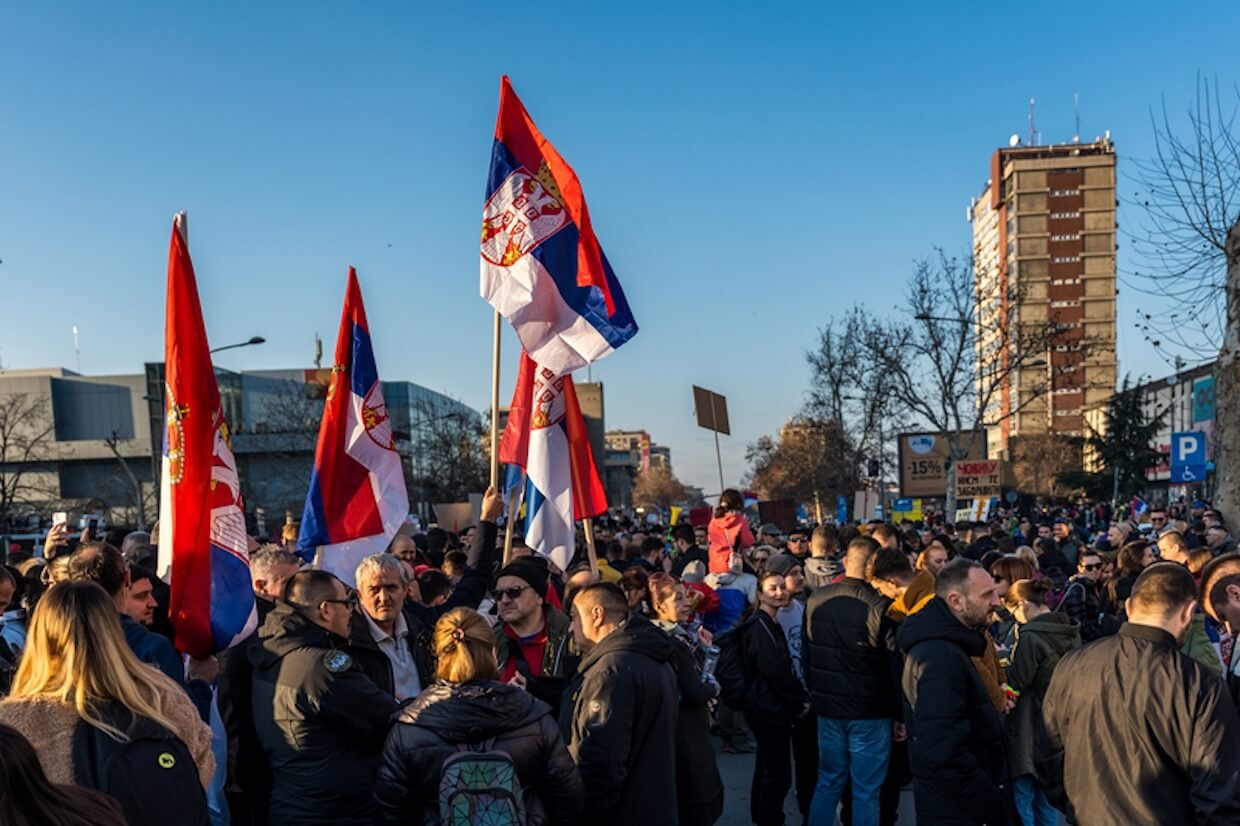
Dr. Balunović, welcome! In your recent New York Times essay, you framed Serbia’s student movement as a David-and-Goliath confrontation with Aleksandar Vučić’s entrenched political machine. Following the Students’ List’s parliamentary victory on October 25, how do you interpret this outcome? Does it represent a decisive rupture with populist authoritarianism or primarily an electoral defeat for the SNS?
Dr. Filip Balunović: Hopefully, it will be a long-lasting change. When we talk about challenging and contesting authoritarian leaders, we usually focus simply on regime change before elections. However, this is not merely a regime change. What we have witnessed in Serbia and the wider region of Yugoslavia, but also at the European level, is something historic in so many respects. No one expected such an easy victory. The Students’ List actually won an absolute majority in the Serbian Parliament.
Many commentators have noted that this is probably the first time a social movement that decided to run against an authoritarian leader has defeated not only that leader and the corrupt ruling elite but also the opposition. None of the opposition lists actually managed to enter Parliament. The only two lists that succeeded were the so-called Students’ List and the list of the former president, Vučić.
An interesting part of the story is also the way in which they secured this victory. As you mentioned in your introduction, the struggle has lasted for two years. The student movement started as a social actor. Initially, the students mobilized in grief following the deadly collapse at the railway station in Novi Sad, Serbia’s second-largest city. But slowly, step by step, they somehow managed to translate this grief into a political force that ultimately defeated the authoritarian ruler. They applied direct democratic methods in their decision-making process and remained committed to them until the very end.
As you probably know, everyone was talking about this leaderless movement. Unlike many other cases, for instance, in Hungary or other countries where a recognizable figure emerged before the wider public, in this case, we had only a student movement and a wave of contestation composed not only of students but also of broader citizens’ initiatives. We can say, therefore, that the idea of a new society has won.
The path that an idea must follow before becoming reality is, of course, a long one. Now that the system has collapsed, we can see that, in the meantime, there have been some arrests and major turbulence in both the political system and society. We can now say that this first, necessary, and inevitable step has been taken. But whether Serbian society is ready to become a true avant-garde in the democratic world, in my view, remains to be seen in the coming months and even years.
Direct Democracy Rebuilt Trust Where Opposition Parties Failed
The Students’ List reportedly secured approximately 53% of the vote and a parliamentary majority, ending fourteen years of SNS dominance. What explains the movement’s ability to achieve what established opposition parties repeatedly failed to accomplish? Was this fundamentally an electoral realignment, a crisis of regime legitimacy, or the culmination of long-term counter-hegemonic mobilization?
Dr. Filip Balunović: All the factors you just mentioned played a role, probably in combination. It’s very difficult, even for me as a researcher of social movements, to say, “Okay, this was the decisive factor, and the others simply followed.”But I would say that 14 years of rule using such techniques was simply too much. The techniques of rule were really cruel—cruel towards the political community, the public, and free opinion. What we saw was an attempt to reinvent the way we think about politics itself.
What the opposition parties failed to understand in the past was that the only way to contest a regime with such strong and powerful propaganda machinery was to really get down to the people, talk to them, and convince them that change was possible. Most people—and this is something the former president championed—had become convinced that more or less all politicians were the same. There was also widespread disappointment with opposition politicians, and a lack of trust in political parties had become omnipresent among the Serbian public over the past decade and a half.
Looking back at this approach to politics, the students had a campaign called “A Student in Every Village.” They reached even the smallest towns and villages in the country, something no opposition actor had ever done. In retrospect, you can see that this was the only way.
If we think in terms of populism, which I assume is what interests you most, I would say that right-wing populism was challenged through a left-wing populist strategy. The ruling SNS was a catch-all interest group. I wouldn’t even call it a party because it was really an interest group in which various actors, individuals, and groups found it in their interest to participate in the regime.
On the other side, the students realized that they needed the widest possible support to overthrow such a regime. You couldn’t achieve this in conventional ideological or political terms. You couldn’t do it through purely left-wing or purely right-wing politics, let alone through classical liberal means.
Even though the demands of the student movement initially, and later of the Students’ List as a political actor, were liberal—they were talking about the rule of law and institutions doing their jobs properly—what was a game changer was the process itself: the direct democratic process. People participated not only in campaigning and, ultimately, voting, but there were also genuine attempts to ask people what they thought and to make sense of the political process before the election.
This is why mobilization was so widespread, both within the country and in the diaspora. Only three years ago, around 30,000 people in the diaspora had registered to vote. This time, the number was above 100,000. The diaspora also played a very important role in motivating people, producing videos in which they said, “Okay, if I travel 1,000 kilometers to vote, why wouldn’t you vote in Serbia if your polling station is just a couple of meters away from your home?”
There was also this populist strategy. If we refer to Laclau and Mouffe’s understanding of populism as a left-wing strategy, which was later applied by the Indignados and Podemos in Spain and Mediterranean Europe, there was this division framed, as I remember it in Spain, as pueblo versus casta—the people against the casta, or the elite. In the Serbian case, it was Serbia versus mafia.
This strategy actually worked. It unified people from across the ideological spectrum. You could find liberals, far-leftists, even extreme right-wingers, and even some people who used to be close to the former president, Vučić. But the line running through this political space and political endeavor was the line dividing society, the state, fair electoral conditions, and the proper way in which a political community should be governed, on the one hand, from the mafia and the corrupt regime, on the other.
Students Overcame Divisions That Theory Has Struggled to Resolve
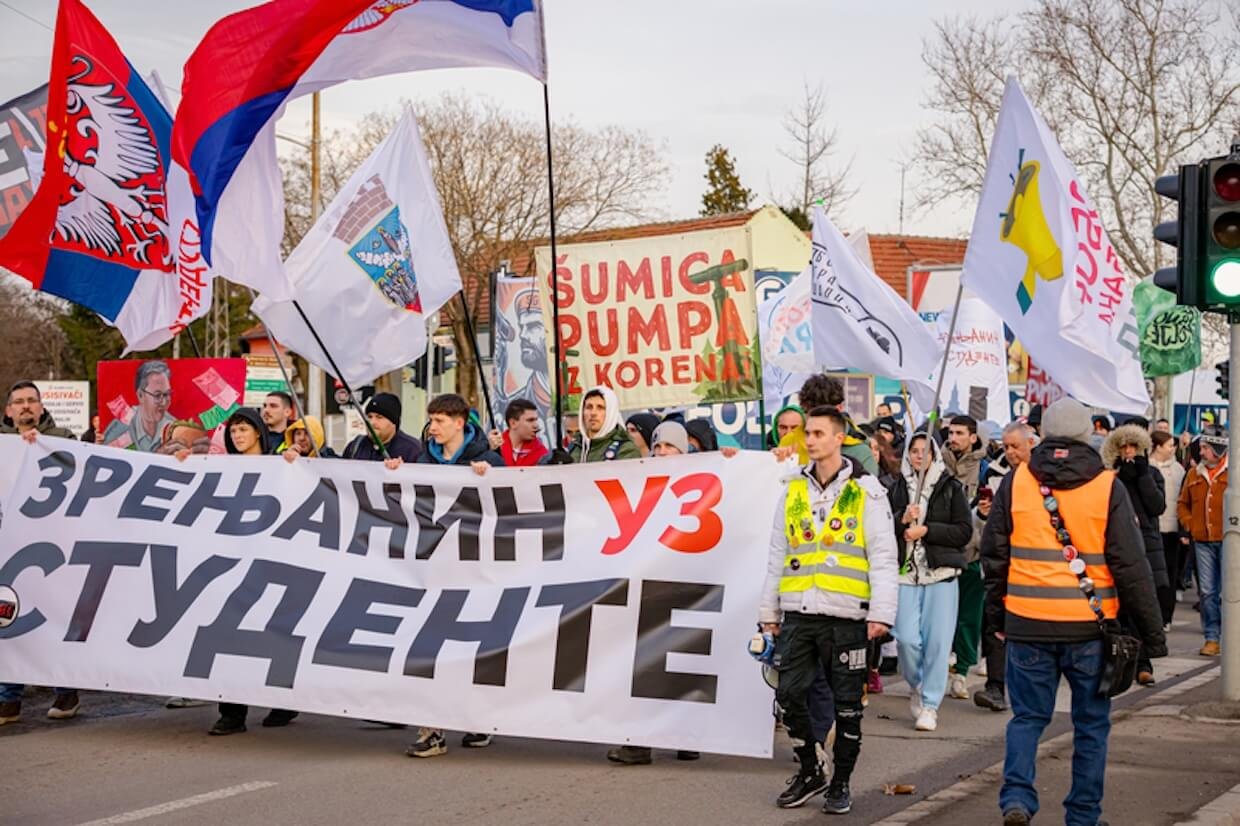
Vučić’s political system combined personalized leadership, electoral competition, patronage networks, media influence, and institutional capture. How would you conceptualize this regime theoretically—as competitive authoritarianism, populist autocracy, or another form of hybrid rule? Which mechanisms proved most vulnerable to sustained civic resistance?
Dr. Filip Balunović: This regime can be described in different terms, and, of course, it contains elements of each of the categories you just mentioned. For years, European scholars have talked about so-called façade democracy, with authoritarian and autocratic characteristics. What we sometimes risk when discussing autocracy—and this was definitely an autocracy, with one dominant figure and everyone else far below him—is underestimating the power of the oligarchy behind the autocratic ruler. So, these elements need to be considered together. Of course, there is right-wing populism, although I’m hesitant to use the term. Populism as a concept was theoretically developed by left-wing authors, and I see it as a political strategy with clear ways of creating divisions and political cleavages.
The Serbian case illustrates what Umberto Eco discusses in relation to eternal fascism: the simplification of syntax and the creation of clear-cut divisions. There is also the Schmittian understanding of politics as a matter of friends and enemies. This is something Vučić mastered throughout his political career, not just over the past 14 years. Whenever he finds himself in trouble, he starts talking about enemies, both domestic and foreign. This was also the case before these elections.
He accused students of being instruments of foreign secret services. Even on election night, without being asked who had won the elections, he raised the question himself: “So, who won the elections in Serbia? The American Deep State.” He was referring to civil society in the United States, the same civil society that, in his words, is working against Trump. This was the framework within which he operated. But it doesn’t come as a surprise. In the 1990s, Vučić was very active in spreading war propaganda within the Milošević regime, and this is something that never stopped.
One of the students’ greatest achievements at the social level—and hopefully this will also translate into the political level—was overcoming the ethnic, national, and religious divisions that are so prevalent and dominant in the Balkans, particularly in the post-Yugoslav region. They did this by integrating, for instance, the Sandžak region, which is predominantly populated by Muslims who, since the dissolution of Yugoslavia, have never felt fully integrated into Serbian society, let alone the Serbian political community.
Students managed to cut across all these divisions. Symbolically—and we know how important symbolism is in political life—they established connections and rebuilt trust between students from other parts of Serbia and those from the Sandžak region. This really resonated with many people.
Interestingly, this did not follow the established theoretical and conceptual approaches to dealing with the past, including everything we have discussed since the 1990s: transitional justice, overcoming ethnic and national divisions, and so on. They didn’t talk much about these issues. They simply did it.
In a way, the practice of the student movement managed to resolve something that theory has struggled to resolve for decades in the Balkans.
Silence Functioned as an Absolute Equalizer
The movement transformed the Novi Sad tragedy into nationwide resistance through university occupations, commemorative silence, road blockades, long-distance marches, and civil disobedience. Which protest tactics were most consequential in undermining Vučić’s political legitimacy, and how did their effectiveness evolve over nearly two years?
Dr. Filip Balunović: From an academic perspective, there have been several waves of contestation and mobilization in Serbia over the past two decades. The student movement belongs to a wave of contestation rooted in grief. In 2023, there were two major mass shootings in Belgrade and its suburbs, including a school shooting in the very heart of Belgrade, when a 13-year-old boy killed his fellow pupils and a security guard at a primary school. Another mass shooting took place the following day in villages near Belgrade.
That was the first time citizens came out, took to the streets, and adopted the tactic of silence. Silence functioned as an absolute equalizer. When you stand together in grief and silence, you feel a sense of unity despite the ideological differences among the people standing in the street. Silence was also one of the main repertoires of action following the collapse of the railway station in Novi Sad. But the difficult part came when those who had remained silent were expected to speak out, and all the differences among them had to be put on the table.
Nonviolent Resistance Became a Cathartic Moment for Serbian Democracy
This will be studied in the literature on social movements for decades to come: how to translate grief into something politically potent. This is a difficult endeavor and a very sensitive issue. Of course, the government made numerous accusations of misusing and politicizing the tragedy. You really need patience, and you need to remain calm. You need very good organization, as well as organizational development, to overcome these challenges. This is what the students managed to achieve by occupying their universities, using sit-ins and occupation tactics as repertoires of action.
The direct democratic decision-making process also functioned as a unifier. Regardless of what students—whether left-wing, right-wing, or liberal—thought about particular political issues, they were united, first, in grief and, second, in accepting the decision-making bodies they had established. This played a crucial role.
I should also mention an earlier wave of contestation in Serbia: the ecological mobilizations against the Rio Tinto project and lithium mining in western Serbia. This mobilization also cut across ideological differences. There was almost absolute unanimity among Serbian citizens in opposing the ecological threats associated with lithium mining, and the government eventually gave up under enormous pressure. So, there were earlier steps that brought us to the point where this kind of trans-ideological mobilization, or populist mobilization in left-wing terms, became possible.
The diffusion of direct democratic decision-making processes from universities to other parts of society also played a crucial role. At some point, the students—who were tired all the time—felt that they needed support. This is why they invited citizens to organize the so-called zborovi, or citizens’ assemblies, at the neighborhood level. These zborovi continued functioning until the very end, and they still function today.
This is indeed a cathartic moment for Serbian democracy. Another important factor, especially in light of what we are now witnessing in France, Albania, other parts of Europe, and elsewhere in the world, is that this was a purely nonviolent movement. There were virtually no incidents—around 90% of those that did occur, including clashes with the police, were either orchestrated by the state or were isolated incidents that took place here and there.
It is really a miracle that such a regime was defeated without a single victim, apart from, unfortunately, the 16 people who died in the collapse of the railway station in Novi Sad. This is really something spectacular, if you ask me.
Leaderless Movement Challenges the Iron Law of Oligarchy
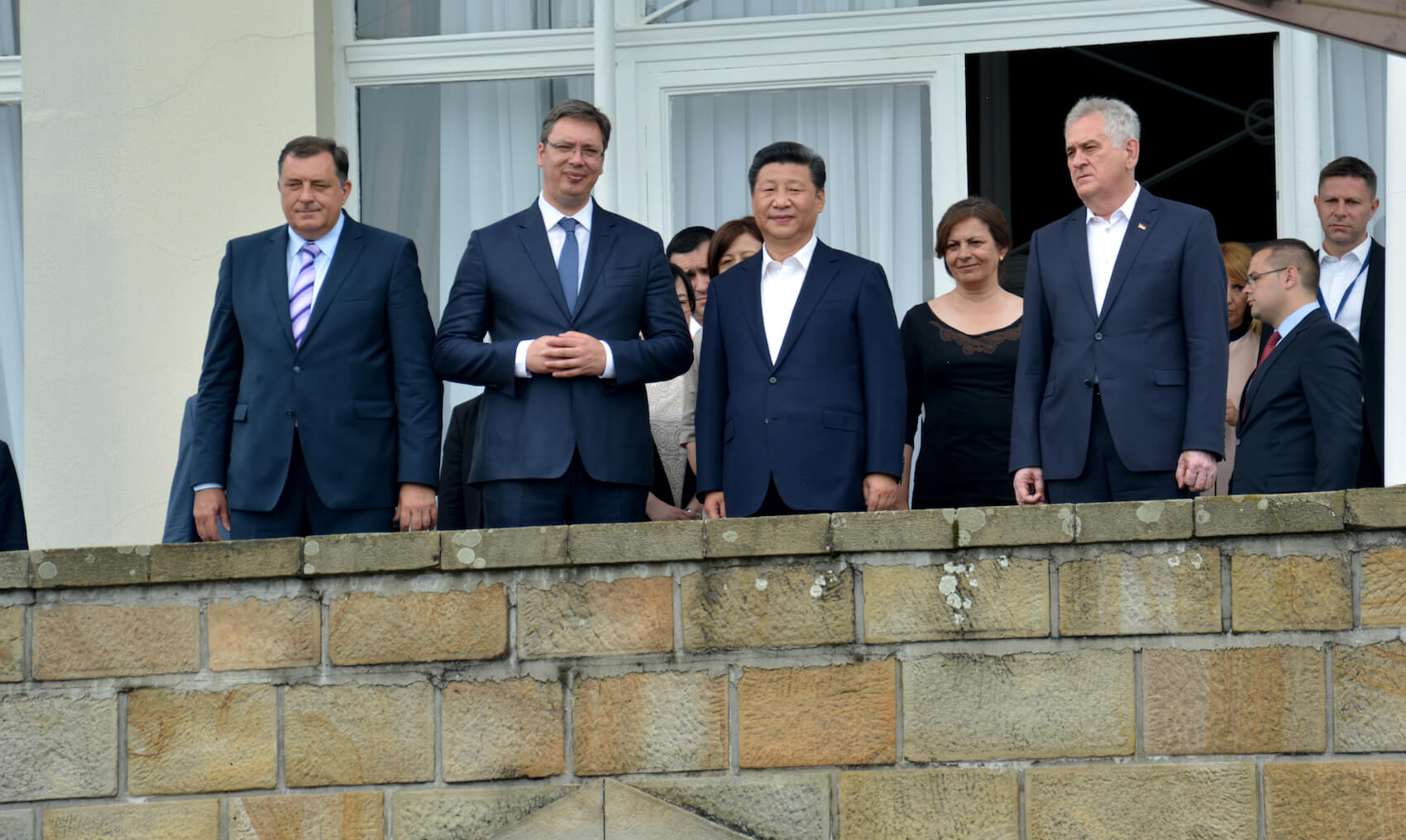
In your New York Times essay, you describe the student-led candidate selection process as an extraordinary experiment in direct democracy. How did decentralized plenums and collective leadership challenge Serbia’s personalized political culture? Can these participatory practices survive the transition from protest mobilization to parliamentary government?
Dr. Filip Balunović: I wish I had a clear answer to that question: how they survived and managed to remain committed to this leaderless logic. Just the other day, I listened to one of the student activists talking about this, and they continue to insist: “We don’t need new leaders.” In the political world, we are conditioned to think that politics without leadership is impossible. But it’s really a miracle that, after two years of the student movement, not a single faction has broken away, even among those who disagreed with some of the decisions made by the plenums. I spoke to many students who said, “We disagreed with a good number of decisions, but we felt good because we knew that the process behind these decisions was the right one.”
They really demonstrated an enviable level of democratic maturity. Vučić attacked them for being inexperienced, claiming that they didn’t know how to run the state. But they demonstrated something else: they were responding—I don’t know whether consciously—to the unfulfilled promises of representative democracy. It was similar to the European revolutions of 1848, which responded to the unfulfilled promises of the French Revolution: “You promised us universal voting rights. You promised us that we would all be able to vote, and you failed.”
In a sense, there is also this alienation of the political elite after every election. Representative democracy makes sense, especially in larger political communities, but it also has many shortcomings. Serbia is not a big state, obviously. The direct democratic method worked, and, importantly, people started believing in it. They became convinced that this was the right way, and I would even dare to say that it was the only way to regain trust and make a political actor, in this case the Students’ List, trustworthy.
This is also why electoral turnout was so high. It was around 70%, something that had never happened before. There was a comparable level on October 5, when Milošević was overthrown, but such high turnout is really rare, even at the global level.
Even now, we are speaking at a moment when we still don’t have names for the ministerial positions. We still don’t know who will become prime minister or who the presidential candidate will be, because the presidential election should, if I’m not mistaken, be called by the end of this month and held by the end of the year. Of course, the public is now wondering about names, but this shift has already taken place. Instead of the 250 candidates on the Students’ List, we could easily have had another 250 names, and I’m certain the outcome would have been the same. This is a true political novelty.
Of course, the inevitable next step is that we will have ministers, a prime minister, and people responsible for different areas. Naturally, the public will discuss these individuals. But these people should remain aware that it’s not about them. There is always a risk here—the iron law of oligarchy. It happens in every organization, let alone a political organization.
But this time, the process behind it is different. It’s not merely an appeal or a slogan: “It’s not about me, it’s about you. You, the people, brought me to this.” No, this is no longer an empty phrase. It’s really the process and the underlying logic that have a great chance of preventing future state officials from behaving as if they’re alone in the world. The student movement will remain and keep an eye on what they do. This time, it will not only be the student movement but the entire public.
The Students’ Experiment Comes Closest to the Ideal of Democracy
In your study “Social Movements as Producers and Receivers of Knowledge,” you conceptualize movements as producers of political knowledge rather than merely vehicles for existing ideas. What new democratic knowledge, organizational practices, and political imaginaries has Serbia’s student movement generated, and how might these reshape representative democracy?
Dr. Filip Balunović: I touched on this earlier, but perhaps I could elaborate. I studied this relationship in my PhD and later in my book, Revival of the Left in the Balkans. I have always been interested in the interaction between ideas and social and political practice, or activism. I always try to identify which theories and concepts resonate with particular social or political movements. But then, of course, there is the Gramscian concept of organic intellectuals. It’s not only about activists or political practitioners taking existing concepts and theoretical insights and applying them to reality. It’s also about creating new ideas and theories through practice itself.
In this specific case, most of the concepts and findings we have come from practice itself. I’m not entirely happy with this because, as a researcher, I believe—perhaps naively—that people tend to read, try to conceptualize reality, engage in some activity, and then attempt to adapt or find a middle ground between theory and practice.
This time, I’m afraid, things were different. Of course, the students were aware of earlier direct democratic practices, both in the former Yugoslavia and elsewhere. But this political experiment—and this is what I wrote about in my New York Times piece—in which plenums, as direct democratic decision-making bodies, select future MPs, is unprecedented.
The process was really demanding. It lasted over a year. Every faculty suggested two or three names, followed by discussions. Each faculty or university had veto power. Participants presented their arguments about why a particular candidate should not be on the list, followed by further discussion. If no consensus emerged, they voted.
For instance, two prominent figures, both professors, were seen as frontrunners for the Students’ List. One was the rector of the University of Belgrade, and the other was a conservative professor, also from the University of Belgrade. Vučić’s regime focused on these two names because they didn’t know whom else to attack. But what eventually happened was that neither of them appeared on the list.
The point is that you never know—no one actually knows, including the students themselves—what the outcome of the process will be. The outcome is uncertain and does not depend on existing power relations. Of course, if you observe the plenum as an arena, there are inevitably power relations, but these are relatively minor power relations among students.
We want to believe that the strength of the argument wins. We all know that, even in direct democratic processes, this is not always the case. But this is the closest we can get to the ideal of democracy at this moment.
If I were you, the international public, I would really grab some popcorn and watch what happens next. I have no doubt that the student movement and the Students’ List will surprise us again. There are already some names circulating in public: “Okay, this person will be prime minister, this person will be minister of the Interior, Foreign Affairs, etc.” But I wouldn’t be surprised if our guesses turned out to be completely wrong again.
Authenticity and Honesty Became the Students’ Defining Message
Your research on opposition activism and the attention economy examines how movements compete with powerful political organizations for public visibility. How did students overcome Serbia’s pro-government media environment through humor, digital communication, grassroots networks, and direct engagement with citizens? Did their rejection of charismatic leadership become a strategic advantage?
Dr. Filip Balunović: Yes, absolutely. It became a strategic advantage, as we have already discussed. But perhaps, in light of your question, we should focus more specifically on campaigning. Some years ago, I was interested in celebrity activism and how, even in leaderless movements, there is a tendency to bring in celebrities to increase visibility and draw attention to the movement. The student movement had the support of many celebrities, some of whom spoke at protests and rallies, but the students did not rely on them.
The whole movement functioned as something we imagined to be more powerful than it actually was. The students convinced us that their strength was ten times greater than it really was. This became a self-fulfilling prophecy. The students initially had no power whatsoever. Serbia was a state in which the ruling party governed every single municipality in the country, comparable perhaps only to Belarus. I don’t think we can find a similar example of one party controlling every village in a country, let alone every major city.
What the students achieved was an interesting transformation, particularly when we look at the emotional and affective dimension of the movement. It was a transformation of grief into joy. The movement began with silence and collective grieving, which represented a way of looking into the past. That dimension is still present. On November 1, after the elections, we marked two years since the collapse of the railway station in Novi Sad. Once again, 60,000 people gathered in Novi Sad, and I was there. So that sense of grief remains.
But what the students added was a sense of joy about the possibility of a different future. When you look at people’s reactions on election day and election night, they were genuinely crying. People could hardly believe what had happened. The atmosphere in Belgrade for days after the election was like New Year’s Eve lasting for seven days. Everyone was congratulating one another and celebrating. Of course, this was mainly because of the election results, but the entire atmosphere was remarkable.
The students helped create this atmosphere by making fun of the autocrat. Students from the Faculty of Dramatic Arts, who had been particularly targeted by the government, produced one-minute videos almost daily, making fun of the autocrat for being alone and having no one who liked him. There was some truth to this because Vučić’s campaign revolved almost entirely around himself and perhaps a few other people.
By contrast, the students’ campaign showed thousands, even hundreds of thousands, of people standing behind them. They were innovative and cheerful, but also very serious in certain respects. They combined these elements in a way that ultimately produced the central tone of their message: authenticity and honesty. And that was completely opposite to what Vučić did.
Serbia’s Student Uprising Was No Color Revolution
Vučić repeatedly characterized student protests as externally orchestrated destabilization, while protesters emphasized corruption, accountability, and constitutional responsibility. How did competing constructions of “the people,” national sovereignty, and political legitimacy shape this confrontation? Why did the government’s populist counternarratives struggle to contain the movement?
Dr. Filip Balunović: It’s very simple. If there ever was an example of a non-color revolution, this was it. We know that various actors and governments often interfere, engage in lobbying, and try to push one side or another. But in this case, the student movement—and I have written about this elsewhere—was alone in the world until the very end.
The only people standing behind the students were Serbian citizens and perhaps some others who expressed sympathy for their cause. Almost all Western governments, including the European Union, showed no serious signs of support for the student movement for nearly two years.
There were, of course, individual members of the European Parliament who expressed support, and the movement was discussed in the European Parliament. Some politicians here and there also took an interest. But if we look at where power actually resides—Brussels, Paris, Berlin, Washington, Moscow, and Beijing, the capitals of powerful states and major administrative centers—there was no support.
I know this firsthand. They were hesitant to support the students because they didn’t know what to expect. I remember someone once telling me that Brussels didn’t know whom to call. This reminded me of the famous question attributed to Henry Kissinger: “If I call China, I know the phone number in Beijing. If I call the Soviet Union, I know the phone number in Moscow. But whom should I call when I want to speak to the European Union?” There was a similar dynamic of hesitation in this case.
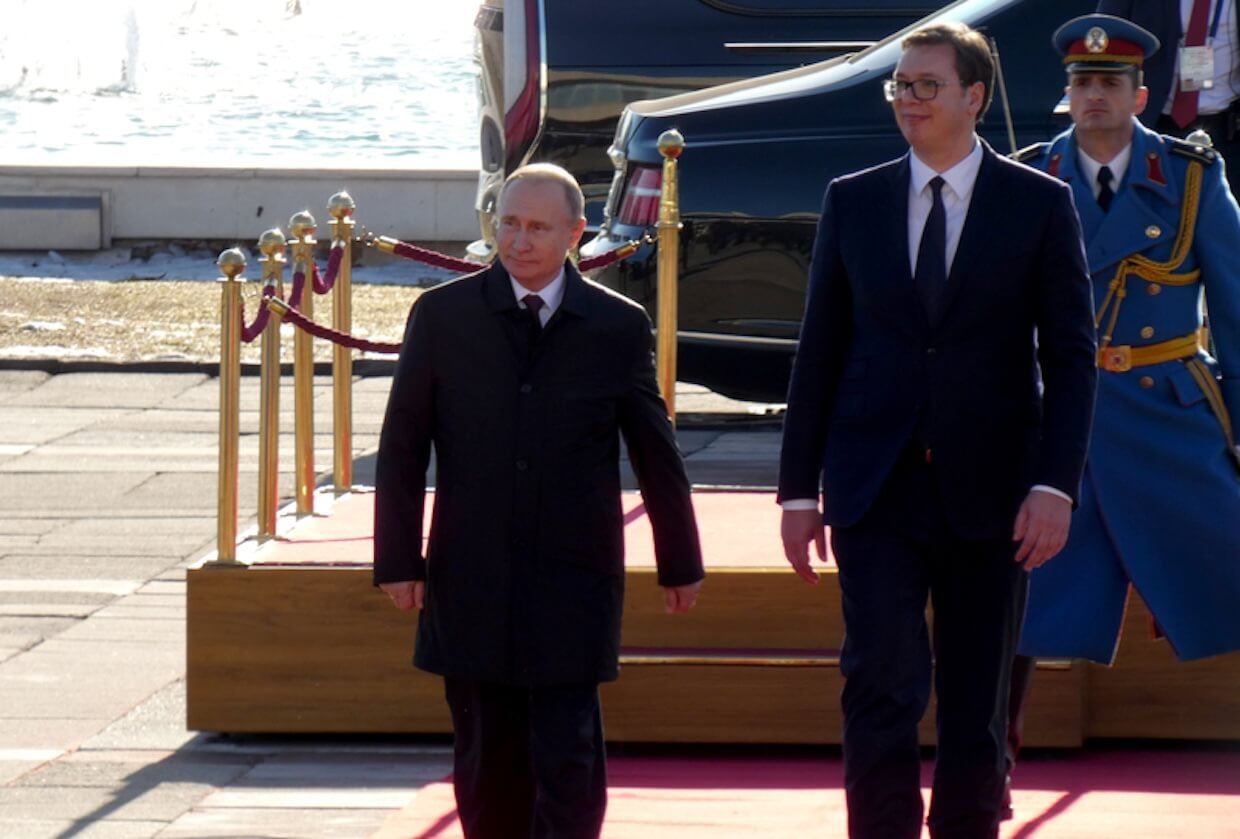
Meanwhile, Vučić had extraordinarily good relations with President Macron and Chancellor Scholz, who had visited Serbia and was interested in lithium. At the same time, Vučić maintained good relations with Putin, who endorsed him before the elections, as well as with Beijing and the Trump administration. Not to mention, of course, one of his most important allies: Israel. After losing the election, Vučić emphasized Serbia’s special relationship with Israel, particularly regarding the supply of arms to Israel for the genocide, both before and, especially, after the genocide began.
So, the students were indeed left alone, and they made it.
The Post-Vučić Transition Has Already Begun
The electoral victory does not automatically dismantle the institutional networks, patronage relationships, or security structures associated with SNS rule. What immediate reforms are essential to prevent authoritarian continuity beneath democratic alternation? How can the new majority pursue accountability without reproducing selective prosecution or partisan institutional capture?
Dr. Filip Balunović: This is a very difficult question, even for political practitioners, let alone for those of us who mostly engage in theory and empirical research. But the process has already started, even though the new institutions are not yet in place. The parliamentary majority has not yet been constituted, and the government has not yet been elected. In practice, Vučić’s people remain in charge of all the institutions.
Despite this, over the past 10 days, we have witnessed almost daily arrests of high-ranking police officials who now face charges related to violence against students and other criminal acts. The owner of Alta Bank has also been arrested. Only later did we learn—some people knew this before, but I must admit I hadn’t paid much attention to this bank—that virtually all state business transactions went through this one bank. If you pay for electricity, the payment goes through that bank. If you buy a ticket with Air Serbia, it goes through the same bank. The police recently entered the bank and discovered that its owner was allegedly about to physically withdraw nearly 400 million euros. We are still wondering how that could even be possible. He is now in custody and will stand trial.
What I want to say is that, even while Vučić’s people remain in charge, some individuals are already trying to buy themselves legitimacy in the post-Vučić era. It was particularly telling to see Serbian national television, which had been one of the main propaganda channels for a decade and a half, issue a public apology. They openly acknowledged that they were sorry for having misinformed the Serbian public in the past. It’s really interesting to observe what is already happening, even before the new government has taken office.
Serbia’s Democratic Experiment Could Inspire Other Societies
Finally, your New York Times essay concludes that the students have demonstrated the possibility of another Serbia and another democracy. Looking beyond their electoral victory, what would constitute genuine democratic transformation rather than a change of governing elites? Could Serbia’s experiment in participatory, anti-authoritarian politics offer a transferable model for confronting populist autocracies elsewhere in Europe and beyond?
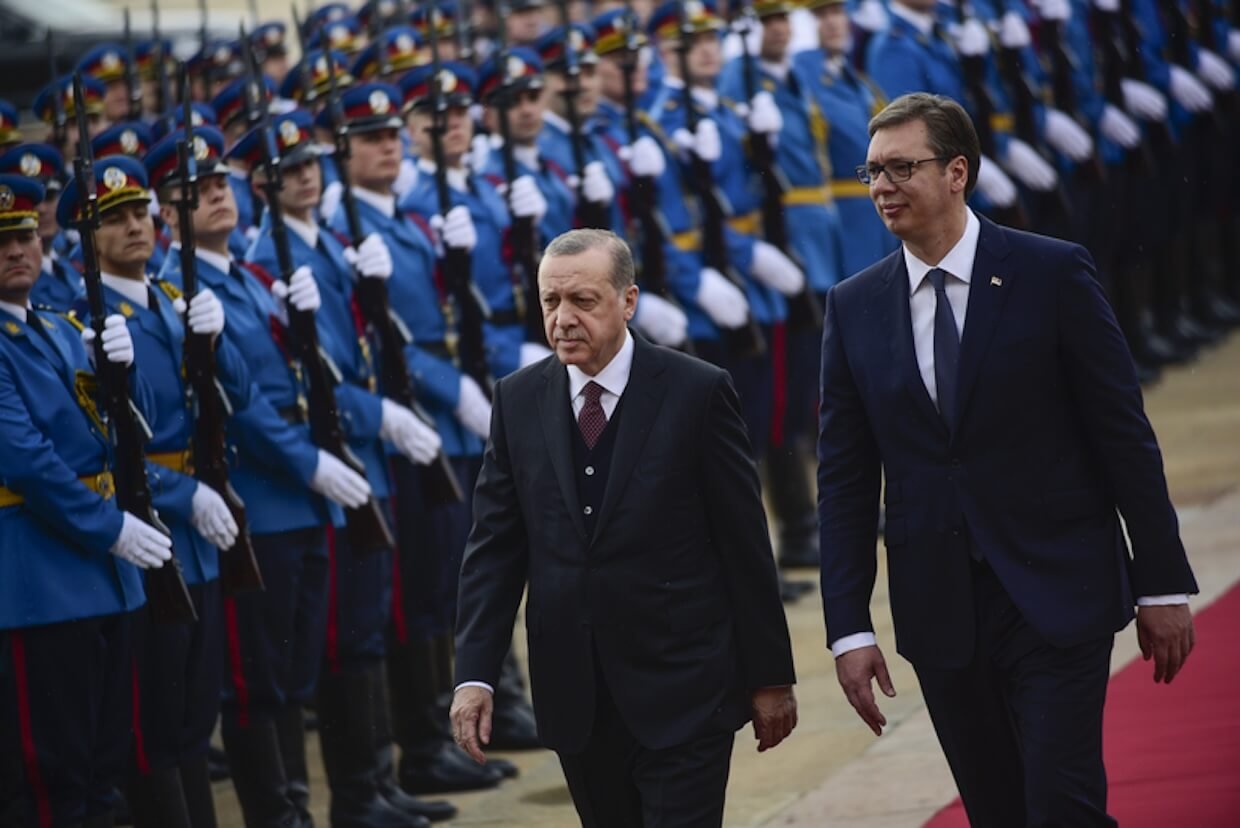
Dr. Filip Balunović: This is always a good question, but a tricky one at the same time. As we know, one size doesn’t fit all contexts. What is also specific to Serbia is the absence of powerful actors such as trade unions. For instance, when you look at what’s happening in Italy, France, or the UK, you see powerful trade unions capable of mobilizing huge crowds. Serbia didn’t have such actors, which is typical of the post-socialist climate. Trade unions are either discredited or completely co-opted by those in power. So, as to whether this experience is transferable to other contexts, I would say that it could serve, at least partially, as an inspiration.
I keep referring to this as an experiment because voting for the Students’ List was indeed a vote for uncertainty. We still don’t know exactly what to expect. Sometimes, as in life, one should choose to change even when you’re not 100% sure what’s behind the door. But if you don’t feel comfortable on this side of the door, you should open it and try something else.
The main message is that not only we as individuals, but also constituencies and people in general, should dare to try. We should not believe that this is the best our political communities can achieve. Maybe it’s time. Maybe it’s also about the new generations, who have zero tolerance and a different attitude towards authority. Maybe they will bring the necessary change not only to Serbia but to other places as well.