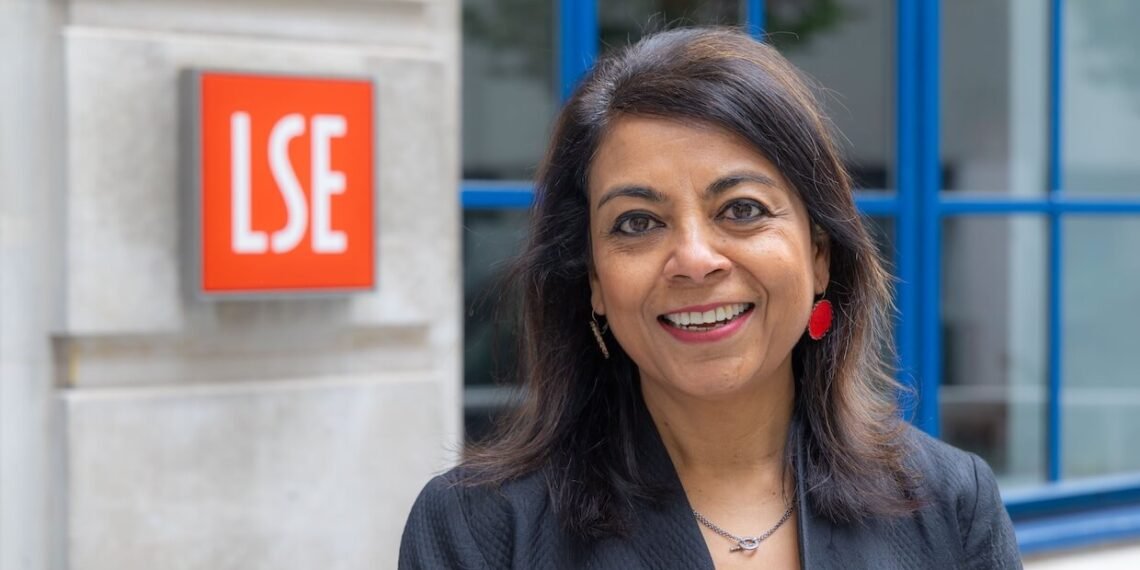
In an exclusive interview with the ECPS, Professor Mukulika Banerjee of the London School of Economics and Political Science warns that India’s controversial electoral-roll revisions risk transforming political citizenship into an instrument of exclusion. Describing the reported deletion of approximately 130 million voters as part of “the biggest assault on India’s electoral system that independent India has seen,” she highlights the disproportionate vulnerability of Muslims, Dalits, women, and other marginalized communities. Professor Banerjee examines how student-led protests are challenging democratic backsliding, political intimidation, and Hindu majoritarianism while forging broader alliances around electoral integrity. Drawing on her scholarship on everyday democracy, she argues that protecting political equality requires sustained civic participation, institutional accountability, vigilance, and collective democratic action.
Interview by Selcuk Gultasli
India is witnessing a significant wave of youth-led protests challenging unemployment, educational injustice, and the erosion of democratic accountability. The emerging Cockroach Janta Party (CJP) has expanded its mobilization from examination irregularities to contested electoral-roll revisions, raising fundamental questions about political representation, citizenship, and the resilience of democracy under Narendra Modi’s Hindu nationalist government.
In an interview with the European Center for Populism Studies (ECPS), Professor Mukulika Banerjee, Professor of Anthropology at the London School of Economics and Political Science, offers a critical assessment of India’s democratic trajectory. Drawing on her influential scholarship on electoral participation, everyday citizenship, democratic culture, and the social foundations of political life, she examines how controversies surrounding electoral integrity threaten the principles of political equality and inclusive citizenship.
At the heart of Professor Banerjee’s analysis is the Special Intensive Revision (SIR) of electoral rolls and reports of approximately 130 million deletions. Describing the controversy as “the biggest assault on India’s electoral system that independent India has seen,” she warns that the country’s historically inclusive electoral framework risks becoming an instrument of political exclusion. According to Professor Banerjee, the reported deletions have disproportionately affected Muslims, Dalits, indigenous communities, women, and other socially disadvantaged groups.
For Professor Banerjee, the consequences extend far beyond electoral competition. India’s democratic achievement has rested on the equalizing power of the ballot, particularly for citizens experiencing profound socioeconomic hierarchies. As she explains, “This equalizing power of the vote, of political equality, which is a very basic democratic right, is highly valued in India.” She cautions that electoral-roll revisions could undermine precisely this foundation of citizenship, transforming the right to vote from a universal democratic entitlement into a mechanism of selective political inclusion.
The interview also explores the emergence of student-led resistance as a potential counterweight to institutional democratic backsliding. Professor Banerjee argues that young protesters have challenged a pervasive climate of intimidation while bringing opposition parties, farmers’ unions, and civil society organizations together around electoral integrity. Their mobilization, she suggests, demonstrates that “in order to live in a democracy, you have to be an active citizen.”
Beyond India, Professor Banerjee situates these developments within broader debates over authoritarian populism, crony capitalism, Hindu majoritarianism, and transnational democratic resistance. Her analysis connects electoral exclusion to economic inequality and the erosion of institutional accountability.
Ultimately, Professor Banerjee’s warning is also a call for sustained democratic engagement. Drawing on her metaphor of democracy as a plant requiring constant care, she concludes: “In order to cultivate democracy, you need vigilance, you need patience, you need hard work, and you need hope.”
Here is our interview with Professor Mukulika Banerjee, edited lightly to enhance clarity, readability, and overall flow for publication.
India’s Youth-Led Movement Has Shaken the Political Status Quo
Professor Banerjee, thank you for joining us. Let me begin with India’s student-led protests. The emerging Cockroach Janta Party (CJP) has expanded its mobilization from grievances over examination irregularities and unemployment to challenging the Election Commission and broader questions of democratic accountability. What are the movement’s principal demands, and how have these initial socioeconomic grievances evolved into a wider challenge to Modi’s political legitimacy and institutional authority?
Professor Mukulika Banerjee: There has, quite rightly, been a lot of international attention on the Cockroach Janta Party (CJP), which has really shaken the status quo in so many ways. To understand what has happened over the last few months, particularly between July and November, we need to identify two phases.
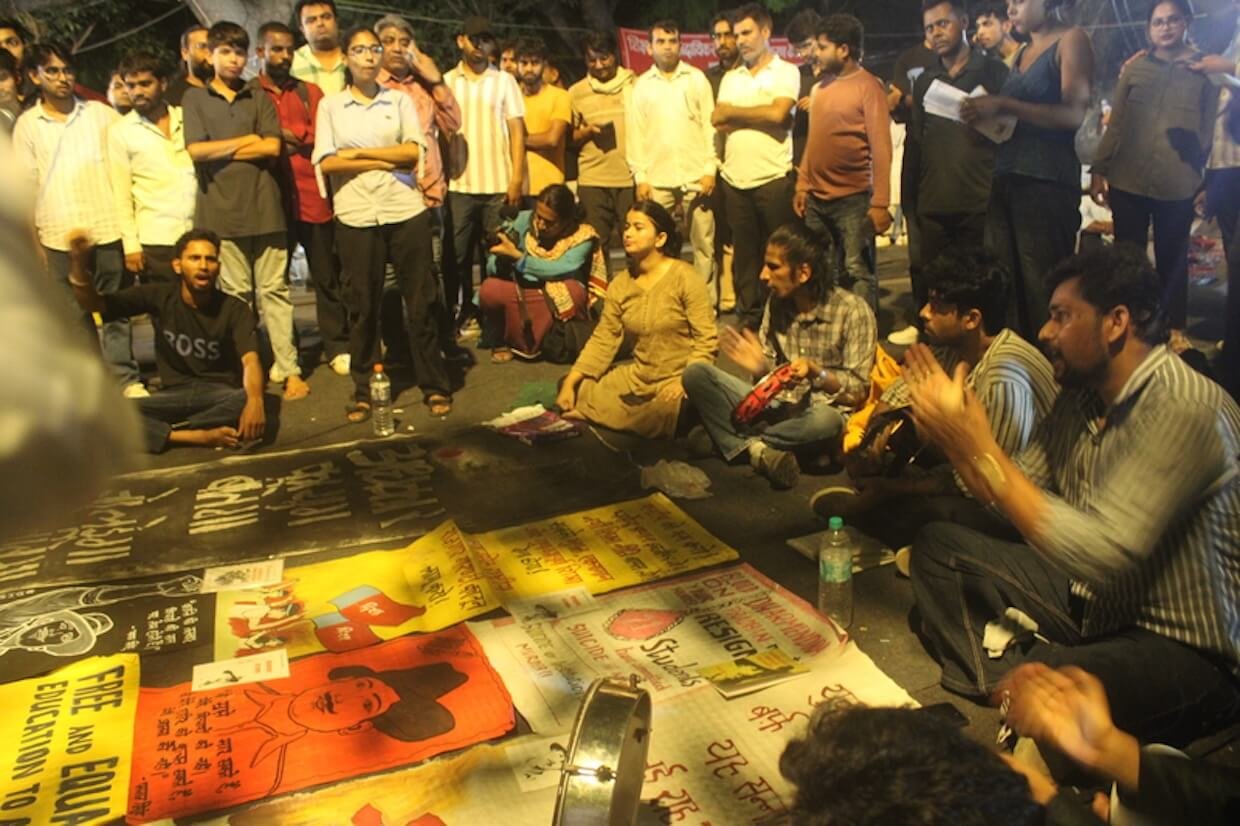
The first phase was very much led by the Cockroach Janta Party and affiliated student groups, who went on a hunger strike in July, calling for the resignation of the education minister over exam irregularities. Of course, exam irregularities are a very serious issue in a country where the median age is under 30. These are young people with skills looking to enter the job market. For many young people, taking these exams is actually the only way to achieve social mobility. That is why it was such a big deal and why thousands and thousands of students got behind them.
As we saw, two things happened. The first was the government’s response, which involved unprecedented police brutality, including the use of pellet guns and water cannons, as well as arrests and detentions of peaceful protesters. These were young people who were very Gandhian in their spirit of resistance. The second was the outcome: ultimately, after weeks of protests, the education minister had to resign.
So that was phase one. In phase two, these students, quite correctly, took up an associated set of protests and issues that had been raised by the political opposition, primarily the Congress Party and Rahul Gandhi, who had been talking about electoral irregularities for years. But these concerns simply hadn’t gained traction. People said, “Oh, he can’t win elections, so he is blaming the elections.”
Then, in September, there was a very important investigative exposé by The Indian Express, one of India’s biggest newspapers, revealing a series of irregularities within the Election Commission. Two of the three election commissioners came forward to the press and said they had been objecting to illegal, unconstitutional changes to the electoral process that the chief election commissioner had been making without consultation. This led to much wider recognition of an issue that had been simmering.
Those of us who watch elections and electoral processes in India had been raising these concerns for many months. Rahul Gandhi had also been articulating this issue. But it really gained momentum from September onward. By then, having tasted success with the resignation of the education minister, the Cockroach Janta Party put its weight behind the issue of electoral irregularities.
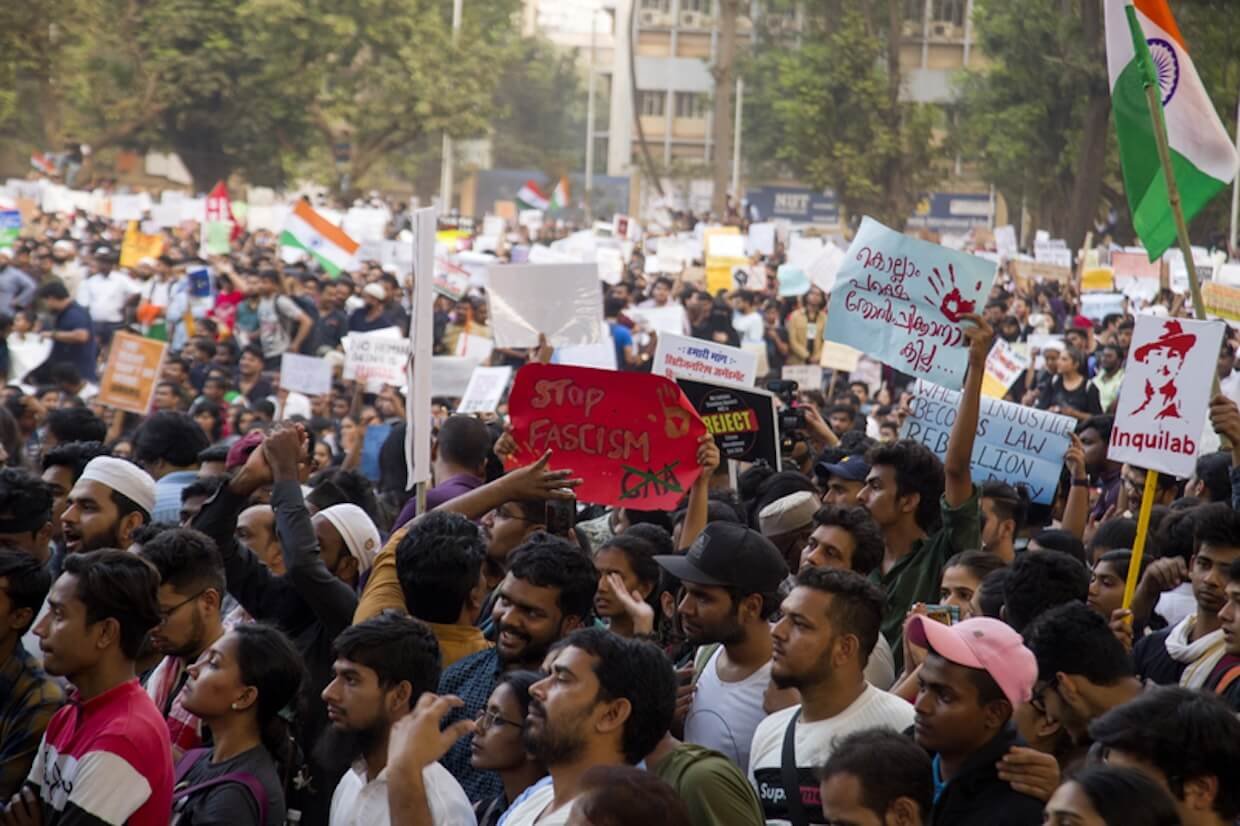
What we saw by November 1, at this absolutely massive rally in the center of India’s capital, was an alignment of interests. Pretty much every single opposition party, including political parties that had supported Narendra Modi’s BJP government in the past, came out to protest against electoral irregularities.
All the student groups and all the farmers’ unions, which are a very important part of India’s political landscape, came together behind this issue. So, what we are seeing in November is this broader alignment of interests around a very fundamental issue that affects every citizen in India.
Electoral Roll Deletions Threaten the Equalizing Power of the Vote
The CJP is demanding Chief Election Commissioner Gyanesh Kumar’s resignation amid controversy over the Special Intensive Revision (SIR) of electoral rolls and reports of approximately 130 million deletions from draft lists. What explains these demands, and what risks might such revisions pose to electoral integrity and equal citizenship, particularly for marginalized communities?
Professor Mukulika Banerjee: This is the biggest assault on India’s electoral system that independent India has seen. India has justifiably prided itself on its electoral system, despite the challenges. People need to recognize that when a national election is held in India, it really is the largest human exercise anywhere on the globe. The electorate itself is larger than 900 million people. So, conducting free and fair elections at this scale is, in itself, an achievement. Many of us have written books and given lectures across the world celebrating this incredible feat.
Now, this very electoral system has certain characteristics that made it so admirable and also explain why Indian citizens have embraced it and become such enthusiastic voters. India’s voter turnout is high and rising. More women vote than men. Socially disadvantaged groups vote in larger numbers. There are reasons for this enthusiasm, and they relate to two things.
Structurally, India’s electoral list—who is on the voters’ list—operates on a principle of inclusion. Right from the start, when India first held its elections in 1950–51 and the Election Commission was established, the principle was: if you live in India, you will be on the electoral list. If you were a foreigner or somebody who should not be on the electoral list, evidence had to be produced to strike you off the list. But the default position was to include you.
This is how people who are homeless, who live on sidewalks—and India is an incredibly poor country—were still included. Everybody, whether you sleep rough or live in a mansion, had their name on the voters’ list. Certainly, in my own research, I found, up and down the country, that people really valued this. They said, “Look, I have nothing, but I have a vote. And on the day of the election, I am the same as the guy living in the mansion next to me, while I sleep on the sidewalk.”
This equalizing power of the vote, of political equality, which is a very basic democratic right, is highly valued in India. This is what has been assaulted. So, when we say that there have been 130 million deletions—more than 10% of India’s population and 15% of the electorate—we are talking about a very significant number.
What nobody is quite able to explain, and what the Election Commission hasn’t responded to, is why these deletions have taken place. The Home Minister, Amit Shah, has come out and, on more than one occasion, said, “Well, this is a cleanup of the rolls because there have been too many infiltrators into India who are living in India, who don’t belong to India, who are not citizens, and we need to clean them up, clean the rolls and get rid of them.”
The question people are asking, of course, is: if 130 million people are infiltrators in India, what was the Home Minister doing? It’s his job to keep the country safe. But what we all understand, those of us who study Indian politics, is that this is a euphemism for Muslims, socially disadvantaged groups, Dalits, indigenous communities—tribals, as they’re called in India—and women. These groups have been overwhelmingly affected by the deletions.
There is another theory. When you break down the vote share by social group in the 2024 elections, when Prime Minister Modi’s BJP failed to win a majority, it was these groups that were less likely to vote for him. So, the cleanup is really a cleanup of the electorate, designed to create an electorate that is likely to vote for this government in perpetuity.
India’s Students Have Broken the Climate of Fear Through Humor and Resistance
Despite police detentions, restrictions, and allegations of intimidation, student mobilization continues. How do you assess the government’s response, and what factors will determine whether these demonstrations can sustain their momentum? Could coercive measures further undermine Modi’s political legitimacy?
Professor Mukulika Banerjee: The main thing that should be noted about these students’ protests is just how humorous and cheeky they were. As we all know from history, the one thing any authoritarian regime or dictator does not like is being laughed at. They do not like humor. The students, as they said themselves, had so little to lose that they had no fear of calling out the utter hypocrisy, the utter silence, and the out-of-touch nature of the political establishment. They made very good use of social media to disseminate these messages.
To understand the significance of this, people need to realize that before these Cockroach Janta Party movements in the middle of 2026, there was a huge climate of fear in India. People did not speak openly or critically of the government. They simply did not. Even in universities, there has been a clampdown on academic freedom. In civil society, people have been jailed for asking questions. India ranks 157th out of 180 countries in the Press Freedom Index. People have been hounded, punished, and jailed without cases across the country. The aim was to create terror and intimidation, to silence people. And it was successful. People mostly kept their mouths shut and carried on with their jobs if they could do so.
The students broke that. By openly saying things that people felt and thought, they shifted something very fundamental in Indian politics. The government’s response was twofold.
The first was violent, as I said before: beating students mercilessly, denying them food and water, and using pellet guns. A student lost his eye during these protests. The second came when the government realized that the students were not backing off. They were not going to be cowed by this kind of violence. In fact, it was fueling their anger and protests. The prime minister made a brief attempt to engage with the students on social media, producing late-night reels addressing young people. But unfortunately, these became the butt of even more jokes, as evidence of just how out of touch he was with the social media game, for instance.
Now, this is significant because, for this prime minister, image and how he looks in public are of huge significance. Prime Minister Modi’s presence is ubiquitous across the Indian landscape. Every streetlamp has his image on it. Every free bag of rice distributed to 800 million citizens of India has his image on it. Even the COVID vaccine certificates used to have his photograph on them. So, for somebody who is so image-conscious, having that image taken down was significant.
The government tried to stall for a very long time but ultimately had to give in to the pressure, and the education minister resigned. But we also need to note that the day after the education minister resigned, when Parliament was in session, he showed up and his fellow parliamentarians welcomed him with applause. No new education minister was appointed. The person who was appointed was already holding another portfolio. So, it’s not as if the government has done anything to really address the demands raised by the students.
Defending the Vote Could Unite India’s Diverse Political and Social Movements
The CJP’s growing cooperation with opposition parties and civil society suggests an expanding political agenda. What does the movement stand for beyond its immediate demands, and can it develop a coherent political platform without losing its decentralized character? What lessons might it draw from the anti-corruption origins of the Aam Aadmi Party?
Professor Mukulika Banerjee: Many people pointed out that the huge public gathering held on November 1 at Ramlila Maidan took place at exactly the same location where the India Against Corruption movement had gathered. That movement ultimately helped oust the previous government in 2014, saw Narendra Modi come to power, and led to the formation of the Aam Aadmi Party. So, there are parallels being drawn. But to my mind, this is a new kind of formation and alignment because the issue here is a little bit like corruption, which affects everybody. In this case, however, the issue is literally fundamental to everybody’s identity and position in society: the vote.
This is something that every single Indian can identify with. So, this alignment is probably unprecedented in the sense that it represents a very broad church, because everybody is affected by it. I also find this alignment extraordinary. As academics, when we study social movements and political establishments, and how social movements work within democratic politics, this is a textbook case of various civil society activists, student groups, and political parties coming together on a united platform. They are all very different in their politics, and some are single-issue groups.
How this is going to proceed is another question. Now, within this united platform, one should note that the students, young people, and farmers’ unions bring, first and foremost, energy. They bring the students’ cheekiness and humor, but also years and years of protest or resistance to a certain kind of politics and a certain kind of economic policy that have disaffected a large number of Indians. So, they bring that energy.
Political parties, on the other hand, have party workers, legal support, and organizational heft. They can also use Parliament, if Parliament is allowed to function. That, sadly, does not happen enough in India. During the July protests, when the students of the Cockroach Janta Party were on the streets, on hunger strike, parliamentarians were trying to raise exactly the same issues within Parliament to support them from inside Parliament. But those efforts were stalled and stalled and stalled by the government, so they never really could have that discussion.
But returning to this broad platform, this broad church of different kinds of political organizations coming together, I think it has now been recognized that there is a single issue that affects everybody. It doesn’t matter what you are fighting for; your vote is fundamental to everybody.
How this pans out will depend on harnessing this energy and spreading it across the country. The message that every single Indian is at risk when an Election Commission can act with such impunity, with the Supreme Court looking the other way and enabling this travesty of electoral dismantling that has happened in India, is something everybody needs to understand. But, as we know, politics requires work. It’s the boring, hard work of mobilizing every single person on the street on a daily basis. Frankly, the next few months and years are going to be about that.

India Is a Textbook Case of Crony Capitalism Enriching a Privileged Few
Elon Musk’s SpaceX and Mukesh Ambani’s Reliance Jio signed a Starlink distribution agreement in March 2025, but their rivalry resurfaced in October 2026 over regulatory approvals. How does this relationship illuminate the intersection of corporate concentration, digital infrastructure, and political power under Modi? Does it raise broader questions about the relationship between economic elites and populist authoritarian governance?
Professor Mukulika Banerjee: India, sadly, is a textbook case of what we call crony capitalism. If we are worried, after the US midterms, about what they have exposed regarding the tech bros and the Republican Party, or at least President Trump, India is a classic case where we really need to dismantle the narrative of India’s high economic growth rates, celebrated around the world and by the Indian government, and examine the basic figures of India’s economy.
Yes, there are robust growth rates, but where are these growth rates coming from? One percent of India’s population owns 40% of its wealth. The people who have benefited from the regime in power are minuscule in number. You can literally count these corporations on the fingers of one hand. So, it’s not even the corporate lobby as a whole that stands to gain. A large part of India Inc. is deeply unhappy about the concentration of access to privileges among a handful of companies close to the prime minister and the BJP, which have done very well and are driving this economic growth story.
So, the Elon Musk–Ambani Jio story that you mentioned has to be seen against this backdrop. When I say that 1% owns 40% of the wealth, that also indicates the extent of social inequality in a country where 90% of India’s population lives on less than $60 a month. So, this is a poor country. Eight hundred million people, or two-thirds of the population, require free rice and wheat to survive. Malnutrition is on the rise. It is not a healthy economy for everyone. Some people have done extremely well, and they drive the headlines and the top-line figures. That economic scenario has to be understood when we talk about Ambani, Elon Musk, Adani, and the government.
The story of Musk, Ambani, the government of India, and India’s economy also has to be seen in tandem with Indo-US relations. Indo-US relations have relied for a long time on the so-called special chemistry—the bromance—between President Trump and Prime Minister Modi. Prime Minister Modi has campaigned for President Trump on US soil, asking the diaspora to vote for him. It has been a long association.
But this actually came to no good with the tariff wars and India being slapped with 50% tariffs. A lot, at one level, depends on Trump’s capriciousness. Nobody can say what he’s going to do, when he’s behind Musk, when he’s not, when he’s going to impose tariffs, or what he’s going to do from one day to the next.
There is also a story about India’s position on the global stage. To follow up on the earlier anecdote, just last month, Marco Rubio was in India to negotiate with the same Reliance, with the same Mr. Ambani, to get his refineries to accept more Venezuelan crude. But when Marco Rubio made that demand, he didn’t bother going to the capital or going through diplomatic protocols and niceties. He flew straight to Bombay, asked the foreign minister to meet him there, and met directly with Mr. Ambani to negotiate this.
Critics of this kind of crony capitalism and economic policy would say that this doesn’t bode very well for India’s standing in the world, vis-à-vis any country, let alone the US, when its leadership can be seen as dispensable and negotiations can take place directly with businessmen. Remember, this is not a business-to-business dealing. This is Marco Rubio coming to make this demand. It’s not even an ask. So, there is a story of complicity and collusion that a lot of critics, especially in the last two or three months, have begun to question very loudly.
The Trump-Modi Bromance Has Failed to Deliver for Hindu Nationalist Politics in America
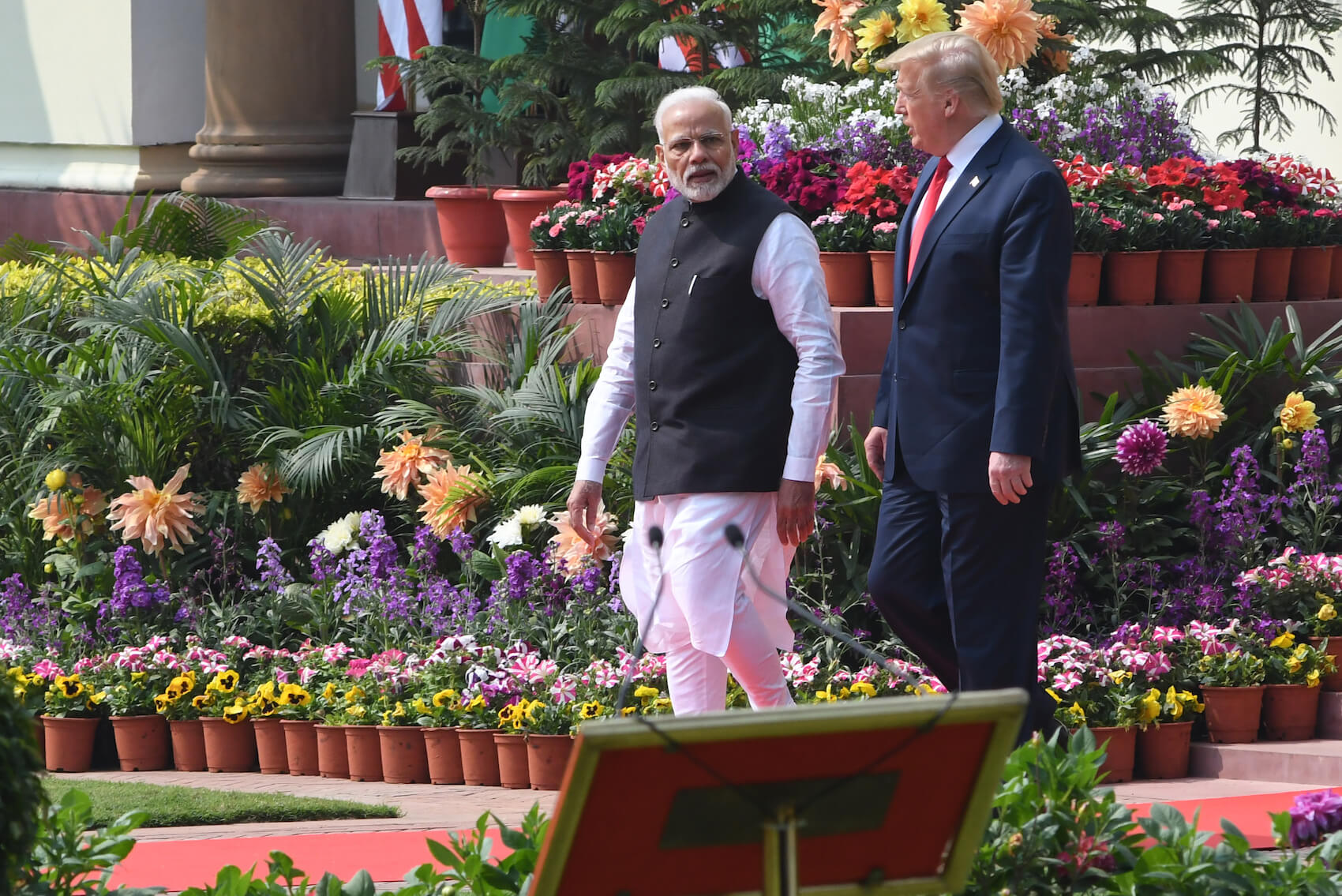
In your 2025 analysis with Shaurya Dev, you described US–India relations under Trump and Modi as increasingly transactional. With trade negotiations facing renewed difficulties in October 2026, how do the leaders reconcile nationalist rhetoric with economic interdependence? To what extent does their personal political affinity influence bilateral relations?
Professor Mukulika Banerjee: We’ve already been talking about part of this question. What we can add is that recent research from Carnegie shows that the diaspora, on which Prime Minister Modi relies heavily to shape and strengthen Indo-US relations, has overwhelmingly supported the Democrats—about 60% of it. The majority of Indians in America tend to be on the Democratic side.
But what the last few years have shown, especially under President Trump, is that a significant part of the diaspora, among the remaining 40%, thought that by hitching their wagon to the Trump-Modi bromance, they could advance what they saw as a common agenda: a pro-Israel, anti-Muslim, pro-majoritarian agenda that they believed they shared with the Republican Party.
As they’ve found under President Trump 2.0, that is far from the case. When there is an anti-immigration narrative, they don’t say, “Oh, these are the good Hindu Indians who supported the Republicans.” Instead, you’re a brown person living on US soil, and you are just as likely to be targeted as others. This explains some of the swing away from the Republicans in this year’s midterm elections.
So, there are increasingly vocal expressions of opposition from Indian-origin American politicians like Ro Khanna, who even today has tweeted his complete rejection of Hindutva politics, of the Hindu majoritarian politics that the BJP espouses. Of course, there were huge victories in the midterms for precisely the kind of candidates who will call out Islamophobia and the practice of serving corporate cronies at the expense of working-class needs.
The much-celebrated mayor of New York, Zohran Mamdani, whose mother is of Indian origin, and Nithya Raman in Los Angeles are not only American politicians of Indian origin, but they are also exactly the kind of US politicians that Vivek Ramaswamy isn’t. He lost his election, and he was prominent in espousing precisely the kind of misogynistic diatribe directed against a certain kind of progressive politics. In the American context, the diasporic politics of the RSS, the cultural organization that backs Prime Minister Modi, have involved supporting politicians of Indian origin who share the same values, and Islamophobia is a very important element of that. We don’t know about somebody like Vivek Ramaswamy’s links with the RSS, but what we do know is how much the RSS actually got behind him.
Again, when we talk about US–India relations, there is the government-to-government Trump-Modi relationship and the trade deal, which, as you’ve been saying, has been hanging in the balance for over a year now. Every time we ask for an update, we’re told it’s imminent, but it hasn’t yet come through. Meanwhile, the sort of capricious tariff wars we’ve been discussing have continued.
But there is a second story, which I was also highlighting, involving groups like the RSS abroad, the Hindu Swayamsevak Sangh (HSS), as it’s called, which have cultivated a certain kind of Indian-origin American politician in the hope that they will strengthen their larger cultural project. At least the last few elections in the US, and certainly the midterms, have shown that this hasn’t really paid off.
Hindutva Represents a Fundamentally Different Vision of India from Its Constitutional Ideals
Modi’s political project often presents Hindu civilizational identity as foundational to Indian nationhood. How should we distinguish Hinduism’s religious and cultural plurality from Hindutva’s political construction of the nation? Could tensions between these understandings weaken the ideological foundations of Hindu majoritarian populism?
Professor Mukulika Banerjee: We hope it will, for those of us who believe in India’s Constitution, which declares India a secular nation that celebrates its diversity. Every major religion in the world is found in India. Many of those religions were born in India, while Islam came to India very early. Christianity came to India long before it reached various parts of Europe, including Britain, where I live. So, the traditions of these religions are deeply rooted in India’s soil.
As my favorite Bollywood actor, Shah Rukh Khan, said in an interview some years ago, India is like a garden with lots of different flowers and colors, and if you take even one away, it spoils the painting. You can’t imagine India without any one of those elements. It would no longer be India.
I think it’s a beautiful analogy that helps answer your question. First, it is a celebration of the diversity that makes India what it is. Second, it’s also a reaffirmation of democratic politics, because democracy is actually the only way you could possibly manage such diversity. It is by devolving power, having a federal structure, maintaining the separation of powers, and keeping the government equidistant from all religions—which is India’s brand of secularism—that you can manage this diversity.
The Hindutva project, in contrast, which Prime Minister Modi and his party support and which the major cultural organization, the RSS, now over 100 years old, backs, represents a completely different imagination of India: that because India has a Hindu majority, it is a Hindu-majoritarian country, and everybody else can live as second-class citizens. Living as second-class citizens is not a dignified life, first of all. Second, it may not be a life at all, because what we’ve seen in the last decade is pervasive, everyday violence against minorities, including Dalits, who are at the bottom of the caste hierarchy.
Muslims have been targeted as easy prey, with bulldozers being used to remove their shops and homes and Muslims being pushed into ghettos in various places. So, you can’t live anywhere you want in India if you’re a Muslim.
There has been a steady marginalization of minorities and violence inflicted on them, which is part of the Hindutva project. That is not the image of India that the Constitution celebrates. It’s not the image of India that the country’s founders imagined and created at the time of independence from colonialism.

Democracy Requires Active Citizens, Not Blind Devotees of Political Leaders
In your 2015 essay “Modi Bowled Them Over, but They Are Fans and Not Citizens,” you examined the transformation of political allegiance into personalized devotion. Has Modi’s charismatic leadership cultivated a political culture in which loyalty increasingly displaces democratic scrutiny? Could the student movement signal a reassertion of citizenship over political fandom?
Professor Mukulika Banerjee: Yes, the short answer is absolutely. What students, political parties, and civil society groups have shown is that, in order to live in a democracy, you have to be an active citizen. That is your responsibility. Electing a government is not enough. After the election, you must hold your representatives’ feet to the fire every single day, hold them accountable, demand transparency, and so on.
The unquestioned loyalty that has developed in large sections of the media, the corporate world, and universities has been created and enforced through a process of intimidation. This has meant that asking questions can invite severe punishment. Under this government, you’re no longer allowed to live as a citizen in a democracy and ask questions. Doing so is severely punished. When this is the case, it ceases to be what any of us would recognize as democratic politics.
Instead, what you’re expected to be is what in Hindi is called a bhakt, a devotee. The term andh bhakt, meaning a blind devotee, refers to blind faith in your leader, which is what has been inculcated. We talk about this less, but we should highlight that a huge amount of taxpayers’ money is used to inculcate this devotion and create a cult around the leader and his followers. Grand spectacles and events are constantly staged to encourage submission rather than foster citizens who are actively engaged in politics.
If you ask questions of the government, you’re immediately branded anti-national, a foreign agent, an infiltrator, or an “urban Naxal,” as he calls them. Most people outside India won’t understand this term, but it basically refers to intellectual leftists. These are all slurs. This comes directly from the prime minister. He used the term “urban Naxal” in his Independence Day speech in August this year to brand people who are asking perfectly legitimate questions of the government.
What is required is that you’ve got to be a fan. You don’t question why an elected prime minister of the world’s largest democracy has not faced an unscripted press conference in 12 years. If you ask that question, you’re anti-national. What you’re expected to do is simply toe the line, say he’s fantastic and the government is doing brilliant work, and shut up for the rest of the time. This is obviously not how democracy functions.
India’s Students Are Demanding Free and Fair Elections, Not Anarchy
In “Cultivating Democracy” and your 2024 essay “Democracy Shouldn’t Be Limited to Elections,” you argue that democracy requires sustained civic participation beyond voting. Could India’s student protests represent a revival of precisely this everyday democratic culture, despite the country’s institutional democratic backsliding?
Professor Mukulika Banerjee: Yes, I think democratic backsliding has been noticed by many for years. But the issue of electoral integrity has made it possible to focus everybody’s attention on this particular concern, and people are asking questions. Here, it’s probably worth saying something about these student protests and other protests by young people around the world, especially in the South Asian region, because the government has weaponized these comparisons to discredit the students by saying, “Oh, they’re asking for regime change; they’re calling for anarchy.”
Rather bizarrely, India’s Home Minister, Amit Shah, has been holding rallies across India, trying to save democracy from what he calls anarchy. Now, asking questions is not anarchy. Asking questions or demanding institutional propriety is not anarchy. It is about asking for elections to be made free and fair again. This is also in India’s DNA. It is our legacy from the independence struggle and our legacy of 75 years of practicing democratic politics in a very engaged way.
People want to topple governments through elections. That’s what they want to do. This is not about leaders having to flee the palace or government buildings being raided. This is not the kind of politics that the students, or indeed the opposition political parties or civil society groups, are asking for. They’re asking for free and fair elections. They want the electoral system fixed before the next national election in 2029 so that there can be a fair contest when elections are held. So, that is a classic example of the kind of active citizenship that I write about in Cultivating Democracy.
The Vote Is Sacred Because It Makes Every Indian Equal for One Day

Your article “Money and Meaning in Elections” demonstrates that voting carries moral and symbolic significance beyond transactional calculations. How might the controversy surrounding the Special Intensive Revision of electoral rolls in India (SIR) affect citizens’ sense of dignity, political belonging, and institutional trust? To what extent does it reflect broader concerns about the erosion of democratic institutions?
Professor Mukulika Banerjee: As I was saying, the vote is not just an instrumental way to elect a politician or bring a political party to power in India. It is, of course, that. That is the main purpose of the vote. But what has also emerged in India is that, because of social inequality, which I’ve talked about, and the extreme hierarchy of social status, which is ubiquitous in India, voting carries another significance. In every single setting—whether you go to watch a film, travel on a train, enter a mall, or consider who gets off an aircraft first—some groups assert their status over others. Even people at the bottom of the status hierarchy feel the need to assert their status over somebody else.
In that kind of society, having one day when you can go to a polling station with your electoral photo identity card, stand in a single line where you can’t be asked to give way to someone more important, and be treated exactly the same as everybody else means a lot. People realize that this is their only chance to experience what political equality actually feels like.
That is why, when I wrote the piece you referred to, “Money and Meaning in Elections,” the word money really referred to—and I say this in the piece—all the instrumental aspects of voting. There is a lot of money, a lot of violence, a lot of patronage, and a lot of things that should not be taking place in elections. But what we forget is that, in the Indian case, there is also a lot of meaning.
People say, “When I come out of the polling station, I feel like I’m walking taller.” Or they hold up their fingers, marked with indelible ink, and say, “Look, this mark on everybody’s fingers makes us all equal today.” People say, “The vote is our weapon. The rest of the time, we don’t have the time, we don’t have the capacity, and we don’t have the knowledge to ask questions. But if we think things are not right, the vote is something we always have to topple governments.”
Actually, the anti-incumbency rate in India has been pretty high over the years. People wield that vote very robustly in the Indian context, and we need to understand that. Without understanding it, we won’t understand why electoral malpractice has brought millions of people out onto the streets. And I dare say we will see more, because this is something Indians really care about.
From India to Serbia, Young People Are Reinventing Democratic Participation
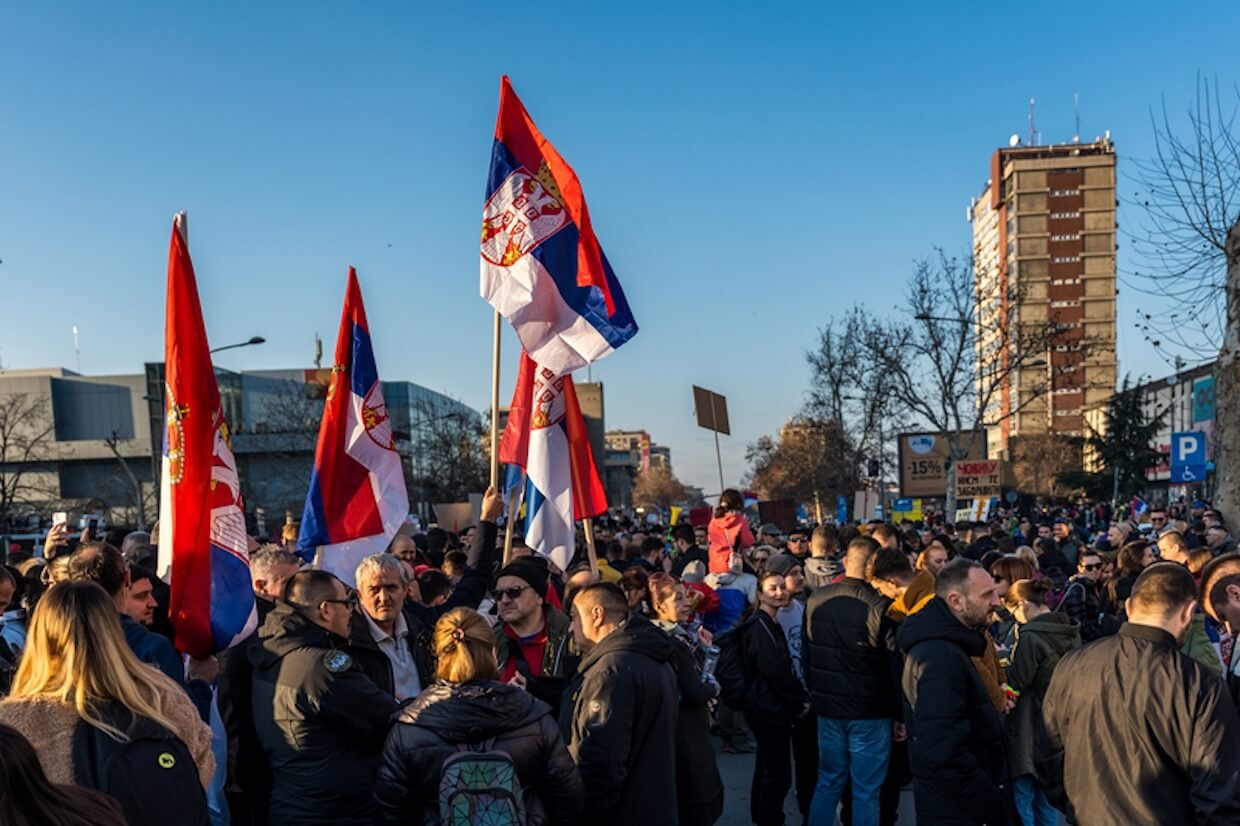
You have argued that democracies such as Britain and the United States can learn from India’s traditions of active citizenship. Could India’s contemporary youth mobilization offer lessons to democratic movements confronting populism in Europe and America? Conversely, how might transnational far-right networks and political strategies shape the BJP’s responses to domestic dissent?
Professor Mukulika Banerjee: The far right has been very well organized. Tommy Robinson, who founded one of the most racist far-right parties in Britain, has been invited to India by the RSS. Right-wing movements around the world are very united. They hold annual global conventions at which India is always represented. These conventions are held in London, Washington, and other parts of the world. So, there is a network for sharing information among these groups.
Progressive movements also have their networks. They have less money and less power at this particular point in time, but I dare say the last month has really changed that scenario. With the results from Serbia, the US midterms, what we saw with students on the streets of Paris, and what we saw this morning with the formation of the new Israeli government, there is a reckoning with what we call right-wing populism.
Populism has also been used in the past to describe leaders who have bypassed institutions to serve the poor directly. But what people are up in arms about with this version of populism is a certain kind of economic arrangement that seems to enrich a few people at the expense of many. It doesn’t create jobs. You cut corporate taxes, but corporations aren’t creating jobs.
People get contracts on the basis of shady deals. At the end of the day, the money that is made is not being channeled back into the economy to create opportunities and dignity for everybody. And the word dignity is critical here. It ties together what we’ve been saying about the vote with what you just asked about these different movements. One reason Indian voters consider their vote and elections sacred is that voting provides a moment of dignity in an otherwise very undignified life.
If you listen to what people were saying during the US midterms, the message that the politicians who won are putting out is not so much about a command economy or socialism. It is about pointing out that everybody has a right to a dignified life. That dignified life is what young people all over the world are demanding, quite rightly. They are pointing to our generation, my generation, and saying that they don’t have the life chances that all of us had: finding jobs, buying new homes, having children, and planning for the future. The state of the climate, the state of the Earth, the planet, is a mess.
So, they’re making very legitimate demands for redistribution so that everybody can have a dignified life. It is really a demand against the acute social inequality that creates this kind of indignity. Because these are young people, because this is a world dominated by social media, and because information flows across the globe, groups all over the world are watching and learning from each other, realizing what to do and what not to do.
Serbia is such an interesting case of students deliberately channeling their energy into an electoral process. It took two years of work to create the student list, identify people who could stand for elections, and work out systems through which consensual decisions could be made. This was reinventing the processes of democratic selection. They did that hard work so that they could then put up candidates who would likely do well. That’s the end product we saw last month in the electoral results.
But it’s true that with Orbán’s defeat and the victory of the student groups in Serbia, there is a new energy that makes it possible not simply to topple governments but also to think about how to do democracy differently.
Again, I’ve mentioned the midterms many times, but because they’ve been on our minds over the last few days, I’ve been listening closely to campaigners, people in the back rooms—not the stars in front of the rallies, but the people standing behind them, standing in the wings—who have been doing years of work on voter registration, turning out the vote, canvassing, getting people out, identifying the new boundary limitations in gerrymandered districts, and making sure people understand how important it is to turn out and vote. This is the kind of hard work of active citizenship between elections that young people are willing to do and are doing. The evidence is there for us to see.
Democracy Needs Vigilance, Patience, Hard Work, and Hope to Flourish
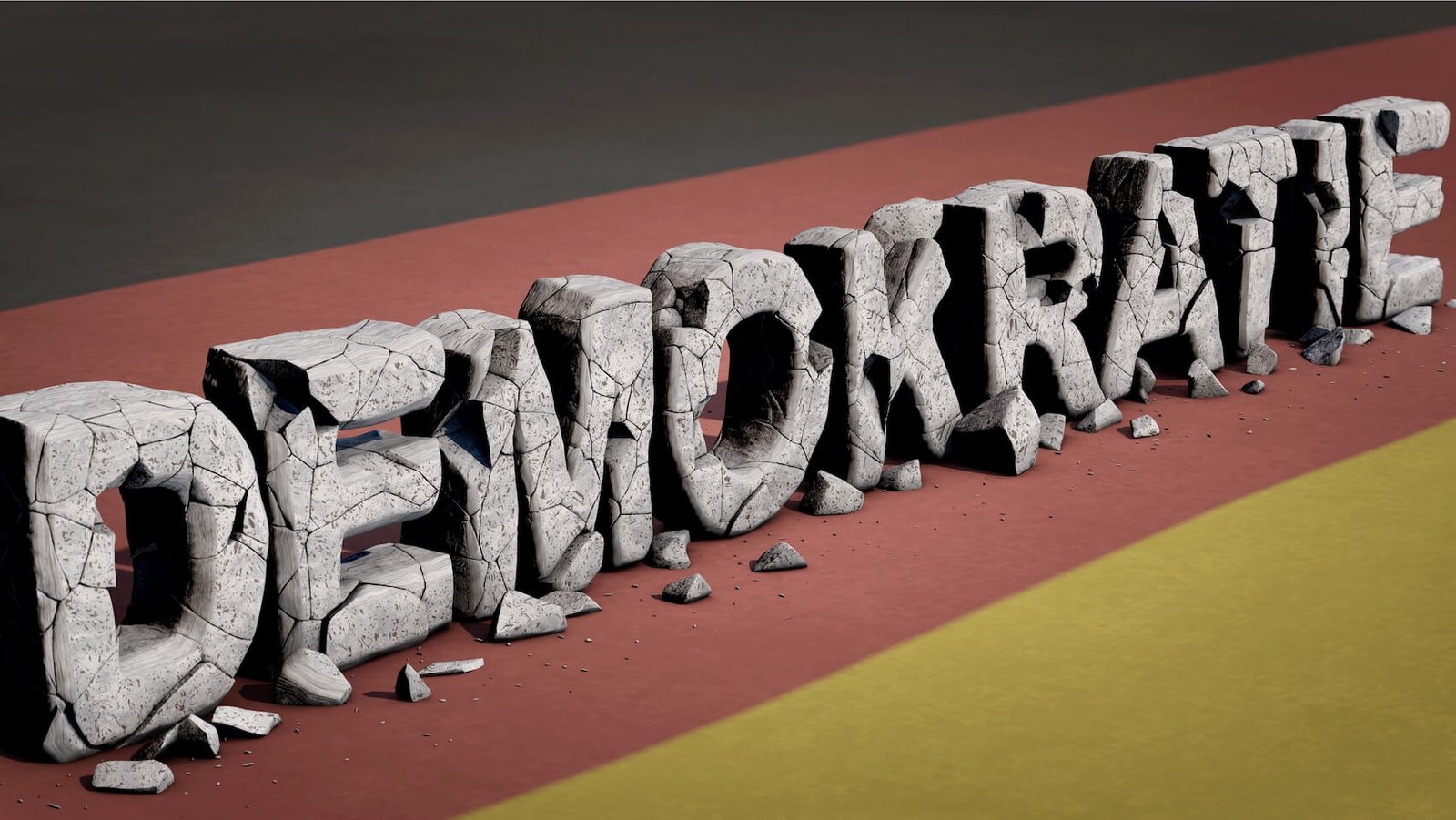
Finally, Professor Banerjee, your scholarship emphasizes that democracy must be continuously cultivated through collective action, solidarity, and everyday citizenship. Can India’s emerging student movement transform opposition to Modi’s governance into an inclusive democratic alternative? What conditions would allow it to challenge authoritarian-populist structures rather than merely secure temporary political concessions?
Professor Mukulika Banerjee: What we’ve been talking about so far is precisely evidence of this kind of active citizenship. I’ll leave you with a small metaphor that might illustrate what we’ve been saying. So far, there has been a complacency that has led to democratic backsliding. We treated democracy like a plant that we bought in a store and put on our windowsill. We said, “Oh, look, now we have democracy. I have a beautiful plant in my room, and of course, it will flourish and flower. I’m going to have this beauty, and I can say I have a beautiful room.”
But if you don’t watch the leaves every day, check how much water there is, or see whether nutrients are required—is it getting too much light? Is it too cold? Is it in a draft?—you neglect the constant vigilance required to nurture and cultivate democracy. That’s the first thing.
We treated democracy like something that would just stay green and flourish without being looked after, as if institutions would simply function on their own. There are leaves, there are roots, and of course, it’ll be okay. But what’s eating at the roots? Is there an infection? Is the leaf turning brown? We didn’t pay attention.
The second thing is that you need patience. If you buy a little rose bush for your windowsill, it’s not going to produce roses immediately. You’ve got to find out when the flowering season is, wait, and look for emerging buds. Then the flowers will emerge when they’re ready. So, there is a huge amount of patience required.
You might be all raring to go and protest, turn out the vote, and get people agitated, but they can only vote when there is an election. So, it requires a huge amount of patience. All of this takes hard work. You can’t say, “Oh, I’m going on vacation for a month. I hope the plant will be here when I come back.” No, it takes that kind of commitment and hard work every single day.
And finally, you don’t buy a plant, put it on your windowsill, and say, “I don’t think it’s ever going to put out any flowers.” You never say that. You say, “No, of course, I’m waiting to see the flowers. Actually, I don’t even know what color the flowers will be, but I’m really looking forward to seeing them.”
So, that element of hope is also a very important part of democratic politics. That’s why I say that, in order to cultivate democracy, you need vigilance, you need patience, you need hard work, and you need hope.