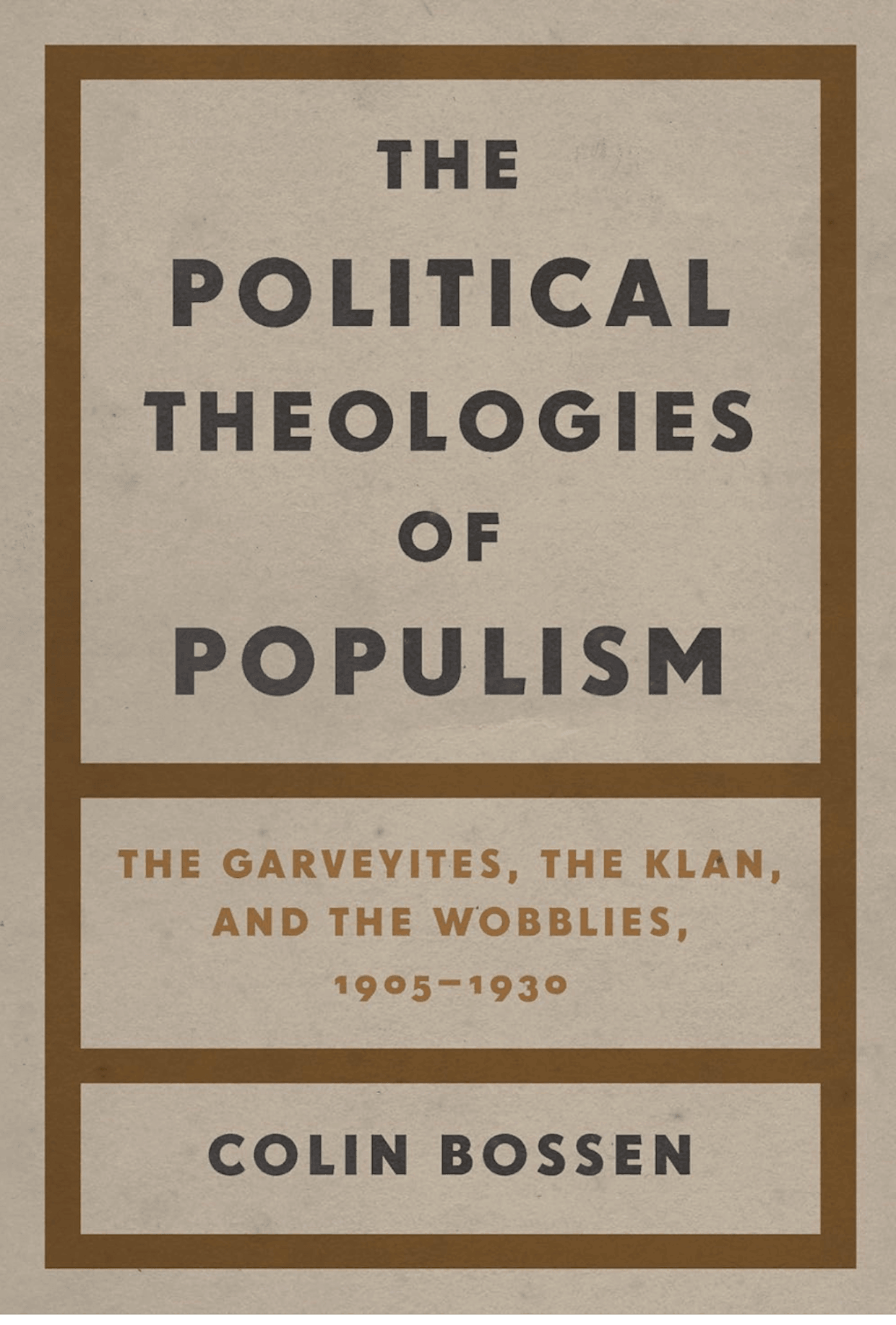
Rev. Dr. Colin Bossen’s book offers a compelling reinterpretation of American populism through the lens of political theology. Challenging conventional accounts that reduce populism to anti-elitism or electoral strategy, Rev. Dr. Bossen demonstrates how competing visions of “the people” are constructed through narratives of belonging, redemption, and collective identity. By tracing the historical continuity of white supremacist, Pan-African, and pluralistic populisms from the Progressive Era to Trumpism, the Civil Rights Movement, Black Lives Matter, and progressive labor politics, the book makes a significant contribution to contemporary populism scholarship. While its comparative framework occasionally risks creating an unintended moral symmetry between emancipatory and exclusionary movements, it remains an original, theoretically sophisticated, and highly recommended study for scholars of populism, political theology, religion, and American political development.
Reviewed by Bulent Kenes
Few concepts have generated as much scholarly debate over the past two decades as populism. Whether understood as a thin ideology, a political style, a discursive logic, or a mode of constructing "the people," populism has become one of the defining frameworks through which scholars interpret democratic transformation in the twenty-first century. Yet despite the flourishing literature on populism, comparatively little attention has been devoted to its religious dimensions or to the theological narratives that shape collective political identities. Rev. Dr. Colin Bossen’s The Political Theologies of Populism: The Garveyites, the Klan, and the Wobblies, 1905–1930. enters this crowded field with an ambitious and refreshingly original intervention. Rather than approaching populism primarily through electoral politics, party systems, or charismatic leadership, Rev. Dr. Bossen investigates the theological imagination underlying populist movements, arguing that populism is fundamentally a process of "people-making" through narratives of salvation, ritual, belonging, and collective identity. The book thus offers an innovative synthesis of political theology, American religious history, social movement studies, and populism scholarship.
The volume examines three influential movements of the Progressive Era: the Industrial Workers of the World (IWW), Marcus Garvey’s Universal Negro Improvement Association (UNIA), and the Second Ku Klux Klan. Although these organizations pursued radically different political objectives, Rev. Dr. Bossen argues that each sought to answer the constitutional question embedded in the opening words of the American Constitution—"We the People"—by constructing its own vision of who genuinely belonged within the political community. In doing so, he identifies three enduring forms of American populism: pluralistic populism, Pan-African populism, and white supremacist populism. These competing projects of collective identity, he contends, have not disappeared with the Progressive Era but continue to shape American political life into the twenty-first century.
Rev. Dr. Bossen is unusually well positioned to write such a study. Trained as both a historian and a scholar of religion, he is also an ordained Unitarian Universalist minister whose long involvement in labor activism—particularly within the IWW—deeply informs his analytical perspective. Rather than concealing his normative commitments behind claims of detached neutrality, Rev. Dr. Bossen openly acknowledges that the book emerged during a period marked by the resurgence of white supremacist politics in the United States. Echoing Howard Zinn’s famous observation that one cannot remain neutral on a moving train, he explicitly rejects the possibility of complete scholarly neutrality and instead argues that historical inquiry should contribute to understanding and resisting contemporary threats to democratic life.
This methodological transparency constitutes one of the book’s principal strengths. Rather than pretending to occupy an impossible position of complete objectivity, Rev. Dr. Bossen clearly situates his scholarship within broader democratic and ethical concerns. His extensive archival research, coupled with his experience as both minister and labor organizer, enables him to bridge historical analysis with contemporary political theory in a manner rarely achieved within existing populism scholarship.
Equally impressive is Rev. Dr. Bossen’s conceptual innovation. Instead of defining populism through anti-elitism, charismatic leadership, or ideological "thinness," he shifts analytical attention toward the construction of collective political identity. Populism, in his account, is less about particular policy agendas than about the creation of a populus—an imagined political community whose boundaries define inclusion and exclusion. This emphasis resonates with Ernesto Laclau’s theory of populist articulation while simultaneously incorporating insights from Charles Taylor’s concept of the social imaginary and Margaret Canovan’s work on "the people." Yet Rev. Dr. Bossen moves beyond these traditions by arguing that political identities are sustained not merely through discourse but through deeply embedded theological narratives, rituals, myths, and symbols inherited from American Protestant culture.
Perhaps the book’s most significant contribution lies in demonstrating the historical continuity of these three competing populist traditions. Contemporary discussions of populism often begin with Donald Trump, Brexit, or the European radical right, inadvertently suggesting that populism is primarily a recent electoral phenomenon. Rev. Dr. Bossen persuasively demonstrates instead that today’s political conflicts are rooted in much older struggles over belonging, sovereignty, race, labor, and democracy. The three traditions he reconstructs during the Progressive Era continue to reverberate throughout American political development.
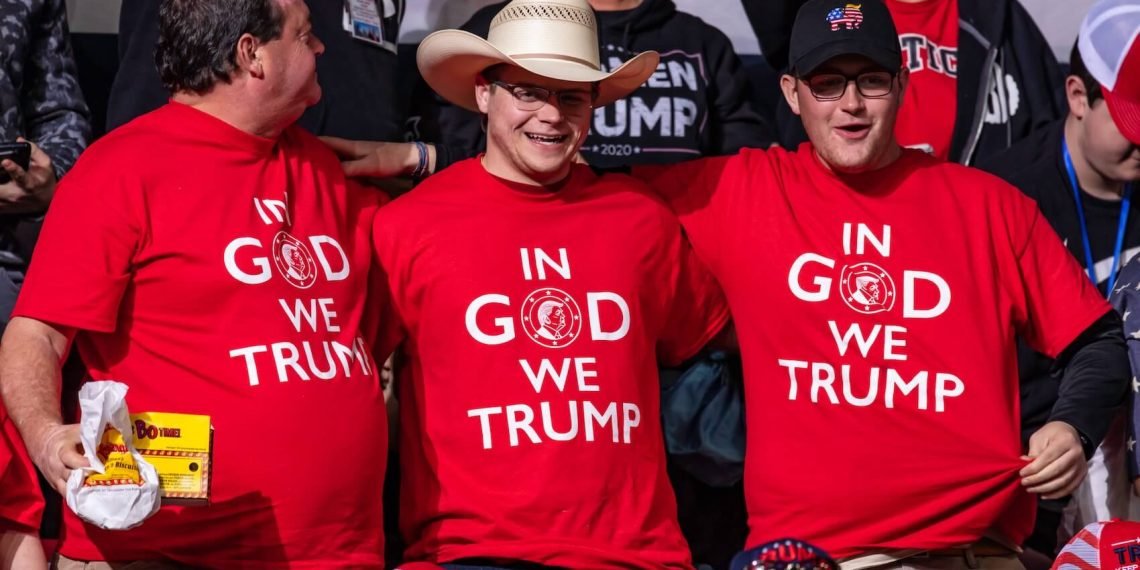
White supremacist populism, represented historically by the Second Ku Klux Klan, survives today in modified forms within elements of Trumpism and the broader MAGA movement. Its rhetoric of reclaiming the nation, defending "real Americans," protecting traditional values, restricting immigration, and portraying demographic change as existential decline echoes many of the exclusionary narratives that Rev. Dr. Bossen identifies in early twentieth-century white populism. While contemporary movements operate within vastly different institutional and constitutional contexts, the underlying logic of constructing "the people" through exclusion exhibits remarkable historical continuity.
Similarly, the tradition Rev. Dr. Bossen describes as Pan-African populism did not disappear with Marcus Garvey and Garveyism. Rather, it evolved through successive generations of African American political mobilization—from the Civil Rights Movement to Black Power and, more recently, Black Lives Matter. Although these movements differ profoundly in strategy, ideology, and organizational form, each represents an effort to redefine democratic membership by confronting the historic exclusion of Black Americans from the full promise of citizenship. Rather than simply demanding policy reform, they have sought recognition, dignity, and inclusion within the American political community itself.
Rev. Dr. Bossen’s third tradition, pluralistic populism, likewise extends beyond the IWW. Its aspiration to construct solidarity across racial, ethnic, and occupational divisions can be traced through segments of the American labor movement, democratic socialism, Occupy Wall Street, and Bernie Sanders’ campaigns. Here, "the people" are constituted not by ethnicity or race but through shared economic interests and democratic participation. This continuity illustrates one of the book’s central insights: populism is not inherently authoritarian or democratic, progressive or reactionary. It is instead a contested political logic capable of generating radically different democratic projects depending upon how "the people" are imagined.
This tripartite framework represents one of the most original contributions of The Political Theologies of Populism. By recovering these competing historical traditions, Rev. Dr. Bossen challenges simplistic understandings that reduce populism either to an authoritarian pathology or to a democratic corrective. Instead, he demonstrates that American political development has long been characterized by competing populisms, each offering rival answers to the enduring constitutional question of who belongs within "We the People." The chapters of the book develop this argument through a richly detailed historical reconstruction of the Progressive Era and its lasting influence on contemporary American politics.
The Enduring Legacies of White Supremacist, Pan-African, and Pluralistic Populisms
Rev. Dr. Bossen develops his central thesis through an eight-chapter structure that moves systematically from conceptual foundations to historical case studies before returning to the contemporary implications of his argument. Rather than presenting the Ku Klux Klan, the IWW, and UNIA as isolated historical phenomena, he demonstrates how each movement constituted a distinctive political theology—a comprehensive moral vision that sought not merely political power but the construction of a particular understanding of the people. This emphasis on "people-making" distinguishes the book from much of the existing literature on populism, which has frequently privileged electoral mobilization, anti-elitist rhetoric, or leadership styles over the deeper ontological question of collective identity.
The opening chapter situates American populism within the unresolved constitutional ambiguity surrounding the phrase "We the People." Rev. Dr. Bossen argues that American political history is characterized less by a stable democratic consensus than by recurring struggles over membership, belonging, and sovereignty. Every major populist movement attempts to answer the same foundational question: who legitimately constitutes the American people? This conceptual move immediately elevates the discussion beyond conventional institutional analysis. Instead of treating populism as a temporary electoral pathology, Rev. Dr. Bossen understands it as an enduring contest over political ontology—that is, over the very constitution of the political community itself.
The subsequent chapter introduces what is arguably the book’s most original analytical contribution: the identification of three distinct varieties of American populism. White supremacist populism constructs the people through racial exclusion; pluralistic populism seeks solidarity across class and ethnic divisions; Pan-African populism builds collective identity around the shared historical experience of Black oppression and aspirations for racial self-determination. These three traditions are neither merely ideological positions nor electoral constituencies. They represent competing moral universes, each grounded in narratives of redemption, sacrifice, community, and historical destiny. In Rev. Dr. Bossen’s formulation, theology becomes less a matter of organized religion than of symbolic frameworks through which political communities understand themselves and their collective futures.
The conceptual richness of this framework becomes particularly evident in the chapters devoted to political ritual, mythmaking, and collective memory. Rev. Dr. Bossen convincingly demonstrates that each movement employed remarkably similar organizational mechanisms despite radically different political goals. All developed founding myths, sacred texts, ceremonial performances, songs, symbols, and narratives of salvation that transformed fragmented social groups into imagined political communities. The Klan’s rituals of racial purity, the UNIA’s Pan-African ceremonies, and the Wobblies’ labor songs all functioned as instruments for constructing political solidarity. Here, Rev. Dr. Bossen successfully bridges political theology with social movement theory by showing that identity formation depends not only upon ideological programs but also upon emotionally resonant symbolic practices.
One of the book’s greatest strengths is its sustained attention to historical continuity. Rather than treating the Progressive Era as a closed historical episode, Rev. Dr. Bossen demonstrates that the competing populisms of the early twentieth century established durable political traditions whose influence extends well beyond their original organizational lives. This historical perspective offers a valuable corrective to contemporary scholarship, which frequently treats populism as a phenomenon emerging primarily after the global financial crisis of 2008 or the electoral victories of Donald Trump and other contemporary populists.
Indeed, one of the most illuminating aspects of the book is the ease with which Rev. Dr. Bossen’s historical framework can be extended into subsequent periods of American political development. The Pan-African populism represented by Garvey’s movement did not disappear with the decline of the UNIA. Instead, it evolved through successive generations of Black political mobilization. While Martin Luther King Jr.’s Civil Rights Movement emphasized constitutional equality and nonviolent democratic inclusion, Malcolm X and later Black Power organizations increasingly embraced forms of collective self-determination that echoed certain elements of Garveyite political thought, albeit under profoundly different historical circumstances. Contemporary movements such as Black Lives Matter similarly continue the struggle over democratic membership by insisting that Black Americans be recognized as fully equal participants within the American political community rather than perpetual outsiders.
Importantly, however, continuity should not be mistaken for identity. The Civil Rights Movement, Black Power, and Black Lives Matter differ significantly in leadership, ideology, organizational structure, and strategic objectives. Yet they share with Garveyism a fundamental concern with redefining political belonging and confronting structures of racial exclusion. Rev. Dr. Bossen’s framework allows readers to perceive these continuities without collapsing important historical distinctions.
A similar continuity characterizes pluralistic populism. The IWW’s aspiration to unite workers across race, nationality, and occupation prefigured later forms of progressive labor politics that sought to construct solidarity through shared socioeconomic interests rather than ethnic or racial identity. Although the organizational influence of the Wobblies declined dramatically after the 1920s, their broader democratic imagination survived within segments of the American labor movement, the New Left, Occupy Wall Street, and, more recently, Bernie Sanders’ campaigns for democratic socialism. These movements likewise understand democracy as requiring broad popular participation against concentrated economic power, illustrating the remarkable persistence of pluralistic populism across more than a century of American political development.
Rev. Dr. Bossen’s discussion of progressivism further enriches this historical narrative. Rather than equating progressivism with contemporary liberal politics, he defines it as a political theology centered upon the administrative state, legal reform, and technocratic expertise rather than the construction of popular identities. Whereas populists seek to constitute a people, progressives seek to reform institutions. This distinction provides a useful analytical vocabulary for understanding why progressive governments often struggle to respond effectively to populist mobilization. Administrative competence alone rarely satisfies citizens searching for belonging, recognition, or collective purpose.
This insight carries considerable contemporary relevance. Much of the political conflict surrounding Trumpism cannot be adequately explained through policy preferences alone. Trump’s political success rested less on detailed programs than on constructing an emotionally resonant narrative of "real Americans" reclaiming their nation from perceived elites and outsiders. Rev. Dr. Bossen’s historical reconstruction demonstrates that this style of political mobilization has deep roots within American history. Trumpism thus appears less as an unprecedented rupture than as the latest manifestation of a much older tradition of exclusionary people-making.
Yet Rev. Dr. Bossen avoids the temptation to reduce populism to authoritarianism. His historical comparison instead reveals that competing populisms have long struggled against one another. White supremacist populism has consistently encountered resistance not only from institutional liberalism but also from alternative populist projects rooted in racial justice, labor solidarity, and democratic inclusion. This recognition substantially enriches contemporary debates by reminding readers that populism has never been politically monolithic. It has always been a contested terrain upon which rival democratic and anti-democratic visions compete to define the boundaries of political community.
By the midpoint of the book, therefore, Rev. Dr. Bossen has accomplished something remarkably difficult. He has transformed three seemingly disparate historical movements into components of a coherent analytical framework that explains not only the Progressive Era but also enduring patterns of American political development. His combination of archival depth, theoretical sophistication, and interdisciplinary ambition makes these chapters among the most intellectually stimulating contributions to recent scholarship on American populism and political theology.
The Political Theology of Populism from the Progressive Era to Trumpism
The latter half of the book represents the culmination of Rev. Dr. Bossen’s broader intellectual project. Having established that populist movements are fundamentally engaged in the construction of collective identities, Chapters Five through Eight examine the symbolic practices through which these identities are sustained. Here, the book moves beyond conventional political history into the domains of ritual, performance, salvation, memory, and political imagination. The result is an unusually sophisticated account of populism that integrates insights from religious studies, historical sociology, and political theory without sacrificing empirical depth.
Particularly illuminating is Rev. Dr. Bossen’s discussion of ritual and performance. Rather than treating ceremonies, uniforms, hymns, catechisms, or mass meetings as peripheral cultural phenomena, he demonstrates that they constituted the very mechanisms through which "the people" came into existence as a political community. The Garveyites’ elaborate parades, the Klan’s carefully choreographed ceremonies, and the Wobblies’ musical traditions each transformed abstract political ideas into lived collective experiences. Politics, in this account, becomes inseparable from emotion, symbolism, and shared moral narratives. Populism succeeds not merely because it articulates grievances but because it offers individuals a compelling sense of belonging during periods of profound social dislocation.
Rev. Dr. Bossen’s treatment of political soteriology (his analysis of competing narratives of salvation) is equally original. Each movement promised redemption, albeit in radically different forms. The Klan envisioned the restoration of a purified White Protestant nation. The UNIA promised racial dignity, Black self-determination, and collective liberation from centuries of oppression. The IWW anticipated emancipation through industrial democracy and working-class solidarity. These contrasting visions demonstrate that populism cannot be reduced to anti-elitist rhetoric alone. Rather, it constitutes a moral project that offers comprehensive explanations of social crisis while simultaneously identifying the agents of redemption and the enemies of collective flourishing.
The chapters examining decline are particularly noteworthy because Rev. Dr. Bossen refuses to interpret organizational decline as ideological disappearance. Although each movement experienced institutional fragmentation, repression, or internal crisis, their underlying political imaginaries survived. This distinction between organizational collapse and ideological continuity represents one of the book’s most valuable contributions. Political movements may disappear, but the symbolic resources they generate often remain available for subsequent generations confronting new historical crises.
The concluding chapter, significantly entitled "Look for Me in the Whirlwind": Enduring Populisms, demonstrates precisely this point. Rev. Dr. Bossen argues that the three competing populisms identified in the Progressive Era continue to animate American political conflict well into the twenty-first century. This historical continuity is arguably the book’s central achievement and provides an important corrective to interpretations that portray recent populist mobilization as historically unprecedented.
Indeed, contemporary American politics vividly illustrates the durability of Rev. Dr. Bossen’s analytical framework. Trumpism, despite its distinctive twenty-first-century media environment and electoral strategies, can be understood as the latest manifestation of the exclusionary populist tradition that Rev. Dr. Bossen identifies with the Second Ku Klux Klan. Such a comparison does not imply organizational continuity or ideological identity. Rather, it highlights recurring political logics. Both movements define "the people" through exclusionary conceptions of national identity, portray demographic change as existential decline, invoke nostalgia for a lost national greatness, and frame political conflict as an existential struggle between authentic citizens and corrupt elites allied with threatening outsiders.
The slogan "Make America Great Again," for example, functions as more than an electoral slogan. It evokes a redemptive political narrative that promises national restoration following perceived moral decline. Immigration, globalization, demographic transformation, and multiculturalism become interpreted not merely as policy disagreements but as threats to the moral integrity of the nation itself. Rev. Dr. Bossen’s emphasis on political theology helps explain why such narratives resonate so powerfully. They address questions of identity and belonging rather than simply economic interests or governmental performance.
Conversely, Rev. Dr. Bossen’s category of Pan-African populism illuminates important dimensions of contemporary Black political mobilization. Although the Civil Rights Movement pursued constitutional equality through integrationist strategies largely absent from Garvey’s separatist vision, both sought to redefine democratic membership by challenging the exclusion of Black Americans from full political belonging. Later movements, including Black Power, increasingly emphasized cultural autonomy, community empowerment, and independent political agency—concerns that resonate more directly with aspects of Garveyite political thought.
More recently, Black Lives Matter has continued this broader historical struggle, albeit through decentralized organizational forms and digital activism unimaginable during the Progressive Era. Like earlier Black movements, it insists that democracy cannot be understood solely through formal legal equality but must confront enduring structures of racial domination embedded within public institutions. Rev. Dr. Bossen’s framework thus demonstrates that Pan-African populism has undergone significant transformation while retaining its central concern with reconstructing political community around principles of racial dignity, recognition, and justice.
Likewise, pluralistic populism continues to shape contemporary progressive politics. The IWW’s aspiration to organize workers across divisions of race, nationality, gender, and occupation anticipated later democratic socialist traditions emphasizing broad-based economic solidarity. Occupy Wall Street’s distinction between the "99 percent" and the "1 percent," the resurgence of labor organizing across multiple sectors, and Bernie Sanders’ repeated appeals to working-class democracy all reflect attempts to construct an inclusive political people grounded primarily in shared economic interests rather than ethnic or racial identity.
Rev. Dr. Bossen’s historical reconstruction therefore challenges one of the dominant assumptions in current populism research: namely, that populism is inherently anti-democratic or necessarily associated with the political right. His comparative analysis instead demonstrates that democratic inclusion and authoritarian exclusion have long competed through rival populist projects. The decisive analytical question is not whether a movement is populist, but rather how it defines the people, who is permitted membership, andwhich forms of solidarity it seeks to institutionalize.
This insight significantly enriches ongoing scholarly debates surrounding populism. It moves beyond the binary opposition that has often characterized the literature, in which populism is either celebrated as democratic renewal or condemned as democratic pathology. Rev. Dr. Bossen instead presents populism as a contested political field within which multiple normative projects coexist. White supremacist populism, Pan-African populism, and pluralistic populism each mobilize "the people," but they do so toward fundamentally different political horizons.
At the same time, the book’s impressive conceptual synthesis occasionally invites further reflection. By organizing these movements within a single comparative analytical framework, Rev. Dr. Bossen necessarily foregrounds structural similarities in their methods of identity construction. This comparison is intellectually productive and yields important theoretical insights regarding ritual, symbolism, and collective identity. Nevertheless, the comparative architecture also raises difficult normative questions that deserve closer consideration. Similarities in political form should not obscure profound differences in historical purpose, ethical orientation, or democratic aspiration.
This tension does not undermine Rev. Dr. Bossen’s larger argument. On the contrary, it demonstrates the analytical richness of his framework. Yet it also prepares the ground for a broader critical discussion concerning the limits of comparison itself—a discussion that becomes central to assessing both the book’s enduring significance and its principal limitations.
A Critical Assessment of Rev. Dr. Bossen’s Contribution
The greatest strength of the book lies in its intellectual ambition. Rev. Dr. Bossen successfully brings together fields that too often remain isolated from one another—American religious history, political theology, social movement theory, labor history, African American studies, and populism research—and demonstrates that each can enrich the others. His archival work is extensive, his command of the historical literature is impressive, and his conceptual framework offers an original vocabulary for understanding populism as an enduring struggle over collective identity rather than merely an electoral phenomenon. Particularly noteworthy is his insistence that populism should be understood as a process of "people-making," one that is sustained through narratives, rituals, symbols, and moral imagination as much as through political programmes or charismatic leaders. In this respect, the book deserves to become a significant reference for future scholarship on American populism.
Equally commendable is Rev. Dr. Bossen’s willingness to acknowledge his own intellectual and political commitments. Unlike many scholars who present normative assumptions as methodological neutrality, Rev. Dr. Bossen explicitly situates himself as a Unitarian Universalist minister, labor activist, and advocate of democratic participation. His long engagement with the IWW informs both his historical sensitivity and his appreciation for grassroots democratic organization. This transparency strengthens rather than weakens the credibility of his scholarship because readers are never left wondering about the standpoint from which the analysis proceeds.
Nevertheless, precisely because the book is so theoretically ambitious, it also raises important methodological questions. The most significant concerns the comparative architecture itself. Rev. Dr. Bossen’s decision to analyze the Ku Klux Klan, the UNIA, and the IWW within a single conceptual framework is undoubtedly productive. It reveals common mechanisms through which populist movements construct collective identities and mobilize followers. Yet comparison, while indispensable as a historical method, carries its own risks.
Most notably, placing emancipatory and exclusionary movements within the same analytical structure can occasionally generate an unintended impression of moral symmetry. Rev. Dr. Bossen is careful throughout the volume to distinguish white supremacist populism from Pan-African and pluralistic populisms and repeatedly affirms his opposition to racial domination. His normative position is therefore never in doubt. Yet the comparative framework itself sometimes places disproportionate emphasis on structural similarities—rituals, myths, narratives of salvation, political symbolism, and collective identity formation—while giving comparatively less analytical attention to the fundamentally different ethical purposes toward which these mechanisms are directed.
This distinction matters considerably. White supremacist movements emerged historically to preserve racial hierarchy, political exclusion, and systems of domination. By contrast, Garveyism, despite its own ideological contradictions and internal tensions, developed as a response to centuries of racial oppression, disenfranchisement, colonialism, and segregation. Likewise, later African American political movements—from the Civil Rights Movement to Black Power and contemporary struggles for racial justice—cannot be adequately understood without recognizing that they sought democratic inclusion, equal citizenship, and protection from institutionalized violence rather than the exclusion of others from political membership.
To acknowledge that these movements all engaged in "people-making" is analytically illuminating. However, democratic theory also requires distinguishing between the politics of emancipation and the politics of domination. Similar mechanisms of collective identity formation do not necessarily imply comparable normative projects. A movement struggling to secure equal citizenship for historically excluded communities occupies a fundamentally different moral position from one seeking to preserve racial privilege through exclusion and violence. Future editions might therefore benefit from engaging more explicitly with scholarship on historical injustice, democratic inclusion, and recognition theory in order to sharpen this distinction further.
Relatedly, while Rev. Dr. Bossen convincingly demonstrates the persistence of three populist traditions across American history, greater engagement with contemporary comparative populism scholarship would have strengthened the book’s broader theoretical intervention. The framework developed by Ernesto Laclau regarding populist articulation, Cas Mudde’s influential conception of populism as a thin-centered ideology, Jan-Werner Müller’s emphasis on anti-pluralism, Nadia Urbinati’s work on populism and representation, Benjamin Moffitt’s theory of populism as political style, and Pierre Rosanvallon’s reflections on democratic legitimacy all offer fruitful points of dialogue. Rev. Dr. Bossen’s contribution stands comfortably alongside these major theorists, yet the conversation occasionally remains more implicit than explicit.
The book also invites reflection on developments beyond its historical period. Although Rev. Dr. Bossen concludes by emphasizing the endurance of the three populisms he identifies, readers are naturally drawn toward contemporary politics. Trumpism illustrates the remarkable resilience of white supremacist populist narratives centred upon national restoration, exclusionary conceptions of citizenship, and nostalgia for an idealized past. Conversely, Black Lives Matter, contemporary labor organizing, democratic socialism, and broader progressive coalitions demonstrate that Pan-African and pluralistic populisms likewise continue to evolve in response to changing social and political conditions. One of the book’s lasting achievements is precisely that it provides a conceptual vocabulary through which these contemporary developments can be interpreted within a much longer historical trajectory.
In sum, The Political Theologies of Populism succeeds because it fundamentally reframes the study of populism. Rather than asking whether populism is inherently democratic or authoritarian, Rev. Dr. Bossen encourages readers to ask a more fundamental question: Who constitutes "the people," by what moral vision are they united, and whom does that definition inevitably exclude? In shifting attention from electoral competition to the moral construction of political communities, he significantly expands the conceptual horizons of populism research.
If one reservation remains, it concerns not the historical scholarship—which is exemplary—but the comparative balance of the analytical framework. While comparison reveals important structural affinities, greater normative differentiation between emancipatory and exclusionary populisms would have further strengthened the book’s democratic argument and prevented any possible reading that places victims of racial oppression and architects of racial domination within an overly symmetrical analytical space. This is, however, a criticism directed at the limits of comparison rather than the quality of the scholarship itself.
Taken as a whole, Rev. Dr. Bossen’s book is an impressive, original, and intellectually courageous work. It enriches our understanding of American political development by demonstrating that populism has never been a singular phenomenon but rather a contested field of competing democratic and anti-democratic projects. Combining historical depth with theoretical sophistication, it offers an important contribution not only to the study of populism but also to political theology, American intellectual history, religion and politics, and democratic theory. It deserves a wide readership among historians, political scientists, scholars of religion, and anyone seeking to understand why struggles over belonging continue to define American democracy in the twenty-first century.
Colin Bossen. The Political Theologies of Populism: The Garveyites, the Klan, and the Wobblies, 1905–1930. Detroit: Wayne State University Press, 2026.