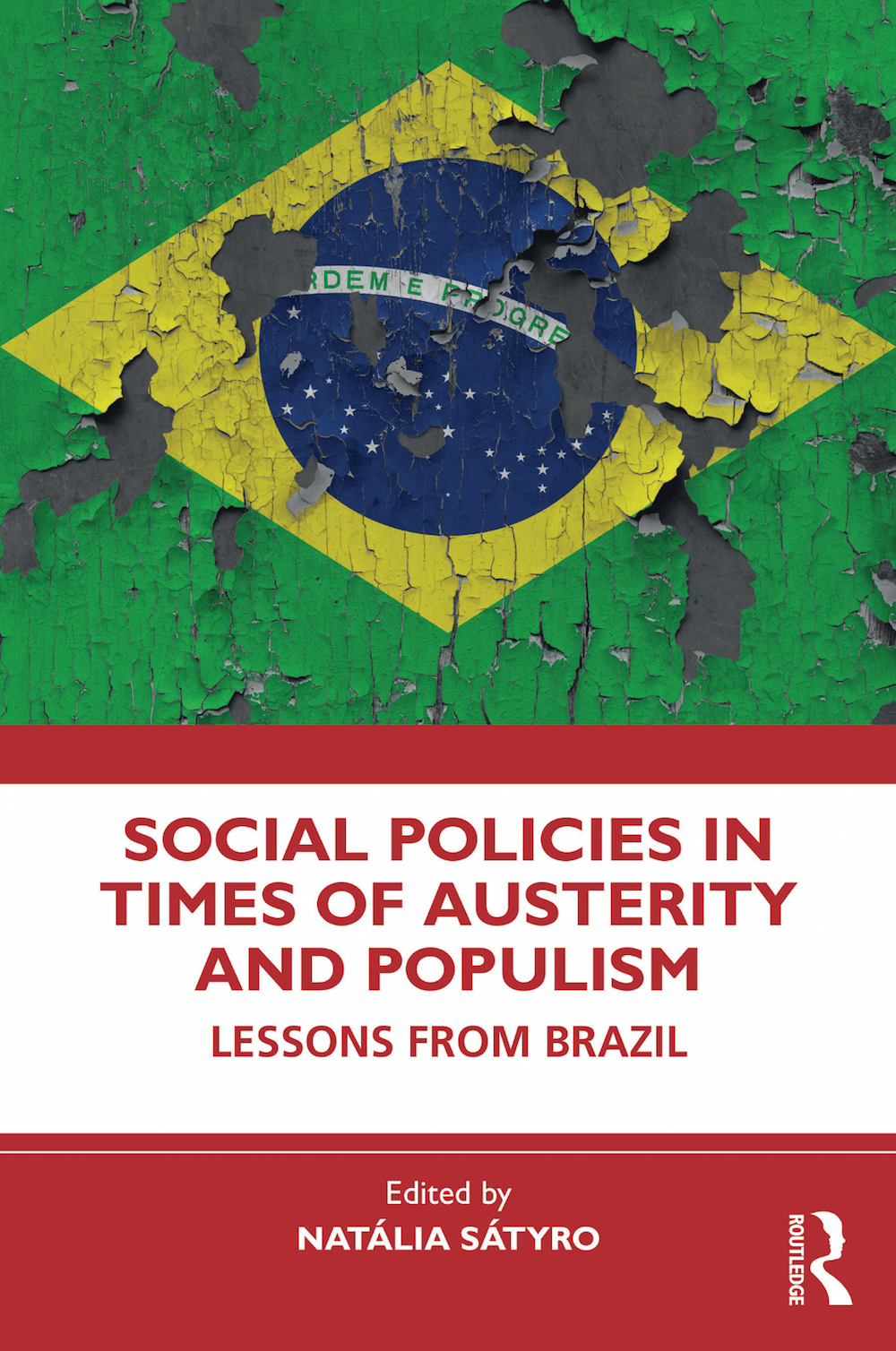
Kenes, Bulent. (2024). “Social Policies in Times of Austerity and Populism: Lessons from Brazil.” ECPS Book Reviews. European Center for Populism Studies. August 26, 2024. https://doi.org/10.55271/br0017
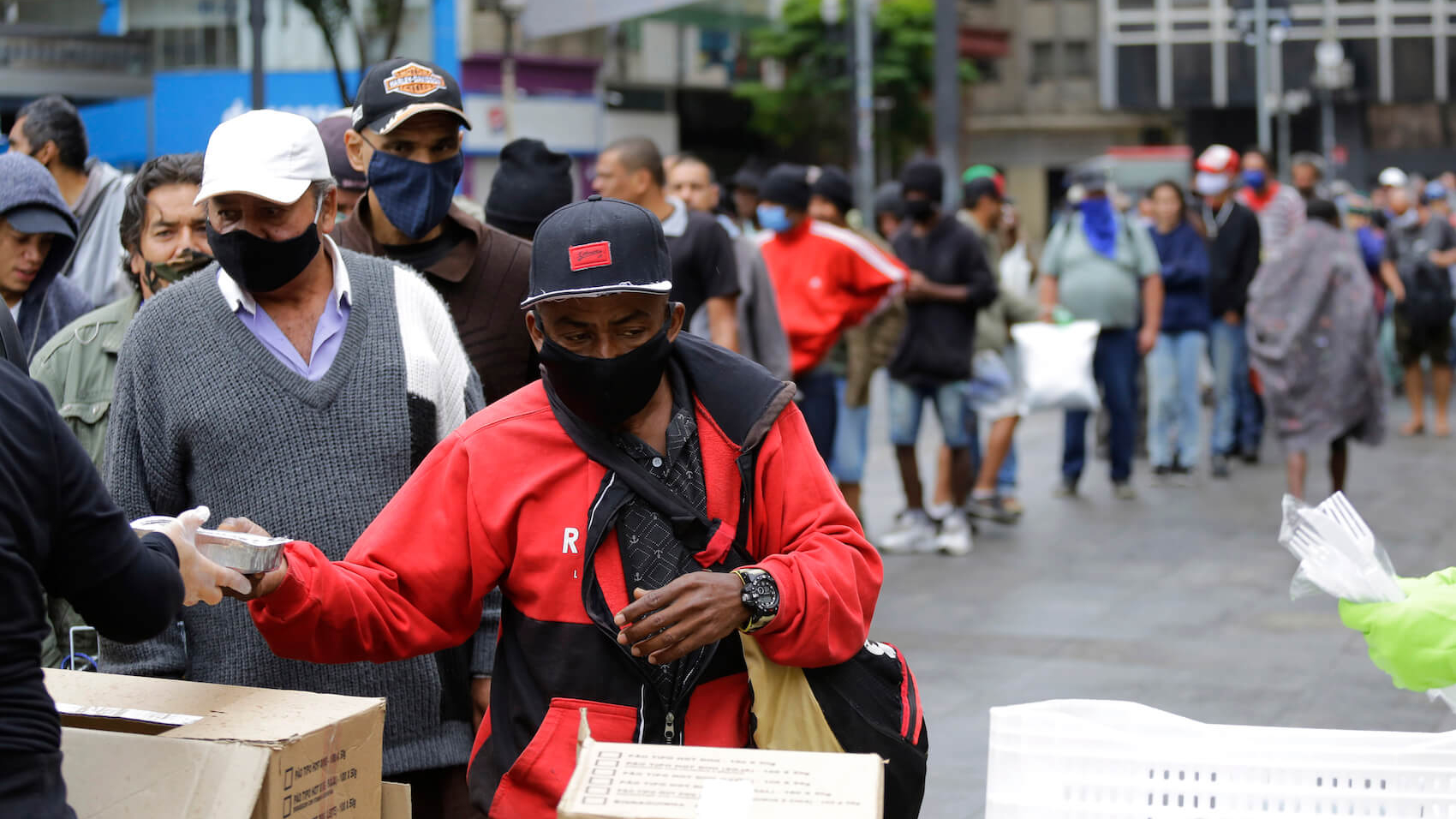
The book, edited by Professor Natália Sátyro, provides a comprehensive examination of how neoliberal and populist radical right ideologies and politicians have reshaped Brazil’s social policy landscape. Through a detailed analysis of various policy areas, the contributing authors reveal the destructive impact of these ideologies on social protections and democratic institutions. For scholars and policymakers, this book is an essential resource for understanding the interplay between austerity, populism, and social policy in Brazil, as well as its broader implications for the global rise of the populist radical right. While the book is dense with figures, statistics, and technical financial and economic data, it remains essential reading for anyone interested in these critical issues. Sátyro and her Brazilian colleagues offer valuable insights that are well worth attention.
“Social Policies in Times of Austerity and Populism: Lessons from Brazil,” edited by Natália Sátyro, provides a comprehensive analysis of the significant shifts in Brazil’s social policies during the turbulent period spanning Michel Temer’s and Jair Bolsonaro’s presidencies. Beginning with Dilma Rousseff’s impeachment in 2016 and concluding with Bolsonaro’s departure in 2022, this era was marked by profound changes driven by neoliberal economic policies and the rise of populist radical right ideologies. As the title suggests, the book explores the intersection of radical right populism and austerity measures in Brazil, particularly under Jair Bolsonaro’s presidency. Featuring cutting-edge research by Brazilian scholars, previously inaccessible to English-speaking audiences, the book offers a timely and authoritative multidisciplinary examination of social policies during Temer’s austerity measures and Bolsonaro’s populist rule.
The diverse range of policies analyzed in the book provides critical insights into the political agenda, preferences, and strategies that shaped this tumultuous chapter in Brazil’s history. Therefore, readers encounter concepts from various disciplines throughout the book such as ‘distributive deservingness,’ ‘disinformation order,’ ‘disinformation,’ ‘misinformation,’ ‘malinformation,’ ‘infodemic,’ ‘social inclusion,’ ‘retrenchment populism,’ and ‘bancarization,’ among many others, reflecting the complexity and breadth of the topics addressed. However, this review focuses solely on the perspectives of neoliberalism and populist radical right approaches, highlighting how these ideologies have influenced the dismantling and reconfiguration of social policies in Brazil. Specifically, it examines how Bolsonaro’s populist radical right policies contributed to the erosion of social protections, mirroring trends seen among right-wing populist leaders globally. The review deliberately omits technical discussions on economic, financial, and social policies not directly related to the core theme of populism.
The book tackles several critical questions within the Brazilian context, such as whether there has been a deliberate effort to dismantle or reshape social policies. It explores whether populist radical right parties (PRRPs) in Brazil are genuinely distinct from the mainstream right, particularly in their stance on the welfare state, and if so, how they differ. The book also delves into how political parties’ positions on state intervention, redistribution, and social policymaking differentiate the left from the right in Brazil. Furthermore, it examines the ways in which the populist radical right diverges from the traditional right on economic, cultural, and social issues.
Given the success of the leftist Workers’ Party (PT) governments in politicizing inequality, the book investigates how right-wing actors have responded, particularly in terms of expanding or reducing the welfare state. It also considers how emerging anti-system, radical right forces have distinguished themselves from the traditional right in their approaches to redistribution, social policies, and increasingly significant cultural issues. Additionally, the book explores the impact of populist radical right parties on family policies, among other related topics. Overall, the book addresses a wide range of social policies, including social security, healthcare, education, environmental protection, indigenous rights, and gun control. Each chapter is grounded in empirical research, providing in-depth analysis of the effects of Bolsonaro’s policies.
Sátyro’s work is divided into four parts, focusing on social policy changes in Brazil, particularly from 2015 to 2022. The first section, “Contextualization,” offers an overview of Brazil’s political and economic conditions leading up to Bolsonaro’s presidency. It highlights the influence of the neoliberal agenda—marked by fiscal austerity, deregulation, and market-driven policies—on the transformation of social policies. The analysis begins with austerity measures under Temer, setting the stage for further cutbacks under Bolsonaro. The introduction discusses the political shift from the PT to Temer’s right-wing coalition after Rousseff’s impeachment, initiating significant reductions in social welfare. It also covers Bolsonaro’s rise in 2018, driven by populist rhetoric, anti-corruption campaigns, and support from neo-Pentecostal groups. His government further dismantled social policies, particularly during the COVID-19 pandemic, exacerbating the crisis through denialism and poor coordination. Sátyro frames the erosion of Brazil’s social protection system within neoliberal and authoritarian values under both Temer and Bolsonaro, raising questions about the dismantling of the welfare state and the role of right-wing populism in these processes. The introduction chapter sets the stage for the book’s exploration of how right-wing governments have reshaped social protection in Brazil.
In Chapter 2, “Social Policies in Brazil: An Introduction,” Natália Sátyro discusses the foundations of social protection in Brazil since the 1988 Federal Constitution (CF88), which followed the return to democracy in 1985. She places Bolsonaro’s actions within the broader context of global right-wing populism and highlights the ongoing exclusion of informal workers, particularly descendants of enslaved Africans, from social and political rights—a legacy of Brazil’s history as the last country in the Americas to abolish slavery. Sátyro also examines the complexities of Brazil’s federal system, where smaller states have disproportionate influence, complicating national policymaking and limiting presidential power. She critiques the fragmented implementation of policies across Brazil’s 26 states, particularly in education, due to the lack of a unified system. The chapter also addresses the Bolsonaro administration’s inconsistent approach to social policies during the COVID-19 pandemic, which worsened the crisis due to a lack of national coordination. It concludes by outlining the central themes of Bolsonaro’s government plan, including his use of religion and patriotism to appeal to conservative voters, supported by neo-Pentecostal leaders. This sets the stage for the book’s detailed exploration of specific policy areas impacted by these political shifts.
Chapter 3, “Political Parties, Ideological Preferences and Social Policy: Accounting for Right-Wing Strategies in Brazil after the Left Turn,” by André Borges, maps the political landscape, focusing on the interactions between the Executive and Legislative branches and the rise of right-wing influence. Borges draws parallels between Bolsonaro and populist leaders like Donald Trump and Viktor Orbán, highlighting their use of populist rhetoric to dismantle social protections and undermine democratic institutions. The chapter explains how the populist radical right’s emphasis on cultural issues allows them to avoid direct conflict with neoliberal policies, which might alienate their base. Traditionally, Latin American politics has focused more on economic issues due to high inequality, but recent years have seen a shift toward cultural issues, driven in part by the growing influence of evangelical churches in electoral politics. This shift facilitated the rise of far-right populist leaders, including Bolsonaro in 2018.
Borges divides Brazil’s right-wing into two groups: the mainstream right and the populist radical right (PRR). Through statistical analysis, he shows that while both groups align on economic issues, they differ sharply on cultural matters, with the PRR adopting more extreme conservative positions. The chapter illustrates how the Brazilian right has reorganized around religious and anti-political movements, leading to the successful mobilization of diverse electoral coalitions. Bolsonaro’s rise is linked to this realignment, with his campaign centered on cultural conservatism and anti-establishment rhetoric, mirroring broader trends in Latin America.
Chapter 4, “The Political Economy of the Brazilian Economic Crisis (2014–2022): Economic Policy, Ideas, and the Limits of Neoliberal Austerity Measures,” by Alexandre Queiroz Guimarães and Marco Flávio da Cunha Resende, explores the limitations of neoliberal austerity measures in Brazil. Although these policies reduced public spending, they failed to achieve sustainable economic growth, resulting in increased inequality and social unrest. This discontent set the stage for Bolsonaro’s rise, as his populist rhetoric appealed to a population weary of economic hardship. The chapter traces the backlash against neoliberal reforms, which initially led to the rise of center-left governments in Latin America, including Brazil’s PT. Despite initial successes under Luiz Inácio Lula da Silva, Brazil struggled with high interest rates and domestic debt. Bolsonaro’s 2018 election brought a radical liberal agenda of privatization and austerity, but the COVID-19 pandemic forced a policy shift toward increased public spending to bolster his reelection chances. His administration’s poor governance, especially in social and environmental areas, contributed to his defeat in 2022. The chapter concludes with Lula’s return to power in 2023, highlighting his focus on social spending, environmental reforms, and economic recovery.
Chapter 5, “Disinformation and Democracy,” authored by Eliara Santana and Isabele Mitozo, examines the use of disinformation as a political strategy of obfuscation, highlighting the significant threat it poses to democracy and, specifically, to social policies. They delve into how disinformation was institutionalized in Brazil during Bolsonaro’s presidency (2018–2022) and used as a strategy to dismantle democratic institutions. The chapter highlights the establishment of a coordinated disinformation ecosystem, which became particularly evident during the 2018 election and the COVID-19 pandemic. This ecosystem was aligned with the federal government and fueled distrust in traditional media, while promoting misinformation, especially regarding public health measures. Bolsonaro’s administration actively undermined democratic institutions by leveraging disinformation, notably through social media platforms like WhatsApp and Telegram. The chapter also discusses the role of Bolsonaro’s “Hate Cabinet,” a group that spread misinformation to attack critics and destabilize democratic processes. This systemic disinformation campaign helped consolidate Bolsonaro’s power and left a lasting impact on Brazilian democracy. Even after Bolsonaro’s 2022 electoral defeat, the disinformation network remains a significant challenge, requiring a concerted effort to restore credibility to institutions and reliable information sources. The authors underscore that any current analysis of PRRPs must consider fake news as a deliberate tool with specific political objectives.
Chapter 6, authored by Pedro H. G. Ferreira de Souza, examines income inequality and poverty in Brazil since its re-democratization in the 1980s. The 1988 Federal Constitution marked a significant shift in Brazil’s political landscape, emphasizing poverty eradication and inequality reduction as core goals. Despite these ambitions, progress has been uneven. While Brazil has made notable strides in reducing poverty, addressing income inequality has proven more challenging. The country experienced significant poverty reduction and narrowing inequality from the early 2000s until the mid-2010s, but these gains were undermined by the 2014–2016 recession and the COVID-19 pandemic. Under the rule of Bolsonaro, welfare spending reached unprecedented levels, particularly through the expansion of the Auxílio Brasil program in 2022. Despite Bolsonaro’s conservative stance, electoral incentives drove this welfare expansion. The Lula administration, taking office in 2023, continued this trajectory by rebranding the program as Bolsa Família and introducing new benefits. Sustaining these improvements may be difficult without further budget expansions.
The second part of the book, focusing on Compensatory Policies, examines the impact of key events like the 2014–2015 economic crisis, the Temer administration’s New Fiscal Regime, Bolsonaro’s rise, and the COVID-19 pandemic. Chapter 7, by Arnaldo Provasi Lanzara and Fernanda Pernasetti, explores the dismantling of Brazil’s social security system under Bolsonaro within the context of authoritarian populism and fiscal austerity. Despite facing congressional opposition, Bolsonaro implemented significant reforms that mirrored and expanded upon Temer’s unapproved proposals, particularly targeting pension systems. The chapter employs Nadia Urbinati’s concept of “authoritarian populism” to describe Bolsonaro’s approach, which combined populist rhetoric with strict fiscal discipline to gain market confidence while undermining social security. According to the authors, Bolsonaro’s strategy involved exploiting divisions within society, using austerity as a justification to reduce labor and social security benefits, and promoting privatization. The authors argue that, although the reform did not achieve its intended financial savings, it prompted a shift toward private pension plans. This reform, rooted in fiscal austerity, disproportionately impacted low-income workers and the elderly, reflecting a broader trend where economic efficiency was prioritized over social justice. This “expansionist dismantling” weakened essential income supports for poor wage-earner families. The long-term impact of these policies underscores the enduring threat posed by authoritarian populist regimes to social rights and democratic institutions.
Chapter 8, authored by José Angelo Machado and Mauro Lúcio Jerônymo, discusses the significant risks posed to Brazil’s Unified Health System (SUS) during Bolsonaro’s presidency, particularly in the context of the COVID-19 pandemic. The pandemic response highlighted how neoliberal policies, when coupled with populist denialism, can devastate public health infrastructure, particularly for marginalized communities. Bolsonaro’s administration was marked by a blatant disregard for scientific and technical guidelines, instead promoting disinformation, ineffective treatments, and delaying vaccine acquisition. This strategy, driven by a “parallel cabinet” around Bolsonaro, undermined the cooperative federalism that had traditionally guided SUS operations. The Ministry of Health, under successive ministers, saw increased militarization, disregard for expert advice, and a breakdown in coordination with state and municipal governments. These actions led to severe institutional damage, including the erosion of public trust, loss of qualified personnel, and weakened epidemiological surveillance. According to the authors, Bolsonaro’s administration, with its focus on “deconstructing” existing systems, left a lasting negative impact on Brazil’s public health infrastructure, exacerbating the challenges faced during the pandemic and undermining the foundations of the SUS.
Chapter 9, written by Natália Sátyro, Eleonora Schettini Martins Cunha, Bruno R. Pinheiro, and Fernanda Silva, explores the detrimental effects of austerity and political changes on socio-assistance services in Brazil, particularly under far-right populist leadership. The chapter reveals how these essential services, especially for vulnerable populations, have been progressively undermined since 2014. Initially impacted by budget cuts during Rousseff’s presidency, socio-assistance services faced further challenges under Temer’s administration, which introduced a long-term spending cap that severely limited social spending. The situation deteriorated further under Bolsonaro, whose administration neglected these services and dismantled social participation mechanisms. Bolsonaro’s approach to governance involved discrediting social programs as corrupt or inefficient, using this narrative to justify deep cuts that exacerbated poverty and inequality. The chapter also identifies six distinct social welfare regimes across Brazil’s municipalities, reflecting varying levels of social protection. The COVID-19 pandemic compounded these challenges, intensifying poverty and food insecurity. Overall, the chapter highlights the vulnerability of socio-assistance services to political and economic shifts, particularly under right-wing governments.
Chapter 10, written by Joana Mostafa, analyzes the evolution of Brazil’s two main non-contributive cash transfer programs: Bolsa Família (PBF) and Continuous Benefit Programme (BPC). The chapter tracks changes from the impeachment of Rousseff in 2016 through to Lula’s narrow victory in 2022, highlighting how these programs were affected by political and economic shifts. PBF designed to alleviate poverty by supplementing household incomes, faced discrediting campaigns and reductions in coverage under Bolsonaro’s government, which sought to undermine the program’s structure. Bolsonaro’s administration introduced Auxílio Brasil, a replacement for PBF, emphasizing merit and privatization over social rights, while sidelining social assistance policies and increasing financial vulnerability for beneficiaries. The chapter underscores how Bolsonaro’s government used populist rhetoric to manipulate public perception of poverty, while altering the foundational elements of social assistance, turning the program into a vehicle for neoliberal and conservative ideologies.
The third part of the book, “Social Investment Policies,” includes Chapter 11, where Sandra Gomes and Catarina Ianni Segatto examine Bolsonaro’s symbolic strategies in education policy and how they reinforced his ideological agenda. Elected in 2018 with a far-right populist platform, Bolsonaro framed education as a cultural battleground against leftist ideologies, targeting higher education with budget cuts and promoting conservative values. Despite his rhetoric, Bolsonaro’s administration achieved limited success in enacting structural changes, as many proposals faced resistance in Congress. While minor policy changes occurred, Brazil’s educational framework, rooted in the 1988 Constitution, largely withstood his attempts at a conservative shift. The chapter concludes that Bolsonaro struggled to build a coalition capable of implementing radical education reforms.
Bolsonaro’s populist radical right ideology extended beyond economic policies to cultural and moral issues, particularly in family policies. In Chapter 12, Gabriel Penna and Natália Sátyro explore how his administration reshaped Brazilian family policies under far-right neo-conservatism. The chapter highlights Bolsonaro’s promotion of a traditionalist family structure, opposing gender equality and LGBTQ rights championed by previous governments. His approach emphasized reinforcing patriarchal norms, reducing state involvement in care services, and increasing privatization. By diminishing federal influence and shifting responsibilities to local governments, Bolsonaro’s policies weakened support for non-traditional families and expanded the privatization of childcare services. This reflects the populist radical right’s strategy of aligning social policies with an exclusionary, nationalist vision. The chapter warns that far-right ideologies may continue to obstruct policies supporting sexual and gender minorities and non-traditional families even after Bolsonaro’s presidency.
Chapter 13, by Regina Coeli Moreira Camargos and Pedro M. R. Barbosa, examines labor market policy changes in Brazil from 2015 to 2022, focusing on the erosion of labor protections. The chapter investigates whether this reflects a broader trend of welfare state retrenchment in Brazil. Following Temer’s pro-market reforms, Bolsonaro continued similar policies, especially with the 2019 Social Security reform. However, Bolsonaro prioritized budgetary control to secure legislative support rather than pursuing full austerity. The deterioration of labor conditions disproportionately impacted vulnerable groups, particularly Black women, who faced rising unemployment, poverty, and hunger. Although Bolsonaro sought to further deregulate the labor market, his administration mainly extended the policies initiated under Temer, including weakening labor protections and halting minimum wage increases. Neglect of both active and passive labor market policies deepened workforce inequalities, with the authors highlighting how these reforms reflected a strong neoliberal agenda, increasing risks for workers.
The fourth part of the book, “Policies Outside the Traditional Welfare State Scope,” includes Chapter 14 by Maria Dolores Lima da Silva and Ana Luiza Martins de Medeiros, which examines the strategic dismantling of Brazilian environmental policies under Bolsonaro, particularly targeting forests and indigenous populations. Building on actions from Rousseff and Temer’s governments, Bolsonaro aggressively weakened environmental protections and indigenous rights through financial defunding, regulatory rollbacks, and bureaucratic changes. His administration promoted deregulation, undermined institutions like FUNAI, and appointed ideological allies to key positions, further eroding protections. The use of symbolic and low-visibility strategies catered to powerful economic sectors by dismantling regulatory barriers to economic expansion. The chapter concludes that these policies have caused significant, potentially irreversible damage to Brazil’s environmental protections and indigenous territories, with long-term consequences that will be difficult and costly to address.
Chapter 15, by Ludmila Ribeiro, Valéria Oliveira, Rafael Rocha, and Alexandre Diniz, explores the deterioration of gun control policies in Brazil, particularly under Bolsonaro. Supported by the firearms industry and the “bullet caucus” in Congress, Bolsonaro significantly weakened the Disarmament Statute, leading to a surge in firearms. His administration issued decrees that relaxed restrictions, including increasing the number of firearms civilians could own and removing the need to justify purchases. These changes likely worsened violent crime, with firearms already accounting for over 70% of homicides in Brazil. In 2023, President Lula began reversing these policies, reinstating stricter gun control. However, the authors stress that addressing the weapon proliferation from Bolsonaro’s era will require more than just reverting to previous laws.
In sum, between 2015 and 2022, Brazil’s democracy faced significant challenges, especially in social policy, leading to major shifts in the welfare state. The administrations of Rousseff, Temer, and Bolsonaro each influenced the evolution of social protection differently. The book highlights a departure from the inclusive welfare state established after the 1988 Constitution, which had reduced poverty and inequality until the mid-2010s. From 2015 onward, poverty and inequality rose, particularly under Bolsonaro, who prioritized dismantling policies, reducing equality, and weakening social protections through austerity, deregulation, and erosion of key programs like pensions and healthcare. While some welfare elements, like non-contributory cash transfers, remained resilient, the overall impact was a weakened welfare system, greater inequality, and significant social costs.
In a sense, Brazil stands as a compelling case of resilience, with its institutions having endured significant challenges. Despite the current state of Brazilian democracy being far from ideal, it has withstood a violent and explicit attack. However, more time is needed to fully assess the resilience of the system as a whole and the long-term consequences of the processes analyzed in this book. The authors underscore the urgent need to defend social protections against the encroachment of authoritarian and neoliberal agendas, highlighting the dangers posed by the populist radical right to democracy and social welfare worldwide. While the book is overly dense with figures, statistics, and technical financial and economic information, it is an essential reading for anyone interested in understanding these critical issues. Natália Sátyro and her Brazilian colleagues offer valuable insights that deserve attention.
Natália Sátyro. (2024). Social Policies in Times of Austerity and Populism: Lessons from Brazil. Routledge. 412 pp.Paperback £36.99, Hardback £135.00, ISBN 9781032758374
Sithole, Neo. (2024). “Peacemaking & Peacebuilding in South Africa: The National Peace Accord, 1991-1994.” ECPS Book Reviews. European Center for Populism Studies. August 26, 2024. https://doi.org/10.55271/br0016
In her book, Reverend Dr. Liz Carmichael unpacks the events, personalities, and socio-cultural, political, and economic realities during South Africa’s peace and transition negotiations from 1990 to 1998. She details the challenges faced by the country’s early popular mass movements and provides insights into the Manichean divide between political organizations. Through a reflective lens, Carmichael addresses the often-overlooked high emotions, ethnic-based societal cleavages, and split-second decisions that characterized the politics of the time. Crucially, the work demonstrates that the discussions surrounding the National Peace Accord were vital not only for bringing a decisive end to the political violence of that period but also for other significant reasons.
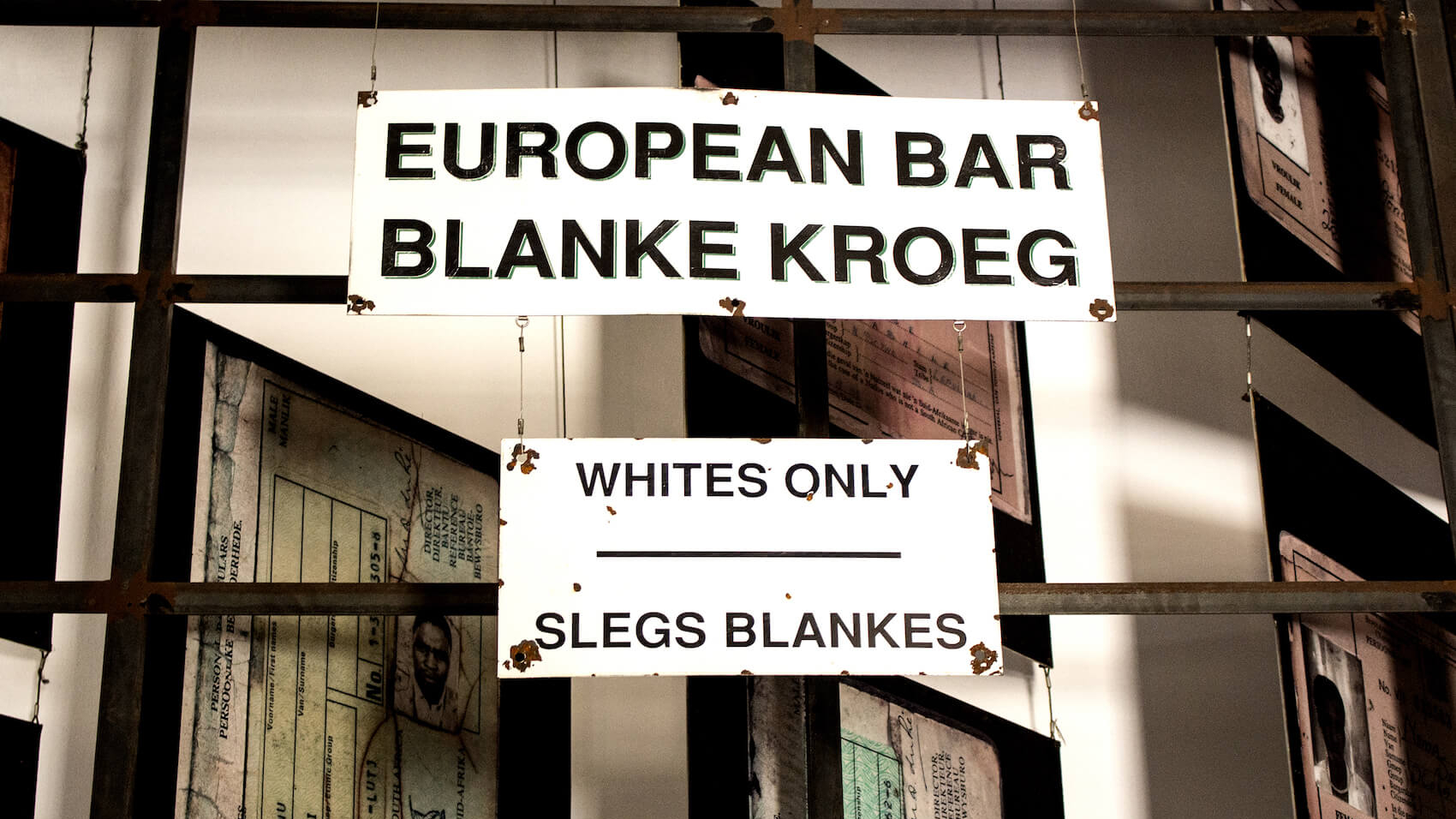
Violence in South Africa reached a zenith in 1990, the culmination of internal progressive active resistance carried out by civic society, workers unions, religious bodies and then-banned political organizations in the forms of mass protests, strikes, marches or sit-ins. Former President P.W. Botha’s notions of ‘total onslaught,’ that South Africa was under siege by militarized communist forces that threatened the security of Apartheid South Africa and the white political domination and privilege it upheld and its counterpart ‘total strategy,’ the required combination of reform and repression made necessary the formation of military wings ties to banned liberation movements. In a move to douse socio-political tensions, State President de Klerk decides to lift the ban on political parties and release political prisoners. Instead of introducing calm South Africa saw a shift of violence from the domain brutal Apartheid regime to adversarial political parties the African National Congress and the Inkatha Freedom Party. From massacres on trains and to wars between rival township settlements, ‘black on black’ violence was quickly spreading. Prompted by the scale and absurdity of mass violence various churches galvanized, organizing themselves to bring political parties together to engage in peace talks, a step that would see the adoption of the National Peace Accord, a linchpin document in South Africa’s relatively peaceful transition to a full democracy.
Due to its examination of political life influenced by some of South Africa’s earliest and largest popular movements (even being viewed as populist by scholars of transitioning South Africa) Reverend Dr. Liz Carmicheal’s work subtly examines themes of direct interest to populist scholars such as the Manichean ‘good vs evil’ and an inclusionary Left battling against an exclusionary Right. Additionally, the book offers examples of ethnic divides that materialize politically often seen in populist rhetoric or strategies.
In the introduction, author Carmichael offers the book’s aim as being “first full account of the Peace Accord” (pg.1) and how under NPA structures South Africans took part in directly birthing and developing peace and contributing to what would be seen globally as a remarkable transition from a horrific Apartheid regime to an inclusive and uplifting non-racial democracy. Upon review, this is somewhat misleading. Not because the text doesn’t fulfil this, but because when reading what is presented is an extensive detailing of the socio-political environment(s) that surrounded the accord generated continuous shifts in peace talks, the people and personalities that for better or worse had an immediate impact on the outcomes of negotiations, objectives that influenced informed decisions taken by political parties and civic/religious organizations, and the how agreed upon political configurations relied upon principles cooperation between ordinary citizens for their functionality. There exists a reflective habit to ‘telescope’ the period between the unbanning of political parties in 1990 and 1994 when the country held its first, closely watched free and fair elections which is often done by spotlighting a few key moments based on the discretion of who something the book aids in rectifying.
As the title suggests, the book’s central themes are peace-making and peacebuilding, providing what these meant and looked like in South Africa during the peak of internal conflict. A third theme not explicitly mentioned but vividly shown is ‘peace-selling,’ where we see the extent to which the state, in cooperation with business and political parties, knowing that for peace to take root the notion of peace needs to be circulated by means that would be far-reaching and see peace be synonymous with the popular culture to subvert still existing political, regional and racial tensions. Outside of these, there are additional themes that, decades after South Africa transitioned into a democracy, remain salient and prominent within the country’s political, social and economic sphere like the dire need for enduring political tolerance, the touchy relationship between the government, political organizations, and businesses, how realpolitik can supersede ideological cleavages, how political expansion often generates animosity between parties that may hold similar ideological foundations or how certain political organizations built legacies on the kind of support/opposition received from the Apartheid government.
Carmichael informs readers about how the people at the national level responded to what was very visibly aimed to be a shift in South Africa’s political dispensation and while doing so recognizes some who may not have been immortalized by previous works as being concerned with the business of peacemaking and peacebuilding on the ground.
The book places significant emphasis on the dynamic between the African National Congress (ANC), the Inkatha Freedom Party (IFP), and the Apartheid government, primarily due to their pivotal roles in the ongoing political violence of the time. The IFP, initially a cultural organization, transformed into a quasi-political party after the ANC was banned, with the intention of continuing the ANC’s work. However, tensions arose between the IFP and the ANC over ideological differences. The main points of contention included the ANC’s shift toward violent resistance, its calls for intensified boycotts and sanctions against the South African economy (which IFP leader Mangosuthu Buthelezi believed would harm Black South Africans the most), and its increasing alignment with communist influences, which the IFP strongly disapproved of.
The disputes, primarily stemming from friction between the IFP leadership—centralized around Zulu Chief and party leader Buthelezi—and the ANC leadership in exile, created a complex and multifaceted tension between the two organizations. These disagreements not only served as significant obstacles to peace during the period of violence but also influenced the negotiations leading up to South Africa’s first democratic election. The book highlights key aspects of the ANC-IFP conflict, including the controversial linkages between the IFP and the apartheid regime, which led many to view Inkatha as an extension of the regime’s security apparatus and collaborators in maintaining racial segregation. Additionally, the ANC’s refusal to disband its military wing, which the IFP viewed as a private army and thus a violation of peace accords, further fueled the strain between the two parties.
International sanctions, some in place since the instalment of the National Party in 1948, boycotts had limited the reach of South Africa goods and had caved under mounting internal pressure (notably the student movements) to leave Apartheid South Africa. These mirrored the economic forces internally that demanded change, spurred on by massive losses in profits brought on by stunted productivity, a shrinking market to sell to and crippling hikes in taxes introduced by the government in attempts to boost internal revenue and stave off total economic collapse. The widespread political violence and instability across the country significantly discouraged workers from attending their shifts, as they risked being attacked by rival political factions or killed by an elusive group of unknown assailants. Later in the text, Carmichael reveals that this shadowy group, commonly referred to as the ‘Third Force,’ was a combination of rogue elements within state security, members of political parties, and former liberation militants.
The recurring display of the ANC-IFP rivalry is recounted to have played out in forms across numerous occasions, the rivalry played out reinforces the understanding that for peace to be realistically achieved both parties needed to find themselves politically satisfied with their visions of the space they held in the country’s present and its future.
Ahistorical oversimplifications of the Left-Right divide present in South Africa at the time are also tackled by the text. The book unpacks the various political parties and organizations that fell across the Left-Right spectrum, in line with their role and relevance during that moment/event and shares their ideological underpinnings or contextualizes any conflicts between them where necessary, and it often is.
The deep ideological divide that shaped attitudes toward the peace process is thoroughly explored in the text. Dr. Carmichael highlights a notable example during the negotiations of the Peace Accord, where extreme right-wing factions rejected the Accord, labeling it a “communist trap” and a dangerous step toward handing over power to communist forces. They argued that there could be no peace without freedom for their respective “nations” (pg. 135). This rejection was mirrored on the far left by parties such as the Pan-African Congress and the Azanian People’s Organization, along with their allied unions. Initially participating in the peace negotiations as observers, these groups later withdrew from both the peace and future constitutional negotiations, believing that engaging with those they saw as the primary perpetrators of violence against the Black majority undermined the broader struggle for freedom.
Carmichael recounts some of the significant challenges of the peace process, noting that while getting all the necessary parties into the same room was difficult, an even greater challenge was getting leaders to genuinely communicate rather than talking past each other to score political points with their constituencies. On one occasion, a member of the far-right stood up during negotiations and argued that if the talks were truly open to dialogue, they must also entertain the possibility of allowing those who wished to remain segregated to do so.
The involvement of foreign organizations, including the United Nations and the Commonwealth Organization of African Unity, was strongly opposed by the South African government, as many of these entities had, in principle, sided with the ANC, which had called for the continuation of sanctions. Another theme explored in the book is the negotiations that took place outside the official talks. Away from their constituents and the media, where official positions often hindered progress, political leaders would engage in informal discussions at family homes, churches, or even during tea breaks, allowing them to clear disputes and build relationships more freely.
The National Peace Accord (NPA) was primarily a response to the widespread political violence in South Africa, aiming to prevent further bloodshed. Carmichael effectively breaks down how the Accord, once signed, was made functional and enforced. He details the evolution of the NPA, noting that the final agreement included chapters focused on addressing the structural issues contributing to national instability. These included socio-economic development, the restructuring of security forces to better represent the forthcoming democratic South Africa, and, crucially, the establishment of a code of conduct for political parties, the government, and unions.
Carmichael notes that for parties emphasizing consultative consensus with their constituents, there was discomfort with the ‘top-down’ approach taken in the accord negotiations. However, he cites that due to the immediacy and decisiveness demanded by the situation, it was the only viable option. That said, the book highlights that the real work for the NPA and the peace process occurred at the grassroots level, particularly in regions where violence had become entrenched, such as KwaZulu-Natal. This underscores an appreciation for the acknowledgment by NPA officers (many of them volunteers) of the need for varied approaches, as success in some areas relied on personalities and relationships for the effective establishment of NPA structures.
In discussing the sporadic nature of the clashes between party members, the book reveals that much of the political violence was either denied by political leadership or was the result of communities trying to defend themselves, taking pre-emptive action, or retaliating against previous political violence. It also addresses the challenges in finding effective ways to consolidate political cohesion between parties and their leaders on the ground, noting the frequent disruptions to negotiations caused by outbreaks of violence or retaliatory actions. Along these lines, sentiments of skepticism towards the accords are highlighted. Despite the accords being welcomed, there was widespread concern, particularly at the grassroots level, about whether the agreement would be adhered to. This skepticism was fueled by instances where signatories violated the principles of earlier peace agreements, thereby undermining both their commitment to peace and the accord as a whole.
It is shown that the NPA and surrounding discussions proved vital for a reason other than bringing a decisive end to the political violence; it was the prelude to the Convention for a Democratic South Africa (CODESA) negotiations that painted the blueprint for what the post-Apartheid South Africa would look like. For many in attendance, the peace accord talks presented chances to vent frustrations as well a platform for political maneuvering- in both of these cases, the underlying logic was that it was becoming increasingly clear that political and economic power was rapidly restructuring and that involved parties needed to actively mark their places to avoid being left out.
Critically, the book clarifies how churches and businesses (capital) became pillars not only of the accords themselves but also of sustaining the negotiation process as early as 1990. These two groups, either independently or jointly, were pivotal in breaking down negotiation or communication deadlocks. They served as points of contact in violence-prone areas where neutrality was essential for quelling conflicts, highlighting the significance of churches, religious organizations, and collective businesses in facilitating the entire NPA process. The book provides insight into how large business groups shouldered much of the administrative burden behind the negotiations, offering resources such as boardrooms, cars, office buildings, and private jets. Regarding religious leaders, it reveals their shrewdness and acute understanding of the relative goodwill and reduced hostility afforded to them by their positions. They leveraged this to counsel political leaders, cool heated tensions, and, in some cases, bring political leaders of different denominations together through interfaith initiatives, thus bypassing the political divisions that would typically hinder such interactions.
While South Africa’s foreign policy and international presence have become characterized by principles of peace, universal human rights, and the need for dialogue, the book provides a background on the young democracy’s history of negotiation, highlighting its role in quelling international conflicts and paving the way for sustained peace and collective development. Dr. Carmichael contributes to crafting a holistic account of earlier populist movements by examining South Africa’s Manichean divides and ethnic-turned-political societal cleavages. Through reflective and detailed accounts of the events leading up to the peace talks, the relationships between key figures, and the short timeline between events, Carmichael illustrates that the period from 1990 to 1994 can be considered the most politically intense in the country’s recent history.
Liz Carmichael. (2023). Peacemaking and Peacebuilding in South Africa: The National Peace Accord, 1991-1994. Boydell and Brewer. 518 pp. $36.95, ISBN: 9781847013682
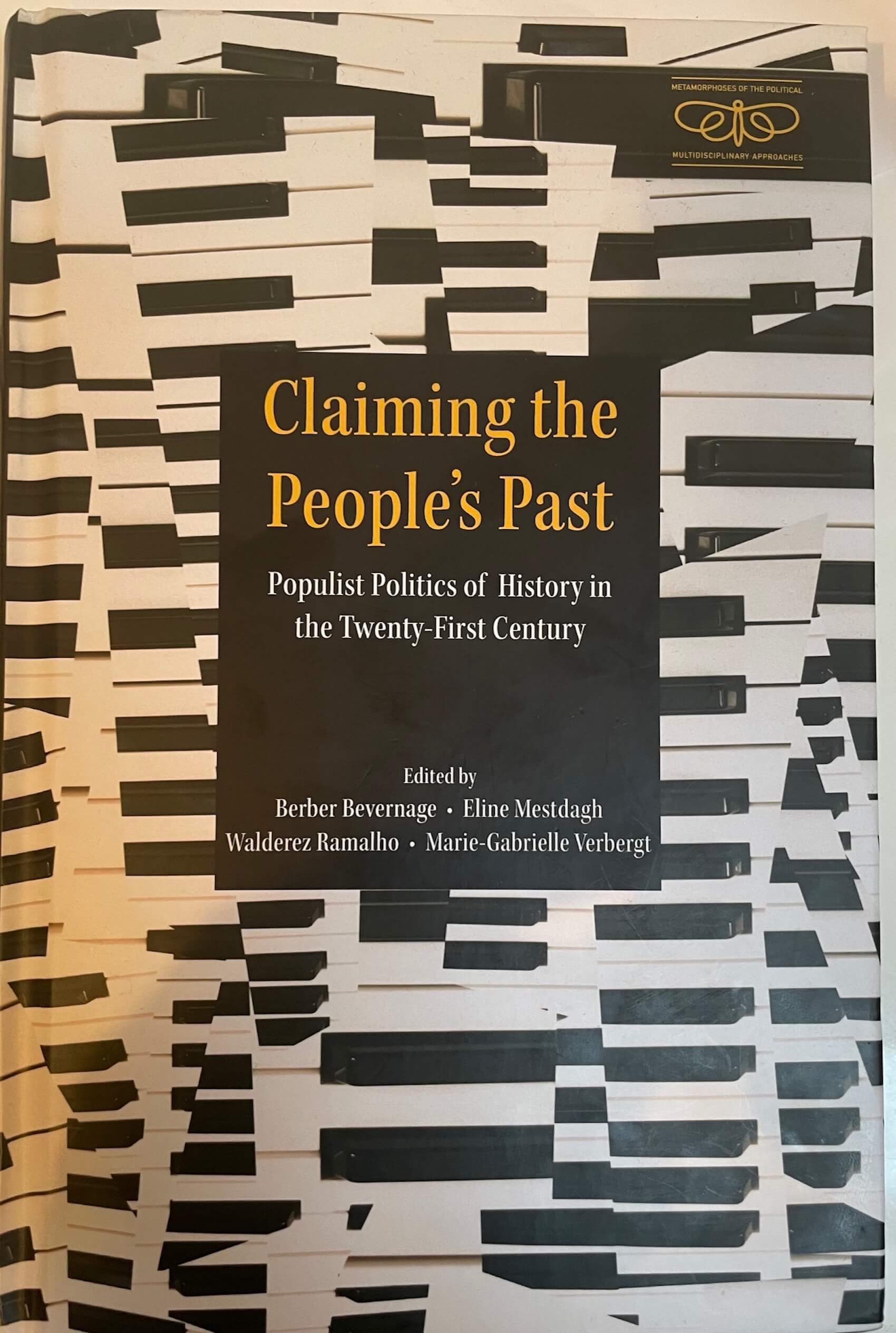
Kenes, Bulent. (2024). “Claiming the People’s Past: Populist Politics of History in the Twenty-First Century.” ECPS Book Reviews. European Center for Populism Studies. August 21, 2024. https://doi.org/10.55271/br0015
The book examines the populist use of history through a blend of case studies and thematic analyses spanning various geographical and socio-cultural contexts. It highlights how populist politics often adopt an anti-elitist stance, particularly against academic historians. Populists tend to favor simplified, decontextualized, or ambiguous historical narratives infused with strong emotional appeals—such as pride, anger, fear, or nostalgia—over the rigorous, evidence-based approach of professional historiography. Despite populism’s strong orientation toward the past, the academic exploration of its relationship with history has been relatively sparse so far. This book makes a notable contribution to addressing and bridging that gap.
How do populists relate to history and address the past? How do they represent history and frame particular historical events, periods, or the dimensions of the past, present, and future? Why is the politics of history an important aspect of populism? What drives populists to engage in the politics of history, and what exactly is the appeal of history for populist politics? How do practices of ‘past presencing’ facilitate a populist political logic? What political and emotional mechanisms facilitate the mobilization of historical knowledge in populism? How do emotions like patriotism, fear, guilt, comfort, and indifference contribute to this mobilization, and what role do they play in populist narratives? Conversely, what emotions are avoided, and why? These are the questions that the editors and authors of the comprehensive volume “Claiming the People’s Past: Populist Politics of History in the Twenty-First Century” seek to answer.
The book edited by Berber Bevernage, Eline Mestdagh, Walderez Ramalho and Marie-Gabrielle Verbergt offers a rich array of concepts related to its central themes, including ‘fake history,’ ‘fictionalization of politics,’ ‘historiographic emotivism,’ ‘emotive historiography,’ ‘collective emotions,’ ‘collective narcissism,’ ‘past presencing,’ ‘presentism,’ ‘teleological presentism,’ ‘emotivism,’ ‘emotional truth,’ ‘memorial populism,’ ‘Manichean nostalgia,’ ‘progressive nostalgia,’ ‘nostalgia for the future,’ ‘reactionary nostalgia,’ ‘moral remembrance,’ ‘chronosophies,’ ‘updatism,’ ‘historical Russia,’ ‘deep people,’ ‘mutual deception,’ and ‘identity fusion,’ among many others.
The book explores the populist politics of history through a combination of case studies and thematic analyses across diverse geographical and socio-cultural contexts. Divided into two parts, the first part presents case studies that examine how specific populist parties, movements, or leaders engage with history. These cases cover a range of populisms globally, including the AfD in Germany, Islamic populism in East Africa, Vox and Podemos in Spain, and populists in power such as the Kirchners in Argentina, the Awami League in Bangladesh, Erdogan in Turkey, Trump in the US, Bolsonaro in Brazil, and Putin in Russia.
The second part focuses on thematic reflections that highlight key aspects of populist historical politics. These include the emotional and affective dimensions of populism’s approach to history, the use of ‘affective repertoires’ to promote specific historical narratives, and the role of emotions like nostalgia in right-wing mobilization. The book also examines the concept of ‘historiographic emotivism’ and the intertwined relationship between ethnic nationalism and populism. Additionally, it discusses how populists claim or reject epistemic authority, often showing a disregard for academic historiography.
Ensuring consistency in an edited volume is challenging, as it can be difficult to review such collections from a unified perspective. However, the editors of this book have successfully met that challenge, distilling the essence of 16 articles that combine case studies with thematic and theoretical discussions. The editors also successfully overcome the ‘Atlantic bias’ in populism studies by offering a global perspective with case studies from the Americas, Africa, Asia, and Europe. The book also effectively represents both right- and left-wing populisms, as well as those in opposition and in power. From the case studies and conceptual analyses, the editors identify five recurring features of how populists engage with history: (a) vagueness and decontextualization, (b) a logic of equivalence, (c) antagonism, (d) moral and emotional appeals, and (e) rejection of representational pluralism.
As Jan-Werner Müller noted in the book’s foreword, populists often invoke specific historical events or figures to represent their vision of ‘the people’ while also signaling exclusions. They rewrite history textbooks, invest in monuments, and reshape the built environment to evoke past glories and reinforce symbolic exclusions—such as Erdogan’s transformation of Turkish urban landscapes in the Seljuk-Ottoman style. The book provides numerous examples of this glorification of the past, including populist reinterpretations by Narendra Modi, the AfD, PiS, and Donald Trump. Many right-wing populists promise a “rebirth” through these historical re-imaginings.
The book notes that it is common for politicians to engage with history to support their policies, and this is true for both right-wing populists like Narendra Modi and left-wing populists like Evo Morales. Despite their differing agendas, they share a similar approach: using history in the name of the people, against the elite, to divide society into opposing camps. From Holocaust revisionism in Germany to anti-communism in Viktor Orban’s Hungary and PiS’s Poland, far-right populists frequently push controversial historical interpretations. In the US and Brazil, Trump and Bolsonaro’s populist uses of the past have drawn criticism from historians. Similarly, left-wing populist leaders in Argentina, Venezuela, Ecuador, and Bolivia have used history to focus on the legacies of colonialism and military dictatorships.
According to the editors, populists present the past in a decontextualized and vague manner, drawing equivalences between otherwise unrelated historical events while antagonistically representing history and historians. Their relationship to the past is driven by emotion, and they reject pluralism in historical representation. Populist references to history are often anachronistic, too. Additionally, the book argues that populists do not present history chronologically. Instead, they organize a heterogeneous mix of events, periods, and figures around empty signifiers like ‘heroism,’ ‘resistance,’ ‘foreignness,’ and ‘threat,’ weaving them into a narrative of equivalence. Unlike ideologies such as nationalism or socialism, which invest heavily in creating their own historiographies, populists generally show little interest in developing distinct historical narratives. Notable exceptions include Hindutva in India and PiS’s authoritarian conservative populism in Poland, where there is significant investment in historiographical production. However, even in these cases, the book finds that populist historical revisionism relies more on judicial or physical repression of dissent than on scholarly debate.
The book underscores that most populist depictions of history revolve around morally charged binaries of ‘us’ versus ‘them.’ Populists often claim to protect history from being stolen, corrupted, or erased, or they present themselves as restoring a glorious past. For instance, the book cites a comic published by Austria’s FPÖ that depicts Heinz-Christian Strache alongside 17th-century Prinz Eugen defending Vienna from the Turks in 1683, echoing similar rhetoric seen in the Brexit campaign, which invoked Britain’s resistance to ancient Roman invasion. Donald Trump accused those advocating of the removal of Confederate statues of erasing history, positioning himself and his supporters as defenders of American heritage. Similarly, Erdogan regime claims to ‘give back’ history to the people, suggesting it was stolen by the West and previous governments. The book highlights how both left- and right-wing populists engage in this narrative hijacking, often targeting ‘the elite’ as the culprits behind the neglect or corruption of historical consciousness.
Populist politics of history frequently involve an anti-elitist stance against academic historians. According to the book, populists prefer unambiguous, decontextualized, or vague histories filled with strong emotional overtones such as pride, anger, fear, or nostalgia, rather than engaging with the fact-finding mission of professional historiography. For example, Pawel Machcewicz’s chapter discusses how Poland’s PiS promotes narratives of Polish heroism in helping Jews during World War II to counteract the negative affects of critical historiography. Populists often frame themselves as liberators, returning a glorious past to the people, making pride and nostalgia key elements in their historical narratives.
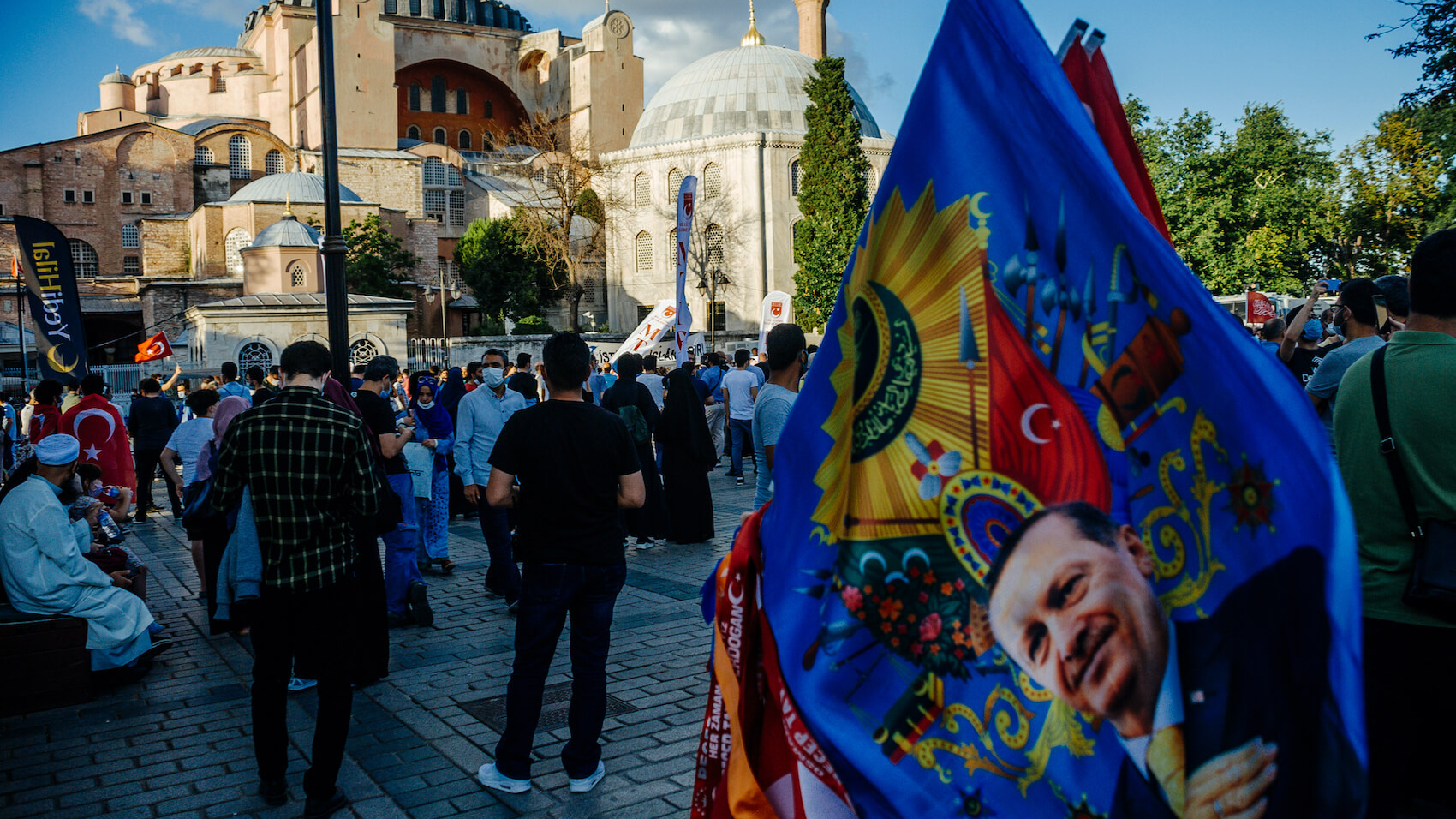
The book highlights how populist people, leaders and parties, such as Rodrigo Duterte, Lega Nord, Vox, and the Kirchnerists, often reject pluralism in historical representation. The book reminds readers that populists tend to mythologize history, rejecting alternative narratives not because they are factually incorrect, but because they conflict with the moral and emotional narratives they promote. Beyond tales of heroism, stories of victimhood and suffering are also effective tools for populists to moralize politics. Decontextualized narratives of historical victimhood can emphasize the innocence of ‘the people’ and highlight the evilness of the enemy, helping populist leaders maintain an underdog status even while in power. For example, the book discusses the reconversion of Hagia Sophia into a mosque, showing how Erdogan and his regime use decontextualized narratives of historical victimhood to legitimize their rule and distract from present-day human rights abuses.
The empirical chapters of the book offer numerous examples of how right-wing populists selectively and effectively use the past. For instance, Klaus Neumann’s chapter on the AfD shows that their approach to history is driven by two aims: to create a genealogy for themselves and to contrast the problematic present with an idealized past that promises a better future. To achieve this, the AfD downplays the Nazi past, instead aligning themselves with the Conservative Revolution and claiming the legacy of Claus Schenk Graf von Stauffenberg, who attempted to assassinate Hitler in 1944. Despite this, they still attack Germany’s Holocaust memorial culture.
Chintia Bale and Gustavo Guille emphasize in their chapter on Argentina that memory plays a crucial role in power struggles, defining who belongs on each side of the political divide. They describe “memorial populism” as a subtype where the memory of a specific event is emptied of its original meaning, and a past charismatic leader is resurrected as the “eternal sovereign,” akin to the sovereignty of God in theocratic populism.
Julian Kuttig and Bert Suykens, in their chapter on Sheikh Mujibur Rahman of Bangladesh, highlight how the manipulation of history and memory is central to Bangladeshi politics. According to the chapter, Mujib’s personal legacy (body personal) has been downplayed, allowing a populist memory of his political legacy (body politics) to dominate.
Pawel Machcewicz’s chapter on Poland illustrates how PiS has used history as a key tool to shape political and emotional narratives, defining enemies and rallying grassroots support. Central to PiS’s cultural agenda is the portrayal of Poland’s glorious past as under constant threat from corrupt elites and external foes who undermine Polish martyrdom and heroism. PiS’s “politics of history” involves accusing liberal elites and professional historians of promoting a “pedagogy of shame,” which critically examines darker episodes of Polish history, particularly Polish wrongdoings against other nationalities like Jews, Germans, and Ukrainians.
Neeladri Bhattacharya, in his chapter on the Hindu right, argues that populist regimes worldwide seek to reshape what is considered history. He describes how, under nationalist pressure, authors and publishers have faced attacks leading to apologies, book destructions, and increasing hostility since Modi and the Hindu right came to power in 2014. The assault extends beyond professional history writing to all academic institutions. Violence, including book burnings, online abuse, physical attacks, and even killings of thinkers and journalists, has become commonplace. According to the chapter, while secular nationalism in India aimed to create a multicultural memory, the Hindu right builds its nationalism on memories of religious antagonism. Professional historians are seen as obstacles to the Hindutva agenda, raising inconvenient questions and offering counter-narratives. As a result, they face sustained attacks, stigmatization, and accusations of being anti-national. This new regime of “historical truth” silences intellectual inquiry, normalizes censorship, and forges a connection between the populist ‘savior’ and the people.
Yagmur Karakaya, in her chapter on Erdogan’s neo-Ottoman nostalgia, argues that nostalgic populism is a common feature of populist historicities. Focusing on Erdogan’s speech during the reopening of Hagia Sophia as a mosque, Karakaya identifies three key discursive elements of nostalgic populism in Turkey: the legalization of history, the monopolization of history, and the revival of a “stolen” past. This analysis provides insight into the deeply rooted and comprehensive authoritarian Islamist populism of Erdogan.
In her chapter, Felicitas Becker notes that in East Africa, particularly in Tanzania and Kenya, most populist Islamist spokespeople are outsiders to the political establishment.
In Oz Frankel’s chapter on the Trump era, right-wing populists accuse elites of betraying the American people and erasing the nation’s glorious past, fostering shame and guilt among the young, particularly white Americans. The chapter explores Trump’s populist portrayal, linking him to biblical figures, prophecies, and conspiracy theories. Frankel also examines key works of racist, far-right, and alt-right literature.
In their chapter, Mateus Henrique de Faria Pereira and Valdei Lope de Araujo explore the “updatist” use of history, a key element of Bolsonarist populism that underpins its historical denialism and spread of fake news. According to the authors, Bolsonaro’s far-right authoritarian populism in Brazil relies on denying and falsifying history, labeling all political opponents as ‘leftists’ or communists. This approach revives Cold War-era rhetoric, allowing Bolsonaro’s supporters to falsely depict Nazism as a left-wing movement and portray any opposition as communist.
Andrey Oleynikov’s chapter on Vladimir Putin’s Russia highlights the conservative and presentist use of history, centered on the concept of “historical Russia.” Oleynikov argues that Putin legitimizes his rule by claiming a mandate from a supposed “thousand-year-old historical state,” positioning contemporary Russia as the successor to both pre-revolutionary and Soviet Russias. This construction of “historical Russia” also serves foreign policy interests, justifying actions like the annexation of Crimea in 2014 and the invasion of Ukraine in 2022. Additionally, Putin’s regime has crafted the notion of a “deep people” to reinforce the belief that the nation is on the right path under his leadership.
In his chapter on Spain, Pablo Sanchez Leon examines the relationship of left-wing populist Podemos and right-wing populist Vox, which has voiced fears of an Islamic reinvasion of Andalusia, a region with a significant North African Muslim immigrant population, with the past and history. Leon argues that Vox’s historical narratives shed light on the overlap between nationalism and populism, two distinct yet often intertwined ideologies. Vox actively promotes counter-narratives against the so-called Black Legend, which highlights Spain’s cruelties in America. Leon also emphasizes that understanding populism requires attention to its use of historical narratives.
Laurajane Smith, in the first chapter of the thematic section, highlights nostalgia as a central emotion in the mobilization of revisionist history. She argues that nostalgia is key to the appeal and expression of various forms of populism, particularly right-wing populism. By invoking revisionist, mythologized, or selective histories that emphasize heroism and national pride while avoiding ambiguity, these narratives manage present-day emotions. Heritage, too, plays a similar role by historicizing emotions to legitimize contemporary ideologies. Alongside nostalgia, fear is also crucial for right-wing populism, which often rejects nuance to avoid feelings of shame and guilt.
Aviezer Tucker, in his chapter titled “Historiographic Populist Emotivism,” argues that populists view historiography as a narrative driven by passions rather than facts. For populists, the more emotionally charged a historical narrative, the more “authentic” it is. Tucker contends that populists lack the will to control their passions, leading to self-destructive policies. This is evident in the rise of “post-truth” (old “wishful thinking”) where beliefs are shaped by strong emotions rather than evidence. As a result, populist historiography cannot be evaluated through traditional historiographic methods. Populists may exert power by dismissing professional historians, as seen in Hungary, or by inciting social media “lynch mobs.” According to Tucker, to advance their agendas, populist leaders encourage historical amnesia, erasing inconvenient truths. In her chapter, Lea David echoes this sentiment, noting that official memory requires both the art of forgetting and remembering to be effective.
Allan Megill notes in his chapter that academic historians rarely attract the attention of populists, who typically use “the past” to evoke emotions that unite “the people” and motivate them toward action. Another chapter’s author, Chris Lorenz, adds that populist leaders, consistently framing the present as a time of crisis, aim to restore their people’s supposed past greatness. Leaders like Trump, Putin, Orban, and Erdogan frequently invoke a narrative of past glory, recent decline, and future resurrection, shaping a populist timeline of rise, fall, and redemption.
As we look at the other (namely critical) side of the coin, the editors of the book adopt Ernesto Laclau’s formal definition of populism as a ‘political logic’ and allowed the chapter authors to choose the approach that best suited their case studies. As a result, many chapters are preoccupied with lengthy and repetitive discussions on the definition of populism, alongside deep philosophical deliberations that can feel excessive. Additionally, since some chapters were written in 2020 and 2021, the book does not address the most recent political developments in countries like Brazil, US and Argentina, where the situation has changed dramatically. Furthermore, as Megill points out in his chapter, some of the empirical studies in the book focus more on nationalist ‘historicity’ than on populist narratives.
As one of the chapter authors notes, although populism is ‘essentially past-directed,’ the academic literature on its relationship with history has remained limited so far. From an overall perspective, this book represents a significant attempt to address and fill that gap.
—-
Berber Bevernage, Eline Mestdagh, Walderez Ramalho and Marie-Gabrielle Verbergt. (2024). Claiming the People’s Past: Populist Politics of History in the Twenty-First Century. (Cambridge University Press). 343 pp. $110, ISBN: 978-1-009-45363-9
Varriale, Amedeo. (2024). “Populism and the Extreme Right in Comparative Perspective: The French Rassemblement National and the Italian Forza Nuova.” Populism & Politics (P&P). European Center for Populism Studies (ECPS). August 12, 2024. https://doi.org/10.55271/pp0036
Abstract
Populism, especially “radical right-wing populism,” and the Extreme Right are often explicitly or implicitly conflated or at least observed together (see Ignazi, 2000; Mudde, 2000; Rydgren, 2005; Carter, 2005; Griffin, 2018; Stavrakakis et al., 2019). While this contribution acknowledges that these two sets of ideas may occasionally overlap, they should still be understood as distinct concepts. Therefore, any deliberate and forceful conflation of their academic definitions, political histories, or traditions is usually misleading and inappropriate. Although many political scientists have recently attempted to clearly distinguish between the two phenomena by proposing separate definitions, some still suggest that populism and the extreme right are essentially two sides of the same coin (see Passarelli and Tuorto, 2018). To shed more light on this issue (or “war of words,” as Cas Mudde once called it) and to provide a better understanding of these two important ideologies—one that has greatly impacted the last century and another that will likely continue to influence the current one—this article will compare and contrast right-wing populism and the extreme right from an entirely ideational perspective. This will be done by borrowing from a theoretical framework originally adopted by senior scholar Marco Tarchi (2015) and taking his approach one step further by empirically testing his theories through discourse and manifesto analysis of two contemporary European parties—one supposedly belonging to the populist (or “neopopulist”) party family and the other to the extreme right (or “neofascist”) family. Specifically, the positions of the French Rassemblement National (“National Rally” – RN) and the Italian Forza Nuova (“New Force” – FN) will be examined to determine whether there are more similarities or differences between the two ideologies. The analysis will focus on the RN’s and FN’s discourse and policies related to the role of the people, the nation, the state, society, the individual, the leader, the elite, democracy, and the market.
By Amedeo Varriale*
Introduction: Generic Reflections, Theoretical Framework, and Method
Generic Reflections
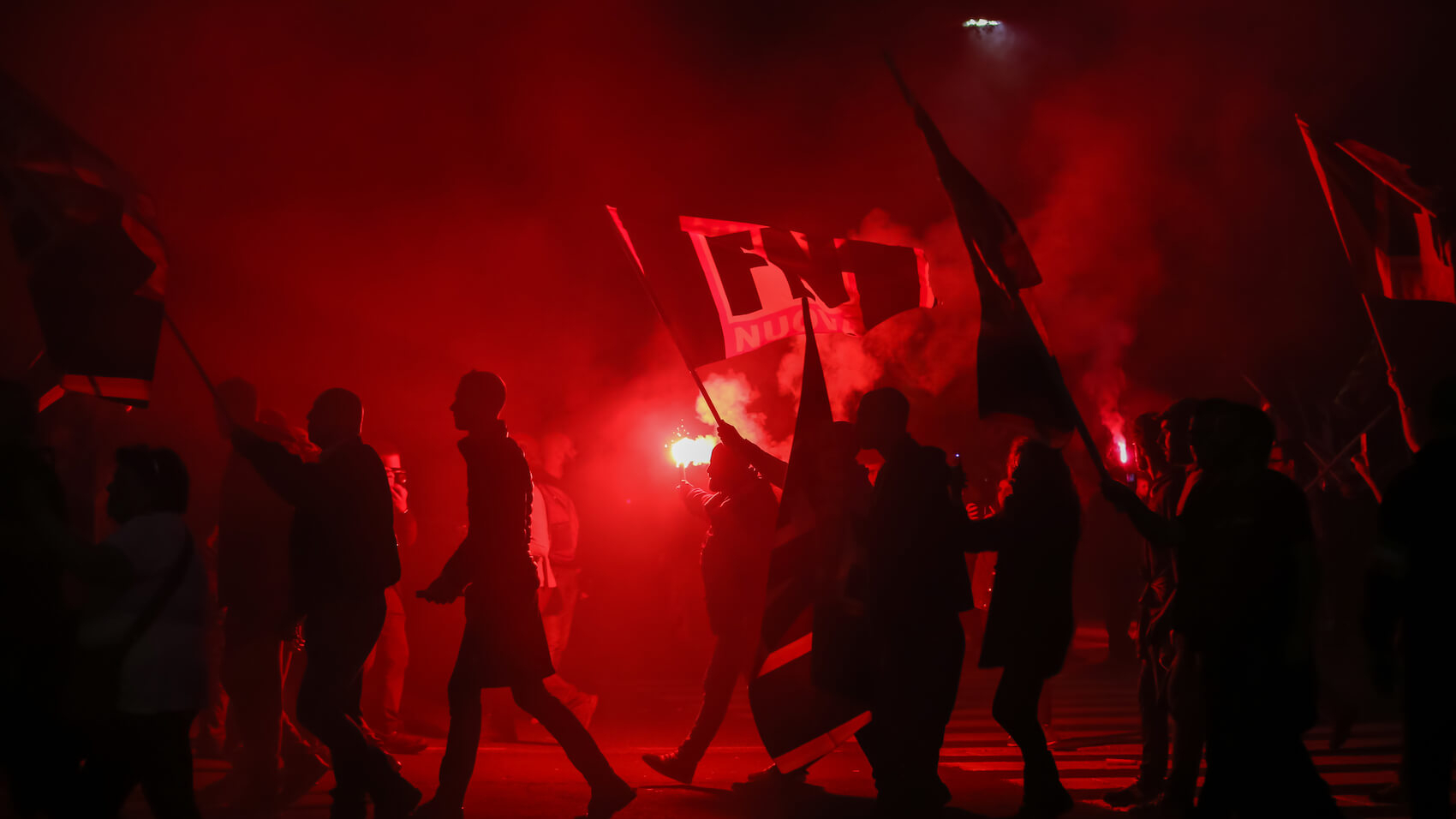
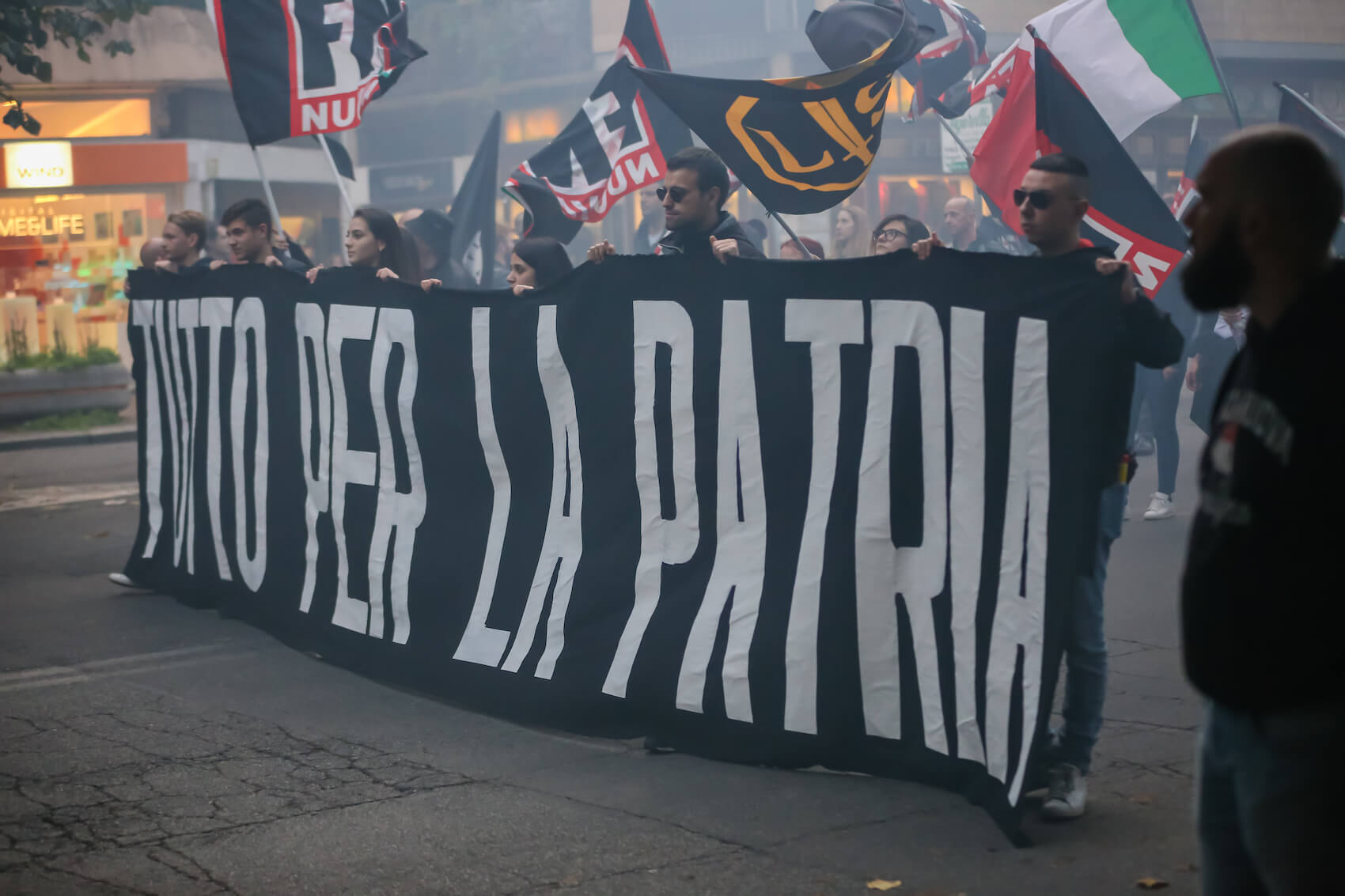
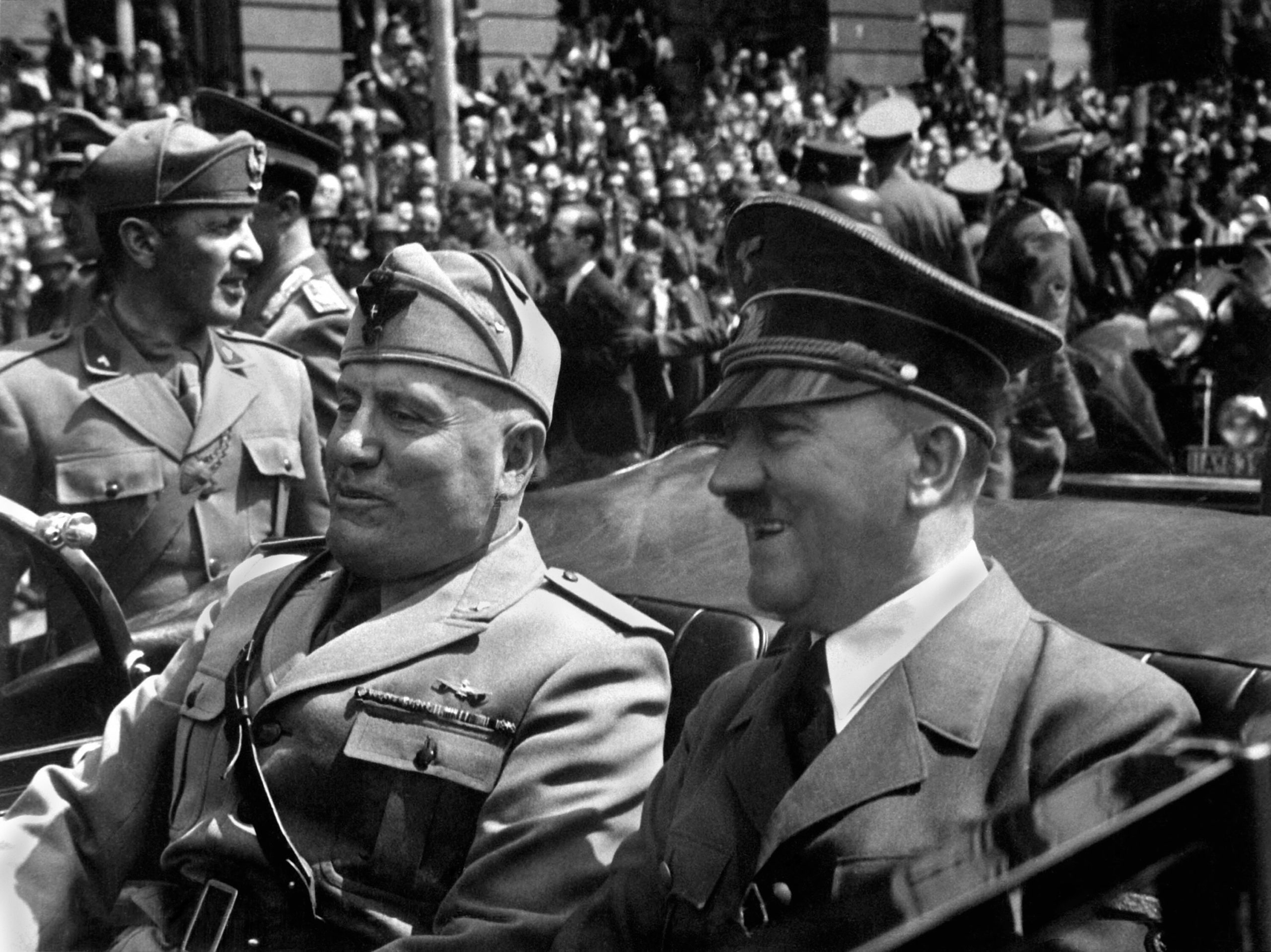
In 1992, the academic experts Piero Ignazi and Colette Ysmal (1992) wrote that the Italian MSI (Movimento Sociale Italiano – Italian Social Movement) and the French Front National (National Front) “are the most significant parties of the extreme right in Europe” (Ignazi & Ysmal, 1992: 101). At the time, this was not only an accurate statement, but it was also an incredibly important and influential one for the field of political science, as it provided scholars with two archetypal case studies that could be empirically treated for reference. Today, this claim would be – to say the least – contentious. One issue is that the MSI no longer exists, and its direct successor(s) AN (Alleanza Nazionale – National Alliance) and FDI (Fratelli d’Italia – FDI) can hardly be categorized as “extreme right” parties. In 2003, AN’s leader, Gianfranco Fini, visited Yad Vashem in Israel and repeatedly declared that fascism as an ideology was “an absolute evil in history” (Corriere della Sera, 24 November 2003; Caretto, 2022). Whereas, more recently, FDI’s leader, Giorgia Meloni (currently Italian Prime Minister) has clearly stated that her party is incompatible with anyone nostalgic of the fascist regime (also calling them “useful idiots for the Left”) and that she is committed to not only democracy but pro-Western, anti-authoritarian, liberal conservatism[1] (Bracalini, 2021; Farrell, 2022). Taking this into account, throughout the 1990s and early 2000s, some of the “old guards” of the MSI gradually developed neofascist movements relying on the political vacuum left by the defunct MSI giving birth to much more extreme subjects (see Broder, 2023: 118-141) such as Fiamma Tricolore, CasaPound, and of course – FN (Forza Nuova – FN) which will be later examined in-depth. I shall return to this point in the following sections.
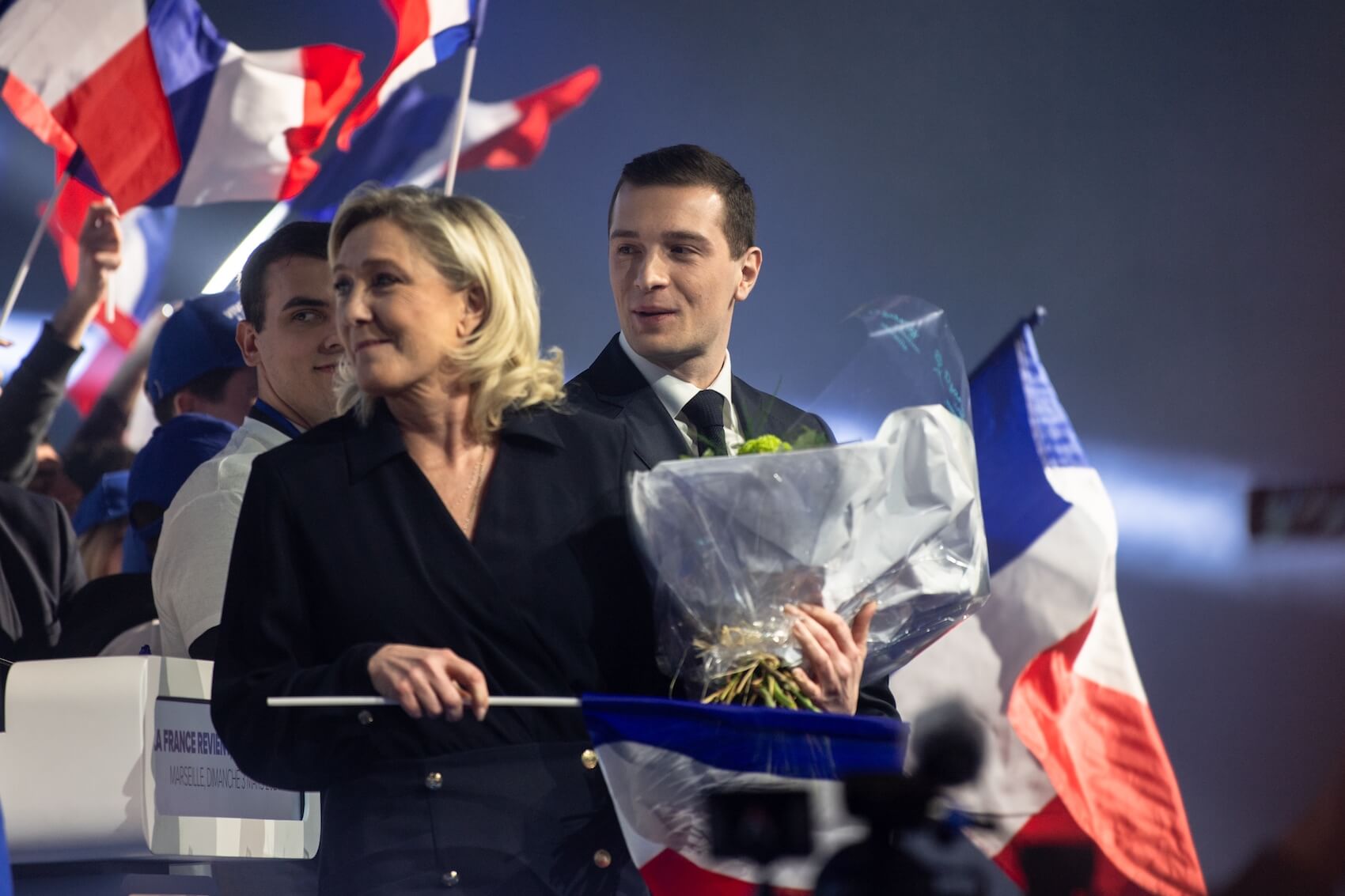
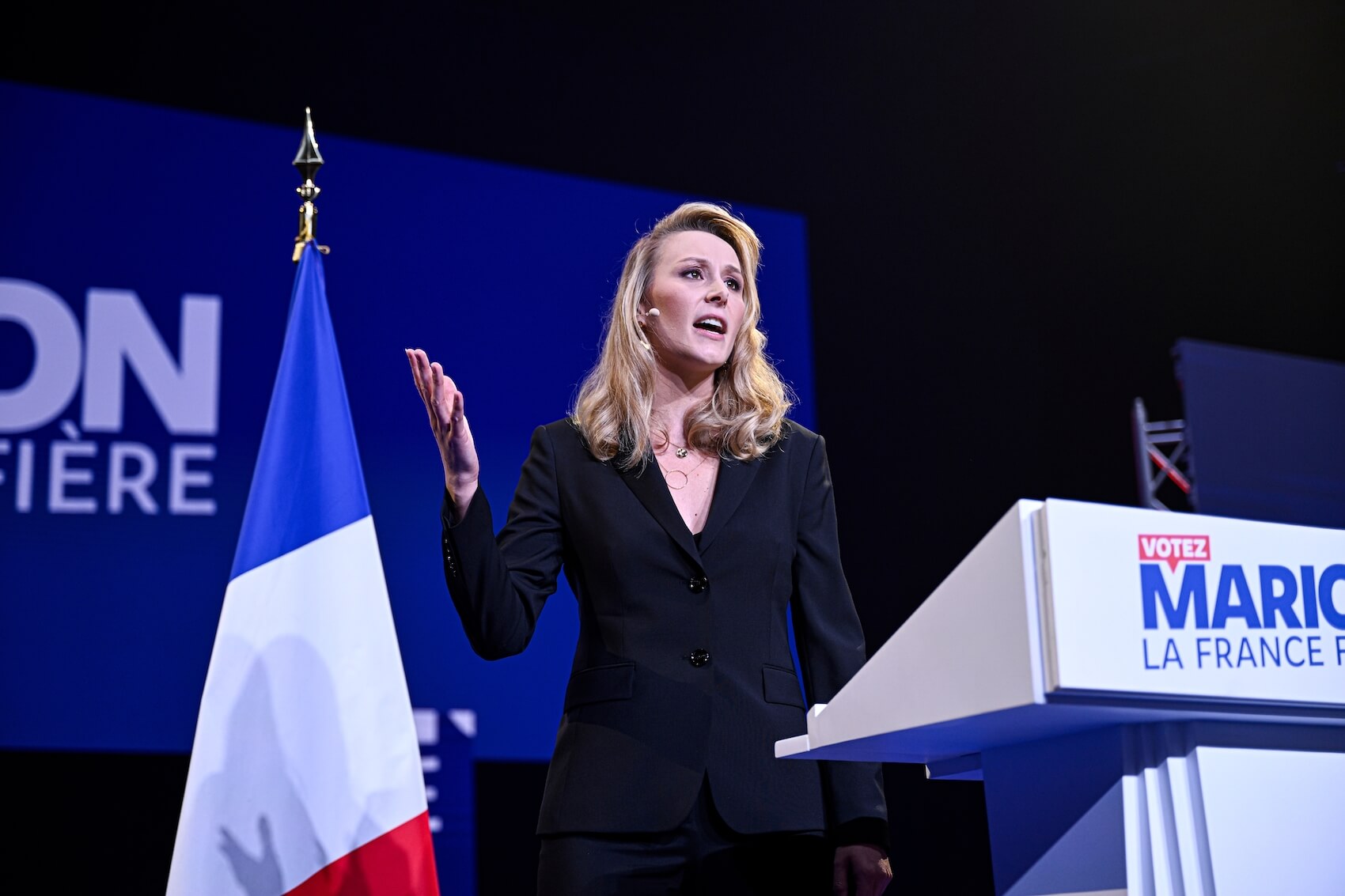
The same argument can be made regarding the French Front National. This party no longer exists under that banner, as it has been recently renamed RN (Rassemblement National – RN) in an open effort from Marine Le Pen to “detoxify” (and expel extremists) from what use to be an extreme right party, in order to turn it into a more respectable “right-wing” populist force (Gaffney, 2012). In fact, some popular commentators argue she has (to some extent) successfully managed this operation (see Murray, 2017). Therefore, not only are the parties Ignazi and Ysmal mentioned and studied no longer existent, but their heirs are usually no longer considered as full-fledged extreme right parties. Not to mention, in Europe there are very few (if any) truly extreme right/neofascist parties that are electorally relevant to this day – the German Alternative für Deutschland (AFD) perhaps being an exception.
Another factor that might challenge Ignazi’s and Ysmal’s claim, if reconsidered today and applied to the successors of the MSI and Front National by scholars of radical parties, is the emergence of a new populist zeitgeist over the last twenty to thirty years (see Mudde, 2004). This public mood of disenchantment with traditional politics has contributed to the success of several parties that were originally isolated on the fringes of the spectrum. Almost suddenly, once marginalized groups such as the Lega Nord,FPÖ, and the Sweden Democrats, became electorally relevant and more mainstream (Tarchi, 2002). Their “mainstreaming” makes it considerably more difficult for the “extreme” label to be attached to them. Moreover, not all parties that once belonged to the extreme right can be considered exclusively “right-wing” today; some, like Jobbik, have adopted syncretic populist positions. As the Italian scholar Marco Tarchi (2015) contends, their current populist forma mentis often takes them ideologically beyond the Right-Left dichotomy (Tarchi, 2015: 52). Nonetheless, casting aside those organizations that Luke March (2008: 3-4) classifies as “social populist” or “socialist populist,” many of these newly successful parties or rising movements are said to be either populist, or extreme right, or both at the same time (e.g. Backes, 1991; Betz, 1994; Ignazi 2000; Carter 2005; Mudde, 2000; Griffin, 2018).
Taking this into account, it is precisely this ambiguous conflation that has become a problem. In fact, as Mudde (2000) states: “All in all, most definitions of (whatever) populism do not differ that much in content from the definitions of right-wing extremism…with the various terms often used synonymously and without any clear intention” (Mudde, 2000: 13). While extreme right parties that are unequivocally neofascist are largely being ignored in scholarly literature, a growing number of scholars are erroneously labeling populist right parties as “extreme right” parties (for example, see Passarelli & Tuorto, 2018). In any event, the objective of this article is not to engage in an exhaustive – and sometimes counter-productive – debate originating from academic circles which Cas Mudde (1996) famously termed the “war of words.” This complex debate has aimed to describe the various political subjects that have monopolized the political space to the right of liberal-conservative forces and to especially determine the most appropriate term to define these “new” populist parties (Mudde, 2000: 11-16). Some of the terms proposed in the past include “progress-hostile forces” (Hartmann et al., 1985), “right-wing extremism” (Macridis, 1989; Mudde; 1995; 2000); “right-wing radicalism” (Oswalt, 1991; Weinberg, 1993), “radical-right” (Sprinzak, 1991), “radical right-wing populism” (Betz, 1993; Mudde, 2007), “post-industrial extreme right” (Ignazi, 2000), “New Populism” (Taggart, 1996), “neopopulism” (Yoshikazu, 2018), “national populism” (Eatwell & Goodwin, 2018), and finally, the most misleading of all – “extreme right-wing populism” (Rydgren, 2005; Stavrakakis et al., 2019). If all those terms were utilized to label different parties, such as either the ones that have a substantially populist core ideology and the ones that have a substantially fascist (or neofascist) one, this would by now be a non-substantive issue or a false dilemma. However, over the course of the last decades, all those terms have been applied to the same or a remarkably similar set of parties in Western Europe and the Americas, when in reality populism and extreme right (neofascism) are – ideologically speaking – mutually exclusive (Tarchi, 2015: 117-126). New academic research should instead be dedicated to distinguishing between the parties that belong to either one party family (e.g. the “populist” one) or the other (the “extreme right” one).
Regardless, the objective of this article is to compare the positions of the French Rassemblement National (RN) and the Italian Forza Nuova (FN) from an entirely ideational perspective and offer comprehensive insight on the key differences between the two ideologies. To maintain clarity, I shall utilize the words populism (but I also use “right-wing populism” or “populist right” for the RN interchangeably), and extreme right (but I also use “right-wing extremism” or “neofascism” for the FN interchangeably) to describe two distinct ideological phenomena. A full-fledged and in-depth analysis of the populist and extreme right ideological positions will be present in the second part of the contribution; however, I will first provide some generic preliminary information that is equally important.
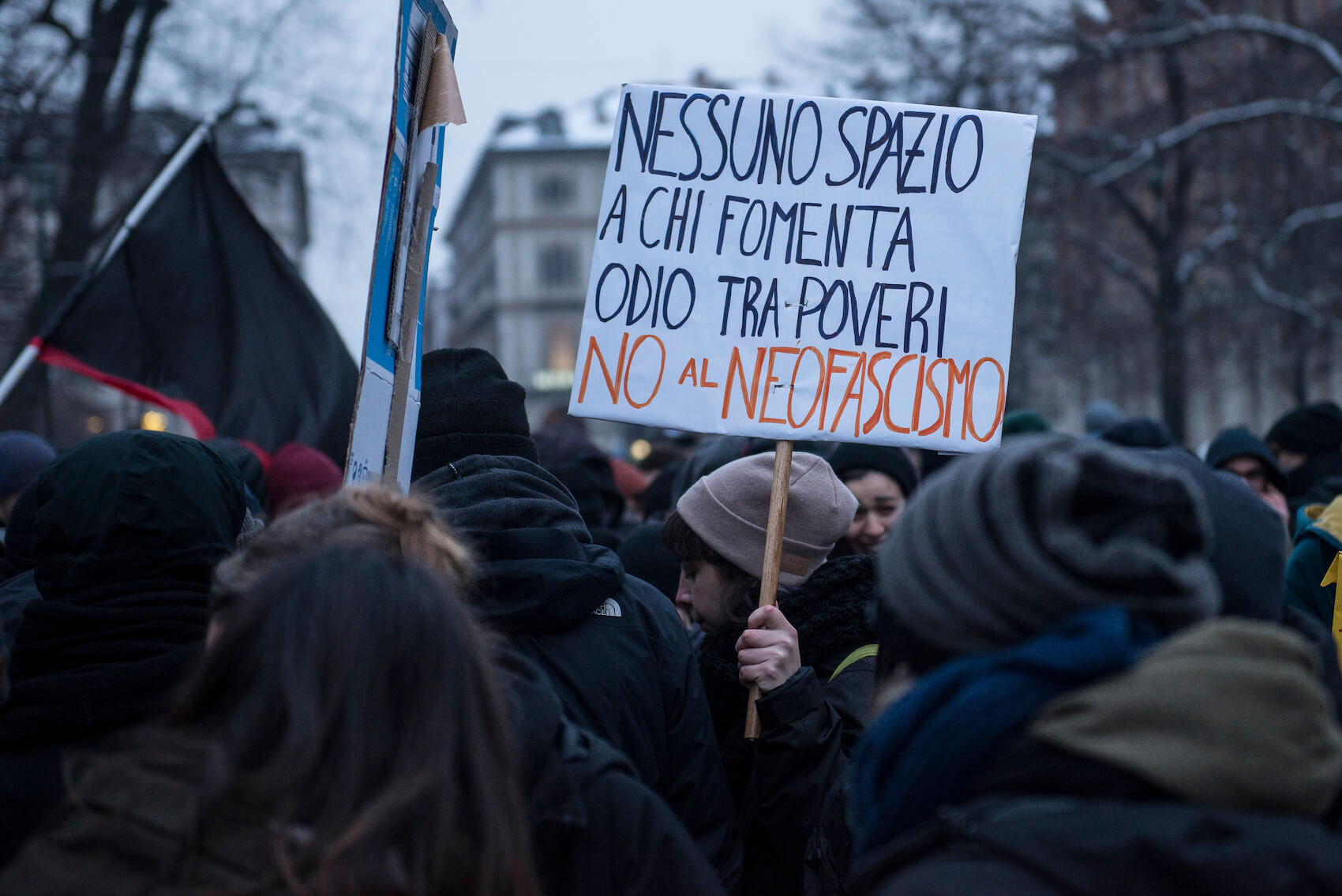
In essence, populism (or even “right-wing populism”) and right-wing extremism are not identical. In fact, it has already been recognized that they substantially differ in a number of ways (Taggart, 1996: 35). As a primary example, Paul Taggart (1996) has argued that neofascist parties “tend to have some direct link to the fascist parties of the previous era while New Populist parties appear to lack such a historical link” (Taggart, 1996: 35). This is especially true for active extreme right organizations in countries like Britain, France, Spain, Greece and elsewhere in Europe. For instance, in Britain, the contemporary National Front (NF) is a result of a gradual political evolution that saw the party come into being after a merger of two older extremist factions – the neo-Nazi British National Party (BNP) active in 1960 and the League of Empire Loyalists (LEL). The BNP and LEL were themselves preceded by movements that revolved around pre-war (and post-war) fascist leaders like Sir Oswald Mosley and A.K. Chesterton. Another example relating to the differences between populism (or “New Populism” as Taggart calls it) and neofascism regards the issue of immigration (Taggart, 1996: 36). Certainly, both the populist right and the extremist right are anti-immigration(-ist), however, the former are not as fixated with the issue as the latter (Taggart, 1996: 36). Populists rarely (if ever) resort to ultra-authoritarian policies that may lead to ethnic cleansing or political violence through paramilitarism (Finchelstein, 2019: 45; Eatwell, 2017: 365). Parties like the Lega Nord (Northern League) in Italy serve as a perfect example of this non-violent attitude as they have a vast program that (apart from anti-immigration) also comprises fiscal federalism, anti-tax measures for small business, and the legalization of prostitution (Programma di Governo Salvini Premier, 2018). These are all issues completely unrelated to immigration. Hence, whilst this contribution acknowledges that the two sets of ideas may occasionally appear alike[2] – as scholars like Taggart (1996: 36) recognize – the two should still be understood as overall distinct concepts. Thus, any deliberate and forceful conflation of their academic definitions, political history, or tradition is per se usuallymisleading and inappropriate.
Theoretical Framework and Method
The most appropriate way to differentiate between (right-wing) populism and extreme right is not by merely providing the most popular definitions of the two ideologies by the most prominent academics. Instead, it is to carefully observe the distinct views both ideologies maintain of politics overall. Disregarding the fact that populism is rather “unpolitical” (refer to Taggart’s reflections on unpolitics[3]) and extreme right/neofascism is highly political by design, populist parties (in this case the RN) and extreme right parties (in this case FN) hold specific views on the people, the nation, the state, society, the individual, the leader, the elite, democracy, and the market that make the two ideologies – as we shall see – more incompatible than compatible (Tarchi, 2015: 125). The specifics of this theoretical framework, which were originally put forward in a seminal text on populism by Tarchi (2015), will be discussed throughout the next section. Taking this into consideration, after briefly touching upon the generic issues surrounding the academic definitions of populism and extreme right and providing a short historical account of both parties under scrutiny, the core of this article will focus on a discourse and manifesto analysis (which will occur concomitantly) of the RN and FN parties, respectively. Subsequently, all findings will be discussed conjunctly, to produce conclusive statements on both populism and extreme right.
For the RN, as for the FN party, the discourse analysis will include statements made by their leaders (Marine Le Pen and Roberto Fiore, respectively) over the course of the last five to ten years. The reason for this is that populist and extremist parties of the right are often structured in a highly centralized manner with a pre-eminence of key individuals (Taggart, 2003: 6), therefore it makes sense to give higher relevance to the statements and opinions of those directly in charge. Regarding the manifesto analysis, the manifestos chosen for analysis are the ones obtainable through the RN’s and FN’s websites (rassemblementnational.fr and forzanuova1997.it, respectively) as they can easily be located by the reader, and this is beneficial for transparency. Even if they have been released over a year ago, they still largely reflect their current positions. In any event, the RN’s manifesto is simply named “Les 22 Mesures” (“22 Measures”) whilst FN’s one is called “8 punti” (“8 points”). However, as FN’s manifesto is much shorter, during the analysis sporadic mention is also made to the party’s older political program for the important (post-debt crisis) Italian general election that took place in February 2013. This document (also easily accessible online) was named “Programma Per Le Elezioni Politiche 2013 Di Forza Nuova E Di Nomina Del Capo” (“Program for The Political Elections of 2013 of Forza Nuova and Its Appointed Head”). For clarity, each time I refer to this above-mentioned document using in-text citations I shall refer to it simply as: “FN general elections program, 2013.” Overall, the manifesto analysis occupies a dominant position in relation to the discourse analysis, this is because party programs and manifestos in general are “considered to represent and express the policy collectively adopted by the party” (Borg, 1966: 97; see also Anckar & Ramsted Silén, 1981). Fundamentally, not only are manifestos or programs (the second are generally more detailed and promoted before an election) officially endorsed by the members of a party – as Mudde reminds us – but are also widely utilized in academia as a form of data to determine party ideology (Mudde, 2000: 20).
Defining Populism and Extreme Right
Populism
Photo: Shutterstock.
Objectively defining this protean and unusual concept commonly known as “populism” has never been simple. To this day, scholars disagree on whether it is a political strategy, a form of discourse/performance or effectively an ideology (Moffitt, 2020: 25-26), thus, let alone do they agree on a fixed definition. To add to the confusion, some scholars state that “populism has many of the attributes of an ideology, but not all of them” (Taggart, 2000: 1). Notwithstanding, it must be recognized that lately the so-called ideational approach has garnered a significant amount of traction in academia to the point of replacing old economic notions (e.g. populism as state intervention, “overspending,” or a set of neoliberal financial policies) of the phenomenon that 20th century scholars (especially in the Latin American cases) insisted upon (Weyland: 2017: 51). This is why Taggart (2018) argues that today the ideational approach is “winning” from a theoretical standpoint (Taggart, 2018a).
One of the foremost pioneers of the ideational approach is the prominent Dutch scholar Cas Mudde (2004) who defines populism “an ideology that considers society to be ultimately separated into two homogenous and antagonistic groups: ‘the pure people’ and ‘the corrupt elite’, and argues that politics should be an expression of the volonté générale(general will) of the people”(Mudde, 2004: 543). Whilst it must be acknowledged that this definition is fundamental to any in-depth and scientific understanding of modern populism, in this contribution abiding by a generic definition of the phenomenon per se is not as important as considering specific aspects of populism which make it a distinct ideology possessing its very own weltanschauung. After all, considering diverse cases globally, contemporary populism appears to have both a comprehensive program of political change and “staying power,” making it effectively resemble other “thick”[4] ideologies founded in past centuries (e.g. liberalism, communism, fascism) (Schroeder, 2020: 13, 27-28). Taking this into account, instead of focusing on the ideational approach’s concepts of “the people,” “the elite,” and “general will” alone, we encompass – as mentioned earlier – other elements of its ideological repertoire that go beyond those three.
In summary, at this point in history, Tarchi (2002) contents that populism represents an entirely “alternative model” to the extreme right. According to Tarchi, in populist ideology, the people represent a cohesive and virtuous community which functions as the basis of legitimation for government action (Tarchi, 2015: 125). Whereas the nation is the product of the cultural traditions of a people to whom it provides a stable identity (Tarchi, 2015: 125). Instead, when it comes to the conceptualization of the state,this is understood to be the administrator of the public interest subordinated to the will of the people who must control its action (Tarchi, 2015: 125). Moreover, for populists, society itself is nothing more than the natural context in which the life of the people unfolds, it is autonomous from the state and is prioritized in respect to it (Tarchi, 2015: 125). Populists also have a specific view of the individual, as they believe this is the cornerstone of social life whichfinds the natural context of its needs within the people (Tarchi, 2015: 125). Whereas in populist ideology the leader is perceived as a spokesperson for the people, an interpreter of their needs, endowed with ordinary qualities in extraordinary measures (Tarchi, 2015: 125). At the same time, the elite is (as expected) negatively regarded as a power block that must be kept under control by the people to protect their rights (Tarchi, 2015: 125). Also, populists hold a definite opinion of democracy, where democracy is considered anideal regime to be implemented entirely through tools of direct popular expression and without institutional mediation (Tarchi, 2015: 125). Ultimately, the conceptualization of the market is that of somethingpositive, to be tempered through protective measures reserved for the indigenous population – essentially, welfare chauvinism (Tarchi, 2015: 125). Subsequently, it will become clearer how all these concepts directly related to populism will apply to a right-wing populist party like the RN but not to a right-wing extremist party like FN.
Extreme Right
Demonstration of the political movement called “Forza Nuova” held in Rome in the EUR zone on November 4, 2017. Photo: Shutterstock.
In academic discourse, the term “extreme right” is frequently employed to describe parties or movements encompassing a range of political orientations, which renders the study of this subject particularly complex and nuanced. For instance, scholars – who have observed the phenomenon consistently – such as Elisabeth Carter (2005; 2018), provide a useful minimal definition of the term but are too inclusive (regarding classification), and tend to include subjects that are neither “extreme” nor truly “right-wing” in the party family. To exacerbate the ambiguity, even if only as a secondary element, Carter adds populism in the mix as an element to consider when describing extreme right ideology (see Carter, 2005: 21-23, 56-60). Given the circumstances, the definition Carter provides is an optimal starting point to understand the key features of extreme right ideology – authoritarianism, anti-democracy, and exclusionary and/or holistic nationalism(Carter, 2018: 157). However, if one abides by this definition, it already becomes clear that extreme right politics are not all that similar to populist politics, given the latter does not reject democracy altogether, and does not necessarily have to be authoritarian or exclusionary in terms of nationalism. In simple terms, “populism is pro-democracy but anti-liberal democracy” (Mudde, 2021: 579). Historically, we have witnessed the rise of “liberal” or libertarian populist parties (as well as socialistic ones, see March, 2007) that are only civically nationalist and view forms of plebiscitarian (direct) democracy as a real promise (e.g. PDL in Italy, and Lijst Dedecker in the Netherlands).
More specifically, excessive breadth given to the terminology certainly becomes an issue when you group together (under the same umbrella term “extreme right”) parties that outrightly reject the democratic system (e.g. NPD, now renamed Die Heimat) with parties that accept the rules of democracy but want to reform it by making it either more democratic and less statist (e.g. Lega dei Ticinesi, Lega Nord) or less democratic and more statist (e.g. Vlaams Blok, now renamed Vlaams Belang) (see Carter, 2005: 45). Ideally the parties that are anti-democratic and illiberal cannot be part of the same family as those that are illiberal but at the same time still democratic. Also, it is a problem to cluster ultra-authoritarian Neo-Nazi and neo-fascist parties with others that are simply neoliberal (but still xenophobic and anti-immigrant, according to Carter) or “neo-liberal populist” that do not adhere to any form of biological or cultural racism but are – in Carter’s own words – “not racist” whatsoever (Carter, 2005: 50-51).
Carter is not the only author who associates the neofascist extreme right with (elements of) populism. Indeed, one of the most renowned scholars of fascism, Roger Griffin (2018), explicitly identifies populism as a distinctive feature of the ideology, defining fascism as a “political ideology whose mythic core in its various permutations is a palingenetic form of populist ultranationalism” (Griffin, 2018: 46). Although Griffin embraces populism in his definition of fascism, he is more careful to not narrow the gap between fascist or neofascist parties and populist parties in his work. Notwithstanding, the distinction to be made between populism and extreme right is an essential one, because although populism is today more often associated with the political right, it is not inherently right-wing but is chameleonic (Taggart, 2003: 9) to the point that it can also manifest itself alongside left-wing ideologies (Hudson & Shah, 2022).
Using Tarchi’s theoretical scheme, it has been established in the section above what the generic views of populism are in relation to important aspects of society, such as the role of the state, the role of the elites and so forth. Unlike in populist ideology, in the extreme right the general (elitist) view of “the people” is more negative than positive (Tarchi, 2015: 125). In fact, the people are a mass to be educated under the guidance of the elite and merged with the nation and the nation itself is a spiritual community that has the task of forming and directing the people by assigning them a common destiny (Tarchi, 2015: 125). Also, according to extreme right neofascist ideology, the state represents the embodiment of the principle of authority, the fundamental principle of social organization superordinate to both the people and nation (Tarchi, 2015: 125).Uncoincidentally, it was the Italian dictator Benito Mussolini himself who famously stressed “Everything in the State, nothing outside the State, nothing against the State!” (Delzell, 1988: 127). This would be the exact opposite worldview to that of some neoliberal (pro-capitalism and pro-market) right-wing populist parties present in the European political sphere during the last decades (see Taggart, 1996: 34).
Beyond the state, society is according to right-wing extremists a raw material that must be formed, controlled, and guided by the state to which it is subordinated (Tarchi, 2015: 125). When compared to populism, the extreme right also has a much more negative or pessimistic view of the individual – which is merely considered a component of the nation whose needs must conform to avoid manifesting selfish interests (Tarchi, 2015: 125). In regard to the central ideological tenet of the leader right-wing extremists believe this figure to be the guide of the people and of the nation, to whom he indicates the destiny, and is endowed with extraordinary and charismatic qualities (Tarchi, 2015: 125). When it comes to how they view the elite, it said that these extremists believe the elite is a spiritual aristocracy that supervises the people and directs them to fulfill their duties (Tarchi, 2015: 125). Moving on to their conceptualization of democracy,Tarchi posits that they believe it is a regime that is criticizable because it reverses the principle of authority and is subject to the fickleness of the masses (Tarchi, 2015: 125). Last but not least, the market is deemed as something negative that must be subordinated to the needs of the nation and controlled through nationalizations or state-guided corporatism (Tarchi, 2015: 125).
Rassemblement National (RN): A History
Jean-Marie Le Pen during the meeting of his daughter Marine Le Pen for the celebration of May 1, 2011 in Paris, France. Photo: Frederic Legrand.
The Beginnings (1970s)
The history of the RN is complex. Or better, the history of the RN’s directly related predecessor (Front National) is both long and complex. Nevertheless, it is essential to outline this party’s historical background in order to comprehend why today it is more often treated as a “right-wing” populist party rather than an extreme right one by scholars (see Ivaldi & Pineau, 2022; Genga, 2017; Stockemer & Barisione 2016; Tarchi & De Feudis, 2015). Undeniably, the old Front Nationalwas an extreme right party (Tarchi, 2022: 12) – which occasionally even made use of esoteric fascist propaganda; symbols[5], myths, and imagery (Eatwell, 2017: 365). The party was born out of marginalized (and neofascist) Ordre Nouveau movement, when on October 5, 1972 its Mussolini-sympathizing leader Alain Robert joined forces with former Poujadist[6] MP and Algeria War veteran Jean-Marie Le Pen to form what became officially known as the Front National pour l’Unité Française. As Le Pen had more institutional experience and was perceived as more “moderate” by the public, he would eventually become the sole leader of the political group (Stockemer, 2017: 10). This early Front National was a haven for the whole French extreme right, from miscellaneous nationalists (of Bonapartist, Boulangist, Petainist, Poujadist or even Tixierist[7] extraction) to ex pro-French Algeria “freedom fighters” and anti-system extremists (from the movements Occident, Europe-Action, Jeunesses Patriotes, etc.) who idolized a form of internationalist or Europeanist “new fascism” (Stockemer, 2017: 8-11; Ignazi, 2000: 180-186).
The more than 50-year-old history of the Front National/Rassemblement National can essentially be divided into six phases (which sometimes overlap) – The Beginnings (1970s), The Minor Successes Phase (1980s), The Reaganite-Neoliberal Phase (1982-1993), The Crossroads Phase (late 1990s), The Apex Phase (early 2000s, 2002) and the Dédiabolisation / ‘New Front’ Phase (2012-). In the first phase, during the whole of the 1970s, the Front was completely marginalized and trapped in what Kurt Weyland (2017) would define as the extreme right “ideological ghetto” (Weyland, 2017: 62-63). In fact, no real electoral gains were made by the early “Le Penist” Front (Ignazi, 2000: 186-190). The 1973 legislative and 1974 presidential elections were a complete failure, with the party counting less than 300 members and never even achieving one percent of the vote. In the 1978 legislative ones, a similar trend recurred, with a mere 0.33% obtained in the first round (Genga, 2017: 36). Throughout the 1970s, the Front only manifested “an ideology that included racism, militarism, anti-democracy[8], and virulent anti-communism” (Stockemer, 2017: 12). Taking this into account, Le Pen was mainly interested in the small businessmen and craftsmen vote, therefore he combined authoritarian policies on crime, state security, and immigration with a more flexible (not typically neofascist) anti-tax approach on the economy.
The Minor Successes Phase (1980s)
Only in the 1980s, during the second phase, did Le Pen’s mixed political positions begin to bear fruit. De facto, in 1983 (more than 10 years after its formation) the Front performed positively in supplementary local elections achieving more than 16% in certain municipalities of northern France (such as Dreux) and as far as 12% in others in a nearby region (Genga, 2017; 38-38). One year later, in 1984, another electoral breakthrough occurred, as Le Pen’s party achieved 11% in the European elections (Stockemer, 2017: 16). This was an “outstanding” result for an extreme right fringe party. Some scholars attribute the (minor) successes of the Front in the 1980s (from 1982-83 onwards) to the bad decision-making of D’Estaing’s and Mitterrand’s – respectively centrist and socialist governments – on law-and-order (e.g. the unpopular amnesty reforms), a spike in immigration, alongside a heightened sensitivity against Islam and an economic crisis (two oil shocks in 1973 and 1979) that included an increase in unemployment, public debt, and inflation (see Perrineau, 1996; 1997; Genga, 2017). All of these issues, in tandem with Le Pen’s recurring invitations to speak on television[9], helped the Front to reach out to a wider (and less ideologically motivated) audience. By the late 1980s, Le Pen could finally cast himself as the politician to represent the working and middle classes who felt France was changing for the worse. Also, in 1987 Le Pen publicly stated that “gas chambers were a minor detail in the second world war” (Genga, 2017: 55). Surprisingly, this highly controversial statement did not backfire on him at all, but perhaps attracted even more attention and votes from the angry and disillusioned electorate (Genga, 2017: 55-56). Ultimately, in the important 1988 presidential elections Le Pen garnered almost 14.38 % of the vote in the first-round alone (Stockemer, 2017; Genga, 2017).
The Reaganite-Neoliberal Phase (1982-1993)
It must be noted that between 1982 (after the VI party congress) and 1993, Le Pen began to take a different approach towards fiscal policy, setting aside the state interventionism, economic nationalism, and protectionism that had been ever present within the Front to incorporate laissez faire positions that are alien to the neofascist corporatist and dirigiste tradition (Genga, 2015: 95). The expert Nicola Genga (2015) summarizes Le Pen’s views during this period as favorable to a “natural order based on inequality, which justifies the existence of a capitalist system of production” (Genga & Algisi, 2015). During the Reaganite-Neoliberal Phase – which partially overlapped with the 1980s Minor Successes Phase – Le Pen self-described his party as “socially left-wing but economically right-wing” (Genga & Algisi, 2015). Notwithstanding this peculiar (and contradictory) statement, it is evident that this shift was more tactical than ideological given during this period the best way for the Front to succeed was to present itself as a direct alternative to the socialists/communists in power (Genga & Algisi, 2015). To be sure, Le Pen’s picture taken with US President Ronald Reagan perfectly encapsulates this neoliberal phase (Tarchi, 2015). Within scholarship, the consensus is that this phase came to an end abruptly in 1993 when Le Pen turned his back on economic liberalism, in order to return to more welfare chauvinist and statist policies (Genga, 2017: 97) that resemble those of his daughter Marine Le Pen today (some go as far as suggesting Marine is a “social populist,” see Ivaldi & Pineau, 2022).
The Crossroads Phase (late 1990s)
In the fourth phase, the Front found itself at a crossroads due to internal squabbles (see Déze, 2012: 125). The (almost) unquestioned chief Le Pen was challenged by the “moderate” wing of the party led by the delegate Bruno Megret (Taggart, 2002: 78, 87). This politician had an alternative and opposite vision for the future of the party, and convinced part of the membership that the only way forward to achieve serious electoral relevance was to leave the “ideological ghetto” and marginalization once and for all (Stockemer, 2017: 21). Essentially, Mégret argued that only by shifting its attitudes on most issues the Front would become a respectable center-right party that could form alliances with other parties – especially the neo-Gaullists (Stockemer, 2017: 21). As a result, Mégret and other MPs who backed him, were thrown out by Le Pen, and forced to form a smaller party that had no real leverage (Whitney, 1998; Stockemer, 2017: 22).
The Apex Phase (early 2000s, 2002)
This takes us to the Apex Phase. In April 2002, by softening some of his positions temporarily, and concomitantly reworking his discursive patterns through more populistic and “inclusive” appeals to French people “of all socio-economic backgrounds,” “of all religions,” and “of all skin colors,” Le Pen made it to the run-off of the presidential election (Tarchi, 2015: 135). By this point, he was perceived by the public as the only real anti-establishment candidate who had a chance at the presidency. Strikingly, he managed to obtain nearly 18% of the vote. Although incumbent President Jacques Chirac refused to share a platform with the Front’s leader and to officially debate him (see Henley, 2002) he still beat Le Pen. Nevertheless, the year 2002 marked the highest point for Le Pen and his extreme right party.
The Dédiabolisation / ‘New Front’ Phase (2011 –)
After subsequent years of worse performances, in January 2011 during the Front’s Congress of Tours Jean-Marie’s daughter Marine Le Pen is finally confirmed as official president of the party after beating her opponent (who was also close to her father) Bruno Gollnisch (Genga, 2017). From thereafter the dédiabolisation era begins, this culminates with Jean-Marie being expelled from the party by M. Le Pen herself after making inappropriate comments regarding the holocaust and WW2 (Genga, 2017: 171; BBC News, 20 August 2015). Synchronously, many more extremist figures (especially deriving from the youth wing) are distanced from the party in the hope to build a new moderate image (Genga, 2017). As M. Le Pen’s favorite advisor – the libertarian crypto-technocrat Florian Philippot – had anticipated, this major repositioning proved to be electorally successful (Genga, 2017: 175). Although some (such as political advisor and analyst Patrick Buisson) argue the brand of Marine’s party is still far too “toxic” to rule the country (Samuel, 2016), she has still come closer than her father when it comes to winning the presidency. Her electoral result at the 2022 Presidential elections was overall regarded as positive by her supporters, because even if she lost to Emmanuel Macron for the second time consecutively, in the second round she garnered 31.7 % of the vote (Voce & Clarke, 2022). Prior to that, in the run-off of the 2017 Presidential elections she had performed even better, given she obtained 33.9% of the vote against the same opponent (Statista Research Department, March 11, 2024).
Under M. Le Pen, the party’spolitical project took shape as a means to provide French voters with an ideological alternative to the “mainstream parties” – namely (the neo-Gaullist) Les Républicains, the Socialist Party, President Macron’s En Marche! (subsequently Renaissance party), and the radical left/green groupings. Whereas some scholars highlight that there has been a degree of continuity between this new party and her father’s old Front National (see Mammone, 2015; Stockemer, 2017), others argue there has been a clear philosophical demarcation of the “new Front” from its extreme right past (see Gaffney, 2012; Genga, 2017; Tarchi, 2022). For instance, the specialist on lepénismeDaniel Stockemer (2017) explains that there are specifically three aspects that have improved (or “softened”) the party’s image as M. Le Pen took over its leadership (Stockemer, 2017: 39-40). First, she has regularly repudiated the “extreme right” label (Stockemer, 2017: 39). The evidence suggests that all intellectual references to thinkers like MauriceBarrès, Charles Maurras, Robert Brasillach and others have suddenly disappeared from the party’s discourse (Stockemer, 2017: 39). Second, any comments made by her father that could be deemed as intolerant, antisemitic, or generically racist, have also been instantly disavowed with fervor (Stockemer, 2017: 39-40). When it comes to antisemitism particularly, M. Le Pen’s discreet realignment in favor of Israel on foreign policy speaks volumes about the party’s moderation (Abboud, 2023). Third, she has embraced a traditional(-ist) form of French republicanism (a French version of neo-conservative American exceptionalism) that has its intellectual foundations in post-1789 universalist, liberal (although M. Le Pen opposes economic liberalism) and secular thought (Stockemer, 2017: 40). This approach is philosophically distant from the anti-intellectualist and anti-bourgeois ideological mapping of fascism and neofascism that often pushed for a return to pre-French revolution moral codes (see Paxton, 2005; Dagnino, 2016). Amid 2018, the party was officially renamed Rassemblement National in a move to put the organization’s distant past and father’s legacy behind once and for all.
Rassemblement National (RN): Ideological Profile
Marine Le Pen and Jordan Bardella are seen at the end of a polical meeting in Marseille for Rassemblement National party on March 3, 2024. Photo: Obatala-photography.
Populist, “right-wing” or both?
M. Le Pen’s party has a comprehensible ideological profile. Whilst the RN still fails to meet the criteria to be evaluated as a (classical) “center-right” party – as it is not Atlanticist enough nor does it abide to the values of free-market capitalism or consider the liberal rule of law one of its core tenets (see Trippenbach & Johannès, 2022) – the party can instead be classified as “right-wing” populist. If the primary (and paramount) ingredient in the RN’s political cocktail is populism, the secondary one is a form of nationalist social conservatism. On one hand, at the center of its ideology and discourse we first find a commitment to popular sovereignty (the will of the people, volonté générale) inextricably linked to a heavy critique of national and international – both political and financial – “corrupt elites.” On the other hand, adjacent[10] to its anti-elitist ethos, we also find a strong nationalist rhetoric (although state nationalist[11] instead of ethnic nationalist[12]) that can be simplified by the slogan “Les Français d’abord!” (“The French First!”) (see Fraser, 2011). This slogan alone explains the RN’s positions against mass immigration and in favor of a strong interventionist state that regularly distributes resources (but to the native French only) in the name of an inter-classist welfare chauvinism.
If one considers the definition Norberto Bobbio (1994) confers to the political right, where he suggests right-wing movements (unlike leftist ones) accept the existence of societal hierarchies and inequalities and may even consider them as positive, both as a premise and as a natural outcome to social and economic competition, then we can deduce that the RN is only partially “right-wing.” After all, many of M. Le Pen’s statist-interventionist policies (anathema to center-right liberal-conservatives) are quintessential of populist formations with a social conscience that aim to foremostly represent the lower classes and ameliorate living and working conditions for them through redistribution (Moffitt, 2020). This is where the welfare chauvinism derives from a complex ideological synthesis between nationalist populism, cultural conservatism, and economic socialism (see Ivaldi & Pineau, 2022). It is no coincidence that M. Le Pen once said: “we are absolutely not a rightist party; those who believe it make a colossal interpretation error” (Le Pen as cited in Stockemer, 2017: 39).
The People and the Elite
In any event, the RN’s populist weltanschauung becomes evident if we consider the nine important aspects from Tarchi’s theoretical framework. As explained above, populists view “the people” as a cohesive and virtuous community which functions as the basis of legitimation for government action. This view is coherently reflected in the RN’s party manifesto (the “22 Measures” on its website), given we find within it not only the promotion of private property (essentially “facilitation of access” to it), but also that of social housing for French citizens – excluding immigrants (rassemblementnational.fr, Measure 17). Government action is justified on the basis that large infrastructure developments, and the construction of 100,000 (plus 20,000 for young people) new social housing units, will only be provided for those struggling citizens who are legally French (rassemblementnational.fr, Measure 17). Under these circumstances, immigrants/foreigners are not a priority, as they are considered to be part of an “outgroup”[13] that is neither “cohesive” (as migrants in France may originate from distinct “non-homogeneous” countries) nor “virtuous” (as populists perceive them as a burden to the public resources system). The idea is that regarding economic state protection they do not deserve to have the same rights of the French, who are part of an “organic community” (Zanatta, 2016: 65-80), thus supposedly both cohesive and virtuous at the same time. Moreover, even if M. Le Pen states that she “has nothing against foreigners,” her party clearly opposes free education to the children of illegal immigrants (The Guardian, December 8, 2016). Supposedly under foreign influence, French elites (the “UMPS[14] system”) have disproportionately provided privileges (such as social housing) to immigrants that should have never been welcomed into France initially (Dézé, 2014: 24).
This takes us to the negative view of the elite these right-wing populists hold. According to M. Le Pen, it is “time to free the French people from arrogant elites” (see Acton, 2017). Even though the RN’s manifesto currently lacks explicitly anti-EU statements—aside from the aim to “protect the economy” from “unfair competition” and to revise EU trade agreements—one of its major immigration policies is tied to the inherently anti-elitist principle of direct democracy. Through constant referendums, “the people” will be able to put an end to “settlement immigration/reunification” (of immigrant families), scrap residence permits for those who have not worked for a year and decide whether the processing of asylum applications should (or should not) occur in French territory (rassemblementnational.fr, Measure 1). In summary, for the RN, anti-elitism primarily involves “giving people a voice.” While the manifesto conveys a positive view of popular decision-making, it simultaneously portrays professional politicians and technocratic elites in a very negative light. As previously mentioned, in populism, elites are seen as a dangerous power bloc that must be kept in check by the people through instruments of direct democracy (Tarchi, 2015: 125).
The Nation and the State
As Tarchi argues (and as we already know), in populist ideology the concept of people and nation are inextricably interconnected though the nation comes after the people (both as “hard-working” individuals and as a “homogenous” collective) given the nation is simply product of the cultural traditions of a people to whom it provides a stable identity(Tarchi, 2015: 125). In other words, it is the people and their cultural traditions that form the nation and not vice-versa. Interestingly, in the RN’s latest manifesto the concept of nation becomes conveniently – but also ideologically – almost indistinguishably linked and blurred with that of the state. As outlined earlier, the state is understood as nothing more an administrator of public interest that is entirely subordinate to the will of the people (Tarchi, 2015: 125). In fact, within the manifesto it is the state that works for the nation because a virtuous homogenous community composes the nation: theFrench people. Thus, the RN’s ideal state is people centric. Similarly to the American proto-populist Gettysburg Address – “government of the people, by the people, and for the people.” This longing for an active and interventionist state becomes apparent in the RN’s policies regarding Islam. In the manifesto, a new strict law is proposed to combat Islamism (rassemblementnational.fr, Measure 2). Islam itself is not regarded as French but is instead perceived as alien to the “cultural tradition” of French secular Republicanism (in the sense that this religion cannot be assimilated within it), and therefore is also an enemy to the nation-state (Genga, 2017). Nor is Islam regarded as something able to provide a “stable identity,” given populists suspect the presence of Muslims and Christians (as well as atheists) within the country concomitantly may stir religious and racial tensions among the populace. From a populist perspective, a populace should be monolithic and homogenous (Hameleers & Vliegenthart, 2019: 22).
Proceeding to economic matters, all the anti-tax proposals the RN includes in its 22-point manifesto are aimed at French businesses owned by French businessmen (rassemblementnational.fr, Measures 4, 5, 8, and 12). The RN’s pledge to “support French families” through the removal of inheritance tax for low-middle income families (rassemblementnational.fr, Measure 8), as well as its proposals to increase welfare support for French mothers with one or more children (rassemblementnational.fr, Measure 8), is particularly symbolic of a strong state (that intervenes to improve people’s lives) for two reasons. The first has to do directly with populism and the second with social conservatism. Firstly, the RN wishes to present itself as a populist party therefore is required to pursue economic policies (such as subsidies and tax cuts) that favor the petite bourgeoisie and especially the working-class (see Kyle & Gultchin, 2018). Although the old Front National (like its successor today) was overall an inter-classist party, experts such as Nonna Mayer (1998) have pointed out that the vote for Le Pen in the 1995 Presidential elections was effectively a “class vote” – with several youngsters moving away from the PCF[15] towards the Front’s pseudo-socialist nationalism (Surel, 2002: 143-144). This author later coined the term “worker Le Penism” (Mayer, 1994). Following the same conceptual lead, Pascal Perrineau (1995) referred to this same phenomenon as “left Le Penism” (Perrineau, 1995: 243-261). These observations remain relevant today, as M. Le Pen enjoys broad consensus among the working classes from whom she consistently courts political support. Secondly, the RN is also inherently socially conservative (partially right-wing) and is therefore expected to financially assist single-mothers or larger families with children to promote a “battle for births”[16], which is allegedly necessary to demographically boost the so-called “pure people” (term borrowed from Cas Mudde) of France.
Society, the Individual, and the Leader
Moving on from the populist view of nation intertwined with that of state to that of society, it must be stressed that the RN’s positions on this matter are rather specific. M. Le Pen herself has notoriously stated that “multi-cultural societies are multi-conflict societies” (see Viscusi, 2017). This party is known to take a more (typically populist) exclusionary than inclusionary stance when it comes to society and its collectivist communitarian features. Parties like the RN view their country, its rural towns, metropolitan districts, provinces, and regions, as essentially constituting not only a sacred homeland, but also something of a heartland. Taggart defines a heartland as “a territory of the imagination…the heartland is that place, embodying the positive aspects of everyday life” (Taggart, 2002: 95). It is self-evident who belongs and who does not belong to this heartland (and society) (Taggart, 2002: 96-98). In this case, immigrants, religious fanatics, career politicians (M. Le Pen was a lawyer before entering politics), left-wing (anti-RN) activists, plutocrats with internationalist vocations, fifth columnists and foreign bodies, are certainly not part of the populist heartland (Taggart, 2002: 94). As a result, they are not included in the broader vision for French society that the RN upholds.
However, paradoxically, by observing the party’s manifesto for an ideal society we are also confronted with a more “liberal” or libertarian aspect of populist ideology. For example, populists recognize that people’s lives should often come before politics and the state. People are allowed to flourish economically and intellectually, to unleash their individual potential – “Voila, we’re all molded by our personal paths, which forge our sensibilities” argues the RN’s leader (see Gourevitch, 2015). M. Le Pen is supposedly pro-abortion (as long as it occurs within 14 weeks of pregnancy), pro-divorce, and pro-gay rights (as long as civil unions do not become marriage) (see Poirer, 2017). Contrastingly, she has also spoken out against a purely consumerist neoliberal individualism from an economic standpoint: “Our project is based on rejecting individualism and the power of money” (Smith, 2018).
Furthermore, closely observing the RN, one can deduce that the party acknowledges individuals are the cornerstone of social life. M. Le Pen ardently defends the civil individual rights of the French people. For instance, unlike Jean-Marie’s old Front, the RN’s positions are now – to a limited extent – sometimes feminist (see Schurts, 2024). On one occasion, the RN’s leader expressed that utilizing a headscarf to meet an Islamic leader (the Grand Mufti of Lebanon) would be in conflict with the values of French republicanism and those of a free (liberal egalitarian) society, where both sexes enjoy equal rights (see Balkiz & Masters, 2017). “I will not cover myself up” M. Le Pen stressed while referring to her meeting, which eventually was cancelled (Balkiz & Masters, 2017). For the same reasons, she proposes a complete ban on headscarves and burkas in public spaces (see France24, April 7, 2022). Populist crypto-individualism also played a role in her decision to not support a ban on abortion – any mention to this issue is absent in her “22-measures” as well as in her self-authored books (Tarchi, 2022: 13). Also, M. Le Pen unequivocally condemned those religious fundamentalists who despise gay people (Wildman, 2017).
Taking this into account, to cast herself as a spokesperson and interpreter of the needs of the people, her leadership style embodies the populist ideal. The policies outlined for the RN not only position her as a leader close to the people, but her personal traits, which emphasize “ordinary qualities” like “common sense” and a “strong work ethic” (see Ivaldi & Mazzoleni, 2019: 1), also resonate positively with the populace. Moreover, in order to appeal to a more moderate base of working-class conservative supporters, she often reiterates that she is (like many others in France) a woman and a mother (Geva, 2020: 13-14). In the eyes of the many, M. Le Pen has become a “woman in a captain’s suit,” just as popular as Margaret Thatcher and Evita Peron in the past (Geva, 2020: 6,14). In a typically populist fashion, this female politician wants to demonstrate that she has both ordinary and extraordinary qualities that can both represent and lead the populace at the same time. As a natural guide, it is common for her to remind her potential voters that “Peuple de France, l’heure est venue de te lever” (Le Pen, April 21, 2022, Twitter). This is an invitation for “the people” of the French nation to rise-up. To rise not only against the neoliberal elite in France, but also against the diktats of the elite-backed European Union that are supposedly promoting and funding mass immigration, and finally against the traditional parties (neo-Gaullists, socialists, and communists) that are engaged in destroying the social fabric of the “homogenous” French nation.
Democracy and the Market
Marion Marechal Le Pen at the European election campaign launch meeting of the far-right “Reconquete” party in Paris, France, on March 10, 2024. Photo: Victor Velter.
To conclude this section, the relationship that M. Le Pen’s party has with democracy and the market is ambiguous, to say the least. Like all populists, the RN has an impatience with checks and balances (the formalities of liberal constitutionalism – e.g., political mediation and procedural legitimacy) that are an essential aspect of liberal democracy (see Bickerton & Invernizzi Accetti, 2017: 327). Nevertheless, this party does not reject representative democracy overall. The RN’s view of democracy is simply of one that is direct and majoritarian. In its manifesto, referendums and plebiscites occupy the first position (in terms of “22 measures” to be taken). Accordingly, people will be able to decide on issues that affect their lives, ranging all the way from immigration to social housing and labor regulation (rassemblementnational.fr, Measure 1).
Regarding the market, the sociologist Lorenzo Cattani (2017) has appropriately suggested that M. Le Pen’s party is a “bearer of neoliberal values regarding the national economy but at the same time also strongly critical of globalization and the more internationalist principles of neoliberalism.” Following this logic, it can be assumed that even though M. Le Pen’s technically opposes both unrestricted free trade and autarky, she still considers the market an overall as “somethingpositive”and therefore advocates for protectionism as a middle-way (Cattani, 2017). Her economic positions have been significantly influenced by the French Eurosceptic economist Maurice Allais (1911-2010), which explains her past critique of the single currency, European integration, and the European constitution. Similarly, M. Le Pen’s niece and (now former) important party representative, Marion-Maréchal Le Pen, has very clearly expressed that “a form of protectionism should be enforced at a national level, at least on strategic areas such as agriculture” (The Sydney Morning Herald, August 3, 2013).
The RN accepts (and even welcomes) the existence of private property, entrepreneurship, and a social-market economy, given the party is not fully anti-capitalist. Notwithstanding, the core idea is that small and medium businesses should be taxed much less and allowed to operate under a diminished amount of bureaucracy and regulation (especially EU regulation) whereas large, delocalized business (especially multinationals, a product of so-called “rootless capitalism”) should be increasingly taxed and monitored by the state (rassemblementnational.fr, Measure 18; see also Cattani, 2017). The latter are suspected to conspire against the interests of the working people (and their small-medium businesses) and the French nation (rassemblementnational.fr, Measure 18). In the RN’s rhetoric, the evils of globalized capitalism are juxtaposed to the virtues of national-capitalism (Cattani, 2017), practiced day-to-day by the petite bourgeoisie – mainly craftsmen, tradesmen, fishermen, landowning farmers, and smaller-scale (local) entrepreneurs. They are ultimately considered to be the only “pure people” (to borrow Mudde’s term once more) of the nation.
Forza Nuova (FN): A History
Anti-fascist demonstration against the Candidate in the Primaries of the fascist part of Forza Nuova in Turin, Italy on March 1, 2018. Photo: Stefano Guidi.
The Early Years
Unlike the French populists, the extreme right party Forza Nuova (FN) does not have a particularly long or complex history. True to its name, this party can be considered a “new force” with a relatively brief history. This history is deeply embedded in the tradition of Italian Fascism and appears quite transparent and straightforward to external observers. However, the brevity of its history does not make it unremarkable. On the contrary, being an organization founded by two alleged “terrorists”—Roberto Fiore and Massimo Morsello (also a musician alongside his political activism)—FN has attracted significant interest from journalists and political analysts who study the European extreme right. In 1980, both Fiore and Morsello fled Italy to seek political asylum in Britain as they were being investigated for the Bologna Massacre (August 2, 1980, which resulted in 85 deaths and 200 injuries), one of the darkest moments in the political history of the Italian Republic (Corriere della Sera, October 10, 2021; Nazzi, 2021).
In London, throughout the 1980s and 1990s, Fiore had the opportunity to develop political and economic networks with British neofascist groups, supposedly with the help of BNP frontman Nick Griffin, and to establish successful businesses in the hospitality sector before returning to Italy without facing prosecution (Biondani et al., 2017). Due to these factors, along with the fact that the organization and its leader, Fiore, are openly fascist, FN represents an atypical example of an extreme right party. Founded in late September 1997, on the feast day of St. Michael the Archangel (Nazzi, 2017), FN aimed to reflect a niche form of Italian neofascism that was clerical (and fervently Roman Catholic) rather than secular (unlike CasaPound, another Italian neofascist movement) and traditionalist rather than futurist (Albanese, 2022: 317-318). Thus, ideologically, FN can be unequivocally placed on the ultra-authoritarian extreme right. More importantly, since its inception, FN has refused to adopt the ideological syncretism and flexibility of other 1990s Italian neofascist movements, such as Pino Rauti’s Fiamma Tricolore. This is why it positions itself on the far right of the artificial spectrum of Italian neofascism, which, as writer Giano Accame (1990) argues, includes both “right-wing” and “left-wing” elements. In any case, with FN, both Fiore and Morsello—who “cut their teeth” during the dark days of the Anni di Piombo through participation in violent actions of extra-parliamentary groups like Terza Posizione (“Third Position”) and the Nuclei Armati Rivoluzionari (“Armed Revolutionary Nuclei” – NAR)—aimed to project fascism into the third millennium (Nazzi, 2017; Albanese, 2022: 317).
First Set of Elections: Failure in Pursuit
Like many European neofascists who wish to compete electorally, their primary objective was (and still is, as Fiore is alive, unlike Morsello) to turn their ideology in an “incubator for a new political model based on an old-fashioned design” – as the scholar Matteo Albanese (2002: 321) posits. However, if we solely consider FN’s electoral results, and compare them to other contemporary parties who have instead evolved from extreme right to moderate right (such as Alleanza Nazionale or FDI in the recent past) FN failed miserably. The only times it competed at a national level (in 2001, 2006, 2008, 2013, 2018) it merely achieved less than one percent (the highest score was in 2006 with 0.67% in the Chamber of Deputies of Italy) with none of its candidates ever entering parliament (Ministero dell’Interno, Eligendo L’Archivio, 2024). Only in the 2004 European elections, by presenting a joint list of candidates alongside Alessandra Mussolini’s (the granddaughter of the Duce) Alternativa Sociale did FN perform slightly better, managing to obtain 1.23% (Ministero dell’Interno, Eligendo L’Archivio, 2024). Notwithstanding, the only seat available in the EU Parliament went to the most prominent figure from the grouping – Mussolini herself.
Alliances, Assaults, and Attempts
However, Fiore eventually managed to become a Member of the European Parliament (MEP) through FN and its alliances, serving in Brussels and Strasbourg from May 2008 to July 2009. Fiore’s activism at a supranational level involved consolidating his ties with other European neofascists within the EU Parliament. Together with the notorious Nick Griffin, he founded an ultra-nationalist group called the Alliance for Peace and Freedom (APF), which was also pan-European and “anti-Zionist.” The APF included the extreme right United Romania Party, the Romanian-Moldovan Noua Dreaptă (New Right), several Spanish Falangist parties, and Neo-Nazi organizations from Germany, Greece, Czechia, and Slovakia (see www.memri.org, April 18, 2024).
Nonetheless, throughout the 2010s, FN remained on the fringes of Italian and European politics. However, the party gained attention after some of its members, including Fiore, were involved in violent acts, such as the assault on the Italian General Confederation of Labour (CGIL), the country’s oldest and most important trade union, on October 9, 2021. This incident brought FN back into the spotlight, drawing scrutiny from the public, media, police, judiciary, and other authorities (Il Sole 24 Ore, December 20, 2023). As a result, in the winter of 2023, Fiore and others involved were sentenced to over eight years in prison, though FN itself was not disbanded (Il Sole 24 Ore, December 20, 2023; Girardi, 2022). In an interview following a small political gathering in Isernia, Molise, where he was praised by supporters, Fiore stated that despite his criminal charges, FN would attempt to participate in the 2024 European Elections (Fiore, TVI Molise, December 23, 2023). He emphasized the importance of this period for Italy, possibly hinting at a resurgence of fascism with a pseudo-populist tone (Fiore, TeleRegione TV, December 23, 2023). However, FN failed to gather enough preliminary signatures to present a candidates list for the EU elections in June 2024. With Fiore’s sentencing, the future of FN and Italian militant neofascism remains uncertain.
Forza Nuova (FN): Ideological Profile
Hitler and Mussolini in Munich, Germany, June 18, 1940. Photo: Everett Collection.
Marginal and Controversial, but not Irrelevant
Forza Nuova (FN) is an extreme right party that is both marginal and controversial in Italian politics. It is marginal because, despite consistently participating in Italian general elections since 1997, FN has never reached the four percent threshold required to enter parliament. It is controversial due to its semi-personalist leadership and historical ties to the militant, violent, and subversive Italian neofascist movement active during the “Anni di piombo” (“Years of Lead”) (Biondani et al., 2017). Fiore, the party’s leader, openly expresses admiration for Mussolini’s twenty-year dictatorship and the Italian Social Republic (RSI), as well as for other authoritarian leaders like Juan Perón in Argentina (Fiore, La7, October 28, 2012). In a 2012 television appearance discussing fascism and neofascism, Fiore admitted, “I’ve always defended fascism; every time I was asked whether I would have sided with the Americans or the RSI (during WWII), I’ve always responded – with the RSI” (Fiore, La7, October 28, 2012). Despite differentiating his ideology from National Socialism, he also refused to distance himself from Neo-Nazi movements like Golden Dawn when questioned during the same show (Fiore, La7, October 28, 2012).
Taking all of this into account, FN’s electoral marginality does not render it irrelevant in the political arena or diminish its potential threat to a liberal-democratic polity. First and foremost, some party members have engaged in premeditated attacks on immigrants over the years—between November 2012 and November 2013, there were more than fifty racially motivated assaults (Fiano and redazione Roma Online, 2016). Second, in addition to Fiore, two key FN representatives—Giuliano Castellino and Luca Castellini—along with five other extreme right activists indirectly connected to the party, were officially charged for their violent assault on the CGIL in October 2021 (Il Sole 24 Ore, December 20, 2023). This incident was taken very seriously by Italian public opinion, politicians, the judiciary, and other state authorities. Graphic images of the violent protest circulated in the press, raising concerns among parts of the population about a possible resurgence of neofascism, even if on a limited scale.
Authoritarian, Anti-democracy, and Nationalist?
If we reconsider the three/four elements that Carter (2005) argues constitute the ideological core of the extreme right, it becomes clear that FN is unequivocally an extreme right party, as these elements are integral to its ideological repertoire. First, FN is explicitly authoritarian, advocating for the forced repatriation of all immigrants, regardless of their legal status in Italy (FN online manifesto: forzanuova1997.it, point 3). Second, it is anti-democratic because the majority of its policies are impossible to implement within a rule-of-law system upheld by Italian (anti-fascist) constitutionalism, where the parliament plays a crucial role. Third, FN embraces both exclusionary and holistic nationalism. Its recurring propaganda posters, which depict black people as “rapists” or sub-human, exemplify exclusionary nationalism (see Il Fatto Quotidiano, September 2, 2017). In contrast, its calls for an “organic state”—a statist and corporatist model where the state, nation, religion, people, and “blood and soil” are so interwoven that they cannot be separated—demonstrate holistic nationalism (see Vercelli, 2018). Any reformulation that separates the Italian nation-state from its people’s religion, culture, territory, and biological characteristics would, in FN’s view, lead to the decay and eventual death of the nation. After all, fascists have always been obsessed not only with the idea of palingenesis (see Griffin, 1996) but also with that of decay or decadence (for a full account, see Schulman, 2006). Moreover, when adapting FN’s manifesto and discourse (primarily that of leader Fiore) to Tarchi’s (2015: 125) comprehensive scheme that examines nine aspects of party ideology—such as the people, nation, state, and society—it becomes undeniably clear where Fiore’s organization stands politically.
The People, the Nation, and the State
To begin this party’s analysis by observing its view of the people, it should be noted that – as a party influenced by fascism – FN unsurprisingly does not hold a particularly optimistic perspective of human nature or the masses per se. In Mussolini’s words: “The Fascist conception of the State is all embracing; outside of it no human or spiritual values can exist, much less have value…the Fascist State – interprets, develops, and empowers the whole life of a people” (Mussolini & Gentile, 1932: 847). In FN’s case, although people are functional to its long-term statist political aspirations, unless they are forcefully guided, either by a charismatic leader or a strong state’s elite, they can never be trusted to willingly find their path or positively serve the country. Ironically, it was the proto-liberal Rousseau (in 1762) and not a fascist intellectual that stated, “people need to be forced to be free,” still this appears to be FN’s idea if we observe its policies such as the nationalization of banks (FN online manifesto: forzanuova1997.it, point 5). If such policy is carried forward, the forzanovisti[17] insist that “all the people of the earth can be free from their usurpers” (Ibid). This phrase is present in their online manifesto and appears to contain an implicit reference to the centenarian Jewish world-domination conspiracy theory. A much more explicit reference can, however, be found in a 2019 la7 (private television network) interview provided from FN’s “National Vice-Secretary” Luca Castellini who claims that “they control the world” when Jews are mentioned in relation to a rise in antisemitism (Castellini, La7, October 18, 2019).
Another conception of the people that FN’s appears to have is that all European nations (hence also Italian people) should be freed from the shackles of the European Union (EU), which is to be replaced with a much more authoritarian confederation loosely based around the ethics of Blut und Boden (“Blood and Territory”) but also with inspiration from the Romano-Greek classical model (Fiore, Forza Nuova, YouTube, March 9, 2011). As a proud fascist, Fiore inevitably sees Italy as a direct cultural (and perhaps even political) product of that millenarian historic tradition and perceives Italians as the direct descendants of Ancient Romans and Ancient Greeks (Ibid). In essence, FN’s ideal Europe is a “Europe of free peoples” (FN general elections program, 2013, point 18). He goes into more detail throughout an interview closely preceding the 2019 European elections where he states that “we cannot have a liberal-masonic Europe with no values at the heart of it…we cannot have a neo-internationalism which is a re-formulation of Marxism in a European form, we need patriotism, we need religious values, but more importantly: we cannot destroy the family because family is the primary cell for the national and European re-construction” (Fiore, Porta a Porta, May 16 2019).
FN’s idea of a (culturally, morally, spiritually and perhaps racially) purified and independent nation explains its decades-old anti-globalist campaign. According to FN, leaving the EU, NATO, the UN, and other strategic alliances and international bodies means liberating Italy from the influence of inimical foreign powers that do not share the same destiny with Italy (FN general elections program, 2013, point 18). Not merely the Germans and the French who supposedly run the neoliberal and market-oriented EU, but especially the Americans (sworn enemies of the fascists since WW2) who serve the interests of their own military-industrial complex (FN rejects US-led war campaigns abroad) but also prone to the whims of big capitalists (e.g. Wall Street) who are – following an antisemitic conspiratorial “logic” – mostly Jewish (Fiore, ANSA,January 20, 2024; Berizzi, 2023). Nevertheless, a monist homogenous nation cannot exist without a strong authoritative state. FN unapologetically supports corporatism (in all areas of the economy) to “defend workers” (FN online manifesto: forzanuova1997.it, point 8). Also, protectionist measures and economic nationalism in general are recommended by the forzanovisti and its leadership. FN is averse to neoliberalism (both cultural and economic) and condemns the EU for embracing several aspects of the neoliberal economy, especially the third sector which is not regarded as highly as the first (raw materials, agriculture) and second (manufacturing) sectors of the economy (FN general elections program, 2013, point 12).
Society: “God, Homeland, and Family”
Regarding society,the societal vision of FN encompasses the “God, Homeland, and Family” value triad (Berizzi, 2019). This was popularized under Mussolini’s regime however the slogan itself is much older as it was coined by the philosopher-activist Giuseppe Mazzini as he and his men forged Italy as one nation (Gnocchi, 2022). God as FN was founded under the supposed protection of St. Michael the Archangel (on the day of the recurring religious feast) with the intent of being a party with a robust attachment to Christianity and the Roman Catholic Church (Albanese, 2022: 317; Il Cittadino, September 30, 2017). FN’s online manifesto includes a restoration of the Concordat between Catholic Church and Italian State, where Church and State are not entirely divided, and the former serves the purpose of positively influencing future generations (FN online manifesto: forzanuova1997.it, point 8). In such context, Christianity itself is presented as something identitarian (rather than purely religious) as it is the unifying trait of this morally pure “Europe of the free people.” It serves the person of uniting[18] (white) Europeans for a new crusade against everything deemed “Un-European” (see Albanese, 2022: 321). Currently, particularly Islam, but also Judaism. More specifically, Fiore considers Islam excessively “archaic and fundamentalist” (Fiore, Forza Nuova YouTube, March 10, 2011). Homeland is also included in the triad becauseFN strongly believes that the primary purpose of any Italian political party should be that of fostering Italian culture and defending the rights and access to state resources of all native Italians (viewed as more important and perhaps even “superior”[19]) when juxtaposed to (non-European) foreigners (La Gazzetta di San Severo, May 6, 2017).
Last but not least, family occupies an important position in FN’s ideology as it is clearly tied to the fascist obsession with national rebirth (see Griffin, 1995). In fact, the term “national rebirth” unequivocally appears in FN’s manifesto (FN online manifesto: forzanuova1997.it, point 2). In the forzanovisti mindset, like in the animal kingdom, a people’s (or species’) survival (and “civilizational greatness”) depends on its ability of reproduction and survival. The Darwinian conception at the core of fascist ideology (see Hawkins, 2009) equates human society with the animal kingdom, where the strong prey upon the weak, and only the fittest survive. This “survival of the fittest” notion was even more pronounced in German National Socialism than in Italian Fascism (see Menton, 1994). In fact, 19th-century Prussian proto-fascists like Friedrich von Bernhardi argued that war was a “biological necessity” (Menton, 1994). As history unfolded, the Nazis began to idolize societies like Sparta, which strictly regulated births (favoring males while rejecting those with congenital defects) and was effectively a war-oriented society—a model admired by Nazi Joseph Goebbels (see Roche, 2013; Sciarri, 2020). Spartans were always ready to defend themselves but were also prone to clash with other civilizations. Similarly, the traditionalist society that FN envisions is one with rigid hierarchies, modeled after the nuclear family unit, where a woman’s role is confined to household chores, reproduction, and motherhood (FN online manifesto: forzanuova1997.it, point 2).
The Individual and the Leader
Moving on from society to the individual, it is certain that FN sees consumerism, hedonism, and egotistic individualism (supposedly encouraged by multi-cultural societies like the US) as abnormal and decadent (for an account of FN’s “anti-Americanism,” see Centin, 2020). Unsurprisingly, from this perspective, homosexuality is also considered abnormal and should be rebuked. One FN local propaganda poster from a small town in Tuscany (Lajatico) reads: “Lajatico needs children, not homosexuals” (La Nazione, February 28, 2023). Moreover, to protect a presumed social “order against chaos” (as another propaganda leaflet states) a country where there is a strong state that limits excess freedoms (especially of those considered abnormal) and individual rights is envisaged (Bologna Today, September 24, 2015). For instance, FN argues that abortions in all circumstances should be banned (FN online manifesto: forzanuova1997.it, point 1). Fiore himself is a devout Catholic and a father to 11 children (Fiore, as cited in Madron, 2015).
This takes us to FN’s fascistic idea that, regardless of what the circumstances are, a nation revolves around its leader. In a Weberian sense, as far as his supporters are concerned, Fiore is semi-charismatic. In a British documentary[20] he was defined as “highly charismatic” by British neofascists who knew him personally. He is generally perceived as a virile and stereotypically Mediterranean man who contributed to the national cause by fighting for a “third way” (Eatwell, 2017: 372-374; Bhen-Ghiat, 1996: 293) and a “new state” (a fascist one, purified from the sins of post-war capitalism and communism) and also by producing many offspring. Also, notwithstanding his age, Fiore has shown dedication to his militant street squads as he actively participates in the anti-globalist protests hosted by FN where clashes with groups of anti-fascists (the Italian branch of “Antifa”) and the police are expected (Journeyman Pictures, YouTube, December 10, 2018). Naturally, there is a fascistic aesthetic of violence in these demonstrations as FN’s representatives like Castellino claim that they use their “bodies as shields” against the political enemy (Castellino, La7, October 17, 2021), namely anti-fascists, communists, but also the Italian police working for the institutions neofascists repudiate.
Democracy and the Market
Given FN’s stance on democracy, it’s unsurprising that such a relationship is essentially nonexistent. Although FN participates in elections (unlike Fiore’s earlier subversive movement Terza Posizione), its leader has publicly stated, “we respect fascism” (Fiore, YouTube, February 19, 2018). This explains the manifesto’s policies, which are permeated with nostalgia for dictatorship and aim to eliminate the anti-fascist Scelba and Mancino Laws (FN online manifesto: forzanuova1997.it, point 7). The Scelba Law, established in 1952, was designed to constitutionally prevent the formation of a new fascist party that might attempt to reestablish Mussolini’s Partito Fascista Nazionale (PNF) and instill a dictatorship through revolutionary and violent means. The Mancino Law (1993) is broader, condemning any incitement of hatred based on racial, religious, or sexual discrimination. For evident reasons, FN opposes both laws (FN online manifesto: forzanuova1997.it, point 7).
Remaining on the issue of democracy, it’s notable that direct democracy and referendums are not mentioned even once in FN’s recent party manifestos (see forzanuova1997.it; FN general elections program, 2013). Furthermore, it’s evident that the Forzanovisti view freedom of association with suspicion. The manifesto outlines FN’s plan to ban all secret societies or sects, particularly those of a Masonic nature (FN online manifesto: forzanuova1997.it, point 4). These groups are seen as being in collusion with internationalist interests, ranging from Jewish financiers to high-end magnates like Carlo De Benedetti and George Soros, and other so-called “corrupt” (anti-Italian) elite groups—labeled as the “traitors of the homeland” (La Voce Del Trentino, August 26, 2022). Despite this, FN, as (neo-)fascists, aim to forge a “new man” and a new elite (Eatwell, 2010). This spiritual aristocracy, based on the theories of the reactionary intellectual Julius Evola, is expected to emerge from Fiore’s small but loyal group of supporters, including his close associates Castellino, Cabras, and Taormina (Berizzi, 2021). In fact, during and after the Covid-19 pandemic, FN’s alarming plan was to form an emergency “shadow government for national liberation,” with Fiore as “Foreign Secretary,” to replace the elite from the Giuseppe Conte government and potentially put on trial those politicians (mainly left-leaning) who served in it (Berizzi, 2021).
Ultimately, when it comes to the market, FN’s positions are – as mentioned earlier – fully protectionist. According to this party, free markets are dangerous, since they are prone to the control of neoliberal elite interests and of the US, through Wall-Street (Fiore, Il Sole 24 Ore, January 20, 2024). Of course, alongside the US, Israel is also a sworn enemy (Berizzi, 2023). These anti-market tendencies are also displayed in FN’s 2013 program where it is postulated that there should be a “special court for crimes of financial (banking) nature” (FN general elections program, 2013, point 6). FN’s affinity for the concept of economic sovereignty emerges from their anti-ECB, anti-IMF, and anti-international “debt collectors” positions (forzanuova1997.it, point 5). The older 2013 program also states that there should be full state “control of the strategic sectors of the economy” (FN general elections program, 2013, point 4). However, even whilst FN is a pro-state illiberal party that yearns to control the Italian economy thoroughly, it does include in its agenda measures to tackle excessive bureaucracy to please the (national) small-medium businesses belonging to the first two sectors of the economy (FN general elections program, 2013, points 2, 14). Hypothetically, these anti-bureaucracy and anti-tax policies are listed in the hope of attracting a minority of lower-middle-class voters who remain nostalgic for fascism and the era when the trains supposedly “ran on time.”
Discussion and Conclusion: Why Populism and Extreme Right Differ
Discussion
As the emeritus professor Roger Eatwell (2017) appropriately argues “of all the major ‘-isms’, fascism and populism are the most elusive” (Eatwell, 2017: 363). Taking this into account, both are not elusive to the point that scholars would not be able to discern their distinctive and incongruous features. Specifically, as it has been demonstrated in previous paragraphs, even if the RN and FN do hold minor ideological similarities, the two parties have major conflicting views on how the state, society, and other aspects of politics per se should function. For the RN, the people are a cohesive group of free individuals who should always be given a voice, given they are considered to be at the center of political decision-making processes, regardless of whether such processes take place at a national or supranational (e.g. the EU) level. The direct democracy ideal that M. Le Pen’s party promotes (see Quencez and Michelot, 2017: 6) is an evident demonstration of the French populist’s attachment to a majoritarian form of popular sovereignty and traditional republican principles. “Direct democracy permits a true exercise of democracy itself” is what M. Le Pen exclaimed on one occasion (Finchelstein, 2017). In essence, as right-wing populists harbor a positive sentiment towards the populace, they believe people can be vertically integrated into the legislative and executive spheres of governance (see Mohrenberg et al., 2019). The people are trusted to make the correct (“common-sense”) decisions when asked to vote on critical issues concerning the EU, immigration policy, and/or taxes.
Contrastingly, being clearly located on the extreme right fringe of the spectrum, Fiore’s FN does not give the same amount of attention to popular sovereignty. In this Italian case, the people are not a primary aspect of politics and are overall viewed in a subtly more negative light. References to direct democracy practices are not present in FN’s discourse and electoral manifesto(s). In a classical fascist (but also neofascist) worldview, people (as an indifferent, “plebian and insubordinate mass”) can rarely be trusted to make the correct decisions (see Landa, 2018). Fully statist, authoritarian measures, from the “top-down” are usually preferred to the “bottom-up” instruments of direct democracy on a regular basis. It is no coincidence that historically fascists used to ban elections rather than expand them through referenda (Finchelstein, 2017). However, on rare occasions, fascist regimes did support plebiscites when popular consensus was already on their side, in order to further consolidate their power, when in reality important political decisions had already been made from a nationalist elite at the top (Finchelstein, 2017; Ben-Ghiat, 2023). This explains Fiore’s intentions to put in place an unelected “emergency government” (with a pre-defined elite taken from FN’s ranks) to set the country’s direction.
In fact, theelite is fundamental to the extreme right’s long-term political project, as it must dictate the correct path for the masses. Unlike right-wing populists, right-wing extremists do not aim to replace the elite with popular rule and tend to despise any form (primitive or modern) of ochlocracy (Landa, 2018). Naturally, from this perspective, both direct democracy and representative democracy are viewed as dangerous and decadent liberal (post-French revolution) bourgeois inventions. In the past, scholars like Mudde have argued that there are two opposites to populism: pluralism and elitism (Mudde, 2017: 34). For obvious reasons, the extreme right is not pluralist (and under this specific aspect it is similar to populism), but it is instead elitist (Mudde, 2015), and this is where right-wing extremism diverges from right-wing populism.
Furthermore, although it may appear that RN’s and FN’s idea of nation is similar, as both promote a homogenous community with a stable cultural identity that resists the fast-paced changes of modernity brought about by neoliberalism, multi-culturalism, and social progressivism, even on this matter FN’s positions are more extreme. M. Le Pen’s party is opposed to multi-culturalism as accordingly there should only be one defining culture in France shared by all French people, and this should directly derive from the country’s historical republican tradition (Genga, 2017). Such tradition may be old-fashioned or partially conservative but is also distinctly democratic and anti-fascist. Thus, the cultural traditions of the people occupy a paramount position in the idea of what the French nation should appear like. Instead, FN’s vision of nation is necessarily minoritarian, mainly because fascism in Italy (unlike republicanism in France) is not embraced by the majority of the populace, but merely by a small authoritarian minority of dictatorship nostalgics (Senatore, YouTrend, March 24, 2018). Constitutionally, with its many checks and balances,Italy remains a staunchly anti-fascist country (D’Ascenzo, 2018).
Regarding the RN, the “Français d’abord!” slogan essentially implies that second and third generation immigrants who were born in France are effectively part of “the people” and community (or heartland) hence it is not required of them to leave (see Lesueur, 2024). Additionally, whilst under Jean-Marie Le Pen’s management the party’s principal slogan was “France belongs to the French!” it appears that under M. Le Pen another slogan has become predominant (Fini, La7, November 13, 2015). This would be the more moderate (and somewhat neo-Gaullist) motto “France belongs to those who love it!” (Fini, La7, November 13, 2015). Interestingly, under this aspect the FN differs from the RN as well. It transpires from the agenda and discourse of the former party that even those who were born in Italy to foreign parents should be repatriated, as they are not considered Italian due to their ethnicity (FN online manifesto: forzanuova1997.it, point 3). One can deduce that while right-wing populist parties (as the RN) oppose multi-culturalism but not necessarily multi-racialism(e.g. someone with foreign parents but who is born in France is considered French), extreme right parties (as FN) object to both multi-culturalism and multi-racialism (see Berizzi, 2017). Uncoincidentally, Fiore’s party campaigned against the Ius Soli[21] and is only in favor of the Ius Sanguinis[22]when it comes to citizenship (Fiore, la Nuova Provincia, 2013). Slogans and posters of FN (such as those where African males are seen raping women) do not exist in the propaganda of M. Le Pen’s RN as this party does not stand for biological racism. Whilst right-wing populists may be “culturist” (see Taguieff, 1993: 101), and believe that some cultures (supposedly Western democratic liberalism) are “superior” to others, unlike right-wing extremists they will rarely ever express that certain races are (genetically) superior to others. Nevertheless, FN appears less concerned about immigration from white-majority Christian countries perceived to be similar to Italy (Fiore, la Nuova Provincia, 2013).
According to the RN’s ideology, the state occupies an important position and should intervene where and whenever necessary. However, in its populist (and “non-fascist”) conception, the state is always subordinate to the volonté générale (Tarchi, 2015: 125). In other words, the state should only mediate to ameliorate the living and working conditions of the people (especially working class and lower-middle class citizens) when free market fails to do so. This occurs through “social-populist” measures such as state-funded healthcare programs, public welfare benefits, and state subsidies or tax cuts for poorer families and individuals. Like the RN, FN envisions an actively interventionist state. However, FN takes this concept further, as fascists see the state as superordinate to both the people and the nation. In other words, the state shapes the nation, even artificially, if necessary, as historically seen in classical fascism, and grants the people only a limited set of rights. This is different from populist ideology as in populism the existence of people’s rights precedes that of the formation of a state. Unlike in populism – where individuals are expected to remain unpolitical and “get on with their lives” – in fascist ideology the individual (both men and women, in distinct ways) is expected to participate in politics and public life. In fact, Italian fascist philosopher Giovanni Gentile, who wrote one of fascism’s foundational texts alongside Mussolini, spoke of an ethical state to “teach core values to the new man, unlike the liberal state with its relativist distinction between private and public spheres” (Eatwell, 2017: 372).
The neofascists of the FN want a corporatist state that controls most (if not all) areas of the economy. Whereas the populists of the RN expect the state to control only certain strategic sectors and support interventionism (under the form of protectionism) in areas such as agriculture supposedly under threat from the EU’s bureaucratic regulation. This RN outlook may be considered authoritarian but is not as authoritarian as FN’s. After all, as one historian wrote, populism awkwardly lies “between democracy and dictatorship” but is still not dictatorial (Finchelstein, 2017: 175). To be sure, FN does not support globalization and free markets at all. In relation to the market, it takes on a crypto-autarchic (Fiore’s admiration for Iceland’s economy speaks volumes) and corporatist tradition of economic self-sufficiency (especially in terms of agriculture, construction, manufacturing) that is inspired by classical fascism (Fiore, Porta a Porta, May 29, 2009). As shown before, FN is extremely critical of internationalist capitalism. Instead, the RN’s position towards free markets and trade is more flexible and less negative than FN’s. However, in similar fashion to FN it does advocate for protectionism and state dirigisme in certain strategic areas of the economy, principally the first sector. Nonetheless, both right-wing populist and right-wing extremist parties believe in forms of taxation that cannot be considered fully socialist.
Overall, right-wing populists and right-wing extremists also hold different views when it comes to society. The society RN envisions is more liberal than FN’s. Even critiques to immigration (particularly Islamic immigration) derive from a universalist, republican, and partially liberalist standpoint (Genga, 2017; see also Brubaker, 2017, who defines this stance “civilizationism”). For example, the defense of women’s rights and those of the “LGBTQ+” community occupies a relevant position in the RN’s political-societal agenda. The same thing cannot be said about FN, a party that – unlike the RN – is not at all secular and is openly hostile to homosexuality. In fact, it is interesting to note that apart from sporadic statements claiming certain aspects of Islam are “archaic” the Italian neofascists do not give much attention to Islam or criticize it excessively. One hypothesis is that they derive this attitude directly from classical fascist ideology. It is known that Mussolini self-proclaimed himself the “protector of Islam” after he was granted a sword from the chief of a Libyan Berber tribe (Alpozzi, 2017). Although there were Muslims detained in Nazi Germany’s concentration camps (see Starr, 2020), Hitler, too, was not always Islamophobic, and allowed many Muslim soldiers to be recruited in the Waffen-SS(Trigg, 2012; Bougarel, 2017). In more recent times, FN and Fiore have been strong supporters of not only the pro-Palestine movement (also unapologetically defending Hamas, see Berizzi, 2023) but have also championed countries that are Arabic and Islamic (e.g. Assad’s Syria) or not Arabic but still Islamic (e.g. Iran), as they see them as potential allies in the struggle against Americanism and Zionism (Strickland, 2018). In any case, paradoxically, this does not mean that the forzanovisti welcome immigration from Muslim countries (Il Fatto Quotidiano, January 10, 2015). Fiore’s FN is vehemently anti-Atlanticist, whilst under M. Le Pen the RN has undergone an ideological mutation becoming less hostile to the Atlantic alliance compared to her father, who supported Reagan’s domestic policy (Tarchi, 2015: 123) but not US foreign policy.
Based on the analysis, we can also infer that whilst populism is understood to be a much more communitarian (and sometimes even collectivist) ideology rather than an individualistic one (see Mudde & Kaltwasser, 2017: Chapter 1). Populists do not expect to control individuals through the state and acknowledge the fact that party and politics should not be involved in all aspects of private life (Taggart, 2002: 97; 2018). As already mentioned, as a peculiar populist party, the RN tolerates abortion, divorce, homosexuality (to some degree) and certain feminist positions (for an account of M. Le Pen’s “new feminism” see Shurts, 2024). Instead, as an extreme right and/or neofascist party, the FN accepts none of those things. FN’s ideological attachment to the ultra-conservative “God, Homeland, and Family” triad means that if individuals do not actively practice their Christian religion, serve their nation, and engage in heterosexual relationships that through social conformism lead to the birth of children, they cannot ever be a positive “component of the nation.” Therefore, they automatically become part of an (unwanted and unnecessary) “outgroup.”
When it comes to leadership, both the right-wing populist RN and right-wing extremist FN have semi-charismatic leaders. Evidently, without M. Le Pen in charge, the RN would be a very different party reflecting different positions. It is possible (or even likely) that having a divorced female and mother as leader, the RN has been able to expand its message to attract the votes of French women, but also of those segments of the electorate that do not identify as “right-wing” but are not located on the left either. With her semi-personalist leadership (but also relying on the advice of loyal subordinates like Bardella and Philippot) holds a firm grip on her party (governing with an “iron fist”) and determines most of its policies (Stockemer, 2017: 47-48). Currently, she faces almost no challenge from the minoritarian Catholic-Conservative faction of the party that feels closer to her niece Marion-Maréchal Le Pen (Genga, 2017: 209), as since May 2017 Marion has not been part of the RN but has lately joined a rival party on the right called Reconquête! (Darmanin, 2022).
Similarly, within FN Fiore faces no internal competition, and is considered to be (as one of the veterans of the 1970s neofascist militias) the only one able to guide the Italian nation and put an end to its (supposed) cultural and economic decay. However, there is an important distinction to be made, M. Le Pen is understood to be herself part of the ordinary people who as well as possessing ordinary qualities (such as being a mother to three children) is also blessed with the gift of being able to be a political animal and influence France’s current affairs – by being a bulwark against the elitist neo-Gaullist and socialist parties. Contrastingly, non-populist extreme right parties like FN are generally unable to attract a large number of followers, therefore rely only on winning over “converts” or “fervid disciples” (see Weyland, 2017: 63-65). Within his organization Fiore (who is understood to possess fascist extraordinary qualities, rather than populist ordinary ones) plays essentially the same role Mussolini played within the 1920s PNF. He is expected to spiritually inspire and guide both the nation and the people to indicate a common destiny for all Italians. A destiny that according to the FN’s leader will have to necessarily lie outside the boundaries of the EU and the American (NATO) sphere of influence (Fiore, ANSA, January 20, 2024).
Conclusion
In this contribution, Tarchi’s theoretical framework, along with a manifesto and discourse analysis methodology, was utilized to compare the ideological positions of a French populist party and an Italian extreme right party. Results of the manifesto and discourse analysis palpably show that while Forza Nuova (FN) is unequivocally a neofascist party belonging to the extreme right, the position of the Rassemblement National (RN) on the political spectrum is slightly more difficult to discern. While the RN certainly embraces a radical understanding of politics – incompatible with center-right neoliberal and center-left social-democratic parties – it is also undeniably more moderate ideologically compared to the Italian FN. In all circumstances, when it comes to specific attitudes towards the people, the nation, the state, society,the individual, the leader, the elite, democracy, and the market, “right-wing” populism is less extreme than “right-wing” neofascism. De facto, Mudde recently highlighted that populism may simply be “an illiberal democratic response to undemocratic liberalism” (Mudde, 2021: 5).
Thus, we can deduce that even if some of the RN’s political positions may theoretically be “illiberal” and authoritative (or even semi-authoritarian, particularly on immigrant rights), they are not altogether undemocratic. In contrast, FN is not only illiberal and resolutely authoritarian but also undemocratic. This comes as no surprise, as fascism and neofascism are inherently undemocratic. Nonetheless, under M. Le Pen’s leadership, the RN has transformed from an extreme right party to a populist right party in an attempt to become more moderate, even embracing the universalist values of republicanism and democratic conservatism, as stressed by Genga (2017: 176-180). The RN is embarrassed by its “toxic” past and wants to gradually overcome it. On the other hand, under Fiore, FN has maintained an ideological attachment to the political history, culture, myths, and symbols of Italian Fascism, proudly emphasizing its links to the Republic of Salò and Mussolini’s twenty-year dictatorship.
It is apparent that M. Le Pen’s party occupies a middle position peculiarly between those European parties like FN on the extreme right and those much more liberal-oriented on the center-right. This relatively new and complex position on the spectrum should today be understood as “right-wing populism” or “radical right-wing populism” (for those who prefer a slightly older or more precise academic terminology) and is occupied not only by M. Le Pen’s RN but also by many other parties on the European political landscape, such as the FPÖ, Lega Nord, PVV, Reform UK, Fidesz, and many others. All the parties mentioned are significantly more ideologically “moderate” compared to parties from the extreme (neofascist) right-wing family, such as FN itself, as well as CasaPound, España 2000, the NPD (now called Die Heimat), the BNP, Golden Dawn, Ergue-te and the “National Bolshevik” neo-Nazi groups present in modern-day Russia.
In conclusion, to comprehend the implications for liberal-democratic settings worldwide during and after this new wave of populism, it is crucial to first distinguish how populism differs from its outdated (and more revolutionary) “predecessor,” fascism. Future comparative studies ideally could involve detailed analysis of how populist parties and extreme right parties similarly or distinctly affect a democratic country’s rule of law and individual rights when in power.
(*) DR. AMEDEO VARRIALE earned his Ph.D. from the University of East London in March 2024. He previously obtained a Bachelor of Arts with Honors in Politics and International Relations from Kingston University in 2016 and a Master of Arts from the University of Westminster. His research interests focus on contemporary populism and nationalism. During his academic career, Dr. Varriale contributed as a research assistant to the development of a significant textbook project on the global resurgence of nationalism, titled “The New Nationalism in America and Beyond,” co-authored by Robert Schertzer and Eric Taylor Woods. He has written for ECPS before but has also been published by other academic outlets ranging from the Journal of Dialogue Studies to UEL’s Crossing Conceptual Boundaries
— (2015). “French National Front expels founder Jean-Marie Le Pen.” BBC News. August 20, 2015. https://www.bbc.co.uk/news/world-europe-34009901 (accessed on July 2, 2024).
— (2018). “Italy’s Fascist Resurgence (Subtitled). Journeyman Pictures.” Journeyman Pictures. December 10, 2018. https://www.youtube.com/watch?v=eFNbMFxeLMk (accessed on July 4, 2024).
— (2018). Elezioni 2018 Programma di Governo Salvini Premier. “Lega – Salvini Premier,” pp.174. http://file:///C:/Users/amede/Downloads/Programma_Lega-SalviniPremier_2018.pdf
— (2022). “How was Italian fascist Roberto Fiore connected to Nick Griffin of the UK National Front?” Plain Sight Productions. May 4, 2022. https://www.youtube.com/watch?v=SAQFZlrnJw0 (accessed on July 4, 2024).
— (2022). 22 Mesures Pour 2022. RN – Rassemblement National. https://rassemblementnational.fr/ (accessed on July 1, 2024).
— (2022). Sito Ufficiale di Forza Nuova. 8 Punti. Forza Nuova. https://www.forzanuova1997.it/ (accessed on July 1, 2024).
— (2023). “Assalto alla Cgil, condannati Fiore e Castellino. Forza Nuova: ci bloccano perché puntiamo alle Europee.” Il Sole 24 Ore. December 20, 2023. https://www.ilsole24ore.com/art/assalto-cgil-condannati-leader-forza-nuova-fiore-e-castellino-grida-aula-faremo-guerra-AFGpAQ8B (accessed on July 3, 2024).
Albanese, R. (2022). “CasaPound Italia and Forza Nuova. Back to the Future.” In: A. Di Michele and F.Focardi, ed., Rethinking Fascism: The Italian and German Dictatorships. De Gruyter Oldenbourg, pp.317-333. https://doi.org/10.1515/9783110768619-016
Anckar, D. and V. Ramstedt-Silén (1981). “Relating preferences to policy: three problem areas.” In K. E. Rosengren (ed.), Advances in Content Analysis, Beverley Hills, Sage, pp. 89–108.
Backes, U. (1991) “Nationalpopulistiche Protestparteien in Europa. Vergleichende Betrachtung zur Phänomenologischen und demokratietheoretischen Einordnung.” Österreichische Zeitschrift für.
Betz, H.-G. (1993). “The Two Faces of Radical Right-Wing Populism in Western Europe.” The Review of Politics, 55(4), 663–686. https://doi.org/10.1017/S0034670500018040
Betz, H.-G. (1994.) Radical Right-Wing Populism in Western Europe. Palgrave Macmillan.
Bickerton, C. and Invernizzi Accetti, C. (2017). “Populism and Technocracy.” In: P. Ochoa Espejo, C. Rovira Kaltwasser, P. Taggart and P. Ostiguy, ed., The Oxford Handbook of Populism. Oxford University Press, pp.326-341.
Bougarel, X. (2017). “Islam, a ‘Convenient Religion’? The Case of the 13th SS Division ‘Handschar’.” In: X. Bougarel, R. Branche, and C. Drieu (ed.) Far from Jihad. Combatants of Muslim Origin in European Armies in the 20th Century, Bloomsbury, London: United Kingdom, pp.362-383.
Broder, D. (2023). Mussolini’s Grandchildren Look Inside Mussolini’s Grandchildren Fascism in Contemporary Italy. Pluto Press.
Brubaker, R. (2017). “Between nationalism and civilizationism: the European populist moment in comparative perspective.” Ethnic and Racial Studies, 40(8), 1191–1226. https://doi.org/10.1080/01419870.2017.1294700
Carter, E. (2005). The Extreme Right in Western Europe: Success or failure? Manchester, United Kingdom: Manchester University Press.
Castellini L. (2019). L’intervista di Francesca Fagnani a Luca Castellini. La7 Attualità /YouTube. October 18, 2019. https://www.youtube.com/watch?v=X8KR8Zs-gVA&t=5s (accessed on July 4, 2024).
Castellino, G. (2021). Forza Nuova, l’esclusiva intervista di Castellino del 2017. Non è L’arena / La7 Attualità / Youtube. October 17, 2021. https://www.youtube.com/watch?v=BBzqKjBOumU&t=9s (accessed on July 4, 2024).
Dagnino, J. (2016). “The Myth of the New Man in Italian Fascist Ideology.” BRILL. pp. 130–148. https://brill.com/view/journals/fasc/5/2/article-p130_3.xml?ebody=full%20html-copy1 (accessed on July 2, 2024).
Delzell, C.F. (1988). “Remembering Mussolini.” The Wilson Quarterly (1976-), pp. 118–135.
Dézé, A. (2012). Le Front national: à la conquête du pouvoir? Armand Colin.
D’Ascenzo, M. (2018). “L’Italia è una Repubblica antifascista (per legge, non per opinione).” Il Sole 24 Ore, 29 October.
Eatwell, R. (2010). “The Nature of ‘Generic Fascism’: The ‘Fascist Minimum’ and the ‘Fascist Matrix’.” In: C. Iordachi, ed., Comparative Fascist Studies. New Perspectives. Routledge.
Eatwell, R. (2017). “Populism and Fascism.” In: P. Ochoa Espejo, C. Rovira Kaltwasser, P. Taggart and P. Ostiguy, ed., The Oxford Handbook of Populism. Oxford University Press, pp.362-383.
Eatwell, R. and Goodwin, M. (2018). National Populism: The Revolt Against Liberal Democracy. 1st ed. London, UK: Pelican Books.
Fiore, R. (2009). 1-Roberto Fiore a Porta a Porta – 28 maggio 2009 (2009). VolontarioDG (YouTube/Porta a Porta). May 29, 2009. https://www.youtube.com/watch?v=wAC6cPbsfGs&t=115s (accessed on July 4, 2024).
Fiore, R. (2018). BOLOGNA: Roberto Fiore (FN), “Grandi conquiste sociali con il fascismo” | VIDEO. Pubblisole. February 19, 2018. https://www.youtube.com/watch?v=NmUtq9rChdw (accessed on July 4, 2024).
Fiore, R. (2024). “Europee, Forza Nuova presenta programma. Fiore: ‘Siamo anti-Nato e anti-Meloni’.” ANSA.
Fiore, TeleRegione TV (2023). Forza nuova alle Europee. Fiore ad Isernia – 23/12/2023 (2023). YouTube. 23 December. https://www.youtube.com/watch?v=bO2BFAKpaFA (accessed on July 3, 2024).
Fiore, TVI Molise (2023). ASSALTO ALLA CGIL, FIORE RIPARTE DA ISERNIA (2023). TVI Molise. December 23, 2023. https://www.youtube.com/watch?v=cZOpLTYuEJI (accessed on July 3, 2024).
Forcucci, L. E. (2010). “Battle for Births: The Fascist Pronatalist Campaign in Italy 1925 to 1938.” Journal of the Society for the Anthropology of Europe, 10(1), 4–13. https://doi.org/10.1111/j.1556-5823.2010.00002.x
Genga, N. (2017). Il Front National da Jean-Marie a Marine Le Pen: La destra nazional-populista in Francia. 2nd edn. Soveria Mannelli, Italia: Rubbettino Editore.
Geva, D. (2020). “Daughter, Mother, Captain: Marine Le Pen, Gender, and Populism in the French National Front.” Social Politics, 27(1), 1–26. https://doi.org/10.1093/sp/jxy039
Giles, H. and Giles, J. (n.d.) “Ingroups and Outgroups (Chapter 7).” Part II Distiguishing Self and Other.
Griffin, R. (1996). “Staging the Nation’s Rebirth: The Politics and Aesthetics of Performance in the Context of Fascist Studies.” In: G. Berghaus (Ed.), Fascism and theater: comparative studies on the aesthetics and politics of performance in Europe, 1925-1945. Providence: Berghahn Books, pp.11-29.
Griffin, R. (2018). Fascism (Key Concepts in Political Theory) (English Edition). Cambridge, United Kingdom: Polity.
Hameleers, M., & Vliegenthart, R. (2020). “The Rise of a Populist Zeitgeist? A Content Analysis of Populist Media Coverage in Newspapers Published between 1990 and 2017.” Journalism Studies (London, England), 21(1), 19–36. https://doi.org/10.1080/1461670X.2019.1620114
Hartmann, U., H. P. Steffen and S. Steffen (1985) Rechtsextremismus bei Jugendlichen. Anregungen, der wachsender Gefahr entgegenzuwirken. Munich, Kösel.
Hawkins, M. (2009). “Nazism, Fascism and Social Darwinism.” In: M. Hawkins ed., Social Darwinism in European and American Thought, 1860–1945. Oxford University Press, pp.272-291.
Hudson, A. and Shah, S. (2022). Explainer: Populism – Left and Right, Progressive and Regressive. rep. International IDEA.
Ignazi, P. (2000). L’estrema destra in Europa. Il Mulino/Contemporanea 70.
Ignazi, P., & Ysmal, C. (1992). “New and old extreme right parties: The French Front National and the Italian Movimento Sociale.” European Journal of Political Research, 22(1), 101–121. https://doi.org/10.1111/j.1475-6765.1992.tb00307.x
Ivaldi, G., & Mazzoleni, O. (2019).” Economic Populism and Producerism: European Right-Wing Populist Parties in a Transatlantic Perspective.” Populism, 2(1), 1–28. https://doi.org/10.1163/25888072-02011022
Ivaldi, G. and Pineau, E. (2022). “France’s Rassemblement National: What to Make of the Party’s First 6 Months in Parliament.” Expressions (By Institut Montaigne). December 21, 2022.
Kyle, J. and Gultchin, L. (2018). Populism in Power Around the World. rep. Tony Blair Institute for Global Change, pp. 1–40.
Landa, I. (2018). Fascism and the Masses the Revolt Against the Last Humans, 1848-1945. 1st edn. Routledge.
Le Pen, M. (2022). “Peuple de France, l’heure est venue de te lever ! Peuple de France, l’heure est venue pour toi de mettre un terme à la course vers le déclin dans laquelle t’ont entraîné les dirigeants qui t’ont trahi! Twitter. April 21, 2022.
Moffitt, B. (2020). Populism (Key Concepts in Political Theory). Cambridge, United Kingdom: Polity.
Mohrenberg, S.; Huber, R. A. & Freyburg, T. (2021). “Love at first sight? Populist attitudes and support for direct democracy.” Party Politics, 27(3), 528–539. https://doi.org/10.1177/1354068819868908
Mudde, C. (1995). “Right-wing extremism analyzed: a comparative analysis of the ideologies of three alleged right-wing extremist parties (NPD, NDP, CP’86).” European Journal of Political Research, 27(2), 203–224. https://doi.org/10.1111/j.1475-6765.1995.tb00636.x
Mudde, C. (2007). Populist Radical Right Parties in Europe. Cambridge University Press.
Mudde, C. (2017). “Populism: An Ideational Approach.” In: P. Ochoa Espejo, C. Rovira Kaltwasser, P. Taggart and P. Ostiguy, ed., The Oxford Handbook of Populism. Oxford University Press, pp.27-47.
Mudde, C. (2021). “Populism in Europe: An Illiberal Democratic Response to Undemocratic Liberalism (The Government and Opposition/Leonard Schapiro Lecture 2019).” Government and Opposition (London), 56(4), 577–597. https://doi.org/10.1017/gov.2021.15
Mudde, C. and Rovira Kaltwasser, C. (2017). Populism: A Very Short Introduction. 1st ed. Oxford, UK: Oxford University Press.
Murray, D. (2017). “Is Le Pen really ‘far-right’?” The Spectator. May 6, 2017.
Mussolini, B. and Gentile G. (1932). “La dottrina del fascismo.” Enciclopedia Italiana.
Oswalt, W. (1991). “Definition des Begriffs Rechtsradikalismus/Rechtsextremismus in M. Kirfel and W. Oswalt (eds),Die Rückkehr der Führer. Modernisierter Rechtsradikalismus in Westeuropa, Vienna, Europaverlag, 2nd edition, 28.
Paxton, R. (2005). The Anatomy of Fascism. 2nd ed. London, United Kingdom: Penguin Books.
Perrineau, P. (1996). “Le FN en 1995: une question de droite pose´e a la gauche. In: Aux Sourcesdu Populisme Nationaliste: l’Urgence de comprendre Toulon, Orange, Marignane, La Tourd’Aigues, ed. Jean Viard, pp.67–95. Paris: E´ditions de L’Aube.
Perrineau, P. (1997). Le Symptome Le Pen: Radiographie des Electeurs du Front national. Paris: Fayard, L’espace du politique.
Quenchez, M. and Michelot, M. (2017). THE RISE OF THE FRONT NATIONAL: Taking Stock of Ten Years of French Mainstream Politics. rep. The German Marshall Fund of the United States (GMF), pp. 1–15.
Roche, H. (2013). “‘In Sparta fühlte ich mich wie in einer deutschen Stadt’ (Goebbels): The leaders of the Third Reich and the Spartan nationalist paradigm.” In: F. Rash, G. Horan, & D. Wildmann (Eds.), English and German Nationalist and Anti-Semitic Discourse, 1871-1945 (91-115). Peter Lang. doi:
Rydgren, J. (2005). “Is extreme right-wing populism contagious? Explaining the emergence of a new party family.” European Journal of Political Research, 44(3), 413–437. https://doi.org/10.1111/j.1475-6765.2005.00233.x
Sainsbury, D. (1980). Swedish Social Democratic Ideology and Electoral Politics 1944-1948: A Study of the Functions of Party Ideology. Stockholm, Sweden: Almqvist and Wicksell.
Schurts, S. (2024). “We are Looking for a New Feminism.” In: A.J. McAdams, S. Piccolo, ed., Far-Right Newspeak and the Future of Liberal Democracy. Routledge. London: United Kingdom.
Sciarri, P. (2020). “Il nazionalsocialismo e il richiamo del passato.” Rivista di Studi Politici Internazionali, 87(1), pp. 105–124.
Stavrakakis, Y.; Katsambekis, G.; Nikisianis, N.; Kioupkiolis, A. & Siomos, T. (2017). “Extreme right-wing populism in Europe: revisiting a reified association.” Critical Discourse Studies, 14(4), 420–439. https://doi.org/10.1080/17405904.2017.1309325
Stockemer, D. (2017) The Front National in France: Continuity and Change Under Jean-Marie Le Pen and Marine Le Pen. Springer.
Stockemer, D., & Barisione, M. (2017). “The ‘new’ discourse of the Front National under Marine Le Pen: A slight change with a big impact.” European Journal of Communication (London), 32(2), 100–115. https://doi.org/10.1177/0267323116680132
Surel, Y. (2002). “Populism in the French Party System.” In: Y. Mény, and Y. Surel (ed.) Democracies and the Populist Challenge. Basingstoke, United Kingdom: Palgrave Macmillan, pp. 139–154.
Taggart, P. (2002). Populism. 2nd edn. New Delhi, India: Vivabooks.
Taggart, P. (2003). “The Populist Turn in the Politics of the New Europe.” In: 8th Biannual International Conference of the European Union Studies Association Conference, Nashville, 27-29 March, 2003. Sussex European Institute, pp. 1–20.
Taggart, P. (2018a). Conférence ‘Populism and Unpolitics” animée par P. Taggart, Colloque VISAGES DU POPULISME CONTEMPORAIN EN EUROPE ET AUX ÉTATS-UNIS. Populism and Unpolitics: Core Features and Tropes in Contemporary Populism in Europe and the United States, Toulon, France: l’Université de Toulon, 22 June.
Taggart, P. (2018b). “Populism and ‘unpolitics’.” In: G. Fitzi, J. Mackert and B. Turner, ed., Populism and the Crisis of Democracy. Routledge, London, pp.79-87.
Taggart, P.A. (1996). The New Populism and the New Politics. Basingstoke, United Kingdom: Macmillan Press.
Taguieff, P.-A. (1993). “From race to culture: the new right’s view of European identity.” Telos, pp. 99–123.
Tarchi, M. (2015). Italia populista. Dal qualunquismo a Beppe Grillo. 2nd edn. Il Mulino.
Tarchi, M. (2022). “Il sovranismo di Meloni non è il populismo di Le Pen.” Scenari. December 9, 2022. pp. 12–13.
Tarchi, M. and De Feudis, M. (2015). ‘L’intervista. Tarchi: “La Le Pen? Per l’Eliseo non basta essere leader del partito più votato”.” Barbadillo.
Eatwell, R. (2009). “The nature of ‘generic fascism’: the ‘fascist minimum’ and the ‘fascist matrix’.” In: C. Iordachi (Ed.), Comparative Fascist Studies: New Perspectives. Routledge.
Trigg, J. (2012). Hitler’s Jihadis: Muslim Volunteers of The Waffen-Ss (Hitler’s Legions). Illustrated Edition. The History Press.
Weinberg, L. (1993). “Introduction.” In: P. H. Merkl and L. Weinberg (eds), Encounters with the Contemporary Radical Right, Boulder, Westview, pp. 1–15.
Weyland, K. (2017). “Populism: A Political-Strategic Approach.” In: P. Ochoa Espejo, C. Rovira Kaltwasser, P. Taggart and P. Ostiguy, ed., The Oxford Handbook of Populism. Oxford University Press, pp.48-72.
Whitney, C.R. (1998). “Le Pen Feud with Key Deputy Has French Right in Upheaval.” The New York Times. December 13, 1998.
Yoshikazu, N. (2018). “Global Syndrome of Neopopulism: A Symptom of Authoritarian Reaction in the Era of ʻAfter Globalizationʼ.” Ritsumeikan Law Review. pp. 75–93.
Zanatta, L. (2016) Il Populismo. 2nd ed. Roma, Italia: Carocci editore.
“PROGRAMMA PER LE ELEZIONI POLITICHE 2013 DI FORZA NUOVA E DI NOMINA DEL CAPO” (no date). Roma, Italia: Forza Nuova Segreteria Nazionale (www.forzanuova.org).
Footnotes
[1] In fact, she has often expressed affinity for Anglo-Saxon versions of liberal-conservatism, particularly Sir Roger Scruton and G.K Chesterton in her speeches (see Esposito for la Repubblica in October 2002).
[2] Tarchi (2015: 122) has even argued that there have been so-called borderline cases (such as the old Front National, the British National Party, and the old Vlaams Blok) where it has not been clear whether the parties in question were ultimately populist or extreme right. This is a debatable but also plausible argument.
[3] Taggart (2018b) asserts that unpolitics is “the repudiation of politics as the process for resolving conflict” (Taggart, 2018b: 3)
[4] The opposite argument would be found in Mudde’s work (2017; 2021). The Dutch scholar argues that populism is actually a “thin-centered ideology” (Mudde, 2021: 578) and very much unlike other 19th and 20th century ideologies (liberalism, socialism, etc.) given it cannot exist by itself and is dependent upon a combination of its people-centric anti-elitism with other more sophisticated “…normative and normative-related ideas about the nature of man and society as well as the organization and purposes of society” (see also Sainsbury, 1980: 8).
[5] The party’s logo itself reflects the tricolor flame (with the colors of the French flag), but the idea was copied from the MSI in neighboring Italy (Kauffmann, 2016). This esoteric symbol was chosen purposely as it was meant to represent the idea of rebirth or “palingenesis,” the flame of fascism which either never fully extinguishes itself or a new fascism that rises from the ashes (for an account of fascism and the idea of rebirth, see Griffin, 1996).
[6] Pierre Poujade’s populist party (active in the 1950s) was called L’Union de défense des commerçants et artisans (UDCA).
[7] “Tixierist” as in pertaining to the politics of the former Parisian lawyer (and right-wing firebrand) Jean-Louis Tixier-Vignancour.
[8] This is the “anti-democracy” of the extreme right which is clearly distinct from the “illiberal (and direct) democracy” of the populist right (see Mudde, 2018).
[9] On February 13, 1984, Jean-Marie Le Pen made his official debut on French public television. He was invited by the political debating show L’Heure de Vérité after President François Mitterrand put pressure on the Communications Minister to give Le Pen some airtime. In this context, Mitterrand’s behavior was influenced both by an ideological attachment to liberalism (particularly to freedom of speech) and a broader political strategy to destabilize and divide the national right-wing vote (between the neo-Gaullists and Le Penists) so the French left could win.
[10] This is an indirect reference to Michael Freeden’s (1996) famous theoretical approach where ideologies are considered to function through “core, adjacent, and peripheral concepts.”
[11]State nationalist: “Within a state nationalist view the state precedes the ethnic community (they generally use the term ‘nation’), in the sense that the nation is not a fixed entity. One can either be born into it, by being born on the territory of the state or by having two (or one) parents with that nationality, or one can become a member of the nation” (Mudde, 2000: 131).
[12]Ethnic nationalist: “As is typical for ethnic nationalists, the ethnic community is placed over the state: the state should serve the interests of the ethnic community and not the other way around” (Mudde, 2000: 96).
[13] For the concepts of “ingroups” and “outgroups” in sociology (but still applicable to political science) refer to Howard Giles and Jane Giles (2013).
[14] Historically, both Jean-Marie Le Pen and M. Le Pen frequently criticized the traditional political establishment in France by referring to the “UMPS,” implying that both the UMP (Union for a Popular Movement) and the Socialist Party are indistinguishable in their policies and governance. However, this critique has been more difficult to make since 2015, as the UMP was succeeded (hence changed its name) by les Républicains (LR).
[15] This is an abbreviation for the French Communist Party (PCF).
[16] The “battle for births” was a government sponsored pro-natalist campaign in Mussolini’s Fascist Italy during the 1920s and 1930s (see Forcucci, 2010). However, similar pro-natalist efforts have been carried forward more recently not only by right-wing dictatorships but also by conservative governments working within the sphere of liberal democracy.
[17]Forzanovisti is an Italian term used to refer to Forza Nuova’s members, supporters, or active militants.
[18] This is also why FN maintains strong links with other European neofascists, and in Poland rallied in the company of Eastern European Neo-Nazis carrying flags with Celtic crosses, swastikas, and other political symbols as they protested against the status quo (see La7 Attualità, YouTube, November 26, 2017).
[19] Although Fiore rejects this proposition, articulating that the difference between fascists and nazis is exactly linked to this idea of racial superiority that parties like FN apparently deny (Fiore, La7, October 28, 2012).
[21]Ius Soli: “in legal theory, the rule of law that provides that cirtizenship is acquired by birth within the territory of the state, regardless of parental citizenship” (Rafferty, 2024).
[22]Ius Sanguinis: “right of blood, which grants citizenship on the basis of the citizenship possessed by one’s parent or parents” (Rafferty, 2024).
Valev, Radoslav. (2024). “Tracing the Pathways of Autocracy and Authoritarianism across Central Asia.” European Center for Populism Studies (ECPS). July 10, 2024. https://doi.org/10.55271/rp0058
The fourteenth event in ECPS’s monthly Mapping Global Populism (MGP) panel series, titled “Tracing the Pathways of Autocracy and Authoritarianism Across Central Asia,” convened online on June 20, 2024. This event delved into the evolving autocratic political landscape of Central Asian countries. Moderated by Dr. David Lewis, a respected professor of Politics at the University of Exeter, the panel featured insightful presentations that dissected various aspects of autocracy and authoritarianism from multiple disciplinary perspectives.
In a comprehensive examination of Central Asia’s political landscape, the European Center for Populism Studies (ECPS) hosted the fourteenth and final event of its academic year in the monthly Mapping Global Populism (MGP) panel series. Titled “Tracing the Pathways of Autocracy and Authoritarianism Across Central Asia,” this online event convened on June 20, 2024, bringing together a distinguished panel of scholars to discuss the region’s evolving dynamics. Moderated by Dr. David Lewis, a respected professor of Politics at the University of Exeter, the panel featured insightful presentations that dissected various aspects of autocracy and authoritarianism from multiple disciplinary perspectives.
Dr. Lewis set the stage by reflecting on the evolving discourse around authoritarianism and democracy in Central Asia. He noted the increasing complexity of political systems influenced by populism and regional dynamics, underscoring the shift in international engagement shaped by geopolitical factors rather than clear democratic promotion strategies. Dr. Lewis emphasized the importance of understanding the nuanced aspects of authoritarian regimes, including informal economics, clan politics, and power struggles, beyond mere repression.
The subsequent presentations offered deep dives into specific manifestations of autocracy in the region. Dr. Aksana Ismailbekova, a Postdoctoral Researcher at Leibniz-Zentrum Moderner Orient, analyzed Sadyr Japarov’s rise to power in Kyrgyzstan, attributing his sustained popularity to his portrayal as a “man of the people” and his strategic adaptation to different cultural contexts despite authoritarian measures. Dr. Dinissa Duvanova, Associate Professor at Lehigh University, examined Kazakhstan’s shift towards populism under President Tokayev, arguing that it is a strategic adaptation to maintain autocratic rule by balancing elite interests with popular demands. Oguljamal Yazliyeva, a Ph.D. researcher at Charles University, explored how Turkmenistan’s autocratic system, influenced by Soviet legacy and tribal traditions, cultivates a personality cult around its leaders through controlled media and traditional respect for authority.
Although one of the speakers, Dr. Diana T. Kudaibergen(ova), could not join due to connectivity issues, the panel provided a rich exploration of Central Asian political systems. Dr. Lewis concluded by highlighting the value of this nuanced approach to understanding governance in the region, moving beyond simplistic binaries of democracy and autocracy, and expressed enthusiasm for the ongoing research in this complex field.
Moving Beyond Simplistic Binaries of Democracy and Autocracy
Dr. David Lewis, the moderator of the panel, gave an overview of the context of the topic of the panel. He began by reflecting on the evolution of discourse surrounding authoritarianism, democracy, and liberal values in Central Asia over the past two decades. Initially, in the early 21st century, liberal democracy was seen as the dominant global paradigm, but this has been increasingly challenged. The rise of populism in Western democracies and a more nuanced understanding of political systems in regions like Central Asia have contributed to a more complex view of authoritarianism and democracy.
Dr. Lewis noted that populism, once associated with revolutionary movements, is now also prevalent in regime politics and authoritarian systems. He highlighted the shift in international engagement with Central Asia, often driven by geopolitical factors rather than a clear strategy for promoting democracy. Dr. Lewis emphasized the importance of understanding the complexities of authoritarian regimes beyond simple repression. This includes examining informal economics, clan politics, regional dynamics, and power struggles that persist even in non-democratic systems.
He remarked that the new generation of political scientists in Central Asia is providing more nuanced insights into these political systems, contributing to a more complex body of literature on the topic. Dr. Lewis concluded by expressing enthusiasm for the panel’s focus on this subject, seeing it as an opportunity to explore the latest research on Central Asian political systems. He emphasized the value of this more intricate approach to understanding governance in the region, moving beyond simplistic binaries of democracy and autocracy.
Dr. Aksana Ismailbekova: “Clean Politics: Kyrgyzstan between Informal Governance and Democracy”
Dr. Aksana Ismailbekova discussed Sadyr Japarov’s rise to power in Kyrgyzstan following the October 2020 revolution. She began by arguing that despite implementing authoritarian measures, Japarov has maintained popularity by portraying himself as a “man of the people” and leveraging his personal history of suffering and injustice. Japarov has demonstrated a talent for speaking the language of local people and using simple language that resonates with them. Dr. Ismailbekova argued that Japarov’s success lies in his ability to wear “several hats” simultaneously. He presents himself as a simple man, a Native Son, while proposing authoritarian power.
The presentation by Dr. Aksana Ismailbekova discussed Sadyr Japarov’s rise to power in Kyrgyzstan following the October 2020 revolution. She began by arguing that despite implementing authoritarian measures, Japarov has maintained popularity by portraying himself as a “man of the people” and leveraging his personal history of suffering and injustice. Kyrgyzstan has experienced three revolutions in recent history (2005, 2010, and 2020), driven by public dissatisfaction with government corruption, fraudulent elections, and mismanagement. The 2020 revolution, sparked by the mishandling of the COVID-19 pandemic, led to the overthrow of President Jeenbekov and the rise of Japarov to power.
According to Dr. Ismailbekova, Japarov, who was released from prison during the 2020 protests, quickly seized the opportunity to become acting president and prime minister. He criticized previous leaders for corruption and mismanagement while promising justice. However, he soon began consolidating power by amending the constitution to increase presidential authority, restricting media freedom, and taking control of the judiciary and foreign policy. Dr. Ismailbekova attributed this to Japarov’s ability to mobilize mass support by playing on emotions and using strategies of kinship. His personal suffering and tragic life story have become key elements in his political narrative, allowing many Kyrgyz citizens to identify with him.
Japarov’s biography plays a crucial role in his political appeal. In 2013, he organized protests to nationalize a gold company, leading to criminal charges and forcing him into exile. He often refers to this experience, claiming to understand the hardships faced by millions of Kyrgyz migrants, primarily in Russia. Dr. Ismailbekova emphasized how Japarov has become an “embodiment of injustice” in Kyrgyzstan. His attempted suicide in prison, which he claimed was a protest against the corrupt court system, resonated with many citizens. Furthermore, Japarov’s personal tragedies, such as losing his son and parents while in prison, have garnered sympathy and support from the public.
Dr. Ismailbekova underscored that Japarov’s suffering has been translated into political capital. He is perceived as more relatable than other candidates, someone who has experienced the injustices of the system firsthand. This narrative of suffering has been cultivated as a necessary virtue for being a good president. Dr. Ismailbekova noted that Japarov has positioned himself as the “hope of the nation” in a failed democracy. This narrative has been well-received by many of his constituents.
Interestingly, since Japarov became president, historians have begun searching for his ancestors to legitimize his right to lead Kyrgyzstan. Some claim that Japarov is a direct descendant of the Khans (a title historically given to rulers and military leaders in Central Asia), suggesting that the search for justice is “in his blood.” Dr. Ismailbekova highlighted how Japarov adapts his image to different situations. For example, when visiting southern Kyrgyzstan, he wore the hat of Iskhak Razzakov, the first Secretary of the Communist Party of Kyrgyzstan, appealing to villagers and relatives by claiming to continue Razzakov’s mission.
Japarov has demonstrated a talent for speaking the language of local people and using simple language that resonates with them. Dr. Ismailbekova argued that Japarov’s success lies in his ability to wear “several hats” simultaneously. He presents himself as a simple man, a Native Son, while proposing authoritarian power.
The international media has taken notice of Japarov’s rise to power, with many articles focusing on his journey “from prison to presidency.” This narrative reinforces his image as someone who has overcome adversity.
In conclusion, Dr. Ismailbekova suggested that the popularity of Japarov stems from citizens’ identification with his tragic life story and his ability to tap into the emotional experiences of the Kyrgyz people. Japarov’s political strategy involves constantly referring to his personal history, particularly during elections. Dr. Ismailbekova concluded that Japarov’s approach has maintained his popularity. His ability to understand cultural nuances and to present himself as one of the people have been key to his success.
Dr. Dinissa Duvanova: “Autocracy’s Past and Present in Kazakhstan”
Dr. Dinissa Duvanova argued that the seeming populist pivot in Kazakhstan is better understood as a strategic adaptation within a stable autocratic framework. The balance between elite interests and popular demands, mediated through regulatory constraints and economic management, continues to define the country’s political landscape. The increase in state capacity and regulatory oversight, influenced by economic conditions, highlights the nuanced strategies employed by the regime to maintain its authority.
Dr. Dinissa Duvanova began her presentation by stating that in Kazakhstan, the link between the autocratic nature of its political regime and populism appears tenuous compared to other cases. After the January 2022 protests, President Kassym-Jomart Tokayev addressed the joint session of the Senate and Mazhilis (The Lower House of the Parliament in Kazakhstan) via a Zoom call. In his speech on January 11, 2022, he criticized powerful elites and profitable companies in Kazakhstan, suggesting it was time they paid their dues to the people. Tokayev proposed establishing a National Fund to collect these debts and redistribute them to the population. Dr. Duvanova suggested that this can be seen as a potential shift towards a populist style of governance, though it may also reflect a continuation of established strategies to maintain autocratic stability.
Following the protests, Tokayev initiated a crackdown on elite leaders behind the unrest, leading to the imprisonment and asset seizure of key figures. However, the extent of asset seizures varied significantly; for instance, only a small fraction of the estimated wealth of members of former President Nazarbayev’s family was confiscated. This indicates that while there was a response to popular demands, it may not represent a deep-rooted commitment to populism but rather a tactical move within a broader autocratic framework.
Dr. Duvanova added that in her research, detailed in her book “Thieves, Opportunists, and Autocrats,” she argued that what appears as a populist pivot in Kazakhstan is actually another iteration of maintaining stable autocratic power perfected during Nazarbayev’s era. This involves strengthening and institutionalizing authoritarian state mechanisms, balancing elite interests with those of the masses. This balance is crucial for autocrats to sustain their rule, ensuring both elite support and popular acquiescence.
Moreover, Dr. Duvanova argued that one way to think about state-building by autocrats is the need to balance the particularistic demands of elites with the promotion of collective goods. Neglecting the latter can lead to economic decline, intensifying competition for rents and destabilizing the regime. Therefore, autocrats must invest in economic performance, benefiting the national economy and, by extension, the populace.
A notable quote from Tokayev’s January 11, 2024 speech highlights this balancing act: “For my friends, everything; for my enemies, the law.” This saying, originally attributed to Latin American politician Oscar Benavides, encapsulates the Kazakh autocracy’s approach to governance, rewarding loyal elites while maintaining a facade of legal accountability for others.
The concept of a regulatory authoritarian state, which Dr. Duvanova explored in her research, involves the systematic construction of formal regulatory constraints on state agencies. These constraints ensure more predictable and accountable bureaucratic behavior. Data from Kazakhstan show a significant increase in formal regulatory constraints since the mid-2000s, driven primarily by ministerial orders rather than legislative statutes. This regulatory expansion corresponds with fluctuations in oil revenues, with more stringent regulations emerging during times of declining oil rents and vice versa.
Popular protests, such as those in January 2022, often prompt autocrats to streamline state institutions to improve responsiveness and effectiveness. Additionally, declining resources necessitate a focus on enhancing economic performance to maintain regime stability. The Russian invasion of Ukraine in February 2022, leading to rising oil prices, provided Kazakhstan with increased resources, potentially alleviating some pressures to pursue populist policies aggressively.
Dr. Duvanova’s quantitative research demonstrates that in times of economic difficulty, characterized by declining state resources, there is an increase in regulatory oversight to curb bureaucratic opportunism. Overall, Kazakhstan has emerged as a high-capacity autocracy, evidenced by its regulatory quality and state capacity ratings. This increase in state capacity has occurred alongside systemic corruption and favoritism towards regime associates. Despite the heavy-handed use of regulations to manage economic activity, these regulations are often biased towards private interests.
The signs of liberalization under Tokayev can also be seen as the rise of digital authoritarianism, with increased digitalization of state services improving efficiency and state capacity. However, there is little evidence of reliance on transparency, public accountability, and oversight, as restrictions on press freedom and an independent judiciary persist.
In conclusion, Dr. Duvanova argued that the seeming populist pivot in Kazakhstan is better understood as a strategic adaptation within a stable autocratic framework. The balance between elite interests and popular demands, mediated through regulatory constraints and economic management, continues to define the country’s political landscape. The increase in state capacity and regulatory oversight, influenced by economic conditions, highlights the nuanced strategies employed by the regime to maintain its authority.
Oguljamal Yazliyeva: “Autocracy in Turkmenistan and the Role of Media in Cultivating Personality Cult”
Oguljamal Yazliyeva argued that Turkmenistan’s autocratic system is deeply entrenched, supported by a tightly controlled media apparatus that perpetuates a strong personality cult. The government’s use of historical tribal traditions recycled Soviet methods, and modern media techniques has created a robust system of authoritarian control. While this system appears stable, the lack of alternative media and independent information sources poses significant challenges for potential democratic development in the country.
Oguljamal Yazliyeva began her presentation by stating that Turkmenistan’s autocratic system and the role of media in cultivating a personality cult is a complex topic that intertwines historical, political, and cultural elements. The country, one of the five Central Asian republics, gained independence in 1991 after the collapse of the Soviet Union. Since then, it has developed into one of the most isolated nations in the region, with a political system characterized by authoritarianism and a strong personality cult surrounding its leaders.
Yazliyeva argued that the foundations of Turkmenistan’s current political culture can be traced back to two main sources: the recycling of the Soviet system and the historical tribal traditions of the Turkmen people. The first president of independent Turkmenistan, Saparmurat Niyazov, promised to develop the country towards democracy but emphasized that it would be a step-by-step process. In reality, this approach led to the state maintaining control over every aspect of life, including the media system.
The Turkmen government has utilized various strategies to legitimize its power and consolidate its authoritarian rule. One such method is the use of national symbols, such as the five patterns on the Turkmen flag representing the country’s five provinces. This symbolism serves to connect the current political system with the tribal history of the Turkmen people.
Yazliyeva also importantly noted that the media plays a crucial role in strengthening and consolidating the authoritarian regime in Turkmenistan. All media channels, including television, radio, print media, and the internet, are under strict state control. The constitution of Turkmenistan nominally guarantees freedom of speech and prohibits censorship, but in practice, the government exercises complete control over all media outlets.
Television remains a significant platform for the government to disseminate information about its policies. A survey conducted by Yazliyeva among Turkmen people revealed that more than 25% of media consumption is through television. Interestingly, over 50% of respondents prefer Russian-language media, which the government also uses to spread its message.
The Turkmen government employs the media to create a cult of personality around its leaders. This is particularly evident in the use of specific epithets and phrases to glorify the president, such as “Father of the Nation, be healthy.” In news broadcasts, these glorifying phrases are repeated multiple times, even in short reports about mundane events like sports.
According to Yazliyeva, the media landscape in Turkmenistan is characterized by repression, propaganda, and suppression. Academic literature on the subject is limited, but existing studies describe a system where all media channels are under state control. Even the single platform considered “private” was launched under government leadership and remains under strict official control.
Yazliyeva added that the government uses media to consolidate its power through various means. One strategy involves broadcasting content that instills fear in the population. For example, television shows often depict the wrongdoings and subsequent imprisonment of individuals who deviate from government policy. Another tactic involves showcasing acts of extreme deference to the leader, such as hand-kissing or bowing, which are not traditional in Turkmen culture.
Yazliyeva underscored that the personality cult surrounding Turkmenistan’s leaders is a central feature of the country’s political culture. This phenomenon takes root in the historical tribal conditions, the legacy of Soviet communist control, and the idiosyncratic personality of the state leaders. The media consistently promotes the key role of the state leader in Turkmen society by glorifying them on various platforms.
Interestingly, Yazliyeva argued that the consolidation of this authoritarian regime is not solely the work of the political elite. Ordinary citizens also participate in and accept this system, partly due to traditional respect for patriarchal structures and tribal kinship. This acceptance makes it easier for the government to maintain its grip on power.
The development of Turkmenistan’s political system and media landscape since independence has resulted in a unique model of political culture. This model, based on authoritarianism and one-man rule, has played a significant role in building and maintaining the cult of personality around the country’s leaders, from the first president Saparmurat Niyazov to his son and current president, Gurbanguly Berdimuhamedov.
In conclusion, Yazliyeva argued that Turkmenistan’s autocratic system is deeply entrenched, supported by a tightly controlled media apparatus that perpetuates a strong personality cult. The government’s use of historical tribal traditions recycled Soviet methods, and modern media techniques has created a robust system of authoritarian control. While this system appears stable, the lack of alternative media and independent information sources poses significant challenges for potential democratic development in the country. As such, the introduction of alternative media could be crucial in providing Turkmen citizens with diverse perspectives and information about their country and the world at large.
The 2024 election was the least free and fair election in India’s history. Just days after India’s nationalist-populist Bharatiya Janata Party (BJP) formed a government for the third time, Delhi’s BJP Lieutenant Governor, V.K. Saxena, proceeded to charge the writer Arundhati Roy, a fierce critic of Modi, under the Unlawful Activities (Prevention) Act (UAPA) 2019 for a speech she gave in 2010. The already draconian law was amended in 2019 to allow the government more extraordinary powers to designate individuals and organizations as terrorists without a formal judicial process. BJP leaders accused Roy of being a traitor backed by the Congress party. This strongly indicates that some version of authoritarian populism, with its attacks on dissent, undermining of institutions, and social polarization, will likely continue to shape governance under the new government.
By Priya Chacko* and Kanchan Panday**
Introduction: India’s Unfree and Unfair 2024 Election
India’s nationalist-populist Bhartiya Janata Party (BJP) has formed government for the third time. The 2024 election was the least free and fair election in India’s history. For much of its history as an independent state, India has been an electoral democracy, defying the ‘Lipset hypothesis’ that democratic institutions and cultures usually only thrive in affluent societies. Barring a period of Emergency rule in the 1970s when elections were suspended, India has met the threshold for free and fair elections. Its voter turnout has typically been high at around 70%, and a complex electoral structure involving phased voting, a Model Code of Conduct (MCC), travelling electoral and security officials seek to reach all voters, and electronic voting has been put in place to prevent fraud. Since 2018, however, there has been a steep decline in the quality of India’s electoral democracy. The V-Dem Institute now regards India as an electoral autocracywithout sufficient freedoms and safeguards to ensure free and fair elections.
The BJP went to the polls supported by a pro-government mainstream media and with vastly more resources than other parties. This was thanks to an opaque electoral financing system it introduced, which was belatedly declared unconstitutional by the Supreme Court in February. Opposition leaders allege the Modi government is misusing state agencies to target them on charges of money laundering and tax violations. Before the election, two prominent opposition Chief Ministers, Arvind Kejriwal of the Aam Aadmi Party (AAP) and Hemant Soren of the Jharkhand Mukti Morcha (JMM), were arrested on charges of corruption.
However, even though Modi is embarking upon a third term, and despite the lack of a level electoral playing field, his party has been denied a majority for the first time in a decade. To continue to govern, he must rely on two veteran regional leaders who are a part of the NDA, Nitish Kumar of the Janata Dal (United) (JD) and Chandrababu Naidu of the Telegu Desam Party (TDP).
In this article, we discuss India’s decade-long descent into authoritarian populism – following its praxis and its traces in the 2024 campaign discourse. We probe into the increasingly authoritarian character of India’s state under Modi, which includes the growing prevalence of Islamophobic rhetoric, the suffocation of dissent, the curbing of critical spaces, and the capture of institutions by the Sangh Parivar or Hindutva movement. We conclude with a discussion on the limits and the future of India’s authoritarian populism following the election results.
A Decade of Authoritarian Populist Rule
In the last decade, the Modi government has used nationalist-populist discourses and strategies to legitimise and facilitate increasingly authoritarian and exclusionary forms of governance. The government has promoted discourses and policies aimed at marginalising and stigmatising India’s Muslim population and propagating Hindu upper-caste social norms, exposing the most vulnerable groups, Muslims, Dalits, and Adivasis, to vigilante violence. Its economic policies favoured the private sector and trickle-down economic growth, increasing economic inequality. It has enabled institutional disintermediation, concentrating power in the executive and eroding institutional independence and federalism. It grew increasingly intolerant of dissent, using laws against sedition, defamation and anti-terrorism as well as tax and corruption investigations to jail and intimidate journalists, activists and political opponents. India was always a flawed democracywith draconian laws applied particularly to restive regions with large numbers of minorities, inadequate public goods, overly centralised governance structures and a Hindu bias in its Constitution. However, the Modi government’s inherently authoritarian nationalist-populist politics of Hindutva has intensified these pre-existing illiberal and anti-democratic features of governance.
Hindutva is an organicist nationalism that draws on religious concepts from ancient texts from the Vedic era (1500-500 BCE) to construct India as a living organism. Hindutva ideologues like Deendayal Upadhyaya and M.S. Golwalkar conceptualised India as Virat Purusha (Cosmic Man) – with a Hindu soul (chitti) and limbs that are analogous to the caste order of Brahmins (head), Kshatriyas (arms), Vaishyas (abdomen) and Shudras (legs). This organic national unity underpinned by the caste order is seen as threatened by religious, political, caste and class conflict. To create a unified Hindu nation and stigmatise dissent, Hindutva leaders have utilised populist political strategies to construct an aspirational Hindu people, privileging upper caste forms of Hinduism while encouraging caste pride to secure acceptance for an unequal status quo. These Hindu ‘people’ were pitted against ‘anti-national’ secular, liberal-left elite and religious minorities, particularly Muslims, who are characterised as dangerous and disloyal because they adhere to foreign religions and ideologies. In the past decade, so-called elites – opposition leaders, university students, activists, intellectuals, bureaucrats, independent journalists – were accused of being anti-national, corrupt and ‘appeasing’ Muslims who were posed as threats to the Hindu people in various ways. Modi fashioned himself as a representative of God with divine origins who embodied the common people and was sent to rescue the poor and restore India’s (Hindu) civilisational greatness.
Such discourses framed the government’s policies and its institutional capture. For instance, the government’s welfare policies, consisting of small cash transfers, small loans, food rations, and subsidies for private goods like toilets and insurance, have been communicated as superior to previous programs, which were constrained in their delivery by elite corruption and as ‘guarantees’ of a better life from Modi. Yet their limited nature means the considerable onus is placed on personal duty to pursue ‘empowerment’ through market participation, which is consistent with Hindutva’s emphasis on swadharma (own duty) for the upholding of social order rather than transformation. Nationalist-populist discourses underpinned the introduction of policies targeting and stigmatising Muslims, such as curtailing interreligious marriage – on the grounds they often involve religious conversion and the coercion or tricking of Hindu women by Muslim men – and the promotion of Hindu upper caste behavioural norms, for instance, banning beef production and consumption. Both religious conversion (termed ‘love jihad’) and beef production, the BJP claimed, permitted establishment elites to cultivate Muslim ‘vote banks.’ Liberal universities were targeted as full of ‘anti-national’ elites, and their administrations were filled with pro-government leaders. Courts increasingly favoured the executive, including by adopting its rhetoric. The mainstream media became increasingly uncritical of the government, while the independent media were subject to censorship, defamation charges and tax investigations to stifle their dissent.
Authoritarian Populism and the 2024 Election Campaign
People wait in queues to cast votes at a polling station during the 3rd phase of Lok Sabha polls, in Guwahati, India on May 7, 2024. Photo: Hafiz Ahmed.
Authoritarian populism also framed the 2024 election campaign. In the lead-up to the election, the largest party of INDIA block, the Congress, which the BJP alleges is led by corrupt elites, accused the government of instigating the income tax department to freeze its accounts for late tax filings, leaving it unable to effectively campaign.
Modi’s initial campaigning revolved around his welfare ‘guarantees’ for improving the lives of the poor and the building of a temple marking the birthplace of the god Rama on the site of a mosque demolished by Hindutva activists in 1992. This campaigning emphasised aspirational nationalist-populism, tinged with anti-Muslim resentment. Modi has sought to represent himself as an aspirational leader, leaving the espousal of anti-Muslim rhetoric to colleagues like Amit Shah, vigilante groups and his supporters. During the inauguration of the Ram Temple in January, for instance, while Modi declared the temple a symbol of religious unity, his supporters filled public spaces, both virtual and physical, with anti-Muslim rhetoric.
As the campaign wore on, however – perhaps due to low voter turnout and negative internal polling – Modi resorted to explicitly Islamophobic and anti-elite rhetoric. Modi declared the Congress Party manifesto as having an “imprint of Muslim League” (The party often blamed for the partition of India in 1947). He also accused the Congress Party, which pledged to of wanting to snatch away affirmative action benefits of lower castes to satisfy the ‘Muslim vote bank.’ In the state of Bengal, ruled by prominent regional party and Congress ally Trinamool Congress’s Mamata Banerjee, the Prime Minister evoked the fears of infiltrators (implicitly Muslims) snatching away resources of the Hindu people of Bengal. He also alleged the Congress’s emphasis on redistribution meant that it wanted to snatch away the mangal sutras (an ornament worn by married Hindu women) and buffalos of Hindus to give to Muslims. The Election Commission failed to adequately enforce the Model Code of Conduct with respect to these comments.
In several fawning interviews with pro-government legacy media channels, Modi sought to respond to charges that he is cultivating a dictatorship by invoking a victimised ‘common man’ persona. In one such interview, he said, “People used to slap me if they feel they have been given cold tea, so I am accustomed to accusations and harassments. As I am a common man, I know these people in higher echelons of society abuse the common man.” Though social media and especially YouTubeemerged as a site of alternative and critical news coverage, it was also targeted with censorship.
During the long seven phases of polling, numerous reports of voter suppression and intimidation emerged. In Uttar Pradesh’s Muslim-dominated constituency of Sambhal, Muslim voters were beaten up, their voter IDs snatched, effectively barred from voting. BJP officials were caught on camera bribing the polling officials to intimidate Muslim voters. The election commission stayed silent on most accounts of polling irregularities, and also delayed voter turnout data for first two phases of polling raising questions on the sanctity of voting process.
The Limits of Authoritarian Populism
Modi had begun his election campaign proclaiming his intention to win more than 400 seats and media pollsters predicted him to win by a substantial margin. However, signs of discontent were visible. A pre-poll survey conducted by the Centre for the Study of Developing Societies (CSDS) from mid-March to early April showed significant voter discontent about inflation and unemployment. While 44% of respondents want the government to return to power, a sizeable 39% did not want the government to be re-elected. Interviews by independent media organisations with voters during the campaign reflected this discontent. There is visible distress in India’s rural economy, where wages have been stagnant for the past ten years. Rural growth rates were on the decline even before Modi took office, but they have only worsened since then, contrary to his promises. The “Ache Din (Good days)” rhetoric has fallen deaf after ten years. Reports also indicated a lack of enthusiasm among BJP party workers, who have been important vote mobilisers in previous elections and strong campaigning by the opposition Indian National Developmental Inclusive Alliance (INDIA).
Taking advantage of repeated claims by BJP leaders about needing to change the Constitution, Congress leader Rahul Gandhi’s speeches highlighted a commitment to protecting the Constitution, addressing caste-based injustice by undertaking a caste census to reveal the extent of disadvantage and the concentration of wealth. Rashtriya Janata Dal (RJD)’s Lalu Prasad Yadav, an important ally of the INDIA block, warned the BJP intended to change the Constitution to end caste-based affirmative action. Though this was denied by Modi, the allegation was plausible given that BJP leadersoften spoke of the need to change the Constitution and seemed to strike a chord with voters. Caste presents a dilemma for Modi’s Hindutva politics, which is dominated by upper-caste leaders and valorises upper-caste Hindu practices and behaviour while relying on support from the lower-caste majority to win elections. The BJP has sought to ameliorate this tension by promoting welfare schemes. In the lead-up to the election, Modi, who often emphasises his lower caste background, claimed to have replaced traditional forms of caste stratification with four castes of welfare ‘beneficiaries’ – women, farmers, youth and the poor. However, the government’s welfare schemes only compensate for the stagnation of incomes and the lack of jobs. Its spending on health and education, which could have transformative effects on social mobility, has languished.
Ultimately, the BJP was reduced to 240 seats, the NDA won 293 seats, and INDIA performed much better than pollsters had predicted, winning 232 seats. Modi’s victory margin in his seat of Varanasi dropped to about 150,000 votes from 500,000 in 2019, and a post-poll survey indicated stagnation in his popularity. The BJP lost one-third of its rural seats. The Congress Party almost doubled its tally, winning 99 seats and made gains in Rajasthan, Haryana and Maharashtra, taking advantage of discontent among rural voters and particular caste communities like Jats and Rajputs. The Samajwadi Party (SP), a regional party, won 37 seats and made a comeback in Uttar Pradesh. The SP previously dominated Uttar Pradesh politics by fashioning a voter base of lower caste ‘Other Backward Class’ (OBC) Yadavs and Muslims. This politics, however, generated resentment among non-Yadav and Dalit voters, which the BJP exploited to make gains in the state in the 2014 national election and win the state election in 2017. In this election, the SP fashioned a new broader caste coalition, including Dalit and non-Yadav OBC candidates. Other important parties in the INDIA bloc, including the Dravida Munnetra Kazhagam (DMK) as well as the Trinamool Congress (TMC), also made sweeping regional gains in their respective states of Tamil Nadu and West Bengal, respectively.
The euphoria over the Ram temple did not result in votes, with the BJP even losing the seat of Faizabad, where the Ram temple is located, to a Dalit candidate, Awadhesh Prasad, of the SP, who may have benefitted from discontent over the construction process which displaced and dispossessed poor residents and the failure of promised jobs to materialise.
The CSDS post-poll survey revealed that 69% of voters decided who to vote for during the campaign or shortly before voting. Hence, Modi’s anti-Muslim campaign statements may have backfired, encouraging a consolidation of Muslim voters (92%) for INDIA in Uttar Pradesh, where they constitute 20% of the population, and increasing concerns among voters about communal conflict. Modi lost in 20 of the 22 constituencies where he made anti-Muslim speeches. While in the CSDS pre-poll survey, 3% of voters listed communalism and religious conflict as the most disliked aspect of the government’s performance issues, in its post-poll survey, this rose to a total of 9% of voters.
The lessons from the 2024 election are that regional political parties and caste politics remain potent forces in Indian politics and that even when elections are unfree and unfair, opposition parties can dent the dominance of ruling parties by presenting a united front and sticking to a consistent message reflecting specific issues of voter discontent.
Conclusion: The Future of Authoritarian Populism
Mira Bortakhur Goswami congress party candidate of Guwahati constituency during door to door election campaign ahead of Lok Sabha Election 2024 in Guwahati, India on April 7, 2024. Photo: Dasarath Deka.
While the BJP now needs coalition partners to govern, it remains India’s dominant political party, losing only one per centof its vote share. Moreover, it has made inroads in new regions and retains its broad-based caste and class voter coalition. It swept the state of Odisha, taking advantage of high anti-incumbency against the 20-year-old state government of the regional Biju Janata Dal led by Naveen Patnaik. It consolidated its presence in Madya Pradesh and Gujarat, where no strong regional opposition exists. It increased its vote share in the southern state of Tamil Nadu and won its first seat in Kerala, where it won support from upper caste and OBC voters in particular.
While there was a significant rise in the youth vote share for the Congress’s allies, and the BJP’s support has declined among the older voters, it has kept its lure among young voters (below 25 years), with 39% of young voters supporting it, despite high unemployment and irregularities in the selection process of public sector jobs. Modi’s ‘development man’ image, associated with a higher standard of living and its social media outreach, might be the reason for the voting pattern among youngsters.
Among women voters, we see a marginal increase in the vote share of Congress and allies, with a 2% increase for Congress and a 5% increase for its allies. Both the INDIA bloc and NDA centred their campaign on wooing women voters through welfare schemes. Meanwhile, the women’s vote share has remained stagnant for NDA. While the BJP claimed that the Lakhpati Didi scheme has successfully curbed unemployment by creating 10 million Lakhpati Didi, grounds reports by independent media organisations showed a rather grim image of the implementation. Survey trends suggest that women vote for immediate improvement in household conditions, which has been showing stagnation in recent years. In states such as Odisha and Chhattisgarh, a reverse trend has also been observed, where women voters have pushed the BJP’s victory, though this may reflect broader factors like high anti-incumbency in the former and a lack of regional party alternatives in the latter.
Upper castes remain a reliable vote bank for the BJP. It has also made noticeable inroads among the Adivasi voters, broadening its caste network of voters with few deviations. It is the other backward castes (OBC) and Dalits who more significantly stand opposed to BJP’s financial and political governance. It also needs to be mentioned that though the Muslim vote has aggregated against the BJP, 10% of Muslims voted for BJP in 2024.
Recent allotments of portfolios show that ministers and officials at the forefront of the authoritarian populist agenda, such as Amit Shah, whose Home Affairs ministry is responsible for discriminatory citizenship laws and drives the intimidation of civil society, continue to occupy positions of power. Only 26 Muslim legislators are part of the 18th Lok Sabha, the second lowest ever in the lower house. For the first time, the Indian cabinet does not have any Muslim representatives.
Moreover, in the past ten years, many aspects of the Hindutva agenda have become mainstream. Opposition parties have been shying away from openly appealing to Muslims for fear of being labelled appeasers and anti-Hindu. Both pre-poll and post-poll surveys show that the building of the Ram temple, a core Hindutva issue, has been popular with voters and that Modi still remains India’s most popular leader.
Much focus has been given to the coalition aspect of the new government, but it remains to be seen whether regional parties in the NDA will hinder the BJP’s governance. Chandrababu Naidu and Nitish Kumar consider Muslim voters partof their electoral coalition; both have previouslycriticised the BJP for its authoritarian governance. However, both also have their own agendas that require support from the BJP and the central government. Naidu intends to revive his Amravati capital city project for Andhra Pradesh, which has been a long-standing issue since the state’s bifurcation in 2014. The cost of building a smart city has been increasing, and it will need the central government’s financial support. Although the NDA won the most seats in the state of Bihar, Nitish Kumar’s party, the JD(U), lost its vote share to the Rashtriya Janata Dal, a regional caste-based party, which commanded the highest vote share as a single party. Nitish Kumar needs greater national government assistance to appeal to voters for the upcoming 2025 state legislative election and may downplay issues on which he diverges from the BJP. Additionally, both Naidu and Kumar want special category status for their respective states, which will perhaps make them more amenable to the BJP’s Hindutva agenda.
Just days after the new government was sworn in, Delhi’s BJP Lieutenant Governor, V.K. Saxena, proceeded to charge the writer Arundhati Roy, Modi’s fierce critic, under the Unlawful Activities (Prevention) Act (UAPA) 2019 for a speech she gave in 2010. The already draconian law was amended in 2019 to allow the government more extraordinary powers to designate individuals/organisations as terrorists without a formal judicial process. BJP leaders accused Roy of being a traitor backed by the Congress party. This is a strong indication that some version of authoritarian populism, with its attacks on dissent, undermining institutions and social polarisation, will likely continue to shape governance under the new government.
Please cite as: Sithole, Neo; Nguijol, Gabriel Cyril & Micozzi, Martina. (2024). Crisis of Democratic Political Legitimacy and Emerging Populism in Africa. European Center for Populism Studies (ECPS). May 2, 2024. https://doi.org/10.55271/rp0056
This report provides an overview of the second regional panel organized by the ECPS titled “Crisis of Democratic Political Legitimacy and Emerging Populism in Africa,” which took place online on May 9, 2024. Moderated skillfully by Dr. Chipo Dendere, the panel included experts from Southern Africa, Central Africa, and beyond. They offered a comprehensive examination of the largely overlooked phenomenon of populism in Africa. Through their insightful presentations, the panelists analyzed the various forms and behaviors of populism on the continent, tracing its historical role as a galvanizer during anti-colonial struggles for self-determination to its current impacts on social and political affairs. A common theme emerged: as both Africa and the globe witness a decline in democratic integrity despite the rise in populist movements, it is crucial to understand the complex roles populism plays—both beneficial and detrimental—in shaping local political landscapes.
This report summarizes the second regional panel organized by the ECPS titled “Crisis of Democratic Political Legitimacy and Emerging Populism in Africa,” held online on May 9, 2024. Expertly moderated by Dr. Chipo Dendere, an assistant professor of Africana Studies at Wellesley College in Massachusetts, who studies the factors that influence party survival and democratization in the developing world, the panel featured experts from Southern Africa, Central Africa, and beyond. Each provided a diverse look into the understudied phenomenon of populism on the African continent.
Dr. Dendere forwent an opening speech to dive straight into the presentations, allowing more time for discussions. The panelists examined various unique aspects of populism in Africa. In order of presentation, Dr. Henning Melber, Professor, Nordic Africa Institute, Uppsala; Extraordinary Professor at the Department of Political Sciences at the University of Pretoria and the Centre for Gender and Africa Studies at the University of the Free State in Bloemfontein, gave an introductory overview of populism’s historical place in Africa, focusing on the narratives used by populist actors, particularly in Southern Africa. Dr. Sergiu Mișcoiu, researcher and Professor of Political Science at the Faculty of European Studies, Babeș-Bolyai University in Cluj-Napoca, explored the possibility of progressive populism in Africa. Dr.Edouard Epiphane Yogo, a political scientist specializing in international relations and strategic studies at the University of Yaoundé II, illuminated the relationship between populism and the challenges in African governance, emphasizing the tendency of populists to erode institutional stability.
Continuing the theme of governance from populism’s ‘supply side,’ Dr. Nchofua Anita Nyitioseh, an English law lecturer at the University of Bertoua, Faculty of Law and Political Science, discussed how government failures in services, welfare, and employment create fertile ground for populist support. Dr. Derick Fai Kinang, a Political Scientist, Jurist, Conflict Resolution Specialist, and Crime Expert with the Cameroon National Council of Crime Experts, reviewed how populist narratives further inflame hate speech and fuel societal divisions. Lastly, Dr. Ama-Ambo Chefor, a senior lecturer at the University of Dschang, Cameroon, examined how African populist actors reinforce patriarchal norms, undermining women’s and girls’ rights and undoing decades of gender-based societal progress.
Through their insightful presentations, each panelist provided thorough analyses of the shape and behaviors of populism in Africa, from its historical role as a galvanizer and unifier during the continent’s anti-colonial struggles for self-determination to its contemporary impacts on societal and political affairs. A unifying thread emerged: as the continent, and indeed the globe, experiences growing democratic decline despite the rise in populist expression, it is vital to understand the multifaceted roles populism plays—both positive and negative—in shaping Africa’s local political realities.
Dr. Henning Melber: “Various Facets of Populist, Authoritarian, and Nationalist Trends in Africa”
According to Dr. Henning Melber, the populist parties in Africa frequently rely on the continued heroic narrative of former liberation movements, seeking to connect the electorate with the country’s past to legitimize the present political realities. They appeal to a still-present struggle against foreign domination, marketing themselves as the only true alternative and promise of a better future—a concept Dr. Melber labeled ‘retrospectively applied populism.’ African liberation movements still retain a movement-like character while in government, often combining this with charismatic leaders and vivid individuals who make politics personal and immediate instead of remote and bureaucratic.
In the opening presentation, Dr. Henning Melber emphasized that populism in politics is far from a new phenomenon, despite the recent increase in scholarly attention likely driven by new communication technologies that enhance populism’s reach (such as ‘new media’ which are often effective tools for spreading populist messages). He pointed out that populism’s presence in the political sphere is not limited to African contexts. In reality, populist politics has manifested in various historical settings across numerous societies and ideological frameworks worldwide.
As is customary when discussing populism, Dr. Melber explained his understanding of the term. He stated that beyond its specific subjective content, which is typically context-dependent, populism operates through a distinctive kind of rhetoric that addresses the people simply and directly. According to Dr. Melber, populism gives people the impression that they matter, count, and are more important to the populist actors. He also noted that populist forms of mobilization are not necessarily despotic or authoritarian, as they are often perceived. Sometimes, populism can promote liberal democracy (either intentionally or deceptively) while remaining illiberal at its core.
Next, Dr. Melber shifted focus to populism in Africa, unpacking the behaviors and narratives of populist messages. In Africa, the transmission of populist messages often relies on personal appearances and face-to-face mobilization, highlighting a vital aspect of populism: the presence of leaders who personify populist policies and invite identification with individuals as much as with policy programs. Generally, there is a close affinity between forms of populism and strong nationalist-oriented forms of government and governance. Dr. Melber argued that this connection is rooted in the continent’s political history, where the fight for political self-determination cultivated strong nationalist tendencies that played a substantial role in nation-building. He further articulated that contemporary forms of populism on the continent are situated within established democracies, where populist figures mobilize against the establishment and appeal to the sentiments of those who are suspicious of the elites in the government.
To provide a mental picture of populist messaging and its relationship to Africa’s history of self-determination, Dr. Melber referred to former liberation movements in Southern Africa that now stand as the ruling parties in their respective governments, such as the African National Congress in South Africa and the South West Africa People’s Organization in Namibia. These parties frequently rely on the continued heroic narrative of former liberation movements, seeking to connect the electorate with the country’s past to legitimize the present political realities. They appeal to a still-present struggle against foreign domination, marketing themselves as the only true alternative and promise of a better future—a concept Dr. Melber labeled ‘retrospectively applied populism.’ Additionally, Dr. Melber articulated that outside of retrospectively applied populism, African liberation movements still retain a movement-like character while in government, often combining this with charismatic leaders and vivid individuals who make politics personal and immediate instead of remote and bureaucratic.
Dr. Sergiu Mișcoiu: “Taming the Lion: On the Conditions of Possibility of a Progressive Populism in Sub-Saharan Africa”
Dr. Sergiu Mișcoiu shared results from research conducted in 23 sub-Saharan African states aimed at understanding the conditions necessary for the emergence of progressive populist movements. The findings revealed a generalized mistrust in existing leaders, perceived to be under Western influence, alongside support for movements focused on improving material conditions and removing current elites from power. Respondents emphasized the need for former colonial powers to fully acknowledge their historical responsibility and support development projects effectively and impartially.
Our second panelist, Dr. Sergiu Mișcoiu, began by revisiting the centrality of nationalist-popular sovereignty for liberation movements in sub-Saharan Africa. He noted that many of these movements included authoritarian or even totalitarian components, whether from extreme ideas of Marxist-Leninism or ultra-nationalism. In this context, Dr. Mișcoiu posed the question, “Is progressive populism possible in sub-Saharan Africa?” and if so, what would its articulatory form and discursive contents be, and where would its main proponents emerge from?
Before answering, Dr. Mișcoiu unpacked how populism is understood in the context of his presentation. He explained that his understanding is derived from populism ‘discourse theory,’ built on the works of Ernesto Laclau, Chantal Mouffe, and Jacques Ranciere. Dr. Mișcoiu emphasized that populism can be defined not as an ideology but rather as a discursive register with a hegemonic vocation. Aligning with the general consensus, it is based on an “us vs. them” narrative, where on one side there is “the people,” who should align with populist leaders, parties, intellectuals, and those expressing demands for justice, redistribution, and morality. On the other side are the “non-people,” comprising the elites, the rich, foreigners, and minorities who are perceived as preventing the people from being themselves.
Progressive populism, however, was described as the virtuous articulation of the popular identity that includes all groups and individuals who were previously oppressed or marginalized, or as Ranciere calls them, “the part of no part.” Progressive populism is not devoid of exclusion; those excluded are the forces that prevent unity and democratic consistency among the people. In this case, progressive populism can be emancipatory, aiming at the economic and political empowerment of the people, as well as being liberal democratic, establishing a tolerant and inclusive participatory system of collective decision-making.
In setting the scene, Dr. Mișcoiu reviewed the evolution of populism across the continent, beginning in the 1950s with the first emancipatory anti-colonial platforms. He highlighted the 1960s wave of independence, which initially sparked societal enthusiasm but soon waned as democracy was sacrificed on the altar of Cold War alignments. This period led to the rise of populist movements under Marxist-Leninist or ethno-nationalist ideologies, culminating in the 1980s with the growth of authoritarianism and widespread political repression.
Having established a conceptual foundation of progressive populism and contextualized the historical background of African populism, Dr. Mișcoiu addressed his earlier question by examining the case of Senegal’s recently elected president, Ousmane Sonko. Sonko has exhibited aspects of progressive populism by advocating for a political platform rooted in deliberative democracy, social and economic progressivism, and a stance against elitism, corruption, stagnation, and neo-colonial dependence. His foreign policy prioritizes state interests over broader African values. However, Sonko’s platform falls short of being fully progressive due to its ambiguity around cultural and societal emancipation and its moral and cultural conservatism, particularly concerning women’s rights.
In closing, Dr. Mișcoiu shared results from research conducted in 23 sub-Saharan African states aimed at understanding the conditions necessary for the emergence of progressive populist movements. The findings revealed a generalized mistrust in existing leaders, perceived to be under Western influence, alongside support for movements focused on improving material conditions and removing current elites from power. Respondents emphasized the need for former colonial powers to fully acknowledge their historical responsibility and support development projects effectively and impartially. However, they also noted that while reconciliation and tolerance are essential, they cannot come at the expense of radical reforms.
Conversely, these results also highlight more harmful aspects, such as support for populist movements rooted in essentialist ethno-religious traditions and skepticism about the sustainability of democracy in Africa. Some respondents advocated for strong leadership, order, and discipline as necessary guarantees of freedom.
Dr. Edouard Epiphane Yogo: “Populism and the Challenges of Democratic Governance in Africa”
According to Dr. Yogo, who examined the strategies contributing to the success of prominent populist leaders in Africa, these leaders often employ nationalist rhetoric that emphasizes national pride and sovereignty, tapping into sentiments of patriotism to gather support. They capitalize on anti-elite rhetoric, portraying themselves as champions of the people against corrupt or out-of-touch political elites. Furthermore, populist leaders in Africa frequently promise simple solutions to complex issues, offering quick fixes to deep-seated problems such as poverty, unemployment, and inadequate public services.
Dr. Edouard Epiphane Yogo’s contribution to the panel focused on the link between the rise of populism and the challenges of democratic governance in Africa. Dr. Yogo began by mapping the African political landscape, which he characterized by various challenges, including governance issues, socio-economic disparities, and post-colonial legacies. He noted a recent rise in populism in Africa, structured around charismatic leaders leveraging popular grievances to gain power. This trend has significant implications for democratic governance in Africa, shaping political discourse and influencing policy decisions.
Dr. Yogo noted that populism in Africa can be seen as a political movement emphasizing the interests and needs of the common people against those of established elites or perceived outsiders. Populism generally involves charismatic leaders employing discourses that appeal to emotions, identity, nationalist rhetoric, anti-elite sentiment, and promises of rapid changes or transformation, rather than rational policy solutions.
Dr. Yogo further explained that populism in Africa can be better understood through several factors, such as socio-economic and historical contexts. Persistent socio-economic inequalities foster the rise of populist discourses, as marginalized populations express their grievances. Corruption also plays a significant role, weakening trust in traditional political institutions and prompting people to seek alternative leaders who promise to eradicate corruption. Additionally, post-colonial legacies, including ethnic divisions and weak state institutions, exacerbate social tensions and provide opportunities for populist leaders to exploit identity politics.
Dr. Yogo also examined the strategies contributing to the success of prominent populist leaders in Africa. These leaders often employ nationalist rhetoric that emphasizes national pride and sovereignty, tapping into sentiments of patriotism to gather support. They capitalize on anti-elite rhetoric, portraying themselves as champions of the people against corrupt or out-of-touch political elites. Furthermore, populist leaders in Africa frequently promise simple solutions to complex issues, offering quick fixes to deep-seated problems such as poverty, unemployment, and inadequate public services.
Dr. Yogo further discussed the consequences of populism on democratic governance in Africa. According to him, populism weakens democratic institutions, such as the separation of powers, which is essential for maintaining checks and balances within a democratic system. Populist leaders may attempt to consolidate power by undermining the independence of the judiciary, sidelining legislative bodies, and concentrating authority in the executive branch. They also contribute to political polarization and social fragmentation by framing political discourse in terms of “us” versus “them.” Populist leaders often appeal to a narrow segment of the population, fostering divisions along ethnic, religious, or regional lines. Additionally, populism impacts the rule of law and human rights by resorting to repression, such as the arbitrary detention of political opponents, censorship of the media, and restrictions on freedom of expression.
To address the dynamics of populism in Africa, Dr. Yogo elaborated on several perspectives. He emphasized that African states should:
1. Strengthen democratic institutions and inclusive governance:
– Promote the separation of powers.
– Guarantee the independence of the judicial system.
– Protect civil liberties, including freedom of speech, assembly, and association.
2. Promote transparency and accountability:
– Implement robust mechanisms such as oversight bodies and whistleblower protections.
– Rebuild citizens’ trust in the political system.
3. Combat misinformation and political manipulation:
– Invest in promoting media liberty and critical thinking skills to empower citizens to discern fact from fiction and resist manipulation.
– Promote collaborative efforts between governments, civil society, and technological companies to combat misinformation and preserve the integrity of democratic elections and public discourse.
4. Encourage citizen participation and political education:
– Facilitate access to information through transparent government communication channels and public forums.
– Foster dialogue and collaboration between government officials and citizens through public consultations and participation in decision-making processes.
In wrapping up, Dr. Yogo called for action to fight against populism in Africa. He emphasized that these actions should focus on preserving democracy and strengthening democratic institutions. He advocated for collaborative efforts between governments, civil society, and citizens to uphold democratic principles, protect human rights, and promote inclusive governance.
Dr. Nchofua Anita Nyitioseh: “Democratizing Africa: Navigating Populist Trends, Building Trust in Institutions, and Promoting Stability through Inclusive Governance”
Dr. Nchofua Anita Nyitioseh outlined, much like Dr. Yogo, that populist leaders are often charismatic figures who exploit public disappointment with the status quo and challenge established institutions. Dr. Nyitioseh described populism in Africa as a political approach that appeals to ordinary people who feel their concerns are disregarded by established elite groups. She explained that populism manifests in various forms and ideologies but often involves simplifying complex issues and using emotional rhetoric to gain support.
In her presentation, Dr. Nchofua Anita Nyitioseh introduced the triangulation between populist trends, the strengthening of institutions, and the promotion of stability through inclusive governance. According to her, this triangulation renders the democratization process in Africa very complex and fragile. She outlined, much like Dr. Yogo, that populist leaders are often charismatic figures who exploit public disappointment with the status quo and challenge established institutions. Dr. Nyitioseh described populism in Africa as a political approach that appeals to ordinary people who feel their concerns are disregarded by established elite groups. She explained that populism manifests in various forms and ideologies but often involves simplifying complex issues and using emotional rhetoric to gain support. Dr. Nyitioseh highlighted this form of populism during the Kenyan elections in 2017, where President Uhuru Kenyatta used populist rhetoric to consolidate his power base.
During the field trip, Dr. Nyitioseh navigated the delicate situation surrounding the causes and consequences of populism in Africa. According to her, populism is driven by socio-economic inequalities, characterized by a growing gap between the rich and the poor, and reinforced by resentment toward elites perceived as indifferent to the struggles of ordinary people. She illustrated this by referencing the Gini coefficient in South Africa, which has been used to indicate significant income inequality between the elites and the general population. The Gini coefficient was around 0.63 in 2009, remained the same in 2022, and continues to reflect substantial disparities in income distribution in the country.
Corruption is also a significant factor in the rise of populism in Africa, as it weakens institutions and destroys public trust. Dr. Nyitioseh cited examples such as Zimbabwe, where the Mugabe regime’s corruption and mismanagement led to economic collapse, driving public disappointment and paving the way for populist movements. In Nigeria, widespread corruption among political elites favored support for populist figures like Muhammadu Buhari, who promised to tackle corruption. In South Africa, the ANC’s corruption scandals under Jacob Zuma’s presidency contributed to the rise of populist opposition parties like the Economic Freedom Fighters (EFF).
Youth unemployment also creates fertile ground for populism in Africa, as disillusioned young people may turn to charismatic leaders offering simple solutions. Populist leaders often exploit these frustrations by simplifying complex issues and identifying scapegoats. While they may initially appear responsive to citizen concerns, their rhetoric can exacerbate social divisions and undermine democratic institutions. Dr. Nyitioseh illustrated this with the example of Julius Malema in South Africa, who gained popularity among unemployed youth by advocating for radical economic policies and land redistribution. In Nigeria, the “Not Too Young to Run” movement emerged partly in response to high youth unemployment rates, reflecting a desire for political change among the younger generation. A similar trend was observed in Zimbabwe with the creation of the “This Flag” movement, led by Pastor Evan Mawarire, who highlighted youth frustrations with unemployment and government corruption, calling for united support for change.
Dr. Nyitioseh then outlined the best strategies to combat populism in Africa. She emphasized the importance of establishing and consolidating the rule of law through the fair and impartial application of laws, regardless of social status. For instance, South Africa has undertaken constitutional reforms to strengthen institutions and uphold the rule of law, while Liberia has made efforts to reform its judicial system after the civil war. Ensuring that the judiciary is free from political influence is crucial in this regard.
She said Rwanda and Ghana have implemented robust anti-corruption measures, essential for promoting transparency and accountability, key elements of the rule of law. In Kenya, vibrant civil society movements advocating for legal reforms and accountability have contributed to a stronger rule of law. Dr. Nyitioseh also highlighted the importance of promoting human rights and fighting corruption as vital components in eradicating populism in Africa. Countries like Rwanda, Botswana, and Mauritius have established anti-corruption commissions to address these issues effectively.
Dr. Nyitioseh reminded us that African countries must promote good governance by empowering civil society and encouraging effective decentralization, as seen in Kenya, South Africa, and Ethiopia. She stressed the need for investing in mass education, as democratization in Africa is an ongoing process. In conclusion, Dr. Nyitioseh asserted that if African countries address the root causes of populism, foster trust in institutions, and promote inclusive governance, they can build more stable and democratic societies free from populism.
Dr. Derick Fai Kinang: “Populism Discourse and the Proliferation of Hate during Elections in Central African Sub-region.”
Dr. Derick Fai Kinang pointed out that the use of ethno-tribal stereotypes and hateful clichés during the election periods in Africa undermines social cohesion, fuels tensions, and can lead to conflict. He emphasized the need for reforms to promote justice, democratic values, and socio-economic development to counteract the harmful effects of populism and hate speech. By implementing these measures, societies can become more resilient and capable of discerning between populist and democratic ideologies, ultimately fostering sustainable peace and development.
Dr. Derick Fai Kinang’s presentation focused on the relationship between populist discourse and the proliferation of hate speech during elections in the Central African sub-region. He began by noting that populism has existed in Africa in various waves, particularly in Sub-Saharan Africa. According to Dr. Kinang, one of the most dangerous waves emerged in the early 1990s with the advent of multi-party politics in Africa. During this period, the use of populist discourse became prevalent as rulers sought to conquer and exercise power.
Dr. Kinang referenced Danielle Resnick (2010) to highlight how the imposition of multi-party politics led to the adoption of populist strategies, often accompanied by hate speech, as a means to achieve and maintain power. This approach, he argued, has significantly impacted the political landscape in the Central African sub-region, contributing to increased tensions and undermining democratic processes.
Before delving into the intersection between populism and hate speech during elections, Dr. Kinang defined populism. Citing Jane Mansbridge and Stephen Macedo, he explained that populism involves the people in a moral battle against the elites. This dynamic, where political leaders using a populist approach encourage people to see their political engagement as part of this moral battle, can sometimes devolve into hate speech.
Dr. Kinang noted that there is no universally accepted definition of hate speech but often refers to the one provided by the United Nations. According to the UN, hate speech is “any form of communication in speech, writing, or behavior that attacks or uses pejorative and discriminatory language concerning someone’s religion, ethnicity, color, descent, nationality, gender, or identity factor.” In Dr. Kinang’s opinion, hate speech is any form of communication that attacks, discriminates against, or denigrates someone because of their background.
Furthermore, Dr. Kinang emphasized the significance of elections, highlighting their crucial role in understanding how populist discourse, particularly through the use of hate speech, manifests during election periods. Using Ewang’s (2008) definition, he stated, “elections can be considered as the mechanism by which power is given to certain individuals to govern the people.” Populist discourse, through the use of hate speech, has been a widely used political strategy to conquer and exercise power during elections in Africa, especially in the Central African sub-region. During the electoral calendar, political populism often reaches its peak during presidential elections.
Dr. Kinang highlighted the 2018 presidential elections in Cameroon as an example of deep national polarization. He pointed out that the use of ethno-tribal stereotypes and hateful clichés during these periods undermines social cohesion, fuels tensions, and can lead to conflict. He emphasized the need for reforms to promote justice, democratic values, and socio-economic development to counteract the harmful effects of populism and hate speech. By implementing these measures, societies can become more resilient and capable of discerning between populist and democratic ideologies, ultimately fostering sustainable peace and development.
Dr. Ama-Ambo Chefor: “The Protection of Female Rights and the Rise of Populism in African Democracies: A Need for a Reformed Society”
Dr. Ama-Ambo Chefor emphasized that the rule of law is essential for maintaining societal order and ensuring gender equality, highlighting its incorporation into many African constitutions. For example, Dr. Chefor mentioned the Maputo Protocol, which protects women’s rights and sets a minimum age for marriage to prevent early marriages. Despite these legal frameworks, cultural norms and biases in Africa continue to suppress women’s voices, affecting their rights and status.
Panel’s last presenter, Dr. Ama-Ambo Chefor, focused her presentation on the challenging intersection between the protection of women’s rights and the rise of populism in African democracies. She divided the presentation into four parts, each highlighting populism’s implications on women’s rights, the rule of law, and democracy. Dr. Chefor began by defining populism, noting that while the concept can carry various meanings, she adopted a simpler approach, viewing populism as “the will of the people” and equating it with public opinion. By adopting this definition, Dr. Chefor aimed to illustrate how populism contrasts with traditional democratic representation. She described populism as a system where politicians or political leaders tend to depend on the will of the people, often against their representatives, whom they portray as corrupt.
Dr. Chefor raised the question of whether populism is legal or has legal backing. She noted that while populism appears to be legally supported by the Universal Declaration of Human Rights, particularly its provisions for freedom of expression and opinion, it raises doubts about its impact on society. Specifically, she pointed out that populism can either benefit or harm societal values, particularly by undermining the rule of law.
Subsequently, Dr. Chefor proceeded with the second part of her presentation, examining the rule of law and arguing that it is a system where law is supreme, and society should be governed by the statute of law. She emphasized that the rule of law is essential for maintaining societal order and ensuring gender equality, highlighting its incorporation into many African constitutions. For example, Dr. Chefor mentioned the Maputo Protocol, which protects women’s rights and sets a minimum age for marriage to prevent early marriages. Despite these legal frameworks, cultural norms and biases in Africa continue to suppress women’s voices, affecting their rights and status.
Dr. Chefor argued that these difficulties persist due to the advent of populism, which tends to reinforce traditional patriarchal beliefs that women should not have a voice or an opinion. This led to the third part of her presentation, where she addressed the implications of the failure of democracy. Dr. Chefor explained how populist tendencies can disrupt the rule of law, leading to failures in democratic processes. This disruption is evident in outdated or biased laws, such as those in Cameroon’s penal code before 2016, which reflected deep-seated societal biases that hinder gender equality and justice.
To counter these challenges, Dr. Chefor emphasized the need for accurate and necessary information for a successful society. An informed public can better navigate the challenges posed by populism and ensure the effective implementation of democracy and the rule of law.
Pretorius, Christo & Valev, Radoslav. (2024). “Populist Authoritarianism in China – National and Global Perspectives.” European Center for Populism Studies (ECPS). May 2, 2024. https://doi.org/10.55271/rp0055
This report provides a summary of the presentations delivered during the twelfth installment of ECPS’s monthly Mapping Global Populism (MGP) panel series, titled “Populist Authoritarianism in China – National and Global Perspectives.” The event, held online on April 25, 2024, undertook a comprehensive examination of China’s dynamic political terrain. Dr. Rune Steenberg, an esteemed anthropologist and Principal Investigator at Palacký University Olomouc, adeptly moderated the panel, which featured a distinguished lineup of scholars. Each expert contributed unique insights into China’s populist authoritarianism, drawing from diverse disciplinary perspectives.
The twelfth event in ECPS’s monthly Mapping Global Populism (MGP) panel series, titled “Populist Authoritarianism in China – National and Global Perspectives,” convened online on April 25, 2024, delving into a multifaceted exploration of China’s evolving political landscape. Moderated by Dr. Rune Steenberg, an esteemed anthropologist and Principal Investigator at Palacký University Olomouc, the panel assembled a distinguished line-up of scholars, each offering unique insights into China’s populist authoritarianism from diverse disciplinary lenses.
Dr. Steenberg initiated the discussion by contextualizing the rise of populism within China, tracing its trajectory over the past decade under Xi Jinping’s leadership. Highlighting themes of nationalism, surveillance, and internal suppression, Dr. Steenberg elucidated the complex interplay between populist rhetoric, state power, and societal transformation, emphasizing China’s assertive global posture and its implications for domestic governance.
Subsequent presentations delved into specific dimensions of China’s populist authoritarianism. Dr. Kun He, Postdoctoral Researcher at the Computational Linguistics Group within the University of Groningen, scrutinized the intricate dynamics of populism within China’s socio-political landscape, delineating its manifestations and distinguishing features. Dr. Martin Lavička, Visiting Research Fellow at the Centre for East and South-East Asian Studies at Lund University, illuminated the state’s regulation of religion under Xi Jinping, underscoring its implications for religious practitioners and broader societal dynamics. Dr. Ibrahim Ozturk, Professor of Economy and visiting fellow at the University of Duisburg-Essen, elucidated China’s global populist endeavors through the lens of the Belt and Road Initiative (BRI), unraveling its geopolitical implications and coercive strategies. Lastly, Dr. Yung-Yung Chang, Assistant Professor at Asia-Pacific Regional Studies at the National Dong Hwa University, explored the intersection of technology and populism, shedding light on China’s digital authoritarianism and its ramifications for global governance.
Through nuanced analyses and interdisciplinary perspectives, the panelists navigated the contours of China’s populist authoritarianism, unraveling its complexities and global reverberations. As geopolitical landscapes continue to evolve, understanding China’s populist authoritarian trajectory assumes paramount importance, offering critical insights into the unfolding dynamics of global politics and governance.
Dr. Rune Steenberg: “Rise of Populist Authoritarianism in China”
Although the global-oriented policies of Deng Xiaoping played a part, according to Dr. Rune Steenberg, the pivotal moment that has put China on its current path was the economic crash of 2008. Furthering this theory, he highlighted that the hardening of borders, refugee crises, the environmental crisis, rising global inequality, and the attack on personal freedoms and liberties globally, have all been the context for both other populist leaders to gain popularity and power across the world, and the breakdown of the liberal world order. This has allowed power to shift towards China and its interests and offers scholars a wealth of avenues from which they can investigate the minute details of how and why this shift is occurring.
The panel moderator, Dr. Rune Steenberg, started the session by stating that he has seen the rise of populist authoritarianism in China during his work as an anthropologist, which has allowed him to investigate the issue from a broader anthropological perspective. He indicated that populist authoritarianism in China has been on the rise for at least ten years, often connected to Xi Jinping’s rise to power and his ‘Wolf Warrior Diplomacy,’ certain forms of nationalistic propaganda, competition to the United States, which all coincided with internal suppression of individual rights, freedom of expression, and the expansion of surveillance. Dr. Steenberg also noted that there is a popular support for ‘imperial ambitions’ on Hong Kong, Mongolia, Tibet, and Xinjiang that is often hard for outside commentators to understand.
Highlighting one strain of analysis, Dr. Steenberg notes that the use a Chinese historical perspective to explain China’s rise to power is often used – notably the economic reforms under Deng Xiaoping in the 1970s, which emphasized hiding one’s strength until become strong enough to assert oneself on the global scene. Commentators, such as Andre Gunder Frank, state that China is currently emerging from the shadows, a narrative often linked to the reversal of the ‘Century of Humiliation.’ In connection to this is China’s policies to go abroad, such as the Belt and Road Initiative (BRI), its connection and cooperation with Latin American and African countries, and the framing of China as an anti-colonial power, all while furthering its own colonial policies in the process.
Dr. Steenberg questioned how much of these policies come from grassroot elements compared to state elements. To frame this question, he indicated that there are certain reminders of the joint state and grassroot “Cultural Revolution” that can be found in the re-education camps in Xinjiang, which can be coupled with the breaking up of traditional society to the advantage of a modernization policy pursued by the Chinese government. Scapegoats, both internal and external, are a major part of populism, and in China modern scapegoats take on a different context than they did during the “Cultural Revolution,” especially as China becomes a major global power both economically and militarily.
Although noting that the global-oriented policies of Deng Xiaoping played a part, according to Dr. Steenberg, the pivotal moment that has put China on its current path was the economic crash of 2008. Furthering this theory, he highlighted that the hardening of borders, refugee crises, the environmental crisis, rising global inequality, and the attack on personal freedoms and liberties globally, have all been the context for both other populist leaders to gain popularity and power across the world, and the breakdown of the liberal world order. This has allowed power to shift towards China and its interests and offers scholars a wealth of avenues from which they can investigate the minute details of how and why this shift is occurring.
Dr. Kun He: “Who Are the People, Populist Articulation of the People in Contemporary China”
According to Dr. Kun He, three categories exist in China to define the ‘people.’ First it is the group that fight against those are defined as ‘foreign others’ and the elites who betray Chinese identity, whilst the idea of a Chinese nation functions as an ideological glue to unite those of the Chinese nationality. These ideas tie into historical contexts of China as ‘victor’ and ‘victim’ to mobilize and protest against the external ‘others.’ The second category of mass resistance is an anti-intellectual emotional appeal, with people rejecting elite dominated cultural production and their institutions, as well as established norms and values. The third category of the people are the netizens who are impoverished, vulnerable, and marginalized in society.
To start his presentation, Dr. Kun He gave examples of successful populist campaigns across the world, stating that ‘populism’ itself is, however, a contested concept. He goes on to give examples used to define populism, including: the ‘pure people’ vs. the ‘elites,’ criticism of established power structures, and its rhetoric and left- and right-wing orientations. Because of the diverse understanding of what populism is, multiple approaches to its study can be found, including populism as an ideology, strategy, discourse, and social movement. Populism’s ability to adapt to changing political and socio-economic circumstances further makes it difficult to pin down an all-encompassing definition.
Continuing, Dr. He demonstrates that in democratic countries populism often takes a top-down approach, with populist leaders acting as mediators in the name of the people against the elite. However, in China populism takes a more bottom-up approach, with grassroot movements often using collectivist languages – such as ‘we are the 99%.’ According to Dr. He, this difference of perspective is what was needed to pin down a more precise definition of populism, which, according to him, can indeed be understood as ‘the people’ vs. ‘the elite.’ Within China, populism has adapted to fit a Chinese context. By using the anonymity of the internet, Chinese netizens can collectively express their grievances towards the government, which they perceive as corrupt elite with established power. A key characteristic of this approach to populism is that it is decentralized, unlike what is found in democracies. Populism therefore relies on spontaneous and collaborative efforts for collective actions such as disseminating contested information.
By using a video example of Donald Trump’s inauguration speech, which itself is steeped in populist rhetoric, Dr. He demonstrated how Trump managed to tap into a general feeling of discontent that many voters felt – the political system was broken, and the government was not serving the people. He goes on to discuss generalities in western populism: a vertical axis of power, and a horizontal axis of boundaries. Modern democratic theory proposes that legitimacy of political power rests on the ‘sovereign people,’ which is why populist leaders can argue that politics should be an expression of the general will of the people. The populist leader therefore represents this will against the corrupt elite who have leading positions in every aspect of society. The ‘people’ is also, therefore, an inclusive and exclusive concept, and contributes to the ambiguity of where the line can be drawn between elites and the people. Dr. He highlights that on larger scales of investigation ‘the people’ should therefore be seen as a united abstract construct.
According to Dr. He, three categories exist in China to define the ‘people.’ First it is the group that fight against those are defined as ‘foreign others’ and the elites who betray Chinese identity, whilst the idea of a Chinese nation functions as an ideological glue to unite those of the Chinese nationality. These ideas tie into historical contexts of China as ‘victor’ and ‘victim’ to mobilize and protest the external ‘others.’ The second category of mass resistance is an anti-intellectual emotional appeal, with people rejecting elite dominated cultural production and their institutions, as well as established norms and values. The third category of the people are the netizens who are impoverished, vulnerable, and marginalized in society.
Dr. Martin Lavička: “Religion with Chinese Characteristics – Regulating Religions under Xi Jinping’’
Dr. Martin Lavička emphasized that the Chinese government regards religion with suspicion, fearing its potential exploitation by foreign entities to undermine central authority. Consequently, China pursues a strategy of “dereligionizing” religious practices and restructuring religious institutions to conform to the CCP’s centralized control. These regulatory efforts are geared toward preserving the dominance of communist ideology and preempting both internal and external challenges to the party’s power. Moreover, China not only seeks to exert control over religion but also aims to leverage it for its own strategic advantage.
Dr. Martin Lavička began his presentation by arguing that the steady rise of religious believers in China not only poses a significant challenge but also an opportunity for the central government’s leadership. Therefore, the purpose of the presentation was to uncover the Chinese regulatory policies aimed at religious practitioners in China.
Dr. Lavička stated that the Constitution of the Chinese People’s Republic (CPR) prohibits any discrimination based on nationality or religious affiliation. Furthermore, as part of the UN Security Council, China should have a leading role in promoting the UN Bill of Rights. Despite these legal obligations, independent observers such as UN bodies or NGOs have consistently found a more troubling reality regarding religious freedom in China. What is reported specifically is the mistreatment of Uyghurs (a predominantly Muslim ethnic group living in the Xinjian Autonomous region). In 2022, the UN Human Rights Office concluded that China might be responsible for committing crimes against humanity. However, it seems that the strategy of blaming and shaming someone to make them comply with international obligations does not work, especially when it comes to global powers such as China.
According to Dr. Lavička, even though the majority of the media attention goes to the Muslim Uyghurs, that does not mean that the other religious groups in China are free from oppression and control. The religious restrictions from the Chinese government have intensified since Xi Jinping took office. However, Chinese leaders have not really changed their attitude since the 1980s. Document 19 which was published in 1982 from the Chinese Communist Party (CCP) stated that religion is a tool for oppression by feudalists and capitalists and the eradication of religion in China would be a lengthy process. However, it appears that the Xi Jinping administration would like to accelerate that process of eradication. In 2016, in a conference relating to religious affairs, Xi Jinping stated that CCP members must consolidate their believes and remain unyielding Marxists and atheists which stands in contrast to the Chinese Constitution and religious freedom.
Dr. Lavička further argued that the Chinese government views religion with suspicion and believes that foreign forces could use it to undermine the power of the central government. Therefore, the government believes that religion should obey and respect the CCP and adapt to the path of the so-called Socialism with Chinese characteristics. This is also signified by the decision to incorporate the State Administration of Religious Affairs to the United Front Work Department which shows that the CCP wants greater control over religious affairs. However, China not only wants to control religion but also use it for its own benefit.
According to Dr. Lavička, China has been increasingly attempting to regulate the religious institutions. One of the most important objectives is to ensure that the religious teachings do not undermine the party’s ideology. This means that the religious personnel are carefully selected to convey the right ideas to the religious followers. However, the central government is not only concerned with the religious content and the religious personnel’s loyalty but also with the materialization of the foreign influence. For example, the ban of religious attire such as the head coverings of Muslim women or the removal of architectural features of religious venues such as the domes and minarets of mosques. The central government views those features as bearing foreign influence and undermining the Chinese characteristics.
Dr. Lavička concluded his presentation by examining the future trajectory of religion in China. He underscored China’s ongoing efforts to “dereligionize” religious practices and reshape religious structures to align with the CCP’s centralized administration. The regulatory measures implemented aim to safeguard the primacy of communist ideology and preempt internal and external challenges to the party’s authority. Ultimately, these initiatives seek to ensure that China’s purported 200 million religious adherents do not place any authority above that of the CCP.
Dr. Ibrahim Ozturk: “Unveiling China’s Global Populism – Sharp Power Politics Along the Belt and Road Initiative”
Dr. Ibrahim Ozturk highlighted several outcomes of the BRI, including debt-trap diplomacy and the transfer of strategic national interests. To exert influence over countries along the BRI, China employs sharp-power politics, utilizing manipulation, coercion, infiltration, and misinformation to shape societies. Dr. Ozturk emphasized the imperative for democratic nations to reject China’s flawed transnational populist rhetoric. It’s crucial to raise awareness among the populace to counter disinformation and reduce economic reliance on China.
At the outset of his presentation, Dr. Ibrahim Ozturk began by arguing that populism is defined by the enhancement of people’s representation in politics. Therefore, when discussing populism, there is an electoral and competitive aspect wherein the balance of power can shift due to both fair and unfair elections. However, this paradigm does not apply in China, given its one-party system, ensuring the perpetual dominance of the CCP. Consequently, discussing populism in China poses challenges. To effectively analyze the Belt and Road Initiative (BRI), a shift in perspective is required, moving from national populism to transnational populism.
In the transnational populist approach, the national citizens are replaced with transnational citizens and the national elite with transnational elite. Furthermore, the unit of analysis is on a global scale rather than the national level. There has been one such political effort in Europe, namely the political movement of the former Greek Finance Minister, Yanis Varoufakis. He wanted to construct a transnational left-wing project with the objective to democratize Europe which would decouple Europeans from their national identities and towards a European one. This European society would vote in European elections and would have a European constitution that would represent them.
However, Dr. Ozturk aimed to adopt the approach of transnational populism and apply it to China, particularly within the context of the BRI. In this scenario, the ‘elite’ would encompass the capitalist West, namely the US and Europe. China employs critical rhetoric against global corporations and designates them as scapegoats. Additionally, China selectively critiques Western multilateral organizations, highlighting the absence of Chinese representation within them rather than acknowledging their status as global institutions.
Dr. Ozturk argued that there was a principal-agent problem, claiming that China criticizes the global economy and its principal institutions, however China was benefitting from those to a large extent and saw great success because of them. Therefore, it is not clear who China is blaming in terms of global elites. In terms of defining the transnational people, the Chinese approach also fails to conceptualize this idea. China does not advocate globally for the interest of the masses and its diplomacy is based on a state-to-state approach.
In general, said Dr. Ozturk, China advocates for sovereignty and independence in the international affairs of each state while also promoting collaborative globalization through the BRI. China endeavors to shape discourse around a “global community with a shared destiny and harmonious society,” advancing a win-win nation-state approach encapsulated by “One Belt, Many Recipes.” The BRI stands out for its cooperation model, lacking clear-cut rules and established institutions like Western multilateral organizations. Instead, it operates through Memorandums of Understanding (MoUs), offering a flexible framework subject to continuous negotiations and adjustments.
The BRI primarily focuses on projects in extraction, construction, and transportation. However, the complexity and scale of these endeavors, coupled with government involvement and opacity, create opportunities for skimming, corruption, and money laundering. As authoritarian governments seek to benefit from the BRI, they often compromise their sovereignty, undermining their administration and ultimately harming global citizens.
In conclusion, Dr. Ozturk highlighted several outcomes of the BRI, including debt-trap diplomacy and the transfer of strategic national interests. To exert influence over countries along the BRI, China employs sharp-power politics, utilizing manipulation, coercion, infiltration, and misinformation to shape societies. Dr. Ozturk emphasized the imperative for democratic nations to reject China’s flawed transnational populist rhetoric. It’s crucial to raise awareness among the populace to counter disinformation and reduce economic reliance on China.
Dr. Yung-Yung Chang: “The Expanding Reach of China’s Authoritarian Influence: Shaping a New Illiberal Digital Order”
Dr. Yung-Yung Chang highlights China’s ambition to become a cyber superpower, noting its persistent efforts to regulate the digital space. China has promoted the “Digital Silk Road,” aimed at establishing digital infrastructure along the BRI participants and promoting Chinese tech giants. This initiative underscores China’s leadership in a novel form of digital governance, where digital technologies serve both economic advancement and the extension of political power. Consequently, the distinction between Chinese companies’ pursuit of commercial interests and the state’s pursuit of strategic objectives has become increasingly blurred. Some Chinese firms have received subsidies from the central government and collaborated on projects related to military and security.
Dr. Yung-Yung Chang’s presentation centered on delineating the intersection of technology and populism. Dr. Chang initiated by categorizing scholars’ perspectives on the crisis of the liberal world order into two camps. The first group perceives the crisis as temporary, advocating for the continued importance of US rule and influence to uphold the liberal order. Conversely, the second group contends that the crisis has persisted for an extended period and has undergone substantial transformation. According to this perspective, the liberal world order is irreversibly altered and unlikely to revert to its previous state. In this context, China’s influence emerges as pivotal, as a major power dissatisfied with the current global order and actively seeking to reshape it.
Dr. Chang specifically aimed to examine China’s impact on the digital order within the broader context of its emerging influence. The primary concern surrounding the new digital order revolves around whether it will bolster people’s freedom or amplify autocratic influence. Consequently, two main discourses emerge. On one hand, the liberal digital order posits that digital technologies can promote democratic values, freedom of expression, and individual autonomy. On the other hand, digital authoritarianism contends that digital technologies enable governments to exert control over their populace, manipulating and disseminating disinformation. In this narrative, state security and stability take precedence over internet freedom.
In China, according to Dr. Chang, we can already see upcoming ambitions that the country wants to become a cyber superpower. China has been attempting to continuously regulate the digital space. Furthermore, there has been the promotion of the so-called Digital Silk Road which establishes digital infrastructure along the participants of the BRI and promotes Chinese big digital companies. China has been the leader of a new form of digital governance where digital technologies not only advance the economy but also serve as a tool to extend political power. Therefore, the line between the pursuit of Chinese companies towards commercial interests and the state’s pursuit of achieving strategic objectives has been blurred. Some Chinese companies have been subsidized by the central government and have worked together on projects relating to military and security. Therefore, digital technologies can also be used for the advancement of military hardware and not only for economic advancement.
Dr. Chang’s research delved into the case of Huawei’s “safe city” project, designed to enhance urban safety and reduce crime rates. Participating cities typically share similar characteristics: they are located in Asia or Africa, exhibit limited political liberalism, and fall within the lower-middle income bracket. This underscores China’s influence in establishing a digital authoritarian paradigm. The rationale behind Huawei’s safe city initiative is straightforward. Cities facing public order challenges and high crime rates demand solutions, prompting Chinese companies to offer digital technologies as a remedy. These companies are particularly attractive to states due to their ability to provide enhanced capacity and legibility.
A notable case study is Huawei’s sponsored safe city project in Nairobi, Kenya. In response to the city’s high crime rate, thousands of cameras were installed throughout the urban area to collect and transmit information to local law enforcement agencies. However, despite these efforts, there has been no significant reduction in the crime rate. Additionally, the absence of data protection laws in Kenya raises concerns about the relationship between the government and its citizens, potentially exacerbating tensions.
In conclusion, Dr. Chang asserted that the safe city project should be examined from both demand and supply perspectives, as China did not impose these technological assets on participating countries. Moreover, Dr. Chang contended that deploying surveillance technologies does not necessarily lead to the advancement of authoritarian leadership. Looking ahead, this digital order has the potential to facilitate not only authoritarianism but also democracy. However, it’s crucial to recognize that liberal and authoritarian digital ecosystems cannot coexist indefinitely within the same environment. Political leaders must make a decisive choice between the two paradigms.
Bachtiar, Hasnan; Shakil, Kainat & Smith, Chloe. (2024). “Use of Informal Sharia Law for Civilizational Populist Mobilization in the 2024 Indonesian Elections.” Populism & Politics (P&P). European Center for Populism Studies (ECPS). April 26, 2024. https://doi.org/10.55271/pp0035
Abstract
The Defenders Front of Islam or the Front Pembela Islam (FPI) is an Islamist civilizational populist movement in Indonesia. Its religious and political blueprints have been a challenge to the elites in power. In 2017 and 2019, it was involved in the contest of electoral politics to fight against the elites by implementing the populist politics that tends to undermine the democratic process. As a result, it was banned in 2020 but re-established a year later. In 2024 elections, it supports for Anies Baswedan-Muhaimin Iskandar to compete against Prabowo Subianto-Gibran Rakabuming and Ganjar Pranowo-Mahfud MD. The findings suggest that by applying the Islamist civilizational populism, the FPI instrumentalizes the informal religious law to support its political mobilization. It emphasizes the legal-centric perspective of “sharia,” which gives the FPI’s activists and its wider audience only one imperative option to solve the problem: join in the populism. We arguably state that the informal religious law can contribute to the process of Islamist civilizational populist mobilization.
The Defenders Front of Islam or the Front Pembela Islam (FPI) is an Islamist civilizational populist movement in Indonesia (Barton et al., 2021; Yilmaz et al., 2022). It was born on August 17, 1998, in Jakarta when the country was undergoing political reform and transition from authoritarian to democracy. The FPI emerged as an Islamist movement that upholds the mission of fighting against immorality such as thuggery, prostitution, alcohols, drugs, gambling, and other street evils, while other Muslim organizations did not spread the Islamic messages in this level (Facal, 2020). In addition, when immorality tended to increase crime during the Reformasi, the police were seen as unable to solve the social problem (Jahroni, 2004: 222-227). To carry out its religious mission, the FPI has frequently implemented violent and vigilante methods to ensure the safety of society.
The FPI wants to Islamize state and society. It desires Indonesia to be a modern state based on the Islamic sharia. It’s ideal, similar to that of the Islamist party Masyumi (1943-1960), is to install the Islamist phrases in the first principles of the state, Pancasila. The FPI wants to transform the principle of “Belief in one Almighty God” (Ketuhanan Yang Maha Esa) to become “Belief in one Almighty God with the obligation to carry out the sharia Islam for its adherents.” In 2002, the FPI attempted to transform (Islamize) constitution, but failed (Wilson, 2015). However, it has maintained its ideal persistently by implementing the Islamization of society. In 2012, its top leader, Muhammad Rizieq Shihab published his book “Wawasan Kebangsaan Menuju NKRI Bersyariah” (The National State of Mind towards the Shariatized NKRI/Indonesia). This book presents the FPI’s thoughts on Islamist politics, suggesting that the Islamist struggle is crucial to establishing a religious society. Accordingly, some scholars identify the FPI as the Islamist populist movement (Hadiz, 2016; Hadiz and Robison, 2017; Hadiz, 2018; Mietzner, 2018; Mietzner & Muhtadi, 2018; Aspinall & Mietzner, 2019; Mietzner, 2020).
The FPI’s Islamist da’wa blueprints have been a challenge to the government. In 2016, the FPI was involved in the cross-class alliances of the populist rally that brought together more than five hundred thousand masses to oust Ahok (a Hakka name for Basuki Tjahaya Purnama) a Chinese-Christian governor of Jakarta. At the time, Rizieq was hailed by the populists as their “Grand Imam” (Imam Besar), leading the pure people in their fight against the corrupt elites. As a result, the FPI’s chosen leader, Anies Baswedan had won the chairmanship of the capital in the 2017 gubernatorial election (Bachtiar, 2023a). With Ahok having the backing of President Jokowi, the FPI was also forging a message that the central government is the next target to be overthrown. In the 2019 election, the FPI endorsed Jokowi’s rival, a retired Indonesia special forces general, Prabowo.
The government banned the FPI in 2020 because of the issue of its relationship with the Islamist extremist groups and its radical campaign to Islamize the republic (Yilmaz et al., 2022; Yilmaz, 2023). In addition, its leader, Rizieq was imprisoned for violating the health quarantine during the Covid-19 pandemic, although he was released on parole in July 2022. Since then, the police have continued to prohibit the FPI’s political actions both in the public sphere and the cyber space. In January 2021, however, the neo-FPI was reborn, changing its name to the Front of Islamic Brotherhood or Front Persaudaraan Islam (FPI) (Tsauro & Taufiq, 2023; Taufiq & Tsauro, 2024). In this new form, Rizieq handed over leadership to his son-in-law, a young and charismatic Muslim preacher, Muhammad Husein al-Attas. In the 2024 Indonesian elections, the FPI backed Anies to run as one of the presidential candidates. Even after its dissolution, the FPI still can play a crucial role in the country’s electoral politics.
This paper aims to analyze the role of the FPI in the context of the 2024 elections in Indonesia. We argue that by implementing the Islamist civilizational populism, the FPI is instrumentalizing the informal religious law to support its populist political mobilization. It emphasizes the legal-centric perspective of sharia, which gives the FPI’s supporters and the public only one imperative option to solve the problem: join in the populism. It is in line with the populist promise that populism is the only solution to the crises. The subsequent section discusses the theory of Islamist civilizational populism and informal religious law. It is followed by the context of the 2024 elections in Indonesia, the FPI’s Islamist civilizational populism, and the FPI’s instrumentalization of the informal religious law in its Islamist civilizational populist mobilization.
Islamist Civilizational Populism and Informal Religious Law
The mass demonstration “Jogja Bergerak untuk Keadilan dan HAM” in Yogyakarta, Indonesia, on December 18, 2020, demands the release of Rizieq Shihab and an investigation into the shooting incident involving FPI members. Photo: Hariyanto Surbakti.
Populism, theoretically, is non-monolithic. There are many definitions of it. In this paper, however, we use the minimal definition of populism that is developed further by Yilmaz and Morieson (2023) which includes not only the vertical element of populism but also its horizontal element so-called civilizationism as a thicker ideology that contributes to the populist identification of ‘self’ and ‘the other.’ They define civilizational populism as a set of ideas that collectively hold that politics must serve the people’s general will, and that “society is ultimately separated into two homogenous and antagonistic groups, ‘the pure people’ versus ‘the corrupt elite,’ who collaborate with the ‘dangerous others’ belonging to other civilizations and who pose a clear and present danger to the civilization and way of life of the pure people” (Yilmaz and Morieson, 2023: 4).
In civilizational populism, the role of religion is crucial. It is because civilizationism highly frequently includes religious aspects such as particularly informal religious law (Yilmaz, 2022). It is the law that the religious society has implemented in an informal way beyond the legal system of the state. Accordingly, we define this informal religious law “as a legal entity outside the formal legal system of a state, and the people of that state uphold and respect this law as it governs all aspects of their lives.” In the context of Muslim society, this informal religious law can be sharia and the other legal entities derived from it such as fiqh (Islamic jurisprudence) and fatwa (Islamic legal opinion), as the sharia is considered the most significant source of guidance for the lives of Muslims (Yilmaz, 2022: 20). Sharia also contributes significantly to shaping the legal centric perspective among Muslims (Said, 1994).
The Context of the 2024 Elections in Indonesia
There are three pairs of presidential and vice-presidential candidates for the 2024 elections in Indonesia. The first is Anies Baswedan-Muhaimin Iskandar (AMIN), while the second and the third are Prabowo Subianto-Gibran Rakabuming Raka and Ganjar Pranowo-Mahfud MD respectively.
In the 2019 elections, the FPI supported Prabowo Subianto-Sandiaga Uno to compete against Jokowi-Ma’ruf Amin. At that time, Prabowo-Sandi was defeated. However, after the FPI experienced political difficulties – the dissolution of the organization, the imprisonment of its leader, the death of its six laskars – Prabowo accepted the Jokowi’s offer to join his cabinets. Prabowo was appointed Defense Minister. This led the FPI to perceive Prabowo as betraying the ummah including in the context of the 2024 elections.
Prabowo’s running mate, Gibran, is the son of Jokowi. Ganjar Pranowo, a member of the Indonesian Democratic Party of Struggle (PDIP), backed Jokowi in both the 2014 and 2019 elections. Mahfud MD, Jokowi’s Coordinating Minister for Politics, Legal, and Security Affairs, has aligned with Ganjar’s candidacy. Despite their prior support for Jokowi’s administration, Ganjar and Mahfud oppose the Prabowo-Gibran ticket because they perceive Jokowi’s endorsement of his son’s candidacy as a bid to extend his political influence (Bachtiar, 2023b).
The FPI’s support for AMIN is strengthened by the political frauds allegedly committed by the Prabowo-Gibran camp, especially through Jokowi’s political power. These include the perpetuation of Jokowi’s political dynasty, legal manipulation by the Constitutional Court, abuse of authority and power as a state official, and vote counting fraud (Yilmaz et al., 2024a; Yilmaz et al., 2024b; Slater, 2024).
The FPI’s Islamist Civilizational Populism
The FPI is an Islamist civilizational populist movement that is considered still influential in shaping the political dynamics of the Indonesia’s 2024 election. This movement plays a crucial role in supporting one of the pairs of the presidential and vice-presidential candidates, Anies Baswedan and Muhaimin Iskandar (AMIN), who are competing with Ganjar Pranowo and Mahfud MD, and mainly Prabowo Subianto and Gibran Rakabuming Raka.
Although all the candidates tend to build their image as pro-diversity nationalists, the FPI helps promote AMIN as the pious leaders of the ummah. The FPI’s image-building of AMIN purposes at retaining the Islamist voters and attracting the public attention, as most of the country’s population is Muslim.
By supporting AMIN, the FPI produces Islamist civilizational populist narratives and rhetoric that guarantee its populist identification of “the self” and “the other” to distinguish those who are on the side of the ummah from those who are not. Accordingly, the FPI defines certain boundaries between those who can be identified as Islamist civilizational populists and those who are their adversaries.
The FPI perceives that AMIN’s opponents are its populist enemies. They are the other electoral candidates that have been supported by “corrupt elites.” The FPI directs its identification towards Ganjar-Mahfud, Prabowo-Gibran, and their backers. Ganjar-Mahfud has been proposed by the winning political party in the last election, the Indonesian Democratic Party of Struggle (PDIP), which is also a political force that recommended the banning of the FPI. Meanwhile, Prabowo-Gibran has been supported by incumbent president Jokowi, who backed Ahok, the FPI’s most hated political figure in the 2017 gubernatorial election (Yilmaz et al., 2024a; Yilmaz et al., 2024b).
The two enemies of the FPI, the PDIP politicians and Jokowi, had been working together in the context of the 2019 elections. The FPI perceives them as the corrupt elites who have invited foreign powers such as the West and China to participate in the exploitation of the country’s natural resources (Yilmaz et al., 2022). Those powers, as the FPI claimed, are categorized as the dangerous others.
The FPI’s view of the corrupt elites and its civilizational enemies is reflected in a statement by one of its leaders, Munarman: “Currently, we are witnessing that those who are in power, are those who are anti-Islam, anti-Islamic teachings, anti-Muslims, and even accuse the teachings of Islam of being a lie. In terms of global geopolitics, we should not hope for anyone, because it is precisely the power of the White Wolf (the West) that has been a place of dependence for compradors, foreign accomplices. Indonesia has been in contact with the White Wolf. Now the compradors are also accomplices of the Red Dragon (China)” (Munarman, 2016).
Since then, as well as in the context of the 2024 elections, according to the FPI, the elites have involved the Muslim ummah’s civilizational enemies (the dangerous others) in the social, cultural, political, and economic destructiveness, primarily in a way of undermining the ummah’s general will. The FPI claims that because of the civilizational threats of foreign forces, the ummah have remained marginalized with no access to economic resources or social welfare.
FPI’s Instrumentalization of the Informal Religious Law in Its Islamist Civilizational Populist Mobilization
The Grand Imam of the Islamic Defenders Front (FPI), Habib Rizieq Shihab, upon his arrival in Jakarta on November 10, 2020. Photo: Angga Budhiyanto.
In its mission to combat perceived threats against the ummah, the FPI actively urges its activists and the public to participate in its populist agenda. The FPI frames this mission as a religious obligation, asserting that it is incumbent (wajib) upon Muslims to engage in it. We contend that the FPI strategically utilizes informal religious laws such as sharia, fiqh, and fatwa to ensure the success of its Islamist populist mobilization efforts.
The FPI employs informal religious law through three primary methods: Firstly, it implements a legal-centric perspective in applying its Islamist doctrine of “commanding good and forbidding evil” (amar ma’ruf nahi munkar), particularly in its populist political struggle. Additionally, the FPI mobilizes the masses by advocating adherence to Sharia principles in electing leaders, often based on outcomes from deliberative consultations (musyawarah) among Ijtima’ Ulama. Lastly, the FPI rallies its supporters and the public to combat alleged political fraud perpetrated by its adversaries.
First, the FPI perceives politics as the arena for its religious struggle in which this Islamist civilizational populist movement must implement its Islamist doctrine of amar ma’ruf nahi munkar. This doctrine urges Muslims to command good and at the same time to forbid evil. It is rooted in the Islamic scripture, Surah Ali Imran verse 104, “And let there be among you a group of people who call to virtue, commanding the good and forbidding the evil; they are the fortunate ones.” Other verses such as Ali Imran 110 and 114, Al-Araf 157, Al-Taubah 71, Al-Haj 41, and Al-Luqman 17 substantively also emphasize this doctrine. According to the FPI’s top leader, Rizieq Shihab, the level of obligation to implement amar ma’ruf nahi munkar is fardu ‘ain (individual obligation) for those in authority, and fardu kifayah(communal obligation) for those who are not (Shihab, 2024). When the authority undermines his or her obligation, however, it becomes the duty of everyone in the Muslim community, including the FPI, to conduct the amar ma’ruf nahi munkar. Therefore, in order to implement it, it is imperative to emphasize the fight against the populist enemies in the context of the electoral politics.
Second, the FPI trusts the informal religious institution that enables “Islamist” scholars (ulama) from across the country to engage in the collective Islamic legal reasoning (ijtihad) to find a solution to the political problem and select the best leaders from among the available candidates. On November 18, 2023, in the Adz Dzikro Mosque, Sentul, Bogor, West Java, the Ijtima’ Ulama concluded their ijtihad and decided that AMIN was the candidate to vote for (Faktakini, 2023). Rizieq Shihab claims that the result of the Ijtima’ Ulama is based on the Islamic practice of deliberative consultation (musyawarah) which is commanded by God. At length, he expresses his thought that:
“In matters of struggle, including social and political matters, we have upheld musyawarah. First of all, musyawarah is a command from Allah in the Qur’an. Allah says, ‘wa shawirhum fi al-amri,’ inviting them to deliberate on important matters, especially for the benefit of many people. In another verse, Allah subhanahu wa ta’ala makes deliberation the identity of the believers. Allah says, ‘wa amruhum shura’ bainahum,’ meaning that the affairs of the believers are discussed among themselves. …So, decisions made by musyawarah, that’s the advantage, Insha Allah, will be much better than personal decisions because many opinions are taken into account. And that’s not all. Decisions made through musyawarah become a shared responsibility. So, even if there are mistakes or shortcomings in the future, we won’t point fingers (not blame anyone). But if it’s a personal decision, it can be pointed at (personally blamed). That’s the advantage of reflection. And musyawarah is because of Allah’s command, if we carry it out, it will be blessed. Well, a blessed decision, God willing, is not wrong. That is why many people have asked me, what is our attitude towards the 2024 presidential elections? I have answered that I am waiting for the decision of the Ijtima’ Ulama,” (Shihab 2023).
Based on this FPI’s informal religious law, one of its leaders, Hanif Alatas had mobilized the FPI supporters and the public in various religious assemblies across the country. He strongly promoted the Ijtima’ Ulama’s decision to vote for AMIN. He stated that: “Are you ready to follow the command of the ulama? Are you ready to follow the ulama who are highly consistent (istiqamah)? Are you ready to follow the direction of the Ijtima’ Ulama? We obey the Ijtima’ Ulama! 2024, Anies becomes the president. Takbir!!!” (Alatas, 2024). Ultimately, the FPI organized the massive religious gathering (Istighotsah Kubro) at Benyamin Suaeb Stadium, Kemayoran, Central Jakarta on February 8, 2024, to mobilize Islamist masses to vote for AMIN.
Third, by using the informal religious law, the FPI mobilizes its supporters and the public to fight against its enemies that who are allegedly involved in political fraud. Rizieq Shihab calls on the masses to fight the political fraud that is taking place, while at the same time building mass confidence that the pure ummah can win against Ahok in the 2017 gubernatorial election, despite not being supported by a large political force. According to Rizieq Shihab, the FPI’s resistance to political fraud and confidence in implementing amar ma’ruf nahi munkar is part of an effort to uphold the sharia. He said:
“Well, because of that, if you want AMIN (Anies-Muhaimin) to win, that’s why I invite you, let’s fight fraud. …Don’t be afraid if there are other candidates supported by economic power, political power… We have experience in Jakarta. In Jakarta, when we fought Ahok, what did we have? …Ahok was supported by the President, supported by the Chief of Police, supported by the TNI Commander, supported by all mainstream TV media, supported by major parties, supported by Taipan conglomerates, supported by the Nine Dragons, supported by survey institutions, brothers. … Those who supported Anis at that time were only parties, brother, whose votes were actually not as big as the parties that supported Ahok. Ahok was backed by foreign powers, brother. On paper, Ahok won. But what happened after that? It turned out that God’s will was different. …Allah Subhanahu wa taala still forced Ahok to resign. The Muslims won, brother. Right? Takbir!!! If we obey Allah, we don’t have to worry. ‘Intansurullah, yansurkum.’ If you defend Allah, uphold His law, uphold His sharia, ‘yansurkum,’ surely Allah will win you all this. Allah’s promise is sure to be true, Allah’s promise is impossible to miss, ya Ikhwan!” (Shihab, 2024b).
The FPI accused the Prabowo-Gibran political carriage of fraud because they are backed by Jokowi who has committed abuses of power as a state official. Gibran, Jokowi’s son, does not actually meet the requirements of the election law to run for vice-president, mainly because he is under 40. As a result, the Prabowo-Gibran political force filed a judicial review with the Constitutional Court to change the age for vice-presidential candidacy. They managed to change this requirement, especially as the Chief Justice of the Constitutional Court is Anwar Usman, Jokowi’s brother-in-law. Their success is suspected to have been due to a collusive and nepotistic practice that manipulated the country’s highest judicial system. In addition, according to the FPI, Jokowi used his social, political, and economic resources to support his son. Jokowi ordered his ministers, police and military chiefs and other officials to mobilize the masses to ensure they voted for Prabowo-Gibran. In addition, they (state officials) were also mobilized to distribute social aid to society, which certainly contained certain political messages in favor of Prabowo-Gibran’s victory.
Conclusion
Despite its disbandment in 2020, the FPI underwent a resurgence as a similar Islamist civilizational populist movement in early 2021, emerging as a significant extra-parliamentary force in Indonesia’s 2024 elections. Endorsing Anies Baswedan-Muhaimin Iskandar (AMIN) as the presidential and vice-presidential candidates against Prabowo Subianto-Gibran Rakabumin and Ganjar Pranowo-Mahfud MD, the FPI positioned itself prominently. Its support for AMIN stems from its perception of the other candidates and their supporters as populist political adversaries. Specifically, the FPI identifies the Prabowo-Gibran political alliance, endorsed by Jokowi, as representing corrupt elites who allegedly align with dangerous external influences, particularly Western powers and China, posing a threat to the ummah’s civilization.
We contend that in mobilizing its supporters during the 2024 elections, the FPI utilized informal religious law, encompassing sharia, fiqh, and fatwa. The FPI employed this legal framework in three keyways: Firstly, it adopted a law-centric approach in applying the principle of amar ma’ruf nahi munkar, particularly within its political activism. Secondly, the FPI mobilized the masses by advocating adherence to Sharia principles in selecting leaders, often guided by deliberative consultations (musyawarah) among Ulama during Ijtima’ gatherings. Thirdly, the FPI rallied its supporters and the public to combat alleged political fraud perpetrated by its adversaries.
We also arguably state that the FPI uses informal religious law as an ideological expression that helps its populist mobilization. This has to do with the legalistic nature of sharia law, which has nuances of halal (permissible) and haram(forbidden) or black and white. Furthermore, according to the FPI’s sharia-centric perspective, politics tends to be positioned as a field of da’wah (religious proselytization). Thus, for the FPI, politics must have a religious mission. If there is a concept of Islamic politics, then in this context it is sharia-based populist politics.
So far, in the case of the FPI in Indonesia, we have seen this as part and parcel of Islamist civilizational populism. However, is this also the case for other civilizational populist movements elsewhere in the world?
Funding: We acknowledge that this research is supported by the Australian Research Council (ARC) the Discovery Project – DP220100829, titled “Religious Populism, Emotions and Political Mobilisation: Civilisationism in Turkey, Indonesia and Pakistan” (2022-2025).
References
Alatas, H. (2024). “Habib Hanif Bersama Jutaan Umat Islam Dukung Amin, Capres Cawapres Pilihan Ijtima Ulama.” Islamic Brotherhood Television. YouTube.https://www.youtube.com/watch?v=O4uT9Lhafek (accessed on April 23, 2024).
Aspinall, E. & Mietzner, M. (2019). “Indonesia’s Democratic Paradox: Competitive Elections Amidst Rising Illiberalism.” Bulletin of Indonesian Economic Studies. 55(3), pp. 295-317. https://doi.org/10.1080/00074918.2019.1690412
Bachtiar, H. (2023a). “Indonesian Islamist populism and Anies Baswedan.” Populism & Politics (P&P). European Center for Populism Studies (ECPS). https://doi.org/10.55271/pp0025
Bachtiar, H. (2023b). “Ganjar Pranowo’s Quest: Resisting Islamist Civilizational Populism in Indonesia.” Populism & Politics (P&P). European Center for Populism Studies (ECPS). https://doi.org/10.55271/pp0028
Barton, G.; Yilmaz, I. & Morieson, N. (2021). “Religious and Pro-Violence Populism in Indonesia: The Rise and Fall of a Far-Right Islamist Civilisationist Movement.” Religions. 12(6) 397. https://doi.org/10.3390/rel12060397
Facal, G. (2020). “Islamic Defenders Front Militia (Front Pembela Islam) and Its Impact on Growing Religious Intolerance in Indonesia.” Trans-regional and -National Studies of Southeast Asia. 8(1), pp. 7-20. https://doi.org/10.1017/trn.2018.15
Hadiz, V.R. & Robison, R. (2017). “Competing Populisms in Post-authoritarian Indonesia.” International Political Science Review. 38(4), pp. 488-502. https://doi.org/10.1177/0192512117697475
Hadiz, V.R. (2016). Islamic Populism in Indonesia and the Middle East. Cambridge: Cambridge University Press.
Hadiz, V.R. (2018). “Imagine All the People? Mobilising Islamic Populism for Right-Wing Politics in Indonesia.” Journal of Contemporary Asia. 48(4), pp. 566-583. https://doi.org/10.1080/00472336.2018.1433225
Jahroni, J. (2004). “Defending the Majesty of Islam: Indonesia’s Front Pembela Islam (FPI) 1998-2003.” Studia Islamika. 11(2), pp. 197-256. https://doi.org/10.15408/sdi.v11i2.601
Mietzner, M. & Muhtadi, B. (2018). “Explaining the 2016 Islamist Mobilisation in Indonesia: Religious Intolerance, Militant Groups and the Politics of Accommodation.” Asian Studies Review. 42(3), pp. 479-497. https://doi.org/10.1080/10357823.2018.1473335
Mietzner, M. (2018). “Fighting Illiberalism with Illiberalism: Islamist Populism and Democratic Deconsolidation in Indonesia.” Pacific Affairs. 91(2), pp. 261-282. https://doi.org/10.5509/2018912261
Mietzner, M. (2020). “Rival Populisms and the Democratic Crisis in Indonesia: Chauvinists, Islamists and Technocrats.” Australian Journal of International Affairs. 74(4), pp. 420-438. https://doi.org/10.1080/10357718.2020.1725426
Said, A.H. (1994). Al-Thabit wa al-Mutahawwil, Vol. 1. Beirut: Dar al-Saqi.
Shihab, R. (2024a). “Merinding! HRS Bebas! Dicecar RH 1 Jam, Keluar Semuanya: Konseptual, Jauh dari Radikal.” Refly Harun. YouTube. https://www.youtube.com/watch?v=1o2UwKDOZgA (accessed on April 21, 2024).
Shihab, R. (2024b). “Musuh Paslon Anies Baswedan-Muhaimin Hanyalah Kecurangan.” Islamic Brotherhood Television. YouTube.https://www.youtube.com/watch?v=HutlOcXicHU (accessed on April 21, 2024).
Syihab, M.R.H. (2012). Wawasan Kebangsaan Menuju NKRI Bersyariah. Jakarta: Suara Islam Press.
Taufiq, F. & Tsauro, A. (2024) “Radical Turn: The Case of Front Persaudaraan Islam (Neo-FPI) in Indonesia.” Journal of Asian Wisdom and Islamic Behavior. 2(1), pp. 11-23. https://jawab.web.id/index.php/JAWAB/article/view/67
Tsauro, A. & Taufiq, F. (2023). “What Neo-FPI offers toward the Muslim Community: Exploring a New Face of Islamic Activism and Populism in Indonesia.” At-Tafkir. 16(2) (2023), pp. 119-138. https://doi.org/10.32505/at.v16i2.7365
Wilson, I.D. (2015). The Politics of Protection Rackets in Post-New Order Indonesia: Coercive Capital, Authority and Street Politics. London: Routledge.
Yilmaz, I. (ed.). (2023). Civilizational Populism in Democratic Nation-States. London: Palgrave Macmillan.
Yilmaz, I.; Hasnan, B.; Smith, C. & Shakil, K. (2024b). “Fluctuating Populism: Prabowo’s Everchanging Populism Across the Indonesian Elections.” Populism & Politics (P&P). European Center for Populism Studies (ECPS). https://doi.org/10.55271/pp0030
Yilmaz, I. & Morieson, N. (2023). Religions and the Global Rise of Civilizational Populism. Singapore: Palgrave Macmillan.
Yilmaz, I.; Morieson, N. & Bachtiar, H. (2022). “Civilizational Populism in Indonesia: The Case of Front Pembela Islam (FPI).” Religions 13(12) 1208. https://doi.org/10.3390/rel13121208
Yilmaz, I.; Triwibowo, W.; Bachtiar, H. & Barton, G. (2024a). “Competing Populisms, Digital Technologies and the 2024 Elections in Indonesia.” Populism & Politics (P&P). European Center for Populism Studies (ECPS). https://doi.org/10.55271/pp0029
Please cite as: Smith, Chloe; Bachtiar, Hasnan; Shakil, Kainat; Morieson, Nicholas & de Groot Heupner, Susan. (2024). “Appealing to a Religiously Defined ‘the People’: How Religion Was Performatively Operationalized in the 2019 and 2024 Election Campaigns of Indonesia’s President-Elect.” Populism & Politics (P&P). European Center for Populism Studies (ECPS). April 25, 2024. https://doi.org/10.55271/pp0034
Abstract
Observers widely acknowledged the lack of divisive Islamist populism in Indonesia’s 2024 Presidential Elections. This was in stark contrast to the 2019 elections in which Prabowo Subianto, the case study of this article and new leader of Indonesia, led a campaign that overtly supported Islamist interests and actors, and deepened religio-ethnic tensions in society. Despite this acknowledgement, it remains unclear if religion was still operationalized – albeit differently – in his most recent campaigning efforts. This article therefore seeks to examine if religion was politicized and performed by Prabowo in 2024 and contrast the findings with 2019 to address how and why his instrumentalization of religion varied significantly. Applying a discursive-performative lens, discourse analysis will be used to determine if and how religion featured in a sample of Prabowo Subianto’s speeches (six speeches in total, three from each election campaign). Specifically, this analysis will explore how references to religion and a religious community reflect a) his political goals and b) the political community he is attempting to engage. It will also discuss these findings in the context of contemporary populism studies.
Although there has been significant progress in recent years, the study of religious populism in non-Western democratic campaigning remains underdeveloped (Sumiala et al., 2023; Zuquete, 2017; Beuter et al, 2023). This is an important gap to address, because understanding the role of religion in electoral politics is important when religion and religious majoritarianism are tightly entangled in national identity, culture, and society and resulting in an inherently more complex phenomenon (Yabanci, 2020: 93; Yilmaz & Morieson, 2022).
Electoral campaigns in these countries may feature both exclusionary populist appeals in which the religiously defined in-group is often used as a juxtaposition with ‘evil’ elites and ‘others’ (DeHanas & Shterin, 2018). What has been examined less, particularly in empirical research, is the politicization of religion to link together and homogenize a range of interests and identities (Laclau & Mouffe, 2001), influence the perception of the leader, and create enthusiasm for their political mission.
Indonesia’s 2024 presidential election – and its winner – provides a fascinating account of the instrumentalization of religion in political campaigning. To better understand Indonesia’s new leader and how he may command over the county’s religio-political space, this article considers Prabowo Subianto’s populist orientation toward Islamism in 2019 and compares it with his use of religion in 2024’s campaign, when Islamist rhetoric was notably absent. This has not yet been addressed adequately, nor supported by empirical research, although the change has been widely observed in political commentaries of the recent election (Ismail & Koh, 2024; Chaplin & Jurdi, 2024; Rozy, 2024).
A Brief Note on Indonesia’s Recent Religious-Political Context
In cases of Islamist populism, researchers have found that ‘the people’ are a collectivized identity group (‘pious Muslims’) consisting of a range of Muslim identities and interests that are grouped together and politicized (Susanto, 2019; Hadiz, 2018). In Indonesia, the literature indicates that in recent history, a range of actors have interacted with or influenced religious populism in Indonesia: from politicians and parties, social media influencers and online preachers, through to grassroots movements and organizations (Mietzner, 2020; Hadiz, 2018; Barton et al., 2021; Kayane, 2020; Widian et al., 2022).
In 2019, Prabowo Subianto constructed his political image, narratives, and performances in response to the socio-political tensions that had been heightening for some time in Indonesia. Although beyond the limitations of this article to explain in detail, it is suffice to note here that polarization in recent years had been exacerbated by various populist and extreme actors who used religion to inflame tensions, push for social and political change, and destabilize conditions for religious minorities (Mietzner, 2020; Widian et al., 2022; Temby, 2019).
The most notable period of intensification occurred during the ‘anti-Ahok’ mass protest movement, born in the lead up to the 2017 gubernational elections. The then Christian-Chinese governor of Jakarta, Busaki Tjahaja Purnama (‘Ahok’) was accused of blasphemy after citing a single verse from the Qur’an, and this shared grievance brought together a range of Islamist actors and many Indonesians in a significant period of populist mobilization (Mietzner, 2020; Hadiz, 2018; Mietzner & Muhtadi, 2018; Jaffrey, 2021: 224-225). Mietzner (2020) notes that Prabowo attached himself to this mobilization event, and incorporated Islamist populism and Islamist actors into his campaigning effort. Operationalizing religious populism in his election campaign, Prabowo became a highly influential player in one of the most divisive political contestations in Indonesia’s history (Ismail & Koh, 2024).
This article contributes to the developing field of religious populism by studying its manifestation in the discourses and performances of Prabowo Subianto in the last two Indonesian elections (2019 and 2024). In both election cycles, Prabowo makes references to religion and conveys religious meaning to the audience he is seeking support from. Yet, scholars widely agree that in 2019, Prabowo used Islamist populism to further his political agenda, mobilize supporters and exploit religio-ethnic tensions in Indonesia (Mietzner, 2020; Hadiz, 2018; Barton et al., 2021). In 2024 however, observers noted that Prabowo refrained from religious populism’s polarizing and antagonistic accounts of people in society (Ismail & Koh, 2024; Chaplin & Jurdi, 2024; Rozy, 2024), although there is little written about his broader incorporation – or eradication – of religion in his most recent political performances.
Equally, by using Indonesia as a case study, this article underlines how religious populism in the socio-political context of more religious societies usually presents quite differently from democracies of the secularized Western variety (Wawrzynski & Marszalek-Kawa, 2022: 2; Falki, 2022: 227).
Methodology
This research employs a deductive qualitative approach, in which the theoretical framework of this paper will guide the analysis of collected data (Widian et al., 2022: 354). Discourse analysis will be used to identify and compare the rhetorical religious elements of a sample of Prabowo’s communications.
The article will ultimately explore how Prabowo’s political style has pivoted away from an exclusionary religious populist style – and what it can teach us about the under-studied role of religion in electoral campaigning.
Sample Data Collection
This article will use a sample of Prabowo’s campaign speeches which were selected based on a number of considerations, including: Prabowo discussing his campaign and policies, the length of the speech – longer speeches were favored because they provided more data to analyze, and speeches that occurred shortly (in the three months maximum prior) before the election when a leader is likely to most powerfully perform their political persona.
Sample 1: Prabowo’s official national speech, ‘Indonesia Menang’ at the Jakarta Convention Center, Jakarta, 2019.
Sample 2: Opening campaign speech in Kotabaru, Gondokusuman – Yogyakarta, 2019.
Sample 3: Prabowo. CNN Indonesia. Pidato Berapi-Api GBK, 2019.
Sample 4: Prabowo’s political speech in Stadion Gelora Bandung, Bandung, West Java, on February 8, 2024.
Sample 5: The People Party for the Progress of Indonesia (Pesta Rakyat untuk Indonesia Maju) in Gelora Bung Karno (GBK) Stadium, Senayan, Jakarta, February 10, 2024.
Sample 6: Prabowo Subianto’s speech at a volunteer consolidation event at the Pekanbaru Youth Center, Riau, 2024.
Data Analysis
Each author contributing to this research is familiar with and currently undertaking scholarship into the context of Indonesia and Indonesian politics, and religious populism. Our analyses have been guided by our understanding of the socio-political context these speeches have been presented in. One contributor is a native Indonesian and has assisted in ensuring the integrity of the transcribed and translated speeches.
The four speeches were read in full several times before selecting the passages that have been used for the following analyses. These passages were selected based on their relationship with key themes of religion, religious populism, and religious association. This process resulted in the identification of certain key narrative themes, which the passages have been categorized under below.
References to God, Prophet Muhammad, and Religion
Prabowo Subianto gives a speech about the vision and mission of the 2019 Indonesian presidential candidate in front of a crowd of supporters on the campaign in Yogyakarta, Indonesia on April 8, 2019. Photo: Aidil Akbar.
In all sets of 2019 and 2024 speeches, Prabowo references Islam as a shared religion with the Indonesian people, and in each case, he opens with an Islamic greeting to the crowd.
In the 2019 speeches, Prabowo drew attention to his personal affinity with God and religion. In sample one (2019), he frames his concluding comments by declaring himself “a proud son of the nation and of Islam.” Similarly, in sample two (2019), he greets the crowd and immediately declares himself a Muslim:
“I pray that Yogyakarta is in a state of health and well-being. As a Muslim, let us send prayers and peace to our beloved Prophet Muhammad, who has enlightened us all.”
Populism often involves the personalization of politics, where voters connect with a political actor and their representation rather than strictly the set of policies and party affiliation they have (Soare, 2017; Weyland, 2017). In the above examples, Prabowo is drawing attention to himself as a Muslim and son of Islam, which supports his attempts at presenting himself as a pious religious figure throughout the 2019 campaign, and as will be demonstrated below, the savior of Indonesia.
In sample 3 (2019) Prabowo demonstrates this personalization again and links his happiness with serving the Indonesian people. He owes this to God for providing him with the opportunity to serve:
“And I invite all my friends to do the same. We are devoted, we serve the state and the nation and the people. And I am already 68 years old. The Almighty has given me too much. I am determined. The rest of my life is for the people of Indonesia. My happiness, my joy, if I can see the wealth of Indonesia returning to the people of Indonesia. I am happy.”
In one of the 2024 sample speeches (sample 4), Prabowo ends his speech with a prayer:
“I close my remarks with my prayer, I pray for the presence of Allah, subhanahu wa taala, God the Great, God the Almighty, who rules all the worlds. It is only to You that we pray, only to You that we ask for help. O Allah, O Lord, give us strength, amen, so that we are strong to receive the mandate from the people of Indonesia, so that we have the ability, wisdom, intelligence, courage, honesty, sincerity to protect the people of Indonesia … O Allah, give us the strength, give us the power to continue to be loyal to the nation and the people of Indonesia, amen. Thank you, O Allah, thank you for everything you have given, thank you for your favor, thank you for all the gifts you have given. Thank you. Wassalamualaikum warahmatullahi wabarakatuh.”
This prayer frames the Prabowo and the audience as collective Muslims who are seeking the right direction for Indonesia from God. While the sincerity of this prayer is not for our judgement, we can comment that religion is politicized to create unity and to frame Prabowo’s seeking of power as a holy and pious mission.
In sample 6 (2024) Prabowo expresses moral absolutisms of right, wrong and evil to highlight the virtuous path he is on:
“I got teachings from my ustaz-ustaz, from my kiai-kiai, from my teachers. If you are insulted, if you are mocked, if you are slandered, return it to the almighty. I believe that right is right, wrong is wrong, evil is evil, I continue on the right path, I have no doubt, O God, O Allah subhanahu wa ta’ala.”
The Discursive Construction of Crisis, Breakdown, and Threat
The sample speeches show Prabowo constructing a rhetorical crisis to a much greater degree in 2019 than he did in 2024 campaigning. Although these passages are not always inherently related to religion, the analysis will demonstrate how these crises can be used to augment an image of saviorhood by the political actor from ‘evil’ elites, which tends to lean on religious ideals and association.
A key narrative theme in the 2019 samples is that Indonesia is weak, threatened and at a crucial crossroads for its survival. This is most pronounced in the first sample, in which he shares a tragic story of a farm laborer and father who died by suicide because of the burden of his debts, and of the one in three Indonesian children who are malnourished, the ordinary people who can’t afford to live, and the debt Indonesia keeps accruing on a global scale. In the second sample, Prabowo evocatively claims that “our country is sick” and “Mother Earth is being raped” and “the rights of people are being trampled on.”
This state of crisis is attributed to the “handful of elites in Jakarta” that “do as they please.” Prabowo personalizes this state of crisis such as in sample 2 (2019) when he declares:
“I speak what’s in my heart. I’m fed up, fed up with the antics of the evil elite in Jakarta. Fed up. Always lying, always lying, lying, lying. Lying to the people.”
Religious populism is often used, as it has been here, to create moral distinctions between the ‘good’ people and the ‘evil’ others (e.g. DeHanas and Shterin, 2018).
The perpetuation of crisis, threat and blame was almost absent in the most recent election. In a significant pivot in 2024, Prabowo became allies with and endorsed by his former opposition President Jokowi, despite Prabowo having spread unfounded rumors about Jokowi secretly being a Chinese Christian who was selling out Indonesia in the former election (Lam, 2023). This consequently saw a change in Prabowo’s rhetoric, in which he stopped performing a state of despair when discussing Indonesia and blaming the political elites and government. For example, in sample 3 (2024), Prabowo claimed that Indonesia will become great and prosperous:
“Brothers and sisters, on the 14th of February, all of us, brothers and sisters, will determine the future of your children and grandchildren, brothers and sisters. We are now at a crossroads. Do we want to improve, do we want to progress, do we want to become a prosperous country, or do we want to become a mediocre country? Ladies and gentlemen, Prabowo Gibran and Koalisi Indonesia Maju, we are determined to continue all the foundations that have been built.”
In sample 4 (2024) Prabowo again optimistically describes Indonesia and the state of the country left by President Jokowi:
“We are also grateful to President Joko Widodo, ladies and gentlemen, ladies and gentlemen, ladies and gentlemen, the Indonesian nation is a great nation, not just a great territory, not just a great population, but a great heart, a great soul, a great character, ladies and gentlemen.”
We can see a clear change in Prabowo’s strategy from the above passages, from claiming that Indonesia is facing imminent threats from internal and external factors and urgently needing a leader to save the country and its people, to portraying Indonesia as being on the right track but needing a leader to lead it to greatness.
Prabowo as the Savior of Indonesia
Former Minister of Defense and winner of the February 14, 2024, Presidential election, Prabowo Subianto, pictured at the 77th-anniversary celebration of the Indonesian Air Force in Jakarta on April 9, 2023. Photo: Donny Hery.
Political actors using a populist style generally rely on constructing a state of crisis, and then portraying themselves as the one – perhaps the only one – that can lead the people through the crisis or breakdown (Moffitt, 2016; Moffitt, 2020).
When religion is incorporated into this rhetoric, it can enhance and add credibility to these claims by sacralizing the leader (as the ‘savior’) and consequently, their politics take on a transcendent nature (Zuquete, 2017; Yilmaz, Morieson & Demir, 2021; Yabanci, 2020). Furthermore, when a leader references the majority religion, and appeals to the religious community, they are lending legitimacy and authenticity to their political agenda. We can see this in sample 1 (2019) when Prabowo ends his speech with:
“As a proud son of the nation and of Islam, allow me to proclaim the takbir, ‘Allahu Akbar! Allahu Akbar! Allahu Akbar! Independence! Independence!’ ‘Good luck fighting, together for a victorious Indonesia’.”
In this passage, Prabowo is creating a connection between himself (a son of Islam), God and religion of ‘the people’ (Allahu Akbar! God is Greatest!) and Indonesia’s independence (exclaiming and repeating Independence! following the takbir). Prabowo concludes his address in sample 2 (2019) in similar terms:
“Then, after voting, guard the counting until it’s finished. God willing, the people will win, Indonesia will win. Allahu Akbar, Allahu Akbar, Allahu Akbar, Independence, Independence, Independence. Thank you.”
In sample 3 (2019) Prabowo once again portrays his political career as a sacred mission that has been granted by God. This example highlights his perceived role as fighting for justice and against those he opposes (the elite government):
“I am grateful. I am grateful. To God Almighty. God is great. Thank you, God. You gave me the opportunity. To defend the people. Danio. You gave me a chance. With these noble figures. You gave me a chance. To stand up for truth and justice. Thank you, Lord. You gave me the opportunity. To fight against the budget of wrath. To fight against injustice. To fight against leaders who deceive their own people.”
Interestingly, while Prabowo’s 2024 speeches did not construct a vision of Indonesia in crisis like they did in 2019, the most pronounced instance of Prabowo performing as the savior of Indonesia came from one of the 2024 campaign speeches (sample 3). In this example, Prabowo narrates to the crowd:
“Ladies and gentlemen, from the young age of 18, I have pledged that I am ready to die for the nation and people of Indonesia. Ladies and gentlemen, my ustaz, my kiai, taught me, ‘Prabowo, as a Muslim, before you spend your last breath, you must say two sentences of shahada.’ And I have said it in my life, because I should have been called by God. It turns out that God still gives, Allah subhanahu wa ta’ala still gives me breath, still gives me strength, still gives me health. That means I have to fulfil my duty to the nation and the people of Indonesia. And I, at this moment, after I have risked my life for decades for this republic, I am not willing to still see poor people in Indonesia.”
In this passage, Prabowo describes his political career as a sacred mission. Claiming that he is ready to die for the nation to fulfil this religious duty from God, Prabowo is making a passionate appeal to the emotions of the audience.
This is an interesting finding. It is quite evident that Prabowo was operationalizing exclusionary religious populism in 2019 to engage with the surging popularity of Islamist sentiment at the time. Yet in 2024, the above examples highlight Prabowo performatively and discursively communicating his religious identity and appealing to the religious identity of his audience.
Support for Islamist Actors and Collectives
Across the two election cycles, Prabowo expressed his support for very different political and social actors. In 2019 Prabowo clearly signaled to and supported to Islamist influences in Indonesian society. In sample 2 (2019) for example, Prabowo directly endorses the National Movement to Guard Ulama’s Religious Edicts (GNPF Uluma) and the populist Islamist group the Islamic Defenders Front (FPI):
“Ladies and gentlemen, thank you GNPF, thank you 212, thank you FPI. They want to accuse you of being radical. I say you are not radical. Why, do they want to pit Islam against Nationalism? Why do they want to pit Islam against Pancasila? Islamic leaders who participated in the birth of Pancasila, ladies and gentlemen.”
This quote demonstrates how Prabowo aligned himself with Islamist groups and movements that were widely acknowledged as accelerating religio-ethnic tensions and hostilities in Indonesian society, particularly against ethnic Chinese Christians. However, in this passage, Prabowo is implying that ‘they’ (the ‘others’) are responsible for these tensions by pitting Islam (Islamists) against the state and its ideology. Later in the speech, he directly places himself in the Islamist camp, stating:
“To say we are radical Islamists is an overstatement; we respect and protect all religions, all ethnic groups, and ethnicities.”
Although Prabowo is attempting to portray his mission as one of inclusivity, in this same statement he is also drawing attention to his association with the populist Islamist movement and the figures attached to it. As pointed out above, these figures are known to work against various types of pluralism in society.
In sample 3 (2019), Prabowo once again casts a blurry shadow of his position towards Islamism, which likely reflects an attempt to appeal to a broader support base. We also note an attempt to minimize negative perceptions of the Islamist actors he has associated with:
“Ladies and gentlemen. I am with Sandiaga Uno. We have no intention. We have no intention. Apart from working, serving, and devoting to all the people of Indonesia. Some say Prabowo-Sandi, the Coalition of Indonesia Adil Makmur, will change the Pancasila state. Lies! We will establish a khilafah state. Lies! This I say is slander. Cruel slander. Cruel slander. Cruel slander. But it doesn’t sell. The Indonesian people will not be affected, brothers and sisters. That’s right. That’s right. Our Ustadz-ustadz, our kiai-kiai, always teach that Indonesian Islam is Islam rahmatan lil alamin. Our Islam, peaceful Islam.”
By the 2024 election, Prabowo had publicly cut all ties with Islamist figures and instead allied himself with more moderate religious figures and organizations, including the leadership of one of Indonesia’s largest Islamic organizations, Nahdlatul Ulama (NU) (Chaplin & Jurdi, 2024; Lam, 2023). As demonstrated in earlier passages analyzed, he redirected his support to the mainstream and became a vocal supporter of his predecessor – and former opponent – President Jokowi.
Calling for Unity and Inclusivity
Instead of the polarizing religious rhetoric Prabowo became known for in his 2019 campaigning, 2024 saw the leader operationalize religion to strengthen his new political agenda of unity and inclusion. For instance, in sample 3 (2024), he claimed:
“Prabowo, Prabowo, Prabowo, ladies and gentlemen, our ustadz-ustadz, our kiai-kiai, our religious leaders, teach us, religious people, pious people, you can’t demonize others, you can’t insult others, you can’t slander others, you can’t fight against each other, right, ladies and gentlemen…”
Prabowo is still displaying a people-centeredness here, and addressing those who follow and study Islam. Religion here becomes a driver for Prabowo’s new agenda for the de-polarization of Indonesian society (Arifianto & Budiatri, 2024). In sample 4 (2024), Prabowo expresses a similar desire and need for peace and the unification of the Indonesian people, although he steers away from using religious justifications:
“The condition is that we must get along, we must unite, we must be peaceful, we must not fight anymore, we must not divide, we must not suspect each other, demonize each other, ridicule each other, slander each other. No, we must unite so that we become a great country, our people prosper, we eliminate poverty from the land of Indonesia, ladies, and gentlemen.”
In sample 4 (2024) we also see Prabowo making a rhetorical effort to include the ethnic Chinese Christians he had vilified in the past. Although staying away from religious categorization, he stated:
“Firstly, I would like to congratulate all Muslims for celebrating the great day of Isra Mikraj, and also to wish our brothers and sisters of Chinese ethnicity who are celebrating the Lunar New Year. If I am not mistaken, today is exactly the Lunar New Year for the Chinese ethnic group, ladies, and gentlemen.”
These samples are a clear demonstration of Prabowo’s decision to move away from polarizing and antagonistic discourses and performances. There are several reasons why he has changed his strategy (Yilmaz et al., 2024 discuss these in their recent work) but this discourse analysis has also demonstrated that he continues to rely on the mobilizing and legitimizing power of religion in addressing and collectivizing ‘the people’ and connecting his political agenda with the beliefs and culture of the majority religion.
Concluding Remarks and Future Research
Whether or not Prabowo will return to a religious populist style that antagonizes ‘elites’ and ‘others’ and aligns itself with Islamist actors and ideals cannot yet be determined. What we can identify is that his political style in the most recent election was distinctly flavored by a characteristically populist effort to appeal to ‘the people,’ achieved by communicative strategies that sought the approval of various segments of society (see Yilmaz et al., 2024). Most relevant to this article was Prabowo’s use of religious rhetoric which, as this discourse analysis highlighted, continues to play a central role in his campaign speeches and efforts and showed a distinct effort to appeal to a (shared) collective Muslim identity. With recent polling showing that religious affiliations and identities continue to inform how many Indonesians vote (Chaplin & Jurdi, 2024), this undoubtedly contributed to his electoral success.
Ultimately, we note a shift from Islamist mobilization to a mobilization directed towards Indonesian Muslims. Like other politicized religions, Islamist ideals are often far removed from the religion it is associated with. Islamist movements and parties have developed their ideologies based on a range of factors such as the political, institutional, and historical legacies of colonialism and nation-building, Pan-Arabism and Pan-Islamism, and in response to authoritarian regimes (Cesari, 2021).
Funding: We acknowledge that this research is supported by the Australian Research Council (ARC) the Discovery Project – DP220100829, titled “Religious Populism, Emotions and Political Mobilisation: Civilisationism in Turkey, Indonesia and Pakistan” (2022-2025).
Barton, G; Yilmaz, I. and Morieson, N. (2021a). “Authoritarianism, democracy, Islamic movements and contestations of Islamic religion ideas in Indonesia.” Religions. 12. https://doi.org/10.3390/rel12080641
Barton, G; Yilmaz, I. and Morieson, N. (2021b). “Religious and pro-violence populism in Indonesia: The rise and fall of a far-right Islamist civilisationist movement.” Religions. 12. https://doi.org/10.3390/rel12060397
Beuter, C; Kortmann, M.; Netter, LK. and Rucktaschel, K. (2023). “Populism and Religion: an intricate and varying relationship.” Politics and Religion. 16: 346-350.
Chaplin, C. and Jurdi, S. (2024). “Faith, democracy, and politics in Indonesia: Explaining the lack of Islamic mobilisation in 2024.” The London School of Economics and Political Science. https://blogs.lse.ac.uk/religionglobalsociety/2024/02/faith-democracy-and-politics-in-indonesia-explaining-the-lack-of-islamic-mobilisation-in-2024/ (accessed on April 21, 2023).
Falki, SM. (2022). “The strands of religious populism and otherization of Muslims in India” Journal of Indian Studies.8(2):227-240.
Hadiz, VR. (2018a). “Imagine all the people? Mobilising Islamic populism for right-wing politics in Indonesia.” Journal of Contemporary Asia 48(4):566-583. https://doi.org/10.1080/00472336.2018.1433225
Jaffrey, S (2021). “Right-wing populism and vigilante violence in Asia.” Studies in Comparative International Development. 56:223-249. https://doi.org/10.1007/s12116-021-09336-7
Kayane, Y. (2020). “The populism of Islamist preachers in Indonesia’s 2019 presidential elections.” The Muslim World.110:605-624. https://doi.org/10.1111/muwo.12368
Laclau and Mouffe. (2001). Hegemony and socialist strategy: Towards a radical democratic politics. 2nd edn, Verso, London.
Mietzner, M. and Muhtadi, B. (2018). “Explaining the 2016 Islamist mobilisation in Indonesia: Religious intolerance, militant groups and the politics of accommodation.” Asian Studies Review. 42(3): 479-497. https://doi.org/10.1080/10357823.2018.1473335
Mietzner, M. (2020). “Rival populisms and the democratic crisis in Indonesia: Chauvinists, Islamists and technocrats.” Australian Journal of International Affairs. 74(4): 420-438. https://doi.org/10.1080/10357718.2020.1725426
Moffitt. B. (2016). The global rise of populism: Performance, political style, and representation, Stanford University Press, Redwood City.
Soare, S. (2017). “Populism and leadership: Is there anything new under the sun?” Studia Europaea. 62(3).
Sumiala, J.; Hoover, SM. and Laughlin, C. (2023). “Religious populism? Rethinking concepts and consequences in a hybrid media age.” International Journal of Communication. 2795-2804.
Susanto, NH. (2019). “Politicization of religion and the future of democracy in Indonesia in populism theory.” Journal for the Study of Religions and Ideologies. 18(54): 139-158.
Temby, Q. (2019). “Disinformation, violence, and anti-Chinese sentiment in Indonesia’s 2019 elections.” ISEAS Yusof Ishak Institute. (67).
Wawrzynski, P. and Marszalek-Kawa, J. (2022). “Emotional dynamics of populism and its non-populist alternatives: Discussing the role of compassion and pride.” Polish Political Science Yearbook. 51. https://doi.org/10.15804/ppsy202267
Weyland, K. (2017). “Populism: A political-strategic approach.” In: Kaltwasser CR, Taggart P, Espejo PO, Ostiguy P (eds). The Oxford Handbook of Populism. Oxford University Press, Oxford.
Widian, R.; Satya, Panip & Yazid, S. (2022). “Religion in Indonesia’s elections: An implementation of a populist strategy?” Politics and Religion. 16(2): 351-373. https://doi.org/10.1017/S1755048321000195
Yabanci, B. (2020). “Fuzzy borders between populism and sacralized politics: Mission, leader, community and performance in ‘New’ Turkey’.” Politics, Religion & Ideology. 21(1): 92-112. https://doi.org/10.1080/21567689.2020.1736046
Yilmaz, I.; Bachtiar, H.; Smith, C. & Shakil, K. (2024). “Fluctuating Populism: Prabowo’s Everchanging Populism Across the Indonesian Elections.” Populism & Politics (P&P). European Center for Populism Studies (ECPS). March 15, 2024. https://doi.org/10.55271/pp0030
Yilmaz, I.; Morieson, N. and Demir, M. (2021). “Exploring religions in relation to populism: A tour around the world.” Religions. 12(5). https://doi.org/10.3390/rel12050301
Yilmaz, I. and Morieson, N. (2022). “Civilizational populism: Definition, literature, theory and practice.” Religions.13(1026). https://doi.org/10.3390/rel13111026
Zúquete, JP. (2017). “Populism and religion.” In: Kaltwasser, CR; Taggart, P.; Espejo, PO.; Ostiguy, P. (eds). The Oxford Handbook of Populism. Oxford University Press, Oxford.