Former Sri Lankan President Mahinda Rajapaksa is seen with his wife and family in the Gangarama Temple at for religious ceremony and baptism in Colombo, Sri Lanka on January 28, 2020.

Civilizational Populism Around the World

Yilmaz, Ihsan & Morieseon, Nicholas. (2022). “Civilizational Populism Around the World.” Populism & Politics.European Center for Populism Studies (ECPS). July 31, 2022. https://doi.org/10.55271/pp0012


Abstract

This article addresses an issue of growing political importance: the global rise of civilizational populism. From Western Europe to India and Pakistan, and from Indonesia to the Americas, populists are increasingly linking national belonging with civilizational identity—and at times to the belief that the world is divided into religion-based civilizations, some of which are doomed to clash with one another. As part of this process, Hinduism, Buddhism, Islam, and Christianity have all been commandeered by populist parties and movements, each adept at using the power of religion—in different ways and drawing on different aspects of religion—to define the boundary of concepts such as people, nation, and civilization. 

By Ihsan Yilmaz & Nicholas Morieson    

Introduction

The latter part of the 20th century witnessed the decline of autocratic governments and the creation of many new liberal democracies across the world. After the collapse of the Soviet Union, liberal democracy appeared triumphant; some even began to describe the period as the ‘end of history.’ The phrase, borrowed from Francis Fukuyama (who used it in a complex and rather ambivalent way to describe the victory of capitalism and liberal democracy over its once powerful ideological rivals), described the growing sense that humankind had reached its optimal state, and that liberal democratic values were now almost axiomatic and without rival (Fukuyama, 2006). 

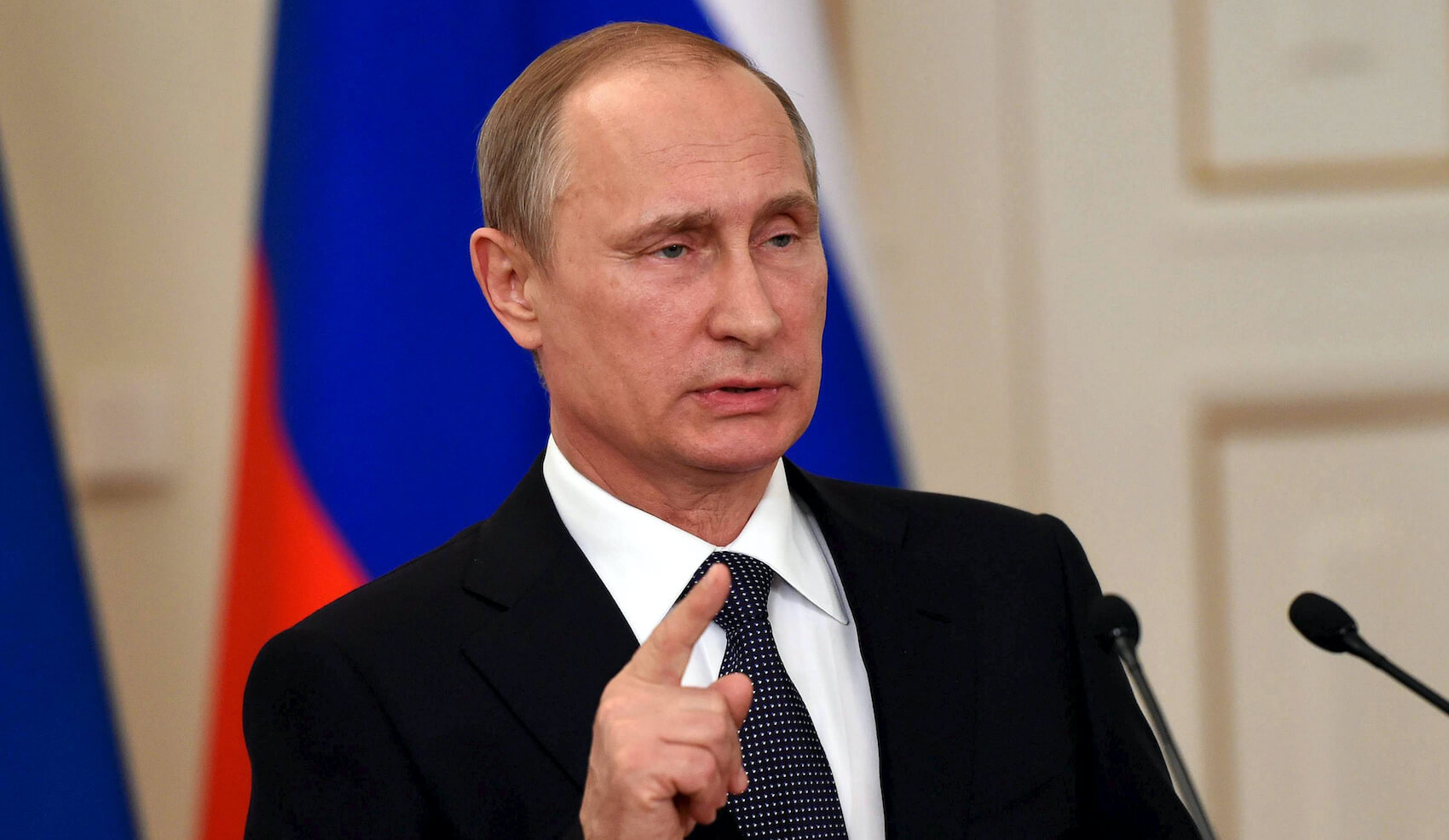
By the mid-2000s, and following a series of political events of historical importance, the euphoria surrounding the collapse of the Soviet Union began to dissipate. The attacks on the United States on September 11, 2001, and the subsequent and disastrous wars in Afghanistan and Iraq, along with the rise of authoritarian China and the growth of extremist movements such as the Islamic State (IS), suggested that history had not ended, and that liberal democracy would continue to face many challenges. Russia’s transformation into a brutal dictatorship under Vladimir Putin, culminating in his expansionist war against Ukraine, signals perhaps a fundamental shift in international relations and a powerful challenge to liberal democracy. Yet the most potent challenge to liberal democracy may be coming from withinrather than from rival ideologies. On the one hand, while Russia and China may appear to represent an ideological challenge to the liberal democratic world, the two regimes require extreme information control and the punishment of dissidents in order to maintain authoritarian non-liberal governance. However, since the mid-2000s there has been a sharp decline in basic freedoms, and a deterioration of democratic institutions, in a significant number of democratic countries around the world (Repucci & Slipowitz, 2021). 

According to Thomas Hobbes, there exists a social contract between the state and its people (or the monarch and their subjects). This contract effectively ensures that a government will guarantee the safety of the people it represents (Gauthier, 1988). Hobbes believed that human actions are driven by rational self-interest, and therefore argued that people would willingly enter into a social contract with the government and other people, on the basis that it was rational for individuals to do so in order to live in a society. In the 21st century, the social contract between citizens and their democratic governments appears to be breaking down. For example, Loke (2020) argues that the United States and other democratic nations have become flawed democracies, in which the intangible yet meaningful bind between the state and its citizens has degraded. This disillusionment with the ‘elite’ or ‘establishment’ has led to a loss of trust in elected officialsand perhaps a loss of belief in the democratic process itself. The degrading of democratic politics, and the rise of an elite which is increasingly removed from the majority of citizens, has created an environment conducive to populism. Indeed, the growth of populism is one of the most significant political developments of the 21st century. Populist leaders, movements, and parties, across the world offer an alternative form of politics, one which promises to liberate ‘the people’ from elite rule and to ‘save’ them from the existential crisis elites have brought upon them through their corrupt misrule. In other words, elite failure and corruption is leading to a backlash in the form of populism. 

Populism is ultimately a product of democratic societies, yet populists frequently violate liberal democratic norms. Indeed, scholars have increasingly regarded populism as a threat to liberal democratic values. Firstly, populism creates a political environment in which the rule of law or the rights of minorities may be discarded if they appear to obstruct the ‘will of the people,’ which populists claim is sacrosanct. Secondly, populism encourages an antagonistic politics in which two groups, ‘the people’ and ‘corrupt elites,’ are pitted against one another in an existential struggle for the nation. Populism thus flourishes on the divisive politics of ‘the people’ versus ‘the elite’ and ‘others,’ which deepens socio-political-economic rifts and exploits societal emotional pressure points and vulnerabilities (Yilmaz & Morieson 2021). One particular form of populism, which categorizes people according to their religious identities and asserts the incompatibility of different cultures, has proven especially influential in the 21st century. We call this form of populism ‘civilizational populism.’ 

The rise of civilizational populism throughout the world constitutes one of the key challenges facing liberal democracy in the 21st century. The growth of this political phenomenon not only demonstrates disillusionment with liberal democracy and its failures but suggests that the key lessons of the 20th century have been largely forgotten. Increasingly, the call to reject the negative emotions of ‘revenge, aggression, and retaliation,’ so common in the second half of the 20th century, is diminished. Emotionally charged monologues, too, are replacing dialogue between adversaries—dialogues that often pave the way toward mutual understanding. Ironically, having reached the ‘end of history,’ we witness a worldwide democratic regression symbolized best by the growth of civilizationalism, whether in the form of expansionist civilizational powers such as Russia and China, or in the form of populist civilizationalism. The decay of the liberal democratic order, which just twenty-five years ago seemed all but invincible, haunts the present, and the rise of civilizational populism threatens further harm to our democratic institutions and imperils religious and ethnic minorities the world over.

Civilizations are most often understood to be the “highest cultural grouping of people and the broadest level of social identity” (Huntington, 1993). Civilizations are often defined by religion, or at least by the religious identity of the majority of its members. For example, in his provocative, often wrongheaded but ultimately influential 1993 essay and subsequent book, Clash of Civilizations, author Samuel Huntington proposed that there at most nine world civilizationsWestern, Latin American, African[1], Islamic, Sinic, Hindu, Orthodox, Buddhist, and Japanese. The reader will notice that many of these civilizations are defined by religion. This is of course not to endorse Huntington’s division of the world into these groups, a notion largely discredited; however, even if scholars do not endorse Huntingtonian civilizationalism, this does not mean that politicians disregard his ideas. Rather, Huntington’s ideas have proven highly influential in the United States and, to an extent, Europe; simultaneously, they reflect the views of large numbers of people across the world, who similarly believe the world can be divided in this manner and that civilizations form coherent blocs of nations whose peoples possess values incompatible with those of other civilizations. 

Civilizational populism posits that democracy ought to be based upon enacting the ‘people’s will,’ yet it adds a new and troubling dimension to populism’s thin ideology: a civilization- based classification of peoples. Religion plays a defining role in delineating the boundaries between these civilizations, and civilizational populism is most often intrinsically bound up with religious identity and practice. As a result, Hinduism, Buddhism, Islam, and Christianity are instrumentalized by populists, who use the power of religion to define the boundaries of people, nations, and civilizations. Religion has thus become an importantat times centralaspect of civilizational populist movements across the world. 

There is something especially dangerous about civilizational populism. Populism is often conceived of having two dimensions, one vertical and one horizontal (Taguieff, 1995: 32-35). The vertical dimension divides society between the people at the top and those at the bottom, or between ‘the people’ and ‘the corrupt elite.’ The horizontal dimension divides society between ‘the people’ and ‘others.’ Most often, these ‘others’ are ethnic minorities who appear to threaten the character of the nation or the hegemonic power of the majority group. This kind of populism is thus deeply nationalist, with few if any international or transnational dimensions. Civilizational populism, however, frames the vertical and horizontal dimensions of populism within a religio-civilizational context. As a result, civilizational populist leaders, parties, and movements tend to identify ‘the people’ and their enemies with particular religiously-defined civilizations.

Civilizational populism, then, can be a particularly pernicious form of populism. By couching the antagonistic political divisions inherent in populism within a civilizational frame and claiming that people of different civilizations possess incompatible ethical and moral frameworks, civilizational populists attempt to create societies in which religious minorities are viewed as intolerable existential threats. Equally, civilizational populism can be attached to any of the major world religions. In the following section, we examine civilizational populism within the context of the world’s major religions. 

Civilizational Populism In the West

Political leader Geert Wilders of the Dutch center right party PVV defending his plans during a radio interview on September 5, 2012 in the Netherlands.

In a much-cited 2017 article, Rogers Brubaker (2017) observed how populist parties in North-West Europe have increasingly defined “the boundaries of belonging and the semantics of self and other…in civilizational terms.” Brubaker does not claim that populist parties in North-West Europe are anti-nationalist, but rather that they remain nationalist and define national belonging in religio-civilizational terms. Neither does he mean that a Christian revival is underway in Europe or that some kind of pan-European identity is promoted by populists. Rather, he means that European populists are increasingly identifying as Christian in order to define their culture as non-Muslim and by doing so legitimize their anti-Muslim immigration and cultural policies. Thus, rather than perceiving in Christianity a system of ethics and form of religious practice, populists instead use ‘Christianity’ or ‘Judeo-Christianity’ as “sacred code” words “to denote a secular, liberal order distinct from Islam, reflecting the culturalization of Christian religion in Europe” (Vollard, 2013: 94). The Dutch Party for Freedom (PVV), the second most popular party in the Netherlands, exemplifies the Christian civilizational populist trend in North-Western Europe. PVV leader Geert Wilders describes Dutch culture as the product of the “Judeo-Christian and Humanist civilization of the West, and Islam as a “totalitarian” political tradition wholly at odds with the liberal humanism of the Judeo-Christian West. 

In 2016, the PVV briefly became the most popular political party, according to polls, in the Netherlands. Perhaps the key reason behind Wilders’ and the PVV’s rise in popularity was the refugee crisis in the Middle East and North Africa, which saw over a million people—mostly Muslims—seek refuge in Europe from a series of wars and conflicts. The PVV capitalized on Dutch fears of a Muslim invasion, and, using incendiary and alarmist language, claimed the Netherlands was on the brink of Islamization and promised to “de-Islamize” the country (Wilders, 2016). The party also promised to ban all Muslim asylum seekers from entering Dutch territory, ban the construction of mosques, ban headscarves at “public functions,” and arrest suspected Islamic radicals (Wilders, 2016). The PVV’s radical programme struck a chord with voters, and though the party failed to win control of the government, they emerged as the second largest party in Dutch Parliament, winning 20 seats (though well behind the VVD, which won 33 seats) (Morieson, 2021: 47). 

2017 saw a second anti-Muslim, Christianidentitarian populist party contest electionsthe Forum for Democracy (Fvd). Party leader Thierry Baudet portrays himself as a lover of European culture and defender of the continent’s Judeo-Christian culture and heritage, which he claims is threatened by the traditional governing parties of the Netherlands and by Islam (Faber, 2018 & Morieson, 2021). 

The PVV lost support during the 2021 election, perhaps because the perceived threat of Muslim invasion via the refugee crisis had not materialized. However, the PVV and FvD won 25 seats between them, a demonstration of the significant power of Christian identitarianism and right-wing populism in the Netherlands. Indeed, though the centre right VVD continues to dominate Dutch politics, after 2021, right-wing Christian identitarian populist parties possessed more seats than at any previous time (Damhuis, 2021).  

While Brubaker described civilizational populism as something endemic to North-West Europe, there is ample evidence which suggests the phenomenon is far more widespread (Kaya, 2021; Kaya & Tecman, 2021). In Central and Eastern Europe, civilizational populism is present in Poland’s ruling Law and Justice Party (PiS) and Hungary’s ruling Fidesz party. Fidesz has proven to be the most enduring ruling populist party in Europe, and their combination of populism, ethnic nationalism, and Christian civilizationalism has proven especially potent. Fidesz (Fiatal Demokratak Szovetsege — Alliance of Young Democrats) began as a liberal, anti-communist studentled movement in the 1980s and entered formal politics in the early 1990s, when Hungary experienced its first free elections (Ádám & Bozóki, 2016: 132). When Fidesz first won power in 1998, it was under the leadership of Viktor Orbán, who solidified the party’s centre-right, social conservative orientation. During subsequent years in opposition (2002-2010), and following the party’s return to power (2010-), Fidesz has become increasingly nationalist, socially conservative, populist, and illiberal, cementing itself as the dominant political force in Hungary (Ádám & Bozóki, 2016: 130-131; Buzogány, 2017). 

Anti Immigration poster from Viktor Orban government in the streets of Budapest during the 2018 general elections campaign.

The use of Christianity in Fidesz’ populist discourse can be observed in the party’s complex relationship with the European Union and neoliberal economics. Orbán has on numerous occasions attacked the European Union, calling it a threat to “Christian freedom” (Hungary Today, 2019). According to Orbán, Christian freedom means “patriots instead of cosmopolitans, patriotism instead of internationalism, marriage and family instead of promoting same-sex relationships, protection of the children instead of drug liberalization, border protection instead of migration, Hungarian children instead of migrants and Christian culture instead of a multicultural mishmash” (Hungary Today, 2019).

Yet Fidesz’ Christian identity populism is most evident in Orbán’s anti-immigration rhetoric, which is based upon notions of Hungary as a Christian society with Christian values, and Islam as fundamentally incompatible with these values. This became especially evident during the 2015 refugee crisis, during which the Fidesz-led government refused Muslim refugees entry into Hungary (Haraszti, 2015: 39). Moreover, the party has attempted to boost fertility within Hungary through a set of ‘family friendly’ policies in order to create a stable population that does not require immigration to facilitate economic growth (Walker, 2019). According to Orbán, by permitting mass immigration from the Middle East and North Africa, Western powers have “opened the way for the decline of Christian culture and … Islamic expansion” (Boffey, 2018). Fidesz, however, has “prevented the Islamic world from flooding us from the south” (Boffey, 2018). Yet Orbán does not believe that secular political power is enough to stop Islamization. Rather, he says, “Europe’s last hope is Christianity” (Macintyre, 2018). 

Donald Trump, particularly when running for, and in the first year of his term as President of the United States, also used civilizational rhetoric. For example, Haynes (2021) describes Trump as repeating the orientalist tropes of Samuel P. Huntington’s Clash of Civilization’s thesis in his rhetoric on the relationship between Islam and ‘Judeo-Christian’ America. Haynes argues that Trump did not follow the path of Presidents Bush and Obama, who stressed that the United States was at war with “terror” and not Islam. Instead, using reckless language, Trump perpetuated the idea of a clash of civilizations between Islam and Judeo-Christianity and failed to distinguish between ordinary Muslims and violent Islamist terrorists. However, Trump showed little interest in actually fighting a ‘clash of civilizations’ as president and dismissed both Steve Bannon and Sebastian Gorka—two of the most outspoken civilizational nationalists in his administration—within weeks of each other in 2017. On the other hand, a number of the Trump administration’s decisions appear to be concrete manifestations of Trump’s belief that the United States is a Judeo-Christian power incompatible with Islamic civilization. For example, following the mass murder of 49 people at a gay nightclub in Orlando, Florida in June 2016, a crime committed by a Muslim man, Omar Mateenwho had sworn allegiance to the Islamic State, thencandidate Donald Trump spoke at length on the danger posed to the United States by what he called “radical Islam” (Beckwith, 2016). Trump had previously argued that Muslim refugees from wartorn nations in the Middle East threatened America. For example, in a tweet deleted by Twitter following his banning from the social media service, Trump “used clearly existential tones by pronouncing that taking in refugees from Syria (who he assumed to be potential terrorists) would lead to ‘the destruction of civilization as we know it!’ (Hall, 2021). 

Although Trump claimed that America has many “great” Muslim communities, he also attacked Muslim Americans for not reporting “bad” people to authorities, and therefore bringing death and destruction to the United States (Beckwith, 2016). Furthermore, portraying the nightclub shooting as part of a clash of civilizations, he claimed that many of the “radical” Islamic principles Mateen and other people like him hold are “incompatible with Western values and institutions” (Beckwith, 2016). Rather, Trump claimed that “radical Islam is anti-woman, anti-gay and anti-American,” and even “enslaves women” and that therefore, he personally refuses “to allow America to become a place where gay people, Christian people, Jewish people are targets of persecution.” 

Once elected President and during an official visit to Poland in 2017, Trump praised the nation’s right-wing populist government, suggesting that their strong anti-immigration, anti-Islam policies served to protect the West. In a speech in Poland which further revealed the civilizationalism inherent in Trump’s conception of world politics, he claimed that “the fundamental question of our time is whether the West has the will to survive. Do we have the confidence in our values to defend them at any cost? Do we have enough respect for our citizens to protect our borders? Do we have the desire and the courage to preserve our civilization in the face of those who would subvert and destroy it?” (Thrush & Hirschfeld Davis, 2017). Historian Stephen Wertheim, writing shortly after this speech, described Trump’s “civilizational framework” as a continuation of Obamaera justification of America’s wars in Afghanistan and Iraq while also adding a new element in which America’s “forever wars” were framed as part of a policing of the “enemies of civilization” (Wertheim, 2017). 

Civilizational Populism in Muslim Majority Nations

Erdogan supporters gather in Takism square after an attempted coup d’etat in Istanbul, Turkey on July 19, 2016. Photo: John Wreford

Yilmaz, Morieson, and Demir (2021) observe that “Islamic populist framing may take on nationalist forms, or civilizationalist forms, though often these are found in combination.” In Islamic or Islamist populism, the vertical and horizontal dimensions of populism are embedded within an Islamic framing. This means that the social and economic justice concerns inherent in Islam can be instrumentalized by Islamic populists in order to serve their anti-elite and xenophobic agendas. Islamic populist parties, though all too rarely examined by scholars, have found a significant amount of electoral success in a number of Muslim majority nations in the 21st century (Hadiz, 2018: 567). Hadiz (2018: 567), for example, has examined Islamic populism in Indonesia, Egypt, Tunisia, and Turkey, and observes that for populism to succeed in these countries “cultural idioms associated with Islam are requiredfor the mobilisation of a distinctly ummah-based political identity in contests over power and resources in the present democratic period.”

While Indonesia and Pakistan are home to populist Islamist groups, perhaps the best example of civilizational populism in the broad Islamic world is the Justice and Development Party (AKP) in Turkey. Since 2002, Turkey has been ruled by the AKP, a populist and Islamist party, which has governed in an increasingly authoritarian and repressive manner during their two decades in power. Initially, however, the AKP sought to portray itself as a Muslim democratic party supportive of pluralism, openness, and human rights. The AKP’s decision to portray itself in this manner was prompted by the events surrounding Turkey’s 1997 “postmodern coup,” in which the right-wing Islamic government led by Prime Minister Necmettin Erbakan was deposed by the Turkish ‘deep state’ and replaced by a secularist military establishment (Yilmaz & Bashirov, 2018). The coup, which was intended to greatly diminish the role of Islam in Turkish politics and society, was in many ways a continuation of the Kemalist hegemony the country had experienced since it was established in the 1920s by Kemal Ataturk himself. 

Capitalizing on the Turkish people’s desire to liberate themselves from military tutelage and Kemalist repression, the AKP won power in 2002. The party at first governed as Muslim democrats, insofar as they pushed for greater democratization, initiated a reconciliation process with Kurds and other minority groups, committed to joining the European Union, and even began discussing the possibility of recognizing the Armenian genocide (Yilmaz & Bashirov, 2018). However, between 2007 and 2011, the AKP began to shed its democratic and pluralist imagine and instead sought to capture the state and dominate Turkish politics and society. In this process, the AKP – and particularly its leader, Recep Tayyip Erdoğan – alienated many of their allies in political and civil society, while simultaneously incapacitating the threat posed by the Kemalist-dominated judiciary and military.

As the AKP evolved in office, its increasing authoritarianism and Islamism altered its populist discourse. After 2013, in particular, the AKP invested much effort in portraying religious minorities, foreign governments, even entire ‘civilizations’ as enemies of the people and of Islam. The AKP’s new strategy was built on an emotional populist campaign which exploited Turkish people’s ontology, security, and feelings of trauma. The party began to re-engineer Turkish identity in an effort to demonize and dehumanize its enemies. Secularists and liberals, Gülenists, and many ethnic and religious minorities, were now portrayed by the party as threats to Islam and Turkish Sunni Muslims. The AKP also began to emphasize ever more the primacy of Sunni Islam in Turkish culture and identity, as well as the glory of the Ottoman Empire, seat of the Caliphate for centuries. Thus, Erdoğan and the AKP set about creating a divisive and populist ‘us vs them’ politics in Turkey, in which Turkish Sunni Muslims were portrayed as an aggrieved yet innocent people, and the Kemalist secular eliteand almost all other religious and ethnic minoritiesportrayed as threats to the people and their faith. The AKP used deep emotional insecurities to evoke feelings of victimhood in the majority population, who were said to be oppressed by “dark forces.” These imagined “dark forces” range from foreign enemies to domestic foes of the AKP who are alleged to be working with foreigners to destabilize Turkey. Thus, the AKP encourages Turkish Sunni Muslims to feel that they are under constant attack from “non-Turkish Muslims, such as Kurds and Lazes, …and non-Muslims, such as Christians and Jews” (İnce, 2012: 40). These minority groups are now essentially unwanted citizens in Turkey, a group which now includes members of the Gulen movement, journalists, academics, opposition leaders, human rights activists, and political opposition who have been critical of the AKP regime (Yilmaz, 2018). All these groups are now ‘the other’ in Turkey, and, combined with xenophobia towards the West and Jews, all are portrayed by the AKP as internal “traitors” who do the bidding of external “dark forces” trying to “destabilize Turkey” (Yilmaz, 2021).

The existence of this expansive lists of “others, as well as the vast numbers of people who are alleged to be involved in conspiracies to hurt the Turkish people, create a state of constant crisis which feeds emotions that generate demand for populist solutions. Moreover, by encouraging their supporters to feel a sense of trauma and accompanying emotions of loss, “humiliation, vengeance and hatred,” the party is able to “trigger unconscious defence mechanisms which attempt to reverse these emotions” (Yilmaz, 2021: 11). 

The AKP’s emotional exploitation of ‘the people’ is based on three themes: “Islamism, nationalism, and populism,” which are used as merged concepts (Taş, 2020: 2). By merging Islamism, Turkish nationalism, and populist ideation “Erdoğan has thus been presented as the voice of deprived ‘real people’ and their champion of their interest against old ‘elites’,” while at the same time “the party also pursued an Islamist, anti-secular project involving mandatory religious education of the young, and a ‘post-Kemalist neo-Ottomanist outlook in identity politics’ that radically altered Turkey’s sense of itself and elements of its foreign policy” (Yilmaz, 2018: 54–55). The AKP’s Islamist populism has proven very potent and has allowed the party to gradually Islamize Turkey over the two decades of its increasingly authoritarian rule.

Civilizational Populism In India

The India’s Prime Minister, Shri Narendra Modi offering prayers at the Naguleswaram Temple in Jaffna, Sri Lanka on March 14, 2019.

In Hindumajority India, the nation has begun a process of transformation under the ruling Bharatiya Janata Party (BJP) and its Prime Minister, Narendra Modi, and their guiding political philosophy, Hindutva. Hindutva is a form of Hindu nationalism which posits that India must return to Hindu principles in order to raise the nation to the greatness it experienced in the pre-Muslim period. Under Modi’s leadership, the dominant political narrative shifted from right-wing nationalism to populism while maintaining a reliance on the Hindutva narrative of Hindu victimhood and nostalgia for the lost golden age of Hindu civilization.

Running for Prime Minister, Modi erected billboards containing a picture of himself accompanied by the text: “I am a Patriot. I am Nationalist. I am Born Hindu” (Ghosh, 2013).  During the same period, the BJP called for the building of a society for Hindus and run by Hindus, justifying their agenda through the Hindutva call for the “cleansing” of “impurities” from society. In this narrative of crisis, Modi was the “born Hindu” and “ideal Indian” who would lead the country as a “strongman” and revive the glory of the Hindu rashtra (Hindu kingdom) (Lefèvre, 2020). Because the BJP frame Indian culture and the nation as the product of Hindu civilization, to love India and its culture isaccording to the BJPto either loveor at least respectand obey the rules of Hindu culture. Or as Irfan Ahmad (2017) put it, “Hindutva defined Indianness exclusively in religious terms: an Indian is someone who considers India as their holy land.” This religious exclusivism is reflected in the party’s “abrogation of article 370, the ban on cow slaughter and the construction of a Ram temple in Ayodhya,” which the BJP claims are necessary acts to revive and protect Hindu culture (Ammassari, 2018: 8). These actions are also framed as attempts to invalidate the “invasion” of India and to purify it in order that Hindu civilization may regain its lost glory (Ammassari, 2018).

The BJP has also pushed for a change in the school curriculum that promotes civilisational populism by restructuring history and cultural identity (Yilmaz & Shakil, 2021). Post-2014, the Hindutva version of Indian history has increasingly blurred the lines between culture and history, fact and fiction. These changes were justified by RSS’s Manmohan Vaidya, who claimed “the true colour of Indian history is saffron and to bring about cultural changes we have to rewrite history” (Jain & Lasseter, 2018). The BJPwritten syllabus uses history to set a “Hindu first” narrative, in which other cultural influences are depicted as products of ‘invader’ Muslim and Christian cultures.

Civilizational Populism In Buddhist Majority Nations

Members of Myanmar’s Muslim Rohingya minority walk through a broken road at Shah Porir Deep, at Teknaf in Cox’s Bazer, Bangladesh on September 11, 2017. Photo: Sk Hasan Ali.

The relationship between Buddhism and populism is rarely studied, and yet there are concrete examples of Buddhism being instrumentalized by populist leaders in two majority Buddhist nations: Myanmar and Sri Lanka. In Myanmar, a multi-ethnic country (where no single ethnic group comprises more than 2 percent of the population), religious identity has been heavily politicized. 89 percent of the population identify as Buddhist, and therefore the state has often used Buddhist identity to create a sense of national belonging and nationhood. This is not a recent development, as the “To be Burmese means to be Buddhist!” slogan of the 1940s movement for independence demonstrates (Artinger & Rowand, 2021). However, 11 percent of Myanmar’s citizens are non-Buddhist, and there is a significant Muslim minority. This situation has been exploited by populists who identify Buddhism as a core element of Myanmar’s identity, and thus the identity of ‘the people,’ identification with another faith is inherently threatening to this identity and to political efforts to make the country more homogenous.

While the 2014 return of democracy to Myanmar was widely lauded, it coincided with a period of increasing religious conflict and anti-pluralism, much of which was instigated by nationalist-populist Buddhist groups. Buddhist populist-nationalism in Myanmar is promoted by a number of influential groups, especially Mabatha (MBT or Ma Ba Tha) and the 969 movement. Populism is deeply embedded in the discursive practices of these groups. Mabatha and the 969 movement, for example, claim their political mission is to safeguard “the Buddhist identity of the country” (Fuller, 2018). As part of this mission, they claim that Muslims are an existential threat to the nation’s Buddhist identity and call for the elimination of threats to this Buddhist national core. Mabatha and the 969 movement have become highly influential groups over the past 20 years, and the political landscape of Myanmar has been predominately shaped by the nationalist Buddhist populism espoused by these two groups. Their power extends even into other parties and political movements, and fear of this power no doubt played a role in the Aung San Suu Kyiled democratic government ignoring the ethnic and religious ‘cleansing’ of Rohingya Muslims from parts of the country. 

In the late 1990s, a 40-page booklet authored by a government official named Kyaw Lwin, and titled “969,” appeared and “urged Buddhists to openly display the numbers 969 on their homes, businesses and vehicles” (Moe, 2017). The book did not openly call for violence or discrimination against any particular group, but displaying 969 was intended to be a way for Buddhists business owners and consumers to distinguish themselves from Muslims, who often displayed the number 786, signifying an Islamic prayer: “the Name of Allah, the Compassionate and Merciful” (Bookbinder, 2013). The booklet insinuated that Muslims were trying to demographically and economically “conquer” the Buddhist population, and that Buddhists must fight back (Frydenlund, 2018; Moe, 2017 & Bookbinder, 2013). This notion spread throughout Myanmar, partly through its adoption by Buddhist education facilities, such as “Buddhist Sunday Schools, volunteer groups, legal clinics, relief campaigns, donation drives, and other community oriented activities” (Thu, 2021: 205). Ashin Wirathu, a monk, became the face of the 969 movement. Wirathu was imprisoned by the military junta for hate speech in 2003 and was released as part of a large group of political prisoners set free in 2012 (Hodal, 2013). Following his release, he campaigned relentlessly on behalf of the 969 movement, and after it was banned, inspired the formation of MBT and later became a party leader. Wiarthu’s activities helped create a wave of Islamophobia in the country, mixing “Buddhist conspiracy theories envisioning an Islamic take-over” and fear of Muslim “terrorists” (Artinger & Rowand, 2021; Frydenlund, 2018 & Bookbinder, 2013). This has led MBT and the 969 movement to become identified by many Buddhists in Myanmar as “protectors” of “the Buddhist identity of the country” (Fuller, 2018).

In MBT discourse, the Buddhist majority are portrayed as victims of violence instigated by ‘others,’ most often Muslims. MBT has used events such as the destruction of the Bamiyan Buddhas in Afghanistan by the Taliban to create their narrative of a Muslim threat and Buddhist victimhood (Thu, 2021: 208). Myanmar’s Muslim minority are therefore portrayed as enemies and a danger to inherently peaceful Buddhist society. Yilmaz et al. (2021) note that MBT “claim that Muslims are an existential threat to the nation’s Buddhist identity and call for the elimination of threats to this Buddhist national core.” MBT enjoys the support of various politicians in Myanmar, including some pro-democracy politicians, and such is their power that any political party or critical voice contradicting their populist rhetoric is ‘othered’ by MBT’s leadership and accused of being “Muslim sympathisers” (Oppenheim, 2017). For instance, Nobel Peace Prize winner Aung San Suu Kyi and her party, National League for Democracy (NLD), perhaps fearful of incurring MBT’s wrath, did not nominate Muslim candidates during the 2015 elections, which led to a “Muslim Free Parliament” (Thu, 2021: 206). It was also Suu Kyi’s government (2016-21) which tolerated MBTled violent rhetoric against Muslims, rhetoric which helped lead to the 2017 genocide of the Rohingya people (BBC, 2018). 

MBT also involves itself in transnational civilizational populism. The ideas of the extremist populist monks have been shared with the radical Sri Lankan Buddhist organization, the Bodu Bala Sena (BBS, Buddhist Power Army)the two groups have held joint meetings and conventions (Sirilal, 2014). Ashin Wirathu led this union and presented it as a union required to “defend” Buddhism around the world, saying, “today, Buddhism is in danger. We need hands to be firmly held together if we hear alarm bells ringing” (Sirilal, 2014). On a sperate occasion Wirathu also said that “once we [have] won this battle, we will move on to other Muslim targets,” indicating that there are no geographical limits to his civilisational populism (Hodal, 2013).

In Sri Lanka, Buddhist nationalist populism has also played an important role in both the political sphere and in defining Sri Lankan identity. Unlike ethnically diverse Myanmar, 70 percent of the population of Sri Lanka is Sinhalese Buddhist, making them a powerful majority ethnic group. Tamils are the largest minority, and constitute around 15 percent of the population, while Muslims, Hindus, and Christians together make up less than 13 percent of the population (Department of Census and Statistics, 2012). In Sri Lanka, then, ethnicity and religion have been somewhat bound together. This puts Sinhalese Buddhists in a powerful position and has allowed them to largely determine Sri Lanka’s political agenda and identity.

Mahinda Rajapaksa, sixth President of Sri Lanka is seen at a religious ceremony and baptism in the Gangarama Temple in Colombo, Sri Lanka on January 28, 2020.

Sinhalese Buddhist Nationalism (SBN) has been the driving force behind populism in Sri Lanka (Jayasinghe, 2021: 178). But the activities and preachers of Buddhist organizations such as Bodu Bala Sēna (BBS) also play a prominent role in pushing anti-Muslim, pro-Buddhist discourses. Unlike other SBN organizations, BBS “is unique for being almost exclusively an anti-Muslim front” and has carried out many violent anti-Muslim campaigns since 2012 (Jayasinghe, 2021: 186). The power of Sinhalese Buddhist Nationalism led to stateled, systematic discrimination against the Tamil minoritywho reacted to their oppression by forming the resistance group, the Tamil Tigers (LTTE) (Jayasinghe, 2021; Yilmaz, Morieson & Demir, 2021). Tamils were considered “aliens” with no claims in the newly independent Sri Lanka and were frequently denied citizenship or deported to India; others became victims of ethnically motivated killings and were at times prevented from entering higher educationevents that ultimately led to a civil war (Carothers & O’Donohue, 2020). In this context the militant Tamil Tigers, “became active in seeking an independent homeland for the Tamils. The conflict, which ended in 2009, also had a religious dimension as the Tamil population is predominately Hindu and the government is mainly Buddhist. Over two decades of fighting, a number of failed efforts were made to bring peace. This led to thousands of casualties on both sides … and hindered economic development (Shakil, 2021). While the end of thecivil war opened a peace process, populist Prime Minister Mahinda Rajapaksa, in 2009, portrayed the war as a victory for SBN (Jayasinghe, 2021: 183). Sri Lankan Prime Minister until 2015, Rajapaksa capitalized on ethnic and religious divisions between Tamils and Sinhalese in his rhetoric but, following the end of the civil war, shifted to the process of ‘othering’ the country’s Muslim minority community (Jayasinghe, 2021; Shakil, 2021; Yilmaz, Morieson & Demir, 2021). 

During his 2009-2015 tenure as Prime Minister, Rajapaksa portrayed himself as fighting for ‘the people’ against Sri Lanka’s elites, who he claimed were corrupt. He promised to improve the country’s economy (Shakil, 2021). At the same time, there was second dimension to his populism, which was rooted in SBN: “During Rajapaksa’s rule, critics of his political style and agenda were portrayed as enemies of the nation or collaborators with the enemy. Sri Lankan society was divided between the patriot (dēshapremi) and the traitor (dēshadrōhi) (Jayasinghe, 2021: 183), with opponents of Rajapaksa portrayed as treasonous enemies. Against this backdrop, “Rajapaksa shied away from criticizing the unlawful activities of SBN groups, including their use of violence against Muslims and other minorities, due to the power and influence of SBN in Sri Lankan politics and society” (Yilmaz, Morieson & Demir, 2021). 

While the war against the Tamil Tigers is over, and even though Tamil people largely do not yet feel entirely welcome in Sri Lanka, SBN discourse has moved from othering Tamils to inciting fear of Muslims and other minorities (Mihlar, 2020). SBN has, since the end of the civil war, become increasingly powerful due to a wave of anti-Muslim sentiment growing since the 9/11 attacks and rise of international jihadism. Muslims are, in the post-9/11, post-civil war environment, perceived as “a security threat” and accused of “extremism” and “intolerance” by the Sri Lankan state (Haniffa, 2021; Mihlar, 2020). Other minority groups have also sought to demonize Muslims, though in different ways. For example, “Tamil anti-Muslim hatred, attacks and violence focus on the group whilst Sinhala/Buddhists target the group and the religion” (Mihlar, 2020).

Rajapaksa, having lost his position as Prime Minister in 2015, returned to political prominence when Gotabaya Rajapaksa, his brother and a former army leader during the civil war, came to power in 2019 (Jayasuriya, 2019). While G. Rajapaksa used populist anti-elitist rhetoric, his main appeal to voters was that he was a former war “hero” and a strongman who had led the country to victory against the Tamil insurgents. But with the civil war receding into memory, the strongman’ instead portrays himself as protecting the nation from Muslim radicals, such as the Muslims responsible for the Easter Bombing (Shakil, 2021). 

The now former Prime Minister G. Rajapaksa, who fled the country after its economic collapse, punished Muslims, banning face veils, conducting arbitrary arrests of alleged radical Muslims, and closing down seminaries. Formally, under the “deradicalisation from holding violent extremist religious ideology” section of the Prevention of Terrorism Act, the country banned the wearing of burqas and closed some 1,000 Islamic organizations to supposedly prevent extremism (Haniffa, 2021). This fear is the legal and political manifestation of a belief that Muslims, funded by foreign powers such as the Gulf countries, are attempting to Islamize Sri Lanka (Mihlar, 2020). Whatever government emerges following the 2022 revolution will have to deal with the legacy of religious populism in Sri Lanka and its dividing of citizens into ingroups and outgroups based on religious identification.

Buddhist right-wing populist organizations across Sri Lanka and Myanmar thus share important commonalties. Both are beholden to a crisis narrative aimed at inciting emotions such as fear of non-Buddhists, especially Muslims. This nativist and civilizationalist narrative is based on the notion that there is a growing clash of civilizations between Buddhism and Islam, propagates suspicion and hatred of non-Buddhists, and deems Muslims in particular an alien and existential threat in Buddhist lands. In both Sri Lanka and Myanmar, monks have not only spewed hate speech in monasteries but have also used social media to spread their speeches and legitimize anti-Muslim conspiracies, leading to mob violence targeting mostly Muslim businesses, places of worship, and private property.         

Conclusion

People demonstrate against so-called Islamization, carrying signs with slogans in Rotterdam, The Netherlands on January 20, 2017.

This article shows that the use civilizational rhetoric by populists has become common in many democratic nations and in a variety of political and religious contexts. In each case we have examined in this short article, we find civilizationalist rhetoric incorporating religion, though in two broadly different ways. Populist parties and leaders using civilizational rhetoric may align themselves with religious groups or organizations and may pursue a religious domestic and/or foreign political agenda, as has occurred in TurkeyIndia, and, to a degree, Hungary, among other places. On the other hand, civilizational populists may adopt a religious identity but not pursue a religious agenda nor develop ties with religious organizations. This appears to occur in the more secularized regions of the world, especially in Western Europe and deeply secularized nations such as the Netherlands. 

In either case, populists’ civilizational rhetoric is part of an electoral strategy designed to portray governing elites as responsible for an existential civilizational crisis threatening to destroy the culture and identity of the nation and its people. In much of Western Europe, and to a degree in the United States, immigration (exacerbated by low fertility rates) is the main cause of the civilizational crisis. Governing elites are blamed by civilizational populists in Western nations for encouraging Muslimswho are framed as belonging to a foreign and incompatible civilizationto migrate to the Westand in such numbers that they threaten to destroy the culture and identity of the nation and its supposed Judeo-Christian or Christian tradition.

Outside the West, it is often the presence of religious minority groups, and at times the influx of Western ideas and culture, which is framed as a crisis engulfing the nation. In India, the presence of Muslims is held by the BJP to be an existential threat to the nation, preventing the true ‘people’ from reconstructing the mighty Hindu civilization of ancient times. The Turkish AKP claims that Turkey is the leading nation of the Islamic world and legitimizes its military interventions in places like Syria by claiming it is acting as the protector of Sunni Muslims across the world. At the same time, the AKP alleges that foreigners, non-Sunni Muslims, and especially the Christian West, are involved in a conspiracy to dismember Turkey and destroy Islam, and that the Turkish people must fight against these ‘dark forces’ which threaten their culture, nation, and Islamic civilization. 

It is significant that, despite their use of civilizational rhetoric, the populist parties and leaders we examined remain nationalists. The purpose of civilizational rhetoric among populists, then, is to classify people into ingroups and outgroupsand, ultimately, to determine who belongs to the nation. In other words, civilizational populism appears to be a nationalist phenomenon, and though there are examples of transnationalism civilizational populism, in no case does it threaten the overwhelmingly nationalist character of the populist parties and leaders examined in this article. Civilizational populism, therefore, works best when it can harness the deepest fears of the majority population, particularly the fear of being ‘replaced,’ and thus when it can either exploit or produce a ‘minority-majority complex.’ In an age defined by liquid modernity and the fluid movement of people, money, goods, and ideas throughout the world, and when mass immigrationsometimes the result of waris destabilizing a wide array of societies, civilizational populists possess many opportunities to exploit ontological fears and produce emotions which create demand for their populist solutions. 

Civilizational populist leaders are responsible in part or wholly for a significant amount of violence the world over. The potential for violence is inherent in civilizational populism itself, insofar as it divides society into antagonistic groups, encourages ‘the people’ to believe they are victims of a corrupt elite and to ‘defend’ themselves against the ‘others’ who supposedly threaten their traditions and way of life. This emotional narrative legitimizes violence against ‘others,’ although it does not always lead to overt violence. At times, this narrative may lead to the suppression of religious ‘others,’ including the bans on Islamic dress instituted in Sri Lanka. Civilizational populist narratives have contributed to communal rioting in India, particularly under the leadership of Narendra Modi, and in Sri Lanka under the rule of the Rajapaksas. When civilizational populists become national rulers, they often use the power of the state to destroy their enemies. For example, in Turkey, Recep Tayyip Erdoğan has used his authority and influence to compel the state to demonize the Gülen movement due to the group’s alleged involvement in a failed coup and jail and intimidate journalists, academics, and activists who oppose his neo-Ottoman and Islamist ideology. In the worst case we have studied, MBT civilizational populists in Myanmar played a role in provoking and justifying genocidal violence against Muslims in the Rakhine state. 

Civilizational populism is an inherently anti-plural form of politics insofar as it posits that religious minorities pose a threat to ‘the people’most often understood as the majority group but sometimes as the authentic inhabitants of the land, whether they be a majority or a minority. As a result, wherever they gain power and influence, civilizational populists attempt to exclude religious minorities from public life, and at times launch violent attacks against them. 


Acknowledgements: This research has been funded by the Australian Research Council (ARC) Discovery Grant, DP220100829, Religious Populism, Emotions and Political Mobilisation.


References

— (2012). “Census of Population and Housing of Sri Lanka.” Colombo: Department of Census and Statistics. 

— (2018). “How Aung San Suu Kyi Sees the Rohingya Crisis.” BBC. January 25, 2018. https://www.bbc.com/news/world-asia-42824778 (accessed on July 21, 2022).

— (2019). “Orban: Agreement between two parts of Europe conditional on the West.” Hungary Today. September 30, 2019. https://hungarytoday.hu/orban-christian-freedom-v4-west/ (accessed on July 21, 2022).

Ádám, Zoltan and Bozóki, András. (2016). “State and Faith: Right-Wing Populism and nationalized Religion in Hungary.” Intersections: East European Journal of Society and Politics. 2, no. 1, 98-122.

Ahmad, Irfan. (2017). “Modi’s polarizing populism makes a fiction of a secular, democratic India”. The Conversation.July 12, 2017https://theconversation.com/modis-polarising-populism-makes-a-fiction-of-a-secular-democratic-india-80605 (accessed on July 21, 2022).

Ammassari, Sofia. (2018). “Contemporary Populism in India: Assessing the Bharatiya Janata Party’s Ideological Features.” IBEI, Students Papers Series 48.

Artinger, Brenna & Rowand, Michael. (2021). “When Buddhists Back the Army.” Foreign Policy. February 16, 2021. https://foreignpolicy.com/2021/02/16/myanmar-rohingya-coup-buddhists-protest/ (accessed on July 21, 2022).

Beckwith, Ryan Teague. (2016). “Read Donald Trump’s Speech on the Orlando Shooting.” Time. June 13, 2016. https://time.com/4367120/orlando-shooting-donald-trump-transcript/ (accessed on July 21, 2022).

Boffey, Daniel. (2018). “Orban claims Hungary is last bastion against ‘Islamisation’ of Europe.” The Guardian. February 18, 2018. https://www.theguardian.com/world/2018/feb/18/orban-claims-hungary-is-last-bastion-against-islamisation-of-europe (accessed on July 21, 2022).

Bookbinder, Alex. (2013). “969: The Strange Numerological Basis for Burma’s Religious Violence.” The Atlantic. April 9, 2013.  https://www.theatlantic.com/international/archive/2013/04/969-the-strange-numerological-basis-for-burmas-religious-violence/274816/ (accessed on July 21, 2022).

Brubaker, Rogers. (2017). “Between nationalism and civilizationism: The European populist moment in comparative perspective.” Ethnic and Racial Studies. 40: 1191–226.

Carothers, Thomas & O’Donohue, Andrew. (2020). “Political Polarization in South and Southeast Asia: Old Divisions, New Dangers.” Research Report by Carnegie Endowment for International Peace. doi:10.2307/resrep26920. 

Damhuis, Koen. (2021). “Dutch elections: Mark Rutte wins another term but fragmented results mask continuing popularity of the far right.” The Conversation. March 19, 2021. https://theconversation.com/dutch-elections-mark-rutte-wins-another-term-but-fragmented-results-mask-continuing-popularity-of-the-far-right-156993 (accessed on July 21, 2022).

Faber, Sebastiaan. (2018). “Is Dutch Bad Boy Thierry Baudet the New Face of the European Alt-Right?” The Nation. April 5, 2018. https://www.thenation.com/article/world/is-dutch-bad-boy-thierry-baudet-the-new-face-of-the-european-alt-right/ (accessed on July 21, 2022).

Frydenlund, Iselin. (2018). “Buddhist Islamophobia: Actors, Tropes, Contexts.” In: Handbook of Conspiracy Theory and Contemporary Religion. Brill. DOI: https://doi.org/10.1163/9789004382022_014

Fukuyama, Francis. (2006). The End of History and the Last Man. New York: Free Press.

Fuller, Paul. (2018). “The Narratives of Ethnocentric Buddhist Identity.” http://researchspace.bathspa.ac.uk/13494/

Gauthier, David. (1988). “Hobbes’s Social Contract.” Noûs 22: 71-82.

Ghosh, Deepshikha. (2013). “Narendra Modi’s ‘Hindu nationalist’ posters should be banned, says Samajwadi Party.” NDTV. July 24, 2013. https://www.ndtv.com/india-news/narendra-modis-hindu-nationalist-posters-should-be-banned-says-samajwadi-party-529359 (accessed on July 21, 2022).

Hadiz, Vedi R. (2018). “Imagine All the People? Mobilising Islamic Populism for Right-Wing Politics in Indonesia.” Journal of Contemporary Asia 48: 566–83. 

Hall, Jonny. (2021). “In search of enemies: Donald Trump’s populist foreign policy rhetoric.” Politics. 41:1. 48–63. https://journals.sagepub.com/doi/pdf/10.1177/0263395720935377.

Haniffa, Farzana. (2021). “What is behind the anti-Muslim measures in Sri Lanka?” Al Jazeera. April 12, 2021. https://www.aljazeera.com/opinions/2021/4/12/what-is-behind-the-anti-muslim-measures-in-sri-lanka (accessed on July 21, 2022).

Haraszti, Miklós. (2015). “Behind Viktor Orbán’s war on refugees in Hungray.” New Perspective Quarterly. 32:4. 37-40.

Haynes, Jeffrey. (2017). “Donald Trump, ‘Judeo-Christian Values’ and the ‘Clash of Civilizations.’ The Review of Faith & International Affairs. 15:3. 66 75. DOI: 10.1080/15570274.2017.1354463.

Hodal, Kate. (2013). “Buddhist monk uses racism and rumours to spread hatred in Burma.” The Guardian. April 18, 2013. https://www.theguardian.com/world/2013/apr/18/buddhist-monk-spreads-hatred-burma (accessed on July 21, 2022).

Huntington, Samuel P. (1993). “The clash of civilizations?” Foreign Affairs. 72, no. 3, 22-49.

Huntington, Samuel P. (1996). The Clash of Civilizations and the Remaking of World Order. New York: Simon & Schuster. 

Ince, B. (2012). Citizenship and Identity in Turkey: From Atatürk’s Republic to the Present Day. United Kingdom: Bloomsbury Publishing.

Jain, Rupam & Lasseter, Tom. (2018). “By rewriting history, Hindu nationalists aim to assert their dominance over India.” Reuters. March 6, 2018.  https://www.reuters.com/investigates/special-report/india-modi-culture/ (accessed on July 21, 2022).

Jayasinghe, Pasan. (2021). “Hegemonic Populism: Sinhalese Buddhist Nationalist Populism in Contemporary Sri Lanka.” In: Populism in Asian Democracies: Features, Structures, an Impact. Edited by Sook Jong Lee, Chin-enWu and Kaustuv Kanti Bandyopadhyay. Leiden and Boston: Brill. 

Kaya, Ayhan & Tecmen, Ayşe. (2019). “Europe versus Islam?: Right-wing Populist Discourse and the Construction of a Civilizational Identity.” The Review of Faith & International Affairs. 17:1. 49-64 DOI:10.1080/15570274.2019.1570759.  

Lefèvre, Corinne. (2020). “Heritage Politics and Policies in Hindu Rashtra.” In: The Hindutva Turn: Authoritarianism and Resistance in India. Edited by Aminah Mohammad-Arif, Jules Naudet and Nicolas Jaoul. SAMAJhttps://doi.org/10.4000/samaj.6728.

Loke, Andras. (2020). “Democracy’s Decline and Erosion of the Social Contract.” GMF.  October 29, 2020. https://www.gmfus.org/news/democracys-decline-and-erosion-social-contract (accessed on July 21, 2022).

Macintyre, James. (2018). “’Christianity is Europe’s last hope against rise of Islam’ claims Hungarian PM.” Christianity Today. February 19, 2019. https://www.christiantoday.com/article/christianity-%09is-%09europes-last-hope-against-rise-of-islam-claims-hungarian-pm/126015.htm (accessed on July 21, 2022).

Mihlar, Farah. (2020). “Islamophobia Anti-Muslim Civil Society or Individuals.” OHCHR. https://www.ohchr.org/Documents/Issues/Religion/IslamophobiaAntiMuslim/Civil%20Society%20or%20Individuals/FarahMihlar.pdf

Moe, Z. Kyaw. (2019). “A Radically Different Dhamma.” The Irrawaddy. March 9, 2017. https://www.irrawaddy.com/from-the-archive/radically-different-dhamma-2.html (accessed on July 21, 2022).

Morieson, Nicholas. (2021). Religion and the Populist Radical Right: Secular Christianism and Populism in Western Europe. Delaware and Malaga: Vernon Press.

Oppenheim, Marella. (2017). “‘It only takes one terrorist’: the Buddhist monk who reviles Myanmar’s Muslims.” The Guardian. May 12, 2017. https://www.theguardian.com/global-development/2017/may/12/only-takes-one-terrorist-buddhist-monk-reviles-myanmar-muslims-rohingya-refugees-ashin-wirathu (accessed on July 21, 2022).

Repucci, Sarah & Slipowitz, Amy. (2021). “Freedom in the World 2021 Democracy under Siege.” Freedom Househttps://freedomhouse.org/report/freedom-world/2021/democracy-under-siege (accessed on July 21, 2022).

Shakil, Kainat. (2021). “Sri Lanka.” European Centre for Populism Studies. https://www.populismstudies.org/tag/sri-lanka/ (accessed on July 21, 2022).

Sirilal, Ranga. (2014). “Radical Myanmar monk joins hands with Sri Lankan Buddhists.”  Reuters. September 29, 2014. https://www.reuters.com/article/us-sri-lanka-buddhism-myanmar-%09idUSKCN0HO0GD20140929 (accessed on July 21, 2022).

Stephen Wertheim. (2017). “Donald Trump’s Plan to Save Western Civilization.” The New York Times. July 22, 2017https://www.nytimes.com/2017/07/22/opinion/sunday/donald-trumps-plan-to-save-western-civilization.html (accessed on July 21, 2022).

Taguieff, Pierre-André. (1995). “Political Science Confronts Populism: From a Conceptual Mirage to a Real Problem.” Telos. 103, 9–43.

Taş, Hakkı. (2020). “The chronopolitics of national populism.” Identities. 1-19. 

Thrush, Glenn & Hirschfeld Davis, Julie. (2017). “Trump, in Poland, Asks if West Has the ‘Will to Survive’.” The New York Times. July 6, 2017. https://www.nytimes.com/2017/07/06/world/europe/donald-trump-poland-speech.html(accessed on July 21, 2022).

Thu, Myat. (2021). “Populism in Mynmar.” In: Populism in Asian Democracies: Features, Structures, and Impact. Edited by Sook Jong Lee, Chin-en Wu and Kaustuv Kanti Bandyopadhyay. Leiden and Boston: Brill.

Vollard, J. P. Hans. (2013). “Re-emerging Christianity in West European Politics: The Case of the Netherlands.” Politics and Religion. 6, 74–100.

Wilders, Geert. (2016). “Preliminary Election Program PVV 2017-2021.” Geert Wilders Weblog. August 26, 2016.https://www.geertwilders.nl/94-english/2007-preliminary-election-program-pvv-2017-2021 (accessed on July 21, 2022).

Walker, Shaun. (2019). “Viktor Orbán: no tax for Hungarian women with four or more children.” The Guardian. February 10, 2019. https://www.theguardian.com/world/2019/feb/10/viktor-orban-no-tax-for-hungarian-women-with-four-or-more-children (accessed on July 21, 2022).

Yilmaz, Ihsan & Morieson, Nicholas.  (2021). “A Systematic Literature Review of Populism, Religion and Emotions.”Religions. 12, no. 4, 272. https://doi.org/10.3390/rel12040272

Yilmaz, Ihsan & Shakil, Kainat. (2021). “Pakistan Tehreek-e-Insaf: Pakistan’s Iconic Populist Movement.” European Center for Populism Studies. February 3, 2021.                  https://www.populismstudies.org/pakistan-tehreek-e-insaf-pakistans-iconic-populist-movement/ (accessed on July 21, 2022).

Yilmaz, Ihsan & Bashirov, Galib. (2018). “The AKP after 15 years: Emergence of Erdoğanism in Turkey.” Third World Quarterly. 39.

Yilmaz, Ihsan; Morieson, Nicholas & Demir, Mustafa. (2021). “Exploring Religions in Relation to Populism: A Tour around the World.” Religions. 12, 301. https://doi.org/10.3390/rel12050301

Yilmaz, Ihsan. (2018). “Islamic populism and creating desirable citizens in Erdoğan’s new Turkey.” Mediterranean Quarterly. 29, no. 4, 52-76.

Yilmaz, Ihsan. (2021). Creating the Desired Citizen: Ideology, State and Islam in Turkey. Cambridge University Press. 

Zúquete, P.  Jose. (2017). “Populism and Religion.” In: Oxford Handbooks Online. Edited by Cristóbal Rovira Kaltwasser, Paul Taggart, Paulina Ochoa Espejo, and Pierre Ostiguy. Oxford University Press. DOI: 10.1093/oxfordhb/9780198803560.013.22


[1] Huntington was apparently unsure whether African civilization existed and suggested that Africa was divided between Islamic and Christian civilization (1996: 47).

MEP-Panel3

Mapping European Populism: Panel 3 — Scandinavia Under Magnifier: Populist Radical Right Parties and the End of Nordic Exceptionalism?

Grueso, Gadea Mendez & Sezer, Julide (2022). “Mapping European Populism: Panel 3 – Scandinavia Under Magnifier: Populist Radical Right Parties and the End of Nordic Exceptionalism?” European Center for Populism Studies (ECPS).June 17, 2022. https://doi.org/10.55271/rp0006


This report is based on the third panel of ECPS’s monthly panel series called “Mapping European Populism” which was held online in Brussels on April 28, 2022. The panel brought together top-notch populism scholars from four Scandinavian countries, namely Sweden, Finland, Norway, and Denmark. As a by-product of this fruitful panel the report consists of brief summaries of the speeches delivered by the speakers.

ECPS organizes a panel series composed of 10 monthly sessions to map European populism, bringing scholars together every month to discuss the state of political populism in a different region of Europe. This report is prepared based on the third panel of the series focusing on Scandinavian countries on the theme of “Scandinavia under magnifier: Populist radical right parties and the end of Nordic exceptionalism” which was held online on April 28, 2022.

The panel is moderated by Dr Liv Sunnercrantz, Department of Media and Social Sciences, University of Stavanger, Norway, and included the following speakers; Dr Anders Hellström, Department of Global Political Studies, Malmö University, Sweden; Marie Cazes, Doctoral Researcher, University of Jyväskylä, Finland; Dr Lise Lund Bjånesøy, Department of Administration and Organization Theory, University of Bergen, Norway; Dr Susi Meret, Department of Politics and Society, University of Aalborg, Denmark.

Dr Anders Hellström: “The Sweden Democrats in Swedish politics – The Mainstreaming of Extremism”

“In general, there has been a ‘mainstreaming of extremism’ (in Sweden) as theorised by Ruth Wodak: What was depicted as extreme to say in the area of immigration one decade ago is considered normal today. The difference between the mainstream right and the populist right has, in that sense, vaporised.”

Dr Anders Hellström introduced how extremism has been mainstreamed in Swedish politics with the case of Sweden Democrats (SD). The main themes he addressed are: the nine stages in the development of the Sweden Democrats (SD) within Swedish politics, the ‘mainstreaming of extremism,’ the discussion about going ‘beyond’ Swedish exceptionalism, and what ‘the new normal’ may come to mean in Swedish politics.

According to Dr Hellström, there have been nine stages in the development of the Sweden Democrats. Before 2006 (1), the SD received very little media exposure, and when they were mentioned in the press, they were, at best, referred to as ‘devils in disguise’ or as ‘fascists in uniforms.’ Between 2006 and 2010 (2), the media interest in the SD escalated, and the other parties gradually abandoned their ‘cordon sanitaire’ approach to the party; but, even if these other parties wanted to attract SD voters, SD politicians were still referred to, in the political debate and the media, as either racists or ‘political clowns,’ sometimes both. In the third stage, between 2010 and 2014 (3), the SD got into the national parliament, and the national debate on Swedish identity issues, as a result, became highly polarised; the party gained a lot of media attention, and the public debate was rife with discussions around this ‘new’ political party. Between 2014 and 2018 (4), the party space in Sweden became significantly more multi-dimensional: instead of just a left-right socio-economic-political divide, there was now also a socio-cultural divide. Before this period, it was ‘the SD against the rest,’ in terms of political parties, but afterwards, the SD’s positions on certain topics like immigration became more eligible. In 2019 (5), the SD was getting increasingly tamed, and their policy positions thus came to be seen as normal by other political actors, and it became less shameful among the electorate to vote for the SD. Before the pandemic, the SD had, in fact, become the largest party in the Swedish national parliament.

However, the 2020 pandemic marked a sixth stage (6) in the SD’s development, and the SD lost voting support (the SD is now approximately 10% behind the Social Democrats). The theme of how Sweden handled (or mishandled) the pandemic was seen as something exceptional, not only by the SD but by many others in the public debate. For instance, Ebba Busch Thor, the leader of the Christian Democrats (KD), declared that the government had “with relieved courage” allowed a high spread of infection, which had severely negatively affected the old people in Sweden; at the same time, Jimmie Åkesson, the leader of the SD, had said that the government had conducted a “massacre” on the elders. Many other political actors besides the SD thus verbalised a similar criticism against the government.

In 2021-2022 (7), the SD became part of a bloc, together with the Christian Democrats, the Moderate Party (M) (which are mainstream right parties), and the Liberal Party (L), to pursue an anti-liberal agenda (the presence of the Liberal Party, in that sense, may seem ironic). The idea was to form a new conservative government to replace the Social Democratic government. But after the Russian invasion of Ukraine in 2022 (8), far-right parties in Sweden (and elsewhere) suffered from their previous admiration of Putin. The Social Democrats benefitted from this and are now getting very high poll figures. Whereas before, immigration was their only relevant political issue, their rhetoric has shifted significantly when compared to their view of the topic of Syria in 2015, and the SD now speaks of the need to protect and allow Ukrainian refugees into Sweden (which was not the case for Syrian refugees). The national elections that will take place in September 2022 (9) will tell whether the political debate will foremost be on defense (and the issue of NATO membership), the climate or gang violence.

Dr Hellström interpreted the rise of the SD as an end to ‘Swedish exceptionalism.’ Indeed, he referred to the work by Jens Rydgren[1], who said that his explanations as to why Sweden did not have a leading anti-immigration party (like Denmark and Norway had) no longer apply. Working-class voters (and voters in the southern parts of Sweden and middle-aged men) have turned to the SD; and the salience of the socio-economic policy dimension in political competition is no longer hegemonic, as the political is now also about culture and identity. Moreover, there is today a growing consensus between the Left and the Right, as there has been a ‘moralisation of politics.’

In general, there has been a ‘mainstreaming of extremism’ as theorised by Ruth Wodak[2]: what was depicted as extreme to say in the area of immigration one decade ago is considered normal today. The difference between the mainstream right and the populist right has, in that sense, vaporised.

According to Dr Hellström, there was, a decade ago, a meta-debate in Swedish politics, in which all the mainstream parties agreed that they should debate with the SD (even if they were deplorable). The consequence was that the average voter, who probably had not heard of the party, suddenly became aware of its existence thanks to the exposure awarded by that debate. Thus, Hellström remarked, such parties benefit from the truth contained in Oscar Wilde’s aphorism that “There is only one thing worse than being talked about, and that is not being talked about.”

But all is not lost yet, Dr Hellström reminds us: to understand what is happening around us, we need to understand both regressive and progressive sentiments. When we build toward a new normality, we should remember that “the future points in both progressive and regressive directions simultaneously”—and it is up to us to decide which comes to fruition.

Reported by Gadea Mendez Grueso


Marie Cazes: “From Rural to Radical Right: A Brief Perspective on Finnish Populism”

Despite populism has always been present in the Finnish Parliament ever since the 1960s the support for the Finns Party seems to be dropping. Several reasons may be cited: their new leader seems to not be as charismatic and attractive to voters, the coronavirus crisis has negatively impacted voter’s trust in the party, and the Russia-Ukraine war has had a huge impact on the party, which has been forced to completely review its position on NATO adhesion.

Marie Cazes presented a historical approach to populism in Finland, a country with a long relationship to the topic. She presented the main Finnish populist parties: the Finnish Rural Party (Suomen Maaseudun Puolue, SMP), which was created by Veikko Vennamo in 1959 under the name of Suomen Pientalonpoikien Puolue (Finnish Party of Small Peasants), came into the government in the 1980s and became bankrupt in the 1990s; and the Finns Party (Perussuomalaiset), which was created in 1995 after the bankruptcy of the Finnish Rural Party and became very successful, winning its first major electoral victory in 2011 (from 4,1 percent to 19,1 percent of the vote), and taking part in the Sipilä government (Centre, National coalition) in 2015. In June 2017, the Finns Party split after the election of Jussi Halla-aho, who was considered too radical and even condemned for hate speech, as chairperson; thus, ‘Blue Reform’ was created.

As Cazes explained, the origins of Finnish populism were very rural, and it was a form of agrarian populism. The Finnish Rural Party was itself created in 1959 by Veikko Vennamo as a split from the Agrarian Union, due to divergences of opinion with then-president Urho Kaleva Kekkonen regarding the countryside: Kekkonen had a more conservative idea in favour of preserving traditional social rurality ‘as it was before,’ even though Finland was facing a deep rural/agricultural crisis in the 1950s-60s.

Thus, Finnish populism, linked to ancient agrarianism ideology, rose by presenting itself as the ‘defender of the forgotten people’ from the countryside, who had supposedly been neglected by the ‘elites’ in Helsinki. As such, it was constructed in opposition to other parties (and to Kekkonen, who had been president for 24 years), with a very strong anti-communist rhetoric. Some researchers have talked about these parties as “hegemony challengers” (see Palonen & Sunnercrantz[3]).

Cazes then described the rise and fall of the Finnish Rural Party (SMP): after having some electoral success in the 1970s, it collapsed, and rose again in the 1980s, when, in 1983, it got a second breakthrough in the parliamentary elections. That time, its narrative had changed, and the party presented itself as a critic of corruption, as its main concern became less focused on rurality, and its electorate changed too, becoming a bit more urban (as there were cases of corruption in several big cities, for instance concerning the construction of the subway in Helsinki). Because Kekkonen was no longer president, and because the image of the party changed, so that Finnish politicians no longer considered the SMP as an extreme-right party, it ended up being part of two governments, from 1983 to 1987, and from 1987 to 1991, which fomented tensions within the party. In the end, the Finnish Rural Party only had 1 MP in the 1995 election, and finally went bankrupt.

Four members of the SMP decided to create a new party, and thus, the Perussuomalaiset, or Finns Party, was born. Until the 2000s, the party was following the heritage of the Finnish Rural Party, and its agenda of the critique of elites. In 2003, the party had 3 MPs, including Tony Halme (a former famous wrestler and actor), a charismatic character with ‘colourful’ rhetoric who opened the door to critiquing immigration, making homophobic statements, etc. This ‘turning point’ led to the incorporation of new members affiliated with nationalist associations, and to the prominent critique of immigration.

But the real breakthrough of the Finns Party was in the parliamentary elections of 2011 when they gained 15 percent of the vote (from 4 percent previously). One of the main reasons for this success was not only the criticism of immigration but also a deep Euroscepticism (with a strong reticence to helping countries like Greece through the EU). They accessed the government in 2015, which resulted in a dramatic loss of voter support, as they could no longer credibly criticise the policy of the government regarding the migration crisis. The split of 2017 and the election of Halla-aho as the leader showed the radicality of the party, which had undergone a steady radicalisation process through the 2010s decade: after this turning point, the party could no longer be characterised as a moderate populist party, and it truly became the anti-immigration, nationalist, nativist, welfare chauvinist party that we know today.

Currently, the support for the Finns Party in view of next year’s parliamentary elections seems to be dropping. Several reasons may be cited: their new leader seems to not be as charismatic and attractive to voters, the coronavirus crisis has negatively impacted voter’s trust in the party, and the Russia-Ukraine war has had a huge impact on the party, which has been forced to completely review its position on NATO adhesion (of which they had been very critical in the past). Finally, Marie Cazes reviewed the main features of Finnish populism: its strong rural roots (which is still prevalent in Finnish nationalism), and the fact that populism (Finns Party and Finnish Rural Party) has always been present in the national parliament, ever since the 1960s.                                                                                               

Reported by Gadea Mendez Grueso


Dr Lise Bjånesøy: “Public perceptions of the populist radical right in Norway”

The Progress Party is considered a borderline case in terms of classification that there is no scholarly agreement on defining it as a populist radical right party. The data from Norwegian Election Studies shows that voters consistently associate the party with exclusionary policies against immigration and immigrants in Norway while the party has a large portfolio including many different issues beyond immigration.

Dr Lise Bjånesøy presented public perceptions of the populist radical right in Norway with a case study of the Progress Party (Fremskrittspartiet, FRP). Bjånesøy started with a brief history of FRP stating that the party was established in 1973 by Anders Lange and in the late 1980s, it made strong anti-immigration policies part of its program and then started gaining more support. The party entered government for the first time in the fall of 2013 as the junior partner of the Conservative Party, stayed in the government coalition until 2020 and chose to leave the coalition just before the pandemic.

Dr Bjånesøy noted that the Progress Party is considered a borderline case in terms of classification that there is no scholarly agreement on defining it as a populist radical right party. The data from Norwegian Election Studies shows that voters consistently associate the party with exclusionary policies against immigration and immigrants in Norway while the party has a large portfolio including many different issues beyond immigration. They have political candidates who are primarily concerned with other issues than immigration and minorities although policies for immigration and minorities remain very important for the party. What is interesting about the Progress Party, according to Dr Bjånesøy, is that there are two different wings in the party; one is a more libertarian wing, and the other is a clear populist radical right-wing, a situation which makes it difficult to label the party as populist radical right.

In the second part of her speech, Bjånesøy presented some results from two different studies in which Progress Party is included. Both studies using different concepts focus on different aspects of public perceptions of the populist radical right. One is political tolerance and the other one is negative partisanship. Political tolerance implies the willingness to put up with things that one rejects or opposes, and in this study, whether or not people allow the expression of opinions that they dislike is taken as the test for tolerance. The second study is related to negative partisanship, and this is concerned with negative effects or repulsion towards a political party. Negative partisanship reflects voting behaviour that one would never consider voting for that party.

As Dr Bjånesøy explained, the first study is designed to put political tolerance to the test in five different countries, inspired by a real-life scenario from 2010 related to the populist radical right party in Sweden; Sweden Democrats faced difficulty to find a venue for their election night gathering and they had to lie about the purpose of the event to secure the venue. In the experimental setting, they asked people about four different groups (mainstream right party, populist radical right party, one anti-Islamic group, and one neo-Nazi group) from five countries (Norway, the Netherlands, France, Germany and Sweden). They told people to imagine that one of these four groups has asked to rent a community centre to host a meeting for its members and asked how much they agree or disagree to rent it to these groups. The results show that everyone wills to rent the centre to centre-right parties, for the two extra-parliamentary groups; 80 percent of people disagree renting the centre to neo-Nazi groups and 50 percent disagree to rent it to an anti-Islamic group. The study included Progress Party in Norway, PPV in the Netherlands, FN in France, AfD in Germany and SD in Sweden to the list as populist radical right parties. The results show that there are large variations in public political tolerance of the populist radical right in European democracies and that tolerance does not only depend on the far-right in terms of ideology but also the party institutionalization matters; for example, the inclusion of populist radical right in the government brings in higher tolerance as is the case in Norway. 

In the second study, Dr Bjånesøy investigates why many people would not consider voting for the populist radical right. The studies have found that populist radical right parties have a particularly high negative share of partisanship, and it seems that negative partisanship is an interesting tool to look at concerning populist radical right. Bjånesøy says, in her study, she takes Norwegian Progress Party as the case study and reminds us of the results of the first study she explained before (political tolerance) that Progress Party is the populist radical right party with the highest political tolerance. Using the data from Norwegian Citizen Panel, Dr Bjånesøy asked people if they would vote for Progress Party, and more than 50 percent said they would never consider voting for this party. While voters are asked to explain their reasons in their own words, four different categories have emerged: blank rejection; they strongly disagree with the party without stating a particular reason for it, immigration policy issues; they describe the party as prejudiced to migrants and racist, other policy issues; the voters pointed at the party’s stance on environmental issue and economic issues, political style; they expressed their dislike of the behaviour of the candidates and the tone used in the political debates.

Bjånesøy concludes her presentation by pinpointing that the Progress Party can be considered a borderline case in terms of being a member of the populist radical right party family. The voters strongly and consistently associate the party with exclusionary policies towards immigration and immigrants, but the policy issues it highlights are beyond the area of immigration. The party is fully tolerated by the public and, at the same time, it is the most disliked party with a high share of negative partisanship.

                                                                                                 Reported by Julide Sezer


Dr Susi Meret: “From success to failure? The recent developments of the radical and populist right in Denmark” 

“Denmark has female leaders for the far-right populist parties which seems contractionary concerning the power structures. Voters’ profiles show that the higher the education level the less likely it is to vote for the Danish People’s Party (DF) and that the rate of white people with manual skills and unskilled is high among the supporters of the party. Statistics show that the voters of right-wing populist parties and radical left-wing parties earn less than the ones who vote for centre-right and liberals. In terms of geographical distribution, electoral support for DF is high in non-urban southern Denmark.”

Dr Susi Meret started her presentation by highlighting four points to explain why the Danish case is particularly important in terms of the populist radical right. In this line, Dr Meret mentioned: 1) Denmark is an established liberal post-war democracy with a developed welfare state system and with higher levels of wealth and wellbeing in comparison to the rest of Europe and is also known for high levels of trust and happiness. 2) Populist radical right parties fared well since 2000 and until recently, with the Danish People’s Party (DF), the main radical right-wing populist (RRWP) party in Denmark, consolidating its position within the parliament. 3) Electoral support for DF is rising in the years 2001-2015, reaching average levels between 15-20 percent. 3) DF has considerable political influence; it acted as a support for the minority cabinet (DK) between 2001-2011 and between 2015-2019, and now they are in opposition. 4) The issues on the agenda of DF are similar to the ones on the agenda of other RRWP parties in other Scandinavian countries; welfare-nationalism, anti-immigration and anti-Islam politics, Euroscepticism and pro-NATO. 

Dr Meret continued by pinpointing sentences from DF’s principal program which reflect the party’s populist radical right views; “The party’s overall goal is to re-establish Denmark’s sovereignty and freedom and to secure the Danish nation and the monarchy’s existence.” The program also has a strong anti-immigration stance; “Denmark is not and has never been an immigration country and DF is against the development of Denmark into a multicultural society. (…) to the extent immigrants can maintain themselves and their families, they can get a temporary permit to stay and to work (…) Refugees must not be turned into immigrants.” As seen from the party program, Dr Meret explains, DF is against immigration and holds an anti-Islam position for which the party’s strong opposition to the Syrian refugees’ permanent stay in Denmark is an example. DF was pushing hard for sending them back to Syria but met with resistance from civil society organisations. Per economic policy, it maintains a welfare-nationalist chauvinist approach and holds a critical position towards European politics, in particular against Schengen, free movement and the monetary union.

Then, Dr Meret focused on the question of what explains the rise and the consolidation of DF. In this regard, she pointed to the growing salience of value politics in the form of the old and new left and right, and particularly national identity, migration and recently climate change. Since the 1980s, electoral volatility/fluctuation has increased, and loyalty to political parties has diminished, which increased support for DF. Also, socio-economic and other divides are exacerbated and attention towards social cohesion and welfare nationalism has risen vis-à-vis increasing migration flows. From the 1990s onwards, as a consequence of bloc politics, the proportional electoral system has donated small parties with relatively strong power in the political structure, which also prepared a convenient context for the rise of DF. Dr Meret highlighted that the legitimization of populist radical right by Liberals in 2001 and by Social Democrats from 2015 onwards also helped in the increase of support for DF.

Dr Meret also discussed voting trends for populist radical right examining voters in terms of gender, education, class and income. While populist radical right gains more votes from white male voters and women are still left-wing leaning; the gap is closing between the two as RRWP has become more mainstreamed and normalized. Meret added that Denmark has female leaders for the far-right populist parties which seems contractionary concerning the power structures. Voters’ profiles show that the higher the education level the less likely it is to vote for DF and that the rate of white people with manual skills and unskilled is high among the supporters of the party. Statistics show that the voters of right-wing populist parties and radical left-wing parties earn less than the ones who vote for centre-right and liberals. In terms of geographical distribution, electoral support for DF is high in non-urban southern Denmark.

Dr Meret indicated that radical right-wing populists in Denmark perform exclusionary populism; they stand against the elite, against the establishment and for “the people,” which are considered common denominators of populism, and the anti-immigration approach is coming as an additional denominator from the polls in the country. The definition of “the people” comes from an ethno-nationalist understanding of community and the people with a narrative of common roots encompassing belonging, shared history, and the same values with an emphasis on Christian values lately. The idea of “our Denmark,” in their understanding, refers to whites, which gets criticism from the civil society organizations. RRWP describes Denmark as a homogenous community whose grounds are challenged by globalization, Europeanization and migration flows and refugees. The anti-gender aspect of RRWP, Dr Meret argues, is an interesting and concerning development in Denmark and it has an emphasis on the Muslim veil. Concerning the LGBTQ issues, DF does not hold a contrasting position, but it expresses that the issue should have a limit and must not dictate the agenda.

Dr Meret says that DF’s new leader Morten Messerschmidt who held the office in January 2022 is internally challenged by the party members on the ground that he is not a good fit for the party, particularly in these times when the party is in crisis. The other right-wing populist party, New Right has also a female leader and follows a very conservative approach such that they present a hard-line anti-immigration agenda wanting to stop asylum altogether, on the other hand, they pursue an ultra-liberal economic agenda which is different from DF. Dr Meret also mentions the extra-parliamentary radical right-wing party “Hard Line” led by Rasmus Paludan, which run for the 2019 elections but could not get enough votes to enter the parliament. The party’s worldview is ethno-nationalist, racist and strongly Islamophobic defending the prohibition of Islam in Denmark. The party often uses social media and has a social media channel named “the Voice of Freedom” to mobilize the youth, they live-stream their demonstrations on online channels to get more attention, for example, they encouraged people to burn Quran in public spaces, which happened in Denmark before Sweden.

As another form of the populist radical right, Dr Meret talked about a transnational movement “Nordic Resistance Movement (Nordfront)” which derives from Sweden in 1997 and is represented in most of the Nordic countries. Their worldview encompasses racism, neo-Nazism, antisemitism, and rallying for a ‘racially pure’ Nordic region against the extinction of the white autochthonous population. The movement, as it is written on their website, organizes “revolutionary national socialist combat organization.” They use vandalism and violent attacks as forms of their action repertoire for which bomb attacks on refugee housing and vandalism against Jewish graveyards are examples.

Dr Meret concluded her presentation by underlining the main takeaways from the case of RRWP in Denmark. The rise and electoral consolidation of RRWP (especially DF) should be considered in the long durée and in the light of the mainstream reactions. The current wave of RRWP emphasizes ethnic homogeneity and assimilationist models, and ethnic and religious groups are increasingly racialized, also by government policies. Extra parliamentary far-right milieus have proliferated in recent years but seem still weaker than in other countries. Far-right repertoires of action and organization are different, inspired by groups and organizations outside Denmark but also exporting their own products.

                                                                                                   Reported by Julide Sezer


[1] Jens Rydgren, and Sara van der Meiden,“The Radical Right and the End of Swedish Exceptionalism,” European Political Science 18, no. 3 (2019): 439–455

[2] Ruth Wodak, “‘The Boundaries of What Can Be Said Have Shifted’: An Expert Interview with Ruth Wodak (Questions posed by Andreas Schulz),” Discourse & Society 31, no. 2 (2020): 235–244, doi:10.1177/0957926519889109.

[3] Ruth Wodak, “‘The Boundaries of What Can Be Said Have Shifted’: An Expert Interview with Ruth Wodak (Questions posed by Andreas Schulz),” Discourse & Society 31, no. 2 (2020): 235–244, doi:10.1177/0957926519889109.

Marine Le Pen, from the Front National, a national-conservative political party in France in meeting for the presidential election of 2017 at the Zenith of Paris on April 17, 2017. Photo: Frederic Legrand.

Report on Panel #4 / Mapping European Populism: Populist Radical Right in Europe’s Heartland and the UK

Blink, Melissa & Robinson, Tom. (2022). “Report on Panel #4 / Mapping European Populism: Populist Radical Right in Europe’s Heartland and the UK.” European Center for Populism Studies (ECPS). June 9, 2022. https://doi.org/10.55271/rp0005


This report is based on the fourth panel of ECPS’s monthly panel series called “Mapping European Populism” which was held online in Brussels on May 26, 2022. The panel brought together top-notch populism scholars from three countries in Europe’s heartland, namely Germany, Austria, France, and the UK. As a by-product of this fruitful panel the report consists of brief summaries of the speeches delivered by the speakers.

By Melissa Blink & Tom Robinson

ECPS organizes a panel series composed of 10 monthly sessions to map European populism, bringing scholars together every month to discuss the state of political populism in a different region of Europe. This report is prepared based on the fourth panel of the series focusing on heartland Europe and the UK, on the theme of “Populist radical right in Europe’s heartland (Germany, Austria, France) and the UK,” which was held online on May 26, 2022.

The panel is moderated by Dr Luke Cooper, Member of the Conflict and Civil Society Research Unit at LSE, and included the following speakers; Dr Ralf Havertz, Associate Professor of International Relations at Keimyung University in South Korea; Dr Karin Liebhart, Senior Lecturer at the Department of Political Science, the University of Vienna; Dr Gilles Ivaldi, CNRS Researcher in Political Science at the Centre for Political Research at Sciences-Po, Paris; Dr William Allchorn, Postdoctoral Researcher and Associate Director at the Centre for the Analysis of the Radical Right, University of Leeds.

Dr Cooper, in his introductory remarks, noted that the case studies of the panel demonstrate the unevenness of the rise of the radical right in this century, which Cas Mudde has referred to as the fourth, and arguably most successful wave of the post-WW2 radical right. What distinguishes this wave, he says, is the degree of convergence between the mainstream centre-right and the new radical right. Also notable is the radical right’s success in taking over governments around the world and emerging as a formidable political force. Dr Cooper explained that he would be employing Cas Mudde’s distinction between the radical right and the extreme right. The former accepts the basic principles of democracy but launches a slow, steady incursion on its basic foundations, like the rule of law and constitutionalism. The extreme right rejects democratic principles altogether.

According to Dr. Cooper, one of the countries under discussion in this panel plays a special role in Mudde’s account of the fourth wave: Austria. After all, it was the rise of the Austrian Freedom Party (the FPÖ) and its entry into Austrian government that was met by diplomatic sanctions in the EU at the time. The attempted but failed cordon sanitaire was accompanied by sustained protests and demonstrations within Austria itself. It was, in other words, the moment the dam burst. Over the next two decades, we witnessed a gradual but uneven centre-right and radical right convergence. Mudde’s characterization is also valuable, according to Dr Cooper, because it avoids excessive focus on the 2008 financial crisis, reminding us that the origins of the rise of the radical right in this century extend further back than just 2008.

Germany’s radical right populism, in contrast, may look like a rapid response to the financial crisis. The AfD burst onto the scene, initially, as a Eurosceptic party, becoming increasingly extremist and white nationalist through gradual purges of its more moderate members. In many current discussions, Dr Cooper notes, the fall of the AfD is emphasized. After all, the story goes, Germany has demonstrated the strength and reserves of its democratic character, as well as the societal depth underlying its democratic institutions. He wonders how this prospect is seen by the panellists, especially in the context of the global shocks we might soon expect to see; inflation, for example, is a phenomenon often identified with the previous collapse of German democracy. That historic episode naturally haunts discussions of the far-right in Germany today, he notes.

The other two cases, Britain and France, also reflect the unevenness and complexity of the rise of the European radical right. Dr Cooper in his account of Britain’s current government, highlighted that the government is increasingly authoritarian but also appears to be in a state of genuine subjective confusion, he says. It sees itself as continuous with Thatcherism, although its main pitch to the electorate underlined the damage her government did to Britain and the damage that regional deindustrialization left behind. It has also committed to sharing Britain’s wealth across towns and regions more evenly. Dr Cooper points out another contradiction: the government sees itself as part of a great British tradition of liberty but has launched an attack on the human rights agenda, including, most prominently, the Human Rights Act, which brings the European Convention of Human Rights into British law. Furthermore, he notes, the British government seems to reject the foundational elements of international refugee law. Its most recent piece of legislation, the Nationality and Borders Bill, and the high-profile proposal to summarily deport refugees who arrive in the UK by irregular or informal means to Rwanda are both examples of this attitude. The current British government has, in sum, a “viciously authoritarian, very ethno-nationalist agenda”, although its political elites are nevertheless confused.

In his remarks on France, Dr Cooper pointed at Marine Le Pen and the Front National National Rally as the central focus of those studying French populism. However, he thinks the Macron project is also a curious case for students of populism and authoritarianism. After all, he says, Macron’s initial pitch to the French electorate had many elements, in terms of style, language, and appeal, of a ‘populist insurgency’ in the first round of 2017’s French presidential elections. Macron adjusted his language quite significantly in the second round, making a more unifying pitch to the electorate instead. Another interesting subject is the way that the radical right’s key priority, namely the alleged ‘Islamization’ of Western societies by non-white Muslim immigrants, is taken in France’s national political debate. French centrists, as well as France’s left and centre-left, seem to pitch themselves in very uncertain times when confronted with the topic. The French state has also recently been accused of repressing human rights organizations advocating for the rights of the French Muslim community, by levying defamation laws against them in an attempt to close them down.

Dr Cooper concludes the opening remarks by highlighting that in each of the cases, a series of ‘meanings and un-meanings’ seem to complicate the already complex and uneven picture of the radical right’s rise in Europe. 

Reported by Melissa Blink


Dr Ralf Havertz: “The Rise of Radical Right Populism in Germany”

Dr Havertz describes Germany as a latecomer regarding the development of radical right populism. When the AfD was founded in 2013, most neighbouring countries had already had some experience with such parties, where they had already participated in government or been tolerated or supported by minority governments. It is now firmly established as a radical right populist party in Germany’s party system. It poses a challenge to Germany’s democratic system because it is located somewhere between right-wing populism and right-wing extremism, and it will remain an opposition party for the foreseeable future.

Dr Ralf Havertz detailed the rise of radical right populism in Germany in his lecture at the panel. He starts by describing Germany as a latecomer regarding the development of radical right populism. When the AfD was founded in 2013, most neighbouring countries had already had some experience with such parties, where they had already participated in government (as in Austria) or been tolerated or supported by minority governments (as was the case with the Danish People’s Party in Denmark). This has not, to date, happened in Germany: no party on this side of the political spectrum has participated in government, nor has it supported governments so far. The cordon sanitaire had held up so far, although, Dr Havertz notes, talks take place behind the scenes between the CDU (Christian Democrats), the Free Democrats, and the AfD – especially in the east of Germany.

Currently, the AfD is a strong opposition party in Germany’s Bundestag, and movements such as Pegida and the Identitarian Movement have attracted many participants with their various organized activities. Dr Havertz notes one might almost speak of a division of labour between these groups: Pegida and the Identitarians are the organized movement side, whereas the AfD supports the radical-right populist agenda in the parliament. The current state of affairs shows that something in Germany has changed – for a long time voting and expressing support for the populist radical right (PRR) was stigmatized due to Germany’s experiences with the Nazi regime and its atrocities. It has, however, become much more common to voice radical right opinions in public, and people are less inhibited in voicing their rage against governments, policies, and ‘othered’ groups. So, it is more common to vote for radical right parties, and the AfD especially.

What has driven this change? Dr Havertz points to three broad changes that occurred in Germany, which were related to economics, culture, and media. The first was the economic transformation; a shift from Fordism to neoliberalism brought about higher competitive pressures, which created insecurities and uncertainties for workers, as well as changes to Germany’s social welfare system. The PRR instrumentalized the rage and resentment borne of these changes and channelled it against “the elite” or “the establishment” as it is sometimes called.

The second change Dr Havertz described occurred in the aftermath of the Student Movement of 1968, which triggered a phase of modernization and liberalization in German society, bringing about improvements for minority groups and those who were subject to discrimination, including refugees, and immigrants, women, and the LGBTQ community. The PRR again instrumentalized dissatisfaction with these changes and organized a cultural backlash, again directed at “the elite”, whose cosmopolitan character was the focus of populist ire. It was also directed at the minorities who were the beneficiaries of the changes described.

The third change occurred in the media environment with the emergence of the internet and social media, which have changed the way citizens communicate. Radical and extreme messages are much easier to express and disseminate broadly while simultaneously targeting specific recipients. The AfD and Pegida, especially, make use of this, whereby they have certainly contributed to the polarization of German society. All these developments converged roughly at the same time.

On this note, Dr Havertz mentions the AfD’s precursors. There were other radical right populist parties in Germany before the AfD; when they dissolved, they recommended their members to join the AfD instead, which is true for Pro Deutschland, for example. Some of these parties still exist on the regional level, though no longer on a national level. The same is true for Die Freiheit, Die Republikaner, the Bund Freier Bürger, and the Schill-Party. The AfD, on the other hand, can be considered the most successful radical right party in German post-war history, having reached the 5 percent threshold for parliamentary representation in every election since 2014, on regional, national, and the European level. This means, also, that they earn money and can provide employment opportunities, not just for party members, but also for members of Pegida and the Identitarian Movement.

Then there were the crises: the global financial crisis, and the Euro crisis. The latter was particularly salient for the AfD, as it was initially primarily a Eurosceptic party. Its founders were dissatisfied with the German centre-right approach to European integration, and strongly opposed the ‘rescue package’ with which the EU responded to the Euro crisis and Greece’s fiscal problems. Angela Merkel’s support for this policy made her a central hate figure in the radical right’s protest marches. The AfD could, to some extent, even be considered an anti-Merkel party. Having now lost this hate figure, the AfD and German radical right more generally will need to find a replacement.

In its first two years, Dr Havertz says, the AfD’s orientation was primarily driven by the party’s ordoliberal leadership. Though there were other wings, including a national-conservatism group, it was initially described as a “party of professors.” It was considered a party with considerable competence in the area of economics, which is also how they portrayed themselves. In the party’s first years, its face was Bernd Lucke, one of its first three speakers (chairpersons) – an economics professor at the University of Hamburg. He was often on TV, discussing economic issues based on his credentials. But right from the start, there were also some conservative members and others from the new-right and radical right. Some right-wing extremists also joined the party, and 2015 marked a strong turn to the right when Lucke and several other economic-liberal members left the party. Frauke Petry challenged Lucke’s position as speaker and prevailed. This meant a strengthening of the party’s national-conservative wing and also brought about a power shift within the party, from West to East German members. Soon, the Eastern states’ party associations gained a dominant position in the AfD.

Relatedly, the AfD has performed much better in the East Germany than in the West Germany, on both federal and sub-national levels. Also notable is that the party has attracted significantly more male than female voters. The party’s gender gap is very wide and has increased in national elections over time.

Another important development in the party was the development of “Der Flügel (the Wing)” – a right-wing extremist party faction under Björn Höcke’s leadership – which resulted in deeper internal division into a mostly Western economic-liberal faction and a mostly Eastern national-conservative/right-wing extremist wing. After its classification as a certain case of right-wing extremism by the Federal Agency of the Protection of the Constitution (the domestic intelligence service), Der Flügel was forced to dissolve.

Dr Havertz then provided an overview of the AfD’s programmatic orientation and ideological features, namely populism, nationalism/nativism/anti-immigrant positions, Islamophobia, authoritarianism, antisemitism/historical revisionism, Euroscepticism, anti-feminism/anti-genderism, ordoliberalism/social populism as well as welfare chauvinism (which Dr Havertz notes as a contradiction), and Covid-scepticism.

He concludes that the AfD is now firmly established as a radical right populist party in Germany’s party system. It poses a challenge to Germany’s democratic system because it is located somewhere between right-wing populism and right-wing extremism (meaning that its populism has anti-democratic implications) and it will remain an opposition party for the foreseeable future.

Reported by Melissa Blink


Dr Karin Liebhart: “Right-wing Populism and the New Right in Austria –– Recent Trends and Manifestations”

The Austrian People’s Party (ÖVP) can be considered a right-wing populist party since 2017. Under its then-chairman, Sebastian Kurz, it took on several main characteristics of right-wing populist parties, for example, its strong focus on its political leader, its support of strong controls on immigration, a welfare chauvinist rhetoric, and so on. However, radical right populist Austrian Freedom Party (FPÖ) has been the main representative of right-wing populism in Austria for decades and is known for its considerable political success since the 1980s.

Dr Karin Liebhart, in her lecture, outlined the history and current circumstances of Austria’s populist radical right. To begin with, she discussed the labels she finds appropriate for each of the players in Austria’s radical or extreme right parties. The Austrian People’s Party (ÖVP) can be considered a right-wing populist party since 2017. Under its then-chairman, Sebastian Kurz, it took on several main characteristics of right-wing populist parties, for example, its strong focus on its political leader, its support of strong controls on immigration, a welfare chauvinist rhetoric, and so on. Radical right populist Austrian Freedom Party (FPÖ) has been the main representative of right-wing populism in Austria for decades and is known for its considerable political success since the 1980s.

The new extremist right is a label Dr Liebhart recommends for the Identitarian Movement, which is extreme right, racist, nationalist, anti-pluralist, and sees itself as a part of the global alt-right. It declared war on 1968’s cultural liberalization, which took place in Austria as well as in Germany. Its prime political aim is to fight the so-called “great exchange” and Islamization of Europe. The Austrian branch, founded in 2012, is a stronghold of the Generation Identity group, which seeks not electoral results, but rather seeks to influence wider public debate. They closely cooperate and collaborate with parties in parliament, like the FPÖ, and with student fraternities.

Dr Liebhart continued by discussing the more moderate side of Austria’s right-wing populist spectrum. In October 2017 the ÖVP, led by Sebastian Kurz, won the general elections. Journalists at the time noted that Austria was quite a curious case of populism; just months earlier Kurz had taken leadership of the centre-right ÖVP and rebranded the party as a political movement, “the Movement for Austria.” The movement focused entirely on Kurz’s personality, and he simultaneously directed the People’s Party sharply to the right. Votes saw a dramatic increase, from approximately 20 percent to approx. 30 percent. The elections ended in a right-wing populist coalition government; upon coming first place in the national elections, Kurz invited the radical right FPÖ to join as the junior partner in a coalition. Unlike in the years 1999 and 2000, when the FPÖ’s ascent to parliament was met with protests and diplomatic sanctions, 2017’s election outcomes were not met by significant protests from abroad.

Both parties, Dr Liebhart says, focused their election campaigns on anti-immigration policies and rhetoric. This strategy had been pursued by the FPÖ since the late 1980s but was fairly new for the ÖVP. Kurz essentially managed to occupy a political space until then monopolized by the FPÖ and soon made immigration his signature. The 2017 general election was incredibly significant, Dr Liebhart noted because it showed that right-wing populist attitudes were no longer limited to the fringes of the political landscape, becoming instead a mainstay of Austrian political culture. She says, in 2019 Cas Mudde said that the ÖVP has become “one of the most right-wing of Europe’s conservative parties,” while the FPÖ successfully shifted Austria’s political discourse firmly to the right.

Dr Liebhart then provided a brief history of the FPÖ. After Jörg Haider was elected chairman in 1986, the party became an explicitly radical right populist and Austrian nationalist party. Since it has direct roots in nationalist socialist ideology, Dr Liebhart feels that it does not belong to the ‘new’ type of radical right parties. Until Haider’s takeover, the FPÖ only played a very minor role in Austrian politics. Once in power, Haider focused on criticizing the political establishment, foregrounded immigration and integration issues, and rejected the idea of Austria as a subordinate subject of a larger German nation, promoting, instead, an ethnically defined Austrian national identity. Haider’s demagogic politics and focus on ethnonationalism did very well at the polls. He also ensured that the ‘Islamic threat’ became a particularly salient topic in Austria, which he combined with Eurocepticism and hostility towards the EU.

In 1999, the FPÖ joined the ÖVP as a junior partner in a coalition government for the first time. This was short-lived due to internal conflict, leading Haider and the FPÖ’s ministers to leave the party and found the “Alliance for the Future of Austria.” After Haider’s unexpected death in 2008, the Alliance lost significant electorate support and failed to reach the 4 percent threshold in the 2013 general elections. Haider was succeeded by Heinz Christian Strache, who further radicalized the party’s ideology, communication, and campaign strategies. This led to some renewed electoral success; the Alliance made it a junior partner to regional governments in upper Austria, for example. In 2006, 2008, and 2013, the party’s campaign posters were very racist, xenophobic, and focused on the construction of ethnic Austrian identity.

Returning to the 2017 coalition government between the FPÖ and ÖVP, Dr Liebhart noted that it operated harmoniously for more than a year, which was facilitated by the ÖVP’s shift to the right under Kurz’s leadership. Their policies were virtually identical regarding such as family politics or the restriction of asylum policies. Another example that demonstrates the parties’ convergence is the fact that both used the same slogan in the 2019 elections: “Someone who speaks our language.”

In any event, the coalition turned Austria into a Eurosceptic and outspokenly anti-immigration country, aligning it more closely with Poland and Hungary than with other Western European countries. The “Ibiza affair” of May 2019 – during which a secretly recorded video showing Strache and Gudenus of the FPÖ discussing illegal practices was made public – blew up the coalition. Interestingly, Dr Liebhart notes, the FPÖ lost significant votes but the ÖVP did not. The ÖVP’s slogan, “our way has just begun,” was widely successful. In the subsequent snap elections, the ÖVP gained 37.5 percent of the other share and joined a coalition with the Green Party. However, Kurz, Austria’s “most charismatic and successful politician” in decades, eventually had to resign in 2021 following bribery investigations.

Under Herbert Kickl, the FPÖ’s chairman since 2021, the party has managed to regain support amongst potential voters. This is partially because Kickl presents himself as the only representative of the opposition to the government’s COVID-19 measures, and the main politician trying to defend the people’s democratic rights against supposed incursions by the government. The FPÖ is very active in organizing anti-Corona-measure rallies. In this vein, it closely collaborates with right-wing extremist groups like Generation Identity, and even Neo-Nazis. Importantly, Dr Liebhart says, the Coronavirus and related rallies have offered the radical right a new stage. Speaking specifically on the Identitarian Movement, Dr Liebhart says that it has, especially in Vienna, taken over and appropriated the anti-Corona-measure demonstrations. One slogan often touted at the rallies reads “the government should control the borders, not the people.”

Dr Liebhart concludes her lecture by saying that “the lasting impact of the transformation of the ÖVP into a right-wing political force on Austria’s political landscape and culture should not be underestimated.”

Reported by Melissa Blink


Dr Gilles Ivaldi: “The Populist Radical Right in the 2022 French Presidential Election: Party Fragmentation and Electoral Outcome”

Marine Le Pen presented a two-fold strategy; she simultaneously detoxified her and her party and hid her more radical policies, such as anti-immigration and EU scepticism, which Dr Ivaldi calls “de-demonization strategy.” She also presented a left-wing social populist set of economic policies to tackle the cost-of-living crisis, which is the number one issue for voters. While Le Pen tried to downplay her populist political tendencies, Eric Zemmour embraced them and forwarded a hard-line campaign that helped to portray Le Pen as more of a moderate.

Dr Gilles Ivaldi, in his presentation, provided an overview of the performances of the two populist politicians in the French Presidential election, Marine Le Pen (National Rally) and Eric Zemmour (Reconquête!) and the factors that contributed to their success and failures.

Dr Ivaldi began his speech by highlighting that Le Pen and Zemmour appeared in election champaigns in very different, divergent stances and platforms. On the one hand, Zemmour mixed populism, nativism, and authoritarianism and could comprise a very classical populist platform and manifesto. On the other hand, Le Pen, as Dr Ivaldi argues, presented a two-fold strategy; she simultaneously detoxified her and her party and hid her more radical policies, such as anti-immigration and EU scepticism, which Dr Ivaldi calls “de-demonization strategy.” She also presented a left-wing social populist set of economic policies to tackle the cost-of-living crisis, which is the number one issue for voters. While Le Pen tried to downplay her populist political tendencies, Zemmour embraced them and forwarded a hard-line campaign that helped to portray Le Pen as more of a moderate.

The two candidates also diverged in the issues they attempted to tackle during the election. Le Pen focused, as stated previously, on the cost-of-living crisis currently impacting Europe and the rest of the world. Zemmour, instead, focused his attention on immigration, and law and order. This benefitted Le Pen because she was seen to take the reins on cultural and socioeconomic issues that voters prioritised.

When the results were declared, Le Pen came second to Emmanuel Macron, collecting 23 percent, with Zemmour falling short at the end of his campaign due to his close alliance with Putin on Russia’s invasion of Ukraine. As Dr Ivaldi summarised, “Altogether, Marine Le Pen checked many important boxes in this election – she responded to the traditional issues of the populist radical right agenda, she established a more respectable image for her party, and she checked the boxes of the cost-of-living issues for voters.” She also, importantly, narrowed the gender gap for populist parties historically in France – mostly men favoured Zemmour, whereas, both women and men voted for Le Pen through the election rounds. Similarly, where the young and old favoured Zemmour, Le Pen appealed to every age demographic.

When the election reached the second round of voting, this is where Macron prevailed. However, Le Pen did manage to earn the votes of around 13 million French citizens, most surprisingly, with many of those coming from traditionally left-wing voters. As Dr Ivaldi summarised, “In this election, there were two fronts working against each other – the traditional Republican front and the anti-Macron front.” Although the former ended up winning, the latter provided a substantial threat to this ‘tradition.’

At the end of his speech, Dr Ivaldi provided very valuable insights into the future of French politics in the years to come. Firstly, he predicts that Le Pen will still be the dominant radical right party leader in France. Zemmour, however, will likely fade with political marginalisation. Lastly, French politics will continue to be polarised on three main fronts – the radical right and left and with Macron holding the centre-ground.

Reported by Tom Robinsons


Dr William Allchorn “From the Margins to the Mainstream: The UK Populist Radical Right at a Time of Transition”

Dr Allchorn offers three key takeaways from the journey of right-wing extremism to the radicalisation of the mainstream in UK party politics. Firstly, British exceptionalism thesis (that the UK is the ‘ugly duckling of the European radical right’) is historically true but became increasingly problematic in the 21st century. Secondly, since the demise of UKIP, the UK extreme right has become even more marginal, fragmented and violent. And finally, the contemporary UK radical right are organisationally marginal but pursues anti-immigrant socio-economic frames which are increasingly mainstream post-Brexit.

Dr William Allchorn began his presentation by introducing a conception of UK radical right politics by Roger Griffin – the idea that the UK is still the “ugly duckling” of the European radical right (Griffin, 1996). By interrogating this claim with specific examples of electoral performance, Dr Allchorn provided a clear picture of radical right politics in the UK previously and in contemporary politics today.

Beginning with the British National Party (BNP) in the 1990s, the party rose to prominence due to its stances toward immigration and Muslim communities (demand-side) and its organisational moderation and ideological moderation (supply-side). The party peaked at the 2009 general election with 52 counsellors across the UK being elected but still without parliamentary representation. With the reduced salience of immigration as a political topic coupled with a neo-fascist legacy commanded by the divisive leadership of Nick Griffith, party popularity subsequently fell.

Following on from the BNP were the extremist radical right parties that were significantly fragmented. Parties included the English Defence League (EDL), National Action (NA) and National Front (NF). This extremist anti-establishment collective represented, what Dr. Allchorn labels, “a move towards a post-organisational space of anti-Islamic protest” in UK politics without much electoral representation or recognition.

With the rise of the United Kingdom Independence Party (UKIP), the UK saw a move towards classical populism and the prevalence of the ‘corrupt elite’ versus ‘the real people.’ On the demand-side, anti-immigration and anti-establishment viewpoints went arm in arm with a charismatic leader in Nigel Farage, on the supply side, a neo-fascist past and a strong rejection of Prime Minister David Cameron’s liberal-conservative coalition government. Its popularity initially spiked in the 2009 European Elections and with notable successes in subsequent European Elections and various local and by-elections. At its height, they fielded 22 MEPs, 2 MPs and notable Conservative Party defectors such as Mark Reckless and Douglas Carswell. In the 2014 European Parliament Elections, UKIP won with its populist stance and platform which contributed to the Brexit referendum.

The 2015 general election saw the fall of the UKIP party domestically without them winning a seat leading to Farage’s resignation and subsequent party infighting. Although they claimed victory following the outcome of the Brexit vote, the 2017 general election compounded their demise and UKIP was labelled radical with Theresa May’s Conservative Party consolidating right-wing, especially working-class voters. The 2019 general election further oversaw the radicalisation and mainstreaming of the extreme right in its support of the conservatives.

Dr Allchorn concluded his presentation with three key takeaways from this journey of right-wing extremism to the radicalisation of the mainstream in UK party politics. Firstly, referring back to Griffin in the introduction, he stated, “We can suggest that the British exceptionalism thesis (that the UK is the ‘ugly duckling of the European radical right’) is historically true, but became increasingly problematic in the 21st century.” Secondly, “Since the demise of UKIP, the UK extreme right has become even more marginal, fragmented and violent.” And finally, “The contemporary UK radical right are organisationally marginal but pursues anti-immigrant socio-economic frames which are increasingly mainstream post-Brexit.”

Reported by Tom Robinson

A general view of the hemicycle during of a plenary session on BREXIT vote of the European Parliament in Brussels, Belgium on January 29, 2020. Photo: Alexandros Michailidis.

On Chantal Mouffe’s ‘Democratic Agonism’ and EU Democratic Deficit

Conflict constitutes an essential part of a healthy democratic society and should not be eradicated from it. Nevertheless, the “others” must not be intended as enemies to destroy but as adversaries whose ideas can be fought – even with ferocity – without ever questioning their right to defend them. Adopting a “competitive struggle” – as Chantal Mouffe calls it – implies mutual consensus towards institutions and socio-political values, even if it allows political actors to disagree on them, in the light of a “conflicting consensus.”

By Luca Mancin

According to social identity theory (Tajfel & Turner, 1986), societal and political environments are characterized by contentions and intra-groups relations. Politics does not make an exception with its long tradition of struggles and conflicts that gave birth to the so-called antagonistic paradigm (Schmitt, 1996), namely a political hostility that cannot be solved but through a mortal dispute. Though antagonism it can be softened and transformed into what Chantal Mouffe (2013) calls democratic agonism, where dissensus is present but the opposition occurs within shared values and pluralism is safeguarded.

By applying democratic agonism to the integration of the European Union (EU), focusing specifically on post-functionalism, it is unavoidable to deal with the broad concept of Euroscepticism, namely a critical and opposing attitude toward the EU’s economic and political integration. More specifically, this commentary investigates how a democratic agonism among softened Eurosceptic parties within the European Parliament can represent a remedy to the EU democratic deficit. Post-functionalism, indeed, tackles European integration from a national outlook. Hence it is a pluralistic and variegated approach to the EU affected by cultural and socio-political differences by mirroring potential incompatibilities of European politics. Might Mouffe’s democratic agonism precisely offer a solution to overcome such obstacles by promoting a pluralistic image of European politics through a pluralism of peoples and cultures within shared socioeconomic and political values?

The Democratic Agonism Paradigm

‘Why do you kill me?’ 

‘What! Do you not live on the other side of the water? If you lived on this side, my friend, I should be an assassin, and it would be unjust to slay you in this manner. But since you live on the other side, I am a hero, and it is just.’

This sentence, contained in Blaise Pascal’s Thoughts (2011: 51), perfectly describes the human attitude to categorizing the social world in a dichotomic manner. After all, Sigmund Freud as well, in Civilization and Its Discontents (1930: 114), wrote that “It is always possible to bind together a considerable number of people in love, so long as there are other people left over to receive the manifestations of their aggressiveness.” A claim that recalls what Carl Schmitt (1996) argued about the Manichean structure of politics that relies on the contraposition between “friend” and “enemy.” Such behavior is also observable in the social identity theory elaborated by Tajfel & Turner (1986). According to this model, people create us/them divisions in their social environment and behave in the function of their membership group. 

Social identity theory relies on three steps. First, people categorize themselves and identify two parties – the in-group (“us”) and the out-group (“them”); secondly, the in-group’s members adopt the features that are believed to characterize that group; finally, the in-group compares itself with the out-group by exalting themself and belittling the other.

As anticipated above, the Manichean division between “us” and “them” is central in Schmitt’s (1996) work. The German philosopher maintained the crucial political distinction between “friend” (Freund) and “enemy” (Feind). Therefore, for him, the political enemy is “the other” or “the stranger” (der Fremde). The concept of enemy regards a group of people fighting and opposing – it is the Greek πόλεμος (pόlemos) or the Latin hostis (the public enemy). According to Schmitt, then, “the political” has two characteristics: 1) a polemical component embodied by a concrete conflict, and 2) the identification of “politician” in the sense of a political party.

The “us” versus “them” dichotomy is one of the main features of Eurosceptic and populist parties – as suggested by Cas Mudde (2004), who described populism as an opposition between “the pure people” and “the corrupt elite.” Manichean rhetoric polarizes citizenship and orients it towards a common enemy by finding a suitable scapegoat for each problem (Banning, 2006). We often notice this strategy investigating Eurosceptic and populist vocabulary and discourses, which propose an undetermined people opposed to a vague elite – the EU, the establishment, the bankers. So, an antagonistic approach allows citizens to identify a common enemy, but it denies any chance of constructive criticism and political compromise since it does not consent to establishing a fruitful political debate. Then, it is essential to find an agonistic alternative that permits dialogue and institutionalization of the conflict.

With this in mind, we draw on Chantal Mouffe’s (2013) work, which produces sublimation and institutionalization of Schmitt’s antagonism – which does not allow space for a confrontation between the two contenders that is not deadly. By contrast, Mouffe’s solution aims to overcome the limitations of a mortal political conflict by moving it into a political arena regulated by shared values and principles within institutions. By doing this, Mouffe proposes an agonistic model of democracy, whose purpose does not consist of reaching a consensus without exclusion because that would involve a “we” without a “them” – which is impossible. Mouffe recalls the idea of “radical negativity” – a form of negativity impossible to overcome and that prevents the full achievement of objectivity. Such radical negativity leaves open the possibility of an antagonism: recognizing the existence of radical negativity means recognizing the multiplicity and the divisions of the people. Societies cannot overcome such divisions but only institutionalize them.

Mouffe’s model of political society has its roots in the concepts of “antagonism” and “hegemony.” Antagonism indicates a conflict with no rational solution, while hegemony describes every society’s constitutive and ineliminable negativity. The hegemonic feature of human communities involves that every social order relies on a contingent articulation of power relations without an ultimate rational foundation. Consequently, societies are always the product of a series of practices attempting to establish a determined order in a contingent context. Hence, Mouffe declares that the central political issue consists of establishing an oppositional us/them compatibly with a pluralistic acceptance. The conflict constitutes an essential part of a healthy democratic society and should not be eradicated from it. Nevertheless, the “others” must not be approached as enemies to destroy but as adversaries whose ideas can be fought – even with ferocity – without ever questioning the right to defend. Adopting a “competitive struggle” – as Mouffe calls it – implies mutual consensus towards institutions and socio-political values, even if it allows political actors to disagree, in the light of a “conflicting consensus.”

But what happens if we apply Mouffe’s democratic agonism to European integration theories?

European Integration and Democratic Deficit

Integration theories analyze how to increase political cooperation within the EU by dealing with the EU integration results and the development of its institutions (Diez & Wiener, 2018). Among the several diversified EU integration theories, the post-functionalist outlook is relevant for this commentary. Such a theory, elaborated by Hooghe & Marks (2009), tackles the European Union from the national level of member states by stating that their domestic level politics shapes and affects EU integration and politicizes EU policies. The focus, the authors argue, is precisely on the conflicts at the level of the national citizenry, which constitute the driving forces of European integration.

Indeed, post-functionalism has spread after the Maastricht Treaty in 1992 and runs parallel to the shift from a “permissive consensus” to a “constraining dissensus” (Hooghe & Marks, 2009). By this term, scholars mean the greater awareness of citizens concerning European issues in the post-Maastricht Treaty period, followed by a broader politicization of the EU’s matters. Such a mutation has been a critical turning point for the European integration process, coinciding with the normalization of Eurosceptic parties (Bijsmans, 2020; Brack & Startin, 2015), which exploited the decrease of EU support and the increase of room for manifesting such a discontent (de Vries & Edwards, 2009). Besides, the diffusion of post-functionalism highlights the growing issue of the EU democratic deficit by making popular discontent concerning EU-related issues heard through national politics.

Whether the European Union is democratic or not raises broad debates (Beetham & Lord, 1998; Schmidt, 2006). The democratic deficit is the idea that “EU institutions and their decision-making procedures suffer from a lack of democracy and seem inaccessible to the ordinary citizen due to their complexity” (EUR-Lex)[1]. Such a democratic deficit might have different causes (the lack of genuine representative democracy in the EU, the absence of a common European demos, and the democratic deficit at the national level). Some scholars argue that the EU needs more profound politicization to create political debate to overcome the democratic deficit (Bellamy & Kroger, 2013; Føllesdal & Hix, 2006). These suggestions might entail pan-European elections, the President of the European Commission elected by the European Parliament, or a broader Europeanization of the public sphere. By contrast, other scholars maintain that the EU is as democratic as it could/should be because it aims to produce Pareto-efficient outcomes (Majone, 1994; Moravcsik, 2008). Namely, the EU creates a situation where the allocation of resources is such that improvements cannot be made to the system (i.e., the condition of one person cannot be improved without worsening the condition of another).

A general image of the EU’s democratic deficit, its causes, and potential remedies allows us to investigate whether the increasing number of softened Eurosceptic parties improved the democratic environment of the European Parliament – in terms of debates and participation – by producing a “democratic agonism.” Indeed, Chantal Mouffe (2013) considers it one of the possible solutions for the future of the EU integration since it would preserve the pluralism of identities and allow a “conflicting consensus” within the shared and common values of the Union.

Softened Euroscepticism as a Remedy to EU Democratic Deficit

Addressing the EU democratic deficit through Euroscepticism requires orientating within the complex and vague field of this topic (Szczerbiak & Taggart, 2017). Taggart has generally defined Euroscepticism as “the idea of contingent or qualified opposition, as well as incorporating outright and unqualified opposition to the process of European integration” (1998: 366). Taggart & Szczerbiak (2002) elaborate a further differentiation between “hard” and “soft” Euroscepticism. The first term indicates an opposition per se to the EU, while the second one depicts a qualified opposition to the EU – namely, a rejection of specific integration fields. However, as Kopecky and Mudde (2002) point out, it is still a too broad definition.

While these two broad categories represent necessary starting points, it is crucial to offer more specific definitions of the soft version to tackle this issue properly. Hence, I argue we should consider the category of “Eurorealizm” or softened Euroscepticism by referring to a political position that has been named in two different ways within the literature of this field. One is the term “Europragmatizm” (Kopecky & Mudde, 2002), which depicts a positive attitude towards the ideological image of the EU, but also an opposition to the principles of the European integration process. Similarly, such a political habit recalls the term “revisionist” (Flood & Usherwood, 2005), namely the desire to return to earlier stages of the EU. Finally, concerning Vasilopoulou’s (2011) work, we can consider such a position as a “conditional Euroscepticism” since it accepts a cultural definition of Europe and is aware of the importance of multilateral cooperation at the EU level but rejects the current EU’s political practice and future integrational steps.

Once we have defined what we mean here by softened Euroscepticism, we can examine how these stances can represent a (partial) remedy to the EU democratic deficit. It is essential to draw on Milner (2000), who talks about “healthy scepticism,” considering Euroscepticism as a litmus test for the awareness of critical citizenry concerning the EU’s issues. More recently, De Wilde & Trenz (2012) reconduct Euroscepticism to the EU’s integration process by stating that it is a natural element of the opposition to the European political project. Besides, it embodies a contestation of the European polity, and it might help address problems about sovereignty, democratic deficit, and responsiveness by being part of the more extensive process of legitimation and democratization of the Union. For this reason, Brack & Startin (2015), analyzing how Euroscepticism is currently a mainstream aspect of European politics, ask whether it can help in terms of a remedy to the EU democratic deficit. The literature offers two answers to this question. Firstly, Brack & Costa (2017) maintains that Eurosceptic conflicting opinions inside the European Parliament show the high degree of democratic pluralism of the Union itself. Secondly, Krouwel & Abst (2007) underline the positive aspect of populist Eurosceptic parties in the European Parliament since these actors represent a stimulus for an active citizenry. After all, a healthy democracy relies on political contestation and critics, and, to a certain extent, Euroscepticism triggering political discontent can reveal itself as a positive aspect of a democratic regime.

Such theoretical statements find a practical realization in contemporary general Eurosceptic parties’ tendency to soften their position and take up a position of what we defined above as “Eurorealism” (Balfour et al., 2019; Taggart, 2019). In other words, nowadays, Eurosceptic parties are still critics of the European Union but do not assess the exit from the EU as a feasible solution. Here, looking at the question of Eurorealism and examining whether it can fuel democratization of the EU through Mouffe’s (2013) democratic agonistic paradigm implies a European Parliament with a pluralistic trim, where conflicts are present and essential but regulated within shared values and principles. The transposition into the European Studies literature of Mouffe’s approach can be traced in Nicolaïdis’ (2004) concept of “demoi-cracy.” By this term, he means a combination of pluralistic nations and peoples working together to overcome the democratic problems in the EU but maintaining their essential socio-cultural differences and ideological divergences. Only through the maintenance of these unavoidable and natural “geo-philosophical faults” – as the Italian philosopher Massimo Cacciari calls them (1994 & 1997) – it is possible to safeguard the “field of conflicting forces”, as the Polish philosopher Krzysztof Pomian once described Europe.

Conclusion

This commentary applied Mouffe’s theory on democratic agonism (2013) to post-functional theories of European integration. It argued that approaching Euroscepticism through the lens of democratic agonism rather than antagonism shows how pluralism and shared values can address the EU democratic deficit. In particular, it was argued that democratic agonism would allow the increasing number of softened Eurosceptic parties to elaborate constructive criticism toward the Union’s trim without menacing an exit of their member states from the EU. Such a solution would safeguard cultures and peoples’ pluralism in what Nicolaïdis (2004) called “demoi-cracy” and constitute a compromise for the “conflicting forces” featuring the European Union politics. In the EU, then, there would still be a “competitive struggle,” not between “friends” and “enemies,” but between adversaries whose positions can be fought but must be respected in the light of a “conflicting consensus.”

References

Balfour, R.; Basagni, L.; Flotho-Liersch, A.; Fusaro, P.; Gelhaus, L.; Groenendaal, L.; Hegedus, D.; Von Homeyer, H.; Kausch, K.; Kutschka, T.; Matrakova, M.; Rempala, J.; & Tani, K. (2019). Divide and Obstruct: Populist Parties and EU Foreign Policy. German Marshall Fund of the United States.

Banning, M. E. (2006). “The Politics of Resentment.” JAC, 26(1/2), 67–101. http://www.jstor.org/stable/20866722 

Beetham, D., & Lord, C. (1998). Legitimacy and the European Union. London: Longman.

Bellamy, R., & Kröger, S. (2013). “Representation Deficits and Surpluses in EU Policy-making.” Journal of European Integration35(5), 477-497.

Bijsmans, P. (2020). “Euroskepticism, a multifaceted phenomenon.” In: Oxford Research Encyclopedia of Politics. Oxford University Press.

Brack, N., & Costa, O. (2017). “Transnational and Pan-European Euroscepticism.” In: B. Leruth, N. Startin & S. Usherwood (Eds.). The Routledge Handbook of Euroscepticism (pp. 551-569). Routledge.

Brack, N, & Startin, N. (2015). “Introduction: Euroscepticism, from the margins to the mainstream.” International Political Science Review36(3), 239–249.

Cacciari, M. (1994). Geofilosofia dell’Europa [Geo-philosophy of Europe]. Adelphi.

Cacciari, M. (1997). Arcipelago [Archipelago]. Adelphi.

De Vries, C. E. & Edwards, E. E. (2009). “Taking Europe to Its Extremes: Extremist Parties and Public Euroscepticism.” Party Politics. 15(1), 5–28.

de Wilde, P. & Trenz, H.J. (2012). “Denouncing European integration: Euroscepticism as polity contestation.” European Journal of Social Theory15(4): 537–554.

Diez, T. & Wiener, A. (2018). “Introducing the Mosaic of Integration Theory.” In: A. Wiener & T. Diez (Eds.), European Integration Theory (pp. 1-24). Oxford University Press.

Flood, C. & Usherwood, S. (2005). Positions, Dispositions, Transitions: A model of Group Alignment on EU Integration. Paper presented at the 55th Annual Conference of the Political Studies Association University of Leeds, 5-7 April 2005.

Føllesdal, A. & Hix, S. (2006). “Why There is a Democratic Deficit in the EU: A Response to Majone and Moravcsik.” Journal of Common Market Studies, 44(33), 533–562 

Freud, S. (1930). Civilization and its DiscontentsThe Standard Edition of the Complete Psychological Works of Sigmund Freud, Volume XXI (1927-1931). The Future of an Illusion, Civilization and its Discontents, and Other Works, 57-146. Available at: https://www.sas.upenn.edu/~cavitch/pdf-library/Freud_SE_Civ_and_Dis_complete.pdf

Hooghe, L., & Marks, G. (2009). “A Post-functionalist Theory of European Integration: From Permissive Consensus to Constraining Dissensus.” British Journal of Political Science, 39(1), 1–23.

Kopecky, P. & Mudde, C. (2002). “The Two Sides of Euroscepticism. Party Positions on European Integration in East Central Europe.” European Union Politics3(3), 297-326.

Krouwel, A. & Abts, K. (2007). “Varieties of Euroscepticism and Populist Mobilization: Transforming Attitudes from Mild Euroscepticism to Harsh Eurocynicism.” Acta Politica42, 252–270.

Majone, G. (1994). “The Rise of the Regulatory State in Europe.” West European Politics, 17(3), 77–101.

Milner, S. (2000). “Introduction: A Healthy Scepticism?” Journal of European Integration22(1), 1-13.

Moravcsik, A. (2008). “The Myth of Europe’s ‘Democratic Deficit’.” Intereconomics, 43(6): 331–340.

Mouffe, C. (2013). Agonistics. Thinking the World Politically. Verso.

Mudde, C. (2004). “The Populist Zeitgeist.” Government and Opposition39(4), 541–563. https://doi.org/10.1111/j.1477-7053.2004.00135.x  

Nicolaïdis, K. (2004). “The new constitution as european “demoi‐cracy”?” Critical Review of International Social and Political Philosophy7(1), 76-93.

Pascal, B. [(2011) 1669]. The Thoughts of Blaise Pascal. The Online Library of Liberty. Available at: https://oll-resources.s3.us-east-2.amazonaws.com/oll3/store/titles/2407/Pascal_1409_EBk_v6.0.pdf

Schmidt, V. A. (2006). Democracy in Europe. Oxford University Press.

Schmitt, C. (1996). The Concept of the Political [1932]. Chicago University Press.

Szczerbiak, A. & Taggart, P. (2017). “Contemporary Research on Euroscepticism.” In: B. Leruth, N. Startin, & S. Usherwood (Eds.). The Routledge Handbook of Euroscepticism (pp. 45-60). Routledge.

Taggart, P. (1998). “A Touchstone of Dissent: Euroscepticism in Contemporary Western European Party Systems.” European Journal of Political Research, 33, 363-388.

Taggart, P. (2019). “Party-based hard Euroscepticism in the 2019 European parliament elections.” In: N. Bolin, K. Falasca, M. Grusel, et alEuroflections: Leading academics on the European elections 2019 (p. 26). Demicom report no. 40. Sundsval: Mittuniversitetet.

Taggart, P. & Szczerbiak, A. (2002). Crossing Europe: Patterns of Contemporary Party-Based Euroscepticism in EU Member States and the Candidate States of Central and Eastern Europe. Paper prepared for presentation at the European Consortium for Political Research Joint Workshops, Turin, March 21-27, 2002.

Tajfel, H. & Turner, J.C. (1986). “The social identity theory of intergroup behavior.” In: S. Worchel & W.G. Austin (Eds). Psychology of intergroup relations. Nelson-Hall.

Vasilopoulou S. (2011). “European Integration and the Radical Right: Three Patterns of Opposition.” Government and Opposition46(2), 223-244.


[1] The definition is available at: https://eur-lex.europa.eu/summary/glossary/democratic_deficit.html.

MEP-Panel3

Mapping European Populism: Panel III — Scandinavia under magnifier: Populist radical right parties and the end of Nordic exceptionalism?

Moderator

Dr. Liv Sunnercrantz
(Department of Media and Social Sciences, University of Stavanger, Norway)

Speakers

“The Sweden Democrats in Swedish politics – the mainstreaming of extremism,”
by Dr. Anders Hellström (Department of Global Political Studies, Malmö University, Sweden).

“From rural to radical right: a brief perspective on Finnish populism,” by Marie Cazes (Doctoral Researcher, University of Jyväskylä, Finland).

“Public perceptions of the populist radical right in Norway,” by Dr. Lise Lund Bjånesøy (Department of Administration and Organization Theory, University of Bergen, Norway).

“From success to failure? The recent developments of the radical and populist right in Denmark,” by Dr. Susi Meret (Department of Politics and Society, University of Aalborg, Denmark).

Gerbadaou

The Great Recoil: Politics after Populism and Pandemic

Author Dr. Paolo Gerbaudo will discuss his book The Great Recoil: Politics after Populism and Pandemic (Verso, 2021) with Dr. Anton Jäger of KU Leuven.

The Great Recoil focusses on the political and ideological transformations of the last two decades that have seen a turn away from the triumphalist, universalist attitudes towards globalisation and free trade, fuelled by a shift towards nationalist and nativist attitudes in a number of Western democracies, often called the ‘populist moment’ of the 2010s. Gerbaudo’s contention is that, while the appeal of such inward-focussed discourses was growing for over a decade, the Covid-19 crisis produced the perfect storm for what he terms the exopolitics of globalisation; in his eyes, the coming decades will be dominated, instead, by the endopolitics of a new ‘neo-statist’ impulse.

Examining the origin and changes in the three ‘master signifiers’ of this Great Recoil, sovereignty, protection and control, he argues that the success of populist radical right parties over the past decade was due to their recognition of the growing salience for this endopolitical discourse, fuelled by what he calls a ‘global agoraphobia.’ Gerbaudo then, in the final part of the book, argues for a strategy of progressive contention, re-capture and re-articulation of the signifiers of sovereignty, protection and control, arguing for a ‘progressive nationalism’ that re-engages the nation and its signifiers external both to nativist impulses and its ‘withering away’ amid a globalised cosmopolitanism. Instead, the nation must become a ‘protective structure’ that actively combats agoraphobia and drives reinstates feelings of control among the population.

Participants of nationalist and anti-Islamic demonstration organized by far-right organisations use smoke races, hold banners in Warsaw, Poland on April 10, 2016. Photo: Wiola Wiaderek.

Report on Panel #1 / Mapping European Populism: Populist  Authoritarian  Tendencies in  Central  and  Eastern  Europe, and  Challenges to the EU 

Lordkipanidze, Mariam & Albrecht, Héloïse (2022). “Report on Panel #1 / Mapping European Populism: Populist  Authoritarian  Tendencies in  Central  and  Eastern  Europe, and  Challenges to the EU.” European Center for Populism Studies (ECPS). April 26, 2022. https://doi.org/10.55271/rp0004


This report is based on the first panel of ECPS’s monthly panel series called “Mapping European Populism” which was held online in Brussels on February 24, 2022. The panel brought together top-notch populism scholars who are experts on populist politics in CEE (Central and Eastern Europe) countries, namely Hungary, Poland, Czech Republic, Slovakia, Croatia and Serbia. As a by-product of this fruitful panel the report consists of brief summaries of the speeches delivered by the speakers.

ECPS organizes a panel series to map European populism, bringing scholars together every month to discuss the state of political populism in a different region of Europe. This report is prepared based on the first panel of the series focusing on Central and Eastern Europe, on the theme of “Populist Authoritarian Tendencies in Central and Eastern Europe, and Challenges to the EU,” which was held online on February 24, 2022.  

The panel is moderated by Bogusława Dobek-Ostrowska, Professor and Chair of the Department of Communication and Journalism, the Institute of Political Science, University of Wrocław, and included the following speakers: Dominika Kasprowicz, Professor of Political Science, the Institute of Journalism, Media and Social Communication, Jagiellonian University, Poland; Zoltan Adam, Associate Professor and Chair, Department of Economic Policy and Labour Economics, Institute of Economic and Public Policy, Corvinus University of Budapest; Dr Vassilis Petsinis, University of Tartu, Johan Skytte Institute of Political Studies); and Miroslav Mareš, Professor,  Department of Political Science, Faculty of Social Studies, Masaryk University. 

Prof Dobek-Ostrowska opened the panel by defining ‘authoritarian populism’ as a political ideology whose beliefs include cynicism about human rights and hostility to the state, opposition to immigration, and an enthusiasm for a strong defense and foreign policy. Prof Dobek-Ostrowska continued her introduction by reminding attendees of the geographical scope of the ‘Central and Eastern Europe (CEE)’ which comprises 11 EU members (Estonia, Latvia, Lithuania, Poland, Czech Republic, Slovakia, Hungary, Romania, Bulgaria, Slovenia, and Croatia), 6 Balkan states (Serbia, Montenegro, Bosnia Herzegovina, Kosovo, Macedonia, and Albania), and 4 post-Soviet Union states (Russia, Belarus, Ukraine, and Moldova). The moderator pointed out two overarching issues addressed by the speakers of the panel in the context of Poland, Hungary, the Czech Republic, Croatia, and Serbia; 1) the analysis of authoritarian populism in connection with the question of the quality of democracy in CEE, 2) mass media freedom in the region which sheds light on the questions whether populist authoritarian tendencies exist in CEE and If so, how strong they are.


Prof Dominika Kasprowicz: “Populism in Poland 2015-2021: A short journey from theory to praxis”

According to Professor Kasprowicz, the Law and Justice Party (PiS), as a typical populist power, is characterized by anti-elite rhetoric and targeted the previous ruling elites and the EU establishment. This is part of the usual populist strategy: the creation of ‘the Other,’ as the enemy of the currently governing political elite and its own ‘people.’ In Poland, this list of enemies is long, and migrants, particularly those who do not come from culturally close countries, are included.  

Professor Dominika Kasprowicz presented the case of Poland, seeking to understand the populism phenomenon through the framework of Communication and Media studies. In this regard, she particularly highlighted the impact of populist communication on social media and concluded that the tendencies of mass communication go in favour of the populists in the office. 

Since 2015, Poland, among other countries in the region, is experiencing a progressing and very radical political and social change that has been dictated and designed by a mindset that we can easily define as ‘populist,’ as all the characteristics that normally distinguish the populist phenomenon are present: the appeal to ‘the people,’ the anti-elitist rhetoric, and the radical tactics in terms of pursuing political change. Prof Kasprowicz suggested that the process of radical political change started by the Law and Justice Party (PiS) in the country is now almost concluded, containing all three features of populist ideology. Contrary to what scholars might have expected, the Law and Justice Party is now still in power, and its popularity is not decreasing. Prof Kasprowicz cited two main reasons for this; first, the Law and Justice Party’s populist ‘appeal to ‘the people’ has proven to be extremely efficient, as their rhetoric was filling the void left by neoliberal centrist parties and they capitalised on the so-called ‘losers of transformation.’ Second, their political praxis of ‘welfare chauvinism,’ a very selective and ‘picky’ understanding of who is considered ‘good enough’ to be subsidised by public money, was proven to be very efficient in the Polish scenario and happens in all aspects of the important spheres of domestic life. Thus, the ruling party is biased and selective in funding the media, NGOs, and different social groups (e.g., cutting off subsidies to NGOs that are not close enough to the populist power and its goals, only subsidising citizens that belong to the target groups and social stronghold of the party in power). The reforms made by the party are designed and oriented to benefit particular groups considered to be allies of the ruling party. 

According to Kasprowicz, the Law and Justice Party, as a typical populist power, is characterized by anti-elite rhetoric and targeted the previous ruling elites and the EU establishment. This is part of the usual populist strategy: the creation of ‘the Other,’ as the enemy of the currently governing political elite and its own ‘people.’ In Poland, this list of enemies is long, and migrants, particularly those who do not come from culturally close countries, are included. Therefore, anti-migrant rhetoric is also a typical feature of the ruling party, and in the past 5 years, the artificial fears that were fuelled by the messages of the ruling party regarding, for instance, the Polish-Byelorussian border, have motivated pro-governmental sentiments. 

The authoritarian tendencies in the country cannot be overlooked either, as the so-called ‘charismatic leadership and the ‘non-democratic praxis’ that is happening in the country, for Kasprowicz, have already “caused a radical and irreversible social change.” The lecturer concluded her presentation by expressing concern over this change, the state of democracy and civil liberties in Poland, as well as the diminishing balance of powers in the country. Finally, Prof Kasprowicz, expressed the challenge that scholars, practitioners, and citizens faces: How to handle the mainstream politics in para-democratic systems that have been invaded by the populist radical right? 

Reported by Mariam Lordkipanidze 


Prof Zoltán Ádám: “The Orbán regime after 12 years, before the April 2022 general elections”  

“Hungary’s EU membership does pose some institutional constraints on the government, but apart from that, there is no domestic authority that is not controlled by the government of the majority. This has become the perfect soil for the totalitarian approach to power which populists tend to exhibit. Therefore, Hungarian democratic standards have been steadily declining for the past decade, democratically underperforming relative to its level of economic development.” 

Professor Zoltán Ádám presented the case of Hungary as a prominent example of populism. He emphasised the importance of the Hungarian case and its populist Prime Minister Viktor Orbán, a world-stage political actor who often meets with other autocratic leaders and likes to associate with leaders of the European far-right, as having an impact on surrounding Central European fellow populists and the wider context. 

As Prof Ádám reminded us, there are many definitions of populism, but he opted to focus on historian Federico Finchelstein’s definition, which describes populism as a “form of authoritarian democracy for the post-War world,” finding a link between fascism and populism, in the sense that populism, Finchelstein argues, can be seen as a “democratic reincarnation of fascism,” as it exhibits the same majoritarian or totalitarian approach to power. One of the key characteristics of populism is the diminishment of liberal democratic institutions that could defend social and political minorities; therefore, in this definition, populism is a political system in which the liberties provided for minorities in a democratic society are increasingly endangered or eliminated. For Prof Ádám, this elimination of liberties, sometimes to an extreme extent, is what we are now witnessing in the world: an originally popularly and democratically elected political figure thus becomes an autocratic dictator, e.g., through the incarceration of their political opponents. Populism, then, is characterised, according to Finchelstein, by the cultivation of highly personalised political leadership, with charismatic leaders who dominate the political system, and tend to extend social rights, while eliminating political rights and freedoms. 

Viktor Orbán’s Hungary since 2010 is a prime example of that what Finchelstein describes. Orbán (from the Fidesz party) had been in power before between 1998 and 2002, but he did not have then what he has had since 2010:  a two-term majority in the parliament. Indeed, when a coalition of parties control two-thirds of the Hungarian parliament, that coalition has very little to no constitutional constraints on its power. Hungary’s EU membership does pose some institutional constraints on the government—as a consequence, the conflicts between the Hungarian government and the EU Commission and other bodies of the EU have been a recurring phenomenon in the past decade—but apart from that, there is no domestic authority that is not controlled by the government of the majority. This has become the perfect soil for the totalitarian approach to power which populists tend to exhibit. Therefore, Hungarian democratic standards have been steadily declining for the past decade, democratically underperforming relative to its level of economic development (see Freedom House and V-Dem indexes).

Prof Ádám suggested that one of the potential explanatory factors behind this democratic underperformance is the ‘exclusive’ nature of the Hungarian political system: without strong opponents, Fidesz received 53 percent of the overall vote in 2010, 46 percent in 2014, and a little under 50 percent in 2018, which all three times translated into a two-thirds majority of the seats in the parliament. The Gallagher Index, which measures the discrepancy between votes received and parliamentary seats controlled by political parties, shows that Hungary exhibits a very high degree of discrepancy between the two, having a more distortionary electoral system than any other country.  

The lecturer concluded his presentation with the perspectives of future Hungarian elections and the increased chances of the opposition. Indeed, an interesting political situation is now unfolding among Fidesz’s political opposition: the six major opposition parties, realising the distortionary nature of the country’s political system, started to coordinate. They fielded joint candidates at the 2019 local elections, winning a number of major cities, including Budapest, and held primaries for the 2022 parliamentary elections, even picking a joint prime minister candidate, Péter Márki-Zay. The polls showed that this time, the race between Fidesz and the united opposition was much tighter than in the past. (However, Orbán and his nationalist-populist Fidesz party won a landslide victory for the fourth time on April 3, 2022.)

Reported by Mariam Lordkipanidze 

Dr Vassilis Petsinis: “Scanning the far right in Croatia and Serbia” 

Dr Petsinis pointed out that “de-radicalisation” in the case of Serbia, or the “long-term transformation processes” of larger conservative right-wing parties in the case of Croatia, side-lined the radical and extremist right-wing parties in both contexts. In Croatia in particular, the Homeland Movement has been emerging as a “formidable contender” with the “potential of both antagonising HDZ and additionally side-lining the political forces of the radical and extremist right.” 


Turning to the post-Yugoslavian region, Dr Vassilis Petsinis talked about far-right politics in Croatia and Serbia, focusing on the following questions: Why are the radical and extremist right-wing parties in Serbia and Croatia weak? How has the engagement of the governing parties (the SNS in Serbia and the HDZ in Croatia) impacted the weak performance of the radical and extremist right?  

Dr Petsinis started by making a tentative distinction between ‘radical’ and ‘extremist’ right-wing parties on the basis of their political origins and active political engagement. He sketched out two categories: radical right-wing parties andextremist right-wing parties. According to him, radical right-wing parties were, in a lot of cases, the result of mergers between existing established parties, and so, are by-products of top-level formation processes and strive to promote their political causes through parliamentary and democratic institutions and procedures, having sometimes participated in coalition governments in their respective countries (e.g., Estonia’s EKRE, Latvia’s National Alliance, Sweden’s SD). In comparison, extremist right-wing parties often represent the culmination of bottom-up formation processes led by a political (occasionally semi-paramilitary) core, and so, they are more prone to a militant engagement in politics through systematic mass-mobilisation and patterns of policy-making that often harbour anti-democratic implications (e.g., early Jobbik in Hungary, ‘Our Slovakia,’ Bulgaria’s Ataka and Greece’s Golden Dawn).

Most importantly, the parties of the radical right ‘scrutinise’ the liberal democratic constitutional order, but formally respect democratic institutions and procedures. In contrast, the parties of the extremist right ‘antagonise’ the liberal democratic constitutional order, and often multiply attempts to subvert—or substitute—democratic institutions and procedures. However, this distinction became very ‘idiosyncratic’ within the party politics of Serbia and Croatia in the 1990s and 2000s, largely due to the protracted warfare and the wars of secession of the 1990s. 

On the one hand, the Serbian Radical Party (SRS), one of the oldest political parties in Serbia, oscillated, in the 1990s and 2000s, between the categories of radical and extremist right-wing party. It endorsed ‘Greater Serbia’ and even sent a paramilitary unit to the Croatian and Bosnian fronts, with recurring phases of partnership and tension with Slobodan Milošević’s Socialist Party (SPS). Between 2000 and 2007, the SRS bound together anti-Western nationalists, former SPSvoters, and various ‘losers’ of the transition, and so it became Serbia’s strongest opposition party. The turning point came in February 2003, when the leader Vojislav Šešelj voluntarily surrendered himself to the International Criminal Tribunal for the former Yugoslavia (ICTY), and Tomislav Nikolić and Aleksandar Vučić became the leading figures within the party. However, Nikolić and Vučić soon departed from the SRS and set up the Serbian Progressive Party (SNS), which putlower stress on nationalism, formally endorsed the EU accession process, and took advantage of the fragmentation of the centre and centre-right political parties in the country (DS, DSS, SPO, etc.).

The SNS overwhelmingly won the parliamentary (2016) and presidential (2017) elections, whereas the SRS started to become marginalised (with a mere 8.8 percent in the 2016 parliamentary elections). The SNS consolidated its grip onpower in the 2020 parliamentary elections (61.60 percent of the vote), dominating a continuum that stretches from the liberal centre to the conservative right, relying on the pattern of political clientelism to secure support and on the opposition’s persistent fragmentation. The ‘deradicalisation’ of this segment that originated in the SRS and then evolved into the SNS led to the marginalisation of the SRS, which is not even currently represented in the Serbian parliament. There are, however, some extra-parliamentary parties and groupings of the more radical and extremist right in Serbia: the ‘traditional’ Serbian nationalism of Dveri, the National-Socialist fascist platform of Srbska Akcija, and peculiar cases like Levijatan, which combines elements of National-Socialism with animal rights and ‘anti-vax’ conspiracies. 

On the other hand, in Croatia, a party comparable to Serbia’s Radical Party is the Croatian Party of Rights (HSP), a party accused of historical revisionism, which in the 1990s endorsed ‘Greater Croatia’ and dispatched a paramilitary unit (HOS) to the Yugoslavian wars of secession. In contrast to the SRS, this party gradually lost popularity and became fragmented during the 2000s, and, despite its efforts to come back into political relevancy, it has not been represented in the Croatian parliament for years. As happened in Serbia, there was a process of reformation, as the Croatian Democratic Union (HDZ) consolidated its public appeal between 2012 and 2016, and a right-wing faction emerged within it. This factionslowly capitalised on the ‘socio-cultural Euroscepticism’ among certain segments of the electorate, focusing on the opposition to the rights of LGBTQ+ people, abortion, and EU refugee quotas. Thus, it has decisively marginalised the forces of the Croatian radical and extremist right.

Like the SNS in Serbia, HDZ consolidated its grip on power following the Croatian parliamentary elections of July 2020, relying on political clientelism. But there has also been a new party that emerged to the right of the HDZ: the Homeland Movement (Domovinski Pokret), currently the third-largest party in the Croatian parliament, led by Miroslav Škoro, a former singer and TV host. It presents a national-conservative program similar to the one supported by the right-wing faction of the HDZ: seeking to safeguard ‘Catholic values,’ wants to strengthen ‘law and order,’ and seeks to revise national legislation on minority rights. The gradual emergence of this party poses a challenge to the endeavours of PM (and leader of HDZ) Andrej Plenković to shift the party narrative of HDZ more firmly towards the centre, and it further marginalises the older and more traditional parties of the Croatian radical and extremist right. 

To conclude, Dr Petsinis pointed out that “de-radicalisation” in the case of Serbia, or the “long-term transformation processes” of larger conservative right-wing parties in the case of Croatia, side-lined the radical and extremist right-wing parties in both contexts. In Croatia in particular, the Homeland Movement has been emerging as a “formidable contender”with the “potential of both antagonising HDZ and additionally side-lining the political forces of the radical and extremist right.” 

Reported by Héloïse Albrecht 


Prof Miroslav Mareš: “Comparison of authoritarian and populist tendencies in the Czech Republic and Slovakia”  

Prof Miroslav Mareš argues that there has been a shift from parties linked to the totalitarian past (KSČM, K–LSNS), which have now declined, to rising modern populism. The populist and extremist spectrum in both the Czech Republic and Slovakia is relatively unstable: new issues for these parties to appropriate and rally around keep arising (e.g., the anti-vax movement, the war in Ukraine and the refugee crisis that is likely to emerge), which opens the future to populism and authoritarianism in the post-Covid era.

Prof Miroslav Mareš, in his speech, compared the authoritarian and populist trends in the Czech Republic and Slovakia.Even though the Czech Republic and Slovakia’s democracies may fare relatively well compared to other Eastern European countries, both countries face the challenge of the populist wave. Professor Mareš highlighted, moreover, that the right-wing populist parties in both countries have deep connections with the larger European populist right. 

Prof. Mareš explained that he used a relatively broad concept of populism for his analysis because, while the impact of the populist far-right is strongly felt in both countries, other forms of populism (centrist and leftist populism) also play a role that needs to be considered to truly understand the populist tendencies in the Czech Republic and Slovakia. He highlighted the fact that in both countries, the various currents of populism have developed with significant overlaps. Populism, identifiable as the “struggle for the unity of people against an alleged ‘establishment’,” has been dynamicallydeveloping in these countries in the post-1989 era. The partisan strain of populism has been the most dominant, but individual actors (e.g., Czech President Miloš Zeman, other non-partisan actors in the public space like the ‘anti-vax’ movement), as well as some media (the so-called ‘disinformation scene’), have also played a role in the spread of populism. Both countries present the basic division into right-wing extremism, right-wing populism, centrist populism, left-wing populism, and left-wing extremism. 

The lecturer then presented a brief overview of the trend toward populism and authoritarianism in the Czech Republic. At the moment, it is important to mention that right-wing extremism in the country is relatively weak, if we look at the partisan level, without parliamentary or regional/local representation, and only some small hard-liner groupings linked to the anti-vax movement, partly pro-Kremlin and with a pan-Slavic orientation. However, the country now has a relatively strong right-wing populism, thanks to the parliamentary representation (9.56 percent in 2021) of the Freedom and Direct Democracy (SPD) movement, led by Tomio Okamura. Most importantly, centrist populism in the country is strong and has a strong presence in major newspapers; it is especially represented by the ANO (‘Yes’) party, which is currently the strongest party in the Czech parliament, a member of liberal structures at the European level, but which has been labelled as an ‘entrepreneurial party’ (term used by Hloušek, Kopeček, and Vodová, 2020) because it largely depends on one entrepreneur, its leader (and previous president of the country, now in the opposition) Andrej Babiš, who is the owner of important newspapers. On the other hand, left-wing populism is relatively weak in the political spectrum, but has some impact on the media. Finally, left-wing extremism (largely associated with the Communist Party of Bohemia and Moravia[KSČM]), only has one member in the European Parliament after the 2021 elections, and no domestic national representation (3.60 percent). 

In contrast to the Czech Republic, Slovakia has a relatively strong right-wing extremism, with the so-called ‘hard-liners’ of Kotleba – People’s Party Our Slovakia (LSNS)—rooted in the neo-fascist movement, despite some slight attempts at moderation in the last few years; it received 7.97 percent of votes in 2020, but some members of the party split from it in 2021 (distancing themselves from the strong ties to historical fascism of LSNS). Likewise, right-wing populism finds relatively strong representation in the country, with the national-conservative, “We Are Family (Sme Rodina)” party—which is a governmental party since 2020 (8.4 percent of the votes that year), strongly associated with the figure of its leader, businessman Boris Kollár—as well as the extra-parliamentary Slovak National Party (3.16 percent in 2020). The impact of centrist populism in the country is questionable. Left-wing populism in the country is strong, represented by the Smer–SD (Orientation – Social Democracy) party, a member of socialist international structures and of the Party of European Socialists, which received 18.29 percent of the vote in 2020, and is currently in the opposition. Left-wing extremism is still weak in Slovakia and mostly confined to the non-partisan scene, but important Smer–SD deputy LubošBlaha and his followers are well-known for their sympathies to some left-wing extremist entities.  

Finally, Prof. Mareš, drawing a comparison between the two countries, concluded that: the strongest position comparatively is that of centrist populism in the Czech Republic, and that of left-wing populism in Slovakia; on the other hand, right-wing populism is strong in both countries, even though the ideological positioning of the parties on the ground (SPD and Sme Rodina) is different. There has been a shift from parties linked to the totalitarian past (KSČM, K–LSNS), which have now declined, to rising modern populism. The populist and extremist spectrum in both countries is relatively unstable: new issues for these parties to appropriate and rally around keep arising (e.g., the anti-vax movement, the war in Ukraine and the refugee crisis that is likely to emerge), which opens the future to populism and authoritarianism in the post-Covid era. 

Reported by Héloïse Albrecht

Casa Pound, an Italian neo-fascist extreme right-wing political association, held a manifestation in honor of fallen comrades in Milan on April 29, 2012. Photo: Eugenio Marongiu.

Report on Panel #2 / Mapping European Populism: The Peculiarities and Commonalities of the Populist Politics in Southern Europe

Schütz, Imke & Wolf, Maximilian. (2022). “Report on Panel #2 / Mapping European Populism: The Peculiarities and Commonalities of the Populist Politics in Southern Europe.” European Center for Populism Studies (ECPS). April 14, 2022. https://doi.org/10.55271/rp0003


This report is based on the second panel of ECPS’s monthly panel series called “Mapping European Populism” which was held online in Brussels on March 31, 2022. The panel brought together top-notch populism scholars from four south European countries, namely Greece, Italy, Spain and Portugal, which have many similarities and varieties in terms of right- and left-wing populist parties, groups and movements. As a by-product of this fruitful panel the report consists of brief summaries of the speeches delivered by the speakers.

This report is based on the second panel of ECPS’s monthly panel series called “Mapping European Populism” which was held online in Brussels on March 31, 2022. The panel brought together top-notch populism scholars from four south European countries, namely Greece, Italy, Spain and Portugal, which have many similarities and varieties in terms of right- and left-wing populist parties, groups and movements. 

The panel, which opened by Dr. Erkan Toguslu’s welcome speech on behalf of European Center for Populism Studies (ECPS), was continued with the overall assessments of Dr Daphne Halikiopoulou who is a Professor of Comparative Politics at the University of Reading over the populist politics and tendencies in these countries. Then, 2-hour panel went on with the striking presentations made by Professor Sofia Vasilopoulou on populism in Greece, Professor Oscar Mazzoleni on Italy, Professor Andrés Santana on Spain and Professor Susana Salgado on Portugal. Each presentation was followed by a Q&A session. The panel was moderated by Professor Halikiopoulou.

This report is a by-product of this fruitful panel and intended to keep the record of this successful scholarly gathering. The report includes brief summaries of the speeches delivered by our panelists and, also, links to the full video of the panel. ECPS thanks Imke Schütz and Maximilian Wolf for writing the report. 


Prof Sofia Vasilopoulou: “Greece: A Case of Populism in Decline?” 

Prof Vasilopoulou argued that the 10 years of populist success in Greece were not as straightforward as they may at first appear. While, in opposition, SYRIZA ran on a “radical left ticket” of anti-capitalist, anti-neoliberal and anti-imperial discourse, their stint in government from 2015 to 2019 was instead marked by fiscal consolidation and a significant reduction of their anti-capitalist discourse.

Professor Sofia Vasilopoulou, Professor of Politics at the University of York, sought to shed some light on the unique populist conjuncture in Greece, almost exactly 10 years after the “seismic” 2012 elections that saw the far-left and far-right reshuffle the playing field amid an ailing Greek economic situation marked by unmanageable debt, huge unemployment, and a war of words with the European Central Bank (ECB). She argued that it was that election — indeed two elections in rapid succession, in May and June respectively — that lastingly changed the party landscape in the country. The center-left PASOK, until that point one of Greece’s two main parties, came in third, ceding much ground to the more radical left SYRIZA, which became the largest opposition party. On the right, meanwhile, the neo-Nazi Golden Dawn, running on an anti-democratic platform, managed to gain some 7 percent and almost 20 parliamentary seats in the process. By the time of the next round of elections in 2015, SYRIZA became the largest party, gaining over 35 percent of the vote as PASOK essentially vanished from the political scene, while Golden Dawn was able to solidify its hold in Greek politics. More surprisingly, SYRIZA finally formed an unexpected coalition with the radical-right ANEL, an unusual bedfellow for the left-wing SYRIZA in a country that historically has struggled with coalition governments.

Following this historic overview, Prof Vasilopoulou argued, however, that these 10 years of populist success in Greece were not as straightforward as they may at first appear. While, in opposition, SYRIZA ran on a “radical left ticket” of anti-capitalist, anti-neoliberal and anti-imperial discourse, their stint in government from 2015 to 2019 was instead marked by fiscal consolidation and a significant reduction of their anti-capitalist discourse. Despite the discord between the party’s pre-electoral promises and its governmental record, Prof Vasilopoulou noted, they were able to consolidate their status as a major player in the Greek system, coming second in the 2019 elections. The story of Golden Dawn is even more complex: after their dramatic rise to the Greek parliament, a number of legal issues, including a five-year-long trial around the murder of an anti-fascist rapper in Greece and a number of violent attacks on migrants and political opponents, finally led to the imprisonment of a number of its leaders and the designation of the party as a ‘criminal organization.’ 

So how are we to interpret these developments? Prof Vasilopoulou’s work focused on the demand side of Greek politics, specifically voter attitudes around the values of liberal democracy. Data from the European Election Study 2019 indicated that significant portions of the Greek electorate held illiberal opinions. On the question of the value of a judiciary independent of political influence, some 10 percent were opposed while another 20 percent saw themselves as ‘on the fence.’ On whether a government should be able to prohibit a peaceful protest under certain circumstances, approximately a quarter of respondents ‘agreed’ or ‘agreed fully.’ On a more positive note, freedom of public media free from political influence scored better, with only 5 percent disagreeing. Approximately a quarter of Greek respondents felt that ‘having a strong leader that bends the rules to get things done’ is a good thing, while, reflecting populist attitudes in the country, over half of respondents agreed with the statement that ‘the people and not politicians should make the most important policy decisions.’ 

Prof Vasilopoulou linked these sentiments to another important statistic which indicated that some 75 percent of the Greek population felt dissatisfaction with the Greek political system. In all, she argued that these persistent illiberal attitudes provide fertile ground for threats to Greek democracy in the future, particularly if they will again be able to find concrete political expression in anti-democratic movements like Golden Dawn.

Reported by Maximilian Wolf


Prof Oscar Mazzoleni: “Italian Multiple Populism: Evidence, Causes and Impacts”

Prof Mazzoleni argues that Italy’s political system provides a structural gateway for populist parties. Three structural features, in particular, enable populist parties’ continuity. First, the political system is characterized by low legitimation and low stability. Low public trust in politics and parties is the second contributing factor. Anti-politics and anti-elite discourses flourish in Italy’s public spheres as a result and enjoy both legitimation and momentum. Lastly, Italian MPs have some of the highest salaries among European politicians, so there are strong financial incentives for new actors to enter Italy’s political arena.

Professor Oscar Mazzoleni, Professor of Political Science at the University of Lausanne, reflected on Italy’s status as a ‘laboratory of populism.’ To begin, he explained why Italy can be considered a case of ‘multiple populism’ – Italian populism is not limited to the radical right; there exists a multiplicity amongst Italian populists. For one, populist parties have been persistently present in Italian politics since the 1990s. Second, both cooperative and competitive patterns evolved between populist parties as they competed in the country’s electoral arenas, for both parliament and government. Third, Italy’s populist parties espouse various ideologies: there are regionalist, radical-right, nationalist, left-wing, moderate, and syncretic populist parties. This highlights the ideological flexibility and the complexity of Italian populism. 

So why does populism thrive in so many forms in Italy, despite parties’ diverse ideological and organizational features? Prof Mazzoleni argues that Italy’s political system provides a structural gateway for populist parties. Three structural features, in particular, enable populist parties’ continuity. First, the political system is characterized by low legitimation and low stability. Not only has the system shifted from proportional to majoritarian, but changing parliamentary coalitions exacerbate instability. Low public trust in politics and parties is the second contributing factor. Anti-politics and anti-elite discourses flourish in Italy’s public spheres as a result and enjoy both legitimation and momentum, especially when connected with anti-corruption stances. Lastly, Italian MPs have some of the highest salaries among European politicians, so there are strong financial incentives for new actors to enter Italy’s political arena. 

Since the 1990s, populist trends in Italy have foreshadowed trends in other Western European democracies. According to Prof Mazzoleni, two of the most notable trends are the breakdown of the traditional party system with its mass party organizations after World War II and the permanent redefinition of the relationship between politics and the media. The former led to an unprecedented openness of the political system to new parties, while the latter introduced a strong media logic into politics. One well-known case combining these two trends is Berlusconi, who switched from the media to politics. For these reasons, Prof Mazzoleni argues, it is reasonable to label Italy as a ‘laboratory of populism.’ Another factor that contributes to Italy’s ‘multiple populism’ is the populist actors themselves. Living up to populism’s chameleon reputation, Italian populists stand out for their entrepreneurship and flexibility; both the political system’s insiders, like Salvini, Meloni or Bossie, and its outsiders, like Berlusconi, Grillo or Conte, are confronted not only with the uncertainty of their parties’ electoral success but must also deal with the challenges of managing their authority both inside and outside their parties. Furthermore, they have had to develop strong political marketing skills – when in government positions, populists tend to tone down their agendas and discourse, to ensure the party’s continued political success and authority. 

Prof Mazzoleni recommends, then, that the study of populism focus on populism’s impact on policy and changes in the polity. Observing these dimensions, one might investigate the reciprocity of populist and mainstream parties’ performative styles. Changes in the latter’s performative style set the context in which populists must act and influence the framing opportunities they can take advantage of. This is particularly visible in Italy, where the populist performative style connects with anti-party attitudes. Slowly transforming democratic communication and reshaping constitutional and judicial rules, populists reshape their structural opportunities over time. Thus, it is important to connect the dimensions of polity, policy, and politics when examining populists’ success.

In sum, the case of Italy as a ‘laboratory for populism’ sheds light on populist actors’ myriad forms and paths. The openness of Italy’s political system to anti-establishment actors leads to the continuous presence of a multitude of populist actors. Extending the scope of populism research to include populism’s effects on the polity dimension could yield valuable insights and greatly improve our understanding of populism. 

Reported by Imke Schütz


Prof Andres Santana: “Podemos and Vox: Opportunities and Challenges Posed by Left- and Right-wing Populism in Spain”

Similar to the Greek case, Prof Santana argued that the opening for (right- and left-wing) populist movements in Spain was caused, primarily, by the dysfunction within the political system and the deadlock amongst the traditional Spanish political elite. As long as there is dissatisfaction with the political status quo, there will always be a gap for what he termed “political entrepreneurs” to profit. Furthermore, as populist support in Spain tends to be urban and young, the problem looks set to persist.

Professor Santana, Professor of Political Science at the Autonomous University of Madrid turned the spotlight on the populist battleground of Spain. By way of introduction, he noted that Spain was not always a populist battleground: until 10 years ago there were two relevant parties in Spain, the centre-left PSOE and the centre-right PP; much like in the Greek case, however, the mid-2010s proved a fruitful conjuncture for populist movements on the right and left to gain and consolidate some ground. For a long time, Spain had considered itself “immune” to populist challenges. 

All of this changed, however, in 2014 when — almost simultaneously — Podemos on the left and Vox on the right threw the “Iberian exception,” and Spanish democracy into disarray. Vox, born in late 2013, was initially as unsuccessful as many other small right-wing movements vying for influence in Spain, gaining a few percentage points here and there; however, Vox did not follow those others to what Santana called the “graveyard of small right-wing parties,” instead, becoming, some years later, a serious player in Spanish politics and polling as high as second in recent polls. Podemos, led by a university professor and born out of the ‘Indignados’ protest movement, came into being around the same time and, much more immediately than Vox, made an immediate impact on the Spanish political scene, winning some 1.2 million votes in the 2014 European Parliament elections. 

Despite both movements coming into being in the ‘populist moment’ of the mid-2010s that spawned many similar movements on the right and left throughout Europe, Prof Santana argued that, while many such movements have since faded into irrelevance again, this is unlikely to occur with Podemos and Vox. He noted that the Spanish electoral system generally rewards larger parties, meaning the barrier for new challengers is relatively high; this very mechanism, intended to strengthen and stabilize the winners of elections, has had the unintended consequence of generating a significant turnaround for medium-size parties: while, in 2015 and 2016, Podemos was able to secure some 20-25 percent of the vote, behind PP and PSOE, the next election in April 2019 saw their support crater to 14 percent and a new movement, Ciudadanos, taking third place; this was only to last until an election re-run in November of the same year, where Ciudadanos dropped to 6th place, while Vox — led by the enigmatic Santiago Abascal, leapfrogged the field to come third with 15 percent of the vote. This “dance,” as Prof Santana called it, attests to the fact that the Spanish electoral system is not built for five major parties; indeed, he argued, it struggles to accommodate three. In his estimation, Vox looks most likely to secure that coveted third spot in the political space, with Podemos relegated once again to a fringe movement. 

Similar to the Greek case, Prof Santana argued that the opening for both populist movements in Spain was caused, primarily, by the dysfunction within the political system and the deadlock amongst the traditional Spanish political elite. As long as there is dissatisfaction with the political status quo, there will always be a gap for what he termed “political entrepreneurs” to profit. Furthermore, as populist support in Spain tends to be urban and young, the problem looks set to persist. 

Reported by Maximilian Wolf


Prof Susana Salgado: “Support for Right-wing Populism in Portugal: Protest or Deep-rooted Attitudes”

Some believed that Portugal’s history under the Salazar regime would deter right-wing populism. Indeed, support for right-wing parties was negligible for a long time, Chega’s success, however, has undermined Portugal’s long-standing reputation as immune to populism. As Chega crushes this long-held view, Prof Susana Salgado urges us to keep an eye on Portugal’s youths.

In the last contribution, Professor Susana Salgado, Principal Researcher at the Institute of Social Sciences at the University of Lisbon, investigates whether support for right-wing populism in Portugal is a manifestation of deep-rooted attitudes or if it is merely a protest phenomenon. To begin, Prof Salgado points to the nationalist and populist party Chega as a case study of Portugal’s right-wing populism. The party was founded a few months before the 2019 parliamentary election. As expected, Chega’s obtained vote share of 1.3 percent was insignificant. Despite this initially poor vote share, public support has been growing exponentially. In the same year, Andre Ventura, the leader of Chega, ran for president and increased the party’s publicity. He surprisingly received 11.9 percent of the vote, placing him close to the 2nd runner-up. The snap election in 2022 confirmed the trend of electoral support: Chega increased its number of MPs from 1 to 12 as the party with the third-most votes. 

Some believed that Portugal’s history under the Salazar regime would deter right-wing populism. Indeed, support for right-wing parties was negligible for a long time, Chega’s success, however, has undermined Portugal’s long-standing reputation as immune to populism. To explore whether latent populist sentiments existed prior to Chega’s emergence, Prof Salgado tested for latent populist sentiments amongst various Portuguese population groups in 2017. Her data revealed that Portuguese politicians, as a group, are most negatively regarded and blamed for many of the country’s issues, followed by the wealthy, then immigrants. These results suggested that an attitude of blame towards politicians could be a structural characteristic of the Portuguese population. Moreover, it appears that news items containing anti-elitist and right-wing populist content had a greater influence on the study’s participants than left-wing populist news items. Thus, Prof Salgado suggests that respondents were more susceptible to right-wing claims and potentially more prone to right-wing populism. She also found that anti-immigrant discourse activated more populist sentiments than anti-elitism discourses. Prof Salgado furthermore noted that Chega’s voters do not, according to self-assessments, consider themselves right-wing, and refuse the radical-right label. Moreover, they consider themselves less right-wing than voters of the Conservative party. Correspondingly, Chega integrates its supporters’ self-perception into its image as a conservative, nationalist, liberal and anti-establishment party.

To further explain Chega’s attractiveness to Portuguese voters, Prof Salgado turns to Ventura’s tactics and political discourse. Prof Salgado’s work reveals that voters’ main motive to vote for Chega was a desire for change. Chega voters evaluate Portugal’s state of affairs and economic problems more negatively than other voter groups. These attitudes correspond with the geographical distribution of Chega voters; districts with relatively high numbers of immigrants and few hospitals and schools showed the highest electoral support for Chega. Accordingly, Chega voters’ testimonies emphasize their desire for improving their regional situation, and for someone who cares about them. To gain popularity, Ventura taps into these desires; he promotes Chega as an anti-system party and uses typical populist discourses, such as exclusionary ideas, calculated ambivalence, provocation, appeals to a national identity, an ideal nation, and historical and religious symbols. While Ventura paints other parties as a syndicate apathetic towards the ‘authentic people,’ he presents himself as the people’s ‘true representative’ – a typical populist tactic.

Finally, Prof Salgado notes three interesting demographic characteristics of Chega’s voters. First, men tend to vote for Chega, while women tend to vote for left-wing parties. Second, voters with higher education tend to vote for right-wing parties; contrary to the belief that the uneducated are particularly susceptible to populism and right-wing parties, Chega’s voters are not the least educated. Finally, Portugal’s young voters tend to vote for new parties such as Chega. In conclusion, Chega crushes the long-held view that the Portuguese are immune to right-wing populism. Furthermore, Prof Salgado urges us to keep an eye on Portugal’s youths. 

Reported by Imke Schütz

TurkishMalaise

The Turkish Malaise – A Critical Essay

Girdap, Hafza. (2022). “The Turkish Malaise – A Critical Essay.” ECPS Book Reviews. European Center for Populism Studies (ECPS). April 6, 2022. https://doi.org/10.55271/br0012


Author Cengiz Aktar argues that Turkey is witnessed a victory of a non-democratic system—and the majority of society supports this transition. The regime consolidates its discriminatory, oppressive, autocratic politics by gaining the support of non-AKP constituents through the discourse of “native and national.” Thus, the situation in Turkey is not a simple deviation from the norm; it is a more complex socio-political conundrum. In other words, the regime represented by Recep Tayyip Erdogan, is not the reason for but the result of society’s mindset which is a reasonable part of the “Turkish malaise.” 

Reviewed by Hafza Girdap

Power holders claim power through different means such as traditions, religions, ideologies, and economic dynamics. And when these leaders consolidate their power, it becomes a necessity for them to keep that power. They want to eliminate even a tiny risk or threat. Drawing on the strongman concept in The Turkish Malaise – A Critical Essay Professor Cengiz Aktar highlights the impact of the end of Turkey’s European Union accession process, the return of political Islamism, the Gezi Park protests, and the December 2013 corruption investigation. These milestones mark the authoritarian turn in the Turkish regime, triggering threats that resulted in a crackdown on all opposition—not only political actors but also all dissidents regardless of their affiliations.

Laying out Turkey’s historical roots in the Ottoman Empire, and its fluctuating relations with Europe and the West, Aktar investigates the recent Turkish malaise, touching on these ongoing relations. At the end of the book, readers are provided with the insights of two prominent scholars: a sociologist, Nilufer Gole, and a historian, Etienne Copeaux, both of whom Aktar interviews.

Throughout the book, Aktar theorizes on three striking points to summarize the nature of Turkish authoritarianism. The first aspect is the mass support for the AKP and Recep Tayyip Erdogan. This support differs from historical examples, including the pre-1950, one-party era. Considering the fact that the AKP administration holds 30 percent of total votes, imposing their discourses, ideologies, and even injustices on the rest of society accommodates the regime’s oppressive nature. 

Secondly, the weakness of Turkey’s institutions plays a significant role in Turkish authoritarianism. The most apparent example is the “Turkish-style” presidential system which has almost no checks and balances. Aktra argues that almost all of Turkey’s institutions—judiciary, law enforcement, even Parliament—bow to the strongman and have become like sub-offices of one man. 

At a “book talk” event I attended, Professor Aktar stated that even in Russia, people are protesting Vladimir Putin and his war crimes. In Turkey, the only people standing up to Erdogan are women’s and feminist movements and those unjustly dismissed by emergency decrees following the supposed July 15th coup attempt. Yet these groups have not been sufficiently and efficiently united to make their voices more powerful. 

The last point Professor Aktar mentions is society’s (non)response to past persecutions, pogroms, and genocide. This, I believe, is where Aktar highlights and supports his proposition of a “Turkish malaise.” Aktar has stated that since such crimes against humanity—including the Armenian genocide—have been “swallowed” by the majority of Turkish society, Turkish authoritarianism has been nurtured and strengthened inherently by not only the leader(s) but also the people. Referring to Hannah Arendt’s theory of the masses, Aktar explains this phenomenon as the regime’s legitimacy, which is formed by the majoritarian constituency.  

Furthering his argument on the impact of mass support, Aktar asserts that Turkey is witnessing the victory of a non-democratic system with which a majority of the society agrees. The regime consolidates its discriminatory, oppressive, autocratic politics by gaining the support of non-AKP constituents, too, through the discourse of “native and national (yerli ve milli).” Thus, the situation in Turkey is not a simple deviation from the norm; it is a more complex socio-political conundrum. In other words, the regime represented by Recep Tayyip Erdogan, is not the reason for but the result of society’s mindset, which is a reasonable part of the “Turkish malaise.” 

In addition to the discussion of the relationship between authoritarianism and society’s content, Aktar also explores the de-westernization process—predominantly through the derailment of the EU accession process. As a well-known expert on EU-Turkey relations, Aktar defines this break as missing a golden opportunity for democratization. “Unmooring” from Europe has strengthened Erdogan’s move towards neo-Ottomanism as well as political Islam. In correspondence with feeding Turkish authoritarianism, institutional collapses due to “undemocratization” have been aggravated since the end of the accession process. This could be interpreted as the “last step towards the West,” one of the chapter titles in the book. The collapse of institutions has also aided Erdogan, allowing him to establish a monolithic, Islamist, nationalist discourse that eventually became an authoritarian regime. The most recent manifestations of Turkey’s dictatorial one-man rule are the conversion of Hagia Sophia to a mosque, the withdrawal from the Istanbul Convention (which provides protections for LGBTQ+ citizens), and the unconstitutional appointment of a regime-friendly president to Bogazici University, arguably Turkey’s finest university. 

Professor Aktar argues the Turkish malaise as linked to the West’s approach and describes this situation as “between misunderstanding and blind detachment, appeasement and complicity, containment and the fear of seeing this large country implode and disintegrate” (p. 66).

As a gender studies scholar, I would also like to touch on the gendered lens on the issue provided by Professor Nilufer Gole. Professor Gole problematizes the implications of two notions in her discussion: “mahrem” (sacred, private) and “meydan” (public). Even though the debate on the return of political Islam has mostly been based on the headscarf (veil) issue, and despite the regime’s oppressive and subjugating attitude towards women, conservative (pious) women have become more active politically and more visible in modern life, which makes them the “agents of change” in both their private and public lives. In other words, the notions of “mahrem” and “meydan” play a significant role in challenging their implications and realms. Gole describes this paradoxical turn as a challenge to patriarchy with preserved pious agency. “Meydan” also refers to the uprising in Gezi Park, in which masses from different segments of Turkish society protested against the Erdogan regime’s oppressive policies. In both referrals, “meydan” represents a resistance against political Islamist oppression. Gole argues that the “soul of contemporary Turkey” cannot be comprehended without “understanding the manifestations of mahrem and meydan which express both the malaise of modernity and its transcendence.” (p. 85)

To conclude, the Turkish malaise can be ascribed to both domestic issues and foreign relations and embodies immensely complicated concerns. Internally, a vicious correlation between the regime’s increasingly authoritarian tendencies entrenched with nationalistic and political Islamist proxies, and society’s belief in a national will and the notion of Turkey as a “blessed nation”—along with their pathetic contentment with the idea of a strongman—diminishes the chances of revitalizing democracy and democratic institutions. Externally, even if the gates are closed for Turkey to march to the West, “transactional” deals are still on the table, and this dilemma worsens the “malaise” for Europe, since relations relating to security issues and geopolitical necessities (e.g. refugee issues, economic interests, etc.) are still important.


The Turkish Malaise – A Critical Essay by Cengiz Aktar (Transnational Press London, 2021). 99 pp. £14,50 (Paperback), ISBN: 978-1-80135-076-1

Symposium

Symposium Report—The Future Course of Populism in the Post-Pandemic Era: The State of Globalization, Multilateral Governance, and Democracy

Wolf, Maximillian; Grueso, Gadea Mendez; Robinson, Tom; Lortkipanidze, Mariam; Schutz, Imke; Sezer, Julide; Aelbrecht, Heloise and Blink, Melissa. (2022). “Symposium Report—The Future Course of Populism in the Post-Pandemic Era: The State of Globalization, Multilateral Governance, and Democracy.” European Center for Populism Studies (ECPS). April 2, 2022. https://doi.org/10.55271/rp0002


The ECPS’s First Annual International Symposium, titled “The Future Course of Populism in the Post-Pandemic Era: The State of Globalization, Multilateral Governance, and Democracy,” was held online in Brussels on February 18, 2022, and brought together scholars from the political, social, and economic sciences, as well as populism experts and civil society audiences, to discuss the impact of populist policies on the national, regional, and global management of the Covid-19 pandemic. In doing so, the symposium aimed at contributing to informed predictions on the post-pandemic international political landscape. This report is the product of these fruitful conversations and is intended to keep the record of the Symposium. It includes brief summaries of the speeches and, also, links to the full videos of presentations. 

Introduction

This report is based on the ECPS’s First Annual International Symposium titled “The Future Course of Populism in the Post-Pandemic Era: The State of Globalization, Multilateral Governance, and Democracy,” which was held online in Brussels on February 18, 2022. 

The symposium brought together scholars from the political, social, and economic sciences, as well as populism experts and civil society audiences, to discuss the impact of populist policies on the national, regional, and global management of the Covid-19 pandemic—i.e., how populist leaders handled the pandemic, to what extent they could use populist strategies and tactics while dealing with pandemic-related issues, and what kind of challenges populist policies pose to global governance and democracy. In doing so, the symposium aimed at contributing to informed predictions on the post-pandemic international political landscape. This report is the product of these fruitful conversations and is intended to keep the record of the symposium. It includes brief summaries of the speeches and, also, links to the full videos of presentations.

The symposium was held under the auspices of Sir Graham Watson, Honorary President of ECPS, who delivered the opening remarks. Distinguished scholars in the field contributed their insightful speeches: Mark Findlay (Professor, Director of the Centre for Artificial Intelligence and Data Governance, Singapore Management University), Manuel Funke (Kiel Institute for the World Economy), Aline Burni (German Development Institute), Eckart Woertz (Professor of Contemporary History and Politics, The University of Hamburg), Neil Robinson (Professor of Comparative Politics, The University of Limerick), Axel Klein (Professor of Social Sciences on East Asia / Japanese Politics, Institute of East Asian Studies, Duisburg-Essen University), Jens Maesse (Institute of Sociology, Justus-Liebig-University Gießen), Brett Meyer (Tony Blair Institute for Global Change), and Sheri Berman (Professor of Political Science, Barnard College, Columbia University). The closing remarks were delivered by Hercules Milas (ECPS Advisory Board Member).

The symposium panels were moderated by: Eser Karakas (Professor of Economics, Strasbourg University, ECPS Advisory Board Member and Senior Research Fellow), Werner Pascha (Emeritus Professor of Economics, Institute of East Asian Studies, Duisburg-Essen University), and Naim Kapucu (Pegasus Professor, School of Public Administration & School of Politics, Security, and International Affairs, University of Central Florida).

Last, but not least, Professor Ibrahim Ozturk (Director, Resident Senior Research Fellow at ECPS) chaired the organization committee composed of ECPS staff members and interns. We would like to thank everyone who contributed to the event and made it a real success.

Keynote Address

Professor Mark Findlay: “Rehabilitating Globalization, Repositioning Populism, Proportioning Pandemics – Does Law Have a Place?”

To counteract mythologies, divisive languages and the structures of hate and exclusion, it is necessary to create safe spaces for informed dissent, the exercise of common sense, considered challenges to obsessive rationality, and allow for prudent doubts – a space for the collective flourishing of human consciousness.

Professor Mark Findlay’s keynote began the proceedings. Based on his most recent book, Globalization, Populism, Pandemics and the Law – The Anarchy and the Ecstasy, his wide-ranging account sought to identify the linkages and common themes between governance, the global economy, and populist governance within the context of disillusionment and pessimism.

Beginning with globalization, Findlay argued that critics and pessimists—whether populists or not—had fundamentally misunderstood what the term meant; globalization, he argued, is a process, one incredibly effective at tackling global crises. As such, it is not in itself good or bad; rather, how it is employed, what structures it engenders, and who benefits from them, are the more important questions. Findlay noted that the globalization of today has developed into a mechanism for proliferating a neo-colonial and neoliberal economic order—as such, it is seen by many, including but not limited to radical, disenfranchised protest movements, as the cause of savage exploitation, rather than as an opportunity to arrest the true sources of marginalization. Globalization, Findlay argued, has become a scapegoat, catching the blame for the insidious effects of neoliberal free trade, radical individualism, and co-option of legal protections for exclusionary private property rights which exploit the global North-South divide. Legally speaking, he argued that global law has become an accomplice to neoliberal expansionism, a consequence of neo-colonial political domination from the North and focused almost entirely on the protection of private property, rather than the defence of human rights.

Climate change and more recently the Covid-19 pandemic, however, have shown us that the shared consequences of global crises cannot be avoided through national protectionism. Globalization, Findlay suggested, needs to be re-thought as a process for international engagement which might provide legitimate legal pathways for wider representative governance and universal democratic rights. The internet has proven valuable in this regard, he argues, as it disrupted previous understandings of intellectual property and has changed the way in which we understand the concept of property itself; this has led to large-scale transformations in a number of legal structures and presents the ability of the law to adapt and transition. It is these transitions that might allow us to combat populist anxieties, and come to represent, he believes, “a new global moral culture,” away from the dysfunctional, individualist structures that fuel populist resentment and towards a communal understanding of wealth as well as of crises.

Law, if reformulated as a communal resource, can provide the foundational background for a transition into a normality that is more concerned about human dignity than it is about individualist and exclusive wealth creation, which has been the heart of populist politics in recent decades.

Thus, a new understanding of the law—and the necessary transitions it must undergo—might reclaim and rehabilitate globalization. At the moment, Findlay maintained, neoliberal globalization promotes power asymmetries and disaffection; cultural identity has become a battlefield—populism and ‘cancel culture’ are used as languages of criticism, and the necessity of multiculturalism is ignored. This new emotional grammar, a “taxonomy of disaffection,” aims to give a voice and a language to the experiences of resentment, indignation, and anger that a structurally flawed global system engendered. The issue is that, as it stands, this emotionally charged discourse misses the mark: neoliberalism, the true culprit in his eyes, is let off the hook in favour of superficial cultural grievances. So again, Prof. Findlay asked, how can we rehabilitate globalization? His answer: by settling the sources of disaffection with globalization. He expressed the hope that the ‘neo-statist’ impulse witnessed throughout the pandemic proved the insufficiency, rather than the usefulness, of protectionist logics.

Regarding populism, Prof. Findlay noted a number of paradoxes. Authoritarian populist politics are driven by a sense of economic injustice and exclusion, yet this is the essence of neoliberal wealth creation, which most right-wing populists nonetheless celebrate. Populism rejects conventional, establishment political remedies, but neoliberal elites capture political institutions and processes under populist governments. Findlay argued that inequality is essential for populism in order for an ‘other’ to emerge and the Manichean ‘us’ vs. ‘them’ discourse to function. In power, populists thus often perpetuate the very conditions they claim to combat.

The process that allows this apparent contradiction to sustain itself in paternalistic authoritarian regimes like Trump’s or Bolsonaro’s is what Prof. Findlay termed ‘anxiety governance.’ It is what got Trump elected and was the driving force behind the ‘Brexit’ movement. It is a sense of anxiety, set in the context of radical technological transformation and ever-accelerating economic shifts, fuelling a fear amongst populist voters that they are unable to access political spaces and will thus be left behind. The Canadian truckers’ protest, argued Prof. Findlay, is an example of this: the physical attempt to overtake the traditional spaces of governance occurred under the facade of ‘reclaiming liberal rights,’ when the protest was, in many respects, fed by populism, anxiety, and anger.

Populist populations have been told that their space is restricted, their economic power is shrinking, and that they must, therefore, rely on the authoritarians of the world to give that power back to them. In other words, Findlay explained, populist politics creates anxiety—and an anger against that anxiety—then offers a ‘politics of hope’ as an answer to it. It is the power of populist charisma, however, that Prof. Findlay considers the truly challenging dimension. This power rests on populist leaders’ mass-legitimized ability to create political narratives, name enemies, and bring “new tonalities into the political conversation.” Social media is crucial to these dynamics: ‘Twitter populism’ demonstrates the anxiety, echo-chambers, toxic feedback loops, and crowd-sourced funding that enable and strengthen populist leaders. Unfortunately, Findlay said, artificial intelligence (AI) has been co-opted into the populist machine.

What, then, can be done? And what is an antidote to anxiety? Findlay suggested a return to considerations of human dignity. It is essential, according to Findlay, that the inequality that underlies neoliberal economic politics, driving discrimination and exclusion, be revealed. Anxiety politics, he said, is the product of collective experiences, but it is bound together by a constructed confusion and maintains a mythological dimension. It is important, then, to expose and acknowledge the genuine risks to be feared and talk back at the voices who stir up misplaced anxieties for populist gain. He cited vaccine scepticism as an example of such misplaced fear; besides the danger inherent in such a public health discourse, we must combat the underlying structures that enable and strengthen the resonance of discourses of that kind. For this reason, finding and occupying (actual or digital) safe communal spaces is critical—transformed law, he says, might provide helpful signposting for this shift.

The pandemic, Prof. Findlay argued, proved a double blow against human dignity in two almost contradictory fashions: on one hand, the right-wing populists charge that public safety measures have eroded our libertarian rights grows stronger as the ‘new normal’ of day-to-day pandemic management lingers on; on the other, the facts two years into the crisis speak of an untold suffering and a lack of consideration for those populations, especially in the Global South, who are dying in their thousands due to lack of vaccines and effective protective equipment as global logistics’ slowdowns and ‘panic protectionism’ have again exposed the unequal dividing lines in the neoliberal economy Only by recovering human dignity as a guiding principle, enshrined in an adaptable and effective legal framework, can we provide the platform by which globalization could be turned into a positive tool that might yet engage the threats and challenges posed by the pandemic, global warming, and other global crises. This, in turn, should be embedded in a broader return to what Findlay termed ‘sociability’: pandemic risk, vaccine scepticism, and ‘economic realism’ are all products of a neoliberal individualist logic which diverts attention away from the importance of globalized sociability and solidarity. Human dignity can only be understood as collective and universal.

Reported by Maximillian Wolf


Panel 1

Populism and Governance in the Time of Pandemic

Dr. Manuel Funke: “Populist leaders, the economy, and the pandemic: What can we expect?” 

Populists are bad for the long-term health of certain nations, with key economic and institutional indicators all suffering. This, however, does not mean that populism as a phenomenon will disappear. The key focus of the research on populism over the coming years has to look into the factors that more directly determine populist leaders’ success or failure in getting re-elected, as neither reduced growth nor excess mortality seemed to lastingly affect populist popularity.

 The first panel of the symposium came from Dr. Manuel Funke of the Kiel Institute for the World Economy in Kiel, Germany. Dr. Funke began his talk by addressing the fact that, although the academic scholarship on populism as a political phenomenon has grown exponentially over the past years, the research of what happens when populists are in power—and in particular, what happens to economies under populist leadership—remains somewhat undertheorized. 

Much of Dr. Funke’s attempt at remedying this deficit centred around a 2020 paper co-authored with two Kiel Institute colleagues, Prof. Dr. Christoph Trebesch and Dr. Moritz Schularick, and succinctly titled “Populist Leaders and the Economy.” Their paper, he explained, sought to provide some concrete empirical data on whether the impact of populist governance was detectable in a number of key economic metrics. To achieve this, they sampled a vast database of articles on populism spanning some 60 countries over 120 years, finally classifying over 1500 leaders into a two-by-two matrix: ‘populist’ or ‘not populist,’ and ‘left-wing’ or ‘right-wing.’ Out of this mountain of data, said Dr. Funke, emerged 50 clear-cut populist actors. Some immediate trends became clear: populism reached its ‘peak’ popularity—primarily owing to the wave of Latin American populist regimes—in the 1950s and 60s; there has, however, also been a discernible uptick in instances of populist leadership since the 2000s, as new forms of right-wing populism spread throughout Western democracies. Dr. Funke added that the average time in power for populist leaders, at around seven and a half years, was nearly double that of non-populist leaders assessed in the same time span, and their rate of re-election, at around 30 percent, was also twice as high as their non-populist counterparts. 

As concerning as those numbers are, they at least provide clear-cut timeframes in which Dr. Funke, and his team were able to accurately assess the economic impact of those populist leaders’ governance respective to control cases elsewhere. Dr. Funke noted that not only are populist campaign promises often centred around redistributive policies in favour of the ‘little man,’ but that those proposals often come in tandem with protectionism and economic nationalism. Overspending and fiscal mismanagement is rife, and checks and balances aimed to limit the power of government and restrict the leaders’ options with regards to monetary policy often come under threat over the course of prolonged populist rule. 

While such tendencies are well-known and documented, Dr. Funke’s team sought to establish just how significant the impact of populist rule was in real terms. Turning their eyes to perhaps the most influential economic determinant of all, economic growth, the team examined national output indicators from those countries under populist rule and comparing them to the global average growth rate over the same period, finding a 1 percent output loss—a “growth gap”—over that period. The trend became even more pronounced after the team took a more rigorous methodology, constructing hypothetical counterfactuals—which Funke terms “doppelganger economies”; in such cases, populist leadership shows up to a 10-percentage point gap in economic growth indicators over a 15-year timespan. Their findings also showed a 10-percentage point increase in import tariffs, a greater debt-to-GDP ratio, and a marked erosion in indexes highlighting the functionality of the judiciary. 

Although this historical approach is not completely compatible with the post-Covid landscape, Dr. Funke cited another paper by the Kiel Institute on the impact of populist governance on Covid management. That paper, assessing 11 populist leaders compared to 42 non-populist ones, found reduced containment efforts and an excess mortality rate that was twice as high in populist-run states at the end of 2020, per data by the Oxford University Covid-19 Government Response Tracker. 

It is, therefore, reasonable to conclude, argued Dr. Funke, that populists are bad for the long-term health of certain nations, with key economic and institutional indicators all suffering. This, however, does not mean that populism as a phenomenon will disappear; the key focus of the research on populism over the coming years has to look into the factors that more directly determine populist leaders’ success or failure in getting re-elected, as neither reduced growth nor excess mortality seemed to lastingly affect populist popularity. The ‘dual crisis’ of economy and public health precipitated by the Covid-19 pandemic and the numerous factors at play, means that even scientists have no access to the full picture; as Dr. Funke concluded: “We will have to wait and see.”

Reported by Gadea Mendez Grueso


Dr. Aline Burni: “Will the pandemic bring an end to populism? What are the lessons from the pandemic in a comparative perspective?”

From the outset I believed the claim that ‘the pandemic would bring an end to populism […] is too strong to be held, and it is too early to reach meaningful conclusions’ with the pandemic still ongoing in many countries… On the whole, the prolonged crisis can create new conditions and open up new discursive opportunities for populists. How effectively they can capture those new discursive openings, and how easily they can be countered by centrist actors, will have to remain to be seen. 

Second on the panel examining the ties between the pandemic and populist politics was Dr. Aline Burni, researcher for the German Development Institute. Dr. Burni’s sought to illuminate, in a comparative perspective, how the political transformations brought about by the emergence of the Covid-19 pandemic two years ago have shaped populist discourse and its popularity. 

In response to more hopeful commentators, Dr. Burni stated from the outset that she believed the claim that “the pandemic would bring an end to populism […] is too strong to be held, and it is too early to reach meaningful conclusions” with the pandemic still ongoing in many countries. She noted that the impact of Covid-19 on populist movements differed substantially from region to region and depending on whether the movement was in government or in opposition. While early evidence suggested that populists had lost popularity as a result of their own mismanagement of the crisis when compared to non-populists, for example, those initial studies focus on populists mainly in Europe and predominantly during the first wave of the pandemic; it would be premature, she argued, to draw long-term conclusions from these short-term trends. 

According to Dr. Burni, the pandemic was, in many ways, new territory for all global political actors, not just populists. While the link between the emergence of crises and the resonance of populist discourse is well-documented, data from the early months of the pandemic showed a noticeable decline in popularity of populists in power, as scientific denialism and early mismanagement undermined the legitimacy of many populist governments in the West and elsewhere. While populists in opposition also struggled, their popularity stabilized rather quickly. Overall, however, Dr. Burni diagnosed a clear difficulty among populists to capitalize on the Covid-19 crisis: next to the inherent difficulties of mobilizing against a health crisis, she argued that citizens valued, above all, expertise and decisive leadership throughout the pandemic, and that most governments experienced a drastic ‘rally around the flag effect,’ particularly in the early months. Staples of populist discourse, like anti-immigration stances, also quickly faded into the background as many nations shut their borders to prevent the spread of the virus. All these factors, combined with obvious showcases of populist mismanagement in the United States (US), United Kingdom (UK), or Brazil, made for a potent anti-populist surge in many democracies worldwide. 

As the Covid-19 crisis progressed, however, and the initial shocks made way to a ‘new normal’ of pandemic management, data—especially from Europe—showed a stabilizing of populist movements. While some populist-right actors, like the Alternative für Deutschland (AfD) managed to weather the early stages of the pandemic without suffering much loss of support, others, like Chega in Portugal even gained support in the months that followed, with the party going from one MP to twelve in the 2021 elections. As pandemic politics persisted throughout many Western democracies and lockdown measures and vaccine mandates proved less and less popular, most populist actors in the West consolidated their positions. Populists in government were hit more lastingly, with Donald Trump losing the 2020 presidential election, but even then, he received the second highest electoral tally in US history with over 74 million votes, behind only Joe Biden’s 81 million; Bolsonaro and Johnson, though weakened, remain in power. “Populists in government have been resilient despite their mismanagement of the pandemic, at least in these prototypical cases,” Dr. Burni concluded. “Therefore, in a nutshell, I do not think that [populism] will be defeated by the pandemic.”

To explain this stabilization, Dr. Burni pointed to several factors. First, the pandemic will likely aggravate economic and political conditions that populists thrive in—for example, see the impact of post-Covid inflation, slowed GDP growth, rising income inequality and shocks in the job market. Additionally, populists will likely bring cultural issues like immigration back on the agenda, especially in Europe. Other extant political conditions troubling many democracies—such as corruption, lack of trust, polarization, and cultural cleavages—remain and have, at times, been aggravated by the pandemic. The ‘anti-vax’ movement in the West, largely already captured by far-right populist actors, is a key example of old anti-system discourses receiving a fresh coat of post-Covid paint.

The old fault lines that energized the pre-pandemic ‘culture war’ discourse in the West not only remain in place but have been invigorated by a new anti-authoritarian thrust in response to lockdown measures and mandates. As mainstream parties who so successfully channelled the initial ‘rally around the flag’ effect mismanage the ‘new normal,’ the easier it will be for populist actors to adjust to their own ‘new normal’ and incorporate more failures of the status quo parties into their existing anti-elite discourse. As Dr. Burni concluded, “On the whole, the prolonged crisis can create new conditions and open up new discursive opportunities for populists.” How effectively they can capture these new discursive openings, and how easily they can be countered by centrist actors, remains to be seen. 

Reported by Tom Robinson


Panel 2
Pandemic of Authoritarianism/Populism: The State of Democratic Institutions, Rights and Freedoms

Professor Eckart Woertz: “The need for multilateral institutions against global challenges: The impact of populism on Euro-Mediterranean Cooperation 25 years after the Barcelona Process”

The 2021 EU Agenda for the Mediterranean is an area where populism has had a marked influence. It largely bypasses the issue of migration, with its wording essentially trying not to cause too much disagreement from the Eastern European side, while the Palestinian cause is not even mentioned. With ‘resilience’ becoming the new mantra of the EU, it has somewhat downgraded its earlier discourse on the export of democracy in favour of a much more malleable technocratic notion, compatible with more authoritarian forms of government.

Panel II was inaugurated by Dr. Eckart Woertz, professor of Contemporary History and Politics at the University of Hamburg and Director of the GIGA institute for Middle East Studies. Dr. Woertz talked about the impact of populism on Euro-Mediterranean cooperation. To begin, Dr. Woertz pointed out that the idea of Mediterranean cooperation is not a politically neutral one. Indeed, the notion of ‘Mediterraneanism’ reverberated in Mussolini’s ideas and French colonial policies, and this baggage should be considered to a greater extent by the European Union (EU) and European politicians in general.

The 1990s marked the pinnacle of Mediterranean cooperation, with the Barcelona Process or Euro-Mediterranean Partnership that started in 1995 at the Barcelona Euro-Mediterranean Conference. After the great European disunity regarding the Iraq war, European ‘Mediterranean cooperation’ shifted into a neighbourhood policy—a kind of ‘privilege bilateralism,’ where some countries (like Morocco, Tunisia, Jordan, etc.) were regarded and treated as ‘good pupils,’ and others as ‘bad students’ (e.g., Algeria).

Another landmark was the establishment of the Union of the Mediterranean in Barcelona, which to this day functions as a vehicle of projects between European states and other regional actors. Here we find a tension between a drive towards a re-nationalization of policies by conceptualizing this as an exclusively Mediterranean union, and a push to make it a broader European initiative—which is why, today, we find non-Mediterranean countries like Sweden or Finland part of the Union for the Mediterranean. Therefore, increased institutionalization does not necessarily mean increased consensus when it comes to Euro-Mediterranean policy.

How has populism affected Euro-Mediterranean cooperation? Dr. Woertz argued that most of the impact has come from right-wing populism, with the topic of migration being a major stumbling stone. Populist leaders in Eastern European countries, in particular, have opposed the refugee quota system proposed by Angela Merkel. Hungary’s Viktor Orban has become a kind of bugbear of the EU, actively torpedoing a more unified stance and damaging the core brand of the EU as a model of democratic cooperation. Thus, it has been very difficult for the EU to push forward initiatives, for example regarding human rights and NGOs, not just in the Mediterranean, like in Egypt or Turkey, but also in Hong Kong, where Orban openly sided with European adversaries. As Dr. Woertz explained, this kind of personalistic populist approach can exacerbate existing tensions that are rooted in diverging national interests. Euro-Mediterranean cooperation is also affected, however, when Europe is on the receiving side of populism from the MENA region (e.g., Turkey, Israel under Netanyahu, Tunisia under Kais Saied).

The 2021 EU Agenda for the Mediterranean is an area where populism has had a marked influence, argued Dr. Woertz. It largely bypasses the issue of migration, with its wording essentially trying not to cause too much disagreement from the Eastern European side, while the Palestinian cause is not even mentioned. With ‘resilience’ becoming the new mantra of the EU, it has somewhat downgraded its earlier discourse on the export of democracy in favour of a much more malleable technocratic notion, compatible with more authoritarian forms of government.

In summary, Dr. Woertz outlined the extent of populist influence on Euro-Mediterranean cooperation. Whether in power (most notably Eastern Europe but also in Italy, with Salvini as Minister of Foreign Affairs), or in opposition, populists still have considerable influence in terms of agenda-setting, perhaps best illustrated by French President Macron’s own co-opting of populist rhetoric on migration. Nevertheless, the weight of institutions behind Mediterranean cooperation has somewhat mediated the impact of populism, and the pre-existing national interests that remain provide a potent counterweight to the new wave of nationalisms taking hold. The situation remains dynamic, however: we have seen that the personalization of power within populism can exacerbate existing tensions and lead to the relative emasculation of the diplomacy-making bureaucracy necessary for cooperation.

Reported by Mariam Lortkipanidze


Professor Neil Robinson: “Future course of global governance under the rising hybrid regimes that cohabitate with populism”

According to Professor Robinson, possible solutions to populist problems will be the restoration of a global social contract or dealing fairly with the consequences of economic change on a global level. However, even this might only solve the populist problem in some countries, but not in all. Mechanisms used to solve such problems in Western liberal democracies might even exacerbate the problems and causes elsewhere.

Next was Professor Neil Robinson of the University of Limerick, who spoke of the undertheorized connection between populism and what he called “hybrid regimes.” Introducing his subject matter, Robinson pointed to two ways in which populism today threatens the existing liberal order. First, populism is a threat to globalization as a process: in general, economic actors demand the facilitation of international trade and its regulation, as a key driver for creating and maintaining global governance; populists, as a threat to economic liberalism, jeopardize the economic actors’ ability to press for global mechanisms of regulation. Second, populism is a threat to political liberalism: while often themselves creating a demand for global governance issues like human rights, populists undermine the liberal NGOs and IOs that advocate for such values. Pointing out that populism in established democracies is predominantly driven by domestic changes, Prof. Robinson briefly explained the economic motivations that mobilize the economically disadvantaged. Referring to Trump voters or to supporters of Brexit, he described how communities that support populist main narratives frequently promote forms of sovereigntism.

Prof. Robinson then turned towards the cases where politicians use populism to exacerbate crises of democracy. Two cases were distinguished: in the first case, populists come to power and use this to make significant changes to the democratic order, leading to a “hybridization” of the political regime. He cited examples of such a turn in Venezuela, Hungary, or Poland. In the second case, politicians in power use populist discourse to secure power and to consolidate their position against challengers. Here, the political space gets constricted. In addition, their use of the populist logic of social and political antagonism often reformulates the basis of legitimate political agency. From the post-Soviet space to nowadays, Russia exemplifies this shift to authoritarian law. These countries are normally not perceived as being a threat to the international liberal order and to global governance because of their alleged peripheral or small economic position. Furthermore, they are not seen as actually affecting global governance or playing major roles in international organizations, or indeed, as is the case with Russia today, become pariahs whose very resistance consolidates the organizations themselves. 

It is sometimes argued that such countries reject so-called Western modernity, because the international liberal order is based on its rules rather than on brute power. However, for Professor Robinson, it would be too simplistic to break this down into some form of revolt against the West and modernity. According to him, there are two key issues that need to be considered when trying to assess the impact of hybrid populist regimes on the liberal international order. First, one must differentiate between states that are “rule-benders” and states that are “rule-breakers.” In short, rule-breakers (e.g., Russia) endeavour to become the centre of new regional projects, both in terms of security and economy, carving out a zone of influence that lies considerably outside the liberal international order. The rule-benders (e.g., Hungary), on the other hand, are more constrained by a greater degree of relative democracy and international commitments with neighbouring states.

The second key issue of which to be aware is hybridization as a political rather than an economic revolt. Global governance and a liberal international order seek to enforce certain standards of political behaviour and promote certain types of issues in politics, such as human rights. Rather than opposing the global economy, hybrid states would reject the political elements of global governance. Being part of global financial systems and benefiting through revenues from global trade, hybrid regimes are economic actors. Thus, these hybrid regimes wish to decouple political issues or perceived political issues such as security from value-driven politics, which are often cherished by Western states. In short, depending on the power, type, and immediate environment of the hybrid regime, the degree of revolt against global governance varies.

The standard solution to populist problems is to advise the affected countries to sort out their problems at home, to get rid of their basis for populism. This answer, according to Professor Robinson, needs to be revised. Possible solutions would be the restoration of a global social contract or dealing fairly with the consequences of economic change on a global level. However, even this might only solve the populist problem in some countries, but not in all. Mechanisms used to solve such problems in Western liberal democracies might even exacerbate the problems and causes elsewhere.

Reported by Imke Schutz


Professor Axel KLEIN: “Is there populism in Japan? A closer look at Asia’s oldest democracy.”

Polarization might be the missing link in the Japanese population: political education in Japan does not encourage people to become critical and question their own stance; the Japanese system is a very closed and competitive market, with very few people being encouraged to become involved in politics, while the media does not like to be overly critical of the government. Thus, populism may be a latecomer to Japan, but the political and sociocultural predispositions of Japanese society make its emergence relatively less likely. 

Dr. Axel Klein, Professor of Social Sciences on East Asian and Japanese politics at the Institute of East Asian Studies of the Duisburg-Essen University, dealt with the topic of populism in Japan, or, more concretely, the conspicuous lack thereof. As Dr. Klein pointed out in his introduction, Japan is not discussed when scholars talk about populism. In fact, some scholars, such as Ian Buruma and Jennifer Lind, have argued that there is no populism in Japan. Their arguments focus on the lack of elites in the country’s population, its society’s egalitarianism, its low immigration, and the government’s contribution to Japan’s economic growth. Another key for understanding Japanese politics is its political system: Japan has a one-party-dominant regime, in which the Liberal Democratic Party (LDP) has been in power for sixty-two years.

Nevertheless, some figures have been labelled as ‘populist’ in the Japanese public discourse. For instance, Shinzo Abe (2012- 2020), the longest-serving prime minister, is an example of such a politician. Indeed, Abe tried to push his opinions on national security legislation, and consequently, one of the biggest newspapers in Japan, Vox, labelled him a populist. Another example was prime minister Koizumi Junichiro (2001- 2006): his different leadership style, clashing with people in his own party for being too inflexible and against reform, as well as his media savvy and his ambitious reform projects, all led to him being called a populist. This is because, Dr. Klein explained, in Japanese public discourse, populism has come to refer to ‘mass opportunism.’ The discourse of mass opportunism occurs when the politician engages with the public generously, shows attention to public opinion, and tries to satisfy the target audience. So, promises to raise the child allowance or reduce taxes would be enough for a politician to be seen as a populist in the Japanese political landscape.

To counter this, Prof. Klein aimed to clarify this conceptual confusion by focusing on two of the more prominent definitions of populism in the literature today. First, the political-strategic approach sees populism as a strategy through which a leader gains support from unorganized followers and comes to encompass governmental power by establishing, or claiming to establish, unmediated links to these otherwise weakly attached mass constituencies. Second, the ideational approach pioneered by Cas Mudde and others sees populism as a ‘thin-centred ideology’ that divides society into two opposed groups, the ‘pure people’ and ‘the elite.’ The ideational approach sees populism as always aiming to be the expression of the general will of the people. Applying these two important concepts of populism to the Japanese politicians most often labelled as populist, Prof. Klein concluded that, in the absence of a ‘pure people vs. elite’ discourse, and of serious anti-pluralism or illiberalism, it would be difficult to seriously consider them as actual populists.

Prof. Klein therefore introduced the concept of ‘Populist In Name Only’ (PINO), to refer to such figures that may be called populist by those who seek to attack them politically but are not actually populists. Examples of this phenomenon include the Reiwa Shinsengumi Party and its leader Tarō Yamamoto, who argue that Japanese people lack love and money from the state; the Okinawa Party, whose goal was to remove US military bases; and Hashimoto Toru, the former leader of the Japan Restoration Party who was aggressive in attacking bureaucracy. But none of these have populist tendencies in the theoretical sense.

Consequently, the cultural and political background of countries plays a crucial role in determining and measuring populist figures and actions. Due to the political culture in Japan, some ways of competing politically and being outwardly in favour of reformist ideas may brand one a populist, whereas similar strategies may be seen as acceptable (and not populist) in a Western democracy. In fact, Dr. Klein concludes, there are no serious populist politicians or populist parties in Japan, according to any serious theoretical definition found in the literature today. The small number of phenomena discussed in Prof. Klein’s speech allows Japan to be considered as ‘low on populism.’ This, however, raises the question why there is so little populism in Japan. If one looks closely at the country, there are multiple opportunities to have populism in the territory: there is rising social inequality, one dominant party, and a ministerial bureaucracy that could be categorized as a ‘corrupt elite.’ Furthermore, Dr. Klein observed, the economic crises and negative effects of globalization should lead the population towards some political frustration that would eventually open space for populism.

Dr. Klein’s presentation demonstrated that polarization might be the missing link in the Japanese population: political education in Japan does not encourage people to become critical and question their own stance; the Japanese system is a very closed and competitive market, with very few people being encouraged to become involved in politics, while the media does not like to be overly critical of the government. Thus, Prof. Axel Klein concluded that populism may be a latecomer to Japan, but the political and sociocultural predispositions of Japanese society make its emergence relatively less likely.

Reported by Julide Sezer


Panel 3

What’s Next in a Post-COVID-19 World?

Professor Jens Maesse: “Post-neoliberalism in Europe? How economic discourses have changed through COVID-19 pandemic” 

New institutional structures have been formed in the EU since the pandemic’s onset. The system of economic observation was rearranged, and new elements were introduced. For example, rescue packages were adopted according to the needs of the pandemic situation; a short-time allowance, ‘Kurzarbeitergeld,’ was established as a global model; a €750 billion investment fund was created; taxes within the EU have changed; European supply chains are constructed with transnational economic awareness; and, finally, the role of the ECB as a crisis manager has been confirmed once again. Thus, EU economic institutions were further developed, and some were extensively modified. These developments prove problematic for populism as it has changed the context.

In his presentation, Professor Jens Maesse from the Institute of Sociology at the Justus Liebig University in Gießen, Germany, presented his research and explained how economic discourses have changed throughout the COVID-19 pandemic. Professor Maesse outlined three different levels of neoliberal influence and analysed how they were impacted by the pandemic. In doing so, he examined the discursive logic and structure of institutions within the European Union, as well as the EU economy in the world global economy.

First, the Professor Maesse explained the context that allowed the collapse of neoliberalism during COVID-19, outlining a number of key reasons: the rise of China as a major economic partner, technological competitor, and systemic rival; Brexit-populism—a shock experience which changed the political majorities in the EU; various ambivalent experiences with crisis management since 2009; and, finally, climate change and the changing production chains within Europe since the 1990s. As such, he concluded, “the neoliberal competition state does not make sense anymore.”

Indeed, since the Covid crisis, there has been a sharp change in economic discourse in Europe. The first, according to Maesse, was one of temporality. Previously, institutional temporality created space for categorizations and evaluations over longer timespans; today, the virus has replaced discursive temporality in a logic of what he called “crisis-deixis,” a process of specification and localization. Second, the authority is no longer the same: during the pre-crisis period, in the neoliberal EU-Maastricht system, the authorities were in competition. However, the crisis has become a master signifier and a discursive authority. It has become a dominant element that challenges the neoliberal balance. Finally, the ethical themes within economic discourse have radically altered: there has been a shift from professional objectivity to more emotional investment and, indeed, sometimes hysteria. Thus, Professor Maesse holds, one of the pandemic’s consequences has been a major transformation in the way EU economic experts perceive the EU and its economic policy. There is a new discursive logic in Europe, based on reasoning, and it is this discursive shift that has further occluded populist discursive logics. 

Moreover, he elaborated, new institutional structures have been formed in the EU since the pandemic’s onset. The system of economic observation was rearranged, and new elements were introduced. For example, rescue packages were adopted according to the needs of the ‘Corona’ situation; a short-time allowance, Kurzarbeitergeld, was established as a global model; a €750 billion investment fund was created; taxes within the EU have changed; European supply chains are constructed with transnational economic awareness; and, finally, the role of the European Central Bank (ECB) as a crisis manager has been confirmed once again. Thus, EU economic institutions were further developed, and some were extensively modified. These developments prove problematic for populism as it has changed the context in which it previously existed and thrived. In the world economy, however, there is a perpetuation of existing trends. Brexit, the crisis of the North Italian industrial structure, the ‘under-stratification’ of the central and Eastern European industrial suppliers, and the tourism crisis in Southern Europe show us that the world has not really changed, and that familiar problems persist. Professor Maesse argued that we, now, “observe an intensified path-dependency and further splits and fissures among European regions, classes and sub-economies,” a state of affairs that remains quite similar to the old one.

Professor Maesse concludes that Covid has had many consequences for European economic discourse. Firstly, according to him, “economic experts [now] speak in the name of the ‘crisis’ as authorization device and take measures that no longer follow a clear economic theory.” Second, institutions and their structures are constantly changing, and “there is no longer any decency and continuity possible in the institutional path.” Third, national societies and communities are now “dis-embedded and reticulated along post-national spaces of inequality.” Finally, the structures of the European and global economy are constantly creating new crisis events. Thus, he concludes that the post-neoliberal ‘new normal’ lies between the old and the new structure.

Reported by Heloise Aelbrecht


Dr. Brett Meyer: “An analysis of populist leaders’ responses to Covid-19” 

Many populist leaders have been in power for a long time. Blaming establishment figures for everything that goes wrong is an essential strategy of the populist playbook; once populists themselves become the establishment politicians, however, no-one else remains to blame and citizens’ patience may eventually run out.

Dr. Brett Meyer, research fellow at the Tony Blair Institute for Global Change, presented his research on populists’ performance during the COVID-19 pandemic. Dr Meyer’s research tracked the types of policies populist leaders pursued, how their countries fared in terms of cases and deaths, and how the pandemic affected support for populists.

At the start of the pandemic, many believed that the nature of the crisis would prove a problem for populist leaders, who tend to eschew expert advice and favour show over substance. Indeed, Dr Meyer found that 2021 saw the biggest decline in the number of populist leaders ever, down from seventeen to thirteen populist leaders in power, the lowest number since 2004. Correlation does not equal causation, but this trend provided an interesting topic for investigation. 

In August 2020, Dr. Meyer published a report detailing populist leaders’ responses to the pandemic in its first few months. Most headlines stating that populists were doing poorly during the pandemic focused on the US’s Donald Trump and Brazil’s Jair Bolsonaro, both of whom downplayed COVID-19. However, only five of the world’s eighteen populists downplayed the pandemic during the early months. The remaining thirteen took it seriously: most responded similarly to non-populist democratically elected leaders. Five of the thirteen, however, took ‘illiberal responses,’ involving punishing lockdowns, excessive emergency powers, and biased enforcement. Dr Meyer also looked into the responses of populists in Northern and Western Europe. Although there are no populists currently in power there, there are many right-wing populist parties. Like most populists around the world, they took COVID quite seriously.

Dr. Meyer also elaborated how COVID affected support for populists. In 2020, he looked at support for different types of parties in Western Europe over the first few months of COVID. He found that the lead parties in government enjoyed big boosts in support, but that other mainstream parties did not benefit from COVID. Right-wing populist parties suffered most. Dr. Meyer later expanded his sample to track support for leaders in both Western and Eastern Europe. He found that before the pandemic populist-led governments enjoyed higher support than non-populist governments. This immediately changed upon the onset of the pandemic and remained so throughout. Towards the end of the collected sample support flipped in favour of populists again, but by this time several populists in Eastern Europe had lost power.

Dr. Meyer also investigated how populist- and non-populist led governments polled against death rates in corresponding countries. He found that, at the first spike in mortality numbers during the pandemic, support for non-populists shot up, and remained at a high point throughout the pandemic. Support for populists suffered a gradual decline after the first mortality spike, a trend that continued after the second spike. Dr. Meyer referred to this as a “flight to seriousness,” foreshadowing the consequences COVID might have for populism. During crises like pandemics there is increased support for established politicians, perhaps because they are the ones who appear to follow experts’ advice and take responsible approaches to the crisis. Puzzlingly, populists did worse even when they took COVID seriously. This might, again, be explained as a lack of patience for populist leadership styles during uncertain times.

Finally, Dr. Meyer discussed populists’ prospects going forward and how the opposition might counteract populism. For one, many populist leaders have been in power for a long time. Blaming establishment figures for everything that goes wrong is an essential strategy of the populist playbook; once populists themselves become the establishment politicians, however, no-one else remains to blame and citizens’ patience may eventually run out. Furthermore, Dr. Meyer found that of three of the four elections that populist leaders lost in 2021, the opposition parties had focused their campaigns entirely on ousting the populist leader, despite their very different goals and commitments. This was successful in Bulgaria, the Czech Republic, and Israel.

An issue, however, is that an ideologically diverse opposition uniting may dislodge populism but lack the stability to form a lasting government once the populist has been ousted. Israel’s extremely diverse government is taking strategic policy steps, focused on implementing institutional changes designed to prevent populist retrenchment. Another issue appears in countries like Turkey, where populist leaders have set up significant institutional roadblocks, granting them institutional protection and increasing the chance of electoral corruption. Again, strategic institutional changes appear an advisable tactic.

Reported by Melissa Blink


Dr Sheri Berman: “Populist and non-populist governance performance during the Covid pandemic and prospects for democracy in the West going forward” 

Studies show that the higher the levels of self-reported ‘pandemic fatigue’—that is, tiredness of dealing with Covid and restrictions on freedom—the more people grow dissatisfied with their governments and with democracy itself. Even in places with relatively high levels of trust and compliance, like Germany or Canada, we are now seeing that “restrictions on individual freedom can have very obvious, very serious negative political consequences.”

Dr. Sheri Berman, Professor of Political Science at the Department of Political Science at Barnard College, Columbia University, began her talk with a basic observation: COVID-19 appeared as a crisis at a particularly difficult time for democracy. Since approximately 2010, scholars have observed a period of backsliding or ‘autocratization’ during which numerous countries seemed to turn their backs to democracy. Data from Cambridge University’s Bennett Institute also shows that satisfaction with democracy has been in decline over the past decades, a decline that is particularly prevalent in the US.

One manifestation of this dissatisfaction with democracy is growing support for populism, which tends to feed off dissatisfaction with the establishment. At the beginning of the pandemic some feared that the crisis would accelerate these negative trends. However, data sources like V-Dem and others did not find any broad trend towards leaders, populist or otherwise, using the pandemic to further erode the foundations of democracy. Particularly in Europe there was no acceleration of autocratization or general increase in support for populist parties. In the US, however, the health of democracy did continue to decline during the pandemic, and the populist portion of the Republican Party grew ever stronger, to the point where it is now a dominant tenor in the party. Neither, though, did the pandemic boost the fortunes of democracy; dissatisfaction with democracy remains quite high. 

Professor Berman mentioned two notable connections. The first is that satisfaction with democracy is partially dependent on performance. She explains that democracy enjoys ‘systemic legitimacy’—people value it not only for its outcomes, but because they value its central goals and tenets. As such, democracy does not rely on performance legitimacy as much as contemporary dictatorships do, for example. Nevertheless, performance also matters. Dr. Berman cites data from the Bennett Institute, which found strong connections between actual crises and levels of satisfaction with democracy. When crises hit and governments seem unable or unwilling to deal adequately with incoming problems, satisfaction with democracy goes down. This was observed throughout the Euro and refugee crises, and again during the pandemic. Leaders who seemed to react clearly, effectively, and rationally were generally rewarded.

One might wonder why some leaders were better able to respond to the needs of their population than others. This leads to the second significant connection: both satisfaction and performance are linked to the variable of trust. One study, recently published in The Lancet, found that when citizens were more trusting both towards their government institutions and towards fellow citizens, pandemic outcomes were better because, Dr. Berman argued, individual citizens are more willing to sacrifice for the common good when they can expect politicians and fellow citizens to do the same. Trust creates a feedback effect, enabling governments to do better. The United States, Dr. Berman notes, is anomalous here: trust in government has plummeted, reflected in the way the pandemic played out in the US, as people were hesitant to follow rules, and suspicions about leaders’ and experts’ directions persisted. The politicization of vaccines was, according to Dr. Berman, another tragic result of this mistrust. 

Finally, Dr. Berman commented on the contemporary situation: studies show that the higher the levels of self-reported ‘pandemic fatigue’—that is, tiredness of dealing with Covid and restrictions on freedom—the more people grow dissatisfied with their governments and with democracy itself. Even in places with relatively high levels of trust and compliance, like Germany or Canada, we are now seeing that “restrictions on individual freedom can have very obvious, very serious negative political consequences.” They can trigger right-wing fears, for example, as seen in the US and Canada. She also noted that these restrictions have negative effects on the left, too, where increasingly, many people are willing to support severe punishments for people who disagree with their views on necessary health measures.

Dr. Berman warned that we do not want to end up in a situation where the long-term implications of extensive government restrictions on freedom are tested: hardening views on the left and further triggering populist attitudes on the right and dissatisfaction with democracy overall. As such, Dr. Berman concluded, scholars and analysts would do well to turn their attention increasingly to the potential long-term consequences of the crisis on populism and other social and political trends.

Reported by Mariam Lortkipanidze