

Please cite as:
ECPS Staff. (2026). “ECPS Symposium 2026 / Panel 4: Comparative Regional Pathways of Democratic Backsliding and Far-Right Mobilization.” European Center for Populism Studies (ECPS). April 28, 2026.https://doi.org/10.55271/rp00153
Panel 4 of ECPS Fifth Annual International Symposium examined democratic backsliding as a globally connected yet regionally differentiated phenomenon. Moderated by Professor Reinhard Heinisch, the session brought together comparative insights from Turkey, the United States, South Korea, East Asia, and Latin America. Professor Henri J. Barkey analyzed how personalistic leadership, institutional capture, and politicized law enable authoritarian consolidation in the cases of Trump and Erdoğan. Professor Hannes Mosler challenged the routine application of “populism” to East Asia, arguing that South Korea’s democratic erosion is better understood through far-right mobilization, historical revisionism, anti-feminism, and transnational networks. Professor María Esperanza-Casullo explored Latin American right-wing populism through narratives of grievance, hyper-masculinity, cultural antagonism, and elite collaboration, highlighting the need for conceptually precise and regionally sensitive democratic responses.
Reported by ECPS Staff
Panel 4 of the ECPS Fifth Annual International Symposium, “Reforming and Safeguarding Liberal Democracy: Systemic Crises, Populism, and Democratic Resilience,” convened on April 22, 2026, under the title “Comparative Regional Pathways of Democratic Backsliding and Far-Right Mobilization.” Moderated by Professor Reinhard Heinisch, Professor of Comparative Austrian Politics at the University of Salzburg, the panel examined how democratic backsliding and far-right mobilization unfold across distinct regional contexts, while also interrogating the conceptual vocabularies through which these phenomena are analyzed.
Professor Heinisch framed the panel around a central comparative premise: while democratic backsliding appears as a broadly shared global trend, its manifestations differ significantly across regions. He emphasized that regional variation concerns not only what is empirically observed, but also how scholars conceptualize and interpret developments such as populism, far-right politics, authoritarianism, and democratic erosion. His moderation therefore situated the panel as both an empirical and conceptual inquiry into the regional pathways through which democratic systems come under pressure.
The panel brought together distinguished scholars working on different geographical and theoretical terrains. Professor Henri J. Barkey, Cohen Professor of International Relations Emeritus at Lehigh University, opened with “Building an Authoritarian Edifice Step-By-Step,” offering a comparative analysis of Donald Trump and Recep Tayyip Erdoğan. Professor Barkey explored how personalistic leadership, institutional capture, attacks on expertise, and the politicization of law contribute to the gradual construction of authoritarian power.
Professor Hannes B. Mosler, Professor at Universität Duisburg-Essen’s Institute of Political Science and affiliated with the Institute of East Asian Studies (IN-EAST), shifted the focus to East Asia in “Populism and Transnational Ties of the Far Right in East Asia: Recent Developments in South Korea.” Professor Mosler questioned the applicability of populism as an analytical category in East Asia and argued that South Korea’s democratic challenges are better understood through the lens of far-right mobilization, historical revisionism, anti-feminism, and transnational ideological circulation.
Professor María Esperanza Casullo, Professor at the Institute of Political Science, Faculty of History, Geography and Political Science, Pontifical Catholic University of Chile, concluded with “Populist Narratives and Democratic Backsliding: Perspectives from Latin America.” Professor Esperanza-Casullo examined contemporary Latin American right-wing populism through the concept of the populist myth, highlighting narratives of grievance, cultural antagonism, hyper-masculinity, and elite collaboration.
Together, the panel offered a comparative account of democratic erosion as a globally connected but regionally differentiated phenomenon, underscoring the need for precise concepts, contextual analysis, and transnational democratic responses.
Professor Henri J. Barkey: Building an Authoritarian Edifice Step-By-Step

In his presentation, Professor Henri J. Barkey offered a comparative analysis of populist leadership through the cases of US President Donald Trump and Turkish President Recep Tayyip Erdoğan. Professor Barkey framed his intervention around a central analytical question: whether populist politics is primarily driven by ideology or by the personalistic ambitions of leaders. Drawing on the trajectories of both figures, Professor Barkey argued that personalism ultimately outweighs ideological coherence, shaping both the methods and outcomes of contemporary populist governance.
Professor Barkey began by emphasizing the distinct societal contexts from which Trump and Erdoğan emerged, while noting striking similarities in how both leaders constructed and maintained their populist authority. Despite operating within different institutional and cultural environments, Professor Barkey underscored that their approaches to consolidating power, managing opposition, and restructuring state-society relations display notable convergence. Both leaders, he argued, have had profound domestic and international consequences, albeit to varying degrees due to structural constraints.
Erdoğan’s Turn to Personalism
Focusing first on Erdoğan, Professor Barkey highlighted the transformation of his political trajectory since coming to power in 2003. At that time, Erdoğan presented himself as a democratic reformer, committed to pluralism and coexistence between religious and secular segments of Turkish society. According to Professor Barkey, this early democratic posture was not merely ideological but strategic. Faced with a powerful military establishment that had historically intervened in politics, Erdoğan cultivated domestic liberal support and international backing, particularly from Europe, as a means of safeguarding his position.
Professor Barkey noted that this strategy proved effective, especially following the political turning point of 2007, when Erdoğan successfully confronted the military and secured an overwhelming electoral mandate. With the military effectively neutralized, Professor Barkey observed a gradual but decisive shift in Erdoğan’s governance style. Over time, Erdoğan moved toward a more assertive form of Muslim nationalism, increasingly aligning political identity with his own leadership. Yet, Professor Barkey emphasized that even this ideological turn remained subordinate to a broader imperative: the preservation and aggrandizement of personal power.
In Professor Barkey’s analysis, Erdoğan’s invocation of Turkey’s geopolitical importance and civilizational role functioned not only as a national project but also as a vehicle for enhancing his own global stature. By framing Turkey as a central actor in international politics, Erdoğan simultaneously elevated his personal authority. This fusion of national ambition and personal aggrandizement, Professor Barkey argued, is a defining feature of contemporary populist leadership.
Trump’s Escalation of Executive Power
Turning to Donald Trump, Professor Barkey identified both parallels and divergences. While Trump’s first term was marked by a degree of unpredictability and inconsistency, Professor Barkey argued that his second term revealed a more pronounced and consequential pattern of governance. Trump, like Erdoğan, exhibited strong nationalist tendencies, particularly in economic policy and immigration. However, he noted that Trump’s ideological framework appeared less systematically developed and more dependent on the actions of advisors and institutional actors during his first term.
In contrast, Professor Barkey described Trump’s second term as characterized by intensified personalism and a more direct challenge to institutional norms. Central to this evolution, according to him, was a pronounced hostility toward expertise. Trump illustrated this through proposed budgetary cuts to major scientific and research institutions, including the National Science Foundation, the National Institutes of Health, and the scientific components of NASA. These measures, combined with broader attacks on universities, non-governmental organizations, and the federal bureaucracy, signaled a systematic effort to undermine institutional sources of independent authority.
Professor Barkey argued that this anti-expert orientation reflects a broader populist logic that prioritizes loyalty over competence. In both the American and Turkish cases, professional civil servants and institutional actors are recast as obstacles to the will of the leader. The erosion of expertise thus becomes a key mechanism through which populist leaders consolidate control.
Across both cases, Professor Barkey identified a set of common targets that define populist strategies of power consolidation. These include the judiciary and rule of law institutions, the press, universities, civil society organizations, and opposition parties. In addition, both leaders rely on narratives of foreign and domestic conspiracies, often invoking external interference or internal enemies to justify repressive measures. Disloyal minorities and professional elites are similarly portrayed as threats to national unity, while patronage networks are constructed to reward loyal supporters and sustain political control.
Undermining Institutions through Legal Control
Professor Barkey devoted particular attention to the instrumentalization of the judiciary. In Turkey, he argued, constitutional changes—especially after 2017—have enabled Erdoğan to exert comprehensive control over the legal system. Judges and prosecutors are appointed through mechanisms aligned with executive authority, allowing for the selective application of laws. Broad and ambiguous legal provisions, such as those related to disinformation or insults against the president, provide a flexible toolkit for repressing dissent.
Through illustrative examples, Professor Barkey demonstrated how these legal instruments operate in practice, including the prosecution of journalists and the retroactive use of social media posts as evidence. He further highlighted the expansion of bureaucratic mechanisms designed to monitor and regulate civil society, enabling the state to scrutinize and potentially suppress independent organizations.
The targeting of opposition figures constituted another central theme in Professor Barkey’s analysis. He described a systematic pattern in which prominent political leaders are subjected to legal pressures, arrests, and prolonged judicial processes. In this context, Professor Barkey emphasized the role of fabricated or exaggerated charges, supported by compliant judicial actors, in neutralizing political competition.
Drawing a comparison with the United States, Professor Barkey argued that while institutional constraints remain stronger, similar tendencies are observable. Trump’s efforts to delegitimize political opponents, challenge independent agencies, and exert pressure on figures such as the Federal Reserve Chair reflect analogous strategies. Although differing in intensity and effectiveness, these actions reveal a shared inclination to weaken institutional autonomy in favor of executive authority.
A recurring theme in Professor Barkey’s presentation was the paradox inherent in populist rhetoric. Both Erdoğan and Trump claim to represent authentic democratic forces, portraying themselves as defenders of the marginalized. Yet, as he argued, their governance practices often undermine the very institutional foundations that sustain democratic systems. This contradiction is particularly evident in their frequent denunciations of a so-called “deep state,” even as they construct parallel systems of control that replicate and intensify the dynamics they criticize.
In concluding his speech, Professor Barkey reiterated that the comparative analysis of Trump and Erdoğan underscores the centrality of personalism in contemporary populism. While ideological elements remain present, they are consistently subordinated to the imperative of maintaining individual power. The erosion of institutional checks, the targeting of opposition, and the restructuring of state apparatuses all serve this overarching goal.
Professor Barkey’s intervention thus provided a comprehensive account of how populist leaders navigate different political environments while employing remarkably similar strategies. By situating these developments within a broader analytical framework, Professor Barkey illuminated the mechanisms through which democratic institutions are gradually transformed, highlighting the enduring tension between electoral legitimacy and institutional integrity in modern political systems.
Professor Hannes Mosler: Populism and Transnational Ties of the Far Right in East Asia — Recent developments in South Korea
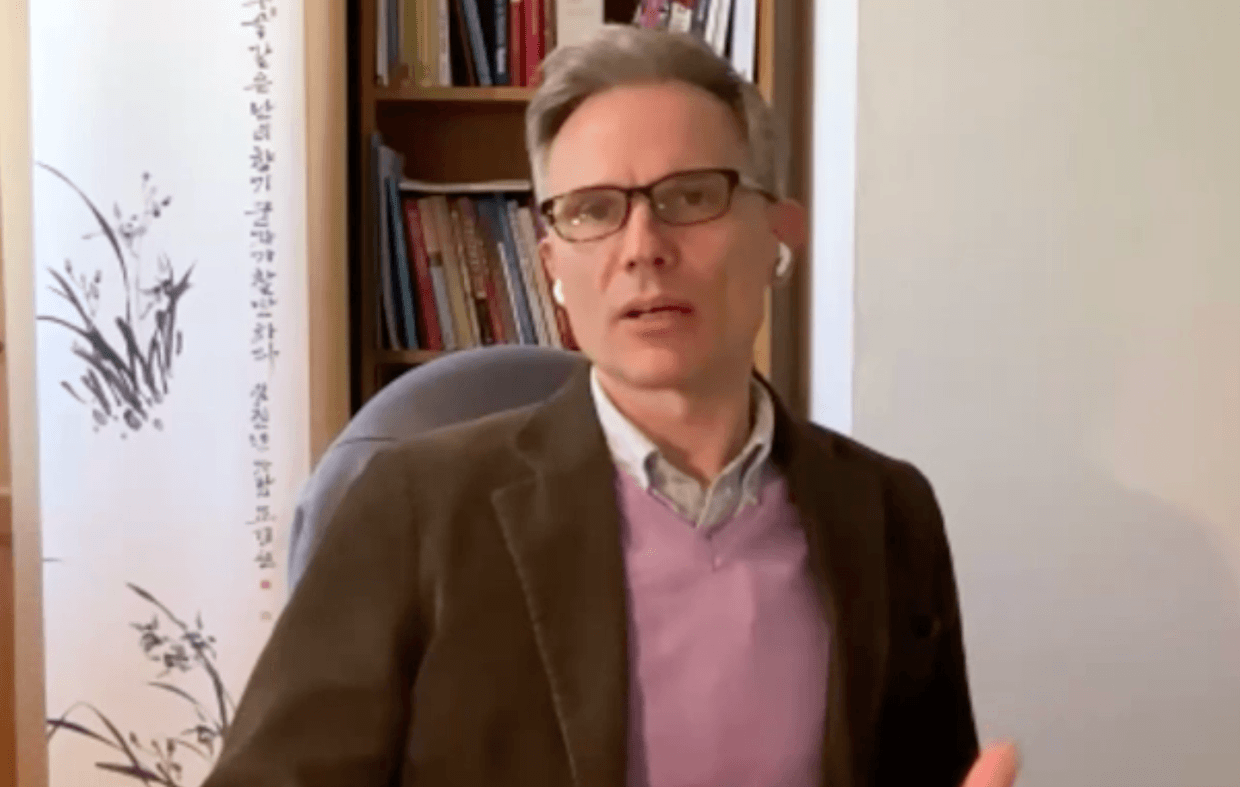
Professor Hannes Mosler’s presentation shifted the geographical focus from Europe and North America to East Asia, with particular attention to South Korea. Professor Mosler set out to examine whether the concept of populism, as commonly used in comparative political analysis, adequately captures recent political developments in East Asia. His answer was deliberately cautious: in most East Asian cases, he argued, the label “populism” is often invoked but rarely withstands rigorous analytical scrutiny. In the South Korean case, Professor Mosler proposed that the far-right framework offers a more accurate and empirically grounded lens for understanding democratic erosion.
Professor Mosler organized his presentation around two connected arguments. First, he argued that populism is frequently misapplied in East Asia. Although the term is used regularly in discussions of political leadership, electoral rhetoric, and democratic stress, many of these usages rely on anecdotal evidence, eclectic definitions, or locally specific political standards rather than internationally recognized criteria. Second, Professor Mosler contended that South Korea’s recent democratic challenges are better explained through the rise and institutional embedding of far-right politics than through populism. This distinction, he emphasized, matters not only conceptually but also practically, because democratic defense requires an accurate diagnosis of the threat.
Situating his argument in the broader East Asian context, Professor Mosler noted that liberal democracies such as Japan, Taiwan, and South Korea have received relatively little attention in the comparative literature on populism. This absence, he suggested, is not accidental. The cases are relatively weak when measured against strict definitional standards. Japan has produced figures such as Koizumi, Hashimoto, and Koike, whose theatrical styles and antagonistic rhetoric may appear populist on the surface. Yet Professor Mosler argued that they do not consistently articulate the core populist claim: the exclusive representation of a unified, morally pure people against a corrupt elite. Taiwan comes somewhat closer, especially given the role of China-related identity politics and cases such as Han Kuo-yu and the Sunflower Movement. Even there, however, Professor Mosler argued that the fit remains partial and risks conceptual stretching.
Far-Right Dynamics without Populist Mobilization
South Korea, in Professor Mosler’s account, presents the most revealing puzzle. Liberal presidents such as Roh Moo-hyun, Moon Jae-in, and Lee Jae-myung have often been labeled populists, but Professor Mosler argued that such labeling usually functions more as a political smear term than as an analytical category. Conservative and far-right opponents use “populism” to delegitimize progressive political actors, rather than to identify a clearly defined populist phenomenon.
The puzzle is especially striking because the demand-side conditions for populism appear to be present in South Korea. Professor Mosler identified high socioeconomic inequality, low institutional trust, acute intergenerational grievances, and an intensely connected digital public sphere as conditions that could plausibly sustain populist mobilization. Survey evidence also suggests widespread populist dispositions, including mistrust of elites and strong identification with popular sovereignty. Yet, importantly, Professor Mosler noted that anti-pluralist attitudes are not central to these dispositions. For this reason, he described South Korea as a case of “phantom populism”: despite frequent references to populism and the presence of enabling conditions, there is no clear supply-side crystallization in the form of populist parties, movements, or leaders.
Professor Mosler argued that democratic backsliding is nevertheless occurring in South Korea, but not through a populist mechanism. To explain this, he insisted on distinguishing between populism and the far right. While the two often appear together in cases such as Trump, Orbán, or Meloni, where far-right ideology provides the political content and populism supplies the rhetorical vehicle, South Korea presents a different configuration. In this case, Professor Mosler argued, the far-right ideological “cargo” is clearly present, but the populist “vehicle” is absent. The Yoon Suk Yeol administration and the People Power Party did not organize politics around the claim that a pure people must reclaim power from a corrupt elite. Rather, they framed opponents as security threats, pro-North Korean sympathizers, or enemies of the state. This, for Professor Mosler, reflects an authoritarian friend-enemy logic rather than a populist architecture.
Five Drivers of Democratic Erosion in South Korea
To clarify what is actually threatening democracy in South Korea, Professor Mosler identified five recent developments. The first was historical revisionism. He discussed the New Right movement, which for roughly two decades has sought to rehabilitate Korea’s colonial and authoritarian pasts by reframing them as periods of modernization and anti-communist heroism. This memory politics, Professor Mosler argued, challenges the democratization narrative that forms a key normative foundation of South Korean liberal democratic identity. For the far right, control over historical memory becomes a means of legitimizing its present political role.
The second development was anti-feminist mobilization. Professor Mosler highlighted the 2022 presidential campaign, during which Yoon Suk Yeol and the People Power Party targeted young men in their twenties and thirties through narratives of male victimhood, reverse discrimination, and the promise to abolish the Ministry of Gender Equality. This strategy mobilized gendered resentment and brought together disparate social groups in opposition to liberal egalitarian norms. Professor Mosler located this within a wider far-right pattern, where hierarchical social arrangements are defended against feminist and egalitarian challenges.
The third development was the martial law crisis of December 3, 2024, when President Yoon declared martial law. Professor Mosler noted that the Constitutional Court later ruled this action a violation of the Free Democratic Basic Order. From the perspective of far-right typology, he described this as a textbook movement from radicalism to extremism: a government operating at the edge of constitutional norms crossed into active subversion of constitutional order. The response of the governing party was equally significant. Professor Mosler argued that the People Power Party remained passive during the crisis, later sabotaged the constitutional process, refused meaningful apology, and maintained alliances with extreme-right civil society actors.
The fourth development concerned transnational far-right linkages. Professor Mosler emphasized the growing ties between South Korean far-right forces and counterparts in Japan and the United States. The Japanese connection, he argued, provides financial resources, cooperation, and intellectual fuel for historical revisionism. The American connection supplies financial, organizational, rhetorical, and symbolic resources. Professor Mosler situated these developments within broader patterns of far-right diffusion, describing them as trans-Pacific rather than transatlantic forms of ideological and organizational circulation.
The fifth development was the growing resemblance between South Korean far-right repertoires and Western far-right practices. Professor Mosler pointed to election denialism, xenophobic hate demonstrations, and violent attacks on judicial institutions as new phenomena in South Korea. He noted that such actions had previously been almost unthinkable in the Korean context, but now increasingly resemble patterns associated with Western far-right mobilization.
Rethinking South Korea through the Far-Right Lens
In his concluding reflections, Professor Mosler argued that shifting the analytical lens from populism to the far right clarifies the South Korean case on three levels. First, it unmasks the far right’s strategic use of populist rhetoric. Second, it sharpens the diagnosis of the actual threat: not a charismatic outsider undermining institutions from outside, but a far-right formation embedded within the democratic system, rewriting memory, normalizing extremism, and engaging in constitutional subversion. Third, it directs attention to structural and agency factors, including the cartelized party system, affective polarization, far-right intellectual infrastructures, and choices made by political actors such as Yoon Suk Yeol.
For populism research, Professor Mosler argued that South Korea demonstrates that populism and the far right do not always come together. The case invites scholars to ask which component is doing the explanatory work. In South Korea, he suggested, it is far-right content rather than populist rhetoric. For resilience research, Professor Mosler emphasized that standard safeguards—judicial independence, legislative oversight, and civil society mobilization—remain essential, and South Korea’s institutional response shows that they can still hold. Yet the far-right lens adds attention to slower and less visible battlegrounds: memory politics, normalization of extremism, and anti-liberal norms embedded in established parties.
Professor Mosler concluded that South Korea should not simply be added to existing maps of populism or the far right. Rather, it asks scholars to redraw those maps. Democratic erosion has more faces than current frameworks often recognize, and East Asia reveals some of them. For him, this requires a more differentiated analytical vocabulary, one that takes non-Western cases seriously on their own terms rather than forcing them into pre-existing categories. At the same time, he warned that regional differences should not obscure global convergence. Far-right repertoires are increasingly traveling across borders, and democratic actors will need more sophisticated transnational alliances to respond effectively.
Professor Maria Esperanza-Casullo: Populist Narratives and Democratic Backsliding — Perspectives from Latin America
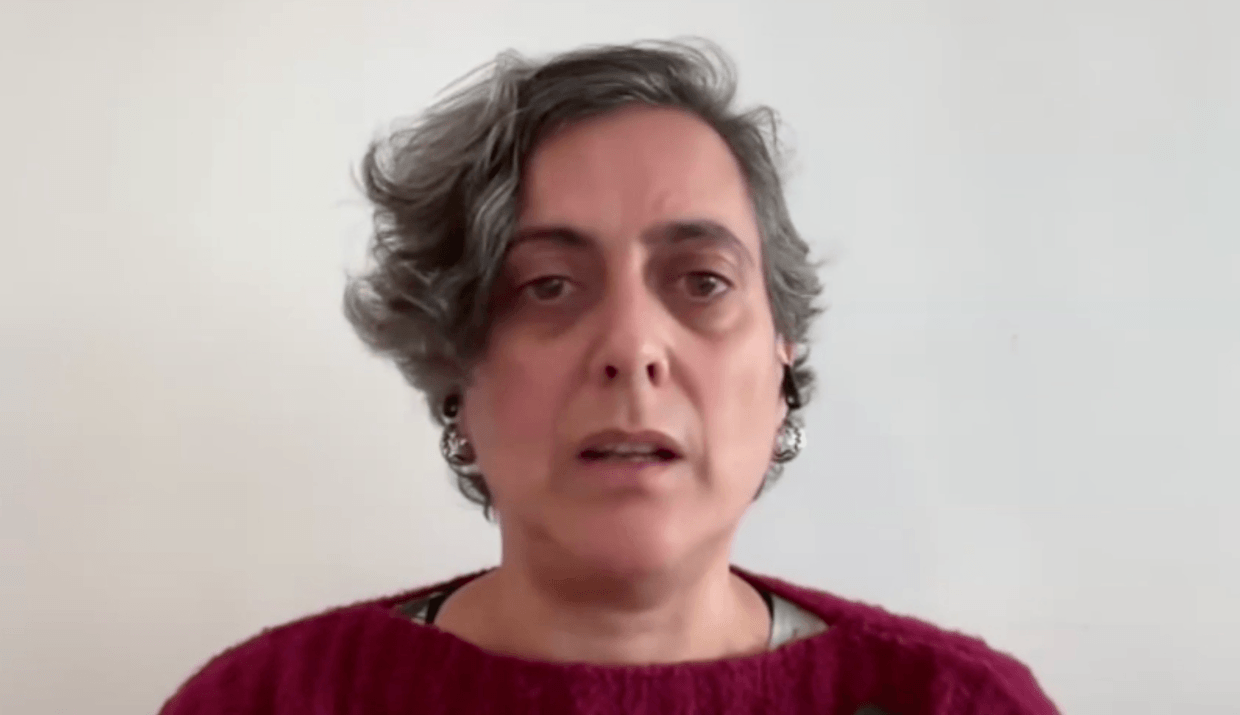
As last panelist of the panel, Professor Maria Esperanza-Casullo’s presentation offered a conceptually rich analysis of the current wave of right-wing populism in Latin America, situating it within both regional political history and wider global patterns of authoritarian-populist convergence. Building on the previous presentation, Professor Esperanza-Casullo began by noting striking parallels across regions, suggesting that contemporary societies increasingly appear to inhabit a shared political condition shaped by right-wing or outright populism. Her intervention focused on why, in the Latin American case, the term “populism” remains analytically useful, particularly when distinguishing the current wave of right-wing leaders from earlier forms of right-wing rule.
Professor Esperanza-Casullo argued that Latin America has experienced multiple varieties of right-wing politics. The current wave differs both from the technocratic right-wing governments of the 1990s and from the openly authoritarian regimes of the late 1970s. For this reason, she suggested, the concept of right-wing populism helps capture both continuity and novelty: the continuity lies in the broader right-wing orientation, while the novelty lies in the specific discursive, affective, and mobilizational forms adopted by contemporary leaders.
The Populist Myth and Shifting Narratives
A central theme of Professor Esperanza-Casullo’s presentation was the importance of studying populist discourse as an early warning system for democratic threats. She emphasized that right-wing populist leaders are often remarkably explicit about their intentions. Their discourse before coming to power already reveals the policies, enemies, and political transformations they intend to pursue. Yet she observed that much of the literature on democratic erosion tends to focus on what happens after such leaders take office, paying insufficient attention to the moment of movement formation. In this regard, Professor Esperanza-Casullo drew attention to the importance of populist discourse as a tool for constructing a political movement and framing the policies that will later be implemented.
Professor Esperanza-Casullo revisited her own earlier work on the “populist myth,” a concept she developed to analyze populist narrative structures. Although this framework was originally applied to left-wing populism, particularly the Latin American “pink tide” of the early twenty-first century, she argued that it remains highly useful for understanding contemporary right-wing populism. The populist myth, in her account, is not a syllogistic or technocratic discourse but a narrative structure built around a hero, a damage, a villain, and a promise of redemption. The populist “people” are defined as the totality of those who have been harmed by the same antagonist. Populism, therefore, is centrally organized around conflict with a common adversary.
In the earlier left-wing populist wave, Professor Esperanza-Casullo argued, the villain was typically located “above”: banks, landed interests, the International Monetary Fund, imperial powers, and socioeconomic elites. The promise of redemption was linked to sovereignty, redistribution, national dignity, and popular mobilization. The current right-wing wave retains the narrative structure of the populist myth but changes its content. The adversary is now largely cultural rather than socioeconomic. The villains are “gender ideology,” “cultural Marxism,” “wokeness,” feminists, migrants, Indigenous groups, queer people, academics, public servants, and other groups portrayed as beneficiaries of illegitimate privilege.
Professor Esperanza-Casullo stressed that this shift in the definition of the adversary also transforms the policy agenda. Whereas left populism was distributive and mobilizational, contemporary right-wing populism is pro-business, strongly pro-American, and increasingly connected to global networks of Trumpian conservatism. She highlighted the participation of Latin American right-wing populists in transnational forums and circuits, including conferences and gatherings in Madrid, Miami, Israel, and other locations. These networks, she argued, help circulate repertoires, resources, and ideological frames across national boundaries.
A particularly important part of Professor Esperanza-Casullo’s analysis concerned the figure of the populist hero. In the right-wing populist myth, she argued, the hero is dual: both the leader and the people. The leader often presents himself as a “wounded messiah,” someone who has been mistreated, marginalized, humiliated, or excluded, but who now stands near or within power as the vehicle of collective revenge. Javier Milei represents an especially clear example of this structure. His discourse highlights resentment, outsider status, and personal grievance as sources of political authenticity.
Hyper-Masculinity and the Entrepreneurial Hero
At the same time, the right-wing populist hero includes businessmen, billionaires, especially tech billionaires, and figures associated with capitalist entrepreneurship. Professor Esperanza-Casullo described an almost religious veneration of the entrepreneur within this discourse. She also emphasized the gendered dimension of this heroic universe: the celebration of the “manly man,” aggression, sacrifice, toughness, and the capacity to endure hardship. In this narrative, sacrifice is moralized. Economic pain is not merely an unfortunate consequence of reform but is framed as necessary, deserved, and purifying.
Professor Esperanza-Casullo examined Javier Milei as the most extreme current example of this populist configuration. In Milei’s discourse, she argued, one finds the themes of parodic hyper-masculinity, relentless aggression on social media, attacks on women and queer people, and the absence of any substantive promise of economic prosperity. Instead of promising technocratic competence, better governance, or state reform, Milei frames economic punishment as a moral project. Poverty, hardship, and sacrifice become part of a broader narrative of cleansing and redemption.
Professor Esperanza-Casullo then situated the rise of this new right-wing populism within the failure of moderate center-right projects in Latin America during the 2010s. Governments and leaders such as Michel Temer in Brazil, Mauricio Macri in Argentina, and Sebastián Piñera in Chile did not succeed in consolidating a stable moderate right-wing alternative. Their failure opened space for more radical right-wing forces that thrive on polarization, aggression, and cultural antagonism.
She further argued that these movements “punch downward” rather than upward. Unlike left populisms that targeted socioeconomic elites, contemporary right-wing populists direct hostility toward feminists, Indigenous peoples, migrants, queer communities, public servants, academics, scientists, and vulnerable groups, including people with disabilities. This downward aggression is central to their political appeal. Performances of aggression, cultural vulgarity, and hyper-masculinity become not incidental but constitutive features of the movement.
New Actors and Fragmented Political Arenas
Professor Esperanza-Casullo also noted the emergence of new political actors supporting these movements. These include Pentecostal networks, young men mobilized through social media, and the manosphere. These actors help reshape political alignments and reinforce the affective appeal of resentment, anti-feminism, and cultural backlash. Politically, however, she suggested that these movements may not be seeking long-term hegemonic party-building in the older Peronist sense. Rather, they may be adapting to fragmented political systems, thriving in conditions of chaos, low participation, and party disintegration, where winning elections with relatively limited vote shares becomes possible.
Turning to democratic threats, Professor Esperanza-Casullo argued that the danger posed by contemporary right-wing populism in Latin America differs from older authoritarian seizures of power through military coups. The primary threat is the creation of an indirect climate of violence and fear. Through aggressive discourse, stochastic violence, and the mobilization of followers, opposition figures are harassed, hounded, intimidated, or pushed out of public life. The state itself may be used to target opponents, not necessarily through overt dictatorship, but through intimidation, exclusion, and fear.
A second threat is the formation of authoritarian collaborative networks that channel resources, strategies, and repertoires toward aspiring despots across the region. A third is what Professor Esperanza-Casullo called “populist learning by elites.” Whereas Latin American economic elites were often anti-populist in the twentieth century, many have now learned to support and benefit from populist politics. Rather than backing technocrats with elite credentials and ties to economic institutions, business elites are increasingly willing to support figures like Milei or Bolsonaro, even when these leaders openly contribute to democratic erosion.
In closing, Professor Esperanza-Casullo outlined possible responses. First, she stressed the importance of empowering women and youth. Across the region, she argued, women constitute the core of resistance against this form of right-wing populism, as polling consistently shows. Yet this creates a structural challenge because women remain less empowered within political systems. Strengthening their voices and political capacity is therefore essential for democratic defense.
Second, she argued that electoral competition remains viable in much of Latin America and should still be prioritized. Courts, by contrast, are often highly politicized and polarized, and therefore cannot always serve as reliable venues for democratic resistance, except in specific cases such as Brazil.
Finally, she emphasized the need to confront global networks of authoritarian collaboration. Pro-democracy and progressive actors lack an equivalent to CPAC or to the transnational networks of billionaires funding right-wing populist convergence. Professor Esperanza-Casullo concluded that scholars and democratic actors must recognize that policy convergence among these leaders is being driven from above and that nationally bounded comparative studies are no longer sufficient to understand or counter the phenomenon.
Discussions
The discussion at the end of the fourth panel extended the comparative scope of the session by drawing together the presentations on Turkey and the United States, South Korea and East Asia, and Latin American right-wing populism. Moderated by Professor Reinhard Heinisch, the exchange returned to the panel’s central premise: although democratic backsliding appears as a broadly shared trend, its forms, vocabularies, and mechanisms differ significantly across regions. Professor Heinisch emphasized that these differences concern not only empirical developments but also the concepts through which scholars interpret them, particularly the categories of populism, far-right politics, authoritarianism, and democratic resilience.
The first substantive question came from Professor İbrahim Öztürk, who addressed Professor Mosler’s argument about the limited applicability of populism to East Asia. Drawing on his own interest in Japanese political economy and referring to the work of Axel Klein on Japanese politics, Professor Öztürk noted the claim that the “problem” of populism in Japan has often been its absence. Yet he also pointed to recent developments, including the emergence of a new party using populist rhetoric and the leadership of Prime Minister Takaichi, whom he described as right-wing-oriented and populist-leaning. He asked Professor Mosler to comment on whether these developments suggest that Japan may be moving closer to the kinds of populism observed elsewhere.
Professor Hannes Mosler responded by first clarifying that he was not a Japan specialist, while acknowledging that he could comment based on his collaboration and reading. He emphasized that Japan and Taiwan differ from South Korea, and that his argument was not that populism is entirely absent in East Asia. Rather, his point was that the diagnosis depends heavily on how populism is defined and operationalized. Populism, he noted, should not be treated as a simple binary category. Political actors may display partial or limited populist features without meeting the full criteria of populism as used in comparative scholarship. In this sense, Japanese cases such as Takaichi or smaller parties may show certain populist rhetorical tendencies, but they remain analytically distinct from the more fully developed populist formations commonly discussed in Europe, North America, or Latin America.
Professor Mosler concluded that there is potential for more recognizable forms of populism to develop in Japan or East Asia, but that such developments remain limited at present. For now, he argued, the more pressing threat is the far right rather than populism as such. This distinction matters because democratic defense requires accurate diagnosis. If the actual problem is far-right revisionism, anti-liberalism, or authoritarian radicalization, then framing it as populism may obscure the nature of the threat and weaken the design of appropriate responses.
Opposition Fragmentation under Authoritarian Pressure
The discussion then turned to Turkey and the United States through a question by Dr. Bulent Kenes addressed primarily to Professor Barkey. Dr. Kenes observed that Turkish society appears divided into ideological, social, and communal “neighborhoods” that exist in parallel universes, with limited cooperation among them. He suggested that even those who suffer under the current system continue to “otherize” other victims of the system, making it difficult to build the kind of broad opposition coalition seen in Poland or Hungary. He asked whether a similar situation exists in the United States and how such polarization among the opponents of authoritarian-populist systems might be overcome in both Turkey and the United States.
Professor Henri Barkey first interpreted the question as asking whether groups in the United States can coalesce in ways that seem difficult in Turkey because of the depth of polarization. Turning briefly to Turkey, Professor Barkey noted that the Kurdish question currently produces an unusual political configuration. The Kurds are “somewhere in between”: on one hand, they seek a peace process with the government; on the other, they clearly do not agree with the government and face undemocratic treatment. Professor Barkey suggested that five years earlier, the Kurds and the main opposition might have been more able to collaborate, whereas today the political terrain is more ambiguous.
By contrast, Professor Barkey argued that the United States differs because opposition can emerge not only through political parties but also through institutions. The federal system itself creates forms of resistance. State-level actors, including Republicans in federal states, may resist Trump’s pressures even if they do not formally join the Democratic opposition. Thus, institutional differentiation provides additional channels of opposition that Turkey lacks. Professor Barkey also suggested that the extent of defections from the governing coalition in the United States may be greater than is visible. He pointed to Trump’s policy reversals and contradictions, especially the fact that a leader who claimed to oppose wars is now associated with conflicts producing serious economic consequences. In his view, these developments may be weakening the ruling coalition, with the depth of this weakening likely to become clearer in upcoming elections.
Dr. Kenes then clarified that his concern was also about Turkey: whether Professor Barkey agreed that the opposition itself continues to reproduce otherization among those already excluded by the regime. He mentioned reservations within the CHP toward Kurds, so-called Gülenists, and Muslim groups not aligned with Erdoğan. Professor Barkey responded by emphasizing the scale of repression in Turkey. He argued that the current level of repression indicates that Erdoğan knows he has lost much of his support base. People can find themselves jailed for merely saying something, and may remain in detention for long periods before trial. For Professor Barkey, this level of repression suggests fear of political defeat. Diverse groups may remain divided, but many are likely to vote against Erdoğan in one way or another. He also noted that Hungary may have reinforced Erdoğan’s awareness of the risks faced by entrenched leaders.
Professor Barkey further highlighted the impact of Erdoğan’s long tenure. After 24 years in power, an entire generation of younger adults has known no other leader in their conscious political life. This may produce fatigue that is difficult to measure empirically but politically significant. Professor Barkey suggested that Erdoğan’s increasing repression reflects this exhaustion and the weakening of his coalition. Yet because Erdoğan remains in power and controls public discourse, the full extent of coalition disintegration is difficult to observe.
Women as a Counterforce to Populist Politics
Professor Kent Jones then shifted the discussion to the role of women in populist politics. Speaking as a non-specialist in populism but from an interest in its sociological dimensions, Professor Jones asked whether women play a systematic role either in supporting or opposing populism. He noted that cultural populism often politicizes women’s roles, while many populist leaders project strong masculine or macho styles. Referring to President Trump’s war against Iran, Professor Jones suggested that this may have generated particular opposition among women who did not believe they were voting for a warmonger. He asked whether there is a systematic way to study populism through the lens of feminism and gender.
Professor Maria Esperanza-Casullo answered first, framing her response around a sociological and quantitative observation. In every country she follows, she argued, women constitute the main base of opposition to right-wing populist governments. In Argentina, depending on the poll, there is a 17- to 20-point gender gap in support for Milei. Similar patterns appear in Brazil, Colombia, and Chile. The central question, for Professor Esperanza-Casullo, is how this gendered opposition can be politically leveraged.
Professor Esperanza-Casullo emphasized that while women may form the strongest base of democratic resistance, they participate less in politics, occupy fewer positions of power, and often have their voices suppressed. She noted that President Milei engages in intense harassment of female critics, including journalists and public figures, in ways that male critics do not experience to the same degree. Yet she also stressed that right-wing populist movements do include women leaders. Indeed, she observed that being an anti-feminist woman can be a viable political career within such movements.
For Professor Esperanza-Casullo, these developments pose a challenge to theories of political representation. Classical theories of political cleavages did not anticipate political systems structured so explicitly around gender as a cleavage. She raised the possibility that parties may increasingly be divided along gendered lines, with some parties attracting women and pro-women constituencies while others are disproportionately supported by men. This cleavage, she noted, cuts through private life itself, including families in which women and men vote for opposing political projects. She concluded that gender must be made central both to analysis and to new forms of democratic political practice.
Professor Öztürk then posed a question to Professor Esperanza-Casullo concerning Brazil and the transition from Bolsonaro to Lula. He argued that Lula’s success depended crucially on coalition-building, including the mobilization of civil society, elements of the top bureaucracy, and major opposition parties to ensure a peaceful power transition. Yet he suggested that coalition-building, while necessary, is not sufficient. It must be combined with charismatic leadership, convincing and legitimate rhetoric capable of unifying citizens, and an ability to persuade voters that the national interest can be protected. He asked Professor Esperanza-Casullo to reflect on these additional requirements for peaceful transition after authoritarian or populist rule.
Professor Esperanza-Casullo agreed with Professor Öztürk’s interpretation and stressed that the Brazilian case is difficult to replicate precisely because it involved such a rare combination of factors. Coalition formation was crucial, but so was the fact that segments of the business elite turned against Bolsonaro, something she noted is not yet visible with Milei. The presence of a charismatic leader such as Lula was also indispensable. At the same time, Professor Esperanza-Casullo suggested that the region may be moving toward a more permanent structure of competition between a populist left and a populist right. This raises the question of whether Latin American party systems may stabilize around a recurring confrontation between two populist coalitions rather than returning to previous patterns of party competition. She noted that this was an unexpected development and remains analytically unresolved.
Converging Pressures, Divergent Outcomes
Professor Heinisch then intervened with a broader comparative reflection tying together the panel’s regional cases. He asked what is fundamentally driving the phenomena under discussion. In Europe, he noted, explanations often point to modernity, globalization, modernization, and fears among social groups that their futures are worsening. In Latin America, older theories linked populism to modernization pressures and institutional incapacity, where leaders appealed directly to the masses as savior figures. He wondered whether contemporary politics still revolves around expectations of salvation, now expressed through competing left-wing and right-wing saviors.
Professor Heinisch contrasted this with Asia, where some ingredients common in other regions—such as immigration or similar patterns of societal marginalization—appear less central. In Professor Mosler’s account, the South Korean case is better understood through the far right than through populism, with some elements also infused through external or transnational connections. Professor Heinisch therefore asked whether the cases share common ingredients or whether they are fundamentally different stories developing in parallel under loosely similar external conditions.
Professor Hannes Mosler responded by suggesting that there is a strong common denominator: the global polycrisis of the last decade. Around the 2010s, and especially since the period associated with the fourth wave of far-right or populist politics, multiple global crises have exerted pressure on national political systems. These crises create common stress across countries, but each national context reacts differently depending on its own institutions, histories, party systems, and social structures. Some reactions therefore resemble one another, while others diverge significantly. Professor Mosler argued that the external factor has increasingly become internalized, shaping domestic political dynamics in different ways. The result is both convergence and variation: shared pressures, transnational connections, and regionally specific outcomes.
Conclusion
The deliberations of Panel 4 underscore a central paradox in contemporary debates on democratic backsliding: while the phenomenon appears globally pervasive, its drivers, expressions, and trajectories remain deeply conditioned by regional contexts and institutional configurations. Under the moderation of Professor Reinhard Heinisch, the panel illuminated both convergence and divergence, demonstrating that democratic erosion cannot be adequately captured through a single analytical lens. Instead, it requires a multidimensional framework attentive to personalistic leadership, ideological transformations, institutional resilience, and transnational linkages.
Across the contributions, a recurring theme was the tension between global structural pressures and locally mediated political outcomes. Professor Henri J. Barkey’s analysis highlighted the centrality of personalism in shaping authoritarian trajectories, showing how leaders strategically manipulate institutions to consolidate power. Professor Hannes Mosler’s intervention complicated dominant narratives by demonstrating that the analytical category of populism does not travel seamlessly across regions, and that in some contexts—such as South Korea—the far right provides a more precise explanatory framework. Professor María Esperanza-Casullo, in turn, revealed how populist narratives in Latin America operate through evolving mythologies that redefine antagonisms and reshape political alignments.
The panel also pointed to emerging dynamics that cut across regions, including the role of transnational networks, the politicization of gender, and the fragmentation of traditional party systems. At the same time, it emphasized that democratic resilience remains contingent upon context-specific factors, ranging from institutional safeguards to coalition-building capacities and social mobilization.
In sum, Panel 4 highlighted the need for greater conceptual precision, comparative sensitivity, and transnational awareness in the study of democratic backsliding. It suggested that future research and policy responses must move beyond one-size-fits-all explanations, instead engaging with the complex interplay between global pressures and regional political realities shaping the contemporary crisis of liberal democracy.