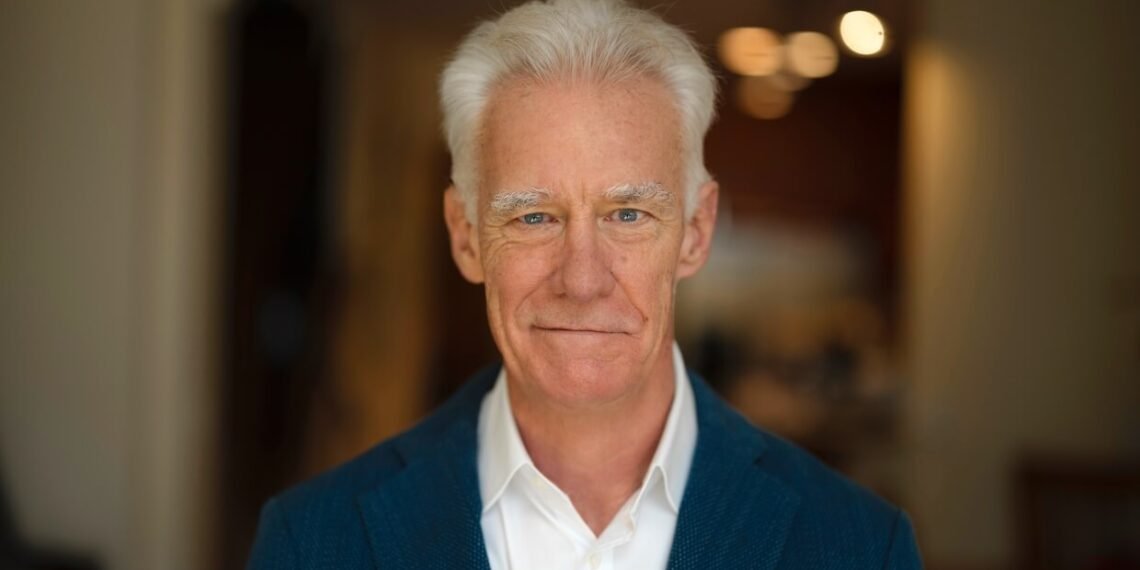
Professor Stephan Haggard, one of the world’s leading scholars of democratic backsliding and authoritarianism, argues that the survival of democracy depends not only on constitutional safeguards but also on sustained public commitment to democratic institutions. In this timely ECPS interview, he examines how populism, polarization, judicial erosion, and attacks on electoral integrity are reshaping democratic politics across the globe. Distinguishing between populism as a “thin ideology” and democratic backsliding as an institutional process, Professor Haggard warns that elected leaders increasingly challenge democracy from within. The conversation explores the weakening of horizontal checks, the rise of anti-institutional rhetoric, the diffusion of illiberal strategies across borders, and the growing importance of democratic resilience. As he cautions, democracy faces its greatest danger when populist movements cease to respect rights, the rule of law, and the integrity of elections.
Interview by Selcuk Gultasli
At a time when democratic institutions are under mounting pressure from populist movements, partisan polarization, and growing distrust in public authority, understanding how democracies erode—and how they endure—has become one of the most urgent challenges in political science. Few scholars have contributed more to this debate than Professor Stephan Haggard, Research Professor and Lawrence and Sallye Krause Distinguished Professor Emeritus at the University of California San Diego. Over a distinguished career spanning comparative politics, political economy, authoritarianism, and democratic governance, Professor Haggard has produced some of the most influential scholarship on democratic transitions, institutional change, and regime durability.
In this wide-ranging interview with the European Center for Populism Studies (ECPS), Professor Haggard reflects on the relationship between populism, democratic backsliding, judicial erosion, polarization, and the resilience of democratic institutions. Challenging simplistic understandings of democratic decline, he argues that contemporary autocratization increasingly unfolds not through military coups or abrupt regime collapses, but through gradual institutional weakening carried out by elected leaders operating within formally democratic systems.
One of the interview’s central themes is the fragility of democratic institutions when public support begins to erode. As Professor Haggard observes, “courts operate as checks only to the extent that there is support for courts operating as checks,” emphasizing that “democratic institutions survive only when citizens support them.” For him, the durability of democracy ultimately depends not only on constitutional design, but also on the willingness of political actors and citizens alike to defend the norms and institutions that sustain democratic rule.
Throughout the discussion, Professor Haggard distinguishes between populism as a political ideology and democratic backsliding as an institutional process. Drawing on Cas Mudde’s concept of populism as a “thin ideology,” he argues that populism becomes dangerous when commitments to majoritarian rule are accompanied by efforts to weaken rights, judicial independence, oversight of institutions, and other components of liberal democracy. “Populism is a kind of motivating ideology that can drive backsliding,” he explains, while democratic erosion manifests itself through concrete institutional consequences.
The interview also explores the growing challenge posed by anti-institutional rhetoric, attacks on electoral integrity, transnational networks of illiberal cooperation, and the emergence of authoritarian regional organizations that seek to reshape global governance. Particularly striking is Professor Haggard’s candid assessment of the contemporary United States. Reflecting on the resilience of advanced democracies, he acknowledges that he is “beginning to have doubts”about earlier assumptions that consolidated democracies are largely immune from authoritarian drift. Indeed, he remarks that if asked whether the United States remains a democracy, he would “have to scratch [his] head over that question.”
At once sobering and illuminating, this interview offers a powerful examination of the institutional foundations of democracy and the conditions under which they can be preserved—or lost.
Here is the revised version of our interview with Professor Stephan Haggard, lightly edited for clarity, readability, and publication.
Populism and Backsliding Should Be Seen as Distinct Phenomena
Professor Haggard, welcome. To begin, in your recent work on democratic backsliding, you argue that democratic erosion unfolds through identifiable institutional pathways rather than abrupt regime breakdowns. To what extent has contemporary populism become the primary vehicle through which democratic backsliding is advancing across diverse contexts such as the United States, Hungary, India, Turkey, and Latin America?
Professor Stephan Haggard: Actually, your question made me think about the relationship between populism and backsliding in a more comprehensive way. Populism, to me, is a form of what Cas Mudde calls a thin ideology. And I am sure your center has done work in that vein. What I mean by that is something quite particular: it includes a belief that democracy should be majoritarian in form. By majoritarian democracy, I mean the simple concept that the people should rule, the public should rule, and that rights and horizontal checks should be minimized in the interest of popular sovereignty.
Now, that is related to the concept of backsliding insofar as believers in this kind of majoritarian conception of democracy see fit to dismantle things that we would consider components of liberal democracy in order to achieve their objectives. To make a long-winded answer short, I would say that populism is a kind of motivating ideology that can drive backsliding, but it should be seen as somewhat distinct from it, with backsliding being the institutional consequences of governments that hold these populist beliefs.
Courts Cannot Function as Checks Without Public Backing
Many contemporary populist leaders portray themselves as the authentic representatives of “the people” against allegedly corrupt elites and institutions. Why have legislatures, courts, and oversight bodies proven particularly vulnerable to populist attacks despite their central role in democratic accountability?
Professor Stephan Haggard: Again, what I find so fascinating about discussions of populism and backsliding is that they get us to the core components of how democracies survive and what we mean by democratic rule. Courts operate as checks only to the extent that there is support for courts operating as checks. If that support dwindles or diminishes, it becomes harder for them to play that function. This is true across the institutions that manage elections, it is true of courts, it is true of ombudsmen, it is true of anti-corruption agencies, and so forth. So, my answer to this question is that if you have populist movements that are robust and willing to achieve their goals by attacking these components of liberal democracy as we understand them, then it becomes difficult for those institutions to act as checks.
Let me say one thing about the incumbents of these offices as well, because this is something that I think deserves more research. In the United States, for example, in the electoral monitoring bodies, we have found that the individuals who staff those bodies are frequently quite committed to their democratic function. That has itself acted as a check, insofar as the personnel in these institutions have remained committed to their fundamental goals and thus supported them and made them viable. So that is another interesting area of research: the level of personnel, and whether they are committed to the democratic project or not.
Backsliding Has Become the Contemporary Route to Authoritarianism
Classical theories of democratic breakdown focused on military coups and overt authoritarian seizures of power. How has the rise of electoral populism transformed our understanding of democratic erosion and regime change in the twenty-first century?
Professor Stephan Haggard: I would see coups and backsliding as two quite different routes to authoritarian rule, and there may be others. For example, Steven Levitsky and Lucan A. Way have recently published a very important book on authoritarian durability, in which they argue that social revolution is one path to authoritarian durability. But in general, over the course of the post-World War II world the main route to authoritarian governance historically was the coup. It was the military that challenged democratic rule, and it would typically do so quite suddenly. Military leaders would walk in front of a bank of microphones and say, “Congress is closed, the courts are closed, political parties are banned. The press is now going to be censored and controlled.”
What is interesting is that, in general, this form of attack on democracy diminished in incidence over the post-war period.But it has not gone away altogether. We had a coup in Thailand in 2014 and in Myanmar in 2021, and we have seen a spate of recent coups in West Africa. We also have some hybrid forms, which are interesting. For example, the Korean case is quite interesting. That involved a declaration of martial law that was very short-lived. It was made by a civilian but then implicated the military and was ultimately rolled back.
Basically, my answer to your question is that these are two routes by which democracy is challenged. In some cases, the military is not fully under civilian control and ends up acting autonomously. More recently, however, backsliding seems to be the route whereby elected officials—duly elected officials, I should add, that is, officials elected through free and fair electoral processes—nonetheless attack the components of democratic rule.
Polarization Is Both a Cause and a Consequence of Backsliding
Your work emphasizes the importance of polarization in democratic backsliding. To what extent is polarization an unintended byproduct of contemporary politics, and to what extent is it deliberately cultivated by populist leaders seeking to weaken institutional constraints and consolidate executive power?
Professor Stephan Haggard: I took this question as suggesting two somewhat different issues, so let me address each of them. The first, which is explicit in your question, is a cause-and-effect question: Is polarization a cause of backsliding, or do backsliding leaders advance the cause of polarization? I think the answer is clearly both. We do see an intensification of polarization as a prelude to backsliding. But we also see political leaders—from Erdogan to Trump and many others in between—focusing on dividing publics in particular ways, casting society into categories such as the real people and the enemies of the people, and so on. So, we certainly observe that mechanism at work.
However, there is another question that Bob Kaufman and I struggled with while writing Backsliding, namely whether there is some common taproot underlying the kind of polarization we are currently seeing across the world. Our answer to that question was that it was difficult to find one. Susan Stokes has recently argued that inequality is really a kind of taproot of both polarization and backsliding. But we found a variety of different ways in which publics polarize, and not only over economic issues. They polarize over religion, for example, in Turkey. They polarize over cosmopolitan values in Russia and Eastern Europe. And they polarize around left-right issues in countries such as Venezuela, Bolivia, and Ecuador.
So, the whole question of polarization is certainly not something novel in Bob’s and my work on backsliding. But we do not see a single line of polarization that applies across all of these cases. Rather, polarization can arise around a variety of different social cleavages.
Control of Courts and Media Has Powerful Downstream Effects
Populist governments frequently justify attacks on courts by claiming that judges obstruct the popular will. In light of your work on judicial backsliding, do you see the judiciary as the central battleground in the contemporary conflict between populism and constitutional liberalism?
Professor Stephan Haggard: I wouldn’t say that it is the central institution where these contests are playing out, but I certainly think that two institutions deserve particular mention because they have what we might call downstream causal effects. By that, I mean that if you can get a hold of the judiciary, and if you can control the press, then you are able to propagate your narratives to the public, and you are able to remove a limitation on executive discretion.
So, I don’t think that the judiciary is the only locus of this backsliding narrative, or of the institutional changes associated with backsliding. But I do think that it is particularly important because, if backsliding leaders can gain control of the courts, it becomes possible for them to undertake other actions that contribute to their backsliding projects. I should say that I am obviously preoccupied with my own country, where it seems that backsliding is well entrenched.
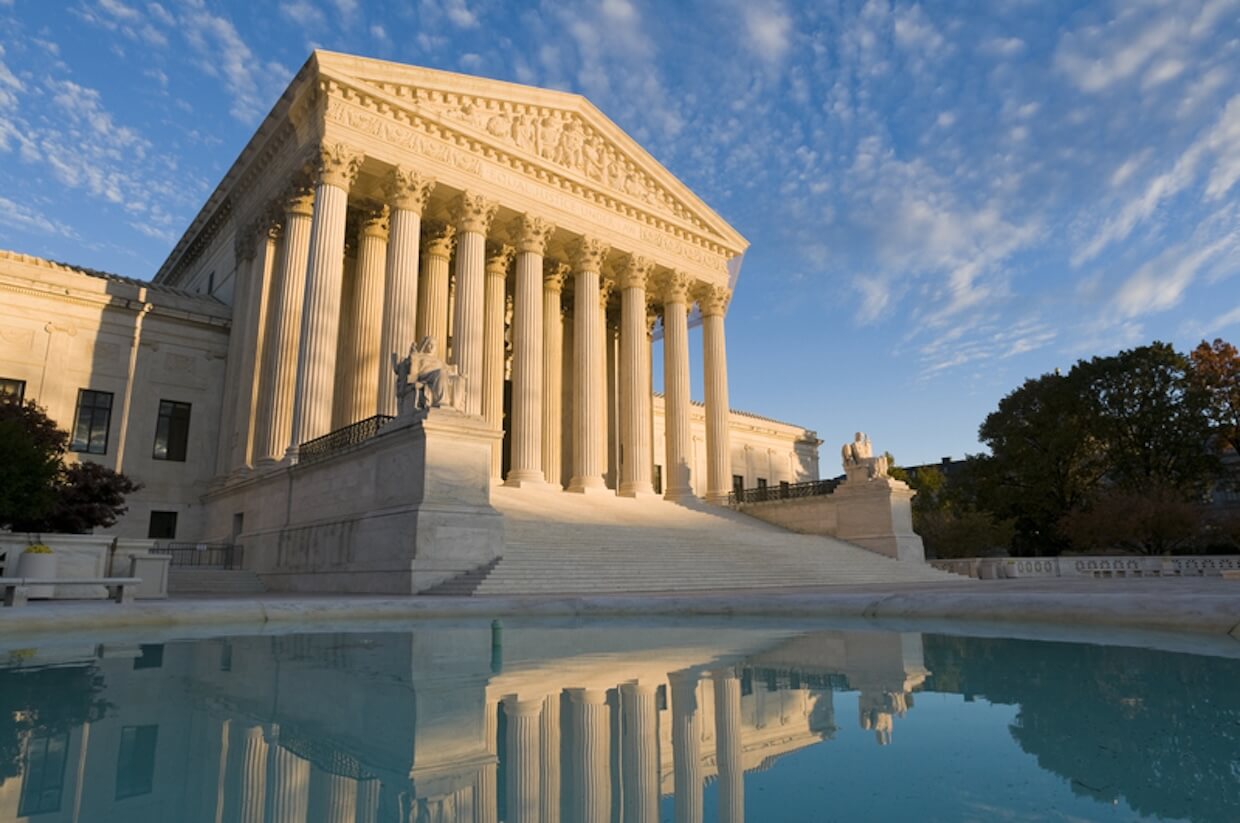
There is now a quite significant debate emerging about the courts because, initially, it was believed that the courts were a block to Trump’s ambitions, for example with respect to the elections in 2020. But now, there are growing doubts about whether the Supreme Court is an adequate backstop against those ambitions. The ruling, which effectively grants him quite substantial immunity with respect to some actions he undertakes in the Oval Office, has cast doubt on whether the High Court can be fully trusted, even though lower courts seem to be standing up to the administration.
Oversight Failures Enable Executive Encroachment on Courts
Your research suggests that declining horizontal constraints are more important than simple legislative majorities in explaining judicial backsliding. Does populism become particularly dangerous when electoral victories are combined with the systematic dismantling of institutional veto points?
Professor Stephan Haggard: I’m really glad that you were willing to give some attention to this work I’ve done with Lydia Tiede on the subject of judicial backsliding, because we were quite excited about that project and about focusing on it in a relatively narrow way.
That paper was trying to make a relatively narrow analytic point, which is the following: there are two ways in which legislatures might play a role in undermining the independence of the courts. One is through their control over statutes. They can rewrite laws governing the judiciary in ways that reduce its independence. They can also allow for the firing of judges. They can give the executive more power in the appointment of judges and in the firing of judges.
So, legislatures can act in that way. But we also found that the dismantling of horizontal checks on the executive, in the form of legislative oversight, played a distinctive role in the process of judicial backsliding. And by the way, when I use the term judicial backsliding, I am referring simply to a reduction in the independence of the courts.
We have a great deal of literature that talks about the sources of judicial independence, but much less that addresses the conditions under which judicial independence might be undermined. And we were simply making the point that legislatures play a role in that regard, either because they have anti-judicial majorities or because their oversight of the executive allows it to meddle in the courts in ways that are adverse to democracy.
Policy Change Is Democratic; Institutional Dismantling Is Not
Populists often frame democratic politics as a struggle between a virtuous people and corrupt elites. How can ordinary people distinguish between legitimate democratic majoritarianism and populist projects that gradually undermine liberal-democratic institutions in the name of popular sovereignty?
Professor Stephan Haggard: The answer to this question is both simple and complicated. It is simple in the following sense: populist projects have adverse effects on democracy when the argument is made that democratic institutions have to be partly dismantled in order to achieve the populist objective. That is really the key point. Let’s take a left-wing example. I could say that I’m Chávez. I could say that I think the Venezuelan government should be engaged in a more radical program of redistribution. Well, that’s fine. That is what democracy is. Democracy is a contest between different political ideas.
But it is quite different to say that we should have a radical redistributive program and to say that, in order to achieve it, I am going to eliminate Congress. Or that, in order to achieve it, I am going to resort to presidential executive orders or executive discretion. That is really where the paths diverge. Does the achievement of the populist objective require that democracy be modified or not? Because it is at that point that the arguments of the populists become worrying.
Anti-Bureaucratic Populism Risks Weakening State Capacity
Populist leaders frequently claim that independent institutions—from courts and central banks to universities and the media—constitute an unelected “deep state” obstructing the will of the people. How important is this anti-institutional discourse in facilitating democratic backsliding, and does it represent a common pattern across contemporary cases of autocratization?
Professor Stephan Haggard: Of all the questions you ask me, Selcuk, this is the one that probably deserves more attention among students of contemporary democracy. Let me try to frame it in a way that might be of interest to your readers. Contemporary advanced industrial states, of necessity, are engaged in complex efforts to regulate public policy in areas that rely heavily on scientific evidence. And the question here—and we are seeing this attack in the United States—goes something like this: Can the legislature delegate to the bureaucracy the process of writing rules that are often extremely technical in their design?
For example, a legislature might want to clean up water pollution. But doing so requires a whole series of technical actions and regulations that would restrict what polluters can do. The radical attack on the modern state is taking the form of arguing that those powers have to be very specifically delegated from Congress to the bureaucracy. My own thinking is that if we really go far down that route, we are going to be in significant trouble, because we will have court’s ruling on highly technical matters on which they really do not have the understanding or the capacity to make judgments.
So, the “deep state” argument, to me, is quite troubling because it basically argues that legislatures cannot delegate to bureaucracies or can only delegate in a very limited way. This is a particular ideological program aimed at dismantling not just the deep state, but what we think of as the contemporary state apparatus in advanced industrial democracies.
The United States Is Testing the Limits of Democratic Resilience
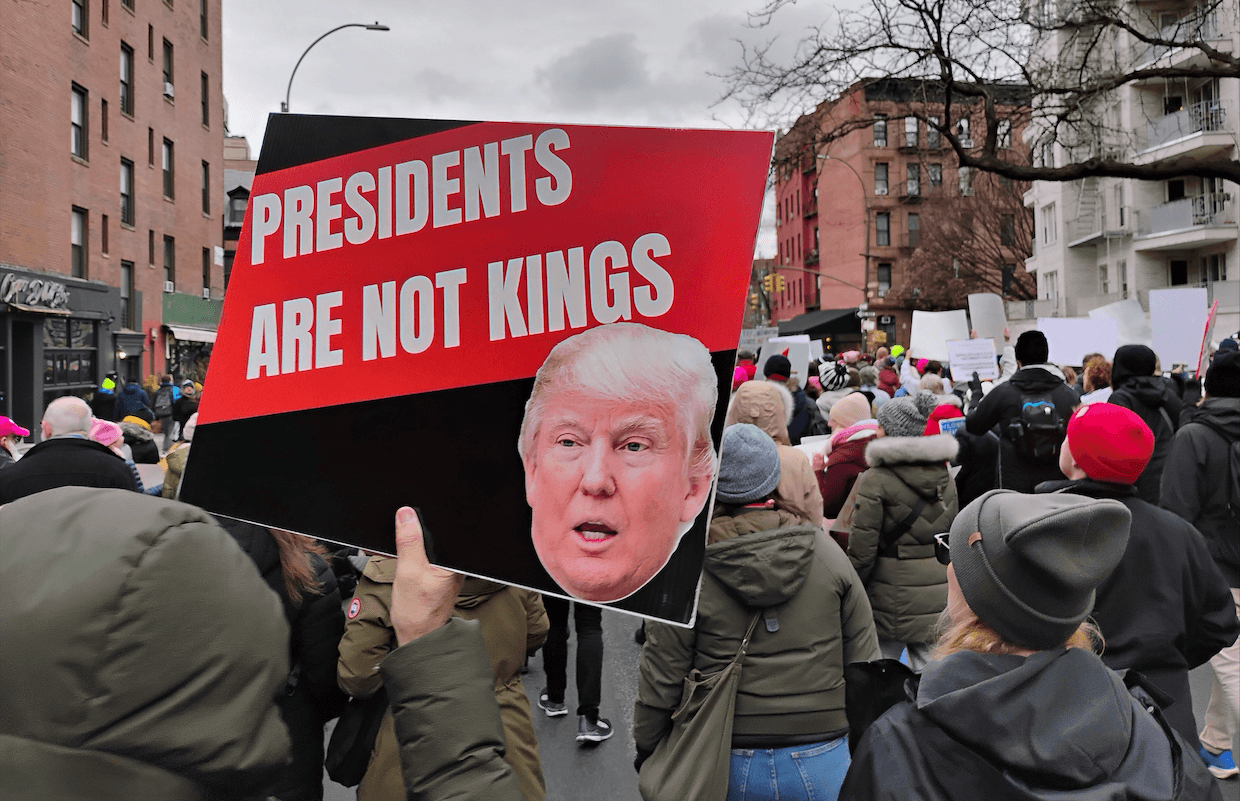
Recent years have seen increasing interaction between populism and what some scholars call “competitive authoritarianism.” Do you view populism primarily as a pathway into competitive authoritarian rule, or can populist movements remain compatible with democratic contestation under certain institutional conditions?
Professor Stephan Haggard: Let me start with the second part of the question, because I want to make sure that my position on this is clear. In a democracy, you are going to have competing ideas, and populist movements are going to emerge. They have every right to contest in the public sphere, just like anyone else. We have right-wing populists, and we have left-wing populists in the United States, such as Bernie Sanders. Donald Trump also has a right to run for political office and contest elections on a right-populist platform. We cannot restrict competition. Democracy is about that kind of political contestation.
But the question is whether those populist programs become attached to political demands for revisions in the nature of democratic rule. Under those circumstances, it is quite possible for populist movements to become anti-democratic in character.
Now, in the book I wrote with Bob, we made the prediction that advanced industrial democracies—or those that had become more extensively consolidated—would be less likely to descend into competitive authoritarian rule. We might think of consolidation as a temporal process involving many years, or as a reflection of the strength of institutions such as the courts. But I am beginning to have my doubts. If I were asked right now whether the United States is a democracy, I would have to scratch my head over that question.
I am not completely convinced that we are at the moment, because so much interference has occurred with respect to key institutions—or at least so many attempts have been made to subvert key institutions, such as the integrity of the electoral system—that there are now sincere doubts about whether the Republican Party in the United States can truly be considered a democratic party.
There Is Clearly a Right-Populist International
Many observers speak of an emerging international ecosystem of populist and illiberal actors. To what extent are contemporary populist leaders learning from one another’s strategies of institutional capture, constitutional revision, and democratic erosion?
Professor Stephan Haggard: You’re a very generous interviewer because you’ve opened up a topic that I’ve been working on recently. If anyone is interested in my work on this, we’re running a project called Illiberal Regimes in Global Governance, which addresses exactly these questions.
Now, the way you’ve framed this question relates directly to transnational movements of right-wing populism and to whether they can learn from one another, or whether there is a process that we might think of as the diffusion of right-populist norms and strategies. The answer to that question is quite clearly “yes.” There is a kind of right-populist international that stretches from Eastern Europe—which some populists in the United States clearly admire—to the Reform movement in the United Kingdom, and even farther afield into Russia and elsewhere. So, if the question is simply whether populists can learn from one another and even collaborate around some of their objectives, the answer is clearly yes.
Autocracies Draw Strength from International Resources
Your work on authoritarian international organizations highlights the external dimensions of autocratization. Are we also witnessing the emergence of transnational networks that facilitate the diffusion of populist narratives, governance strategies, and anti-liberal political practices?
Professor Stephan Haggard: Yes, my answer to the previous question touched on that issue of transnational movements. But let me say, at a more general level, before we continue in this vein, that autocratic governments, while jealously guarding their sovereignty, have always drawn on international resources to sustain their rule.
You can think about this at the highest geostrategic level in terms of alliances. In the early post-war Cold War period, for example, the United States maintained alliances with autocratic regimes that it believed advanced US strategic interests. We saw this in Latin America and in East Asia, with Korea, Taiwan, Vietnam, and others.
So, as a general matter, it has always been the case that authoritarian regimes have relied on different forms of international support. What this project seeks to address, however, is the question of how authoritarian governments can use international organizations in particular to accomplish those objectives, a topic that I will describe in more detail.
Authoritarian Regional Organizations Deserve Far More Attention
The post–Cold War expectation was that international institutions would reinforce democratic norms. Yet many contemporary populist movements portray these institutions as threats to national sovereignty. How has populist nationalism altered the relationship between international organizations and democratic governance?
Professor Stephan Haggard: Again, thanks for your generosity in focusing on some of the research I’ve done recently. We recently published a piece in the Review of International Organizations that explored the agenda of thinking about illiberal regimes in global governance. Let me mention three clusters of questions that are particularly important.
The first is that the major powers, particularly Russia and China, have clearly recognized that multilateral institutions are forums in which existing liberal norms can be contested. Moving forward, we are going to have to pay much more attention to the ways in which China, Russia, and their allies in the Global South are trying to reshape political norms within multilateral institutions. For example, China and a like-minded group of states at the Human Rights Council have been very adept at blocking efforts to use the Council to focus attention on human rights abuses committed by member states. There is something inherently contradictory about a Human Rights Council that is populated, in part, by authoritarian regimes that have no interest in external scrutiny of their actions.
But there are two other levels that are also interesting. Because you are located in Europe, you are obviously familiar with the first of these, which I call the Orban Problem. You have a democratic international institution with strong and specific democratic norms—the European Union. But it also has members that are engaged in backsliding and are actively challenging those norms. I think you and your readers know that it has been a very complicated fifteen-year process for the Union, both at the political level and through the Commission, to determine exactly how to manage the challenges posed by backsliding states within its own ranks.
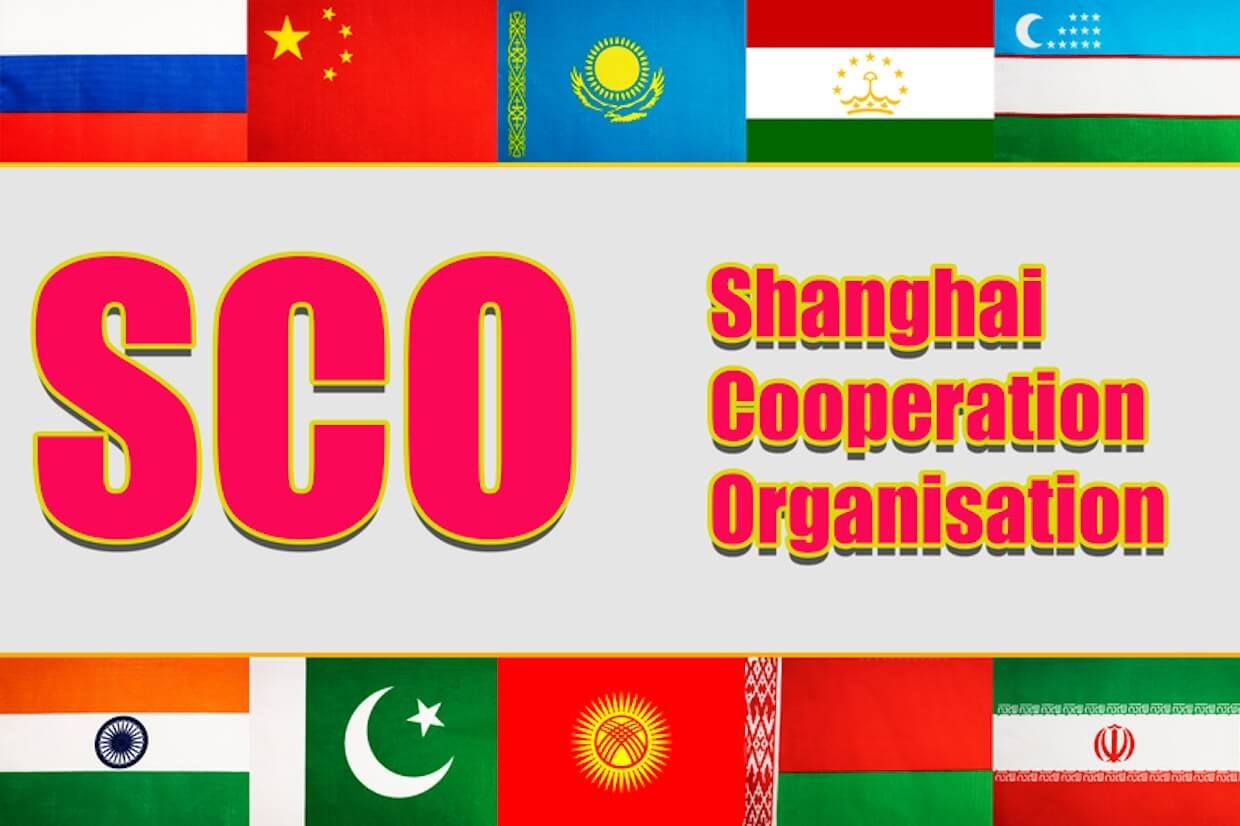
The other phenomenon I have been working on recently—and I am actually sending off a book manuscript on this over the weekend—is that authoritarian regimes, as we are learning, are quite capable of forming their own regional organizations. And not only of forming them, but of using them for explicitly political purposes. I am thinking here of institutions such as the Commonwealth of Independent States, the Shanghai Cooperation Organization, the Gulf Cooperation Council, ALBA in South America, and ASEAN in Southeast Asia as some of the major examples. I know you have an interest in Turkey, and Erdogan has led similar efforts around this sort of Turkic organization in that space.
What we are seeing is that these organizations are not formed solely for traditional functional purposes such as economic integration. They are also cooperating quite explicitly around political objectives. These include election monitoring, supporting members facing financial distress through lending, and judicial cooperation that eases extradition processes and contributes to transnational repression. So, these authoritarian regional organizations constitute a relatively small part of the global governance architecture, but they are nevertheless a significant one, and we need to pay close attention to what they are doing.
Distrust Can Be as Damaging as Electoral Manipulation
Across many democracies, populist actors increasingly challenge electoral authorities, voter registration systems, and election-monitoring institutions. Are elections themselves becoming a central arena through which populists seek to reshape democratic competition while preserving a veneer of electoral legitimacy?
Professor Stephan Haggard: Of course, the integrity of the electoral system is the bottom line at which backsliding intersects with a turn toward outright authoritarianism. Because I think of an authoritarian system as one in which the possibility of challenging an incumbent electorally falls toward zero. In other words, if my chances of winning an election fall to zero, then you are really dealing with an authoritarian regime.
But I want to emphasize something else about elections and electoral integrity that is equally troubling. It is not only a direct assault on electoral institutions that matters. That effort may fail. For example, it is likely to fail in the United States elections in the fall, and it will probably be well managed. But by repeatedly claiming that the electoral system lacks integrity and by challenging its legitimacy, populists also sow distrust among the public toward electoral institutions.
So, the objective is not only to undermine those institutions directly. It is also to sow doubt about electoral outcomes that populists believe may go against them. This issue poses as much of a challenge in many advanced industrial democracies as an outright attack on those institutions, because it creates a public that increasingly no longer believes that electoral results are free and fair.
Economic Inequality Can Fuel Both Left- and Right-Wing Populism

Your work has explored the relationship between inequality, distributive conflict, and regime change. How do economic grievances, perceptions of unfairness, and social insecurity interact with populist appeals to create conditions conducive to democratic backsliding?
Professor Stephan Haggard: If we have another conversation, we could probably spend the entire time discussing this question. But let me just offer a few thoughts.
First, levels of inequality differ quite substantially across the advanced industrial states, but the overall trend is fairly clear: inequality has been increasing. One might expect that rising inequality would give rise to what we would call left-wing populism. Indeed, we do see this across the advanced industrial world. There is a left-populist current out there. Again, speaking about my own country, you can see it in figures such as Mamdani, the mayor of New York, Bernie Sanders, and a number of politicians on the left of the political spectrum in the United States.
But the important point is that inequality does not necessarily manifest itself through left-populist rhetoric. It can also manifest itself through right-populist rhetoric. For example, it is quite common to see concerns about inequality coupled with anti-immigrant sentiment. Or with protectionist policies on trade. Or with opposition to what are perceived as liberal or cosmopolitan values, as opposed to more traditional ones.
So, we need to be careful about two things. The first is the question of whether inequality is a causal factor in populism and democratic backsliding. The second is how that disaffection with democracy is expressed through different political programs. Those are two distinct questions, because a critique of inequality can just as easily be attached to a right-wing populist narrative.
Working Within Democratic Rules May Be the Strongest Response
Several countries have succeeded in slowing or reversing democratic backsliding despite strong populist movements. What institutional safeguards, opposition strategies, or forms of civic mobilization have proven most effective in countering populist assaults on democratic institutions?
Professor Stephan Haggard: In some ways, this is the most important question you have asked in this interview, and I wish I had more answers to it. I would simply note that there is currently a strong intellectual current within the academic literature that seeks to focus less on backsliding and more on the concept of resilience. Let me make a couple of observations in that regard. There are scholars whose work deserves much more attention, including Laura Gamboa, who has produced some very interesting research on South America.
One of the key questions concerns how confrontational opposition tactics should be. If I understand her work correctly, she emphasizes the use of legal challenges—working within existing rules rather than moving toward mass mobilization and street confrontation. Such strategies may be more effective because they are seen as upholding shared democratic norms.
Of course, there is always a dilemma when it comes to opposition movements confronting authoritarian regimes: whether mass mobilization, and especially the use of violence, can have counterproductive effects by allowing incumbent governments to blame the opposition for civic unrest.
So, there are many intricate questions surrounding this issue. But I would certainly place the study of democratic resilience high on the research agenda as something all of us should be paying closer attention to.
We Are Clearly Living Through a Populist Moment
And lastly, Professor Haggard, much of the literature on populism focuses on its causes, while your work highlights its institutional consequences. Looking ahead, do you believe that populism is a temporary challenge within democratic politics, or has it become a durable feature of contemporary democracy that requires a fundamental rethinking of democratic resilience and constitutional design?
Professor Stephan Haggard: I’ll close—unfortunately or fortunately—by reiterating a point I have made before, and it may sound simple and obvious. We are definitely experiencing a populist moment. There is really no question about that. At the same time, we need to be very careful to distinguish between populist movements that are willing to operate within a given democratic framework and those that seek to fundamentally challenge what we would regard as the core elements of a democratic society.
I’ll conclude by noting that this extends to issues of rights. Because extreme populist movements can argue that certain groups in society should not enjoy the rights they have come to possess and that those rights should be taken away. In both Europe and the United States, for example, this debate is playing out with respect to how immigrants should be treated. Whether they should be afforded due process and access to court hearings before they are deported or imprisoned, and so forth. These are very basic issues.
If populist movements are not committed to sustaining those components of democracy that we regard as essential—rights, horizontal checks on executive power, the rule of law, and the integrity of the electoral system—then we are facing a much deeper problem than if populism is simply being contested within the realm of routine policy disagreements among parties in a democracy.