MEP-Panel3

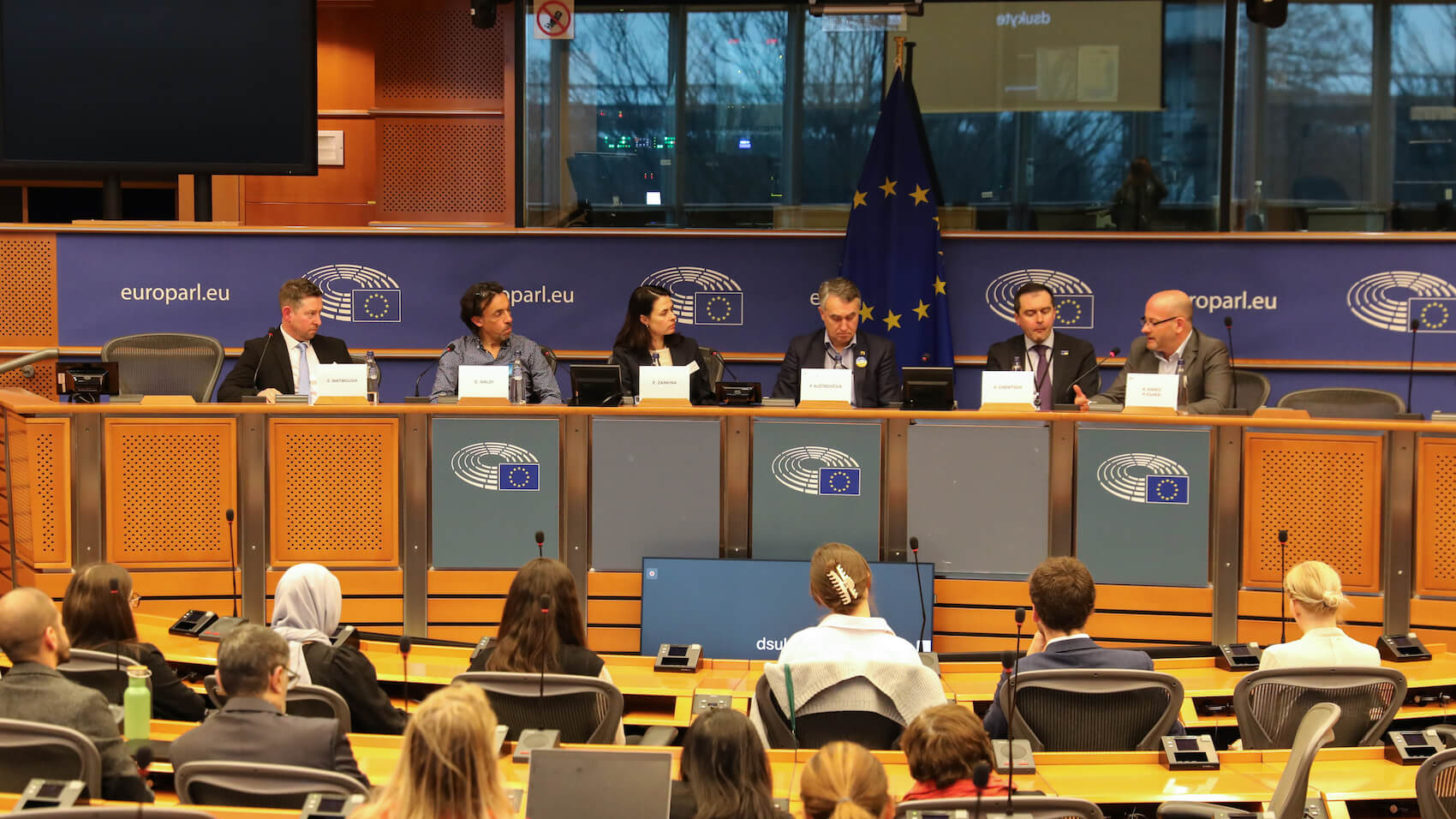
Mapping European Populism: Panel III — Scandinavia under magnifier: Populist radical right parties and the end of Nordic exceptionalism?

Moderator

Dr. Liv Sunnercrantz
(Department of Media and Social Sciences, University of Stavanger, Norway)

Speakers

“The Sweden Democrats in Swedish politics – the mainstreaming of extremism,”
by Dr. Anders Hellström (Department of Global Political Studies, Malmö University, Sweden).

“From rural to radical right: a brief perspective on Finnish populism,” by Marie Cazes (Doctoral Researcher, University of Jyväskylä, Finland).

“Public perceptions of the populist radical right in Norway,” by Dr. Lise Lund Bjånesøy (Department of Administration and Organization Theory, University of Bergen, Norway).

“From success to failure? The recent developments of the radical and populist right in Denmark,” by Dr. Susi Meret (Department of Politics and Society, University of Aalborg, Denmark).

Gerbadaou

The Great Recoil: Politics after Populism and Pandemic

Author Dr. Paolo Gerbaudo will discuss his book The Great Recoil: Politics after Populism and Pandemic (Verso, 2021) with Dr. Anton Jäger of KU Leuven.

The Great Recoil focusses on the political and ideological transformations of the last two decades that have seen a turn away from the triumphalist, universalist attitudes towards globalisation and free trade, fuelled by a shift towards nationalist and nativist attitudes in a number of Western democracies, often called the ‘populist moment’ of the 2010s. Gerbaudo’s contention is that, while the appeal of such inward-focussed discourses was growing for over a decade, the Covid-19 crisis produced the perfect storm for what he terms the exopolitics of globalisation; in his eyes, the coming decades will be dominated, instead, by the endopolitics of a new ‘neo-statist’ impulse.

Examining the origin and changes in the three ‘master signifiers’ of this Great Recoil, sovereignty, protection and control, he argues that the success of populist radical right parties over the past decade was due to their recognition of the growing salience for this endopolitical discourse, fuelled by what he calls a ‘global agoraphobia.’ Gerbaudo then, in the final part of the book, argues for a strategy of progressive contention, re-capture and re-articulation of the signifiers of sovereignty, protection and control, arguing for a ‘progressive nationalism’ that re-engages the nation and its signifiers external both to nativist impulses and its ‘withering away’ amid a globalised cosmopolitanism. Instead, the nation must become a ‘protective structure’ that actively combats agoraphobia and drives reinstates feelings of control among the population.

Participants of nationalist and anti-Islamic demonstration organized by far-right organisations use smoke races, hold banners in Warsaw, Poland on April 10, 2016. Photo: Wiola Wiaderek.

Report on Panel #1 / Mapping European Populism: Populist  Authoritarian  Tendencies in  Central  and  Eastern  Europe, and  Challenges to the EU 

Lordkipanidze, Mariam & Albrecht, Héloïse (2022). “Report on Panel #1 / Mapping European Populism: Populist  Authoritarian  Tendencies in  Central  and  Eastern  Europe, and  Challenges to the EU.” European Center for Populism Studies (ECPS). April 26, 2022. https://doi.org/10.55271/rp0004


This report is based on the first panel of ECPS’s monthly panel series called “Mapping European Populism” which was held online in Brussels on February 24, 2022. The panel brought together top-notch populism scholars who are experts on populist politics in CEE (Central and Eastern Europe) countries, namely Hungary, Poland, Czech Republic, Slovakia, Croatia and Serbia. As a by-product of this fruitful panel the report consists of brief summaries of the speeches delivered by the speakers.

ECPS organizes a panel series to map European populism, bringing scholars together every month to discuss the state of political populism in a different region of Europe. This report is prepared based on the first panel of the series focusing on Central and Eastern Europe, on the theme of “Populist Authoritarian Tendencies in Central and Eastern Europe, and Challenges to the EU,” which was held online on February 24, 2022.  

The panel is moderated by Bogusława Dobek-Ostrowska, Professor and Chair of the Department of Communication and Journalism, the Institute of Political Science, University of Wrocław, and included the following speakers: Dominika Kasprowicz, Professor of Political Science, the Institute of Journalism, Media and Social Communication, Jagiellonian University, Poland; Zoltan Adam, Associate Professor and Chair, Department of Economic Policy and Labour Economics, Institute of Economic and Public Policy, Corvinus University of Budapest; Dr Vassilis Petsinis, University of Tartu, Johan Skytte Institute of Political Studies); and Miroslav Mareš, Professor,  Department of Political Science, Faculty of Social Studies, Masaryk University. 

Prof Dobek-Ostrowska opened the panel by defining ‘authoritarian populism’ as a political ideology whose beliefs include cynicism about human rights and hostility to the state, opposition to immigration, and an enthusiasm for a strong defense and foreign policy. Prof Dobek-Ostrowska continued her introduction by reminding attendees of the geographical scope of the ‘Central and Eastern Europe (CEE)’ which comprises 11 EU members (Estonia, Latvia, Lithuania, Poland, Czech Republic, Slovakia, Hungary, Romania, Bulgaria, Slovenia, and Croatia), 6 Balkan states (Serbia, Montenegro, Bosnia Herzegovina, Kosovo, Macedonia, and Albania), and 4 post-Soviet Union states (Russia, Belarus, Ukraine, and Moldova). The moderator pointed out two overarching issues addressed by the speakers of the panel in the context of Poland, Hungary, the Czech Republic, Croatia, and Serbia; 1) the analysis of authoritarian populism in connection with the question of the quality of democracy in CEE, 2) mass media freedom in the region which sheds light on the questions whether populist authoritarian tendencies exist in CEE and If so, how strong they are.


Prof Dominika Kasprowicz: “Populism in Poland 2015-2021: A short journey from theory to praxis”

According to Professor Kasprowicz, the Law and Justice Party (PiS), as a typical populist power, is characterized by anti-elite rhetoric and targeted the previous ruling elites and the EU establishment. This is part of the usual populist strategy: the creation of ‘the Other,’ as the enemy of the currently governing political elite and its own ‘people.’ In Poland, this list of enemies is long, and migrants, particularly those who do not come from culturally close countries, are included.  

Professor Dominika Kasprowicz presented the case of Poland, seeking to understand the populism phenomenon through the framework of Communication and Media studies. In this regard, she particularly highlighted the impact of populist communication on social media and concluded that the tendencies of mass communication go in favour of the populists in the office. 

Since 2015, Poland, among other countries in the region, is experiencing a progressing and very radical political and social change that has been dictated and designed by a mindset that we can easily define as ‘populist,’ as all the characteristics that normally distinguish the populist phenomenon are present: the appeal to ‘the people,’ the anti-elitist rhetoric, and the radical tactics in terms of pursuing political change. Prof Kasprowicz suggested that the process of radical political change started by the Law and Justice Party (PiS) in the country is now almost concluded, containing all three features of populist ideology. Contrary to what scholars might have expected, the Law and Justice Party is now still in power, and its popularity is not decreasing. Prof Kasprowicz cited two main reasons for this; first, the Law and Justice Party’s populist ‘appeal to ‘the people’ has proven to be extremely efficient, as their rhetoric was filling the void left by neoliberal centrist parties and they capitalised on the so-called ‘losers of transformation.’ Second, their political praxis of ‘welfare chauvinism,’ a very selective and ‘picky’ understanding of who is considered ‘good enough’ to be subsidised by public money, was proven to be very efficient in the Polish scenario and happens in all aspects of the important spheres of domestic life. Thus, the ruling party is biased and selective in funding the media, NGOs, and different social groups (e.g., cutting off subsidies to NGOs that are not close enough to the populist power and its goals, only subsidising citizens that belong to the target groups and social stronghold of the party in power). The reforms made by the party are designed and oriented to benefit particular groups considered to be allies of the ruling party. 

According to Kasprowicz, the Law and Justice Party, as a typical populist power, is characterized by anti-elite rhetoric and targeted the previous ruling elites and the EU establishment. This is part of the usual populist strategy: the creation of ‘the Other,’ as the enemy of the currently governing political elite and its own ‘people.’ In Poland, this list of enemies is long, and migrants, particularly those who do not come from culturally close countries, are included. Therefore, anti-migrant rhetoric is also a typical feature of the ruling party, and in the past 5 years, the artificial fears that were fuelled by the messages of the ruling party regarding, for instance, the Polish-Byelorussian border, have motivated pro-governmental sentiments. 

The authoritarian tendencies in the country cannot be overlooked either, as the so-called ‘charismatic leadership and the ‘non-democratic praxis’ that is happening in the country, for Kasprowicz, have already “caused a radical and irreversible social change.” The lecturer concluded her presentation by expressing concern over this change, the state of democracy and civil liberties in Poland, as well as the diminishing balance of powers in the country. Finally, Prof Kasprowicz, expressed the challenge that scholars, practitioners, and citizens faces: How to handle the mainstream politics in para-democratic systems that have been invaded by the populist radical right? 

Reported by Mariam Lordkipanidze 


Prof Zoltán Ádám: “The Orbán regime after 12 years, before the April 2022 general elections”  

“Hungary’s EU membership does pose some institutional constraints on the government, but apart from that, there is no domestic authority that is not controlled by the government of the majority. This has become the perfect soil for the totalitarian approach to power which populists tend to exhibit. Therefore, Hungarian democratic standards have been steadily declining for the past decade, democratically underperforming relative to its level of economic development.” 

Professor Zoltán Ádám presented the case of Hungary as a prominent example of populism. He emphasised the importance of the Hungarian case and its populist Prime Minister Viktor Orbán, a world-stage political actor who often meets with other autocratic leaders and likes to associate with leaders of the European far-right, as having an impact on surrounding Central European fellow populists and the wider context. 

As Prof Ádám reminded us, there are many definitions of populism, but he opted to focus on historian Federico Finchelstein’s definition, which describes populism as a “form of authoritarian democracy for the post-War world,” finding a link between fascism and populism, in the sense that populism, Finchelstein argues, can be seen as a “democratic reincarnation of fascism,” as it exhibits the same majoritarian or totalitarian approach to power. One of the key characteristics of populism is the diminishment of liberal democratic institutions that could defend social and political minorities; therefore, in this definition, populism is a political system in which the liberties provided for minorities in a democratic society are increasingly endangered or eliminated. For Prof Ádám, this elimination of liberties, sometimes to an extreme extent, is what we are now witnessing in the world: an originally popularly and democratically elected political figure thus becomes an autocratic dictator, e.g., through the incarceration of their political opponents. Populism, then, is characterised, according to Finchelstein, by the cultivation of highly personalised political leadership, with charismatic leaders who dominate the political system, and tend to extend social rights, while eliminating political rights and freedoms. 

Viktor Orbán’s Hungary since 2010 is a prime example of that what Finchelstein describes. Orbán (from the Fidesz party) had been in power before between 1998 and 2002, but he did not have then what he has had since 2010:  a two-term majority in the parliament. Indeed, when a coalition of parties control two-thirds of the Hungarian parliament, that coalition has very little to no constitutional constraints on its power. Hungary’s EU membership does pose some institutional constraints on the government—as a consequence, the conflicts between the Hungarian government and the EU Commission and other bodies of the EU have been a recurring phenomenon in the past decade—but apart from that, there is no domestic authority that is not controlled by the government of the majority. This has become the perfect soil for the totalitarian approach to power which populists tend to exhibit. Therefore, Hungarian democratic standards have been steadily declining for the past decade, democratically underperforming relative to its level of economic development (see Freedom House and V-Dem indexes).

Prof Ádám suggested that one of the potential explanatory factors behind this democratic underperformance is the ‘exclusive’ nature of the Hungarian political system: without strong opponents, Fidesz received 53 percent of the overall vote in 2010, 46 percent in 2014, and a little under 50 percent in 2018, which all three times translated into a two-thirds majority of the seats in the parliament. The Gallagher Index, which measures the discrepancy between votes received and parliamentary seats controlled by political parties, shows that Hungary exhibits a very high degree of discrepancy between the two, having a more distortionary electoral system than any other country.  

The lecturer concluded his presentation with the perspectives of future Hungarian elections and the increased chances of the opposition. Indeed, an interesting political situation is now unfolding among Fidesz’s political opposition: the six major opposition parties, realising the distortionary nature of the country’s political system, started to coordinate. They fielded joint candidates at the 2019 local elections, winning a number of major cities, including Budapest, and held primaries for the 2022 parliamentary elections, even picking a joint prime minister candidate, Péter Márki-Zay. The polls showed that this time, the race between Fidesz and the united opposition was much tighter than in the past. (However, Orbán and his nationalist-populist Fidesz party won a landslide victory for the fourth time on April 3, 2022.)

Reported by Mariam Lordkipanidze 

Dr Vassilis Petsinis: “Scanning the far right in Croatia and Serbia” 

Dr Petsinis pointed out that “de-radicalisation” in the case of Serbia, or the “long-term transformation processes” of larger conservative right-wing parties in the case of Croatia, side-lined the radical and extremist right-wing parties in both contexts. In Croatia in particular, the Homeland Movement has been emerging as a “formidable contender” with the “potential of both antagonising HDZ and additionally side-lining the political forces of the radical and extremist right.” 


Turning to the post-Yugoslavian region, Dr Vassilis Petsinis talked about far-right politics in Croatia and Serbia, focusing on the following questions: Why are the radical and extremist right-wing parties in Serbia and Croatia weak? How has the engagement of the governing parties (the SNS in Serbia and the HDZ in Croatia) impacted the weak performance of the radical and extremist right?  

Dr Petsinis started by making a tentative distinction between ‘radical’ and ‘extremist’ right-wing parties on the basis of their political origins and active political engagement. He sketched out two categories: radical right-wing parties andextremist right-wing parties. According to him, radical right-wing parties were, in a lot of cases, the result of mergers between existing established parties, and so, are by-products of top-level formation processes and strive to promote their political causes through parliamentary and democratic institutions and procedures, having sometimes participated in coalition governments in their respective countries (e.g., Estonia’s EKRE, Latvia’s National Alliance, Sweden’s SD). In comparison, extremist right-wing parties often represent the culmination of bottom-up formation processes led by a political (occasionally semi-paramilitary) core, and so, they are more prone to a militant engagement in politics through systematic mass-mobilisation and patterns of policy-making that often harbour anti-democratic implications (e.g., early Jobbik in Hungary, ‘Our Slovakia,’ Bulgaria’s Ataka and Greece’s Golden Dawn).

Most importantly, the parties of the radical right ‘scrutinise’ the liberal democratic constitutional order, but formally respect democratic institutions and procedures. In contrast, the parties of the extremist right ‘antagonise’ the liberal democratic constitutional order, and often multiply attempts to subvert—or substitute—democratic institutions and procedures. However, this distinction became very ‘idiosyncratic’ within the party politics of Serbia and Croatia in the 1990s and 2000s, largely due to the protracted warfare and the wars of secession of the 1990s. 

On the one hand, the Serbian Radical Party (SRS), one of the oldest political parties in Serbia, oscillated, in the 1990s and 2000s, between the categories of radical and extremist right-wing party. It endorsed ‘Greater Serbia’ and even sent a paramilitary unit to the Croatian and Bosnian fronts, with recurring phases of partnership and tension with Slobodan Milošević’s Socialist Party (SPS). Between 2000 and 2007, the SRS bound together anti-Western nationalists, former SPSvoters, and various ‘losers’ of the transition, and so it became Serbia’s strongest opposition party. The turning point came in February 2003, when the leader Vojislav Šešelj voluntarily surrendered himself to the International Criminal Tribunal for the former Yugoslavia (ICTY), and Tomislav Nikolić and Aleksandar Vučić became the leading figures within the party. However, Nikolić and Vučić soon departed from the SRS and set up the Serbian Progressive Party (SNS), which putlower stress on nationalism, formally endorsed the EU accession process, and took advantage of the fragmentation of the centre and centre-right political parties in the country (DS, DSS, SPO, etc.).

The SNS overwhelmingly won the parliamentary (2016) and presidential (2017) elections, whereas the SRS started to become marginalised (with a mere 8.8 percent in the 2016 parliamentary elections). The SNS consolidated its grip onpower in the 2020 parliamentary elections (61.60 percent of the vote), dominating a continuum that stretches from the liberal centre to the conservative right, relying on the pattern of political clientelism to secure support and on the opposition’s persistent fragmentation. The ‘deradicalisation’ of this segment that originated in the SRS and then evolved into the SNS led to the marginalisation of the SRS, which is not even currently represented in the Serbian parliament. There are, however, some extra-parliamentary parties and groupings of the more radical and extremist right in Serbia: the ‘traditional’ Serbian nationalism of Dveri, the National-Socialist fascist platform of Srbska Akcija, and peculiar cases like Levijatan, which combines elements of National-Socialism with animal rights and ‘anti-vax’ conspiracies. 

On the other hand, in Croatia, a party comparable to Serbia’s Radical Party is the Croatian Party of Rights (HSP), a party accused of historical revisionism, which in the 1990s endorsed ‘Greater Croatia’ and dispatched a paramilitary unit (HOS) to the Yugoslavian wars of secession. In contrast to the SRS, this party gradually lost popularity and became fragmented during the 2000s, and, despite its efforts to come back into political relevancy, it has not been represented in the Croatian parliament for years. As happened in Serbia, there was a process of reformation, as the Croatian Democratic Union (HDZ) consolidated its public appeal between 2012 and 2016, and a right-wing faction emerged within it. This factionslowly capitalised on the ‘socio-cultural Euroscepticism’ among certain segments of the electorate, focusing on the opposition to the rights of LGBTQ+ people, abortion, and EU refugee quotas. Thus, it has decisively marginalised the forces of the Croatian radical and extremist right.

Like the SNS in Serbia, HDZ consolidated its grip on power following the Croatian parliamentary elections of July 2020, relying on political clientelism. But there has also been a new party that emerged to the right of the HDZ: the Homeland Movement (Domovinski Pokret), currently the third-largest party in the Croatian parliament, led by Miroslav Škoro, a former singer and TV host. It presents a national-conservative program similar to the one supported by the right-wing faction of the HDZ: seeking to safeguard ‘Catholic values,’ wants to strengthen ‘law and order,’ and seeks to revise national legislation on minority rights. The gradual emergence of this party poses a challenge to the endeavours of PM (and leader of HDZ) Andrej Plenković to shift the party narrative of HDZ more firmly towards the centre, and it further marginalises the older and more traditional parties of the Croatian radical and extremist right. 

To conclude, Dr Petsinis pointed out that “de-radicalisation” in the case of Serbia, or the “long-term transformation processes” of larger conservative right-wing parties in the case of Croatia, side-lined the radical and extremist right-wing parties in both contexts. In Croatia in particular, the Homeland Movement has been emerging as a “formidable contender”with the “potential of both antagonising HDZ and additionally side-lining the political forces of the radical and extremist right.” 

Reported by Héloïse Albrecht 


Prof Miroslav Mareš: “Comparison of authoritarian and populist tendencies in the Czech Republic and Slovakia”  

Prof Miroslav Mareš argues that there has been a shift from parties linked to the totalitarian past (KSČM, K–LSNS), which have now declined, to rising modern populism. The populist and extremist spectrum in both the Czech Republic and Slovakia is relatively unstable: new issues for these parties to appropriate and rally around keep arising (e.g., the anti-vax movement, the war in Ukraine and the refugee crisis that is likely to emerge), which opens the future to populism and authoritarianism in the post-Covid era.

Prof Miroslav Mareš, in his speech, compared the authoritarian and populist trends in the Czech Republic and Slovakia.Even though the Czech Republic and Slovakia’s democracies may fare relatively well compared to other Eastern European countries, both countries face the challenge of the populist wave. Professor Mareš highlighted, moreover, that the right-wing populist parties in both countries have deep connections with the larger European populist right. 

Prof. Mareš explained that he used a relatively broad concept of populism for his analysis because, while the impact of the populist far-right is strongly felt in both countries, other forms of populism (centrist and leftist populism) also play a role that needs to be considered to truly understand the populist tendencies in the Czech Republic and Slovakia. He highlighted the fact that in both countries, the various currents of populism have developed with significant overlaps. Populism, identifiable as the “struggle for the unity of people against an alleged ‘establishment’,” has been dynamicallydeveloping in these countries in the post-1989 era. The partisan strain of populism has been the most dominant, but individual actors (e.g., Czech President Miloš Zeman, other non-partisan actors in the public space like the ‘anti-vax’ movement), as well as some media (the so-called ‘disinformation scene’), have also played a role in the spread of populism. Both countries present the basic division into right-wing extremism, right-wing populism, centrist populism, left-wing populism, and left-wing extremism. 

The lecturer then presented a brief overview of the trend toward populism and authoritarianism in the Czech Republic. At the moment, it is important to mention that right-wing extremism in the country is relatively weak, if we look at the partisan level, without parliamentary or regional/local representation, and only some small hard-liner groupings linked to the anti-vax movement, partly pro-Kremlin and with a pan-Slavic orientation. However, the country now has a relatively strong right-wing populism, thanks to the parliamentary representation (9.56 percent in 2021) of the Freedom and Direct Democracy (SPD) movement, led by Tomio Okamura. Most importantly, centrist populism in the country is strong and has a strong presence in major newspapers; it is especially represented by the ANO (‘Yes’) party, which is currently the strongest party in the Czech parliament, a member of liberal structures at the European level, but which has been labelled as an ‘entrepreneurial party’ (term used by Hloušek, Kopeček, and Vodová, 2020) because it largely depends on one entrepreneur, its leader (and previous president of the country, now in the opposition) Andrej Babiš, who is the owner of important newspapers. On the other hand, left-wing populism is relatively weak in the political spectrum, but has some impact on the media. Finally, left-wing extremism (largely associated with the Communist Party of Bohemia and Moravia[KSČM]), only has one member in the European Parliament after the 2021 elections, and no domestic national representation (3.60 percent). 

In contrast to the Czech Republic, Slovakia has a relatively strong right-wing extremism, with the so-called ‘hard-liners’ of Kotleba – People’s Party Our Slovakia (LSNS)—rooted in the neo-fascist movement, despite some slight attempts at moderation in the last few years; it received 7.97 percent of votes in 2020, but some members of the party split from it in 2021 (distancing themselves from the strong ties to historical fascism of LSNS). Likewise, right-wing populism finds relatively strong representation in the country, with the national-conservative, “We Are Family (Sme Rodina)” party—which is a governmental party since 2020 (8.4 percent of the votes that year), strongly associated with the figure of its leader, businessman Boris Kollár—as well as the extra-parliamentary Slovak National Party (3.16 percent in 2020). The impact of centrist populism in the country is questionable. Left-wing populism in the country is strong, represented by the Smer–SD (Orientation – Social Democracy) party, a member of socialist international structures and of the Party of European Socialists, which received 18.29 percent of the vote in 2020, and is currently in the opposition. Left-wing extremism is still weak in Slovakia and mostly confined to the non-partisan scene, but important Smer–SD deputy LubošBlaha and his followers are well-known for their sympathies to some left-wing extremist entities.  

Finally, Prof. Mareš, drawing a comparison between the two countries, concluded that: the strongest position comparatively is that of centrist populism in the Czech Republic, and that of left-wing populism in Slovakia; on the other hand, right-wing populism is strong in both countries, even though the ideological positioning of the parties on the ground (SPD and Sme Rodina) is different. There has been a shift from parties linked to the totalitarian past (KSČM, K–LSNS), which have now declined, to rising modern populism. The populist and extremist spectrum in both countries is relatively unstable: new issues for these parties to appropriate and rally around keep arising (e.g., the anti-vax movement, the war in Ukraine and the refugee crisis that is likely to emerge), which opens the future to populism and authoritarianism in the post-Covid era. 

Reported by Héloïse Albrecht

SummerSchool

ECPS Academy Future Leaders Program (July 4-8, 2022)   

Euroscepticism and far-right politics: The populist challenge to EU norms, institutions and values 

Are you an early-career academic researcher in the social sciences or humanities at Bachelor’s or Master’s level? Are you passionate about European politics and understanding the dynamics that shape it? Are you looking for a way to expand your knowledge under the supervision of leading experts, seeking options to have your work published by a European research institute, or simply in need of a few extra ECTS credits for your studies? Then consider applying to ECPS Academy Future Leaders Program! The European Center for Populism Studies (ECPS) is looking to select a handful of outstanding young researchers for a unique opportunity to assess the populist challenge to European politics in a five-day, interactive Summer course led by global experts from a variety of backgrounds. This rigorous program will provide a state-of-the-art introduction to a number of key issues in the field of populism studies and enable successful candidates to explore their own ideas under the supervision of our experts. You gain not only an opportunity to have your work published and a handful of ECTS points but also a unique opportunity to broaden your horizons and deepen your understanding of the challenges facing European politics in the 21st century.  

Overview  

European politics have witnessed, over the last 20 years, a subversive wave of Eurosceptic, nativist, populist far-right politics. Beginning as a phenomenon on the socio-political fringes, populism has found fertile ground in the post-industrial economies of the West, attaching itself to nationalist and de-modernising movements threatening core European values of democracy, openness, tolerance and non-discrimination – and, in the process, taking many democracies by storm. In Donald Trump and the successful ‘Brexit’ campaign in the United Kingdom, many saw right-wing populism reaching its political apex and the 2010s to be the ‘populist decade’, marking populism’s entry into the political mainstream; today, although Covid-19, in a sense, undermined support for right-wing populist governance, the economic and social uncertainties that remain mean the spectre of exclusionary populism is never far.  

This trend threatens the European Union on both the institutional and the normative level. EU values such as democracy, freedom, human rights, justice, and equality are under greater threat today than perhaps at any point in the Union’s 50 years of history. Understanding the drivers and the impact of populist right politics on liberal democracy is key to tackling the most critical challenges facing European identity, institutions and values. The ECPS Academy Future Leaders Program seeks to empower future generations by helping the exceling young scholars of tomorrow to understand the nature and dynamics of the populist moment, and thereby facilitate the development of constructive and effective responses. As Europe celebrates the EU Year of Youth in 2022, our five-day Future Leaders Program offers young people a dynamic, engaging and interdisciplinary learning environment with an intellectually challenging program presented by world class scholars of populism, allowing them to grow as future academic, intellectual, activist and public leaders. 

Over the course of five days, interactive lectures by world-leading practitioners and experts from a number of backgrounds will introduce populism from a variety of angles and explore the fundamental questions and potent tensions its popularity raises. The lectures are complemented by discussions, group interactions and assignments on selected key issues to develop critical and openminded engagement with some of the most pressing questions of European politics, and to introduce participants to cutting-edge qualitative and quantitative approaches to populism reflective of the state of social science research today. Participants have the opportunity to collaborate with those from different socio-political contexts, developing invaluable cross-cultural perspectives and facilitating a knowledge exchange that goes beyond European borders.  

Who should apply? 

This unique course is addressed to outstanding candidates interested in gaining a more comprehensive and critical understanding of how the rise of far-right populism, and related trends like Euroscepticism, nativism, authoritarianism and exclusionary politics subvert the European Union’s basic pillars and essential European values. A select group of participants will be chosen based on merit, with applications welcomed from students pursuing bachelor’s and master’s degrees of any discipline, as well as early career professionals between the ages of 18 and 30. You will be selected on the basis of a letter of motivation, a CV and a research proposal of between 500 and 1000 words. The proposal should give a brief analysis of populism’s relationship to one or more core European value, and ideally outline a plan to investigate this relationship further. Drawing upon and correctly citing academic sources is desirable.  

We value the high level of diversity on our courses, welcoming applications from people of all backgrounds. The deadline for submitting applications is June 20, 2022. Reflecting the properly pan-European character of the ECPS Academy Future Leaders Program – but unfortunately also the difficulties of organising in-person events in times of pandemic – the 2022 Program will take place on Zoom, consisting of two sessions each day.  

Topics and Lecturers

  • “Populism in Europe: Origins and causes of the populist moment,” by Paul Taggart, Professor of Politics, University of Sussex.
  • “Nativist Populism: Political discourse between othering and inclusion,” by Ruth Wodak, Emeritus Distinguished Professor of Discourse Studies, Lancaster University.
  • “Populism and nationalism: Challenges to the idea of European Union,” by Daphne Halikiopoulou, Professor of Comparative Politics, University of Reading.
  • “Populism and the rule of law,” by Bojan Bugarič, Professor of Law, University of Scheffield.
  • “Populism and economic performance: Implications on institutions and good governance,” by Ibrahim Ozturk, Professor of Economics, University of Duisburg-Essen.
  • “Russia’s populist discourse and its invasion of Ukraine: Challenges for the EU,” by Neil Robinson, Professor of Comparative Politics, University of Limmerick.
  • “Populism and participation: Democracy by the People, for the People? by Susana Salgado, Professor of Political Communication, Principal Researcher at the Institute of Social Sciences, University of Lisbon
  • “Populism and new media: Understanding challenges online and offline,” by Dr Eviane Leidig, Research Fellow, International Center for Counter-Terrorism.
  • “Populism and gender: Gender identity in populist discourse,” by Dr Haley McEwen, Researcher, Wits Centre for Diversity Studies, University of the Witwatersrand.

Evaluation Criteria 

Meeting the assessment criteria is required from all participants aiming to successfully complete the program and receive a certificate of attendance in the end. These evaluation criteria include full attendance, active participation in lectures, and the successful completion of an individual written assignment, ideally (but not necessarily) linked to your research proposal.  

Participants are expected to write an article or essay on a topic of their choice based on one of the themes discussed during the program. They are expected to plan and produce original work that presents arguments in a clear and balanced way drawing on multiple sources and incorporating and citing them consistent with academic standards. For this process, they will be supervised by one of our in-house experts to complete this assignment successfully. The articles will be between 2,000 and 3,000 words and need to be submitted within a month from the end of the program; selected papers will be considered for publication on the ECPS website and ECPS Youth blog. 

Credit 

This course is worth 5 ECTS in the European system. If you intend to transfer credit to your home institution, please check the requirements with them before you apply. We will be happy to assist you in any way we can, however, please be aware that the decision to transfer credit rests with your home institution. 

Certificate of Attendance 

Awarded after program to all participants based on the satisfactory participation in, and completion of, the course assignments. Certificates are sent to students only by email.

Please submit your application: ecps@populismstudies.org 

ECPSYouthSeminar2

ECPS Youth Seminars #2 —Political Psychology of Populism: Groups, Hierarchies and Emotions 

At this ECPS Youth Seminar, Dr. Sandra Obradovic presents the findings of a research paper titled “Understanding the psychological appeal of populism” which is jointly written by Obradovic, Séamus A. Power and Jennifer Sheehy-Skeffington. According to the paper, psychology can play an important role in expanding our understanding of the demand-side of populism by revealing its underlying relational logic. Social psychological perspectives on populism are beginning to show how: 1) the division between us (‘the good people’) and them (‘the corrupt elites’/ ‘foreign others’) taps into core intergroup dynamics, 2) economic and cultural processes are construed in terms of basic status concerns, and 3) collective emotions become mobilised through political communication. Taking these insights into consideration, the authors reflect on psychology’s contribution to the study of populism thus far and chart out an ambitious role for it at the heart of this interdisciplinary field.

Dr. Sandra Obradovic is a social and political psychologist in the UK. She is a lecturer in Psychology at the Open University and a researcher at the Electoral Psychology Observatory at the London School of Economics. Her work examines how group boundaries are constructed and defined, and their impact on identities, intergroup relations, and political attitudes. In bringing this focus to research on populism she works with colleagues in Denmark and the UK, examining and comparing populist and mainstream rhetoric and highlighting the role of hierarchies, emotions, and temporalities in constructing the common people as under threat. At the Electoral Psychology Observatory, she works with colleagues on research on electoral atmosphere and hostility: how voters experience elections and its impact on interpersonal relationships and overall satisfaction with democracy.

Celia Miray Yesil (Moderator) is a master’s student of International Political Economy at the Warwick University. She gained her undergraduate degree in European Politics at King’s College London, studying the historical background of European nations and its relationships with the rest of the world. Miray is considering focussing more on the impact of far-right populism in foreign policy, particularly looking at the political language and communication of populist leaders in the international political economy.

MEP-Panel2

Mapping European Populism: Panel II — The peculiarities and commonalities of the populist politics in Southern Europe: The cases of Greece, Italy, Spain & Portugal

Moderator

Daphne Halikiopoulou (Professor of Comparative Politics, the University of Reading).

Speakers

“Greece: A case of populism in decline?” by Sofia Vasilopoulou (Professor of Politics, the University of York).

“Multiple populism in Italy between opposition and government,” by Oscar Mazzoleni (Professor of Political Science, Institute of Political, Historical and International Studies, University of Lausanne).

“Podemos and Vox: Opportunities and challenges posed by left- and right-wing populism in Spain,” by Andrés Santana (Professor of Political Science, Autonomous University of Madrid).

“Support for Right-Wing Populism in Portugal: Protest or Deep-Rooted Attitudes?” by Susana Salgado (Professor of Political Communication, Principal Researcher at the Institute of Social Sciences, University of Lisbon).

Casa Pound, an Italian neo-fascist extreme right-wing political association, held a manifestation in honor of fallen comrades in Milan on April 29, 2012. Photo: Eugenio Marongiu.

Report on Panel #2 / Mapping European Populism: The Peculiarities and Commonalities of the Populist Politics in Southern Europe

Schütz, Imke & Wolf, Maximilian. (2022). “Report on Panel #2 / Mapping European Populism: The Peculiarities and Commonalities of the Populist Politics in Southern Europe.” European Center for Populism Studies (ECPS). April 14, 2022. https://doi.org/10.55271/rp0003


This report is based on the second panel of ECPS’s monthly panel series called “Mapping European Populism” which was held online in Brussels on March 31, 2022. The panel brought together top-notch populism scholars from four south European countries, namely Greece, Italy, Spain and Portugal, which have many similarities and varieties in terms of right- and left-wing populist parties, groups and movements. As a by-product of this fruitful panel the report consists of brief summaries of the speeches delivered by the speakers.

This report is based on the second panel of ECPS’s monthly panel series called “Mapping European Populism” which was held online in Brussels on March 31, 2022. The panel brought together top-notch populism scholars from four south European countries, namely Greece, Italy, Spain and Portugal, which have many similarities and varieties in terms of right- and left-wing populist parties, groups and movements. 

The panel, which opened by Dr. Erkan Toguslu’s welcome speech on behalf of European Center for Populism Studies (ECPS), was continued with the overall assessments of Dr Daphne Halikiopoulou who is a Professor of Comparative Politics at the University of Reading over the populist politics and tendencies in these countries. Then, 2-hour panel went on with the striking presentations made by Professor Sofia Vasilopoulou on populism in Greece, Professor Oscar Mazzoleni on Italy, Professor Andrés Santana on Spain and Professor Susana Salgado on Portugal. Each presentation was followed by a Q&A session. The panel was moderated by Professor Halikiopoulou.

This report is a by-product of this fruitful panel and intended to keep the record of this successful scholarly gathering. The report includes brief summaries of the speeches delivered by our panelists and, also, links to the full video of the panel. ECPS thanks Imke Schütz and Maximilian Wolf for writing the report. 


Prof Sofia Vasilopoulou: “Greece: A Case of Populism in Decline?” 

Prof Vasilopoulou argued that the 10 years of populist success in Greece were not as straightforward as they may at first appear. While, in opposition, SYRIZA ran on a “radical left ticket” of anti-capitalist, anti-neoliberal and anti-imperial discourse, their stint in government from 2015 to 2019 was instead marked by fiscal consolidation and a significant reduction of their anti-capitalist discourse.

Professor Sofia Vasilopoulou, Professor of Politics at the University of York, sought to shed some light on the unique populist conjuncture in Greece, almost exactly 10 years after the “seismic” 2012 elections that saw the far-left and far-right reshuffle the playing field amid an ailing Greek economic situation marked by unmanageable debt, huge unemployment, and a war of words with the European Central Bank (ECB). She argued that it was that election — indeed two elections in rapid succession, in May and June respectively — that lastingly changed the party landscape in the country. The center-left PASOK, until that point one of Greece’s two main parties, came in third, ceding much ground to the more radical left SYRIZA, which became the largest opposition party. On the right, meanwhile, the neo-Nazi Golden Dawn, running on an anti-democratic platform, managed to gain some 7 percent and almost 20 parliamentary seats in the process. By the time of the next round of elections in 2015, SYRIZA became the largest party, gaining over 35 percent of the vote as PASOK essentially vanished from the political scene, while Golden Dawn was able to solidify its hold in Greek politics. More surprisingly, SYRIZA finally formed an unexpected coalition with the radical-right ANEL, an unusual bedfellow for the left-wing SYRIZA in a country that historically has struggled with coalition governments.

Following this historic overview, Prof Vasilopoulou argued, however, that these 10 years of populist success in Greece were not as straightforward as they may at first appear. While, in opposition, SYRIZA ran on a “radical left ticket” of anti-capitalist, anti-neoliberal and anti-imperial discourse, their stint in government from 2015 to 2019 was instead marked by fiscal consolidation and a significant reduction of their anti-capitalist discourse. Despite the discord between the party’s pre-electoral promises and its governmental record, Prof Vasilopoulou noted, they were able to consolidate their status as a major player in the Greek system, coming second in the 2019 elections. The story of Golden Dawn is even more complex: after their dramatic rise to the Greek parliament, a number of legal issues, including a five-year-long trial around the murder of an anti-fascist rapper in Greece and a number of violent attacks on migrants and political opponents, finally led to the imprisonment of a number of its leaders and the designation of the party as a ‘criminal organization.’ 

So how are we to interpret these developments? Prof Vasilopoulou’s work focused on the demand side of Greek politics, specifically voter attitudes around the values of liberal democracy. Data from the European Election Study 2019 indicated that significant portions of the Greek electorate held illiberal opinions. On the question of the value of a judiciary independent of political influence, some 10 percent were opposed while another 20 percent saw themselves as ‘on the fence.’ On whether a government should be able to prohibit a peaceful protest under certain circumstances, approximately a quarter of respondents ‘agreed’ or ‘agreed fully.’ On a more positive note, freedom of public media free from political influence scored better, with only 5 percent disagreeing. Approximately a quarter of Greek respondents felt that ‘having a strong leader that bends the rules to get things done’ is a good thing, while, reflecting populist attitudes in the country, over half of respondents agreed with the statement that ‘the people and not politicians should make the most important policy decisions.’ 

Prof Vasilopoulou linked these sentiments to another important statistic which indicated that some 75 percent of the Greek population felt dissatisfaction with the Greek political system. In all, she argued that these persistent illiberal attitudes provide fertile ground for threats to Greek democracy in the future, particularly if they will again be able to find concrete political expression in anti-democratic movements like Golden Dawn.

Reported by Maximilian Wolf


Prof Oscar Mazzoleni: “Italian Multiple Populism: Evidence, Causes and Impacts”

Prof Mazzoleni argues that Italy’s political system provides a structural gateway for populist parties. Three structural features, in particular, enable populist parties’ continuity. First, the political system is characterized by low legitimation and low stability. Low public trust in politics and parties is the second contributing factor. Anti-politics and anti-elite discourses flourish in Italy’s public spheres as a result and enjoy both legitimation and momentum. Lastly, Italian MPs have some of the highest salaries among European politicians, so there are strong financial incentives for new actors to enter Italy’s political arena.

Professor Oscar Mazzoleni, Professor of Political Science at the University of Lausanne, reflected on Italy’s status as a ‘laboratory of populism.’ To begin, he explained why Italy can be considered a case of ‘multiple populism’ – Italian populism is not limited to the radical right; there exists a multiplicity amongst Italian populists. For one, populist parties have been persistently present in Italian politics since the 1990s. Second, both cooperative and competitive patterns evolved between populist parties as they competed in the country’s electoral arenas, for both parliament and government. Third, Italy’s populist parties espouse various ideologies: there are regionalist, radical-right, nationalist, left-wing, moderate, and syncretic populist parties. This highlights the ideological flexibility and the complexity of Italian populism. 

So why does populism thrive in so many forms in Italy, despite parties’ diverse ideological and organizational features? Prof Mazzoleni argues that Italy’s political system provides a structural gateway for populist parties. Three structural features, in particular, enable populist parties’ continuity. First, the political system is characterized by low legitimation and low stability. Not only has the system shifted from proportional to majoritarian, but changing parliamentary coalitions exacerbate instability. Low public trust in politics and parties is the second contributing factor. Anti-politics and anti-elite discourses flourish in Italy’s public spheres as a result and enjoy both legitimation and momentum, especially when connected with anti-corruption stances. Lastly, Italian MPs have some of the highest salaries among European politicians, so there are strong financial incentives for new actors to enter Italy’s political arena. 

Since the 1990s, populist trends in Italy have foreshadowed trends in other Western European democracies. According to Prof Mazzoleni, two of the most notable trends are the breakdown of the traditional party system with its mass party organizations after World War II and the permanent redefinition of the relationship between politics and the media. The former led to an unprecedented openness of the political system to new parties, while the latter introduced a strong media logic into politics. One well-known case combining these two trends is Berlusconi, who switched from the media to politics. For these reasons, Prof Mazzoleni argues, it is reasonable to label Italy as a ‘laboratory of populism.’ Another factor that contributes to Italy’s ‘multiple populism’ is the populist actors themselves. Living up to populism’s chameleon reputation, Italian populists stand out for their entrepreneurship and flexibility; both the political system’s insiders, like Salvini, Meloni or Bossie, and its outsiders, like Berlusconi, Grillo or Conte, are confronted not only with the uncertainty of their parties’ electoral success but must also deal with the challenges of managing their authority both inside and outside their parties. Furthermore, they have had to develop strong political marketing skills – when in government positions, populists tend to tone down their agendas and discourse, to ensure the party’s continued political success and authority. 

Prof Mazzoleni recommends, then, that the study of populism focus on populism’s impact on policy and changes in the polity. Observing these dimensions, one might investigate the reciprocity of populist and mainstream parties’ performative styles. Changes in the latter’s performative style set the context in which populists must act and influence the framing opportunities they can take advantage of. This is particularly visible in Italy, where the populist performative style connects with anti-party attitudes. Slowly transforming democratic communication and reshaping constitutional and judicial rules, populists reshape their structural opportunities over time. Thus, it is important to connect the dimensions of polity, policy, and politics when examining populists’ success.

In sum, the case of Italy as a ‘laboratory for populism’ sheds light on populist actors’ myriad forms and paths. The openness of Italy’s political system to anti-establishment actors leads to the continuous presence of a multitude of populist actors. Extending the scope of populism research to include populism’s effects on the polity dimension could yield valuable insights and greatly improve our understanding of populism. 

Reported by Imke Schütz


Prof Andres Santana: “Podemos and Vox: Opportunities and Challenges Posed by Left- and Right-wing Populism in Spain”

Similar to the Greek case, Prof Santana argued that the opening for (right- and left-wing) populist movements in Spain was caused, primarily, by the dysfunction within the political system and the deadlock amongst the traditional Spanish political elite. As long as there is dissatisfaction with the political status quo, there will always be a gap for what he termed “political entrepreneurs” to profit. Furthermore, as populist support in Spain tends to be urban and young, the problem looks set to persist.

Professor Santana, Professor of Political Science at the Autonomous University of Madrid turned the spotlight on the populist battleground of Spain. By way of introduction, he noted that Spain was not always a populist battleground: until 10 years ago there were two relevant parties in Spain, the centre-left PSOE and the centre-right PP; much like in the Greek case, however, the mid-2010s proved a fruitful conjuncture for populist movements on the right and left to gain and consolidate some ground. For a long time, Spain had considered itself “immune” to populist challenges. 

All of this changed, however, in 2014 when — almost simultaneously — Podemos on the left and Vox on the right threw the “Iberian exception,” and Spanish democracy into disarray. Vox, born in late 2013, was initially as unsuccessful as many other small right-wing movements vying for influence in Spain, gaining a few percentage points here and there; however, Vox did not follow those others to what Santana called the “graveyard of small right-wing parties,” instead, becoming, some years later, a serious player in Spanish politics and polling as high as second in recent polls. Podemos, led by a university professor and born out of the ‘Indignados’ protest movement, came into being around the same time and, much more immediately than Vox, made an immediate impact on the Spanish political scene, winning some 1.2 million votes in the 2014 European Parliament elections. 

Despite both movements coming into being in the ‘populist moment’ of the mid-2010s that spawned many similar movements on the right and left throughout Europe, Prof Santana argued that, while many such movements have since faded into irrelevance again, this is unlikely to occur with Podemos and Vox. He noted that the Spanish electoral system generally rewards larger parties, meaning the barrier for new challengers is relatively high; this very mechanism, intended to strengthen and stabilize the winners of elections, has had the unintended consequence of generating a significant turnaround for medium-size parties: while, in 2015 and 2016, Podemos was able to secure some 20-25 percent of the vote, behind PP and PSOE, the next election in April 2019 saw their support crater to 14 percent and a new movement, Ciudadanos, taking third place; this was only to last until an election re-run in November of the same year, where Ciudadanos dropped to 6th place, while Vox — led by the enigmatic Santiago Abascal, leapfrogged the field to come third with 15 percent of the vote. This “dance,” as Prof Santana called it, attests to the fact that the Spanish electoral system is not built for five major parties; indeed, he argued, it struggles to accommodate three. In his estimation, Vox looks most likely to secure that coveted third spot in the political space, with Podemos relegated once again to a fringe movement. 

Similar to the Greek case, Prof Santana argued that the opening for both populist movements in Spain was caused, primarily, by the dysfunction within the political system and the deadlock amongst the traditional Spanish political elite. As long as there is dissatisfaction with the political status quo, there will always be a gap for what he termed “political entrepreneurs” to profit. Furthermore, as populist support in Spain tends to be urban and young, the problem looks set to persist. 

Reported by Maximilian Wolf


Prof Susana Salgado: “Support for Right-wing Populism in Portugal: Protest or Deep-rooted Attitudes”

Some believed that Portugal’s history under the Salazar regime would deter right-wing populism. Indeed, support for right-wing parties was negligible for a long time, Chega’s success, however, has undermined Portugal’s long-standing reputation as immune to populism. As Chega crushes this long-held view, Prof Susana Salgado urges us to keep an eye on Portugal’s youths.

In the last contribution, Professor Susana Salgado, Principal Researcher at the Institute of Social Sciences at the University of Lisbon, investigates whether support for right-wing populism in Portugal is a manifestation of deep-rooted attitudes or if it is merely a protest phenomenon. To begin, Prof Salgado points to the nationalist and populist party Chega as a case study of Portugal’s right-wing populism. The party was founded a few months before the 2019 parliamentary election. As expected, Chega’s obtained vote share of 1.3 percent was insignificant. Despite this initially poor vote share, public support has been growing exponentially. In the same year, Andre Ventura, the leader of Chega, ran for president and increased the party’s publicity. He surprisingly received 11.9 percent of the vote, placing him close to the 2nd runner-up. The snap election in 2022 confirmed the trend of electoral support: Chega increased its number of MPs from 1 to 12 as the party with the third-most votes. 

Some believed that Portugal’s history under the Salazar regime would deter right-wing populism. Indeed, support for right-wing parties was negligible for a long time, Chega’s success, however, has undermined Portugal’s long-standing reputation as immune to populism. To explore whether latent populist sentiments existed prior to Chega’s emergence, Prof Salgado tested for latent populist sentiments amongst various Portuguese population groups in 2017. Her data revealed that Portuguese politicians, as a group, are most negatively regarded and blamed for many of the country’s issues, followed by the wealthy, then immigrants. These results suggested that an attitude of blame towards politicians could be a structural characteristic of the Portuguese population. Moreover, it appears that news items containing anti-elitist and right-wing populist content had a greater influence on the study’s participants than left-wing populist news items. Thus, Prof Salgado suggests that respondents were more susceptible to right-wing claims and potentially more prone to right-wing populism. She also found that anti-immigrant discourse activated more populist sentiments than anti-elitism discourses. Prof Salgado furthermore noted that Chega’s voters do not, according to self-assessments, consider themselves right-wing, and refuse the radical-right label. Moreover, they consider themselves less right-wing than voters of the Conservative party. Correspondingly, Chega integrates its supporters’ self-perception into its image as a conservative, nationalist, liberal and anti-establishment party.

To further explain Chega’s attractiveness to Portuguese voters, Prof Salgado turns to Ventura’s tactics and political discourse. Prof Salgado’s work reveals that voters’ main motive to vote for Chega was a desire for change. Chega voters evaluate Portugal’s state of affairs and economic problems more negatively than other voter groups. These attitudes correspond with the geographical distribution of Chega voters; districts with relatively high numbers of immigrants and few hospitals and schools showed the highest electoral support for Chega. Accordingly, Chega voters’ testimonies emphasize their desire for improving their regional situation, and for someone who cares about them. To gain popularity, Ventura taps into these desires; he promotes Chega as an anti-system party and uses typical populist discourses, such as exclusionary ideas, calculated ambivalence, provocation, appeals to a national identity, an ideal nation, and historical and religious symbols. While Ventura paints other parties as a syndicate apathetic towards the ‘authentic people,’ he presents himself as the people’s ‘true representative’ – a typical populist tactic.

Finally, Prof Salgado notes three interesting demographic characteristics of Chega’s voters. First, men tend to vote for Chega, while women tend to vote for left-wing parties. Second, voters with higher education tend to vote for right-wing parties; contrary to the belief that the uneducated are particularly susceptible to populism and right-wing parties, Chega’s voters are not the least educated. Finally, Portugal’s young voters tend to vote for new parties such as Chega. In conclusion, Chega crushes the long-held view that the Portuguese are immune to right-wing populism. Furthermore, Prof Salgado urges us to keep an eye on Portugal’s youths. 

Reported by Imke Schütz

NMR6

Mapping European Populism – Panel #3: Scandinavia under magnifier: Populist radical right parties and the end of Nordic exceptionalism? (Apr.28, 2022)

Date/Time: Thursday, April 28, 2022 / 15:00-17:00 (CET)

Click here to register!

Moderator

Dr. Liv Sunnercrantz (Department of Media and Social Sciences, University of Stavanger, Norway) 

Speakers

“The Sweden Democrats in Swedish politics – the mainstreaming of extremism,” by Dr. Anders Hellström (Department of Global Political Studies, Malmö University, Sweden)

From rural to radical right: a brief perspective on Finnish populism,” by Marie Cazes (Doctoral Researcher, University of Jyväskylä, Finland)

Public perceptions of the populist radical right in Norway,” by Dr. Lise Lund Bjånesøy (Department of Administration and Organization Theory, University of Bergen, Norway)

“From success to failure? The recent developments of the radical and populist right in Denmark,” by Dr. Susi Meret (Department of Politics and Society, University of Aalborg, Denmark)

Q&A Session

Click here to register!

Pandemic

ECPS Book Talks — The Great Recoil: Politics after Populism and Pandemic (Apr.21, 2022)

Date/Time: Thursday, April 21, 2022 / 15:00 (CET)

Click here to register!

Speaker: Dr. Paolo Gerbaudo

Discussant: Dr. Anton Jäger

Moderator: Maximilian Wolf

Author Dr. Paolo Gerbaudo will discuss his book The Great Recoil: Politics after Populism and Pandemic (Verso, 2021) with Dr. Anton Jäger of KU Leuven.

The Great Recoil focusses on the political and ideological transformations of the last two decades that have seen a turn away from the triumphalist, universalist attitudes towards globalisation and free trade, fuelled by a shift towards nationalist and nativist attitudes in a number of Western democracies, often called the ‘populist moment’ of the 2010s. Gerbaudo’s contention is that, while the appeal of such inward-focussed discourses was growing for over a decade, the Covid-19 crisis produced the perfect storm for what he terms the exopolitics of globalisation; in his eyes, the coming decades will be dominated, instead, by the endopolitics of a new ‘neo-statist’ impulse. 

Examining the origin and changes in the three ‘master signifiers’ of this Great Recoil, sovereignty, protection and control, he argues that the success of populist radical right parties over the past decade was due to their recognition of the growing salience for this endopolitical discourse, fuelled by what he calls a ‘global agoraphobia.’ Gerbaudo then, in the final part of the book, argues for a strategy of progressive contention, re-capture and re-articulation of the signifiers of sovereignty, protection and control, arguing for a ‘progressive nationalism’ that re-engages the nation and its signifiers external both to nativist impulses and its ‘withering away’ amid a globalised cosmopolitanism. Instead, the nation must become a ‘protective structure’ that actively combats agoraphobia and drives reinstates feelings of control among the population. 

Dr. PAOLO GERBAUDO completed his PhD in Media and Communications at Goldsmiths College, London, under the supervision of Professor Nick Couldry. After roles as Associate Lecturer in Journalism and Communication at Middlesex University and Adjunct Professor of Sociology at the American University in Cairo, Gerbaudo became Lecturer in Digital Culture and Society at King’s College London in 2012. Today, he is Reader in Digital Politics and Director of the Centre for Digital Culture. His work examines the intersection of media and politics, particularly as it regards populist movements, modern party structures, youth participation and political communication. His first book, Tweets and the Streets: Social Media and Contemporary Activism (2012) examined the impact of social media on social movements; The Digital Party (2018) turned his attention to how our mediatised world has changed political organisation and communication, before his latest The Great Recoil (2021) examined the transformations of populist discourse in the context of setbacks to globalisation amid nationalism and pandemics. See also review of the book: https://doi.org/10.55271/br0011

Dr. ANTON JÄGER is a postdoctoral fellow at KU Leuven and member of the Institute of Philosophy, Vrije Universiteit Brussels. He completed his Ph.D. in History at the University of Cambridge focussing on a revisionist history of the Populist movement in 19th century America. Besides his historical interests in the origins of populist discourse, Jäger’s work has focussed on intellectual history, including critiques of the late Ernesto Laclau and the field of populism studies more broadly. 

MAXIMILIAN WOLF, MPhil, is an intern at the European Center for Populism Studies. Maximilian was born and raised in Vienna, Austria. After receiving his BA in Politics at the University of Exeter (UK), he completed his MPhil in Political Sociology at St. Edmund’s College, University of Cambridge (UK). His work has focussed on discourse analyses of both right- and left-wing populist phenomena, and an abridged version of his Master’s thesis, entitled Locating the Laclausian Left: Progressive Strategy and the Politics of Anxiety, has been accepted for publication in issue 3/2022 of the Interdisciplinary Journal of Populism (forthcoming). Besides ECPS, Maximilian now works for a governance think-tank in Vienna. 

Click here to register!

TurkishMalaise

The Turkish Malaise – A Critical Essay

Girdap, Hafza. (2022). “The Turkish Malaise – A Critical Essay.” ECPS Book Reviews. European Center for Populism Studies (ECPS). April 6, 2022. https://doi.org/10.55271/br0012


Author Cengiz Aktar argues that Turkey is witnessed a victory of a non-democratic system—and the majority of society supports this transition. The regime consolidates its discriminatory, oppressive, autocratic politics by gaining the support of non-AKP constituents through the discourse of “native and national.” Thus, the situation in Turkey is not a simple deviation from the norm; it is a more complex socio-political conundrum. In other words, the regime represented by Recep Tayyip Erdogan, is not the reason for but the result of society’s mindset which is a reasonable part of the “Turkish malaise.” 

Reviewed by Hafza Girdap

Power holders claim power through different means such as traditions, religions, ideologies, and economic dynamics. And when these leaders consolidate their power, it becomes a necessity for them to keep that power. They want to eliminate even a tiny risk or threat. Drawing on the strongman concept in The Turkish Malaise – A Critical Essay Professor Cengiz Aktar highlights the impact of the end of Turkey’s European Union accession process, the return of political Islamism, the Gezi Park protests, and the December 2013 corruption investigation. These milestones mark the authoritarian turn in the Turkish regime, triggering threats that resulted in a crackdown on all opposition—not only political actors but also all dissidents regardless of their affiliations.

Laying out Turkey’s historical roots in the Ottoman Empire, and its fluctuating relations with Europe and the West, Aktar investigates the recent Turkish malaise, touching on these ongoing relations. At the end of the book, readers are provided with the insights of two prominent scholars: a sociologist, Nilufer Gole, and a historian, Etienne Copeaux, both of whom Aktar interviews.

Throughout the book, Aktar theorizes on three striking points to summarize the nature of Turkish authoritarianism. The first aspect is the mass support for the AKP and Recep Tayyip Erdogan. This support differs from historical examples, including the pre-1950, one-party era. Considering the fact that the AKP administration holds 30 percent of total votes, imposing their discourses, ideologies, and even injustices on the rest of society accommodates the regime’s oppressive nature. 

Secondly, the weakness of Turkey’s institutions plays a significant role in Turkish authoritarianism. The most apparent example is the “Turkish-style” presidential system which has almost no checks and balances. Aktra argues that almost all of Turkey’s institutions—judiciary, law enforcement, even Parliament—bow to the strongman and have become like sub-offices of one man. 

At a “book talk” event I attended, Professor Aktar stated that even in Russia, people are protesting Vladimir Putin and his war crimes. In Turkey, the only people standing up to Erdogan are women’s and feminist movements and those unjustly dismissed by emergency decrees following the supposed July 15th coup attempt. Yet these groups have not been sufficiently and efficiently united to make their voices more powerful. 

The last point Professor Aktar mentions is society’s (non)response to past persecutions, pogroms, and genocide. This, I believe, is where Aktar highlights and supports his proposition of a “Turkish malaise.” Aktar has stated that since such crimes against humanity—including the Armenian genocide—have been “swallowed” by the majority of Turkish society, Turkish authoritarianism has been nurtured and strengthened inherently by not only the leader(s) but also the people. Referring to Hannah Arendt’s theory of the masses, Aktar explains this phenomenon as the regime’s legitimacy, which is formed by the majoritarian constituency.  

Furthering his argument on the impact of mass support, Aktar asserts that Turkey is witnessing the victory of a non-democratic system with which a majority of the society agrees. The regime consolidates its discriminatory, oppressive, autocratic politics by gaining the support of non-AKP constituents, too, through the discourse of “native and national (yerli ve milli).” Thus, the situation in Turkey is not a simple deviation from the norm; it is a more complex socio-political conundrum. In other words, the regime represented by Recep Tayyip Erdogan, is not the reason for but the result of society’s mindset, which is a reasonable part of the “Turkish malaise.” 

In addition to the discussion of the relationship between authoritarianism and society’s content, Aktar also explores the de-westernization process—predominantly through the derailment of the EU accession process. As a well-known expert on EU-Turkey relations, Aktar defines this break as missing a golden opportunity for democratization. “Unmooring” from Europe has strengthened Erdogan’s move towards neo-Ottomanism as well as political Islam. In correspondence with feeding Turkish authoritarianism, institutional collapses due to “undemocratization” have been aggravated since the end of the accession process. This could be interpreted as the “last step towards the West,” one of the chapter titles in the book. The collapse of institutions has also aided Erdogan, allowing him to establish a monolithic, Islamist, nationalist discourse that eventually became an authoritarian regime. The most recent manifestations of Turkey’s dictatorial one-man rule are the conversion of Hagia Sophia to a mosque, the withdrawal from the Istanbul Convention (which provides protections for LGBTQ+ citizens), and the unconstitutional appointment of a regime-friendly president to Bogazici University, arguably Turkey’s finest university. 

Professor Aktar argues the Turkish malaise as linked to the West’s approach and describes this situation as “between misunderstanding and blind detachment, appeasement and complicity, containment and the fear of seeing this large country implode and disintegrate” (p. 66).

As a gender studies scholar, I would also like to touch on the gendered lens on the issue provided by Professor Nilufer Gole. Professor Gole problematizes the implications of two notions in her discussion: “mahrem” (sacred, private) and “meydan” (public). Even though the debate on the return of political Islam has mostly been based on the headscarf (veil) issue, and despite the regime’s oppressive and subjugating attitude towards women, conservative (pious) women have become more active politically and more visible in modern life, which makes them the “agents of change” in both their private and public lives. In other words, the notions of “mahrem” and “meydan” play a significant role in challenging their implications and realms. Gole describes this paradoxical turn as a challenge to patriarchy with preserved pious agency. “Meydan” also refers to the uprising in Gezi Park, in which masses from different segments of Turkish society protested against the Erdogan regime’s oppressive policies. In both referrals, “meydan” represents a resistance against political Islamist oppression. Gole argues that the “soul of contemporary Turkey” cannot be comprehended without “understanding the manifestations of mahrem and meydan which express both the malaise of modernity and its transcendence.” (p. 85)

To conclude, the Turkish malaise can be ascribed to both domestic issues and foreign relations and embodies immensely complicated concerns. Internally, a vicious correlation between the regime’s increasingly authoritarian tendencies entrenched with nationalistic and political Islamist proxies, and society’s belief in a national will and the notion of Turkey as a “blessed nation”—along with their pathetic contentment with the idea of a strongman—diminishes the chances of revitalizing democracy and democratic institutions. Externally, even if the gates are closed for Turkey to march to the West, “transactional” deals are still on the table, and this dilemma worsens the “malaise” for Europe, since relations relating to security issues and geopolitical necessities (e.g. refugee issues, economic interests, etc.) are still important.


The Turkish Malaise – A Critical Essay by Cengiz Aktar (Transnational Press London, 2021). 99 pp. £14,50 (Paperback), ISBN: 978-1-80135-076-1