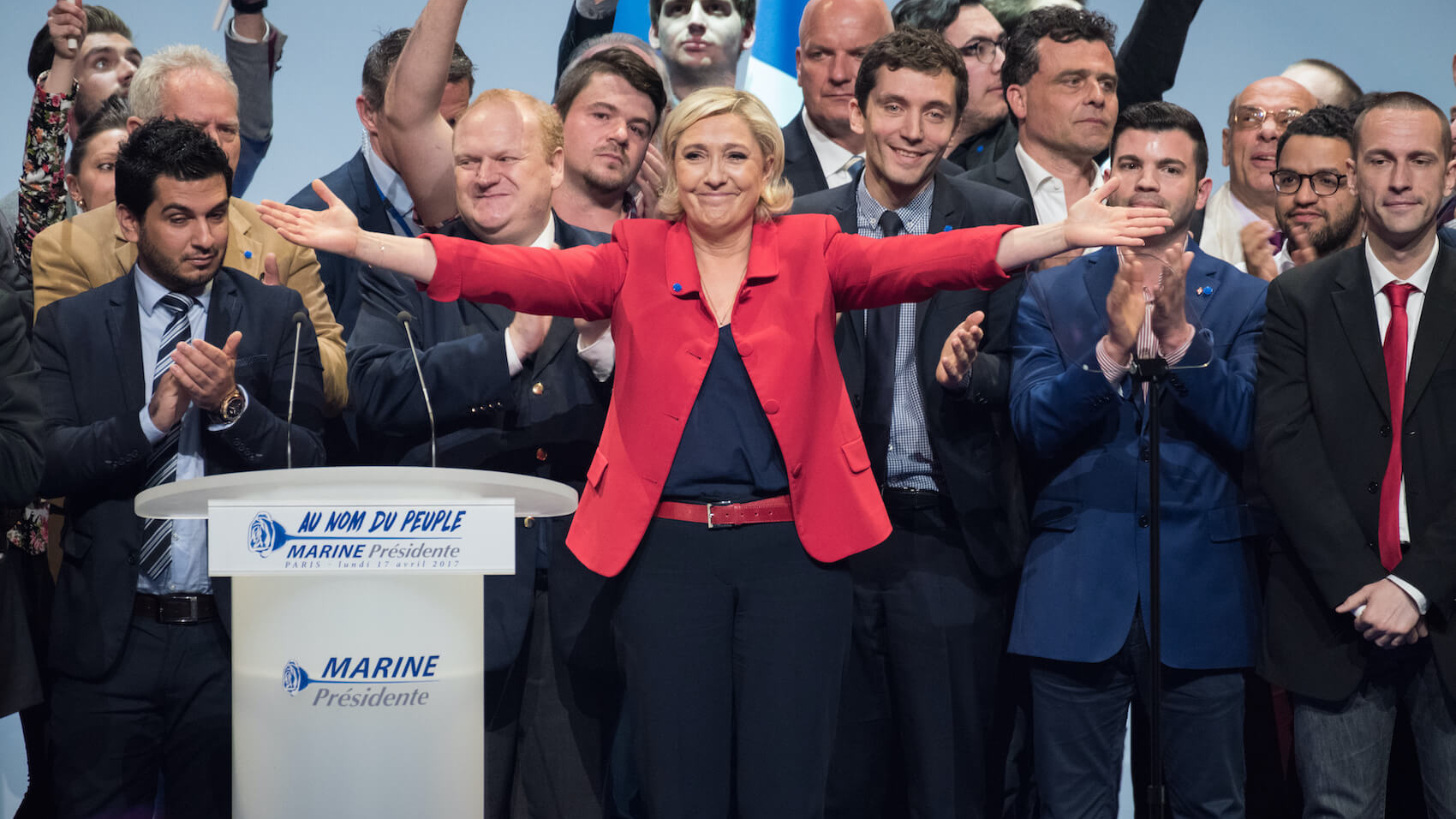
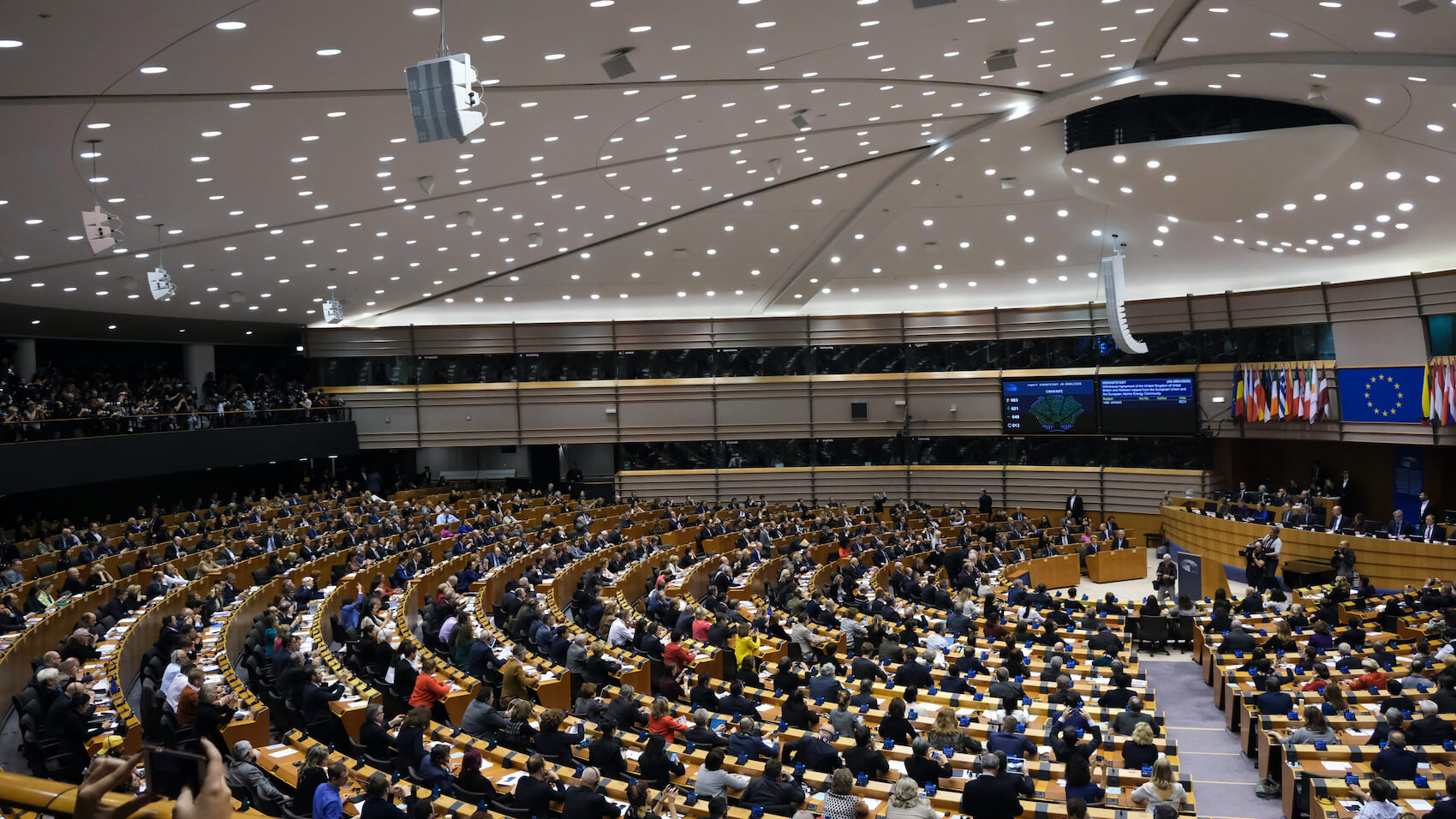
Far from the view that populism in Europe had peaked during the Covid era, rising migration and worsening economic inequality will continue to inflate populist sentiment in years to come. As the meteoric rise of the Sweden Democrats and the Brothers of Italy has shown, we cannot ignore the concerns of those turning to populist sentiment who feel left behind and ignored.
Jake Moran*
Just over a year ago, I submitted my dissertation on the role of English populism in the Brexit referendum result. Fast-forward to today, I am living in Stockholm, Sweden, where the right-wing populist Sweden Democrats recently emerged as the de facto victor in an election which ousted the centre-left bloc from Sweden’s government. The parallel between the subject of my dissertation and the election result here is obvious: a growing electorate dissatisfied with high levels of immigration at a time when cosmopolitan liberalism and globalisation are viewed as marginalising forces in traditional communities.
But what separates this continuing upward trend in populism across Europe – evidenced further by the recent victory of the far-right Brothers of Italy – from the populist forces that sprung during the 2010s, is that the implementation of Brexit, the defeats of Donald Trump and Marine Le Pen, and the paralysing effect of Covid, all contributed to a sense that the 2016 fever of populism had been contained.
Wrong.
Far from being contained, it has in fact quietly grown in many of the places where right-wing populism was thought to be defeated. While Marine Le Pen was again defeated in the French Presidential election, her populist party gained nearly 10% on the previous presidential election, and her ability to maintain enough support to reach the second ballot is a clear sign that populism in Europe is here to stay. The explanation for this is simple: the issues that began the populist revolt of 2014-16 have not simply gone away as a result of Donald Trump being deposed or Brexit being ‘done.’ They remain largely unsolved, and I predict, will grow to become even more significant issues.
Matthew Goodwin, author of several books on the rise of populism in Europe and the UK – many of which I cited in my own dissertation on populism – recently argued that the scale of the challenges facing European democracies today, will dwarf those that sparked the populist revolt of 2014-16. In an interview with Konstantin Kisin and Francis Foster, Goodwin predicts that the gap created by the ineffective response of traditional conservatives to the economic and sociocultural crisis of today will spark a right-wing populist backlash greater than in the 2010s.
From my own research, I agree. As I remarked earlier in this article, the issues created by migration and globalisation have not disappeared in the last few years and will grow in salience as the economic conditions of ordinary voters and the migration crisis worsens. In fact, the view in Britain that Brexit ‘solved’ immigration as an issue of salience for voters is deeply complacent given the persistence of migration across The Channel, the liberalisation of immigration rules from outside the EU by the Johnson government, and the probable impending rise in migration as a direct result of the climate crisis. Immigration has not gone away as an issue and will continue to grow, despite Brexit appearing to have ‘taken back control.’
Far from the view that populism in Europe had peaked during the Covid era, I estimate that rising migration and worsening economic inequality will continue to inflate populist sentiment in years to come. As the meteoric rise of the Sweden Democrats and the Brothers of Italy has shown, we cannot ignore the concerns of those turning to populist sentiment who feel left behind and ignored. The mainstream of politics has to find radical new solutions to the problems caused by the present crisis, especially on the left which has the most to lose from the growth of populism. Failure to do so will give the populists of Europe a route straight to power.
(*) Jake Moran is a graduate of International Relations from the University of Leeds, specialising in populist studies and the politics of national identity, particularly around Brexit.
At this ECPS Youth Seminar, Dr Koen Slootmaeckers speaks on “The others of Europe: The migrants, refugees, minorities and LGBTQ+ on the eyes of right-wing populists” and beyond.
Dr Koen Slootmaeckers is a Senior Lecturer in International Politics at the Department of International Politics at City University of London. He has a multidisciplinary background and combines insights from sociology and political science into his work. His research focusses on gender and sexuality politics in Europe and is particularly interested in analysing hierarchies within the international system. More specifically, Koen has studied the EU accession of Serbia and how this process affects LGBT politics and activism. And his more recent project is interested in the transnational politics of LGBT Pride Parades. His work has been widely published, including a (co-)edited volume ‘EU Enlargement and Gay Politics’ (Palgrave 2016; with Heleen Touquet and Peter Vermeersch), and articles in, amongst others, East European Politics, Politics, Contemporary South-eastern Europe, Journal of Homosexuality, and Europe-Asia Studies.
Moderator Celia Miray Yesil is a master’s student of International Political Economy at the Warwick University. She gained her undergraduate degree in European Politics at King’s College London, studying the historical background of European nations and its relationships with the rest of the world. Miray is considering focussing more on the impact of far-right populism in foreign policy, particularly looking at the political language and communication of populist leaders in the international political economy.
Yilmaz, Ihsan & Shakil, Kainat. (2022). “Manufacturing Civilisational Crises: Instrumentalisation of Anti-Western Conspiracy Theories for Populist Authoritarian Resilience in Turkey and Pakistan.” Populism & Politics. European Center for Populism Studies (ECPS). August 15, 2022. https://doi.org/10.55271/pp0014
Abstract
This paper looks at the importance of ‘crisis events’ used by leaders employing populist civilisational populism in Muslim democracies. While populism is widely acknowledged and studied, various aspects remain unexplored. One feature is how populists make use of a crisis. While populists do benefit from social and political rifts, this paper goes a step further and argues that civilisationalist populists create imaginary and exaggerated ‘crises’ to sustain and prolong their relevance/position in power as well as justify their undemocratic actions. Using the case studies of Turkey (Recep Tayyip Erdogan) and Pakistan (Imran Khan) allows for a comparison to be drawn between two different leaders seeking to maintain power by using their position to either create civilizationalist crises or to frame ordinary crises as civilisational. The findings highlight that despite different political scenarios and outcomes, both these populist leaders gained political support by creating crises. We find that in most cases, populists exaggerate pre-existing insecurities and events to their benefit. The overblown claims and conspiratorial scenarios aid populists in creating a niche for their narratives by reaffirming their populist categorisation of societies. At the same time, the findings bring forth the troubling issues of the social-political cost of these Islamist civilisationalist populists.
William Shakespeare’s famous tragedy Macbeth showcases not only a man with a guilty conscious but also an ambitious woman in the form of Lady Macbeth. Wife to a lord of the realm, Lady Macbeth seeks means to increase the family’s social and political influence. Upon hearing the prophecy of the Wayward Sisters, she forces her husband to seize the throne. Her persuasion leads Macbeth to a short-lived reign, but it ends tragically for all involved.
While Lady Macbeth is often symbolized as a bad wife and a manipulative embodiment of allegedly feminine vice, she is also a Machiavellian politician. Throughout the play she uses carefully crafted words to evoke Lord Macbeth’s emotions and makes tantalizing promises. Her central convictions hinge on greed for power but to convince her husband, she creates a crisis and promises a solution to it. Lady Macbeth is thus very similar to some populists in power today who prey on anger and fear while promising solutions to what ails ‘the people.’
In this paper, we aim to discuss not a classic English tragedy but rather the tragic Islamist populist political trajectories of leading politicians in two countries. Turkey and Pakistan are both victims of populism, and we argue that these countries have seen Lady Macbeth manifest in the form of religious populist leaders. These figures have constantly used populism in the political sphere—and have, in fact, also used politics to enhance their populism. They’ve maintained their longevity and relevance in politics through constant polarisation and by creating fear and sowing suspicion toward ‘the others.’ They give ‘the people’ hope of justice, morality, and change. They’ve tried to carve out a permanent place for populism in politics.
In recent years, both Recep Tayyip Erdogan in Turkey and Imran Khan in Pakistan have made headlines for the wrong reasons. Erdogan, the once hopeful Muslim democrat, has turned into a populist authoritarian with hard-line religious ideas challenging the secular democratic constitutional system of Turkey, Turkey’s pro-Western posture and alliances (Yilmaz, 2022). Khan has moved from social tabloids to frontline news with his Islamist-populist blend of politics that feeds on the ontological insecurities of Pakistanis. While both leaders operate in quite different contexts, they share striking similarities beyond their shared populist Islamism.
Populist Crises Rooted in Civilisationalism
Populism tends to act as a magnet for various societal ideas and emotions. It can attach itself to a wide spectrum of social and political ideologies, ranging from far left to far right (Elchardus & Spruyt, 2014; Stanley, 2008). Populism’s “thinness” (Taguieff, 1995: 32–35) allows for it to attract many perspectives and makes it highly adaptable (De la Torre, 2017; Galito, 2018; Mudde, 2016). Within this quality of mutation, populism attracts issues, themes, and ideas which are ‘flash points’ or triggering in nature.
Populists can attract mass attention by steering debates on contested issues and, especially, by making emotional appeals to base feelings like fear (Yilmaz & Morieson, 2021). Both positive and negative emotions are used by populists to shape their ideas and to appeal to the masses. While non-populists also use emotions in politics, what makes populists different is their intensive use of emotions, especially by discursively dividing society into two antagonistic camps where dangerous ‘others’ have been assaulting the existence of ‘the people,’ who are always ‘pure’ and ‘right’ by default. Populists claim to represent the people and try to rally and mobilise them against ‘the other.’ Who constitutes ‘the people’ and who is ‘the other’ varies by context.
While populism has largely been studied as a Manichean struggle between the virtuous people, the corrupt elite, and dangerous others within national borders, populism’s transnational and foreign policy implications fall under a civilisational rubric that is mostly drawn along religious lines (Brubaker, 2017). In some cases, populist political leaders use right-wing ideas to promote the idea of a civilisation in danger (Gudavarthy, 2021; Yilmaz & Morieson, 2021). This civilisational populist discourse emphasises the importance of antagonistic civilisational differences in global politics and often explains the world in terms of a Huntingtonian ‘clash of civilisations,’ positing that ‘our’ civilisation is threatened by an enemy civilisation or by people from that civilisation who live within ‘our’ national or transnational/diasporic communities (Brubaker, 2017; Lesch, 2020; Yilmaz & Morieson, 2021; Saleem et al. 2022).
Manufacturing ‘crises’ is central to civilisationalist populism. Crises help create a story of an ideal ‘homeland’ or ‘heartland’ which is either lost, dreamed of, or threatened. This is not only limited to a land but extends to way of life, culture, religion and civilisation that can be framed as under existential threat by dangerous others. These then define the parameters of ‘the people’ and ‘the others.’ The otherization process then hinges on profiling ‘the others’ as either threats to the pure people or a hinderance to achieving the promised society that the pure people deserve.
Erdogan and Khan merge Islamist populism with civilisationalism, allowing them to constantly manufacture and instrumentalise civilisationalist ‘crises.’ Their use of religion adds a further layer of emotional resonance in their efforts to mobilize the masses. Both leaders have been able to retain relevance in politics by using either real or constructed Islamist civilisationalist populist crises. When a crisis is real, they skilfully manage to frame it as a civilisational populist issue regardless of its real reasons and roots. Thus, a typical devaluation of the country’s currency because of economic factors could be explained as an existential civilisational attack against the country by the Christian Western crusaders, imperialists, or the ‘interest lobby’ (a.k.a. Jews) that despise the people’s religion, Islam.
The Case of Erdogan
Turkish President Recep Tayyip Erdogan in Ankara, Turkey on August 30, 2014. Photo: Mustafa Kirazlı.
Of the two leaders, Erdogan has been widely studied and acknowledged as a populist politician. His long tenure (over two decades) and Turkey’s closeness to Europe has put him on the radar of political scientists for some time (Yilmaz, 2018; Aytaç & Elçi, 2019; Kaliber & Kaliber, 2019; Yilmaz, 2021a; Tas, 2022). Erdogan and his political party, the Justice and Development Party (AKP), came to power with an anti-establishment and pro-development agenda (Yilmaz, 2009; 2021a; 2012b). While hailing from a long line of Islamist parties banned by the Kemalist state apparatus, the AKP was a reformed Islamist party which posed as Muslim democrat (Yilmaz, 2009). This came with the promise of joining the European Union (EU), democratising Turkish politics (Yilmaz, 2009), and a move to resolve many ethnic-religious rifts left wide open by Kemalist leadership (Yilmaz and Shipoli, 2022). The AKP’s first two tenures were dedicated to accomplishing these goals but, due to their complex nature and the party’s failure of nuanced skills, this led to opposite results. By the end of 2010, the party found itself losing popular support (Yilmaz, 2021b). Even when the AKP was a democratising force during its first term, these Kemalist bureaucrats tried to maintain their tutelage over elected politicians and vehemently resisted the pro-EU reforms.
In response to this, the AKP supported some judicial trials that were “seen by many domestic and international democratic individuals, as well as observers, experts, and institutions such as the EU, as a chance to get rid of Turkey’s notorious deep-state or, to put it more directly, the Kemalist tutelage led by the military” (Yilmaz, 2021a: 199). However, it turned out that these trials were motivated also by “an undemocratic power struggle within the state, where the AKP and some Gülenists were trying to replace the Kemalists” (Yilmaz, 2021a: 199). During these trials, Erdogan and the AKP used observant Muslim citizens’ legitimate grievances against the past undemocratic aggressively secularist practices to frame the Kemalist bureaucracy as ‘the enemies’ of the predominantly Muslim people.
The AKP used this populist frame to advance a reform package via the 2010 judicial referendum. Under these reforms, the military and judiciary—which were still dominated by the Kemalists—became handpicked by the government. Erdogan called this referendum a “milestone for democracy” and cast it as an issue of the political will of the people versus a power tussle between the AKP and the former Kemalist regime (CNN, 2010). Upon victory, he again framed the whole event as a national crisis—but the nation had ‘won’ and was ‘moving forward,’ as he explained: “Yes, to freedom. Yes, to rule of law. No to the law of the rulers. The tutelage of the coup regime is over” (CNN, 2010).
After consolidating his power as a result of the referendum and especially after winning 50 per cent of the vote in the 2011 election, Erdogan’s and his “AKP’s reformist and democratising agenda became steadily weakened. Erdogan was re-elected as prime minister, but thereafter he began to react to political challenges in an increasingly demagogic and autocratic manner” (Yilmaz, 2021a: 199).
As an example, take the Gezi Park protests—a peaceful grassroots movement initiated against the AKP’s corruption and habit of gentrifying or developing public spaces (Gümrükçü, 2016). The government’s harsh response resulted in police brutality against the peaceful protestors, causing several injuries and fatalities. Erdogan employed his civilisationalist populist framing during these protests and accused the protestors of being the puppets of imperialists and the interest lobby. To convince their supporters that their values, religion, beliefs and Muslim civilisation were under attack, Erdogan, the AKP and their media spread disinformation, fake stories and anti-Western conspiracy theories. Erdogan labelled the protestors as “deviant youths” and “tramps” who desecrated a mosque and peed on a practicing Muslim woman who sported a headscarf (Geybullayeva, 2022). Thus, in the eyes of his supporters (40-45 percent of the voters), he successfully turned the event into a moral, religious and civilisational crisis for ‘the people,’ and the alleged desecration was an emotionally triggering aspect of this struggle. Nearly a decade after the protests, Erdogan still uses them as means to discredit protests against the AKP’s growing authoritarianism. He mainly does this by showcasing opposition as a threat to social order and disrespectful of the religious sentiments of Muslims, as he said during the ninth anniversary of the event in June 2022: “We are on the ninth anniversary of the events called the Gezi events, which went down in our history as a document of betrayal, shame and vandalism […] They are corrupt, they are sluts, they know nothing about a holy mosque […] We know who was behind the Gezi events where public buildings, police vehicles, ambulances, businesses, civilian cars, municipal buses, streets and parks were burned down” (BIA News Desk, 2022).
Over time, the Gulen Movement has become one of the AKP’s most prominent examples of civilisationalist rhetoric. As a former ally, this faith-based social and educational movement faced souring relations with the AKP. In late 2013, during the dispute, Erdogan and his close allies were being investigated over corruption (Seibert, 2014). Several leaked audio tapes of the AKP’s top leadership revealed the party’s appetite for corruption and nepotism. The AKP turned this self-created political crisis into a civilisational crisis. It accused the Movement’s members of working with Western countries and Israel against Islam and the Muslim world, as specifically represented by Turkey and the AKP. Then, the AKP started “purging” those suspected of being Gülenists from the police and bureaucracy; these “members” were framed as spies, security threats, and even traitors. Erdogan actively framed the Movement as a parallel structure within the state—one which allegedly worked against the country’s national interests. This framing justified the government’s ‘witch hunt’ against the Gulen Movement—an action that Erdogan defended by saying, “In order to sterilize this dirty water that contaminated the milk, we will either boil or molecularize it” (Hurriyet Daily News, 2014).
In a 2014 interview, he expressed this idea further. The Gulen Movement was a security threat (Solaker, 2014). Erdogan explained: “These elements [Gulen Movement] which threaten the national security of Turkey cannot be allowed to exist in other countries because what they do to us here, they might do against their host.”
The AKP justifies its hard-line approach towards opposition by framing them as threats to the nation and ‘ummah.’ This trend has accelerated since 2016, as the AKP has taken a clear turn towards populist authoritarianism. Its core ideology is rooted in Islamist civilisationalism, where Turkey is viewed as a nation under threat from ‘enemies’ within and outside. Using the trauma of the past and merging it with present insecurities has allowed the AKP to manipulate events in its favour, allowing it to undertake undemocratic practices and frame them as necessary steps to ‘save’ a country under constant ‘threat.’
A failed coup attempt in July 2016 gave Erdogan the power to enforce a Presidential system, grossly violate human rights of his critics, instrumentalise institutions to echo his populism, and stifle political opposition (IAHRAG, 2021). All of this had been made possible by exploiting or stoking anxiety, fear, anger, deprivation, and insecurity. The Gülen Movement has been overtly blamed for the events of 2016. A civil movement has been transformed into a “terrorist organization” via the power of narrative. In a July 2016 interview Erdogan gave with CNN right after the turmoil, he expresses his certainty that Gülen is a terrorist (CNN, 2016).
On another occasion, Erdogan compared the movement with terrorist organisations and armed groups: “Those who follow the Pennsylvania-based charlatan [Gulen] who sold his soul to the devil, or Daesh, which shed Muslim blood, or the PKK that also has shed blood for 30 years to divide the country and the nation, will all lose in the end” (McKirdy & Alam, 2016). Following the July 2016 ‘attempted coup,’ the Gulen Movement has formally been listed as the “Fethullahist Terrorist Organization (FETO),” and its activities were outlawed, assets were seized and redistributed, and its members and alleged members were arrested. At the first anniversary of the event in 2017, Erdogan publicly promised: “We will rip the heads off of these traitors [Gulen Movement]”(MEE, 2017).
As Turkey’s prospects for EU membership faded, the AKP’s leadership used the growing resentment over this issue—as well as past fear and distrust towards the West—to increasingly portray ‘external enemies’ as responsible for domestic problems. These countries were increasingly portrayed as hosts for “FETOists”—and this wasn’t just an insult to Turkey but a threat to democracy everywhere: “The attitude of many countries and their officials over the coup attempt in Turkey is shameful in the name of democracy”(Karadeniz & Pamuk, 2016).
Over the last decade, Erdogan has been quite willing to exploit Islamophobia to extend his narrative about Western countries antagonizing Muslims. While Islamophobia has undoubtedly increased post-9/11, as a populist Islamist, Erdogan has used its existence to prove the narrative that Western nations are the enemies of the East. He’s done this in a Huntingtonian fashion, openly accusing the West of “playing games with the Islamic world.” (Yilmaz & Shakil, 2021a; Douglass-Williams, 2019). On many occasions, Erdogan has behaved undiplomatically to Western counterparts. He has called the Dutch government “fascists” and accused them of “Nazism” when AKP members were refused the opportunity to hold rallies with expat Turks (Marris, 2017). Erdogan has consistently framed the West as lacking empathy for Muslims: “This virus [Islamophobia] is spreading very quickly in countries that have been portrayed as cradles of democracy and freedom for years” (Daily Sabah, 2021).
Moreover, Erdogan has repeatedly blamed “international lobbies” and “foreign powers” for the fall in value of the Turkish Lira’s value (Smith, Sage & Charter, 2018). He called such forces the “global barons of politics and money” who were allegedly derailing Turkey’s progress: “We’ll not give up our new economic program no matter what they do […] They are trying to create a dark scenario using foreign-exchange levels” (Ant, 2021).
As the 2023 elections near, Erdogan has been busy urging the masses to “continue fighting” and “working” for the country’s “purification” from various threats. He added at an event, “We will not give an opportunity to those who want to strangle us with other traps that our country has repeatedly fallen into. Those whose politics consist of lies are not good for this nation” (Hurriyet Daily News, 2022).
At the same times, promises of hope for deliverance from the various ‘crises’ are also transnational. Erdogan has been highly passionate about the Palestinian cause and has promised deliverance to the ummah (OpInida, 2020). At the same time, his growing Islamist policies are also justified as a means of elevating the status of the “victimized” ummah. In 2020, at the reconversion of Hagia Sophia, Erdogan’s comments reflected this promised deliverance: “The resurrection of Hagia Sophia is the footsteps of the will of Muslims across the world to come… the resurrection of Hagia Sophia is the reignition of the fire of hope of Muslims and all oppressed, wrong, downtrodden and exploited” (OpInida, 2020).
What Erdogan thrives on is discord and insecurities that are pre-existing in Turkish society and felt amongst the ummah. The craft of the populist is attaching these vulnerabilities to various populist civilisationalist ideas and instrumentalizing them into ‘crises’ that benefit them. For example, each year on the anniversary of the 2016 coup attempt, the events have been relived and the narrative of looming threats to Turkey is reinforced. Over the years, the list of ‘others’ continues to grow, encapsulating not just national but transnational ‘threats.’ These layers of crises are added to the AKP’s narrative (Carol & Hofheinz, 2022; Yilmaz, 2021a; Yilmaz & Albayrak, 2021A; 2021b; Yilmaz & Erturk, 2021). The sense of a looming crisis justifies the AKP’s undemocratic actions and it sows deep divisions within a society shaped, in part, by Islamist civilisationalist populism.
The Case of Khan
Tehreek-e-Insaf (PTI) Chairman Imran Khan addresses to his supporters during public gathering held on December 11, 2012 in Lodheran, Pakistan.
Imran Khan has also centred his politics around crises which have evolved and intensified over his political career. Like Erdogan, Khan has used pre-existing fissures in society—including anti-West sentiments, Pakistan’s ontological crises, and distrust towards the political elite and various state institutions—to create a collage of crises that have kept him at the centre of mainstream politics.
After retiring from international men’s cricket, Khan took to politics. In his initial years, very few took Khan seriously; many dismissed him as an idealist (Yilmaz & Shakil, 2021b). His narratives were focused on human development, which were backed by his history of philanthropic work in Pakistan. He was a beloved celebrity, but it was not until the 2010s when he started gaining political clout. Khan’s rise to political prominence is directly linked with the creation of several crises (and supported by military backing) (Yilmaz & Saleem, 2022). After almost a decade in the limelight of Pakistani politics, Khan’s party, the Pakistan Tehreek-e-Insaf (PTI), has shown an ability to survive without the backing of the establishment thanks to populist-created crises. Since April 2022, relations between the party and establishment have soured, resulting in Khan’s ouster from office (Basit, 2022). Khan has relied on major crises to remain relevant in politics and has even challenged the longstanding hegemony of the establishment (Alvi & Khan, 2022).
It’s useful to look at the evolution and various forms of these political and social crises. Khan gained political prominence for opposing the West’s “War on Terror,” in the early 2000s—a stance widely broadcast on Western media. Khan was critical of Pakistan’s alliance with the US (Khan, 2021), and he led anti-drone attack rallies in the affected areas of Western Pakistan. Khan’s characterisation has been clear throughout: he primarily portrays the West as untrustworthy, exploitative, and self-serving which results in exploitation of Muslims, including Pakistanis (Afzal, 2018; BBC, 2012). This misplaced sympathy with the Taliban earned Khan the title of ‘Taliban Khan’ in the international press. Khan declared the Taliban “holy warriors” and found merit in their cause (Butt, 2021; Boone, 2012). It was this sentiment that led Khan to call the Taliban takeover of Afghanistan, in 2021, an attempt to dismantle Western influence in the region by “breaking the chains of slavery” (Muzaffar, 2021). But his narratives only gained widespread attention in Pakistan when the military establishment was out of power and needed a civil partner to counter mainstream political parties (Siddiqa, 2022; Basit, 2022).
In early 2010s, Khan rose to prominence due to his direct attacks on corrupt mainstream political parties. Khan’s narrative was that of ‘tabdeli’ (change) which he compared to a “tsunami” bringing much needed change to Pakistani politics (Yilmaz & Shakil, 2021b). Khan rose to prominence during a politically precarious time: the same dynastic-led political parties were winning elections despite a range of corruption charges blemishing their records. Khan and the PTI offered a much-needed alternative. Between 2013 and 2018 (from the PTI winning its first majority in a province to winning a nationwide majority in the 2018 general elections), Khan created a populist-styled political crisis. In this crisis, ‘the people’ were being robbed of their communal wealth and right to be heard by “looters” (mainstream politicians). Khan explained the “dire” situation in the following way: “When one party was kicked out on charges of corruption, the second took over and they made the rounds of corruption […] people were forced to choose one among these two as they had no other choice” (Zafar & Karni, 2018).
Voters found themselves with a choice to avert this political crisis by choosing the PTI over “rats,” “mafia,” and “traitors” (terms used by Khan to label political opposition) (Khan, 2022; NDTV, 2022; Sharma, 2022). This crisis was not imaginary: the Bhutto-Zardari and Sharif families had been implicated in several corruption cases (The New York Times, 2020; Khan, 2018). When the Panama Papers leak contained the names of several of these political families, it gave Khan legitimacy in the eyes of the public (Khaleeli, 2016). Khan promised populist reforms to end corruption in less than 100 days, direct citizen communication with the government, social welfare for all, and improved economic performance (PTI, 2018). In 2011, before PTI’s first major victory, Khan promised deliverance for the “wronged people”: “Once we are in power, we’ll end corruption in 90 days. My party has zero tolerance for corruption and corrupt people” (Mansoor, 2011).
The promises kept getting flashier, such as in 2012, with Khan promising, “PTI will come to power along with policies to address all problems.” He even said his government would only need 19 days to end corruption and 90 days to end terrorism (The Express Tribune, 2012). While in office following the 2013 general elections, the PTI found itself in charge of the Khyber Pakhtunkhwa (KP) province. After this victory, Khan told Pakistanis to “wait and see” the elevated status of the province by the end of his term (Ilyas, 2013). However, the party’s performance in the province to improve public facilities, eradicate terrorism, and end corruption remained unfulfilled. In direct contradiction of his electoral promises, Khan forged a comfortable alliance with the ‘corrupt’ and ultra-right Jamaat-e-Islami (Samaa, 2017; Shams, 2016; Dawn, 2013; Khan, 2014).
With the 2018 elections approaching, and PTI suffering from a problematic performance in KP, the party launched its 2018 election campaign by stoking layered crises and with a pronounced religious connotation. The core crisis of corruption was now linked with the moral degradation of society. Khan blamed the latter on Pakistanis turning their backs on Islam. He promised to end corruption and all other problems faced by country by following a model of Riyasat e Medina (Shakil & Yilmaz, 2021). In Khan’s words: “Over the last 75 years of Pakistan’s history, our country has suffered from elite capture, where powerful and crooked politicians, cartels and mafias have become accustomed to being above the law in order to protect their privileges gained through a corrupt system” (Khan, 2022).
He presented the Riyasat e Medina model as a solution to the multifaceted problems facing Pakistan:“In Islamic civilization, the manifestation of our spiritual principles happened in the Prophet’s (SAW) Madina. Besides many other important principles, there were five very important guiding principles upon which the state of Madina was built. These principles are unity, justice and rule of law leading to meritocracy, a strong moral and ethical foundation, inclusion of all humans in progress and prosperity, and finally, the quest for knowledge” (Khan, 2022).
By 2018, the crisis was not only political but spiritual. Khan mainstreamed the idea that the Muslim ummah (and especially in Pakistan) had been “left behind” due to their waywardness from Islamic governance and social morality. The following abstract from an interview showcases Khan’s framing of the crises in populist Islamist fashion:
“At the moment, the worst advertisement[s] for Islam are the Muslim countries with their selective Islam, especially where the religion is used to deprive people of their rights. In fact, a society that obeys the fundamentals of Islam must be a liberal one. If our Westernized class started to study Islam, not only would it be able to help our society fight sectarianism and extremism, but it will also make them realize what a progressive religion Islam is. They will also be able to help the Western world by articulating Islamic concepts” (MEMRI, 2011).
Such rhetoric combined with constant narratives of corruption and the support of the establishment, landed PTI in power. However, soon after taking office, the party found itself taking ‘U-turns’ on many fronts (Yilmaz & Shakil, 2021c). From going to the International Monetary Fund (IMF) for a bailout package to relying on “electable” candidates to the win the 2018 elections, Khan and PTI repeatedly contradicted their promises. Things were made worse thanks to growing economic pressures on the already fragile economy during and after the global Coronavirus pandemic.
Amidst all these problems, the Riyasat e Medina model was thickened. Despite being highly dependent on Western financial institutions and aid, Khan continued to promise to be independent from the West. His pre-election speeches before 2018 showcased the layers of crisis narrative he’d constructed, including Pakistan’s “slavery to the West” enabled by the corrupt elite leadership. He promised a foreign policy free of US influence, no IMF packages and the promise of a Riyasat-e-Medina (Shakil & Yilmaz, 2021). Even though Khan went to the IMF—despite promising that Pakistan would no longer take the “begging bowl” to the West—he maintained his anti-Western rhetoric (The Indian Express, 2019). He constantly blamed the US for spreading terrorism in Pakistan and the socio-economic ramifications of the ‘War on Terror.’ At one forum he irritably said: “From this platform, I want them all to know, the country that suffered the most, apart from Afghanistan, was Pakistan when we joined the US War on Terror after 9/11” (USNews, 2021).
The second, more prominent layer of this “Western induced” crisis that emerged during the early phase of Khan’s tenure was the moral dimension of “Western influence.” To explain away rising child abuse and assault against women, Khan chose to blame the “porn culture” which in his view was “imported” from the West (Tariq, 2021; Images, 2020). The idea of a moral panic is rooted in the misgiving of the Pakistani nation towards the West and Western culture. Khan capitalised on these sentiments by bringing them to the heart of political debates. He explained his convictions in an interview: “In the 1980s our economy was better than [that of] India and Bangladesh, but slowly they left us behind. And it happened because our moralities waned, and this decline started from the elites of our society. […] I always advise my youth to study the life of our Holy Prophet (PBUH) and understand how he ruled the Arab world. […] In your life, you will always have to choose between two paths. There will be a tougher path, which appears difficult, and the other will be the shortcut, which everyone else will opt for” (Samaa, 2021).
This construction of a moral crisis aided Khan and was used to explain a lot of domestic issues and their ad-hoc solutions. For instance, when Pakistani women marched on the streets to express their anger over the state’s inability to protect them, Khan dismissed them as “misguided” or “Western influenced” (Images, 2020).
This crisis was linked with the ‘intentions’ of the West and non-Muslim countries. Khan and the military (when working in unison) mainstreamed the idea of Pakistan facing “fifth generation warfare.” According to Khan, the PTI, and the establishment, Pakistan is being attacked by an “unseen” enemy via an information war. From accusation against India to accusations about the “Jewish lobby,” the information war became a major source of anxiety and concern about “outside threats,” which were blamed for issues ranging from running “misinformation campaigns” and “sponsoring” terrorists in Pakistan (Dawn, 2020). The military’s top brass endorsed this narrative.
To pass on this “credible” information, the PTI and military media, Inter-Services Public Relation (ISPR), collaborated for the promotion of “truth.” This ranged from importing content from Muslim countries such as Turkey and televising pan-Islamist shows, to sponsoring content developers to showcase a ‘positive’ Pakistan (MMNews, 2021). At one such event, Khan urged young people to not rely on Hollywood for inspiration and focus on creating “original content.” He said: “I have seen the inception of Pakistan’s film industry [….] we started copying Indian films after some years. […]” He continued to push for the need of “original content” which he explained as: “If we want to project a soft image of Pakistan, then we need to promote [the country’s true identity]” (The News, 2021).
Another PTI intervention meant to tackle the moral crisis was to curb Western influence from universities by ensuring Islamist (Islamic) studies are taught at all levels of tertiary education and to introduce a mandatory course on the life of the Prophet (Hoodbhoy, 2021). In Khan’s words, he regrets Western influences and wants to counter them with such measures: “The English-medium [system of private British-inspired or run schools] evolved in such a way that there was less emphasis on education and more emphasis on creating ‘desi vilayati’ (local foreigners). The attitudes and mental slavery of another culture were absorbed” (Abbas, 2021). He further linked abuse and disrespect of women to perpetuation of Western morals, which could be countered by rooting moral society in the right life of Prophet Muhammad: “When I was growing up, nobody could have thought that acts like this would happen [in Pakistan]. I have been to the entire world; the respect for women I saw while growing up existed in Muslim countries but not in the West. A big reason for the destruction we’re seeing is that our children are not being brought up properly.”
This moral crisis became a permanent fixture of Khan’s interviews and debates. By 2021, Khan ensured that a department was created from scratch called the National Rahmatul-lil-Alameen Wa Khatam an-Nabiyyin Authority (Dawn, 2021a). This government institution is tasked with morally revamping Pakistan’s youth, and it has encouraged higher education institutes to research the “harmful effects” of the West on Pakistan and to study the life of Prophet Mohammad (The Friday Times, 2021).
In addition to using different crises to gain support at home, Khan, like Erdogan, has presented himself as the ‘saviour’ of the ummah. His selection of the ‘cases’ he chooses to showcase is telling of his sincerity with the ummah (Yilmaz & Shakil, 2021a). While he considers the genocide of Uighurs in China, also Muslims, an “internal matter” of China, Khan is proactive in calling out Israel’s occupation of Palestine, the global wave of Islamophobia, and issues like Kashmir (Kugelman, 2021). When Shia Hazaras were gunned down during a sectarian killing in Quetta, Khan delayed visiting the community and even called the grieving protestors “blackmailers” who were simply demanding justice for their killed kin (Hashim, 2021; Naya Daur, 2021). Thus, his advocacy for Muslims has always been selective and fed the narrative of civilizationalist populist crises. Islamophobia’s presence, especially in the post-9/11 environment, is undeniable. However, Khan has used the existence of oppression of or discrimination against Muslims to craft a collective identity of victimhood. He has positioned himself as the advocate of these Muslims (Yilmaz & Shakil, 2021a).
In a firebrand speech in 2022, he proclaimed Muslim leaders’ lack of interest disappointing, as he positioned himself as the voice of the ummah: “This Islamophobia kept growing and the reason was—I am sorry to say—we the Muslim countries did not do anything to check this wrong narrative. How can any religion have anything to do with terrorism? How was Islam equated with terrorism? And once that happens, how does a man in the Western country differentiate between a moderate Muslim and a radical Muslim? How can he differentiate? Hence this man walks into a mosque and shoots everyone [New Zealand’s Christchurch shooting]. […] Unfortunately, what should have been done, but wasn’t…the heads of Muslim countries should have taken a stand on this. But a lot of heads of states said that they were moderates” (NDTV, 2022a).
This statement was linked to the development that Khan-led delegations ensured the United Nations General Assembly approved the resolution to assign March 15 as the International Day to Combat Islamophobia (Aljazeera, 2022). Following this decision, Khan congratulated the ummah: “Today, the UN has finally recognised the grave challenge confronting the world: Islamophobia, respect for religious symbols and practices, and curtailing systematic hate speech and discrimination against Muslims. The next challenge is to ensure implementation of this landmark resolution” (Aljazeera, 2022).
Khan’s anti-Western rhetoric and civilisationalist crises peaked in April 2022. After a turbulent three years in office, with a vote of no confidence, the National Assembly forced Khan out of office. This event took place after Khan had been head-on with the establishment over the selection of the new head of Pakistan’s intelligence agency, the Inter-Services Intelligence (ISI) (Ali, 2021). Gradually, by April 2022, the PTI’s relations with the establishment had soured, the joint opposition had gained momentum, and the party’s performance was being questioned by many due to skyrocketing inflation. As Khan’s grip on power was loosening, he used the biggest crisis of all to stay in office. While it did not help him stay in office, it has ensured that he remains a relevant political force in the country. His narratives ensured PTI’s comfortable victory in the Punjab by elections of 2022 (Latif, 2022).
In April 2022, when all attempts to revoke his disqualification failed, Khan took to hosting online, in person, and televised transmissions. In each of these highly watched and attended gatherings and recordings, he parroted a similar story. He argued that the vote of non-confidence was a “sazish” (conspiracy) against Pakistan by a “foreign country” (Iwanek, 2022). In the initial period, Khan talked about the existence of a letter sent to the foreign office and claimed that due to his “noncompromising” attitude, the foreign powers wanted him out and allied with the opposition to get rid of him. This crisis was turned into a national security issue and a question of people’s “self-respect” and right to “self-determination” (Bol News, 2022; The Indian Express, 2022). Khan used the ideas of honour, nationalism, and even an Islamist clash of civilisations to build this narrative. While blaming the US for the vote of no confidence, Khan told people: “I am telling my nation today that this is our status. We are a nation of 220 million and another country—and they are not giving any reason—[is issuing threats]” (NDTV, 2022b). He stirred anger, betrayal, and anxiety in his audiences. Just as he had mobilised the masses in 2013 and 2018, Khan continued to use crises to gain massive support (ABC News, 2022).
The ongoing crisis in Pakistan combines the previous ones. It links the untrusty West with the corrupt Pakistani politicians in a conspiracy against the ‘will of the people.’ It is a manifestation of the ‘threats’ that Khan has been talking about for years—threats to both the country and Islam. The US has been named as the country trying to “interfere” with domestic politics (Baloch, 2022). Using Islamism, Khan labelled the opposition as Mir Jafars and Mir Sadiqs (both men aided the British in annexing parts of India by betraying their Sultan/Nawab). At one of his recent rallies, he lashed out: “Everyone will remember how you devastated the country through foreign conspiracy. Who were Mir Jafar and Mir Sadiq? These were the people who made their countrymen slaves of the British.”
He added: “I am here today because […] we got a message from another country. For a free country, a message like this is [not only] against its prime minister but is also against the country [itself].” He linked the “corrupt parties” with this alleged conspiracy: “…they [the opposition] parties had links with them.” He continued: “The most disturbing thing is that they [foreign forces] have links with the people through whom the conspiracy [the vote of no confidence] happened. They are stooges, and stooges means loyal slaves.”
These narratives have been a key to Khan remaining in popular favour despite questionable performance since 2013. Using pre-existing flashpoints and discontent, he’s drawn many Pakistanis to his online and offline appearances. This mammoth support is due to the civilisational ‘threat’ faced by Pakistan and has enabled Khan to question the military, which is seen as a traditional defender of the country. Since April 2022, he has actively blamed the military for not supporting him and remaining “neutral” as foreign countries act against Pakistan’s welfare (The Express Tribune, 2022).
Conclusion
Much like Lady Macbeth, Erdogan and Khan have used the power of narrative mixed with emotions to shape their countries’ political trajectories in their favour. Erdogan and Khan, while operating independently, share hallmark characteristics of Islamist populist civilisationalism. Both abuse historic, political, and economic rifts in society to emotionally charge the masses; they do this by either manufacturing a civilisationalist crisis or framing an existing crisis in a civilisational populist style. Both populists rely on anti-Western conspiracy theories and dangerous sentiments of hate, anger, moral panic, anxiety, injustice, victimhood, and disappointment to highlight various aspects of their crises. Their manufactured crises are not entirely doom and gloom, as they offer hope and resolution in the form of the populists and their parties as the leaders, saviours and protectors of the ummah against ‘the Crusader West’ that is ‘hostile’ to Islam and Muslims.
As the cases demonstrate, both leaders take pride in tackling the problems. However, their tackling of ‘the problems’ is quite selective and superficial. Thus, the crises create an illusion that the populists will deliver a better tomorrow or guarantee justice to the wronged. In reality, they are widening society’s insecurities and divisions. Erdogan in the last twenty years has divided Turkish society on religious and political lines, which is as oppressive as the Kemalist re-construction of a secular society. Khan has capitalized on pre-existing Sunni majority conservatism and distrust of non-Muslim countries. This has earned him political victories, but the social fabric of Pakistan—always volatile and discriminatory towards the marginalized—is as fractured as ever. Today, people in Pakistan have lost trust in the state’s key institutions, and a segment feels at ease contributing all negative things to ‘Western conspiracies.’ We find that these populists are not original creators of these crises but opportunistic users. Crises—real or imagined and manufactured—are instrumentalized for political purposes. This enables these populists to blur the lines between fiction and reality, as they try to turn situations in their favour.
Acknowledgements:This research has been funded by the Australian Research Council (ARC) Discovery Grant, DP220100829, Religious Populism, Emotions and Political Mobilisation.
— (2021). “Revealed: List of all Pakistanis named in Pandora Papers so far.” Dawn. October 4, 2021. https://www.dawn.com/news/1650077 (accessed on August 14, 2022).
Carol, S. and Hofheinz, L. (2022). “A Content Analysis of the Friday Sermons of the Turkish-Islamic Union for Religious Affairs in Germany (DİTİB).” Politics and Religion, pp.1–24.
De Cleen, B. & Stavrakakis, Y. (2017). “Distinctions and articulations: A discourse theoretical framework for the study of populism and nationalism.” Javnost-The Public. 24(4), 301-319.
De la Torre, C. (2017). “Populism in Latin America.” The Oxford handbook of populism, 195-213.
Douglass-Williams, C. (2019). The Challenge of Modernizing Islam: Reformers Speak Out and the Obstacles They Face. Encounter Books.
Galito, M. S. (2018). “Populism as a political phenomenon.” JANUS. NET e-journal of International Relations. 9, 53-69.
Gümrükçü, B. Selin. (2021). “The Aftermath of the Gezi Park Protests: Rising Populism and Mobilization for Autocracy.” Jadaliyya. June 16, 2021. https://www.jadaliyya.com/Details/42978 (accessed on August 14, 2022).
Gudavarthy, A. (2021). India after Modi: Populism and the right. Bloomsbury Publishing.
Kaliber, A. & Kaliber, E. (2019). “From de-Europeanisation to anti-Western populism: Turkish foreign policy in flux.” The International Spectator. 54(4), 1-16.
Khan, D. (2021). “Political economy of uneven state spatiality: Conflict, class, and institutions in the postcolonial state of Pakistan.” Rethinking Marxism. 33(1), 52-70.
Saleem, Raja Ali, I. Yilmaz, and P. Chacko. (2022). “Civilizationist Populism in South Asia: Turning India Saffron.” Populism & Politics. European Center for Populism Studies (ECPS). February 24, 2022. https://doi.org/10.55271/pp0009
Shakil, K., & Yilmaz, I. (2021). “Religion and Populism in the Global South: Islamist Civilisationism of Pakistan’s Imran Khan.” Religions. 12(9), 777.
Yilmaz, Ihsan and Albayrak, Ismail. (2021a). “Religion as an Authoritarian Securitization and Violence Legitimation Tool: The Erdoğanist Diyanet’s Framing of a Religious Movement as an Existential Threat.” Religions. 12(8), 574.
Yilmaz, Ihsan and Albayrak, Ismail. (2021b). “Instrumentalization of Religious Conspiracy Theories in Politics of Victimhood: Narrative of Turkey’s Directorate of Religious Affairs.” Religions. 12(10), 841.
Yilmaz, Ihsan and Erturk, O. Faruk. (2021). “Populism, violence and authoritarian stability: necropolitics in Turkey.” Third World Quarterly. 42(7), 1524-1543.
Yilmaz, Ihsan and Morieson, Nicholas. (2021). “A Systematic Literature Review of Populism, Religion and Emotions.” Religions. 12, no. 4: 272. https://doi.org/10.3390/rel12040272
Yilmaz, Ihsan and Saleem, Raja M. Ali. (2022). “Military and Populism: A Global Tour with a Special Emphasis on the Case of Pakistan.” Populism & Politics. European Center for Populism Studies (ECPS). https://doi.org/10.55271/pp0010
Yilmaz, Ihsan and Shakil, Kainat. (2021b). “Imran Khan: From Cricket Batsman to Populist Captain Tabdeli of Pakistan.” ECPS Leader Profiles. European Center for Populism Studies (ECPS). https://doi.org/10.55271/lp0006
Yilmaz, Ihsan and Shakil, Kainat. (2021c). “Pakistan Tehreek-e-Insaf: Pakistan’s Iconic Populist Movement.” ECPS Party Profiles. European Center for Populism Studies (ECPS). https://doi.org/10.55271/op0004
Yilmaz, Ihsan and Shipoli, Erdoan. (2022). “Use of Past Collective Traumas, Fear and Conspiracy Theories for Securitisation and Repression of the Opposition: The Turkish Case.” Democratization 29:2, 320-336, DOI: 10.1080/13510347.2021.1953992.
Yilmaz, Ihsan. (2009). “Muslim Democrats in Turkey and Egypt: Participatory Politics as a Catalyst, Insight Turkey.” Vol. 11, No. 2, Apr. 2009, pp. 93-112.
Yilmaz, Ihsan. (2018). “Islamic populism and creating desirable citizens in Erdoğan’s new Turkey.” Mediterranean Quarterly. 29, no. 4, 52-76.
Yilmaz, Ihsan. (2021a). Creating the Desired Citizen: Ideology, State and Islam in Turkey. Cambridge University Press.
Yilmaz, Ihsan. (2021b). “The AKP’s Authoritarian, Islamist Populism: Carving out a New Turkey.” ECPS Party Profiles. European Center for Populism Studies (ECPS). https://doi.org/10.55271/op0005
Yilmaz, Ihsan. (2022). Authoritarianism, Informal Law, and Legal Hybridity: The Islamisation of the State in Turkey.Singapore: Palgrave Macmillan.
Yilmaz, Ihsan; Ahmed, Zahid; Bashirov, Galib; Morieson, Nicholas & Shakil, Kainat. (2022). “Islamist Populists in Power: Promises, Compromises and Attacks on Democratic Institutions.” Populism & Politics. European Center for Populism Studies (ECPS). August 7, 2022. https://doi.org/10.55271/pp0013
Abstract
This paper comparatively examines the ruling religious populist governments in Turkey and Pakistan through a theoretical framework that focuses on populists’ promises, their compromises, and their attacks on democratic institutions. Through our three-legged framework, we examine how these religious populists behave in power and how strategic necessities, the realities of governing, and structural constraints shape their policies. Similar to the other populists in other parts of the world, before coming to power, Islamist populists make sweeping promises to the people and quick fixes to major problems of the country—most famously, quick and substantial economic development. While they may want to retain their uncompromising style and lofty goals, the realities of governing force populists to make serious compromises to their designated ‘enemies’ and on their values once they are in power. Finally, like other authoritarian politicians, Islamist populists attack formal institutions of democracy such as the judiciary, the media, and civil society; they politicize them, evacuate them, and eventually capture them from within.
The rise of political populism among ruling elites in different parts of the world—but especially in Asia, Europe, and the United States—has raised questions about the durability and resilience of democracy as a political order. This experience is especially relevant to Pakistan and Turkey, as both countries have a contentious history between religion, democracy, and authoritarianism via military rule. More importantly, Islamist populist actors have captured political power in both countries: Recep Tayyip Erdogan in Turkey, and Imran Khan in Pakistan. This begs the question: How do Islamist populist leaders behave in power? This research will examine the practices of Islamist populists in power to reveal the main patterns of their behaviour—and the implications for democratic institutions.
This paper has three aims. First, it attempts to comprehend the main features of the ruling Islamist populist governments in the Muslim world by comparing populist actors in Turkey and Pakistan. The rise of populism in Turkey and Pakistan is a sign of a broader phenomenon where populist actors have been threatening democratic institutions and norms via populist discourses. However, comparative studies of populisms in the Muslim world are almost absent in the literature. Moreover, the relationship between Islamism and populism is relatively understudied (Hadiz, 2018; Yilmaz, Morieson & Demir, 2021). Scholars have described populists in Europe as ‘hijacking’ religion or as secular actors that instrumentalize religion to win and keep power (Marzouki et al., 2016; Morieson, 2017). In Islamic majority nations, something similar yet more complex appears to be taking place. Indeed, as this paper shows, Islamist populists in Pakistan and Turkey draw upon Islam when they make promises to defend their respective nations from foreign forces ‘seeking to destroy the nation’ and its people and when they promise to rejuvenate their nations via a return to Islamic values and ways of life. They also, at times, portray themselves as ‘holy’ Islamic figures with the power to ‘save’ their peoples from their religious enemies. However, as the paper shows, they are also willing to compromise their Islamic values to remain in government.
We present a theoretical framework that examines Islamist populists in power, focusing on their promises, their compromises, and their attacks on democratic institutions. Our framework allows for an examination of how populists behave in power as well as how strategic necessities, the realities of governing, and structural constraints shape their policies. We show that similar to the other populists, Islamist populists make sweeping promises—before coming to power—involving giving power to the people, quick fixes to major problems, and of widespread economic development. These promises, the paper shows, are designed to provoke an emotional response in voters and to elicit feelings of fear of cultural disintegration and anger toward ‘elites’ but also nostalgia for a past golden age and hope for a better future. However, while they may want to retain their uncompromising style and lofty goals, the realities of governing forces populists to make serious compromises to their designated ‘enemies’ and on their values. Finally, populists attack formal institutions of democracy such as the judiciary, the media, and civil society; they politicize them, evacuate them, and eventually capture them from within.
This study provides a fresh analysis on the impacts of Islamist populism on democracy in the Muslim world. This study will provide a systematic analysis focusing on populists’ promises, rejection of compromise, and authoritarianism vis-à-vis their use of socio-cultural elements. In doing so, it will also demonstrate how the Islamist populist governments in Pakistan and Turkey have manoeuvred around principles of democracy and political accountability—sometimes subtly, sometimes openly—to dilute its safeguards and erode democratic institutions.
In what follows, we first document the rise of populism in Turkey and Pakistan. Then we introduce our conceptual framework based on the populists’ promises, compromises, and attacks on democratic institutions. Following this, we comparatively examine the Turkish and Pakistani cases by applying this framework. The final section summarizes our findings.
Rise of Populism in Turkey and Pakistan
Turkey’s President Recep Tayyip Erdogan and Ali Erbas, the head of the Directorate of Religious Affairs (Diyanet) is seen during a public rally in Istanbul on the second anniversary of failed coup attempt on July 15, 2016.
In this article, we follow the performative-relational approach to populism that has been developed by Ostiguy et al. (2020). This approach incorporates socio-cultural and style elements and focuses on performances, discourses, and speech acts. The performative-relational approach combines theatre, representation, embodiment, and making the marginal visible (Ostiguy et. al. 2020). In particular, it examines how the leader embodies the people and their demands through certain performances such as language, clothing, bodily image, and other socio-cultural references. The leader’s style generally challenges socio-cultural standards of ‘proper behaviour,’ hence low politics (Ostiguy et. al, 2020), and is characterised by “bad manners” (Moffitt, 2016). The bad (subversive) manners find resonance in the populists’ dirty institutionality when they are in power. The dirty institutionality refers to personalism, decisionism, rule-erosion, and antagonism.
Since at least 2011, Turkey has undergone a dual process of democratic backsliding amid the emergence of a new, authoritarian regime under the leadership of Recep Tayyip Erdogan. According to the Economist Intelligence Unit’s Democracy Index, Turkey’s overall democracy score dropped from 5.73 in 2011 to 4.09 in 2019 (The Economist, 2019). Turkey’s political system has been transformed into a presidential system that has given most executive and legislativefunctions to President Erdogan, eliminating the principle of separation of powers as well most checks and balances on executive authority (Tas, 2015). In addition, an important component of the ruling-AKP’s political strategy has been populism (Yilmaz, 2018). In Turkey, the AKP government’s adherence to populism has been well documented by several scholars (Aytaç and Öniş, 2014; Taş, 2020; Baykan, 2021).
Erdogan depicted himself as the man of the people, the son of a modest migrant family in Istanbul, and a devout Muslim educated in an Imam and Preacher School. In his own self mythology, he “knows the streets of city,” has devoted his life to working for Islamist political organisations and has suffered for his political ideas. In the Erdoganist narrative, the Kemalists and Westernised people are cast as evil elites (Beyaz Türkler, or White Turks) who are out of touch with the ‘real,’ authentic values of ‘the people,’ and they are charged by Erdogan with historical horrors against simple people—all committed in the name of Westernisation (Çapan and Zarakol, 2019: 276). In this narrative, the White Turks are framed as responsible for anything that goes wrong in the country (Yılmaz, 2017: 499).
Erdogan’s charismatic leadership played an important role in enabling the AKP to increase its popularity and remain in power (Turk, 2018). He presented himself as the “voice of deprived ‘real people’ and the champion of their interests against the old elites” (Dincsahin, 2012). He also increased his popularity with the working class through such populist acts as having his hair “cut in the poor neighbourhood where he grew up,” which helped to show that his “newly acquired power has not changed him” (Kirdiş and Drhimeur, 2016: 606). Erdogan’s peculiar populist style carried important similarities with Hugo Chavez and Rafael Correa’s in Venezuela and Ecuador, respectively (Selcuk, 2016). Castaldo (2018), on the other hand, claims that Erdogan’s populism has allowed him to acquire unchecked control over state institutions and use this power against the opposition.
The AKP has been particularly successful in harnessing the negative emotions of the Turkish public. Yilmaz, for example, notes that negative emotions such as fear have been the dominant constitutive components of modern Turkish nationhood and among the deep conviction of Turkey’s nation-builders, who attempted to create a homogenous nation of desired citizens by assimilating or eliminating ethnic, religious, and political minorities (Yilmaz, 2021a). Yilmaz argues that the AKP draws upon “fear, anger, rage, desire to own the homeland forever,” a “need for a smile,” a desire to “sacrifice blood for the country, and desire to enjoy freedom of the God-worshipping nation,” along with feelings of “victimhood, resentment and siege mentalities” (Yilmaz, 2021a: 3) in order to build its political power and support for Erdogan’s rule.
Erdogan’s populism also carried an anti-institutionalist attitude. He opposed horizontal accountability structures such as the judiciary and the Constitutional Court and blamed them for the ills of society. Erdogan asserted the moral and normative supremacy of the national will (Yabanci, 2016; Selcuk, 2016), and, acting as if he was the embodiment of the national will, he vilified his critics such as Kurdish nationalists and Gulenists, as traitors and the “enemies of the state” (Gencoglu-Onbasi, 2016).
In Pakistan, Imran Khan “rose to power on a classic populist platform” by presenting his party as the non-corrupt alternative to Pakistan’s two biggest political parties of the era, the Pakistan Muslim League-Nawaz (PML-N) and the Pakistan People’s Party (PPP) (Afzal, 2019: 1). With anti-Western and pro-Taliban rhetoric, Khan’s populism has been labelled both left wing and right wing. For example, his pro-poor social welfare policies draw from the left, and so, too, does his foreign policy, which aims at reducing dependence on the West (Yilmaz, 2020). Based on an assessment of the 2018 elections that brought Khan into power in Pakistan, Shah describes Pakistan as having a “pseudo-democratic façade covering the reality of continued military tutelage” (2019: 128). There continues to be criticism of Khan’s populism as not being pure because of the military backing during and after the 2018 elections. This is mainly because military dictators directly ruled the country for nearly three decades, and the military continues to sustain its influence in domestic politics (Ganguly, 2009), as well as the fact that the Khan government has been close to the military leadership (Afzal, 2019).
There are many examples which show how the Pakistan Tehrik-e-Insaf (PTI) government benefited military leadership. This includes the much-criticized case of the current army chief’s extension in 2019 (Afzal, 2019). In addition, there are numerous examples of former military generals taking up civilian jobs. For example, a retired brigadier was declared the head of the National Database and Registration Authority (Pakistan Today, 2021). In 2019, a former three-star general was appointed to head the newly established China-Pakistan Economic Corridor Authority, a former air marshal to head Pakistan International Airlines, and a two-star general to head the country’s space agency. Citing these and many more examples, critics of the PTI government call it a “puppet” of Pakistan’s army (Khan, 2021).
Imran Khan, whilst in office, was certainly supported by the military; however, this does not contradict his populist character. In fact, military establishments have historically supported right-wing populists in other countries, including Brazil and Mexico (Scharpf, 2020; Yilmaz and Saleem, 2021). Imran Khan is another example of a military establishment deciding to support a populist party in a win-win situation, in which the military establishment maintains its unconstitutional power vis-à-vis civilian authorities, and the populist party gains necessary political power in a highly fragmented political environment.
Since the start of his political career, Khan has targeted the opposition parties—the PML-N and PPP—as the corrupt elites (Shakil & Yilmaz, 2022; Yilmaz & Shakil, 2021a; 2021b). Khan’s Pakistan Tehrik-e-Insaf (PTI) has also targeted other political parties/leadership as friends of the West and India. One key aspect of Khan’s populism is antagonism towards the global powers and the West, especially the US. Like Zulfiqar Ali Bhutto, Khan consistently emphasizes an anti-imperialist discourse in his speeches and statements. Pakistan, according to Khan, has always been subservient to foreigners: first the British and then the Americans. At the heart of Khan’s rhetoric is an emphasis on Pakistan’s sovereignty—the idea that Pakistan should be an independent nation unaffected by foreign influence (Aslam, 2015).
Khan emphasized the concept of “Islamic socialism” to gain legitimacy in the eyes of the Pakistani Muslim population. As such, Khan’s “most fervent new supporters were the poor and working class of Karachi” (Judah, 2018). His emphasis on “Islamic socialism” helped him to dismiss the policies implemented by former Pakistani politicians and elites. For Khan, “the corrupt political elite is trying to protect itself. We have hit rock bottom. The poor are getting poorer, and a tiny number of people are getting richer” (Campbell, 2018). Benefitting from rampant anti-Westernism in Pakistan, Khan has also advocated for the revival of Islamic values. This has been reflected through his infatuation with the Muslim-era under the Ottoman Empire as well as broadcasting a famous Turkish soap opera, Dirilis Ertugrul (English: Resurrection Ertugrul), which airs with Urdu dubbing on Pakistan Television (MEM, 2020).
Besides using religion in domestic politics, Khan’s foreign policy is also inspired by Islamic identity. Khan associated himself with historical religious figures with references to the Ottoman Empire and the state of Medina dating back to the era of Prophet Muhammad (Bukhari, 2018). Taggart (2004) believes that this kind of association with religious figures also helps bolster support in the populist religious “heartland.”
Other issues that were prominent in the PTI’s agenda were linked to the ‘War on Terror’ and how that had brought both losses and shame to Pakistan (Aslam, 2015). For Imran Khan, ‘puppet governments’ in Pakistan received US aid which, in turn, destroyed the country (Jeffries, 2011). In contrast, Khan has portrayed the PTI as a party with ‘pure’ intentions for the country and an antagonistic stance toward the ‘West.’ For example, before being elected to office, Khan promised that he would not, unlike past governments, take the “begging bowl” to the International Monitory Fund (IMF) (Bokhari, 2019). In addition, during the US’ Afghanistan withdrawal, Khan made clear that Pakistan would “absolutely not” allow its airbases to be used by the US (Zompa, 2021).
Populism is becoming increasingly influential in the Muslim world, particularly in Muslim democracies. Turkey and Pakistan were, for some time, considered as model democracies in the Muslim world. However, as the AKP experience showed, when combined with populism, Muslim democracies may falter. It appears that Pakistan is following a similar trajectory with Imran Khan increasingly using populist rhetoric to erode democratic institutions. Comparing these two cases makes sense—not only because of such similarities between them, but also because the insights gained from this exercise can be applied to other cases in the Muslim world, such as Malaysia, Tunisia, Bangladesh, Egypt, and Morocco.
Theoretical Framework: Populists in Power
Hugo Chavez is seen during his last campaign for presidency. Photo: Luis Arismendi
Between 1990 and 2018, the number of populists in power around the world has increased a remarkable fivefold, from four to 20. This includes countries not only in Latin America and in Eastern and Central Europe—where populism has traditionally been most prevalent—but also in Asia and Western Europe. (Kyle and Gultchin, 2018). There is a new and growing literature on populists in power, thanks to the increasing electoral success of populist parties and leaders in the Western world. The literature in Europe has mainly focused on populist political parties, since the European political system is mainly dominated by political parties (Albertazzi and McDonnell, 2007, 2015; Kriesi and Pappas, 2015; Pappas, 2014, 2019; Enyedi and Whitefield, 2021; Schwörer, 2021).
Whether these parties are successful at fulfilling their promises remains unknown. However, there is no doubt that they can sustain their respective governments in power, sometimes over long periods. Albertazzi and McDonnell (2007, 2015) investigated Lega Nord in Italy and PDL in Switzerland in this respect. Both parties were junior coalition members in broader conservative-ruling coalition governments for several years. These otherwise marginal right-wing parties have become acceptable partners for mainstream parties in government. The authors’ findings contradict the abovementioned consensus and reveal that these populist parties are neither inevitably episodic nor are they destined to failure in government. They can introduce key policies in line with their core ideologies and election promises. They can focus on the issues that their supporters care about. They may also increase their votes once in government and learn from their previous experiences and mistakes in power.
Nonetheless, these parties face a peculiar dilemma in power: they may need to let go of their flashy, uncompromising style and learn how to make compromises in politics. Moreover, choosing to participate in government alongside other parties requires them to field suitable candidates for bureaucratic positions in the government, a resource that they may not have.
The literature shows that populists in power, as in the case of Rafael Correa in Ecuador (De la Torre and Ortiz, 2016) “can act strategically and consistently to both head off and undermine possible opposition.” Correa has been able to co-opt political actors by bringing them into the regime and by establishing an informal alliance with a great part of the business community. He also attacked social movement organizations and political activists and has been at war against privately owned media and created state-owned media outlets that are sympathetic to the government and its populist discourse. Correa also kept alive the populist myth of the people confronting powerful elites by constantly campaigning, establishing a ‘permanent campaign.’ Correa’s project was also built on the notions of national sovereignty, critiques of US imperialism, and attempts to create alternative supranational Latin American institutions without US influence.
Correa is continuing a rich vein of Latin American populism of which Venezuela’s Hugo Chavez is the most recent prominent example. Originally, ‘Chavismo’ was a democratic response to widespread failures of democratic governance such as corruption and inequality. As Hawkins (2016) argues, Chavez’s populism was “unusually intense and consistent.” Similar to Correa, Chavez’s populism was consistent in that it manifested high levels of populism from Chavez’s first days as a democratic politician until his death as an autocrat. He consistently followed an aggressive foreign policy against US imperialism in Latin America and led the ALBA initiative that brought together leftist, populist Latin American governments—such as Correa’s—for this purpose.
Traveling across the Atlantic, Batory (2016) argues that in contrast to populist right-wing parties in Western Europe, Fidesz was the major, mainstream centre-right alternative party in Hungary for two decades. This is similar to the mainstream centre-right phenomenon in Turkey. During the 2000s, Fidesz refashioned itself into a vote-winning machine based on its claim to be champion of the common people’s interests against foreign interests. After gaining a majority in the government in 2010, Fidesz single-handedly adopted a new constitution and electoral law that curtailed the power of the independent judiciary, media, and civil society organizations. Fidesz utilized now-well-known populist narratives that portrayed the country’s external enemies as conspiring with domestic forces wanting to pull the country back to a discredited, dark past. The party identified elitism and liberalism as its ‘other.’
These cases show that populists can remain popular in government without moderating their rhetoric or falling apart, and in fact, they might well own too many issues to diffuse or mimic their appeal.
For this comparative analysis of populist governments in power in Turkey and Pakistan, we present a theoretical framework focusing on their Promises, their Compromises, and their Attacks on Democratic Institutions. Our framework fits the performative-relational approach toward populism. The three-dimensional analysis promises an intellectually rigorous framework for this study.
Promises
To examine how populists behave in power and what makes that behaviour distinctive, we start with looking at their promises during election campaigns. ‘Promise of fullness’ is an important component of populist performance (Ostiguy et al., 2021). Populist performance promises to remove obstacles that prevent the community from redemption. While making promises is a normal trait of electoral politics, populist promises are different due to populists’ rejection of any limits on their claims to embody the will of the people (Espejo, 2015: 61), the contradictory character of their promises, and populists’ propensity to make grandiose promises characterized by quick fixes to major issues.
An important ‘promise’ that populists make involves bringing ‘democracy,’ i.e. ‘power to the people.’ They favour ‘direct democracy’ and promise to put ‘the people’ in power, at the expense of technocrats and the political establishment. They promise a better world through action by the sovereign people—and that they can deliver on this promise, because they belong to the people (rather than the establishment). This usually means getting things done through majoritarianism. In making this claim, populists overlook the fact that it is not quite possible for ‘we, the people’ to combine diverse interests and opinions into a coherent collective will. Despite populist leaders’ claims to the contrary, divisions remain within societies in terms of opinions, interests, and aspirations.
Populist promises are also characterized by bombastic rhetoric and grandiosity that often sounds too good to be true. Nonetheless, whether it’s promises of sweeping economic development or quick fixes to major problems, populists catch voters’ attention—and in some cases, their votes. For example, when Hugo Chavez came to power in Venezuela in 1998, he promised to eradicate corruption and tackle the country’s pressing economic problems, including poverty and social inequality. By 2015, Venezuela was languishing in one of the biggest economic crises in Latin American history.
Religion-based, civilisational identity politics is often an element in populist promises and discourses (Yilmaz, Morieson, Demir, 2021; Brubaker, 2017). For example, European right-wing populists often claim that Muslim immigration places Judeo-Christian values under threat from migrants who fail to assimilate (Morieson, 2021; Cap, 2018; Zúquete, 2017; Ádám and Bozóki, 2016; Baker-Brian, 2011). Simultaneously, populists also promise a solution to the ‘crises’ if they are voted into power, insofar as they promise to rejuvenate their respective nations by returning to the Judeo-Christian tradition that made it great (Yilmaz, Morieson, Demir, 2021; Damhuis, 2019).
This trend of promising to restore the homeland to its lost glory while ‘otherizing’ segments of society is found outside the West, too. The ‘saffron tide’ in India and East Asia has seen local politicians instrumentalize Hinduism and Buddhism (Artinger and Rowand, 2021; Jayasinghe, 2021; Chatterji et al., 2020; McDonnell and Cabrera, 2019; Peker, 2019). In India, the Bharatiya Janata Party (BJP) has, for the last two terms, created an antagonistic environment for non-Hindus and most of its discriminatory policies—from ‘love jihad’ to citizenship laws—are justified by claims that they are part of the revival of the great and ancient Hindu kingdoms (Saleem, Yilmaz and Chacko, 2021; Saleem, 2021). Muslim democracies have also seen an increase in populist politicians using religiously driven crises and promises (Yilmaz, 2021a; Yilmaz, Morieson, Demir, 2021; Yilmaz & Shakil, 2021c).
Compromises
Populist leaders demand transparency; they denounce backroom deals, shady compromises, complicated procedures, secret treaties, and technicalities that only experts can understand. They abhor pragmatic party politics and its compromises. These issues tap into a deep vein of public disillusionment with the political establishment. Moreover, the polarising and divisive nature of populist appeals prevent negotiations and compromise among contending political actors (Panizza and Stavrakakis, 2021). Moreover, populism presents a Manichean outlook, in which there are only friends and foes. Opponents are not simply people with different priorities and values; they are evil. Populism’s black-and-white views and uncompromising stance inevitably leads to a polarised society, and its majoritarian attitude denies legitimacy to opponents’ views, weakening the rights of minorities.
Consistency would require that populists continue this uncompromising stance once ensconced in power. However, once in power, populists are bound by the same structural limitations and necessities that affect all mainstream parties. This means that they must negotiate with other parties, groups, and countries in an increasingly interdependent environment. Once in power, populists pursue pragmatic, opportunistic policies that go against their promises of radical change, and they make compromises with the domestic and international actors that they previously criticized.
Populists also do not abstain from making compromises to their ‘enemies’ once they are in power. Populism is a thin ideology that divides society into two opposing camps, the ‘pure people’ and the ‘corrupt elite’ (Mudde, 2017). Populists create enemies in their discourses during election cycles. Despite their idealistic claims otherwise, populists are political actors who pursue power. Once in power, their main goal is to stay in power, which requires them to make pragmatic decisions, including compromises. In this context, populists make ‘friends’ or ‘allies’ from some of their previously declared ‘enemies’ for the sake of gaining political favours.
Research on populism also point at populists’ pragmatic and opportunistic approach to political issues and concepts once they are in power. Populists in power have a similar incentive structure to all other politicians. As such, they strive to stay in power as much as possible. To do so, they are willing to ignore their earlier promises and make compromises to their designated ‘enemies’ if they consider this to be necessary. In order to generate an illusion of consistency for their followers, populists in power usually implement non-radical policies and try to masque them with radical rhetoric.
Attacks on Democratic Institutions
As mentioned above, the populist leader’s style generally challenges socio-cultural standards of ‘proper behaviour,’ (Ostiguy et. al 2021) hence low politics and is characterised by “bad manners” (Moffitt, 2016). The bad (subversive) manners of the populist finds resonance in their “dirty institutionality” when they are in power. The dirty institutionality refers to personalism, decisionism, rule-erosion, and antagonism (Panizza et al, 2020). Levitsky and Loxton (2013) argue that populism—the election of a personalistic outsider who mobilizes voters with an anti-establishment appeal—is a major catalyst for the emergence of competitive authoritarianism. Lacking experience with representative democratic institutions, possessing an electoral mandate to destroy the existing elite, and facing institutions of horizontal accountability controlled by that elite, populists have an incentive to launch plebiscitary attacks on institutions of horizontal accountability. Where they succeed, weak democracies almost invariably slide into competitive authoritarianism. Thus, populists in power invariably attack democratic institutions. As a recent report by Grzymala-Busse et al. (2020: 1) mentioned, “Populists undermine formal institutions such as the courts, legislatures, and regulatory agencies as creations of the ‘corrupt elite.’ As winners of democratic elections, they fail to constrain themselves and instead hollow out and politicize formal institutions of liberal democracy.”
In this article, we will focus on three sets of institutions that populists most famously attack: the judiciary (the Constitution, regulatory agencies, laws, judges, lawyers), themedia, (media organizations, journalists, the internet, social media), and civil society (NGOs, INGOs, trade unions). Our discussion will focus specifically on how Erdogan and Khan attacked, captured, and/or dismantled these institutions. In our discussion, we will examine how specifically the populismof these actors informed their actions and led to their eventual success at corrupting these institutions. In particular, we will discuss populists’ politicization, capture, and hollowing out of the institutions.
Comparative Analysis of Populists in Turkey and Pakistan
Tehreek-e-Insaf (PTI) Chairman, Imran Khan addresses to public meeting held at Shahi Bagh in Peshawar, Pakistan on May 27, 2015. Photo: Awais Khan
Promises
A notorious trope of populist discourse is the promise of ‘direct democracy,’ with populists framed as direct representatives of ‘the people.’ In Turkey, Erdogan is notorious for constantly articulating such statements contrasting himself and his party to the Kemalists, which he considers the elitist, anti-religious group. During various election cycles, Erdogan referred to himself and supporters as ‘Black Turks’ (who were wronged by the elites, by the ‘White Turks’ who tend to be Kemalist and secular). The trope of the Black Turk is well-worn ground for Erdogan, a staple of his self-branding as the great outsider who is removed from the politics of 20th century one-party rule and corruption. He has continuously invoked victimhood narratives that hail the conservative Turks (his base) as the real people who historically suffered under the Kemalist secularist regime (Demiralp, 2012; Yilmaz, 2021). The general notion is that conservative Turks in Turkey have historically been victimized by the Kemalist elites.
In his bid to promote Turkey as a ‘great power,’ and—more importantly—himself as a great leader, Erdogan also criticized the structure of the UN Security Council that is composed of five major powers (the US, Russia, China, France, and the UK) for failing to represent the oppressed people of the world, including (and, again, most importantly) Muslims. He has famously declared, on countless occasions, that “the world is greater than five” (in reference to the five members of the UNSC). He has also exclaimed that “the world is greater than five; it is certainly greater than one [referring to the US].”
Moreover, sweeping, lofty promises have been the staple of Erdogan’s—and the AKP’s—election campaigns. On numerous occasions since 2010, Erdogan and the AKP promised to make Turkey one of top 10 economies in the world. Erdogan and the AKP also made promises of producing national cars, airplanes, and jet fighters—even falsely declaring on several occasions that they have already been produced. In the 2011 parliamentary election cycle, the AKP put adverts in many cities that declared “Our National Airplane is in the Air.” The AKP made further announcements about the “National Airplane,” this time called the TRJET, in the 2015 election cycle, claiming that it will be in air by late 2019. However, no step has been taken even to make a factory yet (Evrensel, 2019).
In Pakistan, Khan has often claimed that as a Western educated and famous cricketer, he could have easily chosen to live a life of luxury but instead chose to serve the people. He promised to live a “simple life” after becoming the prime minister and has portrayed himself as living simply by selling his luxury cars (Klasra, 2018). Equally, he presents himself as a common citizen who wears simple non-Western clothing and is connected to the lower segments of society.
Promises of quick fixes and sweeping economic development have been a standard part of Khan’s discourse. His big promise has been to build a New Pakistan (Naya Pakistan), which has several components: fixing the status quo of destructive politics, never seeking compromises for the sake of power, never compromising on the principles of justice and change, building an Islamic welfare state, and entrenching the rule of law (PTI, 2018: 6-7). The constant references to Riyasat-e-Madinademonstrate a religion-based populist approach through which Khan has been promoting the idea of a “sacred” Islamic welfare system to address the grievances of people failed by the previous “corrupt” rulers (Hassan, 2020; Yilmaz, Morieson and Demir, 2021). While speaking in favour of tax reforms by his government, he stated, “All successful societies are run by people making money [and] paying taxes and those being spent on health and education; that is the state of Medina” (Dawn, 2020a). Another dimension of Khan’s Islamist promises features a ‘moral’ society. Over the course of his premiership, he emphasised the “moral corruption” of youth under alleged Western influences. For instance, talking about rising sex crimes in the country, Khan blamed Hollywood: “I gradually realised that we have scholarship to determine where [do these crimes stem from]. They come from Hollywood, then move to Bollywood and the same culture is later adopted by our people” (Express Tribune, 2021).
In another controversial interview Khan blamed the West for spreading the trend of divorce and open sexuality, which he termed a danger to Pakistani youth and society: “When I was 18, I went to Britain for the first time; it wasn’t the society it has now become. It was the beginning of sex, drugs, and rock and roll. I saw it with my own eyes as the immorality increased. First with adult films that started spreading widely. It started appearing in the media. What happened with that? There was a direct impact on the family system” (Bol TV, 2021).
As part of his promised Riyasat-e-Madina, he promised the nation a pious youth inspired by the life and teachings of Prophet Muhammad that would counter these “Western” influences (Geo TV, 2021).
Khan also promised to end corruption in 19 days and terrorism in 90 days once he came to power (The Express Tribune, 2012). Additionally, he would bring “back every single penny of the looted money from the corrupt political leaders” (The News, 2020). On several occasions, he blamed former ruling parties for taking turns for corruption (Zafar and Karni, 2018). Referring to them during the election campaign of 2018, Khan said, “the self-proclaimed kings go abroad and buy palaces and expensive properties. They siphon funds from here, and their kids sit abroad on billions in businesses” (The News, 2018). Since his ousting from office following a non-confidence vote, Khan has increasingly linked the PPP- and PML-N-led coalition with the historical figures of Mir Jaffar and Mir Saddique[1] (Dawn, 2022a). In one of the many addresses, where he used the term “boot polisher” to describe the current Prime Minister, Khan said: “Have some shame, Shehbaz Sharif. You are the Mir Jafar that I talk about” (Dawn, 2022a).
He has promised ‘the people’ that he would hold the ‘imported government’ accountable for acting as “stooges” for “foreign” governments (Express Tribune, 2022; Iwanek, 2022). Khan’s rationale behind losing power rests on an explanation in which he blames internal “traitors” and “Western forces,” who he claims are the civilizational enemies of the Muslim population of Pakistan—and by extension, himself. He has promised revenge against “the traitors” as he continues to pressure for fresh elections, saying: “I’m giving this imported government six days to declare new elections. Otherwise, I will re-enter Islamabad with 2 million people” (Mogul & Saifi, 2022).
Since his removal from office, Khan has been making new promises to hold the corrupt accountable, rid Pakistan of “foreign influences,” and to improve the lives of the common people.
Compromises
Once in power, populists pursue pragmatic, opportunistic policies that go against their promises of radical change. They make compromises to the domestic and international establishment and institutions that they initially criticized. One of the most obvious cases of compromise by the AKP and Erdogan was their alliance with one of the Kemalist establishment parties, the Turkish nationalist MHP, after 2015. For over a decade—since 2002—the MHP was one of the fiercest critics of the AKP and Erdogan. The tacit alliance between the AKP and MHP emerged following the June 2015 elections, in which AKP lost its majority in parliament for the first time. The alliance was made official in 2018 as the “People’s Alliance” to support Erdogan’s election as president of Turkey. This was in stark contrast to the 2014 presidential elections, when the MHP supported the opposition candidate, Ekmeleddin Ihsanoglu, together with the Kemalist CHP. The AKP’s alliance with the MHP is a major U-turn for Erdogan and the party and constitutes a major compromise.
Another one of Erdogan’s major U-turns happened in regard to the Ergenekon trials. Started in 2008, the trials included high-profile Kemalist military officials, opposition lawmakers, and members of Kemalist civil society associations who were alleged to have conspired against the ruling AKP by plotting a military coup. Despite serious irregularities regarding the legal proceedings of the case, Erdogan, who once called himself the “prosecutor” of the trials, and the AKP government fervently supported the trials, as they were aimed at Kemalist establishment figures who had long dominated Turkish politics. Nonetheless, Erdogan changed his stance on Ergenekon after his implicit alliance with the faith-based Gulen Movement, which was fully supportive of the problematic legal cases, faltered in late 2013. Not only did Erdogan dismiss the original Ergenekon trials, but he also claimed that it the Gulen Movement became the “neo-Ergenekon” after 2014 (Filkins, 2013; Erdogan, 2014).
In a similar vein, Erdogan’s other major U-turn and compromise happened in relation to Israel, as exemplified by the case of the Gaza Flotilla Raid. In 2010, Israel stopped ships from breaking the Israeli blockade of the Gaza Strip and delivering aid to Gaza. The Turkish-owned ship Mavi Marmara was caught in a military operation that resulted in the deaths of ten Turkish activists. This raid led to a diplomatic rift between Israel and Turkey that lasted six years. In the wake of the raid, Erdogan asserted that Israel’s attack on the Mavi Marmara was a casus belli (an act that justifies a war). Rather than making a war against Israel, in 2016, he signed a deal that restored full ambassador-level relations with Israel. In the wake of the agreement, Erdogan this time blamed the organizers of the Gaza freedom flotilla, who criticized the agreement between the two countries.
In Pakistan, Imran Khan has also contradicted his own positions. This has been most visible in relation to his opposition to the Mullahs and how he has dealt with them in politics (Khan, 2011: 53). Despite his clear anti-Mullah stance, Khan decided to form an alliance with the biggest and oldest Islamist party in Pakistan, Jamat-e-Islami, to form a provincial government in Khyber Pakhtunkhwa that lasted for five years, from 2013-18 (Samaa TV, 2018). During the popular dharna (sit-in) in Islamabad in 2014, he formed an alliance with another religious party called the Pakistan Awami Tehreek, led by a cleric, Dr. Tahir ul Qadri (Shahid, 2017). His government led the Islamization of education and curricula: in June 2020, the Punjab government made Quran learning compulsory for university students (Ahmed, 2020).
In Khan’s anti-Western rhetoric, a significant focus is on how the West does not understand Islam and how this leads to Islamophobia in the West (Gulf News, 2019b). He has repeatedly spoken about the oppressed Muslims of Jammu, Kashmir, and Palestine. The Khan government has compared the Modi government’s measures in Jammu and Kashmir to the Israeli brutalities against Palestinians (Stone, 2019). As Khan has spoken for the ummah, including Muslims in majority-Muslim and other states, it has come as a surprise that he has completely avoided the issue of the Uighur Muslims of Xinjiang, China (Wescott, 2019). This is another compromise that Khan has made for his survival by instead applauding China for a poverty alleviation program. He’s even suggested Pakistan can draw lessons from China (Xinhua, 2019).
Aligned with the party’s anti-Western/American agenda was the promise that a Khan-government would not beg the IMF for loans. He once said, “I would rather die than go with a begging bowl to the IMF” (Findlay and Bokhari, 2019). The realities of running the government, however, were tougher than expected—especially the country’s dire financial situation. This forced the Khan government to return to the IMF for more loans to address the emergent challenge of balancing payments (Farmer, 2019; Landler, 2009).
Other key ingredients of Khan’s populist rhetoric were taxing the rich to give concessions to the lower classes and to bring the corrupt to justice. However, the IMF deal has basically meant more taxes for everyone, including the poor (Bokhari, 2019). The situation under Khan—following the IMF loans—is not any different, as the middle-class is mainly paying the price of taxation reforms (Shah, 2019). In addition, the local businesses have demonstrated against increased sales taxes as part of the IMF deal (Shams, 2019).
A major compromise for Khan’s PTI was visible in its preference for electable politicians leading up to the 2018 elections. Desperate for a victory in the elections, Imran Khan offered seats to experienced politicians with former ruling-party affiliations—including from the parties that Khan claimed had looted the country. A federal minister in Khan’s cabinet, Fawad Chaudhry, was a spokesperson for the previous pro-Western Musharraf government and a minister in the left-wing PPP government of Yousaf Raza Gillani (Zaman, 2018). Other prominent names in the PTI government include Shah Mahmood Qureshi and Sheikh Rasheed, both of whom had long political careers in the PPP and right-wing PML-N, respectively.
Khan spoke about reversing his stance on this issue during the election campaign: “You contest elections to win. You don’t contest elections to be a good boy. I want to win. I am fighting elections in Pakistan, not Europe. I can’t import European politicians” (Rehman, 2018). After the vote of no confidence during the Punjab byelections, PTI is once again making alliances with groups the party once deemed ‘corrupt.’ For example, Khan formally criticized the Elahi brothers and their party due to their comfortable alliance with the military regime in the early 2000s. However, in 2022, to secure their influence in the province of Punjab, the PTI nominated Pervaiz Elahi as its candidate for the seat of Chief Minister of Punjab (Naya Daur, 2022). This was a clear contradiction of PTI’s call to eliminate corrupt politicians and shows their newfound acceptance of members of the former regime once labelled “pro-West” by Khan (Sareen, 2022).
Dirty Institutionalism
Once they are in power, populists attack formal institutions of democracy such as the judiciary, the media, and civil society; they politicize them, evacuate them, and eventually capture them from within. This process has been apparent both in Turkey and Pakistan, with the former completing the erosion of institutions and the latter being at the early stages. Simultaneously, populists also build or support institutions which back them.
Judiciary
In Turkey, the attacks on democratic institutions go back to the early 2000s, when the AKP came to power. During its first decade in power, the AKP worked to undermine political institutions—most importantly the judiciary, which it hoped to capture from within. For Erdogan, the judiciary was a key institution controlled by Kemalists; it needed to be eliminated and captured due to the Kemalist opposition to Islamist politics in Turkey. Indeed, the AKP faced a major closure case in 2008, which further underlined the threat represented by institutions of horizontal accountability. Collaborating with the Gulenists, Erdogan and the AKP assaulted this crucial branch of state administration with a judicial reform submitted to a popular referendum in 2010. Only two out of 26 amendments stimulated an intense debate, since they were meant to restructure the constitutional court and the Supreme Council of Judges and Prosecutors (HSYK), enlarging their ranks and setting new selection procedures.
These amendments would put the judiciary under Erdogan’s control, since the AKP could pack both organs with loyalists. The amendments were voted on in parliament by the AKP majority and then submitted to a nationwide referendum. Erdogan employed a populist, anti-establishment appeal, which divided society between ‘the people’ supporting the reform and ‘the elite’ opposing it. He presented the reform as a new tool to empower the nation and to hold secularists accountable. He depicted the opposition as a “coalition of evil,” which could not agree on any issue except the fight against the amendments that would make ‘the people’ stronger. The referendum result was a success for the AKP, allowing it to pass the necessary amendments to capture the HSYK, a key institution of the judiciary. Erdogan also changed the constitution to switch the governing system from parliamentary to a strong presidential system without credible checks and balances.
In Pakistan, the PTI government and Imran Khan attacked the judiciary with similar populist tropes. The Khan government confronted the judiciary on behalf of the military, which was behind Khan’s success in the last elections. A federal minister from the PTI criticized the judiciary over a death sentence awarded to former Army chief and President General Pervez Musharaf in a treason case (Gulf News, 2019a). Fawad Chaudhry, a federal minister, said, “You pushed the institution [army] against the wall. It is an honour-based institution. If you keep doing this, won’t they react?” (Haider and Qayum, 2019). As is clear from the remarks, it was a direct threat to the judiciary.
In another case, the Supreme Court of Pakistan blocked the extension of the current army chief for which approval was granted by the PTI government and Khan (Pal and Shahzad, 2019). Khan stated, “The confidence of the people in the country’s judicial system has been shaken and now they are looking towards the PTI government for improvement in the system” (Dawn, 2020b). In April 2022, when the Supreme Court of Pakistan stood by the Assembly’s vote of no-confidence, Khan showed his clear discontent with the judiciary. He said: “I was disappointed with the Supreme Court decision, but I want to make it clear that I respect the Supreme Court and Pakistan’s judiciary.” He continued to weave a conspiracy, blaming the courts as on the side of the “imported” government, adding: “There is a conspiracy from abroad. This is a very serious allegation … that a foreign country conspired to topple an entire government”(Welle, 2022).
Since April 2022 he has attacked the judiciary and called upon citizens to observe the alleged “foreign conspiracy” he claims ended his time as Prime Minister (ANI, 2022).
Media
The Erdogan regime appointed trustees to Zaman daily in Istanbul on March 4, 2016. A protester chaining hands during freedom of the press protest in front of the Zaman daily.
The media was perhaps Erdogan’s most important preoccupation. Erdogan attacked secular, opposition media institutions at virtually every opportunity since he came to power in 2002. He blamed the opposition media for attacking the national will and national values and for being indecent and vulgar. To capture the media, the AKP pursued an elaborate scheme whereby politically connected businesses were supported through the state budget and favourable tenders; these businesses then purchased existing media conglomerates and put them under the AKP and Erdogan’s service.
A key example is the Dogan Media group’s eventual capture by a pro-AKP businessperson. For decades, Dogan was the most important player in Turkish media and provided secularist coverage. Dogan media became the key pillar of opposition to the AKP government in the early 2000s. Infuriated by Dogan’s opposition, Erdogan started a campaign against his businesses through tax evasion cases and constant bureaucratic harassment, which eventually forced Dogan to sell his media conglomerate. In cases where the opposition media organization was not willing to be sold, Erdogan simply shut it down, arrested the journalists and the owners, and destroyed the organization entirely. Here, the most prominent cases are the Gulen-affiliated media organizations and Ipek media (which was also connected to Gulen) that were taken over by the government and then completely shut down.
In later years, Erdogan completely colonised the remaining TV and print media outlets; now, with few exceptions, they are firmly under his control. These media outlets “continuously reinforce Erdogan’s worldview and self-projected image as an embattled leader moulding Turkey into a global power” (Tahiroğlu, 2020: 2).
Khan’s rise to power as a populist was attributed to the media’s coverage of his famous sit-in. Many private TV channels provided live coverage of the PTI dharna (sit-in) in 2014. Therefore, many were shocked to see how his government curtailed media freedom. Through various restrictions, such as censorship, the PTI government showed that it was against any criticism of its policies and actions. Through the Pakistan Electronic Media Regulatory Authority (PEMRA), the PTI government also issued a directive stopping TV news from sharing their personal views, which was declared a punishable offence (Ellis-Petersen and Baloch, 2019). PEMRA and the National Accountability Bureau (NAB) have also been blamed for following the government’s agenda in targeting certain media houses: for example, Mir Shakeel-ur-Rehman, the head of the biggest media group in Pakistan, the Jang Group, was arrested by NAB on corruption charges in March 2020. Following the arrest, PEMRA directed local cable operators to shutdown Geo TV (Geo News, 2020).
Imran Khan’s time in office saw a rise in efforts to control all forms of the media, including print, electronic, and social, especially through the newly formed Pakistan Media Regulatory Authority. This desire was reflected in his remarks on local media at the World Economic Forum where he said that the Pakistani media is “free” and “vibrant” but also “crosses the line” often (Mahbubani, 2020). Since the Khan government was criticized through social media, it approved a bill in February 2020—”the Citizens Protection (Against Online Harm) Rules 2020”—to control social media. Many believed the bill was used to “stifle dissent and free speech.” The language of the bill was ambiguous, as the new social media restrictions aim to also prevent the live streaming of content on “terrorism, extremism, hate speech, defamation, fake news, incitement to violence and national security” (Al Jazeera, 2020). Local journalists and human rights groups have criticized such reforms. A journalist based in Islamabad argued that the international community needs to “force Pakistan’s hybrid civil-military regime to stop this continued crushing of normal free speech in the country” (Rehman, 2020). In July 2020, a prominent journalist and critic of the military and the government, Matiullah Jan, was kidnapped in broad daylight but later released. Jan blamed the security and intelligence agencies for his kidnapping (The Guardian, 2020).
Ironically, once out of office Khan’s attitude towards media oppression has changed. Various pro-PTI advocates on social media have been unconstitutionally arrested and abducted by the state due to critical remarks they made regarding the military (Dawn, 2022b). The very laws that the PTI put into place are now being used against its supporters, to whom Khan is dismissive (Daily Times, 2022). In addition, he remarked that social media was the carrier of truth and urged his supporters to follow his social media accounts for current and direct news from the party and himself (Khan, 2022).
Civil Society
It is well-known that, especially since the Gezi Protests of 2013, Erdogan has constantly attacked civil society organizations that represent non-AKP interests, particularly those who oppose his rule or those packed by people who dislike Islamism. These have included prominent secularist organizations such as Ataturkist Thought Association, Association for the Support of Contemporary Living, and various socialist organizations and labour unions.
During his first 10 years in power, Erdogan verbally attacked these organizations for being elitist, anti-people, anti-Muslim, and against the national will. After the mysterious coup attempt in 2016, he intensified his crackdown against the liberal and leftist journalists, such as Ahmet Altan, Mehmet Altan, Şahin Alpay, Mümtazer Türkone and Nazlı Ilıcak, Ahmet Şık, Can Dündar, Kadri Gürsel, and Osman Kavala. With the Gezi Park trial, he managed to get many more liberal and leftists dissidents imprisoned (Yilmaz and Shipoli, 2022: 326).
When he could not manage to co-opt the pro-Kurdish HDP, he got hundreds of HDP members imprisoned (Yilmaz, Demir, Shipoli, 2022). Almost all mayors of Kurdish municipalities were suspended and replaced with Erdogan loyalists. Hundreds of pro-Kurdish civil society organisations have been declared terrorists and shut down (Yilmaz and Shipoli, 2022: 329). After the mysterious coup attempt, about 150,000 people were detained and more than half a million people have been prosecuted on terrorism charges. Universities, private schools, thousands of civil society institutions, hundreds of media outlets, including TV stations, newspapers, news agencies, and radio stations were either shut down or turned into Erdogan’s mouthpieces (Yilmaz and Erturk, 2021: 1531-1532)
Moreover, Erdogan established his own so-called civil society organizations to propagate his views and raise a new generation loyal to him and his party. AKP-controlled religious and CS organizations such as TURGEV and Ensar started to work together with state institutions, such as the Ministry of Education and Diyanet, to provide religious and educational services funded by public resources (Yabanci, 2019).
In Pakistan, the Imran Khan government expanded attacks against civil society organizations. Channelling anger over the US’s bin Laden operation in 2011, attacks on both local and international NGOs intensified, as local intelligence believed the Save the Children NGO provided intelligence to the US (Boone, 2015). There are new regulations and security checks which have already forced several international organizations to shut down their operations in Pakistan. Under the Khan government, such measures expanded, as a notice was issued to 18 international organizations, including ActionAid in October 2018, to leave Pakistan (Sayeed, 2018). The Ministry of the Interior said such prominent international NGOs posed a threat to national security and were “anti-state agents” (Asad and Khattak, 2018). The government also expanded such restrictions to target members of the Pashtun Tahafuz Movement (PTM), a civil society movement critical of the army’s role in the ‘War on Terror.’ A case was also lodged by the Federal Investigation Authority against Gulalai Ismail, a prominent member from a local NGO, Aware Girls, for allegedly receiving millions from India. It was claimed that her organization was involved in suspicious activities (The News, 2019).
The PTI also actively supported Islamist agendas. These involved mandating religious studies (Islamic studies) at all levels of tertiary education, mandating Quran and Hadith learning classes in educational institutions, and introducing special moral development courses for undergraduates based on the life of Prophet Muhammad (Geo TV, 2021; Hoodbhoy, 2020). One of the most extensive centralized curriculum development initiatives spearheaded under the PTI government was the Single National Curriculum (SNC), which was highly controversial due to perceptions that it was indoctrinating students with the PTI’s ideals (Mahar, 2021; Vinayak, 2021; Torwali, 2020).
Conclusion
As the cases of Fidesz in Hungary, Rafael Correa in Ecuador, and Hugo Chavez in Venezuela showed, populists can remain in power through strategic manoeuvring. Taking their examples as a basis, this paper compared the ruling populist governments in Turkey and Pakistan. We showed that in Turkey and Pakistan, the ruling governments followed populist political performance that divide society into the ‘pure, Muslim people’ and the ‘corrupt, anti-Muslim others’ (also sometimes frames as ‘the elite’). Religion, therefore, is important to populists in Turkey and Pakistan and plays an important role in portraying the leader as a sacred figure capable of ‘saving’ the nation and eliciting emotions in the voting public. In particular, Erdogan and Khan are adept at portraying the political opposition as enemies of Islam and at making promises that link religion and national rejuvenation. However, the paper shows that even these religion-based promises may be disregarded when populists in Turkey and Pakistan need to make compromises to maintain power. This suggests that retaining power and deepening their control over the nation is more important to them than following through on their promises to defend Islam and make their respective nations ‘great’ by returning to Islamic values and ways of life.
We devised a three-dimensional framework to comparatively examine these ruling religious populists. Our framework focused on populists’ promises, their compromises, and their attacks on democratic institutions. This allowed an examination of how Islamist populists behave in power and how strategic necessities, the realities of governing, and structural constraints shape their policies. We argued that populists make sweeping promises of power to the people and quick fixes to major problems of the country—most famously sweeping economic development—before coming to power. While they may want to retain their uncompromising style and lofty goals, the realities of governing force populists to make serious compromises to their designated ‘enemies’ and on their values once they are in power. Finally, populists attack formal institutions of democracy such as the judiciary, the media, and civil society; they politicize them, evacuate them, and eventually capture them from within. This study provided a fresh analysis on the impacts of populism on democracy in the Muslim world.
Our findings confirm three aspects of populists in power. First, religious populists in power have a similar incentive structure to all other politicians. As such, they strive to stay in power as much as possible. To do so, they are willing to ignore their earlier promises and make compromises to their designated ‘enemies’ if they consider this to be necessary. Therefore, the uncompromising attitudes that populists usually convey may not reflect their actual behaviour when in power. As such, it is important to examine political opportunity structures surrounding populist politicians in order to understand their behaviour. Second, populists’ ideological stances tend to be shallow and pragmatic. Based on the necessities of power, their ideological enemies may become friends and vice versa. This means that populists’ ideologies are secondary to their pursuit of power. Third, religious populists, like many others, tend to undermine democratic institutions and eventually either capture or dismantle them. This emanates not only from their ideological stances but also the strategic preference to rule through illiberalism.
Acknowledgements:This research has been funded by the Australian Research Council (ARC) Discovery Grant, DP220100829, Religious Populism, Emotions and Political Mobilisation.
(*) Dr Zahid Shahab Ahmed is a research fellow at the Alfred Deakin Institute. His research focuses on peace and security in South Asia and the Middle East. His work examines the impacts of sectarianism and violent extremism on domestic, regional, and global peace and security. He is also engaged in research and educational projects on countering violent extremism. As a Pakistani citizen, Dr Ahmed brings a much-needed citizen’s perspective to research on the country. He also brings rich grassroots level experience in the development sector in Asia to his research.
(**) Dr Galib Bashirov is a research associate at the Alfred Deakin Institute for Citizenship and Globalisation. He was a lecturer at Florida International University’s Department of Politics and International Relations. He finished his PhD in international relations in the same department. Bashirov’s research areas include state-society relations in Azerbaijan and Turkey and the United States’ foreign policy in Central Asia.
— (2019). “Democracy Index 2019. A year of democratic setbacks and popular protest.”Economist Intelligence Unit. (http://country.eiu.com/allcountries.aspx (accessed on April 27, 2022).
— (2020b). “People’s trust in judicial system has been shaken: Imran.” Dawn. May 30, 2020. https://www.dawn.com/news/1560336 (accessed on April 27, 2022).
Ádám, Zoltán, and András Bozóki. (2016). “State and Faith: Right-wing Populism and Nationalized Religion in Hungary.” Intersections EEJSP 2: 98–122. Available online: http://intersections.tk.mta.hu (accessed on April 24, 2022).
Afzal, M. (2019). An inflection point for Pakistan’s democracy. Washington: Brookings.
Artinger, Brenna, and Michael Rowand. 2021. When Buddhists Back the Army: Many monks in Myanmar are supporting the military coup. Foreign Policy. February 16. Available online: https://foreignpolicy.com/2021/02/16/myanmar-rohingya-coup-buddhists-protest/ (accessed on April 27, 2022).
Asad, Malik and Inamullah Khattak, (2018). “Govt under international pressure after asking 18 INGOs to wind up operations in Pakistan”, Dawn, 9 October 2018, https://www.dawn.com/news/1437893 (accessed on April 27, 2022).
Aslam, Wali. (2015). “The political appropriation of casualties in threat construction.” In: Precision-strike technology and international intervention: strategic, legal and moral implications.” ed. Mike Aaronson et al. London: Routledge.
Aytaç, S. Erdem and Ziya Öniş. (2014). “Varieties of populism in a changing global Context: the divergent paths of Erdoğan and Kirchnerismo.” Comparative Politics. 47(1), 41–59.
Baker-Brian, Nicholas J. (2011). Manichaeism: An Ancient Faith Rediscovered. London and New York: Bloomsbury.
Batory, Agnes. (2016). “Populists in government? Hungary’s system of national cooperation.” Democratization. 23, no. 2: 283-303.
Brubaker, Rogers. (2017). “Between nationalism and civilizationism: The European populist moment in comparative perspective.” Ethnic and Racial Studies. 40: 1191–226.
Campbell, Charlie. (2018). “Cricket Hero Imran Khan Led Pakistan’s Team to Victory. As a Politician, He’s Riding a Populist Wave.” Time. July 9, 2018, http://time.com/5324713/imran-khan-pakistan-prime-minister/ (accessed on April 27, 2022).
Canovan, Margaret. (1999). “Trust the people! Populism and the two faces of democracy.” Political Studies. 47, no. 1: 2-16.
Çapan, Zeynep Gülşah & Zarakol, Ayşe. (2019). Turkey’s ambivalent self: ontological insecurity in ‘Kemalism’ versus ‘Erdoğanism.’ Cambridge Review of International Affairs 32(3), 263-282.
Cap, Piotr. (2018). “We don’t want any immigrants or terrorists here’: The linguistic manufacturing of xenophobia in the post-2015 Poland.” Discourse & Society. 29: 380–98.
Castaldo, Antonino. (2018). “Populism and competitive authoritarianism in Turkey.” Southeast European and Black Sea Studies. 18(4), 467-487.
Chatterji, P. Angana; Hansen, Thomas Blom and Jaffrelot, Christophe. (2020). Majoritarian State: How Hindu Nationalism is Changing India. Oxford: Oxford University Press.
De la Torre, Carlos, and Andrés Ortiz Lemos. (2016). “Populist polarization and the slow death of democracy in Ecuador.” Democratization. 23, no. 2: 221-241.
Demiralp, Seda. (2012). “White Turks, black Turks? Faultlines beyond Islamism versus secularism.” Third World Quarterly. 33, no. 3: 511-524.
Dinçşahin, Şakir. (2012). “A symptomatic analysis of the Justice and Development Party’s populism in Turkey, 2007–2010.” Government and Opposition. 47(4): 618-640.
Espejo, Paulina Ochoa. (2015). “Power to whom? The people between procedure and populism.” In: The promise and perils of populism: Global perspectives. 59-90.
Ganguly, S. (2008). “Pakistan After Musharraf: The Burden of History.” Journal of Democracy. 19 (4): 26-31.
Gençoğlu Onbaşi, Funda. (2016). “Gezi Park protests in Turkey: from ‘enough is enough’ to counter-hegemony?” Turkish Studies. 17(2): 272-294.
Grzymala-Busse, Anna; Kuo, Didi; Fukuyama, Francis and McFaul, Michael. (2020). Global Populisms and Their Challenges. Freeman Spogli Institute for International Studies.
Hassan, S. (2020). “Populism and popularity in Imran Khan’s 2018 election speeches.” In: Politics and Populism across Modes and Media. Edited by Ruth Breeze and Ana María Fernández Vallejo. Bern: Peter Lang AG.
Hawkins, Kirk A. (2016). “Responding to radical populism: Chavismo in Venezuela.” Democratization. 23(2): 242-262.
Heinisch, Reinhard. (2003). “Success in opposition–failure in government: explaining the performance of right-wing populist parties in public office.” West European Politics. 26(3), 91-130.
Jayasinghe, Pasan. (2021). “Hegemonic Populism: Sinhalese Buddhist Nationalist Populism in Contemporary Sri Lanka.” In: Populism in Asian Democracies: Features, Structures, and Impact. Edited by Sook Jong Lee, Chin-en Wu and Kaustuv Kanti Bandyopadhyay. Leiden and Boston: Brill.
Kaltwasser, Cristóbal Rovira & Taggart, Paul. (2016). “Dealing with populists in government: a framework for analysis.” Democratization. 23(2): 201-220.
Khan, Imran. (2022). “Chairman PTI Imran Khan’s Exclusive Podcast Jointly Ft. by Junaid Akram, Muzammil Hassan and Talha.” You Tube. https://www.youtube.com/watch?v=Ftfj55MU-QE (accessed on April 27, 2022).
Khan, Imran. (2011). Pakistan: A Personal History. London et al: Bantam Press.
Marzouki, Nadia; McDonnell, Duncan and Roy, Olivier. (2016). Saving the people: How populists hijack religion. Oxford University Press.
McDonnell, Duncan and Cabrera, Luis. (2019). “The right-wing populism of India’s Bharatiya Janata Party (and why comparativists should care).” Democratization. 26: 484–501.
Moffitt, Benjamin. (2016). The global rise of populism: performance, political style, and representation. Stanford University Press.
Morieson, Nicholas. (2017). “Are contemporary populist movements hijacking religion?” Journal of religious and Political Practice .3: 88–95. DOI: 10.1080/20566093.2017.1292171
Mudde, Cas. (2017). “An ideational approach.” In: Rovira Kaltwasser, CR ua (Hrsg.). Oxford Handbook on Populism. 27-47. Oxford: Oxford University Press.
Ostiguy, P.; Panizza, F.; & Moffitt, B. (Eds.). (2020). Populism in Global Perspective: A Performative and Discursive Approach. Routledge.
Panizza, F. and Stavrakakis, Y. (2021). “Populism, Hegemony and the Political Construction of ‘The People’: A Discursive Approach.” In: Populism in Global Perspective. A Performative and Discursive Approach. Editors P. Ostiguy, F. Panizza, and B. Moffitt. London: Routledge.
Pappas, T. S. (2014). “Populist democracies: Post-authoritarian Greece and post-communist Hungary.” Government and Opposition. 49(1), 1-23.
Peker, Efe. (2019). “Religious Populism, Memory, and Violence in India.” New Diversities. 17: 23.
Rehman, Atika. (2018). “You can’t win without electables and money: Imran.” Dawn. July 5, 2018. https://www.dawn.com/news/1418060 (accessed on April 27, 2022).
Saleem, Raja M. Ali; Yilmaz, Ihsan & Chacko, Priya. (2022). “Civilizationist Populism in South Asia: Turning India Saffron.” Populism & Politics. European Center for Populism Studies (ECPS). February 24, 2022. https://doi.org/10.55271/pp0009
Saleem, Raja M. Ali. (2021). “Hinduism, Hindutva and Hindu Populism in India: An Analysis of Party Manifestos of Indian Right-wing Parties.” Religions. 12(10), 803, https://doi.org/10.3390/rel12100803
Selçuk, Orçun. (2016). “Strong presidents and weak institutions: populism in Turkey, Venezuela and Ecuador.” Southeast European and Black Sea Studies. 16(4), 571–589.
Shakil, K. & Yilmaz, Ihsan. (2021). “Religion and Populism in the Global South: Islamist Civilisationism of Pakistan’s Imran Khan.” Religions. 12(9), 1-22, doi: 10.3390/rel12090777.
Türk, H. Bahadir. (2018). “’Populism as a medium of mass mobilization’: The case of Recep Tayyip Erdoğan.” International Area Studies Review. 21, no. 2: 150-168.
Yabanci, Bilge. (2016). “Populism as the problem child of democracy: the AKP’s enduring appeal and the use of meso-level actors.” Southeast European and Black Sea Studies. 16(4), 691-617.
Yabancı, Bilge. (2019). “Work for the Nation, Obey the State, Praise the Ummah: Turkey’s Government-oriented Youth Organizations in Cultivating a New Nation.” Ethnopolitics. doi: 10.1080/17449057.2019.1676536
Yilmaz, Ihsan, Demir, Mustafa & Shipoli, Erdoan. (2022). “Securitisation via functional actors and authoritarian resilience: collapse of the Kurdish peace process in Turkey.” Australian Journal of Political Science. 57:1, 1-16, DOI: 10.1080/10361146.2021.2007848
Yilmaz, Ihsan & Erturk, Omer F. (2021). “Populism, violence and authoritarian stability: necropolitics in Turkey.” Third World Quarterly. 42:7, 1524-1543, DOI: 10.1080/01436597.2021.1896965
Yilmaz, Ihsan; Morieson, N. & Demir, M. (2021). “Exploring Religions in Relation to Populism: A Tour around the World.” Religions. 12(5), 301.
Yilmaz, Ihsan & Saleem, Raja M. Ali. (2021). “A Quest for Identity: The Case of Religious Populism in Pakistan.” Populism & Politics. European Center for Populism Studies (ECPS). https://doi.org/10.55271/pp000
Yilmaz, Ihsan & Shakil, Kainat. (2021c). “The Silence of the Khans: The pragmatism of Islamist populist Imran Khan and his mentor Erdogan in persecuting Muslim minorities.” European Center for Populism Studies, https://www.populismstudies.org/the-silence-of-the-khans-the-pragmatism-of-islamist-populist-imran-khan-and-his-mentor-erdogan-in-persecuting-muslim-minorities/ (accessed on April 27, 2022).
Yilmaz, Ihsan & Shipoli, Erdoan. (2022). “Use of past collective traumas, fear and conspiracy theories for securitization of the opposition and authoritarianisation: the Turkish case.”Democratization. 29:2, 320-336, DOI: 10.1080/13510347.2021.1953992
Yilmaz, Ihsan. (2018). “Islamic Populism and Creating Desirable Citizens in Erdogan’s New Turkey.” Mediterranean Quarterly. 29 (4): 52-76. https://doi.org/10.1215/10474552-7345451
Yilmaz, Ihsan. (2021). Creating the Desired Citizen: Ideology, State and Islam in Turkey. Cambridge University Press.
Yilmaz, Zafer. (2017). “The AKP and the spirit of the ‘new’ Turkey: imagined victim, reactionary mood, and resentful sovereign.” Turkish Studies. 18(3), 482-513, DOI:10.1080/14683849.2017.1314763
Zúquete, Jose Pedro. (2017). “Populism and Religion.” In: The Oxford Handbook of Populism. Edited by Cristóbal Rovira Kaltwasser, Paul Taggart, Paulina Ochoa Espejo and Pierre Ostiguy. Oxford: Oxford University Press.
[1] These are two historical figures who betrayed their local Nawabs/Sultans to gain the favor of the British during colonization. Both played a key role in securing British victories over two key Muslim-held territories in India during different time periods.
Seeking the ways of keeping the world less cruel, if no less dangerous, in the critical decades ahead, Dr. Heidi Hart’s commentary considers books by Annie Dillard, Joanna Zylinska, Timothy Beal, and others in light of the climate crisis and populist fears in a changing world.
In the late 1990s, before terms like “Anthropocene” and “climate crisis” had become part of everyday vocabulary, I heard American writer Annie Dillard read from her book For the Time Being in manuscript form. This generously ecumenical cycle of prose fragments startled me: here was a writer describing humanity from the perspective of geologic time. The book had equally startling humor, too, even when facing grim facts: “Many of us will be among the dead then. Will we know or care, we who once owned the still bones under the quick ones, we who spin inside the planet with our heels in the air? The living might well seem foolishly self-important to us, and overexcited” (Dillard, 2000: 49). From the excavation of clay soldiers in China to a neonatal hospital ward, from the Qur’an to Kabbalah, Dillard’s incisive vision refuses to reduce human specificity and mystery, while at the same time acknowledging that all of this, too, will pass.
I return to this book in the burning summer of 2022, having fled the megadrought in the American West and watching in pain as war, water and food scarcity, fires, and floods threaten humans and many other species, and as populist fears continue to drive exclusionary thinking as resources contract across the world. Dillard’s take on humans’ brief, creative, and destructive reign on Earth comes as a welcome contrast to much Anthropocene writing of the past ten years, with all its wrangling over terminology and worry over how we humans perceive ourselves.
Two more recent books respond to the Anthropocene in bracing and generous terms that remind me of Dillard’s, but from very different perspectives. Joanna Zylinska, a photomedia artist and professor at Goldsmiths, University of London, published a slim but powerful book in 2018 titled The End of Man: A Feminist Counterapocalypse. Noting existing theoretical variations on the word “Anthropocene” (“the Anthrobscene, the Capitolocene, the Chthulucene, the Eurocene, the Plantationocene, and the Technocene,” to name a few [Zylinska, 2018: 5]), this author tests Kate Raworth’s term “Manthropocene” to signal the problem of mostly male climate science panels, Silicon Valley bro-culture neoliberalism, the cult of scientific genius, and Elon Musk-style “planetary messianism” (Zylinska, 2018: 15).
The End of Man is not the kind of “man-bashing” rant stereotyped in far-right circles but rather an effort to understand how the Anthropocene idea became entangled in gender and race norms that exclude “others.” This occurs either by focusing so much on humankind that other species become tokenized, fetishized, or simply sidelined, or by taking White male cultural norms for granted to the point that even educated thinkers can block movement out of the status quo, if not directly feeding populist fears of the White establishment being “replaced.” Zylinska draws on a key concept developed by science fiction writer Stanisław Lem (perhaps best known for inspiring – and resenting – Andrei Tarkovsky’s 1972 film Solaris): the idea of “encystment,” in which “a civilization … threatened with the loss of control over its own homeostasis … will construct ‘a world within a world,’ an autonomous reality” (Zylinska, 2018: 31, citing her translation of Lem, 2013) that sounds much like what current political commentators would call a “bubble.”
Progressive and regressive “cysts” are not mutually exclusive, however. Just as concerns about organic food and wellness culture can spill from left to right on the political spectrum, sometimes veering into conspiracy or “conspirituality”thinking, the wish to conserve a healthy planet can also feed xenophobic populism and even ecofascism. Zylinska puts it this way: “[t]he progressive politics of degrowth on the planetary scale in the face of the Anthropocene finds, perhaps too easily, its ugly twin in the localized discourses of information and matter overload: cyberterrorism, multiculturalism, immigration flood, the refugee crisis” (Zylinska, 2018: 32).
As an antidote to Anthropocen/tric end-times thinking that panics over White patriarchal structures at risk of collapse, Zylinska proposes what she calls a “counterapocalypse,” an alternative vision that includes both human-nonhuman “relationality” (a common thread in much feminist environmental writing) and “precarity” (drawing on Anna Tsing’s example of mushroom pickers and others who live without “the promise of stability” [Tsing, 2015: 2] outside privileged capitalist structures). This is not a romantic or naïve approach to “Nature” but an ethical re-orientation that accepts that humans are already “invaded” by the world (Zylinska, 2018: 56).
As Tsing notes, “Precarity is the condition of being vulnerable to others. Unpredictable encounters transform us; we are not in control, even of ourselves” (Tsing, 2015: 20). How different from the fear-based populist stance of barricading or “encycsting” oneself, as war and climate disaster send refugees fleeing for survival, and as other species need habitat protection and restoration as well. Tsing’s idea of the “encounter” recalls Annie Dillard’s recurring sections with that title in For the Time Being, in which she traces, without sentimentality, a shared cigarette and language misunderstanding with a Palestinian van driver, or a moment in the desert when “two humans stand side by side to look at a crab … Who are we people?” (Dillard, 2000: 112). Openness to the “other” is key to adapting to a burning world, where collective solutions must come before rigid or fear-based individualism.
But what if “we people” don’t actually survive the next century or centuries on a damaged planet trying to return to its own homeostasis? What if we are one more casualty of biodiversity loss? The Malthusian temptations of a “world without us” may seem grimly appealing (and they do drive some strains of ecofascism), but ultimately humans may not have a choice. The world may well go on, long after we are gone. How to imagine such a future without falling prey to populist fantasies of “other” people going first, or to simple depression that leaves no energy for creativity and care?
Pointing out that many ages have suffered from apocalyptic anxieties, Annie Dillard finds that fear of death is difficult enough for the human individual, not to mention the whole species. She asks, “Are we ready to think of all humanity as a living tree, carrying on splendidly without us?” (Dillard, 2000: 119). Extending this question to the planet at large, in a posthumanist sense, I keep returning to the word “splendidly.” The image of a thriving ecosystem that may or may not include humans as we currently know ourselves is unsettling but relieving, too. If the image loses its ecofascist utopian edge (of any remaining people looking White and heterosexual in a “pristine” landscape), it reminds me that every day we have on Earth is still worth savoring.
A newly released book takes this view, not from a feminist but from a critical religious-studies perspective. Timothy Beal’s When Time Is Short: Finding Our Way in the Anthropoceneargues for appreciation and “deep adaptation” over depression or overly optimistic, profit-driven climate fixes. The book is grounded in biblical thought but seeks to outgrow the “denial of death” that is also “denial of the body” (Beal, 2022: 68) and the exclusions that come from Christian populism (Beal, 2022: 37). Noting that the word “apocalypse” implies “unmasking” (102), Beal calls for honest grief that yields both anger (at White supremacist systems that harm both people and planet) and hope.
Learning from Indigenous and other traditions that resist what Beal calls “the dominionist strain” of the Anthropocene (Beal, 2022: 122) also helps to encourage respectful relationship with the Earth and the vulnerability to recognize our own small place in it. Robin Wall Kimmerer’s 2013 book Braiding Sweetgrass, which bridges Indigenous knowledge and academic botany, has become a touchstone for ecologists and general readers alike, as a guide to seeing other species as subjectivities in their own right. “In the indigenous view,” Kimmerer writes, “humans are viewed as somewhat lesser beings in the democracy of species. We are referred to as the younger brothers of Creation, so like younger brothers we must learn from our elders” (Kimmerer, 2013: 346). Throughout When Time Is Short, Timothy Bealuses the word “creatureliness” to describe this re-orientation. Like all creatures, we humans exist on Earth for a short time, enmeshed with others and more or less vulnerable to forces beyond our control. Knowing the limits of a lifetime makes that life more precious, as conventional wisdom goes, and there is truth in this.
Annie Dillard meditates repeatedly on sand, not only in the cinematic desert but also in the “micrometeorite dust” that “can bury you, if you wait,” in the detritus of locust swarms and spider legs, in the rising of the New York City streets (Dillard, 2000: 122-123). If she were writing about rising seas now, about deserts growing where seas used to be, about the floods that carry off small children in Kentucky and the wildfires burning from Yosemite to southern France, she would be as sad and anxious as most other humans. But I sense that she would also note the balance of the fight for what remains and the strange, generous acceptance that comes sometimes at the deathbed. She would note the beauty of a chance encounter with another creature in the woods or on the road. This is how to keep the world less cruel, if no less dangerous, in the critical decades ahead.
References
Beal, Timothy. (2022). When Time Is Short: Finding Our Way in the Anthropocene. Boston: Beacon Press.
Dillard, Annie. (2000). For the Time Being. New York: Vintage.
Kimmerer, Robin Wall. (2013). Braiding Sweetgrass. Minneapolis: Milkweed Editions.
Lem, Stanisław. (2013). Technologiae. Translated by Joanna Zylinska. Minneapolis: University of Minnesota Press.
Tsing, Anna Lowenhaupt. (2015). The Mushroom at the End of the World: On the Possibility of Life in Capitalist Ruins. Princeton, NJ: Princeton University Press.
Zylinska, Joanna. (2018). The End of Man: A Feminist Counterapocalypse. Minneapolis: University of Minnesota Press.
Yilmaz, Ihsan & Morieseon, Nicholas. (2022). “Civilizational Populism Around the World.” Populism & Politics.European Center for Populism Studies (ECPS). July 31, 2022. https://doi.org/10.55271/pp0012
Abstract
This article addresses an issue of growing political importance: the global rise of civilizational populism. From Western Europe to India and Pakistan, and from Indonesia to the Americas, populists are increasingly linking national belonging with civilizational identity—and at times to the belief that the world is divided into religion-based civilizations, some of which are doomed to clash with one another. As part of this process, Hinduism, Buddhism, Islam, and Christianity have all been commandeered by populist parties and movements, each adept at using the power of religion—in different ways and drawing on different aspects of religion—to define the boundary of concepts such as people, nation, and civilization.
The latter part of the 20th century witnessed the decline of autocratic governments and the creation of many new liberal democracies across the world. After the collapse of the Soviet Union, liberal democracy appeared triumphant; some even began to describe the period as the ‘end of history.’ The phrase, borrowed from Francis Fukuyama (who used it in a complex and rather ambivalent way to describe the victory of capitalism and liberal democracy over its once powerful ideological rivals), described the growing sense that humankind had reached its optimal state, and that liberal democratic values were now almost axiomatic and without rival (Fukuyama, 2006).
By the mid-2000s, and following a series of political events of historical importance, the euphoria surrounding the collapse of the Soviet Union began to dissipate. The attacks on the United States on September 11, 2001, and the subsequent and disastrous wars in Afghanistan and Iraq, along with the rise of authoritarian China and the growth of extremist movements such as the Islamic State (IS), suggested that history had not ended, and that liberal democracy would continue to face many challenges. Russia’s transformation into a brutal dictatorship under Vladimir Putin, culminating in his expansionist war against Ukraine, signals perhaps a fundamental shift in international relations and a powerful challenge to liberal democracy. Yet the most potent challenge to liberal democracy may be coming from withinrather than from rival ideologies. On the one hand, while Russia and China may appear to represent an ideological challenge to the liberal democratic world, the two regimes require extreme information control and the punishment of dissidents in order to maintain authoritarian non-liberal governance. However, since the mid-2000s there has been a sharp decline in basic freedoms, and a deterioration of democratic institutions, in a significant number of democratic countries around the world (Repucci & Slipowitz, 2021).
According to Thomas Hobbes, there exists a social contract between the state and its people (or the monarch and their subjects). This contract effectively ensures that a government will guarantee the safety of the people it represents (Gauthier, 1988). Hobbes believed that human actions are driven by rational self-interest, and therefore argued that people would willingly enter into a social contract with the government and other people, on the basis that it was rational for individuals to do so in order to live in a society. In the 21st century, the social contract between citizens and their democratic governments appears to be breaking down. For example, Loke (2020) argues that the United States and other democratic nations have become ‘flawed’ democracies, in which the intangible yet meaningful bind between the state and its citizens has degraded. This disillusionment with the ‘elite’ or ‘establishment’ has led to a loss of trust in elected officials—and perhaps a loss of belief in the democratic process itself. The degrading of democratic politics, and the rise of an elite which is increasingly removed from the majority of citizens, has created an environment conducive to populism. Indeed, the growth of populism is one of the most significant political developments of the 21st century. Populist leaders, movements, and parties, across the world offer an alternative form of politics, one which promises to liberate ‘the people’ from elite rule and to ‘save’ them from the existential crisis elites have brought upon them through their corrupt misrule. In other words, elite failure and corruption is leading to a backlash in the form of populism.
Populism is ultimately a product of democratic societies, yet populists frequently violate liberal democratic norms. Indeed, scholars have increasingly regarded populism as a threat to liberal democratic values. Firstly, populism creates a political environment in which the rule of law or the rights of minorities may be discarded if they appear to obstruct the ‘will of the people,’ which populists claim is sacrosanct. Secondly, populism encourages an antagonistic politics in which two groups, ‘the people’ and ‘corrupt elites,’ are pitted against one another in an existential struggle for the nation. Populism thus flourishes on the divisive politics of ‘the people’ versus ‘the elite’ and ‘others,’ which deepens socio-political-economic rifts and exploits societal emotional pressure points and vulnerabilities (Yilmaz & Morieson 2021). One particular form of populism, which categorizes people according to their religious identities and asserts the incompatibility of different cultures, has proven especially influential in the 21st century. We call this form of populism ‘civilizational populism.’
The rise of civilizational populism throughout the world constitutes one of the key challenges facing liberal democracy in the 21st century. The growth of this political phenomenon not only demonstrates disillusionment with liberal democracy and its failures but suggests that the key lessons of the 20th century have been largely forgotten. Increasingly, the call to reject the negative emotions of ‘revenge, aggression, and retaliation,’ so common in the second half of the 20th century, is diminished. Emotionally charged monologues, too, are replacing dialogue between adversaries—dialogues that often pave the way toward mutual understanding. Ironically, having reached the ‘end of history,’ we witness a worldwide democratic regression symbolized best by the growth of civilizationalism, whether in the form of expansionist civilizational powers such as Russia and China, or in the form of populist civilizationalism. The decay of the liberal democratic order, which just twenty-five years ago seemed all but invincible, haunts the present, and the rise of civilizational populism threatens further harm to our democratic institutions and imperils religious and ethnic minorities the world over.
Civilizations are most often understood to be the “highest cultural grouping of people and the broadest level of social identity” (Huntington, 1993). Civilizations are often defined by religion, or at least by the religious identity of the majority of its members. For example, in his provocative, often wrongheaded but ultimately influential 1993 essay and subsequent book, Clash of Civilizations, author Samuel Huntington proposed that there at most nine world civilizations: Western, Latin American, African[1], Islamic, Sinic, Hindu, Orthodox, Buddhist, and Japanese. The reader will notice that many of these civilizations are defined by religion. This is of course not to endorse Huntington’s division of the world into these groups, a notion largely discredited; however, even if scholars do not endorse Huntingtonian civilizationalism, this does not mean that politicians disregard his ideas. Rather, Huntington’s ideas have proven highly influential in the United States and, to an extent, Europe; simultaneously, they reflect the views of large numbers of people across the world, who similarly believe the world can be divided in this manner and that civilizations form coherent blocs of nations whose peoples possess values incompatible with those of other civilizations.
Civilizational populism posits that democracy ought to be based upon enacting the ‘people’s will,’ yet it adds a new and troubling dimension to populism’s thin ideology: a civilization- based classification of peoples. Religion plays a defining role in delineating the boundaries between these civilizations, and civilizational populism is most often intrinsically bound up with religious identity and practice. As a result, Hinduism, Buddhism, Islam, and Christianity are instrumentalized by populists, who use the power of religion to define the boundaries of people, nations, and civilizations. Religion has thus become an important—at times central—aspect of civilizational populist movements across the world.
There is something especially dangerous about civilizational populism. Populism is often conceived of having two dimensions, one vertical and one horizontal (Taguieff,1995: 32-35). The vertical dimension divides society between the people at the top and those at the bottom, or between ‘the people’ and ‘the corrupt elite.’ The horizontal dimension divides society between ‘the people’ and ‘others.’ Most often, these ‘others’ are ethnic minorities who appear to threaten the character of the nation or the hegemonic power of the majority group. This kind of populism is thus deeply nationalist, with few if any international or transnational dimensions. Civilizational populism, however, frames the vertical and horizontal dimensions of populism within a religio-civilizational context. As a result, civilizational populist leaders, parties, and movements tend to identify ‘the people’ and their enemies with particular religiously-defined civilizations.
Civilizational populism, then, can be a particularly pernicious form of populism. By couching the antagonistic political divisions inherent in populism within a civilizational frame and claiming that people of different civilizations possess incompatible ethical and moral frameworks, civilizational populists attempt to create societies in which religious minorities are viewed as intolerable existential threats. Equally, civilizational populism can be attached to any of the major world religions. In the following section, we examine civilizational populism within the context of the world’s major religions.
Civilizational Populism In the West
Political leader Geert Wilders of the Dutch center right party PVV defending his plans during a radio interview on September 5, 2012 in the Netherlands.
In a much-cited 2017 article, Rogers Brubaker (2017) observed how populist parties in North-West Europe have increasingly defined “the boundaries of belonging and the semantics of self and other…in civilizational terms.” Brubaker does not claim that populist parties in North-West Europe are anti-nationalist, but rather that they remain nationalist and define national belonging in religio-civilizational terms. Neither does he mean that a Christian revival is underway in Europe or that some kind of pan-European identity is promoted by populists. Rather, he means that European populists are increasingly identifying as Christian in order to define their culture as non-Muslim and by doing so legitimize their anti-Muslim immigration and cultural policies. Thus, rather than perceiving in Christianity a system of ethics and form of religious practice, populists instead use ‘Christianity’ or ‘Judeo-Christianity’ as “sacred code” words “to denote a secular, liberal order distinct from Islam, reflecting the culturalization of Christian religion in Europe” (Vollard, 2013: 94). The Dutch Party for Freedom (PVV), the second most popular party in the Netherlands, exemplifies the Christian civilizational populist trend in North-Western Europe. PVV leader Geert Wilders describes Dutch culture as the product of the “Judeo-Christian and Humanist” civilization of the West, and Islam as a “totalitarian” political tradition wholly at odds with the liberal humanism of the Judeo-Christian West.
In 2016, the PVV briefly became the most popular political party, according to polls, in the Netherlands. Perhaps the key reason behind Wilders’ and the PVV’s rise in popularity was the refugee crisis in the Middle East and North Africa, which saw over a million people—mostly Muslims—seek refuge in Europe from a series of wars and conflicts. The PVV capitalized on Dutch fears of a Muslim “invasion,” and, using incendiary and alarmist language, claimed the Netherlands was on the brink of Islamization and promised to “de-Islamize” the country (Wilders, 2016). The party also promised to ban all Muslim asylum seekers from entering Dutch territory, ban the construction of mosques, ban headscarves at “public functions,” and arrest suspected Islamic radicals (Wilders, 2016). The PVV’s radical programme struck a chord with voters, and though the party failed to win control of the government, they emerged as the second largest party in Dutch Parliament, winning 20 seats (though well behind the VVD, which won 33 seats) (Morieson, 2021: 47).
2017 saw a second anti-Muslim, Christian–identitarian populist party contest elections: the Forum for Democracy (Fvd). Party leader Thierry Baudet portrays himself as a lover of European culture and defender of the continent’s Judeo-Christian culture and heritage, which he claims is threatened by the traditional governing parties of the Netherlands and by Islam (Faber, 2018 & Morieson, 2021).
The PVV lost support during the 2021 election, perhaps because the perceived threat of Muslim invasion via the refugee crisis had not materialized. However, the PVV and FvD won 25 seats between them, a demonstration of the significant power of Christian identitarianism and right-wing populism in the Netherlands. Indeed, though the centre right VVD continues to dominate Dutch politics, after 2021, right-wing Christian identitarian populist parties possessed more seats than at any previous time (Damhuis, 2021).
While Brubaker described civilizational populism as something endemic to North-West Europe, there is ample evidence which suggests the phenomenon is far more widespread (Kaya, 2021; Kaya & Tecman, 2021). In Central and Eastern Europe, civilizational populism is present in Poland’s ruling Law and Justice Party (PiS) and Hungary’s ruling Fidesz party. Fidesz has proven to be the most enduring ruling populist party in Europe, and their combination of populism, ethnic nationalism, and Christian civilizationalism has proven especially potent. Fidesz (Fiatal Demokratak Szovetsege — Alliance of Young Democrats) began as a liberal, anti-communist student–led movement in the 1980s and entered formal politics in the early 1990s, when Hungary experienced its first free elections (Ádám & Bozóki, 2016: 132). When Fidesz first won power in 1998, it was under the leadership of Viktor Orbán, who solidified the party’s centre-right, social conservative orientation. During subsequent years in opposition (2002-2010), and following the party’s return to power (2010-), Fidesz has become increasingly nationalist, socially conservative, populist, and illiberal, cementing itself as the dominant political force in Hungary (Ádám & Bozóki, 2016: 130-131; Buzogány, 2017).
Anti Immigration poster from Viktor Orban government in the streets of Budapest during the 2018 general elections campaign.
The use of Christianity in Fidesz’ populist discourse can be observed in the party’s complex relationship with the European Union and neoliberal economics. Orbán has on numerous occasions attacked the European Union, calling it a threat to “Christian freedom” (Hungary Today, 2019). According to Orbán, Christian freedom means “patriots instead of cosmopolitans, patriotism instead of internationalism, marriage and family instead of promoting same-sex relationships, protection of the children instead of drug liberalization, border protection instead of migration, Hungarian children instead of migrants and Christian culture instead of a multicultural mishmash” (Hungary Today, 2019).
Yet Fidesz’ Christian identity populism is most evident in Orbán’s anti-immigration rhetoric, which is based upon notions of Hungary as a Christian society with Christian values, and Islam as fundamentally incompatible with these values. This became especially evident during the 2015 refugee crisis, during which the Fidesz-led government refused Muslim refugees entry into Hungary (Haraszti, 2015: 39). Moreover, the party has attempted to boost fertility within Hungary through a set of ‘family friendly’ policies in order to create a stable population that does not require immigration to facilitate economic growth (Walker, 2019). According to Orbán, by permitting mass immigration from the Middle East and North Africa, Western powers have “opened the way for the decline of Christian culture and … Islamic expansion” (Boffey, 2018). Fidesz, however, has “prevented the Islamic world from flooding us from the south” (Boffey, 2018). Yet Orbán does not believe that secular political power is enough to stop Islamization. Rather, he says, “Europe’s last hope is Christianity” (Macintyre, 2018).
Donald Trump, particularly when running for, and in the first year of his term as President of the United States, also used civilizational rhetoric. For example, Haynes (2021) describes Trump as repeating the orientalist tropes of Samuel P. Huntington’s Clash of Civilization’s thesis in his rhetoric on the relationship between Islam and ‘Judeo-Christian’ America. Haynes argues that Trump did not follow the path of Presidents Bush and Obama, who stressed that the United States was at war with “terror” and not Islam. Instead, using reckless language, Trump perpetuated the idea of a clash of civilizations between Islam and Judeo-Christianity and failed to distinguish between ordinary Muslims and violent Islamist terrorists. However, Trump showed little interest in actually fighting a ‘clash of civilizations’ as president and dismissed both Steve Bannon and Sebastian Gorka—two of the most outspoken civilizational nationalists in his administration—within weeks of each other in 2017. On the other hand, a number of the Trump administration’s decisions appear to be concrete manifestations of Trump’s belief that the United States is a Judeo-Christian power incompatible with Islamic civilization. For example, following the mass murder of 49 people at a gay nightclub in Orlando, Florida in June 2016, a crime committed by a Muslim man, Omar Mateen, who had sworn allegiance to the Islamic State, then–candidate Donald Trump spoke at length on the danger posed to the United States by what he called “radical Islam” (Beckwith, 2016). Trump had previously argued that Muslim refugees from war–torn nations in the Middle East threatened America. For example, in a tweet deleted by Twitter following his banning from the social media service, Trump “used clearly existential tones by pronouncing that taking in refugees from Syria (who he assumed to be potential terrorists) would lead to ‘the destruction of civilization as we know it!’ (Hall, 2021).
Although Trump claimed that America has many “great” Muslim communities, he also attacked Muslim Americans for not reporting “bad” people to authorities, and therefore bringing death and destruction to the United States (Beckwith, 2016). Furthermore, portraying the nightclub shooting as part of a clash of civilizations, he claimed that many of the “radical” Islamic principles Mateen and other people like him hold are “incompatible with Western values and institutions” (Beckwith, 2016). Rather, Trump claimed that “radical Islam is anti-woman, anti-gay and anti-American,” and even “enslaves women” and that therefore, he personally refuses “to allow America to become a place where gay people, Christian people, Jewish people are targets of persecution.”
Once elected President and during an official visit to Poland in 2017, Trump praised the nation’s right-wing populist government, suggesting that their strong anti-immigration, anti-Islam policies served to protect “the West.” In a speech in Poland which further revealed the civilizationalism inherent in Trump’s conception of world politics, he claimed that “the fundamental question of our time is whether the West has the will to survive. Do we have the confidence in our values to defend them at any cost? Do we have enough respect for our citizens to protect our borders? Do we have the desire and the courage to preserve our civilization in the face of those who would subvert and destroy it?” (Thrush & Hirschfeld Davis, 2017). Historian Stephen Wertheim, writing shortly after this speech, described Trump’s “civilizational framework” as a continuation of Obama–era justification of America’s wars in Afghanistan and Iraq while also adding a new element in which America’s “forever wars” were framed as part of a policing of the “enemies of civilization” (Wertheim, 2017).
Civilizational Populism in Muslim Majority Nations
Erdogan supporters gather in Takism square after an attempted coup d’etat in Istanbul, Turkey on July 19, 2016. Photo: John Wreford
Yilmaz, Morieson, and Demir (2021) observe that “Islamic populist framing may take on nationalist forms, or civilizationalist forms, though often these are found in combination.” In Islamic or Islamist populism, the vertical and horizontal dimensions of populism are embedded within an Islamic framing. This means that the social and economic justice concerns inherent in Islam can be instrumentalized by Islamic populists in order to serve their anti-elite and xenophobic agendas. Islamic populist parties, though all too rarely examined by scholars, have found a significant amount of electoral success in a number of Muslim majority nations in the 21st century (Hadiz, 2018: 567). Hadiz (2018: 567), for example, has examined Islamic populism in Indonesia, Egypt, Tunisia, and Turkey, and observes that for populism to succeed in these countries “cultural idioms associated with Islam are required…for the mobilisation of a distinctly ummah-based political identity in contests over power and resources in the present democratic period.”
While Indonesia and Pakistan are home to populist Islamist groups, perhaps the best example of civilizational populism in the broad Islamic world is the Justice and Development Party (AKP) in Turkey. Since 2002, Turkey has been ruled by the AKP, a populist and Islamist party, which has governed in an increasingly authoritarian and repressive manner during their two decades in power. Initially, however, the AKP sought to portray itself as a Muslim democratic party supportive of pluralism, openness, and human rights. The AKP’s decision to portray itself in this manner was prompted by the events surrounding Turkey’s 1997 “postmodern coup,” in which the right-wing Islamic government led by Prime Minister Necmettin Erbakan was deposed by the Turkish ‘deep state’ and replaced by a secularist military establishment (Yilmaz & Bashirov, 2018). The coup, which was intended to greatly diminish the role of Islam in Turkish politics and society, was in many ways a continuation of the Kemalist hegemony the country had experienced since it was established in the 1920s by Kemal Ataturk himself.
Capitalizing on the Turkish people’s desire to liberate themselves from military tutelage and Kemalist repression, the AKP won power in 2002. The party at first governed as Muslim democrats, insofar as they pushed for greater democratization, initiated a reconciliation process with Kurds and other minority groups, committed to joining the European Union, and even began discussing the possibility of recognizing the Armenian genocide (Yilmaz & Bashirov, 2018). However, between 2007 and 2011, the AKP began to shed its democratic and pluralist imagine and instead sought to capture the state and dominate Turkish politics and society. In this process, the AKP – and particularly its leader, Recep Tayyip Erdoğan – alienated many of their allies in political and civil society, while simultaneously incapacitating the threat posed by the Kemalist-dominated judiciary and military.
As the AKP evolved in office, its increasing authoritarianism and Islamism altered its populist discourse. After 2013, in particular, the AKP invested much effort in portraying religious minorities, foreign governments, even entire ‘civilizations’ as enemies of the people and of Islam. The AKP’s new strategy was built on an emotional populist campaign which exploited Turkish people’s ontology, security, and feelings of trauma. The party began to re-engineer Turkish identity in an effort to demonize and dehumanize its enemies. Secularists and liberals, Gülenists, and many ethnic and religious minorities, were now portrayed by the party as threats to Islam and Turkish Sunni Muslims. The AKP also began to emphasize ever more the primacy of Sunni Islam in Turkish culture and identity, as well as the glory of the Ottoman Empire, seat of the Caliphate for centuries. Thus, Erdoğan and the AKP set about creating a divisive and populist ‘us vs them’ politics in Turkey, in which Turkish Sunni Muslims were portrayed as an aggrieved yet innocent people, and the Kemalist secular elite—and almost all other religious and ethnic minorities—portrayed as threats to the people and their faith. The AKP used deep emotional insecurities to evoke feelings of victimhood in the majority population, who were said to be oppressed by “dark forces.” These imagined “dark forces” range from foreign enemies to domestic foes of the AKP who are alleged to be working with foreigners to destabilize Turkey. Thus, the AKP encourages Turkish Sunni Muslims to feel that they are under constant attack from “non-Turkish Muslims, such as Kurds and Lazes, …and non-Muslims, such as Christians and Jews” (İnce, 2012: 40). These minority groups are now essentially unwanted citizens in Turkey, a group which now includes members of the Gulen movement, journalists, academics, opposition leaders, human rights activists, and political opposition who have been critical of the AKP regime (Yilmaz, 2018). All these groups are now ‘the other’ in Turkey, and, combined with xenophobia towards the West and Jews, all are portrayed by the AKP as internal “traitors” who do the bidding of external “dark forces” trying to “destabilize Turkey” (Yilmaz, 2021).
The existence of this expansive lists of “others,” as well as the vast numbers of people who are alleged to be involved in conspiracies to hurt the Turkish people, create a state of constant crisis which feeds emotions that generate demand for populist solutions. Moreover, by encouraging their supporters to feel a sense of trauma and accompanying emotions of loss, “humiliation, vengeance and hatred,” the party is able to “trigger unconscious defence mechanisms which attempt to reverse these emotions” (Yilmaz, 2021: 11).
The AKP’s emotional exploitation of ‘the people’ is based on three themes: “Islamism, nationalism, and populism,” which are used as merged concepts (Taş, 2020: 2). By merging Islamism, Turkish nationalism, and populist ideation “Erdoğan has thus been presented as the voice of deprived ‘real people’ and their champion of their interest against old ‘elites’,” while at the same time “the party also pursued an Islamist, anti-secular project involving mandatory religious education of the young, and a ‘post-Kemalist neo-Ottomanist outlook in identity politics’ that radically altered Turkey’s sense of itself and elements of its foreign policy” (Yilmaz, 2018: 54–55). The AKP’s Islamist populism has proven very potent and has allowed the party to gradually Islamize Turkey over the two decades of its increasingly authoritarian rule.
Civilizational Populism In India
The India’s Prime Minister, Shri Narendra Modi offering prayers at the Naguleswaram Temple in Jaffna, Sri Lanka on March 14, 2019.
In Hindu–majority India, the nation has begun a process of transformation under the ruling Bharatiya Janata Party (BJP) and its Prime Minister, Narendra Modi, and their guiding political philosophy, Hindutva. Hindutva is a form of Hindu nationalism which posits that India must return to Hindu principles in order to raise the nation to the greatness it experienced in the pre-Muslim period. Under Modi’s leadership, the dominant political narrative shifted from right-wing nationalism to populism while maintaining a reliance on the Hindutva narrative of Hindu victimhood and nostalgia for the lost golden age of Hindu civilization.
Running for Prime Minister, Modi erected billboards containing a picture of himself accompanied by the text: “I am a Patriot. I am Nationalist. I am Born Hindu” (Ghosh, 2013). During the same period, the BJP called for the building of a society for Hindus and run by Hindus, justifying their agenda through the Hindutva call for the “cleansing” of “impurities” from society. In this narrative of crisis, Modi was the “born Hindu” and “ideal Indian” who would lead the country as a “strongman” and revive the glory of the Hindu rashtra (Hindu kingdom) (Lefèvre, 2020). Because the BJP frame Indian culture and the nation as the product of Hindu civilization, to love India and its culture is, according to the BJP, to either love—or at least respect—and obey the rules of Hindu culture. Or as Irfan Ahmad (2017) put it, “Hindutva defined Indianness exclusively in religious terms: an Indian is someone who considers India as their holy land.” This religious exclusivism is reflected in the party’s “abrogation of article 370, the ban on cow slaughter and the construction of a Ram temple in Ayodhya,” which the BJP claims are necessary acts to revive and protect Hindu culture (Ammassari, 2018: 8). These actions are also framed as attempts to invalidate the “invasion” of India and to purify it in order that Hindu civilization may regain its lost glory (Ammassari, 2018).
The BJP has also pushed for a change in the school curriculum that promotes civilisational populism by restructuring history and cultural identity (Yilmaz & Shakil, 2021). Post-2014, the Hindutva version of Indian history has increasingly blurred the lines between culture and history, fact and fiction. These changes were justified by RSS’s Manmohan Vaidya, who claimed “the true colour of Indian history is saffron and to bring about cultural changes we have to rewrite history” (Jain & Lasseter, 2018). The BJP–written syllabus uses history to set a “Hindu first” narrative, in which other cultural influences are depicted as products of ‘invader’ Muslim and Christian cultures.
Civilizational Populism In Buddhist Majority Nations
Members of Myanmar’s Muslim Rohingya minority walk through a broken road at Shah Porir Deep, at Teknaf in Cox’s Bazer, Bangladesh on September 11, 2017. Photo: Sk Hasan Ali.
The relationship between Buddhism and populism is rarely studied, and yet there are concrete examples of Buddhism being instrumentalized by populist leaders in two majority Buddhist nations: Myanmar and Sri Lanka. In Myanmar, a multi-ethnic country (where no single ethnic group comprises more than 2 percent of the population), religious identity has been heavily politicized. 89 percent of the population identify as Buddhist, and therefore the state has often used Buddhist identity to create a sense of national belonging and nationhood. This is not a recent development, as the “To be Burmese means to be Buddhist!” slogan of the 1940s movement for independence demonstrates (Artinger & Rowand, 2021). However, 11 percent of Myanmar’s citizens are non-Buddhist, and there is a significant Muslim minority. This situation has been exploited by populists who identify Buddhism as a core element of Myanmar’s identity, and thus the identity of ‘the people,’ identification with another faith is inherently threatening to this identity and to political efforts to make the country more homogenous.
While the 2014 return of democracy to Myanmar was widely lauded, it coincided with a period of increasing religious conflict and anti-pluralism, much of which was instigated by nationalist-populist Buddhist groups. Buddhist populist-nationalism in Myanmar is promoted by a number of influential groups, especially Mabatha (MBT or Ma Ba Tha) and the 969 movement. Populism is deeply embedded in the discursive practices of these groups. Mabatha and the 969 movement, for example, claim their political mission is to safeguard “the Buddhist identity of the country” (Fuller, 2018). As part of this mission, they claim that Muslims are an existential threat to the nation’s Buddhist identity and call for the elimination of threats to this Buddhist national core. Mabatha and the 969 movement have become highly influential groups over the past 20 years, and the political landscape of Myanmar has been predominately shaped by the nationalist Buddhist populism espoused by these two groups. Their power extends even into other parties and political movements, and fear of this power no doubt played a role in the Aung San Suu Kyi–led democratic government ignoring the ethnic and religious ‘cleansing’ of Rohingya Muslims from parts of the country.
In the late 1990s, a 40-page booklet authored by a government official named Kyaw Lwin, and titled “969,” appeared and “urged Buddhists to openly display the numbers 969 on their homes, businesses and vehicles” (Moe, 2017). The book did not openly call for violence or discrimination against any particular group, but displaying 969 was intended to be a way for Buddhists business owners and consumers to distinguish themselves from Muslims, who often displayed the number 786, signifying an Islamic prayer: “the Name of Allah, the Compassionate and Merciful” (Bookbinder, 2013). The booklet insinuated that Muslims were trying to demographically and economically “conquer” the Buddhist population, and that Buddhists must fight back (Frydenlund, 2018; Moe, 2017 & Bookbinder, 2013). This notion spread throughout Myanmar, partly through its adoption by Buddhist education facilities, such as “Buddhist Sunday Schools, volunteer groups, legal clinics, relief campaigns, donation drives, and other community oriented activities” (Thu, 2021: 205). Ashin Wirathu, a monk, became the face of the 969 movement. Wirathu was imprisoned by the military junta for hate speech in 2003 and was released as part of a large group of political prisoners set free in 2012 (Hodal, 2013). Following his release, he campaigned relentlessly on behalf of the 969 movement, and after it was banned, inspired the formation of MBT and later became a party leader. Wiarthu’s activities helped create a wave of Islamophobia in the country, mixing “Buddhist conspiracy theories envisioning an Islamic take-over” and fear of Muslim “terrorists” (Artinger & Rowand, 2021; Frydenlund, 2018 & Bookbinder, 2013). This has led MBT and the 969 movement to become identified by many Buddhists in Myanmar as “protectors” of “the Buddhist identity of the country” (Fuller, 2018).
In MBT discourse, the Buddhist majority are portrayed as victims of violence instigated by ‘others,’ most often Muslims. MBT has used events such as the destruction of the Bamiyan Buddhas in Afghanistan by the Taliban to create their narrative of a Muslim threat and Buddhist victimhood (Thu, 2021: 208). Myanmar’s Muslim minority are therefore portrayed as enemies and a danger to inherently peaceful Buddhist society. Yilmaz et al. (2021) note that MBT “claim that Muslims are an existential threat to the nation’s Buddhist identity and call for the elimination of threats to this Buddhist national core.” MBT enjoys the support of various politicians in Myanmar, including some pro-democracy politicians, and such is their power that any political party or critical voice contradicting their populist rhetoric is ‘othered’ by MBT’s leadership and accused of being “Muslim sympathisers” (Oppenheim, 2017). For instance, Nobel Peace Prize winner Aung San Suu Kyi and her party, National League for Democracy (NLD), perhaps fearful of incurring MBT’s wrath, did not nominate Muslim candidates during the 2015 elections, which led to a “Muslim Free Parliament” (Thu, 2021: 206). It was also Suu Kyi’s government (2016-21) which tolerated MBT–led violent rhetoric against Muslims, rhetoric which helped lead to the 2017 genocide of the Rohingya people (BBC, 2018).
MBT also involves itself in transnational civilizational populism. The ideas of the extremist populist monks have been shared with the radical Sri Lankan Buddhist organization, the Bodu Bala Sena (BBS, Buddhist Power Army); the two groups have held joint meetings and conventions (Sirilal, 2014). Ashin Wirathu led this union and presented it as a union required to “defend” Buddhism around the world, saying, “today, Buddhism is in danger. We need hands to be firmly held together if we hear alarm bells ringing” (Sirilal, 2014). On a sperate occasion Wirathu also said that “once we [have] won this battle, we will move on to other Muslim targets,” indicating that there are no geographical limits to his civilisational populism (Hodal, 2013).
In Sri Lanka, Buddhist nationalist populism has also played an important role in both the political sphere and in defining Sri Lankan identity. Unlike ethnically diverse Myanmar, 70 percent of the population of Sri Lanka is Sinhalese Buddhist, making them a powerful majority ethnic group. Tamils are the largest minority, and constitute around 15 percent of the population, while Muslims, Hindus, and Christians together make up less than 13 percent of the population (Department of Census and Statistics, 2012). In Sri Lanka, then, ethnicity and religion have been somewhat bound together. This puts Sinhalese Buddhists in a powerful position and has allowed them to largely determine Sri Lanka’s political agenda and identity.
Mahinda Rajapaksa, sixth President of Sri Lanka is seen at a religious ceremony and baptism in the Gangarama Temple in Colombo, Sri Lanka on January 28, 2020.
Sinhalese Buddhist Nationalism (SBN) has been the driving force behind populism in Sri Lanka (Jayasinghe, 2021: 178). But the activities and preachers of Buddhist organizations such as Bodu Bala Sēna (BBS) also play a prominent role in pushing anti-Muslim, pro-Buddhist discourses. Unlike other SBN organizations, BBS “is unique for being almost exclusively an anti-Muslim front” and has carried out many violent anti-Muslim campaigns since 2012 (Jayasinghe, 2021: 186). The power of Sinhalese Buddhist Nationalism led to state–led, systematic discrimination against the Tamil minoritywho reacted to their oppression by forming the resistance group, the Tamil Tigers (LTTE) (Jayasinghe, 2021; Yilmaz, Morieson & Demir, 2021). Tamils were considered “aliens” with no claims in the newly independent Sri Lanka and were frequently denied citizenship or deported to India; others became victims of ethnically motivated killings and were at times prevented from entering higher education—events that ultimately led to a civil war (Carothers & O’Donohue, 2020). In this context the militant Tamil Tigers, “became active in seeking an independent homeland for the Tamils. The conflict, which ended in 2009, also had a religious dimension as the Tamil population is predominately Hindu and the government is mainly Buddhist. Over two decades of fighting, a number of failed efforts were made to bring peace. This led to thousands of casualties on both sides … and hindered economic development” (Shakil, 2021). While the end of thecivil war opened a peace process, populist Prime Minister Mahinda Rajapaksa, in 2009, portrayed the war as a victory for SBN (Jayasinghe, 2021: 183). Sri Lankan Prime Minister until 2015, Rajapaksa capitalized on ethnic and religious divisions between Tamils and Sinhalese in his rhetoric but, following the end of the civil war, shifted to the process of ‘othering’ the country’s Muslim minority community (Jayasinghe, 2021; Shakil, 2021; Yilmaz, Morieson & Demir, 2021).
During his 2009-2015 tenure as Prime Minister, Rajapaksa portrayed himself as fighting for ‘the people’ against Sri Lanka’s elites, who he claimed were corrupt. He promised to improve the country’s economy (Shakil, 2021). At the same time, there was second dimension to his populism, which was rooted in SBN: “During Rajapaksa’s rule, critics of his political style and agenda were portrayed as enemies of the nation or collaborators with the enemy. Sri Lankan society was divided between the ‘patriot’ (dēshapremi) and the ‘traitor’ (dēshadrōhi)” (Jayasinghe, 2021: 183), with opponents of Rajapaksa portrayed as treasonous enemies. Against this backdrop, “Rajapaksa shied away from criticizing the unlawful activities of SBN groups, including their use of violence against Muslims and other minorities, due to the power and influence of SBN in Sri Lankan politics and society” (Yilmaz, Morieson & Demir, 2021).
While the war against the Tamil Tigers is over, and even though Tamil people largely do not yet feel entirely welcome in Sri Lanka, SBN discourse has moved from othering Tamils to inciting fear of Muslims and other minorities (Mihlar, 2020). SBN has, since the end of the civil war, become increasingly powerful due to a wave of anti-Muslim sentiment growing since the 9/11 attacks and rise of international jihadism. Muslims are, in the post-9/11, post-civil war environment, perceived as “a security threat” and accused of “extremism” and “intolerance” by the Sri Lankan state (Haniffa, 2021; Mihlar, 2020). Other minority groups have also sought to demonize Muslims, though in different ways. For example, “Tamil anti-Muslim hatred, attacks and violence focus on the group whilst Sinhala/Buddhists target the group and the religion” (Mihlar, 2020).
Rajapaksa, having lost his position as Prime Minister in 2015, returned to political prominence when Gotabaya Rajapaksa, his brother and a former army leader during the civil war, came to power in 2019 (Jayasuriya, 2019). While G. Rajapaksa used populist anti-elitist rhetoric, his main appeal to voters was that he was a former war “hero” and a strongman who had led the country to ‘victory’ against the Tamil ‘insurgents.’ But with the civil war receding into memory, the ‘strongman’ instead portrays himself as protecting the nation from Muslim radicals, such as the Muslims responsible for the Easter Bombing (Shakil, 2021).
The now former Prime Minister G. Rajapaksa, who fled the country after its economic collapse, punished Muslims, banning face veils, conducting arbitrary arrests of alleged radical Muslims, and closing down seminaries. Formally, under the “deradicalisation from holding violent extremist religious ideology” section of the Prevention of Terrorism Act, the country banned the wearing of burqas and closed some 1,000 Islamic organizations to supposedly prevent extremism (Haniffa, 2021). This fear is the legal and political manifestation of a belief that Muslims, funded by foreign powers such as the Gulf countries, are attempting to Islamize Sri Lanka (Mihlar, 2020). Whatever government emerges following the 2022 revolution will have to deal with the legacy of religious populism in Sri Lanka and its dividing of citizens into ingroups and outgroups based on religious identification.
Buddhist right-wing populist organizations across Sri Lanka and Myanmar thus share important commonalties. Both are beholden to a crisis narrative aimed at inciting emotions such as fear of non-Buddhists, especially Muslims. This nativist and civilizationalist narrative is based on the notion that there is a growing clash of civilizations between Buddhism and Islam, propagates suspicion and hatred of non-Buddhists, and deems Muslims in particular an alien and existential threat in Buddhist lands. In both Sri Lanka and Myanmar, monks have not only spewed hate speech in monasteries but have also used social media to spread their speeches and legitimize anti-Muslim conspiracies, leading to mob violence targeting mostly Muslim businesses, places of worship, and private property.
Conclusion
People demonstrate against so-called Islamization, carrying signs with slogans in Rotterdam, The Netherlands on January 20, 2017.
This article shows that the use civilizational rhetoric by populists has become common in many democratic nations and in a variety of political and religious contexts. In each case we have examined in this short article, we find civilizationalist rhetoric incorporating religion, though in two broadly different ways. Populist parties and leaders using civilizational rhetoric may align themselves with religious groups or organizations and may pursue a religious domestic and/or foreign political agenda, as has occurred in Turkey, India, and, to a degree, Hungary, among other places. On the other hand, civilizational populists may adopt a religious identity but not pursue a religious agenda nor develop ties with religious organizations. This appears to occur in the more secularized regions of the world, especially in Western Europe and deeply secularized nations such as the Netherlands.
In either case, populists’ civilizational rhetoric is part of an electoral strategy designed to portray governing elites as responsible for an existential civilizational crisis threatening to destroy the culture and identity of the nation and its people. In much of Western Europe, and to a degree in the United States, immigration (exacerbated by low fertility rates) is the main cause of the civilizational crisis. Governing elites are blamed by civilizational populists in Western nations for encouraging Muslims, who are framed as belonging to a foreign and incompatible civilization, to migrate to the West—and in such numbers that they threaten to destroy the culture and identity of the nation and its supposed Judeo-Christian or Christian tradition.
Outside the West, it is often the presence of religious minority groups, and at times the influx of Western ideas and culture, which is framed as a crisis engulfing the nation. In India, the presence of Muslims is held by the BJP to be an existential threat to the nation, preventing the true ‘people’ from reconstructing the mighty Hindu civilization of ancient times. The Turkish AKP claims that Turkey is the leading nation of the Islamic world and legitimizes its military interventions in places like Syria by claiming it is acting as the protector of Sunni Muslims across the world. At the same time, the AKP alleges that foreigners, non-Sunni Muslims, and especially the Christian West, are involved in a conspiracy to dismember Turkey and destroy Islam, and that the Turkish people must fight against these ‘dark forces’ which threaten their culture, nation, and Islamic civilization.
It is significant that, despite their use of civilizational rhetoric, the populist parties and leaders we examined remain nationalists. The purpose of civilizational rhetoric among populists, then, is to classify people into ingroups and outgroupsand, ultimately, to determine who belongs to the nation. In other words, civilizational populism appears to be a nationalist phenomenon, and though there are examples of transnationalism civilizational populism, in no case does it threaten the overwhelmingly nationalist character of the populist parties and leaders examined in this article. Civilizational populism, therefore, works best when it can harness the deepest fears of the majority population, particularly the fear of being ‘replaced,’ and thus when it can either exploit or produce a ‘minority-majority complex.’ In an age defined by liquid modernity and the fluid movement of people, money, goods, and ideas throughout the world, and when mass immigration—sometimes the result of war—is destabilizing a wide array of societies, civilizational populists possess many opportunities to exploit ontological fears and produce emotions which create demand for their populist solutions.
Civilizational populist leaders are responsible in part or wholly for a significant amount of violence the world over. The potential for violence is inherent in civilizational populism itself, insofar as it divides society into antagonistic groups, encourages ‘the people’ to believe they are victims of a corrupt elite and to ‘defend’ themselves against the ‘others’ who supposedly threaten their traditions and way of life. This emotional narrative legitimizes violence against ‘others,’ although it does not always lead to overt violence. At times, this narrative may lead to the suppression of religious ‘others,’ including the bans on Islamic dress instituted in Sri Lanka. Civilizational populist narratives have contributed to communal rioting in India, particularly under the leadership of Narendra Modi, and in Sri Lanka under the rule of the Rajapaksas. When civilizational populists become national rulers, they often use the power of the state to destroy their enemies. For example, in Turkey, Recep Tayyip Erdoğan has used his authority and influence to compel the state to demonize the Gülen movement due to the group’s alleged involvement in a failed coup and jail and intimidate journalists, academics, and activists who oppose his neo-Ottoman and Islamist ideology. In the worst case we have studied, MBT civilizational populists in Myanmar played a role in provoking and justifying genocidal violence against Muslims in the Rakhine state.
Civilizational populism is an inherently anti-plural form of politics insofar as it posits that religious minorities pose a threat to ‘the people’—most often understood as the majority group but sometimes as the authentic inhabitants of the land, whether they be a majority or a minority. As a result, wherever they gain power and influence, civilizational populists attempt to exclude religious minorities from public life, and at times launch violent attacks against them.
Acknowledgements:This research has been funded by the Australian Research Council (ARC) Discovery Grant, DP220100829, Religious Populism, Emotions and Political Mobilisation.
References
— (2012). “Census of Population and Housing of Sri Lanka.” Colombo: Department of Census and Statistics.
Ádám, Zoltan and Bozóki, András. (2016). “State and Faith: Right-Wing Populism and nationalized Religion in Hungary.” Intersections: East European Journal of Society and Politics. 2, no. 1, 98-122.
Ammassari, Sofia. (2018). “Contemporary Populism in India: Assessing the Bharatiya Janata Party’s Ideological Features.” IBEI, Students Papers Series 48.
Brubaker, Rogers. (2017). “Between nationalism and civilizationism: The European populist moment in comparative perspective.” Ethnic and Racial Studies. 40: 1191–226.
Carothers, Thomas & O’Donohue, Andrew. (2020). “Political Polarization in South and Southeast Asia: Old Divisions, New Dangers.” Research Report by Carnegie Endowment for International Peace. doi:10.2307/resrep26920.
Hadiz, Vedi R. (2018). “Imagine All the People? Mobilising Islamic Populism for Right-Wing Politics in Indonesia.” Journal of Contemporary Asia 48: 566–83.
Haraszti, Miklós. (2015). “Behind Viktor Orbán’s war on refugees in Hungray.” New Perspective Quarterly. 32:4. 37-40.
Haynes, Jeffrey. (2017). “Donald Trump, ‘Judeo-Christian Values’ and the ‘Clash of Civilizations.’ The Review of Faith & International Affairs. 15:3. 66 75. DOI: 10.1080/15570274.2017.1354463.
Jayasinghe, Pasan. (2021). “Hegemonic Populism: Sinhalese Buddhist Nationalist Populism in Contemporary Sri Lanka.” In: Populism in Asian Democracies: Features, Structures, an Impact. Edited by Sook Jong Lee, Chin-enWu and Kaustuv Kanti Bandyopadhyay. Leiden and Boston: Brill.
Kaya, Ayhan & Tecmen, Ayşe. (2019). “Europe versus Islam?: Right-wing Populist Discourse and the Construction of a Civilizational Identity.” The Review of Faith & International Affairs. 17:1. 49-64 DOI:10.1080/15570274.2019.1570759.
Lefèvre, Corinne. (2020). “Heritage Politics and Policies in Hindu Rashtra.” In: The Hindutva Turn: Authoritarianism and Resistance in India. Edited by Aminah Mohammad-Arif, Jules Naudet and Nicolas Jaoul. SAMAJ. https://doi.org/10.4000/samaj.6728.
Morieson, Nicholas. (2021). Religion and the Populist Radical Right: Secular Christianism and Populism in Western Europe. Delaware and Malaga: Vernon Press.
Thu, Myat. (2021). “Populism in Mynmar.” In: Populism in Asian Democracies: Features, Structures, and Impact. Edited by Sook Jong Lee, Chin-en Wu and Kaustuv Kanti Bandyopadhyay. Leiden and Boston: Brill.
Vollard, J. P. Hans. (2013). “Re-emerging Christianity in West European Politics: The Case of the Netherlands.” Politics and Religion. 6, 74–100.
Yilmaz, Ihsan & Bashirov, Galib. (2018). “The AKP after 15 years: Emergence of Erdoğanism in Turkey.” Third World Quarterly. 39.
Yilmaz, Ihsan; Morieson, Nicholas & Demir, Mustafa. (2021). “Exploring Religions in Relation to Populism: A Tour around the World.” Religions. 12, 301. https://doi.org/10.3390/rel12050301
Yilmaz, Ihsan. (2018). “Islamic populism and creating desirable citizens in Erdoğan’s new Turkey.” Mediterranean Quarterly. 29, no. 4, 52-76.
Yilmaz, Ihsan. (2021). Creating the Desired Citizen: Ideology, State and Islam in Turkey. Cambridge University Press.
Zúquete, P. Jose. (2017). “Populism and Religion.” In: Oxford Handbooks Online. Edited by Cristóbal Rovira Kaltwasser, Paul Taggart, Paulina Ochoa Espejo, and Pierre Ostiguy. Oxford University Press. DOI: 10.1093/oxfordhb/9780198803560.013.22
[1] Huntington was apparently unsure whether African civilization existed and suggested that Africa was divided between Islamic and Christian civilization (1996: 47).
Grueso, Gadea Mendez & Sezer, Julide (2022). “Mapping European Populism: Panel 3 – Scandinavia Under Magnifier: Populist Radical Right Parties and the End of Nordic Exceptionalism?” European Center for Populism Studies (ECPS).June 17, 2022. https://doi.org/10.55271/rp0006
This report is based on the third panel of ECPS’s monthly panel series called “Mapping European Populism” which was held online in Brussels on April 28, 2022. The panel brought together top-notch populism scholars from four Scandinavian countries, namely Sweden, Finland, Norway, and Denmark. As a by-product of this fruitful panel the report consists of brief summaries of the speeches delivered by the speakers.
ECPS organizes a panel series composed of 10 monthly sessions to map European populism, bringing scholars together every month to discuss the state of political populism in a different region of Europe. This report is prepared based on the third panel of the series focusing on Scandinavian countries on the theme of “Scandinavia under magnifier: Populist radical right parties and the end of Nordic exceptionalism” which was held online on April 28, 2022.
The panel is moderated by Dr Liv Sunnercrantz, Department of Media and Social Sciences, University of Stavanger, Norway, and included the following speakers; Dr Anders Hellström, Department of Global Political Studies, Malmö University, Sweden; Marie Cazes, Doctoral Researcher, University of Jyväskylä, Finland; Dr Lise Lund Bjånesøy, Department of Administration and Organization Theory, University of Bergen, Norway; Dr Susi Meret, Department of Politics and Society, University of Aalborg, Denmark.
Dr Anders Hellström: “The Sweden Democrats in Swedish politics – The Mainstreaming of Extremism”
“In general, there has been a ‘mainstreaming of extremism’ (in Sweden) as theorised by Ruth Wodak: What was depicted as extreme to say in the area of immigration one decade ago is considered normal today. The difference between the mainstream right and the populist right has, in that sense, vaporised.”
Dr Anders Hellström introduced how extremism has been mainstreamed in Swedish politics with the case of Sweden Democrats (SD). The main themes he addressed are: the nine stages in the development of the Sweden Democrats (SD) within Swedish politics, the ‘mainstreaming of extremism,’ the discussion about going ‘beyond’ Swedish exceptionalism, and what ‘the new normal’ may come to mean in Swedish politics.
According to Dr Hellström, there have been nine stages in the development of the Sweden Democrats. Before 2006 (1), the SD received very little media exposure, and when they were mentioned in the press, they were, at best, referred to as ‘devils in disguise’ or as ‘fascists in uniforms.’ Between 2006 and 2010 (2), the media interest in the SD escalated, and the other parties gradually abandoned their ‘cordon sanitaire’ approach to the party; but, even if these other parties wanted to attract SD voters, SD politicians were still referred to, in the political debate and the media, as either racists or ‘political clowns,’ sometimes both. In the third stage, between 2010 and 2014 (3), the SD got into the national parliament, and the national debate on Swedish identity issues, as a result, became highly polarised; the party gained a lot of media attention, and the public debate was rife with discussions around this ‘new’ political party. Between 2014 and 2018 (4), the party space in Sweden became significantly more multi-dimensional: instead of just a left-right socio-economic-political divide, there was now also a socio-cultural divide. Before this period, it was ‘the SD against the rest,’ in terms of political parties, but afterwards, the SD’s positions on certain topics like immigration became more eligible. In 2019 (5), the SD was getting increasingly tamed, and their policy positions thus came to be seen as normal by other political actors, and it became less shameful among the electorate to vote for the SD. Before the pandemic, the SD had, in fact, become the largest party in the Swedish national parliament.
However, the 2020 pandemic marked a sixth stage (6) in the SD’s development, and the SD lost voting support (the SD is now approximately 10% behind the Social Democrats). The theme of how Sweden handled (or mishandled) the pandemic was seen as something exceptional, not only by the SD but by many others in the public debate. For instance, Ebba Busch Thor, the leader of the Christian Democrats (KD), declared that the government had “with relieved courage” allowed a high spread of infection, which had severely negatively affected the old people in Sweden; at the same time, Jimmie Åkesson, the leader of the SD, had said that the government had conducted a “massacre” on the elders. Many other political actors besides the SD thus verbalised a similar criticism against the government.
In 2021-2022 (7), the SD became part of a bloc, together with the Christian Democrats, the Moderate Party (M) (which are mainstream right parties), and the Liberal Party (L), to pursue an anti-liberal agenda (the presence of the Liberal Party, in that sense, may seem ironic). The idea was to form a new conservative government to replace the Social Democratic government. But after the Russian invasion of Ukraine in 2022 (8), far-right parties in Sweden (and elsewhere) suffered from their previous admiration of Putin. The Social Democrats benefitted from this and are now getting very high poll figures. Whereas before, immigration was their only relevant political issue, their rhetoric has shifted significantly when compared to their view of the topic of Syria in 2015, and the SD now speaks of the need to protect and allow Ukrainian refugees into Sweden (which was not the case for Syrian refugees). The national elections that will take place in September 2022 (9) will tell whether the political debate will foremost be on defense (and the issue of NATO membership), the climate or gang violence.
Dr Hellström interpreted the rise of the SD as an end to ‘Swedish exceptionalism.’ Indeed, he referred to the work by Jens Rydgren[1], who said that his explanations as to why Sweden did not have a leading anti-immigration party (like Denmark and Norway had) no longer apply. Working-class voters (and voters in the southern parts of Sweden and middle-aged men) have turned to the SD; and the salience of the socio-economic policy dimension in political competition is no longer hegemonic, as the political is now also about culture and identity. Moreover, there is today a growing consensus between the Left and the Right, as there has been a ‘moralisation of politics.’
In general, there has been a ‘mainstreaming of extremism’ as theorised by Ruth Wodak[2]: what was depicted as extreme to say in the area of immigration one decade ago is considered normal today. The difference between the mainstream right and the populist right has, in that sense, vaporised.
According to Dr Hellström, there was, a decade ago, a meta-debate in Swedish politics, in which all the mainstream parties agreed that they should debate with the SD (even if they were deplorable). The consequence was that the average voter, who probably had not heard of the party, suddenly became aware of its existence thanks to the exposure awarded by that debate. Thus, Hellström remarked, such parties benefit from the truth contained in Oscar Wilde’s aphorism that “There is only one thing worse than being talked about, and that is not being talked about.”
But all is not lost yet, Dr Hellström reminds us: to understand what is happening around us, we need to understand both regressive and progressive sentiments. When we build toward a new normality, we should remember that “the future points in both progressive and regressive directions simultaneously”—and it is up to us to decide which comes to fruition.
Reported by Gadea Mendez Grueso
Marie Cazes: “From Rural to Radical Right: A Brief Perspective on Finnish Populism”
Despite populism has always been present in the Finnish Parliament ever since the 1960s the support for the Finns Party seems to be dropping. Several reasons may be cited: their new leader seems to not be as charismatic and attractive to voters, the coronavirus crisis has negatively impacted voter’s trust in the party, and the Russia-Ukraine war has had a huge impact on the party, which has been forced to completely review its position on NATO adhesion.
Marie Cazes presented a historical approach to populism in Finland, a country with a long relationship to the topic. She presented the main Finnish populist parties: the Finnish Rural Party (Suomen Maaseudun Puolue, SMP), which was created by Veikko Vennamo in 1959 under the name of Suomen Pientalonpoikien Puolue (Finnish Party of Small Peasants), came into the government in the 1980s and became bankrupt in the 1990s; and the Finns Party (Perussuomalaiset), which was created in 1995 after the bankruptcy of the Finnish Rural Party and became very successful, winning its first major electoral victory in 2011 (from 4,1 percent to 19,1 percent of the vote), and taking part in the Sipilä government (Centre, National coalition) in 2015. In June 2017, the Finns Party split after the election of Jussi Halla-aho, who was considered too radical and even condemned for hate speech, as chairperson; thus, ‘Blue Reform’ was created.
As Cazes explained, the origins of Finnish populism were very rural, and it was a form of agrarian populism. The Finnish Rural Party was itself created in 1959 by Veikko Vennamo as a split from the Agrarian Union, due to divergences of opinion with then-president Urho Kaleva Kekkonen regarding the countryside: Kekkonen had a more conservative idea in favour of preserving traditional social rurality ‘as it was before,’ even though Finland was facing a deep rural/agricultural crisis in the 1950s-60s.
Thus, Finnish populism, linked to ancient agrarianism ideology, rose by presenting itself as the ‘defender of the forgotten people’ from the countryside, who had supposedly been neglected by the ‘elites’ in Helsinki. As such, it was constructed in opposition to other parties (and to Kekkonen, who had been president for 24 years), with a very strong anti-communist rhetoric. Some researchers have talked about these parties as “hegemony challengers” (see Palonen & Sunnercrantz[3]).
Cazes then described the rise and fall of the Finnish Rural Party (SMP): after having some electoral success in the 1970s, it collapsed, and rose again in the 1980s, when, in 1983, it got a second breakthrough in the parliamentary elections. That time, its narrative had changed, and the party presented itself as a critic of corruption, as its main concern became less focused on rurality, and its electorate changed too, becoming a bit more urban (as there were cases of corruption in several big cities, for instance concerning the construction of the subway in Helsinki). Because Kekkonen was no longer president, and because the image of the party changed, so that Finnish politicians no longer considered the SMP as an extreme-right party, it ended up being part of two governments, from 1983 to 1987, and from 1987 to 1991, which fomented tensions within the party. In the end, the Finnish Rural Party only had 1 MP in the 1995 election, and finally went bankrupt.
Four members of the SMP decided to create a new party, and thus, the Perussuomalaiset, or Finns Party, was born. Until the 2000s, the party was following the heritage of the Finnish Rural Party, and its agenda of the critique of elites. In 2003, the party had 3 MPs, including Tony Halme (a former famous wrestler and actor), a charismatic character with ‘colourful’ rhetoric who opened the door to critiquing immigration, making homophobic statements, etc. This ‘turning point’ led to the incorporation of new members affiliated with nationalist associations, and to the prominent critique of immigration.
But the real breakthrough of the Finns Party was in the parliamentary elections of 2011 when they gained 15 percent of the vote (from 4 percent previously). One of the main reasons for this success was not only the criticism of immigration but also a deep Euroscepticism (with a strong reticence to helping countries like Greece through the EU). They accessed the government in 2015, which resulted in a dramatic loss of voter support, as they could no longer credibly criticise the policy of the government regarding the migration crisis. The split of 2017 and the election of Halla-aho as the leader showed the radicality of the party, which had undergone a steady radicalisation process through the 2010s decade: after this turning point, the party could no longer be characterised as a moderate populist party, and it truly became the anti-immigration, nationalist, nativist, welfare chauvinist party that we know today.
Currently, the support for the Finns Party in view of next year’s parliamentary elections seems to be dropping. Several reasons may be cited: their new leader seems to not be as charismatic and attractive to voters, the coronavirus crisis has negatively impacted voter’s trust in the party, and the Russia-Ukraine war has had a huge impact on the party, which has been forced to completely review its position on NATO adhesion (of which they had been very critical in the past). Finally, Marie Cazes reviewed the main features of Finnish populism: its strong rural roots (which is still prevalent in Finnish nationalism), and the fact that populism (Finns Party and Finnish Rural Party) has always been present in the national parliament, ever since the 1960s.
Reported by Gadea Mendez Grueso
Dr Lise Bjånesøy: “Public perceptions of the populist radical right in Norway”
The Progress Party is considered a borderline case in terms of classification that there is no scholarly agreement on defining it as a populist radical right party. The data from Norwegian Election Studies shows that voters consistently associate the party with exclusionary policies against immigration and immigrants in Norway while the party has a large portfolio including many different issues beyond immigration.
Dr Lise Bjånesøy presented public perceptions of the populist radical right in Norway with a case study of the Progress Party (Fremskrittspartiet, FRP). Bjånesøy started with a brief history of FRP stating that the party was established in 1973 by Anders Lange and in the late 1980s, it made strong anti-immigration policies part of its program and then started gaining more support. The party entered government for the first time in the fall of 2013 as the junior partner of the Conservative Party, stayed in the government coalition until 2020 and chose to leave the coalition just before the pandemic.
Dr Bjånesøy noted that the Progress Party is considered a borderline case in terms of classification that there is no scholarly agreement on defining it as a populist radical right party. The data from Norwegian Election Studies shows that voters consistently associate the party with exclusionary policies against immigration and immigrants in Norway while the party has a large portfolio including many different issues beyond immigration. They have political candidates who are primarily concerned with other issues than immigration and minorities although policies for immigration and minorities remain very important for the party. What is interesting about the Progress Party, according to Dr Bjånesøy, is that there are two different wings in the party; one is a more libertarian wing, and the other is a clear populist radical right-wing, a situation which makes it difficult to label the party as populist radical right.
In the second part of her speech, Bjånesøy presented some results from two different studies in which Progress Party is included. Both studies using different concepts focus on different aspects of public perceptions of the populist radical right. One is political tolerance and the other one is negative partisanship. Political tolerance implies the willingness to put up with things that one rejects or opposes, and in this study, whether or not people allow the expression of opinions that they dislike is taken as the test for tolerance. The second study is related to negative partisanship, and this is concerned with negative effects or repulsion towards a political party. Negative partisanship reflects voting behaviour that one would never consider voting for that party.
As Dr Bjånesøy explained, the first study is designed to put political tolerance to the test in five different countries, inspired by a real-life scenario from 2010 related to the populist radical right party in Sweden; Sweden Democrats faced difficulty to find a venue for their election night gathering and they had to lie about the purpose of the event to secure the venue. In the experimental setting, they asked people about four different groups (mainstream right party, populist radical right party, one anti-Islamic group, and one neo-Nazi group) from five countries (Norway, the Netherlands, France, Germany and Sweden). They told people to imagine that one of these four groups has asked to rent a community centre to host a meeting for its members and asked how much they agree or disagree to rent it to these groups. The results show that everyone wills to rent the centre to centre-right parties, for the two extra-parliamentary groups; 80 percent of people disagree renting the centre to neo-Nazi groups and 50 percent disagree to rent it to an anti-Islamic group. The study included Progress Party in Norway, PPV in the Netherlands, FN in France, AfD in Germany and SD in Sweden to the list as populist radical right parties. The results show that there are large variations in public political tolerance of the populist radical right in European democracies and that tolerance does not only depend on the far-right in terms of ideology but also the party institutionalization matters; for example, the inclusion of populist radical right in the government brings in higher tolerance as is the case in Norway.
In the second study, Dr Bjånesøy investigates why many people would not consider voting for the populist radical right. The studies have found that populist radical right parties have a particularly high negative share of partisanship, and it seems that negative partisanship is an interesting tool to look at concerning populist radical right. Bjånesøy says, in her study, she takes Norwegian Progress Party as the case study and reminds us of the results of the first study she explained before (political tolerance) that Progress Party is the populist radical right party with the highest political tolerance. Using the data from Norwegian Citizen Panel, Dr Bjånesøy asked people if they would vote for Progress Party, and more than 50 percent said they would never consider voting for this party. While voters are asked to explain their reasons in their own words, four different categories have emerged: blank rejection; they strongly disagree with the party without stating a particular reason for it, immigration policy issues; they describe the party as prejudiced to migrants and racist, other policy issues; the voters pointed at the party’s stance on environmental issue and economic issues, political style; they expressed their dislike of the behaviour of the candidates and the tone used in the political debates.
Bjånesøy concludes her presentation by pinpointing that the Progress Party can be considered a borderline case in terms of being a member of the populist radical right party family. The voters strongly and consistently associate the party with exclusionary policies towards immigration and immigrants, but the policy issues it highlights are beyond the area of immigration. The party is fully tolerated by the public and, at the same time, it is the most disliked party with a high share of negative partisanship.
Reported by Julide Sezer
Dr Susi Meret: “From success to failure? The recent developments of the radical and populist right in Denmark”
“Denmark has female leaders for the far-right populist parties which seems contractionary concerning the power structures. Voters’ profiles show that the higher the education level the less likely it is to vote for the Danish People’s Party (DF) and that the rate of white people with manual skills and unskilled is high among the supporters of the party. Statistics show that the voters of right-wing populist parties and radical left-wing parties earn less than the ones who vote for centre-right and liberals. In terms of geographical distribution, electoral support for DF is high in non-urban southern Denmark.”
Dr Susi Meret started her presentation by highlighting four points to explain why the Danish case is particularly important in terms of the populist radical right. In this line, Dr Meret mentioned: 1) Denmark is an established liberal post-war democracy with a developed welfare state system and with higher levels of wealth and wellbeing in comparison to the rest of Europe and is also known for high levels of trust and happiness. 2) Populist radical right parties fared well since 2000 and until recently, with the Danish People’s Party (DF), the main radical right-wing populist (RRWP) party in Denmark, consolidating its position within the parliament. 3) Electoral support for DF is rising in the years 2001-2015, reaching average levels between 15-20 percent. 3) DF has considerable political influence; it acted as a support for the minority cabinet (DK) between 2001-2011 and between 2015-2019, and now they are in opposition. 4) The issues on the agenda of DF are similar to the ones on the agenda of other RRWP parties in other Scandinavian countries; welfare-nationalism, anti-immigration and anti-Islam politics, Euroscepticism and pro-NATO.
Dr Meret continued by pinpointing sentences from DF’s principal program which reflect the party’s populist radical right views; “The party’s overall goal is to re-establish Denmark’s sovereignty and freedom and to secure the Danish nation and the monarchy’s existence.” The program also has a strong anti-immigration stance; “Denmark is not and has never been an immigration country and DF is against the development of Denmark into a multicultural society. (…) to the extent immigrants can maintain themselves and their families, they can get a temporary permit to stay and to work (…) Refugees must not be turned into immigrants.” As seen from the party program, Dr Meret explains, DF is against immigration and holds an anti-Islam position for which the party’s strong opposition to the Syrian refugees’ permanent stay in Denmark is an example. DF was pushing hard for sending them back to Syria but met with resistance from civil society organisations. Per economic policy, it maintains a welfare-nationalist chauvinist approach and holds a critical position towards European politics, in particular against Schengen, free movement and the monetary union.
Then, Dr Meret focused on the question of what explains the rise and the consolidation of DF. In this regard, she pointed to the growing salience of value politics in the form of the old and new left and right, and particularly national identity, migration and recently climate change. Since the 1980s, electoral volatility/fluctuation has increased, and loyalty to political parties has diminished, which increased support for DF. Also, socio-economic and other divides are exacerbated and attention towards social cohesion and welfare nationalism has risen vis-à-vis increasing migration flows. From the 1990s onwards, as a consequence of bloc politics, the proportional electoral system has donated small parties with relatively strong power in the political structure, which also prepared a convenient context for the rise of DF. Dr Meret highlighted that the legitimization of populist radical right by Liberals in 2001 and by Social Democrats from 2015 onwards also helped in the increase of support for DF.
Dr Meret also discussed voting trends for populist radical right examining voters in terms of gender, education, class and income. While populist radical right gains more votes from white male voters and women are still left-wing leaning; the gap is closing between the two as RRWP has become more mainstreamed and normalized. Meret added that Denmark has female leaders for the far-right populist parties which seems contractionary concerning the power structures. Voters’ profiles show that the higher the education level the less likely it is to vote for DF and that the rate of white people with manual skills and unskilled is high among the supporters of the party. Statistics show that the voters of right-wing populist parties and radical left-wing parties earn less than the ones who vote for centre-right and liberals. In terms of geographical distribution, electoral support for DF is high in non-urban southern Denmark.
Dr Meret indicated that radical right-wing populists in Denmark perform exclusionary populism; they stand against the elite, against the establishment and for “the people,” which are considered common denominators of populism, and the anti-immigration approach is coming as an additional denominator from the polls in the country. The definition of “the people” comes from an ethno-nationalist understanding of community and the people with a narrative of common roots encompassing belonging, shared history, and the same values with an emphasis on Christian values lately. The idea of “our Denmark,” in their understanding, refers to whites, which gets criticism from the civil society organizations. RRWP describes Denmark as a homogenous community whose grounds are challenged by globalization, Europeanization and migration flows and refugees. The anti-gender aspect of RRWP, Dr Meret argues, is an interesting and concerning development in Denmark and it has an emphasis on the Muslim veil. Concerning the LGBTQ issues, DF does not hold a contrasting position, but it expresses that the issue should have a limit and must not dictate the agenda.
Dr Meret says that DF’s new leader Morten Messerschmidt who held the office in January 2022 is internally challenged by the party members on the ground that he is not a good fit for the party, particularly in these times when the party is in crisis. The other right-wing populist party, New Right has also a female leader and follows a very conservative approach such that they present a hard-line anti-immigration agenda wanting to stop asylum altogether, on the other hand, they pursue an ultra-liberal economic agenda which is different from DF. Dr Meret also mentions the extra-parliamentary radical right-wing party “Hard Line” led by Rasmus Paludan, which run for the 2019 elections but could not get enough votes to enter the parliament. The party’s worldview is ethno-nationalist, racist and strongly Islamophobic defending the prohibition of Islam in Denmark. The party often uses social media and has a social media channel named “the Voice of Freedom” to mobilize the youth, they live-stream their demonstrations on online channels to get more attention, for example, they encouraged people to burn Quran in public spaces, which happened in Denmark before Sweden.
As another form of the populist radical right, Dr Meret talked about a transnational movement “Nordic Resistance Movement (Nordfront)” which derives from Sweden in 1997 and is represented in most of the Nordic countries. Their worldview encompasses racism, neo-Nazism, antisemitism, and rallying for a ‘racially pure’ Nordic region against the extinction of the white autochthonous population. The movement, as it is written on their website, organizes “revolutionary national socialist combat organization.” They use vandalism and violent attacks as forms of their action repertoire for which bomb attacks on refugee housing and vandalism against Jewish graveyards are examples.
Dr Meret concluded her presentation by underlining the main takeaways from the case of RRWP in Denmark. The rise and electoral consolidation of RRWP (especially DF) should be considered in the long durée and in the light of the mainstream reactions. The current wave of RRWP emphasizes ethnic homogeneity and assimilationist models, and ethnic and religious groups are increasingly racialized, also by government policies. Extra parliamentary far-right milieus have proliferated in recent years but seem still weaker than in other countries. Far-right repertoires of action and organization are different, inspired by groups and organizations outside Denmark but also exporting their own products.
Reported by Julide Sezer
[1] Jens Rydgren, and Sara van der Meiden,“The Radical Right and the End of Swedish Exceptionalism,” European Political Science 18, no. 3 (2019): 439–455
[2] Ruth Wodak, “‘The Boundaries of What Can Be Said Have Shifted’: An Expert Interview with Ruth Wodak (Questions posed by Andreas Schulz),” Discourse & Society 31, no. 2 (2020): 235–244, doi:10.1177/0957926519889109.
[3] Ruth Wodak, “‘The Boundaries of What Can Be Said Have Shifted’: An Expert Interview with Ruth Wodak (Questions posed by Andreas Schulz),” Discourse & Society 31, no. 2 (2020): 235–244, doi:10.1177/0957926519889109.
Dr Luke Cooper (Member of the Conflict and Civil Society Research Unit at the LSE).
Speakers
“The Rise of Radical Right Populism in Germany,” by Dr Ralf Havertz (Associate Professor of International Relations at Keimyung University in South Korea).
“Right-wing Populism and the New Right in Austria — Recent Trends and Manifestations,” by Dr Karin Liebhart (Professor at the Department of Political Science, the University of Vienna).
“The Populist Radical Right in the 2022 French Presidential Election: Party Fragmentation and Electoral Outcomes,” by Dr Gilles Ivaldi (CNRS researcher in political science at the Centre for Political Research at Sciences-Po, Paris).
“From the Margins to the Mainstream: The UK Populist Radical Right at a Time of Transition,” by Dr William Allchorn (Postdoctoral Researcher and Associate Director at the Centre for the Analysis of the Radical Right at the University of Leeds).
Blink, Melissa & Robinson, Tom. (2022). “Report on Panel #4 / Mapping European Populism: Populist Radical Right in Europe’s Heartland and the UK.” European Center for Populism Studies (ECPS). June 9, 2022. https://doi.org/10.55271/rp0005
This report is based on the fourth panel of ECPS’s monthly panel series called “Mapping European Populism” which was held online in Brussels on May 26, 2022. The panel brought together top-notch populism scholars from three countries in Europe’s heartland, namely Germany, Austria, France, and the UK. As a by-product of this fruitful panel the report consists of brief summaries of the speeches delivered by the speakers.
By Melissa Blink & Tom Robinson
ECPS organizes a panel series composed of 10 monthly sessions to map European populism, bringing scholars together every month to discuss the state of political populism in a different region of Europe. This report is prepared based on the fourth panel of the series focusing on heartland Europe and the UK, on the theme of “Populist radical right in Europe’s heartland (Germany, Austria, France) and the UK,” which was held online on May 26, 2022.
The panel is moderated by Dr Luke Cooper, Member of the Conflict and Civil Society Research Unit at LSE, and included the following speakers; Dr Ralf Havertz, Associate Professor of International Relations at Keimyung University in South Korea; Dr Karin Liebhart, Senior Lecturer at the Department of Political Science, the University of Vienna; Dr Gilles Ivaldi, CNRS Researcher in Political Science at the Centre for Political Research at Sciences-Po, Paris; Dr William Allchorn, Postdoctoral Researcher and Associate Director at the Centre for the Analysis of the Radical Right, University of Leeds.
Dr Cooper, in his introductory remarks, noted that the case studies of the panel demonstrate the unevenness of the rise of the radical right in this century, which Cas Mudde has referred to as the fourth, and arguably most successful wave of the post-WW2 radical right. What distinguishes this wave, he says, is the degree of convergence between the mainstream centre-right and the new radical right. Also notable is the radical right’s success in taking over governments around the world and emerging as a formidable political force. Dr Cooper explained that he would be employing Cas Mudde’s distinction between the radical right and the extreme right. The former accepts the basic principles of democracy but launches a slow, steady incursion on its basic foundations, like the rule of law and constitutionalism. The extreme right rejects democratic principles altogether.
According to Dr. Cooper, one of the countries under discussion in this panel plays a special role in Mudde’s account of the fourth wave: Austria. After all, it was the rise of the Austrian Freedom Party (the FPÖ) and its entry into Austrian government that was met by diplomatic sanctions in the EU at the time. The attempted but failed cordon sanitaire was accompanied by sustained protests and demonstrations within Austria itself. It was, in other words, the moment the dam burst. Over the next two decades, we witnessed a gradual but uneven centre-right and radical right convergence. Mudde’s characterization is also valuable, according to Dr Cooper, because it avoids excessive focus on the 2008 financial crisis, reminding us that the origins of the rise of the radical right in this century extend further back than just 2008.
Germany’s radical right populism, in contrast, may look like a rapid response to the financial crisis. The AfD burst onto the scene, initially, as a Eurosceptic party, becoming increasingly extremist and white nationalist through gradual purges of its more moderate members. In many current discussions, Dr Cooper notes, the fall of the AfD is emphasized. After all, the story goes, Germany has demonstrated the strength and reserves of its democratic character, as well as the societal depth underlying its democratic institutions. He wonders how this prospect is seen by the panellists, especially in the context of the global shocks we might soon expect to see; inflation, for example, is a phenomenon often identified with the previous collapse of German democracy. That historic episode naturally haunts discussions of the far-right in Germany today, he notes.
The other two cases, Britain and France, also reflect the unevenness and complexity of the rise of the European radical right. Dr Cooper in his account of Britain’s current government, highlighted that the government is increasingly authoritarian but also appears to be in a state of genuine subjective confusion, he says. It sees itself as continuous with Thatcherism, although its main pitch to the electorate underlined the damage her government did to Britain and the damage that regional deindustrialization left behind. It has also committed to sharing Britain’s wealth across towns and regions more evenly. Dr Cooper points out another contradiction: the government sees itself as part of a great British tradition of liberty but has launched an attack on the human rights agenda, including, most prominently, the Human Rights Act, which brings the European Convention of Human Rights into British law. Furthermore, he notes, the British government seems to reject the foundational elements of international refugee law. Its most recent piece of legislation, the Nationality and Borders Bill, and the high-profile proposal to summarily deport refugees who arrive in the UK by irregular or informal means to Rwanda are both examples of this attitude. The current British government has, in sum, a “viciously authoritarian, very ethno-nationalist agenda”, although its political elites are nevertheless confused.
In his remarks on France, Dr Cooper pointed at Marine Le Pen and the Front National National Rally as the central focus of those studying French populism. However, he thinks the Macron project is also a curious case for students of populism and authoritarianism. After all, he says, Macron’s initial pitch to the French electorate had many elements, in terms of style, language, and appeal, of a ‘populist insurgency’ in the first round of 2017’s French presidential elections. Macron adjusted his language quite significantly in the second round, making a more unifying pitch to the electorate instead. Another interesting subject is the way that the radical right’s key priority, namely the alleged ‘Islamization’ of Western societies by non-white Muslim immigrants, is taken in France’s national political debate. French centrists, as well as France’s left and centre-left, seem to pitch themselves in very uncertain times when confronted with the topic. The French state has also recently been accused of repressing human rights organizations advocating for the rights of the French Muslim community, by levying defamation laws against them in an attempt to close them down.
Dr Cooper concludes the opening remarks by highlighting that in each of the cases, a series of ‘meanings and un-meanings’ seem to complicate the already complex and uneven picture of the radical right’s rise in Europe.
Reported by Melissa Blink
Dr Ralf Havertz: “The Rise of Radical Right Populism in Germany”
Dr Havertz describes Germany as a latecomer regarding the development of radical right populism. When the AfD was founded in 2013, most neighbouring countries had already had some experience with such parties, where they had already participated in government or been tolerated or supported by minority governments. It is now firmly established as a radical right populist party in Germany’s party system. It poses a challenge to Germany’s democratic system because it is located somewhere between right-wing populism and right-wing extremism, and it will remain an opposition party for the foreseeable future.
Dr Ralf Havertz detailed the rise of radical right populism in Germany in his lecture at the panel. He starts by describing Germany as a latecomer regarding the development of radical right populism. When the AfD was founded in 2013, most neighbouring countries had already had some experience with such parties, where they had already participated in government (as in Austria) or been tolerated or supported by minority governments (as was the case with the Danish People’s Party in Denmark). This has not, to date, happened in Germany: no party on this side of the political spectrum has participated in government, nor has it supported governments so far. The cordon sanitaire had held up so far, although, Dr Havertz notes, talks take place behind the scenes between the CDU (Christian Democrats), the Free Democrats, and the AfD – especially in the east of Germany.
Currently, the AfD is a strong opposition party in Germany’s Bundestag, and movements such as Pegida and the Identitarian Movement have attracted many participants with their various organized activities. Dr Havertz notes one might almost speak of a division of labour between these groups: Pegida and the Identitarians are the organized movement side, whereas the AfD supports the radical-right populist agenda in the parliament. The current state of affairs shows that something in Germany has changed – for a long time voting and expressing support for the populist radical right (PRR) was stigmatized due to Germany’s experiences with the Nazi regime and its atrocities. It has, however, become much more common to voice radical right opinions in public, and people are less inhibited in voicing their rage against governments, policies, and ‘othered’ groups. So, it is more common to vote for radical right parties, and the AfD especially.
What has driven this change? Dr Havertz points to three broad changes that occurred in Germany, which were related to economics, culture, and media. The first was the economic transformation; a shift from Fordism to neoliberalism brought about higher competitive pressures, which created insecurities and uncertainties for workers, as well as changes to Germany’s social welfare system. The PRR instrumentalized the rage and resentment borne of these changes and channelled it against “the elite” or “the establishment” as it is sometimes called.
The second change Dr Havertz described occurred in the aftermath of the Student Movement of 1968, which triggered a phase of modernization and liberalization in German society, bringing about improvements for minority groups and those who were subject to discrimination, including refugees, and immigrants, women, and the LGBTQ community. The PRR again instrumentalized dissatisfaction with these changes and organized a cultural backlash, again directed at “the elite”, whose cosmopolitan character was the focus of populist ire. It was also directed at the minorities who were the beneficiaries of the changes described.
The third change occurred in the media environment with the emergence of the internet and social media, which have changed the way citizens communicate. Radical and extreme messages are much easier to express and disseminate broadly while simultaneously targeting specific recipients. The AfD and Pegida, especially, make use of this, whereby they have certainly contributed to the polarization of German society. All these developments converged roughly at the same time.
On this note, Dr Havertz mentions the AfD’s precursors. There were other radical right populist parties in Germany before the AfD; when they dissolved, they recommended their members to join the AfD instead, which is true for Pro Deutschland, for example. Some of these parties still exist on the regional level, though no longer on a national level. The same is true for Die Freiheit, Die Republikaner, the Bund Freier Bürger, and the Schill-Party. The AfD, on the other hand, can be considered the most successful radical right party in German post-war history, having reached the 5 percent threshold for parliamentary representation in every election since 2014, on regional, national, and the European level. This means, also, that they earn money and can provide employment opportunities, not just for party members, but also for members of Pegida and the Identitarian Movement.
Then there were the crises: the global financial crisis, and the Euro crisis. The latter was particularly salient for the AfD, as it was initially primarily a Eurosceptic party. Its founders were dissatisfied with the German centre-right approach to European integration, and strongly opposed the ‘rescue package’ with which the EU responded to the Euro crisis and Greece’s fiscal problems. Angela Merkel’s support for this policy made her a central hate figure in the radical right’s protest marches. The AfD could, to some extent, even be considered an anti-Merkel party. Having now lost this hate figure, the AfD and German radical right more generally will need to find a replacement.
In its first two years, Dr Havertz says, the AfD’s orientation was primarily driven by the party’s ordoliberal leadership. Though there were other wings, including a national-conservatism group, it was initially described as a “party of professors.” It was considered a party with considerable competence in the area of economics, which is also how they portrayed themselves. In the party’s first years, its face was Bernd Lucke, one of its first three speakers (chairpersons) – an economics professor at the University of Hamburg. He was often on TV, discussing economic issues based on his credentials. But right from the start, there were also some conservative members and others from the new-right and radical right. Some right-wing extremists also joined the party, and 2015 marked a strong turn to the right when Lucke and several other economic-liberal members left the party. Frauke Petry challenged Lucke’s position as speaker and prevailed. This meant a strengthening of the party’s national-conservative wing and also brought about a power shift within the party, from West to East German members. Soon, the Eastern states’ party associations gained a dominant position in the AfD.
Relatedly, the AfD has performed much better in the East Germany than in the West Germany, on both federal and sub-national levels. Also notable is that the party has attracted significantly more male than female voters. The party’s gender gap is very wide and has increased in national elections over time.
Another important development in the party was the development of “Der Flügel (the Wing)” – a right-wing extremist party faction under Björn Höcke’s leadership – which resulted in deeper internal division into a mostly Western economic-liberal faction and a mostly Eastern national-conservative/right-wing extremist wing. After its classification as a certain case of right-wing extremism by the Federal Agency of the Protection of the Constitution (the domestic intelligence service), Der Flügel was forced to dissolve.
Dr Havertz then provided an overview of the AfD’s programmatic orientation and ideological features, namely populism, nationalism/nativism/anti-immigrant positions, Islamophobia, authoritarianism, antisemitism/historical revisionism, Euroscepticism, anti-feminism/anti-genderism, ordoliberalism/social populism as well as welfare chauvinism (which Dr Havertz notes as a contradiction), and Covid-scepticism.
He concludes that the AfD is now firmly established as a radical right populist party in Germany’s party system. It poses a challenge to Germany’s democratic system because it is located somewhere between right-wing populism and right-wing extremism (meaning that its populism has anti-democratic implications) and it will remain an opposition party for the foreseeable future.
Reported by Melissa Blink
Dr Karin Liebhart: “Right-wing Populism and the New Right in Austria –– Recent Trends and Manifestations”
The Austrian People’s Party (ÖVP) can be considered a right-wing populist party since 2017. Under its then-chairman, Sebastian Kurz, it took on several main characteristics of right-wing populist parties, for example, its strong focus on its political leader, its support of strong controls on immigration, a welfare chauvinist rhetoric, and so on. However, radical right populist Austrian Freedom Party (FPÖ) has been the main representative of right-wing populism in Austria for decades and is known for its considerable political success since the 1980s.
Dr Karin Liebhart, in her lecture, outlined the history and current circumstances of Austria’s populist radical right. To begin with, she discussed the labels she finds appropriate for each of the players in Austria’s radical or extreme right parties. The Austrian People’s Party (ÖVP) can be considered a right-wing populist party since 2017. Under its then-chairman, Sebastian Kurz, it took on several main characteristics of right-wing populist parties, for example, its strong focus on its political leader, its support of strong controls on immigration, a welfare chauvinist rhetoric, and so on. Radical right populist Austrian Freedom Party (FPÖ) has been the main representative of right-wing populism in Austria for decades and is known for its considerable political success since the 1980s.
The new extremist right is a label Dr Liebhart recommends for the Identitarian Movement, which is extreme right, racist, nationalist, anti-pluralist, and sees itself as a part of the global alt-right. It declared war on 1968’s cultural liberalization, which took place in Austria as well as in Germany. Its prime political aim is to fight the so-called “great exchange” and Islamization of Europe. The Austrian branch, founded in 2012, is a stronghold of the Generation Identity group, which seeks not electoral results, but rather seeks to influence wider public debate. They closely cooperate and collaborate with parties in parliament, like the FPÖ, and with student fraternities.
Dr Liebhart continued by discussing the more moderate side of Austria’s right-wing populist spectrum. In October 2017 the ÖVP, led by Sebastian Kurz, won the general elections. Journalists at the time noted that Austria was quite a curious case of populism; just months earlier Kurz had taken leadership of the centre-right ÖVP and rebranded the party as a political movement, “the Movement for Austria.” The movement focused entirely on Kurz’s personality, and he simultaneously directed the People’s Party sharply to the right. Votes saw a dramatic increase, from approximately 20 percent to approx. 30 percent. The elections ended in a right-wing populist coalition government; upon coming first place in the national elections, Kurz invited the radical right FPÖ to join as the junior partner in a coalition. Unlike in the years 1999 and 2000, when the FPÖ’s ascent to parliament was met with protests and diplomatic sanctions, 2017’s election outcomes were not met by significant protests from abroad.
Both parties, Dr Liebhart says, focused their election campaigns on anti-immigration policies and rhetoric. This strategy had been pursued by the FPÖ since the late 1980s but was fairly new for the ÖVP. Kurz essentially managed to occupy a political space until then monopolized by the FPÖ and soon made immigration his signature. The 2017 general election was incredibly significant, Dr Liebhart noted because it showed that right-wing populist attitudes were no longer limited to the fringes of the political landscape, becoming instead a mainstay of Austrian political culture. She says, in 2019 Cas Mudde said that the ÖVP has become “one of the most right-wing of Europe’s conservative parties,” while the FPÖ successfully shifted Austria’s political discourse firmly to the right.
Dr Liebhart then provided a brief history of the FPÖ. After Jörg Haider was elected chairman in 1986, the party became an explicitly radical right populist and Austrian nationalist party. Since it has direct roots in nationalist socialist ideology, Dr Liebhart feels that it does not belong to the ‘new’ type of radical right parties. Until Haider’s takeover, the FPÖ only played a very minor role in Austrian politics. Once in power, Haider focused on criticizing the political establishment, foregrounded immigration and integration issues, and rejected the idea of Austria as a subordinate subject of a larger German nation, promoting, instead, an ethnically defined Austrian national identity. Haider’s demagogic politics and focus on ethnonationalism did very well at the polls. He also ensured that the ‘Islamic threat’ became a particularly salient topic in Austria, which he combined with Eurocepticism and hostility towards the EU.
In 1999, the FPÖ joined the ÖVP as a junior partner in a coalition government for the first time. This was short-lived due to internal conflict, leading Haider and the FPÖ’s ministers to leave the party and found the “Alliance for the Future of Austria.” After Haider’s unexpected death in 2008, the Alliance lost significant electorate support and failed to reach the 4 percent threshold in the 2013 general elections. Haider was succeeded by Heinz Christian Strache, who further radicalized the party’s ideology, communication, and campaign strategies. This led to some renewed electoral success; the Alliance made it a junior partner to regional governments in upper Austria, for example. In 2006, 2008, and 2013, the party’s campaign posters were very racist, xenophobic, and focused on the construction of ethnic Austrian identity.
Returning to the 2017 coalition government between the FPÖ and ÖVP, Dr Liebhart noted that it operated harmoniously for more than a year, which was facilitated by the ÖVP’s shift to the right under Kurz’s leadership. Their policies were virtually identical regarding such as family politics or the restriction of asylum policies. Another example that demonstrates the parties’ convergence is the fact that both used the same slogan in the 2019 elections: “Someone who speaks our language.”
In any event, the coalition turned Austria into a Eurosceptic and outspokenly anti-immigration country, aligning it more closely with Poland and Hungary than with other Western European countries. The “Ibiza affair” of May 2019 – during which a secretly recorded video showing Strache and Gudenus of the FPÖ discussing illegal practices was made public – blew up the coalition. Interestingly, Dr Liebhart notes, the FPÖ lost significant votes but the ÖVP did not. The ÖVP’s slogan, “our way has just begun,” was widely successful. In the subsequent snap elections, the ÖVP gained 37.5 percent of the other share and joined a coalition with the Green Party. However, Kurz, Austria’s “most charismatic and successful politician” in decades, eventually had to resign in 2021 following bribery investigations.
Under Herbert Kickl, the FPÖ’s chairman since 2021, the party has managed to regain support amongst potential voters. This is partially because Kickl presents himself as the only representative of the opposition to the government’s COVID-19 measures, and the main politician trying to defend the people’s democratic rights against supposed incursions by the government. The FPÖ is very active in organizing anti-Corona-measure rallies. In this vein, it closely collaborates with right-wing extremist groups like Generation Identity, and even Neo-Nazis. Importantly, Dr Liebhart says, the Coronavirus and related rallies have offered the radical right a new stage. Speaking specifically on the Identitarian Movement, Dr Liebhart says that it has, especially in Vienna, taken over and appropriated the anti-Corona-measure demonstrations. One slogan often touted at the rallies reads “the government should control the borders, not the people.”
Dr Liebhart concludes her lecture by saying that “the lasting impact of the transformation of the ÖVP into a right-wing political force on Austria’s political landscape and culture should not be underestimated.”
Reported by Melissa Blink
Dr Gilles Ivaldi: “The Populist Radical Right in the 2022 French Presidential Election: Party Fragmentation and Electoral Outcome”
Marine Le Pen presented a two-fold strategy; she simultaneously detoxified her and her party and hid her more radical policies, such as anti-immigration and EU scepticism, which Dr Ivaldi calls “de-demonization strategy.” She also presented a left-wing social populist set of economic policies to tackle the cost-of-living crisis, which is the number one issue for voters. While Le Pen tried to downplay her populist political tendencies, Eric Zemmour embraced them and forwarded a hard-line campaign that helped to portray Le Pen as more of a moderate.
Dr Gilles Ivaldi, in his presentation, provided an overview of the performances of the two populist politicians in the French Presidential election, Marine Le Pen (National Rally) and Eric Zemmour (Reconquête!) and the factors that contributed to their success and failures.
Dr Ivaldi began his speech by highlighting that Le Pen and Zemmour appeared in election champaigns in very different, divergent stances and platforms. On the one hand, Zemmour mixed populism, nativism, and authoritarianism and could comprise a very classical populist platform and manifesto. On the other hand, Le Pen, as Dr Ivaldi argues, presented a two-fold strategy; she simultaneously detoxified her and her party and hid her more radical policies, such as anti-immigration and EU scepticism, which Dr Ivaldi calls “de-demonization strategy.” She also presented a left-wing social populist set of economic policies to tackle the cost-of-living crisis, which is the number one issue for voters. While Le Pen tried to downplay her populist political tendencies, Zemmour embraced them and forwarded a hard-line campaign that helped to portray Le Pen as more of a moderate.
The two candidates also diverged in the issues they attempted to tackle during the election. Le Pen focused, as stated previously, on the cost-of-living crisis currently impacting Europe and the rest of the world. Zemmour, instead, focused his attention on immigration, and law and order. This benefitted Le Pen because she was seen to take the reins on cultural and socioeconomic issues that voters prioritised.
When the results were declared, Le Pen came second to Emmanuel Macron, collecting 23 percent, with Zemmour falling short at the end of his campaign due to his close alliance with Putin on Russia’s invasion of Ukraine. As Dr Ivaldi summarised, “Altogether, Marine Le Pen checked many important boxes in this election – she responded to the traditional issues of the populist radical right agenda, she established a more respectable image for her party, and she checked the boxes of the cost-of-living issues for voters.” She also, importantly, narrowed the gender gap for populist parties historically in France – mostly men favoured Zemmour, whereas, both women and men voted for Le Pen through the election rounds. Similarly, where the young and old favoured Zemmour, Le Pen appealed to every age demographic.
When the election reached the second round of voting, this is where Macron prevailed. However, Le Pen did manage to earn the votes of around 13 million French citizens, most surprisingly, with many of those coming from traditionally left-wing voters. As Dr Ivaldi summarised, “In this election, there were two fronts working against each other – the traditional Republican front and the anti-Macron front.” Although the former ended up winning, the latter provided a substantial threat to this ‘tradition.’
At the end of his speech, Dr Ivaldi provided very valuable insights into the future of French politics in the years to come. Firstly, he predicts that Le Pen will still be the dominant radical right party leader in France. Zemmour, however, will likely fade with political marginalisation. Lastly, French politics will continue to be polarised on three main fronts – the radical right and left and with Macron holding the centre-ground.
Reported by Tom Robinsons
Dr William Allchorn “From the Margins to the Mainstream: The UK Populist Radical Right at a Time of Transition”
Dr Allchorn offers three key takeaways from the journey of right-wing extremism to the radicalisation of the mainstream in UK party politics. Firstly, British exceptionalism thesis (that the UK is the ‘ugly duckling of the European radical right’) is historically true but became increasingly problematic in the 21st century. Secondly, since the demise of UKIP, the UK extreme right has become even more marginal, fragmented and violent. And finally, the contemporary UK radical right are organisationally marginal but pursues anti-immigrant socio-economic frames which are increasingly mainstream post-Brexit.
Dr William Allchorn began his presentation by introducing a conception of UK radical right politics by Roger Griffin – the idea that the UK is still the “ugly duckling” of the European radical right (Griffin, 1996). By interrogating this claim with specific examples of electoral performance, Dr Allchorn provided a clear picture of radical right politics in the UK previously and in contemporary politics today.
Beginning with the British National Party (BNP) in the 1990s, the party rose to prominence due to its stances toward immigration and Muslim communities (demand-side) and its organisational moderation and ideological moderation (supply-side). The party peaked at the 2009 general election with 52 counsellors across the UK being elected but still without parliamentary representation. With the reduced salience of immigration as a political topic coupled with a neo-fascist legacy commanded by the divisive leadership of Nick Griffith, party popularity subsequently fell.
Following on from the BNP were the extremist radical right parties that were significantly fragmented. Parties included the English Defence League (EDL), National Action (NA) and National Front (NF). This extremist anti-establishment collective represented, what Dr. Allchorn labels, “a move towards a post-organisational space of anti-Islamic protest” in UK politics without much electoral representation or recognition.
With the rise of the United Kingdom Independence Party (UKIP), the UK saw a move towards classical populism and the prevalence of the ‘corrupt elite’ versus ‘the real people.’ On the demand-side, anti-immigration and anti-establishment viewpoints went arm in arm with a charismatic leader in Nigel Farage, on the supply side, a neo-fascist past and a strong rejection of Prime Minister David Cameron’s liberal-conservative coalition government. Its popularity initially spiked in the 2009 European Elections and with notable successes in subsequent European Elections and various local and by-elections. At its height, they fielded 22 MEPs, 2 MPs and notable Conservative Party defectors such as Mark Reckless and Douglas Carswell. In the 2014 European Parliament Elections, UKIP won with its populist stance and platform which contributed to the Brexit referendum.
The 2015 general election saw the fall of the UKIP party domestically without them winning a seat leading to Farage’s resignation and subsequent party infighting. Although they claimed victory following the outcome of the Brexit vote, the 2017 general election compounded their demise and UKIP was labelled radical with Theresa May’s Conservative Party consolidating right-wing, especially working-class voters. The 2019 general election further oversaw the radicalisation and mainstreaming of the extreme right in its support of the conservatives.
Dr Allchorn concluded his presentation with three key takeaways from this journey of right-wing extremism to the radicalisation of the mainstream in UK party politics. Firstly, referring back to Griffin in the introduction, he stated, “We can suggest that the British exceptionalism thesis (that the UK is the ‘ugly duckling of the European radical right’) is historically true, but became increasingly problematic in the 21st century.” Secondly, “Since the demise of UKIP, the UK extreme right has become even more marginal, fragmented and violent.” And finally, “The contemporary UK radical right are organisationally marginal but pursues anti-immigrant socio-economic frames which are increasingly mainstream post-Brexit.”
Conflict constitutes an essential part of a healthy democratic society and should not be eradicated from it. Nevertheless, the “others” must not be intended as enemies to destroy but as adversaries whose ideas can be fought – even with ferocity – without ever questioning their right to defend them. Adopting a “competitive struggle” – as Chantal Mouffe calls it – implies mutual consensus towards institutions and socio-political values, even if it allows political actors to disagree on them, in the light of a “conflicting consensus.”
According to social identity theory (Tajfel & Turner, 1986), societal and political environments are characterized by contentions and intra-groups relations. Politics does not make an exception with its long tradition of struggles and conflicts that gave birth to the so-called antagonistic paradigm (Schmitt, 1996), namely a political hostility that cannot be solved but through a mortal dispute. Though antagonism it can be softened and transformed into what Chantal Mouffe (2013) calls democratic agonism, where dissensus is present but the opposition occurs within shared values and pluralism is safeguarded.
By applying democratic agonism to the integration of the European Union (EU), focusing specifically on post-functionalism, it is unavoidable to deal with the broad concept of Euroscepticism, namely a critical and opposing attitude toward the EU’s economic and political integration. More specifically, this commentary investigates how a democratic agonism among softened Eurosceptic parties within the European Parliament can represent a remedy to the EU democratic deficit. Post-functionalism, indeed, tackles European integration from a national outlook. Hence it is a pluralistic and variegated approach to the EU affected by cultural and socio-political differences by mirroring potential incompatibilities of European politics. Might Mouffe’s democratic agonism precisely offer a solution to overcome such obstacles by promoting a pluralistic image of European politics through a pluralism of peoples and cultures within shared socioeconomic and political values?
The Democratic Agonism Paradigm
‘Why do you kill me?’
‘What! Do you not live on the other side of the water? If you lived on this side, my friend, I should be an assassin, and it would be unjust to slay you in this manner. But since you live on the other side, I am a hero, and it is just.’
This sentence, contained in Blaise Pascal’s Thoughts (2011: 51), perfectly describes the human attitude to categorizing the social world in a dichotomic manner. After all, Sigmund Freud as well, in Civilization and Its Discontents (1930: 114), wrote that “It is always possible to bind together a considerable number of people in love, so long as there are other people left over to receive the manifestations of their aggressiveness.” A claim that recalls what Carl Schmitt (1996) argued about the Manichean structure of politics that relies on the contraposition between “friend” and “enemy.” Such behavior is also observable in the social identity theory elaborated by Tajfel & Turner (1986). According to this model, people create us/them divisions in their social environment and behave in the function of their membership group.
Social identity theory relies on three steps. First, people categorize themselves and identify two parties – the in-group (“us”) and the out-group (“them”); secondly, the in-group’s members adopt the features that are believed to characterize that group; finally, the in-group compares itself with the out-group by exalting themself and belittling the other.
As anticipated above, the Manichean division between “us” and “them” is central in Schmitt’s (1996) work. The German philosopher maintained the crucial political distinction between “friend” (Freund) and “enemy” (Feind). Therefore, for him, the political enemy is “the other” or “the stranger” (der Fremde). The concept of enemy regards a group of people fighting and opposing – it is the Greek πόλεμος (pόlemos) or the Latin hostis (the public enemy). According to Schmitt, then, “the political” has two characteristics: 1) a polemical component embodied by a concrete conflict, and 2) the identification of “politician” in the sense of a political party.
The “us” versus “them” dichotomy is one of the main features of Eurosceptic and populist parties – as suggested by Cas Mudde (2004), who described populism as an opposition between “the pure people” and “the corrupt elite.” Manichean rhetoric polarizes citizenship and orients it towards a common enemy by finding a suitable scapegoat for each problem (Banning, 2006). We often notice this strategy investigating Eurosceptic and populist vocabulary and discourses, which propose an undetermined people opposed to a vague elite – the EU, the establishment, the bankers. So, an antagonistic approach allows citizens to identify a common enemy, but it denies any chance of constructive criticism and political compromise since it does not consent to establishing a fruitful political debate. Then, it is essential to find an agonistic alternative that permits dialogue and institutionalization of the conflict.
With this in mind, we draw on Chantal Mouffe’s (2013) work, which produces sublimation and institutionalization of Schmitt’s antagonism – which does not allow space for a confrontation between the two contenders that is not deadly. By contrast, Mouffe’s solution aims to overcome the limitations of a mortal political conflict by moving it into a political arena regulated by shared values and principles within institutions. By doing this, Mouffe proposes an agonistic model of democracy, whose purpose does not consist of reaching a consensus without exclusion because that would involve a “we” without a “them” – which is impossible. Mouffe recalls the idea of “radical negativity” – a form of negativity impossible to overcome and that prevents the full achievement of objectivity. Such radical negativity leaves open the possibility of an antagonism: recognizing the existence of radical negativity means recognizing the multiplicity and the divisions of the people. Societies cannot overcome such divisions but only institutionalize them.
Mouffe’s model of political society has its roots in the concepts of “antagonism” and “hegemony.” Antagonism indicates a conflict with no rational solution, while hegemony describes every society’s constitutive and ineliminable negativity. The hegemonic feature of human communities involves that every social order relies on a contingent articulation of power relations without an ultimate rational foundation. Consequently, societies are always the product of a series of practices attempting to establish a determined order in a contingent context. Hence, Mouffe declares that the central political issue consists of establishing an oppositional us/them compatibly with a pluralistic acceptance. The conflict constitutes an essential part of a healthy democratic society and should not be eradicated from it. Nevertheless, the “others” must not be approached as enemies to destroy but as adversaries whose ideas can be fought – even with ferocity – without ever questioning the right to defend. Adopting a “competitive struggle” – as Mouffe calls it – implies mutual consensus towards institutions and socio-political values, even if it allows political actors to disagree, in the light of a “conflicting consensus.”
But what happens if we apply Mouffe’s democratic agonism to European integration theories?
European Integration and Democratic Deficit
Integration theories analyze how to increase political cooperation within the EU by dealing with the EU integration results and the development of its institutions (Diez & Wiener, 2018). Among the several diversified EU integration theories, the post-functionalist outlook is relevant for this commentary. Such a theory, elaborated by Hooghe & Marks (2009), tackles the European Union from the national level of member states by stating that their domestic level politics shapes and affects EU integration and politicizes EU policies. The focus, the authors argue, is precisely on the conflicts at the level of the national citizenry, which constitute the driving forces of European integration.
Indeed, post-functionalism has spread after the Maastricht Treaty in 1992 and runs parallel to the shift from a “permissive consensus” to a “constraining dissensus” (Hooghe & Marks, 2009). By this term, scholars mean the greater awareness of citizens concerning European issues in the post-Maastricht Treaty period, followed by a broader politicization of the EU’s matters. Such a mutation has been a critical turning point for the European integration process, coinciding with the normalization of Eurosceptic parties (Bijsmans, 2020; Brack & Startin, 2015), which exploited the decrease of EU support and the increase of room for manifesting such a discontent (de Vries & Edwards, 2009). Besides, the diffusion of post-functionalism highlights the growing issue of the EU democratic deficit by making popular discontent concerning EU-related issues heard through national politics.
Whether the European Union is democratic or not raises broad debates (Beetham & Lord, 1998; Schmidt, 2006). The democratic deficit is the idea that “EU institutions and their decision-making procedures suffer from a lack of democracy and seem inaccessible to the ordinary citizen due to their complexity” (EUR-Lex)[1]. Such a democratic deficit might have different causes (the lack of genuine representative democracy in the EU, the absence of a common European demos, and the democratic deficit at the national level). Some scholars argue that the EU needs more profound politicization to create political debate to overcome the democratic deficit (Bellamy & Kroger, 2013; Føllesdal & Hix, 2006). These suggestions might entail pan-European elections, the President of the European Commission elected by the European Parliament, or a broader Europeanization of the public sphere. By contrast, other scholars maintain that the EU is as democratic as it could/should be because it aims to produce Pareto-efficient outcomes (Majone, 1994; Moravcsik, 2008). Namely, the EU creates a situation where the allocation of resources is such that improvements cannot be made to the system (i.e., the condition of one person cannot be improved without worsening the condition of another).
A general image of the EU’s democratic deficit, its causes, and potential remedies allows us to investigate whether the increasing number of softened Eurosceptic parties improved the democratic environment of the European Parliament – in terms of debates and participation – by producing a “democratic agonism.” Indeed, Chantal Mouffe (2013) considers it one of the possible solutions for the future of the EU integration since it would preserve the pluralism of identities and allow a “conflicting consensus” within the shared and common values of the Union.
Softened Euroscepticism as a Remedy to EU Democratic Deficit
Addressing the EU democratic deficit through Euroscepticism requires orientating within the complex and vague field of this topic (Szczerbiak & Taggart, 2017). Taggart has generally defined Euroscepticism as “the idea of contingent or qualified opposition, as well as incorporating outright and unqualified opposition to the process of European integration” (1998: 366). Taggart & Szczerbiak (2002) elaborate a further differentiation between “hard” and “soft” Euroscepticism. The first term indicates an opposition per se to the EU, while the second one depicts a qualified opposition to the EU – namely, a rejection of specific integration fields. However, as Kopecky and Mudde (2002) point out, it is still a too broad definition.
While these two broad categories represent necessary starting points, it is crucial to offer more specific definitions of the soft version to tackle this issue properly. Hence, I argue we should consider the category of “Eurorealizm” or softened Euroscepticism by referring to a political position that has been named in two different ways within the literature of this field. One is the term “Europragmatizm” (Kopecky & Mudde, 2002), which depicts a positive attitude towards the ideological image of the EU, but also an opposition to the principles of the European integration process. Similarly, such a political habit recalls the term “revisionist” (Flood & Usherwood, 2005), namely the desire to return to earlier stages of the EU. Finally, concerning Vasilopoulou’s (2011) work, we can consider such a position as a “conditional Euroscepticism” since it accepts a cultural definition of Europe and is aware of the importance of multilateral cooperation at the EU level but rejects the current EU’s political practice and future integrational steps.
Once we have defined what we mean here by softened Euroscepticism, we can examine how these stances can represent a (partial) remedy to the EU democratic deficit. It is essential to draw on Milner (2000), who talks about “healthy scepticism,” considering Euroscepticism as a litmus test for the awareness of critical citizenry concerning the EU’s issues. More recently, De Wilde & Trenz (2012) reconduct Euroscepticism to the EU’s integration process by stating that it is a natural element of the opposition to the European political project. Besides, it embodies a contestation of the European polity, and it might help address problems about sovereignty, democratic deficit, and responsiveness by being part of the more extensive process of legitimation and democratization of the Union. For this reason, Brack & Startin (2015), analyzing how Euroscepticism is currently a mainstream aspect of European politics, ask whether it can help in terms of a remedy to the EU democratic deficit. The literature offers two answers to this question. Firstly, Brack & Costa (2017) maintains that Eurosceptic conflicting opinions inside the European Parliament show the high degree of democratic pluralism of the Union itself. Secondly, Krouwel & Abst (2007) underline the positive aspect of populist Eurosceptic parties in the European Parliament since these actors represent a stimulus for an active citizenry. After all, a healthy democracy relies on political contestation and critics, and, to a certain extent, Euroscepticism triggering political discontent can reveal itself as a positive aspect of a democratic regime.
Such theoretical statements find a practical realization in contemporary general Eurosceptic parties’ tendency to soften their position and take up a position of what we defined above as “Eurorealism” (Balfour et al., 2019; Taggart, 2019). In other words, nowadays, Eurosceptic parties are still critics of the European Union but do not assess the exit from the EU as a feasible solution. Here, looking at the question of Eurorealism and examining whether it can fuel democratization of the EU through Mouffe’s (2013) democratic agonistic paradigm implies a European Parliament with a pluralistic trim, where conflicts are present and essential but regulated within shared values and principles. The transposition into the European Studies literature of Mouffe’s approach can be traced in Nicolaïdis’ (2004) concept of “demoi-cracy.” By this term, he means a combination of pluralistic nations and peoples working together to overcome the democratic problems in the EU but maintaining their essential socio-cultural differences and ideological divergences. Only through the maintenance of these unavoidable and natural “geo-philosophical faults” – as the Italian philosopher Massimo Cacciari calls them (1994 & 1997) – it is possible to safeguard the “field of conflicting forces”, as the Polish philosopher Krzysztof Pomian once described Europe.
Conclusion
This commentary applied Mouffe’s theory on democratic agonism (2013) to post-functional theories of European integration. It argued that approaching Euroscepticism through the lens of democratic agonism rather than antagonism shows how pluralism and shared values can address the EU democratic deficit. In particular, it was argued that democratic agonism would allow the increasing number of softened Eurosceptic parties to elaborate constructive criticism toward the Union’s trim without menacing an exit of their member states from the EU. Such a solution would safeguard cultures and peoples’ pluralism in what Nicolaïdis (2004) called “demoi-cracy” and constitute a compromise for the “conflicting forces” featuring the European Union politics. In the EU, then, there would still be a “competitive struggle,” not between “friends” and “enemies,” but between adversaries whose positions can be fought but must be respected in the light of a “conflicting consensus.”
References
Balfour, R.; Basagni, L.; Flotho-Liersch, A.; Fusaro, P.; Gelhaus, L.; Groenendaal, L.; Hegedus, D.; Von Homeyer, H.; Kausch, K.; Kutschka, T.; Matrakova, M.; Rempala, J.; & Tani, K. (2019). Divide and Obstruct: Populist Parties and EU Foreign Policy. German Marshall Fund of the United States.
Banning, M. E. (2006). “The Politics of Resentment.” JAC, 26(1/2), 67–101. http://www.jstor.org/stable/20866722
Beetham, D., & Lord, C. (1998). Legitimacy and the European Union. London: Longman.
Bellamy, R., & Kröger, S. (2013). “Representation Deficits and Surpluses in EU Policy-making.” Journal of European Integration, 35(5), 477-497.
Bijsmans, P. (2020). “Euroskepticism, a multifaceted phenomenon.” In: Oxford Research Encyclopedia of Politics. Oxford University Press.
Brack, N., & Costa, O. (2017). “Transnational and Pan-European Euroscepticism.” In: B. Leruth, N. Startin & S. Usherwood (Eds.). The Routledge Handbook of Euroscepticism (pp. 551-569). Routledge.
Brack, N, & Startin, N. (2015). “Introduction: Euroscepticism, from the margins to the mainstream.” International Political Science Review, 36(3), 239–249.
Cacciari, M. (1994). Geofilosofia dell’Europa [Geo-philosophy of Europe]. Adelphi.
Cacciari, M. (1997). Arcipelago [Archipelago]. Adelphi.
De Vries, C. E. & Edwards, E. E. (2009). “Taking Europe to Its Extremes: Extremist Parties and Public Euroscepticism.” Party Politics. 15(1), 5–28.
de Wilde, P. & Trenz, H.J. (2012). “Denouncing European integration: Euroscepticism as polity contestation.” European Journal of Social Theory, 15(4): 537–554.
Diez, T. & Wiener, A. (2018). “Introducing the Mosaic of Integration Theory.” In: A. Wiener & T. Diez (Eds.), European Integration Theory (pp. 1-24). Oxford University Press.
Flood, C. & Usherwood, S. (2005). Positions, Dispositions, Transitions: A model of Group Alignment on EU Integration. Paper presented at the 55th Annual Conference of the Political Studies Association University of Leeds, 5-7 April 2005.
Føllesdal, A. & Hix, S. (2006). “Why There is a Democratic Deficit in the EU: A Response to Majone and Moravcsik.” Journal of Common Market Studies, 44(33), 533–562
Freud, S. (1930). Civilization and its Discontents. The Standard Edition of the Complete Psychological Works of Sigmund Freud, Volume XXI (1927-1931).The Future of an Illusion, Civilization and its Discontents, and Other Works, 57-146. Available at: https://www.sas.upenn.edu/~cavitch/pdf-library/Freud_SE_Civ_and_Dis_complete.pdf
Hooghe, L., & Marks, G. (2009). “A Post-functionalist Theory of European Integration: From Permissive Consensus to Constraining Dissensus.” British Journal of Political Science, 39(1), 1–23.
Kopecky, P. & Mudde, C. (2002). “The Two Sides of Euroscepticism. Party Positions on European Integration in East Central Europe.” European Union Politics, 3(3), 297-326.
Krouwel, A. & Abts, K. (2007). “Varieties of Euroscepticism and Populist Mobilization: Transforming Attitudes from Mild Euroscepticism to Harsh Eurocynicism.” Acta Politica, 42, 252–270.
Majone, G. (1994). “The Rise of the Regulatory State in Europe.” West European Politics, 17(3), 77–101.
Milner, S. (2000). “Introduction: A Healthy Scepticism?” Journal of European Integration, 22(1), 1-13.
Moravcsik, A. (2008). “The Myth of Europe’s ‘Democratic Deficit’.” Intereconomics, 43(6): 331–340.
Mouffe, C. (2013). Agonistics. Thinking the World Politically. Verso.
Nicolaïdis, K. (2004). “The new constitution as european “demoi‐cracy”?” Critical Review of International Social and Political Philosophy, 7(1), 76-93.
Schmidt, V. A. (2006). Democracy in Europe. Oxford University Press.
Schmitt, C. (1996). The Concept of the Political [1932]. Chicago University Press.
Szczerbiak, A. & Taggart, P. (2017). “Contemporary Research on Euroscepticism.” In: B. Leruth, N. Startin, & S. Usherwood (Eds.). The Routledge Handbook of Euroscepticism (pp. 45-60). Routledge.
Taggart, P. (1998). “A Touchstone of Dissent: Euroscepticism in Contemporary Western European Party Systems.” European Journal of Political Research, 33, 363-388.
Taggart, P. (2019). “Party-based hard Euroscepticism in the 2019 European parliament elections.” In: N. Bolin, K. Falasca, M. Grusel, et al. Euroflections: Leading academics on the European elections 2019 (p. 26). Demicom report no. 40. Sundsval: Mittuniversitetet.
Taggart, P. & Szczerbiak, A. (2002). Crossing Europe: Patterns of Contemporary Party-Based Euroscepticism in EU Member States and the Candidate States of Central and Eastern Europe. Paper prepared for presentation at the European Consortium for Political Research Joint Workshops, Turin, March 21-27, 2002.
Tajfel, H. & Turner, J.C. (1986). “The social identity theory of intergroup behavior.” In: S. Worchel & W.G. Austin (Eds). Psychology of intergroup relations. Nelson-Hall.
Vasilopoulou S. (2011). “European Integration and the Radical Right: Three Patterns of Opposition.” Government and Opposition, 46(2), 223-244.
[1] The definition is available at: https://eur-lex.europa.eu/summary/glossary/democratic_deficit.html.