Dr Andres Kasekamp (Professor at Munk School of Global Affairs and Public Policy).
Speakers
“The legacy of the post-communist transformation in the agenda of Lithuanian populist parties,” by Dr Jogilė Ulinskaitė(Researcher at Institute of International Relations and Political Science).
“A blossoming tree: The origins and present-day of the Estonian populist radical right,” by Dr Mari-Liis Jakobson(Associate Professor of Political Sociology at Tallinn University).
“What attracts people to populism in Latvia?” by DrAleksandra Kuczyńska-Zonik(Head of the Baltic Department at the Institute of Central Europe / Catholic University of Lublin).
“Is populism in decline in Belarus?” by Dr Tatsiana Kulakevich (Assistant Professor at the University of South Florida’s School of Interdisciplinary Global Studies).
Dr Hans-Georg Betz (Professor of political science at the University of Zurich).
Speakers
“The state of the far right in Belgium: a contrasted situation” by Dr Benjamin Biard (Researcher at the Center for socio-political research and information (CRISP) and guest lecturer at the Catholic University of Louvain).
“Right-wing populism in Luxembourg: An exception to the rule?” by Dr Paul Carls (Researcher at the Luxembourg Institute of Socio-Economic Research).
“The mainstreaming of populism in the Netherlands,” by Dr Carola Schoor (Programme Leader for Public Affairs at the Centre for Professional Learning (CPL), Leiden University).
“Populist discourses in Switzerland,” by Dr Alina Dolea (Associate Professor in Strategic Communication and Public Diplomacy, Bournemouth University).
The symposium is to mark one year of Russia’s invasion of Ukraine. It aims to shed light on the challenges the war brought to the European political arena, particularly in the context of rising populism, and trigger a discussion on how to remedy these issues. To this end, ECPS prepared a report contributed by 30 scholars, reflecting the situation in 24 European countries. The conclusions of the report at the European level will be presented at this symposium.
Dr John Pratt(Emeritus Professor of Criminology at the Institute of Criminology, Victoria University of Wellington, New Zealand)
Panelists
“From past to present: The question of populism, extremism and the far right in Australia,” by Dr Imogen Richards (Lecturer in Criminology at Deakin University, Melbourne, Australia).
“Racism, white privilege and white supremacy in Australia,” by Dr Rachel Sharples (Lecturer of Sociology in the School of Social Sciences, Western Sydney University, Australia).
“Masculinity, Populism and Religion in Australia,” by Dr Josh Roose (Political sociologist and Associate Professor at the Alfred Deakin Institute for Citizenship and Globalisation in the School of Humanities and Social Sciences at Deakin University, Melbourne, Australia).
Dr John Pratt is Emeritus Professor of Criminology at the Institute of Criminology, Victoria University of Wellington, New Zealand. His fields of research are comparative penology and the history and sociology of punishment. His books include Penal Populism (2007), Contrasts in Punishment (2013) and Law, Insecurity and Risk Control: Neo-liberal governance and the populist revolt (2020). His writings have been translated in 12 languages and he has been invited to lecture on his research at universities in North America, Latin America, Europe, and Australia. The awards he has received for his work include the 2009 Radzinowicz Award by the Editorial Board of the British Journal of Criminology, an invitation to take up a one year Fellowship at the Straus Institute for Advanced Studies in Law and Justice, New York University, 2010-1, election to Fellowship of the Royal Society of New Zealand in 2012, and in 2013 he was awarded the Society’s Mason Durie Medal, given “to the nation’s pre-emiment social scientist.”
Dr Imogen Richards is a lecturer in Criminology at Deakin University. She researches in the areas of social, news, and alternative forms of online media, including the political economy of counter-terrorism and the performance of security in response to social crisis. She has books with Routledge and Manchester University Press exploring the political economy of neo-jihadist and counter-terrorist movements, and the public scholarly practices of criminologists. Her next book, Global Heating and the Australian Far right, will be published with Routledge in 2023.
Dr Rachel Sharples is a Lecturer of Sociology in the School of Social Sciences, Western Sydney University (WSU), Australia. She is a member of the Challenging Racism Project and the Diversity and Human Rights Research Centre (DHRRC) at WSU and the Centre for Resilient and Inclusive Societies (CRIS). Dr Sharples’ key areas of research include displaced persons, refugees and migrants in local and global settings; statelessness, citizenship and belonging; racism and anti-racism; and spaces of solidarity and resistance. Recent publications include anti-asylum seeker sentiment in the Australian population (Geopolitics), claims of anti-white racism in Australia (Journal of Sociology) and discrimination in sharing economy platforms (Geoforum). Sharples’’s manuscript, Spaces of Solidarity, was published by Berghahn Books in 2020.
Dr Josh Roose is a political sociologist and Associate Professor at the Alfred Deakin Institute for Citizenship and Globalisation in the School of Humanities and Social Sciences at Deakin University, Melbourne. His research focuses primarily on political and religious extremism, populism and the intersection with citizenship, economies, masculinities, and the rule of law. He is currently a Chief Investigator on an Australian Research Council (ARC) funded study The Far Right: Intellectuals, Masculinity and Citizenship (2021-2024) and lead Chief Investigator of the ARC funded project Anti-Women online Movements; Pathways and Patterns of Participation (2022-2025).
Populist movements and parties have been successful in gaining support by tapping into people’s emotions, fears, and grievances, and by promoting simplistic and often divisive solutions to complex problems. As long as these underlying factors exist and are not effectively addressed, populist movements are likely to continue to emerge and gain support.
Contemporary populism has become a prevalent and polarizing topic in modern-day politics. Populist movements and parties have gained significant momentum in recent years, and their impact on the political landscape is undeniable. Populism has risen to prominence in several countries, such as the United States, Italy, Hungary, and Finland, as a response to globalization, inequality, and economic crises (Mudde, 2019). The topic of populism represents a significant shift in political dynamics, characterized by a rejection of political elites, a focus on emotions and identity, and a disregard for democratic norms (Weyland, 2018).
In Finland, the populist movement gained momentum with the formation of the Finns Party, formerly known as the True Finns Party, in 1995. The party is primarily known for its anti-immigration stance, Euroscepticism, and opposition to globalization (Kuisma, 2019). The party’s early success was limited, but it experienced a significant surge in popularity during the European migrant crisis in 2015 (Salmela & Jungar, 2019). The Finns Party received 17.7 percent of the votes in the parliamentary election in 2015, making it the second-largest party in the parliament (Kuisma, 2019).
Anti-migration discourse is a central theme of populist movements and parties in Finland. Populists use anti-migrant rhetoric to appeal to voters’ fears of losing their jobs, cultural identity, and safety (Kuisma, 2019). Some parties have been particularly vocal about its opposition to immigration, advocating for strict immigration policies and the expulsion of migrants with a criminal record (Kuisma, 2019). Party’s anti-immigrant stance has also been criticized for being xenophobic and racist (Jungar & Peltonen, 2018).
Populist movements and parties benefit from the fear of the “other” by capitalizing on people’s anxieties and grievances. Populists use identity politics to create a sense of belonging among their followers, and they often blame migrants and minorities for the economic and social problems facing the country (Mudde, 2019). This strategy allows them to deflect attention from the underlying causes of these problems and instead offer simple solutions that appeal to voters’ emotions.
Polls have suggested that there is a significant level of anti-immigrant sentiment among the Finnish public, while others have shown a more positive attitude towards immigrants. For example, a survey conducted by the Finnish polling firm Taloustutkimus in 2019 found that a majority of Finns believed that immigration had a negative impact on Finland. The survey found that 55 percent of respondents believed that immigration had a negative impact on the economy, while 65 percent believed that it had a negative impact on social cohesion. Additionally, the survey found that 62 percent of respondents believed that the number of refugees and asylum seekers in Finland should be reduced. However, other surveys have suggested that Finns are generally more positive towards immigrants than these results might suggest. For example, a survey conducted by the Finnish National Agency for Education in 2020 found that 72 percent of respondents believed that it was important to promote multiculturalism in Finland, and that 70 percent believed that the country should be more open to accepting refugees and asylum seekers. Anti-migrant parts of the population are more likely to vote for populist parties. According to a survey conducted by the Finnish National Election Study, voters who expressed negative attitudes towards immigrants were more likely to vote for the Finns Party (Jungar & Peltonen, 2018). The study also found that the Finns Party had the highest share of anti-immigrant voters among all political parties in Finland.
The anti-migration discourse in Finland has created a negative perception of the migrant population, leading to discrimination and exclusion in society (Salmela & Jungar, 2019). In the recent study, it was found that immigrants believe they are perceived more as a threat than a benefit to Finnish society (Nshom et al., 2022). The discourse has also contributed to the stigmatization of migrant communities, which has resulted in a lack of integration and social cohesion (Jungar & Peltonen, 2018). This dynamic perpetuates a cycle of fear and resentment, leading to further polarization and division.
What Does Populism May Do to the Talent Attraction Attempts of Finland?
Finland has introduced a new immigration act, which is intended to make the immigration process more efficient and straightforward for migrants. It has launched a global marketing campaign to attract talent to the country, called “This is Finland” (Business Finland, n.d.). The campaign showcases the country’s quality of life, innovation, and business opportunities (Business Finland, n.d.). Additionally, various programs aimed at integrating willing residents with foreign backgrounds into mainstream society have been taking place. One potential explanation for Finland’s continued efforts to attract skilled workers is that the government is attempting to balance the economic benefits of migration with the political challenges posed by populist movements. Some researchers argue that policies promoting economic growth through migration can help mitigate populist backlash by addressing the underlying grievances of voters, such as job insecurity and economic inequality (Givens & Luedtke, 2020). These attempts have been affected by the populist rhetoric, as the anti-immigrant discourse has created a negative image of the country in the eyes of the potential migrants, argues Jylhä & Leinonen (2021).
Discussion
Populist movements and parties have been successful in gaining support by tapping into people’s emotions, fears, and grievances, and by promoting simplistic and often divisive solutions to complex problems. As long as these underlying factors exist and are not effectively addressed, populist movements are likely to continue to emerge and gain support.
The dilemma of growing populism and skilled worker attraction is not unique to Finland alone, as many other countries also face similar challenges. What is different is the specific context and characteristics of the Finnish society and economy. Finland, with a relatively small population, traditionally relied on exports and innovation for economic growth. In recent years, Finland has been facing demographic challenges such as an aging population and declining birth rates, which have created a need for more skilled workers to maintain economic growth and ensure the sustainability of the welfare state.
Furthermore, many populist groups in Finland have been particularly vocal in their opposition to immigration, especially from non-Western countries. This has often taken the form of opposition to refugee resettlement and asylum-seekers, rather than opposition to skilled workers. However, populist groups in Finland (and elsewhere) often frame their opposition to immigration in terms of protecting domestic jobs and economic opportunities, which could potentially extend to opposition to skilled workers as well. But overall, it is more common for populist discourse in Finland to focus on refugees and asylum-seekers as a perceived threat to national identity and security. This has created a tension between the need for skilled workers and the political pressure to restrict immigration. Therefore, the specific context and characteristics of the Finnish society and economy make this dilemma somewhat unique, and it requires careful consideration and balancing of economic and political priorities.
It is important to note that the impact and influence of populism can be mitigated by promoting inclusive and participatory democratic institutions, strengthening social cohesion, and addressing the root causes of economic and social inequalities. While populism in a way is a legitimate form of political expression, reflecting the concerns and the grievances of a segment of a population (Mudde, 2019), anti-migration populism discourses are concerning. Especially so when it is polarizing, black-and-white, and often based on distorted facts and figures. This takes further the climate of us-and-them, prejudice, and division (Weyland, 2018). The negative perception of migrant communities perpetuated by the discourse can lead to discrimination and exclusion, which undermines social cohesion and appeal of new talents into the country.
Jungar, A. C. & Peltonen, J. (2018). “The Rise of Populism and the Crisis of Democracy in Europe.” Journal of Democracy. 29(2), 16-30. doi:10.1353/jod.2018.0020
Jylhä, K. & Leinonen, E. (2021). “Attracting talents and retaining them: A case study on the Finnish immigrant experience.” Geoforum. 118, 93-102. doi:10.1016/j.geoforum.2020.12.009
Kuisma, M. (2019). “Populism in Finnish Politics.” In: R. Heinisch, C. Holtz-Bacha, & O. Mazzoleni (Eds.), “Handbook of Political Populism.” (pp. 1-19). Edward Elgar Publishing.
Mudde, C. (2019). “The Study of Populism as a Way of (not) Studying Democracy.” In: C. R. Kaltwasser, P. Taggart, P. Ochoa Espejo, & P. Ostiguy (Eds.), The Oxford Handbook of Populism. (pp. 96-114). Oxford University Press.
Nshom, E.; Khalimzoda, I.; Sadaf, S. & Shaymardanov, M. (2022). “Perceived threat or perceived benefit? Immigrants’ perception of how Finns tend to perceive them.” International Journal of Intercultural Relations. 86, 46-55. https://doi.org/10.1016/j.ijintrel.2021.11.001.
Nshom, E. (2022). “Perceived threat and support for right-wing ideology in Finland.” Acta Sociologica. 65(1), 43-54.https://doi.org/10.1111/asap.12294
Salmela, M. & Jungar, A. C. (2019). “The institutionalisation of populism in Finland: An analysis of populist actors and their discourse.” Acta Politica. 54(1), 22-44. doi:10.1057/s41269-018-0104-9
Ozturk, Ibrahim. (2023). “Before the last exit: Chance for Lula to save democracy and market in Brazil.” Populism & Politics (P&P). European Center for Populism Studies (ECPS). February 27, 2023. https://doi.org/10.55271/pp0021
Abstract
After the Cold War, not only the economic discontent created by capitalism and globalization went to the extreme, leaving the environment at the mercy of multinational corporations, but also the perception that the sovereignty, autonomy and independence of nations, and with them, the right to self-determination was increased to a limited extent. In particular, as the global crises of 2008-2009 hit people’s lives hard, the sense of “being left behind” prepared the ground for the demand and supply of populist politics. However, populist governments not only failed to achieve any progress on the main problems complained about, rather the contrary, but primarily right-wing authoritarian-populist governments also worsened the situation by threatening multilateralism, democracy, human rights and the free market economy worldwide. Besides, the Covid-19 pandemic since 2020 posed quite mixed results for the future of populism. While the populists gained strength in the opposition, the right-wing populists in government began to lose power. Therefore, in such an environment, in Brazil, the rise of Lula’s left-wing (and to some extent populist) government to power after defeating a right-wing authoritarian government has potential implications for the future of democracy, human rights, the market economy, and multilateralism. If the Lula government takes a reformist, transformative, and progressive path, it can become a positive role model for other countries under populism threat. However, this article questions the possibility of that under local and global constraints.
After a fierce race against the right-wing authoritarian populist leader Jair Bolsonaro, the left-wing leader Luiz Inácio Lula da Silva Lula (Lula, hereafter) took the lead on November 2, 2022, elections by a considerably narrow margin in Brazil. Given the fact that the local and global structural challenges are there, Bolsonaro’s loss of power does not indicate the final defeat of his right-wing populism. Latin America’s recent history shows that as long as the internal and external conditions that provide supply and demand conditions for populism remain in place, the ongoing vicious circle between the right and left populist pendulum will continue. For this reason, this result in Brazil can be seen as the beginning of a new showdown rather than a final victory against authoritarian tendencies in society that is highly characterized by authoritarian populist values.
On the other hand, while the right-wing populism (RWP) poses an obvious threat to the democracy and human rights, it would be too simplistic to present the left-wing populism (LWP) as progressive, democratic, and pro-human rights from the viewpoint of hardcore populist theory. The current question is whether Lula, one of the established actors of Brazilian politics, who previously ruled Brazil for two terms, can show a genuine leadership for change and reform, and trigger a conjuncture with an overarching impact that might extend beyond Brazil, and trigger an anti-populist wave. Despite Latin America’s political graveyard, which imposes a political culture of excessive short-termism, Lula can lead Brazil in that direction.
To discuss these arguments, after analyzing the nature of the currently shifting global landscape towards populism in the second part, the third part deals with the overall political climate between right- and left-wing populism in Brazil. This section will consider Lula’s legacy (2003-2010), Bolsonaro’s populism in power and the expectations from Lula, who has returned for the third time. Finally, the fifth section considers the new global conjuncture and its implications for a comprehensive economic transformation, the need for funding and source of finance, efficiency considerations on the use of public money as well as the need for comprehensive tax reform to create a new source of finance such as wealth tax. Article ends with final remarks and observations.
Shifting Global Landscape Towards Populism
Many prominent economists, such as Stiglitz (2003), Rodrik (2011), Acemoğlu & Yared (2010), and Greider (2003), argue that hyper globalized capitalism has exceeded its limits and produced unsustainable social, political, economic, and environmental repercussions. With those self-reinforcing inherent mechanism, they argued, “excessive globalization” threatens democracy, human right, and market economy.
Some alternative views, however, found that perspective overly pessimistic in an environment where socialist planning economies had collapsed in former Soviet Union in the early 1990s and nearly a decade after when China began transforming Mao’s regime to embrace and converge to the market economy led by Deng Xiaoping. After socialism collapsed and the possibility of communism as an alternative ideology lost its appeal worldwide, Fukuyama (1993) hastily published his “end of history” thesis, presenting capitalism as the most progressive and definitive form of an organization human beings can create.
Besides China and Russia, the number of countries transitioning to democracy and the market economy system suddenly increased and that created illusions about the final victory of capitalism over its alternatives. This process of globalization which was driven by technological breakthroughs, trade-openness, and financial liberalizations paved the way for multinational national enterprises (MNEs) to accumulate disproportionate concentration of wealth and a worsening of global income distribution at the national and global levels (IMF7WEO, 2007). Besides the great recession of 2008-2009 and the recent COVID-19 pandemic, a recent UN report also underlines the impact that climate change, urbanization and international migration has had on global income inequality (World Social Report, UN, 2020).
Global income disparities and a lack of opportunities are creating a vicious cycle of inequality, frustration, and discontent across generations and consequently have serious negative repercussions in the rise of authoritarian populism. Societies detach from the institutional structures to which they are accustomed to and eventually become more receptive to the recipes of the populist politics. Therefore, in a sharp contrast to the expected “third wave of democratization” in the post-Cold War period, the world has experienced “the third wave of autocratization,” an era that can be termed “the New Cold War.” For the first time in the post-Cold War world, authoritarian-oriented regimes outnumber democracies. This number does not include countries that have already surrendered to authoritarianism, like Russia and China (Lührmann & Lindberg, 2019). As of today, the global conditions for freedom and democracy are clearly trending downward. The growing signs of democratic recession, spreading to the core of the world’s liberal democracies, particularly Europe and the United States. While these are the first serious doubts about the future of democracy in the advanced liberal democracies since the beginning of the third wave of democracythe erosion of liberal democracies is part of a broader downward shift worldwide. Besides the former president Donald Trump in the US and Jair Bolsonaro in Brazil, who lost the chair, recent autocrats include Hungary’s Viktor Orban, India’s Narendra Modi, Mexico’s Andrés Manuel López Obrador, Russia’s Vladimir Putin, Turkey’s Recep Tayyip Erdogan, Venezuela’s Hugo Chávez and Nicholas Maduro formerly, Filipino Rodrigo Duterte, Austria’s Sebastian Kurz (Meyer, 2022).
The key observation to make here is that the rise of the new global wave of populism in the so-called New Cold War era has been driven by the current distorted globalization, large MNEs spiraling out of control, and the Western-biased multilateral governance order (MLO) losing its relevance. A rising multipolar world and new global powers such as Russia, India and China are the driving force of the populist tide, among others. As geopolitical competition between the West (especially the US) and these two geopolitical rivals intensifies, we are increasingly threatened with a regression to the Cold War days where alliances matter above democracy and human rights. The rulers who aspire to become autocrats, or to deepen their autocracy, perceive no serious consequences from “the international community.” Seeking a way to distance themselves from the West, many populist leaders are finding an opportunity to consolidate their power by exploiting the gaps in this emerging world (Aiginger, 2020).
A Quick Evaluation of the Populism in Opposition and in Power
Nested dolls depicting populist politicians Vladimir Putin, Donald Trump and Recep Tayyip Erdogan on the counter of souvenirs in Moscow.
Having lacked a coherent known ideology or a worldview, populism is better understood as a technique for striving for power. Populists increase their strength and adaptability through pragmatism and opportunism and, therefore, are compatible with an unlimited range of specific ideologies. It can be deployed anywhere through several rhetoric, such as anti-elite resentment, that can mobilize the masses, especially in countries where economic inequality and inequality in power sharing are widespread. The failure of the status quo to answer the ever-growing challenges such as economic woes, cultural fears, the speed of change brought about by globalization and digitization, and the failure of politics to manage the transition to higher levels of prosperity, provide the necessary supply and demand conditions for populist politicians to gain electoral support from the forgotten or socially neglected part of society. Under these challenging conditions people frequently turn to messianic solutions and demand extraordinary leaders with a cult of personality or metaphysical charisma who denies institutions and rules.
Left- and right-wing populists expose the following common characteristics: First, as Britannica emphasizes, a charismatic leader who appeals to and claims to embody the people’s will to consolidate his power also explains the inherent tendencies of populists towards authoritarianism. In this personalized form of politics, political parties lose their importance, and elections confirm the leader’s authority rather than reflect the people’s different allegiances. Believing themselves to be the “voice of the people and the right,” they keep themselves outside and above the norms of control and regulation, often acting dependent on the situation and the people, and even displaying purely arbitrary administration.
Second, with no initial chance of coming to power alone, the populist parties seek social and political legitimacy by creating coalitions with “mainstream” parties. In situations where political elections reveal no majority rule options, they also play a more active part in the party and make further inroads until they dominate (Hayward, 2003). Once they finally take the lead by promoting simplistic solutions to complex problems, extreme promises, and superficial rhetoric, they entrench themselves by changing the rules and dismantling the separation of power among government, parliament and the courts. Additionally, they restrict media freedom, grow closer to the military, and close foreign borders. By harming MLO, the rule of law, democratic control mechanisms, human rights, and the market economy, populists ultimately incline to authoritarianism. Rather than do away with elections altogether, they hold pseudo-elections to legitimize their anti-institutionalist, plebiscitary, and majoritarian attitudes (Naím, 2022).
A third related and common unifying feature of the RWP and LWP is their “divide and rule” strategy. They practice this by pushing intensely polarizing messages and dividing people binarily into the “us” and the “them.” The former is used to refer the ordinary people as virtuous citizens and the latter as a corrupt, self-serving elite. This divisive policy is shared among the populist, whether they are in opposition or in power. After the division of society into “the evil and happy minority” and “the good, unhappy and the silent majority,” the assertion that the great masses, i.e., the real people, also have an extremely homogeneous structure has significant consequences (Vidigal, 2022).
Relatedly, populist actors strive for “uniting the nation,” and perceive this as a permanent crisis. To that end, authoritarian populism tends towards extreme nationalism, racism, conspiracy-mongering, and scapegoating of marginalized groups. If there are sinister foreign forces and cultures that seek to intrude on the homogeneity of ‘our people’, country, nation, and religion, then the society needs protectors or guardians who can take care of society. All these factors help consolidate the leader’s power and distract public attention from the leader’s failures, the nature of the leader’s rule or the real causes of economic or social problems (Britannica, 2022).
Fourth, when they are in power, as Diamond (2017) summarizes, (i) populists demonize the opposition as illegitimate, (ii) undermine the independence of the courts, the independence of the media, gain control of public broadcasting, put stricter control on the internet, (iii) subdue (depoliticize) other elements of civil society and the business community into ceasing support for opposition parties, (iv) use state control over contracts, credit flows, and other resources to enrich a new class of political crony capitalists, (v) extend political control over the state bureaucracy and security apparatus to purge professional civil servants and create loyal servants to the political party. (vi) They also use the state intelligence apparatus as a weapon against the opposition, manipulate electoral rules and gain control over electoral administration to retain power in the elections.
Fifth, in economics, populism refers to a process that results in heroism when they are in opposition; while in power, they might foster pleasure in short-run unsustainable policies. With their oversimplified interpretation of a society’s problems, they talk about fair income distribution, national sovereignty and independence. What they do in reality is that by ignoring scientists, professional and economic constraints, and efficiency considerations, they rely upon policies, such as excessive monetary expansion, inflationary financing, and accumulation of debt and, thus, unsustainable growth (Aiginger, 2020). Populists characteristically favor strong but somewhat selective government intervention in the economy to counteract market forces, which ends with economic inefficiency and unsustainable growth.
Sixth, in terms of “good versus bad populism” (Larry, 2017), one must first consider populist leaders’ main ideologies, not their pragmatism, opportunism, tactics or maneuvers (Huber & Schimpf, 2017). Hardcore ideologies like communism, capitalism, or fascism target to redistribute political power, economic dominance, and cultural leadership away from what they declare as corrupt, greedy, over-centralized, urban-based oligarchies in favor of empowering “the common people.” In that context, three distinguishing characteristics of LWP than RWP can be mentioned: Because of their main leftist ideologies, LWP parties tend to define the people on a class basis, mainly referring to the poor. They, therefore, recognize class differences, consciousness, and conflicts of interest. In contrast, RWP parties define the people on a cultural and nativist base (Mudde, 2004). In other words, while LWP parties frame their criticisms economically and seek to protect the proletariat from exploitation by capitalists, RWP parties’ champion nativism (Mudde, 2007).
Seventh, RWP and LWP differ regarding political inclusion but share similarities in their ideas of political contestation and control of power. While LWP parties generally do not discredit minority groups nor object to granting these groups political rights, they do not accept political competition for that they, and only they, are the true representatives of the people. Consequently, they consider political control through effective opposition and institutional power check mechanisms as obstacles that prevent them from implementing the people’s will. In this sense, left-wing populists are inclusive on the societal level and the dimension of political participation. Thus, left-wing populist parties differ from right-wing populist parties in that they embrace an inclusive as opposed to an exclusive view of society (Katsambekis, 2017; Mudde & Kaltwasser, 2013).
Eighth, like RWP, LWP parties are also anti-elitist and anti-establishment, but LWPs are more international than RWPs. This attitude might help bring about necessary institutional reforms to mitigate injustices, break monopolies, redistribute power and income, and therefore play a progressive role in integrating forgotten or left-behind groups in the system. In this categorization, LWP represents progressive, good populism, whereas RWP represents the “bad.” However, the mentioned similarities should also not be overlooked. Populism, both right and left, is based on an individual’s personal preferences and their emergency management and arbitrary decision-making. They constantly try to increase power and adjust the system to their whims. RWP and LWP demand more power for the ruling executive to shift power away from parliaments and courts. They show no significant difference regarding their influence on mutual constraints.
Looking at the issue from this perspective, it is clear that the populist leaders from both sides should be under constant suspicion. Their act of undermining modern governance based on the separation of powers between the legislature, judiciary and executive, undermining media freedom and silencing civil society NGOs with various tactics should be resolutely opposed.
Populists often use a strong pragmatism full of empty promises (i.e., promising a return to non-existent past glory) that helps them defeat the status quo parties in the elections. Their underestimation or oversimplification of society’s problems cause them to severely underperform when in the power. However, that doesn’t mean they can be removed from power just for not fulfilling their promises. Removing the populists from the seat is likely to be much more complicated than ascending them. As Trump in the US, Bolsonaro in Brazil and Orban in Hungary have shown, they do not go as easily as they come. That is because of the crimes and corrupt activities they commit while in power. After “crossing the Rubicon” in power, they pass a point of no return, and “unable to leave power.” They try to hold on to power by any means within their courage and strength by undermining the democratic order that enabled them to come to power. They even invent a foreign enemy or dangerous power or, like Erdogan in Turkey, artificially organize a fake coup to consolidate their power. As Naim (2022) puts it, both left- and right-wing populists can be more ideologically different but more similar in their strategies to seize and retain power.
In this respect, as Aiginger (2020) states, democracies are fragile in their efforts to protect themselves from destructive attacks by populists. Although the number of military dictatorships, which peaked in the 1980s, has sharply declined, they have been replaced by pseudo-democratic personal dictatorships (Lührmann & Lindberg, 2019). Given that an “authoritarian” regime refers to the absence of democracy, a system where free and fair elections determine who holds power, the most dangerous form of dictatorship in our time comes with the populist regimes. They are evolving under God-like charismatic leaders and seek legitimacy through a theater of rigged elections to govern their “pseudo-democracies” (Frantz, 2018).
In game-theory language, society may prefer “the least bad,” the so-called “second-best” where “the first best solution” is not possible in the given social pay-off matrix. However, when it comes to favoring populism over the established order, the situation expressed by the phrase “get caught by the hail while escaping the rain” can arise. As Martin Wolf puts it, “yes, indeed, the failings of the existing governmental and commercial elites – their indifference to the fate of large sections of the population, their greed and incompetence, which have been so clearly demonstrated – are hard to answer for; the solution does not lie with the populists.”
To conclude this section, populism does not allow a self-determined life to enrich human dignity and self-esteem. It does so by undermining life opportunities and lowering income. It also increases the probability of conflict with neighbors. Under populism, government expenditures for policy, border control, environmental degradation and health problems increase significantly, and this in turn leads to higher taxes and debt.
In terms of fighting with populism, it has multiple roots which must be addressed, but there exist numerous better solutions for these problems if they are discussed with citizens. However, given the new majority rules and suppression of the media, if there is no candidate presenting an alternative or opposition is divided, the return to liberal democracy is difficult. In order to combat and reverse populism, the disappointments of the “big silent majority” must be addressed and their hope for the future must be managed on a realistic basis.
In that regard, economic, cultural, and social expectations must be satisfied. The fears, anxiety, and concerns (i) like unemployment, income loss and inequalities, and rising cost of living in economics must be resolved. Also, negative repercussions of excessive globalization that comes with free trade and the unbounded activities of MNEs should be prevented from giving the impression of losing national autonomy, sovereignty, and independence. (ii) “Fear of foreigners,” that caused mainly by legal and illegal immigrants, are also perceived as a threat over the settled life patterns and civilizational values of native citizens. That should also be managed more accurately. Redrawing the picture without whitewashing must be the starting point of a new policy. It is necessary to explain the importance of a pluralistic society and its dynamism. Furthermore, it needs to be stressed that heterogeneity is not negative. The interaction of different cultures brings innovativeness, creativity and opens the door to further prosperity.
Moreover, each era has its own language, culture, and necessary organizations. Reactions should be appropriate. Instead of fleeing to the supposed “glorious centuries” of ancestors in different ages, it should be made clear that the necessary advances will never come through protectionism. Previous jobs and family structures will not be repeated either. As Rumi (1207-1273) once said: “My sweetheart faded away along with yesterday / No matter all the promises of yesterday / Now it’s time to say something new.”
In this respect, developing a vision outlining where the country or region wants to be in the medium term, for example by 2030, and defining the effective tools that can be used and partners found to achieve that vision are two Herculean tasks. In other words, it is important to structure the institutions, rules, instruments, actors, stakeholders, future industries, financial resources, and the place of the major national sectors in the global value chain and division of labor in a timely manner. All vision and measures should comply with good governance criteria, like transparency, accountability, and inclusion. The vision, which needs to be developed together with experts and policymakers, should be ambitious but achievable and shared by citizens, including the type of jobs to be created in a number of specific, future-oriented sectors. The skills and educational level of the youth as well as emigrants should also be aligned with this overall vision. The vision should specify which public services should be provided and how living conditions can be improved. Performance should be assessed against sustainable development goals. Actions needed include comprehensive tax reform, transforming the education system, supporting the hybrid work systems, and taking public action to support the process, investing in climate change and supporting green sectors such as better public transport, electric car incentives, car sharing and renting unused houses.
Brazil between RWP and LWP
Luís Inácio Lula da Silva and former President Bolsonaro participate in the debate over Brazil in Sao Paulo on October 16, 2022. Photo: Isaac Fontana.
To uncover the right-wing and left-wing populism of Bolsonaro and Lula, respectively, and to predict Brazil’s future in terms of democracy, human rights, and the market economy, it would be helpful to briefly examine the rhetoric of these two leaders on the one hand and their real policies and implementations in power on the other. Although they both refuse to be labeled as populist, both Lula and Bolsonaro cause political polarization, albeit in different tones, by adopting an exclusionary, discriminatory, marginalizing, and divisive language. This turns politics into a struggle between angels (the big silent majority) and demons (elites, professionals, bureaucrats).and reduces political competition to a dangerous struggle between “traitors” and “patriots.” According to a recent analysis by Käufer (2022), in the last election campaign, they both used terms like fascists, communists, devils, demons, thieves, agents of genocide, or Ku Klux Klan sympathizers to describe each other.
More specifically, Lula, who governed Brazil for two terms between 2003-2010, followed aggressive campaign rhetoric and insulted anyone who did not vote for him as “enemies.” Rather than pursuing a reconciliatory course to build bridges, repairing social fault lines, and uniting the nation, he used the environment Bolsonaro had divided to his advantage. It seems he found this to be a productive strategy in a socio-political culture where demand for strong political leadership, authoritarian and populist values is high. Lula was able to win the election with a majority, just 2 million votes more than his rival, and take charge of a deeply polarized country from January 1, 2023 by making different coalitions (León &Magni, 2022). Now, however, Lula has to mend this division he helped create and in such an environment he must propel Brazil into the future by giving the country a new vision.
Bolsonaro’s campaign was characterized by a fear of violence when he repeatedly cast doubt on the electoral system in October 2022. Bolsonaro announced that “only God can remove him from the presidency” and suggested that if he received less than 60 percent of the vote that would mean “something unusual (fraud) happened.” Like former US President Donald Trump, Bolsonaro refused to say whether he would leave office peacefully if he lost. He also scapegoated Lula by arguing that he is not only corrupt and a thief, but also will bring Communism to Brazil. The last, but not least, he blamed Lula for being pro-LGBTQ supporter, harming Brazilians morality. When he lost elections to Lula,Bolsonaro remained silent for hours after the result was announced and called on the military to oversee the vote count in October.
Both Bolsonaro and Lula have commonly attempted “scapegoating methods” to divert attention from their failures. Lula heavily relied on this strategy as he ruled the country for two terms (2003-2010). After the court rejected his candidacy, Lula ceded his post at the pinnacle of his popularity and social approval to another president (Dilma Rousseff – January 2011 – August 2016) from the same party, the Labor Party. Facing similar and serious controversial corruption-related lawsuits, Rousseff lost her post to Michel Temer (August 31, 2016, to December 31, 2018) as interim president, and then Bolsonaro rose to power from January 2019 to late 2022 (Käufer, 2022).
Looking at the language used by the two political leaders during Brazil’s last election campaign, one can say that both can be cited as “examples of subversive populism.” However, as the analysis presented in the first section concludes that LWP are expected to be more progressive than RWP because of the difference in their main ideology, we should focus on what they did in power in addition to their rhetoric. In this context, some selected practices of Lula and Bolsonaro (2018-2022) will be briefly discussed below.
Lula’s Legacy (2003-2010)
Lula, a politician who has made a name for himself as a unionist and struggling leader in Brazilian politics since the 1980s, gained experience on his way to the presidency. There were two main challenges for Lula to overcome: (1) Brazilians were overly politized and had a divided political culture and (2) Lula’s hardcore left ideology on economic management.
In terms of the first issue, the important chronic challenge was that all presidents of Brazil since re-democratization in the late 1980s have had to form coalitions among rival factions in the Brazilian Congress to govern (Käufer, 2022).Considering that fact and his previous attempts at the presidency, he toned down his rhetoric and succeeded in increasing his stakeholders and coalition partners. Lula was able to win the 2002 elections as a result.
Regarding the second issue, Lula was aware of the uncertainty that was held amongst the public on how a left-wing leader, who used very harsh ideological language during the election process and was a union leader in his past, would act as leader of the country. Lula kept a flexible and pragmatic approach; He emphasized the unity of the country and tried to calm fluctuating markets by publishing market-friendly statements. For instance, by publishing a “letter to the nation,” Lula tried to relieve “financial capital” by ensuring to follow an “evolutionist, pro-market, not revolutionary” reform and change path if the phrase is appropriate. The old saying that “the crowned head grows wiser” was vindicated in Lula’s case. As soon as he came to power, he began to adopt very pragmatic policies as if to say, “what is said on the campaign trail stays there.”
Lula was expected to take the necessary steps to resume economic growth during his first term in power, after almost 25 years of semi-stagnation, fight poverty, and improve historically deep income inequalities. Lula decided to continue the International Monetary Fund (IMF) program signed in 2002 by the former academic president Cardoso. Lula greatly benefited from the stability created by the Cardoso government, with the Plano Real taming inflation while avoiding recession and the privatization of monopolies increasing the inflow of foreign capital. To increase the credibility in his commitment to the market economy system, Lula also appointed Cardoso’s Minister of Finance Pedro Malan to the same position.
Thanks to these measures, compared to other left-of-center reform projects, Lula caused fewer confrontations with internal political adversaries and economic elites. He gained a reputation as a moderate and pragmatic leader (Hughes, 2012). However, that level of pragmatism even risked disappointing his ideological supporters’. In a way to balance that perspective, he also stressed that rather than following the so-called Darwinian philosophy, implying the survival of the fittest where the big fish eats the small, advocated by the right-wing politicians, he would pay attention to the social policies to improve income distribution and alleviate poverty. In other words, Lula protected the balance between the elites, that is to say, the finance capita and the “silent majority”. The combination of social sensibility and fiscalresponsibility promoted him as a “modern left” (de Carvalho, 2008).
In addition to his capacity to build and maintain coalitions and his ability to promote a pragmatic-flexible approach to the economic management Lula was also lucky, which allowed him to benefit a great deal from changes underway before his presidency. Geologists found a huge new oil field deep in the ocean off the Brazilian coast, and ethanol production expanded. The tens of billions of barrels of oil discovered in the fields of Rio de Janeiro in 2006 have been declared one of the most important discoveries of this century. Many hoped this would bring an abundance of education and health and make Brazil one of the largest economies in the world (The Guardian, 2015).
The most significant luck for Lula and Brazil was a new phase of globalization that encouraged an uninterrupted long growth cycle from 2002 till the burst of the global financial crisis in 2008. This new phase of globalization was driven by revolutionary developments in communication and transport technologies, the integration of China and then ex-Soviet markets into the world system via the WTO, and the breaking down of barriers to factor movements across the board. Globalization of production, trade, and financial flows, accompanied by great opportunities for energy and commodity-exporting countries like Brazil. As a result, unlike the period between 1990-2022, when, besides Argentina, Russia, and the South African Republic, Brazil recorded the lowest growth performance among developing countries (DCs) and, therefore, almost stagnated (Figure.1), during Lula’s two terms, a growth rate more than doubled in the 2000s and surpassed the OECD and world growth averages. Accordingly, nominal GDP increased fivefold from $500 billion in 2002 to over $2.5 trillion and per capita income from about $4,500 to $13,000 in 2010 (Figure.2). With that performance, Brazil came to the brick of successfully graduating from upper middle-income country status to becoıam a high-income country for the first time in its modern history.
Source: The World Bank, https://data.worldbank.org/indicator
The growth performance and the associated social policies have contributed significantly to Lula’s phenomenal success in the social sphere (Green & Skidmore, 2021). Growing export surplus and rising tax revenues allowed the Lula government to fight widespread poverty by investing in social programs, such as the Family Stipend (Bolsa Família), which started in 2003, to reduce poverty and increase human capital. Former president Cardoso’s School Stipend (Bolsa Escola) preceded that program, and Lula merged it with his Zero Hunger (Fome Zero) campaign (Hall, 2006). Bolsa Família supported families with children with a per capita income of fewer than 70 dollars a month, granted a small sum of money per child (up to three children) as long as they were vaccinated, stayed in school and did not engage in illegal child labor. As of 2010, 12.4 million households had enrolled in the program, and, in sum, 20 to 30 million Brazilian escaped from poverty.
According to Neri (2014: 25), one-sixth of Brazil’s strides in poverty reduction can be attributed to this program, which only costs 0.5 percent of the Brazilian GDP. Besides Bolsa Família, the creation of 13 million new jobs and the minimum wage surge from 100 to 205 dollars during his presidency helped him improve traditionally very skewed income distribution. According to the World Bank (2022) indicators, the Gini coefficient, an indicator of inequality, was above 0.60 in 1995s and 0.58 when he took office in 2003, declining to 0.53 at the end of his two terms in 2010, signifying a significant improvement. Rather strikingly, some experts like Hughes (2012) attribute Brazil’s success in securing the 2014 World Cup and the 2016 Olympics in Rio de Janeiro, during his successor Dilma Rousseff, to Lula’s legacy. Among others, what is equally important to note is that the mentioned average rate of 4.5 percent annual growth during his two terms associated with a reduced public debt from roughly 60 percent to 40 percent of GDP, reduced inflation from more than 12 percent in 2002 to just under 6 percent in 2010, and increased trade surplus from $13.1 billion to $33.3 billion (The Economist, Sep.19, 2022).
To conclude, through pragmatism and a flexible attitude, Lula successfully balanced a market-friendly economic approach with his socially sensible programs. He aligned with the market expectations and did not give much space to the expected left-wing populism, which sacrifices fundamental macroeconomic balances at the expense of unsustainable high growth, income redistribution, and economic isolation policies. That is to say, he sacrificed neither social sensibility nor business responsibility and macroeconomic stability. After all, his ten years were a period of delivering high economic growth, macroeconomic stability, and social protection not only subsided reactions from international investors and national economic elites but also increased his approval rating among the citizens to an unprecedented rate of 87 percent.
The appropriate question is: Why did Brazil then surrender to right-wing populism in 2018? What lessons can we learn from the experiences of Lula and his Labor Party? Accordingly, what can be expected from Lula in his third term, which came at a drastically different local and global political and economic surrounding?Despite these positive aspects, Lula’s two terms in power were also subject to the following shortcomings.
Among others, the most disdainful criticism against Lula’s government concerns his inability to propose a strategic transformation vision for the country. Particularly during the first term, when capitalism was in a period of favorable expansion, the opportunity to transform the overall economy and diversify the existing industrial base through the use of a large volume of foreign capital inflows and the revenue generated from commodity exports was largely missed. Instead, the resources were directed to bigger transfer expenditures for single use at consumption (de Carvalho, 2008). So, the big vicious-cycle and therefore source of fragility for Brazil is that while the country remained dependent on unstable income via the exports of commodities and unstable capital inflows, the significantly big size of the population became dependent on transfer expenditures from the budget.
Moreover, being subject to a host of special interest groups at congress, despite levying taxes at levels close to the OECD average, much public spending is misdirected into feather-bedding bureaucrats or oiling political machines. In other words, interest-seeking coalitions lobbying power led the government to misdirect the resources to the investment in the sunset industries of the 20th century, with lower productivity and innovativeness.For instance,Brazil hosted the football world cup and Olympic games in 2014 and 2016, respectively, while the country’s hospitals and schools fell into disrepair, causing severe economic problems and social tensions. Much of the explanation related to these failures have to do with governance. Brazil remains a relatively closed economy and has failed to develop internationally competitive exports outside of agribusiness and mining (de Paula, 2016; Jenkins, 2014).
If there is a “missing vision and wrong investment” somewhere, it is inevitable that corruption will follow it, and it points to a reality that is looming over Brazil like a nightmare. Relatedly, a period of big disappointment began in 2005 when Lula did not take “corruption rumors” seriously while in office. His involvement in the vast Odebrecht, a giant construction company[1], and Petrobras, Brazil’s most prominent public institution corruption scandals have not been appropriately investigated (Sotero, 2022; DW, 2020). There was a constant effort to hide all these corruption scandals involving the name of Lula. However, Lula’s reputation came crashing down after leaving office when he was convicted in a wide-ranging corruption probe involving the state oil company Petrobras. Corruption rumors during the presidency of his close colleague Dilma Rousseff, whom he handed over in 2010, were reheated. While Rousseff’s defense of playing the “three monkeys” was roughly summed up as “I did not see it, I did not hear it; I did not do it,” she preferred to explain the incident as a political revenge plot on her political career by her opponents. However, none of these defenses saved her from impeachment in 2016 by the senate. That is because, for years, Ms. Rousseff had been placed on the board of directors of Petrobras.
Finally, she was replaced by the vice-President Michel Temer, who was also impeached and arrested during his tenure as acting president in 2016. Temer has been the subject of five court cases and one investigation, mostly related to passive corruption and money laundering. As part of the investigation, he was jailed in 2018 on bribery and money laundering charges and ultimately replaced by right-wing authoritarian leader Bolsonaro in the same year. After presidents Rousseff and Temer, this process eventually reached Lula, which led to his imprisonment for 580 days. However, the Supreme Court later ruled it as a mistrial, clearing his path to run for reelection. The inability of the judiciary to resolve these issues with the necessary transparency and impartiality in a country where all political leaders, including Lula, are prosecuted for corruption, impeached, or imprisoned has caused corruption to be legitimized, the public to lose its sensitivity to these scandals, thus, causing those involved to return to politics quickly. This social mediocrity points to a legacy that eclipses reformist and changer expectations for Lula.
Bolsonaro’s Populism in Power
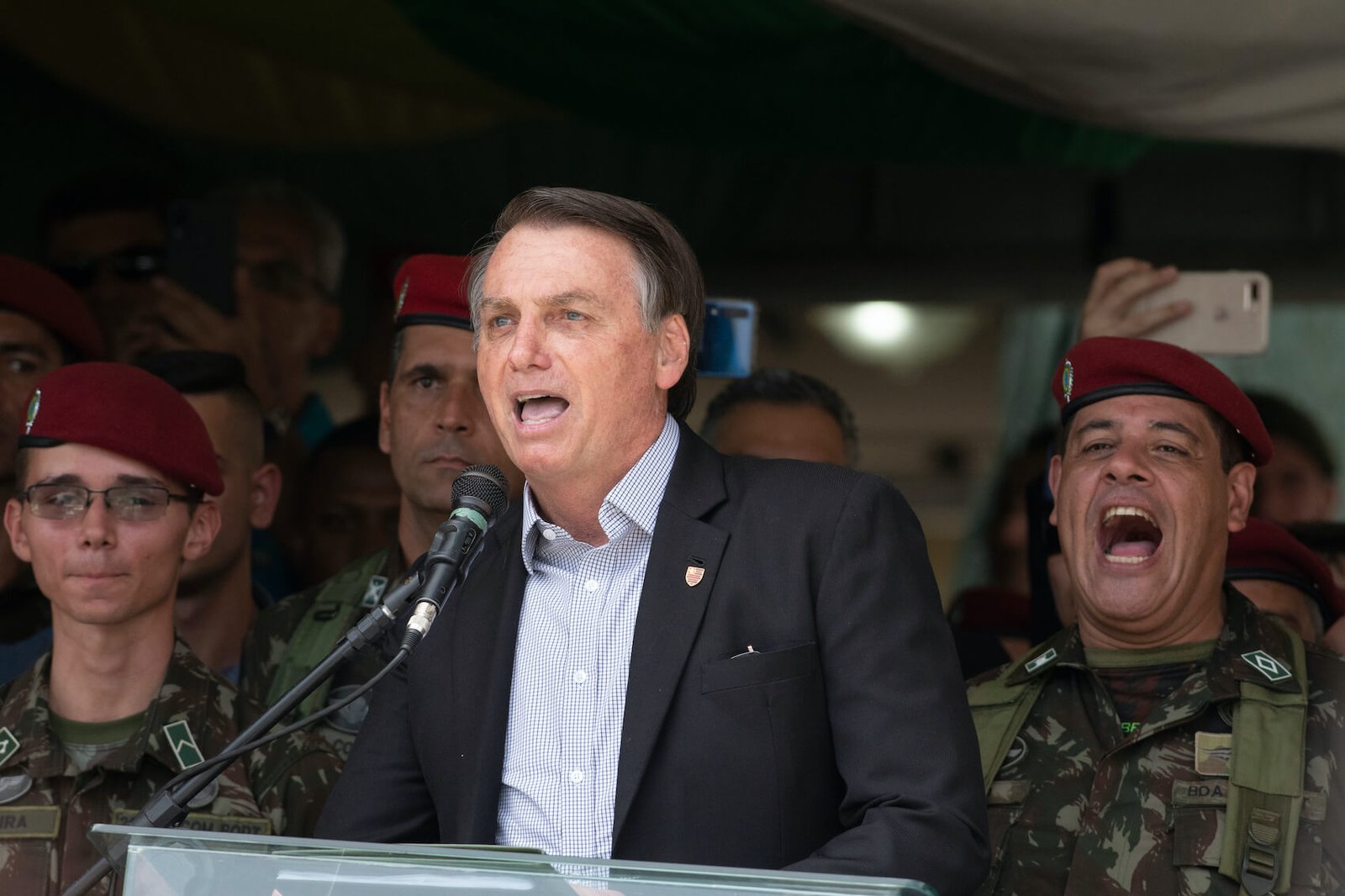
Brazilian President Jair Bolsonaro during 74th Anniversary of Parachutist Infantry Battalion held at Military Village in Rio de Janeiro, Brazil on November 23, 2019. Photo: Celso Pupo.
Bolsonaro came to power by successfully mobilizing anti-establishment anger towards the above-given political deadlock. He ran against the grain in a country roiled by scandalsand suffering from a stagnant economy (Phillips, 2022). Moreover, the negative repercussions of the global economic crisis in 2008-2009 continued to hurt society. As a result, in 2018, after two years of economic crisis and several public corruption scandals, Bolsonaro came to power in this environment with intense anti-establishment populism.
Bolsonaro began implementing policies that should be expected of a right-wing populist party. To mention just a few, he first worked to curb the judiciary’s power and attack electoral institutions. Second, with time, his aggressive and often profane manner and his attacks on women and journalists have left the population tired of him (Phillips, 2022). Third, the pandemic set an excellent example of how a populist denies science, scientists, expertise, division of labor, institutional capacity, and autonomy. Experts say the story of how Brazil’s leader went flaccid involves a litany of outrages, ineptitudes and errors committed during a chaotic four-year reign. At the height of the pandemic, like many other populists, Bolsonaro dismissed COVID-19 as a “little flu” and promoted the unproven and possibly harmful remedy hydroxychloroquine (Burni & Tamaki, 2021). He has expressed skepticism of vaccines — he suggested they could cause women to grow beards and turn people into crocodiles — in a country that has embraced them. Not surprisingly, Brazil has recorded one of the worst COVID-19 responses—nearly more than 34.5 million cases and 700,000 deaths since 2020. Both are presumed to be significantly undercounted (Béland et al., 2021).
Surveys show that more than 40 percent of Brazilians rate Bolsonaro’s administration as “bad” or “very bad.” Many experts also accuse him of having a role in hundreds of thousands of Covid deaths and his fake news-fueled attacks on Brazil’s young democracy (Boyle, 2022; Villega, 2022). Therefore, it is expected that after losing power and presidential immunity, he might be subject to sanctions. With that fear, just two days before the successors’ inauguration ceremony, Bolsonaro left Brazil for Florida and did not specify his return date. This action breaks with the Brazilian convention of outgoing leaders being present at the ceremony.
Fourth, besides pandemic challenges in the supply side of the economy, rising inflation stagnated national income and declining per capita GDP (Figure.2), and rising government debt that reached a record high of 90 percent of GDP (as of 2020), 30 percentage points higher than a decade ago. Because he underestimated hunger and malnutrition, tens of millions were plunged into poverty. Rather strikingly, after Lula’s globally renowned success story in fighting against poverty, Brazil reappeared on the World Food Program’s “Hunger Map” of the United Nations (UN) in 2021, with 28.9 percent of the population living in food insecurity. Thirty-three million Brazilians face acute hunger, and 100 million live in poverty, the highest number in years. It is a significant setback for a country that had been removed from the map in 2014, after an economic boom and landmark social programs helped lift 30 million people from poverty during Lula’s administration (France 24, 2022). As the 10th largest economy in the world, the largest one in Latin America, and one of the world’s largest food producers and exporters, Brazil’s return to the UN’s hunger map is not easier to bring any convincing explanation.
Lastly and most dramatically, South America’s largest economy become an international pariah notorious for Amazon annihilation. Deforestation in the Amazon region returned with a vengeance, turning Brazil into a pariah in the global fight against climate change. After almost a decade of steady decline in the deforestation process, mainly under Lula’s administration, the damaging process took off again under Bolsonaro’s administration beginning in January 2019 (Figure.3).
Bolsonaro’s actions up to this point typically describe a populist politician; to exploit the failures of the incumbent regime, making grand promises, and ascendance to power using the democratic mechanisms that the system still allows. When in power, however, populist politicians do the opposite of what they promised resorting to unsustainable policies and not leaving power by employing all the available means when unsuccessful. Bolsonaro paid too much effort to reverse the situation towards the campaign’s final stretch to keep his power. Flagging billions of dollars of welfare payments designed to seduce poor voters and a suspected attempt at voter suppression by federal highway police on election day. With Brazilians struggling with double-digit inflation and an election just weeks away, Bolsonaro has cut fuel taxes to reduce prices at the pump and sent monthly cash transfers to low-income families. He has created cash benefits for truck and taxi drivers and dispensed $20 to families needing gas cylinders for cooking. Although energy prices stabilized, inflation started to decline, and employment rose, Bolsonaro lost the seat.
The legacy of Bolsonaro is that Bolsonaro’s policies weakening institutions, loosing macroeconomic stability, dismantling environmental regulations and agencies, and disregarding social programs. Brazil’s fiscal situation is worse: public debt is 78 percent of GDP and 93 percent of the budget is consumed by mandatory spending on things such as salaries and pensions. The global outlook is fraught. Though high commodities prices have helped the economy, inflation is hurting the poor. Political conditions are tougher, too. Brazil’s Congress is more avaricious and less cooperative (The Economist, Sept.19, 2022). The highly fragmented political system in Brazil remains the biggest concern. In his inauguration ceremony on January 1, 2023 Lula described the diagnosis he received from the Bolsonaro government as follows: “emptied the resources for health, dismantled education, culture, science, they destroyed the environmental protections, haven’t left resources to school meals, vaccines, public security, forest protection and social assistance” (Watson & Davies, 2022).
Lula’s Third Return and Expectations
Luiz Inacio Lula da Silva walks among supporters on Augusta Street at São Paulo on the eve of the brazillian election on October 1, 2022. Photo: Yuri Murakami.
After his third-round successful presidency in his sixth run, Lula has once again overtaken a politically divided and economically devastated country. Bolsonaro has gone, but “Bolsonarism” remains strong, making Congress hostile to the new government and society more fragmented (Sabatini, 2022). Keeping a possibly wider reform coalition in such a surrounding is troublesome. For instance, many prominent backbenchers (to be translated as “political parasites”) are funded by agribusiness. Therefore, they could be a significant obstacle in Lula’s highest priority areas of protection of the Amazon forests. That is why much of his speech to Congress at the inauguration ceremony was about “unity” and “reconstruction” of the nation through keeping and enlarging his existing stakeholders, which took him to the election victory.
Deep as they are, political divisions are not Brazil’s only problem. Economic problems are relatively high inflation, unemployment, high public debt, deep income inequality, massive poverty, and an almost stagnating economy (Ottis, 2022). Real growth in GDP per capita has averaged zero since 2011. The commodities boom that generously helped financing many of Lula’s social programs the first time around is over.
Very similar to what happened before he came to the power for the first time in 2003, during his third adventure to the power, Lula has once again tried to convince markets that he would not go on an uncontrolled spending spree. Similarly, he chose Geraldo Alckmin, a center-right and business-friendly former São Paulo Governor who was Lula’s rival in the 2006 election, as his Vice President. Going even beyond that, Lula has criticized a few of Rousseff’s policies, such as keeping fuel prices artificially low and offering tax breaks worth more than 450bn reais ($86bn) to businesses (which amounted to 7.5 percent of GDP).
On the other hand, today’s fraught geoeconomics climate offers Brazil some opportunities as well. The country is rich in food, fuel and metals and has a flourishing renewable energy sector. It is located far from global conflict spots and has traditionally sought good relations with the US, China, Europe, and Russia. However, economic transformation, industrial diversification, and generating funding resources in an unfavorable global and national environment are pretty uncertain. By lamenting the drop in car production and Brazil’s dependence on commodity sales to China, Lula has underlined the need for “re-industrialization,” proposed solutions such as investments in technology and the green-energy transition. However, Lula will continue balancing his “market-friendly” approach with “society-centric sensibilities.”
Lula’s quite ambiguous program involves the following topics:
In terms of fighting with poverty, through the Bolsa Familia poverty-relief program that includes transfers, expansion of social-housing scheme as well as debt-relief, Lula wants to “put the poor back in the budget.” He targets 33m Brazilians, who live on less than 289 reais ($55) per month, the highest number since 2012. Accordingly, the poorest families will get 600 reais ($110) a month and those with children under six years of age will get an additional 150 reais ($30). His second major measures to improve income distribution involves “updating” the existing labor reform, which he calls “slaveholder mentality.” Accordingly, he will increase the minimum wage, provide equal pay for men and women, aims adding protections for part-time workers.
Other challenges await Lula that are as important as overthrowing Bolsonaro through a legitimate and fair election. Lula must maintain the coalition he has formed, convince the highly politicized parliament to get support for the needed reforms, provide the necessary financial resources and restore the badly damaged financial balances. Implementation of a comprehensive tax reform, therefore, is one of his priority areas.
The New Global Conjuncture
Putin, Biden and Xi Jinping in the form of Russian nesting dolls in a gift shop in Moscow. Photo: Shutterstock.
It is a very positive development that Trump in the US and Bolsonaro in Brazil were removed from their seats without being given a chance for a second term. However, after the right-wing authoritarian populist leaders lost elections in both countries, their supporters became even more divisive and did not accept the election results. Trump’s supporters in the US and Bolsonaro’s in Brazil have shown again that right-wing authoritarians come with free elections but try not to go by fair elections. At first, they wanted “military intervention” after the election results in October 2022. However, thanks to the army’s neutral position, it did not happen. After that, Bolsonaro fled the country to the US before Lula took office. Finally, with the encouragement and organization of the Bolsonaro team that occupied high-level security-oriented bureaucracy, his supporters attempted a coup d’état against the newly appointed government and stormed parliament. Thanks to his leadership and experience, Lula had no hesitation in declaring a state of emergency and dismissing many of the top security bureaucracies appointed by Bolsonaro. This evidence shows that Trump and Bolsonaro have gone, but Trumpism in the US and “Bolsonarismo” in Brazil have remained. This fact has deep-rooted implications that current global order and its structural characteristics feed populism at both the global and local levels remain.
Multiple adverse effects of excessive globalization manifest themselves in DCs through transmission mechanisms like the activities of the MNEs, mainly in labor markets and foreign trade sectors. Among others, the primary outcomes appear in the form of unemployment, downward pressure on wages in traditional import-competing industries, and difficulties in regulating tax evasion of MNEs, generating income inequalities and poverty. It also cultivates a perception of a loss of sovereignty and national independence. The wave of global immigration, triggered by the mentioned process, not only increases the fear of local people losing their jobs but also alienates native people and feeds the perception of losing their endogenous values. Furthermore, international capital movements not only have weakened national governments’ regulatory and taxation autonomy, but they have also shifted the balance of power within nations away from labor towards capital and allowed it to accrue further political power and wealth, opening yet more opportunities for the internationalization of capital.
According to a recent report by IPSOS Global Trends (2020), while six in ten (62 percent) globally agree with the meritocratic ideal (that if you work hard, you will get ahead), it is under threat in even in the most advanced and social welfare states in key European countries. For example, only half of those in Germany (53 percent) and Spain (50 percent) feel their economies produce rewards their efforts, as do just four in ten people in Italy (41 percent). One core response to this perceived inequality of outcome and opportunity is support for wealth redistribution – one of the top ten values of IPSOS in 2020. It encompasses the widely held view that national economies are rigged to advantage the rich and powerful (74 percent agree globally) and that large income differences are bad for society (76 percent). Finally, “the big silent majority,” who was entirely excluded from the decision-making processes but could not avoid its negative consequences, have come to rely more and more on populist rhetoric, which, given the excesses of hyper globalization, is obsessed with the idea that zero-sum situations invariably characterize market exchanges.
To reverse the mentioned process, DCs need to balance excessive globalization through localization, poverty prevention, tax reforms, and improved skills and abilities for a comprehensive future oriented sectoral transition. These tasks require four interlinked transitions comprised of mainly manufacturing, fiscal structure, education, and governance sectors. To address these tasks following tasks must be fulfilled.
i) Repositioning of the country in the global supply chains through re-scaling and re-shoring.
ii) Further localization of production and governance.
iii) Transition of energy systems towards renewables from fossil fuels, and
iv) Substitution of basic universal and targeted income through a comprehensive tax reform are the priorities.
Regarding the first three recommendations, the pandemic crisis has marked another turning point in the process already underway, which is leading many companies to transform their supply chains and invest in more resilient and often more localized production patterns (Zhan et al. 2020; Lawrence, 2020). Localization measures involve empowering community-based decision making, participatory budgeting, and local action on such issues as renewable energy, green infrastructure, public services, and food production. As thought from Brazil’s perspective, localization is especially beneficial for food production, as the pandemic has revealed the precariousness of global food supply chains. Yasmeen etal. (2020) adds that nearly one quarter of the world’s food crosses a border before consumption. Countries tend to specialize in a few products and import most others. Meanwhile, just a handful of mega-sized corporations dominate international food markets, and production often depends on the exploitation of vulnerable groups, such as migrant workers. As can be seen, one of the critical issues here is the balance between the quality of integration into the global order and localization.
Lula’s vision to give more weight to the public sector in transforming the industries where Brazil has competitive advantages, particularly in infrastructure investments, transition to a green economy with low-carbon target in the 2030s, agribusiness has been one of the hot topics of discussion in the country. However, the quality of public sector leadership in industrial transformation through selecting the national champions or the potential winners has been a highly problematic issue, as we know it from the failed industrialization models of import substitution in Latin American countries. It is a story of failed models, squandered resources, entrenched crony capitalism in corruption, and widespread authoritarian regimes.
Similar to his earlier experiences, Lula insists on big infrastructure projects, like public transportation, energy and water with investment from both the public and private sector. He also advocates a heavy dose of intervention, describing a national food reserves policy, the exchange rate as an instrument to reduce volatility, and the need to “Brazilianize” petrol prices. Meanwhile, Lula does not talk much about reducing trade barriers or making public spending more efficient.
Considering the nature of rising industries, in the age of fourth industrial revolution, Brazil should craft a model which carefully distinguishes between “crony-friendly,” “business-friendly,” and “market-friendly” approaches in search of attributing a new role to the public sector. In a crony-friendly policy regime, a few firms obtain many privileges from the government by leveraging their political connections. These include resources directly allocated by the state, such as public procurement contracts, public land, or subsidized credits. Politically connected businesses may influence the regulatory framework in a way that creates barriers to entry for potential competitors through several direct and direct lobbying. In a business-friendly approach, rather than bestowing favor on a few cronies, some businesses groups are supported in a transparent way to stimulate specific sectoral and regional development policies. Obviously, business-friendly policies are superior to crony-friendly policies. However, sometimes these policies may also disproportionately benefit a few. For example, suppose a tax benefit, cash subsidy, or import tariff protection are given in a sector or industry, where concentration ratio is high, dominated by a few big conglomerates. The “first best condition” is market-friendly policies as it fosters fair competition in the market after setting the rules and observing the proper implementation of the game’s rules.
In order for Brazil to grow faster, it needs reforms to improve the quality of spending and the business environment. Viewed in terms of the public sector effectiveness, when using public banks to finance large infrastructure projects, it must be ensured that this support remains at the level of providing a positive signal effect to the private players. The efficiency criteria are consistently met when the projects are carried out under more market-oriented conditions. Given the caveats above, a market-friendly public-private-partnership (PPP) (Matsumoto et al., 2021; Straub & Islam, 2022) model might trigger externalities in important sectors such as (renewable) energy, agroindustry, automotive, machinery, iron and steel, health, finance, and logistics, which, in turn, creates “crowd-in” effect for foreign as well as domestic investors. Foreign interest will emerge much stronger in the above sectors, especially as Brazil, with its 250 million population, raises its per capita income to the upper middle-income level and strengthens the middle class by improving the income distribution.
Finally, in repositioning the country in the global supply chains through re-scaling and re-shoring, localization, and transition of energy systems also require resources, to be briefly discussed below.
The Search for a Risky Flexible Budget
Photo: Shutterstock.
Since 2016 Brazil’s budget has been restricted by a Constitutional Spending Cap (CSC) that limits the growth of spending to the rate of inflation. However, such a restrictive anchor for Brazil, where crony business-friendly capitalism has been deeply rooted, is seen unacceptable (Limoeiro, 2020). First Bolsonaro announced that he plans to replace it with “more flexible” fiscal rules. However, the challenges with the COVID-19 crisis caused this constraint to be de facto out of action, as it did in other countries, without the need for a de jure amendment to fund COVID-19 spendings. However, these stimulus measures were also used to benefit former president Bolsonaro’s campaign and harmed the fiscal balances in the country. As a result, it has lost its power as a fiscal anchor.
Quite reasonably, Lula also wants a new fiscal framework that allows for more short-term borrowing while assuring markets that the debt-to-GDP ratio will come down in the medium term. Indeed, under Lula’s initiative, Brazil’s Congress has already suspended the government’s CSC to allow his government to raise expenditures on social welfare and public works, two urgent task and priority for his government. It corresponds to a spending of an extra $28 billion in 2023 outside of the CSC, sidestepping a fiscal anchor designed to keep free-spending governments in check (Pearson & Magalhaes, 2022).
However, several caveats should be noted also here. In Latin America in general, and Brazil in particular, the issue of fiscal flexibility points to a deep stalemate. On the one hand, the priority of Lula’s administration is to “put the poor back in the budget”, but, on the other hand, it is open to irresponsible populist abuses. As seen in the previous Bolsonaro era, the populist government ignored budgetary constraints, particularly the current anchor, leaving the Lula government financially vulnerable to extreme damage. This applies to both the national debt and budget deficits. The policy implication is that, in Latin America, where populism and short-termism dominate, lacking technical control over the use and draft of budget and borrowing can open the door to costly abuses. For that reason, that approval has prompted concerns in markets about the fiscal health and long-term growth of Brazil, Latin America’s biggest economy. So, we have come to two conclusions: First, for sustainable economic growth, transparency and efficiency in public spending, on the one hand, and second, a disciplinary, albeit flexible, limitation on budget expenditure in the medium term, if not now, on the other, should be sought. However, in addition to these measures at the spending side, the biggest challenge in providing the required funding for development projects as well as for improving income distribution, a truly tax reform is needed.
Wealth and Taxation
The tax reform could play a crucial role for Lula’s government to permanently reverse the waves of populism via improving the distribution of income. Since the lower social segments are dragged into deeper poverty due to job and income loss as well as rising cost of living recently, finding ways to support such vulnerable segments, for instance, through the provision of either a guaranteed/universal basic or targeted income, and the necessary financial resources for social expenditures have become one of the most urgent topics of discussion globally. The “guaranteed” basic income provides the same lump sum to all citizens regardless of circumstances, whereas a “targeted” basic income is available only to those who need it because their income falls below a minimum threshold. Their goal is to alleviate poverty and replace other need-based social programs that potentially require greater bureaucratic procedure.
It is evident that all these expenditures would increase the cost to government budgets, which are already being inflated by fiscal stimulus. Among others, one important source of income would come from levying a net wealth tax on the wealthiest without causing capital flight, tax base erosion and profit shifting (BEPS). OECD defines BEPS as “the tax planning strategies used by multinational enterprises that exploit gaps and mismatches in tax rules to avoid paying tax. BEPS is quite crucial in DCs due to their higher reliance on corporate income tax, and they, therefore, suffer from it disproportionately. Among other harms it causes, this undermines the fairness and integrity of tax systems because businesses that operate across borders can use BEPS to gain a competitive advantage over enterprises that operate at a domestic level. Moreover, when taxpayers see MNCs legally avoiding income tax, it undermines voluntary compliance by all taxpayers. Thus, the task of financing growth and development in DCs becomes clear; By evaluating in terms of efficiency, equity and administrative arguments the imposition of a net wealth tax on the richest will not cause capital flight and levying a tax on the earnings of MNEs from the country they operate in a way to prevent BEPS are the two interrelated tasks (OECD, 2018)
However, the needed measures such as the implementation of a comprehensive tax reform are relatively easier to pronounce but hard to execute for numerous reasons. First, governments have long feared that higher taxes would produce capital flight and discourage investment. As a result, countries are engaged in a “race to the bottom” on corporate taxation, which ultimately, they lose. Second, in a world of large MNEs, mobile capital, and seamless digital transactions, it is hard to identify where modern businesses with significant intangible capital, especially digital businesses, locate their activities to be taxed away.
As a global public good, a tax reform requires international cooperation in renewing fiscal sovereignty through a new social contract. However, as Cobham (2021) notes, there are also potential arrears to be taxed away despite its complications along the way. As a matter of fact, according to the finalized landmark deal in October 2021, agreed by 136 countries and jurisdictions representing more than 90 percent of global GDP, MNEs will be subject to a minimum 15 percent tax rate from 2023, corresponding to more than $125 billions of profits from around 100 of the world’s largest and most profitable MNEs to be reallocated globally. Therefore, as the winners of globalization,paying a fair share of tax wherever they operate and generate profits will contribute to a more balanced globalization and multilateralism.
Returning to the taxation of richest companies, in principle, a fiscally neutral reform pair higher income taxes on high earners with lower payroll taxes for firms to incentivize formal employment seems reasonable in Brazil. Lula is quite eager to move quickly on a reform that would increase taxes on the richest while simplifying the labyrinth of levies on consumption, which are seen as a drag on growth. Income tax and VAT reform are priorities, particularly in the context of one of Lula’s main pledges, which is to address the crushing poverty situation in Brazil and ensure a progressive tax system where the wealthy pay more tax than the poor. However, given the fact that involves complex negotiations with states and interest groups, and the polarized political divisions in Brazil, these herculean changes, like a tax reform seem almost unlikely.
To conclude this section, it should be noted that when the agenda of industrialization and transformation in new sectors for Brazil is combined with the plan of taxing MNEs and levying a “welfare tax” on the richest in the country: In the efforts to delegate a more active role to the public sector, crony capitalism through rent-seeking of the privileged segments that distort competition, effectiveness, and innovations should be carefully avoided. Brazil’s attractive potential should be opened to the world, and the above taxes should be levied on high earnings.
Conclusion
Only at the end of the 1980s did Brazil transform into a democracy, which was also quite unstable. Brazil’s experience has also shown that even if the modern bureaucratic apparatus, autonomous and professional institutions, and principal institutions of the state— executive, legislative and judiciary—are supplied, if culturally and mentally supportive epistemology is not there, the system will not cultivate the expected outcomes.
In Brazil, the erosion of institutions in the last three decades have continued and they have become increasingly dysfunctional and politicized. In such an environment, corruption has become rampant, and the country’s presidents, including Lula, Rousseff and Temer, have been impeached or imprisoned on corruption charges. In the last case, Bolsonaro is trying to rid himself of the same fate by leaving the country. However, not only has the modern state apparatus failed to stop the rise of such a massive crony system and corruption, but also most of the impeached leaders were soon released from prison and compromised to return to politics, like Lula himself. These examples point to the poor quality of the judiciary and the institutionalization that is destroying public confidence in the system. That overall environment leaves voters open to losing their interest in the democratic system, adhering to short-term solutions and populist rhetoric. While the country’s authoritarian culture persists, populist discourse seems to dominate politics on both the right and left.
Externally, the imperfections created by the multilateral order in the post-WWII era and global capitalism, which both reflect Western values and dominance, have been subject to significant structural economic, political, social, and civilizational problems. The message is that, in the persistence of unresolved problems, the supply and demand conditions of populism at home and abroad also stay in place.
During Lula’s first two terms in power (2003-2010), the dimensions of left-wing populism were seen both in terms of progressive as well as regressive aspects. During his government, Lula followed a responsible, flexible, pragmatist path regarding the market and a socially sensible path adhering to societal expectations. Intending to improve income distribution, he focused on eliminating poverty. However, rather than driving the economy into a wide-range competitive transformation and boosting employment and income Lula addressed social vulnerabilities through regular social transfer expenditure aided by the fact that energy commodity prices gave Brazil relative fiscal flexibility in Lula’s first two terms. This shows that Lula’s vision was far from a fundamental transformation and relied heavily on the positive global conjuncture. Likewise, we can say that Lula supported the privileged classes and sectors with “business-friendly” approaches instead of being “market-friendly,” and therefore his government could not stay away from corruption rumors and gossip. He did not even take them seriously, until he left power in 2010, when all these allegations started to undermine the entire system in more than one decade.
As of today, with the world teetering on the brink of authoritarianism and Brazil itself oscillating on the verge of such authoritarianism, Lula who has been active with a left-progressive rhetoric in Brazilian politics since the 1970s, might lead a radical reform leadership the impact of which would extend beyond Brazil. With that in mind, we can assume he sees it as “the last exit before the bridge.” Despite the social fragmentation and the split in parliament making it challenging to reach a consensus, Lula will have to build efficiency in governance and the economy and create competitive advantages in the sectors of the future through fundamental reforms. Provided that Lula keeps the “social and political coalition,” which led him to the victory in the last election, he can succeed these tasks and also overcome populism.
References
— (2007). “Globalization and Inequality.” World Economic Outlook, October 2007
— (2018). “The Role and Design of Net Wealth Taxes in the OECD.” OECD Tax Policy Studies. No. 26, OECD Publishing, Paris, https://doi.org/10.1787/9789264290303-en.
Acemoglu, D. and Yared, P. (2010). “Political Limits to Globalization.” American Economic Review,100 (2): 83-88.
Aiginger, K. (2020). “Populism: Root causes, power grabbing and counter strategy.” Intereconomics. 55 (1), 38–42.
Béland, D.; Rocco, P.; Segatto, C. I., & Waddan, A. (2021). “Trump, Bolsonaro, and the framing of the covid-19 crisis: How political institutions shaped presidential strategies.” World Affairs. 184(4), 413–440. https://doi.org/10.1177/00438200211053314.
Burni, A. & Tamaki, E. (2021). “Populist communication during the COVID-19 pandemic. The case of Brazil’s president Bolsonaro.” PArtecipazione e COnflitto. 14(1), p. 113-131. DOI: 10.1285/i2035660914i1p113.
Cardim de Carvalho, F. C. (2008). “Lula’s government in Brazil. A new left or the old populism?” In: P. Arestis and A. Saad-Filho (eds.) Political Economy of Brazil. Palgrave Macmillan.
Frantz, Erica. (2018). Authoritarianism: What everyone needs to know? Oxford University Press, New York, NY.
Fukuyama, Francis (1993). The End of History and the Last Man. London, Penguin.
Greider, William (2003). The Soul of Capitalism: Opening Paths to a Moral Economy. Publisher, Simon and Schuster.
Hall, A. (2006). “From fome zero to Bolsa Família: Social policies and poverty alleviation under Lula.” Journal of Latin American Studies. 38(4), 689-709. doi:10.1017/S0022216X0600157X.
Lawrence, M. (2020). “From COVID-19 to a more resilient future. Three interlinked transitions.” The Cascade Institute, Brief No. 2, June 20, 2020.
Limoeiro, D. R. (2020). Economic growth, inequality and crony capitalism: The case of Brazil. Routledge.
Lührmann A. & Lindberg, S. I. (2019). “A third wave of autocratization is here. What is new about it?” Democratization. 26:7, 1095-1113. DOI: 10.1080/13510347.2019.1582029.
Watson, Katy & Davies, Alys. (2023). “Lula sworn in as Brazil president as predecessor Bolsonaro flies to US.” BBC News. January 1, 2022.https://www.bbc.com/news/world-latin-america-64138739 (accessed on December 24, 2022).
[1] The Brazilian construction giant, known for its role in the “Operation Car Wash” scandal. The company has changed its name to Novonor in 2020 to repair its image with a new name.
Dr Agnieszka Graff (Professor at the American Studies Center, University of Warsaw, and a feminist activist).
Speakers
“Explaining the relation between populism and gender in Europe,” by Dr Elżbieta Korolczuk(Associate Professor in sociology at Södertörn University, Sweden).
“Language of reaction: European populist radical right and LGBTQA+ rights,” by Dr Eric Louis Russell(Professor in the Department of French & Italian and affiliated with the Program in Gender, Sexuality and Women’s Studies at the University of California, Davis).
“Gender & Sexuality in Dutch populist voter profiles,” by Nik Linders (PhD candidate at Radboud Social and Cultural Research for Gender & Diversity Studies).
“Populism and the backlash against gender equality: Feminist responses to right-wing populism in Europe,” by Dr Pauline Cullen(Associate Professor in sociology at Center for European and Eurasian Studies, Maynooth University, Ireland).
“At last,” the editors of TheOxford Handbook of Populism declare, “everyone understands that populism matters. Recent political events have brought the word ‘populism’ to the center of discussions across the globe” (Kaltwasser et al., 2017, p. 1). A quick glance at scholarly and journalistic commentaries appears to justify this verdict. In the United States, this concept is employed to understand Donald Trump’s rise to power and how he governed. Eric Oliver and Wendy Rahn (2016) state that, “Trump stands out in particular as the populist par excellence” (p. 189). Across the Atlantic, this term is also applied to comprehend the antics of former Prime Minister Boris Johnson (Duncan, 2021). The populist approach is even used to explain the Brexit vote (Bale, 2019). In Brazil, the racist, homophobic, and anti-democratic actions of President Jair Bolsonaro are also analyzed from this perspective (Rachman, 2020). As Yascha Mounk (2018) states, populists have “been gaining strength in every major democracy, from Athens to Ankara, from Sydney to Stockholm, and from Warsaw to Wellington. Despite the obvious differences between the populists who are on the rise in all these countries, their commonalities go deep — and render each of them a danger to the political system in surprisingly similar ways” (p. 7).
While some embrace this term’s success, Oliver and Rahn (2016) admit that the populist concept has problems, especially its promiscuous tendency that allows it to be applied to politicians of the left, right, and center. “Given this diversity,” they ask, “does the concept of populism still have utility? A rich body of comparative research suggests that it does” (p. 190). When it comes to understanding recent political trends around the world, the present article disagrees. It aligns itself, instead, with William Brett’s (2013) comment that, “‘Populism’ is a classic example of a stretched concept, pulled out of shape by overuse and misuse” (p. 410). While some commentators are impressed by the “wave of policymakers, pundits, and scholars [who] are gripped by this [populist] phenomenon” (Kaltwasser et al., 2017, p. 1), this study views such enthusiasm with a dose of skepticism. It does not consider populism to be a perfect guide. This article argues that elite theory, while not infallible, is a more useful approach when it comes to understanding politics.
Why is elite theory better than the populist model when it comes to analyzing politics? The elite approach has several advantages that elude the populist perspective. Specifically, it can precisely define its subject matter, clearly identify which actors need to be studied, and accurately explain their political behavior. The populist school fails on each of these dimensions. Also, the elite approach employs a variety of concepts that make it more theoretically rigorous than the alternative perspective.
Yilmaz, Ihsan; Shukri, Syaza & Shakil, Kainat. (2023). “The Others of Islamist Civilizational Populism in AKP’s Turkey.” Populism & Politics (P&P). European Center for Populism Studies (ECPS). February 4, 2023. https://doi.org/10.55271/pp0018
Abstract
Turkey’s history and politics allow populism and Sunni Islamist civilizationalism to thrive. The ruling Justice and Development Party’s (AKP) use of Islamist authoritarian populism in its second decade of power has widened its “otherization” of political opponents, non-Muslims, non-Sunnis, ethnic minorities, vulnerable groups, and all those who reject the AKP’s views and democratic transgressions. To comprehend how Erdogan and his deft colleagues leverage identities of Sunni Islam and Turkish ethnicity, alongside pre-existing collective fears to develop populist authoritarianism, in this article, each category of “the others” is investigated through the lens of civilizational populism. This article specifically delves into the “otherization” process towards the Kemalists, secularists and leftists/liberals, Kurds, Alevis, and practicing Sunni Muslim Gulen Movement. The different methods of AKP’s civilizational populist “otherization” continues to polarize an already divided Turkish nation, generating incalculable harm.
The last two decades have transformed Turkey. Previously, the conservative democratic AKP promoted democracy and human rights development in its first decade in power until it got rid of the Kemalist establishment (Yilmaz, 2021; 2021a). The second decade of AKP rule, however, has observed these objectives receding. Instead, the party and leadership have veered into authoritarian territory coinciding with increased rhetoric on Islam and religion (Shukri & Hossain, 2017). The country has suffered a severe reduction in freedom of expression, media restriction, and political persecution (Amnesty international, 2023; Human Rights Watch, 2022; Freedom House, 2022). Ankara’s constitutional and societal changes weakened government checks and balances and instead promoted religious conservatism (Stockholm Center for Freedom, 2022; Yilmaz, 2022; Yilmaz & Albayrak, 2022).
Populism has shaped politics in the third decade of AKP rule (Balta, Kaltwasser & Yagci, 2022; Taskin, 2022; Yilmaz, 2021; Sozen, 2020; Aytaç & Elçi, 2019). This study examines the AKP’s otherization and demonization of “others” through the Turkic Sunni Muslim identity that underpins AKP’s civilizational populism. This subset of populism has been used to appeal to nationalist and conservative sentiments and justify AKP’s authoritarianism. This article aims to show how Erdogan and his AKP’s populist authoritarianism skillfully blends both sentiments by manipulating historical fear of Kemalist suppression. We shall examine AKP’s use of civilizational populism by analyzing “the others” it has constructed over two decades. Before that, the following section briefly introduces civilizational populism. The next section then uses civilizational populism to demonstrate the AKP’s “otherization” of Turkish nationals who do not agree with the policies and worldview of the AKP. Finally, the conclusion discusses the case study and its implications.
What Is Civilizational Populism?
Civilizational populism emphasizes a group’s religious, cultural, or historical identity (Yilmaz & Morieson, 2023: 10; Yilmaz & Morieson, 2022). This theory has been used mostly to examine populism in Europe and North America, where anti-migration emotions are dominant (Ozzano & Bolzonar, 2020; Brubaker, 2017; Marzouki et al., 2016; Apahideanu, 2014). The Five Star Movement (M5S) in Italy, Party for Freedom (PVV) in the Netherlands, and National Front (FN) in France all claim Islam to be a threat to European culture as part of their strategy to get votes (Kaya & Tecmen, 2019).
On the other hand, understanding right- and left-wing politics are useful outside the West in India and Latin America (Yilmaz & Morieson, 2022). This paradigm analyzes left-wing populism through figures like Venezuelan President Hugo Chavez and Bolivia’s Evo Morales. Chavez’s “Nuestra América (our America)” and its anti-imperialist rhetoric called North America and past imperial powers a civilizational threat to South Americans that entails Latin American unity (Wajner & Roniger, 2019). Since 2014, the right-wing Bharatiya Janata Party (BJP) has turned India into a center for religious and ethnic minority human rights atrocities (Amnesty International, 2021; Saleem, 2021; Jain and Lasseter, 2018). Civilizational populism—the hallmark of Prime Minister Narendra Modi’s populist politics—is responsible for this upsurge in undemocratic tactics (Saleem, 2021; Jain and Lasseter, 2018).
Civilizationalism helps explain populist leaders, movements, and parties in the current political climate. Geographical boundaries, cultural differences, and populist divisiveness are different, but horizontal and vertical populism are still comparable (Yilmaz & Morieson, 2022; Taguieff, 1995). This paradigm creates the differences between “the people” and “the elite” and the layers of “moral/pure” people and “immoral” others. Civilizational populism also identifies with religion (Yilmaz & Morieson, 2022) through a religious push or a symbolic use of faith for identarian politics (Yilmaz & Morieson, 2021). Religion currently dominates civilizational populism worldwide (Yilmaz, Morieson, & Demir, 2021: 20).
Civilizational populism uses sacred identities like religion to manipulate emotions. Populists might create fear of the civilizational enemy or patriotism by asserting elites and others are threatening the country (Yilmaz & Morieson, 2021: 19). Thus, whether it’s the “pink tide” in Latin America, the “Saffron tide” in Asia, or “Make America Great Again (MAGA)”, civilizational populism is a useful tool to understand these phenomena (Yilmaz & Morieson, 2022). In Turkey, President Erdogan instrumentalizes civilizational populism to create a supposed utopia called “New Turkey” that is based on a specific civilization of Sunni Islam and Turkish identity. This has several constitutive others that we will now analyze.
The Kemalists
Kemalists who support the principle of secularism in Turkey, staged peaceful mass rallies in Ankara on April 14, 2007. Photo: Aydın Güven.
Historically, schisms have existed between Islamist and Kemalist forces in politics (Yilmaz, 2021). The Kemalists were instrumental in reshaping the Ottoman Empire’s ruins into a republic. Their ideological foundations were based on modernization objectives of the Ottoman elite, which resulted in the development of the Young Turks (Zürcher, 2010; Hanioglu, 2001). Under Mustafa Kemal Atatürk’s guidance, the Young Turks evolved into Kemalists (Hanioglu, 2001). The President died in 1938, but his philosophy was carried on by the military-led Kemalist tutelage regime that allowed multi-party politics after 1946 but made sure that Islamists, Socialists and Kurds would not make inroads into mainstream body politics. This has changed with the AKP’s second decade in power.
AKP has been promoting itself as the voice and savior of “the people” by showing itself as a democratic force and increasingly the authentic voice of “the people” or “Black Turks.” The party has continuously portrayed itself as the face of “Black Turks” empowerment over “White Turks,” emphasizing its support for historically marginalized religiously conservative groups. This is due to the lack of democratic liberties during the eight decades of Kemalist government, which pushed for proscriptive secularization (Tunçay, 2019; Zürcher, 2004).
An early example of this may be found in the mid-2000s, when the AKP used the Kemalist-imposed strict attire regulation as a point of civilizational conflict. Since the founding of the republic, women have been prohibited from wearing headscarves in public places in an effort to modernize Muslims, while men have been required to dress in Western attire (Tutar, 2014; Demiralp, 2012). This top-down imposition of “secular” dress hampered women’s mobility in higher-level positions, access to education, and, most importantly, self-expression. Using this conflict, the AKP turned the 2007 election into a campaign of the “White Turks” victimizing the “Black Turks.” For example, the First Lady chose to wear her headscarf to all public meetings and functions. While the AKP has never advocated for women’s right to choose (Kocamaner, 2018), it has used the First Lady’s Islamic faith to accuse the Kemalists of launching a “digital coup” against “democracy” (Yalçin, 2022; Elver, 2016). The image of Kemalists and the liberal opposition as anti-democratic forces was intended to undermine their cause (Yilmaz, 2021a).
The notion of the Kemalist elite’s social and economic injustice toward the Turkish masses grew over time. It peaked around 2010, when the Ergenekon and Sledgehammer trials dominated national politics. The Ergenekon trials looked at high-ranking Kemalists suspected of trying to destabilize the AKP-led government as a way of “White Turks” overturning “the people’s” government. The Sledgehammer trials targeted military leaders accused of preparing a coup against the government. Despite being very contentious, with several defendants ultimately acquitted or sentenced to lesser terms, the trial turned Kemalists from cultural threats of “corrupt” and “uncaring” elites to a security concern (Yilmaz, 2021; Tahiroglu, 2020; Ozdemir, 2015; Tisdall, 2012).
The Turkish Referendum in 2010 took place against this backdrop which weakened the military and judiciary’s involvement in politics (Yilmaz, 2021; Şahin & Hayirali, 2010). While the vendetta against the Kemalists exploited civilizational populist feelings, the events of 2010 were a strategy to keep the AKP in power. As the Kemalists were demonized and politically pacified, their main party, the Republican People’s Party (CHP), became “the other,” while the “Black Turks” were eventually represented by the AKP.
Despite setbacks, the CHP has remained active in politics, making it a frequent target of AKP civilizational populism. The CHP has been accused of coups and being a co-conspirator with “Western enemies” on multiple occasions. In 2021, President Erdogan commented about the party’s bad impact on national prosperity by referencing prior coup attempts: “They constantly vow to bring us down. They have threatened me with the same end as (Adnan) Menderes. All the initiatives to threaten us with coups are being done with the help of CHP… Coups and walking together with the enemies of the state have become part of CHP leaderships’ genes” (Birgun, 2021a).
Furthermore, the party members have been characterized as adversaries of Islam, with many accusing them as being puppets of the West and pawns employed to harm Islam. A statement made by Turkey’s Minister of Justice, Bekir Bozdag, targeting Huseyin Aygun, a CHP deputy, is an example of this characterization: “Recently, one of their deputies used a language that insults the Messenger of Allah, the Prophet. If you respect the spirituality, religion and values of this country and this nation, o Kılıçdaroğlu, then you have to put this presumptuous faithless to his place” (Merhaba Yozgat,2014).
On some occasions CHP or Kemalists are also depicted as a threat by aligning them with local “others.” This includes charges that CHP members support “terrorist groups” such as the Gulenists or the Kurdish community, two groups that will be discussed in more detail later. Fikri Isik, a cabinet minister, linked the CHP to the Gulen Movement by saying: “The parallel establishment [Gulenists] are a gang, and CHP is working with them. Until today we have not let any gang operate inside the state, and from now on we won’t let any of them operate either” (Pusula, 2014).
Erdogan has not shied away from making these claims. He accused CHP of being affiliated with a diverse group of “others” during a public appearance in 2019 close to the local election. He asked voters to consider their children’s “future,” as he put it: “We are not serving as a subcontractor to that charlatan in Pennsylvania and the terrorist network in Qandil [Mountains] just to get a few more votes as the CHP […] On March 31, you will vote for our independence and our future through the election of mayors” (Hurriyet Daily News, 2019).
In another case, Suleyman Soylu, the AKP’s Interior Minister at the time, prohibited CHP regional chairmen from attending the funeral of a Turkish soldier killed in a confrontation with the outlawed Kurdistan Workers Party (PKK). The minister claimed that the CHP were PKK supporters and that they should instead attend the funerals of PKK soldiers (Kucukgocmen, 2018).
To retain its two-decade-long authoritarian hold on politics, the AKP is capitalizing on century-old schisms and grudges. It has used Turkish history to instigate a crisis, instill collective trauma and mass fear, and, most significantly, to divide and redefine society (Yilmaz & Albayrak, 2022a, 2022b; Yilmaz & Shipoli, 2022). It has created a new concept of “the people” and “the others” in the process. Despite its efforts to distance itself from Kemalist oppression, Erdogan’s AKP is motivated by Kemalist authoritarianism and uses the follies of the previous administration to justify its political crimes and social reengineering of Turkish citizens (Cook, 2016).
Secularists and Leftists
Protests sparked by plans to build on the Gezi Park have broadened into nationwide anti government unrest on June 11, 2013 in Istanbul, Turkey. Photo: Thomas Koch.
The concept of a “White Turk” extends beyond Kemalists to secularists and left-wing politicians. While Kemalists represent administrative elites such as the military and judiciary, secularists and leftists are individuals who do not subscribe to AKP’s political ideology. Since the early 2010s, these groups have been a regular target of populist civilizational otherization by the AKP. This sub-group, like the Kemalists, is accused of posing a security and cultural threat to Turkey. They are also accused of being Western agents and alleged co-conspirators with local otherized groups.
The Gezi protests in Istanbul are examples of the simultaneous beginning and continuation of the otherization process as a new approach to gain political traction (Shukri, 2019). Initially, the rally was a peaceful protest against AKP-led development projects encroaching on public places. It grew to symbolize the public’s rising discontent with the party. The escalating intensity of the protests resulted in the paralysis of major cities and clashes between unarmed people and state officials (Yilmaz, 2021, 2021a, 2021b). Through a victimization rhetoric, several groups were “otherized” in order to divert attention and highlight Erdogan’s legitimacy. Secularists and leftists were particularly targeted during these protests. They were depicted as rioters or, at times, Western operatives out to destabilize Turkey’s economic development and discredit its Islamic values.
Erdogan’s use of fear and retribution to create a civilizational crisis is visible in his statements: “Those who work against Turkey will tremble with fear,” and “What is happening in Taksim is not only about the Gezi Park. These are events that have links outside and inside of Turkey” (Yilmaz, 2021; The Guardian, 2013). As prime minister, he publicly accused leftist forces of being behind the protests. During an interview in Tunisia, he explained: “But as I told you earlier, some terrorist groups are involved.” He claimed this to implicate an illegal left-wing militant organization, which was accused of bombing the US Embassy in Ankara the same year, with the protests (Weaver, 2013).
On the sixth anniversary of the protests, Erdogan has proceeded to marginalize members of the left. In 2019, he reiterated his point of view: “In the past, some have destroyed our cities claiming that they wanted to protect the environment. We are here planting trees. So, where are they who claimed that they care about trees? None of them is here” (aHaber, 2019).
Even in 2022, Erdogan stood by his 2013 statements about “Westernized” youth. The President accused them of vandalizing a mosque by torching it, violating the mosque’s spiritual precepts, and drinking there. All these claims have been refuted (Duvar English, 2022). Erdogan has also asserted that the culprits were foreign sponsored in order to destabilize the country. He said: “Everyone is now understanding who the powers behind the Gezi protesters were. They are together with the terrorist-lovers” (Independent Türkçe, 2022).
Beyond Gezi protests, similar civilizational threats and anxieties have been used in various uprisings. When university students and faculty members protested the appointment of a pro-AKP leader to a university in 2021, the issue swiftly deteriorated into a gender debate. The students and professors at Bogazici University were opposed to an AKP-appointed president, culminating in a large protest that was eventually “managed” by police forces in Istanbul’s center (Gall, 2021). Erdogan and his allies used a Gezi Park-style approach to deny the opposition’s legitimacy. After spotting a pride flag attached to a photograph of the holy Kaaba, police accused the students of being ‘delinquents’ and disrespectful to Turkish and Muslim culture during the campus raids (The Independent, 2021). Erdogan, as a populist, successfully side-lined the appointment and portrayed the students as a group of Western-inspired troublemakers by using homophobic undertones to appease a vote base favorable to Islamism.
While addressing the protests, Erdogan accused left-wing and secular groups of encouraging violence. He said: “These youngsters [Bogazici protestors] who are members of terrorist organizations, do not represent our national and moral values. Are you students or are you terrorists who wanted to occupy the office of the rector? We won’t let terrorists take over this country. Mr. Kemal [Kilicdaroglu] you can continue your journey with your terrorist friends, but we will never be together with terrorists. There is no such thing as LGBT. This country is moral, and it will go into the future with these values. This country won’t bow to terrorists and will never live another Gezi protest” (NTV, 2021).
He specially categorized them as “terrorist youth, communist youth” and promised to eradicate their presence by saying: “Universities would not educate terrorist youth, universities should educate the youth that will serve the motherland and the nation” (Cumhuriyet, 2018). He also singled out CHP Istanbul chair Canan Kaftancioglu, who was essential in the party’s 2019 electoral win in Istanbul. Erdogan accused her of being a terrorist because she supported the protests: “Unfortunately, we see the chair of Istanbul branch of CHP, who has no relations to the students, but anyway she is a militant of DHKP-C [Marxist-Leninist Communist Party, identified as a terrorist organization by Turkey]” (Erdogan, 2021).
Following this, Turkish Interior Minister Suleyman Soylu blasted the Chair on Twitter: “Canan Kaftancioglu is the clown of terrorist organizations. The chair of CHP’s Istanbul branch is personnel of DHKP-C, PKK/KCK and MLKP terrorist organizations. She already has a sentence of 1 year and 8 months for propagating for PKK/KCK and DHKP-C, according to Istanbul’s 37th Criminal Court, file no 2019/171” (Soylu, 2021).
Furthermore, the AKP increasingly attacks the LGBTQ+ community. The government has used pre-existing homophobic prejudices among ultra-conservative groups to denounce the community. It is critical to note that identifying as LGBTQ+ is not illegal in Turkey; nonetheless, the AKP has bred “distrust” in the community by portraying them as a cultural threat to Islam. Various instances, such as the suspension of yearly pride celebrations, are presented as a way of protecting the Islamist ethos of a Sunni Muslim Turkey, and demonstrations have sometimes been trivialized by tying them to the topic of gender fluidity (Ahval, 2021).
In addition to the university demonstrations described earlier, the AKP has used gender as a civilisational strategy. Erdogan stated to AKP youth branches: “You don’t represent the LGBT youth. You are not the broken youth, on the contrary, you are the youth that raises the broken hearts. I believe in you, I trust you” (Diken, 2021).
Other secular voices in Turkey have been repressed through the use of religion. Erdogan chastised Turkey’s most famous pop star Sezen Aksu for insulting Islam. Aksu is well-known for being candid about her feelings towards the regime. Following the release of her 2017 song Şahane Bir Şey Yaşamak, she was accused of demeaning Adam and Eve. She was mocked online by AKP supporters when the President said:“No one’s tongue can reach our Prophet Adam [Hz. Adem]. It is our duty to cut those stretching tongues when the place comes. No one’s tongue can reach our mother Eve. It is our duty to give them what they deserve” (DW, 2022).
When viewed under the prism of Islamist civilizational populism, it is clear that Erdogan and the AKP have systematically used secular and left-wing groups as scapegoats during times of political disapproval. These groups have consistently been regarded as suspicious, hostile, and dangerous. They are viewed as both a national security concern and a challenge to the faith. They are also suspected of collaborating with local “others” and foreign forces.
Kurdish Opposition
People walk by the bombed buildings after the curfew in Şırnak, Turkey on March 3, 2016.
Kurds have long been seen as “second-class citizens” in Turkey (Yegen, 2004; Yildiz, 2001). During Kemalist leadership, the implicit promotion of Turkish as the state’s ultimate ethnicity frequently marginalized the ethnically diverse Kurdish people (Yilmaz, 2021). Throughout Kemalists’ eighty-year rule, the state forced the Kurdish community to “assimilate” to Turkish culture. As a result, the Kurdish language was prohibited in parts of Eastern Turkey, as well as in government-owned institutions and organizations (Jongerden, 2007; Yildiz, 2001: 281). Informally, government officials stopped registering Kurdish names in order to force Kurdish citizens to “Turkify” their names (Yilmaz, 2021). Despite the cultural annihilation, Kemalists attempted to persuade Kurds that they are “brothers” to Turks due to shared beliefs (Yilmaz, 2021). Throughout the years, the state has been quite proactive in criminalizing the Kurdish population, with any criticism of the regime or opposition made by the Kurds being seen as terrorism or a criminal violation (Yilmaz, Demir & Shipoli, 2022).
The AKP sought for reconciliation with the Kurdish population in its early years (2002-2010). This was in sharp contrast to the position of the Kemalist state, which denied the existence of Kurds in modern-day Turkey. Erdogan and his colleagues were optimistic about talks between the government and the armed Kurdish movement in Eastern Turkey. A cease-fire was established after the PKK was summoned to Ankara for talks. Following decades of disputes, this cleared the way for negotiations. Reforms such as allowing the use of Kurdish language in official capacity and participation in educational institutions were debated and, to some extent, authorized during the AKP’s early “democratic” phase in office (Yilmaz, 2021; Karakoc, 2020; Martin, 2018; Geri, 2017; Ozpek, 2017). These reforms not only resulted in the democratization of formerly securitized Kurdish pockets in Eastern Turkey, but also paved the way for language programmes, cultural activities, and media backing for Kurdish-led projects (Yilmaz, Demir & Shipoli, 2022). It was a welcome addition to the AKP’s previous initiatives that de-securitized the Kurdish minority after decades of cultural extinction.
During the height of Ankara-PKK reconciliation talks, however, the Kurds were re-securitized. This occurred shortly after the AKP lost power in the June 2015 elections (Yilmaz et al., 2021; Karadeniz, 2015; Smith, 2005). The Kurdish peace process had come to a stop and was worsening rapidly. The AKP was experiencing economic difficulties, and the corruption scandal affected its public image. Turkey’s ambitions of entering the European Union, which had driven its democratization in the 2000s, were also diminishing (Yilmaz, 2021, 2021a, 2021b). Furthermore, a political party pushing for Kurdish rights and liberal ideas was pulling Kurdish votes away from the AKP by this time (Geri, 2017). The Peoples’ Democratic Party (HDP) posed a strong threat to Erdogan and his colleagues. During this time, many state institutions demonized Kurds and portrayed them as “the others,” and the Kurdish peace movement came to a halt and was destroyed.
The HDP’s threat to the AKP became clear during the 2015 election campaign, when the opposition party criticized Erdogan’s proposed presidential reforms (Ozpek, 2019; Bianet, 2015). In the 2015 elections, the HDP won 80 seats, threatening Erdogan’s authoritarian ambitions (Candar, 2019). During the early stages of the AKP’s authoritarianism, civilizational populism was utilized to turn Kurds from “brothers” to “security threats.” Erdogan called two general elections in five months in 2015, coinciding with the re-securitization of the Kurds, resulting in turmoil.
Unfortunately, a succession of violent attacks in several locations hampered the Kurdish peace effort. The state accused the PKK of the attacks and imposed a state of emergency in Eastern Kurdish districts, allowing security forces to search for Kurdish “terrorists” including the HDP. Despite simply being pro-Kurdish, the HDP was portrayed as a pro-terrorist party. The AKP was portrayed as a pro-people hero preventing the HDP, an alleged terrorist sympathizer, from capturing control of the parliament. Thus, the HDP was “otherized” for being ethnically unique and posing a threat to “the people.”
While the HDP was marginalized and the Kurdish community was labelled as a “problem,” the AKP sought a new political alliance with the ultra-right wing Nationalist Movement Party (MHP) (Yilmaz, Caman & Bashirov, 2020). Erdogan has called for a jihad-style response to “threats” posed by the HDP and Kurds in general, with the MHP on his side. Part of this strategy is accusing political opponents of collaborating with the PKK. For example, Erdogan’s coalition partner, Bahceli, accused Istanbul mayor of hiring PKK militants, claiming that “these terrorists employed by the Municipality are jeopardizing National Security” (T24, 2021). Another example of how the party and its allies consistently prove “the others” are co-conspirators is re-securitizing the PKK as a threat and aligning them with resistance. This allows them to threaten the groups with a shroud of civilizational menace.
The AKP attacked the HDP with the accusations of “Irreligious, Communist, Armenian, Uncircumcised” to reduce HDP’s votes below the threshold (Adalet Biz, 2015). In June 2018 speaking at a political rally in Diyarbakir, Erdogan addressed majority Kurdish audience as follows: ‘Are we ready to teach them [HDP] their lesson on June 24 [date for general elections]? … Do they have any connection to our values? Do they have any connection whatsoever to Islam? They are atheists, they are irreligious’ (Ahval, 2018).
In March 2019 he spoke about the HDP and claimed that: “They [HDP] shot [bombed] the Kurşunlu Mosque. Who? The irreligious, unbelieving, atheist team called HDP. They have such a structure. They ignored if it is a mosque and so on” (Arti Gercek 2019).
In November 2021 speaking in pre-dominantly Kurdish city of Batman, President Erdogan targeted at HDP with following accusations: “What am I saying, is there a Turkish, Kurdish, Laz or Circassian distinction in my religion? But this PKK, this HDP has no religious faith!’ (Birgun, 2021b).
The Kurdish example shows too how the AKP has successfully outcasted its political opponents by generating civilizational populist fear and anxiety in them through the use of religious rhetoric. It has taken advantage of the Kemalists’ pre-existing distrust of ethnic minorities and made it feasible in a new context.
Alevis
Alevi people are seen in Semah ceremony in Istanbul, Turkey on June 27, 2013. Alevism is a mystical branch of Islam. Its adherents are followers of Ali and his descendant, Alevi saint Haji Bektash Veli.
Historically, Alevis were considered by Sunni majority as “suspicious” and untrustworthy (White, 2017). During the first eighty years of Turkish history, Alevis, who constituted around 10 percent of the population, were almost unknown. Alevism is founded on Shia-inspired theological teaching, yet it has been labelled a heretic cult. Because Alevism differs from the state-endorsed Sunni Islam, they are regular targets of the AKP (Dressler, 2015). Furthermore, during times of civil turmoil, the community is portrayed as an untrustworthy group and a security threat to the country. The community was not targeted throughout the first decade of the AKP’s administration. However, 2010 marked the start of the otherization process, which has only accelerated.
The first onslaught on Alevis was launched by the AKP administration in 2010, when Erdogan was leading the party into dictatorial ambitions. Erdogan expressed dissatisfaction with the country’s judicial system at a public speech to mobilize support for the constitutional referendum (Yilmaz & Shipoli, 2022). The next year, when CHP leader Kemal Kilicdaroglu was targeted by the AKP, sectarianism was reignited. Kilicdaroglu’s faith, Alevism, was brought up in the conversation in order to publicly humiliate him (Yilmaz & Shipoli, 2022).
By the time the Gezi demonstrations occurred, the blatant charges against protestors had grown, with the government and its leadership portraying them as Alevis despite the presence of other groups at the rallies (Karakaya-Stump, 2014). This prompted the state to target Alevi neighborhoods in order to quell protests, resulting in the community being subjected to state-sanctioned brutality (Karakaya-Stump, 2014). Karakaya-Stump (2018: 62) reported on community profiling during the crackdown as follows: “The release of a police report, according to which 78 percent of those detained during the protests were Alevi, was no doubt part of the same deliberate strategy to vilify the protests in the eyes of conservative Sunnis.”
Following the 2013 events, this targeting and harassment of Alevis not only continued, but expanded beyond the police to media outlets (Lord, 2018: 158). During the Gezi protests, a gas canister wounded a small boy. Erdogan called the 15-year-old Alevi child a “terrorist” in order to excuse the police assault (Hurriyet Daily News, 2013). Worse, Erdogan said of the death of an Alevi boy caused by police brutality: “There was a funeral in Istanbul recently. Unfortunately, there was a child from the terrorist organizations, with a baggy face, a slingshot in his hand, and iron balls in his pockets, and unfortunately, he was exposed to a tear gas. How will the police know how old that person is, with a puffy face and a slingshot in his hand, tossing iron balls? But Kılıcdaroglu is lying as usual, saying ‘the boy went out to buy bread.’ Be honest. What does it have to do with bread?” (Oda TV, 2014).
Unlike the Kurds, who were ethnically different, Alevis were eventually portrayed as “threats” or “suspect,” with roots in sectarianism. In July 2016 and ensuing years, the situation exacerbated and got more severe. The AKP accused Alevis of being pro-Gulenists and hence “untrustworthy” collaborators with “FETO” and its alleged Western masters (Yeni Safak, 2016). Erdogan creates “the enemy” through a discursive chain of equivalences in which Alevis are akin to Gulenists and Gulenists are analogous to the despised West. These claims are reflected in Erdogan’s statement: “Parties, marginal groups and terrorist organizations that did not even greet each other until yesterday, all of a sudden, lined up on the same side. The marginals who made fun of the values of this nation, the boils of the idea of Alevism without Ali, the enthusiasts of February 28 [coup], all came together. The main opposition party is at the top of the line. Behind them is the party that claims to be a nationalist [IYI Party], and next to them is the party under the control of the terrorist organization [HDP]. The parallel organization [Gulenists], the separatist organization [PKK], the terrorist organization that killed our prosecutor in Caglayan Courthouse [DHKP-C], and the Armenian lobby are right behind them” (Oda TV, 2015).
In addition to securitization, the AKP has attempted to portray Alevism as alien to Islam and, at times, as a threat. During a trip to Germany, he openly labelled them as atheists. He said: “In Germany, there is something like ‘Alevism without Ali.’ In other words, there is an atheist understanding, a structure that they [Germans] also support under the guise of Alevism. They try to project that onto us. We said that there is no such Alevis in Turkey. There’s a handful of them in Germany and the Germans support them, then they come and speak in their name here” (Cumhuriyet, 2014).
At other instances AKP has labelled them as distrustful and “fake” Muslims. In 2015 Erdogan said: “… there is something we are seeing where there are people who say they are Muslims, but because they are from different sects, they defend even those who are atheists in the fight against terrorism in our country. We see such an approach. But when it comes to words, they say, ‘We are Muslims.’ But on the other hand, we see those who defend terrorist and atheist organizations because of this sectarian difference. So, we must be vigilant against them” (Hurriyet, 2015)
The AKP’s portrayal of a largely misunderstood faith under the party’s developing Sunni overtone has incited the general public. Alevism’s status as a spiritual faith, affiliation with Shia-inspired ideology, and recent labelling as “untrustworthy” or “disloyal” have exposed the group to mob violence. In addition to being imprisoned and labelled a “suspect,” a number of people have committed horrible crimes against Alevis in recent years, including physical and psychological harm (Topuz, 2021; Bulut, 2020).
The Gulen Movement
Thousands of people gather in solidarity outside Zaman newspaper in Istanbul on March 05, 2016 in Istanbul, Turkey. Zaman Media Group, which was affiliated with the Gulen Movement, was seized by Erdogan regime on March 4, 2016.
The Gulen Movement is led by Fethullah Gulen. When the Kemalist state prosecuted Gulen on charges of planning to destabilize the system, he was pushed into self-imposed exile in the United States (Balci, 2014; Tol, 2014; Angey, 2018). In the 2000s, the Movement and the AKP became significant allies on a number of social and political fronts (Yilmaz, 2021). However, splits arose in the alliance in late 2013 which eventually led to the utter vilification of the leader and the group’s members as “terrorists” (Sanderson, 2018). Since 2016, the state has labelled the movement as the Fethullahist Terrorist Organization (FETO), and it has employed every available tool to criminalize, punish, and harm its members (Yilmaz, 2021; 2021a, 2021b; Tol, 2014). This change from allies to security threats may be the AKP’s most direct attempt to create a new class of “others” through civilizational populism.
Erdogan chose to accuse the Movement’s president of being a “foreign” entity hostile to the republic and its people. This is typical of a populist leader who depicts “the enemy” as not belonging to “the people.” Civilizational populists regard “the others” within a country as morally “evil” because they come from a different civilization with presumably lower moral and religious standards (Yilmaz and Morieson, 2023: 38). Erdogan used the same language to resuscitate Gulen’s 1990s charge of regime upheaval and portray it as conspirators. Erdogan used people’s fear and suspicion of the West in order to depict Gulen as a Western ally out to impede Turkey’s ostensible progress (Day, 2016).
Erdogan and prominent party members were embroiled in a corruption scandal on December 17/25, 2013. Leaked phone tapes implicated Erdogan, various members of his family, and the AKP leadership in severe instances of corruption and nepotism (Day, 2016). Cunningly, the entire tapes leak mess shifted from an AKP corruption issue to one of national security. The audio leaks, according to Erdogan, are a “judicial coup” against his party. He accused the Gulen Movement, which at the time had members in the police and civil services, of “spying” on the government and leaking state secrets.
The AKP-led government used “the threat of Gulenists” being “foreign agents” to begin its first wave of purges against them. Hundreds of police officers were arrested, and members of public service office were terminated from their work for allegedly jeopardizing the country’s “security.” Throughout this pandemonium, word of a change on the prosecution bench in the AKP corruption case went unnoticed. The pro-AKP media was active in demonizing the movement and ignoring the corruption trial’s conclusion (Day, 2016; Butler, 2014; The Guardian, 2014). Erdogan described his actions as necessary to fight purported national security concerns. He went on to say: “At the moment, we are eliminating a new coup attempt that started on December 17, and we are deactivating a new attack, a new sabotage. We have demonstrated with all the evidence that this is not a corruption issue, but a sabotage attempt against democracy, a strengthening economy, active foreign policy, and especially the solution [Kurdish and Alevi opening] process” (AA, 2014).
Using conspiracy theories provided justification to the public about their fear of the “parallel system” and its Western rulers, rather than just a means of instilling fear. Erdogan portrayed himself as the “man who holds Turkey together,” which appeared to be an emotional play to appease the public (Yilmaz, Caman & Bashirov, 2020). In order to instill terror and consolidate the AKP’s grasp on power, the Gulen Movement was used as a scapegoat in a conventional “rally behind the flag” strategy. Erdogan’s allegations persisted throughout 2014. His next statement demonstrates his disdain for the erstwhile ally and its persistent presentation as a threat to the country: “These are blackmailers, they have data storages. They extract things from everywhere at any moment, and they are organized. They rent houses around [their targets] and listen and watch from there, they are such a treacherous organization. There is a treacherous terrorist organization right now. This is a terrorist organization. It is our duty to take the necessary measures against it. This Pennsylvania [referring to Gulen] took down the leader of the CHP by this type of tape” (Yeni Şafak, 2014)
Even before to the controversial coup attempt in July 2016, the Movement’s members and leadership were suspected of assisting foreign conspiracies. Erdogan openly addressed the group in 2015, saying: “Shame on them [the base of the GM supporters, not the decision makers] if they can’t see that the parallel structure still cooperates with MOSSAD. This structure is not just a structure that attacked me. First of all, it attacked Turkey’s national security and integrity. […] They are not national. Those who do business with them will soon experience embarrassment. Whoever does not take a stand against them has done injustice to their country, conscience, and religion” (BBC, 2015)
A year after the 2015 elections, in which the AKP was fighting for its political survival, the 2016 coup attempt proved decisive. The coup was utilized by Erdogan to instill fear, worry, uncertainty, and distrust of “the others.” He accused the Gulenists of staging the coup on Western directions. Following the events, Erdogan openly targeted Gulen, saying: “I have a message for Pennsylvania [referring to Gulen]… you have committed enough treason against this nation. Return to your homeland if you dare” (Arango & Yeginsu, 2016). Following the broadcast of this warning, the foundation’s activities both inside and outside of Turkey were seized, as was an extensive witch-hunting of its sympathizers. People were encouraged to believe, through official media manipulation and populist rhetoric, that Gulen and his followers are Western-backed conspirators out to destabilize the AKP. The narrative cast the AKP as “the people’s” last hope for stability, while the Movement was heavily criticized (Yilmaz, 2021, 2021a, 2021b; Yilmaz, Caman & Bashirov, 2020).
Following the coup attempt, Gulen Movement-led schools were closed and transferred to AKP partners or simply placed under government control. Businesses owned by supporters of the movement were seized and distributed among AKP supporters. Academics, journalists, teachers, and families were unjustly imprisoned and punished behind closed doors. The authorities formally branded the Movement as a “terrorist” organization, renaming it FETO. As a result, thousands of “FETOists” have been imprisoned or expelled (Yilmaz, 2021a). The president justified his decision in the following way: “The name ‘Fethullahist Terrorist Organization’ is officially recorded, and we sent the recommendation to the Council of Ministers. The Council of Ministers also made its decision, and the decision came to us for approval. We approved it and now it is included in this National Security Policy Document. They tore this nation apart; we will not give an opportunity to those who tear this nation apart. They will pay for this. Some of them escaped, some are currently on trial in prisons. This process will continue like this” (DW, 2016)
AKP has been very successful in exploiting the Gulen Movement to create an enemy by characterizing it as an ally of the long-feared Western powers representing the civilizational “others” to Turkey’s Islamic “people.” Based on pre-existing trauma from the Ottoman Empire’s demise, Erdogan developed a clash of civilizations-styled narrative. Turkey has “internal opponents” who collaborate with “foreign powers” to hinder its progress. As a result, the Turkish government has accused the group of being a threat to Islam as well. In one such statement, the President articulated his point of view: “FETO is a very insidious terrorist organization that hides behind the religion of Islam and looks like a modern face, but is actually bloody, tyrannical and aims to take over the world. For this reason, the organization does not only concern [is a threat to] Turkey, but all countries in the world. The fact that FETO is organized in 160 countries helps us determine the goals of the organization” (TCCB, 2019)
To remain politically relevant and to mask the AKP’s escalating political crimes, Erdogan deploys Islamist populism laced with civilizationalism which has changed even a former Sunni Muslim Turkish ally into a prime example of “the other.”
Conclusion
Turkish President Recep Tayyip Erdoğan. Photo: Mustafa Kirazlı.
Turkey is currently volatile and autocratic. Previously, the varied Turkish population had been under an authoritarian Kemalist regime that tried to alter its culture for nearly 80 years. The secular Kemalist ideal citizen was created out of the First World War’s pain and humiliation which shaped their views of other cultures and the West. The Young Turks and their successors ended the monarchy but failed to turn the republic into a democracy with social capital. Many left, rebelled, conformed, or hid from the state’s tyranny. But this wounded the suppressed communities. Pre-AKP Turkey experienced widespread mistrust, persecution, and injustice.
In the early 2000s, the AKP emerged as a democratic movement, raising hopes of tackling these social inequities and other concerns. Unfortunately, the AKP’s goal of reversing modern Turkish politics’ harsh legacy was thwarted by EU estrangement, economic problems, democratization failure, Erdogan’s corruption, and Islamist ideology. The AKP progressively established an electoral authoritarian regime coinciding with increased rhetoric on Islam and religion. Islamist civilizationalism and populism enabled this transformation. Despite its name, worldwide engagement, and vision, “New Turkey” is similar to Kemalist Turkey. It still pits identities and ideals. These contrasts have created deep divisions that the AKP has used to keep power.
Erdogan and his party have used populism to create “the people” from an oppressed Turkic Sunni Muslim majority and give the “majority” a voice and representation. This mainstreaming appears to help a religiously and socially marginalized population. The AKP, official institutions, and pro-regime entities have also reinforced this group’s fears, uncertainties, and misgivings. Islamist civilizationists’ concerns and hopes have helped Erdogan and his party succeed in Turkish politics. On the other hand, “the others”—both domestic and abroad—are growing. The AKP’s fear factory has criminalized and maligned millions, from Kemalists to human rights groups. Sadly, “otherization” violates human rights and democratic liberties (see figure 1 for AKP’s list of “the others”).
Figure 1: Use of Civilisational Populism by AKP to create “the others”
The “other”
When it began
Categorization of “the others” by AKP
Kemalists
* The Ergenekon trials were used to motivate the 2010 Turkish constitutional referendum.
* Intensifies and continues.
* Disloyal to Islam and the nation.
* Co-conspirators of Western enemies.
* Referred to as White Turks.
* Corrupt.
* Selfish elite.
* Disconnected elite.
* A obstacle in reaching Ottoman glory.
Kurds
* Ceasefire and peace with PKK stopped in 2015.
* Re-securitization of Kurdish population continues.
* Viewed as outsiders in Turkish land and to Turkish culture.
* Highly securitized.
* Seen as criminals or terrorists, making them a security threat for the nation.
* Untrustworthy and co-conspirators of the West and other outside forces.
* Often characterized as uncivilized or “mountain people.”
Seculars & Leftists
* Have been under attack since Gezi protests in 2013.
* Sporadic attacks at various events toward different subgroups such as feminists, seculars, leftists, and LGBTQ+ community members.
* Misguided by Western influences.
* A threat to the Muslim “way of life.”
* Funded by alleged foreign forces.
* Values seen alien to Turkish culture and Islam.
* Viewed as a moral and cultural threat to the religion and nation.
* Often used as scapegoats e.g., rowdy youth leading to riots.
Alevis
* Talks about Alevis being in hold of judiciary around the 2010 referendum.
* Previous examples include demonizing Alevi youth during Gezi protests.
* Marked rise in AKP leadership targeting the group post-2016. As a consequence, rise in hate crime against Alevis in recent years.
* Mistrusted based on their religious outlook such as being labelled as heretics and accused of corrupt faith.
* At times of riots the group is posed as a security threat but more so a cultural threat to Sunni Islam.
The Gulen Movement (GM)
* Fractures appeared in 2013.
* Declared a terrorist outfit in 2016 following the attempted coup d’état.
* Otherization continues to take place.
* Seen as Western “agents”.
* Classified as traitors to the nation.
* Accused of being cultists.
* By extension classified as non-Muslims at time by the Directorate of Religious Affairs.
* Labelled as a terrorist organization, Fethullahist Terrorist Organization (FETO).
* Members of the movements are also declared terrorists called “FETOists.”
Erdogan’s political ideology is to create many crises to frighten the Turkish people. It enables him to deflect attention from the party’s fundamental shortcomings and sell himself and the party as the savior while marginalizing or limiting political and civil society opposition voices.
After two decades in power, Ankara’s power center has helped solidify the AKP’s narratives. Erdogan believes Islam is a singular entity, thus he teaches the people to fear and loathe anyone who practices their faith differently, portraying any deviation from his own interpretation of Islam as an attack on “real Islam” (Yilmaz & Morieson, 2023: 68). History of Kemalist Turkey enabled this. The party inherited these “traumas” from early years of Islamist politics. These trauma points formed “crises” that currently threatens Turkey and Islam in the second decade of the twenty-first century.
However, the AKP is vulnerable despite its Islamist civilizational populist victory. Political and societal unrest has always threatened the party’s power. AKP has created new conspiracy theories to cast its own citizens as “others” with each general election. Without a doubt, Erdogan will stir up fear to win the upcoming 2023 general and presidential elections. During this process, we will, most probably, see lots of anti-Western, anti-Kemalist, anti-secularist, anti-leftist, anti-Kurdish, anti-Alevi and anti-Gulenists hate speeches and demonizations from different AKP figures.
Unfortunately, manipulation, unfairness, and violence harm citizens, social capital, and social cohesion. Even if the AKP loses power, its two decades in power have deepened divisions. After decades of “otherization” and fearmongering to subjugate a society, democracy must be fought for. For the time being, civilizational populism looks to be thriving in the country, pitting citizens against one other.
— (2019). “Erdoğan’dan tehlikeli çıkış: HDP denen dinsiz yapı cami kurşunladı.” Arti Gercek. March 18, 2019.https://www.youtube.com/watch?v=j0BkUKXaI_g (accessed on July 24, 2022).
— (2019). “Erdoğan: CHP, İYİ Party have been ‘handed over to FETÖ, PKK’.” Hurriyet Daily News. February 17, 2019. https://www.hurriyetdailynews.com/erdogan-chp-iyi-party-have-been-handed-over-to-feto-pkk-141303 (accessed on February 1, 2023).
Angey, Gabrielle. (2018). “The Gülen Movement and the Transfer of a Political Conflict from Turkey to Senegal.” Politics, Religion & Ideology. 19:1, 53-68, DOI: 10.1080/21567689.2018.1453256
Albayrak, I. (2011). Mastering knowledge in modern times: Fethullah Gülen as an Islamic scholar. New York/N.Y: Blue Dome Press.
Apahideanu, Ionut. (2014). “Religious Populism: The Coup de Grâce to Secularisation Theories.” South-East European Journal of Political Science. 2: 71.
Brubaker, Rogers. (2017). “Between nationalism and civilizationism: The European populist moment in comparative perspective.” Ethnic and Racial Studies. 40: 1191–226.
Candar, Cengiz. (2019). “The Perennial Kurdish Question and Failed Peace Processes.” In: The Routledge Handbook of Turkish Politics, edited by A. Ozerdem and M. Whiting, 253–265. London: Taylor & Francis.
Erdoğan, R.T. (2021). “Erdoğan, Kaftancıoğlu’nu hedef aldı: Kendisi DHKP-C militanıdır.’’ January 8, 2021. https://www.youtube.com/watch?v=A8PpUKVj5w8 (accessed on January 31, 2023).
Geri, Maurizio. (2017). “The Securitization of the Kurdish Minority in Turkey: Ontological Insecurity and Elite’s Power Struggle as Reasons of the Recent Re-Securitization.” Digest of Middle East Studies. 26 (1): 187–202.
Hanioglu, M. Sükrü. (2001). Preparation for a Revolution: The Young Turks, 1902–1908. Oxford: Oxford University Press.
Karakaya-Stump, A. (2018). “The AKP, Sectarianism, and the Alevis’ Struggle for Equal Rights in Turkey.” National Identities. 20, no. 1: 53-67.
Karakoc, Jülide. (2020). “Revisiting Multilateralism in the Middle East Between Securitization and Desecuritization of the Kurds.” British Journal of Middle Eastern Studies. 1–19. doi:https://doi-org.ezproxy-f.deakin.edu.au/10.1080/13530194.2020.1737915.
Kaya, Ayhan & Tecmen, Ayşe. (2019). “Europe versus Islam?: Right-wing Populist Discourse and the Construction of a Civilizational Identity.” The Review of Faith & International Affairs. 17: 49–64.
Lord, Ceren. (2018). Religious Politics in Turkey: From the Birth of the Republic to AKP. Cambridge University Press.
Martin, Natalie. (2018). “The A.K. Party and the Kurds Since 2014: A Discourse of Terror.” British Journal of Middle Eastern Studies. 45 (4): 543–558. doi:https://doi-org.ezproxy-f.deakin.edu.au/10.1080/13530194.2018.1430531.
Marzouki, Nadia; McDonnell, Duncan and Roy, Olivier. (2016). Saving the People: How Populists Hijack Religion.Oxford: Oxford University Press.
Ozpek, Burak B. (2017). The Peace Process Between Turkey and the Kurds: Anatomy of a Failure. New York: Taylor and Francis.
Ozpek, Burak B. (2019). “The State’s Changing Role Regarding the Kurdish Question of Turkey: From Consistent Tutelage to Volatile Securitization.” Alternatives: Global, Local, Political. 44 (1): 35–49.
Ozzano, Luca and Bolzonar, Fabio. (2020). “Is Right-wing Populism a Phenomenon of Religious Dissent? The Cases of the Lega and the Rassemblement National.” International Journal of Religion. 1: 45–59.
Saleem, Raja M. Ali. (2021). “Hinduism, Hindutva and Hindu Populism in India: An Analysis of Party Manifestos of Indian Rightwing Parties.” Religions. 12: 803.
Shukri, S. F. M. & Hossain, I. (2017). “Strategic Shifts in Discourse by the AKP in Turkey, 2002 – 2015.” Mediterranean Quarterly. 28(3), 5-26. DOI 10.1215/10474552-4216388
Shukri, S. (2019). “Changing Strategy by Turkey’s AKP: The Learning Curve Theory.” Millennial Asia. 10(2), 148-166.DOI: 10.1177/0976399619853709
Sözen, Y. (2020). “Studying autocratization in Turkey: political institutions, populism, and neoliberalism.” New Perspectives on Turkey. 63, pp.209-235.
Taguieff, Pierre-André. (1995). Political Science Confronts Populism: From a Conceptual Mirage to a Real Problem. Telos 103: 9–43.
Tahiroglu, M. (2020). “How Turkey’s Leaders Dismantled the Rule of Law.” The Fletcher Forum of World Affairs. 44(1), 67–96. https://www.jstor.org/stable/48599281
Tutar, Murat. (2014). Between Traditional and Modern: Men Dress Code in the Light of Turkish Modernization. Master of Arts Thesis. Submitted at Jagiellonian University. https://theses.cz/id/mlw1gt/TUTAR_KR_OL.pdf
Wajner, Daniel F. and Roniger, Luis. (2019). “Transnational Identity Politics in the Americas: Reshaping ‘Nuestramérica’ as Chavismo’s Regional Legitimation Strategy.” Latin American Research Review. 54: 458–75.
White, Jenny B. (2017). “Spindle Autocracy in the New Turkey.” Brown Journal of World Affairs. 24(1), 23–37.
Yegen, Mesut. (2004). “Citizenship and Ethnicity in Turkey.” Middle Eastern Studies. 40(6), 51-66.
Yilmaz, I., & Albayrak, I. (2022a). “Islamist Populist Conspiracy Theories and Victimhood.” In: Populist and Pro-Violence State Religion. (pp. 189-207). Palgrave Macmillan, Singapore.
Yilmaz, I. and Albayrak, I. (2022b). “Swinging Between Turkish Nationalism and Global Pan-Islamism.” In: Populist and Pro-Violence State Religion. (pp. 129-166). Palgrave Macmillan, Singapore.
Yilmaz, I. and Albayrak, I. (2022c). “The Future of the Mosque–State Relations in Turkey.” In: Populist and Pro-Violence State Religion. Palgrave Studies in Populisms. Palgrave Macmillan, Singapore. https://doi.org/10.1007/978-981-16-6707-7_9
Yilmaz, I.; Mustafa Demir and Shipoli, Erdoan. (2022). “Securitisation via functional actors and authoritarian resilience: collapse of the Kurdish peace process in Turkey.” Australian Journal of Political Science. 57:1, 1-16, DOI: 10.1080/10361146.2021.2007848
Yilmaz, I and Shipoli, Erdoan. (2022). “Use of past collective traumas, fear and conspiracy theories for securitization of the opposition and authoritarianisation: the Turkish case.” Democratization. 29:2, 320-336, DOI: 10.1080/13510347.2021.1953992
Yilmaz, Ihsan. (2021). Creating the Desired Citizen: Ideology, State, and Islam in Turkey. Cambridge: Cambridge University Press.
Yılmaz, İhsan; Çaman M. E. and Bashirov, G. (2020). “How an Islamist Party Managed to Legitimate Its Authoritarianisation in the Eyes of the Secularist Opposition: The Case of Turkey.” Democratization. 27(2), 265-282.
Yilmaz, Ihsan; Morieson, Nicholas and Demir, Mustafa. (2021). “Exploring Religions in Relation to Populism: A Tour around the World.” Religions. 12: 301. https://doi.org/10.3390/rel12050301
Yilmaz, Ihsan and Morieson, Nicholas. (2021). “A Systematic Literature Review of Populism, Religion and Emotions.” Religions. 12: 272. https://doi.org/10.3390/rel12040272
Yilmaz, Ihsan and Morieson, Nicholas. (2023). Religions and the Global Rise of Civilizational Populism. Palgrave Macmillan Singapore.
Zürcher, Erik-Jan. (2004). Turkey: A Modern History. 3rd edition. London: I.B. Tauris.
Tusor, Anita & Escobar Fernández, Iván. (2023). “Mapping European Populism – Panel 7: Populist parties/actors and far-right movements in the Baltic countries and Belarus.” European Center for Populism Studies (ECPS). January 19, 2023. https://doi.org/10.55271/rp0009
This report is based on the seventh panel of ECPS’s monthly panel series called “Mapping European Populism,” which was held online in Brussels on December 15, 2022. The panel brought together top-notch populism scholars from three Baltic countries, namely Estonia, Latvia, and Lithuania, as well as Belarus. As a by-product of this fruitful panel, the report consists of summaries of the speeches delivered by the speakers.
By Anita Tusor & Iván Escobar Fernández
This report is based on the seventh panel of ECPS’s monthly panel series called “Mapping European Populism,” which was held online in Brussels on December 15, 2022. The panel brought together top-notch populism scholars from three Baltic countries, namely Estonia, Latvia, and Lithuania, as well as Belarus. As a by-product of this fruitful panel, the report consists of summaries of the speeches delivered by the speakers.
The panel was moderated by Professor Andres Kasekamp, Munk School of Global Affairs and Public Policy, and included the following speakers: Dr Jogilė Ulinskaitė, Researcher at the Institute of International Relations and Political Science; Dr Mari-Liis Jakobson, Associate Professor of Political Sociology at Tallinn University; Dr Aleksandra Kuczyńska-Zonik, Head of the Baltic Department at the Institute of Central Europe/the Catholic University of Lublin; Dr Tatsiana Kulakevich, Assistant Professor at the School of Interdisciplinary Global Studies, University of South Florida.
Prof Kasekamp started his introduction with a brief overview of the four countries: Estonia, Latvia, Lithuania, and Belarus. He pointed out the collapse of the USSR in 1991 as crucial for the four countries: While Estonia, Latvia, and Lithuania already existed independently during the inter-war period (1918-1939) and gained their independence back when the Soviet Union collapsed, Belarus, on the other hand, emerged as a new-born state from the USSR. In addition, whilst the three Baltic states moved decisively to an alignment with the Western world, Belarus, ruled by the dictator Alexander Lukashenko, became a dictatorship associated with Moscow. The strategic alliance between Moscow and Minsk has lasted for decades; however, we have witnessed an intensification during the War in Ukraine.
However, the Baltic countries have followed a different path. In 2004, Estonia, Latvia, and Lithuania joined the European Union and NATO, and a few years later, they also joined the Eurozone, adopting the common currency. Nonetheless, their domestic politics have been conditioned by the fact that these states host ethnic Russian minorities, resulting in an ethnic cleavage for their home affairs. Prof Kasekamp highlighted that such ethnic composition is crucial in the current geopolitical situation since it reflects the popular opinion regarding the war in Ukraine. In other words, the Baltic states have regarded themselves as frontline states and have become the biggest supporters of Ukraine, measured according to the percentage of GDP per capita that they are currently spending on military and humanitarian assistance.
Prof Kasekamp followed his introduction by providing a brief overview of the current situation of populism in the aforementioned countries. He first stressed the importance of the well-known Cas Mudde’s (2007) framework, which identifies three main features of the populist radical right: nativism, populism, and authoritarianism.
The moderator then provided the audience with a brief overview of each state. First, he addressed Latvia, a state characterized by new political parties doing well in elections. In fact, according to Kasekamp, in 2006, a political party that had not existed until that year won the elections, and ever since then, it has won each of the successive elections in Latvia. In this same line, the scholar also pointed out that new parties have performed well in recent elections. Thus, besides its volatility, the Latvian system has been opened for new populist challengers, namely the populist radical right. For instance, the National Alliance, the equivalent of the Latvian populist radical right party, has been in government for a long time as a junior member of the coalition that has been running the country since 2011.
The case of Estonia is quite particular since there had not been any significant far-right or populist radical right party until 2015. In that year, a political party founded in 2012, known as EKRE, managed to cross the 5 percent threshold, thus entering the Parliament, and has grown since then. Nowadays, EKRE is the third most popular political party in Estonia.
Prof Kasekamp also briefly tackled the case of Lithuania among the Baltic states highlighting that Lithuania has several populist parties from both the right and the left in the political spectrum. Moreover, he also quickly remembered that Lithuania already had a populist president that was impeached and removed from office in 2004.
Lastly, Prof Kasekamp addressed the contemporary situation of populism in Belarus. He first indicated that, due to the authoritarian administration that is currently reigning in Belarus, there is not much political space that allows organized political activities and parties to emerge and thrive without being repressed.
Dr Jogilė Ulinskaitė: “The Legacy of the post-communist transformation in the agenda of Lithuanian populist parties”
Lithuania lacks the so-called cordon sanitaire against populist political parties and most populist political parties, when elected, have frequently joined the government in a coalition. Bearing this in mind, Dr Ulinskaitė identified two interesting elements: she claimed that such populist parties, after having been in the governing coalition, tend to lose their outsiders’ appeal; as a second point, she argued that a distinctive feature of Lithuanian politics that differentiates Lithuanian populism from other Central and Eastern European countries is that the impact on democracies usually stems from populist parties taking over mainstream political parties.
Dr Jogilė Ulinskaitė started her presentation by highlighting that the findings and conclusions extracted from classic model countries where populism has succeeded, such as Hungary and Poland, should not be extrapolated entirely to other states simply because they share a post-communist background. By showing a time series obtained from the Liberal Democracy Index, she demonstrated that the effect of populism on Poland and Hungary has differed from the effects of populism undergone in both Estonia and Lithuania, for instance.
Nonetheless, although the impact of populism has varied across different countries, the researcher argued that Lithuania started experiencing populism quite soon. More specifically, she referred to the case concerning Rolandas Paksas, former Lithuanian President, who was impeached in 2004. Dr Jogilė Ulinskaitė then showed the evolution of populist parties’ success since the early 2000s, pointing out that, in 2004 and 2016, they won more seats in the Parliament than the other principal competing political parties.
Having said this, the researcher then wondered why, despite their success, populist parties have not been able to control state institutions in Lithuania. She identified two main reasons: the ongoing domination of the two main political blocks -the Social Democratic Party of Lithuania and the Homeland Union- due to the historical cleavage set during the post-communist transformation. And second, the inability of populist parties to maintain their voters’ support resulting in an impressive initial success that progressively ends up fading away. Regarding the latter, Dr Ulinskaitė highlighted two possible explanations for the fact that populist parties cannot maintain voters’ support: this could be because such populist parties usually build their electoral campaigns upon a particular project or community, thus failing to develop a comprehensive political program. Another explanation could be the complexity of the Lithuanian parliamentary electoral system, which consists of two rounds; to win in both rounds of the election, a political party has to have a strong political organization and a high number of members. However, populist parties do not meet these requirements and face several challenges when trying to attract new members. Further in this line, the regulations passed and implemented on extensive private funding in electoral campaigns have also limited their campaigns’ potential since political parties now receive public funding for their electoral campaigns according to their share of the vote in previous elections, thus reducing the funds at their disposal.
Nevertheless, Dr Ulinskaitė reminded the audience that Lithuania lacks the so-called cordon sanitaire against populist political parties. The researcher pointed out that most populist political parties, when elected, have frequently joined the government in a coalition. Bearing this in mind, Dr Ulinskaitė identified two interesting elements: she claimed that such populist parties, after having been in the governing coalition, tend to lose their outsiders’ appeal; as a second point, she argued that a distinctive feature of Lithuanian politics that differentiates Lithuanian populism from other Central and Eastern European (CEE) countries is that the impact on democracies usually stems from populist parties taking over mainstream political parties.
The researcher then focused her presentation on the recent victory of the Lithuanian Farmers and Greens Union in 2016, which, through the combination of credibility and the reinvention of their project, became more similar to a social movement than to a traditional political party. The party’s campaign aimed to attract those who did not identify with either the Social Democratic Party of Lithuania or the Homeland Union. Furthermore, in terms of their ideology, the Lithuanian Farmers and Greens Union combined both right-wing and left-wing values, emphasizing, for instance, the role of traditional family and Christian values as the base of the society, the importance of public health, as well as the ongoing moral decay of contemporary societies. Dr Ulinskaitė then explained that although the party’s voters do not differ significantly in their ideological preferences from voters of other traditional parties, they can be described as citizens who are dissatisfied with the economic situation.
The researcher concluded her presentation by arguing that despite the decline in 2020 of the Lithuanian Farmers and Greens Union, their legacy is still noticeable in Lithuanian society, as can be observed in their attempts to create a strong leadership, as well as represent the losers of contemporary times.
Dr Mari-Liis Jakobson: “A Blossoming tree: The origins and present-day of the Estonian populist radical right”
Due to the economic and social progress experienced in Estonia, it was believed that there was no room for radical right parties and the far-right upon the electoral margin; however, this belief changed about a decade ago with the foundation of EKRE. Furthermore, it is also worth noting the existence of Blue Awakening, EKRE’s youth branch, which has a more radical and far-right ideology than EKRE itself.
The second presentation was carried out by Dr Mari-Liis Jakobson, Associate Professor at Tallinn University. She tackled the Estonian populist radical right, namely the Conservative People’s Party of Estonia (EKRE), founded in March 2012. After obtaining 19 seats in the Estonian Parliament in the 2019 national elections, EKRE became the third most important political party in Estonian politics, though as of early 2021, it has clearly become the second most popular party in Estonia.
Due to the recent economic and social progress experienced in Estonia, it was believed that there was no room for radical parties and the far-right upon the electoral margin. However, this belief changed about a decade ago with the foundation of EKRE. Furthermore, it is also worth noting the existence of Blue Awakening, EKRE’s youth branch, which has a more radical and far-right ideology than EKRE itself. Moreover, the Associate Professor also pointed out as part of the contextualization of the Estonian case the discontinuation of the Estonian Independence Party, the creation of the Foundation for the Protection of Family and Tradition, and the transnational “import” of the Nordic right-wing extremist group “Soldiers of Odin”, which can be considered as an informal movement of people whose aim is to “protect” the streets from immigrants. This extremist group surfaced in 2016, during the peak of the migration crisis.
Nonetheless, Dr Jakobson stressed the long ethno-nationalist and anti-establishment tradition in Estonian politics, which can be traced back to 1988. This ethno-nationalist and anti-establishment tradition could be observed in the Estonian National Independence Party, founded in 1988, which aimed at the so-called liberation of Estonia and the re-establishment of the Estonian situation in the 1940s. Moreover, she also underlined other political parties, such as the Pro Patria Union and all its successors, which were part of mainstream Estonian politics. The countermovement to the aforementioned parties was the Popular Front of Estonia, which proposed a non-nationalist non-ethnocentric alternative. More recently, the Associate Professor also mentioned the Estonian Centre Party, which was founded in 1991 and with clear populist sentiments as well. Finally, to conclude the background of Estonian politics, Dr Jakobson explained the overall dissatisfaction in Estonia in 2011, resulting in several protests and demonstrations against the political elites for a variety of reasons of different nature; something that was quite rare in Estonia.
Dr Mari-Liis Jakobson resumed her lecture on the populist radical right. She emphasised that -in addition to all the key features of populist radical parties -namely opposition to multiculturalism, defence of cultural nationalism, anti-establishment rhetoric, defence of traditional family values, anti-immigration stances, Euroscepticism, opposition to the US Green Deal, among others-, what made EKRE succeed in Estonian politics was its ability to manage to be on the opposing side alone, which means that no more political parties were embracing the above-mentioned stances as they were.
Furthermore, the Associate Professor also pointed out the bad manners of the Estonian Populist Radical Right, which, for instance, during their participation in the government, they underwent 33 different political crises that were somehow created by themselves. Half of the aforementioned crises were scandals, which were outrageous expressions quite contested that ended up occupying the public discussion. More specifically, they managed to verbally attack the president, the leaders of other countries, the intellectuals, the minorities, as well as domestic policies from third countries, such as the US.
Following her lecture, Dr Mari-Liis Jakobson also highlighted the organisation of EKRE. She said that, although being inherited in parts from the People’s Union, EKRE built up a well-functioning mass organisation that is based on ideology and conviction. Further in this line, the Associate Professor also mentioned that EKRE has notably democratic internal procedures, in which, for instance, candidates are elected according to popular vote on the district and local level and even their slogans are created by the people. This is why EKRE resembles a social movement as well.
Dr Jakobson concluded her presentation by showing some of the outcomes of the participation of EKRE in politics, such as the platform they created against the Gender-Neutral Civil Partnership Act, their meetings and events during the migration crisis, as well as their institutionalisation in the government. The Associate Professor remarked on the imminent elections Estonia is about to undergo, which will indeed pave the way for the future of EKRE.
DrAleksandra Kuczyńska-Zonik: “What attracts people to populism in Latvia?”
“Although populism is a very attractive ideology in Latvia as for a European Union member state, it is less effective than in other parts of Europe. The reason for this is partly the fragmented and unstable nature of the Latvian political system, as well as the fact that these parties have gained huge support relatively fast, but they have lost this support even faster.”
The third presentation was carried out by Dr Aleksandra Kuczyńska-Zonik, who showed Latvia as a more extraordinary case among the three Baltic states despite the many similarities between the mentioned countries. Her lecture asked the question, “What attracts people to populism in Latvia?” and outlined the statement that populism is indeed an ideology which attracts Latvians due to several features of the society which make this phenomenon work.
First of all, there have been high and quite unrealistic expectations about the new democratic regime following 1991. However, after a couple of years, economic problems, and issues with the implementation of democracy pushed society towards an apolitical state, where people were less and less involved in democracy itself. Economic development and gains were expected to be achieved quickly after the democratic transformation, but it proved to be inapproachable during such a short time span. This realization came at a time when social and economic inequalities became more visible. We can interpret this situation in alignment with the disenchantment theory, according to which relatively high social enthusiasm at the beginning of the 1990s became lower and lower because of the poor economic and political performance of state institutions. This “discrepancy between the expected advantages of the new system and the experience with real democracy” (Reykowski, 2020: 155) led to frustration and disillusion among people who experienced worsening economic difficulties, unemployment, political scandals, and corruption. People withdrew from political participation, became apathetic and had little confidence in democratic institutions. We can find several such elements in the political environment of Latvia throughout the 1990s.
Furthermore, Dr Kuczyńska-Zonik highlighted that the country’s demographic situation is another notable feature of Latvian society, making it receptive to populism. The Baltic state is divided into two main ethnic groups: Latvians and Russians. The latter constitute more than 30 percent of the Latvian population, creating another major cleavage, division and form of inequality in the country. Due to this political environment and social inequality, a basis for the attractiveness of populist ideology was created.
Dr Kuczyńska-Zonik then moved on to describe the current populist landscape in Latvia: One of the parties in the current government, National Alliance, established in 2010, is a party which can also be described as a right-wing populist party. It holds a far-right ideology, and it is a conservative, anti-immigrant, and Eurosceptic party. In 2018, the party won 13 seats, which it could also maintain during the 2022 Latvian parliamentary elections. The researcher mentioned two other populist parties, one of which, ‘Who owns the State?’, ran in the 2018 elections and quickly gained 7 percent of support, which was relatively promptly lost. This phenomenon, according to Dr Kuczyńska-Zonik, is significant and typical for Latvia: in a political environment described by an unstable government, a new party appears, which then disappears in a short time.
The other young populist party is Latvia First, which appeared on the scene only in August 2021 and shows similarities with another conservative newcomer party, For Stability! The latter was founded in February 2021 and gained support through its Eurosceptic and anti-vaccination rhetoric. The quick establishment of these parties happened just one year before the parliamentary elections, which is a requirement for running parties according to Latvian law to have the ability to participate in the elections. Both populist parties promote Christian and traditional values and include social integration into their programs. Together, the two smaller parties gained around 13 percent of the votes exemplifying the relatively big support for populist ideology in Latvian society. As a result, it is no surprise that populism is viewed as the biggest threat to democracy, according to the newly elected Latvian President, Egils Levits. Since 1993, 10 to 20 percent of voters have voted for populist parties in the parliamentary elections.
In addition, the Covid-19 pandemic has made populists more and more vocal and visual as populist leaders have decided to organize and/or participate in mass demonstrations and rallies against the government, mandatory vaccination and restrictions. In fact, their activity has succeeded since society got frustrated with the pandemic situation in the country. Although Dr Kuczyńska-Zonik reminds us that among the Baltic states, Latvia had the highest rate of covid cases, and the vaccination rate was less effective than in Lithuania or Estonia. In this sense, Latvian populist anti-vaccination and anti-governmental narratives have worked.
Finally, Dr Kuczyńska-Zonik emphasized that although populism is a very attractive ideology in Latvia, as for a European Union member state, – in the long term -; it is less effective than in other parts of the continent. The reason for this is partly the fragmented and unstable nature of the Latvian political system, as well as the fact that these parties have gained huge support relatively fast, but they have lost this support even faster. In her lecture, the researcher mentioned several factors which are boosting the populist rhetoric in the country. For example, crisis situations like the pandemic have made people more and more vulnerable to such narratives, especially the elderly, the Russian-speaking minority, and people with low social status. Generally speaking, those dissatisfied with their economic situation, social status and politics in the country will present unfavorable attitudes towards the government. If we look at the social trust and support in the government in Latvia, we can realize that it is among the lowest in the EU – scoring around 20 percent (Kuczyńska-Zonik, 2021). This number steadily declines over time, coinciding with the growing support for populist parties.
Dr Tatsiana Kulakevich: “Is populism in decline in Belarus?”
The first pillar of Lukashenko’s populism has been crumbling since 2020: the proximity to the people did not stand anymore as people could see the brutal repression and violence against the protesters. People started to question Lukashenko’s image. Moving on to the second pillar, the guarantor of peace, this image was shattered when the war in Ukraine began. Belarus appeared in the news as the other aggressor in Putin’s war. Finally, as a guarantor of stability, stability of the economy, Lukashenko’s image is also crumbling.
Dr Tatsiana Kulakevich presented the Belarusian case and started by emphasizing that, in the case of Belarusian populism, we do not talk about the far right or the left; we focus on Lukashenko himself. Secondly, to clarify the term, populism is not an ideology but a very ambiguous term, and it can be adopted by the left or the right. In Belarus, there are 15 officially registered political parties, and there are also officially not registered political parties in opposition. The key point here is that because the election process in Belarus is merely an administrative formality, political parties are largely irrelevant.
Dr Kulakevich discussed populism as a strategy and a type of politics that claims to represent the opinions and wishes of ordinary people. This was Lukashenko’s strategy and worked for him for over two decades. He came to power after the collapse of the Soviet Union in 1994 and has been in power ever since. His populism has three components: The first is creating a feeling of proximity between the people and the leader. This is exemplified by videos and images of Lukashenko doing agricultural work, meeting people in factories, speaking the informal language of the working people, and all the other actions to show he is a regular man like everybody else. Therefore, it is not surprising that he became known as ‘Batka’, the ‘father of the nation,’ which has only changed after 2020.
The second one was that he is a guarantor of peace. Plenty of books have been written about the strategy and the importance of the Great Patriotic War as a narrative in Belarusian politics which accentuates how much the people have suffered during the Second World War and why this should not be repeated because the Belarusian nation is a peaceful one. Even the national anthem starts with a phrase which asserts this peace-loving image of the nation. This line, “We, Belarusians, are peaceful people,” was adopted and accepted by Lukashenko himself in 2002.
Finally, the third ingredient was stability, that Lukashenko is the guarantor of economic stability. Nonetheless, the Belarusian economy has never been transformed into a market economy, and it is surviving based on Russian subsidies and Lukashenko’s ability to balance the East and the West. So, as Dr Kulakevich stressed, when he did not like what Putin was saying, he released political prisoners in exchange for financial support from the European Union. This balancing policy saw a big challenge in 2019 when the Russian government decided to introduce a tax maneuver and gave an ultimatum during the price negotiations on the upcoming years’ natural gas and oil imports to the Belarusian leader, which resulted in Belarusians saying “that’s enough.” This dispute over oil and gas prices affected the Belarusian economy and pushed Lukashenko to diversify away from the reliance on Russian energy supplies (Kubiak, 2020).
Expanding on her analysis of Belarusian populism, Dr Kulakevich pointed out that populism in Belarus worked because Lukashenko made people believe that the political elite was doing its best for them. However, his image of “not being a good guy” was exposed in 2020. This has not been sudden but gradual and is an ongoing process. What triggered this process? When Covid-19 struck, Lukashenko and his government had already been experiencing economic difficulties due to the Russian introduction of a tax maneuver. Ultimately, the Belarusian government could not handle the pandemic and left people alone. They had to find a way to take care of themselves since the government had abandoned them and did not deliver its promises.
People’s disappointment in their leadership has been reflected in the results of the 2020 presidential elections. Even after Lukashenko tried to suppress these figures, it became clear to everyone that Sviatlana Tsikhanouskaya emerged as the new leader partly because no one else was able to run. She could gather large support despite, for instance, the surprising choice of not embracing the historic white-red-white symbols. In her lecture, Dr Kulakevich explained that the Belarusian flag is red and green, but historical symbols are white-red-white. Tsikhanouskaya only embraced these historic colors later on.
Demand for change has become visible; nonetheless, Lukashenko claimed to have won the elections with 80.1 percent of the votes (Belarusian Central Election Commission, 2020). He claimed a landslide victory for the 6th time in a row, and although there have been protests before, this time, it was different. People started to question the three pillars of his populism: guarantor of stability, the man of the people and guarantor of peace. The months-long protest broke out, but protesters met with brutality, suppression, physical violence, and torture, which were internationally documented. The researcher highlighted that Belarus currently has more than 1000 political prisoners (EEAS, 2022), which is unprecedentedly high.
The second half of Dr Kulakevich’s lecture described how the above-mentioned components of Lukashenko’s populism started to crack. The first pillar of Lukashenko’s populism has been crumbling since 2020: the proximity to the people did not stand anymore as people could see the brutal repression and violence against the protesters. People started to question Lukashenko’s image. Moving on to the second pillar, the guarantor of peace, this image was shattered when the war in Ukraine began. Belarus appeared in the news as the other aggressor in Putin’s war. So, Lukashenko lost the delicate balance between the East and the West.
Finally, as a guarantor of stability, stability of the economy, Lukashenko’s image is also crumbling. He has lost his ability to negotiate with the West, completely relies on Russia, the economy is still not transformed into a market-based economy, and he does not receive any external loans. In addition, along with Russia, Belarus is under a number of sanctions. Consequently, IT companies left the country, and no new businesses are coming to Belarus, leaving the economy in a troubled state.
Conclusively, Belarusian people are signaling a need for change. People were protesting the Belarusian regime before but not in this number. They embraced white-red-white symbols, different from the official red and green symbols observed as the ones covered in blood. Dr Kulakevich observed slow changes inside Lukashenko’s regime, which gave hope for change. These changes are also visible to the government, which is maintaining its repressive policies. Nonetheless, the three pillars of Lukashenko’s previously successful populism are crumbling.
Mudde, C. (2007). Populist Radical Right Parties in Europe. Cambridge University Press, Cambridge, United Kingdom.
Reykowski, Janusz. (2020). ‘The Sources of Disenchantment with Democracy.’ In: Disenchantment with Democracy: A Psychological Perspective, Series in Political Psychology. New York; online edn, Oxford Academic, April 23, 2020. https://doi.org/10.1093/oso/9780190078584.003.0006