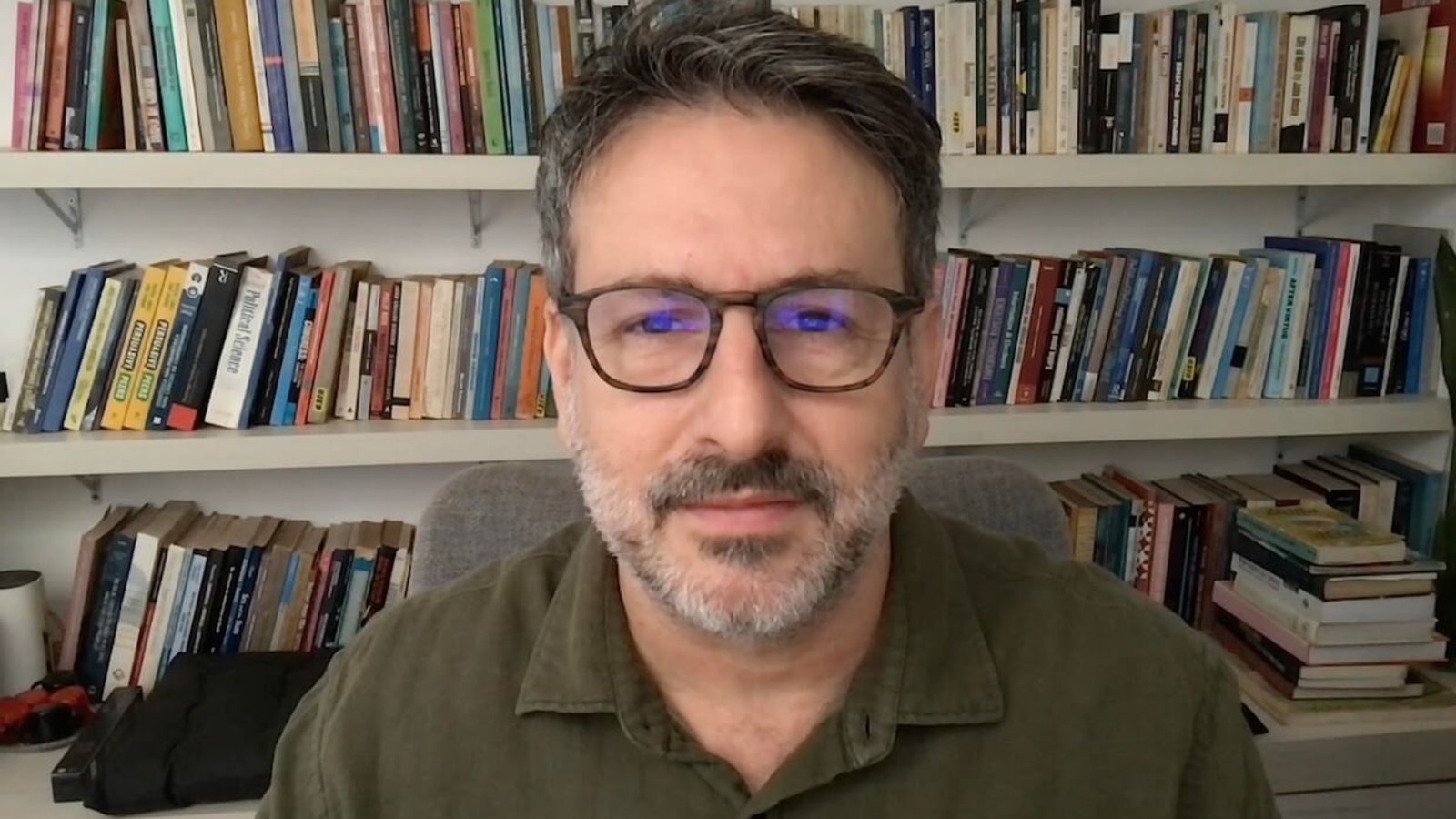
Professor Lucio Rennó.

Prof. Rennó: Brazil Faces Unusual Democratic Backsliding Through Legislative Authoritarianism

As Brazil approaches its October 25 presidential runoff, Professor Lucio Rennó of the University of Brasília warns of an unusual trajectory of democratic backsliding driven primarily by Congress rather than the presidency. In this ECPS interview, Professor Rennó examines the institutionalization of Bolsonarismo, the consolidation of political polarization, and the persistence of authoritarian enclaves inherited from military rule. Drawing parallels with what scholars call legislative authoritarianism, he cautions that congressional power-grabbing could weaken the Supreme Court and institutions of horizontal accountability. As Professor Rennó observes, “We can identify elements of that same logic in Brazil.” Yet he also emphasizes democratic resilience, highlighting the role of civil society, judicial institutions, and political opposition in resisting institutional erosion and preserving constitutional democracy. 

Interview by Selcuk Gultasli

As Brazil approaches the decisive October 25 presidential runoff, the country’s political trajectory raises questions extending far beyond the contest between President Luiz Inácio Lula da Silva and Flávio Bolsonaro. In the October 4 first round, Flávio Bolsonaro secured 47.03 percent of the vote against Lula’s 45.16 percent, while the broader Bolsonarist camp strengthened its congressional presence. ForProfessor Lucio Rennó, Professor at the Political Science Institute of the University of Brasília, these developments illuminate not only the institutionalization of Bolsonarismo but also an unusual transformation in the mechanisms of Brazilian democratic backsliding.

In this wide-ranging interview with the European Center for Populism Studies (ECPS), Professor Rennó, whose research examines populism, authoritarian attitudes, electoral realignment, and democratic resilience, argues that Brazil is witnessing a distinctive concentration of political power. Unlike conventional patterns of democratic erosion, where executives progressively dismantle constitutional constraints, the Brazilian process is increasingly driven by the legislature. As he observes, “What we’re witnessing in Brazil today is a rather unusual process of democratic backsliding, in which power-grabbing and the centralization of power are occurring primarily within Congress rather than the executive branch.”

Drawing on The Crisis of Democracy in Brazil, co-authored with Leonardo Avritzer, Professor Rennó situates this development within the country’s enduring institutional vulnerabilities, particularly the “authoritarian enclaves” inherited from military rule. He identifies a Congress dominated by a pragmatic, clientelistic coalition with conservative policy orientations as a potential vehicle for weakening constitutional checks. Comparing this trajectory with developments in Peru, where scholars have identified legislative authoritarianism, Professor Rennó warns: “We can identify elements of that same logic in Brazil.”

The implications extend directly to judicial independence and horizontal accountability. Professor Rennó anticipates congressional efforts to restrict the Supreme Court’s authority and potentially weaken institutions such as the Public Prosecutor’s Office, the Federal Police, and the Tribunal de Contas. Under a Flávio Bolsonaro presidency, he cautions, executive-legislative alignment could accelerate these developments, weakening oversight institutions “primarily to the benefit of Congress rather than the presidency.”

Yet Professor Rennó’s analysis also emphasizes the resilience of Brazilian democracy. He underscores the constitutional role of the Supreme Court, the mobilizing capacity of civil society, and the potential resistance of the Workers’ Party and congressional opposition.

Ultimately, the interview situates these institutional struggles within a broader political realignment: the consolidation of Bolsonarismo and Petismo as competing national identities. As Professor Rennó explains, Brazil is witnessing “the construction of political identities that transcend politics and increasingly affect our daily lives.” The October runoff therefore represents not merely a presidential contest but a critical moment in the continuing struggle over institutional power, democratic accountability, and Brazil’s political future.

Here is our interview with Professor Lucio Rennó, edited lightly to enhance clarity, readability, and overall flow for publication.

Bolsonarismo’s Strength Now Extends Beyond Jair Bolsonaro Himself
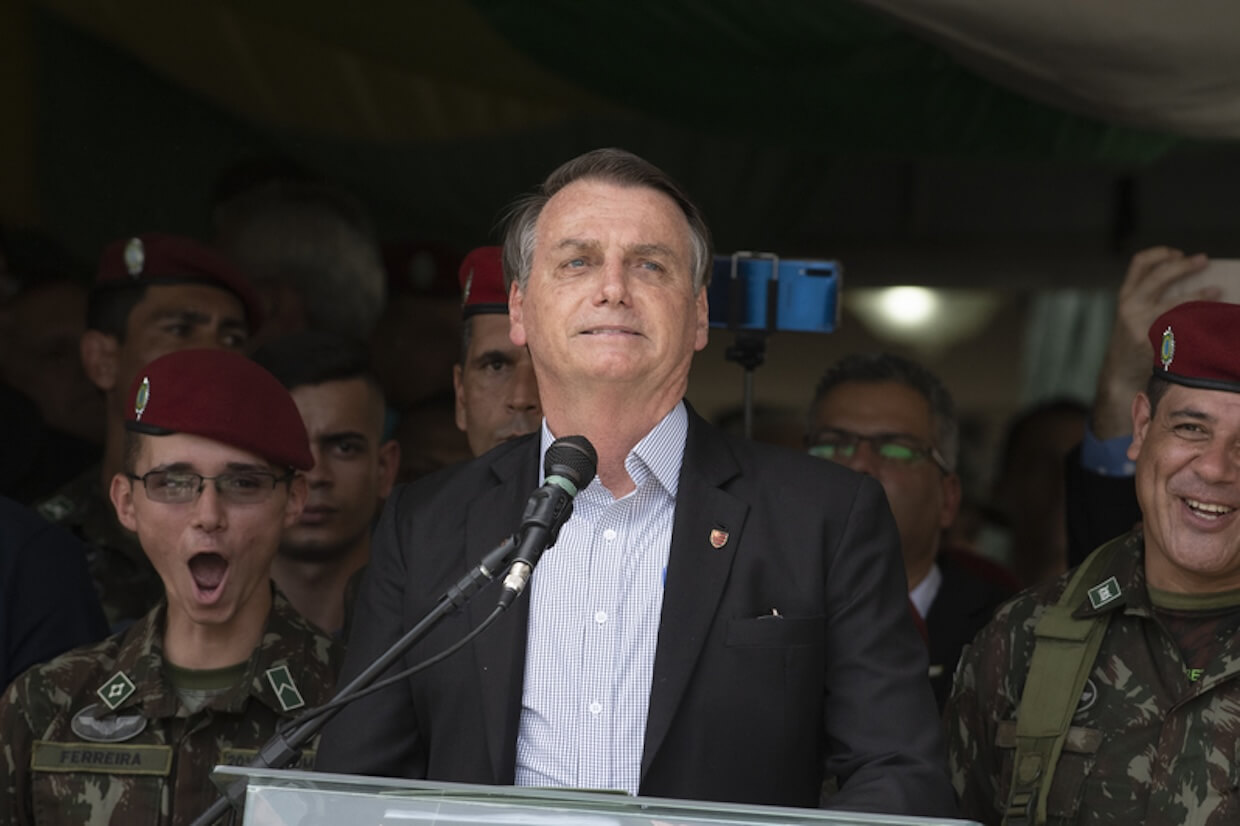
Then Brazilian President Jair Bolsonaro attends the 74th Anniversary of the Parachutist Infantry Battalion at the Military Village in Rio de Janeiro, Brazil, on November 23, 2019. Photo: Celso Pupo Rodrigues.

Professor Rennó, welcome, and thank you for joining us. Flávio Bolsonaro finished ahead of Lula with 47 percent, and the broader Bolsonarist camp also advanced in Congress in the October 4 elections. Does this result confirm your earlier argument that Bolsonarismo has become a durable political alignment rather than a phenomenon dependent on Jair Bolsonaro personally?

Professor Lucio Rennó: Yes, this election is a very important historical event in the sense that it consolidates Bolsonarismo’s strength beyond Jair Bolsonaro himself. What we have been witnessing in Brazil since 2022 is the institutionalization of Bolsonarismo. What was basically a charismatic, leadership-driven alignment with Bolsonaro, based on policy positions on certain issues, has become institutionalized within the framework of a political party, Brazil’s Liberal Party (PL).

The party performed very well in the 2024 municipal elections and has since nationalized the narrative of Bolsonarismo, consolidated it across different regions of the country, and established an organizational structure for the movement that was absent during Bolsonaro’s term in office following his victory in the 2018 elections.

He actually remained without a party until almost the end of his mandate, joining the PL only when he was preparing to run in 2022. Since then, what we have witnessed is this interesting process of an individual leadership becoming institutionalized within the framework of a political party, giving its political agenda much greater reach and scope.

Flávio Bolsonaro and the Continuity of the Bolsonarist Coalition

You have described Bolsonarismo as a multidimensional ideological alignment combining cultural conservatism, punitive politics, economic liberalism, and anti-PT sentiment. Does Flávio Bolsonaro’s performance suggest that this coalition has now survived a successful leadership succession?

Professor Lucio Rennó: Yes, I would say that Flávio Bolsonaro now demonstrates that the movement itself and its multidimensional agenda resonate strongly with significant portions of the Brazilian electorate. Bolsonarismo would not be what it is if it did not reflect the mass attitudes, grievances, and cleavages that characterize Brazilian society today.

A significant portion of the electorate embraces this set of policy positions, if not yet concrete policy proposals, in line with what you have highlighted in your question. These positions are becoming, as I have said, part of the PL’s political platform. So, these issues are at the heart of Bolsonarismo’s continuity beyond Jair Bolsonaro.

Now, obviously, we have to wait for the results of the second round of the election, which is coming up in about 10 days, to see, first, whether Flávio will succeed in winning the election and, if he does, what that would mean for Jair Bolsonaro himself, who will probably be freed and pardoned following his conviction for participation in a coup d’état in Brazil. We also need to understand what Jair Bolsonaro’s return to the Brazilian political scene would mean for Flávio Bolsonaro’s government.

That remains a mystery. We still need to determine whether we are actually witnessing Bolsonarismo beyond Jair Bolsonaro or, potentially, the return of Jair Bolsonaro to the center of Brazil’s political agenda and the far right.

From Charismatic Leadership to Institutionalized Ideological Alignment
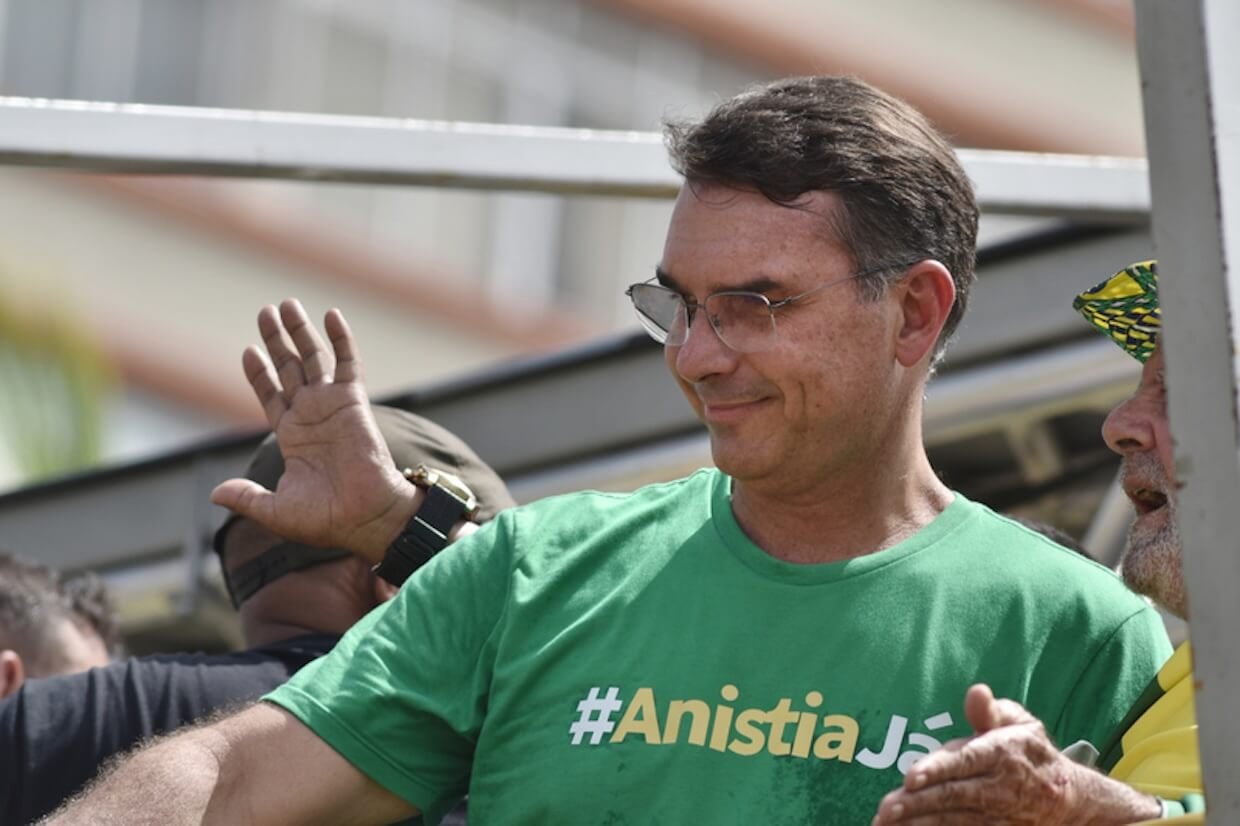
Flávio Bolsonaro.
Senator Flávio Bolsonaro during a pro-amnesty demonstration in support of former President Jair Bolsonaro in Copacabana, Rio de Janeiro, Brazil, March 16, 2025. Photo: Saulo Angelo | Dreamstime.

Your research identified a “Bolsonaro effect,” whereby voters did not merely select a candidate matching their prior beliefs but moved ideologically toward Bolsonaro during the campaign. Are we seeing a similar process around Flávio Bolsonaro, or is he mainly inheriting an already consolidated ideological constituency?

Professor Lucio Rennó: That ideological shift was largely the result of Jair Bolsonaro’s leadership. What we’re seeing now is the consolidation of this movement around these policy issues, as well as the affective elements of politics that initially helped construct a significant social movement around Bolsonaro, or even a political and electoral alignment centered on him.

This alignment is now evolving into a more consolidated and institutionalized set of policy proposals that, given the results of the legislative elections and the configuration of Congress over the next four years, are very likely to bring significant policy changes in Brazil, as well as changes to institutional design, particularly regarding the Supreme Court.

So, what we’re witnessing is a significant process of consolidation and institutionalization, whereby what initially resembled a social movement or a political alignment built around a charismatic leader is becoming more deeply ingrained in the country’s political framework, strengthening the presidential far right.

Bolsonarismo Is Becoming Hegemonic on the Right

Does the first-round result represent the normalization of the Brazilian far right, in the sense that Bolsonarismo is no longer an insurgent challenge to the party system but one of its principal organizing poles?

Professor Lucio Rennó: I agree with that. Bolsonarismo is becoming hegemonic on the right. Just as the PT, the Workers’ Party, is hegemonic on the left in Brazil, the PL and Bolsonarismo are moving toward a similarly hegemonic position on the right. Since 2018, we haven’t seen any possibility of a resurgence of the moderate right in Brazil.

So, basically, there’s no third way in the country beyond Petismo and Bolsonarismo, beyond the PT and the PL. This election demonstrates that very clearly, as the results were dominated by strong polarization between Bolsonarismo and Petismo. All the other candidates who attempted to enter this space, especially on the right, failed, receiving very little support at the ballot box. So, the votes are concentrated in Bolsonarismo. This represents a hegemonic shift on the right through the consolidation and institutionalization of partizan Bolsonarismo.

The Supreme Court Was the Big Loser in This Electoral Process

Your work argues that Bolsonarismo combines issue-based conservatism with anti-democratic attitudes. How should we interpret the fact that this political identity remains electorally powerful after Jair Bolsonaro’s conviction and the January 8 crisis?

Professor Lucio Rennó: What we have seen among Bolsonarista supporters is essentially a denial of Bolsonaro’s guilt. We have conducted research using surveys and public opinion polls that clearly show that core Bolsonaristas reject the idea that Bolsonaro is guilty. Instead, they see him as a victim of a witch hunt. The narrative that Bolsonaro is being persecuted, or that the system, whatever that means, is unjustly trying to damage his image, has become widely accepted among his core supporters. He has therefore remained politically significant because his followers have embraced the narrative that he is a victim of persecution for confronting the system.

Consequently, the Supreme Court became Bolsonaro’s principal enemy. After Bolsonaro won the presidency in 2018 and took office in 2019, he shifted his focus. This is important for understanding the construction of the populist narrative around Bolsonaro, particularly the “us against them” idea that drives populist rhetoric. The Supreme Court became the enemy.

What this election demonstrated, especially in the legislative arena and particularly in the Senate, is that Bolsonarismo defeated the Supreme Court electorally. Oddly enough, the Supreme Court was the big loser in this electoral process in Brazil. The Senate elections were framed around the narrative that the Supreme Court was corrupt and had unjustly tried to impute guilt to Bolsonaro, who, according to this narrative, was innocent of all accusations. This narrative prevailed among Bolsonaristas and prevented any alternative leadership from emerging.

It is particularly interesting to see how Bolsonarismo was able to consolidate around Flávio Bolsonaro rather than an alternative leader, such as the governor of São Paulo, Tarcísio de Freitas. There was competition over who would become the next Bolsonarista leader, and it is remarkable that Flávio Bolsonaro prevailed despite the support Tarcísio received from Brazil’s financial sector and the major businesses and conglomerates of São Paulo. Flávio was ultimately successful because the Bolsonaro name remains so powerful in Brazilian politics today.

So, I would say that the election also confirmed the electoral strength of the Bolsonarista narrative. By positioning the Supreme Court as an enemy, this narrative significantly facilitated the electoral victories of several Senate candidates, including Michelle Bolsonaro, Jair Bolsonaro’s wife, who was elected senator for Brazil’s Federal District.
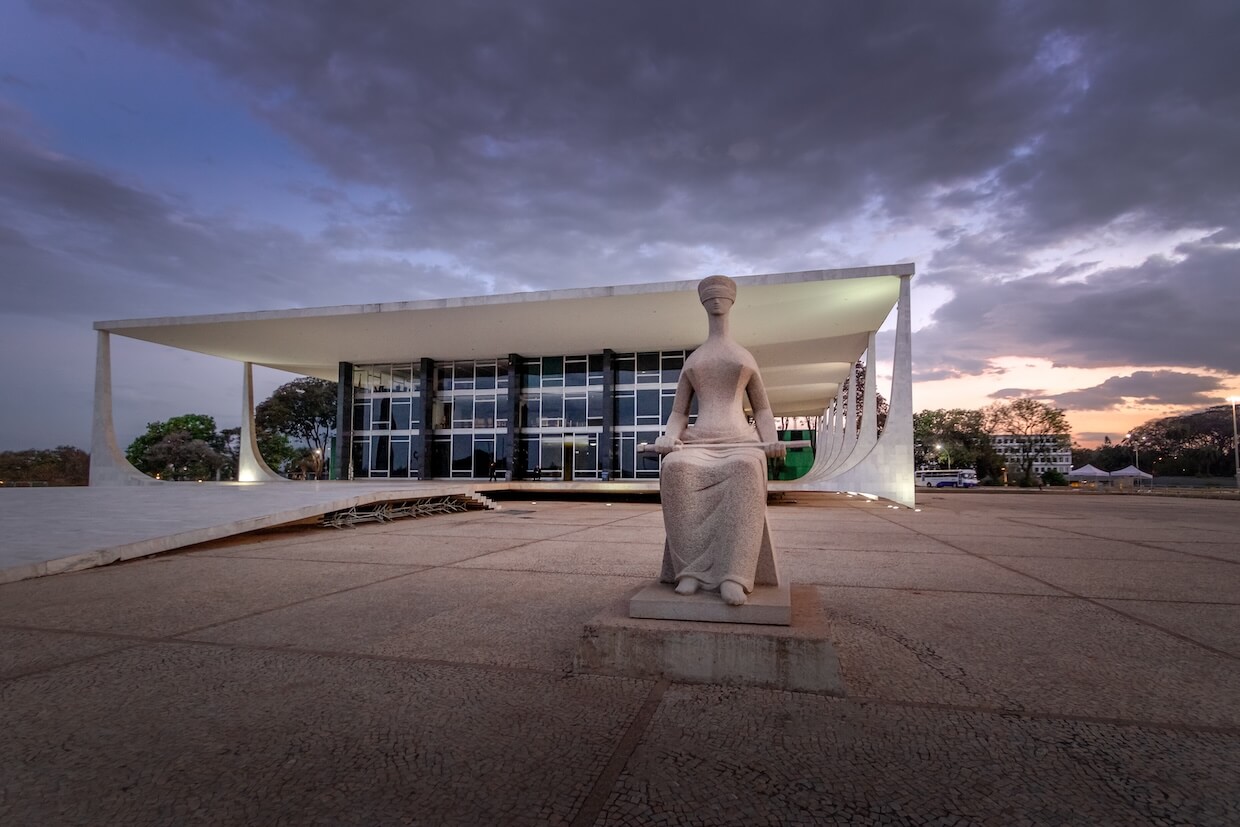
Brazil’s Supreme Federal Court (Supremo Tribunal Federal – STF) at night, Brasília, Federal District, Brazil, August 26, 2018. Photo: Diego Grandi.

Brazil Is Divided Along Demographic, Socioeconomic, and Geographical Lines

Lulism remains strongest among lower-income voters, social-policy beneficiaries, Catholics, women, and the Northeast, while Bolsonarism performs strongly among evangelicals, wealthier voters, and parts of the South and Southeast. Is the runoff becoming a contest between two increasingly consolidated social blocs rather than merely two candidates?

Professor Lucio Rennó: Yes, I agree. There is an increasing perception that ideological and policy positions, as well as affective and emotional attachments to Bolsonarismo on the one hand and Petismo on the other, are now dividing the nation along social lines.

What we have today is a country divided along demographic, socioeconomic, and geographical lines. If we look at religion, the data have shown that it is a very important factor behind Bolsonarismo, both directly and indirectly. Evangelicals are more likely to vote for and support Bolsonaro. Religion also plays an indirect role in shaping social attitudes that align with Bolsonaro’s positions, particularly on gender politics and LGBTQI+ issues. There is considerable convergence between religious views and these policy positions among Bolsonaro supporters.

We also see divisions along socioeconomic and demographic lines: wealthier white men are more likely to support Bolsonaro and Bolsonarismo than Black Brazilians and poorer citizens, who are less likely to support the movement.

When we examine the geographical distribution of these populations, the northeastern region of Brazil is much more strongly associated with Lula and the Workers’ Party, while the South and Center-West are much more closely aligned with Bolsonarismo.

So, we see a country divided not only territorially but also along social lines. This adds another layer to the consolidation of Bolsonarismo, rooted in belonging to different social groups.

Brazil Is Now Facing a Highly Conservative Congress

Your research on the Bolsonaro voter found that cultural backlash, law-and-order preferences, economic liberalism, and rejection of redistributive policies all mattered alongside anti-PT sentiment. Which of these dimensions now appears most important to Flávio Bolsonaro’s coalition?

Professor Lucio Rennó: When we look at the convergence between presidential and congressional elections, as well as the population’s issue-based or cognitive alignment with Bolsonarismo, particularly regarding political and policy positions, it becomes clear that we are now facing a highly conservative Congress.

When we examine Bolsonarismo, or the Bolsonaro coalition, if we can call it that, a significant component is ideologically oriented and strongly embraces this policy platform, which we should understand in a broad sense. It is not always defined in terms of specific policy proposals. In some cases, it is, but in others, it reflects a more general political orientation.

What we see ahead is a very conservative Congress, particularly on public security issues. Penal punitivism is going to be at the top of Congress’s agenda during its next mandate because of the conservative turn we have witnessed in the legislative elections, even more so if Flávio Bolsonaro is elected president.

We should therefore expect significant changes in this area, along with the resurgence of anti-democratic beliefs and attitudes concerning the pardoning of Jair Bolsonaro for the crimes of which he was convicted, as well as the pardoning of those who participated in the invasion of the buildings at Three Powers Square in Brasília on January 8.

There will also be a significant attempt to weaken the Supreme Court institutionally, which would affect the balance of powers in Brazil and, consequently, the very essence of horizontal accountability and democracy.

With the support of Congress, these different dimensions of Bolsonarismo are now much more likely to translate into concrete policies and institutional changes than they were during Jair Bolsonaro’s term in office.

Penal Punitivism and the Politics of Public Security

Crime and insecurity have been central to this election, and Flávio Bolsonaro has emphasized punitive policies. Does the continued salience of law-and-order politics show that punitive conservatism remains one of Bolsonarismo’s most durable ideological foundations?

Professor Lucio Rennó: Absolutely. I completely agree with that. This is one of the key issues in this election. While the rejection of the Supreme Court was very important in the legislative elections, public security issues and how to address them remain central to the Bolsonarista agenda. I would also add a certain disappointment with the performance of the economy as another important issue, but we can discuss that later.

Let’s focus on the issue of penal punitivism that you mentioned. Flávio Bolsonaro’s campaign narrative and rhetoric have emphasized a very harsh approach to crime, presenting increased punishment as a solution to criminality in Brazil. As we say in Brazil, “a good criminal is a dead criminal.” This is a claim with which a significant portion of the population agrees, and it is central to Flávio Bolsonaro’s position on public security policy.

It’s a very violent position, centered on combating crime and imposing harsh punishment on criminals, with very little discussion about how to address the financing of crime or human rights. These issues have become much more closely associated with the Workers’ Party’s position, or Lula da Silva’s position, on crime. But for most of the population, penal punitivist rhetoric is much more enticing and resonates more closely with their daily lives than the alternative. That’s why Flávio Bolsonaro has centered so much of his campaign narrative on this particular issue.

The Brazilian Population Is No Longer Satisfied with Its Living Condition

Photo: Shutterstock.

By contrast, Lula has again mobilized around Bolsa Família, income protection, and social inclusion. Does the runoff therefore revive the older cleavage between Lulist redistribution and Bolsonarist individual responsibility, or has that divide been overtaken by cultural polarization?

Professor Lucio Rennó: No, Lula da Silva’s initial approach, the way he organized his government, and the outcomes he sought to achieve were closely linked to improving the material conditions of the Brazilian population. He campaigned vigorously in the 2022 elections, criticizing Bolsonaro for his anti-democratic positions and his conduct during the pandemic, but also promising economic improvement. This remained an important issue in this year’s election.

The PT invested heavily in reducing inflation, increasing employment, and raising incomes, but perhaps without paying sufficient attention to other aspects of the Brazilian economy, particularly the profound levels of debt that significant portions of the population face today. This ultimately contributed to a sense of economic dissatisfaction in this year’s election.

I don’t think the Brazilian population is satisfied with its living conditions anymore, which is why this has been such a difficult election for the incumbent. Living conditions have deteriorated in Brazil over the past 10–15 years, and the overall public mood is very negative. That is always difficult for an incumbent to address.

Although the Workers’ Party and Lula’s government attempted to improve economic conditions and, consequently, the population’s living standards, the situation he inherited was so difficult that recovery has been challenging. Economic growth has not been particularly strong. Inflation is under control, unemployment is low, and incomes have increased, but not as much as the population needed. As a result, purchasing power remains a problem for Brazilians.

The general perception is that Lula has not delivered on his promise to improve material conditions, particularly for Brazil’s poorer population. This dissatisfaction and frustration with living conditions and the overall state of the economy have also worked against Lula.

So, the combination of the penal punitivist narrative and the government’s relatively weak economic performance also favored Flávio Bolsonaro in the election. The PT is now attempting several last-minute policy changes to see whether it can reverse some of these significant problems, including the high levels of household debt in Brazil.

The Resilience of Bolsa Família Under a Bolsonaro Government

Your work on Bolsa Família stresses the resilience of social policy even across changes of government. If Flávio Bolsonaro wins, how much institutional room would he actually have to retrench Brazil’s welfare architecture, given bureaucratic capacity, policy feedback, and electoral dependence on social benefits?

Professor Lucio Rennó: Jair Bolsonaro attempted to rebrand the Bolsa Família program during his last year in government. Bolsonarismo has always maintained an ambivalent position toward conditional cash transfer programs. Its supporters criticized these programs in the past, and once in power, they shifted their focus toward finding exit doors from the program rather than expanding coverage and increasing benefits. They also reduced some of the conditionalities.

We should expect the program to continue under a Flávio Bolsonaro government. Previous attempts to change it significantly failed, partly because rebranding Bolsa Família did not produce substantial electoral returns. However, they will certainly try to re-establish the narrative that the government should seek exit doors from Bolsa Família. This approach would likely return under a new Bolsonaro administration led by Flávio.

So, we should expect changes to Bolsa Família, but not its termination or complete disruption. The program clearly continues to provide significant resources to families who would otherwise lack access to this money. It therefore remains a very important source of support for a substantial portion of the Brazilian population.

The political risk of substantially changing Bolsa Família is very high for anyone attempting to reform the program. It should therefore be maintained. It is difficult to say whether they will try to change its name again and claim credit for it, but we should not expect the program to be terminated altogether.

Democratic Backsliding and Legislative Authoritarianism
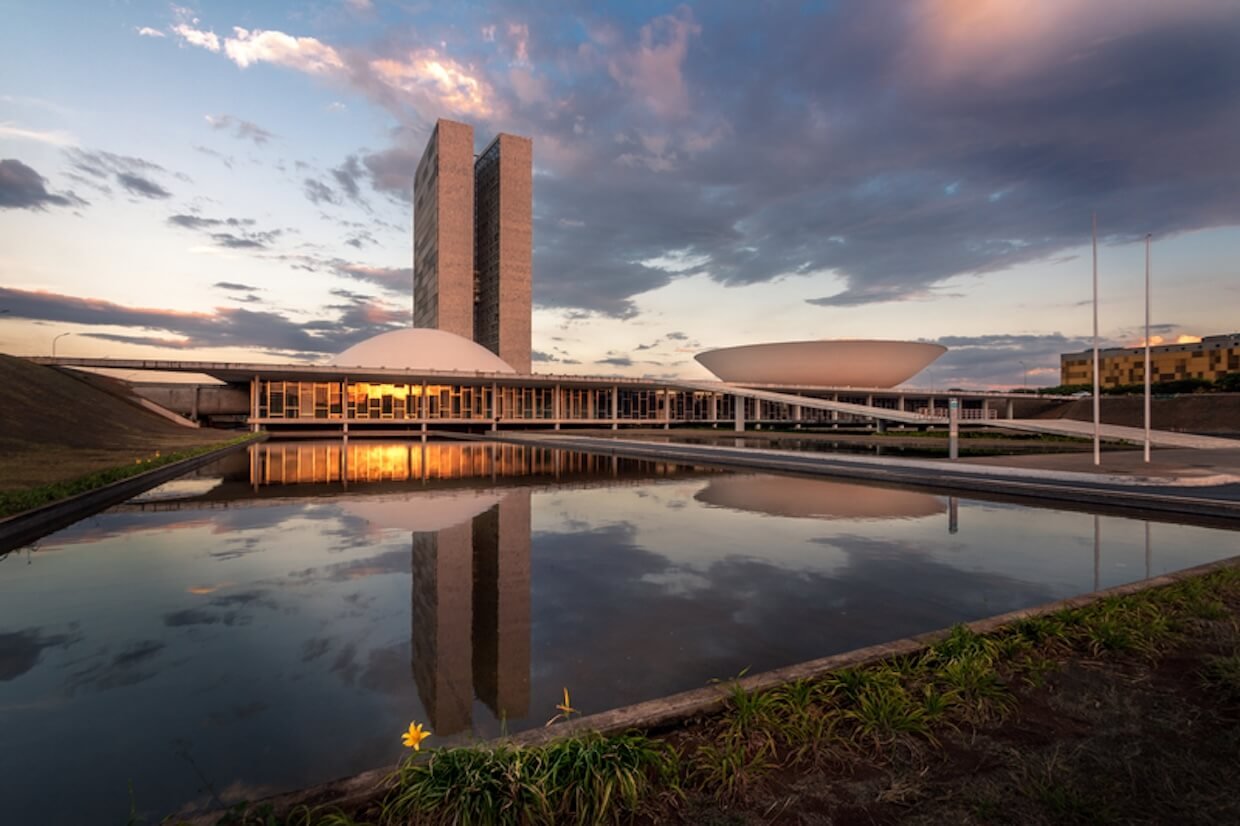
Brazilian National Congress at sunset. Brasília, Federal District, Brazil, August 26, 2018. Photo: Diego Grandi / Dreamstime.

In The Crisis of Democracy in Brazil, you and Leonardo Avritzer argue that Bolsonaro activated pre-existing institutional vulnerabilities rather than creating them from scratch. Does Flávio Bolsonaro’s rise suggest that those vulnerabilities remain politically exploitable despite the democratic resistance of 2022–23?

Professor Lucio Rennó: The structural components of the Brazilian political system that led us to a significant crisis of democracy, culminating in the January 8 attacks, are still present. Our institutional framework still contains significant elements inherited from the previous military dictatorship. In the book, we refer to these as authoritarian enclaves: institutional features embedded in the Constitution and in the functioning of executive-legislative and civil-military relations. These remain sources of conflict within the country and represent unresolved dilemmas that we have yet to overcome.

There have been attempts at institutional change to address some of these enclaves, but I don’t think they are helping to strengthen democracy. In fact, they may be counterproductive. What we’re witnessing in Brazil today is a rather unusual process of democratic backsliding, in which power-grabbing and the centralization of power are occurring primarily within Congress rather than the executive branch. This differs from the traditional pattern of democratic backsliding, characterized by the concentration of power in the executive branch and the weakening of checks on executive authority, something we’re seeing elsewhere in the world.

In Brazil, however, we are witnessing the centralization of power within Congress, which is controlled by a highly pragmatic, clientelistic coalition with strong inclinations toward a conservative policy agenda. This represents a different process, although it has parallels with what has happened in Peru, for instance, where some analysts have described the phenomenon as legislative authoritarianism. We can identify elements of that same logic in Brazil.

The military situation also remains unresolved. Military prerogatives persist regarding benefits, salaries, and influence over defense policy, as well as the possibility of military intervention to address civilian problems through the so-called Garantia da Lei e da Ordem (Guarantee of Law and Order, GLO) mechanism, which is embedded in the Brazilian Constitution.

Several of the issues we identify in the book therefore remain unresolved and constitutionally embedded. What may happen in the future is a further strengthening of this process of power-grabbing by Congress and the highly clientelistic, pragmatic, conservative coalition that controls it.

So, if Lula wins the second round of the election, he will face considerable difficulties governing the country, both because of the existing balance of power between the executive and legislative branches and because of the very conservative composition of Congress following the 2026 election.

Congressional Power and the Future of the Supreme Court

You also argue that Brazil’s judiciary became both a source of political conflict and a crucial defender of democracy. If a new Bolsonaro presidency again confronts the Supreme Court, could Brazil enter a renewed cycle of populist conflict between electoral authorization and constitutional restraint?

Professor Lucio Rennó: Yes, this is at the top of Brazil’s reform agenda today, particularly with the new Congress coming into power. Regardless of whether Flávio Bolsonaro or Lula wins, I believe Congress itself will push a strong agenda to reform the Supreme Court, alter the monocratic powers of its justices, and establish greater limitations on what the Court can decide. This is a clear consequence of the results of the Senate and Chamber of Deputies elections in Brazil.

Even if Lula remains in power, Congress will pursue this agenda because it has become so empowered over the past 10 years that it is now the key lawmaking actor in Brazil. I expect some resistance from the Supreme Court and, if Lula holds the presidency, from the executive branch as well. However, if Flávio Bolsonaro wins, this agenda will receive full presidential support.

What we could potentially see under a Flávio Bolsonaro presidency is an alignment between Congress and the executive branch aimed at further weakening the judiciary and institutions of horizontal accountability in Brazil, such as the Public Prosecutor’s Office, the Federal Police, and the Tribunal de Contas, which is responsible for overseeing public accounts. We would therefore be looking at a situation in which these institutions of horizontal accountability are weakened primarily to the benefit of Congress rather than the presidency.

The Supreme Court Became the Primary Target for Retaliation

Flávio Bolsonaro has pledged amnesty for his father and for participants in the January 8 attacks. Should this be read mainly as family loyalty, as movement maintenance, or as a broader populist attempt to redefine accountability as political persecution?

Professor Lucio Rennó: Yes, it has a deeper meaning, as you have suggested. The Bolsonarista narrative all along has been that Jair Bolsonaro has been treated unfairly because of his defiance of the establishment. The Supreme Court, as a representative of this establishment, became Bolsonaro’s and Bolsonarismo’s principal foe, their most important enemy, and the primary target for retaliation.

That is what we should expect. If Flávio wins, we will see Jair Bolsonaro pardoned. Even if Flávio does not win, there is a significant chance that Congress will approve amnesty for Bolsonaro and all those who attacked democratic institutions during the January 8 events.

So, we should expect considerable tension between Congress and the Supreme Court. Depending on who wins the presidency, these attacks against the Supreme Court could receive strong presidential support. If Flávio wins, Jair Bolsonaro will certainly be free by January 2. The same applies to his brother, Eduardo Bolsonaro, who has also recently been convicted of crimes and would likewise be pardoned. We will therefore see clear attempts to challenge legal decisions made under the democratic order. That, in itself, represents an attack on Brazil’s democratic order.

Brazilian Democracy Has Demonstrated Its Resilience

Protesters protest for the freedom of Luiz Inácio Lula da Silva on Avenida Paulista in São Paulo, Brazil on April 7, 2019. Photo: Cris Faga.

Donald Trump’s second presidency has involved renewed efforts to expand executive authority, reshape federal agencies, challenge institutional constraints, and pursue political adversaries. If Flávio Bolsonaro wins, is the relevant Brazilian risk imitation of Trump’s second-term strategy—or would Brazil’s stronger congressional and judicial constraints produce a fundamentally different trajectory?

Professor Lucio Rennó: Up until now, Brazilian democracy has demonstrated its resilience. Lula’s victory was important in this regard, as was the organization of the opposition to Jair Bolsonaro. Civil society has also played an important role, while the Supreme Court has been particularly significant in safeguarding basic constitutional rights and the rule of law in the country.

A return of Bolsonarismo to the presidency, in an environment where Congress is highly favorable to the movement, would pose a serious threat of substantial institutional change. As I mentioned earlier, this could involve weakening oversight institutions and the judiciary, which remain among the last forms of institutional resistance to democratic retrenchment in Brazil.

However, we should not underestimate the role of the opposition in Congress, led by the Workers’ Party as the hegemonic force on the left. We have already begun to see a reaction to Flávio Bolsonaro from the opposition. This past weekend, substantial popular movements and demonstrations in support of Lula and against Bolsonaro took place in the streets of almost all Brazil’s major cities.

The left has also begun to restructure and reorient itself to confront the rise of the extreme right, reflected in the electoral victories of the PL and Bolsonarismo. We should therefore expect resistance from the opposition, just as we witnessed in the period leading up to the 2022 election. The role of the opposition and the left proved fundamental to Jair Bolsonaro’s first defeat.

The election is still open in Brazil. We need to examine the latest polls coming out today and tomorrow to assess whether Lula still has a chance of winning the second round. Regardless of the outcome, the opposition, particularly the left and the Workers’ Party, is already beginning to organize itself as a force of resilience and resistance to shifts in the policy and institutional agenda in Congress.

We should therefore expect a significant struggle within Congress, with the opposition seeking to delay or obstruct decisions that advance this more conservative agenda. Nor should we underestimate the Workers’ Party’s ability to mobilize civil society to remain vigilant and critical of these changes. We have seen this in the past, and we should expect it again if Flávio wins the upcoming second round.

Even leaving the presidential outcome aside, we should expect the congressional minority, composed largely of the Workers’ Party, to demonstrate considerable resilience in resisting institutional and policy changes.

Brazil’s Emerging Two-Bloc Political System

And finally, Professor Rennó, looking toward October 25, is the deeper significance of this runoff simply whether Lula or Flávio Bolsonaro wins—or whether Brazil is consolidating a new party system structured around two durable political identities, Lulism and Bolsonarismo, each offering a competing conception of “the people,” the state, and democracy itself?

Professor Lucio Rennó: These elections are historic in the sense that they consolidate two national political alternatives, leaving very little room for a third way to emerge in presidential elections. We have to bear in mind that Brazil is a multiparty system, with a significant number of effective parties in the Chamber of Deputies and the Senate, giving it a distinct political dynamic compared with, for instance, the United States. In part, Congress is so powerful in Brazil precisely because of our multiparty structure and the way our party system is organized.

What this election demonstrates, and what the 2024 municipal elections had already begun to reveal, is the nationalization of political polarization in Brazil. This polarization has become dominant in the current election, particularly with the growth of the PL, but also with the significant results achieved by the Workers’ Party, especially in the Chamber of Deputies. The party increased its representation in the Chamber and further consolidated its position as the most important political force on the left.

So, this election is symbolic for Brazil because it demonstrates how the country has become polarized between two political forces representing distinct ideological and policy positions. These forces are also dividing the country along emerging political identities that did not previously exist in this form.

This is particularly important because we are now witnessing the construction of political identities that transcend politics and increasingly affect our daily lives. We see something similar in the United States, where Democrats and Republicans often do not mingle socially. We are beginning to see the same phenomenon in Brazil, and these divisions are becoming even stronger in the current election. 
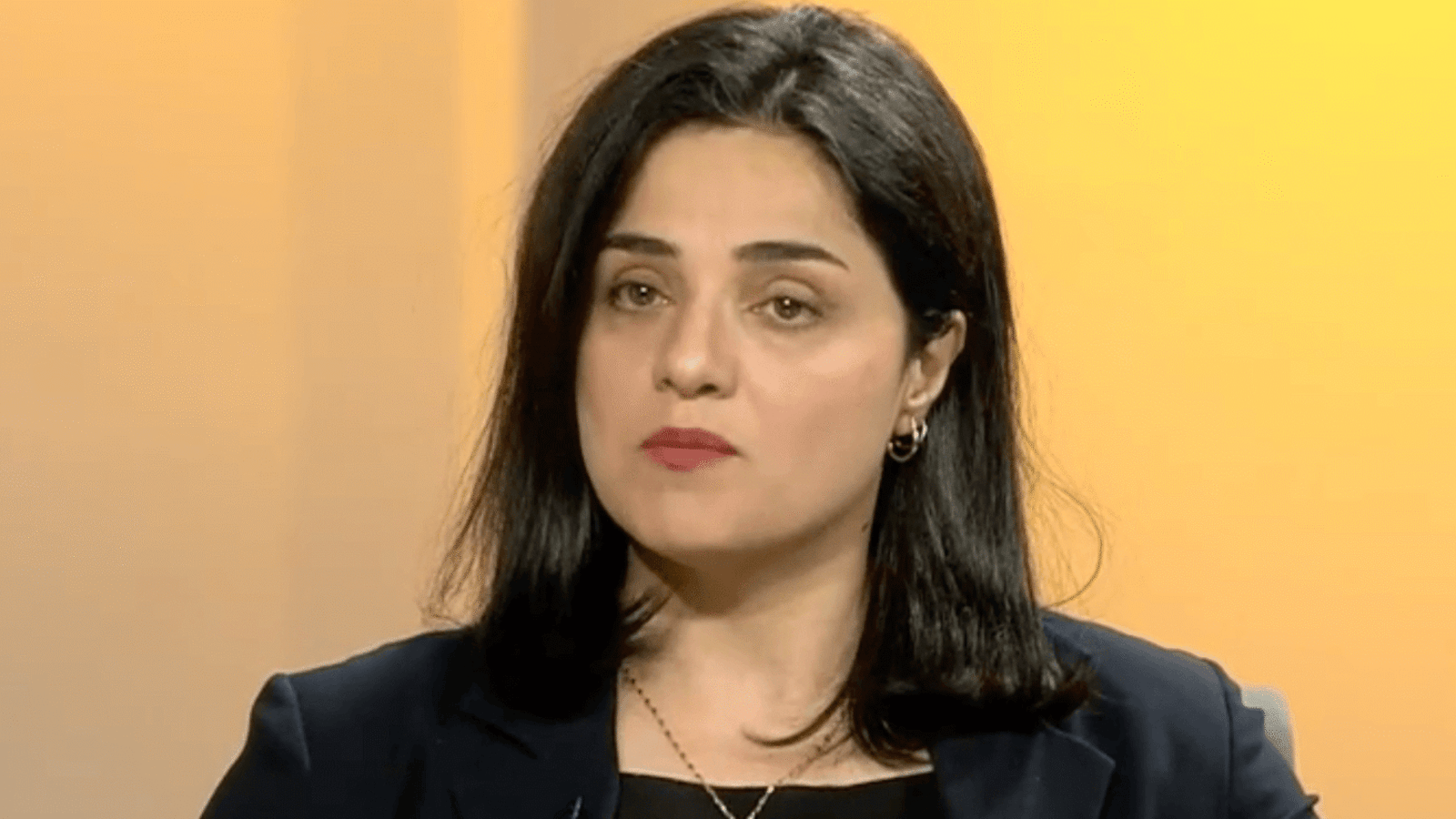
Dr. Soheila Shahriari

Dr. Shahriari: Without Western Recognition, Rojava Lacks Leverage to Secure a Lasting Power-Sharing Deal with Damascus

In this ECPS interview, Dr. Soheila Shahriari offers a theoretically grounded diagnosis of Rojava’s most precarious post-ISIS moment. She argues that the Autonomous Administration of North and East Syria should be understood not as a wartime improvisation, but as a long-evolving counter-hegemonic project rooted in democratic confederalism, gender equality, pluralism, and social ecology. Yet Dr. Shahriari underscores a stark geopolitical constraint: without formal recognition and enforceable guarantees from Western actors—especially the EU and the United States—Rojava lacks the diplomatic leverage to secure a durable decentralized settlement with Damascus. The interview explores how instrumental Western engagement, Turkey’s securitization paradigm, and Syria’s recentralization drive converge to endanger non-state democratic experiments. It also examines diaspora mobilization, the global resonance of Kurdish women’s politics, and the fragile future of local partnerships in conflict zones.

Interview by Selcuk Gultasli

Giving an interview to the European Center for Populism Studies (ECPS), Dr. Soheila Shahriari from École des Hautes Études en Sciences Sociales (EHESS) in France offers a wide-ranging and theoretically grounded assessment of the Autonomous Administration of North and East Syria (Rojava) at a moment of profound uncertainty. As shifting regional alignments, great-power bargaining, and Syrian state consolidation converge to narrow the space for Kurdish self-rule, Dr. Shahriari situates Rojava not merely as a wartime anomaly but as a counter-hegemonic democratic experiment struggling to survive in an international system dominated by state sovereignty, realpolitik, and authoritarian resurgence. The interview is organized around a central warning captured in the headline: Without formal recognition and protection from Western actors, Rojava lacks the diplomatic leverage necessary to secure a durable decentralized settlement with Damascus.

Dr. Shahriari argues that the current crisis stems less from military weakness than from structural diplomatic isolation. Despite their decisive role in defeating ISIS alongside the United States, Kurdish-led forces failed to convert battlefield legitimacy into institutional guarantees. The January ceasefire and negotiations over integration into Syrian state structures illustrate the narrowing options available to the Autonomous Administration under pressure from Damascus, Ankara, and shifting US priorities. In this context, Dr. Shahriari emphasizes that external recognition is not symbolic but constitutive of survival: without enforceable guarantees from actors such as the European Union and the United States, any decentralization arrangement risks becoming a temporary tactical compromise rather than a stable power-sharing order.

At the same time, the interview highlights the distinctive ideological and institutional character of the Rojava project. Dr. Shahriari describes it as an anti-statist political paradigm rooted in democratic confederalism, gender equality, pluralism, and ecological principles—an alternative model of governance emerging amid global democratic recession and Middle Eastern authoritarian consolidation. The conversation also explores how women-led institutions function as a “symbolic infrastructure” of resilience, how diaspora activism and transnational networks have reshaped Kurdish political imaginaries, and how the global visibility of Kurdish women fighters transformed international legitimacy. Yet these achievements, she notes, have not translated into formal diplomatic recognition, leaving the experiment vulnerable to geopolitical bargaining among states.

The interview also examines the structural limits of liberal internationalism and the instrumental nature of Western engagement with non-state democratic actors. Dr. Shahriari contends that Western powers’ prioritization of strategic alliances—particularly with Turkey—over normative commitments has undermined both Rojava’s prospects and the credibility of democratic rhetoric. Consequently, the future of Kurdish self-administration depends not only on negotiations with Damascus but on whether Western governments are willing to move from tactical cooperation to institutional protection.

Ultimately, Dr. Shahriari frames Rojava’s predicament as emblematic of a broader tension in contemporary world politics: the clash between innovative democratic experiments and an international order still organized around sovereign states and security competition. Whether Rojava becomes a model of negotiated decentralization or a casualty of regional power politics, she concludes, will depend on the availability of credible external guarantees—without which even the most resilient non-state democracy faces structural vulnerability.

Here is the edited version of our interview with Dr. Soheila Shahriari, revised slightly to improve clarity and flow.

Rojava Should Be Read as a Post-National Political Project, not a Wartime Anomaly

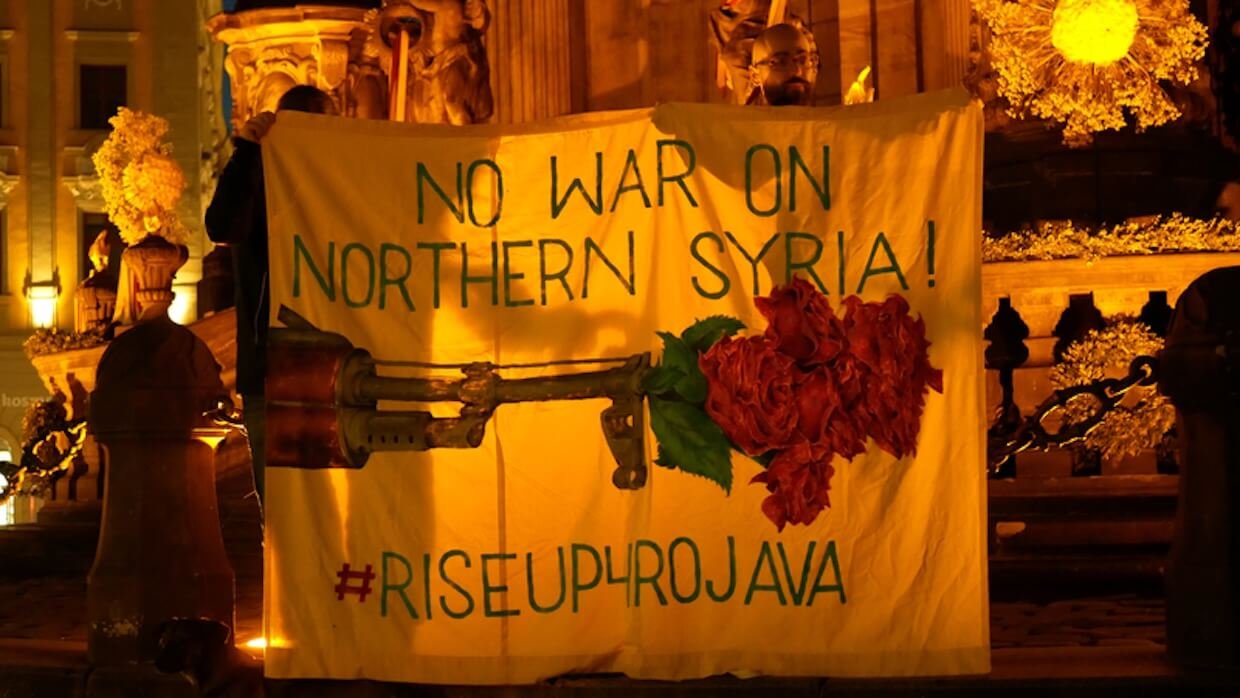
Kurdish demonstrators protest Turkey and President Recep Tayyip Erdoğan’s military operation in northern Syria, expressing support for Rojava and the YPG in Prague, Czech Republic on October 17, 2019. Photo: Dreamstime.

Dr. Soheila Shahriari, thank you so much for joining our interview series. Let me start right away with the first question: Your research frames Rojava as a counter-hegemonic democratic experiment emerging amid global democratic recession and Middle Eastern authoritarian consolidation. To what extent should Rojava be understood as a transformative model of post-nation-state governance versus a context-specific survival mechanism born of state collapse, particularly in a regional environment shaped by authoritarian resilience and populist Islamism and nationalism?

Dr. Soheila Shahriari: Thank you for having me. This is a very interesting question. I think reducing Rojava to a context-specific survival mechanism born of state collapse is analytically insufficient. While the collapse of state authority during the Syrian Civil War created the structural opening for Rojava’s institutional experiment, this was, to use Michel Foucault’s terms, a condition of possibility rather than the cause of Rojava’s emergence. These are two distinct things. Many argue that a power vacuum in Syria, combined with the withdrawal of Bashar al-Assad’s forces, explains Rojava’s emergence. But this was merely a facilitating condition, not the primary cause, and it is a somewhat simplistic way of understanding the issue.

Rojava can be described as post-national in some respects, but it differs from structures such as the European Union due to its distinct sociopolitical development and historical contingencies. It is better understood as an anti-state progressive political project grounded in women’s rights, pluralism, and ecological principles, operating within a hostile and authoritarian Middle Eastern environment.

It represents the institutionalization of a political paradigm that evolved over decades within the Kurdish movement, particularly through the theoretical trajectories associated with Abdullah Öcalan. The shift from Marxist-Leninist national liberation to democratic confederalism reflects a deep epistemological transformation—a move away from state sovereignty toward decentralized, council-based, multiethnic self-governance. Its pillars—radical democracy, women’s liberation, pluralism, and social ecology—are therefore not improvised wartime adaptations, but the product of sustained ideological development.

Rojava Transformed the Kurdish Imaginary from Ethno-Nationalism to Gender-Equal Pluralism

In your dissertation, you analyze how the Rojava revolution reshaped the Kurdish national imaginary in the diaspora, particularly through gender equality and pluralism. How has this transnational reconfiguration fed back into political mobilization within Kurdish regions themselves?

Dr. Soheila Shahriari: When we are talking about the Kurdish diaspora, we have to move beyond the conventional understanding of diaspora because of the particular situation of Kurdistan. Kurdistan has a very distinct dynamism in terms of its diaspora community, marked by intensely reciprocal political, cultural, and social engagement and ties between different parts of Kurdistan and the West. Political developments in one area feed directly and immediately into others. They are highly interconnected, forming a transnational political space shaped by the unique circumstances of the Kurdish question.

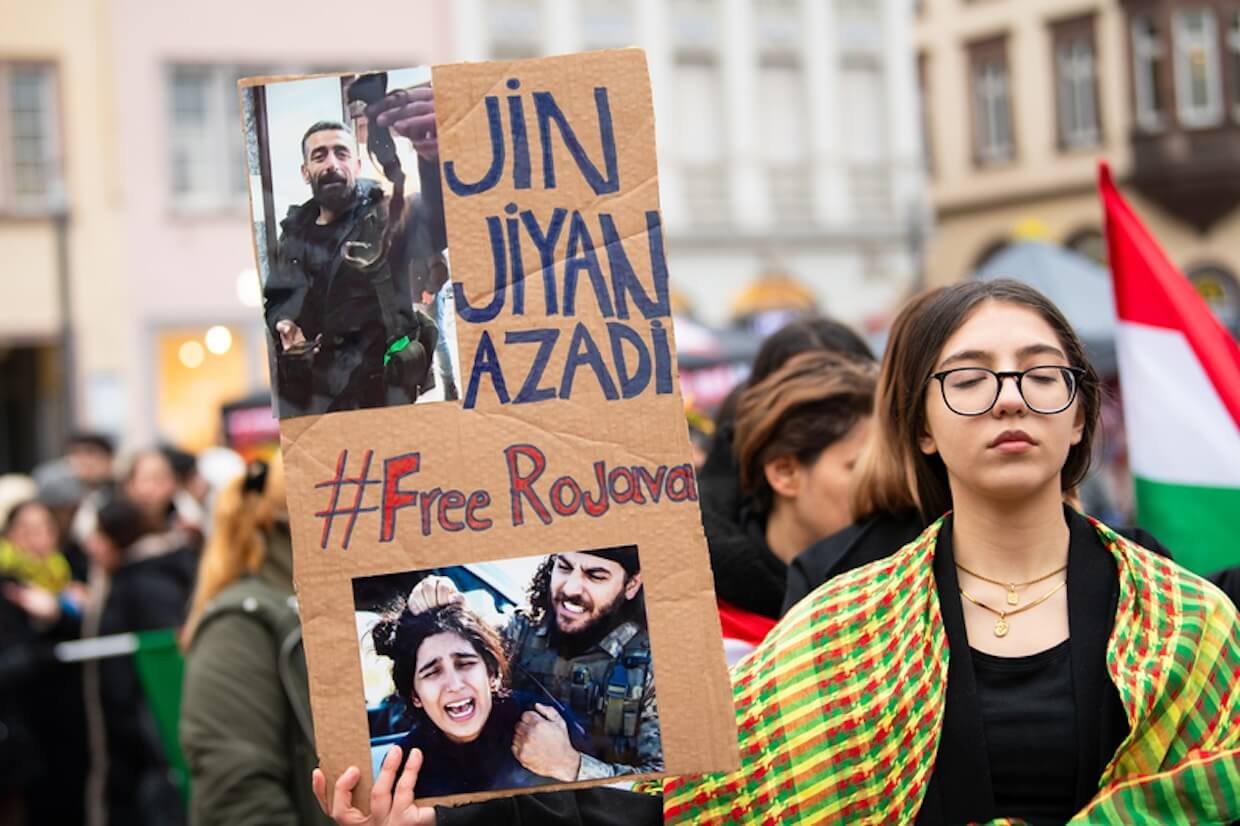
So, the Rojava Revolution has fundamentally reshaped the Kurdish national imaginary in my research, shifting it from a traditional nationalist framework toward a radically gender-equal and pluralistic new system of being. This transformation affects Kurds as a whole, not just in the diaspora or in the West. Evidence for this claim includes the women-led uprising in Kurdistan, inspired very directly by the slogan “Woman, Life, Freedom” (Jin, Jiyan, Azadi), which was the very first slogan of Rojava’s gender revolution.

This is one clear example of how developments in Rojava have fed back into Kurdistan itself. The influence from Rojava toward diaspora communities in the West, and the domino effect of Rojava across the Middle East, was visible in the women-led uprising in Rojhelat, or Iranian Kurdistan. It also elevated Kurdish actors as agents of democratization across the region, not just in Autonomous Administration of North and East Syria (AANES) but more broadly in the Middle East. Politically, this influence is visible in coalition-building and pluralistic alliances.

By coalition-building, I mean Rojava’s alliances with democratic forces—Arabs, Assyrians, Chaldeans, and other minorities—which have inspired Kurdish actors, especially in Iranian Kurdistan, to build coalitions with other national minorities across Iran against authoritarian central regimes. These are two telling examples of Rojava’s domino effect in the Middle East, especially in Iran: the women-led uprising in Iranian Kurdistan in 2022 and coalition-building with other national minority forces inside Iran, inspired by the same experience.

Women-Led Governance Is the Backbone of Rojava

Kurdish demonstrators
Protest by Kurdish demonstrators following attacks on Rojava in northern Syria, Trier, Germany, January 24, 2026.

You argue that women-led governance structures in Rojava function as a “symbolic infrastructure” of democratic resilience. How sustainable is this feminist institutional architecture under conditions of militarization, economic blockade, diplomatic isolation, and the surrounding pressures of authoritarian and autocratic regimes?

Dr. Soheila Shahriari: First of all, the sustainability and mobility of Rojava’s feminist institutional architecture rests on its own radical resilience. Women-led governance structures, as you mentioned, are not merely symbolic but constitute foundational pillars of the political project. This is evident in the practical effectiveness of structures such as the co-presidency system, “Jineology” as an intellectual foundation of Rojava, the metamorphosis of the justice system in Rojava, and women-friendly structures like Mala Jin (Women’s Houses), the eco-feminist village of Jinwar, and women’s self-defense initiatives like the Women’s Protection Units (YPJ). These structures have demonstrated durability over a decade of conflict, yet their long-term viability is constrained by a geopolitical zero-sum game.

Again, the engagement of Rojava with Western allies in the fight against ISIS involved immense sacrifices, with 11,000 or 12,000 lives lost in the fight against ISIS, without securing formal international recognition or protection from Western allies. The problem starts here. When we look at the fragility and vulnerability of Rojava today, the crux of the matter is that Rojava made extraordinary sacrifices against the international threat of ISIS, yet this was a zero-sum game for Kurdish actors in Rojava. They did not succeed in securing international recognition or protection from the West.

As you mentioned in your question, the feminist governance model faces severe existential threats from militarization, economic blockade, and the hostility of neighboring states, particularly Turkey, as well as pressure from the central Syrian state of Ahmed al-Shara. In this context, its stability and durability hinge on sustained engagement with Western democracies, which must be held accountable, as a moral necessity, to defend Rojava’s democratic and gender-progressive structures against broader authoritarian and Islamist dynamics.

Decentralization Requires External Guarantees

With the recent military setbacks and integration pressures from Damascus, do you see the Autonomous Administration of North and East Syria (AANES) transitioning from a de facto autonomous entity toward negotiated decentralization, or facing structural dismantlement within a re-centralized Syrian state increasingly characterized by autocratic restoration?

Dr. Soheila Shahriari: The most viable path to avoid the worst-case scenario—I mean, the worst case is the structural dismantlement of Rojava within a re-centralized Syrian state—is sustained diplomatic engagement. Again, I emphasize sustained diplomatic engagement with Western countries. The preservation of the autonomous administration heavily depends on the political will of key actors, particularly the EU and the United States, to counter Turkey’s hostility, the Syrian state’s push for recentralization, and ongoing power pressures. Crucial and strategic steps have already been taken in this direction in recent months.

This includes the European Parliament resolution of February 2026, which explicitly calls on Turkey not to interfere in negotiations between the SDF and the central government. Another example is the invitation of General Mazloum Kobani, Commander-in-Chief of the SDF, along with Ilham Ahmed, co-chair of the Department of Foreign Relations of Rojava, to participate in the Munich Security Conference in February. A further example is the invitation of Ilham Ahmed and the Commander-in-Chief of the YPG to hold a press conference at the European Parliament on February 25, 2026.

These actions are essential to ensure that the rights of Kurds, as a collective entity, not only as individuals, are recognized within the Syrian Constitution. Without international backing and pressure, Rojava faces the risk of enforced decentralization under hostile conditions or full structural dismantlement in a centralized, autocratically restored Syrian state. Without such international recognition from Western actors, especially the EU or the United States, Rojava possesses limited diplomatic leverage to compel Damascus into a permanent decentralized power-sharing agreement.

War Conditions Distort Democratic Experiments

Aleppo, Syria, war
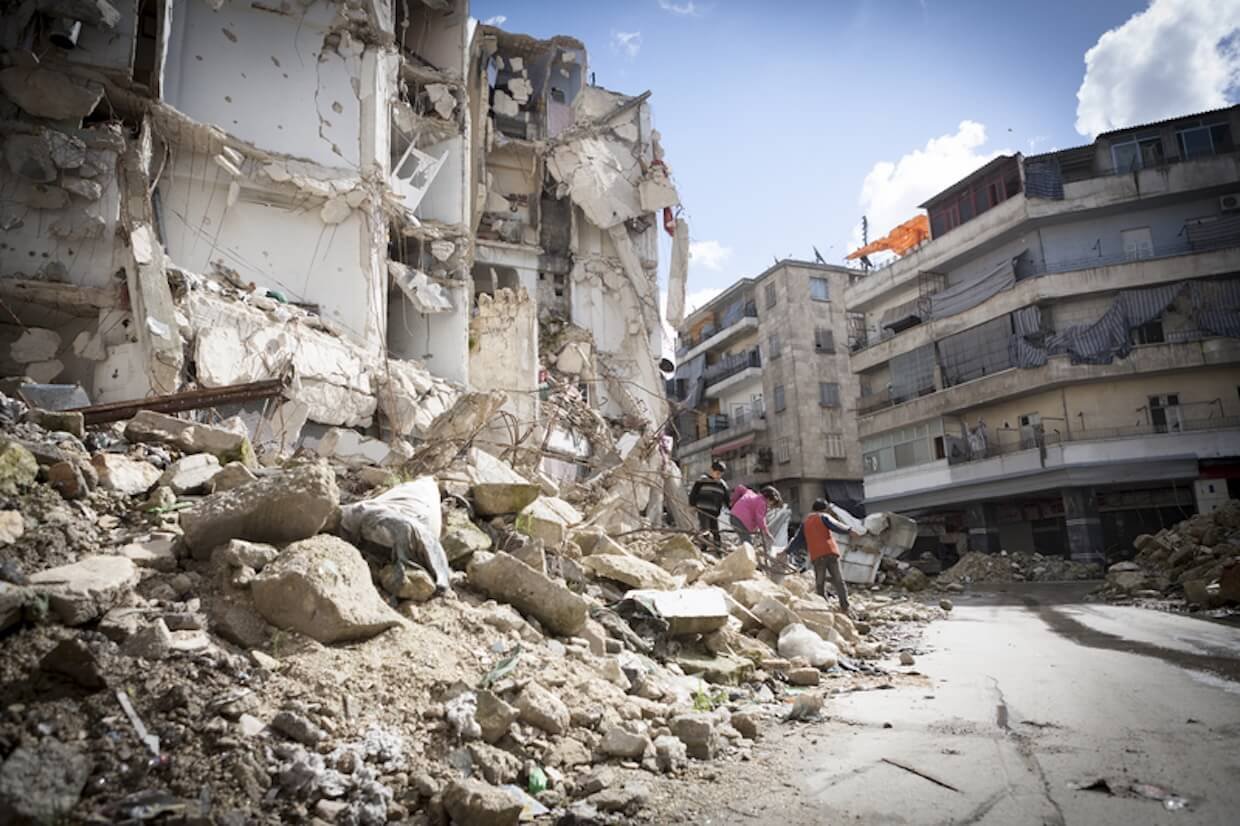
Destroyed residential building in a rebel-held area of Aleppo, Syria, February 12, 2013; three children collect firewood amid the rubble. Photo: Richard Harvey / Dreamstime.

Some critics suggest that Rojava’s multiethnic model struggled to maintain legitimacy among Arab populations in eastern Syria. To what degree were these tensions structural limits of democratic confederalism versus consequences of wartime governance conditions?

Dr. Soheila Shahriari: I do not think that democratic confederalism as a theory contains a structural flaw. It is a highly progressive and democratic theory. It is not built on Kurdish supremacy or exclusionary nationalism; rather, it is explicitly anti-ethnic in its political logic. It seeks to transcend ethnicity as the basis of sovereignty and instead centers pluralism, decentralization, and participatory government.

Where tensions emerge is not at the level of theory itself but at the level of implementation. The translation of radical, ideologically dense thought into heterogeneous, war-torn territory—particularly among Arab populations who were not socialized into the PKK-led movement’s democratic and feminist paradigm—inevitably creates friction. These communities had lived for decades under authoritarian rule without meaningful experience of democratic institutionalization, gender parity mechanisms, or participatory governance.

The sudden introduction of a transformative political model such as Rojava under militarized conditions naturally produces uneven incorporation of Arab populations. Thus, the issue is less of a structural flaw of democratic confederalism itself and more of a gap between normative ambition and historically shaped political socialization under conditions of war.

Without Recognition, Vulnerability Persists

How do you assess the long-term viability of non-state democratic models like Rojava in an international system still dominated by state sovereignty and realpolitik, where authoritarian and populist governments increasingly shape regional norms?

Dr. Soheila Shahriari: The long-term viability of non-state democratic models like Rojava within an international system still structured by state sovereignty and realpolitik, as you mentioned, depends largely on their capacity to secure external guarantees for survival. In Rojava’s case, this means convincingly persuading key international actors, particularly, as I mentioned before, the EU and the United States, to recognize and protect its status as a de facto autonomous region. If I put it differently, I would say that Rojava must engage in sustained and intensive diplomatic negotiation with Western powers—not regional powers—in order to transform its considerable transnational soft power—by soft power, I mean the radical democratic structures, the feminist institutions that I mentioned before, and pluralism and tolerance among religious, sexual, and linguistic minorities in Rojava.

As I mentioned, this negotiation must focus on transforming this considerable transnational soft power into formal diplomatic recognition as a legitimate de facto political entity. Without such international diplomatic recognition, the democratic experiment of Rojava remains structurally vulnerable within a regional order increasingly shaped by authoritarian consolidation and populist realignment, especially given the hostile stance of Turkey.

Autonomy Without Safeguards Risks Re-Centralization

The new Syrian leadership continues to frame Kurdish autonomy as separatism. In your view, what institutional arrangements—federalism, asymmetrical decentralization, or cultural autonomy—could realistically reconcile Kurdish self-administration with Syrian territorial integrity?

Dr. Soheila Shahriari: The reconciliation of Kurdish self-administration with Syrian territorial integrity seems very complicated. While the Syrian leadership continues to frame Kurdish autonomy as separatism, the Rojava project is grounded in democratic confederalism, an explicitly anti-centralist political project that seeks to decentralize sovereignty through bottom-up popular organization rather than secession. So, you see that the political language is not the same. The political language of the Kurdish actors is completely different here. It is not easily understandable for Arabs in Syria, especially when it comes to talking about the central government.

Among the possible institutional arrangements that you mentioned, Rojava should work toward the consolidation of its de facto self-governance as a form of federalism or democratic confederalism. We can put it differently: a constitutionally guaranteed form of political, administrative, and security autonomy within a unified Syrian state could, in principle, reconcile self-administration with territorial integrity. But cultural autonomy alone would likely be completely insufficient, in my view, as it would not secure institutional or security guarantees.

However, the viability of any such arrangement depends, again—I emphasize this time and again—on formal constitutional recognition and enforceable guarantees. Without concrete international diplomatic backing, federalism or decentralization in Rojava or in Syria risks becoming a temporary tactical compromise rather than a durable political settlement in a context where the central government may seek to reconsolidate autocratic authority once stabilized. Any agreement lacking structural safeguards could devolve into a zero-sum game for Kurdish actors in Rojava. Therefore, reconciliation is not merely a question of institutional design, but of credible guarantees and power-balancing mechanisms capable of preventing the re-centralization of the Syrian state.

Turkey’s Security-Only Framing Blocks Strategic Recalibration

Erdogan
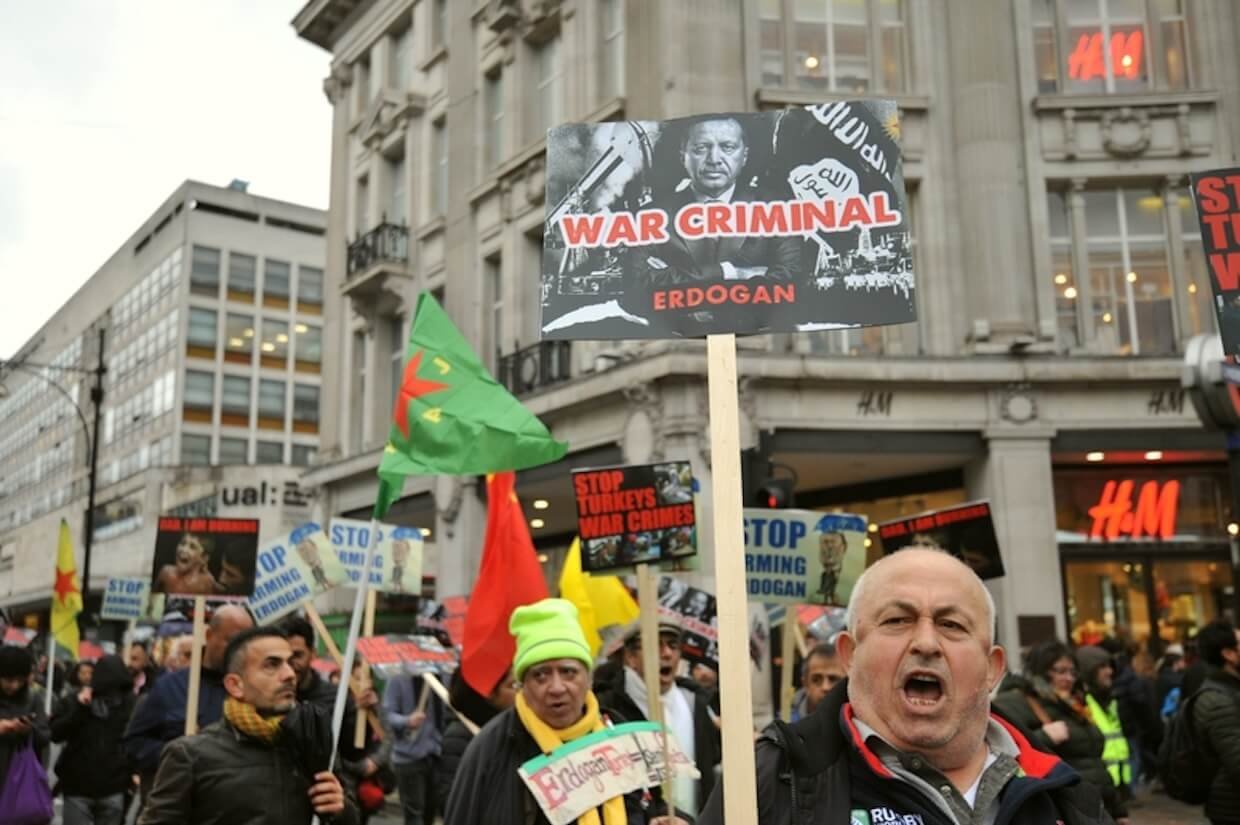
People in London protest against President Erdoğan and alleged war crimes against Syrians and Kurds following the withdrawal of U.S. troops from the area. Photo: Nicoleta Raluca Tudor / Dreamstime.

Turkey’s policy toward Rojava has been shaped by a security paradigm linking the region to the PKK, while unresolved domestic Kurdish issues — despite the ongoing so-called settlement process — reinforce threat perceptions. How might an “ethical-geopolitical repositioning,” combining security with legitimacy, alter Ankara’s strategic calculus, particularly within a political environment marked by populist securitization narratives?

Dr. Soheila Shahriari: A very interesting question. Turkey’s approach to Rojava is anchored in a securitization paradigm, viewing the region as an existential threat because of its structural and ideological link to the PKK. Domestic political imperatives reinforce this framing. The AKP uses the label of terrorism to delegitimize Kurdish political claims and consolidate support among nationalist, ultra-nationalist or jingoistic constituencies.

An ethical-geopolitical repositioning would require Ankara to move beyond this monolithic security-centered view and recognize the legitimacy of the international soft power the Rojava project has generated. This would involve deconstructing the entrenched narrative that equates Kurdish self-governance with inherent terrorism and engaging in political and security arrangements that combine oversight with recognition. But in practical terms, for a state like Turkey, shaped by populist securitization narratives and the persistence of the Sevres syndrome in the mentality and psyche not just of the Turkish state but of the Turkish populace as well, such a shift appears to me highly unlikely, unfortunately.

Nation-State Bias Limits Support for Non-State Democracy

Western, especially American engagement with Rojava has often been instrumental—most visibly during the anti-ISIS campaign—yet politically noncommittal. Does this pattern reflect structural limits of liberal internationalism when confronted with non-state democratic experiments?

Dr. Soheila Shahriari: Western, particularly American engagement with Rojava has been largely tactical and situational rather than strategic or politically committed. This shows the structural limits of liberal internationalism which remains anchored in a nation-state-centric world order and struggles to accommodate or integrate non-state actors, especially democratic experiments like Rojava.

At the same time, Western powers consistently prioritize geopolitical and economic interests over democratic or humanitarian principles. Human rights rhetoric often collapses when it conflicts with the strategic value of allies like Turkey as a NATO member. In practice, realpolitik sets aside commitment to progressive non-state actors, unfortunately.

This pattern also illuminates the broader decline of Western democracies and the rise of populist nationalist leadership. The synergy between, for example, leaders like Donald Trump and regional autocrats like Recep Tayyip Erdogan created an environment in which the law of the jungle replaces internationalist norms, highlighting that even the most progressive and resilient non-state societies like Rojava can be sacrificed very easily for the sake of authoritarian resilience and short-term realpolitik.

Abandonment Erodes Trust in Western Alliances

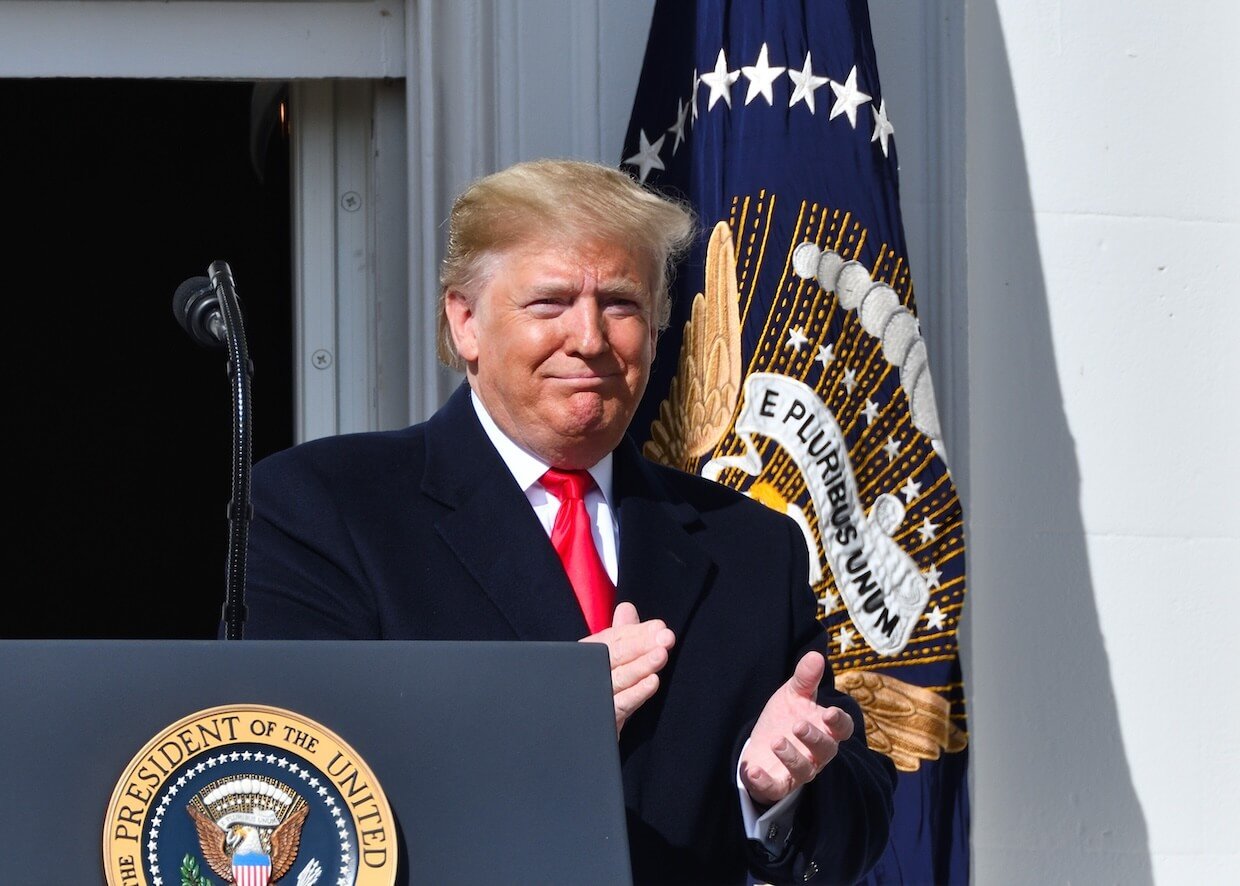
US President Donald Trump applauds from the White House balcony during a welcoming ceremony for the Washington Nationals baseball team on the South Lawn in Washington, D.C., on November 4, 2019. Photo: Evan El-Amin.

The perceived abandonment of local Kurdish forces after their decisive role in defeating ISIS — alongside growing concerns about a possible resurgence of the organization in the event of instability in northeastern Syria — has raised questions about the credibility of Western alliances. What implications might this have for future local partnerships in conflict zones?

Dr. Soheila Shahriari: The perceived abandonment of the Kurdish forces in Rojava after their decisive role in defeating ISIS raises serious questions about the credibility of Western alliances and the viability of future local partnerships in conflict zones. Such experiences highlight the transactional nature of tactical cooperation and contribute to a broader erosion of trust in Western democratic commitments.

By allowing an authoritarian and Islamist state to challenge a progressive, non-state democratic experiment, Western powers, particularly the United States and, to a lesser extent, the EU, undermine their own moral authority and global leadership. This pattern may push local actors in future conflicts to seek alternative alliances, prioritize defensive nationalism, or act independently, recognizing that even democracies cannot always be trusted or relied upon to protect human rights or progressive governance.

Diaspora Mobilization Reshapes Western Perceptions

Your research highlights diaspora activism aimed at reshaping international perceptions of Kurdish movements, including efforts to de-list the PKK as a “terrorist organization.” How influential has diaspora lobbying been in shaping Western policy debates on the Kurdish question, particularly amid rising populist politics and securitized migration debates in Europe?

Dr. Soheila Shahriari: The Rojava Revolution, and especially the Battle of Kobani, marked a turning point for the Kurdish diaspora, legitimizing transnational political engagement and reshaping Western perceptions of the Kurdish movement. Diaspora activism has intensified and diversified, with efforts to de-list the PKK as a terrorist organization becoming a central focus. While most Western governments maintain the PKK designation under pressure from Turkey, diaspora lobbying has influenced key legal and legislative debates. For example, the Belgium Court of Appeal ruled that the PKK was a party in a non-international armed conflict rather than a terrorist group.

In Sweden and Germany, Kurdish diaspora actors have leveraged parliamentary and public channels to present the Kurdish movement as a vanguard of democratization in the Middle East, advocating for formal cooperation with Rojava authorities. Yet, these efforts face structural limits, as Western states often prioritize realpolitik and Turkey’s strategic value as a NATO ally, maintaining the terrorist label despite democratic claims.

We have two examples of de-listing efforts. One of them is the Belgium Court of Appeal ruling the PKK not to be a terrorist organization. The other was a similar effort at the EU level, which initially moved toward delaying the PKK’s designation as a terrorist organization but, unfortunately, under pressure from Turkey, reinstated the label. So, there has been a clear dynamism in the post-Rojava revolution era within diaspora communities to de-list the PKK. 

Feminization Transforms Image, Alliances, and Moral Authority

To what extent has the “feminization” of Kurdish politics—symbolized by the global visibility of Kurdish women fighters and leaders—altered international legitimacy and solidarity networks compared to earlier phases of Kurdish mobilization?

Dr. Soheila Shahriari: Since the Rojava Revolution in 2012–13, the feminization of Kurdish politics has dramatically enhanced the movement’s international legitimacy and expanded its solidarity networks. Earlier phases, particularly in the 1990s and the early 2000s, were dominated by male-dominated nationalist frameworks, with the PKK largely criminalized and marginalized in Western eyes, limiting advocacy and framing Kurds primarily as security threats.

The emergence of the YPJ, the Women’s Protection Units, and their decisive role in the Battle of Kobani in late 2014 and early 2015 marked a turning point. The global visibility of Kurdish women fighters aligned Kurdish political claims with the values of gender equality, secularism, and radical democracy, making the continued terrorist designation of the PKK increasingly incoherent and nonsensical in Western public opinion. Being Kurdish is now associated with supporting progressive governance, women’s rights, and secularism, distinguishing the Kurdish movement from other Middle Eastern actors or movements.

This shift has enabled the Kurdish movement to move beyond traditional ethno-nationalist alliances and cultivate broad intersectional solidarity networks. The transition from a male-dominated nationalist movement to a gender-centered revolutionary project has positioned the Kurds as a recognized driving force for democratization in the Middle East, securing global moral authority and institutional support that were absent in earlier decades.

Self-Determination, Not Statehood, Defines the Kurdish Question

And lastly, Dr. Shahriari, looking ahead, do you foresee the Kurdish political movement evolving toward statehood, a post-state transnational network model, a renewed pursuit of territorial autonomy within existing states, or fragmentation into divergent regional trajectories shaped by Turkey, Iran, Syria, and Iraq?

Dr. Soheila Shahriari: I think it is a very good final question. What I can say is that I will not go into great detail, but the crux of the matter is that the Kurdish struggle over the past century has always centered on one fundamental issue: the right to self-determination. Everything else—the form of governance, whether federalism, autonomous self-rule, radical democracy, democratic confederalism, or full statehood of Greater Kurdistan—is epiphenomenal, or a secondary question.

The fundamental issue is the right to self-determination. These forms are largely, as I said, epiphenomenal and contingent, shaped by regional dynamics, international politics, and the balance of power at a given time. The future of the Kurdish movement will therefore be defined less by ideology and more by the practical ability to secure recognition and exercise collective rights within or across existing state frameworks.

MGP-Indonesia

Mapping Global Populism — Panel #3: Religious Populism and Radicalization in Indonesia

This panel was jointly organised by The European Center for Populism Studies (ECPS) and The Alfred Deakin Institute for Citizenship and Globalisation (ADI) .

Moderator

Dr Ihsan Yilmaz (Research Professor and Chair of Islamic Studies and Intercultural Dialogue at the Alfred Deakin Institute for Citizenship and Globalisation (ADI), Deakin University, Melbourne, Australia). 

Speakers

“Main drivers of populism in Indonesia,” by Dr Inaya Rakhmani (Director of Asia Research Centre, Universitas Indonesia).

“Radicalism, extremism and civilizationalist populism in Indonesia,” by Dr Pradana Boy Zulian (Associate Professor of Islamic Studies at the Faculty of Islamic Studies, Universitas Muhammadiyah Malang, Indonesia).

“Gender roles in Indonesia’s religious populism,” by Dr Kurniawati Hastuti Dewi (Senior Researcher at the Research Center for Politics, National Research and Innovation Agency – BRIN, Indonesia).

“Populism and foreign policy: The Indonesian case,” by Dr I Gede Wahyu Wicaksana (Senior International Relations Lecturer in the Department of International Relations Faculty of Social and Political Sciences, Universitas Airlangga, Indonesia).

SS7

ECPS Academy – Summer School 2022: “Russia’s populist discourse and its Invasion of Ukraine: Challenges for the EU” by Dr Neil Robinson

This lecture examines how populism developed from within the Russian political system under Vladimir Putin. Official populism was a response to perceived threats to the Putin regime after the 2008 economic crisis. It developed as a means of redefining legitimate political agency during the 2012 presidential election and informed the development of the Russian political system after 2012. This official populism was used to create regime supporting ideological tropes, by ‘othering’ the West and liberalism in particular. It was not, however, a means of developing an agenda for economic development. The success of official populism was therefore largely temporary in terms of social mobilization, except for a period around the annexation of Crimea in 2014. Although its political efficacy was not as total as the regime hoped Russia’s populist discourse did create discursive ‘traps’ that impelled Russia towards war against Ukraine. We will discuss these and how they will complicate relations between Russia and the West for the foreseeable future no matter what the resolution of Putin’s war in Ukraine.

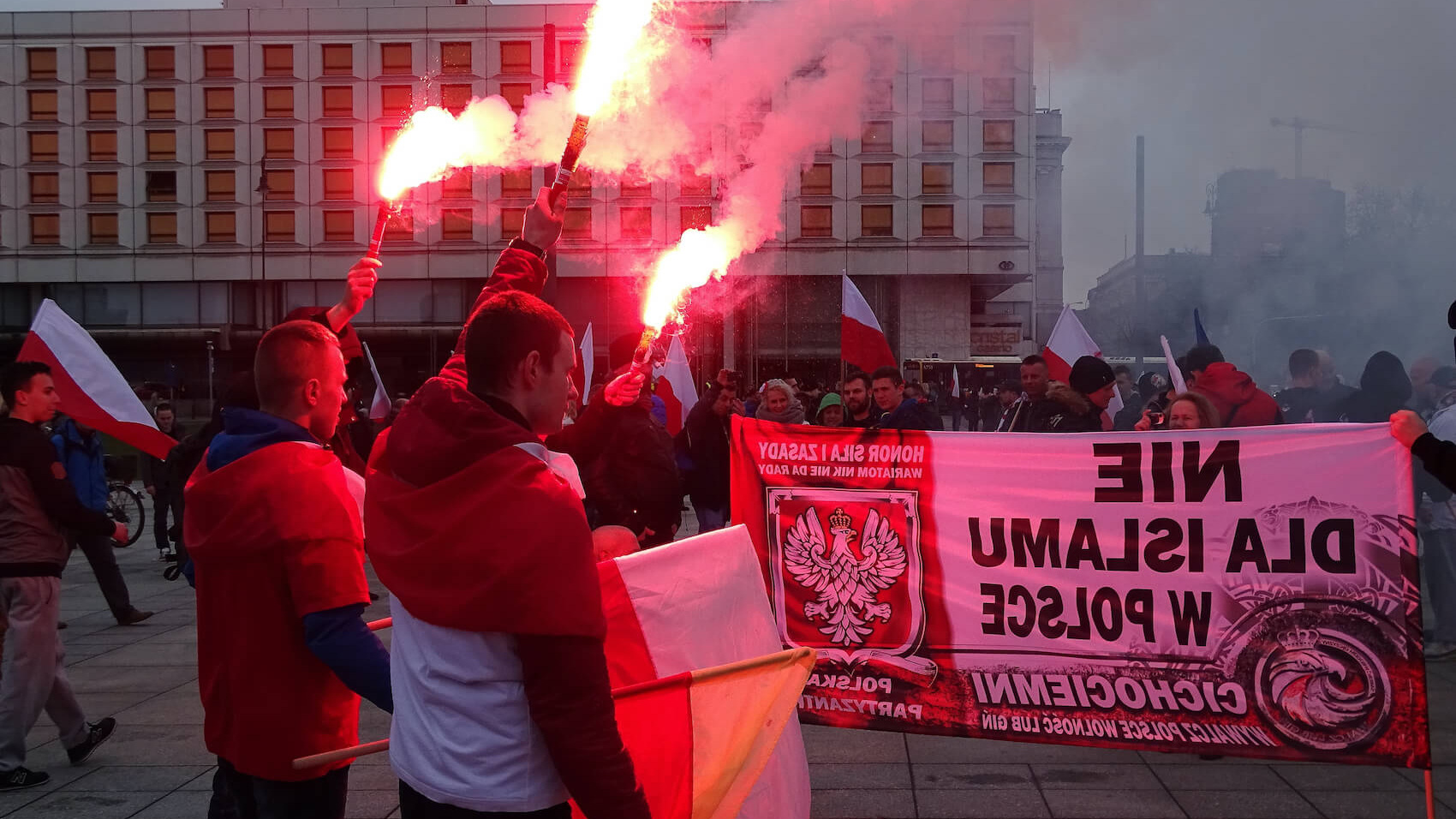
Participants of nationalist and anti-Islamic demonstration organized by far-right organisations use smoke races, hold banners in Warsaw, Poland on April 10, 2016. Photo: Wiola Wiaderek.

Mapping European Populism (ECPS Monthly Panel Series #1): Populist authoritarian tendencies in Eastern and Central Europe, and challenges to the EU (Feb.24, 2022)

Date/Time: Thursday, February 24, 2022 / 15:00-17:00 (CET)

Click here to register!

Moderator

Boguslawa Dobek-Ostrowska (Professor, the chair of the Department of Communication and Journalism, the Institute of Political Science, University of Wrocław, Poland).

Speakers

“Populism in Poland 2015-2021. A short journey from theory to praxis,” by Dominika Kasprowicz (Professor of political science, the Institute of Journalism, Media and Social Communication, Jagiellonian University, Poland).

“The Orbán regime after 12 years, before the April 2022 general elections” by Zoltan Adam (Associate Professor and Chair, Department of Economic Policy and Labour Economics, Institute of Economic and Public Policy, Corvinus University of Budapest

“Scanning the far right in Croatia and Serbia” by Vassilis Petsinis (The University of Tartu, Johan Skytte Institute of Political Studies).

“Comparison of authoritarian and populist tendencies in the Czech Republic and Slovakia” by Miroslav Mareš (Professor, the Department of Political Science, Faculty of Social Studies, Masaryk University).

Q&A Session

Click here to register!


Photo: From Netflix.

Climate Satire and Anti-science Populism in Don’t Look Up

This commentary reviews the 2021 film Don’t Look Up, an allegory about climate-crisis apathy in an imagined populist future in the USA. 

By Heidi Hart

Allegory is as tricky an art form as satire. The 2021 film Don’t Look Up, directed by Adam McKay, attempts both in its treatment of impending planetary crisis. McKay’s production company’s name, Hyperobject Industries, apparently refers to eco-philosopher Timothy Morton’s term from his 2013 book Hyperobjects: Philosophy and Ecology After the End of the World, which posits that global warming is a force too immense and strange to be easily graspable. Since 2013, that “hyperobject” has come all too close to home for humans faced with record heat waves, wildfires, monster storms, and floods, even in the most unlikely places. If the recent COP26 Summit on climate change is any indication of the future, governmental inertia will continue to prevent the broad, deep changes necessary to unhook wealthy nations from dependence on fossil fuels. The planet may well be as doomed as Don’t Look Up declares it is, though from a different (hence the allegory) threat. 

Photo: From Netflix

The film’s chirpy aesthetic (retro 1960s titles, upbeat dance music, onscreen memes) belies its serious theme, announcing satire as if this were not obvious enough. In the not-too-distant future, a couple of scrappy astronomers from an average state university (Leonardo DiCaprio and Jennifer Lawrence) discover a comet on a collision course with Earth. When they finally get the attention of the Trump-blonde-style US President (Meryl Streep), she and her wisecracking Chief of Staff son (Jonah Hill) dismiss the crisis until a steamier political scandal calls for a distraction. The astronomers appear on a shallow Fox News-ish talk show, and, predictably, DiCaprio’s character is rewarded with “sexy” status while Lawrence’s explosion of grief and anger leads to a cascade of “crazy lady” memes. President Orlean stages an aircraft-carrier press announcement, à la George W. Bush, of a Pentagon-backed plan to nuke the comet before it strikes. 

When that mission fails, enter a slightly spacey Steve Jobs type (Mark Rylance), who – without bothering with the inconveniences of peer review – breezes in and excites Madame President with a whole new plan to mine the comet for valuable resources before exploding it. Randall Mindy, DiCaprio’s character, wins brief fame and a fling with “Fox blonde” talk-show host Brie Eventee (Cate Blanchett). Meanwhile, the disenchanted Ph.D. candidate who discovered the comet in the first place, Kate Dibiasky (Lawrence), drifts into the baggy counterculture world of Yule (Dune star Timothée Chalamet). As the comet speeds ever closer, threatening tsunamis and volcanic eruptions, an already split USA breaks into irreparable halves, with “Just look up!” memes battling “Don’t look up!” rallies featuring the President in a MAGA-style baseball cap. Distrust of science and faith in the quick tech fix meet in a populist frenzy. When the mine-and-explode plan fails, too, last concerts- and dinners-on-Earth ensue. I won’t give the ending all away, but it does send bits of phones and photographs drifting into the cosmos. The film’s post-credit epilogue is a darkly comic take on billionaire space tourism (enough said here as well).

Maybe it’s just my age as a too-earnest Gen Xer, but the film’s meme-based satire and too-obvious allegory trivialize a genuinely terrifying future, instead of destabilizing comfortable assumptions, as satire does when it works well. As an example, Daniel Dencik’s 2013 Expedition to the End of the World works as almost-mockumentary about a group of researchers and artists sailing to Greenland to witness its melting ice. Like Don’t Look Up, it features soundtrack music suddenly interrupted, but in an oddly uncomfortable, not gimmicky, way. Random conversations about spiders and microbes unsettle black-and-white ideas of what humans can know about threatened ecosystems. Genre ambiguity (is this satire or not?) fosters curious criticality in viewers, instead of cementing already entrenched political differences, as Don’t Look Up does in its heavy-handed treatment of American populism. 

Another example of humor used effectively in environmental film is Benedict Erlingsson’s Woman at War (also 2013). This film features an Icelandic eco-warrior who also happens to be a choir director, leading her community in songs about national pride and thus complicating the environmental/populist binary. A band of musicians (who may or may not be visible to her) pops up on hillsides, in her flat, and at the airport, echoing Icelandic outdoor music practices and adding an element of estrangement as well. The protagonist’s difficult decision to adopt an orphan in Ukraine complicates the drama further, showing the challenges activists face in caring for the planet and its human occupants. Ultimately the film’s surprise, humor, and ambiguity foster energy rather than despair in the face of climate crisis. 

Don’t Look Up is one of many films imagining an impact event on Earth. Most do not relate to climate change directly but hold implications for the current planetary crisis. Bille August’s Smilla’s Sense of Snow (1997) imagines deadly microbes deposited by a meteorite in Greenland’s ice, which now, in real life, is thawing at a rapid pace and releasing long-dormant and potentially dangerous bacterial archives. Lars von Trier’s rhapsodic disaster film Melancholia (2011) juxtaposes a rogue planet’s impending impact with the beauty, cruelty, and banality of life on a wealthy family’s estate; the film’s feverish slowness, set to orchestral music from Wagner’s Tristan and Isolde, foreshadows the strangeness of time’s passing in our current age of pandemic and collapsing ecosystems. More recently, Alex Garland’s Annihilation (2018) alters Jeff VanderMeer’s book of the same title by framing interspecies genetic mutations in the eerie “Area X” as the result of a meteor strike. Though VanderMeer did not set out to write a climate-crisis novel (Woodbury, 2016), his “new weird” Southern Reach trilogy reflects dark ecology anxieties and aesthetics. None of these films is satirical, and none takes on the political divides that Don’t Look Up sends up, but all three show how planetary dread is easier to narrate and digest if it concerns a crisis humans have not caused. 

This distinction brings us, naturally, to the film often mentioned as a forerunner of Don’t Look Up: Stanley Kubrick’s iconic 1964 Dr. Strangelove. That film, with its subtitle How I Learned to Stop Worrying and Love the Bomb, is also satire about impending planetary doom, but it works in a far more terrifying way than Don’t Look Up, for three important reasons. First, it brings seriousness and humor into such close contact (lines like “You can’t fight in here! It’s the War Room!” amid heavy discussions of US military policy against pre-emptive strikes) that viewers need to bring their own critical curiosity to the giant table in the Pentagon. Second, war film conventions in the B-52 scenes (profile close-ups, relentless repetition of “When Johnny Comes Marching Home”) make the pilot’s gung-ho cowboy bravado all the more painful to watch today, as it comes close to truth in this age of endless wars and the populist-militarist January 6 insurrection. Third, Dr. Strangelove does not imagine a random object from space colliding with Earth; human arrogance is what unleashes the ultimate nuclear disaster, via one rogue pre-emptive strike that automatically triggers the Soviet “Doomsday Machine.” 

Photo: From Netflix.


Watching Dr. Strangelove again for the first time in ten years, now that human-caused climate crisis is pressingly upon us, I found the ending more moving than I’d remembered. The soundtrack’s counterpoint in the final scene (mushroom cloud after blinding mushroom cloud, to the tune of “We’ll Meet Again” in Vera Lynn’s warm voice) served its painfully satirical purpose, unlike the glib ending of Don’t Look Up, with Earthly debris scattering in space to the tune of Bon Iver’s breathy pop song “Second Nature.” In both cases, music is meant to work against the images onscreen, as has become a film convention since its first uses as a distancing technique (Adorno and Eisler, 1947), but to very different effects. I would rather feel the shock and sadness of humans’ destruction of our home than be mildly entertained by an imaginary comet and political caricatures. Too much is at stake in this age of ideological and environmental menace for satire to fall short. 

References

Adorno, Theodor and Hanns Eisler. (1947/2010). Composing for the Films. Continuum.

Morton, Timothy. (2013). Hyperobjects: Philosophy and Ecology After the End of the World. University of Minnesota Press.


Parade Tauhid or Parade of Tawheed, muslim marched from central stadium to the central city of Jakarta and back. Muhammad Riziq Shihab was giving oration in Jakarta, Indonesia on August 17 2015. Photo: Riana Ambarsari

Populism, Violence, and Vigilantism in Indonesia: Rizieq Shihab and His Far-Right Islamist Populism

Yilmaz, Ihsan & Barton, Greg. (2021). “Populism, Violence, and Vigilantism in Indonesia: Rizieq Shihab and His Far-Right Islamist Populism.” ECPS Leader Profiles. European Center for Populism Studies (ECPS). May 14, 2021. https://doi.org/10.55271/lp0009


Muhammad Rizieq Shihab has been one of the most well-known faces of the far-right in Indonesia since the late 1990s. As a radical Islamist scholar with links to Saudi Arabia, Shihab has spent the last three decades as an anti-state voice of the “pious Muslim majority” in Indonesia. He claims to position himself as a “righteous” and “fearless” leader who is dedicated to defending Islam—the faith of “the people.” In 2020 Shihab was arrested for holding large public gatherings, as part of his ‘moral revolution’ campaign, in the middle of pandemic lockdowns. However, his radical Salafist message continues to inspire thousands to action.

By Ihsan Yilmaz & Greg Barton*

Muhammad Rizieq Shihab—more commonly known as Habib Rizieq—is one of the most well-known faces of the far-right in Indonesia. He has been a permanent fixture in Indonesian popular culture since the late 1990s but drew international media coverage in late 2016 and early 2017, where he spearheaded mass protests intended to derail the election campaign of Basuki Tjahaja Purnama (widely known by his nickname “Ahok”), the ethnic-Chinese, Christian governor of Jakarta. Billed as “Protests to defend the Qur’an,” they were more widely known as the “2/12 protests” because the largest of the protests, which saw over 500,000 people flood the center of the national capital, was held on 2 December 2016.

In 2020, Shihab again made headlines when he was arrested for holding large public gatherings, as part of his “moral revolution” campaign, in the middle of COVID-19 pandemic lockdowns. As a radical Islamist scholar with links to Saudi Arabia, Shihab has spent the last three decades as an anti-state voice of the “pious Muslim majority” in Indonesia. He claims to position himself as a “righteous” and “fearless” leader who is dedicated to defending Islam—the faith of “the people.”

The Roots of Shihab’s Islamist Ideology

One of the most important political developments of the twentieth century for Muslim majority populations across the world was the fall of the Ottoman Empire (Gubbay, 2000; Lewis, 1980). The decline of this vast empire, as with other great empires, occurred incrementally. It entered a nearly two-century-long twilight phase before it was broken up following its decisive defeat in the First World War (Gubbay, 2000; Lewis, 1980). The majority of Sunni Muslims across the world traditionally saw the Ottoman Empire as representing a modern continuation of the Muslim caliphate, which started with the leadership of Prophet Muhammad.

When the symbolic figurehead of the Sunni Muslim world suddenly ceased to exist, the gap was soon fulfilled by the relatively new leadership of the Saud family who became the rulers of modern-day Saudi Arabia (Dillon, 2009; Gubbay, 2000; Lewis, 1980). The kingdom had itself been part of the Ottoman Empire. Saudi Arabia hosts two of the holiest cities in the Islamic faith, Mecca and Medina, to which Muslim pilgrims pay annual visits in the form of Haj or umrah.

Saudi Arabia’s symbolic significance derives from it being the home of the two holy cities and custodian of the Kabah. While the Ottomans were, like the Saudis, followers of Sunni Islam, they adhered to the teachings of Imam Abu Hanifa. Thus, the Ottomans followed the Hanafi school of thought, and in approaching the Qur’an, the sunnah and the hadithsought to understand Islam using the methods of ijma (consensus) and qiyas (deduction from analogy) (Baer, Makdisi, and Shryock, 2009; Gawrych, 1983). This idea of interpretation using deduction and consensus has made the Hanafi school more flexible and open to adaptation to the changing times than the Hanbali school followed in Saudi Arabia.

In addition to the Hanafi influence, the societies of the Ottoman Empire were also influenced by thousands of Sufi teachers, writers, and mystics (Baer, Makdisi, & Shryock, 2009; Gawrych, 1983). The Sufi approach to Islam believes in establishing a direct connection between the higher power and the individual and does not solely rely on sacred texts and religious rituals to build this connection (Baer, Makdisi, & Shryock, 2009; Gawrych, 1983). Hanafi approaches to interpretation and the influences of Sufi thought and practice combined to make the religious culture of the Ottoman Empire generally open and tolerant. There were a great variety of sects and Islamic traditions welcomed in the empire. Still, there were also many opportunities for non-Muslims to play important functional roles, not just in society but also in administrative affairs.

In contrast with Ottoman society’s pluralistic and flexible practices, the Al Saud dynasty took a narrower and more rigid approach as followers of the literalist new school of Sunni thought established by Muhammad ibn Abd al-Wahhab. In the eighteenth century, Muhammad bin Saud, the founder of the Al Saud dynasty, joined forces with Muhammad ibn Abd al-Wahhab. The former accepted the latter’s ideology and approach to religious life in exchange for al-Wahhab’s endorsement of the legitimacy of the Al Saud leadership. The Wahhabi movement, or Salafi school of thought, is markedly more stringent than the schools of thought that came before it as it was formed as a “reformist” movement to “purify” Islam from what is thought of as “additional” rituals (Dillon, 2009).

Over the years, Salafi hardliners have propagated the idea that it is only through their legalistic approach that true adherence to the Islamic ideal of monotheistic worship is possible. The Salafi take a negative and, at times, hostile attitude and behavior toward the various sub-sects of Sunni Islam and toward Shia Muslims and non-Muslims (Dillon, 2009). Since the mid-twentieth century, Saudi Arabia has been able to spread its brand of Islam through its petrodollar wealth generated from the fossil fuel industry. Leveraging the cultural capital of its guardianship of the sacred sites and drawing liberally on its financial capital to disseminate its ideology by financing various educational organizations, Saudi Arabia has tried to influence Muslim-majority countries such as Pakistan, Indonesia, Bangladesh, Afghanistan, and Egypt to accept Arab culture and Salafi Wahabism as being essential to authentic expressions of Islam.

In this endeavor, education represents an essential vehicle for propagation. Funding of madrasa (religious schools) and even universities—such as the International Islamic Universities—through the Organisation of Islamic Cooperation (OIC) and sponsoring scholarships for students from Muslim countries to gain religious education at King Saud University constitute key elements of Saudi influence (Junior, 2017; Ghoshal, 2010).

In observing the presence of Saudi influence in Asia, Ghoshal (2010) comments, “this process of homogenization and regimentation—a process I would like to call the ‘Arabization’ of Islam—puts greater emphasis on rituals and codes of conduct than on substance, through the Wahhabi and Salafi creeds, a rigidly puritanical branch of Islam exported from, and subsidized by, the Kingdom of Saudi Arabia.” As a result, in Asia, Muslim-majority countries have witnessed growing radicalization since the 1980s. Various leaders trained at Saudi-funded and affiliated institutions have continued to spread the hardline narrative of Wahhabism (Freeman, Ellena & Kator-Mubarez, 2021; Benjamin, 2016).

Indonesia

Indonesia’s Salafist Protégé

As one of the most well-known faces of the far-right in Indonesia, Muhammad Rizieq Shihab positions himself as a “righteous” and “fearless” leader who is dedicated to defending Islam—the faith of “the people.” In this quest, he formed the Front Pembela Islam (FPI) in 1998 (Jahroni, 2004). Shihab has used his knowledge of sharia law to declare himself the “grand imam” of Indonesia, dressed in symbolic white—a “pure” color in Islam—with either a green turban (reflecting the color of the shrine of Muhammad) or white turban to symbolize the “purity” and “truth” of his message. While assuming an anti-state approach, Shihab has nevertheless acted as a lobbyist for mainstream right-wing populist parties by swaying voters their way.

In the typical manner of a populist leader, Shihab seeks a direct connection with “the people.” Not only does he use his fluent Arabic and standard religious rhetoric to incite intense emotions in the crowd, but he also draws upon his origin story of “humble beginnings” to relate to his audience. The wearing of plain clothes, the use of “crude” or simplistic language, and the cracking of jokes at rallies while talking about the “evils” that plague the Muslims of the world are his populist hallmarks (Maulia, 2020). Like other populist leaders, Shihab channels the “common person” persona to successfully position himself against the “corrupt elite” with the underlying assumption that “the elite” cannot relate to, and thus do not care about, “the people” (Yilmaz, 2021a; McDonnell & Ondelli, 2020; Nai & Coma, 2019). When Narendra Modi, for example, takes pride in his humble beginnings as a chai wala (tea stall owner) or when Recep Tayyip Erdogan calls himself a “Black Turk” (Yilmaz, 2021b) to relate with the conservative and historically disenfranchised Muslims of small Anatolian towns, both are relating to the “common people” by identifying themselves as being an approachable and relatable leader in contrast to “the elite” and “corrupt” who do not speak, dress, behave and at times look the same way as “the people.”

Rizieq Shihab lost his father as a child and was raised in modest circumstances by his widowed young mother. He gained his school degree at the Salafist Lembaga Ilmu Pengetahuan Islam dan Bahasa Arab (LIPIA), which is one of a chain of Islamic schools funded by Saudi Arabia in Indonesia (Varagur, 2020). At LIPIA, Shihab was exposed to “true Islamic teachings” mixed with state curriculum guidelines. Varagur’s (2020) investigation into Saudi influence in Indonesia revealed that LIPIA uses a blended curriculum employing Wahhabi ideology and the social ideas of “Muslim Brotherhood-oriented political thinkers.” Consequently, LIPIA produces both Salafi teachers and Islamist social leaders. Like Shihab, many other figures have emerged from this milieu as Islamist leaders occupying prominent roles in domestic politics, such as Hidayat Nur Wahid, the leader of the Prosperous Justice Party (PKS), aligned with the Egyptian Muslim Brotherhood (Varagur, 2020).

Being well-versed in Arabic texts and Salafi teaching, it was not hard for Shihab to earn a scholarship at the King Saud University in Saudi Arabia, where he continued his studies of sharia and Islam. Following his studies, he spent some time teaching in Saudi Arabia and later in Indonesia at Salafi educational institutes (Jahroni, 2004). As a popular preacher in the field of tableeg (spreading the religion), Shihab was a fixture in various Jakarta suburbs at Majelis Ta’lim (religious lectures) (Rijal, 2020; Woodward, 2012). Via these gatherings, Shihab built his social capital with the locals as a spiritual mentor who was imparting the “right” version of Islam to them. His involvement in Majelis Ta’lim was one of his first opportunities to interact with people outside the school setting to whom he could preach Salafism.

Given the conditions on Java, a densely populated island with wide disparities in wealth and endemic urban poverty, the Islamic ideals of equity and justice preached by popular figures like Shihab have great appeal for the disenfranchised. Yilmaz, Morieson, and Demir (2021) have pointed out that the use of “social justice” by populist Islamist leaders to call out the failure of government is an important theme. Using this notion, Shihab entered Jakarta’s politics with one foot in the door with the help of popular Islamic preaching in the 1990s. He made effective use of Salafi idealism to address what conventional and “Western” forms of democracy had failed to deliver for the Indonesian people.

Post-Suharto, as Indonesia returned to democracy in 1998, a plethora of new religious and conservative parties seized the opportunity to campaign and participate in elections. This led to a rise in religious groups forming parties and registering them, including the FPI (Hadiz, 2016). As a counter to growing student-led civil unrest against the regime, right-wing parties were also promoted by the state to counter the protesters on the streets (Hadiz, 2016: 154). With democratic freedoms and encouragement by the state, Indonesia soon saw a marked rise in right-wing parties, of which the FPI was one.

Before 1998, Shihab had a limited audience for his religious lectures. But new political freedoms gave him a chance to use FPI as a populist Islamist party to spread its Salafism to a much wider audience. FPI preaching drew heavily on Salafi romanticization of jihad, which “tend[s] to emphasize the military exploits of the Salaf (the early generations of Muslims) to give their violence an even more immediate divine imperative” (Hamid & Dar, 2016). As a result, FPI, under the leadership of Shihab, carried out frequent acts of vigilantism under the banner of a “moral jihad” against “the Other” (Woodward, 2012; Jahroni, 2004).

The mass action ‘’Jogja Bergerak untuk Keadilan dan HAM” demands the release of Rizieq Shihab and the investigation of the shooting case of the FPI army in Yogyakarta, Indonesia on December 18, 2020. Photo: Hariyanto Surbakti

Shihab’s Call for Vigilantism

Who constitutes this “Other,” one might ask? From Shihab’s perspective, “the Other” is not only limited to the political elite of the country. He has constantly categorized liberal Muslims, non-Muslims, and Western countries as “enemies.” They are seen as being antagonists of the faith, and their actions are said to constantly endanger Islam at home and across the world. Firmly believing in the call for action, Shihab has called out his followers to pick up arms against “the others.” Thus, a core part of FPI’s activities has been vigilantism.

Hardline Islamism has been used to spew hatred to those who are seen as the “outsiders.” Shihab has used his “anti-establishment agenda” to incite people to take up arms (Mietzner, 2018). His narrative hinges on inciting “fear” among his followers. Given the correlated nature of faith and identity, when the followers perceive a threat to their faith, they feel an ontological crisis looming above their heads. Using this vulnerability by inciting fear and feelings of victimhood as part of the oppressed Muslim ummah, the “faithful” are guided to solutions. In Shihab’s case, the narrative is that Indonesian politicians are either mere puppets of the Western powers or are simply incompetent. Thus, to save oneself in this life and the life after, the believer must take action. Since the formation of FPI in 1998, numerous members have been arrested and charged with spreading terror by vandalism (Facal, 2019; Ricklefs, 2012; Jahroni, 2004).

By placing the Qur’an (in line with Wahabi thinking) above the state and the democratically elected government, the FPI has urged its militia members to continue their actions against “the Other” on the ground that it is necessary to bring sharia to Indonesia (Mietzner, 2018; Hadiz, 2016: 112; Wilson, 2015). Hadiz (2016: 112) argues that “[The FPI is] believed to be involved in criminal activity, including racketeering, even as they ardently oppose the presence of ‘dens of vice’ such as nightclubs, pubs and massage parlours.” Shihab has raised a private army of volunteers. The Islamic Defenders Front Militia/Front Pembela Islam or Laskar Pembela Islam (LPI) is the militant wing of Shihab’s group, which puts its ideology into action. They are unlike terrorist groups in the sense that they do not use sophisticated weapons to terrorize citizens at various “hot spots” such as nightclubs. However, they believe in the same ideology that “un-Islamic” behavior is threatening Islam and the future of the ummah, and thus action needs to be taken.

Over the years, Shihab has been able to design and organize the LPI militia in a highly systematic manner, with individuals leading paramilitary cells of various sizes just like an army. These are volunteer citizens who dress in paramilitary garb and use their sticks, batons, and shouts of “Allahu Akbar” to terrorize and attack those seen as “Other.” The members of the LPI are called “Jundi.” Jundi fighters are organized into ranks, with superior officers responsible for anywhere between 25 and 25,000 vigilantes (Jahroni, 2004). Within this militia, the overarching leader is the Imam Besar (“grand imam”)—namely, Shihab himself—who is the “spiritual guide” for all the actions of the vigilantes (Jahroni, 2004).

The LPI is also known to welcome non-militia members of FPI, such as the volunteers, while purging “hotspots” in the city (Facal, 2019). Sito (2019: 191) notes how Shihab has legitimized violence as the answer to problems faced by Muslims as he “stated that such businesses [i.e., hotspots of vice] ensure only social deviance which are the product of Western secularism (sekularisme), pluralism (pluralisme), and liberalism (liberalisme), shortened as “sepilis.” The acronym is a homophone of syphilis, which is intended to mock and draw an equivalency between sexually transmitted diseases and Western culture and capitalism, pegged as the culprit of the economic crisis in 1997 and 1998. Accordingly, over the years, the FPI has claimed that such vigilantism is an expected outcome of upholding the Muslim duty to “promote good and prevent evil.”

The militant activities of the FPI have been highly visible ever since its inception. In 1998 various members of its groups were involved in a clash between the ethnic Chinese residents of Ketapang that lead to the death of over a dozen of ethnically Chinese Indonesian Catholics (Bouma, Ling & Pratt, 2009). Attacks on nightspots, bars, clubs, and suspected LGBTQ+ events have become a hallmark of the group. While the group was banned recently due to its terror sprees, its activities have been able to continue because of the support it has received from law enforcement agencies.

While Indonesia might seem like a peaceful country on the surface, it has long been struggling with reactionary religious forces. In election campaigns, radical Islamism has become an important factor, and public perceptions about modesty, norms, and values are primarily driven by those claiming to act in the name of Islam. Within this context, Shihab has been able to build an alliance with the state security forces (including the police), who are also proactive in their crackdowns on “deviant” groups such as the LGBTQ+ and Ahmadiyya communities. The FPI has been known to carry out the “dirty work” by attacking these groups and, at times, acting as informants about their activities for the police. This symbiotic relationship has allowed both these groups to benefit (Amal, 2020: 585; Budiari, 2016).

The group targets “the Other” to ensure “the purity” of religion remains intact for “the people.” The police get to work to covertly appease politicians, who feel pressure to persecute “deviant” groups who “defy” religion. For its part, the members of the FPI have the opportunity to channel negative feelings—instilled through the preaching of Islamist populist leaders such as Shihab via a trauma-inducing narrative—into a physical manifestation of rage against “the Other” (Amal, 2020: 585; Budiari, 2016).

Due to the intensity of the violence associated with LPI activities, the group’s leaders and street militia members have been repeatedly arrested and imprisoned for threatening the country’s unity and law and order. Rizieq Shihab has twice served time for hate speech inciting LPI members to attack tourist spots or target non-Muslim and Ahmadiyya groups and villages (Jahroni, 2004: 218). While some politicians initially valued the LPI and FPI as useful counters to civil rights protests, these vigilantes have become harder to control and have used their street power to challenge the state (Facal, 2019; Juoro, 2019: 28; Mietzner, 2018; Hookway, 2017).

While Shihab’s Salafist call for jihad has not resulted in the FPI becoming a true violent extremist group in Indonesia, it has seen its members turn to transnational populist jihad. Shihab has convinced his followers that they are not only Indonesian citizens but also part of the global ummah of Muslims and, thus, have a collective obligation to pursue global jihad against “the Western lobby” and “the Zionists” (Nuryanti, 2021; Mietzner, 2018; Hadiz, 2016).

Shihab effectively uses victimhood narratives anchored to nationalism and a faith-based identity that transcends geographical bounds. In this way, the Salafi training that thousands receive in Indonesia makes them prone to become part of the global jihad effort (Adiwilaga, Mustofa & Rahman, 2019). This has become a very dangerous idea as today the world is more connected than ever, and jihadist groups rely upon these ideas to recruit young people (Adiwilaga, Mustofa & Rahman, 2019). In Shihab’s speeches, the “evils” and “cruelty” of the Zionists against the Palestinians is a re-occurring theme that not only talks about the plight of the Palestinians but also politicizes it an attack on every Muslim and the Islamic faith itself. There are clear indications that many have passed through the ranks of the FPI to go on to violent extremist groups such as Al Qaeda and ISIS (MEI@75, 2021; Idris, 2018: 9).

Members of The Islamic Defenders Front or Front Pembela Islam (FPI) rally in front of Indonesia election supervisory agency (Bawaslu) in Jakarta on May 10, 2019.

The FPI a Surrogate Welfare System

The FPI is not merely a vigilante group. The organization has established extensive networks of humanitarian aid providing relief in cases of natural disasters and assistance to the urban/suburban poor of Jakarta (Singh, 2020; Facal, 2019; Sheany, 2018). Services include education and ration packets for the poor. Shihab himself was groomed for his role in a welfarist madrasa setting, winning scholarships as he progressed from one stage of his education to the next.

Keeping this model in view, Shihab has helped the FPI develop many religious schools where children gain an Islamic education and some Arabic training as well. These schools are usually built in impoverished areas where the state has failed to reach out and address the most pressing needs of the people (Facal, 2019). The schools established by Shihab and the FPI leadership follow Salafi Wahabi teaching, which is reflected in gender segregation, strict adherence to dress codes, and other “sharia principles” (Facal, 2019). When public schools are too far from local villages or suburban homes, the proximity of the FPI madrasa gives those who would not otherwise be able to afford it a chance to educate their children. However, these seemingly altruistic establishments are places where young minds are shaped and influenced by the ideology propagated by Shihab and the FPI at large.

Aid work has been a rich field of opportunity for the FPI to extend its influence and build its credibility. Shihab’s popularity and his Saudi connections along with local supporters have allowed the FPI to establish grassroots networks of volunteers to carry out aid work that ranges from evacuating residents from flood-stricken areas to rebuilding homes, such as after the 2004 tsunami that killed hundreds of thousands in the Indonesian province of Aceh. Much of the humanitarian work was not done by the military nor the state in the immediate aftermath or long-term recovery (Sheany, 2018). One report noted that in mid-February 2004, only the TNI (the Indonesian armed forces), the Mujahedeen Council, and the FPI were the only ones actively involved in the region: “One should note that at the time the volunteers who had been working in the immediate period were already exhausted. Thus, the [aforementioned parties] seem to be the ones who work when nobody else wants to. Whereas at the initial stages, it really was not [the military] who managed the corpses’ evacuation and took care of the sick and injured” (East West Center, 2005: 33). Thus, it is clear that over time, the FPI has created a synergetic relationship at the grassroots within members and communities by providing welfare services (Hookway, 2017).

When the state fails to cope with pressing social and economic issues, populist actors can effectively use dissent and direct it at political leadership. Since the FPI has been seen carrying out “altruistic” actions in the most vulnerable communities, it can draw support from there and establish its stronghold in the vacuum left by a weak state. Thus, Shihab’s rhetoric has repeatedly talked about how the ulama are targeted by an “amoral” government. Therefore, the state’s refusal to “repent” for its sins leaves “the people” with no choice but to carry out its own jihad to guarantee its welfare both in this world and the hereafter (Maulia, 2020; Lembaga Survei Indonesia & Wahid Institute, 2016). With a loyal support base of followers, Shihab’s self-proclaimed mission of establishing a “caliphate” or a Daulah Islam is strengthened where “the people” can practice their true faith (Salafism) “freely.” The political “elite” and “minorities” are accorded little or no room in this idolized caliphate (Campbell, 2017; Hookway, 2017).

More than 200,000 Muslim protesters has descended on Jakarta to demand the governor of Jakarta, Basuki Tjahaja Purnama or Ahok, be arrested for insulting Islam on November 4, 2016.

Shihab’s Targeting of Ahok in Political Lobbying

After Shihab’s first arrest leading to jail time in 2003, he stepped back and restyled himself, becoming a member of the FPI’s board. In 2013, he declared himself the “grand imam” of the organization. He took a less active role in leading protests but remained, as always, the face of the organization. The anti-Ahok protests showcased his charisma and power, reminding many of why the FPI remained a potential threat to the political elite of Indonesia.

Even before the protests broke out in 2016, signs of the potentially significant political power of the FPI and other right-wing political players were present. Stoking “fear” and using the rhetoric of hate while attributing the markers of moral superiority and victimhood to “the pure people,” groups and leaders such as Shihab have been able to influence the writing and implementation of legislation in key areas, particular at the local level. Hookway (2017) has noted how the FPI has been able to develop social capital through its “morally driven” vigilantism and community-based activities: “In recent years, lobbying groups such as the Islamic Defenders Front (FPI) have helped introduce more than 400 Shariah-inspired laws, including those that penalize adultery, force women to wear headscarves and restrict them from going out at night” (Hookway, 2017). Sharia-inspired legislation has been passed in FPI strongholds, where its presence has been deeply entrenched with the community (Hookway, 2017).

In terms of mainstream politics, the FPI on its own never possessed a voter bank large enough to win a significant place in the parliament. With Shihab’s Islamist political rhetoric, however, right-wing politicians saw a ready resource for mobilizing support on the street in the form of the FPI. Shihab has long been active in mainstream politics, and the plethora of banners and posters in communities where the FPI is deeply attached showcases support for the leader and his allies. The FPI has supported the populist politician Prabowo Subianto since 2014, and this relationship only grew in intensity following the Ahok protests in 2016.

Ahok was the Christian-Chinese deputy governor and righthand man to Joko Widodo (Jokowi) when he was governor of Jakarta. When Widodo became president, Ahok replaced him as governor. Ahok’s very positive public image made him a well-liked figure, and after the 2014 victory of Jokowi, it was speculated that Ahok would be his running mate in the 2019 elections and even a possible presidential candidate for the 2024 general elections (Mietzner, 2018: 270). But before the formal announcement of Jokowi’s running mate in 2016, Ahok became embroiled in a religious scandal that targeted his religious and ethnic background. He was accused of committing blasphemy when he criticized his opponents for their politicized misuse of Quranic verses against him (Nuryanti, 2021; Amal, 2020; Adiwilaga, Mustofa & Rahman, 2019; Fossati & Mietzner, 2019; Mietzner, 2018).

A heavily edited campaign video in which Ahok made critical comments alongside discussion of the Qur’an surfaced in 2016, and he became an instant target of attack. He was charged with blasphemy, found guilty, and sent to jail, meaning he can never hold public office again (Nuryanti, 2021). While Jokowi is a pluralist, he remained largely silent and distant during Ahok’s trial and, at the end in 2019, chose a conservative Muslim running mate in the form of Ma’aruf Amin, the chair of the influential Ulama Council of Indonesia (Majelis Ulama Indonesia, MUI) (Yilmaz, 2020).

After the viral spread of the Ahok video, the MUI issued a fatwa urging the government to look into the matter as they responded to public sentiment that Ahok had committed blasphemy and harmed the sentiments of the majority of Indonesian Muslims (Nuryanti, 2021; Amal, 2020; Mietzner, 2018). Ahok’s public apology following the video’s surfacing and blasphemy accusations did little to satisfy the hardliners who were now able to not only attract conservative masses but even moderate Muslims (Nuryanti, 2021).

The Action to Defend Islam (Aksi Bela Islam) demonstrations were country-wide protests and sit-ins by the FPI and other right-wing parties and organizations that called for Ahok’s resignation as the governor and immediate prosecution (Fealy, 2016). Ethnic Chinese business people and other members of the elite were a constant target of the FPI even before the Ahok video surfaced. The xenophobic line of attack taken by Islamist populists like Shihab had turned this group into “the Other,” based on differences of faith and ethnicity. Given Indonesia’s past, Shihab had instilled fear in the electorate by claiming that were national leaders selected from among the ethnic Chinese community, communism would be re-imposed in Indonesia (Seto, 2019).

Even as early as 1999, the FPI had printed banners and hung them across university campuses warning students, “Alert! Zionism and Communism penetrate all aspects of life!” (Seto, 2019). Shihab was able to forge strong alliances with opposition parties and right-wing groups as the FPI became the face of the anti-Ahok movement. By making the issue about “defending Islam,” he was able to evoke deep emotion among crowds. Shihab began to describe himself as “the Great Leader of Indonesian Muslims,” proclaiming a theologically grounded authority to voice the people’s desire for a devout life and the removal of Islam’s enemies (Fossati & Mietzner, 2019: 774). Shihab’s religious populism has thus deployed Islam as a tool to further his agenda and place in the political arena, mobilizing millions to march in support of the movement (Fealy, 2016; Hutton, 2018).

Rizieq Shihab’s loud proclamations that the people had been “hurt” and that religion was “insulted” cast him as a defender of Islam in the eyes of many who supported the marches. In 2017, Ahok, once popular and riding high, lost his re-election bid and subsequently served time in prison. The FPI actively supported a rival candidate for governor of Jakarta. While the protests were able to create an “asymmetric multi-class alliance” between the FPI, religious groups, and the opposition, they failed to secure a majority in the 2019 parliamentary and presidential elections. Nevertheless, the current mood points to the likelihood that the same alliance will come together to contest the 2024 general elections as well (Adiwilaga, Mustofa, & Rahman, 2019).

The mass action ‘’Jogja Bergerak untuk Keadilan dan HAM” demands the release of Rizieq Shihab and the investigation of the shooting case of the FPI army in Yogyakarta, Indonesia on December 18, 2020. Photo: Hariyanto Surbakti

Shihab Imprisonment and the Future of Salafism in Indonesia

Joko Widodo was able to safeguard his political position by distancing himself from the Ahok in 2017 and staying largely silent on the protest movement. Nevertheless, following Ahok’s loss in the gubernatorial elections, the government began to move against the FPI leadership. Seeing the tide turn, Shihab left Indonesia, ostensibly on a short umrah pilgrimage to Saudi Arabia. However, he remained in self-imposed exile in Saudi Arabia when it became clear that the Indonesian police were seeking him in connection with pornography charges.

During his extended sojourn in Saudi Arabia, Shihab remained active online, connecting with “the people” and constantly spewing hatred and spreading conspiracies under the banner of “defending Islam.” During this time, he did not refrain from portraying the government in power as “the enemy” of “the faithful.” The charges against Shihab were subsequently dropped, and he returned home, espousing a mission to lead a “moral revolution” across Indonesia. Political analysts quickly and loudly concluded that this was simply Shihab’s latest Islamist populist tactic to gain momentum ahead of the 2024 general elections (Singh, 2020).

Taking an anti-Jokowi Islamist stance amidst the COVID-19 pandemic in early 2020, Shihab was given a “hero’s welcome” on his return home after nearly two years exiled in Saudi Arabia. The mass gatherings that resulted were troubling for the government because of their risk as super-spreader events. Moreover, they were politically troublesome, feeding into a general sense of despondency triggered by the economic effects of the pandemic. Indonesia was hit hard as its economy suffered greatly due to the fall-off in international tourism and periodic lockdowns (Singh, 2020). In the context of growing discontent directed toward the government, the return of the “grand imam” who promised a better future for the country and afterlife has been a worrying and unwelcome development (FR24, 2020).

Shihab made himself an increasingly large target for government prosecution. He loudly refused to get tested at a government facility for COVID-19 and continued to promote large gatherings of supporters and evoked extreme emotions busing his trademark blend of street humor, political rhetoric, and Islamist hate speech demonizing others. The day before his anticipated arrest, six young members of the FPI were shot dead in a violent confrontation with the police (Aqil, 2020). The government claimed that the victims were armed terrorists trying to destabilize the country’s law and order. Shihab was arrested for violating COVID-19 regulations, and the FPI was banned as various members and key leaders were found to be involved in inciting violence (Kelemen, 2021).

Shihab voluntarily handed himself over to the authorities. In the eyes of his followers, this casts him as a martyr and the government as “tyrannical.” In custody in March 2021, he refused to participate in his trial (held remotely by video link), signaling non-compliance by reciting verses from the Qur’an whenever the court sought to question or otherwise engage with him, and his behavior delayed the trial. Since being sentenced, the Indonesian government has refused to disclose his location for fear of drawing large crowds of protesters and supporters (detikNews, 2021).

Conclusion

While Shihab’s immediate future hangs in the balance, there is certainty regarding Islamist populism in Indonesia. Shihab is not the only populist political actor in the country who has used Islamism to build a following. It is still unclear how the disbanded FPI leadership will regroup around the 2024 elections. The sudden ban, the shooting deaths of supporters, and the use of COVID-19 lockdown legislation to arrest Shihab have only served to cast him as a holy martyr in the eyes of his followers.

At the same time, the efficacy of exploiting religious sentiment to generate fear has compounded the power of populist Islamism in Indonesian life. Shihab’s radical Salafist message continues to inspire thousands to action. The FPI may be outlawed, but tens of thousands of FPI activists can regroup under new banners or join or form similar groups. Even behind bars, evidence of Shihab’s political power is displayed by the fact that his location is kept secret due to fear of protests and riots outside the jail. Shihab’s courtroom theatrics involving the recitation of the Qur’an to delay his trial while displaying his “heroic piety” show the enduring power and efficacy of Islamist populism in Indonesia.


(*) GREG BARTON is one of Australia’s leading scholars of both modern Indonesia and of terrorism and countering violent extremism. For more than 25 years he has undertaken extensive research on Indonesia politics and society, especially of the role of Islam as both a constructive and a disruptive force. He has been active in the inter-faith dialogue initiatives and has a deep commitment to building understanding of Islam and Muslim society. 

The central axis of his research interests is the way in which religious thought, individual believers and religious communities respond to modernity and to the modern nation state. He also has a strong interest in international relations and comparative international politics. Since 2004 he has made a comparative study of progressive Islamic movements in Indonesia and Turkey. He also has a general interest in security studies and human security and a particular interest in countering violent extremism. He continues to research the offshoots of Jemaah Islamiyah and related radical Islamist movements in Southeast Asia. 

He is frequently interviewed by the Australian and international electronic and print media on Islam, Islamic and Islamist movements around the world and on Indonesia and the politics of the Muslim world.


References

— (2005). “After the Tsunami.” East West Centre. https://www.preventionweb.net/files/715_9451.pdf (accessed on April 29, 2021).

— (2016). The potential of radicalism and socio-religious intolerance among Indonesian Muslims. Lembaga Survei Indonesia and Wahid Institute. Jakarta: LSI.

— (2020). “Rizieq Shihab, back in Indonesia, calls for “moral revolution”.” FR24 News. December 2, 2020. https://www.fr24news.com/a/2020/12/rizieq-shihab-back-in-indonesia-calls-for-moral-revolution.html (accessed on April 30, 2021).

— (2021). “The moment when the ex-head of FPI walked out but could not leave the room at Bareskrim.” detikNews. March 19, 2021. https://news.detik.com/berita/d-5500041/momen-eks-ketum-fpi-walkout-tapi-tak-bisa-keluar-ruangan-di-bareskrim (accessed on April 30, 2021).

— (2021). “Jihadi Recruitment and Return: Asian Threat and Response.” MEI@75. January 1, 2021. https://www.mei.edu/publications/jihadi-recruitment-and-return-asian-threat-and-response (accessed on April 29, 2021).

Adiwilaga, Rendy; Mustabsyirotul, Mustofa, U. and Ridha, Rahman, R. (2019). “Quo Vadis Islamic Populism? An Electoral Strategy.” Central European Journal of International and Security Studies. 13(4), 432–453.

Aqil. I. M. A. (2020). “FPI calls for transparency, justice as bodies of slain supporters laid to rest.” Jakarta Post. December 10, 2020. https://www.thejakartapost.com/news/2020/12/10/fpi-calls-for-transparency-justice-as-bodies-of-slain-supporters-laid-to-rest.html (accessed on April 29, 2021).

Amal, K. M. (2020). “Islamic Populism in Southeast Asia: An Indonesian Muslim Intellectuals Perspective.” Journal of Critical Reviews. 7(5).

Baer, M., Makdisi, U., & Shryock, A. (2009). “Tolerance and Conversion in the Ottoman Empire: A Conversation.” Comparative Studies in Society and History. 51(4), 927-940.

Barton, Greg. (2021). “Contesting Indonesia’s Democratic Transition: Laskar Jihad, the Islamic Defenders Front (FPI) and Civil Society.” In: Vandenberg, Andrew and Zuryani, Nazrina (Eds.) Security, Democracy, and Society in Bali. Singapore: Palgrave Macmillan, p.305-331.

Barton, Greg. (2020). “The Historical Context and Regional Social Network Dynamics of Radicalisation and Recruitment of Islamic State Foreign Terrorist Fighters in Indonesia and its Southeast Asian Neighbours.” In: La Toya Waha (ed.) United by Violence, Divided by Cause: A Comparison of Drivers of Radicalisation and Violence in Asia and Europe. Baden-Baden: Nomos/KAS, p.117-140.

Barton, Greg. (2020). “Salafist-jihadism in Southeast Asia.” In: Isaac Kfir and John Coyne. Counterterrorism Yearbook 2020. Canberra: ASPI. Po. 43-51.

Benjamin, Medea. (2016). Kingdom of the Unjust: Behind the U.S.-Saudi Connection. New York: OR Books.

Bouma, G.D.; Ling, R.; Pratt, D. (2010). “Indonesia.” In: Religious Diversity in Southeast Asia and the Pacific. Springer, Dordrecht.

Budiari, Indra. (2018). “After FPI tipoff, police raid alleged gay sex party, arrest 13.” The Jakarta Post. November 28, 2018. https://www.thejakartapost.com/news/2016/11/28/after-fpi-tipoff-police-raid-alleged-gay-sex-party-arrest-13.html (accessed on April 29, 2021).

Campbell, Charlie. (2017). “ISIS Unveiled: The Story Behind Indonesia’s First Female Suicide Bomber.” Time. March 3, 2017. https://time.com/4689714/indonesia-isis-terrorism-jihad-extremism-dian-yulia-novi-fpi/ (accessed on April 29, 2021).

Choksy, Carol E. B. & Choksy, Jamsheed K. (2015). “The Saudi Connection: Wahhabism and Global Jihad.” World Affairs. 178(1), 23–34.

Dillon, Michael R. (2009). “Wahhabism is it a factor in the spread of global terrorism?” Calhoun: The NPS Institutional. https://www.nps.edu/documents/105988371/107571254/DillonWahhabismThesis.pdf/23fc46fb-17a6-41da-83b8-8e312191b5bb (accessed on April 29, 2021).

Facal, G. (2019). “Islamic Defenders Front Militia (Front Pembela Islam) and its Impact on Growing Religious Intolerance in Indonesia.” TRaNS: Trans –Regional and –National Studies of Southeast Asia. 1-22.

Fealy, Greg. (2016). “Bigger than Ahok: explaining the 2 December mass rally.” Indonesia at Melbourne. September 26, 2016. http://indonesiaatmelbourne.unimelb.edu.au/bigger-than-ahok-explaining-jakartas-2-december-mass-rally/ (accessed on April 30, 2021).

Fossati, O. Diego & Mietzner, Marcus. (2019). “Analyzing Indonesia’s Populist Electorate.” Asian Survey. 59(5), 769–794.

Freeman, Michael et al. (2021). The Global Spread of Islamism and the Consequences for Terrorism. University of Nebraska Press.

Gawrych, George W. (1983). “Tolerant Dimensions of Cultural Pluralism in the Ottoman Empire: The Albanian Community, 1800-1912.” International Journal of Middle East Studies. 15 (4), 519–536.

Ghoshal B. (2010). “Arabization: The Changing Face of Islam in Asia.” India Quarterly. 66(1), 69-89.

Gubbay, Lucien. (2000). “The Rise, Decline and Attempted Regeneration of The Jews Of The Ottoman Empire.” European Judaism: A Journal for the New Europe. 33(1) 59–69.

Hadiz, Vedi R. (2018). “Imagine All the People? Mobilising Islamic Populism for Right-Wing Politics in Indonesia.” Journal of Contemporary Asia. 48: 566–83.

Hadiz, Vedi R. (2016). Islamic Populism in Indonesia and the Middle East. Cambridge and New York: Cambridge University Press.

Hamid, Shadi & Dar, Rashid. (2016). “Islamism, Salafism, and jihadism: A primer.” Bloomberg. July 15, 2016. https://www.brookings.edu/blog/markaz/2016/07/15/islamism-salafism-and-jihadism-a-primer/ (accessed on April 29, 2021).

Hookway, James. (2017). “Curfews, Obligatory Prayers, Whippings: Hard-Line Islam Emerges in Indonesia.” The Wallstreet Journal. September 13, 2017. https://www.wsj.com/articles/indonesia-once-a-model-of-moderate-islam-slides-toward-a-harder-line-1505311774 (accessed on April 29, 2021).

Hutton, Jeffrey. (2018). “Prabowo vs Widodo: What Makes General Think Indonesian Election will be a case of Second Time Lucky?” SCMP. March 17, 2018.                                  http://www.scmp.com/week-asia/politics/article/2136558/prabowo-vs-widodo-what-makes-general-think-indonesian-election (accessed on April 30, 2021).

Idris, Iffat. (2018). “Youth vulnerability to violent extremist groups in the Indo-Pacific.” GSDRC. https://gsdrc.org/wp-content/uploads/2018/10/1438-Youth-Vulnerability-to-Violent-Extremist-Groups-in-the-Indo-Pacific.pdf (accessed on April 29, 2021). 

Jahroni, J. (2004). “Defending the Majesty of Islam: Indonesia’s Front Pembela Islam (FPI) 1998–2003.” Studia Islamika. 11(2), 197–256.

Junior, Ibnu Umar. (2017). Biography of Habib Rizieq Shihab: singa Allah dari negeri timur: the legend. Jakarta: Pujangga Tunggal.

Juoro, Umar. (2019). “The Rise of Populist Islam in Indonesia.” Turkish Policy Quarterly. 18(3).

Kelemen, Barbara. (2021). “COVID-19 Fuels the Return of Islamism in Indonesia.” MEI@75. March 16, 2021. https://www.mei.edu/publications/covid-19-fuels-return-islamism-indonesia (accessed on April 30, 2021).

Lewis, Bernard. (1980). “The Ottoman Empire and Its Aftermath.” Journal of Contemporary History. 15(1) 27–36.

McDonnell, Duncan & Ondelli, Stefano. (2020). “We compared the language of populist leaders with their mainstream opponents – the results were unexpected.” The Conversation. November 3, 2020. https://theconversation.com/we-compared-the-language-of-populist-leaders-with-their-mainstream-opponents-the-results-were-unexpected-148343 (accessed on April 29, 2021). 

Miodownik, Dan & Barak, Oren. (2014). Nonstate Actors in Intrastate Conflicts. University of Pennsylvania Press.

Mietzner, Marcus. (2018). “Fighting Illiberalism with Illiberalism: Islamist Populism and Democratic Deconsolidation in Indonesia.” Pacific Affairs. 91(2).

Maulia, Erwida. (2020). “How firebrand cleric Habib Rizieq plans to Islamize Indonesia.” Nikkei Asia. November 24, 2020. https://asia.nikkei.com/Spotlight/Islam-in-Asia/How-firebrand-cleric-Habib-Rizieq-plans-to-Islamize-Indonesia (accessed on April 29, 2021).

Moffitt, Benjamin. (2016). The Global Rise of Populism: Performance, Political Style, and Representation. Palo Alto: Stanford UP.

Nai, Alessandro & Martínez, Ferran. (2019). “The personality of populists: provocateurs, charismatic leaders, or drunken dinner guests?” West European Politics. 42(7), 1337-1367.

Nuryanti, Sri. (2021). “Populism in Indonesia: Learning from the 212 Movement in Responseto the Blasphemy Case against Ahok in Jakarta.” In: Populism in Asian Democracies. Sook Jong Lee, Chinen Wu and Kaustuv Kanti Bandyopadhyay. Boston: Brill.

Rijal, Syamsul. (2019). “Performing Arab Saints and Marketing the Prophet: Habaib and Islamic Markets in Contemporary Indonesia.” Archipel, 189-213.

Seto, A. (2019). “Islamist buzzers: Message flooding, offline outreach, and astroturfing.” Austrian Journal of South-East Asian Studies. 12(2), 187-208.

Singh, Bilveer. (2020). “What Does Rizieq Shihab’s Return Mean for Indonesian Politics?.” The Diplomat. December 4, 2020. https://thediplomat.com/2020/12/what-does-rizieq-shihabs-return-mean-for-indonesian-politics/ (accessed on April 30, 2021). 

Varagur, Krithika. (2020). “How Saudi Arabia’s religious project transformed Indonesia.” The Guardian. April 16, 2020. https://www.theguardian.com/news/2020/apr/16/how-saudi-arabia-religious-project-transformed-indonesia-islam (accessed on April 29, 2021).

Vergani, M.; Iqbal, M.; Ilbahar, E.; Barton, G. (2020). “The 3 Ps of radicalisation: push, pull and personal. A systematic scoping review of the scientific evidence about radicalisation into violent extremism.” Studies in Conflict & Terrorism.43(10), 854.

Wilson, Ian. (2015). The Politics of Protection Rackets in Post-New Order Indonesia: Coercive Capital, Authority and Street Politics. London: Routledge. 

Woodward, M.; Yahya, M.; Rohmaniyah, I. et al. (2014). “The Islamic Defenders Front: Demonization, Violence and the State in Indonesia.” Contemporary Islam. 8, 153–171.

Yilmaz, Ihsan. (2020). “Indonesia Country Profile of Populism.” European Center for Populism Studies. https://populismstudies.org/tag/indonesia/ (accessed on April 29, 2021).

Yilmaz, Ihsan; Morieson, Nicholas & Demir, Mustafa. (2021). “Exploring Religions in    Relation to Populism: A Tour around the World.” Religions. 12(5): 301.

Yilmaz, Ihsan. (2021a). “Erdogan’s Political Journey: From Victimised Muslim Democrat to Authoritarian, Islamist Populist.” European Center for Populism Studies. https://www.populismstudies.org/erdogans-political-journey-from-victimised-muslim-democrat-to-authoritarian-islamist-populist (accessed on April 29, 2021).

Yilmaz, Ihsan. (2021b). Creating the Desired Citizen: Ideology, State and Islam in Turkey. Cambridge and New York: Cambridge University Press.