Developed by The Pixel Hunt in 2015, Bury Me My Love is a branching text-based narrative based around the story of people on the move during the 2015 Syrian refugee crisis. Its main characters are Nour and Majd, a young couple from Homs, Syria. The player takes on the role of Majd, having stayed behind in Syria to take care of his mother and grandfather, while his partner, Nour, goes on to attempt the journey to Germany in order to receive refugee status there. Much of the game is based on three core mechanics which impact the outcomes of choices made throughout Nour’s journey: Time; the itinerary; and finally, Nour’s own variables of morale, budget, her relationship with Majd, and what she has or does not have on her person in key moments. With this expansive and branching narrative, there are 50 different locations to go through and nineteen possible endings for Nour’s journey, with widely divergent outcomes.
Historical game studies is a young, slowly expanding interdisciplinary field which must address the challenges of designing games about the Holocaust and conflict, as well as being a woman in the gaming industry. Only 30 percent of game designers are female which results in on-screen female characters which are underrepresented, have fewer lines, have stereotypical gender roles and are over-sexualised, while nearly half of the people who are playing video games are women and these women play games as well as men do.
By Anita Tusor*
In line with this year’s Women’s History Month theme, “Celebrating Women Who Tell Our Stories,” our first The Collective Memory Through Online Games (COMTOG) interview not only focused on youth radicalisation and its platforms, contemporary antisemitism, online hate and gaming, and historical memory of the Holocaust; but closely examined educational, roleplaying games with stories about women in WWII designed by an international team of women and non-binary writers led by Moyra Turkington.**
The 21st century has seen an impressive and considerable evolution in the capability and popularity of gaming. With the expansion of its market, quality, and audience, COMTOG aims to uncover analog- and video games’ potential to raise historical consciousness. Nonetheless, the depiction of historical events in certain games has recognizable flaws. A common thread of criticism lies in the representation of war – most notoriously, World War Two – and how most games glorify conflict while neglecting the victims’ perspective, especially first-person shooter games (Glouftsis, 2022). Alternatively, some games avoid the mention or existence of tragedies from historical conflict. In this way, these games appear to contribute to misshaping and misconstruing the collective memory of the period.

However, it must be noted that a growing number of games published in the last decade have broached the topic of war and conflict in a far more nuanced and considerate fashion. These projects tend to stem from smaller game-publishing houses, where the artistic and creative choices undertaken by the game developers are often well-researched, portraying the historical past and conflict in such a way that does not obscure the horrible realities of war while remaining instructive but considerate to the victims’ experience. Turkington and her team’s project, War Birds, provides an anthology of games about women in World War II and a fine example of how to approach Holocaust game designing issues.
Turkington’s latest publication (2021) addresses game-designing techniques to bypass serious issues in Holocaust-related historical role-playing games, such as the potential trivialisation of the Holocaust or players learning to blame the victims. Game design challenges are exemplified through the description of Rosenstrasse, a role-playing game in which players adopt the roles of Jewish and non-Jewish Germans in mixed marriages in Berlin between 1933 and 1943. In our conversation, Turkington mentioned Rosenstrasse as an explicitly transformational game specifically designed to be a deep emotional experience. Testplays and qualitative research study with eighteen subjects proved it to be a highly effective experience (AJS Perspectives, 2019).
Historical Game Studies and Women
Historical game studies is a young, slowly expanding interdisciplinary field which must address the challenges of designing games about the Holocaust and conflict, as well as being a woman in the gaming industry. Only 30 percent of game designers are female (Guardian, 2020), which results in on-screen female characters which are underrepresented, have fewer lines, have stereotypical gender roles and are over-sexualised, while nearly half of the people who are playing video games are women (Yee, 2017) and these women play games as well as men do (Shen et al., 2016).
Furthermore, there is an existing and serious concern about the toxicity of not only how and by whom games are developed but the player cultures as well, not to mention the marginalisation of whole groups of people (namely women, LGBTQA+, people of colour) (Wright, 2022: 177; Heron et al., 2014). Women often feel uncomfortable, maybe harassed or excluded from communal gaming spaces (Fishman, 2022). Gaming girls and women are more likely to hide their gender using voice-changing headsets than their male counterparts (Hetfeld, 2021). Abusive players face few consequences; female players are more prone to withdraw from playing certain games (Fox & Tang, 2016).
The gaming industry’s refusal and slow progress in addressing misogyny and extremism (Compton, 2019) have resulted in a dire report by the leading anti-hate organisation; ADL (2022). The latest survey shows gender was the most frequently cited reason for identity-based abuse. “In broader national movements, it is typically antisemitism that lies at the root of white supremacy movements; in games, it is misogyny” (ADL, 2022: 9). The concept of “geek masculinity and networked misogyny” (EGRN, 2021) shows similarities with populism as it is “being entrenched in heteronormative and patriarchal ideas of gender and sexuality, and is threatened by the presence of those deemed to be ‘others’” (Peckford, 2020: 67). Pöhlmann (2021) coins the term ‘ludic populism’ while investigating video games that undermine their own populist aesthetic and argues that video games can both reinforce and challenge the idea of a unified group of “the people” by using populist imagination, often through implicit or explicit essentialist means.
Live-action role-playing games (LARPs) may also utilise populist imagination, as well as perpetuate and foster misogyny and antifeminist hate speech narratives. Karner (2019) and others (Moriarity, 2019, PuzzleNation, 2018) stress that inclusiveness and acceptance of female players are gradually moving in the right direction. However, it is only possible if change begins at the game development level. Games made by women include creative, political minds who “can help break the tide of prejudicial game design and writing” as well as may enable “roleplaying to become the next stage of feminist storytelling” (Cross, 2012: 84).
(*) Anita Tusor is a recent graduate of the Double Master’s Program of King’s College London and Renmin University of China in Asian and European Affairs. She also holds a M.A. in Applied Linguistics and a B.A. in Hungarian and Chinese Studies. Previously, she has worked with different think tanks and is currently working as a Research Assistant at the ECPS and the International Institute of Prague. Anita’s research interests include the processes of democratisation and de-democratisation, populist constitutionalism, political parties and their systems, and foreign malign influence operations.
(*) Moyra Turkington is an award-winning Canadian larpwright, game designer and theorist with a background in Cultural Studies and Theatre. She is also the founder of the indie studio Unruly Designs and the leader of the War Birds Collective — an international community designing political games about women fighting on the front lines of history. Turkington is interested in immersive, transformative and political games, particularly in creating a multiplicity of media, design, representation and play.
ECPS’ Never Again initiative and COMTOG project
Our collective history offers stories of war, resistance, intolerance, and perseverance. ECPS’ Never Again initiative prompts us to look back at these memories of conflict and democratic backsliding so that we, citizens, can be better informed of their causes and realities. A wealth of research has highlighted how mainstream media, i.e., TV, film, radio & news, have shaped the collective memory of these conflict narratives. However, as media technology evolves rapidly, the research studying collective memory must evolve with it.
The Collective Memory Through Online Games (COMTOG) project has emerged under this Never Again initiative to showcase the educational and social potential of serious, transformative gaming (video games, LARPs, tabletop roleplaying games) relaying the realities of conflict through a nuanced, well-researched, and empathetic lens. COMTOG is set to publish a series of interviews exploring the research process, artistic direction, and dissemination of these conflict-centred games. The game creator’s insights are included in interviews alongside the experience of diverse experts in the field (i.e. historians, policymakers, activists), thus creating a resource improving historical serious games’ ability to aid active remembering.
Moreover, serious gaming can provide the population with an immersive experience that can be used for educational purposes such as raising awareness, boosting ethical values, and preserving collective memory. Existing research has found their integration into educational programmes promising and positively impactful. We aim to understand how serious games discussing and portraying the victims of the conflict were researched and developed to stimulate interest in creating similar kinds of games.
Putin’s narrative of the Ukrainian government as Nazis and “junkies” is a rhetoric of legitimation of invasion and a performance of culture war. By invading Ukraine, Putin is not only taking back the land he believed to be part of Russia but also rescuing it from being the ‘puppet of the [morally corrupt] West.’ He is defending Russia’s state-civilization against globalism and liberal democracy based on plurality, human rights, and multiculturalism.
The post-Berlin wall world was lived in the belief of the victory of liberal democracy and thus the “end of history” (Fukuyama, 1992), a promise never fulfilled. The deindustrialization of Europe, alongside the emergence of multipolar economic globalism with the reallocation of production in Asia, gave room for a growing skepticism in different European countries (v.g., Taggart & Szczerbiak, 2002) during the 90s and further resentment with the emergence of populist parties (v.g. Mudde & Kaltwasser, 2016), returning to the nativist ideology, with the defense of native identities vis-à-vis capitalist globalization (v.g. Lindholm & Zúquete, 2010). The increased migratory waves of Muslims from the north of Africa and the Middle East and a welfare crisis that came after the 2008 global economic and financial crisis empathize the appeal of anti-globalist and identitarians movements (Zúquete, 2018), which pièce de resistance is the great replacement theory. However, a significant part of the identitarians does not use the “ethnic, biological and racist discourse of white supremacists, but that of the defense of European culture against Islam pointed out as a vehicle of values irreconcilable with those of modern Western civilization, civic, secular and liberal” (Marchi & Bruno, 2016: 42).
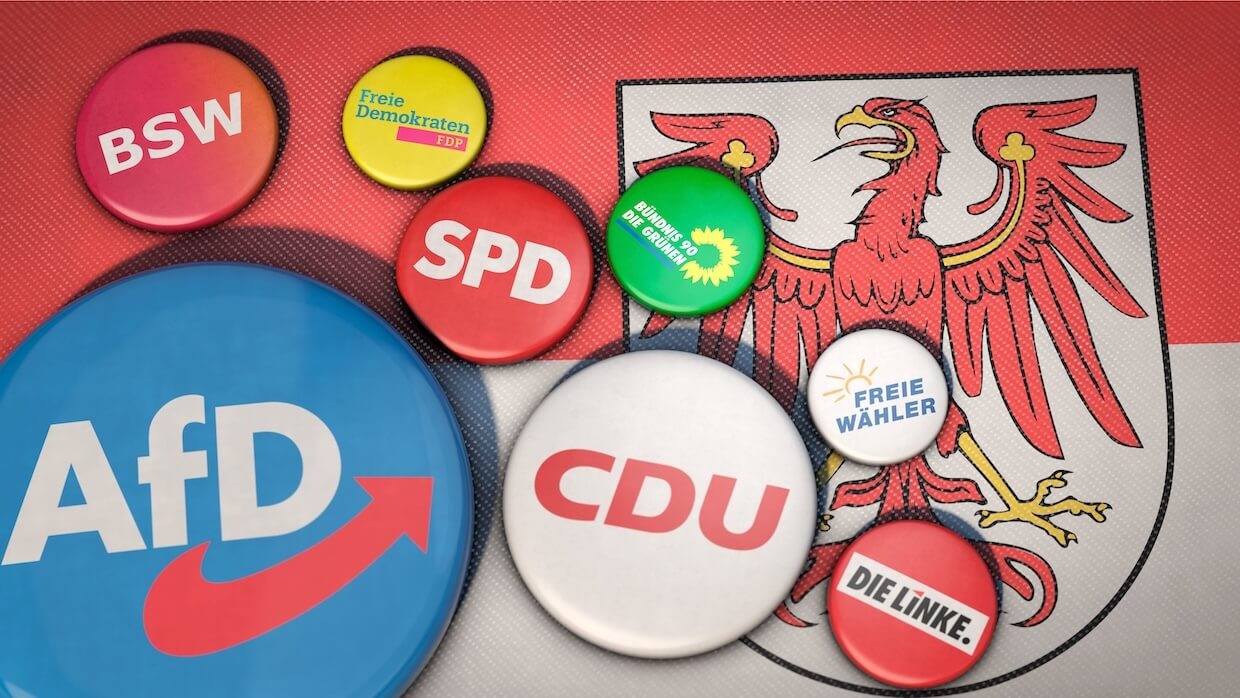
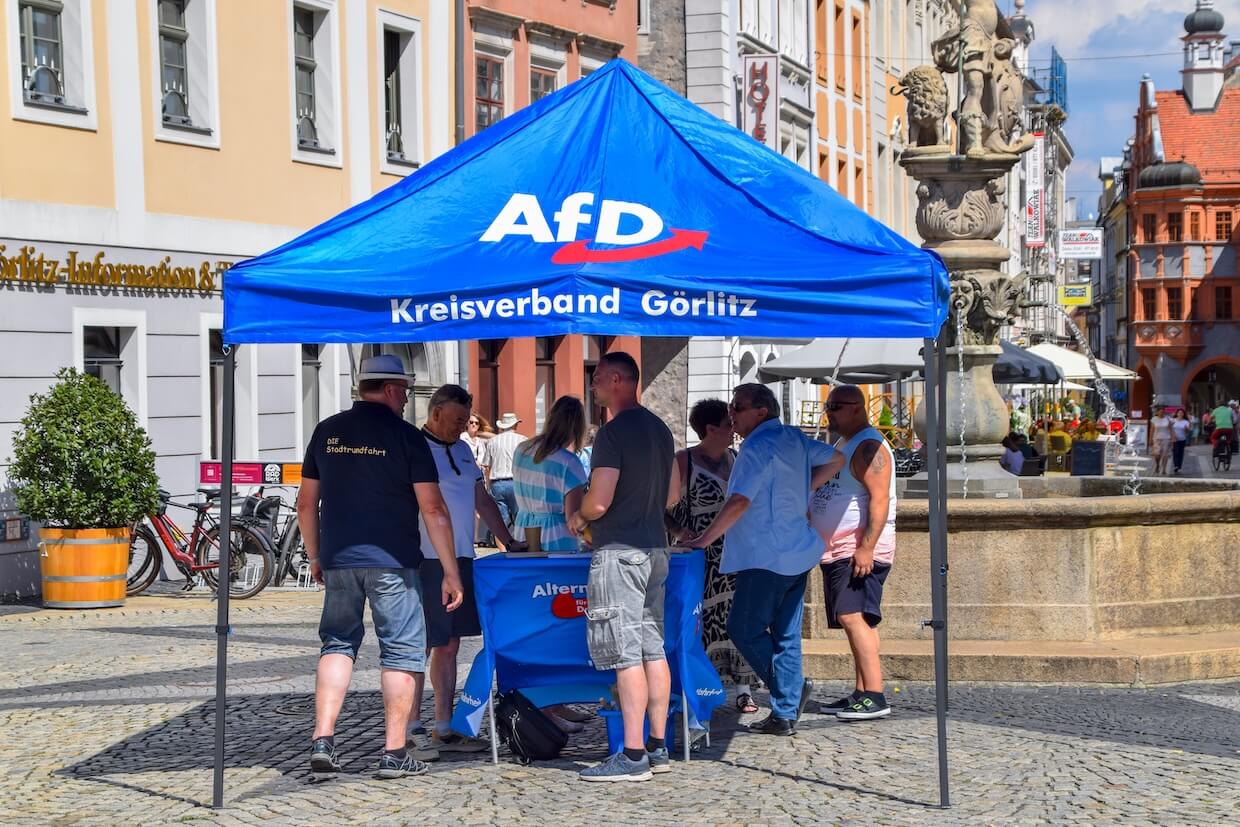
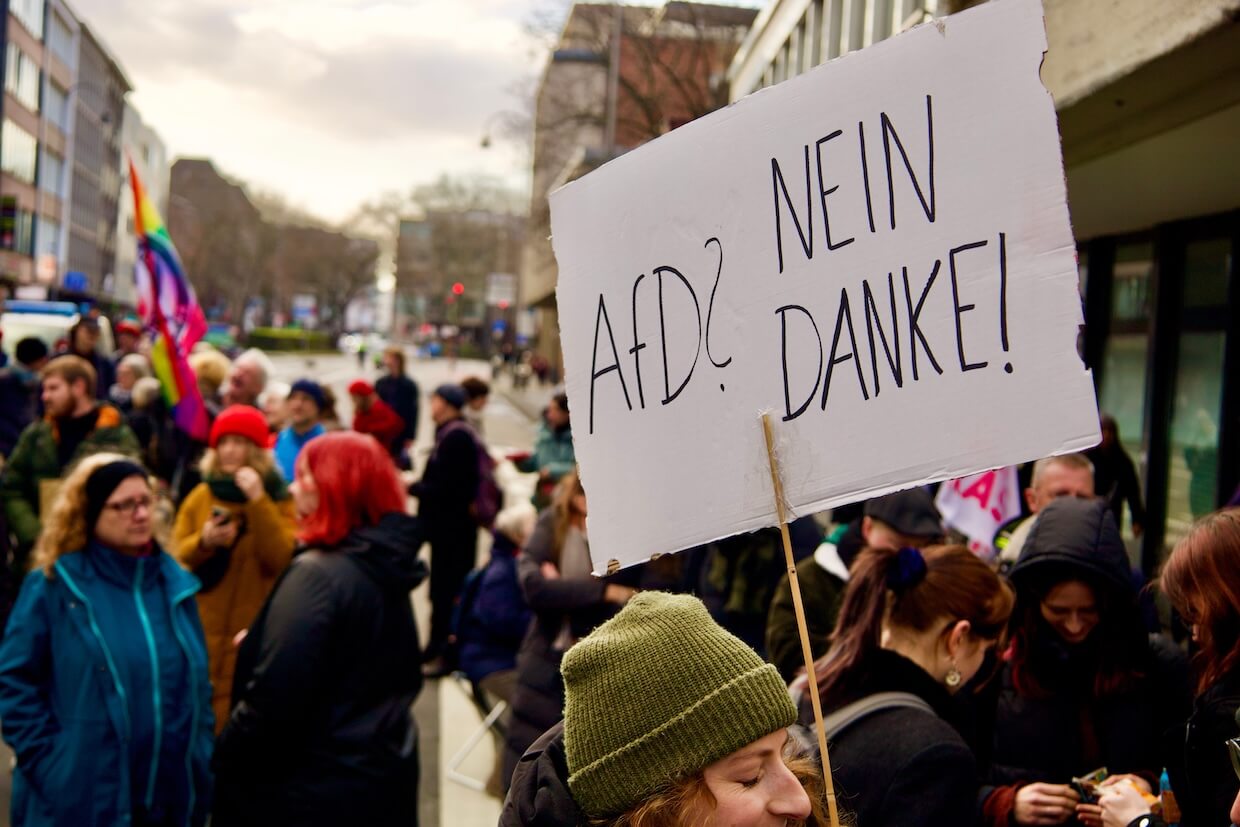
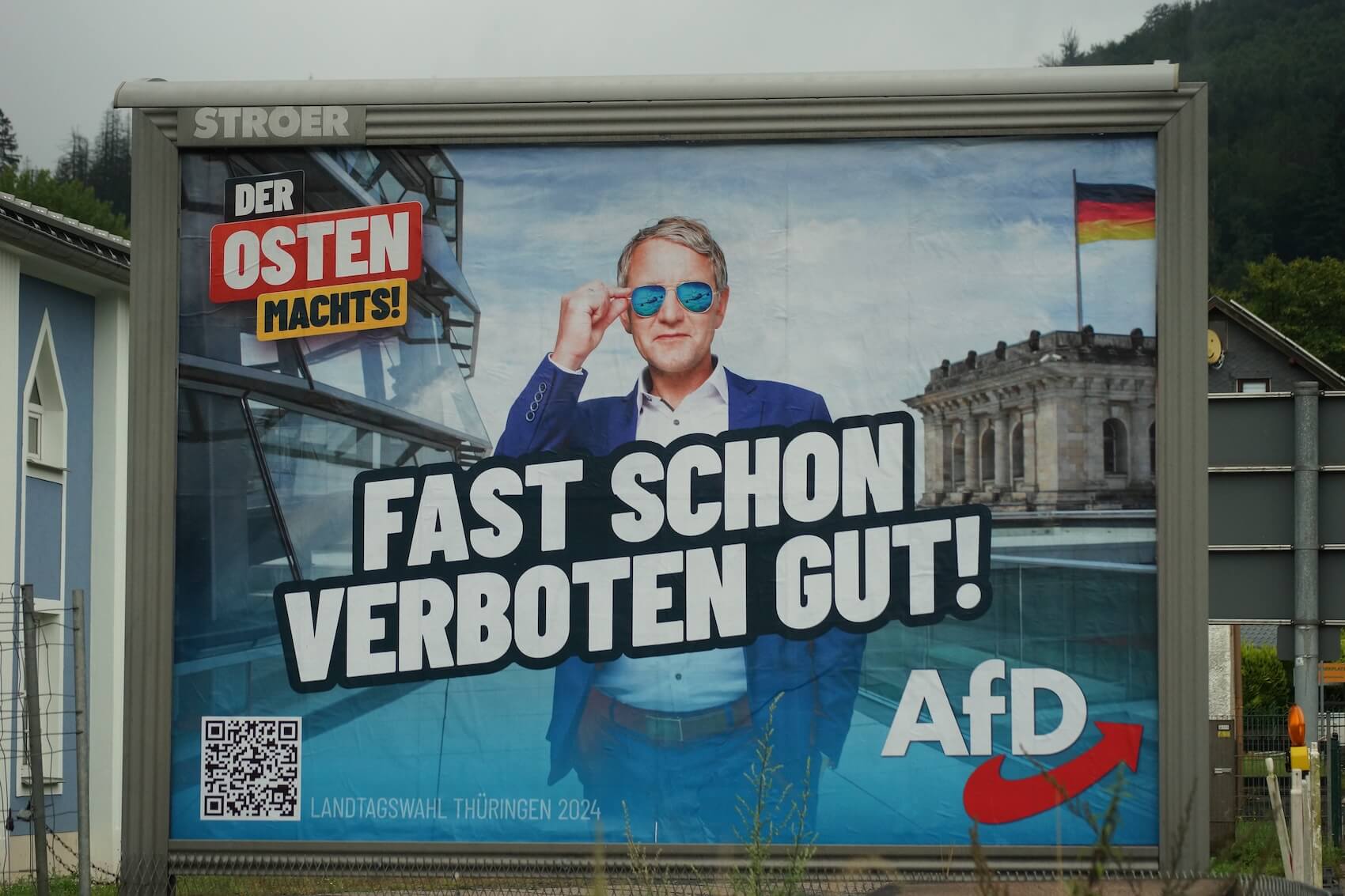
The moral panic of an unconcealable Europe and Islam was, for instance, well explored by the German party AfD (Alternative für Deutschland) during the 2017 election after the 2015 refugee crisis. It is now widely admitted that misinformation and fake news played an important role in spreading moral panic and the appeal for nationalism. The anti-immigration propaganda was elaborated within fake news on refugees’ wave of sexual crimes in countries like Germany and Sweden. This helped people turn themselves to the parties who claimed that would stop the open-borders policies that gave free passage to “rapists.”
Russian Propaganda and Culture War
It is very liable and spotted that the growth of radical right movements in Europe is linked to Russia’s strategy of supposedly financial support and pro-Russian media propaganda (Juhász & Szicherle, 2017). The strategy is clear and effective: i) promoting moral panic; ii) driving the people to perceive right-wing radical parties as the solution against globalism and open borders; iii) weakening the European Union by growing nationalist parties; iv) strengthening the influence of Russia in Europe by presenting it as the example of moral strength and unity around the idea of ‘one nation.’ Thus, Russian civilization’s strength lies in its Christian moral and cultural unity and uniqueness.
Russian propaganda on the strength of its moral unity is related to the context of culture wars. The concept refers to a conflict about nonnegotiable conceptions embodied in cultural and moral spheres (Hunter, 1991, 1996; Wuthnow, 1996), such as moral sexuality, gay rights, gender parity, and abortion. Although literature emphasizes culture wars in the United States (US), it happens in different places around the globe, including Russia. According to Robinson (2014), Putin’s third presidential election in 2012 was marked by culture wars in the country. In that year, the members of Pussy Riot were arrested and sentenced for protesting against Putin. One year later, Putin promulgated a law forbidding gay ‘propaganda’ to minors, considering it an unacceptable moral disruption imported from Europe.
Putin’s rhetoric on Russian civilization’s uniqueness is presented in the idea that Russia is a ‘state-civilization’ carried by the Russian Christian orthodoxy and the joint of other religions in Russian territory around a common concern for preserving traditional moral values. For the Russian leader, globalization brought a different kind of international tension:“Many nations are revising their moral values and ethical norms, eroding ethnic traditions and differences between people and cultures. Society is now required not only to recognize everyone’s right to the freedom of consciousness, political views and privacy, but also to accept without question the equality of good and evil (…)” (Robinson, 2014: 28-29).
For Putin, the erosion of traditional values – which started with the collapse of the Russian Empire and the Soviet Union – is particularly evident in today’s Europe, and Pussy Riots protest sounded the alarm for him. It helps explain the urgency of invading Ukrainian territory and the long-term support of the far-right in Europe (Polyakova, 2014, 2016; Shekhovtsov, 2017). Then, Putin took new programs on the culture wars, such as the reform of school manuals, the establishment of a Military-Historical Society with the involvement of the Minister for Culture, the cultural celebration of Russian feats of arms, including new war memorials, and more prominence given to Russia’s part in World War I. Moreover, he recovered Stalin’s physical and ideological fitness program (Gotov k trudy i oborone) in 2014. He started an intense persecution of the “traitors” of the “fifth column” – the liberal intelligentsia committed to Western ideas, ethno-nationalists, and Russia’s LGBT community.
Thereby, Putin’s narrative of the Ukrainian government as Nazis and “junkies” is a rhetoric of legitimation of invasion and a performance of culture war. By invading Ukraine, Putin is not only taking back the land he believed to be part of Russia but also rescuing it from being the ‘puppet of the [morally corrupt] West.’
Not surprisingly, Putin forced the comparison of Russia’s international isolation to ‘cancel culture,’ giving J. K. Rowling – author of Harry Potter – denunciations for her views on gender as an example. By taking ‘cancel culture’ to international relations, Putin signals the cultural dimension of the war in Ukraine. He is defending Russia’s state-civilization against globalism and liberal democracy based on plurality, human rights, and multiculturalism.
References
Fukuyama, F. (1992). The end of history and the last man. Free Press.
Hunter, J. D. (1992). Culture wars: The struggle to control the family, art, education, law, and politics in America. Avalon Publishing.
Hunter, J. D. (1996). Reflections on the culture wars hypothesis.The American culture wars: Current contests and future prospects. University Press of Virginia, 243-56.
Juhász, A. & Szicherle, P. (2017). The political effects of migration-related fake news, disinformation and conspiracy theories in Europe. Friedrich Ebert Stiftung, Political Capital, Budapest.
Lindholm, C. & Zúquete, J. P. (2010). The struggle for the world: Liberation movements for the 21st century. Stanford University Press.
Marchi, R. & Bruno, G. (2016). A extrema-direita europeia perante a crise dos refugiados. Relações Internacionais (50), 39-56.
Mudde, C. & Rovira Kaltwasser, C. (2016). Populism: A very short introduction. Oxford University Press.
Populist movements and parties have been successful in gaining support by tapping into people’s emotions, fears, and grievances, and by promoting simplistic and often divisive solutions to complex problems. As long as these underlying factors exist and are not effectively addressed, populist movements are likely to continue to emerge and gain support.
Contemporary populism has become a prevalent and polarizing topic in modern-day politics. Populist movements and parties have gained significant momentum in recent years, and their impact on the political landscape is undeniable. Populism has risen to prominence in several countries, such as the United States, Italy, Hungary, and Finland, as a response to globalization, inequality, and economic crises (Mudde, 2019). The topic of populism represents a significant shift in political dynamics, characterized by a rejection of political elites, a focus on emotions and identity, and a disregard for democratic norms (Weyland, 2018).
In Finland, the populist movement gained momentum with the formation of the Finns Party, formerly known as the True Finns Party, in 1995. The party is primarily known for its anti-immigration stance, Euroscepticism, and opposition to globalization (Kuisma, 2019). The party’s early success was limited, but it experienced a significant surge in popularity during the European migrant crisis in 2015 (Salmela & Jungar, 2019). The Finns Party received 17.7 percent of the votes in the parliamentary election in 2015, making it the second-largest party in the parliament (Kuisma, 2019).
Anti-migration discourse is a central theme of populist movements and parties in Finland. Populists use anti-migrant rhetoric to appeal to voters’ fears of losing their jobs, cultural identity, and safety (Kuisma, 2019). Some parties have been particularly vocal about its opposition to immigration, advocating for strict immigration policies and the expulsion of migrants with a criminal record (Kuisma, 2019). Party’s anti-immigrant stance has also been criticized for being xenophobic and racist (Jungar & Peltonen, 2018).
Populist movements and parties benefit from the fear of the “other” by capitalizing on people’s anxieties and grievances. Populists use identity politics to create a sense of belonging among their followers, and they often blame migrants and minorities for the economic and social problems facing the country (Mudde, 2019). This strategy allows them to deflect attention from the underlying causes of these problems and instead offer simple solutions that appeal to voters’ emotions.
Polls have suggested that there is a significant level of anti-immigrant sentiment among the Finnish public, while others have shown a more positive attitude towards immigrants. For example, a survey conducted by the Finnish polling firm Taloustutkimus in 2019 found that a majority of Finns believed that immigration had a negative impact on Finland. The survey found that 55 percent of respondents believed that immigration had a negative impact on the economy, while 65 percent believed that it had a negative impact on social cohesion. Additionally, the survey found that 62 percent of respondents believed that the number of refugees and asylum seekers in Finland should be reduced. However, other surveys have suggested that Finns are generally more positive towards immigrants than these results might suggest. For example, a survey conducted by the Finnish National Agency for Education in 2020 found that 72 percent of respondents believed that it was important to promote multiculturalism in Finland, and that 70 percent believed that the country should be more open to accepting refugees and asylum seekers. Anti-migrant parts of the population are more likely to vote for populist parties. According to a survey conducted by the Finnish National Election Study, voters who expressed negative attitudes towards immigrants were more likely to vote for the Finns Party (Jungar & Peltonen, 2018). The study also found that the Finns Party had the highest share of anti-immigrant voters among all political parties in Finland.
The anti-migration discourse in Finland has created a negative perception of the migrant population, leading to discrimination and exclusion in society (Salmela & Jungar, 2019). In the recent study, it was found that immigrants believe they are perceived more as a threat than a benefit to Finnish society (Nshom et al., 2022). The discourse has also contributed to the stigmatization of migrant communities, which has resulted in a lack of integration and social cohesion (Jungar & Peltonen, 2018). This dynamic perpetuates a cycle of fear and resentment, leading to further polarization and division.
What Does Populism May Do to the Talent Attraction Attempts of Finland?
Finland has introduced a new immigration act, which is intended to make the immigration process more efficient and straightforward for migrants. It has launched a global marketing campaign to attract talent to the country, called “This is Finland” (Business Finland, n.d.). The campaign showcases the country’s quality of life, innovation, and business opportunities (Business Finland, n.d.). Additionally, various programs aimed at integrating willing residents with foreign backgrounds into mainstream society have been taking place. One potential explanation for Finland’s continued efforts to attract skilled workers is that the government is attempting to balance the economic benefits of migration with the political challenges posed by populist movements. Some researchers argue that policies promoting economic growth through migration can help mitigate populist backlash by addressing the underlying grievances of voters, such as job insecurity and economic inequality (Givens & Luedtke, 2020). These attempts have been affected by the populist rhetoric, as the anti-immigrant discourse has created a negative image of the country in the eyes of the potential migrants, argues Jylhä & Leinonen (2021).
Discussion
Populist movements and parties have been successful in gaining support by tapping into people’s emotions, fears, and grievances, and by promoting simplistic and often divisive solutions to complex problems. As long as these underlying factors exist and are not effectively addressed, populist movements are likely to continue to emerge and gain support.
The dilemma of growing populism and skilled worker attraction is not unique to Finland alone, as many other countries also face similar challenges. What is different is the specific context and characteristics of the Finnish society and economy. Finland, with a relatively small population, traditionally relied on exports and innovation for economic growth. In recent years, Finland has been facing demographic challenges such as an aging population and declining birth rates, which have created a need for more skilled workers to maintain economic growth and ensure the sustainability of the welfare state.
Furthermore, many populist groups in Finland have been particularly vocal in their opposition to immigration, especially from non-Western countries. This has often taken the form of opposition to refugee resettlement and asylum-seekers, rather than opposition to skilled workers. However, populist groups in Finland (and elsewhere) often frame their opposition to immigration in terms of protecting domestic jobs and economic opportunities, which could potentially extend to opposition to skilled workers as well. But overall, it is more common for populist discourse in Finland to focus on refugees and asylum-seekers as a perceived threat to national identity and security. This has created a tension between the need for skilled workers and the political pressure to restrict immigration. Therefore, the specific context and characteristics of the Finnish society and economy make this dilemma somewhat unique, and it requires careful consideration and balancing of economic and political priorities.
It is important to note that the impact and influence of populism can be mitigated by promoting inclusive and participatory democratic institutions, strengthening social cohesion, and addressing the root causes of economic and social inequalities. While populism in a way is a legitimate form of political expression, reflecting the concerns and the grievances of a segment of a population (Mudde, 2019), anti-migration populism discourses are concerning. Especially so when it is polarizing, black-and-white, and often based on distorted facts and figures. This takes further the climate of us-and-them, prejudice, and division (Weyland, 2018). The negative perception of migrant communities perpetuated by the discourse can lead to discrimination and exclusion, which undermines social cohesion and appeal of new talents into the country.
Jungar, A. C. & Peltonen, J. (2018). “The Rise of Populism and the Crisis of Democracy in Europe.” Journal of Democracy. 29(2), 16-30. doi:10.1353/jod.2018.0020
Jylhä, K. & Leinonen, E. (2021). “Attracting talents and retaining them: A case study on the Finnish immigrant experience.” Geoforum. 118, 93-102. doi:10.1016/j.geoforum.2020.12.009
Kuisma, M. (2019). “Populism in Finnish Politics.” In: R. Heinisch, C. Holtz-Bacha, & O. Mazzoleni (Eds.), “Handbook of Political Populism.” (pp. 1-19). Edward Elgar Publishing.
Mudde, C. (2019). “The Study of Populism as a Way of (not) Studying Democracy.” In: C. R. Kaltwasser, P. Taggart, P. Ochoa Espejo, & P. Ostiguy (Eds.), The Oxford Handbook of Populism. (pp. 96-114). Oxford University Press.
Nshom, E.; Khalimzoda, I.; Sadaf, S. & Shaymardanov, M. (2022). “Perceived threat or perceived benefit? Immigrants’ perception of how Finns tend to perceive them.” International Journal of Intercultural Relations. 86, 46-55. https://doi.org/10.1016/j.ijintrel.2021.11.001.
Nshom, E. (2022). “Perceived threat and support for right-wing ideology in Finland.” Acta Sociologica. 65(1), 43-54.https://doi.org/10.1111/asap.12294
Salmela, M. & Jungar, A. C. (2019). “The institutionalisation of populism in Finland: An analysis of populist actors and their discourse.” Acta Politica. 54(1), 22-44. doi:10.1057/s41269-018-0104-9
In populist rhetoric, corruption is an obvious indication of institutional decay generated by the ‘corrupt elites’ and affecting the interests of the pure people.’ More specifically, the causal path could be described as follows: Corruption exacerbates political polarization by promoting the idea that the economic elites control the agenda-setting process and shape government politics in favor of their own interests, leading to representational inequality. Yet, is always an anti-corruption crusade the shortest way for populists to come to power?
The ‘war against corruption’ has, diachronically, been the flagship of populist parties and an inherent part of both their rhetoric and election promises. The examples of politicians who instrumentalized the high perceived levels of corruption in their electoral campaign in order to rally support for their political agendas are abundant; Donald Trump in the United States, Jair Bolsonaro in Brazil, Rodrigo Duterte in the Philippines, and Victor Orbán in Hungary, to name but a few (Porcile & Eisen, 2020; Haughton et al., 2020). The same goes for Greece, where the left-wing SYRIZA, both in 2012 and in 2015, fiercely denounced ‘the corrupt political elites and crooked bankers’ (Smith, 2012) and pledged to fight against “a political system that supports corruption and collusion” (Tsipras, 2015).
In populist rhetoric, corruption is an obvious indication of institutional decay generated by the ‘corrupt elites’ and affecting the interests of the pure people.’ More specifically, the causal path could be described as follows: Corruption exacerbates political polarization by promoting the idea that the economic elites control the agenda-setting process and shape government politics in favor of their own interests, leading to representational inequality (Gilens, 2012; Elkjær & Baggesen Klitgaard, 2021; Bartels, 2017; Drutman, 2015). This, in turn, opens a window of opportunity for populists, which present themselves as the only defenders of people’s interests and promise to restore good governance and the ties of trust with the political institutions. Additionally, the fight against corruption serves as a means for populists to be differentiated as newcomers from the established parties and to stylize themselves as outsiders that fight for voters’ interests (Kossow, 2019; Engler, 2020). In any case, the strength of their anti-corrupt message is positively affected by the levels of corruption in the country (Hawkins et al., 2018) and the levels of social inequality (Uslaner, 2008; Loveless and Whitefield, 2011), as their combination bridges institutional and economic grievances.
Yet, is always an anti-corruption crusade the shortest way for populists to come to power? The answer is not so clear-cut, even in countries that traditionally score highly on the Corruption Perception Index (CPI), such as Greece. The country consistently lags behind as far as transparency in the public sector is concerned (Figure 1). It is telling that in 2012 Greece’s score was 36/100; in 2013 was 40/100, while in 2016 —and under the government of SYRIZA— the score remained low (44/100). The data for 2021 is quite similar, as the country’s score is 49/100. Nevertheless, at the moment, neither a populist party that has declared war on corruption rules the country nor this specific issue seems to be more salient than the economy, even since the outbreak of the Qatar corruption scandal, in which the name of Eva Kaili, a Greek MEP, is involved, as well as the ‘Patsis case’, which is related to the expulsion of a New Democracy MP, Andreas Patsis, as a result of having professional activities that were not consistent with the status of the MP.
In particular, though the public debate in Greece over the last weeks is monopolized by the recently disclosed ‘Qatargate’ scandal —as it is widely referred to in the media— and the ‘Patsis case’, none of them figures at the top of citizens’ list of concerns. Put differently, at a time when the political confrontation is mainly based on which party can more efficiently combat corruption; this issue does not seem to be of great concern to the voters.
This is evidenced by the data of a newly published report compiled by the public opinion research company Marc(fieldwork: 16-21 December 2022) which, among other things, showed that the three biggest concerns of the respondents are the “high prices/ price increases” (81.3 percent), the “national issues/Greek-Turkish relations” (41 percent) and the “criminality/violence” (37.2 percent). Contrarily, the ‘Kaili case’ and the ‘Patsis case’ are of high concern for only 9.5 percent and 5 percent of the interviewees, respectively.
It is also interesting the fact that the most popular answer among the voters of all political parties (voting intention) to the question: “Who do you think is most affected by Eva Kaili’s case?” was Greece (35.2 percent) and not the political system in general or even Kaili’s party of origin, namely the PASOK (19.2 percent). Furthermore, in the midst of political confrontation centered on corruption, 38.2 percent of the survey participants believe that it is the Prime Minister, Kyriakos Mitsotakis (leader of the center-right party ‘New Democracy’) who can better handle issues of corruption and transparency and not Alexis Tsipras, leader of the left-wing populist SYRIZA (36 percent).
The findings in a series of Eurobarometers are also similar. In the Standard Eurobarometer 77, for instance, which was carried out while the so-called ‘Lagarde List’ scandal was in the headlines, 66 percent of the respondents answered that the most important issue that Greece was then facing was its economic situation, 57 percent of them responded that the major problem of the country was the unemployment and 20 percent believed that Greece’s biggest problem was the government debt.
Similarly, 40 percent of the respondents indicated as their main concern —on a personal level— during that period the economic situation in Greece, 30 percent indicated the levels of unemployment, 29 percent the financial situation in their household and 26 percent indicated the rising prices/inflation in the country.
Figure 2: Greek voters’ concerns during the Lagarde List scandal (July 2012)
Source: Standard Eurobarometer 77 (Spring 2012).
These observations, of course, do not imply that corruption is an irrelevant factor regarding the increase of demand side of populism. Rather, they indicate that we should be very cautious when we —arbitrarily— hypothesize that the politicization of corruption is both a necessary and sufficient condition for affecting the electoral fortunes of populist parties. If voters do not list corruption in their high concerns, to what extent is its political exploitation by populist parties possible?
On the other hand, if they indeed recognize corruption as a threat to their interests but lay the blame on both mainstream and challenger parties or even reject as a whole the party system, to what extent could the anti-corruption and anti-elite rhetoric of populist parties be translated into electoral gains? The outright rejection of the party system normally translates into ‘exit’ and not electoral dealignment. Therefore, a more refined approach of the theory, which would take under consideration other parameters, such as the institutional system, the levels of clientelism or even the freedom and the independence of the Press, is needed.
(*) Marina Zoe Saoulidouis a PhD candidate in Political Science and Public Administration at the National and Kapodistrian University of Athens (NKUA). Her thesis focuses on the dynamics of both left- and right-wing populist parties in Europe in the context of economic crises.
Bartels, L. (2017). “Economic Inequality and Political Representation.” In: Unequal Democracy: The Political Economy of the New Gilded Age (pp. 233-268). Princeton: Princeton University Press.https://doi.org/10.1515/9781400883363-010
Drutman, Lee. (2015). “The Business of America is Lobbying: How Corporations Became Politicized and Politics Became More Corporate.” Studies in Postwar American Political Development (New York; online edn, Oxford Academic, 23 Apr. 2015), https://doi.org/10.1093/acprof:oso/9780190215514.001.0001
Elkjær, M. A., & Klitgaard, M. B. (2021). “Economic inequality and political responsiveness: A systematic review.” Perspectives on Politics. 1–20. https://doi.org/10.1017/s1537592721002188
Engler, S. (2020). “’Fighting corruption’ or ‘fighting the corrupt elite’? politicizing corruption within and beyond the populist divide.” Democratization. 27(4), 643–661. https://doi.org/10.1080/13510347.2020.1713106
Eurobarometer (2012). European Commission: Standard Eurobarometer 77. Public Opinion in the European Union. Survey requested by the European Commission, requested and co-ordinated by Directorate-General for Communication (DG COMM Unit ´Strategic Communication´). https://europa.eu/eurobarometer/surveys/detail/1063 (accessed on December 31, 2022).
Gilens, M. (2012). Affluence and Influence: Economic Inequality and Political Power in America. Princeton University Press. https://doi.org/10.2307/j.ctt7s1jn
Haughton, T.; Rybář, M. & Deegan-Krause, K. (2021). “Corruption, campaigning, and novelty: The 2020 parliamentary elections and the evolving patterns of party politics in Slovakia.” East European Politics and Societies: and Cultures. 36(3), 728–752. https://doi.org/10.1177/08883254211012765
Hawkins, K. A.; Carlin, R. E.; Littvay, L. & Kaltwasser, C. R. (Eds.). (2018). The ideational approach to populism: Concept, theory, and analysis. Routledge
Kossow, Niklas. (2019). “Transparency International Knowledge Hub.” Transparency International.https://knowledgehub.transparency.org/ (accessed on December 31, 2022).
Loveless, M. & Whitefield, S. (2011). “Being unequal and seeing inequality: Explaining the political significance of social inequality in new market democracies.” European Journal of Political Research. 50(2), 239–266. https://doi.org/10.1111/j.1475-6765.2010.01929.x
Uslaner, E. (2008). Corruption, Inequality, and the Rule of Law: The Bulging Pocket Makes the Easy Life. Cambridge: Cambridge University Press. doi:10.1017/CBO9780511510410
The “two Brazil” theory is now stressed, as never before. From now on, culture wars will have a civil confrontation dimension. It remains to be seen in what terms and on what scale. From the divided families to the broken country, the march goes on. The thesis of an actual split of the country, a break-up of the Federal Union, is on the table. In a more mitigated scenario, the security forces can prevent the escalation and leave democracy safe, but in a state of permanent alert whose political effects in the Senate are still challenging to predict.
From the very beginning of Bolsonaro’s presidential path, still in the campaign that led him to the presidency of Brazil in 2018, the former Brazilian president sought to copy Trump’s strategy (Baptista, Hauber & Orlandini, 2022), taking prejudice to the center of the campaign (Martins, 2002). The so-called culture wars (Hunter, 1992) have definitively entered the political arena, perfectly demarcated between (a) the regions that are majority white and expressing animosity toward the North-East, the evangelical sector of society which is transversal in terms of class but dominated by the elites, advocating a conservative turn in terms of customs for the country and the confluence between state and church, and (b) the non-evangelical lower social classes, the progressive left, and the LGBTQ+ and anti-racist militant and activist sectors. In Brazil, it includes the sense of loss of the historical privileges of the Brazilian upper and middle classes, who inherited a form of the social organization of colonial matrix –which Quijano (1997) named coloniality – and did everything to preserve it through the ideology of the state.
The battle for the heart of Brazil took place. The Right radicalized and regimented itself around Bolsonaro, which made use of the corruption that surrounded the PT (Lula’s party) governments to implement the so-called agenda of customs (conservative moral values) and the neoliberal agenda in the economy, with an inclination for privatization and exploitation of natural resources, such as the deforestation of the Amazon. The Ox-Bull-Bible axis (Stefanoni, 2018) created the conditions for Bolsonarism to become vigorous.
The basis of this strength lies in the middle class, which has always attended the best universities (and which, in some cases, has been overtaken by more able young people from the lower classes due to the social policies of the PT governments), which works in the leading newspapers of the big cities like São Paulo, which saw its capacity to exploit poor labor diminished by the PT’s labor legislation that imposed guarantees on workers. Jessé Souza asks categorically, in The Elite of Backwardness (2017), “how someone who exploits the other classes below her in the form of a vile wage to save time on domestic chores, and supports the indiscriminate killing of poor people by the police, or even the slaughter of defenseless prisoners, can have the nerve to believe oneself morally elevated?”
Now, the intersection between a sense of injustice in the face of the loss of class privilege, the natural displeasure with structural corruption (truly structural, insofar as it is found in the very formation of Brazil as a state), the importation of the most alienated Trumpist conspiracy and populist theories, and the deep messianic belief in a providential leader and an elected people (themselves; Ferreira Dias, 2020), produces a mass of voters with a mission, which because they consider providential owes no respect to the Constitution and democratic rules.
Having rehearsed an ambiguous Trumpist posture of defeat without defeat, Bolsonaro has fed the hosts, letting marinate the belief of electoral fraud, which his party has continued and amplified.
We can affirm that we are facing a movement of a fascist nature (following the plastic definition of Stanley (2020)) of the caudillo type, which refuses electoral results, does not accept democracy, and wants a single identity for the country (ideology of the nation), centralized in a vital state apparatus, of “law and order,” strongly classist and racial, and deeply conservative-religious (evangelical).
The probable military repression to restore the normal functioning of institutions is no guarantee of the regime’s survival. Lula is seen as an anti-Christ that needs to be defeated, no matter what. The advance of the police could be interpreted as the advance of the Romans on the Christians, and the Bolsonarists could take themselves on as martyrs to their patriotic cause.
Lula’s speech of reaction to the invasion of Congress, the Planalto and the Supreme Court will do little to heal the situation by reinforcing the fight between Left and Right, by accusing Bolsonaro of being “genocidal,” by forcing social division, and by placing a negative weight on Bolsonarist supporters by calling them “fanatical fascists.” The coolness of state that one might demand has given way to continued social rupture and ideological struggle.
The “two Brazil” theory is now stressed, as never before. From now on, culture wars will have a civil confrontation dimension. It remains to be seen in what terms and on what scale. From the divided families to the broken country, the march goes on. The thesis of an actual split of the country, a break-up of the Federal Union, is on the table. In a more mitigated scenario, the security forces can prevent the escalation and leave democracy safe, but in a state of permanent alert whose political effects in the Senate are still challenging to predict.
The precedent of The United States Capitol opened the space for these tumults. What can and should be feared is replication in the West, in the forthcoming elections in several European countries, where populism, many of authoritarian inspiration, claims to be the voice of the people. We must remember the words of Georges Duhamel: “The greatest tyrants of the people have almost all emerged from the people.” For now, Brazil is the ticking time bomb, the most apparent laboratory of the culture wars and ideological alienation. This time it will be the Trumpist sector of the United States that will look to Brazil as a laboratory of potentialities. How the situation unfolds in Brazil will affect the future paths of the more polarized Western democracies.
(*) João Ferreira Dias is a researcher at the Centre for International Studies – ISCTE, Lisbon, in the Research Group Institutions, Governance, and International Relations. He is researching culture wars, politics of identity, and fundamental rights. PhD in African Studies (2016). PhD candidate in International Studies (2021- …). Columnist. http://joaoferreiradias.net
References
Baptista, Érica Anita; Hauber, Gabriela; Orlandini, Maiara. (2022). “Despolitização e populismo: as estratégias discursivas de Trump e Bolsonaro.” Media & Jornalismo. 22.40: 105-119.
Ferreira Dias, João. (2020). “O Messias já chegou e livrará ‘as pessoas de bem’ dos corruptos: messianismo político e legitimação popular, os casos Bolsonaro e André Ventura.” Polis. 2.2: 49-60.
Hunter, James Davison. (1992). Culture wars: The struggle to control the family, art, education, law, and politics in America. Avalon Publishing.
Martins, Erikssonara Thalessa da Câmara. (2022). O avanço do neoconservadorismo e a extrema-direita no Brasil: uma análise a partir da Campanha Eleitoral de 2018 ao Governo Bolsonaro. Bachelor’s Thesis. Universidade Federal do Rio Grande do Norte.
Quijano, Aníbal. (1997). “Coloniality of power in Latin America.” Anuario Mariateguiano. 9.9: 113-121.
Stefanoni, Pablo. (2018). “Biblia, buey y bala… recargados: Jair Bolsonaro, la ola conservadora en Brasil y América Latina.” Nueva Sociedad. 278: 4-11.
Souza, Jessé. (2017). A elite do atraso: da escravidão à Lava Jato. Leya.
Stanley, Jason. (2020). How fascism works: The politics of us and them. Random House Trade Paperbacks.
As the investigations are ongoing, not much is known of the real threat to democracy that this group posed. Nevertheless, the German authorities did take it very seriously, which could be an indication of the seriousness of the situation. Assessing the group and its coup plan, Jan Philipp Thomeczek underlines the fact that some members of the group had a security background, such as military or police experience, moreover many of them owned weapons and ammunition.
By Kim van Os*
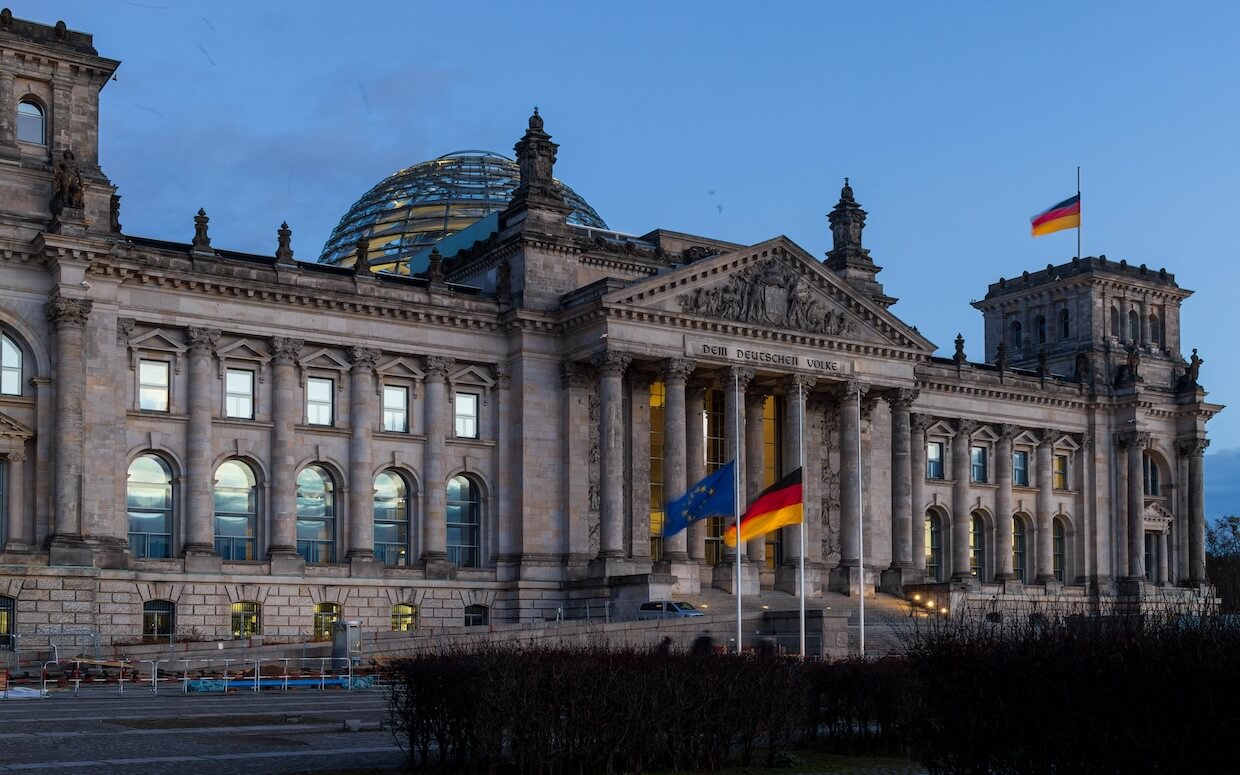
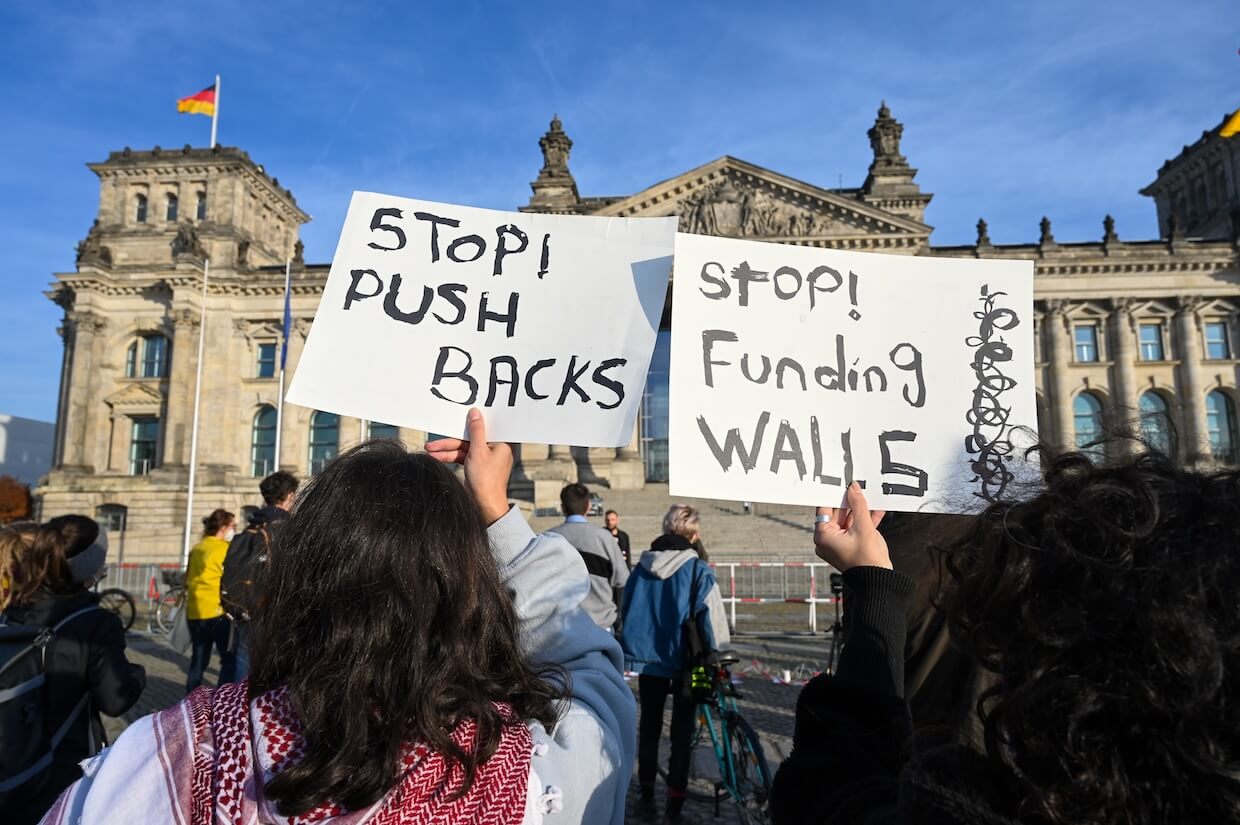
On the 7th of December 2022, German authorities arrested 25 people for plotting to overthrow the German government. The group, called the Patriotic Union, was divided into a ‘Rat’ (Council) and a military branch, ready to take over the various ministerial posts. Their plan was to storm the Reichstag parliament building and seize power, using violence if necessary. The group planned to instate Heinrich XIII, a descendant of German royalty, as the Emperor of Germany. In addition to the arrest of 25 people, the police also seized weapons acquired by the group and Iridium satellite telephones. The latter are special telephones which work even when the electricity network collapses, something the group was also planning to do (Connolly, 2022).
Little is known about the ideology of this Patriotic Union. According to Jan Philipp Thomeczek, an expert on populism and the far-right in Germany, the Patriotic Union is a very heterogeneous group, and it is therefore quite hard to pin it down to a specific ideology. Its members are quite diverse, ranging from former and current soldiers, current and former members of the Alternative for Germany (AfD), a right-wing populist political party in Germany, to the people with an extremist background. In addition, the group does not have a manifesto or program. What however is known, states Thomeczek, is that the Reichsbürger movement had a strong influence within this group. Many of the members of the Patriotic Union came from the Reichsbürger movement, including the previously mentioned Heinrich XIII.
The Reichsbürger (which translates to ‘Citizens of the Reich’), deny the existence of Germany’s post World War II Federal Republic, and do not accept the legality of Germany’s government. According to them, Germany is still controlled by the United States, the United Kingdom and France. In one of their most influential publications, ‘21 Punkte zur tatsächlichen Situation in Deutschland – Analyse & Aufklärung’ (Translation: ‘21 points on the real situation in Germany – analysis & enlightenment’), they state the following: ‘Germany has not been a sovereign state since the end of the Second World War, but rather militarily occupied territory by the Allied forces, above all, as the main victorious power, that of the United States of America’ (21 Punkte…, 2022)
Although all Reichsbürger members share the same belief in that they do not accept the legality of Germany’s government, they do not all have the same ideology. According to the Bundesamt für Verfassungsschutz (BfV), Germany’s domestic intelligence agency, of the 23.000 Reichsbürger in Germany, 5 percent can be classified as far-right extremists. Among them are those with special military training, police agents and members of the military. Although they might not all be classified as far-right, the origins of the group can be traced back to far-right ideology. For instance, the Reichsbürger passport is based on the Reich Citizenship Law of 1935. Under this law, only people of German or related blood were approved for Reich citizenship (Schlegel, 2019). Although this law specifically mentioned Jews as people not eligible for Reich citizenship, the law also excluded Black people and Roma and Sinti for Reich Citizenship (Facing History, 2022).
The use of violence by Reichsbürger is not unknown, in 2016 a member of the group killed a police officer and injured three others (Oltermann, 2016). In 2020, members of the group took part in an attempt to storm the Reichstag during a protest against Covid measurements (The Guardian, 2020). In 2021, the BvF attributed around 1011 extremist crimes to them (Connolly, 2022). In recent years the Reichsbürger movement has grown, in 2016 the BfV estimated the group at 10.000, in 2022 the group was estimated at 23.000 members (DW, 2018; Goldenberg, 2022).
According to Thomeczek, in addition to being influenced by the Reichsbürger movement, the Patriotic Union was also influenced by the QAnon conspiracy theory. The QAnon conspiracy theory dates back to the Protocols of the Elders of Zion(Stanton, 2020). This fabricated antisemitic text was published in 1903 and discusses a Jewish plan of world domination. Although this conspiracy theory has been used throughout the centuries, most famously by Hitler, it resurfaced in the far-right sphere in the US in October 2017 on the internet platform 4chan under the name ‘QAnon’ (Wendling, 2021). QAnon adherents believe the world is controlled by satanic cannibalistic pedophiles and that the former US president Donald Trump was fighting against these people. Violence is not unknown to QAnon believers, many of the people who stormed the Capitol in the US were QAnon adherents (Wendling, 2021). At the same time, Thomeczek explains that the connection to QAnon should be regarded as a secondary feature of the Patriotic Union, as it is a very heterogeneous group.
Thomeczek mentions that both the QAnon conspiracy theory as well as the Reichsbürger movement gained more attention during the Covid-19 pandemic because of their anti-lockdown standpoint. This is not surprising, explains Thomeczek, because if you believe in conspiracy theory about the German state or QAnon, something like a global pandemic really plays into the cards of conspiracy theories. Thomeczek argues that a connecting element between the QAnon conspiracy theory and the anti-covid protests is the so-called ‘protection of the children.’ According to Thomeczek, the rule that made it mandatory for children to wear masks ‘sparked a lot of protests among parents, because they thought it was dangerous for the children.’
Germany’s right-wing populist party AfD also had a strong anti-lockdown standpoint during the pandemic. Moreover, some of the members of the group planning the coup had connections to the AfD. According to Thomeczek, one of the most important AfD related figure in this group is Birgit Malsack-Winkemann, who served as a member of the AfD in the lower house of parliament between 2017 and 2021. Since June 2022 she has been a member of the AfD’s Court of Arbitration. At the same time, however, no official links between the group planning the coup and AfD have been found. On the website, the AfD, published the following sentence with regards to the planned coup: “Like most citizens, we only found out about the case today from the media. We condemn and strongly oppose such efforts. Now we have to wait for the investigation. We have complete trust in the authorities involved and demand a quick and complete clarification.”
The fact that they issued such a short statement is very interesting, according to Thomeczek, they did not even mention the Reichsbürger movement for instance. They are doing the bare minimum to distance themselves from the movement, because if they are somehow connected to the movement it could lead to a prohibition of the party, Thomeczek mentions. However, Thomeczek continues, the short statement shows that the extremism from this group is not a real issue for them, while they do strongly focus on Islamic extremism in their agenda. Thomeczek concludes by saying that, besides the former AfD members being included in the plot, there are no real connections between the AfD and the group organizing the coup.
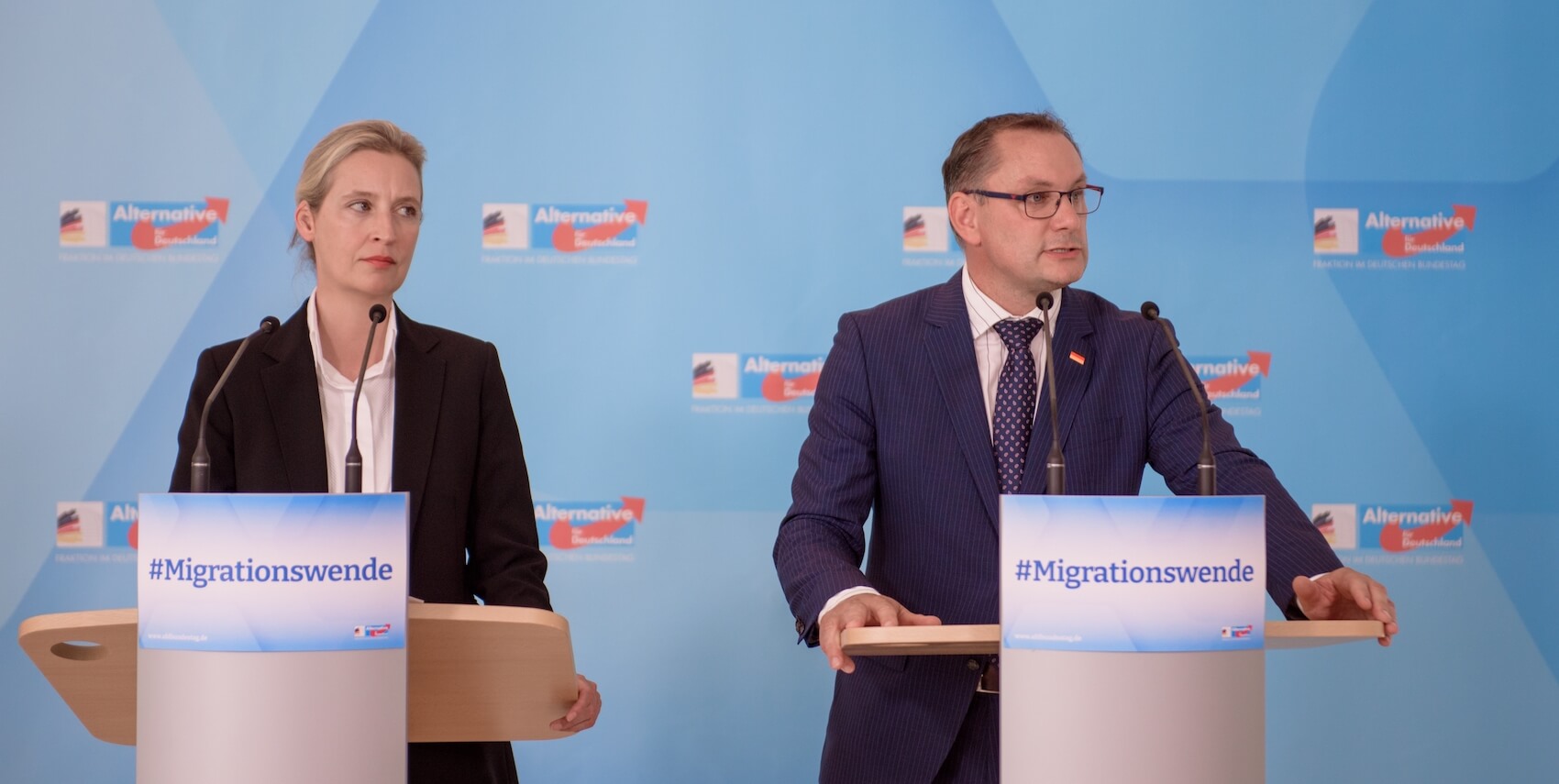
The AfD, which currently holds 78 seats in the Bundestag, has similar ideology as other right-wing populist parties in Europe such as Euroscepticism and anti-immigration standpoint. They differ in the sense that the AfD came into parliament relatively late in comparison with other right wing populist parties in Europe. Although some right-wing populist parties, such as the DVU and the Republicans, had some regional successes in the 1990s, as soon as they were linked to the national socialist past in some way, the potential to reach national successes died according to Thomeczek. This was the case until the AfD entered the scene.
Thomeczek mentions that the AfD established themselves as a more moderate party but became more radical over the years. In 2013 they almost made it into parliament, back then the party was not extremely right-wing nor extremely populist. In the 2015 and 2016 state elections, the AfD managed to win seats in multiple states. According to Thomeczek, after 2015, the party became much more populist and radical, the party was ‘already somehow established and then radicalized and then it became even more successful, especially in East Germany.’ The presence of the AfD in East Germany seemed to have sucked up the potential for right-wing extremism. Which is interesting according to Thomeczek, because in East Germany there were some ‘right-wing extremist parties such as the National Democratic Party (NPD) in the 1990s and 2000s, and now that the AfD is there. A much more radical AfD, compared to some west German states, completely sucked up this potential for right wing extremism.’ Thomeczek argues that perhaps in the coming years, analysis will show whether AfD is still a populist party or if it has become extremist too and has become closer to parties such as the NPD.
The real threat to democracy that the group organizing the coup posed is hard to tell. As the investigations are ongoing, not much is known of the real threat to democracy that this group posed. Nevertheless, the authorities did take it very seriously, which could be an indication of the seriousness of the situation. Thomeczek says that some members of the group had a security background, such as military or police experience, moreover many of them owned weapons and ammunition. In addition, the group was actively trying to recruit people from the military. Moreover, according to Thomeczek, ‘a quite important detail is that many of those people have the legal right to own a weapon, normally you don’t have that but if you are security force or hunter for example, you have that legal right,’ which indicates that they did not only owned weapons, but they also knew how to use them. Therefore, Thomeczek adds, ‘the potential for violence was definitely very high and if so, much violence is possible, is on the table, then it is definitely a big threat.’ At the same time, according to Thomeczek, it is difficult to tell how advanced the planned coup was, as the group was still working on their plan when it was uncovered.
Although there may not be any clear link between the group planning the coup and the right-wing populist party, populist leaders can influence these types of groups because they often engage with conspiracy theories leading to the undermining of the legitimacy of democracy. Which is what happened in the US when Trump called the election results fraudulent, eventually leading to people storming the capitol and a more recent example of the storming of political buildings in Brasília in Brazil (Sullivan, 2023).
Moreover, the threat of far-right terrorism has been growing in recent years across the globe. According to US Homeland Security ‘white supremacists and other far-right-wing extremists are the most significant domestic terrorism threat facing the United States.’ In that sense, the plotted coup in Germany should be seen as a warning to pay close attention to extremist right-wing movements and the role that right-wing populists might play in this.
(*) Kim van Os is an intern at European Center for Populism Studies (ECPS) with a master’s degree in International Relations. Her main research interests are the relation between populism and far-right radicalization, gender, racism, Islamophobia, and xenophobia.
References
— (2018). “Germany’s far-right Reichsbürger count rises.” DW. April 29, 2018. https://www.dw.com/en/germanys-far-right-reichsbürger-movement-larger-than-earlier-estimated/a-43580603 (accessed on January 11, 2023).
Wendling, Mike. (2021). “QAnon: What is it and where did it come from?” BBC News. January 6, 2021. https://www.bbc.com/news/53498434 (accessed on January 11, 2023).
Both Islamism and far-right populism claim power and control over women’s bodies by imposing rules around the hijab. In Iran, women are expected to submit to the regime’s despotism and wear a hijab despite personal preferences. However, in France, under the guise of liberal values, far-right populists are advocating for a ban on hijabs and other religious symbols in public spaces. This antagonism towards the hijab is postured as saving Muslim women from the patriarchy and religious oppression, yet it still robs women of a right to choose.
Debates around women’s bodies, particularly those of Muslim women, have grown globally in the wake of Mahsa Amini’s death under the custody of Iran’s morality police after being detained for ‘improper’ hijab-wearing. For a better understanding of control over women’s bodily autonomy, the concepts of political Islam and far-right populism need to be examined.
The term political Islam, otherwise known as Islamism, ontologically implies resistance against secular and Western systems of governing. Criticizing secular ideologies, political Islam aims to establish a political system based on Islamic doctrines in addition to creating a unified religious identity for the whole of society. In the Routledge Handbook of Political Islam, Shahram Akbarzadeh argues that “much like other -isms, Islamism imposes a normative framework on society in a blatant attempt to make society fit into its mould” (Akbarzadeh, 2012: 1). Being a reactionary movement, which aims to shape society and the state through the agency of religion, political Islam manifests itself as challenging both previous governments and the West. Akbarzadeh cites Mohammad Ayyoob to explain the incentives behind this challenge: “Political Islam gained increasing support as ‘governing elites failed to deliver on their promises of economic progress, political participation, and personal dignity to expectant populations emerging from colonial bondage,” (Akbarzadeh, 2012: 2).
Besides denouncing their regime, Islamists also stand up to the West through the medium of “anti-Americanism”. They claim that all their political opponents are failures because they “deviate” from the divine path. The concerning facet in this approach is the blurry definition of this so-called divine path. In other words, Islamism or political Islam acts as an empty signifier that can be filled with subjective interpretations of Islam. To be more precise, an Islamist leader who claims to be representing divine “sovereignty” can legitimize his practices through a religious discourse that cannot be denied by society since it may appear as resisting divinity.
Akbarzadeh touches on this hypocritical aspect of political Islam; On one hand, actors who hold an Islamist position reject others’ interpretation of religious doctrine on the basis that it is not divine, but on the other hand, these same actors interpret Islam according to their personal interests, like gaining more power. In this case, political Islam deliberately serves to oppress discourse on economy, morality, and authority. According to Akbarzadeh (2012), “the combination of the exclusive claim on divine truth and the capture of political power” gives the authorities a legitimate right which can be hazardous for the society since this power “can easily manifest as acts of violence.”
While Akbarzadeh’s definition of Islamism identifies it with resistance, Esposito adopts the concept of “resurgence” while discussing political Islam. In this lens, it is the combination of “resentment over political and social injustices” and “issues of identity” which merges faith and politics in order to establish an “Islamic revival” (Esposito, 1997). This resistance approach, which strengthens itself with exasperation and revolt against both domestic and Western ideologies, helps governments pave the way for “enhancing their legitimacy and to mobilize popular support for programs and policies” (Esposito, 1997).
However, the state is not the sole actor to reap benefits from Islamism. Social movements and companies that affiliate themselves with Islamic identities also generate opportunities to establish new businesses, such as hospitals, banks, and schools, and work to accommodate their associates in these organizations. The most pertinent point Esposito raises in his article questions “whose Islam” is this and “what Islam” is. The answer concerns the idea of power, which we can find in the hazardous mixture proposed by Akbarzadeh. As such, the compulsory hijab in Iran implemented by the country’s Islamist regime and its enforcement through the support of society can be understood by the aforementioned definitions and discussions of political Islam.
On the other hand, the hijab ban, or alternatively the adverseness against wearing hijab in public places in some European countries such as France, can be seen as representing another disregard of women’s bodily autonomy. In this context, far-right populism and Islamophobia have had a significant role in shaping public discourses against the hijab. As a result, it is necessary to shed light on the seemingly discordant approach in the far-right discourse on the subject. By “framing Islam as a homogenous, totalitarian ideology which threatens Western civilization” (Berntzen, 2021: 11), the far-right, for this issue, appears to abandon its traditional, radical, authoritarian attitude and move towards a more liberal, modern, rights-based strategy. Such a strategy focuses on presenting a liberal attitude and liberal optics by a “transformation as a partial decoupling between authoritarianism and the radical right through an adoption of liberal positions on many issues” such as free speech, democracy, gender equality” (Girdap, 2022). The framing of the discussion surrounding the hijab in France and similar environments needs to be understood in the context outlined above. In addition to this, we must take into consideration the issues of racism and radicalization in Europe in terms of Islamophobia and gendered racism.
Crystal Fleming, in her book Resurrecting Slavery: Racial Legacies and White Supremacy in France, describes France “not only as a racialized social system but also as a racist society for at least three reasons. First, racial bias is embedded within the nation’s institutions… Second, racial categories and stereotypes are prevalent in everyday life…. Finally, present-day inequalities are related to historical racial categories and openly racist practices rooted in colonialism and slavery” (2017: 8-9). Far-right populist discourses frame Muslims as inferior and second-class citizens through a colonialist ideology entrenched in the country’s system and society. This structural frame impacts Muslim women to a greater extent as their religious identities are more visible and claims over gender equality are more easily conducted through the hijab debate.
In conclusion, reflected in Mahsa Amini’s tragic death and discourse around women’s bodily autonomy, political Islam (Islamism) on the one hand, far-right populism on the other both claim power and control over women’s bodies using hijab as a proxy. In Iran, through compulsory hijab, women are expected to submit to the regime’s despotism and wear hijab despite personal preferences, no matter what. However, in France, under the guise of liberal values, far-right populists are advocating for a ban on hijabs and other religious symbols in public spaces. This antagonism towards the hijab is postured as saving Muslim women from the patriarchy and religious oppression, yet it still robs women of a right to choose.
References
Akbarzadeh, Shahram. (2012). Routledge Handbook of Political Islam. Abingdon, Oxon: Routledge.
Esposito, John L. (1997). “Claiming the Center: Political Islam in Transition.” Harvard International Review, vol. 19, no. 2.
Fleming, Crystal M. (2017). Resurrecting Slavery: Racial Legacies and White Supremacy in France. Philadelphia: Temple University Press.
Girdap, Hafza. (2022). “Liberal Roots of Far-Right Activism – The Anti-Islamic Movement in the 21st Century.” ECPS Book Reviews. European Center for Populism Studies (ECPS). January 24, 2022. https://doi.org/10.55271/br0007
Hirschkind, Charles. (1997). “What Is Political Islam?” Middle East Report, no. 205.
First of November brought Lula’s reelection as President. He won but did not win. The results leave the country in the same polarization and without any chance of reconciliation. Brazil is a country without communicating vessels. If the social situation will not escalate into civil war and Lula da Silva takes office within the (minimum) regular functioning of institutions, Brazilian democracy will enter its most decisive chapter since the end of the dictatorship. However, the challenge is Herculean because what is at stake, from now on, is to save democracy from its most terrible ghosts.
By João Ferreira Dias*
Francis Fukuyama (2018) discussed how resentment became the wood for the fireworks of populist radical right parties amid the rise of identity politics. While the left abandoned the material struggle for better work conditions, adopting the so-called woke post-material agenda, focusing on the specific feelings of oppression felt by the minorities groups, the right followed the same path, moving from a liberal market agenda – based on the demand for “less state” in the market – to a nativist agenda (Zúquete, 2018) based on the intersection of whiteness (race), nationalist, religious moral and the resentment of being left behind from rural areas and an urban working class that experienced a gradual loss of earnings. The combination of those elements was crucial for Brexit and Trump’s election (Mondon & Winter, 2019).
So, the struggle between a globalist left and a nativist right frame what is called “culture wars.” The concept borrowed from the German dispute between Bismarck and the Catholic Church in the 19th century (kulturkampf) is related to a dispute about nonnegotiable conceptions embodied in cultural and moral spheres such as abortion, sexual rights, racism, and the place of religion in daily politics, educational and public affairs (Hunter, 1992). This has all to do with the Brazilian political situation and the last two presidential elections.
Two Brazil and Country of the Future (That Never Came)
Stefan Zweig once called Brazil “the country of the future.” Alongside racial equality – there named racial democracy – that future never came. Brazil remains a promise, part of a fulfilled growth in the BRICS promise. This is not due to capitalism as a global exploitation system (Christian, 2019). Brazil is a country that does not know or trust each other, a country of deep contrasts, barely connected by the nationalism of Vargas’ authoritarian regime, the development impetus of President Kubitschek and the modern and integrative vision of President Fernando Henrique Cardoso.
Despite Cardoso’s efforts, Brazil remained a giant with clay feet, with a significant part of its population remaining in a fragile situation, like those described in Jorge Amado’s novels. The dispossessed that Collor de Mello tried to galvanize against the “marajás” (maharajas) returned through Lula da Silva, electing a president who linked the workers’ struggle to business guarantees and was caught up in the corruption plot, a reality endemic in Brazil.
The zeitgeist, populism, was essential in 2018’s Brazilian elections (Reno, 2020; Tamaki & Fuks, 2020). Brazil elects a compulsorily retired military man, nostalgic for the military dictatorship, whose hero, Brilhante Ustra, was the greatest torturer of that period. The President’s name is Jair Messias (meaning Messiah) Bolsonaro, a federal deputy for Rio de Janeiro between 1991 and 2018, with no relevant political work, famous for sleeping during Senate debates. His discourse of hatred of Northeasterners – a collective figure that in the popular imagination represents laziness – blacks, homosexuals, the arts and culture, and the left, combined with a campaign of disinformation and fake news (Maranhão Filhos et. al., 2018). like never experienced, was essential for his election. Still, as a candidate and then as President, Bolsonaro divided the country like never before. Under the guise of the fight against corruption, which he managed to portray as an “invention” of Lula da Silva’s party, were wrapped up post-material issues that formed the culture warswhich determined not only his election but the election of Donald Trump, from which the Bolsonaro team (essentially commanded by the latter’s sons) drew inspiration. Thus, a Christian moral wave, especially evangelical, swept the country against abortion, “gender ideology,” and “cultural Marxism.” The struggle between a progressive, black activist, feminist, LGBT+ country and a country linked to white supremacy, the heritage of the colonels, historical racial privileges, and a conservative morality gained centrality (Stefanoni, 2018).
The Evangelical Factor
Streets of favela Vidigal in Rio de Janeiro, Brazil on May 30, 2015. Photo: Donatas Dabravolskas.
Culture wars have been the core of Brazilian politics since 2018. To understand what is at stake, one needs to understand the role of religion in Brazilian society and the combination of evangelical spiritual combat (Da Silva, 2007) alongside white medium-class supremacy/privileges.
The abolishment of slavery in Brazil in 1888 did not solve any structural problems in Brazilian society, remaining a place of coloniality (Quijano, 1997). The Constitution of 1824, in the advent of the republican era, was erected in an intellectual atmosphere of biological and cultural racism; disposing of that African heritage thus presents a danger to social development, contaminating from bottom to top. Therefore, taking advance of the scientific perspective of the time, the marginalization and persecution of African descendants and their cultures were established via the law. We can still see it in Law nº 6.001 of 1973 concerning the native status, typified as a minor that may be emancipated. The decades of 1930 and 1940 were intense in religious persecution against Afro-Brazilian religions, with the Catholic Church taking a position, defending a circumstance of spiritual combat against them, from 1950 to 1970 (Ferreira Dias, 2019).
Meanwhile, in 1960, Canadian pastor Robert McAlister arrived in Rio de Janeiro and founded the New Life Church, the first neo-evangelical church in Brazil. His target was the low classes from the favelas. However, he realized that Afro-Brazilian religions were deeply disseminated among them. Contrary to the Catholic church, which defended the illusion of those religions and their “fake gods” and entities, McAlister adopted a different and effective strategy. While recognizing their power, he places the source of their strength in the Devil. Thus, their god (Orisha, Vodun, Inkice) and their entities are no longer a delusion of primitive thought but the manifestation of the Devil, evil forces that must be fought.
From there to today, spiritual combat gained visibility and increased severely. In some locations in Brazil, the adherence to these neo-evangelical churches is 100 per cent. Pastors became powerful and wealthy via the theology of prosperity, which advocated that whatever is given to the church and the pastor will be doubled (Gabatz, 2013). They bought television channels and newspapers; they created a chain of power from local communities to the Parliament. The most preeminent of these Churches is the Universal of Bishop Edir Macedo. With time, they created an Altar Gladiators army devoted to fighting Afro-Brazilian religions and practitioners. Religious terrorism became part of daily life in Brazil, with the support of relevant politicians (Santos, 2012).
Culture wars against the globalist left, classified as cultural Marxist, reached their apogee with Bolsonaro’s candidacy in 2018, with his evangelical agenda against minorities’ rights, universities, democracy, and the rule of law (Ferreira Dias, 2020).
Lula’s Reelection and What Comes Next
First of November brought Lula’s reelection as President. He won but did not win. The results leave the country in the same polarization and without any chance of reconciliation. It is a country without communicating vessels. The Senate remains strongly Bolsonarist. São Paulo elects, and Rio de Janeiro re-elects, governors of the same tendency, with Haddad, Lula’s potential successor losing in São Paulo territory and running out of political capital for the future.
Despite Lula’s victory in court, the narrative of the president-bandit prevails among the white, evangelical, and middle-class electorate. Suspicions of corruption, militia formation and human rights violations in the Bolsonaro do not demobilize his highly-regimented electorate. Once again, Brazil is an adapted copy of the US. Even though Lula has the support of moderate evangelicals and much of the economic and business elite, a fact that makes any fantasy of Venezuelization of the country (which never occurred) impossible, the truth is that the cultural battle against the so-called “cultural Marxism” in favor of an evangelical hyper moral and class rights alienates the Bolsonarist electorate, which survives well without Bolsonaro, since he is an ancient historical and social product that has always been alive in Brazil.
Predictably, the pro-Bolsonaro popular militia is taking the streets, claiming electoral fraud, and asking the army to take control of the country. Meanwhile, some of the world’s top leaders have rushed to recognize Lula’s victory, signaling that he is the desired interlocutor. The same happened with figures close to Bolsonaro, such as the governor of São Paulo. The transition is underway peacefully after Bolsonaro realized that he would not have desired civilian support nor from the military. The Head of the Civil House, Ciro Nogueira, the Minister of Economy, Paulo Guedes (great ideologue of neoliberalism in Bolsonaro’s government) and Geraldo Alckmin, Lula’s Vice President and man of the center-right, have started the transition process. Democratic institutions seem stable and secure.
Nevertheless, Brazilian democracy will enter its most decisive chapter since the end of the dictatorship. Lula will need to (i) establish agreements that allow him to govern, which seems possible with the enlargement of his political platform, (ii) be impolite, (iii) purge the party of corruption, (iv) find mechanisms to combat poverty and violence, (v) restore the rights of minorities that have been suspended, without making this his cultural agenda, (vi) correct the social and state asymmetries in the best possible way, aiming at a continuous process of balance and approximation of the country, (vii) prepare the succession by encouraging the other parties to find democratic and qualified cadres that guarantee a healthy political alternation without a populist and cultural war approach. The challenge is Herculean because what is at stake, from now on, is to save democracy from its most terrible ghosts.
(*) João Ferreira Diasis a researcher at the Centre for International Studies – ISCTE, Lisbon, in the Research Group Institutions, Governance and International Relations. He is conducting research on culture wars, politics of identity and fundamental rights. PhD in African Studies (2016). PhD candidate in International Studies (2021-). Columnist. https://linktr.ee/joaoferreiradias
References
Christian, Michelle. (2019). “A global critical race and racism framework: Racial entanglements and deep and malleable whiteness.” Sociology of Race and Ethnicity, 5.2: 169-185.
Da Silva, Vagner Gonçalves. (2007). “Neopentecostalismo e religiões afro-brasileiras: Significados do ataque aos símbolos da herança religiosa africana no Brasil contemporâneo.” Mana, 13: 207-236.
De Albuquerque Maranhão Filho, Eduardo Meinberg; Coelho, Fernanda Marina Feitosa & Dias, Tainah Biela. (2018). “Fake news acima de tudo, fake news acima de todos: Bolsonaro e o ‘kit gay’, ‘ideologia de gênero’ e fim da ‘família tradicional’.” Correlatio, 17.2: 65-90.
Ferreira Dias, João. (2020). “O Messias já chegou e livrará “as pessoas de bem” dos corruptos: messianismo político e legitimação popular, os casos Bolsonaro e André Ventura.” Polis, 2.2: 49-60.
Ferreira Dias, João. (2019). “’Chuta que é macumba’: o percurso histórico-legal da perseguição às religiões afro-brasileiras.” Sankofa. Revista de História da África e de Estudos da Diáspora Africana, 22: 39-62.
Fukuyama, Francis. (2018). Identity: The demand for dignity and the politics of resentment. Farrar, Straus and Giroux.
GABATZ, Celso. (2013). “Manifestações religiosas contemporâneas: os desafios e as implicações da teologia da prosperidade no Brasil.” Revista Semina,12.1: s.p.
Hunter, James Davison. (1992). Culture wars:The struggle to control the family, art, education, law, and politics in America. Avalon Publishing.
Mondon, Aurelien & Winter, Aaron. (2019). “Whiteness, populism and the racialisation of the working class in the United Kingdom and the United States.” Identities, 26.5: 510-528.
Quijano, Aníbal. (1997). “Coloniality of power in Latin America.” Anuario Mariateguiano, 9.9: 113-121.
Renno, Lucio R. (2020). “The Bolsonaro voter: issue positions and vote choice in the 2018 Brazilian presidential elections.” Latin American Politics and Society, 62.4: 1-23.
Santos, Milene Cristina. (2012). O proselitismo religioso entre a liberdade de expressão e o discurso de ódio: a” guerra santa” do neopentecostalismo contra as religiões afro-brasileiras. MA Thesis. Universidade de Brasília.
Stefanoni, Pablo. (2018). “Biblia, buey y bala… recargados: Jair Bolsonaro, la ola conservadora en Brasil y América Latina.” Nueva Sociedad, 278: 4-11.
Tamaki, Eduardo Ryo & Fuks, Mario (2020). “Populism in Brazil’s 2018 general elections: An analysis of Bolsonaro’s campaign speeches.” Lua Nova: Revista de Cultura e Política, 109: 103-127.
Zúquete, José Pedro. (2018). The identitarians: The movement against globalism and Islam in Europe. University of Notre Dame Press.
Netanyahu and Likud return to power as Israeli voters usher in perhaps the most right-wing government in the nation’s history. The government will be dominated by parties of the center-right and far-right including Likud, the Haredi parties Shas and United Torah Judaism, and the Religious Zionist Party. Even if the new coalition government collapses within the next year or two, it would not cause a reversal of any of the long-term trends in Israeli politics. Rather, the further decline of the Israeli left and the continued rise of right-wing populism and religious nationalism seem all but inevitable as the population grows more religious over time.
In one of the most consequential elections in Israel’s history, Benjamin Netanyahu and Likud return to power as Israeli voters usher in perhaps the most right-wing government in the nation’s history.
While the previous government was made up of parties from across the political spectrum, the new government will be dominated by centre-right and far-right parties, including Likud, the Haredi parties Shas and United Torah Judaism, and the Religious Zionist Party. The right-wing bloc led by right-wing civilizational populist Netanyahu (Yilmaz and Morieson, 2022a) is expected to win 65 seats in the 120-seat Knesset, Israel’s parliament, with Likud winning more than 30 seats and Shas and United Torah Judaism together winning a further 20 seats (Parker & Rubin, 2022). The right-wing populist, ultra-Orthodox Sephardi Shas party also had a particularly good election result. Indeed, if party leader Aryeh Dery was worried that it might lose voters to the Religious Zionist Party (RZP), he was entirely incorrect, as his party won at least 8 seats and got back into the governing coalition (Haaretz, 2022).
Much of the post-election media commentary has focused, perhaps surprisingly, not on the return of Netanyahu but on the rapid rise of the Religious Zionist Party, which emerged as the third largest party in the Knesset, winning as many as 15 seats. What, then, is the Religious Zionist Party? The Religious Zionist Party is a far-right, religious nationalist group created in 2021 when three parties, the Betzalel Smotrich-led National Union/Revival Party, the Itamar Ben-Gvir-led Jewish Power party, and the far smaller Noam party, “formally headed by Avi Maoz but whose real leader was Rabbi Zvi Tao,” merged to form a single party (Hermann, 2022). It must also be said that Netanyahu played an important role in creating the RZP. Desirous of new coalition partners, Netanyahu is said to have personally convinced Ben-Gvir and Smotrich to join forces and form a party capable of winning enough votes to receive representation in the Knesset (Hermann, 2022). Netanyahu’s plan paid off in the November 2022 Israeli elections when the RZP helped propel Netanyahu back into the Prime Minister’s office.
Itamar Ben Gvir, speaking in election conference at Ale Zahav in Samaria/Isreal on September 9, 2019. Photo: Barak Shacked.
Some commentators have speculated that the RZP’s rise, while seemingly advantageous to Netanyahu, could pose long-term problems for both his government and Israel. RZP leaders – particularly Itamar Ben-Gvir, have a history of political extremism, which may cause alarm among Israel’s allies, including the United States. Equally, it is not yet known whether Netanyahu’s coalition can remain intact without Likud agreeing to some of RZP’s more extreme demands, some of which may prove unpopular with the broader Israeli public. For example, Bezalel Smotrich, a self-described ‘proud homophobe’, wholly represents these extremisms. Among other things, he co-founded an NGO which initiates legal action against Arab construction activities in the West Bank and Israel; told developers in Israel that they should not sell their property to non-Jews; suggested that Arab and Jewish women ought to be separated in different maternity facilities; and expressed regret that Ben Gurion did not expel the entire Arab population from Israel (Gilholy, 2022).
The other key RZP leader, Itamar Ben-Gvir, has “described Israeli-Arabs as enemies of both Jews and the Israeli state,” once belonged to the now banned violent extreme-right Kach Party, and has “advocated the expulsion of Arab-Israelis who ‘are not loyal’ to the state” (Gilholy, 2022). Additionally, his party supports the deportation of “Arab extremists” regardless of citizenship, including Party Joint List chairman Ayman Odeh and the Neturei Karta Jewish antizionist sect, and calls for the annexation of the West Bank by Israel (Gilholy, 2022). The RZP furthermore calls for greater government support for Israeli settlements in Palestinian territories, including the “authorization of 70 West Bank outposts, which it calls ‘young communities’, either as new settlements or as neighborhoods of existing ones” (Gilholy, 2022). While Netanyahu is no stranger to controversy, even he might be concerned about the extremism of the RZP, a party Likud now relies upon to hold government.
What, then, do these election results tell us about Israeli politics and society, and the direction they are heading? Perhaps the first key takeaway from the result is that it conforms to the long-term pattern of Israeli politics in which right-wing parties grow stronger over time, while the left has become progressively weaker. Much of the growth of right-wing power in Israel is due to the success of Likud, the largest right-wing party, and its growing domination of Israeli politics since 1977 when it defeated the ruling Labor Party for the first time (Porat & Filc, 2022). Since the 2000s, Likud has rarely been out of government, and Netanyahu has proven himself to be his generation’s most successful Israeli politician, transforming the Israeli political landscape and reducing the once powerful Israeli Left into a shadow of itself. Yet Likud is not the only right-wing party to have experienced great electoral successes at the expense of left-wing parties. The minority Sephardi and Mizrahi Jews of Israel, neglected by Labor and often living in economic hardship, have increasingly turned away from Labor and toward right-wing religious parties which are dedicated to increasing Sephardi and Mizrahi representation in Israeli politics and society, such as the right-wing populist Shas (Yilmaz and Morieson, 2022b).
The election results also indicate that right-wing populism remains a powerful force in Israel. Since its populist turn in the 1990s under the leadership of Netanyahu, Likud has used a populist-nationalist discourse through which Israeli society finds itself divided between ‘the people’ (understood as Jewish people who have faced two millennia or more of persecution and now have a homeland they must defend at all costs), ‘elites’ (left-wing parties, academics, activists, and journalists who oppose Likud’s right-wing populism and in doing so allegedly weaken Israel), and ‘dangerous others’ (especially Arab Muslims, whom Netanyahu portrays as intruders in the land of Israel) (Prota & Filc, 2020; Yilmaz & Morieson, 2022c).
Likud’s key coalition partner Shas is another example of the rise of right-wing populism in Israel. However, Shas divides Israeli society somewhat more narrowly than Likud, finding a divide between the corrupt secular ‘elites,’ ‘dangerous others’ in which they include LGBTQ+ Israelis, and the virtuous ‘people’ of Israel the party claims to represent. This final group is comprised of Mizrahi and Sephardic Jews, who are portrayed by Shas’ leaders as the authentic people of Israel, and as an “oppressed” people who – with Shas’ help – will one day restore Sephardic culture to “its former glory” (Shalev, 2019).
Another important lesson we might take away from the election result is recognizing the growing influence of religious parties in Israel. It is interesting to observe how, unlike Western Europe and North America, Israelis are growing more – not less – religious. This is reflected in “Netanyahu’s emphasis on Israel’s Jewishness,” which “points to a conflation of religion with the national vision” (Rogenhofer & Panievsky, 2020: 1395). Thus, in Netanyahu’s Israel, “religious language and symbols accentuate fears and shape demands for action, to protect the nation and its borders…consequently, more and more leaders, not only in the Likud, adopt religious tropes and symbols to demonstrate loyalty and garner support” (Porat & Filc, 2022: 74). According to Netanyahu, the secular parties of the left are “detached elites not committed to Jewish nationality and to the Jewish State” and should therefore be considered traitorous and illegitimate (Porat & Filc, 2022).
Furthermore, the rise of religious populist and religious nationalist parties, including United Torah Judaism, The Jewish Home, Noam, Shas, and now the Religious Zionist Party, indicates a growing desire among many Israelis for a non-secular Israel in which Jewish belief and practice dominate while other religions are marginalized. Part of the reason for the rise of religious parties is the nation’s changing demographics. Once dominated by secular European Ashkenazi Jews, many of whom survived the horrors of the Holocaust, today’s Israel has an ever-increasing Haredi (ultra-Orthodox) population which rarely votes for left-wing parties. By 2040, it is predicted that one in four Israelis will be Haredi, largely due to the exceptionally large number of children produced by the majority of Haredi Jewish families (Maltz, 2022). As the number of Haredi Jews increases, it is likely that the right-wing religious parties they typically support will increase their share of Knesset seats and become more significant political actors in Israel.
Finally, the election results suggest that there will be no return to the ‘peace process,’ nor will there be a Palestinian state in the near future. This, perhaps, hardly bears writing. Indeed, the election results signal a crushing defeat for the Israeli Left and for Israelis who desire a secular state, peace with the Palestinians, and a viable Palestinian state.
At the same time, this does not mean that the new government has a stable coalition. Rather, there is good reason to think that, should the more extreme RZP demands not be met by the Likud-led government, Ben-Gvir may quit the government, forcing Netanyahu to find another coalition partner or face fresh elections. Yet even if the new government were to collapse within the next year or two, it would not cause a reversal of any of the long-term trends in Israeli politics identified in this article. Rather, the further decline of the Israeli Left and the continued rise of right-wing populism and religious nationalism seem all but inevitable as the population grows more religious over time and increasingly hostile towards non-Jewish people living in Israel and in the Palestinian territories.
Yilmaz, Ihsan & Morieson, Nicholas. (2022b). “Religious populism in Israel: The case of Shas.” Populism & Politics. European Center for Populism Studies (ECPS). March 30, 2022. https://doi.org/10.55271/pp0011
Yilmaz, Ihsan & Morieson, Nicholas. (2022c). “Nationalism, Religion, and Archaeology: The Civilizational Populism of Benjamin Netanyahu and Likud.” Populism & Politics. European Center for Populism Studies (ECPS). October 10, 2022. https://doi.org/10.55271/pp0015
Porat, B. Guy & Filc, Dani. (2020). “Remember to be Jewish: Religious Populism in Israel.” Politics and Religion. 1-24. doi:10.1017/S1755048320000681
Rogenhofer, M. Julius. & Panievsky, Ayala. (2020). “Antidemocratic populism in power: comparing Erdoğan’s Turkey with Modi’s India and Netanyahu’s Israel.” Democratization. Vol. 27, no. 8, 1394-1412. DOI: 10.1080/13510347.2020.1795135