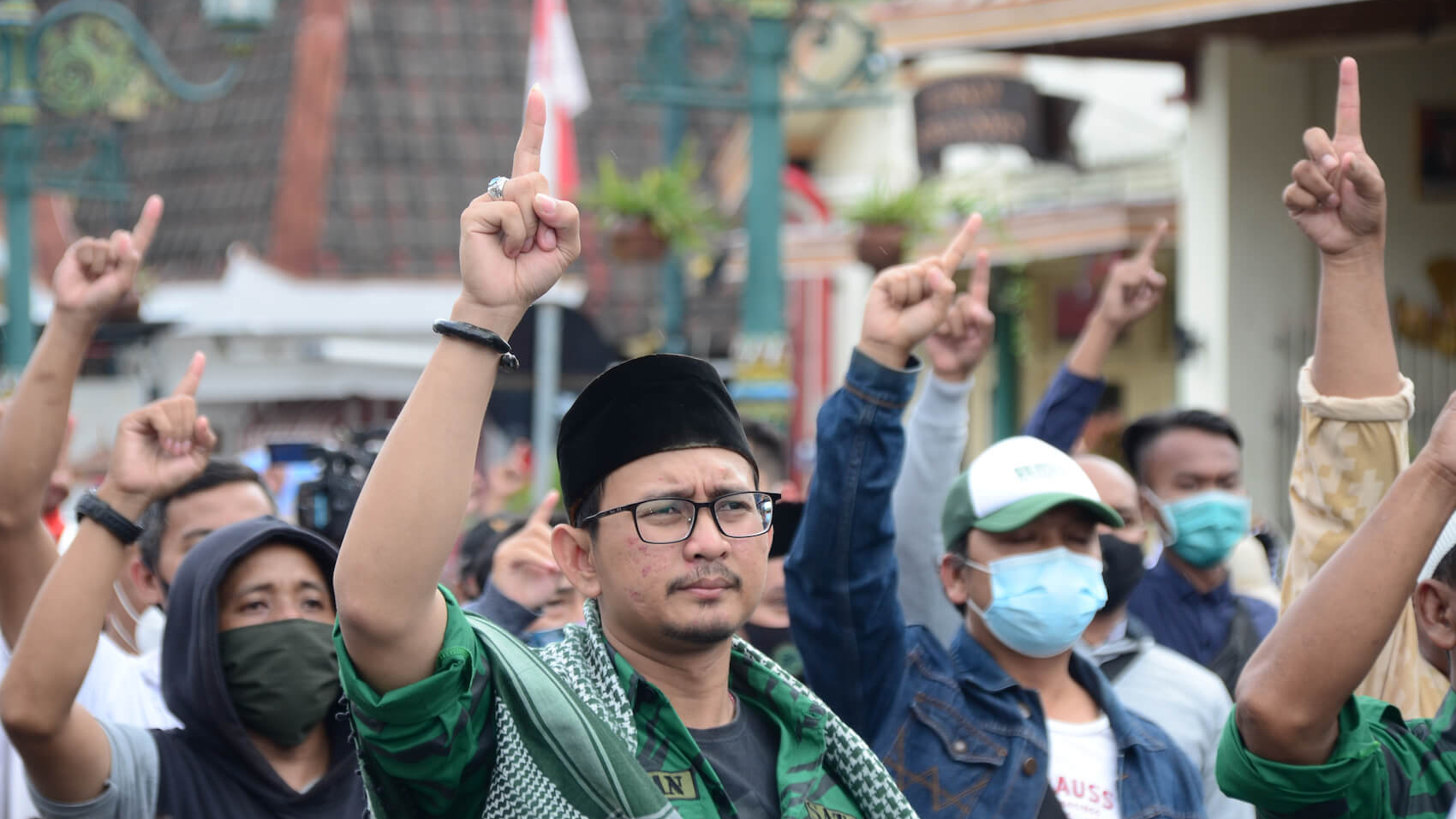
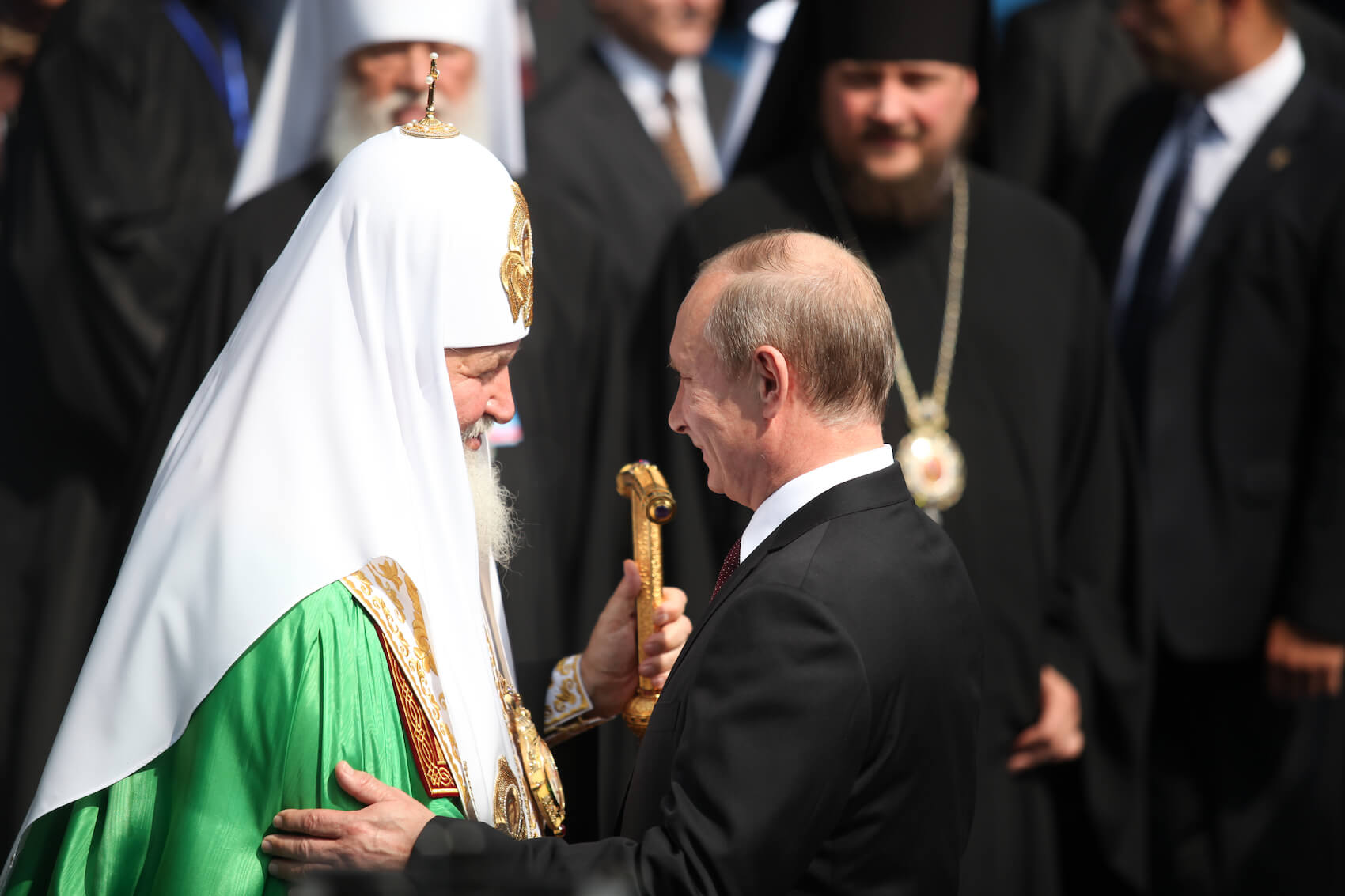
People flooded the streets of Manila to demand justice for all the victims of extrajudicial killings that happened during the time of President Duterte on June 30, 2021. Photo: Santino Quintero.

Mapping Global Populism — Panel 2: Populism, Macho-Fascism and Varieties of Illiberalism in The Philippines

Tusor, Anita. (2023). “Mapping Global Populism — Panel 2: Populism, Macho-Fascism and Varieties of Illiberalism in The Philippines.” European Center for Populism Studies (ECPS). June 14, 2023. https://doi.org/10.55271/rp0041


This report is based on the second event of ECPS’s monthly panel series called “Mapping Global Populism” which was held online on April 27, 2023. The panel brought together expert populism scholars from Australia, Hong Kong and the Philippines. As a by-product of this fruitful panel the report consists of brief summaries of the speeches delivered by the panelists.

By Anita Tusor*

This report is based on the second panel of ECPS’s monthly panel series called “Mapping Global Populism” which was held online in Brussels on April 27, 2023. After concluding our “Mapping European Populism” Panel Series, ECPS is moving beyond the borders of Europe and expanding its project to include cases of populism around the world by organizing a new panel series to map global populism, bringing scholars together every month to discuss the state of political populism in a different region of the world. The second panel hosted 4 prominent scholars from Australia, Hong Kong and the Philippines. As a by-product of this fruitful panel, the report consists of brief summaries of the speeches delivered by the speakers.

The panel was moderated by Dr Paul Kenny, Professor in the Institute for Humanities and Social Sciences at the Australian Catholic University and included the following speakers: Dr Adele Webb, Research Fellow in Democracy and Citizen Engagement at the Centre for Deliberative Democracy and Global Governance, University of Canberra; Dr Mark Richard Thompson, Professor of Politics at Department of Asian and International Studies and director of Southeast Asia Research Center at the City University of Hong Kong; Dr Jean S. Encinas-Franco, Professor in the Department of Political Science at the College of Social Sciences and Philosophy, University of the Philippines at Diliman; and Dr. Jefferson Lyndon D. Ragragio, Assistant Professor at the Department of Science Communication at the College of Development Communication, University of the Philippines at Los Baños.


“Populist Are Rather Want to Provide a Mirror to the People”

In addition to leading the public, Duterte has also very much followed the public. This tells us something about populism in general too where we are often conditioned to think about populist demagogues who lead the people and drag them along to their own sort of Machiavellian purposes. Very often what we see is that populists are rather want to provide a mirror to the people and actually reflect popular views. So, in the Philippines case, this obviously raises some disturbing implications, which is that we have essentially popular illiberal democracy or popularly illiberal views.

Dr Kenny started his introduction with a brief overview of the populist administration in the Philippines. Although Rodrigo Duterte left his office in 2022, he has left a unique legacy in the study of populism and democracy which forces us to question our preconceptions. By any measure and source, Duterte’s six years of presidency was extremely violent. Official figures put the death toll of extrajudicial killings somewhere around 6.000 (FDEA, 2022), while NGOs and human rights organizations, journalists and other civil society monitors put the figure over 20.000 or even closer to 30.000 (Roudabeh and Buenaventura, 2021, ICC, 2023, UN OHCHR, 2022). Among those deaths were a number of journalists whose death coincided with the general erosion of press freedom (Amnesty International, 2022). There was also repression of judicial autonomy with frequent interferences and intimidation of the judiciary, including the deaths of some judges and lawyers. 

Despite this, what you might call a certainly discomforting record, Duterte remained -throughout his term in office- extraordinarily popular. This phenomenon is similar to his predecessors whose popularity didn’t dip after an initial honeymoon period, whether that lasted a few months or a few years, they remained popular. As Dr Kenny pointed out, we could see the same with the chairperson of PDP-Laban: right through to the end of his administration, Duterte’s support remained widespread across different demographics. According to analysis of public opinion data, the former president’s support was generally higher among younger and better educated Filipinos (Kenny and Holmes, 2020). Dr Kenny also noted that, although Duterte was initially more popular among men, this gender gap actually disappeared after the first few months of his administration. 

The Philippine President, famous for his penal populism, was especially popular because of his signature war on drugs and illegal drugs campaigns. This campaign in particular of all the policies of the Duterte government met with extremely high approval; usually up around 90 percent (Ibid.). Nonetheless, his administration was not only popular because of the war on drugs. For instance, despite his public buffoonery on occasions, he attended very carefully to economic matters, especially inflation. Data shows very clearly that his popularity tracks inflation (Reuters, 2018). Whenever it went up, his popularity suffered modest declines and he was very careful to address inflation both on a national and subnational level. Economic issues in general were never far from the mind of Duterte, his pollsters and administrative (Capuno, 2020). 

Professor Kenny has briefly tackled the issue of succession as well, highlighting that Duterte has sought to influence the succession to his chief ally, Senator Bongo, with his daughter Sarah Duterte proposed as vice president. The internal machinations among the elite eventually scuppered these plans with Sarah essentially rejecting this idea. In the end, Duterte was unable to secure his preferred succession. This, in many ways, is the very definition of democracy: an election removed him from office and prevented him from determining who would follow him. So, we had this kind of paradoxical situation, explained Dr Kenny: Duterte was quite illiberal on many key issues, especially around (1) judicial checks on the executive, (2) legislative checks on the executive power, (3) on press freedom and (4) public checks on executive power. Nevertheless, he remained extraordinarily popular, and the regime remained essentially democratic (Kreuzer, 2019). This is a real puzzle. To solve it, Dr Kenny’s own intuition and publications point us towards populism which can perhaps help fill the gap and provide an explanation.

To flag some of the issues that our moderator thought the concept of populism and theories of populism can help us resolve, the first is the fact that Duterte was very much a charismatic leader and individual leader who portrayed his administration as an essentially personalist rule which was sanctified by democratic elections and by popularity. This meant that Duterte had a very limited political organization behind him since he relied extraordinarily on popular support, on direct relationships with the people. Ultimately, in contrast to regular political parties in the West, he couldn’t rely on any guarantees from parties. Consequently, he paid a great deal of attention to public opinion polls, and he was quite sensitive to them.

In addition to leading the public, Duterte has also very much followed the public. This tells us something about populism in general too where we are often conditioned to think about populist demagogues who lead the people and drag them along to their own sort of Machiavellian purposes. Very often what we see is that populist are rather want to provide a mirror to the people (Panizza, 2005) and actually reflect popular views. So, in the Philippines case, this obviously raises some disturbing implications, which is that we have essentially popular illiberal democracy or popularly illiberal views. Lastly, closing his provocative framing of our second panel on global populism, Dr Kenny has mentioned that although in their lectures, some of our panelists may mention a lot of the negative things that Duterte has done, nevertheless, we have to think about what this means in a democracy, if those negative things including something as disruptive as the war on drugs are actually popular. 

Dr Adele Webb: “Populism, Illiberalism and Authoritarianism in the Philippines: From Past to Present”

The late Marcos and Duterte in their authoritarian populist style have also spoken of good model citizens who are deserving of rights versus those who weren’t. Yet arguably their populace is based more on the idea of unity than it did on division. And of course, the closing of democratic spaces by calling for unity should remind us of the most recent election. The platform that Bongbong Marcos and Sarah Duterte joined was unity. Unifying north and south, unifying two powerful political families, and unifying the country against ‘disruptive opposition voices’ who want to raise questions about the sins of both fathers.

The first presentation was carried out by Dr Adele Webb from Brisbane who noted that this is an important year for Australians as they vote for a referendum to alter the constitution in recognition of the Aboriginal and Torres Strait Islander Voice to represent Indigenous Australians to the parliament and federal government on matters of Indigenous affairs. Moving on to the subject of the panel, which is a different contested landscape, Dr Webb first presented the structure of her lecture on populism in the Philippines. Her speech was organized around three ideas or three findings that are pertinent to our deeper understanding of the populist phenomenon as it manifests in the Philippine context, but which also contributes some closing reflections on how the Philippine case and its dynamics might sharpen our use of the term populism more generally.

According to the first panelist, in thinking about the existence of populism in the Philippines, there are three broad themes that are significant to note. The first is the fact that like many other postcolonial democracies, there are permanent features of the political arena, both in terms of institutions and in terms of voter attitudes that match descriptive representations of populism and the characteristics of the political landscape that provide a favorable political opportunity structure for populist politics. The electoral arena is dominated by moralistic rather than programmatic appeals. In the context of weak parties and the almost total absence of ideologically and ethically driven parties and identities, democratic competitions founded on social cleavages or competing ideas are very rare. Instead, political actors vying for power, foster a sense of symbolic performative vertical accountability between the people and themselves by portraying themselves as the main custodian of public interests and citizen demands. Citizens, for their part, tend to be more tolerant with strong executive power, with limited legislative intervention, desiring quick fixes and decisive actions. And all of this, of course, relates to what scholars have pointed out already that the Philippines is a quintessential case of O’Donnell’s (1994) delegative democracy categorization. Pluralism is weak and the political actors not only use this but reinforce it by talking of a unified people, as if the country needs to have one heart, one soul, one mind and only then can overcome the challenges that it faces. Together these factors provide a fertile ground for populist appeals. 

Nonetheless, Dr Webb reminds us that -while actors that we might describe as populist-, come and go, the resonance and potency of popular sentiment remains. We have witnessed this in the striking consistency in political rhetoric of key presidential figures. The way Corazón Aquino talked about the path to transformation when she was elected following the spectacular deposing of the late Ferdinand Marcos in 1986, was at times almost indistinguishable from the way Manuel L. Quezon talked about transformation in the late 1930s and early 1940s. Moreover, even the way Marcos himself talked about it. She made herself custodian of the nation and its prosperity, perpetuating the motif of “people’s power” that she spoke not in conservative but in revolutionary terms. “Now the country is back in our hands. Another revolution is about to begin,” she told an audience of workers on Labor Day in 1986. If Marcos had become demonized as the epitome of Philippine moral corruption, Aquino was the opposite, symbolizing everything that was morally good. Despite this division between “good” and “bad,” she stated that “Only the power of a unified people could make it succeed.” 

The late Marcos and Duterte in their authoritarian populist style have also spoken of good model citizens who are deserving of rights versus those who weren’t. Yet arguably their populace is based more on the idea of unity than it did on division. And of course, the closing of democratic spaces by calling for unity should remind us of the most recent election. The platform that Bongbong Marcos and Sarah Duterte joined was unity. Unifying north and south, unifying two powerful political families, and unifying the country against ‘disruptive opposition voices’ who want to raise questions about the sins of both fathers.

Moving on to her second theme that is noteworthy when considering populism in the Philippine context, Dr Webb discussed the missing factors of populism in the Southeast Asian country, as despite the permanent presence of popular speeches on the political landscape, some things considered integral to the rise of populism elsewhere are largely missing in the Philippines. In European liberal democracies, the rise of populism has gone hand in hand with increasing political polarization. The radicalization of publics and discourse, hyper partisan media that fosters antagonism, together these two phenomena, populism and polarization, are deemed the great threat to the liberal democratic order. In contrast to this, the Philippines stands out as a country with low political polarization. 

Duterte’s popularity took on an almost unique polar nature. It’s not to say that there were no opponents inside and outside Congress, but instead of developing into a coherent anti-populist block, as has been observed elsewhere, Duterte enjoyed an unprecedented cross-class approval that endured his six-year term. There is an important exception to this according to Dr Webb. Before Duterte, whenever the Philippines was invoked in discussions of populism, it was Joseph Estrada who was named. Although he represented a different brand of populism, and he defied all the old, typical Presidents. “The us” and “them” of his highly persuasive, populist performance was based on material grievances, on the deep social inequalities that marks society. He had chains of vertical loyalty but not with the morally pure, unified people but predominantly with the poor. For the first time, populism produced polarization. Both the grand coalition of anti-populist, anti-Estrada movement and those who mobilized in Estrada’s defense, each saw the other as enemy of democracy and themselves as democracies’ true agents. Therefore, if in the long history of politics in the Philippines, this is the exception then how do we understand the grievances and anxieties that have driven populist politics, particularly the authoritarian or illiberal kind of Duterte and Marcos, which uses popular sentiment to legitimize state repression?

The third point made by Dr Adele Webb stated that to understand the resonance of populist appeals, and the logic of populist voters in accepting them, we need to consider their deep historical roots. So, there are novel features of Duterte’s regime that deserves attention, of course, not to mention the victims of his vile war on drugs. Yet, at the same time, if we’re using populism as an analytical concept, we should place his politics in a long view, and we should seek to understand the logics that drive his appeal in historical context. If we don’t historicize our analyses, at least two things are at stake according to the warning of the panelist. The first is if we continue to give too much power to populist actors as if they have made people do things that are simply cruel, that make no sense and have no relationship to the democratic desires. And second, if we don’t historicize, we fail to acknowledge that political attitudes and political institutions are produced by and producers of the conditions of possibility.

Considering Duterte’s platform, Dr Webb points out that it was based around igniting two sources of popular anxiety. The first was related to law and order. The Philippines had become a narco-state, and economic and political stability were impossible if this problem wasn’t eradicated. “It’s going to be a dictatorship,” he warned in a 2015 TV interview. The police and the military were the backbone and his electoral campaign translated into a state sanctioned killing spree. This wasn’t the only anxiety Duterte has inflamed. He was also a populist nationalist, who preyed upon the fragile sovereignty of the post-colonial Philippines. He claimed to embody the Philippines defiance of an unresolved history of colonial subjugation and indignity. The resonance of this was vividly captured when he infamously cursed US President Obama during the press conference in Davao: “I am the president of a sovereign state and we have long ceased to be a colony. I do not have any master, but the Filipino people.” The antagonism here was not between moral citizens versus criminal scum, but the unified and sovereign Filipino people against a malignant foreigner.

This later anxiety, Dr Webb argued, has been mostly ignored. Perhaps because it implicates non-Filipinos. The formal, law and order pitch has gained the most attention. The grotesqueness of the war on drug has proved both hard to watch and hard to look away from. “Many people at the moment are abusing that freedom and doing things which are not good. But we have this one politician, Duterte, whose type of leadership is like Marcos. And many people like that. And if you see Davao right now, it is one of the safest places in the Philippines. For me, if that type of leadership is implemented again, I think it’s much better,” said one of the interviewees of Dr Webb in 2015 showcasing the popularity of penal populism.

Dr Webb tried to make sense of such sentiments by explaining how some have explained it as evidence of lingering authoritarian nostalgia from the Marcos period, while others argued that it is a case of penal populism, in which modest economic growth empowers an expanding middle class, who express their anxiety about criminality and government corruption. While both these explanations bear some truth, both need to be further historicized. As this sentiment predates the post-1986 era. Dr Webb’s research demonstrates that as far as back as the 1940s, a perceived need for discipline was shaping middle class perceptions of what was a legitimate exercise of democratic power. In particular, the type of leadership that was deemed necessary. Moreover, in the late 1950s, Carl Landon noted that the general increase in crime and disorder since the end of the war had led people to say that there’s too much democracy, and that a little less democracy would be better for the country. By the early 1970s, when Marcos declared the resuscitation of Philippine democracy it was only made possible through his strong, autocratic leadership. Newspaper columnists at the time summed up the prevailing mood as the lack of discipline plunged the nation into the depths. It was exactly what the president did. He put a stop to a total lack of discipline. 

The argument that our lecturer has made in her book was that these sentiments reflect a sustained ambivalence towards democracy (Webb, 2022). And that ambivalence in turn has its roots in the paradox of democratic empire that was unleashed on the Philippines by the United States from the turn of the last century. If we want to talk about the electorate’s propensity for patronage politics, then we must talk about Philippine democracy’s founding patron. There is a striking resemblance between the logic of the electorate, the way they look at the way of democratic progress is imagined and the way the US colonial project of benign authoritarianism operated in the Philippines. It was a logic of pursuing national dignity and democratic ideals through the denial of liberty. Acceptance of their rights for the greater good was deemed to be appropriate behavior of the good student of American democratic tutelage. Unlike in other post-colonial contexts, these imperial logics of governance have penetrated the psyche and the imaginings of how democracy works, and they are very difficult to shake. 

Dr Webb has concluded her presentation by making some final remarks about what the complex case of the Philippines means for our understanding of populism more generally. If the logics that drive populism in the Philippines are deeply rooted in colonial history: What if anything, does it have to do with populism elsewhere? Can the term traverse such diverse contexts? It can, according to the research fellow of the University of Canberra, but only if we see populism not as the problem with our political systems, but as a manifestation of grievances with existing institutions of representative democracy. A signal of the failure of regimes to adequately express the political aspirations of people and to give a fact to notions that are supposedly central to our democratic normative ideal: popular sovereignty and constituent power. This is not to defend populism as a model of political change, but to say that if we blame the unsustainability of our democracies on populism, we sideline and ignore the causes of the feelings of alienation that propel it. 

In the Philippines, this is an old story, the institutions of representative democracy were compromised at their conception under a US colonial administration. At its core, the rise of populism is about the failure of institutions of democracy to ever accommodate the constituency, beyond the populist performative realm. In Europe, it’s a more recent phenomenon accelerated by cultural shifts brought about by neoliberalism and the digital transformation of our social lives. But in both places, populist voters conclude that the only way to make the principle of popular sovereignty effective is to delegate power to a strong, usually male and blustering figurehead, whose transgressions of liberal representative institutions, they mostly forgive, due to the lack of alternative means for addressing deep seated structural inequalities. 

Dr Mark Richard Thompson: “Duterte’s ‘Violent Populism’ in Comparative and Historical Perspective”

Duterte did not undertake major socio-economic reforms and his anti-oligarch rhetoric only served and benefitted his cronies. Duterte was claiming drugs were the source of poverty and if they can just eradicate it, it will fix the economy. This obviously deflects attention from the “death of development” which entails high poverty rates despite decades of high growth. Duterte’s strategy of securitization and “brute force government” has also been employed during the pandemic undermining accountability in a weak state with a poor record of human development.

Professor Mark Richard Thompson presented Duterte’s violent populism in a comparative and historical perspective. To begin, he noted that one problem with populism studies is that it is or has often been very Eurocentric. Although the US gets an honorable mention recently and Latin America sneaks in, we must highlight the fact that Latin American populism has been studied for quite a long time. This is an interesting aspect that in recent studies, particularly political science, a lot of the material is drawn from the European cases, therefore paying more attention to the Philippine case is a great initiative.

Dr Thompson started out his presentation by picking up on some of the comments made by Dr Kenny in his introduction, particularly his point about the paradox of democratic illiberalism, and some comments made by Dr Webb about democratic ambivalence and the nationalist component of Duterte’s appeal. The historical components weren’t really emphasized in the second presentation, but that is not to say it has no vital importance. The professor of the City University of Hong Kong first reflected on Dr Webb’s ideas about late colonialism in the Philippines, then gave a brief overview of his presentation, which touched on discussions of Duterte’s misogyny and also about the role of social media, how important it was for the rise of Duterte and his successor, Marcos Jr. 

Dr Thompson emphasized the comparative aspect of Duterte’s populism as it was mentioned in the lecture title. Duterte does seem to reflect the global trends during his presidency, yet the important distinction is that he was the only illiberal populist to instigate mass murder of tens of thousands. By taking a close look at the figures published not just by NGOs, but by the Commission on Human Rights as well. A government agency, which Duterte has tried to defund but his allies in Congress ultimately backed away from this. Furthermore, we can find numbers by an initiative at the University of Philippines and some international groups that have been coming up with databases as well. Ultimately, we can safely talk about up to tens of thousands of murders confirmed by the Philippine government under Duterte, when they went through their declamatory phase when they were proud of the killings, and they propagated it in the media about what they were doing to stop drug criminality – often incriminating debt pushers and small-time drug users. They have only changed this approach after incredible pushback internationally and domestically. Although that didn’t stop the drug war but did lead them to change the counting and obscure the numbers of victims. 

The lecture was continued by highlighting that Duterte is distinctive because he was engaging in mass murder against his own citizens. We can talk about other illiberal populists such as Putin invading Ukraine, but this is different, it was war on the Filipino people. It was a particularly virulent form of illiberalism as it took the aggressive intent of the idea of us versus them. The populist polarity of two deadly extremes. Furthermore, the ‘othering’ was not based on religion, ethnicity, or migration, but it was othering outsiders. It was against the poor because overwhelmingly – with the important exception of the journalists, judges, and the local mayors -, over half of those identified by Duterte’s drug war were actually murdered, most of them had a poor socio-economic background. There were a few high-profile cases of celebrities and even celebrities were killed, but it was overwhelmingly a war against the poor. 

It was urban, poor, young males, they were the main victims. Nonetheless, Duterte won popular support, including among the poor (Kusaka, 2017). Interesting ethnological studies on this phenomenon, as well as, of course, the opinion polls, show us why Duterte is distinctive from the so-called “base populists” like Bolsonaro and Trump. They had highly polarized societies with a very affectionate base that did not care what these characters were up to. Duterte had effectively a vast portion of the population supporting him. Although it is worth pointing out that there’s an increasing discussion about whether Duterte’s support was due to fear. Dr Thompson believes that overwhelmingly it was genuine support even though there was a bit of a fear factor. People, particularly poor people, for obvious reasons were concerned that the drug war might actually affect them.

One framework for understanding Duterte’s policies has been penal populism (Pratt, 2007, Curato, 2016, Kenny and Holmes, 2020). But Dr Thompson warns that crime concerns were limited until Duterte securitized drugs in his 2016 campaign (Quimpo, 2019). Crime, which was the lowest concern, jumps up briefly during Duterte’s campaign from December 2015 to his election, then it goes back down. Inflation, as it was mentioned by Dr Kenny, remains the most important consideration of Filipino people until today. Moreover, according to the lecturer, penal populism has generally been involved with people being arrested and put in jail for a long time and although that did happen in the Philippines, mass arrests, but there were also mass killings, extra judicial killings. These killings were going on and the drug war continued despite growing domestic and international criticism.

In terms of the origins and nature of Duterte’s violent populism, one has to understand how he nationalized it after having it first developed locally in Davao as mayor for a number of terms. Eventually, he became a popular mayor, dealing with the communist insurgency and dealing with high crime rates. Then he came up with a new idea of what can be called “neo-bossism” where instead of intimidating voters, he wooed them by promising to protect the ‘good people’ against ‘drug induced evil.’ So again, populist polarity worked in Duterte’s favor without upsetting voters and attracting them. His messages resonated well, particularly given the failures of what could be called the liberal reformist regime of Cory Aquino and Fidel Ramos, her successor. The Estrada administration was a bit of an exception, the liberal reformers didn’t like that, and they overthrew Estrada extra-constitutionally. Gloria Macapagal Arroyo was Estrada’s successor. She was supposed to be a liberal but turned out to be a very problematic administration. Finally, the son of Benigno Aquino becomes president, and we seem to have this idea of a good reformist fighting against the problems of the corrupt Marcos dictatorship and continuing to undertake reforms for decades. 

This ultimately is seen as an institutional failure, because although the economy was restored after Marcos left behind an economic disaster despite the recent nostalgia for his presidency, growth was restored but it was not widely distributed, and poverty remains very high in the Philippines. Depending on different methods, more than half the Filipinos will tell pollsters that they are poor. Estrada’s populism, which could be called as proletarian populism, was undermined. There were a number of other political figures who ran against Gloria Macapagal Arroyo, and a movie star Fernando Poe Jr. was disqualified. Furthermore, another major candidate was undermined through what can be called a selective Senate investigation. So, according to Professor Thompson’s explanation, there was an alternative rhetoric, which was certainly less deadly than Duterte’s populism. Duterte has used a similarly repressive repertoire in his failed pandemic response, which can be called “brute force governance” shielding him from responsibility and accountability, as well as deflecting from his obvious governance failures and demonstrating how effective it is as a legitimation strategy. 

Another interesting point our second speaker has made is Duterte’s claim to be a socialist despite harming the poor through his war on drugs and not changing the Philippine economic model that did little good to the poor. He has stated that he would be the country’s first socialist president and started negotiations with the Communist Party when he took office. He also had friendly relations with communist politicians, yet later declared them terrorists and resumed extrajudicial killings against the left. Continuing with his remarks on Duterte’s socialism and economics, Thompson mentioned that Duterte did not undertake major socio-economic reforms and his anti-oligarch rhetoric only served and benefitted his cronies. What we can see is that Duterte was claiming drugs were the source of poverty and if they can just eradicate it, it will fix the economy. This obviously deflects attention from the “death of development” which entails high poverty rates despite decades of high growth. The strategy of securitization and “brute force government” has also been employed during the pandemic undermining accountability in a weak state with a poor record of human development.

Following this, Thompson provided a brief overview of Duterte’s macho populism. He was a misogynist with a hyper masculine display that was seen to demonstrate its authenticity, particularly against the hypocrisy of the old liberal reformers (Encinas-Franco, 2022; Parmanand, 2020; Curato and Ong, 2018). It is important to point out that four of the leading opposition figures Duterte has targeted were women and he went after them very harshly. For daring to challenge the drug war, Senator De Lima was shamed, accused of committing a ‘dual class and gender sin’ and she remains in jail until today on trumped up drug charges. Duterte has also fired his vice president Leni Robredo, who was separately elected in the Philippines, from the cabinet after she criticized the drug war. Maria Ressa, winner of the Nobel Peace prize, still faces a number of legal issues and cyber libel cases that were clearly initiated by Duterte’s administration to intimidate the media. Finally Chief Justice Maria Serena was removed after defending judges tagged for drugs. 

In his last point, Professor Thompson focused on the issue of illiberalism. There has been a lot of discussion in the literature about how widespread anti-pluralist views are in the Philippines and support for a strong leader who gets things done unhindered by constraints (Pernia, 2021). Kenny and Holmes (2020) have pointed out that this shows support for illiberal policies not illiberalism generally or the popularity of the drug war. According to Thompson, these studies demonstrate how Duterte could enjoy high popularity and electoral legitimacy despite massive violation of human rights. It also seems to fit the theory of a famous Philippine political scientist Agpalo’s (pangulo theory, 1981) who talks about the preference of Filipinos for strong terms, and would also help explain this nostalgia for the Marcos dictatorship. The latter helped his son, Marcos Jr. to win the 2022 elections and explains why Cory Aquino is now seen as a weak president. Consequently, Dr Thompson states that there is a strong liberal tradition reminding us that Cory Aquino has once unseated Marcos suggesting that the current illiberalism is situational. We also do see that, even if it’s not a coherent opposition movement, there are strong anti-drug and then later anti-terrorism protests in the Philippines. 

To conclude, the lecturer highlighted that Duterte was ahead of the recent illiberal populist curve elected a few months before Trump and a year before Bolsonaro. Albeit there are similar social media ills to be looked at such as Cambridge Analytica and Facebook. A Facebook executive spoke about one reason why the Philippines has been identified as patient zero is Facebook disinformation. Illiberalism seems to be persisting under Duterte’s successor, Marcos Jr. Although Duterte’s illiberal realignment toward China is now being re-evaluated by the new president under pressure from the US, also by the military and public opinion as well. This marks an interesting shift, yet the main takeaway here is that the Philippines is being an extreme example of the populist dichotomy of ‘the good people’ and ‘criminal others’ used to legitimate mass killings. It was a highly militarized brute force governance by Duterte’s – a democratically legitimated but highly illiberal leader-, who blames ne’er-do-wells for complex social problems facing the country. This strategy has also deflected attention from mass poverty by what Bello (2019) has called “a fascist original.” Finally, the current dominance of illiberalism in Philippine politics has been met by considerable, if not entirely, coherent, liberal pushback, which goes back to a century-old tradition of resolve and the independence movement more generally.

Dr Jean S. Encinas-Franco: “Gendered Populism of Dutertismo and Hypermasculinity in the Philippine’s politics”

Looking at migration and Duterte’s gendered rhetoric Dr Encinas-Franco uses Moffitt’s definition of populism as a political style and asks the question: Why is Duterte very popular with Filipinos overseas? Duterte garnered 70 percent of the votes in 2016 among Filipinos overseas. Since 2004, the government has allowed overseas migrants to vote if they are still Filipino citizens. The former president’s candidacy has increased overseas votes by more than 30 percent. These votes generally have not been a significant contribution to the overall voter turnout until 2016. Moreover, a lot of overseas Filipinos campaigned for Duterte.

Dr Jean Encinas-Franco talked about gendered populism and hypermasculinity in the Philippine’s politics. In the lecture’s outline, Dr Encinas-Franco broke down her presentation into four main points: (1) populism, gender and international migration; (2) Duterte as a populist and a brief historical background of Philippine out migration; (3) Duterte’s gendered rhetoric towards migrants; and (4) some concluding remarks. To start with the first point, the third speaker reviewed the literature on gender and populism: There has been a lot of studies linking the two together and, in fact, it has been expanding. Drawing from Saresma (2018: 177), who coined the term ‘gendered populism,’ she refers to the concept, “a simplifying understanding of gender as a ‘natural,’ essentially dichotomous order based on positioning both women and men in hierarchical locations in terms of power.” 

Moving on to introduce international migration to the equation as well, the Professor points out that the literature on gendered populism and migration has a Eurocentric bias, which Dr Thompson referred to a while ago about populist studies in general. If these studies talk about international migration, they usually refer to host states and the usual strategy would be for populists to engage in racism and ‘othering’ of immigrants, coupled with criticism of feminism and privileging the traditional family to protect them from the ‘othered immigrants.’ Some argue in defense of why gender and migration has become very prominent in Europe is that immigration has been a crisis in most countries in Europe. Yet in the Global South, particularly in the Philippines, Philippine labor out migration actually also has a lot of history of crisis situations in which the government had to break its relations with the Coalition of the Willing. 

Looking at migration and Duterte’s gendered rhetoric Dr Encinas-Franco uses Moffitt’s (2016) definition of populism as a political style and asks the question: Why is Duterte very popular with Filipinos overseas? Duterte garnered 70 percent of the votes in 2016 among Filipinos overseas. Since 2004, the government has allowed overseas migrants to vote if they are still Filipino citizens. The former president’s candidacy has increased overseas votes by more than 30 percent. These votes generally have not been a significant contribution to the overall voter turnout until 2016. Moreover, a lot of overseas Filipinos campaigned for Duterte. In her study, Professor Encinas-Franco traces their support and their fanaticism to Duterte in 2015. 

The context of Philippine labor out migration is such that since 1974, the government has been involved in labor export through the labor code, which institutionalized overseas employment. Today, there are more than 12 million Filipinos abroad in more than 200 countries and territories. Although this data, warns Dr Encinas-Franco, is severely underreported. It has also consistently been the fourth largest remittance recipient country in the world. In 2020 alone, the Filipinos abroad remitted $35 billion dollars to their country of origin. A key characteristic of overseas migration is the feminization of migration in which not only 60 percent of Filipino migrants are women, but a lot of Filipino migrants are also working as so-called feminized domestic workers and caregivers. Moreover, migration scholars also refer to the government as paternalistic. In terms of how they view Filipino migrant women, there are stricter regulations for women migrants’ mobility compared to men, and deployment bans on domestic workers. Nine out of 10 migrant domestic workers are women. On the other hand, there is also a huge bureaucracy to cater to Filipino migrants’ needs. 

Looking at a case study of Duterte’s presidential visit to South Korea in 2018, where he had delivered a three-hour speech. Duterte’s speech has received particularly strong attention from migrant Filipinos in Seoul. Furthermore, this speech has made international headlines because he gave a migrant Filipino woman a kiss. Professor Encinas-Franco has analyzed the speech and its transcript to identify what are the themes that comprise this speech. One central trope was “the protective and angry father.” In his speech, he said that he will protect anyone from destroying his country (referring to drug addicts). Duterte framed his message in a way that makes sense to Filipinos abroad by emphasizing that their children’s welfare is his priority. This resonated very well to migrant Filipinos abroad and, in a sense, it justified violence against fellow Filipinos as extremely necessary. This is just one sample of his rhetoric as a migrant, as a protective and angry father. 

The second trope mentioned by our third speaker was “the Filipino every man.” Duterte has usually dressed in ordinary clothes, not in formal attire. The populist ex-president would also use humor and curses. Remaining relatable but projecting the image of a very powerful man. Dr Encinas-Franco has also noted that in the speech in South Korea, Duterte admitted to having two wives. Although he has to make this moral transgression excusable by saying that there is no such thing as a first family. “We are all first family, we are all workers of the government, working for the Filipino people.” A very symbolic message which certainly resonated very well with Filipino migrants because in this rhetoric, they would feel that they are really part of the nation, that their president really cares for them, and that they don’t mind whether he has two wives. They also don’t mind whether this is some form of a double standard given that he has accused late legislators Senator Lila De Lima of committing adultery.

The third trope explored by our lecturer is that Duterte was a “Ladies’ Man.” Of course, to justify his actions, he has asked for permission to kiss the migrant woman, in fact, he also asked whether the migrant woman had a husband, explained Professor Encinas-Franco. Nevertheless, he presented it as something that’s ordinary and that these people also said that it was just for enjoyment and a part of Filipino culture. Drawing from Mendonca and Caetano (2021: 227) who studied Bolsonaro and said that this is common, Dr Encinas-Franco made parallels between the two populist leaders. The ladies’ man approach is a formula that the voting base of populists do not mind mainly because “it gives new meaning to the authority of the office and the denial of its standard forms.” It means that Duterte is really one with the people. 

The reaction from the Duterte-camp further amplifies and forgives Duterte’s messages. The reason behind this is that they see it as a joke or part of Filipino culture which does not need to be excused or apologized for. This erases and closes any form of resistance because it’s merely a joke. The fact that women were also laughing as seen on the video of the South Korean speech meant compliance to the patriarchy (Connell and Messerschmidt, 2005: 848). There were also women, Cabinet Secretaries and Undersecretary from the camp of Duterte who didn’t mind what the party leader did. But what does this make of Duterte’s behavior? It forgives the perpetrator. Moreover, even legislators noted that the president’s behavior was an assault and abuse of power. Notwithstanding, when they look at the Philippines’ good record in terms of gender equality laws, they actually individualize Duterte’s actions and rhetoric. They tend to frame Duterte’s misogynistic actions, rhetoric, and practice as an individual issue, rather than a societal and systemic issue. So, in effect that tells us that it closes resistance.  

In her concluding remarks, Professor Encinas-Franco emphasized that the reason why Duterte’s speech and his rhetoric is so powerful among migrants is that it’s quite different from the usual bureaucratic language that the state employs. The state is very much involved in catering to every migrant’s needs from pre-employment to repatriation, but when in doing so, the state uses bureaucratic or legalized rhetoric, while Duterte’s case is very much personalized. His behavior has also embodied masculine entitlement that is not inherently different from the entitlement inherent in deployment bans and stricter regulations for migrant Filipino women. Finally, Duterte’s populist style was very popular, resonated very well with people from all walks of life and ultimately stifled resistance.

Dr Jefferson Lyndon D. Ragragio: “Media Populism and Anti-Free Speech in Duterte’s Philippines”

While the country prides itself as once a bastion of free speech in the region, the Philippines under the Duterte administration reported major push backs against such areas as rule of law, civil liberties, free expression, and press freedom. Since 2018, the Philippines has been classified as an electoral autocracy, meaning that while the country observes multiparty elections, there are insufficient levels of rights in areas like right to suffrage and free expression according to the V-Dem Institute. The classification of electoral autocracy is a downgrade from what the country used to be prior to the Duterte era, which is electoral democracy where there are relatively free and fair multi-party elections and satisfactory degrees of rights.

In the last contribution, Dr Jefferson Lyndon Ragragio spoke about media populism and anti-free speech on Facebook in the Philippines between 2016 and 2022. Using a more modest approach to his presentation, Dr Ragragio focused on the so-called anti free speech. He argued that part of the political legacy of Duterte’s administration is anti-free speech that characterizes a complicated hybrid of hateful, banal, and light rhetoric that bridges the putative relational ties of the leader and his idealized public. Dr Ragragio has aimed to show how Duterte’s anti free speech thrived within the climate of a network of disinformation, and to some extent affective and emotional politics that collectively spoil the civil consensus on political participation.

Dr Ragragio used the case of the Philippines, a Southeast Asian nation of over 75 million Facebook users regarded as the social media capital of the world to demonstrate his arguments. While the country prides itself as once a bastion of free speech and democratic movement in the region, the Philippines under the Duterte administration reported major push backs against such areas as rule of law, civil liberties, free expression, and press freedom. Since 2018, the Philippines has been classified as an electoral autocracy, meaning that while the country observes multiparty elections, there are insufficient levels of rights in areas like right to suffrage and free expression according to the 2023 report of the V-Dem Institute. The classification of electoral autocracy is a downgrade from what the country used to be prior to the Duterte era, which is electoral democracy where there are relatively free and fair multi-party elections and satisfactory degrees of rights. The country’s state of press freedom, once regarded as the freest in Southeast Asia, recorded yearly decline from 2017 to 2022, placing the country from 127 to 147 spots (Reporters Without Borders, 2023). So, there are certainly manufacturers or systemic – emerging and even hybridized – factors that contributed to this democratic backsliding. This type of crisis is transnational and global in character, which forces us to reevaluate some of the ways we approach the features of contemporary and digital politics. 

The concept of populism is elusive and understood in many ways, yet the key characteristics of populism, especially the notion of the people are evident in many societies across geographical lines. Some scholars of populism explain that the core element of the term is to speak and act in the name of the people broadly defined, and that this act of representing the people by the leader can be manipulated to construct political identities and political conflicts. Although sharing this observation, Dr Ragragio limited his work in his presentation to using an understanding of populism as a political communication style that uses certain rhetoric, identity, and media to connect with the people: for instance, the disenchanted or the agreed groups, while it also aggravates ‘the other’ centered around elite or the establishment.

This understanding has allowed our speaker to highlight the centrality of rhetoric and style in the communicative expression of mediated populism. In terms of its relationship with disinformation, populism is central if not intrinsic to the evolving practices of networked disinformation or what some call digital propaganda. The multifaceted practices associated with disinformation come in different forms like political trolling and digital black box in the Philippines. 

A cursory look at recent studies on free speech under contemporary populism would show a variety of speeches or brands of speeches used by populist actors. In Duterte’s Philippines, the prominent kind is that of hate speech, which aptly describes the leader’s hostility against the political opposition, including human rights activists, church leaders, and politicians opposing the brutal war on drugs. Duterte’s open hostility against the dominant centuries old Catholic Church and its teachings, something past Philippine presidents didn’t bother to do, is a clear expression of hate speech that dehumanizes and incites discrimination against the perceived ‘other.’ So, some scholars call it extreme speech that broadens the hostile character of hate speech to include culture specific practices and sentiments that resonate with expressions of the digital public. This includes such expressions as remorse and rumors that connect with the imaginations of some segments of the politics. Anti-free speech in Duterte’s Philippines is represented by hateful, banal, and light rhetoric that targets and appeals to different segments of the politics. 

In his presentation, associate professor Ragragio focused on three ways, or three narratives employed under the Duterte administration. (1) The first is the marginalization of the political opposition. (2) Second is the appeal to the notion of family. (3) Third is the appeal to the notion of religion. So, amplifying the label of terrorism in the first narrative, the diehard supporters of Duterte, popularly known as the DDS, orchestrated the supposed anti-elite and nationalist rhetoric of Duterte. DDS is a mobilized yet highly unstructured coalition of individuals and networks that maintain an active presence online, especially on Facebook and YouTube. On YouTube, for instance, it’s no less than the national government’s channel, people’s television network that reports on how DDS members worldwide are gathering to express their continued support for Duterte whose life according to his supporters is endangered by the elite. DDS uses the referee of below one or the color yellow. So, the yellow is a political color associated with another political family, another political clan to target the perceived other. Duterte and his incendiary social media armies were able to signify yellow with political opposition marked with elitism, incompetence and a bogus sense of nationalism.

The second narrative is about the populist notion of family which shows how the strongman yet compassionate brand of the leadership of Duterte is capable of securing the welfare of families, children and future generations. On Facebook, the leader was dramatically referred to as “Father of the Nation,” showing how he managed to spend quality time with family and children, despite his political career. For his online supporters, Duterte epitomizes a strong brand of leadership that can bring back the long-gone discipline expected of every Filipino. A leadership brand that is humane enough to protect the law-abiding populace. In one Facebook photo on Duterte’s page, he is promoting the caring image of the leader, notwithstanding the leaders’ press remarks against women, the clergy, local politicians, and journalists.

The third notion is about the populist notion of religion, which highlights the devout identity of the leader through practices and identification with recognized symbols of fate such as kneeling and praying, showing images of processions, being prayed over by leaders of different churches, -although these leaders come predominantly from the prominent Catholic faith-, and expressions of prayers and aspirations. The religion related posts, conflate facts and fictitious accounts to magnify the pious image of Duterte. Dr Ragragio showcased an edited photo of Duterte kneeling and praying with a comment asking for God’s protection of Duterte to provide an example of his case. Further, posts by other pro-Duterte Facebook pages would also claim that the leader was indeed a gift from God to the Philippines. 

In his speech, the fourth panelist has demonstrated the complicated mix of hateful, banal and light sentiments that target the aspirations of the digital public. The Philippine case showed how we can expand the belligerence and strict binarism typical of political populism. Features that while central to contemporary populism may not fully account for the sophisticated terms of populism and contemporary digital politics at large. Under the new administration of Ferdinand Marcos, Jr and Sara Duterte, the anti-free speech honed by the previous administration, presents real world dangers to this day. 

Duterte continues to exhibit closer ties with the church leader, Apollo Quiboloy who is in the wanted list of the US Federal Bureau of Investigation for crimes including sex trafficking of children, and fraud and coercion. The church leaders’ media, called Sunshine Media Network International, serves as one of the primary media platforms of Duterte and his supporters to attack the ‘others’ including independent media outlets and legitimate foreign bodies like the International Criminal Court. 

In the area of legislation, some of Duterte’s close allies in both houses of Congress, the Senate and the House of Representatives, relentlessly advocate pro-Duterte policies like shielding the leader from investigations into his bloody drug war. Just recently, some lawmakers proposed to upgrade the financial benefits of former presidents, citing solely the case of Duterte. In sum, what we are seeing then is the changing terms of mediated populism that can reform or disable consensus on free speech, one that can disrupt and even redefine our sense of political participation in the digital sphere. Finally, Dr Radragio reminded us to be more attentive to the innovative terms of mediated populism so we can better address the rhetorical, digital and real-world challenges of anti-free speech.


(*) Anita Tusor is a recent graduate of the Double Master’s Program of King’s College London and Renmin University of China in Asian and European Affairs. She also holds a M.A. in Applied Linguistics and a B.A. in Hungarian and Chinese Studies. Previously, she has worked with different think tanks and is currently working as a Research Assistant at the ECPS and the International Institute of Prague. Anita’s research interests include the processes of democratisation and de-democratisation, populist constitutionalism, political parties and their systems, and foreign malign influence operations.


References

— (2018). “Philippine poll shows biggest ratings slump for Duterte as inflation soars.” Reuters. September 25. https://www.reuters.com/article/us-philippines-duterte-idUSKCN1M50MD (accessed on May 20, 2023).

— (2022). “Report on investigated killings in relation to the anti-illegal drug campaign.’ Commission on Human Rights. UN OHCHR. https://chr.gov.ph/wp-content/uploads/2022/05/CHR-National-Report-April-2022-Full-Final.pdf

— (2023). “International Criminal Court’s Philippines Investigation.” Human Rights Watch. February 13. https://www.hrw.org/news/2023/02/13/international-criminal-courts-philippines-investigation (accessed on May 20, 2023).

— (2023). “Philippines.” In: 2023 Press Freedom Index. Reporters Without Borders https://rsf.org/en/index (accessed on May 20, 2023).

Agpalo, Remigio E. (1981). “The Philippines: from communal to societal pangulo regime.” Philippine Law Journal 56 (1): 56–98.

Amnesty International. (2022). “Radio journalist killing bears ‘hallmarks of extrajudicial execution’.” Amnesty International. October 4. https://www.amnesty.org.ph/2022/10/radio-journalist-killing-bears-hallmarks-of-eje/ (accessed on May 20, 2023).

Capuno, Joseph J. (2020). “Dutertenomics: Populism, Progress, and Prospects.” Asian Economic Policy Review. 15 (2): 262-279.

Claudio, Lisandro E. (2019). Jose Rizal: Liberalism and the Paradox of Coloniality Cham. Switzerland: Palgrave Macmillan.

Connell, R. W. and James W. Messerschmidt. (2005). “Hegemonic Masculinity: Rethinking the Concept.” Gender and Society 19 (6 ): 829–59. http://www.jstor.org/stable/27640853.

Curato, Nicole. (2016). “Politics of Anxiety, Politics of Hope: Penal Populism and Duterte’s Rise to Power.” Journal of Current Southeast Asian Affairs. 35 (3): 91–109. https://doi.org/10.1177/186810341603500305

Curato, Nicole and Ong, Jonathan Corpus. (2018). “Who Laughs at a Rape Joke? Illiberal Responsiveness in Rodrigo Duterte’s Philippines.” Ethical Responsiveness and the Politics of Difference. 65: 117-132, https://doi.org/10.1007/978-3-319-93958-2_7

Encinas-Franco, Jean. (2022). “The presidential kiss: Duterte’s gendered populism, hypermasculinity, and Filipino migrants.” NORMA. 17(2): 107-123, DOI: 10.1080/18902138.2022.2026107

Evie Papada, David Altman, Fabio Angiolillo, Lisa Gastaldi, Tamara Köhler, Martin Lundstedt,

Natalia Natsika, Marina Nord, Yuko Sato, Felix Wiebrecht, and Staffan I. Lindberg. (2023). “Defiance in the Face of Autocratization.” Democracy Report 2023. University of Gothenburg: Varieties of Democracy Institute (V-Dem Institute).

Kenny, Paul D. and Ronald Holmes. (2020). “A New Penal Populism? Rodrigo Duterte, the War on Drugs, and Public Opinion in the Philippines.” Journal of East Asian Studies. 20 (2): 187–205. https://doi.org/10.1017/jea.2020.8.

Kishi, Roudabeh and Tomas Buenaventura. (2021). “The Drug War Rages on in the Philippines: New Data on the Civilian Toll, State Responsibility, and Shifting Geographies of Violence.” ACLED. November 18. https://acleddata.com/2021/11/18/the-drug-war-rages-on-in-the-philippines-new-acled-data-on-the-civilian-toll-state-responsibility-and-shifting-geographies-of-violence/ (accessed on May 20, 2023).

Kruezer, Peter. (2019). “Populism, Executive Assertiveness and Popular Support for Strongman Democracy in The Philippines.” Peace Research Institute Frankfurt. January 17. https://blog.prif.org/2019/01/17/populism-executive-assertiveness-and-popular-support-for-strongman-democracy-in-the-philippines/ (accessed on May 20, 2023).

Kusaka, Wataru. (2017). “Bandit Grabbed the State: Duterte’s Moral Politics.” Philippine Sociological Review. 65: 49–75. http://www.jstor.org/stable/45014309.

Manlupig, Karlos. (2015). “Duterte Justice: Robbery, Slay Suspect Dead.” Philippine Daily Inquirer. August 21, 2015.

Mendonça, Ricardo F. and Caetano, Renato D. (2021). “Populism as Parody: The Visual Self-Presentation of Jair Bolsonaro on Instagram.” The International Journal of Press/Politics. 26 (1): 210–235. https://doi.org/10.1177/1940161220970118

Moffitt, Benjamin. (2016). The Global Rise of Populism: Performance, Political Style, and Representation. Redwood City: Stanford University Press. https://doi.org/10.1515/9780804799331

O’Donell, Guillermo A. (1994). “Delegative Democracy.” Journal of Democracy. 5 (1): 55-69. doi:10.1353/jod.1994.0010.

Panizza, Francisco. (2005). Populism and the mirror of democracy / edited by Francisco Panizza. Verso.

Parmanand, Sharmila. (2022). “Macho populists versus COVID: Comparing political masculinities.” European Journal of Women’s Studies. 29 (1_suppl): 43S-59S. https://doi.org/10.1177/13505068221092871

Pernia, Ronald A. (2022). “Authoritarian values and institutional trust: Theoretical considerations and evidence from the Philippines.” Asian Journal of Comparative Politics. 7(2): 204–232. https://doi.org/10.1177/2057891121992118

Philippines Drug Enforcement Agency. (2022). “Towards a drug-cleaned Philippines.” Facebook. June 21. https://www.facebook.com/realnumbersph/photos/2215676505280542?_rdc=1&_rdr (accessed on May 20, 2023).

Pratt, John. (2007). Penal populism. Oxford: Routledge.

Quimpo, Nathan Gilbert. (2017). “Duterte’s ‘war on drugs’: The securitization of illegal drugs and the return of national boss rule.” A Duterte reader: Critical essays on Rodrigo Duterte’s early presidency: 145-166.

Saresma, Tuija. (2018). “Gender populism: three cases of Finns party actors’ traditionalist antifeminism.” In: U. Kovala, E. Palonen, M. Ruotsalainen, & T. Saresma (Eds.), Populism on the loose (pp. 177-200). Jyväskylän yliopisto. Nykykulttuurin tutkimuskeskuksen julkaisuja, 122. http://urn.fi/URN:ISBN:978-951-39-7401-5

Walden, Bello. (2019). Counterrevolution: The Global Rise of the Far-right. Fernwood Publishing.

Webb, Adele. (2022). Chasing Freedom: The Philippines’ Long Journey to Democratic Ambivalence. Liverpool University Press. https://doi.org/10.2307/j.ctv3029rj1.

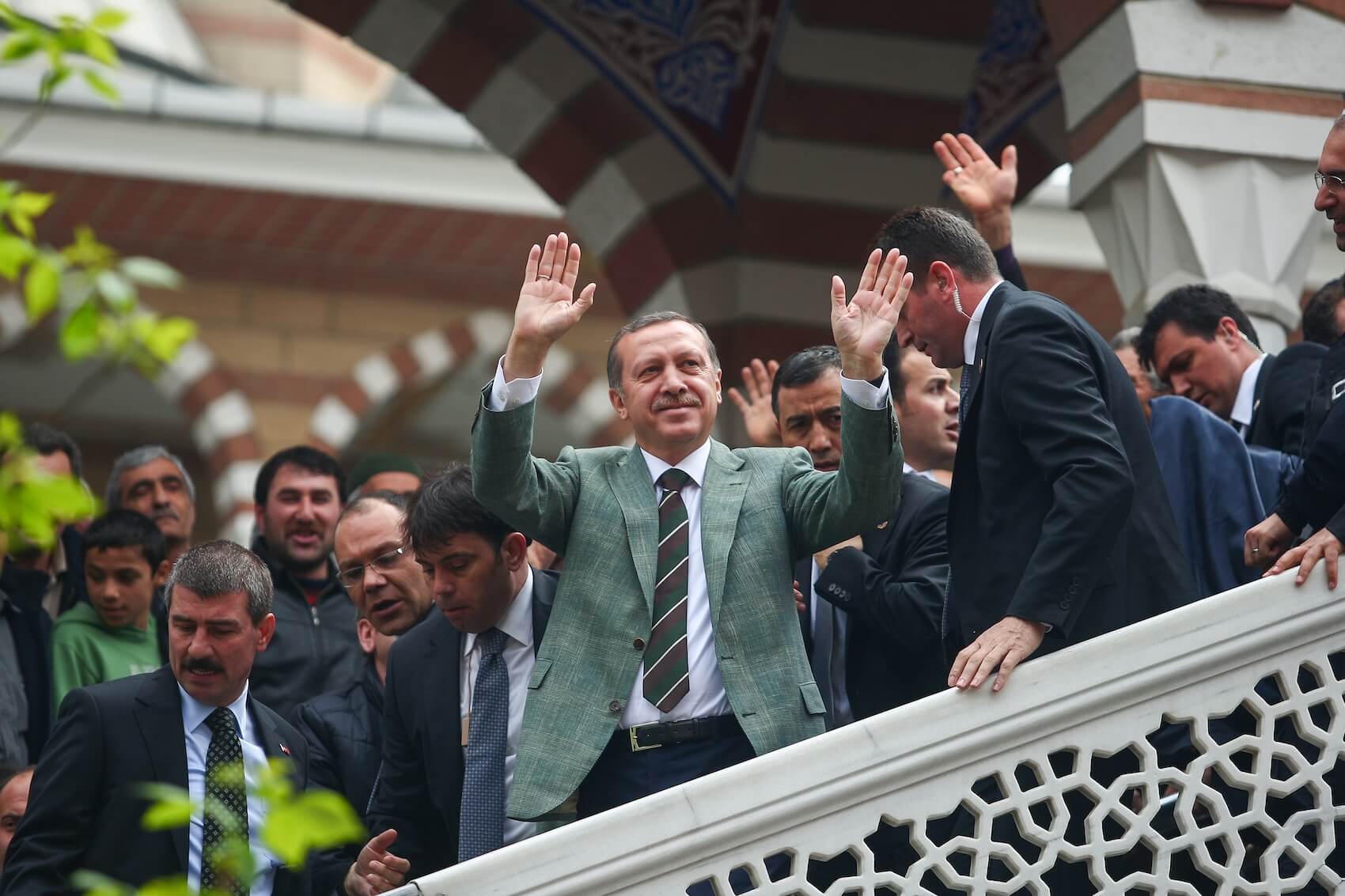
Turkish President Recep Tayyip Erdogan watching the August 30 Victory Day Parade in Ankara, Turkey on August 30, 2014. Photo by Mustafa Kirazli.

The short story of Erdogan’s election victory(!)

Erdogan’s primary adversary is no longer the opposition, but rather the anticipated deepening of the economic crisis. A climate of uncertainty, compromised rule of law, and suspended democracy hinders substantial investments. The potential for democratic change could arise if the nation reaches a state of ungovernability, prompting conservative voters to transcend their historical reservations against secularists. Alternatively, the Erdogan regime may solidify its support base irreversibly by effectively managing the economy to prevent social upheavals, ultimately establishing a system where elections serve as mere symbolic displays.

By Savas Genc*

Under the leadership of Recep Tayyip Erdogan for a span of almost 22 years, Turkey recently witnessed an election in which the opposition had a chance of victory for the first time. In a nation grappling with an official inflation rate of approximately 80 percent, opposition leaders united to form an electoral coalition with the aim of securing success in the election. Hinging on the fervor of the masses to bring an end to the Erdogan regime, the opposition parties engaged in lengthy negotiations and crafted policies that pledged a restoration of the parliamentary system. By emphasizing the strengthening of democracy, an independent judiciary, and transparent governance, the opposition diligently conducted extensive public engagements over several months to instill confidence in the electorate.

In various independent international indices, Turkey has steadily witnessed a decline in terms of justice, democracy, media freedom, human rights, and corruption, progressively exhibiting an authoritarian trajectory. The opposition formulated its entire electoral strategy around the backdrop of economic distress, the repatriation of over 4 million Syrian and Afghan migrants, and the disintegration of a modern state along with its liberal democratic institutions. They presented a vision of a democratic system in alignment with European Union (EU) standards, incorporating merit-based recruitment schemes for public positions, and advocating for gradual repatriation of migrants through negotiations with the Assad regime in Syria and the EU. The opposition introduced an election program that was virtually flawless in its technical details and captivated the public with its competent cadre of seasoned politicians and academics.

Discussions on Opposition Candidate

The coalition of six opposition parties, having conducted thorough deliberations on the political and economic agenda to be presented to the electorate, deliberately deferred discussions regarding the presidential candidate during their gatherings for months. This cautious approach was adopted to prevent any potential disintegration of the electoral alliance. The criteria for a viable candidate were well-defined. The candidate would originate from the main opposition Republican People’s Party (CHP), the dominant party within the alliance, and would need to garner support from both Kurdish voters and conservative masses. Various opinion polling firms consistently indicated Ekrem Imamoglu, the mayor of Istanbul, as the candidate who best embodied this criterion.

Recognizing Imamoglu’s growing popularity and his strong prospects of winning the elections, President Erdogan took notice and, having faced defeat in Istanbul twice before, invoked judicial mechanisms. It became evident that Erdogan had exerted influence over the judiciary to impose a political ban on Imamoglu. On the day when the decision on the political ban was announced, CHP leader Kemal Kilicdaroglu, who was anticipated to express support for Imamoglu, coincidentally had a scheduled trip to Germany. In the aftermath of the court’s verdict and the subsequent political ban imposed on Imamoglu, Kilicdaroglu, who had been contemplating a presidential candidacy, engaged in discussions of significance over breakfast with prominent figures from the Peoples’ Democratic Party (HDP), a Kurdish party with close ties to the center. The Kurdish leaders conveyed their intention to field their own candidate if Kilicdaroglu chose not to run, citing concerns regarding the nationalist background of another potential contender, Mansur Yavaş, the mayor of Ankara.

Alliance Reaches a Critical Juncture as Kilicdaroglu Insists on Candidacy

Following Erdogan’s official decision to call early elections in the aftermath of the devastating earthquake on February 6, 2023, the opposition alliance initiated meetings with the objective of nominating a joint candidate. Kilicdaroglu successfully advanced the nomination process by offering each of the three smaller parties in the alliance a minimum of 10 parliamentary seats and a ministerial position. However, the Good Party (İYİ Party), which holds the second strongest position in the alliance and does not rely on the CHP’s support in the parliamentary elections, sought to halt this trajectory.

Meral Aksener, the leader of the Good Party, raised objections to Kilicdaroglu’s candidacy, citing doubts about his electability. Observing that her concerns were being disregarded, she issued a strongly worded press release announcing their departure from the alliance. This development shattered the hopes of opposition voters. Kilicdaroglu, who had made considerable headway in positioning himself as the preferred candidate for the Kurdish constituency, was taken aback by the fierce reaction of his nationalist partner. In the face of a vehement response from opposition constituents following the dissolution of the alliance, Aksener had no choice but to return to the negotiation table. Reluctantly, she declared their support for Kilicdaroglu’s candidacy, on the condition that the two mayors, Imamoglu and Yavaş, assume the role of vice presidents.

The Electoral Process

Kilicdaroglu embarked on the election with two formidable and popular vice-presidential candidates, resulting in a commendable performance. His campaign maintained a positive tone, refraining from responding to Erdogan’s provocations, while focusing on democratization initiatives. Conversely, Erdogan accused the opposition, which enjoyed Kurdish support, of being linked to terrorism. Employing deep fake videos, he asserted that banned PKK leaders were collaborating with Kilicdaroglu. The masses, initially distancing themselves from Erdogan due to the economic crisis, began to rally behind him again, fueled by concerns over Kilicdaroglu’s security policies. 

The opposition was taken aback when Erdogan secured 49.4 percent of the vote in the first round. Their hopes of outpacing Erdogan and even winning the election outright were drastically altered as they entered the second round with a recalibrated strategy. Kilicdaroglu, in a bid to appeal to nationalist voters, who were crucial for securing their support, made a significant shift by signing a memorandum of understanding with the ultra-nationalist and anti-immigrant Zafer Party. However, this move disappointed Kurdish voters and dissuaded their participation in the elections.

The Factors Behind Erdogan’s Re-election

It is widely recognized that Erdogan does not possess the qualities of an intellectual politician. However, his remarkable ability to win elections and retain power for 22 years showcases his prowess as an election-winning machine. Faced with the looming risk of electoral defeat, Erdogan strategically relied on identity politics as his trump card. He tapped into the deeply held sentiments of nationalist and religious conservatives who view the Turkish republic, once controlled by secular elitist forces, as a cherished possession they are unwilling to relinquish. By portraying the opposition as godless, Erdogan positioned himself and his party as the safeguarders of the religious masses’ interests and achievements.

The primary fault line in Turkish politics lies in the clash between secular/modern and conservative/traditionalist voters. Despite the nation grappling with a profound economic crisis, erosion of judicial independence, curtailment of media freedoms, and the failure to address the immigration problem, the broad conservative electorate rallied behind Erdogan’s leadership.

Erdogan’s prospects of securing re-election appeared highly improbable merely a year ago, given the prevailing deep economic crisis, as indicated by numerous opinion polls. However, he resorted to political tactics aimed at enticing voters, including the liquidation of all foreign currency and gold reserves held by the treasury. Additionally, the early retirement law was passed, granting hundreds of thousands of citizens under the age of 50 the right to retire. By increasing the minimum wage above the inflation rate, Erdogan successfully garnered support from the Anatolian masses, where the cost of living is relatively lower. Moreover, Erdogan’s position was bolstered by Russia’s decision to postpone Turkey’s $20 billion natural gas debt until after the elections, while countries like Qatar, the United Arab Emirates, and Saudi Arabia extended billions of dollars in loans to the Erdogan government through swap agreements, further consolidating his position of influence.

Erdogan’s Media Empire: An Unassailable Armada

Erdogan, leveraging his extensive media apparatus, has amassed an overpowering media presence that has transformed into an invincible armada. Through awarding substantial public tenders to crony companies, Erdogan’s administration effectively facilitated the acquisition of nearly all major media outlets in the country. For those private media outlets that could not be directly acquired, coercion tactics were employed to align them with a pro-Erdogan stance. Furthermore, the state broadcaster, TRT, funded by public resources, was fortified by the establishment of numerous television channels. During the electoral process, Kilicdaroglu, Erdogan’s opponent, was limited to appearing on a modest news channel, while Erdogan enjoyed the privilege of addressing the public for hours on 24 national news channels. Despite Kilicdaroglu’s repeated invitations, Erdogan refrained from engaging in a political debate on-screen, thereby obstructing his opponent’s visibility. By even impeding opposition advertisements on television through financial means, Erdogan effectively isolated Anatolian voters who relied predominantly on TV channels for news, limiting their exposure to a narrow political bubble.

The Election Turnout

In the context of the election, the opposition demonstrated its strength by securing victories in the metropolitan areas. However, Erdogan’s widespread support among the populace in the expansive Anatolian region played a pivotal role in determining the overall outcome. Through the formation of an alliance encompassing Islamist and nationalist elements, Erdogan exceeded expectations by attaining greater voter support. While Erdogan’s AKP party experienced a decline of 8-9 percentage points in votes, those who did not endorse his party redirected their support to other parties within his political alliance. In the second round, Erdogan, who narrowly missed a first-round victory, successfully gained the backing of his nationalist rival, Sinan Ogan.

The performance of Erdogan had a demoralizing effect on opposition voters, as the first-round results starkly diverged from the data projected by various polling companies. This perception of manipulated elections and the belief that their support for the opposition would be ineffectual led to a significant decline in voter participation during the second round. While the first round witnessed an 87 percent turnout, this figure dipped to 85 percent in the subsequent round. Remarkably, Erdogan maintained a 52 percent share of the vote, positioning himself to potentially govern uninterrupted for 27 years, coinciding with the centenary of the republic.

Erdogan employed strategies such as providing employment opportunities to the offspring of his party’s loyal supporters in roles such as teachers, policemen, watchmen, and salaried sergeant specialists in the Turkish army. Additionally, he bolstered the economic well-being of conservative masses by allocating tenders to his senior executives through his construction industry network. As aptly stated by Brezinski, “Just as oil is a decisive factor in Arab countries, the construction sector and real estate investments play a crucial role in Turkish politics.” Erdogan effectively generated jobs and wealth for substantial segments of the population through his wealth-sharing model centered around construction revenues. The masses, concerned about the potential collapse of the established order, disregarded the country’s institutional and economic crises, experiencing upward economic mobility under Erdogan’s leadership.

The Potential Success of the Opposition with a Different Candidate?

The question arises as to whether the opposition would have achieved success had they fielded a different candidate. In this context, it is crucial to examine Kilicdaroglu’s political track record, characterized by 17 prior unsuccessful attempts in general and local elections, during which he never ventured to challenge Erdogan directly as a candidate. Interestingly, Kilicdaroglu, confident in the prospects of his election chances amidst the deepening economic crisis and the earthquake’s impact, exhibited a reluctance to entertain discussions regarding alternative candidates. Seizing upon the political ban imposed on Imamoglu as an opportunity, Kilicdaroglu engaged in strategic deliberations with Kurdish politicians, aiming to obstruct Mansur Yavas, the mayor of Ankara, from pursuing candidacy. This particular course of action instigated dissatisfaction among opposition voters.

While it remains true that Yavas hailed from nationalist roots, it was precisely this background that rendered him a potential contender capable of garnering support from protest voters disenchanted with Erdogan. Multiple opinion polls consistently identified Yavas as the candidate most likely to secure victory against Erdogan in the initial round of elections. Yavas, with his history within nationalist parties, would have been well-positioned to effectively counter Erdogan’s accusations of association with “terrorists” and Kurdish support.

It is important to note that definitive assertions regarding Yavas’ victory over Erdogan cannot be made, given Erdogan’s prowess as an election-winning machine and his mobilization of state institutions to this end. However, it is reasonable to suggest that Yavas’ prospects of success would have been considerably higher compared to Kilicdaroglu, irrespective of the ultimate outcome.

The Future of Turkey Following Erdogan’s Re-election

Numerous political analysts and scholars contend that the recent election outcome in Turkey may represent the final opportunity for democratic reform. With another five years of governance ahead and parliamentary support, Erdogan aims to shape the opposition into a force that merely legitimizes his authority, akin to regimes observed in Central Asia.

Considering Erdogan’s advancing age and increasingly evident health concerns, he must also cultivate a new and trustworthy leader to safeguard his family’s political legacy. Similar to practices in Central Asian regimes, he may need to involve one of his sons or sons-in-law in politics, thereby paving the way for a future leadership transition and the preservation of his family’s influence.

In this process, Erdogan’s primary adversary will not be the opposition, which has encountered challenges in securing electoral victories, but rather the anticipated deepening of the economic crisis. Turkey currently grapples with significant debt, leading to borrowing at prohibitively high interest rates due to its credit default swap (CDS) scores. Although Erdogan managed to stabilize the exchange rate by injecting all available foreign currency reserves into the markets prior to the elections, attracting new investors to the country remains unlikely. A climate of uncertainty, compromised rule of law, and suspended democracy hinders substantial investments. The potential for democratic change could arise if the nation reaches a state of ungovernability, prompting conservative voters to transcend their historical reservations against secularists. Alternatively, the Erdogan regime may solidify its support base irreversibly by effectively managing the economy to prevent social upheavals, ultimately establishing a system where elections serve as mere symbolic displays.


(*) Dr. Savas Genc completed his doctoral studies at the esteemed University of Heidelberg and has been serving as a Visiting Scholar at the Institute for Political Science at the University of Heidelberg since 2020, supported by the Alexander von Humboldt Foundation’s PSI program. Prior to this, he held the position of Professor of International Relations in Istanbul, where he also served as an Erasmus Visiting Professor, imparting his knowledge to students at various European universities. Dr. Genc’s academic contributions encompass a wide range of research interests, including directing the “Research Center for Contemporary Civilizations” and leading notable projects such as “The Perception of Turkish Foreign Policy in the Middle East.”

Turkish President Recep Tayyip Erdogan has attended the rally in Izmir as part of the May 14, 2023 elections campaign in Izmir, Turkey on April 29, 2023. Photo: Idil Toffolo.

Erdogan’s winning authoritarian populist formula and Turkey’s future

After the election results, Erdogan is likely to feel vindicated, but being a vindictive populist, he will not forgive those who did not vote for him. In his celebratory speech, which was previously unifying and conciliatory in tone, he exhibited aggression, polarization, and securitization of the opposition. Despite his extensive efforts, 48 percent of voters remain “ungrateful” in his eyes. This narrow margin of victory makes him vulnerable and fuels his fury. Consequently, he will attempt to weaken the opposition both domestically and abroad.

By Ihsan Yilmaz 

Recep Tayyip Erdogan’s recent electoral victory in Turkey exemplifies the winning formula of populism in deeply divided and polarized societies. His authoritarian populism has effectively tapped into the fears, grievances, nostalgia, and hopes of the Turkish people, enabling him to consolidate his authoritarian regime. However, it is important to note that Erdogan’s success cannot be solely attributed to his populist rhetoric, especially considering the ongoing economic crisis in the country.

In addition to his Islamist populism, securitization of the opposition, manipulation, and fearmongering, Erdogan has also employed tactics of electoral authoritarianism and manipulation of electoral processes. Furthermore, he has greatly benefited from economic populism and neo-patrimonialism. Understanding Erdogan’s winning formula allows us to examine the predicaments Turkey currently faces and consider what Erdogan may do in the future to maintain his winning streak.

After explaining Erdogan’s winning formula, I will try to look at Turkey’s predicaments from the lens of this formula. Unfortunately, there is no good news for Turkey’s educated, Westernized sections of society, as well as Kurds, Alevis, and other political minorities. Erdogan’s approach tends to marginalize and oppress these groups, leading to their continued exclusion and marginalization in the political sphere.

Electoral Authoritarianism and Manipulation of Electoral Processes

Erdogan’s regime is characterized by electoral authoritarianism, where the playing field for opposition parties is heavily skewed, resulting in elections that lack both freedom and fairness. Despite the presence of opposition parties, Erdogan utilizes the full extent of state apparatuses, including security forces and the judiciary, as well as his own party’s massive machinery, which boasts 12 million members (around 20 percent of the country’s adults). Additionally, his control over approximately 90 percent of the conventional media and a powerful digital authoritarianism machine enables him to manipulate information and disseminate disinformation to undermine opposition parties.

Erdogan employs various tactics of electoral authoritarianism to ensure that opposition parties are unable to secure a majority of votes, serving primarily to create a façade of legitimacy for his authoritarian political system. These tactics include gerrymandering, restrictions on opposition campaigns, and the suppression of independent media. Furthermore, the counting of votes is under Erdogan’s control, and opposition parties lack the capacity to substantiate their allegations of election rigging. They are unable to address issues such as the significant increase in the number of registered voters, which has outpaced the population growth of Turkey over the past two decades.

Since 2018, the deteriorating state of the political system in Turkey has led to its classification as “unfree” by organizations like Freedom House. Despite rulings from the European Court of Human Rights (ECtHR) advocating for their release, many democratically elected Kurdish mayors and parliamentarians remain imprisoned. Journalists, academics, and activists critical of the government face intimidation, imprisonment, and media censorship. This has transformed Turkey into one of the most repressive regimes for journalists in recent history.

While Turkey lacks significant oil reserves like countries such as Russia, Iran, or Saudi Arabia, it still needs to remain open to tourists, businesses, and investments from the West. As a result, the regime cannot fully suppress opposition parties and civil society, as they need to maintain the illusion of a competitive political landscape. However, in the end, the regime maintains control, ensuring that the house always wins.

Despite some semblance of political participation and limited space for opposition, Erdogan’s regime employs a wide range of tactics to consolidate power and undermine the principles of democracy, ultimately resulting in the erosion of civil liberties, media freedom, and the ability of opposition parties to challenge the ruling party effectively.

Islamist Populism, Securitization of the Opposition, Manipulation, and Fearmongering

Populism often seeks to create a divisive narrative that separates society into two distinct groups: “the morally righteous people” and “the corrupt elite” who allegedly deny the people their rightful sovereignty. This aspect is fundamental to Erdoganism, the ideology associated with President Erdogan. According to this ideology, “the corrupt elite” consists of the educated, Westernized, and secular segments of society, who are often referred to as “White Turks” and represent around 30-35 percent of the population. On the other hand, Erdoganists consider themselves as “Black Turks,” even though many elite members of the AKP (Justice and Development Party) have lifestyles aligned with the “White Turkish” segment.

Given Turkey’s current challenges in competing with the West, both culturally and technologically, Islamists in Turkey harbor deep resentment towards the West, blaming it for the issues facing the Muslim world. To cope with this, they turn to a nostalgic yearning for the glory of the Ottoman Empire and project it as a Pan-Islamist vision, aspiring for a future Sunni caliphate under Turkey’s leadership. This narrative often involves the propagation of various anti-Western conspiracy theories. According to this view, Western powers and Jews are perceived as determined to impede Turkey’s rise to leadership in the Islamic world, using diverse instruments such as the Kurds, Alevis, Gulenists, secular Westernized Turks, academics, journalists, NGOs, and human rights defenders within the country.

During election campaigns, dissenters and opposition figures are frequently demonized and labelled as traitors, terrorists, internal enemies, non-Muslims, fake Muslims, hypocrites, deviants, or supporters of the LGBT community. Erdogan capitalizes on creating and perpetuating crises to instill fear among Sunni Turks and position himself and the AKP as the sole saviors capable of protecting the country and Islam.

By promoting this narrative and generating fear among his Sunni Turkish support base, Erdogan seeks to present himself and his party as the only reliable protectors of the nation and Islam. This approach helps to solidify his power and maintain a significant level of control, particularly through the marginalization and vilification of dissenting voices and opposition groups.

Economic Populism and Neo-Patrimonialism

Erdogan’s populist approach extends beyond politics and spills over into economic populism as well. Throughout his time in power, Erdogan has implemented various social welfare programs and policies aimed at assisting economically disadvantaged individuals. This strategy not only helps those in need but also cultivates loyalty among his supporters.

One way Erdogan maintains this loyalty is by providing neo-patrimonial public welfare, which can be seen as a form of “charitable patronage.” This involves the redistribution of public resources and the granting of preferential access to public jobs, healthcare, and housing. However, these benefits often come at the expense of marginalized ethnic, religious, and political groups who do not align with Erdogan’s agenda.

What sets Erdogan’s approach apart is his careful presentation of these benefits. He and his party have strategically framed them in a way that portrays the source of these benefits not as the state, taxpayers, or future generations burdened with loans, but rather as coming directly from the merciful and benevolent AKP and Erdogan himself. This messaging resonates particularly well with Erdogan’s Sunni Turkish pious support base.

Furthermore, thanks to the AKP’s extensive party machinery, they have a deep understanding of the demographics of each street and village. This knowledge enables them to target their assistance effectively and maintain a close connection with their supporters. As a result, even amidst economic crises, Erdogan’s supporters continue to appreciate him, while those from non-AKP backgrounds and educated middle classes often find themselves overwhelmed by the challenges.

This dynamic is evident even in regions devastated by natural disasters such as earthquakes. Despite clear failures in addressing these crises, Erdogan and his party have not faced significant repercussions at the ballot box. This can be attributed to the continued support from his loyal base, who remain steadfast in their backing of Erdogan despite any shortcomings or failures.

Erdogan’s populist neo-patrimonial economic model extends to his approach to interest rates as well. Despite the prevailing orthodox wisdom in economics, Erdogan argues that lower interest rates will lead to a decrease in inflation. He also invokes Islamic principles, stating that interest is considered haram (forbidden) in Islam. Many people perceive his stance on interest as stemming solely from his Islamist beliefs. However, there is a patrimonial populist dimension to this approach.

Firstly, it is worth noting that many of Erdogan’s associates and close allies are involved in the construction sector. This sector plays a significant role in Turkey, as they continually build houses to accommodate the country’s growing population. By keeping interest rates low, Erdogan enables his cronies in the construction industry to sell houses, while simultaneously catering to the desires of his supporters, who mainly come from lower-income backgrounds and aspire to own homes.

This policy of maintaining low interest rates benefits his cronies in the construction sector by stimulating housing demand. Simultaneously, it weakens the overall economy and has adverse effects on the middle class. While this policy serves the interests of his supporters by allowing them to afford housing, it comes at the expense of the broader economy and harms the middle classes. As a result, the middle class, who are not necessarily Erdogan’s core supporters, experience a weakening of their economic standing. This indirect wealth transfer through state policies contributes to the erosion of the middle class, consequently weakening the opposition as well.

By implementing such economic policies, Erdogan is not only pursuing his own interests and those of his cronies but also undermining the strength of the middle classes, which poses a challenge to his opposition. Ultimately, this strategy helps consolidate his power by weakening potential sources of dissent and opposition.

Overall, Erdogan’s economic populism, combined with strategic messaging and a strong support base, allows him to maintain political control and keep his voters loyal, even in the face of challenging circumstances and criticism.

What Does Erdogan’s Winning Formula Mean for Turkey’s Future?

After the election results, Erdogan is likely to feel vindicated, but being a vindictive populist, he will not forgive those who did not vote for him. In his celebratory speech, which was previously unifying and conciliatory in tone, he exhibited aggression, polarization, and securitization of the opposition. Despite his extensive efforts, 48 percent of voters remain “ungrateful” in his eyes. This narrow margin of victory makes him vulnerable and fuels his fury. Consequently, he will attempt to weaken the opposition both domestically and abroad using the methods described earlier.

His vindication and vindictiveness will work against the opposition, dissidents, and minority groups. Erdogan will continue to attack and suppress Kurds, Alevis, “White Turks,” Gulenists, and others. He will intensify his narratives about Western crusaders, Jewish lobby, and portray LGBT individuals as enemies of the Turkish people, labeling dissenters as traitors and terrorists.

Erdogan’s electoral authoritarianism and manipulation of electoral processes will persist without restraint. He may establish new so-called “opposition” TV channels and newspapers or capture existing ones to create a loyal opposition media. Additionally, digital authoritarianism will increase, aiming to curtail the influence of social media.

Due to growing repression and the negative impact of his economic populism and neo-patrimonialism on the educated middle classes, many educated Turks and Kurds will choose to leave the country, resulting in a brain drain. “White Turks,” fearing a fate similar to that of Gulen Movement supporters, whose businesses, properties, and homes were seized by Erdogan regime and transferred to AKP supporters, will transfer their wealth to Western nations.

To compensate for the decreasing population numbers and simultaneously decrease the opposition’s vote share, Erdogan will increasingly grant citizenship to Sunni Arabs, Afghans, and Pakistanis, not only in Turkey but also in Western countries and even in their countries of origin. Leveraging his party machine, Islamist pro-AKP NGOs abroad, and a trusted network of Muslim Brotherhood affiliates, these new citizens will be carefully selected.

Turkish women took action on May 8, 2020 in Istanbul not to repeal the Istanbul Convention, which provides protection against domestic and male violence. Photo: Emre Orman.

Gender Populism: Civilizational Populist Construction of Gender Identities as Existential Cultural Threats

DOWNLOAD PDF

Yilmaz, Ihsan & Shakil, Kainat. (2023). “Gender Populism: Civilizational Populist Construction of Gender Identities as Existential Cultural Threats.” Populism & Politics (P&P). European Center for Populism Studies (ECPS). May 24, 2023. https://doi.org/10.55271/pp0023


Abstract

In the Islamist version of civilizational populism, the emotional backlash against the rise of secularism, multiculturalism, progressive ideas, and ‘wokeness,’ has been skillfully employed. While for the populists, populist far right and civilizational populists in the West, usually the Muslims are the civilizational other, we argue in this article, in the Islamist civilizational populism, the list of civilizational enemies of the Muslim way of life also includes feminists and LGBTQ+ rights advocates. Gender populism is a relatively new concept that refers to the use of gender symbolism, language, policy measures, and contestation of gender issues by populist actors. It involves the manipulation of gender roles, stereotypes, and traditional values to appeal to the masses and create divisions between “the people” and “the others.” This paper looks at the case study of gender populism in Turkey, where the Justice and Development Party (AKP) has been in power for over two decades. The AKP has used gender populism to redefine Turkish identity, promote conservative Islamism, and marginalize women and the LGBTQ+ community. The paper also discusses how gender populism has been used by the AKP to marginalize political opponents.


By Ihsan Yilmaz & Kainat Shakil

Introduction

In minimal terms, populism is conceived as a unique set of ideas, one that understands politics as a Manichean struggle between a reified will and sovereignty of the morally pure people and a conspiring elite (Hawkins et al., 2018: 15). In addition to this vertical dimension, populism’s horizontal dimension posits the Manichean binary opposition betweeninsiders and outsiders,  whereby the outsiders, who may even be citizens, are regarded as foreigners,  if not internal enemies, based on their identities. In some cases, these demonized individuals and groups are seen as internal extensions, agents, puppets and pawns of foreign conspiring forces and institutions such as the European Union (EU), “the Jewish lobby,” and extremist Islam. All these are seen as threatening the people’s security, identity, and way of life. In these manifestations of populism, the binary is based on not just national differences but an imagined civilizational enmity (Brubaker, 2017). This type of populism has been dubbed as ‘civilizational populism’ (Yilmaz & Morieson, 2022a; 2022b).

Populism is involved in interpretative processes that lead to intense emotions  (Salmela & von Scheve, 2017; 2018). It paints the events, in-groups, and out-groups in certain light (such as harmful vs. beneficial) that precipitate sharp emotions in the audience (Brady et al., 2017; Graham et al., 2011). Emanating from structural (national and international) as well as affective foundations, populism has been effective in speaking to the deep emotions of the masses. It mobilizes people against other groups and/or the state by generating feelings of belonging, love, passion, fear, anger and hate (Morieson, 2017; DeHanas & Shterin, 2018; Yilmaz, 2018; 2021).

In the Islamist version of civilizational populism, the emotional backlash against the rise of secularism, multiculturalism, progressive ideas, and ‘wokeness,’ has been skillfully employed. While for the populists, populist far right and civilizational populists in the West, usually the Muslims are the civilizational other, we argue in this article, in the Islamist civilizational populism, the list of civilizational enemies of the Muslim way of life also includes feminists and LGBTQ+ rights advocates.

What Is Gender Populism?

Much like the highly contested definitional parameters of populism, there is no singular definition of the term ‘gender populism.’ It is a rather new combination that has peaked the interests of academics since the mid-2010s. Gender populism is essentially the use of gender symbolism, language, policy measures and contestation of gender issues by populist actors. For instance, both left- and right-wing populist groups in many Western communities have expressed a need to “protect” their countries, specifically women, from the “illiberal” or “conservative” influences of migrant groups. They profile migrant men as a security threat or as “groomers” and some countries have taken issue with women’s choice to wear a headscarf (Hadj-Abdou, 2018). 

At the same time, it is not uncommon to see a huge wave of resistance from right-wing groups reading gender roles. These groups aim to “restore” traditional gender roles which leads them to marginalize feminist directives and disapprove of the LGBTQI+ movements (Agius et al., 2020; Roose, 2020; Gokariksel et al., 2019). 

This first stream of literature shows how gender populism helps in the creation of an ideal people or “the people” as opposed to “the others” based on what they consider deviance from their relative gender norms. This also intertwines with the idea of civilizational populism because it gives an image of a utopian dream society or urges people to revert to “the golden era” e.g., the promotion of traditional roles for women (Sledzinska-Simon, 2020). 

Gender populism also helps in creating the image of populist leaders in many cases (Ashwin & Utrata, 2020; Löffler et al., 2020; Eksi & Wood, 2019; Roose, 2018). The leader is not only pure from the corruption of conventional “elite” politicians, but he is also a strongman. The populist demagogue is constructed as a ‘strongman’ who can keep threats a bay and take ‘tough decisions’ (Roose, 2022; 2018). Zia (2022) notes that in Pakistan and India, Imran Khan and Narendra Modi present their ‘strongman’ images and vitality as part of their gender populism. Similarly, Eksi and Wood (2019) discuss how both Vladimir Putin and Recep Tayyip Erdogan through symbolic (language and body language) present themselves as a mixture of strongmen but at the same time fatherly figures to guide “the people.” 

Studies of female populist leaders show that gender plays a critical role in shaping the image of the leader in the eyes of “the people.” In France, Marine Le Pen’s gender populism constructs her as a mother saving the country from the cultural threats posed by ‘the others’ and her comparison to Jonah of Arc makes her the ‘brave hero’ who needs to act against threats such as migration (Geva, 2019; Sayan-Cengiz & Tekin, 2019).

Effeminization of the Elites and Dangerous Others by Populists 

The literature on gender populism also points out that gender populism is used to marginalize “the others” or “the elite.” One of the most common manifestations is the effeminization of ‘the elites’ and ‘the others’ by populist leaders (Agius et al., 2020; Ashwin & Utrata, 2020; Löffler et al., 2020; Eksi & Wood, 2019; Roose, 2018). 

By contrasting “feminine” political opposition, populist leaders contrast them with their “strong” image to gain credibility in the eyes of voters. For example, in the Philippines, the former President Rodrigo Duterte, is known for this ‘tough man’ acts and imagery while he uses terms such as “bitches,” “son of a bitch,” “chicken-hearted,” “sissy” and “idiots” to address all those who oppose him (UCA News, 2019; Bonnet, 2018; McKirdy, 2016). 

In short, gender populism manifests in various forms and is highly determined by contextual factors. It helps in the creation of “the people,” the populist leader/party, and “the others.” Simultaneously, it adds layers to the idea of an “ideal” society and is frequently used to marginalize both civilian and political opposition to populist forces. In a nutshell, it adds a layer to the divisiveness of populism using gender as the focus. 

Turkey’s AKP: A Case Study of Gender Populism         

Turkish women rallied in Istanbul to protest proposed anti-abortion laws by then-Turkish Prime Minister Recep Tayyip Erdogan on June 18, 2012 in Istanbul, Turkey. Photo: Sadık Güleç.

In Turkey, the Justice and Development Party (AKP) has been in power for over two decades. These two decades have been marked by political as well as major social transitions. This has been a phase of reengineering Turkish citizens from a Kemalist identity to an Erdoganist one: an Islamist, militarist, civilizational populist, neo-Ottomanist citizen and a staunch follower of Erdogan’s personality cult (Yilmaz, 2021; Yilmaz & Shakil, 2021). 

At the heart of this recreation of Turkish identity, people and homeland gender has taken center stage. This makes the case of Turkey quite important to understand gender populism.  Given the heated debates around the 2023 general elections, various hues of gender populism have emerged which this article will discuss along with the party’s past recorded use of the phenomenon.  

The first signs of AKP’s populism were via the means of gender populism in 2007 when the party was contesting to secure its second term. To maintain its support, AKP positioned itself directly in a clash with the Kemalist principles of modernization which had previously barred women from wearing headscarves in public offices and educational institutions (Yilmaz & Shakil, 2021). At that time, AKP predominantly represented Muslims and the future (possible) first lady wore a headscarf which was unprecedented in the republic’s history. AKP presented itself as a defender of women’s rights as it sought to reverse the headscarf ban. This led to a mass protest by the Kemalist elite especially on social media which was dubbed “a digital coup” and in-person rallies “Republican Rallies.”  

To counter this Kemalist resistance, AKP did not simply make this a matter of right of choice for women, but it constructed the issue as a Manichean binary between Islam and the West, Western ideals being imposed by the Kemalists (Yilmaz & Shakil, 2021). This overtly ‘human rights issue’ was, at its core, the beginning of the populist Islamist ideology of AKP. Erdogan in 2013 led the country to abolish this ban as he announced in the parliament, “We have now abolished an archaic provision which was against the spirit of the republic. It’s a step toward normalization.” 

But this “normalization” is towards Islamist ideas of gender roles. For instance, during the 2010s on several occasions, the then Prime Minster and now President Erdogan expressed gender conservatism. In 2014 during an international summit,he said, “You cannot make men and women equal,” […] That is against creation. Their natures are different. Their dispositions are different.” He also accused feminists of not understanding the idea of “motherhood.” He also openly said Muslim families should not use birth control, “I will say it clearly … We need to increase the number of our descendants.” He added, “People talk about birth control, about family planning. No Muslim family can understand and accept that. As God and as the great Prophet said, we will go this way. Over the years he has glorified the role of mothers and demonized the idea of a non-traditional women, for example, he said, “A woman above all else is a mother.” He has also called women “half workers” and labelled childfree women “deficient.” His exact quote for this instance reads, “A woman who rejects motherhood, who refrains from being around the house, however successful her working life is deficient, is incomplete.” 

In 2021, during a meeting with various officials from the EU, Erdogan ignored the head of the Union, Ursula von der Leyen, and left her standing while all the other men were seated on chairs. In a later comment, von der Leyen noted, “I am the first woman to be President of the European Commission. I am the President of the European Commission, and this is how I expected to be treated when visiting Turkey two weeks ago, like a commission president, but I was not […] Would this have happened if I had worn a suit and a tie? In the pictures of previous meetings, I did not see any shortage of chairs, but then again, I did not see any women in these pictures either.” 

These are not just simple comments by an elected official, they have real-life consequences for women in the country. Since AKP’s ascend to power, the rights of women have greatly suffered in the country compared to its European counterparts e.g., an increase in violence against women. Due to the growing discontent in 2015, following the murder of a woman, a social media and in-person campaign featured men wearing skirts to show solidarity with women who were being brutally attacked for wearing “Western attire” or were increasingly being subjected to violence without any state efforts to curb them. 

A direct policy consequence of this growing disregard for women’s safety is the historical pull out of the country from the Istanbul Convention in 2021. The Convention was designed to ensure pathways of seeking safety in case of domestic abuse by providing not only legal support but ensured victims safe places to reside when feeling from violent partners. AKP and its ultra-conservative alliance argued that this convention was hurting family values or was a hurdle in traditional ways of family law even though the murder rate of Turkish women rose from 66 women being killed in 2002 to 953 in 2009 which is an increase of 1400 percent. Erdogan and his party scraped this crucial form of protection by simply saying, “We will not leave room for a handful of deviants who try to turn the debate into a tool of hostility to our values.”

In addition to Erdogan, over the years various AKP officials and allies have issued highly contested remarks about women and their rights. For instance, in 2014 former Turkish Deputy Prime Minister Bulent Arinc publicly on national television advised women not to “laugh in public.” Arınç has also told Nursel Aydoğan, a member of the Turkish Parliament from the Peoples’ Democratic Party (HDP), to be quiet because she is a woman. He said, “Madam be quiet. You, as a woman, be quiet.” On a state-sponsored television program, Omer Tugrul Inancer an Islamist religious leader, said that it is a shame for pregnant women to be out in public. Turkey’s Finance and Treasury Minister, Nureddin Nebati, while discussing economic factors clearly stated that women should not or are not “suited” for “heavy work.” He defended his stance by saying, “Women are the crown of our heads, the medicine for our hearts. We do not care about some extremist and ideological discourses. Our values, this civilization and beliefs already order us to be sensitive about women. We just need to understand it. The enrolment rate in school for girls increased to 97 percent. The number of female MPs increased from 4.4 percent to 17.5 percent [under the AKP government]. The participation rate of women in the workforce has increased.” 

After over a decade of gender populism, women from within the party and from other opposition parties are open to sexist attacks within the parliament and also by citizens on online social media platforms. Arrest patterns since the 2016 mysterious coup attempt show that women along with dependent children and babies in thousands have been arbitrarily arrested because of their alleged involvement with what the government terms “terrorist” organizations. Women face a greater brunt of state-sponsored violence because they are harassed during “strip searches,” separated from their dependent children and infants, and at times are arrested because of the alleged crime of their husbands. 

Religious Turks was marching in an anti-LGBT demonstration in Şanlıurfa, Turkey in October 2022. Hundreds of people attended the protest with signs that read “Protect your family and your generation.” Photo: Hakan Yalçın.

Another gender dimension of AKP’s populism has been directed at the LGBTQI+ community. As early as 2013 the group has been repeatedly targeted by the party. In the country, there are no laws that criminalize or legalize the community but in recent years with the growth of Islamist views, state-led persecution and hate crime towards the community has escalated.

One of the most prominent waves of opposition to AKP took place in 2013 in the form of the Gezi Park protests. The protests began as a peaceful denunciation of AKP’s gentrification of public spaces in Istanbul and soon turned into a violent spectacle due to police brutality. After the death and injury of several peaceful protests and mass rioting, the Gezi Park protest fiasco was framed by the AKP as a ‘foreign’ attempt to curtail Turkey’s progress (Yilmaz, 2021).  

It was after the mass protests and their violent aftermath that AKP directly targeted the LGBTQI+ community by barring the Pride Parade under the guise of security. Since 2015, the state has actively tried to stop the parade but rather than security concerns the parade is framed as a ‘threat’ to Turkish culture and society as well as a foreign agenda to ‘mislead the youth.’ Nearly a decade after Erdogan has blamed ‘deviant’ youth for causing unrest and rioting over the years. In 2021 during a mass protest at a higher educational institute, the President Erdogan again blamed the group and said, “You are not the LGBT youth [to his followers], not the youth who commit acts of vandalism. On the contrary, you are the ones who repair broken hearts.” In 2022 he hinted at introducing legislation to criminalize LGBTQI+ communities in Turkey and he justified these actions by saying, “Can a strong family have anything to do with LGBT? No, it cannot. … We need a strong family. … Let’s protect our nation together against the onslaughts of deviant and perverted currents.” 

Turkish Interior Minister, Suleyman Soylu called the LGBTQI+ community a “propaganda of a terrorist organization” in 2022. He also added, “There is cultural terrorism. The propaganda of a terrorist organization tries to make people forget their values, their religion, unity, parental love, and family loyalty. It is exactly Europe’s policy, exactly America’s policy of divide and rule.” He added, “What will happen? They will bring LGBT to Turkey. Forgive me, men will marry men, women will marry women. It just suits (the main opposition CHP leader Kemal) Kilicdaroglu. What a shame. It lacks all values. They are trying to create a policy based on an understanding that will alter almost all our values so that they can win the hearts of the Europeans and the West.”

The 2023 elections have sadly become a showcase of homophobia by AKP. Various AKP electoral candidates along with Erdogan have weaponized gender populism. They have attacked and accused the opposition coalition as supporters of ‘un-Islamic’ and ‘Western agendas’ because they supported the LGBTQI+ community and at times AKP has attacked the opposition by labelling them as ‘gay’ or ‘LGBT’ to construct them as weak, alien and loyal to the West. 

In 2023, during a re-election campaign Erdogan said, “In this nation, the foundations of the family are stable. LGBT will not emerge in this country.” He went on to say, “Stand up straight, like a man: that is how our families are.” He contrasted this by publicly accusing Kemal Kilicdaroglu, the alliance opposition leader, of being gay, as Erdogan at a rally said, “We know that Mr Kemal is an LGBT person.” 

During the period the LGBTQI+ community has been demonized as a threat to “family” and a ploy of the West, which according to AKP, represents “deviant structures” and stands as a symbol of a “virus of heresy.” At the same time, political opposition is not only targeted for its support for the community, but they are emasculated by being labelled as part of the community. 

Conclusion

While the 2023 presidential and general elections hold political significance for all those in Turkey, for women and the LGBTQI+ community these elections directly impact their future existence. This wave of Islamist reengineering of society, under the AKP regime, has changed the country’s social fabric. Women are increasingly left without state support when at their most vulnerable while top ministers and officials are openly issuing sexist comments and remarks. The Turkish idea of womanhood has undergone extensive change. Motherhood, virtue, and modesty are new parameters where those who oppose these traditional confines are constantly demonized, marginalized, or demonized. Similarly, the LGBTQI+ community, which enjoyed a relatively obscure existence, has become the front of a cultural battle. Their existence is seen as a direct existential threat positioned by the West to the Turkish ‘traditional’ values. 

These are not merely instances of the state being simply sexist or sexism being displayed by elected parliamentarians. It is rather a marriage between populism and gender conservatism which has fed AKP’s civilizational populism. It is a layer of populism that helps in the creation of “the others” and “the people” while remaining a useful tool to discredit the political opposition also called “the elite.” It also gives a threatening face to the ‘crises’ under the guise of being a threat to family and the way of life, making it quite simple and relatable for many. In essence, gender populism also feeds off the sentiments of the masses, it is not purely created by populists. 

The election results do matter, but what is worrying is the toll gender populism has taken on the Turkish social fabric. Its attempts to redefine gender roles have been met with opposition but at the same time have found a home in various quarters of society. This means a possible clash of narratives and further polarization in society which emanates gender-based hatred towards women and LBGTQI+ individuals might continue. 


Funding: This work was supported by the Australian Research Council [ARC] under Discovery Grant [DP220100829], Religious Populism, Emotions and Political Mobilisation.


References

— (2019). “Duterte’s secret to continued success.” UCA News. July 22, 2019. https://www.ucanews.com/news/dutertes-secret-to-continued-success/85688 (accessed on May 24, 2023).

Agius, Christine; Edney-Browne, Alexandra; Lucy, Nicholas & Cook, Kay. (2022). “Anti-feminism, gender and the far-right gap in C/PVE measures.” Critical Studies on Terrorism. 15(3), pp. 681–705. https://doi.org/10.1080/17539153.2021.1967299  

Ashwin, S. & Utrata, J. (2020). “Masculinity Restored? Putin’s Russia and Trump’s America.” Contexts. 19(2), pp. 16–21. https://doi.org/10.1177/1536504220920189

Bonnet, F.-X. (2018). “Portrait of Rodrigo Duterte – President of the Philippines.” Institut Montaigne. https://www.institutmontaigne.org/en/analysis/portrait-rodrigo-duterte-president-philippines (accessed on May 24, 2023). 

Brady, W. et al. (2017). “Emotion shapes the diffusion of moralized content in  social networks.” Proceedings of the NAS.114(28), 7313-7318.

Brubaker, Rogers. (2017). “Between nationalism and civilizationism.” Ethnic and Racial Studies. 40(8), 1191-1226

DeHanas, D.N & Shterin, M. (2018). “Religion and the rise of populism.” Religion, State and Society. 46(3), 177-185.

Eksi, B. & Wood, E.A. (2019). “Right-wing populism as gendered performance: Janus-faced masculinity in the leadership of Vladimir Putin and Recep T. Erdogan.” Theory and Society. 48(5), pp. 733–751. https://doi.org/10.1007/s11186-019-09363-3  

Geva, D. (2019). “Non-au gender: Moral epistemic and French conservative strategies of distinction.” European Journal of Cultural and Political Sociology. 6(4), pp. 393–420. https://doi.org/10.1080/23254823.2019.1660196  

Gökarıksel, B.; Neubert, C. & Smith, S. (2019). “Demographic Fever Dreams: Fragile Masculinity and Population Politics in the Rise of the Global Right.” Journal of Women in Culture and Society. 44(3), pp. 561–587. https://doi.org/10.1086/701154

Graham, J.; Nosek, Brian A.; Haidt, Jonathan; Iyer, Ravi; Koleva, Spassena & Ditto, Peter H. (2011). “Mapping the moral domain.” Journal of Personality and Social Psychology. 101, 366-385.

Hadj-Abdou, L. (2018). “’Gender(ed) nationalism’ of the populist radical right: An extreme typicality.” In: Populism and the Crisis of Democracy. Routledge. 

Hawkins, K. A. & Kaltwasser, Cristóbal Rovira. (2018) The ideational approach to populism. Routledge.

Löffler, M.; Luyt, R. & Starck, K. (2020). “Political masculinities and populism.” NORMA, 15(1), pp. 1–9. https://doi.org/10.1080/18902138.2020.1721154

McKirdy, E. (2016). “Philippines President Rodrigo Duterte insults US ambassador.’ CNN PoliticsCNNhttps://www.cnn.com/2016/08/10/politics/duterte-us-ambassador-comments/index.html (accessed on May 24, 2023).

Morieson, N. (2017). “Are contemporary populist movements hijacking religion?”  Journal of Religious and PoliticalPractice3(1-2), 88-95.

Roose, J.M. (2018). “Non-Western new populism: Religion, masculinity and violence in the East.” In: Populism and the Crisis of Democracy. Routledge. 

Roose, J.M. (2020). The New Demagogues: Religion, Masculinity and the Populist Epoch. London: Routledge. https://doi.org/10.4324/9780429431197  

Salmela, M. & von Scheve, C. (2017). “Emotional roots of right-wing political populism.” Social Science Information. 56(4), 567-595. 

Salmela, M. & von Scheve, C. (2018). “Emotional dynamics of right- and left-wing political populism.” Humanity&Society. 42(4), 434-454.

Sayan-Cengiz, F. & Tekin, C. (2019). “The ‘Gender Turn’ of the Populist Radical Right.” Open Democracy. December 16, 2019. https://www.opendemocracy.net/en/rethinking-populism/the-gender-turn-of-the-populist-radical-right/ (accessed on May 24, 2023).

Śledzińska-Simon, A. (2020). ‘Populists, gender, and national identity.” International Journal of Constitutional Law. 18(12), pp. 447–454. https://doi.org/https://doi.org/10.1093/icon/moaa047

Yilmaz, I. (2021). Creating the Desired Citizen: Ideology, State and Islam in Turkey. Cambridge University Press.

Yilmaz, I. & Shakil, K. (2021). “The AKP’s Authoritarian, Islamist Populism: Carving out a New Turkey.” ECPS Party Profiles. European Center for Populism Studies (ECPS). February 5, 2021. https://doi.org/10.55271/op0005

Yilmaz, Ihsan & Morieson, Nicholas. (2022). “Civilizational Populism Around the World.” Populism & Politics. European Center for Populism Studies (ECPS). July 31, 2022. https://doi.org/10.55271/pp0012

Yilmaz, Ihsan. (2018). Islamic populism and creating desirable citizens in Erdogan’s new Turkey, MediterraneanQuarterly 29 (4): 52-76.

Yilmaz, Ihsan & Morieson, Nicholas. (2022). “Civilizational Populism: Definition, Literature, Theory, and Practice.” Religions. 13, no. 11: 1026. https://doi.org/10.3390/rel13111026

Zia, A.S. (2022). “Pious, populist, political masculinities in Pakistan and India.” South Asian Popular Culture. 20(2), pp. 181–199. https://doi.org/10.1080/14746689.2022.2090679

Turkish President Recep Tayyip Erdogan watching the August 30 Victory Day Parade in Ankara, Turkey on August 30, 2014. Photo by Mustafa Kirazli.

AKP’s populist framing of Erdogan as the tough, macho, militaristic savior of ‘the people’ against the Western imperialists

To win another term as President in Turkey, incumbent Islamist populist Recep Tayyip Erdogan has been forced into externalizing and magnifying his populism, portraying not domestic enemies as ‘elites’ that defy the will of the people, but rather shadowy, non-identifiable international forces as the true elite that the Turkish people must struggle against. Thus, with his new nuclear reactor, “people’s car” and drone carrier ship, Erdogan portrays himself as the tough, macho leader the Turkish people require to stand against the international elite oppressing them at every turn. 

By Ihsan YilmazNicholas Morieson & Ana-Maria Bliuc*

Turkey holds its next presidential elections on May 14, 2023, and for the first time in two decades Recep Tayyip Erdogan’s long reign as Turkish President appears to be faltering, as opposition leader Kemal Kilicdaroglu mounts a serious challenge to his rule. Turkey’s poor economic performance, largely the result of Erdogan’s unorthodox economic policies, has contributed to the decline in support for the Turkish leader. Equally, Erdogan’s apparent ill health, which has led him to appear via video link at events he would ordinarily attend in person, has led to growing concerns that he is ailing and no longer capable of running the country. To counter these issues, he and his supporters have sought to build the image of the President as a macho and virile populist who is the only one capable of protecting the Turkish people from their foreign ‘imperialist’ adversaries and leading the country toward a bright future. In contrast, Erdogan’s rival Kilicdaroglu, is portrayed as a physically weak and elderly man, often in domestic environments which can be associated with housework. This image is meant to communicate that Kilicdaroglu is not a worthy candidate as he cannot stand up to the shadowy international ‘elites’ who seek to undermine Turkey’s economy and diminish its power in the world. Part of this campaign involves the creation of memes, a trend encouraged by Erdogan’s online communications staff, who post images of the President on his official Twitter account appearing ‘tough’ and ‘in control’ and dressed in military clothing. 

When the Erdogan’s Justice and Development Party (AKP) first won power in 2002, he promised his party would govern as ‘Muslim democrats,’ return power to the Turkish people, negotiate an end to the brutal conflict with Kurdish militant groups, and to seek membership of the European Union. More than twenty years later, the AKP has established itself as the authoritarian dominant political force in the nation, marginalizing its rivals and removing them from the military, bureaucracy, and media. 

Yet, despite Erdogan’s overwhelming power, polling consistently shows him trailing – albeit only by a small margin – CHP leader Kilicdaroglu in the battle to become Turkish president. Erdogan’s declining popularity among Turkish voters is chiefly the result of the failure of his economic policy, which saw him demand the Turkish Central Bank lower interest rates, a decision which, unsurprisingly, precipitated a period of high inflation. Inflation pressures have damaged Turkey’s economy by vastly depreciating the value of the Turkish lira, weakening Turkish purchasing power, and forcing Turkish businesses to spend more repaying foreign loans. The political result of Turkey’s growing economic problems is a tremendous loss of support for the AKP and Erdogan in Turkey’s major cities. For example, in June 2019 Erdogan’s candidate in the Istanbul mayoral election was soundly defeated by the opposition CHP candidate. No non-AKP candidate had won a mayoral election in Istanbul for a quarter of a century, this result has demonstrated the growing discontent with Erdogan’s Presidency and in particular with his handling of Turkey’s economy. 

Erdogan and his supporters, however, have not given up on winning another term as President. In the year leading up to the 2023 Presidential election Erdogan unveiled a number of projects intended to diminish the growing public impression of him as a man losing control of the country’s economy. Rather, Erdogan, ever the canny populist, sought to remake his image into that of a powerful, tech savvy, modern leader in total control of his nation’s destiny, yet as someone who always has the interests of his poorest citizens in his mind. 

For example, in 2022 Erdogan unveiled the first electric car produced in Turkey, the TOGG, which he promoted as the “people’s car.” TOGG is heavily promoted by Erdogan, who has used taxpayers’ money to fund its production and in turn used it as a symbol of the modern, technologically powerful Turkey he claims to be building. However, the car is likely to be prohibitively expensive, and it is difficult to imagine how the average Turkish citizen could afford to drive this “people’s car.” This has led some commentators to credibly accuse Erdogan of using the car to win another term in office, and to suggest that the project – so intertwined with Erdogan – will inevitably fail if Erdogan is not re-elected. 

In an even more obvious attempt to portray himself as leader of a great military power and defender of Turkey, Erdogan in April 2023 unveiled what may be the world’s first armed drone carrier ship, the multi-purpose amphibious assault ship TCG Anadolu. The ship, now moored in front of the Topkapi Palace in Istanbul, was described by Erdogan as a demonstration of his government’s defiance of “imperialists” and “interest lobbies”, insofar as it was built locally and from mostly Turkish materials. Erdogan also claimed that the opposition CHP “couldn’t have” built the ship, implying they were beholden to foreign imperialists and other anti-Turkish interest groups. In contrast, Erdogan claimed he was interested only in defending the interests of the Turkish people. 

Also in April 2023, Erdogan unveiled Turkey’s first nuclear power plant, built with Russian assistance. While Turkey’s relationship with several other NATO countries has been strained by Erdogan’s decision to maintain close relations with Russia, Erdogan appears to see cooperation with Putin as vital to his nation’s – and his government’s– interests. The nuclear power plant, the culmination of an agreement signed with Russia in 2010, provided Erdogan with another opportunity to portray himself as a strong leader providing for his people, and defending their interests. In this case, the nuclear power plant was described to the public as a way of giving the Turkish people greater autonomy through energy self-sufficiency. Moreover, Erdogan described that power plant as helping create a “Century of Türkiye” for the nation’s youth, who he claimed would benefit most from the construction of the reactor and two others planned. Intriguingly, Erdogan did not personally attend the unveiling of the reactor. Rather, the President was too ill to attend in person, and instead he and Putin appeared via video conference at the opening ceremony, perhaps undermining Erdogan’s attempt at using the power plant to burnish his credentials as a strong leader protecting Turkish interests from foreign adversaries. 

Erdogan’s supporters have naturally sought to help their leader win another term in office. Cognizant that their leader is in danger of losing office, AKP supporters and operatives have been hard at work creating memes intended to portray Erdogan as a tough and powerful leader who hears the voice of the people and acts always in their best interests. When on May 2, 2023 Erdogan’s Twitter feed posted an image of him dressed in air force clothing and wearing aviator sunglasses, as if he were about to fly a fighter plane, his dutiful supporters began constructing memes based on the image. For example, one prominent Erdogan supporter on Twitter with more than 150,000 followers, tweeted out the image with the caption “Tayyip Erdogan is today’s Abdulhamit,” referring to the last Islamist Ottoman sultan (r. 1876-1909) who held real power over the failing Empire. These media strategies are used to show Erdogan as a leader who is representative of all Turkish people but at the same time, he is powerful enough to bring Turkey to its former glory on the global scene. In contrast, another tweet by the same user showed the same image of Erdogan juxtaposed against a photo of Kilicdaroglu sitting in what is presumably his own kitchen, holding up an onion to the camera. The caption reads “kidding aside, who would you vote for?”

Another popular meme contrasted the image of a virile and powerful Erdogan against a ‘weak’ looking Kilicdaroglu sitting at a table in a white singlet, eating a meal on his own. Discussing the image first tweeted by Erdogan’s Twitter feed, journalist Sevilay Yilman remarks upon the curious decision to portray Erdogan as a powerful military leader, when Erdogan himself sought to end the military tutelage that plagued Turkey throughout much of the 20th century. The photo, she argues, reminds voters that Erdogan may have ended secular-nationalist military tutelage, but that he subsequently inaugurated an even more insidious and all-encompassing form of military tutelage. Indeed, the photo seems to be telling voters that Erdogan has now supplanted the military leaders of the past, and that Turkey remains a deeply militarized nation rather than one ruled by civilian leaders. 

Why, then, would Erdogan promote himself using images of this kind? The answer lies in his ever-present desire to promote himself as a populist savior of ‘the people.’ To win power, Erdogan – in an era in which the Turkish economy is crumbling, relies more and more on personalistic rule, and by portraying himself as the chief defender of the Turkish people from their ‘imperialist’ (i.e., American, European, Zionist, international banker) enemies, and from domestic collaborators with imperialists (i.e., the CHP and their allies Kurds and Gulenists).

If in the past Erdogan has sought to make Turkish people feel nostalgic for the glory of the Ottoman Empire, he now attempts to portray himself as leading the Turkish people toward a bright future in which they build and drive their own cars, become energy self-sufficient, and command the waves with their own home built armed drone carrier ships. In doing so, they can effectively thwart the destructive desires of unnamed ‘imperialists’ who hate Turkey and its people. 

It is interesting to consider how, for decades, the literature on populism has predicted that populists, once they formed governments, would fail to win office on successive occasions because, first, populists could never deliver on their promise to ‘save’ the nation and give all power to ‘the people’ and, second, because once in government they would automatically lose their ability to portray themselves as fighting governing ‘elites.’ The AKP has proven the populism theorists wrong by ruling for twenty years as populists. They have done this largely through the construction of a personality cult around Erdogan himself, and his portrayal as a mighty protector of Turkey, who loves his nation and defends it from its ‘elite’ enemies. However, having vanquished domestic elites long ago, Erdogan and the AKP now portray shadowy foreign forces as an international ‘elite’ that despises Turkey and its people, and Erdogan as the only man capable of defending Turkey from imperialists. The CHP, once the ruling party of Turkey, is reduced in these circumstances to a local collaborator with these foreign ‘dark forces’ attempting to destabilize Turkey and prevent the flourishing of its people. 

Erdogan’s self-portrayal as a macho military leader thus at once seeks to strike fear into Turkish citizens, by reminding them that they are in some way at ‘war’ with foreign imperialists, foreign NGOs, the ‘interest rate lobby,’ and internal collaborators with these groups, but also attempts to reassume voters that Erdogan is ready to meet these enemies in combat. In a similar way, as the economy falls apart around him, Erdogan seeks to reassure voters that he is fully in charge, and the nation’s economic woes are the product of foreign forces attempting to undermine Turkey. It is striking, then, that in order to win another term as President, Erdogan has been forced into externalizing and magnifying his populism, portraying not domestic enemies as ‘elites’ that defy the will of the people, but rather shadowy, non-identifiable international forces as the true elite that the Turkish people must struggle against. Thus, with his new nuclear reactor, “people’s car” and drone carrier ship, Erdogan portrays himself as the tough, macho leader the Turkish people require to stand against the international elite oppressing them at every turn. 

The image of Erdogan dressed as a fighter pilot and the Turkish navy’s new flagship and technological tour de force, the TCG Anadolu, perhaps best represent Erdogan’s 2023 presidential campaign strategy of portraying the President as a mighty Sultan protecting his people from foreign threats. Evoking in his supporters’ nostalgia for the Ottoman Empire, but also feelings of hope for a similarly glorious future in which the Turkish people – and not foreign imperialists – are the authors of their own destiny, Erdogan uses his new ship as a symbol of his defiance of foreign ‘elites’ and ability to defend his own people. It is a strategy that may well be working. For example, one Erdogan supporter, Necati Tan, is quoting as saying “This warship is our national pride” and that with its unveiling “The president has brought back the glory of the Ottoman Empire.” 

Will the carefully crafted image of himself as a tough, militaristic leader who, through technological innovation and a drive toward economic and energy self-sufficiency, is saving the Turkish people from the largely imagined foreign forces attempting to undermine Turkish power be convincing enough for the Turkish people to give him another mandate? How commonplace these sentiments are remains unknown, but the result of the May 14 elections will tell us much about Erdogan’s success of this strategy and his ability to distract voters from the collapsing economy.


Funding: This work was supported by the Australian Research Council [ARC] under Discovery Grant [DP220100829], Religious Populism, Emotions and Political Mobilisation.


(*) Ana-Maria Bliuc is a social and political psychologist who joined Psychology at the University of Dundee in 2019. She has a PhD in Psychology from the Australian National University, and prior to her current appointment she held academic positions in Australia at Western Sydney University (2016-2019), Monash University (2012-2016), and the University of Sydney (2006-2012). Her research examines how people’s social identities influence their behavior in a range of contexts including health, environmental (climate change), and socio-political (collective action and social change). More recently, she has focused on research on online communities looking at how collective identities and behaviors are shaped through online interactions. This research has been conducted in online political communities (mostly far right and white supremacist) and online health communities (recovery from addiction). Dr Bliuc’s received funding from the Australian Research Council, and she has published in a wide range of high-quality international journals such as Nature Climate Change, WIREs Climate Change, Computers in Human Behaviors, and Journal of Cross-Cultural Psychology.

Turkey's President Recep Tayyip Erdogan and Ali Erbas, the head of the Directorate of Religious Affairs (Diyanet) is seen during a public rally in Istanbul on the second anniversary of failed coup attempt on July 15, 2016. Photo: Shutterstock.

The Impact of Civilizational Populism on Foreign and Transnational Policies: The Turkish Case

DOWNLOAD PDF

Yilmaz, Ihsan & Morieson, Nicholas. (2023). “The Impact of Civilizational Populism on Foreign and Transnational Policies: The Turkish Case.” Populism & Politics (P&P). European Center for Populism Studies (ECPS). May 5, 2023. https://doi.org/10.55271/pp0022


Abstract

The Justice and Development Party (AKP), an Islamist and populist political party led by Turkish President Recep Tayyip Erdoğan, has increasingly incorporated what we term civilizational populism into its discourse. This article examines civilizational populism in AKP discourse, especially in the discourse of its leader Erdoğan, and finds it to be an important element of AKP discourse and ideology. The article also examines the impact of civilizational populism on Turkish domestic and foreign policy under AKP rule. The article finds that the AKP has increasingly, and especially since the 2013 Gezi Park protests and the mysterious coup attempt in 2016, construe opposition between the Turkish ‘self’ and the ‘other’ not in primarily nationalist terms, but in civilizational terms, and as a conflict between the Ottoman-Islamic ‘self’ and ‘Western’ other. Furthermore, the article finds that the AKP’s domestic and foreign policies reflect its civilizational populist division of Turkish society insofar as the party is attempting to raise a ‘pious generation’ that supports its Islamizing of Turkey society, and its neo-Ottoman imperialism in the Middle East. Finally, the paper discusses how the AKP’s civilizational populism has become a transnational phenomenon due to the party’s ability to produce successful televisions shows that reflect its anti-Western worldview and justify its neo-Ottoman imperialism in the Middle East. 

By Ihsan Yilmaz & Nicholas Morieson

Introduction

Scholars observing the AKP transformation describe the party as increasingly defining Turkish identity not in a narrowly nationalist or ethnonationalist manner, but in religious and civilizational terms (Hazir, 2022; Uzer, 2020; Yilmaz & Morieson, 2022). Language describing a clash between civilizations in AKP discourse is not difficult to find. Turkey, according to Erdoğan, is “heir” to Islamic civilization, and has called upon the people of his nation to rejuvenate Islamic culture, claiming that this duty not merely of government but also general “society, the business world, NGOs, universities, people of arts and culture” (Erdoğan, 2017). 

This paper argues that a civilizational turn in Turkish politics analogous to the civilizational turn in European and American populism identified by Brubaker (2017) Haynes (2017; 2020), Morieson (2023) and Yilmaz and Morieson (2022; 2023a) has taken place. Brubaker, for example, describes how right-wing populist parties in north-western Europe are increasingly constructing “the opposition between self and other not in narrowly national but in broader civilizational terms” (Brubaker, 2017: 1191) (i.e. between the Western and Judeo-Christian ‘self’ and the Islamic ‘other’). Haynes (2017; 2020) finds that a similar present in populist discourses in the United States, particularly within the Trump Administration and its supporters. According to Yilmaz and Morieson (2022) “In the 21st century, across a variety of democratic political contexts, ‘civilizationism,’ a political discourse that uses a largely religious classification of peoples in order to define national identity, has become a significant component of populist political rhetoric.” Yilmaz and Morieson (2022), drawing on Mudde’s definition of populism (2004), argue that “civilizational populism” is “a group of ideas that together considers that politics should be an expression of the volonté générale (general will) of the people, and society to be ultimately separated into two homogenous and antagonistic groups, ‘the pure people’ versus ‘the corrupt elite’ who collaborate with the dangerous others belonging to other civilizations that are hostile and present a clear and present danger to the civilization and way of life of the pure people. Is there, then, evidence of this ‘civilizational populism’ in Turkey, an in the form of the AKP led government? Moreover, what role does civilizationism play in AKP discourse? And is civilizationism evident in Turkish domestic and foreign policy?

Civilizational Populism in Turkish Domestic Politics 

What is civilizationism? Civilizationism, or the belief that the world can be divided into several civilizations, has been present in political discourse across the world for decades. For example, Samuel P. Huntington’s (2000) famously argued that post-Cold War politics is defined by civilizational identities, and that the nations of the world can be divided into several clashing civilizations, often possessing at their core a single dominant state (i.e. the United States is the ‘core state’ of Western civilization). This interpretation of post-Cold War politics arguably influenced American foreign policy throughout the 2000s. Populists in the West also adopted ‘clash of civilizations’ narratives. Across a number of European nations and in the United States, civilizationism entered populist discourse as a reaction to the rise of Islamist terrorism in the 2000s, “large-scale immigration from the non-West to the West resulting in rapid demographic change, the deindustrialization of much of Europe and North America” (Morieson, 2023), and the dominance of “a new cultural politics” that “emerged around difference and identity” and thrived within the neoliberal environment despite its origins on the political left (Robertson and Nestore, 2022).

A civilizational turn in populist discourse was first observed by sociologist Rogers Brubaker. Brubaker (2017: 1193) identified a number of right-wing populist parties in North-Western Europe who, he wrote, “reconceptualized in civilizational terms …the boundaries of belonging and the semantics of self and other.” The ultimate causes behind the civilizational turn, according to Brubaker (2017), is the growing presence of Islam in Europe and the perception among many Europeans that Muslims pose a threat to Europe’s Western and Christian identity. Other scholars have identified a similar civilizational turn occurring in populist political discourse in many other Western nations, including in the United States, Hungary, and Italy (Haynes, 2020), Germany, France, Greece (Kaya and Tecmen, 2019) and Poland (Morieson, 2023). Other scholars now find that civilizationism has entered populist discourse beyond the West (Yilmaz & Morieson, 2022; Shukri, 2023; Gamage, 2023; Saleem, 2023) including in many Muslim majority democracies and hybrid regimes (Hadiz, 2018; Mietzner, 2020; Yilmaz et al., 2022). 

Turkish President Recep Tayyip Erdoğan’s supporters listening to his speech in Balıkesir, Turkey on April 6,l 2017. Photo: Thomas Koch.


In the Muslim majority world, Turkey is home to an influential and powerful populist party, the ruling Justice and Development Party (AKP), which incorporates civilizationism into their discourse in several important ways. In this section we first discuss the role of civilizationism in the AKP’s ideology – Erdoğanism – and its populist division of society into three groups: ‘the pure people,’ ‘corrupt elites’ and ‘dangerous others,’ and attempt at constructing a new desired citizen and ‘pious generation. Following this we describe the role of civilizationism in the AKP’s domestic politics, and the manner in which the AKP frame its repression and authoritarianism as a defense not merely of the Turkish nation, but of Islamic civilization and the ummah. Finally, we discuss the role of civilizationism in the AKP’s foreign policy discourse and discuss how the party justifies its military intervention in Syria and its attempts to increase cooperation between majority Sunni Muslim nations as part of its responsibility as the core state of Islamic civilization and heir to the Ottoman Empire.

Civilizationism is an important element of Erdoğanism, manifested in its glorification of the Ottoman Empire, and its claim that Turkey is “the legitimate inheritor of Ottoman legacies and power, the leader of the Islamic world, and the protector of Palestine (Hintz, 2018: 37, 113). Erdoğanism combines Turkish nationalism with Islamism and neo-Ottomanism, and the result is an eclectic ideology that asserts that majority Muslim nations ought to come together for mutual protection against an aggressive West and as a civilizational bloc led by Turkey. The belief that a ‘clash of civilizations’ is occurring between the West and Islam is a critical component in the AKP’s construction of ingroups and outgroups in Turkey. The AKP portrays itself as defending pious Turkish Sunni Muslims (or the ummah) from their enemies: morally corrupt secular ‘elites’ and dangerous non-Muslim ‘others’ alleged to be working with Western powers to dismember Turkey and destroy Islam. 

The AKP has attempted to create the distinction between ‘the people’ (ummah) and their enemies (non-ummah), and to portray themselves are protectors of ummah, in a number of ways. The mysterious coup attempt in 2016 provided the AKP with an opportunity to ‘prove’ that its opponents were dangerous enemies of the Turkish people and Islam. The Gülenists were subsequently branded terrorists by the government, which claimed that they were working with Western powers to destroy Turkish democracy (Taş, 2018). Shortly after the coup attempt Erdoğan remarked “This coup attempt has actors inside Turkey, but its script was written outside …unfortunately the West is supporting terrorism and stands by coup plotters” (Reuters, 2016). Erdoğan furthermore claimed that the coup was a “gift from God” that allowed him to expose all of Islam’s and the Turkish people’s enemies within the country (Şik, 2016; Ak, 2022). Thus, the AKP portrayed the coup as part of a wider conflict between Islam and its enemies: Gülenists and other “perverters of Islam” within Turkey and the West. Furthermore, Erdoğan portrayed himself as acting in the name of God to protect the Turkish people from their enemies.

The AKP’s response to the coup included attempts to re-educate the Turkish people and to raise an Islamist ‘pious generation.’ This ‘pious generation’ is taught the key ideas of Erdoğanism, including the glorification of the Ottoman Empire and conservative Islamic values in Islamized schools and state-controlled mosques. Erdoğan and his party also encourages Turkish Sunni Muslims to perceive “non-Turkish Muslims, such as Kurds and Lazes, …and non-Muslims, such as Christians and Jews” as enemies (Yilmaz, 2021: 58). These minority groups are now part of the AKP’s ‘unwanted citizens,’ a group consisting of people involved in the Gülen movement, journalists critical of the government, human rights activists, and opposition political parties critical of AKP regime (Yilmaz, 2021; 2018). Furthermore, these groups and individuals are increasingly portrayed by the AKP as “traitors” who do the bidding of foreign “dark forces” trying to “destabilize Turkey” (Yilmaz, 2018). This categorization is intended to help Erdoğan both a sense of a common community in the ummah, but also fear and hatred of non-ummah, including Kemalist ‘elites’ who wish to return to the secular nationalism of the 20th century, and non-Sunni Muslim minorities, Gülenists, and non-ethnic Turks. 

Another important element in the AKP’s attempt to raise a ‘pious generation’ and revive Islamic civilization has been its use of the Directorate of Religious Affairs (Diyanet). Under AKP rule, Diyanet has been transformed from a body created by Kemalists to encourage Turkish Muslims to accept, through a programme of social engineering involving control of the texts of Friday sermons, fatwas, and education, the new Turkish Republic and its secular constitution, to an instrument of the AKP itself. The AKP, throughout its period in power, increasingly staffed Diyanet with AKP supporters (Yilmaz, 2018; Aşlamacı & Kaymakcan, 2017). As this occurred, Diyanet used its authority to support the AKP’s political agenda and feed the growing cult around Erdoğan, who the body portrayed in sermons as a pious Muslim who was liberating Turkish Muslims from secular authoritarianism. 

The AKP installed two successive pro-AKP and staunchly Islamist Diyanet leaders, Ali Erbaş and Mehmet Görmez, who sought to perpetuate Erdoğanism and help the AKP construct a ‘pious generation.’ Görmez sought to perpetuate Erdoğanism and demonize the West by declaring that Muslims should not enjoin ‘Western’ traditions such as celebrating the New Year. According to Görmez, “No one can say it is right for the pagan culture and consumption culture, converging with hedonism, to create a corrupt culture over our children and teens, especially if all those are joined by things like Christmas, pine tree, gambling, drinking, lottery and such forth, that will move a human away from himself and his God to create a tradition that will corrupt the society” (Korkmaz, 2015). 

In making such statements Diyanet officials are not merely attempting to prevent Muslims from partaking in Christian rituals but attempting to frame both Christian religious rituals and entirely secular activities such as celebrating New Year’s Eve and playing the lottery as corrupt and inherently Western, and therefore as a foreign threat to the Turkish people. Erbaş, Görmez’s successor, in his inaugural address called for Turkish people to “work harder than ever to deliver the eternal and everlasting messages of the God and his Prophet to the humanity which flounder into the clamp of secularism and valuelessness” (Parlamento Haber, 2017). Later, during a sermon upon the converting of the Hagia Sophia museum into a mosque, Erbaş held a sword and spoke from the minbar in imitation of an Ottoman Sultan, and in what was likely a calculated affront to Christians and Turkish secularists (Hurriyet, 2020). 

Friday sermons in Diyanet mosques are also used to perpetuate Erdoğanism, especially insofar as the sermons portray Turkish Sunni Muslims as part of a global ummah forever threatened by non-Muslim enemies, and by Gülenists and others false Muslims who pervert the religion, and whose corrupt activities are ultimately the product of the West attempting to create conflict among Muslims. These efforts have become increasingly pronounced since the 2016 attempted coup (Yilmaz et al., 2021). These sermons, which name no specific enemy, imply that the West is attacking the Muslim ummah, and attempting to destroy Turkey “the flagbearer of the Muslim Ummah” (Yilmaz et al., 2021). Even when Muslims attack other Muslims Diyanet – reflecting AKP ideology – frames the conflict as the result of Western attempts to divide the ummah. For example, a Friday sermon delivered on October 4, 2014, claimed that “By looking at the conditions the believers live in, it should be known how the power centers [i.e. the West] gather strength through the blood of the believers and how the brotherhood of faith that makes believers closer to each other is attacked and damaged and turned into fighting, violence and hostility” (Yilmaz et al., 2021). Each of these sermons re-enforce Erdoğanism insofar as they portray the world as riven by clashing civilizations in which the Muslim ummah is forever threatened by the West, and in which Turkey –the core state within Islamic civilization and heir to the Ottoman Empire – is the particular target of Western attacks. Equally, the sermons portray conflicts between Muslims as the product of Western attempts to weaken Islam, rather than the result of political, economic, and cultural differences between Muslims themselves. 

Erdoğan has also attempted to portray the damage caused his party’s unorthodox economic strategies, which have brought the nation close to economic ruin in the 2020s, as part of an economic war waged on Turkey by the West, which he claimed was attempting to bring “Turkey and its people to their knees” (Voice of America, 2018). Contrasting the pious Muslim values supposedly shared by his followers with Western consumerism, and in an effort to rally support for his economic policies following the dramatic decline of the value of the Turkish lira, Erdoğan told the Turkish people to remember that “if they [the West] have their dollars, we have our people, our God” (CNBC, 2018). 

Civilizational Populism in Turkish Foreign Policy Discourse

Ethnic Uighurs are seen during a protest against China near the Chinese Consulate in Istanbul, Turkey on December 15, 2019. Photo: Shutterstock.


The civilizational turn in Turkish populism is present in AKP rhetoric on Turkey’s foreign relations, where it has two purposes. First, the AKP often presents foreign conflicts to their domestic audience as part of a ‘clash of civilizations’ between Islam and the West, in which Turkey is targeted by Western powers because it is the leading nation within Islamic civilization. However, the AKP is also driven by a mixture of Erdoğanism and national self-interest, and its foreign policy is the product of the intertwining of Turkey’s new identity as their heir to the Ottoman Empire are protector of the ummah, and the government’s desire to increase Turkey’s power. 

As a result of the Islamist belief in the decline of American power “the AKP had desired to pursue a more ‘independent’ foreign policy as a regional hegemonic power and demoted its foreign policy with the West to transactionalism” (Bashirov and Yilmaz, 2020). Thus, since its rule was threatened by the Gezi Park protests in 2013 and the 2016 failed coup, the AKP has attempted to maintain transactional relationships with Western countries while also using a discourse in which the West is portrayed “as the ‘other’ of Turkey” (Kaliber & Kaliber, 2019). 

By “invoking the glories of the Ottoman period, the AKP has engaged in a (neo)imperial project” (Taş, 2022a) which has caused Turkey to become deeply invested in Middle East geopolitics. Turkey’s involvement in the Middle East is “unmatched” in the Republic’s history, and “along with the country’s drift away from its Western orientation in the 2010s” demonstrates how the AKP’s ideological divergence from Kemalism has altered both its domestic and international politics” (Taş, 2022a). Following the Arab Spring, and in an attempt to restore the glory of the Ottoman Empire and reinvigorate “Pax Ottomana,” Turkey “pursued a maximalist, regional-hegemony-seeking” foreign policy in the Middle East, calculating “that the authoritarian regimes in the region would sooner or later crumble through the Arab uprisings, paving the way for the rise of Ikhwan [Muslim Brotherhood) offshoots across the region (Taş, 2022b). Yet when the Muslim Brotherhood and its associated political parties were banned or marginalized following the failure of democracy across the much of the Middle East and the re-establishing of secular authoritarianism, the AKP continued its neo-Ottoman foreign policy with an even “more hawkish tone after the siege of Kobani in 2015 and, more pronouncedly, the 2016 abortive coup” (Taş, 2022b).

Erdoğan’s ‘clash of civilizations’ rhetoric is echoed in Diyanet’s Friday sermons. For example, a sermon delivered on December 9, 2016, argued “Because of the ambitions and power struggles of the hegemonic powers in our region, the Islamic lands are falling into ruins” (Yilmaz et al., 2021). A Friday sermon delivered in January 2018 asked listeners the rhetorical question: “Isn’t the greed of global powers the cause of the bloodshed and suffering in our geography?” (Yilmaz et al., 2021). Another argued that “What happened in the Islamic geography today clearly shows the point reached by those who try to destroy our women, children, lives, values, history, culture, and civilization. In Syria, Iraq, Yemen, Libya, Egypt, the unity of the ummah, the honor of the nation, the respect of the country has been trampled” (Yilmaz et al., 2021). Although the foreign nations attacking Muslims are not mentioned, these remarks suggest that Western powers are conspiring to divide Muslims and destroy their civilization, and in this way they echo anti-Western remarks by Erdoğan and other AKP officials. Diyanet sermons have also encouraged the faithful to believe that Turkey is the defender of all people who suffer oppression. On October 11, 2019, for example, a sermon told argued that “Just as in the past, today, too, our nation will continue to be the remedy for the remediless people, be there for those people who has nobody by their side and be the hope and safe haven for the victimized and the refugees” (Yilmaz et al., 2021). 

Civilizationism within the AKP’s Transnational Populism

Turkish TV series Ertugrul Ghazi (Dirilis: Ertugrul in Turkish and Resurrection: Ertugrul in English) is an international hit, but it has found unprecedented acclaim and fandom in Pakistan, where it is broadcast in the country’s national language (Urdu) by the state-owned Pakistan Television Corporation (PTV).

Yilmaz and Demir (2022) suggest the AKP is attempting to win support from and perpetuate Erdoğanism within the 3.1 million strong Turkish diaspora and the wider and far larger European Muslim population. Like early secular nationalist Turkish governments, they argue, the AKP “have also tried to use the Turkish diaspora to foster a positive image of Turkey while trying to prevent undesired ideologies spreading among them and thus influencing Turkey’s domestic politics” (Yilmaz and Demir, 2022). However, rather than promoting secular nationalism within the diaspora, the AKP has “reengineered the position of ideologically proximate conservative-nationalist diaspora Turks, as loyal allies that would help Turkey extend its legitimacy and soft power beyond its borders and to produce a new state-centric identity” (Arkilic, 2021: 591). Furthermore, the party “has tried to mobilize its loyal diaspora against the dissidents abroad. It has also invested heavily in its diaspora policies and has created new institutions to reach out to the transnational diasporic spaces occupied by Turkish-speaking communities, especially in the West, and to proactively engage with the Turkish diaspora” (Yilmaz and Demir, 2022).

Yilmaz and Demir (2022) contend that “This policy shift has also been reflected in the state’s diaspora definition,” in which “YTB (Yurtdışı Türkler ve Akraba Topluluklar Başkanlığı – Presidency for Turks Abroad and Related Communities), in its Strategic Plan 2019–2023, included members of non-Turkish Muslim communities who are not from Turkey in its diaspora definition as ‘related communities’” (YTB, 2019: 7). Yenigun and Adar (2019) argue that the AKP is using a variety of institutional tools, including Diyanet and Turkish media, to ‘validate Turkey [as the] leader of the Muslim world and patron of the Muslim masses worldwide.’ These include “formal institutions such as the Diyanet’s overseas organization (DITIB, Diyanet İşleri Türk İslam Birliği – The Turkish-Islamic Union for Religious Affairs) and its mosques,” but also Turkish embassies and consulates and other “state institutions that work with Turks abroad and related communities (YTB, Yunus Emre Enstitusu, Maarif, and others).”

The AKP also operates or funds “country-specific organizations operating in Western Europe” including the Union of European Turkish Democrats (UETD) and the Turken Foundation which “was established jointly by the pro-AKP TÜRGEV (Türkiye Gençlik ve Eğitime Hizmet Vakfı – the Turkey Youth and Education Service Foundation),” and also the “Ensar Foundation in the US and the UK operate for the purpose of transnational populism” (Yimaz and Demir, 2022). Diyanet plays a vital role transnationally in reproducing the AKP’s ideology. An analysis of Diyanet Friday sermons delivered under AKP rule concludes that “the interests of Turkey are weaved in by using identity-creating elements” (Carol and Hofheinz, 2022: 18), suggesting that promoting Sunni Muslim unity under Turkish leadership is a key element of Diyanet’s messaging. Indeed, in order to spread the message of Sunni Muslim unity under Turkish leadership, “Diyanet has organized conferences and visits and sent out delegations to disseminate the Islamist civilizational populist narrative of the AKP regime” including “the Diyanet organized the First World Muslim Minorities’ Summit in Istanbul” in April 2018 (Yilmaz and Demir, 2022). 

Finally, the AKP has also sought to perpetuate Erdoğanism, and especially the notions that Islam is under attack by the West, and that globally Muslims must unite under Turkish leadership on the grounds that Turkey is the heir to the glorious Ottoman Empire, to a worldwide audience of Muslims via television. (Yilmaz and Demir, 2022). Pan-Islamism and the glorification of the Ottoman Empire have become important elements in popular Turkish television programs during AKP rule over Turkey (Özçetin, 2019a: 247). According to Çetin (2014: 2477), the AKP politicizes television dramas by using as a means of: “(1) dealing with contemporary political issues, (2) settling accounts with the past, (3) neo-Ottomanism, and (4) piety and the Islamic worldview.” Turkish dramas, then, “disseminate the AKP’s narrative of historical and contemporary in-groups and out-groups” both within Turkey across the Muslim world (Yilmaz and Demir, 2022; Çevik, 2020: 177). For example, Dirilis (Resurrection) and Payitaht (Abdulhamid, the Last Sultan are historical dramas that attempt, at times, to find parallels between the Ottoman past, in which the Ottoman Empire came into conflict with the Christian West and other non-Muslim civilizations, and Turkey’s present (Yilmaz and Demir, 2022). 

Within these dramas, Muslims are portrayed as threatened by “Crusaders, the Templars, the Mongols, Byzantium and their contemporary successors such as the EU, the US and the Jewish lobby” (Yilmaz and Demir, 2022). At the same time, the dramas frequently present opponents of Islamism and the AKP within Turkey as “collaborators and pawns of these external enemies” (Yilmaz and Demir, 2022; Özçetin, 2019b: 947). Throughout these series Muslims who act as guardians of Islamic lands from Christians and Jews – and against false Muslims who secretly collaborate with Muslims’ enemies – are portrayed as heroes (Yilmaz and Demir, 2022). Within these television dramas, as in Diyanet sermons to a domestic and transnational audience, the AKP – to borrow a phrase from Brubaker (2017) – construes opposition between ‘self’ and the ‘other’ not in primarily nationalist terms, but in civilizational terms, and as a conflict between the Ottoman-Islamic ‘self’ and ‘Western’ other.

Conclusion

The AKP’s civilizational populism impacts Turkish domestic and foreign policy in a variety of ways. Domestically, the AKP have attempted to perpetuate their rule by raising a ‘pious generation’ who glorify the Ottoman Empire and wish to rejuvenate Islamic civilization within Turkey. As part of this project, the AKP has not only altered the school and university curriculum to reflect their ideology, but has greatly enlarged the budget, scope, and direction of Diyanet to encourage Turkish Sunni Muslims to believe that the AKP is protecting them from internal and external enemies who hate Islam and wish to destroy Turkey. The AKP and Diyanet portray Western culture and Christianity as corrupting influences on Turkish Muslims and admonish believers to cease celebrating so-called Christian holidays including New Year’s Eve. Equally, the AKP has sought to encourage Turkish Muslims to think of themselves as part of a great Islamic civilization through their opening of a museum glorifying Islamic civilizations and through his call for everyone in Turkey to “make efforts to build and revive the civilization while thinking over the culture” (Erdoğan, 2017).

The AKP’s civilizational populist turn has also impacted Turkish foreign policy. Erdoğanism, as an ideology, defines Turkey’s role in the world as leader of the ummah and successor to the Ottoman Empire, and possessing many of its responsibilities to the ummah. As a result, AKP ruled Turkey plays an especially active role in Middle East geopolitics. After the Arab Spring, the Turkey began to attempt to achieve the AKP’s goal of “reinvigorating Pax Ottomana” and “pursued a maximalist, regional-hegemony-seeking” foreign policy, believing that American power was growing weak and that the secular authoritarian regimes in the Middle East were at an end. However, Turkish foreign policy is also constrained by the region’s other powers, and by the world’s sole superpower, the United States. Thus, rather than acting to consistently protect the ummah from non-Muslim aggression, Turkey has instead sought alliances with European nations such as Hungary, remained in NATO despite Turkey being the only non-Western, non-Christian member of the alliance, and re-established full diplomatic relations with Israel. Equally, Erdoğan has remained quiet on China’s abuse of Muslims in Xinjiang, despite evidence of Muslim Uighurs being interned by the hundreds of thousands in concentration camps where they face secular ‘re-education.’ This suggests that the AKP and Erdoğan remain pragmatic actors and will not act rashly to protect Muslims’ interests when the result might be contrary to Turkey’s national interest. Finally, the AKP is spreading its ideology within both the Turkish diaspora and the wider European Muslim population via a variety of organizations and through popular television series. In this way, the party attempts to move its ideology beyond Turkey’s borders, in an effort to convince diaspora Turks and Sunni Muslims in Europe to perceive themselves to be part of an aggrieved ummah facing constant attacks from the West, and Erdoğan and the AKP as the leaders of the ummah. 

The AKP has increasingly, and especially in reaction to the Gezi Park protests and 2016 attempted coup, construed opposition between ‘self’ and the ‘other’ not in primarily nationalist terms, but in civilizational terms and as a conflict between the Ottoman-Islamic ‘self’ and ‘Western’ other. Furthermore, the party has achieved repeated electoral success by portraying its opponents as anti-Muslim and therefore illegitimate and morally bad and portraying the party’s mistakes as the result of foreign anti-Muslim forces intervening in Turkish politics and attempting to destroy Turkey’s economy and society. Finally, despite the AKP’s success in framing Turkey’s economic and social problems as the result of Western attempts to oppress Muslims globally and prevent Turkey from flourishing, Turkey’s increasingly poor economic performance has caused the party to lose support. The May 14, 2023, general elections will therefore test the AKP’s ability to perpetuate its rule via an anti-Western populist narrative.


Funding: This work was supported by the Australian Research Council [ARC] under Discovery Grant [DP220100829], Religious Populism, Emotions and Political Mobilisation.


References

— (2016). “Erdoğan says Turkey’s coup script was ‘written abroad’.” Reuters. August 3, 2016. https://www.reuters.com/article/us-turkey-security-idUKKCN10D1NN

— (2018). “Erdoğan Blames West for Turkey’s Economic Turmoil.” Voice of America. August 21, 2018. https://www.voanews.com/a/Erdoğan-blames-west-for-turkey-s-economic-turmoil/4537859.html

— (2018). “Lira collapses as Erdogan tells Turks: They have ‘their dollars,’ we have ‘our god’.” CNBC. August 10, 2018. https://www.cnbc.com/2018/08/10/lira-hits-all-time-low-as-erdogan-tells-turks-they-have-their-dollar.html

— (2019). “Stratejik Plan.” https://ytbweb1.blob.core.windows.net/files/2021/BELGELER/YTB%202019-2023%20Stratejik%20Planı%20(Güncellenmiş%20Versiyon-2021)”%20-5ff6e3e27f475.pdf

— (2022). “Türkiye agrees with Hungary on many issues’: Şentop.” Daily Sabah.https://www.dailysabah.com/politics/diplomacy/turkiye-agrees-with-hungary-on-many-issues-sentop

Ak, Ömer. (2022). “Transformation of the Relations Between Turkey and the Western Balkans Following the July 15 Coup Attempt.” In: Radeljić, B., Özşahin, M.C. (eds) Turkey’s Return to the Western Balkans. Contributions to Political Science. Springer, Cham. https://doi.org/10.1007/978-3-031-10074-1_3

Arkilic, Ayca. (2021). “Turkish Populist Nationalism in Transnational Space: Explaining Diaspora Voting Behaviour in Homeland Elections.” Journal of Balkan and Near Eastern Studies. 23(4). 586-605, DOI: 10.1080/19448953.2021.1888599

Aşlamacı, İbrahim & Kaymakcan, Recep. (2017). “A model for Islamic education from Turkey: The Imam-Hatip schools.” British Journal of Religious Education. 39(3). 279-292. DOI: 10.1080/01416200.2015.1128390

Brubaker, Rogers. (2017). “Between Nationalism and Civilizationism: The European Populist Moment in Comparative Perspective.” Ethnic and Racial Studies. 40(8): 1191–1226. https://doi.org/10.1080/01419870.2017.1294700

Carol, S., and L. Hofheinz. (2022). “A Content Analysis of the Friday Sermons of the Turkish-Islamic Union for Religious Affairs in Germany (DİTİB).” Politics and Religion, 1–24. doi:10.1017/S1755048321000353 https://www.cambridge.org/core/journals/politics-and-religion/article/content-analysis-ofthe-friday-sermons-of-the-turkishislamic-union-for-religious-affairs-in-germany-ditib/BDEADDD7854FB743E9FD8E539B78E490

Çetin, Kumru Berfin Emre. (2014). “The ‘Politicization’ of Turkish Television Dramas.” International Journal of Communication 8: 2462–2483. https://ijoc.org/index.php/ijoc/article/view/2749/1265

Erdoğan, Recep Tayyip. (2017). “We should Set New Cultural Goals for Ourselves in Accordance with the 2023 Vision.” Presidency of the Turkish Republichttps://www.tccb.gov.tr/en/news/542/72201/we-should-set-new-cultural-goals-for-ourselves-in-accordance-with-the-2023-vision

Gamage, Rajni. (2023). “Buddhist Civilisational Populism in Sri Lanka: Colonial Identity Formation, Post-War Othering, and Present Crises.” Religions 14(2). 278. https://doi.org/10.3390/rel14020278.

Hadiz, Vedi R. (2018). “Imagine all the people? Mobilising Islamic populism for right-wing politics in Indonesia.” Journal of Contemporary Asia 48, no. 4. 566-583.

Haynes, Jeffrey. (2020). “Right-Wing Populism and Religion in Europe and the USA.” Religions. 11 (10). 490. https://doi.org/10.3390/rel11100490

Hazır, Ü. N. (2022). “Anti-Westernism in Turkey’s Neo-Ottomanist Foreign Policy under Erdoğan.” Russia in Global Affairs. 20(2). 164-183. DOI: 10.31278/1810-6374-2022-20-2-164-183.

Huntington, Samuel P. (2000). “The Clash of Civilizations?” In: Crothers, L., Lockhart, C. (eds) Culture and Politics.New York: Palgrave Macmillan. https://doi.org/10.1007/978-1-349-62397-6_6

Kaliber, Alper & Kaliber, Esra. (2019). “From De-Europeanisation to Anti-Western Populism: Turkish Foreign Policy in Flux.” The International Spectator. 54:4. 1-16. DOI: 10.1080/03932729.2019.1668640.

Kaya, Ayhan & Tecmen, Ayşe. (2019) “Europe versus Islam?: Right-Wing Populist Discourse and the Construction of a Civilizational Identity.” The Review of Faith & International Affairs. 17(1). 49-64. DOI: 10.1080/15570274.2019.1570759

Mietzner, Marcus. (2020). “Rival populisms and the democratic crisis in Indonesia: chauvinists, Islamists and technocrats.” Australian Journal of International Affairs. 74:4. 420-438, DOI: 10.1080/10357718.2020.1725426.

Morieson, Nicholas. (2023). “Understanding Civilizational Populism in Europe and North America: The United States, France, and Poland.” Religions. 14 (2). 154. https://doi.org/10.3390/rel14020154.

Özçetin, Burak. (2019a). “Religion on Air: The Birth and Transformation of Religious Broadcasting in Turkey.” Middle East Journal of Culture and Communication. 12(2). 236–252. doi:10.1163/18739865-01202011.

Özçetin, Burak. (2019b.) “The Show of the People’ against the Cultural Elites: Populism, Media and Popular Culture in Turkey.” European Journal of Cultural Studies. 22(5-6). 942–957. doi:10.1177/1367549418821841.

Robertson, Susan L. and Matias Nestore. (2022). “Education cleavages, or market society and the rise of authoritarian populism?” Globalisation, Societies and Education 20. 110–23. DOI: 10.1080/14767724.2021.1955662

Saleem, Raja M. Ali. (2023). “Jewish Civilizationism in Israel: A Unique Phenomenon.” Religions. 14(2). 268. https://doi.org/10.3390/rel14020268.

Shukri, Syaza. 2023. “Islamist Civilizationism in Malaysia.” Religions. 14(2). 209. https://doi.org/10.3390/rel14020209.

Şık, Ahmet. (2016) “Allah’ın büyük lütfu.” Cumhuriyethttps://www.cumhuriyet.com.tr/haber/allahin-buyuk-lutfu-644388

Taş, Hakkı. (2018). “A history of Turkey’s AKP-Gülen conflict.” Mediterranean Politics. 23(3). 395-402. DOI: 10.1080/13629395.2017.1328766

Taş, Hakki. (2022a). “The Chronopolitics of National Populism.” Identities. 29(2). 127–145. doi:10.1080/1070289X.2020.1735160.

Taş, Hakkı (2022b). “Erdoğan and the Muslim Brotherhood: an outside-in approach to Turkish foreign policy in the Middle East.” Turkish Studies. 23:5. 722-742. DOI: 10.1080/14683849.2022.2085096

Yenigun, H. I. and S. Adar. (2019). “A Muslim Counter-Hegemony?: Turkey’s Soft Power Strategies and Islamophobia.” Jadaliyyahttps://www.jadaliyya.com/Details/38646/A-Muslim-Counter-Hegemony-Turkey’s-Soft-Power-Strategies-and-Islamophobia.

Yilmaz, I. and Morieson, N. (2023). “Islam and Civilizational Populism”. In: Religions and the Global Rise of Civilizational Populism. Palgrave Studies in Populisms. Singapore: Palgrave Macmillan. https://doi.org/10.1007/978-981-19-9052-6_3.

Yilmaz, Ihsan & Bashirov, Galib. (2018). “The AKP after 15 years: emergence of Erdoganism in Turkey.” Third World Quarterly. 39(9). 1812-1830. DOI: 10.1080/01436597.2018.1447371

Yilmaz, Ihsan & Demir, Mustafa. (2022). “Manufacturing the Ummah: Turkey’s transnational populism and construction of the people globally.” Third World Quarterly. DOI: 10.1080/01436597.2022.2146578.

Yilmaz, Ihsan and Nicholas Morieson. (2022). “Civilizational Populism: Definition, Literature, Theory, and Practice.” Religions. 13(11). 1026. https://doi.org/10.3390/rel13111026.

Yilmaz, Ihsan; Mustafa Demir and Nicholas Morieson. (2021). “Religion in Creating Populist Appeal: Islamist Populism and Civilizationism in the Friday Sermons of Turkey’s Diyanet.” Religions. 12(5). 359. https://doi.org/10.3390/rel12050359.

Yilmaz, Ihsan; Nicholas Morieson and Hasnan Bachtiar. (2022). “Civilizational Populism in Indonesia: The Case of Front Pembela Islam (FPI).” Religions. 13(12). 1208. https://doi.org/10.3390/rel13121208.

Yilmaz, Ihsan. (2018). “Islamic Populism and Creating Desirable Citizens in Erdogan’s New Turkey.” Mediterranean Quarterly. 29(4). 52–76. http://muse.jhu.edu/article/717683.  

Yilmaz, Ihsan. (2021). Creating the Desired Citizen: Ideology, State and Islam in Turkey. Cambridge: Cambridge University Press. doi:10.1017/9781108961295. 

Supporters of the religious political party TLP chant slogans during a protest following the Supreme Court decision on Pakistani Christian woman Asia Bibi in Lahore on November 02, 2018. Photo: A.M. Syed.

Contest between leaders of the Ummah: Comparing civilizational populisms of PTI and TLP in Pakistan

Batool, Fizza; Yilmaz, Ihsan & Shakil, Kainat. (2023). “Contest between leaders of the Ummah: Comparing civilizational populisms of PTI and TLP in Pakistan.” Populism & Politics (P&P). European Center for Populism Studies (ECPS). February 15, 2023. https://doi.org/10.55271/pp0020


Abstract

With the recognition of populism emerging in varied forms across the Global South, the lacuna of research on populism in Asia is gradually filling. Yet, research on populism in Pakistan is still limited and focused mostly on the singular case of former Prime Minister Imran Khan and his political party Pakistan Tahreek-e-Insaaf (PTI). There is much lesser attention to the populism of Tahreek-e-Labbaik Pakistan (TLP), a far-right movement-turned-party. This paper addresses this gap by comparing the two cases of populism in Pakistan – PTI and TLP – to outline the similarities and differences in their characterization of “the people,” “the elite” and “the others,” using the framework of civilizational populism. The comparative analysis of public discourse of the leadership of two parties shows an extensive use of civilizational rhetoric by both parties, with varying degrees of religious sloganeering, to cater public support. Civilizational dimension forms an overlay over the vertical-horizontal dimensions of populism. Given that 2023 is the election year in Pakistan and both parties are planning to contest elections, this is a timely piece to warn about the treacherous trajectory taken by Pakistani politics.


By Fizza Batool*, Ihsan Yilmaz & Kainat Shakil

Introduction

With the recognition of populism emerging in varied forms across the Global South, the lacuna of research on populism in Asia is gradually filling. Yet, research on populism in Pakistan is still limited and focused on the singular case of former Prime Minister Imran Khan and his political party Pakistan Tahreek-e-Insaaf (PTI) (Shakil & Yilmaz, 2021; Yilmaz & Shakil, 2021b). There is much lesser attention to the populism of Tahreek-e-Labbaik Pakistan (TLP), a far-right movement-turned-party, as most studies on TLP focus on its radical Islamism and militancy (Abbas, 2022; Matoi, 2021; Yilmaz & Shakil, 2022). TLP, however, does not fit the profile of a militant or terrorist organization. It is a registered political party under Pakistan’s electoral laws and has contested elections successfully in 2018, securing third highest percentage of votes in Punjab and two seats in Sindh provincial assembly (Chaudhry, 2018). It also mostly employs democratic methods like public protests to meet its political demands, though the protests are turning more violent over time (Basit, 2020). This paper compares the two cases of populism in Pakistan – PTI and TLP – to outline the similarities and differences in their characterization of “the people,” “the elite” and “the others.”

We chose the three-dimensional structuration of populism by Brubaker (2017, 2020) and Yilmaz and Morieson (2022; 2023) as the framework for this comparative research. Extending the work of Brubaker (2017; 2020), Yilmaz and Morieson (2022) point out how populists pit “the people” with three categories of non-people, each forming a dimension of populist antagonism. Along vertical dimension, populists use the socioeconomic power structure to define “the people” as plebs who have been ruled by the corrupt elite against their will. Horizontally, they define “the people” through cultural identity and target groups with different cultural identities as “the other.” Brubaker (2017) introduced a third dimension of antagonism where populists go beyond the national boundaries to define “the people” as member of a larger civilization who must compete for power with other civilizations. Borrowing from Huntington’s clash of civilization, populists usually define civilization based on religious identity (Yilmaz, Morieson, & Demir, 2021). In a seminal work on the connection between religion and civilizational populism, Yilmaz and Morieson (2023: 291) defined civilizational populism as “a group of ideas that together considers that politics should be an expression of the volonté générale(general will) of the people, and society to be ultimately separated into two homogenous and antagonist groups, ‘the pure people’ versus ‘the corrupt elite’ who collaborate with the dangerous others belonging to other civilizations that are hostile and present a clear and present danger to the civilization and way of life of the pure people.”

For this comparative research, we reviewed the public discourse of the main leadership of PTI and TLP from 2000 till 2023, with focus on how they are referring to the people, the elite and the other in their speeches, statements, and social media posts. The paper begins with an introduction to the two political parties with a brief overview of their political history. It follows a critical analysis of the civilizational populism of two parties individually and ends with comparative analysis of the two.

Given that 2023 is the election year in Pakistan and both parties are planning to contest elections, this is a timely piece to warn about the treacherous trajectory taken by Pakistani politics. With two of its mainstream political parties raising religious slogans against the West and presenting all political leadership as agents of the enemies of Islam, in a security environment of rising religious militancy and terrorism in the country, Pakistan’s future is anything but peaceful.

Pakistan Tahreek-e-Insaaf 

Tehreek-e-Insaf (PTI) Chairman Imran Khan addresses to his supporters during public gathering held on December 11, 2012 in Lodheran, Pakistan.


Founded in 1996 by Imran Khan, a cricketer and philanthropist, the PTI is one of the three mainstream political parties of Pakistan. It was founded in a period of political chaos when, owing to the constant intervention of military in the political affairs of the country, the two major political parties Pakistan People’s Party (PPP) and Pakistan Muslim League–Nawaz (PML-N) were busy throwing each other out of power instead of addressing the issues of poor governance, growing inflation and massive corruption (Batool, 2020). The voter turnout in 1993 and 1997 elections was a record low, showing that public support to the political system was in decline. At that moment, Imran Khan tried to present his party as a third force that can offer fresh blood to the dying political body (Batool, 2020). The slogan of change did not work, and the party could only win one seat in the 1997 general elections. With military coup of General Pervez Musharraf in 1999, the PTI tried to grab public support through anti-establishment slogans built mainly around criticism of Pakistan’s decision to support the US government in war against terrorism. Targeting both the main political leadership and the military leadership for their inability to serve masses and appeasing Western powers, Khan’s politics took a strong anti-elitist and anti-American turn during Musharraf period. 

In the second half of 2010s, as agitation against Musharraf’s liberal policies saw a rise, the PTI emerged as an important political actor, organizing massive rallies in Pakistan’s urban centers (Paracha, 2019). It could tap into the apolitical segments of societies such as middle-class urban women and young educated voters (Mulla, 2017). In 2013 elections, it received second highest number of votes and third highest number of seats in the national assembly. In addition, the party was voted in power in Khyber Pakhtunkhwa (KP) – the Pashtun dominated province bordering Afghanistan – reflecting the success of Khan’s discourse against the war on terror. As an opposition in the center, PTI gave a new peak to its populist politics, organizing protests and long march against the PML-N government. 

The 2013 elections brought a major shift in both the political sloganeering of the party and its make-up. After being unable to win majority seats in the 2013 elections, Khan extensively used horse trading to chip off senior politicians from other political parties – a practice known in Pakistan as “politics of electable” (Islam et al., 2019). Meanwhile, he started adding religious references in his talk more explicitly and frequently (Yilmaz & Shakil, 2021b). Khan’s anti-elitist rhetoric targeted specifically the dynastic political parties while he excluded the military establishment from his definition of “the elite” – a sign that he was trying to win the support of establishment. The experiment worked, with PTI scoring major victory in 2018 elections, forming government in center as well as Punjab and KP provinces. Imran Khan became the new Prime Minister of Pakistan. However, upon coming to power, the party mostly failed in addressing the economic and governance issues in the country and was ousted from power in 2022 through a parliamentary no-confidence motion against Imran Khan. Currently, Khan has restarted his dharna (protest) politics and is demanding early elections after dissolving assemblies of Punjab and KP (Rafiq, 2023). In the current environment of political instability, economic turmoil and growing insecurity, Khan has good odds to come back to power (Batool, 2022).

Tahreek-e-Labbaik Pakistan

Khadim Hussain Rizvi, head of religous political party Tehreek Labaik Pakistan, speaks to supporters during a protest against the Dutch politician Geert Wilders in Lahore on August 29, 2018. Photo: A.M. Syed.


A relatively new political contender, TLP is a Barelvi (a Sunni sect) party born from a movement to protect Mumtaz Qadri, the assassin of then Punjab Governor Salmaan Taseer in 2011 (Batool, 2021a). Taseer was a strong proponent of revising the blasphemy laws, as he believed the laws were used to persecute non-Muslims and Muslim minority sects. He was campaigning for Aasia Bibi, a Christian woman alleged to have committed blasphemy. Qadri, who was a government employee serving as a security guard of Taseer, justified his actions claiming the governor of Punjab had committed blasphemy by advocating for Aasia Bibi (Yilmaz & Saleem, 2021). Following Qadri’s arrest, Khadim Rizvi, a Barelvi Muslim cleric having strong following in Punjab, established the Tehreek Rihai Mumtaz Qadri (a movement for the release of Mumtaz Qadri) naming Qadri the Mujahid of Islam (Maţoi, 2021; Yusuf, 2019; Sevea, 2018). The movement got intensified after the judicial execution of Mumtaz Qadri, was renamed as Tehreek-e-Labbaik Ya Rasoolallah (TLYP), and later adopted its current title of TLP (Sabat et al., 2020). The party was led by Khadim Hussain Rizvi till his death in 2020. Since the death of Rizvi, the party’s leadership has passed on to his eldest son Hafiz Saad Hussain Rizvi. 

Unlike other Islamists parties, TLP has shown a remarkable electoral performance, receiving third highest number of votes from Punjab in 2018 elections and winning two seats in Sindh Assembly (Chaudhry, 2018). This is far better performance than any other religious political party contesting elections for the first time. Moreover, the party has been able to showcase its strength through street power. The main success of these protests is the one-point agenda built around any sensitive religious issue such as the finality of prophethood or sanctity of Islamic personalities and symbols. Although there are some rumors of the decline in party’s popularity, mainly after its inability to secure much success in by-elections of 2022 (Yousufzai, 2023), the party’s political presence is evident through its public rallying and its strong social media campaigning. 

Civilizational Populism of PTI

While Imran Khan established PTI in 1996, he added Islamist populism in its political discourse during the late 2000s, when Pakistan was transitioning from its latest military dictatorship to a democracy (Batool, 2023). It coincided with the bitter impacts of 9/11, particularly of the “war on terror” in Afghanistan and the birth of the global wave of Islamophobia. Because of Pakistan’s involvement in the war on terror, the country had lost some 83,000 lives while its economy was drained of some $126 billion (Jamal, 2021). This hefty economic and human burden provided Khan the ideal space to play the role of an anti-Western and pro-Muslim voice.

As the Afghan conflict spilled over into Pakistan, Khan openly started to defend the Taliban and blamed “the West” for its militarized actions. He considered the presence of US airbases in Pakistan as an issue of tarnished sovereignty and vowed to end “foreign” influence from the country (Afzal, 2019; Bokhari, 2019; Khan, 2021). For him, the Taliban were jihadist heroes who are indulged in a “holy war” by trying to reclaim their home and faith from the “foreigners” or “colonists” (Boone, 2012; Ellis-Petersen, 2021; Muzaffar, 2021). This explicit support to the Taliban earned him the title of “Taliban Khan,” which is a symbol of pride and “resistance” for him (Yilmaz & Shakil, 2021a & 2021b)

The civilizational political framework also started mirroring in Khan’s domestic politics – he called politicians in power “puppets” or “stooges” of the United States, who were letting the Western powers kill Pakistani and Afghan Muslims through drone attacks. He constantly criticized “the elite” for taking the “begging bowl” to the IMF which turn Pakistanis into “slaves” and the country into a “puppet state” (Business Standard, 2023; The Express Tribune, 2023). Khan vowed never to bend before the Western powers (Kari, 2019). 

After PTI formed its first provincial government in KP in 2013, Khan coined the idea of “Naya Pakistan” (New Pakistan), which encompasses all dimensions of PTI’s populism relaying heavily on Islamist civilizationalism. On the horizontal dimension, Khan presented “Naya Pakistan” as one where Islam is a model for all aspects of life and where people are not “misguided” by Western ideas. He held that the only solution to all issues faced by Pakistan is by embracing the ‘true’ ideals of Islam thus, making Pakistan a homeland for Islamic civilization. On the vertical dimensions, Khan argued that he would bring the “looted” wealth of Pakistan from the bank accounts of Europe (Ahmed, 2022; OCCPR, 2018). Once returned, this would fund “New Pakistan,” while an import driven economy would sustain long-term development. This silver bullet solution was a dream come true for voters. The hero worshippers of “idol smashers” now had a contemporary hero who would free them from the influence of Judeo-Christian “civilization” and their alleged ill intentions (Yilmaz & Shakil, 2021a & 2021b). 

The anti-corruption campaign to “empty” the “Swiss bank accounts” of PPP and PML-N leadership grew aggressive amidst the Panama Papers leaks (Cheema, 2018). Interestingly, PTI’s demand for accountability from political elite had an Islamist angle. PTI used the constitutional article 62(1), introduced by Zia regime for Islamization of Pakistani constitution, to declare that “corrupt mafias” of Pakistan are no more eligible to hold office because they do not fulfil the criteria of being “Sadiq” and “Ameen.” The court ruling based on this article resulted in life-time disqualification of Nawaz Sharif just a few days before the 2018 elections. Not surprisingly, PTI was finally able to score electoral victory in 2018.  

Upon coming to power, PTI remodeled its populist vision for “New Pakistan” on Riyasat-i-Madina – an Islamist populist utopia rooted in the lost, idealized and fictionalized society of the first city state established by the Prophet (Shaukat, 2021). In this version of a promised land, Khan used a dash of nostalgia to mobilize a largely Muslim society around resurrecting the “lost” golden Muslim age.

Khan fashioned himself as a leader of the Muslim world and not just Pakistan (Yilmaz & Morieson, 2021). He advocated for a transnational Islamic order hosting OIC summit of the Council of Foreign Minister in Pakistan. He also used his social media and international platforms to highlight the victimhood of the Ummah (Muslim Nation). During his time in office, he called out increasing incidents of Islamophobia in the West and labelled bans on hijab as “secular extremism” (Raza ,2021; United Nations, 2020).

His Islamization project was aimed at alienating masses from their cultural lineage and connecting them with the Arab society, equating Middle Eastern culture with Islamic culture. While in power, Khan promoted “Muslim content,” importing and mainstreaming pan-Islamist and neo-Ottomanist shows from Turkey (Hoodbhoy, 2020a). At the same time, he pushed local media to feature “Muslim heroes” and “educate” the youth about Islam (The News, 2021). Following this policy, in 2021, the Imran Khan-led government launched a National Amateur Short Film Festival (NASFF), with the aim to promote “soft image” of Pakistan. In the prize award ceremony of NASFF, Khan stated: “Speaking English and wearing Western clothes does not project a soft image, it only speaks of an inferiority complex… Soft image is projected through self-reliance… So, first respect yourself and the world will respect you in turn” (The News 2021).

At the same time, the Pakistan Electronic Media Regulatory Authority (PEMRA) banned shows with strong female leads, movies that call out the abuse carried out in religious seminaries and shows that discuss the culture of child abuse in Pakistan (Isani & Alavi, 2020). This populist rhetoric alienates the liberal Pakistanis for voicing a different narrative (Yilmaz & Shakil, 2021 a).

In addition to popular media, the “New Pakistan” project also attempted to instill “Islam” and “Muslims ethics” via formal education. A prime example of this was the hurriedly imposed Single National Curriculum (SNC). This idea advocated for a centralized syllabus for schools for ensuring “quality” education but also on protecting youth from “Western education.” Khan explained, on the launch of the first of the three phases of SNC: “I had a vision to introduce the Single National Curriculum, but the elites making the most of the current system will not change that easily… When you acquire English medium education, you adopt the entire culture and it’s a major loss because you become a slave to that particular culture” (Dawn, 2021). 

Hoodbhoy (2020b), a long-term critic of Islamism in Pakistan, notes that, “the huge volume of religious material they (SNC) contain beats all curriculums in Pakistan’s history.” Apart from the already compulsory Islamiat (Islam studies) subject, SNC introduced two additional compulsory subjects of Muamilaat (social matters) and Islam aur daur e hazir ke taqazay (Islam and requirements of the modern world), designed with close coordination with Ittehad Tanzimat ul Madaris Pakistan – the central board of Pakistani Madrassahs (Geo News, 2021). 

However, Khan struggled to materialize most of his promises around establishment of a just society free from corruption. To mask his shortcomings, he increasingly instrumentalized religion. The circle of “the others” was expanded to blame “rebel” groups such as Pashtun Tahafuz Movement (PTM) and Baloch separatists for not letting him focus on policy matters, while criticizing Western governments, non-Muslim ‘enemy’ states such as India, and political opposition for scheming against him. Critics of Khan’s policies in media and civil society organization were deemed ‘liberal fascists’ (Kermani, 2021; Hamid, 2018; Backer, 2015). The failure to control rape crimes and violence against women were deflected to ‘Western’ induced immoralities (Taseer, 2019). Similarly, a culture of economic corruption in the country was linked to the moral and religious corruption of society (Hoodbhoy, 2021).  

In 2022, as Khan was ousted from office through a parliamentary vote of no-confidence, his Islamist civilizationalism reached a peak (Yilmaz & Shakil, 2022d). In various interviews and public addresses during the last weeks of March 2022, he claimed that Pakistan’s sovereignty was under attack from internal “traitors” who were conspiring with Western powers. Out of office, he now openly names an American official to write a “letter” threatening of dire consequences if he was not ousted from office (Syed, 2022; Hussain, 2022). He constantly uses his misconstrued version of colonial history, labelling PDM leadership as “Mir Jaffar” and “Mir Sadique.” With PTI actively campaigning for 2023 elections, the saga of the “all evil” and “all good” continues to be part of political narrative. 

Civilisational Populism of TLP

Supporters of the Tehreek-e-Labaik Pakistan (TLP) Islamist political party chant slogans as they protest against the arrest of their leader in Lahore, Pakistan on April 16, 2021. Photo: A.M. Syed.


Khan’s instrumentalization of religious populism pales in comparison to that of TLP’s. Much like the PTI, this group feeds on the negative experiences faced by Pakistanis in the aftermath of the US “war on terror.” TLP projects the growing wave of Islamophobia and right-wing populism in the West as a “threat” to Islam (Maţoi, 2021; Yusuf, 2019; Sevea, 2018). The group uses civilizational lens to present a world divided among the Muslims and the non-Muslim enemies of Islam and advocates for a foreign policy that unite Ummah against the Western powers. Many of TLP’s protests are a response to any comment or act in a Western country that the group saw as blasphemous. The leadership demanded “immediate” action by Pakistan by severing diplomatic ties or even taking military action against the blaspheming country (Maţoi, 2021; Sabat et al., 2020; Sevea, 2018; Yusuf, 2019; Yilmaz & Shakil, 2022). It was not uncommon for Khadim Rizvi to demand use of Pakistan’s nuclear weapons to “blow” Western blasphemous nations.

Domestically, the party presents the Barelvi Sunni as a majority, while otherizing Shias, Ahmadis and liberal moderate Muslims. In 2018, they successfully campaigned to remove Atif Mian from the Pakistan Economic Council because he was a member of the Ahmadi community (Hashim, 2018a). Despite its Sufi roots, the party follows a very stringent and non-tolerant attitude, particularly towards the issue of blasphemy of Holy Prophet and his companions. (Yilmaz & Shakil, 2022). 

Another horizontal dimension of TLP’s civilizational populism hinges on gender conservatism. Unlike PTI, this party has a louder and harsher stance over “modernization” of women. TLP leaders explicitly endorse limiting women to the domains of homes and ending their participation in the work force. In their public speeches, they use gruesome depiction of punishment in hell for women who do not conform to “Islamic” ideas of womanhood. The anti-feminist program of TLP is gradually gaining the form of a globalized agenda. Saad Rizvi strongly opposed the ban on veil in the province of Karnataka in India and deemed it a part of a global war against Muslims. In 2022, TLP supporters actively used Twitter to demand abolition of the 2018 Transgender Persons (Protection of Rights) Act. This act provides basic rights to the transgender community in Pakistan such as right to access identity cards, education, positions in public offices, and other freedoms enshrined in the constitution (Geo, 2022). Saad Rizvi also became a prominent voice critiquing bill by terming it directly “clashing with sharia” (Rizvi, 2022). 

In addition to this horizontal divide, TLP also attack “the elite” calling them as “morally” compromised or “bad” Muslims for not defending Islam and its Prophet. Khadim Rizvi was of the view that the Pakistani political elite is secretly empowering the Ahmadis to appease their American and Western allies (Rizvi, 2020). In 2018, he called for the resignation of the then Minister of Law and Justice, Zahid Hamid, over changes to the wording of the Elections Bill 2017 drafted by the government (The News, 2017). The changes were in the oath concerning commitment to the finality of Prophet Muhammad from “I solemnly swear” to “I believe.” Zahid Hamid’s home was attacked, and TLP vigilantes staged sit-ins until he was forced to resign (The News, 2017). Clashes with police injured some 200 and killed four (Abbas & Rasmussen, 2017). TLP again caused mass violence in 2018 when the Supreme Court overturned the previous conviction of Aasia Bibi. TLP called for the judges to be killed for the acquittal, forcing them to leave the country (The Express Tribune, 2018).

When asked about the party’s economic policy on a popular television show, Rizvi showcased both his political acumen (using the language of people’s everyday experience) and apparent lack of economic expertise (eschewing detailed policy commitments), noting that when the Nizam-e-Mustafa was established, the country would prosper because the government would, like any ordinary household, just live within its means. However, when pressed for a specific policy, he launched into a classic rant against the state and used civilizational rhetoric to blame the elite for lacking piety as the cause of all problems. Following in his father’s footsteps, Saad Hussain Rizvi has also provided ‘quick’ fixes for the economy rooted in populist civilizationalism. In early 2023, as balance of payment crisis ushered in the country. S. H. Rizvi offered his solution: “They are sending the Prime Minister (Shehbaz Sharif), his entire cabinet and chief of army staff to other countries to beg for economic aid… I ask why they are doing this. They said the Pakistani economy is in danger. […] Instead, I advise them to take the Quran in one hand and the atom bomb suitcase in the other, and take the cabinet to Sweden, and say that we have come for the security of the Quran. If this entire universe does not fall under your feet, then you can change my name!” (Rizvi, 2023). 

Unlike PTI, or other populists in the past, TLP’s no-tolerance attitude towards blasphemy and support for Qadri like fanatics has encouraged “the people” to carry out violent acts in a vigilante style. In the last five years, several individuals, claimed to be motivated by Rizvi’s speeches, have committed cold murders of innocent civilians. On January 23, 2018, Sareer Ahmed, during school hours attacked and killed his school’s principal who had reprimanded him for skipping classes to attend a TLP sit-in (Muhammad, 2018). The same year PML-N politician and National Assembly Member, Ahsan Iqbal, was critically wounded by Abid Hussain, who charged Iqbal with committing blasphemy (Hashim, 2018b). Next year, Khateeb Hussain, a young boy, killed his professor during a lecture over allegations of blasphemy (Imran, 2019). Next year in the city of Khushab, a bank manager was shot dead by the bank’s own security guard for identifying as Ahmadi (Gabol & Niazi, 2020). In 2021, the lynching of the Sri Lankan factory manager in Sialkot was also inspired by TLP supporters who declared him blasphemous for removing TLP banners from factory walls (Yilmaz & Shakil, 2022). In 2022 an angry mob stoned a mentally ill person to death for allegedly damaging a copy of the Quran (The Guardian, 2022).  

While Khadim Rizvi was laid to rest in 2020, the legacy continues. Much like Qadri’s, Rizvi’s funeral procession became a huge fanfare with thousands flocking to support the man who is now revered as a baba jee (a saint) by his followers (Shah, 2020). Under the leadership of his son Saad Rizvi, the party has held several rounds of protests against the blasphemous comment of French President (Batool, 2021b). Rizvi junior has staged a major sit-in during 2021 and pressured the state into discharging him when he was being tried for inciting violence (Batool, 2021b). Online, the party has amassed a strong following and regularly run anti-state, anti-Ahmadiyah and anti-Western social media campaigns (Chowdhury, 2021; Sareen, 2021). It has continued its sit-in and subsequent vandalism in the name of “saving the Prophet’s sanctity” at the cost of damaging peace, spreading hatred and loss of life of TLP members and security forces (Yilmaz & Shakil, 2022). Now that TLP seems to be busy preparing for the next general elections where it will contest against the PTI, the country is going to witness a strong contest between the two claimants of the leaders of Ummah.  

PTI’s Riyasat-e-Medina against TLP’s Nizam-e-Mustafa

Rawalpindi, Pakistan, December 2008. Electoral poster of Imran Khan, the 22nd Prime Minister of Pakistan and the chairman of the Pakistan Tehreek-e-Insaf (PTI) on one of the city streets.


Comparing the two cases demonstrate that while TLP and PTI differ significantly in their formation, leadership and even audience, at the core they share very similar ideas. These ideas are rooted in populist civilizationism (See table below). On both vertical and horizontal fronts, they use civilizationalism to disrupt social trust and pluralism in the country. However, PTI has a much larger following than TLP, and has formed government both at the center and in provinces. Following catch-all populism, PTI’s characterization of Islamism is also milder as compared to TLP’s. Yet considering the gradual increase in PTI’s reliance on Islamic civilizationalism, one cannot rule out further radicalization of its political slogans and stances.

The difference in the intensity of Islamism in the two parties is rooted in the difference of leadership. The founder of PTI, Imran Khan, was a sports celebrity belonging to an upper-class family, educated in elitist institutes like Oxford, and married to a member of British glitterati. He gradually transformed his persona to match the populist discourse, changing from casual sports wears to formal starched plain-colored Shalwar Kameez. Known as a playboy in his youth, he had to do much religious showcasing like offering prayers in public and holding Tasbih in hand to prove himself as a savior of Muslim Ummah. A pharisaic for whom religion is a means to reach his political ends, Khan’s Islamism is no match for Rizvis for whom religion was a source of power much before politics. Politics in fact is a way for them to consolidate their religious authority. Knowing well that TLP voters are mainly Sunni Barelvis, Rizvis’ acrimony towards the non-Muslims or Muslims of other sects is more real and profound in comparison to Khan whose party membership and voter base is not limited to Sunni Muslims.

Summary comparison of populist civilizationalism of by TLP and PTI

 
Civilizational characterization TLP PTI
The people

·  Barelvi Sunni Muslims- explicit favor of the sub-sect.  

·  Outright rejection of other Muslim sections and religious minorities. 

·  Narrative of injustice and victimhood applied to “the people.”

·  Urged to be pro-active protectors of faith: this leads to street violence and massive roadblocks. 

·  Caters to the sentiments of Sunni Muslims – no specific subsect. The term used is “Muslim.” 

·  No outright rejection but discriminatory attitude towards other sects and minorities noticed in actions, statements and, at times, silence. 

·  Narrative of injustice and victimhood applied to “the people.

·  Urged to be pro-active: this leads to online activism and political rallies/protests.

The elite

·  All political parties in power since the inception of Pakistan.  

·  State institutions are blamed for not adopting sharia.  

·  All political parties in power since the inception of Pakistan. 
The others

·  Western countries which are threatened directly with violence.

·  Shows clear signs of antisemitism (Jewish lobby).  

·  Local liberal/secular left-wing factions- seen as Western inspired, pawns of the West and bound to hell.  

·  Other sects such as Ahmadis and Shias usually painted as non-Muslims or blasphemers. 

·  Active acts of violence (sometimes leading to death) target religious minorities. 

·  Western countries- seen a hard and soft power threat.

·  India is also portrayed as an enemy of the people.

·  Local liberal/secular left-wing factions- seen as Western inspired. Usually seen as agents of the West or misguided youths. 

·  A mixture of silence over atrocities faced by non-Sunni sects and outright discriminatory actions and comments as well. 

·  No direct comment made about religious minorities.

·  No direct comment made about “Jewish lobby” conspiracies.

Ideal homeland ·  Hard-line sharia driven state having  Nizam-e-Mustafa. ·  A modern inception of sharia driven state also called the Riyasat-i-Madina.
Portrayal as saviors

·  Saviors of “the people” from all “the others” and “the elite.”

·  A leader who is the voice and representations of ‘the people’s desires. 

·  Seen as guides for the “rightful” for a peaceful afterlife. 

·  Saviors of “the people” from both “the others” and “the elite.”

·  A leader who is the voice and representations of ‘the people’s desires.  

Conclusion

In this comparative work we found that leaderships of both PTI and TLP employ civilizational populism with varying degree of religious sloganeering to cater public support. Interestingly, the civilizational dimension forms an overlay over the vertical-horizontal dimensions. This result is consistent with that of Yilmaz and Morieson (2022: 18) who in their comparative research on civilizational populism in India, Turkey and Myanmar reported that civilizationism “gives content to populism’s key signifiers: ‘the pure people,’ ‘the corrupt elite’ and ‘dangerous others.’ In both cases studied herein, with important differences, “the people” are described as “good Muslims” who are willing to sacrifice for the sanctity of Islamic values and personalities. Along vertical dimensions, both Khan and Rizvis refer to “the elite” as “bad Muslims” who have given up on their civilizational identity for worldly gains. The main target for the Khan and Rizvi is the mainstream political parties while TLP also criticize state institutions for not implementing Shariah in the country. For Khan, “the others” include foreign countries and their supporters in Pakistan who fear the rise of Islam in the world. TLP leadership also include non-Muslims or Muslims of other sects, but PTI refrain from such explicit othering of Shias or Ahmadis.

However, what distinguishes the case of Pakistani populism from other cases reported by Yilmaz and Morieson (2022) is the absence of territoriality. While defining the ideal homeland for the people, PTI and TLP seek inspirations from the 7thcentury Arabian Peninsula instead of referring to the Muslim empires in South Asia. In contrast, Indian populists talk of Ashoka and other Hindu rulers while Turkish populists dream of reviving the Ottoman Empire. This total absence of territoriality make religion the only defining feature for the civilizational identity. As a result, populists detach the local population from their culture and land and try to impose a foreign Arab culture in society. While all prior studies on civilizational populism have reported religion to be of prime importance (Barton et al., 2021; Shakil & Yilmaz, 2021; Yilmaz et al., 2021), in case of Pakistan, Islam takes a central stage and compete with cultural identities of the people. Populists, hence, discard the ethnonationalist movements as against the spirit of Islam and declare all nationalist parties as the traitor – “the other” (Batool, 2023). 

Given that Pakistan was founded on the principle of Muslim nationalism (Paracha, 2019), and the state has since been using religious symbolism to homogenize a culturally and ideologically diverse society, populists do not face much trouble in propagating the civilizational discourse. However, since the same discourse is being used by the Islamic militants, the anti-Western rhetoric of populists would fuel the militancy in the country. The country is constantly seeing a rise in terrorism after the departure of the US and The North Atlantic Treaty Organization (NATO) forces from Afghanistan (Rana, 2023). Meanwhile, the two populist parties are openly calling for Jihad against the corrupt and pro-Western elite of Pakistan. No political actor is currently strong enough to compete with them as they thrive on extenuating existing crises to make people insecure and position themselves as their only source of salvation. Civilizational populism is dragging Pakistan to darker depths with no silver lining in sight.


(*) Dr Fizza Batool is a policy researcher and academic with research interests bordering on Democratization in South Asia, Comparative Politics and Peace Studies. At present, she is serving as an Assistant Professor of Social Sciences at SZABIST while regularly contributing research papers and blogs in different periodicals. In 2020, she was the South Asian Visiting Fellow at Stimson Center.


References

— (2017). “Pasroor: Law Minister Zahid Hamid’s house attacked.” The News. November 25, 2017. https://www.thenews.com.pk/latest/248735-pasroor-law-minister-zahid-hamids-house-attacked (accessed on January 28, 2023).

— (2018). “Pakistan PM will Try to Retrieve Looted Wealth Hidden Abroad.” OCCPR. August 7, 2018. https://www.occrp.org/en/daily/8433-pakistan-pm-will-try-to-retrieve-looted-wealth-hidden-abroad (accessed on January 4, 2023).

— (2018). “Aasia Bibi’s lawyer flees to Netherlands amid death threats.” The Express Tribune. November 5, 2018.  https://tribune.com.pk/story/1841117/aasia-bibis-lawyer-flees-netherlands-amid-death-threats (accessed on January 28, 2023).

— (2020). “Prime Minister Imran Khan of Pakistan Warns of Rising Islamophobia.” United Nations. https://news.un.org/en/story/2020/09/1073782 (accessed on January 22, 2023).

— (2021). “PM Imran Talks about Overpowering ‘Shackles of Slavery’ at Single National Curriculum Launch.” Dawn.August 16, 2021. https://www.dawn.com/news/1640988 (accessed on February 2, 2023).

— (2021). “PM Imran Khan to Launch First Phase of Single National Curriculum on Monday.” Geo News. August 15, 2021. https://www.geo.tv/latest/365458-pm-to-launch-first-phase-of-single-national-curriculum-on-Monday (accessed on February 3, 2023).

— (2021). “Govt Committed to Facilitating the Poor According to Vision of Riyasat-e-Madina: PM Khan.” The News.May 19, 2021. https://www.thenews.com.pk/latest/836981-govt-committed-to-facilitating-the-poor-according-to-vision-of-riyasat-e-madina-pm-khan (accessed on January 22, 2023).

— (2022). “Fact-check: Social media posts, politicians share incorrect claims about Pakistan’s transgender law.” Geo.September 23, 2022. https://www.geo.tv/latest/442072-fact-check-social-media-posts-politicians-share-incorrect-claims-about-pakistans-transgender-act (accessed on February 5, 2023).

— (2022). “Mob stones mentally ill man to death for ‘desecrating Qur’an.” The Guardian. February 14, 2022. https://www.theguardian.com/world/2022/feb/13/man-stoned-to-death-in-pakistan-after-desecrating-quran (accessed on January 28, 2023).

— (2023). “Pakistan will default if it doesn’t enter IMF programme, warns Imran Khan.” Business Standard. January 2, 2023. https://www.business-standard.com/article/international/pakistan-will-default-if-it-doesn-t-enter-imf-programme-warns-imran-khan-123010200302_1.html (accessed on February 14, 2023).

Abbas, N. & Rasmussen, S.E. (2017). “Pakistani law minister quits after weeks of anti-blasphemy protests.” The Guardian. November 27, 2017. https://www.theguardian.com/world/2017/nov/27/pakistani-law-minister-quits-zahid-hamid (accessed on January 5, 2023).

Abbas, Q. (2022). Anti-Blasphemy Activism in Pakistan: A Study of the Popularity of Tehreek Labbaik Pakistan. Unpublished Doctoral dissertation, Te Herenga Waka-Victoria University of Wellington.

Afzal, M. (2019). “Imran Khan’s incomplete narrative on the Taliban.” Brookings. October 14, 2019. https://www.brookings.edu/blog/order-from-chaos/2019/10/14/imran-khans-incomplete-taliban-narrative/ (accessed on January 13, 2023).

Ahmed, K. (2020). “Imran Khan’s State of Madina.” Pakistan Standard. January 20, 2020. https://www.pakistanstandard.com/imran-khans-state-of-madina/ (accessed on January 15, 2023).

Backer, C.L. (2015). “The Crisis of Secular Liberalism and the Constitutional State in Comparative Perspective: Religion, Rule of Law, and Democratic Organization of Religion Privileging States.” Cornell International Law Journal. 48.  https://www.lawschool.cornell.edu/research/ILJ/upload/Backer-final.pdf  

Basit, A. (2020). “Barelvi Political Activism and Religious Mobilization in Pakistan: The Case of Tehreek-e-Labaik Pakistan (TLP).” Politics, Religion & Ideology21(3), 374-389.

Batool, F. (2020). Socioeconomic Factors behind Political Participation in Liberal versus Illiberal Democracy: A Case Study of Pakistan. Unpublished PhD Dissertation, University of Karachi.

Batool, F. (2021a). “Pakistan’s Flawed Approach to Extremism.” South Asian Voices. May 13, 2021. https://southasianvoices.org/pakistans-flawed-approach-to-extremism/ (accessed on January 21, 2023).

Batool, F. (2021b). “For Pakistan, There is no Permanent Solution to the TLP Problem.” South Asian Voices. November 4, 2021. https://southasianvoices.org/for-pakistan-there-is-no-permanent-solution-to-the-tlp-problem/ (accessed on January 21, 2023).

Batool, F. (2022). “Can Early Elections Save Pakistan from A Populist Crisis?” The Friday Times. November 12, 2022. https://www.thefridaytimes.com/2022/11/12/can-early-elections-save-pakistan-from-a-populist-crisis/ (accessed on January 21, 2023).

Batool, F. (2023). “Populism in Pakistan: The Exclusionary–Inclusionary Divide in Politics of Imran Khan and Zulfiqar Ali Bhutto.” South Asia: Journal of South Asian Studies. 45(3).

Bokhari, J. (2019). “Breaking the begging bowl.” Dawn. October 14, 2019. https://www.dawn.com/news/1510786/breaking-the-begging-bowl (accessed on February 11, 2023).

Boone, J. (2012). “Imran Khan Says Taliban’s ‘Holy War’ in Afghanistan Is Justified by Islamic Law.” October 14, 2012. The Guardianhttps://www.theguardian.com/world/2012/oct/14/imran-khan-taliban-afghanistan-islam (accessed on February 1, 2023).

Brubaker, R. (2017). “Why populism?” Theory and Society46, 357-385.

Brubaker, R. (2020). “Populism and nationalism.” Nations and Nationalism. 26, 44-66.

Chaudhry, R. (2018). “Mobilising the Barelvi vote: is TLP more than one-hit wonder?” Dawn. August 16, 2018. https://www.dawn.com/news/1427356 (accessed on February 2, 2023).

Cheema, H. (2018). “How Pakistan’s Panama Papers Probe Unfolded.” Dawn. December 30, 2018. https://www.dawn.com/news/131653 (accessed on February 2, 2023).

Ellis-Petersen, H. (2021). “China, Pakistan and Russia Set to Increase Afghanistan Influence.” The Guardian. August 16, 2021. https://www.theguardian.com/world/2021/aug/16/china-russia-pakistan-expect-increase-influence-afghanistan(accessed on February 3, 2023).

Gabol, I. & Niazi, S.A. (2020). “Bank manager shot dead by security guard allegedly over blasphemy in Punjab’s Khushab.” Dawn. November 04, 2020. https://www.dawn.com/news/1588614 (accessed on February 2, 2023).

Hamid, M. (2018). “In the Land of the Pure, No One Is Pure Enough.” The Guardian. January 27, 2018. https://www.theguardian.com/books/2018/jan/27/mohsin-hamid—exit-west-pen-pakistan (accessed on January 21, 2023).

Hashim, A. (2018a). “Shooter of Pakistan’s Ahsan Iqbal linked to Tehreek-e-Labbaik.” Aljazeera. May 07, 2018. https://www.aljazeera.com/news/2018/5/7/shooter-of-pakistans-ahsan-iqbal-linked-to-tehreek-e-labbaik (accessed on January 18, 2023).

Hashim, A. (2018b). “Bowing to far-right pressure, Pakistan removes Ahmadi adviser.” Aljazeera. September 07, 2018. https://www.aljazeera.com/news/2018/9/7/bowing-to-far-right-pressure-pakistan-removes-ahmadi-adviser (accessed on January 18, 2023).

Hoodbhoy, P. (2020a). “Pakistan Is Obsessed with a Turkish Drama That Glorifies the Sword and Distorts Islamic History.” Scroll.in. June 8, 2020. https://scroll.in/article/964026/pakistan-is-obsessed-with-a-turkish-drama-that-glorifies-the-sword-and-distorts-islamic-history (accessed on January 28, 2023).

Hoodbhoy, P. (2020b). “What Imran Khan Is Doing to Pakistani School Textbooks Even Zia-ul-Haq didn’t.” The Print. July 19, 2020. https://theprint.in/opinion/what-imran-khan-is-doing-to-pakistani-school-textbooks-even-zia-ul-haq-I/464016/ (accessed on January 28, 2023).

Hoodbhoy, P. (2021). “Imran Khan mixing religion and politics won’t turn Pakistan into welfare Madina.” The Print. October 23, 2021. https://theprint.in/opinion/imran-khan-mixing-religion-and-politics-wont-turn-pakistan-into-welfare-madina/755317/ (accessed on January 28, 2023).

Hussain, T. (2022). “Foreign Interference.” Dawn. April 12, 2022. https://www.dawn.com/news/1684623/foreign-interference (accessed on February 3, 2023).

Isani, H.A. & Alavi, O. (2020). “Culture, vulture & the right to ban. “The News. September 20, 2020. https://www.thenews.com.pk/magazine/instep-today/714013-culture-vulture-the-right-to-ban (accessed on February 2, 2023).

Islam, S.; Zubair, M. & Muhammad, I. (2019). “An Analysis of 2018 General Elections in Pakistan.” Journal of the Research Society of Pakistan56(2), 191-200.

Jamal, S. (2021). “83,000 Lives Lost in Pakistan’s War on Terrorism.” Gulf News. January 12, 2021. https://gulfnews.com/world/asia/pakistan/83000-lives-lost-in-pakistans-war-on-terrorism-1.76428064 (accessed on February 1, 2023).

Kari, M. (2019). “At Imran’s US Jalsa, only the Containers Were Missing.” Dawn. July 24, 2019. https://www.dawn.com/news/1495735 (accessed on February 10, 2023).

Kermani, S. (2021). “Pakistani Intelligence Accused of Torture in Crackdown on Dissent.” BBC. June 2, 2021. https://www.bbc.com/news/world-asia-57241981 (accessed on January 12, 2023).

Khan, F.O. (2021). “Never again’: Imran on allowing CIA.” Times of India. June 20, 2021. http://timesofindia.indiatimes.com/articleshow/83679953.cms?utm_source=contentofinterest&utm_medium=text&utm_campaign=cppst (accessed on January 22, 2023).

Mațoi, E. (2021). “Tehreek-E-Labbaik Pakistan (TLP): A Rising Extremist Force, or Just the Tip of a Larger Radicalised Iceberg in the AfPak Region?” Scientific Research & Education in the Air Force-AFASES, 203-222. https://doi.org/10.19062/2247-3173.2021.22.26.

Muhammad, I. (2018). “Bahawalpur student stabs professor to death over ‘anti-Islam’ remarks.” Dawn. March 20, 2018. https://www.dawn.com/news/1470814/bahawalpur-student-stabs-professor-to-death-over-anti-islam-remarks (accessed on January 24, 2023).

Mulla, A. (2017). “Mediatized Populisms| Broadcasting the Dharna: Mediating ‘Contained’ Populism in Contemporary Pakistan.” International Journal of Communication11, 4181-4196.

Muzaffar, M. (2021). “Taliban have broken ‘the shackles of slavery,’ says Pakistan PM Imran Khan.” The Independent. August 17, 2021. https://www.independent.co.uk/asia/south-asia/taliban-pakistan-imran-khan-afghanistan-b1903821.html (accessed on January 4, 2023).

Paracha, Nadeem F. (2019). Muslim Modernism: A Case for Naya Pakistan. Lahore: Vanguard Books.

Rafiq, A. (2023). “In a Stalemate with Pakistan’s Rulers, Imran Khan’s Party Faces an Institutional Crackdown.” Australian Institute of International Affairs. February 8, 2023. https://www.internationalaffairs.org.au/australianoutlook/in-a-stalemate-with-pakistans-rulers-imran-khans-party-faces-an-institutional-crackdown/ (accessed on January 14, 2023).

Rana, A. (2023). “Counterterrorism efforts.” Dawn. February 12, 2023. https://www.dawn.com/news/1736682/counterterrorism-effort (accessed on February 14, 2023).

Raza, S.I. (2021). “Imran Asks OIC to Counter Islamophobia.” Dawn. May 04, 2021. https://www.dawn.com/news/1621913/imran-asks-oic-to-counter-islamophobia (accessed on February 2, 2023).

Rizvi, H. S. (2023). “Pakistan Leader Proposes Bizarre Solution To Economic Crisis, Says ‘Go To Sweden With Atom Bomb’.” MSN News. February 5, 2022. https://www.msn.com/en-in/news/world/pakistan-leader-proposes-bizarre-solution-to-economic-crisis-says-go-to-sweden-with-atom-bomb/vi-AA1784H2 (accessed on February 13, 2023).

Rizvi, H. S. (2022). “Allama Hafiz Saad Hussain Rizvi | Khabardar Jo Shariat Se Takrae | Transgender Bill Wapas Lo |Latest.” YouTube. https://www.youtube.com/watch?v=7nW764i19qA&ab_channel=AllamaKhadimHussainRizviOfficial (accessed on February 2, 2023).

Rizvi, H. S. (2020). “Allama Khadim Hussain Rizvi 2020 | Aqliyat Commission Ke Naam Par Qadiyani Nawaaz | Today’s Speech.” YouTube. https://www.youtube.com/watch?v=DmyBgY7EnsE&ab_channel=AllamaKhadimHussainRizviOfficial (accessed on February 2, 2023).

Sabat, A.; Shoaib, M. & Qadar, A. (2020). “Religious populism in Pakistani Punjab: How Khadim Rizvi’s Tehreek-e-Labbaik Pakistan emerged.” International Area Studies Review. 23(4), 365-381.

Sareen, S. (2021). “TLP Pakistan the new face of Barelvi activism.” Observer Research Foundation (ORF). September 15, 2021. https://www.orfonline.org/research/tehrik-e-labbaik-pakistan-the-new-face-of-barelvi-activism (accessed on January 5, 2023).

Sevea, I.S. (2018). “The Rise of Barelvi Political Activism in Pakistan.” ISAS Insights. October 13, 2018. 520. https://www.isas.nus.edu.sg/wp-content/uploads/2018/10/ISAS-Insights-No.-520-A-New-Strand-of-Islamic-Politics-in-Pakistan.pdf

Shah, S. (2020). “Khadim Hussain Rizvi’s funeral one of the biggest in Lahore’s history.” The News. November 22, 2020. https://www.thenews.com.pk/print/747403-khadim-hussain-rizvi-s-funeral-one-of-the-biggest-in-lahore-s-history (accessed on January 7, 2023).

Shakil, K. & Yilmaz, I. (2021). “Religion and Populism in the Global South: Islamist Civilisationism of Pakistan’s Imran Khan.” Religions. 12(9), 777.

Shaukat, O. (2021). “Why We Like Imran Khan’s Islamic Riyasat-e-Madina Idea.” Samaa News. March 6, 2021. https://www.samaa.tv/video/2021/03/why-we-like-imran-khans-islamic-welfare-state-idea/ (accessed on January 27, 2023).

Syed, A. (2022). Pak envoy’s cable from US being touted as threatening letter. The News International. March 30, 2022. https://www.thenews.com.pk/print/945803-pak-envoy-s-cable-from-us-being-touted-as-threatening-letter (accessed on January 11, 2023).

Taseer, Aatish. (2019). “He Is Trying to Play a Very Difficult Game: The Once and Future Imran Khan.” The Vanity Fair. September 12, 2019. https://www.vanityfair.com/news/2019/09/the-once-and-future-imran-khan (accessed on January 22, 2023).

Yilmaz, I. & Morieson, N. (2021). “A Systematic Literature Review of Populism, Religion and Emotions.” Religions. 12 (4), 272. https://doi.org/10.3390/rel12040272

Yilmaz, I. & Morieson, N. (2022). “Civilizational Populism: Definition, Literature, Theory, and Practice.” Religions13(11), 1026.

Yilmaz, I. & Morieson, N. (2023). Religions and the Global Rise of Civilizational Populism. Singapore: Palgrave Macmilllan.

Yilmaz, I. & Saleem, A.M.A. (2021). “A Quest for Identity: The Case of Religious Populism in Pakistan.” European Center for Populism Studies. March 26, 2021. https://www.populismstudies.org/a-quest-for-identity-the-case-of-religious-populism-in-pakistan/ (accessed on February 2, 2023).

Yilmaz, I. & Shakil, K. (2021a). “Pakistan Tehreek-e-Insaf: Pakistan’s Iconic Populist Movement.” European Center for Populism StudiesECPS). February 3, 2021.  https://www.populismstudies.org/pakistan-tehreek-e-insaf-pakistans-iconic-populist-movement/ (accessed on February 2, 2023).

Yilmaz, I. & Shakil, K. (2021b). Imran Khan: From Cricket Batsman to Populist Captain Tab-deli of Pakistan. European Center for Populism Studies (ECPS). February 10, 2021. https://www.populismstudies.org/imran-khan-from-cricket-batsman-to-populist-captain-tabdeli-of-pakistan/ (accessed on February 2, 2023).

Yilmaz, I. & Shakil, K. (2022). “Religious Populism and Vigilantism: The Case of the Tehreek-e-Labbaik Pakistan.”Populism and Politics. European Center for Populism Studies (ECPS). January 23, 2022. https://doi.org/10.55271/pp0001

Yilmaz, I. & Shakil, K. (2022d). “Pakistan.” European Center for Populism Studieshttps://www.populismstudies.org/tag/pakistan/ (accessed on February 2, 2023).

Yilmaz, I., Morieson, N., & Demir, M. (2021). “Exploring religions in relation to populism: A tour around the world.”Religions12(5), 301.

Yousufzai, A. (2023). “After donors backing out, TLP finds itself disintegrating in Karachi.” The News International. February 2, 2023. https://www.thenews.com.pk/print/1036554-after-donors-backing-out-tlp-finds-itself-disintegrating-in-karachi (accessed on February 7, 2023).

Yusuf, A. (2019). “Tehreek-e-Labbaik: How Blasphemy Case in Pakistan brought down hardline religious party.” The Conversation. July 18, 2019. https://theconversation.com/tehreek-e-labbaik-how-blasphemy-case-in-pakistan-brought-down-hardline-religious-party-119800 (accessed on February 8, 2023).

Alevi community during a religious rituel in Antalya, Turkey on June 2, 2016. Photo: Yusuf Aslan.

The Others of Islamist Civilizational Populism in AKP’s Turkey

Yilmaz, Ihsan; Shukri, Syaza & Shakil, Kainat. (2023). “The Others of Islamist Civilizational Populism in AKP’s Turkey.” Populism & Politics (P&P). European Center for Populism Studies (ECPS). February 4, 2023. https://doi.org/10.55271/pp0018


Abstract

Turkey’s history and politics allow populism and Sunni Islamist civilizationalism to thrive. The ruling Justice and Development Party’s (AKP) use of Islamist authoritarian populism in its second decade of power has widened its “otherization” of political opponents, non-Muslims, non-Sunnis, ethnic minorities, vulnerable groups, and all those who reject the AKP’s views and democratic transgressions. To comprehend how Erdogan and his deft colleagues leverage identities of Sunni Islam and Turkish ethnicity, alongside pre-existing collective fears to develop populist authoritarianism, in this article, each category of “the others” is investigated through the lens of civilizational populism. This article specifically delves into the “otherization” process towards the Kemalists, secularists and leftists/liberals, Kurds, Alevis, and practicing Sunni Muslim Gulen Movement. The different methods of AKP’s civilizational populist “otherization” continues to polarize an already divided Turkish nation, generating incalculable harm.

By Ihsan YilmazSyaza Shukri & Kainat Shakil   

Introduction

The last two decades have transformed Turkey. Previously, the conservative democratic AKP promoted democracy and human rights development in its first decade in power until it got rid of the Kemalist establishment (Yilmaz, 2021; 2021a). The second decade of AKP rule, however, has observed these objectives receding. Instead, the party and leadership have veered into authoritarian territory coinciding with increased rhetoric on Islam and religion (Shukri & Hossain, 2017). The country has suffered a severe reduction in freedom of expression, media restriction, and political persecution (Amnesty international, 2023; Human Rights Watch, 2022; Freedom House, 2022). Ankara’s constitutional and societal changes weakened government checks and balances and instead promoted religious conservatism (Stockholm Center for Freedom, 2022; Yilmaz, 2022; Yilmaz & Albayrak, 2022).

Populism has shaped politics in the third decade of AKP rule (Balta, Kaltwasser & Yagci, 2022; Taskin, 2022; Yilmaz, 2021; Sozen, 2020; Aytaç & Elçi, 2019). This study examines the AKP’s otherization and demonization of “others” through the Turkic Sunni Muslim identity that underpins AKP’s civilizational populism. This subset of populism has been used to appeal to nationalist and conservative sentiments and justify AKP’s authoritarianism. This article aims to show how Erdogan and his AKP’s populist authoritarianism skillfully blends both sentiments by manipulating historical fear of Kemalist suppression. We shall examine AKP’s use of civilizational populism by analyzing “the others” it has constructed over two decades. Before that, the following section briefly introduces civilizational populism. The next section then uses civilizational populism to demonstrate the AKP’s “otherization” of Turkish nationals who do not agree with the policies and worldview of the AKP. Finally, the conclusion discusses the case study and its implications.

What Is Civilizational Populism? 

Civilizational populism emphasizes a group’s religious, cultural, or historical identity (Yilmaz & Morieson, 2023: 10; Yilmaz & Morieson, 2022). This theory has been used mostly to examine populism in Europe and North America, where anti-migration emotions are dominant (Ozzano & Bolzonar, 2020; Brubaker, 2017; Marzouki et al., 2016; Apahideanu, 2014). The Five Star Movement (M5S) in Italy, Party for Freedom (PVV) in the Netherlands, and National Front (FN) in France all claim Islam to be a threat to European culture as part of their strategy to get votes (Kaya & Tecmen, 2019).

On the other hand, understanding right- and left-wing politics are useful outside the West in India and Latin America (Yilmaz & Morieson, 2022). This paradigm analyzes left-wing populism through figures like Venezuelan President Hugo Chavez and Bolivia’s Evo Morales. Chavez’s “Nuestra América (our America)” and its anti-imperialist rhetoric called North America and past imperial powers a civilizational threat to South Americans that entails Latin American unity (Wajner & Roniger, 2019). Since 2014, the right-wing Bharatiya Janata Party (BJP) has turned India into a center for religious and ethnic minority human rights atrocities (Amnesty International, 2021; Saleem, 2021; Jain and Lasseter, 2018). Civilizational populism—the hallmark of Prime Minister Narendra Modi’s populist politics—is responsible for this upsurge in undemocratic tactics (Saleem, 2021; Jain and Lasseter, 2018).

Civilizationalism helps explain populist leaders, movements, and parties in the current political climate. Geographical boundaries, cultural differences, and populist divisiveness are different, but horizontal and vertical populism are still comparable (Yilmaz & Morieson, 2022; Taguieff, 1995). This paradigm creates the differences between “the people” and “the elite” and the layers of “moral/pure” people and “immoral” others. Civilizational populism also identifies with religion (Yilmaz & Morieson, 2022) through a religious push or a symbolic use of faith for identarian politics (Yilmaz & Morieson, 2021). Religion currently dominates civilizational populism worldwide (Yilmaz, Morieson, & Demir, 2021: 20).

Civilizational populism uses sacred identities like religion to manipulate emotions. Populists might create fear of the civilizational enemy or patriotism by asserting elites and others are threatening the country (Yilmaz & Morieson, 2021: 19). Thus, whether it’s the “pink tide” in Latin America, the “Saffron tide” in Asia, or “Make America Great Again (MAGA)”, civilizational populism is a useful tool to understand these phenomena (Yilmaz & Morieson, 2022). In Turkey, President Erdogan instrumentalizes civilizational populism to create a supposed utopia called “New Turkey” that is based on a specific civilization of Sunni Islam and Turkish identity. This has several constitutive others that we will now analyze.

The Kemalists

Kemalists who support the principle of secularism in Turkey, staged peaceful mass rallies in Ankara on April 14, 2007. Photo: Aydın Güven.


Historically, schisms have existed between Islamist and Kemalist forces in politics (Yilmaz, 2021). The Kemalists were instrumental in reshaping the Ottoman Empire’s ruins into a republic. Their ideological foundations were based on modernization objectives of the Ottoman elite, which resulted in the development of the Young Turks (Zürcher, 2010; Hanioglu, 2001). Under Mustafa Kemal Atatürk’s guidance, the Young Turks evolved into Kemalists (Hanioglu, 2001). The President died in 1938, but his philosophy was carried on by the military-led Kemalist tutelage regime that allowed multi-party politics after 1946 but made sure that Islamists, Socialists and Kurds would not make inroads into mainstream body politics. This has changed with the AKP’s second decade in power.

AKP has been promoting itself as the voice and savior of “the people” by showing itself as a democratic force and increasingly the authentic voice of “the people” or “Black Turks.” The party has continuously portrayed itself as the face of “Black Turks” empowerment over “White Turks,” emphasizing its support for historically marginalized religiously conservative groups. This is due to the lack of democratic liberties during the eight decades of Kemalist government, which pushed for proscriptive secularization (Tunçay, 2019; Zürcher, 2004).

An early example of this may be found in the mid-2000s, when the AKP used the Kemalist-imposed strict attire regulation as a point of civilizational conflict. Since the founding of the republic, women have been prohibited from wearing headscarves in public places in an effort to modernize Muslims, while men have been required to dress in Western attire (Tutar, 2014; Demiralp, 2012). This top-down imposition of “secular” dress hampered women’s mobility in higher-level positions, access to education, and, most importantly, self-expression. Using this conflict, the AKP turned the 2007 election into a campaign of the “White Turks” victimizing the “Black Turks.” For example, the First Lady chose to wear her headscarf to all public meetings and functions. While the AKP has never advocated for women’s right to choose (Kocamaner, 2018), it has used the First Lady’s Islamic faith to accuse the Kemalists of launching a “digital coup” against “democracy” (Yalçin, 2022; Elver, 2016). The image of Kemalists and the liberal opposition as anti-democratic forces was intended to undermine their cause (Yilmaz, 2021a).

The notion of the Kemalist elite’s social and economic injustice toward the Turkish masses grew over time. It peaked around 2010, when the Ergenekon and Sledgehammer trials dominated national politics. The Ergenekon trials looked at high-ranking Kemalists suspected of trying to destabilize the AKP-led government as a way of “White Turks” overturning “the people’s” government. The Sledgehammer trials targeted military leaders accused of preparing a coup against the government. Despite being very contentious, with several defendants ultimately acquitted or sentenced to lesser terms, the trial turned Kemalists from cultural threats of “corrupt” and “uncaring” elites to a security concern (Yilmaz, 2021; Tahiroglu, 2020; Ozdemir, 2015; Tisdall, 2012).

The Turkish Referendum in 2010 took place against this backdrop which weakened the military and judiciary’s involvement in politics (Yilmaz, 2021; Şahin & Hayirali, 2010). While the vendetta against the Kemalists exploited civilizational populist feelings, the events of 2010 were a strategy to keep the AKP in power. As the Kemalists were demonized and politically pacified, their main party, the Republican People’s Party (CHP), became “the other,” while the “Black Turks” were eventually represented by the AKP.

Despite setbacks, the CHP has remained active in politics, making it a frequent target of AKP civilizational populism. The CHP has been accused of coups and being a co-conspirator with “Western enemies” on multiple occasions. In 2021, President Erdogan commented about the party’s bad impact on national prosperity by referencing prior coup attempts: “They constantly vow to bring us down. They have threatened me with the same end as (Adnan) Menderes. All the initiatives to threaten us with coups are being done with the help of CHP… Coups and walking together with the enemies of the state have become part of CHP leaderships’ genes” (Birgun, 2021a).

Furthermore, the party members have been characterized as adversaries of Islam, with many accusing them as being puppets of the West and pawns employed to harm Islam. A statement made by Turkey’s Minister of Justice, Bekir Bozdag, targeting Huseyin Aygun, a CHP deputy, is an example of this characterization: “Recently, one of their deputies used a language that insults the Messenger of Allah, the Prophet. If you respect the spirituality, religion and values of this country and this nation, o Kılıçdaroğlu, then you have to put this presumptuous faithless to his place” (Merhaba Yozgat,2014).

On some occasions CHP or Kemalists are also depicted as a threat by aligning them with local “others.” This includes charges that CHP members support “terrorist groups” such as the Gulenists or the Kurdish community, two groups that will be discussed in more detail later. Fikri Isik, a cabinet minister, linked the CHP to the Gulen Movement by saying: “The parallel establishment [Gulenists] are a gang, and CHP is working with them. Until today we have not let any gang operate inside the state, and from now on we won’t let any of them operate either” (Pusula, 2014).

Erdogan has not shied away from making these claims. He accused CHP of being affiliated with a diverse group of “others” during a public appearance in 2019 close to the local election. He asked voters to consider their children’s “future,” as he put it: “We are not serving as a subcontractor to that charlatan in Pennsylvania and the terrorist network in Qandil [Mountains] just to get a few more votes as the CHP […] On March 31, you will vote for our independence and our future through the election of mayors” (Hurriyet Daily News, 2019).

In another case, Suleyman Soylu, the AKP’s Interior Minister at the time, prohibited CHP regional chairmen from attending the funeral of a Turkish soldier killed in a confrontation with the outlawed Kurdistan Workers Party (PKK). The minister claimed that the CHP were PKK supporters and that they should instead attend the funerals of PKK soldiers (Kucukgocmen, 2018).

To retain its two-decade-long authoritarian hold on politics, the AKP is capitalizing on century-old schisms and grudges. It has used Turkish history to instigate a crisis, instill collective trauma and mass fear, and, most significantly, to divide and redefine society (Yilmaz & Albayrak, 2022a, 2022b; Yilmaz & Shipoli, 2022). It has created a new concept of “the people” and “the others” in the process. Despite its efforts to distance itself from Kemalist oppression, Erdogan’s AKP is motivated by Kemalist authoritarianism and uses the follies of the previous administration to justify its political crimes and social reengineering of Turkish citizens (Cook, 2016).

Secularists and Leftists 

Protests sparked by plans to build on the Gezi Park have broadened into nationwide anti government unrest on June 11, 2013 in Istanbul, Turkey. Photo: Thomas Koch.

The concept of a “White Turk” extends beyond Kemalists to secularists and left-wing politicians. While Kemalists represent administrative elites such as the military and judiciary, secularists and leftists are individuals who do not subscribe to AKP’s political ideology. Since the early 2010s, these groups have been a regular target of populist civilizational otherization by the AKP. This sub-group, like the Kemalists, is accused of posing a security and cultural threat to Turkey. They are also accused of being Western agents and alleged co-conspirators with local otherized groups.

The Gezi protests in Istanbul are examples of the simultaneous beginning and continuation of the otherization process as a new approach to gain political traction (Shukri, 2019). Initially, the rally was a peaceful protest against AKP-led development projects encroaching on public places. It grew to symbolize the public’s rising discontent with the party. The escalating intensity of the protests resulted in the paralysis of major cities and clashes between unarmed people and state officials (Yilmaz, 2021, 2021a, 2021b). Through a victimization rhetoric, several groups were “otherized” in order to divert attention and highlight Erdogan’s legitimacy. Secularists and leftists were particularly targeted during these protests. They were depicted as rioters or, at times, Western operatives out to destabilize Turkey’s economic development and discredit its Islamic values.

Erdogan’s use of fear and retribution to create a civilizational crisis is visible in his statements: “Those who work against Turkey will tremble with fear,” and “What is happening in Taksim is not only about the Gezi Park. These are events that have links outside and inside of Turkey” (Yilmaz, 2021; The Guardian, 2013). As prime minister, he publicly accused leftist forces of being behind the protests. During an interview in Tunisia, he explained: “But as I told you earlier, some terrorist groups are involved.” He claimed this to implicate an illegal left-wing militant organization, which was accused of bombing the US Embassy in Ankara the same year, with the protests (Weaver, 2013).  

On the sixth anniversary of the protests, Erdogan has proceeded to marginalize members of the left. In 2019, he reiterated his point of view: “In the past, some have destroyed our cities claiming that they wanted to protect the environment. We are here planting trees. So, where are they who claimed that they care about trees? None of them is here” (aHaber, 2019).

Even in 2022, Erdogan stood by his 2013 statements about “Westernized” youth. The President accused them of vandalizing a mosque by torching it, violating the mosque’s spiritual precepts, and drinking there. All these claims have been refuted (Duvar English, 2022). Erdogan has also asserted that the culprits were foreign sponsored in order to destabilize the country. He said: “Everyone is now understanding who the powers behind the Gezi protesters were. They are together with the terrorist-lovers” (Independent Türkçe, 2022).

Beyond Gezi protests, similar civilizational threats and anxieties have been used in various uprisings. When university students and faculty members protested the appointment of a pro-AKP leader to a university in 2021, the issue swiftly deteriorated into a gender debate. The students and professors at Bogazici University were opposed to an AKP-appointed president, culminating in a large protest that was eventually “managed” by police forces in Istanbul’s center (Gall, 2021). Erdogan and his allies used a Gezi Park-style approach to deny the opposition’s legitimacy. After spotting a pride flag attached to a photograph of the holy Kaaba, police accused the students of being ‘delinquents’ and disrespectful to Turkish and Muslim culture during the campus raids (The Independent, 2021). Erdogan, as a populist, successfully side-lined the appointment and portrayed the students as a group of Western-inspired troublemakers by using homophobic undertones to appease a vote base favorable to Islamism.

While addressing the protests, Erdogan accused left-wing and secular groups of encouraging violence. He said: “These youngsters [Bogazici protestors] who are members of terrorist organizations, do not represent our national and moral values. Are you students or are you terrorists who wanted to occupy the office of the rector? We won’t let terrorists take over this country. Mr. Kemal [Kilicdaroglu] you can continue your journey with your terrorist friends, but we will never be together with terrorists. There is no such thing as LGBT. This country is moral, and it will go into the future with these values. This country won’t bow to terrorists and will never live another Gezi protest” (NTV, 2021).

He specially categorized them as “terrorist youth, communist youth” and promised to eradicate their presence by saying: “Universities would not educate terrorist youth, universities should educate the youth that will serve the motherland and the nation” (Cumhuriyet, 2018). He also singled out CHP Istanbul chair Canan Kaftancioglu, who was essential in the party’s 2019 electoral win in Istanbul. Erdogan accused her of being a terrorist because she supported the protests: “Unfortunately, we see the chair of Istanbul branch of CHP, who has no relations to the students, but anyway she is a militant of DHKP-C [Marxist-Leninist Communist Party, identified as a terrorist organization by Turkey]” (Erdogan, 2021).

Following this, Turkish Interior Minister Suleyman Soylu blasted the Chair on Twitter: “Canan Kaftancioglu is the clown of terrorist organizations. The chair of CHP’s Istanbul branch is personnel of DHKP-C, PKK/KCK and MLKP terrorist organizations. She already has a sentence of 1 year and 8 months for propagating for PKK/KCK and DHKP-C, according to Istanbul’s 37th Criminal Court, file no 2019/171” (Soylu, 2021).

Furthermore, the AKP increasingly attacks the LGBTQ+ community. The government has used pre-existing homophobic prejudices among ultra-conservative groups to denounce the community. It is critical to note that identifying as LGBTQ+ is not illegal in Turkey; nonetheless, the AKP has bred “distrust” in the community by portraying them as a cultural threat to Islam. Various instances, such as the suspension of yearly pride celebrations, are presented as a way of protecting the Islamist ethos of a Sunni Muslim Turkey, and demonstrations have sometimes been trivialized by tying them to the topic of gender fluidity (Ahval, 2021). 

In addition to the university demonstrations described earlier, the AKP has used gender as a civilisational strategy. Erdogan stated to AKP youth branches: “You don’t represent the LGBT youth. You are not the broken youth, on the contrary, you are the youth that raises the broken hearts. I believe in you, I trust you” (Diken, 2021).

Other secular voices in Turkey have been repressed through the use of religion. Erdogan chastised Turkey’s most famous pop star Sezen Aksu for insulting Islam. Aksu is well-known for being candid about her feelings towards the regime. Following the release of her 2017 song Şahane Bir Şey Yaşamak, she was accused of demeaning Adam and Eve. She was mocked online by AKP supporters when the President said:“No one’s tongue can reach our Prophet Adam [Hz. Adem]. It is our duty to cut those stretching tongues when the place comes. No one’s tongue can reach our mother Eve. It is our duty to give them what they deserve” (DW, 2022).

When viewed under the prism of Islamist civilizational populism, it is clear that Erdogan and the AKP have systematically used secular and left-wing groups as scapegoats during times of political disapproval. These groups have consistently been regarded as suspicious, hostile, and dangerous. They are viewed as both a national security concern and a challenge to the faith. They are also suspected of collaborating with local “others” and foreign forces. 

Kurdish Opposition 

People walk by the bombed buildings after the curfew in Şırnak, Turkey on March 3, 2016.

Kurds have long been seen as “second-class citizens” in Turkey (Yegen, 2004; Yildiz, 2001). During Kemalist leadership, the implicit promotion of Turkish as the state’s ultimate ethnicity frequently marginalized the ethnically diverse Kurdish people (Yilmaz, 2021). Throughout Kemalists’ eighty-year rule, the state forced the Kurdish community to “assimilate” to Turkish culture. As a result, the Kurdish language was prohibited in parts of Eastern Turkey, as well as in government-owned institutions and organizations (Jongerden, 2007; Yildiz, 2001: 281). Informally, government officials stopped registering Kurdish names in order to force Kurdish citizens to “Turkify” their names (Yilmaz, 2021). Despite the cultural annihilation, Kemalists attempted to persuade Kurds that they are “brothers” to Turks due to shared beliefs (Yilmaz, 2021). Throughout the years, the state has been quite proactive in criminalizing the Kurdish population, with any criticism of the regime or opposition made by the Kurds being seen as terrorism or a criminal violation (Yilmaz, Demir & Shipoli, 2022).

The AKP sought for reconciliation with the Kurdish population in its early years (2002-2010). This was in sharp contrast to the position of the Kemalist state, which denied the existence of Kurds in modern-day Turkey. Erdogan and his colleagues were optimistic about talks between the government and the armed Kurdish movement in Eastern Turkey. A cease-fire was established after the PKK was summoned to Ankara for talks. Following decades of disputes, this cleared the way for negotiations. Reforms such as allowing the use of Kurdish language in official capacity and participation in educational institutions were debated and, to some extent, authorized during the AKP’s early “democratic” phase in office (Yilmaz, 2021; Karakoc, 2020; Martin, 2018; Geri, 2017; Ozpek, 2017). These reforms not only resulted in the democratization of formerly securitized Kurdish pockets in Eastern Turkey, but also paved the way for language programmes, cultural activities, and media backing for Kurdish-led projects (Yilmaz, Demir & Shipoli, 2022). It was a welcome addition to the AKP’s previous initiatives that de-securitized the Kurdish minority after decades of cultural extinction.

During the height of Ankara-PKK reconciliation talks, however, the Kurds were re-securitized. This occurred shortly after the AKP lost power in the June 2015 elections (Yilmaz et al., 2021; Karadeniz, 2015; Smith, 2005). The Kurdish peace process had come to a stop and was worsening rapidly. The AKP was experiencing economic difficulties, and the corruption scandal affected its public image. Turkey’s ambitions of entering the European Union, which had driven its democratization in the 2000s, were also diminishing (Yilmaz, 2021, 2021a, 2021b). Furthermore, a political party pushing for Kurdish rights and liberal ideas was pulling Kurdish votes away from the AKP by this time (Geri, 2017). The Peoples’ Democratic Party (HDP) posed a strong threat to Erdogan and his colleagues. During this time, many state institutions demonized Kurds and portrayed them as “the others,” and the Kurdish peace movement came to a halt and was destroyed.

The HDP’s threat to the AKP became clear during the 2015 election campaign, when the opposition party criticized Erdogan’s proposed presidential reforms (Ozpek, 2019; Bianet, 2015). In the 2015 elections, the HDP won 80 seats, threatening Erdogan’s authoritarian ambitions (Candar, 2019). During the early stages of the AKP’s authoritarianism, civilizational populism was utilized to turn Kurds from “brothers” to “security threats.” Erdogan called two general elections in five months in 2015, coinciding with the re-securitization of the Kurds, resulting in turmoil.

Unfortunately, a succession of violent attacks in several locations hampered the Kurdish peace effort. The state accused the PKK of the attacks and imposed a state of emergency in Eastern Kurdish districts, allowing security forces to search for Kurdish “terrorists” including the HDP. Despite simply being pro-Kurdish, the HDP was portrayed as a pro-terrorist party. The AKP was portrayed as a pro-people hero preventing the HDP, an alleged terrorist sympathizer, from capturing control of the parliament. Thus, the HDP was “otherized” for being ethnically unique and posing a threat to “the people.”

While the HDP was marginalized and the Kurdish community was labelled as a “problem,” the AKP sought a new political alliance with the ultra-right wing Nationalist Movement Party (MHP) (Yilmaz, Caman & Bashirov, 2020). Erdogan has called for a jihad-style response to “threats” posed by the HDP and Kurds in general, with the MHP on his side. Part of this strategy is accusing political opponents of collaborating with the PKK. For example, Erdogan’s coalition partner, Bahceli, accused Istanbul mayor of hiring PKK militants, claiming that “these terrorists employed by the Municipality are jeopardizing National Security” (T24, 2021). Another example of how the party and its allies consistently prove “the others” are co-conspirators is re-securitizing the PKK as a threat and aligning them with resistance. This allows them to threaten the groups with a shroud of civilizational menace.

The AKP attacked the HDP with the accusations of “Irreligious, Communist, Armenian, Uncircumcised” to reduce HDP’s votes below the threshold (Adalet Biz, 2015). In June 2018 speaking at a political rally in Diyarbakir, Erdogan addressed majority Kurdish audience as follows: ‘Are we ready to teach them [HDP] their lesson on June 24 [date for general elections]? … Do they have any connection to our values? Do they have any connection whatsoever to Islam? They are atheists, they are irreligious’ (Ahval, 2018).

In March 2019 he spoke about the HDP and claimed that: “They [HDP] shot [bombed] the Kurşunlu Mosque. Who? The irreligious, unbelieving, atheist team called HDP. They have such a structure. They ignored if it is a mosque and so on” (Arti Gercek 2019).

In November 2021 speaking in pre-dominantly Kurdish city of Batman, President Erdogan targeted at HDP with following accusations: “What am I saying, is there a Turkish, Kurdish, Laz or Circassian distinction in my religion? But this PKK, this HDP has no religious faith!’ (Birgun, 2021b).

The Kurdish example shows too how the AKP has successfully outcasted its political opponents by generating civilizational populist fear and anxiety in them through the use of religious rhetoric. It has taken advantage of the Kemalists’ pre-existing distrust of ethnic minorities and made it feasible in a new context.

Alevis 

Alevi people are seen in Semah ceremony in Istanbul, Turkey on June 27, 2013. Alevism is a mystical branch of Islam. Its adherents are followers of Ali and his descendant, Alevi saint Haji Bektash Veli.

Historically, Alevis were considered by Sunni majority as “suspicious” and untrustworthy (White, 2017). During the first eighty years of Turkish history, Alevis, who constituted around 10 percent of the population, were almost unknown. Alevism is founded on Shia-inspired theological teaching, yet it has been labelled a heretic cult. Because Alevism differs from the state-endorsed Sunni Islam, they are regular targets of the AKP (Dressler, 2015). Furthermore, during times of civil turmoil, the community is portrayed as an untrustworthy group and a security threat to the country. The community was not targeted throughout the first decade of the AKP’s administration. However, 2010 marked the start of the otherization process, which has only accelerated.

The first onslaught on Alevis was launched by the AKP administration in 2010, when Erdogan was leading the party into dictatorial ambitions. Erdogan expressed dissatisfaction with the country’s judicial system at a public speech to mobilize support for the constitutional referendum (Yilmaz & Shipoli, 2022). The next year, when CHP leader Kemal Kilicdaroglu was targeted by the AKP, sectarianism was reignited. Kilicdaroglu’s faith, Alevism, was brought up in the conversation in order to publicly humiliate him (Yilmaz & Shipoli, 2022).

By the time the Gezi demonstrations occurred, the blatant charges against protestors had grown, with the government and its leadership portraying them as Alevis despite the presence of other groups at the rallies (Karakaya-Stump, 2014). This prompted the state to target Alevi neighborhoods in order to quell protests, resulting in the community being subjected to state-sanctioned brutality (Karakaya-Stump, 2014). Karakaya-Stump (2018: 62) reported on community profiling during the crackdown as follows: “The release of a police report, according to which 78 percent of those detained during the protests were Alevi, was no doubt part of the same deliberate strategy to vilify the protests in the eyes of conservative Sunnis.”

Following the 2013 events, this targeting and harassment of Alevis not only continued, but expanded beyond the police to media outlets (Lord, 2018: 158). During the Gezi protests, a gas canister wounded a small boy. Erdogan called the 15-year-old Alevi child a “terrorist” in order to excuse the police assault (Hurriyet Daily News, 2013). Worse, Erdogan said of the death of an Alevi boy caused by police brutality: “There was a funeral in Istanbul recently. Unfortunately, there was a child from the terrorist organizations, with a baggy face, a slingshot in his hand, and iron balls in his pockets, and unfortunately, he was exposed to a tear gas. How will the police know how old that person is, with a puffy face and a slingshot in his hand, tossing iron balls? But Kılıcdaroglu is lying as usual, saying ‘the boy went out to buy bread.’ Be honest. What does it have to do with bread?” (Oda TV, 2014).

Unlike the Kurds, who were ethnically different, Alevis were eventually portrayed as “threats” or “suspect,” with roots in sectarianism. In July 2016 and ensuing years, the situation exacerbated and got more severe. The AKP accused Alevis of being pro-Gulenists and hence “untrustworthy” collaborators with “FETO” and its alleged Western masters (Yeni Safak, 2016). Erdogan creates “the enemy” through a discursive chain of equivalences in which Alevis are akin to Gulenists and Gulenists are analogous to the despised West. These claims are reflected in Erdogan’s statement: “Parties, marginal groups and terrorist organizations that did not even greet each other until yesterday, all of a sudden, lined up on the same side. The marginals who made fun of the values of this nation, the boils of the idea of Alevism without Ali, the enthusiasts of February 28 [coup], all came together. The main opposition party is at the top of the line. Behind them is the party that claims to be a nationalist [IYI Party], and next to them is the party under the control of the terrorist organization [HDP]. The parallel organization [Gulenists], the separatist organization [PKK], the terrorist organization that killed our prosecutor in Caglayan Courthouse [DHKP-C], and the Armenian lobby are right behind them” (Oda TV, 2015).

In addition to securitization, the AKP has attempted to portray Alevism as alien to Islam and, at times, as a threat. During a trip to Germany, he openly labelled them as atheists. He said: “In Germany, there is something like ‘Alevism without Ali.’ In other words, there is an atheist understanding, a structure that they [Germans] also support under the guise of Alevism. They try to project that onto us. We said that there is no such Alevis in Turkey. There’s a handful of them in Germany and the Germans support them, then they come and speak in their name here” (Cumhuriyet, 2014).

At other instances AKP has labelled them as distrustful and “fake” Muslims. In 2015 Erdogan said: “… there is something we are seeing where there are people who say they are Muslims, but because they are from different sects, they defend even those who are atheists in the fight against terrorism in our country. We see such an approach. But when it comes to words, they say, ‘We are Muslims.’ But on the other hand, we see those who defend terrorist and atheist organizations because of this sectarian difference. So, we must be vigilant against them” (Hurriyet, 2015)

The AKP’s portrayal of a largely misunderstood faith under the party’s developing Sunni overtone has incited the general public. Alevism’s status as a spiritual faith, affiliation with Shia-inspired ideology, and recent labelling as “untrustworthy” or “disloyal” have exposed the group to mob violence. In addition to being imprisoned and labelled a “suspect,” a number of people have committed horrible crimes against Alevis in recent years, including physical and psychological harm (Topuz, 2021; Bulut, 2020).

The Gulen Movement 

Thousands of people gather in solidarity outside Zaman newspaper in Istanbul on March 05, 2016 in Istanbul, Turkey. Zaman Media Group, which was affiliated with the Gulen Movement, was seized by Erdogan regime on March 4, 2016.

The Gulen Movement is led by Fethullah Gulen. When the Kemalist state prosecuted Gulen on charges of planning to destabilize the system, he was pushed into self-imposed exile in the United States (Balci, 2014; Tol, 2014; Angey, 2018). In the 2000s, the Movement and the AKP became significant allies on a number of social and political fronts (Yilmaz, 2021). However, splits arose in the alliance in late 2013 which eventually led to the utter vilification of the leader and the group’s members as “terrorists” (Sanderson, 2018). Since 2016, the state has labelled the movement as the Fethullahist Terrorist Organization (FETO), and it has employed every available tool to criminalize, punish, and harm its members (Yilmaz, 2021; 2021a, 2021b; Tol, 2014). This change from allies to security threats may be the AKP’s most direct attempt to create a new class of “others” through civilizational populism.

Erdogan chose to accuse the Movement’s president of being a “foreign” entity hostile to the republic and its people. This is typical of a populist leader who depicts “the enemy” as not belonging to “the people.” Civilizational populists regard “the others” within a country as morally “evil” because they come from a different civilization with presumably lower moral and religious standards (Yilmaz and Morieson, 2023: 38). Erdogan used the same language to resuscitate Gulen’s 1990s charge of regime upheaval and portray it as conspirators. Erdogan used people’s fear and suspicion of the West in order to depict Gulen as a Western ally out to impede Turkey’s ostensible progress (Day, 2016).

Erdogan and prominent party members were embroiled in a corruption scandal on December 17/25, 2013. Leaked phone tapes implicated Erdogan, various members of his family, and the AKP leadership in severe instances of corruption and nepotism (Day, 2016). Cunningly, the entire tapes leak mess shifted from an AKP corruption issue to one of national security. The audio leaks, according to Erdogan, are a “judicial coup” against his party. He accused the Gulen Movement, which at the time had members in the police and civil services, of “spying” on the government and leaking state secrets.

The AKP-led government used “the threat of Gulenists” being “foreign agents” to begin its first wave of purges against them. Hundreds of police officers were arrested, and members of public service office were terminated from their work for allegedly jeopardizing the country’s “security.” Throughout this pandemonium, word of a change on the prosecution bench in the AKP corruption case went unnoticed. The pro-AKP media was active in demonizing the movement and ignoring the corruption trial’s conclusion (Day, 2016; Butler, 2014; The Guardian, 2014). Erdogan described his actions as necessary to fight purported national security concerns. He went on to say: “At the moment, we are eliminating a new coup attempt that started on December 17, and we are deactivating a new attack, a new sabotage. We have demonstrated with all the evidence that this is not a corruption issue, but a sabotage attempt against democracy, a strengthening economy, active foreign policy, and especially the solution [Kurdish and Alevi opening] process” (AA, 2014).

Using conspiracy theories provided justification to the public about their fear of the “parallel system” and its Western rulers, rather than just a means of instilling fear. Erdogan portrayed himself as the “man who holds Turkey together,” which appeared to be an emotional play to appease the public (Yilmaz, Caman & Bashirov, 2020). In order to instill terror and consolidate the AKP’s grasp on power, the Gulen Movement was used as a scapegoat in a conventional “rally behind the flag” strategy. Erdogan’s allegations persisted throughout 2014. His next statement demonstrates his disdain for the erstwhile ally and its persistent presentation as a threat to the country: “These are blackmailers, they have data storages. They extract things from everywhere at any moment, and they are organized. They rent houses around [their targets] and listen and watch from there, they are such a treacherous organization. There is a treacherous terrorist organization right now. This is a terrorist organization. It is our duty to take the necessary measures against it. This Pennsylvania [referring to Gulen] took down the leader of the CHP by this type of tape” (Yeni Şafak, 2014)

Even before to the controversial coup attempt in July 2016, the Movement’s members and leadership were suspected of assisting foreign conspiracies. Erdogan openly addressed the group in 2015, saying: “Shame on them [the base of the GM supporters, not the decision makers] if they can’t see that the parallel structure still cooperates with MOSSAD. This structure is not just a structure that attacked me. First of all, it attacked Turkey’s national security and integrity. […] They are not national. Those who do business with them will soon experience embarrassment. Whoever does not take a stand against them has done injustice to their country, conscience, and religion” (BBC, 2015)

A year after the 2015 elections, in which the AKP was fighting for its political survival, the 2016 coup attempt proved decisive. The coup was utilized by Erdogan to instill fear, worry, uncertainty, and distrust of “the others.” He accused the Gulenists of staging the coup on Western directions. Following the events, Erdogan openly targeted Gulen, saying: “I have a message for Pennsylvania [referring to Gulen]… you have committed enough treason against this nation. Return to your homeland if you dare” (Arango & Yeginsu, 2016). Following the broadcast of this warning, the foundation’s activities both inside and outside of Turkey were seized, as was an extensive witch-hunting of its sympathizers. People were encouraged to believe, through official media manipulation and populist rhetoric, that Gulen and his followers are Western-backed conspirators out to destabilize the AKP. The narrative cast the AKP as “the people’s” last hope for stability, while the Movement was heavily criticized (Yilmaz, 2021, 2021a, 2021b; Yilmaz, Caman & Bashirov, 2020).

Following the coup attempt, Gulen Movement-led schools were closed and transferred to AKP partners or simply placed under government control. Businesses owned by supporters of the movement were seized and distributed among AKP supporters. Academics, journalists, teachers, and families were unjustly imprisoned and punished behind closed doors. The authorities formally branded the Movement as a “terrorist” organization, renaming it FETO. As a result, thousands of “FETOists” have been imprisoned or expelled (Yilmaz, 2021a). The president justified his decision in the following way: “The name ‘Fethullahist Terrorist Organization’ is officially recorded, and we sent the recommendation to the Council of Ministers. The Council of Ministers also made its decision, and the decision came to us for approval. We approved it and now it is included in this National Security Policy Document. They tore this nation apart; we will not give an opportunity to those who tear this nation apart. They will pay for this. Some of them escaped, some are currently on trial in prisons. This process will continue like this” (DW, 2016)

AKP has been very successful in exploiting the Gulen Movement to create an enemy by characterizing it as an ally of the long-feared Western powers representing the civilizational “others” to Turkey’s Islamic “people.” Based on pre-existing trauma from the Ottoman Empire’s demise, Erdogan developed a clash of civilizations-styled narrative. Turkey has “internal opponents” who collaborate with “foreign powers” to hinder its progress. As a result, the Turkish government has accused the group of being a threat to Islam as well. In one such statement, the President articulated his point of view: “FETO is a very insidious terrorist organization that hides behind the religion of Islam and looks like a modern face, but is actually bloody, tyrannical and aims to take over the world. For this reason, the organization does not only concern [is a threat to] Turkey, but all countries in the world. The fact that FETO is organized in 160 countries helps us determine the goals of the organization” (TCCB, 2019)

To remain politically relevant and to mask the AKP’s escalating political crimes, Erdogan deploys Islamist populism laced with civilizationalism which has changed even a former Sunni Muslim Turkish ally into a prime example of “the other.”

Conclusion 

Turkish President Recep Tayyip Erdoğan. Photo: Mustafa Kirazlı.

Turkey is currently volatile and autocratic. Previously, the varied Turkish population had been under an authoritarian Kemalist regime that tried to alter its culture for nearly 80 years. The secular Kemalist ideal citizen was created out of the First World War’s pain and humiliation which shaped their views of other cultures and the West. The Young Turks and their successors ended the monarchy but failed to turn the republic into a democracy with social capital. Many left, rebelled, conformed, or hid from the state’s tyranny. But this wounded the suppressed communities. Pre-AKP Turkey experienced widespread mistrust, persecution, and injustice.

In the early 2000s, the AKP emerged as a democratic movement, raising hopes of tackling these social inequities and other concerns. Unfortunately, the AKP’s goal of reversing modern Turkish politics’ harsh legacy was thwarted by EU estrangement, economic problems, democratization failure, Erdogan’s corruption, and Islamist ideology. The AKP progressively established an electoral authoritarian regime coinciding with increased rhetoric on Islam and religion. Islamist civilizationalism and populism enabled this transformation. Despite its name, worldwide engagement, and vision, “New Turkey” is similar to Kemalist Turkey. It still pits identities and ideals. These contrasts have created deep divisions that the AKP has used to keep power.

Erdogan and his party have used populism to create “the people” from an oppressed Turkic Sunni Muslim majority and give the “majority” a voice and representation. This mainstreaming appears to help a religiously and socially marginalized population. The AKP, official institutions, and pro-regime entities have also reinforced this group’s fears, uncertainties, and misgivings. Islamist civilizationists’ concerns and hopes have helped Erdogan and his party succeed in Turkish politics. On the other hand, “the others”—both domestic and abroad—are growing. The AKP’s fear factory has criminalized and maligned millions, from Kemalists to human rights groups. Sadly, “otherization” violates human rights and democratic liberties (see figure 1 for AKP’s list of “the others”).

Figure 1: Use of Civilisational Populism by AKP to create “the others”

 
The “other” When it began Categorization of “the others” by AKP
Kemalists
  • * The Ergenekon trials were used to motivate the 2010 Turkish constitutional referendum.
  • * Intensifies and continues. 
  • * Disloyal to Islam and the nation. 
  • * Co-conspirators of Western enemies.
  • * Referred to as White Turks.
  • * Corrupt. 
  • * Selfish elite.
  • * Disconnected elite.
  • * A obstacle in reaching Ottoman glory. 
Kurds
  • * Ceasefire and peace with PKK stopped in 2015.
  • * Re-securitization of Kurdish population continues. 
  • * Viewed as outsiders in Turkish land and to Turkish culture. 
  • * Highly securitized.
  • * Seen as criminals or terrorists, making them a security threat for the nation. 
  • * Untrustworthy and co-conspirators of the West and other outside forces. 
  • * Often characterized as uncivilized or “mountain people.”
Seculars & Leftists
  • * Have been under attack since Gezi protests in 2013.
  • * Sporadic attacks at various events toward different subgroups such as feminists, seculars, leftists, and LGBTQ+ community members. 
  • * Misguided by Western influences.
  • * A threat to the Muslim “way of life.”
  • * Funded by alleged foreign forces.
  • * Values seen alien to Turkish culture and Islam.
  • * Viewed as a moral and cultural threat to the religion and nation.
  • * Often used as scapegoats e.g., rowdy youth leading to riots.
Alevis
  • * Talks about Alevis being in hold of judiciary around the 2010 referendum.
  • * Previous examples include demonizing Alevi youth during Gezi protests.
  • * Marked rise in AKP leadership targeting the group post-2016. As a consequence, rise in hate crime against Alevis in recent years. 
  • * Mistrusted based on their religious outlook such as being labelled as heretics and accused of corrupt faith.
  • * At times of riots the group is posed as a security threat but more so a cultural threat to Sunni Islam.  
The Gulen Movement (GM)
  • * Fractures appeared in 2013.
  • * Declared a terrorist outfit in 2016 following the attempted coup d’état.
  • * Otherization continues to take place. 
  • * Seen as Western “agents”.
  • * Classified as traitors to the nation.
  • * Accused of being cultists.  
  • * By extension classified as non-Muslims at time by the Directorate of Religious Affairs.
  • * Labelled as a terrorist organization, Fethullahist Terrorist Organization (FETO).
  • * Members of the movements are also declared terrorists called “FETOists.”

Erdogan’s political ideology is to create many crises to frighten the Turkish people. It enables him to deflect attention from the party’s fundamental shortcomings and sell himself and the party as the savior while marginalizing or limiting political and civil society opposition voices. 

After two decades in power, Ankara’s power center has helped solidify the AKP’s narratives. Erdogan believes Islam is a singular entity, thus he teaches the people to fear and loathe anyone who practices their faith differently, portraying any deviation from his own interpretation of Islam as an attack on “real Islam” (Yilmaz & Morieson, 2023: 68). History of Kemalist Turkey enabled this. The party inherited these “traumas” from early years of Islamist politics. These trauma points formed “crises” that currently threatens Turkey and Islam in the second decade of the twenty-first century.

However, the AKP is vulnerable despite its Islamist civilizational populist victory. Political and societal unrest has always threatened the party’s power. AKP has created new conspiracy theories to cast its own citizens as “others” with each general election. Without a doubt, Erdogan will stir up fear to win the upcoming 2023 general and presidential elections. During this process, we will, most probably, see lots of anti-Western, anti-Kemalist, anti-secularist, anti-leftist, anti-Kurdish, anti-Alevi and anti-Gulenists hate speeches and demonizations from different AKP figures. 

Unfortunately, manipulation, unfairness, and violence harm citizens, social capital, and social cohesion. Even if the AKP loses power, its two decades in power have deepened divisions. After decades of “otherization” and fearmongering to subjugate a society, democracy must be fought for. For the time being, civilizational populism looks to be thriving in the country, pitting citizens against one other.


References

— (2013). “78 Percent of Gezi Park Protest Detainees Were Alevis: Report.” Hurriyet Daily News. November 25, 2013.https://www.hurriyetdailynews.com/78-percent-of-gezi-park-protest-detainees-were-alevis-report–58496 (February 4, 2023).

— (2013). “Turkey divided more than ever by Erdoğan’s Gezi Park crackdown.” The Guardian. June 20, 2013. https://www.theguardian.com/world/2013/jun/20/turkey-divided-erdogan-protests-crackdown (accessed on January 31, 2023).

— (2014). “Erdoğan: Kılıçdaroğlu, sen Alevi olabilirsin.’’ Cumhuriyet. August 3, 2014. https://www.cumhuriyet.com.tr/video/erdogan-kilicdaroglu-sen-alevi-olabilirsin-101273 (accessed on October 8, 2022).

— (2014). “Paralel yapı Türkiye’nin gücünü kırmaya çalışıyor.” Anadolu Ajansı (AA).  January 21, 2014. https://www.aa.com.tr/tr/politika/paralel-yapi-turkiyenin-gucunu-kirmaya-calisiyor/188811 (accessed on January 31, 2023).

— (2014). “Bozdağ ‘Haddini bildirmen lazım’.” Merhaba Yozgat. September 29, 2014. http://www.merhabayozgat.com/haber/13306/bozdag-039haddini-bildirmen-lazim039 (accessed on February 1, 2023).  

— (2014). “Başbakan Erdoğan’dan Berkin Elvan’a çirkin benzetme.” Oda TV. March 14, 2014. https://www.odatv4.com/guncel/basbakan-erdogandan-berkin-elvana-cirkin-benzetme-1403141200-55424 (accessed on February 1, 2023).  

— (2014). “Paralel Yapı Çete, CHP’de İşbirliği Yapıyor.’’ Pusula. March 13, 2014. https://www.pusulahaber.com.tr/paralel-yapi-cete-chpde-isbirligi-yapiyor-24839h.htm (accessed on February 1, 2023). 

— (2014a). “Turkish police accused of spying on prime minister are arrested.” The Guardian. July 22, 2014. https://www.theguardian.com/world/2014/jul/22/turkish-police-accused-spying-prime-minister-arrested (accessed on January 31, 2023).

— (2014). “Erdoğan ilk defa ‘Bu bir terör örgütü’ dedi.” Yeni Şafak. March 22, 2014. https://www.yenisafak.com/gundem/erdogan-ilk-defa-bu-bir-teror-orgutu-dedi-627932 (accessed on February 1, 2023).

— (2015). “Ermeni lobisi ve Alisiz Aleviler.” Oda TV. May 26, 2015. https://www.odatv4.com/guncel/ermeni-lobisi-ve-alisiz-aleviler-2605151200-76306 (accessed on February 1, 2023).  

— (2015). “AKP’nin Algı Operasyonu Birliğine HDP Talimatı.” Adalet Biz. April 30, 2015. https://www.adaletbiz.com/politika/akp-nin-algi-operasyonu-birligine-hdp-talimati-h18690.html (accessed on July 30, 2022). 

— (2015). “Erdoğan: Paralel yapı MOSSAD’la işbirliği yapıyor.” BBC. January 31, 2015. https://www.bbc.com/turkce/haberler/2015/01/150131_erdogan (accessed on October 8, 2022).

— (2015). “HDP Leader’s One Sentence Speech.” Bianet. March 17. 2015. http://bianet.org/english/politics/163078-hdp-leader-s-one-sentence-speech-pledges-erdogan-won-t-be-the-president (accessed on October 8, 2022).

— (2015). “Erdoğan Endonezya’da konuştu.’’ Hürriyet. July 31, 2015. https://www.hurriyet.com.tr/dunya/erdogan-endonezyada-konustu-29691189 (accessed on February 1, 2023). 

— (2016). “Adı ‘Terör Örgütü’ olarak kayda girdi.” DW. May 31, 2016. https://www.dw.com/tr/ad%C4%B1-ter%C3%B6r-%C3%B6rg%C3%BCt%C3%BC-olarak-kayda-girdi/a-19296227 (accessed on January 18, 2023).

— (2016). “FETÖ’nün Alevi kumpası.” Yeni Safak. August 23, 2016, https://www.yenisafak.com/gundem/fetonun-alevi-kumpasi-2515999 (accessed on February 1, 2023).

— (2018). “Erdoğan Calls HDP Atheist and Irreligious.” Ahval. June 3, 2018. https://ahvalnews.com/2018-elections/Erdoğan-calls-hdp-atheist-and-irreligious (accessed on July 28, 2022). 

— (2018). “Erdoğan: O komünist, vatan haini, terörist gençlere okuma hakkı vermeyeceğiz.” Cumhuriyet. March 24, 2018. https://www.cumhuriyet.com.tr/haber/erdogan-o-komunist-vatan-haini-terorist-genclere-okuma-hakki-vermeyecegiz-947894 (accessed on October 8, 2022).

— (2019). “Erdoğan’dan tehlikeli çıkış: HDP denen dinsiz yapı cami kurşunladı.” Arti Gercek. March 18, 2019.https://www.youtube.com/watch?v=j0BkUKXaI_g (accessed on July 24, 2022). 

— (2019). “Erdoğan’dan sözde çevrecilere sert tepki: Geziciler neredesiniz!” aHaber. November 11, 2019. https://www.ahaber.com.tr/gundem/2019/11/11/baskan-erdogandan-gelecege-nefes-kampanyasinda-onemli-aciklamalar (accessed on January 31, 2023).

— (2019). “Erdoğan: CHP, İYİ Party have been ‘handed over to FETÖ, PKK’.” Hurriyet Daily News. February 17, 2019. https://www.hurriyetdailynews.com/erdogan-chp-iyi-party-have-been-handed-over-to-feto-pkk-141303 (accessed on February 1, 2023). 

— (2019). “’Türkiye’nin En Büyük Çiftçi Ailesi Milletin Evinde’ Programında Yaptıkları Konuşma.” TCCB. June 3, 2019. https://www.tccb.gov.tr/konusmalar/353/102445/-turkiye-nin-en-buyuk-ciftci-ailesi-milletin-evinde-programinda-yaptiklari-konusma (accessed on February 1, 2023). 

— (2021). “Turkey targets LGBTQ activists in homophobic divide and rule tactic, researcher says.” Amnesty International. https://www.amnesty.org/en/location/europe-and-central-asia/turkey/#:~:text=Serious%20and%20credible%20allegations%20of,of%20rising%20anti%2Drefugee%20rhetoric (accessed on January 31, 2023). 

— (2021). “Erdoğan’dan Boğaziçi tepkisi: Öğrenci misiniz terörist mi?’’ NTV. February 3, 2021. https://www.ntv.com.tr/turkiye/erdogandan-bogazici-tepkisi-ogrenci-misiniz-terorist-mi,L-EU0xlqcEqkeD3MyrP5qg (accessed on February 1, 2023).  

— (2021). “Students arrested in Turkey over Mecca poster with LGBT flags.” The Independent. January 31, 2021. https://www.independent.co.uk/news/world/turkey-mecca-poster-lgbt-student-arrest-b1795361.html (accessed on January 31, 2023).

— (2021). “INDIA 2020.” Amnesty International. https://www.amnesty.org/en/countries/asia-and-the-pacific/india/report-india/  (accessed on October 8, 2022).

— (2021a). “Erdoğan: CHP’nin yere göğe sığdıramadığı İsmet İnönü….’’ Birgün. May 27, 2021. https://www.birgun.net/haber/erdogan-chp-nin-yere-goge-sigdiramadigi-ismet-inonu-346185 (accessed on October 8, 2022).

— (2021b). “Erdoğan, HDP’yi hedef aldı: Bölge insanını HDP’nin siyasi tasallutundan kurtaracağız!” Birgün. June 11, 2021. https://www.birgun.net/haber/Erdoğan-hdp-yi-hedef-aldi-bolge-insanini-hdp-nin-siyasi-tasallutundan-kurtaracagiz-364858 (accessed on July 24, 2022).

— (2021). “Bahceli: Belediyelerde işe giren teröristler millî güvenlik sorunudur.” T24. December 30, 2021. https://t24.com.tr/haber/bahceli-belediyede-ise-giren-teroristler-milli-guvenlik-sorunudur-imamoglu-sucluysa-gorevinden-alinmali,1004514 (accessed on February 1, 2023).

— (2022). “Top religious body denies Erdoğan’s accusation against Gezi Park protestors.” Duvar English. July 29, 2022. https://www.duvarenglish.com/turkeys-top-religious-body-denies-erdogans-accusation-against-gezi-park-protestors-news-61076 (accessed on January 18, 2023).

— (2022). “Erdoğan’dan Gezi eylemcilerine: Bu teröristler, eşkıyalar bira şişeleriyle caminin içini pislemişti, bunlar çürük, bunlar sürtük.’’ Independent Türkçe. June 1, 2022. https://www.indyturk.com/node/516766/siyaset/erdo%C4%9Fandan-gezi-eylemcilerine-bu-ter%C3%B6ristler-e%C5%9Fk%C4%B1yalar-bira-%C5%9Fi%C5%9Feleriyle-caminin  (accessed on February 3, 2023).

— (2022). “Erdoğan’dan Sezen Aksu’ya yönelik sert ifadeler.” DW. January 21, 2022. https://www.dw.com/tr/erdoğandan-sezen-aksuya-yönelik-sert-ifadeler/a-60519023 (accessed on February 3, 2023).

— (2022). “Turkey ranks 103rd among 167 countries in EIU’s Democracy Index 2021.” Stockholm Center for Freedom. February 10, 2022. https://stockholmcf.org/turkey-ranks-103rd-among-167-countries-in-eius-democracy-index-2021/ (accessed on January 31, 2023). 

— (2022). “Freedom in the World 2022: Turkey.” Freedom House.  https://freedomhouse.org/country/turkey/freedom-world/2022 (accessed January 31, 2023). 

— (2022). “Turkey-Events of 2021.” Human Rights Watch. https://www.hrw.org/world-report/2022/country-chapters/turkey (accessed on January 31, 2023). 

Angey, Gabrielle. (2018). “The Gülen Movement and the Transfer of a Political Conflict from Turkey to Senegal.” Politics, Religion & Ideology. 19:1, 53-68, DOI: 10.1080/21567689.2018.1453256

Albayrak, I. (2011). Mastering knowledge in modern times: Fethullah Gülen as an Islamic scholar. New York/N.Y: Blue Dome Press.

Apahideanu, Ionut. (2014). “Religious Populism: The Coup de Grâce to Secularisation Theories.” South-East European Journal of Political Science. 2: 71.

Arango, T and Yeginsu, C. (2016). “Turkey Rounds Up Thousands of Military Personnel.” The New York Times. July 16, 2016. https://www.nytimes.com/2016/07/17/world/europe/turkey-attempted-coup-erdogan.html (accessed on January 23, 2023).

Aytaç, S.E. and Elçi, E. (2019). Populism in Turkey. Populism around the world: A comparative perspective. pp.89-108.

Balci, Bayram. (2014). “The Gülen Movement and Turkish Soft Power.” Carnegie Endowment. February 4, 2014. https://carnegieendowment.org/2014/02/04/g-len-movement-and-turkish-soft-power-pub-54430 (accessed on October 8, 2022).

Balta, E.; Kaltwasser, C.R. and Yagci, A.H. (2022). “Populist attitudes and conspiratorial thinking.” Party Politics. 28(4), pp.625-637.

Bulut, Uzay. (2020). “Turkey: Alevi community exposed to physical, psychological violence.” Ahval. February 8, 2020.https://ahvalnews.com/religion/turkey-alevi-community-exposed-physical-psychological-violence (accessed on October 8, 2022).

Brubaker, Rogers. (2017). “Between nationalism and civilizationism: The European populist moment in comparative perspective.” Ethnic and Racial Studies. 40: 1191–226.

Butler, Daren. (2014). “More Turkish police held as PM Erdogan says purge just beginning.” Reuters. August 5, 2014. https://www.reuters.com/article/instant-article/idINKBN0G50G520140805 (accessed on October 8, 2022).

Candar, Cengiz. (2019). “The Perennial Kurdish Question and Failed Peace Processes.” In: The Routledge Handbook of Turkish Politics, edited by A. Ozerdem and M. Whiting, 253–265. London: Taylor & Francis.

Cook, Steven. (2016). “How Erdogan Made Turkey Authoritarian Again.” The Atlantic. July 21, 2016. https://www.theatlantic.com/international/archive/2016/07/how-erdogan-made-turkey-authoritarian-again/492374/ (accessed on October 8, 2022).

Day, Michael. (2016). “Bilal Erdogan: Italy names Turkish president’s son in money laundering investigation allegedly connected to political corruption.” The Independent. Feb. 17, 2016. https://www.independent.co.uk/news/world/europe/bilal-erdogan-italy-investigates-turkish-president-s-son-over-money-laundering-allegedly-connected-corruption-a6879871.html (accessed on October 8, 2022).

Dressler, Markus. (2015). “Turkish Politics of Doxa: Otherizing the Alevis as Heterodox.” Philosophy & Social Criticism.41, no. 4–5: 445–451.

Demiralp, Seda. (2012). “White Turks, Black Turks? Faultlines beyond Islamism versus Secularism.” Third World Quarterly. 33(3), 511–524.

Elver, Hilal. (2016). “Turkey’s first ladies and the headscarf controversy.” Aljazeera. Sep. 20, 2016. https://www.aljazeera.com/opinions/2014/9/20/turkeys-first-ladies-and-the-headscarf-controversy (accessed on January 18, 2023).

Erdoğan, R.T. (2021). “Erdoğan, Kaftancıoğlu’nu hedef aldı: Kendisi DHKP-C militanıdır.’’ January 8, 2021.  https://www.youtube.com/watch?v=A8PpUKVj5w8 (accessed on January 31, 2023).

Gall, Carlotta. (2021). “Prestigious Istanbul University Fights Erdogan’s Reach.” The New York Times. February 1, 2021. https://www.nytimes.com/2021/02/01/world/asia/turkey-bogazici-university-protests-erdogan.html (accessed on January 31, 2023).

Geri, Maurizio. (2017). “The Securitization of the Kurdish Minority in Turkey: Ontological Insecurity and Elite’s Power Struggle as Reasons of the Recent Re-Securitization.” Digest of Middle East Studies. 26 (1): 187–202.

Hanioglu, M. Sükrü. (2001). Preparation for a Revolution: The Young Turks, 1902–1908. Oxford: Oxford University Press.

Jain, Rupam & Lasseter, Tom. (2018). “By Rewriting History, Hindu Nationalists Aim to Assert Their Dominance over India”. Reuters. March 6, 2018. https://www.reuters.com/investigates/special-report/india-modi-culture/ (accessed on October 8, 2022).

Jongerden, Joost. (2007). The Settlement Issue in Turkey and the Kurds: An Analysis of Spatial Policies, Modernity and War. Brill: Hotei Publishing.

Karadeniz, Tulay. (2015). “Turkey’s Erdogan: peace process with Kurdish militants impossible.” Reuters. July 28, 2015. https://www.reuters.com/article/us-mideast-crisis-turkey-kurds-idUSKCN0Q20UV20150728 (accessed on October 8, 2022).

Karakaya-Stump, Ayfer. (2014). “Alevizing Gezi.” Jadalliya.  www.jadaliyya.com/pages/index/17087/alevizing-gezi (accessed on October 8, 2022).

Karakaya-Stump, A. (2018). “The AKP, Sectarianism, and the Alevis’ Struggle for Equal Rights in Turkey.” National Identities. 20, no. 1: 53-67.

Karakoc, Jülide. (2020). “Revisiting Multilateralism in the Middle East Between Securitization and Desecuritization of the Kurds.” British Journal of Middle Eastern Studies. 1–19. doi:https://doi-org.ezproxy-f.deakin.edu.au/10.1080/13530194.2020.1737915.

Kaya, Ayhan & Tecmen, Ayşe. (2019). “Europe versus Islam?: Right-wing Populist Discourse and the Construction of a Civilizational Identity.” The Review of Faith & International Affairs. 17: 49–64.

Kocamaner, Hikmet. (2018). “The Politics of Family Values in Erdogan’s New Turkey.” Middle East Resport. 288. https://merip.org/2018/12/the-politics-of-family-values-in-erdogans-new-turkey/ (accessed on October 8, 2022).

Kucukgocmen, Ali. (2018). “Turkey bans main opposition officials from soldiers’ funerals.” Reuters. June 29, 2018. https://www.reuters.com/article/uk-turkey-security-funerals-idUKKBN1JO29U (accessed on February 1, 2023).  

Lord, Ceren. (2018). Religious Politics in Turkey: From the Birth of the Republic to AKP. Cambridge University Press.

Martin, Natalie. (2018). “The A.K. Party and the Kurds Since 2014: A Discourse of Terror.” British Journal of Middle Eastern Studies. 45 (4): 543–558. doi:https://doi-org.ezproxy-f.deakin.edu.au/10.1080/13530194.2018.1430531.

Marzouki, Nadia; McDonnell, Duncan and Roy, Olivier. (2016). Saving the People: How Populists Hijack Religion.Oxford: Oxford University Press.

Ozdemir, Cagri. (2015). “Turkey’s former generals walk free on ‘coup’ verdict.” The Middle Eastern Eye. April 5, 2015. https://www.middleeasteye.net/news/analysis-turkeys-former-generals-walk-free-coup-verdict (accessed on February 1, 2023).  

Ozpek, Burak B. (2017). The Peace Process Between Turkey and the Kurds: Anatomy of a Failure. New York: Taylor and Francis.

Ozpek, Burak B. (2019). “The State’s Changing Role Regarding the Kurdish Question of Turkey: From Consistent Tutelage to Volatile Securitization.” Alternatives: Global, Local, Political. 44 (1): 35–49.

Ozzano, Luca and Bolzonar, Fabio. (2020). “Is Right-wing Populism a Phenomenon of Religious Dissent? The Cases of the Lega and the Rassemblement National.” International Journal of Religion. 1: 45–59.

Saleem, Raja M. Ali. (2021). “Hinduism, Hindutva and Hindu Populism in India: An Analysis of Party Manifestos of Indian Rightwing Parties.” Religions. 12: 803.

Sanderson, Sertan. (2018). “From ally to scapegoat: Fethullah Gulen, the man behind the myth.” DW. June 4, 2018. https://www.dw.com/en/from-ally-to-scapegoat-fethullah-gulen-the-man-behind-the-myth/a-37055485 (accessed on February 1, 2023).  

Shukri, S. F. M. & Hossain, I. (2017). “Strategic Shifts in Discourse by the AKP in Turkey, 2002 – 2015.” Mediterranean Quarterly. 28(3), 5-26. DOI 10.1215/10474552-4216388

Shukri, S. (2019). “Changing Strategy by Turkey’s AKP: The Learning Curve Theory.” Millennial Asia. 10(2), 148-166.DOI: 10.1177/0976399619853709

Sözen, Y. (2020). “Studying autocratization in Turkey: political institutions, populism, and neoliberalism.” New Perspectives on Turkey. 63, pp.209-235.

Soylu, Süleyman. (2021). @suleymansoylu.  January 9, 2021. https://twitter.com/suleymansoylu/status/1347896844437901313 (accessed on February 1, 2023).  

Smith, Helena. (2005). “PKK declares ceasefire after Erdogan offers olive branch.” The Guardian. August 20, 2005. https://www.theguardian.com/world/2005/aug/20/turkey.helenasmith (accessed on February 1, 2023).  

Taguieff, Pierre-André. (1995). Political Science Confronts Populism: From a Conceptual Mirage to a Real Problem. Telos 103: 9–43.

Tahiroglu, M. (2020). “How Turkey’s Leaders Dismantled the Rule of Law.” The Fletcher Forum of World Affairs. 44(1), 67–96. https://www.jstor.org/stable/48599281

Tisdall, Simon. (2012). “Turkey’s Sledgehammer Coup verdict: justice or Soviet-style show trial?” The Guardian.September 26, 2012. https://www.theguardian.com/world/2012/sep/25/turkey-sledgehammer-coup-trial-verdict (accessed on February 1, 2023). 

Tol, Gönül. (2014). “The Clash of Former Allies: The AKP versus the Gulen Movement.” Middle East Institute. March 7, 2014. https://www.mei.edu/publications/clash-former-allies-akp-versus-gulen-movement (accessed on February 1, 2023).

Topuz, D. A. (2021). “A pattern of Alevite massacres in Turkey.” Duvar English. July 7, 2021. https://www.duvarenglish.com/a-pattern-of-alevite-massacres-in-turkey-article-58086 (accessed on February 1, 2023).

Tunçay, Mete. (2019). “Kemalism.” In: The Oxford Encyclopedia of the Islamic World. www.oxfordislamicstudies.com/article/opr/t236/e0440  

Tutar, Murat. (2014). Between Traditional and Modern: Men Dress Code in the Light of Turkish Modernization. Master of Arts Thesis. Submitted at Jagiellonian University. https://theses.cz/id/mlw1gt/TUTAR_KR_OL.pdf

Wajner, Daniel F. and Roniger, Luis. (2019). “Transnational Identity Politics in the Americas: Reshaping ‘Nuestramérica’ as Chavismo’s Regional Legitimation Strategy.” Latin American Research Review. 54: 458–75.

Weaver, Matthew. (2013). “Erdogan defies Turkish protesters – live blog.” The Guardian. June 6, 2013. https://www.theguardian.com/world/2013/jun/06/erdogan-defies-turkish-protesters-live (accessed on February 1, 2023).

White, Jenny B. (2017). “Spindle Autocracy in the New Turkey.” Brown Journal of World Affairs. 24(1), 23–37.

Yegen, Mesut. (2004). “Citizenship and Ethnicity in Turkey.” Middle Eastern Studies. 40(6), 51-66. 

Yilmaz, I., & Albayrak, I. (2022a). “Islamist Populist Conspiracy Theories and Victimhood.” In: Populist and Pro-Violence State Religion. (pp. 189-207). Palgrave Macmillan, Singapore.

Yilmaz, I. and Albayrak, I. (2022b). “Swinging Between Turkish Nationalism and Global Pan-Islamism.” In: Populist and Pro-Violence State Religion. (pp. 129-166). Palgrave Macmillan, Singapore.

Yilmaz, I. and Albayrak, I. (2022c). “The Future of the Mosque–State Relations in Turkey.” In: Populist and Pro-Violence State Religion. Palgrave Studies in Populisms. Palgrave Macmillan, Singapore. https://doi.org/10.1007/978-981-16-6707-7_9

Yilmaz, I.; Mustafa Demir and Shipoli, Erdoan. (2022). “Securitisation via functional actors and authoritarian resilience: collapse of the Kurdish peace process in Turkey.” Australian Journal of Political Science. 57:1, 1-16, DOI: 10.1080/10361146.2021.2007848

Yilmaz, I and Shipoli, Erdoan. (2022). “Use of past collective traumas, fear and conspiracy theories for securitization of the opposition and authoritarianisation: the Turkish case.” Democratization. 29:2, 320-336, DOI: 10.1080/13510347.2021.1953992

Yilmaz, Ihsan. (2021). Creating the Desired Citizen: Ideology, State, and Islam in Turkey. Cambridge: Cambridge University Press.

Yilmaz, I. (2021a). “The AKP’s Authoritarian, Islamist Populism: Carving out a New Turkey.” ECPS. February 5, 2021. https://www.populismstudies.org/the-akps-authoritarian-islamist-populism-carving-out-a-new-turkey/ (accessed on February 1, 2023).

Yilmaz, I.; Mustafa Demir & Nicholas Morieson. (2021). “The Islamist Populism, Anti-Westernism and Civilizationism of Turkey’s Directorate of Religious Affairs.” ECPS. May 19, 2021. https://www.populismstudies.org/the-islamist-populism-anti-westernism-and-civilizationism-of-turkeys-directorate-of-religious-affairs/ (accessed on February 1, 2023).

Yılmaz, İhsan; Çaman M. E. and Bashirov, G. (2020). “How an Islamist Party Managed to Legitimate Its Authoritarianisation in the Eyes of the Secularist Opposition: The Case of Turkey.” Democratization. 27(2), 265-282.

Yilmaz, Ihsan & Morieson, Nicholas. (2022). “Civilizational Populism: Definition, Literature, Theory, and Practice.” Religions. 13: 1026. https://doi.org/10.3390/rel13111026

Yilmaz, Ihsan; Morieson, Nicholas and Demir, Mustafa. (2021). “Exploring Religions in Relation to Populism: A Tour around the World.” Religions. 12: 301. https://doi.org/10.3390/rel12050301

Yilmaz, Ihsan and Morieson, Nicholas. (2021). “A Systematic Literature Review of Populism, Religion and Emotions.” Religions. 12: 272. https://doi.org/10.3390/rel12040272

Yilmaz, Ihsan and Morieson, Nicholas. (2023). Religions and the Global Rise of Civilizational Populism. Palgrave Macmillan Singapore.

Zürcher, Erik-Jan. (2004). Turkey: A Modern History. 3rd edition. London: I.B. Tauris.

Indian Prime Minister Narendra Modi being welcomed at the exhibition of 'Digital India week 2022', in Gandhinagar, Gujarat on July 04, 2022. Photo: Shuttersttock.

Hindutva civilizational populist BJP’s enforcement of digital authoritarianism in India

Yilmaz, Ihsan & Saleem, Raja M. Ali. (2022). “Hindutva civilizational populist BJP’s enforcement of digital authoritarianism in India.” Populism & Politics (P&P). European Center for Populism Studies (ECPS). December 8, 2022. https://doi.org/10.55271/pp0017


Abstract

The largest democracy in the world is now moving towards authoritarianism under the Hindutva civilizational populist prime minister Narendra Modi-led Bharatiya Janata Party (BJP)’s rule. This article focuses on digital rights in India that have seen a sharp decline in recent years. It explores the transformation of the internet and social media, from a relatively open and liberal space to a restricted one. This survey of India’s digital landscape finds that the rise of civilizational populist Modi and his eight years long rule have led to an upsurge in digital surveillance and control and has fostered an environment of online harassment and bullying for those who are critical of the BJP’s views and politics. The article uses a four-level framework (Full Network, Sub-Network, Proxies, and Network Nodes) to explore digital authoritarianism by the BJP government. At each of these levels, the Hindutva populist government has closed avenues of open discussion and exchange of views by enforcing new rules and regulations.

By Ihsan Yilmaz & Raja Ali M. Saleem

Introduction

The rise of populism has slowly hijacked the digital space as a medium for forming a strong relationship with public opinion. This practice is not particular to authoritarian states or democratic ones as these boundaries are increasingly being blurred by attempts to control and influence the digital space by all governments, irrespective of their ideology or types. Over the decade, the relationship between digital space and politics has evolved from a one-dimensional relation where one endangers or compliments the other to an interplay of different social, political, and economic forces determining the outcome. This essay aims to understand this interplay by focusing on the case study of India analyzing the nature of right-wing populist digital authoritarianism. The inquiry is also useful in understanding how formal and informal changes to cyberspace enable a system where authoritarianism is maintained by the creation of an ecosystem that supports its political survival. Narendra Modi’s eight years rule provides an opportunity to study not only the formal tools of cyber authoritarianism but its justification – a toxic nexus of populism and religion. 

Human civilization entered the twenty-first century with a promise of a democratic, liberal global space where digital technologies were seen as tools that would ensure people-centric governance, improve access via e-governance, and foster connections with the citizens (Shirky, 2011). After two decades, the hopes and optimism regarding democratic development, based on the availability and easy access of digital technologies to all, have been dashed to the ground. The increase in the use of digital technologies has been accompanied by concerns regarding the misuse and manipulation of digital tools in the political space, specifically after incidents such as the Cambridge Analytica Scandal. In 2019, the Pew Research Center conducted a survey among 979 technology experts asking them about the impact of the use of technology on citizens, civil society groups, democracy, and democratic representation. Nearly half of the respondents (49 percent) said that the use of technology will mostly weaken core aspects of democracy as the misuse of digital technology to manipulate and weaponize facts will affect people’s trust in institutions and each other, impacting their views about integrity and value of democratic processes and institutions (Anderson & Rainie, 2020). 

According to Freedom House’s The Rise of Digital Authoritarianism Report, during 2017-18, 26 of the 65 countries assessed experienced a deterioration in internet freedom. Reductions in half of these countries were related to a rise in disinformation, censorship, technical attacks, and arrests of government critics in the lead-up to elections. Governments in 18 countries have increased state surveillance since June 2017. They have often avoided independent oversight and weakened encryption to gain unrestricted access to data. Thirteen countries have also blocked at least one social media or communication platform due to political and security reasons. There has also been a rise in governments manipulating social media content with pro-government commentators, bots, or trolls manipulating online discussions and content in 32 out of 65 countries. 

These alarming figures from cyberspace are in line with political realities. With growing social and economic pressures democracies around the world are struggling to remain true to their fundamental principles. Populism in its various forms is on the rise and authoritarian and illiberal practices are no longer limited to ‘fragile’ and weak democracies. Western Europe, Europe in general, the United Kingdom (UK), and the United States (US) are facing a multitude of challenges on these fronts. India, the world’s largest democracy was a symbol of progression and promise when its founding fathers, including Jawaharlal Nehru and Dr. Ambedkar, framed the construction in a secular and democratic spirit. However, India, like many other countries, is on a dangerous trajectory with its leading party, the BJP, exhibiting clear hallmarks of authoritarianism. This reality is replicated in cyberspace as well. 

In this study, digital authoritarianism in India is explored using a four-level framework: Full Network, Sub-Network, Proxies, and Network Nodes. This framework is based on the research done by (Howard et al., 2011). 

India’s Political Landscape

Bharatiya Janata Party (BJP) supporters celebrates for partys victory in the 2019 Lok Sabha polls, in Guwahati, Assam, India on May 23, 2019. Photo: Talukdar David.

Cyberspace usually mirrors the realities of the physical world. Those who are powerful in the physical world tend to dominate the virtual world too. The once celebrated status of India’s democracy is now tarnished as its large, diverse population is under constant psychological and physical threat. In Freedom House’s 2021 Democracy Under Siege report, the country has dropped from “Free” to “Partly Free” status for the first time primarily due to legal and vigilante violence against people’s right to freedom of speech and expression, escalating violence and prejudiced policies against Indian Muslims. India’s score on the Freedom of the World index, measuring civil and political liberties, dropped from 71 to 67 (Freedom House, 2021). In 2022, India’s score dropped further and declined for the fourth consecutive year to 66 (Freedom House, 2022a). While the Indian government decried the report and termed it biased, the Freedom House was not the only organization to document the decline in democratic rights in India (Scroll, 2021). According to the 5th Annual Democracy Report by the V-Dem Institute, India has been downgraded to the status of electoral autocracy (2021). This deterioration has primarily been enabled by the popularity of the right-wing Hindutva. 

While it seemingly looks attached to Hinduism, it is more of a political derivative which is roughly equivalent to Islamism. Hindutva, as mobilized by populists, is quite different from the actual faith of Hinduism itself. Hinduism is the third largest religion in the world and its followers term their devotion as Sanatana Dharma (translated as eternal order, way, or duty) rather than classifying to a strict Hindu identity. Even traditions, behaviors, and identities that are linked with a Hindu identity such as karma (causality of good actions/ideas leading to good and bad leading to bad consequences), samsara (cycle of life, death, and rebirth usually referring to the seven cycles until the final stage of release), veganism, cow-worship, idol worship, etc are not the key features of what it means to be a Hindu. There are no parameters set by the faith itself or even by the government of India that make a person Hindu on the bases of customs and traditions being practiced, rather the definition of a Hindu citizen by the government of India is one who is born of Hindu parents or who does not identify with other local religions such as Christianity, Islam, Zoroastrian, etc. This makes Hinduism both a pluralist and fluid religion, more so in comparison to the Abrahamic faiths since it is not exclusive and has a centuries-old history of inclusively embracing the edicts and principles of other religions from a higher, holistic perspective (Saleem, 2021). Hindutva, on the other hand, is an exclusive and closed ideology.

The advent of Hindutva comes from V.D Savarkar who wrote a book in the early 1920s, titled Hindutva: Who is a Hindu? which defines a Hindu as someone “who considers India to be his motherland (matrbhumi), the land of his ancestors (pitrbhumi), and his holy land (punya bhumi)” (Tharoor, 2018). Savarkar claimed that Hindus as the rightful and hereditary owners of the land, thus excluding Christians, Muslims, Jews, etc. and degrading them to the status of outsiders and enemies. This transition occurred over time under the influence of the Rashtriya Swayamsevak Sangh (RSS), a hundred years old religio-militant organization and its various affiliated bodies called the Sangh Parivar which was focused on the revival of the old “Hindu” traditions and encouraging people to adopt the Hindutva way of life. The RSS also builds a successful cultural identity of the group making its members long for a lost glorified Hindu age which came to an end due to “tyrant invaders” such as the Muslims and British. 

The Hindutva Civilizational Populism

Volunteers of Rashtriya Swayamsevak Sangh (RSS) on Vijyadashmi festival, a large gathering or annual meeting during Ramanavami a Hindu festival in Ghaziabad, Uttar Pradesh on October 19, 2018. Photo: Pradeep Gaurs.

Harnessing the multi-layered insecurities, the Modi-led BJP has rooted its politics in Hindutva-driven populism. BJP’s populism is based on Hindutva and embraces not only the Hindus of India but also those living in other countries. It also draws its symbols, heroes, villains, culture, holy books, etc. from ancient Hindu civilization. Therefore, one can argue that BJP’s populism is not national but civilizational. ‘Civilizational populism’ is “a group of ideas that together considers that politics should be an expression of the volonté générale (general will) of the people, and society to be ultimately separated into two homogenous and antagonistic groups, ‘the pure people’ versus ‘the corrupt elite’ who collaborate with the dangerous others belonging to other civilizations that are hostile and present a clear and present danger to the civilization and way of life of the pure people” (Yilmaz & Morieson, 2022a; Yilmaz & Morieson, 2022b).

Under Modi’s rule, India is becoming highly discriminatory and at times violent towards “the others.” This hostility is manifested in formal authoritarianism enabled by the instrumentalization of state institutions. In this part of the article, the civilizational Hindutva populism propagated by the BJP is explained. 

Narendra Modi’s success in India has a lot with his Hindutva populist leadership and BJP’s expertise in digital media. Modi is a classic populist as he divides the nation into two groups of pure and impure people and claims that the pure people have been victims for centuries as impure people have used their innocence, purity, and good nature to subjugate them. He presents himself as someone that will make the pure people “Vishwaguru” (teacher, guru, or mentor of the world). The distinguishing feature of the pure group of people is Hinduism; impure people are non-Hindus, primarily Muslims (Yilmaz, Morieson & Demir, 2021). This deadly nexus of religion and populism is peculiar to Modi. Hindutva leadership, under various parties (Hindu Mahasabha, Bharatiya Jan Sangh, Bharatiya Janata Party, etc.) had been gradually gaining ground since the 1950s but populism was not part of its repertoire until Modi emerged on the political scene (Saleem, 2021). 

Modi won his first election in his home state Gujarat in 2002 after an anti-Muslim pogrom. Although the Indian Supreme Court acquitted Modi of all charges, there is widespread evidence of Modi’s acts of omission, if not commission, in allowing the pogrom to continue (Jaffrelot, 2003; Ghassem-Fachandi, 2012; Nussbaum, 2009). In November 2022, Amit Shah, the current Home Minister of India, Modi’s right hand man for more than two decades and co-accused in the Gujarat pogrom, gave further evidence of a planned massacre by saying in a public rally, “They tried to create a problem for Narendra Bhai [Modi] but he taught them such a lesson that they have not dared to do anything till 2022” and “But after they were taught a lesson in 2002, these elements left that path (of violence). They refrained from indulging in violence from 2002 till 2022. The BJP has established permanent peace in Gujarat by taking strict action against those who used to indulge in communal violence.” Since Muslims were the primary victims of the 2002 pogrom, it was obvious Amit Shah was referring to Muslims (Hindu Bureau, 2022). The old anti-Muslim message was given a populist twist by Modi in 2010-11 when he started concerted efforts to become the Prime Minister of India. Fortunately, for him, India had already experienced a digital revolution and was ready for a new kind of campaign.

Other political parties were no match to BJP’s successful digital campaign in 2014. Since then, during elections and at other points of political significance, the BJP has used digital alternatives along with the mainstream media (Schroeder, 2018). With extensive outreach, large funding, and little to stop them from airing controversial views, the party has gained significant clout on social media. This clout allows Modi to cultivate Hindutva populism which legitimizes the authoritarian actions of the state and creates a loyal supporter base that is not bothered about the rapidly deteriorating state of democracy and human rights. Gaining a favorable supporter base in cyberspace is important for the BJP as, according to data by the Telecom Regulatory Authority of India (TRAI), the total number of internet subscribers in India has risen to 825.30 million while broadband subscribers are 778 million at the end of March 2021 (TRAI, 2021). 

The BJP leadership has a long history of hate speeches and propaganda against religious minorities such as Muslims and Christians. This is now practiced on social media too. Social media contributes 87.4 percent of the fake news spread in India, with mainstream media only contributing 12.6 percent, producing around seven times more fake news compared to mainstream media (Al Zaman, 2021). The BJP constantly portrays minorities as enemies of the Hindu nation and casts doubts about their loyalty. When such narratives are mainstreamed, they become “truths” and legitimize the government’s questionable actions such as the passage of laws restricting inter-faith marriage or citizenship that target Muslims and poor Indians with threats of deportation. 

Similarly, News Laundry reported on the telegram network of Kapil Mishra, a BJP leader, and his ‘Hindu Ecosystem’ network that creates propaganda material and manufactures trends across social media platforms to whip up communal hatred and bigotry, and support for Hindutva (2021). The network began with Mishra tweeting the link to a membership form to join the team. The group was joined mostly by upper-caste Hindu men, growing to around 20,000 members. Mishra asked the members to subscribe to Organizer and Panchjanya, house journals of the RSS boosting the reach of the supremacist group. The Hindu Ecosystem picks up a theme to trend on Twitter each week, ready with mass propaganda and a bunch of fake news with bad aesthetics, to put the Hindutva ideology, along with a bunch of tweets that only had to be copy-pasted by the members to start a campaign. The group has been growing exponentially since then, with over 30,000 members working in a coordinated way to incite communal hatred, complete with readily shareable images, videos, and forwards to tap into the hate-network effect (Thakur & Meghnad, 2021). 

The Hindutva populist message of hatred, oppression, and discrimination embraced and mainstreamed by the BJP has also found its way into the hearts of millions of people. Exposed to these ideas many segments of the public mirror the state’s overt aggression towards “the others” within the cyber realm. There are many instances where things go beyond cyberbullying leading to actual physical attacks taking place due to the spread of news on social networking sites. In India, hate speech, false news, and misinformation shared on social media have been linked to increased violence and hatred towards non-Hindu religious groups. Specifically, WhatsApp users among a section of rural and urban upper- and middle-class Hindu men are predisposed both to believe populist disinformation and to share misinformation about “othered” and “impure” groups in face-to-face and WhatsApp networks. This discrimination culminates in the form of widespread, simmering distrust, hatred, contempt, and suspicion towards Muslims, Dalits, and non-Dalit Hindu dissenting citizens (Banaji & Bhat, 2020). 

An example of such social media-led violence can be found in incidents of lynching of Muslims and Dalits that are fueled by rumors spread on social media. Since 2015, there have been more than a hundred instances of lynching, targeting individuals from the discriminated groups (Dalits, Muslims, Christians, Adivasis) based on allegations of cow slaughter, cow trafficking, and cattle theft leading to further instances of extreme mob violence and lynching that have resulted in death and trauma. Although these victims are targeted for different reasons, these incidents have in common mobs of vigilantes who use peer-to-peer messaging applications such as WhatsApp to spread lies about the victims and use misinformation to mobilize, defend, and in some cases to document and circulate images of their violence (Banaji & Bhat, 2020). 

There is a “thematic alignment” between those who propagate and believe in conspiracy theories and populists. Both do not believe in mainstream media or the government and are paranoid – afraid of minorities, refugees, and other groups plotting against them. Their basic assumption is that the government and media are in cahoots to deceive the majority group, who are the victims (Krasodomski-Jones, 2019). Unsurprisingly, one sees conspiracy theories promoted by the Hindutva against Muslims. During the COVID-19 pandemic, conspiracy theories became viral on social media blaming Muslims for the spread of the novel Coronavirus in India. As reported by The Guardian, Mehboob Ali from Harewali was beaten mercilessly by a Hindu mob after a conspiracy theory became viral nationwide that linked the spread of the COVID-19 virus in India to a Tablighi Jamaat gathering in New Delhi. Hundreds of Tablighi Jamaat members were arrested all over India and remained in jail for months before being declared innocent by courts. There was also a concentration of attacks on Muslims in Karnataka state after an audio clip began to be shared widely over WhatsApp, urging people not to allow Muslim fruit and vegetable sellers into their areas, claiming they were spreading the virus through their produce. The hatred reached such a level that some hospitals denied treatment to Muslim Covid-19 patients (Pisharody, 2020). 

Similarly, there have been incidents of lynchings and beatings of Muslims after allegations of ‘love jihad’, whereby Muslims are accused of luring/grooming Hindu women to deceitfully convert them to Islam, spread on social media. This conspiracy has been referenced in more than 2000 tweets on social media prompted by Hindu nationalists, fueling violence and unrest since 2013, resulting in the killing of 62 people and forced displacement of over 50,000 Muslims in the northern Indian town of Muzaffarnagar (Dotto & Swinnen, 2021). 

The scope and themes of discussion in this Indian, anti-Muslim network hijack global conversations as well. As the conflict in Israel and Palestine broke out, thousands of anti-Islam and pro-Israel messages flooded Indian social media, using the conflict as a vehicle to promote Islamophobia. On May 12, 2021, an open call was launched on social media to get the anti-Muslim #UnitedAgainstJehad trending, accompanied by graphics with detailed instructions to retweet at least 40 times, alleging that radical Islamic Jihadis were much more dangerous than any pandemic. In a few hours, the likes and shares poured in and by May 13, the hashtag had already appeared over 11,000 times, producing nearly 70,000 interactions on Twitter (Dotto & Swinnen, 2021). 

This core support base for Modi and the party aids in creating an environment where authoritarianism inspires vigilantism and supports the extreme formal measures of the state. Cyberspace populated by pro-Hindutva advocates and shaped by the BJP narratives is a highly oppressive place for “the others.” Actual incidents are animated and inspired by Twitter trends and viral videos (Mirchandani, 2018)  

Digital Authoritarianism in India 

An old Indian villager login into Twitter account in smart phone at district Katni Madhya Pradesh, India on August 2019. Photo: Neeraz Chaturvedi.

Despite widespread internet access, internet freedom in India, however, remains compromised. According to Democracy Watchdog by Freedom House, internet freedom in India declined for four consecutive years until 2021. The internet freedom score improved slightly from 49 to 51 in 2022 but India is still designated as ‘Partly-Free’ (Freedom House, 2022b). During the last five years, the Indian government regularly shut down the internet to suppress protests the Citizenship Amendment Act, scrapping of the special status of Jammu and Kashmir state, Farm laws, and targeted critical voices with spyware. It also pressured international social media platforms to remove content that was critical of the government’s Hindu nationalist/populist agenda (Freedom House, 2021). This signals an increasing effort on part of the government to regulate the digital space and limit, block, and penalize those who question or oppose the party.  

Sahana Udupa (2018) argues that the Hindu nationalist BJP was the first major political party to have a social media campaign strategy. During the 2014 national election campaign, the BJP used numerous new mobilization tactics on social media that were not seen before. The branding on social and print media projected Modi as a “populist messiah of New India.” His complicity in the 2002 Gujarat massacre was downplayed. After winning the elections, the BJP established an IT cell that is the envy of other parties. Amit Shah, the then BJP President, claimed in 2018, that “it is through social media that we have to form governments at the state and national levels, by making messages going viral” (Basu, 2019). 

Swati Chaturvedi (2016), in her book “I am a Troll: Inside the Secret World of the BJP’s Digital Army” gives useful insights into the workings of the social media cell of the BJP led by Arvind Gupta, the same BJP official who was responsible for leading BJP’s 2014 election campaign. The cell runs from BJP’s headquarters located at 11 Ashoka Road in New Delhi and comprises members who ensure that certain hashtags, decided by the head, are made to trend on social media on a particular day. Each day has a different tweet agenda that is sent out to a large network of social media workers across India, mostly standard PR containing tweeting routine addresses by PM Modi, Amit Shah, and BJP Chief Ministers or creating the BJP or Modi-related trend topics. Over the years, the BJP has built a reservoir of thousands of dormant Twitter accounts to be used when needed for synchronized tweeting, along with bots controlled by the party’s central IT cell which tweet out identical messages simultaneously.

The following section explores India’s digital authoritarianism using the four-level framework.

Full Network Level Governance

Full network governance refers to a complete internet shutdown or substantial degrading of the internet (e.g. from 4G to 2G or 3G) in a region. Between 2014 and November 2022, there were 680 government-imposed internet shutdowns across India, resulting in the highest number of internet blocks in the world. In 2021, there were 101 forced internet shutdowns in India. This is a significant increase from only six and 14 shutdowns in 2014 and 2015 respectively (Internet Shutdowns, 2022). The worst example of an internet shutdown in India was the internet shutdown in Kashmir, for almost a year, after the stripping of its special status on August 5, 2019. This was done ostensibly to end violence, militancy, and online extremism in the region, however, according to most observers, it was clearly done to stifle criticism and dissent against the highly unpopular decision. Internet shutdown was imposed despite objections from human rights organizations, civil society, political parties, and even retired security officials (Shah, 2020). The shutdown continued despite concerns raised by many residents on the additional challenges it posed during the COVID-19 pandemic. 

Sub-Network or Website Level Governance 

When it comes to Sub-network level governance, the government has introduced a panoply of digital surveillance measures, normalizing the shift from targeted surveillance to mass surveillance (Mahapatra, 2021). This has been justified on the account of rising terrorism in India, especially after the Mumbai attacks of 2008. The most recent development in this realm has been the induction of a Central Monitoring System (CMS). The CMS is a surveillance system that monitors most of electronic and other communications, including phone calls on landlines and cell phones, text messages, and social media engagement. It was primarily introduced post the 26/11 terrorist attacks in Mumbai, after which a need was felt for a greater coordinator between law enforcement and security agencies. This system puts the privacy of the public at risk as a person will not know if and when their data has been intercepted and when turned into a mass surveillance practice. Large groups of people will have their data intercepted without a valid reason (Internet Freedom Foundation, 2020). 

Other than CMS, in the past few years, police have routinized the use of fingerprint and facial recognition technology (FRT) to stop and screen people on grounds of suspicion, without any evidence. Such digital surveillance enables dragnet surveillance, which makes everyone a suspect. Secondly, it also leads to datafication of individuals, turning the identity and activity of human beings into quantifiable data for governance and business purposes (Mahapatra, 2021). 

The next level of analysis is the sub-network level where websites and webpages are banned by governments. In India, websites are blocked by the central government, under Section 69A of the IT Act and the 2009 Blocking Rules, which allows the reasons for the ban to be kept confidential too. There has also been an upsurge in the number of websites blocked. A total of 6096 websites were blocked in 2021. This is low as compared to the 9849 websites banned in 2020 but considerably higher than to 633 websites banned in 2016. (Qureshi, 2022). It is worth noting that censorship and digital surveillance in India are not only limited to blaming and censoring Muslims. During the Farmer Protests, hundreds of Indian Twitter accounts that voiced support for the farmers were suspended as India’s Ministry of Electronics and Information Technology directed the company to take down accounts that had used “incendiary” hashtags during the January 26 violence, raising questions about the neutrality of Twitter when it comes to free speech in India (Rej, 2021).

Proxy or Corporation Level Governance 

The next level of analysis is proxies and corporations, especially social media websites or intermediaries, all while keeping in mind India’s powerful position as having the third-largest Twitter users in the world (behind the US and Japan), the largest number of Facebook users in the world, and largest WhatsApp market in the world (Buchholz, 2021). Such a big consumer base puts India in a dominant position in the international market, forcing intermediaries to accept its advice even if it goes against their rules and individual privacy.

Under the recent restrictive Information Technology Rules 2021, social media platforms’ freedom to operate and immunity from prosecution (because of what someone has written or posted on their websites) have been greatly reduced. Social media intermediaries are now required to remove content identified as illegal by the government within three days. They are also required to provide user information to law enforcement officials. For this, they need to increase their data retention period to 180 days, increasing the costs of noncompliance for these global firms, thereby putting end-to-end encryption at risk. 

Pal (2021) elaborates that the intermediaries are required to appoint three officers: a) a Chief Compliance Officer who shall be responsible for compliance with the Information Technology Act and the rules framed there under, b) a Nodal Contact Person who shall be responsible for communication with law enforcement agencies, and c) a Resident Grievance Officer who shall be responsible for the grievance redressal mechanism. All these officers are required to be residents of India. Another obligation cast upon these intermediaries is to enable the identification of the ‘first originator’ of any information on their platform. Simply put, this means that an intermediary, like Facebook or Twitter, would be open for liability if a third-party user posts unlawful content on their platforms (The Wire, 2021; Pal, 2021). 

Apart from endangering the privacy of users, these rules directly put the users’ freedom of expression at risk. These rules also restrict companies’ discretion in moderating their own platforms and create new possibilities for government surveillance of citizens, threatening the idea of free and open internet (Rodriguez & Schmon, 2021). The 2021 Rules also require all intermediaries to remove restricted content within 36 hours of knowing of its existence by a court order or notification from a government agency, with noncompliance resulting in penal consequences (Rodriguez & Schmon, 2021).

The manifestation of this law can be seen in the following examples. During the COVID-19 crisis in 2021, the Indian government made an emergency order to censor tweets criticizing the government for its negligence and inefficiency in combating the virus. This specifically referred to a tweet from a politician in West Bengal holding Prime Minister Modi directly responsible for Coronavirus deaths, and from an actor criticizing PM Modi for holding political rallies while the virus raged, raising concerns about the government`s obsession with political supremacy and censorship during a public health crisis (BBC, 2021). Such requests by the government to block content on Twitter peaked in the aftermath of the revoking of Articles 35A and 370, related to Kashmir, as already discussed, with Modi’s government issuing its highest-ever number of monthly blocking orders to Twitter, with all of the censorship requests aimed at Kashmir-related content. On August 11 and August 12, 2020, Twitter was asked to take down eight accounts, including some Pakistani and Kashmir-based accounts claiming that they were “circulating fake news” and that the language used was a “clear indication” that they were either being run by the ISI or the Pakistan Army” (Srivas, 2020). The tensions also escalated due to the recent mass protest movement by farmers against three farm laws that renewed criticism of Modi’s regime, to which the government responded with hundreds of takedown orders to Twitter. The platform initially resisted, but later complied with many of the requests and blocked some 500 accounts permanently (Christopher & Ahmad, 2021).

Twitter and other intermediaries have faced increasing pressure, many call it intimidation, from the Indian government to comply. In a November 2022 article, Time magazine called it “Twitter’s India problem.” There have been raids, court cases, and the threat of arrests. Twitter has tried to walk a thin line in India. It has increased its compliance but has also tried not to become too servile. Since the implementation of new rules, it has deferred to Indian government “requests” for the removal of posts, blocking of accounts, revealing user information, etc. According to Twitter’s transparency report, it complied with only 9.1 percent of requests to remove the content in the six months before the new rules came into force. Since then, Twitter has compiled with 19.5 percent of requests, more than double the previous percentage. During the same period, Twitter became much more amenable to revealing user data. It complied with almost ten times as many government requests for private information. However, Twitter has also tried to remain independent by filing a lawsuit in July 2022 against the demand of the government to remove 39 tweets and accounts (Perrigo, 2022). In 2022, the Indian government has also come up with a new Digital Personal Data Protection Bill that further increased the government’s power on the transfer of data and virtual communications (Saran, 2022).

Network-Node or Individual Level Governance 

India is the world’s third largest Twitter market. Photo: Koshiro K.

Coming to individual-level internet governance in India, the primary targets are journalists and social media activists resulting in arrests under terror or treason charges. India’s rank on the World Press Freedom Index has decreased from the 133rd position in 2016 to the 142nd position in 2021 and the 150th position in 2022 (The Quint, 2022). India is among the countries categorized as “bad” for journalism and is considered one of the most dangerous countries for journalists (Kaushik, 2021). In July 2021, India was engulfed in the Pegasus spyware scandal. Pegasus is a spyware, made by an Israeli company, that was used to spy on journalists, political opponents, foreign leaders, military officials, etc. It was sold only to governments to supposedly control terrorism and other illegal activities. However, Modi’s government, like many other governments, bought this spyware to spy on anyone it considered a threat (Basak, 2022). 

Journalists, particularly Muslim journalists, are under consistent threat of arrest and courts have provided constitutional protection in a few cases. National and state governments regularly file cases against Journalist Rana Ayyub for disturbing communal harmony when she exposes BJP’s Hindutva cadres’ excesses. In June 2022, Delhi state police arrested Zubair, owner of Alt News, a prominent fact-checking website, over a four-years old post. Siddique Kappan was arrested in October 2020 when he was trying to cover a murder and rape case. After struggling through lower courts for two years, he was granted bail by the Supreme Court of India but before this verdict, the state filed another lawsuit, and he is still in jail (Freedom on the Net, 2022; Mamta, 2022). In March 2022, three Kashmiri students remained in jail for five months under sedition charges for allegedly sending anti-India WhatsApp messages after Pakistan’s victory in a cricket match. They have been granted bail, but their future remains precarious as the case is still to be decided (Jaiswal, 2022).

Conclusion

The article analyzed and examined the law, rules, and regulations which the BJP government uses to control cyberspace. This was carried out by using the four levels of network analysis. In India surveillance, blockage, censorship, and legal actions for cyber activities are all regulated under legal frameworks that have been tailored to support the BJP’s undemocratic transgressions. The article focused on analyzing the multifaceted and layered populist usage of cyberspace by the BJP in India and its impact on their Hindu base as well as on “the others.” We find that civilizational authoritarian populism in India has spread like wildfire which makes it quite a volatile society both offline as well as online. Both these spaces intersect and influence each other. The once democratic and plural country has transformed into a breeding ground for extremism, repression, and violence. 

Targeting religious minorities has now become the most dominant theme on Indian social media. As discussed, the virtual hate, propagated by the BJP, eventually transcends into real life in instances of violence targeting these groups. The state-led cyber oppression emboldens many to not only embrace these narratives online but also to be violent against “the others.” This violence or vigilantism is not limited to online harassment but frequently results in the death of the intended targeted communities. 

Overall, our analysis has shown that civilizational populist digital authoritarianism in India has recently become more prominent. Since Modi’s ascend, India has experienced a decline in internet freedom and has also lost its status as a vibrant democracy. Modi has built a strong digital presence around the country in four main ways:

  • The BJP has established a top-down, organized social media presence model, controlled by the BJP IT Cell in New Delhi. The IT Cell commands thousands of paid and unpaid volunteers and bots who share posts and tweets. These posts/tweets follow specific themes that are decided by the party leaders and involve targeting political opponents, harassing religious minorities, and spreading propaganda and fake news. 
  • The BJP government has introduced a set of rules and regulations to increase its digital oversight which augments its control over social media networks and coerces the latter into complying with the government’s narrative if they are to thrive in India. Some recent developments in this regard include the introduction of the Central Monitoring System (CMS) and the new rules Information Technology Rules, 2021. 
  • As India has one the largest number of social media users in the world, the BJP government enjoys preferential treatment from social media platforms that have a history of giving in to BJP’s concerns and removing content that is undesirable to the BJP.
  • As a spillover of the BJP authoritarianism, the Hindutva voter base has also accepted and enacted the state’s populist authoritarianism in both online and physical space.

Emerging from these factors, the digital landscape in India has become increasingly intolerant.


References

— (2018). “Nationalism a driving force behind fake news in India, research shows.” BBC News.https://www.bbc.com/news/world-46146877 (accessed on November 30, 2022).

— (2018). “The rise of digital authoritarianism: Fake news, data collection and the challenge to democracy.” Freedom House. https://freedomhouse.org/article/rise-digital-authoritarianism-fake-news-data-collection-and-challenge-democracy (accessed on November 30, 2022).

— (2020). “Coronavirus conspiracy theories targeting Muslims spread in India.” The Guardian. April 13, 2020. https://www.theguardian.com/world/2020/apr/13/coronavirus-conspiracy-theories-targeting-muslims-spread-in-india (accessed on November 30, 2022).

— (2020). “Bollywood’s Aamir Khan branded traitor for meeting Turkish First lady Emine Erdogan.” Global Village Space. August 19, 2020. https://www.globalvillagespace.com/bollywoods-aamir-khan-branded-traitor-for-meeting-turkish-first-lady-emine-erdogan/ (accessed on November 30, 2022).

— (2021). “’Young Boys… Rehab, Not Trial’: 10 Key Arguments by Aryan Khan’s Lawyer.” NDTV. October 26, 2021. https://www.ndtv.com/india-news/aryan-khan-bail-hearing-5-key-arguments-by-aryan-khans-lawyer-in-court-2588539 (accessed on November 30, 2022).

— (2021). “Looking back at 2021, journalists list out the highs, lows and reasons for optimism for Indian media.” News Laundry. December 30, 2021. https://www.newslaundry.com/2021/12/30/looking-back-at-2021-journalists-list-out-the-highs-lows-and-reasons-for-optimism-for-indian-media (accessed on November 30, 2022).

— (2021). “Politics of regulating digital media.” Economic and Political Weekly. March 20, 2021. https://www.epw.in/journal/2021/11/editorials/politics-regulating-digital-media.html (accessed on November 30, 2022).

— (2021). “Democracy under siege.” Freedom House. https://freedomhouse.org/report/freedom-world/2021/democracy-under-siege (accessed on November 30, 2022).

— (2021). “Digital Surveillance and the threat to civil liberties in India.” German Institute for Global and Area Studies (GIGA). https://www.giga-hamburg.de/https://www.giga-hamburg.de/en/publications/24697659-digital-surveillance-threat-civil-liberties-india/ (accessed on November 30, 2022).

— (2021). “India covid: Anger as twitter ordered to remove critical virus posts.” BBC News. April 26, 2021. https://www.bbc.com/news/world-asia-56883483 (accessed on November 30, 2022).

— (2021). “India tax authorities raid media companies critical of Modi Gov’t.” Al Jazeera. July 22, 2021. https://www.aljazeera.com/news/2021/7/22/india-raids-media-companies-critical-of-government (accessed on November 30, 2022).

— (2021). “India: New form of censorship in Jammu and Kashmir.” International Federation of Journalists. September 17, 2021. https://www.ifj.org/media-centre/news/detail/category/press-releases/article/india-new-form-of-censorship-in-jammu-and-kashmir.html (accessed on November 30, 2022).

— (2021). “Explainer: How the new it rules take away our digital rights.” The Wire. February 26, 2021. https://thewire.in/tech/explainer-how-the-new-it-rules-take-away-our-digital-rights (accessed on November 30, 2022).

— (2021). “Foreign minister rejects reports questioning democracy in India, says ‘enough of these homilies’.” Scroll.in. March 15, 2021. https://scroll.in/latest/989607/foreign-minister-rejects-reports-questioning-democracy-in-india-says-enough-of-these-homilies (accessed 30 November 2022).

— (2021). “Annual Report 2020-21.” TRAI. Delhi. https://trai.gov.in/sites/default/files/Annual_Report_06042022_0.pdf

— (2022). “’Media in Crisis’: India Sinks to 150th Rank in RSF World Press Freedom Index.” The Quint. May 3, 2022. https://www.thequint.com/news/india/media-in-crisis-india-sinks-to-150th-rank-in-rsf-world-press-freedom-index (accessed on November 30, 2022).

— (2022). “Internet Shutdown Numbers.” Internet Shutdownshttps://internetshutdowns.in (accessed on November 30, 2022).

— (2022a). “India.” Freedom House. https://freedomhouse.org/country/india/freedom-world/2022 (accessed on November 30, 2022).

— (2022b). “India.” Freedom House. https://freedomhouse.org/country/india/freedom-net/2022 (accessed on November 30, 2022).

— (2022). “Gujarat Assembly elections | BJP evokes 2002 riots to gain vote favor.” The Hindu. November 25, 2022. https://www.thehindu.com/elections/gujarat-assembly/bjps-gujarat-campaign-evokes-2002-post-godhra-riots/article66183228.ece (accessed on November 30, 2022).

— (2022). “India.” Freedom House / Freedom on the Net.  https://freedomhouse.org/country/india/freedom-net/2022#footnote15_cxbm4yb (accessed on November 30, 2022).

Al-Zaman, M. S. (2021). “Social Media Fake News in India: Published in Asian Journal for Public Opinion Research.” Asian Journal for Public Opinion Research. February 28, 2021. https://www.ajpor.org/article/19049-social-media-fake-news-in-india (accessed on November 30, 2022).

Ammassari, S. (2018). “Contemporary populism in India: Assessing the Bharatiya Janata Party’s ideological features.”Semantic Scholarhttps://www.semanticscholar.org/paper/Contemporary-populism-in-India-%3A-assessing-the-Ammassari/70aebdce34835d6920b5cb28ad7c740572936efd (accessed on November 30, 2022).

Anderson, J. & Rainie, L. (2020). “Many tech experts say digital disruption will hurt democracy.” Pew Research Center. August 28, 2020.  https://www.pewresearch.org/internet/2020/02/21/many-tech-experts-say-digital-disruption-will-hurt-democracy/ (accessed on November 30, 2022).

Ahmed, Aziz. (1963). “Epic and Counter-Epic in Medieval India.” Journal of the American Oriental Society. 83(4).

Basak, Saptarshi. (2022). “Editors Guild asks SC Panel to take Cognisance of NYT Report on Pegasus Spyware.” The Quint. January 30, 2022. https://www.thequint.com/news/india/nyt-report-alleges-india-bought-pegasus-part-2-billion-dollar-arms-deal#read-more (accessed on November 30, 2022).

Basu, D. (2019). “Dominance of Majoritarian Politics and Hate Crimes Against Religious Minorities in India (2009-18).” UMass Amherst Economics Working Papers. 272.

Bureau, Z. M. (2021). “From Tandav, Mirzapur to a suitable boy- Ott content which courted controversies!” Zee News. February 25, 2021. https://zeenews.india.com/web-series/from-tandav-mirzapur-to-a-suitable-boy-ott-content-which-courted-controversies-2344324.html (accessed on November 30, 2022).

Chaturvedi, Swati. (2016). I am a Troll: Inside the secret world of the BJP’s Digital Army. New Delhi: Juggernaut Publication.

Chaudhary, A. & Sharma, U. (2019). “Modi Govt warns Indian media against broadcasting images of anti-citizenship law protests.” The Print. December 21, 2019. https://theprint.in/india/modi-govt-warns-indian-media-against-broadcasting-images-of-anti-citizenship-law-protests/338975/ (accessed on November 30, 2022).

Christopher, Nilesh & Ahmad, Meher. (2021). “How India fell in, then out of love with Twitter.” Rest of World. June 1, 2021. https://restofworld.org/2021/how-india-fell-in-then-out-of-love-with-twitter/ (accessed on November 30, 2022).

Ghassem-Fachandi, Parvis. (2012). Pogrom in Gujarat: Hindu Nationalism and Anti-Muslim Violence in India. Princeton University Press.

Howard, Philip N.; Agarwal, Sheetal D. & Hussain, Muzammil M. (2011). “The Dictators’ Digital Dilemma: When Do States Disconnect Their Digital Networks?” Issues in Technology Innovation. Number 13,  https://www.brookings.edu/wp-content/uploads/2016/06/10_dictators_digital_network.pdf 

Hussain, S. K. (2021). “Why India’s ‘Godi Media’ spreads hatred and fake news.” Clarion India. February 25, 2021. https://clarionindia.net/why-indias-godi-media-spreads-hatred-and-fake-news/ (accessed on November 30, 2022).

Jaffrelot, Christopher. (2003). “Communal Riots in Gujarat: The State at Risk?” Heidelberg Papers in South Asian and Comparative Politics. Working Paper No. 17. https://archiv.ub.uni-heidelberg.de/volltextserver/4127/1/hpsacp17.pdf

Jain, A. (2021). “Watch the watchmen series part 2: The Centralised Monitoring System.” Internet Freedom Foundation. May 25, 2021. https://internetfreedom.in/watch-the-watchmen-series-part-2-the-centralised-monitoring-system/ (accessed on November 30, 2022).

Jaiswal, Anuja. (2022). “After 5 months, Allahabad HC bail to Kashmiri students charged with sedition for ‘celebrating Pakistan’s T20 win’.” The Times of India. March 31, 2022. https://timesofindia.indiatimes.com/city/agra/after-5-months-allahabad-hc-bail-to-kashmiri-students-charged-with-sedition-for-celebrating-pakistans-t20-win/articleshow/90554579.cms (accessed on November 30, 2022).

Kaushik, K. (2021). “World press freedom index: India retains 142 of 180 spot, remains ‘one of the world’s most dangerous countries’ for journalists.” The Indian Express. April 20, 2021. https://indianexpress.com/article/india/world-press-freedom-index-india-remains-one-of-the-worlds-most-dangerous-countries-for-journalists-7281362/ (accessed on November 30, 2022).

Krasodomski-Jones, Alex. (2019). “Suspicious Minds: Conspiracy Theories in the Age of Populism.” Policy Brief. Wilfried Martens Centre for European Studieshttps://demos.co.uk/wp-content/uploads/2019/04/Suspiscious-minds.pdf

Mahapatra, S. & Plagemann, J. (2019). “Polarisation and politicisation: The social media strategies of Indian political parties.” GIGA Focus Asia 3https://pure.giga-hamburg.de/ws/files/21579397/gf_asien_1903_en.pdf

Mamta. (2022). “Siddique Kappan still in jail after two years. If journalism dies, democracy won’t survive.” The Print. November 9, 2022. https://theprint.in/campus-voice/siddique-kappan-still-in-jail-after-two-years-if-journalism-dies-democracy-wont-survive/1206253/ (accessed on November 30, 2022).

Manchanda, M. (2021). “Internet users up nearly 4% to over 825 million in Q4 of FY21: Trai data.” Business Standard. August 27, 2021. https://www.business-standard.com/article/economy-policy/internet-users-up-nearly-4-to-over-825-million-in-q4-of-fy21-trai-data-121082701105_1.html (accessed on November 30, 2022).

Masih, N. (2021). “India is the next big frontier for Netflix and Amazon. now, the government is tightening rules on content.” The Washington Post. March 14, 2021. https://www.washingtonpost.com/world/2021/03/14/india-netflix-amazon-censorship/ (accessed on November 30, 2022).

Mathew, S. & Rodriguez, K. (2021). “India’s strict rules for online intermediaries undermine freedom of expression”.Electronic Frontier Foundation. April 7, 2021. https://www.eff.org/deeplinks/2021/04/indias-strict-rules-online-intermediaries-undermine-freedom-expression (accessed on November 30, 2022).

Menon, N. (2020). “Hindu Rashtra and Bollywood: A new front in the battle for cultural hegemony.” South Asia Multidisciplinary Academic Journal. December 15, 2020. Vol 24/25. https://journals.openedition.org/samaj/6846 (accessed on November 30, 2022).

Mir, Hilal. (2021). “Dozens held; journalists beaten as police stop Muslim rally in Kashmir.”  Anadolu Agency. August 18, 2021. https://www.aa.com.tr/en/asia-pacific/dozens-held-journalists-beaten-as-police-stop-muslim-rally-in-kashmir/2338502 (accessed on November 30, 2022).

Mirchandani, Maya. (2021). “Digital Hatred, real violence: Majoritarian radicalisation and Social Media in India.” ORF. January 30, 2021. https://www.orfonline.org/research/43665-digital-hatred-real-violence-majoritarian-radicalisation-and-social-media-in-india/ (accessed on November 30, 2022).

Nidheesh, M. K. (2020). “48-hour ban on news channels raises a political storm in Kerala.” Mint. March 6, 2020. https://www.livemint.com/news/india/48-hour-ban-on-news-channels-raises-a-political-storm-in-kerala-11583515027417.html (accessed on November 30, 2022).

Nussbaum, Martha C. (2009). The Clash Within: Democracy, Religious Violence, and India’s Future. Harvard University Press. Pp-17-52.

Pal, N. K. (2021). “Effects of non-compliance with the Information Technology (Intermediary Guidelines and Digital Media Ethics Code) Rules, 2021 (IT Rules, 2021).” Mondaq. July 16, 2021. https://www.mondaq.com/india/social-media/1089322/effects-of-non-compliance-with-the-information-technology-intermediary-guidelines-and-digital-media-ethics-code-rules-2021-it-rules-2021 (accessed on November 30, 2022).

Peerzada, A. (2020). “The Kashmir Journalists ‘harassed’ and ‘questioned’ for doing their job.” BBC News. October 31, 2020. https://www.bbc.com/news/world-asia-india-54655948 (accessed on November 30, 2022).

Perrigo, Billy. (2022). “Elon Musk Has Inherited Twitter’s India Problem.” Time. November 11, 2022.https://time.com/6230338/twitter-india-elon-musk-free-speech/ (accessed on November 30, 2022).

Pisharody, R. V. (2020). “Denial of treatment over religion: Telangana Rights Panel Seeks Urgent Report.” The Indian Express. April 13, 2020. https://indianexpress.com/article/cities/hyderabad/telangana-coronavirus-treatment-denied-religion-rights-panel-seeks-report-6360992/ (accessed on November 30, 2022).

Qureshi, Mehab. (2022). “1482 websites were blocked by IT Ministry in 2022, RTI reveals.” The Indian Express. July 30, 2022. https://indianexpress.com/article/technology/tech-news-technology/1482-websites-were-blocked-by-it-ministry-in-2022-rti-reveals-8059435/ (accessed on November 30, 2022).

Ramnath, N. (2020). “Bollywood and the BJP: One year after splashy photo-op with Modi, a quiet dinner with his minister.” Scroll.in. January 6, 2020. https://scroll.in/reel/948909/bollywood-and-the-bjp-one-year-after-splashy-photo-op-with-modi-a-quiet-dinner-with-his-minister (accessed on November 30, 2022).

Rej, Abhijnan. (2021). “India’s Modi Government and Twitter Jostle Over Account Bans.” The Diplomat. February 6, 2021. https://thediplomat.com/2021/02/indias-modi-government-and-twitter-jostle-over-account-bans/ (accessed on November 30, 2022).

Rodriguez, K., & Opsahl, K. (2021). “India’s draconian rules for internet platforms threaten user privacy and undermine encryption.” Electronic Frontier Foundation. July 22, 2021. https://www.eff.org/deeplinks/2021/07/indias-draconian-rules-internet-platforms-threaten-user-privacy-and-undermine (accessed on November 30, 2022).

Saleem, Raja M. Ali. (2021). “Hinduism, Hindutva and Hindu Populism in India: An Analysis of Party Manifestos of Indian Rightwing Parties.” Religionshttps://www.mdpi.com/2077-1444/12/10/803 (accessed on November 30, 2022).

Saran, Mekhala. (2022). “Digital Personal Data Protection Bill: ‘Sarkar’ May Get More Power, RTI Weaker?” The Quint. December 1, 2022. https://www.thequint.com/news/law/digital-personal-data-protection-bill-concerns-explained-expert-comments#read-more (accessed on November 30, 2022).

Schroeder, R. (2018). “Digital media and the rise of right-wing populism.” In: Social Theory after the Internet: Media, Technology, and Globalization (pp. 60–81). UCL Press. https://doi.org/10.2307/j.ctt20krxdr.6

Shah, K. (2020). “How the world’s longest internet shutdown has failed to counter extremism in Kashmir.” ORF. August 22, 2020. https://www.orfonline.org/expert-speak/how-the-worlds-longest-internet-shutdown-has-failed-to-counter-extremism-in-kashmir/?nonamp=1%2F (accessed on November 30, 2022).

Shahbaz, A. & Funk, A. (2020). “The pandemic’s Digital Shadow.” Freedom Househttps://freedomhouse.org/report/freedom-net/2020/pandemics-digital-shadow  (accessed on November 30, 2022).

Shirky, C. (2011). “The Political Power of Social Media: Technology, the Public Sphere, and Political Change.” Foreign Affairs90(1), 28–41. http://www.jstor.org/stable/25800379 (accessed on November 30, 2022).

Shukla, A. (2021). “204 TV channels ceased operations in last five years: Govt in Parliament.” India Today. August 3, 2021. https://www.indiatoday.in/india/story/indian-television-channels-shut-closed-2017-2021-information-broadcasting-ministry-1836306-2021-08-03 (accessed on November 30, 2022).

Smith, T. G. (2017). Politicizing Digital Space Theory, the internet, and renewing democracy. University of Westminster Press. 

Srivas, A. (2019). “Kashmir: Modi govt’s blocking orders to Twitter raise questions over transparency.” The Wire. September 12, 2019. https://thewire.in/tech/kashmir-twitter-modi-government-takedown-orders-transparency (accessed on November 30, 2022).

Thakur, Shambhavi & S. Meghnad. (2021). “Hate factory: Inside Kapil Mishra’s ‘Hindu Ecosystem’.” News Laundry. February 15, 2021. https://www.newslaundry.com/2021/02/15/we-infiltrated-the-telegram-groups-of-the-bjp-leaders-online-network-to-see-what-they-do (accessed on November 30, 2022).

Udupa, Sahana. (2018). “Enterprise Hindutva and social media in urban India.” Contemporary South Asia. 26:4, 453-467, DOI: 10.1080/09584935.2018.1545007 2022).

— (2021). “Autocratization turns viral.” V-Dem Institute. https://www.v-dem.net/static/website/files/dr/dr_2021.pdf

Yilmaz, Ihsan & Morieson, Nicholas. (2022a). “Civilizational Populism: Definition, Literature, Theory, and Practice.” Religions13, 1026. https://doi.org/10.3390/rel13111026.

Yilmaz, Ihsan & Morieson, Nicholas. (2022b). “Civilizational Populism Around the World.” Populism & Politics. European Center for Populism Studies (ECPS). July 31, 2022. https://doi.org/10.55271/pp0012

Yilmaz, Ihsan; Morieson, Nicholas & Demir, Mustafa. (2021). “Exploring Religions in Relation to Populism: A Tour around the World.” Religions 12, no. 5: 301. https://doi.org/10.3390/rel12050301

Yilmaz, Ihsan; Saleem, Raja M. Ali; Pargoo, Mahmoud; Shukri, Syaza & Idznursham, Ismail. (2022). Religious Populism, Cyberspace and Digital Authoritarianism in Asia: India, Indonesia, Malaysia, Pakistan, and Turkey. European Center for Populism Studies (ECPS). https://doi.org/10.55271/rp0001

Fazli, Zeba. (2020). “Bollywood and the BJP After CAA: A Red Line, or One More Line in the Sand?” South Asian Voices. May 22, 2020. https://southasianvoices.org/bollywood-and-the-bjp-after-caa-a-red-line-or-one-more-line-in-the-sand/ (accessed on November 30, 2022).

PTI Chairman Imran Khan addresses during Inauguration Ceremony of Shaukat Khanum Memorial Cancer Hospital and Research Centre on December 29, 2015 in Peshawar, Pakistan. Photo: Shutterstock.

The nexus of religious populism and digital authoritarianism in Pakistan

Yilmaz, Ihsan & Saleem, Raja Ali M. (2022). “The nexus of religious populism and digital authoritarianism in Pakistan.” Populism & Politics. European Center for Populism Studies (ECPS). December 2, 2022. https://doi.org/10.55271/pp0016


Abstract

Pakistan’s democracy has a turbulent political history. In the seven decades since its creation, the country has faced four military-led dictatorships and another two decades under indirect military rule. Given this political trend, authoritarianism is not a novel phenomenon in the country. Digital authoritarianism, however, is a relatively new domain of oppression. This paper looks at how a political party in power and the “establishment” (military elite and its civilian collaborators) have been increasingly controlling digital mediums as well as weaponizing cyberspace. This dual control and usage allow for growing digital authoritarianism.

Using the case study of Islamist civilizational populist Imran Khan’s government (2018-2022) and its collaboration with the military establishment in enforcing digital authoritarianism, this article provides a four levels of assessment of internet governance in Pakistan: 1. whole network level, 2. sub-network level, 3. proxy level, and 4. user level. In addition, the role of Khan’s political party’s Islamist civilizational populist outlook in contributing to authoritarianism is also discussed. A lot of censorship happens around the ideas of protecting Islam and Pakistan’s Muslim identity. Thus, Pakistan’s digital space is oppressive where ideas of religion, ontological insecurity, and nationalism are weaponized to legitimize the state’s growing authoritarianism.  

By Ihsan Yilmaz & Raja Ali M. Saleem

Introduction

Digital technologies have had a constant and rapid influence on the way the world operates in the 21st century. These technologies have changed the way individuals connect socially, participate in public debates and political discourse, and organize and mobilize for social change (Brown, Guskin, & Mitchell, 2012). Many of the upheavals from this century have shown the potential of digital tools to create social change in oppressive regimes, economic crises, occupation, conflict, and displacement. For example, social media has been stressed as a tool for citizen journalism in the contemporary era. Moreover, digital space has allowed new sorts of personal and public connections to emerge during the COVID-19 situation, especially regarding physical distance.

Despite the interest and optimism in the digital domain providing chances to construct better futures and just societies, the hazards and constraints remain immense (Al-Ali, 2020). Autocratic governments have used cyberspace to increase their influence. In addition, social media have become breeding grounds for the growing distrust between citizens and state institutions. Even in advanced consolidated democracies, cyberspace has been used to polarize, promoting radical solutions, thus undermining democracy. For instance, in the United States (US) the ascent of Bernie Sanders and Donald Trump in 2016, the US presidential election campaign was a ‘rebellion’ against the mainstream politics of both the Democratic and Republican parties. The erosion of trust in the established party power structures paved the way for these two “outsiders” to almost take control of the two parties. Social media played a pivotal role in garnering support for these leaders. Social media has been central to the advance of populist right-wing and neo-fascism. Narendra Modi, Donald Trump, Boris Johnson, Jair Bolsonaro, and many others could not have won elections without the skillful use of social media in their campaigns. Paradoxically, however, social media is critical to mainstreaming the populist and radical left such as Alexis Tsipras in Greece, Bernie Sanders in the US, and Jeremy Corbyn in the UK. All these leaders are sustained by an active cyberspace where radical ideas were floated and popularized to eventually trickle down to generate real life political outcomes.

Pakistan is no exception to this global trend of increased politicization of cyberspace. While it remains a country where internet access is unevenly distributed, it is also one of the countries where the internet is comparatively cheap (Baluch and Musyani, 2020). Its huge population means that despite a small user base, the sheer number of users with access results in millions of users of the internet and allied services. It is speculated that between 2021 and 2022 alone some 22 million new users of the internet emerged in the country and at present only 36.5 percent of its population has access to the facility (Digital, 2022). While the internet was politically a largely irrelevant place, in recent years it has gained new significance in the country’s politics. The post-pandemic trends given in the Pakistan Telecommunication Authority (PTA) Report 2021 indicate that coronavirus has resulted in an expansion of internet availability and usage where household ownership of mobile connections as well as internet subscriptions has seen unprecedented growth (PTA, 2021).

Imran Khan’s party, the PTI (Pakistan Tehreek-e-Insaf – Pakistan’s Justice Movement), has used an active online presence to sway young voters, more than half of the country’s population, to secure electoral victory (Jahangir, 2020). The military establishment has also increased its presence on the internet and has been constantly engaged in monitoring and harassment of individuals of susceptible loyalty in its eyes (Rehman, 2020). Both these entities combined also use cyberspace to promote their narratives. Between 2018 and early 2022, the PTI led by Imran Khan (Shakil & Yilmaz, 2021), in a close relationship with the establishment, used authoritarian tactics, jailed critics on fake cases, pressurized judiciary, passed laws to curtail usage, and increased monitoring of social media (PTA, 2021: 13). It also used social media to promote majoritarian civilizational populist narratives on issues of critical importance. So, while PTI’s stance today appears democratic and against the military’s role in politics, it still wants the military to interfere and support it as the military did from 2017 to 2021 (Zehra, 2022).

Our paper focuses on this politically symbiotic relationship between a political party and the military elite in Pakistan to examine its use and abuse of online space. We try to navigate the landscape by exploring the means through which cyberspace has been reclaimed by these actors and weaponized against political opposition and civil society. The paper also examines how pre-existing socio-political issues such as a weak democratic setup, an interventionist military, civilizational populism, and majoritarianism have aided the growing cyber authoritarianism. To carry out our analysis we use a layered approach to explore the levels of authoritarianism. These are rooted in the framework used by (Howard, et al., 2011) which looks at four levels: full network, sub-network, proxies, and network nodes.

Political Context

Imran Khan, addresses a press briefing on April 20, 2016 in Islamabad. Photo: Jahanzaib Naiyyer

The Civilizational Populist Party – Imran Khan’s PTI 

‘Civilizational populism’ is “a group of ideas that together considers that politics should be an expression of the volonté générale (general will) of the people, and society to be ultimately separated into two homogenous and antagonistic groups, ‘the pure people’ versus ‘the corrupt elite’ who collaborate with the dangerous others belonging to other civilizations that are hostile and present a clear and present danger to the civilization and way of life of the pure people” (Yilmaz & Morieson, 2022a; Yilmaz & Morieson, 2022b). Established in 1996 by Pakistan’s leading and beloved sportsman, Imran Khan (Yilmaz & Shakil, 2021a), the PTI (Yilmaz & Shakil, 2021b) is an Islamist civilizational populist party.

Initially there was no clear ideology of the party as both left-wing and right-wing elements found a home in the PTI. Anti-corruption was the sole slogan but there was no solid plan on how to achieve this objective. The PTI was a party that was formed by a person, who belonged to the elite, spending all his adult life outside Pakistan, and marrying a very wealthy British aristocrat, who thought people should vote for him because he was a brilliant cricketer and philanthropist (Yilmaz & Shakil, 2021a). During the 1990s, Pakistan’s economy nosedived as the two leading parties, the PPP and the PMLN, fought with each other. The military, although formally out of politics, played the moderator and kingmaker. In 1999, the military formally took over for the fourth time in Pakistan’s history. General Musharraf was leading an economy moving towards default in the early 2000s when the 9/11 attacks saved his military regime. In response to his prompt support for the “war on terror” in Afghanistan, billions of dollars of aid came to Pakistan. Pakistan became a significant partner of the United States, but it also resulted in a colossal cost to the Pakistani economy and society as terrorism increased. The country became a breeding ground for violence and mixed with corrupt leadership, the cause of human development was long forgotten.

Imran Khan initially supported Musharraf and his coup. He even supported Musharraf’s farcical referendum and tried to negotiate a deal with him to be installed as a Prime Minister. In the early years of the party, Khan’s advocacy for social welfare and his philanthropic activities earned him a modest following. But Musharraf knew Khan was not that popular, so he rejected the deal. Khan was already a critic of Musharraf’s policies, so this became the final straw that broke the camel’s back. Khan, from then onwards, became the most vociferous critic of Musharraf’s support for the war on terror, even supporting the Taliban against Musharraf and the US (Findlay, 2021). Khan’s support for the Taliban resonated with the masses who resented the US’s historical role in Pakistan, Palestine, and the Arab world. The Iraq War further destroyed the sympathy that the US had after 9/11 in some sections of Pakistan’s population. Khan and other PTI leaders used these issues to showcase the inability of the current military and political figures to feel the “pain” of the common citizens.

In the 2000s and early parts of 2010s, Khan used the growing cable television networks to increase his visibility. A lone man discussing the moral and national implications of American drone attacks on Pakistani soil, a sympathizer of the Taliban (framing them as decolonizers), calling out on corruption and promising social and political change garnered him considerable attention but he still could not become a popular leader (Yilmaz & Shakil, 2021a). His party was just a small bunch of admirers. Despite his controversial positions on issues and untarnished political background, the PTI never became a significant player in politics until 2011 when the military decided to collaborate with him, and he dropped his anti-army stance (Yilmaz & Shakil, 2021b; Yilmaz & Saleem, 2022). Two years of strong support from the military resulted in PTI’s first win in the 2013 general elections. The party won its first majority in the province of Khyber Pakhtunkhwa (KP) by allying with right-wing political parties in 2013. Other political parties noticed and declared that PTI’s rise was not entirely organic as it gained favorable support from the establishment. Despite its mediocre performance in KP, PTI’s Islamist populism (Yilmaz & Shakil, 2021b) combined with religious rhetoric and the strong support of the military and the judiciary, which removed and disqualified PM Nawaz Sharif for life, led it to become the party with the most seats in the National Assembly (NA) in 2018 general elections.

During its three-and-a-half years in power at the federal level, the party enjoyed a close relationship with the military until the relations went bitter in late 2021. During this small period of close collaboration of the civil government and the military, digital authoritarianism increased at all levels. While violence on the streets, rooted in political, ethnic, and religious differences, was nothing new, there was uncommon aggression towards those who opposed the highhandedness of the government or the military or voiced concern in online space. The issue of hundreds of Balochs and Pashtuns, who were abducted and incarcerated by the intelligence agencies without any legal authority and declared “missing persons” remained unaddressed by the government and judiciary. Self-censorship and legal laws to curtail cyber freedoms were ensnared at an unprecedented level (discussed below). PTI justified these measures as means of preserving the national security and morality of the youth. Ironically, the same laws that the PTI government framed during its tenure are now being used by the military to harass pro-PTI voices since Khan’s exit from office in April 2022 (Naseer, 2022).

Khan’s civilizational populism, which instrumentalizes religion, was a big factor in promoting digital authoritarianism during his premiership. Like other populist leaders and their parties, Khan and the PTI believed that no one could legitimately criticize them. All criticism of Khan and the PTI was illegal, biased, and against the nation and so should be stopped and punished by any means possible. This was, of course, the classic justification of authoritarian populism. Second, PTI’s vision and campaign slogan was the recreation of the state of Madinah (Riyasat-e-Madina that Prophet Muhammad established in Central Arabia in the seventh century) in Pakistan. This not only attracted people to the PTI but also made PTI and Khan holy figures on a divine mission. Unsurprisingly, in a society like Pakistan where religion is important, those opposed to this divine mission were condemned, subjected to all kinds of hatred, and their rights to speech, expression, and movement were deniable. Hence, both populism and religious-oriented politics, allowed the PTI to execute and justify digital and non-digital authoritarianism.

An important part of the PTI civilizational populist toolkit is misogyny. Misogyny is common to numerous populist parties and leaders as well as religious conservatives. Whether it is Trump and the Republican Party or Modi and his Bharatiya Janata Party (BJP), misogyny is regularly employed and is popular among the party activists. Khan has promoted numerous misogynistic ideas during his premiership, including linking violence against women to their conduct and dress, and the PTI has vigorously defended his reprehensible statement. He has also made sexist remarks against female politicians of other parties and used sexual innuendos against male opposition figures (The Express Tribune, 2022). In an interview when he was asked, “You were also quoted as saying that the practice of women wearing veils ‘is to stop temptation, not every man has willpower’ (Daily Pakistan, 2021). You said on increasing vulgarity, will have consequences, and you were accused of rape victim blaming. How do you respond to that?” Imran Khan replied, “If a woman is wearing very few clothes, it will have an impact on the men unless they’re robots. I mean it is common sense.” Khan has also spoken regularly against pornography using religious edicts which, unsurprisingly, helps in justifying digital censorship (Daily Pakistan, 2021).

The deadly nexus of religious populism and digital authoritarianism is not limited to Pakistan (now see in detail Yilmaz et al., 2022). In India, Turkey, Indonesia, and Malaysia, one can see similar dynamics. It does not matter whether the country is Muslim-majority or Hindu-majority, rich or poor, long-established democracy or a recent fragile democracy, the nexus between religious populism and digital authoritarianism is popular and successful (Yilmaz et al., 2022).

Guard of Honor Battalion of the Pakistan Army, during the official ceremony at the Aiwan-e-Sadr Presidential Palace of the President of Pakistan in Islamabad on November 3, 2015. Photo: Mirko Kuzmanovic.

The Authoritarian Institution: Establishment

The “establishment” is a name that has been given to the top brass of the Pakistani military which has a long history of interference, controlling, and shaping Pakistani politics. Out of 75 years of Pakistan’s history, the military has directly ruled the country for 33 years. Even when the military is not ruling directly, it shapes the political landscape informally. The “kingmakers” have misused and abused their position by turning the military from a security force to not only a political entity but also the biggest business conglomerate in Pakistan that sells dairy products, meat, textiles, fertilizers, cement, land, houses, natural gas, oil, etc. The military also has universities, medical and engineering colleges, a sugar mill, and a bank.

The Pakistani military has not simply imposed repeated periods of dictatorships but with each successive phase of military dictatorships, the social and political fabric of the country has been redefined under authoritarianism. For instance, the early dictators such as Ayub Khan and Yahya Khan were instrumental in stifling the political growth of various forms in Pakistan. Ayub Khan’s policies side-lined the unifying and democratic figure of Fatima Jinnah and normalized the suppression of political forces and election rigging. Combined both Ayub Khan and Yahya Khan’s hijacking of politics and hostility towards the Bengali population led to a civil war which turned into a Bengali massacre by the Pakistan military resulting in the country losing East Pakistan and its transition into the independent state of Bangladesh.

Later, General Zia-ul-Haq also abused his power by not only dissolving assemblies and imposing martial law, but he also hanged former Prime Minister Zulfikar Ali Bhutto after a dubious trial. The decade that followed led to the unprecedented integration of military officials into politics and civil bureaucracy. Politically, Zia-ul-Haq experimented with the Islamization of society, mainstreamed religious right-wing into politics, and groomed a new generation of right-wing political parties to counter existing political opposition in society. After Zia-ul-Haq’s death, democracy returned but the military never left politics. It continued to manage politics until, as mentioned earlier, General Pervez Musharraf imposed the fourth martial law in 1999. Much like his predecessors, he disregarded the political, civil, and human rights of the Pakistanis for nearly another decade.

The establishment’s position as the ‘apex’ institution, with no accountability, has culminated in a culture of oppression and violence. The military’s spying agency the Inter-Service Intelligence (ISI) has unchecked power to surveil citizens and its power has led to countless cases of disappearances and deaths of political activists. Described as working for the ‘national’ interest, over the years, ISI and the military have expanded their ‘security-driven’ narrative to cyberspace. They have been directly involved in shaping policy to support their intrusive and unlawful oppression of citizens. The agency is also responsible for using online space to popularize fear of ‘Jewish’ and ‘Indian’ fake news and threats which it calls “fifth generation warfare”. Overall, the military’s authoritarian attributes and legacy have found themselves replicating in cyberspace.

While most people know that ISI conducts electronic surveillance and even Prime Minister Imran Khan has acknowledged that his phone may also be compromised, the ISI has no legal authority to establish an extensive, broad range surveillance system and monitor thousands of people. The role of the military can be gauged from the fact that often a retired military general is appointed as Chairman of the Pakistan Telecommunication Authority (PTA). The current PTA Chairman is retired Major General Amir Azeem Bajwa. Previously, in the mid-2000s Major General Shahzada Alam Malik was the Chairman of PTA (PTA 2021). Furthermore, the military also oversees a major portion of telecom/mobile operations in Azad Jammu & Kashmir and Gilgit Baltistan through the Special Communications Organization (SCO), a public sector company under Pakistani military supervision (PTA, 2019: 21).

When an authoritarian force is combined with an Islamist civilizational populist it becomes a breeding ground for gross violations of human rights. This union while short-lived was quite a dark period for democracy in Pakistan. While the PTI is out of power, the legacy of digital authoritarianism and cyber oppression it left behind is now being weaponized against it by the very the establishment the PTI worked with while in power.

Context of Cyber Space in Pakistan

Photo: Aleksandar Malivuk.


Under such circumstances to no one’s surprise, Freedom House rates the country as “partly free,” giving it a score of 37 out of 100 (Freedom House, 2021). Pakistan not only has a low score, but it is also losing ground, particularly after 2018, when it had a score of 43. Since then, it had an election and a government that was generally perceived to have been greatly influenced by the military. The situation is considerably worse with respect to internet freedoms, which are even more restricted. The Freedom House gives it a score of only 26 out of a possible 100 points, and it is classified as “not free.” (Freedom House, 2021). The score is based on three factors of internet freedom. Pakistan received only 6 points out of a possible 25 points for “obstacles to access,” 13 points out of a possible 35 points for “content limitations,” and 7 points out of a possible 40 points for “violation of user rights.” Once again, one can see the declining trend in action (Freedom House, 2021). The figures provided by Freedom House mirror the reality of online and off space in Pakistan.

The future of internet freedoms, and freedom overall is bleak in Pakistan as new regulations and allied bills have further increased the control of the government on the internet and social media. The military chief, General Qamar Bajwa warned the “internal enemies” and declared, “we will have to deal strictly with some internal elements spreading chaos.” General Bajwa further said:  “It is a moment of reflection for all of us that some people are being used by anti-state elements. This is called hybrid or fifth-generation war. Its purpose is to make Pakistan’s roots hollow and damage the country’s unity. InshAllah, we will never let these negative objectives succeed.” (Dawn, 2021).

On the other hand, while still in power, Khan warned the nation, particularly the youth of the ‘vices’ of the internet and promised to ‘protect them.’ In one of his meetings, he urged for ‘character building’ of the youth and warned against the vices of the cyber world “Character building is very crucial in the modern tech-savvy era. The proliferation of tech gadgets and 3G/4G internet technology has made all sorts of content available to everyone […] We need to protect our youth, especially kids, from being exposed to immoral and unethical content available online.” (Jamal, 2021).

While Imran Khan constantly portrayed the internet as a den of vice and as a national security issue (Geo News, 2022) his party has used the space in the most effective way. PTI’s media cell is one of the most organized on the internet and has used the platform to propagate its narratives, troll opposition and critics as well as shaped social media trends (Khalid, 2022; see details in the four levels of analysis section below).

The PTI government and the establishment supported each other in the violation of the fundamental right of freedom of speech and expression granted by the 1973 Pakistani Constitution. The key internet governance institution in Pakistan is the PTA and it draws most of its powers from the PTA (Re-organization) (Amendment) Act, 2006. The legal framework is designed in such a way that PTA can itself or allow others to monitor, record, and survey all kinds of electronic communications. All kinds of electronic communications come under its purview as it is the regulatory body of the telecommunication sector in Pakistan. There is little transparency or accountability in the process. Thus, PTA has become a means of surveilling and shaping cyberspace. Pressures to curb ‘terrorism’ has led the military to push elected governments to pass laws such as The Fair Trial Act, 2013 and the Prevention of Electronic Crimes Act (PECA) 2016. While on the surface this legislation is to prevent cybercrime, in reality, it enables further documentation and enhances the state’s capability to legally surveil. However, despite its reach, legalized surveillance is only a small part of state surveillance. Civilian and intelligence agencies, working outside the legal sphere, use surveillance of the citizenry for what they call “national interest.”

The last few years have seen a spike in cyber authoritarianism in Pakistan as both the PTI government and the military have used formal laws as well as illegal powers. Civil and political rights have taken a backseat as increased censorship and authoritarianism have prevailed. People have been abducted with no due process or legal authority because of their online activism or other ‘crimes.’

Four Levels of Analysis of Digital Authoritarianism in Pakistan

The following four level of analysis of digital authoritarianism was first developed and used by (Howard, et al., 2011).

Full Network Level Governance

Internet shutdowns in cities, regions, or in the whole country are not uncommon in Pakistan but, despite PTA being the enforcer of these bans, its annual reports give no information about these shutdowns.

There are three types of full network shutdowns in Pakistan. Most common internet shutdowns are on prominent days in Pakistan’s official calendar. Internet is not available on religious and national holidays as security agencies and the government believes there is a likelihood of terrorism on these occasions. So, almost every year, there is an internet shutdown in specific cities on significant holidays. Second, there are long-term regional shutdowns in areas mired in an insurgency. Areas in Balochistan and Khyber-Pakhtunkhwa provinces suffer internet blackouts for weeks or more. The final type of internet shutdown is less related to political protests. These happen for a few hours or a day when the government tries to stifle a political protest. The reason given for the internet shutdown is again a terrorist threat, but the actual reason is more likely political. These short terms shutdowns are mostly done to stop mobilization as opposed to long term shutdowns in Balochistan and KP which are usually disciplinary mechanisms.

Full network internet shutdowns in Pakistan first began in 2005-2006 but became common in Pakistan after 2011. Most often, it is the military intelligence agencies that ask for internet shutdowns as no evidence is asked from them. The actual process is that the ISI, Military Intelligence, or the civilian Intelligence Bureau asks the Ministry of Interior for an internet shutdown due to a viable threat. The National Crisis Management Cell (NCMC) in the Ministry then deliberates and usually, it requests the PTA to enforce the shutdown. The PTA then orders the internet service providers and telecom operators to shut down their internet operations. Unfortunately, the decision to shut down the internet is totally bureaucratic and there is no judicial or parliamentary input in it. Even post-facto accountability of the intelligence agencies or the NCMC is absent.

Pakistan is a poor developing country with a huge young population of more than a hundred million. There is a dire need to provide employment to this young population and internet and communication technologies (ICTs) can help. The Pakistani state has launched “Digital Pakistan” to tap young talent. Regular internet shutdowns, however, stifle ICT employment and disrupt communications, resulting in huge losses. The national exchequer lost an estimated 507 million Pakistani rupees ($49 million) in 2012 due to internet shutdowns in Pakistan during Eid, and another 500 million rupees in 2012 due to outages during Ashura (Wagner, 2018).

Sub-Network or Website Level Governance

Censorship at the website level is widespread in Pakistan. The censorship is done using section 37(2) of the Prevention of Electronic Crime Act (PECA), 2016. The federal government notified new “Removal and Blocking of Unlawful Online Content (Procedure, Oversight, and Safeguards), Rules 2021” in October 2021. In the 2021 annual report of PTA, following the information given about banned or blocked websites:

Category

Websites blocked

Decency and Morality

903,074

Glory of Islam

77,692

Sectarian & Hate Speech

40,365

Defense of Pakistan

36,820

Proxy

10,219

Contempt of Court

8,673

Defamation/ Impersonation

7,690

Miscellaneous

6,562

Total

1,091,095

Source: PTA 2021

According to PTA 2019 Report, more than 824,000 websites were banned since the PTA’s establishment. If we compare it with 2021 figures, it shows a more than 30 percent increase in the last two years, showing a great expansion in surveillance and punitive action (PTA 2019). Religion plays a major role in digital authoritarianism in Pakistan. Islam is used to justify a large number of internet curbs by the government. In the PTA 2021 Report, the highest number of websites banned (903,074 – 82 percent) was because of “Decency and Morality” which is linked to Islam. The second highest number of websites banned (77,692 – 7 percent) was for “Glory of Islam.” The third highest number of websites banned (40,365 – 3.6 percent) were banned for Sectarian/Hate Speech, which is again related to Islam. Hence, around 93 percent of the websites banned are because of religious reasons one way or the other.

Proxy or Corporation Level Governance

Social media companies and other communication firms, like Facebook, Twitter, YouTube, WhatsApp, etc. are major sources of information. They are called intermediaries as they host the content of individuals, businesses, groups, etc. Individuals and groups upload content to intermediaries and intermediaries allow it to be viewed by the world without prior screening. These intermediaries can only survive if they have legal immunity, and most countries give legal immunity to these firms.

The young generation does not get their news and information about what’s happenings in the world or in their particular sector from newspapers or cable news, they rely on social media. Therefore, anyone who is concerned about controlling access to information or manipulating information must manage and rein in intermediaries. Hence, the PTI and the military also made sure to strengthen the PTA to threaten, penalize, and ban the operations of intermediaries.

In October 2020, the PTI government came up with new restrictive rules, called the Rules for Removal of Unlawful Online Content, 2020, for intermediaries. The justification for these restrictive rules was the proliferation of fake news and the threat to the privacy of ordinary Pakistanis but the reality was quite different. Under these new rules, the government did not remove the legal immunity of the intermediaries, but it tried to force them to accept orders regarding restricting their content based on local laws/culture and providing user data to the government whenever the government deems the content illegal. If these requests are denied, then the operations of these companies are threatened with closure. Pakistan has a long history of banning intermediaries. For instance, YouTube was banned in Pakistan from September 2012 to early 2016 after it refused to take down a crude anti-Islam inflammatory movie “Innocence of Muslims.” More recently, in April 2021, all major social media companies were banned for a few hours because of the protests of Tehreek-e Labbaik Pakistan, a religious militant political party. The PTA also banned and then lifted the ban on TikTok several times in 2021.

The new rules were so restrictive that Dawn, the most respected English newspaper in Pakistan, published a scathing editorial: “That the government is diligently laying the foundation for the large-scale digital surveillance of citizens is deeply unsettling. What is more disturbing is the secrecy with which all of this is being done, with even the tech companies complaining that they have been left in the dark. The clandestine nature of these rules and the key demands of the government to these tech companies suggest that something sinister is at play. That the authorities want citizen data to be stored in Pakistan so that they can access it without going through a legal process speaks volumes for the state’s desperation to monitor citizens’ movements online.” (Dawn, 2020).

But the PTI government was not deterred by any national or international criticism. In February 2022, just before its removal, the PTI government came up with another draconian law to restrict digital freedom. It promulgated an ordinance that amended the Pakistan Electronic Crimes Act, 2016 (PECA) to make online criticism of government authorities, including the military and judiciary, a criminal offense. The offense was made non-bailable, with harsh punishment, increasing the fines and imprisonment up to five years. The courts were also ordered to decide the cases within six months and send monthly reports on proceedings.

Later, this amendment was declared unconstitutional by Chief Justice Athar Minallah of the Islamabad High Court. The irony is that since its removal from office, it’s the PTI that is protesting and criticizing the military online, resulting in its repression by authorities. Imran Khan and his party leadership should be thanking the Islamabad High Court as they would have been facing even more repression, if the PECA amendment, initiated and defended by them in courts, was still law of the land.

Photo: Shutterstock.


Network-Node or Individual Level Governance

Years of true civilian rule in Pakistan have been rare. Authoritarian states need surveillance to survive so surveillance has been part and parcel of a Pakistanis’ life. As internet and communication technologies became available and popular in Pakistan, the state also increased its capabilities of electronic surveillance. After 9/11, during the “War on Terror,” US assistance augmented and modernized Pakistan’s surveillance architecture. This was a disastrous development for the people of Pakistan as the authoritarian state traced critical citizens using this new surveillance system and abducted, incarcerated, and tortured them. Pakistan’s religious and ethnic minorities, journalists, human rights activists, feminists, etc. all suffer at the hands of the authoritarian state.

Mehvish Ahmad and Rabia Mehmood have detailed the effects of surveillance: “Social media surveillance of critics of state policies has resulted in targeting of groups through infiltration, content monitoring, and interception, and has resulted in enforced disappearances, torture, arrests, interrogations, and confiscation of digital devices of those summoned by authorities. More indirect methods to censor dissent have also been taken into use: Pakistan has banned YouTube, Facebook, Twitter, and websites run by religious, ethnic, and sexual minorities in part using surveillance technologies that allow them to uncover the details of administrators and moderators. Through this regulation of online spaces, it has allowed some groups— for instance, pro-army propagandists or far-right Islamist extremists active on social media—to enjoy more space than others, effectively allowing the former to violently challenge journalists, political workers, dissidents, and others from rivalling factions.” (Ahmad & Mehmood, 2017).

The PTI populist government, with the encouragement and support of the military, has arrested, jailed, and beaten people for speaking against Imran Khan, the military, or Islam. People have been charged and even sentenced to death for speaking against Islam. In January 2021, an antiterrorism court sentenced three men to death in the first case of cyber blasphemy (Asad, 2021). The case is under appeal but even an acquittal by superior courts will not save the victims as anyone accused of blasphemy is always under threat in Pakistan. Political criticism was repressed. In June 2019, Waleed Butt, a young leader of the PMLN party, was arrested for posting derogatory content against the judiciary, Imran Khan, and the military.

Journalists are particularly under threat if they criticize the military or Imran Khan. In September 2020, journalist Asad Ali Toor was arrested for using “derogatory language” against the military. After he was released in November, he was attacked at his home by suspected military intelligence agencies in 2021. In September 2020, journalist Bilal Farooqi was arrested (later released) for his social media posts against the military, and a sedition case was filed against journalist Absar Alam for Twitter posts. In April 2021, Absar was shot near his home and the police investigation of the murder attempt led to no arrests. Later, in an official meeting, PTI information minister Fawad Chaudhry denied Absar Alam and Asad Toor are journalists, thereby denying attacks on them are linked to their online writing and YouTube videos. Also in April, Sarmad Sultan, a social media activist went missing and his Twitter account was also taken down temporarily. He was released after outrage and a campaign on social media.

Women journalists critical of the PTI party and government suffered extreme online harassment. Gharidah Farooqi, Benazir Shah, and Asma Shirazi were victims of a targeted campaign led by PTI ministers and officeholders. As explained above, Imran Khan himself appears to be a misogynist and this helps in making the PTI particularly offensive towards women.

Conclusion

While the PTI is no longer in power, its cyberspace legislation has further enhanced the dominance of the military. In a karmic manner, the digital authoritarian laws legitimized by Islamist civilizational populism and created & used by the Imran Khan’s PTI government are today being used against pro-PTI voices as arrests based on social media posts are being carried out.

Military dominance and authoritarianism have been part of Pakistan’s history since the late 1950s. The establishment has a strong tradition of undemocratic, illegal, and unconstitutional behavior. While political parties change, the establishment has remained a constant and has grown in its authoritarian activities. It co-opts civil government to create an environment where fears of immorality and national security justify the introduction of draconian cyber laws, their heavy-handed enforcement. However, over the recent years, the military has gathered unparalleled power. Using religion and a security-driven national narrative, it has maintained its grasp on Pakistani society and politics. These conditions are now being replicated in cyberspace as well. The level of surveillance, blackouts, and control that are exerted by this institution is troubling for not only the future of cyberspace in Pakistan but also the country’s chances of moving towards true democratic ideals.

Under a new series of laws between 2018 and 2022, the old frameworks have been revised to make room for more control over cyberspace which has resultantly turned into a highly surveilled and shrinking space for dissenting voices. When faith and national security narratives are used in combination, it convinces the masses of the necessity of authoritarianism. In addition, in a country like Pakistan, the establishment has no checks and balances on it which allows it for extrajudicial measures and activities in cyberspace. In such an environment, many critics have been forced into voluntary self-censorship and self-exile, while those still in Pakistan face grave consequences.

The nexus of religious populism and digital authoritarianism is not unique to Pakistan. As mentioned above, the same dynamics can be seen elsewhere such as India, Malaysia, Turkey, and Indonesia. While the military is an essential and crucial element in the rise of the PTI-led civilizational populism and digital authoritarianism in Pakistan, its role is non-existent in India and Malaysia, and in the case of Turkey, the military was initially working against the rise of religious populism. Therefore, one can conclude that civilizational populism is not dependent on military support.


Acknowledgements: This research has been funded by the Australian Research Council (ARC) Discovery Grant, DP220100829, Religious Populism, Emotions and Political Mobilisation.


References

— (2020). “Digital surveillance.” Dawn, October 16, 2020, https://www.dawn.com/news/1585329 (accessed November 24, 2022).

— (2021). “Men are not robots!’ – PM Imran speaks about impact of women wearing ‘very few clothes.” Daily Pakistan. June 21, 2021, https://en.dailypakistan.com.pk/21-Jun-2021/men-are-not-robots-pm-imran-speaks-about-impact-of-women-wearing-very-few-clothes (accessed November 24, 2022).

— (2021). “Pakistani armed forces equipped to fight all external and internal threats: Army chief.” Dawn. September 6, 2021, https://www.dawn.com/news/1644854 (accessed November 24, 2022).

— (2022). “Pakistan.” Digital 2022. https://datareportal.com/reports/digital-2022-pakistan (accessed November 24, 2022).

— (2022). “Highlights of PM Imran Khan launches National Security Policy’s public version.” Geo News. https://www.youtube.com/watch?v=_FwxZGv98Zs (accessed November 24, 2022).

— (2022). “Misogyny v selective criticism: Imran Khan’s sexist remarks about Maryam Nawaz divide Twitter.” The Express Tribune. May 21, 2022. https://tribune.com.pk/story/2357646/misogyny-v-selective-criticism-imran-khans-sexist-remarks-about-maryam-nawaz-divide-twitter (accessed November 24, 2022).

Al-Ali, N. (2020). “Covid-19 and feminism in the Global South: Challenges, initiatives and dilemmas.” European Journal of Women’s Studies, 27(4), 333-347.

Asad, Malik. (2021). “In a first, three get death for ‘cyberspace blasphemy’.” Dawn, January 9,  2021, https://www.dawn.com/news/1600504/in-a-first-three-get-death-for-cyberspace-blasphemy (accessed November 24, 2022).

Baloch, Shah Meer and Zafar Musyani. (2020). “Pakistan’s Great Digital Divide.” The Diplomat, 8 July 2020,https://thediplomat.com/2020/07/pakistans-great-digital-divide/ (accessed November 24, 2022).

Baloch, Shah Meer. (2019). “Balochistan’s Great Internet Shutdown.” The Diplomat. March 25, 2019. https://thediplomat.com/2019/03/balochistans-great-internet-shutdown/ (accessed November 24, 2022).

Brown, H., Guskin, E. & Mitchell, A. (2012). “The role of social media in the Arab uprisings.” Pew Research Center, 28.

Findlay, Stephanie. (2021). “A win for Pakistan’: Imran Khan gambles on Taliban ties, Financial Times. September 29, 2021. https://www.ft.com/content/257853d9-acb6-432b-92d4-a1b45335a388 (accessed November 24, 2022).

Howard, Philip N.; Agarwal, Sheetal D. & Hussain, Muzammil M. (2011). “The Dictators’ Digital Dilemma: When Do States Disconnect Their Digital Networks?” Issues in Technology Innovation. Number 13. https://www.brookings.edu/wp-content/uploads/2016/06/10_dictators_digital_network.pdf (accessed November 24, 2022).

Jahangir, Ramsha. (2020). “Life in PTI’s Social Media Bubble.” The Dawn. August 16, 2020, https://www.dawn.com/news/1574529 (accessed November 24, 2022).

Jamal, Sana. (2021). “Pakistan: PM calls for effective mechanism to block online obscene material.” Gulf News. October 22, 2021. https://gulfnews.com/world/asia/pakistan/pakistan-pm-calls-for-effective-mechanism-to-block-online-obscene-material-1.83136108 (accessed November 24, 2022).

Khan, S. A. (2021). “Internet and Social Media Blackouts Are Hurting Businesses in        Pakistan.” The Diplomat. https://thediplomat.com/2021/05/internet-and-social-media-blackouts-are-hurting-businesses-in-pakistan/ (accessed November 24, 2022).

Khalid, Imran. (2022). “The PTI brand– a case study.” Pakistan Today. June 10, 2022. https://www.pakistantoday.com.pk/2022/06/10/the-pti-brand-a-case-study/ (accessed November 24, 2022).

Naseer, Tahir. (2022). “IHC orders FIA to stop harassing PTI’s activists, workers.” Dawn. April 14, 2022. https://www.dawn.com/news/1684985 (accessed November 24, 2022).

Purdon, L.; Ashraf, A., & Wagner, B. (2015). “Security v Access: The Impact of Mobile Network Shutdowns, Case Study Telenor Pakistan.” Institute for Human Rights and Business. Case Study 13. https://www.ihrb.org/uploads/reports/2015-09%2C_IHRB_Report%2C_Security_v_Access_-_The_Impact_of_Mobile_Network_Shutdowns.pdf (accessed November 24, 2022).

Rehman, Abdul. (2020). “Pakistan’s Government and Military Are Crushing Dissent on Social Media.” The Diplomat. March 11, 2020. https://thediplomat.com/2020/03/pakistans-government-and-military-are-crushing-dissent-on-social-media/ (accessed November 24, 2022).

Shakil, K. & Yilmaz, I. (2021). “Religion and Populism in the Global South: Islamist Civilisationism of Pakistan’s Imran Khan.” Religions12(9), 777. https://doi.org/10.3390/rel12090777

Wagner, Ben. (2018). “Understanding Internet Shutdowns: A Case Study from Pakistan.” International Journal of Communication. 12: 3917–3938.

Yilmaz, Ihsan & Morieson, Nicholas. (2022a). “Civilizational Populism: Definition, Literature, Theory, and Practice.” Religions 2022, 13, 1026. https://doi.org/10.3390/rel13111026

Yilmaz, Ihsan & Morieson, Nicholas. (2022b). “Civilizational Populism Around the World.” Populism & Politics.European Center for Populism Studies (ECPS). July 31, 2022. https://doi.org/10.55271/pp0012

Yilmaz, Ihsan & Saleem, Raja Ali. (2022). “Military and Populism: A Global Tour with a Special Emphasis on the Case of Pakistan.” Populism & Politics. European Center for Populism Studies (ECPS). March 1, 2022. https://doi.org/10.55271/pp0010

Yilmaz, Ihsan & Shakil, Kainat. (2021a). “Imran Khan: From Cricket Batsman to Populist Captain Tabdeli of Pakistan.” ECPS Leader Profiles. European Center for Populism Studies (ECPS). https://doi.org/10.55271/lp0006

Yilmaz, Ihsan & Shakil, Kainat. (2021b). “Pakistan Tehreek-e-Insaf: Pakistan’s Iconic Populist Movement.” ECPS Party Profiles. European Center for Populism Studies (ECPS)https://doi.org/10.55271/op0004 

Yilmaz, Ihsan; Saleem, Raja Ali; Pargoo, Mahmoud; Shukri, Syaza & Idznursham, Ismail. (2022). “Religious Populism, Cyberspace and Digital Authoritarianism in Asia: India, Indonesia, Malaysia, Pakistan, and Turkey.” Think Tank Report. European Center for Populism Studies (ECPS, Brussels).  https://doi.org/10.55271/rp0001

Zehra, Ailia. (2022). “PTI’s Anti-Army Tirade Has Nothing to Do With Civilian Supremacy.” Friday Times. April 15, 2022. https://www.thefridaytimes.com/2022/04/15/ptis-anti-army-tirade-has-nothing-to-do-with-civilian-supremacy/ (accessed November 24, 2022).