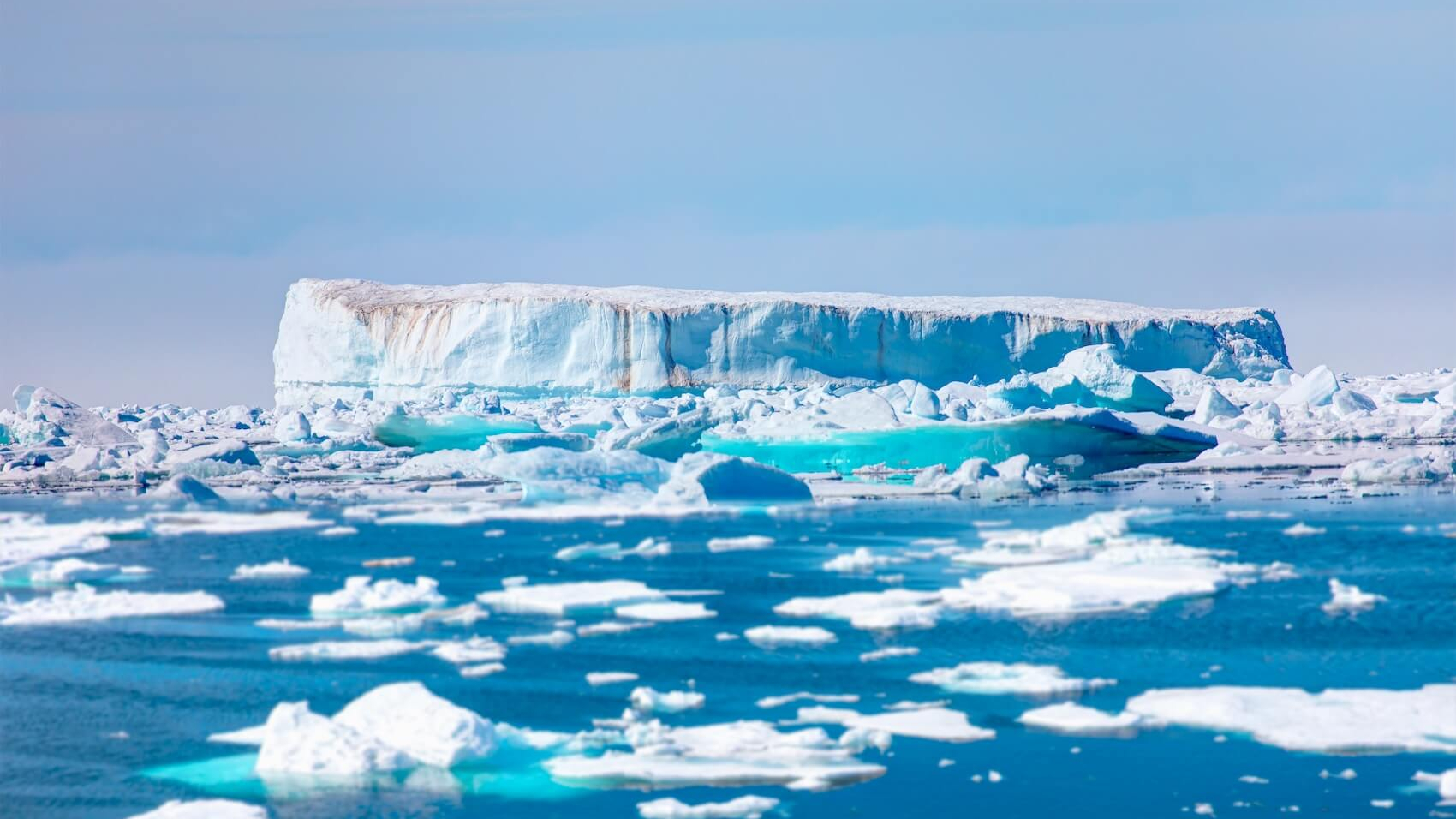
Melting icebergs along Greenland's coast.  Photo: Shutterstock.

Understanding Climate Skepticism: A Rhetorical Analysis of Climate Communication by PiS, AfD, and SD

DOWNLOAD ARTICLE

Please cite as: 

Lewis, Morgan. (2025). “Understanding Climate Skepticism: A Rhetorical Analysis of Climate Communication by PiS, AfD, and SD.” Populism & Politics (P&P). European Center for Populism Studies (ECPS). February 6, 2025. https://doi.org/10.55271/pp0047


Abstract

Two major global challenges of recent decades are climate change and populism. While there is a strong scientific consensus on anthropogenic climate change, social science research highlights how climate change and policy reforms have provoked significant backlash within populist discourse. Despite the clear intersection of these phenomena and the threats they pose to modern democracy, limited literature explores this relationship. This article examines the mechanisms by which right-wing populist (RWP) parties promote climate skepticism or hostility to climate policies. Focusing on the Law and Justice Party (PiS) in Poland, the Sweden Democrats (SD), and Alternative for Germany (AfD), this study conducts a rhetorical analysis of their climate communication to investigate how RWP positions align with shifting ideological and electoral contexts. The research employs Scott Consigny’s (1974) rhetorical situation framework and integrates Wodak’s (2015) interdisciplinary approach to populism, establishing a novel methodology for analyzing populist rhetoric. Findings reveal that RWP parties deploy rhetorical strategies such as framing an antagonism between the “elite” and “the people,” prioritizing national self-interest over climate concerns, and using anti-intellectual rhetoric. However, notable differences in rhetorical strategies emerge among the parties due to varying ideological and political contexts, demonstrating the adaptability of populist rhetoric around its ideological ‘center’. This study highlights the interplay between ideological and rhetorical facets of populism in shaping climate communication. By offering a nuanced understanding of how RWP parties engage with climate discourse across contexts, this research provides a foundation for further exploration of climate communication within populist narratives.

Keywords: Climate change, climate skepticism, right-wing populism (RWP), climate communication, anti-intellectualism, Euroscepticism


By Morgan Lewis*

Introduction

Contemporary international relations have been increasingly dominated by two salient challenges over recent decades: populism and climate change (Buzogány & Mohammad-Klotzbach, 2021). As right-wing populism (RWP) is on the rise, it has become an increasingly formidable presence in European politics, epitomized by results such as the Brexit referendum and strong electoral performances by Alternative for Deutschland (AfD) in 2024 (Angelos & Nöstlinger, 2024), French National Front (RN) (Forchtner & Lubarda, 2022), and Swedish Democrats (SD) (Diehn, 2022). 

This notable rise in RWP is paralleled by a climate crisis the genesis of which lies at the heart of our economic system. Climate change, as a paradigmatic example of a crisis that demands cosmopolitan and internationally orchestrated action, is contrasted by the fragmentary and nationalist discourse of RWP parties (Mudde, 2004; Huber, 2020). Thus, the global mushrooming of RWP and its congruence to climate skepticism and hostility to action poses a serious threat to global climate targets, as evidenced in a recent report by the Peterson Institute for International Economics, which found that rising populist opposition to climate policies is jeopardizing plans to achieve net zero emissions (Campanela & Lawrence, 2024). 

Indeed, as the more confrontational and transformative decisions on climate change increasingly lie fore front of political debate, understanding how RWP parties promote climate skepticism and/or hostility to action through their rhetoric is essential for generating an appropriate response that allows for a continuation (and acceleration) of decarbonization efforts (Lockwood, 2018). Despite the importance of understanding RWP climate communication, the specific rhetorical mechanisms through which this occurs remains largely unexplored (Lockwood, 2018; Marquardt et al., 2022). It is this lacuna in the relevant literature that forms the basis of this thesis. 

Literature Review

RWP is a longstanding feature of European politics and has attracted considerable interest from social scientists and political commentators. This has been engendered by the recent uprising of RWP movements across Europe (Sandrin, 2021; Ortu, 2014; Greven, 2016; Abromeit, 2017). While the impacts and potential ramifications of the growth of RWP across Europe have been heavily debated, there is a noticeable dearth of literature on how RWP parties promote climate skepticism and/or hostility to action on climate change. The most current literature suggests that climate skepticism is associated with conservative ideological positions, with many studies findings a correlation to institutional distrust, a preference for a small state, and the belief that environmentalism is stereotypically feminine (Huber, 2020; Atanasova & Koteyko, 2017; Jylha et al., 2020). In line with this, the literature on right-wing environmental communication also details how right-wing actors cast doubt over climate science to legitimize normative claims about climate change for ideological and political purposes (Carvalho, 2007; McCright & Dunlap, 2008).

However, few accounts directly interrogate the nature of the relationship between populism and climate skepticism. Mudde’s (2004) article interprets populism broadly as a ‘thin-centered’ ideology in which the fundamental cleavage in society is framed as between a ‘corrupt elite’ and ‘pure people,’ evoking a sovereign demos. More recent scholarship has conceptualized RWP as being marked by themes such as democratic backsliding and the erosion of institutions of the ‘liberal order,’ such as feminism or pacifism (Moghissi, 2016; Klein, 2018). The congruence of RWP and hostility to climate action is argued to be a consequence of both the ideological composition of RWP, which frames the ‘climate agenda’ as elitist and antithetical to national interest, and the changing structural conditions in many countries that have ‘left behind’ portions of the population. Indeed, within this framing, climate policies are conveyed as further extension of these processes of modernization and globalization that reflect the interests of an elite class that do not serve the population at large (Lockwood, 2018). Many recent examples illustrate this point, such as the AfD’s opposition to the Green New Deal, arguing it would harm farmers (Chatham House, 2024), and the Spanish Vox party’s claims that climate policies are part of a globalist agenda aimed at damaging Spain while benefiting China (Mathiesen, 2022). 

However, there are severe limitations to the current literature on this connection between RWP and climate skepticism. Limited research has examined the specific rhetorical devices used by populist parties to promote these views, despite their importance in understanding the dynamics of this relationship. Moreover, much of the literature does not differentiate between distinct RWP parties, often treating them as part of a broader regional or global phenomenon. An exception is Gemenis et al. (2012), who, after surveying 13 RWP parties across 12 EU countries, concluded that “party positions on this issue [anthropogenic global warming] are clearly anti-environmental.” My research addresses these cleavages in the literature, and in doing so will contribute to the literature by establishing a framework to better understand the linkages between the expansion and deepening of populist rhetoric in political discourse and climate skepticism and/or hostility to climate action. To best do this, I will analyze how this rhetoric is shaped by domestic political contexts, how these rhetorical devices differ between party contexts, and the implications for future climate change communication in the context of continued RWP electoral success. 

Methods and Structure

Regarding the chosen method for this study, I will undertake a qualitative, comparative analysis of three European populist parties. The relevant primary data I will be assessing will be speeches, interviews, or statements regarding climate change/climate policies, with a broader investigative framework also considering party manifesto transcripts and member magazines. Secondary sources will include monographs and academic journals. Due to language barriers, much of my primary data will be translated or collected via English-speaking media outlets/journals. 

This choice of methods is appropriate for two reasons: first, as I intend to perform a rhetorical analysis to inductively examine populist climate communication, a quantitative research approach is unnecessary as I am not seeking to quantify or provide a value for how populist leaders espouse hostility to climate policies. Second, a comparative research design enables me to assess RWP parties in relation to one-another, providing more insight into how domestic political contexts affect rhetorical choices as-well as mitigating the danger of individual examples reducing the more general applicability of my results (Clark et al., 2019).

I will be examining Poland’s PiS, Germany’s AfD, and Sweden’s SD. I have chosen these European parties as they provide a broad range in terms of the vehemence of their opposition to climate mitigating policies, with all members categorized as either ‘denialists/skeptical’ or ‘disengaged/cautious’ on their climate policies by Schaller and Carious’s (2019) study. Moreover, I have selected all European parties, with all three operating within EU states that share similar constitutional structures as this allows me to gain greater insight into the similarities and differences of populist rhetoric in broadly similar contexts.

My research project will be structured as follows: Section two will outline my methodology, through which my qualitative framework will be employed to answer my research question. Through doing so I will elucidate Consigny’s ‘rhetorical situation,’ an assessment of Wodak’s interdisciplinary interpretation of populism, and an analysis of the association between nationalism, climate change and RWP. Section three will implement a rhetorical analysis of each chosen political party. Section four, following the rhetorical analysis, will discuss the results and outline the implications of this research.

Methodology

In this section, I will outline the methodology employed in this thesis. By examining Scott Consigny’s theory of the rhetorical situation, I will demonstrate why this theoretical lens is the most suitable for the analysis. Additionally, I will evaluate and justify the selected methodology for studying populism, which aligns with Ruth Wodak’s interdisciplinary approach, highlighting its effectiveness for analyzing RWP positions on climate policy. Finally, this section will conclude with a summary of the intersection between populism, nationalism, and climate change.

The Rhetorical Situation

This study will use Scott Consigny’s notion of the rhetorical situation – referring to a determinate situation fueled by a problem – as a theoretical prism to inform and frame the later rhetoric analysis (Consigny, 1974). This framework provides an excellent foundation for interpretively understanding the rhetoric of the chosen right-wing populist (RWP) parties as it considers both the context and constraints that shape the construction of rhetoric, and the creative agency of the speaker to shape audiences’ perspectives in indeterminate situations. 

According to Consigny, there are three core aspects of the rhetorical situation: i) The Exigence/Urgency: which is a problem than can be modified by the audience; a defect of the status quo to which the rhetor responds. ii) The Audience:those with the capacity to act on the speaker’s message and mediate change. iii) Constraints: The limitations that shape the rhetorical situation and influence how the speaker responds, these can encompass cultural, social, historical, political, and technological factors.

Consigny’s theory initially came as an instructive intermediary between two theories of rhetorical political analysis: the positivist approach of Bitzer (1968) which emphasizes the importance of the situation in compelling the speaker to act on an exigence; and the constructivist approach of Vatz (1973) who emphasizes the agency of the speaker in actively shaping the situation through rhetoric. These origins of birth provide the strength of this framework for this thesis as its epistemological underpinnings balance the dual concerns of the poststructuralist and positivist rhetorical traditions that preceded it. Thus, by considering both the agency of the speaker to maneuver within their context, and the constraints created by their context, this approach offers a more complete understanding of how rhetoric is formulated and its implications (Consigny, 1974). 

Martin (2013) describes how overall, rhetorical analysis can be understood as an examination of how political actors’ ‘appropriate’ situations through interventions in which they deploy ideas that reorient the audiences’ perspective (Martin, 2013). Rhetoric, in this framework, can be considered akin to projectile-like ideas that move outward and displace the surrounding context (Consigny, 1976; Vatz, 1973). This is particularly useful for analysis of climate policy since how an audience comprehends climate change/policy is central to gaining the mass momentum required to reach net-zero. 

The importance of rhetoric in climate communication is supported by the most recent literature. As Nordensvard and Ketola (2021) note, the ambiguity surrounding climate change creates considerable space—what Consigny identifies as the ‘existential dimension’—for rhetors to creatively restructure the situation and reshape the electorate’s perspectives on climate change and policy. This is done as the rhetors—in this case, politicians—select argumentative structures (what Consigny identifies as ‘topics’) that are germane to the situation, enabling them to determine the form of persuasion that best fits the particularities of the issue (Lanham, 1991). Therefore, the actor can creatively resituate the situation, granting them considerable agency to construct narratives relating to the exigence—in this case, climate change and policy. 

This theoretical lens is also uniquely suited for assessing populist ideology, which is operationalized via a communication style that relies on established ideological focal points, namely nationalism and anti-elitism, which form a restricted core morphology (Mudde, 2004; Canovan, 2001). Accordingly, within this study, this theoretical framework will allow us to comparatively assess the narrative frames or ‘topics’ used by RWP party politicians, while also accounting for the contextual and structural constraints faced by each party and the creative agency of each actor. Thus, this interpretative approach emphasizes the value of historical and cultural context while also considering the rhetor’s agency to navigate their situation.

This framework of analysis is superior to other forms of hermeneutics for this analysis. An oft-used approach in reference to RWP is Critical Discourse Analysis as it provides an approach that embeds language in power and social inequality, thus utilizing a broader theoretical scope (Fairclough, 2013; Krotofil & Motak, 2018). However, as a mechanism for rhetorical meaning-making it is too broadly focused, taking as its object the “general domain of signs and symbolic exchanges [while] rhetoric specifies quite determinate techniques, devices and strategies” (Martin, 2022: 170). Consigny’s rhetorical situation rigorously assesses how language is used to influence an audience by identifying which rhetorical strategies are being employed, creating a more focused framework for comparative political analysis.

Having established a theoretical framework for rhetorical political analysis, I can move on to outlining a methodological understanding of populism.

How to Analyze Right-Wing Populism: An Interdisciplinary Approach

The contemporary literature on populism has posed significant methodological questions regarding how it should be interpreted, as De Cleen (2012: 1) notes, “one of the most used and abused terms inside and outside academia is undoubtedly populism.” The central focus of populist movements is regarded broadly as an emphasis on the inadequacy of the ‘corrupt governing elite’ to effectively respond to ‘general will’ of the ‘pure people’ (Huber at al., 2020; Mudde & Kaltwasser, 2012). However, the marked increase in the prominence of populism globally has brought about significant debate on the potential causes and implications of its recent resurgence (Abromeit, 2017). These methodological debates have resulted in a significant breadth of literature on how to evaluate RWP, which I will now interrogate to demonstrate the applicability of this thesis for studying RWP.  

Scholars such as Jagers & Walgrave (2007) define populism as a political communication style devoid of any coherent or consistent ideological content or principles that guide it, the essence of which exists in its performative rhetoric and communication. This rhetoric appeals to abstract notions of ‘the people’, villainizes the establishment, and embellishes certain emotional tropes (Moffit, 2016; Nordensvard & Ketola, 2021). 

Others such as Laclau (2006) shift the focus to the ontology of populism, arguing that populism represents a method of articulating those demands via a performative structuring logic that discursively constructs collective identities between groups. Another dominant school of thought in the literature focuses on the ideologically substantive aspects of populism (Freeden, 2017; Stanley, 2008). In this view, populism is conceived as a ‘thin-centered’ ideology which views of politics as an “expression of the volonté généale (general will) of the people” (Mudde, 2004: 543). Thus, populism is interpreted as an existing ideology, which operates through a severely restricted but identifiable morphology that utilizes a small number of core concepts oriented around ‘people-centrism,’ anti-elitism and often an inclination toward authoritarianism (Mudde & Kaltwasser, 2012). 

In view of these competing methodologies, truly interdisciplinary approaches to analyzing populism have been lacking (Marquardt et al., 2022). Recent literature has sought to remedy these blind spots. Following this, populism will be interpreted in line with Wodak’s discourse-historical approach, outlined in The Politics of Fear: What Right-Wing Populist Discourses Mean (Wodak, 2015). This study interprets RWP as a dynamic mixture of both style (the rhetorical devices being deployed) and substance (the ideological focal points around which RWP operates). Wodak’s approach establishes a methodology for studying populism that acknowledges the ideological content of RWP discourse, without reducing it to a “frivolity of form, prose and style” (Wodak, 2015: 3) which would downplay important aspects of how RWP resonates with the audience (Pels, 2012). This methodology for populism creates an interpretation of populism that “does not only relate to the form of rhetoric but to its specific contents” (Wodak, 2015: 1). 

Wodak’s interpretation is well-equipped for this thesis because it acknowledges how populism is both a form of communication and an ideology, which utilizes rhetorical devices to mobilize political support around certain ideas. Populist modes of communication thus help to “form expectations [and] shore up confidence” (Beckert & Bronk, 2018: 1-2), by helping guide people’s sensemaking facilities around the climate issues. Moreover, her study is primarily focused on Europe, therefore the ideological content she identifies is applicable to the ideologically ‘thick’ established politics of Germany, Poland and Sweden around which the ‘thin-centered’ populist ideology wraps itself. This enables a point of departure for my rhetorical analysis that is easily operationalized into a European context. One of the central content areas of populism identified by Wodak is nationalism. As such, this study will now turn to the intersection between nationalism, RWP and climate change to gain a more complete picture of its relevance for understanding climate skepticism. 

RWP, Nationalism and Climate Change: Patterns of Association

Wodak argues that, while there is no overarching explanation for the resurgence of RWP within Europe, certain phenomena transcend the ‘micro-politics’ of RWP, thereby providing a suitable framework for broader political analysis. The primary trend she identifies is the creeping ‘renationalization’ of EU politics (Wodak, 2015; Abromeit, 2017). As the ‘nation-state’ remains the dominant context for democratic political representation, populism operates via the vector of nationalism as the previously sharp distinction between nationalism and RWP becomes increasingly blurred (Brubaker, 2019; De Cleen, 2017). For Wodak (2015), RWP parties offer clear-cut answers for the electorate by constructing scapegoats and common enemies, as Pelinka (2013: 8) argues, “populism simplifies complex developments by looking for a culprit.” Which groups are selected depends largely on local political, economic, and historic contexts due to the adaptive plasticity of populist ideology. 

Contemporary RWP mobilizes less against a common enemy, and more against a (perceived) enemy from abroad by strategically selecting the ‘other.’ The ‘elites,’ in this view, play a key role as the secondary defining ‘others,’ who are represented as responsible for the modernizing trends that threaten the nation (De Cleen & Stavrakakis, 2017). These elites exist at regional and global stages, with organizations such as the EU and the United Nations being central to European RWP rhetoric (De Cleen & Stavrakakis, 2017). This results in a proclivity for conspiratorial thinking, with phenomena deemed to be damaging to the ‘nation-state’ being easily dismissible as elitist projects. Climate change here is reflective of a threat to the innately territorial and bordered nature of nationalism as a fundamentally borderless phenomenon. In this sense, the canopy comfort of a nationalist morphology encourages skepticism (Conversi, 2020; Ghosh, 2018). 

In summary, this section has outlined the theoretical framework of the rhetorical situation, its relevance for this study, and how it can be operationalized for analysis of RWP rhetoric. This section then explained the chosen methodology for populism, the usefulness of an interdisciplinary approach and the importance of nationalism as an ideological focal point for populist discourse. In sum, it has established a unique and valuable approach for analysis of RWP rhetoric.

Research and Analysis

Following the inductive question motivating this research, this study will now examine the selected RWP parties to uncover the rhetorical strategies they use to promote climate skepticism and/or hostility toward action on climate change. Drawing on our operational methodology for populism, the chosen primary and secondary sources are well-suited for analysis. To perform my analysis, I have accessed primary data through interview transcripts, conference statements, and parliamentary proposals/statements. Due to language barriers, a broader investigative framework will include quotes from online newspapers, articles, and academic journals.                        

This section outlines the context of each political party to inform the rhetorical political analysis, followed by an exploration of how the different rhetorical devices employed promote certain views on climate policy. This analysis is based on the notion that the statements made by various politicians within the chosen parties are interconnected, allowing the process of meaning-making to extend to the entire party.  

The Law and Justice Party (PiS)

Context

Poland is widely perceived as a laggard within the EU in terms of its climate ambitions. Identified as ‘disengaged/cautious’ by Carius & Schaller’s (2019) study of European climate agendas, the Polish Law and Justice Party (PiS) has prioritized economic development and energy security over climate protection (Biedenkopf, 2021; Lockwood, 2018; Judge & Maltby, 2017). Its strong opposition towards climate-friendly policies is illustrated through it being one of the last nations to put forth a decarbonization plan at the recent COP26 negotiations, after it reversed its decision to phase out coal by 2030 (Burki, 2021). Moreover, on a European level, its opposition to climate treaties such as the European Green Deal and the EU emissions trading scheme evidence its lack of ambition (Szulecki & Ancygier, 2015; KPMG, 2021). An important context for the PiS’s energy policies is Poland’s high reliance on indigenous coal supplies – which forms upwards of 70% of its energy supply (Notes From Poland, 2022). 

The PiS is an interesting case as it is the only selected party that has enjoyed complete political power after being elected in 2015, and again in 2019, while losing power in 2023, and enjoying the support of incumbent President Andrej Duda throughout (Cadier & Szulecki, 2020). Żuk & Szulecki (2020) argue that the PiS is a clear example of a RWP party, with an ideology that blends support for conservative ‘traditional’ values, nativist objection to immigration and nationalism (Kulesza & Rae, 2017). These form the ‘thick’ ideological bases around which the PiS construct a populist layer via a style of communication juxtaposing the ‘elites’ and Polish ‘people’ (Wodak, 2015).

Analysis 

These topics form the key narratives used by the PiS, acting as nodal points through which climate change rhetoric is oriented: i) Anti-intellectualism and scientific dissent over the existence of climate change. ii) Climate policy as elitist and a threat to national sovereignty and economic competitiveness

Scientific Dissent and Anti-intellectualism

A key layer of Wodak’s ideological micro-politics of populism is the construction of scapegoats and enemies via a discourse of an untrustworthy elite. This theme, as anticipated, was evident in PiS rhetoric with anti-elite frames being used to promote skepticism over the validity of climate science/climate policy (Faiola, 2016). Anna Zalewska, former PiS Minister of Education, when proposing the removal of anthropogenic climate change from school curriculums, claimed: “There is really no global warming because ice should melt in the Arctic, and it is growing. Why do they tell us otherwise? Because it’s cosmic money; ecologists earn such money on this warming” (via Nowak, 2016).

Furthermore, PiS leader and former deputy PM Jaroslaw Kaczyński has said that: “At least some of this so-called green policy is madness, [it is based on] theories without evidence” (Notes from Poland, 2021). He further argued that: “The climate is changing, but it’s not our fault. We’re not going to kill our industry just because some people in Brussels think they know better than us” (Reuters, 2018). 

Additionally, former PiS Minister of Foreign Affairs Witold Waszczykowski attempted to draw a more overt connection between pro-climate politics and Marxism, claiming that PiS’s predecessors acted “according to a Marxist model which has to automatically develop in one direction only—a new mixture of cultures and races, a world made up of cyclists and vegetarians who only use renewable energy” (Żuk & Żuk, 2018).

Disputing the viability of science and their motives is an important element of PiS discourse. 

Throughout the primary data, terms such as ‘Brussels,’ the ‘EU,’ ‘Ecologists’ and ‘Marxists’ were used interchangeably (based on the context) to denote an external and elitist enemy. Behind these quotes, a hidden ideology underpins RWP’s tendency toward conspiratorial thinking, which is the view that knowledge is always reflective of a form of power projection. Thus, by clearly defining the nation’s ‘enemies,’ the ‘people-elite’ dichotomy is re-emphasized while climate policy is presented as a means through which artificially constructed enemies exert power over the Polish nation (Wodak, 2015). 

This is exacerbated by the ambiguous and complicated nature of climate change, in addition to most climate communication being top-down from prestigious scientific institutions or government bodies which provides considerable space for RWP politicians to portray these issues as sinister elitist projects. This topic invokes nationalist and anti-EU sentiment as the foreign origins of climate policy is rhetorically foregrounded, inviting the audience to view climate policy and its proponents as similarly foreign. Pelinka (2013) observes that contemporary populist anti-elitism does not purely mobilize against an enemy, but a foreign enemy who are seen to be responsible for Europeanization and globalization. As noted by Laclau (2006: 648), “populism displaces the imminent social antagonism into the antagonism between the unified people and its external enemy.”

Another facet of this rhetoric topic is that it effectively illustrates what Wodak (2015: 2) identifies as the “arrogance of ignorance,” which refers to how RWP “appeals to common sense and anti-intellectualism [marking] a return to pre-modernist or pre-enlightenment thinking.” Phrases such as “some people in Brussels think they know better than us,”“because ice should melt in the arctic and it is growing” (see above quotations) communicate how expert views are framed as another mechanism through which elites seek to centralize authority to the disadvantage of the people (Brewer, 2016; Merkley, 2020).

Climate Policy as a Threat to Polish Sovereignty and Economic Competitiveness 

The EU’s institutions and political processes, while not the exclusive target of PiS, are typically in the firing line when attempts are made to undermine climate-friendly policies (Fuksiewicz & Klein, 2014). This rhetorical strategy occurs through a prism of national self-interest. As Wodak argues, the ‘renationalization’ of European politics is a core feature of RWP, with the nationalist leanings of PiS evidenced by the Health, Work and Family Programme (Prawo i Sprawiedliwość, 2014), which stated: “We will not lead Poland into any voluntary arrangements increasing the extent of European integration that do not meet the criterion of being clearly beneficial for Polish interests.” This rhetorical topic is commonly operationalized around the notion that climate policy unjustly threatens Polish sovereignty, and in particular the long-term viability of the Polish coal industry (Biedenkopf, 2021). 

Krzysztof Szczerski, former PiS head of office, speaking on the EU’s Energy Union, stated: “Can it be called anything else than the death of Polish coal?… So, we eliminate our own energy resource and become even more addicted to imports” (wPolityce, 2015). Furthermore, in 2018, at COP24, Andrzej Duda stated: “There is no plan to abandon coal in Poland. Coal is our strategic raw material. We have supplies for 200 years, and it is difficult to give up coal, thanks to which we have sovereignty.” He followed this by claiming: “As long as I am president, I will not allow anyone to murder the coal industry. It’s because we have such deeply ingrained traditions in this industry, of which St. Barbara’s Day is a part—a part that is actually included in the list of our heritage” (TVP World, 2018).

These quotations effectively demonstrate an important intersection between climate change and the nationalist ideology – resource nationalism. This phenomenon is evident in PiS rhetoric and is employed by many RWP parties as a strategy that sacralizes soil-rooted national resources as a suggested common good, despite the small proportion of people that reap the benefits of their exploitation (Conversi, 2020). As fossil fuels are often framed as part of Poland’s cultural heritage and a source of sovereignty and economic growth, not only is coal extraction justified, but any proposals threatening its viability are presented as a threat to collective Polish well-being. However, this discourse rarely addresses the inherent contradiction of the intergenerational national catastrophe that continued coal exploitation and associated emissions will cause (Kim, 2019).

This argumentative strategy links PiS rhetoric directly to my methodology, as national self-interests form the ideological substance around which the thin ideology of populism wraps itself. While more recent PiS rhetoric contains frequent references to their intent to overhaul the coal industry and make it harmonious with global climate ambitions, as stated by Andrzej Duda in 2018: “[The coal industry] must be kept, although it needs modernisation and reform” (TVP World, 2018). These can be viewed as attempts to reappropriate and manage the rhetorical situation in the context of the growing pressures to decarbonize through attempts to align Polish industry with modern climate commitments, despite the fanciful notion that Poland can achieve carbon neutrality while reliant on coal (Wójcik-Jurkiewicz et al., 2021). 

Closely linked to discourse on energy security, the PiS also invoked the supposed threat climate-friendly policies pose to Polish economic competitiveness. The PiS Party Programme (2014) stated: “The biggest obstacle in the field of electricity production is the climate policy imposed by the European Union” and went on to state they will not lead Poland into any European climate arrangements “which do not meet the criterion of being clearly beneficial for Polish interests”(Fuksiewicz & Klein, 2014). Dismissing climate policies for economic reasons constitutes what Forchtner & Lubarda (2022) identify as the imagined economic pragmatism existing in far-right political discourse. In this sense, the PiS objection to climate policies can be embedded in a wider theme within their rhetoric that challenges the suggested unfair economic arrangements brought by globalization and European integration (Marquardt et al., 2022). 

Although, seeming contrary to what was outlined in my above methodology, PiS rhetoric on the economic cost of climate policies is far from cohesive. This is demonstrated through statements such as that of Konrad Szymanski, Minister for European Affairs, who stated that: “We should take into account not only the costs of the transformation in themselves but also the costs of the lack of transformation…there is the impression that the lack of transformation generates zero costs for the economy” (Biedenkopf, 2021). While the majority of PiS rhetoric villainizes climate policy, these important exceptions to the rule demonstrate that PiS climate communication is not monolithic, with a range of differing constraints and contexts shaping the rhetoric of individual speakers. In this case, there is an acknowledgement of the gravity of the crisis, and the long-term benefits of climate action, differing from the short-term and reactionary rhetoric of many RWP parties (Antonio, 2019). This acknowledgment also has important implications for policy decisions, evidenced by the PiS support for developing smaller scale renewable energy forms, such as solar panels (Lockwood, 2018). 

In summary, analysis of this rhetoric shows how PiS discourse on climate change can be distilled into several key rhetorical devices that employ some of the central aspects of Wodak’s interpretation of populism. The PiS consistently frame climate policy as an elitist conspiracy, with anti-intellectual rhetoric utilized to invite the listener to view climate policy/science as a means of power projection and a threat, alluded to via references to ‘Marxists’ ‘ecologists’ or ‘Brussels’ which represent a foreign enemy to the rhetorical audience (Polish electorate). This topic intersects with the broader villainization of pro-climate policies and its proponents, with organizations such as the EU and/or UN cast as elitist in a Manichean worldview. Furthermore, PiS rhetoric portrays climate policy as a threat to Polish sovereignty and economic competitiveness via a discourse of resource nationalism. While several PiS actors have produced rhetoric that demonstrates an appreciation of the long-term economic benefit of integration, the majority remains insular and nationalist. 

Swedish Democrats (SD)

Context

The Swedish Democrats (SD) are the second largest party in the Swedish parliament (Riksdag) after gaining 20.5% of the vote in the 2022 Swedish general election, their best ever electoral performance (Diehn, 2022). A former pariah party associated with fringe neo-Nazi movements, the SD has seen an astonishing rise in recent years after denounced its extremist roots and pursuing more populist dimensions. The SD, through taking a broadly Eurosceptic and anti-establishment stance, has sought to profile itself as a party free from elitism and ideological constraints, and thus free to represent the true will of ‘the people’ (Mudde, 2004; Wodak, 2015; Tomson, 2020). The SD’s ideology, which is rooted in nativism, nationalism, and social conservativism, has also integrated climate change/climate policy into their broader populist frame as it becomes an increasingly salient political issue (Emilsson, 2018). 

The SD’s official stance is that climate change is a real and pressing issue; however, the party’s rhetoric has frequently disputed scientific findings and is categorized as “deniers and skeptics” in Carius and Schaller’s 2019 study (Vilhma et al., 2021). The SD was the only Swedish party not to vote in favor of ratifying the Paris Climate Agreement, and they have strongly opposed the government’s climate strategy, particularly regarding wind power development and environmental taxes, as illustrated by their 2019 vote against increasing the aviation fuel tax (Bierbach, 2019; Hofverberg, 2022).

An important context for the SD climate change rhetoric is Sweden’s history as a global leader in environmental politics. Sweden is ranked 5th on the Environmental Performance Index and, as Lockwood (2018) notes, Nordic political discourse at large contains less outright climate denial compared to Anglophone countries due to climate denial carrying less political capital, which can be considered a limitation on Swedish climate skeptical rhetoric (EPI, 2022; Bäckstrand & Kronsell, 2015). 

Analysis 

These rhetorical topics have been identified as the central argumentative structures used to promote climate skepticism and/or hostility to climate action: i) Climate nationalism and eco-populism; ii) Promoting ambivalence and challenging universalized forms of knowledge production; ii) Climate policy as a threat to traditional lifestyles.

Climate Nationalism and Eco-populism  

As climate change has been getting more space in SD discourse following extreme weather events, in particular widespread wildfires in June 2018, the SD have sought to manage this changing context – or ‘exigence’ – by utilizing a variety of rhetorical strategies. One such topic has been to acknowledge the crisis, while simultaneously denying Sweden’s responsibility to make drastic emissions cuts. 

This topic was evident in the SD 2022 manifesto, which stated: “Sweden does not contribute to reduced emissions by raising fuel prices and making it more expensive for companies to operate in Sweden if China can increase its emissions every year by more than what all of Sweden emits” (Party Programme, 2022: 24). Moreover, in a 2020/21 motion the SD claimed: “In many places, there is a lack of basic insight that Sweden or the EU alone can control global carbon dioxide emissions to a significant extent.” And that: “When the EU decided on the burden sharing, Sweden was given the most ambitious emission reduction requirements by all countries. This is strange in light of the fact that Sweden’s emissions of greenhouse gases per capita are already well below the average for industrialized countries” (Motion 2020/21: 727). 

This topic demonstrates an acceptance of the scientific consensus, while refocusing issues of climate reform onto developing nations, such as China, while framing Sweden as having already serviced its debt and ‘done its share’ (Wodak, 2015). This climate nationalist rhetoric has been identified by the literature as a key strategy of RWP actors to recenter discussions of decarbonization away from their nation by inviting the listener to view it as both ineffectual and unjust (Bang & Schreurs, 2010; Kashwan et al., 2022). As Dubash (2019) notes, the “turn toward nationalism…has created a short-term, looking-out-for-our-own mentality that is inimical to the global collective action needed to address climate change.” This rhetoric not only centralizes Swedish national interest, but also normatively reasserts the nation-state as the primary actor when setting climate policy by inviting the listener to view it as an issue to be addressed by siloed and self-serving nations, instead of intergovernmental institutions (Forchtner & Kølvraa, 2015). 

This embeds SD rhetoric firmly into my previously outlined methodology as it promotes a populist framing of ‘us versus them’ wrapped around a nationalist ideology. Sweden’s environmentally progressive context and the mainstream presentation the SD are trying to establish could have limited the effectiveness of more overt climate denial. However, this rhetorical strategy still establishes a discourse that is antithetical to the collective climate action that is needed (Margulies, 2021). 

This topic of climate nationalism closely linked to another rhetorical strategy to promote hostility to climate action identified in my analysis: eco-populism. While not anticipated in my methodology, the ecological inclination of RWP parties has been heavily discussed in recent literature (Forchtner, 2019; Sconfienza, 2022). This narrative was present in the SD’s 2018 manifesto which stated that: “Sweden alone cannot solve the world’s environmental problems, so we want to protect our unique natural environment and take our share of responsibility for the global challenges, while our environmental considerations are based on love and care for our own homeland” (Party Programme, 2018: 18).

The SD romanticization of the local environment is identified by Fochtner (2019) as a form of “ethno-nationalist imagery according to which ‘the people’ is rooted, and emerged from, a particular space.” By attributing value to the symbiotic relationship between the ‘nation’ and the ‘homeland,’ the SD promote a nature-nation-purity nexus. This rhetorical strategy crafts a narrative in which support for the local environment via domestic governance and traditions stands in opposition to global environmental issues such as climate change, which are supported by cosmopolitan institutions/elites and supported by a range of foreign traditions, considered as ‘other,’ embedding this topic into a populist frame (Sconfienza, 2022). As the audience is invited to view ecological purity as an important facet of Swedish nationalist imagery, the importance of a nationalist environmentalist frame is reified while less importance is placed on climate change and global climate cooperation, which is dismissible as a transient issue (Hultgren, 2015).

Promoting Climate Ambivalence and Challenging Universalized Forms of Knowledge Production

The SD’s approach to climate change is characterized by ambiguity, as seen in statements such as: “The debate among researchers is alive about the consequences of different levels of temperature increase” (Motion 2020/21: 727). This quote underpins how the SD seeks to sow doubt over the scientific consensus by emphasizing the ‘aliveness’ of the climate change ‘debate.’

Moreover, this argumentative structure demonstrates how the SD questions the notion of universalized mechanisms of knowledge production for political means. Marquardt et al. (2022) argue that RWP parties utilize not only anti-elitist and anti-cosmopolitan arguments but also question the forms of knowledge production and experience upon which climate action is based. This was illustrated by Josef Fransson, an SD Politician, who emphasized the benefits of CO2 emissions in a 2015 article, claiming: “The soil [will] become greener, and crops grow larger due to the plants’ greater access to carbon dioxide” (Hultman et al., 2020). More recently, SD politician Elsa Widding, when denying the severity of climate change, argued that: “The last time that was the case was in the 1960s when summers either stopped or became so short that we couldn’t produce a harvest” (The Local, 2022). 

Parallel to the SD, online far-right media within Sweden also employ these rhetorical tools to sow distrust around climate science, with media sites such as Nya Tider claiming “climate threat-sceptics have identified a series of basic problems with climate science as it is presented by the Intergovernmental Panel on Climate Change (IPCC). Among these are deviations from the scientific method, the accuracy of climate models, modelling of the carbon cycle and questionable data adjustments” (Björklund, 2018a). Promotion of ambivalence around the scientific method reflects how the Swedish far-right utilize these rhetorical topics to frame science and the scientific method as a tool of cosmopolitan, supranational institutions or secondary ‘others,’ dismissing these institutions and forms of knowledge production as both fallible and the product of a corrupt elite.

This constitutes what Jasanoff (2010) argues is the prioritization of subjective and local experiences over the apolitical and universal imaginary of bodies such as the Intergovernmental Panel on Climate Change. The SD, by strategically creating tension between these competing epistemic worldviews – the local and the cosmopolitan – makes climate change a politicized and contestable issue as the epistemology being prioritized reflects a broader worldview. By reframing climate change with an emphasis on subjective personal experiences regarding ‘past short summers’ or ‘the positive effects of carbon,’ the SD are also posing a challenge to the forms of knowledge that bolster the scientific consensus and justify climate reform (Marquardt et al., 2022). This topic leads to personal experience constituting knowledge that is valued higher than the positivist knowledge claims of climate policy proponents. Wodak’s concept of the “arrogance of ignorance” (2015: 2) underscores this phenomenon, referring to the tendency of RWP communication to legitimize forms of truth conceived as the ‘common-sense’ of the people, while delegitimizing climate science.

Climate Policy as a Threat to Traditional Lifestyles  

The SD have often utilized a rhetorical pattern portraying climate policy, and its advocates as a cavalry of elites that threaten traditional lifestyles and industries. Wodak, (2015), as outlined previously, identifies RWP’s proclivity for scapegoating elites as the process of creating secondary defining ‘others,’ who are villainized based off their apparent responsibility for the modernizing policies and trends that threaten the nation-state and its traditions.  

This is evident throughout SD climate communication, as seen when stating: “The goal of a more environmentally friendly society should be achieved primarily through awareness raising, technological development, and positive incentives…not through a one-sided focus on punishing ‘undesirable’ lifestyles” (Sverigedemokraternas principprogram, 2019). This notion was also evidenced when claiming: “There is no indication that free people [should] refrain from travel and a good standard of living, nor should it be the aim of politics” (Motion 2019/20: 2682). As evidenced, SD climate rhetoric invites the listener to view climate policy as a threat to people’s lifestyle, thus creating a dichotomous perspective that positions climate reform as antithetical to the interests of the citizens. In this case, the ruling government is positioned as the ‘elites,’ reflecting the SD’s position as an opposition party in the Riksdag (Swedish Parliament). 

This topic is made more evident when the SD discuss specific policy issues, such as the petrol/diesel and carbon tax: “Aggressive taxation and policies focused on cities have turned the car into a class issue…for the vast majority of people the car is not a luxury but a necessity.” Moreover, the SD argued that: “Today, environmental taxes far exceed the cost of emissions. The car has become a cash cow for the government” (Party Programme, 2022: 27). These quotes demonstrate how climate policy is framed as antagonistic to aspects of modern life, such as individual car ownership, which are simultaneously portrayed as unproblematic. These discursive appropriations are supported by Hultman et al. (2020), who argue that RWP hostility to climate change is partly rooted in a refusal to recognize the inherent issues in modern lifestyles, rates of consumption, and capitalist modes of production which in part caused the current ecological crisis (Pulé & Hultman, 2019). This argumentative structure links to Wodak (2015) argument that RWP utilizes/constructs a ‘politics of fear’ to mobilize support around their party as the vindicators of these ‘harmless’ lifestyles, and therefore as the only truly representatives of ‘the people.’

Outside of direct party sources, parallels can be drawn here to Swedish anti-COVID discourse, with Önnerfors (2024) noting how similar rhetorical devices are employed in a range of so-called protest songs. One example includes Swedish artist Christoffer Lundquist’s, whose song ‘Vi är fria’ employed distinct rhetorical devices to promote skepticism about the role of the government in pushing vaccinations and COVID restrictions by urging brave truthtellers who “have truth and meaning” (Lundquist, 2021) to take back control as a unified grassroots movement against a suggested evil and overreaching state (Hughes et al, 2021: 7). The rhetorical devices emphasizing subjective ‘common sense’ knowledge are contrasted with the machinations of a vaguely defined elite, which threaten the freedom and lifestyles of the ‘people.’ Similar to the SD’s, these rhetorical topics position the government as a malicious elite in a quest to return the freedoms and traditional lifestyles which they claim have been lost. This wider discourse speaks to how RWP seeks to position the policies of a corrupt elite – such as through climate or pro-vaccination policy – against the suggested interest of the ‘people’ and diffuse claims of freedom and tradition.  

In summary, the SD employ various rhetorical devices to promote ambivalence and/or hostility to climate action. While important constraints limit the SD’s ability to formulate rhetoric, such as Sweden’s strong environmentally progressive ethos, SD actors creatively employ rhetorical devices to promote hostility to climate policy in ways that demonstrate some fundamental aspects of Wodak’s interpretation of RWP, while also differing in some unexpected ways. One such topic was climate nationalism, which directed the focus of the rhetoric audience away from domestic reform onto developing nations. Interestingly, this topic also intersected with eco-populism which was prevalent in SD climate discourse and sought to promote ecological purity within a nationalist frame, thereby positioning climate change and international climate cooperation as secondary to the importance of securing the ‘homeland’ ecology. 

SD’s rhetoric challenged the epistemologies underpinning climate science and in doing so, delegitimizing climate policy/expertise and its associated worldview while prioritizing subjective and local ‘common-sense’ knowledge forms. Moreover, closely associated with this topic, the SD depicted climate policy as an elitist threat to the lifestyles of the Swedish people, as suggested by Wodak (2015), invoking the suggested ‘elitism’ of climate science is a common strategy of RWP, however the defense of the free-market and modern consumerist lifestyles demonstrates how the rhetorical devices being employed shift in relation to ideological/contextual factors. 

Alternative for Deutschland (AfD)

Context 

The Alternative for Deutschland (AfD) party is a right-wing populist (RWP) party holding an influential position within the German political system after gaining 10.3% of the vote share in 2021, with 83 seats in the German Bundestag (parliament), and winning its first state election in the German state Thuringia in 2024 (Kirby & Parker, 2024; Laumond, 2023). Founded in 2013 in reaction to the European Central Bank (ECB) and European Commission’s bailout of Greece, the AfD has been characterized by extreme Euroscepticism and identarian nationalism as well as being in favor of a free-market economy (Boecher et al., 2022). Its radical political positions are paralleled by its position on climate change with the AfD vigorously opposing Germany’s ambitious plan to reach carbon-neutrality by 2045 (The German Energiewende) (Kurmayer, 2023). 

The AfD is an important case within this thesis as it is the only chosen party that has made climate policy as one of its key issues, only following immigration and the Euro in salience (Arzheimer, 2015). Categorized as ‘deniers and sceptics’ by Carius and Schaller’s 2019 study, the AfD have acknowledged a warming trend, however, dispute its anthropogenic origins. This attribution skepticism has become a key feature of its political profile and has mobilized voters around the suggested elitism and corruptness of climate policy (Grimm, 2015). In line with this, the AfD has voted against all EU climate and energy policy proposals tabled in the European Parliament and is opposed to the proposed phasing out of the fossil fuel industry while supporting nuclear development (Waldholz, 2019). 

For many of the quotes used in this analysis, articles from the AfD membership magazine (AfD Kompakt) were utilized. This is appropriate as these articles are written by AfD politicians and, although typically brief, provide a more detailed analysis of AfD policy positions and rhetorical strategies due to their frequent publication.

Analysis

These two topics were identified as the central rhetorical devises used to promote climate skepticism and/or hostility to climate action: i) Portraying climate science as false and elitist; ii) Promoting technological innovation as the solution.

Portraying Climate Science as False and Elitist 

A central mechanism through which the AfD promote doubt over climate change is by frequently highlighting the beneficial effects of carbon emissions, epitomized by AfD candidate Guido Reil declaring that: “Carbon Dioxide is good for plants [and is having] no impact on the climate” (Farand, 2019). Moreover, the AfD’s manifesto (2017: 78) claims: “[The] IPCC and German government conveniently omit the positive influence of COon plant growth and world nutrition.” By emphasizing the benefit of carbon emissions, the AfD strategically reframed climate change from a less contestable situation, to one of ambivalence in which the listener is invited to challenge the epistemic authorities that underpin knowledge on climate change (Boecher et al., 2022). 

Prioritizing alternative or experiential knowledge over expertise is a common mechanism through which RWP reframes climate science within an ‘elite’ versus the ‘people’ dichotomy. By radically simplifying the issue, and challenging the knowledge foundations that support it, an antagonism between the ‘folk’ or experiential and scientific knowledge foundations is created, demonstrating Wodak’s (2015) notion of the ‘anti-intellectualism.’ 

In addition, contrary to what one might expect from RWP parties such as the Polish PiS, which typically promote conspiracist arguments claiming that scientists manipulate evidence, a dominant theme used by the AfD to invoke climate skepticism is that the establishment—primarily the German media, government, and the EU—is alarmist and employs scare tactics. Karsten Hilse, AfD spokesman for environmental policy, stated in AfD Kompakt that: “On the occasion of the terrible forest fires that rage in Sweden, the colleagues from Heute Journal [one of Germany’s main news programs] […] deemed it appropriate to once again produce a panic program on (man-made) climate change” (Hilse, 2018). Moreover, Professor Ingo Hahn, science policy spokesman for the AfD, claimed that: “The radicalization of the climate ideologues continues to increase. The main blame lies with the established parties and the mainstream media, which have been spreading fictitious horror scenarios about ‘climate change’ for years” (Hahn, 2023). 

While this rhetorical strategy differed from the other chosen parties, it does entail a topic which firmly embeds climate rhetoric into the AfD’s populist core by inviting the audience to perceive climate change/climate policies as a project orchestrated by a cosmopolitan elite, detached from the workings of everyday people that are defined within a nativist frame (Wodak, 2015; Lockwood, 2018). This is evident when AfD politician Alexander Gauland in an AfD Kompakt article claimed in 2017 that: “While more and more money is being pulled out of the pockets of the hard-working people, electric cars are to be subsidized” (Gauland, 2017). Another article claimed that “with the plans to deliberately increase the price of the staple food, meat, the old parties show that they are out of touch with the ‘little guy’” (Chrupalla, 2019).

Outside of the mainstream party discourse, a corpus of far-right German blogs and magazines have echoed this rhetorical device. For example, the far-right blog Politically Incorrect, which argued that climate change policy was leading to the suppression of “serious [scientific] voices” and resulted in the creation of blacklists of “climate deniers” (PI News, 2007). This discourse, while not produced directly by official AfD sources, speaks to the wider rhetorical approach of these ideological positions to the exigence of climate change and the characterization of scientific reasoning as fundamentally antagonistic to the interests of the people. Reflecting on these wider discourses underscores how the apparent ‘people-centrism’ of the AfD reorients the rhetorical situation into one in which the AfD are the defenders of the taxpayers from the machinations of a corrupt cosmopolitan enemy or a foreign ‘other’ which is juxtaposed against the ‘little guy,’ or German public who is framed as paying the consequences of policies such as electric var subsidies or meat taxes (Küppers, 2022).

This topic thus centers AfD rhetoric into our methodology for populism, as it centers a suggested ‘antagonism between the ‘people’ and ‘elite,’ using it to promote hostility to climate policy.

Technological Innovation as the Solution

The AfD frequently attempt to reorient discourse on the German energy transitions via a topic claiming that technological breakthroughs are the solution to energy/environmental issues. The AfD are outspoken champions of alternatives to renewables, citing vaguely described energy alternatives, arguing that: “Promising new developments such as the thorium high-temperature reactor in Hann Uentrop or the fast breeder in Kalkar were prematurely terminated. Thus, these ground-breaking ideas could never be fully developed” (Manifesto for Germany, 2017: 79). When discussing issues associated with nuclear expansion, such as nuclear waste, the AfD claimed that radioactive residues should be stored and catalogued “in order to recycle them when technical progress permits” (Manifesto for Germany, 2017: 79), underscoring the technological optimism in AfD energy policy. 

This topic is utilized to reframe the exigence of proposed climate reforms away from more ideologically threatening state-led reforms, such as carbon tax, by conjuring optimism over vaguely defined and abstract technological solutions created by the market. This strategy reflects the AfD’s right-wing conservative ideology, with several studies demonstrating the link between climate skepticism and pro-market attitudes (McCright & Dunlap, 2008; Cann & Raymond, 2018). As Küppers (2022) argues, the AfD’s support for a free market economy under its ‘ordo-liberal’ ideology informs its contemporary neoliberal economic position. Indeed, a primary reason stated for its rejection of the German Renewable Energy Act was that it is “akin to a state-directed economy and a departure from German social-market economy”(Manifesto for Germany, 2017: 79). Thus, by placing the onus of reform onto technological advancement, the status quo is fortified as any necessary changes to modern consumption patterns or lifestyles are circumvented in line with the AfD’s radical pro-market ideology (Damico et al., 2023). 

Another mechanism through which this rhetorical strategy promotes hostility to climate policy, particularly the German Energiewende, is by asserting that interests and power struggles determine science-policy relations. By painting academic/scientific findings as political positions, the listener is encouraged to view renewable energy as only being prioritized due to a corrupt, wealthy elite reaping the benefits of subsidies, while fossil fuels, nuclear energy, and alternative advanced technologies are rejected for political, instead of practical, considerations (Boecher et al., 2022). This sentiment was evident when Alice Weidel, Chairperson of the AfD parliamentary group, claimed: “The planned shutdown of the last German nuclear power plants is an ideologically insane act against all economic and political reason and against the will of a majority of German citizens” (Weidel, 2023). The AfD also argued, in reference to the Energiewende policy’s planned phasing out of nuclear energy, that: “Truly civilian nuclear concepts such as the liquid-salt reactor have never been seriously tested, although their feasibility has long been proven. Since the 1970s, no development has taken place, not least because money was invested in unrealistic visions such as renewable energy sources” (Deutscher Bundestag, 2020).

This topic thus reorients the audience away from the real concerns surrounding nuclear and fossil-fuel power generation, instead inviting the listener to view renewable development and climate policy as political ploys. As outlined in Wodak’s methodology for populism, the AfD evoke the antagonistic relation between the ‘elite’ and the ‘people,’ as the former are framed as the beneficiaries of renewable energy development and Germany’s Energiewende, thus promoting hostility to climate policy. This can be interpreted as the rhetor looking to structure an indeterminate situation, utilizing the complicated and nature of energy production and how it interfaces with the climate to promote doubt and hostility towards climate reform.

In summary, several central rhetorical topics are visible that promote hostility to climate change/policy. The party portrays climate science as false and elitist, while promoting technological innovation as the solution. Moreover, by employing mechanisms to challenge the knowledge foundations of climate science, an antagonism between experiential and scientific knowledge and a dichotomy between an ‘elite’ versus the ‘people’ frames climate policy as an elite-orchestrated project. The AfD’s rhetoric embeds climate change/policy into its populist core, while also making subtle changes given contextual differences, with key factors for the AfD being both the ambitious scale of the German Energiewende, and the AfD’s radical subscription to market economics. 

Comparative Analysis

All three RWP parties (PiS, SD and AfD) portray climate change as an agenda orchestrated by a self-interested and corrupt cosmopolitan elite. While each case demonstrated varying degrees of climate skepticism, all emphasized the injustice of climate reform on everyday people, thereby reframing the climate issue within a worldview defined by an antagonism between ‘the people’ and the ‘elites,’ as outlined in my preceding methodology. Which ‘elites’ are selected as the rhetorical focus depends largely on the context, with the AfD/SD parties primarily targeting the national government, while the PiS, as a former governing party, emphasizes regional/supranational groups such the EU/UN (Biedenkopf, 2021). PiS rhetoric was also less cohesive than the other parties, with some pro-climate frames being deployed, potentially reflecting what their constraints were during their position as a leading party to adhere to global and regional climate targets and expectations. 

Moreover, differences in how these argumentative strategies were utilized was evident with the AfD party, which invoked climate skepticism by suggesting climate predictions were an elite-driven scare tactic, while the SD/PiS primarily claim that climate change is an ideologically driven conspiracy that lacks evidence. These anti-establishment narratives are underpinned by a strong nationalist agenda among each party, with a discourse prioritizing national sovereignty over climate ambitions being readily apparent throughout the findings. 

The topic of climate nationalism was present in all three parties, which depicted climate-friendly policy as contrary to national sovereignty and/or economic interests, although how this topic was expressed differed based on party context. The PiS utilized a narrative of resource nationalism, arguing that climate reforms would have extreme economic ramifications given Poland’s high reliance on indigenous coal supplies, as-well as the traditional cultural value of coal as a source of sovereignty. The AfD party similarly primarily sought to discredit climate reform strategies under the German energy transition (Energiewende) by arguing climate policy is akin to a state-led economy designed to disadvantage Germany, thereby embedding anti-elitist sentiment in the AfD’s ideological underpinnings (Arzheimer, 2015). Following these ideological contexts, the AfD party also demonstrated an optimistic belief in the ability of future technological advancements to solve energy and climate issues, reflecting both its ‘ordoliberal’ enthusiasm for the free-market, and its support of nuclear energy advancement, which is planned to be rapidly phased out under the German Energiewende (Rechsteiner, 2021). This topic was also present in PiS rhetoric to a lesser extent, which made arguments for the development of ‘clean coal.’

The SD’s climate nationalism took a different form than that of the other chosen parties. While still portraying climate change as an undue economic burden, the party argued that Sweden has no responsibility to make further emissions cuts due to its relatively low emissions and that such cuts would be inconsequential. Instead, they advocated for higher-emitting nations to take greater responsibility. The SD’s nationalist ideology also took the form of eco-populist rhetoric which was less apparent in the other cases and promoted a symbiosis between the ‘nation’ and local environment, while dismissing international environmental issues like climate change.

Closely related to this topic, another rhetorical device used in each case was anti-intellectualism via prioritizing localized and experiential forms of knowledge over the scientific and positivist epistemologies that necessitate climate action. This crafting of an epistemic tension was utilized similarly by each party, demonstrating its centrality to RWP climate communication. 

Conclusion

Discussion of Findings

The starting point for this article, supported by a literature review, was that relatively little attention has been paid to the specific rhetorical mechanisms through which right-wing populism (RWP) promotes climate change skepticism and/or hostility to climate action. Thus, the chief aim has been to analyze the rhetorical choices of RWP parties regarding climate change/policy and offer new insights into how RWP positions reshuffle and adapt in line with shifting ideological considerations and contexts. By focusing on a range of relatively contemporary quotes from official party programmes, policy proposals and individual politicians, and buttressing my findings with supportive secondary data, I have demonstrated real examples of how RWP parties promote skepticism and/or hostility to climate change policy by deploying argumentative strategies, or topics, conceived within a rhetorical situation (Consigny, 1974)

In doing so, this study advances knowledge in the field in three ways. First, while nationalist discourse has long been understood as an ideological focus for RWP, as outlined in my methodology, the results of the study show how nationalist opposition to climate change shifts depending on each parties’ unique context. This demonstrates how nationalist ideology forms the ‘thick’ substantive base around which RWP articulates opposition to climate policy. 

Second, RWP opposition to climate policy is rhetorically promoted through a discourse of ‘the elites’ versus ‘the people,’ which serves as the central frame around which various forms of climate skepticism and/or hostility to climate change are articulated. Multiple narrative frames were deployed to undermine the scientific consensus on climate change, either by dismissing it as a scare tactic or outright conspiracy, or by claiming that climate policy threatens economic competitiveness and citizens’ lifestyles, often associating it with a socialist command economy. Given the varying ‘elite’ groups targeted depending on context, the adaptive plasticity of RWP climate communication is fully evident.

Third, it is also evident that European RWP parties frequently seek to disqualify scientific expertise by utilizing anti-intellectual rhetoric, while prioritizing local, experiential sources of knowledge. This was a core feature of RWP identified by Wodak (2015), these interpretative findings reveal by how this epistemic challenge to the universal, scientific epistemologies that support climate action is a shared strategy across European RWP parties. By focusing on the utilization of scientific knowledge, this study contributes to recent literature on populist climate communication. 

Furthermore, these findings are broadly supportive of Wodak’s (2015) methodology for populism, with both ideological substance and rhetorical style coalescing to form climate communication strategies. Indeed, much of the current literature interprets populism as isolated from the broader contexts in which it arises, resulting in theoretical and methodological assumptions (Mudde, 2004; Jagers & Walgrave, 2004). By emphasizing the importance of different contexts in shaping rhetoric, the way in which rhetorical devices shift in accordance with different conditions is evident while shared tendencies between parties can also be seen. 

This theoretical research builds upon the work of Stanley (2008: 95), who identified populism as an existing ideology that varies considerably based on the societal context as its ‘thin’ ideological base which can be found in “combination with established ‘full’ ideologies.” These findings are compatible with this thesis, however by emphasizing both the ideological and stylistic/rhetorical facets of populism, and how this differs between contexts, a more updated relationship between populism and climate change is apparent.

Limitations and Implications 

One limitation of my research was that all parties chosen were European. This could limit the applicability of my knowledge claims due to the potential bias inherent in only assessing Western-centric normative viewpoints on climate change. While this choice of methods allowed for a more focused interpretive research frame for analyzing European RWP discourse, the applicability of this study is arguably limited when examining the RWP in non-Western regions, such as Jair Bolsonaro’s Liberal Party in Brazil. Moreover, populism is a far more ideologically extensive and heavily debated issue than was presented in this study, and while some extent of the most contemporary debates on the issue is interrogated, a more extensive investigation into the relationship between other forms of populism, such as Left-wing populism, and the climate issue, is beyond the scope of this article (Gamble, 2018). 

In outlining how RWP parties promote skepticism/hostility to climate action, this article provides an investigative framework for future study on climate change communication. The impact of these findings on future climate change communication, and how it can more effectively circumvent populist anti-science rhetoric is valuable given the relevance of public opinion for climate politics (Huber et al., 2020). RWP primarily positions climate change and its policies as elitist and disconnected from the true interests of the ‘people,’ utilizing anti-science frames to dismiss the epistemologies that underpin climate policy. Thus, the top-down nature of climate communication, which primarily occurs in international settings and is negotiated by elites disconnected from the interests of local communities, could undermine public support.

These findings suggest that climate communication should take place more frequently in settings that foster community engagement and local participation to reach individuals exposed to RWP attitudes. This study finds that more inclusive modes of climate communication, such as messaging through local representatives and business owners, could be effective in conveying that climate reform is in the interest of all. Additionally, emphasizing the impact of climate change on local communities and ecologies would help contextualize it as a tangible and relevant issue, preventing it from being framed as an abstract and elite-led phenomenon.


(*) Morgan Lewis recently earned an MSc in International Business and Strategy from the University of Bristol, graduating with Distinction and receiving the Dean’s Award for Outstanding Academic Performance. His dissertation, Understanding Climate Skepticism: A Rhetorical Analysis of Climate Communication by the Polish Law and Justice Party, German Alternative for Deutschland, and Swedish Democrats, examined the rhetorical strategies used by right-wing populist parties to shape climate discourse. He also holds a First-Class BSc in Politics and International Relations from the same institution. His academic interests include political theory, contemporary European populism, and sustainability discourse.


References

Abromeit, J. (2017). “A critical review of recent literature on populism.” Politics and Governance, 5(4), 166–176. https://doi.org/10.17645/pag.v5i4.1146

Antonio, R. J. (2019). “Reactionary Tribalism Redux: Right-Wing Populism and De-Democratization.” The Sociological Quarterly, 60(2), 201–209. https://doi.org/10.1080/00380253.2019.1593062

Angelos, James & Nöstlinger, Nette. (2024). “German far right wins first major election since World War II.” Politico. https://www.politico.eu/article/germany-far-right-elections-victory-afd-cdu-olaf-scholz/

Arzheimer, K. (2015). “The AfD: Finally a Successful Right-Wing Populist Eurosceptic Party for Germany?” West European Politics, 38(3), 535–556. https://doi.org/10.1080/01402382.2015.1004230

Atanasova, D., & Koteyko, N. (2017). “Metaphors in Guardian Online and Mail Online Opinion-page Content on Climate Change: War, Religion, and Politics.” Environmental Communication, 11(4), 452–469. https://doi.org/10.1080/17524032.2015.1024705

Bäckstrand, K & Kronsell, A. (2015). Rethinking the green state: Environmental governance towards climate and sustainability transitions. Routledge. 

Bang, G.; Schreurs, M. A.; Connelly, J. & Wurzel, R. (2011). A Green New Deal: Framing US climate leadership. In: The European Union as a Leader in International Climate Change Politics (pp. 255–271). Routledge.https://doi.org/10.4324/9780203839959-26

Bernd, V. S. & Wentist, Frek. (2007). “Climate Change Skeptics are Listed ‘Climate Deniers’.” Politically Incorrect. https://www.pi-news.net/2007/02/klima-wandel-skeptiker-werden-als-klima-leugner-gelistet/  

Biedenkopf, K. (2021). “Polish climate policy narratives: Uniqueness, alternative pathways, and nascent polarisation.” Politics and Governance, 9(3), 391–400. https://doi.org/10.17645/pag.v9i3.4349

Bierbach, Mara. (2019). “EU’s populists at odds with climate protection.” DW. https://www.dw.com/en/climate-protection-where-do-the-eus-right-wing-populists-stand/a-47699703

Björklund, Per. (2018). “New setback for climate change.” Nya Tider. Februari 9, 2018.https://www.nyatider.nu/skribent/per-bjorklund/page/18/

Boecher, M.; Zeigermann, U.; Berker, L. E. & Jabra, D. (2022). “Climate policy expertise in times of populism – knowledge strategies of the AfD regarding Germany’s climate package.” Environmental Politics, 31(5), 820–840. https://doi.org/10.1080/09644016.2022.2090537

Brewer, M. D. (2016). “Populism in American Politics.” The Forum: A Journal of Applied Research in Contemporary Politics, 14(3), 249–264. https://doi.org/10.1515/for-2016-0021

Brubaker, R. (2020). “Populism and nationalism.” Nations and Nationalism, 26(1), 44–66. https://doi.org/10.1111/nana.12522

Burki, T. K. (2022). “’Phasedown’ of coal use after COP26 negotiations.” The Lancet Respiratory Medicine, 10(1), 10-. https://doi.org/10.1016/S2213-2600(21)00544-0

Buzogány, A. & Mohamad-Klotzbach, C. (2021). “Populism and nature—the nature of populism: New perspectives on the relationship between populism, climate change, and nature protection.” Zeitschrift Für Vergleichende Politikwissenschaft, 15(2), 155–164. https://doi.org/10.1007/s12286-021-00492-7

Cadier, D. & Szulecki, K. (2020). “Populism, historical discourse and foreign policy: the case of Poland’s Law and Justice government.” International Politics (Hague, Netherlands), 57(6), 990–1011. https://doi.org/10.1057/s41311-020-00252-6

Cann, H. W., & Raymond, L. (2018). “Does climate denialism still matter? The prevalence of alternative frames in opposition to climate policy.” Environmental Politics, 27(3), 433–454. https://doi.org/10.1080/09644016.2018.1439353

Canovan, M. (2001). “Taking politics to the people: populism as the ideology of democracy.” In: Y. Mény and Y. Surel. Democracies and the Populist Challenge. Palgrave Macmillan. PP. 25-44. 

Carvalho, A. (2007). “Ideological cultures and media discourses on scientific knowledge: re-reading news on climate change.” Public Understanding of Science (Bristol, England), 16(2), 223–243. https://doi.org/10.1177/0963662506066775

Castanho Silva, B.; Vegetti, F. & Littvay, L. (2017). “The Elite Is Up to Something: Exploring the Relation Between Populism and Belief in Conspiracy Theories.” Swiss Political Science Review, 23(4), 423–443. https://doi.org/10.1111/spsr.12270

Chrupalla, Tino. (2019). “Don’t make meat a pawn at the mercy of climate hysterics.” AfD Kompakt. https://afdkompakt.de/2019/08/07/grundnahrungsmittel-fleisch-nicht-zum-spielball-von-klimahysterikern-machen

Chatham House. (2024). ‘How will gains by the far right affect the European Parliament and EU?’ 

Clark, Tom; Foster, Liam and Bryman, Alan. (2012). How to do your Research Project or Dissertation. Oxford University Press. 

Consigny, S. (1974). “Rhetoric and Its Situations.” Philosophy & Rhetoric, 7(3), 175–186.

Conversi, D. (2020). “The Ultimate Challenge: Nationalism and Climate Change.” Nationalities Papers, 48(4), 625–636. https://doi.org/10.1017/nps.2020.18

Damico, J., Baildon, M., & Panos, A. (2023). “How can we confront climate denial? Critical literacy+, eco‐civic practices, and inquiry.” Journal of Adolescent & Adult Literacy, 66(4), 257–266. https://doi.org/10.1002/jaal.1276

De Cleen, B., & Stavrakakis, Y. (2017). “Distinctions and Articulations: A Discourse Theoretical Framework for the Study of Populism and Nationalism.” Javnost (Ljubljana, Slovenia), 24(4), 301–319. https://doi.org/10.1080/13183222.2017.1330083

De Cleen, Benjamin. (2017). “Populism and Nationalism.” In: Cristóbal Rovira Kaltwasser and others (eds), The Oxford Handbook of Populism, Oxford Handbooks. pp. 342-362. 

Deutscher Bundestag Drucksache 19/22435 19. Wahlperiode 15.09.2020 (German Federal Parliament Document 19/22435. ‘19th Legislative period’). 15th September 2020. ‘Nuclear Power for Environmental protection’. 

Diehn, Sonya Angelica. (2022). “The astonishing rise of the right-wing Sweden democrats.” DW. https://www.dw.com/en/swedish-election-the-astonishing-rise-of-the-right-wing-sweden-democrats/a-63100694

Dubash, Navroz K (2019). “The nationalist hindrance to climate actions.” The Hindu.https://www.thehindu.com/opinion/lead/the-nationalist-hindrance-to-climate-actions/article29483225.ece

Dunlap, R. E. & McCright, A. M. (2008). “A Widening Gap: Republican and Democratic Views on Climate Change.” Environment: Science and Policy for Sustainable Development, 50(5), 26–35. https://doi.org/10.3200/ENVT.50.5.26-35

Emilsson, H. (2018). “Continuity or Change? The refugee crisis and the end of Swedish exceptionalism.” Forced Migration and Resilience: Conceptual Issues. pp. 99-121. https://doi.org/10.24834/2043/25232

Enqvist, Charlotta. (2021). “The Sweden Democrats and the issue of climate change-A study on the definition and legitimization of social realities in a globalized world with a specific focus on power relations.” Örebro University

Environmental Performance Index. “2022 EPIC Results.” https://epi.yale.edu/epi-results/2022/component/epi

Faiola, Anthony. (2016). “In Poland, a window on what happens when populists come to power.” The Washington Post. https://www.washingtonpost.com/world/europe/in-poland-a-window-on-what-happens-when-populists-come-to-power/2016/12/18/083577e8-c203-11e6-92e8-c07f4f671da4_story.html

Farand, Chloe. (2019). “Denial and Dampening Ambition: Where do Europe’s Right-Wing Populist Parties Stand on Climate Change?” DeSmog. https://www.desmog.com/2019/05/16/right-wing-populist-parties-climate-science-denial-european-parliament-elections/

Forchtner, B., & Kølvraa, C. (2015). “The Nature of Nationalism: Populist Radical Right Parties on Countryside and Climate.” Nature and Culture, 10(2), 199–224. https://doi.org/10.3167/nc.2015.100204

Forchtner, B. & Lubarda, B. (2023). “Scepticisms and beyond? A comprehensive portrait of climate change communication by the far right in the European Parliament.” Environmental Politics, 32(1), 43–68. https://doi.org/10.1080/09644016.2022.2048556

Forchtner, B. (2019). “Climate change and the far right.” Wiley Interdisciplinary Reviews. Climate Change, 10(5), e604-n/a. https://doi.org/10.1002/wcc.604

Freeden, M. (2017). “After the Brexit referendum: revisiting populism as an ideology.” Journal of Political Ideologies,22(1), 1–11. https://doi.org/10.1080/13569317.2016.1260813

Fuksiewicz, Klein & Klein, Julia. (2014). “Euroscepticism in the Polish and German 2014 European Election Campaign.” Institute of Public Affairs.  

Gamble, Andrew. (2018). “Chapter 1: Globalisation and the New Populism.” In: The Crisis of Globalization: Democracy, Capitalism, and Inequality in the Twenty-First Century. Bloomsbury Publishing. 

Gauland, Alexander. (2017). “AfD rejects demand for ‘car tolls for everyone’.” AfD Kompakt. https://afdkompakt.de/2017/11/06/afd-kritisiert-vorschlag-pkw-maut-fuer-alle/

Gemenis, Kosras; Katsanidou, Alexia and Vasilopoulou, Sofia. (2012). “The politics of anti-environmentalism: positional issue framing by the European radical right.” MPS Annual Conference. pp. 1-24. 

Ghosh, Amitav. (2018). The Great Derangement: Climate Change and the Unthinkable. University of Chicago Press. 

Greven, Thomas. (2016). “The Rise of Right-wing Populism in Europe and the United States:  Comparative perspective.” Friedrich Ebert Stiftung.

Grimm, R. (2015). “The rise of the German Eurosceptic party Alternative für Deutschland, between ordoliberal critique and popular anxiety.” International Political Science Review, 36(3), 264–278. https://doi.org/10.1177/0192512115575384  

Guber, D. L. (2013). “A Cooling Climate for Change? Party Polarization and the Politics of Global Warming.” The American Behavioral Scientist (Beverly Hills), 57(1), 93–115. https://doi.org/10.1177/0002764212463361

Hilse, Ingo. (2023). “Climate ideologues want to paralyze Berlin: The trivialisation of climate extremism must come to an end now!” AfD Kompakt. https://afdkompakt.de/2023/04/12/klima-ideologen-wollen-berlin-lahmlegen-die-verharmlosung-des-klima-extremismus-muss-jetzt-ein-ende-haben/

Hilse, Karste. (2018). “Are the forest fires in Sweden the result of climate change’ [translated?). AfD Kompakt. https://afdkompakt.de/2018/07/24/sind-die-waldbraende-in-schweden-folgen-des-klimawandels/

Hofverberg, Elin. (2022). “Sweden: Parliament Adopts Reduced Tax on Diesel and Gas.” Library of Congress. https://www.loc.gov/item/global-legal-monitor/2022-04-05/sweden-parliament-adopts-reduced-tax-on-diesel-and-gas

Huber, R. A. (2020). “The role of populist attitudes in explaining climate change skepticism and support for environmental protection.” Environmental Politics, 29(6), 959–982. https://doi.org/10.1080/09644016.2019.1708186

Hughes, B.; Miller-Idriss, C.; Piltch-Loeb, R.; Goldberg, B.; White, K.; Criezis, M. & Savoia, E. (2021). “Development of a Codebook of Online Anti-Vaccination Rhetoric to Manage COVID-19 Vaccine Misinformation.” International Journal of Environmental Research and Public Health, 18(14), 7556-. https://doi.org/10.3390/ijerph18147556

Hultgren, J. (2015). Border Walls Gone Green: Nature and Anti-Immigrant Politics in America. Minneapolis: University of Minnesota Press. 

Hultman, M. & Pulé, P. (2020). “Ecological masculinities: A response to the Manthropocene question?” In: Routledge International Handbook of Masculinity Studies (1st ed., pp. 477–487). Routledge. https://doi.org/10.4324/9781315165165-47

Hultman, Martin. (2020). “Exposed: The right-wing nationalism road to ecocide.” EcologíaPolítica. https://www.ecologiapolitica.info/exposed-the-right-wing-nationalism-road-to-ecocide/

Jagers, Jan & Walgrave, Stefaan. (2007). “Populism as political communication style: An empirical study of political parties’ discourse in Belgium.” European Journal of Political Research, 46(3), 319–345. https://doi.org/10.1111/j.1475-6765.2006.00690.x

Jasanoff, S. (2010). “A New Climate for Society.” Theory, Culture & Society, 27(2–3), 233–253. https://doi.org/10.1177/0263276409361497

Judge, A., & Maltby, T. (2017). “European Energy Union? Caught between securitisation and ‘riskification’.” European Journal of International Security, 2(2), 179–202. https://doi.org/10.1017/eis.2017.3

Jylhä, K. M.; Strimling, P. & Rydgren, J. (2020). “Climate change denial among radical right-wing supporters.” Sustainability, 12(23), 1–15. https://doi.org/10.3390/su122310226

Kashwan, P., Liu, J. C., & Das, J. (2023). “Climate nationalisms: Beyond the binaries of good and bad nationalism.” Wiley Interdisciplinary Reviews. Climate Change, 14(2), e815-n/a. https://doi.org/10.1002/wcc.815

Kim, S. (2021). “Because the homeland cannot be in opposition: analysing the discourses of Fidesz and Law and Justice (PiS) from opposition to power.” East European Politics, 37(2), 332–351. https://doi.org/10.1080/21599165.2020.1791094

Kirby, Paul; Parker, Jessica. (2024). “German far right hails ‘historic’ election victory in east.” BBC. https://www.bbc.co.uk/news/articles/cn02w01xr2jo

Klein, R. A. (2018). “Is Pacifism an Ideology?” Studies in Christian Ethics, 31(2), 173–185. https://doi.org/10.1177/0953946817749086 

KPMG Net Zero Readiness Index 2021. (2021). KMPG Impact. https://kpmg.com/xx/en/home/insights/2021/09/net-zero-readiness-index.html

Krotofil, Joanna & Motak, Dominika. (2018). “Between Traditionalism, Fundamentalism, and Populism: A Critical Discourse Analysis of the Media Coverage of the Migration Crisis in Poland.” In: Schmiedel, U & Smith. G. Religion in the European Refugee CrisisPalgrave Macmillan. pp. 61-85. 

Kulesza, Czesław & Rae, Gavin. (2017). “The Law and Justice Party and Poland’s Turn to the Right.” Transform! https://www.transform-network.net/uploads/tx_news/RaeKulesza_paper_FINAL_19_01_2017.pdf

Küppers, A. (2024). “’Climate-Soviets,’ ‘Alarmism,’ and ‘Eco-Dictatorship: The Framing of Climate Change Scepticism by the Populist Radical Right Alternative for Germany.” German Politics, 33(1), 1–21. https://doi.org/10.1080/09644008.2022.2056596

Kurmayer, Nikolaus J. (2023). “Germany’s green energy transition make-or-break year.” EURACTIV. https://www.euractiv.com/section/energy/news/germanys-green-energy-transition-enters-make-or-break-year/

Lacatus, C., & Meibauer, G. (2023). “Crisis, Rhetoric and Right-Wing Populist Incumbency: An Analysis of Donald Trump’s Tweets and Press Briefings.” Government and Opposition (London), 58(2), 249–267. https://doi.org/10.1017/gov.2021.34  

Laclau, E. (2006). “Why Constructing a People Is the Main Task of Radical Politics.” Critical Inquiry, 32(4), 646–680. https://doi.org/10.1086/508086

Lanham, R.A. (1991). A Handlist of Rhetorical Terms, 2nd Edition. Berkley, LA: University of California Press.

Laumond, B. (2023). “Increasing toleration for the intolerant? “Adapted militancy” and German responses to Alternative für Deutschland.” Comparative European Politics (Houndmills, Basingstoke, England), 21(6), 761–778. https://doi.org/10.1057/s41295-023-00336-6

Laumond, Bénédicte. (2023). “Increasing toleration for the intolerant? ‘Adapted militancy’ and German responses to Alternative für Deutschland.” Comparative European Politics. https://link.springer.com/article/10.1057/s41295-023-00336-6

Lineman, M., Do, Y., Kim, J. Y., Joo, G. J., & Fowler, H. J. (2015). “Talking about climate change and global warming.” PloS One, 10(9), e0138996–e0138996. https://doi.org/10.1371/journal.pone.0138996

Lockwood, M. (2018). “Right-wing populism and the climate change agenda: exploring the linkages.” Environmental Politics, 27(4), 712–732. https://doi.org/10.1080/09644016.2018.1458411

Manifesto for Germany: The Political Programme of the Alternative for Germany. (2017). https://www.afd.de/wp-content/uploads/2017/04/2017-04-12_afd-grundsatzprogramm-englisch_web.

Lundquist, Christopher. (2021). “Vi är fria.” Lyricshttps://www.lyrics.com/lyric-lf/6841270/Chri-sto%EE%98%9Der+Lundquist/Vi+%C3%A4r+fria#google_vignette

Margulies, M. (2021). “Eco-Nationalism: A Historical Evaluation of Nationalist Praxes in Environmentalist and Ecologist Movements.” Consilience, 23, 22–29.

Marquardt, J., & Lederer, M. (2022). “Politicizing climate change in times of populism: an introduction.” Environmental Politics31(5), 735–754. https://doi.org/10.1080/09644016.2022.2083478

Martin, J. (2022). Rhetoric, discourse and the hermeneutics of public speech. Politics (Manchester, England), 42(2), 170–184. https://doi.org/10.1177/0263395720933779

Mathiensen, Karl & King, Ed. (2016). “Poland threatens EU plan to ratify UN climate deal.” Climate Home News. https://www.climatechangenews.com/2016/09/27/poland-threatens-eu-plan-to-ratify-un-climate-deal/

Mathiesen, Karl. (2022). “Populists vs. the planet: How climate became the new culture war front line.” Politico. https://www.politico.eu/article/populists-vs-the-planet-the-rights-new-playbook-on-climate-change-cop27-egypt-sharm-el-sheikh-donald-trump-midterms-republicans-meloni/

Merkely, Eric. (2020). “Anti-Intellectualism, Populism and Motivated Resistance to Expert Consensus.” Public Opinion Quarterly. 84(1). pp. 24-48. 

Moghissi, Haideh. (2016). Populism and Feminism in Iran: Woman’s Struggle in a Male-Defined Revolutionary Movement. Macmillan Press LTD. https://www.google.co.uk/books/edition/Populism_and_Feminism_in_Iran/lCG_DAAAQBAJ?hl=en&gbpv=1&dq=Moghissi+2016+populism&pg=PR9&printsec=frontcover

Motion 2019/20:2682/ Vi tryggar välfärden  – Sverigedemokraternas förslag till statsbudget 2020. https://www.riksdagen.se/sv/dokument-lagar/dokument/motion/vi-tryggar-valfarden—sverigedemokraternas_H7022682

Motion 2020/21:727. En effektic klimatpolitik. https://www.riksdagen.se/sv/dokument-lagar/dokument/motion/en-effektivklimatpolitik_H802727

Mudde, Cas & Kaltwasser, Rovira. (2012). Populism in Europe and the Americas: Threat of Corrective for Democracy? Cambridge University Press. 

Mudde, Cas. (2004). “The Populist Zeitgeist.” Government and Opposition. 39 (4). pp. 541-563. 

Notes from Poland. (2021). “‘EU green policies are madness and theories without evidence, says Kaczyński.” https://notesfrompoland.com/2021/10/20/green-policies-are-madness-based-on-theories-without-evidence-says-kaczynski/

Notes from Poland (2022) “Coal drops from 87% to 71% of Poland’s energy mix in a decade, with renewables up to 17%”.” https://notesfrompoland.com/2022/03/01/coal-drops-from-87-to-71-of-polands-energy-mix-in-a-decade-with-renewables-up-to-17/

Nowak, Thomas. (2016). “The Minister of Education explains why global warming is a myth and scientists are scratching their heads.” Noizz. https://noizz.pl/spoleczenstwo/anna-zalewska-o-globalnym-ociepleniu/qqnb6gj

Ortu, Claudia. (2014). “Right-wing populism in Europe: politics and discourse.” Critical Discourse Studies. 12(1). 

Party Programme (Sverigdemokraternas valplatform 2018). (2018). https://www.europaportalen.se/sites/default/files/dokument/sd_valplattform_2018.pdf

Party Programme (Sverigdemokraternas valplatform 2022). (2022). https://ratatosk.sd.se/sd/wp-content/uploads/2018/02/25170844/Sverigedemokraternas-valplattform-2022.pdf

Pelinka, A. (2013). “Right-wing populism: Concept and typology.” In: Right-wing populism in Europe: Politics and Discourse. pp. 1-34. 

Pels, Dick (2012). “Europe Facing the Populist Challenge.” Heinrich Böll Stiftung: The Green Political Foundation. https://www.boell.de/en/navigation/europe-north-america-dick-pels-rightwing-populism-ineurope-16759.html

Poortinga, Wouter et al. (2011). “Uncertain climate: An investigation into public scepticism about anthropogenic climate change.” Global Environmental Change. 21(3). pp. 1015-1024. https://www.sciencedirect.com/science/article/pii/S0959378011000288

Mathiesen, Karl. (2022). “Populists vs. the planet: How climate became the new culture war front line.” Politico. November 6, 2022. https://www.politico.eu/article/populists-vs-the-planet-the-rights-new-playbook-on-climate-change-cop27-egypt-sharm-el-sheikh-donald-trump-midterms-republicans-meloni/

Prawa i Sprawiedliwośći. (2014). Program PiS 2014: Zdrowie, Praca, Rodzina. https://pis.org.pl/dokumenty

Rechsteiner, R. (2021). “German energy transition (Energiewende) and what politicians can learn for environmental and climate policy.” Clean Technologies and Environmental Policy, 23(2), 305–342. https://doi.org/10.1007/s10098-020-01939-3

Reuters. (2021). “Russia is making EU climate goals look ‘ridiculous’, says Poland’s Kaczynski.” Reuters. October 20, 2021. https://www.reuters.com/world/europe/russia-is-making-eu-climate-goals-look-ridiculous-says-polands-kaczynski-2021-10-20/

Rydgren, Jens. (2018). “The Radical Right: An Introduction.” The Oxford Handbook of the Radical Right. pp. 1-14.https://academic.oup.com/edited-volume/43520/chapter-abstract/364489321?redirectedFrom=fulltext

Sandrin, Paula. (2021). “The Rise of Right-Wing Populism in Europe: A Psychoanalytical Contribution.” In: Financial Crisis Management and Democracy. Springer. pp. 227-239. Available at https://link.springer.com/chapter/10.1007/978-3-030-54895-7_14

Schaller, Stella and Carius, Alexander. (2020). “Convenient Truths: Mapping climate agendas of right-wing populist parties in Europe.” Adelphi Consult GmbH. 

Sconfienza, Umberto Mario. (2022). “What Does ‘Environmental Populism’ Mean?” Populism. 5

Siemienska, R., Domaradzka, A., Schubert, K., Blum, S., & Kuhlmann, J. (2020). “Politics of welfare: The Polish welfare system in the first decades of the 21st century”. In: Routledge Handbook of European Welfare Systems (2nd ed., pp. 404–423). Routledge. https://doi.org/10.4324/9780429290510-23

Stanley, B. (2008). “The thin ideology of populism.” Journal of Political Ideologies, 13(1), 95–110. https://doi.org/10.1080/13569310701822289

Sverigedemokraterna (2017). “Vad vi vill. Våra vikigaste frågor.” https://sd.se/vad-vi-vill/

Szulecki, Kacper & Ancygier, Andrzej. (2015). “The new Polish government’s energy policy: expect more State, less market.” EnergyPost.eu. https://www.washingtonpost.com/world/europe/in-poland-a-window-on-what-happens-when-populists-come-to-power/2016/12/18/083577e8-c203-11e6-92e8-c07f4f671da4_story.html

The Local. (2022). “Sweden Democrat slammed for denying climate crisis in parliament.” https://www.thelocal.se/20221019/sweden-democrat-slammed-for-denying-climate-crisis-in-parliament

Tomson, Danielle Lee. (2020). “The Rise of Sweden Democrats: Islam, Populism and the End of Swedish Exceptionalism” Brookings. https://www.brookings.edu/research/the-rise-of-sweden-democrats-and-the-end-of-swedish-exceptionalism/

TVP world. (2018). “President: I will not allow coal industry to be murdered.” https://tvpworld.com/40274663/president-i-will-not-allow-coal-industry-to-be-murdered

Vatz, R. E. (1973). The Myth of the Rhetorical Situation. Philosophy & Rhetoric, 6(3), 154–161.

Vihma, A., Reischl, G., & Andersen, A. N. (2021). “A Climate Backlash: Comparing Populist Parties’ Climate Policies in Denmark, Finland, and Sweden.” The Journal of Environment & Development, 30(3), 219–239. https://doi.org/10.1177/10704965211027748

Waldholz, Rachel. (2019). “‘Green wave’ vs right-wing populism: Europe faces climate policy polarization.” Clean Energy Wire. https://www.cleanenergywire.org/news/green-wave-vs-right-wing-populism-europe-faces-climate-policy-polarisation

Weidel, Alice. (2023). “Alice Weidel: Majority of Germans against shutting down nuclear power plants.” AfD Kompakt. https://afdkompakt.de/2023/04/14/alice-weidel-mehrheit-der-deutschen-gegen-abschaltung-der-atomkraftwerke/

Wodak, Ruth. (2015). “The Politics of Fear: What Right-wing Populist Discourses Mean.” Sagehttps://www.cogitatiopress.com/politicsandgovernance/article/view/1146/1146

Wójcik-Jurkiewicz, M., Czarnecka, M., Kinelski, G., Sadowska, B., & Bilińska-Reformat, K. (2021). “Determinants of Decarbonisation in the Transformation of the Energy Sector: The Case of Poland.” Energies (Basel), 14(5), 1217-. https://doi.org/10.3390/en14051217

Wpolityce. (2015). “Szczerski: Decarbonization means the elimination of coal from the European energy sector. How to call it other than the death of Polish mining?” https://wpolityce.pl/gospodarka/237984-szczerski-dekarbonizacja-oznacza-eliminacje-wegla-z-energetyki-europejskiej-jak-to-nazwac-inaczej-niz-smiercia-polskiego-gornictwa-nasz-wywiad

Żuk, P., & Szulecki, K. (2020). “Unpacking the right-populist threat to climate action: Poland’s pro-governmental media on energy transition and climate change.” Energy Research & Social Science, 66, 101485-. https://doi.org/10.1016/j.erss.2020.101485

Zuk, P. & Zuk, P. (2018). “Environmental Awareness and Higher Education: Differences in Knowledge and the Approach to Ecology between Students of Technical Sciences and the Humanities in Poland.” Applied Environmental Education and Communication, 17(2), 150–160. https://doi.org/10.1080/1533015X.2017.1388196

 

Emirati men perform the traditional Al Ayala dance in Abu Dhabi, UAE, on December 23, 2019. Photo: Shutterstock.

Populism and Autocracy in the Gulf Countries

Please cite as:

Shewan, Molly. (2025). “Populism and Autocracy in the Gulf Countries.” European Center for Populism Studies (ECPS).January 10, 2025. https://doi.org/10.55271/rp0094


On December 19, 2024, ECPS hosted the 18th session of the Mapping Global Populism (MGP) Panel Series, titled “Populism and Autocracy in the Gulf Countries.” This session examined a number of key contemporary dynamics at the intersection of populism and authoritarianism in the Gulf region. A distinguished panel of experts presented on a wide range of topics, including the evolution of social contracts in Gulf states; autocratization processes; the environmental dimension of authoritarian leadership; and the role of religion in shaping both domestic and international politics. The session thus offered many key critical insights into both the nebulous features of populism itself and the importance of bringing the Gulf region into scholarly conversation regarding populism’s impact across the globe. 

Report by Molly Shewan

The European Center for Populism Studies (ECPS) hosted the 18th session of the Mapping Global Populism (MGP) Panel Series, “Populism and Autocracy in the Gulf Countries,” on December 19, 2024. The session explored the complex dynamics surrounding populism and authoritarianism across the Gulf region. Bringing together a distinguished panel of scholars and practitioners, the discussion focused on a number of key developments, including the environmental and religious dimensions of autocratic leadership in the Gulf States, as well as the evolution of the social contract, in order to examine the diverse causes, manifestations and impacts of populism and authoritarianism in the region.  

Moderated by Dr. Courtney Freer, Assistant Professor at the Department of Middle Eastern and South Asian Studies-Emory University, the panelists included  Dr. Thomas Demmelhuber, Professor of Middle East at the Friedrich Alexander University, Erlangen-Nürnberg-Germany; Dr. Gail Buttorff, Hobby School of Public Affairs-University of Huston;  Dr. Tobias Zumbraegel, senior researcher and lecturer at the Department for Human Geography at Heidelberg University-Germany; Mr. Kardo Kareem Rached, University of Human Development-Iraq, and  Dr. Kristin Smith Diwan, senior resident scholar at the Arab Gulf States Institute in Washington. 

The panel made a multidisciplinary, wide-ranging, and insightful contribution to the scholarly exploration of populism and autocracy in the rapidly evolving social and political context of the Gulf region. Therefore, this session constitutes a significant and timely addition to the panel series overall, aiding in its goal of generating a more complete understanding of the diverse impact of populism and authoritarianism across the globe. 

Panel Overview 

Dr. Thomas Demmelhuber opened the panel with his presentation on “Key Drivers of Autocratization in the Gulf Region.” Dr. Demmelhuber began by arguing that Gulf regimes are often much too complex to be neatly categorized into a binary division between democracy and authoritarian governance. Rather, he regards autocratization as a fluid, multifaceted process which can occur within a variety of regime types in notably different ways. Dr. Demmelhuber argued that autocratization is primarily driven through the actions of prominent elites at the domestic, regional and international levels. 

At the domestic level, populist discourses can be utilized as a means of consolidating regime power, utilizing affective appeals to the citizenry as a united collective in order to strengthen the legitimacy of the regime. At the regional level, regimes often learn from one another and adapt their political strategies to mirror their neighbors, which is linked to the emergence of authoritarian gravity centers. On the international level, norm diffusion can occur through transnational networks, promoting authoritarian practices across the globe. Dr. Demmelhuber concluded his insightful presentation by flagging the need for greater scholarly interrogation of the non-material dimension of populist appeals, as well as of the populism which emerges “from below.”

Our second speaker, Dr. Gail Buttorff, a researcher of gender and political participation in the Middle East, followed with an engaging talk titled “The Evolving Social Contract in the GCC” with a particular focus on gender as a key factor. Dr. Buttorf began by offering a succinct overview of the social contract in the GCC up to the 2000s, which was heavily reliant upon strong wealth redistribution and a generous welfare state in exchange for limited political participation by the citizenry. She then went on to note a variety of factors that have put pressure on this institutional arrangement since then: declining oil rents, lower revenue, and growing populations, which led Gulf states to embrace austerity while unemployment was rising. 

In an effort to renegotiate their social contracts in this new contemporary context, Gulf regimes have deployed policies of labor renationalization, which in turn resulted in a significant increase in female employment, as well as “vision statements” which explicitly emphasize “mutuality” between state and citizen responsibility. The gendered impact of these adjustments was particularly visible during the COVID-19 outbreak, as a number of states – including the UAE and Bahrain – passed legislation which illustrated the intersection between labor nationalization and women’s participation in public life. 

Overall, Dr. Buttorff effectively explored the ways in which Gulf states have attempted to retain legitimacy in uncertain economic conditions by adjusting their social contracts, with particularly significant implications for women across the region.  

Dr. Tobias Zumbraegel, who has written extensively on the environmental dimension of state power in the Gulf, turned to focus on the environmental dimension in his presentation: “The New Green Autocrats: How Saudi Arabia and the UAE Redefine Environmental Leadership.” He, too, began by examining the social contract in the Gulf, emphasizing the enhanced role of provision and protection by regimes—made possible through the vast income generated by the oil and gas industries—in exchange for a lack of participation by their citizens. In the wake of growing pressures to lessen their dependence on fossil fuels, Dr. Zumbraegel argued that the emerging “Green Gulf Model” is characterized by strong, personalistic leadership, a techno-utopian vision which perhaps over-exaggerates the potential for new technologies to reverse environmental harm, strong emphasis on the continuing importance of fossil fuels; and a close alignment of environmental goals with other economic diversification projects, such as in sports and entertainment. Dr. Zumbraegel further sought to locate the role of these “green autocrats” in influencing global environmental governance, supported by a strong alliance of transnational corporations whose goals align with those of the Gulf regimes. 

To conclude, Dr. Zumbraegel argued that autocratic regimes in the Gulf have embraced a top-down approach to sustainability. By gradually pivoting towards green energy yet continuing to protect their oil and gas interests, Gulf states are attempting to maintain the rentier welfare state system whilst neglecting the environmental and social justice dimensions of sustainability altogether.  

Mr. Kardo Kareem Rashed, an expert on the intersection between religion and politics in the Middle East, discussed the intersection between religion and authoritarianism in his talk: “The Role of Salafism in the National and International Politics of Gulf Monarchies.” Taking a historical-analytical approach, Mr. Rashed began by tracing the roots of Salafism back to Saudi Arabia, emphasizing its complex role in shaping Saudi Arabian domestic and international politics since 9/11 due to links with Jihadism. He went on to note the relevance of the political decision-making process in Saudi Arabia, a strictly patrimonial regime, wherein power flows downwards through a hierarchical model of authority from the King to tribal sheikhs and army leaders. 

As Saudi Arabia evolved into a rentier state, Mr. Rached argues, Salafism became institutionalized; post-World War II, Salafism was a powerful tool used by Saudi King Faisal to oppose and suppress Arab nationalist movements, bolstered through the establishment of new educational institutions. The Gulf War marked a key turning point, however, as the Salafist movement rejected the presence of US troops on Saudi soil. As a result, the Saudi state began to tighten control over religious institutions and strengthened alliances with other nations on the basis of shared Islamist ideology. Overall, Mr. Rached argued, in a supposedly post-Salafi era, a complex relationship remains between the Saudi state and transnational religious dynamics.  

Finally, Dr. Kristin Smith Diwan, a leading scholar on the politics of Arab Gulf States, presented on the topic “Populism in Gulf Monarchies: Suppression, Cooptation, Adoption,” concluding our discussion with a more direct interrogation of populism itself, its varying definitions and its contemporary manifestations across the Gulf region. 

Dr. Diwan began by discussing salient conceptualizations of populism as a theory of international relations, an approach to economic policy, and a style of political leadership before arguing that populism appears particularly prominently as a discursive form of rhetoric in the Gulf region. Populist rhetoric frequently features direct appeals to “the people” as a virtuous citizenry and depicts a cultural, economic or political elite as a corrupt “establishment.” Dr Diwan aptly noted that populist rhetoric is also often tightly entwined with nationalism, as it punches both downwards, outwards the “undeserving” unproductive class, as well as outwards, targeting migrants and non-citizens too. 

While it might be surprising to see populism emerge in the Gulf states, considering their strong track record of resource distribution, Dr. Diwan argued that both increasing wealth inequality and the emergence of communication technology – e.g. social media – are both important factors in explaining the emergence of populism from below. Detailing a number of examples of populist rhetoric by opposition figures, Dr. Diwan argued that different Gulf Monarchies have responded with varying strategies of suppression, cooptation and adoption. In a particularly interesting case, she noted that Saudi Arabian elites have deployed populist rhetoric from above in an attempt to consolidate their state power, emphasizing the fluid nature of populist discursive strategies.  

Conclusion 

The 18th session of the Mapping Global Populism (MGP) Panel Series provided an engaging examination of some of the key contemporary features of populism and authoritarianism in the Gulf region. Each speaker presented an insightful contribution to this theme, from conceptualizing autocratization to gendering the social contract to the intersection between autocracy, environmentalism, and religion. Overall, the panel highlighted the pressing need for greater scholarly attention on the region within the field of populism studies, owing largely to the rapidly evolving social, political and environmental landscape of the Gulf states. In particular, scholars emphasized the need to consider both the material and non-material causal factors at play in furthering populist or autocratic trends. For instance, changes in wealth redistribution and affective emotional or discursive appeals were both highlighted as particularly relevant. 

The highly engaging and insightful analysis shared throughout the panel was, therefore, not only successful in representing a number of key developments within current scholarship on the region but also in signposting important avenues for further research. 

Overall, this session constituted an effective contribution to ECPS’s broader goal of advancing our understanding of populism across the globe. It will undoubtedly prove a valuable resource for those looking to enhance their understanding of the way in which populism and autocracy manifest and interact within the Gulf region today.  

View of the A15 motorway near Paris, where the demonstration of farmers in tractors, are blocked by the police on January 29, 2024. Photo: Franck Legros.

Connection Between Populism and Identity Politics in the European Union Before the 2024 European Parliament Elections

The 2024 EU parliament election polls show the populist right and far right as the main winners. The fact that voters tend to choose populist parties could increase the populist agenda of the left to compete with the far right, as an attempt to transform xenophobic tendencies by the right into inclusionary populism, which describes the conservative elite as the other and creates further social conflicts. Therefore, we need to ask ourselves how populism (both left and right) impacts EU legislation and what forecasts we can identify for the elections in 2024.

By Katharina Diebold

The upcoming elections of the EU Parliament and the next presidency of the Council of the EU, which will be Hungary, are contentious issues for the European Community (Henley, 2024). The polls for the 2024 EU elections and the Hungarian presidency indicate a rise of right-wing and anti-Europe populist parties. These tendencies fuel the transformation of the EU towards the right and conservativism (Wax & Goryashko, 2024). 

The 2024 EU parliament election polls show the populist right and far right as the main winners. The fact that voters tend to choose populist parties could increase the populist agenda of the left to compete with the far right, as an attempt to transform xenophobic tendencies by the right into inclusionary populism, which describes the conservative elite as the other and creates further social conflicts (Henley, 2024; Suiter, 2016; Stavrakakis & Katsambekis, 2014). Therefore, we need to ask ourselves how populism (both left and right) impacts EU legislation and what forecasts we can identify for the elections in 2024.

In this essay, I propose that recently adopted EU legislation, the Green New Deal (including the Nature Restoration Regulation and Deforestation Regulation), and the New Pact on Migration and Asylum, are influenced by populism and identity politics and harm the EU. In connection with this, populist candidates driven by identity politics threaten the future of the EU. 

Theoretical Framework 

Populism is defined as a thin ideology comprising three key elements: the people, the general will and the elite, (Zulianello & Larsen, 2021; Mudde, 2004). Additionally, it incorporates the dimension of the “dangerous others,” often represented by migrants, positioned in contrast to the people (Rooduijn & Akkerman, 2015).

Even though populism is in Western Europe closely associated with the right, the left has increasingly adopted populist strategies. The negligence of academic research about the populist left can be responsible for those recent findings. This seems even more relevant when we consider the outstanding electoral performance of populist left parties compared to populist right parties for the last elections of the European Parliament in 2019, such as Podemos in Spain, Syriza in Greece, and Sinn Féin in Ireland (Bernhard & Kriesi, 2021; Statista, 2024).

For example, The Greek Syriza Party (founded in 2004) and the Irish Sinn Féin Party (founded in 1905) were only recognized as left-wing populist parties in 2014 (O’Malley & Fitzgibbon, 2014; Stavrakakis & Katsambekis, 2014). Nevertheless, Syriza’s populism has been questionable through its government term and recent opposition in 2021 (Markou, 2021). 

Identity is a set of labels describing persons distinguished by attributes (Noury & Roland, 2020). Identity politics is the belief that identity is a fundamental focus of political work, which can be connected to lifestyle and culture (Bernstein, 2005). Politicizing immigrants as the other is an example of that. In Europe, identity politics is referred to as the protection of the “silent majority” from harmful consequences of immigration, which is used by right-wing populists (Noury & Roland, 2020). 

The effect of rising populism within the EU on the right- and left-wing can already be recognized by looking at EU-party campaigns or populist candidates for the upcoming elections. Besides the right, the left populists also employ identity politics. The left populism can be seen in promoting marginalized identities, such as racial and ethnic identities and seeking to transform the shame previously associated with these identities into pride (Salmela & Von Scheve, 2018). Accordingly, these protests generate others, including people who abide by a different value system and also the privileged elite who overlook intersectional identities as a threat. While promoting human rights, advocacy for intersectional identities can also fall into the trap of populism among leftist groups and other advocates (Stavrakakis & Katsambekis, 2014). However, intersectionality may not be the only advocacy that can turn into a populist movement in the name of advocacy. Climate and human rights activists can also be politicized and positioned as polarized identities (Mackay et al., 2021). 

Inherent Populism in EU Legislation

Environmental politics presents contention for both the right- and left-wing populist parties.  Both the right and left-wing parties instrumentalize newly adopted legislation to increase the public appeal of voters (European Commission, 2023). This can be exemplified in the recent regulations. The newest adopted legislation, the European Green New Deal, including its Deforestation Regulation and its Regulation on Nature Restoration, and the New Pact on Migration and Asylum, have elements of otherization and marginalization of identities. A closer examination of de jure analysis and how these laws, as portrayed in political language, unearths the need for more interest in realizing the general goals of protecting nature. It looks like nature is wiped of its identity within the hands of humans who instrumentalize nature as a theme broadly advocated by large swaths of society. Therefore, identity politics exploiting nature must be identified and widely discussed to protect nature and the shared values of humanity, not to sacrifice basic human dignity for politics, especially before the upcoming elections. 

The European Green New Deal

The European Green New Deal, including the Deforestation Regulation, entered into force on June 29, 2023, and the provisional agreement for the Regulation on Nature Restoration was accepted on November 9, 2023. These legislations gaining the support of the left can also be instrumentalized to boost the attention and sympathy of left-wing parties before the elections.

The populism surrounding the Nature Restoration Regulation can be approached as a case showcasing populist politics appealing to the left (The EU #NatureRestoration Law, 2023). The left uses advocacy of this legislation, especially the Greens/EFA, in the elections for greenwashing purposes and voter accumulation. However, this law focused more on economic benefits than actual environmental protection and lost its progressiveness throughout the legislative procedure. Therefore, it is based on the misconception that this regulation substantially improves nature restoration and indigenous rights protection (Pinto, 2023). Moreover, this law increases the financial burden for the forestry, fishery, and farming sectors, claims the conservative European People’s Party (EPP) (Weise & Guillot, 2023). However, these realities are dismissed in the political language of environmental advocacy. 

The Greens-European Free Alliance (Greens/EFA) campaign clearly describes the people as the “citizens, farmers, fishers and business in the EU.” The elite is defined as “the conservatives, far right and some liberals” who “try to tear down a new EU law to restore nature.” The general will of the people focuses on tackling “biodiversity and the climate crisis (GreensEFA, 2023). The campaign by the Greens/EFA for this regulation plays into identity politics as the party uses a language claiming to advocate for the protection of marginalized indigenous and local communities. While this claim remains to be only a discourse, regardless, it boosts the popularity of the Greens. Zoomed closely, the ostensibly evergreen legislation advocating the protection of biodiversity promotes local cartels and exploitative companies that benefit and take advantage of the EU partnerships (Euronews, 2023). The hypocrisy and the tact in the use of language can be seen in the advocacy language of the party that left these cartels intentionally out.

Deforestation Regulation 

The Greens/EFA campaign for the Deforestation Regulation shows characteristics of populism (European Commission, 2023). Greens/EFA characterizes “the people” as the “people that must always come before profit.” Thus, this regulation favors European distributers instead of the exploited farmers in the developing countries. In this case, “the elite” is the group of companies that need to safeguard no deforestation or human rights violations along the production.” “The general will” is intended to “end EU-driven deforestation” (Greens/EFA, 2023). This is an example of how left parties connect political anti-elitism to economic anti-elitism and the argument that hardworking, ordinary citizens are betrayed by the political-economic power elite (Rooduijn & Akkerman, 2015). 

Additionally, the new regulation will only prevent EU customers from buying products derived from deforestation. However, the actual deforestation and sales of deforested products to other customers worldwide can continue (Greenpeace, 2021). The regulation also lost its progressive and ambitious character throughout the legislation procedure (Fairtraide.net., 2022).

New Pact on Migration and Asylum 

The left and the right use identity politics as a tool to increase sympathy for the upcoming elections through the usage of marginalized identities such as “migrants” and “asylum seekers” (Greens/EFA, n.d.). The recent pact on migration can be shown as an example of populist identity politics transcending the right and left binary, uniting the voters around the so-called threat posed by the influx of migrants and asylum seekers. 

The New Pact on Migration and Asylum reinforces the topic of illegal migration and thus supports the right-wing campaigning for the European Elections 2024. The political language on this regulation is laden with populist elements. Firstly, the right-wing European Peoples Party defines “the people” as “the hard-working EU citizens.” Secondly, “the elite” is defined as “smugglers and traffickers controlling illegal migration” (Press Statement von der Leyen, 2023). Thirdly, “the general will” is defined as stopping the suffering of the EU through migrants (Press Statement von der Leyen, December 20, 2023; Press Statement Schinas, 2023). 

The populist language forebears the identity politics around migration appealing to both the right and the left. The New Pact and statements by the EU Commission play into identity politics through the terminology of the “bad migrants,” positioning them as “dangerous others.” Unfortunately, the New Pact has been under debate in the EU since 2020 and is now used as a promotional tool for the upcoming elections to attract voters on the right and the left (Georgian, 2024). 

The New Pact can also be used by the Greens/EFA populist campaign for the European Elections 2024, reinforcing the idea of a unified peace union. “The people” are defined as “us and the migrants and asylum seekers, that we do not leave behind.” “The general will” is to “uphold human rights and international law” (GreensEFA, 2023). “The elite” is defined as the authoritarian national governments of developing countries, making it necessary for refugees to flee (Greens/EFA, n.d.).

Additionally, the Pact favors the reinforcement of border controls, returns and re-admissions over legal migration opportunities. Those stay symbolic, vague, and distant policy goals. Recent reviews of policy documents show that the EU prioritizes regulating irregular migration, and despite its rhetoric for “strengthening legal migration,” concrete action is missing (Sunderland, 2023). 

Identity Politics and Candidates 

Introducing inexperienced candidates tailored to resonate with particular social groups is a common strategy employed by both left and right populist parties to garner support. This practice serves as another instance of identity politics shaping the European political landscape. Following in the footsteps of their forerunners, like Marie Le Pen or Hugo Chávez from the past, these charismatic political figures engage in populist rhetoric, addressing a diverse range of social and legal issues in their political discourse—from environmental protection to EU identity and migration (Serra, 2017).

Examples for the upcoming European Parliament elections 2024 include Nicola Gehringer, promoted by the German right-wing party CSU (Christian Social Union), on place nine. Gehringer is a successful executive assistant of a big corporation “Neoloan AG” with potential to attract successful business owners. Another figure is the farmer and agriculture expert Stefan Köhler, who runs for the CSU on place six to attract farmers (Zeit Online, 2023). With the recent increasing farmer’s protests in Germany, France and the Netherlands, farmers have become increasingly crucial in the European discourse (Trompiz & Levaux, 2024). 

Legal and security experts are also running with public appeal to the voters across political divides. The German candidate for “Die Linke,” a leftist Party, is Carola Rackete. She is a human rights activist fighting for better refugee rights and asylum laws, running for the second position (MDR.DE., 2023). The human rights activist as a candidate can increase the amount of more radical voters from the left. The German Green Party is heading with a policeman on place eighteen towards the elections, trying to include more right-leaning social groups as well in the Green voter repertoiresince police officers can tend to vote for conservative and right-wing parties (Papanicolaou & Papageorgiou, 2016).

In Austria, the first candidate for the Greens party is Lena Schilling, a climate activist of “Fridays-for-future.” Schilling has a high chance of attracting young voters as she is the only young female top candidate among all running top party candidates in Austria (Völker, 2024). The second place will be Thomas Waitz, a sustainable and organic farmer who aims to attract sustainable farmers in Austria (Waitz, 2023; Schweighofer, 2024). The references to elite vs the people in their language blur the lines between the right and the left ideologies and connect these figures around a shared sentiment: fighting for the people against a designated elite. This populist sentiment fuels populism and social conflict, undermining liberal democracy and EU values. 

Conclusion 

The increasing populism of left and right parties in the EU and the fanatism of those who want to increase their share of voters for the upcoming EU elections are tremendously responsible for the outcomes of recent EU legislation. The populist rhetoric before and after the adoption of new EU legislation clearly shows how parties instrumentalize the outcomes of EU legislation procedure instead of trying to find real compromises and long-term future-oriented solutions for the problems of unregulated migration and the climate crises. 

Regulated migration is still almost not touched upon in the New Pact on Migration and Asylum, which has been part of discussions in the EU since 2020. The Green New Deal, especially with the Nature Restoration and Deforestation Regulations, was a proper start to increase sustainability, environmental protection, and indigenous rights. However, both proposals lost their progressiveness and lacked ambition and actual help for developing countries outside of the profit-making fetishism of the EU. If the upward trend of populism persists on both the left and right, EU politics and legislation may increasingly adopt populist and voter-driven approaches, potentially jeopardizing the democratic and compromise-oriented decision-making process within the EU. This heightened polarization between parties could further contribute to a climate of bashing and hinder cooperative efforts.

Remarkably, identity politics not only permeates the populist rhetoric of EU party politics but also extends to the selection of candidates for upcoming elections. If identity politics continues to embed itself deeply within the strategic political framework of EU parties, the shift towards prioritizing short-term voter turnout and popularity contests over substantive and long-term democratic considerations seems inevitable. This trend risks undermining EU values by leveraging EU legislation for immediate political gains rather than establishing enduring goals for the European Community. It is imperative to educate voters about this form of political manipulation that compromises EU values for short-term advantages. No political gain should supersede long-term EU objectives, as such a scenario would entail the erosion of EU values and identity.


References

— (n.d.). “A humane EU migration pact.” Greens/EFAhttps://www.greens-efa.eu/en/fighting-for-you/a-humane-eu-migration-pact (accessed on February 5, 2024).

— (2021). “Briefing: EU anti-deforestation law could have serious holes – Greenpeace European Unit.” Greenpeace. September 11, 2021. https://www.greenpeace.org/eu-unit/issues/nature-food/45908/briefing-eu-anti-deforestation-law-could-have-serious-holes/ (accessed on February 5, 2024).

 (2022). (The EU’s Deforestation Proposal Must Do More for Smallholder Farmers. Fairtrade International. February 16, 2022. https://www.fairtrade.net/news/the-eus-deforestation-proposal-must-do-more-for-smallholder-farmers (accessed on February 5, 2024).

— (2023). Europawahl: Landwirt neu auf Platz sechs: CSU nominiert KandidatenZeit Online. November 25, 2023. https://www.zeit.de/news/2023-11/25/landwirt-neu-auf-platz-sechs-csu-nominiert-kandidaten (accessed on February 5, 2024).

— (2023). “The EU’s deforestation law was cheered here. Brazilian experts and farmers are skeptical.” Euronews. October 10, 2023. https://www.euronews.com/my-europe/2023/08/31/the-eus-deforestation-law-was-cheered-here-brazilian-experts-and-farmers-are-skeptical (accessed on February 5, 2024).

— (2023). “No more EU-driven deforestation.” Greens/EFA. April 19, 2023. https://www.instagram.com/p/CrOT8yytKaT/?utm_source=ig_web_copy_link (accessed on February 5, 2024).

— (2023). “Natural Deforestation.” GreensEFA. June 13, 2023. https://www.instagram.com/p/CtcGghutIkj/?utm_source=ig_web_copy_link (accessed on February 5, 2024).

— (2023). “Dignity is a fundamental right.” GreensEFA-European Parliament. December 18, 2023. https://www.instagram.com/p/C0_Z8D-NZ_9/?utm_source=ig_web_copy_link (accessed on February 5, 2024).

— (2023). “Linke wählt Rackete und Schirdewan für Europa, Gegenkandidat rastet aus.” MDR.DE. November 19, 2023. https://www.mdr.de/nachrichten/deutschland/politik/linke-parteitag-ausraster-wahl-schirdewan-rackete-100.html  (accessed on February 5, 2024).

— (2023). “Parliament adopts new law to fight global deforestation.” European Parliament. April 19, 2023. https://www.europarl.europa.eu/news/en/press-room/20230414IPR80129/parliament-adopts-new-law-to-fight-global-deforestation (accessed on February 5, 2024).

— (2023). “Global impact of the EU’s anti-deforestation Law.” S&P Global. August 31, 2023. https://www.spglobal.com/esg/insights/featured/special-editorial/global-impact-of-the-eu-s-anti-deforestation-law (accessed on February 5, 2024).

— (2024). “Topic: Populism in Europe.” Statista. January 10, 2024. https://www.statista.com/topics/3291/right-wing-populism-in-the-european-union/#topicOverview (accessed on February 5, 2024).

Bernhard, L. & Kriesi, H. (2021). “Populism in election times: a comparative analysis of 11 countries in Western Europe.” In: Varieties of Populism in Europe in Times of Crises (pp. 48-68). Routledge. 

Bernstein, M. (2005). “Identity politics.” Annual Review of Sociology31(1), 47–74. https://doi.org/10.1146/annurev.soc.29.010202.100054

Bulman, M. (2016). “Labour plans to relaunch Jeremy Corbyn as left-wing populist in bid to seize on anti-establishment sentiment” The Independent. December 16, 2016. https://www.independent.co.uk/news/uk/politics/labour-jeremy-corbyn-jon-trickett-leftwing-populist-antiestablishment-general-election-a7478516.html (accessed on February 5, 2024).

Chastand, J. (2024). “Austrian Greens pick 23-year-old climate activist to lead European election bid.” Le Monde.fr. January 30, 2024. https://www.lemonde.fr/en/international/article/2024/01/30/austrian-green-party-pick-23-year-old-climate-activist-to-lead-european-election-bid_6478723_4.html (accessed on February 5, 2024).

CSU. (n.d.). Landesdelegiertenversammlung zu Europawahl 2024. https://www.csu.de/common/csu/content/csu/hauptnavigation/aktuell/meldungen/PDFs/Ergebniss_CSU-Europaliste.pdf  

European Commission. (2020, September 23). New pact on migration and asylumhttps://commission.europa.eu/strategy-and-policy/priorities-2019-2024/promoting-our-european-way-life/migration-and-asylum/new-pact-migration-and-asylum_en (accessed on February 5, 2024).

Gehringer, Nicola. (n.d.) LinkedI.n.  https://www.linkedin.com/in/nicola-gehringer-0370711a1/?originalSubdomain=de (accessed on February 5, 2024).

Georgian, A. (2024). “Talking Europe – Will EU migration deal convince voters? Pact is stark dividing line in EU elections.” France 24. January 26, 2024. https://www.france24.com/en/tv-shows/talking-europe/20240126-will-eu-migration-deal-convince-voters-pact-is-stark-dividing-line-in-eu-elections (accessed on February 5, 2024).

Henley, J. (2024). “Anti-European’ populists on track for big gains in EU elections, says report.” The Guardian. January 24, 2024. https://www.theguardian.com/world/2024/jan/24/anti-european-populists-on-track-for-big-gains-in-eu-elections-says-report (accessed on February 5, 2024).

Mackay, C. M.; Cristoffanini, F.; Wright, J. D.; Neufeld, S. D.; Ogawa, H. F. & Schmitt, M. (2021). “Connection to nature and environmental activism: Politicized environmental identity mediates a relationship between identification with nature and observed environmental activist behaviour.” Current Research in Ecological and Social Psychology2, 100009. https://doi.org/10.1016/j.cresp.2021.100009

Markou, G. (2021). “The systemic metamorphosis of Greece’s once radical left-wing SYRIZA party.” Open Democracy. June 14, 2021. https://www.opendemocracy.net/en/rethinking-populism/the-systemic-metamorphosis-of-greeces-once-radical-left-wing-syriza-party/ (accessed on February 5, 2024).

Mudde, C. (2004). “The populist Zeitgeist.” Government and Opposition39(4), 541–563. https://doi.org/10.1111/j.1477-7053.2004.00135.x

Noury, A. & Roland, G. (2020). “Identity politics and populism in Europe.” Annual Review of Political Science23(1), 421–439. https://doi.org/10.1146/annurev-polisci-050718-033542

O’Malley, E. & Fitzgibbon, J. (2014). “Everywhere and Nowhere: Populism and the puzzling Non-Reaction to Ireland’s Crises.” Social Science Research Networkhttps://papers.ssrn.com/sol3/Delivery.cfm/SSRN_ID2496354_code1086919.pdf?abstractid=2496354&mirid=1

Papanicolaou, G. & Papageorgiou, I. (2016). “The police and the far right in Greece: a case study of police voting behaviour in Athens.” Crime Law Social Change 66, 397–419. https://doi.org/10.1007/s10611-016-9633-7

Pinto, D. (2023). “Backlash against Nature Restoration Law shows deep divides in European Parliament.” France 24. July 11, 2023. https://www.france24.com/en/europe/20230711-backlash-against-nature-restoration-law-shows-deep-divides-in-european-parliament (accessed on February 5, 2024).

Press Statement Schinas. (2023, December 20). European Commission – European Commission. https://ec.europa.eu/commission/presscorner/detail/en/STATEMENT_23_6781 (accessed on February 5, 2024).

Press Statement von der Leyen. (2023, December 20). European Commission – European Commission. https://ec.europa.eu/commission/presscorner/detail/en/SPEECH_23_6787 (accessed on February 5, 2024).

Rooduijn, M. & Akkerman, T. (2015). “Flank attacks.” Party Politics23(3), 193–204. https://doi.org/10.1177/1354068815596514

Salmela, M. & Von Scheve, C. (2018). “Emotional dynamics of right- and left-wing political populism.” Humanity & Society42(4), 434–454. https://doi.org/10.1177/0160597618802521

Schweighofer, C. (2024). “Grüne: EU-Abgeordneter Thomas Waitz tritt erneut bei EU-Wahlen 2024 an.” OTS.at. January 10, 2024. https://www.ots.at/presseaussendung/OTS_20240110_OTS0007/gruene-eu-abgeordneter-thomas-waitz-tritt-erneut-bei-eu-wahlen-2024-an (accessed on February 5, 2024).

Serra, G. (2017). “The electoral strategies of a populist candidate: Does charisma discourage experience and encourage extremism?” Journal of Theoretical Politics30(1), 45–73. https://doi.org/10.1177/0951629817737860

Stavrakakis, Y. & Katsambekis, G. (2014). “Left-wing populism in the European periphery: the case of SYRIZA.” Journal of Political Ideologies19(2), 119–142. https://doi.org/10.1080/13569317.2014.909266

Suiter, J. (2016). “Ireland: The rise of populism on the left and among independents.” In: (Eds) Toril Aalberg, Frank Esser, Carsten Reinemann, Jesper Strömbäck, and Claes H. de Vreese, Populist Political Communication in Europe on July 26, 2016.  Routledge eBooks (pp. 137–147). https://doi.org/10.4324/9781315623016-18

Sunderland, J. (2023). “EU’s migration pact is a disaster for migrants and asylum seekers.” Human Rights Watch. December 21, 2023. https://www.hrw.org/news/2023/12/21/eus-migration-pact-disaster-migrants-and-asylum-seekers#:~:text=Under%20the%20new%20system%2C%20many,years%20old%20will%20be%20fingerprinted (accessed on February 5, 2024).

The EU #NatureRestoration Law. (2023, December 19). Environment. https://environment.ec.europa.eu/topics/nature-and-biodiversity/nature-restoration-law_en (accessed on February 5, 2024).

Trompiz, G. & Levaux, C. (2024). “European farmers step up protests against costs, green rules.” Reuters. January 31, 2024. https://www.reuters.com/world/europe/farmers-europe-step-up-protests-against-rising-costs-green-rules-2024-01-31/ (accessed on February 5, 2024).

Völker, Michael. (2024). “Lena Schilling wäre die ideale Kandidatin der Grünen.” Der Standard. January 16, 2024. https://www.derstandard.at/story/3000000203419/lena-schilling-waere-die-ideale-kandidatin-der-gruenen (accessed on February 5, 2024).

Waitz, T. (2023). “Meine Kandidatur für die EU-Wahl 2024.” Oktober 2023. https://thomaswaitz.eu/language/de/meine-kandidatur-fuer-die-eu-wahl-2024/ (accessed on February 5, 2024).

Wax, E. & Goryashko, S. (2024). “EU election 2024: New poll shows right-wing populist surge.” POLITICO. January 24, 2024. https://www.politico.eu/article/right-wing-populist-surge-eu-election-policy/ (accessed on February 5, 2024).

Weise, Z. & Guillot, L. (2023). “How repairing nature became the EU’s most contentious green project.” POLITICO. June 1, 2023. https://www.politico.eu/article/how-repairing-nature-became-the-eus-most-contentious-green-project/(accessed on February 5, 2024).

Wulff, Jan-Denis. (n.d.). Unsere Vielfalt ist Europas Stärke https://www.jandeniswulff.de/ (accessed on February 5, 2024).

Zulianello, M. & Larsen, E. G. (2021). “Populist parties in European parliament elections: A new dataset on left, right and valence populism from 1979 to 2019.” Electoral Studies71, 102312. https://doi.org/10.1016/j.electstud.2021.102312

The refugees migrate to Europe. Photo: Shutterstock.

Climate, conflict, and migration: Europe’s next frontier of populism

The far-right populists are able to predicate on the securitisation of refugees in high welfare economies. Should welfare economies become overwhelmed by refugees displaced by the climate crisis, it is likely that the far right could become even more potent in Europe. To prevent a populist backlash against refugees fleeing the effects of climate change, a number of policy changes must be made immediately.

By Jake Moran*

It is not so long ago that we began to witness the reincarnations of far-right, anti-immigrant populist movements in Europe. UKIP and the BNP in Britain, Front Nationale in France, Brothers of Italy, and the Sweden Democrats drawn support from across the political spectrum and became electorally successful. Their alarming tone about rising levels of inward migration seemed to appeal to voters. The political successes in the Italian and Swedish elections this year are particularly poignant because they demonstrate that, seven years after the peak of the refugee crisis, refugees in Europe remains a significant issue for voters. 

This article extends the discussion of my previous piece on climate related migration and the rise of the populist far right. Here I will discuss how the climate crisis could displace vulnerable populations and force them to migrate to Europe. I argue here that the success of far-right, anti-immigrant populist parties in Europe today serves as a blueprint for what could occur in the next 50 years as climate-related migration potentially increases. After a short literature review, I will discuss how this could produce Europe’s next frontier of populism. I will end with policy recommendations aiming to prevent this dual catastrophe of humanitarian disaster and political crisis facing the continent.

Refugees and Far-Right Populism: A Brief Literature Review

The 2015 refugee crisis, which spurred a wave of far-right populist victories across Europe (Tomberg et al., 2021; Zimmermann, 2016; Vadlamannati et al., 2020), continues today. Many studies have examined how economic migration propelled populist reactions, but only a few have examined populist reaction to refugees specifically (Tomberg et al., 2020; Vadlamannati et al., 2017). This literature can guide our enquiry to establish whether rising refugee numbers can be linked to the growth in far-right populism, and therefore whether refugee populations displaced by climate change will increasingly incur far-right populism.

The literature broadly establishes a link between increased refugee intake and support for the far-right by examining data in specific countries at a macro level (see Dustmann et al., 2019; Dinas et al., 2019; Hangartner et al., 2019; Torres, 2022). For example, a study found a 1.2 percent point increase in the vote share for the far-right for every 1 percent increase in asylum seekers accepted by Germany. Crucially, they find that support for the far right grows in relation to refugee numbers despite high levels of employment nationally, signalling that their relationship is independent of economic factors (Tomberg et al., 2022). 

Scholars highlight the link between the increase in refugee numbers and far-right support in 27 industrial democracies between 1990-2014 (Vadlamannati et al., 2017). Accordingly, the concomitant rise in the numbers of refugees and far-right populism is dependent on ‘welfare chauvinism’ — the concern that refugees settling in a country of high welfare payments will receive a greater share of national resources than they are entitled to–. The concern about refugees getting paid by welfare state without proper work fuels a sense of grievance against the refugee population (Vadlamannati et al., 2017). 

Overall, there is a consensus in the literature that growing numbers of refugees accepted by a host country incur greater support for far-right populist parties. While the economic conditions of host countries do not appear to impact this trend (Tomberg et al., 2022), countries with large welfare states funded by high taxes form a key variable in inflating the popular grievance against refugees (Vadlamannati et al., 2017). 

On the other hand, the research highlighting the economic contributions of refugees to their adapted country can be read as a response aiming to lessen the social impact of potential far-right responses on the lives of refugees both in the countries of study and where the research is published (Betts et al., 2017). However, there is more to be done. Considering these discussions, we can argue that a surge in refugees displaced by climate change would incur a growth of support for far-right populist parties in Europe. 

Securitization of Refugees and the Discourse of Threat

Social conflict in response to climate refugees can emerge in many forms. The far-right could launch a populist backlash using disinformation campaigns that promote harmful and false narratives about refugees inflating concern to their electoral advantage (ISD, 2021). The more likely route for populists launching this backlash is the ‘securitization’ of refugees as a threat requiring an urgent political response.  

Securitization refers to the transformation of an issue into a threat against the collective from beyond normal or ordinary parameters of governance (Elander et al., 2022). ‘Securitizing’ an issue allows policy makers and other actors to issue emergency responses or employ extreme framing outside of policy norms to deal with such ‘threats’ (Elander et al., 2022). In the context of refugees, securitization has the potential to transform discourse around asylum seekers from that of a humanitarian issue into a discourse about a security ‘threat’ which society needs urgent protection from.

One particularly relevant example of the securitization of refugees in recent years can be found in how Sweden handled the 2015 refugee crisis. Sweden has one of the most generous welfare states in Europe. When the crisis began in 2014, the Swedish people were told to ‘open [their] hearts’ to refugees fleeing Syria and other countries afflicted by war (Elander et al., 2022). Yet in 2015, only a year later, this invitation was revoked, and refugee access was restricted following widespread concern that the enormous burden of integrating refugees was overwhelming Sweden’s welfare system (Elander et al., 2022). 

The above-mentioned dramatic U-turn in government policy clearly demonstrated how the issue of refugees can be rapidly framed as a threat thus, securitized. This change in the attitude and policy about migration illustrates how a welfare state that was known to be an inclusive society can change by seeking ways to limit the migration. Eventually, we witnessed a great success of the populist anti-migration Sweden Democrats in the elections of September 2022 to be second biggest party in Swedish politics and to have great influence over the conservative coalition government, despite it did not take part in the coalition. 

The rise of the Sweden Democrats (SD) was at the heart of the changes in policies and electoral preferences. The opposition to the then government’s ‘open hearts’ policy increased the electoral support for the SD. The Sweden Democrats launched their populist appeal by framing the large inbound refugee population as a threat. This framing resulted in cultural and ethnic differences and the Islamic faith perceived in a negative light. Moreover, the concerns around terrorism and crime were consequently attached to the refugee population (Elander et al., 2022). 

Presenting refugees as a threat to the Swedish people, the Sweden Democrats have made a meteoric rise. Unfortunately, SD is not the only party using securitization to gain political power. All far-right populist parties garnered electoral success through securitizing refugees in recent years in other parts of Europe (Tomberg et al., 2020).

The case of Sweden lends weight to the findings of the literature and precisely demonstrates the argument this article is making. Without sufficient management of refugee populations across Europe, most of the burden will be placed on a small number of countries. The literature finds that far-right populists are able to predicate on the securitization of refugees in high welfare economies. Should welfare economies become overwhelmed by refugees displaced by the climate crisis, it is likely that the far-right could become even more potent in Europe. Refugees from the MENA region are at particular risk of being securitized by far-right populist forces by the ‘othering’ of their ethnic and religious characteristics (Telford, 2018). This is due to underlying assumptions about these groups relating to terrorism and cultural differences from European societies (Telford, 2018). 

Policy Recommendations: Prevention, Management, and Improvement

To prevent a populist backlash against refugees fleeing the effects of climate change, several policy changes must be made immediately. I divide these recommendations into prevention, management, and improvement. We need to prevent displacement in the first instance. Failing this, we need mechanisms of protection for the vulnerable populations fleeing from their countries through policies to effectively manage refugee lives. Reducing economic inequality in ‘host’ countries is crucial to prevent populist forces gaining footholds to secure electoral gains. In other words, supporting the climate and refugees acts as a stress test on democracy in Europe.

Preventing displacement of these populations from their homelands should be our starting point. The obvious motive for doing so is that nobody becomes a refugee by choice. All refugees would rather keep their homes, their lives, their communities, and their futures, before dispensing with them out of fear. Protecting people from displacement is not simply a political priority for European democracies, but an essential humanitarian objective which we must all prioritize. However, such a global preventive step requires collaboration of international community. 

We see examples of global governance on climate and refugee crisis; however, they are not sufficiently effective. In line with the recommendations of the UNHCR, overseas aid and climate change relief funds should be targeted at the most vulnerable countries (UNHCR, 2021). This includes meeting the commitment to provide $100 billion annually to support mitigation measures, with at least 50 percent funneled towards adaptation strategies (UNHCR, 2021). For example, building dams in Pakistan, which was recently afflicted by enormous flooding, or building irrigation infrastructure in Syria to adapt their agricultural communities to drought, could prevent massive displacements of people in the future.

However, notwithstanding the efforts we apply to this objective, the reality is that climate change is already displacing populations, and will continue to do so (UNHCR, 2021). To avoid dangerous unregulated refugee migration, an appropriate framework of management must be developed between states and at an EU level. In this new age of the climate crisis, the EU has an important and historical role in developing preventive measures and better policies in global context. 

We need to work on the international governance of refugees at state and interstate level as well as regarding theoretical and policy aspects, to meet the challenge of managing the potential increase in the future climate refugee flows. To achieve this objective, we need a transformative and radical overhaul of international law. 

To develop effective international regulations, we must firstly address the central legal problem facing climate refugees: that the current UN Refugee Convention does not provide legal rights for people displaced by climate change (Acras, 2012). Thus far, the issue of governing climate refugees has been addressed with the creation of a Taskforce for Displacement (TFC) alongside the Paris Climate Agreement 2015 (Vanhalla & Calliari, 2022). Yet, there is debate about its powers and jurisdiction in relation to other UN agencies, and whether it is endorsed by the EU (Vanhalla & Calliari, 2022). 

Another aspect of such global governance might include working on the distribution of refugee flows more equitably to ensure that European countries (such as Greece, Italy, Germany, and Sweden) are less likely to become overwhelmed. Equitable management of refugee distribution would seek to minimize any populist backlash by reducing the risk of national resources being over exhausted. As the literature shows, this imperative is even greater in high welfare economies where the securitization of refugees is more likely.

Finally, there is significant evidence that economic inequality caused by globalization provides fertile electoral ground for the populist far-right. They exploit ‘touchstone issues’ like asylum and migration to pray on anxieties felt by the ‘left behind’ and ‘losers’ of globalization (Kriesi et al., 2012; Ford & Goodwin, 2014; Vadlamannati et al., 2017). Therefore, a strong recommendation for policy makers seeking to insure their democracies against populist gain, would be to improvethe economic conditions of voters. Pursuing redistributive tax policies and shielding industries from the negative effects of globalization would reduce the economic grievances felt by voters. Doing so would decrease the susceptibility of disaffected voters to populist forces relying on the securitization of refugees to expand their reach (Tomberg et al., 2021).

If followed, these policy recommendations have potential to minimize the suffering of refugee populations and protect European democracies from a new frontier of populism by passing its stress test on global governance of climate crisis.

Conclusions

The purpose of this essay has not been to throw refugees under the proverbial bus to avoid a pile up of populism further down the road. Rather, I have tried to highlight the impending risk of a dual catastrophe between humanitarian disaster and a new frontier of populism in Europe.

I accept that my predictions rely on certain assumptions about how individuals, states, and the international community respond to climate change. However, my analysis finds a strong, evidence-based link between climate change, migration, and support for the populist far-right. I further argued that this trend will outgrow the populist surge of 2015 onwards, as climate related migration to Europe will only rise with global temperatures (Moran, 2022).

Action to address the combined challenges I have raised in this article should begin immediately, with a level of response akin to what we have witness during the COVID-19 pandemic. Currently, the international community is aware of this tide approaching, but remains nowhere near the vicissitude of reaction necessary to impede its hastening approach.


(*) Jake Moran is a graduate of International Relations from the University of Leeds, specializing in populist studies and the politics of national identity, particularly around Brexit.


References

— (2021). The networks and narratives of anti-refugee disinformation in Europe.  Institute for Strategic Dialogue (ISD). https://www.isdglobal.org/wp-content/uploads/2021/07/The-networks-and-narratives-of-anti-migrant-discourse-in-Europe.pdf

— (2021). Key Messages and Calls to Action. UNHCR. [Leaflet]. Glasgow.

Acras, R.L-A. (2012). “Climate Migrants: Legal Options.” Procedia – Social and Behavioral Sciences. 37, pp. 86-96

Betts, A.; Bloom, L.; Kaplan, J. D. & Omata, N. (2017). Refugee economies: Forced displacement and development. Oxford University Press.

Dinas, Elias; Matakos, Konstantinos; Xefteris, Dimitrios & Hangartner, Dominik. (2019). “Waking up the Golden Dawn: Does exposure to the refugee crisis increase support for extreme-right parties?” Political Analysis. 27(2), pp.244–254.

Elander Ingemar; Granberg, Mikael and Montinc, Stig. (2022). “Governance and planning in a ‘perfect storm’: Securitising climate change, migration and Covid-19 in Sweden.” Progress in Planning. 164, pp. 100-634.

Ford, R.A, & Goodwin, M.J.G. (2014). Revolt on the Right: Explaining Support for the Radical Right in Britain. London: Routledge.

Hangartner, Dominik; Dinas, Elias; Marbach, Moritz; Matakos, Konstantinos & Xefteris, Dimitrios. (2019). “Does exposure to the refugee crisis make natives more hostile?” American Political Science Review. 113(2), pp.442–455.

Kriesi, Hanspeter; Grande, Edgar; Lachat, Romain; Dolezal, Martin; Bornschier, Simon & Frey, Timotheos. (2012). “Globalization and its impact on national spaces of competition.” In: Kriesi, Hanspeter; Grande, Edgar; Lachat, Romain; Dolezal, Martin; Bornschier, Simon & Frey, Timotheos. ed(s). West European Politics in the Age of Globalization. Cambridge: Cambridge University Press, pp. 3-22). 

Moran, J.M. (2022). “Will the climate crisis lead to Europe’s next refugee crisis?” Voice of Youth. European Centre for Populist Studies. November 16, 2022. https://www.populismstudies.org/will-the-climate-crisis-lead-to-europes-next-refugee-crisis/ (accessed on November 28, 2022).

Telford, A.T. (2018). “A threat to climate-secure European futures? Exploring racial logics and climate-induced migration in US and EU climate security discourses.” Geoforum. 96, pp. 268-277.

Tomberg, Lukas; Smith Stegen, Karen & Vance, Colin. (2020). “’The mother of all political problems’? On asylum seekers and elections.” Ruhr Economic Papers, No. 879, ISBN 978-3-96973-018-8, RWI – Leibniz-Institut für Wirtschaftsforschung, Essen, https://doi.org/10.4419/96973018  

Torres, K.G. (2022). “The 2015 refugee inflow and concerns over immigration.” European Journal of Political Economy. October 26, 2022, https://doi.org/10.1016/j.ejpoleco.2022.102323

Vadlamannati, K.C.V. (2020). “Welfare Chauvinism? Refugee Flows and Electoral Support for Populist‐Right Parties in Industrial Democracies.” Social Science Quarterly. 101(4), pp. 1600–26.

Vanhalla, L.V. & Calliari, E.C. (2022). “Governing people on the move in a warming world: Framing climate change migration and the UNFCCC Task Force on Displacement.” Global Environmental Change. 76, pp. 102-578.

Zimmermann, K.F. (2016). Refugee Flows, Labor Mobility and Europe. ASSA Meeting Chicago 2017: Princeton University.

A group of people carry a boat by hand for the disappearance of the port due to rising sea levels due to climate change in Kutubdia, Bangladesh in July 2009. Photo: Salva Campillo.

Will the climate crisis lead to Europe’s next refugee crisis? 

The discussion of climate refugees has long been a feature of environmental security studies and predictions about the effects of climate change, particularly on Middle Eastern and Sub-Saharan African populations. One of the basic assumptions about climate-induced migration is that the shortage of water and damage to crops because of rising temperatures and drought will result in conflict over these scarce resources.

By Jake Moran*

As COP27 enters its second week in Egypt, stark warnings from world leaders have put climate refugees at the top of the agenda. Last week, Barbados’ Prime Minister Mia Mottley issued her prediction that the number of people displaced by climate change internationally will swell to 1 billion by 2050 (Mottley, in Greenfield, et al., 2022). The 2015 refugee crisis in Europe saw a humanitarian catastrophe unfold across its borders and on its seas, as multiple conflicts in the Middle East forced millions to flee their homes. 

In this article, I consider whether a similar chain of events could unravel from the destruction caused by climate change in the region and recommend greater international governance of refugee populations if this occurs. This enquiry forms the prelude to the subsequent article, in which I assess how climate-induced migration could produce a new frontier of far-right populism in Europe.

Climate Change, Conflict and Migration: A Tenuous Link

The discussion of climate refugees has long been a feature of environmental security studies and predictions about the effects of climate change, particularly on Middle Eastern and Sub-Saharan African populations (Hartmann, 2010; Selby and Hoffman, 2014a). One of the basic assumptions about climate-induced migration is that the shortage of water and damage to crops because of rising temperatures and drought will result in conflict over these scarce resources (also known as a Malthusian crisis) (Hartmann, 2010; Selby and Hoffmann, 2014b).

Reports by the Pentagon in 2003 and Christian Aid in 2007 cited the case of water scarcity caused by drought in Darfur, Sudan, which caused an outbreak of conflict in 2003. The reports further predict that such conflicts will continue as climate change pushes temperatures higher in arid regions (Hartmann, 2010; Selby and Hoffmann, 2014b). More recently, studies have pointed to the role of climate change in sparking the uprising in Syria in 2011, as prolonged droughts caused by rising temperatures devastated rural agriculture and forced populations to migrate into cities (Abel, et al., 2019; Gleick, 2014; Kelley et al., 2015). It was partly the lack of resources in urban areas to accommodate these rural populations that resulted in anti-government protests that sparked the war, and the case of Syria is often talked of as a blueprint which future climate-induced conflicts could spring from. 

However, these examples do not demonstrate a causal link between climate change and conflict (Abel, et al., 2019). Rather, climate change played a role in exacerbating existing socio-economic conditions which can lead to conflict (Hartmann, 2010). Readdressing the case study of Syria, while rising temperatures caused prolonged droughts, scarcity of water and agricultural destruction, climate change was not the only variable involved in this chain of events. The droughts took place against the backdrop of years of neglect by the Syrian government, which managed farming poorly and increased irrigation of agricultural lands, leaving these communities far more susceptible to droughts made worse by climate change (Abel, et al., 2019; Kelley, et al., 2015). 

Indeed, other authors highlight examples of resource scarcity caused by climate change that did not result in conflict but rather greater regional and community cooperation to manage these resources (Brown et al., 2007; Witsenburg and Roba, 2007 in Harmann, 2010). So, while climate change will result in greater resource scarcity for countries which are most vulnerable to its effects, it is the relationship these resources have with other socio-economic factors including government policies and demographic pressures (Abel, et al., 2019) which could provide the conditions necessary to induce conflict, as demonstrated in the case of the Syrian conflict.

With regards to the enquiry of this article, the literature establishes a pathway to understanding how climate change can spark conflict under certain pressures and that this will become more likely as the effects of climate change worsen. It is, thus, conceivable that in countries such as Yemen, Libya, Somalia, Syria, etc. that climate change will pose a greater threat and increase the likelihood of conflict and forced migration.

While I am cautious to avoid establishing a causal link between climate change, conflict and forced migration, especially given the criticisms made of the ‘neo-Malthusian’ narrative around ‘failed states’ being uniquely susceptible to climate-induced conflict (Hartmann, 2010; Selby and Hoffman, 2014b), the next section of this article will demonstrate how conflict in the regions most affected by climate change—Middle Eastern and North African (MENA) countries—are likely to produce a growing refugee population as the effects of climate change in this region worsen.

Destination: Europe. Will Climate-Afflicted Refugees Migrate to Europe?

11 years after the Syrian Civil War began (European Commission, 2021), refugees are entering Europe at an unprecedented rate. The growing number of small boat crossings to the UK from France, and the increased settling of Syrian as well as Afghan refugees, demonstrate that Europe remains a focal destination for refugees coming from the MENA region. So, if the next chapter of the climate crisis is indeed a story of conflict and migration in the most vulnerable regions of the world, will Europe become host to an even greater population of refugees? To answer this question, this section will examine how conflict and migration have already played out in Europe.

What became known as the Refugee Crisis in Europe, began in 2015, when around 868,000 refugees arrived in the year’s second half—almost six times the refugees who arrived in the first half of the year (UNHCR, 2018 in Torres, 2022). Indeed, conflicts in Yemen, Libya and elsewhere had already contributed to a rise in refugees from the MENA region, but the influx from the Syrian Civil War pushed that number to its peak, as Syrian refugees came to represent the largest group of asylees in Europe (Petillo, 2021). Most entered by either land or sea through EU border countries like Hungary, Greece, Italy and Macedonia. Many went onward to France, Sweden and Germany, the latter of which received more asylum claims in 2015 (BBC News, 2016).

Europe is a destination for refugees fleeing from MENA, not least because of its geographical proximity to the region and ease of access, but also because of its relative wealth, social services, stability and scale of economic opportunity. All these factors make Europe an appealing place to start a new life (Kings College London, 2015). Further still, language plays a crucial role in the decision of many refugees to migrate to Europe, especially in the context of former colonial countries, where speaking the language of their former colonists—mainly French or English—allows migrants to integrate and find employment quicker. Displaced people also often have family or relationships with other refugees that have already fled to Europe and seek to follow them for reasons of support or familiarity.

So, does the previous wave of refugees which escalated due to the Syrian war and Europe’s relative attractiveness, mean that this is bound to be repeated as the climate crisis increases conflict and migration in the MENA region? I argue that this is likely.

It is certainly true that not all migration attributed to climate change will be bound for Europe. Mobility within countries affected by climate change is already predicted to be the main route taken by populations displaced by climate change (USA for UNHCR, 2021). This means that the brunt of refugees may not enter Europe at all. Instead, they are more likely to move to towns and cities within their home countries where surviving economically without relying on climate-afflicted sectors like agriculture is possible (Chung, et al., 2022). Additionally, countries within the region received a greater number of refugees than Europe during the Syrian refugee crisis, in particular Turkey and Lebanon (Cockburn, 2015). Therefore, it is highly unlikely that the majority of refugees affected by climate change in this region will migrate to Europe.

However, the plight of refugees fleeing from conflicts in Syria, Yemen, Sudan, Afghanistan, and elsewhere, have all produced a sizeable upturn in the refugee population migrating to Europe. The story of Syria shows just how far refugees from the MENA region will travel in search of safety. Numbers of small boat crossings to the UK from France are at an all-time high with most refugees coming from Afghanistan, Iran, and Syria (Home Office, 2022). So, while refugees affected by climate change will migrate within their own countries and to neighbouring ones, the experience of the 2015 refugee crisis and persistence of refugees migrating from the MENA countries to Europe today, clearly indicates that any future conflict or devastating climate event will likely result in an upsurge of refugees migrating to Europe for safety. 

Since the entire MENA region will be affected by climate change—and many states (such as Yemen and Afghanistan) are already in a state of conflict, poverty or weak governance, impeding their ability to support vulnerable populations—this increase in refugee numbers will be substantial. 

Conclusion

This article described the tenuous link between climate change, conflict, and migration. While acknowledging that this is not a causal link, it remains to be seen if socio-economic pressures currently experienced by vulnerable countries and regions could be exacerbated by climate change, sparking conflict. As the Syrian experience demonstrates, such conflict is likely to result in a growth of the refugee population migrating to Europe, especially due to its multiple ‘pull’ factors for refugees originating in the climate-vulnerable MENA region.

Therefore, it will be incumbent on the international community to develop a rigid framework of governance to manage this new population of refugees displaced by climate-induced conflicts and share responsibility for the burden on each European country and region. Doing so will be crucial for humanitarian reasons, especially given the role that Europe has had historically in causing climate change and avoiding the chaos of 2015 which resulted in unnecessary suffering for refugees. I will discuss the establishment of this framework in future writing.

The findings of this article form the basis of my next piece: assessing whether the increase in refugees displaced by climate change will result in a surge of far-right populism. In this subsequent article, I will argue that failing to support regions most vulnerable to the effects of climate change is likely to produce a new wave of populism in Europe.


(*) Jake Moran is a graduate of International Relations from the University of Leeds, specialising in populist studies and the politics of national identity, particularly around Brexit.


References

— (2016). “Migrant crisis: Migration to Europe explained in seven charts.” BBC News. Marc 4, 2016. https://www.bbc.com/news/world-europe-34131911 (accessed on November 12, 2022). 

— (2018). “Refugee situations — Mediterranean situation: Operational portal.” UNHCR,http://data2.unhcr.org/en/situations/mediterranean#_ga=1 (accessed on November 15, 2022).

— (2021). “How climate change impacts refugees and displaced communities.” USA for UNHCR. September 21, 2021. https://www.unrefugees.org/news/how-climate-change-impacts-refugees-and-displaced-communities/ (accessed on November 8, 2022). 

— (2021). “Overall figures of immigrants in European society.” European Commission. https://ec.europa.eu/info/strategy/priorities-2019-2024/promoting-our-european-way-life/statistics-migration-europe_en#RefugeesinEurope (accessed on November 13, 2022). 

— (2022). “Factsheet: Small boat crossings since July 2022.” Home Office. London: GOV.UK.https://www.gov.uk/government/statistics/factsheet-small-boat-crossings-since-july-2022/factsheet-small-boat-crossings-since-july-2022 (accessed on November 13, 2022). 

Abel, G.A.; Brottrager, Michael; Cuaresma, Jesus Crespo; Muttarak, Raya. (2019). “Climate, conflict and forced migration.” Global Environmental Change. 54(1), pp. 239-249.

Brown, O; Hammill A. & McLeman, R. (2007). “Climate change as the new security threat: implications for Africa.” International Affairs. 83(6), pp.1141–1154.

Chung, J, et al. (2022). “Climate mobilities into cities: A systematic review of literature from 2011 to 2022.” Urban Climate. 45(1), pp. 101-252.

Cockburn, P. (2015). “Refugee crisis: Where are all these people coming from and why?” The Independent. September 7, 2015. https://www.independent.co.uk/news/world/refugee-crisis-where-are-all-these-people-coming-from-and-why-10490425.html (accessed on November 12, 2022). 

Gleick, P.H. (2014). “Water, drought, climate change, and conflict in Syria.” Weather Climate Society. 6(3), pp. 331-340.

Hartmann, B.H. (2010). “Rethinking climate refugees and climate conflict: Rhetoric, reality and the politics of policy discourse.” Journal of International Development. 22(2), pp. 233-246.

Kelley, S.K, et al. (2015). “Climate change in the Fertile Crescent and implications of the recent Syrian drought.” PNAS. 112(11), pp. 3241-3246.

King S College London. (2015). “Why do refugees and migrants come to Europe, and what must be done to ease the crisis?” The Telegraph. September 4, 2015. https://www.telegraph.co.uk/news/worldnews/europe/11845205/Why-do-refugees-and-migrants-come-to-Europe-and-what-must-be-done-to-ease-the-crisis.html (accessed on November 13, 2022). 

Mottley, M. (2022). “Barbados PM launches blistering attack on rich nations at Cop27 climate talks.” The Guardian. November 7, 2022. https://www.theguardian.com/environment/2022/nov/07/barbados-pm-mia-mottley-launches-blistering-attack-on-rich-nations-at-cop27-climate-talks (accessed on November 8, 2022).

Petillo, K. (2021). “Out of place: Why Europe needs a new refugee policy.” ECFR. February 4, 2021. https://ecfr.eu/article/out-of-place-why-europe-needs-a-new-refugee-policy/ (accessed on November 11, 2022).

Selby, J.S. & Hoffmann, C.H. (2014a). “Beyond scarcity: Rethinking water, climate change and conflict in the Sudans.” Global Environmental Change. 29(1), pp. 360-370.

Selby, J.S. & Hoffmann, C.H. (2014b). “Rethinking Climate Change, Conflict and Security.” Geopolitics. 19(1), pp. 747-756.

Torres, K.G. (2022). “The 2015 refugee inflow and concerns over immigration.” European Journal of Political Economy.October 26, 2022. pp.102-323. https://doi.org/10.1016/j.ejpoleco.2022.102323

Witsenburg K. & Roba, AW. (2007). “The use and management of water sources in Kenya’s drylands: Is there a link between scarcity and violent conflicts?” In: Conflicts over Land and Water in Africa. Derman, B.; Odgaard, R, & Sjaastad, E. (eds). James Currey: Oxford.

Illegal deforestation to make land for agriculture and cattle pasture in Para, Brazil.

A pivotal election: Reversing Bolsonaro’s anti-environmental legacy?

The policies of far-right populist leader Jair Bolsonaro, who claimed that environmental protection “suffocates” the economy, have decimated large swaths of rainforest that serves as a key carbon sink and a haven for biodiversity. On Sunday, former president Luiz Inácio Lula da Silva won enough votes to defeat Bolsonaro. “Let’s fight for zero deforestation,” Lula said in a victory speech. He pledged to unite the country and restore the regulatory agencies needed to protect the rainforest and Indigenous lands. However, even if these efforts are successful, the Amazon rainforest’s return to health will take far longer. 

By Heidi Hart

Photographer Sebastião Salgado, known for his sweeping black-and-white images of Earth’s plains, mountains, ice sheets, and sites of environmental destruction, recently spoke out about the presidential election in Brazil. Citing far-right president Jair Bolsonaro’s “brutal” policies against the environment (and Brazil’s own people, with staggering numbers of Covid-19 deaths), Salgado noted that “[t]he government has massively destroyed the Amazon rainforest, without respecting indigenous communities and other minorities” (The Limited Times, 2022). Salgado himself, together with his wife Lelia, have been actively reforesting degraded land in Aimores in Brazil for the past 20 years. Restoring 2.7 million trees and 293 varieties of plant species in 555 acres as part of the Instituto Terra project, the couple and over 70 employees offer hope in a country where Bolsonaro’s policies have decimated large swaths of rainforest that serves as a key carbon sink and a haven for biodiversity. 

That hope became a larger reality on Sunday, as former president Luiz Inácio Lula da Silva won enough votes to defeat Bolsonaro, who (as of this writing) has not yet conceded. “Let’s fight for zero deforestation,” Lula said in a victory speech. “Brazil is ready to resume its leading role in the fight against the climate crisis, protecting all our biomes, especially the Amazon forest,” (Lula, Twitter, 2022).

Brazil’s elected President Luís Inácio Lula da Silva and former President Bolsonaro participated in the debate over Brazil in São Paulo on October 16, 2022. Photo: Isaac Fontana.

In the close runoff election, police blockades in Lula-supporting northeastern parts of Brazil led to fears of voter suppression, but a tense Sunday yielded to jubilant celebrations in the streets. Despite a prison term for corruption (later annulled), Lula will return to office and has pledged to unite the country and restore the regulatory agencies needed to protect the rainforest and Indigenous lands. During his previous terms, Amazon deforestation fell by 43.7 percent (2003-2006) and 52.3 percent (2006-2010), while under Bolsonaro, the rate of deforestation increased by 72 percent in favor of “Amazon development serving as a key policy plank” (Freedman, 2022). 

Deforestation in Brazil is nothing new. In the western area of Rondônia, for example, the rate of clearing has been especially rapid: “4,200 square kilometers cleared by 1978; 30,000 by 1988; and 53,300 by 1998” and by 2003, “an estimated 67,764 square kilometers of rainforest—an area larger than the state of West Virginia” (NASA Earth Observatory, 2009). Sounding alarms about the large-scale efforts to push back the rainforest using legal and illegal roads, encroachment by small farmers, and eventually large cattle operations, Brazil’s National Policy on Climate Change founded in 2009 was an attempt to place checks on this rampant destruction. But policy and practice diverged: deforestation rose 215 percent in 2014-15, while official government reports at the Paris climate talks in 2015 placed that rate at only 16 percent (Redy, 2016: 4).  

Enter Jair Bolsonaro, the far-right populist leader who has claimed that environmental protection “suffocates” the economy. Even before he took office in January 2019, Brazil reneged on its offer to host the 25th United Nations Conference of the Parties on climate change in November 2018 (Viscidi and Graham, 2019). By 2020, resulting from changes to the Brazilian Forest Code in 2012 and further loosening of environmental enforcement after Bolsonaro’s rise to power, deforestation in the Amazon rose to the highest rate in a decade, to 182 percent above the climate target established by the National Policy on Climate Change in 2009 (Anderson, 2021: 144). 

In the first half of 2022, the rate of “slashing and burning to raze the jungle” rose 11 percent beyond the past year’s record to a record high of “4,000 square kilometers (1,540 square miles)” (Freitas, 2022). This rate of destruction not only depletes biodiversity and carbon-absorbing tree cover but also raises the risk of wildfires during the dry season, with respiratory threats as a result, and increases the spread of disease due to habitat loss, releasing of pathogens, and favorable conditions for mosquitoes (Kaminsky, 2020). 

In a still fiercely divided country, Luiz Inácio Lula da Silva has vowed to reverse the trend of deforestation, massive fires, and attacks on Indigenous communities, but during the election season he performed poorly (not surprisingly) in logging and palm oil regions such as Roraima (Cowie, Costa, and Prado, 2022). Brazil still faces economic crisis and related social stresses after its mismanaged Covid response, and as Bolsonaro’s party still rules Congress, its support of the cattle industry will make policy reversals difficult (Jones, 2022). How effective Lula’s presidency will be in restoring what has become, in some areas, a carbon source rather than a sink – a tipping point that has ripple effects in accelerating global heating (Knutson, 2021) – is still an open question. 

As climate policy advocate Christiana Figueres has noted, “We have brought our natural world to several perilous brinks from which it may not be able to recover on its own. It is like an elastic band that stretches and contracts normally but if stretched too far will snap” (Figueres and Rivett-Carnac, 2020: 72-73).

At this point in the inexorable global heating trajectory, adaptation, and mitigation, at least, are still possible. In his 2017 handbook for ameliorative climate strategies, Drawdown (referring to bringing carbon back to Earth, with more optimism for “reversing” global warming than sounds workable today), Paul Hawken describes several ways humans can help to restore some level of tropical forest health. These include “mosaic” restoration, which combines forest and agricultural land; releasing land from “non-forest use” to “let a young forest rise up on its own, following a course of natural regeneration and succession,” with protective strategies to mitigate fire risk; and the more aggressive approach of removing invasive plant species and planting native seedlings in their place (Hawken, 2017: 115-116). 

Though governmental policy is crucial to these practices, especially in fraught countries like Brazil, where regulatory agencies have been weakened under Bolsonaro, Hawken notes that “[r]estoration cannot be done in the halls of power alone” and requires local, collaborative efforts (116). Reforestation projects such as Sebastião Salgado’s will continue to make a difference. At the same time, the next several years will be a crucial period for Lula’s administration to listen to Indigenous communities while enforcing environmental policies to block illegal logging and to regulate commercial farming and mining. Even if these efforts are successful, the Amazon rainforest’s return to health will take far longer. 


References

Anderson, Liana. (2021). “The Brazilian Amazon deforestation rate in 2020 is the greatest of the decade.” In: Nature Ecology & Evolution, Vol. 5, February 2021, 144-145.

Figueres, Christiana and Rivett-Carnac, Tom. (2020). The Future We Choose: The Stubborn Optimist’s Guide to the Climate Crisis. New York: Vintage. 

Hawken, Paul. (Ed.) (2017). Drawdown: The Most Comprehensive Plan Ever Proposed to Reverse Global Warming. New York: Penguin. 

Kaminsky, Valéria; Ellwanger, Joel Henrique; Kulmann-Leal, Bruna and Valverde, Jacqueline. (2020). “Beyond diversity loss and climate change: Impacts of Amazon deforestation on infectious diseases and public health.” In: Anais da Academia Brasileira de Ciências, 92 (1), DOI 10.1590/0001-3765202020191375.

Remains of one of world's largest Joshua Tree forests after the Dome Fire in California's Mojave National Preserve. Blackened stumps and dead trees.

Unlearning the Anthropocene: Readings for Human Humility

Seeking the ways of keeping the world less cruel, if no less dangerous, in the critical decades ahead, Dr. Heidi Hart’s commentary considers books by Annie Dillard, Joanna Zylinska, Timothy Beal, and others in light of the climate crisis and populist fears in a changing world. 

By Heidi Hart

In the late 1990s, before terms like “Anthropocene” and “climate crisis” had become part of everyday vocabulary, I heard American writer Annie Dillard read from her book For the Time Being in manuscript form. This generously ecumenical cycle of prose fragments startled me: here was a writer describing humanity from the perspective of geologic time. The book had equally startling humor, too, even when facing grim facts: “Many of us will be among the dead then. Will we know or care, we who once owned the still bones under the quick ones, we who spin inside the planet with our heels in the air? The living might well seem foolishly self-important to us, and overexcited” (Dillard, 2000: 49). From the excavation of clay soldiers in China to a neonatal hospital ward, from the Qur’an to Kabbalah, Dillard’s incisive vision refuses to reduce human specificity and mystery, while at the same time acknowledging that all of this, too, will pass. 

I return to this book in the burning summer of 2022, having fled the megadrought in the American West and watching in pain as war, water and food scarcity, fires, and floods threaten humans and many other species, and as populist fears continue to drive exclusionary thinking as resources contract across the world. Dillard’s take on humans’ brief, creative, and destructive reign on Earth comes as a welcome contrast to much Anthropocene writing of the past ten years, with all its wrangling over terminology and worry over how we humans perceive ourselves. 

Two more recent books respond to the Anthropocene in bracing and generous terms that remind me of Dillard’s, but from very different perspectives. Joanna Zylinska, a photomedia artist and professor at Goldsmiths, University of London, published a slim but powerful book in 2018 titled The End of Man: A Feminist Counterapocalypse. Noting existing theoretical variations on the word “Anthropocene” (“the Anthrobscene, the Capitolocene, the Chthulucene, the Eurocene, the Plantationocene, and the Technocene,” to name a few [Zylinska, 2018: 5]), this author tests Kate Raworth’s term “Manthropocene” to signal the problem of mostly male climate science panels, Silicon Valley bro-culture neoliberalism, the cult of scientific genius, and Elon Musk-style “planetary messianism” (Zylinska, 2018: 15). 

The End of Man is not the kind of “man-bashing” rant stereotyped in far-right circles but rather an effort to understand how the Anthropocene idea became entangled in gender and race norms that exclude “others.” This occurs either by focusing so much on humankind that other species become tokenized, fetishized, or simply sidelined, or by taking White male cultural norms for granted to the point that even educated thinkers can block movement out of the status quo, if not directly feeding populist fears of the White establishment being “replaced.” Zylinska draws on a key concept developed by science fiction writer Stanisław Lem (perhaps best known for inspiring – and resenting – Andrei Tarkovsky’s 1972 film Solaris): the idea of “encystment,” in which “a civilization …  threatened with the loss of control over its own homeostasis … will construct ‘a world within a world,’ an autonomous reality” (Zylinska, 2018: 31, citing her translation of Lem, 2013) that sounds much like what current political commentators would call a “bubble.”

Progressive and regressive “cysts” are not mutually exclusive, however. Just as concerns about organic food and wellness culture can spill from left to right on the political spectrum, sometimes veering into conspiracy or “conspirituality”thinking, the wish to conserve a healthy planet can also feed xenophobic populism and even ecofascism. Zylinska puts it this way: “[t]he progressive politics of degrowth on the planetary scale in the face of the Anthropocene finds, perhaps too easily, its ugly twin in the localized discourses of information and matter overload: cyberterrorism, multiculturalism, immigration flood, the refugee crisis” (Zylinska, 2018: 32). 

As an antidote to Anthropocen/tric end-times thinking that panics over White patriarchal structures at risk of collapse, Zylinska proposes what she calls a “counterapocalypse,” an alternative vision that includes both human-nonhuman “relationality” (a common thread in much feminist environmental writing) and “precarity” (drawing on Anna Tsing’s example of mushroom pickers and others who live without “the promise of stability” [Tsing, 2015: 2] outside privileged capitalist structures). This is not a romantic or naïve approach to “Nature” but an ethical re-orientation that accepts that humans are already “invaded” by the world (Zylinska, 2018: 56).

As Tsing notes, “Precarity is the condition of being vulnerable to others. Unpredictable encounters transform us; we are not in control, even of ourselves” (Tsing, 2015: 20). How different from the fear-based populist stance of barricading or “encycsting” oneself, as war and climate disaster send refugees fleeing for survival, and as other species need habitat protection and restoration as well. Tsing’s idea of the “encounter” recalls Annie Dillard’s recurring sections with that title in For the Time Being, in which she traces, without sentimentality, a shared cigarette and language misunderstanding with a Palestinian van driver, or a moment in the desert when “two humans stand side by side to look at a crab … Who are we people?” (Dillard, 2000: 112). Openness to the “other” is key to adapting to a burning world, where collective solutions must come before rigid or fear-based individualism.    

But what if “we people” don’t actually survive the next century or centuries on a damaged planet trying to return to its own homeostasis?  What if we are one more casualty of biodiversity loss? The Malthusian temptations of a “world without us” may seem grimly appealing (and they do drive some strains of ecofascism), but ultimately humans may not have a choice. The world may well go on, long after we are gone. How to imagine such a future without falling prey to populist fantasies of “other” people going first, or to simple depression that leaves no energy for creativity and care?  

Pointing out that many ages have suffered from apocalyptic anxieties, Annie Dillard finds that fear of death is difficult enough for the human individual, not to mention the whole species. She asks, “Are we ready to think of all humanity as a living tree, carrying on splendidly without us?” (Dillard, 2000: 119). Extending this question to the planet at large, in a posthumanist sense, I keep returning to the word “splendidly.” The image of a thriving ecosystem that may or may not include humans as we currently know ourselves is unsettling but relieving, too. If the image loses its ecofascist utopian edge (of any remaining people looking White and heterosexual in a “pristine” landscape), it reminds me that every day we have on Earth is still worth savoring.

A newly released book takes this view, not from a feminist but from a critical religious-studies perspective. Timothy Beal’s When Time Is Short: Finding Our Way in the Anthropocene argues for appreciation and “deep adaptation” over depression or overly optimistic, profit-driven climate fixes. The book is grounded in biblical thought but seeks to outgrow the “denial of death” that is also “denial of the body” (Beal, 2022: 68) and the exclusions that come from Christian populism (Beal, 2022: 37). Noting that the word “apocalypse” implies “unmasking” (102), Beal calls for honest grief that yields both anger (at White supremacist systems that harm both people and planet) and hope. 

Learning from Indigenous and other traditions that resist what Beal calls “the dominionist strain” of the Anthropocene (Beal, 2022: 122) also helps to encourage respectful relationship with the Earth and the vulnerability to recognize our own small place in it. Robin Wall Kimmerer’s 2013 book Braiding Sweetgrass, which bridges Indigenous knowledge and academic botany, has become a touchstone for ecologists and general readers alike, as a guide to seeing other species as subjectivities in their own right. “In the indigenous view,” Kimmerer writes, “humans are viewed as somewhat lesser beings in the democracy of species. We are referred to as the younger brothers of Creation, so like younger brothers we must learn from our elders” (Kimmerer, 2013: 346). Throughout When Time Is Short, Timothy Beal uses the word “creatureliness” to describe this re-orientation. Like all creatures, we humans exist on Earth for a short time, enmeshed with others and more or less vulnerable to forces beyond our control. Knowing the limits of a lifetime makes that life more precious, as conventional wisdom goes, and there is truth in this. 

Annie Dillard meditates repeatedly on sand, not only in the cinematic desert but also in the “micrometeorite dust” that “can bury you, if you wait,” in the detritus of locust swarms and spider legs, in the rising of the New York City streets (Dillard, 2000: 122-123). If she were writing about rising seas now, about deserts growing where seas used to be, about the floods that carry off small children in Kentucky and the wildfires burning from Yosemite to southern France, she would be as sad and anxious as most other humans. But I sense that she would also note the balance of the fight for what remains and the strange, generous acceptance that comes sometimes at the deathbed. She would note the beauty of a chance encounter with another creature in the woods or on the road. This is how to keep the world less cruel, if no less dangerous, in the critical decades ahead. 


References

Beal, Timothy. (2022). When Time Is Short: Finding Our Way in the Anthropocene. Boston: Beacon Press.

Dillard, Annie. (2000). For the Time Being. New York: Vintage. 

Kimmerer, Robin Wall. (2013). Braiding Sweetgrass. Minneapolis: Milkweed Editions.

Lem, Stanisław. (2013). Technologiae. Translated by Joanna Zylinska. Minneapolis: University of Minnesota Press.

Tsing, Anna Lowenhaupt. (2015). The Mushroom at the End of the World: On the Possibility of Life in Capitalist Ruins. Princeton, NJ: Princeton University Press. 

Zylinska, Joanna. (2018). The End of Man: A Feminist Counterapocalypse. Minneapolis: University of Minnesota Press. 

Demonstrators protest against corona regulations in front of Brandenburg Gate in Berlin, Germany on August 1, 2020. Photo: Berit Kessler.

Hearts, Trees, Hymns, and Hate: Populist Mixed Messages

The coincidence of far-right and anti-vaccine/mask protest cultures has been common in Germany, often erupting in racist rhetoric, too. In Berlin, onlookers approached from Alexanderplatz, some obviously confused by the collision of hearts, hugs, and an amplified voice that quickly reached a screaming pitch. Anyone familiar with the sound of Hitler’s speeches would have shuddered, as I did. 

By Heidi Hart

On a gusty afternoon in Berlin, police vans lined up near the Neptune Fountain. A small crowd gathered, enthusiastically hugging without masks. Some came in costume, as a prince in a fuzzy cape covered with hearts or as an inflatable Super Mario. Others carried Berlin Haupstadt flags, a green-and-white flag proclaiming parental care, or flags emblazoned with the Coronavirus emblem, a heart at its center, and the words “FREEDOM PARADE.” Everyone in the group seemed to know each other, except for a man in a facemask wearing a placard saying “#vollständig immunisiert” (“completely immunized”) who moved silently through the group of performative huggers. 

Demonstrations against Covid-19 measures have continued throughout Germany since 2020, with several hundred protesters and counter-protesters in cities from Düsseldorf to Freiburg the first weekend in February (Die Zeit, 2022). In Berlin, the gathering of hearts and hugs began with a group on the fountain steps singing “Amazing Grace,” a hymn that originated in William Wilberforce’s moment of conscience against the slave trade in the late 18th century (Apted and Metaxas, 2007). The hymn has been taken up by congregations and musicians all over the political spectrum, but it sounded especially at odds with what became, more and more clearly, a forum for populist rage. 

Protest against Covid-19 measures in Berlin. Photo: Heidi Hart.

The protest’s first speaker thanked the police and warned that violence is never a solution, as some Berlin Covid-measures protests have indeed turned violent this past year (Associated Press, 2021). Still using a polite voice, the speaker made a point of stating that social distance requirements were “only because of the police” and that facemasks “do not actually work.” The second speaker took a completely different tone, her voice growing hoarse as she shouted into the microphone that “this is a war like any other war,” that “these dangerous Corona-measures are harming society,” and that “they are no different from Stalinism or fascism” (translations mine). 

On the fringes of the main crowd with their peace-and-love imagery belying their angry agenda, black-clad nationalists with German flags carried their own implicit message. The coincidence of far-right and anti-vaccine/mask protest cultures has been common in Germany, often erupting in racist rhetoric, too (Källgren, 2022). In Berlin, onlookers approached from Alexanderplatz, some obviously confused by the collision of hearts, hugs, and an amplified voice that quickly reached a screaming pitch. Anyone familiar with the sound of Hitler’s speeches would have shuddered, as I did. 

The conflation of “Stalinism” and “fascism” with reference to Covid measures is common in the US, too, and clearly shows a lack of understanding about political terms, not to mention history. Hannah Arendt found links between the two forms of political oppression in her 1951 Origins of Totalitarianism, noting the difference between the terror-and-control mindset of totalitarianism and autocratic regimes that pursue political power without employing “crackpots and fools” (Arendt, 1951: 416). But Communist thinking and fascist thinking are still profoundly different, with the latter raising a far uglier head in the current global turn toward populist nationalism. Complicating this picture even further is the co-opting of historical imagery out of context, particularly in the US.

Recently in the state of Utah, in a county known for its Latter-day Saint conservatism, a local government meeting shocked a local journalist and rippled into social media by displaying a Pine Tree flag. This flag, with origins as protest against the British monarchy during the American Revolution, included a phrase by John Locke, “An Appeal to Heaven.” The idea is that, as Locke applied biblical conflicts to his own time, the highest authority is not an earthly king but “the supreme judge of all men” (Locke, 1690, Chapter 3 Sect. 20-21). This motto and the pine tree image have become part of the iconography of Christian nationalism in the US, appearing at the January 6 insurrection and even flying in the Arizona state house as of January 2022.

Like the appropriation of “Amazing Grace” in the Berlin protest, the use of Revolutionary War imagery in the context of anti-vaccine, anti-mask local government meetings is not neutral. Ideology is “sticky” and attaches easily to images and songs (Kramer, 2012) that have their own sensory power, dragging cultural associations along with them. Just as Hitler’s propaganda machine took up Beethoven’s music as a nationalist soundtrack, ignoring the composer’s own commitment to French Revolutionary values and later repudiation of Napoleon (Lee, 2018), nationalist groups today co-opt cultural materials out of context and attach their own meanings to them. 

Material elements of religion have a particular charisma that can be especially tempting to plug into political rhetoric, on the spectrum from pagan nativism to Christian hymns and salvation stories used by populist groups (see Zúquete, 2017). The Pine Tree flag calls up associations not only with a far-right version of Revolutionary War history but also, for Christians generally, images of the Tree of Life in the Garden of Eden, and for Latter-day Saints, the Tree of Life seen in a dream in their Book of Mormon scriptures. Cultivating these associations makes far-right adherents feel at home in their imagery, however far it has traveled from its sources. 

Adapting and re-contextualizing familiar material is of course how human culture works, from novel-to-film treatments to mythology re-imagined in video games. The field of adaptation studies is well established, examining processes of media transformation as creative in themselves and even dialogic between source and adapted material (Bruhn, 2013). Ethical concerns arise, though, when a song, motto, or image is appropriated with cultural disrespect or in the service of harmful political movements (music in advertising is of course another, but related, subject). A number of well-known musicians have sued or censured Donald Trump for using their songs in his rallies, for example (Solender, 2020). 

But sometimes the mixing of cultural media, even when messy, can lead to critical thinking and care rather than lockstep ideology. In contrast to the mixed messaging at the Berlin anti-Covid-measures protest, a recent performance at the city’s Komische Oper combined iconic German and Turkish poetry and song with the intention to explore questions of migration and vulnerability, not to push a particular agenda. This production, Üçüncü mevki – Im Wagen dritter Klasse(“In the Third-class Car”), set poetry by Nazim Hikmet and Turkish popular songs in motion with texts by Bertolt Brecht and other 20th-century German poets. A Turkish-German dialogue in a train car, with the actors sometimes speaking both languages simultaneously, formed a backdrop to the musicians and singers all wearing white onstage. 

The “we are all migrants” idea, and the blending of Brecht’s words about wartime mourning with the voicing of hüzün, a particular sensation of sadness in Turkish culture, did not quite work, as they come from different backgrounds. Still, that uneasy fit made for an important conversation with my Brecht-scholar friend who attended the performance with me. He reacted with his own sense of melancholy about the loss of the German Hausmusik tradition, in which friends and neighbors gather and sing along with music they all know. We watched as many in the audience rose, sang, and danced with the Turkish songs performed onstage, celebrating café favorites like Tarkan’s “Şımarık” (“Kiss Kiss”). 

In a time when Turkey, too, is threatened with ongoing anti-democratic populism, the singing of popular (and of course there is a difference) songs in Berlin was cathartic in the best sense, especially in an opera house usually offering Eurocentric fare. The mood onstage and in the audience was genuinely joyful, not exaggerated like the hugging at the Neptune Fountain protest. No one shouted into a microphone. The mood was one of welcome, not fear, even though we all wore masks.  

References

Arendt, Hannah. (1951). The Origins of Totalitarianism. Harcourt Harvest Books.

Bruhn, Jørgen. (2013). “Dialogising Adaptation Studies: From One-way Transport to Dialogic Two-way Process.” In Bruhn et al., Eds., Adaptation Studies: New Challenges, New Directions.  Bloomsbury Academic, 69-88.

Locke, John. (1690). Second Treatise of Government. Digitized Version, https://www.gutenberg.org/files/7370/7370-h/7370-h.htm.

Kramer, Lawrence. (2012). Keynote address, Ideology in Words and Music conference, Word and Music Association Forum, Stockholm University. 

Zúquete, Jose Pedro. (2017). “Populism and Religion.” In: Kaltwasser et al., Eds., The Oxford Handbook of Populism. Oxford University Press.  DOI: 10.1093/oxfordhb/9780198803560.013.22.

Photo: From Netflix.

Climate Satire and Anti-science Populism in Don’t Look Up

This commentary reviews the 2021 film Don’t Look Up, an allegory about climate-crisis apathy in an imagined populist future in the USA. 

By Heidi Hart

Allegory is as tricky an art form as satire. The 2021 film Don’t Look Up, directed by Adam McKay, attempts both in its treatment of impending planetary crisis. McKay’s production company’s name, Hyperobject Industries, apparently refers to eco-philosopher Timothy Morton’s term from his 2013 book Hyperobjects: Philosophy and Ecology After the End of the World, which posits that global warming is a force too immense and strange to be easily graspable. Since 2013, that “hyperobject” has come all too close to home for humans faced with record heat waves, wildfires, monster storms, and floods, even in the most unlikely places. If the recent COP26 Summit on climate change is any indication of the future, governmental inertia will continue to prevent the broad, deep changes necessary to unhook wealthy nations from dependence on fossil fuels. The planet may well be as doomed as Don’t Look Up declares it is, though from a different (hence the allegory) threat. 

Photo: From Netflix

The film’s chirpy aesthetic (retro 1960s titles, upbeat dance music, onscreen memes) belies its serious theme, announcing satire as if this were not obvious enough. In the not-too-distant future, a couple of scrappy astronomers from an average state university (Leonardo DiCaprio and Jennifer Lawrence) discover a comet on a collision course with Earth. When they finally get the attention of the Trump-blonde-style US President (Meryl Streep), she and her wisecracking Chief of Staff son (Jonah Hill) dismiss the crisis until a steamier political scandal calls for a distraction. The astronomers appear on a shallow Fox News-ish talk show, and, predictably, DiCaprio’s character is rewarded with “sexy” status while Lawrence’s explosion of grief and anger leads to a cascade of “crazy lady” memes. President Orlean stages an aircraft-carrier press announcement, à la George W. Bush, of a Pentagon-backed plan to nuke the comet before it strikes. 

When that mission fails, enter a slightly spacey Steve Jobs type (Mark Rylance), who – without bothering with the inconveniences of peer review – breezes in and excites Madame President with a whole new plan to mine the comet for valuable resources before exploding it. Randall Mindy, DiCaprio’s character, wins brief fame and a fling with “Fox blonde” talk-show host Brie Eventee (Cate Blanchett). Meanwhile, the disenchanted Ph.D. candidate who discovered the comet in the first place, Kate Dibiasky (Lawrence), drifts into the baggy counterculture world of Yule (Dune star Timothée Chalamet). As the comet speeds ever closer, threatening tsunamis and volcanic eruptions, an already split USA breaks into irreparable halves, with “Just look up!” memes battling “Don’t look up!” rallies featuring the President in a MAGA-style baseball cap. Distrust of science and faith in the quick tech fix meet in a populist frenzy. When the mine-and-explode plan fails, too, last concerts- and dinners-on-Earth ensue. I won’t give the ending all away, but it does send bits of phones and photographs drifting into the cosmos. The film’s post-credit epilogue is a darkly comic take on billionaire space tourism (enough said here as well).

Maybe it’s just my age as a too-earnest Gen Xer, but the film’s meme-based satire and too-obvious allegory trivialize a genuinely terrifying future, instead of destabilizing comfortable assumptions, as satire does when it works well. As an example, Daniel Dencik’s 2013 Expedition to the End of the World works as almost-mockumentary about a group of researchers and artists sailing to Greenland to witness its melting ice. Like Don’t Look Up, it features soundtrack music suddenly interrupted, but in an oddly uncomfortable, not gimmicky, way. Random conversations about spiders and microbes unsettle black-and-white ideas of what humans can know about threatened ecosystems. Genre ambiguity (is this satire or not?) fosters curious criticality in viewers, instead of cementing already entrenched political differences, as Don’t Look Up does in its heavy-handed treatment of American populism. 

Another example of humor used effectively in environmental film is Benedict Erlingsson’s Woman at War (also 2013). This film features an Icelandic eco-warrior who also happens to be a choir director, leading her community in songs about national pride and thus complicating the environmental/populist binary. A band of musicians (who may or may not be visible to her) pops up on hillsides, in her flat, and at the airport, echoing Icelandic outdoor music practices and adding an element of estrangement as well. The protagonist’s difficult decision to adopt an orphan in Ukraine complicates the drama further, showing the challenges activists face in caring for the planet and its human occupants. Ultimately the film’s surprise, humor, and ambiguity foster energy rather than despair in the face of climate crisis. 

Don’t Look Up is one of many films imagining an impact event on Earth. Most do not relate to climate change directly but hold implications for the current planetary crisis. Bille August’s Smilla’s Sense of Snow (1997) imagines deadly microbes deposited by a meteorite in Greenland’s ice, which now, in real life, is thawing at a rapid pace and releasing long-dormant and potentially dangerous bacterial archives. Lars von Trier’s rhapsodic disaster film Melancholia (2011) juxtaposes a rogue planet’s impending impact with the beauty, cruelty, and banality of life on a wealthy family’s estate; the film’s feverish slowness, set to orchestral music from Wagner’s Tristan and Isolde, foreshadows the strangeness of time’s passing in our current age of pandemic and collapsing ecosystems. More recently, Alex Garland’s Annihilation (2018) alters Jeff VanderMeer’s book of the same title by framing interspecies genetic mutations in the eerie “Area X” as the result of a meteor strike. Though VanderMeer did not set out to write a climate-crisis novel (Woodbury, 2016), his “new weird” Southern Reach trilogy reflects dark ecology anxieties and aesthetics. None of these films is satirical, and none takes on the political divides that Don’t Look Up sends up, but all three show how planetary dread is easier to narrate and digest if it concerns a crisis humans have not caused. 

This distinction brings us, naturally, to the film often mentioned as a forerunner of Don’t Look Up: Stanley Kubrick’s iconic 1964 Dr. Strangelove. That film, with its subtitle How I Learned to Stop Worrying and Love the Bomb, is also satire about impending planetary doom, but it works in a far more terrifying way than Don’t Look Up, for three important reasons. First, it brings seriousness and humor into such close contact (lines like “You can’t fight in here! It’s the War Room!” amid heavy discussions of US military policy against pre-emptive strikes) that viewers need to bring their own critical curiosity to the giant table in the Pentagon. Second, war film conventions in the B-52 scenes (profile close-ups, relentless repetition of “When Johnny Comes Marching Home”) make the pilot’s gung-ho cowboy bravado all the more painful to watch today, as it comes close to truth in this age of endless wars and the populist-militarist January 6 insurrection. Third, Dr. Strangelove does not imagine a random object from space colliding with Earth; human arrogance is what unleashes the ultimate nuclear disaster, via one rogue pre-emptive strike that automatically triggers the Soviet “Doomsday Machine.” 

Photo: From Netflix.


Watching Dr. Strangelove again for the first time in ten years, now that human-caused climate crisis is pressingly upon us, I found the ending more moving than I’d remembered. The soundtrack’s counterpoint in the final scene (mushroom cloud after blinding mushroom cloud, to the tune of “We’ll Meet Again” in Vera Lynn’s warm voice) served its painfully satirical purpose, unlike the glib ending of Don’t Look Up, with Earthly debris scattering in space to the tune of Bon Iver’s breathy pop song “Second Nature.” In both cases, music is meant to work against the images onscreen, as has become a film convention since its first uses as a distancing technique (Adorno and Eisler, 1947), but to very different effects. I would rather feel the shock and sadness of humans’ destruction of our home than be mildly entertained by an imaginary comet and political caricatures. Too much is at stake in this age of ideological and environmental menace for satire to fall short. 

References

Adorno, Theodor and Hanns Eisler. (1947/2010). Composing for the Films. Continuum.

Morton, Timothy. (2013). Hyperobjects: Philosophy and Ecology After the End of the World. University of Minnesota Press.


EatingWorld

Eating and Environmental Consciousness

The effects of global warming are no longer part of an abstract, future dystopia or a hard-to-comprehend “hyperobject.” Summer 2021, with the whiplash of Covid outbreaks and re-openings, supply chain breakdowns, hurricanes, droughts, wildfires from California to Turkey, and heatwaves even in Siberia, was a sobering wake-up call for many who had believed they would not live to feel climate collapse. 

By Heidi Hart

“Western consumers should put aside their reservations about eating crickets,” states a recent Economist commentary, “and give plant-based burgers, 3d-printed steaks and vat-grown artificial tuna a try” (Pascual, 2021). What is happening here? Consumers in privileged countries have taken dietary luxuries for granted for several generations, eating beef and buying wild-caught fish at the supermarket, choosing to go gluten-free or vegan for health or political reasons, abiding by religious food traditions and taboos. Now, simply finding what you want to eat is not so simple after all.  

Covid-era food shortages, with familiar items missing from grocery shelves in wealthy countries, are only part of the story. Long-term droughts, locust invasions, and lingering shortages from the 2014 Ebola outbreak in west African countries complicate the picture (Burgeon, 2021). The current megadrought in the western US, one painful side-effect of global warming, is straining farms and ranches beyond their already environmentally costly water use for irrigation (Nelson, 2021).

Climate leaders Christiana Figueres and Tom Rivett-Carnac (2020: 16) have envisioned two scenarios for Earth’s livability in 2050, depending on the level of global warming in the next several decades. In once scenario, air pollution is endemic, droughts and famines commonplace, and food production unpredictable. “Disasters and wars rage, choking off trade routes,” they predict in this scenario. “In some places, the inability to gain access to such basics as wheat, rice, or sorghum has led to economic collapse and civil unrest more quickly than even the most pessimistic experts had previously imagined.” 

In the alternate scenario, which seems painfully far-fetched after the recent disappointments of COP26, Figueres and Rivett-Carnac (2020: 26) imagine emissions halved every decade until 2050, keeping global warming at the 1.5-degree threshold. In this case, industrial agriculture has given way to regenerative farming, which involves “mixing perennial crops, sustainable grazing, and improved crop-rotation on large-scale farms.” Food shopping has shifted from large commercial centers to small, local markets and co-op purchasing groups. Meat and dairy products have all but disappeared. “We’ve come to realize,” the authors continue, “by growing our own, that food is expensive because it should be expensive – it takes valuable resources to grow it, after all. Water. Soil. Sweat. Time.”

However idealistic this scenario sounds, it does reflect present concerns about food deserts, in which poorer city dwellers do not have access to fresh produce and other healthful options, and about farming practices that deplete rather than nourish the soil. 

Environmentalists have long spoken out against genetically modified foods and pesticide-heavy industrial agriculture. Proposed solutions include organic and no-till farming, which regenerates the soil with minerals, as well as  “multistrata agroforestry,” which creates vertical plant layers and horizontal “blankets” of crops to mimic forest biodiversity (Hawken, 2017: 46-47). Dietary changes by individual consumers, such as avoiding environmentally costly beef consumption, can make a difference as well. 

These solutions come with their own problems, however. The effects of global warming are no longer part of an abstract, future dystopia or a hard-to-comprehend “hyperobject,” as environmental philosopher Timothy Morton described it in 2013. Summer 2021, with the whiplash of Covid outbreaks and re-openings, supply chain breakdowns, hurricanes, droughts, wildfires from California to Turkey, and heatwaves even in Siberia, was a sobering wake-up call for many who had believed they would not live to feel climate collapse. 

Regenerative farming may not be enough in areas without sufficient water. Consumer food choice may become a luxury even for those who have never had to worry about finding the ingredients they need in a short errand to the market. For those who have already suffered from food insecurity, indoor “vertical” farms and 3-D printed meat (Pascual, 2021) may still be far out of reach. Privileged proponents of “full stomach” environmentalism may come closer to understanding their “empty stomach”-driven counterparts (Guha, 2006 in Nixon; 2011: 5), but this is a long process, and the planet is warming and drying and flooding more quickly than human empathy may be able to catch up. 

Two results of this profound environmental stress have already begun to show: on the one hand, increased rigidity around food choices among those wealthy enough to choose (dietary “purity culture” that crosses political lines and spills into Covid vaccine debates as well); and on the other hand, deeper engagement with food sources that takes Indigenous values as a guide. Creating community gardens based on historical practices in the Ute (Utah, US) tribe is one example; growing only as much as each community needs and working from a shared economy allows the tribe to “go from an experience of exploitation to one of authentically living with each other” (Braidan Weeks, in Bitsóí and Larsen, 2021: 67-68).

“As a human being who cannot photosynthesize,” writes US Indigenous botanist Robin Wall Kimmerer, “I must struggle to participate in the Honorable Harvest” (2013: 180). What she means by this term is the ecologizing mindset that treats plants as beings in their own right, that honors the animal killed for meat, that does not take more than one’s share. “Cautionary stories of the consequences of taking too much are ubiquitous in Native cultures,” she notes, “but it’s hard to recall a single one in English. Perhaps this helps to explain why we seem to be caught in a trap of overconsumption, which is as destructive to ourselves as to those we consume” (Kimmerer, 2013: 179). 

Learning limits and humility is difficult for humans used to consumption-based economies. Paradoxically, though, Indigenous gift economies have fostered a sense of abundance and community reciprocity, rather than scarcity and individualism. Kimmerer (2013: 29) recalls an experience at a market in the Andes, where the transition “from private goods to shared wealth” created a sense of gratitude and, with a meal in every basket exchanged, “justice” as well.

The deep community work required to shift collective mindsets may seem impossible, but with droughts and supply chain breakdowns already occurring, it may soon become essential for survival. The alternative is a future of pandemic-style hoarding and water wars. Smarter farming, access to birth control, education for women, and local food co-ops (see Hawken, 2017) may help ease the strain of feeding a crowded, warming planet. At the local level, learning to share rather than hoard one’s groceries is a good start.  

References

Bitsóí, Alastair Lee and Brooke Larsen, Eds. (2021). New World Coming: Frontline Voices on Pandemics, Uprisings, & Climate Crisis. Salt Lake City, UT: Torrey House Press.

Figueres, Christiana and Tom Rivett-Carnac. (2020). The Future We Choose: The Stubborn Optimist’s Guide to the Climate Crisis. New York: Vintage.

Guha, Ramachandra. (2006). How Much Should a Person Consume? Environmentalism in India and the United States. Berkeley, CA: University of California Press. 

Hawken, Paul, Editor. (2017). Drawdown: The Most Comprehensive Plan Ever Proposed to Reverse Global Warming. New York: Penguin. 

Kimmerer, Robin Wall. (2013). Braiding Sweetgrass: Indigenous Wisdom, Scientific Knowledge, and the Teachings of Plants. Minneapolis, MN: Milkweed Editions.

Morton, Timothy. (2013). Hyperobjects: Philosophy and Ecology after the End of the World. Minneapolis, MN: University of Minnesota Press. 

Nixon, Rob. (2011). Slow Violence and the Environmentalism of the Poor. Cambridge, MA: Harvard University Press.