In a period of deepening global democratic recession Zohran Mamdani’s ascent as mayor of New York City poses an important question: Can municipal socialism provide meaningful resistance to authoritarian and oligarchic drift? Mamdani’s redistributive agenda—rent freezes, universal childcare, fare-free transit, public groceries, and a $30 minimum wage—seeks to decommodify basic needs and challenge monopoly power. His platform echoes broader critiques of financialized capitalism and “techno-feudalism,” offering a localized experiment in restoring democratic control over markets. Yet structural constraints—capital mobility, state-level authority, and limited municipal capacity—risk reducing his project to a palliative rather than transformative intervention. Still, Mamdani’s rise signals renewed potential for democratic agency within advanced capitalism and highlights the symbolic power of left urban governance.
In an era marked by the ninth consecutive year of global democratic decline—with more autocracies than democracies worldwide—the question of whether municipal socialism can serve as a meaningful counterweight to authoritarian drift has acquired renewed urgency. In my earlier analysis, Trump and the New Capitalism: Old Wine in a New Bottle, I argued that the rise of populist-authoritarian tendencies represents not an aberration but an outcome of structural transformations within capitalism. The fusion of excessive neoliberal deregulation, financialization, and techno-feudal monopolies has produced a regime in which power is concentrated in networks of rent-seeking elites while democratic accountability erodes. Within this global configuration, figures such as Donald Trump exemplify a politics of reaction, harnessing social discontent to reinforce rather than transcend capitalist contradictions.
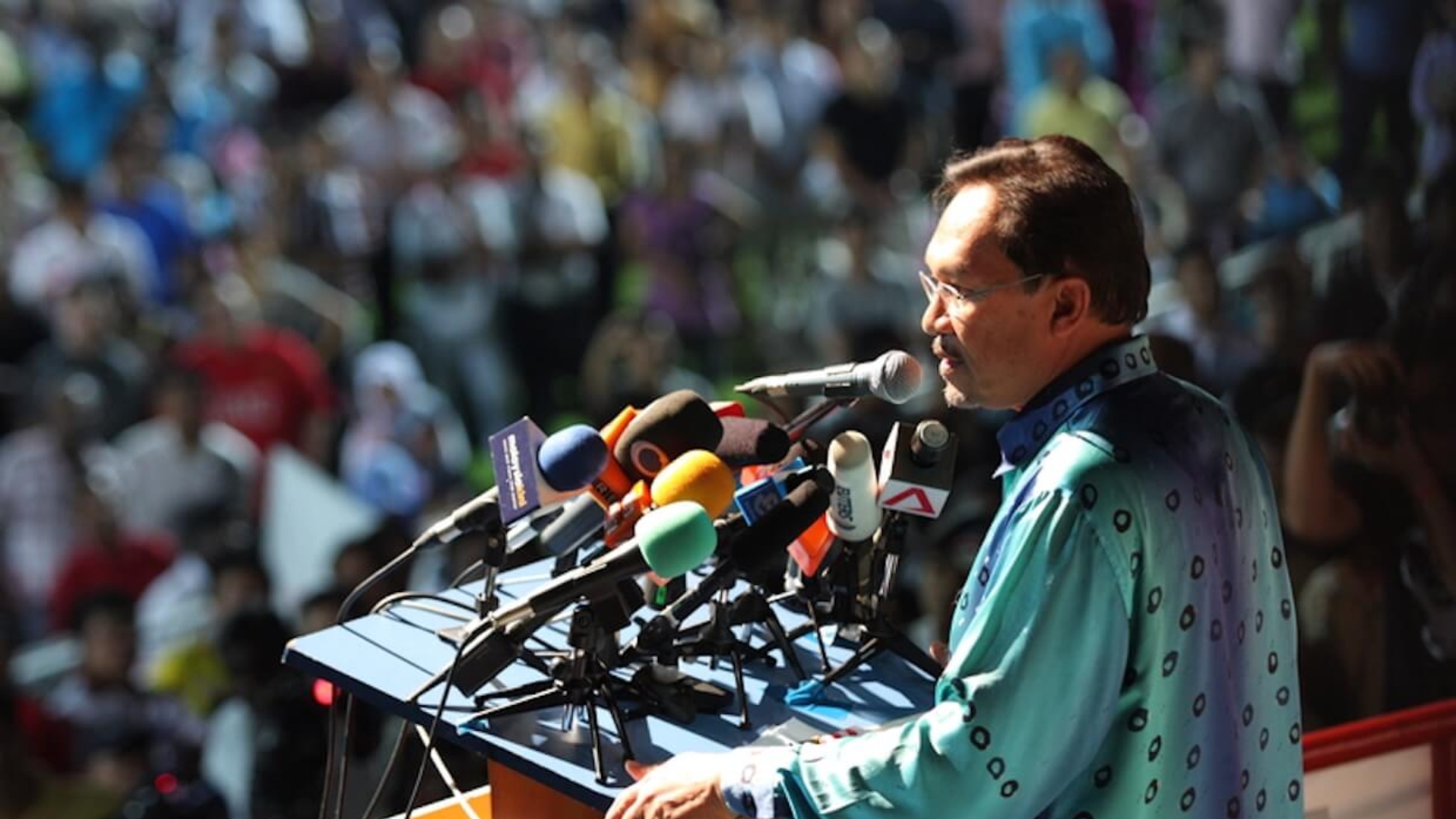
The newly elected mayor of the New York municipality in the US, Zohran Mamdani, represents another countermovement that is evolving. Having an Indian lineage, born in Kampala, Uganda, in 1991 and educated at the Bronx High School of Science and Bowdoin College in the US, Mamdani is a community organizer and politician representing a new generation of democratic socialists in New York City politics. His family background reflects a distinguished intellectual lineage: his father, Mahmood Mamdani, is a renowned Ugandan academic and political theorist at Columbia University, while his mother, Mira Nair, is an internationally acclaimed Indian filmmaker. This cosmopolitan and intellectually engaged upbringing informs his perspective on justice, diversity, and structural inequality. Before his mayoral campaign, he served as a state assembly member for Queens, gaining recognition for his advocacy on housing, transport, and labor rights.
The emergence of Mamdani, a self-described democratic socialist and now mayor-elect of New York City, raises a critical question: Can left municipalism, operating within the framework of advanced capitalism, achieve more than temporary relief? Can it open pathways toward structural transformation, or does it risk serving merely as a palliative to capitalism’s crises? This commentary examines Mamdani’s project as a potential alternative within the confines of globalized urban capitalism and explores whether it constitutes a genuine rupture or a managed reform.
Mamdani’s Program and Its Socialist Premise
Mamdani’s platform centers on affordability—housing, transit, groceries, childcare—labor empowerment, anti-monopoly measures, and public-sector revival. His proposals include rent freezes, universal childcare, fare-free buses, city-owned grocery stores, and a minimum wage of $30 by 2030. The program is explicitly redistributive—funded through higher taxation on the wealthy, municipal bonds, and redirected public investment—and endorsed by the Democratic Socialists of America. Reports from The Nation and The Guardian emphasize his focus on social affordability and economic justice.
Taken together, these policies articulate a coherent vision of municipal socialism that seeks to reconcile equity with feasibility. They represent not merely an electoral program but a normative statement about how value creation and distribution should be reorganized in an era of inequality and urban precarity.
Alignment with Structural Critiques of Capitalism
While Mamdani’s proposals emerge from the immediate material pressures of urban life—housing unaffordability, wage stagnation, and public disinvestment—they also speak to deeper theoretical concerns. His platform implicitly challenges the dominant accumulation regime that has shaped advanced capitalism since the 1980s.
Decommodification of social goods: By making housing, transport, and care public responsibilities, his program challenges financialized rent extraction.
Fiscal re-politicization: Expanding municipal investment and debt capacity revives the Keynesian principle of democratic capital allocation, countering the austerity logic.
Labor empowerment: Raising wages and curbing algorithmic exploitation of gig workers directly addresses the erosion of collective bargaining in the digital economy
In essence, Mamdani’s local socialism represents a municipal-scale experiment in reversing the disembedding process. It seeks to restore social control over markets without dismantling the capitalist framework entirely.
Structural Constraints and the Risk of Palliative Reform
Despite its radical rhetoric, Mamdani’s agenda faces formidable structural limits:
Jurisdictional dependency: Many proposals—such as rent control, wage laws, and tax reform—require state-level approval. Dependence on higher-tier institutions (Albany, Congress) restricts municipal sovereignty.
Financial constraints: Global capital mobility enables landlords and investors to circumvent local regulations through capital flight or pre-emptive rent inflation.
Administrative capacity: Rebuilding the state apparatus after decades of privatization demands resources, expertise, and political endurance. Global market discipline: As I noted elsewhere, cities embedded in global capital circuits cannot easily alter systemic rules of accumulation.
Thus, while progressive, Mamdani’s project risks acting as a palliative: It might ease inequality, precarity, and housing shortages without actually transforming the fundamental regime of accumulation. In this way, it resembles the New Deal paradox—reforms that saved capitalism from itself by institutionalizing social compromise.
Theoretical Implications: From Populism to Municipal Socialism
In contrast to populist movements such as Trumpism that weaponize social anger for authoritarian consolidation, Mamdani represents a left-populist or socialist response oriented toward redistribution and participation.
Drawing on thinkers such as Shoshana Zuboff, Yanis Varoufakis, and McKenzie Wark, genuine transformation would require dismantling the global rentier system based on data extraction, monopolistic control, and financial dominance. Mamdani’s measures operate largely at the level of urban welfare and infrastructure, not at the structural nexus of digital and financial capital.
This suggests that while municipal socialism can create breathing space for democracy, it cannot, alone, displace capitalist command over value creation. Nevertheless, its symbolic power is significant: It demonstrates that political agency still exists within capitalist democracies and that redistribution, social housing, and decommodification are viable public policies.
A Short Reminder from the Obama Experience
While Mamdani’s rise has generated enthusiasm among progressive circles, historical experience counsels caution regarding the transformative potential of reform within existing institutions. The election of Barack Obama in 2008 offers a revealing precedent. His campaign, built around the populist slogan “Yes We Can,” unleashed one of the most powerful waves of civic mobilization in modern US history.
A signature pledge—the creation of a single-payer healthcare system—was quickly abandoned amid intra-party resistance. Even with a unified government, centrist Democrats refused to support the plan. The resulting Affordable Care Act represented a policy milestone but fell short of structural transformation.
Simultaneously, the conservative backlash was immediate and fierce. The Tea Party movement– funded by corporate networks and amplified through right-wing media—redefined the Republican Party and laid the groundwork for Donald Trump’s Make America Great Again (MAGA) insurgency.
The political consequences were swift. In the 2010 midterms, Democrats lost both houses of Congress. Even vacancies in the Federal Reserve Board and the Supreme Court remained unfilled, enabling the next administration to reshape the judiciary decisively.
A Constraint Hope for the Future
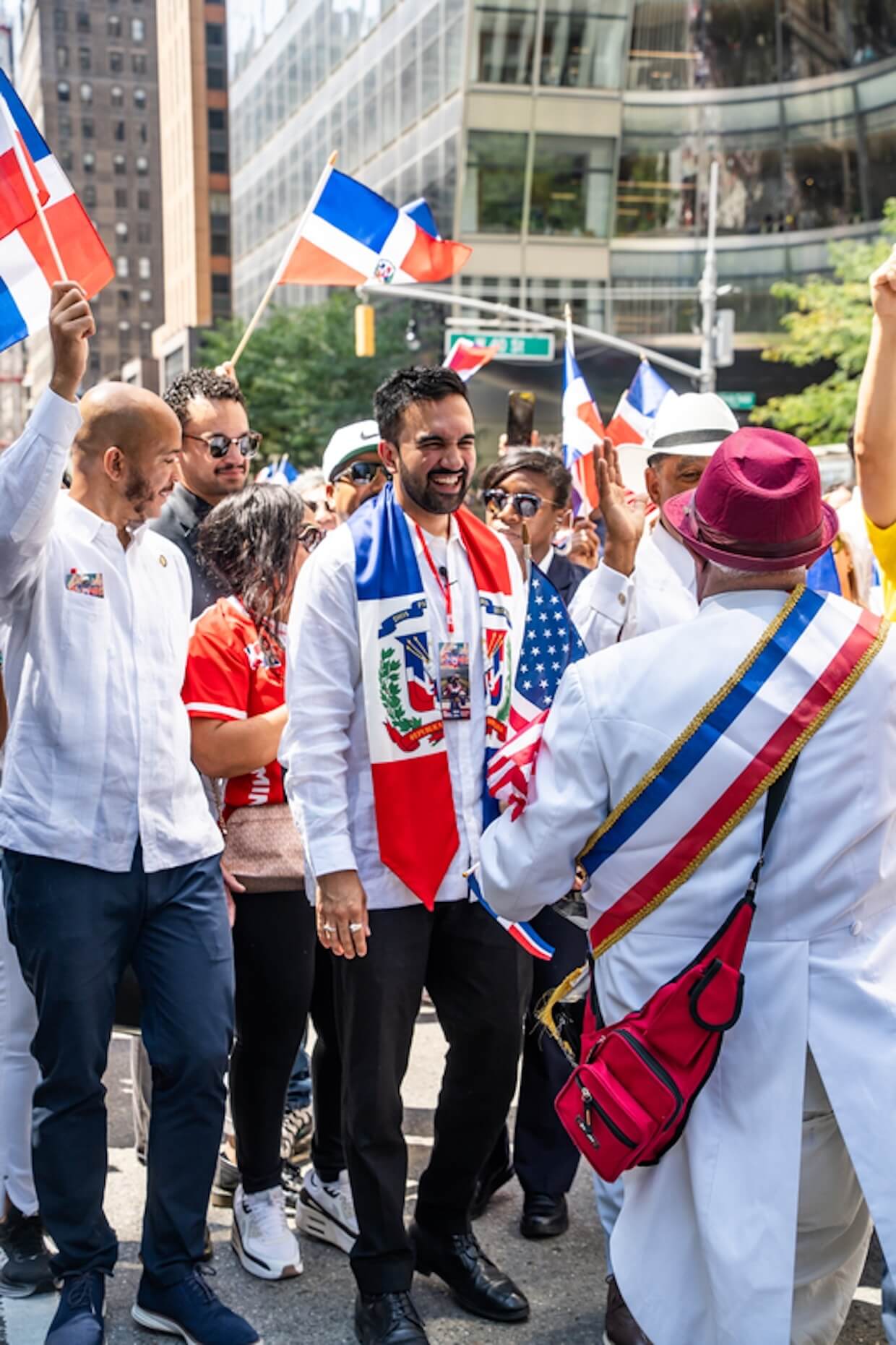
Zohran Mamdani at the Dominican Heritage Parade on 6th Ave in Manhattan, New York City, August 10, 2025. Photo: Aleksandr Dyskin.
Mamdani’s rise signals a generational shift toward pragmatic socialism—a reassertion of collective goods amid a cost-of-living crisis. His program offers hope within limits: Hope that governance can be reoriented toward equality and sustainability; limits because the city remains bound to global circuits of capital and data.
If such movements scale upward—through cooperative federalism, trans-urban alliances, and progressive taxation—the Mamdani experiment could prefigure a new model of democratic socialism adapted to the 21st century. Otherwise, as warned in Trump and the New Capitalism, the system will continue oscillating between neoliberal authoritarianism and fragmented reform.
In an interview with the ECPS, Associate Professor Erica Frantz warns that the growing rise of personalist leaders worldwide is undermining democratic institutions and increasing the risk of international conflict. Personalist systems—where power is concentrated around a single dominant figure—erode checks and balances, distort party structures, and heighten foreign-policy miscalculation. Reflecting on the United States, she notes that Donald Trump has transformed the GOP into a “personal political vehicle,” enabling rapid consolidation of executive power. As domestic constraints weaken, Dr. Frantz cautions, “we are increasingly setting the stage for more volatile and unpredictable conflict behavior in the international arena.” She identifies leader-created parties and media-driven mobilization as critical warning signs of emerging personalist capture.
In a wide-ranging conversation with the European Center for Populism Studies (ECPS), Associate Professor Erica Frantz of Michigan State University offers a penetrating analysis of the global resurgence of personalist politics and its destabilizing implications for democracy and international security. A leading scholar of authoritarianism, democratic backsliding, and strongman rule, Dr. Frantz situates recent developments in the United States within broader cross-national trends, underscoring how personalist leaders erode institutions, centralize power, and elevate the risk of domestic and international conflict.
Reflecting on recent US electoral outcomes in New Jersey, Virginia, California, and New York, Dr. Frantz stresses that it is “too soon to tell whether this trend will last,” though she notes the results offer “at least a small glimmer of hope for the Democrats” after months of erosion under Trump. Yet she cautions that such gains do not signify a reversal of democratic decline. Personalist rule—defined by her as governance backed by leader-centered parties—has advanced markedly under Trump. His second administration, she argues, is marked by consolidated control over the executive and a legislative majority, patterns “consistent with what research would anticipate” in cases of democratic erosion.
Personalism, Dr. Frantz warns, not only weakens democratic institutions but also escalates international danger. She emphasizes that leaders who face minimal domestic constraints are more prone to foreign policy miscalculation, explaining that “the absence of domestic constraints makes it very difficult for the two sides to figure out what the real red lines are. That potential for miscalculation elevates the chance of conflict.” Drawing on international relations scholarship, she identifies audience-cost dynamics as critical to crisis stability—factors severely undermined under highly personalized regimes. As she concludes, “as we see personalism on the rise globally, we are increasingly setting the stage for more volatile and unpredictable conflict behavior in the international arena.”
Dr. Frantz underscores that Trump’s transformation of the Republican Party represents a paradigmatic shift toward personalist structure. Though he did not found the GOP, by 2024 the party had become “fully under his control,” with elites aligning themselves behind his false election narratives. Trumpism has thus reshaped partisan dynamics in ways that may outlast his tenure.
Looking to the future, Dr. Frantz identifies leader-created parties as a key early warning sign of personalist capture—now increasingly visible in democracies and autocracies alike. She argues that the changing media environment has dramatically lowered the cost of personalist mobilization, enabling wealthy outsiders to build movements rapidly and bypass organizational constraints.
Taken together, Associate Professor Frantz’s insights illuminate how personalism—far from a regional aberration—is now a global pattern, with the United States neither insulated nor exceptional.
Erica Frantz is an Associate Professor in Political Science at Michigan State University.
Here is the edited transcript of our interview with Associate Professor Erica Frantz, slightly revised for clarity and flow.
Democratic Gains Offer Hope, But 2026 Remains the Real Test
Professor Erica Frantz, thank you very much for joining our interview series. Let me start right away with the first question: In the wake of recent Democratic victories—such as in New Jersey, Virginia, and California, as well as Zohran Mamdani’s win in New York—do you interpret these outcomes as early signs of public pushback against personalist-populist politics in the US, or are they better understood as cyclical fluctuations within a still-fragmented party system?
Assoc. Prof. Erica Frantz: That is a great question, and one that I don’t think we have a solid answer for. On the one hand, it certainly should give room for optimism that the Democrats did fairly well last week, in the November 4th elections. But at the same time, it is very possible that this was just a blip and an outlier. The real big test will be in the 2026 midterm elections. From my perspective, this was an important outcome for the Democrats in that there had been very little good news for the party since the 2024 election. So, for the first time, there was some indication that the tide of public opinion may be shifting a little bit against Trump. So, it is too soon to tell whether this trend will last, but it certainly offered at least a small glimmer of hope for the Democrats.
Small Victories Amid Deep Democratic Vulnerability
Do these electoral results indicate that institutional resilience and civic counter-mobilization remain robust in the US, or do you see them as temporary and insufficient to counter deeper trajectories of democratic erosion?
Assoc. Prof. Erica Frantz: Again, it is a little bit too soon to know what the ultimate meaning of this election result will be. From my perspective, a really big test is going to be the 2026 midterm elections.
We know a couple of things about the factors that escalate the chance of democratic erosion, and my colleagues and I have written a lot about personalist parties: when leaders come to power backed by personalist parties and the party has a legislative majority, the chance of democratic erosion increases. That is precisely what we’ve been witnessing with the second Trump administration—he now governs amid this personalist party, and the party has legislative majorities. All of that set the stage for him to consolidate power in the executive fairly rapidly in the US. So, the patterns that we’ve seen in 2025 are consistent with what research would anticipate.
To be clear, there are opportunities for citizens to push back against these efforts and signal their displeasure. This election was certainly one such opportunity. Again, the big one will be the 2026 midterm elections. It is not always the case that these leaders are able to consolidate control and destroy democracy from within; in some instances, they’re voted out of power. A good recent example would be Bolsonaro in Brazil. He was elected, did things that were harmful for Brazilian democracy, but ultimately lost his re-election bid. Slovenia would be another example. So, there is an opportunity for citizens to vote these leaders out.
But at the same time, it is not guaranteed that the 2026 midterm elections will be free and fair. Historically, US elections have been free and fair, despite allegations of fraud. The widespread consensus among experts is that we have very solid democratic elections in the US. However, there have been subtle indications that the Trump administration might try to fiddle with things in ways that threaten the integrity of the process in 2026. That is something to keep an eye on as well. Whether through gerrymandering or the disenfranchisement of key sectors of the electorate, there are certain things they could do that might not sound the alarm bell among citizens but would still threaten the integrity of the process.
Is Personalism the New Global Normal?
Turkish President Recep Tayyip Erdogan watching the August 30 Victory Day Parade in Ankara, Turkey on August 30, 2014. Photo by Mustafa Kirazli.
Given your comparative work on strongmen, how significant are these recent US elections at a global level—might they signal renewed democratic resistance, or are they isolated exceptions in a broader worldwide pattern of backsliding?
Assoc. Prof. Erica Frantz: We know that there is a broader pattern of backsliding happening, as you alluded to, and scholars debate to some degree how serious it is. But the reality is that regardless of the measure used to capture backsliding, we know that it’s occurring in places that have historically been robust to this sort of threat. Usually, wealthier democracies—democracies that have been in place for a really long time—tend to be protected from this kind of erosion.
What’s alarming about today’s backsliding wave is the ways in which countries like the United States, Poland, Hungary, and Turkey have been threatened by these sorts of incumbent takeovers. So, we know that there is a broader pattern underway, and from my own research perspective, we think that personalism is playing a very big role in fueling this dynamic.
That’s the broader global landscape. At the same time, as I mentioned earlier, just because we see a leader elected by a personalist party with a legislative majority does not mean there are no windows of opportunity for the opposition to vote these leaders out before they win re-election. I mentioned the cases of Brazil and Slovenia as examples where leaders that fit the model of what you don’t want to see, in terms of risks of incumbent takeover, did not win re-election.
So, the fact that we have this positive result for the Democratic Party—not only in terms of Mamdani, who is further to the left, winning office, but also the governors in New Jersey and Virginia, who were centrist—signals that perhaps there is some pushback against Trump’s agenda. However, it’s unclear whether that pushback is because of Trump doing things that are harmful to democracy and people not liking it, or—more likely, in my opinion—because they don’t like the direction of his economic policies. So, it would be unlikely that this result reflects frustration with what Trump has done to democracy, and far more likely that it reflects disagreement with his economic policies and the direction he has taken the economy.
From Institutional GOP to Personalist Machine
Your recentNew York Timesarticle argues that Donald Trump has transformed the GOP into a personal political vehicle. What empirical markers—organizational, ideological, or behavioral—most clearly signal the evolution of the Republican Party from a programmatic institution into a personalist structure?
Assoc. Prof. Erica Frantz: That’s a great question as well. We do a lot of research on personalized parties, and we’ve gathered a lot of data on how to capture personalism in a political party. And usually, the best indicator that a party is going to be personalist is that the leader created the party themselves—so Bukele with Nueva Ideas in El Salvador, or in Hungary with Orbán and Fidesz. Trump is unusual in that he did not create the Republican Party. This party has been around for a long time. But one indicator that his tenure as president was going to be different vis-à-vis the Republican Party was that he did not rise up within the ranks of the party to get the 2016 nomination. Instead, what happened was he was somewhat of an outsider. He, at one point, had been a Democrat, so he was not the classic candidate that the Republican Party had tended to field in their presidential campaigns.
At the time, the Republican Party happened to be divided. There were a variety of other people who were potential frontrunners for the 2016 candidacy, and Trump surprised many by virtue of winning. A lot of people at the time thought it was somewhat of a joke that he would be running for president. It was the right place at the right time for him to take over the Republican Party.
During his first term, he did not have the same control over the Republican Party that he did since 2020. And a clear indicator that the party was becoming personalized was after the insurrection on January 6, 2021. We see this really blatant, horrific episode of violence—essentially political violence—where a mob is trying to keep a democratically elected leader from taking power. That should have been a moment where Trump was completely sidelined from the Republican Party.
In the early days, a lot of Republican elites were somewhat unsure of how to respond. Should they get in line behind Trump’s false narrative that the election was stolen, or should they speak out against what happened and how much of a departure it was from our democratic norms? Slowly over time, however, Trump was able to get all of these elites to get in line with his false narrative. And so, by the time he ran for office in 2024, the Republican Party was fully under his control.
He’d gotten all of the key players within the party to support his narrative that the election was stolen, and by this point, it was pretty clear that Trump became synonymous with the party. When he would have different Republican Party events, there would be a statue of Trump or an image of Trump. Rather than promoting the party’s ideas, it was more a situation where we were seeing Trump as a person dominate. Clearly, elites started to sense that they were unlikely to maintain their political careers if they did not get in line behind Trump. So, by the time he ran for president in 2024, the party was very much one that we would consider personalist, where most elites were fearful of speaking out against Trump, and instead, he basically governs the policy agenda.
Structural Conditions Behind Trump’s Party Takeover
Elephant symbol of the Republican Party with the American flag in the background. Photo: Chris Dorney.
Which structural conditions—party decay, institutional fragility, or shifts in public demand—have been most important in enabling Trump to centralize authority and weaken intra-party constraints?
Assoc. Prof. Erica Frantz: I don’t have a solid answer to that, because it would really be my best guess. My best guess in terms of what enabled Trump to personalize the party. I do think that the party was somewhat divided in 2016, and that was a real momentous occasion in terms of Trump being able to leverage this window of opportunity, as I mentioned. That said, the party was not fully behind Trump during his first term. Again, I can’t point to a specific cause of why he was able to fully take over the party in 2021. But we do know that slowly over time, key individuals in the party started to see themselves as not electorally viable unless they got in line behind Trump’s agenda.
In terms of the broader global landscape of why we’re able to see these sorts of things, there is some evidence that the changing media environment is enabling leaders to personalize their parties. Rather than having to build a party from the ground up, leaders can now build parties on social media. They don’t need the same organizational grassroots effort to construct a group that backs them. I mentioned earlier El Salvador with Nayib Bukele. He really is the new mold for how leaders can build movements that are personalized very rapidly and win office. He created his own political party and was very savvy in his use of social media to directly connect with voters, bypassing the need for a traditional party organization to launch his candidacy. These sorts of direct connections with citizens enable leaders to gain a following without having to rely on an established traditional party. There is some evidence that new media is facilitating the rise of personalism and personalist parties, enabling these leaders to bypass traditional institutions to gain political influence.
How Trump Hollowed Out Democratic Guardrails
Strongmen typically engage in institutional hollowing from within. Under Trump, which forms of institutional capture—of the courts, the DOJ, the Federal Reserve, or security agencies—pose the greatest long-term threat to liberal-democratic resilience in the US?
Assoc. Prof. Erica Frantz: Trump has been somewhat of an outlier in terms of the speed with which he has consolidated control. Typically, when we see these leaders come to power backed by these hollow organizations, personalist parties; it takes longer for them to get rid of executive constraints. Oftentimes, it’s strategic to do this slowly, because it’s more difficult for opponents to express alarm and mobilize against these fragmented takeovers. What has been surprising in the case of the US is the speed with which Trump has gone after multiple institutions of power and been able to do it without much pushback.
In terms of which institution is the most dangerous, in many cases we see the courts as particularly important in protecting democracy from an executive takeover. The fact that we have a Supreme Court that has seemed at least sympathetic, or willing to consider a new vision of the executive as very powerful, is particularly alarming, in that it’s possible the courts will open the door for Trump to do things like pursue a third term in office, because we have a conservative court that is not only conservative in terms of its agenda, but particularly pro-Trump. The current Supreme Court hearing over the case on tariffs and whether his tariffs are legal is going to be a very big case in terms of determining whether the courts will open the door for Trump to bypass traditional norms of behavior regarding executive power.
This is not to say that what Trump has done to gain control over other institutions is not also a problem. We ideally would like to see a bureaucracy that has people who are competent in major positions of power. Instead, what we’ve seen is that the bureaucracy has been both hollowed out—now very thin—but also staffed with his loyalists. This is going to have downstream consequences for all sorts of policy outcomes in the US. Even when we’re thinking about things like childhood vaccinations, we might see a public-health crisis on the horizon because of the ways in which Trump has appointed people in the health sector who do not have appropriate credentials for these positions.
The other domain that is also one to keep in mind is what’s going on with the military. Early on in Trump’s term, basically on a Friday night, when most people were not reading the news or maybe were asleep, he purged the top military brass of many officials. This is not the sort of thing that we are used to seeing. In a healthy democracy, the military is kept separate; it’s kept out of some of these civilian political debates. Trump seems very open-minded to trying to politicize the military. It’s been very unusual and alarming to see the ways he has deployed the National Guard to Democratic strongholds. This is not the sort of thing you’d like to see in a healthy democracy, because in theory the military is supposed to stay out of domestic political debates. The ways in which he’s used ICE to go after immigrants is also indicative of a shift where he is trying to use the security forces for political purposes in ways that are unprecedented.
Personalism and the Creation of Internal Enemies
Personalist rulers commonly manufacture “internal enemies” to justify extraordinary coercive measures. How does Trump’s rhetoric about the “deep state,” immigrants, and political opponents align with this broader strategy of threat construction?
Assoc. Prof. Erica Frantz: The ways in which Trump is fabricating a domestic enemy are very similar to what we see in dictatorships. The two cases that come to mind for me are Russia under Putin and Iran under its theocracy. In Iran, the regime very much benefits from promoting an image of the US as the enemy. It tries to get a rally-around-the-flag sort of boost in domestic support by saying that the regime is under attack from America, and that the United States is the cause of all of the country’s problems. In Russia, we’re seeing something similar with Putin’s rhetoric, saying that the United States is the cause of all of these challenges, and so forth.
Trump is not necessarily targeting a specific foreign enemy, but he likely would, at any given moment, blame a foreign country for some sort of problem that might be happening here. But he is stating that immigrants are a problem, and that immigrants are responsible for crime. He has made a number of statements completely absent any evidence about crime. In particular, he is saying false things about crime rates in Democratic cities. For people who live in these cities, this is somewhat surprising, because in many of them, they’ve actually seen their crime rates go down. So, the fact that he is deploying the National Guard to fight crime in Democratic strongholds is troubling.
It’s also his effort to rally his base. It was clear to him early on that his supporters were concerned about crime—that this was an issue he could get people to rally behind. If he paints a portrait of the United States as full of crime, as D.C. full of crime, then he can again create and craft a narrative that helps support him—an us-versus-them mentality, something that we’ve seen in many other political contexts, where leaders leverage these divides for their own political benefit.
Militarization as a Red Flag
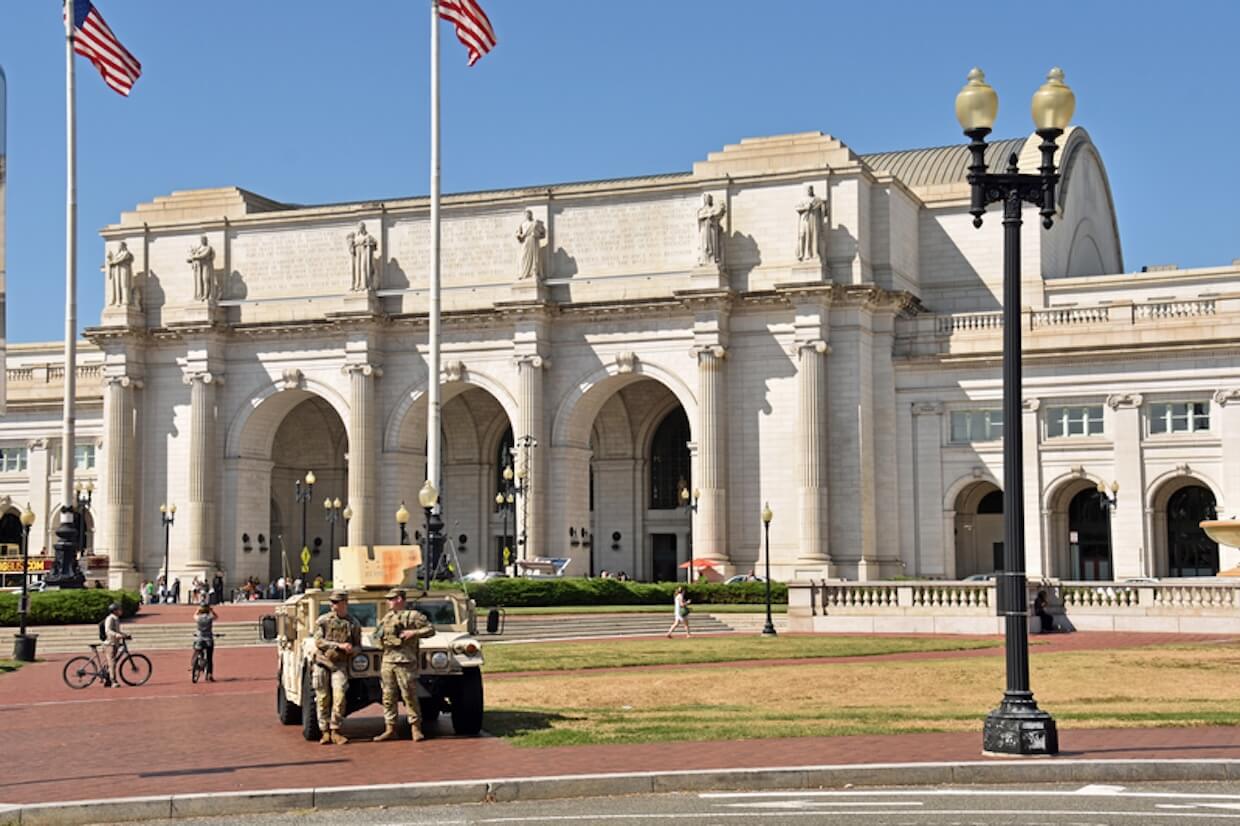
District of Columbia National Guard soldiers patrol the National Mall after Trump activated the Guard and assumed control of the Metro Police to fight what he calls a crime epidemic, near Union Station, Washington, DC. Photo: Harper Drew.
Trump’s deployment of the National Guard and increasingly militarized immigration enforcement raises concerns about domestic coercion. Should we understand this as the early normalization of militarized rule within a democratic setting?
Assoc. Prof. Erica Frantz: In most cases of incumbent-led democratic backsliding, leaders usually first go after institutional constraints; they first go after the judiciary, or the bureaucracy, the media. Then they ultimately target elections. That’s the typical process that we see with incumbent-led backsliding. Trump’s ability to, or decision to, try to go after the security forces—and by that, I mean two things: promote loyalists, get rid of dissenting voices in the security forces, and then also politicize them by deploying them against his opponents—is not something that is typically part of the classic playbook. Usually, it’s something that we see after the democracy has transitioned to dictatorship.
The US is still a democracy by all accounts right now, because the 2024 presidential election was free and fair. That’s the most basic indicator of a democracy: the free and fairness of elections. We’re still a democracy. However, usually we don’t see these leaders militarize and politicize the security forces until after they’ve autocratized. It’s a very common tactic that they try to rely on multiple different security forces; we hear about coup-proofing and balancing the different security forces against one another. The fact that Trump is doing all of these things is both inconsistent with democratic norms in the United States and also a red flag in that healthy democracies require militaries that are not used for political purposes, particularly against domestic opponents.
Personalism and Economic Vulnerability
Photo: Shutterstock AI.
Your work suggests that personalist leaders politicize economic institutions and often embrace transactional economics. How might Trump’s pressure on the Federal Reserve, discretionary trade tactics, and patronage-based allocation threaten long-term economic stability?
Assoc. Prof. Erica Frantz: I keep mentioning personalist parties, but there’s a lot of research related to party personalism and its harmful consequences. We, my colleagues and I, just published a paper that shows that when leaders are backed by personal parties, they are more likely to attack central bank independence. This is not just something that is observed in the United States. There is a global pattern that these leaders, in their effort to ensure that no institutions can push back against them, go after the central bank as well. So, the fact that Trump has tried to interfere in the ways in which the Federal Reserve sets interest rate policies is consistent with global trends.
There is a huge body of research that shows that you want central bank independence, that this is something that political leaders should try to preserve because it’s in the country’s long-term best economic interests. So, when we have this sort of behavior, it signals that we’re likely to see disruptions in terms of inflationary policy. We are likely to have more unpredictable inflationary policy in the US. It is likely to lead to more inflation for ordinary people, and that’s already a concern among Americans. If you go to the grocery stores, prices are higher in everything. So, when I talk to my students, they can list a lot of different products that they no longer can afford because of inflation.
So, Trump’s eagerness to lower interest rates and fiddle with central bank independence is going to have long-term economic consequences. On top of this, these sorts of leaders are also likely to reward their loyalists with corruption. They’re likely to give them access to corruption and corrupt deal-making. That’s something very common, that these inner-circle elites are profiting from illicit deals. They send their money overseas to offshore bank accounts, try to hide things, and this is the way that these personalist leaders, like Trump, are able to maintain some inner-circle loyalty, by giving these sorts of kick-backs.
Corruption is not good for ordinary people. So that is another way in which these sorts of leaders, in their prioritization of their cronies and of staying in power, disrupt economic stability. So, the economic outlook for the United States does not look good. That’s not just because of the tariffs, which run counter to most economists’ advice, but because of these other layers of what’s happening with inflationary policy, interest rates, and corruption.
After Trump: Continuity or Collapse?
Former US President Donald Trump with a serious look as he delivers a speech at a campaign rally held at the Mohegan Sun Arena in Wilkes-Barre, PA – August 2, 2018. Photo: Evan El-Amin.
Personalist systems are especially fragile at succession. If the US continues along a personalist trajectory, what are the most plausible succession scenarios—heightened autocratization under loyalists, elite fragmentation, or institutional pushback?
Assoc. Prof. Erica Frantz: We don’t have a lot of research that gets into succession in personalist democracies. It’s somewhat unknown territory, what might happen if Trump were to decide not to go for a third term. That’s a big if, because he is certainly trying to put out feelers about how people would react to him going for a third term. It’s possible that he will try to stay in office beyond his term limits.
That said, in autocratic settings, we know that personalism makes it more difficult for succession to run smoothly, as you mentioned, but still, most of the time—when we have research on when leaders die of natural causes in office, for example—even in personalist places, most of the time there is a smooth succession process, at least to observers, and the regime survives it.
With personalist leaders, they can often survive even when ordinary people are doing horribly economically, because so long as they have bought off the security services and their inner circle of elites with corruption, they can maintain power.
The case I often think of when people ask what might happen next—such as whether everything would fall apart if Trump were to leave power—is Venezuela under Maduro. You know, Hugo Chávez had governed that place, autocratized it, and transformed what was once a very healthy democracy into an authoritarian system. He dies; it was around 2011. Maduro takes over, isn’t very popular, people don’t think this is going to last very long, and even though he lacks the same popularity that Chávez had, he has been able to stay in power amid an economy that’s performing disastrously. So, it would be foolish to assume that should Trump leave power—whether he dies of natural causes or whether he retires voluntarily—it’d be foolish to anticipate that that means the end of the destruction that he’s done to democracy in the United States.
Will Trumpism Outlive Trump?
Your scholarship shows that personalist parties can destabilize political competition even after their founders depart. Could Trump’s reconfiguration of the GOP generate enduring structural disruption in the US party system beyond his tenure?
Assoc. Prof. Erica Frantz: There are two points to mention here. On the one hand, because Trump did not create the Republican Party—because he took it over and co-opted it—I’m somewhat optimistic that the party could rebound and return to its former self, where it was a traditional conservative party with a conservative agenda, and where elites rose up the ranks of the party to get those positions. I think that it’s possible that we could see a reversion to the Republican Party of the past.
However, it’s also important to note that we have a lot of evidence that when these leaders lose power—let’s say they lose power in democratic elections—democracy does not necessarily rebound very quickly. Two recent examples of this would be Poland with the Law and Justice Party (PiS) losing elections. There was a lot of optimism that the democratic backsliding there had come to an end, but it has still been difficult for Polish democracy to fully rebound. There are challenges that persist in the judiciary, for example, and its ability to be independent.
The same thing could be said of Brazil with Bolsonaro. Bolsonaro loses re-election, Lula takes over, but there are really long-lasting divisions in Brazilian society that have persisted. A lot of this is because of the ways in which these leaders use polarization as a political tactic. So, it’s not that they are just voted out of office and suddenly, the 50% or so supporters that they genuinely have go away.
From that perspective, on the one hand, I am more optimistic than I would be with other places that the Republican Party could rebound and return to a more programmatic party. But at the same time, there is lasting damage that has been done to the fabric of democracy here.
Unbound Executives, Unstable Worlds
Photo: Shutterstock.
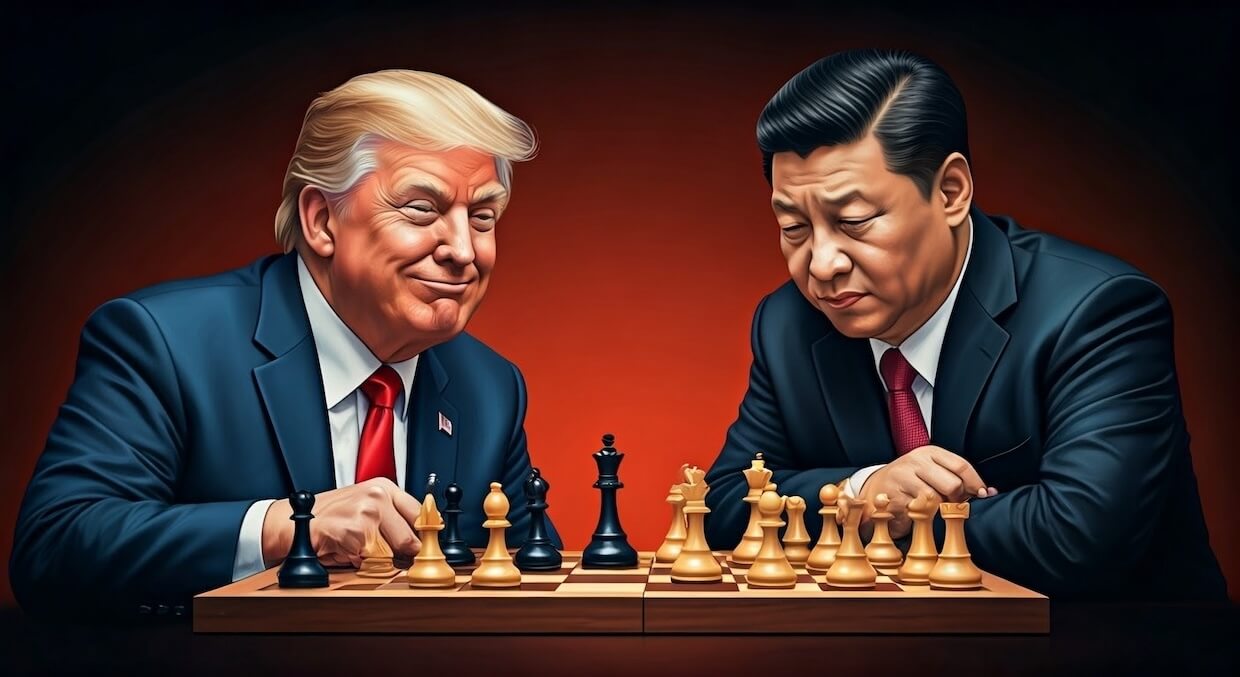
Your NYT article notes that Trump and Xi of China operate with few domestic constraints, increasing unpredictability. Why does diminished institutional constraint heighten the risks of international miscalculation and conflict, particularly among major powers?
Assoc. Prof. Erica Frantz: There is a well-established body of research in international relations that underscores the importance of domestic constraints in preventing conflict. The idea is that if leaders face domestic constraints—meaning they would face some kind of consequence for not following through on their threats—their adversaries recognize this and can interpret those threats as credible. So, if I say there is a red line—if you don’t do X, Y, or Z, we’re going to invade—and I know I face constraints at home, my adversary knows that I mean what I say.
If, however, I face no domestic consequences for making empty promises or issuing vague or meaningless threats, then my adversary no longer knows what I really mean. The absence of domestic constraints therefore makes it very difficult for both sides to discern where the real red lines are. That uncertainty increases the likelihood of miscalculation and, in turn, the risk of conflict.
As I mentioned, there is a large literature on this—called audience-cost theory—and while it is somewhat complex, it helps explain why, when personalist leaders come to power, we tend to see more conflict. Research on authoritarian systems shows that personalist leaders are the most likely to start wars; they are the most likely to escalate conflicts with democracies in particular; and they are more prone to foreign policy miscalculation.
Taken together, this suggests that as we see personalism on the rise globally, we are increasingly setting the stage for more volatile and unpredictable conflict behavior in the international arena.
Why Leader-Made Parties Signal Democratic Peril
And lastly, Professor Frantz, given rising polarization, institutional distrust, and party hollowing globally, do you expect personalist leadership to become more common across both democracies and autocracies? What early warning indicators should scholars monitor to detect incipient personalist capture?
Assoc. Prof. Erica Frantz: I mentioned this earlier, but we do think the changing media environment has facilitated the rise of personalism in both autocratic and democratic contexts. This means that all signs point toward increasing top-heavy institutional emergence. Until there is some sort of concerted effort to return to party building and grassroots organization, we are likely to continue seeing more personalism globally.
A classic red flag is when a leader creates a party. Party creation is becoming increasingly common. Many of these leaders are billionaires, leveraging their personal wealth to fund these political vehicles. So, the biggest warning sign, I would say, is when the leader on the ballot has created their own party. That usually spells trouble for democracy—and for autocracy as well.
In this incisive commentary, feminist scholar Afiya S. Zia dissects the myth that Imran Khan is “popular, not populist.” Drawing on theorists such as Laclau, Mudde, and Moffitt, Zia argues that Khan’s politics exemplify moral populism: a performative style that fuses piety, masculinity, and nationalism while eroding democratic substance. His rhetoric of virtue and victimhood, she shows, mirrors the Pakistani military’s own moral lexicon of sacrifice and honor, blurring the line between civilian populism and authoritarianism. From symbolic austerity to digital disinformation, Khan’s rule delivered moral spectacle but little structural reform. Zia concludes that his populism—like its global counterparts—offers redemption without reform, transforming faith into a tool of power and consuming democracy in the process.
By Afiya S. Zia*
Recently, the official X account of Pakistan’s emergent third party, Pakistan Tehreek-e-Insaf (PTI), retweeted a supporter’s claim that its leader, “Imran Khan is popular, not populist – his leadership is based on merit, service, and people’s trust, not division or demagoguery.” The statement came amid a charged political atmosphere following Pakistan’s 2024 general elections, marred by allegations of manipulation, the disqualification and imprisonment of Khan, and the reversal of several victories claimed by PTI-backed independents.
Both domestic and international observers noted that the elections were neither free nor fair. In this context of curtailed democracy and contested legitimacy, PTI’s distinction between popularity and populism must be read not as analytical precision but as political self-defense – a claim to moral authenticity and victimhood.
The denial is itself revealing. Theorists such as Ernesto Laclau, Cas Mudde and Benjamin Moffitt have shown that populism is not a coherent ideology but a moralized style of politics. It divides the world into the virtuous “people” and a corrupt “elite” and performs rather than governs. By this definition, Khan’s rhetoric and political persona are unmistakably populist, even as his followers insist otherwise.
The Populist Grammar of Authenticity
From his entry into politics in the 1990s, Khan crafted an image of moral exceptionalism: a national athlete and hero who transcended Pakistan’s dynastic, corrupt politics but never actually politicked, at either constituency or national legislative levels. His signature slogan of naya Pakistan (a “new Pakistan”) offered a redemptive promise of national purification but based on his self-admitted personal turn from a lifestyle of westernized decadence to pious moral virtue, rather than institutional reform.
Khan’s supporters often cite his philanthropic project of the cancer hospital he founded in 1994, as proof that his politics are altruistic rather than populist. Yet, as Jan-Werner Müller observes, populists do not simply appeal to “the people”; they claim exclusive moral representation of them. Of course, there are many altruistic philanthropists in Pakistan, but Khan’s own rhetoric claims that only he is incorruptible enough to save the country.
The 2018 election that brought PTI to power was no popular revolution. It was shaped by judicial disqualification of a PM, backroom military support, the defection of ‘electable’ politicians from rival parties and, newly propped ones. The same military that Khan would later denounce as tyrannical helped secure his ascent to power. Once in office, he engaged in the same symbolic austerities that typify global populism: auctioning state-owned luxury cars, selling buffaloes from the Prime Minister’s House, and promising to turn colonial-era governor mansions into public parks.
Like Donald Trump’s televised reconstruction of the White House, or Narendra Modi’s ascetic imagery of revivalist Hinduism, or Erdogan’s mosque-conversion paternalism, Khan’s performances were not economic policy but moral theatre – staged to show distance from the ‘corrupt elite,’ ‘legacy media,’ or khooni (bloodthirsty) liberals. In Moffitt’s terms, Khan governed through performative crisis: each political setback became proof of his own virtue and of the system’s moral decay.
Khan’s rejection of “Western feminism,” his warnings about “vulgarity” and “sex, drugs, and rock and roll,” and his invocation of an abstract ghairat (honour) are not incidental conservatisms. They are central to a moral populism that imagines the nation as a family, with the leader as its patriarch. Women in this framework are symbols of purity and faith rather than political subjects, an ideal he often upholds in his current fully veiled and pious wife, Bushra Imran.
Like other populists, Khan cultivated a large, devoted, and cross-generational female following, rooted in the intertwining of his athletic masculine charisma and paternalistic image. Many women view him as a moral guide capable of protecting their dignity and rights, often leading to family tensions and highly visible political polarization, especially on social media and within military households. This admiration motivated female supporters to participate in daring street protests, such as the May 2023 Lahore rally, where women boldly confronted police, mocked military generals, and faced repeated arrests with unwavering commitment. They demonstrated political courage even as senior PTI leaders distanced themselves.
Khan’s transformation from celebrity cricketer to spiritual-political leader exemplifies what Dani Filc describes as the “inclusionary–exclusionary” spectrum of populism: while appealing to urban middle-class women and educated elites, he marginalizes groups like Ahmadis, Hazaras, opposition politicians/constituent holders, critical journalists, and feminists. Critics denounce his patriarchal rhetoric, majoritarian bias, and victim-blaming statements on sexual violence, yet supporters defend him for his moral simplicity and protection of women at political events.
This gendered populism both empowers and constrains women’s political engagement. While it inspires unprecedented acts of defiance against the military establishment, it simultaneously reinforces conservative gender norms, framing governance in terms of Islamic virtue rather than liberal democracy. Urban, middle to upper-middle-class female PTI activists often interpret Khan’s patriotism, piety, and defiance of Western powers as moral leadership, seeing him as a surrogate father or protector. Their allegiance centers more on his persona than policy innovations.
Unlike Benazir Bhutto’s empathetic, liberal-rights-based appeal, Khan commands female support while reinforcing patriarchal norms – a pattern consistent with male populists globally. Ultimately, Khan’s piety-driven populism reshapes Pakistan’s discourse on women and democracy, combining the empowerment of select women with the reinforcement of traditional, conservative gender hierarchies, marking a post-feminist turn not unlike the Trump supporting, TradWives movement.
Rebranding as Moral Renewal
A central populist tactic is to rebrand existing institutions as moral innovations. Khan’s renaming of Pakistan’s flagship social protection initiative, the Benazir Income Support Programme (BISP) as Ehsaas, exemplifies this pattern. The rebranding erased the legacy of a female predecessor, taking credit for a recast state policy as a personal act of virtue.
Similar strategies appear elsewhere; Nayib Bukele in El Salvador folded earlier social welfare programs into his “New Ideas” brand; Andrés Manuel López Obrador reframed Mexico’s anti-poverty programs as part of his “Fourth Transformation.” These moves transform bureaucratic continuity into revelation and give the illusion that old policies are purified through the filter of the leader’s sincerity.
In Pakistan, this moralization of governance is amplified through religion. Poverty alleviation becomes an act of zakat (almsgiving), not redistribution; social policy is sanctified through Islamic ethics. In this sense, piety populism does not replace the state, it sacralizes it, for which there is no stable measure nor standard of accountability.
Populism as Civil–Military Mirror
Khan’s populism has often been cast as the antidote to Pakistan’s entrenched military dominance. Yet the two are not opposites; they are mirror images. Both draw legitimacy from moral spectacle and claims of masculine benevolence and sacrifice. Both substitute masculine charisma for institutional accountability or the deepening of democratic collaboration and norms.
After Khan’s ouster in 2022 through a parliamentary vote of no-confidence, he recast himself as the moral redeemer betrayed by a corrupt establishment and ‘treacherous’ generals who retracted their initial support. This shift turned the civil–military conflict into a populist morality play, complete with pejorative references to traitors in Islamic historical tradition, a contest between rival saviors.
His falling out with Army Chief General Javed Bajwa dramatized this contest for moral and political supremacy, later extending to a confrontation with Justice Qazi Faez Isa, poised to become the next Chief Justice, and then with the ascetic and pietist General Asim Munir, who adopted a “zero-tolerance” stance toward PTI protests. Khan’s political ego, shaped by a messianic sense of virtue, left little room for institutional peers/equals. General Munir’s clampdown after Khan’s ouster in 2022 was rationalized as a defense of order, national dignity, and morale, echoing Khan’s own rhetoric of honor, self-belief, and betrayal. The rivalry has persisted after the 2024 elections and ongoing protests by PTI. This tension reached its symbolic peak in May 2025 when India launched a stealth “Operation Sindhoor,” against Pakistan, named after the Hindu symbol of marital devotion as nationalist metaphor. Pakistan’s military response, led by Munir, was saturated in the usual masculine imagery: shaheed (martyr), izzat (honor), and ghazi (holy warrior) and his televised pledge that ‘the sons of Pakistan will defend the honor of our mothers and sisters’ epitomized how both militarism and populism mobilize gendered virtue as political currency.
Social media in Pakistan, dominated by Gen Z users, mocked India’s media frenzy and celebrated Pakistan’s ‘calm victory’ with younger women enamored by the officers who led the Air Force in downing several Indian planes. Yet, as ever, the outcome was an uneasy one: the military emerged re-legitimized, Khan remained imprisoned, and populism simply migrated from civilian to khaki uniform.
Myths of Popular Not Populist
Consider the PTI’s retweet, which encapsulates five claims central to Imran Khan’s carefully cultivated mythos—portraying him as “popular, not populist.” First, it insisted that Khan is genuinely popular rather than populist. However, his rhetoric consistently divides society into “the pure” versus “the corrupt,” mobilizing moral legitimacy over institutional authority – a hallmark of populism.
Second, the tweet claimed that Khan was not a creation of the army. In reality, his rise in 2018 was facilitated by judicial manipulation, military engineering, and rogue officers. Even if he later distanced himself from these institutions, this is no different from what rival political leaders have done historically. Rather than erasing such inconvenient histories, civilian leaders who take refuge behind military intervention must be monitored in the future.
Third, Khan is presented as anti-West, yet his critique existed alongside ongoing IMF negotiations and deep engagement with elite global networks, reflecting a selective post-colonial posture.
Fourth, he is framed as selfless rather than narcissistic, though his populist appeal is replete with iconography, self-aggrandizement, and personal branding (‘I am Democracy,’ ‘I know xxx better than anyone else…’). He also remains guilty of relying on electable elites and the same familial involvement in party matters that are criticized in other parties. There is little tolerance for PTI members who may disagree with Khan or offer any competitive stance which reveals authoritarian tendencies.
Finally, the unproven claim that he is open to compromise masks the fact that his politics thrive on intransigence—treating all dissent as betrayal (except his own) and viewing negotiation with the opposition or the establishment as weakness (except when dealing with the Taliban, even as it attacks Pakistan and inflicts injustices on the Afghan people). PTI’s mastery of trolling opponents, manufacturing fake news, and leading misinformation campaigns as a new form of politics in Pakistan is also overlooked in such sanitized analyses.
Far from disproving populism, these claims actually reinforce it. As Nadia Urbinati observes in Me the People, populism thrives on contradiction, converting apparent inconsistencies into signs of authenticity. Each denial, each assertion of moral exceptionality strengthens Khan’s narrative, reinforcing the image of a leader whose legitimacy rests less on institutions than on his constructed persona. Ironically, the validity of such claims is often on how he is internationally well-known or accepted by the West.
Populism on Empty
From prison, Khan continues to embody what Moffitt calls the performative style of populism—governing through crisis, redemption, claims of torture, and demands for exceptional treatment, even in the absence of office. His courtroom appearances in a supposed bulletproof bucket over his head, viral statements, and ritualized piety function as forms of affective governance from afar.
Yet his tenure in power offered no structural reform: economic stagnation persisted, media freedoms eroded, and minority persecution continued unchecked. His government extended the Army Chief’s tenure, criminalized dissent, and reinforced the surveillance state. The result is what might be called populism on empty and a politics of moral feeling without material change. It mobilizes faith but not reform and it personalizes virtue but not justice.
Imran Khan’s populism was not the negation of military rule but its civilian extension. Both rely on the same moral lexicon of piety, sacrifice, and masculine honor to assert legitimacy in a fractured polity. His electoral legitimacy in 2024 cannot be denied; he was a democratically elected leader who mobilized genuine discontent. Yet his politics squandered democratic energy because he is driven by claims of individual glory, empty rhetoric and not delivery. Claims of refusing to host US bases with an emphatic ‘Absolutely Not’ to a hypothetical question by a journalist and not as an actual matter of policy reality, exemplifies the kind of mythologizing that only a populist can maneuver.
In Pakistan, as across the world, populism has become the grammar of both power and resistance. It is not a rupture from authoritarianism but its reinvention through the idioms of faith and virtue. The contest between Khan and Munir is less about democracy than about rival masculinities with each claiming to embody divine authenticity.
In the end, the PTI’s insistence that Khan is “popular, not populist” collapses under its own logic. Popularity is contingent and plural; populism claims moral monopoly. Khan’s “merit” was moral, not technocratic; his “service” symbolic, not structural; his defiance was personal not a questioning of power.
Imran Khan’s populism, like its global counterparts, offers moral redemption without reform—a politics of virtue that feeds on crisis and ultimately consumes democracy itself. At the very least, it recalibrates and compels all politics to thrust towards the Right end of the political spectrum.
For civilian democracy to prevail in Pakistan, all sides must abandon the language of contempt (libtards, patwaris, youthias, and cultists) that sustains populist polarization. A new politics demands both the recognition of PTI’s electoral legitimacy and respect for shifting electoral demographics, and for the ruling coalition to relinquish its reliance on military brokerage. In turn, the PTI needs to temper its cultic populism with constitutional humility, pluralism, and respect for critical media and civil society – starting with more honest political introspection rather than social media driven slurs and insults.
(*) Afiya S. Zia (PhD) is a feminist scholar and author of Faith and Feminism in Pakistan (Liverpool University Press, 2018). She has written extensively on gender, religion, democracy, and populism in South Asia.
In an in-depth interview with the ECPS, Bruce E. Cain—Professor of Political Science at Stanford University—analyzes how Donald Trump has reshaped the Republican Party and advanced classical authoritarian strategies. “There’s no question that, whether by instinct or by deliberate strategy, Trump is playing the classical authoritarian game,” Professor Cain asserts. He situates Trumpism within long-term demographic, institutional, and ideological shifts while underscoring Trump’s unique use of crisis narratives, bullying tactics, and federal coercion. Professor Cain also warns that Trumpism has exploited structural weaknesses in party regulation, executive power, and campaign finance, stressing the urgency of reinforcing democratic guardrails to prevent lasting authoritarian consolidation.
In a wide-ranging and incisive interview with the European Center for Populism Studies (ECPS), Bruce E. Cain—Professor of Political Science at Stanford University and Director of the Bill Lane Center for the American West—offers a penetrating analysis of how Donald Trump’s leadership has reshaped the Republican Party and pushed American politics toward classical authoritarian strategies. “There’s no question that, whether by instinct or by deliberate strategy, Trump is playing the classical authoritarian game,” Professor Cain observes. “There’s no doubt that’s what he’s trying to do. It suits the way he has run his companies, and it suits the kinds of leaders he admires in other countries. He’s essentially following in their footsteps.”
Professor Cain situates Trumpism within broader structural transformations of American politics, emphasizing long-term demographic, geographic, and institutional shifts that made Trump’s rise possible. He points to “social sorting” and “party sorting” since the 1960s, along with growing racial diversity and economic inequality, as crucial background conditions. These shifts, he argues, preceded Trump and “made his rise possible,” even as his “adroit use of social media” and personal brand amplified their impact.
Central to Professor Cain’s analysis is Trump’s deliberate exploitation of crisis narratives and authoritarian tactics. Reflecting on Trump’s response to crises such as the Charlie Kirk assassination, Professor Cain notes that “Trump is playing the classical authoritarian game” and has escalated his reliance on bullying tactics compared to his first term. He highlights Trump’s willingness to deploy federal forces in Democratic-run cities, calling it “very disturbing and very unusual,” and likens it to the EU sending troops into member states to enforce policy—an action that violates deeply held American principles of state sovereignty.
Professor Cain also examines the evolving coalition underpinning the contemporary Republican Party. He underscores the critical role of the MAGA base, describing it as “maybe, at best, 40%, but more likely 30% of the Republican Party’s support,” driven in part by cultural grievance politics and white nationalist narratives. Yet, he stresses the uneasy alliance between this base and more traditional Republicans, warning of internal tensions that could shape future elections.
Institutionally, Professor Cain warns that Trumpism has both exploited and accelerated structural weaknesses in the American political system—from the weakening of party authority and campaign finance regulation to the expansion of executive power. He cautions that if the Supreme Court legitimizes Trump’s expansive claims of emergency powers and unilateral action, “it’ll be monkey see, monkey do,” with Democrats following suit—leading to instability and democratic erosion.
Professor Cain concludes by emphasizing the urgency of shoring up democratic guardrails, particularly regarding executive power, emergency provisions, and the role of the courts. His analysis offers a sobering reminder that while Trump may be unique, the authoritarian strategies he has deployed are embedded within deeper institutional vulnerabilities that will persist beyond his presidency.
Bruce E. Cain is a Professor of Political Science at Stanford University and Director of the Bill Lane Center for the American West.
Here is the edited transcript of our interview with Professor Bruce Cain, revised for clarity and flow.
How Demography and Party Sorting Paved the Way for Trump
Professor Cain, thank you very much for joining our interview series. Let me start right away with the first question: Many scholars locate the transformation of the American Right within long-term structural changes dating back to the 1970s—such as realignments in race, region, and party organization—while others highlight the Trump and MAGA era as a moment of acute disruption. How do you conceptually distinguish between these deeper ideological and institutional evolutions and the more contingent, charismatic, and stylistic ruptures introduced by Trump?
Professor Bruce Cain: This is a really important point that you’re making. Because Trump sucks all the oxygen out of the conversation, people tend to think that everything has to do with Trump himself—his personality and his adroit use of social media. But it’s crucial to emphasize that there were larger demographic and political trends behind Trumpism.
Because the list is very long, I’ll focus on a couple that are particularly important. One is what we call social sorting. America is a very mobile society, and because of this mobility, many states—as well as rural and urban areas—have come to reflect the partisan makeup of different parties. We now have heavily Democratic urban areas and heavily Republican rural areas. This is partly enabled by the fact that people tend to move into neighborhoods with others who are like themselves. As a result, you get social sorting that reinforces what happens online, where people similarly find their way into virtual communities that mirror their own demographics.
The second is party sorting, as we describe it in political science. Party coalitions underwent a sorting process beginning in the 1960s and 1970s with the signing of civil rights legislation. From that period forward, the Democratic Party—which had been a coalition of liberal elites in blue areas and, if you like, very conservative, racially conservative Southern Democrats—broke apart. Essentially, the social conservatives, and racial conservatives in particular, moved to the Republican Party, while liberal Republicans shifted to the Democratic Party.
As a result, the parties—rather than remaining more heterogeneous and containing internal breaks within their coalitional structures—became more ideologically consistent along lines of social and political liberalism versus conservatism.
Then there are factors outside the political process per se, though they are partly the result of policies we passed. One is the incredible rise in inequality, largely based on education, as the American economy became increasingly service-oriented and high-tech. Another is the change in immigration policies during the Civil Rights era, which opened the country to groups from all over the world and increased the racial diversity of the United States. That trend continues, partly because once immigrant groups arrive, they tend to have higher birth rates; even if immigration were to be curtailed, diversity would still grow.
Finally, there are the residual racial tensions from the earlier period, particularly around African Americans and, to some extent, Latinos. So yes, Trump made things worse—but crucially, there were demographic and political trends that preceded him and made his rise possible.
Grievance Politics and the New Republican Base
The contemporary Republican coalition increasingly rests on rural, white, non-college-educated constituencies mobilized through identity-based appeals rather than policy commitments. How has this demographic and geographic consolidation reshaped the movement’s ideological core, and to what extent has the strategic shift toward cultural grievance politics weakened traditional party mediation and fostered extra-institutional ecosystems like the alt-right and online mobilization networks?
Professor Bruce Cain: Yes, and again, this is another one of these underlying trends that really is so critical. I’m an old man, and when I was growing up, there was more of a working-class versus non-working-class managerial divide in American politics. Today, it’s much more college-educated versus not college-educated. The problem for the Democratic Party is that, while there are a large number of college-educated people in the United States, the percent of people who’ve graduated from college is about 37%, and those who do not have a college education make up about 60%.
What that means is that, as we moved away from manufacturing, particularly in the middle of the country, we were taking a whole bunch of jobs—union jobs and well-paying non-white-collar jobs—and giving them over to other countries. Our free trade policies were undermining not only the economic basis of the middle of the country but also that of blue-collar workers throughout the United States.
I believe one element of this is just the anger about downward social mobility on the part of people who do not have a university education. But you also mentioned, and I think it’s right to say, that there’s been a shift in terms of cultural grievance. Part of it is that, along with the economic downward mobility, comes social and political loss of power and loss of status, and that certainly contributes to the grievance that you’re talking about.
But there was also the fact that the court got way out ahead on abortion policy and took it away from the states, nationalizing a policy I tend to agree with, but nonetheless, many Catholics and many fundamentalist Protestant groups don’t agree with, which is the right to abortion. Abortion really played a major role, on top of the racial divisions, in creating a divide between the Democratic and Republican Party.
So, yes, absolutely, I think grievance politics is now a very important part of what we’re talking about here.
Typical cold winter scene in the Rust Belt city of Cleveland, Ohio, with a steel mill in the background. Photo: Dreamstime.
Harnessing Crises for Authoritarian Ends
Trump’s response to events such as the Charlie Kirk assassination reveals how crises can be harnessed to justify extraordinary measures. How would you situate Trump’s use of crisis narratives within classical authoritarian playbooks—such as “Reichstag fire” strategies—and do you see this as a deliberate authoritarian project or an improvisational charismatic populism that nonetheless has authoritarian consequences?
Professor Bruce Cain: That involves psychoanalyzing Mr. Trump, which unfortunately I can’t do. I think some of it is absolutely a deliberate strategy, but some of it is simply that this is not a man who controls his emotions very well. And perhaps, if he follows the path of his father into dementia, we may see more of this kind of emotional rollercoaster, because that’s one of the features of dementia. So, believe me, we’re worried about that in the United States.
There’s no question that, whether by instinct or by deliberate strategy, Trump is playing the classical authoritarian game. There’s no doubt that’s what he’s trying to do. It suits the way he has run his companies, and it suits the kinds of leaders he admires in other countries. He’s essentially following in their footsteps.
But I will say this: so far, he is tracking other presidents—the three presidential administrations, including Trump One—in terms of his popularity with the public. His numbers have been dropping; he’s now at about 41% favorability, which is where he was during Trump One, when he suffered a major setback in the by-election that followed his 2016 victory.
There are also many more courts now, particularly below the Supreme Court level, that are blocking his attempts to implement authoritarian measures, whether involving the use of troops or emergency clauses. Admittedly, we still have to wait for the Supreme Court to weigh in on these matters, but it seems the Court is waiting to hear from many of the district and appellate courts. If I were the Trump administration, I would suspect he’s going to lose a fair number of these cases.
Then, of course, the press corps are increasingly angry with him. Most recently, when the Defense Department tried to get journalists to sign pledges not to use leaked information, virtually the entire press—including the right-wing press—rejected the move.
So, yes, there’s no question that he wants to play the authoritarian playbook. The question is whether that’s actually possible in the United States, even in these very divided times.
Trump’s Legacy and the Institutionalization of MAGA
Do you view the MAGA movement as populism evolving toward a stable authoritarian formation, potentially institutionalized through mechanisms like Project 2025, or as a personalist phenomenon tied to Trump’s leadership that may dissipate with his exit? What institutional or cultural legacies do you expect to persist beyond his tenure?
Professor Bruce Cain: Again, it’s a mix. You can’t take Trump out of the equation. His ability to use social media, the fact that he is a self-financed candidate who was able to launch his campaign with his own money, and his status as a TV star on a show that portrayed him as a strong business leader—even if we think that image was fake—all of these factors mattered. It’s not clear that anyone else could have brought all those elements together, so there is a unique dimension to Trump in that regard.
But the reality is that there was a base composed of people who were unhappy about many of the social issues we’ve been discussing and people who were experiencing downward mobility. There was always the potential to mobilize this base, which we now call the Make America Great Again base, or MAGA base. That base is a critical part of the equation, and it likely won’t disappear, even if Trump decides not to contest the next presidential election because he believes he can run a third time. The Constitution says no. But the MAGA base will remain, no matter what happens to Trump.
Another issue we face is the extremely close contestation between the two parties. Many of our most stable periods have occurred when one party held clear dominance. In the 1960s and 1970s, it was the Democratic Party; during the Reagan years, it was the Republican Party. Today, neither party has a firm grip, which means we’re likely to see a lot of back-and-forth, closely contested elections. This dynamic creates opportunities for mischief, as both sides try to extract tactical and strategic advantages from the system.
So yes, much of this will endure even after Trump moves on. But Trump brings a unique element to the equation—one that I don’t see anyone else in the Republican Party being able to duplicate.
Militarizing Politics: A Break with American Norms
46th US Presidential Inauguration in Washington, D.C. — Held on January 20, 2021, under heightened security following the January 6 insurrection. Public access was restricted, and 25,000 National Guard troops were deployed around the US Capitol. Photo: Dreamstime.
Trump’s willingness to deploy more National Guard in major Democratic-run cities raises questions about federal coercion, politicization of armed forces, and the subversion of local democratic autonomy. How might such measures operate within an authoritarian power-consolidation strategy, particularly in delegitimizing urban, racially diverse political centers framed as “internal enemies”?
Professor Bruce Cain: We’re worried about that. There’s no question that what’s different about Trump is his attempt to incite division rather than suppress or mediate it, along with his use of extra-controversial methods—going around the rules in dubious ways—and waiting for the courts to slap his hand. The courts, of course, are very deliberate; they will examine these matters carefully before making decisions that will shape the future.
This is what’s troubling. Compared to Trump One, there is much more bullying. There was always a bullying element in Trump One, but he has really taken that a step further. He’s now extending it into the states, which is a major violation of American political norms. It would be the equivalent of the EU entering Spain, France, and other European countries and deploying military forces to enforce EU policies.
In the United States, we believe that states have sovereign powers over areas such as education, policing, fire services, and other local affairs. For Trump to coerce at that level is both disturbing and highly unusual. I believe it will ultimately be struck down by the courts, but it will take time before these issues are fully litigated.
DEI Backlash and the Toleration of Extremism
“White replacement” and “white genocide” conspiracies have become central to far-right mobilization. How integral are these narratives to sustaining the contemporary Republican coalition, and how do they interact with institutional party strategies versus grassroots extremist currents?
Professor Bruce Cain: For the MAGA base, these narratives are absolutely essential. The MAGA base constitutes, at best, around 40%, but more likely closer to 30% of the Republican Party’s support. I don’t believe that the white replacement and white genocide conspiracies are significantly influencing traditional Republicans. What may resonate with them, however, is concern over what they perceive as overly zealous efforts to implement Diversity, Equity, and Inclusion (DEI) initiatives. But that doesn’t mean they’ve embraced white nationalism.
The Republican Party should be seen as a coalition between those who believe in the white nationalist agenda that Trump is promoting and traditional Republicans who supported him for tax cuts and regulatory relief. Many in the latter group were willing to tolerate the former, using perceived DEI overreach as a justification for accommodating the white nationalist wing of the party.
As a result, these groups exist in an uneasy coalition within the Republican Party. However, I don’t believe the party as a whole is fully aligned with the MAGA agenda on this issue.
The Secular Strongman of a Sacred Cause
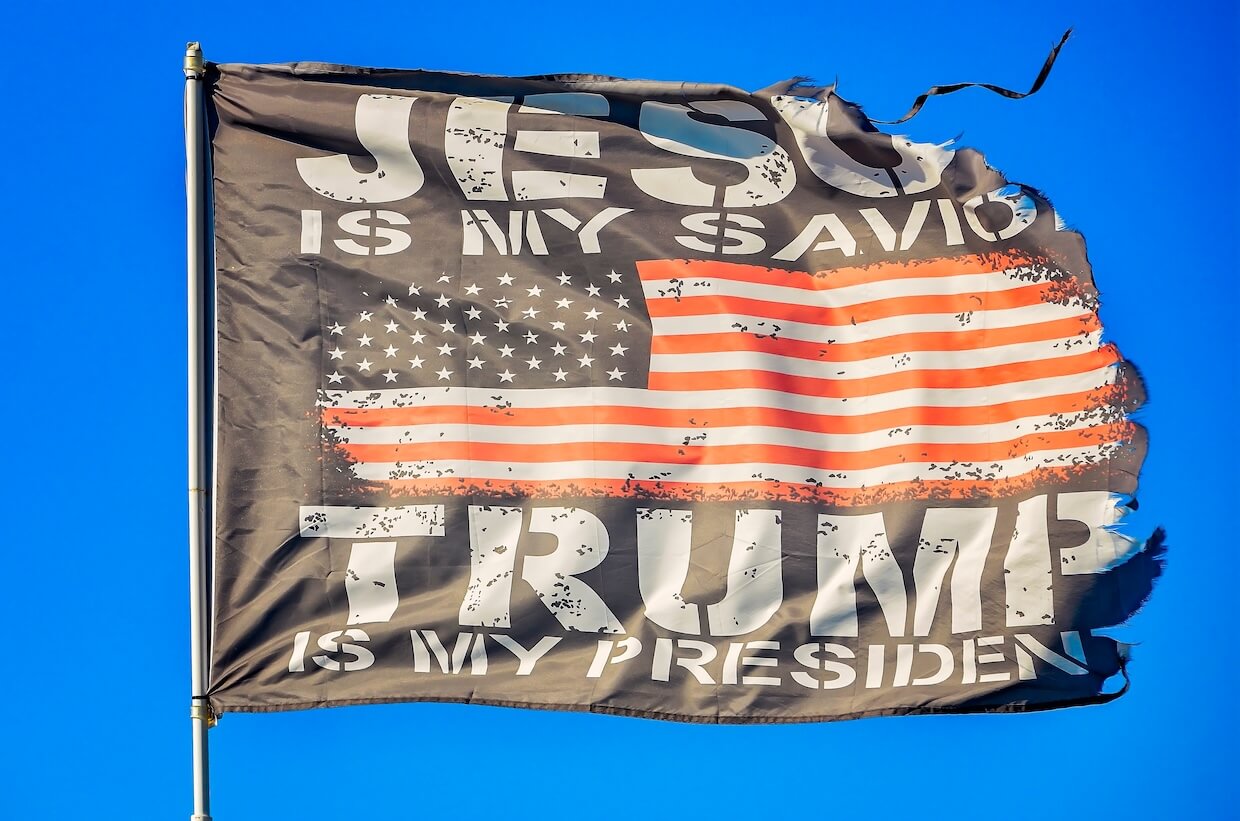
A Trump flag waves at a pier on Coden Beach in Coden, Alabama, on June 9, 2024. The flag bears the slogan, “Jesus is my Savior. Trump is my President.” Photo: Carmen K. Sisson.
The intensified fusion of evangelical Christianity and Republican politics under Trump has transformed the political theology of the Right. How has this religious alignment shaped authoritarian tendencies, policy radicalization, and the sacralization of political conflict?
Professor Bruce Cain: The secular–religious divide in America has deepened over the lifetime of many of us. Those of us who were boomers and grew up in the 1960s and 1970s remember a time when the Democratic Party, under Carter, for example, had an evangelical wing. The abortion issue and subsequent legal decisions created a separation, and George Bush Jr. then brought more evangelicals over to the Republican side.
Trump is not a religious man. He pretends to be, but I don’t think anyone seriously believes he is a pious human being. It is striking that perhaps one of the most secular and morally compromised figures imaginable has become the leader of the religious right. But they view him much like someone views their divorce lawyer: they don’t care about the lawyer’s personal morality as long as they get the divorce.
Trump functions in the same way. They know he’s not a decent person, but they appreciate that he stands up for them, and they overlook the fact that he is anything but a religious man himself.
Strategic Ambiguity on White Nationalism
Republican elites have alternated between embracing and distancing themselves from alt-right and white supremacist movements. How should we interpret this oscillation—tactical ambiguity, strategic co-optation, or deeper ideological convergence?
Professor Bruce Cain: I don’t think it’s completely resolved how far they’re willing to go with this sort of white nationalism. I know too many educated Republicans who don’t share that perspective. For example, at Stanford, one of the most powerful people on campus is the head of the Hoover Institute, Condoleezza “Condi” Rice, an African-American woman who is widely respected. She certainly doesn’t tolerate white supremacist beliefs.
So, it’s an uneasy alliance, and as I mentioned before, it’s justified for the time being because there’s a belief that Democrats went a little too far in promoting diversity, equity, and inclusion measures, and that affirmative action went too far as well—leading some to feel that fairness has been denied in the present to redress past injustices.
There’s a clear distinction between Republican skepticism about DEI and outright supremacist thinking. It’s really a small part of the base that genuinely holds those extremist views. This makes for an uneasy coalition, which could become problematic at some point in the future—perhaps as soon as the next presidential election.
The Activist–Billionaire Nexus in GOP Politics
nti-Trump protest during the Labor Day Parade in New York City on September 6, 2025. Demonstrators gathered on Fifth Avenue across from Trump Tower during the annual parade in Midtown Manhattan. Photo: Dreamstime.
Drawing on your work on party autonomy, how has Trumpism altered the internal structure and strategic independence of the Republican Party? Has it hollowed out institutional authority or merely displaced it toward charismatic leadership and movement actors, especially within a nomination system that was reformed to democratize candidate selection but arguably enabled populist capture?
Professor Bruce Cain: There’s definitely, again, an element that is peculiar to Trump and his very strong bullying methods. That’s enabled him to capture the party. But if we step back, we see that there are longer-term trends that made it possible for him to do this. Right at the top of the list is social media. Social media, as we’ve seen, has become a powerful tool for bullying—everything from doxing to the ability to publicly shame people to mobilizing crowds instantaneously. All of these dynamics have made bullying and intimidation much stronger, not only in politics but also in the lives of our children and in our communities. Trump was definitely a beneficiary of that.
But there were also things we did through political reform that weakened parts of the party. In America, we think of the party as having three components: the party in office, namely the partisanship of the officeholders; the party in the bureaucracy, which consists of the people in the Republican National Committee (RNC), the Democratic National Committee (DNC), and the 50 state parties—those who run the machinery of the party; and finally, the activists.
To make a long, complicated story short, political reforms have strengthened the activists, who are by far the most ideological component of the electorate, while weakening the power of officeholders. Congress is now so afraid of party primaries because primaries do not attract all voters; they attract only the most partisan, activist ones. As a result, the control activists have over the primaries skews both parties to either the left or the right.
Another key factor is that the Supreme Court has allowed wealthy individuals to spend as much money as they want, creating almost limitless self-financing. This helped Trump significantly, as he was able to use his own money to catapult himself into the primaries. There is now far more independent spending, which essentially dwarfs the money given directly to candidates. We are awash in ideological and interest group money, and our inability to control campaign finance has unquestionably helped Trump and made the situation much worse.
Emergency Powers and Democratic Stability
The rise of executive-centered partisanship has weakened Congress and elevated the presidency as the primary partisan engine. Do you see this imbalance as reversible through institutional reform, or has it become structurally entrenched within the constitutional order?
Professor Bruce Cain: We’ll know a lot more about the answer to this question over the next year, as the Supreme Court will have to decide how far emergency powers can be used—the use of emergency powers to suspend normal processes, the use of impoundment activities (i.e., deciding upon entering office not to spend the money allocated by the previous Congress), and how much authority the president has to remove people in the bureaucracy who are nonpartisan rather than political appointees. In other words, how much of the Progressive Era reforms designed to create a nonpartisan bureaucracy can be undone.
If the Court condones these actions, it will be a case of monkey see, monkey do, because the Democrats will take whatever powers are given to the president to politicize everything, use emergency powers, and undo everything that Trump is doing. The Democrats will do the same thing, which means there will be far more instability in American positions vis-à-vis Europe, trade, and climate change. Essentially, the system will become much more schizophrenic and variable, and I believe this will ultimately undermine capitalism, investment, and infrastructure. Whether we are headed in that direction—and whether it becomes permanent—will be decided by the Supreme Court over the next year or two.
Money as Speech—and as a Tool of Power
Image of a pile of dollars currency and text of Trump Effect, symbolizing Trump Effect in American economy. Photo: Paulus Rusyanto.
In your work on “dependence corruption,” you highlighted how financial flows shape representation. How do emerging funding ecosystems—around MAGA media, Christian nationalist donors, tech billionaires, and PACs—challenge existing regulatory frameworks and deepen authoritarian tendencies within the movement?
Professor Bruce Cain: I do believe that America, because it has a very liberal interpretation of the First Amendment—i.e., because we believe that money is speech and that we can only restrict it under the narrowest purposes, namely to prevent quid pro quo corruption, meaning money that’s given directly to a candidate—has opened up the floodgates to a lot of money. That can still work if the money is balanced on both sides, and on many issues, that’s true. But what we’re seeing, for example, with digital currencies is that Trump has brought in lots of billionaires—tech billionaires—who want to create meme coins and invest in large server farms to generate value for digital currency.
All of these developments are tied not only to corruption stemming from campaign contributions but also to Trump himself cutting deals, investing in currency, and then making policy that favors those investments. We’re seeing in America now a level of corruption that we didn’t think was possible after the reforms of the 1970s. It’s approaching the levels of the 19th century, with people getting into office or power and then using it to make themselves richer. This is a major concern, and many of us in the legal and political science communities will be thinking seriously about how to strengthen the system against it.
Reinforcing Democratic Guardrails
Lastly, given these structural, ideological, and institutional transformations, what democratic guardrails or institutional reforms do you view as most urgent to counteract potential authoritarian consolidation on the American Right? Are there specific vulnerabilities—such as in party regulation, executive power, or information ecosystems—that should be prioritized?
Professor Bruce Cain: I would say that many people in my world of political reform are going to try to restore some of the institutions we once had, like the filibuster—i.e., supermajority votes that aim to create bipartisanship. They’re going to try to bring that back, but I think this runs up against the underlying political culture in America right now. Where the Court really needs to draw the line to save American democracy is on executive actions—specifically, the degree to which the President can act unilaterally by imaginatively reinterpreting existing legislation and issuing executive actions.
Secondly, emergency provisions. If everything is an emergency, then nothing is a democracy. That’s essentially where we’re headed if we’re not careful, because political parties can pretty much declare anything an emergency—whether it’s somebody being attacked in a city, an immigration issue, or economic downturns. If everything qualifies as an emergency, democratic norms erode. That is a major vulnerability that needs to be addressed.
Lastly, for both the United States and within the EU, there must be a clear understanding that states’ rights—the ability of states to check the federal government, to serve as laboratories of innovation, and to act differently from the federal government—are critically important. It’s essential that the Court continues to recognize the importance of state sovereignty as granted under the Constitution.
These are the most important steps to take right now, and Trump has made it very clear that we need to shore up both judicial interpretations and, potentially, some of the statutory and constitutional language associated with these issues.
Please cite as: Shukri, Syaza & Hassan, Isyraf. (2025). “Anwar Ibrahim’s Civilisational Populism: The Gaza War and Malaysia.” Journal of Populism Studies (JPS). October 9, 2025. https://doi.org/10.55271/JPS000119
Abstract
This paper examines how Anwar Ibrahim, Malaysia’s tenth prime minister, employs civilisational populism in shaping his foreign policy rhetoric, particularly during the Gaza War that started in 2023. Through the lens of civilisational populism defined by Yilmaz and Morieson as a political strategy that constructs “the people” as defenders of a superior but threatened civilisation, the paper argues that Anwar leverages the Gaza/Palestinian cause to project Islamic solidarity and deflect domestic criticisms of liberalism. In doing so, he seeks to consolidate support against the conservative Islamist opposition, PAS, while maintaining international legitimacy. Drawing on the framework of Foreign Policy Decision Making (FPDM), the study emphasizes the role of individual agency, cognitive calculations, and domestic political pressures in guiding Malaysia’s external stance. Anwar’s rhetorical and symbolic actions such as mass rallies, public condemnations of Israel, and economic restrictions on Israeli-linked entities are analysed not simply as moral positioning but as calculated decisions aimed at managing political survival within a fragmented coalition. The paper highlights contradictions in this approach, such as the BlackRock controversy and local backlash over prioritizing Palestinian aid over domestic needs, revealing the tension between foreign policy idealism and domestic political pragmatism. By integrating FPDM with civilisational populism, the paper provides an understanding of how Malaysia’s foreign policy is not purely reactive or interest-based but shaped by identity politics, leadership perception, and populist imperatives.
The pendulum of civilisationism has swung. After the fall of the Berlin Wall, humanity entered an era of globalisation where connectivity prevailed. However, it did not last, and now that we are in the third decade of the 21st century, we are referring back to Samuel Huntington’s most well-known work, which states that civilisation will be the basis for clashes. In the 1990s, the Washington Consensus fostered a wave of neoliberal globalization, making civilisational divisions seem unlikely. However, following the devastating events of 2001, these divisions have become more apparent, especially against Islamic civilisation. Instead of all-out war, the divisions we are seeing occurs within the framework of national elections. Politicians today are increasingly using civilisationism as part of their populist strategies to win votes.
According to Yilmaz and Morieson, civilisational populism is a political ideology that combines elements of populism with a civilisational framework. It involves a discourse that portrays a particular civilisation—often religious or cultural—as superior and under threat from outsiders or other civilisations. They argued, “populist uses of civilisational discourses differ from non-populist discourses insofar as they use civilisationism to construct internal divisions between an ingroup who they claim belong to ‘our’ civilisation (‘the people’), and outgroups (‘elites,’ ‘others’) who they claim have either betrayed the civilisation of the people or belong to a threatening foreign civilisation,” (Yilmaz & Morieson, 2022: 8).
This form of populism appeals to sentiments of cultural heritage, identity, and belonging by positioning “the people” as defenders of their civilisation against perceived existential threats.
For this paper, we are looking at civilisational populism and its impact beyond the nation-state. We argue that Anwar Ibrahim, the tenth prime minister of Malaysia, has been involved with civilisational rhetoric for the purpose of gaining support. Domestically, Anwar’s main political rival is the Islamist Malaysian Pan-Islamic Party (PAS). Shukri (2023) argued that PAS definitely participated in the civilisational narrative of Islam against non-Muslims, specifically non-Muslim Chinese of Malaysia. On the other hand, Anwar, as argued by Shukri (2024), is more of an inclusivist populist. There is heightened political tension in Malaysia between the Islamists that get support from the majority Malay population and Anwar’s own coalition that is usually labelled derogatorily as “liberal” and finds support among non-Muslims and urban Malays. Due to this pressure, Anwar needs to portray himself as a “defender” of Malays and Muslims but in a civilisational way beyond Muslims in Malaysia in order to maintain his inclusivist reputation. Specifically, this paper will look at Anwar’s rhetoric on the Israel-Gaza War that erupted in October 2023.
Anwar has established himself as an Islamist since his days as a youth leader, and he later transitioned to become a Muslim democrat (Malik & Shukri, 2018). However, we observe that his more assertive rhetoric since becoming prime minister is slightly different from his days as the deputy prime minister under Mahathir Mohamad’s first administration. As a result, it may have led to intra-civilisational discord with other Muslim countries, such as with Saudi Arabia, albeit before the start of the ongoing war, when he was unable to meet either the king or the crown prince during his first visit as prime minister.
The next section will look at Malaysian politics and Anwar Ibrahim’s background. Next, we will look at the literature on civilisational populism and foreign policy decision making in order to provide a framework to guide our understanding of Anwar’s rhetoric about Palestine, Gaza, and the Muslim world. Following that, we will delve deeper into Anwar’s civilisational populism and his relationship with other Muslim leaders. The penultimate section will discuss the impact of Anwar’s civilisational rhetoric in the broader Muslim world context.
On October 4, 2025, billionaire populist Andrej Babiš’s ANO party won the Czech parliamentary elections with just under 35% of the vote, setting the stage for coalition talks with two small right-wing, Eurosceptic parties. In this in-depth interview with ECPS, Professor Lenka Bustikova analyzes the implications of this outcome for Czech democracy and the broader Central European political landscape. Warning that “Babiš’s victory is a big win for illiberalism in Europe,” she explains how this election represents both a consolidation of illiberal forces and a strategic shift in Babiš’s populism—from managerialism to paternalism—raising concerns about democratic backsliding and Czechia’s future orientation within the EU.
On October 4, 2025, billionaire populist Andrej Babiš’s ANO party won the Czech parliamentary elections with just under 35% of the vote, securing 80 of 200 seats—an increase from the previous election. Although short of a majority, Babiš is expected to lead coalition talks. His most likely allies are two small right-wing, Eurosceptic parties: the anti-Green Deal Motorists for Themselves and Tomio Okamura’s anti-immigrant Freedom and Direct Democracy (SPD). While ANO shares the Motorists’ opposition to EU emissions targets, relations with the SPD may prove more complicated due to internal divisions and radical demands. A new Babiš government would likely shift Czech foreign policy, notably by scrapping the Czech ammunition initiative supporting Ukraine.
Against this backdrop, Professor Lenka Bustikova, Director of the Center for European Studies and Professor of Political Science at the University of Florida, provides a detailed analysis of the political transformations currently unfolding in Czechia. In an interview with the European Center for Populism Studies (ECPS), she warns: “I’m very concerned. Despite the relatively moderate appeal, I do think that Babiš’s victory is a significant win for illiberals in the region. I do not think this will be a bloodbath for Czech democracy, but I do think there’s going to be a lot of bleeding. The patient will survive, but there will be a strong shift.”
Professor Bustikova situates the election within a broader pattern of democratic contestation in Central Europe, describing it as both a consolidation of the illiberal camp and a reconsolidation of the liberal camp. Drawing on her scholarship on technocratic populism, she explains how Babiš has evolved from presenting himself as a competent manager to positioning himself as a paternal figure promising redistribution and state-led solutions to economic grievances. His emphasis on managerial competence now interacts with sovereigntist and anti-Green Deal rhetoric, reflecting a hybrid populist strategy.
Crucially, Professor Bustikova underlines the significance of the far right’s role in the coalition-building process. “If this coalition emerges, it will be the first time in Czech history that the far right is either in coalition or silently supporting the government. That’s a huge breakthrough, and it’s very concerning,” she notes. This development, she argues, marks a major illiberal breakthrough, with potential implications for Czechia’s position in the EU.
Although Czechia retains strong institutional guardrails—including the presidency, the Senate, the Constitutional Court, and a pluralistic media environment—Professor Bustikova expects democratic quality to decline during Babiš’s tenure. Situating these developments in a regional perspective, she warns that the illiberal camp is “numerically much stronger,” making future liberal victories increasingly difficult.
Here is the edited transcript of our interview with Professor Lenka Bustikova, revised for clarity and flow.
Professor Lenka Bustikova is the Director of the Center for European Studies and Professor of Political Science at the University of Florida.
Czech Elections Mark a Strategic Shift Toward Illiberalism
Professor Lenka Bustikova, thank you very much for joining our interview series. Let me start right away with the first question: In light of Andrej Babiš’s decisive electoral victory, how would you interpret the current realignment of Czech party politics? Does this signify a deeper structural shift toward sovereigntist populism, or is it a contingent backlash against liberal governance?
Professor Lenka Bustikova: Thank you for this wonderful and difficult question. I would say that I am not alarmed by the outcome of the Czech elections, but I’m certainly concerned. What happened in this election—and many others have commented on it as well—is the consolidation of two camps. I would call them liberal and illiberal, because what the previous or outgoing government offered was not a particularly liberal government.
In this election, Andrej Babiš and his party, ANO, very successfully and skillfully consolidated voters who are unhappy, struggling, insecure, and also revengeful—and he did so effectively. The encouraging news about the Czech elections is that, in the previous election, about one million votes were wasted on smaller anti-system parties. This time, it was only 400,000. Babiš managed to unite this “coalition of the unhappy” and those seeking change, and he did it well. That camp has now consolidated, will have a voice, and will act as an accountability mechanism.
The liberal camp actually did quite well; the electoral math just didn’t work in their favor as it did four years ago. They were punished for not delivering on certain issues. They could have implemented progressive policies that wouldn’t have cost them much, but they didn’t—partly due to tensions within the coalition. They could have been more proactive on LGBTQ rights, registered partnerships, and perhaps on women’s rights.
More importantly, voters were facing a country with high inflation and high debt. The government did all it could, but it wasn’t enough. While the macroeconomic statistics in the Czech Republic are quite favorable, the government failed to communicate this effectively and neglected key economic issues, such as the housing crisis, that required greater attention. The outgoing coalition also continued to embody a kind of 1990s economic approach—loyal to an era that many voters now question and want to move beyond.
Overall, this election represents both a consolidation of the illiberal camp and a reconsolidation of the liberal camp. What we are seeing—in the Czech Republic and elsewhere—is that the illiberal camp is much stronger. If these patterns of consolidation continue, it will become increasingly difficult for the liberal camp to win elections. This is a major challenge in many countries today.
From Technocrat to ‘Big Daddy’ Populist
Drawing on your concept of technocratic populism, how does Babiš’s blend of managerialism and anti-elite rhetoric differ from classical populist radical right movements in Central Europe? Has this hybrid model evolved since his first premiership (2017–2021)?
Professor Lenka Bustikova: When we wrote the article with Professor Petra Guasti on technocratic populism, we conceived of it as an ideal type—and, of course, every ideal type, when faced with reality, becomes a bit murky and messy. In the original classification, technocratic populism in its pure form did not involve culture wars, nativism, or sovereigntism. It was about the populist utilization of expertise to win elections.
Babiš, who is a very flexible and savvy politician, has certainly evolved. Especially during the 2023 presidential elections, we saw him significantly amplify his nativist appeal—it was quite remarkable. But then he softened his rhetoric again. In the current election, he and his party, ANO, have toned it down.
We also see a shift away from the original technocratic populist model and its managerial appeal. When he first ran, he presented himself as a competent manager. Now, he positions himself more as a “big daddy” figure who will take care of things and spend generously on his constituents. The party he originally founded was fiscally conservative, advocating for running the state efficiently like a firm. That is no longer the platform. The current platform focuses on redistribution and targeted spending toward core constituencies.
This has little to do with efficiency, even though one of his electoral appeals is that the previous coalition was ineffective at managing economic problems—and there is certainly some truth to that. In many ways, this election has centered on pocketbook concerns, poverty, and voters in economically disadvantaged regions. Babiš and ANO have managed to mobilize these voters very successfully and effectively.
Sovereigntist Rhetoric, Pragmatic Strategy
Given Babiš’s membership in the Patriots for Europe and his critiques of the Green Deal, how do you assess the interplay between sovereigntist populism in Czechia and EU-level constraints? Are we witnessing a gradual erosion of the EU’s leverage over domestic political agendas?
Professor Lenka Bustikova: We certainly see that the European Union either lacks the instruments or is unwilling to use the instruments at hand to deal with autocratic or illiberal leaders, unfortunately. Babiš is a very pragmatic politician. He will criticize the Green Deal, but if, for instance, his agro-federate firm can benefit from it, I’m sure he would be open to discussions. One important aspect of the Green Deal debate is the likely involvement of the Motorists party, which is expected to be part of the future coalition and absolutely opposes the Green Deal. There is even a possibility that this party will get the environment portfolio, which would certainly lead to a strong pushback against the Green Deal from the incoming coalition.
The coalition negotiations have just started and will take some time, but resistance is almost certain. However, Babiš, being highly pragmatic, will likely oppose the Green Deal selectively, in ways that suit his political agenda, while also accommodating his coalition partners. I’m sure he will navigate this very skillfully, as part of the Green Deal is rhetorical, but there are also technical aspects that will not be easy to roll back.
A Volatile Marriage of Convenience
If Babiš succeeds in forming a minority government backed by SPD and Motorists, how might this affect the strategic behavior of far-right actors? Does your research on illiberal alliances suggest a stable coalition or a volatile marriage of convenience?
Professor Lenka Bustikova: The negotiations have just started, and one possibility is a coalition of ANO, led by Andrej Babiš, and Motorists. It’s not clear whether the far-right party—Tomio Okamura’s party—or its 10 plus 5 MPs will be part of the government or whether they will silently support the coalition from parliament. It’s possible that, for the far right, Babiš will ask them to nominate experts.
This is likely to be a volatile coalition, but Babiš has shown in the past that he can handle coalitions very well. In fact, anyone considering entering a coalition with Andrej Babiš should be very cautious. Babiš was once in a coalition with the Social Democrats, and he completely destroyed them, siphoning off all their voters. They are basically gone, especially after this election—a dead party for which Babiš can take much of the credit.
The SPD should really think twice about how to approach this future coalition relationship because the election results have shown that Babiš can very skillfully siphon off far-right voters as well. He is a highly strategic politician who has effectively cannibalized his coalition partners in the past.
With Motorists, there are likely to be some tensions. It’s not a stable party; it’s built around a few personalities. The biggest source of tension in the coalition will probably concern budget balance. The party of Motorists is, in a way, the intellectual child of former President Václav Klaus. They want to keep balanced budgets—an idea that has already been signaled as completely unrealistic. There may be some initial friction, but it’s likely they will get over it quickly.
Babiš is one of the most talented politicians in the Czech Republic today, and I expect he will handle this situation quite effectively, using a combination of arm-twisting and incentives. I suspect he will be very successful.
Okamura Overshoots, Babiš Benefits
Czech businessman and SPD leader Tomio Okamura in Prague on May 5, 2010. Photo: Dreamstime.
The SPD underperformed compared to expectations. How do you explain the resilience of Babiš’s populist appeal despite the presence of established far-right actors? Does this reflect a mainstreaming of radical right discourse in Czech politics?
Professor Lenka Bustikova: Okamura underperformed—his party underperformed. Moreover, he has a group of very undisciplined MPs because, in fact, he had three other parties in the coalition, so he has five MPs who are more like coalition MPs than SPD members. He is no longer an authentic politician. Many far-right voters, including those from other parties, no longer see him as a credible nativist fighter—that’s one aspect. But also, he is too extreme for the Czech context. He ran a very vitriolic, pro-Russian campaign and openly declared that he would like the Czech Republic to leave NATO and the European Union. Czech voters absolutely do not have the stomach for that, so he overshot. This is simply too extreme.
As Aleš Michal, one Czech political scientist, insightfully observed, the mobilization against the far right led by the pro-democratic parties and the coalition Together—when they warned Czech voters against parties that would steer the country towards Russia—actually worked. Anti-system and far-right or far-left voters moved under the umbrella of ANO. So, in a way, the strategy worked, but it did not help the coalition Together—it helped Babiš.
Another important aspect is that during the presidential elections, which Babiš lost but which were highly polarized, he managed to attract a significant number of far-right voters. In 2023, these voters grew accustomed to the idea of voting for him. So, although he lost the presidential election, it helped him enormously in this election, as he became an acceptable alternative for the far right.
Cultural Issues Trigger Policy Backlash
In your work on the “Revenge of the Radical Right,” you emphasize how minority accommodation can trigger backlash. To what extent are current Czech political dynamics shaped by cultural issues (e.g., LGBTQ+ rights, immigration, Ukrainian refugees) rather than economic grievances?
Professor Lenka Bustikova: I’ve thought about these issues quite a bit because I do think that with a lot of foreign mobilization today, the appeal of ethnic issues is somewhat subdued. I also have one or two articles with Professor Petra Guasti where we speculate about this. The logic of the book is that backlash ensues after the accommodation of minorities—it’s a backlash against elevating groups and putting forward policies that help them. In that sense, the logic of backlash applies here as well. In the Czech Republic, when you consider the status quo and the pursuit of policies that were genuinely beneficial to Ukrainian refugees, you can anticipate an ensuing backlash. Ukrainian refugees are no longer as warmly welcomed as they once were. There have also been many attempts to advance more robust legislation to protect women against rape and sexual assault, as well as attempts to codify the Istanbul Convention. These are all policies that, in a way, shift the balance of power or policy direction, and we have seen backlash as a result. Similarly, the LGBTQ community is hoping to increase their rights. Much of the public is quite open to this possibility, but the process of getting there involves shifting the balance and policies. Once that happens, advocates on the opposing side are naturally activated. So, I do think the policy backlash logic applies here as well.
Recent scholarship highlights the rise of confessional illiberalism across Central Europe. Do you see religiously inflected sovereigntism gaining ground in Czechia, or does the country’s secular legacy limit this trajectory compared to Hungary and Poland?
Professor Lenka Bustikova: This is an excellent question. It refers to a recent article that I’ve written with Lottam Halevi, who is now at the University of Constance. One important thing to keep in mind is that much of the mobilization around religious issues is actually a mobilization of political identity. It is not necessarily the case that more religiously infused countries will experience a higher mobilization of religious identity or religious activity as political identity. Czechia is a very secular country. However, we do see issues around transgender rights or some LGBTQ questions being framed in ways that are very similar to Hungary and Poland. The culture wars are nowhere near as fierce as in neighboring countries, but the country could potentially develop its own mini culture wars.
Another important point is that in the Czech Republic, the Christian Democratic Party is firmly in a coalition and belongs to the liberal or pro-democratic camp. As long as they remain on the side of parties that respect the rule of law, this creates a kind of firewall against the politicization of some of these issues. Nevertheless, we have seen signs of this dynamic even in a country as secular as the Czech Republic.
Culture Wars Remain Underutilized in Czech Politics
Ukrainian activists protest against the Russian invasion of Ukraine during a peaceful demonstration with flags in support of Ukraine in Prague, Czechia on February 24, 2023. Photo: Dreamstime.
Your article “In Europe’s Closet” discusses how minority rights can catalyze illiberal backlash. Are Czech populist and far-right actors increasingly weaponizing LGBTQ+ issues as part of their sovereigntist narratives? How does this compare to developments in Slovakia or Poland?
Professor Lenka Bustikova: Suddenly, these issues are high on the agenda in Slovakia and Poland, even though in Poland some LGBTQ issues are not as salient as they were a few years ago. However, we do see narratives about protecting children against transgenderism emerging. This rhetoric often appears as part of anti-EU, Euroskeptic discourse—telling people what to do, how to raise their children, promoting a progressive agenda around women, or framing gender rights as a threat to traditional families. The offshoots of these narratives are present, though they are not a particularly dominant strain. Pocketbook issues largely dominated this election. So, the potential is there, but it remains underutilized. Moreover, the Catholic Church in the Czech Republic is quite restrained and does not enter into these debates in the way it does in Slovakia or Poland.
In your co-authored work on “Patronage, Trust, and State Capacity,” you argue that low bureaucratic trust fosters clientelism. How does this dynamic manifest in Babiš’s political strategy, especially considering his corporate background and patronage networks?
Professor Lenka Bustikova: Andrej Babiš cares about one thing only, and that’s his firm, Agrofert, and his political party is his firm. The party is not a regular party; it is a business project and a business offshoot. He has a huge conflict of interest, which nobody knows how he’s going to solve if he’s nominated as prime minister, because the Czech Republic doesn’t have an institute of blind trust. The conflict of interest will always be there because his firm, Agrofert, is a large recipient of state subsidies. That’s not necessarily patronage networks; it’s, in a way, making sure that the state is in a fantastic synergistic position with his firm. That is a particularity of his business background and the setup of the party. It is a vehicle for him to keep political power and be able to use state and EU subsidies, and the conflict of interest is just written all over him.
In terms of ANO as a party strategy, I would not necessarily define it as clientelism. What we saw when Babiš was in power, I would call targeted distribution—targeting pockets of voters, many of whom actually do need this targeting, and it is very beneficial to them. It involves picking out or dissecting groups that will be selected for state help, and again, the budget deficit is going to balloon. I don’t think that’s necessarily patronage, but it’s a targeted exchange that a lot of parties engage in, and it’s bread-and-butter politics. Having said that, aside from the targeted distribution, Babiš will make sure that his agglomerate benefits from him being prime minister again, which is a very likely scenario, as it seems now.
From Fiscal Conservatism to Programmatic Populism
Do you think Babiš’s economic promises—higher pensions, lower taxes, welfare expansion—should be understood as clientelistic appeals rooted in weak state capacity, or as programmatic populism aimed at reshaping public expectations?
Professor Lenka Bustikova: If I were to choose, I would really use more of a frame of programmatic populism or targeted distribution. We saw this between 2017–2021. What’s happening in the region now is that voter expectations have changed—and this applies to Poland and Slovakia as well—so that populist voters now expect redistribution and higher spending. If Babiš stays in power for four years, these expectations will become absolutely entrenched. There is a recent book on Poland by Ben Stanley that talks about this lock-in: basically, the transformation of the Polish party system in such a way that all voters now expect the next party in power to spend, no matter who that might be. If the current governing coalition ever comes back, they will have to do the same thing. They will not be able to promise balanced budgets. If they want to defeat Babiš four years from now, they will also have to promise spending. Good luck with the budgets, but there is a general entrenchment of voters expecting that the state needs to really open up the valves. It will probably have pretty bad long-term consequences, but nobody’s thinking long-term these days.
Given Babiš’s emphasis on managerial competence, how does technocratic rhetoric interact with populist radical right sovereigntist claims in his current coalition-building efforts?
Professor Lenka Bustikova: It’s going to be a big spending spree, and the Motorists will have to hold their noses. The far right really doesn’t care—actually, it supports spending as long as it’s spending on Czechs, or native spending, and not on Ukrainians or migrants. This is going to be a move from manager to, in a way, a paternal figure who is going to take care of everybody, including making appointments for colonoscopy. Part of the big appeal of Babiš was the emphasis on improving the healthcare system.
Having been quite critical about ANO, I do have to emphasize that it’s quite possible that some of the portfolios the coalition will control can be given to very competent people. In the previous government, ANO had some ministers or portfolios that were run quite well. For example, the Ministry of Education underwent some really good changes. It’s also possible that some of the infrastructure projects that started and need to be completed, or the huge shortage of housing stock—if Babiš can really deliver on these issues, that’s going to be very successful, rewarded, and it would benefit the country quite a bit. If he throws in managerial competence and delivers, that would be fantastic, and it’s possible that there might be some policy changes that can be done well and have long-term benefits. But I suspect a big spending spree and a very short-term horizon, given Babiš’s age. We’ll see.
A Historic Breakthrough for the Far Right
Analysts have warned that Babiš could align Czechia with Hungary and Slovakia, forming a sovereigntist bloc inside the EU. Do you view this as a tactical positioning or a substantive ideological shift toward illiberal governance?
Professor Lenka Bustikova: I’m very concerned. Despite the relatively moderate appeal, I do think that Babiš’s victory is a significant win for illiberals in the region. I do not think this will be a bloodbath for Czech democracy, but I do think there’s going to be a lot of bleeding. The patient will survive, but there will be a strong shift. Babiš is also very strategic. If he and his coalition partners drag him to some extreme positions, the Czech public may become accustomed to that. If this coalition emerges, it will be the first time in Czech history that the far right is either in coalition or silently supporting the government. That’s a huge breakthrough, and it’s very concerning. The Motorists are not an extreme party, but they are certainly not rooting for the European rule of law and liberal democratic values. This is very troubling, and it’s a big win for illiberalism in Europe. Babiš’s victory is undoubtedly a big win for illiberalism.
Guardrails Exist, But Democratic Quality May Decline
The Statue of Justice by Marius Kotrba, a modern sculpture located at the Supreme Court building in Brno, Czech Republic, on March 10, 2022. Photo: Evgeniy Fesenko.
What are the potential institutional guardrails against democratic backsliding in Czechia, and how do they compare to Hungary and Slovakia during their own illiberal turns?
Professor Lenka Bustikova: There are a lot of guardrails. The most important actor is the current president, Petr Pavel. He can veto, he can play a huge informal role, and he will have to think very carefully about whether the future prime minister is going to violate the law by being in a position of conflict of interest. This is going to be a hard puzzle to solve. The Czech president is a pro-democratic, centrist figure with good temperament and very high levels of popularity.
The second guardrail is the second chamber, which Slovakia does not have. The Czech Senate is still dominated by so-called liberal or pro-democratic parties. There are a lot of roadblocks. Another institution that’s quite important is the Constitutional Court, which has saved Czech democracy many times. That’s also significant.
The media in the Czech Republic have been independent. Babiš is going to go after Czech Television and Czech Radio, but the country has a robust, pluralistic media scene. It might change, but that’s an important characteristic.
Czech civil society is quite active, although one has to be very careful about what mobilization means. For example, work by Petra Guasti and Aleš Michal showed that populists are sometimes much better at mobilizing. This election has shown that people can be mobilized for and against democracy, or for liberal or illiberal causes. This time, the election mobilized the illiberals more, but there were other elections in the past when the pro-democratic camp was mobilized quite well. Civil society is active. It pays attention.
So, there is hope, but I do expect that the quality of Czech democracy will decline during this period because of disrespect for the rule of law. Babiš does not like the rule of law, and his coalition partners are either extremists or at the fringe of the mainstream. Another thing I would like to mention is that one of the leaders of the Motorist Party has accusations of domestic abuse filed against him. In terms of signaling the moral integrity of political leaders, this also doesn’t bode well for appointing people with questionable moral standing to very high positions of power.
Swerve for Now, But the Future Looks Troubling
Finally, situating Czechia within the broader Central European context, do you see the current developments as part of a cyclical populist wave or a deeper structural illiberal swerve, as discussed in “The Illiberal Turn or Swerve in Central Europe?”
Professor Lenka Bustikova: At this moment, I expect that this is going to be four years’ worth, but I don’t know what’s going to happen at the end of these four years, because what we see in other countries is that when the 2.0 comes back—when populists return to power—they are much more effective. They know what to do, they have their playbooks ready, they have done this before, they are much more revengeful, aggressive, and they know how to get things done. So I expect that Babiš will weaken the rule of law and definitely try to weaken some of the guardrails. I do think that the coalition partners will certainly drag the country more towards the East than towards the West. The real question is going to be: after four years, is there anyone who will be able to beat them? It’s going to be very difficult because this consolidation of camps shows that the illiberal camp is simply numerically much stronger. Either they’ll have to make some terrible mistakes—which they will—and the voters may forgive them or may not, or the liberal camp will have to grow, and we see in other countries that it is a very steep hill to climb. So, swerve for now, but I am very concerned about the future.
When Keir Starmer denounced populism as a “snake oil charm” in July 2024, he became the first British Prime Minister to attack it so explicitly in a major parliamentary speech. Yet inside Labour, the strategy is contested. Should populism be called out as corrosive to democracy, or quietly disarmed by fixing everyday grievances? Starmer prefers direct confrontation; his strategist Morgan McSweeney stresses delivery — “potholes, not populism.” Luke Malhi’s interviews with MPs, aides, and journalists reveal a party caught between naming the threat and co-opting parts of its language to blunt Reform UK’s rise. The debate echoes dilemmas across Europe, underscoring a central question: how can mainstream parties defend institutions without alienating the voters populists claim to represent?
On a warm July morning in 2024, as parliament resumed for the first time following the election, Keir Starmer stood at the dispatch box and denounced populism as a “snake oil charm” that promised easy answers but could deliver only division (Starmer, 2024a). It was the first time a British Prime Minister had attacked populism so explicitly in a set-piece moment of national politics. For some, it sounded like the steady voice of reason after years of turbulence. For others, it risked reinforcing the image of a detached mainstream elite who scold rather than persuade the most dissatisfied in society.
Behind the scenes, Labour figures admit the party is still working out how best to handle the populist threat presented by Reform UK, a populist radical right (PRR) party which secured 14.3% of the vote in 2024, and is now polling at around 34% (Ipsos, 2025). In January of 2025, I conducted interviews with MPs, strategists, and senior journalists, with the promise of anonymity to encourage them to speak candidly. What emerged was a picture of a party that both fears the corrosive potential of populist politics and struggles with how directly to confront it.
Exploring these tensions matters because Britain is hardly alone. Across Europe, mainstream parties face the same dilemma of how they should respond to populists who thrive on frustration with the status quo. Do they call out populism as dangerous, risking charges of elitism? Do they try to quietly address the grievances that fuel it? Or do they attempt to co-opt aspects of the populist policy platform and rhetoric in an attempt to diffuse their appeal? Labour’s struggle with this balance offers a case study in how mainstream parties might navigate this populist age, and what that means for the future of democracy.
Labour’s Response to Populism
When asked how Labour’s inner core thinks about populism, one party strategist sighed: “It’s the problem we can’t ignore, but we can’t talk about it either.” On the surface, Starmer has not been shy about naming populism. In his New Year speech, he condemned “the politics of the easy answer” and accused right-wing populists of offering “grievances, not solutions” (Starmer, 2024c). In the King’s Speech, he branded populism a “snake oil charm” that divided communities (Starmer, 2024a). On a train to the 2025 party conference, he described a battle with the “populist Right Reform” for “the soul of the country” (Starmer, as quoted in BBC, 2025, 03:00). Several MPs told me this reflected his genuine conviction that populism corrodes democracy. One said: “he really does think it’s dangerous. He sees it as a slide toward US-style democratic backsliding.”
Yet many Labour elites worry that naming populism head-on risks alienating voters. As one backbencher put it: “You can’t just tell people they’ve been conned. That sounds like you’re calling them stupid.” A Labour strategist was even more blunt: “That was the Remain mistake. They shouted about how bad Brexit would be and people told them to sod off. If we repeat that with populism, we’ll lose again.”
These doubts are rooted in recent history. The failure of the “Stronger In” campaign during the 2016 referendum still looms large. Its warnings of economic collapse were dismissed by many voters as fearmongering, and that experience has left strategists wary of repeating the mistake of lecturing voters. Several MPs pointed out that even the term “populist”risks alienating audiences, since it is almost always used in a pejoratively charged manner, often shorthand for “irrational” or “ignorant.”
This tension has produced what insiders describe as a split between Starmer and his chief strategist, Morgan McSweeney. Starmer leans toward confrontation, “naming and shaming” populists in the words of one MP, while McSweeney takes the opposite view. According to a Labour aide, “Morgan thinks delivery is the only answer. Fix the potholes, raise living standards, and you’ll take the wind out of Reform’s sails. That’s the fight.”
But delivery is only part of the story. McSweeney’s strategy was said to increasingly involve borrowing selectively from populists where feasible, adopting their language on issues like patriotism or immigration, and co-opting policy themes that resonate with disaffected voters. One journalist explained: “It’s not just about competence. Morgan’s theory is giving people some of the populist framing but strip out the nastiness. Show them you hear their anger but redirect it.”
The difference between the two men is not just tactical but stylistic. Starmer prefers sober warnings about the dangers of populism. McSweeney is more interested in whether voters feel their everyday concerns are being met. As one Labour organiser summarised: “Keir wants to talk about democracy. Morgan wants to talk about potholes. And that’s the real debate inside Number 10.”
Journalists I spoke to consistently described Starmer’s style as technocratic. Some called him “prosecutorial,” others “old-fashioned” or “statesmanlike.” Even sympathetic insiders conceded that he can come across as an “enforcer of the status quo.” Several argued that this style is both personal and political: it reflects Starmer’s legal training, but also Labour’s deliberate attempt to ‘detoxify’ after Jeremy Corbyn. One campaign aide said: “We knew we couldn’t win if we looked like we were promising the moon again. Voters didn’t want grand visions. They wanted someone boring enough to fix the basics.”
That instinct shaped the 2024 campaign. Unlike Boris Johnson, who thrived on flamboyant gestures, or Corbyn, who rallied crowds with populist appeals to the “many not the few,” Starmer positioned himself as the steady alternative. His rhetoric avoided spectacle. His speeches focused on detail, compromise, and delivery. A senior journalist put it this way: “The whole pitch was: ‘We’ll be dull but competent.’ After fifteen years of drama, dull sounded good.”
At times, this meant deliberately lowering expectations. Multiple insiders recalled that Starmer instructed the party to avoid language that might create impossible promises. One MP said: “He didn’t want a repeat of 2017 or 2019, when we wrote cheques we couldn’t cash. He genuinely fears that broken promises feed populism.”
Starmer’s Worldview and the Parliamentary Party
Starmer’s instinct to treat populism as a moral threat is rooted in his background. As a barrister and former Director of Public Prosecutions, he was steeped in the idea that rules and institutions hold society together. Starmer’s choice to appoint Richard Hermer as attorney general in July 2024 was a clear example of this, and something which required ‘considerable effort’ according to one political journalist (Rodgers, 2025). Soon after his appointment, Hermer (2024) gave a speech which made clear his concern about populism and his plans to counter it:
‘We are increasingly confronted by the divisive and disruptive force of populism… We face leaders who appeal to the ‘will of the people’ – as exclusively interpreted by them – as the only truly legitimate source of constitutional authority. Their rhetoric conjures images of a conspiracy of ‘elites’ – an enemy that is hard to define but invariably including the people and independent institutions who exercise the kind of checks and balances on executive power that are the essence of liberal democracy and the rule of law… I hope you take some comfort in the fact that the importance of the rule of law and the constitutional balance is embedded in my DNA and that of a Prime Minister who not only rose to the top ranks of the Bar but served his country as DPP.’
Political journalist Ian Dunt correctly observed that it is rare for British politicians, especially attorney generals, to demonstrate “the kind of political and philosophical depth shown in that speech.” Given their shared history, Dunt (2025) claimed Starmer “had clearly authorised him to do the work they both believed in [to counter populism], in a much more robust and outspoken way.”
Labour’s MPs generally echoed Starmer and Hermer’s worldview. In interviews, many brought up Cas Mudde’s (2017) definition of populism unprompted, describing it as a worldview that pits a virtuous “people” against a corrupt “elite.”They consistently rejected this framing as corrosive to democracy. One MP told me: “The idea that politics is just a battle between good, ordinary people and a corrupt elite goes against how democracy really works – I think we’ve tried to push against that.” Indeed, Labour interviewees’ comments echoed many of the inherent dangers of populism for democracy identified by political scientist Jan Werner Muller (2016). They stressed that compromise and pluralism are essential, that it is impossible to distil the will of the people into a single viewpoint, and that institutions such as the judiciary and Parliament are safeguards, not obstacles. One insider remarked: “Respect for institutions is what sets us apart from the populists. I think for everyone here, that is absolutely key.”
This worldview shaped Labour’s stance on contentious issues. When the Conservatives tried to override the Supreme Court on the Rwanda deportation scheme, Yvette Cooper (2024) chastised a party that wanted to “stop all courts.” When Boris Johnson was accused of breaking lockdown rules during Partygate, Angela Rayner (2024) argued that the Prime Minister had “degraded” Britain’s institutions. When Conservative MPs criticised the International Criminal Court (ICC) for issuing an arrest warrant for Benjamin Neteyahu, David Lammy (2025) passionately argued that the UK’s duty was to uphold international law, no matter what.
For MPs, these moments weren’t simply opportunistic attack lines. Rather, they reflect an institutionalist ethos that sets Labour apart from its populist rivals. Several interviewees contrasted this with both right-wing populism and left-wing ‘Corbynism,’ which, at times, they claimed, flirted with a Manichean and binary view of “the people versus the elite”described by the ideational definition of populism (Mudde, 2017). As one journalist observed: “Starmer doesn’t do binaries. He does compromise. That’s his politics.” This rejection of populism runs deep within the identity of the Parliamentary Labour Party. MPs and advisers alike saw their role as defending the structures and norms of democracy against the polarising logic of populism.
A Compromise Strategy
Despite these convictions, Labour’s public-facing stance has been more muted. The compromise between Starmer and McSweeney means explicit attacks on populism are largely confined to Starmer’s speeches, whilst the wider party message stresses competence and delivery. At the same time, McSweeney’s strategy has steered Labour toward selective co-option of populist themes, borrowing rhetoric on sovereignty, fairness, and security when it helps shore up support against the PRR Reform UK.
MPs are divided over this balancing act. Some welcomed Starmer’s willingness to call out populism explicitly, saying it reassured the new intake that the party was willing to “name the problem.” Others warned that in Leave-voting constituencies such rhetoric could backfire.
A similar divergence in opinion appeared when MPs were asked about McSweeney’s push for Labour to co-opt populist policies and rhetoric in certain areas. Some Labour elites felt that, although it was uncomfortable, it was necessary to reduce the electoral appeal of Reform UK. However, others felt it risked legitimising right-wing populists and alienating their voter base on the left.
Indeed, recent research highlights that mainstream parties risk alienating their core voter bases when co-opting populist policies or rhetoric. A 2024 study on mainstream partisans’ responses to populist radical right parties found that even tactical forms of cooperation can provoke feelings of betrayal among core supporters, while outright exclusion may conversely reassure them that democratic boundaries are being defended (van der Brug et al., 2024). In other words, accepting far-right actors as legitimate competitors may backfire by alienating loyal voters, reinforcing the dilemma that ignoring populism allows it to grow, but engaging with it risks damaging mainstream parties’ own legitimacy.
The result is a fractured Labour elite, and a party that highlights it is not populist, but is simultaneously cautious about declaring itself against populism. As one senior journalist told me: “They’ll quietly fix things, and when it helps, they’ll borrow the populist language.”
The European Dilemma
Labour’s balancing act is part of a wider European story. Both the Social Democratic Party (SPÖ) and the Austrian People’s Party (ÖVP) frequently denounce the Freedom Party (FPÖ) as a right-wing populist force that threatens democratic stability. They highlight the FPÖ’s history of extremism and corruption scandals to argue it is unfit to govern. However, some analysts suggest that this moralising tone has also reinforced the FPÖ’s image as an outsider persecuted by the political establishment (Greilinger, 2024).
In France, Emmanuel Macron has pitched himself as the rational bulwark against Marine Le Pen. His rhetoric helped him win two presidential elections, yet his reputation as the anti-populist “president of the elite” has also fuelled the resentment that benefits her party (Alduy, 2024).
And in Slovakia, opposition leaders stress the importance of defending institutions against Robert Fico, though appeals to democratic norms often fail to resonate with voters who are more concerned about wages or security (OSW Centre for Eastern Studies, 2025).
Labour’s interviews echo these patterns. Starmer’s decision to call populism a “snake oil” resembles Macron’s confrontational stance, while McSweeney’s “pothole theory” mirrors the German CDU’s instinct to quietly address material grievances. And his tactic of co-opting populist themes recalls centre-left parties across Europe that have edged rightward on migration or nationalism in hopes of undercutting their rivals. Both approaches highlight the same paradox: ignoring populism lets it grow but confronting it risks alienating dissatisfied voters drawn to populist ‘common sense’solutions.
Conclusion: Lessons for Democracy
Labour’s struggle over how to deal with populism reflects a central dilemma facing European democracies. Mainstream parties increasingly recognise that populism threatens democratic norms, yet they are torn between exposing it and addressing the grievances that fuel it.
My interviews reveal a party uneasy about this balance. Starmer is inclined to call out populism for what it is. McSweeney and other strategists argue that delivery, not denunciation, is what keeps populists at bay – along with carefully borrowing some of their language and themes. MPs, often caught in between, worry about how rhetoric plays in their constituencies.
Since my research in January 2025, Starmer appears to have shifted closer to McSweeney’s view. He has grown more willing to co-opt populist policy positions and language in the hope of winning back voters tempted by Reform UK. A YouGov poll in early 2025 showed Reform UK as likely to be the largest party in parliament if a snap election were called, underscoring how desperate party elites have become. But comparative research suggests that Labour’s gamble may backfire. Political scientist Tarik Abou-Chadi has shown that when mainstream parties adopt aspects of populist policies from the far-right, they rarely succeed in winning over these voters. Instead, they might risk normalising the very politics they sought to resist.
Labour’s experience illustrates the challenge facing mainstream parties: how to safeguard democratic principles while competing in a political landscape reshaped by populism. These are not uniquely British problems, but global ones. For young people inheriting these democracies, the question is urgent: how can political actors who genuinely care about democracy confront populism without alienating voters or belittling their grievances?
Lammy, D. (2025, March 10). “Statement on the International Criminal Court.” Hansard. https://hansard.parliament.uk
March, L. (2018). “Left and right populism compared: The British case.” The British Journal of Politics and International Relations, 20(2), 281–298. https://doi.org/10.1177/1369148118763892
Müller, J.-W. (2016). What is populism? University of Pennsylvania Press.
Russo, Luana & Brock, Paula Schulze. (2025). “Mainstream partisans’ affective
response to (non) cooperation with populist radical right parties.” West European Politics, 48:6, 1389-1427, DOI: 10.1080/01402382.2024.2336436
Starmer, K. (2024a, July 17). “Debate on the address.” Hansard. https://hansard.parliament.uk
Starmer, K. (2024b, October 14). “PM International Investment Summit speech.” UK Government. https://www.gov.uk/government/speeches/pm-international-investment-summit-speech-14-october-2024
The ECPS convened leading scholars to assess how populist movements are accelerating democratic decay and edging toward fascism. Moderated by Professor Cengiz Aktar, the panel featured Professors Mabel Berezin, Steven Friedman, Julie Ingersoll, Richard Falk, and Larry Diamond. Discussions ranged from Christian nationalism and techno-utopianism in the US, to the failures of Western democratic models, to the global hypocrisy of international law. Panelists warned that populism now serves as a vehicle for authoritarian consolidation with worldwide reverberations. They underscored the responsibility of intellectuals to resist euphemism, speak with clarity, and help reimagine democracy in an age of disinformation, mass manipulation, and systemic crisis.
Reported by ECPS Staff
The European Center for Populism Studies (ECPS) hosted a panel titled “From Populism to Fascism? Intellectual Responsibilities in Times of Democratic Backsliding.”The session gathered distinguished scholars to examine the accelerating erosion of democracy, the potential transition from populism to fascism, and the moral and intellectual duties of those who continue to defend democratic values in dark times.
Selcuk Gultasli, ECPS Chairperson, opened the session by emphasizing the urgency of the theme. He noted that the panel sought not only to analyze the rise of populism but also to confront how authoritarian tendencies may harden into fascism. ECPS, he explained, is committed to making the discussion widely accessible through a detailed report and online recordings, ensuring that policymakers, academics, and engaged citizens can benefit from the insights shared.
Moderator Professor Cengiz Aktar, adjunct professor of political science at the University of Athens, then set the tone by recalling ECPS’s mission: to document and analyze how populism threatens democracy worldwide. He warned that populist leaders are not isolated figures but draw legitimacy from mass support, which, in Arendtian terms, provides the essential condition for fascist governance. Today’s task, Professor Aktar concluded, is no longer about building democracy but about preventing its collapse.
Professor Mabel Berezin (Distinguished Professor of Arts & Sciences in Sociology and Director of the Institute for European Studies at Cornell University) opened with a comparative analysis of populism in Europe and the United States. She argued that American populism, embodied by Donald Trump, is marked by unpredictability and authoritarian experimentation, untethered from coherent historical anchors. The most dangerous development, she suggested, lies not in street militias but in “social authoritarianism”—elite legal and intellectual projects such as Project 2025 that aim to dismantle democracy from within. The elevation of Charlie Kirk as a martyr, she warned, signals a new form of religious-political mobilization with fascistic overtones.
Professor Steven Friedman (Research Professor in the Faculty of Humanities, University of Johannesburg) challenged the myth of a pristine democracy interrupted by an authoritarian onslaught. He argued that the current model of democracy was already exclusionary before the rise of authoritarianism, and the current Western model itself is failing. By ignoring the dangers of private corporate power and clinging to Eurocentric notions of “consolidation,” democrats have overlooked the deeper roots of disillusionment. For Professor Friedman, the task is to redefine democracy as equal human choice in all decisions that affect people’s lives—a principle that requires confronting both state and private power.
Professor Julie Ingersoll (Professor of Religious Studies and Florida Blue Ethics Fellow at the University of North Florida) provided an ethnographic perspective on Christian nationalism in the United States. She mapped three strands—evangelical dominionism, Catholic integralism, and Pentecostal-charismatic movements—that, despite historical rivalries, now converge in rejecting pluralism and democracy. She also highlighted the convergence of these religious forces with secular techno-utopianism and nihilistic online subcultures. The result, she argued, is a coalition oriented toward collapse and accelerationism, united less by theology than by anti-democratic aspirations.
Professor Richard Falk (Albert G. Milbank Professor of International Law and Practice, Emeritus at Princeton University) situated the discussion in a global frame. He argued that democracy was tarnished long before populism’s rise, corrupted by Cold War secrecy, US hypocrisy in international law, and the exploitative logic of capitalism. Populism, in his view, compounds these crises by waging an “epistemological war” against truth and expertise. Facing climate change, nuclear peril, and extreme poverty, Professor Falk urged intellectuals to embrace utopian thinking and even revolutionary transformation, reorienting governance toward the global public good.
Professor Larry Diamond (Professor of Sociology and of Political Science, Senior Fellow at the Hoover Institution and the Mosbacher Senior Fellow in Global Democracy at the Freeman Spogli Institute for International Studies at Stanford University) concluded with a stark warning about the authoritarian project underway in the United States. Drawing lessons from leaders such as Hungary’s Orbán and Turkey’s Erdoğan, he argued that Trump and his allies are pursuing a systematic strategy of democratic dismantling: media capture, judicial purges, lawfare, and gerrymandering. While fascistic elements are present, Professor Diamond stressed the importance of terminological precision. Resistance, he suggested, requires early mobilization, broad coalitions, and a focus on economic issues that resonate with ordinary voters.
Together, the panelists painted a sobering picture: populism today is no longer merely a style of politics but a vehicle for authoritarian consolidation with global reverberations. From Christian nationalism to techno-utopianism, from corporate power to manipulated legal frameworks, the threats are multifaceted. Yet the panel also underscored a common responsibility—that intellectuals must speak with clarity, resist euphemism, and foster new visions of democracy suited to the crises of our age.
Professor Mabel Berezin: “Locating the Fight? Strategic Engagement in the United States and Europe”
People gather at Turning Point USA headquarters in Phoenix, Arizona, on September 13, 2025, for a memorial following the fatal shooting of Charlie Kirk during his speech at Utah Valley University in Orem. Photo: Dreamstime.
In her presentation, Professor Mabel Berezin delivered a sobering analysis of the current trajectory of democracy in the United States and Europe. Speaking from the vantage point of an academic who has long studied populism and fascism, she situated the discussion within a comparative framework, but with particular urgency regarding developments in the United States since the 2024 presidential election.
Berezin opened with a reflection on the language used to describe contemporary democratic crises. The term “democratic backsliding,” she argued, now feels wholly inadequate for the American case. Since Donald Trump’s return to power, the country has been subject to what she described as a “high-speed wrecking ball” against its democratic institutions. While democratic erosion is a global phenomenon, its forms vary across national contexts, depending on political histories and institutional resilience. This, she suggested, underscores the need for context-specific strategies of intellectual and civic engagement.
European Populism and American Exceptionalism
Berezin revisited an argument she first articulated in 2017 in her essay “Trump is Not a European-Style Populist and That is Our Problem.” In that piece, she observed that while European far-right populists—such as Marine Le Pen in France or Giorgia Meloni in Italy—often ground their appeals in nostalgia for a stronger nation-state and postwar social protections, the American populist right is marked by unpredictability. European populists, she argued, want “more state, not less,” and their grievances frequently revolve around immigration and monetary issues within the European Union framework. By contrast, the American case lacks a coherent historical anchor, and Trump’s political appeal did not fit neatly into established narratives.
For Professor Berezin, this unpredictability made Trump particularly dangerous. While European populists often pursue recognizable policy goals rooted in the past, Trump’s movement was untethered, fueled instead by volatile grievances and charismatic mobilization. The absence of clearly defined political expectations in the US created fertile ground for authoritarian experimentation.
The Rise of Social Authoritarianism
Turning to the US after the 2020 and 2024 elections, Professor Berezin noted the growing academic consensus that Trumpism bears fascist characteristics. However, she argued that the most pressing threats to democracy are not necessarily the paramilitary groups that rallied in Charlottesville or stormed the Capitol on January 6, 2021. Instead, the greater danger lies in what she termed “social authoritarianism”—a project spearheaded by intellectual cadres aligned with institutions such as the Heritage Foundation, the Federalist Society, and the architects of “Project 2025.”
These actors, she explained, represent the true intellectual core of the movement. Unlike the visible extremists brandishing weapons, these figures deploy law, language, and bureaucracy as instruments of authoritarian consolidation. By targeting institutions and systematically reshaping the judiciary, they seek to dismantle the so-called “deep state” and restrict fundamental freedoms under the veneer of legality. As Professor Berezin quipped, it is easier to imprison someone who fires an AR-15 than it is to restrain a legal strategist whose weapon is a thesaurus.
The Paramilitary of Jesus
While she downplayed the long-term mobilizing potential of armed militias, Professor Berezin identified a new and alarming development: the posthumous elevation of Charlie Kirk, a conservative media figure assassinated in September 2025. Initially dismissing him as a fringe podcaster, Professor Berezin admitted she was shocked by the scale and spectacle of his memorial service, which she described as a “paramilitary of Jesus with the blessings of the state.” The event drew millions of attendees and viewers, including Trump and much of his cabinet, and revealed a level of organization, youthful enthusiasm, and emotional intensity that Professor Berezin found profoundly unsettling.
What struck her most was the fusion of evangelical symbolism with political mobilization. The service emphasized family, reproduction, and communal solidarity, urging followers to “have more children than you can afford” and to embrace family as one’s central role in society. While the rhetoric appeared religious, Professor Berezin suggested it was in fact a form of secular mobilization—anchored less in theology than in a cultural project of authoritarian belonging.
Kirk’s assassination, she argued, paradoxically strengthened the movement. In death, he was transformed into a martyr, his charisma frozen in time, and his image available for endless appropriation by the MAGA movement. This development, she warned, fills a “missing link” in the analytical framework of American authoritarianism, supplying the movement with an emotionally powerful narrative and a mobilizing force that mainstream democratic actors struggle to match.
Intellectual Responsibilities
The central theme of Professor Berezin’s speech was the intellectual responsibility of scholars in confronting authoritarianism. She acknowledged the limitations of academic writing and debate in the face of mobilized authoritarian forces but insisted that silence or timidity is not an option. Universities, law schools, and other institutions must be willing to say “no” to authoritarian incursions, resisting the erosion of academic freedom and democratic values.
Dialogue, she suggested, remains valuable, but only if understood not as a tool of conversion but as a means of fostering engagement. In her own teaching on fascism and nationalism, Professor Berezin frequently encounters conservative students who seek to talk rather than proselytize. Creating spaces for such conversations, she argued, can generate a deeper understanding of democratic principles across divides.
Yet Professor Berezin also warned against complacency. She noted that the rhetoric of Trump’s movement is saturated with appeals to “freedom,” while democracy itself is rarely mentioned. The gap between these two concepts must be addressed directly. For her, one crucial task is rearticulating what democracy actually means in the public sphere. Many Americans, she lamented, support democracy as an abstract good but lack a concrete understanding of its practices and requirements.
Democracy and Education
Professor Berezin concluded by situating intellectual responsibility within the longer history of democratic education. She invoked John Dewey’s Democracy and Education (1916) and the civic initiatives launched in the United States during the onset of World War II, such as the National Foundation for Education and American Citizenship. These historical precedents, she argued, remind us that democracy must be taught, nurtured, and continuously reinforced through education.
For Professor Berezin, the path forward lies not in rhetorical denunciations of fascism but in cultivating a renewed public understanding of democracy itself. Education, both formal and informal, is the most effective channel for resisting the deeply embedded authoritarian forces now at work. If democracy is to be saved—or at least its decline attenuated—scholars, educators, and intellectuals must reclaim their role in shaping civic culture.
Conclusion
Professor Berezin’s presentation offered a bracing assessment of the state of democracy in America and beyond. By contrasting European and American populisms, highlighting the intellectual underpinnings of authoritarianism, and analyzing the symbolic mobilization of figures like Charlie Kirk, she illuminated the complex and evolving threats facing democratic societies. Her call to intellectual responsibility—grounded in education, engagement, and the defense of democratic institutions—underscored the urgent role of scholars in meeting this historical moment.
Professor Steven Friedman: “Democracy for All: Rethinking a Failed Model”
The controversial Israeli separation wall dividing Israel from the West Bank, often referred to as the segregation wall in Palestine. Photo: Giovanni De Caro.
In his presentation, Professor Steven Friedman offered a provocative and deeply critical re-examination of contemporary democratic theory and practice. Speaking as both a South African scholar and a citizen who lived through apartheid and the democratic transition of 1994, Professor Friedman challenged prevailing assumptions about democracy’s origins, legitimacy, and sustainability. His core argument was clear: the crisis facing democracy today is not merely the product of authoritarian incursions or populist disruption but the collapse of a flawed model of democracy that has dominated global thinking for the past three decades.
The Myth of a Pristine Democratic Past
Professor Friedman began by dismantling what he called the “myth of the pristine democratic environment.” Many observers, he argued, continue to think of democracy as a fully functioning, well-ordered system that has been corrupted by external “barbarians.” While acknowledging the existence of authoritarian challengers, Professor Friedman insisted that this framing misdiagnoses the problem. According to him, democracy has not simply been hijacked; rather, the dominant model itself is failing. To understand today’s crisis, we must interrogate the assumptions underpinning this model.
Democracy as a Western Export
The first of these assumptions, Professor Friedman argued, is the idea that democracy is inherently Western. For decades, he noted, democracy outside North America and Western Europe has been judged by the extent to which it resembles an idealized Western model. This attitude, embedded in the “transition to democracy” scholarship of the late twentieth century, created a hierarchy in which Africa, Asia, and Latin America were cast as perpetual apprentices striving to approximate Western democracies.
He pointed to the academic obsession with “democratic consolidation” as an example. Despite the proliferation of literature on the subject, there has never been a coherent definition of what a “consolidated democracy” actually is. In practice, Professor Friedman argued, the concept functioned as a mirror: if a country looked like Western Europe or North America, it was deemed consolidated; if not, it was considered deficient. This was less a political theory, he suggested, than an ethnic bias.
Today, the irony of this model is stark. The very Western democracies once held up as exemplars are themselves eroding fundamental freedoms. Professor Friedman shared a telling personal anecdote. During apartheid, South Africans envied Western societies for their freedoms of speech and assembly. Yet today, he noted, German academics fear losing their jobs for participating in discussions critical of Israel, and Americans risk detention for political speech. The “boot,” he observed, “is now on the other foot.” Modeling democracy on the West, he concluded, is no longer tenable.
Palestine as a Democracy Problem
Professor Friedman underscored this argument with a pressing contemporary example: Palestine. He contended that the suppression of pro-Palestinian expression in Western democracies represents a profound democratic failure. Citizens in the UK and elsewhere have been arrested for holding signs opposing genocide, while in many countries, calls for boycotts—an elementary form of democratic speech—are criminalized.
Equally troubling, Professor Friedman argued, is the gap between public opinion and elite policy. Surveys consistently show overwhelming public support for a just resolution to the conflict, yet Western governments either ignore this consensus or offer token gestures while maintaining policies that sustain the crisis. This disconnect illustrates how democracy, when treated as a Western possession, erodes its own legitimacy. For Professor Friedman, the Palestine issue is not peripheral but central to understanding democracy’s current global malaise.
Ignoring Private Power
The second flawed assumption of the dominant model, Professor Friedman argued, is its fixation on the state as the sole threat to freedom. According to this view, democracy exists primarily to constrain state power and ensure accountability to citizens. While important, this perspective ignores another crucial reality: private power can be equally oppressive when left unregulated.
Professor Friedman reminded his audience that this insight is hardly radical. Theodore Roosevelt, in the early twentieth century, warned that unregulated commercial power could dominate and oppress citizens just as much as the state. For much of the postwar period, Western democracies acknowledged this reality, regulating corporate influence to safeguard public interests. Yet in the past thirty years, this recognition has disappeared from mainstream democratic theory. Private power is rarely mentioned in contemporary scholarship or policy debates, leaving citizens vulnerable to corporate domination.
He illustrated this point with evidence from the 2024 US elections. Democratic candidates who campaigned on regulating corporate price gouging outperformed their peers by 8–10 percentage points, sometimes winning in unexpected constituencies. This, Professor Friedman argued, underscores the centrality of addressing private power to democratic renewal. Citizens disengage not because they are seduced by authoritarianism, but because they see mainstream parties as unwilling or unable to improve their material conditions.
The Real Crisis: Disillusionment, Not Populism
Professor Friedman pushed back against the notion that democracy’s greatest threat lies in the rise of populist strongmen. The problem, he suggested, is not the growth of the authoritarian right but the erosion of faith among non-right constituencies. In the US, for example, Trump did not dramatically expand his base between 2020 and 2024. Instead, 17 million former Democratic voters simply abstained. Disillusionment, not conversion, handed Trump his victory.
This phenomenon is not unique to the US. Across Western Europe, too, the crisis of democracy stems less from the swelling of the right than from the alienation of citizens who feel their votes no longer matter. When private power goes unregulated and living standards stagnate, democratic participation declines. Professor Friedman emphasized that this structural disillusionment is a more urgent challenge than the electoral gains of right-wing populists.
Redefining Democracy
In concluding, Professor Friedman turned to the question of intellectual responsibility. Scholars, he argued, must abandon the failed model of democracy and reimagine its meaning. For him, democracy is not a set of institutions or a Western inheritance but a principle: every adult human being should have an equal say in every decision that affects them.
He acknowledged that no society has ever fully realized this ideal. But, citing South African theorist Richard Turner’s essay “The Necessity of Utopian Thinking,” Professor Friedman insisted that such standards must serve as guiding measures. Without them, democrats risk losing sight of their goals.
Placing equal human choice at the center of democracy, Professor Friedman argued, has two transformative implications. First, it erases the Western bias by recognizing democracy as a universal entitlement, not a Western export. Second, it compels recognition that private power must be regulated just as much as state power to ensure genuine freedom. Free speech, free assembly, and other democratic rights flow from this foundational principle.
Conclusion
Professor Friedman’s presentation was both a diagnosis and a manifesto. He rejected nostalgic narratives of a lost democratic golden age, instead locating today’s crisis in the flaws of a dominant model that has privileged Western forms and ignored private power. By highlighting the Palestine issue, he demonstrated how democratic principles are being eroded in the very societies that claim to embody them. By pointing to corporate power, he revealed the blind spots of a state-centered understanding of democracy.
Ultimately, Professor Friedman’s call was for a radical rethinking of democracy as a universal system of equal human choice. Only by embracing this vision, he argued, can democrats move beyond disillusionment and resist both authoritarianism and apathy. His intervention offered a powerful reminder that democracy’s renewal depends not on replication of Western models but on confronting the structural inequalities—both public and private—that undermine it.
Professor Julie Ingersoll: “That Which Precedes the Fall: ‘Religion’ and ‘Secularism’ in the US”
Donald Trump’s supporters wearing “In God We Trump” shirts at a rally in Bojangles’ Coliseum in Charlotte, North Carolina, on March 2, 2020. Photo: Jeffrey Edwards.
In her presentation, Professor Julie Ingersoll offered a sobering ethnographic analysis of how religious and ostensibly secular movements in the United States have converged into a powerful populist force. Drawing on more than three decades of field-based scholarship on American religion, Professor Ingersoll explained how seemingly disparate strands of Christianity—along with nonreligious ideological currents—have coalesced into a theocratic, anti-democratic vision that underpins the populist movement known as MAGA. Her intervention highlighted the importance of rethinking how scholars conceptualize religion itself, arguing that theological differences often obscure shared cultural and political commitments.
The Ethnographer’s Lens
Professor Ingersoll situated her perspective within her disciplinary background. Unlike scholars who approach populism through theories of democracy or abstract political models, her work is rooted in ethnography and the close study of religious communities over time. Her aim, she explained, is not to prescribe strategies for saving democracy but to document the lived dynamics of religious movements and to clarify what society is up against. This commitment to description and analysis, she argued, is itself a vital intellectual responsibility: to bear witness, to explain, and to equip others with a deeper understanding of the cultural forces reshaping American politics.
Three Streams of Christian Nationalism
Central to Professor Ingersoll’s presentation was her mapping of Christian nationalism into three distinct but increasingly interconnected traditions.
Evangelical Protestant Dominionism: The first stream emerges from white conservative evangelical Protestantism, particularly the Reconstructionist movement of the 1950s. These groups believe the Bible speaks to every area of life and advocate a theocratic social order rooted in pro-slavery Southern Presbyterianism. They view pluralism and social equality as heretical and insist that Christians are commanded to exercise “dominion” over the world, a mandate they trace back to Genesis. This dominionist vision has informed generations of evangelical activism, positioning biblical law as the sole legitimate foundation for governance.
Catholic Integralism: The second stream arises from Catholic integralism, a minority tradition within Catholicism that rejects church-state separation and seeks to organize society according to Catholic teaching. Integralists draw inspiration from the historic doctrine of the divine right of kings and today align themselves with efforts to dismantle the administrative state. Professor Ingersoll pointed to Leonard Leo and the Federalist Society’s transformation of the US Supreme Court as evidence of integralist influence. Their promotion of the “unitary executive” doctrine reflects a broader ambition to consolidate political power in ways that erode checks and balances.
Charismatic and Pentecostal Movements: The third stream comes from charismatic and Pentecostal Christianity, particularly the New Apostolic Reformation (NAR) that arose in the 1990s. Emphasizing prophecy, apostleship, and spiritual warfare, these groups interpret the world as a literal battlefield between divine and demonic forces. Their “Seven Mountains Mandate” envisions Christians seizing control of key spheres of society, from government and business to media and education. Professor Ingersoll warned that this branch of Christian nationalism, with its apocalyptic worldview and demonization of opponents, is especially prone to violence.
While historically divided and even hostile to one another, these three streams have forged common cause within the MAGA movement. Their theological disagreements, Professor Ingersoll argued, often matter less in everyday practice than their shared opposition to pluralism, egalitarianism, and democracy.
Rethinking Religion
A major contribution of Professor Ingersoll’s presentation was her challenge to conventional understandings of religion. Too often, she argued, scholars and observers treat religion as a coherent set of theological beliefs derived from sacred texts. In reality, religious communities function as shifting assemblages of practices, narratives, and cultural markers that organize social life, demarcate insiders and outsiders, and legitimate particular hierarchies.
She illustrated this with a simple example for her students: when people choose a church, they often do so based on social comfort and community ties, not doctrinal precision. Over time, their beliefs shift to align with the group. In this sense, theology frequently follows social belonging rather than the other way around. Recognizing this dynamic, she argued, helps explain how divergent Christian traditions can set aside doctrinal disputes to advance a shared political project.
The Blurring of Religious and Secular
Importantly, Professor Ingersoll emphasized that Christian nationalism does not exist in isolation. It converges with ostensibly secular ideological movements, most notably Silicon Valley techno-utopianism. Tech futurists, accelerationists, and advocates of the “Dark Enlightenment” envision the collapse of democracy and its replacement by corporate-style governance, with CEOs and elite boards as rulers. They promote building digital and physical enclaves—whether in the cloud, on artificial islands, or even on Mars—where hierarchy replaces equality.
Despite their secular self-image, these movements align with Christian nationalism on core commitments: hostility to egalitarianism, skepticism toward democracy, and openness to societal collapse as an opportunity for renewal. Together, they form a strange but potent coalition, bound less by shared theology than by shared anti-democratic aspirations.
Professor Ingersoll also pointed to nihilistic online subcultures that defy the left-right binary, particularly those implicated in the assassination of Charlie Kirk. These groups embrace collapse and seek to accelerate it, even if what follows is “nothingness.” Though ideologically incoherent, they reinforce the broader accelerationist impulse uniting religious and secular anti-democratic forces.
Theocratic Visions and Apocalyptic Anticipations
Across these groups—whether dominionist, integralist, Pentecostal, techno-utopian, or nihilist— Professor Ingersoll identified a common conviction that society is in chaos and decline, and that collapse is either inevitable or desirable. Some even imagine themselves as agents accelerating history toward apocalyptic ends. Though they may diverge sharply on what comes after collapse—the Kingdom of God, a Mars colony, or nihilistic nothingness—they are united in their rejection of democracy and equality in the present.
This convergence, she warned, explains why observers have underestimated their power. Analysts often dismissed each strand as fringe or mutually exclusive, missing the cultural work that bound them together. Only by reframing religion not as fixed belief but as lived practice can we see the coherence of this coalition.
Intellectual Responsibilities
Professor Ingersoll concluded by reflecting on the intellectual responsibilities of scholars in this precarious moment. She admitted that offering prescriptive solutions has never been her strength, nor does she claim to have a plan for saving American democracy. What she can do, she insisted, is “stay in her lane”: documenting, explaining, and bearing witness to the forces reshaping society.
She acknowledged the difficulty of gaining perspective within the United States, where daily life remains unchanged for many even as democratic institutions crumble. Yet she argued that democracy has already collapsed in significant ways, and the upcoming 2026 election may already be compromised beyond repair.
For academics, the challenge is compounded by growing pressures to remain silent. Universities, law firms, media organizations, and even independent institutions have faced campaigns to suppress dissent. Faculty—tenured, untenured, and even retired—have been fired or disciplined for their speech, often on the basis of accusations tied to social media. The silencing of intellectual voices, Professor Ingersoll warned, represents not just an attack on individuals but an erosion of democracy itself.
Conclusion
Professor Julie Ingersoll’s presentation illuminated the deep entanglements of religion, culture, and politics in the rise of American populism. By tracing the convergence of evangelical dominionists, Catholic integralists, Pentecostal charismatics, techno-utopians, and nihilist subcultures, she revealed a coalition united not by theology but by anti-democratic commitments. Her insistence on reframing religion as lived practice rather than doctrinal belief opened new avenues for understanding how these disparate groups reinforce one another.
Ultimately, her message was both analytical and cautionary. The coalition she described thrives on visions of collapse and acceleration, rejecting democracy and equality in favor of theocratic or technocratic alternatives. For scholars, the responsibility is to continue speaking, documenting, and explaining—even in the face of silencing. As Professor Ingersoll made clear, the stakes are nothing less than the future of American democracy.
Professor Richard Falk: “Emancipatory Politics in a Dark Time”
UN Security Council meeting on the United Nations Interim Administration Mission in Kosovo, New York, August 25, 2016. Photo: Ognjen Stevanovic.
In his presentation, Professor Richard Falk offered a sobering international perspective on the decline of democracy, the failures of US leadership, and the urgent need to rethink political responsibility in light of global crises. Speaking as a longtime scholar of international law and global order, Professor Falk situated the challenges of populism and authoritarianism within broader structural failures—of US democracy, capitalism, and the international system established after World War II.
The Tarnishing of Democracy
Professor Falk began by challenging the notion that populism alone is the cause of democratic erosion in the US. Democracy, he argued, was already “badly tarnished” long before the rise of Trumpism. For decades, the United States projected itself as the world’s exemplary democracy, yet in practice it offered citizens only a “choiceless democracy.” The two-party system, constrained by Cold War ideologies, provided little space for fundamental debate on the most pressing issues.
Secrecy further hollowed out democratic practice. The CIA and other US agencies subverted democratic movements abroad—staging coups in Iran, Chile, and elsewhere—while concealing these actions from the American public under the guise of national security. By normalizing criminal interventions as necessary for security, Professor Falk argued, the US “permanently corrupted the moral sensibilities of the citizenry.” Democracy was reduced to participation in elections that offered no real alternative, fueling disillusionment among the poor, racial minorities, and other marginalized groups whose grievances were consistently dismissed.
The Global Projection of Hypocrisy
Internationally, the United States squandered the opportunity after World War II to construct a just world order. Instead, it entrenched a system that privileged the victors. The United Nations Security Council institutionalized inequality by exempting the five permanent members from compliance with international law. As Professor Falk emphasized, this design elevated geopolitics over morality and law, undermining the credibility of global governance from the start.
The consequences of this hypocrisy are evident today. In conflicts such as Ukraine and Gaza, international law is selectively invoked: wielded as a weapon against adversaries while ignored when allies commit violations. This double standard, Professor Falk argued, has transformed the US from a supposed champion of the rule of law into “the champion of moral hypocrisy.” The result is widespread alienation across much of the Global South, where US credibility as a promoter of democracy has eroded.
Capitalism, Populism, and the Assault on Truth
A further obstacle to democratic renewal lies in the current stage of global capitalism. Contemporary capitalism, Professor Falk argued, is both exploitative and ecologically destructive. By privileging short-term profits over sustainability, it undermines governments’ ability to act in the public interest. Corporate influence on politics ensures that urgent global challenges—climate change, poverty, and disarmament—are subordinated to private interests.
Within this context, populism becomes not a solution but an amplifier of democratic decay. Trumpism, Professor Falk contended, embodies an “epistemological war against the Enlightenment.” It is hostile to expertise, reason, and evidence, and sanctions those who attempt to tell inconvenient truths. The suppression of international voices speaking out about the humanitarian catastrophe in Gaza, including United Nations officials, is emblematic of this assault on truth. Words such as “genocide” are rendered almost unspeakable, even as atrocities unfold in real time. By eroding the possibility of truth-telling, populist politics undermines responsible citizenship and corrodes the foundations of democratic accountability.
Toward Emancipatory Politics
Against this backdrop, Professor Falk posed the critical question: what does it mean to be a responsible citizen in such dark times? His answer pointed toward the necessity of utopian thinking and, potentially, revolutionary transformation. Incremental reform within existing structures, he argued, is insufficient. The dominant social forces—military-industrial complexes, corporate lobbies, and entrenched elites—must be displaced by actors committed to the global public good.
For Professor Falk, the form of governance is less important than its orientation toward reality. Addressing existential challenges—climate change, nuclear proliferation, mass poverty—requires political systems that privilege truth, sustainability, and the collective interest over short-term expediency. Intriguingly, he noted, some of the most responsible practices in these areas currently come from China, a state that is highly autocratic and, in many respects, anti-democratic. This paradox raises the possibility that the ecological and geopolitical crises of the twenty-first century may demand post-democratic or post-populist forms of governance if humanity is to survive.
Conclusion
Professor Richard Falk’s presentation was a sweeping indictment of both US democracy and the international order it helped create. He argued that the failures of American democracy—its secrecy, its choicelessness, and its moral corruption—have reverberated globally, eroding trust in the very idea of liberal democracy. Coupled with an ecologically destructive capitalism and a populism hostile to truth, these dynamics leave humanity in a perilous position.
Yet Professor Falk’s talk was not only diagnostic but also prescriptive in spirit. He called for a politics of emancipation grounded in truth-telling, utopian imagination, and global solidarity. Whether through democratic renewal or through new, post-democratic arrangements, he urged that political systems must be reoriented toward the survival and flourishing of the human species. In a dark time, emancipation requires both courage and a willingness to envision radical alternatives.
Professor Larry Diamond:“Combatting Authoritarian Populism”
In his presentation, Professor Larry Diamond delivered a sweeping and sobering assessment of the threats facing democracy in the United States and around the world. Framing his remarks against a backdrop of rising authoritarian populism, Professor Diamond emphasized that the global tide of illiberalism is far from cresting. Instead, the forces of democratic backsliding—anchored in right-wing populism—are accelerating across multiple continents, diffusing strategies and legitimizing authoritarian models. Against this international canvas, he examined the United States as a critical battleground, where Donald Trump’s return to power has raised the prospect of a systematic dismantling of liberal democracy.
A Global Wave of Authoritarian Populism
Professor Diamond began by situating current US dynamics within a global context. Across Latin America, he observed, populist models inspired by both Donald Trump and El Salvador’s Nayib Bukele are gaining traction. Chile may soon see a populist restoration, Bolivia and Colombia could follow suit, and Ecuador has already taken a hard turn to the right. These trends reflect a wider diffusion effect: just as democratic activists once drew inspiration from leaders such as Mario Soares in Portugal or Vaclav Havel in Czechoslovakia, today’s populist movements model themselves on figures like Viktor Orbán in Hungary and Recep Tayyip Erdoğan in Turkey.
Europe, too, faces serious risks. Marine Le Pen’s National Rally stands poised to take power in France, while Nigel Farage has become a plausible candidate for prime minister in the United Kingdom. Germany, traditionally a bulwark of liberal democracy, now contends with dynamics of polarized pluralism reminiscent of interwar Europe. In Central and Eastern Europe, right-wing parties are resurgent, with Poland’s Law and Justice (PiS) party threatening hard-won democratic restoration. Taken together, Professor Diamond warned, these developments mark an era of “deeply, dangerously fluid” political polarization.
Trumpism and the Project of Authoritarian Entrenchment
Within this global wave, the United States has reemerged as both a model and a cautionary tale. After returning to the presidency, Trump has pursued a far more methodical strategy to consolidate power, guided by the Heritage Foundation’s Project 2025. This playbook, Professor Diamond explained, echoes Orbán’s transformation of Hungary from a liberal democracy to what he termed an “illiberal non-democracy”—a regime that preserves the appearance of competitive elections while hollowing out checks and balances.
Trump’s project, Professor Diamond warned, has advanced along nearly every step of the authoritarian “12-step program” outlined in his earlier book Ill Winds: Saving Democracy from Russian Rage, Chinese Ambition, and American Complacency. These steps include extreme polarization, demonization of the opposition, systematic attacks on the media, politicization of the courts, and the purge of independent institutions. What distinguishes the current moment, he stressed, is that these efforts are no longer impulsive but deliberate, refined over four years of preparation.
The Assault on Media, Courts, and Institutions
Professor Diamond catalogued the multiple fronts of authoritarian encroachment. Independent media face unprecedented threats from concentrated ownership by Trump-aligned billionaires, such as the Ellison family’s acquisitions of TikTok and Paramount (including CBS News). Once pillars of journalistic independence, these outlets risk being transformed into regime mouthpieces. The trend mirrors patterns in Turkey, Venezuela, and Hungary, where businessmen allied with ruling parties purchased media outlets to neutralize dissent.
The judiciary has likewise been targeted. Inspectors general across federal agencies were summarily dismissed at the outset of Trump’s new administration. Judge Advocate Generals in the Army, Navy, and Air Force—key advisors on constitutional limits within the military—were purged, raising concerns about the politicization of the armed forces. This, Professor Diamond noted, is a particularly ominous development: authoritarian leaders often seek to secure military loyalty as a safeguard against democratic resistance.
Universities, NGOs, and philanthropic foundations are also under attack. As in Hungary, where Orbán vilified George Soros, Trump’s allies have begun targeting major civil society organizations such as the Open Society Foundations and the Ford Foundation. Lawfare—weaponizing legal mechanisms to intimidate and suppress—has become a defining strategy, extending even to efforts to prosecute political opponents like former FBI director James Comey.
Gerrymandering, Lawfare, and Electoral Manipulation
At the electoral level, Trump’s allies have embraced grotesque gerrymandering to entrench minority rule. By redrawing districts with ruthless precision, they aim to secure durable Republican control of the House of Representatives, even without majority support. Echoing Orbán’s tactics in Hungary, such manipulation risks creating a façade of competition while structurally foreclosing alternation in power.
The broader strategy, Professor Diamond explained, is not to abolish elections but to subvert them—maintaining a veneer of democratic legitimacy while ensuring outcomes favorable to the regime. This is why vigilance over the 2026 midterms and 2028 presidential elections is crucial. Without robust mobilization and institutional safeguards, the US risks sliding into electoral authoritarianism.
Intellectual Responsibilities: Rigor and Precision
Responding to the session’s theme of intellectual responsibility, Professor Diamond underscored the importance of terminological clarity. While Trumpism has fascistic elements—such as the stigmatization of minorities and the elevation of a charismatic leader—he cautioned against prematurely labeling the United States a fascist regime. Misusing charged terms, he argued, risks polarizing discourse further and alienating potential allies in the defense of democracy. Instead, scholars must distinguish carefully between illiberal democracy, electoral authoritarianism, and full-fledged authoritarianism. Intellectual rigor, he insisted, is itself a form of civic responsibility.
Lessons for Resisting Authoritarianism
Professor Diamond concluded with several lessons drawn from global experiences of democratic backsliding.
Mobilize early and vigorously: The sooner authoritarian projects are resisted, the greater the chance of success. Once the bureaucracy, judiciary, and security services are stacked with loyalists, reversing course becomes exponentially harder.
Combine institutional and civic strategies:Courts, legislatures, and oversight mechanisms remain critical tools, even if weakened. Judicial rulings can still draw lines, and regaining control of congressional committees would enable investigations into corruption. At the same time, civil society mobilization is indispensable: protests such as “No Kings Day,” which drew millions into the streets, exemplify the power of mass resistance.
Build broad electoral coalitions: Ultimately, authoritarian leaders are most often defeated at the ballot box. Opposition coalitions must transcend class and identity divides, adopting inclusive strategies that resonate beyond traditional partisan bases. Professor Diamond cited Turkey’s municipal elections, in which campaigns of “radical love” forged unlikely alliances, as an instructive model.
Prioritize economic performance: Voters care most about material conditions. Autocrats often mismanage economies due to corruption and cronyism, creating openings for opposition campaigns focused on bread-and-butter issues. As James Carville’s dictum reminds us: “It’s the economy, stupid.” Professor Diamond noted that Trump’s approval ratings are underwater across all policy areas, including crime and immigration, reflecting widespread dissatisfaction with his governance.
Conclusion
Professor Larry Diamond’s presentation painted a stark picture of democracy under siege. Around the world, populist leaders are modeling themselves not on democratic icons but on illiberal strongmen. In the United States, Donald Trump’s methodical pursuit of power threatens to transform the country into an electoral authoritarian regime. From media capture and judicial purges to gerrymandering and lawfare, the signs are clear: America is far along the authoritarian pathway.
Yet Professor Diamond also offered hope rooted in historical lessons. Authoritarian regimes often collapse under the weight of their corruption, economic mismanagement, and overreach. Intellectuals must contribute with rigor and clarity, resisting hyperbolic labels while documenting authoritarian encroachments. Civil society must mobilize boldly, institutions must be defended, and electoral coalitions must be broadened.
The struggle, Professor Diamond concluded, is urgent but not lost. The fate of American democracy—and its global influence—will hinge on the ability of citizens, scholars, and leaders to confront authoritarianism with courage, precision, and unity.
Q&A Highlights
A Trump flag waves at a pier on Coden Beach in Coden, Alabama, on June 9, 2024. The flag bears the slogan, “Jesus is my Savior. Trump is my President.” Photo: Carmen K. Sisson.
The Q&A session following the panel underscored the urgency and complexity of the challenges facing contemporary democracy. Questions probed deeply into the militarization of politics, the durability of authoritarian regimes, and the prospects for democratic renewal. The exchange illuminated both the dangers at hand and the intellectual responsibility of scholars to frame these dangers with clarity.
Militarization of Politics in the US
The first question raised the issue of Donald Trump’s overt and covert attempts to draw the military into American politics. Referencing the July 4th military parade and the deployment of the National Guard in major US cities including Washington, D.C., and Los Angeles, the questioner asked whether such actions risked militarizing US politics or politicizing the armed forces, with potential implications for other struggling democracies.
Professor Larry Diamond responded with grave concern. He described these moves as “serious, intentional, and very dangerous,” with both symbolic and practical consequences. Beyond rallying an exclusionary nationalism, Trump’s efforts have raised fears of outright constitutional violations. Professor Diamond relayed the warning of a senior retired military officer that Trump might attempt to deploy the National Guard in contested districts during the 2026 congressional elections to interfere with ballot access and recounts. Such maneuvers, he stressed, would mark a decisive step toward authoritarianism, as they seek to build a military apparatus personally loyal to Trump and the MAGA movement.
Professor Julie Ingersoll added another dimension, noting the religious undercurrents in Trump’s ties to figures such as Pete Hegseth, whose deep connections to Christian Reconstructionist networks highlight the fusion of military symbolism with theocratic ideologies. This overlap, she argued, further illustrates the blurred boundaries between religion, politics, and authoritarian aspirations in the US.
Can Authoritarian Regimes Be Reversed?
A second question asked whether history offered examples of authoritarian governments being deposed through democratic means, referencing Armitage’s claim that such reversals are rare. Responding, Professor Diamond acknowledged the difficulty but pointed to Poland as a partial example of democratic restoration, albeit one fraught with constitutional landmines left behind by previous authoritarian-minded governments. He predicted that future reversals would similarly confront dilemmas: how to dismantle authoritarian structures without replicating their illiberal methods.
Professor Diamond rejected the notion that authoritarian projects last indefinitely. Their corruption, failures, and reliance on aging leaders such as Erdoğan, he argued, ultimately erode their viability. New democratic moments do emerge, though they face immense challenges. For the US, the fundamental test will come in the 2026 midterm elections, where the integrity of voting and counting remains the essential condition for democracy.
Concluding Reflections by Professor Cengiz Aktar
In his closing remarks, moderator Professor Cengiz Aktar reflected on the themes of the discussion with a sobering tone. He observed that the global zeitgeist had shifted dramatically: no longer are scholars debating how to build democracy, but rather how to prevent its collapse. Echoing Richard Falk’s notion of “dark times,” Professor Aktar emphasized that naming the threat accurately—calling fascism by its name—is essential. Euphemisms, he argued, obscure the gravity of the crisis.
Professor Aktar pointed to both danger and paradox. While populist and authoritarian leaders draw significant mass support, their rise reveals the gap between freedom and democracy. He recalled Professor Mabel Berezin’s warning that invocations of “freedom” are often decoupled from democratic commitments, enabling libertarian and extremist actors to weaponize speech through digital platforms. At the same time, freedom of expression is selectively curtailed, as seen in the suppression of voices denouncing atrocities such as the Gaza genocide.
Ultimately, Professor Aktar concluded that the world is entering an especially perilous period marked by democratic erosion, mass manipulation, and authoritarian resilience. In this context, he stressed the vital role of intellectual gatherings like this one, noting that the ECPS will likely need to convene further forums to analyze and resist these trends. His remarks closed the session on a sober but mobilizing note: intellectuals, activists, and citizens alike must remain vigilant and engaged in defense of democracy.
Overall Conclusion
The ECPS panel “From Populism to Fascism? Intellectual Responsibilities in Times of Democratic Backsliding” offered a sobering yet clarifying examination of the forces eroding democracy across the globe. What emerged most clearly is that populism today cannot be dismissed as a passing style of politics or a democratic “correction.” Rather, it increasingly serves as a vehicle for authoritarian entrenchment, exploiting institutions, culture, religion, and technology in ways that carry fascistic echoes.
Professor Mabel Berezin’s analysis highlighted the transformation of US populism into what she termed “social authoritarianism”—a strategy less reliant on militias than on legal, cultural, and intellectual frameworks that dismantle democracy from within. Professor Steven Friedman dismantled the illusion of a pristine democratic past, reminding us that Western models themselves are faltering, especially when they ignore the power of corporate interests and the structural exclusions on which they rest.
Professor Julie Ingersoll exposed the convergence of Christian dominionists, Catholic integralists, Pentecostal-charismatics, and techno-utopians into a shared anti-democratic coalition—an unlikely but potent fusion united by hostility to pluralism and democracy. Professor Richard Falk placed these developments in global perspective, underscoring the hypocrisy of US democracy promotion, the corrosive effects of secrecy and capitalism, and the urgent need for emancipatory politics grounded in truth-telling and ecological survival. Finally, Professor Larry Diamond warned of deliberate authoritarian projects in the United States, modeled on Orbán and Erdoğan, that weaponize law, gerrymandering, media capture, and even the military to consolidate power.
The Q&A deepened these concerns, particularly around the militarization of politics under Trump and the fragility of democratic reversals. The possibility of deploying the National Guard for electoral interference, as Professor Diamond relayed, illustrates how quickly democratic norms can collapse.
Moderator Cengiz Aktar closed with a stark reminder: the global zeitgeist has shifted. We are no longer asking how to build democracy but how to prevent its collapse. The panelists converged on a central responsibility—that intellectuals must resist euphemism, call authoritarianism and fascism by their names, and provide frameworks that clarify rather than obscure. In an era marked by disinformation, selective freedoms, and systemic crisis, clarity itself becomes a democratic act.
The challenge, then, is twofold: to defend democracy where it still exists and to reimagine it in forms capable of confronting the structural inequalities, ecological perils, and authoritarian tactics of our age.
Please cite as: Varriale, Amedeo. (2025). “Giorgia Meloni’s Brothers of Italy (FdI): Conservative, Populist, or Extreme Right?” ECPS Party Profiles. European Center for Populism Studies (ECPS). July 27, 2025. https://doi.org/10.55271/op0011
This study demonstrates that Fratelli d’Italia (FdI) is best characterized as a conservative party with a strong ideological foundation in cultural and socio-economic conservatism. While the party occasionally uses populist rhetoric—particularly anti-elitist and people-centric language—populism plays only a secondary role. The party’s programs from 2018 and 2022 emphasize traditional values, national identity, and limited but socially conscious state intervention, aligning it more with liberal conservatism than with radical right populism. FdI’s relatively moderate stances on civil rights and its pro-European, Atlanticist foreign policy further distance it from the extreme right. Thus, FdI is most accurately described as a populist-Conservative party, where conservatism is dominant and populism serves more as a rhetorical strategy than a core ideology.
By Amedeo Varriale*
Introduction
This contribution focuses on categorizing the political party Brothers of Italy (FdI) from an entirely ideological standpoint. In essence, the aim of this work is to address the question of whether Italian Prime Minister Giorgia Meloni’s FdI should ultimately be classified as a conservative, populist, or far-right party. To achieve this aim, a theoretical framework based on an ideological approach – where each ideology is considered to be firmly grounded in a core set of values – will be combined with a qualitative methodology comprising discourse and manifesto analysis. This approach will be utilized to empirically determine which of the three ideologies (conservatism, populism, right-wing extremism) is most closely aligned with FdI’s general positions.
Through both forms of analysis, domestic and foreign policy are considered in determining what party family FdI currently belongs to. Hopefully, the approach adopted in this investigation – both flexible and reliable – will shed light on this crucial European political actor and, in time, also inspire future scholars to use a similar framework to evaluate other[1] ideologically ambiguous cases. For instance, other right-wing parties in Europe may reflect modern liberal conservatism or represent something entirely distinct, more radical, or even extreme.
The reason for selecting FdI as a case study lies not only in its brisk rise in political influence both domestically and internationally – due to the popularity of its leader among voters and her pragmatic relationship with key players (e.g. Donald J. Trump, Ursula von der Leyen, Elon Musk) – but also in its complex ideological roots, including its supposedly“post-fascist” legacy and its recent foreign policy realignment. Both aspects provide a unique case for analyzing the boundaries among conservatism, populism, and extreme right ideology in 21st century Europe.
The FdI Case: Background, Literature, and Method
Party Background
Brothers of Italy (Fratelli d’Italia – FdI) is a political party that emerged from a split in Silvio Berlusconi’s “big-tent” People of Freedom (Popolo delle Libertà – PDL) party on December 28, 2012 (Palladino, 2023). The split occurred in response to Berlusconi’s decision not to hold primary elections for the PDL’s leadership before the 2013 general election, as well as his continued endorsement of the technocratic government led by the Europhile economist Mario Monti (Tarchi, 2024: 22-23). Essentially, the goal of FdI’s three principal founders—Guido Crosetto, Ignazio La Russa, and Giorgia Meloni—was to create a new center-right to right-wing political entity with a distinctly nationalist (and thus Euroskeptic) and conservative agenda, in contrast to Berlusconi’s centrist and classical liberal party (Tarchi, 2024: 23–24).
However, for much of its existence, FdI struggled to make a significant impact on the Italian political landscape. In fact, between 2013 and 2022, it seemed that Meloni and her close associates were content with having a limited influence on the national agenda, operating mainly from the sidelines of Parliament. During this period, FdI accepted the role of junior partner in the center-right coalition, securing a modest 1.95% in the 2013 general election and a slightly better 4.3% in 2018 (see Il Sole 24 Ore, 2015; 2018). As a minor player, it frequently aligned with Forward Italy! (FI!) and the League (Lega) on critical matters such as immigration, security, taxation, and the broader economy.
Literature Review
Taking this into account, the situation for FdI is now drastically different. The party decisively won the Italian general election in September 2022, securing 26% of the national vote (see Ansa.it, September 26, 2022). Indeed, not only has the prominent news outlet Politico described Meloni—Prime Minister since October 2022—as “the most powerful person in Europe” in its “Class of 2025” ranking, but her party also remains electorally stable, consistently leading national polls (see www.politico.eu). More crucially, analysts consistently acknowledge that there has been an ideological shift undergone by Meloni – as FdI repositioned itself in the international arena, becoming more moderate, Atlanticist, and “pro-European” on foreign policy – and that she will continue to be a high-profile figure in the near future (Cerasa, 2024; The Economist, January 24, 2024).
Notwithstanding, numerous political commentators, particularly within the media, still draw attention to the darker past of Meloni’s party, stressing her party’s neofascist origins (see Neil, 2024; Riva and Bagnoli, 2024; Rizzitelli, 2024; Saviano, 2022; Stille, 2024). After all, FdI is a direct successor to the post-fascist National Alliance (AN) and an indirect heir to the neofascist Italian Social Movement (MSI). It is for this reason that most of its classe dirigente (“ruling class”) derives from the traditional extreme right and – as some suggest – that the logo of the party still reflects the old MSI’s tricolor burning flame (Tarchi, 2024: 23). This is a symbol that represents the fascist idea of palingenesis, which in the Italian case is meant to pay tribute to the rise of a new political force from Benito Mussolini’s ashes (for a more detailed account, see Jones, 2022).
Considering this, surprisingly, unlike in media circles, “FdI until recently attracted little academic attention” (Bressanelli & de Candia, 2023: 1). Nevertheless, in the rare instances where FdI has received scholarly focus, scholars disagree on the core ideology that shapes the essence of the party’s political discourse and policy decisions. On one hand, there are scholars that insist – notwithstanding its commitment to democracy as well as its pro-USA, pro-Israel, and pro-Ukraine stances – FdI can still be categorized as “far right” or “radical right” (see Broder, 2002; Donà, 2022; Indelicato and Lopes, 2024; Tortola and Griffini, 2024). Moreover, although the most severe designation “extreme right” is rarely ever employed in scholarly literature, the terms above have served as quasi-direct alternatives, carrying an either identical or similar negative connotation, and are interchangeably used to emphasize FdI’s extreme positions. On the other hand, other experts are more cautious with their categorizations and refrain from explicitly highlighting the party’s extremist credentials (e.g. Tarchi, 2024). Alternatively, a minority of specialists, such as the Italian academics Salvatore Vassallo and Rinaldo Vignati (2024) or the essayist Bill Emmott (2024) prefer to stress how Meloni’s party is best aligned with the ideology of conservatism. For instance, the former contend that FdI is a new “national conservative” party, rather than a populist or neofascist one, and the latter – although with some reservations – assents that Meloni has governed as a “bog-standard conservative” (Emmott, 2024; Ronaldo and Vignati, 2024).
Although several analysts quickly label FdI as a “radical right” or “(new) populist radical right” party—including Biancalana (2024), Puleo and Piccolino (2022), Rooduijn et al. (2019), and Zulianello (2020)—this classification often leads to an incomplete reading for two reasons. First, FdI’s predecessor National Alliance (AN) was already being classified as a relatively “moderate” national conservative party by scholars in the early 2000s (see Ignazi, 2005; Tarchi, 2003; 2008). Thus, it is difficult to imagine that Meloni’s party today – which directly draws from its previous political legacy – would opt to radicalize itself, especially in a context where, following Berlusconi’s downfall, moderate right voters no longer have a stable political home, and a leadership vacuum exists within the center-right bloc. In fact, two Italian authors – Leonardo Puleo and Gianluca Piccolino (2022) – even outrightly state “FdI’s position in the bi-dimensional political space (GAL/TAN and Economic L-R) of the Italian party system appears quite similar to that of AN” (Puleo and Piccolino, 2022: 368). Unexpectedly, they still conclude that FdI is part of the populist radical right (PRR) family. Second, it appears that current literature, in attempts to categorize FdI, prioritizes issues that unequivocally align with PRR ideology (e.g. anti-elitism/populism, anti-progressivism, authoritarianism, nativism, Euroskepticism) while overlooking those that put the party at odds with this political family, such as its domestic economic policy and its “neo-conservative” and Atlanticist foreign policy.
In summary, the principal debate among scholars revolves around the ideological nature of FdI. This includes discussions on whether it is a party that conveys a conservative message while effectively adhering to democratic laws (both in form and in practice), or whether it remains influenced by its neofascist heritage and is also now capitalizing on the populist wave, challenging core tenets and institutions of liberal democracy – such as the separation of powers, the rule of law, and minority rights – in a way typical of “radical right” parties, as Cas Mudde (2019) maintains. Considering this, this contribution will not directly focus on FdI’s relationship with (liberal) democracy, nor will it compare the party to its predecessor AN to stress its moderately conservative tendencies. Instead, as already mentioned, it will delve into a theoretical and empirical investigation of its worldview from a supply-side, to discover how it relates – discursively and programmatically – to three distinct contemporary ideologies: conservatism, populism, and extreme right.
Theoretical Framework and Methodology
In summary, this contribution adopts a qualitative methodology and undertakes a manifesto analysis of the Brothers of Italy (FdI) party drawing primarily on the 2018 and 2022 general elections programs, supplemented by recent public statements (including interview material) by elected party representatives. That said, given the discourse analysis is more compact and direct than the manifesto analysis, the former precedes the latter in the body of this article. As the literature on party ideology suggests, the qualitative method embraced throughout is driven by an ideological approach (this functions as a theoretical framework) because in this particular case “the substance and prevalence of a party’s ideology are of primary interest to the investigator” (Lawson, 1976: 15). Ideology can be defined as “a body of normative and normative-related ideas about the nature of man and society as well as the organization and purposes of society” (Sainsbury, 1980: 8). Therefore, the main strength of the ideological approach resides in the fact that by observing a party’s ideology scholars can learn how a political organization interprets the world, frames its core values, and positions itself in relation to broader societal conflicts and ethical orientations.
Discourse Analysis (DA) is – in simple terms – “the close study of language and language use as evidence of aspects of society and social life” (Taylor, 2013: 7). It is an appropriate tool to observe the political behavioral patterns reflected by politicians to learn something about their ideology. Instead, manifesto analysis is the perusal of “strategic documents written by politically sophisticated party elites with many different objectives in mind” (Laver & Garry, 2000: 620). Considering the above, a methodological synthesis where the analysis of discourse is presented alongside the analysis of electoral programs provides a unique opportunity to unravel whether the speeches or statements made by Meloni and her parliamentary group correspond or contradict the policies put forward in written form. Manifesto analysis is also particularly useful, because, as the public policy expert Emma Norris (2019) outlines, “Manifestos are a ‘party’s contract with the electorate’ – outlining competing visions and policies that make up their respective programs for government” (Norris, 2019). It follows, then, that party programs and party ideology are inextricably linked.
The reason this study prioritizes Meloni’s statements over those of other FdI politicians is that, in a highly centralized party structure, key decisions are made primarily by the leadership—often by Meloni herself or her close inner circle (see Melito and Zulianello, 2025). Therefore, focusing on her discourse is the most effective way to identify recurring ideological trends within the party. Furthermore, it should be noted that only more recent statements (2018-2024) are considered as a unit of discourse analysis because examining party ideology through discourse cannot extend too far back: since its inception, the party has undergone major ideological shifts. Even Meloni’s most hardline positions – on Euroscepticism, nationalism, authoritarianism, and her originally sympathetic stance towards Vladimir Putin – have been notably moderated or altogether abandoned in recent years, making earlier statements less representative of the party’s current ideological trajectory.
As for manifesto analysis, this study prioritizes the 2018 and 2022 programs given their relevance to national political orientation and ideological policymaking. Especially the 2022 program, which remains contemporaneous in relation to ideological framing, as it reflects the party’s most recent national electoral platform and serves as a blueprint for its current governance agenda. Instead, the inclusion of the 2018 manifesto enables a diachronic perspective, allowing for the detection of ideological continuities and changes over time. Combined with an analysis of current (or recent) discourse, this approach enables a robust comprehension of the party’s evolution of beliefs and present stance.
Conservatism as an Ideology
Photo: Dreamstime.
Which Conservatism?
As the political theorist Edmund Neill (2021) asserts, “…unlike some of the vaguer, more contested concepts in political theory, such as nationalism, populism or fascism, conservatism appears to have a relatively fixed and stable meaning” (Neill, 2021: 1). Considering this, several scholars, including political historians, political scientists, and sociologists, either refuse to attach a permanent set of ideas to conservatism or offer disparate definitions of it, some of which are outdated in the contemporary context. The most cited definitions of modern conservatism are those belonging to theorists such as Peter Dorey (2011), Michael Freeden (1996), Ian Gilmour (1977), Samuel Huntington (1957), Karl Mannheim (1986), Michael Oakeshott (1991).
Conservative ideas are also closely associated with influential post-Enlightenment intellectuals, including Edmund Burke, G.K. Chesterton, Joseph de Maistre, T.S. Eliot, W.H. Mallock and Heinrich von Treitschke (Neill, 2021: 1-3). In the more recent past, conservatism has been tied to the ideas of figures such as Christopher Lasch, Robert Nisbet, Sir Roger Scruton, and Leo Strauss. Perhaps, using a more inclusive parameter, even the controversial French novelist Michel Houellebecq can be added to the list. Instead, the Austrian School economists Friedrich von Hayek and Ludwig von Mises are excluded, because although they have supported free-market capitalism and shared certain views with modern conservatives, they are ultimately classical liberals (Hayek, 2011; Wire and Deist, 2022).
In order to understand conservatism as an ideology, one must begin with the historical approaches to its study. For instance, Burke, an archetype of this political theory, was according to some the carrier of a rigid definition of conservatism (Bourke, 2018: 459; Huntington, 1956: 456). In essence, he laid the foundation for a conservative philosophy by presenting six definite maxims. First, Burke argued men are inherently religious beings, and religion itself is “the foundation of civil society” (Huntington, 1956: 456). Second, society needs to be understood as the natural and organic product of gradual historical growth (Huntington, 1956: 456). Third, man is primarily an instinctive and emotional creature, and habit trumps reason (Huntington, 1956: 456). Fourth, unlike liberals, Burke strongly believed community is always superior to the individual (Huntington, 1956: 456). It also for this reason that 20th-century conservative thinkers, such as Scruton, have acknowledged the importance of state intervention on private property when the general material welfare of the populace is threatened (Neill, 2021: 3). Fourth, men are naturally and inevitably unequal (Huntington, 1956: 456). Last but not least, he spoke against accelerated change, especially alterations to institutions and radical rethinking of social laws, explaining that “efforts to remedy existing evils usually result in even greater ones” (Huntington, 1956: 456). In simple terms, Burkean conservatism, favored (democratic) reform or “evolution” over violent “revolution” (Bourke, 2018: 459; Neill, 2021: 1).
Notwithstanding, it is important to note that not all political theorists explicitly refer to conservatism as a full-scale ideology or provide a fixed definitional framework with a series of core ideological characteristics. In fact, important thinkers – Russel Kirk (1953) for example – postulate that conservatism involves a rejection of abstract ideologies in favor of a more pragmatic, tradition-based approach to political affairs. After all, it is logical for conservatives to regard ideologies as artificial, radical, and disruptive, insofar as they often fail to respect tradition and tend to be progressive rather than preservationist (see Neill, 2021: 7-8). Similarly, the German-Italian sociologist, Robert Michels (1968) argued that conservatism is not a doctrinal ideology (in the sense of having stable core concepts or abstract values) but rather a “positional ideology” – essentially an attitude – capable of endless modification. Instead, Peter Dorey (2011) prefers to directly ascertain that conservatism is a form of philosophical commitment to inequality, whereas more traditionalistapproaches – adopted by Gilmour (1977) or Oakeshott (1991) – interpret conservatism mainly in relation to its attitude towards societal change, accordingly something that should be managed cautiously.
A more complete definition, where conservatism as an ideology has a relatively stable meaning, derives from the famous political scientist Huntington who suggests it is “that system of ideas employed to justify any established social order, no matter where or when it exists, against any fundamental challenge to its nature or being, no matter from what quarter” (Huntington, 1957: 455). In academia, this is often known as a dispositional approach to examine conservatism, although Huntington himself refers to it as the situational definition (Huntington, 1956: 455-456). Nevertheless, it appears that Huntington’s main objective in presenting this thesis was to support a “new” conservatism in America, one influenced by liberalism, in order to preserve the country’s liberal tradition (Bourke, 2018: 458).
The main issue with traditionalist and dispositional approaches stems from this idea that conservatism is mainly an impulsive reaction to societal change and progress. However, modern history teaches us that not all political movements we usually associate with conservatism are nostalgic, backward-looking, reactionary, or skeptical of change per se. In fact, as Bourke points out, “self-designating conservatives have often been revolutionary in temper” (Bourke, 2018: 453). Specifically, strands of conservatism tied to Anglophile society and traditions, such as the Margaret Thatcher and Ronald Reagan phenomena, have advocated radical systemic change to modernize certain[2] aspects of society (Neill, 2021: 2).
Other very distinct examples of “revolutionary conservatives” include those intellectuals affiliated to the deutsche Bewegung (“German Movement”) who sometimes appear ideologically closer to National Socialism or fascism than conservatism, namely Ernst Jünger, Carl Schmitt and Oswald Spengler (Bourke, 2018: 454). While this form of conservatism can certainly be linked to a coherent political tradition and traditionalism per se, its most prominent feature was its “revolutionary spirit” (Bourke, 2018: 454). Moreover, there have been authoritarian and totalitarian states pursuing political causes entirely alternative to those of conservatives, the early Soviet Union, the German Democratic Republic (GDR), and Albania under Enver Hoxha, that have been extremely resistant towards societal and institutional change. None of these were conservative or “right-wing” ideologically. In other words, conservatism should not be understood as being merely a reactive (or reactionary) political philosophy.
Setting aside traditionalist and dispositional approaches, Karl Mannheim (1986) offers an alternative interpretation of conservative ideology. This sociologist dismisses the idea that conservatism is synonymous with traditionalism, or the mere upholding of the status quo. Instead, adopting a sociological perspective, Mannheim frames conservatism as a primarily (though, in his own words, “peculiarly”) modern phenomenon (Neill, 2021: 9). In essence, Mannheim argues that conservatism – as an explicit ideological stance – before the Enlightenment and the industrial revolution had no reason to exist (Mannheim, 1986 as cited in Neill, 2021: 10). From this perspective, conservatism proposes a thorough replacement to the key principles of liberal Enlightenment thought. In doing so, it champions the concrete over the abstract (Mannheim, 1986 as cited in Neill, 2021: 10). Liberal concepts such as freedom, individual liberty, or progress, lose their meaning unless they are understood as within a specific historical and cultural context, and seen as interdependent with other foundational principles like nation or tradition (Mannheim, 1986 as cited in Neill, 2021: 9-10).
In conservative ideology, the core tenets of Enlightenment and post-Enlightenment liberalism are not simply rebuffed as perilous and unnecessary, instead they are reframed in a more concrete manner, one that is “historically specific and only comprehensive within a wider social framework” (Mannheim, 1986 as cited in Neill, 2021: 10). Mannheim’s postulation is both interesting and more encouraging than other definitions for scholars who seek to define conservatism concretely, and more importantly, as an ideology. Nevertheless, in an objective critique of this approach, a political scientist, Michael Freeden (1996) highlights that “although Mannheim’s work is insightful, conservatism should not just be viewed as a peculiarly ‘reactive’ movement but as a full-scale political ideology” (Neill, 2021: 11).
Insights from Freeden
In this work, conservatism is not seen as a basic or generic attitude, nor as merely a commitment to maintaining inequality (e.g. Dorey), a reactive impulse to preserve the statusquo (e.g. Huntington), an effort to control change (e.g. Oakeshott and Gilmour), or a response to sociological shifts in defense of tradition (e.g. Mannheim). Instead, it is viewed as a more intricate and sophisticated philosophical system of beliefs. In other words, conservatism is a “systemization of ideas” or a coherent ideology (Freeden, 1996: 124-127; Neill, 2021: 11). In truth, conservatism is an ideology that possesses a morphological structure of “core concepts” – as the sociologist Michael Freeden (1996) observes. On one hand, core concepts are permanent and fundamental (Freeden, 1996: 77-91), as for example conservatism’s pessimistic idea of human nature, seen as something inherently imperfect and to be wary of. On the other hand, adjacent concepts are supplementary to core concepts and allow them to be refined and placed into a specific context (Freeden, 1996: 77-91). Regarding conservatism, it is their Hobbesian distrust that inspires their preference for limited government – as the academic Noel O’Sullivan (1976) has also argued before. Finally, peripheral concepts offer an ideology like conservatism a degree of versatility to adapt to shifting circumstances, rooted in definite times, places, and contemporary concerns (see Franks et al., 2018). For example, during and soon after the Enlightenment, conservative illiberalism (e.g. Burke was highly critical of the French revolution) was motivated by the fact new liberal ideologies were causing widespread disruption and posing a threat to accepted social norms and traditions.
In any case, Freeden’s most significant contribution to the study of conservatism is providing us (intentionally or unintentionally) with a fixed or permanent definition of this concept, one that can serve as a foundation for assessing individual cases empirically. According to him, conservatism is “a fully-fledged ideology, based around the core concepts of managing change and of an ‘extra-human’ dimension to individual agency” (Neill, 2021: 16). It is apparent that adjacent and peripheral concepts constitute secondary aspects of conservative ideology, and therefore, they will receive limited attention in this study. Given this, Freeden’s clear definition enables an empirical approach to the analysis of FdI as a specific case. Only by borrowing this precise interpretation of conservatism, we can ultimately assess whether it is this ideology that influences FdI in its discourse and political program, rather than other current ideologies, such as the ones mentioned earlier.
Populism as an Ideology
What is Populism?
Over the course of the years, theorists have continuously referred to populism as a “quintessentially contested concept” (Mudde & Kaltwasser, 2017: 2-5; Webber, 2023: 849). Indeed, its chameleonic, protean, and polymorphous characteristics, along with its inherent versatility, have made the ongoing debate surrounding the nature of populism a subject of considerable intellectual fascination on multiple fronts. Given this, it is important to emphasize that, at present, the majority scholars – regardless of whether they associate with the ideational, political-strategic, or socio-culturalschools of thought – agree that in order for populism to function there must be a Manichean sentiment that accentuates the societal tension between “common people” and the elites, pitting one group against the other. Hence, there exists a general academic consensus regarding the fundamental nature of populism (Taggart, 2018).
This leads us to the most widely accepted framework for the study of populism: the ideational approach, which is primarily associated with its key advocate, the Dutch scholar Cas Mudde (2017). Mudde defines the concept as “an ideology that considers society to be ultimately separated into two homogenous and antagonistic groups, ‘the pure people’ versus ‘the corrupt elite’, and which argues that politics should be an expression of the volonté générale (general will) of the people” (Mudde, 2017: 29). According to this framework, “theoretically, populismdistinguishes the people and the elite on the basis of just one dimension, i.e. morality” (Mudde, 2017: 32). Thus, in the simplistic and Manichean terms that populism abides by anti-elitism is merely the idea that (cultural, economic, political) elites are inherently evil(Mudde, 2017: 32-33). Following this logic, people-centrism is the idea that “the people” (regardless of whether they are defined as a class or nation) are inherently good and pure from an ethical standpoint (Mudde, 2017: 32-33). Similarly, the concept of volonté générale should be understood as “closely linked” to this “homogenous interpretation of the people” (Mudde, 2017: 33). It reflects the “honest and logical priorities of the (common) people” – which only populists can allegedly interpret rightly, as they claim to base their politics on what the people want: common-sense solutions to the everyday problems of common men and women (Mudde, 2017: 33). As Mudde’s is the prevalent definition – or, as Paul Taggart (2018) succinctly puts it, the one that is “winning” – it will serve as the working definition later applied to the empirical investigation regarding FdI’s discourse, manifesto and analysis.
Evaluating Approaches to Populism
The reason why it is better to observe populism through an ideological lens is that the other approaches exhibit more flaws than Mudde’s. For instance, while the outdated economic notions of populism have been refuted over time, even more modern approaches, such as Kurt Weyland’s (2017) political-strategic approach, presents substantial limitations. According to the lead critic of this approach – Daniel Rueda (2021) – considering populism merely as a political strategy utilized by a personalistic leader to maximize electoral profit is debatable for three reasons. Firstly, Weyland’s approach suffers from “selective rationalism,” in that it unreasonably assumes that only populist actors can be pragmatic and behave as self-interested “power-seeking actors” (Rueda, 2021: 169-171). However, in practice, within the political landscape of electoral competition, liberals, conservatives, socialists, and neo-communists, pursue similar strategies (Rueda, 2021: 171).
Secondly, this approach is over-reliant on the idea of “leader-centrism” (Rueda, 2021: 174), when, in fact, not all populist actors are entirely centralized personalist parties that can only survive politically as long as their charismatic chief does. Let alone the fact that there have been several populist movements that are leaderless and characterized by a decentralized/horizontal structure, such as the Girotondi, INDIGNADOS and Occupy Wall Street, successful populist parties ranging from the rightist AfD to the leftist PODEMOS through the centrist Forward Italy![3] have outlived their leaders, continuing to be competitive in the political arena. Also, charisma is not a distinctive feature when it comes to the identity of a populist party, as some of the organizations have not always had charismatic leaders. For instance, none of the last three leaders of the AfD (Alexander Gauland, Frauke Petry, Alice Weidel) have been highly charismatic in the traditional sense, nor has Andrej Babiš from the Czech party ANO, and it is at best debatable whether other widely known figures such as Christopher Blocher, Matteo Salvini, or Geert Wilders are charismatic in the Weberian sense.
Thirdly, the political-strategic theory is contentious because while it insistingly argues that populism is not an ideology, it concomitantly criticizes the left-wing variants of populism present in Latin America (thus recognizing the existence of an ideological element) which accordingly are less moderate and less democratic than their right-wing counterparts (Rueda, 2021: 178-180). Scholars who have picked up on this, such as Rueda, have legitimately made the accusation of “normative bias” (Rueda, 2021: 178). As stressed before in a different context: “…by saying this Weyland makes the opposite mistake that a handful of liberal scholars in Europe make when they paint all right-wing populism under the same brush dismissing all populism as reactionary, xenophobic and exclusivist. It is never a good idea to overlook individual cases that can be entirely different from one another…” (Varriale, 2024: 19).
Similarly, the socio-cultural approach put forward by Pierre Ostiguy (2017) in The Oxford Handbook of Populism has a limitation. Ostiguy frames populism as a performative aspect of politics and argues it can be situated on a high-low axis orthogonal to the right-left dimension of a coordinate grid (Ostiguy, 2017: 77-87). This axis supposedly concerns the interactions between political actors and the population (Ostiguy, 2017: 77). Accordingly, political actors who are notpopulist are located on the high dimension because apart from utilizing institutionally mediated and impersonal authority (e.g. proceduralism or reglamentismo)to lead supporters, they also tend to be “well-behaved,” “stiff,” “polished,” and always educated, formal, and polite in manifesting their cosmopolitanism (Ostiguy, 2017: 79). In contrast, populists are the opposite from both a political-cultural and socio-cultural perspective and are positioned on the “low” pole of politics. Essentially, while being “nativist” and “culturally popular” they are also vulgar and uninhibited in their speech and come across as highly personalist in terms of leadership (Ostiguy, 2017: 79). Hence, populists rely on personal authority and behavioral strength to mobilize supporters (Ostiguy, 2017: 79). However, this theory overly generalizes, as not all populists fit the “low” category in both political-cultural and socio-cultural terms. For instance, few scholars question the populist credentials of the US People’s Party and the Pim Fortuyn List (LPF), yet their political-cultural mannerisms differed substantially from Ostiguy’s description (Mudde, 2017: 41).
Given these circumstances, despite the fact not all scholars agree with Mudde’s assertion that populism is inherently an ideology (e.g. Schroder, 2020), or more specifically a “thin-centered” one that relies on other ideologies to function (see Mudde, 2004), the ideational approach remains the most appropriate framework to study populism. It is undisputable that anti-elitism, alongside people-centrism and the concept of “general will,” are central components of the populist narrative across the political spectrum. In summary, since the majority of scholars directly or indirectly employ ideational approaches (and definitions) to populism (see Abts & Rummens, 2007; Hawkins & Kaltwasser, 2017; Rooduijn, 2013, Rovira Kaltwasser, 2014, Stanley, 2008) this approach will also be assumed in this contribution to determine whether a key Italian political actor can be effectively classified as a populist formation.
Extreme Right as an Ideology
Casa Pound, an Italian neo-fascist extreme right-wing political association, held a manifestation in honor of fallen comrades in Milan on April 29, 2012. Photo: Eugenio Marongiu.
Extreme Right, Radical Right and Other Terms: An Overview
In this contribution, the choice for the term “extreme right” over other academic terminologies is based on the fact that, despite some disagreements (as we shall discuss below), it remains the most widely accepted, even though there is no universally agreed-upon definition (Mudde, 2000: 16). More crucially, it enables a comprehensive description of an ideology that consists of multiple diverse features (Mudde, 2000: 16). However, unlike conservatism and populism, which are today more readily definable ideologies, categorizing the so-called “extreme right” as a singular ideology is a more complex task. As Mudde himself states: “almost every scholar in the field point to the lack of a generally accepted definition” regarding what this term precisely means and which parties belong to its party family (Mudde, 2000: 10).
In essence, there are three cardinal reasons that render the objective usage of this term for political parties and movements relatively complicated. First, “extreme right” is sometimes conflated by scholarship with other terms such as “radical right” (Bell, 2001; Betz, 1994), “new right” (Chryssogelos, 2013), “ultra-right” (Padovani, 2016), or even “populist right” (Gross, 2022). For example, during the mid-to-late 20th century, scholars, particularly from English-speaking countries, frequently used these terms interchangeably to refer to the American nationalist movements located to the right of mainstream conservatism on the political spectrum (Ignazi, 2000: 38-40). Among those, radically conservative phenomena such as the John Birch Society and the McCarthyites, which were certainly vehemently anti-communist and perhaps even anti-pluralist but not necessarily opposed to representative democracy per se (Ignazi, 2000: 40-41).
However, the main issue emerged when this label began incautiously being applied to a heterogeneous array of parties and movements across Europe, which were ideologically disparate (Ignazi, 2000: 42). This practice failed to discern between anti-establishment and anti-systemic actors, reformist and revolutionary movements, as well as democratic and anti-democratic parties. Not to mention, terms like “radical right” – still the most utilized alternative to extreme right in scholarship – were adopted incautiously to include extra-parliamentary terrorist groups that openly engage in illegal activity and aim to overthrow the democratic system entirely (Ignazi, 2000: 42). In essence, such a disjointed assemblage persisted into the late 20th century and erroneously grouped European anti-systemic and anti-democratic parties, typically neofascist groups, alongside American pro-systemic and democratic right-wing movements that had no connection to fascism or neofascism (Ignazi, 2000: 42).
Analogous challenges surface with the designation “new right,” as there is still no scholarly consensus on which parties belong to this political famille spirituelle or on what type of rightist ideology this label should reflect overall. In French and Italian academic circles, the nouvelle droite or nuova destra is used to refer to the anti-capitalist, anti-liberal, and “ethno-pluralist” intellectual movement inspired by the GRECE[4] and in particular by the essayist Alain de Benoist (Ignazi, 2000: 43). In contrast, within the Anglosphere thinkers spoke of the “new right” only when referring to neoliberal and moderate movements focusing on the historical experiences of Thatcherism and Reaganism (Ignazi, 2000: 47). Essentially, this term has been employed to describe fully distinct phenomena with opposing perspectives, especially in the context of the political economy.
It is also for this reason that today scholars who normally advocate for an ideational approach, such as Andrea L.P. Pirro (2021), have supported the use of new “umbrella concepts” – supposedly useful in the American context – such as “far right,” which purposely encompasses both political actors who are illiberal but democratic (e.g. “populist radical right”) and those who are entirely anti-democratic (e.g. “extreme right”) (Pirro, 2021: 3-6). However, this view can be problematic, as there is a fundamental axiological difference between parties that support democracy but are skeptical of certain aspects of liberal-democracy (such as the rule of law and individual/minority rights) and parties that outright reject democracy altogether. The term far right is only useful, if useful at all, when applied to so-called borderline cases (see Tarchi, 2015), namely Alternative for Germany (AfD), the old British National Party (BNP) led by Nick Griffin, and the Hungarian Jobbik. In theory, those parties outwardly endorse democratic representation, but their rhetoric and actions, as well as their links at a local level (at times with the “skinhead” community), suggest otherwise. In practice, they advocate for ultra-authoritarian positions and ultimately oppose democratic principles.
Second, it remains unclear whether the extreme right party family should include actors who, in addition to repudiating democratic and liberal values, also openly embrace the fascist and/or National Socialist ideological tradition(s). One claim that can be made is that in the same way not all radical right parties are necessarily populist (although today most are), not all extreme right parties are neofascist or neo-Nazi. Essentially, this argument posits that an actor can be considered both “extremist” and “right-wing” (thus the label “extreme right”) due to their objection to pluralism (to the extent where political violence is tolerated or promoted) and equality (to the point where racial differences are regarded as natural and positive), without necessarily aligning with what Roger Eatwell (1992) illustrates as “Generic Fascism.”
In defense of this assertion, empirical work by historians such as Robert O. Paxton (2005) reminds us of that corporatist regimes such as the Francoist dictatorship in Spain and the Estado Novo (New State) led by António de Oliveira Salazar in Portugal were ideologically very far to the right, but did not fully align with the characteristics of fascism. Not only did they lack some of fascism’s defining features, such as militaristic mass mobilization and an intense cult of personality, but these deeply conservative and repressive dictatorships chose to ban fascist movements in their countries, namely the Spanish Falange (José Antonio Primo de Rivera) and the Portuguese Legion. Notwithstanding, the vastmajority of contemporary extreme right parties are directlyinfluenced by fascist or National Socialist ideologies, often employing the myths and symbols associated with both for political purposes. Hence, scholars who discriminately use the term “extreme right” to refer to neofascist and neo-Nazi movements today are doing so in bona fides and are, quite justified in their approach.
Third, as Mudde explains, “there is a large number of political parties whose extreme right status is not debated” (Mudde, 2000: 16). However, sometimes it can still be difficult to differentiate between populist radical right parties and extreme right ones, especially when the latter attempt to modernize and “moderate” their positions for strategic rather than ideological purposes. For example, this occurred with the BNP under Griffin’s leadership, as he invited his supporters to abandon the “three Hs” – hard talk, hobbyism, and Hitler (Cobain, 2006; see also Copsey, 2008: 138). Essentially, the idea was to have them stop shaving their heads, dressing in black, wearing big Dr. Martens boots, and expressing sympathy for Nazi actions during World War II. Also, extreme right parties may engage in a “double-speak strategy” which simply imitates the language of liberal democracy without effectively adhering to it (Feldman and Jackson, 2014).
Similarly to FdI, which has been accused of tolerating the antisemitism and fascism of its youth sections in Rome (see Corriere Della Sera, June 14, 2024), organizations like the AfD actively participate in representative democracy yet continue to discretely engage with much more extremist factions at a local extra-parliamentary level (Hülsemann, 2024). In fact, the latter, still has a supposedly neo-Nazi wing called Der Flügel (see Pytlas and Biehler, 2023). On the other hand, it has also occurred historically that liberal-conservative parties have radicalized themselves under a new leadership, the Freedom Party of Austria (FPÖ) taken over by the charismatic Jörg Haider in 1986 serves as a textbook example of this phenomenon (see Moreau, 2024). This creates even more confusion when discussing these types of parties.
Defining the “Extreme Right”
Casting aside doubts and disagreements over terminology, defining the extreme right remains an essential academic practice before undertaking an empirical investigation of the phenomenon. In this contribution, the minimal definition employed and tested throughout the qualitative analysis is a recent one introduced by scholar Elisabeth Carter (2018) who asserts this ideology encompasses authoritarianism, anti-democracy, and/or holistic nationalism (Carter, 2018: 174). Firstly, authoritarianism is characterized by “conventionalism,” “submission,” and “aggression.” Thus, a state or a party which ideologically promotes traditional social norms and morality (e.g. anti-abortion, anti-homosexuality, and patriarchal family structure) as well as the duty and compliance of citizens to the government, and punitive legal measures for those individuals who do not comply is an authoritarian entity (Carter, 2018: 169). Secondly, anti-democracy is defined as “any opposition to, or rejection or undermining of, the values of democracy, or of the values and the procedures and institutions of democracy…” (Carter, 2018: 170). Thirdly, nationalism – “in its holistic form” – can be defined as something that “undermines the civil and political liberty of the individual through the requirement of subordination to the collective…when it is exclusionary, not least because it targets minorities who are citizens, it signals a rejection of pluralism, diversity and equality” (Carter, 2018: 172). This builds on Mudde’s characterization of nationalism as “a political doctrine that proclaims congruence of the political unit, the state, and the cultural unit, the nation” (Mudde, 1995: 209).
Accordingly, in this case, if FdI is effectively recognized as an extreme right party, its ideology – from which its policies are derived – and its discourse will have to reflect most, if not all, of these elements. For example, if only two out of the three elements are present it will already be difficult to legitimate FdI as comfortably belonging to the extreme right party family. The main strength of Carter’s definition resides in its clarity and precision, as well as its universality and efficiency for the study of political parties. Fundamentally, this minimal definition is more concise but also more precise than other maximal definitions available. Also, its universality or “travelability” is remarkable, as it is easy to speculate – regardless of the geographic location – that a right-wing extremist party will in one way or the other be authoritarian rather than libertarian, distrust and despise the values and procedures of democracy, and identify with a nation to the point of celebrating both the cultural and ethnic characteristics of its people in a predominantly exclusionary manner. In essence, ethno- nationalism rather than civic nationalism.
Moreover, other popular definitions – Mudde’s (1995) for instance – have been very effective in conveying a general idea of what ideological concepts revolve around extreme right parties (e.g. nationalism, racism, xenophobia, anti-democracy, strong state). However, as this author himself admits, it is difficult to find parties that match these with complete accuracy (Mudde, 2000: 17). In another empirical investigation where Mudde observes the party literature of parties in Germany, Belgium and the Netherlands, he discovers not all are archetypal extreme right parties, as they are not unquestionably anti-democratic, nor are they always ethno-nationalists (Mudde, 2000: 165-184). Ultimately, it will be Carter’s definition that undergoes scrutiny to yield reliable results and provide further insights into Meloni’s political party.
Anatomy of FdI: A Discourse Analysis
Supporters with Brothers of Italy flags during the electoral tour of the party’s leader Giorgia Meloni in Caserta, Italy on September 18, 2022. Photo: M. Cantile.
Examples of Conservatism in Discourse
Examples of FdI’s conservatism in discourse are evident in several public statements. Firstly, Meloni is known to quote the fathers of conservative thought, Chesterton and Scruton, in her speeches (Starkey, 2022; Laghos, 2022). For instance, she shared the former’s line: “swords will be drawn to prove that leaves are green in the summer” (Laghos, 2022). The original quote by Chesterton was intended as a satirical commentary, essentially a critique of the human propensity to clash with each other over trivialities, especially when ideologies become involved. On one hand, it is logical for Meloni – as a self-proclaimed conservative – to be skeptical of ideologies followed to the letter, particularly those she views as opposing her beliefs, such as socialism and Marxism. On the other hand, putting forward this quote contradicts her party’s broader outlook, which frames the natural (and “inevitable”) struggle against external threats to the nation – namely, the Islamic world, China, Russia, and any political entities promoting progressivism (or “woke ideology”) – all in defense of a Christian “Europe of the people” (Meloni, June 1, 2024). Uncoincidentally, in an article for The European Conservative, the political analyst Mario Laghos (2022) suggests “Meloni isn’t a modernist; she’s a profoundly Christian conservative. Her mission is to defend identity, spirituality, and the family” (Laghos, 2022).
Secondly, a series of declarations originating from Meloni’s speeches at rallies, in press conferences, and interviews[5], are a clear sign of this politician’s philosophical attachment to conservative ideas. The same can be stated about the majority of her party officials and cabinet ministers. In fact, what transpires from the discourse of Meloni and FdI representatives is an inclination to be skeptical of change, and the desire to manage it (particularly regarding abortion, the nuclear family, and LGBTQ+ rights), alongside a conscious acceptance that individual agency is influenced by forces beyond the human domain. In essence, FdI’s weltanschauung frames a narrative of nation, tradition, divine and civilizational order (known as “Civilizationism” in academic terms, see Brubaker, 2017) that demands loyalty and action beyond self-interest.
On one hand, an example of their will to control change comes from a statement published by Meloni herself on social media: “Yes to the nuclear family, no to LGBT lobbies. Yes to sexual identity, no to gender ideology” (Meloni, Instagram, June 15, 2022). This is a purely conservative position rather than a populist one. In fact, “radical left populist” parties (e.g. PODEMOS, Five Star Movement) and (now extinct) more libertarian right-wing populists (e.g. Pim Fortuyn List), tend to adopt a more flexible and inclusive definition of the people, and are generally more lenient toward the LGBTQ+ community. Whereas Meloni has never explicitly spoken against the rights of sexual minorities, her party’s stance to wholeheartedly conserve conformist social norms in a Catholic-majority country inevitably led her to oppose radical changes on these matters. In a similar vein, she has spoken against Assisted Reproductive Technology (ART), including gestational surrogacy (Meloni, as cited in Sallusti, 2023: 52-53).
Paradoxically, in some instances Meloni – wittingly or unwittingly – has accepted ideas and conserved policies that are liberal or progressive rather than conservative. For example, when in power FdI avoided scrapping the center-Left’s law on civil unions. Additionally, the FdI-led government retained the Italian legge 194 (“law 194”) which renders abortion legal (even in subjects deemed healthy) within three months of pregnancy – as emphasized by Meloni during the G7summit held in Italy in June 2024 (Il Sole 24 Ore, YouTube, June 15, 2024). In these particular cases, Huntington’s theory of conservatism (discussed earlier) may seem more plausible, as these are classic examples of a common tendency among conservatives to prioritize political stability and the status quo, sometimes even aligning with ideas that may conflict with traditional conservative values. In other circumstances, Meloni attempted to reassure the population that “homophobia, meaning contempt for anyone who has a certain sexual orientation which results in discrimination or even physical violence, is an unacceptable scourge that should be forcefully fought against” (Meloni, as cited in Sallusti, 2023: 54). Hence, on social issues, Meloni is increasingly framing FdI’s positions to align with a more moderate form of conservatism, already prevalent in the European Nordic regions and in the Anglosphere, as she draws inspiration from parties such as the British Tories (Roberts, 2022; Decode39, April 28, 2023).
Indeed, when Meloni calls for a society that champions ““liberty of vote, liberty in business, liberty in expression,” she is speaking the language of liberal conservatism, rather than that of the old Italian destra sociale (“social Right”) associated with the MSI—and only marginally with a more ideologically constrained vision (for a detailed socio-economic account, see Andriola, 2020). That type of socialistic extreme right was still influenced by neofascist anti-capitalism, marked also by strong chauvinistic welfarism, economic interventionism, and ultimately an ultra-authoritarian, statist outlook. A similar strand of this ideology was found in neighboring France during the Vichy-regime era, where Maréchal Petain forcefully emphasized collectivist conservative values such as “Travail, Famille, Patrie” (“Work, Family, Fatherland”) instead of economic and individual freedom.
On the other hand, examples of how Meloni’s rhetoric draws on a moralistic and transcendental narrative are found in a diverse array of her public statements. Examples are drawn from her recurring references to the “sacred borders of the fatherland” or when she states the family, a union between a man and a woman… is the vital cell of society. According to this deeply conservative view, the individual is inescapably dependent on this extra-human dimension of social life and factors beyond human agency – including cultural inheritance and the family as a pre-political institution – play a crucial role in one’s integration into society. As alluded to earlier, this contrasts with progressive-liberal perspectives that instead affirm human agency, rational choice, and opportunities for social engineering or radical reform. In a lengthy interview, Meloni asserts, “What I am is the fruit of what has generated me—of the traditions and culture I have inherited, of the influence of religion in my civilization” (Meloni, as cited in Sallusti, 2023: 38).
It is evident that, under Meloni’s leadership, FdI rejects modern progressive liberalism in favor of a more conservative version of liberalism. In this view, society is not simply a collection of atomized individuals but something more organic; individuals find meaning in life through deeper “extra-human” connections. In this vision, an individual’s everyday experience is shaped by culture, national identity, religion, and even biological sex. In this respect, FdI’s stance reflects a traditionally conservative position—one that is not necessarily illiberal or anti-liberal, but certainly not liberal either. More precisely, it can be described as a form of post-liberalism.[6] However, discussing her party’s view, Meloni insists that “liberal democracy is in our DNA” (Meloni, as cited in Sallusti, 2023: 39).
Turning to another aspect, FdI’s discourse frequently weaves together elements of conservatism and populism. On the rare occasions when populism takes a more prominent role, it typically emerges as a critique of supranational bodies, portrayed as being tainted by progressive or pro-migrant ideologies. Specifically, Meloni accuses the United Nations (UN) of attempting to use the Global Compact to “complete the grand plan of financial speculation, to deprive nations and people of their identity. Because without roots you’re a slave, and when you are a slave, you serve the interests of Soros” (Laghos, 2022). This statement contains a pronounced conspiratorial undertone. As the literature indicates, populists in power—whether ideologically or strategically—often employ conspiracy theories to “demonize and delegitimize” their opponents (Taggart & Pirro, 2022). Similarly to Meloni, FdI’s Antonio Baldelli makes his accusation: “numerous members of the Democratic Party (PD) and the Greens and Left Alliance (AVS) have obtained conspicuous financial support (more than 1,000,000 euros) from associations tied to the financier George Soros” (Il Fatto Quotidiano, YouTube, April 24, 2024).
Therefore, one observable trend in the discourse analysis is the persistent use of antagonistic and inflammatory rhetoric—often marked by paranoid and conspiratorial tropes—towards political opponents, particularly the Democratic Party (PD), the Five Star Movement, and the left more broadly. Even Meloni, who generally serves as the “friendly face” of her party, tends to radicalize some of her otherwise more temperate positions (as we will discuss in subsequent paragraphs) on immigration when criticizing the policies of her leftist rivals. In La Versione di Giorgia(“Giorgia’s Take”), numerous interview passages portray the left-leaning Hungarian philanthropist, banker, and entrepreneur, George Soros in a purely negative light (Meloni, as cited in Sallusti, 2023: 50). In one instance, Meloni declares “I do not believe in puppeteers, however, speaking of Soros, this is a person that has publicly taken responsibility for having speculated against the Italian Lira in 1992 and today, through his galaxy of foundations, pursues a political agenda. This includes lavish foundations to some NGO’s that deal with immigration” (Meloni, as cited in Sallusti, 2023: 50). While—as the Anti-Defamation League (ADL) notes—not every actor who promotes Soros-related conspiracy theories is necessarily advancing antisemitism, the narrative becomes clearly antisemitic when his pro-immigration views, background in banking, and legal funding of NGOs are deliberately linked to his Jewish heritage (see ADL.org, October 11, 2018). Given this, there is no substantive evidence of antisemitism in Meloni’s or FdI’s political discourse; their critique of Soros appears rooted primarily in policy disagreements over immigration. However—as we shall explore—while FdI is not strictly a populist party, it clearly employs populist rhetoric in specific contexts.
Examples of Populism in Discourse
Giorgia Meloni, Italy’s prime minister, speaks at the Atreju convention in Rome, Italy on December 16, 2023. Photo: Alessia Pierdomenico.
Beyond conservatism, the analysis of discourse predominantly associates this party with the populist party family. In fact, if scholars were to observe only the discourse and disregard other elements of analysis, such as policy positions, in order to attribute a precise ideology to FdI, many would likely infer that, due to its occasional inflammatory rhetoric—tainted with a mix of anti-elitism and people-centrism—the party is staunchly populist above all else. In early 2024, it was Meloni herself who stated in a parliamentary address that “nothing comes before the interests of the Italian people”(Meloni, March 21, 2024). This phrase resonates not only with contemporary textbook definitions of populism, such as Mudde’s, but also with older ones, like Edward Shils’ (1996). In fact, according to this leading sociologist, “populism proclaims that the will of the people as such is supreme over every other standard—over the standards of traditional institutions, over the autonomy of institutions, and over the will of other strata. Populism identifies the will of the people with justice and morality” (Shils, 1996).
Moreover, it was also Meloni who in her autobiographical book stressed that she is “proud to come from the people” and that before the 2018 Atreju[7]event appeared in an official party poster with the following slogan encapsulated: “peopleagainst elites, identity against finance, sovereignty against technocracy” (Meloni, September 15, 2018). These are all tropes of ideological populism, as they are basic examples of anti-elitist and people-centric messages. Other than Meloni, many of her elected representatives employ the same rhetorical strategy of opposing various elites in the name of a “pure,” morally virtuous, and—at least from their perspective—homogeneous Italian people. It is this idea of homogeneity that prompts some of FdI’s elected representatives to voice more controversial views—ones that Meloni typically avoids. A clear illustration of the intersection between populist nativism[8]– rooted in the idea of “the pure people” (as defined by Mudde) – and extreme right holistic nationalism, can be found in a speech by FdI’s Minister of Agriculture, Francesco Lollobrigida (also Meloni’s brother-in-law). During a formal event held by a bipartisan and independent organization focused on promoting births, Lollobrigida declared that “an Italian ethnicity exists” and that it should be preserved (see Mastrodonato, 2023). In this case, although FdI (and Meloni in particular) partially defended Lollobrigida’s remarks—arguing that his language could have been more refined and concurrently asserting that there is a difference between the terms “race” and “ethnicity,” and that the party’s role is to preserve Italy’s cultural and linguistic identity rather than the population’s biological characteristics—this can still be understood as nativism. In fact, scholars who have thoroughly investigated both the populist right and the extreme right have pointed to a “new,” softened version of xenophobia that does not involve biological racism but rather cultural nativism (Betz, 2003: 195) or culturism(Schinkel, 2017).
From a socio-political standpoint, cultural nativism refers to the belief in the superiority of certain cultures—understood as “customs” and “ways of life”—relative to others (see Betz, 2003: 195). In any case, certain views regarding an epic struggle to counter immigration, declining birth rates, and liberal or progressive elites, expressed by FdI’s high-ranking politicians (e.g., Lollobrigida), are a cause for concern when they resonate with the Great Replacement Theory formulated by the French intellectual Renaud Camus (2021). This popular conspiracy theory argues that left-leaning corporate and political elites are orchestrating mass immigration and hyper-ethnic change aimed at replacing white majorities in Western countries with non-white people from Africa, Asia, and Latin America.
Setting aside its core concepts for a moment, populism also presents itself as an assemblage of distinct secondary (or “adjacent”) features. One of these is the idea that populists—especially those on the Right—seek to present themselves not only as the direct alternative to neoliberal, internationalist, and progressive ideologies but also as post-ideologicalactors altogether. Although populism is deeply ideological, populists are convinced that 18th- and 20th-century ideologies are too outdated and divisive for the monist and monolithic community (also known as the heartland) they idolize (see Taggart, 2000). When one of Meloni’s right-hand men and MEP, Nicola Procaccini, reposts online that the EU “has to focus on the concrete needs of citizens and offer solutions to the real necessities of the people, abandoning the insane ideologies of the past,” the concept of volonté générale subtly comes into play (Procaccini, February 12, 2025). More crucially, this statement shows that new-wave populists aim and claim to be post-ideological, yet it remains unclear whether this is an adjacent concept of populist ideology or simply a political strategy.
Similarly, in her book-length interview, when asked by her interlocutor – a well-known Italian journalist – what kind of political Right her party aspires to represent, Meloni plainly responds: “the camp of realism” in contrast to “the left’s utopian ideals” (Meloni, as cited in Sallusti, 2023: 36). Additionally, discussing the relationship between USA and Italy (after Trump’s tariffs) at a conference, FdI Senator Giovanni Fazzolari, asserts “Italy’s position does not change, because it is not ideological and pursues national interest” (Fazzolari, as cited in Scafi, 2025). These types of statements by FdI politicians further illustrate that Meloni’s party aspires to be a home for mostly moderate voters who may be skeptical of excessive liberalism (as both conservatives and populists are) but also endorse a pragmatic, business-oriented realpolitik rather than an idealistic approach. FdI is an ideological party in that it is driven by a set of core ideas, beliefs, and principles that shape its policies and actions, but it is not idealistic, as it does not pursue lofty, unattainable goals.
Examples of Right-Wing Extremism in Discourse
Examples of extreme right (or neofascist) forms of discourse are either rare or nonexistent in FdI’s repertoire, at least[9]among its parliamentary representatives. However, exceptions or isolated instances can be found in statements made by the President of the Senate of Italy, Ignazio La Russa MP, and Andrea Delmastro Delle Vedove MP, the Undersecretary at the Ministry of Justice. Although La Russa, like his party leader Meloni, has clearly stated that “with neofascists and folklorist nostalgia we have nothing to share” (Linkiesta, October 14, 2021), he also ambiguously told an interviewer in 2022 that “we are all heirs of the Duce” (Mackinson, 2022). Additionally, when former Prime Minister and current Senator Matteo Renzi provocatively called La Russa a camerata (“a fascist comrade”) after being interrupted during a speech in parliament, La Russa—who is known to possess fascist-era memorabilia in his home—did not object, nor did he sue Renzi for defamation (Corriere della Sera, December 24, 2024).
Nevertheless, the most prominent example of extreme right authoritarianism and anti-democratic rhetoric in FdI’s public discourse originates from Delmastro Delle Vedove MP, the Undersecretary at the Ministry of Justice. At an Italian Penitentiary Police meeting, where new state vehicles were being showcased, this MP openly stated: “The idea of seeing this powerful vehicle parade, the idea of letting citizens know who is behind that darkened glass, just as we do not let those behind that darkened glass breathe, is certainly an intimate joy for me” (Renzi, 2025: 112). The use of such language is clearly incompatible with any conception of democracy and its liberal foundations – particularly the rule of law and protection of human rights (Renzi, 2025: 113). Following this politician’s remark, both constitutional scholars and political opponents of FdI have emphasized that, unlike in authoritarian regimes (such as Fascist dictatorships), democratic states do not seek to dehumanize individuals in this manner, irrespective of whether they come from a background of organized crime or political terrorism (Renzi, 2025: 113).
For all that, except for infrequent exceptions, a discourse analysis shows that features of extreme right ideology—such as authoritarianism and anti-democracy—are largely absent from the discourse of Meloni and her MPs. Moreover, even another core feature of right-wing extremism, namely holistic nationalism, is not consistently present in official speeches. As previously noted, holistic nationalism is a form of ethno-nationalism that, unlike civic nationalism, seeks to enforce ethnic, cultural, and spiritual uniformity within the nation-state. Overall, it is inherently exclusive, as it rejects internal diversity in favor of promoting a paternalistic and interventionist state that actively shapes national identity and loyalty. It has already been established that FdI is, above all, Meloni’s party, with her playing the central role in setting its agenda and making key decisions. Even so, Meloni herself cannot be considered an ethno-nationalist; her brand of nationalism is increasingly framed in civic and liberal-democratic terms. For example, in April 2024, during a bilateral meeting in Tunisia, she called for Italy to accept “more legal immigrants” (Fassini, 2024).
To be sure, Meloni’s positions on (or against) illegal immigration are—so far as discourse is concerned—not framed as extreme right positions. Meloni promotes a “sustainable and legal” form of immigration, which she refers to as “compatible immigration,” drawing on an old theory of integration developed by the Catholic-conservative thinker Cardinal Giacomo Biffi (Meloni, as cited in Sallusti, 2023). FdI’s leader also reframes Pope Francis’ message (albeit in a more populist and subtly ethno-pluralist fashion) and argues that people who migrate to European countries, especially from the African continent, must also have the financial opportunity and right not to migrate (Meloni, as cited in Sallusti, 2023: 48).
At first glance, this moderation of language does not appear to be a variant of double-speak—a strategy in which extreme right actors mimic the language of liberal democrats. Rather, it seems to reflect a moderation that, despite its (distant) neofascist origins, is now steadily progressing toward liberal conservatism. To provide a comparative example, a party in Europe that has followed a similar trajectory is Marine Le Pen’s National Rally (RN) (see Varriale, 2024). In their respective countries, these parties have—to some degree—become more open to legal immigration and have reconsidered their hardline positions on abortion, gay marriage, and human rights in general.
Anatomy of FdI: A Manifesto Analysis
A poster for the 2024 European elections featuring Italian Prime Minister Giorgia Meloni in Rome, Italy on May 4, 2024. Photo: Stefano Chiacchiarini.
As previously discussed, this section analyzes only FdI’s 2018 and 2022 electoral programs, as they are deemed the most relevant for understanding the party’s current ideological stance, rather than reflecting positions from ten or twelve years ago. Moreover, FdI’s programs for EU elections (such as those in 2019 and 2024) are not analyzed, as these are second-order elections compared to domestic ones. As a result, they reveal less about a party’s ideological tendencies and more about how it wishes to be perceived in the European arena, as well as which parties it seeks to align with at the EU Parliament level.
Nevertheless, in-depth analyses of older electoral programs or ideological manifestos (e.g., the 2013 general election program, the 2014 EU election program, and the Tesi di Trieste) are already available in the scholarly literature (e.g., Donà, 2022; Sondel-Cedarmas, 2022; Tarchi, 2024). While the scholar Alessia Donà (2022) postulates that the second party convention, which produced the 2017 Tesi di Trieste, “formalized the radical right shift of FdI,” Tarchi emphasizes that alongside classic PRR positions, “other ideas were rather inspired by a conservative philosophy, destined, over time, to take precedence over the party’s political culture…” (Tarchi, 2024). More specifically, Tarchi points to the party’s criticism of the “cult of progress,” its repudiation of gender theory, its valorization of Italy’s historical heritage (e.g., art, landscape, nature), and its glorification of authority in state and society to suggest that the party is ultimately more conservative than populist (Tarchi, 2024).
Taking this into account, the characterization of FdI as unequivocally part of the PRR warrants both revision and refinement. Examining the party’s more recent programs is likely to produce distinct conclusions regarding its ideological orientation.
FdI’s 2018 Program
In a similar manner to the Tesi di Trieste, conservative and populist positions stand out in the 2018 electoral program titled “A Program for Italy: For Growth, Security, Family and Full Employment.”[10] However, in terms of economic policy, rather than adhering to overt economic nationalism or populism, FdI endorses a substantial degree of neoliberalism. A flat tax—where the tax rate is essentially the same for Italian citizens with higher incomes as for those with lower incomes—is proposed to stimulate the Italian economy (FdI 2018, section 1, point 1).
Although no specific income threshold is provided, and in a bid to appeal to the working class (an example of people-centrism, and thus populism), the document clearly states there should be a no-tax area for the more economically destitute (FdI 2018, section 1, point 1). Additionally, the so-called pace fiscale (“Fiscal Peace”) is promoted to give small and medium businesses (and individual taxpayers) the opportunity to rectify previous irregularities in accordance with the law (FdI 2018, section 1, point 3). FdI also aims to “facilitate access to (state) credit for small and medium businesses” (FdI 2018, section 1, point 9).
From a populist-conservative perspective, local small businesses are seen as an integral part of the organic state—essentially the backbone of the national economy—in contrast to big businesses, such as multinationals and third-sector financial services, which are blamed for offshoring and depriving ordinary Italians of jobs and Italy of its manufacturing base. After all, producerism is a socio-economic dimension of populism (and thus also an “adjacent concept”) that “implies a moral distinction between ‘makers’ and ‘takers,’ which stigmatizes undeserving people and pits those ‘who produce society’s wealth against those who consume it without giving back’” (Ivaldi & Mazzoleni, 2024: 2).
In brief, for parties such as FdI, who often combine conservatism with populism, the craft-oriented local businesses are the virtuous “makers” whereas the multinationals and financial services corporations are the parasitic “takers.” In any case, in public, the pace fiscale is often sold by FdI representatives as a measure by a forgiving paternalist state (led by an anti-elitist and pro-people party) that rewards hardworking citizens with a fiscal amnesty, a correction of past injustices (e.g. over-taxation, excessive bureaucracy) and an instrument to protect the “common people.” Overall, it is a people-centric measure to reconcile the state with its citizens. In simple terms, FdI (similarly to their allies from the League) believes that a smaller, less bureaucratic and less interventionist state allows individuals and businesses to flourish and benefit Italy’s overall growth. This can also be interpreted as a mildly conservative stance, given that—as noted earlier—limited government intervention is a secondary or adjacent concept to the ideological core of conservatism.
In any case, the EU is perceived as a supra-national “nanny-state” bloc that keeps Italy lagging behind. Under the banner “Less constraints from Europe” (FdI 2018, section 3), the program clearly states, “No to excessive regulations that obstruct development” (FdI 2018, section 3, point 2). Scholarly literature remains divided on whether these “new” parties that combine populism with conservatism—often grouped under the umbrella term PRR in Europe—are neoliberal, pro-market forces or anti-laissez-faire statist parties that support protectionism, dirigisme, and a social-market economy (see Carter, 2005; Galli & Bochicchio, 2019; Loch, 2021; Revelli, 2017; Taggart, 1995). In sum, it appears that right-wing populist parties can be both pro- and anti-free market (Brusenbauch Meislova & Chrysoggelos, 2024). However, it is evident that more radical populist parties do not endorse the same free-market (or “globalist capitalist”) outlook supported by parties affiliated with the European People’s Party (EPP). Clearly, the former favor a more authoritarian and statist form of economic nationalism. Nevertheless, unlike other parties in France and Germany, this does not seem to apply to the same extent with FdI.
Moreover, while there is some consensus among Italian intellectuals and pundits that FdI began its political career as a socially conscious, pro-welfare, statist force, it gradually moved in a classically liberal direction in economic matters, promoting deregulation and private enterprise. In fact, a shift in economic policy can already be observed in the 2018 manifesto. However, due to its ideologically populist-conservative Eurosceptic positions—similar to those of the British right—the main culprit in economic affairs is portrayed as the EU (a “protectionist racket,” see Hall, 2019).
According to Section 3 of the program, the EU question can only be addressed by rejecting austerity politics (FdI 2018, section 3, point 1), revising EU treaties (without specifying which ones) (FdI 2018, section 3, point 3), demanding “more politics and less bureaucracy in Europe” (FdI 2018, section 3, point 4), reducing the surplus of annual EU payments (FdI 2018, section 3, point 5), and defending Italian-made products (FdI 2018, section 3, point 7). However, the term “protectionism” is deliberately avoided so as not to appear excessively radical.
Many of these EU-related positions reflect ideological conservatism intertwined with populism, as they are driven by a revanchist nationalism rooted in nostalgia—a desire to return to a romantic and glorious past (pre-Maastricht EU) in which Italy was more economically self-sufficient and political decisions were made solely by sovereign national parliaments. More crucially, FdI’s view is that only then will politics finally reflect the volonté générale of the Italian people, as opposed to that of EU elites.
With regard to foreign policy, the program does not appear to place significant emphasis on this area, presenting FdI as a party that (at least in 2018) was primarily focused on reforming Italian domestic politics. Notably, there are no explicit references to maintaining positive relations with allies such as the USA, France, Germany, or Israel—nor any mentions of major global powers like Russia or China. This suggests that, in 2018, FdI drafted its program with the awareness that it had no realistic chance of winning the election—or even of being a runner-up—and instead pursued a strategy of indirect influence. It put forward catchy and straightforward policy proposals (particularly on immigration) in the hope that larger right-wing parties (e.g., Matteo Salvini’s League) would adopt them during the electoral campaign and implement them once in power.
Notwithstanding, in this program, foreign policy intersects with domestic politics. For instance, “Section 5” policies such as “the war on terror(-ism)” (FdI 2018, Section 5, Point 1) and a proposed Marshall Plan for Africa (possibly referring to foreign aid aimed at preventing illegal immigration) (FdI 2018, Section 5, Point 4) are presented alongside domestic measures, specifically the “repatriation of all illegal immigrants” (FdI 2018, Section 5, Point 5), the “resumption of border control” (FdI 2018, Section 5, Point 2), and the introduction of a new self-defense law (FdI 2018, Section 5, Point 7), apparently modeled after the (conservative/Republican) American version, which grants homeowners more extensive rights to use force against trespassers on private property. These points suggest that FdI’s foreign policy positions—limited as they may be—are used to reinforce its domestic agenda, particularly on immigration and national security.
While state security, including anti-terrorism measures, has historically been a bipartisan issue in Italian politics—especially during the 1970s due to neofascist and neocommunist terror attacks—it was, for a time, even adopted as a valence issue by the Left (see Rampini, 2019). However, after 9/11, the securitization[11] of this topic, reframed as a “war on terror,” became closely associated with neoconservative politics in the West, often pursued to advance anti-Islamist, and at times, overtly anti-Muslim agendas (see Abbas, 2021). However, FdI not only refrains from providing a detailed discussion of the policy but also omits any mention of the specific type of terrorism to be combated—perhaps as a calculated move to be perceived as a more moderate force, one that does not scapegoat broad and diverse religious communities. This approach appears aimed at appealing to a broader centrist electorate, extending beyond hardline conservatives and fascist nostalgics.
Insofar as FdI’s stance on immigration is concerned, it comes as no surprise that a party with authoritarian and deeply nationalist roots seeks to prevent immigration—especially from non-EU nations with distinct cultures, religions, and laws—and supposed future demographic changes (or “hyper-ethnic change,” to use an academic term coined in a 2018 text) in order to supposedly preserve the “spiritual” identity of the patria (the fatherland or “motherland” Meloni often mentions). There are elements of a deep-rooted conservative philosophy here, as not only is there a strong desire to control societal changes (in this case brought about by the integration of immigrants or refugees), but also an inherently pessimistic ideo of human cohabitation.
The latter aspect is typical of the old right but also of the “new right,” as it was the French nouvelle droite that popularized the concept of “ethno-pluralism” (or “ethno-differentialism”)—the idea that mutual respect among nations and peoples can only occur under the condition that different races or ethnicities live separately in their so-called natural homelands.
Furthermore, a conservative ideology or thought process can also be linked to the concept that, according to FdI, “borders are sacred” (as noted previously in the discourse analysis). The territorial space where a population lives is seen as the epicenter of the development of their particularistic collective identity, composed of a common language, traditions, legal and social norms, behavioral patterns, and a shared destiny.[12] Notably, conservatives do not merely defend the idea of border control from a legal standpoint. Similar to their conceptualization of private property—also regarded as inviolable and sacred—borders are considered symbolic anchors of national identity.
Following this logic, the nation is not simply a political entity but is perceived as an (extra-human) transcendent force that forges and sustains the community. For obvious reasons, this conservative nationalism intertwines with populism, as almost any type of immigration is a priori viewed as an external, unnecessary threat to the peace of the heartland—thus, to the moral (rather than specifically biological, as in Nazism) purity of the people, a monolithic community that does not require external input, as this may lead to corruption. For populists, immigration is seen as nearly as great a threat to the harmony of the organic nation as the elites are; indeed, they often believe elites purposely destabilize their countries, and here conspiracies may also come into play. Like other proposals in the program, these policies are merely listed, with no details provided on how to implement them—understandably so, as at the time FdI had no real ambition to govern. In any case, this vague list of policies serves the purpose of presenting FdI to potential voters as a conservative alternative to the more liberal (FI!) and populist (League) forces within the center-right coalition.
Nevertheless, certain aspects of this program exhibit distinctly populist traits, rather than aligning with conventional conservative principles. Examples of populism are clearly present in “Section 9” of the program (titled “More Territorial Autonomy, A Better Central Government”), where FdI advances proposals such as the direct election of the President of the Republic (FdI 2018, Section 9, Point 1), the implementation of an imperative mandate (FdI 2018, Section 9, Point 3), and a reduction in the number of parliamentarians (FdI 2018, Section 9, Point 2). The first policy is unmistakably populist, as it reflects a form of direct democracy[13] in which the people (i.e., eligible voters) directly choose the Head of State through a horizontal decision-making process. Implementing this measure would diminish the decisional authority of career politicians—often portrayed as “power-hungry” and “corrupt”—within the parliamentary system and increase popular influence, thereby supposedly making the presidential selection process more democratic and transparent.
The second policy is also populist because it empowers the people to remove “elite” figures (such as elected officials) from office before the end of their term, thus increasing politicians’ accountability to ordinary citizens and reducing their insulation from public concerns. Similarly, the third policy—the reduction in the number of parliamentarians—emerges from a populist (anti-elitist and people-centric)forma mentis for four reasons. First, it conveys a sense of rejection of the political elite, aiming to make Italian representative parliamentary democracy more efficient and cost-effective by reducing the privileges of the political class—or “caste,” as populists often argue. Second, it promotes the idea that a smaller parliament can make swifter and more people-centered decisions. Third, the reduction is seen as an opportunity to challenge the establishment and signal radical reform. In all three of FdI’s policies, there is a clear commitment to reform from a populist perspective, in which the people—both virtuous and endowed with common sense—are trusted to make important political decisions.
Conversely, “Section 7” of the program is titled “More Support to the Family” and encompasses both traditional conservative and more modern liberal-conservative policies. With regard to the former, FdI suggests that the family is unequivocally the “first and fundamental nucleus of society” (FdI 2018, Section 7, Point 1). Ironically, Margaret Thatcher—considered to reflect a Right that is more liberal than FdI—used to say, “there is no such thing as society, but just individuals and families” (see McLachlan, 2020). In the same section, FdI proposes “an extraordinary plan for births,” accompanied by entirely free nursery school (a policy most conservative and PRR parties agree upon) and state subsidies to families based on the number of children they have (FdI 2018, Section 7, Point 2).
Concerning the latter, FdI’s program suggests “protection of work for young mothers” (FdI 2018, Section 7, Point 4) and the “defense of equal opportunity and protection of women” in the workplace, as well as “pension recognition in favor of mothers” (FdI 2018, Section 7, Point 5). These policies reflect FdI’s more liberal-democratic side. After all, Meloni—who claims to be “proud to be a woman and a mother” (in addition to being a Christian)—often talks about the challenges women face in modern society, especially single women who struggle economically and sometimes find themselves forced to consider abortion or options such as surrogacy. Other modern conservative policies appear in Sections “8” and “10” of the program, where the party suggests the “progressive elimination of precarious employment” (FdI 2018, Section 8, Point 8), the “protection of the environment” (FdI 2018, Section 8, Point 3), and support for renewable energy (FdI 2018, Section 10, Point 11).
The first set of policies is modern because, although they reflect a conservative perspective (FdI acknowledges motherhood as part of a broader social-demographic policy), they are adapted to conform to the values of a contemporary liberal-democratic Western society—a society where women are an active, fundamental, and indispensable part of both the family (as mothers and caretakers) and the workforce. Moreover, FdI appears to have a different view from most PRR and radical conservative parties on this issue, as their plan prioritizes women’s rights in the labour system (e.g., workplace representation, pensions). PRR parties, in particular, are theoretically against any form of affirmative action, as they believe it undermines the principle of meritocracy and increasingly benefits distinct minorities at the expense of majorities.
The second set of policies discussed above also reflects a modern and pragmatic conservatism, as they borrow from the répertoire of more liberal ideology and “provide alternative definitions of such core progressive concepts as ‘liberty,’ ‘progress,’ and ‘equality’” (see Neill, 2021: 14–15). Political parties with a predominantly conservative agenda, yet influenced by populist egalitarian ideals, may incorporate proposals in their programs that are not ordinarily aligned with the preservation of the existing order. Instead, these proposals aim to reduce economic inequalities (e.g., elimination of precarious employment) and subtly endorse certain forms of environmentalism (e.g., renewable energy policy). In this context only, FdI draws upon elements of a traditionally left-wing agenda. However, with respect to environmentalism, a form of environmentalist conservatism (or “green conservatism”) has already been conceptualized by various authors, ranging from Ludwig Klages to Sir Roger Scruton and Wendell Berry. In light of all the evidence, the fact that this final policy is mentioned only in the conclusive section (and final page) of the program suggests that although FdI’s ideological platform includes a responsible environmentalism, it is not one of the party’s main priorities—especially when compared to other issues such as immigration or the reduction of state bureaucracy, regulation, and taxation.
FdI’s 2022 Program
Italian Prime Minister Giorgia Meloni and EU Commission President Ursula von der Leyen meet in Brussels, Belgium on November 03, 2022. Photo: Alexandros Michailidis.
The 2022 electoral program of FdI (titled “Ready to Lift Up Italy”[14]) is more comprehensive and detailed than its 2018 counterpart. It not only expands with fifteen additional sections but also includes a more extensive focus on foreign policy. Overall, what emerges from this program is the party’s “new” core ideology: a cultural and socio-economic conservatism that is more moderate, liberal, pragmatic, and Europhile (but also Atlanticist[15]), in contrast to the (slightly) Eurosceptic and populist tendencies of previous positions.
Taking this into account, the program begins with a section entirely dedicated to domestic policies aimed at supporting births and the family unit (FdI 2022, section 1). A quotation from former Pope John Paul II (who is appreciated in rightist circles for his anti-Communism) is included, stating that the family is a “foundational element of society” and what renders a nation truly sovereign (FdI 2022, section 1, par. 1). More specifically, FdI suggests progressively introducing the quoziente familiare—essentially a taxation system that primarily considers the number of individuals in the family unit (FdI 2022, section 1, par. 2).
Unlike in the 2018 program, there is no explicit reference to free nursery schools for economically disadvantaged families, although the “German model” of Tagesmutter is suggested as a concrete economic policy to address this matter (FdI 2022, section 1, par. 3). In any case, these are all textbook conservative policies, indirectly tied to the ideological conviction that there are forces beyond human control which exert substantial influence—both positive and negative—on the human condition. Among these forces are not only God, biology, and history, but also the family unit, which in many religious traditions is seen as a divine institution ordained by God and, from a biological standpoint, is an essential reproductive and child-rearing entity.
Sections “2” to “8” focus on a series of domestic economic policies: efficient usage of the National Recovery and Resilience Plan (NRRP), a fairer tax system to defend the purchasing power of Italians, support for the Italian entrepreneurial system, promotion of Made in Italy brands, support for the dignity of work, support for younger generations, and the “revitalization” of schools, universities, and research. All these policy proposals involve a combination of tax reductions (mainly for smaller businesses and large families), streamlining of bureaucracy, and targeted state support (FdI 2022, sections 2–8). In essence, they reflect a “socially conscious” conservative core ideology that blends elements of capitalism and laissez-faire economics with a more social-democratic outlook—one that also aims to moderately regulate competition and maintain a (small) welfare state (e.g., a social market economy).
Specifically, the aspects that stand out—and align with democratic conservatism—include ideas such as “combating tax evasion” (including that of big banks and big business, in a more populist tone), promoting youth employment (through apprenticeships, internships, and reforms to Higher Technical Institutes), deterring delocalization (e.g., offshoring), and strategically using the EU’s NRRP funds to enhance Italy’s competitiveness and administrative efficiency (FdI 2022, sections 3, 7, 4, 2, respectively).
More crucially, the EU project is not particularly questioned or criticized. On the contrary, FdI’s more recent program states that the party aims to accelerate European integration and sees the NRRP as an opportunity to achieve goals such as independence from Russian gas and energy security for Europe. Therefore, unlike most populist radical right parties (or PRRPs), the “new” conservative FdI believes that Italy’s future lies within the EU, rather than outside of it.
Section “9” of the program is pivotal for understanding the underlying ideology that informs FdI’s positions (FdI 2022, section 9). This section is particularly relevant because it highlights the party’s adherence to a (partial) welfare state, where “the state guarantees a web of social protection to sustain people who are fragile and struggle economically” (FdI 2022, section 9, par. 1). FdI also plans to support disadvantaged individuals through collaboration with the so-called third sector[16] and intermediate bodies, as the document states, “it is necessary to rediscover real national solidarity” (FdI 2022, section 9, par. 1). However, there is no specification as to whether FdI’s welfarism is directed at all individuals residing on Italian soil (including legal immigrants) or exclusively at Italian citizens.
In any case, FdI’s plan to abolish the reddito di cittadinanza (Basic Universal Income)—a policy criticized by some experts as an archetypical example of welfare chauvinism—does not appear to be accompanied by a proposal for a more inclusive welfare scheme, as advocated by liberal, progressive, and democratic-socialist parties (FdI 2022, section 9, par. 2). Nevertheless, FdI’s call for “a true social state that does not forget anybody” (FdI 2022, section 9) is informed and partly inspired by the political legacy of its predecessors, AN and MSI—both adherents to the historical destra sociale. The neofascist (yet pro-welfare) MSI was known for its corporatist and socialistic tendencies, although there is reason to believe that FdI does not endorse the same level of welfarism. What is clear, however, is that FdI’s appeal to a working-class, lower-middle-class, and middle-class, socially conservative (and often Catholic) electorate requires demonstrating a degree of sensitivity toward the needs of common people (see Angelucci, CISE, 2022).
Given this, even from an ideological standpoint, it has become evident that—while not strictly influenced by a leftist welfare state ideology—FdI advocates for the moral economics of distributism. This position supports widespread property ownership (similarly to British Thatcherites) and a robust social safety net in which smaller local communities play a major role, and state interventionism is employed to prevent both unfettered globalized capitalism and full-scale socialism. After all, such positions were already conceptualized by past conservative thinkers such as G.K. Chesterton and Hilaire Belloc.
Insofar as the economy is concerned, a degree of populism is also present in these programmatic directives, as it is evident that the volonté générale of the people can only be safeguarded when a state or government launches public housing plans, allocates funds for infrastructure development through “a system of public-private synergies,” provides incentives for the employment of people with disabilities, increases pensions, and offers other forms of social assistance (FdI 2022, section 9, par. 3). In the concluding paragraph of this section, it is also stated that there are plans to allocate additional public resources to the Italian civil service (FdI 2022, section 9, par. 3). Overall, there is a clear push to improve the living conditions of ordinary men and women. Therefore, there is evidence that FdI is not a fully anti-state conservative party and is not comparable to right-wing libertarian groups such as the UK and US libertarian parties.
The body of this program (sections “11” to “21”) contains a series of detailed policies ranging from healthcare reform and the defence of civil and social rights to the promotion of Italian culture (the new “Italian Renaissance”), tourism, investment, and agriculture—this last element is referred to as “a pillar of our nation” (FdI 2022, sections 11, 12, 13, 14, and 15, respectively). While not all these policies are directly relevant to an investigation concerning FdI’s ideological core, it is certain that the party’s positions continue to oscillate between classical liberalism and populistic conservatism in all of these areas.
For example, conservatism—focused on managing the changes to Western civilization brought by high-tech statism—emerges when they oppose the introduction of all instruments related to “mechanisms of mass digital control,” such as the scoring system or the “Social Credit System,” modelled after communist dictatorships like China (FdI 2022, section 12, par. 2). To be sure, right-wing parties across Europe and North America, including both moderate conservatives and PRR parties, voiced their criticism of what they saw as tools of “elite control” during the COVID-19 pandemic. Their objections covered a range of measures, from lockdown restrictions and mobile tracking apps (used to curb the virus’s spread) to compulsory vaccinations (Tasker, 2023; Wondreys & Mudde, 2022: 97).
Additionally, ideologically conservative features of the party—intended to regulate or mitigate societal change while preserving the biological essence of humanity—are evident when Meloni’s party rejects gay adoptions and surrogacy (FdI 2022, section 12, par. 3). However, these positions are tempered by more liberal stances (almost mimicking the language of progressives), such as the “contrasting of any form of discrimination” (with specific references to antisemitism, racism, and radical Islamism in another section) and the “support for paths of emancipation from cultural stereotypes that see women in a position of subalternity” (FdI 2022, section 12, par. 3). In this context, FdI also proposes harsher punishments for forced marriages and female genital mutilation—both practices that are rare but still present in certain cultures (FdI 2022, section 12, par. 3).
Other conservative proposals relate to “the promotion of Italian culture through the enhancement of cultural, artistic, historical, archaeological, ethnological, archival, and bibliographic heritage,” as well as “the valorization of the 2025 Jubilee…and of Christianity,” while also “combatting cancel culture and iconoclasm that threaten the symbols of our identity” (FdI 2022, section 12, pars. 2 and 4). All of the above are inherently conservative positions, as they are clearly influenced by an awareness and respect for the extra-human dimension, as well as classical history and aesthetics. Furthermore, a similar green conservatism present in the 2018 program is showcased in the 2022 edition through state policies designed to prepare Italy to adapt to climate change (which, unlike PRR actors, FdI does not deny), with the addition of an “environment-friendly” quote by traditionalist thinker José Ortega y Gasset (FdI 2022, section 16, par. 1).
Ultimately, in sections “21,” “22,” “24,” and “25,” the reformist vein of conservatism—still tinged with populist “pro-people” aspects—emerges (FdI 2022, sections 21–25). First and foremost, FdI outlines its policies against mass migration, framing them within a classical—and not necessarily authoritarian or anti-democratic—communitarian “law and order” approach. The program states that “security is the core of social coexistence and guarantees development and well-being” (FdI 2022, section 21, par. 1). However, its conflation of forms of “new criminality” with illegal immigration, without any demonstrable evidence, may suggest that—despite its democratic credentials—it engages in a form of “paranoid style” in politics (see Hofstadter, 1965), evoking resentment typical of culturally nativist parties.
To put it succinctly, FdI calls for complete control of Italy’s territorial and maritime borders, including the use of military force to stop boats carrying migrants, refugees, and asylum seekers if necessary (FdI 2022, section 21, par. 4). The party also proposes using hot spots in non-EU countries (e.g., Albania) to process migrants and determine their eligibility to enter Italy (FdI 2022, section 21, par. 4). Importantly, it legitimizes these policies by claiming alignment with the Schengen Agreement and international law, further asserting that the EU has requested such measures to combat mass migration (FdI 2022, section 21, par. 4). This reflects the party’s effort to avoid appearing either Eurosceptic or extremist. FdI also clearly states its support for the “social inclusion of legal immigrants” within the labor system (FdI 2022, section 21, par. 3).
Second, the party advocates for a major constitutional reform: the introduction of Presidenzialismo (FdI 2022, section 24). This Presidential system is proposed to transform Italy into a more people-centric democracy—where majority rule and the “general will of the people” supersede the power of checks and balances and the interests of institutional elites. According to FdI, this reform would enhance the country’s political stability and improve the efficiency of decision-making (FdI 2022, section 24, par. 1). Notably, this has long been a key policy for the party and has appeared in earlier electoral manifestos and programs.
Third, the final section of the program (“25”) outlines FdI’s vision of Italian foreign policy. The party proudly affirms Italy’s identity as the “cradle of Western civilization” and a “founding member of the European Union and the Atlantic Alliance” (FdI 2022, section 25, par. 1). Concurrently, FdI urges Italy to “return as a protagonist in Europe, after years of marginalization under left-wing governments” (FdI 2022, section 25, par. 1). These positions—particularly the first—stand in stark contrast to those of typical PRR actors. While FdI emphasizes a foreign policy centered on protecting national interest and defending the homeland, it also reaffirms its “utmost respect for international alliances” and support for NATO’s defense spending commitments (FdI 2022, section 25, par. 2).
Moreover, the document states that, alongside Italy’s international allies, FdI will continue to support Ukraine in the face of the Russian Federation’s invasion (FdI 2022, section 25, par. 2). Thus, unlike other right-wing or PRR parties in Europe (e.g., AfD, ANO, Fidesz, Lega), FdI appears to be fully committed to an Atlanticist (pro-USA, pro-UK) and Europeanist (pro-EU) liberal conservatism in the context of foreign alliances and policy. It is known that, while PRR parties have been apologetic toward Putin’s campaign in Ukraine and other political causes (as he is perceived as a bulwark against “Islamization” and progressive liberalism), center-right conservatives have unequivocally condemned his invasion of another sovereign state. Further evidence of this positioning shift can be observed in a paragraph (in the same foreign policy section) where it is stated that FdI wishes to uphold the classical and Judeo-Christian values of Europe alongside its “fundamental values of liberty, democracy, solidarity, subsidiarity, and justice” (FdI 2022, section 25, par. 3).
Discussion: Categorizing “the Uncategorizable”
Giorgia Meloni, leader of Brothers of Italy, Silvio Berlusconi, leader of Forza Italia and Matteo Salvini, leader of the League, attend a center-right coalition rally in Rome, Italy on March 01, 2018. Photo: Alessia Pierdomenico.
Preliminary Analytical Considerations
At this stage, following an in-depth discourse and manifesto analysis, it should be noted that there are five main reasons (although the fourth and fifth are related) that make FdI nearly impossible to categorize as a populist political party. First, as briefly discussed, the party entered the political scene—essentially in 2013—as a moderate and conservative force, one whose logo featured the slogan centrodestra nazionale (“National Centre-Right”). After its second National Congress in December 2017 in Trieste, FdI partially shifted toward a populist radical right (PRR) orientation, only to subsequently return to a less populist and more moderately conservative stance. Essentially, the years between the Tesi di Trieste and the beginning of the electoral campaign preceding the 2022 general election marked FdI’s “populist phase,” where Giorgia Meloni, competing with other more successful right-wing parties such as the Lega (led by the firebrand Matteo Salvini), was forced to radicalize her message to some extent. In hindsight, this choice was influenced by realpolitik rather than ideology, in a time immediately after the refugee crisis and prolonged economic stagnation, when a populist zeitgeist (see Mudde, 2024), accompanied by general fear, angst, and preoccupation (see Wittgenstein, 2001), consolidated itself in Europe as a direct result of EU policies, especially regarding austerity and its evasive responses to unemployment and mass immigration.
Second, remaining on the subject of political shifts, even today its positions are often blurred between three right-leaning ideologies. As the manifesto analysis particularly showed, these are— in order of importance—conservatism, (right-wing) populism, and classical liberalism[17]. However, in the 2022 program, populism plays a truly marginal role compared to the other two ideologies, and liberalism also plays a secondary role compared to traditional conservatism. To put it simply, conservatism is always the primary ingredient in FdI’s political cocktail.
Conservative ideology drives FdI’s stances on the economy, welfare, family life, the immigration-integration debate, law and order, transnational alliances, and the role of the state in general. All factors considered, even if conservatism dominates FdI’s agenda, the fact that socio-economic liberalism and populism are also present and sporadically influence some of the aspects mentioned above still makes it difficult for scholars to draw definitive conclusions about the party’s overall ideology. This also, in part, explains why certain scholars have argued that populism is “…a popular variation of conservative thinking which is situated in a triangle between anarchism, liberalism, and conservatism” (Priester, 2007: 9). Not to mention, the existence of different forms of conservatism, liberalism, and populism adds further complexity to the matter.
Third, one of the party’s important programs—crucial for the diachronic element of this analysis—almost entirely disregards foreign policy, except for vague proposals such as the Marshall Plan for Africa. This is problematic because a party’s or government’s foreign policy is objectively an extension of its domestic political philosophy and priorities, or as former US Vice President Hubert H. Humphrey contended: “foreign policy is really domestic policy with its hat on” (see Foyle, 2017). For obvious reasons, foreign policy positions naturally mirror a political actor’s core ideology. In other words, a political actor’s foreign policy is ultimately an extension of its domestic policy (Eksteen, 2019). PRR parties tend to be isolationist, Eurosceptic (sometimes anti-American, usually anti-NATO), and economically nationalist or protectionist. Furthermore, although not all populists have identical foreign policies (Verbeek & Zaslove, 2017), they are often against humanitarian and military intervention abroad but are open to dialogue and trade with authoritarian regimes (e.g., Russia).
With this in mind, it would have been easier to make the case that FdI was a full-blown PRR party in 2018 if its foreign policy had been explicitly presented in its program. However, even then, FdI’s populist-conservative positions on domestic policy were not sufficiently radical to automatically ascribe the PRR acronym to the party.
Fourth, FdI is essentially a personalist party (Ventura, 2022: 3), but there is reason to believe that Meloni—both as an individual politician and state leader—is ideologically more moderate than her party’s parliamentary “elite,” who mostly originate from the youth wings of the old MSI, are AN veterans, or have militated in other groupuscules of the Italian (especially Roman) extreme right. Specifically, unlike Senator La Russa and a few other MPs, Meloni has condemned Italian Fascism and its infamous laws against Jews and other minorities, explaining that the Italian Right “has consigned fascism to history for decades now” (Meloni as cited in Mattera, 2022). As shown, she has also occasionally spoken favourably of legal immigration and long-standing international alliances, positioning Italy within a liberal-democratic Western and European geopolitical framework.
Fifth, as the discourse analysis demonstrates, the rhetoric utilized by FdI’s representatives (sometimes including Meloni) makes the party appear more radical than it is in terms of policy. To put it succinctly, as the author Erik Jones (2023) has already pointed out, “Meloni’s policy agenda does not seem as frightening as her rhetoric” (Jones, 2023: 21). This is especially evident when the party’s leader addresses controversial issues such as the increase in illegal immigration, its links to NGOs operating in the Mediterranean Sea, and the legal funding from private donors supporting political agendas that conflict with those of the Italian Right. All these factors contribute to significant confusion among scholars attempting to categorize FdI—whether as conservative, populist, or part of the extreme right. In any case, what transpires from both the manifesto and discourse analysis is that conservatism occupies a more prominent position compared to the other two ideologies. The following section of this contribution will provide further clarification on why conservatism is at the heart of FdI’s political ideology.
Discussion
This study employed a methodological synthesis of discourse and manifesto analysis to identify the core ideology underlying FdI’s political agenda. To bridge the two qualitative methods, an ideological approach was applied, in which three distinct political ideologies – conservatism, populism, and right-wing extremism – were examined through the possible manifestation of their core characteristics (as minimally defined in the scholarly literature) within FdI’s public statements and party documents.
In terms of discourse, the data gathered shows that FdI (specifically Meloni, but also Baldelli, Delmastro Delle Vedove, La Russa, Lollobrigida, and Procaccini) uses antagonistic and inflammatory rhetoric. Much of this rhetoric belongs to the ideological repertoire of populism as it is embedded with anti-elitism and people-centrism, as well as an attachment to the vaguer concept of volonté générale/ “general will.” Examples of the former two have transpired when Meloni states that the interests of the people come before anything else and juxtaposes her commitment to popular interest with that of financial and technocratic elites. Examples of the latter have transpired when important FdI MEPs such as Procaccini have (discursively) highlighted the EU’s moral duty to focus on the concrete needs of citizens and leave behind any past ideological affiliation. More indirect examples of populist ideology have been gathered by compiling statements made in parliament by MPs (e.g., Baldelli) and by Meloni in one of her extended interviews, where, in typical populist fashion, they delegitimize and demonize their opponents, particularly those who disagree with them on the immigration question.
However, this populist rhetoric often presents itself alongside other (more or less moderate) conservative statements that emphasize the control of societal change and an awareness of an extra-human (and natural) dimension to individual agency. Examples of FdI’s conservatism in discourse may include Meloni’s quoting of Chesterton and Scruton, her inherently civilizationist statements (in favor of the West and Christianity), her traditionalist pro-family messages, and her commitment to defending the Italian border. The border is considered something sacred within the collective imaginary and certainly beyond the selfish interests of the individual.
With that in mind, a much more populistic (or even “extremist”) form of conservatism, tainted by cultural nativism and holistic nationalism—which most of FdI’s opponents find pathological—has been found in a statement made by Lollobrigida in support of increasing the birthrate among autochthonous Italians. Accordingly, Italians are said to possess particular biological, cultural, and linguistic characteristics. Notwithstanding, the somewhat blurry threshold that exists between right-wing populism and right-wing extremism is only crossed by FdI’s Delmastro Delle Vedove MP, who has discussed punishment for offenders in deeply disturbing authoritarian and anti-democratic terms. However, this example of extreme right ideology in discourse is not sufficient to argue that the party is extremist per se, as these core concepts of right-wing extremism did not replicate in the manifesto analysis. Given that FdI’s public discourse includes not only elements of conservatism and populism—more precisely, a form of populist conservatism—but also, albeit infrequently, traits associated with a more authoritarian and nationalist extreme right, it can be argued that the party adopts a more radical stance in its rhetoric.
Despite all of this, it is the manifesto analysis that makes it clearer what core ideology drives FdI’s politics. By observing the data gathered from the 2018 and 2022 programs, it can be deduced that FdI is, overall, a (right-wing) conservative party, as there are undeniably more core concepts of conservatism than populism throughout. For example, typically conservative (pro-market, small-government) anti-bureaucracy and anti-tax measures (e.g. flat tax, no tax area) were found in both programs. Although FdI’s economic neoliberalism (which is compatible with cultural conservatism) is balanced with a more communitarian and “compassionate” populist conservatism that allows for a “Fiscal Peace” between small- and medium-sized entrepreneurs or families and the Italian state. The message FdI wants to convey is that it envisions a small but efficient state that trusts its people and protects them by adapting to their temporary economic necessities.
Also, in its 2022 program, FdI’s “social Right” and social market economy inclination comes to the fore increasingly compared to the 2018 program, simply because the former is more detailed and exhaustive. Even so, these socially conscious and partially populist and statist measures (e.g. third-sector support, increase of pensions, quoziente familiare, welfare reforms) coexist with more liberal-capitalist and laissez-faire positions on the economy. From a purely economic perspective, there was no real change in FdI’s position between 2018 and 2022. That said, the 2022 manifesto is more liberal (though not fully neoliberal in the financial sense) on social issues and foreign policy—as already stated, the latter is essentially nonexistent in the 2018 program.
Similarly, an “unofficial” defining element of contemporary populism, Euroscepticism, is not consistently present in either of the programs. Perhaps a very soft form of Euroscepticism (sometimes referred to as Euro-criticism) is found in the older program (2018), as the party calls for fewer regulatory/bureaucratic constraints from the EU and for the revision of some of its treaties. However, both elements largely disappear by the time the 2022 program is drafted, and FdI even correlates the new EU funds (NRRP) with an opportunity for growth and a means to distance European economies from Russia’s. Another trait correlated with the PRR, protectionism (see Loch, 2021: 79), is only briefly touched upon in one 2022 program policy, which supports tariffs to prevent the importation of lower-quality products (e.g. Italian Sounding) that do not meet EU health and safety standards. Not to mention, in the more recent document, the party’s idea of sovereignty or sovereignism is so abstract and vague (to the point that FdI argues the family unit fully represents this concept) that it cannot be directly correlated with a populist Euroscepticism.
In both electoral programs, conservative concepts—such as the will to manage or prevent societal alterations and the idea that there is an extra-human dimension to individual agency (as well as forces of nature that define a people)—take precedence over populist anti-elitism and people-centrism. Purely populist positions, inspired by anti-elitism and direct democracy—such as the reduction of MPs (2018 program), the “imperative mandate” (2018 program), and the direct election of the President (2018 and 2022)—do not bear the same weight in FdI’s agenda as the impulse to conserve and uphold tradition. FdI not only believes that a dangerous form of progress will alter the dynamics of traditional society for the worse, through the introduction of supposedly unnatural or artificial practices such as gay marriage, surrogacy, and high-tech (Chinese-modeled) social credit systems, but also that the spiritual and natural identity of the nation is in danger due to mass immigration. Conversely, both in 2018 and in 2022—but especially in the latter—FdI reconciles these traditional conservative stances with more liberal ones, spanning from its support for anti-racism, gender equality, renewable energy, secure (not precarious) employment, civil unions, and social aid for the most disadvantaged people.
Conclusion
Giorgia Meloni, Italy’s prime minister, reacts during a handover ceremony at Chigi Palace in Rome, Italy on October 23, 2022. Photo: Alessia Pierdomenico.
This study has analyzed FdI’s discourse and policy positions, showing that while the party cannot, under any circumstances, be classified as extreme right—given the absence or inconsistency of core ideological elements—it also cannot be accurately characterized as a full-blown populist party. Whereas FdI clearly exhibits populist discursive traits, the core features of populism (anti-elitism, people-centrism, volonté générale) do not play a leading role in its electoral programs, and it is, at best, debatable whether they do so in its broader discourse. In fact, even when anti-elitism and people-centrism do (sporadically) manifest, they are largely disconnected from a broader populist weltanschauung in which the will of the people is paramount and influences every aspect of policy within an electoral program. By contrast, conservatism—and its key concepts—plays a key role in defining FdI’s agenda between 2018 and 2022. The management of societal change, followed by an awareness of an extra-human dimension to individual agency, lies at the very heart of FdI’s programs, which certainly offer a window into the party’s political ideology.
FdI is a conservative party, with conservatism serving as the primary force behind its policy agenda and likely its discourse as well. However, given that populism still plays a marginal role—particularly in framing the party’s language against elites—it is also accurate to describe FdI as a “populist-Conservative” party, where populism functions as a secondary ideological layer. This is substantially different from labeling FdI as a “conservative-Populist” or “radical-right populist” party, which would imply that conservatism is either peripheral or absent—an interpretation that does not align with the party’s actual positions. Furthermore, FdI’s relatively liberal stances on certain domestic policy issues (such as civil rights concerning women, people from the gay community, and legal immigrants), as well as its Atlanticist and pro-European foreign policy, indicate that while the party remains rooted in traditional conservatism, it is gradually undertaking a trajectory toward liberal conservatism.
Future studies could adopt a more comparative approach, analysing FdI’s stances alongside other groups from its party family, which would mainly be found in the European Conservatives and Reformists Party (ECR) (e.g. Czech Republic’s ODS or Poland’s PiS). Alternatively, comparisons could be drawn with more radical right-wing organizations, such as the Lega or AfD, to see where the commonalities between conservatism and radical-right populism or right-wing extremism reside, if there are any. Naturally, political ideologies can also be studied from a demand-side perspective, and accurate analysis of FdI’s rising electoral base can tell us more about this party’s future trajectory. Current trends suggest a movement toward the political center, rather than a drift toward the extremes.
(*) DR. AMEDEO VARRIALEearned his Ph.D. from the University of East London in March 2024. His research interests focus on contemporary populism and nationalism. During his academic career, Dr. Varriale contributed as a research assistant to the development of a significant textbook project on the global resurgence of nationalism, titled“The New Nationalism in America and Beyond,” co-authored by Robert Schertzer and Eric Taylor Woods. He has written for ECPS before but has also been published by other academic outlets ranging from the Journal of Dialogue Studies to UEL’s Crossing Conceptual Boundaries. Currently, he is also an “affiliated researcher” for the Centre for the Study of Global Nationalisms (CSGN).
References
Abbas, T. (2021). “Reflection: The ‘War on Terror’, islamophobia and radicalisation twenty years on.” Critical Studies on Terrorism, 14(4), pp. 402–404. doi:10.1080/17539153.2021.1980182
Abts, K. and Rummens S. (2007). “Populism and democracy.” Political Studies, 55(2), pp.405-424.
Albertazzi, D. and McDonnell, D. (2015). Populists in Power. 1st ed. Routledge.
Bell, D. (2001). The Radical Right. 3rd edn. Routledge.
Betz, H.-G. (1994). Radical Right-Wing Populism in Western Europe. Palgrave Macmillan.
Betz, H.-G. (2003). “Xenophobia, Identity Politics and Exclusionary Populism in Western Europe”, Socialist Register (Fighting Identities: Race, Religion and Ethno-Nationalism). Edited by L. Panitch and C. Leys, pp. 193–210.
Biancalana, Cecilia. (2023). “Italy’s multiple populisms facing the Russo-Ukrainian war.” In: The Impacts of the Russian Invasion of Ukraine on Right-wing Populism in Europe. (eds). Gilles Ivaldi and Emilia Zankina. European Center for Populism Studies (ECPS). March 8, 2023. Brussels. https://doi.org/10.55271/rp0022
Bourke, R. (2018). “What is Conservatism? History, Ideology and Party.” European Journal of Political Theory, 17(4), pp. 449–475. doi:10.1177/1474885118782384.
Bressanelli, E. and de Candia, M. (2023). “Fratelli d’Italia in the European Parliament: Between radicalism and Conservatism.” Contemporary Italian Politics, 17(1), pp. 61–80. doi:10.1080/23248823.2023.2285545.
Broder, D. (2022). “In Italy’s Deserted Democracy, Far-Right Giorgia Meloni Has Emerged Victorious.” Jacobin,September 26, 2022.
Brubaker, R. (2017). “Between Nationalism and Civilizationism: The European populist moment in Comparative Perspective.” Ethnic and Racial, 40(8), pp. 1191–1226.
Buzan, B. and Waever, O. (2009). “Macrosecuritisation and security constellations: Reconsidering scale in securitisation theory.” Review of International Studies, 35(2), pp. 253–276. doi:10.1017/s0260210509008511.
Camus, R. (2021). Le grand remplacement: Introduction au remplacisme global. La Nouvelle Librairie (éditions).
Carter, E. (2005). The Extreme Right in Western Europe: Success or failure? Manchester, United Kingdom: Manchester University Press.
Carter, E. (2018). “Right-wing extremism/radicalism: Reconstructing the concept.” Journal of Political Ideologies, 23(2), pp. 157–182. doi:10.1080/13569317.2018.1451227.
Cerasa, C. (2024). “Meloni come Le Pen? Con tutto il rispetto, non diciamo vaccate, grazie”, Il Foglio, July 9, 2024. https://www.ilfoglio.it/politica/2024/07/09/news/meloni-come-le-pen-con-tutto-il-rispetto-non-diciamo-vaccate-grazie-6730078/ (accessed on April 17, 2025).
Chryssogelos, A.-S. (2013). “The evolution of the “populist potential” in European politics: From new right radicalism to anti-system populism.” European View, 12(1), pp. 75–83. doi:10.1007/s12290-013-0249-3.
Cobain, I. (2006). “Racism, recruitment and how the BNP believes it is just ‘one crisis away from power’.” The Guardian. December 22, 2006.
Copsey, N. (2008). Contemporary British Fascism: The British National Party and the Quest for Legitimacy. Palgrave Macmillan.
Decode 39. (2023). Speaking Conservative: Meloni looks to the UK to remake the Italian righthttps://decode39.com/6601/conservative-meloni-uk-italy-right/ (accessed on April 19, 2025).
Deist, J. (2022). “Classical Liberalism” Will Never Satisfy the Left, Mises Institute. Available at: https://mises.org/mises-wire/classical-liberalism-will-never-satisfy-left (accessed on April 17, 2025).
Dokos, T. et al. (2013). Eurocriticism: The Eurozone Crisis and Anti-Establishment Groups in Southern Europe. rep. https://www.jstor.org/stable/resrep09728?seq=3 (accessed on July 17, 2025).
Donà, A. (2022). “The rise of the radical right in Italy: The case of fratelli d’italia.” Journal of Modern Italian Studies, 27(5), pp. 775–794. doi:10.1080/1354571x.2022.2113216.
Dorey, P. (2011). British Conservatism: The Politics and Philosophy of Inequality. London, England: I.B. Tauris.
Eatwell, R. (1992). “Towards a new model of generic fascism.” Journal of Theoretical Politics, 4(2), pp. 161–194. doi:10.1177/0951692892004002003.
Eksteen, R. (2019). “The effect of domestic affairs on foreign policy, with specific reference to current events in the United States of America.” Tydskrif vir Geesteswetenskappe, 59(3), pp. 2224–7912. doi: https://doi.org/10.17159/2224-7912/2019/v59n3a6.
Elezioni 2022, i risultati. Meloni al lavoro sulla squadra di governo. I nodi dei ministeri del Tesoro e dell’Interno (2022) www.ansa.it. Available at: https://www.ansa.it/sito/notizie/politica/2022/09/26/elezioni-2022-i-risultati-in-diretta.-meloni-non-deluderemo-gli-italiani.-fdi-la-costituzione-e-bella-ma-ha-70-anni_31c6a853-8c75-455d-b964-63fee32947a7.html (accessed on April 21, 2025).
Emmott, B. (2024). “Giorgia Meloni: the right side of wrong?” Prospect, June 25, 2024. https://www.prospectmagazine.co.uk/world/europe/european-union/european-politics/66920/giorgia-meloni-italy-le-pen-right-wing (accessed on May 23, 2025).
Fanpage.it (2024). Insulti antisemiti e razzisti: la seconda puntata dell’inchiesta su Gioventù Nazionale. Fanpage.it (YouTube). June 26, 2024. https://www.youtube.com/watch?v=h1X-g7YbJzQ (accessed on May 13, 2025).
Fassini, D. (2024). “Italia-Tunisia. Meloni: «Più migranti regolari». Ma scoppia il caso delle motovedette.” Avvenire, April 17, 2024. https://www.avvenire.it/attualita/pagine/italia-tunisia-tre-nuovi-accordi (accessed on April 18, 2025).
FdI. (2018). “Un Programma Per L’Italia: Per la crescita, per la sicurezza, le famiglie e la piena occupazione.” Roma, Italia: Fratelli d’Italia con Giorgia Meloni.
FdI. (2022). “Il Programma Pronti a risollevare L’Italia (Elezioni politiche Settembre 25, 2022)”. Fratelli d’Italia con Giorgia Meloni.
Feldman, M. and Jackson, P. (2014). Doublespeak: The Rhetoric of the Far Right Since 1945 (Explorations of the Far Right, 3) Vol 3. ibidem Press.
Fortuna, G. and Genovese, V. (2025). “L’ultima resistenza dell’atlantismo: il tentativo di Meloni di mantenere uniti Europa e Usa.” Euronews, March 7, 2025. https://it.euronews.com/my-europe/2025/03/07/lultima-resistenza-dellatlantismo-il-tentativo-di-meloni-di-mantenere-uniti-europa-e-usa (accessed on July 1, 2025).
Foyle, D. (2017). “Public opinion and foreign policy.” Oxford Research Encyclopedia of Politics [Preprint]. doi:10.1093/acrefore/9780190228637.013.472.
Franks, B., Jun, N. and Williams, L. (2018). Anarchism: A Conceptual Approach. Routledge.
Freeden, M. (1996). Ideologies and Political Theory: A Conceptual Approach. 1st ed. Clarendon Press.
Galli, G. and Bochicchio, F. (2019). Il populismo anticapitalistico. Ruolo storico-politico e suoi limiti. Due voci critiche (diverse) sul rapporto tra populismo e sinistra radicale. Edizioni Punto Rosso.
Gilmour, I. (1977). Inside right: A study of Conservatism. London, England: Hutchinson.
Gross, S.G. (2022). “Understanding Europe’s populist right: The state of the field.” Contemporary European History, 32(3), pp. 489–497. doi:10.1017/s0960777322000261.
Hawkins, K.A. and Rovira Kaltwasser, C. (2018). “Introduction: the ideational approach.” In: The Ideational Approach to Populism Concept, Theory, and Analysis. 1st edn. Routledge.
Hayek, F.A. (2011). The Constitution of Liberty: The Definitive Edition (Volume 17) (The Collected Works of F. A. Hayek). 1st edn. University of Chicago Press.
Hobsbawm, E.J. (1990). Nations and Nationalism since 1780: Programme, Myth, Reality (The Wiles Lectures). Cambridge University Press.
Hofstadter, R. (1965). The Paranoid Style in American Politics and Other Essays. New York, New York, United States: Alfred A. Knopf.
Hülsemann, L. (2024). “After neo-Nazi meeting, Germany’s far-right AfD bashed by Scholz.” Politico, January 11, 2024. https://www.politico.eu/article/germany-chancellor-scholz-bashes-afd-far-right-investigation-assimilation-comments/ (accessed on April 14, 2025).
Huntington, S.P. (1957). Conservatism as an Ideology, 51(2), pp. 454–473. doi:https://doi.org/10.2307/1952202.
Ignazi, P. (2005). “Legitimation and evolution on the Italian right wing: Social and ideological repositioning of calleanza nazionale and the lega nord.” South European Society and Politics, 10(2), pp. 333–349. doi:10.1080/13608740500135058.
Il Fatto Quotidiano. (2024). L’attacco di Baldelli (FdI): ‘Pd e Avs finanziati da Soros, è nell’interesse dell’Italia?’ YouTube. April 24, 2024. https://www.youtube.com/watch?v=1QzNEaVdPL8 (accessed on April 17, 2025).
Il Sole 24 Ore. (2024) IT G7, Meloni: ‘Sull’aborto è stata fatta una polemica del tutto artefatta’ YouTube. June 15, 2024. https://www.youtube.com/watch?v=KkXIBThjeuw (accessed on April 17, 2025).
Indelicato, M.E. and Magalhães Lopes, M. (2024) “Understanding populist far-right anti-immigration and anti-gender stances beyond the paradigm of gender as ‘a symbolic glue’: Giorgia Meloni’s modern motherhood, neo-catholicism, and reproductive racism.” European Journal of Women’s Studies, 31(1), pp. 6–20. doi:10.1177/13505068241230819.
Ivaldi, G and Mazzoleni, O. (2024). “Producerist populist attitudes and electoral support for populism in the USA and Western Europe.” Socio-Economic Review, 2024, 10.1093/ser/mwae034. hal-04617683
Jones, E. (2023). “Italy’s Hard Truths.” Journal of Democracy, 34(1), pp. 21–35. Available at: https://www.journalofdemocracy.org/articles/italys-hard-truths/ (Accessed: April 2025).
Kirk R. (1953). The Conservative Mind, Chicago, IL: Henry Regnery Co.
Laghos, M. (2022). “Giorgia Meloni: “Far-Right” or Just Right?” The European Conservative, July 29, 2022.: https://europeanconservative.com/articles/commentary/giorgia-meloni-far-right-or-just-right/ (accessed on April 27, 2025).
Laver, M. and Garry, J. (2000). “Estimating Policy Positions from Political Texts.” American Journal of Political Science, 44(3), pp. 619–634. doi:https://doi.org/10.2307/2669268.
Lawson, K. (1976). The Comparative Study of Political Parties, New York, St.Martin‘s Press.
Loch, D. (2021). “Populism and the Radical Right.” In: R.C. Heinisch, C. Holtz-Bacha and O. Mazzoleni, 2nded., Political Populism: Handbook of Concepts, Questions and Strategies of Research. Nomos. pp.79-91.
Mammone, A. (2024). “On the historical evolution of the Northern League in Italy.” Segle XX Revista catalana d’història, (16), pp. 228–246. doi:10.1344/seglexx2023.16.11.
Mannheim, K. (1986). Conservatism: A Contribution to the Sociology of Knowledge, ed. D. Kettler, V. Meja and N. Stehr, trans. D. Kettler and V. Meja. London: Routledge.
Meislová, M.B. and Chryssogelos, A. (2024). “The ambiguous impact of populist trade discourses on the International Economic Order.” International Affairs, 100(5), pp. 1941–1957. doi:10.1093/ia/iiad296.
Melito, F. and Zulianello, M. (2024). “The organization of Brothers of Italy: An activist and centralized party led by a ‘mother in the family’.” South European Society and Politics, 29(3), pp. 299–324. doi:10.1080/13608746.2025.2463909.
Meloni, G. (2024). Niente viene prima degli interessi del popolo italiano. Mi batto per questo. GiorgiaMeloniTV (YouTube). March 21, 2024. https://www.youtube.com/shorts/J1ve5EqQA-M (accessed on April 17, 2025).
Michels R. (1968). Political Parties: A Sociological Study of the Oligarchical Tendencies of Modern Democracy, New York: The Free Press.
Mohrenberg, S.; Huber, R.A. and Freyburg, T. (2021). “Love at first sight? populist attitudes and support for direct democracy.” Party Politics, 27(3).
Mudde, C. (1995). “Right-wing extremism analyzed.” European Journal of Political Research, 27(2), pp. 203–224. doi:https://doi.org/10.1111/j.1475-6765.1995.tb00636.x.
Mudde, C. (2000). The Ideology of the Extreme Right. Manchester University Press.
Mudde, C. (2007). Populist Radical Right Parties in Europe. Cambridge University Press.
Mudde, C. (2017). “Populism: An Ideational Approach.” In: P. Ochoa Espejo, C. Rovira Kaltwasser, P. Taggart and P. Ostiguy, ed., The Oxford Handbook of Populism. Oxford University Press, pp.27-47.
Mudde, C. (2019). The Far Right Today. Cambridge: Polity.
Mudde, C. (2024). “Interview #62 – 20 Years of Populist Zeitgeist with Cas Mudde.” Political Observer on Populism.https://populismobserver.com/2024/04/02/interview-62-20-years-of-populist-zeitgeist-with-cas-mudde/ (accessed on May 31, 2025).
Mudde, C. and Rovira Kaltwasser, C. (2017). Populism: A Very Short Introduction. 1st ed. Oxford, UK: Oxford University Press.
O’Sullivan, N. (1976). Conservatism. London: J.M. Dent.
Oakeshott, M. (1991). Rationalism in Politics and Other Essays. Liberty Fund.
Ostiguy, P. (2017). “Populism: A Socio-Cultural Approach.” In: P. Ochoa Espejo, C. Rovira Kaltwasser, P. Taggart and P. Ostiguy, ed., The Oxford Handbook of Populism. Oxford University Press, pp.73-97.
Padovani, C. (2016). “The media of the ultra-right.” Journal of Language and Politics, 15(4), pp. 399–421. doi:10.1075/jlp.15.4.02pad.
Palladino, A. (2023). “La nascita di Fratelli d’Italia.” MicroMega.
Passarelli, G. and Tuorto, D. (2018). La Lega di Salvini. Estrema destra di governo. il Mulino.
Paxton, R. (2005). The Anatomy of Fascism. 2nd ed. London, United Kingdom: Penguin Books.
Pirro, A.L. (2022). “Far right: The significance of an umbrella concept.” Nations and Nationalism, 29(1), pp. 101–112. doi:10.1111/nana.12860.
Pirro, A.L. and Taggart, P. (2022). “Populists in power and conspiracy theories.” Party Politics, 29(3), pp. 413–423. doi:10.1177/13540688221077071.
Puleo, L. and Piccolino, G. (2022). “Back to the post-fascist past or landing in the populist radical right? The Brothers of Italy between continuity and change.” South European Society and Politics, 27(3), pp. 359–383. doi:10.1080/13608746.2022.2126247.
Pytlas, B. and Biehler, J. (2023). “The AFD within the AFD: Radical right intra-party competition and ideational change.” Government and Opposition, 59(2), pp. 322–340. doi:10.1017/gov.2023.13.
Rampini, F. (2019). ‘La sicurezza deve essere un discorso di sinistra!’.
https://www.la7.it/piazzapulita/video/rampini-%E2%80%98la-sicurezza-deve-essere-un-discorso-di-sinistra%E2%80%99-28-03-2019-267333 (accessed on August 24, 2022).
Renzi, M. (2025). L’influencer. Milano, Italia: Piemme.
Rooduijn, M. (2013). A Populist Zeitgeist? The Impact of Populism on Parties, Media and the Public in Western Europe. Unpublished PhD thesis.
Rooduijn, M., S. Van Kessel, C. Froio, A. Pirro, S. De Lange, D. Halikiopoulou, P. Lewis, C. Mudde, and P. Taggart. (2019). “The PopuList: An Overview of Populist, Far Right, Far Left and Eurosceptic Parties in Europe.” www.popu-list.org
Rovira Kaltwasser, C. (2014). “The responses of populism to Dahl’s democratic dilemma.” Political Studies, 62(3), pp.470-487.
Rueda, D. (2021). “Is Populism a Political Strategy? A Critique of an Enduring Approach.” Political Studies, 69(2), pp.167-184.
Sainsbury, D. (1980). Swedish Social Democratic Ideology and Electoral Politics 1944-1948: A Study of the Functions of Party Ideology. Stockholm, Sweden: Almqvist
Sallusti, A. (2023) La Versione di Giorgia: Allesandro Sallusti intervista Giorgia Meloni. Milano, Italia: Rizzoli.
Saviano, R. (2022) “Giorgia Meloni is a danger to Italy and the rest of Europe”, The Guardian, 24 September. Available at: https://www.theguardian.com/world/commentisfree/2022/sep/24/giorgia-meloni-is-a-danger-to-italy-and-the-rest-of-europe-far-right (Accessed: April 2025).
Scafi, M. (2025). “Fazzolari: ‘Giorgia in America tutelerà gli interessi occidentali’.” Il Giornale, 16 April, pp. 5–5.
Schinkel, W. (2017). Imagined Societies A Critique of Immigrant Integration in Western Europe. Cambridge University Press.
Schroeder, R. (2020). “The Dangerous Myth of Populism as a Thin Ideology.” BRILL, 3 (2020) (3), pp.13-28.
Shils, E. (1996). The Torment of Secrecy. 1st ed. Chicago, IL, USA: Elephant Paperback (Ivan R. Dee).
Sondel-Cedarmas, J. (2022). “Giorgia Meloni’s New Europe: Europe of Sovereign Nations in the Brothers of Italy Party Manifestos.” 1st edn. In: J.Sondel-Cedarmas and F.Berti, The Right-Wing Critique of Europe: Nationalist, Sovereignist and Right-Wing Populist Attitudes to the EU. Routledge.
Spektorowski, A. (2003). “The new right: Ethno-regionalism, ethno-pluralism and the emergence of a neo-fascist ‘third way’.” Journal of Political Ideologies, 8(1), pp. 111–130. doi:10.1080/13569310306084.
Stanley, B. (2008). “The thin ideology of populism.” Journal of Political Ideologies, 13(1), pp.95-110.
Taggart, P. (1995). “New populist parties in Western Europe.” West European Politics, 18(1), pp. 34–51. doi:https://doi.org/10.1080/01402389508425056.
Taggart, P. (2018). Conférence ‘Populism and Unpolitics’ animée par P. Taggart, Colloque VISAGES DU POPULISME CONTEMPORAIN EN EUROPE ET AUX ÉTATS-UNIS. Populism and Unpolitics: Core Features and Tropes in Contemporary Populism in Europe and the United States, Toulon, France: l’Université de Toulon, 22 June.
Tarchi, M. (2003). “The political culture of the Alleanza Nazionale: An analysis of the party’s programmatic documents (1995-2002).” Journal of Modern Italian Studies, 8(2), pp. 135–181. doi:10.1080/1354571032000078248.
Tarchi, M. (2008) “Recalcitrant allies: The conflicting foreign policy agenda of the Alleanza Nazionale and the Lega Nord.” In: C.S. Liang. Europe for the Europeans. Routledge.
Tarchi, M. (2015). Italia populista: Dal qualunquismo a Beppe Grillo. Bologna, Italia: Il Mulino.
Tarchi, M. (2024). Fratelli d’Italia: Neo-fascist heritage, populism and conservatism, Fratelli d’Italia: neo-fascist heritage, populism and conservatism. fondapol.org. pp.1-72 (in pdf. format).
Taylor, S. (2012). What is Discourse Analysis? (The ‘What is?’ Research Methods Series). Bloomsbury.
The Economist. (January 24, 2024). “Giorgia Meloni’s not-so-scary right-wing government.
Tortola, P.D. and Griffini, M. (2024). “Abuses of the past by the Italian far right: A first assessment of the Meloni Government.” Journal of Contemporary European Studies, pp. 1–14. doi:10.1080/14782804.2024.2390161.
Varriale, A. (2024). The Nature of Italian Populism. PhD thesis.
Varriale, A. (2024). “Populism and the Extreme Right in Comparative Perspective: The French Rassemblement National and the Italian Forza Nuova.” Populism & Politics (P&P). European Center for Populism Studies (ECPS). August 12, 2024. https://doi.org/10.55271/pp0036
Vassallo, S. and Vignati, R. (2024). Brothers of Italy and the rise of the Italian national conservative right under Giorgia Meloni. Cham, Switzerland: Palgrave Macmillan, an imprint of Springer Nature Switzerland AG.
Vista Agenzia Televisiva Nazionale (2024). Meloni premiata all’Atlantic Council – Il discorso INTEGRALE (YouTube). https://www.youtube.com/watch?v=4Mj_geV81X4 (accessed on April 30, 2025).
Webber, J. (2023). “Understanding Populism.” Social & Legal Studies, 32(6), pp. 849–876. doi:https://doi.org/10.1177/09646639231156144.
Weyland, K. (2017). “Populism: A Political-Strategic Approach.” In: P. Ochoa Espejo, C. Rovira Kaltwasser, P. Taggart and P. Ostiguy, ed., The Oxford Handbook of Populism. Oxford University Press, pp.48-72.
Wittgenstein, H. (2001). “Angst nel cuore d’Europa (Sussurri e grida a Berlino).” Apulia. Banca Popolare Pugliese.
Zulianello, M. (2019). “Varieties of populist parties and party systems in Europe: From state-of-the-art to the application of a novel classification scheme to 66 parties in 33 countries. Government and Opposition, 55(2), pp. 327–347. doi:10.1017/gov.2019.21.
Footnotes
[1] In addition to the “borderline cases” (mentioned in this work’s section discussing the extreme right), some of the parties belonging to the Europe of Sovereign Nations (ESN) group (active in the European Union’s Parliament) may require a more nuanced analysis as they are not easily categorizable.
[2] This reference primarily pertains to the large-scale deregulation and privatization of state-owned industries, as well as the creation of a “new middle class” through an increase in home ownership, that occurred during both tenures.
[3] Daniele Albertazzi and Duncan McDonnell (2015) have included the party founded by the Italian tycoon Berlusconi in their study of “populists in power”, however, they have also hinted that it is reasonable for scholars to classify this is a center-right or classical liberal party, rather than a strictly populist one (see Albertazzi and McDonnell, 2015: 17-33). Ultimately, the nature of this party remains matter of ongoing contention.
[4]Groupement de Recherche et d’Études pour la Civilisation Européenne (GRECE)
[5] The only interview used to gather data for analysis is the one published by Rizzoli in book form in 2023, where Giorgia Meloni was interviewed by a famous Italian journalist – Alessandro Sallusti. Many distinct subjects are touched upon during this interview, thus, it is unquestionably the source that allows the most comprehensive understanding of Meloni’s (and FdI’s) political views.
[6] Essentially, this means addressing some of the shortcomings of liberalism and especially economic neoliberalism (e.g. wage inequality, displacement of labor) without questioning or undermining other aspects, such as the rule of law.
[7]Atreju is an annual kermess form of event organized by FdI and its youth wing where political figures who oppose each other’s views are given the opportunity to debate in a cordial, civil and somewhat informal context.
[8] Mudde specifically defines nativism as “an ideology, which holds that states should be inhabited exclusively by members of the native group (‘the nation’) and that nonnative elements (persons and ideas) are fundamentally threatening to the homogenous nation-state” (Mudde, 2007: 19).
[9] A reportage made public in the summer of 2024 by the Italian news outlet fanpage.it (also specialized investigative journalism undercover) proved there have been neofascist infiltrations among FdI’s youth wing (Gioventù Nazionale) at an internal level (see fanpage.it, YouTube, June 26, 2024).
[10] Original title: Un Programma Per L’Italia: Per La Crescita, La Sicurezza, Le Famiglie e La Piena Occupazione.
[11] For this concept, refer to Barry Buzan and Ole Waever (2009).
[12] See E.J. Hobsbawm (1990).
[13] For examples of how populism and direct democracy relate to each other, see Mohrenberg et al. (2019).
[14] Original title: (Il programma) Pronti a risollevare l’Italia.
[15] Unsurprisingly, as someone devoted to the preservation and enhancement of Italy’s (and Europe’s) relationship with the USA (both during the Joe Biden and Trump terms) Meloni has been conferred the “Global Citizen Award” by the Atlantic Council in New York City in September 2024 (see Vista AgenziaTelevisiva Nazionale, 2024; see also Fortuna and Genovese, 2025).
[16] In the Italian context this is not finance-banking (like in certain countries of the Anglosphere) but a reference to the voluntary work sector (charities, churches, etc.).
[17] While foreign scholars may struggle to accept Meloni’s new liberal image, some Italian journalists have described her as undergoing a “political metamorphosis” (e.g. Cangini, 2022) or as adopting (a typically radical right) statist stance with allies and a liberal anti-statist one with opponents (e.g. Muratore, 2023).
Can we truly choose not to feel inferior? In this thought-provoking commentary, Syed Yousha Haider critically examines Eleanor Roosevelt’s famous quote, “No one can make you feel inferior without your consent.” Blending insights from psychology, neuroscience, philosophy, and social theory, Haider explores the limits of agency in the face of trauma, social conditioning, and structural inequality. While celebrating resilience and self-determination, he also challenges oversimplified notions of empowerment. This essay invites readers to reflect on the complex dynamics of self-worth, consent, and resistance in a world where internal struggles are often shaped by forces far beyond the individual.
By Syed Yousha Haider*
Eleanor Roosevelt’s much-quoted maxim—”No one can make you feel inferior without your consent”—has traveled a long way from its origins as a personal empowerment mantra. The quote says that individual choice is more important than what other people think, based on ideas about agency, dignity, and self-concept. But beneath its catchy simplicity lies a philosophical paradox: is it ever in our choice to refuse consent to feelings of inferiority? Are these kinds of feelings, at least in part, caused by social, psychological, and even neurobiological processes that we can’t control? This essay argues that Roosevelt’s maxim, as inspiring as it is, is only partially true. Individual agency is essential to self-perception, but the action of structural forces, psychological conditioning, and automatic cognitive processes complicate the idea that one can simply choose not to feel inferior.
The Appeal of Personal Agency
People still use Roosevelt’s quote because it fits with the liberal humanist idea of the self-governing person. For example, Stoic philosophy heard Epictetus say, “It’s not what happens to you, but how you react to it that matters.” It seems like there is strength inside despite what is going on outside. Cognitive-behavioral therapy (CBT) is probably the most scientifically-based type of psychotherapy. It also believes that how we feel is based on how we think about things, not the events themselves. This view says that changing the way you talk to yourself can help you get over feelings of inferiority and move on.
Also, there are literally countless examples from history of people who have overcome feelings of inferiority even though the system tried to make them feel less important. Viktor E. Frankl, a survivor of the Holocaust, famously said in his book Man’s Search for Meaning that the last of the human freedoms is “to choose one’s attitude in any given set of circumstances.” Many people point to Frankl’s ability to survive extreme dehumanization as proof that accepting one’s inferiority is a choice..
After serving 27 years in prison for refusing to change his beliefs to suit apartheid’s demands, Nelson Mandela came out of prison with his dignity unharmed and guided South Africa through a peaceful transition. The strength of agency against humiliation is demonstrated by the fact that he was able to maintain his dignity despite institutional racism. After surviving a Taliban assassination attempt, Malala Yousafzai transformed personal hardship into a global movement for girls’ education. Her refusal to submit in the face of patriarchal violence is a brilliant illustration of how victims can become empowered..
The idea that people are powerless in the face of hardship is refuted by the resilience philosophy. The study of learned optimism by Dr. Martin Seligman emphasizes how our mental habits can influence how we react to criticism and failure. People can develop what Seligman refers to as “psychological immunity”—a defense against internalized inferiority—by confronting negative internal monologues and redefining failures as temporary and external. Roosevelt’s ideal can then be seen as psychologically realized through the development of optimism and internal locus of control.
Limits of Consent: Neuropsychological Constraints
However, this utopian vision is obscured by current psychological and neuroscientific research. Cognitive processes related to self-worth are not always under conscious control. The Default Mode Network (DMN) is primarily outside of conscious awareness and is active during self-referential cognition and daydreaming. In order to construct a cohesive sense of self, it is known to combine memories, emotions, and imagined situations, maintaining negative self-beliefs without conscious consent.
Furthermore, unconscious bias affects how we view ourselves from an early age. Implicit Association Tests demonstrate how years of exposure to social stereotypes can cause people to internalize group stereotype attitudes toward members of their own group, such as women being biased against women in positions of power. These are kept in the brain areas responsible for moral and emotional judgments, the prefrontal cortex and the amygdala, demonstrating the neurobiological basis of negative self-perceptions.
Though unconscious, the trauma survivors feel ashamed and inferior. It has been observed that distorted self-perceptions, such as guilt and worthlessness, are more potent than logical thought in people with post-traumatic stress disorder (PTSD). These are neurophysiologic reactions rather than choices, and correcting them usually requires a lengthy therapeutic intervention. In these situations, inferiority is more neurologically motivated than widely accepted.
Additionally, early attachment orientations are crucial in determining self-esteem and vulnerability to feelings of inadequacy, according to affective neuroscience research. A child who experiences emotional abuse or neglect may grow up with a persistent internal schema of worthlessness. The internalized, which was solidified during brain-sensitive developmental stages, restricts the person’s capacity to “withdraw consent” from inferiority complexes as an adult.
Second, feelings of inferiority might have adaptive roots, according to evolutionary psychology. Humans were made to live in small communities where access to resources and partners depended heavily on status and belonging. One adaptation that might have developed in order to survive is hypersensitivity to social rejection. However, this evolutionary baggage now shows up as irrational and habitual feelings of inferiority, especially in hierarchical environments like online forums, workplaces, and schools.
Social and Structural Determinants of Inferiority
In addition to the psychology of the individual, social structures also produce and enforce inferiority. Language, the media, and institutions are all infused with heteronormativity, which tends to dictate who is capable, desirable, or deserving. Symbolic violence, as defined by Pierre Bourdieu, describes how dominant social groups impose meanings that are internalized as acceptable. For example, colonial education systems used to portray colonized people as intellectually inferior; this claim is still present in the disparities in academic accreditation around the world.
Erving Goffman studied how stigma, or the discrediting of people for supposedly deviating from the norm, contributes to feelings of shame and undesirableness. According to his theory, the stigmatized individual absorbs society’s scrutiny and agrees to being inferior out of social pressure rather than choice. This consent is not voluntary; it is coerced.
According to the “stereotype threat,” as defined by social psychologist Claude Steele, people perform less well when they are concerned about reinforcing unfavorable stereotypes about their identity category. For instance, when race is emphasized on tests, African American students do worse—not because they think they are less capable, but rather because the cultural script instills fear, which impairs performance. Such scripts can effectively short-circuit the will by altering behavior and thought.
Another sociocultural phenomenon is groupthink. People will repress contradictory self-concepts in order to preserve group harmony, embracing the flawed consensus. Conventional instances, like discouraging women’s aspirations for education or politics, demonstrate how social norms can force internalization of inferiority.
Furthermore, social media has given rise to new channels for the propagation of inferiority. Social media platforms like Instagram and TikTok propagate idealized beauty standards and manufactured lives, creating a culture of comparison that undermines self-worth. Younger generations, particularly teenage girls, are disproportionately targeted by algorithmic promotion of idealized imagery, which contributes to the rise in anxiety and depression. Here, inferiority is fostered by repeated exposure to distorted norms rather than being elected outright.
Such effects are amplified by intersectionality. The accumulation of marginalization experiences is demonstrated by Kimberlé Crenshaw’s intersectional matrix of oppressive systems, which includes racism, sexism, and classism. Black women who are economically marginalized may encounter overlapping social messages that portray them as inferior in multiple ways. These messages, which are delivered through cultural imagery and institutional norms, carry a cumulative psychological burden that is difficult to deny.
Resisting Inferiority: Possibility and Limits
Resistance is evident in opposition to these limits. The recovery of the imposed identity of inferiority has already been demanded by feminist and postcolonial theorists. “Caring for myself is not self-indulgence, it is self-preservation,” as Audre Lorde insists, is a rejection of internalizing the condemnation of the world. Black Pride and LGBTQ+ affirmations are just two examples of grassroots movements that have successfully challenged hegemonic discourses and empowered people to reject internalized oppression.
The solution to this difficulty lies in education. According to Paulo Freire’s Pedagogy of the Oppressed, the oppressed must be able to recognize internalized inferiority brought on by systemic injustice and recover their dignity via critical thinking, or conscientization. Only with time, resources, and support groups—things that not everyone has access to—can it be accomplished.
The ability to challenge hegemonic narratives and reinterpret value on their own terms has been made possible by cyberspace. Default inferiority narratives are countered by discourses like #BlackGirlMagic and #DisabledAndProud. In addition to being empowering in and of themselves, these claims also have a cumulative effect by changing the broader cultural environment.
However, not all attempts at resistance are successful. The enduring resilience of systemic powers is demonstrated by the continued existence of racial profiling, wage inequality, and underrepresentation in leadership positions. One’s identity is typically determined by societal approval, even if you fight valiantly against subordinating ideologies. The internal conflict gets harder to sustain when one lacks acceptance and a sense of belonging.
However, resilience-building programs enable psychological resistance. Education and mental health programs that promote self-advocacy, growth mindsets, and trauma-informed care are essential. Instead of opposing systemic forces, these empower individuals to challenge internalized narratives. Roosevelt’s assertion is interpreted by adults as an invitation to build internal strength in tandem with structural change, rather than as a rejection of putting up with oppression.
The Philosophical Implications of Consent
Roosevelt only used the word “consent” to refer to a deliberate action. However, in ethics and the law, consent must be given voluntarily and free from coercion. Consent to be in a subordinate position cannot be based on psychological conditioning, neurobiology, or societal power dynamics that reduce one’s agency and awareness.
Here, it’s important to distinguish between “responsibility” and “causality.” One can be held accountable for facing their own shortcomings over time, even if they were never the direct cause of them. This nuanced stance maintains the moral requirement of agency while rejecting the all-powerful forces that exist within our inner selves.
The “dialogical self” theory of philosopher Charles Taylor makes consent more difficult to understand. According to Taylor, identity is socially constructed through interactions with other people rather than something that is determined for oneself. Feelings of inferiority could be exogenously programmed rather than endogenously generated if selfhood is relational. Roosevelt’s statement may therefore be exaggerated in light of the extent to which an individual can create their own sense of self-worth.
Jean-Paul Sartre and other existentialist philosophers support radical freedom and self-creation. His theory that “existence precedes essence” holds that people must create their identities consciously since they are not born with predetermined natures. According to this viewpoint, willpower alone is sufficient to overcome inferiority complexes. But Sartre also introduced the idea of “bad faith,” which acknowledges the limitations of volition and refers to people lying to themselves in order to escape the responsibility that comes with freedom. In The Ethics of Belief, philosopher William Clifford makes the case that it is immoral to hold beliefs in the absence of adequate evidence. When used in this context, inferiority complexes that are based on erroneous social or psychological assumptions are illogical and ought to be disregarded. However, Thomas Nagel argues that human subjectivity cannot be avoided; irrational feelings, such as inferiority, are.
Conclusion
A powerful affirmation of human dignity and inner strength is the Eleanor Roosevelt maxim. However, it would be oversimplifying the combined influence of psychological, biological, and social factors on self-perception to claim that no one can ever make us feel inferior if we do not consent. Although agency still functions, it must be understood in the context of limitations. Since Roosevelt’s assertion that reassertion of value is as much a matter of will as it is of struggle against forces of inheritance, the reality is not so much a question of its complete cancellation or confirmation. Therefore, empowerment is more about knowing on what terms to give consent than it is about refusing it.
(*) Syed Yousha Haider is a student with a growing interest in understanding the human mind and behavior. In his own words, he has always been curious about what drives people to think, feel, and act the way they do. This curiosity, combined with his desire to understand himself and others better, naturally led him to explore the field of psychology. While he is still learning, he finds joy in asking questions, noticing patterns in emotions, and reflecting on the deeper reasons behind everyday choices. For him, psychology is more than a subject—it is a way to connect with people, understand their stories, and perhaps even help make sense of his own.