Syria

Mapping Global Populism — Panel XXI: Ethnic & Sectarian Politics and Populism in Iraq, Syria and Kurdish Regions

Date/Time: Thursday, April 24, 2025 — 15:00-17:10 (CET)


Click here to register!


Moderator

Dr. Ibrahim al-Marashi (Associate Professor of History, California State University).

Speakers

Syrian Sunni Jihadi Chickens Home to Roost: Assad’s Fatal Gamble in Iraq,” by Dr. Reda Mahajar (Research Fellow at The Conflict Analysis Research Centre (CARC) at the University of Kent).

“Waves of Populism in Iraq,” by Hashim Hayder Khashan Al-Rekabi (Lecturer, University of Baghdad).

“Memory, Fear, and Sectarianism in Syria,” by Dr. Haian Dukhan (Lecturer in Politics & International Relations, SSSHL Department of Humanities and Social Sciences, Teeside University).

“Gendered Politics and Women’s Status Under Iraqi, Syrian, and Kurdish Authorities,” by Dr. Shilan Fuad Hussain (Marie Sklodowska-Curie Researcher; Research Fellow at the Institute of Domestic Violence, Religion & Migration, UK).

“The Evolution and Mishaps of Kurdish Identity Politics Under Multiple Dominations,” by Rojin Mukriyan (PhD candidate in the department of Government and Politics at University College Cork, Ireland).

Click here to register!

Brief Biographies and Abstracts

Dr. Ibrahim Al-Marashi is Associate Professor of Middle East History at California State University San Marcos, and an advisory board member of the International Security and Conflict Resolution (ISCOR) program at San Diego State University (SDSU), as well as an adjunct lecturer at its School of Public Health. He is also a visiting lecturer with the University of San Diego’s Department of Political Science and International Relations. Al-Marashi received his doctorate from the University of Oxford. He is the co-author of Iraq’s Armed Forces: An Analytical History (2008), The Modern History of Iraq (2016), and A Concise History of the Middle East (2024).

Syrian Sunni Jihadi Chickens Home to Roost: Assad’s Fatal Gamble in Iraq

Dr. Reda Mahajar is a research fellow at the Conflict Analysis Research Centre (CARC) at the University of Kent. His current postdoctoral research focuses on how the Hajj rituals reproduce the ‘Sunni’ and ‘Shia’ labels as categories of power in Western Europe. Dr. Mahajar earned his PhD in International Relations from the University of Kent. His PhD dissertation, titled “Shialism: The Historical Persistence of the Sunni-Shia Binary,” examines the historical persistence of the ‘Sunni’/‘Shia’ labels as constructs of power in the ‘Arab’ and ‘Muslim’ worlds, as well as in the ‘proverbial West.’Dr. Mahajar’s research interests include exploring the ontological, temporal, and epistemological assumptions that underpin conceptualizations of identities as categories of power in the fields of international relations, migration, Middle Eastern studies, and nationalism studies.

Waves of Populism in Iraq

Mr. Hashim Hayder Khashan Al-Rekabi is a lecturer at Baghdad University, where he teaches courses in behavioral statistics and introduction to political science. He also mentors senior students in drafting their capstone research projects. Additionally, he is the founder of the Platform Center for Sustainable Development (PSDIraq), which aims to establish a policy-oriented youth network to drive positive change through policy work. Al-Rekabi holds a Master’s degree in Comparative Politics from Western Illinois University.

Abstract: My presentation challenges the views that post-2003 Iraq should be studied in isolation and demonstrates that many of the pre-2003 dynamics impacted the post-2003 era, mainly populism. It sheds light on the three waves of populism in Iraq, the authoritarian populism of Saddam’s regime being the first, given that he was the leader of a secular and pan-Arab party but frequently used religion and nationalism strategically and selectively under certain conditions, creating the context of modern populism. The second wave is the ethno-sectarian populism post-2003 that created multiple populist actors who demonstrated their allegiance to parliamentary democracy but undermined it by their practices. The third and final wave this paper examines is the modern populism of post-2014, where insiders nurtured nationalist populism due to the declining appeal of sectarianism, the deep political divisions, and widespread disappointment. This paper is based on a field study measuring popular perception of post-2003 political systems, including populist tendencies, level of trust, and other demographic and democratic factors.” 

Memory, Fear, and Sectarianism in Syria

Dr. Haian Dukhan is a Lecturer in Politics and International Relations at Teesside University and a Fellow at the Centre for Syrian Studies, University of St Andrews. He is the author of State and Tribes in Syria: Informal Alliances and Conflict Patterns (Routledge, 2019) and co-editor of Spoils of War in the Arab East: Reconditioning Society and Polity in Conflict (Bloomsbury, 2024). His research focuses on the international relations of the Middle East, with a particular emphasis on the role of non-state actors in armed conflicts. His work has appeared in the International Journal of Middle East StudiesNations and NationalismSmall Wars and Insurgency, and others. He has also authored multiple policy reports for USAID, the Konrad Adenauer Foundation, the Middle East Institute, and others on issues related to sectarianism, extremism, and forced migration. Previously, he taught politics and international relations at the universities of Leicester, Edinburgh, and Queen Mary University of London, and held research positions at the Central European University in Austria and Roskilde University in Denmark.

Abstract: The Syrian uprising and subsequent civil war have been extensively studied with a predominant emphasis on sectarianism between the Sunni and Alawite sects. This narrow focus overlooks the profound influence of other religious and ethnic elements within Syrian society. My Presentation aims to broaden the analytical lens by examining the position and attitudes of Christians in the Al-Hasakah governorate regarding the Syrian uprising and opposition forces. My presentation addresses two key inquiries: first, the factors influencing Christians’ position in Al-Hasakah regarding the Syrian uprising, and second, the ramifications of these positions on intercommunal relationships in the region. I will argue that the collective memory of fear experienced by Christians, manipulated by the Syrian regime, has contributed to the emergence of “sectarianism from below” and “sectarianism from above.” The former reflects the construction of sectarian identities by Christians in response to discrimination and marginalization, while the latter pertains to influential institutions perpetuating sectarian identities and divisions. My findings highlight the complex interplay of factors shaping communal attitudes and relations during times of upheaval and conflict.

Gendered Politics and Women’s Status Under Iraqi, Syrian, and Kurdish Authorities

Dr. Shilan Fuad Hussain is dedicated to advancing gender equality and advocating women’s rights. She is a Fellow at the Institute of Domestic Violence, Religion & Migration, and The Integrity Centre. She is an Associate Editor for Brill and Routledge and a Senior Consultant for gender-related societal issues. She is an Associate Fellow of the Higher Education Academy. She was previously a Marie Sklodowska-Curie Postdoctoral Fellow in Gender Studies and Cultural Analysis (UKRI), a Visiting Fellow at the Washington Kurdish Institute (U.S.), and a Doctoral Fellow at the Geneva Centre for Security Policy (Switzerland), where she has published several papers and received tailored training. She holds a Master’s Degree in Middle Eastern Studies from the University of Bologna and a PhD in Cultural Analysis from the University of Urbino (Italy). She has developed a track record in Cultural Analysis alongside Middle Eastern Studies. She is an interdisciplinary academic and works on a variety of topics, including cultural representation, production, and practices; gender-based violence, women’s human rights and empowerment; state policies enhancing female equality. She has published 20 articles in peer-reviewed academic journals, 3 special issues, 4 book chapters, one co-edited book, 12 open-access articles online, 10 op-eds; one single-authored book is forthcoming, and an edited book and edited Volume. Personal website: www.shilanfuadhussain.com.

Abstract: This study examines the intersection of gendered politics and women’s status under Iraqi, Syrian, and Kurdish authorities, analysing how political structures, legal frameworks, and societal norms shape women’s rights and participation in governance. Utilizing a comparative approach, the research draws on legal documents, policy analyses, and interviews with activists, policymakers, and scholars to assess the extent to which state and non-state actors influence gender dynamics. The findings reveal stark contrasts between authoritarian regimes, semi-autonomous governance, and stateless political movements in their approaches to women’s rights. In Iraq and Syria, shifting power structures, sectarian conflicts, and legal pluralism have led to inconsistent protections for women, often subordinating gender equality to nationalist or religious agendas. In contrast, Kurdish-led administrations have promoted more progressive gender policies, though challenges remain in implementation and enforcement. The study argues that women’s status is not only a reflection of legal rights but also of broader political ideologies and power struggles. By situating gender within the framework of state-building and governance, this research contributes to the understanding of how political authority affects women’s agency, representation, and security in conflict-affected and transitional societies.

The Evolution and Mishaps of Kurdish Identity Politics Under Multiple Dominations

Rojin Mukriyan is a PhD candidate in the Department of Government and Politics at University College Cork, Ireland. She has also obtained a BA and MSc from University College Cork after fleeing from Iran for political reasons in 2014. For her BA, she double majored in Philosophy and Politics, and wrote a dissertation on the role of ontological insecurity in Turkey’s treatment of the Kurds. She then obtained an MSc in Government and Politics from UCC with a thesis on the application of classical republican conceptions of domination and political liberty to the Kurds of Rojava (West Kurdistan). Presently, her PhD research project is focused on a thorough analysis of jailed Kurdish leader Abdullah Ocalan’s conceptions of democratic confederalism and democratic civilization.

Rojin’s main research areas are in political theory and Middle Eastern politics, especially Kurdish politics. She has published articles in the Journal of International Political Theory, Philosophy and Social Criticism, and Theoria. Her research has thus far focused on the areas of Kurdish liberty, Kurdish statehood, and Kurdish political friendship. She has published many think tank commentaries and reports on recent political developments in eastern Kurdistan (Rojhelat), or north-western Iran. She has also frequently appeared on a variety of Kurdish and Persian language news channels. 

Abstract: This presentation conducts a critical comparative analysis of populism by examining the PYD-led Democratic Autonomous Administration of North and East Syria (DAANES) alongside the PUK and KDP-led Kurdistan Regional Government (KRG). Drawing upon Ernesto Laclau’s  conceptualization of populism as a strategy for hegemonic struggle and Jan-Werner Müller’s characterization of populism as a ‘permanent shadow’ over representative democracy, this study refrains from adopting a monolithic definition of populism. Instead, it establishes a set of criteria for assessing whether the DAANES or the KRG can be classified as populist governments. The investigation explores the theoretical and ideological frameworks underpinning both political entities, bolstered by qualitative data derived from their public speeches, publications, and policy documents. The analysis argues that DAANES can be viewed as exhibiting left populist characteristics that challenges both existing state institutions and the rise of Islamist extremism. In contrast, the KRG, dominated by the PUK and KDP, does not exhibit the characteristics of left populism, as it fails to challenge the existing system or promote an inclusive notion of peoplehood aimed at equality and freedom. Although some figures within the KRG may display populist tendencies, the KDP and PUK are predominantly formed and controlled by two elite families, thereby offering no anti-establishment prospects; consequently, they do not embody right-wing populism either. It is likely better to view both parties as exhibiting the expected neoliberal tendencies of parties inclined to use the state as a means for laundering their private interests. In turn, following Chantal Mouffe’s line of argument, this paper asserts that the left populism found in the DAANES could effectively challenge the corrupt and clientelist governance within the KRG if it found support within the Kurdish region of Iraq. This paper aims to contribute to a nuanced understanding of populism within the context of Kurdish politics. By doing so, it enriches the field of Kurdish political studies by offering a comprehensive analysis of populism in a context that has been insufficiently explored, thereby advancing the broader discourse on populism.

Dr. Spyros Sofos—Assistant Professor in Global Humanities at Simon Fraser University in Canada.

Dr. Sofos: The More Rigid the Erdogan Regime Becomes, the Easier It May Break

“The more rigid the regime becomes, the more easily it may break,” warns Dr. Spyros Sofos in an illuminating interview with ECPS. Tracing the Erdogan regime’s shift from reformist Islamism to a personalized authoritarianism, Dr. Sofos highlights how the dismantling of institutional checks and grassroots engagement has deepened Turkey’s democratic crisis. He sharply critiques the EU and US for enabling this drift, arguing that their silence—rooted in strategic pragmatism over refugee control and regional stability—amounts to tacit complicity. As Erdogan’s rule grows more centralized and brittle, Dr. Sofos suggests its very inflexibility could be its undoing. Amid repression and international complacency, he insists, spaces for resistance persist—and the next rupture may come from within the regime itself.

Interview by Selcuk Gultasli

In a timely and far-reaching interview with the European Center for Populism Studies (ECPS), Dr. Spyros Sofos—Assistant Professor in Global Humanities at Simon Fraser University—offers a deeply informed and critical analysis of the Erdogan regime’s evolution into an increasingly rigid and personalized form of authoritarian populism. “The more rigid the regime becomes,” Dr. Sofos warns, “the more easily it may break.” Far from being a sign of consolidated power, he argues, the regime’s escalation of repression—most recently with the arrest of Istanbul Mayor Ekrem Imamoglu—betrays deep insecurity and structural fragility within a system that has steadily dismantled institutional checks and blurred distinctions between state, party, and judiciary.

Dr. Sofos traces how the AKP’s early reformist stance, driven in part by strategic engagement with European institutions, gave way to a calculated centralization of power following institutional resistance from the military and judiciary. He explores the AKP’s ideological recalibration—through religious nationalism, neo-Ottoman nostalgia, and pan-Turkic outreach—as a tactical means to expand and solidify its coalition amid economic turmoil and intra-Islamist fragmentation.

Yet just as trenchant is his critique of the European Union and the broader West, whose response to Turkey’s democratic backsliding has been marked by passivity and strategic self-interest. “Effectively, what the EU and the US have been doing is wanting Turkey to ensure that the masses of displaced people within its territory would not move towards the West,” he states bluntly. In prioritizing border control, security cooperation, and transactional diplomacy over democratic principles, Western powers have turned a blind eye to the regime’s authoritarian escalation—signaling tacit approval through their silence. Dr. Sofos calls out this hypocrisy, echoing Imamoglu’s own condemnation of European leaders for abandoning not just him personally, but the very idea of democracy in Turkey.

He also warns that the West’s failure to push back meaningfully against Erdogan’s authoritarian turn—driven by domestic electoral concerns and geopolitical calculus—risks normalizing the erosion of democracy, both in Turkey and beyond. With comparative insights from Hungary, India, and Israel, Dr. Sofos situates the Turkish case within a wider global trend of populist-authoritarian drift, but insists that this is not a one-way trajectory. The regime’s internal contradictions, coupled with mounting grassroots resistance and international hypocrisy fatigue, may yet create opportunities for democratic renewal.

This interview is not only a sobering account of democratic decline in Turkey, but also a compelling indictment of Western complacency in the face of it.

Here is the lightly edited transcript of the interview with Dr. Spyros Sofos.

Ottoman Nostalgia as a Tool of Populist Reinvention

Supporters await the arrival of Turkish President Recep Tayyip Erdogan at a referendum rally in Istanbul on April 8, 2017. Photo: Thomas Koch.

Professor Sofos, thank you very much for joining our interview series. Let me start right away with the first question: How do you interpret the Erdoğan regime’s mobilization of Ottoman nostalgia in both domestic and international contexts as part of a broader populist-authoritarian narrative?

Dr. Spyros Sofos: Thank you for having me. That’s a very interesting question, as there has been considerable discussion about neo-Ottomanism and the broader concept of Ottoman nostalgia. I believe the Erdogan regime needed a narrative that could effectively counter the one developed by the Kemalist regime over the past century. This new narrative serves several purposes.

The first is linked to the regime’s reinterpretation of history—particularly evident in debates around the reconversion of Hagia Sophia and other Christian monuments. Erdogan’s government has framed the Justice and Development Party (AKP) constituency as victims whose sovereignty was denied under the Republic for 100 years. In that context, a return to Ottoman nostalgia becomes a way of reclaiming a past where, ostensibly, there was more sovereignty and the people were heard. This re-imagined past helps construct an alternative vision of popular sovereignty, centered around the AKP’s base—and, I would argue, much of the nationalist constituency as well.

The second reason relates more to the interests the current leadership perceives as central to Turkey’s role both domestically and internationally, as well as to the political elite’s own strategic goals. For example, we see Ottoman nostalgia being used in foreign policy to justify, or at least lend legitimacy to, expanded relationships with countries that Turkey sees as pivotal—not only in its immediate region but also across Africa.

A striking example is Turkey’s presence in the Sahel and West Africa. The invocation of Ottoman-era connections is used to frame Turkey’s involvement in countries like Somalia—not only in humanitarian terms but as part of a broader strategic interest, grounded in a historical narrative of Ottoman reach. This is, of course, a very flexible interpretation of history, but one that the regime has used effectively.

This pattern also applies to Turkey’s outreach in the Balkans—something that began under Turgut Ozal. In countries like Bosnia, North Macedonia, and Albania, there’s a strong emphasis on rekindling historical and cultural kinship, often under the umbrella of shared Ottoman heritage.

Interestingly, the outreach to Central Asia—while unrelated to the Ottoman Empire—is also wrapped into this broader narrative. This connection seems driven either by economic interests or by a pan-Turkic nationalism that predates the AKP. So while neo-Ottomanism features prominently in both domestic and foreign policy, the regime also draws on other strands of historical memory to shape its identity and strategy.

From Reform to Repression: The Strategic Evolution of Political Islam under the AKP

How has political Islamism under the AKP evolved from a reformist or counter-hegemonic force into an ideological tool for authoritarian consolidation and state-led populism?

Dr. Spyros Sofos: I think that’s an important question. Political Islam—broadly speaking—had long been under threat from Turkey’s military, judiciary, and bureaucratic institutions before the AKP’s first electoral victory. In those earlier years, Islamist politicians were cautious in how they criticized the state and its institutions.

In the first five or so years of the AKP government, we saw what some scholars have called a “politics of patience”—a cautious, incremental approach to reform. There were several reasons for this. First, the AKP sought to emphasize its commitment to European institutions and to the broader European integration project. As such, it had to present itself as a genuinely reformist party.

While it may sound a bit cynical to frame it this way, this positioning made it much harder for the military and judiciary to halt the AKP’s political momentum. After all, the AKP was arguably the most pro-European and pro-reform force in Turkish politics at the time. Any attempt to stop it would likely have triggered significant Western backlash, possibly even sanctions. With hindsight, I now see this as a carefully calculated strategy. At the time, I was quite hopeful—thinking that this opening could bridge the divide between the “old regime” and the emerging Islamic-oriented political elite. But in retrospect, it seems it was more about ensuring the survival and viability of Erdogan’s political project.

The so-called “e-coup” during the 2007 presidential election, when Abdullah Gul’s candidacy was being obstructed by military and judicial actors, marked a turning point. This intervention allowed Erdogan and his allies to pivot from their cautious stance to a more confrontational and assertive posture.

So, while the AKP initially positioned itself as reformist out of necessity, the institutional resistance it faced—particularly from the army and judiciary—created an opening for it to strike back sooner than it might have otherwise. And unfortunately, this shift happened at a time when civil society lacked the strength to act as an effective check on power.

Islamist Nationalism Rebranded: Survival Politics in Erdogan’s Turkey

Turkish President Recep Tayyip Erdogan watching the August 30 Victory Day Parade in Ankara, Turkey on August 30, 2014. Photo by Mustafa Kirazli.

Do the regime’s increasingly religious-nationalist narratives reflect a deeper radicalization or strategic recalibration—and to what extent do these still resonate with the AKP’s traditional base amid economic hardship and intra-Islamist fragmentation?

Dr. Spyros Sofos: That’s one of the most interesting and challenging questions I’ve had to think about over the past couple of years. I believe we need to complicate the idea of the AKP as simply an “Islamist” party, full stop. It’s something more complex—and its ideology has evolved, largely in response to shifting constituencies that it needs to mobilize for political survival.

Over the years, we’ve seen alliances like the one with the Nationalist Movement Party (MHP) and Devlet Bahceli, which introduced a significant nationalist component into the AKP’s political orbit. Most recently, in the 2023 presidential elections, we witnessed a major push to win over nationalist voters. While Islam isn’t necessarily incompatible with nationalist currents in Turkey, this required the AKP to recalibrate its discourse in a way that differed substantially from its earlier messaging.

The party continues to promote a form of nationalism infused with Islamic elements, but it’s no longer offering the same vision as in the early 2000s. It’s certainly not a reincarnation of Alparslan Turkes-style nationalism either—but it has shown a willingness to experiment with different formulations of Turkish nationalism in order to appeal to broader political forces and secure electoral dominance.

This ideological flexibility is significant. Some of the intellectual figures in the AKP’s broader sphere of influence now engage with strands of nationalist thought that were previously absent from Islamist political discourse in Turkey.

At the same time, I don’t believe Islam has been displaced from the core of the AKP’s identity. But it has never been the only element. From the beginning, the party positioned itself as a voice for the downtrodden—regardless of their level of religiosity or piety. It’s always sought to build a broader coalition, and I think that remains true today.

In your work on the Gezi Protests, you emphasized the significance of bottom-up resistance. How do the dynamics of current mass protests compare to the 2013 Gezi movement in terms of ideological coherence, regime response, and potential for catalyzing long-term democratic transformation?

Dr. Spyros Sofos: That’s also the million-dollar question. So let me just try to unpack a few things about Gezi. I think Gezi was unique in the sense that it was not a movement that wanted to change a government. It was not aspiring to play a political role in the way, for example, that political parties would. And I think that was the secret behind its success and its failure at the same time. So it was a movement about bringing some sort of freedom into what Habermas would have called the life-world.

It was a movement that was against the policing of everyday life, people’s bodies, people’s relationship with nature, and so on. And of course, it had a political emphasis, which is the element of continuity. So it was a different movement, but there was also an emphasis on change—not necessarily governmental change—that I can see today in the mobilizations that have been taking place, especially after the arrest of Imamoglu recently.

What has changed, I think, and what is quite interesting to bear in mind, is that the mobilizations of today, at least in my reading, have not been as unplanned as the mobilizations of Gezi. You know, most people—I interviewed people—said, “I went there because I felt something was happening, and I needed to be part of it.” Today, many people may be thinking that something is happening and they need to be part of it—but I think Imamoglu himself, who is a very astute politician, had been preparing for this moment, and therefore he had ensured that there would be some sort of planning for what happens after his arrest or incapacitation.

We see that also in the fact that he’s been able to communicate out of jail fairly easily, that he managed to publish in international media quite articulate articles that could not have been scribbled at the last minute. And also, we have a change within the CHP that has allowed the party to be more able to mobilize people in support of democratic change.

I’m not trying to say that there is something sinister about this. I’m trying to say that there is a spirit of Gezi in the air—I can see that—but there is also more of a relationship between the current mobilizations and the political parties of the opposition that want to see democratic change.

Imamoglu’s Arrest Signals the Cracking Façade of Competitive Authoritarianism

To what extent does the arrest of Ekrem Imamoglu mark a definitive rupture in Turkey’s evolution from competitive authoritarianism toward full-fledged autocracy—and does it reflect a broader erosion of political pluralism?

Dr. Spyros Sofos: I was always cautious about Imamoglu, because I really consider him a very astute politician—a politician who is not authoritarian per se, but who has realized that a kind of populism—which I find, I’m always suspicious of populism—was the means of defeating Erdogan. And I was always arguing that Imamoglu may be one of the best hopes of defeating Erdogan, but not populism. But that’s a fine detail we can talk about later.

So, I think that definitely the arrest of Imamoglu, his lawyers, and a lot of his collaborators is an important damage inflicted on the prospects of a more pluralistic political scene in Turkey.

Imamoglu, during his time as Istanbul mayor, has really tried to engage with the grassroots in ways that no other politician has ever done. So I think arresting him is also a kind of condemnation of his political project—of talking with grassroots, of trying to empower and mobilize communities in ways different from the AKP’s.

Therefore, I do believe that it is also an attempt not only at his person, but at the model of politics that could emerge out of a possible victory by Imamoglu. Now we’re seeing a more naked, fully fledged authoritarian move in Turkish politics.

I’ve heard all these discussions about who will succeed Erdogan, and sometimes family appears to be first in these discussions. It indicates that even the fig leaf of competitive authoritarianism is dropping at the moment. But it’s a very fluid situation. The intentions of Erdogan and his advisers may not lead to the results that they want to achieve. I think the regime is the more rigid it is, the more easily it breaks in some ways. 

In your view, how has the personalization of power under Erdogan blurred institutional distinctions between the state, the ruling party, and the judiciary? Is the judiciary now operating more as an instrument of regime survival than of rule-of-law governance?

Dr. Spyros Sofos: Let me start from the judiciary, but I will go to the personalization in a minute. We’ve seen that the judiciary was the target of reforms and the target of a lot of meddling. Effectively, what was being planned was to render it less independent. We had all these kinds of promotions of different judges, the retirements of other judges, and so on. There have been pressures from time to time on the judiciary, so definitely the judiciary is no longer a means of checks and balances in the political system.

And this is the problem generally with the hyper-presidential system that Erdogan introduced. In some ways, there is no institution that has the gravitas and authority that the institution of the presidency has. Therefore, it’s not only the judiciary—even the Parliament, in many ways, although there are ways in which it can throw a spanner in the works, as we say—even the Parliament cannot really challenge the presidential dominance in the political system.

Now, if you add the personal charisma and its cultivation by Erdogan, the situation becomes even clearer. It’s not only an institution, but it’s also a president who in the past has spoken out against the courts. When the courts decided against him, he talked about the milletin iradesi—the national will—as superior to the courts’ legal rationale and thinking.

So we can see here that the personalization and the charisma that has been brought into politics is significant, even without the presidential system. But of course, now it is also institutionalized.

A final thought: I had written, when I was writing about Ataturk, that Ataturk had established a two-tier political system, in some ways. I’m simplifying now. One was, of course, the institutions of the Republic—the National Assembly and the party—and then two aborted experiments with the Liberal Party, and so on. And then there was another element—that was his person: the state as a person, and it was the person of Ataturk.

What I meant by this is that whereas the citizen in the villages of the Republic, would be harassed by the jandarma, would be suppressed in a variety of ways, then you would see Ataturk touring the countryside or the cities of the country and being the object or subject of adoration. He would hug kids, and he would talk to people in a charming way. I think Erdogan has done something very similar, and the personalistic element is crucial in that.

So there is a state that is really vicious—it can take passports away, put people into jail—and then you have Erdogan, who cannot do it as well as I think Ataturk did, but on the other hand, he is another facet of the state, unmediated. He talks to people, and he derives authority from this—not from his institutional position only.

Regime Insecurity and Western Complicity Feed Erdogan’s Authoritarian Drift

President of Turkey Recep Tayyip Erdogan arrives at the European Council building in Brussels, Belgium, on May 25, 2017. Photo: Alexandros Michailidis.

Would you frame the current authoritarian escalation as a sign of regime insecurity ahead of critical elections, or as part of a calculated strategy to secure post-electoral permanence through managed democracy and repression?

Dr. Spyros Sofos: I would not distinguish these two because they can work together. So what I would say is that we had seen a calculated attempt already in the autumn,
when Bahceli talked about PKK leader Abdullah Ocalan visiting the National Assembly, and he said that he treated him as an interlocutor. At the time, I was arguing—and I had written an article that, however, was published very recently—I was trying to say that this was a sign for me that Erdogan and others were feeling insecurity, as they had seen that the Kurdish movement had supported the opposition tacitly in most elections in the past. Therefore, they needed to ensure that this would not continue—that the Kurdish parties, the Kurdish organizations, the PKK would not continue supporting the opposition—and thus they attempted this Kurdish opening, this attempt to bring Kurdish politicians to the table, while keeping Selahattin Demirtas, who would be a charismatic figure that could challenge this possibility, in jail.

So, I think already at the time we could see that regime insecurity was at the center of the thinking of the current political elite. It’s not only Erdogan, it’s all these people who have made fortunes under Erdogan, and they want to maintain impunity and those fortunes. Therefore, they are also insecure, and they have the ear of people close to Erdogan, maybe Erdogan himself. So that’s the first thing.

The second thing is that this also prompts the political leadership at the moment to think that in order to counter this regime insecurity, a system that would limit the possibility of a challenge—political, electoral challenge—to the current incumbents would need to be in place. And therefore we have this leap from regime insecurity to a more authoritarian system that would allow the durability of the current regime in one way or another, and the impunity of those who have managed to benefit from it.

So both.

Do you interpret the EU’s and US’s muted response to Imamoglu’s arrest as tacit legitimation, strategic pragmatism, or democratic fatigue? To what extent does Western inaction enable further authoritarian entrenchment?

Dr. Spyros Sofos: The West, especially the European Union, has a lot to do with the current situation. Already, in the first decade of the century, they were getting cold feet about engaging with Turkey regarding membership or some sort of closer union with the EU. Now, they are much more cynical. They have been treating Turkey—and Turkey has been treating them—in a transactional way.

Effectively, what the EU and the US have been doing is wanting Turkey to ensure that the masses of displaced people within its territory would not move towards the West. In view of the war in Ukraine and the broader threats coming from Russia, they also want Turkey to be a cornerstone of some evolving security policy. I find it difficult to see how this will happen, but that seems to be the logic within Western political circles.

In this sense, now that Turkey has become strategically important for various aspects of Western European security, there seems to be a willingness to turn a blind eye to what is happening domestically in the country. Imamoglu himself said this very clearly, castigating European leaders for doing nothing—not just for failing to support him personally, but for abandoning the broader hope of democracy in Turkey.

I believe there is a general democratic fatigue in the West, especially as many Western governments are dealing with their own populist challenges. In addition, they are wary of creating a rift with Erdogan. There are several reasons for this, including domestic electoral considerations—such as the influence of Turkish communities in countries like Germany, the Netherlands, and Belgium.

Erdogan has also been actively engaging in the Balkans, including meddling in Bosnian affairs. Western leaders want to mute this influence. At the same time, they want Turkey to feel that it can benefit from supporting the security architecture of the EU and NATO, and to distance itself from closer ties with Russia. As a result, they are largely disinterested in democratic resistance inside Turkey.

Erdogan Leverages East-West Tensions to Shield His Regime from Accountability

Russian President Vladimir Putin and Turkish President Recep Tayyip Erdogan made the opening of the Natural Gas Pipeline (Turkstream) in Istanbul, Turkey on November 19, 2018.

How does Erdogan’s external positioning—on migration with the EU, and regional geopolitics vis-à-vis Iran and Russia—insulate the regime from meaningful international pressure despite ongoing democratic erosion?

Dr. Spyros Sofos: Well, it relates to your previous question, but thank you for this, because it allows me to elaborate a bit more. I think that the positioning of Ankara toward Russia, Iran, and even Syria is quite significant, as it clearly reflects a strategy of leveraging different relationships to insulate the regime—from criticism and possibly even from sanctions. I’m not necessarily talking about economic sanctions.

Erdogan—specifically Erdogan, not necessarily Turkey—has been very skillful in cultivating relationships with both the Iranian leadership, including Khamenei and various conservative politicians, and with Putin. He has also played an active role in the Astana process dealing with the future of Syria, in which Iran and Russia have been central players.

So we can observe a two-pronged strategy here. First, Erdogan ensures that every time Turkey feels under pressure from the West, it can leverage one of these alternative relationships. Second, Turkey is simultaneously helping to develop and participate in institutions that undermine Western international influence.

For example, instead of engaging with the Geneva process on Syria, Turkey remains committed to the Astana process—a trilateral format involving three illiberal regimes deciding Syria’s future. More broadly, we now frequently see Turkey participating in efforts to build an alternative international institutional architecture—one that weakens those institutions capable of holding it accountable.

And lastly, Professor Sofos, how does Turkey’s trajectory under Erdogan challenge or confirm existing theoretical models of populist-authoritarian governance? Are we witnessing a uniquely Turkish path or a globally resonant pattern of democratic decay in hybrid regimes?

Dr. Spyros Sofos: Actually, I’m writing a book at the moment on this, and I am trying to argue that we can see similarities in the cases of Modi in India, Orban in Hungary—to some extent, although Hungary is not an emerging power like Turkey—and even in Israel, where very similar developments are taking place. The judicial reform attempt by Netanyahu could have been written by Erdogan, in many ways.

So what I’m trying to say is that, yes, there is definitely a uniquely Turkish way of building populism. I have struggled in the past to find ways in which the Turkish case can be meaningful for understanding populism, particularly authoritarian populism, more broadly. But leaving aside the particularly Turkish elements—like the century-long divide between those who benefited from the Kemalist reforms and those who were left behind—there is a kind of playbook that we can see being repeated or developed simultaneously in other parts of the world.

Turkey is one of the initiators of a number of political developments that are now being copied by other illiberal actors. But I also see a broader attempt to develop scripts of sliding toward illiberalism—what I would describe as an authoritarian version of populism. I should say, I consider populism—regardless of whether it is left or right—authoritarian in character. So I sometimes find it difficult to use the terms authoritarianism and populism together.

But yes, we can see this happening elsewhere, and therefore we are in for a rough ride. It’s not just one individual country that is affected. I think it’s about the way we are now thinking 

Protest in Istanbul

Dr. Tas: Coercion Has Become the Erdogan Regime’s Default Tool of Governance

In this compelling interview with ECPS, Dr. Hakki Tas argues that repression—not legitimacy—has become the Erdogan regime’s default mode of rule. Highlighting the arrest of Istanbul Mayor Ekrem Imamoglu, Dr. Taş contends that Turkey is moving further from competitive authoritarianism toward full authoritarian consolidation. As electoral legitimacy weakens, coercion fills the void, revealing a regime reliant on fear, control, and chrono-political narratives to survive. “Remaining in power,” Dr. Tas says, “is the only survival strategy.” This conversation explores the strategic logic behind repression, the shrinking political arena, and the uncertain future of ailing Turkish democracy.

Interview by Selcuk Gultasli

In an interview with the European Center for Populism Studies (ECPS), Dr. Hakki Tas, Research Fellow at the German Institute for Global and Area Studies, offers a sobering assessment of Turkey’s democratic trajectory under President Recep Tayyip Erdogan. Dr. Tas argues that “coercion has become the Erdogan regime’s default tool of governance,” signaling a shift in strategy where repression, rather than consensus or legitimacy, undergirds the government’s hold on power. This growing reliance on coercive mechanisms reflects not only the regime’s authoritarian drift but also its deepening vulnerability in the face of economic instability and eroding public support.

In Dr. Tas’s view, the political elite in Turkey face a stark reality: “remaining in power is the only survival strategy.” With dwindling economic resources, declining electoral popularity, and limited institutional buffers, Erdogan and his allies find themselves increasingly dependent on repressive tactics to maintain control. The arrest of Istanbul Mayor Ekrem Imamoglu, widely seen as the most viable opposition figure, exemplifies this logic. For Dr. Tad, such moves do more than target individuals; they erode fundamental democratic principles by narrowing the space for political competition and undermining voter choice.

Indeed, Dr. Tas highlights the regime’s systematic efforts to degrade electoral competitiveness. While Turkey has retained the formal trappings of multiparty elections, the conditions required for genuine democratic choice—such as “electoral vulnerability,” “electoral availability,” and “decidability”—have been steadily dismantled. The elimination of high-profile opposition figures like Imamoglu not only tilts the playing field but also challenges the very notion of Turkey as a competitive authoritarian regime. As Dr. Tas succinctly puts it, “calling Turkey’s regime ‘competitive’ is increasingly difficult to justify.”

Beyond specific political maneuvers, Dr. Tas situates these developments within a broader authoritarian logic—one that employs what he calls a “chrono-political strategy” to frame every election as an existential battle for the nation’s soul. Through an intricate weaving of past grievances, present insecurities, and imagined futures, Erdogan casts challenges to his rule as threats to the entire Turkish polity. This blend of populist narrative-building, strategic repression, and institutional erosion has enabled the regime to survive despite mounting internal and external pressures.

This interview explores the implications of Imamoglu’s arrest, the fragility of Erdogan’s political toolkit, and the possible futures of ailing Turkish democracy. At stake is not only the fate of one politician or election, but the broader question of whether Turkey can still lay claim to competitive politics—or whether it has entered a new phase of authoritarian consolidation.

Dr. Hakki Tas, Research Fellow at the German Institute for Global and Area Studies.

Here is the transcription of the interview with Dr. Hakki Tas with some edits.

Calling Turkey’s Regime ‘Competitive’ Is Increasingly Difficult to Justify

How does the arrest of Ekrem Imamoglu fit within the broader trajectory of democratic backsliding in Turkey, and does it signify a critical turning point toward full authoritarian consolidation, or does it remain within the bounds of competitive authoritarianism?

The competitiveness of the regime in Turkey has been in question not only today but throughout the last decade as well. While Turkish elections have long been marked by significant contentiousness, this indeed does not necessarily translate into genuine political competition. True competitiveness requires conditions such as electoral vulnerability (where incumbents can realistically be unseated), electoral availability (where voters are open to changing party preferences), and decidability (where parties offer distinct and clearly communicated platforms). 

Nevertheless, by potentially eliminating the most prominent challenger from the electoral arena, the jailing of Imamoglu further undercuts each of these core democratic prerequisites. While Turkey has not yet crossed into fully authoritarian rule, actions like arresting leading opposition figures push the system closer to outright authoritarian consolidation, and the adjective “competitive” to describe the current regime becomes increasingly tenuous.

For Turkey’s Ruling Elite, Staying in Power Is the Only Survival Strategy

To what extent can Imamoglu’s arrest be interpreted as a reflection of Erdogan’s growing political insecurity in anticipation of the 2028 elections, rather than an expression of consolidated authoritarian control?

These two dimensions—growing political insecurity and authoritarian tendencies—often intersect, since remaining in power is the only survival strategy for the current political elite. The insecurity itself is clear: with economic resources depleted, Erdogan can no longer dispense patronage to his base as effectively, nor can he weave compelling narratives that resonate with voters and align with his domestic or foreign policy choices. Consequently, if he cannot win the minds and hearts of the masses, coercion becomes his default instrument. Of course, such reliance on repression highlights the fragility of the regime. Repression may not be the most effective tactic, but it probably is the only remaining path to maintain power.

In the light of Erdogan’s declining popularity and the ongoing economic crisis, to what degree can the regime continue to depend on electoral legitimacy, or is it likely to increasingly abandon the electoral route in favor of more authoritarian mechanisms?

Erdogan faces a fundamental conundrum when it comes to sustaining electoral legitimacy amidst dwindling popularity and deepening economic woes. Unlike many of his autocratic counterparts, he cannot rely on a rentier economy to placate key constituencies, nor can he fully count on a steadfast, loyal military to neutralize dissent. In this context, elections—no matter how constrained—have long served as a principal source of legitimacy. The semblance of competitiveness has permitted Erdogan to maintain at least a façade of democratic governance, preserving his rule without incurring the immediate costs of blatant authoritarianism.

Yet this tactic cuts both ways. Without holding elections, Erdogan risks forfeiting any claim to popular legitimacy, leaving him reliant on repressive mechanisms that are by no means guaranteed to remain loyal. At the same time, the very act of putting his government to an electoral test brings the danger that genuine opposition could mobilize sufficiently to threaten his grip on power.

When Parties Fail, the Streets Speak

Protests in Turkey.
Thousands gathered in Istanbul on March 23, 2025, to protest the arrest of Mayor Ekrem Imamoglu. Photo: Sedat Gulec.

How might a potential state-led intervention in the CHP—modeled after kayyum-style trusteeship—reshape the Turkish party system and transform the landscape of opposition politics?

This would only underscore the fact that the traditional institutional mechanisms of political mediation have long been obsolete in Turkey and could further legitimize street-level mobilization. Dismantling the CHP’s autonomy would not only deepen the regime’s authoritarian tilt but also galvanize citizens to challenge the government outside the confines of a party framework, amplifying the prominence of direct action in shaping Turkey’s political future.

Given Imamoglu’s capacity to mobilize broad, cross-ideological support, what are the strategic implications of his removal for the Turkish opposition’s ability to mount a viable electoral challenge?

Imamoglu is one of the Turkish opposition’s most versatile and unifying figures, whose cross-ideological appeal had begun to transcend traditional fault lines; however, this broad support did not necessarily constitute a robust coalition committed to full democracy. Moreover, the regime has strategically sought to keep the political and ideological fissures among the opposition intact—most notably by attempting to reconcile with Kurdish political actors. Nonetheless, Imamoglu’s ability to attract diverse groups demonstrated a tangible path toward a more inclusive opposition discourse, one that could, at least temporarily, bridge political cleavages around a common goal. The opposition leaders have performed well so far.

From Twin Enemies to Universal Threats

How does the post-2016 securitization of political opposition compare to earlier state narratives targeting the Gulen movement, and in what ways is this logic now being extended to opposition figures such as Imamoglu?

The post-coup securitization narrative has intensified and broadened the regime’s ability to label virtually any dissent as a threat to national security, building on earlier campaigns against the Gulen movement and Kurdish groups. Historically, it was relatively straightforward to demonize these constituencies by invoking entrenched suspicions of political Islam and Kurdish nationalism—“twin enemies” in the public imagination. 

Compared to its anti-Gulen campaign, the government has deployed similar tactics—such as dehumanizing language, terrorism accusations, and show trials—; extending such rhetoric to figures like Imamoglu, however, proves more challenging, given his secular and broadly appealing profile. The scope of securitization continues to expand, as seen in the Gezi trials, and likely will intensify further, reinforcing polarization, when the support of the majority is not viable.

In what ways is the Erdogan regime deploying chrono-political narratives—fusing past, present, and future—to legitimize authoritarian measures against the opposition in the lead-up to the 2028 elections?

Currently, Erdogan lacks a popular grand narrative to frame recent developments. Instead, he taps into center-right and conservative sentiments with rhetoric about “street terrorism.” Meanwhile, pro-government media and figures recirculate default anti-Kemalist tropes, constantly reminding the AKP base of the 1997 “postmodern coup” and emphasizing the AKP’s role as the champion of an “Anatolian Revolution” against the vestiges of “Old Turkey” represented by the CHP. By melding past grievances with current insecurities, this chrono-political framing casts state crackdowns as the preservation of a people’s revolution rather than an assault on democratic norms, thereby embedding present events in a broader narrative of conflict between a secular Kemalist elite and Muslim Anatolian people.

In a Post-Truth Arena, Victimhood Becomes the Most Potent Political Weapon

What does the political discourse surrounding Imamoglu’s arrest reveal about Turkey’s ongoing shift toward post-truth politics, in which narrative construction increasingly overrides evidence-based governance?

The discourse surrounding Imamoglu’s arrest illustrates Turkey’s deepening post-truth environment, in which the regime’s narratives often eclipse factual evidence through a deluge of fake news, half-truths, and conspiracy theories. Despite its formidable control over media outlets and intensified censorship of opposition voices, the government’s ability to craft a cohesive, persuasive message appears weaker compared to earlier high-stakes moments like the 2013 Gezi Protests or the aftermath of the 2016 coup attempt. This relative disarray in the official narrative highlights the regime’s further reliance on post-truth tactics to obfuscate the truth.

How does Erdogan’s portrayal of Imamoglu align with populist strategies that frame challengers as enemies of “the people,” and how does this dynamic intersect with Imamoglu’s own populist appeal?

Erdogan’s populist messaging has long relied on a Manichean division that pits “the people” against an allegedly subversive elite. Initially aimed at the Kemalist establishment during the 2000s, this rhetoric evolved to target foreign “dark forces” and domestic opponents, situating any threat to the AKP’s dominance within a grand narrative of external conspiracies seeking to weaken Turkey. In presenting Imamoglu as insolent and dismissive of the popularly elected government, Erdogan reinforces this populist framework, albeit in a manner that appears increasingly strained. The irony lies in removing a democratically elected mayor through what many view as politically motivated charges while simultaneously accusing him of undermining democracy—a strategy meant to maintain Erdogan’s self-image as the authentic representative of the public’s will.

Imamoglu, however, employs a form of counter-populism by depicting Erdogan’s regime as the entrenched new establishment and urging disparate groups marginalized under the AKP’s rule to unite. In this sense, he challenges Erdogan on his own turf, effectively turning the populist dichotomy back against the incumbent. Moreover, the very act of arresting Imamoglu grants him the victimhood status that has historically served Erdogan well, endowing Imamoglu with the same potent political currency of victimhood and moral high ground.

How Erdogan Weaponizes Crisis to Sustain Power

Turkey’s President Recep Tayyip Erdogan. Photo: Shutterstock.

To what extent is anti-Western rhetoric being utilized to domestically legitimize the arrest of Imamoglu, and how does this tactic align with the AKP’s broader strategy of politicizing foreign policy?

Despite the AKP’s reliance on anti-Western rhetoric to legitimize controversial domestic and foreign policy moves throughout the 2010s, Erdogan has been more circumspect in explicitly invoking such themes to rationalize Imamoglu’s arrest. Some pro-government outlets have circulated conspiracy theories linking Imamoglu to foreign plots; however, Erdogan currently appears to prioritize pragmatic relations with both the European Union and the United States. This shift partly stems from renewed Western interest in Turkey’s security partnership against Russia, as well as the transactional dynamic that characterized Erdogan’s rapport with US President Donald Trump. In other words, while anti-Western discourse remains a familiar tool in the regime’s arsenal, Erdogan has downplayed it in favor of current diplomatic gains and economic considerations.

Nevertheless, the broader AKP strategy of politicizing foreign policy remains evident in the potential use of external conflicts as a diversionary tactic. Historically, Erdogan has displayed a capacity to refocus domestic anxieties onto external threats, thereby consolidating his base. If Imamoglu’s arrest triggers wider unrest, the regime may revert to stoking regional tensions and rally the public under a unifying, antagonistic narrative. Given the volatile regional landscape—replete with ongoing conflicts—there is ample opportunity to leverage foreign policy crises to overshadow or justify heavy-handed measures at home.

Does Imamoglu’s arrest represent a calculated moment within Erdogan’s chrono-political strategy to frame the 2028 election as an existential national struggle, and how does this timing contribute to the construction of a long-term authoritarian myth?

Erdogan’s repeated depiction of every electoral contest—with remarkable examples such as the December 2015 general elections and the 2017 constitutional referendum—as an existential choice for the nation epitomizes a populist politics of time. In this framework, the present becomes a decisive juncture between a promised utopia of national triumph and an apocalyptic scenario of total annihilation, all hinging on the leader’s continued rule. Imamoglu’s arrest, then, can be seen as another attempt to situate the 2028 election within this broader chrono-political strategy. Erdogan is undoubtedly a master of chrono-populism, a skill that has helped him become one of the longest-serving populist leaders in world history.

However, sustaining perpetual vigilance among the public is costly. If Erdogan cannot deliver tangible rewards beyond the mere avoidance of catastrophe, voter fatigue over these endless existential crises may erode the very support he seeks to reinforce. The timing of Imamoglu’s arrest, therefore, not only reflects a calculated bid to sustain a grand authoritarian myth but also risks overextending the populist device of crisis mobilization—leaving the regime vulnerable to disillusionment from an electorate that grows weary of ever-present emergency narratives.

Ekrem Imamoglu, Kemal Kilicdaroglu, Recep Tayyip Erdogan

Prof. White: Erdogan’s Arrest of Istanbul Mayor a Sign of Insecurity—And That Makes It More Dangerous

In a comprehensive interview with ECPS, Professor Jenny White calls the arrest of Istanbul Mayor Ekrem Imamoglu “absolutely… a sign of insecurity”—not strength. Professor White warns that this preemptive strike ahead of the 2028 elections reflects “regime fragility,” not confidence, adding: “If this stands… voting ceases to have any real meaning.” Drawing on her concept of “spindle autocracy,” she explains how personal loyalty has overtaken institutional merit, creating a brittle, fear-driven system. With Erdogan’s popularity fading and international pressure weakened, Professor White argues, “This is a line that has now been crossed”—one with dangerous consequences for Turkey’s democratic future.

Interview by Selcuk Gultasli

In a wide-ranging and incisive interview with the European Center for Populism Studies (ECPS), Professor Jenny White—renowned anthropologist and scholar of Turkish politics at Stockholm University—explores the deeper implications of Istanbul Mayor Ekrem Imamoglu’s arrest and what it reveals about the current phase of Turkish President Recep Tayyip Erdogan’s authoritarianism. “Oh, absolutely—it’s a sign of insecurity,” Professor White declares. “And that makes it all the more dangerous, because this is a line that has now been crossed.”

This stark assessment lies at the heart of Professor White’s reflections on how Erdogan has evolved from a populist reformer to an embattled strongman. The arrest of Imamoglu—widely seen as the opposition’s most viable presidential contender in 2028—is not an act of confidence, but of regime fragility. “If this stands… and especially if the party itself is taken over, then voting ceases to have any real meaning,” she warns.

Professor White locates this shift within a broader trajectory of democratic erosion in Turkey. Drawing from her concept of spindle autocracy, she describes a system where loyalty to the leader has eclipsed merit and institutional integrity. “You cannot disagree. If you disagree, you are a traitor,” she says, noting that once individuals fall out of favor, they are discarded—spun out like raw wool from a political spindle.

Far from being the first rupture, Imamoglu’s arrest is a culmination of earlier moves: the post-Gezi crackdown, the co-optation of the judiciary, and the mass purges following the 2016 coup attempt. “At this point, there are really no institutions left around Erdogan that have competence, aside from loyalty to him,” Professor White states.

The sense of insecurity extends beyond domestic calculations. Professor White suggests that global shifts, including the return of Donald Trump, have reinforced Erdogan’s sense of impunity. “Erdogan has nothing to fear from US censure… I’m quite sure Trump would support that kind of move,” she notes. The European Union, too, finds itself in a bind—caught between supporting human rights and preserving strategic ties with Turkey.

Despite Erdogan’s waning popularity, the fear of retaliation—and the AKP’s entrenchment in every layer of society—limits open dissent. As Professor White concludes, “You can’t forget that Erdogan still has a lot of people willing to vote for him—not necessarily because they’re passionately in love with him, but because they’re afraid of what happens if he’s gone.”

This interview sheds urgent light on the authoritarian logic of fear—and what happens when that fear governs.

Professor Jenny White, renowned anthropologist and scholar of Turkish politics at Stockholm University.

Here is the transcription of the interview with Professor Jenny White with some edits.

Turkey Is a Roller Coaster—Who’s on Top and Who’s Not Constantly Shifts

Professor White, thank you very much for joining our interview series. Let me start right away with the first question: In your articles, you describe Turkish political life as a “horizontal topography of action” rather than a vertical model of oppression and resistance. How does this framework help us better understand Erdogan’s consolidation of power post-2016 coup attempt?

Professor Jenny White: Well, I think of politics both in micro terms and over the long term. So, if you think of politics as just what’s happening now, you can try to clarify who’s on top and who’s on the bottom. But if you look at it even in just a slightly longer time frame, you see that the constituents of “Up” and the constituents of “Down” don’t stay the same. They, especially in a place like Turkey, are almost like a roller coaster. For a long time in the 20th century, the secular Kemalists were on top, and they were able to, or they tried to, determine how the rest of the population should live according to their standards. A lot of people went along with that because they also agreed with it. Those who didn’t were, you know, the religious, the peasants, the ones who lived in Turkey and tried to do well for themselves but often found that being religious or from the countryside was a drawback when it came to moving ahead. At some point, I think it was in the 1960s, you weren’t allowed to wear a headscarf in a civil service job or even to visit someone in a state hospital. Eventually, you weren’t allowed to wear a headscarf to go to university.

For many people who had been left out of the nation’s vision of progress, that was the ultimate insult. Not only were they kept down because they were peasants or migrants to the city, but they were also not allowed to practice their religion if they wanted to participate in modern society. There was this profound sense of being disenfranchised, being oppressed by the elites who, at the time, were trying to raise everyone up. So, depending on where you’re looking from, it’s determined by the observer. What’s the position of the observer in making the determination of who is oppressed or who is the oppressor? Then, of course, in the 1980s, the Islamist party started winning local elections and then national elections, representing these disenfranchised people. They came to power, and now we have the AKP. The AKP, in turn, decided to impose on the population their view of how one should live. It’s a different part of the population now.

Again, depending on who the observer is, you could either feel oppressed or say that those are the oppressors. It’s a roller coaster, with who’s on top and who’s not. Then, if you take it down another level, you look at people who are otherwise the same, like the followers of Fethullah Gulen and the members of the AKP. Before that, the Refah Party (RP) consisted of lower-middle-class merchants—not really merchants, but more like business people—and later on, they became wealthy. These were the people who had managed to step up in the new 1980s economy. They felt empowered, believing they were now on top. The Fethullah Gulen followers were heavily involved in all of this. They worked together with the government, had their own version of what they were doing, but in many ways, culturally and religiously, in terms of piety, they were indistinguishable from the AKP followers. So, you would think they wouldn’t be differentiated, but they fell afoul of the AKP, became the “bottom,” were hounded out of existence, and declared terrorists.

The scary thing for a lot of people was that you couldn’t actually know who was in and who was out, who was up and who was down. Your neighbor wore a headscarf, and you wore a headscarf. You were culturally identical and had known each other for years. How do you know who is on the up and who is on the down? There was also a culture of snitching. If you didn’t like your mother-in-law, you could snitch and claim she was a Gulenist, and then watch her fall. This is not the usual up-and-down scenario, which stems from a liberal leftist view that the world is divided into people who are oppressed—the poor, the minorities—and then the oppressors. In reality, the oppressed themselves can oppress others. It’s much more complicated than that. 

There Are No Institutions Left—Only Loyalty

In your analysis of “spindle autocracy,” you argue that personal loyalty to a leader has replaced institutional merit. How has this dynamic reshaped Turkey’s political institutions and public trust in them since the executive presidency was introduced?​

Professor Jenny White: Thank you. That’s a good question. But all I can think of right now is the US. This is so applicable. You can see the spindle forming, and just the idea of spindle autocracy, or spindle politics, as I ended up calling it, is that you move from being a country where people look at the politicians, and they may like or dislike the politician, but they look at the policies. “I like the policies of this politician, too. I like this politician.” To “I love this politician because this is an incredible outpouring of emotion, a passionate emotion that’s much more than simply liking your politician.” And I don’t really care what his policies are. I go with them because they are things that he wants us to do.

That’s an enormous difference, and the implications of that are also enormous. Because if you have a political leader who is a spindle autocrat, surrounding himself with people who are loyal as the first criterion, whether or not they are competent shouldn’t be beside the point, but often is. In the Kemalist era, there has always been a kind of big-man authoritarianism in Turkey, starting with Ataturk—the love of the leader. Atatürk is the beloved leader throughout, but whenever individuals like Menderes, Demirel, and Ozal, for example, came along, there was this attachment to particular leaders, including leftist leaders who are now icons.

So, I’m not saying this is something new with the AKP. These are old habits of power, big-man autocracy, and authoritarianism. All of this is wrapped up in a kind of patriarchy: “the devlet baba,” the state as your father, which is now personalized as Erdogan, your father figure. Intolerance of difference—people don’t like things that are different, or people who are different—has always been present in Turkey. But what is different now is the character of this central leader, right?

The styling. Another thing that’s been around for a long time is the styling, where the leader presents himself as both a hero and a victim—the heroic victim who is there to take care of you like a father. Erdogan embodies all of this, as did the leaders before him. But the difference now is that he has sort of forgotten the part where he takes care of the family. It’s almost as if remaining the leader has become a purpose in itself. All the pomp and circumstance surrounding the presidency now just feed resources and attention to the central figure. There are really no institutions left around Erdogan that have competence, aside from loyalty to him.

Obviously, not everyone is incompetent, but Erdogan has removed anyone he deemed disloyal. This started happening in the late 2000s. At one point, the Gulen movement, which had significant influence within the police, went after some of Erdogan’s family members for corruption and they wanted to arrest the government’s emissary who was traveling to Europe to negotiate a peace deal with the PKK. Erdogan didn’t like that, which caused a clash within the government.These individuals were part of government institutions, and the Gulen movement was singled out. Erdogan’s government then targeted the Gulen movement, leading to what became almost a feud—back and forth—culminating in the 2016 failed coup attempt. These were the people who had surrounded Erdogan at the beginning, and they moved down on the roller coaster, while the people who moved in were not necessarily known for their competence.

 One of the major consequences of a system like this is that nobody can disagree with the leader. In a normal political situation, even in an authoritarian context, you have advisors, right? They can discuss things with you and disagree. But in this case, because the relationships are all personal—based on loyalty and passionate devotion to the leader—you cannot disagree. If you disagree, you are a traitor. “Hain,” or traitor, is a term often thrown around in Turkey, and even though it’s used frequently, it’s always taken very seriously. If you are labeled a traitor in the newspapers, you could be arrested. It’s not something said lightly, but traitors emerge every minute, because people will disagree with what the leader is doing, and then they go down on the roller coaster.

So, it’s a very unstable system, even though it looks like it should be stable because of the strongman structure. But if you look closer at the micro level, there are always people moving in and out. If you think of the spindle, for those who don’t know, a spindle is a stick on a string that twirls, and you take raw wool and spin it until it turns into yarn that you can use to knit a sweater. Think of the raw wool coming from the sheep as the recruits who get involved around the leader, and as they do, they network and become obedient. They get “cooked in,” and then, as inevitable breakups happen, they split off. Even though it looks stable—with this leader who is always there—and if you look back in time, you’ll see many spindles, names of leaders, but you don’t see what was happening around the spindle, the people moving in and out.

Today It’s Gulenists, Tomorrow Someone Else

On 20 July 2016, Turkey’s Islamist-populist President Recep Tayyip Erdogan declared a state of emergency, enabling him and the AKP cabinet to bypass parliament and rule by decree. The crackdown on possible coup plotters has since been turned into an all-out witch-hunt not only against alleged Gulen sympathizers but also leftists, Kurds and anyone critical of the government.

You note that Erdogan’s regime revived the “threat paradigm” once used by Kemalists, but with updated targets like the Gulen movement. How do these manufactured inside/outside enemies influence popular support and the regime’s legitimacy?

Professor Jenny White: I think it’s something that is deeply embedded in the Turkish educational system. Children learn from a very early age that there are enemies. In the Kemalist days, that was quite overwhelming, and the enemies—there’s a whole list of them—were foreigners, the inside enemies. These were the non-Muslim minorities who, because they’re not Muslim, can’t possibly be loyal to the Turkish state and are probably working together with non-Muslim or Christian outsiders to undermine Turkey, as they had done in World War I. Some people call it the Sèvres syndrome.

So this is a serious issue that has affected the population, partly through the educational system but also through the media. It’s always present—it’s in everything, you know, even the soap operas. Even the Ottoman-era soap operas contain this underlying distrust of non-Muslim foreigners, especially Christians.

But again, on a micro level, it takes different forms, right? I’m just thinking of an example. One of the biggest threats to Turkish national unity in the 1980s and early 1990s, according to the Turkish military, was missionaries—Christian missionaries. There were almost no missionaries in Turkey. Why would this even be a thing, let alone one of the biggest threats to national unity?

It’s because it’s not really about the missionaries per se, even though some of them were actually killed or attacked by people. They were a symbol of a Christian West that is believed to be out to destroy Turkey. That’s what people believe. And you could be Jewish, you could be gay, you could be any one of the many categories of “other”—and still be lumped in. Or Armenian, right? So those are all kinds of insults when used in this way—as someone who is out to get Turkey. And they’re interchangeable.

So it’s not the particular people or the particular category that’s a threat. It’s the fact that there is this threat—it’s existential—and the category that belongs to the threat is constantly fungible. So you don’t ever hear about missionaries anymore. It’s as if that never happened, even though it was a serious thing for many years.

Now you hear about Syrians or the Gulenists—another new threat category. They’re considered an even greater threat because they are the enemy within: they are also Muslim and look just like you. So it’s a way to polarize the population. And in polarizing the population and the other political parties—because everyone feels like they have to take a stand on these issues—for many years, the CHP, the main opposition party, was in step with everyone else in demonizing both the external and internal enemies.

Well, they’ve moved away from that. Okay. But they still were—then they got on the bandwagon that everyone else was on, saying negative things about the Syrian refugees or the Kurds. Now there’s an attempt by the AKP to reach out to the Kurds in a way that I’m not sure is believable, because nothing has been given to the Kurds in return for Ocalan’s speech—or request—that the PKK lay down its arms.

But what this does is split the CHP. It also splits the Kurdish party, the DEM Party. It’s like—are they going to support the CHP candidate for president, or are they going to sit it out and see whether they can get anything in return from the AKP for what Ocalan said? 

So it’s not really a matter of fearing; it’s a matter of using fear to create division. And division is always useful in politics.

It’s Competitive—Unless There’s No More Competition

How would you characterize the current political regime in Turkey following the arrest of Ekrem Imamoglu? Has the country now fully crossed the threshold into competitive authoritarianism—or something more consolidated?

Professor Jenny White: I think Turkey has been in a state of competitive authoritarianism for a long time now. Competitive authoritarianism means you have elections that are contested—parties like the CHP compete, other parties compete—but it’s not a level playing field.

Ninety percent of the media in Turkey is owned by pro-government businesses. So, if there’s an election, the CHP might—if they’re lucky—get a couple of minutes on TV, whereas the rest is all AKP, all the time. They’re not even allowed to put up posters. So, while technically competitive, the system is heavily skewed.

But it’s still “competitive” in the sense that you could, against all odds—very long odds—still win, as Imamoglu did. And then, of course, we know—was it in 2018? I’m bad with dates—but in the local election Imamoglu won, Erdoğan didn’t like the result, so he had it rerun. And then Imamoglu won again, with an even greater number of votes.

So, it is possible. But if you now arrest Imamoglu—and there’s been talk of appointing a kayyum, or the government effectively taking over the CHP, replacing its leadership with government-appointed trustees—then there’s no more competition.

Right? That’s it. It’s a competitive authoritarian regime—unless there’s no more competition.

Erdogan Will Do Whatever It Takes to Stay in Power

Turkish President Recep Tayyip Erdogan has transitioned from being a model of democratic political Islam to an Islamist populist autocrat. Photo: Mustafa Kirazli.

Erdogan’s authoritarian turn has evolved in phases over the past two decades. What would you say distinguishes this current phase from earlier moments of democratic erosion, such as post-Gezi or post-2016?

Professor Jenny White: You know, I was doing research in Turkey at the time the AKP was elected, and I had already done a lot of work with the previous parties. But when the AKP first came to power, it was a completely different scenario.

There was a lot of talk about what kind of Islam they represented. It was framed as a personalized Islam—practical and pragmatic. The message was: we’re pious Muslims at home, but we make decisions in office based on practical concerns, not Islamic ethics. They emphasized that while their personal ethics might inform their conduct, policy decisions would not be based on religious doctrine.

That was the beginning. And Erdogan also reached out to non-Muslim minorities. There was a sense of progression, a feeling that genuinely heartened people—that finally, we had something different, a new way of doing politics.

It felt like, maybe for once, whoever was at the top wouldn’t force everyone to conform to their lifestyle or their values. That perhaps, finally, there could be some kind of pluralism.

But it didn’t last very long. The first major turning point came with the attempt by the police to arrest people in Erdogan’s close circle on corruption charges. That was a crucial moment—because his response was to essentially co-opt the judicial system. He transferred judges to remote parts of the country where they would be unable to act effectively. He fired prosecutors and lawyers, and replaced them—if I remember correctly, around 5,000 new lawyers were brought in. These were individuals who were, in a sense, in his pocket—closely aligned with him, loyal to the system he was building. They were, as it were, attached to the spindle—being drawn in and reshaped to fit a new judicial order.

So now, you don’t really have a free judicial system, as we see time and again. The same pattern occurred with people accused of being part of “FETO,” the Gulen movement. Once the movement was designated a terrorist organization, many individuals—some with no real connection to Gulen—were swept up in the crackdown.

They went through the process regardless, often without due process. Their passports were confiscated; they became social pariahs. People didn’t want to associate with them—even their own families distanced themselves out of fear of being implicated.

Many lost their businesses, which were taken over by the state. They lost access to social security. They became, in effect, non-people—despite the absence of any fair or reliable judicial process to prove wrongdoing.

Right? So then it just continued down that path. And I think the shift was driven largely by a reaction—a fear on Erdogan’s part that he was going to be overthrown.

If you remember, there was also Tahrir Square and other uprisings happening across the region. So when Gezi Protests happened, he interpreted it as part of the same wave of dissent. And then, of course, in 2016, there was an actual coup attempt.

I think all of this stems from a deep fear of falling—from a fear of being deposed. And so, he’s been willing to do whatever it takes to maintain power. As long as he could keep getting elected—which he did, because he remained quite popular—it wasn’t really a problem.

But now, he’s not so popular—largely because the economy has been in terrible shape for many years, due in part to his own brand of voodoo economics. Of course, some people have become very wealthy under this system, but the majority of Turks—regardless of background—are now at the bottom of the roller coaster.

Even if they haven’t been arrested, many are just barely managing to get by. Right? So I think his popularity has declined to such an extent that he knows if he were to go up against a candidate like Imamoglu, he would lose.

Voting Ceases to Have Any Real Meaning

Istanbul Mayor Ekrem Imamoglu at the Gazi Race award ceremony at Veliefendi Racecourse in Istanbul, Turkey, on June 30, 2024. Photo: Evren Kalinbacak.

Many observers see the arrest of Imamoglu as a ‘preemptive strike’ against opposition in the lead-up to the 2028 elections. Do you see this as a sign of regime insecurity or confidence?

Professor Jenny White: Oh, absolutely—it’s a sign of insecurity. And that makes it all the more dangerous, because this is a line that has now been crossed. If this stands—if Imamoglu, who is the CHP’s candidate (and clearly targeted for that reason), and who would have won or likely will win an election—is arrested and removed from politics, and especially if the party itself is taken over, then voting ceases to have any real meaning.

From the beginning, Erdogan has taken great pride in being the voice of the people. “I am the voice of the people.” He’s long been proud of his popular support—“People love me.”

And again, thinking of the US as a parallel, the size of the crowds matters. The optics of mass support matter. So the fact that he can no longer rely on that is telling. Most importantly, it shows that he knows he can no longer rely on that. There’s no bringing the people back unless something dramatic happens—like an economic miracle.

So the other option is simply not to hold an election. If you can’t win it, don’t have one. But that would be a monumental step for Turkey. It might not seem so dramatic in countries without a strong tradition of democratic elections, but Turkey is different. For years, I’ve observed how proud Turks are of their elections—of having the ability to elect or remove their leaders. It means a great deal to them. It’s not something they could easily give up, and I think that pride is being reflected in the streets right now.

That said, it’s mostly young people who are out there—many others are not. And that’s because young people have nothing to lose. They truly have nothing. They see no future for themselves under this government, under a regime where, unless you know someone in the ruling party, it’s nearly impossible to secure a decent job—even with a good education.

Surveys show that around 50% of young Turks want to leave the country. This was from a couple of years ago, and I remember one survey that even looked at party affiliation—it turned out that many of those young people were AKP-affiliated. So even AKP youth want to leave, because the prospects are so bleak. Put simply: they have nothing to lose.

Their parents, on the other hand, have a lot to lose. Over the past 20 years, the AKP has embedded itself so deeply into the Turkish economy and society that many people’s livelihoods now depend on being affiliated with or supportive of the party.

Whether you’re working as a civil servant or one of the women hired to rake grass—as part of a charity-style initiative distributed by the municipality to earn a bit of money—the AKP is present at every level of interaction between the state and the citizen.

They have also co-opted much of civil society. So the fear people feel is quite realistic—if the AKP falls, if Erdogan loses the election and the CHP comes to power, what will happen to me? Will I still have a job? Will they do what everyone else has done—replace the old people with their own?

For many—especially the poor, who are just barely getting by—it’s an enormous risk. Right? So I think you can’t forget that Erdogan still has a lot of people following him or people willing to vote for him, but not necessarily because they’re passionately in love with him.

The Sense of Impunity Has Emboldened Authoritarians

And lastly, Professor White, how might the return of Donald Trump to the US presidency influence Erdogan’s authoritarian behavior? Would it embolden similar tactics and reduce external democratic pressure on Turkey?

Professor Jenny White: I think it already has. Apparently—though it wasn’t officially confirmed—Erdogan and Trump had a phone call just a few days before the arrest of Imamoglu. I’m almost certain Trump said something like, “Oh yeah, go ahead”—no problem. Why would he object?

This sense of impunity has emboldened authoritarians around the world. Erdogan has nothing to fear from US censure—no expectation that Washington will hold him accountable for his human rights record or for arresting political opponents. In fact, I’m quite sure Trump would support that kind of move.

The European Union is in a different situation. But it’s also connected to Trump—because now that he’s pulling back from the US’s commitments to European defense and traditional economic relations, Europe has to reassess its strategic alliances. It doesn’t have to, but I think it would be smart for Europe to recognize how important Turkey is—not only for European defense and NATO, but perhaps in other ways as well.

If the US is no longer a reliable partner, Europe needs to look elsewhere and build its own strong networks. And Turkey will always be a key player in any such network.

So Europe finds itself in a difficult position. Even though it genuinely cares about human rights, and about Imamoglu—who, for many, represents a liberal democratic future—they’re not in a position to speak out forcefully, because they need Turkey.

And Turkey also holds a very strong position in Syria right now. So, if Erdogan is going to take this kind of action, this is a strategic moment to do it.

Le Pen & Bardella

Professor Marlière: The Far Right Has No Free Pass to Establish a Dictatorship in France

In this timely and incisive interview, Professor Philippe Marlière (UCL) discusses Marine Le Pen’s conviction, the limits of far-right populism, and the resilience of democratic institutions in France. While Le Pen’s narrative frames her disqualification as a “denial of democracy,” Professor Marlière warns against buying into this rhetoric. “Politicians are not above the law,” he asserts, adding, “The far right has no free pass to establish a dictatorship in France.” A must-read on the legal, political, and symbolic stakes of France’s 2027 presidential race.

Interview by Selcuk Gultasli

In a wide-ranging interview with the European Center for Populism Studies (ECPS), Professor Philippe Marlière of University College London offers a trenchant analysis of Marine Le Pen’s conviction, the broader rise of the far right in France and Europe, and the fragile boundaries between democratic politics and authoritarian temptation. Known for his work on French and European politics, Professor Marlière opens the conversation by sharply distinguishing between fascism and the far-right populism embodied by Le Pen’s Rassemblement National (RN). “I would describe Marine Le Pen’s National Rally as a far-right party,” he says, stressing that although it is “reactionary” and “nativist,” it is “not fascist” in the classical sense, since it operates within existing democratic institutions.

The interview takes on greater urgency in the wake of Le Pen’s conviction on corruption charges and her disqualification from running in the 2027 presidential election. According to Professor Marlière, the ruling represents a “major blow” not only to Le Pen personally—who was widely seen as a leading contender—but to the party’s claim of moral superiority over the political establishment. “The conviction is so clear-cut,” he notes, “and her defense so weak,” that overturning the verdict on appeal seems unlikely.

At the heart of the conversation is the far right’s delicate balancing act between anti-establishment rhetoric and the imperative to appear legitimate within democratic norms. Marlière cautions that while Le Pen and her allies may frame the ruling as “a denial of democracy,” they have not dared to attack the judiciary wholesale, because “if she does, she risks being seen as undermining French justice and being pushed back to the political fringe.”

This fragility, he argues, reveals the limits of populist authoritarianism in France. “In a democracy, when you are a politician, you must respect the decisions of the judiciary,” he insists, citing Montesquieu’s separation of powers. And that is why, he concludes, “the far right has no free pass to establish a dictatorship in France.” Voters may be willing to punish the mainstream, but they are not prepared to dismantle liberal democratic institutions in the process.

Dr. Philippe Marlière, Professor of French and European Politics at University College London.

Here is the transcription of the interview with Professor Philippe Marlière with some edits.

RN Is Nativist, Reactionary, Far-Right—But Not Fascist

Professor Marliere, thank you so very much for joining our interview series. Let me start right away with the first question: You’ve distinguished between authoritarianism and fascism in recent analyses. Given Le Pen’s ideological evolution and her party’s increasing parliamentary power, where would you situate her movement today?

Professor Philippe Marlière: Well, I would describe Marine Le Pen’s National Rally (RN) as a far-right party. If you want to place it on the left-right axis, as political scientists typically do, it clearly falls on the far-right. That’s also how many people in France perceive it today. Le Pen herself resists the “far-right” label, as it implies being on the fringe or extreme end of the political spectrum. However, that is how pollsters and the media commonly categorize the party. So yes, it is far-right.

It’s not fascist. I don’t think the National Rally can be described as a fascist party. Fascism is something quite specific. You can find fascism today in some countries and in some parties, but I don’t think the National Rally is fascist. I would call it nativist. The main concern of the National Rally is the support, through policies, of the indigenous population—the French—as they describe it, as opposed to non-French people or migrants. So: nativist.

Probably reactionary. Much of the National Rally’s policy and ideology seems aimed at returning to a past—often an idealized or even mythical version of the past—that France, in reality, never fully experienced. A past, of course, with fewer migrants and fewer foreigners. In that sense, it is reactionary.

The party used to advocate policies that were decidedly illiberal. For a long time, it supported the death penalty, opposed abortion, and stood against LGBTQ rights. It has evolved on these issues, and that’s likely something we’ll discuss further. In sum: reactionary, nativist, far-right—that’s how I would describe it.

Fascism, as I’ve said, is different. It involves the attempt to establish a totalitarian regime. It can promote racial politics and undermine or directly challenge the rule of law. I don’t believe the National Rally is currently inclined to do that—although, of course, once in power, they might attempt to.

That said, within the current political context, the National Rally appears to be a party that, if elected, would operate within the main institutions of France and Europe. It would likely cooperate with European partners within the European Union. For all these reasons, it is a far-right party, but not a fascist one.

A Major Blow to the RN’s Anti-Establishment Credibility

How do you assess the political implications of Marine Le Pen’s conviction and subsequent disqualification from running for office in 2027? Given the National Rally’s efforts to portray itself as a respectable, anti-corruption alternative to the political establishment, to what extent does this judicial outcome represent a decisive rupture in the party’s quest for power—and could it destabilize its electoral momentum ahead of a crucial presidential race?

Professor Philippe Marlière: Le Pen’s conviction—alongside that of up to 20 party members, mostly elected representatives in the European Parliament—is undoubtedly a major blow. It’s especially significant for Le Pen herself. She might not be able to run in 2027. As far as I’m concerned, I don’t think the decision will be overturned on appeal. She likely won’t be a candidate, so someone else will have to step in.

For now, she’s fighting to clear her name, but the conviction is so clear-cut, the corruption charges so substantial, and both her defense and the party’s defense so weak, in my view, that overturning the verdict will be extremely difficult.

This is a serious setback for Le Pen, particularly because she was seen as having a strong chance of winning the 2027 presidential election. It now seems increasingly unlikely that she will be able to run.

But more broadly, it’s also a significant blow for the party. As you mentioned, it has increasingly been seen as a normalized political force—no longer on the extreme fringe, but rather as a party whose ideas, members, and officials have gradually gained a degree of legitimacy. I wouldn’t go so far as to say it fully belongs to the political mainstream—not yet, not entirely—but to some extent, it is certainly no longer the early National Front of Jean-Marie Le Pen, the party that once frightened a large portion of the public.

So it’s a major blow for the party because part of its appeal lay in being increasingly perceived as no longer extreme by a majority of voters—or at least by a solid base of 37 to 40% of the electorate—while simultaneously remaining highly critical of the system; that is, the other mainstream parties, which it portrayed as corrupt and part of a de facto coalition responsible for poor governance in France and for the French people.

So, of course, being convicted and found guilty of corruption is a major blow, especially since much of Le Pen’s rhetoric has focused on attacking other parties—branding them as corrupt, accusing them of collusion, and portraying them as operating within a deeply flawed system. Now, that very charge is being applied to her.

There is evidence, and according to the first opinion polls, many people now view the National Rally as a corrupt party—or at least believe that the initial conviction handed down by the judges last week was justified.

Politicians Are Not Above the Law

Marine Le Pen and Jordan Bardella are seen at the end of a polical meeting in Marseille for Rassemblement National party on March 3, 2024. Photo: Obatala-photography.

In a democracy, how should we balance judicial independence with the political fallout when a leading presidential contender like Marine Le Pen is barred from running due to financial crimes? Do you see this ruling as reinforcing or undermining public trust in French institutions? Moreover, is there a risk that—even if legally justified—it will fuel far-right conspiratorial narratives about ‘elites’ silencing dissent? How should mainstream parties navigate this moment without inadvertently legitimizing those populist frames?

Professor Philippe Marlière: As you would expect, Le Pen’s defense—and the party’s defense—was to claim that this is a denial of democracy, that the conviction was politically motivated, that the judges are politicized, and that the goal is to bar her from running because she would likely win. That’s what she said at a large rally last Sunday at Place Vauban in Paris. She made these claims, and throughout the week, Le Pen and her supporters have continued to repeat them. Of course, that is their narrative. But that doesn’t mean the narrative is true. In my view, it should be taken with a large pinch of salt and critically examined.

Let’s start with the heart of the matter. What is that? It’s the conviction of Le Pen and her supporters. She is guilty—guilty of a serious act of corruption. Several million euros of public funds were diverted to fake jobs. So we begin with that fact: she is guilty.

However, I believe that, with the support of some media outlets in France—not all, but some—the discussion has shifted away from Le Pen’s conviction and guilt toward a debate about politicized judges and an alleged denial of democracy. I remain very skeptical, if not outright critical, of Le Pen’s narrative, because it seems to me that the judges simply did their job: they applied the law.

By the way, who passed the law—the one that led to Le Pen’s conviction and its immediate effect? It was the lawmakers themselves. A bill was passed in Parliament in 2016. So it was people like Le Pen who voted for that law. They wanted to be extremely harsh on individuals convicted of acts of corruption.
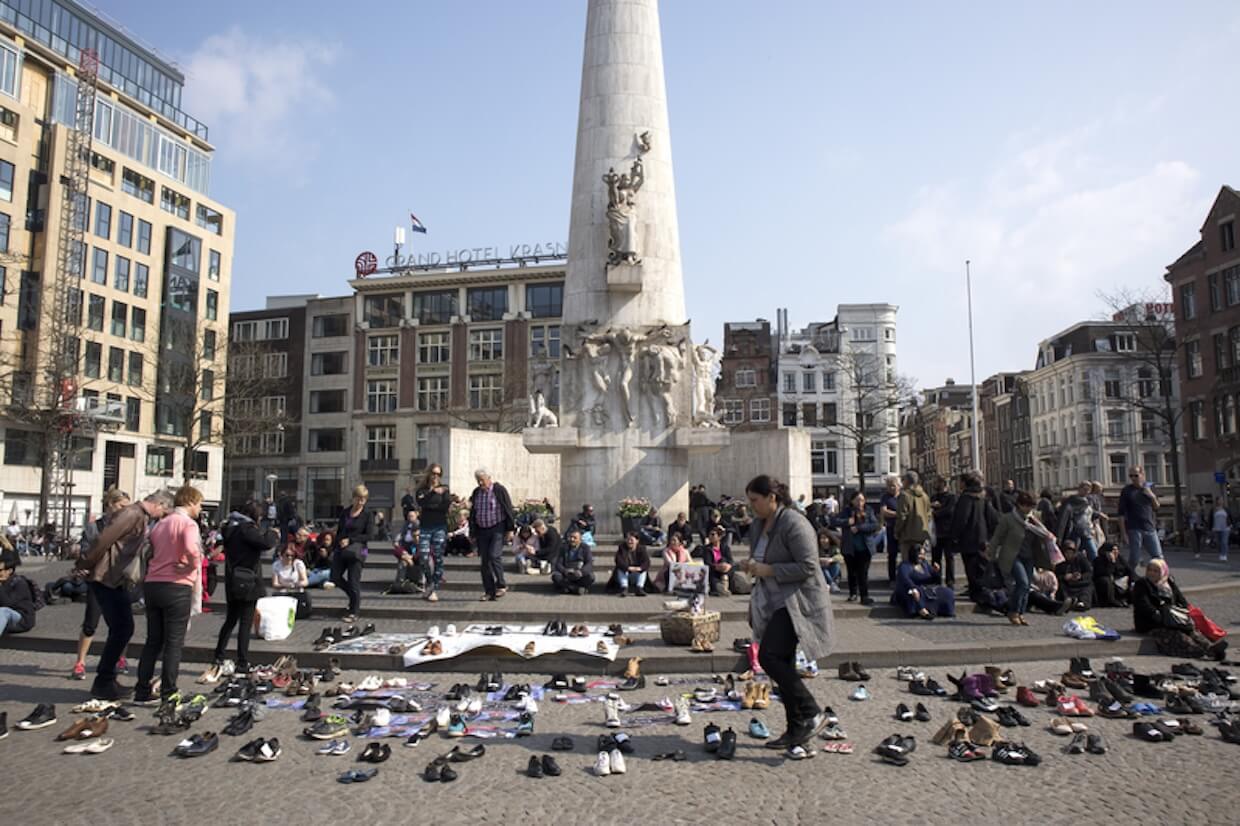
That’s why I think it would be useful to bring the debate back to the heart of the matter: Le Pen’s conviction. She was found guilty of a serious act of corruption. And secondly, the judges simply did their job. To claim that they politicized the process is incorrect—they applied the law.

This also demonstrates something important: politicians are not above the law. They are treated like ordinary citizens—and rightly so. Why should a politician—even someone intending to run for the presidency, with a real chance of winning—be exempt from the law if condemned by French justice?

That’s the real issue. That’s what we should all be reflecting on, instead of defaulting to claims like “the judges are politicized,” and so on. In my view, that is the real question.

Undermining Justice Would Push Le Pen Back to the Political Fringe

Marine Le Pen has characterized her conviction and political ban as a ‘denial of democracy,’ echoing a broader far-right populist tactic of depicting institutions as tools of political repression. In the light of your critique of ‘political nudges’ like the ‘Islamo-gauchisme’ narrative, do you see a danger that the far right will now instrumentalize this legal verdict to delegitimize the French judiciary and fuel deeper mistrust in liberal democratic institutions?

Professor Philippe Marlière: I think it will be difficult to do that. They have probably already tried—particularly Le Pen. If you heard her speak last Sunday in Paris, when she addressed a rally of supporters, she was, of course, very harsh in her response to the judgment. She said, “Of course I’m innocent, this is a denial of democracy,” and so on. She also claimed that the judges who made the decision were politicized.

But she didn’t, so to speak, issue a broader criticism of the French judiciary. She didn’t say, for example, that the entire justice system is corrupt. She avoided that, because doing so would amount to directly challenging the French judicial system as a whole—and that would be quite serious.

It would indeed be highly problematic for a leading contender for the highest office in French politics to undermine the judiciary through such criticism. In a democracy, when you are a politician, you must respect the decisions of the judiciary. Failing to do so means interfering with justice—and that is a very serious matter.

The French political philosopher Montesquieu, in the 18th century, wrote about the separation of powers—executive, legislative, and judiciary—and he said that no power, executive or legislative, should be in a position to interfere with or encroach upon the power of the judiciary. If you do that, it’s no longer a democracy; it’s a tyranny. So justice must remain independent.

That’s why Le Pen will be very careful before launching a broader attack on the justice system. So far, she hasn’t done that. Some of her supporters have likely been less cautious, but she herself has been careful not to place blame on the judiciary as a whole. Instead, she has focused on specific individuals—the judges who issued the ruling—claiming, for instance, that the presiding judge was a leftist.

But this is a difficult line for Le Pen to walk. She cannot push too far in that direction. If she does, she risks being seen as undermining French justice and, as a consequence, being pushed back to the political fringe. Her opponents will say, “Look, you’re clearly not part of the mainstream. If you were ever elected, you would interfere with the justice system.” And that, of course, would be very serious.

Le Pen Must Defend Herself Without Undermining the Rule of Law

Given your work on the ‘dédiabolisation’ or “dedemonization” of the Rassemblement National and the normalization of the far right in France, do you think Marine Le Pen’s conviction and political ban will disrupt this process—or could it paradoxically bolster her image as a political martyr and reinforce the RN’s anti-establishment appeal? Does this verdict pose a serious challenge to the RN’s attempt to position itself as a credible party of governance, or might it instead deepen its populist narrative of being targeted by a hostile elite?

Professor Philippe Marlière: Again, this is a difficult situation for Le Pen to handle, because she will, of course, try to defend herself. She has already filed an appeal, and I believe it will proceed very quickly—much faster than it would for ordinary citizens. Normally, an appeal takes two to three years, but in this case, it is scheduled for next year, which is unusually swift.

Why next year? Because it allows time for a decision to be made before the presidential election. This gives Le Pen one last chance to run—if she is cleared on appeal. In that sense, it also serves as further evidence that the judges, or the French justice system more broadly, are not conspiring against her. On the contrary, the legal process is offering her another opportunity to stand as a candidate.

So it’s a very difficult situation, because they have to be extremely moderate in their criticism of the justice system; otherwise, they risk being seen as a party that challenges the rule of law and the independence of the judiciary. They simply can’t afford to do that. Someone like Donald Trump may be doing so in the US and getting away with it for now—but in France, where Trump is, by the way, quite unpopular, that approach would not be well received.

So the room for maneuver for Le Pen and her party is quite limited. She can say, “I’m innocent, I’m going to appeal, the judges who made the decision were unfair,” but they cannot go much further than that. They cannot openly criticize the judicial system as a whole.

That’s why I think, in terms of image—since that’s your question—if we look at the initial opinion polls, of course, these will need to be confirmed over time. But according to the polls, people don’t seem to have changed their minds. The party remains quite high in the rankings, and Jordan Bardella appears to have, roughly speaking, the same level of support as Le Pen.

There are two distinct points here. First, it’s clear that the National Rally is currently the leading party in French politics. That was evident in the last two elections—the 2024 European election and the general election—where the party came out ahead of all others.

That’s one thing. The other is the judicial decision. And I think, overall, the opinion polls show that the French public believes the decision was fair. That’s why Le Pen can’t make too much noise about it. It’s seen as a fair judgment. French voters appear to believe that no one should be above the law—including national politicians. If they’ve done something wrong, they should be punished like anyone else would be in similar circumstances.

A Far-Right International Is Emerging—But It Won’t Help Le Pen

In the light of the vocal support Marine Le Pen has received from international right-wing figures like Donald Trump and Elon Musk, to what extent does this signal the emergence of a transnational populist narrative centered on judicial persecution or ‘lawfare’? Are we witnessing a growing global solidarity among populist leaders who frame legal accountability as political victimization by elite institutions and the consolidation of a transnational illiberal alliance?

Professor Philippe Marlière: Well, very likely. The initial signs suggest that there is a kind of de facto reactionary or far-right international that has rallied in support of Le Pen. I think all the major figures—key leaders of that movement in Europe—came out: Orbán in Hungary, Salvini in Italy, Trump, J.D. Vance, Bolsonaro. Many of them made public statements. Even Trump tweeted.

He probably doesn’t know Le Pen very well—perhaps not at all—but someone likely mentioned the case to him, so he tweeted in her support. Of course, he did so because these kinds of far-right leaders seek to undermine the rule of law in liberal democracies. They challenge judicial decisions whenever those decisions go against them, and that’s precisely what Trump has been doing in the US. So, this was more of an opportunity for them to do just that, rather than a genuine expression of support for Le Pen herself.

But yes, there is a de facto far-right international. And every time a decision appears to deprive far-right politicians of power—or simply goes against them—they tend to rally in support of that politician, as they did in this case.

What does that mean, concretely? I think this kind of reaction doesn’t clearly indicate what the future holds, one way or another. It remains very uncertain. When I refer to a far-right international, it shouldn’t be compared to something like the Socialist International, where organized parties met regularly and committed to shared policies. It’s not that structured. It’s more at the level of national leaders or heads of state issuing statements, especially via social media.

So yes, she received that support. But what does it mean for Le Pen in France? I don’t think it means much. As I mentioned, Trump is deeply unpopular in France—on both the left and the right. Almost no one likes him. So I don’t believe receiving support from those far-right figures will benefit Le Pen. I think she has to be very careful. Le Pen wants to be seen as more mainstream, so if she appears to be in cahoots with, or too close to, highly controversial politicians abroad, I don’t think it will help her.

Far Right Is Rising—But Too Divided to Replace Le Pen Easily

Le Pen & Bardella
Leaflets featuring candidates for the 2024 legislative elections in Versailles, France, on June 28, 2024. Photo: Dreamstime.

From the French perspective, does Le Pen’s downfall create space for a new figure on the European far-right, or is her symbolic centrality too embedded in the populist narrative across Europe to be easily replaced?

Professor Philippe Marlière: This highlights the central challenge facing the far-right in Europe. The far-right has been steadily growing—making electoral gains, winning elections, and even holding power in several countries. To start with Europe: they were in power in Poland; they remain in power in Hungary and Italy—a major EU country—and Le Pen and her party are performing very well in France. The AfD in Germany has also been doing well. So there is a clear, steady rise of the far-right, marked by significant gains in the most recent European elections.

That’s one of the reasons why the far-right is no longer seriously considering leaving the EU if it were to come into power. They’ve realized they can fight from within and attempt to redirect the EU’s political course.

So that’s good news for the far-right. However, does this translate into greater coordination or cohesion among far-right parties and governments in Europe? Not necessarily. For example, there are at least two parliamentary groups in the EU that include far-right parties. They were unable to form a single group, which, of course, weakens their influence because their efforts are divided across multiple blocs.

It’s also well known that far-right leaders do not necessarily get along well; they do not necessarily work together. For instance, Marine Le Pen is close to Salvini and La Lega but doesn’t get along well with the Prime Minister Giorgia Meloni—which is strange, because Giorgia Meloni has a legacy that is more similar to Le Pen’s. They both come from far-right parties initially. Of course, they’ve evolved somewhat and are now a little bit different. But whereas La Lega initially wasn’t a far-right party when it was created in the 1990s, it became a far-right party. So it’s very strange, and I can’t necessarily explain the logic of these de facto alliances between far-right leaders and parties.

I think it often comes down to their positions on policy, but it’s also about whether the leaders get along personally. I believe it’s more the latter. And that, in itself, is telling. Political scientists often say that the left has trouble uniting—and if you look at the French left right now, that’s clearly the case. They can’t come together.

But it seems the far right also struggles to unite, for similar reasons: ideological differences and personal rivalries. So this is where things stand at the moment. The far right has become more successful recently, but it remains divided. It is not a unified movement. Instead, it’s a collection of far-right parties spread across various parliamentary groups in the European Parliament—groups that don’t necessarily cooperate well or work together effectively.

Bardella Isn’t a Le Pen—But He May Be Even More Radical

Jordan Bardella, Le Pen’s protégé, is poised to become her replacement. Based on your analysis of generational shifts within the European far right, do you see Bardella as a mere avatar of Le Penism by remaining dependent on the Le Pen name, or does he represent a potentially more radical or technocratic trajectory?

Professor Philippe Marlière: There are differences between Le Pen and Bardella. First of all, he’s not a Le Pen. If Bardella runs in 2027, it will be the first time since Jean-Marie Le Pen launched the National Front in 1972 that no Le Pen is running for the FN/RN party. That’s the first difference.

There’s also a generational difference. Le Pen is 56, and Bardella’s youth could be appealing—particularly to younger voters—by presenting a new, youthful face of leadership. But of course, there’s a downside: he is politically untested and very inexperienced. He’s not known as a strong debater or a skilled orator. Reaching that level in politics takes time—it requires years of experience. Le Pen has improved over the years, and with Bardella, it would be a very different proposition.

There are also political differences. I think Le Pen has been—and still appears to be—more supportive of the de-demonization strategy. Unlike her father, she hasn’t attempted to shift the party to the center—the National Rally remains firmly on the far right—but she has worked to make some of its flagship policies on immigration, Islam, and the interpretation of French laïcité more acceptable to a broader segment of voters.

To make them more acceptable to other parties as well, because de-demonization works both ways. It involves you, as a far-right party, refraining from using aggressive rhetoric or making racist statements—things that generally do not resonate well with the electorate. But it also involves your opponents shifting to the right and adopting some of your policies, particularly on issues like immigration.

So there are differences, as Bardella appears to be somewhat more radical on those issues. His economic policies also differ; he’s more like Jean-Marie Le Pen of the 1980s and 1990s—more neoliberal, more supportive of laissez-faire economics than Marine Le Pen. So, you might think these are merely cosmetic differences.

And who knows what will happen if we assume that Le Pen won’t run? Bardella seems to be in a good position—he holds a strong position as the party leader. But who knows? Something might change. Other candidates might try to enter the race, and there could even be a primary election within the party.

Think, for instance, of Marion Maréchal, the niece of Marine Le Pen. She left the party a few years ago to join Éric Zemmour, but now she seems to have taken a step back from him as well. She attended the rally on Sunday in Paris in support of Le Pen. Who knows? She’s very popular among party voters. She’s a Le Pen, even though she no longer uses the name—she’s Marion Maréchal-Le Pen—and for that reason, her presence could be significant. She’s also a better orator than Bardella.

So, who knows what might happen? Bardella appears to be the front-runner to replace Le Pen, but we might be in for a surprise.

Marion Maréchal and Éric Zemmour
Portrait of French politician Éric Zemmour with Marion Maréchal (formerly Le Pen), leader of the Reconquête party, seen in Toulon during a protest against the arrival of the migrant rescue ship Ocean Viking. Photo: Laurent Coust.

Le Pen’s Legal Struggles Will Have a Limited Impact on Europe’s Far-Right Strategy

And lastly, Professor Marlière, what ripple effects might Le Pen’s conviction and framing as a martyr have on sister far-right movements in Europe, especially in states like Italy, Hungary, and Germany? Could it embolden them or shift their strategies? Do you think this case and its framing could be used by other European populists to delegitimize legal institutions, especially in countries where the rule of law is already under strain?

Professor Philippe Marlière: I might be a little optimistic on this, but I don’t think it will have a significant impact on the political situations in other countries. Of course, some will use Le Pen’s case to talk about so-called politicized judges, to claim a denial of democracy, to argue that the “true patriots”—as they describe themselves—are being sanctioned by their opponents, that they can’t speak the truth to the people, that they are restricted and constrained. You know, all the usual arguments.

I think they might refer to the Le Pen case in national debates to make those points. But I’m optimistic in the sense that each national context is different. And besides, the pace of politics today is very fast. In a few months, who will still be talking about Le Pen’s conviction?

There will be the appeal, so in a year or so, it may come back onto the agenda. But if the appeal is upheld, I think people will move on—there will be a replacement, another candidate, probably Bardella—and Le Pen will be quickly forgotten.

That’s one thing. The other reason I’m optimistic is that, as I said earlier, Le Pen has to be very careful about criticizing the judges and the justice system—not to be seen as undermining the rule of law—because that would be an extreme move. It would place her in a very radical position, one that most of the electorate, particularly conservative voters who are not far-right, would likely reject.

These are the voters who, in the second round of a presidential election, might be tempted to vote for Le Pen or someone from the National Rally against, for instance, a left-wing candidate—if one were to make it to the runoff. This electorate is conservative, right-wing, but not far-right. The National Rally needs to keep them on board and continue appealing to them. If they can’t—if they lose that electorate—they will never get elected. That’s why they have to be extremely cautious. And I think the situation is the same across most European countries—Italy, probably—with one exception: Hungary.

Hungary has been governed by Orbán for a long time, and many people say that while elections still take place, they are not very fair. It’s a highly authoritarian regime—illiberal. So, probably with the exception of Hungary, where the opposition is now quite weak due to all the laws passed by Orbán’s government, I think in other countries there are still counterpowers—opposition parties, trade unions, the media, and most importantly, the public—the electorate.

It’s not because the electorate is putting the National Rally ahead in France that they want an authoritarian regime. It’s a very complex reality to grasp. I think supporting the far right in France today means, above all, rejecting the other parties—both left and right. People believe those parties were once in power and failed. They tried Macron, and they believe he failed too. So it’s more about the idea: let’s try the only party that has never governed—the National Rally.

But that doesn’t mean voters want an authoritarian regime, or a government that will curb public freedoms or take extreme measures. That’s why Le Pen can’t see herself as the new Trump. I don’t think being a Trump figure would go down well in France. Then again, you might say, in the US, who could have predicted what happened there?

You see, that’s why I’m optimistic. But of course, things can sometimes go wrong very quickly. Still, that’s my view. I think that for Le Pen and the party to be successful and ultimately win an election, they will have to stick to their strategy of de-demonization—which means no longer being seen as an extreme or threatening party—so that enough people will be willing to vote for them.

Of course, they will maintain their policies—against immigration, against Islam, and against a number of other things—but they do so because they believe there is probably a majority of people who could support those positions. Just enough. That’s their strategy. It doesn’t mean they have a free pass to establish a dictatorship in France.

Protests in Turkey.

Dr. Cevik: Turkey Has Crossed the Critical Threshold from Competitive to Full Authoritarianism

In a compelling interview with ECPS, Dr. Salim Cevik argues that Turkey has “crossed the biggest threshold from competitive authoritarianism to full authoritarianism.” Highlighting the arrest of Ekrem Imamoglu, Dr. Cevik sees it as a targeted move to eliminate democratic competition: “He is being arrested because he could potentially defeat Erdogan.” Populism, once central to Erdogan’s rule, is giving way to raw coercion: “Force is the fundamental strategy of Erdogan.” Dr. Cevik also condemns Western silence, especially from Europe and the US, warning that their inaction amounts to complicity. “Erdogan feels very strong… because he has international backing.” Drawing a parallel with past mistakes on Putin, he cautions: “You can’t really trust a personal autocracy for strategic partnership.”

Interview by Selcuk Gultasli

In a wide-ranging and sobering interview with the European Center for Populism Studies (ECPS), Dr. Salim Cevik—Political Scientist and Researcher at the German Institute for International and Security Affairs—offers a critical diagnosis of Turkey’s deepening authoritarian turn under President Recep Tayyip Erdogan. Framing the recent arrest of Istanbul Mayor Ekrem Imamoglu as a pivotal moment in Turkey’s political trajectory, Dr. Cevik asserts that “we’ve crossed the biggest threshold from competitive authoritarianism to full authoritarianism.” While acknowledging that political repression is not new in Turkey, he emphasizes that this particular case marks a critical rupture because it directly targets “the most potent rival of Erdogan” and aims to eliminate any realistic possibility for the opposition to win an election.

Dr. Cevik situates this development within Erdogan’s long-standing strategy of personalizing power and dismantling institutional checks and balances. Over the course of two decades, Erdogan has “sidelined all important political figures,” absorbed the party into his persona, and gradually brought the judiciary, media, business sector, and civil society under his direct control. This personalization of rule has been “formalized” through the switch to a presidential system, which Dr. Cevik sees as a culmination of earlier informal power consolidations.

While Erdogan’s rule was long bolstered by a populist strategy that fused economic provision with religious-nationalist rhetoric, Dr. Cevik argues that this strategy is faltering. Erdogan is now “no longer the popular figure” he once was, as economic decline has eroded his legitimacy among even his core supporters. This, Dr. Cevik suggests, is what pushes the regime to rely increasingly on coercion rather than consent: “Populist mobilization is no longer the key term to understand Turkish authoritarianism… Force is the fundamental strategy of Erdogan.”

Of particular concern is the muted response from Western powers, which Dr. Cevik interprets as tacit approval. He criticizes both the United States and the European Union for enabling Erdogan’s autocratization, noting that “Erdogan feels both very weak because he’s losing popular legitimacy, but he’s also feeling very strong… because he has international backing.” In Europe, especially, strategic interests tied to Turkey’s military capacity and geopolitical location have led to a dangerous silence. “Europe made the same mistake with Putin,” Dr. Cevik warns. “I see no reason why Erdogan should be trusted more than Putin… It’s not only normatively and morally wrong—it’s also strategically blind thinking.”

In this critical conversation, Dr. Cevik calls attention not only to Turkey’s alarming democratic backsliding but also to the global implications of Western complacency in the face of authoritarian consolidation.

Dr. Salim Cevik
Dr. Salim Cevik—Political Scientist and Researcher at the German Institute for International and Security Affairs.

Here is the transcription of the interview with Dr. Salim Cevik with some edits.

Erdogan Regime Is No Longer Competitive—It’s Full Authoritarianism

Dr. Cevik, thank you very much for joining our interview series. Let me start right away with the first question: To what extent does the arrest of Ekrem Imamoglu represent a definitive rupture in Turkey’s transition from competitive authoritarianism to full-fledged autocracy?

Dr. Salim Cevik: Thank you for inviting me, and for the question. I think this marks a major threshold. But to be honest, he is not the first politician to be arrested in Turkey. The country has been on an authoritarian trajectory for more than a decade, which has involved the imprisonment of many politicians—particularly members of the Kurdish political movement, who have been arrested en masse. Some are still behind bars, the most prominent among them being Selahattin Demirtas, who has been in prison for more than eight years. So, in that sense, Imamoglu’s arrest is nothing new in Turkey—but it is new in the sense that it aims to destroy the competitive element of the political regime.

When we talk about competitive authoritarianism, it is an authoritarian system, anyway—but what distinguishes it from full authoritarian regimes is that, in competitive authoritarianism, there is a realistic possibility that the opposition can win an election. Now, why is Imamoglu being arrested and not someone else? I think there is a clear answer to that: he is the most potent rival of Erdogan. He is being arrested because he could potentially defeat Erdogan in the next elections. If you put people who could win elections behind bars, that, by definition, undermines the competitive dimension of competitive authoritarianism. Because if you arrest whoever is going to win, then it’s no longer competitive—it becomes a fully authoritarian system. So, in that sense, I think we’ve crossed the biggest threshold from competitive authoritarianism to full authoritarianism.

Force Is Now Erdogan’s Strategy

Turkey, Protest
University students stage a protest at Beşiktaş Square in Istanbul, declaring a boycott in response to the arrest of Mayor Ekrem İmamoğlu — Istanbul, Turkey, March 24, 2025. Photo: Sedat Gulec.

How has Erdogan’s brand of populism evolved into an instrument of authoritarian consolidation, and how central is the creation of internal “enemies” to this strategy?

Dr. Salim Cevik: Populism and the creation of internal enemies have been central to Erdogan’s authoritarianism. That has been the case over the years—even when he was not yet a fully autocratic leader and when Turkey’s democracy was functioning relatively well. Erdogan has consistently employed a populist strategy for political mobilization, and he has now been in power for more than two decades. The first decade was relatively—or at least acceptably—democratic, and initially even pro-democratic. However, starting with his second term, during his second decade in power, he began to grow increasingly authoritarian.

Over these more than 20 years, he has always created internal enemies, and those enemies have actually changed over time. They have included Kemalists, Gulenists, Kurds, and Turkish nationalists—at different stages of his political career, he has targeted different groups. He managed to establish a minimum winning coalition to defeat each internal enemy. That’s his political style and strategy. In that sense, populism has been integral to the establishment of authoritarianism in Turkey. 

However, when we talk about this recent event—this arrest—and Turkey crossing a threshold from competitive to full authoritarianism, I don’t think populism is the right term here. Populism, by definition, is about being popular. Populist autocrats usually mobilize the majority around themselves, and they create internal enemies in order to build this minimum winning coalition—at least to configure a majority. That tactic—creating internal enemies—has been Erdogan’s strategy for more than 20 years.

But as I said in the previous question, we are now crossing a threshold from competitive to full authoritarianism. Erdogan has been a popular politician—he has always been a very popular politician. He consistently managed to create a winning majority, a coalition of a minimum winning majority. He is now crossing that threshold because he believes, and sees, that he can no longer do that. He is no longer the popular figure. He no longer has 51 percent behind him, and that’s why he is crossing this threshold. So, I think populist mobilization is no longer the key term to understand Turkish authoritarianism.

Of course, the process I’m talking about has just started, and we don’t know where it will lead. But if everything goes according to Erdogan’s expectations—and if Turkey becomes a full authoritarian regime rather than a competitive one—then he no longer needs to be popular. It will not be a majority authoritarian regime; it will be an authoritarian regime ruled by a minority. And that means he will be ruling by force, rather than by creating the consent of the majority through populist means. But, this is just the beginning of the process. Where we are heading is that populism is no longer Erdogan’s fundamental strategy. Now on, force is the fundamental strategy of Erdogan.

Populism Dismantled the Rule of Law—Now Erdogan Rules Alone

Would you characterize the current crisis as the culmination of a long-standing populist logic that inherently undermines liberal democratic norms?

Dr. Salim Cevik: Yes. This populist strategy that Erdogan has pursued so far has enabled him to reach this point. It has allowed him to dismantle the rule of law and undermine political liberties. It has enabled him to inflict suffering on individuals and groups he has designated as internal enemies. But, as I mentioned in the previous question, those internal enemies are no longer the minority. Now, he is creating an internal enemy that will likely, by the end of this process, be the majority—making it a forceful authoritarianism. Ultimately, it was populism—and the systematic dismantling of the rule of law and the liberal protections that accompany it—that brought us to this point and enabled Erdogan to cross the threshold we are now discussing.

In what ways has the personalization of power under Erdoğan blurred institutional lines between the state, party, and judiciary?

Dr. Salim Cevik: Well, in very fundamental ways. I mean, when Erdogan came to power, the AKP was a ‘cadre’ movement. It had a number two—Abdullah Gul—a number three, Bulent Arinc. Some would even call Abdullatif Sener number four, and the list would go on. We had a powerful cabinet with very prominent politicians, etc. So, it was a genuine cadre movement. Now, there is no number two within the AKP—let alone a number three or a cadre—and the ministers no longer carry any real weight. Even in this current crisis, we see that Erdogan is, in a way, defending himself. He no longer has credible political allies to speak on his behalf. So, everything is now personalized in Turkey.

But it has first started with the personalization of power within the party. Erdogan initially hijacked the party. It had been a party of prominent figures—a cadre movement with a political ideology, or at least a claim to conservative democracy. But step by step, he personalized power within the party. He sidelined all the important political figures and stripped the party of its political substance. When we talk about the party’s ideology or political beliefs today, there’s really nothing left—because over the past 20 years, Erdogan has continuously shifted his coalitions, leaving no consistent ideological foundation. So, the party became Erdogan.

After that, he personalized other centers of power. He brought the judiciary under his control. He turned the party’s control over the state into personal control—and since the party is Erdogan, this meant bringing the judiciary, the media, the business community, and civil society under his direct influence. So, at the end of the day—with the switch to the presidential system, which in many ways formalized these already existing informal power configurations—the regime became fully personalized. That transformation, already largely complete by 2013–14, was cemented through institutional change. Now, we are talking about a single individual ruling not only over the executive, but also the judiciary, the parliament, civil society, and all segments of power.

Strong Enough to Suppress, Too Weak to Compete

Ekrem Imamoglu
Istanbul Mayor Ekrem Imamoglu addresses supporters during a protest under the banner “The Nation Stands by Their Will” outside the Istanbul Metropolitan Municipality on December 15, 2022. Photo: Tolga Ildun

Is the recent political crackdown a sign of regime insecurity ahead of elections, or a calculated strategy to establish post-electoral authoritarian permanence?

Dr. Salim Cevik: I think it’s both a symptom of weakness and of strength at the same time. It’s a symptom of weakness because Erdogan is increasingly lacking popular support.

What made him so indispensable to his allies for so long was his ability to bring the majority of the public with him. He kept winning elections—or, to put it another way, we can certainly criticize the tactics he used to maintain his popularity—but ultimately, he succeeded in staying popular.

That’s no longer the case. In recent years, those who don’t want to see him as president now form a larger coalition than those who do. This was already true in the previous election two years ago, but he managed to survive using various tactics: he divided the opposition, ensured they backed a candidate who couldn’t unify them, and relied on judicial tools—there was already a court case against Imamoglu at the time. He used other instruments too. The key was preventing the opposition from uniting behind a single figure.

But that’s no longer working. The local elections showed that the CHP is now the central actor in the opposition and capable of building a majority larger than Erdogan’s. So in that sense, he’s very weak in terms of popular legitimacy—and that’s what’s pushing him to take these extraordinary measures.

At the same time, he remains very powerful. He controls the state apparatus, the judiciary, the media, and the security forces. And the international context—perhaps you’ll ask about this later, but I’ll mention it briefly—has emboldened him even further. He knows the US is on his side, and he knows that, for a variety of reasons, Europe will stay silent. In that sense, he’s very powerful.

So it’s a paradox: he’s powerful because he can take these steps, but weak because he has to. He can’t afford to leave the competitive authoritarian game as it is and risk an election—even a highly unfair one—that he might lose. So, he takes measures to avoid that risk. In short, he’s strong in terms of state control, but weak in terms of popular legitimacy—and that combination is exactly what’s driving these moves.

Erdogan Exploits Islam as Rhetoric, Not as Rule

Has political Islamism in Turkey under the AKP shifted from a reformist ethos to a mechanism of ideological legitimation for autocracy? Do you see the regime’s increasing reliance on religious-nationalist rhetoric as signaling a radicalization, or merely instrumental populist recalibration?

Dr. Salim Cevik: Well, as I mentioned in the previous question, political Islam in the early 2000s had adopted a reformist character. At the time, they denied being Islamists. The famous claim was that they had “changed shirts,” and instead labeled themselves as Conservative Democrats. But that was merely a rebranding—because in order to navigate Turkey’s stringent secularist laws, it was not possible to openly identify as a Muslim democratic party. Unlike in Europe, in Turkey you have to use the label “conservative,” even though the public understands that “conservative” essentially refers to Islam and religion.

So, as a Conservative Democratic party, the AKP was indeed a reformist movement in its early years. I have to say that during that period, religious discourse in society also became more pluralistic and democratic—this was part of the cultural conflict in Turkey between authoritarian secularists and the conservative majority. To defeat—or rather, to undermine—the authoritarian secularist powers, who were a minority, Islamist actors adopted the language of democratization and pushed for reform within the system.

But around 2010 to 2012–13—it’s hard to pinpoint an exact moment—once it became clear that Erdogan was no longer under threat, he no longer needed the reformist agenda. At that point, the logic shifted entirely, and Islam became an instrument of authoritarianism, used to justify his populist, majoritarian, and increasingly autocratic actions.

As for the second half of your question, I don’t believe we are witnessing a radicalization. Radicalization would imply a structural transformation of the regime toward a more overtly religious order. If I understand the question correctly, I don’t see that happening—nor has it happened over the past decade. Erdogan has consolidated power, but he has never actually used that power to turn the system into a more theocratic one—he hasn’t changed the legal framework or granted religion greater authority in the functioning of the state.

The only time he explicitly referenced the Quran in policy terms was when he lowered interest rates—an idea that was ill-advised not just from an economic standpoint, but also because it lacked a sound religious basis. Religion prohibits interest altogether—it doesn’t differentiate between high or low rates.

If he had said, “I want to remove interest entirely from Turkey’s financial system because religion requires it,” then we could talk about a genuine turn toward religious rule—where religious texts begin to dictate policy. That would have been a clear move away from secular governance. But instead, he said something else—and I find this very telling. He said, “I’m lowering the interest rates because Islam doesn’t like interest.”

In that moment, it was clear: religion was being instrumentalized to justify a pre-existing policy agenda. He didn’t abolish interest; he didn’t change the institutional rules. He used religion as a rhetorical tool. Religion, in this case, was merely a pawn. And I see no indication that this dynamic will change anytime soon.

Religious Rhetoric Remains, But the Provider Role Is Crumbling

Turkish Islamist President Recep Tayyip Erdogan speaks in Van province of Turkey as holding a holy Quran on April 14, 2015.

To what degree does the AKP’s Islamic narrative still resonate with its core electorate, particularly in light of economic hardship and rising dissent?

Dr. Salim Cevik: It’s difficult to answer this as a simple yes or no. On the one hand, he clearly still commands a degree of popularity. As I mentioned, he has lost the majority and will probably never recover it, but he continues to enjoy the support of—perhaps—30, 40, or even 45 percent of the electorate. I can’t cite precise numbers, but some of that support undoubtedly stems from religious sentiment. Certain segments of society view him as a devout figure. More importantly, they harbor such deep resentment toward secularists that they rally around Erdogan, whom they see as a protective barrier between themselves and the secular elite. So, part of his enduring popularity is still grounded in religion.

On the other hand, that popularity is clearly in decline, and the driving factor is economic hardship. The economy alone may not be sufficient to build a majority coalition, but it is powerful enough to dismantle one. Or let me put it this way: up to now, Erdogan has played a dual role—both as an economic provider and a religious protector. He positioned himself as the guardian of religious values while delivering material prosperity. That balance was key to sustaining his electoral majority. But if he falters on either front, that majority begins to unravel. He continues to lean on the religious narrative, but he’s steadily losing the economic argument—the “provider” role.

So, yes, his base is eroding. But as I said, it’s a gray area. Religion remains a powerful political tool for him. Yet in times of economic hardship, it alone won’t be enough.

Unlike Gezi, This Time the Protest Began with Repression, Not Resistance

How do the current mass protests compare to the 2013 Gezi Park movement in terms of mobilization dynamics, ideological coherence, and regime response? Could the protests catalyze a broader democratic awakening, or will they be contained through increased repression and securitization?

Dr. Salim Cevik: Let me start with the second half of your question. If the mobilization continues and manages to force Erdogan to back down, it could mark the beginning of a new era of democratization in Turkey. That’s possible, but unlikely. The more probable scenario is that Erdogan will suppress the current mobilization and push the system toward an even more authoritarian model. Still, it’s a process in motion—we simply can’t know for sure yet.

Now, if we compare this to the Gezi Park protests, one major difference stands out. As we discussed in the previous question regarding the economy—when the Gezi protests erupted, they were largely a middle-class reaction. People were frustrated with Erdogan’s growing personalization of power—his attitude of “I am the ruler of this country, and I don’t care what you think; everything goes the way I say.” It was a kind of delegative democracy, as political scientists would call it. “I was elected, therefore I have all the power, and I don’t need to answer to anyone.”

That attitude contributed to the uprisings. And if those protests hadn’t been met with such severe repression, I don’t think they would’ve escalated the way they did. Gezi began as a peaceful demonstration—completely legitimate—and Erdogan could have simply let it happen. Had he done so, we might not have seen the full-scale protests or the resulting political crisis.

I don’t know whether he planned it all from the start, but at some point, Erdogan seemed to decide that Gezi wasn’t a threat but rather an opportunity—a way to boost his popularity. He could frame the protesters as urban, middle-class, secular elites. And that’s classic populist strategy: pitting “the elite” against “the people.” He painted Gezi protesters as privileged, urbanites who were safe and comfortable, yet complaining about trivial matters. That framing resonated with his base.

This current wave of protests, however, is different because it started with repression. It didn’t begin as a small demonstration that spiraled into something larger due to state violence—it began with the arrest of Imamoglu. It was repression from the outset. It was an intentional move to dismantle the competitive element of the regime. So, whereas during Gezi Erdogan’s stance was “I was elected and therefore I rule,” now it’s, “You once elected me, and I’ll make sure you never get the chance to unelect me.” That’s the key difference.

This time, it wasn’t police brutality that brought people to the streets. Rather, people were already in the streets, and Erdogan is trying to stop them with police brutality. It’s a different dynamic.

Also, I don’t think this protest is being led by the middle class. It’s being led by urban youth who feel economically crushed, who don’t see a future for themselves, and who are desperate. That’s why they’re protesting. In that sense, this moment feels more radical than Gezi. Back then, protesters were largely middle-class—they had something to lose. They wanted a more responsive government, but they weren’t acting out of despair.

Today’s youth have little or nothing to lose. That’s why even harsh state repression hasn’t stopped them—at least not yet. I was a young academic during Gezi—I was a university assistant, and by Turkish standards, I had a pretty good life. I honestly don’t think even full professors today enjoy the lifestyle I had back then. The economic decline has been dramatic. And I don’t think today’s university assistants, graduate students, or undergrads see much hope in their futures. That, too, fuels their willingness to take to the streets.

So yes, in that sense, there are some fundamental differences between then and now.

Ballots Aren’t Enough—The Opposition Must Mobilize the Streets

Turkey, Protest
University students protest at Beşiktaş Square in Istanbul on March 24, 2025, declaring a boycott in response to the arrest of Mayor Ekrem Imamoglu. Photo: Sedat Gulec

What does the sidelining of Imamoglu suggest about the regime’s tolerance for political pluralism within the current constitutional framework? What risks do opposition parties face in navigating between electoral participation and resistance within an increasingly autocratic system?

Dr. Salim Cevik: Well, the opposition parties are now in a dilemma. I’ve been talking about how the competitive element is disappearing. It’s becoming a fully authoritarian regime, and I’m sure that at some point people will begin to ask: “Is this just theater? Why are we playing our roles in this performative act that only serves to legitimize Erdoğan’s authoritarianism? Why are we even competing in the elections?” I think that would be a trap—the same trap the Venezuelan opposition fell into at one point.

Whatever happens, there will be pressure on the opposition to boycott the elections or withdraw—but I think that would be the wrong path. No matter what, the opposition must go to the ballot box, participate in the elections, and make it clear to the public that they won. I’m not saying the regime can necessarily be unseated through elections—I think we are passing that threshold. I use “passing” intentionally—I’m not saying we’ve already crossed it. It’s a process. But even if we eventually do pass that threshold, and it becomes impossible to remove the regime through elections alone, the opposition must still participate and demonstrate that they hold the popular majority.

At the same time, they have to acknowledge that it probably won’t be enough. You can no longer unseat Erdogan simply through words or ballots. You need to mobilize the streets—through demonstrations and by raising a broad popular demand for change. The opposition must combine both strategies: win at the ballot box and sustain mobilization on the streets.

Europe Made the Same Mistake with Putin—Why Trust Erdogan?

Turkish President Recep Tayyip Erdogan in Ankara, Turkey on August 30, 2014. Photo: Mustafa Kirazlı.

And lastly, Dr. Cevik, how do you interpret the EU’s and US’s muted response to Imamoglu’s arrest? Can this be read as a form of tacit legitimation or geopolitical pragmatism? To what extent does Western inaction amount to a “green light” for Erdogan’s continued autocratization?

Dr. Salim Cevik: I think this is a very important question, and thank you for asking this. And, as I said in one of the previous questions, Erdogan feels both very weak because he’s losing popular legitimacy, but he’s also feeling very strong because he has control of the coercive apparatus of the state, and he also has international backing. And when we say international backing, he has the backing of both Americans and Europeans.

We have to talk about this very briefly, so let me say a few words about both. I mean, if Trump talks with Erdogan, he would probably ask for advice on how to repeat what Erdogan is doing in Turkey in the United States. So obviously there would be no backlash coming from the American side, and all democracy movements in the world have to adapt to the fact that America is no longer ruled by a democrat. I mean, America’s own record for supporting democracies has always been a critical one. It has sold out democrats when it suited its strategic interests—that’s for sure. But it has now come to a point where America is ruled by a president who actually admires autocrats more than democrats. So we’ve left that era behind.

And for the Europeans, I think it’s clear—they will criticize it, and they do criticize it with weak words and sentences, expressions of concern. But nothing will come out of it, and everybody knows that they don’t mean it, because they actually feel that they need Turkey more than ever. Once Trump made it clear that American security guarantees are no longer reliable, Europe began discussing creating its own strategic autonomy, its own defense capabilities—and Turkey emerged as a very crucial actor here, with its strong military, large population, and growing defense industry, as well as its strategic location. So Turkey is a very important partner, potentially, for European security. And Erdogan knows this and hopes that Europe will ignore his authoritarian moves because they need him—and so far, he has been proven right.

But let me finish by saying that it is not only a normative mistake for Europe to allow Erdogan to make this move—hoping that Turkey is strategically important—but it’s also strategically blind thinking. Because once Erdogan removes all the thresholds between himself and full authoritarianism—once Turkey becomes a Putin-like regime—the question for Europeans should be: can a regime like that be trusted for security cooperation? Can it really be a security partner?

Turkish–European relations have been transactional for the last decade, and an authoritarian figure like Erdogan was quite fine for that. Transactionalism allowed for bargaining, and you could prefer to deal with a single individual rather than a state—and that was fine. But once you move beyond that—if you want to create a strategic partnership between Europe and Turkey, if Turkey is to become an important part of European security—then you can’t really trust a personal autocracy.

Europe made the same mistake with Putin. They hoped that by creating economic interdependencies, Russia would never be a threat to European security—and they were proven wrong. I see no reason why Erdogan should be trusted more than Putin in that sense, and why European security should be entrusted to a political system that is ruled by the whims of a single individual.

As I said, it’s not only normatively and morally wrong—it’s also strategically blind thinking on Europe’s part.

Professor Dogu Ergil

Professor Ergil: Turkey’s Crisis Stems from Eroding Line Between Persuasion and Coercion

In a powerful interview with the ECPS, veteran political scientist Professor Doğu Ergil warns that Turkey has crossed from populist authoritarianism into full autocracy. “Persuasion—which was once the AKP’s greatest success—has evaporated,” he explains. “In its place, coercion has become more prominent, and the instruments of coercion, including the judiciary, have proliferated.” Professor Ergil outlines how Erdoğan’s regime has personalized power, delegitimized the opposition, and dismantled democratic norms. With Istanbul Mayor Ekrem İmamoğlu’s arrest and mass protests unfolding, Turkey, he says, faces a “deadlock” where the state’s legitimacy is crumbling from within. This is a timely and sobering reflection on democracy under siege.

Interview by Selcuk Gultasli

In an exclusive interview with the European Center for Populism Studies (ECPS), veteran political scientist Professor Doğu Ergil delivers a stark assessment of Turkey’s current political trajectory under President Recep Tayyip Erdoğan’s rule. Framing the ongoing turmoil as a crisis of legitimacy and democratic erosion, Professor Ergil argues that the country has moved from a populist-authoritarian hybrid toward a more fully autocratic system. “The ongoing crisis,” he explains, “lies in the growing strength of the opposition and the blurring of the line between persuasion and coercion. Persuasion—which was once the AKP’s greatest success—has largely evaporated. In its place, coercion has become more prominent, and the instruments of coercion, including the judiciary, have proliferated.”

At the heart of Professor Ergil’s analysis is the paradox of populist regimes relying on democratic legitimacy while simultaneously undermining the very institutions that sustain it. “If you demonize, criminalize, and prosecute your opponents, and attack the very institutions that brought you to power,” Professor Ergil warns, “you begin to delegitimize the system—and, in doing so, yourself.” This dynamic, he observes, has led Turkey into a “deadlock,” where democratic procedures are maintained in form but hollowed out in substance.

Professor Ergil traces this degeneration to the AKP’s strategic shift from early reformism to an increasingly nationalist and authoritarian agenda, using political Islam not as a blueprint for governance, but as an ideological tool to legitimize power. He also underscores how the personalization of power around Erdoğan has dissolved the boundaries between state, government, and party—turning the state apparatus into an extension of partisan control.

Professor Ergil’s insights are especially timely in light of the recent arrest of Istanbul Mayor Ekrem İmamoğlu, which he views as emblematic of the broader erosion of the rule of law and the manipulation of the judiciary for political ends. As Turkey experiences historical developments, this interview offers a compelling and sobering diagnosis of a political system teetering on the edge of autocracy.

Here is the transcription of the interview with Professor Doğu Ergil with some edits.

Populism Under Erdogan Becomes Parochial and Authoritarian

Turkish President Recep Tayyip Erdogan watching the August 30 Victory Day Parade in Ankara, Turkey on August 30, 2014. Photo by Mustafa Kirazli.

Professor Ergil, thank you so very much for joining our interview series. Let me start right away with the first question: How would you characterize the evolution of Turkish populism and authoritarianism under AKP’s and Erdogan’s rule, and how has it redefined the boundary between the people and the political elite? In what ways has the ruling AKP’s populist discourse transformed into a vehicle for authoritarian consolidation rather than democratic inclusion?

Professor Doğu Ergil: The nature of the political regime in Turkey has always been populist. The founding party of the Republic is called the Republican People’s Party, and one of the six principles of the regime has been populism. Anyway, I mean, it’s written down as populism rather than being populist. It is populist because the ruling elite wanted to execute a revolution from above, and they found the people not ready for a revolution to join the modern society or the modern world. Hence, to transform a backward society, they took the initiative of a revolution from above—an elitist revolution—and changed the fabric of society accordingly. So, the populist nature of the regime has always been there, ingrained in it. It’s in the DNA of it.

But now, with the incumbent AKP, it has become rather diluted. It’s no longer secular, and it’s less oriented to the world. It’s expressed as localism and nationalism, because in classical populism, there are the good people and the representatives of the good people against an evil, inefficient, and rather alien elite that forcefully wants to change the society—its culture, its identity, and so forth. But this localization and nationalization—rather than westernization and modernization, which were the true assets of the Republican regime at its outset—have made Turkish society and the present regime a rather local, non-elitist, and parochial society. In a virtual sense, more peasant-like, more Eastern, more Middle Eastern if you like, and more religious rather than secular, modern, and world-oriented.

Turkey’s Populism Has Turned Fully Autocratic

Can Turkey’s current political crisis be interpreted as a case study in populism transitioning into autocracy? If so, what distinguishes the Turkish model from its global counterparts?

Professor Doğu Ergil: Of course. The Turkish regime is not only popular but also populist, and increasingly authoritarian. This is largely because the incumbent party has blurred the distinction between the state and society by merging the government with the state apparatus. When this separation erodes, central authority becomes more consolidated and less differentiated, and the division of power weakens as authority becomes more centralized and autocratic.

In the Turkish case, it has become more personalized, and the personification of the government can be identified with the present president Erdoğan. So, all powers accrue in his hands, and he can exercise authority over all aspects of life and all institutions of the government, including the judiciary. The judiciary is now used as an extension of politics and control over society. Thus, Turkish populism has not only become more populist but more authoritarian and autocratic in this sense.

There are similar regimes in the world, but the Turkish one has become overly personalized—concentrating all possible powers—political, judicial, legislative, military, and so forth—in the hands of a single individual. The party that brought this man to power has effectively faded from view; it is no longer visible. What remains is the machinery of state power in the hands of one man—and the rest of society. That society is now split into two: the supporters of the incumbent government and its leader, and those who oppose them.

The ongoing crisis lies in the growing strength of the opposition and the blurring of the line between persuasion and coercion. Persuasion—which was once the AKP’s greatest success—has largely evaporated. In its place, coercion has become more prominent, and the instruments of coercion, including the judiciary, have proliferated.

Islam Became a Tool to Bolster Populist Power

Turkish Islamist President Recep Tayyip Erdogan speaks in Van province of Turkey as holding a holy Quran on April 14, 2015.

How has political Islamism evolved under Erdoğan from a reformist agenda in the early 2000s to a more illiberal and authoritarian governance model today? Is the AKP’s version of political Islamism now functioning primarily as a tool for ideological legitimation, or does it still contain genuine theological, political or societal aims?

Professor Doğu Ergil: The AKP’s political Islamism is one of the contemporary ideologies that found a place in Turkish politics. The political landscape had long been partitioned: there were the socialists, and slightly to further left, the communists—though they were a small minority—followed by the social democrats, liberals, conservatives, and nationalists. Each ideology was represented by a political party with a distinct historical background.

When the AKP emerged and began to take the stage in Turkish politics, it had to anchor itself in something—and it chose religion. Religion served as a supportive mechanism for nationalism and populism. In this context, religion was not used as a foundation for governance per se, but rather as an instrument to bolster a populist, nationalist, and increasingly authoritarian regime.

This strategy was effective for a while. However, it has since lost much of its fervor and effectiveness, as religion is traditionally associated with values such as honesty, integrity, and efficiency.

All these other parties with different ideologies had not made Turkey as great as people expected. So, the Islamic powers’ rhetoric said, “Look, even the name of the party is ‘AK,’ meaning pure white.” They represented themselves as honest, non-corrupt, and also more popular—closer to the people. In that sense, they seemed more empathetic toward the people, more intertwined with their needs, and so forth. But as time passed and the AK Party exposed its weaknesses, it became clear that being religious doesn’t mean being honest. Being in control of everything—ending the tutelary system, at the center of which was the military, as you know—doesn’t mean that democracy would take root or that there would be a more efficient, less corrupt, more responsive society.

As the AKP lost its credibility, the Islamic rhetoric has also become dysfunctional. This is what has happened in Turkey. And because of that, this 23-year rule of the AKP has come to a halt with these apparent street demonstrations and protests, showing that the party and its leadership cannot deliver anymore. It cannot keep its promises. And it cannot do so any further. So, I mean, it has come to a halt.

Islamism in Turkey Has Been a Supportive Value System

To what extent has political Islamism been radicalized under the pressures of regime survival and repression of opposition groups like Kurds, Alawites, Gülen followers, and political figures like Selahattin Demirtas and, most recently, Istanbul Mayor Ekrem İmamoğlu?

Professor Doğu Ergil: Islam could not be radicalized because the entrenched institutions and the majority of believers believe in the general assets of the Republic. Turkey has been—though the founding fathers have been criticized for adopting the Swiss civil code, for example—benefiting from it. People have enjoyed all the advantages it brought, because there is no discrimination in that code. In it, women are much freer, men can act more freely in their daily dealings. Although that code has been criticized as being alien, people have benefited from it for many years, for many decades.

In that sense, people are not opposed to the republican regime, its laws and its values. People expect those to be furthered, to be reinforced, and new advantages and developments to be integrated into society, rather than taking society backward to another century where Islam dominated with its Sharia law. In Turkey, that never happened. Only a minority want Sharia law because they believe the system is not just. But Sharia law does not make a society more just, moral, or egalitarian. People understand that.

In that sense, Islamism in Turkey has been a supportive value system for an insufficient political system that could be improved, rather than bringing an abrupt halt to it and taking society back to another century.

Turkish Politics Has Become Warlike—Not Competitive

Protests sparked by plans to build on the Gezi Park have broadened into nationwide anti government unrest on June 11, 2013 in Istanbul, Turkey. Photo: Thomas Koch.

To what extent has Erdoğan’s populism depended on the construction of internal “enemies”—such as the Kurds, followers of the Gülen movement, and İmamoğlu—to sustain a polarizing narrative and consolidate power?

Professor Doğu Ergil: It didn’t start with Erdoğan. Populism is built on dichotomies and contradictions, as you know—such as the idea of a good society versus a bad elite, or good people rather than bad politicians. These dichotomies help consolidate the supporters of the government, the regime, or even the nation, as envisioned by the founders of the system.

Unfortunately, these contradictions—and the inbuilt conflicts they foster—have been present since the onset of the Republic. The definition of the nation was not an inclusive one embracing all citizens, but rather based on an ethnic identity, mainly Turkishness. This approach has, of course, automatically excluded others—if not legally, then emotionally, and later in practice, including politically.

Erdoğan did not change this, although Erdoğan and his party were non-nationalistic in the beginning, because Islamism transcends nationalism and ethnic boundaries. So, you can have a body of believers coming from different ethnic backgrounds and different nationalities.

But seeing that the bulk of the people are nationalistic, and that the founding ideology of the country is nationalism, the AKP and Erdoğan adopted nationalism and reinforced its Islamic leanings with the rhetoric of religion or Islam—but primarily became nationalistic. And nationalism always needs an enemy—or more than one, always. So, when you define “us” with certain qualities and deny those qualities to others—who are then cast as enemies—you create a conflictual atmosphere in which your supporters are closely knit, while the others become more than opponents; they become enemies. Thus, Turkish politics has become, rather than competitive, warlike.

By Undermining Their Rivals, They’re Undermining the System—and Themselves

What does İmamoğlu’s arrest signify in terms of the erosion of rule of law and judicial independence in Turkey?

Professor Doğu Ergil: 
The rule of law has been lost for a long time. I mean, we cannot find it anywhere—it has been hiding somewhere. It has been kept in chains or hidden somewhere. But it may reemerge if the incumbent government and its leadership see no other way—then they might return to the rule of law and democracy. Today, they still believe that they can win elections. And all this latest ado—imprisonments, crackdowns on the opposition, the incarceration of anyone who criticizes the government and its leadership—is due to the fact that they are losing hope of winning the next elections. 

So, they are clearing the way: first, by removing the supposedly successful competitors, and then by undermining the rules of engagement—that is, democratic rules and norms. But here lies a contradiction—a very substantial, significant contradiction. If you demonize, criminalize, and prosecute your opponents, and attack the very institutions that brought you to power, you begin to delegitimize the system—and, in doing so, yourself. That is, you undermine the very avenue you used to come to power. So, Turkey is now living in this unfortunate deadlock, because the delegitimization of the system through the delegitimization of the opposition is taking place.

The Judiciary Is Now a Tool of Politics

How do you interpret the strategic use of the judiciary to disqualify or imprison political opponents within Turkey’s broader trajectory from competitive authoritarianism toward full autocracy?

Professor Doğu Ergil: 
It’s so obvious. If you move from competitive authoritarianism to brute authoritarianism, of course the judiciary is either dismissed or becomes a tool of politics. That’s inevitable. This occurs everywhere in the world where the government or the regime becomes more authoritarian. So, this is almost inevitable. This is a choice, and this government and its leadership have chosen the path to autocratization and authoritarianism.

Do you see parallels between the Erdoğan regime’s control of institutions and historical patterns of soft coups in Turkish political history, or is this an unprecedented form of civil authoritarianism?

Professor Doğu Ergil: No, it’s not unprecedented. I mean, the same patterns are visible all over the world. We see it in Russia, Belarus, Latin America, Hungary, and so forth. In that sense, there is nothing unusual. The real question is why people tolerate such a deterioration of the regime. That’s important. I believe that where there is corruption, there is also the consent—at least by part of society—effectively becoming a silent partner in that corruption. In that sense, the people also need greater education in democracy. Rather than giving in to an authoritarian regime in return for favors, advantages, or privileges—rather than insisting on rights, freedoms, and equality—society, unfortunately, ends up deserving the poor governance it supports, at least for a time.

Ongoing Protests Have a Leader and a Clearer Purpose

Following the arrest of Istanbul Mayor Ekrem Imamoglu, protests erupted across numerous cities in Turkey. Citizens took to the streets to voice their opposition to the decision and express growing discontent.
Photo: Dreamstime.

How do the ongoing mass protests compare to the Gezi Park movement in terms of scope, motivation, and political potential?

Professor Doğu Ergil: In the Gezi Park demonstrations, it was so colorful, so unexpected, and so detached from any particular political party, social class, or political agenda—it was a wonderful, kaleidoscopic movement, I would say. It had no organization, no leadership, and no ideology. When I say ideology, I mean—if not totally and neatly defined—at least a trajectory for action and its aftermath. What will happen later? How will we proceed, to do what? And what will we do after the moment? That’s a broad definition of ideology. In that sense, Gezi didn’t have this.

But this time, although people erupted into the streets unexpectedly, inadvertently, they found the CHP—the Republican People’s Party—already there protesting and already a victim of oppression and crackdown. So this wave, this popular wave, pushed the Republican Party forward, making it the leader of the movement. And the CHP lived up to that expectation. So far, it has successfully led the opposition. Although we do not know where it will take the movement, to what extent it can lead it, or what the outcome will be, the conditions of leadership and organization have so far been met.

Now, what will happen? How the regime will be transformed—and into what—is still unknown. But it’s clear that corruption must end, oppression must end, democratic institutions must be restored, and Turkey must become more aligned with the world. In that sense, there is no need for a neat ideology or ideological agenda. If these goals can be met, the outcome of these protests can be very productive.

With İmamoğlu sidelined, what implications does this have for the legitimacy of the upcoming local and general elections?

Professor Doğu Ergil: We do not know what will happen—whether the government’s crackdown will continue, and what the response of the people will be. I mean, whether protests will grow and the pressure placed on the government will lead it to change its authoritarian stance, or whether the crackdown will intensify and we will become an absolutely authoritarian regime. And whether the system can endure this much pressure—I mean, the economy, which is on the brink of collapse, may collapse entirely, and conflicts may escalate into outright friction in the streets or elsewhere. So, it’s hard to say. It depends on how events evolve, I think, and on the response of the opposing factions in the process.

Erdogan Regime Is Too Useful to Be Criticized by the West

And lastly, Professor Ergil, how do you think the second Trump administration is affecting Erdoğan and his regime?

Professor Doğu Ergil: Well, it has been rather surprising that the US government—not only Trump and his entourage, but in general the American civil society, and, for that matter, the European Union and European governments—have been rather quiet on the authoritarian ascent of the Turkish government. All these parties—American and European actors—are expecting things from trade. Europe wants to keep all those millions of refugees and migrants in Turkey, so that Turkey would not open the gates of the dam and let the flood into Europe. Europe is very apprehensive on that stance.

Secondly, they don’t want the radicalism that’s simmering in the Middle East to reflect on Europe, and they see Turkey as a barrier to it. And thirdly, now with Russia—after a possible peace deal with Ukraine—being a threat against the security of Europe, and with the US abandoning Europe and making its security rather liable, Europe needs Turkey as a military power—as cheap soldiers—and does not want to antagonize the Turkish government because of this.

As for the US government, as long as Turkey does not threaten the security and interests of Israel—which it doesn’t—Turkey is a good friend of the White House. Secondly, Syria has to be stabilized, and Turkey, as a neighboring country and as a factor that’s present on the Syrian political stage, can contribute to the stabilization of Syria. How? By supporting the transitional government in Damascus and also reconciling the Kurds and others with the incumbent government in Syria.

Thirdly, the US wants Turkey to be in the anti-Iranian axis—to share this with its other allies, at the top of which is Israel. All these combined, the US—meaning the Trump administration—sees Turkey as a rather advantageous ally in this volatile region, and it could serve the purposes of American foreign policy.

Photo: Shutterstock.

ECPS Panel — Discussing Post-Election Germany: Democracy, Populism and the Far-Right Surge

Date/Time: Thursday, March 13, 2025 / 15:00-17:00 (CET)


Click here to register!


Moderator

Dr. Cengiz Aktar (Adjunct Professor of Political Science at the University of Athens and ECPS Advisory Board Member).

Speakers

“How Worried Should We Be About the AfD and the Transatlantic Relationship?” by Dr. Eric Langenbacher (Teaching Professor and Director of the Senior Honors Program in the Department of Government, Georgetown University).

“How Can We Explain the Rise of the AfD in the 2025 Election?” by Dr. Kai Arzheimer (Professor of Political Science at the University of Mainz).

“Accommodation or Exclusion? Immigration, the AfD, and Democratic Challenges in the 2025 Election,” by Dr. Hannah M. Alarian (Assistant Professor of Political Science at the University of Florida).

The AfD’s Surge in the 2025 Germany Federal Election: Patterns of Realignment and Political Implications, by Dr. Conrad Ziller (Assistant Professor of Political Science at the University of Duisburg-Essen).

“Germany’s Far Right: Antifeminism Sells,” by Dr. Sabine Volk (Postdoctoral Researcher at the Chair of Political Science and Comparative Politics, Faculty of Social and Educational Sciences, University of Passau).

Click here to register!


Brief Biographies and Abstracts/Outlines

Dr. Cengiz Aktar is an adjunct professor of political science at the University of Athens. He is a former director at the United Nations specializing in asylum policies. He is known to be one of the leading advocates of Turkey’s integration into the EU. He was the Chair of European Studies at Bahçeşehir University-Istanbul. In addition to EU integration policies, Dr. Aktar’s research focuses on the politics of memory regarding ethnic and religious minorities, the history of political centralism, and international refugee law.

How Worried Should We Be About the AfD and the Transatlantic Relationship?

Dr. Eric Langenbacher is a Teaching Professor and Director of Honors and Special Programs in the Department of Government, Georgetown University. His research interests center on political culture, collective memory, political institutions, public opinion and German and European politics. His publications include From the Bonn to the Berlin Republic: Germany at the Twentieth Anniversary of Unification (co-edited with Jeffrey J. Anderson, 2010), Dynamics of Memory and Identity in Contemporary Europe (co-edited with Ruth Wittlinger and Bill Niven, 2013), The German Polity, 10th, and 11th, 12th edition” (2013, 2017, 2021) (co-authored with David Conradt), The Merkel Republic: The 2013 Bundestag Election and its Consequences (2015), and Twilight of the Merkel Era: Power and Politics in Germany after the 2017 Bundestag Election (2019). He is also Managing Editor of German Politics and Society, which is housed in Georgetown’s BMW Center for German and European Studies.

How Can We Explain the Rise of the AfD in the 2025 Election?

Dr. Kai Arzheimer is a Professor of German Politics and Political Sociology at the University of Mainz in Germany. He is particularly interested in European far right parties and their voters.

Abstract: Within just three years, Germany’s Far Right “Alternative for Germany” has managed to double the 2021 result, making them the second largest party in the new parliament. During this period, the party has undergone a bewildering transformation that involved (further) radicalization on the one hand and normalization on the other. In my presentation, I trace this process and will also use (very preliminary) survey data to look into the micro-foundations of the AfD’s meteoric rise.

Accommodation or Exclusion? Immigration, the AfD, and Democratic Challenges in the 2025 Election

Dr. Hannah Alarian is an Assistant Professor of Political Science at the University of Florida, where she is also a faculty affiliate with the Center for Arts, Migration, and Entrepreneurship and the Center for European Studies. Dr. Alarian’s research examines questions of immigration, citizenship, and far-right politics in Europe and the United States. Her research appears in the American Political Science Review, the Journal of Politics, and Comparative Political Studies, among others.

Abstract: The 2025 German Federal Election marked a seismic political shift. Voter turnout soared to its highest since reunification, the far-right AfD secured 20.8%, becoming the second-largest party in the Bundestag, and the FDP lost all parliamentary representation for only the second time in history. How did Germany reach this moment of far-right ascendence, and what lies ahead? This presentation addresses these pressing questions, examining the democratic challenges posed by AfD. In particular, I examine the expected driver of far-right support (i.e., immigration) and party strategies regarding accommodation or exclusion of the AfD in parliament (i.e., breaching the Brandmauer). I conclude by discussing the democratic challenges facing the next German government and strategies the coalition may employ to stave off further far-right mobilization.

The AfD’s Surge in the 2025 Germany Federal Election: Patterns of Realignment and Political Implications

Dr. Conrad Ziller is an Assistant Professor in the Department of Political Science at University of Duisburg-Essen. His research interests focus on the role of immigration in politics and society, the radical right, and policy effects on citizens, amongst others. More information can be found here: https://conradziller.com/

Outlines: In the 2025 German federal election, the Alternative für Deutschland (AfD) achieved a historic 20.8% of the vote, doubling its previous performance and marking its strongest postwar result. This surge was particularly pronounced in economically disadvantaged regions, especially in the former East Germany, where the AfD secured up to 46% of votes in certain districts. Notably, the party made significant inroads in traditional Social Democratic Party (SPD) strongholds, such as Gelsenkirchen in North Rhine-Westphalia, a constituency long dominated by the SPD. Additionally, the AfD has gained popularity among young men and even attracted votes from immigrant communities, indicating a substantial realignment of voter bases. The implications for German politics over the next four years are profound. With a stronger parliamentary presence, the AfD’s will continue to challenge the traditional party system and influence debates on immigration, economic reform, and Germany’s role in the European Union. While mainstream parties have ruled out coalitions with the AfD, their electoral losses highlight growing societal divisions. Addressing the economic and cultural divisions fueling the AfD’s rise will be crucial for maintaining political stability and democratic cohesion.

Germany’s Far Right: Antifeminism Sells

Dr. Sabine Volk is a postdoctoral researcher at the Chair of Political Science and Comparative Politics, Faculty of Social and Educational Sciences, University of Passau. She is affiliated with the Hub on Emotions, Populism and Polarisation, Faculty of Social Sciences, University of Helsinki. Her research appears in European Societies, European Politics and Society, Frontiers in Political Science, German PoliticsPolitical Research Exchange and Social Movement Studies, as well as in edited volumes. Her research interests include populism and the far right, party politics and social movements in Germany and Europe. 

Abstract: The issue of immigration surely dominated the German federal election campaign. Mainstream parties adopted an increasingly harsh anti-immigration discourse under the impression of AfD’s increasing strength in the polls. This presentation shifts our attention to yet another important issue of far-right politics in Germany and beyond: antifeminism or ‘antigenderism’. Addressing the puzzle of AfD’s lesbian leader Alice Weidel, it examines how AfD successfully fashions itself as Germany’s key antifeminist actor. Among other things, it traces AfD’s radicalization in the issue areas of women’s reproductive rights as well as trans and gender diverse minority rights.

Election billboards of religious political parties Shas and Otzma Yehudit before Israel’s fourth election in two years in a street of Jerusalem on March 22, 2021. Photo: Gali Estrange.

Mapping Global Populism — Panel XIX: The Impact of Religious and Nationalist Populism in Israel

Date/Time: Thursday, February 27, 2025 — 15:00-17:10 (CET)


Click here to register!

Moderator

Dr. Guy Ziv (Associate Professor in the Department of Foreign Policy and Global Security at American University’s School of International Service (SIS)).

Speakers

“Why Israeli Democracy Is More Vulnerable to Populism?” by Dr. Yaniv Roznai (Professor of Constitutional Law, Harry Radzyner Law School, Reichman University).

“Neo Zionist Right-wing Populist Discourse and Its Impact on the Israel Education System” by Dr. Halleli Pinson (Associate Professor at the School of Education at Ben-Gurion University).

“Security-driven Populism in Israel,” by Dr. Shai Agmon (Assistant Professor in Political Philosophy at UCL) & Yonatan Levi (PhD candidate at European Institute, LSE).

“The Impact of Antidemocratic Populism on Israeli Media,” by Dr. Ayala Panievsky (Presidential Fellowship at School of Communication & Creativity, City University of London).

“Populism as a Strategy for Political Survival,” by Dr. Tom Lourie (Researcher, Political Science, UC Irvine).

Click here to register!


Brief Biographies and Abstracts

Dr. Guy Ziv is an Associate Professor in the Department of Foreign Policy and Global Security at American University’s School of International Service (SIS). He also serves as the associate director of AU’s Meltzer Schwartzberg Center for Israel Studies. He teaches courses on U.S. foreign policy, international negotiations, U.S.-Israel relations, and Israeli-Palestinian peacemaking. His latest book is titled “Netanyahu vs The Generals: The Battle for Israel’s Future,” published by Cambridge University Press (2024). His first book, “Why Hawks Become Doves: Shimon Peres and Foreign Policy Change in Israel,” was published by SUNY Press in 2014. Dr. Ziv has a background in policy, having worked on Capitol Hill and for not-for-profit organizations that promote Israeli-Palestinian peacemaking.

Why Israeli Democracy Is More Vulnerable to Populism? 

Dr. Yaniv Roznai is an Associate Professor and Vice-Dean at the Harry Radzyner Law School, and Co-director at the Rubinstein Center for Constitutional Challenges, Reichman University. He holds a PhD and LL.M (Distinction) from The London School of Economics (LSE). He is the Co-Founder of the Israeli Association of Legislation and was a Co-Chair between 2017-2020. He is an elected board member and former secretary general of the Israeli Association of Public Law. Dr. Roznai’s scholarship focuses on comparative constitutional law, constitutional theory, legisprudence, and public international law.

Abstract: I will explain that compared with other systems, Israeli democracy is especially vulnerable to populism, because of its unique institutional design factors coupled with social factors. Only with understanding these factors can one grasp the risks that the judicial overhaul – a populist project – poses to Israeli democracy.

Neo Zionist Right-wing Populist Discourse and Its Impact on the Israel Education System

Dr. Halleli Pinson (BA, TAU; MPhil, PhD, Cambridge University) is an Associate Professor at the School of Education at Ben-Gurion University. Pinson is a political sociologist of education, and her main interest is with the changing role of schooling in the age of globalization. She has three main research areas: gender patterns of participation in STEM fields; citizenship education and the impact of political populism on education policy; and state education responses to global migration. She is the co-author of Education, Asylum and the ‘Non-Citizen’ Child, and a co-editor of the Edward Elgar Handbook on Education and Migration and the Routledge’s book series on Education and Migration. She is also a member of the editorial boards of the British Journal of Sociology of Education and Race Ethnicity and Education. She is also the former president of the Israeli Comparative Education Research Association and currently serves as the chair of the Global Migration SIG at the CIES.

Abstract: Over the past decades, and particularly since 2009, neo-Zionist discourse has gain prominence in Israel. This approach, which gives preference to the definition of Israel as a Jewish state over and above its definition as a democracy, should be seen as a specific version of religious-nationalism and an expression of authoritarian populism. This paper explores how educational discourses and policies changes in Israel are being shaped by right-wing populist organization and politicians. This presentation focuses on three examples from recent years. The first example, the campaign to ban the activist groups ‘Breaking the Silence’ – a group of army veteran who collect testimonies on Israel’s misconducts in the occupied territories – from entering schools. The second example is the case of ‘Im Tirtzu’, a right-wing organization, and their campaign against left-wing influences in the academy by employing practices, such as online anonymous reports on ‘left-wing biased teaching’. A third example is the recent attempts to change the Council of Higher Education bill, what is referred to as ‘the silencing bill’, aimed at silencing critical voices in academia under the face of the ‘fight against terrorism.’ In examining these cases I will demonstrate how right-wing organizations and politicians employ different populist strategies and how they impact education institutions and policies. 

Security-driven Populism in Israel

Dr. Shai Agmon is the Rank-Manning Junior Research Fellow at New College, University of Oxford. His research lies primarily in political and legal philosophy, on topics ranging from the philosophy of competition to political authority and the moral limits of markets. additionally, he writes on issues in contemporary Israeli politics – mostly focusing on the relation between the illegal settlements project and Israel’s national security, and the rise of Israeli right-wing populism. His academic work has appeared in EthicsPolitics, Philosophy & Economics; The Journal of Ethics and Social Philosophy and Contemporary Politics. He also writes for Haartez, Ynet, Telem Magazine and more. Shai also has a rich experience in politics and public policy. Amongst other things, he was a Campaign Manager in the 2019 primaries for the Israeli Labour Party leadership; lead negotiator of the Green Party during the establishment of the Democratic union Party; policy advisor at the ‘first 100 days’ team of Blue and White Party; Political Officer for the British Ambassador in Tel-Aviv; and an Articled Clerk at Israel’s Attorney General Office in the Department of Fiscal and Economic Matters.

Yonatan Levi is a PhD candidate specialising in millennial politics. His doctoral project is a comparative analysis of the generational politics of millennials in the United States and Israel over the last decade. He is particularly interested in the ways in which his generation understands and approaches power, politics and organisation. Prior to his doctoral studies, Yonatan worked as a journalist for Israel’s leading daily newspaper, an investigative researcher for a Jerusalem-based progressive think tank, and a political campaigner. In 2011 he was one of the leaders of the Israeli social justice protest movement – the largest civic mobilisation in the country’s history. In 2016 he worked in the UK Parliament. Yonatan is a recipient of the British Foreign Office’s Chevening Scholarship for students with outstanding leadership qualities, as well as NYU’s Paths to Peace Scholarship. He is a research fellow at Molad – the Centre for the Renewal of Israeli Democracy, and at the Israeli Labour Movement’s Berl Katznelson Centre. His writing has appeared in various media outlets, including The Guardian, Ha’aretz and Contemporary Politics.  Yonatan holds an MSc in Political Theory from LSE and a BA in History and Literature from Tel-Aviv University.

The Impact of Antidemocratic Populism on Israeli Media

Dr. Ayala Panievsky is currently a Presidential Fellow in the Journalism Department at the City University of London, a Research Associate at the Sociology Department at the University of Cambridge, and a Research Fellow at the Centre for the Renewal of Israeli Democracy. She is a researcher specialising in media under attack, right-wing populism, and democratic backsliding. Her research appeared in journals such as The International Journal of Press/Politics and Digital Journalism, and featured in media outlets like the BBC, The News Agents, LBC and ABC. 

She holds a PhD (no corrections) from Cambridge University, an MPhil in Political Communication (with distinction) from Goldsmiths College, and a BA in Journalism and Communication (with distinction) from the Honours Programme at the Hebrew University of Jerusalem. Her work received the ICA Outstanding Dissertation for 2024, the 2023 IJPP Best Article of the Year Award, and an honourable mention by the 2023 ICA Wolfgang Donsbach Outstanding Article of the Year Award, among others.

As a former journalist, she works with journalists worldwide to improve the future of news in times of sophisticated threats to democracy, equality, freedom, and justice. Her first book, The New Censorship, will be out next year with Footnote Press.

Populism As a Strategy of Political Survival

Dr. Tom Lourie holds a PhD in political science and is a research fellow at the Ethics Center at the University of California, Irvine.

Abstract: Conventional wisdom suggests that populism in Israeli politics dates back to the 1970s, portraying Likud as a populist party and its founder, Menachem Begin, as Israel’s first populist prime minister. However, evidence indicates that populism at the executive level is a relatively new phenomenon in Israel. Content analysis and case studies of Israeli prime ministers from 1977 to 2023 suggest that Benjamin Netanyahu was the first to adopt a populism, doing so during the 2015 election campaign. Process tracing further reveals that Netanyahu employed populism as a strategy for political survival in response to his legal troubles. As part of this approach, he systematically targeted institutions involved in his legal proceedings, raising concerns about its implications for Israeli democracy.


Photo: Shutterstock.

Professor Hough: Mainstream Parties Must Address Issues or Risk Strengthening the AfD

In an interview with the ECPS, Professor Dan Hough warns that mainstream parties must engage with voters’ real concerns or risk further legitimizing the far-right Alternative for Germany (AfD). “Ignoring the AfD hasn’t worked, and simply adopting their rhetoric hasn’t either,” Professor Hough explains. Instead, he urges democratic parties to develop credible policies that address the economic and social anxieties fueling AfD support. He highlights how discontent—particularly in Eastern Germany—extends beyond migration, with deeper dissatisfaction driving voters toward populist alternatives. As the AfD continues to shape public debate, Professor Hough argues that mainstream parties must lead with solutions rather than reactionary responses. “The discourse must be smart, and the outcomes must be meaningful.”

Interview by Selcuk Gultasli

In an in-depth interview with the European Center for Populism Studies (ECPS), Professor Dan Hough, a leading expert on corruption and populist politics from the University of Sussex, offers critical insights into the Alternative for Germany (AfD)’s electoral gains and the broader implications for German democracy. As the AfD nearly doubled its vote share in Sunday elections compared to the 2021 elections, mainstream parties now face urgent questions about how to respond to the party’s growing appeal. Professor Hough warns that ignoring the AfD has not weakened it—nor has engagement through policy imitation. Instead, he argues that mainstream parties must confront the real grievances driving voter discontent. “The challenge is to find a language that acknowledges the problems the AfD highlights while offering solutions,” he says. “If they fail to do so, the AfD will continue to benefit, pointing to government inadequacies in dealing with these issues on its own terms.”

While the AfD has thrived on anti-elite and anti-immigration rhetoric, Professor Hough emphasizes that its rise is rooted in broader dissatisfaction with Germany’s political establishment. He points to Eastern Germany, where frustration over decades of economic disparity, social change, and political disillusionment has fueled the party’s success. “Migration is an important issue, but the deeper wells of dissatisfaction run much deeper,” Professor Hough explains. He highlights how, in many cases, AfD voters are not driven purely by far-right ideology but rather by a sense of being ignored by the political mainstream. This is why simply branding AfD supporters as anti-democratic is counterproductive—it alienates them further and pushes them deeper into the party’s ranks.

Professor Hough warns that if mainstream parties continue to avoid these tough discussions—or adopt reactionary rhetoric to compete with the far-right—they risk further legitimizing the AfD. Drawing comparisons to Austria’s Freedom Party (FPÖ), he notes how engaging with populist forces without a clear alternative vision can backfire, as seen in Austria, where the FPÖ has outperformed the AfD. “Ignoring the AfD has not worked. Engaging with them, as Austria has done with the FPÖ, has also not worked. So what do we do?” he asks. Instead of reactive politics, he argues, mainstream parties must lead the debate and provide credible policy responses that resonate with voters before the AfD defines the terms of the discourse.

As the interview unfolds, Hough delves into the role of corruption narratives in populist movements, the paradox of “anti-corruption populism,” and the risks of democratic backsliding if far-right parties continue to reshape public debate. Ultimately, he underscores that Germany’s best defense against the AfD is not exclusion, but better governance and tangible solutions to the concerns that fuel its rise. 

Professor Hough stresses that mainstream parties must acknowledge the grievances the AfD exploits while providing meaningful solutions. “The discourse has to be smart, and the policy outcomes have to be meaningful. If that happens, the AfD’s rise does not have to be unstoppable.” His analysis offers a crucial perspective on the evolving landscape of German and European politics.

Professor Dan Hough, a leading expert on corruption and populist politics from the University of Sussex.

Here is the transcription of the interview with Professor Dan Hough with some edits.

Ignoring the AfD Has Failed—Mainstream Parties Must Find a New Strategy

Professor Hough, thank you so much for joining our interview series. Let me start right away with the first question: How do you assess the far-right AfD’s performance in the German elections, where the party nearly doubled its vote share compared to the 2021 elections? What factors do you think contributed most to this surge?

Professor Dan Hough: I thought their performance was expected. I was predicting around 20%, and that’s what they got. So, in the end, the result was not a surprise. We’ve known for a few years that the AfD was going to do well, and they did. The only question was around the details—would they get more or less than 20% and how would they choose to frame that outcome?

In truth, the more pressing issue for German politics was the performance of the smaller parties because whether they entered Parliament was going to have a much larger impact on the government. And, of course, the German government, like many others around the world, faces significant challenges. So, ensuring that Germany has a functioning government moving forward was crucial, and the AfD has no real role to play in that. For me, the focus was actually not so much on the AfD but rather on the smaller parties and the 5% hurdle.

Do you believe the endorsements of the AfD by Elon Musk and U.S. Vice President J.D. Vance had any measurable impact on the election results? Or were their influences more symbolic than substantive?

Professor Dan Hough: I’m not sure about their influence—we don’t know. We haven’t yet analyzed the data in great detail, but the AfD’s performance was exactly as expected, even before Donald Trump won the election and before Elon Musk took on whatever role he now officially believes he holds in American politics. So, there’s no real evidence that they had any impact. Their endorsements were certainly noted and welcomed by the hardcore AfD supporters, but in terms of influencing the overall results, I would need to see evidence demonstrating that they had any effect at all.

You have argued that immigration and refugee policy has become a key battleground for European center-right parties as they compete with center-left and liberal parties. Given that immigration is also a central theme for far-right parties, to what extent do center-right parties risk legitimizing the far right by adopting similar rhetoric and policy positions?

Professor Dan Hough: The challenge that mainstream democratic parties face is that there is no easy answer to questions about who should be allowed to enter a country, under what circumstances, and how they should be treated. I mean, a country like Germany, which has land borders with nine other states and has taken in a couple of million refugees over the last 10 years, will always face challenges in integrating and processing newcomers. 

So, there isn’t a single “right” answer for the CDU to come up with here. Whatever they do, there will be a significant number of people who are unhappy with it—whether those on the left advocating for a more liberal stance or those on the right pushing for a more restrictive one.

What we do know is that ignoring the AfD has not worked at all. The AfD has risen to 20%. However, engaging with the AfD—if we look at Austria, where the Freedom Party (FPÖ) has been heavily engaged by the center-right over the past 20 years—has also not worked. The FPÖ receives even more votes than the AfD does. So, what do we do? If you engage with the AfD, they seem to grow stronger. If you ignore them, they also seem to grow stronger. Somewhere in between, there has to be another option or set of options.

Friedrich Merz is treading a path where he refuses to talk to the AfD but seeks to engage with potential AfD voters. Now, if I were a political strategist, I’m not sure I would necessarily recommend that approach, but I understand why he is trying to take the sting out of the migration issue. We know that when Germans worry less about migration, they are less likely to vote for the AfD. So, this issue requires a policy response that makes sense and is perceived as effective by the public because it is a highly salient issue today.

That’s the challenge—coming up with answers that actually help manage the issue in practice. The other thing about the AfD is that while migration is a key driver of their support, a lot of it also stems from dissatisfaction, particularly in Eastern Germany. This dissatisfaction is linked to the multiple crises that people there have endured over the last 30 years since the collapse of the GDR. So, while migration is a major issue, the deeper wells of dissatisfaction run even deeper, extending beyond just the debate over who should come to Germany and under what circumstances.

Populist Anti-Corruption: A Weaponized Narrative Rather Than a Solution

European Parliamentary election posters of the FPÖ in Vienna, Austria, on May 15, 2024. Photo: Shutterstock.

The AfD has positioned itself as an anti-elite, anti-corruption party while being embroiled in its own corruption controversies. How does this contradiction affect voter perceptions? How do you explain the relationship between corruption and the rise of far-right movements? What do the German case and the German elections on Sunday tell us about this relationship?

Professor Dan Hough: You’re assuming that people are logical and rational and that if something happens, they will respond in a logical manner. There are plenty of lessons from Austria, a country that is arguably a couple of decades ahead of Germany in dealing with a populist party. We know that some of the scandals the FPÖ has been involved in are truly ridiculous. The Ibiza scandal, for instance, is one that people might want to look into—a truly crazy scandal. But it didn’t really affect the FPÖ in Austria at all, because the main drivers of FPÖ support are general dissatisfaction.

The dissatisfaction of people stems from a government they see as unimpressive and policies they believe are not working. The AfD functions as a vessel for their unhappiness. As long as that dissatisfaction exists, the AfD will be able to get away with much more than people in polite society might imagine. It’s not too different from Donald Trump. Trump says some truly remarkable—let’s put it that way—things. But at this point, it’s factored in. People have gotten used to it, and he can say increasingly outrageous things without changing the opinions of those who either support or loathe him.

The AfD finds itself in a similar position. It’s already factored in that things will not always be logical with them, but they still represent, for enough people, a means to send a strong message to the mainstream elites.

You have written extensively on the role of citizens in anti-corruption efforts. How does corruption—whether real or perceived—fuel support for populist movements, particularly in Europe? How do populist parties, like the AfD, exploit corruption grievances to mobilize support?

Professor Dan Hough: Yeah, and there’s a lot to be said there. Populist parties, of course, like having a dichotomy. They like talking about the elites—how the elites look after themselves but not the people. They thrive on this divide and have a real disdain for the complexities of politics, such as compromise, bargains, and deals. They are not interested in that. For them, there are the good guys—the people—and the bad guys—the elites.

Now, this framework fits very easily onto the issue of corruption: elites look after themselves, they corrupt the political process, and the people are the ones who suffer. So, it’s no surprise that the far right frequently talks about corrupt practices. However, when it comes to actual anti-corruption policies, their stance is much harder to pin down. What they generally end up saying is, “Give us power, and we’ll sort it out,” which, of course, is not really an anti-corruption policy at all.

Many of the things the AfD discusses regarding corruption are not particularly detailed. In fact, they don’t use the word “corruption” as frequently as one might expect. Instead, they heavily rely on the German words for dissatisfaction and disdain. For those who speak German, that is one of their key themes. They argue that the elites have no respect for ordinary people. In this way, they tap into a corruption discourse without being particularly explicit about what they would actually do to fix it—other than saying, “Vote for us, and we will take care of it.”

Citizen-Led Anti-Corruption: A Complex Reality vs. Populist Simplifications

In your work, you discuss the limitations of citizen-led anti-corruption efforts. How do populist parties frame corruption differently compared to traditional anti-corruption movements? How effective are citizen-centered approaches to anti-corruption in countering populist narratives that thrive on corruption scandals?

Professor Dan Hough: Citizen-centered approaches are quite new, and they take very different forms in different parts of the world. In some places, there are websites like ipaidabribe.com in India, where individuals can report instances of bribery they have experienced. However, in countries like the United Kingdom or Germany, such platforms are not really necessary. I have never had to pay a bribe in the United Kingdom, and bribery is not part of the everyday fabric of life here. But, of course, corruption exists in other forms.

The type of citizen-led approach varies depending on the nature of the corruption problem. For example, in the United Kingdom, there are websites where people can see exactly how much politicians earn and how much they receive in donations—down to the last pence—allowing the public to judge whether it is appropriate or corrupt. Because the state functions reasonably well, this data can be collected and made publicly available. Citizens can then decide whether, for instance, Boris Johnson receiving millions of pounds for lecture tours is appropriate or not.

Citizen-led approaches are most successful when they are not isolated. An effective anti-corruption infrastructure requires institutions that can take prosecutions forward and a legal system where the rule of law actually means something—which, in many places, it does not, as it is applied very inconsistently. Without this broader institutional support, citizen-led approaches struggle to make an impact.

Now, all of this is too complex for the far right, which tends to focus on a much simpler narrative. Their arguments center on an undefined elite that supposedly looks after itself at the expense of ordinary people. They use the word corruption as a blunt weapon against that elite, arguing that these people have disdain for the general public. Their message is: Vote for us, and we will change that relationship.

However, the details of how this change would be implemented are rarely well thought out or explained. They do not really propose meaningful citizen-led approaches to anti-corruption. Instead, they talk a lot about direct democracy, which fits into their populist narrative of giving power back to the people—but in practice, not many far-right parties ever reach a position where they can actually implement such measures. As a result, their promises remain quite vague.

Populist leaders often portray themselves as fighters against a corrupt elite. However, many populist leaders claim to fight corruption while simultaneously dismantling institutional checks and balances. How do you assess the paradox of ‘anti-corruption populism’? Based on your research, do such narratives result in actual anti-corruption measures, or are they primarily rhetorical tools?

Professor Dan Hough: They’re not just rhetorical tools; they’re practical tools. But they’re not practical tools to fight corruption. They’re practical tools to empower those who push them forward. Many of the mechanisms that I would call backsliding—which we have seen populist regimes enact—are not really about anything other than dismantling processes that they see as working against them. Instead, they seek to create new processes that do not work against them.

Viktor Orbán is a great example of this in Hungary. His government creates what they argue are institutions that work for the good of the people. However, people like me would argue that these institutions also seem to work really well for him. And that is ultimately where they end up. So, I wouldn’t say this is about anti-corruption at all. It is about empowering those who push these narratives.

Perceived Corruption Outweighs Reality, Fueling Populist Support

AfD demo with slogan Stop Islamization and counter demonstration of the Left in Luetten Klein in Rostock, Germany on May 14, 2018. AfD, Alternative for Germany, is a right wing political party in Germany. Photo: Shutterstock.

Your research suggests that corruption can be a mobilizing grievance, but also that frequent exposure to it can lead to apathy. How does this paradox play out in the context of Germany and the rise of the AfD? To what extent do mainstream parties’ failures in tackling corruption contribute to the rise of far-right parties like the AfD?

Professor Dan Hough: I don’t think the corruption narrative is really that helpful in explaining the rise of the AfD, and it might be a bit odd for me to say that, given that I work in a corruption research center. But for me, anyway, the rise of the AfD is about other things. It’s about dissatisfaction. It’s about disaffection. It’s about people being unhappy with their lot—and often, these grievances are not entirely reasonable. But at the same time, the AfD is very good at speaking to their unhappiness and addressing the feeling that they are not at one with how Germany works.

Now, corruption in any meaningful sense is not really part of that. In a broad sense, there is the argument that elites corrupt the process, they look after themselves, they don’t look after you, but I don’t think corruption in an everyday sense in Germany is a driving force behind this. I believe there are better variables to examine when trying to explain the AfD’s rise.

One of your studies discusses how citizens’ direct experiences with bribery influence their willingness to protest. In Germany, where large-scale bribery is relatively rare, what factors do you think drive the populist anti-corruption discourse?

Professor Dan Hough: Bribery is really rare in Germany, as it is in the UK. But if you ask people whether they think much of it exists, they’ll tell you yes. You often find people saying, “Yeah, there’s a lot of corruption in Germany. Oh, I’ve never experienced it, but there’s a lot of corruption.” So there’s a paradox between what they experience and what they perceive, and this paradox can be really significant and quite obvious when you talk to individuals about it.

I don’t think corruption, in any meaningful sense, is a major theme in German politics. There are simply too many bigger issues dominating the landscape at the moment—whether it be Ukraine, the climate crisis, or the ineffectual government that Germany has just replaced. The anti-corruption narratives tend to appeal more to people who study the subject—people like me, who are interested in the details. I don’t think many Germans are losing sleep over corruption challenges. It’s simply not the primary way they frame the problems they experience.

Ironically, Germany, like many other states, does have corruption problems. They exist, but they’re not visible in everyday life. For example, contracts may be awarded to companies that perhaps shouldn’t receive them, but most people don’t know about that. They don’t read the fine print buried on page 17 of a heavyweight newspaper to find it out. That sort of corruption remains beyond their immediate awareness, and understandably so—they have their own lives to lead.

So, I think the anti-corruption narrative in Germany is rather stilted. It doesn’t have the same dynamic as in other places because there are simply more pressing concerns on people’s minds.

The AfD Exploits Corruption Narratives to Undermine Trust in Democracy

Posters and demonstrators at a protest against the AfD party in Munich on January 21, 2024. Photo: Shutterstock.

In the recent elections, the AfD nearly doubled its support. Unlike in some Southern or Eastern European contexts, Germany has relatively robust anti-corruption institutions. Why do you think the AfD still manages to frame corruption as a central issue?

Professor Dan Hough: I’m not sure it does. It talks about corruption, but what it really doing is finding a way to explain that your problems, your worries, your concerns—those guys over there in Berlin don’t care.

So, it frames corruption as one part of a much bigger narrative about the political process not working for you, and that’s dangerous. Because if that political process isn’t working, they may suggest alternatives that look a bit more like Orban’s model. And it wouldn’t be in Germany’s interest to go down that route.

It’s worth remembering that 80% of people in Germany last week said they would never, under any circumstances, consider voting for the AfD. So yes, they got 20% of the vote, and many people—including myself—find that deeply disconcerting. But it’s important to keep the context in mind: the majority of Germans have no time for the AfD and don’t buy the snake oil they try to sell.

Mainstream parties often struggle with countering populist claims about corruption. Based on your work, what strategies should democratic institutions adopt to maintain trust while effectively combating corruption?

Professor Dan Hough: Getting corruption right takes time and patience. It took Britain about 300 years to go from being very corrupt to being less corrupt. Denmark and Sweden, which followed what the literature calls a Big Bang approach, took 15 years to implement sweeping institutional changes in the 19th century. That’s 15 years—three electoral cycles—and even then, the reforms didn’t work perfectly overnight. It’s now over a century later that we see Denmark and Sweden as frontrunners in anti-corruption efforts.

So, if you’re looking for quick solutions, you’re going to struggle because changing institutional processes takes time. In truth, the best anti-corruption policy is simply to govern well: give people a little bit more of what they want—whether that’s economic security, safety, or the sense that their voices are being heard.

That takes time, but it’s the most effective method. You can establish new anti-corruption commissions or pass stricter laws, and while those might catch some corrupt actors, for most ordinary people, better governance is the real solution. And that’s something I hope Friedrich Merz understands—he’s not going to solve these problems in a month.

Anti-Corruption Policies Can Backfire When Populists Manipulate Institutions

Is there empirical evidence showing that stronger anti-corruption policies lead to a decline in support for Populist parties? Or do such policies risk being weaponized by Populists themselves.

Professor Dan Hough: Oh, they certainly can be. Poland is a really good example. In 2006, a strong anti-corruption commission was introduced, and the populist government used it to go after its enemies. The irony was that many of these so-called enemies had hardly been in power at all, yet they were accused of abusing their positions in government—an almost surreal situation given that many of them had never held office. So, there is a real danger that anti-corruption institutions can be hijacked, and we see this happening all over the world.

Now, Germany is not really in that position. If you asked Germans what their anti-corruption institutions were, I’m not sure many of them would know. But certainly, there is always a risk that populists could use such institutions for their own ends. The best example of this is Donald Trump—he has attempted to use institutions to serve his own interests.

That’s why democracy is not about any one particular institution; it’s about a network, a mosaic of institutions that work together, sometimes constraining each other, sometimes supporting each other. The real challenge is getting that mosaic right—because when it is strong, it becomes much harder for populists to dismantle it and push their agenda through.

With rising political fragmentation in Germany, do you think anti-corruption efforts will become more partisan, and if so, what are the risks of this for democratic accountability?

Professor Dan Hough: Well, partisanship is always an issue, right? And in many ways, I don’t have a problem with that. Parties represent interests, they represent people, and they try to bring those interests into the political process. Corruption is no different in that regard. But I don’t see anti-corruption being a particularly salient issue in German politics over the next legislative cycle at all. There will be issues linked to potentially corrupt practices, but much more of the focus will be on money—where to find the funds to invest in infrastructure, support Ukraine, and finance other priorities like the climate transition and the Energiewende (shift to sustainable energy). All of this revolves around the kind of daily politics we’re used to—debates about money, influence, and competing interests. The corruption narrative is not at the center of that discussion, and I don’t see the next government having much time to devote to it either. That may be good or bad, but given Germany’s financial challenges, I think it’s inevitable.

The AfD’s Strength Lies in Channeling Dissatisfaction, Not Policy Solutions

Looking ahead, do you see the AfD’s anti-corruption narrative evolving further, and if so, how might this impact broader European trends in populism and governance?

Professor Dan Hough: They may evolve. They like using the word “corruption” because it’s a concept people generally think they understand, although I would sometimes disagree with those understandings.

I think the AfD will use the corruption narrative whenever they can because it helps them point the finger at the government and gain political attention. Whether that will have any meaningful effect, I don’t know. Populist right-wing parties have always talked about corruption, but I’m not sure they’ve always truly benefited from it. It has been one small part of their toolkit.

Austria is a really good example for Germans to look at. The success of the FPÖ has come from highlighting Austrian dissatisfaction with mainstream parties. That’s what it has done—it has provided a vehicle for people to express discontent, even if the party itself isn’t particularly good at explaining what exactly they oppose.

That is where the AfD’s strength lies—as a vehicle for protest and dissatisfaction. They have been very effective at using social media to amplify their message and reach a generation that mainstream politicians are struggling to engage.

Despite ongoing controversies, including investigations into AfD figures for extremism, the party continues to attract voters, as evidenced by Sunday’s election results. To what extent has the AfD succeeded in mainstreaming far-right discourse in German politics, and what implications does this have for the broader political landscape?

Professor Dan Hough: One thing they have done is change the way Germans talk about migration. German politicians really didn’t want to talk about migration until about 15 years ago. It was an issue they all agreed to handle in a very sober, technical way, but that, of course, changed—probably about 20 years ago, but absolutely and definitively in 2015, when over a million asylum seekers arrived in Germany from North Africa and the Middle East.

The AfD has been very effective in introducing language into public discourse that wasn’t there before. This presents a real challenge for all mainstream parties, as they now find themselves engaging in debates they previously avoided. Euroscepticism is another example—criticisms of the EU in Germany weren’t really a thing until relatively recently, and now they are. The AfD has played a role in that shift. It’s not the only reason it has happened, but it has contributed.

This presents a challenge. Mainstream parties must find a language that acknowledges the problems the AfD highlights while offering solutions. If they fail to do so, the AfD will continue to benefit, pointing to government inadequacies in dealing with these issues on its own terms.

Populism Thrives on Dissatisfaction—Only Effective Governance Can Counter It

Photo: Shutterstock.

And lastly, with the AfD’s rise, are we seeing an erosion of public trust in Germany’s democratic institutions, or is this simply a reflection of broader European trends in far-right politics?

Professor Dan Hough: Well, it can be both. I mean, Germany has now become a bit more normal. Most countries have a far-right party polling around 20%. This is nothing new—France, the Netherlands, and several other countries have faced similar challenges. Many countries have had far-right parties operating like the AfD for a long time. So, in that sense, Germany is simply aligning with a broader European trend.

However, Germany has a unique history, and most Germans are not particularly happy with this “return to normality.” Moving forward, the AfD is in a position to build on its current success. In the next election, four years from now, it is highly unlikely that the AfD will be anywhere near government, which means they will continue to play the role of opposition—complaining and criticizing. If the German government fails to make progress in solving or at least appearing to address the major issues of the day, the AfD could perform even better next time. That is the real challenge.

Of course, populism is not just present on the far right. Die Linke had a strong election on the populist left, and another party, the Alliance, narrowly missed entering Parliament. So, there is about 13% of the electorate on the left that also leans populist. There is a lot of populism in German politics right now, and the only way to counter it is through effective governance—delivering policies that improve people’s lives.

Simply labeling populist voters as anti-democratic is not going to work. In fact, it will likely backfire, further alienating them and making them more likely to vote against mainstream parties in the future. That is not difficult to understand—if someone insults me, I am hardly going to turn around and agree with them. Human nature does not work that way. The discourse has to be smart, and the policy outcomes have to be meaningful. If that happens, the AfD’s rise does not have to be unstoppable.