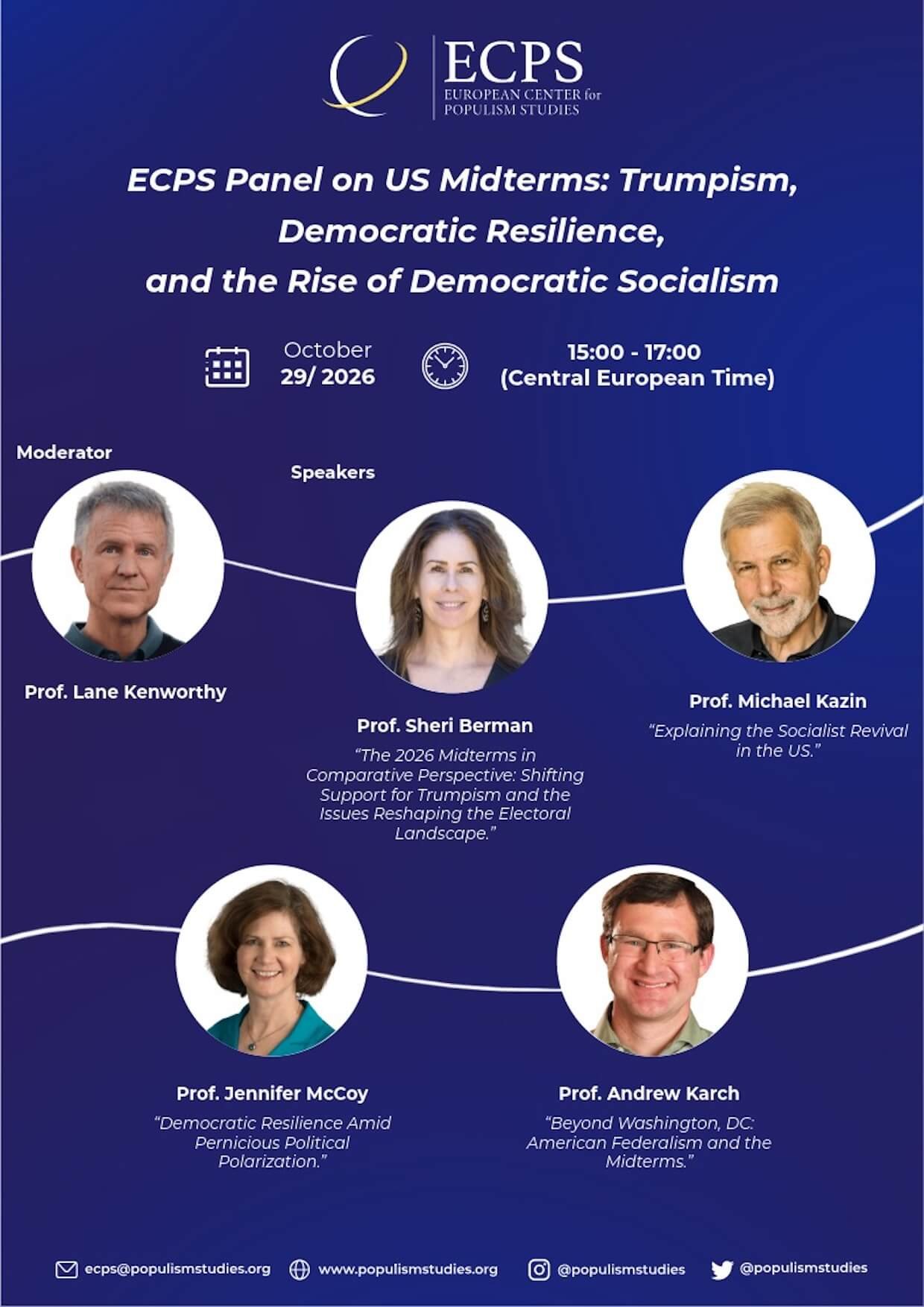
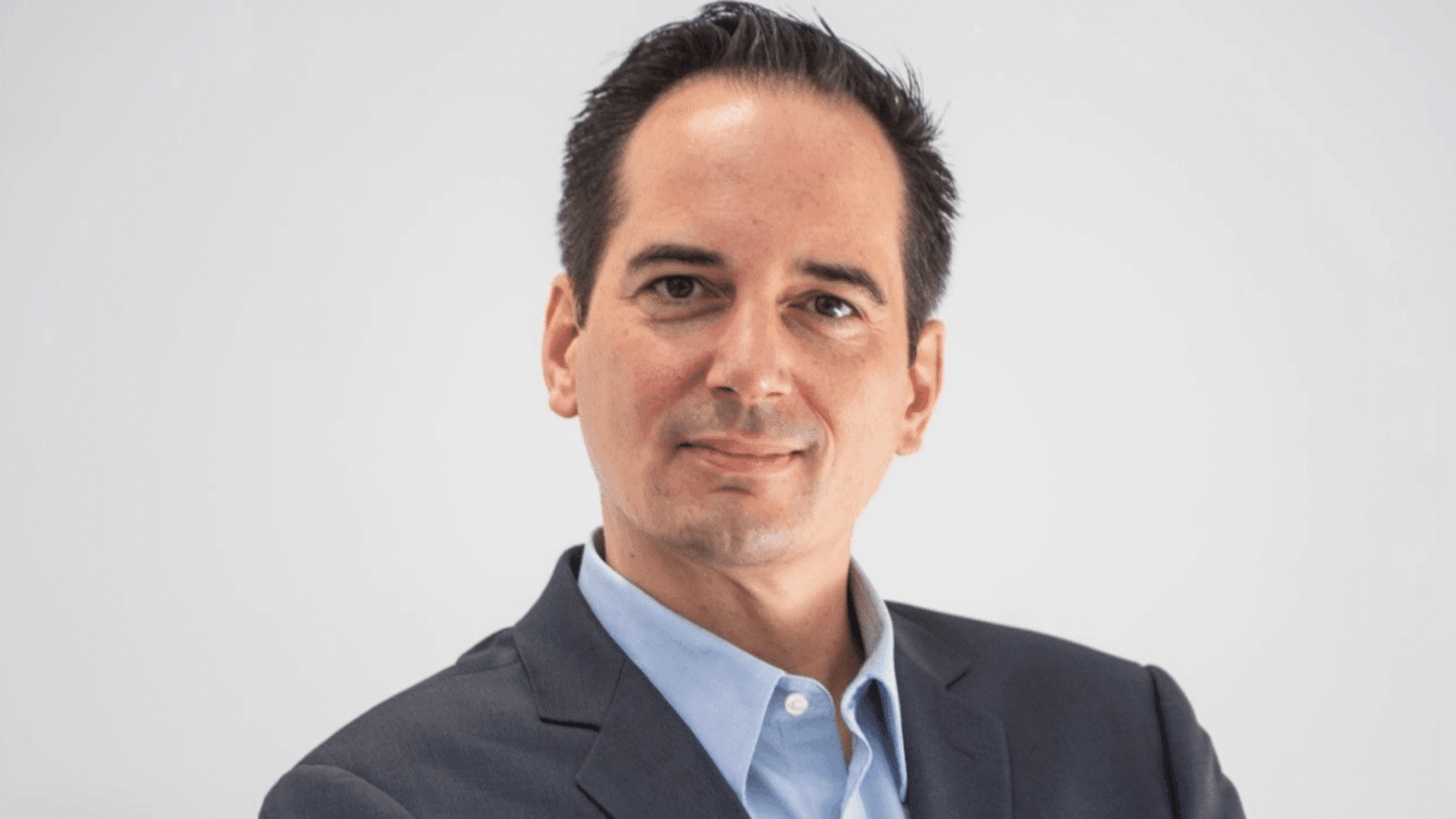
Professor Lane Kenworthy (Distinguished Professor of Sociology and Yankelovich Chair in Social Thought at the University of California, San Diego).
Speakers
“The 2026 Midterms in Comparative Perspective: Shifting Support for Trumpism and the Issues Reshaping the Electoral Landscape,” byProfessor Sheri Berman (Professor at Department of Political Science, Barnard College, Columbia University).
“Explaining the Socialist Revival in the US,” by Professor Michael Kazin (Professor of History, Georgetown University).
“Democratic Resilience Amid Pernicious Political Polarization,” by Professor Jennifer McCoy (Regent’s Professor Emerita of Political Science, Georgia State University).
“Beyond Washington, DC: American Federalism and the Midterms,” by Professor Andrew Karch (Professor in the Department of Political Science at the University of Minnesota).
Lane Kenworthy is a Distinguished Professor of Sociology and Yankelovich Chair in Social Thought at the University of California, San Diego. He studies the causes and consequences of living standards, capabilities, poverty, inequality, mobility, employment, economic growth, social policy, taxation, public opinion, and politics in the United States and other wealthy, long-standing democracies. His books include The Good Society (thegoodsociety.net), Is Inequality the Problem? (2025), Would Democratic Socialism Be Better? (2022), Social Democratic Capitalism (2020), How Big Should Our Government Be? (2016), Social Democratic America (2014), Progress for the Poor (2011), Jobs with Equality (2008), Egalitarian Capitalism (2004), and In Search of National Economic Success (1995). More information on his research and teaching is available at lanekenworthy.net.
Professor Berman: “The 2026 Midterms in Comparative Perspective: Shifting Support for Trumpism and the Issues Reshaping the Electoral Landscape”
Professor Sheri Berman will discuss the issues dominating political competition in the run-up to the 2026 American midterm elections, examine the evolving fortunes of Trumpism in the United States, and compare its trajectory with the development of populism in other parts of the world today.
Sheri Berman is a professor of Political Science at Barnard College, Columbia University. Her research interests include European history and politics; the development of democracy; populism and fascism; and the history of the left. She has written about these topics for a wide variety of scholarly and non-scholarly publications, including the New York Times, The Washington Post, Foreign Policy, Foreign Affairs, and VOX. She currently serves on the boards of the Journal of Democracy and Political Science Quarterly. Her last book was Democracy and Dictatorship in Europe: From the Ancien Regime to the Present Day (Oxford University Press 2019). Her most recent book, The Political Consequences of Economic Ideas: Neoliberalism, the Left, and the Fate of Democracy is forthcoming from Oxford University Press.
Professor Kazin: “Explaining the Socialist Revival in the US”
Professor Michael Kazin will examine the roots of the contemporary socialist resurgence in the United States, tracing them back to the anti-globalization protests of the late 1990s and the Great Recession of 2008–2009, which helped create the conditions that encouraged Bernie Sanders to run in the 2016 Democratic presidential primaries. Professor Kazin will then assess the achievements of contemporary socialists, particularly those affiliated with the Democratic Socialists of America (DSA), while also considering the limits of their political appeal and constituency.
Michael Kazin is a Professor in the Department of History, Georgetown University. He is an expert in US politics and social movements, 19th and 20th centuries. His most recent book is What It Took to Win: A History of the Democratic Party (Farrar, Straus and Giroux, 2022) which was named an Editor’s Choice by the NY Times Book Review and one of the best ten books published on US history in 2022 by Kirkus Reviews. His previous book War Against War: The American Fight for Peace, 1914-1918 (Simon and Schuster, 2017) was also named an Editor’s Choice by the New York Times Book Review and was awarded the Elise M. Boulding Prize for the best book in peace history by the Peace History Society. His previous books include American Dreamers: How the Left Changed a Nation (Knopf, 2011), which was named a Best Book of 2011 by The New Republic, Newsweek/Daily Beast, and The Progressive. Kazin is emeritus co-editor of “Dissent,” a leading magazine of the American left since 1954.
Professor McCoy: “Democratic Resilience Amid Pernicious Political Polarization”
Professor Jennifer McCoy will examine how Americans are responding to extreme political polarization and contentious midterm elections. She will also consider how polarization may evolve after the midterms under different electoral outcomes.
Jennifer McCoy is Regent’s Professor Emerita of Political Science at Georgia State University and Nonresident Scholar at the Carnegie Endowment for International Peace, as well as Senior Fellow at Cornell University’s Center on Democracy and a Research Affiliate at CEU’s Democracy Institute in Budapest. She was named a 2024 Andrew Carnegie Fellow, one of 28 scholars nationwide who explore political polarization as well as what might help tackle division and strengthen American democracy. A specialist on democratic erosion, recovery, and renewal; polarization and depolarization; mediation and conflict prevention; election processes and election observation; and Latin American politics, Professor McCoy has authored or edited six books and dozens of articles. Her forthcoming book is How to Depolarize: Remaking Global Democracies in the 21st Century, with Murat Somer, (Princeton University Press, May 2027). McCoy has been a visiting scholar at Koc University in Istanbul, Collegio Carlo Alberto in Turin, Italy, and both the Democracy Institute and the Institute of Advanced Studies at Central European University in Budapest, Hungary. She was named a GSU Regent’s University Professor in 2023 (the highest honor bestowed by the University System of Georgia).
Professor Karch: “Beyond Washington, DC: American Federalism and the Midterms”
Professor Andrew Karch will examine the significance of the 2026 midterm elections beyond the national level. While most journalistic coverage focuses on partisan control of Congress, Professor Karch will emphasize that the stakes at the state level are also substantial. He will begin by reviewing recent trends in partisan control of state governments and discussing the state-level offices that will appear on the ballot. He will also highlight several significant ballot initiatives that voters in some states will consider.
The second part of Professor Karch’s presentation will examine the role of state governments at a moment of heightened partisan polarization. He will discuss how the Elections Clause of the US Constitution gives states a central role in administering elections, drawing congressional districts, and determining who is part of the American electorate. He will also examine how states have increasingly become sites of resistance, with state officials challenging national government policies and priorities. Professor Karch will argue that the significant impact of American federalism underscores the need to look beyond national-level results when assessing the midterm elections and their broader consequences.
Andrew Karch is a Professor in the Department of Political Science at the University of Minnesota, where he has taught since 2010. His research centers on the political determinants of public policy choices in the contemporary United States, with a special focus on federalism and state politics. His most recent book, Responsive States: Federalism and American Public Policy, is co-authored with Shanna Rose of Claremont McKenna College and was published by Cambridge University Press in 2019. His previous book, Early Start: Preschool Politics in the United States (University of Michigan Press), was named a Choice Outstanding Academic Title for 2013. He is also the author of Democratic Laboratories: Policy Diffusion among the American States (University of Michigan Press, 2007). He is currently serving on the editorial boards of State Politics & Policy Quarterly, Policy Studies Journal, and Publius: The Journal of Federalism. He is also a fellow of the Center for the Study of Federalism, and he previously served two terms as Chair of the Executive Council of the Federalism and Intergovernmental Relations Section of the APSA.
In this Voice of Youth (VoY) commentary, Filippo Palmieri examines a critical blind spot in the European Union’s democratic resilience agenda: how political parties select their candidates. Drawing on Italy’s new electoral law and comparative research on political recruitment, Palmieri argues that protecting elections from foreign interference, disinformation, and financial manipulation is insufficient if candidate selection remains opaque and concentrated in party leaderships. Comparing recruitment practices among Italy’s major populist parties, he demonstrates that political turnover does not necessarily indicate democratic renewal. Rather than advocating EU intervention in internal party affairs, Palmieri proposes greater transparency, comparative research, and national reporting requirements to strengthen political accountability and democratic resilience.
On October 8, 2026, the Italian Chamber of Deputies gave final approval to a new electoral law, published the next day as Law No. 180 and in force from October 24. Seats will be allocated proportionally, with a bonus for any list or coalition that wins 42 percent of the vote. In each multi-member district, parties will present lists of seven names, and voters may express up to three preferences among the last six. The first name is fixed by the party and has first claim on any seat the list wins. The 70 bonus seats in the Chamber go to candidates on separate lists, all of whom are elected if the bonus is triggered. When Italians next vote, expected in 2027, a significant part of the choice will have been made by whoever compiles the lists.
European resilience policy says little about that stage, and one rule marks the boundary with unusual precision. Regulation (EU, Euratom) 2025/2445 on European political parties and foundations, in force since December 2025, counts among the tasks of European political foundations “capacity building to support the formation of future political leaders in the Union.” Article 27(2), which bars foundations from funding elections, parties or candidates, allows them to train people “up to the date on which they become a candidate in accordance with national rules or up to the date of their nomination in the national party, whichever is earlier.”
The rule concerns funding, and the line it draws is legitimate: candidate selection is a matter for national law and for parties, and the ban keeps European money out of national campaigns. But it shows where European attention stops. The instruments examined below, the core of the Union’s resilience agenda, protect parties from interference and regulate their money; none of them asks how parties decide who will govern, a function whose results vary with how parties are organized.
Protect, Regulate, Train
The European Democracy Shield, presented by the European Commission and the High Representative on November 12, 2025, mentions political parties in a single section, on the fairness and integrity of electoral processes. There they appear in connection with foreign interference, party financing, a level playing field among competitors and voluntary commitments on the responsible use of artificial intelligence; candidates appear chiefly as people whose safety needs protecting. The section on civic participation relies on citizens’ panels, civic technology and civil society organizations, and parties do not feature in it.
The European Centre for Democratic Resilience, which began its work in February 2026, is designed to detect threats, coordinate early warnings and counter disinformation and foreign information manipulation. The Commission’s 2023 Recommendation on inclusive and resilient electoral processes comes closest to the inner life of parties, asking them to encourage gender balance on their electoral lists. On how candidates are chosen, it says nothing.
An early assessment of the Shield on Verfassungsblog observed that its focus on external threats tends to obscure the domestic sources of democratic weakness. Parties belong to what Jan-Werner Müller has called democracy’s “critical infrastructure,” and selection is the part of that infrastructure that produces the people who will run institutions.
Why Selection Matters
Steven Levitsky and Daniel Ziblatt describe parties as gatekeepers whose task is to keep would-be authoritarians away from power. Much of that gatekeeping happens when candidates are chosen. The evidence suggests parties can select well when they have reasons to. Working with Swedish population registers, Ernesto Dal Bó and colleagues found that politicians score above the population they represent on the cognitive and leadership tests taken by men at military conscription, and that selection on ability is stronger where electoral competition is more intense. In Italy, Vincenzo Galasso and Tommaso Nannicini showed that between 1994 and 2001, when most seats were won in single-member districts, parties placed better-educated candidates with local government experience in the districts that either side could win. These studies show that incentives to select carefully matter. They do not show that long careers are better in themselves.
Procedure matters as well. Reuven Hazan and Gideon Rahat’s comparative study of candidate selection shows that methods trade participation, representation, competition and responsiveness against one another, and that narrow selectorates tend to produce more cohesive and disciplined groups. A more inclusive procedure is not better on every count. Writing about Italy, Piero Ignazi found parties largely closed to the decentralization of selection seen elsewhere in Europe, in some cases more centralized than before 1994, and warned that appeals to the membership over the heads of intermediate cadres introduce a plebiscitary dynamic.
Same Turnover, Different Careers
Italy’s 2018 election is usually told as a story about populism. The data on selection tell a more precise one. In the Chamber of Deputies, 65.9 percent of members had not sat in the previous legislature, almost the same share as in 2013 (65.5 percent), while electoral volatility was lower (26.7 against 36.7 percent). Eugenio Salvati and Michelangelo Vercesiconcluded that much of the renewal was decided before the vote, by party leaderships that controlled the drafting of lists.
The turnover rate hides who came in. The League, led by Matteo Salvini, renewed 87.8 percent of its group in the Chamber. Yet in a study of the new Chamber, Bruno Marino, Nicola Martocchia Diodati and Luca Verzichelli found an “extremely low” share of League deputies without any previous local, party or parliamentary position, against more than half of the Five-Star Movement’s. The Movement let enrolled members put themselves forward online, subject to a binding veto by its political leader, who also picked the candidates for single-member seats. Both parties are classified as populist in the PopuList, an expert-based database of populist, far-left and far-right parties in Europe.
A different indicator, measured after the 2022 election, points the same way. According to Openpolis, 81 percent of the League’s parliamentarians had served in local councils or executives, as had 68 percent of those of Brothers of Italy, the party of Prime Minister Giorgia Meloni, also classified as populist. For the Five-Star Movement the figure was 22.5 percent. Parties that share the populist label can recruit in very different ways, and the label alone does not describe them.
What to Look For
None of this makes political experience a measure of democratic quality. A seasoned local administrator may depend entirely on a leader; a newcomer may widen representation. Biographies cannot settle the question. What matters for resilience is the process: whether nominations are transparent, whether they can be contested inside the party, how concentrated the power to nominate is, and how open candidacies are. These features decide to whom elected representatives owe their seats, and so whether they can act as a check on their own leadership.
What Could Be Done
This does not call for European rules on how parties pick their candidates. Three proposals follow, at different levels.
At the European level, the Commission has already used soft law on the composition of electoral lists when it encouraged gender balance in 2023. A future recommendation could invite Member States to make parties disclose how each candidate was chosen: by which body, under which rules, with what room for challenge.
Within the Union’s own structures, the Stakeholder Platform of the European Centre for Democratic Resilience is meant to bring researchers, academia and civil society into its work. Comparative research on candidate selection belongs there as much as research on disinformation.
At the national level, some rules already exist. Since 2013, Italian law has required parties seeking the “2 per mille,” a share of income tax that taxpayers can assign to a party, to set out in their statutes how they select candidates. The commission that reviews those statutes looks at their content: in 2021 it turned down the Five Star Movement’s request, and, according to the party, the changes it asked for included its rules on candidacies. Parliament could go further and require parties to report, after each election, how those procedures were applied. Under the new electoral law, such reports would tell voters who chose the names they cannot change.
Europe will pay to train a future Italian deputy until the day her party puts her name at the top of a list. What happens on that day is where its resilience policy goes quiet.
(*) Filippo Palmieri holds a master’s degree in International and Diplomatic Sciences, specializing in Politics and International Security, from the University of Bologna. His research focuses on democratic theory, populism, political representation, the transformation of political parties and the effects of digital communication on contemporary democracy. His master’s thesis examined the changing analytical value of the concept of populism in twenty-first-century democracies. He has presented research on democracy, populism and illiberalism at academic events hosted by the Università Cattolica del Sacro Cuore, the Italian Political Science Association and Venice International University. Email: filippo.palmieri3@studio.unibo.it
MEP Hanna Gedin argues that the EU’s credibility as a defender of democracy, human rights, and international law is being weakened by political double standards and the growing normalization of radical-right ideas. In this ECPS interview, she warns that “the EU is losing its voice when it comes to upholding international law” and points to inconsistencies in migration policy and relations with Israel and Turkey. Gedin also urges the European left not to adapt to the far right, but to build its own agenda around inequality, housing, energy, and the cost of living. “You need to have your own agenda,” she says, and to “make life a good life without adapting to the far right and their narrative.”
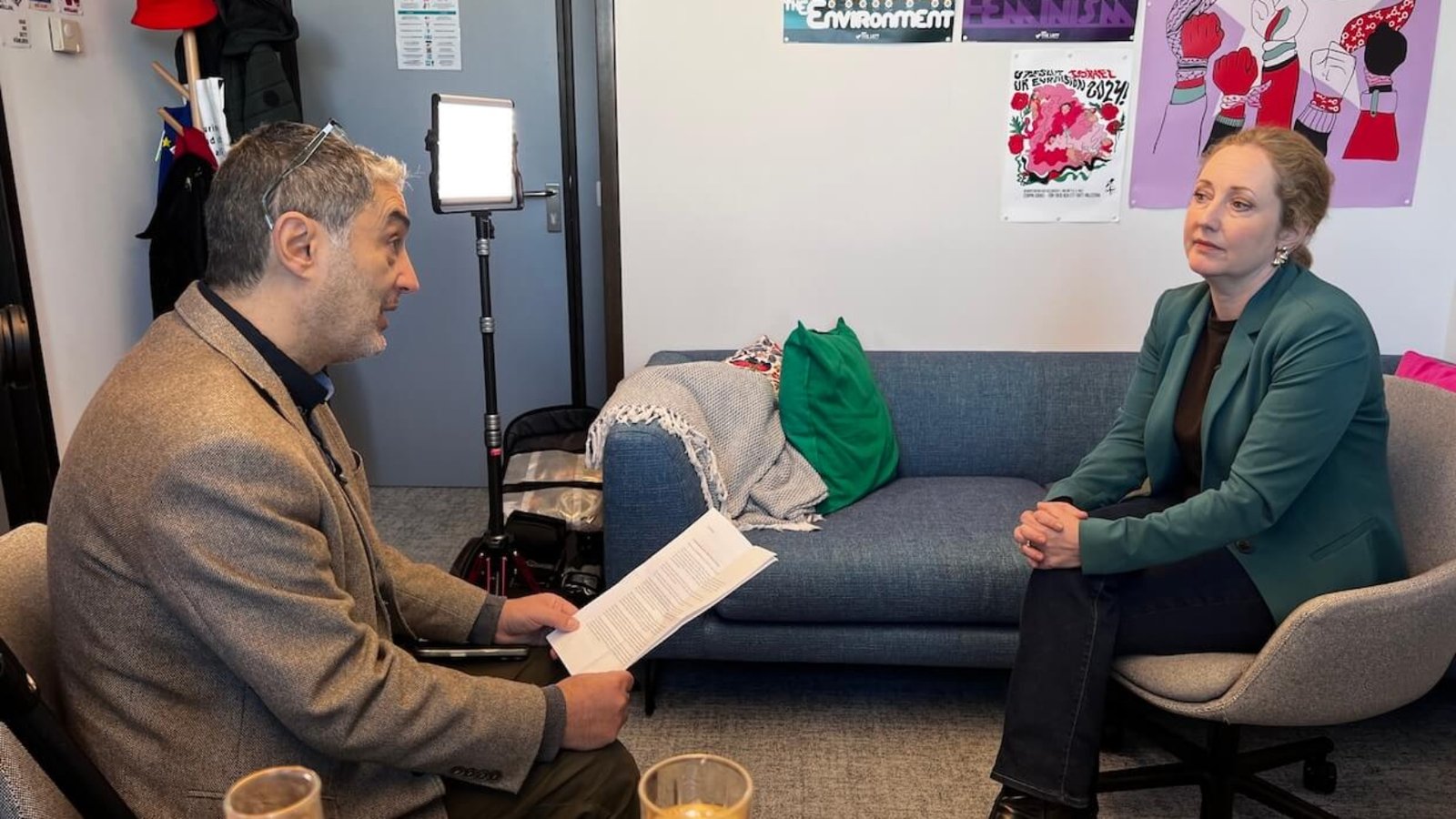
In this wide-ranging interview with the European Center for Populism Studies (ECPS), Hanna Gedin, Member of the European Parliament for Sweden’s Vänsterpartiet (Left Party, V) and Vice-Chair of The Left Group, reflects on Sweden’s post-election political deadlock, the normalization of radical-right ideas in European policymaking, the erosion of international law, and the strategic dilemmas facing the democratic left. Gedin, who works on the internal market, industry, energy, women’s rights, and gender equality, situates these questions within a broader critique of inequality, restrictive migration policy, and the weakening of Europe’s normative credibility.
The interview begins with the struggle to translate Sweden’s new parliamentary majority into a viable center-left government. Gedin rejects the idea that Vänsterpartiet should once again support a government from outside, insisting that “if our votes are needed, if our mandates are needed, of course we should be in the government.” She argues that the Center Party (C) “needs to choose,” because “there is no middle way.” At the same time, she acknowledges the deep economic divide between the two parties but maintains that cooperation remains possible on issues ranging from feminism and climate to international law and support for communities outside major cities.
A central theme of Gedin’s remarks is the extent to which the radical right has reshaped mainstream political agendas. She argues that Swedish parties have been “adapting and moving closer to the Sweden Democrats,” while politics has increasingly shifted away from “bread and butter” concerns toward culture-war issues. For Gedin, the answer is not imitation but political differentiation: “For the left, it’s really important not to adapt.” Instead, she insists, “You need to have your own agenda,” centered on the cost of living, inequality, housing, and material security.
This concern extends to migration policy at both Swedish and European levels. Gedin describes a “shift and an adaptation to the radical right” in EU migration politics and recalls far right and right-wing MEPs cheering “Send them back, send them back” during a vote on return hubs. Yet she also points to Sweden’s debate over teenage deportations as evidence that public attitudes can shift when abstract migration categories acquire “names and faces.”
The interview’s sharpest normative critique concerns international law. Gedin argues that “the EU is losing its voice when it comes to upholding international law” and warns of “a complete erosion of international law” driven by double standards. She contrasts the EU’s firm response to Russia’s war against Ukraine with what she sees as a much weaker approach toward Israel, arguing that such inconsistency undermines European credibility globally.
Ultimately, Gedin presents a distinctly materialist response to the rise of the far right. She argues that the left must make politics concrete: reduce inequality, address rents and energy costs, tax the very rich, and “make life a good life without adapting to the far right and their narrative.”
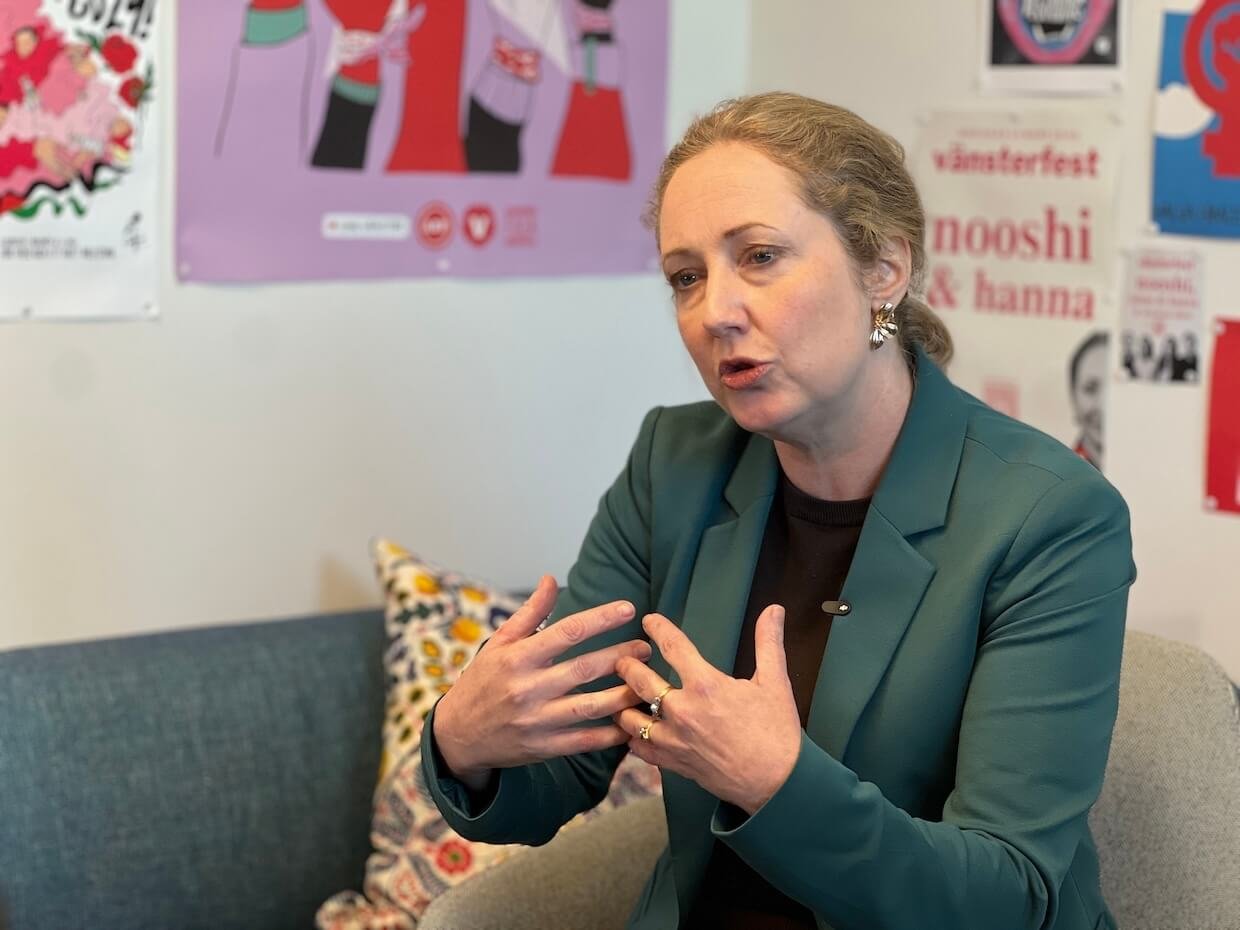
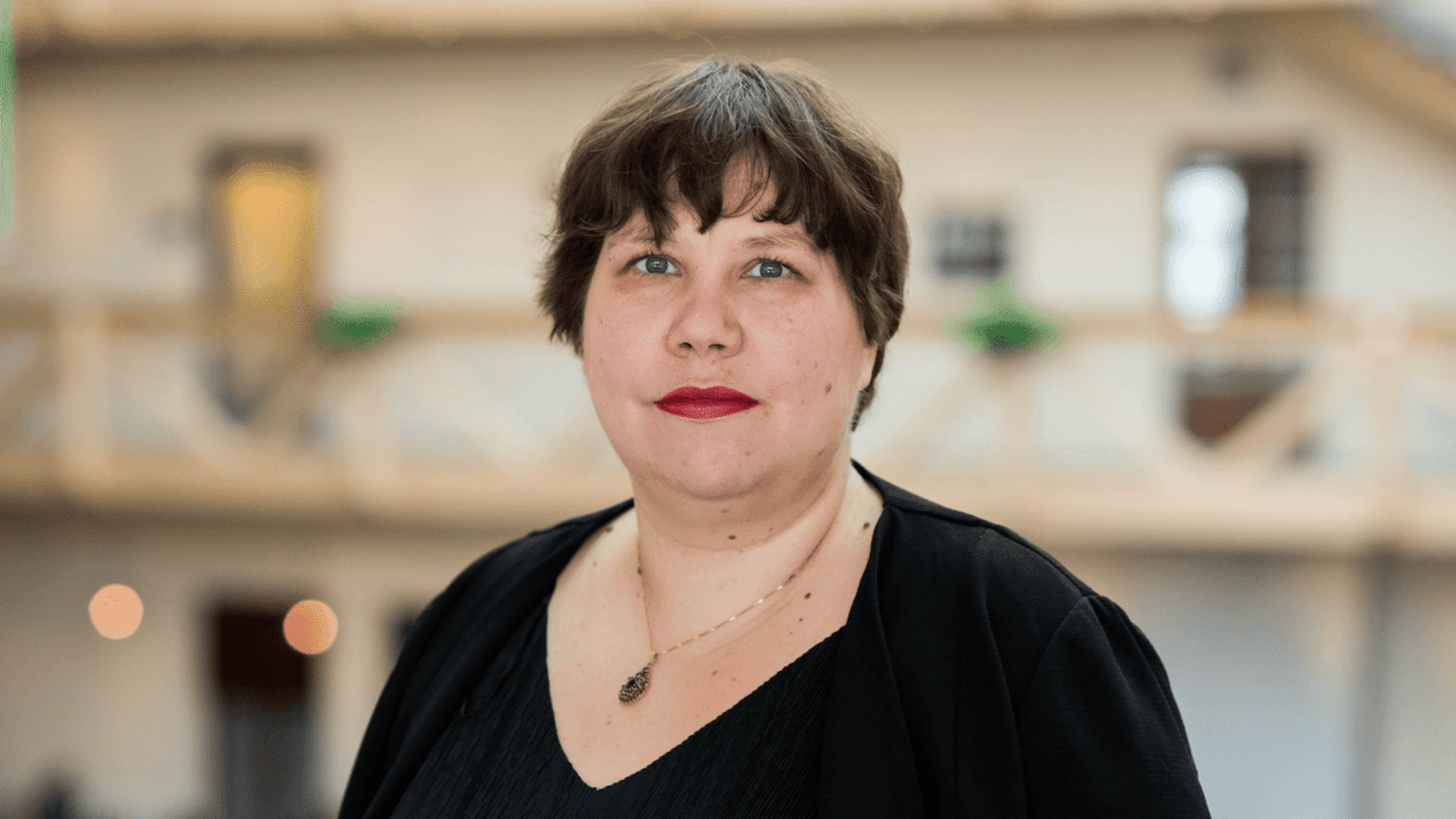
MEP Hanna Gedin. Photo: Umit Vurel.
Here is our interview with MEP Hanna Gedin, edited lightly to enhance clarity, readability, and overall flow for publication.
The Center Party Needs to Choose
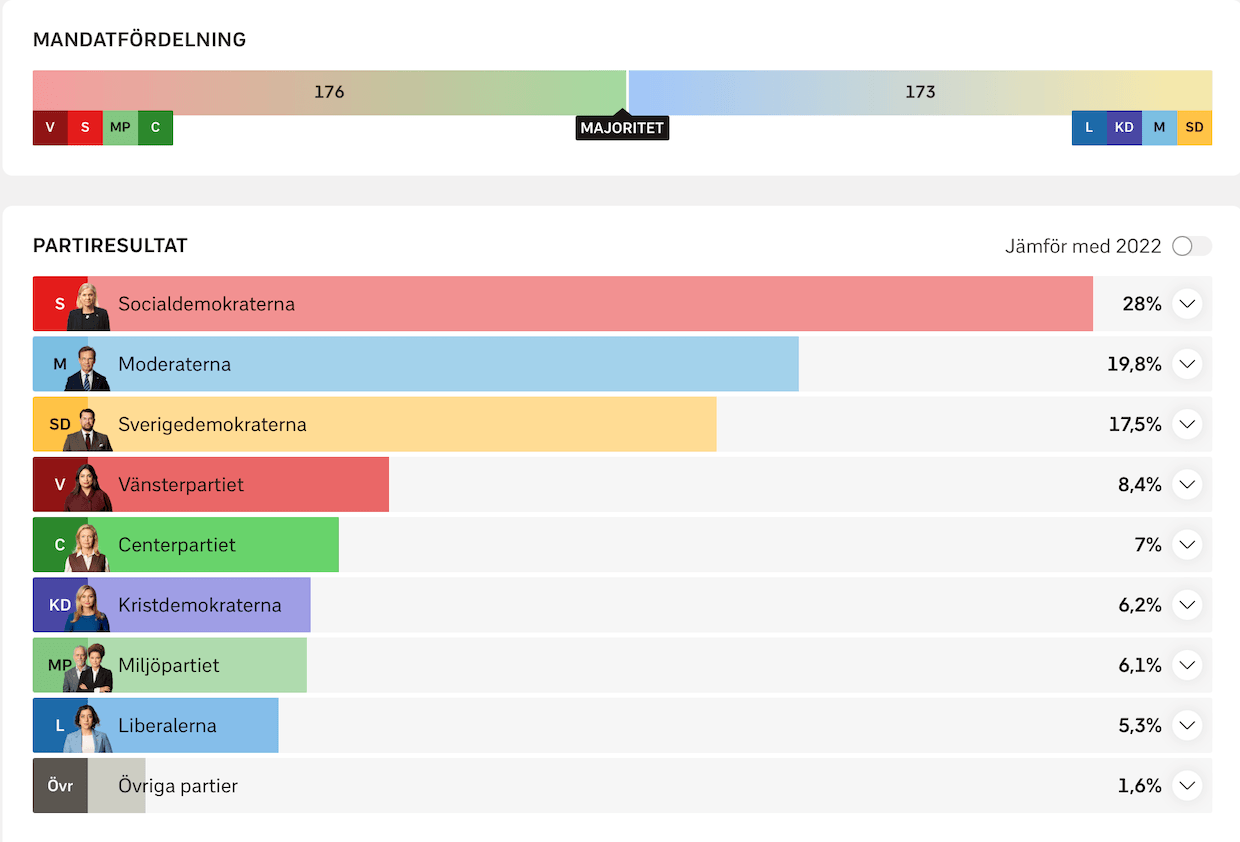
Ms. Gedin, welcome. Let me begin with the tension between Vänsterpartiet (Left Party) and the Center Party and the prospects for forming a new red-green government. Sweden’s 2026 election produced a parliamentary majority for S, V, C, and MP, but that majority has so far proved difficult to turn into a government. Vänsterpartiet (V) insists that it must be part of the next government, while the Center Party (C) still refuses to accept V in government. Magdalena Andersson has now received a second opportunity to form an administration, and the four parties have at least begun talking together. Where, concretely, do you see a way out of this deadlock?
MEP Hanna Gedin: I’m not stressed or concerned because we have had this situation before, during the 2018 election, and it took a couple of months before we had a government. My party’s position is quite normal. If they want our votes, if they want our support for the government, of course we should, like every other party, be in the government. That’s a very normal position.
The Center Party has not really done its homework because they have said absolutely no to the Sweden Democrats, while at the same time they say absolutely no to us, and then there is no majority. So, they need to choose. There is no possibility in the middle, as they seem to think.
They have also been very clear and vocal in saying that Magdalena Andersson is their prime minister candidate, just as we have been. Then they need to show that and to choose. There is no middle way, and in the end, we will see this government forming.
V Wants a Stable Center-Left Government
The Center Party says it can support Magdalena Andersson as prime minister but draws a red line against Vänsterpartiet entering government. Why should the Left accept supporting a government from outside after an election in which its votes are indispensable to the new majority? And is there any compromise—cabinet participation, a formal cooperation agreement, budget influence—that V could realistically accept?
MEP Hanna Gedin: I’m not part of the negotiating team; I must start by saying that. But our demand is clear. We have been clear for many years now: if our votes are needed, if our mandates (seats) are needed, of course we should be in the government. We can’t support the government from the outside.
We have seen what that did before, in the 2018 election, when we were supposed to support the government from the outside. It became a very weak government. They did not have a majority for their budgets, and in the end, when they proposed a marketisation of the rent system in Sweden, we actually had to vote the government down. We don’t want that situation. We want a stable center-left government. This is our position.
The Ideological Divide Between V and C
Behind the dispute over cabinet seats lies a much deeper ideological conflict. The Center Party remains economically liberal, while Vänsterpartiet wants stronger welfare provision, greater redistribution, public investment, and tighter constraints on market power. If a red-green government is eventually formed, which of these substantive economic disagreements could become more difficult than the present argument over who gets to sit in government?
MEP Hanna Gedin: It is true that the Center Party and the Left Party have quite opposite economic politics. I would even say that the Center Party is quite extreme when it comes to economic politics. However, I have understood for several years now that they might be needed in the government, and we might sometimes have to undertake some very hard negotiations and find some kind of solution on these issues.
We do believe it’s possible, and we also think that we have a lot of issues that unite us—for example, when it comes to support for communities outside the big cities, feminism, international law, and climate. So, we do think that there are a lot of issues that we have in common.
The SD Is Now Seen as an Establishment Party
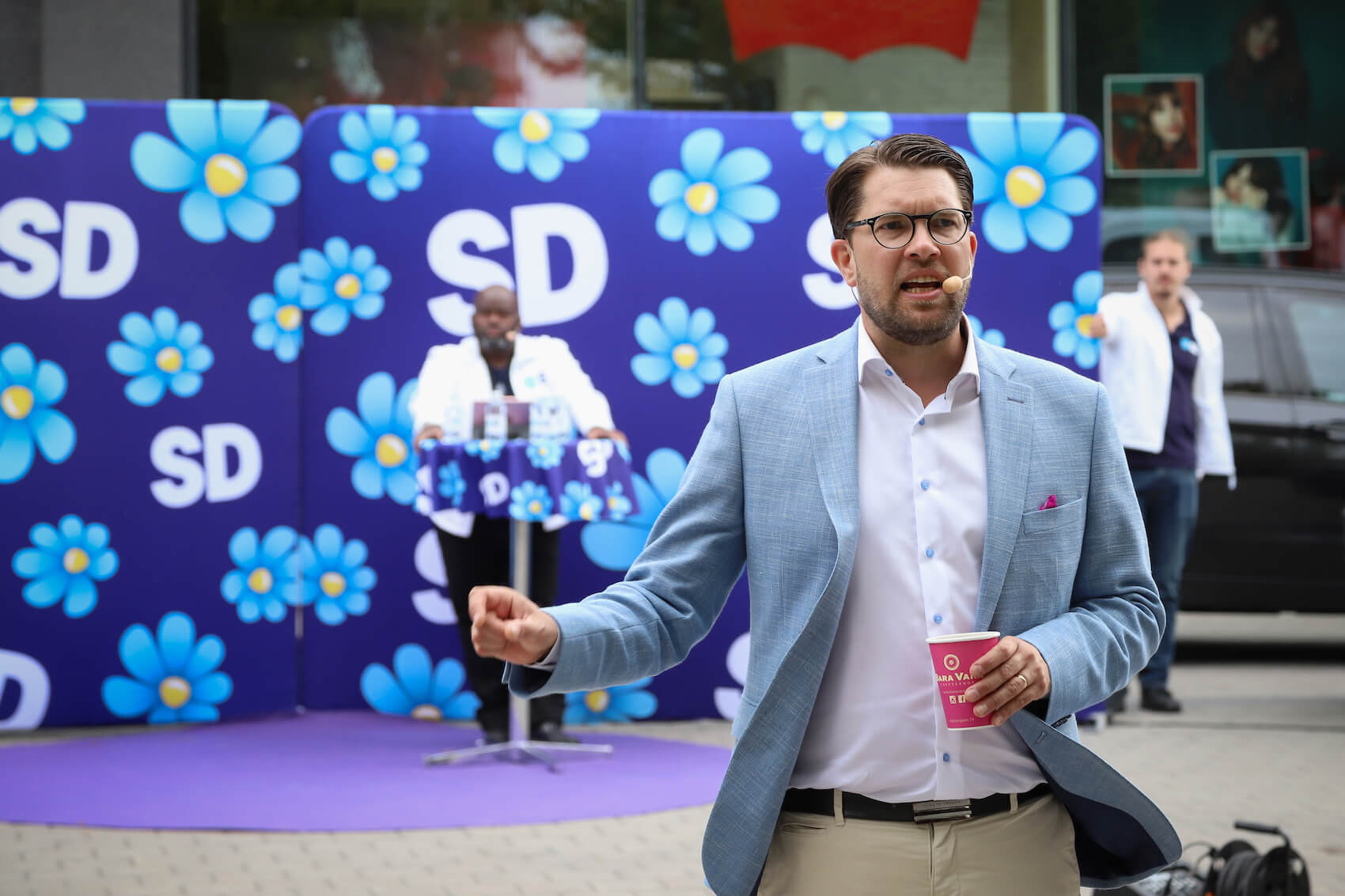
Sweden Democrats’ Square Meeting in Umeå. Jimmie Åkesson speaks to the people on the city square where opposition left-wingers have formed a chain and protest in Umeå, Sweden on August 14, 2018. Photo: Shutterstock.
Vänsterpartiet entered the election promising to help remove a government whose policies were heavily dependent on the Sweden Democrats. If the parties that won the parliamentary majority cannot agree on a government, is there a danger that the post-election dispute itself strengthens SD’s argument that the established parties are incapable of governing—and gives the radical right another opening?
MEP Hanna Gedin: What we saw in the Swedish election was that the Sweden Democrats, for the first time since they entered the National Assembly, actually decreased. They had quite a bad election, and this is, in a way, due to the fact that they are now seen as an establishment party. Even though they have not been part of the Tidö government, they have been the biggest party supporting this government.
When it comes to economic issues, they have shown that they are a right-wing party. They support the economic politics of the right-wing parties. So, I don’t think they have a case for saying that they are anything other than an established party nowadays.
I also think that the election results, where our party, the Swedish Left Party, had a very good election and where we can see that the left side actually got stronger, show that people want something else than the politics we have seen from the Tidö government. And I do think that we will be able to form a government.
Mainstream Parties Moving Toward the Sweden Democrats
You argued earlier that the Sweden Democrats, even without formally entering government, exercised enormous influence over migration, crime, and ethnicity, and that ideas once considered politically unthinkable had moved into government policy. After four years of Tidö government, how deeply has SD changed the political center of gravity in Sweden? Is the larger story now less about SD itself than about mainstream parties adopting parts of its agenda?
MEP Hanna Gedin: We have seen in Sweden a lot of parties adapting and moving closer to the Sweden Democrats, and that is something we see in many countries. It’s extremely dangerous. It’s dangerous when politics focuses on things that are not bread and butter. It’s not about the cost of living or what people really feel in everyday life, but about culture-war issues, and what that has done to society in Sweden is very dangerous.
During the Tidö government, the government put forward, and we adopted, snitch laws, so you should snitch on your neighbors or coworkers if they come from a different country. This is quite extreme. We have seen it even when it comes to criminal issues and so on—this kind of obsession that if you are from another country, you should go away, you should go out of Sweden. It’s also linked to the notion of criminality being colored, in a way. It has been quite an extreme development in Sweden.
What the election showed is that people do not want this kind of policy. During the election campaign, we talked about bread and butter. We talked about people’s cost of living. We talked about the skyrocketing rise in rent, for example. We did canvass. We knocked on almost half a million doors, and when we met people, they were not talking about snitch laws or the need to be tougher on criminals. They were talking about things that affected them in their ordinary lives.
A lot of people also said that. I met a woman who said, “You know, I have stomachache. They don’t want me here. They want to throw me out. What this government has done to me and my neighbors is horrible, and I can’t vote for them. I will vote for you.”
So, in a way, it has affected us. But I do think that what we have seen during these four years—this obsession with people of a different color of skin, or criminals, and so on—is not what people want. I really feel a bit like it’s easier to breathe now. It’s like opening a window, and I think a lot of people in Sweden agree with me.
And I think that’s also very important: the first thing these four parties did, even before forming a government, was to stop the deportation of young people that was planned under the Tidö government. We stopped it.
How the Left Should Confront the Far Right
You have described the far right as particularly effective at finding scapegoats, offering simple answers to complex problems, and forcing its issues to the center of public debate. Across Europe, far-right, radical-right, and populist radical-right parties are increasingly shaping policy even where they are not governing. Why has the democratic left struggled to set the agenda with the same effectiveness—and what has it failed to understand about voters attracted to these parties?
MEP Hanna Gedin: In politics, it’s easier to make people vote for something they are afraid of than for something they hope for. If we have been living for several years with this repressive politics and the right-wing agenda, people also forget what solidarity is and what equality is, and you need to be reminded of it sometimes.
But for the left, it’s really important not to adapt, not to only talk about the Sweden Democrats or the right, the extremist parties, and not to adapt to them. What the Social Democrats did in Sweden, mainly during the election campaign—talking about the Sweden Democrats—did not work. You need to have your own agenda, and you need to put forward reforms about the cost of living, for example. That was what we did, and we were rewarded by the election results in Sweden.
Gender, Migration, and the Far Right
Celebrating Sweden’s National Day in Norrköping, Sweden, on June 6, 2014. Immigrants and native Swedes participate together in National Day celebrations. Sweden’s National Day is an official public holiday. Photo: Dreamstime.
The far right increasingly presents itself not only as anti-immigration but as the defender of a particular European cultural order, often combining nationalism with opposition to abortion rights, LGBTQ rights, and gender equality. As an MEP working on women’s rights and gender equality, do you see these struggles as separate policy battles, or as parts of a broader political project to redefine who belongs and whose rights are considered legitimate?
MEP Hanna Gedin: We see these attacks every day in the European Parliament, and you can see them in a lot of countries as well. The struggles are connected, and you can’t just take one struggle; you need to see the fight as a common fight.
In this Parliament, we see attacks from the right-wing parties on trans people and on migrants, for example. We don’t yet see the same number of attacks on abortion rights, but I’m sure it will come if they are successful.
Stopping Teenage Deportations Is a Very Important Step
You recently raised the issue of what you called Sweden’s “teenage deportations”—young people who have grown up in Sweden but face removal when they turn 18. Sweden has moved toward some of Europe’s most restrictive migration policies. If a new Social Democratic-led government takes office, what specific changes would V demand on asylum, deportation, and family reunification, and which policies introduced during the Tidö period should be reversed first?
MEP Hanna Gedin: I’m not a parliamentarian in Sweden, I work mainly with EU policies. But I think it’s very interesting that, in 2015, something changed in Sweden. It was when there was a big migration to Sweden, and we started having these repressive laws.
During the last government, the Tidö government, something changed last year when we first had a mayor in the city of Jokkmokk (a small municipality and town in Norrbotten County, northern Sweden, in Swedish Lapland / S.G.) saying, “I don’t want you to deport my people living in my city,” and a lot of mayors started saying the same: “We don’t accept this kind of very repressive policy.”
Then we had the teenage deportations. As you said, we saw many deportations of teenagers who spoke perfectly good Swedish, who had grown up in Sweden, and who were deported from their families. And the debate started shifting. Instead of saying, “Yes, people should go out, we should send them out, we should have more oppressive laws,” people were saying, “These are my neighbors, these are my coworkers, these are my friends.” They had names and faces, and the debate changed and shifted.
The first thing the four parties—the Swedish Left Party, the Centre Party, the Social Democrats, and the Green Party in Sweden—have been doing, even though we have not yet formed the government, is to stop these deportations. I think this is a very important step.
EU Migration Policy and the Radical Right
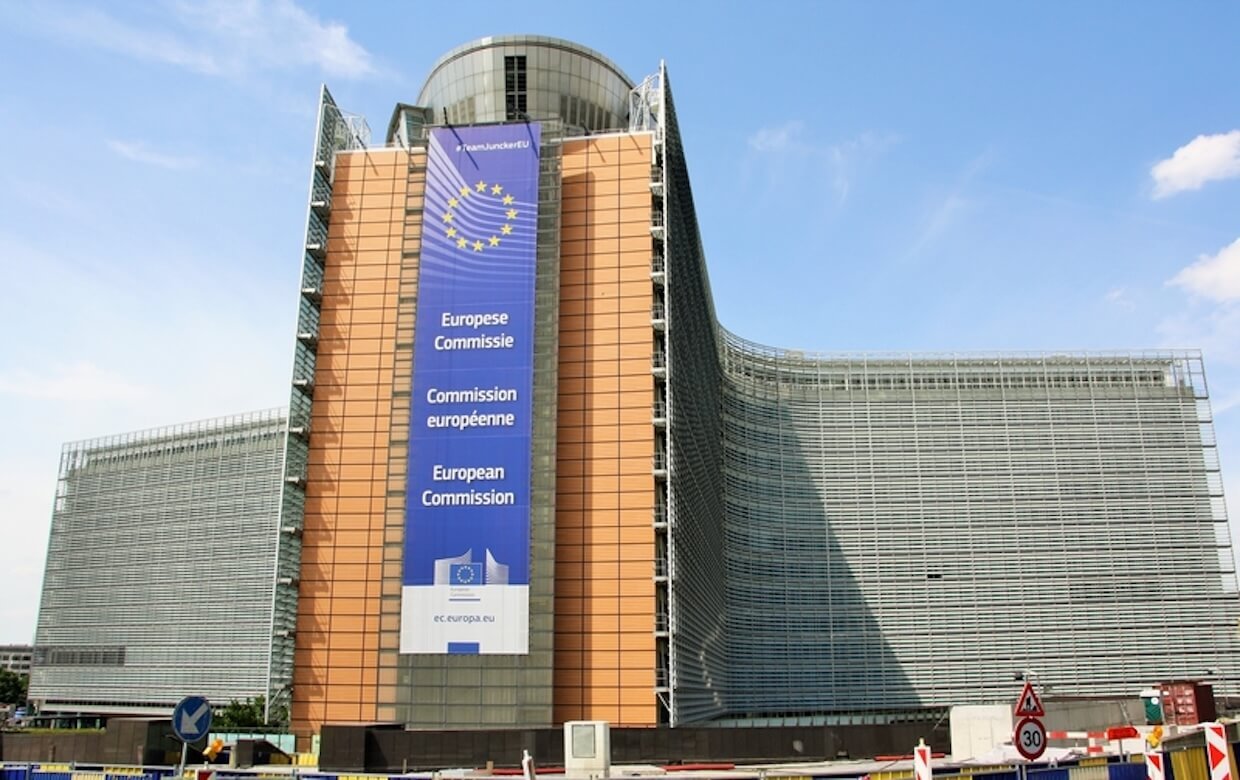
Berlaymont Building, headquarters of the European Commission, Brussels, Belgium. Constructed between 1963 and 1969, the building has become the iconic symbol of the European Commission, the executive branch of the European Union. Photo: Wiktor Wojtas / Dreamstime.
At EU level, the Migration and Asylum Pact entered into application in June, while the new Return Regulation creates faster return procedures and opens the possibility of “return hubs” outside the Union. Governments are now discussing even tougher measures. Are we witnessing the normalization at EU level of ideas that only a few years ago were associated primarily with the radical right? And where should the legal and moral limits of European migration policy be drawn?
MEP Hanna Gedin: Yes, we are witnessing a shift and an adaptation to the radical right when it comes to migration, even at the EU level. I was present in the chamber when the return hubs were voted on, and what happened was that the radical right stood up and cheered together with the right-wing parties when they voted this through. They cheered and screamed, “Send them back, send them back.” This would not have been possible a couple of years ago.
This is a situation that we’re actually seeing, and that is why it’s quite hopeful to see what happened in Sweden and how the debate shifted with the teenagers who were deported. I do hope that we will see the same shift in Europe as well.
I also think you need to see the positive things happening in Europe when it comes to the Swedish election, but also the election in Berlin, where you had a very big left-wing party; the election in Copenhagen, a city close to where I live, where the biggest party was the Left Party; and Mamdani in New York. You do have these positive things happening as well.
You have also criticized the prolonged border controls between Sweden and Denmark and warned about allegations of racial profiling. Governments increasingly justify exceptional border measures through migration, crime, or national-security arguments. At what point does a supposedly temporary security measure become a permanent restriction on free movement and equal treatment within the EU?
MEP Hanna Gedin: I live in Malmö, a city close to Denmark. I take the train between Denmark and Sweden almost every week, and there is still this border control that was put in place in 2015. I would say that this is a permanent restriction. It is not allowed according to EU law, and it still goes on and on and on. So, yes, this is a permanent restriction, and that should not be allowed.
The EU Should Show Some Backbone
The EU has traditionally presented itself internationally as a normative power built around democracy, the rule of law, and human rights. Yet critics increasingly point to restrictive migration policies, cooperation with authoritarian governments to stop migration, and inconsistency in the application of international law. Is the EU losing credibility as a normative role model—and how much of that erosion reflects the growing influence of the populist and radical right on mainstream European policy?
MEP Hanna Gedin: Absolutely, the EU is losing its voice when it comes to upholding international law. It’s very important to see that there have always been double standards, in a way, when it comes to the EU, because a lot of countries are still colonial powers.
But now, when you can see the very correct way of handling Russia’s war of aggression in Ukraine—adopting sanction packages and being tough on Russia—that is good. Why do we see this double standard when it comes to Israel? I’m absolutely sure that people see this all around the world, and countries not being part of the EU are then saying, “If the EU does this, why should we adhere to international law?”
We see a complete erosion of international law now, and with the sanctions from the US against the International Criminal Court (ICC), I think the EU should immediately activate the Blocking Statute, show some backbone, and not be as cowardly as we have seen.
One Must Be Critical Toward NATO While Not Being Naive
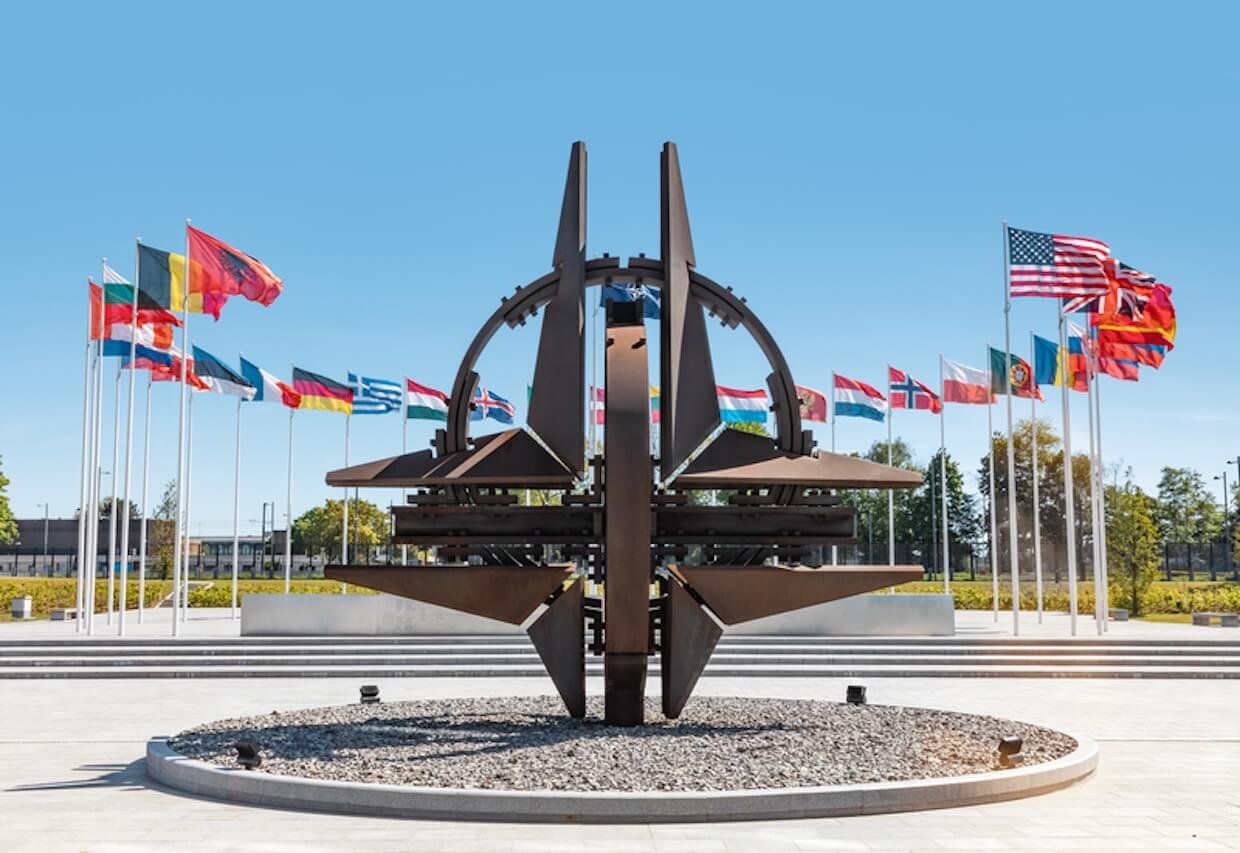
NATO headquarters and monument in Brussels, Belgium, the political and administrative center of the North Atlantic Alliance. Photo: Dreamstime.
On Ukraine, you have been unequivocal that Russia’s invasion must be resisted, that Ukraine deserves continued support, and that Europe should stop financing Russia through energy purchases. At the same time, Vänsterpartiet historically opposed Swedish NATO membership. How does the European left build a security policy that is credible against Russian aggression without accepting an open-ended militarization of Europe or abandoning its traditional critique of NATO?
MEP Hanna Gedin: I think one must be able to be critical toward NATO while, at the same time, not being naive. Of course, we live in a very dangerous world, and we need cooperation between countries when it comes to defending ourselves.
My party is not against the augmentation that we have seen in Sweden when it comes to military spending. This should not be taken from schools or hospitals and so on, but we want to impose a wealth tax instead. We also want cooperation between countries, the Nordic countries, and parts of the EU.
I don’t think it’s a smart way to militarize the EU as a side project to NATO and then increase military spending there as well. So, one must be able not to be naive while still being able to criticize the notion of building defense on nuclear bombs and so on. You must be able to do both.
Gaza, Israel, and International Law
You have been one of the European Parliament’s most outspoken critics of Israel’s conduct in Gaza and have called for suspension of the EU–Israel trade relationship, sanctions, and support for international accountability. You and Jonas Sjöstedt were also denied entry by Israel in August. What did that episode tell you about Europe’s leverage over Israel—and why, in your view, has the EU struggled to translate its language of international law into a common policy toward Gaza and the West Bank?
MEP Hanna Gedin: I think that the Swedish government and the EU have been too weak when it comes to Israel. As I said earlier, you need to uphold international law wherever you see crimes against humanity, whether it comes to what happens in Ukraine or what happens in Gaza.
What we see in Gaza is actually a genocide, and you can’t just wait for the ICC or the International Court of Justice (ICJ) to say, “This is a genocide.” You have a responsibility, as countries and as politicians, to prevent genocide, and this has not been done at the EU level.
I find it quite appalling that the EU keeps trading with Israel as if nothing has happened and that there are no consequences when you breach international law. Benjamin Netanyahu has an arrest warrant against him. This should, of course, be reflected in EU relations toward Israel.
Economic Cooperation with Turkey Makes the EU Quite Weak on Human Rights
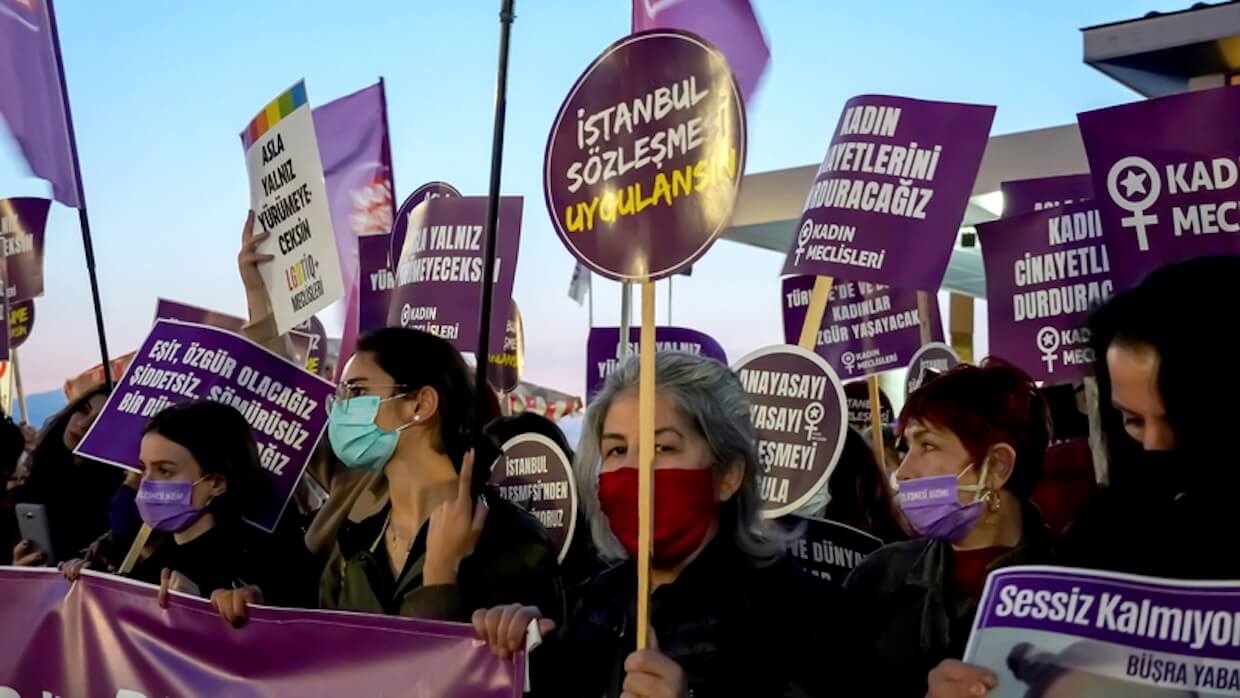
Women and LGBTQ+ activists in İzmir, Turkey, rally for the International Day for the Elimination of Violence Against Women, highlighting femicide and the withdrawal from the Istanbul Convention. Photo: Idil Toffolo.
Your parliamentary work has also addressed repression in Iran, women and girls under Taliban rule in Afghanistan, and the imprisonment of journalists and opposition figures in Turkey. How can the EU demand democratic standards from Iran, Afghanistan, or Turkey while avoiding accusations of selectivity when its economic, migration, or security interests lead it to cooperate with governments accused of serious rights violations?
MEP Hanna Gedin: This is also a problem with double standards. The EU’s economic cooperation with Turkey when it comes to migration, of course, makes the EU quite weak in also pushing for the upholding of human rights in Turkey. So, this is a problem with EU politics that you can see toward many countries—being hijacked when it comes to how to handle these countries.
Focusing on the Cost of Living Is the Only Way
You have repeatedly argued that Europe’s market-liberal framework restricts the public investment needed for the green transition, while rising rents, electricity prices, and living costs have intensified inequality. Radical-right parties have often converted economic insecurity into cultural and anti-migrant grievances. Does the left have to win the material argument—on housing, wages, energy, and welfare—before it can successfully challenge the far right’s politics of identity and resentment?
MEP Hanna Gedin: I think this is the only way, and we saw it in the Swedish election as well. My party, the Swedish Left Party, focused mainly on the cost of living, on issues related to bread and butter, and that is what made us the party that gained the most. That was the biggest success for us. We see it when it comes to EU policies as well. This right-wing environment that we’re living in at the EU level and in many countries, which focuses on cultural issues, makes people poor. You need to be able to focus on the cost of living instead.
In Sweden, during these last years, we have seen an explosion of inequality. We have 46 people in Sweden who own as much as eight million Swedish people, and we have 700,000 poor people in Sweden. The number of poor people has doubled in just a couple of years. This is the reality people are living in, and, of course, for the left, it is about focusing on those real issues—on how to make life nice and good and possible to live, and on reducing inequalities.
Rebuilding a Credible European Left
Finally, the European left faces a strategic dilemma. It wants to confront the radical right without simply reproducing its polarizing style, while also distinguishing itself from centrist parties associated with austerity, market liberalism, and restrictive migration policies. What would a credible European left project look like today—one capable of rebuilding working-class support, defending migrants and minorities, advancing gender equality and climate justice, and at the same time persuading voters who have drifted toward populist and radical-right parties that democratic politics can still materially improve their lives?
MEP Hanna Gedin: I think you need to be very concrete about what you want to change in society. When we talk about taxing the very rich, we get a very good response. For example, we see rising inequalities everywhere, and we need to focus on reducing those inequalities by also focusing on the cost of living, on what people pay in rent, on rising electricity bills, and on the fact that a lot of people are struggling to pay for their food. So, you need to be able to make life a good life without adapting to the far right and their narrative.
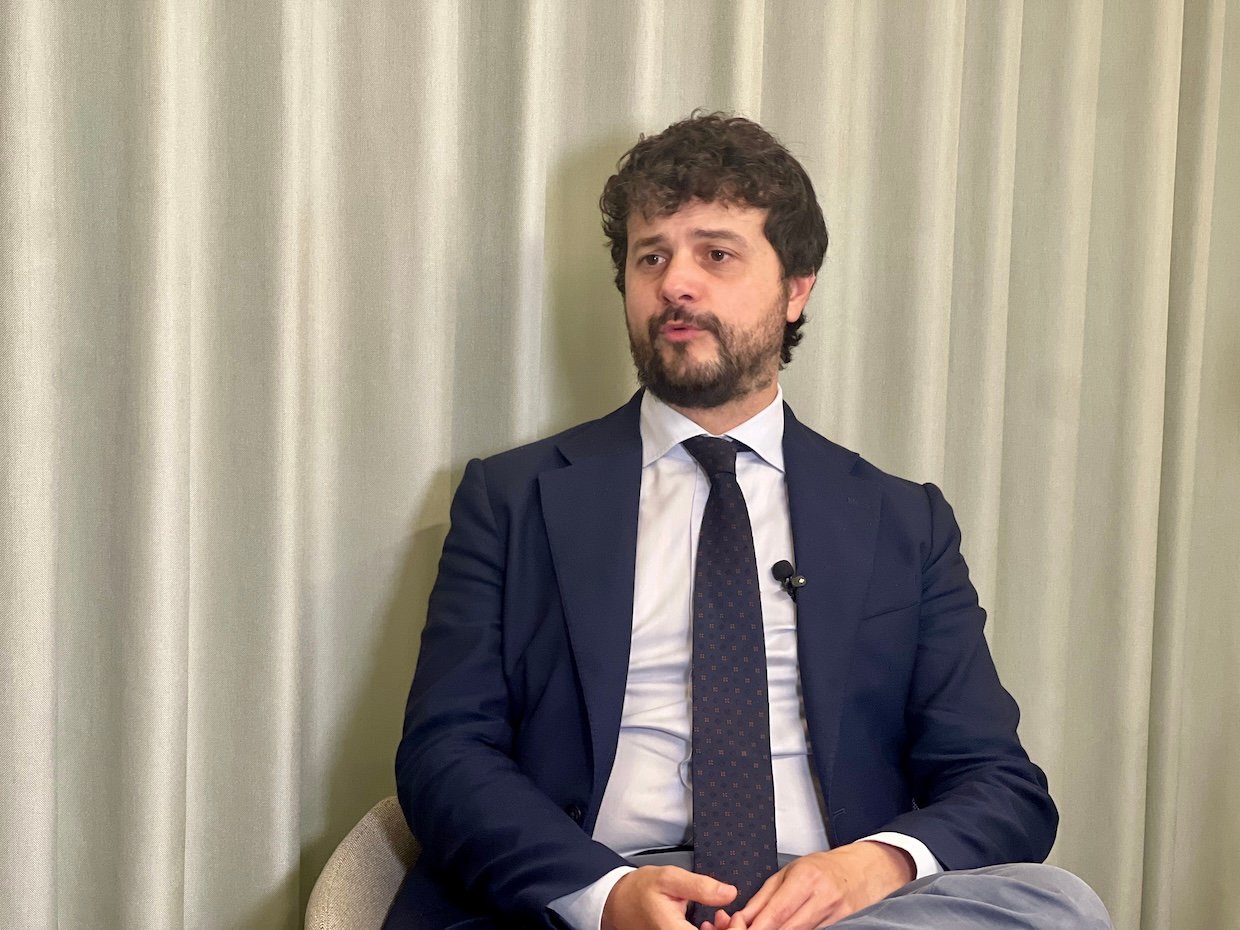
MEP Brando Benifei warns that Europe’s struggle for technological sovereignty is inseparable from the defense of democracy. In this ECPS interview, he argues that the EU must strengthen its technological capacity while preserving its regulatory autonomy against external pressure and concentrated corporate power. Benifei stresses that “regulations are decided in Europe, by Europeans, for Europeans” and warns that the extreme right has moved closer to “techno-oligarchs,” forging “a form of alliance and mutual support.” He describes this convergence as “an alliance of interests that is threatening our democracies.” Beyond regulation, Benifei calls for “a democratic reaction” and a “new social contract” capable of making European societies “more equal and freer.”
In an era in which technological power, geopolitical rivalry, and democratic vulnerability are increasingly intertwined, the European Union faces a double challenge: strengthening its strategic autonomy while defending the institutional and normative foundations of liberal democracy. Few policy areas illustrate this convergence more clearly than artificial intelligence, digital regulation, platform governance, and transatlantic relations. In this wide-ranging interview with the European Center for Populism Studies (ECPS), MEP Brando Benifei, Chair of the European Parliament’s Delegation for Relations with the United States and a central parliamentary figure in the development of the EU Artificial Intelligence Act, reflects on Europe’s technological dependencies, regulatory sovereignty, Big Tech power, disinformation, and the growing political relationship between digital oligarchies and the popuplist radical right.
At the center of Benifei’s analysis is the argument that Europe’s struggle for sovereignty cannot be reduced to economic competitiveness or technological capacity alone. It also concerns who has the power to establish the rules governing digital societies. He insists that Europe must develop its own technological capabilities while preserving its regulatory autonomy, arguing that “regulations are decided in Europe, by Europeans, for Europeans” and describing this principle as “an absolute red line.” At the same time, he warns that Europe cannot remain merely a regulatory power without developing the technological infrastructure necessary to sustain that role. As he puts it, the EU “can’t remain a regulatory reference if it doesn’t also develop the technological power that is needed today.”
The interview becomes particularly significant when Benifei turns to the political consequences of concentrated technological power. He argues that the rise of the extreme right is increasingly connected to powerful actors within the technology sector. “The extreme right has been getting closer and closer to these techno-oligarchs,” he says, adding that they have “forged a form of alliance and mutual support.” For Benifei, this convergence now constitutes “an alliance of interests that is threatening our democracies.”
His response is not limited to regulation. Benifei calls for what he describes as “a democratic reaction” and “the proposal of a new social contract” capable of making societies “more equal and freer.” In his account, inequality and declining freedoms can provide “fertile ground” for an alliance between the extreme right and techno-oligarchs and for what he characterizes as a “hateful and democracy-demolishing approach.”
Against this backdrop, the conversation explores the broader implications of AI governance, algorithmic amplification, digital enforcement, disinformation, transatlantic pressure, and European sovereignty. Benifei’s remarks ultimately frame the contemporary digital struggle not merely as a debate over innovation or regulation, but as a deeper contest over democratic authority, economic power, and the institutional capacity of Europe to determine its own political and technological future.
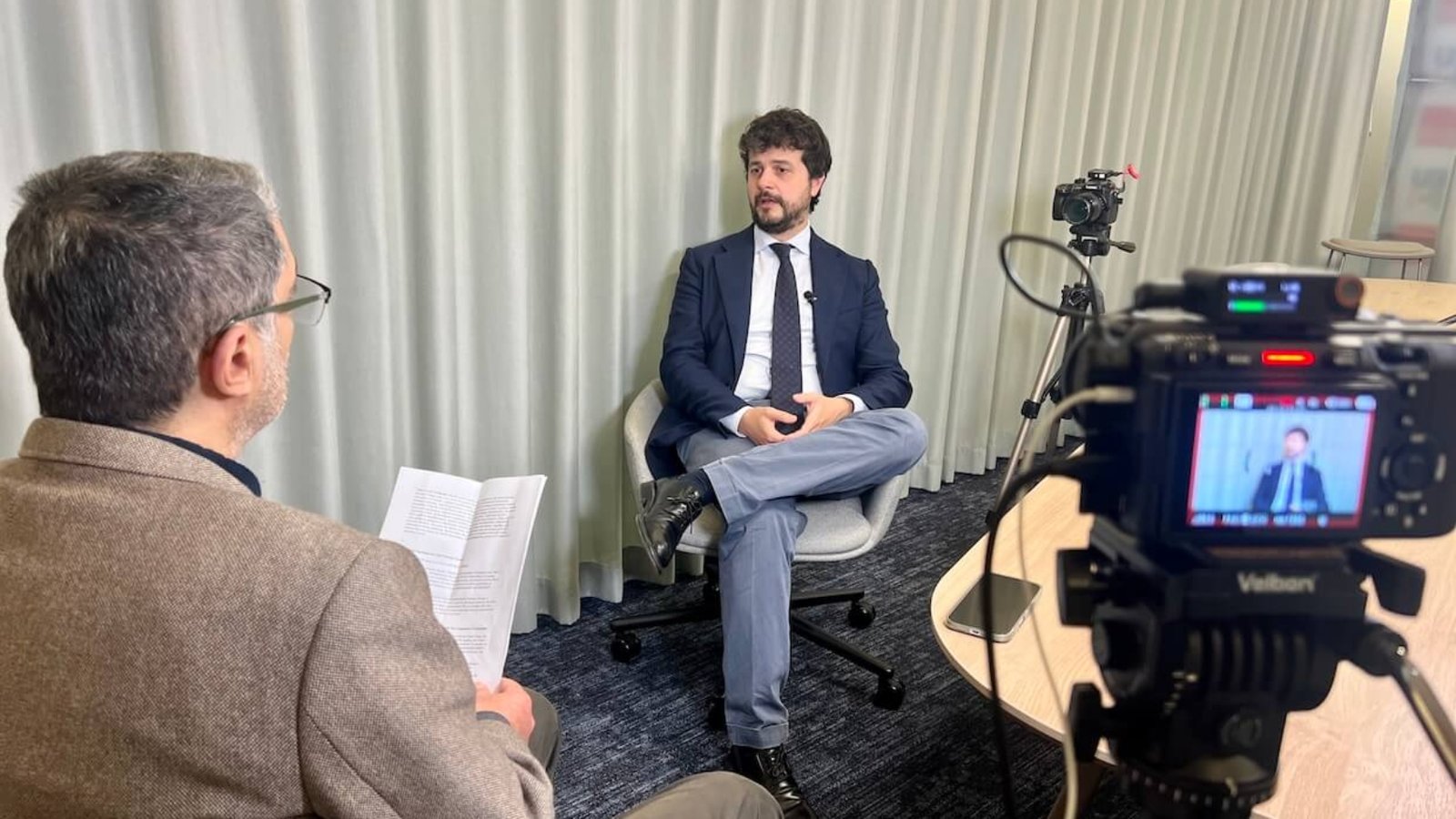
MEP Brando Benifei is the Chair of the European Parliament’s Delegation for Relations with the United States and a central parliamentary figure in the development of the EU Artificial Intelligence Act. Photo: Umit Vurel.
Here is our interview with MEP Brando Benifei, edited lightly to enhance clarity, readability, and overall flow for publication.
Europe Needs to Have a More United Voice
Brando Benifei, welcome! As Chair of the European Parliament’s Delegation for Relations with the United States, you have repeatedly defended a strong transatlantic relationship, while also arguing that Europe must become more capable of defending its own interests. Following renewed US pressure on trade, technology, defense, and digital regulation, has the transatlantic relationship entered a fundamentally more transactional phase? And what would a genuinely more sovereign—but still cooperative—European approach to the United States looks like?
MEP Brando Benifei: I think it’s important to consider that the relationship between the European Union and the United States is based on strong economic integration that has been developing over decades, but also on security, cultural exchange, and social interconnections. In fact, the economic interchange is the biggest between two areas of the world. The EU and the US have not only trade, but also a direct economic presence of EU companies in the US and US companies in the EU. That goes beyond any other similar comparison we could make between the EU and other parts of the world, or the US and other parts of the world, even compared with neighboring South America.
So, this transatlantic relationship is rooted in values and history, but also in economic interests at the moment. We always need to consider that when we look at what has been happening in these last months, where objectively the European Union has been pushed by the US administration to accept certain conditions, for example on trade, based on pressure and on profiting from the fact that the EU is not very united.
The truth is that the European Union is made up of countries that have been divided on issues such as different economic interests. So, the US was able to profit from these divisions to actually push for a relatively punitive regime for trade, which, in the end, was stabilized and ameliorated. It’s not, in the end, what was initially foreseen by President Trump, and it’s something that is viable today, but it’s the result of these pressures. We have also seen pressures regarding environmental legislation and digital legislation.
My point is very clear: we need this relationship. It’s very important that we work in the transatlantic context for various reasons. I tried to mention a few, but we need to demand respect. We need to have a more united voice. The United States doesn’t speak with the voices of its various individual states; it speaks with the federal voice of the United States, the federal administration. The EU should find its own voice, which today is not there.
This is crucial to having a healthier transatlantic relationship, based on respect and equal footing, which today is being put under pressure and called into question by the attitude of President Trump toward the Europeans.
The So-Called Kill Switch Has Already Been Pressed
You have argued that US restrictions on advanced AI chips amount to a direct challenge to Europe’s economic resilience and technological sovereignty, and that dependence on semiconductors, cloud infrastructure, computing power, and critical raw materials can become geopolitical leverage. Does Europe now need to treat AI infrastructure in much the same way it treats energy or defense—as a strategic capability that cannot safely remain overwhelmingly dependent on external powers?
MEP Brando Benifei:It’s crucial that we build more sovereignty on these topics because we have already seen that the so-called kill switch has already been pressed. In fact, the US has restricted the use of advanced models for cybersecurity objectives to the European Union from one day to another, and this was a clear challenge to our sovereignty and our capabilities because we were depending on systems that revealed themselves to be in the hands of another political actor that could really stop us from using them at any moment.
So, today technological sovereignty is one of the crucial points in how we can build a more autonomous EU, which can guarantee the future of its citizens in terms of security and economic prosperity. But this also means using resources today to develop this capability, which means deciding to devote some expenditure to it.
That’s why I support the idea of having a common plan of investment like the one we had after Covid. That’s also the idea in the Draghi report that has not been picked up by the member states, but that’s a very big mistake because we need that leverage today to invest in accelerating innovation for sovereignty and to guarantee that the EU has its own alternatives.
This doesn’t mean we need autarky or protectionism. It means we need the European Union to always be able to have alternatives when it becomes unviable to continue with the existing technological solutions.
Photo: Bustiuc Dumitru / Dreamstime.
Europe Can’t Remain a Regulatory Reference Without Technological Power
In your 2026 report on AI and EU trade, you argue that Europe must combine competitiveness, openness, and strategic autonomy rather than relying on regulation alone. Yet the EU still trails the United States and China in computing capacity, investment, cloud infrastructure, and AI scale. Can Europe realistically remain a global regulatory power if it does not also become a substantially stronger technological and industrial power?
MEP Brando Benifei:My opinion is that it can’t. It can’t remain a regulatory reference if it doesn’t also develop the technological power that is needed today, and this is a crucial point on which a lot of our efforts should be concentrated. In fact, the European Commission has taken some steps with the proposal of a digital sovereignty package, which was something that we could not imagine before. It’s the result of a new situation, and this package addresses important issues like semiconductors, cloud infrastructure, and open-source models. So, it goes deep into our present dependencies and tries to build an alternative.
But to pursue this agenda, we need political resolve. We need the willingness to actually go down a road that will create some tension with the US, with China, and with other powers. We need to know that. We need to be ready to sustain that through dialogue, obviously keeping a door open for discussion with all our counterparts, but having a clear objective of creating more European autonomy and sovereignty.
This is something that our citizens also want. If you look at the polling and surveys, our citizens are saying, “We want a more sovereign Europe. We do not want to depend on foreign technology.” It’s important that our governments listen to our citizens, who are saying this very clearly.
Regulatory Sovereignty as a Red Line
You have criticized US tariff pressure as potentially targeting not only European economic interests but also the regulatory and social model itself. Where should the EU draw the line between legitimate transatlantic negotiation and external pressure to dilute European rules on digital markets, food safety, environmental protection, data, or fundamental rights? Can regulatory sovereignty become one of the defining fault lines in future EU-US relations?
MEP Brando Benifei: Maintaining the principle that regulations are decided in Europe, by Europeans, for Europeans is an absolute red line. We cannot negotiate on legislation that is based on democratic processes. This is something that the US must understand, and I have to say that they have understood it at this moment. They knew that this attempt—to actually convince us to change legislation based only on their pressure—would be difficult for them.
We need to look realistically at the content of these pressures because, in some cases, they reflect existing dynamics in the European political scenario. I give you an example: the pressures to change some of the EU’s environmental legislation were, in fact, already sustained by legitimate political decisions inside the EU by political actors. So, this is a topic where we have seen some things changing in a way that the US liked, but it was, in fact, based on a political positioning inside the EU that was not related to US pressure.
On other topics, like digital legislation, however, there are clearly greater differences between what the US is asking of the EU and what the EU is ready to do based on its regulatory autonomy. This must be understood, this must be accepted, and we need to keep this as a clear red line because we cannot negotiate on our regulatory autonomy.
The Brussels Effect, at Least at the Company Level, Is Already Happening
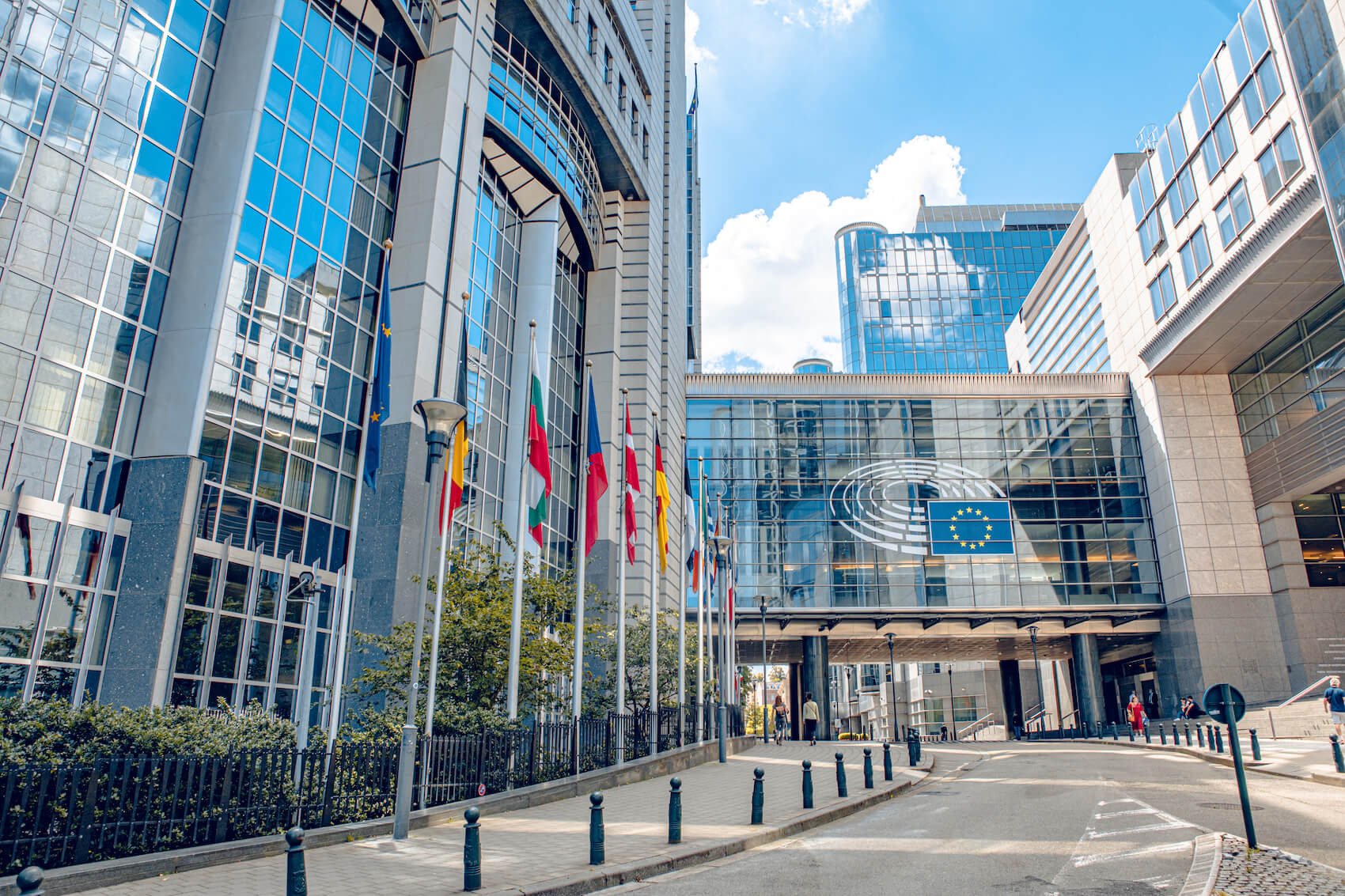
European Parliament offices and European flags in Brussels, Belgium on July 20, 2020. Photo: Lena Wurm.
You were one of the central parliamentary architects of the AI Act, and you continue to argue that Europe should promote a human-centric, risk-based model internationally. After several years of implementation debates, do you still believe that the so-called “Brussels effect” can shape global AI governance, or are divergent US, Chinese, and other models making regulatory convergence increasingly unrealistic?
MEP Brando Benifei: Clearly, regulatory divergence is an obstacle to this kind of convergence through the so-called Brussels effect. But let’s look at the data. We have researchers from important European foundations who have conducted scientifically sound surveys with American companies, showing that the AI Act has been taken as a reference point for voluntary compliance schemes, including by companies operating only inside the US.
So, the Brussels effect, at least at the company level, is already happening. That’s one of the dimensions of the Brussels effect, because it’s not only governments taking the same stances, but also companies voluntarily adopting ways of acting that reflect legislation that is not present in their internal jurisdiction but is, in fact, taken from the EU.
The decision could be linked to various reasons: operating in a global market or wanting to have easy-to-apply schemes that can be replicated globally. In fact, this is happening with US companies developing and deploying AI. The data are clear, and this shows that our approach has not been very bureaucratic or extremely complex, but rather quite company friendly.
I want to underline that a significant role for self-assessment has been built into the regulatory framework of the AI Act. Companies are entrusted with responsibility, but they are not asked to undergo a lot of third-party assessments, which is instead the case for other product-safety legislation, because we wanted to maintain some flexibility in this AI legislation, considering the quickly changing technological scenario.
So, I see some Brussels effect happening. Obviously, we are also looking more specifically—this is a slower process—at the adoption of similar legislation in other parts of the world. This is also happening. There are many parts of the world that, in recent months, have adopted legislation on AI content transparency, copyright protection, and countering AI abuse for mass surveillance that has been taken quite directly from the EU AI Act.
The AI Act and European Competitiveness
You have warned against presenting deregulation as the principal route to European competitiveness, arguing instead for investment, industrial policy, stronger European AI institutions, and better support for start-ups and Small and Medium-sized Enterprises (SMEs). How do you respond to the growing political argument that the AI Act and other digital regulations have become a competitive burden that Europe can no longer afford?
MEP Brando Benifei: In my opinion, we should listen to those who develop AI in Europe, because otherwise we are talking in a very abstract way. Those who develop AI in Europe tell us what their problems are and why they are not growing enough. One issue is access to capital, so we need an integrated capital market where more risk capital is flowing. They also face a lack of access to computational infrastructure. We are dealing with that through AI factories and AI gigafactories, but we need to accelerate.
They also say they have an issue with regulatory complexity, but this relates mainly to data legislation—the use of data—which is not linked to the AI Act. In general, they recognize that the AI Act protects them from abuses by bigger companies, often non-European ones, that do not want to share information and want to avoid transparency.
In fact, the AI Act is generally supported by those companies. When they look at the regulatory burden, they are more concerned about the overall amount of legislation, and more specifically about data, where they want further reform. This is what we are also working on at the EU level at the moment: simplifying data legislation.
They also want clearer, more harmonized enforcement. The problem today with the EU is very fragmented enforcement, where we still have rules that are too dependent on national implementation. This is something that I see as one of the crucial priorities.
And I don’t understand how we can sustain the argument that the problem would be the AI Act, considering that the AI Act applies to all companies that operate in Europe and sell products in Europe. This means that it is overwhelmingly more applicable to non-European companies, which make up the majority of those operating in the EU today on AI matters.
Open-Source AI and Digital Sovereignty
Image: Wrightstudio / Dreamstime.
You have described open-source AI as a “structural response” to the concentration of compute, cloud, and data in a handful of firms. Could open-source AI become a genuine pillar of European digital sovereignty, or is Europe still too dependent on non-European hardware, cloud providers, foundation models, and capital for open-source ecosystems alone to materially change the balance of power?
MEP Brando Benifei: We are still too dependent on these closed systems, and in fact, we need to build a better balance with open-source and open-weights models. This is something that is now a focus, and the EU’s open-source strategy will also deal with that. We are working on this, starting from the European Commission’s sovereignty package, and the EU is now concentrating more on it.
We are building some alternatives. We are working on this in terms of adoption, but also in terms of development in Europe, and that’s a way we need to pursue to rebalance the situation.
This is also something where we need to build more consciousness, more awareness, and more training on how to deal with this among our operators, our public administrations, and our entrepreneurs, because this is a way to rebalance power and to avoid the concentration of resources and power that we see today. That is an objective risk in how our AI is being developed today.
The Rules Need to Be Applied More Forcefully
Your interventions repeatedly emphasize that rules in the digital sphere will exist one way or another—the question is whether they are created democratically or effectively dictated by large technology companies. Have major digital platforms and monopolistic Big Tech actors acquired a form of quasi-constitutional power over speech, information visibility, political mobilization, and even democratic participation? If so, is existing EU law sufficient to constrain this concentration of private power?
MEP Brando Benifei: Many of the laws of the European Union are already capable of constraining this, but they need to be applied more forcefully. The point is the political will to apply the rules in a way that is not constrained by other political considerations, such as avoiding retaliation or political problems.
This means that we need more independence in how the rules are applied, and this is something we are discussing in the European Parliament. There is a discussion about building a digital enforcement agency that could bring more independent enforcement of the rules and depoliticize their application.
Today, this means overcoming the restraint on applying the rules in the right way and in the strong way needed to actually pursue this objective: having the rules really applied, not only conceived abstractly, but applied by democratic powers, and not decided among themselves by the strongest private actors, mostly non-European.
We Should Tackle Both Disinformation and the Algorithmic Structure
In discussing the European Democracy Shield, you argued that “democracy does not fall in one day” but can be dismantled “one post at a time,” and you stressed that the problem is not only foreign interference but also the platform business model itself, in which algorithms reward anger and polarization. Should Europe therefore stop treating disinformation primarily as a problem of false content and focus more directly on the underlying algorithmic architecture that systematically amplifies polarizing material?
MEP Brando Benifei: I think we should look at both sides because disinformation content can be extremely harmful even if we do not have addictive-design algorithms. So, we need to look at the content, but also, obviously, at the risks of the addictive construction of algorithms, which is being targeted by new legislation: the Kids Act for minors, but also the Digital Fairness Act for adults at large.
The way we are leading on this is extremely important, and this is something where we need this new legislation to be in place and integrated with the existing norms that focus more on disinformation content rather than on the algorithmic structure. The algorithmic structure also needs to be tackled with clear action, like these new proposals that are on the table.
One of them is already there, the Kids Act. The Digital Fairness Act, which is getting through very soon, will deal with these issues and should be an important piece in completing our digital regulation architecture.
Democratic Reaction Needed Against the Alliance Between the Extreme Right and Techno-Oligarchs
Anti-Trump protesters gather across from Trump Tower on Fifth Avenue during the annual Labor Day Parade in Midtown Manhattan, New York City, on September 6, 2025. Photo: Dreamstime.
You have explicitly warned that platform ownership and algorithmic amplification can assist far-right actors, citing Elon Musk’s intervention in German politics as an example. To what extent is the contemporary rise of the populist and radical right inseparable from the transformation of the digital information environment? Are we looking at a political phenomenon that traditional party competition alone can no longer adequately explain?
MEP Brando Benifei: There is clearly a link to these phenomena because we see that the extreme right has been getting closer and closer to these techno-oligarchs, and they have forged a form of alliance and mutual support. This is where we are standing now: an alliance of interests that is threatening our democracies.
I think it’s important that we react not only with rules, obviously, and with actions to tackle the most pernicious practices, but also with a democratic reaction, with the proposal of a new social contract where we are able to allow our societies to become more equal and freer. Because this is the context—with more unequal societies and less free societies—in which we see the nurturing of this hateful and democracy-demolishing approach that has become the fertile ground for this alliance between the extreme right and techno-oligarchs.
AI Companies Don’t Want to Be Regulated
And lastly, Mr. Benifei, populist radical right and far-right parties increasingly frame EU digital regulation, anti-disinformation measures, judicial independence, minority protections, and constraints on majoritarian power as forms of censorship or technocratic control. Is the central struggle now becoming one over the very meaning of democracy—between a liberal-constitutional conception based on rights and institutional restraints and a more plebiscitary or majoritarian conception of popular sovereignty?
MEP Brando Benifei: I find it honestly ridiculous, and I have said it many times, with a frank attitude toward my American interlocutors, that we hear from certain institutions or think tanks, especially American ones, that we are censoring and that there is no freedom of expression in Europe, while we have seen censorship happening very explicitly in the US. At the same time, we haven’t seen any of these kinds of actions and attacks from the US toward countries where there is no freedom of expression, there are no elections, there are limitations on anything that can be said, and you can end up in jail for real.
This has been a clear contradiction in the approach from the US, which makes it clear that, in this very extreme representation of the issue, there is instead a specific economic interest—a specific interest coming from companies that just don’t want to be regulated.
We need to take the discussion about freedom of expression seriously and avoid rules that also create, involuntarily, forms of censorship that are not needed. I take that very seriously. But the way this topic has been framed by American interlocutors, especially by the Trump administration has not been credible, and I’ve been very clear with them that they need to make a better case for us to be convinced of the benefit.
In this ECPS interview, Dr. Jasmin Hasanović analyzes Bosnia and Herzegovina’s October 4 elections through the lens of inter-, intra-, and cross-ethnic populism. He argues that the post-Dayton order continues to structure political competition around ethnically segmented constituencies, allowing parties to present themselves not merely as representatives but as protectors of threatened communities. This dynamic, he contends, helps explain why political change often fails to produce systemic transformation: institutional safeguards become “political currency,” while blockades and recurring crises reproduce the same underlying logic. As Dr. Hasanović puts it, “the algorithm that continually reproduces the crisis” is ethnically defined power sharing. The interview also explores the limits of civic alternatives, the weakness of cross-ethnic mobilization, and the prospects for a credible democratic left.
Bosnia and Herzegovina’s October 4 elections combined an important procedural innovation with striking political continuity. Biometric voter identification strengthened the integrity of the electoral process, yet turnout fell to around 42 percent, while the country’s major ethnonational parties remained dominant within their respective constituencies. SNSD consolidated its position in Republika Srpska, SDA retained substantial strength among Bosniak voters despite Bakir Izetbegović’s defeat in the presidency contest, and HDZ BiH secured the Croat seat in the state presidency. These outcomes provide the immediate backdrop to our conversation with Dr. Jasmin Hasanović, Assistant Professor of Political Science at the University of Sarajevo, about populism, ethnopolitics, democratic representation, and the structural legacies of the Dayton order.
At the center of Dr. Hasanović’s analysis is the argument that Bosnia’s political crises cannot be understood simply as the product of particular leaders or parties. Rather, they are embedded in a system in which ethnicity has become “a central organizing principle, not only in politics, but also in public and social life.” Electoral competition, he argues, operates largely through ethnically segmented party systems, while the populist construction of “the people” takes place between, within, and across ethnic communities. The October 4 elections, in his view, therefore illustrate “a continued dominance of inter-ethnic politics,” even as significant intra-ethnic competition persists, and cross-ethnic alternatives remain comparatively weak.
The interview’s central argument is captured most sharply in Dr. Hasanović’s assessment of the Dayton system itself. The power-sharing architecture, he argues, has tied access to power to ethnic representation in ways that make it politically rewarding for leaders to present themselves as “protectors, not only representatives, of their communities.” Institutional safeguards can consequently become “political currency,” while blockades and crises are repeatedly reproduced. As he puts it, replacing a governing party or overcoming a single institutional blockade does not alter “the algorithm that continually reproduces the crisis.” That algorithm, he concludes, “is ethnically defined power sharing.”
This structural perspective also helps explain why political change so often fails to become systemic change. In Republika Srpska, opposition to SNSD may challenge corruption or personalized rule without challenging the underlying ethnonational framework. Among Bosniaks, party pluralism can itself be portrayed as weakness when Serb and Croat political blocs appear more consolidated. And even when citizens share grievances over corruption, unemployment, inequality, public services, or institutional failure, Dr. Hasanović warns that “having the same problems does not produce a shared political identity.”
The interview therefore moves beyond the question of who won or lost on October 4. It asks whether Bosnia can generate a political subjectivity capable of transcending ethnic exclusivity—and whether democratic, socioeconomic, and civic demands can eventually reshape a system whose institutional logic continues to reproduce the very divisions it was designed to manage.
Here is our interview with Dr. Jasmin Hasanović, edited lightly to enhance clarity, readability, and overall flow for publication.
Inter-Ethnic Politics Still Dominates
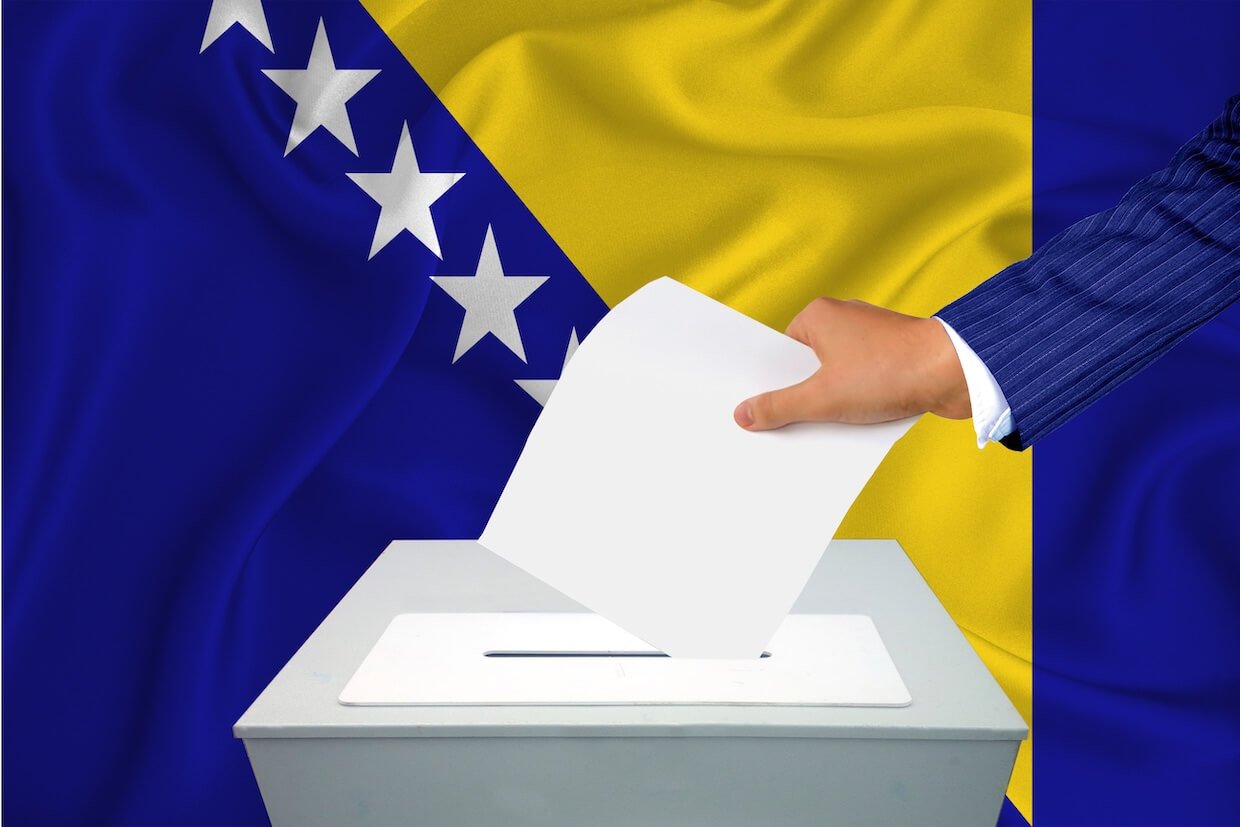
A voter casts a ballot against the backdrop of the flag of Bosnia and Herzegovina. Photo: Oleg Kachura / Dreamstime.
Professor Hasanović, welcome! Your recent article distinguishes between inter-ethnic, intra-ethnic, and cross-ethnic forms of populism. If we treat the October 4 elections as an empirical test of that framework, which of these dynamics appears to have been strengthened most clearly by the election results? Or does the election demonstrate that all three operate simultaneously, with different political consequences across Bosnia and Herzegovina?
Dr. Jasmin Hasanović: First of all, let me try to clarify what I understand by populism, because I think that would be the most important point at the beginning. I also want to distinguish populism from something that may appear as opposition politics within an ethnic community. That doesn’t have to be populist at all.
My understanding of populism, which is also described in the paper that you mentioned, is very much Laclauian. I see populism not as a kind of thin ideology or something like that, but as a political logic through which different unmet demands are brought together to construct a collective political subject, “the people.” And those demands establish a dividing line between “us” and “them.” So, the political identity of “us” is then constructed in relation to “them,” whether a ruling elite, another ethnic community and its political elites, or the institutional order itself.
Why I see this framework as important for understanding and explaining populism in Bosnia and Herzegovina is that, after the Dayton Peace Agreement was signed, Bosnia and Herzegovina has operated under a power-sharing system designed to ensure the political representation of the three dominant ethnic groups: the Bosniaks, the Croats, and the Serbs. They are defined as constituent peoples of the country. But the politicization of ethnicity very soon extended beyond the political aim of representation. It made ethnicity a central organizing principle, not only in politics, but also in public and social life.
This has two important consequences for Bosnia and Herzegovina. On the one side, we see that electoral competition takes place within ethnically segmented party subsystems, so voters are not formally required to vote along ethnic lines. However, the institutional arrangements, territorial divisions, and party mobilization, which we saw very clearly in those elections, strongly reinforce that pattern.
Secondly, given this ethnically structured political order, the populist construction of political subjectivity can take place in relation to ethnic communities. It cannot construct a political identity without referring to ethnic communities. So, depending on how it relates to ethnic communities, it can relate either between them, within them, or across them. That is why I made this distinction between inter-ethnic, intra-ethnic, and cross-ethnic populism, rather than relying on a simple, linear division between horizontal and vertical forms of populism.
Now, going back to your question and referring to the recent elections, I wouldn’t see the elections as an empirical test. Rather, I would see them as an illustration of how this framework works and interacts. What those elections demonstrated was, as you already mentioned, a continued dominance of inter-ethnic politics. So, the dominant parties remain the ethnonationalist parties, which mobilize around competing political claims and visions over the country. And every political party claims to represent and protect the demands of its respective community.
However, if we take a closer look, we will see that there is still significant competition, of course asymmetrical, within the ethnic groups and within the ethnic electoral arenas. For instance, we see the tension surrounding the dominant Bosniak political party, SDA, the Party of Democratic Action. As you mentioned, there is this tension between its relative electoral performance, which, of course, dominated in the elections within the areas of the country where Bosniaks are the dominant ethnic group, and, on the other side, the fact that its leader was defeated for the presidency.
What we also saw was the emergence of a stronger opposition within the Croat camp than there used to be before. What I want to say here is that ethnic homogenization was driven not only by opposition to other ethnic groups, but also by competition within them, as rival parties try to establish themselves as more credible defenders of the ethnic groups than the dominant ethnic political parties.
On the other side, cross-ethnic demands are still present, but they have not developed into a comparably strong electoral project, partially because electoral competition remains concentrated largely within monoethnic party subsystems, which makes it quite difficult for shared grievances to be connected across ethnic boundaries.
Dodik’s Influence Extends Beyond Office
Perhaps the most striking result came from Republika Srpska: Milorad Dodik was not himself on the ballot, yet SNSD retained its dominance, Željka Cvijanović won the Serb seat in the state presidency, and the party remained overwhelmingly powerful at entity level. Does this suggest that Dodik’s populism has become institutionalized beyond his personal leadership, or is this better understood through your category of inter-ethnic populism, in which voters are ultimately choosing their national “side” rather than an individual leader?
Dr. Jasmin Hasanović: It doesn’t mean that he was not an active part of the campaign. He remained the central political figure of SNSD during the campaign. He was present on billboards and at party rallies, so he was not missing from the public sphere. And not to forget that he also visited Moscow, where he met Vladimir Putin only days before the elections, together with the then Prime Minister of Republika Srpska, Savo Minić, who is now elected as the president of the entity. Vladimir Putin explicitly expressed support for the governing SNSD-led coalition.
When we see the results, it is obvious that Dodik’s political influence extends beyond holding an elected office. But what we also see is that SNSD probably could not reproduce the same dominance without him. He was not running, but he was still a dominant political figure. It is definitely the case that Dodik will remain and have influence behind the scenes in the political life of Bosnia and Herzegovina. His political party and all the ideology behind it, which he dominantly shapes, will remain central to government formation in Bosnia and Herzegovina.
This also shows the inefficiency of the Troika coalition in suspending Dodik and Dodik’s politics. I mean, he’s not running for office, but still, his presence is dominant, as we can see. Most Bosniak voters saw this as evidence that the Troika didn’t succeed in efficiently eliminating Dodik’s political rhetoric, which is threatening to the country. But also, Dodik’s victory was a slap in the face of the European Union and the internationals in this election.
Also, I don’t want to forget SNSD’s organization and patronage networks, because they allow Dodik’s leadership to operate through other candidates and through the established institutions of Republika Srpska. On the other side, his inter-ethnic populism reinforces that power by equating support for the party with support for Republika Srpska and the Serb people in the country.
Replacing Dodik Would Not Transform the Framework
Milorad Dodik greets supporters in Pale, Bosnia and Herzegovina, following a meeting and referendum on Republika Srpska’s National Day, September 25, 2016. Photo: Vladimir Stanisic / Dreamstime.
Your concept of intra-ethnic populism is especially useful because it distinguishes opposition to an entrenched ethnonational elite from opposition to ethnonationalism itself. In Republika Srpska, opposition actors may challenge SNSD over corruption, patronage, or personalized power while remaining committed to Serb autonomy and national interests. Does the October 4 result reinforce your argument that intra-ethnic competition can pluralize an ethnic political arena without necessarily weakening the underlying ethnonational conception of “the people”?
Dr. Jasmin Hasanović: Yes, here the distinction is between challenging the ruling elite of one ethnic community, on the one side, and challenging the ethnic principle of political representation, on the other. As we saw, and as you mentioned, opposition actors can mobilize around corruption, injustice, and personalized power, as was the case with Dodik’s opposition or the opposition to HDZ, although we also didn’t have Dragan Čović running for the presidency. But they do so without constructing, to go back to the case of Republika Srpska, a political people beyond Republika Srpska and Serb national interests.
That might open space for accountability, but it doesn’t produce different politics. The politics remains basically the same. This is most visible within the opposition in Republika Srpska. All the actors of the opposition in Republika Srpska share the same idea of what Republika Srpska is and should be. They share the same idea that Republika Srpska needs to remain a part of Bosnia and Herzegovina, even with stronger autonomy, and everything is understood as the main Serb national interest.
Every time Dodik defined Republika Srpska as being under threat, opposition parties aligned with Milorad Dodik. We saw that in practice. The recent reactions of prominent opposition leaders in Republika Srpska, mourning and paying tribute after the death of Ratko Mladić, who was a convicted war criminal and died while serving a life sentence, convicted of genocide and crimes against humanity, illustrate that ethnonationalist and revisionist positions remain, unfortunately, deeply embedded in Serb politics in Bosnia and Herzegovina. This extends beyond SNSD as a political party or Milorad Dodik as a leader.
So, replacing Dodik or SNSD at this point would not by itself transform the political framework within which both sides compete. The democratic potential of intra-ethnic competition depends on whether the demands for justice can become substantive commitments to creating a new political subjectivity, rather than simply claiming that another leadership will defend the same national project better than the previous one.
Because if you have a competition between the original and the fake copy, of course, you will always go for the original. So, I would explain that as one of the reasons why Milorad Dodik and SNSD still maintain a dominant position.
SDA Shapes Bosniak Political Identity
The Bosniak result presents an intriguing variation: SDA performed strongly at the party level, yet Bakir Izetbegović lost the presidency contest to Denis Bećirović. How would you interpret this apparent separation between party strength and leadership preference? Could it represent precisely the kind of intra-ethnic differentiation you describe—where voters challenge who legitimately represents the community without necessarily abandoning the ethnically structured political field itself?
Dr. Jasmin Hasanović: Yes, that’s something I already mentioned when I started answering your first question. What I would also like to point out here is that the relative success of SDA should be distinguished from an absolute expansion of its electorate. If we look at the preliminary results, we see that SDA mobilized and retained its voters more efficiently than its other competitors. Of course, we need to wait until all the results are finalized. But I see neither that SDA gained more votes nor that SDA lost some votes. I see that SDA is very stubborn in general and that it succeeded in mobilizing its strong voting base.
But I have to be very clear here regarding Izetbegović, because Izetbegović’s candidacy was a political risk for SDA from the very beginning. There were earlier signs of dissatisfaction with his leadership, so SDA was not really sure whether Izetbegović should be the candidate or not. There were also speculations about some other possible candidates before he was officially nominated to run for the presidency. It gave me the impression that SDA was not sure whether he was a good option or whether he would be a political risk for them, while, on the other side, also showing some inner weakness in lacking an adequate candidate to run for the presidency.
So, Izetbegović’s defeat, despite SDA’s strong performance, shows that support for the party goes beyond loyalty to its current leader. Where SDA gains its political power is rather symbolic. It comes from, of course, reliance on religion, the wartime legacy, and the symbolic authority of Bakir’s father, Alija Izetbegović, who was the founder of SDA and the first president of Bosnia and Herzegovina.
SDA has connected these sources of legitimacy with the claim that excluding SDA from power means excluding Bosniaks from political representation. This brings different demands together around the idea that SDA is not only the authentic political voice of Bosniaks, but also a defining force in shaping and safeguarding Bosniak national identity as a political nation.
Its ability to maintain a stable core of voters, despite a lot of splinter parties that have formed over the last 10 years, suggests that this identification that SDA is pushing forward remains very powerful in the relationship between SDA and the construction of Bosniaks as a political identity. What we also saw is that a lot of former leading figures who left SDA, after leaving SDA and trying other political organizations or forming their own political parties, failed to maintain comparable influence outside SDA.
Referring to Bećirović, unlike Izetbegović, who was the candidate of SDA in both election cycles, Bećirović was gaining broad coalition support in both cycles. Yet what we saw is that his lead over Izetbegović has now narrowed. He had more than 100,000 votes more than Izetbegović in 2022, and now the difference is only around 20,000 in the preliminary results of 2026. So, I believe that his earlier victory mobilized votes against Izetbegović rather than for himself.
This year, however, Semir Efendić, the president of the Party for Bosnia and Herzegovina, complicated this dilemma between Izetbegović and Bećirović and offered an alternative outside that binary.
So, the point is that voters may distinguish between the party and its leadership but still choose within an ethnically structured political field. Maybe that was not part of the question, but it’s also interesting that, although the presidency members are elected from one of the constituent peoples, they only have to present those constituent peoples in the presidency, not to represent them. However, their campaigns took place within a predominantly monoethnic political arena, so the candidates largely addressed only monoethnic electorates and the interests of the group they want to present and represent.
Collective Representation Is Not Automatically Populist
Among Croats, HDZ BiH again demonstrated its capacity to present itself as the principal guardian of collective representation, with Darijana Filipović winning the Croat presidency seat. How does the longstanding discourse of “legitimate representation” fit into your distinction between ethnonationalism and populism? At what point does a constitutional claim about group representation become a populist claim that one party uniquely embodies the authentic will of the Croat people?
Dr. Jasmin Hasanović: The demand for collective representation is not automatically populist. But it can become populist when the demand for legitimate representation connects different demands, from electoral reform to autonomy, under a common narrative of collective ethnic vulnerability. It can also become populist when it politically constructs the Croat people as a political subject whose rights and interests are under threat. This is the logic through which HDZ has largely shaped the discourse and agenda of Croat politics in Bosnia and Herzegovina.
The dispute over representation, together with the asymmetrical federal system in Bosnia and Herzegovina, which generated unmet political demands among Croats, helped HDZ consolidate its dominance within the Croat political arena. We also had, during the last 10 years or even more, very weak parts of the Croat opposition to HDZ. But that opposition also adopted the same narrative, challenging HDZ’s leadership while still sharing the central demands from which HDZ gains political relevance.
The victory of Darijana Filipović now gave HDZ something that it was lacking after previous elections: representation inside the presidency. Her victory also institutionally aligned HDZ’s political influence in the country, giving power to HDZ across all levels of the political system.
What may arise as a question right now is whether HDZ’s presence in the presidency can make it harder to sustain the claim that Croats are being excluded by Bosniaks outvoting their candidates, potentially exposing how the representation issue has also served HDZ in consolidating the party’s power. Filipović announced during the election campaign a plan to open an office in Mostar, the office of the Croat member of the presidency in Mostar, something similar to what Milorad Dodik also did regarding the office of the Serb member of the presidency in Republika Srpska.
That can be read not only as something that reinforces the deeper ethnic segregation of the country and the territorial identification of a state-level position with a particular ethnic constituency, but also as an aim of HDZ to consolidate its power.
Also, regarding the opposition, it is interesting territorially that the opposition to HDZ comes from political organizations of Croats from the central part of Bosnia and Herzegovina, while HDZ has a strong political base in Herzegovina, in the south of the country.
The question is whether this consolidation of power that HDZ gained can now weaken the narrative that was connecting different grievances around the idea of legitimate representation. Can it now allow the opposition to mobilize around other demands? That opening is possible, but it will depend on whether the opposition can offer more than a competing claim to defend the same national interests of Croats. Of course, those national interests are being defined exclusively by HDZ.
The People Is Not a Fixed Category
Muslims gather for a funeral in Maglaj, Bosnia and Herzegovina, in 2016, with an effendi wearing a turban visible among the crowd. Photo: Damir Đuhera / Dreamstime.
Your article argues that Bosnia is distinctive because political actors compete not only over who represents “the people,” but over which people constitutes the legitimate political community in the first place. After this election, we again have powerful Serb, Bosniak, Croat, and civic conceptions of political belonging operating simultaneously. Does this make Bosnia a particularly revealing case for populism theory precisely because the demos itself remain fundamentally contested?
Dr. Jasmin Hasanović: Yes, because Bosnia makes visible something that the dominant theories of populism take for granted: that the people is politically constructed rather than simply being a fixed category waiting to be represented. In terms of Bosnia and Herzegovina, we do not talk about Serbs, Croats, and Bosniaks as fixed and essential ethnic groups, but rather as political identities that are defined and constructed through their political demands, which interact with institutions, territorial divisions, and struggles over the state itself. This is because all three dominant ethnic political parties do not share the same perception of how Bosnia and Herzegovina should be, how it should be defined, or what the future of the country should be. Of course, their political identities are also defined in relation to the boundaries of what and who can represent them, not only among themselves, but also within the same ethnic group and ethnic community.
Without Alternatives, Abstention Becomes Rational
The election introduced biometric identification and significantly reduced opportunities for manipulation, yet turnout fell to roughly 42 percent and established ethnonational patterns remained remarkably resilient. How should we interpret this combination of cleaner electoral procedures and deep political disengagement? Does it suggest that improving electoral integrity is insufficient when citizens perceive the underlying structure of political choice as closed, repetitive, or ethnically predetermined?
Dr. Jasmin Hasanović: It was very important to secure those new voting technologies. It was interesting to see that, before introducing the new technologies, you always had complaints from political parties that didn’t gain enough votes, claiming that they had been defrauded or whatever. Now, only one political actor claims that somebody stole his votes or whatever. It gave a bit of legitimacy to the process, and securing electoral procedures is very important.
But I wouldn’t say that electoral integrity and democratic engagement are separate questions, because biometric identification can reduce fraud and make the election procedure more transparent, so that you know that nobody voted who was not supposed to vote, or voted twice, or so on. But it doesn’t do anything if citizens do not see a meaningful political alternative. So, you can have a very transparent and good electoral procedure, but the question is what is offered in the elections.
One of my concerns is that Bosnia and Herzegovina, in recent years, has very often offered changes in governing personnel, but it leaves the main structures of political choice and power largely intact. Even if we have new political actors, those are, in many ways, splinter parties from previously dominant political parties. So, you don’t have new leaders; you just have unsatisfied politicians who could not agree with leaders from their previous political parties, so they decided to form a new political party.
If people do not see alternatives, if they are not satisfied with the previous government but also don’t want to choose the previous actors again, or they simply feel that no party represents their demands strongly, then, in those circumstances, abstention from elections seems to be rational. It can reflect either frustration, a lack of choice, or just the weak mobilization potential of some of the political parties.
However, what I would like to point out here about the turnout, which is around 42%, is that we need to consider that percentage more carefully, because it is based on the official electoral register, which is not the same as the resident population. Citizens who have moved away may remain officially registered, even if they are not participating in the elections. So, we cannot simply conclude that 42% of adults actually living in Bosnia and Herzegovina really voted. What I want to say is that a turnout of 42% of registered voters does not mean that 42% of adults actively living in Bosnia and Herzegovina and registered really voted. They are still on the electoral register, but they are not in the country anymore.
Civic Alternatives Are Needed Across All Constituencies
Your work has repeatedly examined the difficulty of constructing political alternatives to Bosnia’s ethno-determined order. The multi-ethnic Troika suffered an electoral setback while established ethnonational parties remained resilient. Does this result expose a structural weakness of civic politics in Bosnia—namely, that civic actors must compete within institutions that already define political representation through constituent peoples?
Dr. Jasmin Hasanović: The preliminary results really show an electoral setback for Troika, but I would say it is an uneven setback within Troika. Individual parties of Troika received fewer votes, which is true. But the overall vote share of Troika remained roughly stable—not as influential as before, but roughly stable. Again, I’m saying this based on preliminary results, and it may change in the meantime.
Most of the losses within Troika were concentrated in the People and Justice Party and Naša Stranka (Our Party), while SDP experienced only a smaller decline. This increased SDP’s power within Troika and made Troika, if the coalition lasts—which I’m a bit skeptical about—more dependent on SDP’s electoral strength.
The previous mandate, as I also mentioned in the beginning, shows that replacing one party with another party or coalition does not automatically change the system or the political practices that are being institutionalized. Taking this experience of Troika, Troika is a very unusual ideological and political project. Troika replaced SDA as the predominant Bosniak component of the power-sharing government. But Troika’s alternative to nationalism remained concentrated only within the Bosniak electoral space, without comparable support among the Croat and Serb electorates.
This is the reason why parts of the public interpreted Troika’s compromises with nationalist coalition partners from the Serb and Croat political camps, with whom they shared power, as concessions at the expense of Bosnian political interests. This strengthened the narrative in which pluralism among Bosniak parties appears as fragmentation and weakness against two other more consolidated ethnopolitical blocs.
Overcoming that asymmetry would require credible civic alternatives within all three electoral constituencies, capable of constructing the people around shared democratic and socioeconomic demands beyond ethnic belonging. If such alternatives develop sufficient support and cooperation, they could make coalitions with nationalist parties less politically unavoidable. Otherwise, actors presenting themselves as alternatives to nationalism remain dependent on agreements with those parties.
Shared Problems Do Not Produce Shared Identity
Men play on a giant chessboard in a park in Sarajevo, Bosnia and Herzegovina. Photo: Henrique Weiss / Dreamstime.
Your concept of cross-ethnic populism suggests that common grievances—corruption, unemployment, inequality, institutional failure, lack of accountability—can potentially construct a political “people” across ethnic boundaries. Yet such mobilizations have repeatedly struggled to become durable electoral projects. Why are socioeconomic grievances so easily re-ethnicized in Bosnia, and what does the October 4 result tell us about the ability of ethnonational elites to convert class, governance, or anti-corruption conflicts back into questions of collective ethnic survival?
Dr. Jasmin Hasanović: What we saw is that having the same problems does not produce a shared political identity. We also see that, on the other side, ethnonationalist parties can use and reinterpret demands about jobs, corruption, or public services as questions of ethnic politics: who controls resources and whether our community is being disadvantaged in relation to other communities.
We could hear this narrative very clearly at the SDA’s final central rally in Sarajevo, where restoring positions to Bosniaks was linked to returning SDA members to those positions. Its control over employment and institutions is seen as a way of restoring Bosniak political strength. We see the same pattern in SNSD, Dodik’s party, in HDZ, and in other political parties.
Meanwhile, as you mentioned, why can’t these mobilizations construct the people across ethnic boundaries? The other problem is that we have a very fragmented media and public sphere in the country, and because of that, it is difficult for citizens to recognize similar problems and similar conflicts that are more essential and existential elsewhere in the country.
Overcoming this would require organizations that can collect everyday grievances into an equivalential chain of demands that can be sustained beyond a single protest or election, which is not happening. This may be a very unpopular option, but those organizations must first build credible support within the ethnic groups, within their own ethnic electoral arenas, and then connect those struggles across ethnic boundaries.
Because there is a significant ideological gap within monoethnic electoral arenas, where opposition to national elites does not develop around redistribution or public services, but around ethnic representation. Of course, only within the Bosniak electoral subsystem do we also see some kind of ideological opposition, but not within the Serb or Croat constituencies.
That is where I see an opening for—and this also may be very unpopular—a populist left within the ethnic groups to bring those demands together and construct the people around shared experiences of inequality and exclusion, rather than their ethnic belonging or party loyalty.
Dayton Rewards Leaders Who Act as Protectors
One of the most important implications of your recent article is that Dayton does not merely constrain populism; its power-sharing architecture may actually structure and reproduce populist possibilities. Thirty years after Dayton, do these election results strengthen the argument that institutional incentives themselves continuously reproduce the political need for Serb, Croat, and Bosniak leaders to demonstrate that their communities are threatened and therefore require exclusive political protection?
Dr. Jasmin Hasanović: Yes, it is a paradox, and it is interesting that the power-sharing principle in Dayton tied access to power to ethnic representation, which made it politically rewarding for leaders to present themselves as protectors, not only representatives, of their communities.
All three ethnic groups have different views of the country and, based on those views, different views of Dayton and the peace that was established. But the common ground among all three ethnic groups is that the Dayton framework is not satisfying for the group.
That’s the reason why the same actors can control institutions, on the one side, while, on the other side, portraying the constitutional order as a threat to their people and claiming that if we, as the legitimate representatives of our people, are not present in the institutions, then the other two groups are present, so we are threatened again.
So, refusing to cooperate with other ethnic representatives can also increase their power, while the institutional safeguards can very easily become political currency rather than simply a tool of protection against domination. Then you have different ways of blocking institutional procedures, meaning blocking the country from fulfilling its basic duties.
This is also why replacing a governing party or overcoming one institutional blockade doesn’t change the consequences—the algorithm that continually reproduces the crisis. The algorithm, of course, is ethnically defined power sharing.
Bosnia Needs a New Political Subjectivity
Photo: Dreamstime.
You make the provocative argument that intra-ethnic populism can, under some conditions, have a democratizing effect by breaking monopolies of representation within monoethnic political subsystems. Looking at the October 4 results, do you see evidence of such productive pluralization anywhere in Bosnia? Or has intra-ethnic competition largely remained competition over who can more credibly represent the same ethnonational project?
Dr. Jasmin Hasanović: Yes, much of that competition still concerns who can defend the same national interests more credibly. So, its potential democratizing effects still remain limited. There is also this dangerous asymmetry, where we can see this pluralism best among predominantly Bosniak parties. But this pluralism can be framed as weakness when the other two ethnic blocs appear more consolidated, which strengthens the ethnonational political party among Bosniaks by claiming that Troika is not sufficient to represent Bosniaks because it is more liberal or whatever and is making concessions to the other two very consolidated ethno-political projects. So, Bosniaks also need a very strong ethno-political project to represent Bosniaks.
The problem is that positioning themselves as intra-ethnic successors to the dominant ethnonationalists means, now in a theoretical way, that you are sharing the same inter-ethnic signifier, which risks becoming a floating signifier whose meaning is suspended or contested between two alternative equivalent frontiers. What you need is another political subjectivity, because sharing the same inter-ethnic signifier complicates the construction of a populist subjectivity that would reconfigure already existing demands and incorporate new demands needed for creating a new political subjectivity beyond the ethnic subjectivity.
Bosnian Populism Is Both Horizontal and Vertical
Bosnia’s populist politics also involves an unusual vertical dimension because “the elite” can mean not only domestic political establishments but also the Office of the High Representative, EU institutions, foreign embassies, and other international actors. How does this external layer alter the classic populist opposition between “the people” and “the elite”? Can international supervision itself become a resource through which domestic actors construct popular sovereignty against an allegedly external governing establishment?
Dr. Jasmin Hasanović: Yes, international involvement, which is described and defined within the Dayton Peace Agreement, complicates the distinction because domestic leaders can be part of the governing establishment while presenting themselves as opponents of an external elite. It also provides a way to redirect responsibility for their own failures, not only horizontally towards other ethnic groups, but also vertically towards decisions presented as externally imposed.
One example I mentioned in the paper is Milorad Dodik’s description of opposition leaders as “Schmidt Serbs,” associating them with the High Representative, Christian Schmidt, and portraying them as political groups representing the interests of foreigners rather than those of genuine Serb people. SDA also repeatedly portrayed Troika as imposed by international actors against the will of the Bosniak people. This brings an external enemy into an internal political struggle. That’s what I meant by saying that it complicates this distinction, because opponents are framed as serving foreign authority against their own people.
That’s also the reason why we cannot easily place populism in Bosnia and Herzegovina only on a horizontal or vertical line, because it has these overlapping moments and dynamics in relation to ethnic groups, as well as to the political framework and institutions within which the groups are functioning and operating.
The ‘Original Dayton’ Claim Is Paradoxical
Dodik responded to SNSD’s victory by reviving the language of returning to the “original Dayton,” including demands to restore competencies to Republika Srpska. How should we understand such claims within your framework? Is this primarily inter-ethnic populism, a sovereignty discourse, or a particularly Bosnian form of populism in which the constitutional order is simultaneously invoked as legitimate and attacked as having been corrupted by hostile elites?
Dr. Jasmin Hasanović: That’s an interesting claim. Dodik’s appeal to the original Dayton combines inter-ethnic populism with a claim to sovereignty, but it also involves SNSD presenting itself as giving the genuine interpretation of Serbian interests intra-ethnically. What this means in practice is that it presents Republika Srpska and the Serb people as victims of a political order that is not in their political interests. Their political interest in the 1990s was either autonomy or the idea of remaining in a Serb-dominated Yugoslavia, or something like that. Bosnia and Herzegovina is seen as a political project that was, and is, made up by international actors.
Politically, what I see as important is the question of what this language authorizes in practice. Is it further obstruction of the country and its institutions? Is it building parallel institutions? Or is it a general attempt to weaken the state, rather than simply a dispute about the constitutional history of the country?
It is also interesting why the original Dayton is important for Dodik and his populist claims: in the first version of the Constitution, the authority of state institutions used to be very weak. Referring to the original institutions also means that there is a stronger reliance on international actors. He claims to want to avoid the interference of international actors, which again is a paradox.
Justice Became Trans-Ethnic, but Not Political
Bosnian civil war. Naim Pasić mourns the loss of his wife and daughter at Lion Cemetery in Sarajevo, Bosnia and Herzegovina, on June 2, 1993. Pasić, 58, had left home to gather food for his family and returned to find his house destroyed and his wife and daughter dead. Tens of thousands of Bosnian civilians had been killed during the first year of the war. Photo: Mark Milstein / Northfoto / Dreamstime.
Your wider research on social movements and civic participation asks whether citizens can construct political subjectivities outside established ethnopolitical structures. From the 2014 plenums to accountability movements and other forms of civic mobilization, Bosnia has periodically produced moments in which ordinary citizens articulate an “us” against unresponsive institutions. Why have these moments proved so difficult to translate into sustained cross-ethnic electoral organization? Is the problem organizational weakness, institutional design, depoliticization, elite co-optation—or the absence of a sufficiently powerful alternative conception of “the people”?
Dr. Jasmin Hasanović: I will start with the last one: a sufficiently powerful alternative conception of the people has not been able to be politically constructed because of a combination of organizational weaknesses, institutional obstacles, very strong ethnonationalist backlash and countermobilization, and the difficulty of sustaining a common political identification that crosses ethnic borders.
The movements around Dženan Memić in Sarajevo and David Dragičević in Banja Luka are an important example because that was the first time there was one political idea—the idea of justice—that became trans-ethnic, that both ethnic groups could rely on and see as a strong political demand. However, that demand could not create a stable chain of equivalence that would provide a joint, common construction of the people capable of crossing ethnic identification.
As my research shows, that common demand for justice also carried different objectives. It was not sufficiently an empty signifier in that manner because, in the Federation of Bosnia and Herzegovina, in Sarajevo, it required stronger institutional accountability, while in Republika Srpska, it was a more direct challenge to the ruling regime.
But both actors in the protests never challenged the political system or the political constitution and never had any other goal beyond fighting for their own problem, for their own aim, which was very personal and very tragic because of the personal experience they faced. There was also no political actor that could transfer those demands into one wider political project.
So, solidarity crossed entity and ethnic borders, but it did not engage all constituencies equally. For instance, it was a matter between Bosniaks and Serbs, but it was not something that affected Croats in any way. It also did not consolidate into a shared political project capable of constructing a political identity in the first place.
A Credible Left Is Needed Across All Communities
And finally, Professor Hasanović, your work on the post-Dayton possibilities for the Left asks whether an alternative to ethno-determined politics can emerge from within the very system that entrenches it. After October 4, what pathway appears more plausible: attempting to construct an immediately cross-ethnic civic demos, or first pluralizing political competition within Serb, Bosniak, and Croat constituencies so that ideological, socioeconomic, and democratic cleavages gradually become more important than ethnic ones? Could such intra-ethnic pluralization eventually provide the bridge toward genuinely cross-ethnic politics?
Dr. Jasmin Hasanović: I believe that you referred to my work on the paper about the Left after Dayton—the earlier attempts to build a multi-ethnic left failed to gain support across electoral arenas. SDP is the best example of that because SDP presents itself as multi-ethnic, which is true, but its electoral support remains concentrated in predominantly Bosniak arenas.
Also, SDP’s prominent figures, like Denis Bećirović, who has now again been re-elected to the presidency from SDP, often speak in terms of exclusively Bosniak concerns. It is understandable that parties adapt their language to the voters who elect them. But, in that way, a multi-ethnic identity would require more than a declaration. It would require building support and trust across communities, which is very hard.
SDP has often been criticized for becoming a Bosniak left. My criticism is different. My criticism is not that SDP is becoming a Bosniak left, but that SDP is not a Bosniak left. It has neither articulated what a left would stand for—and, in practice, it shows very un-left politics—nor managed to build a convincing political left project among Bosniaks.
The problem is less where its voters come from than which demands mobilize them and whether those demands can be connected with similar struggles among Serbs and Croats. If you are democratizing and pluralizing within Serb, Bosniak, and Croat constituencies, but that pluralization is only for the continuation of ethnic representation, that is not the point.
What I see as a way of building the left is to work within the ethnic constituencies while deliberately building connections across them. So, a credible left is needed among Serbs and Croats as much as among Bosniaks. A credible left, even if that can be unpopular, can populistically create a political subjectivity demanding secure jobs, decent wages, and affordable housing. For instance, housing is a very common problem, not only in the world, but also in Bosnia. Universal healthcare, education, the problem of depopulation—a lot of people from Bosnia, from all three ethnic groups, are leaving the country.
Also, the credible left should talk about freedom from dependence on party connections but also oppose historical revisionism and the glorification of war criminals in all of its forms and be built on anti-fascist ideas. Such a politics must challenge elites within each community first, while refusing to make ethnic exclusivity the basis of its own program. But this development might be uneven between different ethnic groups. This is something that is still a challenge to be built, and those oppositions that I mentioned earlier are opening the space, but the dynamics that will shape those possibilities remain to emerge.
In this commentary, Dr. João Ferreira Dias examines how material grievances in France’s 2026 youth protests become intertwined with broader cultural, moral, and political claims. Rather than interpreting this simply as identity replacing class, Dr. Dias argues that concerns over education, housing, and employment are increasingly articulated alongside struggles over recognition, gender, racialization, colonial memory, and Palestine. He introduces the notion of a “hyper cause” to describe how certain issues can condense multiple struggles into a shared moral framework. The article also explores the risks of moral polarization, generational inequality, distrust in political institutions, and competing populist narratives, ultimately asking how liberal democracy can respond to legitimate grievances without allowing encompassing causes to erode pluralism and political restraint.
How does a protest about classrooms become a statement about the moral order of society? A photograph from Nantes, circulated by Expresso during France’s autumn 2026 mobilizations, brings the question into focus. Demands for education funding stand beside denunciations of the police, sexual violence, hostility towards Muslims and the Rassemblement National (RN). One placard announces disagreement with the others. The scene suggests convergence without unanimity: a material grievance provides a meeting place for a broader cultural left.
From Material Grievances to a Broader Moral Grammar
The grievances are real. Teacher shortages, overcrowded classes, deteriorating buildings and anxiety surrounding Parcoursup, the university admissions platform, feature prominently in reporting (Lecherbonnier & Pommiers, 2026). Their legitimacy does not, however, explain the entire political meaning of the mobilization. The analytical question concerns how concrete failures become connected to a more encompassing account of domination.
It would be misleading to describe this simply as identity replacing class. Housing, education and employment remain material concerns; they become articulated with struggles over recognition, gender, racialization and colonial memory. Fraser’s (1995) distinction between redistribution and recognition helps identify these dimensions without treating them as separate worlds. My argument is that sections of the contemporary left increasingly interpret both through a common moral grammar. A school without teachers and an institution accused of racism can become evidence of the same system abandoning, excluding or subordinating particular populations.
Several intellectual traditions enter this interpretation. Postmodern suspicion towards legitimating grand narratives, associated with Lyotard (1979; 1984), differs from decolonial accounts of enduring colonial hierarchies and intersectional analyses of connected inequalities. They should not be collapsed into one doctrine or attributed to every protester. Yet their convergence in activist discourse invites an irony: criticism of universal narratives can coexist with an increasingly comprehensive narrative of oppression. Frame alignment helps explain how distinct struggles become mutually intelligible (Benford & Snow, 2000); whether they share the same causes remains an empirical question.
Palestine as a “Hyper Cause” and the Convergence of Struggles
Palestine makes this operation particularly visible in the wider activist field, beyond what can be established from the Nantes photograph. Salih et al. (2021) document connections between Palestinian activism and Black and Indigenous struggles, including Ferguson and Standing Rock. More recently, Mendoza Sandoval and Portos (2026), studying Spain, show how an anticolonial framing makes Palestine a prism for interpreting injustice within activists’ own societies. These studies identify mechanisms relevant to the French case, rather than proving their prevalence among its school protesters.
I would describe Palestine’s role in some of these networks as a “hyper cause”: a cause that condenses other struggles and helps organize their moral meaning. This is an analytical proposal, not an established category. Gaza then signifies both a concrete humanitarian catastrophe and a wider account of colonial violence, racial hierarchy and Western power. Solidarity becomes a way of locating oneself within that account. The danger appears when commitment to one cause becomes a test of legitimacy across unrelated questions, or when identifying a common adversary takes precedence over examining different institutions and responsibilities.
This convergence can generate effective coalitions. It can also encourage moral polarization. Research connects moralizedattitudes to resistance to political compromise (Ryan, 2017). The progressive Brazilian Instagram accounts that read French protests immediately as resistance to welfare dismantling suggest a related mechanism of transnational recognition. Their reception needs systematic study, but the hypothesis is clear: a foreign event can confirm an existing political identity before its national circumstances are examined.
Generational Insecurity and the Erosion of Democratic Confidence
Those circumstances complicate the interpretation. The OECD’s latest compilation places French public pension expenditure at roughly 13–14% of GDP (OECD, 2025). Meanwhile, households whose reference person was under 30 devoted 25.7% of income to housing after allowances in 2024, against less than 13% for those with a reference person aged 65 or older; student-reference households are excluded (Dufour et al., 2026). Substantial aggregate protection can coexist with unequal access to security. Lynch (2006) explains how institutions entrench the age distribution of welfare. Treating retirement entitlements as untouchable while younger generations’ prospects remain negotiable raises a distributive problem, without demonstrating that pensioners have captured the state or directly caused school shortages.
The democratic promise becomes vulnerable here. Education and work were expected to make independence attainable. When they cease to offer a credible route to it, ideological narratives supply explanations of betrayal and identify those responsible. The 2026 CEVIPOF survey records 82% attachment to democracy alongside just 22% trust in politics and 15% in parties (CEVIPOF, 2026). These population-wide figures reveal a tension, not the attitudes of the protesters themselves.
Attachment to which democracy? Zakaria (1997) distinguishes electoral government from constitutional liberalism. Endorsing popular sovereignty does not establish commitment to judicial independence, minority rights or legitimate opposition. Wuttke et al. (2022) challenge a uniform account of democratic decline while identifying, in some countries, citizens whose democratic self-description coexists with less democratic attitudes. Demands for democracy can therefore contain illiberal possibilities when the authority of a morally defined people is placed above constraints on its power.
Competing Narratives of “the People” and the Limits of Liberal Democracy
The political translation is contested. Muxel (2025) identifies divisions within French youth, including radical-left mobilization and growing attraction to the radical right. Mélenchon’s La France insoumise explicitly supported the October mobilization (La France insoumise, 2026). Le Pen’s camp offers a competing narrative of national decline and restored authority. These projects differ substantially, but neither the invocation of “the people” nor mobilization itself settles the question of liberal commitment.
The central problem is thus how material insecurity becomes organized into moral camps. The cultural left can connect social provision to recognition and decolonial solidarity; the radical right offers different accounts of dispossession and belonging. Both must be assessed through their acceptance of pluralism and limits on power. Liberal democracy needs to recover the credibility of an attainable future while ensuring that neither a just grievance nor an encompassing cause becomes a license to deny opponents their rights.
References
Benford, R. D. & Snow, D. A. (2000). “Framing processes and social movements: An overview and assessment.” Annual Review of Sociology, 26, 611–639. https://doi.org/10.1146/annurev.soc.26.1.611
Dufour, C.; Lartigau, T.; Parizeau, E. & Zedam, P. (2026, September 23). Le logement pèse moins sur le budget des ménages en 2024 qu’il y a dix ans, sauf pour les plus modestes (Insee Première No. 2128). INSEE. https://www.insee.fr/fr/statistiques/9053584
Lynch, J. (2006). Age in the welfare state: The origins of social spending on pensioners, workers, and children. Cambridge University Press. https://doi.org/10.1017/CBO9780511606922
Mendoza Sandoval, L. & Portos, M. (2026). “‘We are not freeing Palestine, Palestine is freeing us’: Intellectuals and the anti-colonial framing of the Palestinian solidarity movement.” American Behavioral Scientist. Advance online publication. https://doi.org/10.1177/00027642261472333
Ryan, T. J. (2017). “No compromise: Political consequences of moralized attitudes.” American Journal of Political Science, 61(2), 409–423. https://doi.org/10.1111/ajps.12248
Salih, R., Zambelli, E., & Welchman, L. (2021). “‘From Standing Rock to Palestine, we are united’: Diaspora politics, decolonization and the intersectionality of struggles.” Ethnic and Racial Studies, 44(7), 1135–1153. https://doi.org/10.1080/01419870.2020.1779948
Wuttke, A.; Gavras, K. & Schoen, H. (2022). “Have Europeans grown tired of democracy? New evidence from eighteen consolidated democracies, 1981–2018.” British Journal of Political Science, 52(1), 416–428. https://doi.org/10.1017/S0007123420000149
Klaudia Koxha(Postdoctoral Fellow at the University of Lausanne).
Speakers
“Populist Strategies of Normalizing Demographic Fears,” by Oscar Mazzoleni (Professor in Political Science and Political Sociology at the University of Lausanne).
“The Scientific Normalization of ‘the Great Replacement’ Conspiracy,” by Alberta Giorgi (Associate Professor in Sociology of Culture and Communication at the University of Bergamo).
“From Demographic Winter to Civilizational Struggle: Anti-Abortion Networks and the Global Radical Right,” by Carol Mason (Otis A. Singletary Chair in the Humanities and Professor at University of Kentucky, US).
“Mestizaje, Backlash, and the Politics of Demographic Populism: Race and Gender in Latin America,” by Carlos de la Torre (Professor at the Centre for Latin American Studies, University of Florida).
“Anti-Muslim Mobilization: Demographic Change and Radical-Right Populism in Austria,” by Reinhard Heinisch(Professor of Comparative Austrian Politics at the University of Salzburg, European Studies Center associate at the University of Pittsburgh and visiting lecturer at Renmin University of China).
Klaudia Koxha is a Senior Researcher at the University of Lausanne, where she works on an international research project examining radical right populism and conspiracy theories across four European democracies. She holds a PhD in Political Science from Paris Lodron University of Salzburg and was a visiting researcher at American University in Washington, DC. Her research focuses on populism and the radical right, European integration and EU policy, gender equality, party politics, and comparative and multi-level politics. Alongside her academic work, she has contributed expertise to regional and international organizations on issues including gender equality and inclusion, integrity, and democratic governance. She regularly contributes to public and policy debates through invited talks, lectures, and expert commentary, with her work featured in outlets including EUobserver, El Mundo, The European Correspondent, and DeFacto. She is co-editor of The Radical Right and Demographic Populism (Manchester University Press, 2026), New Dynamics of Contestation in EU–Western Balkan Relations (Palgrave, 2026), and Perspectives on Populism (Nomos, 2024). Her recent research appears in Government and Opposition journal, with further work accepted for publication in Comparative European Politics and forthcoming with Presses de l’Université Laval.
Oscar Mazzoleni is a professor in political science at the University of Lausanne where he leads the Research Observatory for regional research. He has achieved an interdisciplinary educational path, with a degree in sociology and anthropology and a PhD in contemporary history between the universities of Lausanne and Turin. He has been visiting professor and research fellow at the Universities of Columbia, Cornell, Laval, Geneva, Groningen, Torino, Sorbonne-Panthéon- Paris, Science-Po-Paris, Valencia, Salzburg, European University Institute of Florence, La Tuscia, and Roma-Sapienza. His current interests are devoted on political parties, populism, nationalism, regionalism, electoral studies, and Swiss politics in comparative perspective.
Alberta Giorgi is an associate professor in Sociology of Culture and Communication at the University of Bergamo. Her work explores discursive boundaries and classifications, particularly at the intersection of politics, gender, religion, and science. She has recently co-edited with H. Eslen-Ziya, (Un)silencing Academia in Times of Epistemic Conflicts. Navigating Online Violence (Routledge 2026). She is co-editing with Pauline Cullen Mapping Political Sociology Ambiguities and Complexities for Unpredictable Futures (Routledge 2026)
Carol Mason is the Otis A. Singletary Chair in the Humanities and a professor of Gender and Women’s Studies at the University of Kentucky, USA. She is the author of four books on various aspects of the rise of the Right since the 1960s. University of California Press published her latest monograph, From the Clinics to the Capitol: How Opposing Abortion Became Insurrectionary, in 2025.
Carlos de la Torre is a professor at the Centre for Latin American Studies at the University of Florida. He has authored several manuscripts and edited volumes on populism. His most recent books are Populism and Fascism, Elements in the History and Politics of Fascism (Cambridge University Press, 2025); Global Populisms with Treethep Srisa-nga (Routledge Press, 2021); Populisms: A Quick Immersion (Tibidabo editions, 2019); and Populist Seduction in Latin America (Ohio University Press, second edition, 2010).
Dr. Reinhard Heinisch is a Professor of Comparative Austrian Politics at the University of Salzburg and head of the Department of Political Science. He received his academic training in the US where he completed his PhD at Michigan State University and then taught at the University of Pittsburgh from 1994 to 2009. Heinisch’s research focuses on the rise of the radical right, populism, democracy, and political parties. Dr. Heinisch is the author of over 40 research articles and more than 50 other scholarly publications including 14 books. His research appeared in journals such as Journal of European Political Research, Political Studies,Journal ofCommon Market Studies, Party Politics, West European Politics, Democratization, Representation, and many others. His book publications include Understanding Populist Party Organization: The Radical Right in Western Europe (Palgrave 2016); The People and the Nation: Populism and Ethno-Territorial Politics in Europe (Routledge 2019), Political Populism. A Handbook, Nomos (2021), and Politicizing Islam in Austria (Rutgers University Press 2024).
In an interview with the ECPS, Professor Damir Kapidžić examines Bosnia and Herzegovina’s October 4 elections through the intertwined lenses of ethnonationalism, democratic erosion, patronage, institutional paralysis, and foreign influence. He argues that the country’s principal democratic danger lies less in dramatic constitutional breakdown than in the “slow death” of institutions gradually weakened by illiberal practices, elite capture, and political incentives that reward dysfunction. Professor Kapidžić also highlights the durability of ethno-national patronage, the limits of civic alternatives, and the persistence of war memory and religious identity in structuring political competition. Looking beyond the elections, he cautions that Bosnia remains “stuck in the past,” with democratic renewal unlikely without changes in both domestic incentives and the wider external environment.
Bosnia and Herzegovina approaches its October 4 elections at a moment when the country’s post-Dayton political order is once again under pressure over statehood, entity autonomy, ethnic representation, and democratic legitimacy. The campaign is shaped less by a conventional left-right divide than by competing visions of citizenship, constituent peoples, sovereignty, and the future of the Bosnian state. Against this background of ethnonationalism, populism, democratic erosion, and geopolitical influence, the elections offer an important vantage point from which to assess not only who will govern, but also the deeper institutional structures that continue to constrain Bosnia and Herzegovina’s democratic development.
In this wide-ranging interview with the European Center for Populism Studies (ECPS), Professor Damir Kapidžić, Professor of Comparative Politics at the Faculty of Political Science and Director of the Institute for Social Science Research at the University of Sarajevo, argues that Bosnia’s most consequential democratic danger may not take the form of spectacular constitutional collapse. Rather, it lies in the gradual erosion and paralysis of institutions. “We do see the possibility of what I would not call a dramatic constitutional breakdown, but rather a slow death,” he warns, explaining that institutions can simply cease to function when government formation, regulatory bodies, or judicial appointments are left indefinitely unresolved. In his assessment, “the gradual normalization of illiberal practices is likely to continue,”while “a more likely scenario… would simply be a slow demise.”
Professor Kapidžić situates this institutional vulnerability within the contradictions of the Dayton system. While power-sharing has helped prevent renewed large-scale intercommunal violence, he argues that political elites have also “been able to capture the system for their own purposes.” The resulting elite consensus, he observes, has often centered not on effective governance but on “keeping the rule of law weak, not resolving wartime legacies, and capturing state institutions.”
These dynamics are reinforced by deeply embedded patronage networks. Coalition negotiations, Professor Kapidžić notes, are rarely programmatic; instead, they revolve around “the division of power and resources rather than the creation of policies.” Ethnonational parties therefore operate not only as guardians of identity but also as gatekeepers of material opportunity, presenting themselves as protectors of their communities’ access to “resources and employment.”
Looking beyond October 4, Professor Kapidžić remains cautious about the prospect of democratic renewal. Bosnia, he argues, is “very stable, but also stable in a negative sense,” with progress occurring “either very slowly or not at all.” The deeper problem is a political order “stuck in the past”—not simply the wartime past, but “the past 30 years of very little changing.” Without altered domestic incentives and a transformed external environment, Bosnia risks remaining trapped in what he describes as a recurrent political loop, “without clear signposts, clear guidelines about the possibilities, or a clear path forward.”
Here is our interview with Professor Damir Kapidžić, edited lightly to enhance clarity, readability, and overall flow for publication.
Bosnia’s Elections Reflect Deeper Ethno-Political Divisions Over What the State Is and Should Become
A voter casts a ballot against the backdrop of the flag of Bosnia and Herzegovina. Photo: Oleg Kachura / Dreamstime.
Professor Kapidžić, welcome! Bosnia and Herzegovina enters the October 4 elections amid renewed disputes over statehood, entity autonomy, ethnic representation, and democratic legitimacy. Looking at the campaign as a whole, is this primarily an election about who governs—or, more fundamentally, about what kind of state Bosnia and Herzegovina should be?
Professor Damir Kapidžić: In its basic sense, the election is about who will govern for the next four years. But in a broader sense, it is also about competing visions of what the country actually is and what it should become in the future. These visions usually do not collide directly because the parties are not competing for the same voters; they primarily seek support within their own ethnic groups. It is something that I call a sub-divided party system with sub-groups, where competition actually takes place between parties representing the same ethnic group.
Within each group—among Serbs, Croats, or Bosniaks—there is relatively little dispute over the broader vision of how the state should be organized. The major disagreements lie between the three groups, but they are not competing for the same electorate. So, essentially, what we see in the electoral arena is a manifestation of the deeper ethno-political divisions within society.
Power-Sharing Preserved Peace but Failed to Produce the Elite Compromise Bosnia Needs
In your work, you argue that the Dayton system brought peace but failed to overcome tensions generated by ethnic patrimonial elites, weak rule of law, and unresolved wartime legacies. Three decades later, has power-sharing become part of the problem it was originally designed to solve by institutionalizing ethnicity as the principal language of political competition?
Professor Damir Kapidžić: Yes, this is a trick question, because power-sharing has both positive and negative sides, and weighing them against each other can be complicated. Let’s just recap. It has been more than three decades since the war in Bosnia-Herzegovina ended and the Dayton system was put in place, and during that time we have not seen a single major incidence of violence between communities. There has been lived violence, but not known physical violence. This is largely due to the power-sharing system.
At the same time, however, elites have been able to capture the system for their own purposes. This is a key element of consociationalism, the type of democracy established through the Dayton Peace Agreement in Bosnia-Herzegovina: elites are needed to represent the interests of their own groups. But the thinking behind this is that those elites should also be willing to compromise with one another, and that is what we have not seen.
The only compromise that has happened is exactly along the lines you mentioned and that I have written about: keeping the rule of law weak, not resolving wartime legacies, and capturing state institutions. There is agreement among elites on that, but not on how to govern the country effectively or how to make compromises. That is the element of the Dayton system that has never really come forward. Because if elites had the ability to compromise, they would also be able to address the first question: what kind of state do you want Bosnia-Herzegovina to become?
Bosnia’s Populist Polarization Operates Within Ethnically Defined Voter Groups
Would you describe the dominant form of populism in Bosnia and Herzegovina as essentially ethnonational populism? In other words, is the classic populist division between “the people” and “the elite” transformed here into a more dangerous distinction between “our people,” rival ethnic communities, domestic elites, and allegedly hostile foreign actors? And during the current campaign, how important is the invocation of external patrons or enemies in reinforcing these narratives?
Professor Damir Kapidžić: Yes, this is definitely not a typical form of populism in Bosnia. I would probably describe it as a hybrid ethno-national populism, because the main adversary of “us” or “our people” is not so much the other group—although they are also part of it—but rather enemies within our own group.
So, populism here is threefold. It operates within each of the ethnic party groups and is directed not so much against the other groups themselves as against the ideas those groups represent. It is not aimed specifically at politicians or citizens living in other parts of the country. Rather, it targets the “traitors within our own ranks,” so to say. This kind of populism uses the ethnic narrative to polarize within one’s own group, because that is where the electorate is.
You can see this happening among Croats, Bosniaks, and Serbs at the same time. The polarization is there, but it does not transcend these ethnically defined voter groups.
Republika Srpska Still Operates as a Form of ‘Competitive Authoritarianism-Lite’
Milorad Dodik greets supporters in Pale, Bosnia and Herzegovina, following a meeting and referendum on Republika Srpska’s National Day, September 25, 2016. Photo: Vladimir Stanisic / Dreamstime.
Your research on subnational competitive authoritarianism shows how executive dominance, economic power, patronage, informal party networks, and ethnically bounded political competition can produce uneven autocratization within Bosnia and Herzegovina. To what extent does Republika Srpska under the SNSD still represent the clearest example of this model ahead of the 2026 elections?
Professor Damir Kapidžić: Yes, within Bosnia-Herzegovina, it still represents the clearest example. There has been some reduction in the elements of competitive authoritarianism, mainly due to several court cases that have limited certain powers of the Republika Srpska parliament and government, as well as some backroom deals, with the help of the United States, that have rolled back some of these elements.
However, the system still exists, and Republika Srpska remains the clearest example. We could still characterize its subnational regime as a kind of competitive authoritarianism-lite. This is also reinforced by external patrons and actors that emphasize the ability, or the need, of the Republika Srpska government to retain as much autonomy as it can muster. Of course, this also shapes the way the current SNSD government uses these external patrons to justify the capture of some of these institutions.
Much of Dodik’s External Support Now Comes from the Trump Administration
Milorad Dodik is not himself a candidate, yet his political influence remains central to the SNSD’s campaign and to its framing of Republika Srpska as being under pressure from Sarajevo and international actors. How important is this personalized form of leadership for the persistence of ethnonational populism, and can the SNSD reproduce the same political model without Dodik formally holding office? To what extent can external support—from Serbia, Russia, Hungary, or other actors—help sustain this political strategy during the election period?
Professor Damir Kapidžić: You are correct: Milorad Dodik is not running in these elections, but if you look at the SNSD billboards, he is always there. That reflects the aura he still carries and his ability to influence politics. He remains one of the most relevant politicians in the country, and his narrative is still taken seriously by voters in Republika Srpska.
That said, he no longer has the same institutional influence. There has to be another form of leadership, including personalized leadership among other politicians. He is not going to be the one speaking for the government. So, there is a trajectory in which Milorad Dodik is slowly becoming less present in the country’s politics. It is very likely to follow a similar scenario to Poland under Kaczynski, where taking a backseat from politics allows others to make use of the power they now have.
External support has always been important, but currently Milorad Dodik and the SNSD are no longer receiving support from Hungary, luckily. They are receiving only limited support from Russia, because Russia is focused on other issues. The same goes for Serbia, which is in the midst of its own electoral campaign with an unclear outcome.
But Milorad Dodik has been able to do something that nobody thought was possible: gain support from the United States of America. Much of his external support now actually comes from the Trump administration, including inviting Trump Jr. to Banja Luka, the capital of Republika Srpska, and trying to create both business and political connections with the United States. That can definitely create support for the SNSD, but also for Milorad Dodik personally.
Being in Opposition Does Not Make a Party Less Nationalistic in Republika Srpska
At the same time, the opposition in Republika Srpska challenges the SNSD over corruption, patronage, institutional degradation, and personalized rule without necessarily rejecting a strong Serb national framework. Does this mean that the central contest inside Republika Srpska is less between nationalism and post-nationalism than between competing claims about who can most credibly represent Serb interests?
Professor Damir Kapidžić: Exactly. This is also what I’ve been talking about: competition and polarization take place within these ethnic groups, particularly around issues of corruption and patronage. These are among the main issues driving polarization: the “traitors” who are stealing from us as a people versus those who promise to bring in a clean slate. Nationalism remains present. Being in the opposition does not make a party less nationalistic; the difference lies in the kinds of policies it defines and sets out within its nationalist agenda.
Religion Versus Secularism Remains the Central Cleavage Distinguishing Bosnia’s Party Families
Muslims gather for a funeral in Maglaj, Bosnia and Herzegovina, in 2016, with an effendi wearing a turban visible among the crowd. Photo: Damir Đuhera / Dreamstime.
On the Bosniak side, the political spectrum ranges from the SDA’s national-conservative and state-protective discourse to the more civic and social-democratic language of the SDP, Naša stranka, and other actors. How meaningful is this ideological distinction when virtually all major Bosniak-oriented parties operate within a political environment in which the survival and integrity of the Bosnian state remain highly salient?
Professor Damir Kapidžić: They are still ideologically distinct. Both Bosniak nationalist parties and the more civic-oriented social-democratic and liberal parties cater to a very similar electorate. Their main distinction concerns secularism and the role religion should play in politics. The SDA takes a moderate position, viewing religion as important—much like the German Christian Democrats—and as a foundational element of politics. This is clearly rejected by the SDP and Naša stranka, who see the only way forward as a clearly secular state.
They are therefore brought together by the idea that Bosnia-Herzegovina must continue to exist as a unified state, probably even a more centralized one than it currently is. But they are divided by this secular cleavage, which is the main cleavage in the country’s party politics. This distinguishes Serb, Croat, and Bosniak parties on the basis of religion, while also distinguishing the civic, social-democratic parties as the secular element—the fourth element—within this party landscape.
Individual Equality Collides with Collective Representation in Bosnia’s Political System
The Croat political debate continues to revolve around “legitimate representation,” particularly the argument that Croats should be able to determine their own member of the state Presidency. How should we understand this dispute theoretically: as a legitimate minority-protection demand within a consociational system, as ethnonational entrenchment, or as a conflict between two defensible democratic principles—individual equality and collective representation?
Professor Damir Kapidžić: The last element is very important here because individual equality—the equality of voters and candidates themselves—collides with the idea of collective representation of a group as such. For example, this whole debate about collective, “legitimate representation,” as it is called, emerged from voting patterns showing that the Croat representative in the current Presidency did not receive his votes primarily from areas with Croat voters. Territorially, his support was more closely aligned with a Bosniak electorate.
This goes against the principle of collective representation, according to which peoples should be able to vote for their own representative. On the other side, you have individual equality, which means that, as a citizen of the country, ethnicity is very fluid. You can redeclare yourself within a limited timeframe, especially as a politician, and you are not required to vote for your own ethnic group.
So, these two principles—individual equality as personhood and the ability to choose one’s identity—collide with the rigid institutional framework of collective representation. The Croats, who are the smallest constituent people, are the ones who have lost out in this contest. You have to see this from their perspective: as being outvoted, or as a form of majoritarization of institutions that, according to the country’s institutional framework, would belong to them. Individual equality here does not translate into representation, which creates the theoretical problem that something needs to change for the system to work, because in its current form it disadvantages the Croats in particular.
In Bosnia’s Ethnically Divided Party System, Demographics Is Destiny
This leads to a broader paradox in Bosnia’s civic politics. Advocates of a stronger citizenship-based state see civic democracy as a way beyond ethnocracy, while many Croat and Serb actors perceive the same project as a vehicle for Bosniak majoritarianism. Is there a politically viable model of civic democracy in Bosnia and Herzegovina that can overcome ethnic segmentation without weakening the security guarantees of smaller constituent peoples?
Professor Damir Kapidžić: Again, this is mostly a trick question, because in ethnically divided societies such as Bosnia-Herzegovina, demographics is destiny, especially when the political party system is so clearly divided along ethnic lines. The problem is that Bosniaks are now a majority in the country. As in any democratic system with a clear majority, you can define and lead politics in the way you want. Even with minority protections, this would create enormous tensions, because we are not speaking about minorities; we are speaking about almost half the population, which does not agree with what the other 53 or 55 percent would vote for.
The other problem is that these ethnic differences are territorially concentrated. You have areas with clear Croat or Serb dominance, which makes a civic system of majoritarian rule almost impossible.
The only country that has been able to overcome this kind of ethnic gridlock is the Netherlands. Its consociational system began to be dismantled when the main dividing lines between Protestants and Catholics became weaker. As religion receded from public life in the Netherlands, other cross-cutting cleavages became more important.
We are not there in Bosnia-Herzegovina, and I do not know if we ever will be. Religious lines here are more clear-cut than those between Catholics and Protestants. So, as for when this might change, it is probably not going to happen soon.
Religious Identity Is Becoming More, Not Less, Important Among Younger Bosnians
Religion is closely intertwined with national identity in Bosnia and Herzegovina—Islam with Bosniak identity, Serbian Orthodoxy with Serb identity, and Catholicism with Croat identity—yet theological questions themselves are rarely the main electoral issue. How does religion function politically today: primarily as faith, as a marker of ethnonational belonging, or as a symbolic resource that political actors can activate during periods of heightened insecurity? And how significant are transnational religious, cultural, and political networks linked to Serbia, Croatia, Turkey, or Russia in shaping these identities during election campaigns?
Professor Damir Kapidžić: Yes, identity is clearly salient in Bosnia, and in our research we track it over time. It is not becoming less important; if anything, it is becoming more important among younger people and younger voters. So, it remains a clear element of personal identity.
We speak here of what we call an identity package, and you mentioned these pairings: Islam with Bosniaks, Serbian Orthodoxy with Serbs, and Catholicism with Croats. We also add a third element, which is language. These languages are mutually very close, almost indistinguishable, but they are called differently and therefore also belong in this identity basket.
All of this becomes much more pronounced during elections, and religion functions in all the ways you mentioned. It is very much faith-focused and very much individual. As an individual, you would not necessarily use it for political purposes. At the same time, however, it is a marker of belonging, so people may perform more religious rituals—whether Sunday Mass or Friday prayer in the mosque—during periods of electoral campaigning. You want it to be seen as a marker of who you are. The same applies to politicians. All of a sudden, you see them becoming more religious in their practice.
Religion also functions as a symbolic resource, because politicians sometimes revert to old narratives of insecurity and threat, talking about churches and mosques that were destroyed during the war and about rebuilding and protecting them. These elements all come together, with religion used both as a personal marker and as a political campaign resource.
What has changed to a large degree, though not completely, is that religious authorities are no longer directly part of political campaigning. That was more common in the past, when they would play a more active role in suggesting—which they could not do openly—which parties would be in the best interests of a particular ethnic group.
When it comes to transnational players, this is much less present. You mostly see it through cultural identity ties, so not so much through religion itself, but through cultural connections, including folklore groups. From Russia, for example, we had biker gangs a few elections ago with a great deal of Christian Orthodox iconography attached to them. But this is relatively minor compared with the way individuals use religion to signal their own belonging and identity to voters.
War Memories Remain a Key Component of Political Mobilization in Bosnia
Ratko Mladić is depicted on a Serbian flag during a political rally in Belgrade, Serbia, on May 29, 2011. Mladić is a former Bosnian Serb military leader. Photo: Dreamstime.
Your work stresses that unresolved memories of the 1992–95 war continue to segment society. How important are Srebrenica, competing narratives of victimhood, the commemoration or glorification of wartime actors, and memories of ethnic cleansing in reproducing contemporary political boundaries? Are these memories still genuinely decisive for voters, or are political elites strategically keeping them alive because they remain effective instruments of mobilization, as seen during Ratko Mladić’s funeral?
Professor Damir Kapidžić: They are a key component of mobilization, in the sense that they serve a purpose when political elites need them. However, I would not say they are genuinely decisive in themselves; rather, the absence or negation of some of these memories can be decisive. For example, a Bosniak politician cannot play down Srebrenica and still expect to be elected. Likewise, a Serb politician cannot place Ratko Mladić firmly in the category of war criminals and still expect to be elected.
In that sense, keeping these figures and events at least in a neutral, and sometimes positive, light becomes an important performative element of campaigning. They also serve to mobilize very specific segments of the electorate. So, political actors need to know who their voters are and strategically when and where these narratives can be used.
Some practices, such as the glorification of war criminals, are prohibited under the laws of Bosnia-Herzegovina, so politicians also have to be careful about how far they go; otherwise, they may face removal from the electoral roll. All of this is therefore used very strategically.
That said, most voters still see key moments and individuals from the war as important in a broader sense. They may be more inclined to support a politician who lays flowers or gives a commemorative speech at a memorial to a person or place that is meaningful to them, whether in Croat-majority areas or elsewhere in the country. So, there is a strong performative dimension, but mobilization also takes shape around these smaller, local sites of memorialization.
The More Likely Scenario for Bosnia Is a Slow Institutional Demise Rather Than Sudden Authoritarianism
You have argued that democratic erosion in Southeast Europe often occurs incrementally: elections continue, but governing parties weaken constraints, dominate institutions, exploit patronage, and tilt the playing field. In the Bosnian context, should we therefore be more concerned about dramatic constitutional breakdown—or about the gradual normalization of illiberal practices within formally competitive elections?
Professor Damir Kapidžić: I would argue both. Primarily, my work analyzes how institutions are gradually weakened over time so that they can be more easily captured. This gradual normalization of illiberal practices is still ongoing, and it is reinforced by a political system that sometimes rewards inefficiency.
However, there is also a flip side to Bosnia’s consociational system: it introduces another layer of checks and balances—ethnic checks and balances—which means that no single politician or party can dominate the entire political system. There are always other ethnic groups that keep that in check. You can see this, for example, at the state level. These institutions are not the main or strongest institutions, but they are almost impossible to capture because other groups are always trying to keep their foot in the door as well.
At the same time, we do see the possibility of what I would not call a dramatic constitutional breakdown, but rather a slow death. Institutions can simply stop functioning because some aspects of government formation, regulatory bodies, or judicial appointments are not strictly defined by time. So, you can simply allow these institutions to slowly die out.
We also have not talked much about the Office of the High Representative, the international body that essentially oversees the implementation of Dayton. It has been weakened to the extent that it cannot intervene effectively if these kinds of political practices intensify.
So, essentially, the gradual normalization of illiberal practices is likely to continue, but only up to a certain point before it becomes authoritarian. A more likely scenario, however, would simply be a slow demise.
Ethno-National Patronage Is Central to How Bosnia’s Dominant Parties Survive
How important are patronage, control of public resources, public-sector employment, party-linked media, and informal economic networks compared with ideology in explaining the durability of Bosnia’s dominant parties? Does ethnonationalism survive partly because political parties have successfully fused identity protection with material dependence on party-controlled institutions?
Professor Damir Kapidžić: Yes, very much so. You can clearly see that patronage is important for most parties. There have very rarely been programmatic coalition talks, even after elections. Most coalition negotiations are about the division of power and resources rather than the creation of policies.
So, you can definitely see that elements such as control over public procurement and the ability to employ people in state-owned enterprises have shaped how parties survive and how they are able to withstand the passage of time and other pressures.
There is, therefore, this element of ethno-national patronage that is clearly important, because patronage itself is also defined within the three groups. Parties see themselves not only as protectors of a group’s identity, but also as protectors of the group’s ability to distribute resources and employment.
Foreign Disinformation Remains Present, but Bosnia’s Fragmented Electoral System Makes Large-Scale Interference Difficult
Your recent work places Bosnia and Herzegovina’s democratic trajectory within a wider geopolitical and transatlantic context. As the country approaches the October 4 elections, how should we distinguish legitimate foreign influence from more problematic forms of electoral interference? What roles are the European Union, the United States, Serbia, Croatia, Russia, Turkey, Hungary, and China playing through diplomacy, party networks, media, religious and cultural ties, economic leverage, lobbying, or disinformation? Are some external actors merely supporting preferred domestic partners, or are they actively reshaping the electoral playing field and reinforcing ethnonational or illiberal politics?
Professor Damir Kapidžić: Here we do see this shifting electoral landscape. I mentioned already that even the support of the United States is shifting in terms of the parties and actors it supports. The most steadfast and clear support has actually come from the European Union, although it is much weaker and more diffuse than that of some of these other actors.
In terms of the type of foreign influence we can see, most of it is very unofficial. It operates through media channels, control of media publishing houses, and the way certain events are framed. Most of these actors are not particularly interested in what happens in Bosnia and Herzegovina, perhaps with the exception of Russia, which still wants to maintain a place where it can gain some influence. But even that has weakened compared with several years ago.
Most of the actors simply see this as a contest in which they can exert influence through what I would mostly call cheap means. If it involves generating online disinformation and specifically tilting the electoral playing field slightly toward one candidate or one party, then they might do that. But again, the problem here is that, in order to govern, you need to tilt several electoral playing fields at the same time within these ethnically defined voter groups, which in itself is a complex problem. Specifically, if we think about how the country is governed, it is not worth it.
It is not a clear yes-or-no situation, such as, for example, in Romania, where you could exert a lot of influence to get a Russia-friendly candidate elected. Here, it would take much more effort across several different voting groups, with sometimes a not-so-clear outcome.
In this sense, a lot of it is simply about supporting particular actors rather than trying to influence the process directly, but you do still see the element of foreign disinformation present.
Citizens Are More Willing Than Politicians to Compromise
Men play on a giant chessboard in a park in Sarajevo, Bosnia and Herzegovina. Photo: Henrique Weiss / Dreamstime.
You have also written about citizens’ assemblies and other democratic innovations as possible responses to democratic deficits, polarization, and citizens’ exclusion from decision-making. In a society where representative institutions are heavily structured by ethnicity, could deliberative mechanisms create meaningful cross-ethnic political space—or would they remain too weak to challenge the deeply institutionalized power of ethnonational parties?
Professor Damir Kapidžić: Yes, there were several democratic innovations in the country, including citizens’ assemblies at both the local and national levels. At a very basic level, you could see that citizens, when deliberating among themselves, do not agree on everything, but they are much more willing to compromise and to arrive at solutions that represent a step forward—something that reflects compromise among all the sides involved. So, they are much more willing to do the work that politicians are not willing to do.
This takes place at the level of ordinary citizens: randomly selected groups that mirror the population distribution of the country in terms of ethnicity, age, gender, and so on. But you also mentioned the element of power, and the citizens here, essentially, even though they were sometimes called by city governments or the national parliament to deliberate, do not have the power to challenge these deeply institutionalized rules of governance.
So, their results and recommendations are transferred to decision makers once the citizens are done. In a sense, the citizens do not make the decisions; they create an avenue for decision-making, whether in Parliament or by government, allowing decision makers to legitimately draw on these recommendations in cases where the policy would make the country better as such.
So, in a sense, yes, they can provide a way out of political gridlock. But they themselves do not have the power to do so without institutional support from already existing institutions.
Bosnia Is Stuck in a Loop Without Clear Signposts or a Clear Path Forward
And finally, Professor Kapidžić, looking beyond October 4, what trajectories do you see as plausible for Bosnia and Herzegovina over the next several years? Could these elections open space for more functional cross-ethnic bargaining and democratic renewal, or are the country’s institutional incentives, ethnonational party structures, geopolitical pressures, foreign influence, and unresolved historical divisions more likely to reproduce the existing pattern of recurrent crisis? And what would have to change—domestically and internationally—for Bosnia to become less vulnerable to external interference and move decisively beyond what you have described as being “stuck in the past”?
Professor Damir Kapidžić: I think, by themselves, these elections won’t bring too much change. You might see different parties in government, and this is also one of the good things about the Dayton political system: transfers of power between governing and opposition parties have happened in the past without producing crisis or conflict. So, that might happen. However, a different mode of governing, non-ethnic politics, or even democratic renewal is highly unlikely.
In a political sense, Bosnia is very stable, but also stable in a negative sense, in that progress happens either very slowly or not at all. In a sense, this is best described as being stuck in the past. The past here is not so much the wartime past, but rather the past 30 years of very little changing.
So, what would need to happen for this to change? Mostly, there would need to be a change in the external environment and in the incentives for politicians to act differently. We have not seen any meaningful change in the external environment over the past 20 years, even though globally there have been massive changes, with the Russian invasion of Ukraine, the rise of China, AI, and the United States moving more toward nationalist politics.
But for the region itself, not much has changed, and this is what produces this pattern of recurrence in Bosnia-Herzegovina. You don’t see a clear way forward, whether toward the European Union or elsewhere. There are very few alternatives. You’re stuck in a loop, trying to figure out in which direction you want the country to develop, without clear signposts, clear guidelines about the possibilities, or a clear path forward.
In this ECPS interview, Professor Wolfgang Merkel examines the rise of the AfD, the weakening of Germany’s traditional political center, and the broader crisis of representation reshaping the party system. He warns that mainstream parties risk strengthening the far right when they adopt its positions: “If mainstream parties try to outflank right-wing parties by adopting their positions, they risk legitimizing them.” Professor Merkel also criticizes the Brandmauer as “a political mistake” and rejects an AfD ban as an attempt “to save liberal democracy by illiberal means.” At the same time, he emphasizes the resilience of German democracy, urging greater confidence in institutions and civil society. His conclusion is clear: “We Democrats need to be more optimistic.”
In this wide-ranging interview with the European Center for Populism Studies (ECPS), Professor Wolfgang Merkel, Director at the WZB Berlin Social Science Center and Professor of Political Science at Humboldt University Berlin, reflects on the transformation of Germany’s party system, the rise of the AfD, the weakening of the traditional political center, and the challenges these developments pose for democratic resilience. A leading scholar of democracy, polarization, political conflict, and institutional resilience, Professor Merkel situates recent electoral shifts within a broader erosion of the integrative capacity of Germany’s traditional Volksparteien and the growing centrifugal pressures affecting both the right and the left.
Our conversation comes at a moment of profound transformation in German politics. The far-right AfD has achieved major victories in Saxony-Anhalt and Mecklenburg-Western Pomerania, while Die Linke has emerged as the strongest party in Berlin, exposing growing pressures on Germany’s traditional political center and on Chancellor Friedrich Merz’s CDU. These developments raise fundamental questions about populism, representation, socioeconomic and cultural cleavages, the Brandmauer, militant democracy, and the resilience of liberal institutions.
At the heart of the conversation is the question of how mainstream democratic parties should respond to the rise of the far right. Professor Merkel is particularly skeptical of strategies that seek to neutralize radical-right competition by adopting parts of its political agenda. “If mainstream parties try to outflank right-wing parties by adopting their positions, they risk legitimizing them,” he argues. Such a strategy, in his view, effectively communicates that these parties “were right” and that mainstream parties are merely “correcting their own policies and following their lead.” His conclusion is unequivocal: “I do not think this is a winning strategy.” Instead, democratic parties, he insists, should remain firmly anchored in constitutional principles and clearly defend democratic red lines against racism, xenophobia, and anti-pluralism.
Professor Merkel nevertheless rejects a purely defensive conception of democracy. He describes the Brandmauer—the informal exclusion of the AfD from political cooperation—as “a political mistake,” arguing that it has allowed the party to remain comfortably in the role of protest opposition without having to demonstrate whether it can govern effectively. He is equally critical of proposals to ban the AfD, warning that such a move would amount to an attempt “to save liberal democracy by illiberal means” and could intensify rather than diminish political polarization.
The interview also examines the deeper social foundations of Germany’s changing political landscape. Professor Merkel discusses how socioeconomic insecurity, cultural conflict, migration, regional grievances, and weakened cross-cutting cleavages are increasingly reorganizing political competition into antagonistic camps. He distinguishes cosmopolitan, municipal-communitarian, and chauvinist conceptions of belonging, while emphasizing that the crisis of representation extends beyond the right and is also visible in the resurgence of Die Linke.
Yet Professor Merkel’s analysis ultimately resists democratic pessimism. Germany, he argues, should have greater confidence in its institutions, civil society, and decades of democratic development. “We Democrats need to be more optimistic,” he concludes. Democratic resilience requires not only resistance to anti-democratic pressures, but also the capacity to adapt, govern, rebuild trust, and actively shape political circumstances.
Here is our interview with Professor Wolfgang Merkel, edited lightly to enhance clarity, readability, and overall flow for publication.
Germany Is Seeing Both Deeper Representation and Greater Democratic Risk
Photo: Shutterstock.
Professor Merkel, welcome. Let me begin with the broader question of how we should interpret recent state election results in Germany. Your work distinguishes legitimate democratic conflict from pernicious polarization. After the AfD’s 44 percent victory in Saxony-Anhalt, its 38.3 percent in Mecklenburg-Western Pomerania, and Die Linke’s victory in Berlin, are we seeing neglected conflicts gaining political representation—or a deeper fragmentation of German democracy?
Professor Wolfgang Merkel: The clear answer is that we are seeing both. There is a deeper representation of neglected interests. Very clearly, especially at the wings of the party system, the once-big parties have moved steadily toward the center, leaving political space open. They did not represent this space—on the one side, on the right, and on the other side, on the left.
So, what we are seeing now is a stronger Left Party and, especially, a very strong right-wing populist party on the right. Both are representing people who were not represented before. On the one hand, therefore, there is a deepening of representation, but this does not automatically mean that it is good for democracy. This is an ambivalent effect. What is not good for democracy is that we have, especially on the right, a party that is not completely democratic.
At the same time, we are seeing a centrifugal tendency toward the wings. In the classical political science literature, this has always been considered an alarming sign, because the center of the party system can become, to some extent, open and no longer properly represented. I do not think we are at that stage at the moment. Nevertheless, we have to think about these ambivalent effects: better representation, but also greater risks for the centrist parties as stable pillars of democracy.
The AfD Is Not a Homogeneous Party—Important Conflicts Run Through It
You argue that contemporary politics is increasingly structured by the interaction of socioeconomic and cultural cleavages. Does the AfD’s strength in eastern Germany show how effectively it has fused material insecurity with migration, identity, sovereignty, and belonging?
Professor Wolfgang Merkel: They have been very successful in mobilizing around all the issues you mentioned, particularly migration and the gender debate in Germany and Western Europe. In that respect, they have clearly been successful. But I would hesitate to say that they have fused these issues with socioeconomic concerns. In my view, the party’s positioning is highly ambivalent.
On the one hand, in socioeconomic terms, the AfD represents the lower strata of society and, to a large extent, the working class. In that sense, it has become the working-class party. That role is no longer played by the Social Democratic Party; it is now increasingly occupied by the AfD.
But if we look at the party’s economic program, we see strong neoliberal language, a clear neoliberal orientation, and an emphasis on the market. This contradicts, to some extent, its sociocultural and socio-structural positioning in elections. So, again, the AfD is not a homogeneous party. Here too, we can see important lines of conflict running through it.
Social and Economic Insecurity Can Create a Search for Scapegoats
AfD demonstrated with slogan “Stop Islamization” in Rostock on May 14, 2018. AfD, Alternative for Germany, is a right wing political party in Germany.
In your work, socioeconomic conflicts are often more negotiable than cultural conflicts rooted in identity and moral absolutes. Has migration become precisely such a conflict in eastern Germany, particularly after the AfD’s victories in Saxony-Anhalt and Mecklenburg-Western Pomerania?
Professor Wolfgang Merkel: Again, it’s both. We see a party that has been very successful in mobilizing around migration—more precisely, migration from societies and cultures that the AfD regards as culturally different. The party is not opposed to migration from countries such as Canada—although, by the way, Canadians are not coming to Germany in large numbers. It is, however, very strongly opposed to migration from Muslim countries. This is one of the central issues around which the AfD mobilizes, at times not only in xenophobic but also in racist terms.
This is where cultural and economic issues begin to merge. When social and economic insecurity grows, those who feel affected by that insecurity may look for scapegoats. They look for people whom they can blame for their own difficult personal situation.
So, there is a fusion of cultural and economic concerns, especially in situations of growing socioeconomic insecurity. In objective terms, the situation in Germany is not completely dramatic, but this sense of insecurity has nevertheless become part of the mindset of quite a few people.
Catch-All Parties Are Becoming a Dying Species
Your work also addresses the weakening of the traditional Volksparteien. What does the contrast between the AfD’s victories and the CDU’s collapse to 4.9 percent in Mecklenburg-Western Pomerania tell us about the declining integrative capacity of Germany’s center-right?
Professor Wolfgang Merkel: I would immediately say that this is not only a problem for the center-right. It concerns both the center-right Volksparteien, or catch-all parties, as they are called in Anglo-Saxon terminology, and the center-left. In fact, the process began earlier on the center-left.
The classical Volkspartei, the Social Democratic Party, has been losing votes for almost two and a half decades. In that sense, the SPD has already ceased to function as a traditional catch-all party. That stage has been passed.
The Christian Democrats, by contrast, long assumed that this was primarily a problem for the Social Democrats. They saw themselves as the real catch-all party, the real centrist force, and did not expect, even five years ago, that the same process would affect them. But it has.
This development has affected the Christian Democrats just as it has affected traditional catch-all parties across Europe, especially in Western Europe. So, this is no longer merely a German phenomenon; it is a broader European one.
I would also stress one further point: highly fragmented and polarized societies do not provide fertile ground for catch-all parties. It is very difficult for such parties to survive in this kind of social and political environment.
That era has largely passed. These parties dominated the second half of the 20th century, but they are no longer dominant. They are becoming a dying species. What we are witnessing is the decline of catch-all parties on both the center-right and the center-left.
There Is Still Trust in Democratic Principles
Friedrich Merz called the Mecklenburg-Western Pomerania result a “disaster” but insists on continuing his reform agenda. In light of the earlier Saxony-Anhalt defeat, is the CDU confronting a problem of policy performance—or a more fundamental crisis of political representation?
Professor Wolfgang Merkel: Again, it’s both. This is fundamentally a challenge of political representation. The CDU has lost its former dominance among lower-income voters, including traditionally Christian working- and lower-class constituencies where the party was once quite strong. It has also lost more liberal voters, some of whom have moved toward the Greens.
Merz is therefore right to describe the elections in East Germany as a disaster. But this cannot be explained simply by weak policy performance. It also reflects a deeper dissatisfaction among a growing share of the population with the political system as a whole. People are critical, and they are becoming increasingly so.
At the same time, the basic principles of democracy remain strongly supported: around 90 percent of people still consider democracy preferable to any authoritarian alternative. This distinction is crucial. There is still broad trust in democratic principles, but there is no longer the same degree of trust in the functioning of democratic institutions.
People Have Lost Trust in the Way Political Elites Govern
CDU Chairman Friedrich Merz speaks at a campaign event ahead of the North Rhine-Westphalia state election on May 15, 2022. Photo: Paul Ruesing | Dreamstime
Merz argues that economic and social reform can act as an antidote to authoritarianism. From the perspective of your work on democratic resilience, can effective problem-solving still rebuild trust when dissatisfaction is increasingly directed at the political system itself?
Professor Wolfgang Merkel: I think I have already partly answered this question. People have lost trust in the way political elites govern. In that sense, their dissatisfaction is directed more toward what the Italians call the classe politica—the political elite—than toward democracy itself. There is deep distrust of political elites, but, as I have said, there is still trust in democratic principles. So, again, we have to distinguish clearly between these two different things.
Democratic Parties Should Stand on Constitutional Principles
You have warned against excessive moralization in politics while also recognizing racism, xenophobia, and anti-pluralism as democratic red lines. The CDU moved rightward on immigration, yet the AfD continued to advance. Does mainstream adaptation contain the radical right—or risk legitimizing its political frame?
Professor Wolfgang Merkel: I think the evidence on this question is not entirely clear, but I would lean toward your second interpretation. If mainstream parties try to outflank right-wing parties by adopting their positions, they risk legitimizing them. In effect, they are saying that these parties were right and that mainstream parties are now simply correcting their own policies and following their lead.
I do not think this is a winning strategy. It can legitimize political positions that cross important democratic red lines and become racist or xenophobic. Democratic parties therefore need to be clear about where those boundaries lie. Rather than trying to bypass right-wing extremist parties, they should stand firmly on constitutional principles and use the Constitution as a guide for concrete politics and policies.
So, my advice would be not to try to outflank these right-radical or far-right parties. That strategy is likely to fail. In the end, it can damage democracy while also contributing to the decline of the mainstream party itself. This is a risk that the Christian Democratic Party does not always fully recognize.
The Social Democrats Have Lost Representative Capacity to the Left
The Berlin Wall, a guarded concrete barrier that divided East and West Berlin from 1961 until its opening in November 1989. Built by East Germany, it became one of the most powerful symbols of Cold War division. Photo: Dreamstime.
Berlin offers a contrasting form of political dissatisfaction. Die Linke won under Elif Eralp, while the AfD also increased its support. Does this suggest that the erosion of centrist representation can produce very different forms of radical or populist mobilization depending on the social structure and dominant grievances of the electorate?
Professor Wolfgang Merkel: Without the decline of the center and the weakening of catch-all parties at the center of the party system, we would not see the growing electorates of Die Linke on one side and the AfD on the other. This is one major reason why parties on both wings have been able to grow.
Berlin, however, is a quite unique case in Germany. It has always had a substantial leftist political culture, more so than many other places. A significant part of the population has traditionally seen itself as clearly to the left of center. In that sense, this is part of Berlin’s normal political landscape and its historical identity.
Nevertheless, there are moments when this leftist potential can be particularly strongly mobilized, and we are seeing such a moment now. The AfD’s 18 percent in Berlin is clearly below its national average. By contrast, a leftist party winning 25 percent of the popular vote sends a very clear message to the Social Democratic Party: you have lost representative capacity because you are no longer pursuing sufficiently leftist policies. You have become a rather bourgeois party, positioned in the center but without a clear profile, and you are failing to recognize social grievances in society. As a result, you lose, while the Left gains.
One additional factor is that Die Linke has a different habitus and political style. Its representatives are less pessimistic, more optimistic, younger than much of the established political elite, and they appear fresh. So, it is not particularly difficult to understand why they won in Berlin. But again, Berlin is Berlin. In Munich, the situation would already be quite different.
The Left Emphasizes Inclusion; the Right Seeks Exclusion on Ethnic Grounds
Elif Eralp, the daughter of Turkish asylum seekers, mobilized strongly around housing and inequality. How should we distinguish this form of left-wing populist or radical-left mobilization from the AfD’s nativist populism in terms of equality, inclusion, and conceptions of “the people”?
Professor Wolfgang Merkel: By the way, Selçuk, I’m not entirely sure I would describe this Left as genuinely populist. If it is populist, then you are right that we need to distinguish it from the AfD’s right-wing, nativist, chauvinist, and nationalist populism. I would say the cardinal difference is that the Left seeks to integrate people, at least in theory. It is integrative. The right, by contrast, seeks to discriminate against and exclude people on ethnic grounds.
So, one side emphasizes inclusion—integrating poor people, the lower classes, and those who find it difficult to achieve a successful life course. This is fundamentally different from the right, which seeks to exclude migrants and does not want these people to be part of society. The Left is also much more socioeconomically oriented toward the lower classes and seeks to integrate them even under capitalist conditions.
The Desire for Heimat and Belonging Is Not Necessarily Based on Ethnicity
EU elections campaign of Alternative for Germany (AfD) in Munich, Germany in May 2019. German nationalist, right-wing populist and Eurosceptic AFD is the largest opposition party in Bundestag. Photo: Shutterstock.
Your work on cosmopolitanism, communitarianism, and political borders is particularly relevant here. Do Berlin and the AfD-dominated eastern states now represent competing answers to the question of who belongs to contemporary Germany?
Professor Wolfgang Merkel: Yes, very much so. These are two different worlds within Germany. On the one hand, cosmopolitanism is dominant in Berlin’s political culture, perhaps more so than in any other German city. On the other hand, you have rural regions, especially in East Germany, where people understand belonging to the community in a different way. They are less focused on cosmopolitan values and more focused on community.
I see two distinct streams centered on the political community. One is nationalist. It seeks to create a nation in which people feel they belong, and certainly a more ethnically homogeneous nation. Here, we are talking about conceptions of the nation based on ethnic grounds.
But there is also another form of communitarianism, which is conservative. People want what Germans call a Heimat. They want to live among people who share similar customs, and they want to feel that they count and belong. This is not necessarily based on ethnicity.
So, I distinguish between nationalist communitarianism and a more community-based communitarianism rooted in local communities and in the completely legitimate desire to count and to belong. In that sense, we do not have only two worlds; we have three: the cosmopolitans, the municipal communitarians, and the chauvinist communitarians.
The Brandmauer Was a Political Mistake
The Brandmauer becomes more difficult to sustain when the AfD wins 44 percent in Saxony-Anhalt and more than 38 percent in Mecklenburg-Western Pomerania. At what point can democratic exclusion itself become a source of populist grievance, even if it is intended to protect constitutional democracy?
Professor Wolfgang Merkel: The Brandmauer was a political mistake. It helped the AfD expand the electorate it could mobilize, while also shielding the party from having to prove that it was capable of governing. Because of this conventio ad excludendum—the party’s informal exclusion by the democratic parties—no one wanted to cooperate with the AfD or form a coalition with it.
As a result, the AfD was able to remain a protest party. It could criticize the democratic parties—sometimes rightly—without ever having to demonstrate that it could govern more effectively. I have serious doubts about whether it could. If I look at its personnel, its program, and the habitus it presents to the public, I think it would fail badly in government.
But as long as we—the democratic forces and parties—continue to exclude the AfD, it can remain comfortably behind the Brandmauer.
Therefore, although there are risks, I would let the AfD govern in Saxony-Anhalt. The state accounts for only 2.5 percent of Germany’s population, and a state government there would have no influence on foreign policy. There are risks, no doubt about that, but such an experiment could also demonstrate the vitality of civil society and of those working in public administration.
So, I would not be overly afraid. We have to let them govern in order to see whether they are actually capable of governing.
Banning the AfD Would Mean Trying to Save Liberal Democracy by Illiberal Means
Photo: Shutterstock.
This connects directly to your warnings about the “pitfalls of militant democracy.” Does the AfD’s growing electoral strength strengthen the case for constitutional containment—or make measures such as a party ban more democratically hazardous?
Professor Wolfgang Merkel: In my understanding of pluralist democracy, there is no place for banning political parties. Doing so would restrict the range of pluralism that democracy requires. A pluralist system must accommodate political forces with different interests, worldviews, and Weltanschauungen. For that reason, I am, in principle, opposed to banning political parties.
If a party wins 25 percent or more of the vote nationally and becomes the strongest party in electoral terms, and the Constitutional Court then declares, “This is a party you are not allowed to vote for. You—25 percent of the democratic sovereign, part of the German people—may vote for any party except the one you actually want to vote for,” then I would describe that as an attempt to save liberal democracy by illiberal means.
There is also a pragmatic argument. If the AfD were banned, let us say in Saxony-Anhalt, where it is by far the strongest party, its representatives would not simply say, “Yes, we accept the ruling. We will go home, take our notebooks, and leave Parliament and the municipal councils.” I once calculated that more than 10,000 people across Germany would have to give up mandates to which they had been elected.
That would represent another turn in the spiral of polarization. I simply cannot imagine such a development occurring without major political turmoil and violence.
Economic Decline Alone Does Not Explain AfD Support in East Germany
You have argued that citizens who repeatedly experience themselves as political or socioeconomic losers may turn toward anti-system parties. How far can post-reunification inequality, demographic decline, and lack of recognition explain AfD support without reducing nativism and ethnonationalism to economic grievance?
Professor Wolfgang Merkel: I wouldn’t say that, in objective terms, this is a clear case of economic decline. People in East Germany are clearly better off than they were before 1989. It is more a question of mentality. They felt overrun and overtaken by Western capital and Western political elites and, to some extent, discriminated against in their own country.
This is very much a psychological grievance. Yet this alone does not explain why they are more inclined than the West German population to vote for the party. They still feel more excluded and more uncertain about the future course of their lives. In that context, racist and xenophobic attitudes can fall on fertile ground, and here we see a clear combination of factors.
But I would say that, at the outset, there was this sense of being taken over by the West, which made racist and xenophobic attitudes, as well as scapegoat thinking, much more widespread in East Germany than in West Germany.
Germany Is Moving Toward a Carl Schmittian Division Between Friend and Foe
Your work on polarization stresses the danger of multiple cleavages collapsing into a single antagonistic divide. Are conflicts over migration, inequality, housing, national identity, climate, and regional inequality in Germany increasingly reinforcing rather than cross-cutting one another?
Professor Wolfgang Merkel: There is no longer the same degree of cross-cutting among cleavages—religious cleavages, cleavages between capital and labor, or cleavages between rural and urban populations. These cross-cutting divisions normally help moderate polarization, but they no longer function as effectively when society becomes polarized and increasingly reorganizes itself into political camps.
On specific issues, you now often see clearly opposed camps. On migration, for example, people may be strongly in favor because they are cosmopolitan, or strongly against it because they are nationalist. The same applies to climate, the war in Ukraine, and the Russian question: these issues immediately encourage people to identify with their respective camps.
As a result, a dominant cleavage emerges that divides society into two camps whose members no longer communicate with one another, or do so only in hostile terms. In that sense, this resembles a Carl Schmittian division of society into friend and foe. The overlapping and cross-cutting nature of multiple cleavages is therefore no longer functioning as a moderating force in society.
Politics Must Not Only Adapt to Changing Circumstances, It Must Shape Them
Your resilience framework distinguishes between the capacities to withstand, adjust, and recover. After Saxony-Anhalt, Mecklenburg-Western Pomerania, and Berlin, which capacity is most urgently needed in Germany today: institutional defense, adaptation of political representation, or recovery of public trust?
Professor Wolfgang Merkel: From my understanding of democratic resilience, you clearly need all three, and you need them simultaneously. But if I had to emphasize one, I would say that politics must not only adapt to changing circumstances; it must also shape those new circumstances. Active policy is therefore needed to create a more communicative situation and, especially, to demonstrate that political actors are able to govern and to shape the future of citizens.
So, you need to withstand challenges to democracy from both outside and inside. You have to adapt to and shape changing circumstances. And when authoritarian politics has already damaged democracies, civil society and political elites have to recover from the damage caused by challenges to liberal democracy.
We Democrats Need to Be More Optimistic
Finally, what would a genuinely comprehensive strategy of democratic resilience require in Germany today? How can mainstream democracy respond simultaneously to far-right ethnonationalism, radical-left critiques of inequality, and the erosion of centrist representation without suppressing legitimate conflict and dissent?
Professor Wolfgang Merkel: I smile a bit because this is such an encompassing question, and throughout our conversation we have approached it from different angles. But I will not completely avoid the question. I would say that we Democrats need to be more optimistic.
We should have greater confidence in our institutions, in the power and vitality of civil society, and in 75 years of democratic development. We are—and I say this with some Republican-Democratic joy—now among the 12 best democracies in the world in terms of democratic quality. That is not something insignificant that we should overlook.
In history, there has been no single society or democratic system that collapsed after having existed for more than 40 years. We now have 75 years of democratic experience. So, again, we should be more self-confident and more optimistic, and we should not follow the classical right-wing—and sometimes left-wing—populist tendency to focus only on criticism.
We should also look for opportunities. A critical citizen is important, no doubt about it, but an optimistic citizen is equally important for our future. So, let’s shape the discourse critically, but also optimistically.
In this ECPS interview, Assistant Professor Sofie Blombäck examines the Sweden Democrats’ electoral setback alongside the continuing normalization of ideas long associated with the radical right. She argues that some voters may feel they have already “gotten what they wanted” on migration, even as SD itself remains partly stigmatized. Dr. Blombäck also highlights a darker post-election development: debate over whether Sweden’s newest citizens, particularly Muslim immigrants, are treated as legitimate political actors. “In my personal view, the debate has become quite ugly,” she says. More broadly, she situates the election within a changing party system shaped by normalization, bloc realignment, strategic voting, weakened parliamentary norms, and shifting boundaries of political legitimacy.
Sweden’s 2026 general election has brought into sharp relief a paradox that has been developing for more than a decade: the Sweden Democrats (SD) may lose electoral ground while continuing to shape the ideological and policy environment in which other parties compete. In this interview, Assistant Professor Sofie Blombäck, Senior Lecturer in Political Science at Mid Sweden University, examines this paradox through the lenses of radical-right normalization, party-system realignment, political stigma, representative democracy, and the changing relationship between voters and political elites. Her analysis places particular emphasis on the extent to which ideas associated with SD have become embedded in mainstream political competition even as the party itself continues to carry a degree of stigma.
Dr. Blombäck argues that some voters who previously turned to SD because they wanted tougher migration policies may now feel that “they have now gotten what they wanted,” since the current policy direction has been “heavily influenced by the Sweden Democrats.” In her view, this helps explain how an electoral setback can coexist with deeper ideological influence: restrictive migration policies have become sufficiently entrenched that voters may no longer need to support SD itself in order to secure them. At the same time, she stresses that normalization remains incomplete. Although “the cordon sanitaire is gone,” and the stigma surrounding SD “is not as universal as it was four years ago,” the party is “not quite fully accepted into the mainstream.”
The interview’s most striking discussion concerns the post-election controversy over immigrant participation and the political legitimacy of Sweden’s newest citizens. Dr. Blombäck notes that rising turnout in socioeconomically vulnerable areas with significant migrant populations has been portrayed by some actors on the right as threatening. This, she argues, has shifted debate toward a more fundamental question: whether immigrants, “and especially Muslim immigrants,” are treated as “a potential problem or legitimate political actors.” Reflecting on the tone of the post-election debate, she states plainly: “In my personal view, the debate has become quite ugly over the past week or two.” She adds that Sweden is “a country of immigrants,” and warns that political mobilization which questions the legitimacy of such citizens as political actors carries particularly significant implications.
Beyond immigration, Dr. Blombäck situates the election within a broader restructuring of Swedish party competition. She argues that the party system has “tilted diagonally” along the GAL–TAN dimension, while the composition and ideological content of Sweden’s traditional blocs have changed. The result, she suggests, is not simply polarization, but a transformation in how parties compete, cooperate, stigmatize one another, and define the boundaries of political legitimacy in contemporary Sweden.
Here is our interview with Assistant Professor Sofie Blombäck, edited lightly to enhance clarity, readability, and overall flow for publication.
Sweden Is Unlikely to Return to the Migration Policies It Had Ten Years Ago
Sweden’s 2026 general election produced a narrow parliamentary majority for the red-green parties, with 176 seats compared with 173 for the Tidö parties. The Social Democrats remained the largest party with 28 percent of the vote, followed by the Moderates at 19.8 percent and the Sweden Democrats at 17.5 percent. Source: SVT.
Professor Blombäck, welcome! Let me begin with the most striking paradox of the September 13 election. The Sweden Democrats fell from 20.5 percent in 2022 to 17.48 percent and lost ground for the first time since entering Parliament, yet many policies and frames associated with SD—particularly on immigration, integration, crime, citizenship, and deportation—have become considerably more mainstream. How should we distinguish between an electoral setback for a populist radical-right party and the longer-term success of its political agenda? Can a party lose votes while simultaneously winning the ideological argument?
Dr. Sofie Blombäck: It’s still a little early to determine exactly what caused this setback in the Sweden Democrats’ electoral fortunes. The party itself tends to blame strategic voting, arguing that some of its supporters voted for the Liberals. I’ve also seen suggestions that it lost some votes to parties even further to the right that failed to enter Parliament.
But I believe another factor is that some voters supported the Sweden Democrats because they wanted tougher migration policies and a tougher approach to crime. In a sense, they have now gotten what they wanted. On migration, parties across the political spectrum, including the Social Democrats, are essentially campaigning to maintain the current policy direction, which has been heavily influenced by the Sweden Democrats.
So, for voters who supported the Sweden Democrats in the last election because they wanted tougher migration policies, those policies are now largely in place. They may not want to go as far as the Sweden Democrats do, but they are perhaps fairly confident that another government, whether led by the Moderates or the Social Democrats, would not return to the migration policies Sweden had 10 years ago, or even four years ago.
The Cordon Sanitaire Is Gone, but the Stigma Around the SD Has Not Disappeared
Your research with Niklas Bolin and Stefan Dahlberg found a persistent “stigmatization effect”: voters evaluated identical proposals less favorably when they were told that the proposal came from SD, even after the party had grown substantially and its political isolation had weakened. After four years in which SD exercised extensive influence through the Tidö agreement, what would you expect that stigma to look like today? Has SD finally acquired something closer to a “reputational shield,” or might voters still distinguish sharply between accepting SD-inspired policies and accepting SD itself?
Dr. Sofie Blombäck: One of the most memorable moments from the election-night coverage was when the Sweden Democrats’ party leader, Jimmie Åkesson, went on stage before the cameras and said that their voters no longer needed to feel ashamed. From the party’s perspective, this seems to have cemented its status as a party like any other.
It would be really interesting to run the same experiments now, after four years with a government influenced by the Sweden Democrats. Unfortunately, we haven’t been able to do that. There is probably still some stigma attached to the Sweden Democrats, but it is not as universal as it was four years ago. All the parties on the right are now on the record saying that they would be willing to include the Sweden Democrats in a government. So, the cordon sanitaire is gone; it is no longer in effect. But among voters on the left, the Sweden Democrats remain highly stigmatized.
We do not yet know what the government will look like, but for the Sweden Democrats, being allowed to join a government after this election was supposed to be the final step into the political mainstream. At the moment, a left-wing government appears more likely, and the Sweden Democrats are not the largest opposition party. One outcome of this election, therefore, is that they are neither able to enter government nor become the default opposition leader by virtue of being the largest opposition party. So, they are not quite fully accepted into the mainstream, but the stigma has clearly decreased.
Countering the Party Does Not Necessarily Mean Countering the Ideas It Represents
Sweden Democrats’ Square Meeting in Umeå. Jimmie Åkesson speaks to the people on the city square where opposition left-wingers have formed a chain and protest in Umeå, Sweden on August 14, 2018. Photo: Shutterstock.
That distinction seems particularly important for understanding normalization. Should we analytically separate the normalization of a party from the normalization of its ideas? If mainstream parties adopt restrictive migration policies, assimilationist rhetoric, or tougher approaches toward citizenship while SD itself remains socially or morally stigmatized for some voters, are we dealing with partial normalization rather than full political mainstreaming?
Dr. Sofie Blombäck: That’s a strategy that parties across Western Europe have tried in response to SD and other parties in the same political family. There has been considerable debate among mainstream parties over what the most effective strategy should be. If the goal is to counteract the party as an organization, one option is to adopt some of its positions and policies. If voters can obtain the policy ideas associated with a right-wing party from another party that does not carry the same stigma, that may, of course, be more palatable to some of them.
Other voters, however, may actually be attracted to the anti-establishment rhetoric itself. But, as your question suggests, countering the party does not necessarily mean countering the ideas that the right-wing populist party represents. Those ideas can still become normalized. We know from research that voters take cues from party leaders. If the leader of the party you support says that a proposal or policy is good and acceptable, you are more likely to agree with it. By adopting the right-wing party’s policies and messages, other parties are therefore, in effect, contributing to the mainstreaming of those ideas.
That being said, one explanation political scientists in Sweden have offered for the rise of the Sweden Democrats is that the party was able to tap into ideas and preferences that were already present in the electorate. Immigration used to be one of the issues on which the electorate and elected representatives differed most. Members of the Riksdag (Swedish Parliament) were much more pro-immigration and more accepting of refugees than the average Swedish voter. In that sense, the Sweden Democrats helped align these two groups by becoming the party-political expression of an idea or preference that was already present in the electorate.
Sweden Is a Country of Immigrants
The 2026 campaign also exposed the continued importance of anti-immigration and, at times, explicitly anti-Islam politics. SD’s campaign included proposals concerning Islamic dress, while opposition mobilization was particularly strong in some immigrant-dense urban districts. How should we distinguish legitimate democratic debate over immigration, integration, and secularism from forms of political mobilization that turn Muslims or immigrants into collective objects of suspicion? At what point does cultural conflict become exclusionary or nativist politics?
Dr. Sofie Blombäck: This is one of the issues that has carried over into the post-election public debate. I mentioned earlier that one of the memorable moments from the election-night coverage was when the Sweden Democrats’ leader said that their voters no longer needed to feel ashamed. Another memorable moment came during the final party leaders’ debate before the election, when Jimmie Åkesson said that this could be the first election decided by the immigration that the other parties had allowed.
This has become a recurring trope over the past couple of weeks. There have been articles and media coverage from various outlets debating whether this election was won by Sweden’s newest citizens. Electoral participation increased in some of the most vulnerable, socioeconomically deprived areas, where many relatively recent migrants live and where some residents may not have been Swedish citizens four years ago. Of course, this has sparked a debate over whether this is a positive development. We generally want citizens to vote; that is regarded as democratic. Yet the Sweden Democrats and some other opinion leaders on the right have portrayed this participation as threatening.
The argument is that the parties on the left—the Left Party and the Social Democrats—have mobilized voters who do not really know what they are doing and are essentially voting the way they are told. This has been compounded by accusations of electoral impropriety concerning one particular candidate of Somali heritage in a small Swedish town.
So, this is still very much up in the air and further complicates the discussion. I realize I have not yet directly answered your question, but it connects to the same debate over immigrants, and especially Muslim immigrants, as either a potential problem or legitimate political actors.
The parties on the left would say that we should not be surprised that voters in these communities overwhelmingly support parties on the left, because parties on the right want to deport them and their neighbors. So why would you vote for a party that has said it does not want you to be here?
This is something Sweden is going to have to grapple with over the coming weeks and months. In my personal view, the debate has become quite ugly over the past week or two.
Sweden is a country of immigrants. A substantial share of the adult population has roots outside Sweden, including outside Europe, and this brings the issue to the forefront. When you have one party mobilizing against this group, even questioning their legitimacy as political actors, the implications become particularly significant.
So, it is not new. This has always been part of the Sweden Democrats’ electoral appeal, but it has been brought more clearly to the forefront, not least because I have seen others joining this discussion and accepting its premise. At the same time, you also see pushback from the left, arguing that you might just as well say that churchgoers decided the election, or point to various other groups that also account for roughly the 50,000-vote difference between the two blocs. You can identify such groups across many demographic categories, not just among new citizens.
Voters Judge the Same Policy Differently Depending on Who Proposes It
Politicians and campaigners engage with voters at the Sweden Democrats’ election hut in a city square in Uppsala, Sweden, on August 17, 2026, ahead of Sweden’s parliamentary elections. Photo: Krister Hägglöf / Dreamstime.
One implication of your stigmatization research is that party labels themselves function as powerful political cues. But what happens when policies first associated with the radical right are subsequently proposed by mainstream parties? Does the removal of the SD label make restrictive proposals more acceptable—and, if so, can mainstream parties become important agents in laundering or legitimizing ideas that were previously considered too radical?
Dr. Sofie Blombäck: That’s certainly what our results indicate. A proposal, regardless of its content, is seen more favorably when it comes from a party other than the Sweden Democrats, or from the voter’s own preferred party. So, this goes back to the idea of elite cues. If your preferred party proposes a policy, you are more likely to agree with it than if it is proposed by a party you disagree with. This is compounded by the stigma attached to a party like the Sweden Democrats.
For some voters, a proposal is never going to be acceptable if it comes from the Sweden Democrats, almost regardless of whether it involves free puppies and ice cream for everyone; they are going to regard it with suspicion. But the flip side is exactly what you are pointing to: the other parties, the more mainstream or established parties, want to neutralize the SD. They do not want to lose voters to the Sweden Democrats. The party grew to become the second-largest party and is now the third-largest party in the party system. Of course, the other parties want those voters back, and one way of doing that is by giving voters what they want in terms of policy. But that, of course, also removes some of the stigma.
There is other research by researchers such as Elisabeth Ivarsflaten that points to the fact that we have an internal stigma as well. We do not want to believe ourselves to be racist, for example. Nobody wants to be thought of by others as racist, but we also do not want to think of ourselves that way. So, we need some way of convincing ourselves that supporting a specific policy does not make us a bad person, a racist, or an elitist, or whatever the bad thing may be. If you can say that someone else who is not racist, not elitist—whatever the bad thing is—is also supporting this policy, then it becomes easier to believe that I’m not racist either. This can probably work in quite a few different ways.
The Mainstream Right’s Cooperation with SD Is a Double-Edged Sword
This raises a strategic problem for the mainstream right. The Moderates and other Tidö parties governed with SD support and adopted substantial elements of its agenda, yet SD still received 17.48 percent while the Tidö bloc narrowly lost its parliamentary majority. Does the Swedish case suggest that accommodation can simultaneously normalize the radical right and fail to neutralize it electorally? What does this tell us about the conventional assumption that mainstream parties can compete away populist radical-right support by moving toward its positions?
Dr. Sofie Blombäck: One way many political scientists in Sweden have tried to understand the other Tidö parties’ shift toward the Sweden Democrats is through basic electoral math. After the 2018 election, the Center Party (C) and the Liberals (L) signaled that, when forced to choose between a government dependent on the SD and one involving the Social Democrats—the traditional adversary of the parties on the right—they chose the Social Democrats.
That left the Moderate Party (M) and the Christian Democrats (KD) in a position where they could no longer see a viable path to government without the Sweden Democrats. If they could not rely on parties in the center of the party system to help them govern with SD support, they still needed the Sweden Democrats because the party was large enough that any Moderate-led government would at least require it not to actively oppose them. Mathematically, unless something changed significantly, that seemed to imply permanent opposition for the Moderates and Christian Democrats.
So, in that situation, the obvious option was to open up to collaboration. We have seen similar developments in other Western European countries, where mainstream parties on the right have included populist-right parties because they needed them electorally to gain office. In a sense, this is basic coalition theory 101.
But, of course, that also gives a party like the Sweden Democrats considerable leverage. They could demand policy concessions in 2022, and if a right-wing government were to be formed now—which does not appear to be the first option, though we do not yet know—they would demand inclusion as a full coalition member.
That, in turn, means that the other parties on the right are effectively signaling that the Sweden Democrats are not a pariah party and are no longer beyond the pale. This can limit SD’s growth, as I mentioned earlier, by allowing the other parties to win back voters who may be Moderates at heart but wanted stricter migration policy. Those voters can now return to the Moderate Party, potentially placing a ceiling on the Sweden Democrats’ support.
At the same time, however, this also signals to the perhaps 75 percent of Sweden Democrat voters who are hardcore party identifiers that it is acceptable to be a Sweden Democrat. They are no longer voting for a stigmatized party, and their party can exert real policy influence, so they are not, in that sense, wasting their vote. So, it is a double-edged sword, but coalition theory helps explain why the other parties still feel compelled to make this choice.
The Swedish Party System Has Tilted Diagonally
Swedish political parties intensified their campaigning ahead of the critical September 13, 2026 parliamentary election, setting up campaign stands in prominent public squares to promote their platforms and election promises. The image shows party campaign stands in the square connecting the two sections of Åkersberga Centrum in Österåker, Sweden. Photo: Bulent Kenes.
Your broader work on representative democracy emphasizes the importance of ideological contestation and the linkage between parties and citizens. If established parties increasingly converge on restrictive immigration and integration policies, while voters who disagree migrate toward V, MP, C, or other alternatives, could Sweden be witnessing a new form of realignment rather than simply a temporary swing between blocs? What would constitute convincing evidence that a new cleavage structure has emerged?
Dr. Sofie Blombäck: This has already taken place in Sweden, and I would go back to the 2018 election as the crucial point. If we think of left-right economic policy as one dimension and the GAL-TAN (Green, Alternative, Libertarian / Traditional, Authoritarian, Nationalist) cultural dimension as another—covering migration, environmental policy, and various other issues—the Swedish party system has tilted diagonally.
For several elections in the early 2000s, we had a quite rigid two-bloc system, with M, KD, L, and C on one side, and the Social Democrats (S), Greens (MP), and Left Party (V) on the other. This was stable enough that some of my colleagues compared Sweden to almost a two-party system because the two blocs were so dominant. Then the Sweden Democrats entered and disrupted this left-right division. The Sweden Democrats were mobilizing on the other dimension, the GAL-TAN dimension.
For a couple of elections, the other parties tried to pretend that SD was not there, isolating the party and carrying on with left-right politics as usual. But what happened in 2018 was that the two parties in the center, C and L, had both promised not to support or join any government dependent on SD because, in their words, SD was a racist party. The then-L leader even said, “I have promised my children that I will never do this.” At the same time, they had promised voters that they would not support a Social Democratic and left-wing government because they did not like its left-wing economic policies.
Then came the longest government formation in Swedish history. Usually, government formation takes a week. This time, it took months. In the end, despite the fact that both parties would have preferred some sort of centrist coalition, they were forced to choose because the other parties refused to go along with the idea of a grand coalition in the middle.
So, when it came down to it, C and L chose to align with the parties they agreed with on the GAL end of the GAL-TAN scale rather than with the parties they agreed with on the economic right. This marked the first step toward what we are now beginning to see as a new two-bloc system, where the parties on the right-TAN side have included SD, while the Center Party has remained on the left-GAL side and the Liberals have moved back. They have now let go of their red line on the Sweden Democrats.
So, it is not that this is supplanting the way Swedish politics usually works. We tend to like bloc politics, apparently, but the content of the blocs has changed, both in terms of the parties involved and their ideological content.
The Left Party Is Not Guaranteed a Place in a Left-Wing Government
The Left Party (V) increased its support to 8.40 percent and 30 seats. In your earlier research on V, you argued that the party’s position in the party system depends heavily on how other parties, especially the Social Democrats, relate to it. Does the 2026 result strengthen V as an autonomous pole of the Swedish left, or does its influence still depend fundamentally on whether Social Democrats treat it as a legitimate governing partner rather than merely a parliamentary support party?
Dr. Sofie Blombäck: This is another issue that remains very much up in the air. Right now, the main stumbling block for Magdalena Andersson, the Social Democratic Party leader, is that she has been asked by the outgoing parliament speaker to try to form a government. But she would need support from the Left Party and the Greens, as well as the Center Party, and the Center Party is not at all a fan of the Left Party. They have basically ruled out collaborating with them. They say they do not want to cooperate with either of the extremes in the party system: not the Left Party and not the Sweden Democrats.
The Left Party, meanwhile, is once again saying that it will not support a government in which it is not included. They have tried this before with the Social Democrats but have never succeeded. In the end, they have had to settle for budget cooperation and basically trade their parliamentary support for policy influence.
When we speculate about this around the coffee table at work, we tend to think that the Left Party may once again have to give in, because the Center Party is in a stronger negotiating position. It has more options. The party would still prefer some kind of centrist grand coalition, although that does not seem likely at the moment.
In a sense, they are in the same situation they faced in 2018. They either have to accept left-wing economic policies or accept the inclusion of the Sweden Democrats in government. So, my money is still on some form of left-wing government, but the Left Party is not guaranteed to be included in it. The accusations of electoral impropriety that have come to the forefront over the past week have not helped. Nor has the fact that, before the election, the Left Party had to basically expel some candidates who had been caught making statements considered anti-Semitic or too supportive of Hamas.
There have also been signals from the Social Democrats that they are not sure whether the Left Party is ready to be a governing party. The question, then, is what the Left Party will do. Unless the Social Democrats, in particular, can persuade it to change its position of refusing to support a government without being included in the coalition, the Left Party will probably be left with two options: either tolerate a right-wing government dependent on the Sweden Democrats or force an extra election.
That is something that simply does not happen in Swedish politics. All the parties are convinced that voters will not be happy if they fail to form a government and will punish whoever is perceived to be responsible. That being said, there is a scenario in which the Left Party might calculate that left-wing voters would appreciate a principled stand and that it might be able to peel off some additional voters from the Social Democrats. But I think that is unlikely.
Voters Can Move to the Left Party or Greens to Signal Disagreement with the Social Democrats
The Social Democrats remained the largest party but fell to 28.02 percent, while V and the Greens gained. How should we interpret this redistribution within the left? Could it indicate that S’s attempts to adopt more restrictive positions on immigration have weakened its ability to monopolize the progressive electorate, creating political space for parties that articulate clearer alternatives on migration, welfare, climate, or civil liberties?
Dr. Sofie Blombäck: In one sense, the decline of the Social Democrats reflects a long-running and geographically widespread trend that we have seen across many Western European countries. There is also a demographic challenge for the party. Many of its most loyal supporters are elderly, and the very old tend to vote at lower rates than younger citizens. Once you get past the age of 85, for example, making it to a polling station may simply become less of a priority.
At the same time, Swedish bloc politics has a long tradition of voters identifying more strongly with a political bloc than with a particular party. So, there is a group of voters who see themselves primarily as left-bloc voters. These voters may move between the Social Democrats, the Greens, the Left Party, and perhaps even the Feminist Initiative, depending on the election.
Part of that choice can be strategic. There is a long tradition of voting in ways that help keep all the parties in a preferred bloc above the electoral threshold. That has not really been an issue on the left in this election. It mattered much more on the right, where the Liberals were expected perhaps not to reach the 4 percent threshold but ultimately made it to around 5 percent.
Another form of strategic voting within the blocs is to signal the direction in which voters want the bloc to move. If you are a broadly left-wing voter but disagree with the Social Democrats’ attempt to neutralize the immigration and law-and-order issues by moving quite close to the Moderate Party, you can vote for the Left Party or the Green Party to signal that disagreement. Similarly, if you are particularly concerned about what the government has done with Swedish climate policy, you might move to the Green Party. You are still supporting a change of government, and you are still expecting Magdalena Andersson to become Prime Minister, but you are also signaling that you want the government to tilt more toward the green side.
So, this is a challenge for the larger parties in both blocs. They tend to compete for the median voter while simultaneously facing pressure from parties on their flanks. This is simply part of how Swedish politics works.
Both SD and V Are Now Firmly Entrenched in Swedish Parliamentary Democracy
The parliament (Riksdag) building in Stockholm, Sweden. Photo: Dreamstime.
This produces an interesting symmetry. SD challenges the mainstream from the radical right, while V seeks influence from the left. From a party-system perspective, what are the analytical dangers of treating the populist or radical right and the radical left as equivalent phenomena? Which dimensions—attitudes toward liberal democracy, pluralism, minorities, political equality, capitalism, nationalism, or institutional constraints—should scholars use to distinguish different forms of anti-establishment politics?
Dr. Sofie Blombäck: It depends somewhat on why we are interested in studying the symmetry. From a purely coalition-formation and bloc-politics perspective, the symmetry is quite clear. Both sides of the political spectrum have struggled with similar problems: each has a party on the flank that the more centrist members of the coalition do not like. This was even more pronounced in 2022, when the Liberals were still on the fence about the Sweden Democrats. This time, they climbed down off the fence on the Sweden Democrats’ side.
From that perspective, the challenge is quite similar. In terms of what this says about politics or political attitudes, however, they are very different parties. Both have problematic pasts, and this is often brought up, especially by politicians on the right and other opinion makers, when discussing the Left Party. It used to be the Communist Party many decades ago and was not regarded as a reliable party. During the national government in World War II, for example, the communists were excluded. They were not seen as trustworthy when all the other parties formed a joint coalition.
There is a history there. But it is, of course, much further back in time than the history of the Sweden Democrats. You then have people disagreeing over what the bigger problem is: communist roots or skinhead neo-Nazi roots. That is one part of the debate: are these equally bad or not? The other part concerns what the parties have done to rehabilitate themselves.
Both parties have had scandals involving candidates or local politicians who have been excluded for saying or doing things, often through posts on social media. That seems to be the downfall for many of these candidates because it is there in print. But I would say this has been more prevalent among the Sweden Democrats.
Of course, the argument from parties on the left—that it is ridiculous to compare the two—is not helped by instances during this election in which they have seemed not to really know who is on the ballot, particularly candidates placed quite far down the ballot in various parts of the country. This is usually something parties try to address by vetting candidates quite thoroughly.
But we also have the problem in Sweden, as in other countries, of declining party membership. Parties increasingly struggle to find people willing to stand for office, especially local office, in many smaller municipalities. If you are faced with having no candidate at all or with a candidate you do not know very well, you might opt to give that person a chance. This is a problem that many smaller parties struggle with.
The final point I would make is that I do not think we can really regard either of these parties as anti-establishment anymore. They have both been part of governing arrangements, even if they have not formally been in government. This is especially true of the Left Party, which has played such a role for decades.
They are also trying very hard to become governing parties. In that sense, they are no longer mobilizing around the idea that “all the other parties are equally bad, and we are the ones here to shake up the system and do something new.” It is more that they are positioned at the ideological extremes, while both are nevertheless firmly entrenched in Swedish parliamentary democracy.
The SD Could Survive Isolation, but Governing Remains the Final Threshold
Your research on new political parties emphasizes that their long-term success depends not only on voter demand but also on political opportunity structures, established-party acceptance, leadership, and institutional conditions. Does SD’s trajectory illustrate how decisive established-party acceptance can be? To what extent did the transformation from cordon sanitaire to formalized parliamentary cooperation alter SD’s position more fundamentally than additional electoral growth would have done?
Dr. Sofie Blombäck: Most of the research I’ve done on this has focused on new parties in the context of the European Parliament, but I think it also translates to the national level. What I found was that acceptance by mainstream parties was very important, with populist radical-right parties being something of an exception to this rule. There are several cases across Europe in which such parties have managed to survive despite being isolated and placed behind a cordon sanitaire by other parties.
This is more speculative, but I would imagine that this is because they have been able to tap into voter demand for a particular type of policy among people who may be angry or dissatisfied enough that they are not deterred by knowing their party is unlikely to exercise much policy influence in the short term.
Of course, it is difficult to know what the counterfactual would have been if this invitation into the mainstream from parties on the right had not occurred. But the Sweden Democrats had contested elections for more than 10 years before they were first elected to Parliament, and for more than 20 years before they were first invited into the Tidö cooperation. Clearly, the party was capable of surviving on its own.
When we study new parties, however, we tend to think of their lifespan in terms of crossing different thresholds, and the Sweden Democrats have not yet crossed the final threshold of actually governing. They have not done so at the national level, although they have at the municipal level in some cases. In a way, that is the final hurdle to becoming a fully institutionalized part of the party system.
We Need to Look at Both What a Party Says and What It Actually Does
Sweden’s Social Democrats campaign ahead of the general election in Malmö, Sweden, on September 2, 2022, in support of then-Prime Minister Magdalena Andersson’s bid for a second term. Photo: Francis Joseph Dean / Dreamstime.
At the same time, the election raises a broader question about extremism. SD has spent years attempting to distance itself from its historical extremist origins while becoming an established parliamentary actor. What criteria should political scientists use when deciding whether a formerly extremist party has genuinely moderated, merely professionalized its communication, or instead succeeded in moving the boundaries of acceptable politics around itself?
Dr. Sofie Blombäck: We would need to look at both what the party says and what it does, but also at what the electorate thinks and does. This is quite straightforward to study. You can take the election manifestos and party programs of a party like the Sweden Democrats and trace the moderation of its positions, the shift in language from overtly racist rhetoric to more dog-whistle-style language, and some broader moderation of its stances.
Another example, unrelated to immigration, is the party’s position on Swedish EU membership. It was the last party to shift toward being, if not supportive, at least accepting of Swedish EU membership. That was a precondition for being invited to cooperate with the Moderates, who consider it very important that a partner be reliable on foreign policy.
That is one shift you can observe both in what the party says and in what it does. It no longer opposes Swedish negotiating positions in the EU. These positions have to be presented to Parliament, and the Sweden Democrats used to hold a record for the number of times they disagreed and argued that Sweden should take a different position on various issues of EU policy. Now they have joined in supporting what the government has done.
So, this is a case of the party saying something and then following through in the way it votes and acts. Of course, the final hurdle would be to see what the party would actually do if it were given the post of Minister for Migration, which is something it very clearly wanted and expected to receive if the Tidö side won.
That is one way of looking at it. Another is to examine what voters think of the party. Stefan Dahlberg, my colleague with whom I co-authored the piece on stigmatization, has continued this line of research with other colleagues, looking at shifts in voter attitudes toward migration and support for the Sweden Democrats. In a recent paper, they identify some changes in the general level of acceptance for anti-migration attitudes at the very local level.
So, I would hesitate to identify a single criterion. In my own research, I tend to pay attention to what parties say they want to do and what they believe, but also to what they are actually willing to do. This is especially important when it comes to compromise, because it does not seem to be on the cards that the Sweden Democrats will gain a majority on their own. Nor does it seem likely that any party will do so in Sweden. We have eight parties in Parliament, after all.
So, it is not just a matter of what you say you believe, but also what you are willing to compromise on. In the Tidö agreement, the Sweden Democrats did not have to compromise much on their core issues. Because they were not allowed to join the government, they were given a great many policy concessions. If they were included in a coalition, I would imagine that the other parties might push back more. But that remains to be seen.
Migration and Identity Are More Difficult Areas for Broad Compromise
Your recent work on elite deliberation finds that political actors can engage in respectful, common-good-oriented discussion even when partisan commitments and economic constraints limit the space for genuine accommodation. Could deliberative mechanisms of this kind help reduce polarization around migration and identity, or are such conflicts qualitatively different because they involve moral boundaries, belonging, religion, and national identity rather than primarily distributive disagreements?
Dr. Sofie Blombäck: It’s a good question. We conducted our research at the local level, where many of these issues are simply not present. Local politics in Sweden often revolves around questions such as how to organize schools or elder care, or how to attract more business to the area, whereas issues of migration and nationality are firmly situated at the national level.
A further complication in simply transposing what we found at the local level to the national level is that scrutiny is much more intense in national politics. One of the key elements of this more deliberative style of decision-making is that all parties are willing to sit down and have these kinds of discussions, and that they are willing and able to do so without negotiating through the media. These are meetings held behind closed doors, and even in the municipality where we conducted our study, you could see a clear difference between how politicians spoke in public council meetings and how they interacted in non-public deliberative meetings.
More broadly, this ties into the debate on affective polarization, which is very much at the forefront these days. There is this question of who you can still talk to in the sense of, “I may disagree with your stances, but I still respect you as a person.” And I don’t think election campaigns are really the best place to look for that.
The flip side is that the Swedish Parliament has a long tradition of reaching broad consensus. But, as your question suggests, many of those broad agreements concern economic and redistributive issues where compromise is possible. Halfway between 0 and 100 is 50, but halfway between permanent residence permits and no permanent residence permits—there is no such thing as a half-permanent residence permit.
For that reason, these questions may be more difficult when it comes to forming broad agreements. But even here, there is historical precedent. Back in 2010, the then-Alliance government on the right formed an agreement with, among others, the Green Party on migration policy in order to neutralize the Sweden Democrats. They preferred to collaborate with parties on the other side of the bloc in order to neutralize the issue.
That agreement did not hold—or rather, positions shifted—but such arrangements are not unheard of.
The 2026 Election May Be More a Story of Continuity Than Dramatic Change
Sweden has often been portrayed as a high-trust, consensus-oriented democracy. Yet the rise of SD, sharper conflicts over Islam and immigration, and growing bloc fragmentation seem to challenge that self-image. Does the 2026 election suggest a weakening of the traditional Swedish consensus model—or could stronger ideological contestation actually improve representative democracy by giving citizens clearer alternatives rather than producing the depoliticization that your work on party linkage warns against?
Dr. Sofie Blombäck: It’s a double-edged sword. Normatively, we want voters to have choices. One way of looking at the Swedish tradition of bloc politics is that it tries to do both: you have broad blocs within which parties can cooperate, while voters can still choose among the different parties within those blocs.
I think it’s too early to draw firm conclusions from the 2026 election. One early interpretation that many political scientists have pointed to is that, despite a highly contentious campaign—particularly in the final couple of weeks, since the summer itself was relatively calm—the overall shifts in the election results were not that dramatic.
It can, of course, be politically dramatic if there is a change from a right-wing to a left-wing government. But the difference between the two blocs is only around 50,000 votes, and it was something similar in the previous election. So, in terms of voter movement between the blocs, the shift is not especially large. One story we are already seeing, therefore, is one of continuity rather than dramatic change.
Another point is that, since the Sweden Democrats emerged as an electoral force at the subnational level—in municipalities and regions—we have seen an increase in cross-bloc cooperation, often aimed at neutralizing the Sweden Democrats or other political challenges that established parties do not like. We have around 150 local parties, ranging from very pragmatic to highly populist, across Sweden’s municipalities.
In the last electoral period, almost 50 out of 290 municipalities were governed jointly by the Social Democrats and the Moderates, something that would be almost unthinkable at the national level today. Two elections ago, it was also unusual at the local level, but it has now become quite normal.
So, it is far too early to say that these developments will necessarily lead to increased polarization and the erosion of the Swedish collaborative model. They might weaken it. But one development I find more worrying is not the election result itself, but what has happened in the Swedish Parliament during the last parliamentary period.
Several of the informal norms that help Parliament function have weakened. For decades, the parties had an arrangement whereby, if a politician from one side of the aisle was sick or had another official duty—perhaps attending a meeting of the Council of Europe or the UN—a politician from the other side would abstain from voting in order to preserve the balance of power.
During the last parliamentary period, the Sweden Democrats were included in this system because they were part of the government side in Parliament. They then broke with the agreement on a vote concerning migration. They argued that they had reasons for doing so, but the result was that the other parties, particularly those on the left, said that if they could no longer trust the Sweden Democrats to uphold the bargain, they could not continue to abide by it either. It is essentially a kind of prisoner’s dilemma.
Another example concerns the Committee on the Constitution, which handles complaints against government ministers. It was unable to agree on a unified statement regarding this year’s list of complaints. That tradition is much less long-standing, but the process had gradually become less politicized. Several parliaments, and especially several speakers of Parliament, had tried to make it less political and more almost judicial in character.
That development has now also fallen away. It may simply be a temporary blip because this was an election year, but it is indicative of a less deliberative and less consensus-oriented form of parliamentary conduct. No-confidence votes have also increased, and so on.
So, I will be very interested to see what happens once the new Parliament is seated.
On Security and International Cooperation, Sweden Still Presents a United Front
Your research with Thomas Karv shows that Swedish public opinion toward the EU has evolved significantly and that major external shocks can reshape political attitudes. In an era of war in Europe, NATO membership, migration pressures, and heightened security concerns, could security politics displace immigration as the principal terrain of radical-right mobilization—or might the radical right increasingly connect external security, borders, anti-Islam, migration, and national sovereignty into a single political narrative?
Dr. Sofie Blombäck: This is a good example of traditional Swedish consensus politics. The issues of security and international cooperation have been fairly effectively neutralized by the fact that both the Social Democrats and the Moderates strongly supported Sweden’s application to join NATO in 2022, after Russia’s full-scale invasion of Ukraine. Both potential governing parties, or prime ministerial parties, have been very clear that politics stops at the water: on these issues, Sweden presents a united front.
There is also the fact that the Moderates have demanded that the Sweden Democrats not rock the boat when it comes to European cooperation and related matters. That has been a precondition for considering the party a possible partner in a coalition or other form of government cooperation.
It is also the case that the Sweden Democrats are perhaps less Russia-friendly than some of their counterparts elsewhere in Europe, even though there was a scandal shortly before the election involving a Sweden Democrat politician and their partner being potentially connected to the Kremlin. So, the issue remains problematic in that sense.
In the previous election, however, there was an almost securitization of immigration and crime through the wave of shootings and bombings linked to organized crime, which the Sweden Democrats and others very strongly connected to immigration.
In a sense, this has created a “be careful what you wish for” situation for the government parties, because these incidents have declined. Of course, the Tidö parties want credit for reducing the number of shootings and bombings, but voters are now effectively saying, “Yes, I don’t care about bombings and shootings anymore; now I care about something else. I want a better economy or something.”
So, the government parties are not really being rewarded for bringing those incidents down, and as a result, that argument has been much less visible in this election.
SD Entering Government Would Mark the End of Its Pariah Status
And finally, Professor Blombäck, looking beyond one election, what indicators should we watch to determine whether September 13 represents a durable turning point or merely a temporary interruption in Sweden’s long-term political realignment? Would the most revealing signs be SD’s future vote share, the persistence of its policy influence, continued mainstream adoption of its positions, the strength of V and other alternatives, changing attitudes toward immigrants and Muslims, or the ability of mainstream parties to rebuild stronger representative linkages with citizens?
Dr. Sofie Blombäck: I think what could really mark a shift is if the government formation turns out to involve neither of the two teams or blocs that we have discussed throughout this election cycle. There have been persistent attempts by some parties to form a more centrist type of government that is not dependent on either V or SD.
If that were to happen, it would change the balance within the party system and would probably also have electoral repercussions next time around. So, in terms of the Swedish political system as a whole, that would probably be the most momentous development that could emerge from this election.
In terms of what this says about SD and the attitudes and policies associated with it, if, for some reason, we end up with a new Tidö agreement—it is not completely out of the question, even if it is not the most likely scenario—and SD is included in government, that would probably be what we remember from this election. It would mark the end of the party’s pariah status and could also have repercussions across a wide range of policy areas.