In this commentary, Nikoletta Syvak examines the political and regional implications of Viktor Orbán’s electoral defeat after sixteen years in power in Hungary. Rather than interpreting the outcome as the end of far-right populism, Syvak argues that the election challenges the long-standing assumption that Orbán’s model of illiberal governance had become politically irreversible. Drawing on the works of Cas Mudde, Ágnes Batory, Zoltán Enyedi, Andrea Pirro, and Milada Vachudova, the analysis situates Hungary within the broader dynamics of democratic backsliding, ethnopopulism, and sovereignist politics across Central and Eastern Europe. The commentary further explores how Poland, Slovakia, Austria, and the Czech Republic continue to sustain political demand for anti-liberal and nationalist agendas despite Hungary’s transition
By Nikoletta Syvak*
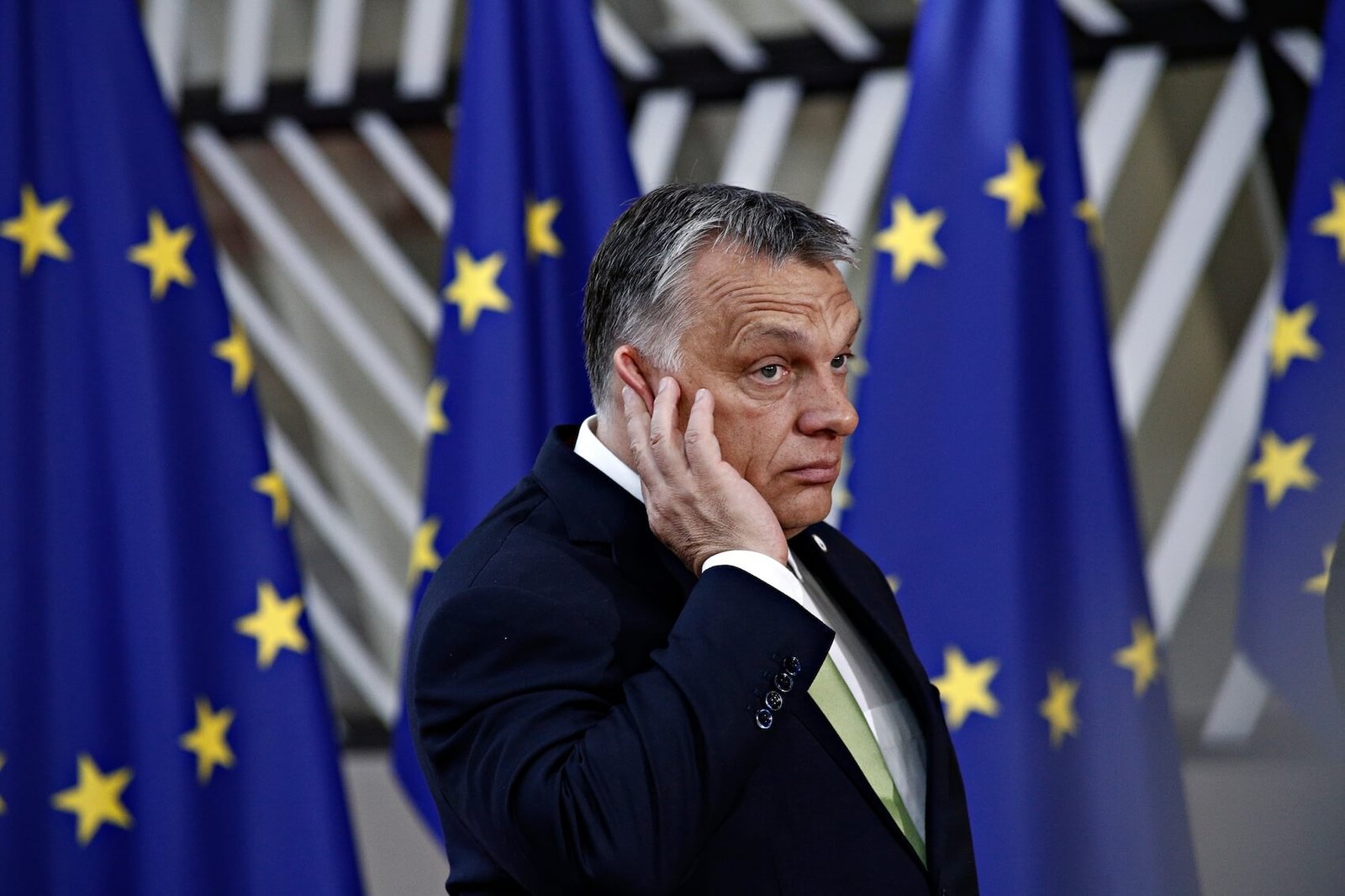
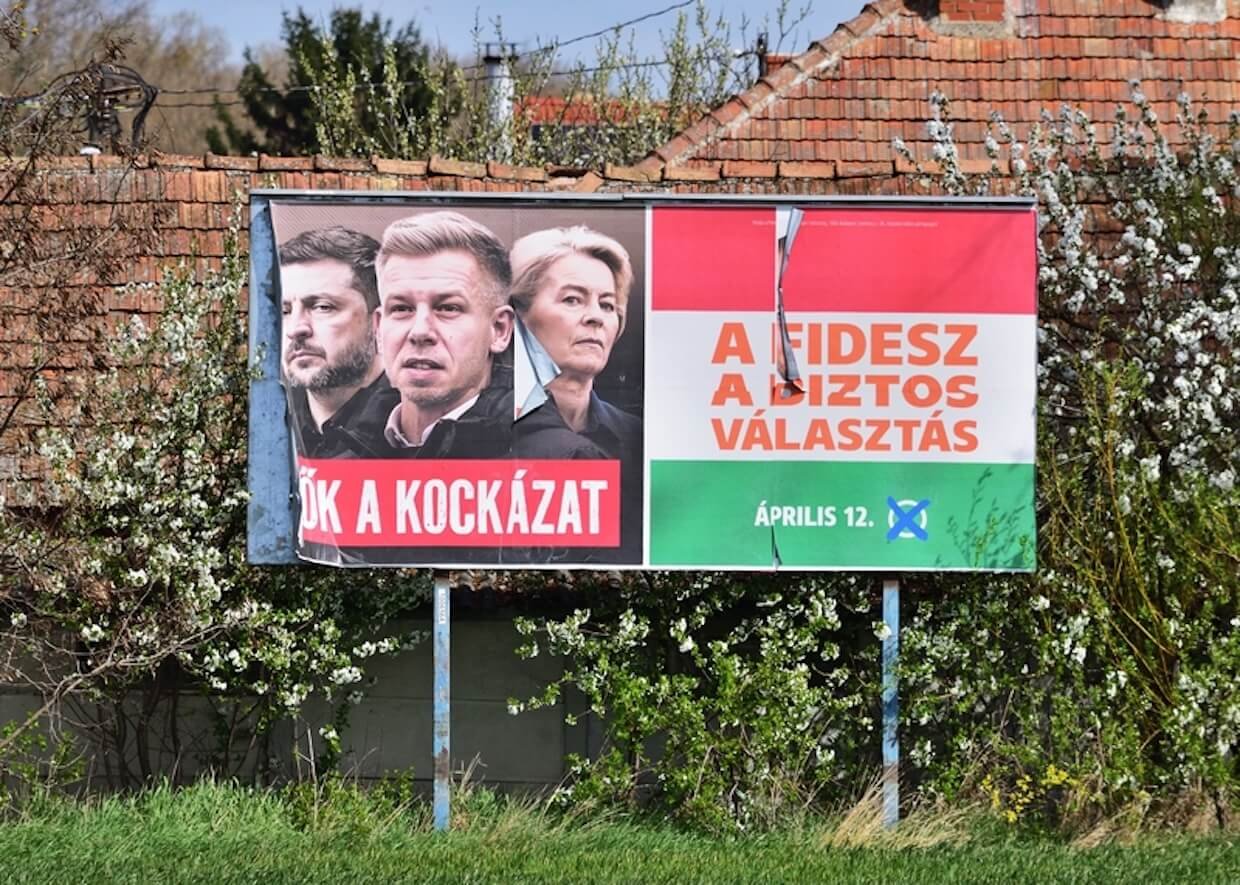
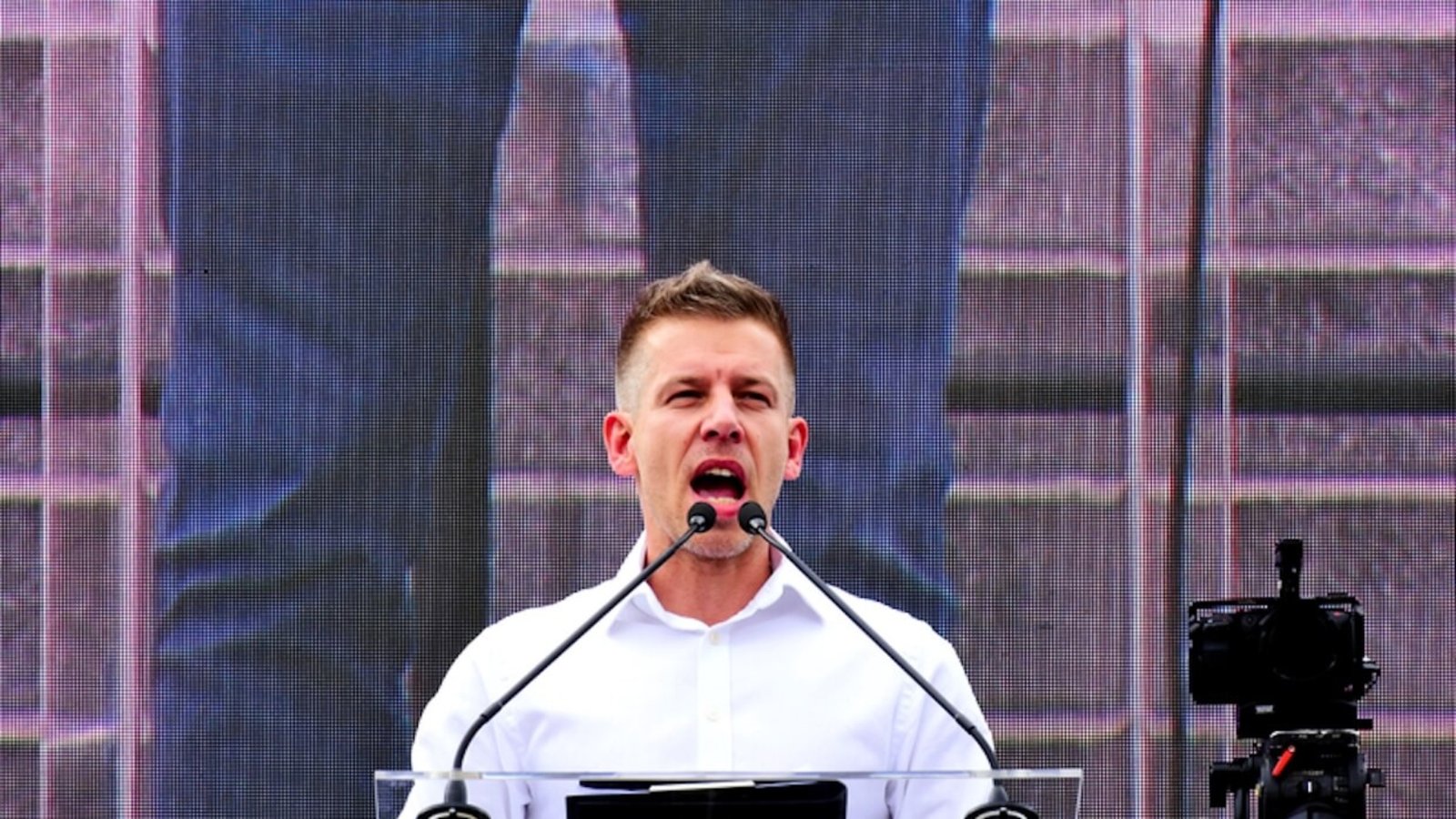
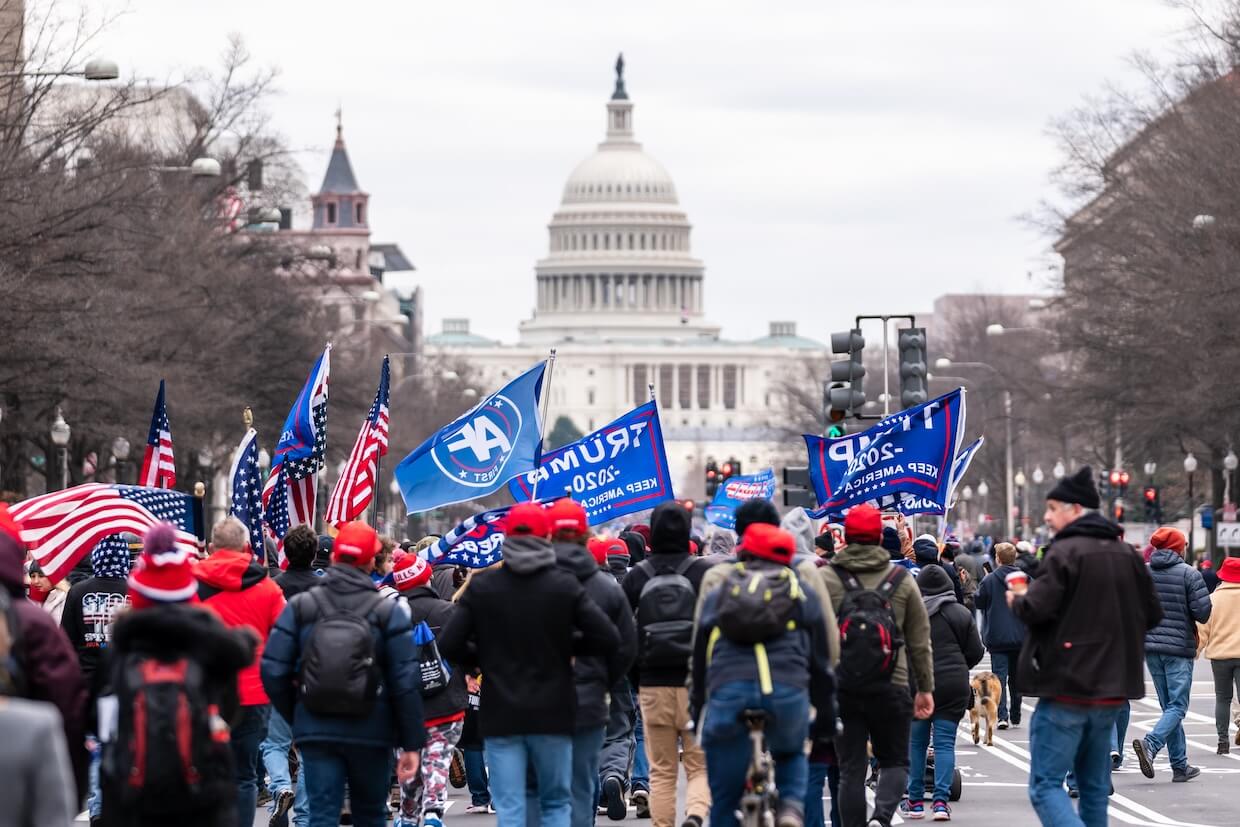
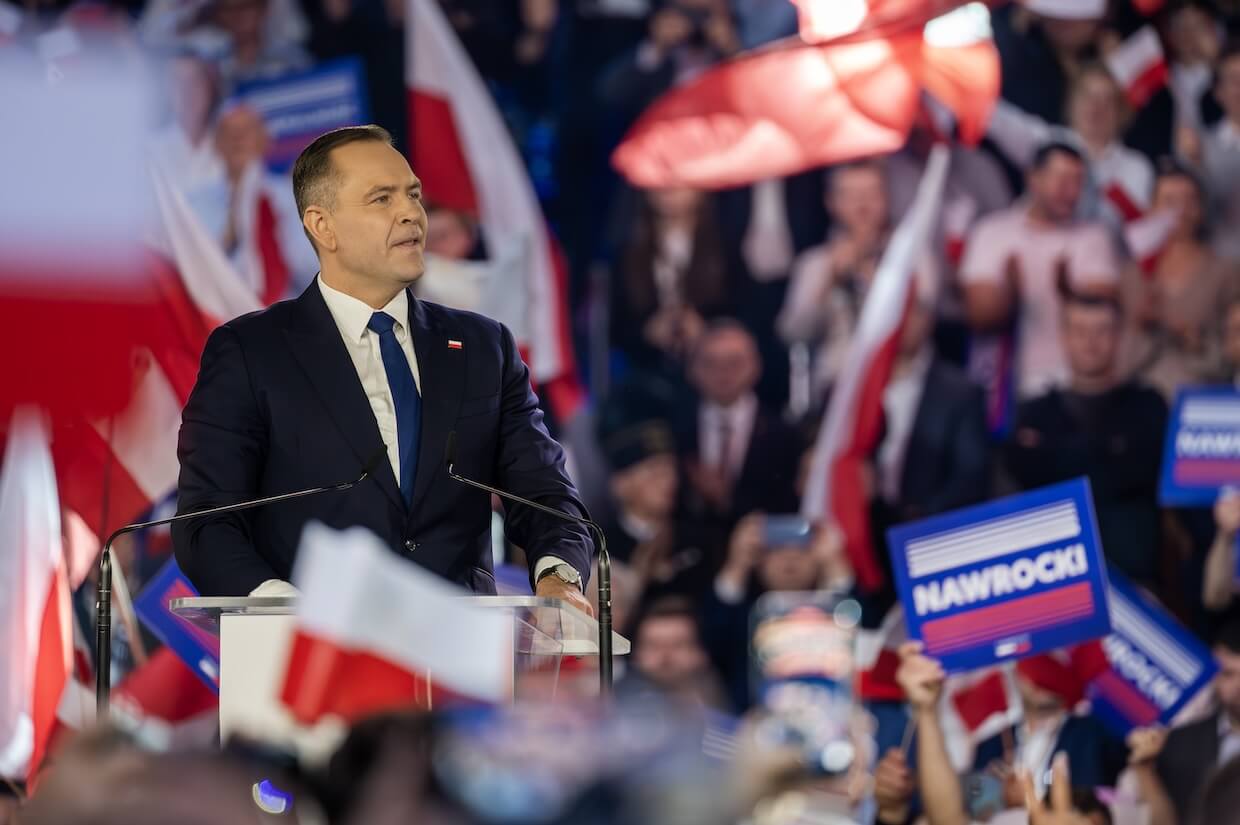
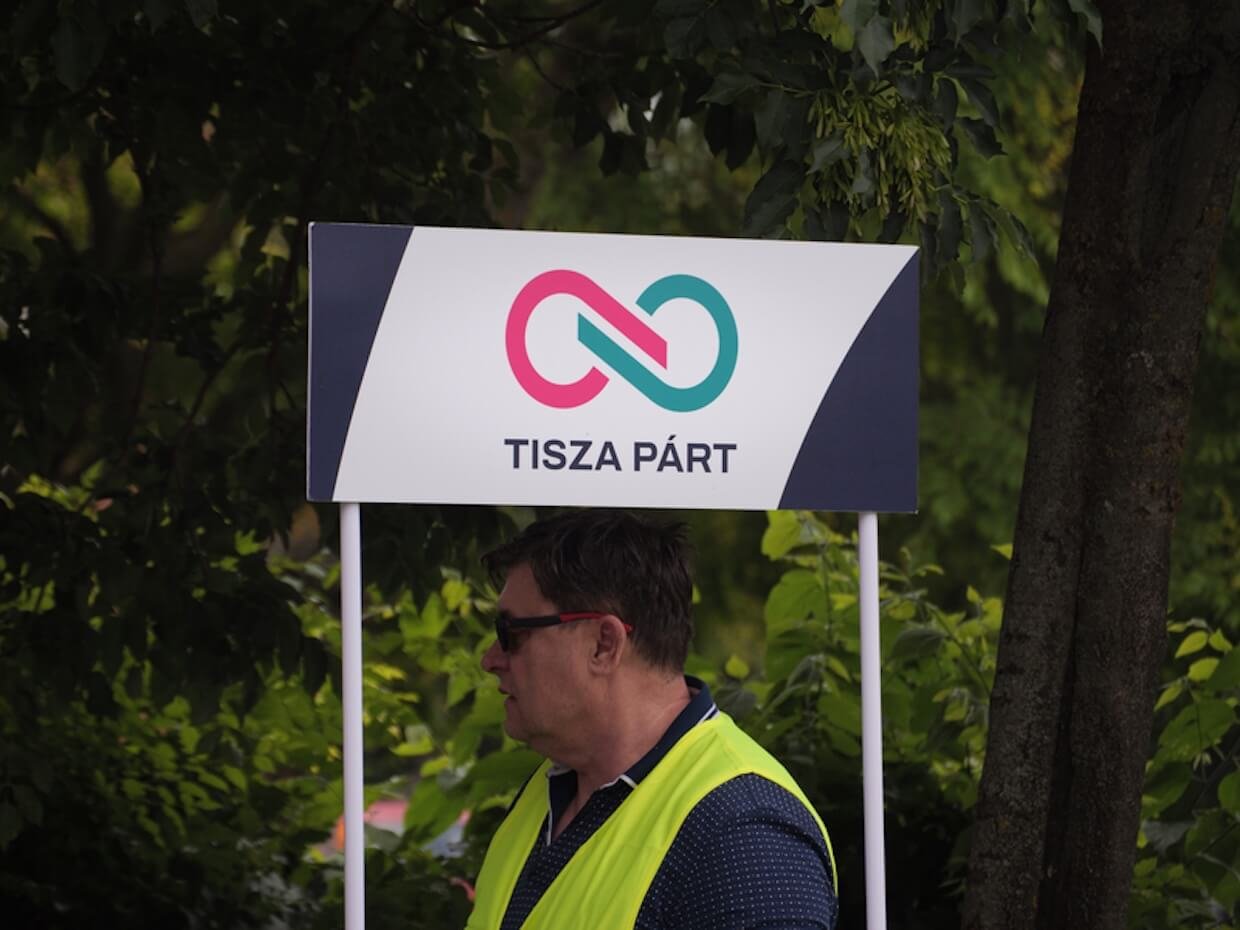
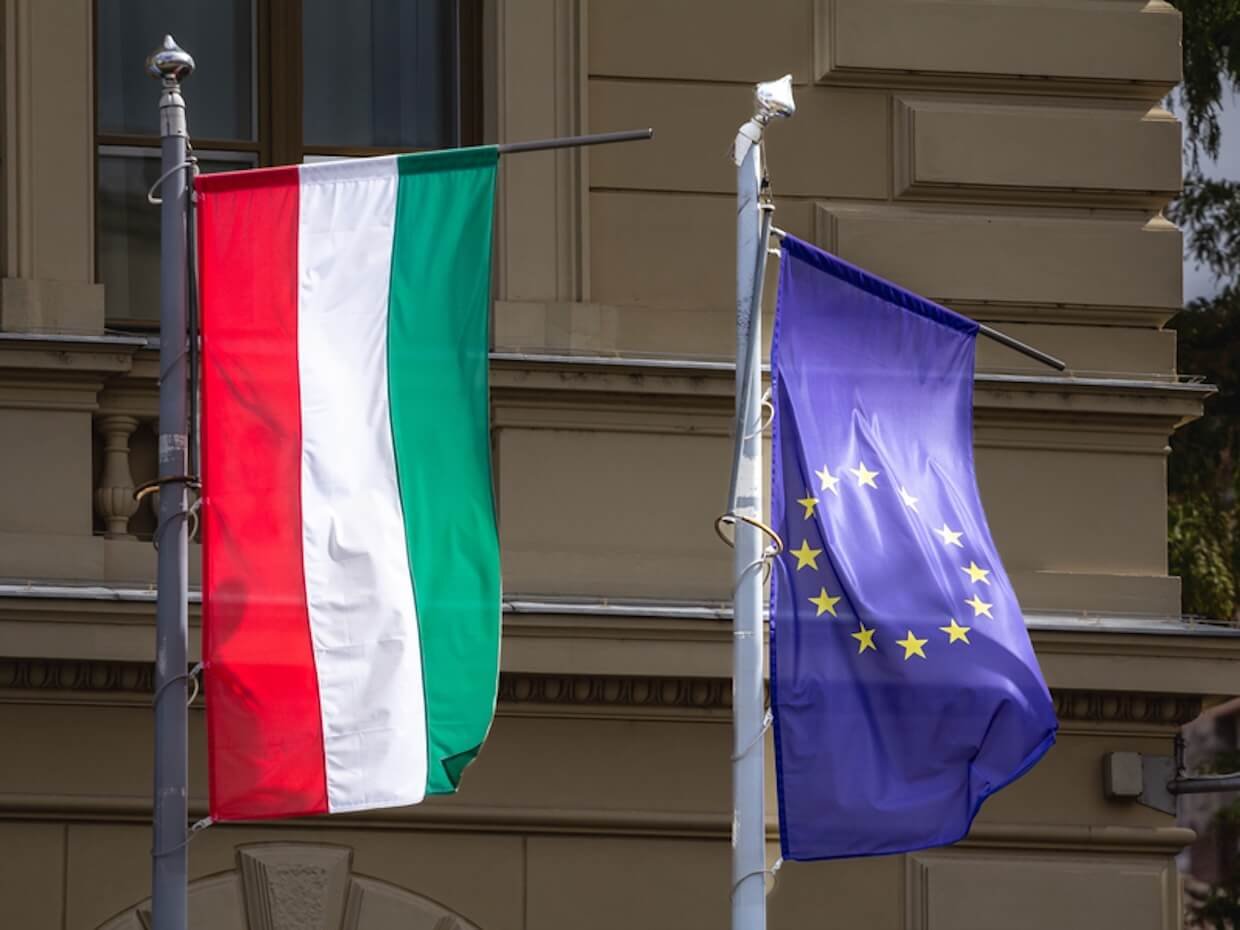
Elections are often seen as a moment of political settlement: the campaign has ended, the votes have been counted, and the winner has been determined. But in the case of Hungary, the period following the election may prove more indicative than the day of the vote itself. After sixteen years in power, Viktor Orbán’s defeat is not merely an important milestone in the history of Hungary. Rather, this event shifts how Hungary is perceived throughout Central and Eastern Europe: long considered a shining example of stable right-wing populist rule in the EU, the country is now becoming an example of its susceptibility, as Péter Magyar’s TISZA party defeated Fidesz in the April 2026 elections, marking the end of Orbán’s sixteen-year rule.
Hungary as the End of Inevitable Progress
Over the years, Hungary has been one of the clearest examples of how far-right populism can not only win elections, but also turn into a sustainable model of governance. Orbánism has become not only a political style, but also a specific system that has transformed populist discourse: emphasizing national sovereignty and national interests, conflict with Brussels, Euroscepticism, cultural polarization, control over institutions, and presenting the government as a defender of the “people” from liberal elites.
The classic idea of Cas Mudde (2004) about the “populist zeitgeist” is useful here: populism has ceased to be a marginal phenomenon and has become part of the political mainstream, especially due to the confrontation between the “pure people” and the “corrupt elite” (Mudde, 2004). In the case of Hungary, this logic was not only used in election campaigns, but also transformed into a model of governance.
This is precisely why Ágnes Batory’s (2016) analysis of Fidesz as “populists in power” is particularly important: she demonstrates that the Hungarian case should be understood not only as an electoral success, but also as an institutional restructuring of the political system through constitutional majorities, party control, and the weakening of checks and balances (Batory, 2016). Zoltán Enyedi (2016) also helps us understand Orbánism more precisely: he shows that Fidesz combined populist rhetoric with paternalism and illiberal elitism—that is, it spoke on behalf of “the people” while simultaneously concentrating power in the hands of the ruling elite (Enyedi, 2016).
Therefore, Orbán’s defeat is significant not because it signifies the end of right-wing populism. Such a conclusion would be too hasty. Its significance lies elsewhere: it calls into question the idea of the political irreversibility of the Orbánist model. For a long time, Hungary demonstrated how right-wing populist power could become institutionally entrenched. Now it is showing that even such power can be challenged.
Regions Under Pressure
The significance of the Hungarian elections becomes clearer when viewed within the broader Central and Eastern European context. Andrea Pirro (2014) emphasizes that far-right populist parties in Central and Eastern Europe cannot be analyzed as mere replicas of Western European models: they are shaped by specific post-communist conditions, with distinct historical conflicts, party systems, and conceptions of the nation, the state, and sovereignty (Pirro, 2014).
Poland is the most important comparative case here. Under PiS (2015–2023), it was close to Hungary on issues of sovereignty, traditional values, criticism of Brussels, and conflict with the EU’s liberal mainstream. However, the Polish experience also shows that the defeat of a right-wing populist government does not mean the automatic restoration of liberal democracy. The institutional legacy of the previous government—a politicized media environment, judicial reforms, personnel appointments, and deep social polarization—continues to constrain the new government. This aligns well with Milada Vachudova’s (2020) analysis, which links ethnopopulism in Central Europe to democratic backsliding and the concentration of power (Vachudova, 2020).
Slovakia illustrates another aspect of regional dynamics. Robert Fico and SMER are not direct copies of Fidesz, but the Slovak case demonstrates the resilience of a political strategy built on criticism of liberal elites, a cautious stance toward supporting Ukraine, an emphasis on national interests, and conflict with parts of the European mainstream. This is important because it prevents us from interpreting Orbán’s defeat as the beginning of an automatic “post-populist” phase in the region. Rather, it shows that one center of right-wing populist power has been weakened, but the political demand for a sovereignist and anti-liberal agenda remains.
The Czech Republic adds another important component. Andrej Babiš and ANO represent a more pragmatic and less ideologically rigid form of populism than Fidesz. But ANO’s participation, alongside Fidesz and the Austrian FPÖ, in the creation of the Patriots for Europe alliance, formed in the European Parliament in June 2024, shows that Orbán’s influence spread not only through direct replication of the Hungarian model, but also through a shared political vocabulary: national sovereignty, criticism of Brussels, migration control, and the protection of “ordinary people.”
Although Austria is not part of Eastern Europe, it is important within the Central European context. The FPÖ demonstrates that far-right mobilization remains strong even in more established democratic systems. The FPÖ’s victory in the 2024 parliamentary elections showed that far-right parties in Central Europe retain significant electoral potential.
Therefore, Orbán’s defeat should not be interpreted as a regional decline of far-right populism. Rather, it may signal a shift in its political center: if Hungary is no longer the primary symbol of far-right populist resilience, momentum may shift to other actors—in Austria, Slovakia, or the Czech Republic.
What Comes After Orbánism?
The post-election period is important precisely because populism does not end the moment the votes are counted. Attila Bartha, Zolt Boda, and Dorottya Szikra (2020) propose analyzing populism not only as electoral rhetoric, but also as a mode of governance and political decision-making (Bartha et al., 2020). In this sense, the main question following Orbán’s defeat is not only how Fidesz lost power, but also to what extent the new government will be able to change the system built over the past sixteen years.
The Hungarian case allows us to draw three broader conclusions.
First, far-right populism in Central and Eastern Europe is not disappearing. Its social and political foundations remain significant: distrust of elites, economic uncertainty, cultural anxiety, migration policy, Euroscepticism, and tensions surrounding the war in Ukraine. These factors continue to create space for parties that base their politics on the opposition between “the people” and “the elites,” national sovereignty and external pressure.
Second, Orbán’s defeat weakens the aura of inevitability surrounding right-wing populist rule. If the most enduring example of such a model within the EU can be defeated at the polls, then this model is less stable than its supporters have claimed.
Third, the region’s future will depend not only on whether far-right populists win or lose elections. Equally important is whether democratic alternatives can translate electoral victory into sustainable institutional renewal. Poland has already demonstrated just how difficult this process can be following the departure of PiS. Hungary is now the next test.
For many years, Hungary has been viewed as a laboratory for right-wing populist rule. Following Orbán’s defeat, it may become a laboratory for post-Orbán transition. This does not mean the end of far-right populism in Central and Eastern Europe. But it may mean the end of its strongest illusion: the notion that once institutional dominance is achieved, it is irreversible.
(*) Nikoletta Syvak is a Graduate Student, Department of Political Science and International Relations, East China Normal University (ECNU). Email: syvaknikoletta@gmail.com
—-
References
Bartha, A., Boda, Z. & Szikra, D. (2020). “When populist leaders govern: Conceptualising populism in policy making.” Politics and Governance, 8(3), 71–81. https://doi.org/10.17645/pag.v8i3.2922
Pirro, A. L. P. (2014). “Populist radical right parties in Central and Eastern Europe: The different context and issues of the prophets of the patria.” Government and Opposition, 49(4), 599–628. https://doi.org/10.1017/gov.2013.32
In this provocative ECPS interview, Dr. Laurenz Guenther, Research Fellow at the Toulouse School of Economics, challenges dominant interpretations of populism, migration politics, and democratic crisis in Europe. Rather than viewing the rise of the populist radical right primarily as an external threat to liberal democracy, Dr. Guenther argues that it reflects deeper “representation gaps” between mainstream parties and large segments of European electorates, particularly on migration and cultural issues. He contends that European politics is undergoing a profound transformation in which “culture has, overall, become the more dominant dimension of political conflict.” Contrasting with many ECPS interviews emphasizing democratic backsliding and illiberalism, Dr. Guenther argues that liberal democracies can regain legitimacy not by suppressing cultural anxieties, but by responding to them more effectively within democratic and liberal constitutional frameworks.
At a time when much of the scholarly and public debate on populism focuses on democratic backsliding, authoritarian drift, disinformation, and the dangers posed by the populist radical right, Dr. Laurenz Guenther offers a strikingly different interpretation of Europe’s political transformation. Rather than treating right-wing populism primarily as an external threat to liberal democracy, Dr. Guenther argues that its rise reflects deeper failures within liberal-democratic representation itself. In this sense, his perspective stands in contrast to many previous ECPS interviews, which have largely emphasized the illiberal, exclusionary, and anti-pluralist dangers associated with populist movements.
A Research Fellow at the Toulouse School of Economics, Dr. Guenther has become an increasingly influential voice in debates surrounding migration politics, democratic responsiveness, cultural polarization, and the rise of the populist radical right in Europe. Through his research on “representation gaps” and issue voting, he argues that mainstream European parties have become “systematically more culturally liberal than large segments of their electorates,”particularly on immigration. According to Dr. Guenther, this disconnect has created fertile ground for populist challengers who successfully position themselves closer to voter preferences on culturally salient issues.
Central to Dr. Guenther’s argument is the claim that European politics is undergoing a profound structural transformation. As he puts it in this interview, “politics in the average European country has shifted from something like a 60–40 balance in favor of economic issues to perhaps 40–60 in favor of cultural issues. We may even be moving toward something like 70–30.” In his view, “culture has, overall, become the more dominant dimension of political conflict.” This diagnosis sharply departs from conventional analyses that continue to treat class, redistribution, or neoliberal economics as the primary organizing principles of political competition.
Throughout the interview, Dr. Guenther advances several arguments that challenge dominant liberal assumptions surrounding migration and populism. He contends that mainstream parties increasingly lose credibility when they dismiss or underrepresent concerns surrounding migration, demographic change, asylum policy, and cultural identity. “The main threat,” he argues, “comes from failing to represent people,” which can push voters toward increasingly radical alternatives. Unlike many scholars who interpret tougher migration policies primarily as democratic erosion, Dr. Guenther views the recent convergence of mainstream parties toward stricter border and asylum policies as, at least partly, a democratic response to voter preferences.
At the same time, the interview also explores some of the most sensitive and controversial questions currently shaping European politics: the relationship between migration and demographic transformation, the growing salience of Islam and civilizational identity, the future of multiculturalism, and the normalization of culturally conservative politics across Europe. Yet despite his stark assessment of Europe’s political trajectory, Dr. Guenther ultimately rejects the idea that liberal democracy and more restrictive migration policies are necessarily incompatible. “If handled intelligently,” he argues, “Europe does not necessarily have to choose between these two paths.”
Here is the revised version of our interview with Dr. Laurenz Guenther, lightly edited for clarity and readability.
When Mainstream Parties Fail to Respond, Populists Fill the Void
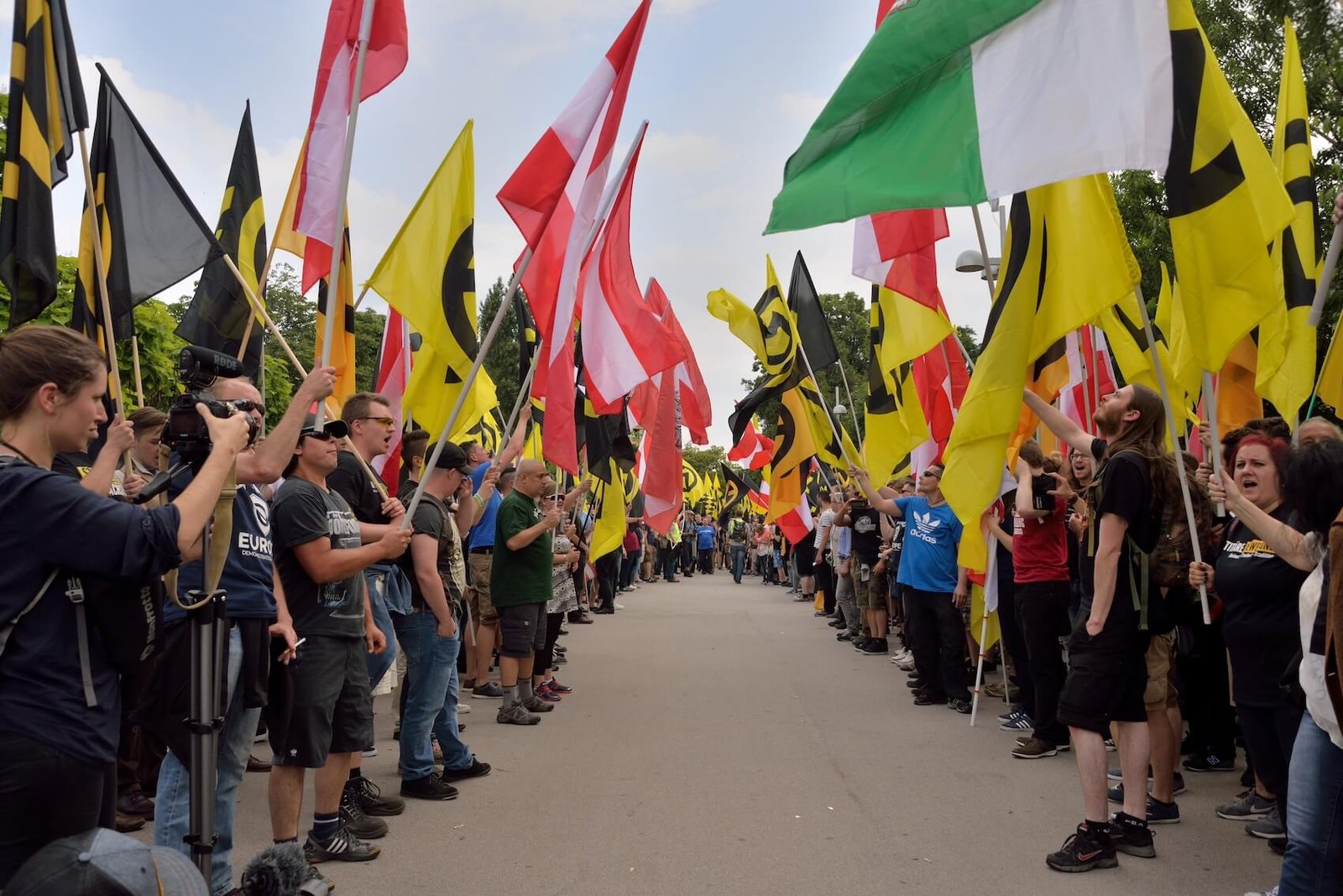
Demonstrators of the Austrian Identitarian movement form a guard of honor of flags in Vienna, Austria on June 11, 2016. Photo: Johanna Poetsch.
Dr. Guenther, welcome! To begin, in your work on “representation gaps,” you argue that mainstream European parties have become systematically more culturally liberal than large segments of their electorates, particularly on immigration. To what extent do you see the rise of populist radical-right parties as reflecting a broader crisis of democratic representation and political responsiveness within liberal democracies?
Dr. Laurenz Guenther: I think these representation gaps, and this “crisis of representation,” as you call it, are one major factor behind the rise of populism. They are certainly not the only factor, but I do think they have contributed significantly to populism’s growing appeal. The failure of mainstream parties to reflect the attitudes of many citizens has created space for new populist parties to step in and represent these voters by proposing policies that are closer to their preferences on issues such as immigration. When these issues then became much more salient — for instance, during the refugee crisis — this provided a shock that led many voters to reconsider their political choices and ultimately support populist parties instead.
Europe’s Political Elites Often Misjudge Public Opinion on Immigration
Your analysis of Germany suggests that the AfD’s rise was driven not only by anti-immigration sentiment itself, but also by the perception that established parties were unwilling to openly engage with public concerns over migration. How can democratic societies address legitimate anxieties surrounding migration while resisting xenophobia, exclusionary nationalism, and anti-minority politics?
Dr. Laurenz Guenther: You are right that the key challenge for mainstream parties is to be very precise in how they approach these issues. Choosing the right policy is largely a matter of accurately assessing public opinion. You do not want to be too far to the right on immigration, but you also need to be sufficiently responsive to public concerns. At the same time, immigration is a multidimensional issue. A party may adopt a much tougher position on certain questions, such as the asylum system, while remaining more lenient on issues like skilled migration.
To find the right balance, parties need a very strong understanding — and reliable measurement — of where citizens actually stand on these questions. My impression is that many mainstream parties do not really have that understanding. There are studies asking politicians directly where they believe voters are positioned, and often even leading politicians misjudge what the majority position actually is. Without that understanding, parties cannot position themselves effectively.
Culture Has Become Europe’s Dominant Political Cleavage
Across your writings, you emphasize the growing salience of the “cultural dimension” of politics. Does this imply that traditional economic left-right divisions are increasingly being displaced by conflicts centered on migration, multiculturalism, identity, religion, and national belonging?
Dr. Laurenz Guenther: Yes, I think this is true to a large extent. As you suggest, the cultural dimension of politics has become significantly more important and, in my view, continues to grow in importance. The economic dimension is still relevant, of course, but its relative weight has declined. Over roughly the last 15 years, politics in the average European country has shifted from something like a 60–40 balance in favor of economic issues to perhaps 40–60 in favor of cultural issues. We may even be moving toward something like 70–30. So, while economics still matters, culture has, overall, become the more dominant dimension of political conflict.
Ignoring Voters’ Concerns Fuels Political Extremism
You argue that even conservative mainstream parties in Europe are often more culturally liberal than the median voter. How should liberal-democratic parties respond to cultural representation gaps without normalizing anti-immigrant rhetoric, Islamophobia, or hostility toward diversity and pluralism?
Dr. Laurenz Guenther: I am personally not convinced that these normalization effects are particularly strong in practice. I think the main threat comes from failing to represent people, which can lead them either to become more extreme in response or to support almost anyone who appears willing to represent their concerns, including the most extreme parties.
This goes back to your earlier question about how far mainstream parties should go in responding to these issues. I would reiterate that parties need a strong understanding of where public opinion actually stands and then position themselves in a way that fills the representation gap. In many cases, I do not think they do this effectively because they lack reliable measurements of public attitudes.
A second point I would emphasize is that mainstream parties need to have some trust in their own voters and in the broader public. One concern I often hear from politicians is that voters may be highly extreme, deeply Islamophobic, or otherwise illiberal, such that representing their views could itself become anti-liberal. But when I look at survey evidence and at what people actually say when asked about their attitudes toward Islam or related issues, I do not get the impression that most people hold highly extreme views. On the contrary, most people have fairly reasonable preferences.
And if you want democracy to function successfully, you ultimately have to trust people to some extent. Even liberal democracy, with all its institutional checks on majority rule, ultimately depends on the assumption that majorities will vote in a broadly reasonable way. If you believe that people are fundamentally unreasonable and should not be represented, leaving large representation gaps open, then it becomes difficult to sustain a genuine democratic outlook. So, even for the sake of democratic consistency, politicians need to trust people at least to some degree and take their preferences seriously.
Europe May See the Rise of Economically Left but Culturally Conservative Parties
Illustration by Lightspring.
In your work on the decline of Die Linke and the rise of Sahra Wagenknecht’s BSW, you suggest that culturally conservative left-wing politics may become increasingly electorally viable. Could Europe be entering a new political configuration in which economic redistribution is increasingly combined with restrictive migration and culturally conservative agendas?
Dr. Laurenz Guenther: Yes, I think this could certainly happen. Wagenknecht’s party is a good example. In the beginning, it was quite successful. Although its momentum has weakened somewhat since then, its first result in a German national election was still a considerable achievement for a newly established party. It narrowly missed entering parliament.
In Germany, it is actually very rare for a new party to enter parliament in its first national election. So, compared to other parties — even compared to the AfD or the Greens in their early stages —the BSW performed very well. To me, this demonstrates the electoral potential of combining these kinds of policy positions.
Moreover, in most European countries, we still do not really have parties that combine economically left-wing policies with culturally conservative positions in a consistent way. But I do think this combination has significant potential. As political competition becomes more intense and fragmented, we are seeing more new parties emerge, and I think some parties adopting this formula could become very successful.
Europe’s Migration Shift Reflects the Growing Power of Populist Parties
Many mainstream European parties have recently adopted tougher migration policies, including externalization agreements, stricter asylum rules, and expanded border controls. Do you interpret the EU’s recent migration pact as an attempt to restore democratic legitimacy and public trust—or as evidence that populist radical-right actors have successfully shifted European politics toward a more restrictive and securitized migration paradigm?
Dr. Laurenz Guenther: I think it is more the latter. It appears to me that mainstream parties are primarily responding to pressure from populist right-wing parties, as well as to broader public demands — in other words, to these representation gaps — rather than making an independent decision to become more representative or responsive. The growing electoral strength of populist right-wing parties may have pushed mainstream parties to reconsider their own positions and reflect on whether they made strategic mistakes by adopting such liberal stances on migration. But overall, this shift is driven mainly by political necessity.
In the European Parliament, for example, populist parties have become strong enough that centrist parties are increasingly compelled to cooperate with them on certain issues. I see the new migration pact as a reflection of this broader development, and I suspect this trend will continue.
At the same time, this places mainstream parties in a very difficult position. Even though they are now implementing more restrictive migration policies, they are not especially well-positioned to benefit from them electorally. Many voters are unlikely to reward them because these policy shifts are perceived as responses to populist pressure rather than as genuine convictions.
From the perspective of mainstream parties, this creates the worst of all worlds. They are unable to pursue the policies they would actually prefer — because many mainstream politicians still personally favor more liberal migration policies — yet they also fail to gain significant electoral advantages from adopting tougher measures. To benefit electorally, they would either have needed to shift earlier or would now need to adopt a much stronger repositioning.
Uncertainty About Demographic Transformation Drives Migration Anxiety
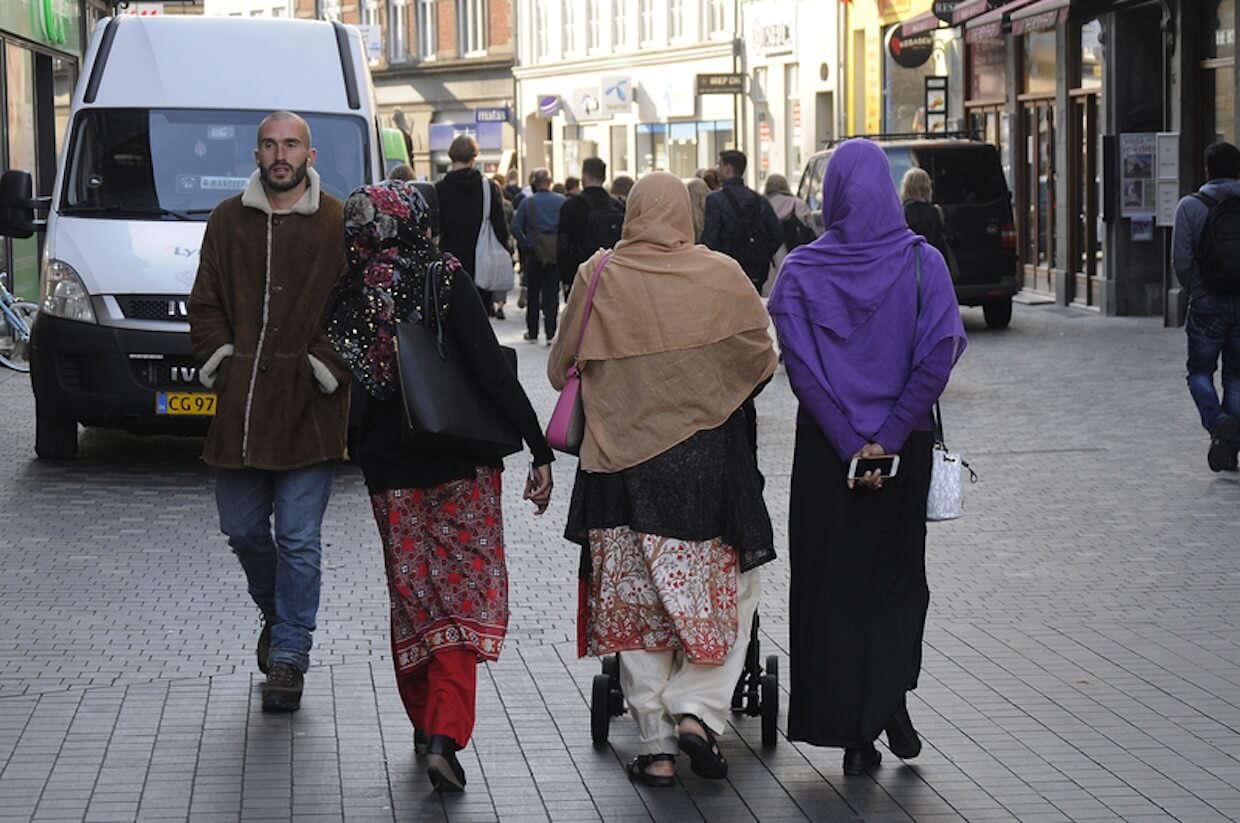
Pakistani or Indian migrants in Copenhagen, Denmark, September 22, 2017. Photo: Dreamstime.
Your research suggests that immigration has become one of the most politically salient issues driving right-wing populist growth across Europe. Why do you think migration possesses such extraordinary mobilizing power compared to issues such as inequality, housing, or climate change, which many critics argue are themselves deeply shaped by capitalism and broader structural economic forces?
Dr. Laurenz Guenther: All of the issues you mention are very important, and they matter greatly to voters as well. It is not that issues such as inequality, housing, or climate change are unimportant; rather, immigration appears to matter even more to many voters. One reason for this — and I think this is something that is still not openly discussed, though I suspect it will become a major debate in the future because it touches on very sensitive questions — is that immigration is closely connected to demographic change.
The migration Europe is experiencing is not random. A significant share comes from non-European regions such as the Middle East, North Africa, and Sub-Saharan Africa. If these migration patterns continue over a long period of time, they could fundamentally reshape the demographic structure of European societies in the long run.
This raises a number of important questions that, in my view, are often not openly addressed because of political sensitivities. Liberal democracies tend to understand people primarily as individuals, and discussions about ethnicity or the ethnic composition of societies are often viewed as potentially dangerous, especially given Europe’s historical experiences with exclusionary nationalism and discrimination.
At the same time, this reluctance to engage with such questions means that many concerns people consider legitimate are not openly discussed. As a result, citizens often do not clearly understand where political parties stand, nor do they easily find what they regard as reasonable research about how demographic changes may affect society over time. This creates a considerable degree of uncertainty, and when people face uncertainty, they often become highly risk averse. I think this uncertainty is one of the key factors driving much of the fear or caution surrounding immigration.
Migration Politics Is Reshaping Traditional Party Loyalties
In your writings, you argue that voters increasingly engage in “issue voting,” particularly on migration and cultural questions. Does this trend weaken traditional party loyalties and create structurally favorable conditions for populist outsiders, anti-establishment movements, and increasingly polarized democratic politics?
Dr. Laurenz Guenther: Yes, it currently does have those implications. But in principle, it would not necessarily have to. In my view, the reason issue voting produces these effects today is precisely because of the representation gaps we discussed earlier. Take, for example, a voter who historically had strong ties to the SPD but now votes primarily based on immigration policy. That voter may no longer feel able to support the SPD because, on immigration, most people hold positions that are considerably more conservative than those of the party itself. So, issue voting weakens traditional party loyalties under these conditions, but only because parties such as the SPD have positioned themselves in a comparatively liberal way on these questions.
Liberal Democracy Can Respond to Migration Concerns Without Becoming Illiberal
One of the central arguments advanced by liberal-democratic parties is that populist radical-right actors threaten institutional checks and balances, minority protections, and democratic pluralism once in power. Yet you argue that this critique loses credibility if mainstream parties appear unwilling to acknowledge issues voters consider important. How can democracies balance responsiveness to majority concerns with the protection of liberal norms, human rights, and minority communities?
Dr. Laurenz Guenther: I think this question is very similar to issues we discussed earlier, especially regarding where exactly the line should be drawn. That, in many ways, is the central challenge. One more concrete point I would make is that anti-immigration attitudes among many citizens are, in my view, largely driven by attitudes toward asylum seekers specifically. If you ask people whether there should be fewer or more asylum seekers coming into the country, most people tend to say fewer rather than more. But when you ask about other forms of immigration — and most migration actually takes place outside the asylum system — the responses are often much more moderate. Many people say they are generally fine with it, or that they might prefer slightly more or slightly less immigration, but there is no comparably strong tendency. So, when people describe themselves as “anti-immigration,” what they often mean in practice is that they want fewer asylum seekers.
For that reason, I think that a much more restrictive asylum system — for example, limiting asylum numbers to levels similar to those of 20 years ago, or designing an asylum framework that operates primarily within Europe — would likely appease many citizens and close a large part of the representation gap without necessarily being anti-liberal.
After all, this was effectively the kind of system many European countries had in the past. Before the signing of the New York Protocol, asylum systems limited largely to Europe were common across the continent. And if you look at Germany 20 years ago, the asylum system was considerably more restrictive than it is today. Germany experienced an asylum crisis in the 1990s during the Yugoslav wars, and afterward the constitution was amended specifically to prevent a similar situation from recurring.
The constitutional framework that emerged was extremely restrictive and essentially stated that anyone arriving from a safe country — which in practice applied to almost everyone entering Germany — would not qualify for asylum. Later, under Merkel, it was argued that international agreements such as the Geneva Convention overrode this constitutional interpretation. According to many critics, including some legal scholars in Germany, it was this reinterpretation that made the asylum system much more liberal in practice and created broader opportunities for migration.
So, in Germany’s case, a different interpretation of existing law alone could significantly tighten the asylum system again. It might not even require major new legislation and would, in effect, return the country to a situation more similar to that of 20 years ago. And 20 years ago, Germany was still a liberal democracy, just as it is today. It was not a hostile or oppressive environment for migrants.
Therefore, I do think it is possible to strike the right balance — one that avoids anything resembling fascism or authoritarianism while still responding to public concerns. Again, the reason I believe this is possible is that, if you actually look at what Germans and other Europeans say about immigration, very few people hold genuinely extreme views. Many of the concerns they express are, from their perspective, relatively reasonable.
Many Europeans Increasingly View Migration Through a Civilizational Lens
For right-wing populists in the Western world, “the others” primarily include immigrants but also extend to “welfare scroungers,” regional minorities, individuals with “non-traditional” lifestyles, communists, and others. Photo: Shutterstock.
Across Europe, debates over migration increasingly intersect with concerns about Islam, security, demographic change, and national identity. To what extent do you believe contemporary anti-migration politics should be understood as part of a broader civilizational and cultural backlash against multiculturalism and demographic diversity?
Dr. Laurenz Guenther: We touched on this a little earlier, and I do think this is a key component of the debate. It is important that you raise this point, because I do not think it is discussed often enough. What we are witnessing in many European countries is significant demographic and ethnic change driven by patterns of immigration, the regions migrants are coming from, and differences in birth rates. Many people — on both sides of the debate — interpret these developments as part of a broader civilizational or cultural struggle. In many European societies, populations of African and Middle Eastern descent are growing, and Muslim communities are becoming more numerous as well.
Given Europe’s long history of conflict between civilizations and religious groups, these developments make many people uneasy. For that reason, the issue needs to be discussed openly and addressed seriously.
One point I have written about is the importance of political parties communicating a clearer sense of where they believe these developments are ultimately leading. The population of North African and Middle Eastern countries exceeds one billion people — larger than Europe’s population combined — and these regions generally have much younger populations, whereas Europe is aging rapidly.
There is also a strand of liberal thinking that argues borders should effectively be abolished and that people should be free to move wherever they wish. I do not think most political parties explicitly advocate such a position, but these ideas are present in public debate, and ordinary citizens encounter them regularly in newspapers and political discussions.
If such policies were ever fully implemented, Europe would, over time, become majority Muslim and majority composed of people of African and Middle Eastern descent. Many Europeans would strongly oppose such an outcome. If people begin to feel that this is the direction developments are heading, then the political reaction could become far more intense than the current rise of right-wing populism.
So, the question many people are asking is: where is this process ultimately leading? How much demographic and ethnic change is expected? Is there some kind of endpoint, or are these demographic shifts expected to continue indefinitely? If current trends persisted over many decades, then in some countries Muslims could eventually become a majority among younger generations.
The problem is that liberals often do not openly address these long-term questions. It is extremely important to have a serious discussion about them, supported by realistic projections and rigorous research examining the potential social consequences of demographic change.
At the same time, this is also a very difficult topic for researchers. Conducting serious research on these issues can be extremely challenging because, if findings portray ethnic change negatively or identify tensions associated with it, publishing such work while maintaining one’s academic career may become very difficult.
Europe’s Populist Right Has Become a Stable Electoral Force
In your analysis of the European Parliament elections, you argue that culturally conservative parties are likely to continue rising until the “cultural representation gap” narrows. Does this suggest that the normalization of populist radical-right politics is becoming a long-term structural feature of European democracy rather than a temporary protest phenomenon?
Dr. Laurenz Guenther: Yes, I think so. In the beginning, many mainstream parties were effectively betting that right-wing populism was simply a temporary bubble that would eventually burst. But that expectation has clearly failed. By now, survey data also show that supporters of right-wing populist parties are often among the most loyal voters — people who say they will continue voting for these parties no matter what happens. So, I think these parties are now very firmly established within European politics.
Migration Politics Now Mirrors Everyday Public Sentiment
Your work highlights how mainstream parties increasingly converge toward tougher migration positions, citing figures such as Mette Frederiksen, Emmanuel Macron, and Friedrich Merz. Do you see this convergence as democratic adaptation to voter concerns—or as evidence that populist radical-right narratives are increasingly hegemonizing European political discourse?
Dr. Laurenz Guenther: It is, in many ways, both. I certainly see populist actors as the main driving force behind this shift. They succeeded in making migration and cultural issues far more politically salient, and public debate has increasingly moved closer to the way populists initially framed these questions.
Part of the reason may simply be that populists often discuss these issues in a language that resembles how many ordinary people talk about them in everyday life — whether in informal conversations, bars, or other social settings. And at some point, media debates and broader public discourse inevitably adapt to public preferences and concerns. From that perspective, the response of mainstream parties can also be interpreted as a democratic adaptation — an attempt to respond to shifting voter priorities and broader public sentiment.
Democratic Stability Depends on Taking Citizens’ Concerns Seriously
Much contemporary debate frames populism primarily as a threat to liberal democracy. Yet your work suggests populist success may also reflect unresolved failures within liberal democracy itself. Do you think European democracies can regain stability and legitimacy without fundamentally rethinking representation, participation, and democratic responsiveness on culturally divisive issues such as migration and integration?
Dr. Laurenz Guenther: Yes, it is definitely possible. And this ultimately comes back to my understanding of public opinion: namely, that the concerns many people — indeed, most people — have are generally reasonable, and that it is entirely possible to build political systems and adopt policy solutions that respond to those concerns. In fact, I would argue that, only a few decades ago, many European countries already had systems and policy frameworks that functioned in this way. So, in a sense, we already know how to do it. There are also countries today that have immigration policies which are broadly popular while still remaining clearly within liberal-democratic boundaries and far from anything extreme. Mette Frederiksen’s Denmark would be one example, and Sweden’s recent policymaking would be another.
Europe Can Strengthen Borders Without Abandoning Liberal Democracy
And finally, Dr. Guenther, looking ahead, do you believe Europe is moving toward a new political equilibrium in which migration restriction, stronger borders, and culturally conservative policies become normalized across both mainstream and populist parties—or do you still see the possibility of a renewed democratic consensus grounded in pluralism, human rights, diversity, and inclusive multicultural citizenship?
Dr. Laurenz Guenther: If handled intelligently, Europe does not necessarily have to choose between these two paths or treat them as mutually exclusive. I certainly believe we will see stronger borders and more restrictive asylum policies in the future. At the same time, I do not think that other forms of immigration necessarily need to be restricted, nor do I see a strong electoral incentive for parties to target them more broadly.
So, I think immigration policymaking can become much more specific and targeted, focusing primarily on restricting those forms of immigration that are perceived as having negative effects on European societies. Immigration can, of course, have both very positive and very negative effects, and much depends on who immigrates.
In my view, Europe is currently experiencing some forms of immigration that do have negative consequences, but if we look at immigration overall, I think these cases still represent a relatively small share. Addressing them therefore requires a very specific and carefully targeted policy response. And I think doing so is entirely compatible with the broader principles you mentioned. It is consistent with liberal values in general. So, while I do expect Europe to move toward more conservative immigration policies in certain areas, I still believe liberal democracy has a strong chance of being preserved.
In this ECPS interview, Dr. Aaron Winter examines how the 2026 UK elections reveal not simply electoral volatility, but the accelerating mainstreaming of far-right discourse within British political life. Reflecting on Reform UK’s rise, anti-immigration politics, Brexit, Islamophobia, and the crisis of democratic legitimacy, Dr. Winter argues that Britain is increasingly witnessing “the mainstreaming of the far right” through narratives once considered politically marginal. Drawing on his scholarship on racism, populism, and “reactionary democracy,” he warns that anti-migrant politics now functions as a broader vehicle for exclusionary nationalism, white victimhood, and democratic erosion. The interview explores the normalization of “liberal racism,” the racialization of the “left behind,” and the growing convergence between establishment politics and reactionary nationalism in contemporary Britain.
The 2026 local and devolved elections in the United Kingdom unfolded amid mounting concerns over democratic legitimacy, political representation, and the accelerating normalization of far-right discourse within mainstream public life. Against a backdrop of Labour’s declining support in key constituencies, the electoral rise of Reform UK, intensifying anti-immigration rhetoric, and growing polarization around nationalism and belonging, Britain increasingly appears caught in what many scholars describe as a broader crisis of liberal democracy. It is within this context that the European Center for Populism Studies (ECPS) speaks with Dr. Aaron Winter, Senior Lecturer in Sociology (Race and Anti-Racism) at Lancaster University and Research Associate at the University of the Witwatersrand, whose influential scholarship has long examined racism, populism, Islamophobia, reactionary politics, and the mainstreaming of the far right.
In this wide-ranging interview, Dr. Winter argues that contemporary British politics cannot be understood simply through the language of protest voting or electoral fragmentation. Rather, he contends that Britain is witnessing “the mainstreaming of the far right,” in which immigration, racism, and reactionary politics have increasingly become “the focal points of political discussion and ‘debate’” across both establishment and insurgent political actors. According to Dr. Winter, what is especially striking is not merely the electoral growth of Reform UK, but the extent to which “politics is now increasingly conducted from the center-right through the use of ideas that originate with the far right.”
Drawing on his collaborative work with Aurelien Mondon, Dr. Winter examines how overt forms of racism historically associated with fascism and white supremacy have increasingly been replaced by “liberal, colorblind racism and Islamophobia” articulated through the language of free speech, women’s rights, national security, and the protection of liberal values. He warns that this process has steadily expanded the political legitimacy of exclusionary nationalism while simultaneously hollowing out democratic alternatives. “We have hollowed out the left while simultaneously accelerating the trajectory toward authoritarianism and fascism,” he argues.
Particularly significant in this interview is Dr. Winter’s analysis of how the discourse of the “white working class” and the “left behind” has functioned as a vehicle for racialized nationalism after Brexit. He contends that contemporary British politics increasingly revolves around a much more explicit form of ethno-nationalism: “What we witnessed this weekend in London with the rallies,” he states, “is the emergence of a much more overt white supremacist and ethno-nationalist discourse operating irrespective of, and far beyond, class.”
The interview also explores the intersections between Brexit, Islamophobia, austerity, anti-migrant politics, and democratic decline, situating Britain within broader international patterns visible in Trumpism, European radical-right populism, and authoritarian nationalism. Throughout the conversation, Dr. Winter repeatedly emphasizes that the crisis facing Britain is not simply electoral, but structural: a crisis of capitalism, democracy, and political imagination itself. Yet he also insists that alternatives remain possible—provided democratic politics moves toward “radical reform, anti-racism, and opposition to inequality.”
Here is the revised version of our interview with Dr. Aaron Winter, lightly edited for clarity and readability.
Britain Is Mainstreaming the Far Right
Kill the Bill protesters gather in Parliament Square, London, on July 5, 2021, opposing the Police, Crime, Sentencing and Courts Bill, which critics argued would expand police powers over public protests in the UK. Photo: Dreamstime.
Dr. Aaron Winter, welcome. To begin, the 2026 local and devolved elections exposed what many analysts describe as the long-term fragmentation of British politics, with Labour’s support collapsing in key areas while Reform UK consolidated backing through anti-immigration rhetoric, anti-establishment anger, and broader cultural grievances. How do you interpret these elections within the framework of your work on “reactionary democracy”? Do they represent a temporary cycle of protest politics, or evidence of a more durable restructuring of British political culture?
Dr. Aaron Winter: That’s a very good question. I do not tend to see this, broadly speaking, as a protest vote, although there are certainly elements of protest voting within it, nor do I necessarily see it as fragmentation at this stage. Rather, I think it reflects a number of overlapping factors and processes unfolding simultaneously. We are still letting the dust settle after the election, and we are still witnessing battles over the leadership of Labour, along with a number of other developments. So, I do not think we can yet conclusively determine where things are heading before further developments take place.
What I do think we are witnessing, however, is what I have described in my work as the mainstreaming of the far right. Immigration, racism more broadly, and other far-right ideas have increasingly become the focal points of political discussion and “debate”—I use the term somewhat ironically—between the two establishment parties, Labour and the Conservatives, as well as newer far-right parties such as Reform UK and Restore Britain, which is positioned even further to the right.
We do not necessarily see this from the Greens, who appear to be presenting an alternative to this kind of politics. Although they have made gains, much of the attention and many of the electoral gains have instead gone to Reform. I think this development has deep roots. It reflects the way in which protest voting, grievances with the system, crises of democratic trust, and growing inequality have all been absorbed into a narrative that positions Reform and the wider far right as the authentic voice of protest and political alternatives.
Yet, if we look closely, these movements actually uphold virtually every aspect of the status quo—the racial status quo, the social status quo, the political status quo, and the economic status quo. They do not challenge capitalism, inequality, or the racism, nationalism, and white supremacy embedded within the system.
Real Protest Is Treated as Extremism
So, I would not describe them as a protest vote, even though they have certainly been framed that way, which I find very interesting. By contrast, the Greens have not been positioned in this manner and have instead faced sustained attacks on various grounds, including allegations of antisemitism and accusations directed at their leader, Zack Polanski. Meanwhile, Reform has not faced the same level of sustained scrutiny for fascist statements, Holocaust denial, or rhetoric that implicitly supports both structural and physical violence.
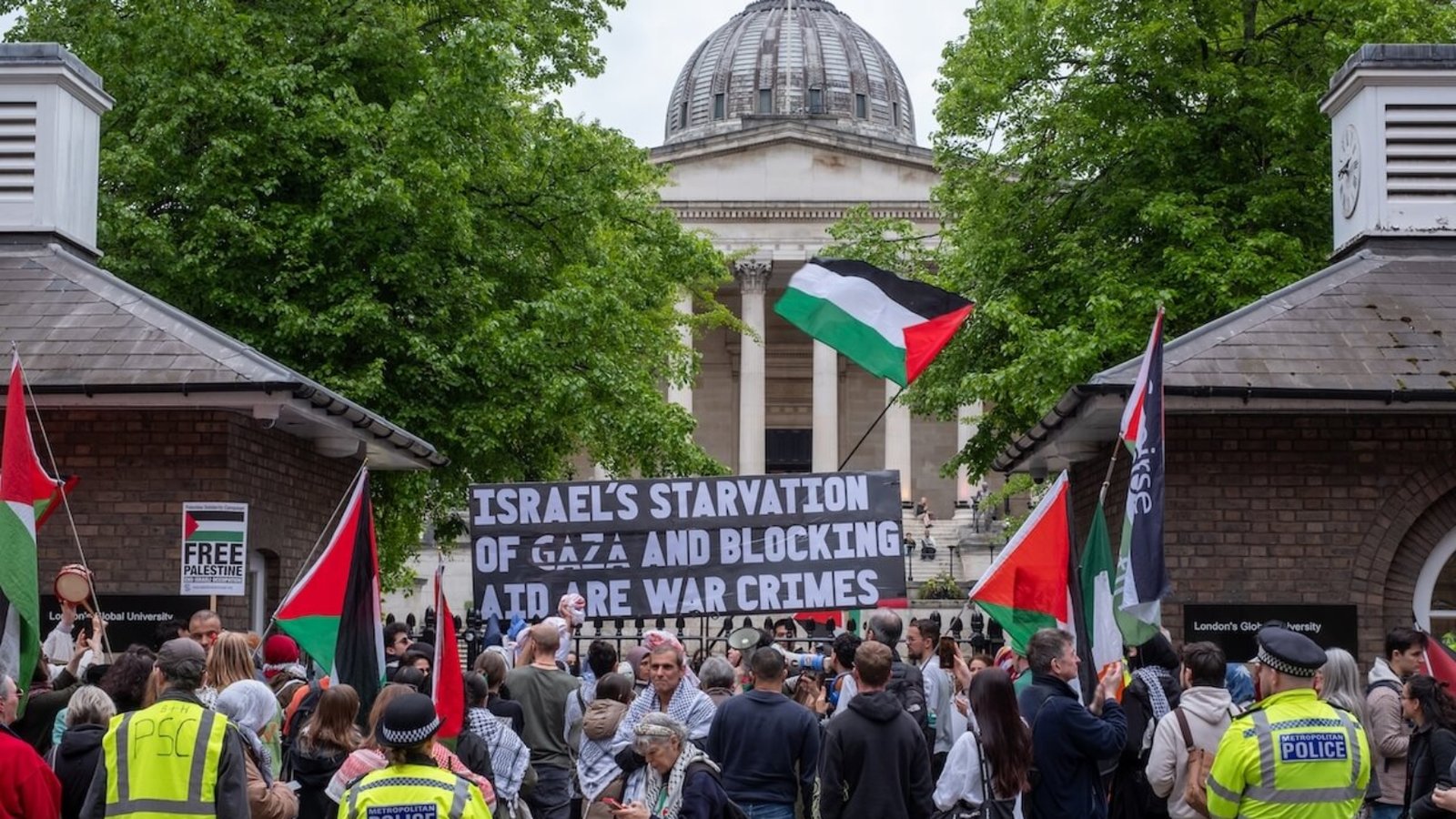
I find this contrast very revealing because it demonstrates how the system perceives protest differently depending on who is making it. Those who genuinely challenge the system—such as the Greens or pro-Palestinian solidarity movements, as we saw during the Nakba Day rally alongside the Unite the Kingdom far-right march—are labeled extremists, supporters of terrorism, antisemites, or racists. But when the far right mobilizes, it is instead framed as expressing the legitimate concerns of “the people.”
So, protest becomes something that can be domesticated and democratized if it aligns with the broader status quo and dominant political agenda. But if it genuinely threatens the system, it is treated as extremism. And that is deeply ironic at a moment when we are witnessing the mainstreaming of the far right.
Far-Right Ideas Now Shape Mainstream Politics
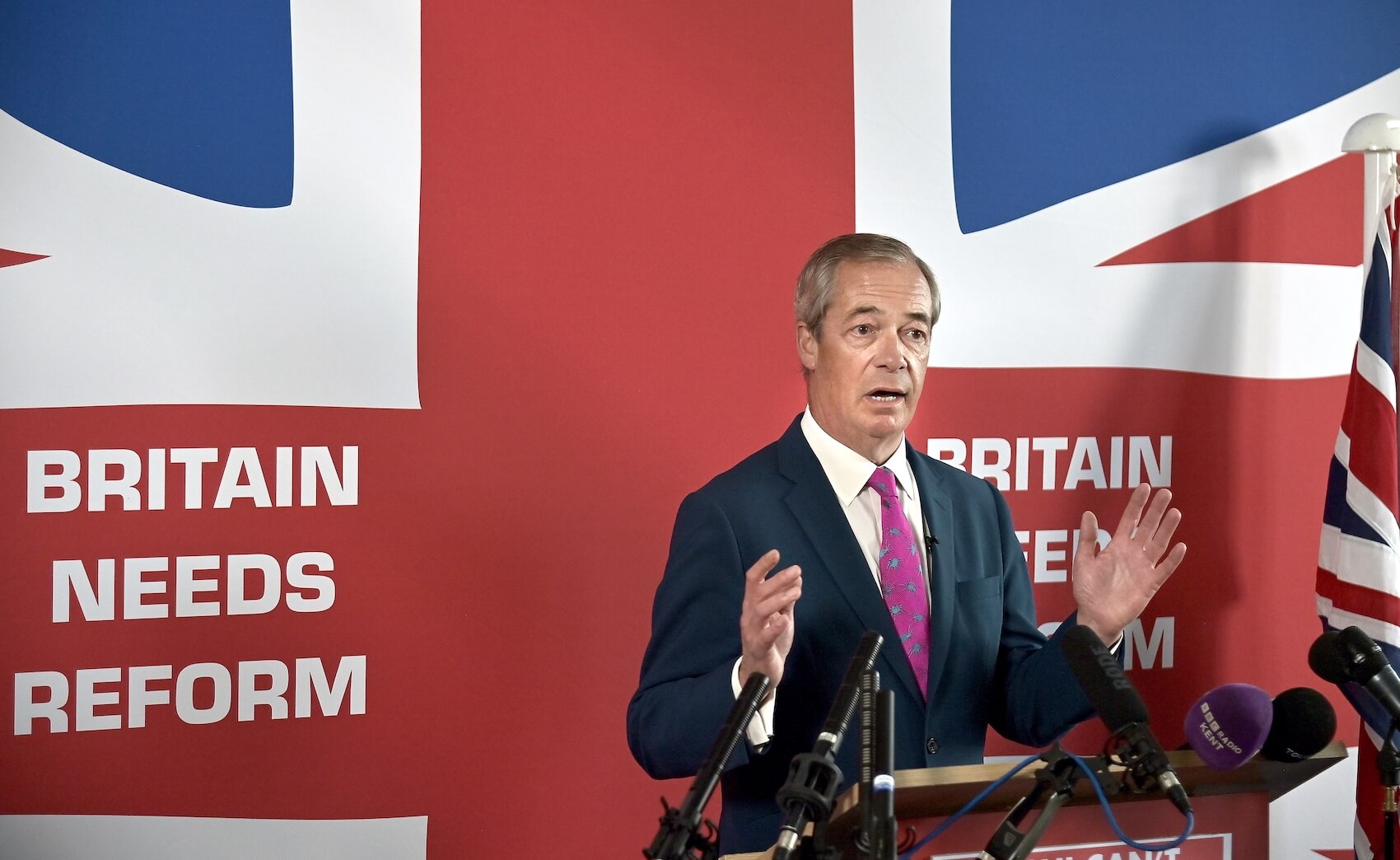
Nigel Farage speaking in Dover, Kent, UK, on May 28, 2024, in support of the Reform Party, of which he is President. Photo: Sean Aidan Calderbank.
In your work on the mainstreaming of the far right, you argue that the boundary between mainstream conservatism and reactionary politics has become increasingly porous. To what extent did the 2026 elections demonstrate not merely the rise of Reform UK, but the deeper normalization of far-right discourses across the broader political spectrum?
Dr. Aaron Winter: Just to begin by referring back to the previous question, when you asked where I think we are heading, I would say that—worse than the fragmentation of politics—we are moving further down the road toward the mainstreaming of the far right and fascism.
I think this is a product of the blurring of political boundaries. In my work with Aurelien Mondon, we have argued that traditional forms of racism—what is generally understood as overt and explicit racism—had historically been publicly denounced. In their place emerged forms of liberal, colorblind racism and Islamophobia that claim to target culture and ideas rather than race itself.
This discourse often presents itself as an effort to fight illiberal racism by expressing such concerns in more manageable, liberal, and socially acceptable terms. So instead of openly calling for deportations, there are calls for stricter bordering policies. Instead of explicit exterminationist rhetoric, there are calls for deportation and the construction of supposedly moderate and liberal bulwarks against the far right entering government or taking to the streets to commit harassment and violence.
Yet over time, this liberal framework—which simultaneously portrays the far right as illiberal and incompatible with liberal democracy—often ends up treating Muslims and migrants in ways remarkably similar to the far right itself. The difference is that Muslims and migrants do not possess the kind of white or right-wing privilege that can be normalized and represented by establishment parties claiming to be liberal, tolerant, or mainstream conservative.
What has happened over time is that liberal tropes surrounding free speech, women’s rights, and the need to represent the so-called “silent majority” or the “left behind” have increasingly legitimized these ideas. By repeatedly legitimizing them, the far right has been able to co-opt this liberal racism and expand within the political space opened up by a mainstream that believes—or pretends—that it is opposing them.
As a result, the far right has become increasingly mainstream, increasingly legitimate, and increasingly emboldened. We are seeing this reflected not only in electoral polling, but also in far-right mobilization on the streets.
Liberal Racism Expanded the Overton Window
I often reflect on a quote from Hillary Clinton in The Guardian in 2018, where she argued that the only way to stop “right-wing populists”—by which she essentially meant the far right—was to control immigration. I have returned to this quote repeatedly in both my teaching and my research. What exactly is it about the far right that establishment figures find objectionable? It is clearly not simply racism or xenophobia. Rather, it is the threat these movements pose to establishment power.
Their ideas, however, remain acceptable to a certain degree. The concern among establishment actors is that they will lose political ground, that party systems will fragment, and that established parties will decline in support, funding, power, and influence. There is also the argument that if openly far-right actors come to power, conditions for migrants will become even worse. But that is not really a meaningful choice for migrants—to ask whether they prefer things to be bad or even worse.
What is largely absent from these discussions are questions of rights, dignity, freedom, liberation, and the ability simply to live without constantly being treated as a scapegoat or proxy for all of society’s problems.
So, what worries me is that liberal racism, combined with the exceptionalization of the far right, has steadily shifted the political center further to the right and expanded the Overton window. Politics is now increasingly conducted from the center-right through the use of ideas that originate with the far right.
We have hollowed out the left while simultaneously accelerating the trajectory toward authoritarianism and fascism. And people are being harmed in the process. To me, that is far more important than whether establishment parties lose power or whether the political system changes. The system does need to change—but it requires radical reform, not the co-option, pandering, and parroting of far-right politics.
Racism Became Compensation for Inequality
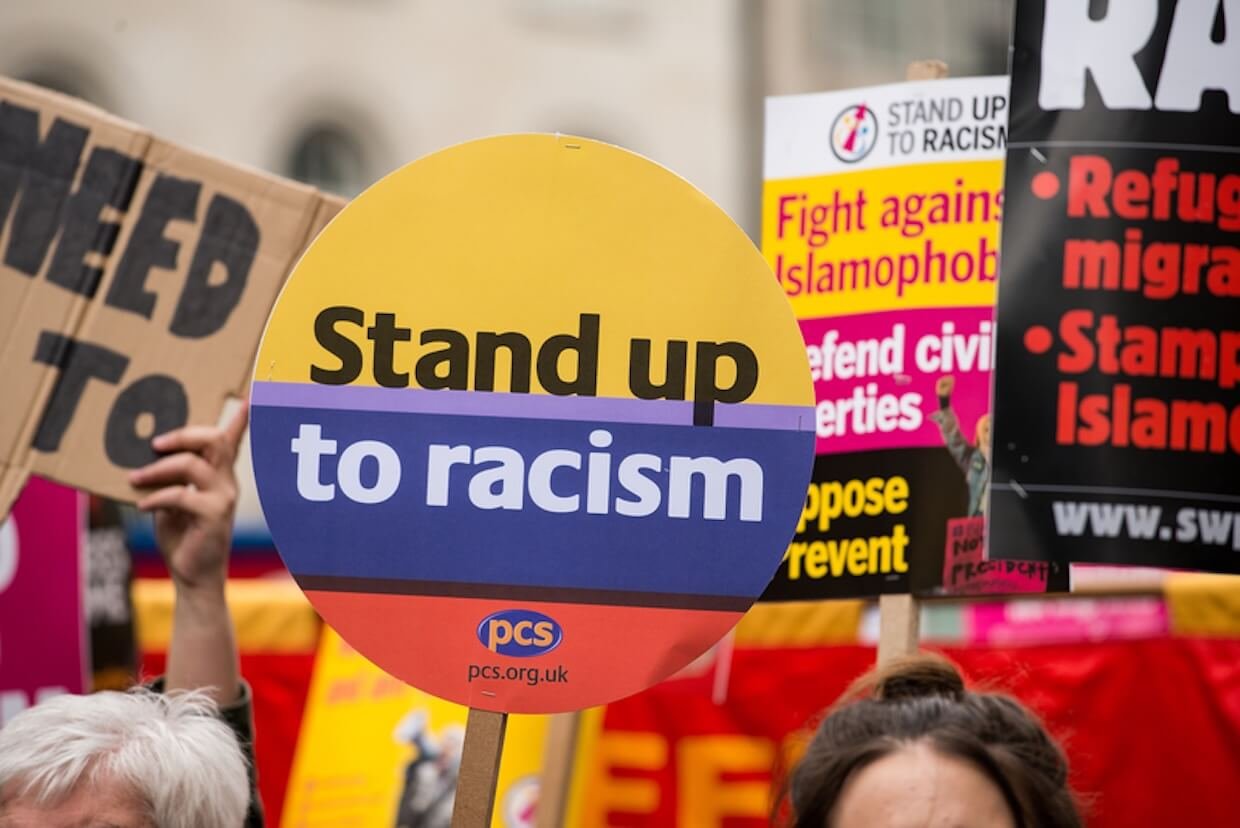
Anti-racism demonstrators march through central London during the National Demo for UN Anti-Racism Day, protesting racism and Donald Trump’s policies. Photo: John Gomez / Dreamstime.
Reform UK’s electoral appeal appears strongly rooted in anxieties over migration, asylum, and national identity. Some analyses identified “anger over immigration/asylum” as one of the major “recruiting sergeants” for Reform voters. How should we understand the relationship between economic insecurity and racialized nationalism in contemporary Britain? Is immigration functioning less as a policy issue than as a symbolic vehicle for wider civilizational anxieties?
Dr. Aaron Winter: That is an extremely important issue and question. What we hear in this narrative—and part of the reason why far-right ideas and constituencies perceived as leaning toward the far right can become valuable and acceptable to establishment parties, particularly Labour—is the claim that this represents a cry against class inequality or an expression of a desire to re-engage with the political system. The problem with that argument is that, even if people are experiencing socioeconomic inequality, it is not only white people or right-wing constituencies who are affected. And those inequalities are not going to be solved by scapegoating migrants or by turning toward far-right parties that ultimately serve capitalist interests. Capitalism, rather than migrants, is responsible for much of the socioeconomic inequality people are experiencing.
It is also very revealing how political rhetoric focuses on “small boats.” The phrase itself emphasizes how small and vulnerable these boats actually are. Yet there is no comparable effort to confront banks, corporations, or the larger systems and structures of power.
What has happened, particularly since 2010, is that Britain experienced austerity alongside deepening cuts to the welfare state, benefits, labor rights, wages, pensions, healthcare, education, and many other areas. These developments have made life extremely difficult for many people.
Some individuals may respond to these conditions by blaming migrants, but many of those affected are themselves migrants or the children of migrants. Others are demanding a left-wing political alternative capable of addressing structural socioeconomic inequality and the inequalities produced by neoliberal capitalism, corporatism, militarism, and racism.
The politics of the right is not going to solve these problems. At a certain point, what happened was that the far right—initially through the Conservatives and now increasingly through Labour—effectively offered racism as compensation to largely white populations experiencing poverty, socioeconomic insecurity, and inequality. Or, at the very least, they claimed that racism was what these constituencies wanted. But that does not solve the underlying problems. Instead, it undermines solidarity between the white working class and the racialized working class, who are also British. This is a very serious, dangerous, and damaging form of divide-and-rule politics that will only intensify socioeconomic, racial, and regional inequalities.
I think we really need to confront this narrative because, too often, when people challenge the idea of the “left-behind white working class,” they are accused of ignoring “the people.” Yet the discourse surrounding populism frequently treats this constituency as though it represents the entire demos, rather than recognizing it as one increasingly valuable political constituency that has been—and likely will continue to be—neglected by economic and political policy.
So, we urgently need to get a handle on this, because racism is becoming worse while socioeconomic inequality is not improving. And that is why we need to understand both the far right and this broader narrative as functional rather than descriptive.
Cultural Anxiety Replaced Material Politics
A “Stop the Boats” Union Jack flag displayed on a building in Weston-super-Mare, North Somerset, England, on August 27, 2025. Photo: Andre Whaker / Dreamstime.
In “Whiteness, Populism and the Racialisation of the Working Class,” you critique the construction of the “white working class” as the authentic embodiment of “the people.” Did the 2026 elections reproduce this same racialized populist narrative? And how has the language of the “left behind” continued to legitimize exclusionary politics after Brexit?
Dr. Aaron Winter: That was a dominant narrative around Brexit. It had actually been a significant narrative in the 2000s, when the British National Party (BNP) was rising in former industrial and deindustrialized areas, including parts of East London.At the time, the Labour government, under Community Secretary John Denham, argued that if these identities, celebrations, and cultural concerns were not addressed and prioritized in the same way as those of other groups, their grievances could become dangerous. It was, in many ways, a kind of anti-multicultural reversal.
This was not only a BNP narrative; it was also reflected in far-right studies and political science literature that emphasized demand-side explanations, arguing that people feared ethnic competition and becoming the “losers of modernity,” and so on. What struck me at the time—I had just finished my PhD—was watching academics and the BNP effectively using the same narrative: one diagnostically, though functionally, and the other strategically. As a result, the “white working class” and “left behind” narrative came to dominate political discourse throughout Brexit and continued to do so until quite recently. It was somewhat less pronounced in this most recent election.
This election was different in certain respects. And I should add that this discussion also connects to arguments made by figures such as Matthew Goodwin and Robert Ford, as well as Arlie Hochschild in the United States, about fears of change and threats to identity. These arguments were often framed as socioeconomic in nature. But they largely ignored elites. They ignored abstention among those below the poverty line and lower on the socioeconomic scale. And what they also did was to substitute material conditions with cultural anxieties. Those are not the same thing.
What I think has happened more recently—particularly what we witnessed this weekend in London with the rallies—is the emergence of a much more overt white supremacist and ethno-nationalist discourse operating irrespective of, and far beyond, class. At the same time, we saw something else that is part and parcel of this normalization. I always believed that the “white working class” narrative used white inequality as a proxy and shortcut toward a broader white victimization narrative, which the far right has long embraced.
What has happened now is that this discourse has become so normalized that it is framed around ideas such as “our right to be British,” “our flags,” and similar themes. Simultaneously, there is a deliberate highlighting of racialized and migrantized participants in the Unite the Kingdom rally in order to claim: “See, we’re not racist.” And then they accuse the opposing side at the rallies—not in a simple binary sense, but those on the other side—of antisemitism and hate. In effect, they reverse the accusation, declass the issue, and attempt to balance overt white nationalism and fascism with a populist narrative centered on “ordinary people.”
I am not saying class has disappeared. I think Labour continues to make these arguments because it remains one of the few remaining connections to its historical legacy of representing workers and the left. So, they continue to say: “We’re going to fix inequality” and “We’re going to address the cost-of-living crisis.”
Reform Thrived on Mainstream Narratives
A placard urging voters to support Reform UK candidate Richard Pearse during the UK general election campaign in Weston-super-Mare on July 4, 2024. Photo: Keith Ramsey / Dreamstime.
Much commentary surrounding Reform UK frames its rise as a revolt against metropolitan liberal elites. Yet your work suggests that such narratives often obscure the role of mainstream institutions, media, and political actors in legitimizing reactionary discourse. To what extent are Labour and Conservative elites themselves implicated in creating the ideological conditions for Reform’s success?
Dr. Aaron Winter: You asked earlier about Reform gaining votes, and I made the point about demand versus supply.We have an elite media and political ecosystem that has done little more than echo and parrot the far right. Academics, commentators, and political actors have repeatedly argued that this is what parties must do to survive, that this is where the votes are, and that this is what public opinion supposedly demands. So, it is hardly surprising that everyone is now talking about these issues and that Reform has benefited from it.
Part of the reason Reform has benefited is that, despite claims that it is “shaking up” politics, what we effectively have are two establishment parties and Reform, all advancing different versions of the same political agenda. That, in itself, represents a crisis of democracy rather than a genuine protest alternative, as I noted earlier.
What is also important is that many of these narratives are fundamentally false: the idea that this is purely a protest movement, that it is exclusively about the white working class, or that it is fundamentally rooted in socioeconomic inequality. There is also the recurring depiction of certain places as no longer “really” Britain or “really” England—places portrayed as mixed, lost, or transformed into so-called “no-go zones.” I hear this rhetoric constantly about London.
It is part of a strategy of divide and rule. But it also reflects an idea the far right has spent years carefully developing and refining: the notion that the “real people”—their constituency, largely white and sharing the same national identity as the nation itself—are perpetually under threat. Increasingly, this takes on an almost apocalyptic tone, expressed through “replacement” theories and related conspiratorial narratives.
Reform’s targeting of London is particularly revealing in this regard. They do not simply attack metropolitan elites; they portray London itself as a city that has been “taken over,” while simultaneously claiming that “real working-class Londoners” are now afraid to go outside. So, at the same time, London is represented as a place containing the last remaining white working-class communities who have supposedly “had enough.”
You can see the contradictions running throughout this discourse. It is similar to the idea that Nigel Farage is somehow a man of the people and a representative of the working class, despite being a private-school-educated former finance professional with considerable wealth, multiple jobs, and substantial property holdings.
Labour Cannot Outflank Reform
There is a constant deflection onto questions of socioeconomic inequality, elites, and “the people.” What is particularly striking is that tech billionaires, financiers, and media moguls are somehow excluded from the category of elites, while academics and migrants are cast in that role instead. Meanwhile, the white-only working class is framed simultaneously as both “the people” and “the left behind.”
It is a deeply distorted picture that ultimately makes very little sense. This is also why, when we talk about populism, we need to recognize that this is not a materialist analysis of power, nor is it a class analysis. It is a framing device that performs a political function while containing numerous contradictions.
Yet the media and political establishment seem unable to let go of it. They reproduce it rather than challenge it. And that is precisely why Reform is benefiting. Labour is never going to be as effective as the Conservatives at being Conservative, and neither Labour nor the Conservatives will ever be as effective as Reform at being far right.
As a result, they are losing their own constituencies. I worry particularly about Labour because the left has been hollowed out. We can already see this reflected in the leadership contest now developing. The problem is not only that Labour is losing support to Reform by trying to imitate Reform, but that it has also alienated much of the left and many of its traditional supporters. Aurelien Mondon and I have been arguing this for more than a decade now. The problem simply keeps reproducing itself and becoming worse.
Islamophobia Was Recast as Liberalism
Muslim worshippers gather for Eid al-Adha prayers at Plashet Park in Newham, London, on June 24, 2023. Celebrations marking the Islamic holiday included communal prayers, feasts, and public festivities. Photo: Abdul Shakoor / Dreamstime.
In your analysis of Islamophobia, you distinguish between “illiberal” and “liberal” articulations of anti-Muslim racism. How was this distinction visible during the 2026 election campaigns? Did anti-Muslim rhetoric emerge primarily through overt far-right language, or increasingly through securitized and culturally coded mainstream discourse?
Dr. Aaron Winter: That is a really important question. When we first started working on this, we framed it as liberal versus illiberal racism. In some of our earlier work, we examined the claimed rejection of traditional forms of racism—fascism, race science, segregation, and other explicitly illiberal forms—in favor of more liberal forms that appeared socially acceptable.
The logic was to denounce the far right while allowing more acceptable forms of racism to remain. Islamophobia became the central case study because Islamophobes often insist: “We are not against people; we are against ideas.” In other words, they claim: “We are liberal, they are illiberal.”
The far right in France, Britain, and many other countries used this strategy to shed the baggage and stigma associated with fascism and Nazism—the most overtly illiberal forms of racism within our framework. They would say things such as: “We support gay rights, women’s rights, and free speech.”
At the same time, this was also connected to a kind of free-speech opportunity model and to the claim that there was a so-called “woke conspiracy” preventing right-wing voices from appearing in the media. That is another contradiction within the Farage, Reform, or Tommy Robinson-style narrative: “We’ve been cancelled, we’ve been silenced,” while repeating those claims constantly on national television. They have not been cancelled. Again, it is an opportunity structure and a business model.
Security Politics Enabled Anti-Muslim Racism
But liberals often fell for this logic because they argued: “We must protect free speech, even if we dislike the ideas. Otherwise, pressure will build, and eventually fascism will emerge electorally, institutionally, and on the streets.”Ironically, we largely arrived at this situation through that very liberal approach.
Islamophobia has often been articulated through issues such as women’s rights and gay rights. We see a version of this in the way Israel “pinkwashes” the occupation and genocide. More recently, we have also seen how issues such as grooming gangs and the murder of young girls in the Southport attack have been mobilized as opportunities to target hotels housing asylum seekers or to justify demonstrations framed around “taking back the streets” and “protecting our women.”
These are presented as forms of liberalism and progress. But they clearly draw on a long history of patriarchal protectionism and the use of the “defense” of white women to attack racialized individuals and communities. Historically, we can trace this back to the Ku Klux Klan and lynchings in the United States.
We therefore have to understand this election, the previous election, and the riots that occurred in between as part of a broader process in which Islamophobia and anti-migrant racism are justified through the language of protecting liberal democracy. The far right does not actually want liberal democracy, while establishment parties want to preserve it. But both are increasingly focused on the same supposed threat, albeit in relation to different political ideals.
In that sense, both are doing tremendous harm to migrants and Muslims. And they are not actually protecting democracy because a democratic system would have to represent people equally, rather than representing some at the expense of the dehumanization of others treated as collateral damage.
What has also happened is that, although the United Kingdom is represented through the language of ordinary people, flags, patriotism, nationalism, pride, fear, and anxiety about migration—particularly “illegal migration”—the discussion very quickly shifts from migration in general to Muslims specifically.
There were horrific scenes of Islamophobia at that march. And we have to remember that the other rally was Nakba 78. Pro-Palestinian protest and solidarity movements have increasingly been treated through both liberal and illiberal forms of Islamophobia: they are accused of antisemitism, of rejecting democracy, and of opposing free speech. Yet those marches are not Hamas. They include Jewish people, left-wing people, people of all faiths and none, and participants from many different communities.
But you can see how quickly politics shifts from overtly illiberal rhetoric to liberal securitized responses: “We are going to crack down, proscribe organizations, securitize, ban, accuse, and arrest.” You see a very different political response toward movements supporting racialized communities associated with Muslims than toward movements associated with Islamophobia, racism, and highly narrow and exclusionary definitions of Britishness.
The contrast has been shocking. One thing we may now be starting to see, however, is somewhat more criticism of Unite the Kingdom than in previous moments. I think that may indicate that many people are increasingly frightened by the electoral consequences, rather than genuinely defending the communities being targeted.
Brexit Was About Identity and Belonging
Brexit suporters, brexiteers, in central London holding banners campaigning to leave the European Union on January 15, 2019.
Following Brexit, many expected anti-immigrant politics to lose salience once Britain formally left the European Union. Yet migration appears even more central to political mobilization in 2026. What does this tell us about Brexit itself? Was Brexit ever fundamentally about sovereignty and economics, or was it always primarily about race, identity, and belonging?
Dr. Aaron Winter: I think it was about the latter. On one hand, the fact that Brexit was fundamentally about immigration and certain very particular, ill-formed ideas about sovereignty says a great deal. I say “ill-formed” because the focus was placed almost entirely on the EU as the central power structure, while offering little or no critique of internal structures of power. There was no serious reflection on domestic systems of governance, rights, or law. That is why you ended up with judges being labeled traitors.
What is also interesting is that Brexit did not ultimately “solve” migration. Partly, this is because the immigrants initially being targeted included white European migrants. But once European migration slowed, the speed with which the discourse shifted toward Muslims and Africans—and became overtly racialized—revealed how this politics had already been gradually whitewashing and mainstreaming itself.
Brexit emboldened these politics rather than satisfying them, and that is a very important point. I remember that when Jo Cox was murdered, I thought the country might stop and reflect. Instead, what we witnessed was a shift from individualizing and exceptionalizing a far-right actor and murderer to normalizing the ideas he expressed. Not the violence itself, but the rhetoric and worldview underpinning it.
That made me worry that there would be no real restraints on these politics, no stopping point, and that they would simply continue escalating. What has remained constant throughout has been the anti-immigrant argument, which has become far more extreme and widespread over time. The media bears part of the responsibility for this, as does the political establishment, both of which embraced the idea that immigration was the defining issue shaping public concern and electoral behavior. Yet I never believed that everyone voting in Britain was anti-migrant or racist.
What is also important is that migration and Islamophobia are deeply interconnected. The migrants, asylum seekers, and refugees who are most heavily targeted are often targeted precisely because they are Muslim.
So yes, Brexit was always fundamentally about migration, race, identity, and belonging, even if those concerns also served to obscure broader political and economic dynamics operating behind the scenes. At the same time, Brexit was imagined as something that could “solve” migration in ways it never realistically could. Refugee and asylum flows have continued, whereas many people seemed to believe Brexit itself would somehow end them. But these movements continue for many reasons, including ongoing wars and global crises that people are trying to escape.
I also think that the mainstreaming of racism and far-right politics has depended heavily on the demonization of migrants while simultaneously insisting that this is not racism, but simply a “legitimate concern.” It is framed through rhetoric such as: “Surely we must be able to protect our own borders.” That rhetoric continues to carry political salience regardless of whether the far right itself rises electorally or not. Unless someone directly challenges and delegitimizes that argument, it will continue to grow. But that has not happened, partly because the issue still functions as a distraction from the multiple crises that political institutions are either mismanaging or failing to manage altogether.
Brexit Exposed Britain’s Internal Divisions
The elections also revealed strong territorial fragmentation across the United Kingdom, with Wales, Scotland, and England moving in increasingly divergent political directions. How does the rise of English nationalism intersect with contemporary right-wing populism? And does Brexit continue to deepen centrifugal pressures within the Union?
Dr. Aaron Winter: We saw, particularly in the 2010s and in response to the Scottish independence referendum, the emergence of a form of unionism alongside calls for an English parliament and a stronger English nationalism. In part, this was an attempt to compete with devolution, but it was also driven by the perception that “we,” as English people, had somehow lost out.
At the same time, when we talk about Britain and Brexit, we often obscure the very real and significant differences within the United Kingdom itself. One important point is that, if Brexit had truly been a straightforward expression of white working-class alienation, disenfranchisement, and socioeconomic inequality, then Scotland, proportionally speaking, would also have voted for Brexit. But that simply did not happen.
Scotland has articulated a form of nationalism framed in much more progressive terms compared to English nationalism and to dominant forms of British nationalism more broadly. But that does not mean there are no problems in Scotland, Wales, or elsewhere regarding growing anti-immigrant sentiment.
In some places, particularly Scotland, there have been attempts to clamp down on and address these developments. But we have to watch this carefully, and we need to avoid overgeneralizing. At the same time, we also need to avoid portraying certain places as entirely exceptional, as though Scotland somehow has no such problems at all.
Likewise, we should not assume that the so-called “red wall” in the north of England is, by definition, uniformly working class and racist. We need more localized analysis, we need to actually speak to people, and we need to move beyond polling designed purely for political utility, electoral strategy, or tactical advantage. We need to understand people more seriously while also challenging narratives that scapegoat others.
Capitalism and Democracy Are Both in Crisis
Photo: Iryna Kushnarova.
The 2026 elections appear to reveal not simply partisan volatility, but a deeper crisis of democratic legitimacy, trust, and representation. Do you see parallels between Britain today and wider international trends visible in Trumpism, European radical-right populism, and authoritarian nationalism elsewhere?
Dr. Aaron Winter: Yes, I do, and I think this is fundamentally a crisis of both capitalism and democracy. The problem, however, is that the solutions currently being offered are not more egalitarian or genuinely democratic alternatives, but rather more unequal forms of capitalism alongside a model of democracy in which political representation increasingly exists only through different variations of bordering politics, conservatism, or pro-business agendas. I think, that is extremely dangerous, both for the people at the sharp end of these politics and for democracy itself. It is not a healthy democratic condition. In fact, democracy is being further degraded in response to the crisis.
Part of this is also tied to how protest and the “protest vote” are framed. We are seeing something somewhat different in the United States, where there has long been a very narrow political spectrum, consisting essentially of a centrist party and a right-wing party that has moved even further to the right. Since the Clinton era, the Democratic Party itself has also shifted rightward.
We have seen something similar with Labour in Britain, although Labour did briefly move back toward the left under Jeremy Corbyn. We do not really see an equivalent development within the Democratic Party in the United States.
So, while the crisis of polarization is certainly real in terms of how politics is experienced, performed, and articulated, it is not necessarily reflected in a major ideological distance between Democrats and Republicans on a range of issues, whether concerning Israel or the welfare state, for example.
I also think the crisis of democracy will not be resolved if political systems continue offering different versions of essentially the same politics, without creating space and oxygen for genuine forms of protest—whether on the streets, through elections, within party politics, or at local and national levels.
And we are seeing similar tendencies across the world. At the same time, we still need to distinguish between the different contexts in which these developments are unfolding. I do not particularly like framing this as a singular “populist wave.” What I do see, however, is the ongoing mainstreaming of far-right ideas. At the same time, in many cases, the status quo is being reaffirmed rather than challenged, while democracy is being degraded rather than revitalized. And I think that is a very clear international pattern.
Britain Needs Radical Democratic Reform
And lastly, Dr. Winter, your recent work argues that the mainstreaming of reactionary politics depends not only on extremist actors, but on the normalization of their discourse within public life. Looking ahead to the next UK general election, do you believe Britain is approaching a moment in which reactionary nationalism becomes hegemonic—or do you still see the possibility for a genuinely pluralistic and anti-racist democratic alternative to emerge?
Dr. Aaron Winter: It is an excellent and very important question. I certainly want such an alternative to emerge. But I think that, unless politics becomes centered around radical reform, anti-racism, and opposition to inequality, things are not going to change.
I am deeply worried about the movement toward both reactionary democracy and increasing authoritarianism and fascism. At the same time, however, I have consistently argued in my work with Aurelien Mondon, as well as in my broader scholarship, that we cannot simply fearmonger about these developments while ignoring the fact that the political center itself wants to hold. And it wants to hold without fundamentally changing anything.
I am even hearing terms now such as “radical centrism” and the “radical middle,” and I think these are currently very dangerous ideas because they effectively suggest that the choice is between fascism or more of the same—only slightly worse because we are told it is necessary in order to fight fascism.
But that is not a political trajectory that supports radical reform, structural transformation, anti-racism, or equality in any meaningful sense. We really have to push for those things. We need a healthy democracy, we need a genuinely critical alternative, and we need to stop not only the march of racism, reactionary politics, and fascism, but also the continued reaffirmation of the narratives that brought us to this point. That includes mainstream narratives about the “left behind,” about liberalism versus illiberalism, about the so-called “populist wave,” and about the idea that we must further compromise an already compromised system simply to prevent something worse, while preserving a political order that is increasingly no longer fit for purpose.
In this piece, Dr. João Ferreira Dias examines how the Israeli–Palestinian conflict has increasingly been transformed within Europe into a broader struggle over identity, immigration, Islam, nationalism, and political belonging. Focusing on Nakba Day mobilizations in London, Dr. Dias argues that Gaza now functions as a symbolic battlefield onto which competing ideological camps project their anxieties, fears, and moral claims. For parts of the progressive left, Palestine represents anti-colonial resistance and counter-hegemonic struggle; for the radical populist right, it reinforces narratives of Islamization, multicultural crisis, and civilizational decline. The article ultimately warns that when international conflicts are absorbed into domestic culture wars, liberal democracy itself becomes increasingly polarized, emotionally charged, and politically fragile.
On May 16, 2016, London became the stage of a culture war made material, as pro-Palestinian demonstrations and anti-Muslim, anti-immigration mobilizations occupied the same symbolic and physical space. Nakba Day thus became more than a moment of historical remembrance: it fueled social, ideological, and affective polarization.
One may discuss the historical, legal, geopolitical, religious, and humanitarian dimensions of Gaza and the wider Middle East: the long dispute over land, identity, sovereignty, security, and regional spheres of influence. Yet in Western societies, especially in Europe, the Israeli-Palestinian question is increasingly translated into a different grammar: left versus right, oppressor versus oppressed, civilization versus threat, emancipation versus replacement.
For much of the radical and progressive left, the Palestinian cause has become part of a Gramscian counter-hegemonic struggle on behalf of the “silenced voices of the oppressed.” In this framework, Palestine operates as a symbolic capsule of progressivism, anti-colonialism, and resistance, while Israel is cast as the embodiment of the great oppressor: capitalism, colonialism, militarism, and Western domination.
For ultraconservative movements, and especially for the radical populist right, this is precisely the “woke” and “leftist” narrative they claim to be fighting. In their reading, multiculturalism is not a liberal framework for coexistence, but a Trojan horse for Islamization, Sharia, and the so-called “great replacement” of Western societies. The argument is blunt: the left lost its traditional voters and is now replacing them with immigrants, especially Muslims — its new “proletariat.”
This is where the Israeli-Palestinian conflict ceases to be merely an international crisis and becomes an internal struggle over the moral boundaries of the political community. Gaza becomes a mirror. Each side does not only see the Middle East; it sees itself, its enemies, and the future it fears.
The real battle, therefore, is not only over territory, sovereignty, or security. It is over narrative. Who is the victim? Who is the oppressor? Who speaks for humanity? Who threatens civilization? And, above all, who has the authority to define the moral meaning of the conflict?
Liberal democracy is weakened when every external conflict is immediately absorbed into domestic identity wars. The tragedy of Gaza becomes, in Europe, a proxy battlefield for unresolved anxieties about immigration, Islam, colonial memory, antisemitism, multiculturalism, and national decline. The more each side claims moral purity, the less space remains for political judgement.
As democracies worldwide confront populism, democratic erosion, and authoritarian normalization, Hungary remains one of the clearest examples of contemporary illiberal transformation. In this interview with the ECPS, Stefania Kapronczay—former director of strategy at the Hungarian Civil Liberties Union (HCLU)—analyzes how Viktor Orbán’s regime hollowed out democracy while preserving its formal facade. She argues that Orbánism relied not only on institutional capture, but also on reshaping citizens’ “sense of possibility” and portraying human rights as foreign and disconnected from everyday life. Reflecting on democratic repair under the new Tisza administration, Kapronczay insists that “democracy in Hungary must not simply return, it must return in a better form,” emphasizing participation, accountability, civic trust, and democratic renewal beyond mere restoration.
Giving an interview to the European Center for Populism Studies (ECPS), Stefania Kapronczay, former director of strategy at the Hungarian Civil Liberties Union (HCLU) and one of the leading voices analyzing democratic backsliding, civic resistance, and authoritarian transformation in Central Europe, argues that Hungary’s future cannot simply be defined by a return to the pre-Orbán status quo. “My hope,” she says, “is that Hungary can become a case study not simply for returning to democracy, but for rebuilding democracy in a better form—one that not only functions better for people, but also makes people genuinely feel that it works for them.”
In this wide-ranging conversation with the ECPS, Kapronczay reflects on the political, institutional, and psychological legacy of sixteen years of Orbánism and examines what democratic repair may require after one of the most influential illiberal experiments in contemporary Europe. Drawing on years of frontline human rights advocacy under Viktor Orbán’s rule, she argues that Hungary should not be understood as a straightforward democratic collapse, but rather as a sophisticated process of “democratic hollowing-out,” in which “the facade of democracy—elections and even institutions—was preserved,” while institutions were gradually transformed into instruments designed to secure the regime’s long-term survival.
Throughout the interview, Kapronczay emphasizes that Orbánism relied not only on institutional capture, but also on reshaping public consciousness and narrowing citizens’ sense of political possibility. “What fundamentally shifted,” she notes, “was people’s sense of possibility—the belief that, as citizens, they could have an impact on government decision-making.” In her view, the deepest damage inflicted by Orbánism was not merely constitutional or administrative, but cultural and psychological: the successful portrayal of human rights as “foreign,” externally imposed, and disconnected from everyday life.
Kapronczay also offers a powerful analysis of what she calls modern “legalistic authoritarianism,” a system in which “everything appears legal,” institutions formally remain intact, and constitutions are endlessly rewritten in order to preserve political dominance. From electoral manipulation and clientelist dependency networks to propaganda structures and the fusion of party and state resources, she demonstrates how authoritarian resilience can be embedded within formally democratic systems.
At the same time, the interview is not only an analysis of democratic erosion, but also a reflection on democratic recovery. Kapronczay argues that rebuilding democracy requires more than restoring pre-existing institutions. It demands confronting social polarization, rebuilding trust, and creating more participatory forms of democratic governance. “We cannot simply entrust elected representatives with making decisions on our behalf for four years at a time,” she argues, emphasizing the importance of participatory democracy, citizens’ assemblies, and broad civic involvement in constitutional reconstruction.
Importantly, Kapronczay situates Hungary within a broader regional and global context, warning that “authoritarians learn from one another,” while also insisting that civil society must learn to compete not only through principles, but through narrative power, emotional engagement, and citizen mobilization.
As democracies across the world continue to confront populism, democratic erosion, and autocratization; this interview offers both a sobering diagnosis of Orbánism and a compelling vision for democratic renewal beyond mere restoration.
Here is the revised version of our interview with human rights defender Stefania Kapronczay, lightly edited for clarity and readability.
Orbánism Kept Democracy’s Facade While Emptying It Out
Viktor Orbán, Hungary’s Prime Minister, arrives for a meeting with European Union leaders in Brussels, Belgium, on June 22, 2017. Photo: Alexandros Michailidis.
Stefania Kapronczay, welcome! To begin, after sixteen years of Orbán’s rule, should Hungary be understood as a case of democratic breakdown, democratic hollowing-out, or a more subtle transformation in which human rights were formally preserved while substantively emptied of enforceability? What do you see as the deepest and most enduring damage inflicted on Hungary’s human rights architecture—not only institutionally, but socially and culturally?
Stefánia Kapronczay: Thank you so much for this question. It is a very complex one and let me start with the first part: Hungary represents more than a case of democratic hollowing-out.It was very important for the Orbán regime to maintain the facade of democracy. This is also crucial to understanding why he eventually conceded, why elections continued to take place, and why he could ultimately be defeated electorally. Even though the playing field was incredibly uneven and it was extremely difficult to win against Fidesz in an election, significant sacrifices had to be made in order to achieve this result. There could only be one challenger, one contender, which, of course, meant that different voices could not enter the race if the opposition wanted to remove the Orbán regime.
So, this was a form of democratic hollowing-out in which the facade of democracy—elections and even institutions—was preserved, but all of them were adjusted in ways that served the regime’s interests, either through the appointment of political loyalists or through changes to the rules themselves. In the end, these institutions were transformed into mechanisms that allowed Orbán to remain in power for as long as he wished.
As for the second half of your question, I believe the cultural and psychological impact of these sixteen years is the most important. Not because the institutional damage was insignificant, but because the Orbán regime managed to convince ordinary citizens that human rights are not something that matters to them—that they are foreign, imposed from outside, and not something relevant to Hungarians. The regime promoted the idea that human rights have nothing to do with everyday life. By waging cultural wars around migration and LGBT rights, it portrayed human rights as something concerning only “other people,” never the average citizen.
Even though many LGBT people are themselves ordinary citizens, the regime succeeded in presenting human rights as something alien and externally imposed, disconnected from daily life. In reality, however, human rights emerged precisely from the understanding that protecting rights directly improves people’s lives. If individuals are not discriminated against, they have greater opportunities, and if the state is required to comply with human rights standards, this ultimately leads to a better life for citizens.
This cultural transformation will be even more difficult to reverse than the institutional damage. In my view, human rights should be considered whenever policy decisions are made. And we are still very far from that point today.
Everything Looked Legal, but Justice Became Impossible
In your analysis, Fidesz did not abolish democracy outright but hollowed it out through legal instruments, institutional capture, and narrative control. How should we understand this model of “legalistic authoritarianism” from a human rights perspective?
Stefánia Kapronczay: Yes, as I said before, it all seems legal. It appears to be merely a series of legal changes. The institutions are still there: there is an ombudsman, there is the Constitutional Court, and you can still bring your case before the regular courts. But whenever a case concerns a political question—and everything important to the government eventually becomes political—you have no chance of winning.
This is certainly true for migration and LGBT issues, as I mentioned earlier, but it also became true for freedom of expression cases and even for cases concerning disability rights, particularly when these issues appeared capable of generating public mobilization and when that mobilization, that citizen power, could potentially turn against the government.
So, the facade remains in place. Everything appears legal. They never technically break their own rules, so to speak. Instead, they simply modify the constitution, even for the fifteenth time. But at the same time, this cannot be regarded as compliance with constitutional standards, human rights standards, or international law.
Authoritarianism Depends on Mental Control as Much as Institutions
Viktor Orbán campaign poster ahead of Hungary’s 2026 elections. Photo: Bettina Wagner / Dreamstime.
In your writings, you emphasize that Fidesz’s authoritarian resilience rests not only on institutional capture, but also on shaping citizens’ expectations, incentives, and sense of political possibility. How did Orbánism turn human rights from a universal democratic language into something portrayed as alien, partisan, or elitist?
Stefánia Kapronczay: I think I addressed the second part of your question earlier, so I will focus a bit more on the first. This issue is extremely important. What fundamentally shifted was people’s sense of possibility—the belief that, as citizens, they could have an impact on government decision-making, whether at the local or national level.This was a key element in how Orbán managed to maintain his power. And it was especially powerful for two reasons. First, there was already a historical precedent for it. Before the regime change in 1989–1990, there was essentially a tacit pact between the socialist state and its citizens: you could have a relatively good life—especially compared to other countries in the region and particularly compared to the Soviet Union—but you had to stay out of politics. So, this was a political arrangement with which many people were already familiar.
Just as importantly, for a period of time Fidesz was able to sustain both sides of this arrangement. Economic prospects appeared relatively favorable, and people felt that they were moving ahead. Of course, this was not solely because of the government itself. Hungary received enormous—historically unprecedented—amounts of funding from the European Union, especially between 2010 and 2022.
Even though much of this money was used to enrich government cronies, and a significant share disappeared into corruption instead of being invested in public services such as healthcare or education, people nevertheless experienced improvements in their daily lives because of these funds and the relatively favorable global economy. Compared to their parents’ generation, they felt they had greater stability. Compared to neighboring countries, this was no longer necessarily true, but public opinion surveys and sociological research consistently show that most people do not compare themselves to people in other countries; they compare themselves to their parents’ generation.
After 2022, however, this arrangement could no longer be sustained by the Orbán regime. People increasingly felt in their everyday lives that they were no longer living better, that life had become far more uncertain, and that their livelihoods had become increasingly insecure. At the same time, they began to experience very directly the collapse of public services—whether in transportation, education, healthcare, or elsewhere.
Once this arrangement broke down, the Orbán regime also lost its ability to shape people’s sense of political possibility. More and more people began to feel that the situation was no longer sustainable or acceptable. Then someone emerged who convinced them that things could be different, and their sense of possibility began to shift.
It is very important to observe how something like this—something that is not discussed very often—can become so decisive. We speak a great deal about institutions and formal political structures, but we should pay much more attention to the ways in which the mental architecture of an authoritarian state is maintained. And this is precisely what began to crumble.
The Real Fraud Happened Outside the Polling Stations
Poster from political party Fidesz showing the opponents of Hungarian PM Viktor Orban surrounding billionaire philanthropist George Soros, Budapest, April 8, 2017.
You have described Hungary’s elections as a “special version of a stolen election,” where manipulation occurs less through ballot-box fraud than through an unlevel playing field. How should we rethink electoral integrity when abuse is legalized, normalized, and embedded long before election day?
Stefánia Kapronczay: Yes, elections do not happen only on election day. Usually, international institutions come to monitor only during that period—perhaps a few days before the election and a few days afterward.But in Hungary’s case, the manipulation and the systemic nature of how elections were effectively stolen operated every single day. It was not only about the media—how it was captured, how people were fed false information, and how certain information was withheld from them—but also about how Fidesz maintained a clientelist system in which citizens, especially in smaller towns and villages, became dependent on local power structures.
People relied on these structures for social services, for access to schools or nurseries for their children, or simply because they were employed by the local government. This created a system in which citizens were kept in conditions of dependency that could then be exploited. And this system was maintained continuously, every day.
This is something that is very difficult to capture when we discuss the fairness and integrity of elections. It also took civil society quite a long time to fully understand it, because for years much of the focus was on what happened inside the polling stations. But as we monitored the process more closely, we realized that the real fraud was taking place around the polling stations.
Already during the 2019 local government elections, there were initiatives aimed at identifying and disrupting the chain of voter manipulation occurring outside polling stations—practices involving the exploitation of citizens, vote-buying, organized transportation of voters, and various forms of coercion. By 2022, there were already widespread civil society initiatives dedicated to uncovering these practices. And in 2026, this became a major effort involving both civil society organizations and political party activists, as well as ordinary citizens who were present in all the districts where these practices were taking place.
We are still waiting for some of the data, but it seems that they were finally able to break the cycle I described earlier.
State Resources Became Tools of Party Politics
How has the fusion of party, state, public media, regulatory bodies, and state-linked economic networks damaged the practical meaning of political equality and equal citizenship in Hungary?
Stefánia Kapronczay: Just for the readers, what increasingly happened was that Fidesz began using state resources to advance its party-political goals. This became especially visible in 2020 and 2021 during the COVID pandemic, when people had to register in order to receive vaccinations, and later their email addresses were used by the government to distribute government or Fidesz propaganda.
It was also extremely difficult to remove yourself from those mailing lists. There is actually an interesting—perhaps even ironic—story about this. After Tisza came to power, while the old regime was still partially in place, we all received an email from the very same address that had previously been used to send propaganda, explaining how we could finally remove ourselves from the list. Suddenly, it had become very important.
That was an early example, but the practice reached another level during the election campaign. Even before that, there were Fidesz billboards displayed alongside billboards supposedly issued by the government, using the same language, colors, and visual style, making it extremely easy to confuse the two. And that was precisely the point.
Then, in 2026, this escalated even further, as government and state resources were deployed on a massive scale to support Fidesz’s campaign, including the organization of huge events across the country, each costing billions of Hungarian forints.
This is where the line between party and state becomes fundamentally blurred. Yes, citizens vote for a government—for a party that will form a government. But once a party assumes governmental power, it is supposed to represent all citizens, not only those who voted for it. By using government or state resources for partisan political purposes, the government breaks that trust and effectively communicates that it represents only those who agree with it.
But this is not surprising. Already in 2002, after losing the election, former Prime Minister Orbán delivered one of his most infamous speeches, declaring that “the homeland cannot be in opposition,” implying that his political camp alone represented the nation, while those voting for others somehow did not. So, this way of thinking has been present since at least 2002.
The Damage to Civil Society Runs Deeper Than We Realized
The Orbán government repeatedly portrayed NGOs and human rights defenders as “foreign agents,” “Soros mercenaries,” and threats to national sovereignty. How deeply did this stigmatization campaign damage the legitimacy, safety, and public reach of civil society actors? More broadly, how successful was Orbánism in eroding public trust in independent civic organizations, and what forms of democratic and social repair are now needed to rebuild that trust under the Magyar administration?
Stefánia Kapronczay: We are only beginning to understand how deep the damage went.From the everyday experience of civil society organizations, we could already see the effects very clearly. Local governments and schools—because of increasing centralization and because they required approval from the central government for nearly every decision—became unwilling to cooperate with civil society organizations. Even businesses became hesitant to work with NGOs, especially those that were critical of the government or engaged with contentious issues such as child protection.
So, the effects were already visible. Some civil society organizations were ultimately forced to stop operating because of the pressure and administrative burdens placed upon them. Others, such as my former organization, the Hungarian Civil Liberties Union, managed to build a constituency during this period. Because we had resources, both financial and human, we were able to turn some of these attacks into opportunities to rethink our methods and reshape our communication strategies. But this was certainly not the typical experience. And now, after the system change, more and more stories are beginning to emerge.
We already knew that foreign intelligence-linked groups such as Black Cube had been used to discredit civil society actors before the 2022 elections. For example, fake job advertisements were used to lure civil society actors into staged interviews, where they were pressured and manipulated into saying negative things about civil society organizations. Then isolated snippets—sometimes only single sentences—were selectively used to discredit the entire sector.
But now even more troubling revelations are surfacing. Recently, a video emerged involving a very prominent civil society actor working with Roma communities, Roma children, and education. The video revealed that the actual State Secret Service had approached her in an attempt to obtain information about civil society organizations. In the Black Cube case, there has long been strong suspicion that the operation was commissioned by circles close to the government, or perhaps even by the government itself. But in this case, it was directly the State Secret Service that was involved.
This is why I believe a formal process is needed to uncover what happened. I am advocating for a process that draws lessons from Truth and Reconciliation Commissions. I think such a process is necessary for at least three reasons. First,what is currently happening is unfolding largely through media coverage and public debate, and not everyone follows these discussions. In my opinion, it is crucial to design a process that is participatory, that uses language accessible to ordinary people, and that brings these conversations into the places where people actually live and gather, so that society can develop a shared understanding of what happened. It should not remain a conversation limited to elites or to those who regularly consume political media.
The second reason is that there are still enormous numbers of Fidesz voters—at least one or perhaps two million people—who are now beginning to realize that they were misled. It is extremely important that they receive information and are not excluded from the political community. A Truth and Reconciliation Commission–type process could help bring as many of them as possible back into the political community, create a shared understanding of these sixteen years, and allow a society to move forward from there.
And last but not least, I believe such a process is necessary because so many people were harmed by this regime. A formal process could create ways to acknowledge and compensate for those harms, both symbolically and perhaps also in more material terms.
Orbán Went from Feared to Ridiculed
In your analysis of Hungary’s civil society crackdown, you link government attacks to older legacies of political passivity, low institutional trust, and suspicion toward public advocacy. Did Orbánism merely exploit these post-socialist inheritances, or did it actively deepen and weaponize them?
Stefánia Kapronczay: At first, it exploited them, but then it deepened and weaponized them even further. It was not simply a matter of winking at civil society and signaling, “Okay, this is how we are going to operate.” Through hate campaigns targeting certain groups, and more broadly through the demonization of anyone who criticized the government, these sentiments were actively intensified.
And it is very interesting to observe how this form of power actually functioned. Modern autocrats do not primarily operate through torture or enforced disappearances, but rather through the power of narrative. On the one hand, they cultivate fear, self-censorship, and self-correction. On the other hand, they strategically deploy state power—for example, by dismissing teachers who participated in protests in certain ways.
What I also find striking is how this kind of power structure that Orbán created—and that is so characteristic of modern authoritarianism—seemed to evaporate within just two months. He went from being feared to becoming almost ridiculous. And I think this is something we need to study much more carefully.
Democratic Repair Requires Dismantling the Entire System
Péter Magyar addresses supporters near a football stadium and miniature railway in Viktor Orbán’s childhood village, in a symbolic political gesture in Felcsút, Hungary on May 24, 2024: Photo: Dreamstime.
Now that Péter Magyar and the Tisza administration are in power, what should be the first-order priorities of democratic repair after sixteen years of Orbánism: dismantling propaganda structures, restoring judicial independence, reforming electoral institutions, rebuilding media pluralism, protecting civil society, addressing systemic corruption, or repairing public trust and democratic culture?
Stefánia Kapronczay: The difficult thing is that all of these issues are deeply interconnected. That is precisely why Orbánism functioned as a system.You cannot simply pull on one thread and expect the entire structure to unravel. You have to address all of these interconnected elements simultaneously in order for the system itself to break down. And this represents an enormous challenge for the current government.There is an immense amount of hope invested in them, and because of that, people are still relatively patient. But the government will need to demonstrate tangible results quite soon in order to sustain the hope, trust, and patience that citizens have placed in them.
Judging from the public discourse in the country, addressing propaganda is especially important for people, because propaganda was something everyone confronted daily through billboards, media coverage, and constant messaging. So, I think dismantling the propaganda machinery is one particularly urgent priority. Another key priority is demonstrating that public services—healthcare, education, transportation—can actually function better, and delivering visible progress in those areas. The government must also show clearly that it is not willing to compromise with the previous system, and that there will in fact be consequences for the harms that were committed.
These are among the most immediate priorities, although, of course, they touch upon all the issues you mentioned. At the same time, the government also has to rebuild public trust in institutions. So, they must pursue accountability without further damaging trust.
They also need to be extremely careful about polarization and avoid deepening it further. That is why I believe a carefully designed Truth and Reconciliation Commission–type process—one that brings these issues closer to ordinary people and actively involves them—could be extremely beneficial.
And then, in parallel—or at least soon afterward—we also need to begin thinking not only about the past, but about the future. What kind of state do we actually want to build now? What should these institutions look like?
I also believe this must be a deeply participatory process involving citizens as well as civil society organizations. It is not enough simply to hold a referendum at the end. We need people, each contributing according to their own expertise and experience, to participate throughout the process. That is why citizens’ assemblies could play a very important role within the constitution-making process.
Principles Alone Are No Longer Enough
Looking beyond Hungary, how has Orbánism functioned as a regional template for populist and illiberal actors in Central and Eastern Europe, especially in attacks on NGOs, independent media, minority rights, judicial checks, and foreign-funded organizations?
Stefánia Kapronczay: We often say that authoritarians learn from one another, and we can clearly see how certain Russian laws were copied by Hungary and then adapted to the realities of Hungary’s membership in the European Union. I also hear from Slovak and Czech activists that they recognize strong similarities between what their governments are now proposing and what Hungary has already experienced.
The similarities are visible not only in the policies themselves, but also in how these processes begin: first with smear campaigns and public attacks, followed by the use of familiar narratives of stigmatization. The rhetoric is almost always about foreign funding, sovereignty, and alleged external influence. These patterns are very recognizable across the region.
I think NGOs throughout Central and Eastern Europe can learn a great deal from the Hungarian experience, and I believe there are two particularly important lessons.
The first is that strength lies in unity. We were able to resist many of these laws and attacks because, at an early stage, we began working together. It was a difficult process, and our first attempts at coalition-building were not always successful. But we learned from those earlier efforts and eventually succeeded in creating effective alliances. That cooperation allowed us to combine our strengths instead of remaining fragmented. Those who were strongest in advocacy focused on advocacy; those skilled at mobilizing citizens concentrated on organizing; others handled communications; and others prepared administrative or legal responses.
The second lesson is that we must understand how crucial citizen mobilization and narrative-building have become in contemporary politics. This is very visible today. If there is at least one similarity between the Tisza and Fidesz governments, it is that both understand the importance of narrative power. Tisza even refers to this as “absolute cinema.” They frame their actions in ways that are easily consumable, emotionally engaging, and rich in symbolism—ways that ordinary citizens can immediately connect with.
And civil society must also recognize this reality. The power of principles alone is not enough. Civil society also has to succeed on the emotional level, through compelling stories and by demonstrating how its principles affect people’s everyday lives. It also has to become more effective at using narrative strategies. I do not think this is something entirely new for civil society. I often look at the American civil rights movement as, in many respects, the first human rights movement. And it used exactly these kinds of tools, adapted to its own historical moment. So, we simply need to recognize that this is not manipulation. It is part of our strength and part of our democratic power.
Democracy Must Return in a Better Form
Finally, if Hungary evolves from being a cautionary tale of democratic backsliding into a case of democratic repair, what would genuine recovery require—constitutionally, socially, and morally—to restore pluralism, civic courage, and belief in human rights after years of normalized illiberalism? Moreover, what lessons could Hungary’s experience offer to other societies confronting populism, democratic erosion, and autocratization?
Stefánia Kapronczay: I would begin from a broader perspective. It is undeniable that democracy is currently in crisis. According to Freedom House, this is now the nineteenth consecutive year in which the number of democracies worldwide has declined.
At the same time, research consistently shows that democracies deliver better outcomes for people and that people genuinely live better in democratic societies. So, while democracy is clearly facing a profound crisis, I remain convinced—not only on a principled level but also based on empirical evidence—that democracy is worth fighting for because it ultimately provides a better quality of life for citizens.
What happened in Hungary in 2010, when Fidesz came to power, also teaches us an important lesson: democracy as it existed at the time—with its institutions and structures—was already struggling to meet citizens’ expectations. That means we have to think seriously about how democracies can function better. I would not consider it a success if, in 2026, Hungary simply returned to the pre-2010 status quo, because that version of democracy was also failing to provide the kind of outcomes people deserved. Economic inequality, for example, still prevented many people from participating meaningfully in public life, which meant that equal citizenship did not truly exist in practice. So, my hope is that Hungary can become a case study not simply for returning to democracy, but for rebuilding democracy in a better form—one that not only functions better for people, but also makes people genuinely feel that it works for them.
Moreover, one of the key elements in this process is participation—participatory democracy. We cannot simply entrust elected representatives with making decisions on our behalf for four years at a time. Expanding participation and deepening citizens’ involvement are essential, because this is how people build relationships with institutions and, consequently, develop trust in them. At the same time, participatory systems allow citizens’ needs, concerns, and aspirations to be incorporated more directly into political decision-making. So, I envision democracies recovering and becoming more resilient if they succeed in creating more meaningful forms of participation and rely less exclusively on the traditional model in which elected officials merely represent citizens from above.
In this ECPS interview, Associate Professor Emilia Zankina, Dean and Associate Professor of Political Science at Temple University Rome, analyzes Rumen Radev’s rise after Bulgaria’s 2026 parliamentary election. She argues that Radev’s success reflects “growing frustration” with instability and mainstream parties, as well as his ability to combine “the pro-EU versus pro-Russian divide” with the “corruption versus anti-corruption divide.” While Radev presents himself as an anti-corruption reformer and defender of sovereignty, Assoc. Prof. Zankina warns that his strategy is to “walk a fine line—embracing pro-Russian positions on issues such as energy while maintaining pro-EU policies.” Despite persistent Russophilia and political fragmentation, she stresses that “the majority of the Bulgarian population remains fundamentally pro-European.”
Bulgaria’s 2026 parliamentary election has opened a new and uncertain chapter in European politics. After years of fragmented parliaments, unstable coalitions, caretaker governments, and anti-corruption protests, Rumen Radev’s Progressive Bulgaria secured a decisive parliamentary majority and unveiled a new cabinet promising stability, institutional reform, and a break with what it describes as Bulgaria’s “oligarchic governance model.” Yet Radev’s rise also raises profound questions about populism, democratic resilience, Euroscepticism, corruption, and Bulgaria’s geopolitical positioning between Brussels and Moscow. Is this a democratic correction against institutional paralysis and elite capture, or the emergence of a more sophisticated form of personalized populist rule within the European Union?
To explore these questions, the European Center for Populism Studies (ECPS) spoke with Associate Professor Emilia Zankina, Dean and Associate Professor of Political Science at Temple University Rome, whose scholarship on populism, democratic backsliding, corruption, and party politics in Eastern Europe offers important insight into Bulgaria’s evolving political landscape.
In this wide-ranging interview, Assoc. Prof. Zankina argues that Radev’s victory reflects “growing frustration among the population with recent instability” and widespread “disillusionment with the mainstream parties.” Yet she stresses that his success rests above all on his ability to merge two enduring cleavages in Bulgarian society: “the pro-EU versus pro-Russian divide” and “the corruption versus anti-corruption divide.” According to Assoc. Prof. Zankina, Radev has successfully positioned himself as both an anti-corruption outsider and a defender of Bulgarian sovereignty, while simultaneously appealing to voters disillusioned with the established political class.
At the center of the discussion is the geopolitical balancing act captured in the headline of this interview. As Assoc. Prof. Zankina explains, “he will try to walk a fine line—embracing pro-Russian positions on issues such as energy while maintaining pro-EU policies, especially in matters related to EU funding.” She repeatedly emphasizes that, despite political fragmentation and persistent pro-Russian sentiment, “the majority of the Bulgarian population remains fundamentally pro-European.” This structural reality, she suggests, places important limits on how far Radev can move Bulgaria away from the European mainstream.
The interview also explores the deeper historical and sociological roots of Bulgarian Russophilia, including Orthodox and Slavic cultural ties, communist-era modernization, energy dependency, and economic anxieties linked to inflation and insecurity. At the same time, Assoc. Prof. Zankina warns against underestimating Radev’s populist strategy. Drawing on her research on Eastern European populism, she argues that Radev exemplifies a “transaction-cost approach” to politics that bypasses formal institutions in favor of direct, personalized leadership and media-centered political communication.
Throughout the conversation, Assoc. Prof. Zankina offers a nuanced and cautious assessment of Bulgaria’s trajectory. While she acknowledges that there is “some genuine political will” for anti-corruption reform, she also warns that oligarchic networks may simply adapt to new political realities. Whether Bulgaria ultimately moves toward democratic renewal or toward a softer form of hybrid governance, she argues, will depend on institutional reforms, opposition cohesion, media pluralism, and the willingness of political elites to resist the temptations of centralized power.
Here is the edited version of our interview with Associate Professor Emilia Zankina, revised slightly to improve clarity and flow.
Radev Unified Bulgaria’s Two Deepest Political Divides
Then-Bulgarian President Rumen Radev speaks to the media following his meeting with European Commission President Jean-Claude Juncker at EU headquarters in Brussels, Belgium, on January 30, 2017. Photo: Dreamstime.
Professor Zankina, welcome. Bulgaria’s 2026 election appears to mark the end of a prolonged cycle of fragmented coalition politics and repeated snap elections. To what extent should Rumen Radev’s victory be interpreted as a democratic correction against institutional paralysis and corruption, and to what extent does it reflect the broader European trend of populist personalization of politics?
Assoc. Prof. Emilia Zankina: The first thing I would like to say is that Rumen Radev’s success is a result of growing frustration among the population with recent instability, but also disillusionment with the mainstream parties. More than anything, however, his victory reflects his ability to combine two deep divisions within Bulgarian society. One is the pro-EU versus pro-Russian divide, and the other is the corruption versus anti-corruption divide. Let me say a little about each of them.
More than one party in Bulgaria has won elections on anti-corruption platforms. In fact, twice in recent history, we have had a new savior emerge and sweep parliamentary elections without even existing as a party before the campaign. One example is the 2001 victory of Bulgaria’s former king, Simeon Saxe-Coburg-Gotha, who received 43 percent of the vote with a party formed only a few months before the election. Certainly, he was not a new public figure and had been widely respected throughout the years.
He ran on an anti-corruption and pro-European platform. After serving a full four-year mandate, his party became a junior coalition partner in the next government and then disappeared altogether. Boyko Borisov’s GERB, on the other hand, has been much more successful.
Borisov similarly emerged as a well-known political figure, having served as General Secretary of the Interior Ministry and later as Mayor of Sofia. He formed a party and swept the 2009 elections with 43 percent of the vote, again running on an anti-corruption platform and promising to save the country. Unlike Simeon’s movement, however, Borisov proved far more successful in maintaining power and, with a few exceptions, governed almost uninterruptedly until 2021, when the current instability began.
So once again, we see a population searching for a new savior—someone promising to clean the slate and eliminate corruption. The problem, of course, is that corruption is easy to mobilize voters around, but extremely difficult to address in practical terms and within specific institutions. It is therefore quite possible that voters may once again become disappointed with a government promising to eradicate corruption.
Disillusionment with Elites Helped Radev Consolidate a Broad Coalition
The second division I mentioned is even deeper. Pro-Russian and anti-Russian sentiments have shaped Bulgarian politics since independence in the late nineteenth century. Bulgaria has always had camps of Russophiles and Russophobes, and this divide has played out throughout Bulgarian history, including during the communist period and throughout the post-communist era.
Rumen Radev is clearly pro-Russian. He is a pilot who trained with both NATO and Russian forces, and he has repeatedly expressed support for Russia and Putin’s regime. For example, during the war in Ukraine, he refused to call it a war and continued referring to it as a “military operation.” When the caretaker government of Andrei Gurov signed a ten-year military cooperation agreement with Ukraine, Radev criticized it forcefully. He has also opposed sanctions, especially in the energy sector involving Russian gas and oil, as well as military aid to Ukraine, arguing that such measures threaten Bulgaria’s sovereignty and risk dragging the country into a war that is not its own.
Clearly, he has been able to draw on strong pro-Russian sentiment. If we look at the voters his newly formed party attracted, we see support coming from across the political spectrum. He has certainly taken votes from GERB, especially from voters disillusioned by Borisov’s association with Delyan Peevski, the leader of the ethnic Turkish party whom Borisov effectively co-opted. Peevski was sanctioned under the US Magnitsky Act and by the United Kingdom for corruption. He has become the epitome of the corrupt political model and the “octopus” that has penetrated Bulgarian politics. Borisov’s association with Peevski clearly damaged him, and many GERB voters shifted to Radev.
Radev also attracted voters from the urban democratic opposition, Democratic Bulgaria, which discredited itself to some extent through a short-lived coalition arrangement with Borisov in recent years.
Most interestingly, however, he has almost completely displaced the Bulgarian Socialist Party (BSP), the successor to the Communist Party and historically the country’s most consistently pro-Russian—though also pro-European—party. The BSP fell from one million votes in 2017 to failing to pass the four-percent threshold, losing more than tenfold of its support.
He has also taken more than half the support of the radical-right, pro-Russian party Revival. Bulgaria has a long history of radical-right pro-Russian parties receiving Russian funding, with one replacing another over time. Revival is simply the latest in this line, following parties such as Ataka. Radev succeeded in attracting more than half of their voters. He also drew support from various flash parties, such as There Are Such People, Glory, and Sword.
So we see that he has managed to combine these two major cleavages within Bulgarian society and successfully mobilize voters around them.
As for whether this reflects the broader trend of personalist politics, we have certainly seen this across Europe and beyond—in the United States, in India under Modi, and in Turkey under Erdoğan. With a few exceptions, such as Péter Magyar defeating Orbán in Hungary, strong personalities with increasingly illiberal tendencies have continued to attract support. So yes, Radev is certainly part of that broader trend.
The question, however, is whether he will be able to consolidate such a diverse coalition of support. It is one thing to win elections with heterogeneous backing; it is quite another to pursue concrete policies while maintaining that support. I think he will try to walk a fine line—embracing pro-Russian positions on issues such as energy while maintaining pro-EU policies, especially in matters related to EU funding.
If he were to threaten Bulgaria’s EU affiliation or seriously obstruct Bulgaria’s entry into the Eurozone, which he has publicly opposed, we would immediately see massive protests in the streets. Despite political fragmentation, the majority of the Bulgarian population remains fundamentally pro-European.
Populism Thrives Where Institutions Lose Trust
In your work on populism in Eastern Europe, you conceptualize populism not merely as an ideology but as a political strategy that reduces reliance on formal institutions while privileging direct, personalized political action. How does Radev’s rise illustrate this “transaction-cost” logic of populism, particularly in a context where public distrust toward parties, parliament, and the judiciary has become deeply entrenched?
Assoc. Prof. Emilia Zankina: It’s an excellent question, and I think Radev is a perfect example of this transaction-costapproach because he entered politics as an independent and won two consecutive presidential elections.
From his presidential position, he has been able to spearhead criticism of and opposition to the governing party, GERB. He has skillfully utilized the visibility of the presidency and his ability to address the population directly. For example, on January 1 at midnight, on New Year’s Eve, the president is the only political figure who addresses the nation. Radev used this privilege to advocate for a referendum on the euro. No other politician enjoys such a platform. At the very moment the euro issue became politically salient, he was speaking directly to the entire nation, advocating for a referendum and opposing euro adoption.
He has therefore used presidential authority in a very strategic way, expanding his influence far beyond the office’s formal constitutional limits. He has benefited from extensive media attention and has exercised his veto power more than any other Bulgarian president. Although the presidential veto carries limited institutional weight in Bulgaria, since it can be overturned by a simple parliamentary majority, he nevertheless used it to expand his political influence significantly.
The fact that Bulgaria lacked regular governments for five years also allowed him to appoint caretaker governments chosen by him without parliamentary approval. So, even though he acted nominally within legal limits, he effectively bypassed numerous checks and balances and institutional constraints in order to augment his power, increase his popularity, and, above all, create a direct link with voters in the absence of a party structure and institutional parliamentary mechanisms.
And it is no surprise that it almost did not matter what the party itself was going to be. If you look at his government, it is a hastily assembled coalition made up of people from previous political parties, some experts, and individuals from his presidential cabinet. It is clear that he does not have a deep bench. It is clear that this is not a solid organization. It is clear that he is cashing in precisely on this non-intermediated approach to politics.
Moderate Rhetoric Can Mask a Euroskeptic Agenda
People protesting on the main streets of the capital, demanding the Prime Minister’s resignation, in Sofia, Bulgaria, on July 14, 2020. Photo: Shutterstock.
Radev presents himself simultaneously as an anti-corruption reformer, a defender of Bulgarian sovereignty, and a pragmatic critic of Brussels. How should we analytically distinguish between democratic sovereignty claims and the gradual normalization of Eurosceptic majoritarian politics in the Bulgarian case?
Assoc. Prof. Emilia Zankina: I personally do not trust his arguments. He is very clever, highly educated, and extremely erudite. He comes across as very professional and speaks excellent English. He is, in many ways, a polished and highly skilled politician. The arguments he makes are delivered in a moderate and reasonable tone, but we should not fool ourselves about what lies behind them.
In a situation of geostrategic chaos, when America appears to be abandoning its European allies and adopting increasingly unpredictable behavior under the current Trump administration, Bulgaria, as a country of under seven million people, has very limited options for security, whether military or economic. Bulgaria’s future therefore lies with the European Union for both economic and security reasons. EU membership, together with accession to Schengen and the Eurozone, has demonstrated that Bulgaria has been following a path that has led to significant growth in average income, despite current inflation, which is a global phenomenon.
Moreover, despite the political instability of the last five years, Bulgaria’s integration into the European project has limited politicians’ ability to seriously damage the country’s economic situation. Despite public complaints, wages are rising, labor opportunities are improving, and Bulgarians are far more connected to Europe and travel much more frequently. One simply cannot compare life in Bulgaria before and after EU membership in 2007.
So, when Radev makes arguments that may sound reasonable—for example, claiming that Europe is imposing this or that directive—he is taking advantage of the fact that, within such a large union, some directives will inevitably be unpopular. Take a simple example from years ago: anti-smoking regulations. In Eastern Europe, this was a major issue because people in the region tend to smoke and drink heavily. When these regulations were introduced, they generated significant resistance, partly because they required investments in ventilation systems and imposed additional costs on the hospitality sector.
It is therefore very easy to take a directive that is actually quite straightforward—there is no serious debate about the health benefits of non-smoking—and politicize it by claiming that Europe is imposing laws that contradict local culture or create unnecessary financial burdens.
So again, I would interpret the cautious remarks he makes about sovereignty and Bulgaria asserting its proper role within the European Union as reflecting a hidden Euroskeptic and pro-Russian agenda.
Dictators Are Not Born, They Become Dictators
Many observers compare Radev to Viktor Orbán or Robert Fico, while others argue he is more ideologically flexible and strategically ambiguous. In comparative terms, where would you place Radev within the broader family of contemporary European populist leaders?
Assoc. Prof. Emilia Zankina: I would agree with the argument that he is much more flexible and ideologically unbound. He is a political survivor, so I do not think we would immediately see an Orbán-type figure in Radev. But again, we should not forget that Orbán became who he is over the course of several decades. In the late 1980s, before the collapse of communism, Orbán was strongly criticizing the communist regime and was among the first to give a pro-NATO speech. Orbán became a dictator over time.
And this is important to note here: dictators are never born; dictators become dictators. When Erdoğan first came to power, he was not a dictator. Even when Putin first won elections, he was not a dictator. What happens is that once leaders gain power and begin accumulating more and more control, their willingness to relinquish that control declines very sharply. Most of the dictators we see today actually began as democratically elected leaders. They started that way and then gradually chipped away at democratic mechanisms.
So, for Radev to become an Orbán-type figure, it would take time, even if that is ultimately where he is headed. But I do agree that he is much more ideologically flexible and less rigid than either Orbán or Fico.
If I were to place him within the broader European landscape, especially in the absence of Orbán, I would say that he would probably resemble Fico, though not as firmly positioned. The moment Orbán was no longer there, the €90 billion aid package to Ukraine was immediately approved. So Fico standing alone is not the same as Fico standing together with Orbán. Yes, Fico was the only European leader to attend the May 9 parade in Moscow, but he has not voted as aggressively within the European Union as Orbán has.
So, I would expect Radev to subvert European politics where possible, but he would not dare to do so as explicitly as Orbán has done. Partly, this is because he still does not have a fully consolidated party structure or support base in Bulgaria, and he would risk once again bringing people into the streets in protest.
Replacing Figureheads Does Not Dismantle State Capture
Bulgaria has long suffered from what many analysts describe as “captured institutions,” oligarchic patronage networks, and weak judicial independence. Do you believe Progressive Bulgaria possesses the institutional depth and political discipline necessary for genuine democratic reconstruction, or is there a risk that anti-corruption rhetoric merely legitimizes a new configuration of centralized power?
Assoc. Prof. Emilia Zankina: People are cautiously hopeful that he at least has the motivation to dismantle that model, even if he may not yet possess the institutional resources to do so. However, one of the first votes in Parliament by his new majority—an absolute majority, something Bulgaria has not seen in many years—was, in fact, a vote against investigating Borisov and Peevski.
Some analysts argue that Bulgaria first needs a chief prosecutor before any serious investigation can begin, and that Radev is being strategic by delaying investigations until the judicial system and the prosecutor’s office are cleaned up. I remain very skeptical of that argument.
On the other hand, he did retain the General Secretary of the Interior Ministry, who distinguished himself by cleaning up the ministry within just a few months, removing individuals involved in electoral manipulation, and, together with the Interior Minister and the caretaker Prime Minister, organizing what was probably the fairest and most transparent election in Bulgaria’s post-communist history.
So, on the one hand, I do think there is some genuine desire to combat corruption among many of the people who joined Radev’s project, even if not necessarily from Radev himself, including some of the individuals he is now appointing to key positions. Institutionally, however, the challenge is extremely difficult. Simply removing people would not solve the problem. Constitutional reforms require a supermajority, and we already saw under the previous GERB, DPS, and Democratic Bulgaria majority that constitutional reforms did pass, but they were very poorly designed to address corruption in any meaningful way.
So, I do believe, certainly, there is some genuine political will. At the same time, however, there are many obstacles. There will also be enormous pressure from oligarchic circles to preserve the system simply by replacing one figurehead with another, while continuing to operate through behind-the-scenes deals and informal arrangements. The temptation will therefore be very strong, and it will become a real ethical test for every individual in every position whether they will be able to resist.
Progressive Bulgaria Fits the Classic Populist Formula
Boiko Borisov, leader of the center-right GERB party, during voting in Sofia, Bulgaria, on October 5, 2014. Photo: Julia Lazarova / Dreamstime.
Your research on Bulgarian populism highlights the role of personalist parties and informal political mechanisms. To what extent does Progressive Bulgaria represent another iteration of Bulgaria’s recurring cycle of charismatic anti-establishment movements that mobilize frustration but struggle to institutionalize durable democratic governance?
Assoc. Prof. Emilia Zankina: Progressive Bulgaria fits the perfect recipe for winning elections through a personalist, populist, anti-establishment appeal. What is really interesting—and what scholars have only recently started examining more rigorously—is not how populist parties win. We already know that formula. The more important question is why some of them survive while others disappear so quickly.
If we look at the Bulgarian case, why was it that Simeon Saxe-Coburg-Gotha’s party and the NDSV did not survive for more than eight years, while Boyko Borisov’s party has endured for almost twenty years? And let us not forget, GERB is still not finished—it remains the second-largest party in Parliament.
So, the key question regarding Radev is how quickly this new party will be able to establish local structures. If we examine the GERB example, we can distinguish between two types of local structures. One consists of entirely legitimate local branches, ranging from youth organizations to various municipal party organizations that legitimately mobilize voters, recruit candidates, and so forth.
The second, however, is GERB’s ability to engage in pork-barrel politics by distributing EU funds, legal protection, and other advantages to local businesses. Those businesses then remain loyal and deliver votes through what is known in Bulgaria as “corporate voting.” This differs from direct vote-buying, where individuals are simply paid to vote. In the corporate voting model, entire companies effectively vote for a given party because management instructs employees to do so. And management does so because it benefits from favorable treatment, contracts, and protection from government sanctions.
So, the real question is whether Rumen Radev will be able to establish a local presence, what type of local presence he will build, and how quickly he can do so. It is clear that he has swept the national vote. It is also clear that he can probably attract some of the strongest local supporters from existing party structures and convert them into supporters of Progressive Bulgaria.
But building local networks was one of GERB’s greatest strengths. Borisov’s longtime second-in-command, Tsvetan Tsvetanov, essentially replicated military- and police-style organizational networks in constructing the party’s local structures. He was extremely skilled at doing that. I do not know whether Radev has someone capable of performing a similar role for him.
Radev Balances Electoral, Geopolitical, and Ideological Interests
Radev has repeatedly criticized military support for Ukraine while simultaneously insisting that Bulgaria will remain committed to its European path. Is this strategic ambiguity primarily ideological, geopolitical, or electoral in nature?
Assoc. Prof. Emilia Zankina: Actually, it is probably a combination of all three. Electorally speaking, he can simultaneously appeal to fears of Bulgaria being dragged into the war, to pro-Russian sentiments, and, of course, to the strong pro-European sentiments held by the majority of the Bulgarian population. So, electorally, this positioning is certainly advantageous.
Geostrategically, he genuinely believes he can be the clever actor who secures cheap Russian gas and oil while also benefiting from European funds at the same time. And he is not the first to think this way. Borisov believed something similar before him. Erdoğan also positioned himself as a mediator between Russia and the European Union. And let us not forget that Germany, under Angela Merkel, practiced this approach for decades—benefiting from cheap Russian gas and maintaining bilateral relations with Putin while simultaneously serving as a pillar of the European Union. So, geostrategically speaking, one could argue that this is not necessarily a foolish strategy; it may, in fact, be a clever one.
Ideologically, again, Radev is very flexible. But I do think he has a profound appreciation for Russia’s power and its historical ability to withstand external attacks and survive. Certainly, Russia and the Soviet Union lost many wars, but they did not lose wars fought on their own territory. Whether we look at Napoleon or Hitler during World War II, no one was able to defeat Russia on its own soil. Of course, it is a different matter when Russia fought in Afghanistan, Chechnya, Georgia, and, most recently, Ukraine.
So, I do think he harbors some genuine admiration for the Russian military tradition. And, this is one aspect of his ideological worldview that I would emphasize, even though his views remain much more flexible than those of hardline pro-Russian politicians.
Bulgarian Russophilia Has Deep Historical Roots
Demonstration commemorating May 9, Russia’s Victory Day over Nazi Germany, with participants expressing their emotions and displaying slogans in Sofia, Bulgaria, on May 9, 2022. Photo: Yulian Staykov.
How do you interpret the persistence of pro-Russian sentiment in Bulgaria despite the country’s integration into NATO, Schengen, and the eurozone? To what extent is this sentiment rooted in historical memory, cultural affinity, energy dependency, economic insecurity, or disappointment with liberal democratic elites?
Assoc. Prof. Emilia Zankina: You listed all of the reasons, so let me say a few things about each of them. The historical legacy is very strong. Bulgaria is an Orthodox, Slavic country that speaks a language very similar to Russian. During the Russo-Turkish War of 1876–78, Russian soldiers fought side by side with Bulgarian fighters to secure Bulgaria’s independence from the Ottoman Empire.
When the Red Army crossed the Danube in 1944, it was certainly what many historians—and large parts of the population—would describe as an outright Soviet invasion. But many people also saw it as yet another liberation of Bulgaria, this time from fascism. Then, of course, there were 45 years of Soviet-backed communist rule, which brought industrialization to the country and improved living standards for many people, especially those living outside the large cities.
At the outset of communist rule, Bulgaria was around 70 percent agrarian, and it emerged from communism as a country that was roughly 70 percent industrialized. People who had lived in villages without indoor plumbing or running water suddenly gained privileged access to universities in major cities. So, the social stratification of society was fundamentally reshaped. Many people therefore support Russia because of the communist legacy, historical ties, and linguistic affinity.
Others support Russia because of economic interests, especially in tourism. Bulgaria receives a large number of Russian tourists, and many people along the Black Sea coast depend economically on that tourism sector. They therefore feel genuinely anxious when geopolitical developments threaten the ability of Russian tourists to travel to Bulgaria.
And then, of course, there is the energy sector. Before the war in Ukraine, Bulgaria’s dependence on Russian gas was around 90 percent. This dependence has since fallen to below 40 percent because of sanctions, European policies, and external pressure—mostly external pressure rather than internal willingness. Nevertheless, people remain highly sensitive to energy prices. Energy costs in Bulgaria are much higher as a percentage of income—and often even in absolute terms—than in many Western European countries. Part of this is due to the country’s long-term dependence on a single supplier, as well as the lack of diversification and investment in green energy.
People become anxious very easily because they understand that once energy prices rise, everything else becomes more expensive as well. So, this is a complex combination of factors, with different elements playing different roles for different people. In the current context, uncertainty and inflation are probably more important than cultural arguments, but the historical and cultural dimensions should certainly not be underestimated either.
Bulgaria Could Become a Softer Voice for Moscow
Some analysts argue that Bulgaria risks becoming Moscow’s new “voice” inside the European Union after Orbán’s defeat in Hungary. Do you consider such fears exaggerated, or do you see the emergence of a broader East-Central European bloc seeking to challenge the EU consensus on Ukraine, sanctions, energy, and strategic autonomy?
Assoc. Prof. Emilia Zankina: I do think that Rumen Radev would try to challenge the consensus when it comes to Russia, sanctions on Russia, and especially energy policies affecting Russian oil and gas. He would have Fico as an ally in that regard.
We need to remember, however, that he can only do this at the level of the EU Council and meetings of heads of state and foreign ministers. He cannot do this in the European Parliament, because there are still another three years until the next European parliamentary elections. By that time, who knows whether his party will still be in power and whether, in the 2029 elections, he will be able to secure a strong presence in the European Parliament.
So, his ability to influence the broader European agenda will be somewhat limited, but he will certainly try to challenge the existing consensus. At the same time, Bulgaria remains highly dependent on EU funds. The idea that these funds could somehow be replaced by Russian support would be catastrophic in terms of maintaining popular support within Bulgaria.
Bulgaria Stands Between Reform and Hybrid Rule
Finally, Bulgaria now seems to stand at a crossroads between democratic stabilization and the possibility of a softer, more sophisticated form of hybrid governance. What indicators should scholars and European policymakers watch most carefully during Radev’s first year in office to determine whether Bulgaria is moving toward democratic renewal—or toward a new model of populist state capture?
Assoc. Prof. Emilia Zankina: Fortunately, one very important indicator we need to watch is the ability of the opposition to remain united and provide a coherent alternative through parliamentary debates, upcoming local elections, and so forth. The first thing that happened after Radev’s victory, however, was that the largest opposition force, Democratic Bulgaria, split into its component parts. So, this is not particularly encouraging.
The other major opposition party is GERB, which is also problematic because it is currently behaving in a very neutral and very cunning way. Borisov, for example, did not vote against the new government. When the government was approved on Friday, he abstained, and his party abstained as well. Borisov is very smart and very experienced. He is a strong political animal, as we say. So, he will likely pursue a very calculated strategy of waiting for Radev to commit a faux pas, especially on European issues, and then step in and say: “You see, I respected the will of the people. You wanted a consolidated government, but it turned out not to be a truly pro-European government, and GERB remains the only genuine pro-European force.”
So, Borisov will probably be more successful than the fragmented parts of Democratic Bulgaria, which are now divided into separate formations instead of remaining in coalition. They performed pitifully, both electorally and in terms of their internal politics. And it is a shame, because they were really the mobilizing force behind the latest anti-government protests, yet all of that energy went to waste, and Radev was able to capitalize on it while PP completely lost it. I am afraid that their political inexperience and naivety caused them a major political defeat.
This commentary examines Hungary’s 2026 political rupture through the paradox of Péter Magyar: a former Fidesz insider now positioned as the possible dismantler of Orbánism. Rather than romanticizing the defeat of Viktor Orbán as automatic democratic restoration, Professor İbrahim Öztürk situates Hungary alongside the US, Brazil, and Poland to show that authoritarian-populist systems often survive electoral defeat through media ecosystems, patronage networks, institutional residues, and polarized identities. Magyar’s supermajority creates a rare “Cincinnatus moment”: he can either rebuild pluralist institutions or reproduce Orbán’s majoritarian methods under a pro-European vocabulary. The commentary argues that Hungary’s democratic opening is real but fragile, and that its future depends on institutional restraint, EU conditionality, civic vigilance, and genuine democratic reconstruction.
Péter Magyar’s Tisza Party ended Orbán’s sixteen-year rule in the April 12, 2026, parliamentary election and, after the final count, secured 141 of the 199 seats in Hungary’s National Assembly—comfortably above the two-thirds threshold required for constitutional change. As a result, Viktor Orbán’s regime, carefully constructed since 2010 and ideologically legitimized under the banner of “illiberal democracy,” has for the first time been seriously shaken by a figure produced within its own political architecture. Such a political rupture cannot be reduced to an ordinary electoral defeat or a conventional alternation of power.
Although Hungary is relatively small in population, economic weight, and geopolitical scale, Orbán’s era in power has become one of the most visible laboratories of authoritarian populism in Europe. Even more damaging than Hungary’s domestic democratic regression was the corrosive perception it created: Hungary is in permanent conflict with Brussels over the rule of law, media freedom, migration, Ukraine, Russia, and EU funds. In 2022, the European Parliament declared that Hungary could no longer be considered a full democracy, describing it instead as an “electoral autocracy” resulting from the government’s deliberate and systematic efforts to undermine European values. As a result, the message was that the European Union could no longer serve as a reliable democratic anchor, even for its own members.
Yet Péter Magyar’s rise should not be romanticized as a straightforward victory of democratic opposition. Tisza’s electoral landslide undoubtedly reflected accumulated fatigue with Orbánism: economic stagnation, perceptions of endemic corruption, deteriorating relations with Europe, and growing frustration with the cartel-like fusion of party, state, media, and oligarchic capital. But the bearer of this anti-Orbán moment is not a pristine liberal democrat emerging from civil society. Magyar is a product of the Fidesz world itself: someone who knows the regime’s language, networks, reflexes, vulnerabilities, and internal codes.
Hungary’s paradox lies precisely here. The first actor capable of breaking the Orbán system did not come from outside it but from within. The possibility of dismantling a hybrid-authoritarian regime has emerged not through a “clean” outsider but through an insider who understands the machinery of power because he was once close to it. This is both promising and dangerous. It is promising because authoritarian systems often fracture when insiders defect. It is dangerous because those who know how such systems work may also be tempted to reproduce their techniques under a new moral vocabulary.
For this reason, Hungary should be read not merely as a national case of regime change but as a broader laboratory for understanding the contemporary democratic crisis. As emphasized at the ECPS Fifth Annual International Symposium on “Reforming and Safeguarding Liberal Democracy: Systemic Crises, Populism, and Democratic Resilience,” (Hereafter, ECPS Symposium), the crisis of democracy today cannot be understood through a single discipline, region, or causal factor. It is political, institutional, ideological, economic, technological, and geopolitical. The ECPS symposium report likewise frames the contemporary crisis of liberal democracy in terms of systemic pressures, populist mobilization, institutional erosion, and democratic resilience. Hungary concentrates all of these dynamics into a single case: electoral competition, media capture, judicial dependence, party-state fusion, EU conditionality, nationalist-populist discourse, and the unresolved problem of post-authoritarian reconstruction.
The Orbán Regime: From State Capture to Party-State Fusion
Former Hungarian Prime Minister Viktor Orban.
Understanding Magyar’s challenge requires understanding the nature of the regime he inherits. Orbán’s Hungary was not a classical military dictatorship. Elections continued. Opposition parties were not formally banned. Courts existed. Parliament functioned. Civil society survived, though under pressure. Yet the substantive capacity of these institutions to promote fair competition, constrain power, protect the rule of law from political influence, and sustain pluralism was steadily weakened.
Hungary became one of the most instructive examples of contemporary authoritarianization. Elections took place, but the electoral field was tilted. Media existed, but large parts of it were controlled by government-friendly capital and state resources. Courts remained, but key appointments increasingly reflected political loyalty. Universities, foundations, media councils, prosecution offices, regulatory bodies, and constitutional institutions continued to exist formally, but their internal logic was increasingly subordinated to the party-state.
The House of Commons Library notes that Orbán held power from 2010 until 2026 and was widely criticized by domestic opponents and international bodies for moving Hungary in an authoritarian direction. It also recalls Orbán’s own 2014 declaration that his government was building an “illiberal” state and emphasizes that Fidesz’s long-standing two-thirds majority enabled far-reaching constitutional changes that repeatedly brought Hungary into conflict with the EU.
This illustrates one of the broader mechanisms highlighted at the ECPS symposium: democratic erosion does not proceed only through electoral manipulation. It advances through the transformation of political language, the weakening of judicial authority, the loss of neutrality in public institutions, the narrowing of media pluralism, and the reshaping of civic imagination. Orbánism, in this sense, was never merely a governing style. It was an attempt to reorganize the state, society, and public reason around a durable nationalist-populist order.
This architecture was also designed to survive electoral defeat. Long-term appointments in the prosecution service, constitutional court, media authorities, university foundations, public companies, and regulatory bodies created a state structure capable of resisting a new government. In such a system, winning an election does not mean automatically taking control of the state. It opens the first gate; the deeper struggle begins inside the bureaucracy, the judiciary, public finance, and media infrastructure.
Magyar’s victory is therefore not an endpoint but the beginning of a difficult transition. Orbán may have lost office, but the institutional residues of Orbánism—its economic networks, media ecology, bureaucratic habits, legal traps, and cultural reflexes—are likely to persist. The crucial question is whether Magyar will dismantle these structures or make them more usable for himself. Before focusing directly on Magyar, a comparative perspective would provide further insight into the personality, ideology, and experience of the leadership that might lead to the transformation of power.
Comparative Lessons: Trump, Lula, Tusk, and the Difficult Art of Defeating Authoritarian Populists
Hungary can only be properly understood through comparative and historical analysis. As the ECPS Symposium emphasized, populism and democratic backsliding do not take identical forms everywhere. Yet across cases, recurring mechanisms can be identified: humiliation, polarization, institutional weakening, executive aggrandizement, cultural backlash, strategic disinformation, and the political exploitation of uncertainty. Reading Hungary alongside the United States, Brazil, and Poland helps clarify not only how authoritarian-populist incumbents can be defeated, but also why democratic restoration remains fragile after electoral victory.
In the ideal world of democratic theory, one might expect a principled, pluralistic, and untainted civil-society leader to rise against an “authoritarizing” regime. Real politics rarely works that way. Where media space has been captured, opposition actors have been criminalized, electoral rules tilted, and public resources converted into partisan instruments, a “clean” outsider may never effectively reach the electorate. The European Parliament’s 2022 finding that Hungary had become a “hybrid regime of electoral autocracy” captures precisely this kind of distorted competitive environment.
Hungary’s 2022 opposition experiment around Péter Márki-Zay is instructive in this respect. The Guardian describedMárki-Zay as a conservative outsider backed by a broad opposition alliance to challenge Orbán. Yet he was rapidly damaged by Orbán’s media and propaganda apparatus. The lesson was blunt: in a captured information environment, a plausible candidate is not enough. The opposition must also find a way to penetrate the regime’s communicative architecture.
Magyar’s rise did precisely that, though not because it was the product of a carefully designed opposition strategy. It resembled an unexpected explosion from within the regime’s own crisis. His “surprise candidate” effect rested on two sources of credibility. First, insider testimony carries a distinctive political force. Corruption allegations repeated for years by Hungary’s opposition had limited impact on Fidesz voters; similar accusations voiced by a former insider produced a different kind of rupture. Second, Magyar escaped the exhaustion associated with the traditional opposition. He appeared outside its record of fragmentation, ideological baggage, and repeated failure.
This suggests a broader pattern: authoritarian-populist regimes are rarely defeated by pristine figures alone. Success often requires three conditions: a broad democratic front, a credible figure capable of puncturing the incumbent’s information monopoly, and a pragmatic promise of transition that reduces voter fear.
The US: The Return of Trump and the Failure of Liberal Restoration
Trump supporters marched toward Capitol Hill on January 6, 2021, in Washington, D.C., USA. Photo: Dreamstime / Bgrocker
The United States offers the most important first comparison because it shows that defeating an authoritarian-populist leader at the ballot box does not necessarily defeat the political formation he has created. Donald Trump lost the presidency in 2020, but Trumpism did not disappear. It survived as a mass political identity, a media ecosystem, a party-capturing force, and a movement built around resentment, grievance, distrust of institutions, and the claim that the system had been stolen by hostile elites.
The trauma of January 6, 2021, seemed at the time to mark a possible rupture. The Final Reportof the House Select Committee to Investigate the January 6th Attack described a sustained effort to overturn the 2020 election result and placed Trump at the center of that campaign. Yet the institutional reckoning remained incomplete. The Republican Party did not decisively break with Trump; conservative media did not abandon the stolen-election narrative; and the broader social grievances that sustained Trumpism were neither politically absorbed nor materially addressed.
This is why Trump’s return in 2024 is so analytically important. The National Archives’ official Electoral Collegeresults recorded Trump’s victory over Kamala Harris by 312 electoral votes to 226, while AP described his victory as a remarkable political comeback rooted in appeals to frustrated voters. His second inauguration as the 47th president on January 20, 2025, confirmed not merely a Republican electoral victory but the return of a populist movement that many had prematurely assumed would be exhausted after 2020.
The American case, therefore, reveals a central post-populist trap. Joe Biden’s presidency defeated Trump electorally in 2020, restored a measure of institutional normality, and defended NATO, administrative professionalism, and democratic procedure. But it did not fundamentally transform the socioeconomic, cultural, and institutional conditions that had produced Trumpism in the first place: regional decline, working-class insecurity, border anxiety, distrust of expertise, racial and cultural backlash, media fragmentation, and the perception that liberal institutions served insulated elites rather than ordinary citizens.
In this sense, Trump’s comeback was not only a personal return. It was the revenge of an unresolved political formation. The Brennan Center’s analysis of Project 2025 warned that the conservative governing blueprint associated with Trump’s return aimed at a major expansion of executive power. The Carnegie Endowment’s comparative analysis of US democratic backsliding similarly situates the second Trump presidency within a wider global pattern of democratic erosion, comparing developments in the United States with cases such as Hungary, India, Poland, and Turkey.
Trump’s comeback shows that authoritarian populism is not merely a government; it is an ecosystem. It can survive defeat through party capture, alternative media, loyal courts, donor networks, grievance politics, and a disciplined narrative of betrayal. Unless the post-populist government delivers visible reform and democratic renewal, the defeated populist can return as the voice of unfinished revenge.
The American case also sharpens the central dilemma of reform. If democratic successors move too cautiously, they appear weak and irrelevant. If they move too aggressively, they may be accused of weaponizing institutions and confirming the populist claim of elite persecution. Biden’s difficulty was precisely this: restoring procedural normality was not enough to rebuild democratic confidence. Voters who experience insecurity, disorder, or decline do not reward the process alone. They demand protection, direction, and visible change.
Brazil: Lula’s Broad Coalition and the Survival of Bolsonarism
Luiz Inacio Lula da Silva walks among supporters on Augusta Street at São Paulo on the eve of the brazillian election on October 1, 2022. Photo: Yuri Murakami.
Brazil’s 2022 election offers a second powerful comparison. Luiz Inácio Lula da Silva was not a new or immaculate candidate. He was a former two-term president, a deeply polarizing figure, and someone who had been imprisoned on corruption charges later annulled on procedural and judicial impartiality grounds. Yet he proved to be the most effective candidate against Jair Bolsonaro, a radical right-wing populist who attacked institutions, questioned the electoral system, and polarized society. AP described Lula’s victory as an extremely tight election that marked an about-face after four years of far-right politics.
Lula’s success rested on strategic coalition-building rather than ideological purity. By choosing Geraldo Alckmin, a former center-right rival, as his running mate, he reassured markets, moderates, conservative voters, and institutional actors. The contest was thereby reframed not as a conventional left-right struggle, but as a choice between Bolsonaro’s destabilizing authoritarian populism and democratic normalization.
Lula also benefited from powerful social memory. For millions of poorer voters, workers, trade unionists, northeastern Brazilians, and beneficiaries of earlier social programs, he was associated not merely with ideology but with concrete improvements in living standards. Just as importantly, Brazil’s electoral institutions held firm against Bolsonaro’s efforts to delegitimize the result. Bolsonaro delayed full acceptance, but the institutional outcome held; The Guardian reportedthat Bolsonaro broke his silence without conceding, while his chief of staff indicated that the transition process would begin.
As I argued in an earlier article,Lula’s return should not be read merely as the return of the left. It represented a broad coalition for democratic normalization: workers, poorer voters, environmental constituencies, institutional actors, moderates, and democracy-minded conservatives converging around a minimum democratic agenda. In a former commentary at the ECPS, I further argued that the decisive question in confronting authoritarian populists is not simply whether the incumbent has produced economic crisis, corruption, or institutional decay. It is whether the opposition can construct a credible, governable, and inclusive alternative in the eyes of voters.
The lesson for Hungary is clear. Authoritarian-populist regimes are not always defeated by flawless candidates. Sometimes they are defeated by figures who can reassure broad social blocs, understand how the state works, and pierce the regime’s information monopoly. Lula did this through historical legitimacy and social memory. Magyar has done it through insider credibility. Yet the difference is equally important: Lula was the carrier of a long political movement, party tradition, and social program; Magyar still leads a movement largely organized around his person, with limited ideological and institutional depth.
Lula’s example, therefore, offers both hope and a warning. It shows that authoritarian populists can be defeated at the ballot box and that broad democratic fronts still matter. But it also shows that defeating authoritarian populism does not automatically eliminate its social base, media networks, economic interests, or institutional residues. Bolsonaro lost, but Bolsonarism survived. AP’s reporton Brazil’s Congress overriding Lula’s veto of a bill reducing Bolsonaro’s coup-related sentence demonstrates the Bolsonaro camp’s continuing institutional and political resilience.
Poland: Democratic Restoration in a Minefield
President-elect Karol Nawrocki campaigning ahead of Poland’s 2025 presidential election in Łódź, Poland, on April 27, 2024. Photo: Tomasz Warszewski.
Poland offers a third instructive case, but it should not be read as a simple story of populist defeat followed by democratic restoration. The last five years reveal a more uneven trajectory: PiS retained the presidency in 2020, lost its ability to govern in 2023, continued to shape the reform environment through institutional legacies, and regained strategic leverage through the 2025 presidential election.
The starting point matters. Poland’s presidential archive records that Andrzej Duda was re-elected in 2020 with 51.03 percent of the vote, keeping the presidency in the hands of a PiS-aligned figure and preserving a powerful veto point inside the Polish political system. This mattered greatly after the 2023 parliamentary election. Although PiS won the largest share of the vote, Freedom House notes that it secured only 194 Sejm seats, while Civic Coalition, Third Way, and The Left won a combined 248 seats and formed a governing majority. Freedom House also emphasizes that turnout reached 74.3 percent, the highest since 1989, signaling not only anti-PiS mobilization but also a powerful democratic re-engagement by Polish society.
Donald Tusk’s return to power in December 2023, therefore, ended eight years of PiS-led nationalist-populist rule, but it did not amount to a clean institutional break. Tusk was not a new civil-society outsider; he was a former prime minister and former president of the European Council. His strength lay not in novelty but in governability, experience, international credibility, and coalition-building.
The Polish case shows that opposition forces do not always need to merge into a single ideological bloc. Tusk’s Civic Coalition, Third Way, and The Left preserved distinct identities while mobilizing different constituencies: urban liberals, moderate conservatives, agrarian centrists, young voters, women, and citizens concerned with the rule of law. This flexible democratic majority proved more effective than forced ideological homogenization. For Hungary, this is a crucial point: defeating authoritarian populism may require not a single purified opposition identity, but a broad, strategically plural coalition capable of reassuring different social blocs.
Yet Poland also reveals the fragility of democratic restoration after victory. Tusk’s government moved quickly to repair relations with the EU. The European Commission’s February 2024 decision paved the way for Poland to access up to €137 billion in EU funding, citing rule-of-law reforms and immediate steps toward strengthening judicial independence. But the domestic process of institutional repair proved far more difficult. President Duda, still aligned with PiS, remained able to block key reforms and frustrate the government’s efforts to reverse the institutional legacy of the previous era.
The public media crisis illustrated the dilemma sharply. Tusk’s government argued that it was restoring impartiality after years of PiS control over state media. Critics, however, claimed that the government was stretching legal procedures. AP reported that Duda vetoed a spending bill that included 3 billion zlotys for public media, turning media reform into an early constitutional and political confrontation. Poland thus became a real-time laboratory of the central post-populist dilemma: how can a new democratic government undo politicized institutions without itself appearing to politicize them further?
The 2025 presidential election then exposed the limits of Tusk’s restoration project. Le Monde reported that Karol Nawrocki, backed by PiS, narrowly defeated Tusk’s ally Rafał Trzaskowski by 50.89 percent to 49.11 percent. This did not remove Tusk from government, but it weakened his coalition politically and gave the populist right a renewed institutional platform. AP’s assessmentof Nawrocki’s victory underlined that Tusk’s multiparty coalition now faced serious questions about its capacity to survive and pursue reform under a president with veto power. In the Financial Times, Jarosław Kuisz similarly argued that Nawrocki’s win reflected not only PiS’s resilience but also Tusk’s own errors, poor management of expectations, and the danger of liberal complacency after electoral victory.
Poland, therefore, offers Hungary both encouragement and warning. It shows that nationalist-populist governments can be removed from office despite media bias, state resources, polarization, and institutional asymmetry. But it also shows that electoral victory does not dissolve the old regime’s social base, cultural influence, presidential veto points, or judicial and media legacies. Democratic restoration survives only if it produces tangible results, preserves public trust, and neutralizes the populist claim that “nothing has changed.”
For Hungary, the comparison is sobering. If Magyar wins the state but fails to deliver visible institutional and social repair, Fidesz may retain or rebuild its political force from outside government, much as PiS did after 2023. Conversely, if Magyar moves too aggressively against captured institutions, he may reproduce the very majoritarian logic he claims to overcome. Poland’s last five years, therefore, sharpen the central lesson of this article: defeating authoritarian populism is only the first stage; the harder task is governing the transition without either paralysis or overreach.
Europe’s Wider Crisis of Liberal-Democratic Governability
Row of EU Flags in front of the European Union Commission building in Brussels. Photo: VanderWolf Images.
This problem is not confined to countries emerging directly from authoritarian-populist rule. The faltering performance of Emmanuel Macron’s Renaissance-led centrist presidency in France, Keir Starmer’s Labor government in the United Kingdom, and Friedrich Merz’s CDU/CSU–SPD grand coalition in Germany suggests that Europe faces a broader crisis of liberal-democratic governability. In Britain, YouGov’s April 2026 voting-intention poll showed Reform UK leading on 26 percent, ahead of both Conservatives and Labor. In Germany, PolitPro’s poll trend showed the AfD ahead of the CDU/CSU in early May 2026. In France, The Guardian’sassessmentof the 2027 race framed the crowded anti–National Rally field as a potential gift to Jordan Bardella and the far right.
The difficulty is no longer simply that authoritarian-populist actors are hard to defeat, or that their institutional legacies are hard to dismantle once defeated. The deeper problem is that liberal-centrist governments, even when they reach office, often fail to address the underlying structures that generate resentment: stagnant living standards, insecure work, housing shortages, deindustrialization, bureaucratic sclerosis, regional abandonment, elite insulation, and the perception that public authority no longer protects ordinary citizens. The Draghi report on European competitiveness makes a related structural point: Europe faces slowing productivity, demographic challenges, rising energy costs, global competition, and the need for unprecedented investment, yet EU decision-making remains slow, fragmented, and difficult to coordinate at scale.
They promise competent management after populist chaos, but competence without transformation quickly becomes another name for managed decline. This is why defeated or marginalized populists often regain momentum: they can present liberal restoration as the return of the same establishment that produced the crisis in the first place. In this sense, the post-populist trap is circular. Populists are difficult to defeat; their legacies are difficult to undo; and when their successors fail to deliver visible reform, they help rebuild the emotional and political conditions for the next populist surge.
These Cases Suggest Three Lessons for Hungary
First, authoritarian-populist regimes are often defeated not by morally pure outsiders but by pragmatic figures capable of building broad alliances. Trump’s return shows what happens when a defeated populist movement is not structurally dislodged; Lula shows how broad democratic normalization can defeat an incumbent populist; Tusk shows the value and limits of experienced coalition-building; and Magyar represents the risky but potentially effective figure of the regime insider turned challenger. Their legitimacy does not derive from purity, but from their ability to connect with constituencies that traditional opposition forces could not reach.
Second, electoral victory requires breaking information blockades. Lula did so through social memory and organized constituencies; Tusk through the mobilization of plural opposition; and Magyar through the credibility of insider defection. Trump’s return, however, shows the reverse side of the same lesson: if the populist media ecosystem and grievance machine remain intact after defeat, they can convert loss into martyrdom and return to power with even greater determination.
Third, the defeat of an authoritarian-populist leader is not the end of authoritarian-populist politics. Trump lost in 2020 but returned in 2024. Bolsonaro lost, but Bolsonarism survived. PiS left the government but remained institutionally and socially powerful. Hungary is likely to face a similar pattern: Orbán’s defeat will not automatically dissolve Orbánism.
The synthesis is therefore sobering. Democratic breakthroughs in hybrid regimes often emerge from morally ambiguous conditions: insider defections, imperfect candidates, broad but uneasy coalitions, and pragmatic compromises. These are not defects of democratic transition; they are often its real-world preconditions. But they also explain why transition moments are so unstable. The very actors capable of defeating an authoritarian-populist regime may lack the ideological clarity, institutional depth, or self-limiting discipline needed to rebuild democracy.
This comparative frame helps assess Magyar more realistically. His lack of purity does not doom him. On the contrary, his insider background may have enabled him to break Fidesz’s information monopoly in a way Hungary’s traditional opposition could not. But the same background makes skepticism legitimate. The democratic meaning of his victory will not be determined by the fact that Orbán lost, nor by Magyar’s current pro-European language. It will be determined by what follows: whether he dismantles authoritarian infrastructures or repurposes them; whether he builds institutions or concentrates authority; whether he transforms anti-Orbán momentum into democratic pluralism or into a new form of leader-centered politics.
In that sense, the comparative lesson is clear: elections can open the door to democratic renewal, but they do not walk through it on their own. The decisive struggle begins after victory, when the new leadership must choose between restoration and replacement, between institutionalization and personalization, between dismantling authoritarianism and inheriting its tools.
Magyar’s ‘Cincinnatus Moment’: Three Possible Paths After Orbán
Tisza Party volunteer collecting signatures in Mosonmagyaróvár, Hungary on June 5, 2024 during a nationwide campaign tour ahead of the European Parliament elections. Photo: Sarkadi Roland / Dreamstime.
Péter Magyar’s premiership begins with a classical democratic dilemma: can a leader who receives extraordinary power to rescue damaged institutions later restrain himself and return authority to those very institutions? This is the Cincinnatus question. In the Roman republican myth, Cincinnatus accepts emergency authority to save the republic but relinquishes it once the crisis is over. The moral force of the story lies not in the acquisition of power, but in the discipline to give it up.
Magyar now faces a comparable test. Tisza’s parliamentary supermajority gives him the capacity to reverse key Orbán-era legal arrangements, pursue anti-corruption measures, and redesign Hungary’s constitutional order. After the final count, Tisza secured 141 of the 199 parliamentary seats, giving Magyar a two-thirds majority capable of effecting constitutional change. Yet the same majority could become a vehicle for new majoritarian dominance if used without restraint. The central question, therefore, is not simply whether Magyar can defeat Orbánism, but whether he can dismantle it without reproducing its political logic.
This question is sharpened by Magyar’s origins. He is not an idealistic liberal democrat who emerged from outside Orbán’s system. He came from the center, not the margins, of the Fidesz universe. His former marriage to Judit Varga, Orbán’s former justice minister, his connections to governing elites, and his proximity to state-linked positions place him in a different category from Hungary’s traditional opposition figures. Magyar has been characterized as a figure once inspired by Orbán who broke with the ruling bloc after the 2024 pardon scandal and rapidly became the leader of the pro-European, center-right Tisza movement.
That scandal was the decisive rupture. The 2024 presidential pardon controversy involving a child-abuse cover-up forced President Katalin Novák’s resignation and ended Varga’s frontline political career. The Guardian describedNovák’s resignation as an unusual and serious setback for Orbán’s ruling party. The episode pierced Fidesz’s moral armor: a political project that had long justified itself through the language of family, Christianity, national protection, and conservative values suddenly appeared hypocritical even to parts of its own milieu. It also gave Magyar the opening to convert insider knowledge into political rupture.
A past inside the ruling bloc does not automatically disqualify a politician from contributing to democratic transformation. Many regime transitions begin when elites within the regime defect, split, or turn against one another. Internal rupture is often the beginning of authoritarian collapse. Yet Magyar’s trajectory still requires caution. His break appears to have been driven less by a long-standing ideological conversion to liberal democracy than by Fidesz’s handling of its own crisis, especially the political sacrifice of Varga. Put differently, Magyar did not leave when the system functioned smoothly for him; he left when its costs reached his own inner circle.
This does not make him illegitimate. It does, however, clarify the risk. Personal grievance, whistleblowing, and revenge can destabilize authoritarian power in the short run. They cannot, by themselves, supply the patience, restraint, institutional imagination, and legal discipline required for democratic reconstruction.
Magyar’s strength and weakness are therefore inseparable: he understands the Orbán system from within. He knows its corruption networks, propaganda techniques, loyalty chains, legal engineering, and bureaucratic traps. This knowledge allowed him to make visible what Hungary’s traditional opposition had long diagnosed but struggled to communicate persuasively. Yet it also raises the transition’s most important second-order question: will Magyar dismantle the machinery of Orbánism, or merely redirect it toward new ends?
The ideological thinness of Tisza makes this question more urgent. Magyar’s current rhetoric centers on European standards, transparency, judicial independence, media freedom, anti-corruption, and the rule of law. A recent Al Jazeera reportshowsthat he vowed to overhaul state media and urged the pro-Orbán president to resign, while Euronews reported that he promised to join the European Public Prosecutor’s Office to investigate the misuse of EU funds. These commitments are essential to Hungary’s democratic renewal. The harder question is whether they are deeply internalized principles or simply the most effective instruments for defeating Orbánism.
Democratic language does not always produce democratic character. As the Turkish case under Recep Tayyip Erdoğan illustrates, movements that rise against old authoritarian or oligarchic orders may deploy democracy as a language of transition, only to build their own centralized power structures once in office. When charismatic leadership, weak party institutionalization, and a “mission to dismantle the system” converge, democratic restoration can slide into a new personalist regime.
Tisza’s rapid ascent deepens this danger. The party gathered anti-Orbán energy with extraordinary speed, but it remains ideologically and institutionally shallow. A block from the LSE’s Zsófia Barta and Jan Rovny argue that Tisza’s victory opens a historic opportunity while leaving major questions about how the party will govern after such a rapid rise. Magyar’s political image can be read as a promise of a “corruption-free Fidesz,” a cleaner center-right alternative, or a pro-European Hungarian nationalism. That may be enough to defeat Orbánism electorally; it is not enough to reconstruct democracy.
Hungary needs more than a change of rulers. It requires the separation of state from ruling party, media from political capital, courts from partisan loyalty, public procurement from oligarchic networks, and national identity from executive domination. The European Parliament’s 2022 assessment that Hungary had become a “hybrid regime of electoral autocracy” points to the depth of institutional distortion Magyar must now confront.
The danger is that institutional repair may require pressure on institutions already hollowed out by partisan capture. A post-Orbán government cannot simply leave Fidesz-era appointees untouched if they are positioned to obstruct reform from day one. Yet if it intervenes too aggressively, democratic restoration may begin to resemble a political purge. Le Monde reported that Magyar said his government would legislate to remove President Tamás Sulyok if he did not resign—an episode that captures the tension between institutional repair and institutional pressure. The task is not merely to act decisively, but to transform emergency authority into durable constitutional restraint.
Three broad paths now stand before Magyar.
The first is democratic restoration. On this path, Magyar uses his supermajority to rebuild the rule of law, restore judicial independence, pluralize the media, make public procurement transparent, dismantle oligarchic networks, and redesign the constitutional order along pluralist lines. He investigates the abuses of the old regime without turning accountability into revenge. Most importantly, he transfers political energy away from his own leadership and into institutions capable of constraining future governments, including his own. In this scenario, Magyar becomes a transitional leader rather than a new founding father. The Center for European Reform describes Orbán’s departure as a unique but time-limited opportunity to restore democracy and strengthen Europe, capturing both the promise and urgency of this path.
The second is controlled center-right normalization. Here, the crudest forms of Orbán-era corruption and propaganda are reduced; relations with the EU improve; some frozen funds are released; economic management becomes more predictable; and Hungary moves away from open confrontation with Brussels. Yet the deeper structures of centralized power remain largely intact. The media becomes less brutal but not genuinely pluralistic; public procurement becomes less scandalous but not fully transparent; courts become less openly politicized but not truly independent. Hungary exits hard Orbánism without achieving deep democratization. Magyar’s talkswith Ursula von der Leyen over frozen EU funds illustrate both the opportunity and risk of this scenario: EU relations may normalize quickly while domestic transformation remains shallower than the rhetoric suggests.
The third is a new leader-centered regime. In this scenario, Magyar begins by promising to dismantle Orbánism but gradually recentralizes authority around himself. Fidesz loyalists are replaced by Tisza loyalists. Media pluralism gives way to a new communication apparatus. Judicial independence is invoked rhetorically while new forms of political influence emerge. Anti-corruption becomes selective. The language changes from illiberal nationalism to Europeanized renewal, but the political technology remains familiar: personalization of power, control over institutions, and the fusion of national destiny with the leader’s project. TheGuardian’s reporton Orbán-linked wealth networks shows why dismantling the old order will require confronting entrenched economic power; the danger is that such confrontation becomes selective redistribution rather than genuine institutional cleansing.
It is too early to know which path Magyar will follow. His promises are encouraging, and Hungary now has a rare opportunity to reverse democratic decline. Yet his past, personal style, ideological ambiguity, and Tisza’s institutional thinness demand caution. The real test is not whether Magyar speaks the language of Europe, transparency, and the rule of law. The test is whether he can build institutions strong enough to limit himself.
As the ECPS Symposium states, democratic erosion is not destiny, but democratic resilience is neither automatic nor linear. It survives in institutions that resist capture, civil societies that continue to mobilize, scholarship that clarifies rather than obscures, and public debate that refuses fear, simplification, and authoritarian temptation.
Magyar’s Cincinnatus moment has therefore arrived. The question is not whether he can use power to defeat the remnants of Orbánism. The question is whether; after using that power, he will have the discipline to limit it.
Lessons for Europe: Institutions, Not Personalities
Flags of Hungary and the European Union displayed together in Budapest. Hungary has been an EU member since 2004. Photo: Jerome Cid / Dreamstime
Magyar’s victory creates a major opportunity for the European Union. Orbán’s government had spent years in conflict with Brussels over the rule of law, media freedom, migration, Ukraine, Russia, and EU funds. Magyar’s post-election talks with European Commission President Ursula von der Leyen focused on the release of frozen EU funds, including recovery funds blocked over rule-of-law concerns. Magyar described the talks as constructive, while the Commission emphasized anti-corruption and rule-of-law measures.
But the EU must be careful. If Brussels rushes to declare that “Hungary has returned to democracy,” it will repeat an old mistake: personalizing democratization and losing leverage over institutional reform. The EU’s priority should not be Magyar as a personality but Hungary as a constitutional order. Pro-European rhetoric should not be enough. The release of funds should remain tied to concrete, measurable, reversible reforms: judicial independence, public procurement transparency, anti-corruption enforcement, media pluralism, and institutional accountability.
This approach reflects a broader lesson from the ECPS symposium: in difficult times, serious scholarship and public debate are not luxuries; they are components of democratic defense. Europe’s engagement with Hungary should be grounded not in sympathy, geopolitical relief, or the emotional satisfaction of Orbán’s defeat, but in institutional verification. Otherwise, the language of “return to democracy” may become another illusion, substituting rhetoric for reform.
Hungary’s democratization will not be completed by Orbán’s defeat. The real question is how much of Orbán’s system can be dismantled and what kind of constitutional architecture replaces it. Europe’s approach to Magyar should therefore be neither romantic embrace nor cynical distance. The right posture is conditional support and institutional scrutiny.
Conclusion
Hungary’s historical threshold lies between the ideal and the possible. Péter Magyar is not a Scandinavian-style institutional democrat: calm, ideologically coherent, and unburdened by proximity to the old order. He is better understood as a pragmatic, charismatic, partly populist transition figure who knows the authoritarian system from the inside and can use its vulnerabilities against it.
This does not diminish his significance. But it makes his sanctification dangerous. Magyar is an opportunity, not a guarantee. He may accelerate the collapse of the Orbán system; he may not become the architect of liberal-democratic reconstruction. Hungary’s real test did not end on election night. It began there. The ballot box has weakened an authoritarian regime, but power networks, media monopolies, oligarchic interests, and judicial-bureaucratic linkages remain entrenched. Magyar’s historical role will be judged by whether he dismantles these structures and limits his own power.
If he uses his two-thirds majority not for a new majoritarian domination but to distribute power, autonomize institutions, and place law above politics, Hungary may enter a genuinely new democratic phase. If he reproduces Orbán’s methods under a different moral justification, Hungary’s story will become not democratic restoration but elite replacement.
Hungary, therefore, reveals both the fragility and the possibility of democratic politics. As argued in the closing reflections of the ECPS Fifth Annual International Symposium, democratic erosion is not destiny, but democratic resilience becomes durable only when institutions, civil society, critical scholarship, and public debate work together. Magyar’s historical test lies here: will he transform anti-Orbán momentum into a personal power project, or into a pluralist, accountable, institutionalized democratic order?
This is why Hungary’s hope is also its danger. The insider who can break an authoritarian system may also reproduce its reflexes in a new form. The central question for Europe, Hungarian society, and Magyar himself is therefore this: will this victory mark the end of Orbánism, or the birth of a more refined, more acceptable post-Orbán version of it?
In this ECPS interview, Professor Craig Calhoun, Professor of Social Sciences at Arizona State University, revisits Brexit a decade after the 2016 referendum, arguing that it has revealed “regret, weakened influence, and intensified backsliding.” While Brexit was presented as a remedy for national decline, Professor Calhoun notes that “there is now a degree of regret,” as its economic costs—shrinking growth, declining investment, and reduced productivity—have become clearer. Yet his analysis moves beyond economics, situating Brexit within deeper struggles over English identity, regional inequality, democratic legitimacy, and geopolitical decline. He argues that Brexit has acted as a “catalytic event,” intensifying existing democratic malaise while exposing Britain’s unresolved tensions over belonging, representation, and national purpose in an increasingly unstable global order.
A decade after the 2016 referendum, Brexit remains a defining fault line in British politics, shaping not only institutional trajectories but also the deeper contours of political identity, democratic legitimacy, and geopolitical orientation. In this wide-ranging interview with the European Center for Populism Studies (ECPS), Professor Craig Calhoun, Professor of Social Sciences, Arizona State University, offers a striking reassessment of Brexit’s long-term implications, foregrounding a central paradox captured in the headline insight: “Brexit reveals regret, weakened influence, and intensified backsliding.” While the referendum was initially framed as a corrective to perceived national decline, Professor Calhoun underscores that “there is now a degree of regret,” as its economic consequences—“shrinkage of the economy, loss of investment and productivity”—have become increasingly apparent.
Yet Brexit’s significance extends beyond material outcomes. Professor Calhoun situates it within a broader transformation of democratic politics, arguing that it has functioned not merely as an event but as an accelerant: “Brexit has functioned as a catalytic event… it has made things worse and intensified democratic backsliding.” In this respect, the UK’s trajectory reflects a wider pattern across Western democracies, where populist mobilization intersects with declining institutional trust and growing dissatisfaction with representation. Although Britain retains relatively robust institutional foundations, he notes a discernible erosion, with the country becoming “less democratic… to a noticeable degree.”
A key contribution of Professor Calhoun’s analysis lies in his emphasis on the persistence of underlying structural and cultural drivers. Far from resolving political tensions, Brexit has entrenched them. “Many of the same factors are still in place,” he observes, pointing to regional inequality, anxieties over English identity, and unresolved questions regarding immigration and belonging. These dynamics have not only sustained polarization but have also contributed to a fragmented party system and a growing perception that “organized politics does not express the concerns that ordinary people have in their lives.”
At the same time, Brexit has come to symbolize a broader narrative of national and geopolitical decline. As Professor Calhoun notes, “the UK appears less powerful, less economically prosperous, and less influential globally,” a perception that has become more visible in the post-2016 period. Crucially, while the Leave campaign acknowledged decline, it promised reversal—a promise that, in his words, “has not occurred.” This disjuncture between expectation and outcome has reinforced both disillusionment and the continued appeal of populist narratives centered on “the people” rather than systemic or institutional considerations.
By placing Brexit at the intersection of populism, nationalism, and democratic transformation, Professor Calhoun’s reflections illuminate the enduring reconfiguration of political subjectivity in contemporary democracies. His analysis suggests that Brexit is not an isolated case but part of a wider shift toward more unstable, contested, and fragmented political orders—where regret, polarization, and uncertainty coexist with persistent demands for recognition, representation, and belonging.
Here is the edited version of our interview with Professor Craig Calhoun, revised slightly to improve clarity and flow.
Britain Remains Stuck on Brexit’s Cultural Divisions
A Brexit Day ‘Independence’ parade was held at Whitehall and on Parliament Square in London to celebrate the UK leaving the European Union on January 31, 2020.
Professor Calhoun, welcome. In your early interpretation of Brexit as “a mutiny against the cosmopolitan elite,” how should we reassess that diagnosis a decade on, particularly in light of the persistence of identity-based polarization and the consolidation of Brexit as a durable axis of political subjectivity rather than a transient electoral cleavage?
Professor Craig Calhoun: Many of the same factors are still in place: regional inequalities and disparities in Britain; anxieties about English identity—often more than British identity—and about White racial identity, though not always openly expressed; and concerns about the place of immigrants and minorities in the country. These factors help explain the Brexit vote and why it was possible to mobilize people for this decision.
What has changed? I think there is now a degree of regret, as it has become apparent that the decision has been economically counterproductive. It has contributed to the shrinkage of the economy, loss of investment and productivity, and even declines in household income and trade. So, there are clear material consequences.
In terms of cultural politics, however, Britain remains stuck on many of the same issues. Efforts to reposition politics after the Brexit vote included an attempt to reassert class in Labour Party politics during the Corbyn years, followed by a reaction against that, such that the Labour Party now can hardly mention it.
More broadly, British politics has become increasingly fragmented. The current government came in with a large majority but has been unable or unwilling to take bold action, making it a weak government despite its numbers.
At the same time, the Conservative Party has been weakened by the rise of Reform UK and defections. There has been some growth in the Liberal Democrats, but not enough to offset this. Britain once appeared closer to a two-party system; now it is more complex, with significant intra-party conflicts.
As a result, fewer people feel that organized politics reflects their concerns. Across the political spectrum, there is widespread frustration that politics in Westminster does not address the everyday issues people face—whether healthcare, the cost of living, immigration, or, for some, race and anxieties about Islam.
These concerns continue to mobilize people but lack clear expression within party politics, generating ongoing tensions. This dynamic was central to Brexit itself, which represented a move outside the party system. David Cameron allowed the referendum but did not support the outcome, campaigned ineffectively, and assumed it would placate public discontent. It did not. The discontents persist, as do the cultural divisions that drive them. In that sense, Britain remains, in many ways, stuck.
Brexit Reasserted Majority English Identity
To what extent has Brexit transformed political preference into what might be theorized as a “thick” identity—embedding itself in everyday social belonging and moral worldviews in ways analogous to the forms of nationalism you describe as constitutive of modern political communities?
Professor Craig Calhoun: I would say there is a tendency in that direction, but so far it has not fully succeeded. One complication is that strong nationalism, or ethno-nationalism, in this context is English rather than British. Brexit reflected a shift away from foregrounding British identity as inherently multinational—Scots, Irish, Welsh, as well as English—toward a reassertion of a majority English identity.
This kind of majoritarianism is common across countries. Nationalist politics that constitute political communities are rarely without an element of majority identity, which often excludes certain minorities from its conception of the nation. It is never as simple as claiming that everyone is fully united by a single vision. That vision must be reflected in everyday life in multiple ways, which is why it develops over time. At the same time, it is always partly organized around projects of power or domination.
For example, one would not say that Turkish political subjectivity is completely unified by the idea of Turkish identity. It is strong in majoritarian terms, but there are significant minorities, and even within the majority there are differing interpretations of what that identity means. The same is true in Britain, and particularly in England, though the English focus further complicates the situation.
Over a fairly long period, Britain made significant progress in expanding opportunities for minorities to succeed—to attend university, gain employment, and participate in the economy. At the same time, however, there are large concentrations of minority populations, particularly Muslim communities, in specific geographic areas. This makes them highly visible and can generate dynamics of relatively closed communities.
Because populations are not evenly distributed across the country, the development of a unifying democratic nationalism is impeded. These “islands” of difference are reinforced by the dominance of London and a few other metropolitan areas. Cities such as London, and to some extent Manchester, offer more opportunities, enabling people—including minorities—to improve their socioeconomic position.
These relatively cosmopolitan centers tend to favor undoing Brexit, renewing solidarity with Europe, or embracing a more global identity, rather than English nationalism. English nationalism is relatively weak in London but stronger in other regions, and this divide is reinforced by economic disparities. Growth is concentrated in cities rather than in the countryside, which fuels resentment in areas that feel left behind.
This does not necessarily imply poverty. Much of the shift from the Conservative Party to Reform UK involves suburban populations who feel their status and prospects are declining. They are not poor, but they no longer see themselves or their children as future leaders or beneficiaries to the same extent.
As a result, there is a continuing, if partial, alliance between disaffected working-class populations and disaffected suburbanites in various parts of the country. Nigel Farage and Reform UK have been quite effective in building a kind of semi-party that mobilizes these groups through shared fears and resentments, but without offering a clear positive program.
Leave and Remain Became Struggles Over National Identity
Brexit suporters, brexiteers, in central London holding banners campaigning to leave the European Union on January 15, 2019.
Does the enduring entrenchment of “Leave” and “Remain” identities empirically reinforce your argument that nationalism—and adjacent identity formations—are not residual cultural artifacts but actively produced through ongoing political contestation and discursive construction?
Professor Craig Calhoun: Absolutely. The period leading up to Brexit, and even more so the period since the referendum, has been heavily shaped by efforts to forge a stronger sense of national identity. This includes self-declared nationalists—more often English than British—but also those who are concerned about national identity without adopting that label. As a result, the question of who the British people are has become a central political struggle, reinforced not only by the Leave–Remain divide but also by the persistence of the underlying issues that produced it.
Recent polling suggests that around 58 percent of Britons would now vote Remain if given the chance again, indicating that opinions have shifted. This change is largely driven by a growing recognition that people were misled about the material consequences of Brexit. The Leave campaign promised substantial economic benefits—recovering funds sent to Europe, compensating for lost trade through the Commonwealth—but these claims have not been borne out.
The symbolic and cultural dimensions, however, are different. While there is now greater clarity about the material effects of Brexit, identity-related frustrations remain strong for many. Yet political debate has focused primarily on economic conditions, often neglecting the importance of identity and cultural concerns.
It is also important to recognize that these dynamics are not confined to one side. In Scotland, for example, identity politics often take a more cosmopolitan, pro-European form in contrast to English nationalism. Identitarian concerns, therefore, exist across the divide.
At the same time, these issues have not been fully engaged in public debate. For many Britons, they remain somewhat uncomfortable or even taboo. This has enabled right-wing populists to address them more openly than actors on the left. During the Corbyn era, there was greater space for what might be called left-wing populism, but this was followed by a reassertion of control within the Labour Party that marginalized those voices.
For many working-class and less well-off Britons, this shift was experienced as exclusion, reinforcing the perception that urban professional elites dominate Labour and fail to represent their concerns. While the removal of Corbyn increased internal cohesion within the party, it also deepened disaffection among segments of the working class.
These groups engage in identity politics as well. They were not uniformly anti-European a decade ago, nor are they now. The key issue is which political actors provide them with a platform to express concerns that are not merely abstract but tied to lived experiences and ways of life.
Such concerns often originate locally rather than in explicitly national or European debates. For instance, the closure of a local pub due to regulatory or economic changes may be experienced as a loss of community and identity. These grievances can later be framed in nationalist terms, but they typically begin as local concerns.
Frustration intensifies when national political debates appear divided between an urban, metropolitan elite—perceived as disconnected from local realities—and a right-wing populist camp that becomes the primary voice engaging directly with those communities.
Polarization Now Shapes How People Understand Reality
In light of your work on the “degenerations of democracy,” how should we interpret Brexit-era polarization as a case of hyper-partisanship in which epistemic disagreement increasingly shades into ontological division, with opponents cast not merely as adversaries but as existential threats?
Professor Craig Calhoun: You raise three important points, and I agree with all of them. Let me separate them slightly differently, though, and raise a complication about one. I think Britain is highly polarized. The breakdown of the party system means that this polarization is not merely partisan in the traditional sense of competition between major political parties. There are sharp differences in views about how the world works, how things are going, and what is desirable, but these divisions often follow lines such as metropolitan versus non-metropolitan, rather than aligning neatly with party affiliation.
Second, you rightly emphasize the epistemic dimension. People’s basic understandings of how society works—what they take to be facts and valid knowledge—are increasingly contested. The widely discussed breakdown in trust is not simply about attitudes toward politicians; it concerns whether people believe that mainstream media, social institutions, and educational systems provide an accurate account of reality. Many do not, and they question dominant claims about what is true.
This was a major factor in Brexit. Many people accepted statements—often misleading or plainly false—about issues such as the financial relationship between Britain and the EU. Although most academics and journalists demonstrated that these claims were incorrect, this did not persuade a large portion of the electorate. Instead, such corrections were often dismissed as the opinions of pro-European elites, lacking any special epistemic authority. Being an economist or political scientist no longer confers greater credibility than figures such as Nigel Farage.
The erosion of epistemic authority is real. This is not to suggest that experts are always right, but rather that there once existed a broader social consensus about what counts as knowledge and how it should be verified. Today, when individuals encounter claims, the growing tendency is to “do their own research,” not by consulting established media or academic sources, but by browsing a handful of websites or following social media influencers. In this environment, information that is not systematically verified often prevails over more reliable forms of knowledge. This is not unique to Britain; it reflects a broader global trend.
What we often describe as the rise of populism is partly driven by the discrediting of elite claims to knowledge. This, however, raises an immediate question: where can people turn for alternative perspectives that reflect popular concerns while remaining epistemically sound? There is a clear shortage of institutions capable of fulfilling that role. Rather than the emergence of a strong new press, we have seen a proliferation of influencers.
There is, of course, a significant right-wing press, but it is not uniformly populist. It includes some who support more populist positions, alongside others who define themselves as traditional conservatives. This produces a somewhat fragmented and ambiguous informational landscape.
Finally, as you note, this is also the terrain on which political subjectivity is formed. This is not simply about electoral choices; it shapes how individuals understand who they are. Part of the process of polarization involves the development of durable identities. These are not limited to “Leave” and “Remain,” but encompass broader frameworks through which people interpret themselves, their fellow citizens, and what counts as credible knowledge about the world.
To reiterate, the extent to which established mainstream sources have been discredited among large segments of the population is significant. This includes major parts of the media, academia, and political parties. In the past, people tended to trust institutions such as party research offices or political leaders to provide reliable information. That trust has diminished. Many now assume they are receiving partisan messaging from politicians seeking to remain in power, fostering distrust not only toward opponents but also toward those they once supported.
Britain Still Has Institutions, But Democratic Norms Are Eroding
Party leader Nigel Farage speaks during the Brexit Party general election tour event at Little Mill village hall near Pontypool, Monmouthshire, Wales on November 8 2019.
The continued mobilization of Brexit sentiment by actors such as Nigel Farage and the electoral positioning of Reform UK suggest that populism remains a potent force in British politics. Do these developments represent a stabilization of populism within democratic competition, or do they exemplify the longer-term erosion of liberal-democratic norms you associate with populist mobilization?
Professor Craig Calhoun: I think there is a longer-term destabilization of democratic norms. I would hasten to add, however, that norms are not very strong if they exist only as free-floating beliefs rather than being embedded in institutional practices. The good news is that Britain still has relatively strong institutions. The courts, by and large, continue to function with a reasonable degree of independence from politics and with a serious grounding in legal reasoning and precedent.
Although it has suffered some decline, the National Health Service remains an institution to be valued and rebuilt. More broadly, Britain retains institutional foundations that help sustain the norms of a functioning democratic society.
That said, there has been erosion and decline. There are real problems, even if substantial institutional strength remains. I should also note a conceptual concern regarding how populism is often used. It is sometimes treated as a coherent body of thought, analogous to leftism or rightism, socialism or capitalism. I do not think this is accurate. Populism can appear across different points on the political spectrum because it is better understood as a style of mobilization centered on defining “the people” in opposition to elites.
In that sense, one can have both left- and right-wing populism. For example, the Corbyn campaigns represented a more populist alternative to the Starmer approach, even if this is not always recognized. Populism, in this view, prioritizes “the people” over systems—over the economy, the state, or other institutional frameworks—and centers politics on how ordinary people understand their lives and interests.
This helps explain why, during the Brexit debate, few people abandoned a Leave position when it was argued that Brexit would harm the City of London. The response was not to contest the economic analysis but to reject its relevance. Many simply did not care about the City of London; they cared about the English people. While economic consequences may shape material conditions over time, the core populist impulse remains focused on the people rather than on systemic or elite concerns.
Would you characterize Brexit primarily as a symptom of deeper democratic malaise—rooted in declining perceptions of citizen efficacy, institutional trust, and representational legitimacy—or as a catalytic event that has itself intensified democratic backsliding in the UK?
Professor Craig Calhoun: I would say the former, though there is also an element of the latter. Brexit has functioned as a catalytic event: it has exacerbated existing problems and intensified democratic backsliding. In some respects, Britain has become less democratic—not to the same extent as the United States, but to a noticeable degree. Other developments, such as the pandemic, have also contributed to this trajectory.
That said, the core issue lies in what Brexit expressed: a prior deterioration in the conditions for democratic solidarity, which the 2016 vote both revealed and reinforced. This includes the factors you mentioned, but it also extends to material foundations and lived conditions. When I refer to metropolitan and non-metropolitan Britain, I use it as shorthand to highlight that people do not simply hold different views; they live under very different material circumstances that shape their priorities and values.
For many living outside major urban centers, aggregate indicators such as gross national product do not meaningfully reflect their experience of prosperity. Much of economic growth is concentrated in London, Manchester, and other large cities, with limited diffusion into local communities. This is not merely an abstract disagreement over economic metrics; it reflects everyday realities. These indicators feel distant from lived experience for material reasons, not simply due to informational deficits.
People’s outlooks are shaped by conditions in their immediate environments—the state of local labor markets, opportunities for younger generations, and access to housing. The housing crisis is particularly illustrative. Rising unaffordability has repeatedly influenced British politics and has eroded what was once a relatively stable upper working-class and middle-class position, weakening the social center.
In the 1970s, Margaret Thatcher promoted homeownership as a means of fostering a society of stakeholders, premised on the idea that property ownership would encourage long-term social commitment. Whatever one makes of that vision, subsequent developments have altered the landscape. After a period of relative accessibility, housing has become increasingly unaffordable due to insufficient supply, higher interest rates, regulatory constraints, and the geographic mismatch between affordable housing and employment centers. These material conditions play a central role in shaping how people interpret what might otherwise appear as abstract or theoretical propositions.
Brexit Made Britain’s Decline More Visible
How does Brexit illuminate the reconfiguration of political identity in ethnonational terms—what you have described as the contemporary shift toward the construction of “majority ethnicities” as politically salient categories?
Professor Craig Calhoun: There are two parts to this. In general, the rise of majoritarian identity politics—whether in Germany, France, England, or elsewhere—is a significant part of what is happening. It is shaping a new right wing that already has considerable political influence and may gain even more, including in the United States.
In framing it this way, I want to emphasize that it is not simply a matter of majorities uniformly embracing such identities. Rather, it involves politically mobilized majoritarian activism carried out in the name of the majority. Actors such as Reform in the UK are not themselves representative of the majority of the population—certainly not of all those who might be categorized as part of the English majority—but they claim to speak for it and mobilize around that claim. This form of mobilization has been growing in importance for decades.
The second part of the story, more specific to the UK, is that the period after Brexit coincides with a perception of decline. The UK appears less powerful, less economically prosperous, and less influential globally. One can debate whether this decline predates Brexit, but it has become more visible since 2016. The Leave campaign itself acknowledged a sense of decline but argued that Brexit would reverse it. That reversal has not occurred.
For many people who are not at the center of political or economic debates, Brexit has come to symbolize this trajectory of decline. At the same time, Europe more broadly is also experiencing challenges and, in some respects, decline. Brexit affected both the UK and the European Union, and the EU has faced internal divisions, including over migration, the war in Ukraine, energy policy, and rearmament.
More broadly, both the UK and Europe are grappling with shifting global power dynamics. The rise of China and India, increasing economic integration across Asia, and a more assertive Russia have all altered the geopolitical landscape. At the same time, the United States has become a less predictable partner, pursuing policies that have at times destabilized international relations and strained alliances.
These geopolitical shifts coincide with economic uncertainty. There is little clarity that current economic transitions will lead to improved outcomes. Even countries like Germany face employment challenges. The long-term decline of skilled manufacturing work continues, and its replacements have not fully materialized. Emerging technologies, including AI, may further intensify these pressures. As a result, personal economic insecurity is increasingly linked to a broader perception that one’s country—and the wider region—is in relative decline compared to rising global powers.
Brexit Encourages a Dangerous National Myopia
Photo: Dreamstime.
In the current geopolitical context, do you see any viable synthesis between nationalism and cosmopolitanism capable of sustaining the liberal international order, or are we witnessing their progressive decoupling under the pressures of populism and sovereigntism?
Professor Craig Calhoun: We are witnessing a breakdown of the liberal international order. Whether it can be renewed remains an open question. It is not impossible, but what we have seen is a continued erosion in the context of the war in Ukraine, energy politics, conflicts in the Middle East, and related developments.
One feature of the Brexit debates—both in 2016 and in the years since—is that they have reduced attention to the broader ways in which global changes are affecting Britain. If everything is framed in terms of Leave versus Remain, then less attention is paid to ongoing conflicts in the Middle East or to the structural causes of migration. For example, migration is often discussed as simply a matter of people arriving, rather than as the consequence of specific events such as the war in Syria, which displaced large populations.
In this sense, the framing of Brexit encourages a kind of national myopia. A similar pattern can be observed in the United States, where political debates were long focused on internal issues even as international dynamics were shifting significantly. This makes it more difficult to address fundamental questions about what would make a country secure, prosperous, or resilient in a changing global context.
This raises the question of whether the renewal of the liberal international order is either feasible or desirable. It may be possible to reconstruct elements of it, but it could also take a different form. Some argue for protecting the West as a privileged space, accepting reduced global influence while maintaining internal stability. Others point to alternative visions of world order, including those centered on China, which emphasize order rather than liberal norms.
It is not clear that the breakdown of the liberal international order necessarily implies the absence of order altogether. It could lead to a transition toward a new multilateral arrangement or even to a form of hegemonic order. At the same time, there remains the risk of continued fragmentation, with more frequent and proximate conflicts.
These dynamics also affect national self-understandings. In Britain, for instance, there has long been a perception of maritime strength, encapsulated in the idea that “Britannia rules the waves.” The postwar decline of empire already challenged this view, but more recent events have further exposed limitations in military capacity. Such realizations can undermine confidence and reinforce a sense of vulnerability.
This, in turn, raises difficult questions about how national success should be understood in the post-Brexit context. If expectations of renewed strength and autonomy are not matched by material capabilities, the tension between nationalist aspirations and geopolitical realities becomes increasingly apparent.
Populism, Nationalism, and War Politics Are Converging
Finally, looking beyond the British case, do you see Brexit—and the continued resonance of figures like Farage—as indicative of a broader transformation across Western democracies, where populism, nationalism, and democratic dissatisfaction are converging into new, potentially unstable political equilibria?
Professor Craig Calhoun: I think they may not be equilibria. So, instability, yes. There is a very widespread shift away from more or less conventional left-right party politics, and in particular from the dominance of the liberal center, into an unstable era of problematic domestic politics, with parties themselves becoming unstable, new parties emerging, and increasing influence of what is commonly called the populist right, but also of non-populist right-wing currents. Not all of the right wing is automatically populist. There are a variety of extreme right-wing ethno-nationalist movements, particularly on the European continent and in the United States, that are not clearly populist. Some of these operate within frameworks that call for a return to a kind of right-wing, quasi-medieval vision of Europe.
There is also a rise of orthodoxy, not only in regions traditionally associated with it, such as Russia or Greece, but also in the West, where some right-wing thinkers and voices have converted to Orthodoxy. Some have even relocated to other countries and view Orthodoxy as a framework for rethinking the future. Others, like Rod Dreher, have advocated what he calls the “Benedict Option,” a return to forms of quasi-monastic community life. My point is simply that there are multiple kinds of emerging right-wing formations. They vary in how populist they are: some are clearly populist, while others are more explicitly elitist, focused on preserving elite authority.
There has not yet been a corresponding revitalization of left-wing thought. There are strong thinkers on the left, and such a renewal may come, but for now the intellectual and political dynamism appears more pronounced on the right. This development dovetails with broader shifts in international politics and geopolitics. Policies such as increasing tariffs and dismantling trade agreements are nationalist in one sense but are often driven by domestic political concerns that spill over into international relations.
At the same time, the spread of wars and aggressive international actions—sometimes pursued for their own sake, or because they help leaders remain in power—adds another layer of instability. In certain respects, figures like Putin and Netanyahu are in similar positions, where being at war helps sustain their political authority. This kind of dynamic is domestically rooted in nationalist configurations but poses wider global risks.
These actors are not identical to figures like Farage, but they are part of a broader global rise of various right-wing movements, some of which are primarily oriented toward power, while others are more explicitly concerned with the moral state of society. Notably, many of these pro-military, assertive right-wing movements are also strongly masculinist. They express concerns about declining birth rates, oppose expanded roles for women in public life, and often adopt homophobic positions. These stances reflect anxieties rooted in personal and social life within their respective societies, yet they are increasingly linked to broader geopolitical projects.
In that sense, questions that may seem unrelated—such as the connection between foreign policy actions and attitudes toward sexuality—are tied together through a shared emphasis on strength, both in individual, gendered terms and in national terms.
This policy brief by Andrea Guidotti offers a research-based assessment of the conditions under which democratic actors can push back against populism. Synthesizing recent scholarship on populist emergence, incumbency, accountability, and democratic defense, the brief shows that populism thrives amid economic insecurity, cultural backlash, crises of representation, and weak party systems. Yet it also emphasizes that populist power is not immune to constraint: organizational weaknesses, governing responsibilities, institutional resistance, and crisis mismanagement can undermine populist appeal. The analysis cautions that neither confrontation nor accommodation provides a universal solution; both may backfire under specific conditions. Instead, effective democratic defense requires context-sensitive strategies combining institutional robustness, coordinated opposition, citizen engagement, and careful management of polarization. Ultimately, democratic erosion remains reversible, but not automatically so.
The literature on the study of populism has flourished, building on studies investigating the causes and roots of populism, from the West to Latin America, Southeast Asia, and beyond. On the one hand, scholars have defined different ways to conceptualize populism, notably the ideational (Mudde, 2004; Hawkins & Kaltwasser, 2018), political-strategic (Weyland, 2001 & 2021), discursive (Laclau, 2005a & 2005b), performative (Moffitt, 2015), and socio-cultural approaches (Ostiguy, 2017). On the other hand, there has been a development of historically informed reconstructions of how populism rises in certain contexts, especially after crises (Pappas, 2019; Weyland, 1999; Norris & Inglehart, 2019).
The latter research agenda mirrors comparative and empirical studies reconstructing how mainstream political forces and elected leaders erode institutional norms by fueling polarization and twisting democratic mechanisms (Levitsky & Ziblatt, 2018; Valentim et al., 2025; Stokes, 2025; Bunce et al., 2025). A more neglected niche in the academic literature has focused on the possibilities for political actors and the structural constraints they face when fighting against the contemporary surge of populist platforms and rhetoric. Building on academic work focusing on the protection of democratic norms and institutions, this policy brief is dedicated to offering a concise reconstruction of the major findings within this emerging literature and outlining potential policy actions to counter such developments.
Conditions for Populist Success
One of the main drivers of populist emergence concerns economic factors. Periods characterised by economic shocks and recessions favour the rise of populist movements. In the European context, the financial crisis played a key role, increasing the electoral support for populist parties by about ten to fifteen percentage points (Guriev & Papaioannou, 2022). A systematic meta-analysis of the literature confirms that a significant portion of cases of populist emergence is causally associated with economic insecurity (Scheiring et al., 2024).
Cultural shifts and perceived cultural crises are another major driver of populism. Between the end of the 20th century and the beginning of the 21st century, modern societies with developed liberal democracies experienced unprecedented changes in social attitudes, mainly a shift from material and physical security concerns to post-materialist demands for greater individual liberties and room for self-expression. This triggered what Norris & Inglehart (2019) call a cultural and populist backlash.
Nonetheless, other authors argue that cultural theories should search for different causal explanations, either suggesting that data show how young cohorts, as well as older ones, hold (authoritarian) populist attitudes and electoral behaviours (Schäfer, 2022), or stressing the importance of unresolved issues and older cleavages in explaining support for populist movements (Baro & Todal Jenssen, 2025).
From an organizational and strategic point of view, plebiscitarian populist leaders have gained political power by leveraging three factors (Weyland, 1999). The first is the weakness of the party system. Strong internal disagreement and inconsistencies within mainstream parties constitute a permissive cause for populist movements. The second is the adoption of an adversarial strategy towards political opponents, whereby populist leaders strengthen their position by undermining the credibility of other political actors. The third element is the promotion of a confrontational approach towards structured trade unions and lobbying organizations.
While theories of populist emergence based on economic crises tend to treat political processes as exogenous, this view builds on the idea that the most appropriate indicator to gauge the rise of populism is political crises of representation, mainly endogenous to politics (Pappas, 2012). Such crises are necessary but not sufficient conditions for populism to flourish, and they are sufficient as long as there is adequate political leadership ready to mediate between emergency scenarios and citizens’ demands (Pappas, 2019).
The traction acquired by plebiscitary populist leaders is something not to be underestimated. In Latin America, populist incumbents have often exploited crisis situations so severely as to hamper the space and agency for advancing legitimate political opposition, thus pushing the democratic system towards a competitive authoritarian setting (Levitsky & Loxton, 2013).
Crises of democratic representation are the other side of the coin of populist emergence. While populist leaders capitalize on structural developments and favorable political conjunctures, citizens find ways to express their dissatisfaction with the current state of democracy. Employing longitudinal individual-level data from the European Social Survey (2012–2020), researchers have found that the rise of populism is deeply rooted in democratic dissatisfaction. Populists and non-voters are the most dissatisfied with democratic features, displaying a strong overall mismatch in expectations: European citizens hold very high expectations for democracy, but they perceive that the social and direct democracy dimensions are underperforming (Favaretto & Mariani, 2024).
Some interpretations of the rational voting model help explain why citizens may opt for radical (right-wing) populist parties. Where parties retain a centralized and stable structure and, in parallel, externally project policy effectiveness and competence in their core issue area, voters perceive their decision to electorally support populist outsiders as a strategic way to influence the political agenda when they disagree with the actions of established parties (Betz, 2002).
Populist Accountability in Government
On a general level, personalistic populist parties face three structural constraints while in government: (i) the failure to achieve conflict resolution among major personalities within the party leadership; (ii) the lack of a coherent political platform capable of delivering concrete results; and (iii) the absence of an experienced and skilled governing class. These conditions tend to favor mainstream and conservative parties over populist actors in power (Heinish, 2003).
Nonetheless, the crucial determinant of populist parties’ success during incumbency is their ability to adapt the party’s strategies and priorities to the new goal of office maximization rather than populist vote attraction (Luther et al., 2011). As the Latin American experience shows, another key moment of confrontation arises when populist incumbents face constraints from oppositional forces and the judicial apparatus.
This decisive moment determines whether populists choose to create power asymmetries vis-à-vis other branches of government, thereby becoming an unconstrained governing majority. Throughout this process, populist leaders may mobilize societal organizations or even manufacture state-sponsored confederations to establish hegemonic or authoritarian rule, respectively (Carrion, 2021).
Besides cases of populist governing majorities, there is empirical evidence regarding the cost of converging toward more mainstream political platforms after entering a coalition with other political parties post-elections. Van Spanje (2011) shows that anti-political establishment parties incur an additional cost of governing, in terms of future electoral support, after becoming part of a governing coalition.
Rather than becoming doubtful about the policy compromises made by their populist representatives, supporters are dissuaded by the perceived lack of genuineness in their anti-establishment leitmotifs. Similar findings are presented by other scholars. Katsanidou and Reinl (2020) disprove the correlation between ideological congruence on the left-right and European dimensions and voter support for populist parties in government. Instead, the main driver of populist vote defection is the perception that newly elected representatives are no longer fighting against elites and protecting the people’s interests, thereby breaking the populist link.
Policy accountability for ruling-party populist coalitions follows the same logic. A bank expansion and demonetization policy program implemented in India in 2005 provides an indicative example. Even though individuals from areas most affected by demonetization, due to the presence of fewer banks in the region, were 4.7 percentage points less likely to support the ruling coalition, stronghold areas presented a more nuanced pattern.
Citizens were found to be, on average, unresponsive to the negative externalities of demonetization policies when strongly aligned with the ruling populist party (Khanna & Mukherjee, 2023). The picture changes when populists are confronted with crises.
In the case of the COVID-19 pandemic, populist governments were unable to “perform” the crisis, which consequently exposed their political incompetence. This reduced citizens’ support by 10 percentage points throughout the first year of the emergency (Foa et al., 2022), while in parallel decreasing the share of populist attitudes within the population (Daniele et al., 2020).
Opposing and Fighting (Illiberal) Populism
Countering Illiberal Threats
Empirical research reveals a new pattern of regime-type transformation. In this sense, U-turns can be characterized as episodes of autocratization followed by subsequent episodes of democratization. Specifically, Nord et al. (2025) demonstrate that nearly half of the 102 autocratization episodes taking place between 1900 and 2023 reversed course and eventually resulted in a restored or even improved level of democracy.
Data suggest that 85% of democratic regimes sliding into autocratization episodes U-turned into democracy. Accounting for a more recent period—the last three decades—democratic reactions represent 61% of all U-turns. It is thus clear that a window of opportunity for political action aimed at protecting democracy, its rules, and institutions has opened up in recent times.
As Capoccia (2001) puts it, defending democracy denotes “the elaboration and enactment of short-term political strategies, whether inclusive or repressive in nature, which are explicitly aimed at reacting against those political forces that exploit the rights and guarantees of democracy in order to undermine its fundamental bases.”
To properly deliver democratic defense against illiberal actors, some scholars have developed a series of tools and instruments. On a general level, one should be able to assess the level of threat depending on the nature of the organization—whether collective or individual—that is advancing the challenge. In addition, when confronted with a group, it is important to identify leaders and followers, as well as to understand its internal composition, with the aim of differentially targeting radical and moderate members. Finally, it is essential to establish the objective of one’s own actions: whether the goal of democratic defense is to (i) change illiberals’ attitudes and civic competence, (ii) change illiberals’ behavior, or (iii) mobilize democrats (Lurmhann et al., 2020).
On a more sophisticated level, this emerging literature has conceptualized the defense of democracy in different, but interconnected, ways. Merkel and Lührmann (2021) focus on a functionalist understanding of democratic resilience, clarifying how different responses to prevent or react to illiberal challenges—namely, withstanding major changes, adapting through internal reforms, and recovering after initial damage—are necessary but not sufficient conditions for successful democratic defense.
Two other constitutive dimensions to consider carefully are structural and actor-centered. The former examines the institutional relationships among governing bodies: the legislature, the executive, and the judiciary. The latter scrutinizes the conditions under which political agents can nurture democratic resilience, distinguishing among political parties, civil society, and citizens as members of a polity.
Tomini et al. (2022) provide a typology of so-called resisters to autocratization—namely institutional, political, and social actors—while highlighting that the regime type critically influences both the actors involved and the degree of their democratic resistance. Gamboa et al. (2023) detail the scope and nature of specific measures implemented by oppositional forces in response to incumbent-led democratic backsliding along two dimensions: strategy type and desired goals.
Briefly, strategies can be either institutional or extra-institutional, and goals can be either moderate or radical. The combination of these key dimensions shapes the incentives and costs faced by democratic defenders.
From a procedural and normative standpoint, democratic defense can be addressed in three different ways (Malkopoulou & Norman, 2018). An elitist conception of democracy informs militant democratic defense, consequently violating the principle of non-domination. A procedural account of democratic defense adopts an inclusionary posture but underestimates the role of ordinary citizens and their agency. By contrast, a social model of democratic self-defense enhances the credibility of civil society actors and their participation in such a process as a baseline condition for the full realization of democracy.
In this context, actor-centered approaches to democratic recession appear to hold strong explanatory power. According to Van Lit et al. (2024), the strategic interaction between elites and citizens is the key element within the two-level game of democratic defense. Following this framework, elites’ decision to defend democracy is a function of their self-interest in maintaining the democratic status quo and the threat of repression by incumbents.
On the other side, citizens’ engagement and considerations result from a comparison between the ambiguity of the incumbent’s threat and the democratic credibility of elite defenders (Van Lit & Meijers, 2025).
Building on these insights, a research agenda and theoretical account have been put forward, offering a comprehensive model for countering illiberalism in liberal democracies. In his framework, Capoccia (2026) refines the understanding of viable countermeasures that can be adopted by a range of actors against illiberal threats and defines the related successful outcomes. His dynamic approach helps to explain how endogenous and exogenous information affect the temporal structure, as well as the sources of variation in institutional legacies across time and space, of pro-democratic interventions.
Countering Populism
Populism has become a defining characteristic of contemporary democracies and has developed in many Western countries. To avoid an even greater surge, liberal democratic actors should reduce the level of polarization, especially on matters related to identity politics. To do so, their objective should be to avoid paternalistic narratives and direct opposition to populist actors. Rather, they should concentrate on shaping norms by allowing populists to enter governing coalitions under certain premises.
In this way, populist actors can be held accountable based on the success of their promised actions within such coalitions (Kendall-Taylor & Nietsche, 2020). By welcoming populist ideas within governing coalitions, mainstream parties can not only broaden their electoral support by adopting some of their core policy positions, but also ostracize the more extremist and divisive elements present in populist political agendas. As empirically shown by Van Spanje and de Graaf (2018), analogous strategies can help increase support and the electoral gains of incumbent parties.
This strategy does not come without risks. The strategies of mainstream parties critically influence the chances of success of emerging niche and populist parties in electoral terms (Meguid, 2005). According to Berman (2021), we can summarize three distinct strategies that mainstream parties can adopt to address the emergence of new populist movements. The first is a dismissive strategy aimed at ignoring the key issues of interest to populist newcomers. The second is an adversarial strategy based on direct and explicit opposition to populist newcomers. The third is accommodative in nature, entailing policy convergence toward the political platforms of emerging populists.
Overall, strategies emphasizing either convergence or polarization can be detrimental to democracy under certain conditions. On the one hand, during periods of economic distress, an emphasis on polarizing cultural issues can push citizens toward populist parties that offer scapegoats and simplistic solutions. On the other hand, when votes tend to disperse toward the extremes of the Gaussian distribution, mainstream parties’ convergence toward populist positions may directly nudge citizens to shift their preferences closer to new populist actors (Berman & Kundnani, 2021).
Safeguards against populist illiberal actors can be found on historical and institutional grounds. Populists’ attempts at strangling liberal democracy may be hampered by high levels of institutional solidity and organizational strength, thereby safeguarding pluralism and even indirectly revitalizing democratic participation and resilience (Weyland, 2024a).
When populists are in power, institutional parameters are not the only drivers enabling a pushback. In such cases, the strategies of oppositional forces largely depend on the strength or weakness of the institutional framework and the initial degree of institutional solidity. Moreover, conjunctural opportunities also play a decisive role. Unexpected favorable economic conditions can boost support for populists and expand their scope of action, while significantly limiting the agency of oppositional forces. Acute crises can also enhance charismatic populist leaders’ popular appeal by obscuring the public standing of democratic opponents (Weyland, 2025b).
There seems to be only negative evidence concerning effective, actionable strategies to implement against populist forces. An experiment in Italian municipalities during a 2020 constitutional referendum proposing a reduction in the total number of Members of Parliament (MPs) from 945 to 600 in the two chambers of the Italian Parliament offers some indications (Galasso et al., 2024). Deploying a two-tier advertisement campaign, Stanig et al. (2022) tested the efficacy of two approaches to opposing populism: (i) a “win the argument” strategy aimed at persuading voters by deconstructing populist ideas; and (ii) a “use the same weapons” strategy attempting to reduce populist parties’ credibility, thereby lowering populist voters’ turnout.
Findings from a follow-up survey conducted in 2023 show that, while the campaign reduced attachment to established populist parties, attempts to counter populism by applying its own tactics increased voter disaffection and ultimately backfired. Notably, individuals targeted by the campaign were more likely to support newer and emerging populist parties (Galasso, 2024).
Conclusion
In sum, the literature suggests that democratic pushback against populism is neither automatic nor uniformly effective, but contingent on a complex interaction of structural conditions, institutional resilience, and strategic agency. While economic insecurity, cultural backlash, and crises of representation create fertile ground for populist mobilization, the durability of such movements in power remains constrained by organizational weaknesses, accountability pressures, and their capacity to adapt from opposition to governance.
At the same time, evidence on counter-strategies reveals no universally effective blueprint. Both confrontational and accommodative approaches by mainstream parties carry significant risks, potentially reinforcing polarization or legitimizing populist agendas. Similarly, attempts to counter populism through its own communicative logic may generate unintended consequences, including increased voter disaffection and the emergence of new populist actors.
Nevertheless, recent patterns of democratic “U-turns” indicate that democratic erosion is not irreversible. Institutional robustness, coordinated opposition, and favorable conjunctural conditions can reopen pathways to democratic recovery. As a result, effective democratic defense depends on context-sensitive strategies that balance institutional safeguards, political competition, and citizen engagement, rather than relying on singular or deterministic solutions.
References
Baro, E. & Todal Jenssen, A. (2025). “Beyond the cultural backlash: Exploring diverse pathways to authoritarian populism in Europe.” Democratization, 32(2), 350–372.https://doi.org/10.1080/13510347.2024.2371453
Betz, H.-G. (2002). “Conditions Favouring the Success and Failure of Radical Right-Wing Populist Parties in Contemporary Democracies.” In: Y. Mény & Y. Surel (Eds.), Democracies and the Populist Challenge (pp. 197–213). Palgrave Macmillan UK.https://doi.org/10.1057/9781403920072_11
Bunce, V. J.; Pepinsky, T. B.; Riedl, R. B. & Roberts, K. M. (Eds.). (2025). Global Challenges to Democracy: Comparative Perspectives on Backsliding, Autocracy, and Resilience (1st ed.). Cambridge University Press.https://doi.org/10.1017/9781009602570
Capoccia, G. (2001). “Defending democracy: Reactions to political extremism in inter–war Europe.” European Journal of Political Research, 39(4), 431–460.https://doi.org/10.1023/A:1010886614303
Capoccia, G. (2026). “Countering Illiberalism in Liberal Democracies: Information, Legacies, Temporalities.” Comparative Political Studies, 59(6), 1123–1165.https://doi.org/10.1177/00104140261418663
Carrión, J. (2022). A dynamic theory of populism in power: The Andes in comparative perspective. Oxford University Press.
Daniele, G.; Martinangeli, A.; Passarelli, F.; Sas, W. & Windsteiger, L. (2020). “When Distrust Goes Viral: Causal Effects of COVID-19 on European Political Attitudes.” SSRN Electronic Journal.https://doi.org/10.2139/ssrn.3765302
Favaretto, F. & Mariani, M., (2024). “EDMocracy: populism and democratic dissatisfaction in Europe,” BAFFI CAREFIN Working Papers 24219, BAFFI CAREFIN, Centre for Applied Research on International Markets Banking Finance and Regulation, Università Bocconi, Milano, Italy. https://ideas.repec.org/p/baf/cbafwp/cbafwp24219.html
Foa, R.; Romero-Vidal, X.; Klassen, A.; Fuenzalida Concha, J.; Quednau, M. & Fenner, L. (with Apollo-University of Cambridge Repository & University of Cambridge). (2022). The Great Reset: Public Opinion, Populism, and the Pandemic. Bennett Institute for Public Policy, University of Cambridge.https://doi.org/10.17863/CAM.90183
Galasso, Vincenzo (2024): “The effects of fighting populism on the populist dynamic.” EconPol Forum, ISSN 2752-1184, CESifo GmbH, Munich, Vol. 25, Iss. 2, pp. 32-35.
Gamboa, L. (2022). Resisting backsliding: Opposition strategies against the erosion of democracy. Cambridge University Press.
Guriev, S. & Papaioannou, E. (2022). “The Political Economy of Populism.” Journal of Economic Literature, 60(3), 753–832.https://doi.org/10.1257/jel.20201595
Hawkins, K. A. & Kaltwasser, C. R. (2018). “Introduction: The ideational approach.” In: R. E. Carlin & L. Littvay (Eds.), The Ideational Approach to Populism: Concept, Theory, and Analysis (1st ed.). Routledge.https://doi.org/10.4324/9781315196923
Heinisch, R. (2003). “Success in opposition – failure in government: Explaining the performance of right-wing populist parties in public office.” West European Politics, 26(3), 91–130.https://doi.org/10.1080/01402380312331280608
Khanna, G. & Mukherjee, P. (2023). “Political accountability for populist policies: Lessons from the world’s largest democracy.” Journal of Public Economics, 219, 104819.https://doi.org/10.1016/j.jpubeco.2023.104819
Laclau, E. (2005a). On populist reason (1. publ). Verso.
Laclau, E. (2005b). “Populism. What’s in a name?” In: F. Panizza (Ed.), Populism and the Mirror of Democracy (pp. 32–49). Verso.
Levitsky, S., & Ziblatt, D. (2019). How democracies die (First edition). Broadway Books.
Lührmann, A.; Finzel, L.; Gastaldi, L.; Grahn, S.; Hellmeier, S.; Hirndorf, D. & Maerz, S. F. (2020). “Defending Democracy against Illiberal Challengers — A RESOURCE GUIDE.” https://www.v-dem.net/documents/21/resource_guide.pdf
Luther, K. R. (2011). “Of goals and own goals: A case study of right-wing populist party strategy for and during incumbency.” Party Politics, 17(4), 453–470.https://doi.org/10.1177/1354068811400522
Malkopoulou, A. & Norman, L. (2018). “Three Models of Democratic Self-Defence: Militant Democracy and Its Alternatives.” Political Studies, 66(2), 442–458.https://doi.org/10.1177/0032321717723504
Meguid, B. M. (2005). “Competition Between Unequals: The Role of Mainstream Party Strategy in Niche Party Success.”American Political Science Review, 99(3), 347–359.https://doi.org/10.1017/S0003055405051701
Merkel, W. & Lührmann, A. (2021). “Resilience of democracies: Responses to illiberal and authoritarian challenges.” Democratization, 28(5), 869–884.https://doi.org/10.1080/13510347.2021.1928081
Moffitt, B. (2015). “How to Perform Crisis: A Model for Understanding the Key Role of Crisis in Contemporary Populism.” Government and Opposition, 50(2), 189–217.https://doi.org/10.1017/gov.2014.13
Nord, M.; Angiolillo, F.; Lundstedt, M.; Wiebrecht, F. & Lindberg, S. I. (2025). “When autocratization is reversed: Episodes of U-Turns since 1900.” Democratization, 32(5), 1136–1159.https://doi.org/10.1080/13510347.2024.2448742
Norris, P. & Inglehart, R. (2019). Cultural Backlash: Trump, Brexit, and Authoritarian Populism (1st ed.). Cambridge University Press.https://doi.org/10.1017/9781108595841
Ostiguy, P. (2017). “Populism: A Socio-Cultural Approach.” In: C. R. Kaltwasser, P. Taggart, P. O. Espejo, & P. Ostiguy (Eds.), Populism (Vol. 1, pp. 73–98). Oxford University Press.https://doi.org/10.1093/oxfordhb/9780198803560.013.3
Pankakoski, T. (2025). “Battle, competition, and game: Three models for justifying democratic self-protection.”Philosophy & Social Criticism, 01914537251382647.https://doi.org/10.1177/01914537251382647
Schäfer, A. (2022). “Cultural Backlash? How (Not) to Explain the Rise of Authoritarian Populism.” British Journal of Political Science, 52(4), 1977–1993.https://doi.org/10.1017/S0007123421000363
Scheiring, G.; Serrano-Alarcón, M.; Moise, A.; McNamara, C. & Stuckler, D. (2024). “The Populist Backlash Against Globalization: A Meta-Analysis of the Causal Evidence.” British Journal of Political Science, 54(3), 892–916.https://doi.org/10.1017/S0007123424000024
Stokes, S. C. (2025). The backsliders: Why leaders undermine their own democracies. Princeton University Press.
Tomini, L.; Gibril, S. & Bochev, V. (2023). “Standing up against autocratization across political regimes: A comparative analysis of resistance actors and strategies.” Democratization, 30(1), 119–138.https://doi.org/10.1080/13510347.2022.2115480
Valentim, V.; Dinas, E. & Ziblatt, D. (2025). “How Mainstream Politicians Erode Norms.” British Journal of Political Science, 55, e105.https://doi.org/10.1017/S0007123425100586
Van Lit, J., & Meijers, M. J. (2025). “Defending democracy: Investigating the efficacy of elite democratic defence in a competitive information environment.” West European Politics, 1–34.https://doi.org/10.1080/01402382.2025.2525601
Van Lit, J.; Van Ham, C. & Meijers, M. J. (2024). “Countering autocratization: A roadmap for democratic defence.” Democratization, 31(4), 765–787.https://doi.org/10.1080/13510347.2023.2279677
Van Spanje, J. (2011). “Keeping the rascals in: Anti‐political‐establishment parties and their cost of governing in established democracies.” European Journal of Political Research, 50(5), 609–635.https://doi.org/10.1111/j.1475-6765.2010.01984.x
Van Spanje, J. & De Graaf, N. D. (2018). “How established parties reduce other parties’ electoral support: The strategy of parroting the pariah.” West European Politics, 41(1), 1–27.https://doi.org/10.1080/01402382.2017.1332328
Weyland, K. (1999). “Neoliberal Populism in Latin America and Eastern Europe.” Comparative Politics, 31(4), 379.https://doi.org/10.2307/422236
Weyland, K. (2001). “Clarifying a Contested Concept: Populism in the Study of Latin American Politics.” Comparative Politics, 34(1), 1.https://doi.org/10.2307/422412
Weyland, K. (2021). “Populism as a Political Strategy: An Approach’s Enduring — and Increasing — Advantages.” Political Studies, 69(2), 185–189.https://doi.org/10.1177/00323217211002669
Weyland, K. (2024). Democracy’s Resilience to Populism’s Threat: Countering Global Alarmism (1st ed.). Cambridge University Press.https://doi.org/10.1017/9781009432504
Please cite as: ECPS Staff. (2026). “ECPS Symposium 2026 / Keynote by Prof. Richard Youngs: Democratic Resilience in Europe — Can It Be Effective?” European Center for Populism Studies (ECPS). April 28, 2026. https://doi.org/10.55271/rp00152
Professor Richard Youngs’ keynote examined the European Union’s evolving response to democratic backsliding, populism, and institutional fragility. Professor Youngs argued that the EU has developed important tools—including the Democracy Shield, digital regulation, rule-of-law conditionality, civil society funding, and participatory mechanisms—but that its approach remains uneven and incomplete. He emphasized that democratic resilience must address not only external threats such as disinformation and foreign interference, but also internal dysfunctions, including weakened civic space, far-right normalization, migration politics, and democratic recovery after state capture. The ensuing discussion underscored the need for a more coherent and holistic EU strategy that effectively connects institutional reform, grassroots mobilization, and long-term democratic renewal across member states.
Reported by ECPS Staff
The keynote session on the second day of the Fifth Annual International Symposium, “Reforming and Safeguarding Liberal Democracy: Systemic Crises, Populism, and Democratic Resilience,” featured Professor Richard Youngs, Senior Fellow in the Democracy, Conflict, and Governance Program at Carnegie Europe and leader of the European Democracy Hub. In his keynote, “Democratic Resilience in Europe: Can It Be Effective?” Professor Youngs offered a focused and policy-oriented assessment of the European Union’s evolving efforts to respond to democratic malaise, backsliding, and the broader challenge of democratic renewal.
Moderated by Professor İbrahim Öztürk, the session situated Professor Youngs’ analysis within the symposium’s wider debates on democratic vulnerability, populism, and institutional resilience. Professor Öztürk guided the discussion by opening the floor to critical questions and reflections, enabling participants to connect the keynote’s policy analysis to pressing concerns over civic freedoms, migration, far-right influence, transatlantic lesson-learning, and democratic recovery after autocratization.
Professor Youngs argued that EU democratic resilience policy has advanced considerably in recent years, especially through initiatives such as the Democracy Shield, the Centre for Democratic Resilience, digital regulation, rule-of-law conditionality, civil society funding, and participatory mechanisms. Yet his assessment remained deliberately balanced: while the EU has become more active, its approach remains partial, uneven, and marked by significant blind spots. It has been strongest in addressing online disinformation, foreign interference, and formal rule-of-law concerns, but weaker in supporting bottom-up democratic mobilization, developing systematic strategies for democratic recovery, confronting internal democratic dysfunctions, and reforming the EU’s own institutional architecture.
The discussion following the keynote extended these themes into politically sensitive terrain. Participants raised questions about Europe-wide restrictions on pro-Palestinian activism, the mainstreaming of far-right influence in migration and climate policy, the erosion of the cordon sanitaire, and the relevance of Polish and Hungarian experiences for democratic recovery. Professor Youngs emphasized that Europe’s democratic resilience challenge is not only external but deeply internal, involving unresolved tensions over civic rights, identity conflicts, policy accommodation, and institutional credibility. Taken together, the keynote and discussion provided a nuanced account of both the promise and the limits of the EU’s emerging democratic resilience agenda.
Democratic Resilience in Europe
Professor Richard Youngs delivered the keynote speech with a focused and policy-oriented analysis of the European Union’s evolving approach to democratic resilience. Speaking from the perspective of his work at Carnegie Europe in Brussels, where he leads the European Democracy Hub, Professor Youngs framed his intervention as an assessment of recent practical policy initiatives developed by the EU to address democratic malaise, democratic backsliding, and the broader challenge of democratic renewal across Europe. Rather than approaching democratic resilience purely as an abstract or conceptual question, Professor Youngs sought to connect concrete EU policy developments to the more theoretical debates that had animated the symposium’s earlier panels.
At the outset, Professor Youngs emphasized that EU efforts in the field of democratic resilience have advanced significantly in recent years, but that these advances remain uneven, partial, and marked by important blind spots. European responses to democratic decline, he argued, were slow to emerge. Many of the initiatives now gaining prominence arrived relatively late, despite years of concern about democratic erosion within and around the EU. Nevertheless, over the last couple of years, democratic resilience has become a much more visible and urgent part of the EU agenda. A wide range of initiatives is now being developed to help contain, mitigate, and potentially reverse Europe’s democratic challenges.
Professor Youngs’s central assessment was therefore balanced: the EU has made important policy advances, but its approach remains patchy and incomplete. The Union has developed relatively strong instruments in some areas of democratic resilience, especially digital regulation and protection of the information space, but has been weaker in other domains, particularly bottom-up democratic mobilization, democratic recovery, and reform of the EU’s own institutional architecture. In this sense, Professor Youngs suggested that EU democratic resilience policy reflects aspects of different conceptual approaches, yet suffers from imbalances within each.
To establish the analytical framework for his discussion, Professor Youngs defined democratic resilience in two stages. The first concerns the capacity of democratic systems to resist immediate threats and crises while preserving their core democratic elements. The second is more forward-looking and concerns democratic renewal: the improvement of democratic quality in ways that reduce vulnerability to future crises. This two-level model allowed Professor Youngs to distinguish between short-term defensive measures and deeper, longer-term reforms aimed at strengthening democracy’s foundations.
Professor Youngs also emphasized that democratic resilience depends on multiple levels and actors. It may be provided through formal institutional actors, state bodies, political parties, civil society, local authorities, and, in the European context, the EU’s transnational dimension. A key question, therefore, is whether these different actors are acting in effective coordination with one another. This issue of coordination became one of the recurring themes of Professor Youngs’s keynote.
He further noted that much of the policy discussion in Europe is framed less explicitly in terms of “democratic resilience” and more in terms of how to respond to the far right. This distinction matters because it shapes the kinds of policies that are prioritized. While democratic resilience implies a broad concern with institutional quality, civic participation, political legitimacy, and democratic renewal, a narrower focus on the far right may lead to more defensive or tactical measures aimed primarily at containment.
From Stability to Strain
Professor Youngs distinguished between two ways of assessing the state of European democracy. If one looks at the immediate snapshot, the situation is not catastrophic. Democracy indices suggest that overall democratic levels in Europe have held up reasonably well, with only slight deterioration in several countries. Europe has not experienced wholesale democratic collapse. Yet the deeper concern is prospective: democratic quality may suffer significantly in the future unless more ambitious renewal efforts are undertaken. Thus, the EU’s resilience challenge is not only to resist immediate democratic breakdown but also to stave off future crises and assist democratic recovery in countries that have already undergone sustained backsliding.
The major policy development identified by Professor Youngs was the EU’s Democracy Shield, introduced as a key initiative to strengthen democratic resilience. The Democracy Shield is intended to bring together various strands of EU work aimed at defending and renewing democracy. Under this rubric, the EU has also opened a new Centre for Democratic Resilience. Professor Youngs described these initiatives as promising and tangible signs that the EU is beginning to take democratic resilience more seriously.
However, Professor Youngs also highlighted the main criticism directed at the Democracy Shield: its initial framing was overly defensive and externally focused. It tended to define the principal threat to European democracy as coming from non-democratic actors outside the EU, especially through foreign interference and online manipulation. This framing, Professor Youngs argued, risks placing too much emphasis on external threats while underplaying endogenous democratic weaknesses within European political systems. Although he acknowledged that this criticism remains partly valid, he also noted that the EU has gradually broadened its focus. The Democracy Shield now includes policies on elections, civic participation, civil society, and democratic resilience more generally.
Still, Professor Youngs argued that democratic resilience efforts across Europe remain scattered. Many initiatives exist at different levels, but they are not sufficiently joined together. Policy activity is expanding, but it has not yet been integrated into a holistic framework capable of addressing the full range of democratic challenges identified in academic debates.
Six Pillars of Resilience
Professor Youngs organized the main body of his keynote around six dimensions of EU democratic resilience policy: the online information space and foreign information manipulation and interference; rule of law conditionality; democratic hardball and alliances against far-right actors; civil society and participatory tools; democratic mobilization through protest; and reform of the EU itself.
The first and most developed area, according to Professor Youngs, is the online information space. He argued that this is where EU tools have advanced furthest and where the Union has the most concrete leverage. The EU has developed what it refers to as its “digital suite,” including the Digital Services Act and related measures, aimed at regulating large technology platforms and moderating their impact on democratic information spaces. These policies are being implemented increasingly assertively and form a central part of the EU’s democratic resilience agenda.
Professor Youngs noted that much of the work in this area is carried out through the new Centre for Democratic Resilience, which focuses on sharing lessons and best practices for countering online threats. This is the domain in which the EU possesses real institutional weight, particularly through legal and regulatory instruments. However, Professor Youngs also acknowledged criticism that the EU remains relatively cautious. More ambitious proposals—such as promoting pro-democratic algorithms, taxing anti-democratic disinformation, or moving toward public-interest digital infrastructure—remain part of policy debate but have not yet been fully adopted.
For Professor Youngs, the EU’s digital strategy is therefore significant but limited. It is strongest in containing the worst effects of online threats, but less developed in addressing the deeper structural model through which large technology platforms undermine democratic agency. The EU has done comparatively less to foster digital empowerment or use online tools to improve democratic deliberation. Thus, even in its most advanced area of policy, the EU’s democratic resilience strategy remains more regulatory than transformative.
The second major area Professor Youngs addressed was rule of law conditionality. He observed that the EU has gradually become tougher in using financial leverage against member states where rule of law concerns are acute. Since 2022, the EU has withheld large amounts of funding from Poland and Hungary on rule of law grounds. In Poland, this amounted to around €110 billion in support in the run-up to the 2023 elections. In Hungary, approximately €30 billion remains withheld, equivalent to roughly 14–15 percent of Hungarian GDP.
Professor Youngs argued that withholding funds has not been a primary driver of democratic resilience but has acted as a meaningful secondary factor. In Poland, for example, the EU’s withholding of funding may have played a relevant role in shaping the pro-democratic electoral outcome of 2023. However, he also stressed the limitations of this approach. EU conditionality remains relatively narrow and technical, focused on rule of law concerns that affect the functioning of the EU, rather than broader democracy conditionality. Moreover, the EU has not been able to use Article 7 effectively to suspend voting rights for member states that violate fundamental rule of law principles.
Professor Youngs noted that this may change under proposals for the next EU budget, which could extend rule of law conditionality to all EU funding and broaden the scope of rule of law pressure. If implemented, this would represent a significant policy development, potentially increasing the EU’s leverage over member states that backslide democratically.
The third area concerned emerging debates over democratic hardball and tactics against far-right parties. Professor Youngs observed that some member states have begun using more assertive tools against far-right leaders and parties, including legal provisions, increased surveillance, and multi-party alliances designed to prevent far-right actors from gaining power. These developments remain limited and ad hoc. There is no common EU-level strategy for dealing with the far right in this way.
Professor Youngs stressed that academic research does not prescribe a single approach to the far right. The appropriate balance between ostracism, confrontation, containment, and pragmatic engagement depends heavily on national political context. This diversity of analytical thinking is reflected in the diversity of strategies pursued across Europe. Still, Professor Youngs suggested that a hybrid EU approach may be emerging, combining tougher tactics against anti-democratic actors with pragmatic centrism as part of democratic resilience.
The fourth dimension was civil society and participation. Professor Youngs described this as an increasingly important and promising area. The EU has developed new funding streams for democratic groups working inside Europe—funding that did not previously exist at this scale. There are proposals to double these funds in the next budget, which would significantly increase the resources available for democratic resilience work.
In addition, the EU now organizes several citizen panels each year to promote citizen engagement in democratic debates. At national and subnational levels, there has also been significant growth in citizens’ assemblies, juries, and participatory panels. While these mechanisms are not entirely new, their number has increased notably. Professor Youngs also pointed to the rise of civil society-led participation initiatives, which are becoming more prevalent and influential.
Yet he also acknowledged skepticism about this area. Critics argue that these initiatives remain small-scale and that their concrete political impact is not yet visible at the overarching political level. Thus, while participatory democracy has gained attention, it has not yet become a fully transformative force in European democratic renewal.
The fifth dimension was democratic mobilization through protest. Professor Youngs noted that Europe has witnessed a wave of pro-democratic protests over the last two or three years, with most member states experiencing some form of democratic mobilization. Yet EU policy in this area has been cautious, and sometimes even negative. Governments have tended to contain or suppress protests rather than actively support them. In some countries, civic space has narrowed, making it harder for protests to be organized effectively.
This, for Professor Youngs, reveals a crucial imbalance in the EU’s democratic resilience approach. The EU remains more comfortable with top-down initiatives, regulation, and standard-setting than with genuinely bottom-up grassroots pluralism. Democratic resilience is therefore being supported from above more than cultivated from below.
The sixth dimension was reform of the European Union itself. Professor Youngs emphasized that many analysts argue democratic resilience measures will remain limited unless the EU addresses its own democratic deficit. Concerns about the EU’s democratic deficit have deepened in recent years and contribute to wider feelings of disenfranchisement among citizens. Although debates on EU reform have intensified, with many governments acknowledging the need for structural change, little has been done concretely.
Professor Youngs argued that placing democracy at the core of EU reform is a frequently expressed aspiration but remains underdeveloped in practice. This is one of the weakest links in the EU’s democratic resilience strategy: the Union seeks to strengthen democracy in member states without sufficiently democratizing its own structures and decision-making procedures.
The EU’s Unfinished Agenda
Professor Youngs then turned to democratic recovery, especially in relation to Poland and Hungary. He noted that the EU does not yet have a systematic strategy for helping countries re-democratize after sustained autocratization. This question has become more urgent because of developments in Poland after the 2023 elections and, more recently, Hungary. The EU was not especially effective in preventing democratic regression in either country, but some of the funding it kept in place for pro-democratic actors may now help democratic recovery.
Professor Youngs emphasized the central dilemma: how to recover democracy without using undemocratic means after periods of autocratization. Poland illustrates this difficulty, as the post-2023 government has faced significant challenges in restoring democratic norms. The EU, he argued, still lacks a well-developed line on democratic recovery.
He also noted that the EU’s response to Poland may have been overly generous and rapid. The Union released funds quickly to reward the new government’s pro-EU orientation, but some observers argue that this may have reduced the EU’s leverage over democratic recovery. This lesson is now shaping debates about Hungary, where the EU may be more cautious and severe in setting conditions before releasing withheld funds.
In concluding, Professor Youngs summarized five key imbalances in EU democratic resilience policy. First, the EU remains more focused on external threats than on internal democratic dysfunctions, though this imbalance is beginning to shift. Second, the EU is better at setting standards through regulation than at supporting local-level citizen participation. Third, it focuses more on rule of law than on broader indicators of democratic quality. Fourth, it is stronger in top-down regulation than in fostering bottom-up pluralism. Fifth, its approach to the far right remains pragmatic and fragmented rather than systemic.
Professor Youngs concluded that the EU’s democratic resilience agenda is becoming more prominent and has developed significantly, especially in the areas of disinformation, foreign interference, digital regulation, and formal civic participation. However, it remains mixed and uneven. It is less developed in relation to assertive responses to far-right parties, bottom-up democratic contestation, democratic recovery, and EU reform itself.
Ultimately, Professor Youngs argued that the EU still lacks a fully comprehensive understanding of democratic resilience. Its policies reflect partial elements of what democratic resilience requires, but not yet a holistic strategy. Much of the policy debate has focused on explaining the causes of democratic problems, while less attention has been given to developing operational frameworks for democratic resistance and renewal. The EU’s current approach, though promising, still needs a more coherent analytical framework against which its effectiveness can be judged.
Discussions
The discussion following Professor Youngs’ keynote speech deepened and extended the central themes of his presentation, particularly the tensions between democratic resilience, internal dysfunctions within Europe, the rise of the far right, civic freedoms, transatlantic lesson-learning, and the challenge of democratic recovery after periods of autocratization. Moderated by Professor Öztürk, the exchange moved from questions of Europe’s response to pro-Palestinian activism to the impact of far-right influence on EU policy, the comparative lessons of Hungary and Poland, the weakening of cordon sanitaire strategies, and the dilemmas faced by liberal-centrist governments attempting to reverse democratic backsliding without losing public support.
Opening the discussion, Professor Öztürk invited questions, comments, and criticism from the participants. The first intervention came from Professor Cengiz Aktar, who posed what he described as a straightforward but politically charged question concerning Europe-wide restrictions on pro-Palestinian narratives and activism. He asked Professor Youngs to assess the weight and impact of such repression on Europe’s democratic credentials and normative claims. Professor Aktar further emphasized that many European far-right parties, which democratic actors are ostensibly seeking to contain, have become increasingly pro-Israel, often as an extension of their anti-Islam orientation. In this sense, he framed the issue as a clear example of what Professor Youngs had earlier termed an “internal dysfunction” within European democracy. Rather than merely facing external democratic threats, Europe was, in Professor Aktar’s formulation, tolerating or even accommodating internal contradictions each time pro-Palestinian rallies were restricted in London, Berlin, or elsewhere.
Professor Youngs responded by acknowledging that this is indeed a growing democratic problem. He distinguished the impact of the Middle East conflict from the war in Ukraine, arguing that unlike the Ukrainian case, the Middle East conflict has had a negative effect on the quality of European democracy. In his assessment, Europe has effectively imported the tensions of the conflict into its own political systems. Restrictions on pro-Palestinian protests, he noted, have already been registered in democracy indices and help explain why civic rights indicators have deteriorated in several member states. Professor Youngs linked this directly to a point from his keynote: European governments have often failed to positively encourage democratic mobilization and have instead attempted to contain or hold protests at bay.
At the same time, Professor Youngs recognized the complexity of the issue. Were EU or national government officials present, he suggested, they would likely justify restrictions as necessary to limit antisemitism within some protests. This creates a difficult balancing act between protecting minority communities and safeguarding protest rights. Yet Professor Youngs emphasized that the issue also reinforces another theme from his keynote: the absence of a common European line. Some countries, such as Spain, have adopted more favorable positions toward the Palestinian issue, while others have imposed stricter limits. For Professor Youngs, this illustrates how external crises can expose internal democratic weaknesses and how the EU struggles to respond in an agile and democratically coherent fashion when member states diverge sharply.
Far-Right Influence and Strategic Dilemmas
Dr. Bulent Kenes then raised a question about whether the EU itself is genuinely moving in the right direction in reforming and strengthening democratic resilience. He asked whether, given recent shifts in EU migration policy, the Union can be considered immune to far-right influence or “contamination.” He further asked whether these policy adjustments reflect a deeper normative accommodation to far-right projects within the European project.
Professor Youngs responded by broadening the issue beyond migration to include climate policy as another area where far-right influence has become visible. He noted that the radical right and far right now have significant representation in the European Parliament, and this has begun to affect policy debates and outcomes. However, he cautioned that it is more complicated to determine whether such policy impacts are intrinsically anti-democratic. One may profoundly disagree with the policy positions adopted by far-right actors, but whether these positions directly undermine European democracy depends on the specific parties, countries, and policy areas involved.
Professor Youngs connected this question to ongoing debates over tactics against the far right. Academic research has long examined whether democratic actors should adopt constitutional hardball and assertive measures against anti-democratic parties, or whether they should pursue a more pragmatic and consensual approach that attempts to understand and address the root causes of far-right support. In practice, he argued, no common European line has emerged. Even some relatively liberal parties would argue that ostracizing far-right parties may increase their appeal among disaffected voters. Others contend that the greater danger lies in mainstream center-right parties becoming increasingly open to cooperation with far-right policy agendas. Professor Youngs concluded that the evidence is not yet conclusive as to which approach is more effective. However, the divergence itself reveals how difficult it is for the EU to develop a full-spectrum democratic resilience strategy while member states and political families remain divided on these tactical questions.
Transatlantic Lessons and Limits
Professor Kent Jones then introduced a comparative transatlantic perspective. Speaking as an American observer, he reflected on the different dimensions along which democratic resilience is being tested in the United States. He noted that federal courts have often provided a degree of resistance, even if the Supreme Court has sometimes been less helpful. Public backlash has also played a role in raising awareness, while the federal structure of the United States has limited some illiberal reforms during the Trump years. Against this background, Professor Jones asked whether there is a useful path for exchanging lessons between Europe and the United States. He asked what elements of the European experience might be transferable to the United States and what aspects of the American experience might be informative for Europe’s own resilience agenda.
Professor Youngs described this as a particularly important question and noted that Carnegie has been working with colleagues in the United States on precisely this issue. However, he argued that there has been a “woeful insufficiency” of lesson-learning not only across the Atlantic but also among European states themselves. This, he suggested, is an area in urgent need of development. For many years, both the EU and the United States had relatively well-developed external democracy support policies, but very little aimed inward at protecting their own democratic norms and institutions. This rested on the assumption that democracy was not seriously at risk internally. Recent trends have shattered that assumption.
Professor Youngs explained that the policy equation has now shifted. More European attention is being directed toward democratic resilience within Europe itself. Initial efforts are emerging to share lessons among member states, and he suggested that this could be extended to transatlantic cooperation. Given the political situation in the United States, this may not currently involve governmental actors, but there is considerable room for exchange among civic actors, protest movements, electoral experts, and digital democracy specialists. Professor Youngs identified the EU’s regulatory experience in the digital sphere as potentially relevant for the American context. At the same time, he emphasized that both Europe and the United States face the challenge of supporting many small grassroots efforts while ensuring that they acquire larger political significance. This, he suggested, is one of the weakest points in both contexts and perhaps the most promising area for mutual learning.
Professor Jones added that many Americans have drawn hope from the recent experiences of Hungary and Poland. In the United States, he argued, the struggle is increasingly coming down to voting, especially in the next midterm elections. The ability of Hungarian voters to remove a populist leader after 16 years has generated interest and even amazement among some American observers. Professor Jones suggested that the European experience may be most useful for the United States in showing how grassroots mobilization and effective voting can remove entrenched populist leaders. He added that while grassroots mobilization has been relatively successful in the United States, the political system has made it difficult to translate that energy into effective day-to-day opposition in Washington.
Professor Youngs responded by explaining how the Hungarian election is being interpreted in Brussels. The dominant reading, he said, is that the opposition made the right strategic choice by focusing intensely on corruption and avoiding being drawn into identity-war battles. He acknowledged that the reality is likely more complex, and that only some elements of the Hungarian experience are relevant to the United States. He also noted that Hungary’s EU membership likely acted as a secondary constraint on Orbán. Had Orbán attempted to falsify the elections in an overt way, Hungary’s EU membership would have been seriously jeopardized. In that sense, the EU functioned as a kind of external buttress, helping preserve enough political space for the opposition to retain a competitive chance.
Cordon Sanitaire and Electoral Signals
ECPS Chair Selçuk Gültaşlı then asked two related questions. First, he asked about the state of the cordon sanitaire against the far right in Europe and EU institutions, particularly given cooperation between the European People’s Party (EPP) and far-right blocs in the European Parliament. Second, he asked for Professor Youngs’ reading of Orbán’s defeat in Hungary and whether its implications for the future of far-right politics in Europe are being exaggerated or underestimated.
Professor Youngs responded by noting that the cordon sanitaire varies significantly across institutional and national contexts. In the European Parliament, there is clear concern because the traditional pro-EU coalition that had long dominated parliamentary dynamics has weakened. The center-right’s willingness to cooperate with far-right groups on some policy files has disrupted this earlier pro-EU bloc. In many national parliaments, however, the cordon sanitaire remains more firmly in place. Professor Youngs emphasized the difficulty of the challenge: if mainstream parties cooperate with the far right, far-right policies risk becoming normalized; if all other forces coalesce against the far right, the far right may use exclusion to strengthen its anti-establishment appeal.
Professor Youngs stated that the key question is whether cooperation between center-right and far-right parties on specific policy issues will become a systemic threat to democracy. He did not believe that this conclusion can yet be drawn definitively, but warned that such cooperation may open a slippery slope toward a broader democratic impact.
Returning to the question of Orbán’s defeat, Professor Youngs cautioned against interpreting it as a complete watershed moment for the European far right. The defeat is clearly good news for liberal democracy, but far-right fortunes across Europe fluctuate according to national circumstances. A far-right party may lose in one country and perform strongly in another soon afterward. The Bulgarian elections, he noted, point in a different direction from Hungary. Thus, he argued, Europe is likely to see continued fluctuation rather than either an inexorable rise or a uniform decline of far-right politics.
Poland’s Recovery Dilemma
The final question came from Matin Nikookar Ardestani, who drew on the Polish context. He observed that although the centrist, liberal-democratic, pro-EU coalition won the parliamentary election, the populist right returned through the presidential election, while the anti-populist coalition appears to have declined in support. At the same time, liberal-centrist parties seem to be adopting positions on migration, LGBTQ issues, and other cultural questions that were previously associated with right-wing populists. He asked how Professor Youngs would explain this policy shift and its correlation with declining support for liberal-centrist forces.
Professor Youngs responded by situating Poland within the broader EU dilemma of democratic recovery. He argued that fear of the far right returning to power encouraged the EU to provide generous and rapid support to Poland after the 2023 election, even before the government had fully implemented its promised democratic reforms. The new government faces the enormous challenge of dismantling or reforming a captured state apparatus built over many years by its predecessor, while doing so without violating core democratic procedures. Because of concern that the far right could return, the EU has been highly supportive of Poland, despite the fact that its democratic reform record still leaves room for improvement.
Professor Youngs suggested that this experience may shape the EU’s approach to Hungary, where it may impose tougher conditions before releasing withheld funds. He acknowledged that expectations for the Polish government after 2023 were very high, and that frustration has grown because reforms have not progressed as quickly or fully as many hoped. For Professor Youngs, the Polish case illustrates a difficult balancing act: the EU wants to support governments that move in a pro-European direction, but if it releases leverage too quickly, it may weaken its ability to encourage deeper democratic recovery.
Taken together, the discussion following Professor Youngs’ keynote underscored the complexity of democratic resilience in Europe. The exchange showed that the EU’s challenge is not only to defend democracy against external threats but also to confront internal contradictions: restrictions on protest rights, the mainstreaming of far-right policy preferences, the erosion of the cordon sanitaire, and the difficulty of restoring democracy after state capture. The discussion also highlighted the importance of comparative and transatlantic learning, especially around grassroots mobilization, electoral strategy, and institutional safeguards. Throughout the exchange, Professor Youngs maintained the balanced assessment that characterized his keynote: EU democratic resilience policy has advanced, but it remains incomplete, uneven, and often more reactive than transformative.
Conclusion
Professor Richard Youngs’ keynote and the ensuing discussion offered a nuanced assessment of the European Union’s emerging democratic resilience agenda. The central insight was that the EU has moved beyond rhetorical concern and begun to develop concrete instruments—such as the Democracy Shield, digital regulation, rule-of-law conditionality, civic participation mechanisms, and support for democratic actors. Yet these initiatives remain uneven, fragmented, and more advanced in some areas than others.
A key contribution of Professor Youngs’ analysis was his insistence that democratic resilience cannot be reduced to defensive responses against external threats. While disinformation, foreign interference, and digital manipulation remain serious concerns, Europe’s democratic vulnerabilities are also internal: weakened civic space, contested protest rights, far-right normalization, migration politics, declining trust, and the EU’s own democratic deficit. The discussion on pro-Palestinian activism, migration policy, and the cordon sanitaire underscored how difficult it is for the EU to defend democracy while managing sharp political divisions among member states.
The session also highlighted the unresolved challenge of democratic recovery. Poland and Hungary illustrate that removing or weakening autocratizing actors does not automatically restore democratic norms. Rebuilding institutions after state capture requires careful strategies that avoid reproducing undemocratic methods. Professor Youngs’ warning that the EU may have released leverage too quickly in Poland points to the need for a more systematic recovery framework.
In sum, the keynote showed that European democratic resilience is possible but not yet fully operationalized. The EU has developed promising tools, but it still lacks a holistic strategy connecting rule of law, civic mobilization, institutional reform, democratic recovery, and bottom-up pluralism. The task ahead is not merely to shield democracy from crisis, but to renew it.