On January 8, 2026, ECPS convened Session 9 of its Virtual Workshop Series, titled “Populism, Crime, and the Politics of Exclusion.” The session was chaired and moderated by Dr. Helen L. Murphey, who framed exclusionary populism as a dual process that claims to empower an “authentic people” while simultaneously criminalizing stigmatized “others.” Assoc. Prof. Christopher N. Magno introduced the concept of criminal populism, showing how legal scandal and criminality can be transformed into political capital in the United States and the Philippines. Dr. Russell Foster examined how Austria’s FPÖ and France’s Rassemblement National legitimate anti-migration agendas through securitization and Gramscian metapolitics. Saga Oskarson Kindstrand drew on ethnographic research on the Sweden Democrats to challenge assumptions that populism undermines party organization. Discussants Hannah Geddes and Vlad Surdea-Hernea provided incisive reflections on theory, methodology, and democratic implications.
Reported by ECPS Staff
On Thursday, January 8, 2026, the European Center for Populism Studies (ECPS) convened Session 9 of its Virtual Workshop Series, titled “We, the People” and the Future of Democracy: Interdisciplinary Approaches. Held under the session theme “Populism, Crime, and the Politics of Exclusion,” the session brought together an interdisciplinary group of scholars to explore how populist actors mobilize crime, security, and moral threat to redefine political belonging—deciding who counts as “the people,” who is constructed as a dangerous “other,” and how these distinctions increasingly enter mainstream politics.
The workshop opened with welcoming and technical remarks by ECPS intern Stella Schade, who introduced the session’s structure, speakers, and discussants on behalf of ECPS, situating the event within the Center’s broader commitment to comparative and theoretically grounded research on populism.
The session was chaired and moderated by Dr. Helen L. Murphey (Postdoctoral Scholar, Mershon Center for International Security Studies, The Ohio State University), whose introduction provided the session’s conceptual frame. Dr. Murphey emphasized that exclusionary populism operates through a dual logic: empowering an “authentic people” while simultaneously stigmatizing “others” as criminal, threatening, or disorderly. She highlighted how populists present themselves as reluctant political actors pushed into action by crisis and elite failure, while claiming exclusive authority over law and order. Importantly, she noted that these narratives are no longer confined to populist outsiders but increasingly circulate within mainstream party competition. Her framing raised core questions about the evolution of exclusionary discourse, its entanglement with crime and popular culture, and its implications for democratic norms and party organization.
Dr. Christopher N. Magno, who is an Associate Professor in the Department of Justice Studies and Human Services at Gannon University, presented “From Crime Shows to Power: The Rise of Criminal Populism,” introducing criminal populism as a framework for understanding how leaders transform criminality into political capital. Moving beyond penal populism, Dr. Magno showed how indictments and scandals are reframed as proof of authenticity and persecution, strengthening affective ties with supporters while eroding accountability. Drawing on cases from the United States and the Philippines, he demonstrated how criminal identity becomes a political asset.
Dr. Russell Foster, Senior Lecturer in British and International Politics at King’s College London, School of Politics & Economics, Department of European & International Studies, delivered “The Legitimization Process of the FPÖ’s and the NR’s Migration Policies,” examining how radical right parties in Austria and France mainstream anti-immigration positions through securitization and cultural adaptation. Using a Gramscian lens, he argued that migration is increasingly criminalized by being linked to anxieties over housing, welfare, and identity, while stressing that radical right trajectories vary across national contexts.
Saga Oskarson Kindstrand, PhD candidate at Centre for European Studies and Comparative Politics, Sciences Po, presented “Anti-Party to Mass Party? Lessons from the Radical Right’s Party Building Model,” challenging the assumption that populism rejects mediation. Based on ethnographic research on the Sweden Democrats, she argued that populist discourse can sustain dense party organization by moralizing membership, valorizing “ordinary people,” and cultivating urgency—re-legitimating the party as a representative vehicle.
The presentations were followed by engaged interventions from Hannah Geddes (PhD Candidate, University of St. Andrews) and Dr. Vlad Surdea-Hernea (Postdoctoral researcher at the University of Natural Resources and Life Sciences in Vienna). Their critiques highlighted shared strengths in challenging established assumptions while probing issues of novelty, case selection, class, and internal party power. Together, the session offered a cohesive examination of how populism reshapes crime, exclusion, and democratic representation.
Moderator Dr. Helen Murphey: The Adaptive Politics of Populist Exclusion

Dr. Helen Murphey opened Session 9 of the ECPS Virtual Workshop series by situating the panel within both a timely political moment and an evolving scholarly debate. Beginning with acknowledgements to ECPS, the presenters, and the audience, she framed the session—Populism, Crime, and the Politics of Exclusion—as an interdisciplinary conversation addressing one of the most pressing intersections in contemporary populism research.
From the outset, Dr. Murphey emphasized that exclusionary populism, the unifying focus of the three papers, is defined by a dual logic of empowerment and marginalization. While such movements claim to restore political voice to what they portray as the “authentic people,” they simultaneously construct stigmatized “others,” frequently associating these groups with crime, insecurity, and social disorder. Within this framework, exclusionary populists present themselves as the guardians of law, order, and security—values they argue have been abandoned by political elites and mainstream parties.
Dr. Murphey further highlighted a recurring feature of populist self-representation: the claim to reluctant political engagement. Populists, she noted, often depict themselves and their constituencies as driven into politics by crisis rather than ideology. Importantly, she observed that exclusionary narratives are no longer confined to overtly populist actors. Instead, themes of identity, securitization, and exclusion have increasingly migrated into the political mainstream, raising urgent analytical and normative questions.
Against this backdrop, Dr. Murphey outlined several core challenges for scholars. These included understanding how exclusionary populism evolves over time, how it becomes entangled with issues such as crime, security, and popular culture, and what consequences these developments hold for democratic norms and institutions. She also underscored the need to examine how populist claims to represent “the people” shape internal party structures and collective self-perceptions.
The session’s papers, Dr. Murphey argued, respond directly to these questions through diverse case studies, methodologies, and theoretical approaches. Together, they illuminate understudied dimensions of exclusionary populism, particularly its emotive, affective, and cultural dynamics. She stressed that exclusionary boundaries are often deliberately vague and malleable, allowing populist actors to recalibrate identities and grievances as they become embedded within formal political systems.
Concluding her remarks, Dr. Murphey invited participants to reflect on the democratic implications of these shifting contours of exclusion and passed the floor to the first presenter, signaling the start of a discussion aimed at deepening understanding of populism’s complex and adaptive nature.
Assoc. Prof. Christopher N. Magno: “From Crime Shows to Power: The Rise of Criminal Populism”

In his presentation titled “From Crime Shows to Power: The Rise of Criminal Populism,” Associate Professor Chris Magno of Gannon University offered a provocative and theoretically ambitious account of how crime has been transformed from a political liability into a powerful resource within contemporary populist politics. Drawing on more than two decades of comparative research on the Philippines and the United States, Assoc. Prof. Magno advanced the concept of criminal populism as a novel analytical framework for understanding the convergence of populism, spectacle, and criminality in democracies under strain.
Assoc. Prof. Magno began by situating his scholarly trajectory, noting that his doctoral research at Indiana University Bloomington examined crime as a form of political capital in the Philippines. Upon encountering the concept of penal populism—most notably developed by John Pratt—he initially understood it as a phenomenon largely confined to “crime warrior” politicians in liberal democracies. Penal populism, as Dr. Magno summarized, rests on punitive political agendas framed through wars on drugs, immigration, terrorism, and communism, all of which rely on the symbolic criminalization of racialized and marginalized “others.” This logic, he argued, reinforces a rigid division between a supposedly threatened, morally upright “people” and a dangerous, criminalized “them.”
However, Dr. Magno emphasized that this framework became insufficient to explain emerging political developments, particularly following the electoral success of Donald Trump. Trump’s rise, despite—or rather through—his extensive legal controversies, revealed a critical shift: criminality itself had become a political credential. What was once disqualifying was now openly embraced and weaponized. This realization prompted Dr. Magno’s ongoing book project with New York University Press, which conceptualizes criminal populism as a distinct political formation in which legal transgressions, indictments, and scandals are transformed into sources of legitimacy, authenticity, and mass mobilization.
At the core of Dr. Magno’s argument is the claim that contemporary populist leaders increasingly use criminal records and legal persecution as political assets. Rather than denying or concealing wrongdoing, criminal populists reframe themselves as victims of corrupt elites and politicized justice systems. Through this performative inversion, courts, arrests, and trials are converted into stages of political theater. Indictments become “badges of honor,” reaffirming outsider status and strengthening emotional bonds with disillusioned publics. Dr. Magno argued that this pattern is no longer exceptional but increasingly normalized across democratic systems.
Empirically, Dr. Magno illustrated this trend through comparative electoral data. In the United States, multiple candidates facing criminal investigations secured victories during the 2018 midterm elections, while Trump retained strong electoral viability amid multiple felony indictments. In the Philippines, the pattern was even more pronounced: a majority of candidates facing trials, investigations, or prior convictions won office in both the 2019 and 2025 elections. These developments, Dr. Magno argued, signal a broader transformation in democratic norms, where accountability no longer weakens political authority but may actively enhance it.
To systematize these dynamics, Dr. Magno introduced four ideal-typical categories of politicians who use crime as political capital. The first type, crime warrior politicians, derive legitimacy from aggressively positioning themselves as defenders of law and order. Importantly, Dr. Magno challenged the assumption that this model is exclusive to the political right, pointing to Bill Clinton as a key example. Clinton’s embrace of tough-on-crime rhetoric and legislation, Dr. Magno showed, coincided with rising incarceration rates—particularly among African Americans—even as crime rates declined. This illustrated how penal populism operates through fear amplification, crime propaganda, and the mobilization of state institutions to produce political popularity.
The second category, criminal politicians, consists of leaders who openly acknowledge their own criminal acts and convert them into claims of authenticity. Here, Dr. Magno highlighted Rodrigo Duterte, who repeatedly confessed to killing individuals and promised further extrajudicial violence as part of his war on drugs. Duterte’s electoral success, Dr. Magno argued, rested on his unapologetic embrace of criminality, which resonated with voters seeking decisive, transgressive leadership. Dr. Magno underscored that thousands of documented drug war killings—now under consideration by the International Criminal Court (ICC)—form part of this broader pattern of fascistic criminal governance.
The third type, political criminals, refers to figures whose acts of protest, rebellion, or resistance are criminalized by authoritarian or corrupt regimes. While Dr. Magno acknowledged historical examples such as Nelson Mandela and Martin Luther King Jr., his focus remained on the Philippine context, where dissidents and “coup leaders” have repeatedly transformed criminalized identities into electoral success. These actors, he argued, exploit state repression and the weaponization of law to build political legitimacy grounded in defiance.
The fourth and most extreme category, fascist criminal politicians, combines elements of crime warrior and criminal politician archetypes. These leaders both fight crime and commit it, openly violating legal norms in the name of order. Duterte again served as Dr. Magno’s paradigmatic case, as did Trump in the US context. Fascist criminal politicians, Dr. Magno argued, exceed constitutional limits, normalize extrajudicial violence, and blur the boundary between legality and criminality, thereby hollowing out democratic institutions from within.
Throughout the presentation, Dr. Magno emphasized that criminal populism operates through spectacle, emotion, and selective victimhood. Crime narratives overwhelmingly focus on street crime and marginalized populations, while elite crimes—such as corruption, environmental destruction, and corporate abuse—remain conspicuously absent. By exploiting public anxieties around crime, criminal populists redirect grievance away from structural inequalities and toward racialized or impoverished “others.”
In concluding, Dr. Magno stressed that criminal populism represents a profound challenge for democratic accountability and the rule of law. As criminality becomes normalized—and even celebrated—as political capital, the moral foundations of democratic legitimacy are fundamentally altered. His framework, grounded in long-term comparative research, offers scholars a critical lens for understanding how crime, populism, and power increasingly converge in contemporary political life.
Dr. Russell Foster: “The Legitimization Process of the FPÖ’s and the NR’s Migration Policies”

In his presentation, Dr. Russell Foster (King’s College London) delivered an unsparing account of how radical-right actors in Europe have helped convert anti-immigration positions—from once-fringe commitments into increasingly mainstream political common sense. Dr. Foster framed the topic as “depressingly apt” for the opening of 2026, situating the discussion within an atmosphere of accelerating radical-right momentum across multiple democracies. The talk unfolded as both an analytical map of party evolution in Austria and France and a conceptual argument about how exclusionary politics gains legitimacy not only through party strategy, but through deeper shifts in political culture.
Dr. Foster began by crediting his co-author, Professor Murat Aktas, for extensive work on the paper, and then outlined the study’s two guiding angles. The first angle concerns variation: while the literature often treats the “European radical right” as a coherent phenomenon, Dr. Foster argued that cross-national similarities can be superficial. Beneath shared slogans and familiar tropes lie national, regional, and local differences that shape how exclusionary policies are narrated and why they resonate. The second angle concerns explanation: to understand why criminalizing narratives about migration become broadly accepted, the paper draws on a Gramscian lens of hegemony and metapolitics. This approach shifts attention away from a purely top-down reading of party manifestos and campaign rhetoric toward the cultural conditions and everyday anxieties that make certain claims feel plausible and politically actionable.
A key motif running through Dr. Foster’s remarks was the rejection of singularity. Just as his earlier work on Euroscepticism emphasized that there are “multiple Euroscepticisms,” he suggested there are likewise multiple radical-right narratives across Europe. These narratives do not operate as simple copies of one another, nor do they necessarily mirror developments in the United States or other global contexts. The implication is methodological as well as political: comparative scholarship must resist flattening diverse trajectories into a single model, especially when trying to explain “mainstreaming”—the process by which exclusionary frames seep into the broader political field.
To clarify what sort of “right” is under examination, Dr. Foster offered a three-part typology. First, the “old right” was described as traditional Burkean conservatism: authority, tradition, continuity, and a largely upper-middle-class politics of maintenance—an establishment conservatism he suggested is increasingly in retreat. Second, the “extreme right” was characterized as overt neo-Nazism—an imagery of violent subcultural extremism that persists but remains socially stigmatized. Third, and central to the paper, the “radical right” was presented as a hybrid formation—what he noted has been dubbed “hipster fascism”: a politics that borrows flexibly from across the ideological spectrum, including the center, segments of the left, and even environmental themes, while retaining an exclusionary core. This radical-right formation, in Dr. Foster’s telling, is defined less by crude nostalgia than by adaptability, presentation, and the strategic recalibration of stigma.
Within this conceptual frame, migration served as the primary policy domain through which Dr. Foster traced legitimization. He argued that the framing of immigration has shifted over time: from earlier narratives that treated immigration as a cultural or even “medicalized” threat (suggesting contamination or societal illness) toward a securitized and criminalized framing in which migration becomes a question of law, disorder, and public safety. This shift is not presented as a sudden invention of the 21st century, but rather as an intensification—an acceleration in the last two decades as radical-right parties have learned to link migration to broader anxieties over housing, employment, education, healthcare, and welfare. Migration, in this storyline, becomes a “master key” issue: a flexible explanatory device used to connect disparate social grievances into one coherent politics of blame.
The comparative heart of the talk focused on two parties: Austria’s Freedom Party (FPÖ) and France’s Rassemblement National (RN). Dr. Foster treated them as parallel case studies—both emerging in the postwar period, both marginal for decades, both rising sharply in the late 20th and early 21st centuries—yet he emphasized meaningful divergences in origins, strategy, and their relationship to governing power.
The FPÖ’s trajectory was presented as beginning nearer to the extreme-right pole. Founded in the mid-1950s after Allied withdrawal, the party was described as having been established by former National Socialist members, with its early leadership tied directly to the political structures of the Nazi era. Yet by the 1980s, Dr. Foster argued, internal shifts began to reposition the party toward respectability. The election of Norbert Steger in 1980 signaled an attempt at liberalization—an effort to appear more acceptable within democratic competition. That repositioning accelerated, paradoxically, with the rise of Jörg Haider in 1986, who pushed the party toward a sharper radical-right orientation and expanded anti-immigration messaging amid rising public anxieties. Dr. Foster described the 1990s as a further pivot point: as the Cold War ended, the party moved away from overt anti-communism and leaned more heavily into Euroscepticism and immigration. The critical marker of political breakthrough arrived in October 1999, when the FPÖ entered government in coalition with the Austrian People’s Party—an early European example of a radical-right party moving from protest to power.
Dr. Foster highlighted that, by the mid-2000s, the FPÖ’s anti-immigration rhetoric hardened again, especially under Heinz-Christian Strache, who intensified a discourse less rooted in older ethnic nationalism and more structured around a contemporary anti-immigrant logic. This repositioning proved politically advantageous as large-scale migration to Europe increased after the Arab Spring in 2011 and during the 2014–2016 migration crisis. Austria’s role as a transit country enabled the FPÖ to translate transnational events into national alarm. Dr. Foster stressed a recurring populist technique here: deliberate vagueness. By keeping categories of threat flexible, parties can “capitalize upon external events they did not cause,” retrofitting those events into an already-available narrative of invasion, insecurity, and criminality. Migration, in the FPÖ’s rhetoric, was reframed not simply as economic pressure or cultural change, but as Islamic threat—and, by extension, as a security and crime issue.
RN’s trajectory was presented as both comparable and distinct. Unlike the FPÖ’s immediate postwar origins, RN’s predecessor emerged in the 1970s, shaped by different historical sediments—anti-communism, antisemitism, and the aftershocks of imperial collapse. Under Jean-Marie Le Pen, it was positioned firmly within the idiom of the old extreme right. Yet, as with the FPÖ, Dr. Foster identified a major strategic shift from the late 1990s into the early 2000s, as the party began to pursue broader acceptability.
Where RN diverged, Dr. Foster argued, was in its relationship to governing responsibility. The FPÖ’s entry into coalition government created exposure: it had to bear consequences for policy and compromise, and it suffered popularity losses—before later recovery. RN, by contrast, had often gained influence without holding national executive power. This produced a distinct mode of mainstreaming: rather than governing directly, RN shaped the agenda indirectly by exerting pressure on mainstream parties, pushing them to adopt securitized, criminalized migration narratives. Dr. Foster characterized this as a metapolitical accomplishment: a capacity to move the boundaries of what can be said and proposed, even from opposition. He invoked the logic of “sniping from the sidelines,” where radical-right actors influence policy while evading the accountability costs of implementation.
Across both cases, Dr. Foster located a shared acceleration after major systemic shocks: the 2007–2008 global financial crisis, the migration crisis from 2014 onward, and—most sharply—the post-pandemic period. These moments, in his framing, expanded the “demand side” for exclusionary narratives. Economic insecurity, housing pressures, fraying trust in institutions, and general disillusionment with traditional politics created a receptive environment for frames that depict migration as the cause of scarcity and insecurity. The parties’ “supply side” strategy—softening overt extremism, abandoning some older tropes, and adopting a “veneer of civilization”—was presented as the enabling condition for legitimacy. But the deeper engine of mainstreaming was cultural: anxieties already present in society, which radical-right actors interpret, amplify, and bind into a coherent story.
Gramsci’s metapolitics served as the theoretical hinge connecting these observations. Dr. Foster treated the radical right less as the creator of public anxiety than as a highly skilled reader of it—an actor adept at sensing “where the wind is blowing socially” and attaching grievances to a politics of exclusion. This is where transnational movements and digital communication enter the account: social media, he argued, has made metapolitics easier by enabling the circulation of narratives, images, and everyday performances of relatability. He pointed to RN’s “de-demonization” efforts and the cultivation of ordinary, lifestyle-based authenticity—politics staged as casual normality rather than elite ritual—as a key mechanism in making radical-right actors seem socially acceptable even as exclusionary policy content remains.
Dr. Foster closed by returning to two concluding claims. First, both parties demonstrate a broad shift from medicalization toward criminalization of immigration—recasting migrants less as cultural outsiders and more as threats to social order. Second, both parties illustrate an evolution from hard Euroscepticism toward what he termed “Euro-alternativeism”: not seeking exit from the European project, but seeking to reshape it into a fortress logic of securitization, sometimes articulated through “great replacement” imaginaries. Ending on what he called a “delightfully cheerful note,” Dr. Foster left the audience with a bleak but analytically precise picture: legitimization is not a single act but a process—built through national histories, cultural anxieties, strategic moderation of style, and the steady normalization of criminalized boundary-making as everyday political reason.
Saga Oskarson Kindstrand: “Anti-Party to Mass Party? Lessons from the Radical Right’s Party Building Model”

In her presentation, Saga Oskarson Kindstrand (Sciences Po) offered an analytically focused intervention into a familiar assumption in populism studies: that populist politics rejects mediation and therefore tends to weaken or bypass party organization. Drawing on ethnographic fieldwork with members of the Sweden Democrats, she proposed a more paradoxical reading. Rather than treating populism as the enemy of party-based linkage, her account suggested that populism can actively enable dense organizational ties—reviving, in certain respects, the relational grammar of the mass party.
Kindstrand opened by positioning the paper as an article-in-progress, shaped through multiple presentations as she refined its framing and contribution. Her starting point lay in the “older” literature on crisis of representation and party linkage—work that diagnoses how political parties attempt to sustain relationships with constituencies under altered social conditions. Within that debate, populism is often treated as either an endpoint of party decline or as a form of democracy that can function without parties. She pointed to formulations—such as Peter Mair’s notion of “populist democracy” as popular democracy without parties—as emblematic of a broader scholarly tendency to presume that populism seeks immediacy: direct, unmediated expression of “the people’s will” rather than representation through institutional intermediaries.
From this theoretical backdrop, Kindstrand sketched a synthetic map of how populism is commonly described across different schools. In an ideological register, populism is frequently opposed to constitutionalism: pluralism, minority rights, checks and balances, and procedural mediation are depicted as constraints on popular sovereignty. In a strategic register, populism is often associated with charismatic leadership and the circumvention of established party channels. In organizational accounts, populism appears as personalization, weak institutionalization, “anti-party” self-presentation, memberless structures, and publicity-driven linkages that privilege direct communication over internal deliberation. Across these literatures, she argued, distinct approaches converge on a shared conclusion: populism tends toward the rejection of mediation.
She then introduced the empirical puzzle that motivated her research. In recent years, a number of radical right populist parties in Europe have moved against this expectation by investing heavily in local organization: building branches and party offices, recruiting fee-paying members, and creating structured opportunities for activism and advancement. Some scholarship has even suggested these parties are “reviving the mass party.” This development, she noted, is puzzling not only because it appears to contradict the theoretical image of populism as anti-intermediary, but also because it defies a standard cost–benefit logic used in membership studies. Membership in stigmatized radical right parties can carry high social costs and limited career returns; yet membership has expanded nonetheless. The persistence of this pattern, she argued, signals that something beyond material incentives is sustaining attachment.
Against this backdrop, Kindstrand proposed a perspective shift: to understand contemporary radical right party-building, one must look at linkage—and crucially, from the viewpoint of members themselves. Her question was not merely whether these parties have organizations, but how they construct and sustain relational bonds with members and supporters, and how members perceive their own role in democratic representation. Do members believe in the party’s mediating power? Do they experience the party as a vehicle connecting “ordinary people” to decision-making, akin to classic mass-party imaginaries?
To answer these questions, Kindstrand presented findings from an ethnographic study conducted in Sweden with Sweden Democrat party members across different levels of engagement. Her research design combined interviews with participant observation of meetings and local activities, treating the party as a discursively constituted institution—one whose meaning and authority are continually produced through language, practices, and shared self-understandings. She briefly contextualized the Sweden Democrats as Sweden’s radical right party: long present as an organization since the 1980s, but relatively new as a parliamentary actor after entering the Riksdag in 2010, and widely discussed as having attracted segments of former Social Democratic and working-class support.
The presentation’s central claim was deliberately counterintuitive: the Sweden Democrats’ ability to cultivate mass-party-style linkage was not despite their populism, but because of it. Kindstrand organized this argument around three recurring themes that emerged in her fieldwork—each a familiar populist motif, but reinterpreted through the lens of party-based representation.
The first theme concerned representation through resemblance. Members repeatedly described the party as constituted by “ordinary Swedes,” an identity portrayed as self-evident yet rarely defined with precision. This vagueness, rather than weakening the category, appeared to strengthen its adhesive power: “ordinary” became an inclusive boundary marker for those who felt socially and politically unseen. Members articulated a belief that because the party was made up of ordinary people, it knew what ordinary people wanted. Political competence was grounded not in expertise or institutional experience, but in proximity to everyday life—being “close to life” and therefore able to “see the problems.” In this narrative, mainstream parties were represented as detached elites—physically and symbolically located in Stockholm, distant from the lived consequences of political decisions, especially on immigration. Populism’s anti-establishment stance thus operated as an epistemology: it claimed that social truth is accessible primarily through lived experience, and that ordinaryness is itself a credential.
Within this representational frame, Kindstrand observed a notable moral grammar: the party was described less as a career ladder and more as a citizen duty. Members frequently rejected careerism, portraying involvement as an obligation to society rather than a self-development project. This moralization of participation aligned with the second theme: the centrality of formal membership. For her respondents, political engagement was not primarily defined as online activism, symbolic support, or loose affinity. The preferred—and valorized—form was formal membership: paying dues, attending meetings, doing paperwork, and participating in the internal rhythms of party life. Joining was narrated as an act of courage, precisely because it entailed stigma. Members spoke of losing friends, encountering hostility from relatives, and feeling threatened—especially those who had joined earlier, when social sanctions were reportedly stronger. Paradoxically, these costs intensified meaning rather than deterring engagement: stigma functioned as a purification mechanism that distinguished insiders from outsiders and reinforced loyalty.
Kindstrand suggested that exclusion from mainstream legitimacy did not only consolidate identity; it also shaped the form of participation. When open political identification carried risk, members became less reliant on visible online expressions and more dependent on in-person networks and local organizational spaces. In her telling, this dynamic inadvertently strengthened local party structures, creating a participatory ecology resembling older mass-party models. She gestured toward Duverger’s “bullseye” model of affiliation—layers of involvement and commitment radiating outward—as a better descriptor of what she observed than the flatter, looser organizational patterns often attributed to contemporary parties.
The third theme was efficacy: a strong belief in the party as a vehicle for change. Here, populism’s crisis narrative did substantial work. Members frequently described Sweden as being in decline and framed politics as urgent, even existential. Mainstream parties were cast as self-serving and unresponsive, and this perceived abandonment strengthened the conviction that only the Sweden Democrats could correct national trajectory. Members described their engagement in future-oriented moral terms—securing safety for children, protecting the country, and restoring order. These narratives produced an affective intensity that made membership meaningful even when individual influence seemed limited. A single member might not “make change,” but being a small part of a collective project was experienced as politically consequential.
In this sense, Kindstrand’s presentation reframed populist anti-establishment discourse as an engine of organizational reproduction. By narrating crisis, betrayal, and urgency, the party could present itself as a historically necessary instrument—echoing, in form if not in content, the early 20th-century mass party described by political scientists Richard S. Katz and Peter Mair as the vehicle through which underrepresented groups gained access to state power. The difference in Kindstrand’s account was that the Sweden Democrats’ linkage was not built on class-based identity in the classic sense. Although class references sometimes surfaced, “ordinary people” functioned as a more flexible identity—portable across occupational categories and capable of absorbing multiple grievances.
Across the presentation, Kindstrand revealed an underlying argument about populism’s relationship to mediation. While populist theory often equates populism with immediacy and hostility toward intermediaries, Kindstrand’s material suggested that populism can also re-sacralize the party as a mediator—so long as the party is imagined not as an elite institution but as an extension of “the people.” In that configuration, the party does not appear as a barrier between citizens and decision-making; it appears as the people’s own organizational body, an authentic conduit into the state. The party becomes legitimate precisely because it claims to negate the distinction between representatives and represented.
Kindstrand concluded by returning to the initial puzzle: why radical right populist parties can sometimes build membership organizations that mainstream parties struggle to sustain. Her findings suggested that the answer may lie less in incentives and more in meaning—specifically, in how populist narratives transform membership into moral duty, stigma into solidarity, and organizational routines into evidence of authenticity. In that sense, the Sweden Democrats’ organizational strength did not contradict populism’s representational claims; it operationalized them. Rather than dissolving party mediation, populism—under certain conditions—can rebuild it on the basis of resemblance, loyalty, and crisis-driven efficacy.
Discussants’ Feedback
Hannah Geddes

In her role as discussant, Hannah Geddes (PhD Candidate, University of St. Andrews) offered a thoughtful and analytically generous set of reflections on the three papers, emphasizing their shared strength in challenging entrenched assumptions within populism research. Her feedback moved sequentially through the presentations, combining close engagement with constructive questions that opened space for further theoretical development.
Geddes began with Saga Oskarson Kindstrand’s paper, which she described as particularly compelling in its formulation of a clear and persuasive puzzle. She highlighted the strength of the paper’s core move: juxtaposing dominant expectations about populism—especially the assumption that populist politics is inherently immediate, anti-institutional, and resistant to party organization—with empirical evidence that complicates those claims. Geddes praised the way the paper reframed what appears, at first glance, as a contradiction into a productive analytical insight. Rather than presenting the findings as merely “filling a gap,” she noted, the paper demonstrated that the assumed contradiction between populism and party mediation may not exist in the way the literature presumes.
A central point of appreciation concerned Kindstrand’s constructivist and interpretivist approach. Geddes emphasized that treating parties as discursively constituted institutions was not a limitation but a key strength of the research. She suggested that this perspective allows the analysis to move beyond causal explanation toward a richer understanding of what parties mean to members, and how those meanings reshape assumptions about organization, representation, and linkage. In this respect, Geddes encouraged the author to lean more explicitly into this epistemological stance, arguing that the paper’s contribution lies precisely in unsettling dominant theoretical categories rather than establishing linear causal relationships.
Turning to the presentation on the Austrian Freedom Party (FPÖ) and France’s National Rally, Geddes expressed strong interest in the analysis of immigration and its linkage to broader social concerns. She noted that the discussion of how migration is connected to housing, welfare, and security anxieties was particularly illuminating. Drawing on her own context in Scotland, she raised questions about the demand side of radical-right politics—specifically whether economic grievances are the primary driver, or whether cultural and securitized frames take on autonomous force. She also queried how economic discontent becomes translated into cultural or criminal narratives, describing this transformation as one of the most intriguing aspects of the presentation.
Geddes further reflected on the argument that radical-right parties employ deliberate vagueness in their rhetoric. She questioned whether this vagueness should be understood as intentional strategic ambiguity or as a more structural feature of how such parties operate and adapt to shifting grievances. While not pressing for a definitive answer, she highlighted the analytical value of interrogating intention versus structure in explanations of mainstreaming and legitimation.
In her comments on Chris Magno’s presentation on criminal populism, Geddes again returned to the theme of challenging assumptions. She commended the paper for moving beyond the familiar figure of the “crime warrior” politician and for demonstrating how criminal identity itself can be transformed into political capital. Particularly striking to her was the idea that political actors can simultaneously embody both crime-fighting authority and criminal transgression—an apparent contradiction that the empirical material showed to be politically viable. Geddes posed a key question here: whether this duality represents a contradiction that politicians consciously exploit, or whether they have succeeded in fusing these identities into a coherent populist performance.
Finally, Geddes raised questions about the role of class across the presentations, especially in relation to crime and migration. While acknowledging the emphasis on race and immigration, she suggested that class dynamics—particularly their apparent reconfiguration or blurring—deserved further exploration, especially in European contexts where traditional class cleavages appear increasingly unsettled.
Concluding her remarks, Geddes praised all three presenters for clearly articulated puzzles, empirical richness, and a shared willingness to rethink core assumptions in the study of populism. Her feedback framed the session as a cohesive and intellectually stimulating exchange that advanced both theoretical and empirical debates.
Dr. Vlad Surdea-Hernea

In his role as discussant at the session, Dr. Vlad Surdea-Hernea, a Postdoctoral Researcher at the University of Natural Resources and Life Sciences Vienna, offered a set of analytically probing and methodologically oriented reflections on the three papers. His feedback emphasized their shared ambition to unsettle established assumptions in populism research, while also pressing presenters to clarify conceptual scope, empirical grounding, and causal claims.
Dr. Surdea-Hernea began by endorsing Hannah Geddes’s earlier observation that all three papers were united by a willingness to challenge dominant frameworks. Turning first to Assoc. Prof. Chris Magno’s paper on criminal populism, he described the conceptual intervention as innovative and intellectually stimulating, particularly in its move beyond penal populism toward criminality as political capital. At the same time, he raised a historical question about novelty. Drawing attention to early twentieth-century precedents—such as socialist candidates in the United States who campaigned explicitly as convicted prisoners—he questioned whether criminal populism should be understood as an entirely new phenomenon or as a contemporary reconfiguration of a longer-standing strategy. He suggested that tracing such antecedents could strengthen the framework by clarifying what is genuinely novel and what represents continuity.
A second point concerned the relationship between theory and evidence. While praising the conceptual originality of the argument, Dr. Surdea-Hernea cautioned that some empirical illustrations risked appearing adjacent rather than integral to the theoretical claims. He encouraged a tighter integration, arguing that the empirical material should serve as the backbone of the conceptual innovation rather than as illustrative side notes. In his view, the project’s real potential lay not in assembling compelling anecdotes, but in advancing a coherent framework for understanding how crime, populism, and legitimacy intersect—one that could anchor broader debates.
Moving to the paper on the Freedom Party of Austria (FPÖ) and France’s National Rally (RN), Dr. Surdea-Hernea focused on comparative scope and framing. He questioned the logic of case selection by asking how the argument might travel to contexts where radical right parties have become mainstream despite the absence of large immigrant populations, such as parts of Eastern Europe. Exploring such “deviant cases,” he suggested, could illuminate whether the criminalization of migration operates similarly where migration is more imagined than experienced.
He also reflected on the paper’s discussion of responsiveness. While agreeing that radical right actors are adept at sensing social anxieties and adapting their messaging, he cautioned against formulations that might be misread as implying that responsiveness itself is normatively problematic. He encouraged clearer differentiation between democratic responsiveness and the strategic reframing of grievances through exclusionary narratives. Additionally, Dr. Surdea-Hernea suggested that the role of mainstream center-left and center-right parties during and after the 2014–2015 migration crisis deserved greater attention. Within a Gramscian framework, he argued, it would be valuable to clarify whether radical right narratives emerged “downstream of culture” or whether mainstream parties played a more constitutive role in shaping that culture through their responses to crisis.
In his comments on Saga Oskarson Kindstrand’s paper, Dr. Surdea-Hernea raised two interconnected questions. First, he queried whether populist parties that emphasize membership and internal participation actually grant members greater power in practice. If they do, he suggested, this would imply a genuinely distinct organizational form—one that may require rethinking what is meant by a “party” as an institutional vehicle. Second, he pointed to the empirical status of members’ claims. Assertions that populist parties are composed of “ordinary people,” he noted, are at least partially testable through demographic data on class, education, and age. Whether such claims are accurate or not would not undermine the argument, but each outcome would carry different theoretical implications—either confirming real organizational distinctiveness or revealing the power of belief and persuasion within party discourse.
Concluding, Dr. Surdea-Hernea emphasized that these questions were offered in a constructive spirit. Across all three papers, he saw strong foundations for further development and praised the session as a rich and engaging contribution to ongoing debates on populism, representation, and exclusion.
Questions from Participants
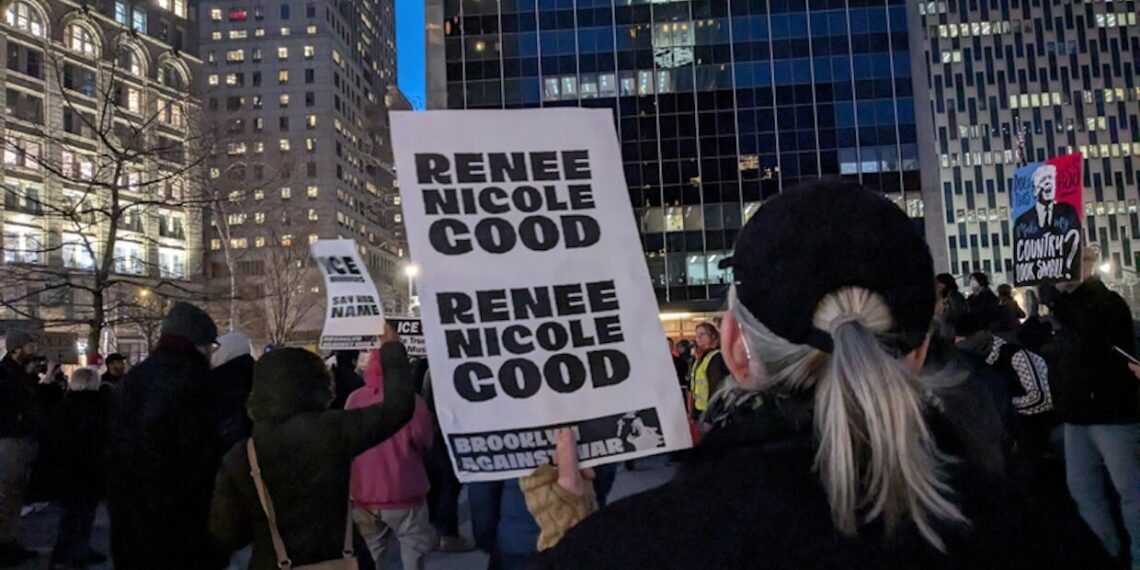
Chair Dr. Murphey opened the floor to audience participation by inviting collective reflection on the discussants’ feedback and the presenters’ arguments. She also highlighted a written comment from an audience member, Dr. Heidi Hart, who echoed Hannah Geddes’s earlier question to Chris Magno regarding the paradox of anti-crime rhetoric advanced by actors who themselves engage in or normalize criminality. Dr Hart noted the timeliness of this issue in light of a recent shooting of a US citizen in Minnesota and encouraged reflection on how such events intersect with the performative dimensions of Immigration and Customs Enforcement (ICE) rhetoric and enforcement practices. Her intervention underscored how criminal populism operates not only discursively but also through real-time securitized performances by state actors.
Dr. Murphey then directed a question to Dr. Russell Foster concerning his typology of right-wing politics—distinguishing between the “old right,” the “extreme right,” and the contemporary radical right. While the old right was described as grounded in Burkean notions of tradition, she observed that today’s radical right also mobilizes appeals to “tradition,” albeit in reconfigured forms. Citing cultural battles over gender roles and family structures, Dr. Murphey asked whether this suggested a transformed, rather than abandoned, relationship to tradition—raising the possibility that tradition itself has become a more flexible and strategically redeployed resource within radical right politics.
Dr. Bulent Kenes followed with a question addressed to Saga Oskarson Kindstrand, drawing on his close observation of Swedish politics. He asked whether the organizational and discursive strategies identified among the Sweden Democrats were mirrored by mainstream parties, particularly in light of the Tidö Agreement, which has drawn center-right and even Social Democratic actors closer to radical right framings. Dr. Kenes queried whether similar narratives on criminality and migration were diffusing across the party system, suggesting a broader process of normalization and contagion beyond the populist radical right itself.
Responses by Presenters
Assoc. Prof. Chris Magno’s Response
In his response to the discussants’ feedback and audience questions, Assoc. Prof. Chris Magno offered clarifications that further situated his concept of criminal populism within a longer historical and comparative arc, while also addressing questions of class, identity, and apparent contradiction.
Dr. Magno began by engaging directly with Dr. Surdea-Hernea’s question regarding novelty. He agreed that the use of criminal identity as political capital is not a recent invention, stressing that his book project explicitly traces its roots to the colonial period. In the opening chapter, he examines how state power itself emerged through crime during the US colonization of the Philippines, arguing that many of the core elements of criminal populism—eugenics, racial othering, criminalization, propaganda, militarized policing, and surveillance—were forged in imperial contexts. He introduced the idea of a “colonial feedback loop,” whereby techniques developed in colonial governance later return to the metropole and are redeployed in contemporary democratic politics. This historical framing, he explained, is central to his comparative analysis of the Philippines and the United States, and challenges the assumption that criminal populism is a phenomenon confined to the Global South.
Responding to questions raised by Hannah Geddes on contradiction and class, Dr. Magno emphasized that criminal populists actively manipulate identities associated with poverty and marginalization. He illustrated this with examples from the United States, noting how Donald Trump transformed his mugshot into a fundraising and mobilizing tool, intentionally aligning his criminalized image with populations historically subjected to criminalization, particularly African Americans. Similarly, in the Philippines, Rodrigo Duterte maintained extraordinarily high approval ratings—including among lower-income groups—despite conducting a violent “war on drugs” that disproportionately targeted the poor.
Dr. Magno further extended this logic to Bill Clinton, observing that Clinton retained strong African American support even amid scandal, underscoring how representation often operates symbolically rather than materially. Across cases, he argued, criminal populism thrives on irony and contradiction: leaders claim to embody marginalized identities while simultaneously enacting policies that harm those very groups.
Concluding, Dr. Magno reiterated that while criminal populism has deep historical roots, it is in the present moment that it has crystallized into a distinct political formation—marking a shift away from traditional penal populism toward the strategic weaponization of criminality itself as a source of legitimacy and power.
Dr. Russell Foster’s Repsonse
In his response to the feedback and questions, Dr. Russell Foster offered a wide-ranging and clarifying reflection that reinforced the conceptual ambitions of his paper while acknowledging areas for further refinement. Speaking from a comparative and theoretically self-aware position, Dr. Foster addressed questions of typology, tradition, case selection, responsiveness, and intentionality in the politics of the radical right.
Beginning with Dr. Murphey’s question on typology and tradition, Dr. Foster emphasized that the distinction between the old right, extreme right, and radical right should not be understood as rigid or mutually exclusive. While the old right is often associated with Burkean appeals to tradition, he argued that both the old and radical right rely on what Eric Hobsbawm famously termed “invented traditions.” In this sense, the contemporary radical right does not abandon tradition but actively manufactures new ones. Dr. Foster illustrated this through the example of gender politics, noting the emergence of highly stylized and exaggerated gender roles—hyper-masculine men and submissive “trad wives”—that would have been largely absent from radical right discourse a decade or two ago. These narratives, he suggested, exemplify how tradition is strategically reconstructed rather than inherited.
Addressing Hannah Geddes’s and Dr. Surdea-Hernea’s questions on supply and demand, Dr. Foster stressed that radical right narratives only gain traction where there is an underlying social appetite for them. While such parties may supply exclusionary frames, these frames resonate because they align with existing anxieties. Economic grievances remain central, but they are often experienced indirectly—through housing insecurity, job precarity, limited educational opportunities, and broader political disillusionment. Foster also pointed to cultural fatigue, including backlash against what some perceive as “peak woke,” as another source of demand that the radical right is adept at exploiting.
On case selection, Dr. Foster explained that Austria and France were chosen precisely because they offer contrasting yet complementary trajectories: a large state where the radical right has not governed nationally and a smaller one where it has entered government twice and rebounded electorally after failure. Responding to questions about countries with limited immigration, he argued that similar patterns can be observed in places such as Poland, Hungary, and the United Kingdom. Here, digital media and transnational narratives allow radical right actors to mobilize fear and civilizational rhetoric even in the absence of direct exposure to migration.
Dr. Foster also clarified a potential misreading of the argument on responsiveness. He stressed that the paper does not condemn responsiveness per se; rather, it critiques the framing of grievances as existential and criminal threats. When migration is securitized and criminalized, he argued, legitimate policy debates can slide into exclusionary politics with severe real-world consequences, as illustrated by the UK’s “hostile environment” policies and the Windrush scandal.
Finally, on the question of whether radical right vagueness is deliberate, Dr. Foster acknowledged the epistemic limits of intent. While it may be impossible to prove conscious strategy, he suggested that vagueness functions politically by allowing adaptability. Whether intentional or structural, this ambiguity enables radical right actors to remain relevant across shifting contexts—an adaptability that, in his view, remains one of their most consequential strengths.
Saga Oskarson Kindstrand’s Response
In her response to the feedback and questions, Saga Oskarson Kindstrand offered a focused clarification of her argument, addressing issues of intra-party power, social composition, and the broader diffusion of populist practices within Swedish politics. Her remarks reaffirmed the analytical intent of her study while drawing clear boundaries around what the article seeks—and does not seek—to explain.
Responding first to questions about whether populist radical right parties genuinely empower their members, Kindstrand emphasized that this varies across cases. In the Swedish context, she noted, the Sweden Democrats do not grant members greater internal influence than mainstream parties and, in some respects, offer even less internal democracy. This limited empowerment is, she argued, typical rather than anomalous. Importantly, she suggested that this does not weaken her argument; instead, it deepens the puzzle. Conventional theories would expect strong incentives—such as internal influence—to drive membership. Yet high levels of commitment persist despite centralized control, indicating that other mechanisms sustain organizational loyalty.
Kindstrand linked this centralization to stigma and exclusion. Because the party is subject to intense public scrutiny and reputational risk, tight control over messaging and behavior is framed as necessary. Granting extensive autonomy to local members is perceived as dangerous, particularly as the party has moved closer to governing power by supporting a coalition. As political influence increases, she observed, efforts to discipline the organization and manage public image intensify rather than recede.
Turning to questions about whether members’ claims of being “ordinary people” are empirically accurate, Kindstrand acknowledged the legitimacy of the concern. Existing studies, she noted, suggest that Sweden Democrat politicians tend to have lower levels of education and income prior to entering politics compared to representatives of other parties—patterns that may reflect both the party’s rapid growth and its outsider status. However, she stressed that adjudicating the truth of these claims is not the primary aim of her article. Instead, her focus lies on how such claims function discursively to sustain a particular organizational form and sense of belonging.
Finally, addressing the diffusion of populist rhetoric across the party system, Kindstrand agreed that mainstream parties in Sweden increasingly echo Sweden Democrat frames, particularly on migration and criminality. This agenda-setting role, she argued, powerfully reinforces members’ sense of efficacy. Observing other parties adopt their positions is interpreted internally as evidence that the party is reshaping politics—further strengthening organizational cohesion and belief in its transformative capacity.
Closing Remarks by Dr. Helen Murphey
In her closing assessment, Dr. Helen Murphey offered a synthetic reflection that drew together the panel’s core themes while highlighting their broader implications for the study of populism, crime, and exclusion. Thanking the presenters, discussants, and audience, she characterized the session as both intellectually engaging and conceptually enriching, particularly in its collective contribution to understanding the exclusionary dynamics at the heart of contemporary populism.
Murphey identified the construction of identity—alongside practices of inclusion and exclusion—as a unifying thread across the presentations. Central to this, she argued, was the differentiated treatment of crime within exclusionary populist narratives. Drawing on Chris Magno’s intervention, she emphasized how certain forms of criminality are attributed vertically to elites—through discourses of corruption and “draining the swamp”—while other forms are attributed horizontally to marginalized groups, who are cast as threats to social order. At the same time, she noted the paradoxical tolerance, and even valorization, of particular transgressions when they are framed as necessary tools to challenge an unjust status quo. This selective moralization of crime, she suggested, resonates strongly with criminological insights into how illegality is socially coded and unevenly sanctioned.
Murphey further underscored the adaptability of exclusionary populism, highlighting how shifting circumstances allow movements to recalibrate narratives of crime, security, and grievance. This adaptability, she argued, plays a key role in the mainstreaming of exclusionary ideas. Building on insights from scholarship on diffusion, she pointed to how legitimate socio-economic grievances—such as austerity, housing shortages, and affordability crises—become linked to politics of exclusion, thereby creating pathways through which non-populist actors adopt populist frames.
Concluding, Murphey emphasized that the session’s discussions demonstrated not only the mutability of exclusionary populism but also its capacity to reshape broader political discourse. She thanked ECPS for convening the workshop and closed by passing the floor back to the organizers, marking the session as a fitting and reflective start to 2026.
Conclusion
Session 9 closed with a clear analytical takeaway: “crime” operates less as a neutral policy domain than as a political grammar through which exclusionary populism makes boundaries appear natural, urgent, and democratically defensible. Across the three papers, crime and security functioned as elastic categories—capable of being redirected toward elites (as corruption and betrayal), toward marginalized groups (as disorder and threat), and toward institutions themselves (as politicized justice). In this sense, the session illuminated how populism’s promise of protection is inseparable from its capacity to moralize inequality and translate social conflict into hierarchies of belonging.
The discussion also underscored that exclusionary politics is simultaneously discursive, organizational, and institutional. Dr. Magno’s framework emphasized how legal jeopardy can be recoded as authenticity and persecution, turning accountability mechanisms into stages of political spectacle. Dr. Foster’s comparative analysis showed how the securitization of migration becomes “common sense” through metapolitical work: linking everyday grievances—housing, welfare, jobs—to civilizational narratives that render exclusion as prudence. Kindstrand’s ethnographic findings, meanwhile, complicated the assumption that populism merely bypasses intermediaries. Instead, populist discourse can re-legitimate party organization by moralizing membership, intensifying solidarity under stigma, and narrating participation as civic duty.
The discussants sharpened the session’s implications for research design and theory-building. Questions about historical antecedents, case selection beyond high-immigration contexts, the role of mainstream parties in producing cultural “demand,” and the empirical status of members’ claims collectively highlighted a shared methodological challenge: how to distinguish novelty from recombination, strategy from structure, and perception from measurable social composition—without reducing populism to either elite manipulation or voter pathology.
With Dr. Helen Murphey’s moderation providing conceptual continuity, the session ultimately positioned exclusion as an adaptive political technology: strategically vague, emotionally resonant, and increasingly portable across arenas and actors. The broader conclusion for scholarship is that the politics of exclusion cannot be studied only through rhetoric or electoral outcomes. It requires tracing how moral categories of criminality circulate through institutions, organize collective identities, and normalize new thresholds of coercion—thereby reshaping democratic accountability from within.