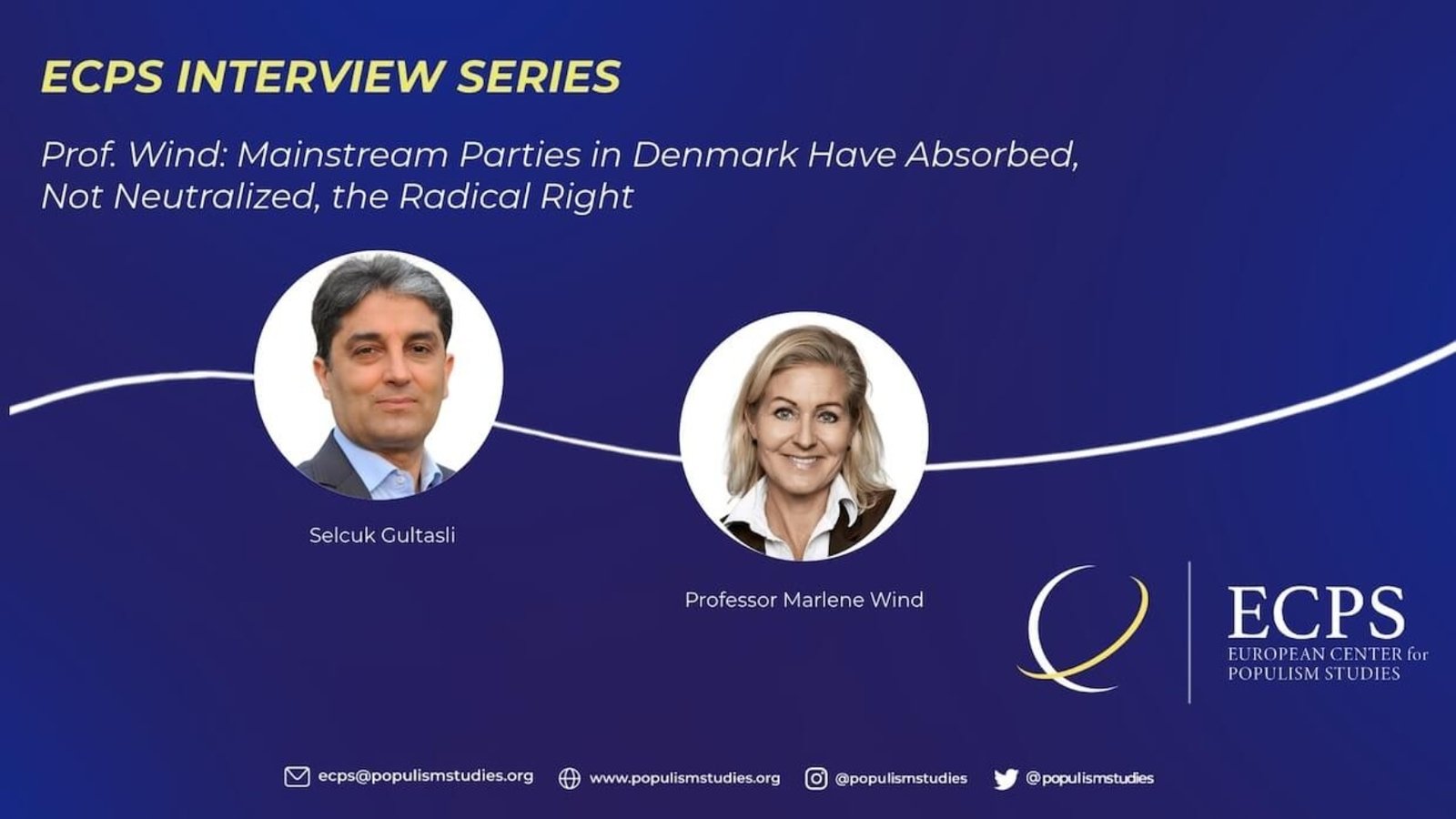
In this ECPS interview, Dr. Frederik Møller Henriksen offers an in-depth assessment of Denmark’s 2026 general election, highlighting both continuity and change in one of Europe’s most stable democracies. He characterizes the outcome as “a very poor election for the traditional governing parties,” underscoring the historic decline of established actors alongside the emergence of “a highly fragmented parliament.” While domestic concerns dominated the campaign, Dr. Henriksen emphasizes that strict migration policies have not contained the populist radical right, as evidenced by the resurgence of the Danish People’s Party. At the same time, he cautions against overstating democratic crisis, noting Denmark’s enduring institutional trust. Instead, he points to media fragmentation and digital communication as key forces reshaping political competition and voter alignment.
In the aftermath of Denmark’s closely contested 2026 general election on March 24, the country stands at a critical political juncture—marked by fragmented blocs, the resurgence of the populist radical right, and renewed geopolitical tensions over Greenland. While domestic issues such as the cost-of-living crisis and migration shaped the campaign, deeper transformations in political communication and democratic contestation are also unfolding. Giving an in-depth interview to the European Center for Populism Studies (ECPS), Dr. Frederik Møller Henriksen, a postdoctoral researcher at Roskilde University working at the intersection of politics, media, and digital society, whose research on digital counter-publics, alternative media ecosystems, and anti-systemic populism, offers important insights into these developments.
Reflecting on the election outcome, Dr. Henriksen underscores that “this was a very poor election for the traditional governing parties,” pointing to the historically weak performance of both the Social Democrats and the center-right Venstre. He further highlights that “we now have a highly fragmented parliament,” a development that is likely to render coalition-building both complex and protracted. Indeed, the emergence of multiple competitive actors across the political spectrum has produced what some observers describe as “Dutch conditions” of party fragmentation and even “Belgian conditions” of prolonged government formation.
At the same time, Dr. Henriksen draws attention to the resurgence of the populist radical right, particularly the Danish People’s Party, emphasizing that restrictive policy convergence has not neutralized such forces. As he notes, the Danish case illustrates that strict migration policies do not necessarily diminish the electoral appeal of the radical right, but may instead coincide with renewed voter mobilization around issues of identity, economic anxiety, and national direction.
Beyond electoral dynamics, the interview also engages with the transformation of political communication in digitally mediated environments. While cautious about attributing direct causal effects to alternative media, Dr. Henriksen observes that “it has been very difficult to define” the election in terms of a coherent overarching narrative, suggesting that media fragmentation and hybrid communication systems are reshaping how political competition is structured and understood.
Importantly, despite these shifts, Dr. Henriksen does not interpret recent developments as signaling a systemic crisis of democracy. Denmark, he argues, remains a high-trust society with robust institutional foundations. Yet, it is increasingly “no longer isolated from trends we see elsewhere in Europe,” including fragmentation, anti-incumbent voting, and the growing salience of populist communication.
Taken together, Dr. Henriksen’s reflections situate the Danish election within a broader European trajectory, where established party systems are under pressure, populist actors continue to adapt, and democratic politics is being reshaped by both structural and communicative transformations.
Here is the edited version of our interview with Dr. Frederik Møller Henriksen, revised slightly to improve clarity and flow.
Voters Reward Clearer Political Profiles on Both Sides
Denmark votes in parliamentary elections in Copenhagen, Kastrup, Denmark, on November 1, 2022. Voters head to polling stations to cast their ballots in the general election. Photo: Francis Joseph Dean / Dean Pictures / Dreamstime.
Dr. Henriksen, thank you very much for joining our interview series. Let me begin with the electoral outcome itself: How should we interpret the 2026 Danish election results, where both the red and blue blocs fell short of a majority? Does this fragmentation signal a structural transformation of Denmark’s party system?
Dr. Frederik Møller Henriksen: Thank you for this question—it is a very broad one. I will try to narrow it down to a few key takeaways, and then we can elaborate further during the interview.
The first takeaway is that this was a very poor election for the traditional governing parties. The Social Democrats, for instance, remained the largest party, but they fell to a historic low—their worst result since 1903. The center-right party, Venstre, as it is called in Danish, also suffered a historically weak result.
The second takeaway is that we now have a highly fragmented parliament. This means that coalition-building will be unusually difficult and potentially lengthy—at least, that is what commentators are suggesting at the moment.
The third point is that overall voter turnout was lower than usual, although still high by international standards. I interpret this as a sign that voters have been dissatisfied with the centrist government we have had over the past four years.
The fourth point is that there were clear winners outside the old or established center. The Danish People’s Party, for example, performed strongly with 9.1%, and the Socialist People’s Party on the left became the second-largest party.
Thus, the election did not simply produce fragmentation for its own sake; rather, it suggests that voters rewarded parties with clearer profiles on both sides of the political spectrum. In this sense, the Danish People’s Party can be seen as one of the main winners.
I also heard a commentator suggest that these are “Dutch conditions,” in the sense that we now have many parties represented in parliament. There is a political science measure for the effective number of parties, and it has reportedly never been higher in the Danish parliament. Another commentator added that we may face “Belgian conditions,” meaning that it could take a very long time to form a government with so many parties involved. I find this framing quite insightful.
Regarding whether this signals a structural transformation, I would say it is important to view the situation in light of the decline of the Social Democrats. They have been in government for an extended period—first leading a left-leaning government and then a centrist coalition. This development should therefore be understood in the context of their weakening position, including their time in power during COVID-19. It appears they have struggled to maintain momentum, which is reflected in the election results. At the same time, we do see clear signs of fragmentation—this is quite evident.
We can also observe that centrist parties, such as the Moderates, have become highly important in the coalition-building phase. Although relatively small, both blocs—the left and the right—depend on their mandates to form a government. As a result, they are likely to play a very prominent role.
Finally, this election also points to the growing importance of person-driven politics rather than party-driven politics. For voters, the election itself has been quite fragmented. It is not entirely clear what the main issues have been; instead, individual political figures have played a central role. We can see that some of the key figures, such as Martin Messerschmidt and Lars Løkke Rasmussen, have attracted a significant share of the vote. This indicates a broader shift toward more person-driven politics and person-driven electoral outcomes.
Unpopular Reforms Cost the Social Democrats Voter Support
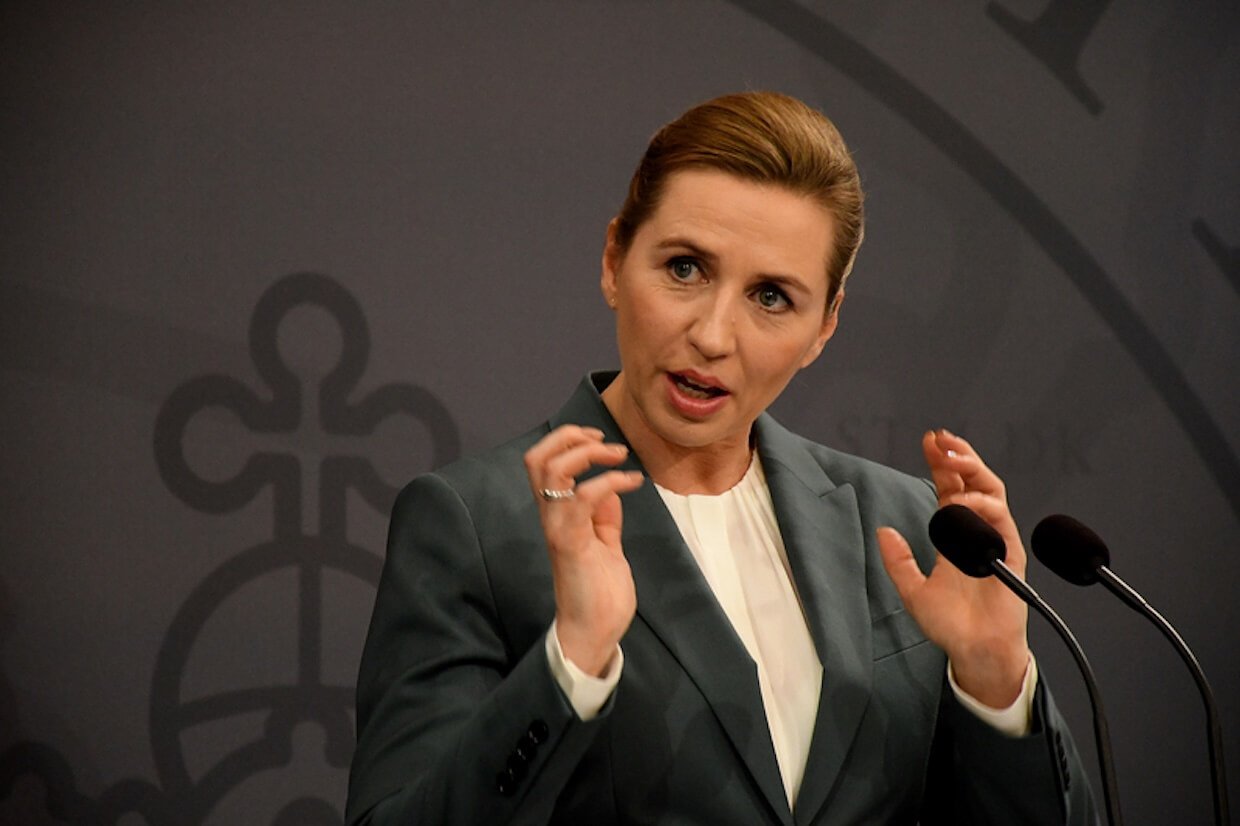
Denmark’s Prime Minister Mette Frederiksen at a press conference during the COVID-19 crisis, Copenhagen, March 17, 2020. Photo: Francis Dean | Dreamstime.
The Social Democrats emerged as the largest party but recorded one of their weakest results in over a century. To what extent does this outcome reflect voter fatigue with incumbency, and to what extent does it point to deeper shifts in political trust and democratic legitimacy?
Dr. Frederik Møller Henriksen: It’s a very good question. There is clearly an incumbency story here. It is important to situate the Social Democrats’ decline in voter support within a broader anti-incumbent mood among voters, which I alluded to, earlier. After nearly seven years in power, the party has been carrying the burdens of office. As we know from political science, this is challenging for governing parties, particularly when they are associated with unpopular reforms. One notable example is the abolition of a national holiday in 2024, known as the Great Prayer Day. This decision appears to have resonated strongly with voters across the political spectrum, and the party has been penalized for it. I think that when the government abolished the holiday, it did not anticipate the extent of its electoral impact. That is an important factor to consider.
At the same time, it would be too narrow to interpret the result solely as voter fatigue. The Social Democrats were squeezed from both sides. Some left-leaning voters felt that the party had become too restrictive on immigration, while some right-leaning voters continued to distrust it on economic issues. In this sense, the outcome reflects both incumbency effects and the limits of a centrist repositioning, which is relatively unusual in the Danish political context. So, while the party remains electorally dominant in relative terms, its broad coalition appears thinner and more fragile than before.
That said, I do not see strong evidence—at least at this stage—of a more generalized crisis of democratic legitimacy. Denmark still has stable political institutions, and the economy is in relatively good shape compared to some other EU countries. Voter turnout also remained relatively high, and the election process was fair. Therefore, framing this as a general crisis of democratic legitimacy may be an overstatement. However, much will depend on what kind of government ultimately emerges.
The Danish People’s Party Re-Emerges as a Major Force
The election saw a notable resurgence of the Danish People’s Party and other anti-immigration actors. How do you explain this revival in light of your research on anti-systemic populism? Does it indicate that such movements have successfully re-entered the electoral mainstream?
Dr. Frederik Møller Henriksen: That is a good question. There is clearly a strong case to be made that the Danish People’s Party has re-emerged as a significant force. They moved from around 2–3% to 9.1% of the vote, effectively tripling their support compared to the previous election. They have campaigned on issues such as zero net Muslim migration and cost-of-living concerns, including proposals like abolishing petrol taxes. They have been very successful in doing so, and I would also argue that they have run one of the most effective social media campaigns, which likely contributed to their performance.
This revival suggests that anti-immigration politics have not disappeared; rather, they were partially displaced and fragmented. This election indicates that when economic anxiety, migration, and broader questions about national direction become salient again, these constituencies can be remobilized electorally.
In relation to my own research, I have focused less on elections per se and more on anti-systemic movements and forms of mobilization. From that perspective, the Danish People’s Party has been particularly successful in tapping into this kind of anti-systemic mobilization.
At the same time, we also see another far-right party, the Danish Democrats, led by former minister Inger Støjberg. While they share a similar anti-immigration stance, they have not been as successful in converting this into electoral support. To me, this suggests that additional factors are at play. One key element appears to be the effectiveness of social media campaigning, particularly on the part of the Danish People’s Party and Morten Messerschmidt.
A Key Lesson for Social Democratic Parties in Europe
The Danish case has often been cited as an example of mainstream parties absorbing far-right agendas—particularly on immigration. In light of the latest election results, do you see this strategy as containing or, paradoxically, legitimizing populist radical right discourse within mainstream political competition? Do the election results suggest that this strategy has reached its limits—or even backfired?
Dr. Frederik Møller Henriksen: Yes, I definitely think this election lends support to the argument that the strategy of normalizing far-right rhetoric and policies within the center and the center-left has its limits—perhaps even backfiring to some extent. For example, Denmark has maintained one of Europe’s toughest migration policies, and yet the Danish People’s Party still achieved a very strong electoral result.
When we examine the data, particularly in comparison to the 2022 election, we also observe one of the largest estimated voter shifts from one party to another—specifically from the Social Democrats to the Danish People’s Party. This is based on the data currently available, although it will require further analysis. At the very least, this suggests that voters are moving from the Social Democrats to the Danish People’s Party, and that this shift is closely linked to the migration issue.
What this indicates is that a strict mainstream migration policy does not automatically neutralize the radical right or the far right in electoral terms. This is an important lesson for other social democratic parties across Europe that are observing the Danish election and seeking to shape their own positions on migration and anti-immigration policies in light of these developments.
Far-Right Digital Counter-Publics Remain Highly Active
Your work emphasizes the role of alternative news media in shaping political perceptions. To what extent do you think digital counter-publics and alternative information environments influenced the electoral performance of populist and radical right actors in this election?
Dr. Frederik Møller Henriksen: Let me begin with alternative news media. I would say that, in themselves, they do not have a significant impact on electoral outcomes. I have been collecting articles from Danish alternative news media throughout the election, and only one outlet—one that is somewhat close to the Social Democrats, called PUPU—has actively covered the election. I have also followed debates on national television, where at least one editor from a right-leaning outlet was invited to participate in discussions on migration, particularly concerning Muslims and the Danish Muslim population. So, there is certainly something to this, but it is not an impact that we can clearly observe.
When it comes to digital counter-publics connected to alternative news media, it is becoming increasingly difficult for researchers to obtain reliable data from platforms, which makes this question quite challenging to answer. Based on my intuition, however, these counter-publics—especially those associated with the far right and the Danish People’s Party—are highly active. I am quite confident that the Danish People’s Party’s social media strategy has aimed to mobilize some of these digital counter-publics. How successful these efforts have been, and the extent of their overall impact, remains difficult to determine—particularly given the ongoing challenges of accessing data from different platforms.
No Electoral Impact from the Greenland Issue
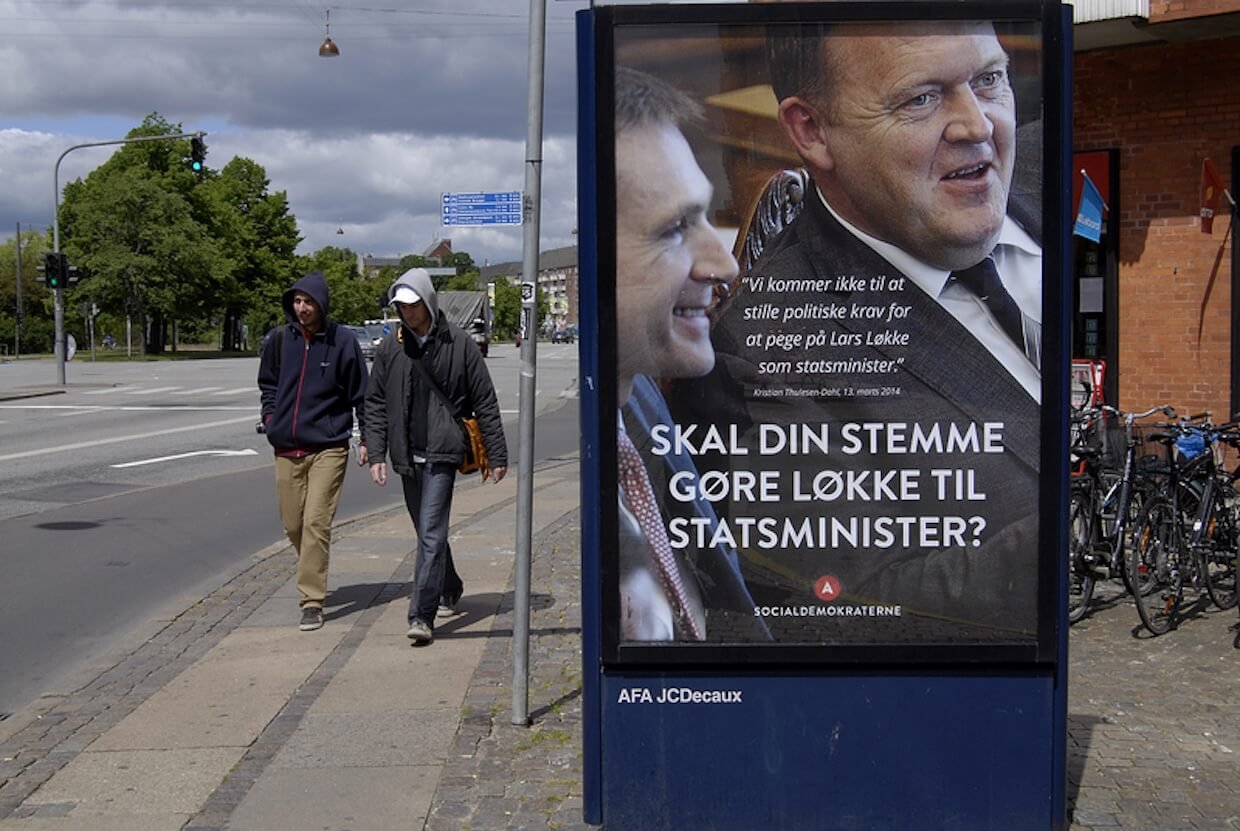
Election campaign posters featuring Liberal leader and former Prime Minister Lars Løkke Rasmussen displayed on a street during the campaign period in Copenhagen, Denmark on June 15, 2015. Photo: Francis Joseph Dean / Dean Pictures / Dreamstime.
Despite intense international attention on the Greenland crisis, domestic issues ultimately dominated the campaign. How do you interpret this gap between geopolitical salience and voter priorities? Was the so-called “Greenland effect” electorally significant or overstated?
Dr. Frederik Møller Henriksen: As I see it, the only politician who really managed to benefit from the “Greenland effect,” or to gain something from it, was the former Minister of Foreign Affairs, Lars Løkke Rasmussen, from the Moderates. There was a documentary film about the days leading up to and during the crisis, when it was at its peak, and Lars Løkke Rasmussen traveled to Washington to meet with American politicians.
I think he was the only one who really gained something from this in electoral terms, at least. I am not entirely sure why. Mette Frederiksen was certainly in a position to benefit as well, since she played a significant role in managing the situation and coordinating with European counterparts. However, we do not see this reflected in the numbers, at least not in the electoral outcome.
If we consider the Greenland case more broadly, it mattered quite a lot in the run-up to the election. Mette Frederiksen called the election while still benefiting from the visibility and leadership image created by Trump’s pressure over Greenland. During the campaign itself, however, the issue was clearly overshadowed by domestic concerns. These included rising costs of living, the green transition, debates over clean drinking water, healthcare for an aging population, and, of course, immigration. These issues ultimately dominated the campaign. The established parties struggled to mobilize effectively across all of them, although the Social Democrats were more successful on issues such as the green transition and welfare, while the Danish People’s Party mobilized strongly on immigration as well as welfare and healthcare-related concerns.
Potential Spillover into Populist Narratives
At the same time, could the Greenland issue have indirectly shaped the election by reinforcing narratives of sovereignty, external threat, and national unity—particularly within populist communication frames?
Dr. Frederik Møller Henriksen: As I mentioned earlier, perhaps—but not to a very strong extent. I think it is, to some degree, a matter of time. We will have to see whether concerns over Greenland spill over into broader, more classic right-wing populist debates regarding border control, security, national cohesion, and immigration. That said, I would still be somewhat hesitant to answer definitively in the affirmative. It is also a question of timing—we will have to see, especially as the formation of a coalition government will likely take a few months, according to some political analyses. These topics could certainly resurface.
Fragmentation Elevates the Moderates to Kingmaker Status
The Moderates, now positioned as a pivotal kingmaker at the political center, occupy a decisive role in post-election coalition building. From your perspective, does this development represent a stabilizing corrective within Danish democracy, or does it instead point to a deeper fragmentation of political representation?
Dr. Frederik Møller Henriksen: I think it points to a deeper fragmentation of political representation, as you suggest. Today, the left-leaning bloc has chosen the Moderates as the kingmaker, which is entirely new information. However, the left-leaning bloc still needs the mandates from Lars Løkke Rasmussen’s party to succeed, so the most likely scenario is a left-leaning government with the Moderates as part of it—although I would not put my head on the block for that.
It is somewhat striking, because leading up to the election, many expected that Lars Løkke Rasmussen and the Moderates would assume the kingmaker role. However, learning from the last election, the Social Democrats appear to have tried to avoid that situation, as it would have placed considerable pressure on them—even as the largest party—within an increasingly fragmented party system. Time will show what role the Moderates and Lars Løkke Rasmussen—who hold 14 seats in parliament—will ultimately play in forming the government.
One additional point is that Lars Løkke Rasmussen has been the clearest advocate for forming another centrist government. He has maintained this position consistently from the outset. If the government formation process drags on, he may find himself in a particularly strong position, as having a clear and consistent stance can be advantageous in such a fragmented political landscape. There is a great deal at stake, and forming a government will be a difficult political process. It could prove especially interesting for the Moderates.
No Clear Narrative Defines This Election
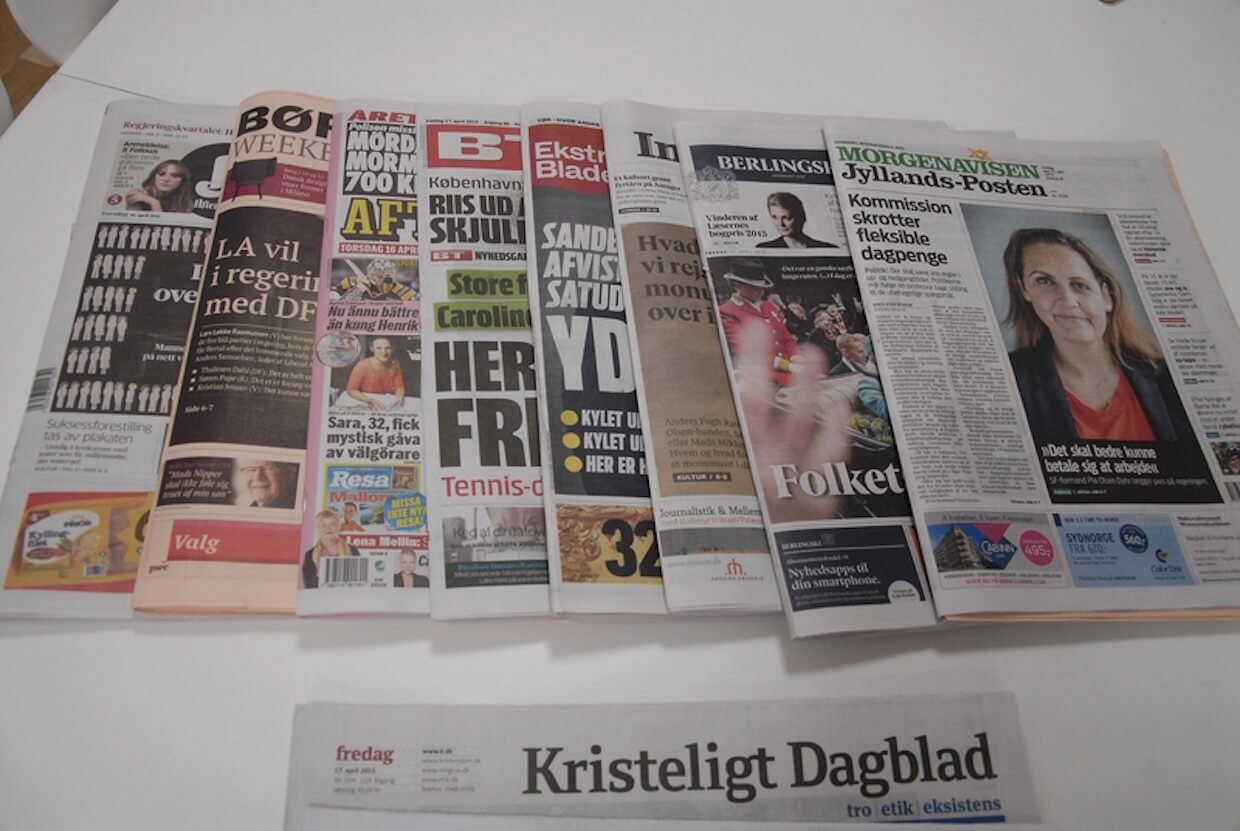
Various major Danish daily newspapers in Copenhagen, Denmark, on April 17, 2015 displayed on a table. Photo: Francis Joseph Dean / Dean Pictures / Dreamstime.
Your research highlights how digital environments can foster echo chambers and partisan homophily. Do you see evidence that such dynamics contributed to the electoral polarization—or fragmentation—observed in this election? How might these dynamics have influenced voter alignments in this election, particularly regarding contentious issues such as immigration, economic redistribution, and national sovereignty?
Dr. Frederik Møller Henriksen: The short answer is no, but I think the fact that it was not possible for either political parties or the media to construct a very clear storyline for this election—for voters, at least—really says a lot. It is something that political commentators across the spectrum agree on: this has been an election that has been very difficult to define. It has been unclear whether the election was about policies related to the green transition, immigration, or other issues. It has been highly fragmented, and none of the parties has been able to set the agenda in a decisive way.
My hypothesis—perhaps also from a researcher’s perspective—is that we are witnessing the long-term effects of media fragmentation. Legacy media and social media together are making it increasingly difficult, within this hybrid media environment, for the media to establish a coherent narrative for voters—one that clearly identifies the main dividing lines between parties and presents the election as a unified communicative and political process. Of course, social media is not new to this election, but we may now be seeing its longer-term effects more clearly.
I do not have a definitive answer as to why it has been so difficult for the media. Denmark still has a high-quality, high-trust media system, with outlets that voters generally trust. So it is somewhat puzzling why it has been so difficult to formulate a cohesive narrative about the election.
European Trends Reshape Danish Politics
Denmark is often described as a high-trust, low-polarization society. Yet your work suggests that even such contexts are not immune to the rise of anti-systemic communication. Do the current election dynamics indicate an erosion of this “Nordic exceptionalism,” or rather its adaptation under new digital conditions?
Dr. Frederik Møller Henriksen: I think the fact that the far-right party, the New Right—which we have not discussed—entered parliament in the last election is indicative of this—an erosion of Nordic exceptionalism, at least to some extent. They only entered with 2.1% of the vote, so Denmark remains a high-capacity democracy with fairly high turnout, as we have said—a little lower than in the last couple of elections—and there is still broad institutional legitimacy.
On the other hand, one could argue that Denmark is no longer isolated from trends we see elsewhere in Europe. The fragmentation we discussed, anti-incumbent voting patterns, migration-centered competition, and increased pressure on mainstream, established parties all point in that direction.
However, my analysis is that much of the anti-systemic mobilization and communication has been picked up and channeled very successfully by the Danish People’s Party, particularly through social media campaigns. The Danish People’s Party has been one of the parties that has gained the most from this election. So, it has not been a landslide erosion of democratic trust; rather, it is a sign of an increasingly polarized political landscape. We may also be observing some longer-term effects, particularly the difficulties faced by the media system in providing a clear and coherent narrative of the election for voters.
Nativist Strategies Can Backfire Electorally
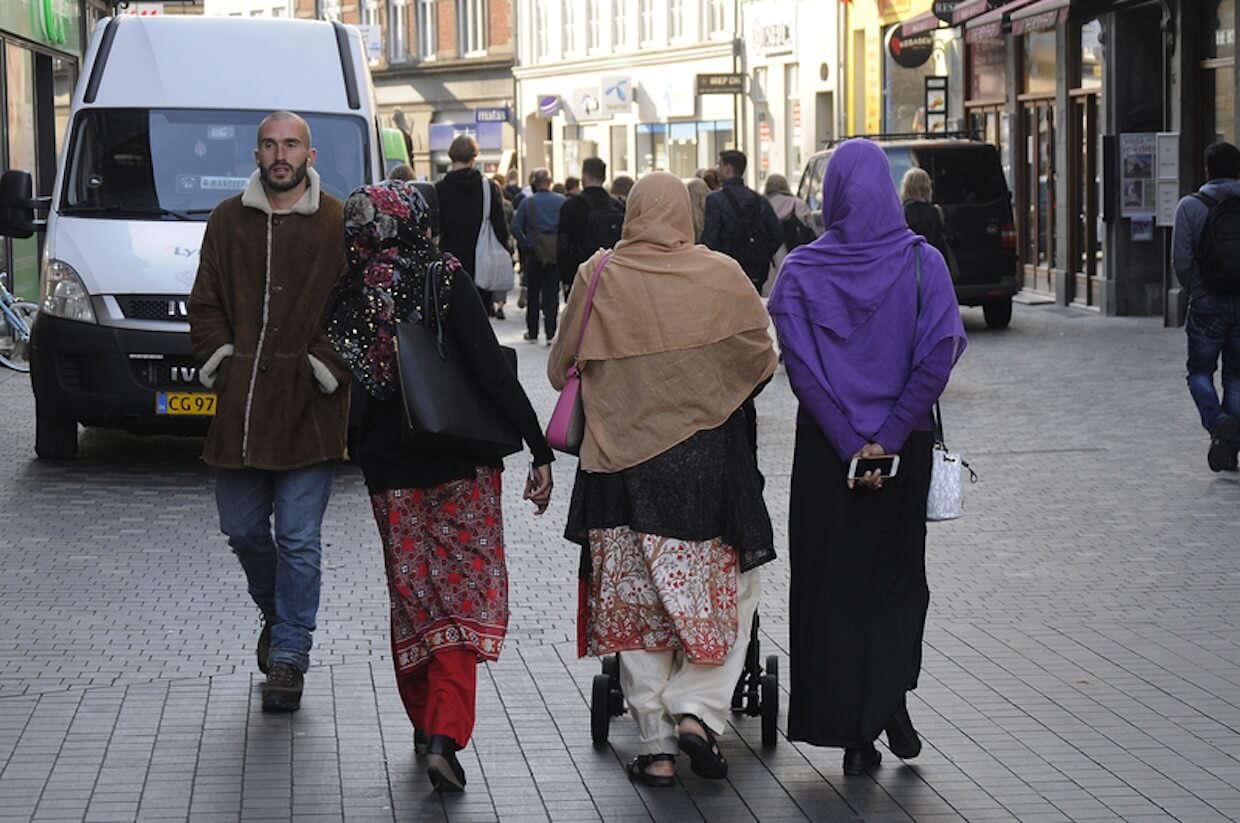
Pakistani or Indian migrants in Copenhagen, Denmark, September 22, 2017. Photo: Dreamstime.
In your view, how does the Danish election contribute to our understanding of populism beyond the traditional left–right spectrum? Do we observe forms of “valence” or “anti-systemic” populism that cut across ideological divides, especially in digitally mediated environments?
Dr. Frederik Møller Henriksen: I will have to give a somewhat boring answer to this—and also one that is not particularly favorable for my own research on anti-systemic populism—but I do not see it as the main case here. It is not the central story of this election. There is, however, an interesting argument in how the Social Democrats appropriated a far-right nativist discourse, which appears to have backfired in terms of voter transitions to the Danish People’s Party. I think this is partly because the Danish People’s Party was effective in exploiting the opportunities it was given. What I mean by this is that we do not observe the same voter transition to the Danish Democrats, who did not achieve the electoral success they had anticipated. So, to a large extent, this comes down to the social media campaigning of Morten Messerschmidt and the Danish People’s Party.
Anti-Centrist Voting Defines the Election
The election results indicate gains both for the populist radical right and for certain left-wing actors. Does this suggest that populism in Denmark is increasingly transcending the traditional left–right divide? From a comparative perspective, how does Denmark’s experience relate to broader European trends in populist radical right mobilization? Does the Danish case still represent a distinct model, or is it converging with patterns observed in countries like Germany, Austria, or Sweden?
Dr. Frederik Møller Henriksen: First of all, I would not say that the Danish case shows that populism has fully transcended the left–right divide, at least not in a symmetrical sense. What we do see, however, is a clear revolt against the status quo and the established parties. A more accurate formulation is that this represents a kind of anti-centrist voting, spread across the spectrum on both the left and the right.
On the right, we have the Danish People’s Party, whose recovery was clearly tied to classic populist radical right themes such as immigration, national protection, and related issues. They campaigned on zero net Muslim migration and on cost-of-living grievances. On the left, we see the Socialist People’s Party, which mobilized around classic welfare issues and a stronger green profile.
In comparative terms, Social Democrats in countries such as Sweden, Germany, and perhaps the Netherlands are likely looking at this election and drawing lessons from it—particularly that they should avoid adopting strategies that appropriate nativist tropes from far-right parties. I think that would be my answer to this question.
No Strong Cordon Sanitaire in Danish Politics
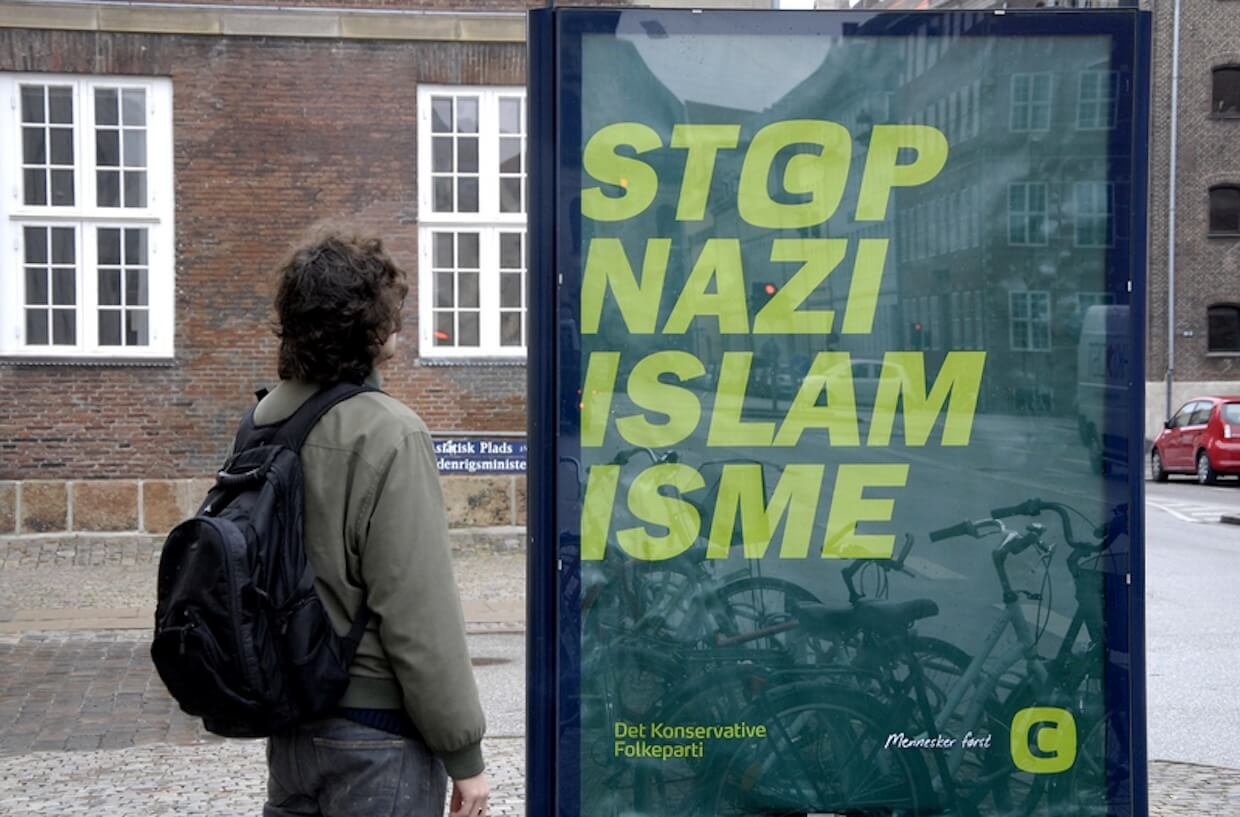
A Conservative Party election billboard reading “Stop Nazi Islamism” draws public attention and criticism during the campaign period in Copenhagen, Denmark on April 15, 2015.. Photo: Francis Joseph Dean / Dean Pictures / Dreamstime.
Denmark’s far right has historically been constrained by institutional and cultural factors, including elements of a cordon sanitaire. Do recent developments suggest a weakening of these barriers, particularly through digital mainstreaming processes?
Dr. Frederik Møller Henriksen: Good question. Historically, when we compare Denmark to Sweden and Germany, for instance, we do not have as strong a cordon sanitaire tradition as we see in the German context, where certain parties, such as the AfD, are very actively and explicitly excluded.
The Danish political scene is characterized by a relatively wide spectrum of voices that are allowed in. So, I do not think that the 2% threshold for entering parliament necessarily prevents a broader range of parties from gaining representation; rather, it allows for what one might call a “long tail” of parties. So, I tend to disagree slightly with that premise.
Regarding whether this relates to digital mainstreaming processes, there has certainly been a mainstreaming of nativist discourse. That is quite clear to me. And, as I mentioned before, it is now up to Social Democrats across Europe to consider whether they want to follow the same path as the Social Democrats in Denmark.
A Left-Leaning Government Is Likely to Emerge
And finally, looking ahead: Based on these election results, what are the key risks and opportunities for Danish democracy? Do you foresee a consolidation of mainstream politics, or further growth of anti-systemic and populist forces in future elections?
Dr. Frederik Møller Henriksen: For this election, and for the government coalition-building process currently underway, I think we will see a left-leaning bloc entering government. As for the long-term effects, this relates more to how difficult it can be to form a centrist government, especially in a political party system that does not have a strong tradition of doing so. I think the three parties that formed the previous government were not very successful in this regard, and we can see that reflected in voter turnout—the voters simply did not like it.
On the other hand, this did not translate into strong anti-systemic mobilization. I think this is more closely related to Denmark being a high-trust society, where people are not concerned about fraud and are not worried about being misinformed by state media, for instance.
I think we need to center our attention on the core pillars of democracy that sustain it, rather than focusing solely on a specific election outcome. Of course, that is also very important, but to understand why we do not see strong anti-systemic mobilization on either the left or the right, we need to look at trust in the media system and the political system.
Please cite as: Al-Sheikh Daoud, Emad Salah & Al-Dahlaki, Khudhair Abbas. (2026). “French Court Ruling Convicting Marine Le Pen: Implications for the Future of the Far Right in France.” Populism & Politics (P&P). European Center for Populism Studies (ECPS). March 26, 2026. https://doi.org/10.55271/pp0052
Abstract This article examines the political and institutional repercussions of the French court ruling convicting Marine Le Pen, leader of the National Rally, of embezzling public funds and barring her from holding public office. Using a case study approach, the study analyzes how the verdict reshapes the trajectory of the French far right, the internal dynamics of the National Rally, and broader debates on judicial independence and democratic legitimacy. It explores competing interpretations of the ruling—as either a manifestation of rule-of-law accountability or an instance of political targeting—while assessing its impact on public opinion and electoral prospects ahead of the 2027 presidential election. Drawing on polling data and political reactions, the article argues that the ruling may paradoxically reinforce populist narratives of victimhood in the short term, even as it introduces strategic uncertainty for the party’s future leadership. Ultimately, the study highlights the tension between legal accountability and symbolic politics, positioning the case as a critical moment in the evolution of contemporary European populism.
Keywords: French judiciary, National Rally, Marine Le Pen, Jordan Bardella, European Parliament, Populism, Far-right politics, Political polarization, Rule of law
Marine Le Pen, leader of the far-right National Rally party in France, has long been a controversial figure in French and European politics. Since succeeding her father, Jean-Marie Le Pen, as party leader, the party has seen its presence grow in the political and media landscape, even making gains in French legislative elections and European Parliament elections. It now holds the largest bloc in the National Assembly (the French lower house), and Marine Le Pen herself reached the second round of the French presidential elections, facing President Emmanuel Macron in both 2017 and 2022.
However, qualification for the second round of the presidential election did not prevent Marine Le Pen and 12 members of her party from being convicted of embezzling public funds by the Paris Criminal Court on March 3, 2025. The total damage was estimated at approximately €2.9 million, relating to funds from the European Parliament that were used to pay individuals who were in fact working for the far-right party. The French judiciary ruled that Le Pen would be barred from running for public office for five years, effectively preventing her from contesting the 2027 presidential election. She was also sentenced to four years in prison, two of which are to be served under electronic monitoring.
The significance of this research lies in its analysis of the repercussions of the French court’s decision to convict Marine Le Pen on France’s social and political landscape. It examines how major judicial rulings shape the trajectory of political parties—particularly the party under study—and how French public opinion responds to such decisions. In doing so, the study adds an important dimension to understanding the relationship between the judiciary and politics in democratic systems.
Research Objective
This research aims to analyze the details of the conviction issued by the French judiciary, its repercussions for the political and personal future of the leader of the National Rally (RN), and to assess the impact of this decision on the party’s popularity and political discourse, particularly in the context of preparations for upcoming elections.
Research Problem
This research seeks to address the central question: “Was the French court’s decision influenced by hidden political pressures, or was it a fully independent judicial ruling based solely on legal evidence?”
To explore this, the study further examines two sub-questions: How independent is the judiciary in cases with clear political dimensions? And how do such decisions shape public trust in judicial institutions?
Research Hypothesis
The main hypothesis of this research is that the popularity of the National Rally will not decline significantly and may even increase among certain groups. This is based on the possibility that the party’s supporters may interpret the decision as part of a “political conspiracy” against them, thereby reinforcing the cohesion of their base and strengthening loyalty to the party and its leadership.
Research Methodology
The topic will be studied using the case study method in dissecting the details of the French court’s decision and its political repercussions.
The Origins and Ideology of the National Rally and Its Political Role
France is the home of the emergence of extreme right-wing movements and parties. One of the repercussions of the French Revolution was the emergence of forces and figures who adopted radical visions, positions and policies accompanied using armed violence and repression against opponents. This led to the division of political forces into a right–left dichotomy, which has persisted and become deeply entrenched in shaping the French political system across all historical periods up to the present.
In this regard, Article (4) of the French Constitution issued on October 4, 1958, specifies the function of political parties: “Political parties and groups participate in the exercise of the right to vote. They are formed and carry out their activities freely. They must respect the principles of national sovereignty and democracy. The laws guarantee the right to express different opinions and the fair participation of political parties and groups in the democratic life of the nation,” (French Constitution, 1958). The freedom of formation and exercise granted to them by the Constitution did not prevent successive governments from banning small local or national extremist parties, whether right-wing or left-wing.
The National Rally, previously known as the National Front, has been—and remains—a controversial and divisive force in the French political scene due to its extreme right-wing ideology, ideas, and programs, as well as the political influence and personal charisma of its founder, the late Jean-Marie Le Pen, and his daughter and successor, party leader Marine Le Pen, along with the political and media discourse they have advanced. Therefore, the party can be regarded as a significant and influential actor in France’s political, social, and cultural landscape.
The National Rally is widely regarded as one of the most successful right-wing populist parties and a source of inspiration for similar movements across Europe, having achieved notable gains both domestically in France and in European Parliament elections. The party has undergone several phases of development and political influence, which can be broadly divided into two main periods. The first is the founding phase, led by its founder Jean-Marie Le Pen, beginning with the party’s establishment in 1972 and lasting until 2011, when leadership passed to his daughter, Marine Le Pen.
This initial period saw significant transformations in the party’s orientation, organizational structure, and political activity, alongside growing electoral success at both national and European levels. Marine Le Pen’s rise to the presidency not only resolved internal leadership questions but also clarified the party’s future direction. Her leadership strengthened the party’s effectiveness, improved its public image, and facilitated its integration into the French political mainstream. Moreover, the party expanded its agenda beyond security and immigration, presenting itself as a credible alternative to governing parties rather than merely a source of political disruption (Ivaldi & Maria Elisabetta, 2016: 138).
Marine Le Pen’s first task after being elected party leader was to implement a “de-demonization” agenda aimed at shedding the party’s far-right image and enhancing its credibility. However, the changes introduced also reflected the continuation of a dynastic model of leadership characterized by strong centralization and hierarchical organization. Marine Le Pen capitalized on this transformation, particularly through media and social media engagement—appearing frequently on television and radio—to reshape the party’s ideological discourse and adopt a more “populist,” or at least “neo-populist,” orientation.
The party increasingly positioned itself as a defender of “the people” against globalization, outsourcing, and mainstream parties such as the Union for a Popular Movement and the Socialist Party, which it accuses of betraying the public (François, 2014: 52–53). At the same time, it has been argued that Marine Le Pen’s populism also reflects resistance to sharing welfare benefits, perceived by supporters as hard-won entitlements (Marcus, 1995: 105).
The ideology, policies, and programs of the National Rally are based on several key principles, most notably:
Emphasis on national identity: The party highlights the perceived existential threat to French identity posed by foreigners and immigrants. This threat is framed as coming from two directions: historically from the east, associated with communist ideology in the former Soviet model, and from the south, associated with what is described as an Islamic threat (Marcus, 1995: 103).
National preference: A fundamental element of its economic doctrine, “national preference” prioritizes French citizens in access to limited state resources such as healthcare, housing, and social welfare benefits (Marcus, 1995: 103).
Foreign and security policy vision: The party’s outlook is grounded in the idea that France has a unique global mission. It advocates restoring national independence and prioritizing French national interests, arguing that relations with European Union should not come at the expense of sovereignty and that ties with the United States should remain balanced.
Rejection of globalization and market liberalization: The party views the ideology of globalization as an embodiment of the hegemony of a global superpower, particularly the United States. At the same time, despite elements of neoliberal rhetoric and some criticism of the welfare state, “the party adopts a pro-market liberal economy and combines traditional left-wing themes of social and economic protectionism and anti-globalization with strong working-class appeal” (Ivaldi & Elisabetta, 2016: 17).
Regarding the electoral performance of the National Rally, since its founding, the party has participated in all elections for the National Assembly (Parliament/Lower House) and the European Parliament, aiming to consolidate its presence on the political scene. However, it was unable to surpass the 5% threshold required for entry into the National Assembly during the 1970s and until the mid-1980s, as it remained in a formative stage, seeking to attract and persuade different segments of French society of its political project and socio-economic program.
At the same time, the French party system was characterized by strong polarization and competition between two major blocs—the right and the moderate left—which by the mid-1980s had shifted toward the ideological center, limiting the party’s electoral gains. The number of seats the party won in the 2017 elections was insufficient to form a parliamentary group, as the rules of the National Assembly require at least fifteen deputies, with groups playing a central role in parliamentary organization and committee formation.
In the 2022 legislative elections, however, the National Rally achieved a major breakthrough, securing 17.30% of the vote and forming, for the first time, a significant parliamentary bloc with 89 seats (Al-Dahlaki, 2024: 250).
In French presidential elections, and in the context of demonstrating the strength and popularity of the party and his ambitions as the party’s leader, Jean-Marie Le Pen participated in several electoral cycles and achieved notable gains. Most prominently, in the 2002 election, he secured an unprecedented result with 16.9% of the vote, advancing to the second round against Jacques Chirac, which he ultimately lost, receiving 17.8% of the total vote. This outcome was described as a political earthquake and a wake-up call for moderate French political forces, underscoring the need to unite against the far right. At the time, many voters resorted to “punitive voting,” supporting Chirac despite reservations (Shields, 2007: 196).
In the 2012 presidential election, opinion polls indicated that Marine Le Pen was a serious contender, though she did not advance to the runoff. She ran again in 2017, reaching the second round, where she faced Emmanuel Macron, who won with 65.82% of the vote compared to her 34.18% (Nordstrom, 2017). In the 2022 presidential election, she once again reached the second round but was defeated by Macron, despite achieving the highest result for a far-right candidate under the Fifth Republic, established in 1958. Macron received 58.5% of the vote, compared to 41.5% for Le Pen (Al-Dahlaki, 2022).
In this regard, we refer to the accusation leveled by President Emmanuel Macron against Marine Le Pen during the televised debate ahead of the 2017 presidential elections, when he accused her of “financial subservience and dependence on Putin’s broader project, and submission to values that are not our own.” This allegation stemmed from a loan Le Pen obtained from the First Czech-Russian Bank, which she denied (Vie Publique, 2017). The National Rally party also reportedly received a loan of eight million euros from Laurent Foucher, a French businessman with investments in the Republic of Congo. These funds were channeled through the UAE-based financial company Noor Capital and deposited into the party’s accounts at the end of June 2017, shortly before being transferred to Le Pen’s presidential campaign account (Laske & Turchi, 2019).
It is also worth noting that French prosecutors questioned billionaire Pierre-Édouard Stérin in June 2024 as part of an ongoing investigation into campaign finance violations linked to the National Rally. According to the Marseille prosecutor’s office, the inquiry concerns loans totaling 1.8 million euros granted to several party candidates for the 2020 municipal and 2021 regional elections, including in major cities such as Lyon and Nice. In parallel, the European Public Prosecutor’s Office has opened an investigation into alleged misuse of funds by the now-defunct Identity and Democracy group in the European Parliament, of which the National Rally was a member (Goury-Laffont & Solletty, 2025).
It is also worth noting that French prosecutors questioned a French billionaire in June 2024 who was allegedly seeking to use his wealth to promote a radical liberal and anti-immigrant agenda, as part of an ongoing investigation into campaign finance violations involving the National Rally party. The Marseille prosecutor’s office stated that it had questioned Pierre-Edouard Sterin, a media mogul who made his first millions with the gift card company Smartbox.
The questioning formed part of an investigation into loans totaling 1.8 million euros granted to several National Rally candidates to finance campaigns in the 2020 municipal and 2021 regional elections, including in major cities such as Lyon and Nice. In parallel, the European Public Prosecutor’s Office has launched an investigation into alleged misuse of funds by the now-defunct Identity and Democracy group in the European Parliament, of which the National Rally was a member (Goury-Laffont & Solletty, 2025).
Details of the European Funds Embezzlement Case
In a French court ruling considered by political and media circles to be a political earthquake with far-reaching repercussions on the French political scene, and potentially even at the European Union level, the French judiciary issued a verdict convicting Marine Le Pen of embezzling public funds. The court also ruled to disqualify her from running for office, with the sentence to be carried out immediately. Alongside Le Pen, the Paris court convicted eight other members of the European Parliament from her party in connection with the same case. As a result, Le Pen will, most probably, be unable to run in the upcoming presidential elections. The court estimated the total damage at €2.9 million, as the European Parliament was charged with the costs of individuals who were effectively working for the far-right party. Although her seat in the French parliament will not be threatened, Marine Le Pen may be barred from running in the 2027 presidential election. This follows the confirmation of her political disqualification, which will be enforced immediately (Le Monde, 2025).
Le Pen’s National Rally received money from the European Parliament for parliamentary assistants who were working either partially or wholly in favor of the party. These allegations, relating to the years 2004 to 2016, have haunted Marine Le Pen and her party for years. The total number of defendants in the case is 28. The amount of money involved is approximately €7 million ($7.3 million). Le Pen repaid €330,000 to the European Parliament in 2023; however, her party insisted that this was not an admission of wrongdoing.
A conviction for Le Pen would have serious consequences. The prosecutor requested a five-year ban from holding public office if she were found guilty, which would effectively end her hopes of running again in the 2027 presidential election. The prosecution also called for the sentence to be applied immediately, not only after a legally binding ruling from a higher court. The investigation into the case began in 2015, involving the National Rally’s head of personnel along with 24 other members, and extended to contracts for political aides between 2004 and 2016. It also included figures such as an assistant and a secretary of Marine Le Pen who received their salaries from recruitment bonuses under false and fabricated pretexts (Eremnews, 2025).
As part of the campaign targeting the National Rally, on July 9, 2025, French authorities raided the headquarters of the National Rally as part of a major investigation into whether the party violated campaign finance laws during the last election. Prosecutors said the investigation, which began the previous year, is examining whether the party partially financed its campaigns through illegal loans between January 1, 2020, and July 12, 2024.
Party leader Jordan Bardella confirmed this on platform X, stating that the National Rally headquarters, “including the offices of its leaders,” had been searched. Bardella described the raids as “unprecedented” and “a serious attack on pluralism,” although several other party headquarters in France have been raided in recent years, including those of the center-right Republicans and the far-left France Unbowed. He added that “emails, documents, and accounting records belonging to the party” were confiscated, and later claimed in a subsequent post on X that the investigations were based on “a vague, undefined criminal offense” and were politically motivated (Jory-Lafont, 2025).
Echoes and Reactions to the Court’s Decision
Reactions to the French court’s decision varied and were marked by a clear division between those who supported and endorsed the ruling and those who condemned and rejected it, describing it as political targeting aimed at preventing Marine Le Pen from running in the 2027 presidential elections. This division was not confined to the French political and media scene but extended to differing positions among far-right leaders in Europe and the United States, as well as the Russian stance on the matter. We will review these positions as follows:
The Positions of Marine Le Pen and the National Rally
Marine Le Pen appeared in a television interview hours after the verdict, during which she commented on the ruling. Speaking on TF1, she demanded a swift appeal hearing and affirmed that she would not retire from politics, describing the verdict against her as a “political decision.” “I will not allow myself to be eliminated in this way,” she declared, referring to practices she believed were “the preserve of authoritarian regimes.” In a hearing before the National Assembly the following day, she asserted that the judiciary had used a “nuclear bomb” to prevent her from winning the 2027 presidential election.
Jordan Bardella, the leader of the National Rally and a potential replacement for Le Pen in the 2027 presidential election, said the court had “sentenced French democracy to death.” Bardella called for popular protests, stating, “Through our peaceful mobilization, let us show them that the will of the people is stronger.”
The Positions of French Political Actors
Regarding political actors’ positions on the ruling, they were varied and divided between those who considered it a purely judicial decision and others who viewed it as an unprecedented political targeting of a political figure. Sources close to the right-wing French Prime Minister Francois Bayrou reported that he expressed his “displeasure” with the ruling, although his entourage added that he does not intend to comment publicly on the court’s decision. Bayrou had previously been tried for defrauding European Parliament assistants, who were suspected of actually working for the MoDem party, and was acquitted in February 2024.
Former French President Francois Hollande stated that the “only response” to the condemnation of Marine Le Pen was “to respect the independence of the judiciary,” adding that “it is unacceptable in a democratic system to attack judges and the court.” Following Le Pen’s conviction, the Socialist Party issued a press release calling for “respect for the independence of the judiciary and the rule of law” (Henley, 2025).
Jean-Luc Melenchon, leader of the far-left France Unbowed party, stated in a television interview following Marine Le Pen’s conviction: “The decision to dismiss an elected official should be in the hands of the people” (Le Monde, 2025).
External Reactions and Positions
Several leaders and heads of far-right parties in the European Union and the United States have expressed anger and condemnation over the French court’s decision, describing the ruling as politically motivated and personally targeting Marine Le Pen. In any case, the sympathetic and supportive reactions toward Le Pen are likely to remain limited to media appearances, social media posts, and press conferences. Among these reactions are:
Leaders of far-right European parties have declared their support for Marine Le Pen, including Hungarian Prime Minister Viktor Orban, who expressed his solidarity by writing “Je suis Marine!” on platform X. Geert Wilders, leader of the Dutch far-right Party for Freedom (PVV), also expressed his shock at what he described as an extremely harsh sentence (Le Point, 2025). Meanwhile, Matteo Salvini, leader of the far-right League party and Italy’s deputy prime minister, considered the ruling a declaration of war from Brussels and a conspiracy by leaders of EU institutions, stating that “the exclusion of individuals from the political process is particularly troubling in light of the aggressive and corrupt legal battle being waged against President Donald Trump.”
In the United States, billionaire Elon Musk said that the decision to prevent Marine Le Pen from running “will backfire,”adding: “When the radical left cannot win through democratic voting, it uses the judicial system to imprison its opponents. This is how it operates all over the world.”
As for the Russian position, it was reflected in a statement expressing regret over what was described as a violation of democratic standards. Kremlin spokesman Dmitry Peskov stated that a growing number of European capitals are moving toward “a violation of democratic standards,” while also describing the ruling as a French internal matter (Mediapart, 2025).
Strategic Options for Marine Le Pen and the National Rally
Marine Le Pen announced that she would not give up and would appeal the decision, while working to garner support from her followers and political forces opposed to the ruling. Simultaneously, she planned a media campaign and public mobilization to pressure the judiciary to reverse its decision. Le Pen reiterated this in her address to the French National Assembly, stating that the French people would not accept the verdict. Indeed, her party organized demonstrations in several French cities.
A potential appeal to the Court of Cassation could be decided within six months. With the presidential elections approaching in mid-April 2027, approximately five to six months would remain. However, the chances of overturning the verdict before the presidential elections are slim. Le Pen’s problem lies in the fact that there is no real guarantee that the Court of Appeal will reach a different conclusion than the lower court. However, theoretically, there are three possible outcomes:
The first option is acquittal on appeal. However, given the well-documented nature of the system in question, achieving this outcome would be difficult. The second, and more plausible, option is that the appeals court reduces the period of ineligibility to one and a half or two years. Since this period would run from the date of the lower court’s decision, it could expire in time for her to meet the eligibility requirements for candidacy. The third option is that the lower court’s ruling is upheld—the likelihood of the appeals judges refraining from imposing ineligibility is low, as, under existing jurisprudence, disqualification from holding office is typically imposed in similar cases (Schmitt-Leonard, 2025).
The Paris Court of Appeal confirmed that it had received three appeals against the decision issued by the Paris Court of Justice and stated that it would examine the case “within a timeframe that allows for a decision in the summer of 2026.” If these deadlines are met, the decision will therefore be issued several months before the 2027 presidential election. The party’s lawyer also announced that he had filed an appeal on behalf of the party and its former treasurer (Wallerand de Saint-Just, 2025).
The Impact of the Decision on Le Pen’s Popularity and Presidential Prospects
Following the French court ruling, there is a possibility of increased public support for the party in the short term. This is because what occurred aligns closely with the National Rally’s narrative that the populist right is a victim of “the system.” It is likely that many of those who voted for the party do not seriously blame Marine Le Pen for the illegal funding of her party with money from the European Parliament, for which she was convicted. It is widely perceived that many French political parties have, at times, resorted to similar practices.
Similarly, her “harsh” punishment—the ban on running for president—may be interpreted as a badge of honor, reinforcing the idea that she is the only one standing up to the establishment. In the long run, however, this level of support may diminish, especially if Marine Le Pen fails to prove her innocence (Schofield, 2025).
The results of polls conducted by various media outlets and polling centers regarding Marine Le Pen’s popularity and chances of running for president varied as follows:
Marine Le Pen tops the list of political figures with whom the French feel the most sympathy, with an approval rating of 37%, according to an Odoxa poll conducted by the Mascaret Institute for the Senate and the regional press. A majority of the French do not believe she received special legal treatment: 53% felt she was treated “like any other person subject to the law,” according to the same poll.
Around 24% of the French (and 25% of National Rally supporters) even view the situation as an opportunity for the party, as it could allow it to turn the page on Le Pen. In this context, Jordan Bardella has entered the race for the Élysée Palace. The young MEP also surpasses Le Pen in popularity: 31% of the French prefer him to Marine Le Pen, a figure that rises to 60% among National Rally supporters.
Nearly one in two French people (49%), a 7-point increase in one month, want Marine Le Pen to be a candidate in the next presidential election, according to a poll conducted by Ifop-Fiducial for Sud Radio. On the other hand, 51% of French people said they do not want the National Rally leader to be able to run for the Élysée Palace, a result that has dropped by 7 points compared to a previous survey conducted at the end of February 2025.
However, according to the same poll, only 37% of French people believe that Marine Le Pen will ultimately be a candidate, a figure that has fallen by approximately 37 points in one month. Only supporters of the Republicans (69%) believe their candidate will be competitive. An overwhelming majority of respondents (79%) consider Marine Le Pen to be far-right, including 76% of supporters of the Republican Party. The poll was conducted via an online self-administered questionnaire among a sample of 1,000 people representative of the French population aged 18 and over (quota sampling method), with a margin of error between 2.8 and 3.1 points (RTBF, 2025).
A poll conducted by the Ifop-Opinion polling institute in early April 2025 predicted that Marine Le Pen, the long-time leader of the French far right, would garner up to 37% of the vote in the 2027 presidential election—more than 22 points higher than in 2022 and 10 points ahead of any other candidate. Frédéric Dabi, the institute’s president, stated that “the page has certainly been turned.” The poll was widely interpreted as confirmation of Le Pen’s successful rebranding strategy in her effort to normalize the far right (Al Jazeera, 2025).
Conclusion
The French court’s decision against Marine Le Pen was a legal and political blow. However, it did not weaken her influence or undermine the credibility of her party. Instead, the trial became a platform for Le Pen to reaffirm her political narrative. Despite the legal condemnation and moral tarnishing, the National Rally maintained its political relevance by framing the verdict as an act of political persecution, and Marine Le Pen proved resilient in the face of public opinion. This resilience is rooted in a post-truth populist strategy that prioritizes narrative over norms and emotional appeal over factual reality. It has been particularly evident among her supporters, who view the ruling as a symbol of political oppression and an attempt to preempt the 2027 election.
If the French judiciary fails to overturn the appeal and instead upholds the verdict against Marine Le Pen, the options available to the National Rally—and its margin for maneuver to remain politically competitive and enhance its candidate’s prospects in the presidential elections—will, in our estimation, be reduced to one of two:
The first option is to nominate Jordan Bardella, the current party leader. Being young, he could help attract younger voters, and the party may present him as a model of youth leadership. He has already played a significant role in increasing support among younger voters in France; within two years, the percentage of 18- to 24-year-olds who voted for the National Rally in parliamentary elections doubled. However, this option may carry risks for the party, given Bardella’s limited political experience and relatively less developed debating and public speaking skills. He may require time and effort to reach the level of Marine Le Pen. At the same time, he holds somewhat different positions on key issues, such as immigration, where he is more hardline, while in economic policy he appears more liberal and supportive of a laissez-faire approach.
The second option is to nominate Marion Marechal, Marine Le Pen’s niece. She left the party a few years ago to join the far-right party led by Eric Zemmour, from which she has recently separated, and she enjoys considerable acceptance and popularity among the party’s voters.
The case of Marine Le Pen and her party members is not merely a corruption case being examined by the judiciary; it is a test of the ability of European institutions and judicial authorities to confront populist rhetoric that thrives on mobilizing the public and fostering an atmosphere of distrust. It is not simply a matter of reframing a single political figure’s conviction as a form of persecution; rather, it is a case study of how the legal process can be transformed into an arena of competing realities shaped by partisan political struggles.
At its core, this case reveals a deeper tension between practical accountability and symbolic politics, and represents a new chapter in the struggle between moderate and more radical forms of populism.
(*) Dr. Emad Salah Al-Sheikh Daoud is a Professor of Public Policy and Sustainable Development, College of Political Science, Al-Nahrain University.
References
Al-Dahlaki, Khudhair. (2022). Analysis of the speeches of the French presidential candidates after the announcement of the results. https://www.bayancenter.org/2022/04/8397 /
Al-Dahlaki, Khudhair. (2024). The European Populist Right: Vision, Role and Influence. Dar Al-Shamel for Publishing and Distribution, Ramallah, 1st Edition.
François, Stephane. (2014). “Recent developments in the French far right, The Far Right in Europe.” European Summer University for Social Movements, Rosa Luxburg Stiftung Brussels Office.
Ivaldi, Gilles & Maria Elisabetta. (2016). The French National Front: Organizational Change and Understanding Populist Party Organization the Radical Right in Western Europe, Adaptation from Jean-Marie to Marine Le Pen,Macmillan Publishers Ltd. London.
Schmitt-Leonard, Charlotte. (2025). “Dictatorship of the Court vs. Will of the people? Marine Le Pen’s Embezzlement Conviction.” Verfassungsblog. April 7, 2025. https://verfassungsblog.de/marine-len-pen-verdict/
Schofield, Hugh. (2025). “Comment l’extrême droite française se présente-t-elle après la condamnation de Marine Le Pen (et qui peut la remplacer en tant que candidate à l’élection présidentielle)?” BBC News Afrique. April 2, 2025. https://www.bbc.com/afrique/articles/cvgq3rrgjzvo
Shields, JG. (2007). The Extreme Right in French from Petian to Le Pen, Routledge, London and New York.
In this insightful commentary, Dr. Oludele Solaja reconceptualizes recurrent flooding in Nigeria as a site of political contestation rather than merely an environmental crisis. Introducing the concept of “everyday environmental populism,” the piece shows how lived experiences of disaster, unequal relief, and institutional failure generate bottom-up political claims that reshape democratic trust. Drawing on case studies from Delta, Anambra, and Niger states, the analysis demonstrates how citizens’ responses—from grassroots mobilization to digital dissent—reconfigure perceptions of state legitimacy. Situated at the intersection of environmental governance and populism studies, this commentary advances a novel framework for understanding how climate-related risks can catalyze political agency and redefine state–society relations in vulnerable democracies.
In Nigeria, recurring floods have moved beyond being environmental disaster to become political events that shape relations between citizens and states and influence democratic trust. In the context of recent floods and uneven relief, this commentary introduces a new political concept-everyday environmental populism-to conceptualize citizens’ bottom-up political claims rooted in everyday experience of environmental hazards, institutional inadequacies, and inequitable disaster relief delivery.
In contrast to elite-driven claims, everyday environmental populism emerges from lived experiences of vulnerability in the face of environmental disasters and from citizen-centered complaints about institutional shortcomings, which in turn generate bottom-up political dynamics. The states of Delta, Anambra, and Niger provide illustrative case studies, showing how floods stimulate civic engagement, trigger institutional critique, and reshape popular evaluations of state legitimacy.
Situated within the broader frameworks of environmental governance, climate security, and democratic legitimacy, this commentary argues that flood disasters are transformative political events that generate bottom-up agency in Nigeria. It also discusses the implications for policy and academia, as well as for community-led resilience in environmentally vulnerable contexts.
Conceptualizing Everyday Environmental Populism
In Nigeria, devastating floods recur, with the 2022 floods alone displacing more than 1.4 million people and wreaking widespread damage to infrastructure, livelihood and housing (Agbiboa, 2024; Solaja et al., 2020). More than mere destruction, they represent the confluence of environmental hazard and political accountability. Political response—how it is delivered, and how resources and infrastructure are distributed and allocated—serves as a barometer of the state’s democratic legitimacy. Existing research has already linked environmental hazards such as recurrent floods to public critique, collective agency, and political attitudes (Obatunde, Akanle, & Solaja, 2025; Barnett, 2001; Dalby, 2013).
Populism research has generally focused on elite-led constructions opposing “the people” to “the elite” (Mudde & Rovira Kaltwasser, 2017). Extending this tradition, the concept of everyday environmental populism is introduced here as “citizens’ collective understanding and articulation of political claims shaped by their experiences and interpretations of environmental risk, disaster-relief inequalities, and institutional failures” (Solaja et al., 2020; Solaja, 2025). While elite populism is framed against political actors/elites, the idea of everyday environmental populism foregrounds ordinary citizens whose everyday experiences of vulnerability lead to complaints and grassroots political action which then fuels the distrust against political figures.
This conception centers on the agency of citizens, as they challenge the political status quo, express their expectations for accountable and equitable disaster responses and seek state actions beyond the traditional structures of politics (Obadare, 2020; Solaja, 2025).
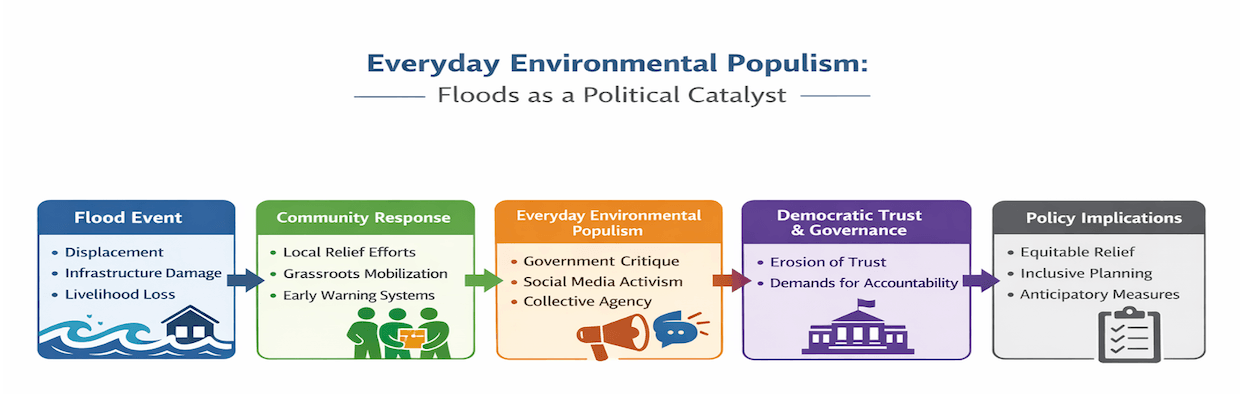
Figure 1: Everyday Environmental Populism: How Flood Catches Political Capital.
This diagram illustrates how floods trigger citizens’ responses and shape political opinions, ultimately influencing levels of public trust in the state and in its policy formulation.
Floods and Democratic Trust in Nigeria
Repeated floods expose critical failings in Nigeria’s disaster response and governance structures, thereby politicizing environmental disasters (Adebayo, 2018; Agbiboa, 2024). More broadly, the scale of such disasters can undermine citizens’ confidence in political institutions (Barnett, 2001; Dalby, 2013).
In Nigeria, successive floods have consistently triggered similar public reactions, as affected citizens cope with material losses while evaluating the adequacy of government responses. When state intervention is inconsistent, delayed, or inequitable, declining democratic trust leads citizens to rely on community-based assistance or to express dissent through social media, public meetings, and civil society organizations (Solaja et al., 2020; Solaja, 2025). Even prior to state involvement, citizens often self-organize, cultivating forms of autonomous political agency that can, in turn, shape public perceptions of state legitimacy (Obatunde, Akanle, & Solaja, 2025).
Citizens’ Response and Political Opinion
As illustrated in Figure 1, community mobilization in the initial stages of a flood event constitutes the foundation of everyday environmental populism, as citizen-led relief and response processes shape public political opinion and perceptions of the state’s democratic credentials. Grassroots relief initiatives often emerge in response to the absence or inadequacy of state intervention. In flood-affected areas, community leaders frequently assume responsibility for organizing shelters, disseminating alerts, and mobilizing local volunteers to assist victims, thereby demonstrating forms of self-reliance in disaster management (Solaja et al., 2020; Solaja, 2025).
These actions are inherently political, as they prompt evaluations of state responsiveness, challenge governmental priorities, and articulate demands for accountability. The internet serves as a platform where individual grievances coalesce into collective claims, transforming environmental crises into indicators of trust in the democratic system. In this sense, they exemplify everyday environmental populism, with citizens initiating forms of political mobilization from below (Obadare, 2020; Solaja, 2025).
Policy and Governance Challenges
It is crucial to address floods as political problems requiring preventive, equitable, and citizen-oriented governance. Such response mechanisms should include robust early warning systems, as well as transparent processes for the disbursement of funds and the allocation of resources to affected communities (International Rescue Committee & EU, 2025; Barnett, 2001; Solaja et al., 2020). Neglecting governance dimensions of disaster risk management fuels citizen distrust and intensifies public discontent. Conversely, equitable relief and fair governance can reinforce the legitimacy of democratic institutions (Dalby, 2013; Solaja, 2025).
Scholarly and Theoretical Contribution
The contribution of this commentary to populism studies and environmental governance lies in framing environmental disasters as triggers of political contestation. Through the concept of everyday environmental populism, it argues that lived experiences of disaster—driven by environmental threats—can empower citizens with the agency to resist injustice and challenge governmental actions (Solaja et al., 2020; Obadare, 2020).
The concept calls for further research into how environmental hazards shape citizens’ political attitudes and how such bottom-up agency influences the democratic legitimacy of state structures. Beyond political dynamics, it also intersects with debates on sustainability and the circular economy, opening new avenues for community-based initiatives—such as recycling plastic into productive materials through projects like EcoBalls and other entrepreneurial models (Solaja, 2025).
Conclusion: Politics in the Water
Floods are not merely natural disasters; in Nigeria, they constitute defining political events that shape the relationship between the state and its citizens, as well as perceptions of governmental legitimacy and responsiveness. The way citizens interpret state responses influences their assessment of whether democratic governance can deliver efficient, accountable services and provide support in times of crisis. Everyday environmental populism offers a useful framework for understanding these dynamics, highlighting how citizens’ responses are shaped by their exposure to environmental threats and by perceived inadequacies in governmental management (Solaja et al., 2020; Obadare, 2020).
There is a need to strengthen anticipatory governance, integrate citizen participation into flood management, and ensure that relief resources reach affected communities without being filtered through partisan interests. From an academic perspective, more extensive research is required to examine the political impacts of environmental hazards on mobilization, citizenship, and the pursuit of democratic accountability in flood-prone societies worldwide (Solaja et al., 2020; Obadare, 2020; Barnett, 2001).
References
Adebayo, B. (2018). “Nigeria overtakes India in extreme poverty ranking.” CNN.
Agbiboa, D. E. (2024). “Deep waters: Flooding and the climate of suffering in Nigeria.” PS: Political Science & Politics.
Barnett, J. (2001). The meaning of environmental security: Ecological politics and the United Nations. London: Zed Books.
International Rescue Committee & EU. (2025). Strengthening flood preparedness in Nigeria.
Mudde, C., & Rovira Kaltwasser, C. (2017). Populism: A very short introduction. Oxford University Press.
Obadare, E. (2020). Everyday politics in Africa: Publics, grievances, and popular engagement. Cambridge University Press.
Obatunde, B. A., Akanle, O., & Solaja, O. M. et al. (2025). “Doing sociology in Nigeria.” International Journal of Sociology, 16(1), 14–26. https://doi.org/10.13169/ijs.16.1.0014
Solaja, M.O., Awobona S., & Adekanbi, O.O. (2020). “Knowledge and practice of recycled plastic bottles (RPB) built homes for sustainable community-based housing projects in Nigeria.” Cogent Social Sciences, 6(1), 1778914. https://doi.org/10.1080/23311886.2020.1778914
Solaja, O.M. (2025). “EcoBall as a sport-based intervention for community engagement, behavioural change, and sustainable solutions to plastic pollution.” Discovery Environment, 3, 186. https://doi.org/10.1007/s44274-025-00347-y
In this timely commentary, Dr. João Ferreira Dias examines how recent parliamentary debates on gender identity in Portugal signal the consolidation of culture-war politics within the legislative arena. Moving beyond the technicalities of legal reform, the analysis shows how competing moral frameworks—centered on “non-negotiable values”—are reshaping political conflict and generating affective polarization. The 20 March 2026 vote reveals a coordinated right-wing effort to reframe gender as a matter of state authority and child protection, while opponents view it as a rollback of rights. Situated within broader debates on populism and cultural backlash, this piece highlights the growing centrality of symbolic politics in contemporary European democracies.
Debates on gender identity in Portugal have brought to the fore one of the core logics of contemporary culture wars: the notion of non-negotiable values, rooted in deeply held ethical commitments and/or religious beliefs. Precisely because these values are framed as non-negotiable, they tend to generate what the literature describes as “affective polarization,” thereby intensifying the conditions for culture-war politics.
The Event
On 20 March 2026, Portugal’s right-wing parliamentary parties secured approval in principle for three bills on gender identity, tabled by Chega, CDS-PP, and PSD. All three passed with the support of PSD, Chega, and CDS-PP, while the opposition bloc — Socialist Party (PS), Liberal Initiative, Livre, Communist Party, BE (Left Bloc), PAN (Party of Animals and Nature), and JPP (an Azorian new party) — voted against. A separate Left Bloc proposal was rejected at the same stage.
What was approved is not yet final law, but it marks a clear attempt to reverse the framework established by Law No. 38/2018, which enshrined self-determination in the legal recognition of gender identity. The core shift is the reintroduction of medical validation for changing name and sex in the civil registry, replacing the current model based on self-identification. In political terms, the vote signals a coordinated right-wing effort to re-medicalize legal gender recognition and to reframe the issue not primarily as a question of individual autonomy, but of state oversight and child protection.
The CDS-PP bill goes further, proposing to ban puberty blockers and hormonal treatment for minors under 18 when used in the context of gender incongruence or gender dysphoria. Chega’s proposal, meanwhile, explicitly frames the revision in terms of the “protection of children and young people.” For supporters, these initiatives are presented as corrective safeguards; for opponents, they represent a rollback of rights, a renewed pathologization of trans identities, and a moral panic translated into lawmaking.
Crucially, however, the parliamentary vote of 20 March was only a first reading. Approval “in principle” means that the bills now move to committee, where they will be debated and amended in detail before any final overall vote. Only after that stage could a final text proceed to presidential promulgation or constitutional review and, eventually, publication in the Diário da República. The immediate significance, then, is political rather than juridical: the Portuguese right has opened a legislative offensive against the country’s existing gender identity framework, but the legal outcome remains unsettled.
The Context
For a long time, Portugal was portrayed as a country immune to populism. However, as Zúquete (2022) has shown, contrary to that illusion of “exceptionalism,” Portugal has experienced different types of populist solutions, from charismatic military figures to mainstream political actors, especially during the 1990s, when CDS-PP — the Christian-democratic party — began to articulate a low-intensity version of Camus’s “great replacement” thesis.
In fact, to understand this debate and political decision, it is necessary to frame it within a long tradition of culture wars in Portugal. As I argued in my book (Ferreira Dias, 2025), debates on moral values are part of the Portuguese political fabric, as illustrated by the so-called Revolta da Maria da Fonte (Maria da Fonte’s Revolt) in the nineteenth century, a popular uprising against heavy taxation on rural communities and the ban on burials in churches for public-health reasons.
However, the most critical topics of debate in Portugal are colonial memory and national self-esteem, both linked to the myth of the “good colonizer” (v.g. Cardina, 2025; Smith, 2025; Vala, Lopes & Lima, 2008). The so-called “lusotropicalism” produced a form of self-esteem grounded in the myth of colonial exceptionalism, that is, the supposedly distinctive Portuguese capacity to mix with native populations and to produce a mulato community free of racism.
With the emergence of postcolonial and critical studies, and of the Epistemologies of the South (Sousa Santos, 2016), there emerged a generation of Portuguese academics and activists who questioned those assumptions, giving greater room to the subalternized voices of history.
While this postcolonial, postmodern and critical generation gained space in Portuguese universities, global social changes were also taking place, with the rise of the so-called woke culture and a subsequent global response labelled “cultural backlash” (Norris & Inglehart, 2019).
A widespread paranoia gained ground in Western societies around the idea of “cultural Marxism,” helping to consolidate a radical right that claimed to be conservative while often operating in reactionary and illiberal registers, through populist leaders such as Donald Trump, Jair Bolsonaro, and Viktor Orbán. At the same time, parts of the left became culturally radical, hyper-moralized, and at times susceptible to symbolic forms of historical and social purification (Mounk, 2025; McWhorter, 2021).
The struggle between this “conservative moral majority” and “progressivist morality” has accelerated culture wars. This context, together with the moral panic surrounding globalization, helps explain how Chega rose so quickly in Portugal — a country where cultural backlash, in many respects, arrived before woke culture acquired real social depth.
The Proper Debate
Paulo Núncio is one of the most visible CDS-PP deputies in this debate. He is well known for his ultraconservative positions and his opposition to woke culture. As coauthor of the CDS-PP bill on puberty blockers and hormonal treatment for minors, he is not initiating a new line of intervention but rather reaffirming a longstanding political agenda: for years, he has been one of the clearest exponents of culture-war politics within CDS-PP, and this initiative should be read as one more moment in that broader trajectory. In that sense, the issue of gender is not merely a policy question; it becomes a privileged arena for moral and political confrontation. Núncio has come to personify this agenda: he is the most visible CDS-PP figure in the field of culture-war politics and one of the most politically consequential voices of the Portuguese right on these matters.
What matters here, however, is not only the profile of one deputy, but the wider political grammar at work. The right is increasingly learning that moral conflict mobilizes more effectively than technocratic disagreement. Gender, in this setting, functions as a condensed symbol through which parties can speak about authority, family, childhood, education, and the limits of institutional neutrality.
That is why this debate exceeds the legal content of the bills themselves. At stake is a deeper dispute over who has the authority to name social reality: the individual, the family, the clinic, the school, or the state. Once framed in these terms, the controversy ceases to be a narrow disagreement over administrative procedure and becomes a struggle over moral sovereignty. This is the true grammar of culture wars: not distributive conflict, but symbolic boundary-making.
In Portugal, this grammar is still relatively recent in parliamentary form, but it is no longer marginal. What happened on 20 March 2026 suggests that the Portuguese right now sees legislative action on gender not as an isolated intervention, but as part of a broader attempt to reorganize the national moral agenda. Whether that attempt will prevail in law remains uncertain; that it has already shifted the political center of gravity is much harder to deny.
References
Applebaum, A. (2021). Twilight of democracy: The seductive lure of authoritarianism. Vintage.
de Sousa Santos, B. (2016). Epistemologies of the South: Justice against epistemicide. Routledge.
Ferreira Dias, J. (2025). Guerras culturais: Os ódios que nos incendeiam e como vencê-los. Guerra & Paz.
McWhorter, J. (2021). Woke racism: How a new religion has betrayed Black America. Portfolio.
Mounk, Y. (2025). The identity trap: A story of ideas and power in our time. Penguin Books.
Norris, P., & Inglehart, R. (2019). Cultural backlash: Trump, Brexit, and authoritarian populism. Cambridge University Press. https://doi.org/10.1017/9781108595841
Smith, H. (2025). “Many races – one nation: Racial non-discrimination always the cornerstone of Portugal’s overseas policy.” In: C. Roldão, R. Lima, P. Varela, O. Raposo, & A. R. Matias (Eds.), Afroeuropeans: Identities, racism, and resistances (pp. 235–246). Routledge.
Vala, J.; Lopes, D. & Lima, M. (2008). “Black immigrants in Portugal: Luso-tropicalism and prejudice.” Journal of Social Issues, 64(2), 287–302. https://doi.org/10.1111/j.1540-4560.2008.00562.x
Zúquete, J. P. (2022). Populismo: Lá fora e cá dentro. Fundação Francisco Manuel dos Santos.
Professor Jean-Yves Camus, a leading scholar of the far right and researcher at the Observatory of Political Radicalities at the Jean Jaurès Foundation in Paris, argues that France’s 2026 municipal elections revealed more than the continued advance of the National Rally (RN): they exposed a deeper reconfiguration of the French right. In this interview with ECPS, Professor Camus shows how the RN’s local gains—57 municipalities and over 3,000 council seats—coexist with persistent weakness in major metropolitan centers. More importantly, he underscores that “the boundary between the mainstream and the radical right is blurring locally,” particularly where segments of Les Républicains and RN voters increasingly converge. The interview offers a nuanced account of electoral realignment, selective republican resistance, and the uncertain road to 2027.
Giving an interview to the European Center for Populism Studies (ECPS), Professor Jean-Yves Camus, a researcher at the Observatory of Political Radicalities at the Jean Jaurès Foundation in Paris, underscores that France’s 2026 municipal elections reveal not only the continued advance of the National Rally / Rassemblement National (RN) but, more importantly, a gradual reconfiguration of the right in which the lines separating mainstream conservatism and radical populism are increasingly porous at the local level.
Reflecting on what he calls a “mixed bag” outcome, Professor Camus notes that the RN has achieved “a substantial gain” by winning 57 municipalities and securing over 3,000 council seats, yet “failed in all major cities and metropolises.” This dual pattern—territorial expansion alongside persistent urban resistance—captures the paradox at the heart of contemporary French politics. While the party has consolidated its presence in “small and medium-sized cities”and in economically distressed regions such as Pas-de-Calais and Moselle, it continues to face structural limits in gentrified metropolitan centers like Paris, where “the extreme right is very weak for obvious sociological reasons.”
Yet, the most consequential development, as Professor Camus emphasizes, lies not simply in where the RN wins or loses, but in how it increasingly interacts with the broader right-wing ecosystem. In several regions, particularly along the Mediterranean corridor, “the core voters of the Conservatives… are very close to voters of the National Rally,”facilitating patterns of vote transfer and informal cooperation. This dynamic signals a shift from the once rigid cordon sanitaire toward what Professor Camus describes as a more “selective” Republican front, contingent on local contexts and strategic calculations.
The significance of Éric Ciotti’s victory in Nice further illustrates this transformation. While rooted in the city’s longstanding conservative and post-colonial sociological profile, the result also points to a deeper convergence: “locally… the Republicans and the National Rally have platforms that are very similar.” In this sense, Ciotti’s ascent functions as both a local phenomenon and a symbolic “vitrine,” enabling the RN to present itself as part of a broader conservative continuum rather than an isolated extremist force.
At the national level, however, this convergence remains contested. Professor Camus highlights an unresolved strategic dilemma within Les Républicains, torn between maintaining ideological autonomy and pursuing alignment with the RN. As he cautions, any such coalition would likely be asymmetrical: “the dynamic is on the side of the National Rally… the agenda will be set by the National Rally.”
Taken together, the interview suggests that France is not witnessing a straightforward normalization of the far right, but rather a more complex process of political recomposition. The RN’s rise is embedded in enduring socioeconomic grievances and cultural anxieties, yet its ultimate trajectory will depend on whether the boundaries that once separated it from the mainstream right continue to erode—or are strategically reasserted—in the run-up to 2027.
Here is the edited version of our interview with Professor Jean-Yves Camus, revised slightly to improve clarity and flow.
The RN Has Expanded Locally, but Still Hits a Metropolitan Ceiling
Cyclists and pedestrians take over the Champs-Élysées during Paris Car-Free Day, filling the iconic avenue from the Louvre to the Arc de Triomphe under a clear sky. Photo: Dreamstime.
Professor Jean-Yves Camus, welcome, and let me start right away with the first question: The 2026 municipal elections seem to have produced a paradoxical outcome: the National Rally / Rassemblement National (RN) expanded its local footprint yet failed to secure the kind of major urban victories that would have symbolized full normalization. How should we interpret this mixed result—does it confirm the RN’s structural implantation, or does it reveal enduring sociological and territorial ceilings?
Professor Jean-Yves Camus: You’re right to say that the outcome of this election is very much a mixed bag for the Rassemblement National (RN). On the one hand, they significantly increased the number of seats they gained on city councils—up to more than 3,000. They won 57 cities, which is, of course, a substantial gain compared to the 13 cities they secured in 2020. But they failed in all major cities and metropolises, with very significant losses. They expected to win Toulon and secured 42% in the first round, but ultimately did not win. Due to a consolidation of votes against the National Rally, they were also expected to seize Marseille but did not. Paris remains a territory where the extreme right is very weak, for obvious sociological reasons. It is a gentrified city, which is largely alien to the ideology of the party. So, the cities they seized are small and medium-sized. The largest is Perpignan, which they retained in the first round with just over 50%, but this is the only city with more than 100,000 inhabitants that will be in the hands of the Rassemblement National.
So, I would say there is still significant progress to be made. In view of the presidential election, winning 57 cities is a notable achievement, but when it comes to the presidency, you need votes from the main metropolises. It remains to be seen whether, in a presidential contest, the outcome will be more favorable for the party. Let us remember that city council elections are based on proportional representation, which is not the case for presidential elections. These are local votes that rely heavily on the personality of the candidate for mayor, making this a very different mode of voting, with distinct patterns. Most voters in city council elections focus on very local issues, whereas presidential elections operate on an entirely different level.
What I take from this vote is that the party has expanded its reach to many small cities where it already had a number of strongholds. For example, in the département du Pas-de-Calais, one of the former industrial areas in northern France, they were highly successful and captured more than 10 small cities with populations between 3,000 and 10,000—a significant gain. On the other hand, if you look at a department with a similar sociological profile just north of Pas-de-Calais—the département du Nord, at the border with Belgium—they did not seize any towns, contrary to expectations. This suggests that electoral success depends heavily on how well the local branches of the party are organized, the quality and performance of the candidates, and whether there is genuine local momentum.
They also performed very well in the former industrial area of Lorraine, particularly in the département of Moselle, which borders Belgium, Luxembourg, and Germany. These are areas where unemployment remains high, where we see multiple generations struggling with long-term economic insecurity, and where many people face difficulties maintaining stable and adequately paid employment. Unsurprisingly, the party performs strongly there. They also did well in the Mediterranean belt, from Perpignan at the Spanish border to Menton at the Italian border—an area where the party has long enjoyed support. However, despite failing to win Toulon or Marseille, they made a very significant gain in Nice, a major city with international appeal.
That said, it was not the Rassemblement National itself that won Nice. Rather, it was a smaller party, Les Républicains, led by Éric Ciotti, now the mayor of Nice, who identifies as a Gaullist and is working toward uniting the right ahead of 2027.
Populism in France Is Deeply Rooted, Not a Temporary Surge
You have long argued that right-wing populist parties must be understood through their specific national histories rather than as a perfectly homogeneous European bloc. In the French case, what do these local election results tell us about the specifically French configuration of populism, nationalism, and anti-elite politics in 2026?
Professor Jean-Yves Camus: This situation tells us, first of all, that in most cases the Rassemblement National is still unable to build a coalition with the mainstream conservative right. In many cities, Les Républicains, the mainstream conservatives, remain strong. I think the main outcome of this election is that both Les Républicains on the right and the Socialist Party—the Social Democrats on the left—retain most of their strongholds. They are still the most important and relevant parties at the local level.
The National Rally has two options. The first is that of Marine Le Pen, who said after the vote: “My party is neither left nor right. I want to call on all people, regardless of their political affiliation, to vote for us in 2027. So, not left, not right.” The second option is that of Jordan Bardella, the new president and chairman of the party, who argues that, if they want to win in 2027, they must work toward a coalition of the right. But this coalition of the right is still very much contested from within among mainstream conservatives. Some of them, like Xavier Bertrand, chairman of the northern region of France, or Valérie Pécresse, chairperson of the Île-de-France region, argue that if they ally with the National Rally solely to defeat the left, they will probably lose their specificity. If they enter into a coalition with the National Rally, the policies of the National Rally will prevail, and they will not be able to act as the driving force in recovery.
That is a very wise analysis of the situation. If the conservative right enters into a coalition with the National Rally, the dynamic is on the side of the National Rally. Politically, the agenda will be set by the National Rally—by Le Pen or Bardella—and the conservatives will become a second-ranked partner in the coalition.
Another specificity of France is that it has a populist far-right party that has been above the 10% mark since 1984—over 40 years. Contrary to what many analysts have suggested, this is not a short-term political phenomenon. It is a structural part of political life, both at the local and national levels.
This also means that the French right, which until the 1980s had been divided between a liberal wing and a conservative wing, is now divided into three segments: a liberal, center-right one; a mainstream conservative one; and an identitarian, populist, anti-EU family. This is a major challenge.
Finally, there were elections in Denmark yesterday (March 24, 2026), and the outgoing Prime Minister, Mette Frederiksen, stated in her acceptance speech that there is a broad consensus on restricting immigration policy in Denmark, which is true. This consensus ranges from the Social Democrats to right-wing populists. In France, however, this is not the case. Immigration and asylum policies remain highly contentious issues, and there is no way the Socialist Party—the Social Democrats—can find common ground even with the mainstream conservative right. Restricting immigration and limiting the rights of asylum seekers is still associated with a small segment of the right wing of the Conservative Party, within Éric Zemmour’s party, which does not perform very well at the local level. Yet this remains central to the ideology of the National Rally. Any coalition, any cohesion of the right for 2027 will therefore have to confront these policy differences on immigration. No agreement, no coordination.
Marine and Jean-Marie Le Pen rallied during the meeting for the celebration of May 1, 2011 in Paris, France. Photo: Frederic Legrand
Blocking the RN Remains Possible, but No Longer Automatic
Marine Le Pen and Jordan Bardella framed the elections as evidence of a historic breakthrough, yet the two-round system once again appeared capable of blocking the far right in key urban contests. Does the municipal vote suggest that the so-called “Republican Front” is weakened, resilient, or merely transforming into more selective and local forms?
Professor Jean-Yves Camus: The so-called Republican front has become more selective. Obviously, in the southern part of the country, from Perpignan to Menton, the fan base—the core voters of the Conservative Party, the Republicans—are very close to voters of the National Rally. So they tend to transfer their votes to National Rally candidates in the second ballot because they share common ideas: mostly rejection of the left, even when it is moderate, a desire to curb immigration, and a very strong stance against what they call Islamic fundamentalism. Sometimes, the distinction between fighting Islamism and opposing Islam and Muslim immigrants becomes blurred. So, there is considerable cooperation at both the membership level and among voters between the Republicans and the National Rally.
In other cases, such as Toulon, it seems—although it is still too early to say definitively—that one of the reasons why the National Rally did not win is that the local bourgeoisie and business community had concerns about what the city would look like under National Rally governance. This is a very local situation. Toulon was won by the Front National in 1995, and the way the city was governed at the time was widely regarded as dreadful. It was a total failure, both economically and administratively. There may still be lingering negative memories from that period. You must remember that this whole area of France is heavily dependent on foreign investment and tourism, including mass tourism, with foreigners building and buying homes and condominiums, sometimes for retirement and sometimes for vacation. In such a context, how the city is perceived by outsiders—especially from other countries—is extremely important. I believe that the Rassemblement National is still not seen by these foreign investors as a fully normalized party. There remains a fear of what it might do, a fear of the future, and uncertainty about how things would look under its rule.
But this is only one example; Toulon is a very specific case. In Marseille, it was a completely different story. First of all, turnout was much higher in the second round than in the first. Secondly, the candidate from the radical left chose to withdraw, and it appears that a significant portion of his voter base supported the Socialist Party candidate in the second ballot, thereby limiting the National Rally’s chances of winning. This is particularly interesting because voters from the far left seem to have backed the Socialist candidate, despite Jean-Luc Mélenchon, the leader of the radical left La France Insoumise, being highly critical of the Socialist Party.
It, therefore, appears that left-wing voters still seek to block the National Rally from winning their cities. They may not like the Socialist Party—they may view it as too moderate, too pro-business, too pro–free market, and too strict on immigration—but when faced with a choice between the National Rally and the left, they ultimately vote for the left.
There is, therefore, still a possibility that in 2027, if Jordan Bardella or Marine Le Pen reach the second round, some form of Republican front will re-emerge to block the National Rally from winning the presidency. Why? Because Marine Le Pen remains associated with an embezzlement case involving funds from the European Parliament, and she is expected to stand trial next June. Jordan Bardella, meanwhile, is a 32-year-old, relatively inexperienced politician who has never been a mayor or a member of the National Assembly. He is a Member of the European Parliament but has never served in the National Assembly.
France still sees itself as one of the world’s major powers. It possesses nuclear weapons and plays a role in numerous international negotiations, as seen in both the Ukraine conflict and the Iran–Israel–United States tensions. Many French people may therefore feel that it is somewhat unwise to entrust such responsibility to someone who, while undoubtedly capable, lacks the necessary experience.
In 2017, France elected the youngest president in its history—Emmanuel Macron—who was only 39. By the end of Macron’s second term, many French citizens may feel that he lacked sufficient experience, as he had not been a Member of Parliament and had only briefly served as a minister. He may be seen as one of those figures from the higher administrative elite with limited experience at the grassroots level—someone who had never previously been elected—and that this, in hindsight, may have been a mistake.
Ciotti’s Victory Signals Convergence Between Republicans and the RN
How significant was Éric Ciotti’s victory in Nice for the broader right-wing ecosystem? Should we read it as an isolated local triumph shaped by personal rivalry, or as a more durable sign that the boundary between the mainstream right and the Le Pen camp is continuing to erode?
Professor Jean-Yves Camus: There are two different things here. The first is the Nice election, with Éric Ciotti winning over Christian Estrosi, who had the backing of the center-right and President Macron. And then there is what it represents at the national level.
Nice has always been a very peculiar city. Back in the 1970s and 1980s, the mayor was Jacques Médecin, who was officially a center-right member of the government but was very close to the local extreme right, even before the Front National was founded in 1972. This has traditionally been a stronghold of the arch-conservative right. That was the situation before World War II, and it remained so afterward. The Gaullist movement was never very strong, especially after 1962, when Algeria was granted independence. A large number of what we call repatriés—repatriated people—settled in the area, and they were strongly opposed to de Gaulle for obvious reasons. They were also very right-wing, particularly on the issue of immigration and the Muslim population. That remains an issue to this day.
In addition, Christian Estrosi performed very poorly. You have probably heard about the many controversies that emerged during the campaign, and there are ongoing inquiries into some of them. So he is partly responsible for his own failure.
So, the election of Éric Ciotti aligns very well with the sociology of this city and with expectations for change. It also reflects the fact that, locally, between Nice and Menton, the Republicans and the National Rally have platforms that are very similar, or at least very close to each other.
At the national level, Ciotti’s party is, in a way, a Gaullist formation. Marine Le Pen and Bardella also refer to General de Gaulle when it comes to the idea of France being independent, both from the United States and from other powers. They claim to be Gaullist in their approach to relations with the European Union and in their economic policy, emphasizing a return to strong industry, and so on.
This movement, when it was launched as a splinter group from the Republicans, was both a personal project of Éric Ciotti—he wanted to achieve something he felt he could not achieve within the Republicans—and a reflection of a broader trend within the Gaullist movement to drift toward a more right-wing stance on immigration and on relations with, especially, Muslim immigration.
This group has captured several cities, such as Montauban, Vierzon, and Sablé-sur-Sarthe. These are medium-sized cities. It can serve as what we call in French a vitrine—a kind of showcase demonstrating that there is an ally which is, in fact, part of the mainstream conservative right and not burdened by the controversies that have surrounded the history of the National Front and the National Rally. So Marine Le Pen and Bardella can say: look, we have mayors from a Gaullist party, which shows that we do not belong to the extreme right. We are simply the real conservative right, while the Republicans are no longer truly conservative because they have governed alongside Macron’s ministers and are, ideologically, closer to the center-left than to traditional right-wing ideas.
Republicans Remain Strong Locally but Divided Nationally
Éric Zemmour’s election campaign, meeting in Cannes,France on January 22, 2022. Photo: Macri Roland.
At the same time, Les Républicains retained or regained a number of municipalities. Do these results indicate that the traditional right still possesses a meaningful territorial base independent of the RN, or is it increasingly being forced into a strategic choice between centrism and nationalist realignment?
Professor Jean-Yves Camus: Les Républicains retain a significant base at the local level. The controversy within the Republicans concerns the presidential contest.What we have seen after the city council vote is two leaders from the Republicans, Laurent Wauquiez and Bruno Retailleau, expressing opposing views regarding the presidential election. One explanation is that both of them are, in fact, candidates for the presidency. Retailleau argues that if they retain traditional conservative ideology, and perhaps go a little further on the issue of immigration, they can still win the presidency. Wauquiez, by contrast, argues that if they remain alone as Les Républicains, they will not succeed.
So, he suggests that they already have much in common with the National Rally. What, then, are the differences between them? On this basis, he proposes organizing a primary among all right-wing candidates, from Édouard Philippe on the center-right to the National Rally, to Zemmour’s party and its candidate, who will obviously be Sarah Knafo. They would then rally behind whoever wins the primary election.
Retailleau, however, rejects this approach outright. In other words, he insists that they have nothing in common with Zemmour’s party. So, why hold a primary contest with actors who do not share the same platform and ideology?
In other words, part of the center-right does not want to become hostage to the most right-wing parties in the country, especially since Zemmour’s party stands to the right of the National Rally. Zemmour’s party promotes the idea of the “Great Replacement.” It also advances the view that Islam is not compatible with French citizenship and supports the idea of “remigration,” that is, the compulsory return of all non-European immigrants. This is, therefore, a completely different ideological framework.
My view is that this controversy will continue for many months to come, especially since we do not yet know who the National Rally’s candidate will be. As I mentioned earlier, Marine Le Pen will stand trial on appeal next June, and the outcome will be known then. She may be disqualified from running. If that happens, Bardella will carry the colors of the National Rally. This means that, for the time being, the National Rally faces some difficulty in entering the pre-campaign phase, and this gives the Republicans time to take advantage of the situation and clarify their strategy.
Perceived Cultural Loss, Not Just Reality, Drives RN Support
Muslims demonstrating against Islamophobia outside the Grande Mosquée de Paris, France. Photo: Tom Craig.
Your previous work has emphasized the role of cultural insecurity, as well as socioeconomic dislocation, in shaping support for the populist right. Did these local elections confirm that diagnosis, especially in provincial France and smaller towns where the RN performed more strongly than in metropolitan centers?
Professor Jean-Yves Camus: It is absolutely true. When we look at the map of the cities won by the National Rally, what we see are many small and medium-sized cities where there is a strong feeling of cultural loss—a perception that there is more immigration, more mosques being built, and more immigrants and refugees arriving. Many people feel very uneasy about this. It is a perception of insecurity, even in cases where there is no actual crime or insecurity. That is very important to understand.
It is not because you live in a safe city that you do not believe immigration is increasing—10, 20, or even 50 kilometers away in a larger city—and that sooner or later immigrants will come to your own town and change its cultural history, what you consider necessary to be truly French, and what you think is required to live in your community.
I think we still have a problem with immigration from former French colonies, whether from North Africa or West Africa. It is as if we have not fully come to terms with our colonial past, and with the fact that we not only accepted these immigrants but actively encouraged them to come. Large industries and major business interests brought them to this country. So, they deserve recognition for what they contributed and for the role they played in building the country’s industrial base. Yet, they remain disadvantaged, and racism and xenophobia persist.
On the other hand, among native French people—those whose families have lived in the country for generations—especially in today’s unstable international context, there is a growing perception of a clash of civilizations between the West and the Muslim world. This perception plays an important role, particularly along the Mediterranean coast, in shaping support for the National Rally.
The social situation is also very important. As I mentioned earlier, in many parts of France, these areas have been deindustrialized since the late 1970s, and there is no realistic prospect that these jobs will return. You may recall that President Trump, during his campaign in Pittsburgh, told steelworkers that their jobs would come back—but they did not. The same is true in northern France: industrial jobs will not return.
In other words, people feel they have no future, no new forms of employment or specialization for younger generations. There is a strong sense of dispossession, alienation, and abandonment. In some small towns, public services are also disappearing. Public services include the post office, the local school, the railway station—everything that signals the presence of the state. This also includes the presence of police or access to hospitals. Many hospitals have been closing in this country, and when people have to travel an hour to reach emergency care, they understandably feel that the state is no longer taking care of them. So, a protest vote in favor of the National Rally emerges in this context.
Major Cities Favor Stability Over Populist Alternatives
Conversely, how do you explain the RN’s continuing difficulty in major cities? Is this primarily a matter of candidate quality, urban demography, coalition arithmetic, class composition, or the party’s still-incomplete process of dédiabolisation?
Professor Jean-Yves Camus: In major cities, you have to remember that most of them, including Paris, have become gentrified. A gentrified city means a high proportion of people with higher education, better-paid jobs, and incomes above the average wage. There is also a tendency to reject extremes and to seek stability.
If you look at cities like Marseille, Paris, Lille, Strasbourg, and so on, there is also a significant share of the population that comes from an immigrant background and who, obviously, do not want to vote for the National Rally. So the conditions are in place to prevent the National Rally from winning in the largest cities, such as Lyon, Paris, and Marseille.
This is not the case in small or medium-sized cities. There, the population is different, often with incomes below the average and facing many difficulties, including in rural areas where the National Rally has made very significant inroads.
Moreover, the organizational apparatus of the major parties still retains some hold over the electorate in major cities, whereas the electorate in small and medium-sized cities and rural areas is much more volatile.
Municipal Results Do Not Predict Presidential Outcomes
Leaflets featuring candidates for the 2024 legislative elections in Versailles, France, on June 28, 2024. Photo: Dreamstime.
Finally, Professor Camus, do these municipal elections offer any reliable indication for the presidential race ahead? More specifically, do they suggest that France is still heading toward a Le Pen– or Bardella-centered contest, or do they reopen the possibility that broader coalitions of the mainstream left, center, and moderate right could yet alter the expected scenario?
Professor Jean-Yves Camus: First of all, in political science, we know that we cannot infer from city council elections what the outcome of a presidential election will be. These are two very different types of elections, not the same mode of scrutiny, and, of course, a very different context—especially in a country like France, where the presidency is very powerful. We are a semi-presidential system.
Second, I would insist that there is still one year to go until the election. The only thing we know for sure is that Emmanuel Macron is not allowed to seek a third term. As for the other contenders, we know quite a few—especially Édouard Philippe, who retained his mayorship of Le Havre last Sunday and is one of the contenders for the center-right—but there are others, and there are many contenders within the Republican Party. We do not yet know who will be the candidate of the Social Democratic left; there may even be several. The only thing we know for sure is that the candidate of the National Rally will be either Le Pen or Bardella, and we know that the candidate of the radical left will be Jean-Luc Mélenchon. So let us wait until we really know who will stand for president, and then look at the first polls.
What the National Rally expects is a second round between Mélenchon and Bardella. Why? Because opinion surveys show that the dédiabolisation of the National Rally has progressed to such an extent that the radical left is now rejected by a higher proportion of voters than Le Pen or Bardella. This is something we would not have said 10 or even 5 years ago. The rejection level of the radical left is around 60%. Fewer than 50% of French people today say that the National Rally is a threat to democracy—49% still see it as such, but that is no longer a majority. So, the hope of the National Rally is a second round between two candidates from the extremes, which would allow it to win.
On the other hand, what I see emerging is what we call the central bloc—that is, Macron’s majority—playing the card of stability: you do not want to vote for one or another extreme, so let us vote for stability.Maybe you do not agree with everything the center-right has done over the past decade, but if you are faced with the National Rally in the second round, please vote for stability—keeping France a democracy and keeping France within the European Union. This kind of strategy may work.
The only problem is that in 2017 and in 2022, the majority of the French did not vote for Macron because they shared his ideas; they voted for him because they rejected Le Pen. And if, in 2027, we again have to vote for a candidate whose policies we do not truly support, only out of rejection of the National Rally, then I would expect very difficult times. Because voting for a president, at least in the French context, should mean supporting his ideology, his project for the country, what he wants to do, and the kind of legislation he wants to pass. If you vote only to avoid what you perceive as a threat, then democracy is not very solid.
Dr. Sanjeev Humagain offers a nuanced and cautionary reading of Nepal’s post-election moment, arguing that the March 2026 vote should not be seen simply as a democratic breakthrough. While the rise of Balendra “Balen” Shah and the Rastriya Swatantra Party marks a clear rupture in elite continuity, Humagain warns that Nepal’s deeper political logic remains shaped by “institutionalized populism.” He emphasizes that the country is emerging from “a kind of institutionalized gray zone,” yet still faces serious challenges of accountability, parliamentary weakness, and policy incoherence. For Humagain, the election has validated long-standing public questions about corruption, patronage, and ineffective governance—but not yet their answers. Nepal, he suggests, stands at a critical juncture: not at the summit of democratic renewal, but “at base camp,” where the hard work of institutional reform has only just begun.
Giving an interview to the European Center for Populism Studies (ECPS), Dr. Sanjeev Humagain, a political scientist at Nepal Open University, offers a nuanced and theoretically grounded assessment of Nepal’s evolving political landscape in the aftermath of the March 2026 general election. While widely interpreted as a rupture driven by Gen Z mobilization and anti-elite sentiment, Dr. Humagain cautions against overly celebratory readings of the electoral outcome. Instead, he situates the moment within a longer trajectory of institutional fragility, elite circulation, and the deepening entrenchment of populist political practices.
At first glance, the electoral victory of Balendra “Balen” Shah and the Rastriya Swatantra Party (RSP) appears to mark a decisive break with the post-1990 political order. As Dr. Humagain notes, “the rise of the Rastriya Swatantra Party… represents a clear break from that pattern,” emphasizing that “for the first time, we are witnessing an overwhelmingly large number of new members in Parliament.” This influx of political newcomers—many lacking prior ministerial experience—signals a disruption of long-standing elite continuity and suggests the possibility of institutional renewal.
Yet, as the interview unfolds, Dr. Humagain complicates this narrative of democratic transformation. He underscores that Nepal’s political trajectory has long been characterized not by linear democratization but by movement across “a kind of institutionalized gray zone,” where “there was a serious erosion of accountability” and persistent threats to democratic consolidation. In this context, the current electoral moment represents less a definitive transition than a “critical juncture”whose direction remains uncertain.
Central to Dr. Humagain’s analysis is the argument that Nepal’s contemporary politics is shaped by a deeply embedded form of populism. While new actors and generational dynamics have reshaped the electoral arena, they have not necessarily displaced the underlying logic of governance. As he warns, “the other side of the coin is that Nepali politics has already been shaped by populism for at least a decade,” characterized by “the personalization of politics” and the marginalization of institutional mechanisms such as parliament and party structures. This personalization, he argues, has rendered “several key institutions dysfunctional,” raising fundamental questions about the durability of democratic accountability.
Importantly, Dr. Humagain highlights a paradox at the heart of Nepal’s current transformation. While voters have clearly rejected established parties and endorsed systemic critique, they have not yet converged around a coherent programmatic alternative. “The questions have been approved,” he observes, noting that citizens have given new political actors “the mandate to find meaningful and democratic answers.” However, “it is not that a clear direction has already been determined”—a condition he captures through the evocative metaphor that “Nepal is at the beginning of a new journey—we are at base camp, not at the top of the mountain.”
It is precisely within this unresolved space that the central challenge emerges. Despite electoral change, Dr. Humagain expresses concern that “the populism that has already become deeply institutionalized will persist in the coming years.”This persistence, he argues, will generate “ongoing challenges for democratic accountability” and hinder efforts to strengthen parliamentary governance. In this sense, Nepal’s post-election moment is not merely a story of democratic renewal, but a test of whether institutional reform can overcome the enduring legacy of populist political logic.
Session 14 of the ECPS Virtual Workshop Series examined how artificial intelligence, algorithmic infrastructures, and digital platforms are reshaping democratic participation in the contemporary era. Bringing together perspectives from political science, communication, cultural heritage, and democratic theory, the panel explored the implications of AI for political legitimacy, collective identity, and the future of “the people” in an increasingly post-digital world. Contributions ranged from public attitudes toward algorithmic governance and the role of ChatGPT in shaping cultural memory to Big Tech’s influence on class consciousness and the fragmentation of digital publics. Together, the presentations and discussions showed that AI is no longer external to democracy, but increasingly constitutive of its communicative, institutional, and symbolic foundations—raising urgent questions about power, accountability, and democratic contestation.
Reported by ECPS Staff
On Thursday, March 19, 2026, the European Center for Populism Studies (ECPS) convened the fourteenth session of its Virtual Workshop Series, “We, the People” and the Future of Democracy: Interdisciplinary Approaches, under the title “From Bots to Ballots: AI, Populism, and the Future of Democratic Participation.” Bringing together scholars from political science, communication studies, democratic theory, cultural heritage, and digital governance, the session examined one of the most urgent questions of contemporary political life: how artificial intelligence, algorithmic infrastructures, and platform logics are transforming democratic participation, political legitimacy, and the very conditions under which “the people” are constituted. From public attitudes toward algorithmic decision-making and the cultural politics of generative AI to the restructuring of class consciousness and the fragmentation of digital publics, the panel explored the shifting contours of democracy in an increasingly post-digital age.
The participants of the session were introduced by ECPS intern Stella Schade. Chairing the panel, Dr. Paolo Gerbaudo of the Complutense University of Madrid situated the discussion within a broader reflection on the transformation of democracy in the contemporary technological era. As he underscored, democracy has always been shaped by mediations—whether institutional, communicative, or technological—but what distinguishes the present moment is the centrality of digital infrastructures as key mediating forces in the organization of visibility, participation, and power. Algorithms, artificial intelligence systems, and platform architectures, he suggested, have become decisive “bottlenecks” through which political communication and democratic agency are increasingly filtered. In this sense, the session was framed not merely as a discussion of technology, but as an inquiry into the changing nature of democratic life itself.
Under Dr. Gerbaudo’s chairmanship, the panel featured four presentations that illuminated distinct yet interconnected dimensions of this transformation. Professor Joan Font (IESA-CSIC) examined citizens’ conceptions of democracy in relation to artificial intelligence in administration and government, asking who, if anyone, wants an algorithm to govern. Alonso Escamilla (The Catholic University of Ávila), co-authoring with Paula Gonzalo (University of Salamanca), explored how ChatGPT may shape European cultural heritage and its implications for the future of democracy. Aly Hill (University of Utah) turned to the United States to analyze how Big Tech is reshaping white working-class consciousness and reconfiguring populist narratives. Finally, Amina Vatreš (University of Sarajevo) offered a theoretical intervention on “the people” in an algorithmically mediated world, focusing on the interplay between filter bubbles, filter clashes, and populist identity formation.
The session also benefited from the incisive engagement of its discussants, Dr. Jasmin Hasanović (University of Sarajevo) and Dr. Alparslan Akkuş (University of Tübingen). Their interventions not only deepened the theoretical stakes of the presentations but also connected them to wider debates on political legitimacy, technological power, digital capitalism, and democratic fragmentation.
Together, chair, speakers, and discussants produced a rich interdisciplinary exchange that highlighted both the promise and the peril of AI-mediated politics. Session 14 thus offered a compelling inquiry into how democracy is being rearticulated in a world where digital systems no longer merely support political life, but increasingly structure its possibilities.
Please cite as: ECPS Staff. (2026). “Virtual Workshop Series / Session 14 — From Bots to Ballots: AI, Populism, and the Future of Democratic Participation.” European Center for Populism Studies (ECPS). March 24, 2026. https://doi.org/10.55271/rp00145
Session 14 of the ECPS Virtual Workshop Series examined how artificial intelligence, algorithmic infrastructures, and digital platforms are reshaping democratic participation in the contemporary era. Bringing together perspectives from political science, communication, cultural heritage, and democratic theory, the panel explored the implications of AI for political legitimacy, collective identity, and the future of “the people” in an increasingly post-digital world. Contributions ranged from public attitudes toward algorithmic governance and the role of ChatGPT in shaping cultural memory to Big Tech’s influence on class consciousness and the fragmentation of digital publics. Together, the presentations and discussions showed that AI is no longer external to democracy, but increasingly constitutive of its communicative, institutional, and symbolic foundations—raising urgent questions about power, accountability, and democratic contestation.
Reported by ECPS Staff
On Thursday, March 19, 2026, the European Center for Populism Studies (ECPS) convened the fourteenth session of its Virtual Workshop Series, “We, the People” and the Future of Democracy: Interdisciplinary Approaches, under the title “From Bots to Ballots: AI, Populism, and the Future of Democratic Participation.” Bringing together scholars from political science, communication studies, democratic theory, cultural heritage, and digital governance, the session examined one of the most urgent questions of contemporary political life: how artificial intelligence, algorithmic infrastructures, and platform logics are transforming democratic participation, political legitimacy, and the very conditions under which “the people” are constituted. From public attitudes toward algorithmic decision-making and the cultural politics of generative AI to the restructuring of class consciousness and the fragmentation of digital publics, the panel explored the shifting contours of democracy in an increasingly post-digital age.
The participants of the session were introduced by ECPS intern Stella Schade. Chairing the panel, Dr. Paolo Gerbaudo of the Complutense University of Madrid situated the discussion within a broader reflection on the transformation of democracy in the contemporary technological era. As he underscored, democracy has always been shaped by mediations—whether institutional, communicative, or technological—but what distinguishes the present moment is the centrality of digital infrastructures as key mediating forces in the organization of visibility, participation, and power. Algorithms, artificial intelligence systems, and platform architectures, he suggested, have become decisive “bottlenecks” through which political communication and democratic agency are increasingly filtered. In this sense, the session was framed not merely as a discussion of technology, but as an inquiry into the changing nature of democratic life itself.
Under Dr. Gerbaudo’s chairmanship, the panel featured four presentations that illuminated distinct yet interconnected dimensions of this transformation. Presenting a co-authored paper on behalf of his co-authors, Professor Joan Font (IESA-CSIC) examined citizens’ conceptions of democracy in the context of artificial intelligence in public administration and governance, asking who, if anyone, would want an algorithm to govern. Alonso Escamilla (The Catholic University of Ávila), co-authoring with Paula Gonzalo (University of Salamanca), explored how ChatGPT may shape European cultural heritage and its implications for the future of democracy. Aly Hill (University of Utah) turned to the United States to analyze how Big Tech is reshaping white working-class consciousness and reconfiguring populist narratives. Finally, Amina Vatreš (University of Sarajevo) offered a theoretical intervention on “the people” in an algorithmically mediated world, focusing on the interplay between filter bubbles, filter clashes, and populist identity formation.
The session also benefited from the incisive engagement of its discussants, Dr. Jasmin Hasanović (University of Sarajevo) and Dr. Alparslan Akkuş (University of Tübingen). Their interventions not only deepened the theoretical stakes of the presentations but also connected them to wider debates on political legitimacy, technological power, digital capitalism, and democratic fragmentation.
Together, chair, speakers, and discussants produced a rich interdisciplinary exchange that highlighted both the promise and the peril of AI-mediated politics. Session 14 thus offered a compelling inquiry into how democracy is being rearticulated in a world where digital systems no longer merely support political life, but increasingly structure its possibilities.
Democracy, Mediation, and Digital Power
Dr. Paolo Gerbaudo is a sociologist and political theorist at Department of Political Science and Administration and senior researcher in Social Science at Complutense University in Madrid and lead researcher for the After Order project at Alameda Institute.
In his introductory remarks, Dr. Paolo Gerbaudo situates the discussion within his broader scholarly engagement with the transformation of democracy in the contemporary technological era. His intervention underscores the growing entanglement between democratic malaise, the rise of populist movements, and the evolving infrastructures of mediation that shape political life.
Dr. Gerbaudo foregrounds a fundamental paradox at the heart of democratic theory: the tension between the ideal of democracy as the unmediated expression of the popular will and the empirical reality of complex, layered mediations. Drawing implicitly on classical conceptions of direct democracy, he contrasts the normative aspiration for transparency and immediacy with the institutional and technological filters through which political power is necessarily exercised. In this sense, democracy is never purely direct but always structured through channels that organize participation, authority, and legitimacy.
Extending this argument, Dr. Gerbaudo emphasizes that mediation is not a recent development but a constitutive feature of democratic systems across history—from ancient Athens to modern representative regimes. However, what distinguishes the present moment is the centrality of digital technologies as key mediating forces. Algorithms, artificial intelligence, and platform architectures increasingly function as “bottlenecks” and “pivot points,” shaping the distribution of visibility, influence, and ultimately political power.
Crucially, he highlights the hybrid nature of these processes, where human agency and technological systems interact in complex ways. This interplay produces new configurations of power that challenge traditional understandings of democratic participation and representation. By framing the session around these dynamics, Dr. Gerbaudo positions the subsequent presentations as contributions to a broader inquiry into the opportunities and limits of digital democracy in contemporary societies.
Professor Joan Font: “Conceptions of Democracy and Artificial Intelligence in Administration and Government: Who Wants an Algorithm to Govern Us?”
Joan Font is research professor at the Institute of Advanced Social Studies (IESA-CSIC).
In his presentation, Professor Joan Font offers a rigorous empirical examination of public attitudes toward the role of artificial intelligence (AI) in democratic governance. His intervention is situated within the broader framework of the AutoDemo project, a collaborative research initiative aimed at exploring citizens’ preferences regarding democratic procedures and decision-making models in contemporary societies.
Professor Font begins by positioning AI as a critical new dimension in longstanding debates about “which kind of democracy we want.” Rather than treating AI as a purely technical innovation, he integrates it into a normative and empirical inquiry into democratic legitimacy, participation, and authority. The rapid diffusion of AI technologies—particularly within public administration—raises fundamental questions about transparency, accountability, and the locus of decision-making power. Yet, as he notes, systematic knowledge of citizens’ perceptions and preferences in this domain remains limited and fragmented.
To address this gap, the AutoDemo project conducted a large-scale survey of approximately 3,000 respondents in Spain, capturing attitudes toward AI in general, as well as its potential applications in public administration and government. A key contribution of the study lies in its differentiation between varying levels of AI involvement—from low-stakes administrative assistance to high-stakes political decision-making. This nuanced approach allows the authors to move beyond binary or dystopian framings of AI governance and instead map gradations of public support.
The descriptive findings reveal a clear and consistent pattern: respondents are broadly supportive of AI when it is confined to routine administrative tasks, such as improving efficiency or processing information. However, this support declines significantly as AI is envisioned as playing a more direct role in political decision-making. The lowest levels of acceptance are observed in scenarios where AI would oversee or conduct electoral processes, indicating persistent concerns about legitimacy and democratic control. These findings align with comparable studies conducted in other European contexts, suggesting a degree of cross-national consistency.
Moving beyond descriptive analysis, Professor Font employs multivariate regression techniques to identify the key drivers of these attitudes. The results indicate that general attitudes toward AI—such as trust in technology or perceived benefits—constitute the most powerful explanatory factor. In comparison, democratic preferences and broader political attitudes play a more conditional role. Notably, their influence becomes more pronounced in relation to higher levels of AI authority. Individuals with more authoritarian orientations are significantly more likely to support an expanded role for AI in political decision-making, whereas those who favor representative democratic models tend to express greater skepticism.
This stratification underscores a crucial insight: support for AI governance is not merely a function of technological optimism, but is also shaped by underlying normative commitments regarding how democracy should function. In this sense, AI becomes a lens through which broader tensions between competing models of democracy—technocratic, representative, participatory, and authoritarian—are refracted.
Professor Font concludes by emphasizing both the empirical and normative implications of these findings. While AI is not yet a central issue in electoral politics, its growing presence in governance raises the possibility that it may become politically salient in the near future. As such, the question of how citizens perceive and evaluate AI’s role in decision-making warrants sustained scholarly and policy attention. By embedding AI within the broader debate on democratic preferences, the presentation offers a valuable contribution to understanding the evolving relationship between technology and democracy in the digital age.
Alonso Escamilla: “How Does ChatGPT Shape European Cultural Heritage for the Future of Democracy?”
Alonso Escamilla is Manager of European Projects and Research at the Catholic University of Ávila (Spain). For this same institution, he is a PhD Student on Cultural Heritage and Digitalisation and a Member of the Research Group: Territory, History and Digital Cultural Heritage.
In his presentation at Session 14 of the ECPS Virtual Workshop Series, Alonso Escamilla advances an original and exploratory inquiry into the relationship between artificial intelligence, European cultural heritage, and the future of democracy. His paper situates itself at the intersection of political theory, cultural studies, and digital governance, offering a conceptually rich and methodologically innovative contribution to ongoing debates on the democratic implications of generative AI.
Escamilla begins by establishing a conceptual foundation that links European cultural heritage and democracy through a shared normative architecture. Drawing on UNESCO’s definition, he frames cultural heritage as the legacy of tangible and intangible assets transmitted across generations and preserved for collective benefit. This definition is subsequently expanded through the lens of the European Union, where cultural heritage is understood not only as a repository of memory but also as a strategic resource underpinning economic development, social cohesion, territorial competitiveness, and the consolidation of European values. Democracy, in parallel, is conceptualized as a system grounded in rights, rule of law, and representative institutions, through which citizens’ dignity and public reason are institutionalized.
A key analytical move in Escamilla’s framework is the recognition of cultural heritage as a polysemic concept—simultaneously functioning as identity, memory, symbol, and political resource. This multiplicity, he argues, renders cultural heritage both a site of democratic possibility and a terrain of contestation. In the context of the European Union, where shared identity is continuously negotiated, cultural heritage becomes central to the construction and reproduction of democratic legitimacy.
This conceptual discussion is embedded within a broader historical and geopolitical context. Escamilla highlights a series of crises that have shaped the European project over the past two decades—including the 2008 financial crisis, the 2015 migration crisis, the COVID-19 pandemic, and the ongoing war in Ukraine—arguing that these events have placed significant strain on both democratic institutions and cultural narratives. To these pressures is added the accelerating impact of digitalization and artificial intelligence, which introduces new uncertainties regarding the mediation of knowledge, identity, and political participation.
Against this backdrop, Escamilla formulates his central research question: how does ChatGPT conceptualize the role of artificial intelligence in shaping European cultural heritage for the future of democracy? Methodologically, the study adopts an innovative design, treating ChatGPT not merely as a tool but as an object of inquiry. A set of 30 open-ended questions is administered across three levels of complexity—basic, intermediate, and expert—each designed to elicit distinct layers of conceptualization. By structuring the interaction in this way and isolating each level within separate conversational contexts, the study seeks to capture variations in discourse while minimizing contextual bias.
The resulting dataset is subjected to qualitative content analysis, involving thematic coding, identification of discursive patterns, and mapping of conceptual relationships. This approach allows Escamilla to reconstruct the “narrative logic” through which ChatGPT articulates the interplay between cultural heritage, democracy, and artificial intelligence.
The findings reveal a clear stratification in the model’s responses. At the basic level, ChatGPT adopts a pedagogical and normative tone, presenting European cultural heritage as a shared historical legacy, linking it to civic participation, and defining democracy primarily in terms of human rights and the rule of law. These responses reflect dominant institutional discourses, closely aligned with EU policy frameworks and UNESCO definitions.
At the intermediate level, the model’s discourse becomes more analytical and reflexive. Cultural heritage is framed as a resource for critical thinking and democratic literacy, as well as a space—both physical and digital—where citizens negotiate meanings and engage in dialogue. Importantly, ChatGPT begins to conceptualize heritage as dynamic, capable of responding to contemporary challenges and facilitating democratic resilience.
At the expert level, a more critical and ambivalent perspective emerges. Here, ChatGPT articulates both the opportunities and risks associated with AI. On the one hand, AI is portrayed as a powerful tool for enhancing accessibility, inclusivity, and preservation, enabling new forms of cultural production and engagement. On the other hand, significant risks are identified: the privileging of dominant narratives, the reproduction of existing power hierarchies, and the potential for AI to shape—if not determine—how heritage is accessed, interpreted, and transmitted.
One of the most intriguing aspects of the findings is the model’s “performative adaptability.” Escamilla observes that ChatGPT appears to adopt different epistemic identities depending on the level of questioning—ranging from a pedagogical voice at the basic level to a quasi-expert authority at the highest level. This suggests not only responsiveness to input complexity but also an embedded capacity to simulate varying degrees of expertise, raising important questions about epistemic authority in AI-mediated knowledge production.
In the discussion, Escamilla situates these findings within existing literature on cultural heritage policy and digital governance. He notes that the model’s outputs largely reproduce dominant European narratives, reflecting the influence of institutional discourse embedded within training data. While this lends coherence and legitimacy to the responses, it also points to a limitation: alternative or marginalized conceptions of cultural heritage may be underrepresented or excluded.
The analysis of future-oriented responses further underscores the ambivalent role of AI. While its capacity to democratize access and foster inclusion is acknowledged, its potential to distort public discourse, manipulate information, and reshape collective memory raises significant concerns. In particular, the prospect that AI systems might influence not only how heritage is disseminated but also what is deemed worthy of preservation introduces a profound challenge to democratic governance.
Escamilla concludes by emphasizing the bidirectional and evolving relationship between artificial intelligence, cultural heritage, and democracy. AI is not merely a neutral intermediary but an active agent in the production, selection, and transmission of cultural meaning. As such, its growing influence necessitates sustained scholarly attention and critical engagement.
Ultimately, the presentation highlights a central tension: whether artificial intelligence will serve as a tool that enhances democratic participation and cultural pluralism, or as a force that centralizes interpretive authority and constrains diversity. By foregrounding this question, Escamilla’s work contributes significantly to emerging debates on the governance of digital knowledge infrastructures and their implications for democratic futures.
Aly Hill: “The New Elite: How Big Tech is Reshaping White Working-Class Consciousness.”
Aly Hill is a third-year Ph.D. candidate in the Department of Communication at The University of Utah.
In her presentation, Aly Hill offers a conceptually incisive examination of the evolving relationship between technological governance, populism, and class politics in the contemporary United States. Positioned as a “human-centered” complement to more system-oriented analyses of digital democracy, Hill’s intervention foregrounds the lived and political consequences of technocratic restructuring, particularly as it intersects with the transformation of populist narratives and white working-class consciousness.
Hill’s analysis is anchored in the political developments surrounding the second administration of Donald Trump, with particular attention to the institutional and ideological implications of the Department of Government Efficiency (DOGE), an initiative associated with the prominent tech entrepreneur Elon Musk. Through this lens, the presentation examines how the increasing alignment between big tech and right-wing political power is reshaping not only governance practices but also the symbolic and material foundations of populist politics.
The presentation begins by situating this shift within a broader historical trajectory of relations between political power and the technology sector. Hill notes that while the contemporary alignment of major technology firms with conservative political actors may appear novel, it is better understood as a function of structural economic incentives rather than ideological realignment. In earlier periods, particularly during the 2000s and early 2010s, big tech was closely associated with liberal, innovation-driven narratives that emphasized democratization, participation, and disruption of traditional power centers. However, as these firms have consolidated economic and infrastructural dominance, their political positioning has increasingly aligned with agendas favoring deregulation, tax reduction, and the minimization of state constraints—policies more closely associated with conservative governance.
This transformation is interpreted not as a departure from prior commitments but as a logical extension of capital-driven interests. Hill highlights how the regulatory environment under successive administrations has played a crucial role in this shift. While earlier administrations pursued antitrust measures and regulatory oversight, more recent policy frameworks—particularly under Trump—have offered incentives conducive to technological expansion, including relaxed environmental regulations affecting data infrastructure and reduced corporate constraints. Within this context, the convergence of political and technological power emerges as both strategic and mutually reinforcing.
At the core of Hill’s argument is the question of how this realignment affects populist discourse, particularly its traditional articulation around the dichotomy of “the people” versus “the elite.” To explore this, she draws on three empirical case studies: the mass dismissal of approximately 140,000 federal employees, the attempted administrative takeover of key government agencies by DOGE, and the deployment of mass communication systems to monitor and manage federal labor. While these cases vary in scope and implementation, they collectively illustrate a broader transformation in the logic of governance.
The first major finding centers on the reconceptualization of governance as an optimization problem rather than a site of political negotiation. Hill argues that the introduction of data-driven managerial frameworks reframes political decision-making in terms of efficiency, performance metrics, and algorithmic calculation. This shift echoes earlier traditions of managerial rationalization, particularly Taylorism, but is now reconfigured through digital infrastructures—a phenomenon she identifies as “digital Taylorism.” In this model, complex political questions are reduced to technical challenges, thereby displacing democratic deliberation with procedural optimization.
The second finding concerns the transformation of state communication. Hill observes that governmental interaction with citizens and employees increasingly mirrors the logic of corporate platform management. The use of standardized, impersonal communication—exemplified by mass emails announcing layoffs or monitoring productivity—reflects a shift toward scalable, automated governance. Importantly, this mode of communication is accompanied by an algorithmic logic that seeks to depoliticize conflict. When errors occur—such as wrongful dismissals—the responsibility is often attributed to technical malfunction or systemic inefficiency, rather than to political decision-making. This displacement of accountability obscures the inherently political nature of these processes, reinforcing the perception of neutrality associated with technological systems.
The third and perhaps most consequential finding addresses the redefinition of workers within this emerging framework. Hill argues that efficiency-driven governance increasingly treats workers as system costs rather than as political subjects. This reclassification has profound implications for populist politics, particularly given that many of those affected by these policies belong to the very constituencies that populist movements claim to represent. In this sense, the presentation identifies a growing disjunction between populist rhetoric and policy outcomes. While populism continues to invoke the grievances of the working class, the implementation of technocratic efficiency measures often undermines the material conditions of these same groups.
Hill further highlights the paradoxical status of technocratic actors within this system. Figures such as Elon Musk, initially positioned as central agents of reform, are themselves subject to the logic of disposability. When their actions generate political friction or undermine narrative coherence, they can be rapidly replaced, reinforcing the primacy of system-level efficiency over individual agency. This dynamic underscores the extent to which authority is shifting away from identifiable elites toward more diffuse, technologically mediated structures of power.
In synthesizing these findings, Hill proposes a significant transformation in the structure of populist discourse. The traditional antagonism between “the people” and “the elite” is increasingly supplanted by a more complex and unstable configuration in which technology itself becomes a focal point of contestation. As citizens encounter the material consequences of algorithmic governance—job loss, surveillance, bureaucratic opacity—they may begin to reorient their grievances toward technological systems rather than conventional political actors. This shift suggests the emergence of a “people versus tech” paradigm, in which the locus of power becomes more difficult to identify and contest.
At the same time, Hill remains attentive to the limits of this transformation. Whether citizens will fully recognize the structural interplay between technological systems and political authority remains an open question. The opacity of algorithmic processes, combined with the enduring appeal of populist narratives, may inhibit the development of a coherent critique. Nevertheless, the presentation underscores the importance of rethinking populism in light of these evolving dynamics, particularly as digital infrastructures become increasingly central to governance.
In conclusion, Aly Hill’s presentation offers a compelling and theoretically grounded account of how technological rationality is reshaping the terrain of democratic politics. By linking empirical developments in US governance to broader conceptual debates on populism, class, and digital power, the study provides valuable insights into the future of democratic contestation. It highlights a critical juncture in which the promises of efficiency and innovation are intertwined with new forms of exclusion, dispossession, and depoliticization—raising fundamental questions about the capacity of democratic systems to adapt to, and regulate, the expanding influence of technology.
Amina Vatreš: “Bubbles, Clashes and Populism: ‘The People’ in an Algorithmically Mediated World.”
Amina Vatreš is a teaching assistant at the Department of Communication Studies/Journalism at the University of Sarajevo – Faculty of Political Sciences.
In her presentation, Amina Vatreš develops a theoretically ambitious and conceptually rich account of the relationship between algorithmic mediation and contemporary populism. Her paper is explicitly framed as a theoretical intervention rather than an empirical study. Its primary objective is to clarify how digital platforms, as socio-technical systems, actively shape the conditions under which collective identities are formed, contested, and destabilized.
Vatreš begins from the premise that digital platforms should not be understood as neutral channels of communication. Rather, they are infrastructures that structure what can be seen, said, and believed. In this way, they participate directly in the production of social reality. This perspective enables her to connect platform logics with the formation of subjectivity and, more specifically, with the articulation of political identities within populist frameworks. At stake, therefore, is not simply the circulation of information, but the deeper question of how “the people” are constructed in digitally mediated environments.
To illustrate this argument, Vatreš offers concrete examples drawn from recent political events. She invites the audience to imagine two users following the same anti-government protests in Sarajevo or the same international conflict, but receiving radically different representations of these events depending on their platform use, prior interactions, and digital networks. One user may encounter content emphasizing governmental responsibility and civic mobilization, while another sees narratives that delegitimize protest and defend authorities. In such instances, she argues, the issue is not merely that users are exposed to different opinions; rather, they inhabit different realities. These realities are produced through algorithmic curation systems that rank, prioritize, and amplify content based on previous behavior and predicted engagement.
This observation leads Vatreš to a larger conceptual claim: contemporary politics unfolds within what she describes as a post-digital environment. In such a setting, technology, communication, and social life are no longer separable domains. Algorithms and users exist in a reciprocal relation: users shape algorithms through their interactions, while algorithms simultaneously shape users’ practices, interpretations, and political orientations. This recursive loop is crucial for understanding the contemporary transformation of populism.
Within this framework, Vatreš introduces the concept of post-digital populism. She defines it as a form of populism in which collective identities are co-produced through the ongoing interaction between users and algorithmic systems. Users, through their clicks, searches, and engagements, effectively train the algorithms, and the algorithms in turn reinforce and amplify the preferences, identities, and affective dispositions that informed those behaviors in the first place. This process is not accidental but rooted in the business logic of digital platforms, which optimize for engagement and thus privilege emotionally charged, polarizing, and identity-affirming content.
A central contribution of the presentation lies in her identification of two key mechanisms through which collective identities are reconfigured in post-digital contexts: filter bubbles and filter clashes. Filter bubbles refer to relatively homogeneous informational spaces produced by personalization and recommendation systems. Within them, users are repeatedly exposed to content that confirms preexisting beliefs, while dissonant viewpoints are minimized. According to Vatreš, this repetition serves to stabilize in-group identification. It strengthens a sense of “us” while constructing a corresponding “them,” often in simplified or distorted terms. In this sense, filter bubbles do not merely isolate; they also consolidate identity through the constant reinforcement of familiar narratives.
Yet Vatreš argues that algorithmic mediation does not operate solely through isolation. It also generates confrontation, and this is where the concept of filter clashes becomes analytically important. Filter clashes occur when antagonistic positions collide across algorithmically curated realities. These are not moments of open dialogue or mutual understanding; rather, they are structured encounters in which users move beyond their own informational environments in order to challenge, confront, or discredit opposing views. These clashes are intensified by algorithms because platforms tend to amplify conflictual and emotionally charged content. Thus, digital mediation not only separates publics but also stages their encounters under conditions that privilege antagonism over deliberation.
From a communication studies perspective, Vatreš insists that the core problem is not simply the absence of constructive dialogue. After all, such dialogue is often limited even in offline or analog contexts. The deeper problem concerns which messages reach users, how those messages are framed, and how they provide justification for particular political demands. What emerges is a fragmented communicative space composed of micro-publics, each structured by its own patterns of visibility, affect, and interpretation.
Here Vatreš introduces an important theoretical insight drawn from Ernesto Laclau’s work on populism. She suggests that the fragmentation of digital publics makes it difficult to create broader “chains of equivalence” through which dispersed grievances might be articulated into a coherent collective project. Although algorithmic environments intensify grievances and facilitate their circulation, they do not necessarily enable their stabilization into durable political meanings. Instead, political affect often remains at the level of reactive polarization. What appears as mobilization may in fact be a simulation of politics—an expression of identity without durable articulation or strategic coherence.
This leads to one of the presentation’s most important conclusions: in algorithmically mediated environments, the “people” do not emerge as a stable political subject. Rather, what one finds is a constant process of mobilization without consolidation. Algorithms generate intensity, accelerate circulation, and produce moments of antagonistic visibility, but they do not provide the conditions for lasting unity. In this sense, populism becomes both effective and fragile. It is effective because it fits the logic of algorithmic systems, simplifying complexity into the stark opposition between “the people” and “the elites.” But it is fragile because it operates within an environment that continuously fragments meaning and reconfigures identity.
Vatreš returns to the Sarajevo protests as an example of this dynamic. What began as collective grief after a tragic accident was quickly transformed into a politically charged event mediated through digital platforms. Competing narratives emerged almost immediately, polarizing public discourse and restructuring the meaning of the protests in real time. Social media did not simply reflect social divisions; it actively organized them, creating the conditions under which different versions of “the people” could emerge, clash, and circulate.
In conclusion, Vatreš argues that the key question in a post-digital world is no longer simply who “the people” are, but how “the people” are produced through the interaction of users, platforms, and algorithmic systems. Algorithms sustain antagonism both by enclosing users within bubbles and by exposing them to conflict through clashes. At the same time, they undermine the stabilization of collective meaning by fragmenting publics and intensifying reactive affect. Populism, in this context, appears both as a strategy of articulation and as a symptom of fragmentation.
Her final argument is particularly striking: algorithms do not produce “the people” as a unified and enduring collective subject. Rather, they create the conditions under which “the people” can continuously emerge and just as continuously dissolve. What remains, therefore, is not a stable democratic collectivity but a shifting field of fragmented, algorithmically mediated identities. In this sense, Vatreš’s presentation offers a compelling theoretical framework for understanding the unstable relationship between digital infrastructures, populist articulation, and democratic subject formation in the contemporary political landscape.
Discussants’ Feedback
Feedback by Assist. Prof. Jasmin Hasanović
Dr. Jasmin Hasanović is an Assistant Professor and researcher at the Department for Political Science at the University of Sarajevo – Faculty of Political Science.
In his role as discussant at Session 14 of the ECPS Virtual Workshop Series, Dr. Jasmin Hasanović offers a wide-ranging and theoretically grounded set of reflections that both synthesize and critically interrogate the panel’s contributions. His feedback is marked by a consistent effort to situate the presented papers within a broader conceptual shift—from understanding “the digital” as an external domain to recognizing a fully post-digital condition in which technological systems are deeply embedded in the fabric of everyday social and political life.
Dr. Hasanović opens by commending the panel for collectively demonstrating that digital technologies—particularly platforms, algorithms, and artificial intelligence—can no longer be treated as novel or disruptive add-ons to political analysis. Rather, they constitute an integral and normalized dimension of contemporary social reality. This framing establishes the conceptual foundation of his intervention: that political theory must now grapple with a condition in which the boundaries between the technological and the social have effectively dissolved.
Turning first to the presentation by Professor Joan Font, Dr. Hasanović identifies a central theoretical issue raised by the study: the question of political legitimacy in the age of artificial intelligence. While classical political theory has traditionally conceptualized legitimacy in relation to human actors and institutions, the increasing role of algorithmic systems in decision-making processes necessitates a rethinking of this foundational concept. He praises the paper for innovatively linking attitudes toward AI with broader democratic preferences, thereby demonstrating that technological attitudes cannot be analytically separated from underlying normative conceptions of democracy.
However, Dr. Hasanović also identifies several areas requiring further development. Most notably, he calls for a deeper exploration of the finding that individuals with authoritarian orientations tend to exhibit stronger support for AI in political decision-making. Without a substantive theoretical explanation, he argues, such empirical observations remain descriptively interesting but analytically limited. The critical question—why authoritarian or technocratic predispositions correlate with support for AI—remains insufficiently addressed. This omission is particularly consequential given the normative implications: if support for AI aligns with authoritarian tendencies, then AI cannot be regarded as a neutral instrument but must instead be understood as potentially facilitating depoliticization and the concentration of power.
Relatedly, Dr. Hasanović raises concerns about the implicit conceptualization of AI within the study. He suggests that the analysis risks naturalizing the idea of AI as an autonomous political subject, thereby obscuring the human, institutional, and economic structures that underpin algorithmic systems. This critique redirects attention to the political economy of AI: who designs these systems, under what conditions, and for whose benefit. In doing so, Dr. Hasanović underscores that debates about AI’s role in governance cannot be divorced from questions of power, ownership, and capital.
This line of critique leads him to articulate a broader interpretive framework: the future role of AI in politics is inseparable from the capacity of capitalism to adapt and transform. Technological development, he notes, is driven not only by innovation but also by capital investment and, in many cases, military interests. Thus, the question of whether AI will enhance or undermine democratic governance must be situated within this structural context.
In his engagement with Alonso Escamilla’s presentation, Dr. Hasanović shifts focus to the cultural and epistemic dimensions of artificial intelligence. While acknowledging the methodological ingenuity of interrogating ChatGPT as an analytical subject, he suggests that the study would benefit from a comparative perspective. Specifically, he proposes examining how generative AI models conceptualize different cultural heritages in relation to democracy, rather than focusing exclusively on the European case. Such an approach, he argues, would help reveal potential biases embedded within AI systems.
Here, Dr. Hasanović advances a critical argument concerning the Eurocentrism of generative AI. He emphasizes that the dominant training data for models like ChatGPT are heavily skewed toward Western intellectual and cultural traditions. This asymmetry is further compounded by the global division of labor underlying AI production, where data annotation and content moderation are often outsourced to regions such as Africa and Asia under conditions of economic inequality. By invoking the example of companies such as Sama in Kenya, he highlights the often-invisible labor infrastructures that sustain AI systems.
This critique culminates in a broader theoretical point: AI should not be understood as an autonomous or abstract intelligence, but as a socio-technical product shaped by material conditions, labor relations, and global inequalities. In this regard, Dr. Hasanović invokes a Marxian perspective, emphasizing that technologies are “objectified knowledge” produced through human labor. The data that feed AI systems, he notes, are derived from collective social activity—often voluntarily provided by users through digital platforms—yet appropriated within capitalist frameworks for profit generation.
This political economy perspective also informs his engagement with Aly Hill’s presentation, which he identifies as particularly valuable for “humanizing” the discussion of technology. He expresses interest in the possibility of alternative technological paradigms that move beyond capitalist imperatives. This raises a normative and political question that extends beyond the panel: whether it is possible to imagine forms of technology organized around social benefit, communal ownership, or democratic control, rather than profit maximization.
Dr. Hasanović’s comments on Amina Vatreš’s presentation further deepen his theoretical intervention. He strongly endorses her conceptualization of populism as a discursive practice rather than a fixed ideology, aligning it with post-foundational approaches in political theory. He argues that her analysis convincingly demonstrates how algorithmic systems facilitate the partial construction of antagonistic identities—“us” versus “them”—through mechanisms such as filter bubbles and filter clashes.
At the same time, he highlights a crucial limitation identified in her work: the inability of algorithmically mediated environments to stabilize these antagonisms into coherent political subjects. Drawing on Ernesto Laclau’s theory, Dr. Hasanović emphasizes that the formation of a “people” requires the articulation of diverse demands into a unified chain of equivalence. However, in digital environments characterized by rapid fragmentation and continuous reconfiguration, such stabilization becomes increasingly difficult. As a result, political subjectivities emerge and dissolve in rapid succession, producing a condition of perpetual mobilization without consolidation.
This insight leads Dr. Hasanović to a critical reflection on the limits of contemporary digital activism. While early examples such as Occupy Wall Street or the Arab Spring suggested that social media could serve as tools for political mobilization, recent developments—such as algorithmic suppression or “shadow banning”—indicate that these platforms are no longer neutral arenas for political engagement. Instead, they are governed by opaque logics that users can neither fully understand nor effectively influence.
In light of these constraints, Dr. Hasanović proposes a shift in analytical and political focus: from engagement withintechnology to engagement over technology. Rather than merely adapting to algorithmic systems, he suggests the need for strategies that seek to intervene in, reshape, or even “untrain” these systems. This raises the possibility of a more active and critical form of technological engagement—one that challenges the structures of algorithmic governance rather than passively reproducing them.
In conclusion, Dr. Hasanović’s feedback provides a unifying and critical perspective on the session’s contributions. By foregrounding the post-digital condition, the political economy of technology, and the limits of algorithmically mediated politics, he not only identifies key theoretical tensions but also points toward new avenues for research and political intervention. His remarks underscore the necessity of rethinking core concepts—such as legitimacy, subjectivity, and collective identity—in light of the profound transformations brought about by digital and algorithmic systems.
Feedback by Dr. Alparslan Akkuş
Dr. Alparslan Akkuş is a Teaching Fellow at the Institute of Political Science, Eberhard Karls University Tübingen, Germany.
In his role as discussant, Dr. Alparslan Akkuş offers a reflective and experience-driven intervention that situates the panel’s contributions within a broader historical and technological trajectory. His remarks are characterized by an effort to bridge empirical findings with long-term patterns of technological transformation, emphasizing both the inevitability of artificial intelligence (AI) and its profound implications for political, social, and epistemic structures.
Dr. Akkuş opens his commentary by underscoring the timeliness and importance of the session’s theme, noting that the diverse presentations collectively illuminate multiple dimensions of what he describes as “this AI thing.” Rather than approaching AI as a distant or speculative phenomenon, he firmly situates it within the present, arguing that societies and institutions have already entered a new technological epoch. To illustrate this point, he draws on a personal anecdote from his professional experience in an innovation company in Germany. Recounting a management debate over whether to adopt AI, he invokes a historical analogy from the Ottoman Empire’s delayed adoption of the printing press. For Dr. Akkuş, this example serves as a cautionary tale: resistance to transformative technologies—particularly those central to knowledge production—can have long-term consequences for institutional and societal vitality. The implicit lesson he derives is clear: AI cannot be ignored or postponed; it must be actively engaged and integrated.
This historical framing is further extended through a comparison with the Industrial Revolution. Dr. Akkuş suggests that while earlier technological transformations primarily displaced manual and routine labor, AI represents a qualitatively different shift insofar as it encroaches upon cognitive and creative domains traditionally associated with human agency. This observation introduces a central concern that runs throughout his commentary: the potential reconfiguration of human roles, authority, and autonomy in an AI-driven environment. At the same time, he highlights the risks of bias embedded within such systems, thereby linking technological expansion with normative and political challenges.
Engaging with Professor Joan Font’s presentation, Dr. Akkuş focuses on the ambivalent attitudes of citizens toward AI in governance. He notes that while individuals may accept the use of AI for administrative or technical tasks, they exhibit significant resistance when AI is associated with core political functions such as decision-making or electoral processes. This distinction, he suggests, reveals an important boundary in public trust: AI is tolerated as an instrument but resisted as an authority. Drawing attention to the empirical finding that individuals with more technocratic or authoritarian orientations tend to be more supportive of AI governance, Dr. Akkuş interprets this as indicative of deeper political dispositions. In his reading, critical and reflective citizens are more likely to question the expansion of AI into political domains, whereas those aligned with technocratic or hierarchical frameworks may be more receptive to delegating authority to algorithmic systems.
However, Dr. Akkuş also raises a methodological and contextual concern regarding the generalizability of these findings. He points out that Spain’s political history, which he characterizes as lacking a strong technocratic tradition, may limit the broader applicability of the results. This observation highlights the importance of situating empirical studies within specific historical and institutional contexts, and suggests that the relationship between technocracy and AI acceptance may vary across political systems.
Turning to Alonso Escamilla’s presentation, Dr. Akkuş offers a more normative and critical reflection on the state of European values. While acknowledging the conceptual link between cultural heritage and democratic norms, he expresses skepticism regarding the contemporary vitality of these values. Drawing on his own experiences in Europe, he argues that the foundational democratic principles historically associated with the European project have been significantly eroded, due in part to crises such as migration, the COVID-19 pandemic, and geopolitical tensions. Within this context of perceived decline, he suggests that AI may emerge not merely as a tool but as a potential framework for reconstructing social and political realities. This perspective introduces a provocative dimension to his commentary: that AI could serve as an alternative—or even substitute—for weakened normative structures.
Dr. Akkuş’s engagement with Aly Hill’s presentation shifts the focus to the political economy of technology. He strongly concurs with the argument that the relationship between political actors and major technology companies is fundamentally driven by financial interests. Using the United States as an illustrative case, he describes a dynamic interplay between different forms of capital—particularly the technology and defense sectors—and their influence on political decision-making. His interpretation frames political alignments not primarily in ideological terms, but as outcomes of competing economic interests.
At the same time, Dr. Akkuş extends Hill’s analysis by emphasizing the fluidity and replaceability of both human actors and technological systems within this political-economic landscape. He notes that not only can individuals—such as technocratic elites—be rapidly replaced when they become politically inconvenient, but even major technology companies are subject to similar dynamics. Referring to recent developments in US federal procurement decisions, he highlights how shifts in political authority can reconfigure technological infrastructures, thereby underscoring the contingent and strategic nature of AI deployment in governance.
In his comments on Amina Vatreš’s presentation, Dr. Akkuş engages with the conceptual distinction between “filter bubbles” and “filter clashes.” He identifies this distinction as a valuable contribution that moves beyond the more commonly discussed notion of echo chambers. While echo chambers emphasize the reinforcement of homogeneous viewpoints, the concept of filter clashes introduces a new analytical layer by examining the spaces and mechanisms through which opposing narratives confront one another. Dr. Akkuş interprets this as an important advancement in understanding the dynamics of digital communication, particularly in relation to populism, where antagonistic interactions play a central role.
Beyond his engagement with individual papers, Dr. Akkuş concludes with a broader reflection on the accelerating development of AI technologies. Drawing on his own experience working with large language models, he emphasizes the rapid pace at which these systems learn and evolve. He notes that AI is not only trained through user interaction but also through the involvement of human labor in model development and refinement. This observation reinforces his earlier point about the inevitability of AI’s integration into everyday practices, including academic writing and knowledge production.
Importantly, Dr. Akkuş acknowledges the transformative impact of AI on intellectual labor. He contrasts his previous experience as a journalist—when writing was a wholly human endeavor—with contemporary practices in which tools like ChatGPT are routinely used to generate and refine text. This shift, he suggests, is not merely technical but ontological: it alters the very nature of authorship, creativity, and reality construction. In this sense, AI does not simply assist in communication; it actively shapes the content and form of knowledge itself.
In conclusion, Dr. Akkuş’s feedback offers a multifaceted and thought-provoking perspective that complements the session’s scholarly contributions. By combining historical analogies, empirical observations, and personal experience, he underscores the urgency of engaging with AI as a transformative force. His remarks highlight both the opportunities and the risks associated with this technological shift, while also pointing to the broader structural and normative questions that it raises for democracy, governance, and human agency.
Questions by Participants
The Q&A session of Panel 14 was marked by a set of conceptually rich and forward-looking interventions that deepened the panel’s central concern with the transformation of democracy under conditions of rapid technological change. Participants’ questions coalesced around the ontological, normative, and political implications of artificial intelligence, particularly its status within democratic systems and its role in reshaping power relations.
A central intervention, raised by Dr. Bulent Kenes, crystallized a key theoretical tension: whether artificial intelligence should be conceptualized not merely as a tool or infrastructure, but as a political agent. Building on earlier remarks by Dr. Jasmin Hasanović, who framed AI as a potential “subject,” Kenes sharpened the inquiry by explicitly asking whether AI possesses—or is evolving toward—agentic qualities within political processes. Directed to Professor Joan Font, this question foregrounded the need to interrogate the boundaries between human and non-human actors in governance, as well as the implications of delegating decision-making authority to algorithmic systems.
Expanding the discussion, Dr. Paolo Gerbaudo encouraged participants to reflect on the broader theoretical takeaways of their research in relation to democratic transformation. His intervention connected empirical, conceptual, and normative strands across the panel, inviting speakers to consider how AI-mediated governance, platform power, and algorithmic knowledge production intersect with the rise of populism and evolving forms of political subjectivity. Collectively, the questions underscored a shared concern with the reconfiguration of agency, legitimacy, and public awareness in an increasingly AI-mediated democratic landscape.
Responses
Response by Amina Vatreš
In her response, Amina Vatreš provided a theoretically sophisticated reflection on the phenomenon of AlgoSpeak, situating it firmly within the broader dynamics of algorithmic mediation and post-digital populism. Engaging with the question raised by Dr. Jasmin Hasanović, she argued that AlgoSpeak should not be understood merely as a linguistic workaround designed to evade platform moderation. Rather, it constitutes a revealing symptom of algorithmic power over visibility, communication, and the structuring of public discourse.
Vatreš emphasized that AlgoSpeak emerges from users’ growing awareness that both the content and form of their communication are continuously filtered, ranked, and potentially suppressed by platform algorithms. This awareness, she suggested, marks a fundamental shift: communication is no longer oriented solely toward other users but is increasingly shaped by strategic considerations directed at algorithmic systems themselves. In this sense, digital expression becomes dual-facing—simultaneously social and computational.
Importantly, she linked AlgoSpeak to the production of collective identity, arguing that it illustrates the active role of users in negotiating and adapting to algorithmic constraints. Users are not passive recipients of curated content; rather, they demonstrate agency by modifying language, employing coded expressions, and experimenting with alternative forms of communication. However, this agency remains structurally limited. As Vatreš noted, such practices operate within the very systems they seek to circumvent, rendering them reactive rather than transformative.
Consequently, AlgoSpeak is neither external to the problem nor a solution to it. Instead, it exemplifies the post-digital condition in which algorithmic systems shape not only what is seen but also how individuals speak, express political positions, and construct collective identities. While users may tactically adapt to algorithmic governance, these adaptations do not fundamentally alter the underlying structures of power. In this regard, AlgoSpeak reflects adaptation rather than resistance, underscoring the enduring constraints of platform-mediated communication.
Response by Aly Hill
In her response, Aly Hill offered a reflective and analytically nuanced engagement with broader questions concerning the political economy of digital platforms, the possibilities of resistance, and the evolving nature of political activism in a technologically mediated environment. Her intervention extended her presentation’s central themes by exploring alternative platform architectures and the limits of contemporary digital mobilization.
Hill first addressed the question of whether technology might exist outside the dominant logics of capital-driven platforms. In this context, she introduced a distinction between centralized and decentralized media systems. Decentralized platforms—such as Reddit or emerging alternatives like Bluesky—were presented as potential counter-models to the monopolistic tendencies of large-scale technology companies. These platforms, characterized by community-based moderation and less centralized algorithmic control, may mitigate some of the pathologies associated with mainstream platforms, including content homogenization, harassment, and the concentration of communicative power. However, Hill remained cautious, noting that the structural dominance of major tech actors raises serious doubts about the scalability and transformative potential of such alternatives.
Turning to the question of political activism, Hill reflected on the growing instability of political identities and movements in the digital age. She suggested that while online platforms enable rapid mobilization and broad dissemination of information, they may lack the durability required for sustained political change. Drawing on insights from Zeynep Tufekci’s work, she highlighted the tension between digitally facilitated protest and long-term organizational capacity. While offline, on-the-ground mobilization retains significance—particularly in contexts of internet shutdowns—Hill expressed skepticism about its ability to fully substitute for the reach and immediacy of digital networks.
Ultimately, her response underscored a dual condition: digital platforms remain indispensable for contemporary activism, yet their structural constraints continue to shape—and potentially limit—the prospects for transformative political change.
Response by Alonso Escamilla
In his response, Alonso Escamilla provided a reflective and forward-looking elaboration on his exploratory research, emphasizing both its conceptual scope and its potential for future development. Acknowledging the feedback and critical insights offered by discussants and participants, he framed his study as an initial step—“the tip of the iceberg”—within a broader research agenda aimed at systematically examining the relationship between artificial intelligence, cultural heritage, and democracy.
Escamilla highlighted the importance of comparative analysis as a key direction for future inquiry. He underscored that cultural heritage is not a monolithic category, but rather a multifaceted domain encompassing tangible, intangible, industrial, and increasingly digital forms. Accordingly, he suggested that the relationship between cultural heritage and democratic values may vary significantly across these different dimensions, as well as across regional and cultural contexts. In particular, he emphasized that comparing European cultural heritage with non-European traditions could reveal underlying biases and asymmetries in how democracy is conceptualized and reproduced.
A central theme of his response concerned the role of youth and sectoral diversity in shaping contemporary engagements with cultural heritage. Drawing on his ongoing research, Escamilla noted that different sectors—such as education, youth work, and sports—approach cultural heritage and democratic participation in distinct ways. He pointed to youth organizations as particularly significant actors in preserving civic-oriented values, even as broader European policy frameworks increasingly prioritize competitiveness and strategic preparedness. In this context, he suggested that youth initiatives often act as a form of normative “buffer,” resisting the erosion of participatory and democratic ideals.
Importantly, Escamilla also reflected on the growing entanglement between digital and physical realities. He illustrated how young people integrate traditional, hands-on practices with digital tools such as 3D printing, thereby creating hybrid forms of cultural production. This interplay, he argued, exemplifies how artificial intelligence and digital technologies are not only reshaping cultural heritage but also redefining spatial and social environments—from urban design to everyday practices of self-representation.
In conclusion, Escamilla emphasized that artificial intelligence is no longer a future prospect but an already operative force that is actively transforming both cultural and democratic landscapes. While the same technological tools are globally available, their meanings and effects remain context-dependent, underscoring the need for nuanced and comparative research moving forward.
Response by Professor Joan Font
In his response, Professor Joan Font offered a reflective and methodologically self-critical engagement with the comments raised by participants, while clarifying key conceptual and empirical dimensions of his research on public attitudes toward artificial intelligence in governance.
A central theme of Professor Font’s intervention was the need to more explicitly integrate political theory into empirical research. Responding to remarks by Dr. Hasanović, he acknowledged that while his study implicitly addresses questions of political legitimacy, this foundational concept was not sufficiently foregrounded in the analysis. He identified this as a broader limitation within public opinion research, which often prioritizes operationalization and statistical modeling at the expense of deeper theoretical engagement. Moving forward, he suggested that a more explicit articulation of the relationship between public attitudes and legitimacy would significantly strengthen the analytical framework.
Responding to the question regarding whether artificial intelligence can be conceptualized as a political agent, Professor Font approached the issue with caution. While recognizing that AI increasingly performs functions that resemble decision-making authority, he did not endorse the view of AI as a fully autonomous political agent. Rather, he implied that AI should be understood as part of a continuum of decision-making arrangements shaped by human design, institutional contexts, and political actors. In this sense, AI may exercise delegated or mediated agency, but its authority remains embedded within—and ultimately dependent upon—human-driven structures of governance and accountability. This perspective aligns with his broader emphasis on legitimacy, suggesting that the critical question is not whether AI is an agent in itself, but how its use affects citizens’ perceptions of legitimate political authority.
Professor Font also addressed concerns regarding the conceptualization of artificial intelligence and the categorization of its roles. He recognized that the term “levels of decision-making authority,” employed in his study, may obscure important distinctions between qualitatively different uses of AI—ranging from routine administrative functions to more speculative or high-stakes political applications. While he justified the inclusion of this broad spectrum on the grounds that such uses are either already implemented or actively debated by political actors, he conceded that a more precise conceptual differentiation would enhance clarity and interpretive rigor.
Turning to the empirical findings, Professor Font acknowledged the limitations of survey-based research in establishing causal mechanisms. In particular, he reflected on the observed correlation between support for AI and what he termed “market-driven authoritarianism.” Rather than indicating outright anti-democratic attitudes, he suggested that this orientation may reflect a pragmatic willingness to prioritize efficiency and outcomes over procedural democratic norms—an interpretation that remains tentative but theoretically suggestive.
Finally, addressing questions of external validity, Professor Font noted that while Spain’s limited experience with technocratic governance may constrain generalization, comparative evidence—particularly from Germany—indicates similar attitudinal patterns. This suggests a degree of cross-national applicability, albeit with important contextual caveats.
Conclusion
Session 14 of the ECPS Virtual Workshop Series demonstrated that artificial intelligence can no longer be treated as an external or merely technical supplement to democratic life. Across the presentations and discussions, a shared insight emerged: AI, algorithms, and platform infrastructures are increasingly involved in shaping not only political communication and administrative decision-making, but also cultural memory, class consciousness, and the very conditions under which “the people” can be imagined and articulated.
What made the session especially valuable was its interdisciplinary breadth. Professor Joan Font’s empirical analysis illuminated the normative tensions surrounding algorithmic legitimacy; Alonso Escamilla’s exploratory study revealed the cultural and epistemic implications of generative AI; Aly Hill showed how Big Tech is reconfiguring populist narratives and working-class subjectivities; and Amina Vatreš offered a powerful theoretical account of identity formation in an algorithmically mediated world. The discussants further enriched the exchange by foregrounding the political economy of AI, the erosion of democratic norms, and the structural limits of digital agency.
Taken together, the session suggested that the future of democracy will depend not simply on whether AI is adopted, but on how it is governed, by whom, and in whose interests. If digital systems increasingly structure the horizons of visibility, participation, and legitimacy, then democratic theory and practice must confront the challenge of ensuring that these emerging infrastructures do not deepen depoliticization, fragmentation, and inequality, but instead remain subject to critical scrutiny, public accountability, and democratic contestation.
Professor Marlene Wind argues that Denmark’s 2026 general election is not only a contest over leadership and crisis management, but also a revealing test of how liberal democracies internalize radical-right agendas. In her interview with the ECPS, Professor Wind contends that mainstream Danish parties have “absorbed, not neutralized, the radical right,” warning that electoral containment has too often meant ideological normalization. Situating the campaign within the wider context of Trump’s pressure over Greenland, Europe’s security crisis, and Denmark’s pragmatic turn toward the EU, she highlights the deeper structural dilemmas facing contemporary democracy: the normalization of restrictive politics, the fragility of liberal institutions, and the growing entanglement between populist forces, geopolitical instability, and weakened democratic boundaries. Denmark, in her view, offers a critical case for understanding these broader European transformations.
Giving an interview to the European Center for Populism Studies (ECPS), Professor Marlene Wind—Professor of Political Science at the University of Copenhagen and Director of the Centre for European Politics—offers a penetrating analysis of Denmark’s parliamentary election campaign against the backdrop of geopolitical rupture, institutional recalibration, and the longer-term normalization of radical-right politics. As Denmark heads toward the March 24, 2026 general election, the contest has unfolded under the shadow of Donald Trump’s renewed pressure over Greenland, a crisis that briefly revived Prime Minister Mette Frederiksen’s standing after months of domestic political weakness. Reuters reported that Frederiksen’s Social Democrats rebounded from a December polling low of 17% to around 22% in recent weeks, while the broader electoral landscape remained fragmented and without a clear majority for either bloc.
Yet for Professor Wind, the most consequential issue is not simply whether Frederiksen’s crisis management can secure a third term. Rather, the Danish case exposes a more structural dilemma at the heart of contemporary European democracy: how mainstream actors respond when radical-right agendas become embedded within the political center. This concern is captured in the interview’s headline argument: “Mainstream parties in Denmark have absorbed, not neutralized, the radical right.” Professor Wind also cautions that “the argument that we have managed to eradicate the extreme right is simply not accurate,” because “the policies adopted by the majority of politicians and political parties… have effectively incorporated right-wing positions.” The result, she argues, is not democratic containment but ideological normalization.
Professor Wind’s intervention is especially timely because the election has developed at the intersection of two seemingly contradictory dynamics. On the one hand, geopolitics has returned forcefully to Danish politics: Trump’s Greenland posture, Russia’s war against Ukraine, and uncertainty surrounding transatlantic guarantees have elevated questions of sovereignty, territorial integrity, and Europe’s strategic future. On the other hand, the campaign itself has remained anchored in domestic concerns—cost of living, welfare, migration, leadership fatigue, and social trust. As Professor Wind observes, geopolitics has functioned largely as “a background condition for everything else,” not as a fully articulated debate about Denmark’s future in Europe.
Within that setting, her analysis moves beyond the immediate election cycle to a broader diagnosis of European political development. She argues that Denmark’s majoritarian political culture, limited judicial review, and long-standing transactional view of European integration have made it easier to mainstream restrictive agendas without eliminating their social base. Indeed, she notes, aggregate support for right-wing parties remains “roughly 17% to 20%,” even if now dispersed across smaller formations. That continuity leads to her central normative warning: “Adopting the positions of the extreme right is not an effective strategy to counter it.”
In sum, Professor Wind’s remarks present Denmark not as an exceptional success story in containing the far right, but as a revealing case of how liberal democracies may gradually internalize the very forces they claim to resist.
Dr. Oludele Solaja’s analysis introduces the concept of “Algorithmic Environmental Populism” to illuminate how digital platforms are reshaping the politics of waste across African cities. Moving beyond conventional policy-centered approaches, Dr. Solaja demonstrates how environmental degradation—from plastic pollution to urban flooding—has become a site of algorithmically mediated political contestation. In this emerging landscape, complex ecological crises are reframed into morally charged narratives of blame, privileging visibility, outrage, and immediacy over systemic understanding. By linking populism theory with digital governance and environmental politics, the article offers a novel framework for understanding how platform logics transform ecological grievances into potent political forces. It is an essential contribution to debates on populism, digital media, and environmental governance in the Global South.
Environmental politics is now occurring not only at policy and infrastructure levels, but also through algorithms—from the clogged drains of Lagos to flood-prone Accra to landfills in South Africa. Environmental degradation has become a politically charged phenomenon on social media, and the sensational, outrage-driven, and immediate nature of these platforms has created an environment where narratives of blame outpace formal, institutional action. I refer to this new phenomenon as Algorithmic Environmental Populism, and I argue that digital infrastructure has become paramount in the formation, circulation, and contestation of ecological grievances.
The environmental crisis is no longer merely a management problem but a digitally mediated political language across the African continent, in which grievance, blame, and claims to power or moral legitimacy are performed. Plastic pollution, floods, burning dumpsites, and informal recycling have entered platform ecologies within which, according to a range of criteria, the most intense, visible, and confrontational content receives algorithmic attention. From this combination emerges a condition in which the environmental crisis is abstracted from complex systemic causes and reframed as a direct moral confrontation between “the people” and villains: polluters, corrupt elites, those who ship waste to Africa, and absent governments. In this process, platform algorithms prioritize the most engaging framing rather than the most policy-relevant one (Zeng & Schfer, 2023; Heidenreich et al., 2022).
The concept offers a way of extending understandings of populism and digital media, by foregrounding the environmental as a key site of algorithmically mediated political struggle. Classical theory on populism deals with the ideological construction of ‘the people’ and ‘the elite,’ while the infrastructures through which populist rhetoric is dispersed have been historically overlooked. Algorithmic Environmental Populism instead draws focus to platform logics, showing how they shape the contours and narratives of ecological complaint. By this it builds on research on algorithmic governance, the increasing role of algorithms in policy perception and the legitimacy of state power (Parthasarathy & Rajala, 2023).
In African cities the role of algorithms in producing a political context for waste is further amplified by its material presence on everyday life. Clogged drains, plastic-choked lagoons, burning dump sites and litter, produces and feeds readily available data streams, which produce, or a “condition of constant possibility” for data to be recorded and transmitted, resulting in environmental breakdown becoming rapidly politicisable. Take, for example, Nigeria. When the Lagos State government implemented restrictions on single-use plastics in 2025, environmental considerations took a back seat to narratives of bias, and selective policy enforcement. Viral image of floodwater pouring through plastic-clogged drains fed accusatory commentary that blamed the state, turning environmental degradation into a performance of political betrayal.
Although it is true that a massive volume of plastic waste is annually dumped in Lagos State, these digital conversations tend to flatten the systems behind environmental degradation into morally legible pronouncements of blame and victimhood, which are amplified in the digital domain for emotional impact, rather than for systemic nuance (Couldry & Mejias, 2023).
The significance of such arguments for politics in Africa is that these stories become diagnostically central. In such cases, a multiple-layered system of production, consumption, municipal service provision and global trade are collapsed into stark oppositional narratives because it is the only way in which environmental problems can be successfully broadcast within an algorithmic environment, where visibility takes priority over complexity. As digital media research shows, what gets amplified is content that triggers reactions: outrage, pity, and the assignment of blame.
Similarly, we can observe this in Kenya where political activism is closely tied to moral pronouncements. Though debates exist surrounding extended producer responsibility, green economy initiatives, and refill systems; their manifestation in the digital space, in an effort to capture attention and elicit reaction, tends to focus on “blame-allocation” rather than the mechanics of institutional responsibility between citizens, corporations, and the state. Floods in Kenya’s urban centers of Nairobi and Mombasa provided highly visual and charged contexts to exacerbate these dynamics, producing further blame-oriented discourse regarding governmental incompetence and the inadequacy of infrastructure. In essence, the digitally mediated form of this political problem is not merely transmitting it; it is actively transforming it.
Another significant dimension of the digital landscape is how it also creates new forms of political subjectivity. Waste pickers and scavengers, once entirely invisible components of the informal city, are now visible. They challenge their invisibility through interventions in the digital domain, attempting to recover material flows and claim their political agency. They are now recognized as integral parts of urban recycling systems, while remaining ignored in the policy sphere (Njeru & Ochieng, 2025). Their visibility can be attributed to algorithms that amplify their stories, portraying them as overlooked labor fighting back against systemic neglect. Locally based actions, such as coastal clean-ups by youth groups in Kenya, become symbolical performances. The clean-up has the effect of politicizing the environment, either as an assertion of the citizen’s responsibility, as an attack on state incompetence or as a demonstration of collaborative effort. Environmental activism is transformed into a moral battlefield on the digital platform.
In South Africa we see a similar phenomenon of politically charged, algorithmically amplified resistance to landfill expansion and waste siting decisions. In 2026 protests against landfill development in urban periphery settlements, turned into a national narrative of social and environmental injustice through media mobilization; landfill as a continuance of structural violence through spatial inequalities. The discourse produced and amplified across the networks links contemporary exposure to historical environmental inequities through these landfill developments. Here Algorithmic Environmental Populism and environmental justice are closely interwoven, as the narratives attributed to technology and its governance are interpreted through morally loaded systems of victimhood and violence. The broader implications of Algorithmic Environmental Populism in Africa are that the histories of unequally mediated ecological flows, including plastics, second-hand goods and e-waste that flow into African cities and homes as waste from global consumption and production patterns. Such stories tend to produce a framing where the external imposition of blame arises from deeper historical conditions known as waste colonialism – an unequal world where states and their inhabitants bear uneven burdens of waste (Mah, 2024; Dauvergne, 2022).
This links directly into concepts of waste sovereignty – a state of ownership and control over material waste flows, their meanings and governance. In the digital space, sovereignty can now be enacted through the control of narrative. Those able to frame environmental crises in terms of simple, easily accessible, morally legible oppositions, are gaining political ground regardless of their technical knowledge. Environmental politics of waste is no longer a question of physical waste, or of policy-makers’ actions, but increasingly a matter of the visibility of what it is that matters and to whom it matters, a battle of recognition, and control, within platform governed space.
Therefore, I suggest a three-stage process of digitally mediated waste politics: first, visible urban environmental decay; second, morally legible frames of attribution; and third, algorithmically favored amplification. It is in these stages that complexity is simplified and environmental disaster turns into visible, and therefore governable, political matter.
A certain democratizing aspect is that it allows for participation on new grounds, where citizens, informal waste workers and activist groups can join in debates around the environment on the internet. The downside is that these systems allow for a contraction of discourse: immediate visibility takes the form of sensation and outrage over deliberative engagement, bringing together political mobilization and propaganda (Heidenreich et al., 2022). Consequently, the environment has begun to be spoken of in conflicting terms: critical discourse clashes with simplified frameworks of accusation. A street in Accra that floods, or a dirty drainage canal in Kenya, or a burning landfill in South Africa, are instantly turned into evidence against the state, corporations, or the global system, obscuring underlying complexities.
This new discourse dynamic has major implications for environmental governance. Effectiveness is no longer solely about design and capacity but also about how environmental policies are understood, accepted, and engaged with on line. Municipalities and governments, as well as non-profit organizations need to operate in the digital space to manage the material and political aspects of waste. Scholars of environmental data governance agree that algorithms are key in framing environmental information (Gabrys, 2023). This is also significant for populist politics; waste cannot continue to be seen as an auxiliary or an afterthought. Instead, it has to be seen as a key component of the negotiations around citizenship, inequality, sovereignty and state power; the material traces of society that make social tensions visible and open to struggle. Algorithmic Environmental Populism provides an explanatory frame that connects environmental governance, digital media, and populist politics together, and helps to make sense of the way ecological grievance can be translated into potent political force by means of technologically managed visibility.
In short, the environmental politics of waste in Africa is no longer solely regulated by state and international institutions; its regulation is also about what becomes visible and how, within the spaces that platform logics control. What is now at stake is how we see waste, what we make of it in the discourse we construct, and the meaning that it is given within our digitally mediated attention economies. This transformation is an emblem of a broader shift: authority is no longer held by those who convene political discussions in spaces that are free from the influence of amplification. The management of waste, therefore, involves managing its meaning, a task that in the digital age depends greatly on the very politics of platforms.
References
Couldry, N. & Mejias, U. A. (2023). “Data colonialism and the future of social order.” New Media & Society, 25(4), 945–962.
Dauvergne, P. (2022). “Waste, pollution, and the global plastic crisis.” Global Environmental Politics, 22(1), 1–10.
Gabrys, J. (2023). “Digital waste and environmental data politics.” Information, Communication & Society, 26(9), 1785–1801.
Heidenreich, T., et al. (2022). “Populism and digital media: A comparative perspective.” Political Communication, 39(3), 345–362.
Mah, A. (2024). “Waste colonialism and global inequality.” Nature Sustainability, 7(1), 12–15.
Njeru, J. & Ochieng, C. (2025). “Plastic waste governance and informal economies in Africa.” Environmental Politics, 34(2), 256–275.
Parthasarathy, S. & Rajala, R. (2023). “Algorithmic governance and environmental policy.” Regulation & Governance, 17(4), 987–1003.
Zeng, J. & Schäfer, M. S. (2023). “Conceptualizing algorithmic populism.” New Media & Society, 25(8), 2015–2032.