In this compelling interview, Professor Rafal Soborski critiques Poland’s liberal democratic actors for mimicking right-wing rhetoric in a failed attempt to broaden appeal. “Shifting right doesn’t win over the right—it alienates the left,” he warns, urging pro-democratic forces to adopt bold, progressive agendas rooted in class justice and social solidarity. Drawing comparisons to political centrists across Europe, Soborski emphasizes that ideological clarity—not cautious managerialism—is key to countering the far right’s emotional narratives and mobilizing mythologies. His insights offer a timely call for a renewed progressive vision amid the turbulent political landscape in Poland and beyond.
In a wide-ranging interview with the European Center for Populism Studies (ECPS), Professor Rafal Soborski offers a trenchant critique of the Polish liberal democratic actors’ strategic missteps in the recent presidential election, arguing that centrist attempts to mimic the right not only fail to capture conservative voters but also alienate the progressive base. “Shifting right doesn’t win over the right—it alienates the left,” he asserts, summarizing what he sees as a recurring failure of liberal parties not only in Poland but across much of Europe.
Professor Soborski, who teaches International Politics at Richmond American University and serves as a Senior Research Fellow at the Global Diversities and Inequalities Research Centre at London Metropolitan University, situates this analysis within a broader critique of what he calls “managerial centrism.” For him, this style of governance—technocratic, uninspiring, and devoid of ideological ambition—has become a default mode for centrist parties. “Even when the center wins elections, it then limits itself in office to this very managerialism… without a compelling vision of its own,” he explains.
This was evident in the performance of Civic Platform’s candidate, Rafał Trzaskowski, who lost narrowly to the nationalist Karol Nawrocki in a deeply polarized race in Poland. Rather than galvanizing progressive voters with bold policies, Trzaskowski, Professor Soborski suggests, hedged his ideological bets and made symbolic missteps that demoralized key constituencies. “I don’t think he convinced anyone by hiding the rainbow flag handed to him by Nawrocki during one of the debates,” Professor Soborski notes. “This alienated many people on the left… while not convincing anyone on the right.”
In his view, such political positioning reflects a deeper failure to recognize the need for ideological clarity and courage. Drawing comparisons to Germany’s Olaf Scholz and Britain’s Keir Starmer, Professor Soborski warns that when liberal parties attempt to neutralize far-right narratives by parroting them, they lose both authenticity and voter trust. “It tends to mimic instead the narratives of the right,” he laments.
For Professor Soborski, the path forward lies not in cautious centrism but in a reinvigoration of progressive values—rooted in social justice, pro-Europeanism, and recognition of class dynamics. “I would like to see pro-democratic forces in Poland challenging the right,” he concludes, “rather than hoping in vain that they can occupy some of the right’s discursive territory.”
This interview reveals not only the ideological contours of Poland’s political battleground but also the urgent need for liberal democratic actors to rethink their strategy before the far right consolidates its recent gains.
Fourth Annual International Symposium on ‘Civilizational Populism: National and International Challenges’
May 22–23, 2025 | University of Warsaw
Keynote Speech
The Role of the UN in Fighting for Human Rights in This Populist Age,” by Kamil Wyszkowski (Director of UN Global Compact).
Kamil Wyszkowski has been working for the United Nations. He currently serves as the Representative and Executive Director of the UN Global Compact Network Poland and as the Representative of UNOPS in Poland. He is an expert on UN and EU policies, particularly in areas intersecting business and public administration.
From 2002 to 2009, he worked at the United Nations Development Programme (UNDP), where he was responsible for international and multilateral cooperation and for developing programs across Europe and Asia. He has implemented development projects in dozens of countries, including Iraq, India, Thailand, and Romania, drawing on knowledge transfer from Poland. He has also worked at UNDP headquarters in New York and its regional center for Europe and the CIS in Bratislava. From 2009 to 2014, he was the Director of the UNDP Office in Poland. Since 2004, he has been the National Representative and Chair of the Board of the UN Global Compact Network Poland (GCNP), which coordinates cooperation between the UN and business, academia, cities, public administration, and NGOs in Poland. He has also led the Know How Hub (a UNDP Poland initiative, now under GCNP) since 2011.
He lectures at institutions including Central European University (Bucharest), Ukrainian Catholic University (Lviv), Warsaw School of Economics, Kozminski University, Collegium Civitas, SWPS University, the Paderewski Institute of Diplomacy, and the University of Warsaw.
Fourth Annual International Symposium on ‘Civilizational Populism: National and International Challenges’
May 22–23, 2025 | University of Warsaw
Moderator
Dr. Erkan Toguslu (Researcher at the Institute for Media Studies at KU Leuven, Belgium).
Speakers
“Making Sense of Multiple Manifestations of Alternatives to Liberal Democracies,” by Dr. Radoslaw Markowski (Professor of Political Science, Center for the Study of Democracy, Director, SWPS University of Social Sciences and Humanities, Warsaw & Polish Academy of Sciences & Polish National Election Study, Principal Investigator).
“Constitutional Intolerance: The Fashioning of ‘the Other’ in Europe’s Constitutional Repertoires,” by Dr. Marietta van der Tol (Politics & International Studies, DAAD-Cambridge).
In this compelling interview, Professor Rafal Soborski critiques Poland’s liberal democratic actors for mimicking right-wing rhetoric in a failed attempt to broaden appeal. “Shifting right doesn’t win over the right—it alienates the left,” he warns, urging pro-democratic forces to adopt bold, progressive agendas rooted in class justice and social solidarity. Drawing comparisons to political centrists across Europe, Soborski emphasizes that ideological clarity—not cautious managerialism—is key to countering the far right’s emotional narratives and mobilizing mythologies. His insights offer a timely call for a renewed progressive vision amid the turbulent political landscape in Poland and beyond.
In a wide-ranging interview with the European Center for Populism Studies (ECPS), Professor Rafal Soborski offers a trenchant critique of the Polish liberal democratic actors’ strategic missteps in the recent presidential election, arguing that centrist attempts to mimic the right not only fail to capture conservative voters but also alienate the progressive base. “Shifting right doesn’t win over the right—it alienates the left,” he asserts, summarizing what he sees as a recurring failure of liberal parties not only in Poland but across much of Europe.
Professor Soborski, who teaches International Politics at Richmond American University and serves as a Senior Research Fellow at the Global Diversities and Inequalities Research Centre at London Metropolitan University, situates this analysis within a broader critique of what he calls “managerial centrism.” For him, this style of governance—technocratic, uninspiring, and devoid of ideological ambition—has become a default mode for centrist parties. “Even when the center wins elections, it then limits itself in office to this very managerialism… without a compelling vision of its own,” he explains.
This was evident in the performance of Civic Platform’s candidate, Rafał Trzaskowski, who lost narrowly to the nationalist Karol Nawrocki in a deeply polarized race in Poland. Rather than galvanizing progressive voters with bold policies, Trzaskowski, Professor Soborski suggests, hedged his ideological bets and made symbolic missteps that demoralized key constituencies. “I don’t think he convinced anyone by hiding the rainbow flag handed to him by Nawrocki during one of the debates,” Professor Soborski notes. “This alienated many people on the left… while not convincing anyone on the right.”
In his view, such political positioning reflects a deeper failure to recognize the need for ideological clarity and courage. Drawing comparisons to Germany’s Olaf Scholz and Britain’s Keir Starmer, Professor Soborski warns that when liberal parties attempt to neutralize far-right narratives by parroting them, they lose both authenticity and voter trust. “It tends to mimic instead the narratives of the right,” he laments.
For Professor Soborski, the path forward lies not in cautious centrism but in a reinvigoration of progressive values—rooted in social justice, pro-Europeanism, and recognition of class dynamics. “I would like to see pro-democratic forces in Poland challenging the right,” he concludes, “rather than hoping in vain that they can occupy some of the right’s discursive territory.”
This interview reveals not only the ideological contours of Poland’s political battleground but also the urgent need for liberal democratic actors to rethink their strategy before the far right consolidates its recent gains.
Here is the lightly edited transcript of the interview with Professor Rafal Soborski.
Populism Is a Style, Not an Ideology
Posters of 2025 Polish presidential candidates Rafał Trzaskowski (KO) and Karol Nawrocki (PiS) in Kuślin, Poland, on April 6, 2025. Photo: Dreamstime.
Professor Rafal Soborski, thank you very much for joining our interview series. Let me start right away with the first question. You’ve argued that populism lacks ideological coherence. How would you categorize Karol Nawrocki’s brand of politics—Trumpian, nationalist, anti-liberal—within your broader critique of the term ‘populism’?
Professor Rafal Soborski: I don’t think mine is a critique of the term populism as such. But instead, what I would argue—and I am, of course, far from being original here—is that approaching populism as an ideology, even a thin one, is misguided. Incidentally, the author to whom we owe the concept of thin-centered ideology, Michael Freeden, does not think populism qualifies as one, so it doesn’t qualify as a worldview. According to Freeden, thin-centered ideologies have a restricted conceptual core, a restricted range of concepts, and hence need broader, more mature ideologies, such as liberalism or socialism, to serve as their hosts. But the thin-centered ideologies are still more complex than populism. So think of nationalism, feminism, perhaps ecology.
On the other hand, populism revolves merely around the opposition between the decent people and the corrupted elite, and this is not enough to construct a worldview that any ideology is expected to offer. Of course, you can further distinguish between right-wing populism, left-wing populism, and so on. But such distinctions often reveal that populism does not really make much sense as an ideological category. So both Donald Trump and Bernie Sanders have been described as populists, but their views are dramatically different.
During the pandemic, I analyzed approaches to COVID-19 that others had categorized as populist, and I showed that there was no consistent pattern or any general similarities in terms of the track record—in terms of the success or otherwise—of so-called populist policies, and that, in fact, the major factor was the degree of neoliberalization. So, I think it is better to keep populism as a description of the type of political communication—the style of political communication—and perhaps also the convention-breaking behavior of some politicians, including dressing down, swearing, smoking—in the case of Nawrocki, sniffing snus during TV debates with Trzaskowski.
But the populist manner may carry very different ideological and political messages, and in that sense it may be better to speak of populist nationalism or populist socialism rather than vice versa—rather than socialist populism. Populism then becomes just a description of the style in which a given ideology is conveyed.
As for Nawrocki, I think all of the adjectives that you have mentioned—Trumpian, nationalist, anti-liberal—could potentially apply, for of course they are different categories. Trumpism seems to have an obvious meaning. It’s a blend of hostile grievances against all kinds of minorities and some pernicious establishment—which is, of course, ironic, considering Trump’s own status—and Trumpism is expressed more as ephemeral sound bites than coherent ideas. We’ve become used to that with Donald Trump. Trump is also associated with political transactionism, bringing his personal monetary interest quite unashamedly into politics, which also affects what he says and how he says it. So it remains to be seen if Nawrocki tries to emulate this.
Is Nawrocki a nationalist? Certainly. And it is a nationalism that thrives on and stirs up collective fears and collective resentment in a volatile world whose complexities this kind of nationalism oversimplifies.
Anti-liberal? Well, absolutely. However, I think we need to be fair and wait and see who Nawrocki turns out to be ideologically when in office.
We need to remember that until he was selected by Jarosław Kaczyński as an ostensibly nonpartisan candidate—but really the candidate of Law and Justice (PiS)—he had been almost a complete unknown to the wider public. So I think we need to wait and see what happens.
Ideological Balkanization and the Far Right’s Mythmaking Machine
You’ve called for taking ideology seriously in times of crisis. What ideological threads—beyond vague populism—do you see underpinning Nawrocki’s support base and discourse?
Professor Rafal Soborski: Thank you for this question. Yes, I think political ideology should be taken seriously, and I discussed this in my work. For years, however, ideology has undergone a radical transformation, becoming increasingly fragmented, fluid, ephemeral, reacting haphazardly to rapid social and political changes. So, traditional left-right distinctions have blurred. They have given way to hybrid belief systems and situational politics, featuring often contradictory positions depending on the issue at hand, emerging at any moment. Of course, social media have accelerated this shift as well, favoring meme-driven and personality-centered politics over more durable, collectively held ideological commitments. And, comprehensive worldviews are losing ground to issue-based activism, identity politics, and also algorithmically reinforced echo chambers. So, ideology has changed, and far-right politics provides a particularly revealing lens through which to analyze ongoing ideological transformations.
The far right today combines elements of nationalism, traditionalism, libertarianism, conspiracism, accelerationism—you name it—into an unstable and contradictory but potent political force. The far right also engages in constructing and mobilizing its followers around myths—political myths of civilizational decline, national betrayal, or demographic apocalypse. It offers emotionally charged narratives of victimization and redemption. So, for example, “the Great Replacement” myth frames migration as an existential threat to the West; “the Deep State” conspiracy envisions elites orchestrating some global control or takeover. The far right relies on such narratives, positing a moralized struggle between the people and their perceived enemies, and seems to be capitalizing on the fears that these cause.
Overall, I think what we witness is ideological Balkanization—adherence to tribalism over universalism, feeling over reasoning—and it’s going in that direction. But this does not mean that we should be paying less attention to these fragmented new forms of ideology. Ideology scholars should really be exploring ideology in its different expressions, whether they are sophisticated and structured, or crass and fleeting. For better or worse, this is how we tend to think politically today, and we should be studying this.
However, coming back to Nawrocki, I think it is likely that he will be blending different ideological themes, and it seems certain to me that it will be a narrative mobilizing collective exclusionary emotions over reasoning. But still, as I said earlier, I think we need to wait and see. His political communication thus far has been subject to the pressures of electoral competition much more than it will be when he’s in office, with at least five years of presidency ahead of him. Perhaps he will continue this kind of discourse, or perhaps he will change. We’ll see.
The Far Right Has a Base and a Superstructure—But No Real International
President-elect Karol Nawrocki campaigning ahead of Poland’s 2025 presidential election in Łódź, Poland, on April 27, 2024. Photo: Tomasz Warszewski.
How does Nawrocki’s alignment with Trumpism reflect broader transnational ideological flows between far-right actors across the Atlantic? Are we seeing a global ideological bloc emerging?
Professor Rafal Soborski: That’s a great question. Far-right ideologies take increasingly transnational forms. This includes the emergence of different forms of civilizationism, variously aligning with or transcending nationalism or racism. So, with my colleagues at London Metropolitan University, Professor Michał Garapich and Dr. Anna Jochymek, we’ve been working on a project funded by the UK’s Economic and Social Research Council, studying the emerging transnational Polish-British far right. And we see a significant number of Polish migrants in Britain recruited by British far-right organizations. We also see British far-right leaders and activists visiting Poland, for example, to take part in the Polish Independence March on 11/11, which is probably the world’s largest transnational far-right hub, as well as a symbolic space for the reproduction of political myths.
Far-right cooperation is fast becoming both a matter of ideological synergy and financial benefit. Far-right influencers play an increasingly important role, and there is money around them. So, for example, one Polish-British far-right PR expert has been behind the rightward shift of Elon Musk, and both have promoted the staunchly pro-Israeli, Islamophobic far-right influencer Tommy Robinson.
So, in that sense, I think an ideological bloc has already emerged, and this far right of today does have both its base and its superstructure, using Marxian terminology. But having said all that, far-right nationalism’s logic is not really given to cooperation—to put this mildly—and as we know from history. So, I anticipate all kinds of tensions, potentially conflicts emerging, and I don’t think that a robust, coherent far-right international is likely in that sense.
Populist Nationalism Thrives on Imagined Enemies And PiS Knows This Well
With Nawrocki now positioned to veto progressive reforms by Tusk’s government, are we witnessing a new phase of institutional gridlock engineered by ideological confrontation between liberalism and authoritarian conservatism?
Professor Rafal Soborski: I think this is highly likely. But I don’t think, to be honest, that Tusk’s government would have done much, even with a president from its own side. The coalition is too divided on social issues and has been, I have to say this with regret, highly ineffective. And Tusk’s party itself is really right-wing—I mean, by Western standards. This is a neoliberal/neoconservative party. It resembles the Tories under Cameron before their shift in a far-right direction. So, yes, but I don’t think that it would be a very dramatic change in relation to what we have.
Do you foresee PiS leveraging the presidency to engineer a strategic comeback in 2027, thereby locking in illiberal reforms? If so, how might ideology serve as the vehicle of this restoration?
Professor Rafal Soborski: I think the broad ideological outlook of Law and Justice (PiS) will remain as it is—traditional, conservative on social issues, and protectionist—some would say drifting towards the left—on economic issues. At the same time, the populist nationalism that PiS represents, as I said earlier, thrives on imagining enemies and hostile forces. So, at one point it was the LGBT community that PiS stigmatized, with some regions and locations under the control of the party declaring themselves to be LGBT-free zones. At other points, it was refugees from the Middle East, whom Kaczyński presented in a language resembling Nazi rhetoric, really—namely, as carriers of dangerous diseases. So, with the rapid growth of the Ukrainian population in Poland following the Russian invasion of Ukraine, PiS will be keen to capitalize on any emerging fears and tensions between the Polish population and the Ukrainian minority in Poland, and that this will be used to engineer this strategic comeback in 2027.
PiS Is Illiberal—But Let’s Not Mistake It for Neoliberal
Chairperson of Law and Justice, Jaroslaw Kaczynski. Photo: Tomasz Kudala.
In your analysis, how does neoliberalism continue to structure Polish politics even amidst this nationalist, anti-liberal wave? Can we speak of an ‘illiberal neoliberalism’ in the Polish context?
Professor Rafal Soborski: This is an interesting question—questions like this color the debate on whether we still live in a neoliberal era. Trump’s tariffs, Brexit, etc., seem to perhaps contradict this. Neoliberalism—and by this I mean a crass version of 19th-century economic liberalism, not the paradigm in the studies of international relations also known as neoliberalism—has been the hegemonic ideology for so long that, even if we are to assume its terminal decline in the near future, it will continue resonating for some time. By the way, the end of neoliberalism was pronounced a few times before, especially during the 2008 economic crisis—the gravest one since 1929—which revealed the serious flaws of neoliberalism, and then during the pandemic, when suddenly the state, which neoliberals tend to blame for all problems, proved indispensable, and neoliberal regimes coped with the pandemic far worse, far less effectively than the more social-democratic, statist ones.
Now, neoliberalism is compatible with authoritarianism—think of Chile under Pinochet’s rule, for instance—but as far as PiS is concerned, I am not sure if the party represents illiberal neoliberalism. Neoliberals preach that markets are always right, they don’t find inequality to be a problem, they promote austerity and the rolling back of the welfare state. And PiS, on the other hand, is actually quite statist in approach, supportive of the welfare state—for whichever reasons, usually just electoral reasons, but still—and big projects like, for instance, the central airport in Poland, which is now in a bit of a limbo. Economic inequalities—we have to keep this in mind—under the PiS government declined in Poland. The Gini coefficient, which measures inequality, fluctuated during PiS years but was never higher than in 2015 and is now significantly below average. So, I wouldn’t describe them as illiberal neoliberals. They are certainly illiberal, but probably not neoliberal.
Is Poland a Nationalist Haven?
Your recent co-authored work shows how Polish migrants in the UK are co-opted into transnational far-right movements. How might Nawrocki’s presidency reinforce or reshape diasporic nationalism and transnational far-right solidarities?
Professor Rafal Soborski: Thank you very much for this question. This is the topic that I’m working on with Professor Garapich and Dr. Jochymek at LMU.
Poland is often seen by the global far right as a nationalist haven that remains relatively homogeneous ethnically, that remains traditional, conservative, and has also been very economically successful in recent decades, while maintaining a strong identity. And this kind of perception has been articulated and reinforced by all kinds of far-right influencers, but also by Donald Trump. When he visited Warsaw during his first presidency, he chose Warsaw as the location for his main European speech—often described by scholars as the major narrative of Western civilizational populism.
I think this perception of Poland—has been undermined by the 2023 elections and the premiership of the globalist Donald Tusk, as he’s seen by the far right. But if PiS regains power in 2027, then the far-right narrative about Poland as a model country is likely to make a comeback.
I already mentioned our work on Polish migrants in Britain, one of the largest minorities in the country. At this point, approximately 700,000 Poles live in Britain, and their voting patterns are interesting. They are different from how Poles living in, for example, the United States or Canada vote. So in the first round of the presidential elections, almost 36% of those who voted voted for Trzaskowski. But then he was followed by two far-right candidates—Sławomir Mentzen, over 18%, and Grzegorz Braun, who got over 14%—and Nawrocki was only fourth, with just 13%. So it seems that Polish right-wing migrants in Britain prefer either the more extreme narrative coming from Braun, which is messianic, antisemitic, extremely homophobic, or the more economically libertarian far-right views of Mentzen. And the popularity of the latter may be explicable by the fact that many Poles living in Britain are self-employed and hence averse to big state and high taxation. But in the second round, Trzaskowski got almost 61%. So we should keep in mind that the majority of Poles in Britain are not interested in politics and do not vote. Those who vote ultimately voted for the centrist candidate.
Now, coming back to Nawrocki: only time will tell what his win means for transnational far-right solidarities. What we know is that the PiS government until 2023—so for eight years—supported symbolically and financially various initiatives of the Polish diaspora in Britain that were of a far-right nature, and the British press did register this. More broadly, taking a more global perspective, as the far right assumes an increasingly civilizationist posture, transnational far-right ideologies, activism, and symbolism will become more important, I’m sure—reinforcing these solidarities that you’ve asked about. However, as I already said, we should not forget the lesson from history: that collision courses are inherent in nationalism, and such friendships are likely to be subordinated and perhaps ultimately trumped by jingoistic passions.
Shifting Right Won’t Win the Right
What are the ideological weaknesses of the liberal opposition in Poland, particularly in light of Trzaskowski’s narrow loss? Is managerial centrism enough to challenge the far right’s mobilizing narratives?
Professor Rafal Soborski: It certainly is not enough, and this can be seen not just in Poland, but also in other places, including Germany or Britain, where—even when the center wins elections—it then limits itself in office to this very managerialism you mentioned, without a compelling vision of its own. It tends to mimic instead the narratives of the right. Think of Keir Starmer’s shift to the right in recent months, or Scholz when he was Germany’s Chancellor. There are many other examples. And I think this was also a mistake of the coalition government in Poland—the rightward shift in the rhetoric around migration, for example, and no progress whatsoever on the promises made to the LGBT community. And of course, this was caused by the coalition being divided on the question. But why would voters take into consideration the inner workings of the governing coalition? They generally expect results.
Many leftists did vote for Trzaskowski, perhaps with a heavy conscience. I would have liked many more of them to vote for him, just to avoid having a nationalist with a shady past as president of the country. But Trzaskowski himself should have shifted in a more progressive direction. For example, I don’t think he convinced anyone by hiding the rainbow flag that was handed to him by Nawrocki during one of the debates, and then it was quickly taken over from Trzaskowski by a left-wing candidate. This alienated many people on the left—members of the LGBT community, I presume, as well—while not convincing anyone on the right, who had seen Trzaskowski before participating in Pride marches in Warsaw. So, this was inconsistent, and shifting to the right will not work.
Don’t Chase the Right—Reclaim Class Politics and Solidarity
A fatigued factory worker experiencing exhaustion, weakness, hopelessness, and burnout. Photo: Shutterstock.
How should pro-democratic forces in Poland reframe their political project to contest both the nationalist cultural agenda and the underlying neoliberal consensus you critique?
Professor Rafal Soborski: I think it is evident from what I have said so far that my political views are leftist and progressive. I would like to see pro-democratic forces in Poland challenging the right rather than hoping in vain that they can occupy some of the right’s discursive territory. I would like to see an open, pro-European Poland respecting minorities and celebrating diversity.
But I would also like to see the importance of social class really appreciated by Polish progressive politicians.The liberal center, and even the liberal left, sometimes appear to believe that class is no longer a significant dimension of identity or social stratification. They see class as a concept that was relevant in the industrial era—in the 19th century, early 20th century—but not in an information- and service-based society of today. But the concept of class describes an economic relationship, and anyone working for wages, not living off rent or interest, belongs to the working class. So to appeal to this huge group, pro-democratic forces should start talking about the four-day working week, more loudly about universal income, universal benefits—especially in the context of AI, which will likely eliminate a wide range of professions, a wide range of jobs, or rather, it will replace humans in those jobs.
The Razem (Together) party in Poland has started this conversation, and I think this is the way to go, rather than caring mainly for the interests of a small number of wealthy individuals or entrepreneurs, however important they may be for the economy. We should also remember on this point that some of the people who voted for Law and Justice—I suspect a significant share of the party’s electorate—chose it because of the range of social benefits, welfare benefits that the party has introduced or expanded, hence, as I mentioned, reducing inequalities while at the same time sustaining economic growth. So, I think a social democratic, solidary response—protecting the poor while shifting more of the financial burden towards the privileged few—is what I would recommend, and I would recommend this both in principle and also strategically, as a way to weaken, to defeat PiS.
And finally, Professor Soborski, given the gender and education-based electoral cleavages evident in the runoff, how might intersectional ideological analysis help explain—and perhaps overcome—these divisions?
Professor Rafal Soborski: Most of the cleavages were not that surprising—big cities for Trzaskowski, provincial Poland for Nawrocki, Western Poland for Trzaskowski, Eastern Poland for Nawrocki. Education was, of course, a big factor as well. But what I would like to highlight—what came unexpectedly—was the support far-right candidates Mentzen and Braun received from young people, who then, in the second round, voted primarily for Nawrocki. So clearly, this is a group for whom Civic Platform—the coalition government—does not seem to have a convincing offer, and I already explained what I see as the right response.
Fourth Annual International Symposium on ‘Civilizational Populism: National and International Challenges’
May 22–23, 2025 | University of Warsaw
Moderator
Dr. Jocelyne Cesari(Professor and Chair of Religion and Politics at the University of Birmingham (UK) and Senior Fellow at the Berkley Center for Religion, Peace, and World Affairs at Georgetown University).
Speakers
“Remember to be Jewish: Religious Populism in Israel,” by Dr. Guy Ben-Porat (Professor of International Relations and Politics, Ben-Gurion University of the Negev).
“Religious Populism and Civilizationalism in International Politics: An Authoritarian Turn,” by Dr. Ihsan Yilmaz(Research Professor of Political Science and International Relations and Chair in Islamic Studies at Deakin University’s Alfred Deakin Institute for Citizenship and Globalization) & Dr. Nicholas Morieson (Research Fellow, Deakin University’s Alfred Deakin Institute for Citizenship and Globalization).
Paper Presenters
“National Populists of Christian Europe, Unite? Civilizations Dimensions of Far-right Populist Alliances in Post-Brexit Britain,” by Dr. Rafal Soborski(Professor of International Politics, The Department of Social Science at Richmond American University and Senior Research Fellow at the Global Diversities and Inequalities Research Centre at London Metropolitan University).
“Anwar Ibrahim’s Civilisational Populism: Between the Muslim World and Malaysia,” by Dr. Syaza Shukri(Assoc. Professor& Head of Department of Political Science, International Islamic University Malaysia).
Fourth Annual International Symposium on Civilizational Populism: National and International Challenges’
May 22–23, 2025 | University of Warsaw
We are honored to present the keynote address by Professor Jocelyne Cesari, a leading authority on religion and politics, whose lecture, “A Relational Approach to Religion and Populism: Recontextualizing Civilizational Narratives in National and Global Contexts,” offered a groundbreaking exploration of how religious narratives and civilizational imaginaries are co-opted and reframed by populist movements in both national and transnational arenas.
Drawing on her extensive comparative research and most recent book We God’s Nations (Cambridge University Press, 2022), Professor Cesari challenges static interpretations of religious identity and civilizational tropes. Instead, she proposes a relational framework to understand how populists reconfigure religion and belonging in response to political, geopolitical, and social anxieties—often turning religion into a marker of national authenticity and global resistance.
This keynote engages deeply with the symposium’s central theme: how civilizational populism transforms the political landscape across continents, and how religious claims are mobilized to draw boundaries between ‘us’ and ‘them.’ Professor Cesari’s insights illuminate how populists selectively mobilize Christianity, Islam, or Hinduism—not simply as belief systems, but as civilizational signifiers—to justify exclusionary politics and cultural hierarchies in an increasingly interconnected but divided world.
Can we truly choose not to feel inferior? In this thought-provoking commentary, Syed Yousha Haider critically examines Eleanor Roosevelt’s famous quote, “No one can make you feel inferior without your consent.” Blending insights from psychology, neuroscience, philosophy, and social theory, Haider explores the limits of agency in the face of trauma, social conditioning, and structural inequality. While celebrating resilience and self-determination, he also challenges oversimplified notions of empowerment. This essay invites readers to reflect on the complex dynamics of self-worth, consent, and resistance in a world where internal struggles are often shaped by forces far beyond the individual.
By Syed Yousha Haider*
Eleanor Roosevelt’s much-quoted maxim—”No one can make you feel inferior without your consent”—has traveled a long way from its origins as a personal empowerment mantra. The quote says that individual choice is more important than what other people think, based on ideas about agency, dignity, and self-concept. But beneath its catchy simplicity lies a philosophical paradox: is it ever in our choice to refuse consent to feelings of inferiority? Are these kinds of feelings, at least in part, caused by social, psychological, and even neurobiological processes that we can’t control? This essay argues that Roosevelt’s maxim, as inspiring as it is, is only partially true. Individual agency is essential to self-perception, but the action of structural forces, psychological conditioning, and automatic cognitive processes complicate the idea that one can simply choose not to feel inferior.
The Appeal of Personal Agency
People still use Roosevelt’s quote because it fits with the liberal humanist idea of the self-governing person. For example, Stoic philosophy heard Epictetus say, “It’s not what happens to you, but how you react to it that matters.” It seems like there is strength inside despite what is going on outside. Cognitive-behavioral therapy (CBT) is probably the most scientifically-based type of psychotherapy. It also believes that how we feel is based on how we think about things, not the events themselves. This view says that changing the way you talk to yourself can help you get over feelings of inferiority and move on.
Also, there are literally countless examples from history of people who have overcome feelings of inferiority even though the system tried to make them feel less important. Viktor E. Frankl, a survivor of the Holocaust, famously said in his book Man’s Search for Meaning that the last of the human freedoms is “to choose one’s attitude in any given set of circumstances.” Many people point to Frankl’s ability to survive extreme dehumanization as proof that accepting one’s inferiority is a choice..
After serving 27 years in prison for refusing to change his beliefs to suit apartheid’s demands, Nelson Mandela came out of prison with his dignity unharmed and guided South Africa through a peaceful transition. The strength of agency against humiliation is demonstrated by the fact that he was able to maintain his dignity despite institutional racism. After surviving a Taliban assassination attempt, Malala Yousafzai transformed personal hardship into a global movement for girls’ education. Her refusal to submit in the face of patriarchal violence is a brilliant illustration of how victims can become empowered..
The idea that people are powerless in the face of hardship is refuted by the resilience philosophy. The study of learned optimism by Dr. Martin Seligman emphasizes how our mental habits can influence how we react to criticism and failure. People can develop what Seligman refers to as “psychological immunity”—a defense against internalized inferiority—by confronting negative internal monologues and redefining failures as temporary and external. Roosevelt’s ideal can then be seen as psychologically realized through the development of optimism and internal locus of control.
Limits of Consent: Neuropsychological Constraints
However, this utopian vision is obscured by current psychological and neuroscientific research. Cognitive processes related to self-worth are not always under conscious control. The Default Mode Network (DMN) is primarily outside of conscious awareness and is active during self-referential cognition and daydreaming. In order to construct a cohesive sense of self, it is known to combine memories, emotions, and imagined situations, maintaining negative self-beliefs without conscious consent.
Furthermore, unconscious bias affects how we view ourselves from an early age. Implicit Association Tests demonstrate how years of exposure to social stereotypes can cause people to internalize group stereotype attitudes toward members of their own group, such as women being biased against women in positions of power. These are kept in the brain areas responsible for moral and emotional judgments, the prefrontal cortex and the amygdala, demonstrating the neurobiological basis of negative self-perceptions.
Though unconscious, the trauma survivors feel ashamed and inferior. It has been observed that distorted self-perceptions, such as guilt and worthlessness, are more potent than logical thought in people with post-traumatic stress disorder (PTSD). These are neurophysiologic reactions rather than choices, and correcting them usually requires a lengthy therapeutic intervention. In these situations, inferiority is more neurologically motivated than widely accepted.
Additionally, early attachment orientations are crucial in determining self-esteem and vulnerability to feelings of inadequacy, according to affective neuroscience research. A child who experiences emotional abuse or neglect may grow up with a persistent internal schema of worthlessness. The internalized, which was solidified during brain-sensitive developmental stages, restricts the person’s capacity to “withdraw consent” from inferiority complexes as an adult.
Second, feelings of inferiority might have adaptive roots, according to evolutionary psychology. Humans were made to live in small communities where access to resources and partners depended heavily on status and belonging. One adaptation that might have developed in order to survive is hypersensitivity to social rejection. However, this evolutionary baggage now shows up as irrational and habitual feelings of inferiority, especially in hierarchical environments like online forums, workplaces, and schools.
Social and Structural Determinants of Inferiority
In addition to the psychology of the individual, social structures also produce and enforce inferiority. Language, the media, and institutions are all infused with heteronormativity, which tends to dictate who is capable, desirable, or deserving. Symbolic violence, as defined by Pierre Bourdieu, describes how dominant social groups impose meanings that are internalized as acceptable. For example, colonial education systems used to portray colonized people as intellectually inferior; this claim is still present in the disparities in academic accreditation around the world.
Erving Goffman studied how stigma, or the discrediting of people for supposedly deviating from the norm, contributes to feelings of shame and undesirableness. According to his theory, the stigmatized individual absorbs society’s scrutiny and agrees to being inferior out of social pressure rather than choice. This consent is not voluntary; it is coerced.
According to the “stereotype threat,” as defined by social psychologist Claude Steele, people perform less well when they are concerned about reinforcing unfavorable stereotypes about their identity category. For instance, when race is emphasized on tests, African American students do worse—not because they think they are less capable, but rather because the cultural script instills fear, which impairs performance. Such scripts can effectively short-circuit the will by altering behavior and thought.
Another sociocultural phenomenon is groupthink. People will repress contradictory self-concepts in order to preserve group harmony, embracing the flawed consensus. Conventional instances, like discouraging women’s aspirations for education or politics, demonstrate how social norms can force internalization of inferiority.
Furthermore, social media has given rise to new channels for the propagation of inferiority. Social media platforms like Instagram and TikTok propagate idealized beauty standards and manufactured lives, creating a culture of comparison that undermines self-worth. Younger generations, particularly teenage girls, are disproportionately targeted by algorithmic promotion of idealized imagery, which contributes to the rise in anxiety and depression. Here, inferiority is fostered by repeated exposure to distorted norms rather than being elected outright.
Such effects are amplified by intersectionality. The accumulation of marginalization experiences is demonstrated by Kimberlé Crenshaw’s intersectional matrix of oppressive systems, which includes racism, sexism, and classism. Black women who are economically marginalized may encounter overlapping social messages that portray them as inferior in multiple ways. These messages, which are delivered through cultural imagery and institutional norms, carry a cumulative psychological burden that is difficult to deny.
Resisting Inferiority: Possibility and Limits
Resistance is evident in opposition to these limits. The recovery of the imposed identity of inferiority has already been demanded by feminist and postcolonial theorists. “Caring for myself is not self-indulgence, it is self-preservation,” as Audre Lorde insists, is a rejection of internalizing the condemnation of the world. Black Pride and LGBTQ+ affirmations are just two examples of grassroots movements that have successfully challenged hegemonic discourses and empowered people to reject internalized oppression.
The solution to this difficulty lies in education. According to Paulo Freire’s Pedagogy of the Oppressed, the oppressed must be able to recognize internalized inferiority brought on by systemic injustice and recover their dignity via critical thinking, or conscientization. Only with time, resources, and support groups—things that not everyone has access to—can it be accomplished.
The ability to challenge hegemonic narratives and reinterpret value on their own terms has been made possible by cyberspace. Default inferiority narratives are countered by discourses like #BlackGirlMagic and #DisabledAndProud. In addition to being empowering in and of themselves, these claims also have a cumulative effect by changing the broader cultural environment.
However, not all attempts at resistance are successful. The enduring resilience of systemic powers is demonstrated by the continued existence of racial profiling, wage inequality, and underrepresentation in leadership positions. One’s identity is typically determined by societal approval, even if you fight valiantly against subordinating ideologies. The internal conflict gets harder to sustain when one lacks acceptance and a sense of belonging.
However, resilience-building programs enable psychological resistance. Education and mental health programs that promote self-advocacy, growth mindsets, and trauma-informed care are essential. Instead of opposing systemic forces, these empower individuals to challenge internalized narratives. Roosevelt’s assertion is interpreted by adults as an invitation to build internal strength in tandem with structural change, rather than as a rejection of putting up with oppression.
The Philosophical Implications of Consent
Roosevelt only used the word “consent” to refer to a deliberate action. However, in ethics and the law, consent must be given voluntarily and free from coercion. Consent to be in a subordinate position cannot be based on psychological conditioning, neurobiology, or societal power dynamics that reduce one’s agency and awareness.
Here, it’s important to distinguish between “responsibility” and “causality.” One can be held accountable for facing their own shortcomings over time, even if they were never the direct cause of them. This nuanced stance maintains the moral requirement of agency while rejecting the all-powerful forces that exist within our inner selves.
The “dialogical self” theory of philosopher Charles Taylor makes consent more difficult to understand. According to Taylor, identity is socially constructed through interactions with other people rather than something that is determined for oneself. Feelings of inferiority could be exogenously programmed rather than endogenously generated if selfhood is relational. Roosevelt’s statement may therefore be exaggerated in light of the extent to which an individual can create their own sense of self-worth.
Jean-Paul Sartre and other existentialist philosophers support radical freedom and self-creation. His theory that “existence precedes essence” holds that people must create their identities consciously since they are not born with predetermined natures. According to this viewpoint, willpower alone is sufficient to overcome inferiority complexes. But Sartre also introduced the idea of “bad faith,” which acknowledges the limitations of volition and refers to people lying to themselves in order to escape the responsibility that comes with freedom. In The Ethics of Belief, philosopher William Clifford makes the case that it is immoral to hold beliefs in the absence of adequate evidence. When used in this context, inferiority complexes that are based on erroneous social or psychological assumptions are illogical and ought to be disregarded. However, Thomas Nagel argues that human subjectivity cannot be avoided; irrational feelings, such as inferiority, are.
Conclusion
A powerful affirmation of human dignity and inner strength is the Eleanor Roosevelt maxim. However, it would be oversimplifying the combined influence of psychological, biological, and social factors on self-perception to claim that no one can ever make us feel inferior if we do not consent. Although agency still functions, it must be understood in the context of limitations. Since Roosevelt’s assertion that reassertion of value is as much a matter of will as it is of struggle against forces of inheritance, the reality is not so much a question of its complete cancellation or confirmation. Therefore, empowerment is more about knowing on what terms to give consent than it is about refusing it.
(*) Syed Yousha Haider is a student with a growing interest in understanding the human mind and behavior. In his own words, he has always been curious about what drives people to think, feel, and act the way they do. This curiosity, combined with his desire to understand himself and others better, naturally led him to explore the field of psychology. While he is still learning, he finds joy in asking questions, noticing patterns in emotions, and reflecting on the deeper reasons behind everyday choices. For him, psychology is more than a subject—it is a way to connect with people, understand their stories, and perhaps even help make sense of his own.
We are honored to present the speech of Minister of Justice of the Republic of Poland, Dr. Adam Bodnar, delivered during the opening session of the international symposium titled “Populism, Religion, and Civilizationism: Transnational and Global Perspectives.” The event, held at the University of Warsaw on May 22–23, 2025, brought together scholars, policymakers, and civil society actors to explore the complex intersections between populist discourse, religious identity, civilizational narratives, and democratic resilience.
Minister Bodnar’s address sets the tone for two days of critical reflection on the future of pluralism and democratic values in an era increasingly shaped by populist movements and technological disruption. As a distinguished legal scholar, former ombudsman, and steadfast defender of the rule of law, Minister Bodnar offers a compelling perspective on the institutional and normative challenges posed by civilizational populism—particularly in Central and Eastern Europe.
In his remarks, he reflects on Poland’s recent political trajectory, the evolving role of legal institutions under populist pressure, and the responsibilities of democratic governments to protect civil liberties and uphold constitutional norms in the face of polarization. He also speaks to the broader European and international context, emphasizing the need for legal safeguards, transnational solidarity, and civic education as antidotes to exclusionary populist narratives.
We invite you to listen to Minister Bodnar’s remarks as part of a broader conversation on how states and societies can navigate the volatile intersection of identity politics, populist mobilization, and democratic governance in today’s interconnected world.
This keynote contribution is made possible through the collaboration of the European Center for Populism Studies (ECPS) and the Centre for Europe at the University of Warsaw, with support from our global academic partners.
Please cite as: Wathtuwa-Durayalage, Sudeshika. (2025). “Impact of Civilizational Populism on Intergroup Emotions, Social Cohesion, and Civility in the UK.” Journal of Populism Studies (JPS). June 11, 2025. https://doi.org/10.55271/JPS000115
Abstract
This study investigates the impact of civilizational populism on intergroup emotions, social cohesion, and civility in the United Kingdom using quantitative analysis of British Social Attitudes Survey (BSA) 2021 data. The findings reveal significant correlations between exposure to populist rhetoric and heightened negative emotions, such as fear and anger, toward ethnoreligious and political minorities (r = 0.56). While political affiliation demonstrates a weaker direct influence (r = 0.14), perceptions of migration as culturally and economically beneficial are strongly associated with higher social cohesion (r = 0.69). Minority groups report elevated levels of exclusion and fear, yet national pride correlates with inclusive attitudes in some cases (r = -0.64, with prejudicial views). Civil society organizations play a critical role in mitigating divisive effects by fostering inclusivity and dialogue. These insights inform strategies to counteract the polarizing impacts of civilizational populism, emphasizing the importance of inclusive narratives and policy interventions to enhance social cohesion in diverse societies. The study’s limitations include reliance on secondary data and challenges in establishing causality, highlighting the need for further research using more direct measures of populism and contemporary datasets. Despite these constraints, the findings contribute empirical evidence to the growing literature on the social and emotional consequences of populism, offering a foundation for policies aimed at promoting harmony and reducing polarization in the UK.
Keywords: Civilizational populism, intergroup emotions, social cohesion, civility
By Sudeshika Wathtuwa-Durayalage
Introduction
This study investigates the influence of civilisational populism on intergroup emotions and attitudes towards ethnoreligious and political minorities in the UK. Specifically, it examines the effects of civilisational populism on social cohesion and civility at the local and national levels, and how individuals and communities respond to and resist populist rhetoric. Central to this inquiry is an exploration of the emotional responses elicited by civilisational populism, such as fear, anger, and resentment, and the strategies civil society organisations employ to mitigate its divisive effects.
While there has been extensive research on the general impact of populism on political attitudes and intergroup relations, there is a significant gap in understanding the specific emotional and social consequences of civilisational populism, particularly in the UK context. Civilisational populism differs from other forms of populism by framing political discourse regarding civilisational identities and perceived existential threats to cultural values and ways of life. Current literature inadequately addresses how this form of populism shapes intergroup emotions, such as fear and resentment, and its implications for social cohesion. Furthermore, there is a paucity of research on how communities and civil society organisations respond to civilisational populism, especially in fostering social cohesion and civility in the context of rising divisive rhetoric.
This research is significant as it aims to provide a nuanced understanding of how civilisational populism influences emotional and social dynamics within ethnoreligious and political groups in the UK. By focusing on emotional responses and community reactions to civilisational populism, this study offers critical insights into how populist rhetoric shapes social cohesion and civility in diverse societies. Additionally, identifying the coping mechanisms and resistance strategies employed by communities will contribute to policy and intervention strategies aimed at mitigating the divisive impacts of populism. Ultimately, this research could inform efforts to strengthen social cohesion and civility in increasingly pluralistic and politically polarised societies.
The research questions are as follows:
How does civilisational populism influence intergroup emotions and attitudes toward ethnoreligious and political minorities in the UK?
What are the effects of civilisational populism on social cohesion and civility in local and national contexts?
How do individuals and communities respond to populist rhetoric, and what coping mechanisms or resistance strategies are employed to maintain social cohesion?
There are three research objectives aligned with this research, as follows:
To explore how civilisational populism impacts the emotional responses (e.g., fear, anger, and resentment) of different ethnoreligious and political groups in the UK.
To analyse the relationship between civilisational populism and social cohesion, focusing on the extent to which it promotes or undermines community trust and cooperation.
To identify the strategies utilised by civil society organisations and communities to counteract the divisive effects of populism and foster civility.
Civilisational populism, as defined in this research, uniquely frames political discourse around existential threats to cultural values, in contrast to general populism that targets the elite. This study explores its significant emotional and societal impacts on social cohesion, particularly among ethnoreligious and political minorities. The central argument posits that civilisational populism exacerbates fear, anger, and resentment toward minority groups, undermining local and national social cohesion. Civil society and communities can mitigate these divisive impacts by fostering civility and employing coping mechanisms. Through a robust quantitative approach utilising British Social Attitudes Survey (BSA) data, this research seeks to empirically establish correlations between populist rhetoric and intergroup emotions.
van Oosten, Sanne. (2025). “Do Muslims Have Different Attitudes and Voting Behaviour Than the Majority Populations of France, Germany and the Netherlands?” European Center for Populism Studies (ECPS). June 10, 2025. https://doi.org/10.55271/rp00100
Abstract
The political preferences of Muslims are often the source of contention and misinformation. In continental Europe, there is not much data available on political preferences of Muslims due to strict privacy regulations, creating a knowledge lacuna allowing for misinformation to fester. In this report, I focus on three countries where privacy regulations are particularly longstanding: France, Germany, and the Netherlands. I use a novel sampling method that complies with privacy regulations while achieving a large enough sample of minority respondents to conduct statistical analyses. Regarding policy preferences, I find that respondents with a Muslim minority background have more conservative attitudes towards same-sex adoption, while showing very similar attitudes to white majority respondents when it comes to gender equality. Respondents with a Muslim minority background are, however, more progressive on immigration and religious freedoms for Muslims. Regarding voting preferences, Muslims show very similar patterns to their majority counterparts, with a few exceptions (La France Insoumise (FI) in France, and in the Netherlands DENK and Partij voor de Vrijheid (PVV)). This paper seeks to put an end to persistent speculation about the political preferences of Muslims, particularly Muslims, in France, Germany, and the Netherlands.
The political preferences of Muslims in western countries are the subject of recurring speculation (Turnbull-Dugarte and Lopez, 2024; Turnbull-Dugarte et al., 2025; van Oosten, 2025a; 2025b). Political leaders often claim that Muslims vote for them to present themselves as legitimate leaders of all people, while at the same time, some political leaders claim that Muslims and other minorities have been imported by elites to vote for pro-immigrant parties and change society from within (Bracke and Aguilar, 2022; van Oosten, 2025a). Political actors also often point to the attitudes of Muslims to justify their exclusion from national communities (Glas, 2023; Spierings, 2021; De Lange and Mügge, 2015). These claims focus on issues like opposition to gay rights (Puar, 2013), perceived sexism (Farris, 2017), antisemitism (van Oosten, 2024a) or animal cruelty (Backlund and Jungar, 2022; van Oosten, 2024b). Far-right parties use these examples to argue that Muslims do not share core liberal values, and therefore do not belong in liberal societies (van Oosten, 2024b; 2022). These claims, however, are rarely supported by data. This report examines whether Muslims in France, Germany, and the Netherlands hold different political preferences from their white majority counterparts.
Standard sampling strategies do not yield enough minority participants for statistical analyses (Font and Méndez, 2013). Moreover, strict European privacy regulations limit the availability of sampling frames for racial/ethnic and religious minorities in the European context (Simon, 2017). To overcome these challenges, I surveyed a large sample of Kantar-panellists and used a mini-survey to oversample voters from France, Germany, and the Netherlands with a migration background in Turkey (France, Germany, and the Netherlands), North Africa (France), Sub-Saharan Africa (France), the Former Soviet Union (Germany), Surinam (the Netherlands), and Morocco (the Netherlands). I sampled a high number of minority respondents, with 1889 out of a total N of 3058 respondents having a migration background, of which 649 self-identify as Muslim. I asked these respondents for their propensity to vote (PTV) for all political parties in the French, German and Dutch parliament at the time of data collection, as well as their attitudes towards 8 key policy preferences spanning socio-cultural and socio-economic themes.
In this paper, I test whether Muslims and other minority groups differ from majority voters in their support for political parties in France, Germany, and the Netherlands. I find that Muslim voters are much less likely to support PVV in the Netherlands but are just as likely to vote for the RN in France or AfD in Germany (all three far right). Minority and majority voters are equally likely to support mainstream left parties, such as PS in France, the SPD in Germany, and PvdA in the Netherlands. Muslim minority voters are more likely to support left-populist parties DENK in the Netherlands and FI in France. In terms of policy preferences, respondents with a Muslim minority background hold more conservative views on same-sex adoption but show similar attitudes to majority respondents on gender equality. They are, however, more progressive on immigration and Muslim religious freedoms.
This report aims to contribute to the debate about the voting behaviour of Muslims in Western Europe, a debate that is often speculative and not based on data from academic scholars. Far right party leaders, thinkers and pundits have fuelled misunderstandings about minority voting patterns. In reality, the political preferences of Muslims, a minority, are very similar to the political preferences of the majority population. This report seeks to provide clarity and offer a data-driven response to counter the narrative that some political leaders might use to exploit the supposed voting behaviours of minorities for their political gain. Through empirical analysis, this study contributes to a more accurate understanding of ethnic minority political preferences and aims to challenge rhetoric with factual evidence.
Sampling Method and Sample Composition
I conducted this research in France (van Oosten et al., 2024a), Germany (van Oosten et al., 2024b) and the Netherlands (van Oosten et al., 2024c), three countries with key differences. In France, there is a strong emphasis on citizenship, secularism and a strong division between church and state (Kuru, 2008). In Germany, Christian political parties have had a longstanding presence (Ahrens et al., 2022) and the approach towards Muslims is characterised by the history of integration of guestworkers (Yurdakul, 2009). The Netherlands has a host of Christian parties (Kešić and Duyvendak, 2019), a tradition of high minority representation in politics (Hughes, 2016: 560), increased by the emergence of a political party run by Muslim parliamentarians and voicing Muslim interests in 2017, DENK (van Oosten et al., 2024d). All three countries have a history of parliamentarians from mainstream and populist radical right parties espousing Islamophobic rhetoric, with France and the Netherlands having a longer and more vociferous history of populist radical right parties and Germany being relatively new to the game and taking on a comparatively less strident tone (Brubaker, 2017).
I oversampled respondents with specific migration backgrounds to make group-specific statistical inferences (Font and Méndez, 2013: 48) and chose minoritised groups: numeric minorities that state experiencing discrimination to the largest extent (FRA: European Union Agency for Fundamental Rights, 2017: 31). In France, the oversampled groups of ethnic minority citizens consist of French citizens with a North-African (Morocco, Tunisia, Algeria), Sub-Saharan African (Niger, Mauritania, Ivory Coast, French Sudan, Senegal, Chad, Gabon, Cameroon, Congo) and Turkish background. In Germany, I oversampled German citizens with a Turkish and Former Soviet Union (FSU) background. In the Netherlands, I oversampled Dutch citizens with a Turkish, Moroccan and Surinamese background. Some groups have come to France, Germany or the Netherlands as a result of the colonial ties between host and home country, some came as guest workers (FRA: European Union Agency for Fundamental Rights, 2017: 93). I also oversampled French citizens with a Turkish background and German re-migrants from the FSU. Some, but not all, of the oversampled migration backgrounds are countries with Muslim-majority populations, making it possible to disentangle whether differences are either religiously or ethnically/racially driven. In this paper, I present data for the Muslim subgroup, but the data also includes other minoritised groups and analyses by these groups are also available for researchers.
After running pilots and obtaining the ethics approval, (see appendix: van Oosten, 2025c), I gathered data between March and August of 2020 amongst 3058 citizens of France, Germany and the Netherlands, administered by survey agency Kantar Public (for all replication materials and appendices, see van Oosten, 2025b). One important challenge in surveying ethnic/racial minority groups comes from the General Data Protection Regulation (GDPR), a European law legally restricting saving data on race and ethnicity (European Commission 2018). I overcame this challenge by employing a large-scale filter question to the representative Kantar-panels in all three countries. I asked a very large sample to participate in a mini survey. The first and only question of this mini survey asks where their mother and father were born. If either one of their parents were born in a country of origin I wanted to oversample, I redirected this respondent to the full survey. If not, I either terminated the survey or redirected a small percentage to the full survey. This enabled us to form sizable groups of minority citizens for our final survey, ensuring ample diversity, a feature so often missing from survey research (e.g. Coppock and McClellan, 2018). Though there is still a chance of selection bias (see van Oosten, 2025d for a discussion on the selection bias in this sample), I have variables to weight the data on gender, migration background, education, age, urbanisation and region, and the findings are broadly the same with and without weights.
Respondents received so-called ‘LifePoints’ (France and Germany) or ‘Nipoints’ (the Netherlands) for the completion of the survey. With these points, respondents can periodically convert their saved points to an online gift card. The survey took about fifteen minutes to complete, which translated to an equivalent of two euros in gift card value. I ended up with the following number of respondents in each group:
I assessed migration background by inquiring about the birthplaces of respondents’ mothers and fathers. It was necessary to ask this question first for sampling purposes. To minimise potential ordering effects on the data, I randomised the order in which respondents viewed the policy questions and experimental profiles (for the full questionnaire, see appendix in van Oosten, 2025c). To mitigate acquiescence bias, where respondents tend to agree with statements, I randomised the wording of the policy questions. For instance, one half of the sample saw the statement: “the taxes for this rich should be raised” and the other half saw “the taxes for the rich should be lowered” and I recoded the variables accordingly. I prepared the data using R-package ‘tidyr’ (Wickham, 2020, see all code and replication materials here: van Oosten, 2025c).
Minorities’ Policy Preferences
In the following section, I first present the policy preferences of two groups: non-religious ethnic majority respondents and Muslim ethnic minority respondents (for other subgroups see appendix at van Oosten, 2025c). I present the distribution of the responses in a histogram, with a black line indicating the mean score. I asked respondents to indicate their agreement with a series of policy statements using an 11-point scale, ranging from 0 (strongly disagree) to 10 (strongly agree). The statements covered a broad range of topics, including attitudes towards state intervention, immigration, Islam, gender and sexuality. The attitudes towards state intervention are as follows: “The tax rate for the rich must be higher/lower,” “Our government should raise/lower support for the unemployed,” “Our government should do less/more to combat climate change than now,” and “Our government needs to lower/raise fuel prices.” Attitudes towards immigration and Islam are as follows: “Immigrants are a burden/an asset to our country,” “Islam should (not) be restricted by law.” I measure gender attitudes as follows: “That men and women receive equal pay for equal work should (not) be regulated by law,” and sexuality as follows: “Homosexual couples should (not) be allowed to adopt children.”
I compared the responses of non-religious ethnic majority respondents with those of ethnic minority respondents who self-identified as practicing Muslims. Differences between the groups were negligible for most policy areas, including taxation, unemployment, climate policy, fuel prices, and gender equality. However, Muslim respondents were more likely to oppose adoption rights for same-sex couples, and more supportive of immigration and religious freedoms for Muslims.
Subsequently, I present data for voting preferences. I asked respondents about their willingness to vote for a wide range of political parties in their respective countries using so-called “Propensity to Vote” (PTV) questions. Respondents were asked: “Please indicate the likelihood that you will ever vote for the following parties. If you are certain that you will never vote for this party then choose 0; if you are certain to vote for this party someday, then enter 10. Of course you can also choose an intermediate position.” In France, the list of parties included LREM, LR, PS, MoDem, FI, PCF, RN (formerly Front National), and MR. In Germany, I asked about CDU, SPD, AfD, FDP, Die Linke, Grüne, and CSU. In the Netherlands, the full list consisted of CDA, ChristenUnie, D66, DENK, FvD, GroenLinks, PvdA, PvdD, PVV, SGP, SP, and VVD.
In the figures below, I present histograms of the responses for two parties per country: FI and RN in France, Die Linke and AfD in Germany, and DENK and PVV in the Netherlands. These pairs were selected to contrast parties often associated with the ethnic majority versus those associated with minority or immigrant support. Full results for all parties are available in the appendix (van Oosten, 2025c). Our findings show that there are relatively few differences in voting propensities between non-religious ethnic majority respondents and Muslim ethnic minority respondents in France and Germany. In France, Muslims are about as likely as non-religious majority respondents to consider voting for both RN and FI. Similarly, in Germany, I find little difference between these two groups in their willingness to vote for Die Linke or AfD. The Netherlands stands out in this regard: Muslim respondents are significantly more likely to consider voting for DENK, a party with strong minority and Muslim support, while being far less likely to vote for the PVV, a party known for its anti-Muslim rhetoric. This suggests that differences in vote propensity by group are more pronounced in the Dutch context than in France or Germany.
Minorities’ Voting Preferences
Conclusion
In terms of policy preferences, the differences between Muslims and non-religious ethnic majority respondents are generally small, except in a few areas. Muslims tend to be more supportive of immigration and Muslim rights and less supportive of same-sex couples adopting children. There are no major differences on issues like gender equality, though. When it comes to voting preferences, there are bigger differences in the Netherlands compared to France and Germany. In the Netherlands, Muslims are much less likely to vote for the PVV, but more likely to vote for DENK. In France and Germany, there are fewer differences between Muslims and non-religious ethnic majorities, with both groups showing similar preferences for parties like RN and FI in France, and AfD and Die Linke in Germany.
This paper addresses the ongoing speculations about the policy and voting preferences of Muslims in France, Germany, and the Netherlands. Political leaders and commentators regularly spread misinformation; possibly unintentionally, possibly deliberately (van Oosten, 2025a). This false information about minority voting habits can mislead the public and fuel xenophobic views. In reality, Muslims often share similar political preferences with the majority population, though not always. This paper presents descriptive statistics to challenge false narratives. Combating misinformation is vital for the health of democracies, as it helps maintain informed discussions and trust in democratic institutions.
References
Ahrens, P., Ayoub, P. M., & Lang, S. (2022). “Leading from behind? Gender equality in Germany during the Merkel era.” In: Leading from behind (pp. 1–19). Routledge.
Backlund, A., & Jungar, A.-C. (2024). “Animal advocacy and the radical right: The case of Sweden.” Journal of Political Ideologies, 29(3), 614–633. https://doi.org/10.1080/13569317.2022.2138292
Bracke, S., & Hernández Aguilar, L. M. (2020). “‘They love death as we love life’: The ‘Muslim question’ and the biopolitics of replacement.” British Journal of Sociology, 71(4), 680–701. https://doi.org/10.1111/1468-4446.12742
Brubaker, Rogers. (2017). “Between Nationalism and Civilizationism: The European Populist Moment in Comparative Perspective.” Ethnic and Racial Studies 40 (8): 1191–1226. https://doi.org/10.1080/01419870.2017.1294700.
Font, J, and M Méndez. (2013). Surveying Ethnic Minorities and Immigrant Populations. Amsterdam: IMISCOE Research Amsterdam University Press. www.imiscoe.org.
FRA: European Union Agency for Fundamental Rights. (2017). Second European Union Minorities and Discrimination Survey (EU-MIDIS II): Main Results. https://doi.org/10.2811/902610.
Glas, Saskia. (2023). “What Gender Values Do Muslims Resist? How Religiosity and Acculturation Over Time Shape Muslims’ Public-Sphere Equality, Family Role Divisions, and Sexual Liberalization Values Differently.” Social Forces, Volume 101, Issue 3, March 2023, Pages 1199–1229, https://doi.org/10.1093/sf/soac004.
Hughes, Melanie M. (2016). “Electoral Systems and the Legislative Representation of Muslim Ethnic Minority Women in the West, 2000-2010.” Parliamentary Affairs 69: 548–68. https://doi.org/10.1093/pa/gsv062.
Kešić, Josip, and Jan Willem Duyvendak. (2019). “The Nation under Threat: Secularist, Racial and Populist Nativism in the Netherlands.” Patterns of Prejudice 53 (5): 441–63. https://doi.org/10.1080/0031322X.2019.1656886.
Kuru, Ahmet T. (2008). “Secularism, State Policies, and Muslims in Europe Analyzing French Exceptionalism.” Comperative Politics 41 (1): 1–19. https://doi.org/10.5129/001041508×12911362383552.
de Lange, S. L., & Mügge, L. M. (2015). “Gender and right-wing populism in the Low Countries: Ideological variations across parties and time.” Patterns of Prejudice, 49(1–2), 61–80. https://doi.org/10.1080/0031322X.2015.1014199
Simon, Patrick. (2017). “The Failure of the Importation of Ethno-Racial Statistics in Europe: Debates and Controversies.” Ethnic and Racial Studies 40 (13): 2326–32. https://doi.org/10.1080/01419870.2017.1344278
Spierings, N. (2021). “Homonationalism and voting for the populist radical right: Addressing unanswered questions by zooming in on the Dutch case.” International Journal of Public Opinion Research, 33(1), 171–182. https://doi.org/10.1093/ijpor/edaa005
Turnbull-Dugarte, S. J., López Ortega, A., & Hunklinger, M. (2025). “Do citizens stereotype Muslims as an illiberal bogeyman? Evidence from a double-list experiment.” British Journal of Political Science, 55, e23. https://doi.org/10.1017/S0007123424000437
Turnbull-Dugarte, S. J., & López Ortega, A. (2024). “Instrumentally inclusive: The political psychology of homonationalism.” American Political Science Review, 118(3), 1360–1378. https://doi.org/10.1017/S0003055423000849
van Oosten, S. (2022) “What shapes voter expectations of Muslim politicians’ views on homosexuality: stereotyping or projection?” Electoral Studies, 80(December). Elsevier Ltd: 1–11. https://doi.org/10.1016/j.electstud.2022.102553
van Oosten S., Mügge L., Hakhverdian A, Van der Pas D. and Vermeulen F. (2024a). French Ethnic Minority and Muslim Attitudes, Voting, Identity and Discrimination. (EMMAVID) – EMMAVID Data France. Harvard Dataverse. DOI: https://doi.org/10.7910/DVN/ULQEAY
van Oosten S., Mügge L., Hakhverdian A., Van der Pas D. and Vermeulen F. (2024b). German Ethnic Minority and Muslim Attitudes, Voting, Identity and Discrimination. (EMMAVID) – EMMAVID Data Germany. Harvard Dataverse. DOI: https://doi.org/10.7910/DVN/GT4N9J
van Oosten S., Mügge L., Hakhverdian A., Van der Pas D. and Vermeulen F. (2024c). Dutch Ethnic Minority and Muslim Attitudes, Voting, Identity and Discrimination (EMMAVID) – EMMAVID Data the Netherlands. Harvard Dataverse. DOI: https://doi.org/10.7910/DVN/BGVJZQ
van Oosten, S., Mügge, L., Hakhverdian, A., & van der Pas, D. (2024d). “What explains voting for DENK: Issues, discrimination or in-group favouritism?” Representation, 60(4), 601–623.https://doi.org/10.1080/00344893.2024.2387011
van Oosten, S. (2025a). “The Importance of In-group Favouritism in Explaining Voting for PRRPs: A Study of Minority and Majority Groups in France, Germany and the Netherlands.” Populism & Politics (P&P). European Center for Populism Studies (ECPS). January 12, 2025. https://doi.org/10.55271/pp0046


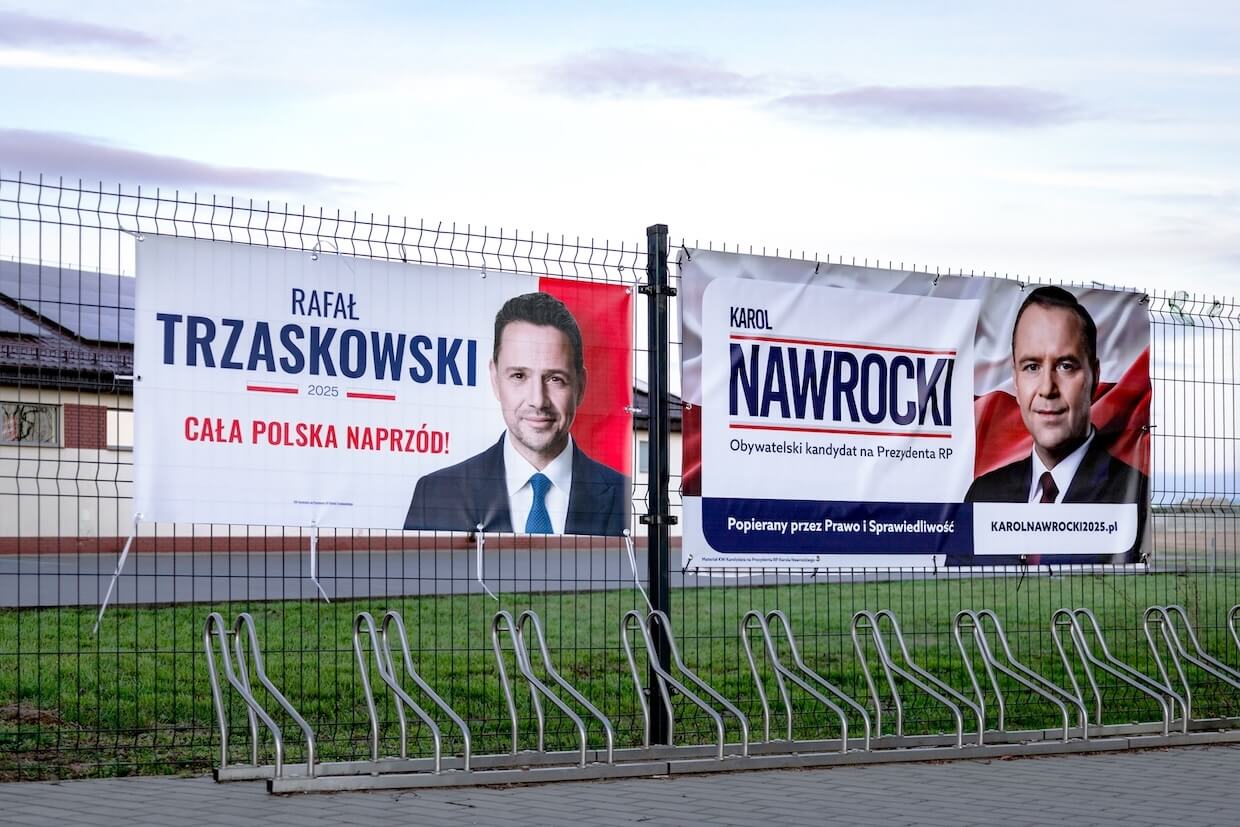
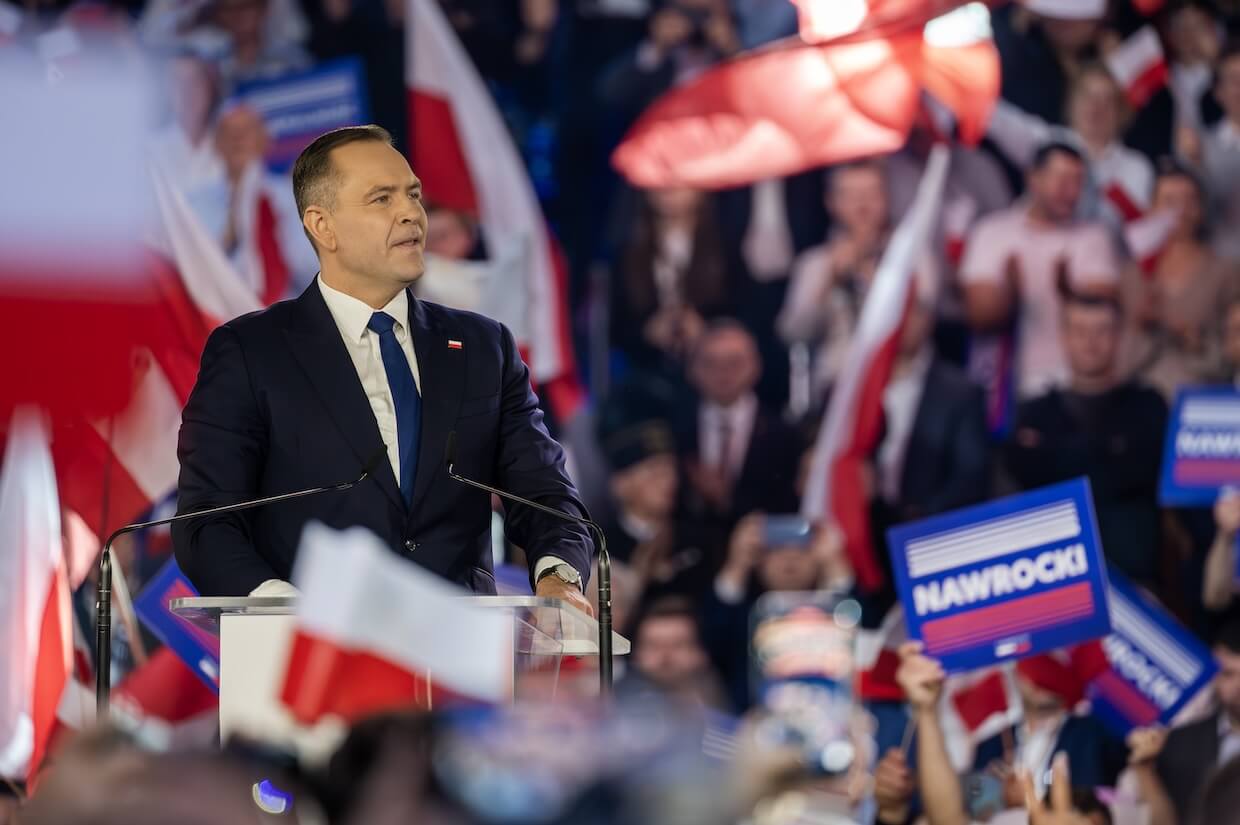
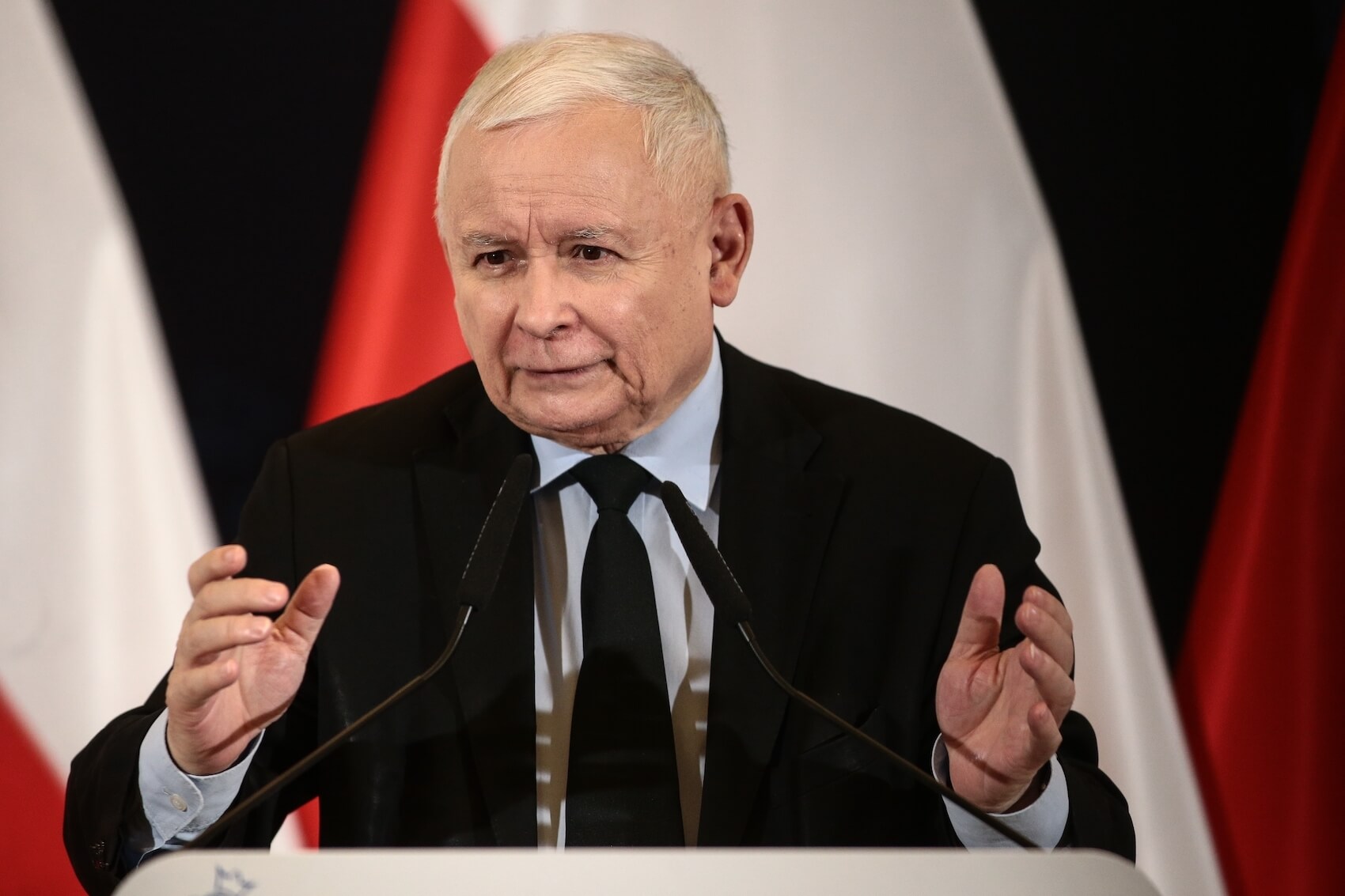

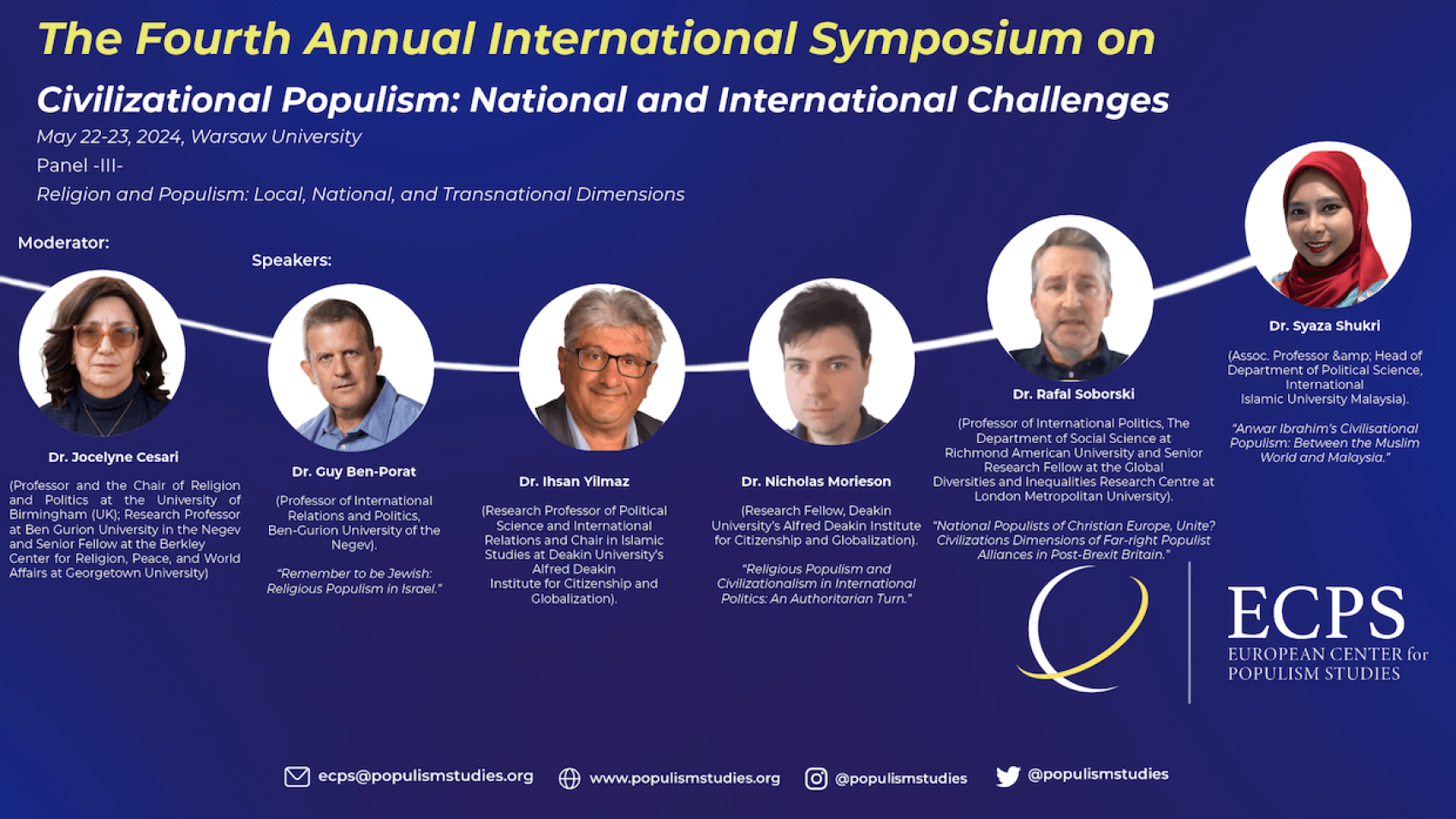
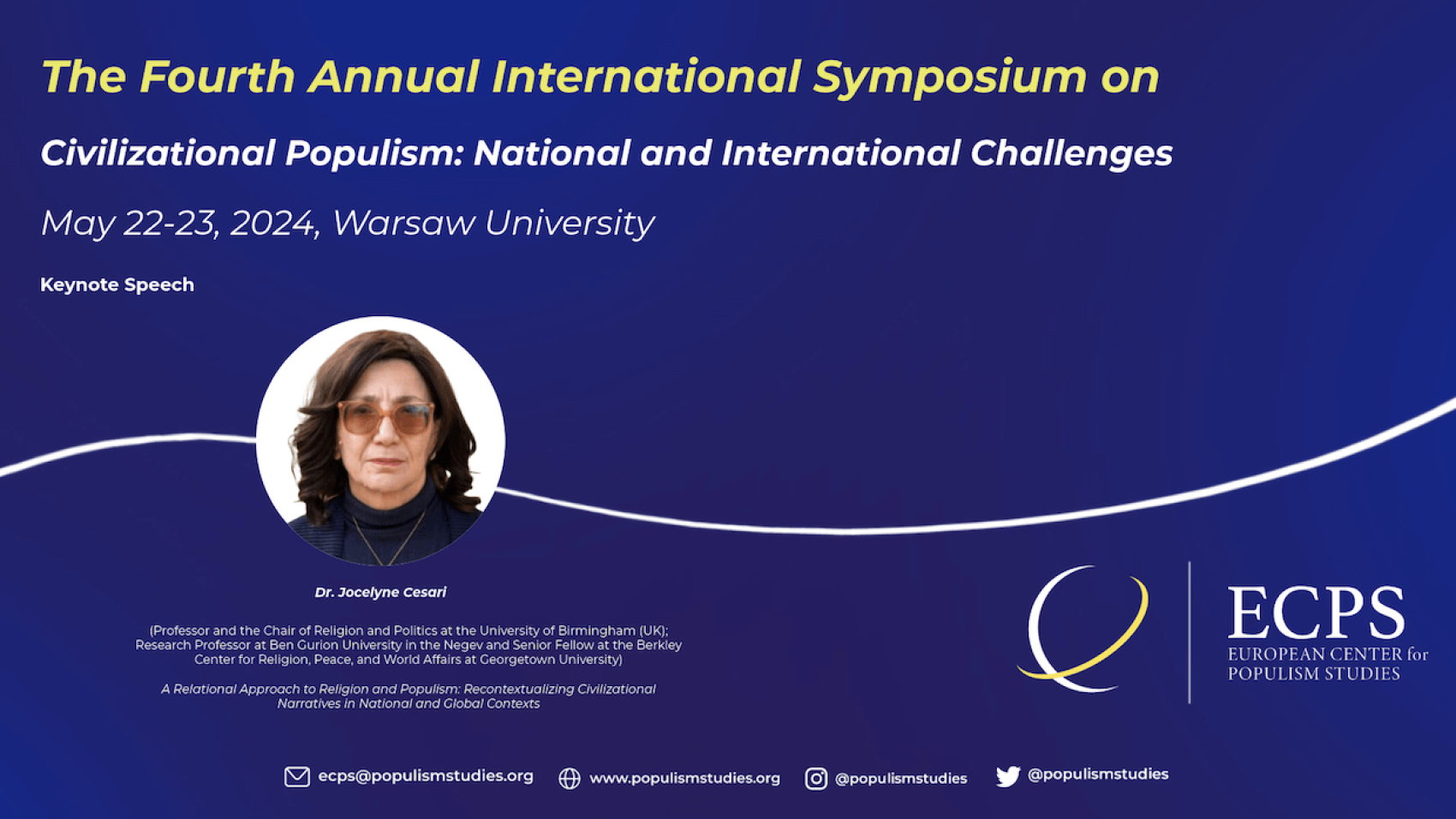

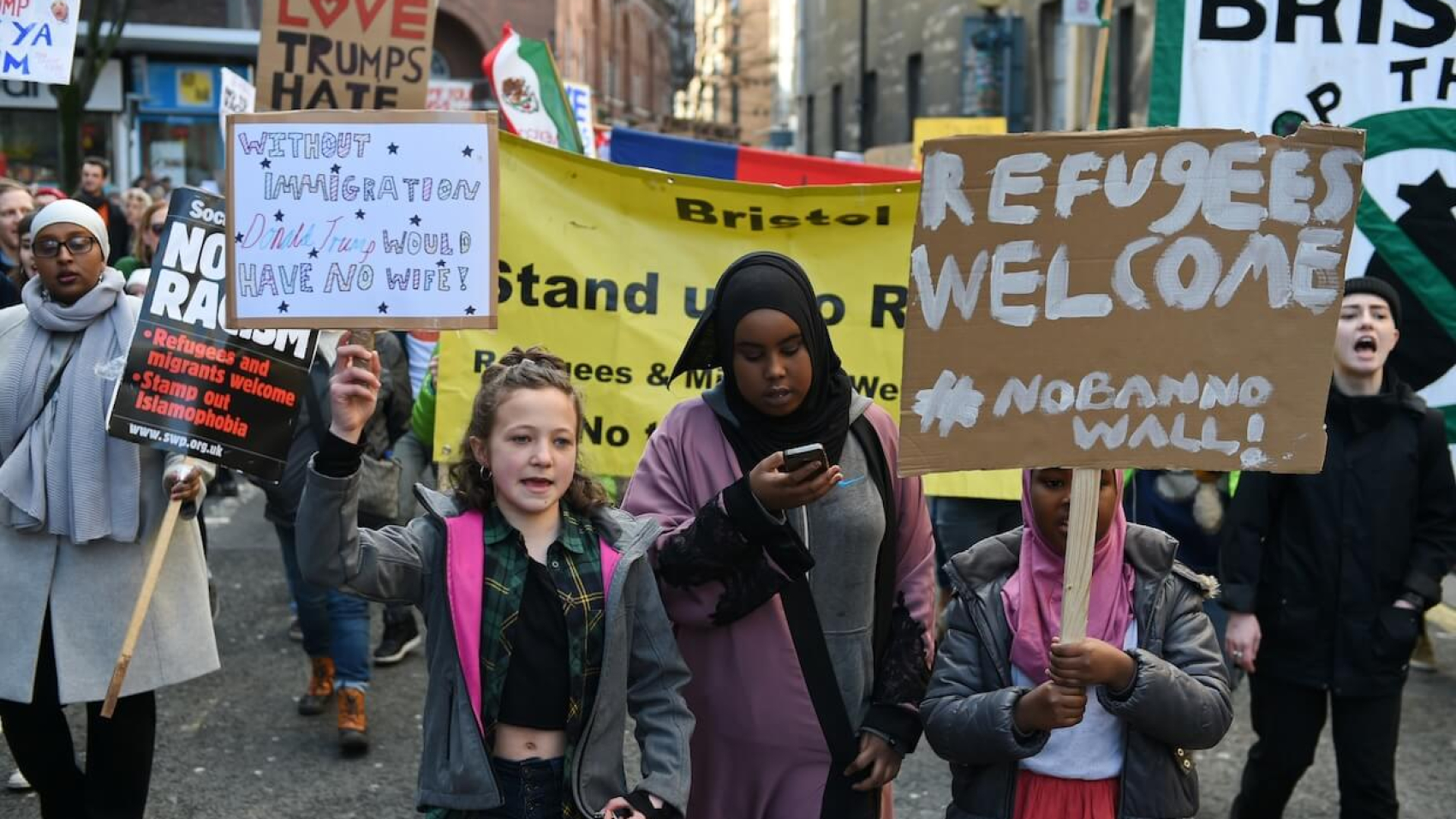
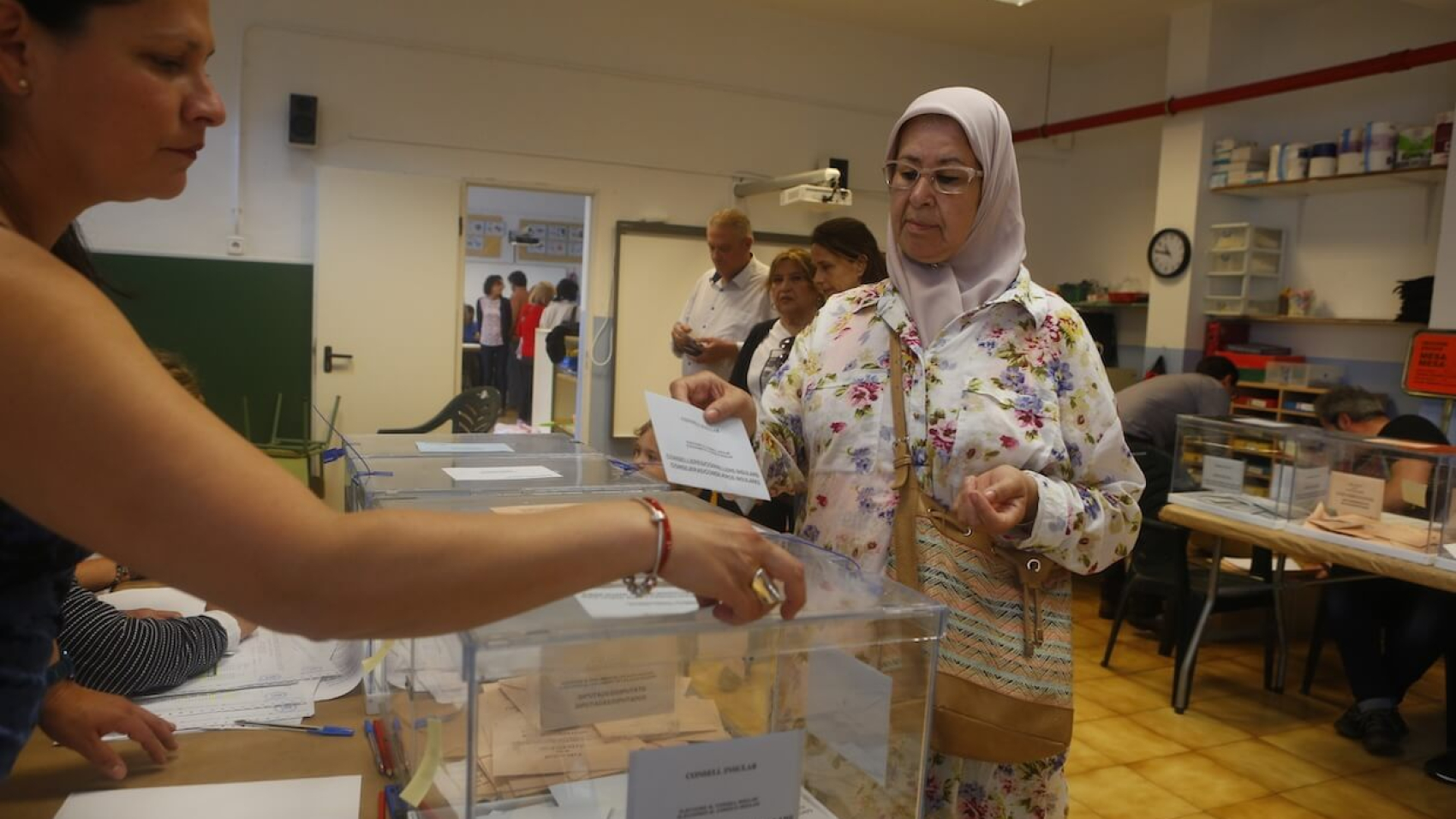
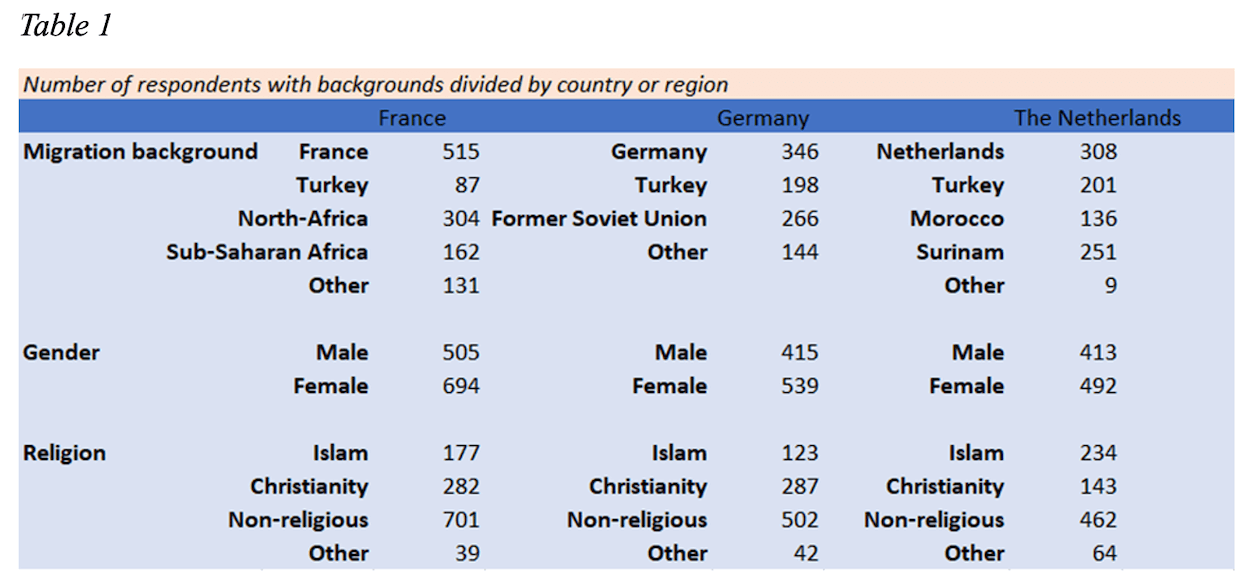 I assessed migration background by inquiring about the birthplaces of respondents’ mothers and fathers. It was necessary to ask this question first for sampling purposes. To minimise potential ordering effects on the data, I randomised the order in which respondents viewed the policy questions and experimental profiles (for the full questionnaire, see appendix in van Oosten, 2025c). To mitigate acquiescence bias, where respondents tend to agree with statements, I randomised the wording of the policy questions. For instance, one half of the sample saw the statement: “the taxes for this rich should be raised” and the other half saw “the taxes for the rich should be lowered” and I recoded the variables accordingly. I prepared the data using R-package ‘tidyr’ (Wickham, 2020, see all code and replication materials here: van Oosten, 2025c).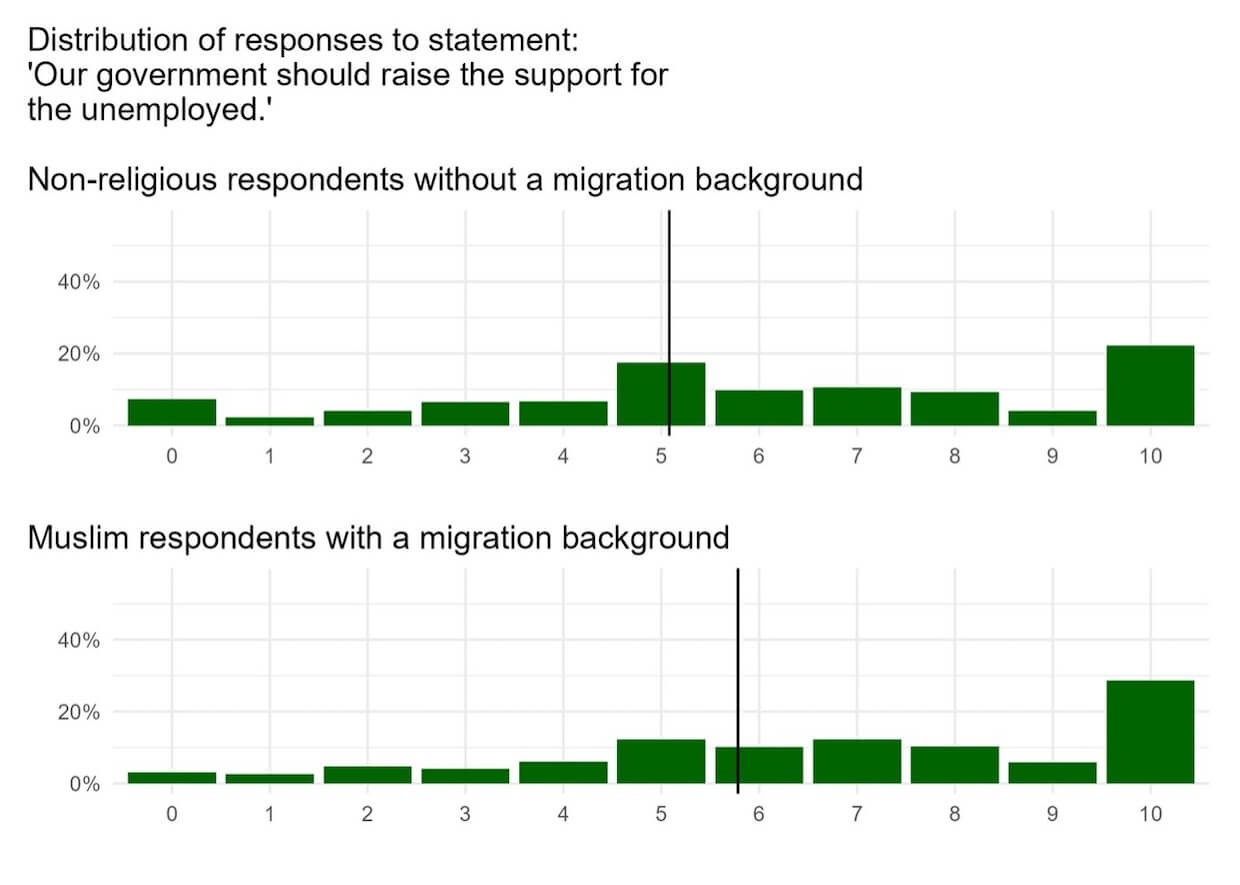
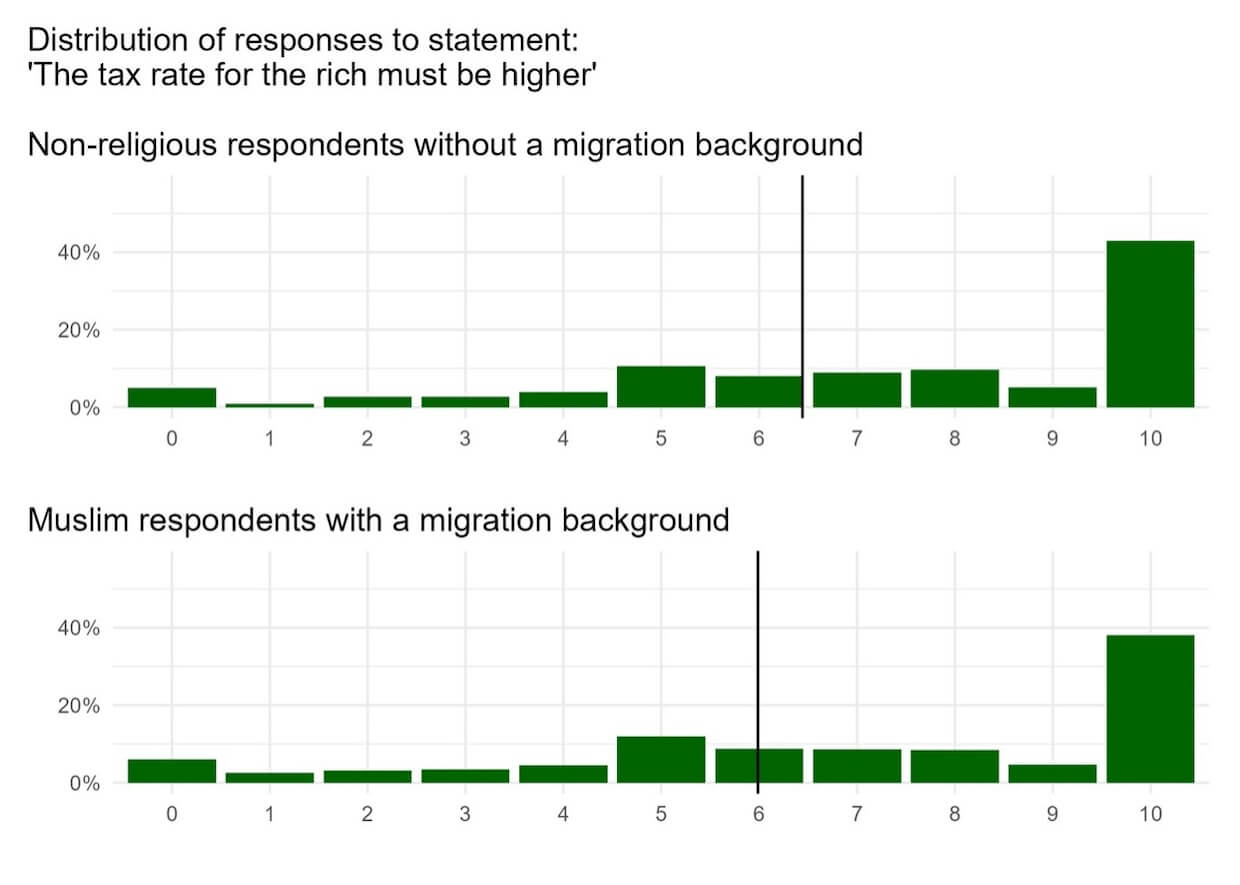
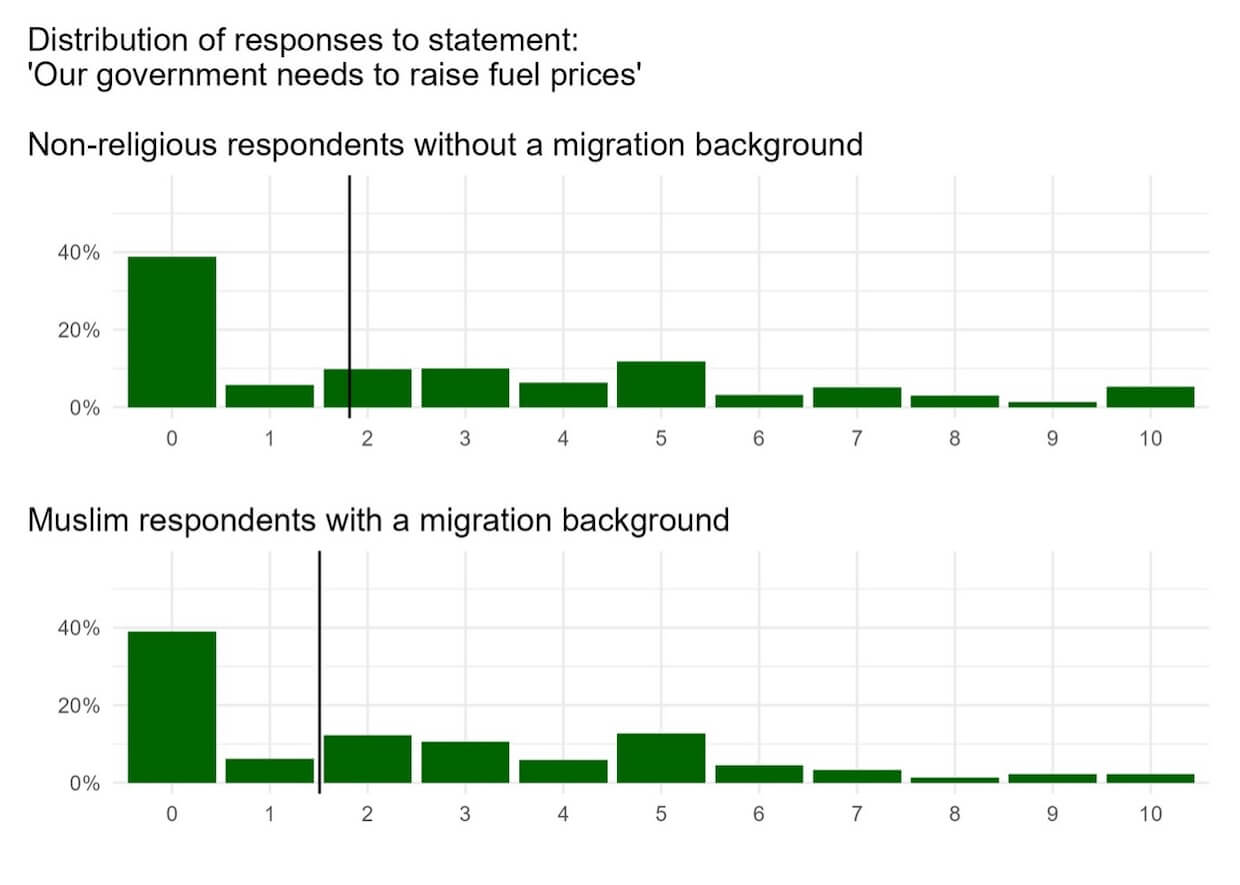
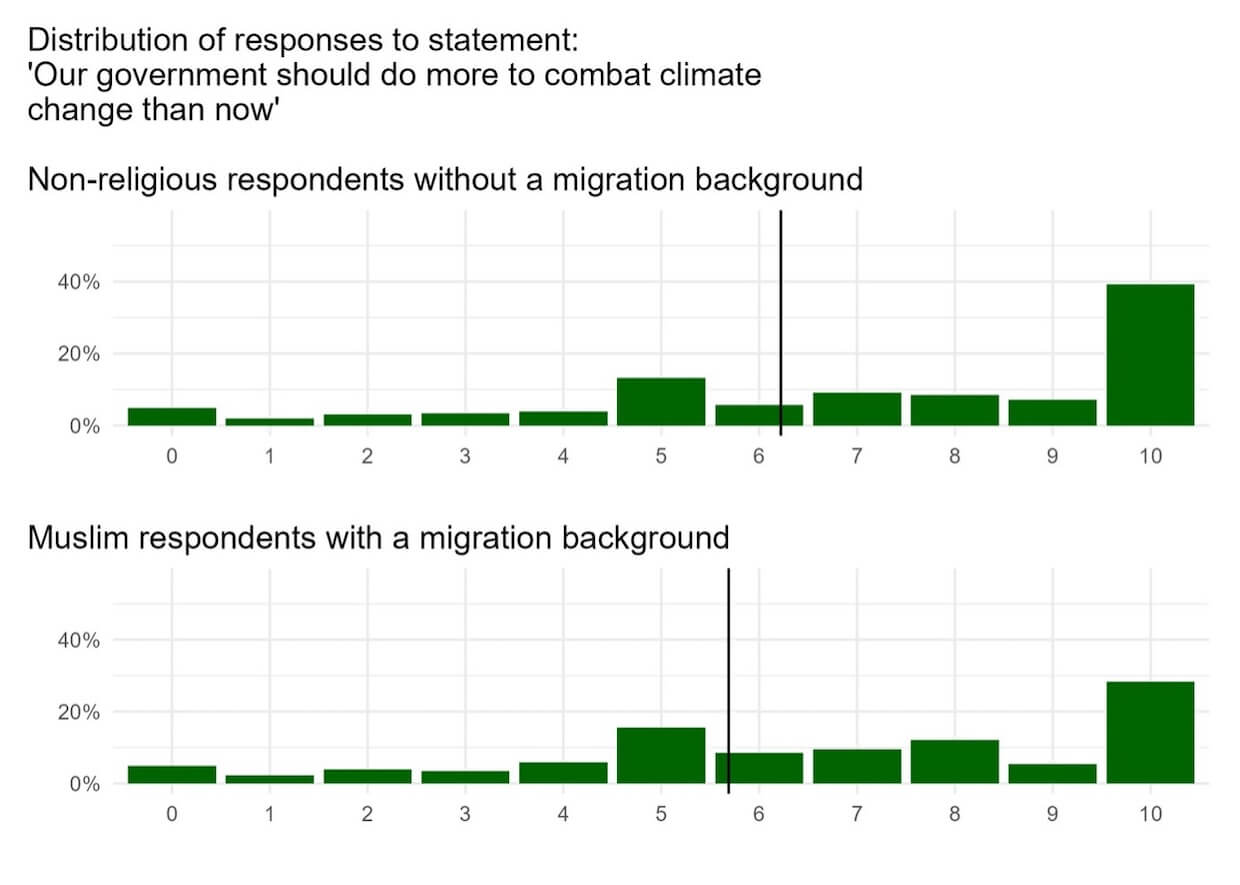
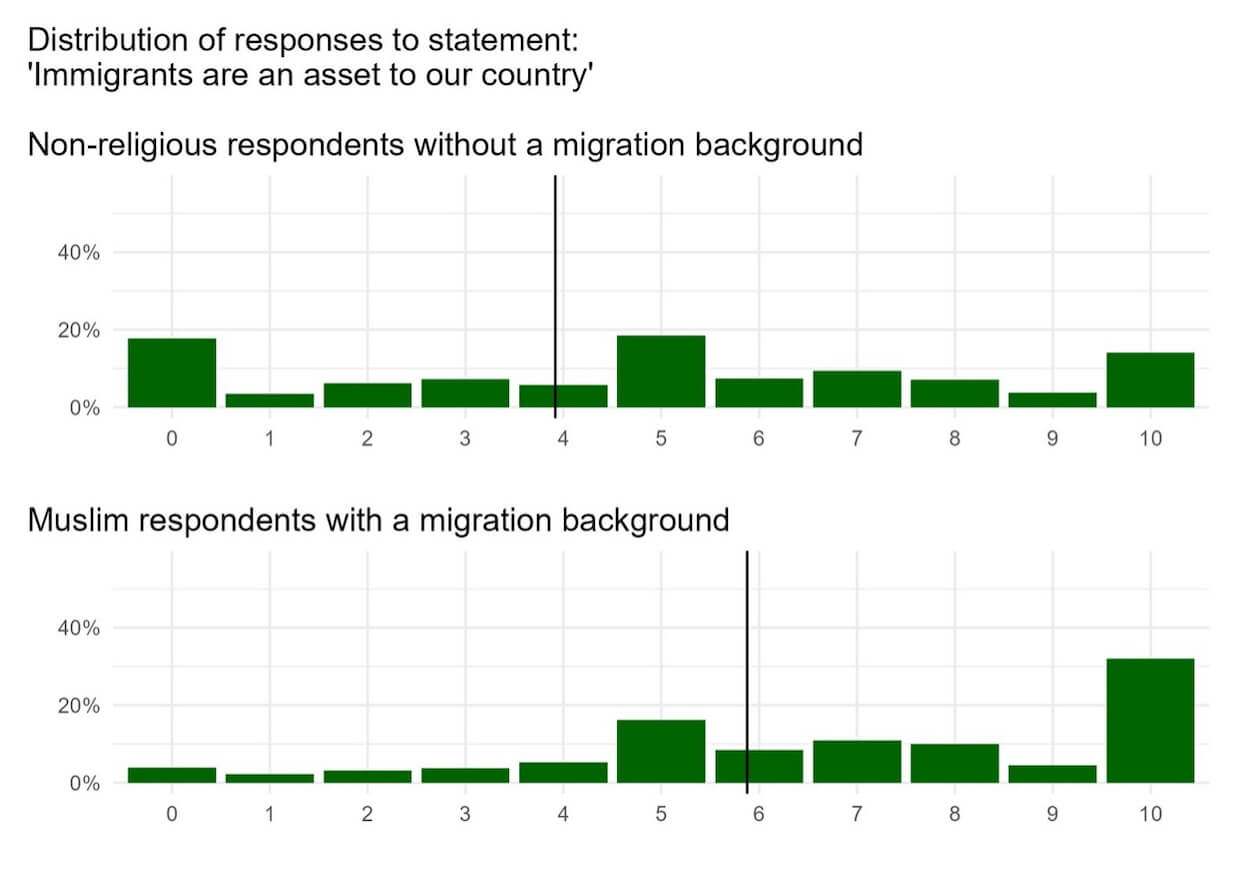
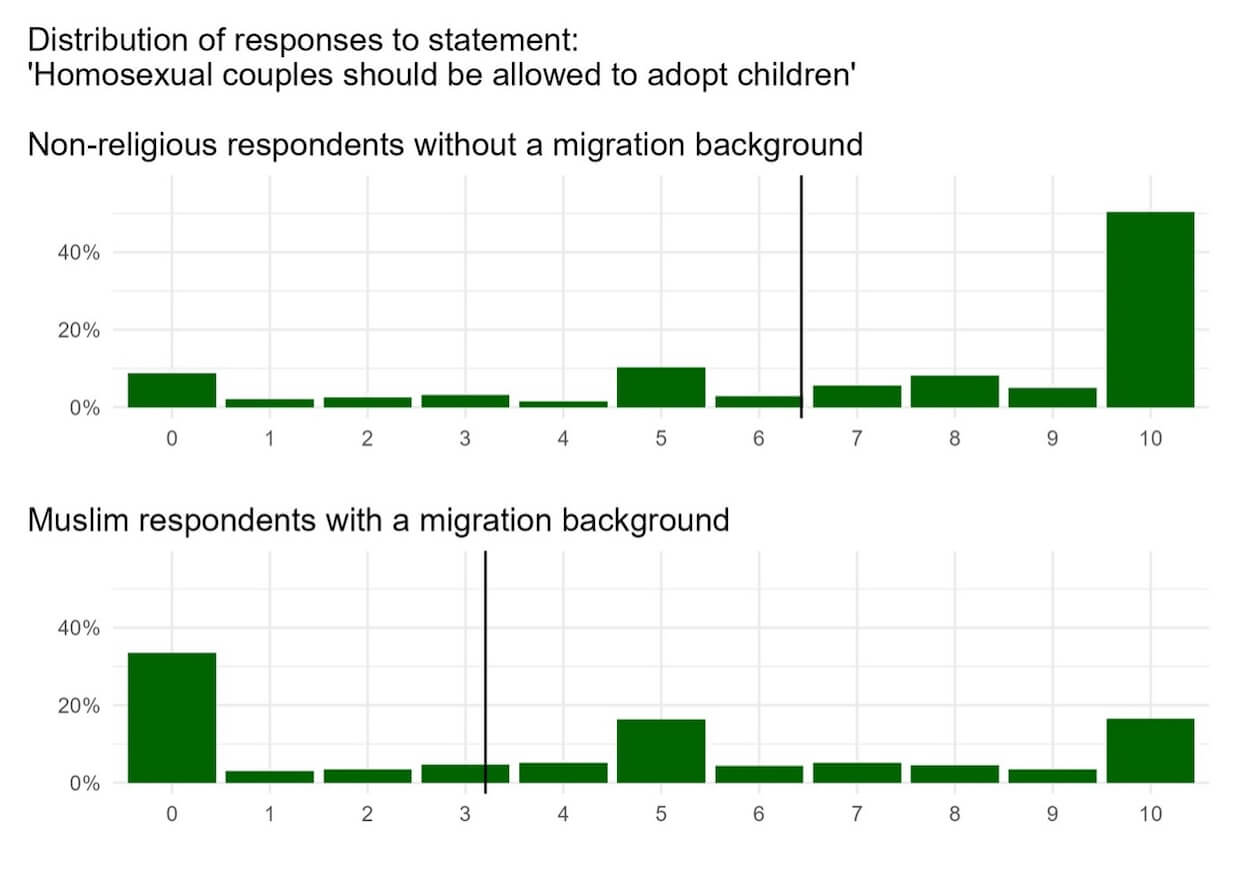
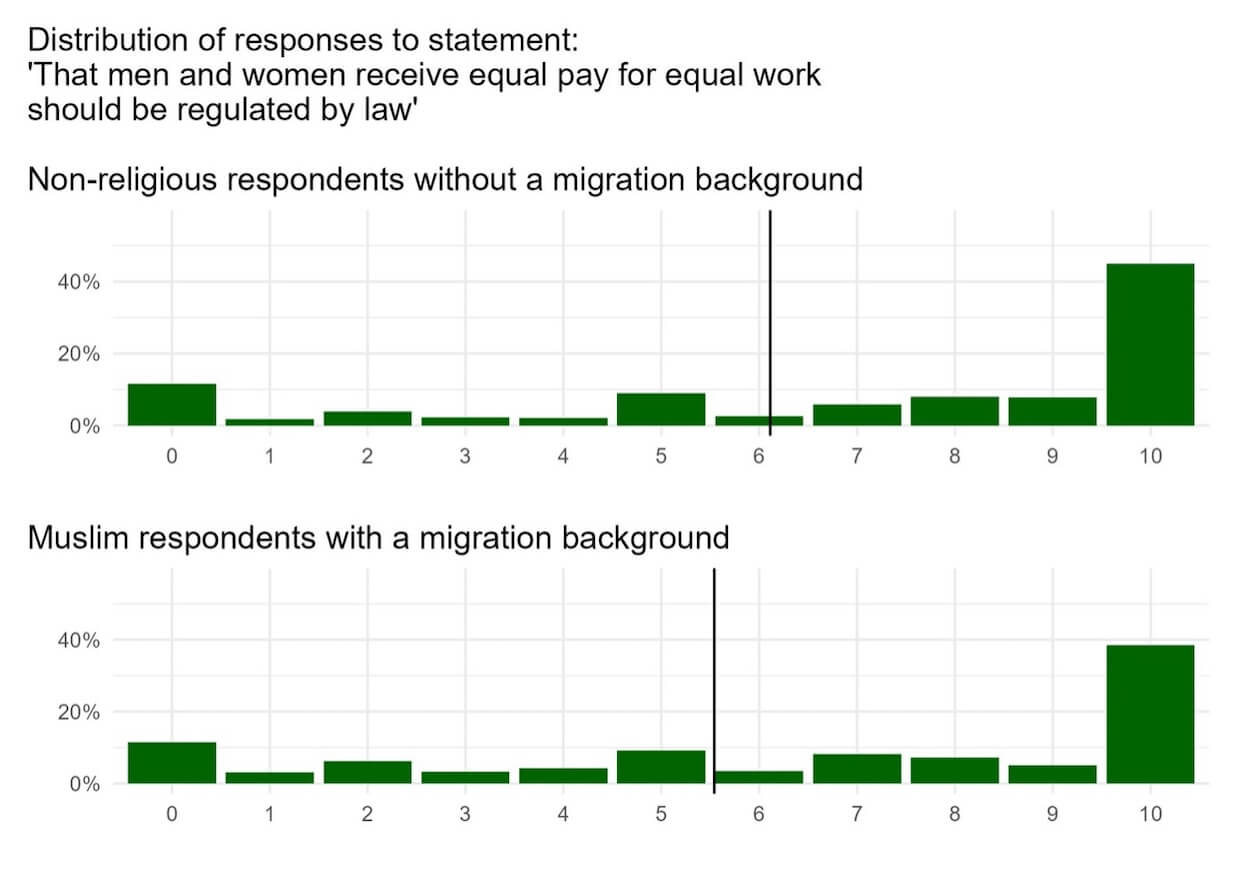
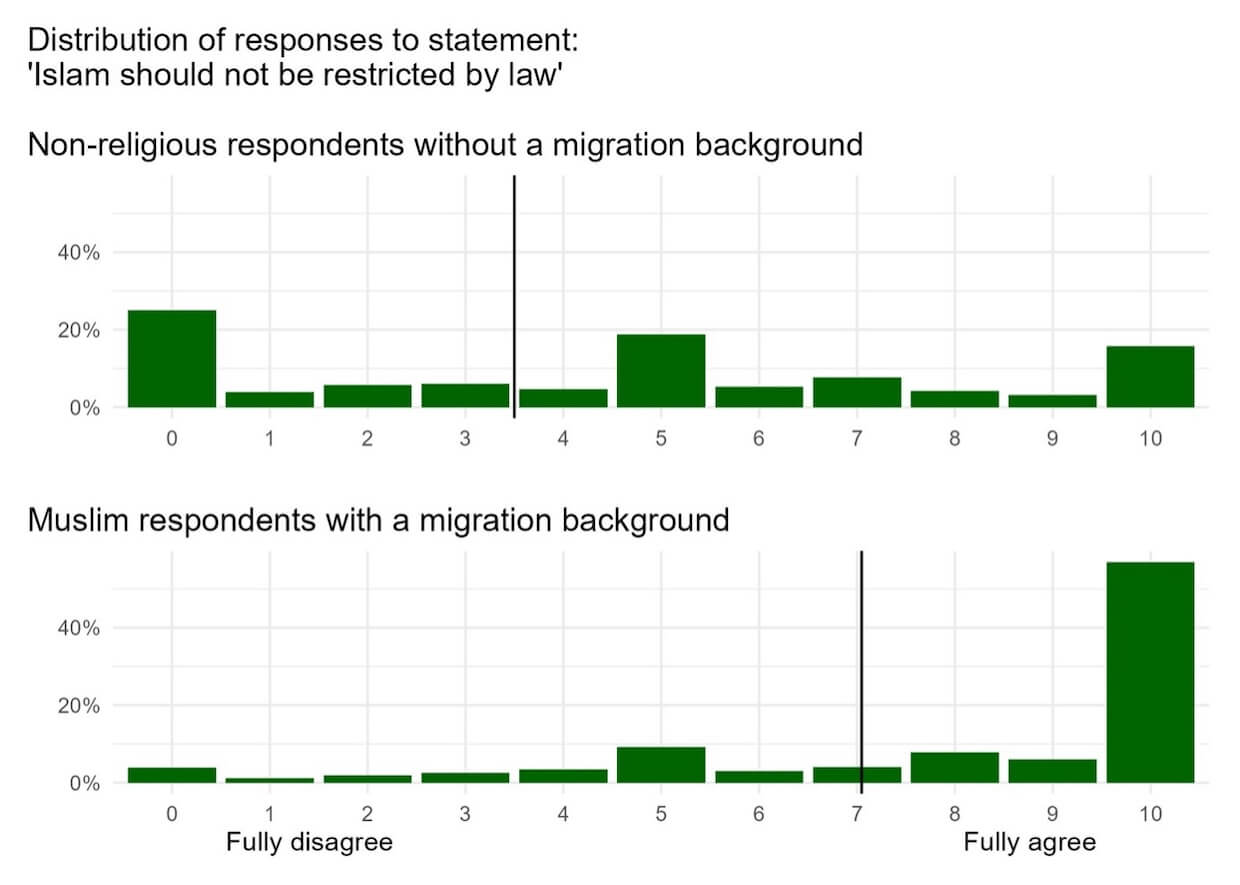
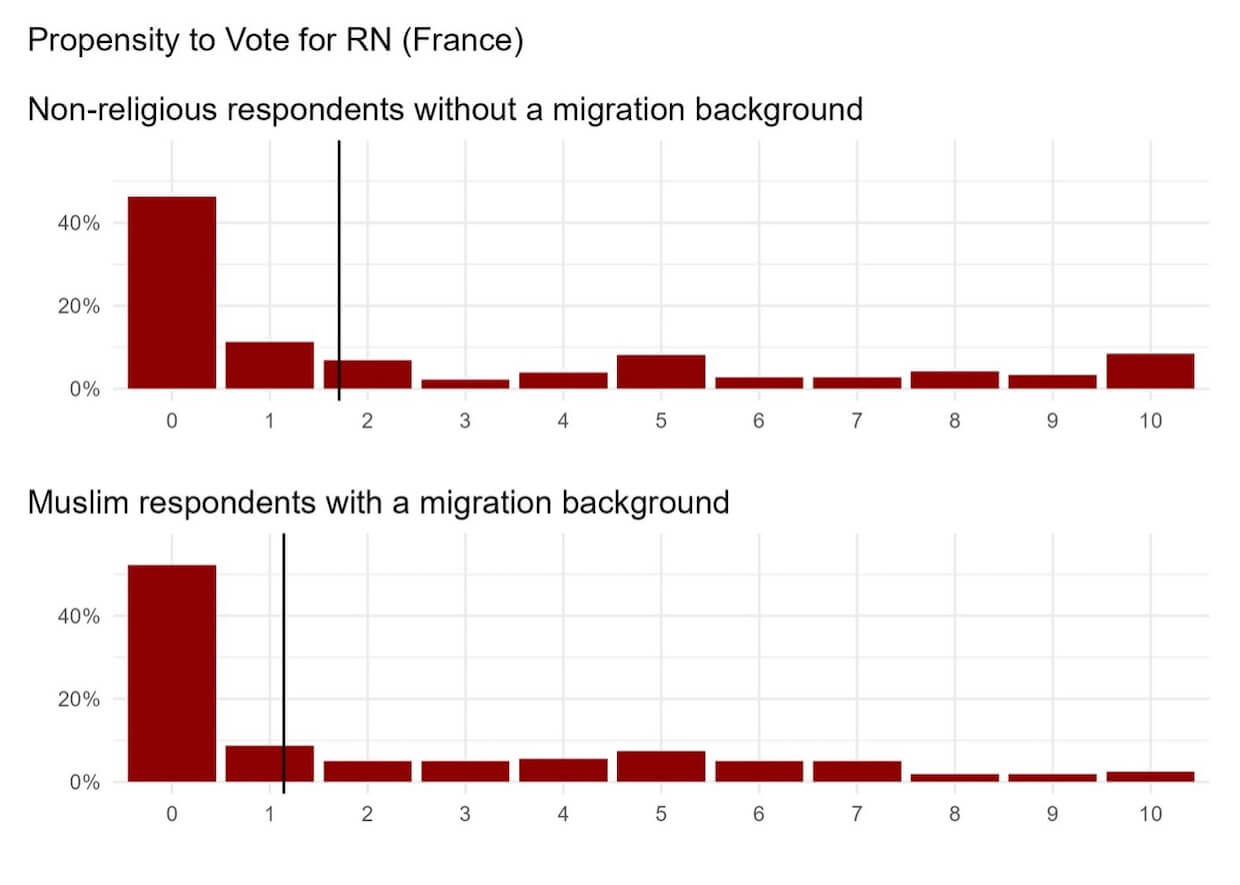
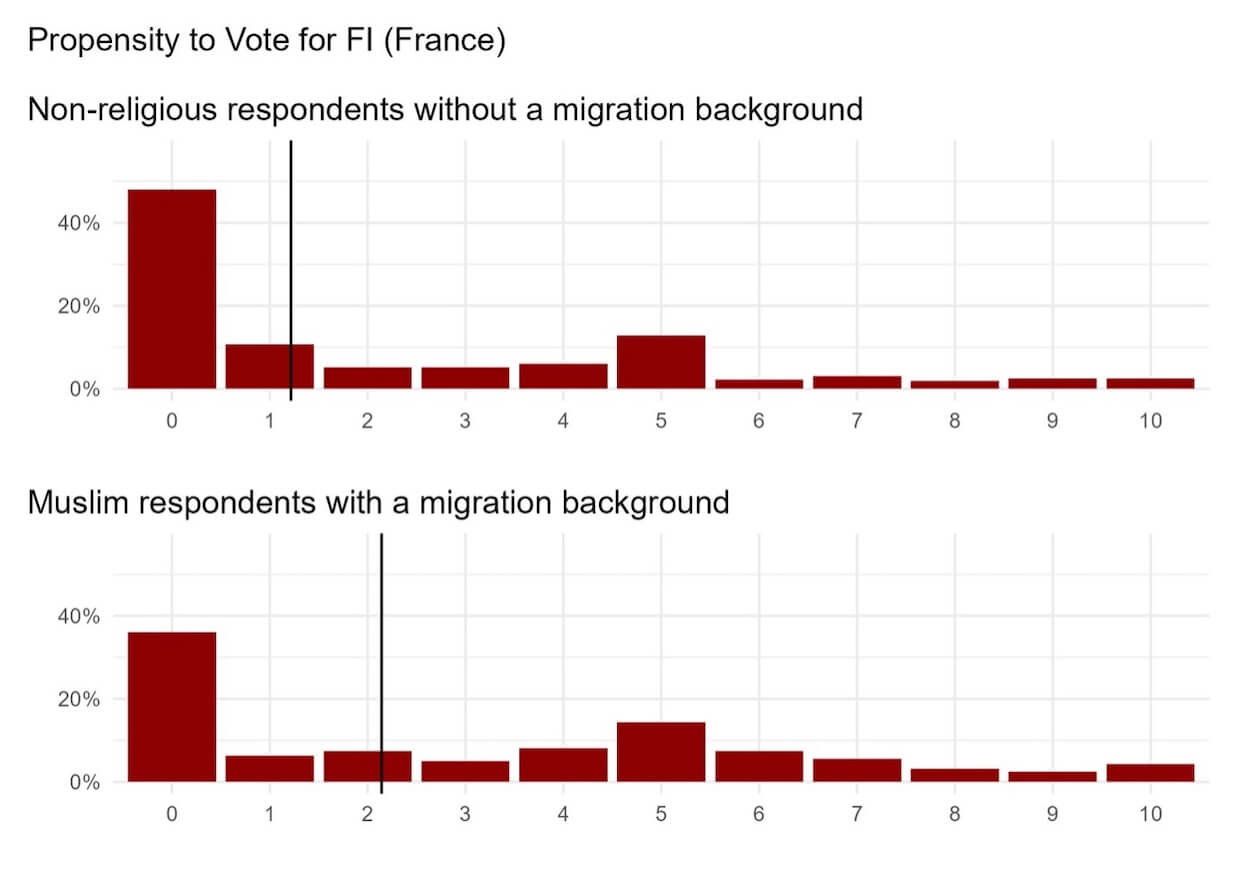
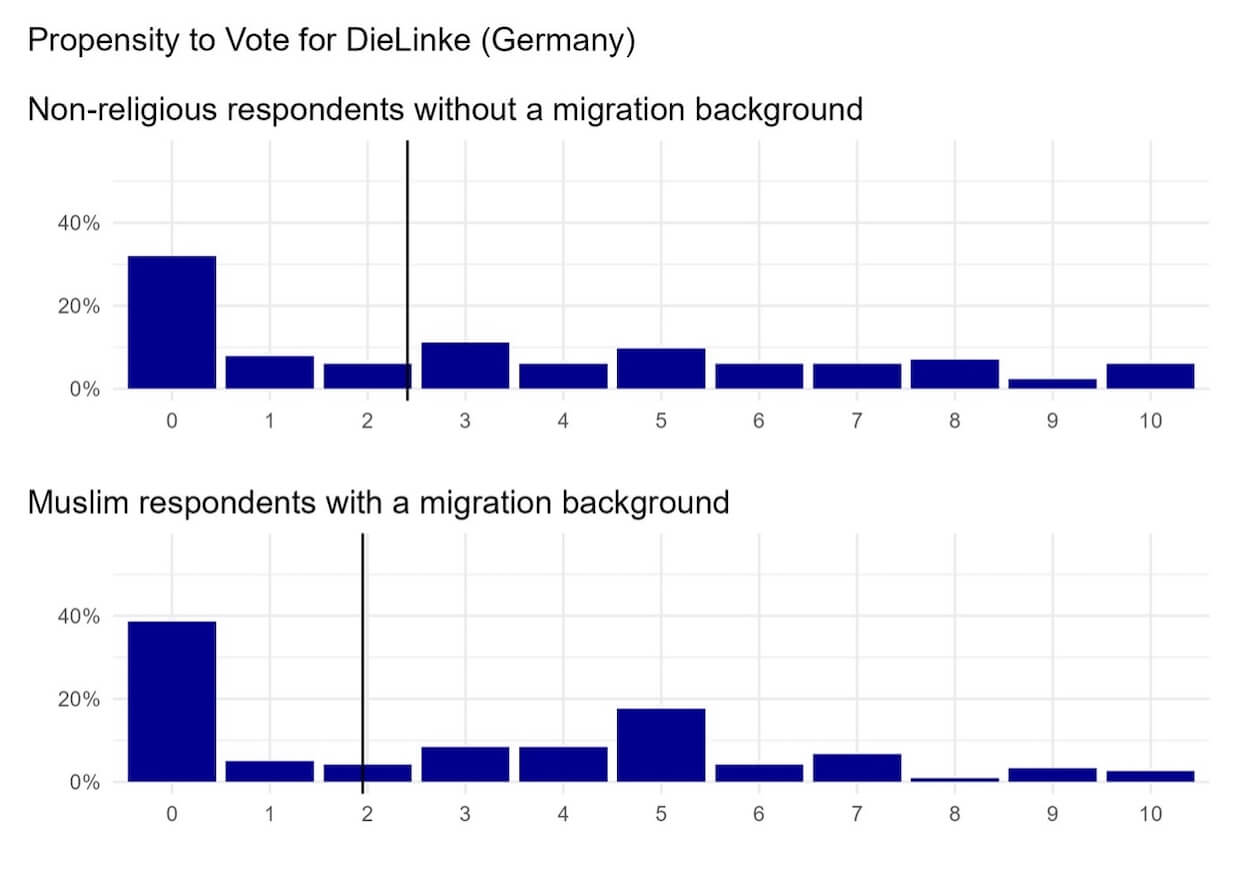
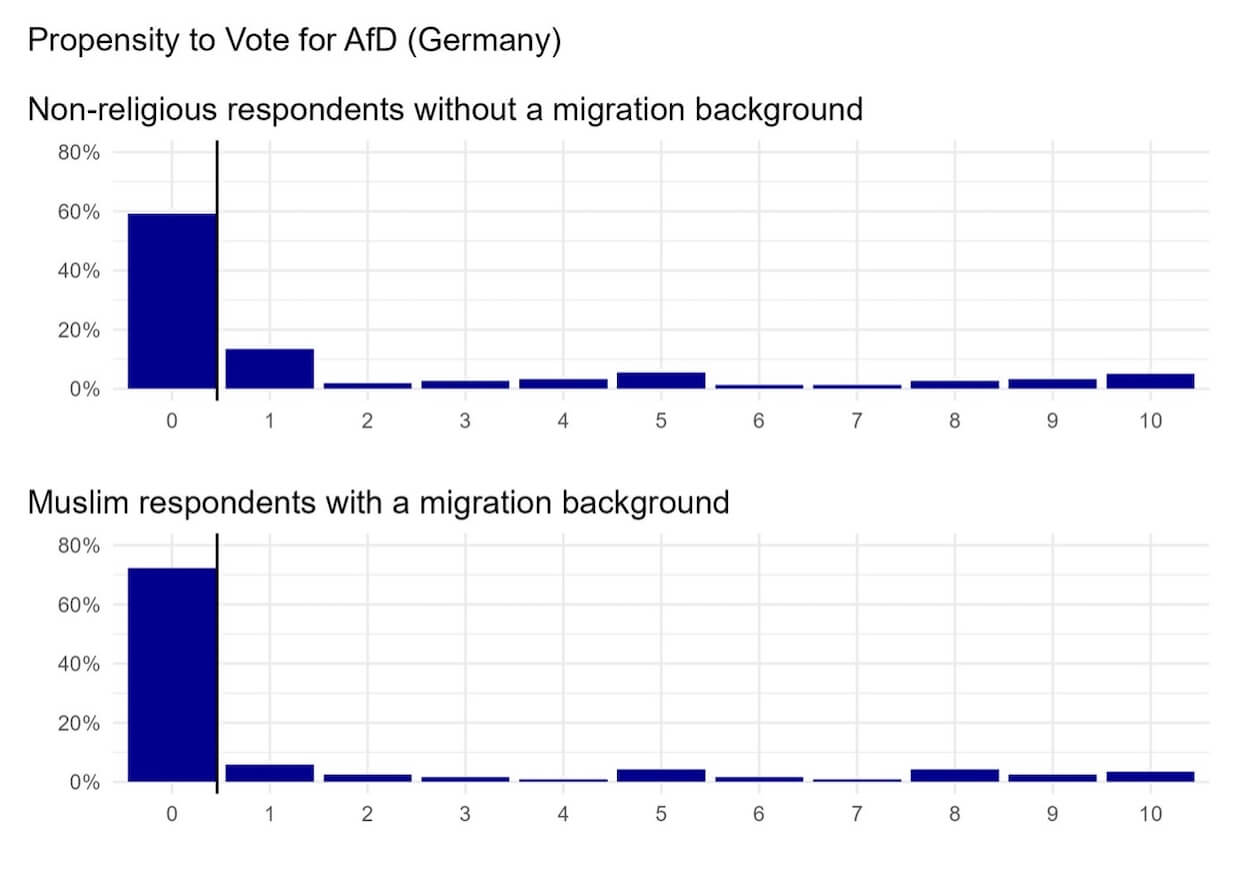
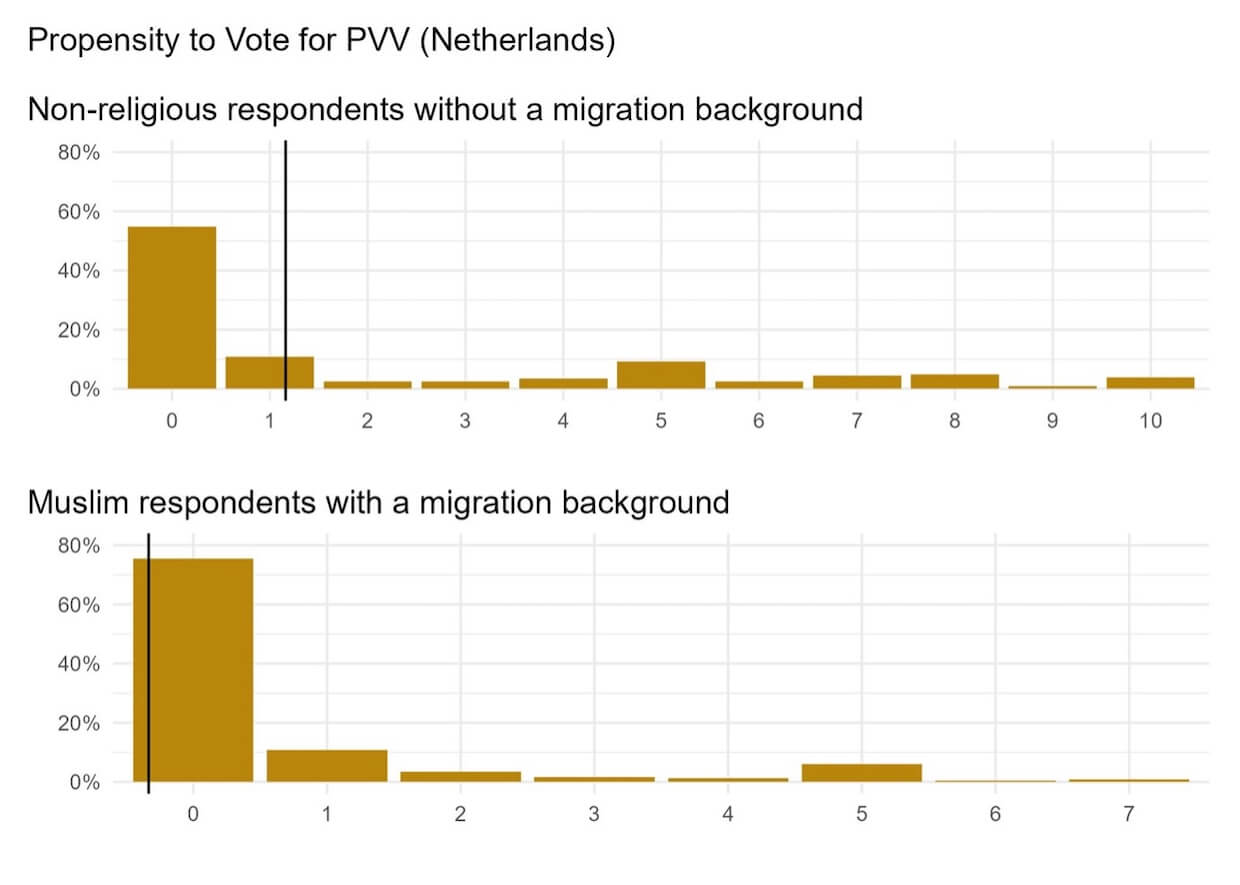
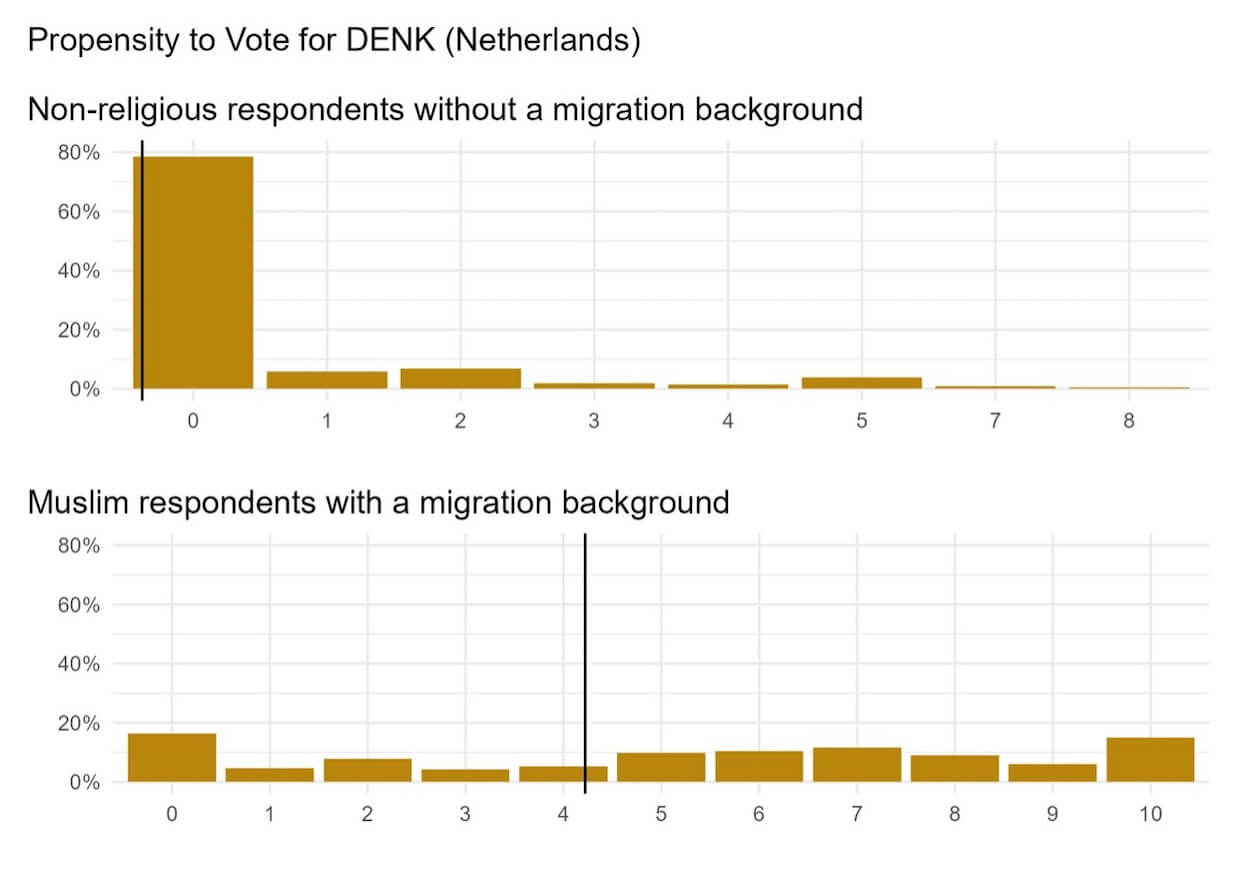 Conclusion