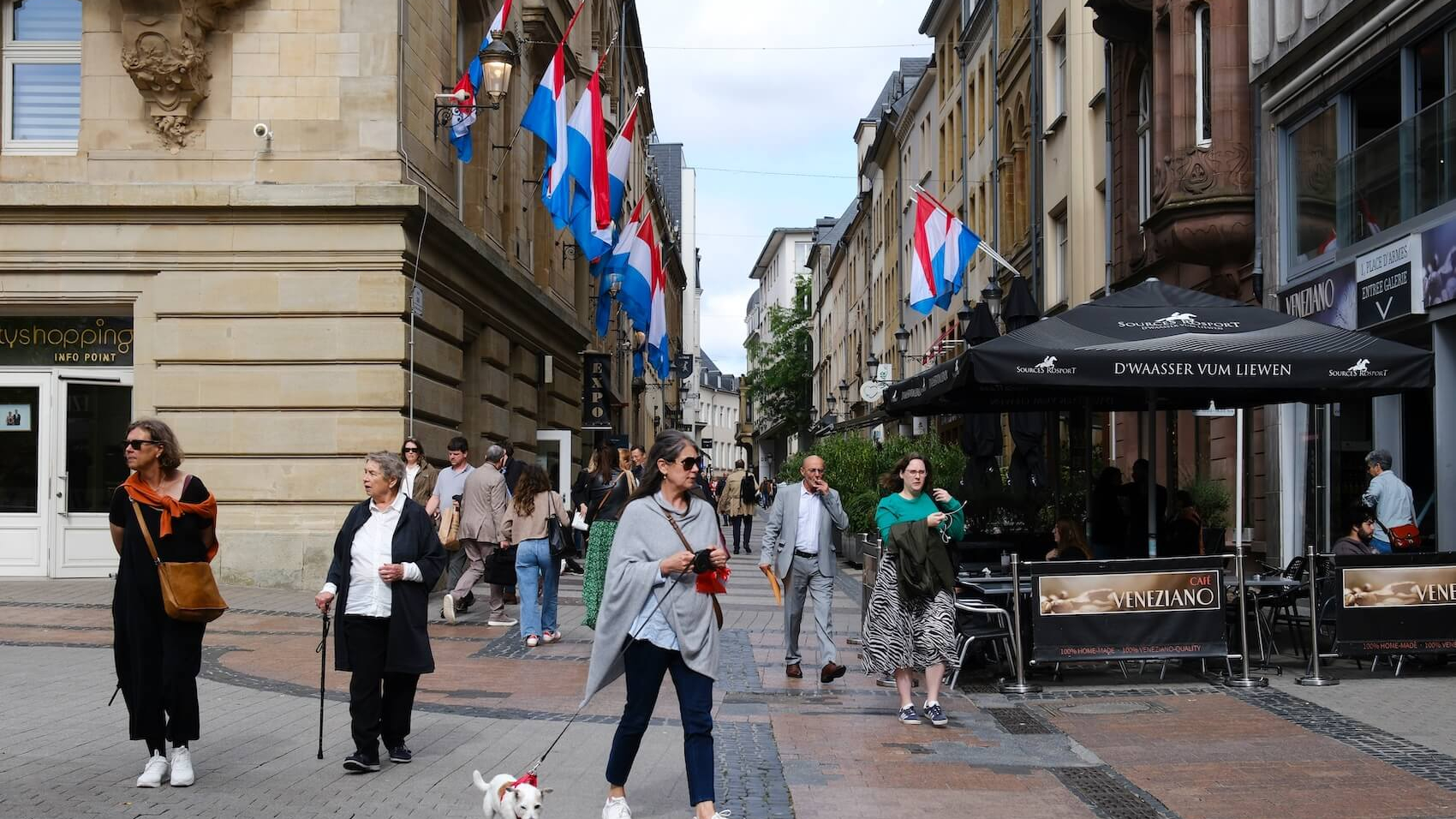
European Union flags against European Parliament in Brussels, Belgium.

The Populist Radical Right in the New European Parliament

The 2024 European Parliament elections have justified fears of the rise of the populist radical right (PRR) and a potential shift towards more right-wing policies over the next five years. While pro-European parties will still maintain a majority in the new parliament, the populist radical right has registered significant gains, however with varied performances across countries and regions.

By Emilia Zankina & Gilles Ivaldi

The 2024 European Parliament elections have justified fears of the rise of the populist radical right (PRR) and a potential shift to more right-wing policies over the next five years. While pro-European parties will still maintain a majority in the new parliament, the populist radical right has registered significant gains, however with varied performances across countries and regions.

A Good Day for the Populist Radical Right

Overall, populist radical right forces have won nearly 180 seats, making up 25% of all seats in the new European parliament. The largest contingents come mainly from France’s Rassemblement National (National Rally, RN), Fratelli d’Italia (Brothers of Italy), the Polish Law and Justice (PiS), the German AfD and Hungary’s Fidesz. These five parties alone account for more than half of all far-right elected representatives.

Notwithstanding such magnifying effects, these results reflect the electoral consolidation and increasingly the mainstreaming of those parties across Europe. The current popularity of the populist radical right is rooted in the multiple crises to which EU citizens have been exposed since 2008 – the financial crisis, the 2015 refugee crisis, the Covid-19 pandemic and now the war in Ukraine and cost of living.

Ironically, some of the largest gains have come from the EU founding countries. Most striking is the win of National Rally (RN) in France with over double the votes of President Macron’s coalition. As a result, Marcon called snap parliamentary elections in an attempt to reaffirm a pro-European majority – a risky strategy that is already bringing political chaos that analysts compare to madcap reality TV– strikingly resembling David Cameron’s political gamble on Brexit 10 years ago.

In Germany, the Alternative for Germany (AfD) has come in second ahead of Chancellor Scholz’s social democrats. The Christian Democrats have registered a decisive victory, but at a cost of shifting their rhetoric to the right, especially on topics such as migration. 

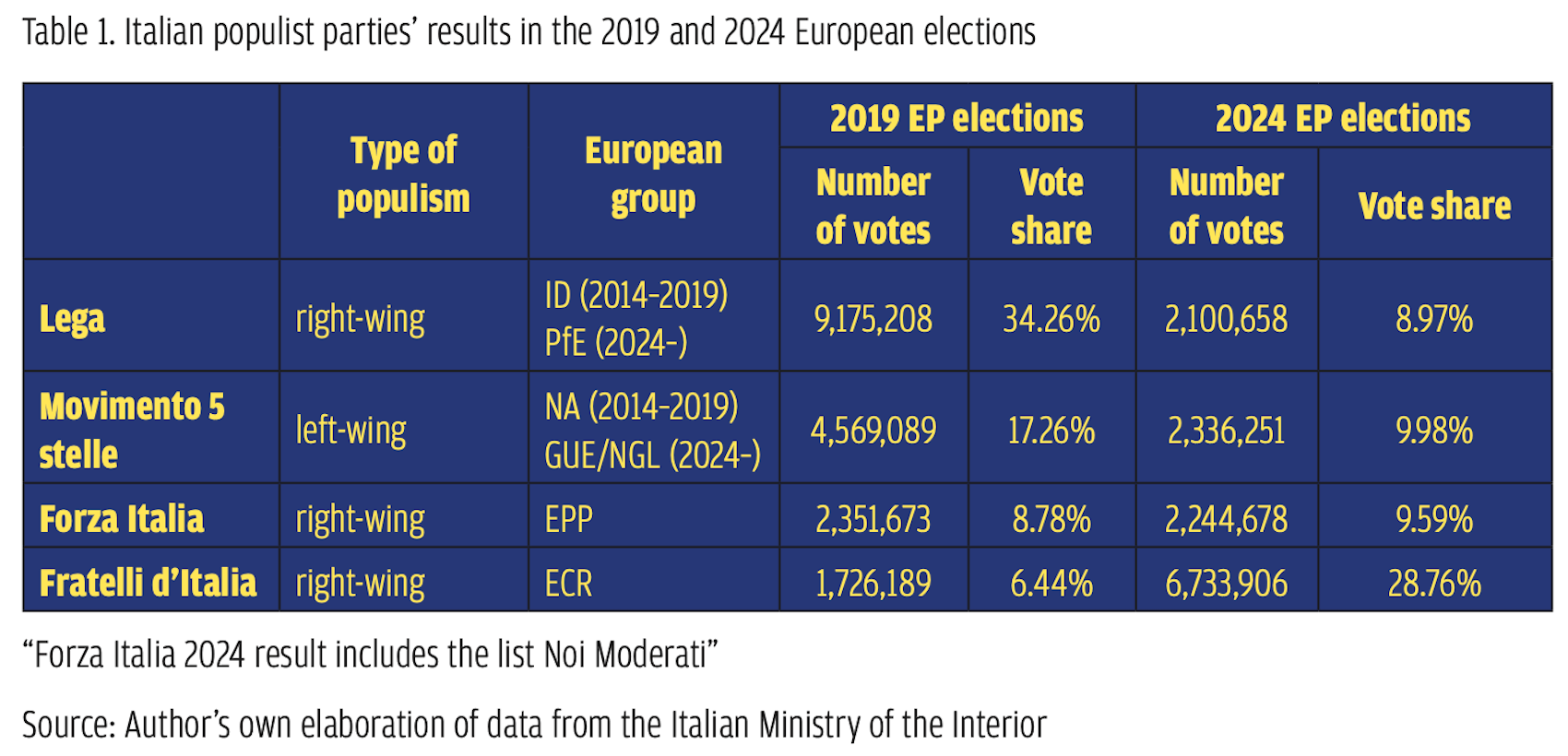
As expected, Brothers of Italy registered a resounding victory, cementing prime-minister Giorgia Meloni’s position at home and making her a key player at the European level, a few days before hosting the G7 summit. While she has upheld a firm pro-European position on security and foreign policy matters, she has been critical of EU’s policies on climate, migration, and social issues.

Following the formation of a new coalition government, Geert Wilders Party for Freedom (PVV) in the Netherlands also placed second, just 4% behind the leading Green and Labor party. The Freedom Party of Austria (FPO) was the winner in the elections with a slight advantage over the Christian Democrats. Austria and the Netherlands have for long been a fertile ground for the populist radical right who have enjoyed not only representation in parliament, but also in government.

In Hungary, Viktor Orbán gained the most votes in a system that is ever less democratic, though, his Fidesz party showed the worst ever results in a European parliament election. Orban’s dominance was challenged by a former party member who ran on an anti-corruption platform. Péter Magyar’s Tisza party scored almost 30%, giving hope for democracy in Hungary. More to the right, Fidesz was also challenged by the rise of Our Homeland Movement (MHM) about 7% of the vote.

In Poland, the fragile government majority managed to maintain its upper hand over the Law and Justice party (PiS) which has systematically eroded democratic institutions over the past decade. Such good news notwithstanding, PiS will be sending a solid 20 MEPs to the European parliament, making it the second largest member of the European Conservatives and Reformists (ECR) after Meloni’s Fratelli d’Italia (24 seats).

In addition to these big wins, we witnessed a surge in the representation of smaller populist radical right parties across Europe. The Alliance for the Union of Romanians (AUR) came second (although far behind the leading pro-European grand coalition), as did the Latvian National Alliance and the Cypriot National Popular Front. The Slovak Republica and the Croat Homeland Movement came third, as did the Spanish VOX and the Portuguese Chega. In Bulgaria the Revival party surpassed the social democrats – the oldest party in the country, and the Swedish Democrats (SD) gained an additional seat. 

Together these parties could shift the European Parliament further to the right. The saving grace for the pro-European majority is that they are not united and split across three groups in the European parliament – the European Conservatives and Reformists (ECR) led by Meloni and the Polish PiS, the Identity and Democracy (ID) around Le Pen and Wilders, and the non-attached. Orbán, whose party was expelled from the European People’s Party (EPP), has urged Le Pen (ID) and Meloni (ECR) to join forces with his non-attached Fidesz party and form what would be the second largest group in the European parliament. The dynamics and negotiations in the coming weeks among these populist radical right actors will determine their overall leverage and likely impact on policy matters.

A Real Threat or Politics as Usual

The clear winner of the elections is the European People’s Party (EPP), which gained 12 seats for a total of 190. The Socialists and Democrats (S&D) secured 136 seats, only a few seats below their representation in the previous parliament. The big losers of the election are the liberals with Renew Europe losing 22 seats and the Greens who lost 20 seats. Still this gives the pro-European parties a majority of over 400 seats in the new 720-seat parliament.

Despite such majority, the populist radical right is likely to have greater influence over key policy matters. Although divided over security questions, economics, and the war in Ukraine, populist radical right parties are much more united in their positions on climate change, migration, and enlargement. While Ursula von der Leyen speaking on behalf of the EPP vowed to create “a bastion against the extremes,” it remains to be seen whether the EPP will seek support from the radical right on certain policy matters and whether we might notice an overall shift to the right in the European Parliament’s agenda.

Dr. Rodrigo Castro Cornejo, Assistant Professor in the Department of Political Science at the University of Massachusetts-Lowell and Associate Director of the UMass-Lowell Center for Public Opinion.

Professor Cornejo: Sheinbaum’s Democratic Background Contrasts with Her Actions That Erode Mexican Democracy

Professor Rodrigo Castro Cornejo says Claudia Sheinbaum’s government in Mexico is set to begin in October, and it will be a period of significant interest as both the current president and the president-elect navigate this transition. He noted that Sheinbaum has a democratic trajectory, having worked as a scholar and scientist before joining López Obrador’s movement and stated that “Given her background, one might expect her government not to pose a threat to democracy. However, recent signs indicate she supports measures that could further erode Mexican democracy. We will need to wait until her government starts to see if these policies are implemented.”

Interview by Selcuk Gultasli

General elections were held in Mexico on June 2, 2024, marking a significant moment in the nation’s political landscape. Voters elected a new president to serve a six-year term, alongside all 500 members of the Chamber of Deputies and all 128 members of the Senate. The election saw Claudia Sheinbaum, a member of the left-wing National Regeneration Movement (Morena), secure the presidency. This result underscores a continuity in the political direction established by the outgoing president, Andrés Manuel López Obrador (AMLO).

In an insightful interview with the European Center for Populism Studies (ECPS), Dr. Rodrigo Castro Cornejo, Assistant Professor in the Department of Political Science at the University of Massachusetts-Lowell and Associate Director of the UMass-Lowell Center for Public Opinion, discussed Sheinbaum’s political trajectory and the implications of her victory. Professor Cornejo highlighted that Sheinbaum actively supported López Obrador’s transformation agenda throughout her campaign, aligning herself closely with his policies. This raised questions about whether she would carve out her own positions once in office or continue on the path set by her predecessor.

Professor Cornejo pointed out that Sheinbaum recently reiterated her support for controversial reforms, such as electing judges by popular vote, which suggests a continuation of policies that may weaken checks and balances. This stance has raised concerns about potential democratic erosion under her administration.

Sheinbaum’s government is set to begin in October, and it will be a period of significant interest as both the current president and the president-elect navigate this transition. Professor Cornejo noted that Sheinbaum has a democratic trajectory, having worked as a scholar and scientist before joining López Obrador’s movement and stated that “Given her background, one might expect her government not to pose a threat to democracy. However, recent signs indicate she supports measures that could further erode Mexican democracy. We will need to wait until her government starts to see if these policies are implemented.”

As we delve into this interview, Professor Cornejo sheds light on the historical development of populist movements in Mexico, the impact of populist rhetoric on voter behavior, and the potential long-term implications for Mexican society and governance. Join us as we explore these critical issues and gain a deeper understanding of the current political dynamics in Mexico.

Here is the transcription of the interview with Professor Rodrigo Castro Cornejo with some edits.

Populism in Mexico Is Essentially Embodied by AMLO

Thank you very much, Professor Cornejo, for joining our interview series. Let me start with the first question. Can you provide an overview of the historical development of populist movements in Mexico? How have these movements evolved over the past few decades? Especially, how do left-wing and right-wing populism manifest differently in Mexico, and what are the unique characteristics and strategies of each within the Mexican political context?

Professor Rodrigo Castro Cornejo: It’s an interesting moment in Mexican politics because there was a presidential election just a few days ago. Populism in Mexico is essentially embodied by Andrés Manuel López Obrador (AMLO), the current president. He first ran for the presidency in 2006, then in 2012, and finally won in 2018. Throughout his campaigns, he has consistently divided Mexican society in a populist manner, framing the former mainstream political parties as a corrupt elite and his movement, The National Regeneration Movement (Morena), as the representative of the “good” people.

Mexico experienced a non-democratic hegemonic regime from the 1930s until 2000, eventually transitioning to democracy in 2000. López Obrador was always critical of this transition, not because he opposed democracy, but because he believed it wasn’t a true democracy—it was a neoliberal democracy that served only a few people and political parties. He was especially critical of the neoliberal reforms approved between 2012 and 2015 and the massive corruption scandals during the Institutional Revolutionary Party (PRI) government of that period. These events significantly boosted his political career, allowing him to tap into the public’s anger and ultimately win the presidency in 2018 with more than 50% of the vote, a historic achievement in Mexico.

In 2024, López Obrador couldn’t campaign for re-election as it is constitutionally banned in Mexico. However, his loyal ally, Claudia Sheinbaum, the former mayor of Mexico City, won the presidential election with almost 60% of the vote. She campaigned on continuing the policies and direction set by López Obrador over the past six years.

Andrés Manuel López Obrador, Mexican President and Claudia Sheinbaum, Mexico City Governor, in an event in judiciary city in Mexico on September 4, 2019. Photo: Octavio Hoyos.

What has been the impact of populist rhetoric and strategies on recent Mexican elections? How have populist leaders and their discourses influenced voter behavior? What are the long-term implications of these policies and discourses on Mexican society and governance?

Professor Rodrigo Castro Cornejo: I think populism, especially in the last decade and most notably in the past six years, has played a significant role in Mexican politics. It has influenced day-to-day politics and voter behavior. In some of my studies, I found that affective polarization, particularly negative partisanship against the PRI, is a main driver of voting behavior. People are making decisions at election time not necessarily based on the future but on their independent judgment, particularly against the PRI, which is perceived as a highly corrupt government. Even though the PRI has not governed in the past six years, they are still being punished for their previous performance.

López Obrador has been very strategic about this. He holds daily press conferences, sometimes for up to two hours every morning, where he frequently criticizes the PRI government of six, twelve, or even eighteen years ago. He rarely discusses the current policies of his own government, focusing instead on the past. This strategy has been very useful for him, allowing him to divert attention from current issues such as public insecurity, drug cartel-related violence, and his government’s poor handling of the pandemic. Mexico had one of the worst excess death rates during the pandemic, but López Obrador kept talking about the past rather than addressing current problems.

People are not evaluating his actual performance; instead, they are looking at the past and his rhetoric. This populist rhetoric has been very important for his government.

Affective Polarization and Negative Partisanship Are Significant Factors Driving Voter Behavior

In your article titled “The AMLO Voter: Affective Polarization and the Rise of the Left in Mexico,” you suggest that affective polarization played a crucial role in López Obrador’s victory in the 2018 presidential election. Can you elaborate on how the use of populist rhetoric contributed to this affective polarization in Mexican politics and influenced voter behavior in recent elections and contributed to the electoral success of Claudia Sheinbaum?

Professor Rodrigo Castro Cornejo: Yeah, it’s interesting. Normally, you would expect a lot of retrospective voting, especially given the huge corruption scandals, the struggling economy before 2018, and the ongoing public insecurity in Mexico. You’d think these issues would dominate voters’ decisions. But when I analyzed the data, I found that while people do consider retrospective assessments, the influence of party identification and, more importantly, affective polarization, is much stronger.

When you control for these factors, you see that traditional variables influencing voting behavior are less significant. People assess the economy, corruption, and public insecurity through the lens of their party loyalties and biases. My research shows that negative partisanship against the established political parties, particularly the PRI, was a main driver of López Obrador’s victory in 2018. Another significant factor was the perception that the National Action Party (PAN) and PRI were essentially the same, especially after they approved several neoliberal legislative reforms before his victory. This convergence in their policies helped López Obrador by making them seem indistinguishable to voters.

These elements—economic struggles, political scandals, and the perceived similarity between the PAN and PRI—were very advantageous for López Obrador in 2018. Although I don’t have data for the most recent election, it’s likely that affective polarization and negative partisanship against the PAN and PRI continue to be significant factors driving voter behavior, potentially contributing to Claudia Sheinbaum’s success as well.

Your article titled “Who Believes in Fraud in the 2006 Mexican Presidential Election? Election Denialism, Partisan Motivated Reasoning, and Affective Polarization,” emphasizes the role of affective polarization in sustaining the belief in electoral fraud during the 2006 Mexican presidential election. Could you elaborate on how affective polarization interacts with partisan identification to reinforce these misperceptions over time and in recent elections?

Professor Rodrigo Castro Cornejo: It’s an interesting moment in Mexican politics, particularly since the 2006 presidential election when López Obrador first ran for the presidency. Despite a lack of substantial evidence, he claimed he lost due to electoral fraud. This allegation became a political myth that fueled his movement. At that time, he was part of the PRD, Mexico’s traditional leftist party. Eventually, he founded his own party, Morena.

López Obrador’s narrative has been particularly effective during these years, framing the PAN and PRI as not only neoliberal and corrupt but also responsible for creating widespread poverty in Mexico. He has also perpetuated the myth that the presidency was stolen from him in 2006, which has been a powerful tool for mobilizing support.

In his second presidential campaign in 2012, his claims of fraud were less successful since he lost by a wider margin (more than 5% of the vote) compared to the less than 1% margin in 2006. However, this narrative continued to shape his populist rhetoric, activating grievances among the electorate not just about the economy and corruption but also about the perceived injustice of the stolen presidency.

This strategy of targeting and activating grievances has been central to his success, particularly in the 2018 presidential election and in the most recent elections. By constructing an in-group against the PAN and PRI, López Obrador has effectively used populist rhetoric to galvanize support for himself and his party, Morena.

People Fail to Hold Their Own Party Leaders Accountable

Mexican President Andres Manuel Lopez Obrador during an Indigenous ceremony as part of ceremony of the takeover as the new President of Mexico on December 1, 2018 in Mexico City. Photo: Carlos Tischler.

Your 2023 study finds that emotions, particularly anger, significantly influence how voters perceive corruption involving their co-partisan candidates. How can political campaigns either mitigate or exploit these emotional responses to influence voter behavior, and what are the broader implications for political accountability in Mexico?

Professor Rodrigo Castro Cornejo: It’s interesting because anger is a main driver of political behavior. When people feel aggravated by issues like corruption, which was rampant during the years before López Obrador, they become angry. López Obrador capitalized on this anger, blaming mainstream political parties for the country’s structural problems, particularly corruption. This strategy led people to react against these scandals and support López Obrador as a way to punish corruption.

However, my research shows a problem with accountability. While people may be angry and willing to punish opposition parties for corruption, they are less likely to do the same when it comes to corruption within López Obrador’s Morena party. In experiments where I manipulated the source of a corruption scandal, participants were less likely to punish the scandal if it involved their own party’s politicians. This has been evident over the last six years in Mexico. Despite numerous corruption scandals within his government, including those involving his own family, López Obrador’s approval ratings have remained remarkably stable around 60%, which is very high for a Latin American democracy.

This stability persists despite ongoing violence, economic struggles, and a poor pandemic response. The issue is that in a world of affective polarization combined with populist rhetoric, people are likely to overlook the flaws within their own party. They use partisan bias as a shield, becoming immune to scandals, and fail to hold their co-partisan leaders accountable.

Your article titled “How Do Campaigns Matter? Independents, Political Information, and the Enlightening Role of Campaigns in Mexico,” discusses how campaigns help voters align with candidates that match their underlying political predispositions. How do populist candidates in Mexico leverage campaign strategies to appeal to independents and low-information voters, and what role does populist rhetoric play in shaping these voters’ political alignments?

Professor Rodrigo Castro Cornejo: It’s interesting because in Mexico, over the last 20 years, around 50% to 60% of people have shown strong party identification, which is quite high for Latin America. Typically, about a third to 40% of the electorate is independent, varying by election. This independent group is what politicians aim to target. For instance, in 2006 and 2012, when López Obrador lost the presidential elections, he did not win the independent vote. During those campaigns, the PAN and PRI successfully portrayed him as a threat to Mexican democracy and the economy, suggesting that if he won, both would collapse.

However, by 2018, due to the poor performance and numerous scandals of the mainstream parties, López Obrador was able to win the independent vote for the first time. Independents are generally more responsive to current political events than partisans, who view everything through their partisan biases. When independents see corruption scandals or poor economic performance, they react accordingly, which was beneficial for López Obrador in 2018.

The 2024 campaign has been one of the most stable in recent history regarding polling. Claudia Sheinbaum started with about 50% support, while the opposition candidate from PAN and PRI, Bertha Xóchitl Gálvez Ruiz, had around 30%. This remained largely unchanged over the three months of the campaign, reflecting the highly polarized and partisan nature of Mexican politics today. With a high level of party identification, people’s political orientations and voting intentions did not shift much during the campaign.

López Obrador’s influence remains strong, with Morena winning the independent vote once again. However, these so-called independents are less independent than in previous campaigns, likely due to the successful positioning of Morena under López Obrador’s leadership in Mexican politics.

The study suggests that political campaigns serve an enlightening role, particularly for independents. How does this enlightenment process impact the support for populist candidates who often rely on broad, anti-establishment messages? Do these campaigns reinforce or weaken the appeal of populist rhetoric as election day approaches?

Professor Rodrigo Castro Cornejo: Exactly. This last presidential campaign differed from previous ones because this time, Morena was the party in government, with Claudia Sheinbaum and López Obrador having completed six years of leadership. They couldn’t solely rely on stirring anger against the PAN and PRI, although they did so successfully. Instead, they also focused on promoting their achievements.

A significant part of Sheinbaum’s rhetoric was about the better economy under their administration. They emphasized that they represented the people, a theme that was very common in their political communication. They highlighted the creation of social programs, increases in the minimum wage, and other economic improvements as contrasts to the previous neoliberal policies of the PAN and PRI.

However, they also had to downplay the criticisms regarding democratic erosion. The opposition parties, particularly the PAN and PRI, accused them of trying to capture the Supreme Court, eroding democracy, and undermining electoral authorities. Despite these criticisms, Sheinbaum’s campaign focused on the positive changes over the last six years and continued to activate anger against the mainstream political parties.

Overall, the strategy was to highlight their accomplishments while maintaining the narrative that the PAN and PRI were responsible for past issues, ensuring voters remained focused on the supposed improvements and continued to distrust the previous governments.

Most People Endorsed “Reforms” That Ultimately Undermined Democracy in Mexico

Your study titled “Do (Perceptions of) Electoral Polling Affect the Vote? Campaign Effects, Partisan Bias, and Strategic Voting in Mexico” highlights the role of partisan bias in shaping voter perceptions of electoral polling information. From a populism perspective, how do populist leaders in Mexico exploit or reinforce these biases to galvanize their base, and what impact does this have on strategic voting behavior among their supporters?

Professor Rodrigo Castro Cornejo: In the last few years of López Obrador’s government, he has consistently emphasized his mandate. Almost weekly, if not daily, he has highlighted that he won over 50% of the vote, claiming a majority of the electorate’s support. He often cited high presidential approval ratings, with some surveys showing nearly 80% approval, though the average was closer to 60%. He used these numbers in his daily press conferences to argue that he represented the people and had a mandate to pursue his policies.

From a political perspective, high approval ratings can indeed help push through economic and political reforms by pressuring opposition parties. However, this rhetoric also extended to justifying actions that eroded democratic institutions. For example, he argued that the Supreme Court was obstructing his administration and therefore needed reform. Similarly, he claimed that the electoral authority was not fair to his government, justifying attempts to weaken its independence.

Over the past few years, López Obrador sought constitutional reforms to undermine the independence of electoral authorities and to exert control over the Supreme Court. He justified these actions by citing his electoral victory and high approval ratings, claiming democratic legitimacy. However, this has been problematic as it has actively eroded democratic norms and institutions in Mexico.

Due to the partisan bias we discussed earlier, many people supported these measures, believing that the Supreme Court and electoral authorities were indeed obstructing the government. This significant portion of public opinion endorsed reforms that ultimately undermined democracy in Mexico.

Your article titled “Anti-Democratic Attitudes, the Winner-Loser Gap, and the Rise of the Left in Mexico,” indicates that López Obrador’s supporters showed increased satisfaction with democracy after his victory, yet also exhibited a willingness to support anti-democratic interventions. How do populist leaders like López Obrador reconcile or exploit this apparent contradiction between promoting satisfaction with democracy while simultaneously undermining democratic norms and institutions?

Professor Rodrigo Castro Cornejo: It’s interesting because, normally, you would expect that voters whose party won the last presidential election would be more satisfied with democracy. This expectation was met in the 2018 presidential election, where López Obrador’s partisans were very happy about his victory and their satisfaction with democracy increased significantly.

However, these same voters were also the most likely to endorse measures that could actively erode democracy. The question is why. From López Obrador’s perspective, he would argue that these measures are not about undermining democracy but about creating a true democracy that represents the people. He portrays the judiciary and the Supreme Court as corrupt entities that do not represent the public.

One of the proposed reforms, likely to be discussed in Congress in September, involves having judges in Mexico, including those on the Supreme Court, elected by popular vote. The argument is that this will ensure judges represent the people. However, this could politicize the judiciary further, making judges more responsive to political interests rather than the public.

So, how do people reconcile these two views? Partisan bias plays a significant role. Supporters of López Obrador trust his discourses and narratives. Additionally, if democracy hasn’t brought tangible benefits, measures that claim to ensure representation, such as electing judges, can seem appealing to the public. Thus, these kinds of reforms might gain support among the public, even if they undermine democratic norms.

Sheinnbaum’s Government May Not Pose a Threat to Democracy

Claudia Sheinbaum, candidate for the presidency of Mexico, celebrates at Zocalo square the significant advantage that makes her the virtual winner in Mexico City, Mexico on June 2, 2024. Photo: Paola Garcia.

During the campaign, Claudia Sheinbaum backed many of Obrador’s most contentious policies, including a slate of constitutional changes that critics say would severely undermine democratic checks and balances. Do you think she would continue the populist streak Obrador started?

Professor Rodrigo Castro Cornejo: I think so. That was always one of the questions. During the campaign, Claudia Sheinbaum actively campaigned for the continuity of López Obrador’s transformation agenda, as he often refers to his government’s efforts to transform Mexican politics. She consistently supported continuing his policies.

The question was whether she was being strategic during the campaign, appearing to fully support López Obrador but planning to establish her own positions once in office. Recently, she reiterated her support for reforms like the one proposing that judges be elected by popular vote. This suggests a strong likelihood of continuing policies that weaken checks and balances and erode democratic norms.

Her government begins in October, and it will be an interesting period with both the current president and the president-elect in the spotlight. She may strategically maintain her successful political alliance with López Obrador initially, but there is a possibility she will develop her own positions over time.

Sheinbaum has a democratic trajectory, having worked as a scholar and scientist before joining López Obrador’s movement. Given her background, one might expect her government not to pose a threat to democracy. However, recent signs indicate she supports measures that could further erode Mexican democracy. We will need to wait until her government starts to see if these policies are implemented.

How do you think a possible win by Donald Trump in the US could affect populist movements in Mexico and in Latin America? 

Professor Rodrigo Castro Cornejo: It’s interesting because López Obrador and Donald Trump had a surprisingly good relationship, despite their differing ideologies—Trump from the right and López Obrador from the left. They found common ground in their populist approaches, albeit to different extents.

This relationship proved functional for both Mexico and the US in recent years. Under both the Trump and Biden administrations, the primary US expectation has been for Mexico to curb immigration from Central America. Mexico has done this, though often in ways that have raised significant human rights concerns. This arrangement has been somewhat successful for the Biden administration, with Mexico acting as a de facto wall between the two countries.

In exchange, it seems that the US has largely overlooked issues of democratic erosion in Mexico. The primary concern for the US has historically been stability over democracy. This was evident even during the 70 years of the hegemonic party regime in Mexico last century. While there has been some interest in promoting democracy, political stability has always been the main priority.

Even if López Obrador didn’t fully respect some NAFTA agreements, these disagreements were eventually negotiated. Ultimately, the most critical issue for both the Trump and Biden administrations has been immigration control. López Obrador’s administration has been astute in not criticizing the US on its democratic standards, focusing instead on maintaining a stable relationship that aligns with their interests.

Russian President Vladimir Putin observed amidst soldiers during the military parade in Belgrade, Serbia on October 16, 2014. Photo by Dimitrije Ostojic.

Resurgence of Expansionist Tsarism: Populist Autocracy in Russia

Please cite as:

Valev, Radoslav. (2024). Resurgence of Expansionist Tsarism: Populist Autocracy in Russia. European Center for Populism Studies (ECPS). June 14, 2024. https://doi.org/10.55271/rp0057     


The thirteenth event in ECPS’s monthly Mapping Global Populism (MGP) panel series, titled “Resurgence of Expansionist Tsarism: Populist Autocracy in Russia,” convened online on May 30, 2024. This event delved into the evolving political landscape of Russia. Moderated by Dr. Maxine David, a respected lecturer in European Studies at Leiden University and a foreign policy analyst specializing in Russian and EU foreign policy, the panel featured a distinguished line-up of scholars who provided unique insights into Russia’s populist autocracy from diverse disciplinary perspectives.

Report by Radoslav Valev

The thirteenth event in ECPS’s monthly Mapping Global Populism (MGP) panel series, titled “Resurgence of Expansionist Tsarism: Populist Autocracy in Russia,” convened online on May 30, 2024, delving into a multifaceted exploration of Russia’s evolving political landscape. Moderated by Dr. Maxine David, an esteemed lecturer in European Studies at Leiden University and foreign policy analyst specializing in Russian and EU foreign policy, the panel assembled a distinguished line-up of scholars, each offering unique insights into Russia’s populist Autocracy from diverse disciplinary lenses. 

Dr. David initiated the discussion by reviewing the deteriorating EU-Russia relations, emphasizing the need to understand domestic politics and the impact of populism in both regions. She also highlighted the importance of including gender and minority perspectives in research to better understand these dynamics globally.

The subsequent presentations delved into more specific discussions in Russia’s political landscape. Dr. Luke March, Professor and Personal Chair of Post-Soviet and Comparative Politics at the University of Edinburg, argued that while populist elements exist in Russia, they are outweighed by Putin’s overarching ideological foundations of statism, imperialism and nationalism, as well as his leadership approach prioritizing state control over populist mobilization. Dr. Alexandra Yatsyk, Researcher at IRHIS-CNRS at the University of Lille and a lecturer at Sciences Po, France, argued that Putinism’s populist rhetoric extends beyond political discourse and is actively supported and disseminated by various allies. Dr. Yulia Gradskova, Associate Professor, Researcher at Södertörn University, Sweden, focused on how the Russian government uses “Traditional Values” to justify restrictive policies, particularly against the LGBTQ+ community, to control women’s reproductive capacities, intertwining these values with militarism and patriotism to support the war against Ukraine. Finally, Dr. Dóra Győrffy, Professor of Economy at Institute of Economics, Corvinus University of Budapest, provided a comprehensive analysis of Russia’s economic prospects in the aftermath of the Ukraine war and the impact of Western sanctions.

Through comprehensive analyses and interdisciplinary perspectives, the panellists examined the intricacies of Russia’s authoritarian practices and their global implications. As geopolitical landscapes shift, understanding Russia’s trajectory is essential for gaining critical insights into the evolving dynamics of international politics and governance.

Dr. Maxine David, the moderator of the panel, provided an overview of the panel’s topic. She began by noting that her academic focus is primarily on EU-Russia relations, stressing the importance of understanding both domestic politics in Russia and within EU member states. She highlighted the disbanding of the EU-Russia Expert Network (EURAN) in February 2022 as a sign of deteriorating relations, which has halted valuable dialogue among experts.

Dr. David stressed the necessity of a clear understanding of populism and autocracy, cautioning against overemphasizing populism’s role in contemporary Russian politics given the state’s dominance in Putin’s discourse. However, she pointed out that populism significantly impacts EU member states, where right-wing populist parties often echo Russian narratives. Despite a noted decline in positive views of Russia among right-wing populist supporters in countries like Italy, France, Hungary, and Germany, Dr. David warned against complacency, as these supporters still tend to view Russia and Putin favourably. Maintaining solidarity in supporting Ukraine and condemning Russia requires a focused attention on the far-right, and also on the far-left, as was suggested by Dr. Luke March.

Dr. David also reflected on the need for introspection among those involved in EU-Russia relations, acknowledging that certain perspectives, such as gender and minority issues, have been underrepresented in past work. Dr. David commended Dr. Gradskova’s emphasis on gender, noting that women and minority groups, including indigenous peoples, have not been sufficiently centered in research on Russia and populism. This conversation is deemed crucial not only for understanding Russia but also for its implications in a broader global context, where the division between autocratic and democratic regimes remains significant, despite being a somewhat simplistic binary.

Dr. Luke March: “Why Putin Is Not a Populist, But Worse” 

Dr. Luke March emphasized that while Putin exhibits some populist elements, they are not systematic or central to his ideology and leadership. Instead, Putin’s core ideology revolves around statism, imperialism, conservatism, and nationalism, with populism serving as a selective and strategic tool rather than a defining feature. Putin’s anti-mobilizational approach and the Russian political system’s aversion to grassroots mobilization make him fundamentally different from populist leaders who seek to rally the people against elites. Putin’s primary concern is maintaining state control and depoliticizing the population, which contrasts sharply with the mobilizational nature of populism.

Dr. Luke March began his presentation by acknowledging that Putin exhibits certain populist elements in his communication style and leadership persona. Putin presents himself as a macho, taboo-breaking outsider who identifies with the common person while also portraying superhuman qualities. This approach aligns with the populist playbook of leaders like Jair Bolsonaro and Donald Trump, as he cultivates a cult-like following through mass events and portrays himself as a voice for the people.

However, Dr. March argued that focusing solely on these populist elements provides an incomplete portrayal of Putin’s leadership. Putin also adopts a statist, organizational persona as the sober CEO and state-builder, invoking Russia’s historical traditions and continuity with Soviet structures. This non-populist style involves more high-blown rhetoric, quoting philosophers, and positioning himself as the guardian of Russia’s statehood rather than an outsider.

While Putin holds mass events that could be seen as populist, the Dr. March contended that these are often stage-managed and rely on paid activists, lacking true spontaneity and grassroots mobilization. Crucially, Dr. March’s analysis of Putin’s speeches and rhetoric revealed a limited emphasis on core populist elements like anti-elitism and popular sovereignty. Putin is people-centric, identifying with the masses, but he does not consistently mobilize this identity against domestic elites or empower the people against them. His anti-elitism is primarily directed at foreign, Western elites, but even then, it is packaged within a broader anti-Western narrative rather than a populist call for popular empowerment.

Dr. March concluded that while Putin exhibits some populist elements, they are not systematic or central to his ideology and leadership. Instead, Putin’s core ideology revolves around statism, imperialism, conservatism, and nationalism, with populism serving as a selective and strategic tool rather than a defining feature. Putin’s anti-mobilizational approach and the Russian political system’s aversion to grassroots mobilization make him fundamentally different from populist leaders who seek to rally the people against elites. Putin’s primary concern is maintaining state control and depoliticizing the population, which contrasts sharply with the mobilizational nature of populism.

While there may be populist elements in Russian media or opposition, the presentation focused on Putin himself, concluding he is not a populist leader at his core. Dr. March concluded that while populist elements exist, they are outweighed by Putin’s overarching ideological foundations of statism, imperialism and nationalism, as well as his leadership approach prioritizing state control over populist mobilization. Portraying Putin primarily as a populist is selective and misleading.

Dr. Alexandra Yatsyk: “Katechontintic Sovereignty of Z-Populism in Putin’s Russia” 

Dr. Alexandra Yatsyk argued that Putinism’s populist rhetoric extends beyond political discourse and is actively supported and disseminated by various allies, including the Russian Orthodox Church, neo-conservative thinkers, and popular culture figures, who collectively promote the ideas of Russian sovereignty, nuclear Orthodoxy, and Russia’s sacred mission as the Katechon. This collective effort contributes to the normalization and aestheticization of these narratives in Russian society.

Dr. Alexandra Yatsyk’s presentation discussed the concept of “Putinism” and its populist rhetoric, focusing on the ideas of Russian sovereignty and the role of nuclear weapons. It argues that while Putinism may not be a populist rhetoric per se, it contains populist arguments, particularly in its portrayal of enemies – both external (the West) and internal (those disloyal to the state, liberals, LGBTQ+ individuals).

According to Dr. Yatsyk, the key rhetoric of Putinism revolves around the notions of security and sovereignty, drawing from the concept of “Katechon” – a figure who restrains apocalyptic forces. This idea, rooted in theosophy and Russian philosophy, portrays Russia as the “Third Rome” and the Russian leader as the Katechon, tasked with protecting the world from evil.

This concept of Russia as the Katechon and defender of sovereignty has been actively developed by Russian neo-conservative thinkers like Alexander Dugin and projects like the Izborsky Club. Dugin, in particular, has become an influential figure in promoting the idea of Russia’s “special military operation” in Ukraine as a final battle between the forces of God and Satan, with Russia playing a sacred role.

The presentation also highlighted the idea of “nuclear Orthodoxy,” which portrays Russia as having a divine nature and nuclear weapons as enabling the country to protect its sovereignty. This notion has been reinforced by the Russian Orthodox Church, with Patriarch Kirill stating that Russia’s nuclear weapons were invented with God’s help to safeguard the nation’s sovereignty.

Dr. Yatsyk then examined how these ideas of sovereignty and nuclear Orthodoxy are disseminated through popular culture, particularly by “Z singers” – artists who actively promote the idea of Russian imperialism and mission. Dr. Yatsyk gave examples of singers like Julia Chicherina, Akim Apachev and Shaman, whose lyrics and aesthetics reinforce the narratives of Russia as a great, strong country with a sacred mission to defend itself, including through the use of nuclear weapons.

The presentation also discussed the “normalization and aestheticization” of nuclear explosions in popular culture, with references to Shaman’s work depicting nuclear blasts in an aesthetic manner, drawing parallels with fascist aesthetics. Interestingly, Dr. Yatsyk mentioned how some Z singers, like Apachev, attempt to reinterpret Ukrainian cultural legacy from a Russian imperial perspective. For instance, Apachev has rewritten the lyrics of a famous Ukrainian song, “Plyve Kacha,” to portray Ukrainian fighters as demons fighting against the “right country,” while also singing in Ukrainian as a Mariupol native.

In conclusion, Dr. Yatsyk argued that Putinism’s populist rhetoric extends beyond political discourse and is actively supported and disseminated by various allies, including the Russian Orthodox Church, neo-conservative thinkers, and popular culture figures, who collectively promote the ideas of Russian sovereignty, nuclear Orthodoxy, and Russia’s sacred mission as the Katechon. This collective effort contributes to the normalization and aestheticization of these narratives in Russian society.

Dr. Yulia Gradskova: “‘Traditional Values’: Gendered and (New)Imperial Dimensions in Russia” 

Dr. Yulia Gradskova underscored that the convergence of actors spreading “traditional values,” including religious groups and state-supported women’s organizations, aims to control women’s reproductive capacities and strengthen Russia’s geopolitical position. It silences the suffering of women and children in Ukraine, presenting women as responsible for providing human and economic resources for the “Imperial War.” This ideology gains strength despite open rejection by part of the population, as contestation and resistance are difficult in an authoritarian dictatorship. The demographic problem has transformed into portraying women as responsible for the lack of resources for the war against Ukraine.

Dr. Yulia Gradskova began her presentation by stating that the Russian government promotes “Traditional Values” as a value system based on social cohesion, family values, and traditional family life. However, these values are used to justify policies that restrict individual rights and freedoms, particularly targeting the LGBTQ+ community. There is a demographic anxiety in Russia surrounding low birth rates, with “traditional values” emphasizing the importance of motherhood. Organizations like the Patriarchal Commission and Sanctity of Motherhood actively promote these values, sometimes controversially discouraging abortions.

Since the full-scale invasion of Ukraine in 2022, “traditional values” have become increasingly intertwined with militarism and patriotism. Measures incentivize motherhood, such as reestablishing the “Heroine Mother” status and new public holidays. Simultaneously, laws criminalizing LGBTQ+ expression as “extremism” and effectively outlawing trans identities have been introduced. “Traditional values” place significant expectations on women to have multiple children for “reproducing the nation,” serve as primary caregivers, and instil patriotic values. This is facilitated by state-dependent women’s organizations like the Women’s Union of Russia, which promote “traditional values” through campaigns, courses, and events focused on motherhood and women’s health.

These organizations have also been involved in supporting the war effort, encouraging women to volunteer, produce items for soldiers, and participate in patriotic events that involve children in militaristic displays. They combine rhetoric about caring for women’s welfare with promoting “traditional values” and instilling patriotism in children. The Women’s Union of Russia is particularly influential, with regional chapters across Russia ensuring control over diverse populations. It organizes campaigns discouraging abortions, trains psychologists to convince women against having abortions, and promotes courses on “traditional values” for pregnant women.

The convergence of actors spreading “traditional values,” including religious groups and state-supported women’s organizations, aims to control women’s reproductive capacities and strengthen Russia’s geopolitical position. It silences the suffering of women and children in Ukraine, presenting women as responsible for providing human and economic resources for the “Imperial War.” This ideology gains strength despite open rejection by part of the population, as contestation and resistance are difficult in an authoritarian dictatorship. The demographic problem has transformed into portraying women as responsible for the lack of resources for the war against Ukraine. 

The Women’s Union actively promotes the “happiness of motherhood” through campaigns like “Plus One” instead of abortion. It trains psychologists to convince women not to have abortions and organizes events, festivals, and seminars on women’s health, often focused on future mothers. “Traditional values” are integrated into mandatory courses for pregnant women on how to raise children. Beyond promoting motherhood, the Union diversifies its activities to support the war effort. 

Other state-dependent women’s groups like “Mothers of Russia” similarly combine “traditional values” rhetoric about caring for women’s welfare with support for the war. They host photo exhibitions honouring wives and mothers of soldiers fighting in Ukraine, inviting them to be proud and show their relatives’ military uniforms to children. Dr. Gradskova argued that this convergence of actors spreading “traditional values,” with open state support through presidential grants and local administration involvement, aims to control women’s reproductive capacities for strengthening Russia’s geopolitical position. The suffering of Ukrainian women and children has been silenced, even as Russia faces criminal persecution for abducting Ukrainian children.

Dr. Gradskova concluded by saying that despite open rejection by some, this ideology gains strength in an authoritarian context where contestation is difficult. What was once framed as a demographic problem is now portrayed as women being responsible for providing human and economic resources for the “Imperial War” against Ukraine. 

Dr. Dóra Győrffy: “The Economic Costs of Autocracy in Putin’s Russia”

Dr. Dóra Győrffy’s presentation emphasized that Putin’s autocracy in Russia carries severe economic costs in the medium and long term. Russia has become asymmetrically dependent on China, which is primarily interested in procuring raw materials rather than fostering Russia’s economic development. Although state spending on the war sustains short-term economic growth, the long-term outlook for the Russian economy is dire. The war in Ukraine has undermined every essential factor for long-term growth, including capital, labor, technology, institutions, and freedom.

Dr. Dóra Győrffy’s presentation provided a comprehensive analysis of Russia’s economic prospects in the aftermath of the Ukraine war and the impact of Western sanctions. It highlighted the initial resilience of the Russian economy, with a 3.6% growth rate in 2023 and a projected 3.2% growth for the current year, defying expectations of an economic collapse due to sanctions. This resilience is attributed to Russia’s ability to redirect energy trade, particularly oil, to countries like China, India, and Turkey, aided by a “shadow fleet” that circumvents the G7 oil price cap. Additionally, widespread evasion of sanctions through complex trade networks has allowed Russia to import battlefield goods and other essential items from countries like China.

However, the long-term economic outlook for Russia appears grim. The presentation drew upon theoretical frameworks, such as the Solow Growth Model and the work of Nobel laureates like Paul Krugman and Douglass North, to analyze the factors that determine long-term economic growth: physical capital, human capital, technology, institutions, and culture.

Regarding physical capital, Russia has lost access to Western financial markets, faced asset freezes, and witnessed the exodus of Western companies, resulting in losses of around $107 billion. Foreign direct investments have dried up, with Greenfield investments in Russia plummeting to near zero. Russia’s current account surplus, fueled by energy exports, has been steadily decreasing since its peak in 2022, while imports have become more expensive due to increased transaction costs associated with sanctions evasion.

The labor force in Russia is also facing significant challenges. The country’s population decline, exacerbated by the COVID-19 crisis and the Ukraine war, has been partially offset by migrants from former Soviet republics. However, the war has led to an estimated 350,000 to 450,000 Russian casualties and the emigration of around 900,000 Russians, including many educated professionals and IT engineers. Measures to address population decline, such as limiting abortion access and increasing payments for having children, are unlikely to produce sustainable results.

Russia’s access to technology has been hampered by its dependence on Western inputs in sectors like computers, electronics, motor vehicles, and machinery. Import substitution efforts have proven problematic, and while sanction evasion has allowed Russia to procure some high-tech products, China’s unwillingness to provide advanced technology remains a significant obstacle.

Institutionally, Russia has been steadily deteriorating in terms of governance quality, property rights protection, and accountability, as indicated by the World Governance Indicators. The war has further entrenched state control over the economy, stifling private initiative and innovation. The mobilization of troops has forced companies to negotiate for retaining their workforce, and the potential return of decentralized corruption and violent groups poses additional threats to business activity.

The presentation concluded that autocracy has severe economic costs in the medium and long term. Russia has become asymmetrically dependent on China, which is primarily interested in procuring raw materials rather than fostering Russia’s economic development. While state spending on the war sustains economic growth in the short-term, the long-term outlook for the Russian economy is dire, as the war has undermined every factor essential for long-term growth, including capital, labor, technology, institutions, and freedom.

Several people during a rally calling for the contra la amnistía resignation of Pedro Sanchez, at Plaza de Cibeles, on March 9, 2024, in Madrid, Spain. Photo: Oscar Gonzales Fuentes.

The EP Elections in Spain: A New Composition of the Radical-right?

The elections to the EP in Spain largely reflect the broader trends occurring at the European Union (EU) level but also have unique dynamics and consequences. Notably, the evolution of the radical-right space is crucial; it appears divided yet shows potential for growth. The expansion of the Eurosceptic radical-right should concern all pro-European parties. It seems logical for mainstream parties to consider whether incorporating radical-right ideas contributes to their normalization and electoral success.

By Hugo Marcos-Marne*

A major concern before the European Parliament (EP) elections was the electoral strength of the radical right and, relatedly, the ability of mainstream parties to resist electorally. Overall results for the 27 member states indicate the consolidation of radical-right parties as a significant electoral force, but also show that mainstream center-left and center-right parties retained enough power to secure a majority in the EP. However, aggregate results often mask different or even divergent dynamics, highlighting that EP elections have had heterogeneous outcomes across European Union (EU) countries. This commentary focuses on the results and effects of the EP elections in Spain.

The elections held on June 9th took place after a polarized electoral campaign in which national issues occupied a prominent role. As a textbook example in this regard, the main opposition party (Partido Popular, PP) framed the campaign as a plebiscite against the Prime Minister (Pedro Sánchez), and there were abundant references to “internal issues” such as the amnesty law affecting the Catalan procés, alleged corruption cases affecting the Socialist government, or the government’s decision to recognize the Palestinian state. The relevance of national issues in the EP elections is well reflected in data gathered just before the elections by the Spanish Center for Sociological Research (CIS). Only 29% of the respondents declared that EU and EP topics would be key for them to cast their vote, a figure that reaches 63% when they were asked about the importance of national politics. Furthermore, more than 50% of the respondents declared to be little or no informed at all about EU issues, and only 4.8% of the sample assigned the highest importance to the EP elections (CIS study 3458). This is in line with an interpretation of the EP elections as second-order, which can also be seen in the low(er) turnout rates.

The elections’ main results had been anticipated by most polls. The PP won the elections with roughly 34% of the valid votes (22 MEPs), followed by the Partido Socialista Obrero Español (PSOE) with 30% of the votes (20 MEPs), and the radical-right VOX occupied the third place with 9.6% of the suffrages (6 MEPs). The fourth place was to the electoral coalition Ahora Repúblicas (Now Republics), formed by left-wing peripheral nationalist parties such as EH-Bildu, Esquerra Republicana de Catalunya (ERC) or the Bloque Nacionalista Galego (BNG) (4.9% and 3 MEPs). A divided state-wide radical-left won approximately 8% of the votes and 5 seats in the EP (SUMAR 4.9% and 3 MEPs, Podemos 3.3% and 2 MEPs), and the candidatures by Junts and CEUS (lead Partido Nacionalista Vasco and Coalición Canaria) secured one MEP each. 

The 61 seats that Spain had in the EP were completed with the 3 seats (4.6% of the valid vote) gained by the anti-politics/outsider candidature Se Acabó La Fiesta (SALF, The Party Is Over). SALF is led by Luís Pérez (commonly known as Alvise Pérez), a former political advisor retrained into social media activist with a discourse combining anti-feminist, anti-immigration, nationalist, and anti-party ideas, the latter mostly directed against PSOE and left-wing forces. Pérez has also incorporated strong authoritarian ideas in his (quickly formed) electoral platform, such as building a macro jail for 40,000 people, restating forced labor, or allowing security forces to kill drug dealers.

There is an overall intuitive connection between the general results at the EU level and those from Spain. The main representatives of both the European People’s Party (EPP) and the Socialist and Democrats (S&D) family come in first and second place, respectively. The liberals lost many votes, to the extent that Ciudadanos disappeared from the EP (0.7% of the votes, 0 MEPs). The stablished radical-right party VOX improved their results to a certain extent, and a new outsider platform (SALF) strongly aligned with radical-right ideas emerged and secured 3 seats in the EP. Therefore, the results of the elections in Spain evidence the strength of mainstream parties, suggest a general movement towards the right, and leave a divided space in the radical-right camp that is now occupied by two forces. 

In fact, more than 50% of SALF supporters had voted for VOX in the past general elections, which raises the question of what the main differences between those are who remained loyal to VOX and those who switched to SALF. It initially looks as if the electorate of SALF is (even) more masculinized, younger, more educated, and self-position comparatively less to the right on the left-right scale (CIS Study 3458). It is notable that the most popular points on the ideological scale among those who intended to vote for VOX were 8 and 10, with more than 52% choosing one of these options. For those who intended to vote for SALF, the most popular points were 5 and 7, with more than 56% selecting one of the two. Various interpretations may explain this phenomenon, including a less radical electorate casting protest votes regardless of the electoral platform, a less informed electorate that does not interpret the left-right scale in the same way, or an electorate influenced by desirability biases, choosing not to identify with the radical right while supporting policies typically associated with that space. Future analyses are needed to determine if SALF resorts to populist ideas, but preliminary evidence suggests its discourse resembles that of other politicians who use strong anti-elite rhetoric without constructing a benevolent and homogeneous definition of the people.

The elections to the EP have had significant consequences in some member states, such as Belgium, where the Prime Minister resigned, and France, where legislative elections have been announced. In Spain, the effects were less dramatic but still notable. Yolanda Díaz, founder of SUMAR, resigned her position as party general coordinator, although she remains the vice-president of the government and Minister of Labor. The election results may also impact the ongoing formation of a government in Catalonia, where the PSOE was the most voted party on June 9th, following Salvador Illa’s success in the May 2024 regional elections.

The elections to the EP in Spain largely reflect the broader trends occurring at the European level but also have unique dynamics and consequences. Notably, the evolution of the radical-right space is crucial; it appears divided yet shows potential for growth. The expansion of the Eurosceptic radical-right should concern all pro-European parties. It seems logical for mainstream parties to consider whether incorporating radical-right ideas contributes to their normalization and electoral success.

(*) Dr. Hugo Marcos Marné is an Assistant Professor at the University of Salamanca.

Professor Ulrike M. Vieten

Professor Vieten: Individualized Profit and Socialized Risk Fuel Far-Right Populism

Dr. Ulrike M. Vieten points out that the 2008 economic crisis played a significant role in exacerbating people’s anxieties, highlighting that “profit is individualized while risk is socialized.” This economic instability, coupled with the recent pandemic, has deepened the feeling of insecurity across Europe. These socio-economic factors, she argues, have paved the way for the far-right’s rise, as people seek to channel their distress and anger. Drawing parallels with the normalization of far-right ideologies in the early 20th century, Vieten underscores that this historical context is crucial in recognizing how quickly societal values can shift and the dangers of complacency.

Interview by Selcuk Gultasli

As critical European Parliament elections take place across Europe, Dr. Ulrike M. Vieten, an Assistant Professor in Sociology of Gender, Migration and Racisms, at Queen’s University Belfast, points out that the 2008 economic crisis played a significant role in exacerbating people’s anxieties, referencing German philosopher Jürgen Habermas, by highlighting that “profit is individualized while risk is socialized.” This economic instability, coupled with the recent pandemic, has deepened the feeling of insecurity across Europe, particularly among young people and students who lost their jobs. These socio-economic factors, she argues, have paved the way for the far-right’s rise, as people seek to channel their distress and anger.

In an interview with European Center for Populism Studies (ECPS) on Friday, Professor Vieten discussed the complex dynamics driving the rise of populist and far-right parties in Europe, one of the most affluent regions globally. Professor Vieten, a historical sociologist, offers valuable insights into the multifaceted factors contributing to this phenomenon. “The emergence of far-right, particularly racist populism, is surprising in such a wealthy continent. In my view, this has to do with the population itself; it is a class issue,” she explains, emphasizing the middle class’s fear of losing social status and the sense of entitlement that fuels these fears.

The professor also underscores the importance of understanding history to grasp the current political landscape. Drawing parallels with the normalization of far-right ideologies in the early 20th century, she notes, “The shocking reality is that within just ten years, a very cosmopolitan, modern, and diverse society like Germany in the late 1920s could suddenly transform into a monocultural, antisemitic, and racist society.” This historical context is crucial in recognizing how quickly societal values can shift and the dangers of complacency.

Addressing the role of migration as a propeller of far-right populism, Professor Vieten explains how the politicization of migration creates divisions and anxieties. She highlights the interconnectedness of the housing crisis and xenophobic sentiments, exacerbated by media and political rhetoric. “The ideologically loaded notion of migration and migrants is something that has developed over the years,” she notes, pointing to the lack of effective strategies to address these issues.

In combating the influence of far-right populism, Professor Vieten advocates for a culture of open-mindedness, solidarity, social justice, and equality. She emphasizes the need for counter-mobilization against authoritarian tendencies and the importance of cultivating anti-racism bystander habits to challenge the normalization of exclusionary ideologies.

Through this interview, Professor Vieten provides a nuanced understanding of the rise of far-right populism in Europe, rooted in historical context and contemporary socio-economic challenges. Her insights call for a concerted effort to address these issues and promote a more inclusive and equitable society.

Here is the transcription of the interview with Professor Ulrike M. Vieten with some edits.

Demonstration of the Austrian Identitarian Movement organized a demonstration "to defend Europe in Vienna" on June 11, 2016. Photo: Shutterstock.

Professor Vieten: Individualized Profit and Socialized Risk Fuel Far-Right Populism

Dr. Ulrike M. Vieten points out that the 2008 economic crisis played a significant role in exacerbating people’s anxieties, highlighting that “profit is individualized while risk is socialized.” This economic instability, coupled with the recent pandemic, has deepened the feeling of insecurity across Europe. These socio-economic factors, she argues, have paved the way for the far-right’s rise, as people seek to channel their distress and anger. Drawing parallels with the normalization of far-right ideologies in the early 20th century, Vieten underscores that this historical context is crucial in recognizing how quickly societal values can shift and the dangers of complacency.

Interview by Selcuk Gultasli

As critical European Parliament elections take place across Europe, Dr. Ulrike M. Vieten, an Assistant Professor in Sociology of Gender, Migration and Racisms, at Queen’s University Belfast, points out that the 2008 economic crisis played a significant role in exacerbating people’s anxieties, referencing German philosopher Jürgen Habermas, by highlighting that “profit is individualized while risk is socialized.” This economic instability, coupled with the recent pandemic, has deepened the feeling of insecurity across Europe, particularly among young people and students who lost their jobs. These socio-economic factors, she argues, have paved the way for the far-right’s rise, as people seek to channel their distress and anger.

In an interview with European Center for Populism Studies (ECPS) on Friday, Professor Vieten discussed the complex dynamics driving the rise of populist and far-right parties in Europe, one of the most affluent regions globally. Professor Vieten, a historical sociologist, offers valuable insights into the multifaceted factors contributing to this phenomenon. “The emergence of far-right, particularly racist populism, is surprising in such a wealthy continent. In my view, this has to do with the population itself; it is a class issue,” she explains, emphasizing the middle class’s fear of losing social status and the sense of entitlement that fuels these fears.

The professor also underscores the importance of understanding history to grasp the current political landscape. Drawing parallels with the normalization of far-right ideologies in the early 20th century, she notes, “The shocking reality is that within just ten years, a very cosmopolitan, modern, and diverse society like Germany in the late 1920s could suddenly transform into a monocultural, antisemitic, and racist society.” This historical context is crucial in recognizing how quickly societal values can shift and the dangers of complacency.

Addressing the role of migration as a propeller of far-right populism, Professor Vieten explains how the politicization of migration creates divisions and anxieties. She highlights the interconnectedness of the housing crisis and xenophobic sentiments, exacerbated by media and political rhetoric. “The ideologically loaded notion of migration and migrants is something that has developed over the years,” she notes, pointing to the lack of effective strategies to address these issues.

In combating the influence of far-right populism, Professor Vieten advocates for a culture of open-mindedness, solidarity, social justice, and equality. She emphasizes the need for counter-mobilization against authoritarian tendencies and the importance of cultivating anti-racism bystander habits to challenge the normalization of exclusionary ideologies.

Through this interview, Professor Vieten provides a nuanced understanding of the rise of far-right populism in Europe, rooted in historical context and contemporary socio-economic challenges. Her insights call for a concerted effort to address these issues and promote a more inclusive and equitable society.

Here is the transcription of the interview with Professor Ulrike M. Vieten with some edits.

Rise of Populist Far-Right Is a Class Issue

Professor Vietenthank you so very much for joining our interview series. Let me start with the first question. What do you see as the primary factors driving the rise of populist and far-right parties in Europe which is one of the most affluent parts of the planet? Are there common social, economic, or political conditions that are particularly conducive to their growth across different European countries?

Ulrike M. Vieten: This is an interesting question, and I’m glad we can discuss this issue. As you noted, Europe is a wealthy and rich continent, so the emergence of far-right, particularly racist populism, is surprising. In my view, this has to do with the population itself; it is a class issue. Contrary to some prejudices, this issue is primarily about a middle class that increasingly fears losing its social status.

This fear of losing social status is tied to a sense of entitlement that, unfortunately, many European citizens have. The notion of citizenship plays a crucial role here, as it is still largely based on territorial rights. The European Union or Europe as a concept has not promoted or engaged sufficiently with the idea of a common European citizenship that transcends national identities and citizenships.

The rise of the far-right, particularly in the last 10 years, is also connected to the economic crisis of 2008. Many people tend to forget the impact of that crisis. As Habermas noted years ago, profit is individualized while risk is socialized. This means that the cost of living crisis we are currently experiencing is real, with more people losing ground in terms of income and job security.

We must also consider the impact of the pandemic. Some people, such as white-collar workers, academics like myself, or those working in offices, were relatively privileged because we could switch to online work. Although we experienced isolation and related emotional challenges, we were able to continue working. This experience contrasts sharply with that of young people and students who lost their jobs. The widespread feeling of anxiety and insecurity has affected various European countries.

This issue is complex. A journalist in Paris raised the point that there might be significant divisions between different regions of Europe or the European Union. The experiences of Eastern European countries may differ from those of Western, Central, or Scandinavian countries. It’s crucial not to generalize across all countries. Instead, studies and researchers should examine what is happening in different countries to understand what is triggering these feelings and the rise of far-right populism.

Of course, we do have some commonalities, as I mentioned previously in my speeech at the conference in Paris. For example, the housing crisis is a significant issue, not only in Ireland but also in other countries, contributing to the rise of far-right parties, such as in the Netherlands. It’s an issue in Spain as well. Despite these countries’ differences, they share an unfortunate trend of commercializing housing to an extreme extent, often lacking a functional rental market.

I’m originally from Germany, where renting is generally well-regulated, although there are issues in places like Berlin. On average, however, Germany maintains a more balanced rental market, emphasizing the right to decent housing. This level of regulation is absent in countries like the UK and Ireland. I’m focusing on Ireland because it’s part of the European Union, and the situation there illustrates a broader problem. Addressing this housing crisis should be a priority for policymakers.

The current conditions have led to a rise in xenophobic sentiments across various countries, targeting migrants and refugees. This is partly due to a sense of entitlement among long-settled citizens who feel their needs are being neglected while international migrants are accommodated. This growing xenophobia and the housing crisis are interconnected, reflecting deeper societal issues that need urgent attention.

The Temporal Proximity of Shifts Toward the Far-Right Is Shocking

An old published photo of Adolf Hitler, leader of Nazi Germany, in 1934, with enthusiastic locals from the Obersalzberg area. Photo: Andreas Wolochow.

In your speech at the “Do not wake the Dragon,” you often refer to history. Why do you think history is so central in understanding the rise of far-right populism?

Ulrike M. Vieten: I’m a historical sociologist, not just a political sociologist, and, as I mentioned earlier, I come from Germany and was born in the sixties. Therefore, one must come to terms with the impact of national socialism, institutional anti-semitism, and the Holocaust not only on Germany but on Europe as a whole. This historical context is essential for understanding the significance of these events.

In my recent publication with my Australian colleagues, we focus on the normalization of the global far-right. It is absolutely important and central to examine contemporary witnesses of the rise of Hitler’s nationalist socialism and fascism in other countries, such as Italy and Spain. This helps us understand what we refer to as normalizing processes. Fortunately, there is a wealth of knowledge available, including books, archival materials, and documentaries, which is why I emphasize the importance of this historical study.

The shocking reality is that within just ten years, a very cosmopolitan, modern, and diverse society like Germany in the late 1920s could suddenly transform into a monocultural, antisemitic, and racist society. This drastic change is where the mythical figure of the dragon becomes relevant. My argument is that the seeds of such transformation are embedded within liberal democracies and capitalism itself. This transformation often occurs due to a mixture of socioeconomic crises and deliberate manipulation of majority populations, making them believe that a specific group is responsible for their hardships.

Historically, this scapegoating targeted European Jews, who were assimilated into various national identities—German, French, Romanian, Bulgarian, etc. Despite their assimilation, they were singled out as the “other” and blamed for the societal disruptions and economic challenges, particularly those faced by the disadvantaged classes. This process of targeting a minority group as responsible for societal issues has repeated throughout history, highlighting the importance of understanding these mechanisms to prevent future occurrences.

The shocking element is the temporal proximity of these changes. From the late 1920s to the early 1930s—a span of just 10-13 years—Germany transformed rapidly. This serves as a stark reminder of how quickly such shifts can occur, paralleling events unfolding before our eyes today.

We have lived through the 1980s and 90s, a period when multiculturalism, diversity, equality, and inclusion were highly valued. We could not have imagined that within 10-15 years, the discourse would shift so dramatically. This change has significant consequences for the political landscape and the kinds of parties that emerge and gain influence.

Some of these far-right parties, for example, in France, have been established and present for years, so this is not a new phenomenon. The normalization process involves their ideologies becoming respectable and acceptable to a significant minority, not necessarily a numerical majority, but enough to wield considerable influence. This minority can empower these parties to gain parliamentary seats, not just in national elections but also in the European Parliament.

This trend is concerning and underscores the importance of studying history and listening to contemporary witnesses. Many people may not fully comprehend the gravity of the situation because it is human nature to take things for granted until they are lost. As an academic, and for organizations like yours, it is crucial to alert and alarm people about these developments. Understanding the past is essential to grasp the potential implications of current events, and to recognize that the rise of such parties is not entirely new.

It’s not new; it has been done before. It’s not simply a matter of history repeating itself, but the elements are there. So, in response to this concern, I like to cite intellectuals of the Frankfurt School in exile, particularly Adorno and Horkheimer. If these names ring a bell, my favorite quote comes from Max Horkheimer, who wrote in 1939: “Those who do not want to talk about capitalism should be silent about fascism.” In my view, this encapsulates the core of the problem.

Adorno, in the 1960s, gave a very famous lecture in Vienna, which was published in both German and English. He foresaw that the transformations and different stages of capitalism might again lead to feelings of losing social status and the concentration of capital. We are witnessing a further push in modernity and the dynamics of late capitalism, which can exacerbate these issues. This is why understanding history is so crucial.

Migration Has Become Politicized

How do the increasing populist and far-right tendencies in various member states affect the process of European integration and the overall stability of the European Union? Are there specific policy areas (like migration) where their influence is particularly noticeable? Can you please especially explain the role of migration as one of the propellers of far-right populism in Europe?

Ulrike M. Vieten: It goes back to what I mentioned earlier about migration being the main problem, which I believe was staged. I wouldn’t go so far as to directly compare the projection of anxieties and racism toward Jews in the 1930s to the current situation with migrants. However, we do see similar patterns and structures. The ideologically loaded notion of migration and migrants is something that has developed over the years. As someone who has observed this both from within and outside the European Union, I find it very interesting to understand.

Until 2016, before Brexit, there was always a distinction between migrants, refugees, and asylum seekers. These distinctions, which are also legal, have somewhat collapsed over time. We are not just talking about migration as an issue; it produces anxieties for the reasons I outlined earlier. For example, if there is a systemic housing catastrophe, as Irish President Michael Daniel Higgins noted two years ago, and no real strategy to resolve it, it becomes easier to blame arriving international protection applicants and refugees who need housing. These individuals have a right to accommodation, while in many countries there are issues not only with homelessness but also with the availability and affordability of housing.

These divisions are often exacerbated by the media and politics, which unfortunately are not helpful here. They often play into the tune of far-right populism by creating boundaries and divisions. Instead of framing the issue as one that affects all people living in a particular country and promoting solidarity, it’s easier to focus on numbers, like saying there are 13,000 refugees coming into the country while there are 10,000 homeless citizens. Even if those 10,000 homeless people can’t vote because they don’t have an address, others perceive the situation as unfair. People might relate more to a fellow citizen than to a refugee or someone from Sudan. This issue intersects strongly with racism, highlighting differences between white and black bodies and is heavily gendered. It becomes a mixture of various complex areas, influencing who is welcomed and allowed to stay.

In my view, migration has become politicized. Emotions and distress are being used to channel anger, rather than being fair or open about capitalist interests. The housing market is commercialized, interest-focused and privatized rather than collective. Some discussions have really gotten out of hand. The media and mainstream politicians have not been helpful, as they often follow the lead of far-right populist politicians and leaders. Efforts to counter this division and the racism it conveys are not very visible, at least in the news I follow, which includes German-speaking and English-speaking media.

Assumption That Younger Generations Would Be More Liberal and Left-Wing Disproved

Demonstrators of the Austrian Identitarian movement form a guard of honor of flags in Vienna, Austria on June 11, 2016. Photo: Johanna Poetsch.


What strategies are populist and far-right parties using to attract voters ahead of the upcoming EP elections? How are they framing their messages to resonate with a broader audience, and what role does social media play in their campaigns?

Ulrike M. Vieten: I must say this question is a bit beyond my comfort zone, as I’ve been outside the European Union for a few years now. However, from what I understand, various countries have successfully gauged the type of anger and socio-economic upset present in different localities, particularly at the subnational level. They take the frustration and anger of local people seriously. This approach seems more successful, perhaps because a crucial element of populism is its anti-elite stance. Populists argue that the political elite has not listened to people’s concerns and has had 20 years to address these issues but has not done much. This narrative has been a success story for far-right populists, as they can relate to and communicate with people on a very local level, at least pretending to take their concerns seriously.

Regarding social media, I mentioned earlier that the pandemic, in my view, triggered a lot of what’s happening now. Social media’s potential for spreading conspiracy theories and fake news has been exploited, with platforms like WhatsApp and Telegram being used to mobilize people. You might have heard about the incidents in Ireland last year, which were based on false information about the events and the actors involved. The Irish police, Gardaí, were apparently unprepared for the resulting outrage and riots on the streets. Populists are very capable of using social media, which is also a generational issue. We might assume that younger generations would be more liberal and left-wing, but that’s not the case. The landscape is much more fragmented, with movements like the Identitarian movement in France capturing the interests of younger people. This is a significant concern. While I can use social media, I am not able to fully understand its extent or impact. Established parties may not use or understand these tools as effectively, which could be attributed to generational differences.

People in Poorer Urban and Rural Areas Often Feel Abandoned

In your opinion, what measures can mainstream political parties and civil society take to effectively counter the narratives and influence of populist and far-right movements? Are there successful examples of such counterstrategies in recent European political history?

Ulrike M. Vieten: European history sounds grand, but here I refer to the constructive, positive experience of a group called “Hope, Not Hate” based in Ireland. Originally, they started with a different name that more explicitly focused on monitoring far-right activities. They have since shifted their focus to promoting a positive, inclusive vision. Their approach is similar to some strategies used by far-right populists: they engage with local communities, taking their concerns seriously. Instead of immediately stigmatizing those protesting the accommodation of new asylum seekers in previously empty hotels, they engage in dialogue to understand the sources of their anxieties and frustrations. This is hugely important as it addresses feelings and experiences of deprivation in a very tangible sense.

It’s not by chance that in poorer parts of cities or rural areas, people often feel abandoned. These communities, already experiencing significant deprivation, are then confronted with a larger group of people who look different, speak differently, and have different cultures. There is often no encompassing structure to help them manage their fears and learn about these individuals. In some places, volunteers have addressed this by not only offering language training but also organizing shared cooking and socializing activities. This helps break down barriers and the sense of “otherness” that dehumanizes and stigmatizes these groups. Without normal or spontaneous communication, it becomes easy to criminalize and marginalize them. As soon as people target a specific group and that group becomes marginalized, it becomes abstract, making it easier to criminalize them.

What’s happening right now with the illegal Migration Bill is concerning. At another time, I would argue that such a bill would have been considered illegal. Some actions may become legal, but in terms of ethics and a deeper understanding of what law and justice should be, it’s the opposite. This is where historical knowledge is crucial. We must be very aware of how legal systems can be established to criminalize, marginalize, and rationalize the exclusion of others. This is what’s on the agenda now.

Re-election of Trump Expected to Further Normalize Far-Right Ideologies

QAnon Shaman, Jake Angeli is seen as roaming near the US Capitol during the January 6, 2021 insurrection which was initiated by Former US President Donald Trump in Washington D.C.. Photo: Johnny Silvercloud

How do you think a possible victory by Donald Trump at the upcoming US elections will affect the normalization of global far-right movements?

Ulrike M. Vieten: My spontaneous answer to this is that it’s already normalized. That’s the problem. This normalization started 10-20 years ago, possibly even after 9/11, with the racialization of Muslim communities. It’s a process where people become accustomed to accepting that a vulnerable group can be stigmatized. For example, in some Continental European countries like Belgium, where you’re based, there’s criminalization of headscarves and targeting of gendered clothing. This normalization process makes it acceptable to criminalize wearing certain types of clothing.

If Trump wins a second term, which I think is very likely, it will only continue a trend he started earlier. It’s almost like a theater of absurdity, where a politician can encourage followers to attack the symbolic buildings of liberal democracy in the United States. He should stand trial for such actions, but instead, the most significant trial he faces seems to be about paying hush money to a sex worker. This shows how far we have come in this process of normalization.

It might be a new stage, and that’s very relevant in terms of international politics. However, it’s not a symptom of a new stage of normalization because the normalization and accommodation of far-right, racist, white superiority, as embodied by Trump, is part of an ongoing process. This process involves machismo, patriarchy, and white superiority. The shocking aspect I mentioned is the widespread polarization in different societies, including the United States, European countriesand Brazil. Social cohesion is gone, and there is no longer a consensus on what democracy, social values, gender equality, or inclusion mean. We now have polarized positions.

Trump’s prominence is partly due to his many white, middle-class, or working-class followers who admire his sexist and racist positions. This admiration of certain identities and claims globally is alarming. Reading history books, we often wonder how people could have admired figures like Hitler. However, what we see now has similarities, including the sexualization of politics, which helps explain why figures like Trump become so successful.

Silencing Dissent Can Lead to Increased Polarization and Fragmentation

Lastly, Professor Vieten, based on your recent article, “Accomplices to Social Exclusion? Analyzing Institutional Processes of Silencing,” how do institutions systematically mobilize silencing as a tool of power, especially given the rise of populist radical right and far-right parties that are socially and politically exclusionary? Can you elaborate on how institutional silencing specifically affects intersections of social class, gender, race, and ethnicity and what the potential effects of these exclusions and silencing might be in the upcoming EP elections?

Ulrike M. Vieten: That’s a very complex question that touches on various dynamics inherent to these problems. I’ll start with the institutional processes of silencing. In opposition to silencing, we could argue that there is a right to free speech. Far-right parties and politicians definitely have the right to express what they think is right and wrong. Likewise, populations who identify with these far-right populist views have the right to tell their stories.

On the other hand, limitations on free speech must align with constitutional rights, values, and respect for others. These limitations are necessary to maintain a balanced discourse. The issue of silencing is not limited to far-right populist parties; it’s more complex. What I’m observing is institutional silencing on controversial issues, which varies by country. For example, discussions about the war in Gaza are handled very differently in Ireland and Spain compared to Germany and France. In some places, expressing critical views about certain politicians or Israeli policies can lead to being labeled as antisemitic. This kind of silencing can lead to increased polarization and fragmentation, making people feel disenfranchised.

Far-right populist parties often capitalize on this feeling of being silenced or marginalized. This can drive people toward these parties as they seek a platform to express their views. This phenomenon isn’t as visible with left-wing parties at the moment, unlike in previous years when left-wing populist parties were stronger in Greece and Spain. This is a macro societal issue that affects the overall political landscape.

Another issue that hits close to home involves institutions like universities, newsrooms and even public spaces like buses or trains. What does it take to speak up and overcome bystander silence? We should cultivate what I would call anti-racism bystander habits. This idea is linked to countering authoritarian characters, harking back to the Frankfurt School’s analysis of how National Socialism emerged and became successful. They identified the authoritarian character as a key factor.

We need counter-mobilization to combat the silencing of different views. Traditions and cultures of communication vary across countries, but there is a universal need for a positive understanding of conflict. Conflict can be constructive if disputes are accepted and people are trained to understand communication dynamics. This is not just about becoming a successful leader but about understanding how communication works and how enriching it can be to listen to different perspectives. Understanding where other views come from is crucial, and this skill is currently lacking. There is much work to be done in this area.

Unfortunately, my final thought on this topic is rooted in my experience as an academic. I began writing about cosmopolitanism in Britain and Germany in 2004-2005 and published on it in 2012. Back then, I thought the idea of cosmopolitanism was beautiful, but it can’t exclude any groups or people from other countries. That was a naïve perspective. Claiming cosmopolitanism as a specific cultural attitude for Europe, Europeans or even worse, European Union Member State citizens, is absolutely ridiculous.

We need to recognize that cosmopolitanism was already visible as potentially being co-opted for middle-class mobility and cosmopolitan interests, rather than embracing its true vision. The vision of cosmopolitanism should be about developing a culture of open-mindedness, solidarity, social justice, and equality—principles that are still not fully realized. Achieving this would require a willingness to share and support local communities. It isn’t something that can be achieved overnight, but it involves unlearning a sense of entitlement developed over centuries and learning to engage with others, with the stranger, to lessen fear and build connections.

A poster of a political party in Cape Town, South Africa, on January 18, 2024, for the 2024 elections. Photo: Remo Peer.

The Rise of Populist Parties in South Africa and End of the ANC’s Parliamentary Majority

In the recent national elections in South Africa, the African National Congress (ANC) lost its parliamentary majority for the first time, indicating widespread discontent with its governance. While the ANC remains the ruling party, its ongoing failure to address the nation’s economic woes, violent crime problem, and racial inequalities has made South Africa fertile ground for charismatic populist leaders, like Jacob Zuma and Julius Malema, who make grand promises to solve these issues.

By Nicholas Morieson

This commentary briefly examines the decline of the African National Congress (ANC) and the concomitant rise of populist parties in South Africa, focusing on the uMkhonto weSizwe (MK) and the Economic Freedom Fighters (EFF). In the recent national elections, the ANC lost its parliamentary majority for the first time, receiving less than 50% of the vote, indicating widespread discontent with its governance. The success of the new populist movements stems not only from their leaders’ charisma but also from their ability to exploit the ANC’s failures. While the rise of populism may invigorate political competition, it also poses significant risks given these new parties’ often radical and exclusionary rhetoric.

The Decline of the Ruling African National Congress

The African National Congress (ANC), which has governed South Africa since the end of apartheid, lost its parliamentary majority for the first time following national elections this week. In an unprecedented turn of events, the party is estimated to have won less than 50% of all votes, forcing it to find a coalition partner in order to govern. The result suggests that a majority of South Africans now believe that the ANC is incapable of solving the country’s problems. Despite its long rule, the party has not been able to create enough employment, particularly for its young people, 40% of whom do not have a job. Nor has it found the funds to construct an adequate electricity grid and supply power to its cities twenty-four hours a day, or decrease the astonishing number of violent crimes and robberies committed each year, and which places South Africa among the world’s most dangerous nations. 

The decline of the ANC has not come due to a dramatic rise in support for their traditional rival, the Democratic Alliance, which won around 23% of all votes and is most widely supported by white and Asian South Africans. Rather, an increasing number of black voters have turned away from the ANC and now vote for populist parties such as former ANC leader Jacob Zuma’s uMkhonto weSizwe (commonly abbreviated to MK), which has been estimated to win around 15% of votes contesting its first election, and the Julius Malema led Economic Freedom Fighters (EFF), which won more than 9% of votes. Both Malema and Zuma are products of the ANC, and in a way their success might be understood as a breaking apart of the ANC into three parties, representing the interests of different groups in South African society, rather than the rise of entirely new political movements. However, what is new is the intrinsically populist nature of the new parties. Thus while many reports on South Africa’s elections will focus on the decline of the ANC, the rise of populist parties is an equally important story and the primary cause of the ANC’s loss of its cherished parliamentary majority. 

Although different, MK and the EFF share important characteristics. First, both present themselves as the voice of the authentic black people of South Africa. Second, both promise to solve South Africa’s problems by removing the corrupt ANC elite and installing a wise leader who knows the will of the people and will govern in their interests. Third, both parties blame many of the nation’s economic and social difficulties on foreigners and – in the case of the EFF – on white South Africans. 

MK 

uMkhonto weSizwe, meaning ‘spear of the nation,’ is a populist movement based around the personality of Jacob Zuma, South African president from 2009-2018, who founded the party in 2023 after leaving the ANC. Zuma’s presidency was marred by numerous allegations of corruption, eventually leading to a criminal case against him and a subsequent conviction for contempt of court. Despite this, Zuma remains a popular figure, and is considered by his supporters a man of the people who fights for the interests of the authentic Zulu people of South Africa. Such is Zuma’s popularity, particularly among Zulus, that his conviction led to the worst violence in post-Apartheid South Africa, which saw more than 350 killed in mass riots.  

It is difficult to discern a particular ideology behind MK’s political statements and positions. The party is so closely tied to the personality and charisma of Zuma, and his peculiar combining of Zulu traditional culture (including support for polygamy – Zuma himself has several wives), social conservatism on issues such as same sex marriage, and left-wing economic policies, that it is difficult to imagine the party existing without its leader. Zuma launched MK by declaring that he would not betray the South African people by campaigning for incumbent President Cyril Ramaphosa, and that the return of the ANC would “lead our people to more misery, poverty, racism, unemployment, deepening load-shedding (power cuts) and a government led by sellouts and apartheid collaborators”.

In contrast, Zuma promised his new party would bring South Africans “total liberation” from the nation’s corrupt elite and a better future.  

Although Zuma was banned by a South African court from running for parliament, his name still appeared on ballot papers, where he was listed as MK leader, a bizarre situation that demonstrates flaws in South Africa’s electoral processes.  

His immediate electoral success came almost exclusively at the ANC’s expense, especially in KwaZulu-Natal province where MK has won the largest share of votes, and the party must now decide whether MK and Zuma can be relied upon as a coalition partner in the government they attempt to form. 

The Economic Freedom Fighters

The EFF, founded in 2013, is most often categorised as a communist and populist party. However, the party is perhaps best understood as a ethnonationalist populist movement that blames South Africa’s lack of development on both the corrupt ANC elite and – most importantly – white South Africans. The latter are portrayed by the EFF and its leader, expelled ANC member Julius Malema, as possessing a monolithic identity as the enemy of ‘the people’, i.e. black South Africans. The party is thus in certain respects not left-wing at all, but rather a nativist, exclusivist, and racist group that far from abhorring violence makes its anthem the old anti-white rule song ‘Kill the Boer,’ and which tells followers to not “be afraid to kill” and that “killing is a revolutionary act”. Malema is also famous for refusing to rule out the mass killing of white South Africans, although he did suggest that this event, should it take place, would occur in the future, and that he was not at present calling for any killings to occur. 

The EFF’s key policies in 2024 reflect its populist nativism, especially its call for land reform without compensation to white farmers who lose their land, plan to nationalise the country’s most important industries including banks and mines, it’s aim to end efforts at reconciliation between black and white people and move towards giving black people ‘justice’, and what it calls “massive protected industrial development” intended to give create jobs for all Africans and to end income inequality between racial groups. 

The EFF’s platform appeals to educated and young black South Africans who often struggle to find jobs despite holding a degree, and who are tired of watching on as ANC policies failed to address the country’s persistent economic and racial inequalities, which they believe will not be resolved until the ANC is removed from power and land is redistributed from whites to the black people from whom it was taken.

Although the party appears to have failed to substantially increase its share of the vote from previous elections in 2019, the EFF remains an influential political movement, and together with MK will play a major role in deciding who governs South Africa. 

Conclusion

The growth of populism in South Africa in the form of MK and the EFF has come at the expense of the once unassailable ANC. Significantly, both Zuma and Malema are former ANC men who turned against the party, and now present themselves as saviours of the true people of South Africa and authentic Africans who fight against ANC corruption and white oppression. 

Now lost, it is unlikely the ANC will win back its parliamentary majority, and therefore South Africa enters a new period of its politics in which populist movements promising liberation from corrupt elites and, in the case of the EFF, revenge against whites, now play vital roles in deciding which parties will govern in coalition with the ANC, and may even themselves win important roles in government. 

The ANC remains the ruling party of South Africa, but its continuing failure to solve or even improve the nation’s economic woes, violent crime problem, and racial inequalities make South Africa fertile ground for charismatic populist leaders who make big promises to solve the nation’s problems. And although the ANC’s decline fuels the rise of new parties, and in this way may reinvigorate South African democracy or force the ANC to improve its governance, populists such as Malema or Zuma are unlikely to deliver the South African people from the poor and corrupt governance they have experienced for two decades. 

ECPS-MGP Panel 13 Thumbnail

Mapping Global Populism – Panel XIII: Resurgence of Expansionist Tsarism: Populist Autocracy in Russia

Date/Time: Thursday, May 30, 2024 — 10:00-12:00 (CET)


Moderator

Dr. Maxine David (Lecturer in European Studies at Leiden University and Foreign Policy Analyst Specializing in Russian and EU Foreign Policy).

Speakers

“Why Putin Is Not a Populist, But Worse,” by Dr. Luke March (Professor, Personal Chair of Post-Soviet and Comparative Politics at the University of Edinburg).

“Katechontintic Sovereignty of Z-Populism in Putin’s Russia,” by Dr. Alexandra Yatsyk (Researcher at IRHIS-CNRS at the University of Lille and a lecturer at Sciences Po, France).

“‘Traditional Values’: Gendered and (New)Imperial Dimensions in Russia,” by Dr. Yulia Gradskova (Associate Professor, Researcher at Södertörn University, Sweden).

“The Economic Costs of Autocracy in Putin’s Russia,” by Dr. Dóra Győrffy (Professor of Economy at Institute of Economics, Corvinus University of Budapest).

Russian President Vladimir Putin observed amidst soldiers during the military parade in Belgrade, Serbia on October 16, 2014. Photo by Dimitrije Ostojic.

Mapping Global Populism – Panel XIII: Resurgence of Expansionist Tsarism: Populist Autocracy in Russia

Date/Time: Thursday, May 30, 2024 — 10:00-12:00 (CET)


Click here to register!


Moderator

Dr. Maxine David (Lecturer in European Studies at Leiden University and Foreign Policy Analyst Specializing in Russian and EU Foreign Policy).

Speakers

“Why Putin Is Not a Populist, But Worse,” by Dr. Luke March (Professor, Personal Chair of Post-Soviet and Comparative Politics at the University of Edinburg).

“Katechontintic Sovereignty of Z-Populism in Putin’s Russia,” by Dr. Alexandra Yatsyk (Researcher at IRHIS-CNRS at the University of Lille and a lecturer at Sciences Po, France).

“‘Traditional Values’: Gendered and (New)Imperial Dimensions in Russia,” by Dr. Yulia Gradskova (Associate Professor, Researcher at Södertörn University, Sweden).

“The Economic Costs of Autocracy in Putin’s Russia,” by Dr. Dóra Győrffy (Professor of Economy at Institute of Economics, Corvinus University of Budapest).


Click here to register!


Brief Bios and Abstracts

Dr. Maxine David is a Lecturer in European Studies at Leiden University. She is a Foreign Policy analyst specializing in Russian and EU foreign policy. She has co-edited and contributed to several special issues and edited collections on EU-Russia relations. Maxine also researches and has published on Teaching and Learning in Higher Education. Besides the foreign policies of these actors, Dr. David is interested in a range of foreign policy issues, including the role of values, international intervention, regionalism, and social media. Dr. David sits on the International Advisory Board of The British Journal of Politics and International Relations, serves as the Leiden Coordinator for the Europaeum 2-year Masters in European Politics and Society program, and is a member of EUREN.

Why Putin Is Not a Populist, But Worse

Dr. Luke March is Professor of Post-Soviet and Comparative Politics at the University of Edinburgh. His research interests include the politics of the European (radical) Left, Russian domestic and foreign politics, nationalism, populism, radicalism and extremism in Europe and the former Soviet Union. His books include The Communist Party in Post-Soviet Russia (2002), Radical Left Parties in Europe (2011) and Europe’s Radical Left. From Marginality to the Mainstream? (edited with Daniel Keith, 2016). His latest publication (edited, with Fabien Escalona and Daniel Keith) is The Palgrave Handbook of Radical Left Parties in Europe (2023). 

Abstract: Russian President Vladimir Putin often presents an inscrutable, Sphinx-like image. A controversial label often applied is populism – but for all who see him as a quintessential populist, as many people vehemently disagree. Looking more closely at his ‘populism’ reveals much about his politics. Putin is no populist, but rather a statist and (imperialist) nationalist, who uses ideologies (including populism) selectively. The implications of this are more troubling than if he were simply a populist.

Katechontintic Sovereignty of Z-Populism in Putin’s Russia

Dr. Alexandra Yatsyk is a researcher at IRHIS-CNRS at the University of Lille, and a lecturer at Sciences Po, France. Her expertise covers post-Soviet nation-building, populism, illiberalism, mega-events and biopolitics. She is the author of numerous articles and books, including  co-authored the Critical biopolitics of the Post-Soviet: from Population to Nation (Lexington, 2019), Lotman’s Cultural Semiotics and the Political (Rowman & Littlefield International, 2017), the co-edited Mega-Events in Post-Soviet Eurasia: Shifting Borderlines of Inclusion and Exclusion (Palgrave Macmillan, 2016), New and Old Vocabularies of International Relations After the Ukraine Crisis (Routledge, 2016), and Boris Nemtsov and Russian Politics: Power and Resistance (Ibidem Verlag & Columbia University, 2018).

Abstract: In February 2024, two years after Russian full-fledged invasion of Ukraine, a number of US media alarmed – with references to the US Intelligence Service – about Russia’s possible plans on installation of a nuclear weapon in space. According to the media, in doing so, the Kremlin is pursuing to destroy the US satellites, which lend assistance to Ukrainian forces. The news seriously disquieted the US officials, who considered Kremlin’s development a violation of the 1967 Outer Space. The Treaty prohibits orbiting any nuclear weapon and its contravention will entail the catastrophic consequences for the world. Russia’s President Putin commented the news is erroneous, saying that his country neither has the nuclear weapon in space no has any plans to deploy it.

This case is an example of the nuclear debate on Russia’s sovereignty and security, that goes back to the Cold War era, and which Putin rearticulated in his speech at the Münich Security Conference in February 2007. In Putin’s words, a nuclear weapon and Orthodoxy are two shields of Russian security at home and abroad. During the following decades, the image of Russia as a world power and a hotbed of the Orthodox values, ready to defend its political and spiritual sovereignty with arm and faith, had been extensively proliferated by the state, Russian Orthodox Church (ROC) and popular culture.

This paper reveals the Putinist populist narratives on Russian messianic imperialism of “two security shields” that have been circulating in works of Russian Z-singers since Russia’s full-fledged invasion of Ukraine. I raise the question on what do the Russian Z-patriots sing on Russia’s security to the millions of Russian civilians and Putin’s combatants? What messages on external and internal threats do they send to the Russian population through their songs? How do they aestheticize and normalize the war in Ukraine? I approach the issues in terms of political theology within the IR debate on the katechontic sovereignty.

‘Traditional values’: Gendered and (New)Imperial Dimensions in Russia

Dr. Yulia Gradskova is Associate Professor in History and researcher at the Department of Gender Studies; she also works as Research Coordinator at the Center for Baltic and East European Studies, Södertörn University (Sweden). Her research interests include Soviet and post-Soviet social and gender history, decolonial perspective on Soviet politics of emancipation of “woman of the East,” maternalism and transnational history. Currently she is PI in the project “Maternity in the time of ‘traditional values’ and femonationalism” (supported by the Östersjöstiftelsen). Her last book is The Women’s International Democratic Federation, the Global South and the Cold War. Defending the Rights of Women of the ‘Whole World’? (Routledge 2021). Gradskova is the author of Soviet Politics of Emancipation of Ethnic Minority Women. Natsionalka (Springer, 2018) and co-editor of several books, including Gendering Postsocialism. Old Legacies and New Hierarchies (Routledge 2018, with Ildiko Asztalos Morell).

Abstract: While Putin’s government presents “traditional values” as a genuine value system based on social cohesion that can “save” Russia and guarantee social harmony and peace, in my presentation I will show these ideas as affecting individual rights and freedoms of several categories of citizens of the Russian Federation and used for gathering popular support for the new imperialist Russian war on Ukraine. The adopted already in 2013 law on so called “propaganda of LGBT for minors” was amended recently and from January 2024 everything that can be associated with the LGBTQ+ can lead to accusation in extremism. Using declarations about “demographic crises” in Russia Putin’s government is making efforts to further restrict abortion while gender research is practically banned from universities While sometimes the “traditional values” are presented as a set of ideas propagated first of all by the Russian Orthodox Church (ROC), in practice, “traditional values” are supported and distributed by several different actors, only some of who were closely associated with the ROC. The narrowing distance between these actors happened with the open support of the state, with the aim of controlling the reproductive capacities of women’s bodies and social reproduction for strengthening Russia’s geopolitical position in the world. In my presentation I will show how the state-created and state-supported women’s organizations in Russia are also used for distributing conservative ideas and contributing to the new (imperial) patriotism and support of the militarism.

The Economic Costs of Autocracy in Putin’s Russia

Dóra Győrffy is Professor at the Institute of Economics at Corvinus University of Budapest. She holds a BA in Government from Harvard University (Class of 2001), an MA (2003) and PhD (2006) in International Relations and European Studies from the Central European University and a Doctor of Science degree in Economics (2015) from the Hungarian Academy of Sciences. She is Chair of the Economics Committee of the Hungarian Academy of Sciences (2021-). Her research focuses on issues of international political economy with a particular focus on the post-communist member states. She is the author of four monographs including Institutional Trust and Economic Policy (CEU Press, 2012) as well as Trust and Crisis Management in the European Union (Palgrave, 2018). She has published over 70 scholarly articles and book chapters in English and Hungarian most recently ”The Middle-Income Trap in Central and Eastern Europe in the 2010s: Institutions and divergent growth models” in Comparative European Politics (2022) and ”Neo-Backwardness and Prospects for Long-term Growth: The effects of Western sanctions on Russia and the changing embeddedness of Ukraine in the world economy” in Madlovics, B. and Magyar, B. eds.: Russia’s Imperial Endeavor and Its Geopolitcal Consequences, CEU Press (2023). 

Abstract: The presentation examines the long-term economic consequences of Western sanctions on Russia, portraying a bleak outlook for the country’s economic future. The sanctions have led to a significant decline in access to Western capital, loss of intellectual inputs, and the exit of multinational corporations and skilled individuals. This has fundamentally altered Russia’s economic trajectory, making it asymmetrically dependent on China and hindering its prospects for economic prosperity. The chapter underscores the lasting impact of the sanctions on Russia’s economic fundamentals and its trajectory towards becoming a neo-backward country.

SimonTormey Thumbnail

Professor Tormey: The World Is in an Era of Economic Liberalism with Great Power Rivalry

Professor Simon Tormey stated that great power rivalry is more significant than any new ideology, indicating a shift away from globalization, which suggested diminishing differences between countries. Tormey highlighted that nationalist and nativist power struggles are likely to shape political outcomes for at least the next two decades. He noted the reemergence of great power rivalry, alongside economic interconnectedness and trends of de-globalization and decoupling. Tormey predicted continued regional conflicts and the persistence of populism without evolving into a new form of neo-populism.

Interview by Selcuk Gultasli

In an interview with the European Center for Populism Studies (ECPS) on Monday, Professor Simon Tormey, a political theorist and the Executive Dean of Arts and Education at Deakin University in Australia, discussed the complex dynamics shaping the current global political landscape. Professor Tormey offered a deep dive into what he describes as an era characterized by economic liberalism intertwined with great power rivalry.

“Great power rivalry is probably more important than any neologism or new ideology,” stated Professor Tormey, highlighting the significant geopolitical shifts that have overshadowed the once-dominant narrative of globalization. He pointed out that we are witnessing a retreat from the idea that the differences between countries are becoming less significant than their similarities. Instead; nativist, nationalist great power rivalries are reemerging and are likely to dictate political outcomes for the next 15-20 years.

The interview covered various topics, including the role of populism in modern democracies. Professor Tormey explained that populism, whether from the right or left, often arises in response to crises. “We are in an era of poly-crisis,” he noted, referring to the simultaneous challenges of economic turmoil, climate emergencies, geopolitical conflicts, and social instability. These conditions create fertile ground for populist movements that seek to undermine trust in ruling elites and offer radical solutions.

Despite the rise of populism, Professor Tormey argued that the fundamental structures of capitalism and economic liberalism remain robust. “Neoliberalism is more entrenched than this description suggests. The belief in the market, capitalism, and the ability of people to invest in various countries is intrinsic to capitalist modernity,” he asserted.

On the topic of migration and social cohesion, Professor Tormey acknowledged the concerns of right-wing populists but emphasized the benefits of multiculturalism. He pointed out that successful multicultural societies, such as the US, Canada, and Australia, enrich democratic life. However, he also recognized the need for a balanced approach to immigration, as seen in the ongoing debates in the UK, the Netherlands and Australia.

Reflecting on the future, Professor Tormey underscored the importance of democratic engagement and innovation. He believes that democracy must adapt to include both traditional institutions and new forms of participation driven by technological advances. “We need both established institutions and the energy of street protests and new forms of political participation,” he concluded.

This insightful interview with Professor Simon Tormey offers a comprehensive overview of the current state of global politics, the challenges of populism and the enduring influence of economic liberalism and great power rivalry.

Here is the transcription of the interview with Professor Simon Tormey with some edits.