DOWNLOAD POLICY PAPER
Please cite as:
Bottura, Beatrice; O’Keeffe-Johnston, Paris; Gkampeta, Pinelopi; Malai, Ludmila; Lynch, Matt; Park, Joon & Gräf, Leon. (2024). “Anticipating the Trump Effect: Strengthening the EU Pact on Migration and Asylum Amid Populist Pressures.” Policy Papers. European Center for Populism Studies (ECPS). October 24, 2024. https://doi.org/10.55271/pop0001
This policy paper analyzes the potential effects of the 2024 US presidential election on EU politics, particularly the EU Pact on Migration and Asylum. A Trump victory may intensify Euroscepticism and lead to more restrictive migration policies among his European allies. Conversely, a Trump defeat could fuel distrust in electoral processes, potentially triggering events similar to the 2021 Capitol attack. The paper recommends regular in-depth country reviews (ICRs) to develop tailored migration strategies, anticipating that either election outcome could increase fragmentation and populist influence within EU member states, though with varying degrees of impact.
Authored by Beatrice Bottura, Paris O’Keeffe-Johnston, Pinelopi Gkampeta, Ludmila Malai, Matt Lynch, Joon Park & Leon Gräf
Edited by Beatrice Bottura & Paris O’Keeffe-Johnston
Executive Summary
As the “Common Implementation Plan” for the EU Pact on Migration and Asylum was adopted by the European Commission in June 2024 (European Commission, 2024a), the European and international political landscape was changing. The results of the EU 2024 parliamentary elections revealed a rise of Right-wing populist parties (RPP) on the European scene, a trend which mirrors recent national electoral results (Europe Elects, 2024; Europe Politique, 2024). This right-wing shift is causing a tightening of migration policy across EU countries and affecting the viability of the EU Pact on Migration, with almost half EU countries openly contesting its initiatives and some countries even considering an opt-out, following the Netherlands’ recent opt-out request (Carlson, 2024; Liboreiro, 2024). Simultaneously, former president Donald Trump is running for office once again.
This policy paper examines how the results of the 2024 presidential election might affect EU politics, especially in regard to the EU Pact on Migration and Asylum. Though a horizon scanning methodology, the paper found that Trump’s previous presidency coincided with a period of increased Euroscepticism within member countries (Langlois, 2021; Löfflmann, 2019). Additionally, Trump has built strong connections with RPP leaders which, in the past, have become more vocal as Trump gained power (Fusiek & Marconi, 2021). Given Trump’s stance on political elites, supra-national organizations and migration, the paper predicts that:
– in the case of Trump’s victory: Eurosceptic sentiments and restrictive migration policies might increase across the EU, especially among Trump’s European supporters
– in the case of Trump’s loss: events similar to the 2021 Capitol attack might occur (Abramowitz, 2024) which could further distrust in electoral processes both in the US and the EU. This could be leveraged by populist actors, which, to a lesser extent compared to a Trump victory, could still increase fragmentation across EU member states
Finally, given these findings, the paper provides policy options for the European Commission to take into consideration for a successful implementation of the plan. Among these, the paper focuses on the introduction of regular in-depth country reviews (ICRs) which are aimed at creating country-tailored implementation strategies for the Pact. In practice, by shedding light onto nation-specific issues when it comes to migration and asylum, these ICRs would allow national leaders to have more control over the actual implementation of the Pact. This should increase the willingness to cooperate of RPPs as it brings together both national sovereignties, an important value to these parties, and European policy.
1. Introduction
Migration is one of the most discussed political and security challenges today. Worsening conflicts, natural disasters, and the hopes of better economic opportunities bring people from across the world to migrate to other areas that are deemed more prosperous or can offer something their homeland cannot. The nature of migration is transboundary, often exacerbating geopolitical issues among countries that are expected to share the burden. This can be illustrated by Trump’s abandonment of the EU during the refugee crisis, leaving Europe alone in dealing with the issue (Koppa, 2017).
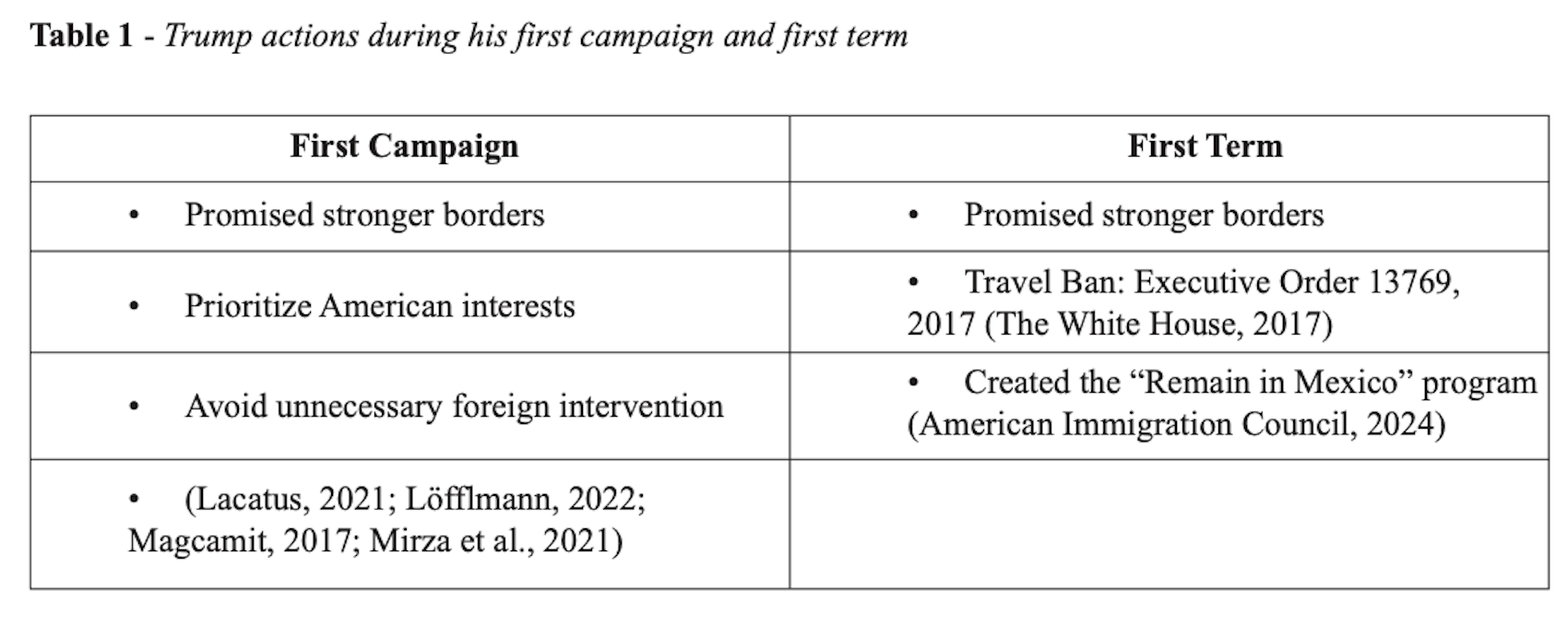
As of 2022, there are 46.1 million migrants in the US (Geiger, 2024). Anti-migration and its link to nationalism are core aspects of Trump’s political campaigns and of his past presidency (Löfflmann, 2019). Indeed, during his past campaigns, Trump had made promises for stricter migration policies. Quotes such as “America First” and “Make America Great Again” were commonplace in his speeches and rallies (Lacatus, 2021; Löfflmann, 2022; Magcamit, 2017; Mirza et al., 2021). Unlike other populists, Trump succeeded in passing several anti-migration policies while in office (Table 1).
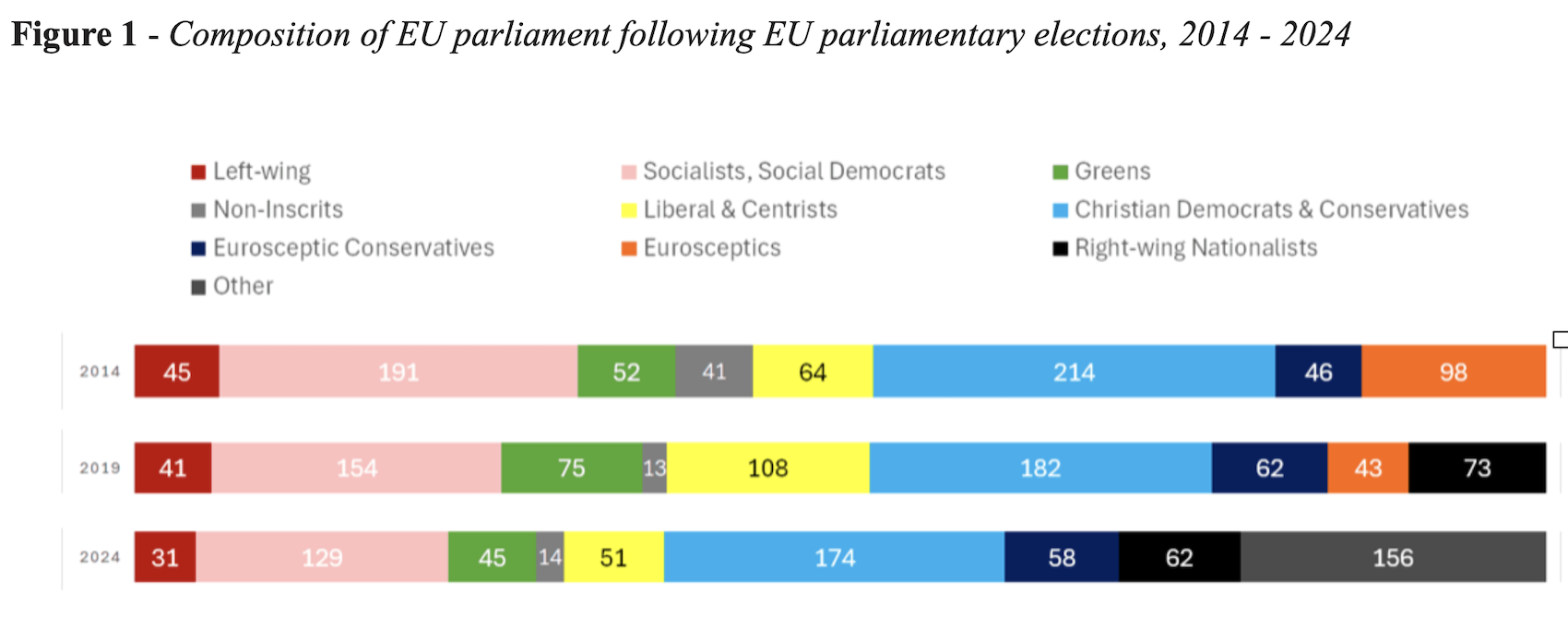
 Europe has also faced difficulties controlling the increasing numbers of its migrant population. According to the International Organization for Migration (McAuliffe & Oucho, 2024), there are approximately 87 million migrants living in Europe. In the context of migration crises, which often disproportionately impact EU member states, balancing European cohesion has fragmented the Union. Additionally, in recent years, Western politics has witnessed a trend of a right-wing shift (see Figure 1) and increased support for populist leaders, which exacerbates this fragmentation (Europe Elects, 2024; Europe Politique, 2024).
Trump’s US presidency coincided with a period of EU instability which saw the rise of right-wing populist parties (RPP) in Europe and the significant decision for Britain to leave the EU, with migration a core topic for the Leave campaign (Langlois, 2021; Löfflmann, 2019). Authors such as Fusiek & Marconi (2021) argue that the popularity of a nationalistic populist in the US gave confidence to populist political actors in Europe to become more vocal and gather support. In the face of EU fragmentation, the Union must be prepared for leniency with its Pact on Migration and Asylum if it wishes to maintain cohesion.
This paper delivers policy suggestions for the successful implementation of the Pact, especially in the context of the 2024 US Presidential elections and of its possible repercussions. To do so, the paper briefly delves into the 2024 EU Pact on Migration and Asylum, focusing on its strengths, its weaknesses, and how it is perceived by EU member states. Following, the paper conducts a horizon scanning methodology to discuss the possible outcomes of the 2024 US elections and how they could affect international politics and the implementation of the Pact. Finally, the paper provides recommendations to the European Commission to ensure readiness and resilience in the implementation of the Pact in any scenario deriving from the result of the upcoming US elections.
2. The EU and Migration
The EU has faced difficulties in dealing with migration, especially as the issue disproportionately affects certain member states. In dealing with this issue, the EU has developed the EU Pact on Migration, for all EU member states to adhere to.
2.1 The Pact on Migration and Asylum
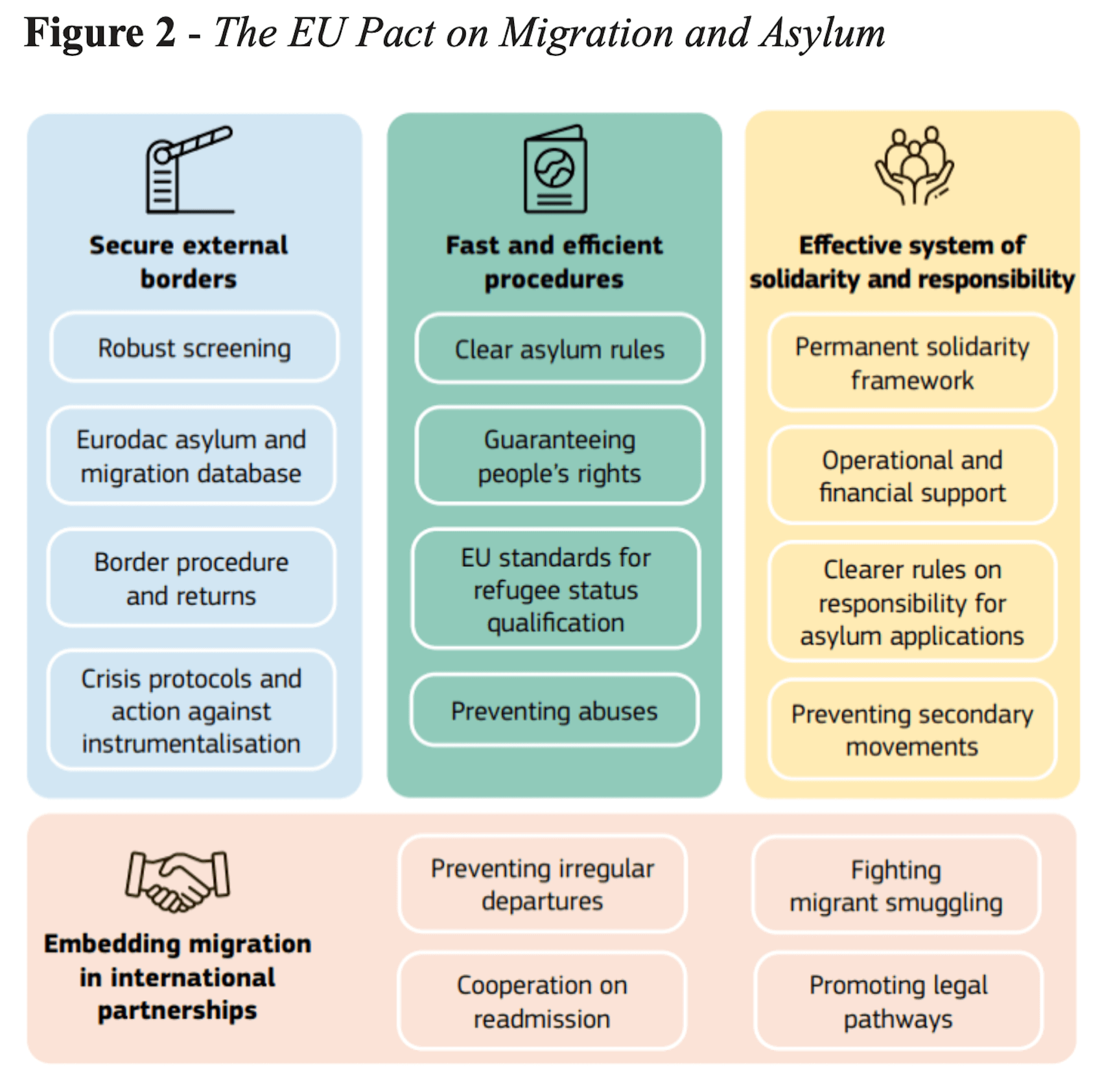
The 2024 EU Pact on Migration and Asylum establishes a comprehensive and flexible framework that addresses border management, asylum processes, and migrant integration while introducing a mandatory yet adaptable solidarity mechanism (European Commission, 2024b). This framework, as shown in Figure 2, aims to distribute responsibilities more fairly among member states, allowing contributions through relocations, financial support, or alternative measures (Ibid.). However, the Pact faces significant challenges, including bureaucratic complexity, varying political will, and potential conflicts with member states resistant to migration, such as those of the Visegrád Group (V4: Poland, Czechia, Slovakia, and Hungary), which will be discussed in section 2.2 of the paper.
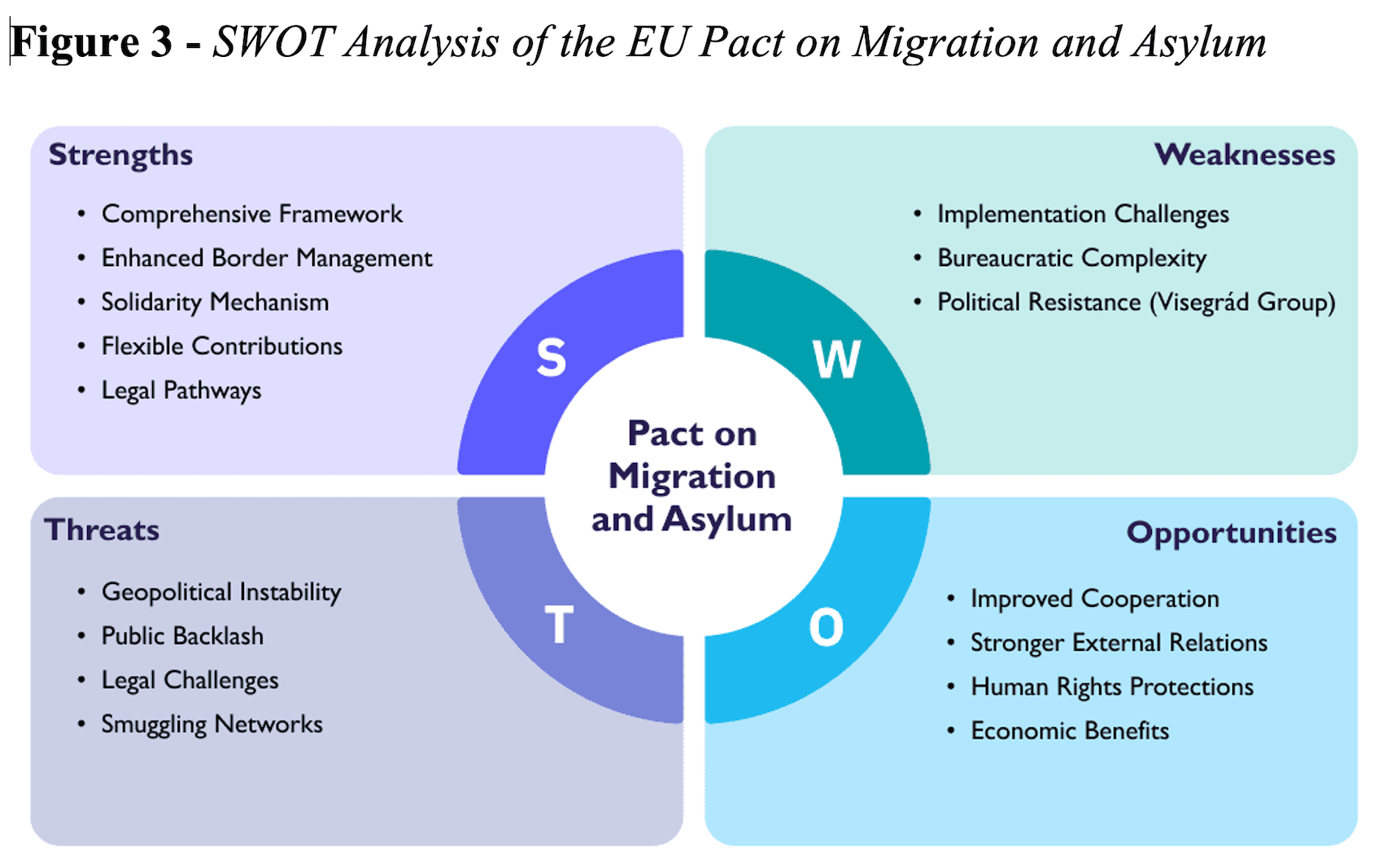
A SWOT analysis of the Pact (Figure 3) was made by the authors which found that the resource-intensive nature of the Pact may strain member states’ capacities, particularly amid shifting political priorities. Nonetheless, it offers opportunities for enhanced cooperation, stronger external partnerships, and economic benefits through managed migration. These potential gains are counterbalanced by threats such as geopolitical instability, rising anti-immigration sentiment, legal disputes within the EU, and the risk of migrants resorting to more dangerous routes due to increased border controls. The success of the pact will depend on its ability to navigate these complexities while ensuring the protection of human rights and fair distribution of responsibilities.
2.2 Backlash from Member States
The Pact has received severe backlash from a number of actors within the EU for very different reasons. On the one hand, due to its attempt at regulating and partially restricting immigration, many on the political left view the Pact as giving too many concessions to the far right, and failing to protect fundamental rights (Griera, 2024). For example, the German Left MEP Cornelia Ernst called the pact “a pact of shame and disgrace,” while other MEPs from Left and Green parties considered the Pact to be a model for a fortress of Europe and a victory for the far-right (Ibid.). Many NGOs also criticized the Pact, with Amnesty International attesting a “surge in suffering” for asylum seekers, if the Pact was to enter into effect (Nattrass, 2024). On the other hand, right-wing governments and parties across the EU also greatly criticized the Pact.
However, contrary to the above-mentioned examples, their main concern is that the Pact is not strict enough on immigration regulation and forces every EU member state to contribute and show solidarity, hence overruling national sovereignty (Nattrass, 2024). The Visegrád countries in particular – namely: Poland, Czechia, Slovakia, and Hungary – heavily criticized the Pact and its solidarity mechanisms, with Polish Prime Minister Donald Tusk promising that Poland will “find ways so that even if the migration pact comes into force in a roughly unchanged form, we will protect Poland against the relocation mechanism” (Nattrass, 2024), while the Hungarian government also pledged to find ways to avoid taking in immigrants and called the Pact “another nail in the coffin of the European Union” (Nattrass, 2024).
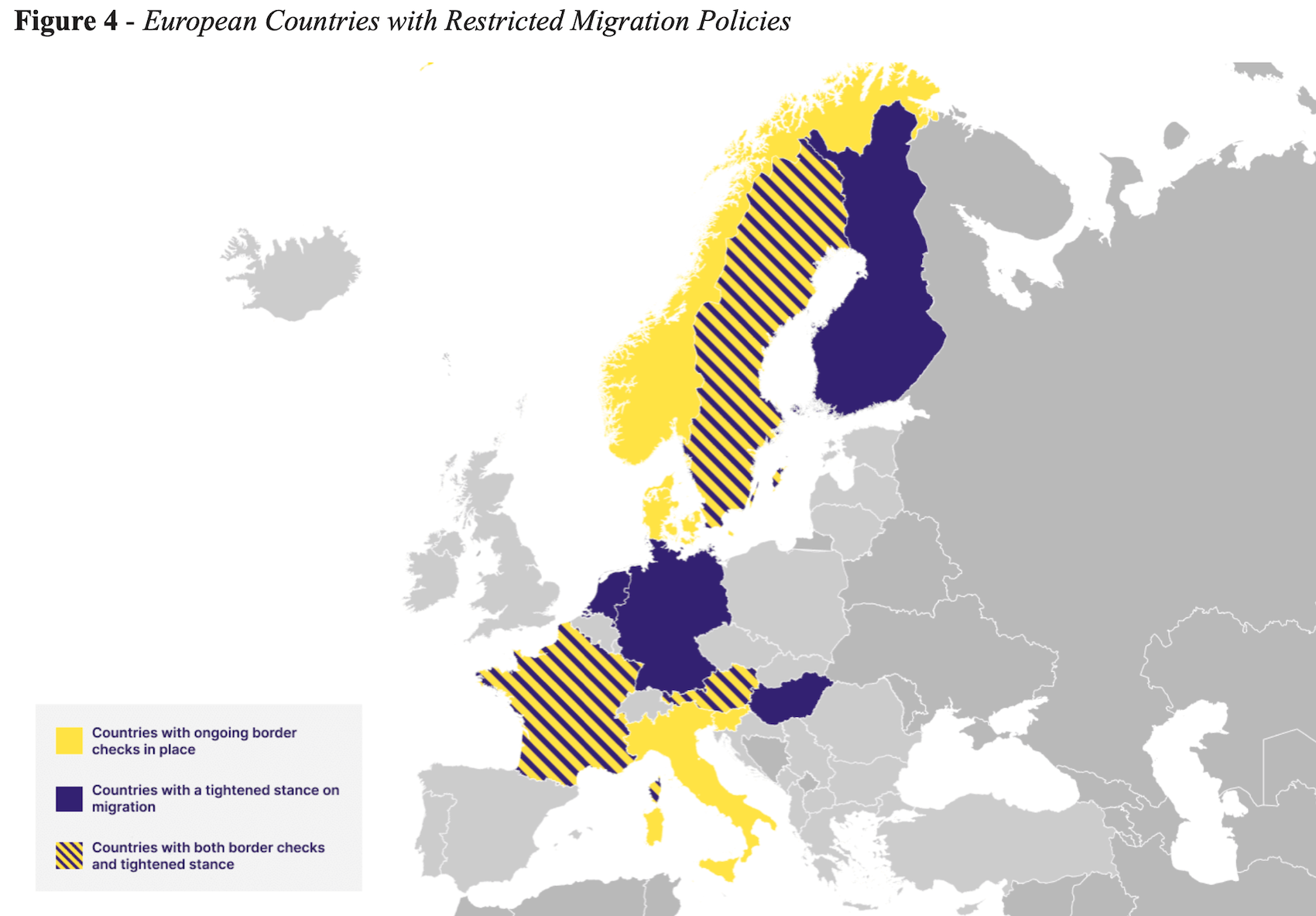
In addition to the Visegrád Group, an increasing number of member countries is expressing its discontent with the Pact, a trend tied to the rise of RPPs throughout Europe (Vinocur et al., 2024). In particular, this is manifesting through a push for tighter deportation and border control measures across Europe (Vinocur et al., 2024). 17 countries in the Schengen area – Austria and the Netherlands and endorsed by Croatia, the Czech Republic, Denmark, Finland, France, Germany, Greece, Italy, Luxembourg, Malta, Slovakia and Sweden. Norway, Switzerland and Liechtenstein – have recently signed an appeal to the EU executive to toughen return policies when asylum applications are rejected as well as increasing European coordination when it comes to deportations (Carlson, 2024; Liboreiro, 2024). Additionally, numerous countries in the Schengen area – i.e. Austria, Denmark, France, Italy, Norway, Slovenia, and Sweden (Dell’Anna, 2024) – are increasing border controls, which hinders the right to freedom of movement. In addition to these general trends, in countries where RPPs are gaining executive positions, the stance on migration policy is toughening even more (Carlson, 2024; Stekić, 2024; Vinocur et al., 2024). Recent examples of this trend – including the extreme example of the Netherlands’ request to opt-out of the Pact – are shown visually in Figure 4 and a full table is available in Appendix A.
This restrictive stance appears also at the European level where, as illustrated in section 1, right-leaning groups have gained more influence (Vinocur et al., 2024). In particular, members of the European Conservatives and Reformists (ECR) and of the European People’s Party (EPP) support the toughening of deportation mechanisms, the increase of asylum-seeker reception centers outside of the EU, and the funding for extra EU border control (Ibid.).
In sum, the Migration Pact, which is supposed to offer a compromise, is seen negatively by both sides of the political spectrum for respectively leaning too much into the opposite political spectrum, a trend that has led countries to push for a re-draft of the pact (Vinocur et al., 2024). In this context, the main challenge to the successful implementation of the Pact remains to satisfy parties and voters on the left-wing and pro-immigration side and on the right-wing anti-immigration side concurrently. This challenge will be addressed in section 5 of this policy paper, where policy options and recommendations are provided.
3. Methodology
Horizon scanning is used by building on early warning signs and predictions based on current events, by analyzing political discourse. Geopolitical issues are increasingly complex and interconnected. With such challenges, the use of horizon scanning is crucial to prepare and inform policymakers and decision-makers about potential opportunities and threats (Amanatidou et al., 2012). There are two core aspects of horizon scanning: alerting and creating. Alerting includes the early identification of emerging issues, whereas the creative aspect refers to the reassembly of current issues into a prediction for what might develop into a policy problem. Current political discourse in Europe has centered around a migration debate and discontent towards failing solutions to handle the issue, simultaneously the US Presidential debate has Donald Trump potentially returning for a second term.
4. Examinations of Findings: The US 2024 Presidential Elections
As a two-party system, there exists only two possible results of the US Presidential election – a Trump victory, or a Harris victory. Regardless, there shall be a possibility of outcomes in either scenario. Having conducted horizon scanning, there are two possible scenarios that may impact European politics on migration: whether Trump should achieve victory, or whether Trump reacts poorly and encourages disruption in the event of a loss.
4.1 A Trump Victory
In the event that Trump achieves victory, there are two core aspects that will shape the political landscape around migration. Trump has demonstrated an ability to influence and encourage populists in the EU to be more vocal and gather support, as illustrated in Figure 5 (Fusiek & Marconi, 2021). In this regard, it can be expected that the political landscape in Europe will continue to favor populism during a revival of right-wing shift while Trump would have his second term. A second Trump presidential term would likely embolden European populist leaders such as Viktor Orbán, Marine Le Pen, Matteo Salvini, Jarosław Kaczyński, and even populist parties such as the Alternative for Germany (AfD) or Austria’s Freedom Party (FPÖ) by validating their nationalist, anti-EU, and illiberal policies (Naughtie, 2024). During his first presidency, Trump openly praised some of these leaders, especially Viktor Orbán, Trump was quoted saying “Let me just say about world leaders, Viktor Orbán, one of the most respected men, they call him a strong man” and undermined multilateral bodies, sending a clear signal that illiberal governance and nationalist policies are able to thrive without any significant repercussions from the US (Euractiv, 2024).
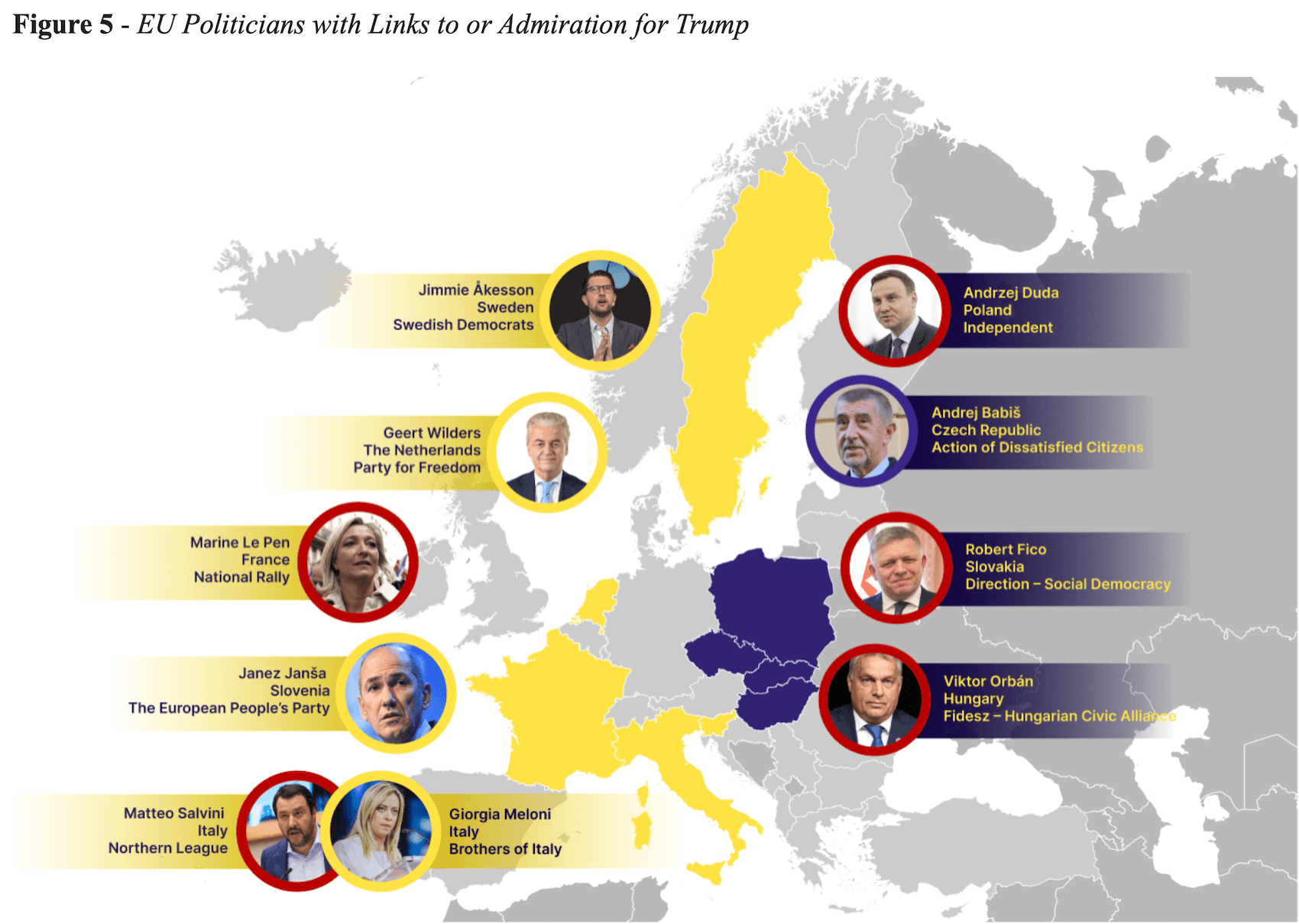
Politicians who have a direct link or friendship with Trump are highlighted in red.
Trump’s alignment with right-wing ideologies would also likely embolden these leaders to promote policies that further marginalize minority groups, restrict immigration, and consolidate political power by undermining judicial independence and press freedoms. In a second term, Trump’s open disdain for international organizations like NATO and the EU would likely reduce pressure on these populist leaders to adhere to democratic norms (Stekić, 2024). By downplaying concerns over democratic backsliding and encouraging isolationist policies, Trump would create an EU environment where these leaders and parties continue to push their nationalist agendas further, almost completely free from the fear of diplomatic or economic consequences.
Further issues that may surface from a Trump victory is the implementation of Project 2025: a Republican policy mantra with strict consequences for migration (The Heritage Foundation, n.d.). Core proposals of the project include continued and increased funding of the ‘Border Wall’, the deportation of migrants, and the removal of visa categories for victims of crime and human trafficking (Wendling, 2024). The project calls for the dissemination of the Department of Homeland Security to be replaced with stronger immigration enforcement bodies for stricter border control (Ibid.). Legal migration would also face stricter measures, through increased fees for visa applications (Ibid.). Donald Trump, as a form of populism, has been linked to the Brexit debate and fueling the “politics of anger”, a concept which some believe has contributed to euroscepticism across the Union (Smorag, 2020; Wind, 2017). If Trump were to be re-elected, it could be expected such sentiments may become prevalent in European political discourse again.
Should Trump win and implement Project 2025, the EU could mirror a restrictive stance again. This prediction is increasingly plausible (Vinocur et al., 2024), especially given the latest trends highlighted in section 2b. Overall, Trump’s influence has the power to destabilize democracies through the use of disinformation which causes greater distrust. Trump may prompt RPP leaders and their parties to entrench their power through policies aimed at curbing media freedom, overhauling the judicial system and the rule of law both at the national and supranational level, and even denouncing opposition parties.
4.2 Reactions to A Trump Loss
On the contrary, should Harris be elected as the first woman President, implications will lead to different roads. It is possible that the post-election events of January 2021 – i.e. the Capitol attacks – could have a sequel (Abramowitz, 2024). Many EU leaders took to the media to condemn the attack on the Capitol, denouncing the use of violence in any form of democratic process. Most were outright with their criticism of Trump’s handling of the situation and the consequences of his words. Common responses from RPP leaders and members – i.e. Marine Le Pen, Giorgia Meloni, and Victor Orbán- were to include a condemning of violence, protecting democracy, whilst simultaneously illustrating Trump in a positive light, often as a ‘peacemaker’ for his limited calls to avoid violent attacks during the protest, whilst others excused Trump of any wrongdoing (Herszenhorn et al., 2021). Should a similar situation arise, where Trump would instigate a protest after losing the election, it is expected that the previously mentioned EU leaders would follow similar actions as before. In this scenario, European leaders are likely to hold a consensus view that democracy is the forefront of our political system, not to be undermined. Likewise, it is expected that Harris would share the same sentiments for democracy and condemn his final attempt at power.
Regardless of the outcome of the 2024 US presidential election, Europe is undeniably fragmented politically, which significantly impacts the practical implementation of the EU Migration Pact. In recent months, in Germany, the far-right party Alternative for Germany (AfD) has been vocal about its opposition to migration. It further supports a “remigration” implementation (Hockenos, 2024) that has surged in federal elections. In Austria, the Freedom of Austria Party (FPÖ) won in the recent election. The FPÖ is expected to push a hardline stance on immigration and resist EU-level initiatives. The FPÖ will likely join forces with other mainstream populist parties (Cameron & and Goldstein, 2024).
In addition to the success of far-right parties across Europe, the ongoing war in Ukraine continues to drive a wedge between nations more friendly and dependent on Russia to take a harder line on accepting Ukrainian refugees, let alone migrants from the Middle East or North Africa. Nations such as Greece and Italy continue to deal with the Mediterranean migration crisis, which is expected to continue for years. These existing crises continue to be a launch pad for far-right populist parties’ rhetoric.
5. Policy Options
At the time of writing, there was around one month remaining until the 2024 US Presidential election would be held. Three policy options were created for the European Commission to consider for a smooth and coherent implementation of the 2024 EU Pact on Migration and Asylum.
- The European Commission must organize a commonly managed and coordinated European asylum system centered around the wellness of human beings: the EU should work on the defense of fundamental human rights, immigrants’ safety and dignity. It is also suggested that the Union ought to use the reservation of migrants as a last resort and try to create other effective solutions, like open reception centers, since prolonged detention results in devastating effects on migrants’ mental health (International Rescue Committee, 2023).
- The European Commission should strengthen the resettlement of refugees in the Union Resettlement Framework (URF): this includes timely and just handling of the reception and integration of refugees and immigrants from day one. More specifically, the Union must offer decent reception conditions throughout the EU, such as providing education and healthcare. Moreover, the Union ought to worry about the progress with an organized and transparent mechanism for monitoring the fundamental rights of asylum seekers.
- The European Commission should fund and conduct regular in-depth country reviews (ICRs) to track the impact of the Pact on Migration and Asylum at a national level and allow for country-tailored implementation strategies:similar reviews are already conducted by the Commission such as European Semester reports, the Environmental Implementation Review and economic IDRs annually. These reviews would provide a mechanism for member states to detail the impact of migration in areas that are core concerns for countries. Each country review should conclude with action points and priorities at the member state and EU-level.
Though all three policy options are of equal importance to ensure the successful and coherent implementation of the plan, this paper proceeds to focus on the last policy option as a strong recommendation to the European Commission, in order to ensure preparedness for the ongoing implementation of the Pact in this time of political uncertainty. The reasons and specifics behind this recommendation follow in the next subsection.
5.1 Recommendations
The recommendation of ICRs within the context of the implementation of the Pact acts as a preventative method which focuses on three areas and values that are important for European RPPs with the aim of ensuring their increased cooperation in the implementation of the Pact. First, the country-specific analyses yielded by the IDRs would allow national leaders to suggest implementation strategies tailored to each nation’s socio-economic needs and capabilities. These tailored solutions will preserve national sovereignty. Second, through these country-specific analyses and implementation strategies, it would be possible to put a specific attention on a proper cultural integration of migrants, ensuring their wellbeing within society whilst preserving national traditions. This possibility could strengthen social cohesion, hence appeasing any anti-immigration sentiments that are likely to be strengthened by Trump’s influence. Finally, IDRs would strengthen national agency and allow for national interests to be at the heart of policy implementation whilst EU’s core objectives and values are upheld.
In particular, to ensure their above-mentioned purpose, we envision ICRs to present key sections as follows. First, an Economic Contributions and Challenges of Migration section of the review would report statistics relating to the economy, workforce and their welfare states. This will allow member states to further detail shortages in the job market where migration of people with work experiences related to the field are required. For example, countries experiencing shortages of agricultural workers, healthcare, or otherwise may request that their migrant quota includes those able to contribute to those sectors. Migration is often talked about as a burden by RPPs, highlighting the skills and benefits migrants can bring to suffering industries should mitigate this issue.
Second, a section dedicated to reporting on Social Dynamics and Community Integration would allow states to report statistics related to socio-cultural data, such as attendance to language courses, educational attendance, and integration into society through work or social programmed. This would address the common concerns of RPP tied to the erasure of national identity and traditions due to immigration. It is hoped that providing member states an avenue to report on socio-cultural impacts of migration will demonstrate an effort to protect national identity whilst promoting integration
Finally, a section for Impacts Not Otherwise Stated is proposed. This would allow member states to flag any additional issues they are facing in the implementation of the Pact to EU institutions. Such issues could include difficulties in processing of incoming migrants, including manpower, biometrics, and service availability. Overall, this should help with national governance for the Pact.
All ICRs ought to conclude with a plan for the future. Plans should enable co-working between the Commission and Member States to come up with priorities and action points for each stakeholder going forward with the Pact, as similar EU reports conclude with. With this recommendation, member states can agree with the EU on what is most important and applicable to the individual country, rather than having a “one size fits all” method applied to all EU members.
Due to the politically sensitive nature of migration, the importance of impartiality was noted. It is recommended that the ICRs are conducted independently, with assistance from the Eurostat peer-review team. The EU has six funding pools that it may draw from that can achieve this recommendation feasibly: (1) Asylum, Migration and Integration Fund, (2) Internal Security Fund, (3) European Social Fund Plus, (4) European Regional Development Fund, (5) Neighborhood, Development and International Cooperation Instrument, and (6) Emergency Assistance and Other Ad Hoc Funding.
6. Conclusion
At this stage, the result of the American elections is ambiguous. The scenario of Trump’s re-election to power will bring about unfavorable results both at the overall EU level and on the immigration issue, as a Trump presidency would entail significant disruptions in US-EU relations (Frangeul-Alves & Weber, 2024). Trump’s troubled relations with the EU and his pursuit of isolationism, as well as his apparent apathy towards immigrants and refugees, mean that the former president will once again leave the Union alone on the issue that plagues it. Therefore, the developments in the field of immigration will differ greatly depending on the US election results.
In any case, the EU should not be complacent, regardless of the election result, as the migrant – refugee crisis plagues Brussels. Migration is one of the most important policy issues (Lovato, 2021) and it has turned into a geopolitical issue. Immigration is a labyrinthine for the EU and a complex problem, thus the solution will not be easy, especially given EU member states’ diverse opinions on the matter (Donceel, 2024).
To conclude, this policy paper delved into the implementation of this Pact, focusing on how it is susceptible to the rise of populism both in Europe and abroad. In particular, after conducting a SWOT analysis of the Pact and providing an overview of how it is perceived across Europe, the paper focused on how the implementation of the Pact could be affected by the results of the upcoming US presidential elections. Based on previous cases, it is expected that in case of victory Trump will incentivize his EU “allies”, such as Hungary’s Orban, Italy’s Meloni, and Slovakia’s Fico (Naughtie, 2024), resist the Pact in the name of national sovereignty and anti-elitism. In the case of Trump’s loss however, the likely scenario is that the former president would encourage them to challenge the election outcomes and attempt to undermine democratic processes. This could deepen the public’s distrust in representative institutions across the US and the EU, ultimately furthering the disengagement from electoral processes (i.e. increasing voter absenteeism).
The authors of this paper believe that the recommended introduction of periodic in-depth country reviews (ICRs) would serve as a preventative measure in anticipation of Trump influencing RPPs in Europe. Of course, whilst future outcomes are uncertain due to the vivacity of the electoral campaigns in the US as well as worsening international orders, we are confident that as the European Commission sustains the cooperative nature of the Pact across political spectrums – which we recommend doing by ensuring tailored implementation strategies across member states’ government – its implementation will be successful.
(*) This policy paper is based on research conducted by Beatrice Bottura, Paris O’Keeffe-Johnston, Pinelopi Gkampeta, Ludmila Malai, Matt Lynch, Joon Park and Leon Gräf during the ECPS Case Competition “US Foreign Policy and Populism,” held as part of the ECPS Summer School from July 1-5, 2024.
Authors’ Biographies
Beatrice Bottura is a Sciences Po master student in Public Policy, specializing in Social Policy and Social Innovation, and a Central European University (CEU) graduate in Philosophy Politics and Economics. Her research interests revolve around the crisis of democracy and how it relates to political attitudes and policymaking. She has explored this in her bachelor thesis “Ethnopopulists’ reaction to crises: the case of Fratelli D’Italia”, from which she derived an article for the Horizon Europe project “AuthLIB – Neo-Authoritarianisms in Europe and the Liberal Democratic Response”, which she is involved in as a research assistant. For this project she has worked with CEU’s Democracy institute and Sciences Po’s Centre d’Études Européennes (CEE). Particularly, she conducted discourse analyses for the working paper “Illiberalism and Social Policy: A Four-Country Comparison”, is authoring an upcoming publication on varieties of illiberalism across policy areas with CEU and has coded speech for the CEE’s work measuring “Ideological configurations”.
Joon Park is a third-year student at George Washington University, pursuing a bachelor’s in international Affairs and Finance with a minor in Economics. Born to Korean immigrants and raised in Germany, her academic focus spans EU economics, German domestic and foreign politics, U.S. foreign policy, and East Asian geopolitical strategy. She is currently researching the rise of right-wing populism in Europe in collaboration with the Center for Faith, Identity, and Globalization in Washington, D.C. Joon’s passion lies in exploring how global political systems and economic dynamics intersect to shape international relations and policy.
Matthew Lynch is a Master of Science candidate in Global Studies and International Relations at Northeastern University in Boston. He received a Bachelor of Science in Supply Chain Management from the University of Massachusetts Dartmouth. With a background in international business, his current research focuses on how populism creates vulnerabilities in EU defense and security, particularly the potential for external actors to exploit these weaknesses. He also researches German foreign and defense policy.
Leon Gräf holds a BA in Political Science and Philosophy, University of Heidelberg, Germany and an MA in Political Science, University of Mannheim, Germany. He is currently working as Research Fellow at the Max Planck Foundation for International Peace and the Rule of Law, and as a Research Assistant at the Chair of Empirical Macrosociology at Heidelberg University. Additionally, is has been working as a researcher at the Heidelberg Institute for International Conflict Research (HIIK) since 2021. His MA thesis focused on mediator characteristics and their effect on ceasefire success across different regions.
Pinelopi Gkampeta is a graduate student in the Advanced M.Sc. in “European Integration” in Brussels School of Governance (VUB) and she currently lives in Brussels. Furthermore, she has obtained a master’s degree in “International and European Governance and Politics” from the National and Kapodistrian University of Athens and a bachelor’s degree in “Philosophy” from the same university. She has taken part in the Erasmus+ Program “Maritime Security Common Module “by European Security and Defence College and Hellenic Naval Academy. Moreover, she is a research intern in the Institute of International Relations (Athens, Greece) and also an editor and analyst at the Association of International and European Affairs. Pinelopi worked as a research assistant for the Identity and Conflict Lab (Yale University) for some months. Her areas of interest and research are EU as a Global Actor, EU External Relations, EU Security and Defense Policy, Maritime Security and Immigration Policy.
Paris O’Keeffe-Johnston holds an MA in International Relations, Conflict & Security from Northumbria University. Her research focuses primarily on societal security, with an emphasis on digital threats. Her dissertation explored how EU policy documents framed cybersecurity as an existential threat. Currently, her research interests have expanded to include the societal risks posed by AI. This includes how populists may use generative AI to either gather support or create the illusion of widespread backing, as well as to drive disinformation campaigns. By investigating this area, she aims to uncover how algorithms could be leveraged for early detection and mitigation of polarizing content ahead of elections.
Ludmila Malai is an experienced EU Project Manager at the Intercultural Dialogue Platform, with a diverse academic background in Economics, Administration, Politics, Diplomacy, and Conflict Resolution. She holds a Master’s in International Law and Security Studies from the Free University of Brussels and is fluent in English, French, Russian, Italian, and Romanian. Over the past six years, Ludmila has specialized in writing and coordinating European projects focused on CVE/PVE, radicalization, combating racism, Antisemitism, Islamophobia, the security of places of worship, women’s empowerment, and youth civic engagement.
References
Abramowitz, A. I. (2024, September 24). Professor Abramowitz: Signs indicate polarization in the US could lead to violence if trump loses. ECPS. https://www.populismstudies.org/professor-abramowitz-signs-indicate-polarization-in-the-us-could-lead-to-violence-if-trump-loses/
Amanatidou, E., Butter, M., Carabias, V., Konnola, T., Leis, M., Saritas, O., Schaper-Rinkel, P., & van Rij, V. (2012). “On concepts and methods in horizon scanning: Lessons from initiating policy dialogues on emerging issues.” Science & Public Policy, 39(2), 208–221. https://doi.org/10.1093/scipol/scs017
American Migration Council. (2024). The “Migrant Protection Protocols.” Americanimmigrationcouncil.org. https://www.americanimmigrationcouncil.org/research/migrant-protection-protocols
Angelos, J. (2024, September 11). Germany’s Scholz gets tough on border in bid to save political future. POLITICO. https://www.politico.eu/article/germany-olaf-scholz-europe-migration-far-right-afd-election/
Cameron, I., & Goldstein, T. (2024, September 27). What to know about Austria’s parliamentary elections. Atlantic Council. https://www.atlanticcouncil.org/content-series/eye-on-europes-elections/what-to-know-about-austrias-parliamentary-elections/
Carlson, K. (2024, October 5). “EU needs faster migrant returns, say 17 countries including Germany, France: Report.” POLITICO. https://www.politico.eu/article/europe-migration-faster-returns-germany-france/
Caulcutt, C., & Vinocur, N. (2024, September 30). “France’s new Europe minister will push Brussels to tighten migration rules.” POLITICO. https://www.politico.eu/article/europe-next-step-migration-debate-france-new-europe-minister-benjamin-haddad/?mc_cid=fb515213aa&mc_eid=df84cdf6c2
Cokelaere, H. (2024, September 13). “Dutch government announces, ‘strictest asylum policy ever’.” POLITICO.https://www.politico.eu/article/dutch-government-announces-strictest-asylum-policy-ever/?mc_cid=fb515213aa&mc_eid=df84cdf6c2
de La Baume, M. (2024a, July 31). “Does Finland’s new migration bill break international law?” Euronews.https://www.euronews.com/my-europe/2024/07/31/does-finlands-new-migration-bill-break-international-law-radio-schuman
de La Baume, M. (2024b, September 19). “Von der Leyen’s bold move: Is Austria the fix for EU migration policy?” Euronews. https://www.euronews.com/my-europe/2024/09/19/von-der-leyens-bold-move-austrias-brunner-gets-migration-radio-schuman
de La Baume, M. (2024c, September 23). “How will France’s new right-leaning government impact the EU?” Euronews.https://www.euronews.com/my-europe/2024/09/23/macrons-new-government-and-its-impact-on-the-eu-radio-schuman
de La Baume, M. (2024d, October 1). “What would having the far right in power mean for Austria and EU migration policies?” Euronews. https://www.euronews.com/my-europe/2024/10/01/what-would-having-the-far-right-in-power-mean-for-austria-and-eu-migration-policies-radio-
Dell’Anna, A. (2024, September 10). “Which other Schengen countries have border checks in place?” Euronews.https://www.euronews.com/my-europe/2024/09/10/which-other-schengen-countries-have-border-checks-in-place
Donceel, H. (2024, April 29). “What can the EU do to better manage migration?” Euranet Plus. https://euranetplus-inside.eu/what-can-the-eu-do-to-better-manage-migration/
ECRE. (2024, September 27). NETHERLANDS: Government Announces, ‘Strictest Asylum Policy Ever’ and Requests Opt-Out from EU Migration Pac. Ecre.org. https://ecre.org/netherlands-government-announces-strictest-asylum-policy-ever-and-requests-opt-out-from-eu-migration-pact-―-government-announces-end-to-state-funded-housing-for-rejected-asy/
Etias. (2024, February 10). “France seeks migration policy review amid growing EU discontent.” Etias.com.https://etias.com/articles/france-seeks-migration-policy-review-amid-growing-eu-discontent
Euractiv. (2024, September 12). “Friends: Donald trump and Viktor orbán.” EURACTIV.https://www.euractiv.com/section/elections/news/friends-donald-trump-and-viktor-orban/
Europe Elects. (2024). European parliament election 2024. Europe Elects. https://europeelects.eu/ep2024/
Europe Politique. (2024). Parlement Européen 2019 2014 2009 2004 1999 1994 1989 1984 1979. Europe-Politique.Eu. https://www.europe-politique.eu/parlement-europeen.htm
European Commission. (2024a). Common Implementation Plan to turn the Pact on Migration and Asylum into a reality. Migration and Home Affairs. https://home-affairs.ec.europa.eu/news/common-implementation-plan-turn-pact-migration-and-asylum-reality-2024-06-12_en
European Commission. (2024b). Pact on migration and asylum. Migration and Home Affairs. https://home-affairs.ec.europa.eu/policies/migration-and-asylum/pact-migration-and-asylum_en
Frangeul-Alves, A. & Weber, G. (2024). The United States’ EU policy after 2024. GMFUS. https://www.gmfus.org/news/united-states-eu-policy-after-2024
Fusiek, D. A., & Marconi, C. (2021). “Trumpism and the European far right: An analysis of Trumpism’s impact on the post-2016 AfD, Lega Nord, and Fidesz.” Środkowoeuropejskie Studia Polityczne, 4, 61–84. https://doi.org/10.14746/ssp.2021.4.5
Gall, L. (2024, March 19). “Trump’s friend from Hungary is no role model for supporters of democracy.” Human Rights Watch. https://www.hrw.org/news/2024/03/19/trumps-friend-hungary-no-role-model-supporters-democracy
Geiger, A. (2024, September 27). What the data says about immigrants in the U.S. Pew Research Center. https://www.pewresearch.org/short-reads/2024/07/22/key-findings-about-us-immigrants/
Giles, C. (2019, January 5). “Trump’s wall: How much has been built during his term?” BBC. https://www.bbc.com/news/world-us-canada-46748492
Goury-Laffont, V. (2024, September 5). “Michel Barnier: Everything you need to know about the new French PM’s conservative politics.” POLITICO. https://www.politico.eu/article/the-staunchly-conservative-politics-of-michel-barnier-new-prime-minister-france/
Griera, M. (2024, April 10). “EU’s historic migration pact passes amidst divisions and far-right fears.” EURACTIV.https://www.euractiv.com/section/migration/news/eus-historic-migration-pact-passes-amidst-divisions-and-far-right-fears/
Hegedüs, D. (n.d.). Orbán has put all his eggs in Ttrump’s basket but would be pragmatic with Biden. GMFUS. Retrieved October 7, 2024, from https://www.gmfus.org/news/orban-has-put-all-his-eggs-trumps-basket-would-be-pragmatic-biden
Herszenhorn, D. M.; Barigazzi, J.; de La Baume, M.; Bayer, L. & Momtaz, R. (2021, January 7). “European far right decries US violence but sees Trump as victim of ‘ridiculous’ fanatics.” POLITICO.https://www.politico.eu/article/european-far-right-descries-violence-at-u-s-capitol-but-sees-trump-as-victim-of-ridiculous-fanatics/
Hockenos, P. (2024, January 26). “Germany’s far-right party is worse than the rest of Europe’s.” Foreign Policy. https://foreignpolicy.com/2024/01/26/afd-germany-far-right-populism-radical-europe-remigration-immigrants/
International Rescue Committee. (2023, October 27). What is the EU Pact on Migration and Asylum? The IRC in the EU. https://www.rescue.org/eu/article/what-eu-pact-migration-and-asylum
Jochecová, K. (2024, July 22). “Finland’s deportation law puts EU’s migration norms to the test.” POLITICO.https://www.politico.eu/article/new-finnish-deportation-law-risks-infringing-on-human-rights-eu-migration-norms/
Kaalstad, J. E. (2024, September 12). “Sverige vil betale innvandrere over 350.000 kroner for å flytte tilbake.” VG. https://www.vg.no/nyheter/i/zA4551/sverige-vil-betale-innvandrere-over-350-000-kroner-for-aa-flytte-tilbake
Kassam, A. (2024, August 11). “Sweden’s ‘snitch law’ immigration plan prompts alarm across society.” The Guardian. https://www.theguardian.com/world/article/2024/aug/11/sweden-snitch-law-immigration-plan-prompts-alarm-across-society
Koppa, M. (2017). The Common Security and Defense Policy: The History, the Institutions, the Strategies.
Körömi, C. (2024, September 30). “Orbán’s new threat: Dispatching migrants to Grand-Place in Brussels.” POLITICO.https://www.politico.eu/article/viktor-orban-migrants-hungary-gates-brussels-main-square-grand-place/
Lacatus, C. (2021). “Populism and President Trump’s approach to foreign policy: An analysis of tweets and rally speeches.” Politics, 41(1), 31–47. https://doi.org/10.1177/0263395720935380
Langlois, L. (2021). “The Brexit Vote and The Trump Vote: A comparative study of the common trends and factors that led to a populist radical right vote in Britain and the United States.” Revue LISA / LISA e-Journal, 19(51). https://doi.org/10.4000/lisa.13054
Leali, G. (2024, October 1). “5 things to watch for in French PM Barnier’s first parliamentary address.” POLITICO.https://www.politico.eu/article/michel-barnier-big-day-lawmakers-speech-france-coalition-government-debt-tax-rate-migration-labor/
Liboreiro, J. (2024, October 7). “A group of 17 European countries call for a “paradigm shift” to deport rejected asylum seekers.” Euronews. https://www.euronews.com/my-europe/2024/10/07/17-european-countries-call-for-a-paradigm-shift-to-deport-rejected-asylum-seekers
Lindsay, J. M. (2024, September 27). Election 2024: Are Americans ready for another close presidential election?Council on Foreign Relations. https://www.cfr.org/blog/election-2024-are-americans-ready-another-close-presidential-election
Löfflmann, G. (2019). “America first and the populist impact on US foreign policy.” Survival, 61(6), 115–138. https://doi.org/10.1080/00396338.2019.1688573
Löfflmann, G. (2022). “‘Enemies of the people’: Donald Trump and the security imaginary of America First.” British Journal of Politics & International Relations, 24(3), 543–560. https://doi.org/10.1177/13691481211048499
Lovato, M. (2021). “Introduction: shades of contestation and politicisation of CFSP.” European Security, 30(3), 325–343. https://doi.org/10.1080/09662839.2021.1964473
Magcamit, M. (2017). “EXPLAINING THE THREE‐WAY LINKAGE BETWEEN POPULISM, SECURITIZATION, AND REALIST FOREIGN POLICIES: President Donald Trump and the pursuit of “America First” doctrine.” World Affairs, 180(3), 6–35. https://doi.org/10.1177/0043820017746263
McAuliffe, M., & Oucho, L. A. (2024). “Report overview: Migration continues to be part of the solution in a rapidly changing world, but key challenges remain.” World Migration Report, 2024(1). https://doi.org/10.1002/wom3.33
Mirza, M. N.; Ali, L. A. & Qaisrani, I. H. (2021). “Populism in the United States: Binary constructions by Donald Trump in the domestic and foreign policies.” Global Social Sciences Review, VI(III), 59–71. https://doi.org/10.31703/gssr.2021(vi-iii).07
Nattrass, W. (2024, April 12). Migration pact will only deepen EU divisions. UnHerd. https://unherd.com/newsroom/migration-pact-will-only-deepen-eu-divisions/
Naughtie, A. (2024, September 4). “Who are Donald Trump’s key allies in Europe?” Euronews. https://www.euronews.com/2024/09/04/who-are-donald-trumps-key-allies-in-europe
Riegert, B. (2024, September 20). “Hungary and the Netherlands want to exit EU asylum policy.” Deutsche Welle. https://amp.dw.com/en/hungary-and-the-netherlands-want-to-exit-eu-asylum-policy/a-70278674
Smorag, P. (2020). “Trump’s populist contentment with Brexit.” Observatoire de la Société Britannique, 25, 187-212. https://doi.org/10.4000/osb.4883
Stekić, N. (2024). “How U.S. immigration policies and the 2024 election could reshape EU migration strategies.”Newslettereuropean.Eu. https://www.newslettereuropean.eu/how-u-s-immigration-policies-and-the-2024-election-could-reshape-eu-migration-strategies/
Stone, P. (2024). “Trump and allies plant seeds for ‘chaos and discord’ if he loses, experts warn.” The Guardian. Theguardian.com. https://www.theguardian.com/us-news/article/2024/sep/03/trump-maga-allies-election-conspiracy-theories
The Heritage Foundation. (n.d.). Project 2025 | Presidential Transition Project. Project2025.org. Retrieved October 7, 2024, from https://www.project2025.org
The White House. (2017). Executive Order 13769 of January 27, 2017. Govinfo.gov. https://www.govinfo.gov/content/pkg/FR-2017-02-01/pdf/2017-02281.pdf
Vinocur, N., Moens, B., & Griera, M. (2024, October 2). “Europe’s populists push for migrant clampdown as Trump cranks up rhetoric.” POLITICO. https://www.politico.eu/article/tidal-wave-europe-populist-drive-push-migrant-clampdown-donald-trump-crank-up-rhetoric/
Wendling, M. (2024, June 12). “What is Project 2025? Wish list for a Trump presidency, explained.” BBC. https://www.bbc.com/news/articles/c977njnvq2do
Wind, M. (2017). “Brexit and Euroskepticism: Will ‘Leaving Europe’ be Emulated Elsewhere?” In: F. Fabbrini (Ed.), The Law & Politics of Brexit (pp. 221-246). Oxford University Press.






















 This two-day symposium will explore different aspects of the interplay between populism, religion, and civilizationism from local, national, transnational, international and global perspectives. Evaluating their combined impact on plural societies, intergroup relations, social cohesion and democratic institutions, the symposium will analyze how populists from diverse cultural, geographical, and political contexts both in Global North and Global South interact with and employ religion, civilizationism and digital technologies in their discourses and performances.