
Highlighting the dangers of overlapping corporate and governmental powers, Professor Paul Levinson cautioned, “I am deeply opposed to having the person who owns X also hold a high-ranking government position. That kind of overlap means the government could end up controlling communication platforms.” He elaborated on Musk’s ethical responsibility, stating that if Musk were a “true believer in free speech,” he would either divest from X or refuse a government post. However, Levinson expressed skepticism: “I think we both know he’s likely to do neither.” Levinson also voiced his deep concern for American democracy under a potential second Trump administration, describing it as “the worst threat to our democracy since the Civil War.”
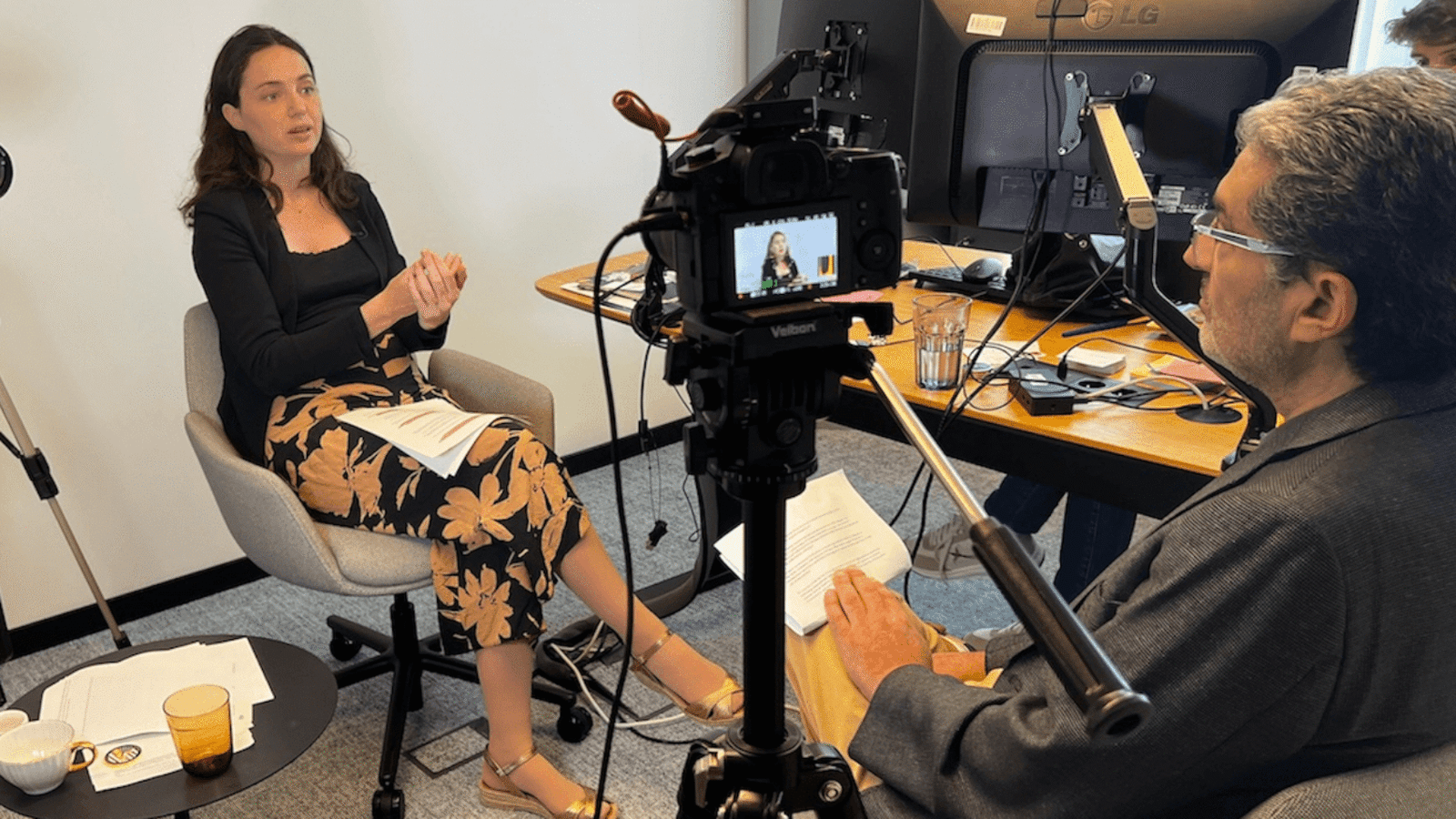
In a riveting interview with the European Center for Populism Studies (ECPS), Dr. Paul Levinson, Professor of Communication & Media Studies at Fordham University, discussed pressing concerns about the intersection of technology, politics, and democracy. Professor Levinson’s insights are especially timely, given Elon Musk’s rising influence as the owner of X (formerly Twitter) and his potential role in a second Trump administration. Highlighting the dangers of overlapping corporate and governmental powers, Professor Levinson cautioned, “I am deeply opposed to having the person who owns X also hold a high-ranking government position. That kind of overlap means the government could end up controlling communication platforms.”
Professor Levinson elaborated on Musk’s ethical responsibility, stating that if Musk were a “true believer in free speech,” he would either divest from X or refuse a government post. However, Professor Levinson expressed skepticism: “I think we both know he’s likely to do neither.”
Throughout the interview, Professor Levinson addressed the broader implications of concentrated power in technology. Despite concerns about billionaires like Musk or the owners of Facebook, Levinson pointed out that their influence has not yet stifled democratic impulses. “Social media provides a unique platform for individuals to disseminate the truth widely, even as it enables lies and fascism,” he noted, striking a balance in his evaluation.
On the issue of disinformation and algorithms, Professor Levinson argued that the negative impact of these technologies is often overstated. He acknowledged their role in targeted advertising, referencing Facebook’s data-sharing with Cambridge Analytica during the 2016 US election. However, he emphasized, “The blame lies not with the algorithms themselves but with the disinformation they are used to spread.”
Professor Levinson’s critique of governmental overreach was particularly sharp. Drawing historical parallels, he warned, “When governments gain such control, they can jeopardize democratic systems, even those that have existed for hundreds of years.” He cited the Thatcher administration’s suppression of unfavorable news during the Falklands War as a case study in the dangers of government-controlled communication.
Reflecting on Trump’s weaponization of “fake news,” Professor Levinson described it as a hallmark of fascism, akin to tactics used by Stalin and Hitler. He lamented, “It amazes me how many people have fallen for this tactic, despite the lessons we should have learned from history.”
Professor Levinson shared his deep concern for American democracy under a potential second Trump administration, describing it as “the worst threat to our democracy since the Civil War.” From absurd appointments to calculated assaults on institutions, Professor Levinson’s insights underline the precarious state of democratic governance in the digital age.
Highlighting the dangers of overlapping corporate and governmental powers, Professor Paul Levinson cautioned, “I am deeply opposed to having the person who owns X also hold a high-ranking government position. That kind of overlap means the government could end up controlling communication platforms.” He elaborated on Musk’s ethical responsibility, stating that if Musk were a “true believer in free speech,” he would either divest from X or refuse a government post. However, Levinson expressed skepticism: “I think we both know he’s likely to do neither.” Levinson also voiced his deep concern for American democracy under a potential second Trump administration, describing it as “the worst threat to our democracy since the Civil War.”
In a riveting interview with the European Center for Populism Studies (ECPS), Dr. Paul Levinson, Professor of Communication & Media Studies at Fordham University, discussed pressing concerns about the intersection of technology, politics, and democracy. Professor Levinson’s insights are especially timely, given Elon Musk’s rising influence as the owner of X (formerly Twitter) and his potential role in a second Trump administration. Highlighting the dangers of overlapping corporate and governmental powers, Professor Levinson cautioned, “I am deeply opposed to having the person who owns X also hold a high-ranking government position. That kind of overlap means the government could end up controlling communication platforms.”
Professor Levinson elaborated on Musk’s ethical responsibility, stating that if Musk were a “true believer in free speech,” he would either divest from X or refuse a government post. However, Professor Levinson expressed skepticism: “I think we both know he’s likely to do neither.”
Throughout the interview, Professor Levinson addressed the broader implications of concentrated power in technology. Despite concerns about billionaires like Musk or the owners of Facebook, Levinson pointed out that their influence has not yet stifled democratic impulses. “Social media provides a unique platform for individuals to disseminate the truth widely, even as it enables lies and fascism,” he noted, striking a balance in his evaluation.
On the issue of disinformation and algorithms, Professor Levinson argued that the negative impact of these technologies is often overstated. He acknowledged their role in targeted advertising, referencing Facebook’s data-sharing with Cambridge Analytica during the 2016 US election. However, he emphasized, “The blame lies not with the algorithms themselves but with the disinformation they are used to spread.”
Professor Levinson’s critique of governmental overreach was particularly sharp. Drawing historical parallels, he warned, “When governments gain such control, they can jeopardize democratic systems, even those that have existed for hundreds of years.” He cited the Thatcher administration’s suppression of unfavorable news during the Falklands War as a case study in the dangers of government-controlled communication.
Reflecting on Trump’s weaponization of “fake news,” Professor Levinson described it as a hallmark of fascism, akin to tactics used by Stalin and Hitler. He lamented, “It amazes me how many people have fallen for this tactic, despite the lessons we should have learned from history.”
Professor Levinson shared his deep concern for American democracy under a potential second Trump administration, describing it as “the worst threat to our democracy since the Civil War.” From absurd appointments to calculated assaults on institutions, Professor Levinson’s insights underline the precarious state of democratic governance in the digital age.
Here is the transcription of the interview with Professor Paul Levinson with some edits.
Democratic Impulses Persist Despite Billionaires’ Control Over Social Media
Illustration by Ulker Design.
Professor Levinson, thank you so very much for joining our interview series. Let me start right away with the first question. How do you perceive the influence of hi-tech oligarchs, such as Elon Musk, on the digital public sphere? Does the concentration of digital platforms in the hands of a few individuals pose a unique threat to democratic discourse?
Professor Paul Levinson: Let me answer the second part of your question first. Everything new in communications can potentially threaten a democratic society. However, so far in our history—both the history of the United States and the history of democracies in general—new forms of communication have largely benefited democracy. In fact, they have often undermined dictatorships, autocracies, and oligarchies.
A notable example I often cite is the White Rose group in Germany during World War II. This courageous group of college students used a primitive Xerox machine to disseminate the truth about Nazi atrocities to the German public. Their efforts have always left a profound impression on me. Another example is from the final decade of the Soviet Union in the 1980s. There was something called Samizdat Video, a primitive video technology by today’s standards, but it was instrumental in undermining the autocracy of the Soviet regime, even under Gorbachev, who was probably the most enlightened Soviet leader.
With this historical perspective in mind, while I am always concerned about new technologies, I don’t believe social media presents an insurmountable threat to democracy. In fact, it cuts both ways. Social media enables lies, fascism, and the suppression of truth, which are central to fascistic systems. At the same time, social media provides a unique platform for individuals to disseminate the truth widely.
Now, regarding Elon Musk and other billionaires like those controlling Facebook, despite their unprecedented control over social media platforms, this has not yet prevented democratic impulses from finding expression through these platforms.
The Negative Impact of Algorithms and AI Is Often Overrated
How do you address concerns about the unchecked power of tech companies to shape public discourse, especially when their decisions significantly influence political narratives? In what ways do algorithms on social media platforms amplify populist narratives, and how much responsibility should platform owners like Musk take for the political polarization these technologies can create?
Professor Paul Levinson: First, we’ve heard a lot about algorithms, and more recently, about AI. I think the negative impact of these technologies is often overrated. One area where algorithms have proven particularly effective is targeted advertising. This was evident during the 2016 election in the United States when Facebook provided Cambridge Analytica with detailed data about users—what they were sharing, liking, and discussing on the platform. This data allowed the Trump campaign—who, in this regard, were ahead of the Democrats in recognizing its potential—to tailor their ads to specific audiences. For instance, the ads weren’t wasted on someone like me, who wouldn’t have voted for Trump under any circumstances because I already understood him for what he was.
This approach overcame one of the limitations of traditional advertising, where ads are broadcast to a wide audience via television, newspapers, or billboards, with no way to ensure they reach the right people. A significant portion of the ad spend is wasted because many viewers or readers are not the intended target audience. Algorithms, on the other hand, allowed for precision targeting, which made advertising far more efficient in this context.
The use of such algorithms in 2016, which allowed Facebook to share user data, is something that should be and has been controlled to some extent in the United States by agencies like the Federal Trade Commission. Preventing social media platforms from selling user data is an important step, and it does not interfere with free speech or the First Amendment.
As for algorithms spreading disinformation, the blame lies not with the algorithms themselves but with the disinformation they are used to disseminate. This raises the question of what can and should be done about disinformation on platforms like Twitter—now known as X—and other social media outlets.
Let me introduce an important concept here. In the United States, the First Amendment has never been intended, nor can it be used, to protect criminal communication. For example, if a group uses social media to plan a bank robbery, kidnapping, or murder, that communication is not protected. The government has a vested interest in preventing crimes before they occur.
So, the question is, what are the algorithms spreading? If they are spreading deliberate lies—such as disinformation about COVID-19—that result in harm or death, I believe that constitutes a crime and must be stopped. However, if they are spreading statements like, “Oh, we love Donald Trump! He was such a great President,” even though I strongly disagree with that sentiment, it is still acceptable. That is simply a part of the democratic system.
Do you believe governments or international bodies should regulate hi-tech oligarchs to prevent potential misuse of their platforms for political manipulation? If so, what should such regulations prioritize?
Professor Paul Levinson: This is another central topic. The real question here is: which is worse—the enormous power held by corporations and oligarchs, or governments regulating them?
The reason I frame it this way is that Trump has repeatedly made it clear that, if he returns to office, he plans to target cable media, broadcast media, and social media platforms that, in his distorted view, are spreading lies about him. For Trump, anyone who criticizes him is accused of delivering fake news and lying. He’s essentially attempting to flip the narrative.
The critical difference between the power held by the government and that wielded by massive corporations or billionaires like Elon Musk is that the government controls the military. In my view, this is the most significant threat to democratic systems. Trump has also spoken about using the National Guard to break up protests and take other actions that represent substantial steps toward establishing a fascist state in the United States.
While I don’t like billionaires having so much power, what concerns me even more is the government having the ability to stop communication and prevent people from sharing their ideas—whether or not I agree with those ideas—in the public sphere for others to read and comment on.
Once the government starts regulating communication, it’s a very short step to punishing dissent, arresting people, and throwing them in jail—exactly what the Nazis did in the 1930s. That’s a road I’m deeply concerned about.
Counter Lies with Truth, Not Suppression
Illustration: Shutterstock.
Digital technologies have been tools for both democratic and populist movements. In your opinion, how can society harness these technologies to strengthen democratic values while mitigating their misuse by authoritarian populist leaders?
Professor Paul Levinson: This is a very long-standing issue. John Milton addressed it 400 years ago in his Areopagitica tract, where he argued for keeping the marketplace of ideas open. Milton believed that allowing both truth and falsity to exist in the same marketplace enables people to identify the truth and distinguish it from lies.
When you start regulating what can enter that marketplace, the government—or anyone trying to regulate it—could easily make a mistake or even deliberately suppress the truth while presenting it as false. This prevents people from making rational decisions. That, again, is what fascists do—they attempt to control the public sphere. By keeping the truth out of the public sphere, they can masquerade as truth-tellers while propagating lies.
Much more recently, here in the United States, one of the greatest Supreme Court justices in history, Louis Brandeis—so influential that a university in Massachusetts was named after him, Brandeis University—expressed a similar idea. Brandeis famously said that the best way to combat a lie is not to suppress it but to counter it with the truth. That’s how you destroy lies—by presenting the truth clearly and rationally.
Of course, some people are hopeless; no matter what you say, they won’t change their minds. But I’m an optimist and believe that most human beings are rational. Like John Milton and Louis Brandeis, I think the best way forward is to keep the marketplace of ideas as open as possible. This openness allows the truth to emerge and shine a light on the lies.
A Clear Line Must Be Drawn When Speech Leads to Criminal Activity or Endangers Lives
With Elon Musk’s vision of Twitter as a “public square” open to all opinions, how should social media platforms navigate the tension between upholding free speech and preventing the spread of harmful disinformation? How should actors like Musk balance their personal ideologies with their ethical responsibilities toward maintaining a fair and inclusive digital space?
Professor Paul Levinson: Well, again, the first question has to be addressed by considering whether the communication in question constitutes criminal activity. Are lives put in jeopardy because of such communication? If the answer is yes, then that communication should not be allowed on any platform.
The challenge, of course, lies in defining what constitutes criminal communication. Consider the example of Trump and the attack on the U.S. Capitol on January 6, 2021, which he incited after losing the 2020 election. Trump has since been indicted in multiple cases for criminal activity related to that attack. However, he maintains his innocence, and tragically, if he were to regain the presidency, he could potentially ensure that these cases are dismissed-a deeply unfortunate prospect.
That said, the Capitol attack was, in my view, unequivocally a criminal activity. The individuals involved were not patriots; they were part of a group that believed they could overturn the results of a democratically conducted election through violence, including threats to hang the Vice President for allowing the certification of electoral votes.
First, we must establish a consensus on what constitutes a crime. For example, during a pandemic that has already claimed millions of lives, deliberately spreading lies and deceiving the public about false cures is a clear case of criminal activity. In such instances, figures like Elon Musk have an ethical obligation to prevent this content from being shared on their platforms. If they fail to act, I believe the government has a duty to intervene to stop such harmful communication.
This brings us to the debate on the limits of free speech. Elon Musk presents himself as an absolutist regarding free speech, and we can certainly debate how far I or anyone else leans toward free speech absolutism. Personally, I draw a clear line when speech leads to criminal activity or endangers human lives. It is not difficult to identify such communications online, and when Musk fails to remove this kind of content, I believe he is culpable.
In such cases, the government—though certainly not under Trump, as he and Musk appear to be allies—has a responsibility to engage with Musk and press him to adopt more responsible policies.
Government Intervention in Communication Is Far More Dangerous
U.S. President-elect Donald Trump at a rally for then-VP nominee J.D. Vance in Atlanta, GA, on August 3, 2024. Photo: Phil Mistry.
You argue that it’s concerning that tech executives can exercise so much power over who can use their platforms. But the alternative – government intervention – could be much worse. You argued this before Elon Musk was appointed to a significant post in the second Trump administration. Do you still think the same?
Professor Paul Levinson: Yes, because, as I mentioned, the government wields military power. While corporations can be problematic, and it is undeniably concerning for the richest person in the world to hold so much power that they can essentially do whatever they want—even if they lose millions of dollars and still remain the wealthiest—it is far more dangerous for the government to be involved in communication.
Let me give you another example of this—a relatively minor one, but still important. Some people may remember the Falklands War in the 1980s. Argentina wanted the United Kingdom to relinquish control of the Falkland Islands, which are located off Argentina’s coast. Understandably, Argentina questioned why the UK was still holding on to these islands, which they had seized during the colonial era.
At that time, Margaret Thatcher was the Prime Minister of the UK. She wanted to project toughness and refused to give up the islands, leading to war. The BBC, the British Broadcasting Corporation, unlike media systems in the United States, is not independent of the government. It is part of the British government, and naturally, it reported on the war.
One day, the Argentine forces inflicted significant damage on the British Expeditionary Force in the Falklands. The British government, under Thatcher, didn’t want the British public to know about this, fearing it would provoke public outrage. So, they instructed the BBC not to broadcast or report the news.
This demonstrates the immense power of governments, even in democracies like the United Kingdom. The government effectively told the nation’s primary broadcasting organization, “Don’t report that.” This is precisely the kind of government overreach that concerns me here in America and across Western democracies, where fascist tendencies have been gaining ground.
When governments gain such control, they can jeopardize democratic systems, even those that have existed for hundreds of years. This is why I continue to believe that government intervention in communication is far more dangerous than the unchecked power of tech executives.
Violating the Spirit of the First Amendment Is Not as Severe as Violating the First Amendment Itself
You declare yourself a First Amendment radical, i.e., a staunch supporter of the First Amendment, which says Congress shall make no law abridging free speech. Yet, you have supported Twitter’s ban on Donald Trump. Don’t you think there is a contradiction between these two positions? Where should the ethical line be drawn for social media platforms when balancing freedom of expression with the risk of harm caused by certain types of speech?
Professor Paul Levinson: First of all, I’d like to draw a distinction between the First Amendment itself and what I call the spirit of the First Amendment.
The First Amendment says, “Congress shall make no law abridging freedom of speech or the press.” Through the 14th Amendment, which was enacted after the Civil War in the 1800s, this prohibition on federal government interference with communication was extended to state governments and, in general, to municipalities, including cities. Over the years, the Supreme Court has correctly ruled that no government can interfere with communications—again, unless it involves some kind of criminal activity. That’s the First Amendment.
Now, let’s take an example like the Grammy Awards. These awards, given for the best music in a given year, are broadcast on American television stations like CBS. During a rap artist’s performance, where cursing and vulgarity are often part of the genre, viewers might hear bleeps censoring certain words. What’s happening there? CBS is bleeping those words because they fear their sponsors might object, or that the Federal Communications Commission (FCC) might penalize them by refusing to renew their license.
For the record, I believe the FCC is unconstitutional because it violates the First Amendment—it’s a government agency that interferes with communication. Nevertheless, CBS’s actions, while cowardly in my opinion, do not violate the First Amendment. Instead, they violate the spirit of the First Amendment because CBS is not the government.
Similarly, when Elon Musk or, before him, the previous owners of Twitter banned Donald Trump from the platform, they were not acting as representatives of the government. In Trump’s case, his tweets were rightly perceived as contributing to the instigation of the attack on the Capitol in January 2021—a criminal activity. For this reason, I believe banning him from the platform was the correct decision. However, this action was taken by a private social media company, not the government. As such, while it may have violated the spirit of the First Amendment, it did not violate the First Amendment itself.
In general, my position is that the spirit of the First Amendment should be respected, as censorship is rarely beneficial. However, violating the spirit of the First Amendment is not as severe as violating the First Amendment itself.
To illustrate a clear violation of the First Amendment, consider when President Richard Nixon attempted to prevent The New York Times and The Washington Post from publishing the Pentagon Papers. Nixon argued that publishing the papers would undermine his war effort in Vietnam. Fortunately, the Supreme Court correctly ruled that such an action would violate the First Amendment and voted against Nixon, affirming that a US president cannot impose restrictions on what newspapers can publish. This case represents a classic and correct application of the First Amendment.
The Danger of Elon Musk Holding Power in Both Government and Social Media
Elon Musk, founder, CEO, and chief engineer of SpaceX; CEO of Tesla; CTO and chairman of X (formerly Twitter); and co-founder of Neuralink and OpenAI, at VIVA Technology (Vivatech) in Paris, France, on June 16, 2023. Photo: Frederic Legrand.
You suggest that market forces can effectively counterbalance the dominance of tech giants, as seen with Microsoft’s decline in influence. Do you believe similar market corrections are plausible for current tech behemoths like Twitter or Amazon, given their role as gatekeepers of global communication?
Professor Paul Levinson: Yes, I do. Let’s go back to what I was saying about Microsoft. This happened in the 1990s when Microsoft was at its peak, and Bill Gates was probably the richest man in the world. There was a lot of talk about breaking up Microsoft—claims that it had a monopoly, too large a market share, and that this dominance was unhealthy for the intellectual and economic well-being of the country.
Even back then, I said, “Take it easy.” The market will regulate itself; there’s no need to rush into breaking up the Microsoft corporate system. People were reacting to something that had only happened in the last year or two. I suggested we wait and see what would happen. Sure enough, by the late 1990s and into the 21st century, Microsoft’s influence had already started to decline, and new giants like Amazon were beginning to grow.
Once again, I am more concerned about the government regulating any communication system than I am about the damage caused by such systems. Consider Donald Trump returning to the White House—he’s already naming some of the bizarre people (and that’s putting it kindly) he plans to appoint to important positions in his cabinet and administration.
The last thing I want to see is a scenario where the government goes after MSNBC, an important progressive voice in cable television, or NBC as a whole, claiming they have too much power and must be broken up. That kind of government intervention poses a greater threat to democracy than allowing corporate systems to continue operating.
Now, I’m not saying I’m thrilled about the power Elon Musk holds. In fact, I need to emphasize this point: Trump has stated he wants to put Musk in charge of a new government agency tasked with making the government more efficient. While I’m all for making the government more efficient, I am deeply opposed to having the person who owns X (formerly Twitter) also hold a high-ranking government position. That kind of overlap means the government could end up controlling communication platforms.
As for Musk, I’m not overly concerned about most of the things he’s done so far. What does concern me is the idea of him simultaneously being a member of the new administration and maintaining his powerful position at X. If Musk were a true believer in free speech, he would either divest himself of X or refuse the government post. But I think we both know he’s likely to do neither.
Projection Is a Hallmark of Fascism
You argue that Donald Trump turned the concept of “fake news” into a tool to undermine legitimate media. What long-term impact do you think this has on public trust in journalism and the democratic process?
Professor Paul Levinson: It’s already had a very negative effect, and it’s one of the worst things Donald Trump has done. I remember watching television back in January 2017, shortly after Trump had been elected president in the 2016 election. As president-elect, he was holding a news conference here in New York City. At the end of the conference, reporters raised their hands to ask questions.
A prominent CNN reporter, Jim Acosta, raised his hand, and Trump looked at him and said, “I’m not going to call on you. You’re with CNN, right? You’re fake news.” I remember thinking, “Wow, that’s a pretty clever thing Trump is trying to do.”
CNN was not spreading fake news in any way. It was truthfully reporting on things that made Trump look bad. For Trump, however, anything that embarrasses or criticizes him is automatically labeled as “fake news.” Whether the idea originated with Trump or one of his advisers, it’s a brilliant but dangerous way of undermining criticism.
This tactic reflects what Sigmund Freud called projection. When we look at the world and disagree with someone, we project our own intentions onto them, accusing them of doing what we plan to do. This, in turn, justifies actions against them. Projection is a hallmark of fascism. It’s something Hitler did. It’s something Stalin did. Stalin referred to the press as the “enemy of the people,” which is another favorite term of Trump. In Nazi Germany, during the 1930s, Joseph Goebbels popularized the term Lügenpresse, meaning “lying press”—essentially, fake news.
What amazes me is how many people have fallen for this tactic in 2024, and indeed, over the past decade, despite the lessons we should have learned from the 1930s. Unfortunately, it highlights just how ignorant many people are of history.
The Greatest Threat to American Democracy Since the Civil War
How do you think American people and American institutions will react to second Trump administration?
Professor Paul Levinson: I don’t know, and I have to tell you, I am deeply concerned. I think the United States of America is facing the worst threat to our democracy since the Civil War.
The election results obviously surprised and stunned a lot of people. I’ll just note, parenthetically, that once again, the polls were off. They predicted a razor-close race. While Trump didn’t win by a landslide, he did secure an impressive victory. Even here in New York State, where the Democrats won, they did so by a smaller margin than Joe Biden or even Hillary Clinton had achieved.
This election revealed a significant aspect of American life and I thought that many, including myself, didn’t fully recognize before the election. It’s a deeply troubling realization. As historians know, it’s not as though Germany had an autocratic system in place before Hitler’s rise to power. The Weimar Republic was actually a strong democracy with a robust constitution.
Fascism often doesn’t seize power through a coup d’état—though that can ultimately happen—but rather by undermining democratic systems and turning them against themselves. That’s what makes this such a deeply concerning time.
I’m an optimist, so I hope that the worst won’t happen. But at this point, it just remains to be seen.
Trump’s Appointments Are Not Just Concerning, They Border on Absurdity
Independent presidential candidate Robert F. Kennedy introduced his running mate, Nicole Shanahan, during a campaign event in Oakland, California, on Tuesday, March 26, 2024. Photo: Maxim Elramsisy.
And lastly, Professor Levinson, there are those who are deeply concerned about the future of American democracy under a second Trump administration. Some argue that American democratic institutions may not survive. Where do you stand in this debate?
Professor Paul Levinson: Well, as I just said, I’m very worried. During Trump’s first administration, many of the people he appointed seemed to operate under the mistaken belief that, while Trump might be a little unhinged, they could keep him in check. They thought they knew what was right and would steer him accordingly. Trump’s response to that? He fired anyone who disagreed with him.
He famously dismissed James Comey, the FBI director, and Rex Tillerson, his Secretary of State. Trump became infamous for firing people, both in his presidency and on The Apprentice. This time around, however, he’s being much more calculated in his appointments.
The only person he has appointed so far who, in my view, is not completely unfit for the role is Marco Rubio, a senator from Florida who is now Secretary of State. While I don’t agree with Rubio’s policies, at least he’s not irrational. Unfortunately, the same cannot be said for many of Trump’s other appointees.
For example, Matt Gaetz, recently appointed Attorney General, was until recently a member of the House of Representatives. He resigned to take this post despite being the subject of an investigation involving allegations of sex trafficking, including minors. The idea of someone with such a history holding the top legal position in the country is deeply troubling.
Then there’s Dr. Mehmet Oz. Yes, he’s an MD, but he hasn’t practiced medicine in years and is better known as a television personality. He’s been appointed to lead the CDC or a similar health organization—it’s hard to keep track.
Or take Robert F. Kennedy Jr., who has been appointed Secretary of Health. While he’s Robert F. Kennedy’s son, his anti-vaccine stance goes against the very measures that saved millions of lives during the COVID pandemic. These appointments are not just concerning; they border on absurdity.
At this point, I’m holding out hope that the Senate, which is currently split 50-50 between Democrats and Republicans, might reject some of these nominees. However, it’s unclear whether that will happen. I don’t have a crystal ball, but if I did, I’d see nothing but clouds and stormy weather ahead. Unfortunately, I can’t see through the storm.
Date/Time: Thursday, November 14, 2024 — 15:00-17:00 (CET)
Moderator
Ali H. Aslan (Washington-based Senior Journalist, Former Washington Correspondent & Columnist of Zaman Daily).
Speakers
“It Was (Mostly) the Economy, Stupid: Explaining Trump’s Victory,” by Dr. Alan Abramowitz (Professor Emeritus of Political Science at Emory University).
“Explaining the US Election Outcome and Its Implications for Global Populism,” by Dr. Jennifer McCoy(Regent’s Professor of Political Science at Georgia State University; Nonresident Scholar at the Carnegie Endowment for International Peace & Research Affiliate at CEU’s Democracy Institute in Budapest).
“The Role of White Evangelicals in the 2024 US Presidential Election: What We Know So Far,” by Dr. Marcia Pally (Professor at New York University, the Mercator Guest Professorship in the theology department at Humboldt University-Berlin).
“Does Trumpism Cross the Atlantic?” byDr. Mabel Berezin (Distinguished Professor of Arts & Sciences in Sociology and Director of the Institute for European Studies at Cornell University).
“The Return of Trump and the Future of Global Democracy,” by Dr. Marina Nord (Postdoctoral research fellow at the V-Dem Institute, University of Gothenburg).
Donald Trump’s first campaign and election were not merely a triumph for populism but a “game-changer,” bringing it to the forefront not just as an ideology but as a method of governance. Trump’s rise reshaped Western democracies, fostering a culture where political norms were no longer stable foundations but tools to be discarded when inconvenient. This commentary seeks to analyze Trump’s prospective second administration and its potential to deepen existing fractures in governance. By examining the cabinet figures, controversies, and projected policies, this analysis will explore their implications for the balance of powers, climate policy, immigration, justice, and international relations.
The return of Donald Trump to the White House in 2025 raises profound concerns about the future of democracy in the United States. With a cabinet composed of figures associated with populism, climate denial, extreme nativism, and allegations of serious criminal conduct, the emerging government signals a shift towards authoritarianism.
Authors like Steven Levitsky and Daniel Ziblatt (2019) and Yascha Mounk (2018) have noted the far-reaching impact of Trump on contemporary politics. His first campaign and election were not merely a triumph for populism but a “game-changer,” bringing it to the forefront not just as an ideology but as a method of governance. Trump’s rise reshaped Western democracies, fostering a culture where political norms were no longer stable foundations but tools to be discarded when inconvenient.
This commentary seeks to analyze Trump’s prospective second administration and its potential to deepen existing fractures in governance. By examining the cabinet figures, controversies, and projected policies, this analysis will explore their implications for the balance of powers, climate policy, immigration, justice, and international relations.
Populism, Resentment, and the White Working Class
The literature on populism emphasizes the “us vs. them” dichotomy as central to the ideology and practice of populist movements. This narrative is not merely rhetorical but structural, enabling populist leaders to redefine democratic politics around exclusionary lines. As Mondon and Winter (2020) observe, male anxiety—rooted in fears of economic insecurity and immigration—was pivotal in mobilizing support for both Brexit and Trump’s 2016 election. This anxiety, framed as a defense of cultural and economic stability, has become a powerful driver of populist coalitions.
Yascha Mounk (2018) identifies the declining economic security of the white working class as a critical backdrop to this shift. This demographic, comprising rural laborers and displaced urban workers, has been profoundly affected by globalization and industrial outsourcing, which have hollowed out the economic foundations of entire communities. These “losers of globalization,” marginalized by liberal economic policies, have turned to populist leaders who promise to restore not just jobs but dignity and identity. Begum, Mondon, and Winter (2021) argue that this group has become the symbolic “people” populist radical-right movements claim to represent. This realignment echoes historical fascist strategies, where economic grievances were redirected into nationalist and exclusionary frameworks, undermining class solidarity in favor of cultural antagonism.
Trump’s “Make America Great Again” (MAGA) slogan was the masterstroke that consolidated these sentiments, offering a promise of cultural revival that transcended purely economic appeals. Fukuyama (2018) notes that this shift reflects a reconfiguration of the political spectrum, as economic discontent has increasingly been reframed as a cultural battle. The rise of “culture wars” (Hunter, 1991; Hartman, 2019) has enabled populist leaders like Trump to weaponize moral and cultural grievances, portraying the left as a threat to traditional values and national identity. Concepts such as “woke culture” (McWhorter, 2021) and “cultural Marxism” (Jamin, 2014) are invoked to delegitimize progressive movements, presenting them as enemies of the “common man.”
The “cultural backlash” phenomenon, as described by Norris and Inglehart (2019), plays a crucial role here. By amplifying fears of moral alienation and cultural displacement, Trump crafted a coalition that opposed not only the policies of the left but the foundational principles of liberal democracy itself. This backlash was not an aberration but a calculated strategy to consolidate power, mobilizing resentment to erode the very norms that sustain democratic institutions.
The Collapse of Democratic Norms and the Dismantling of Checks and Balances
Levitsky and Ziblatt’s (2019) framework on democratic backsliding highlights how democracies often erode through gradual institutional decay rather than abrupt authoritarian takeovers. Trump’s presidency exemplified this process, as his persistent attacks on the judiciary, the media, and electoral integrity undermined the legitimacy of these institutions.
Trump’s rhetoric, especially his false claims of election fraud, was not merely an expression of personal grievance but a deliberate strategy to delegitimize the rule of law. These narratives culminated in the January 6th Capitol riot, an unprecedented attack on democratic governance in the modern United States. By encouraging insurrectionist behavior, Trump signaled his willingness to destabilize institutions rather than accept their role as checks on executive power.
Policies such as mass deportations further illustrate this erosion of norms, creating an environment of fear and division that undermines trust in governance. At the same time, Trump’s environmental agenda—typified by proposals to expand oil drilling in Alaska—exemplifies his administration’s disdain for scientific expertise. As Mondon and Winter argue, this confluence of environmental degradation and exclusionary nationalism, or “bio-cultural nativism,” reflects a broader authoritarian project that sidelines expertise in favor of ideological loyalty.
Nativism, Class, and the Fragmentation of Liberal Democracy
Mondon and Winter (2020) highlight the centrality of nativism in Trump’s political strategy. For the white working class, nativist rhetoric offers both cultural validation and a channel for economic grievances, reinforcing the “us vs. them” framework. Trump’s appeal lies in his ability to present himself as the protector of “real Americans” against perceived threats from immigrants, elites, and progressive activists.
Mounk (2018) warns that the separation of democracy from liberalism creates fertile ground for authoritarianism. While democracy centers on majority rule, liberalism safeguards minority rights and institutional checks on power. Under Trump, this decoupling fosters a dangerous “tyranny of the majority,” in which populist policies—such as border walls and mass deportations—erode the pluralism that underpins liberal democracy.
This fragmentation of liberal democracy has broader implications, as populist leaders exploit cultural and economic insecurities to dismantle the institutional norms that sustain democratic governance. The result is a political landscape where nativism and exclusionary policies are not fringe elements but central features of mainstream governance.
Trump’s Cabinet: A Microcosm of Authoritarian Drift
Trump’s prospective 2025 cabinet crystallizes his administration’s authoritarian tendencies. Jason Stanley (2018) identifies the vilification of out-groups and the consolidation of power among loyalists as hallmarks of authoritarian regimes. Trump’s cabinet appointments reflect this dynamic, blending ideological extremism with personal loyalty at the expense of institutional norms and expertise.
J.D. Vance emerges as a key figure in this trajectory. As an intellectual voice for the radical right, Vance bridges populist grievance with the cultural warfare central to Trump’s appeal. His rhetoric, centered on the “decline of traditional values,” positions him as an architect of the culture wars that sustain Trump’s coalition. Vance’s influence extends beyond policy, shaping a narrative that frames the MAGA movement as the defender of American identity against the perceived excesses of progressivism.
Elon Musk, another prominent figure in Trump’s circle, wields outsized influence as both a deregulation advocate and a media magnate. Through his dominance of platforms like X (formerly Twitter), Musk amplifies misinformation, weakening public trust in institutions and expertise. His inclusion in the cabinet signals a shift toward governance driven by individual power rather than institutional accountability, further undermining democratic norms.
Robert F. Kennedy Jr., a vocal climate change skeptic, exemplifies the administration’s disregard for scientific consensus. Kennedy’s presence underscores Trump’s strategy of sidelining expertise in favor of ideological alignment, with significant implications for environmental policy and institutional credibility.
Finally, figures like Matt Gaetz, despite their legal controversies, illustrate Trump’s prioritization of loyalty over ethical standards. This normalization of controversial and compromised figures signals a broader erosion of accountability, mirroring the dynamics of historical authoritarian regimes.
Conclusion: The Authoritarian Future of Liberal Democracy
Trump’s cabinet is not just a collection of individuals; it is a reflection of his administration’s authoritarian vision. By prioritizing ideological conformity, cultural grievance, and personal loyalty, Trump’s appointments deepen the erosion of democratic norms and institutional credibility. The profiles of figures like Vance, Musk, and Kennedy illuminate how populism and nativism are reshaping the American political landscape, with long-term consequences for the principles of liberal democracy.
Resisting this drift requires more than institutional safeguards; it demands a societal recommitment to pluralism, expertise, and the rule of law. Without such efforts, the United States risks cementing a political model where authoritarianism thrives under the guise of democratic legitimacy.
References
Begum, N., Mondon, A., & Winter, A. (2021). “Between the ‘left behind’ and ‘the people’: Racism, populism and the construction of the ‘white working class’ in the context of Brexit.” In: Routledge handbook of critical studies in whiteness(pp. 220-231). Routledge.
Cammaerts, B. (2022). “The abnormalisation of social justice: The ‘anti-woke culture war’ discourse in the UK.” Discourse & Society, 33(6), 730-743.
Duffy, B., Gottfried, G., May, G., Hewlett, K., & Skinner, G. (2023). Woke vs anti-woke? Culture war divisions and politics. https://doi.org/10.18742/pub01-163.
Hartman, A. (2019). A war for the soul of America: A history of the culture wars. University of Chicago Press.
Hunter, J. D. (1991). Culture wars: The struggle to define America. Basic Books.
Hunter, J. D. (1993). Before the shooting begins: Searching for democracy in America’s culture war. Free Press.
Jamin, J. (2014). Cultural Marxism and the radical right. In The post-war Anglo-American far right: A special relationship of hate (pp. 84-103).
Levitsky, S., & Ziblatt, D. (2019). How democracies die. Crown.
McWhorter, J. (2021). Woke racism: How a new religion has betrayed Black America. Penguin.
Mirrlees, T. (2018). “The Alt-right’s discourse on “Cultural Marxism”: A political instrument of intersectional hate.” Atlantis: Critical Studies in Gender, Culture & Social Justice, 39(1), 49-69.
Mondon, A., & Winter, A. (2020). “Whiteness, populism and the racialisation of the working class in the United Kingdom and the United States.” In: Whiteness and Nationalism (pp. 10-28). Routledge.
Mounk, Y. (2018). The people vs. democracy: Why our freedom is in danger and how to save it. Harvard University Press.
Norris, P., & Inglehart, R. (2019). Cultural backlash: Trump, Brexit, and authoritarian populism. Cambridge University Press.
Paternotte, D., & Verloo, M. (2021). “De-democratization and the politics of knowledge: Unpacking the cultural Marxism narrative.” Social Politics: International Studies in Gender, State & Society, 28(3), 556-578.
Stanley, J. (2018). How fascism works: The politics of us and them. Random House.
Dr. Henning Melber (Extraordinary Professor at the Department of Political Sciences/University of Pretoria and the Centre for Gender and Africa Studies/University of the Free State in Bloemfontein and a Senior Research Fellow at the Institute of Commonwealth Studies at the University of London).
Dr. Palesa Nqambaza (Postdoctoral fellow in the Department of Political Studies at the University of the Witwatersrand and a Visiting Research Fellow in the School of Philosophy, Religion, and History of Science at the University of Leeds).
Organizator and Presenter
Neo Sithole (Non-resident Research Fellow at ECPS Foreign Policy Research Group. Ph.D. researcher at the University of Szeged, Hungary).
Objective
In a time when democracies are being tested, understanding how peace-building and democratic transitions succeed is more crucial than ever to remember and think collectively about the democratisation process, ECPS invites you to join the talk to explore Dr. Liz Carmichael’s Peacemaking and Peacebuilding in South Africa: The National Peace Accord, 1991-1994.
The case of South Africa in negotiating peace and democracy teaches us about resilience and unity and has global significance, especially in today’s world. Thus, this book is more than a historical account. It provides timeless insights into how diverse communities, including businesses, civil groups, religious organizations, and political parties, overcame political violence and fostered a shared vision of national peace. Carmichael shows that even in deeply divided societies, peace and democratization are only possible when carried by the people and not as top-down government projects.
Brief Biographies
Revd. Dr. Liz Carmichael MBE is an Emeritus Fellow at St John’s College, Oxford. Born in England, Liz was a doctor at Baragwanath Hospital, Soweto 1975-1981, then studied Theology at Oxford and worked in the Anglican Diocese of Johannesburg 1991-1996, being ordained priest and serving on peace committees under the National Peace Accord. She was Chaplain and Tutor in Theology at St John’s College 1996 -2011, and then held an Emeritus Research Fellowship, 2011-2023, which enabled her to research and write Peacemaking and Peacebuilding in South Africa. The National Peace Accord 1991-1994.
Dr. Henning Melber is an Extraordinary Professor at the Department of Political Sciences/University of Pretoria and the Centre for Gender and Africa Studies/University of the Free State in Bloemfontein and a Senior Research Fellow at the Institute of Commonwealth Studies at the University of London. Melber came to Namibia as a son of German immigrants in 1967, where he joined the anticolonial movement SWAPO in 1974. He was Director of The Namibian Economic Policy Research Unit in Windhoek, Research Director of the Nordic Africa Institute and Director of the Dag Hammarskjöld Foundation, both in Uppsala/Sweden.
Dr. Palesa Nqambaza is a scholar specializing in gender studies, political theory, and African philosophy. She is currently a postdoctoral fellow in the Department of Political Studies at the University of the Witwatersrand and a Visiting Research Fellow in the School of Philosophy, Religion, and History of Science at the University of Leeds. Dr Nqambaza’s research engages deeply with contemporary South African politics through cultural expressions, particularly the Amapiano music genre, which she explores as a lens for understanding the socio-political perspectives of young South Africans post-1994.
Neo Sithole is a non-resident research fellow at ECPS Foreign Policy Research Group. His Ph.D. at the University of Szeged, Hungary, examines the history and trends of populism and political communication in sub-Saharan Africa. Sithole has contributed to publications on democracy, the influence of populism on Western liberal democracies, democratic legitimation and populism possibilities for alternative kinds of democratic imaginings. His academic interests span African and European populism, Afro-European diplomacy, foreign policy, regional and global security, and promoting international solidarity. Sithole also serves as an ambassador for the Doktoranduszok Országos Szövetsége (DOSZ), the Hungarian Association of Doctoral Students, working to foster an inclusive and integrated scientific community.
The emergence of repressive and authoritarian “hybrid regimes” poses one of the most significant threats to democracy today. These regimes and authoritarian actors wield information suppression and manipulation as essential tools to disseminate narratives that erode democratic institutions. This issue transcends national borders; digital technologies now enable authoritarian states to infiltrate robust democracies, allowing them to project their authoritarian narratives globally. The transnationalization of authoritarian politics, facilitated by digital technologies, presents substantial challenges to the integrity of democratic processes and institutions.
In response to these challenges, a workshop which is a collaborative effort organized on November 7-8, 2024, by the Alfred Deakin Institute for Citizenship and Globalisation (ADI) at Deakin University, Australia, and the European Center for Populism Studies (ECPS) in Brussels, Belgium. The workshop aimed to investigate how various actors—governments, non-state organizations, state-sponsored entities, and political parties—suppress and manipulate information to erode trust in democratic processes, both domestically and internationally. The workshop also examined the darker dimensions of social media, focusing on the interactions between misinformation, negativity, and polarization.
Moreover, the workshop addressed strategies to counter misinformation and disinformation, along with intervention techniques to mitigate their impacts. It also focused on countering disinformation through activism and explored everyday online experiences with misinformation, emphasizing the importance of evidence-based media literacy education initiatives. Additionally, the event discussed necessary curricular reforms to combat disinformation, toxicity, and polarization in educational contexts, as well as the responses of political elites to conspiracy theories.
The aim of the workshop, funded by the Australian Political Studies Association (APSA), the Australian Research Council (ARC), and the Gerda Henkel Foundation, is to deepen the understanding of these critical issues and explore collaborative strategies to combat misinformation and disinformation in our increasingly complex digital environment.
Round Table 1 – Foreign Interference Campaigns on Social Media: Insights from Field Theory and Computational Social Science
Keynote by Dr. Robert Ackland (Professor, The Australian National University)
Round Table 2 – Manipulating Truth: Authoritarian Strategies of ‘Attention Bombing’ and ‘Epistemic Modulation’ in Hybrid Media Systems
Keynote by Dr. Timothy Graham (Associate Professor, Queensland University of Technology)
Round Table 3 – The Dark Side of Social Media: Misinformation, Negativity, and Polarization
Keynote by Dr. Jason Weismueller (Assistant Professor, University of Western Australia)
Round Table 4 – The Influence of Familiarity and Identity Relevance on Truth Judgements
Keynote by Dr. Li Qian Tay (Postdoctoral Fellow, The Australian National University)
Round Table 5 – Countering State-Sanctioned Information Operations: The #FreeYouth Movement in Thailand
Keynote by Dr. Aim Sinpeng (Associate Professor, The University of Sydney)
Round Table 6 – Investigating Everyday Online Experiences with Misinformation and Responding with Evidence-Informed Media Literacy Education Initiatives
Keynote by Dr. Tanya Notley (Associate Professor, Western Sydney University)
Round Table 7 – Reforming the Curriculum to Counter Disinformation, Toxicity, and Polarization
Keynote by Dr. Mathieu O’Neil (Professor, The University of Canberra; Honorary Associate Professor, The Australian National University)
Round Table 8
Ignore, Rebut or Embrace: Political Elite Responses to Conspiracy Theories
Keynote by Dr. Zim Nwokora (Associate Professor, Deakin University)
And
Disinformation in the City Response Playbook
Keynote by Dr. Jessica (Ika) Trijsburg (Research Fellow in City Diplomacy at the Melbourne University)
Closing Remarks
By Dr. Lydia Khalil (Program Director, Transnational Challenges at Lowry Institute)
Ali H. Aslan (Washington-based Senior Journalist, Former Washington Correspondent & Columnist of Zaman Daily).
Speakers
“It Was (Mostly) the Economy, Stupid: Explaining Trump’s Victory,” by Dr. Alan Abramowitz (Professor Emeritus of Political Science at Emory University).
“Explaining the US Election Outcome and Its Implications for Global Populism,” by Dr. Jennifer McCoy(Regent’s Professor of Political Science at Georgia State University; Nonresident Scholar at the Carnegie Endowment for International Peace & Research Affiliate at CEU’s Democracy Institute in Budapest).
“The Role of White Evangelicals in the 2024 US Presidential Election: What We Know So Far,” by Dr. Marcia Pally (Professor at New York University, the Mercator Guest Professorship in the theology department at Humboldt University-Berlin).
“Does Trumpism Cross the Atlantic?” byDr. Mabel Berezin (Distinguished Professor of Arts & Sciences in Sociology and Director of the Institute for European Studies at Cornell University).
“The Return of Trump and the Future of Global Democracy,” by Dr. Marina Nord (Postdoctoral research fellow at the V-Dem Institute, University of Gothenburg).
Ali H. Aslan is aWashington-based Senior Journalist, Former Washington Correspondent & Columnist of Zaman Daily. Aslan, who was born in Turkey, holds a bachelor’s degree in business administration from Turkey’s prestigious Bogazici (Bosporus) University. Immediately after college, he started a 27-year journalism career at Zaman newspaper. Having assumed various duties at Zaman Istanbul headquarters including Deputy News Editor, he was assigned as Washington Correspondent of Zaman in 1997. He also wrote weekly columns for Zaman and its English language affiliate Today’s Zaman until they were forcibly taken over by Turkish government in 2016. Specialized in international relations with a focus on US, Turkey and the Middle East, Aslan’s work also appeared occasionally on US publications such as Foreign Policy and European Affairs.
It Was (Mostly) the Economy, Stupid: Explaining Trump’s Victory
Dr. Alan Abramowitz is the Alben W. Barkley Professor Emeritus of Political Science at Emory College of Arts and Sciences. His research focuses on American politics, political parties, elections, and voting behavior. His current work examines party realignment in the U.S. and its impact on presidential and congressional elections.
Abstract: In my presentation, I will discuss how and why Donald Trump managed to win a decisive victory over Kamala Harris in the 2024 presidential election. I will argue that Trump won the election despite having a higher unfavorable than favorable rating among the electorate, being perceived as too extreme by a majority of voters and supporting unpopular policies on a number of important issues including abortion, health care and climate change. They key to Trump’s victory was that the incumbent Democratic president was deeply unpopular. Kamala Harris simply could not overcome being closely connected with that incumbent as the candidate of the president’s party and as the sitting vice-president. Nevertheless, Trump’s serious flaws as a candidate allowed Harris to outperform the normal expectations for the candidate from the incumbent party with a deeply unpopular leader.
Harris’s defeat followed a pattern that has been seen across western democracies in the aftermath of the 2020-2021 Covid pandemic—widespread discontent with high inflation and other economic problems leading to the defeat of incumbent parties of both the left and right. I will argue that claims that the 2024 election may presage a realignment of the American party system because of increased support for the Republican candidate among nonwhite voters are premature. We have seen claims like this before after the 1972, 1984, and 2004 elections and they proved incorrect. Donald Trump is likely to be as unpopular in his second term as he was in his first and Democrats should be well positioned to make gains in the 2026 midterm elections and in 2028 when Trump will be ineligible to run again.
The Role of White Evangelicals in the 2024 US Presidential Election: What We Know So Far
Dr. Marcia Pally is a Professor at New York University and has held the Mercator Professorship in the Theology Faculty at Humboldt University, Berlin. She continues to serve there as an annual guest professor and is a member of the Center for Interreligious Theology and Religious Studies and the Berlin Institute for Public Theology. In 2019-2020, she was a Fellow at the Center for Theological Inquiry (Princeton). Her recent books include: White Evangelicals and Right-wing Populism: How Did We Get Here?; From This Broken Hill I Sing to You: God, Sex, and Politics in the Work of Leonard Cohen; Commonwealth and Covenant: Economics, Politics, and Theologies of Relationality; America’s New Evangelicals: Expanding the Vision of the Common Good.
Abstract: This presentation will first review the religious and historical factors along with the current conditions that have positioned many white evangelicals for right-wing populist positions and to vote for candidates they believe hold those positions. It will then look at tallies in the US presidential and key state elections and discuss the results (i) for the US presidency, (ii) the composition of federal and state legislative and judicial bodies (iii) speculatively, US influence abroad.
Does Trumpism Cross the Atlantic?
Dr. Mabel Berezin is Distinguished Professor of Arts and Sciences in Sociology and Director of the Institute for Europeans Studies at Cornell University. She writes on challenges to democratic cohesion and solidarity in Europe and the United States. She is working on The End of Security and the Rise of Populism under contract at Oxford that examines the current global resurgence of nationalism and the populist challenge to democratic practice.
Abstract: Whether Trump wins or loses, Trumpism is with us in the United States. But to what extent does it have a transnational appeal, or to what extent does it influence right wing populists across the globe. My argument is that the political culture of the US does not translate easily to the European context. American political culture has a deeply individualist cast that makes for American exceptionalism in a good and bad way. My talk will explore American differences in light of the outcome of the presidential election. My main point will be that it will inspire and embolden some parts of the European right and not be relevant to others—except of course that everyone will have to recognize and engage diplomatically with whomever the American president is.
Explaining the US Election Outcome and Its Implications for Global Populism
Dr. Jennifer McCoy is Regent’s Professor of Political Science at Georgia State University and Nonresident Scholar at the Carnegie Endowment for International Peace, as well as Research Affiliate at CEU’s Democracy Institute in Budapest. She was named a 2024 Andrew Carnegie Fellow for her project, “Mitigating Pernicious Polarization through Innovative Civic Educational Interventions.” Her current book project is Depolarizing Politics with Murat Somer, under contract with Princeton University Press. Her latest volume is Polarizing Polities: A Global Threat to Democracy, co-edited with Murat Somer (2019).
Dr. McCoy’s areas of expertise include democratic resilience, democratic erosion and partisan polarization; crisis prevention and conflict resolution; democracy promotion and collective defense of democracy; election processes and international election observation; and Latin American Politics. McCoy served as Director of the Carter Center’s Americas Program (1998-2015), leading projects on democratic strengthening, mediation and dialogue, and hemispheric cooperation. She has authored or edited six books and dozens of articles.
The Return of Trump and the Future of Global Democracy
Dr. Marina Nordis a postdoctoral research fellow at the V-Dem Institute (University of Gothenburg), and a member of the German research network ‘External Democracy Promotion’. Her research focuses on explaining autocratization and democratization processes, and interplay between economic processes and political transformation. Before joining the V-Dem Institute, she worked on several research projects at the Hertie School and at the German Institute for Economic Research, where she became passionate about bridging the gap between academic research and policy domains.
Abstract:What does the outcome of the US presidential election mean for the future of global democracy? As politics has become more polarized over the last decades, the outcome of the US presidential election is perceived as increasingly high stakes for the future of democracy worldwide. This presentation will give broader context to the story of global democracy and discuss the possible implications of a second Trump administration for the future of liberalism, democratic norms, polarization, and deliberation worldwide.
In an insightful interview, Professor Lucan Ahmad Wayexpressed serious concerns about the durability of American institutions under Trump’s influence. “I am extremely worried about how American institutions might respond to Trump’s autocratic tendencies,” he stated, noting that subtle abuses, like politicized audits or investigations, could escape media scrutiny yet still erode democratic foundations. While US rule of law might limit overt actions, Professor Way emphasized the risk of covert pressures aimed at silencing opposition, highlighting the fragility of democratic safeguards in polarized times.
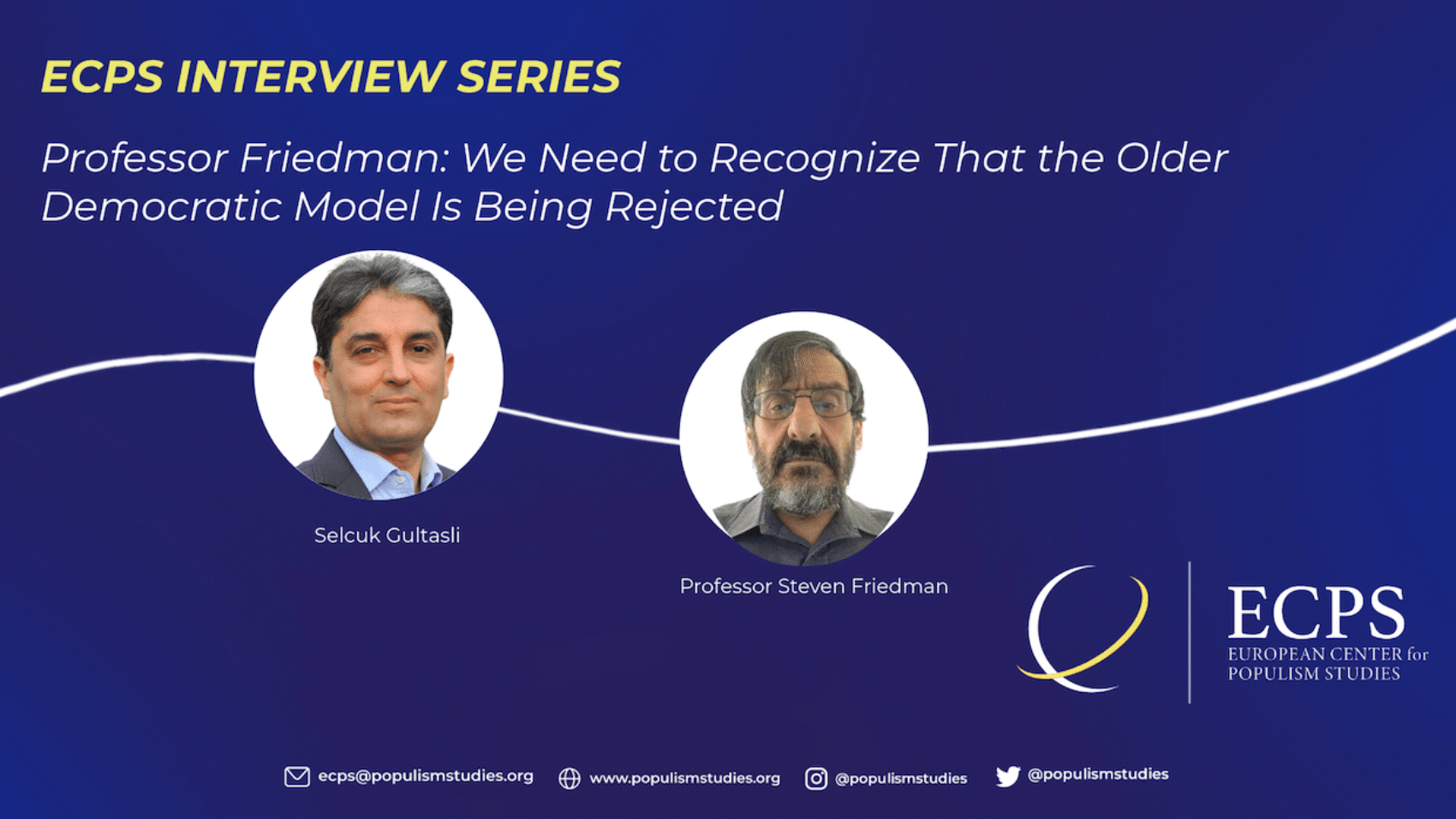
In a thought-provoking interview with the European Center for Populism Studies (ECPS), Dr. Lucan Ahmad Way, Distinguished Professor of Democracy at the University of Toronto, expressed deep concerns over the resilience of American institutions in the face of potential autocratic shifts under Donald Trump’s leadership. “I am extremely worried about how American institutions might respond to Trump’s autocratic tendencies,” Professor Way remarked, emphasizing the risk of subtle forms of abuse that might not attract significant media attention but could undermine the democratic fabric.
Professor Way highlighted concerns that Trump could politicize key institutions like the IRS (Internal Revenue Service), Department of Justice, or FBI to target political opponents discreetly. Although the United States’ strong rule of law may prevent extreme actions, such as the imprisonment of opposition leaders, Professor Way warned about the possibility of covert audits and investigations aimed at harassing Trump’s critics or opposition-aligned businesses.
Beyond the US, Professor Way discussed the evolving priorities of liberal democracies globally, noting a growing need for robust military investments in response to threats from authoritarian powers like Russia and China. He urged Western countries to shift focus from democracy promotion to securing the physical safety of democratic nations, particularly given the heightened risks of military conflicts in regions like Ukraine and Taiwan.
Touching on the broader global landscape, Professor Way also identified economic development as a critical factor in the stability of democracies, citing the correlation between increased wealth and democratic resilience. He underscored that while economic challenges often destabilize democracies, they also threaten authoritarian regimes, as seen recently in Bangladesh. Through this interview, Professor Way sheds light on the complex dynamics influencing the future of democracy in both the US and the wider world.
On November 7, 2024, the European Center for Populism Studies (ECPS) organized a panel at the European Parliament in Brussels to examine the critical influence of rising populism on the 2024 European Parliament elections and the forthcoming US administration. Hosted by MEP Radan Kanev and ECPS Honorary President Irina von Wiese, the event featured distinguished experts who discussed the challenges populism poses to transatlantic relations.
Moderated by Dr. Simon P. Watmough, the panel spotlighted ECPS’s comprehensive 2024 report, which analyzed populist party performance across the EU’s 27 member states. Dr. Emilia Zankina and Dr. Gilles Ivaldi, the report’s editors, provided expert insights into the outcomes of the June European Parliament elections. Keynotes by MEPs Radan Kanev and Nathalie Loiseau addressed the challenges of populist politics for EU-US relations and the implications for democratic governance.
We invite you to watch the panel video for in-depth perspectives on these pressing issues and the potential shifts in transatlantic relations amid the rise of populist movements.
In an insightful interview, Professor Lucan Ahmad Wayexpressed serious concerns about the durability of American institutions under Trump’s influence. “I am extremely worried about how American institutions might respond to Trump’s autocratic tendencies,” he stated, noting that subtle abuses, like politicized audits or investigations, could escape media scrutiny yet still erode democratic foundations. While US rule of law might limit overt actions, Professor Way emphasized the risk of covert pressures aimed at silencing opposition, highlighting the fragility of democratic safeguards in polarized times.
In a thought-provoking interview with the European Center for Populism Studies (ECPS), Dr. Lucan Ahmad Way, Distinguished Professor of Democracy at the University of Toronto, expressed deep concerns over the resilience of American institutions in the face of potential autocratic shifts under Donald Trump’s leadership. “I am extremely worried about how American institutions might respond to Trump’s autocratic tendencies,” Professor Way remarked, emphasizing the risk of subtle forms of abuse that might not attract significant media attention but could undermine the democratic fabric.
Professor Way highlighted concerns that Trump could politicize key institutions like the IRS (Internal Revenue Service), Department of Justice, or FBI to target political opponents discreetly. Although the United States’ strong rule of law may prevent extreme actions, such as the imprisonment of opposition leaders, Professor Way warned about the possibility of covert audits and investigations aimed at harassing Trump’s critics or opposition-aligned businesses.
Beyond the US, Professor Way discussed the evolving priorities of liberal democracies globally, noting a growing need for robust military investments in response to threats from authoritarian powers like Russia and China. He urged Western countries to shift focus from democracy promotion to securing the physical safety of democratic nations, particularly given the heightened risks of military conflicts in regions like Ukraine and Taiwan.
Touching on the broader global landscape, Professor Way also identified economic development as a critical factor in the stability of democracies, citing the correlation between increased wealth and democratic resilience. He underscored that while economic challenges often destabilize democracies, they also threaten authoritarian regimes, as seen recently in Bangladesh. Through this interview, Professor Way sheds light on the complex dynamics influencing the future of democracy in both the US and the wider world.
Here is the transcription of the interview with Professor Lucan A. Way with some edits.
Cultural Backlash Is the Key Driver of Populism
Hungarian government’s anti-immigration billboard says “STOP the refugees” in Budapest, Hungary on April 4, 2018.
Professor Lucan Way, thank you very much for joining our interview series. Let me start right away with the first question. In your view, what are the main factors driving the global rise of populism and authoritarianism today? How do these factors differ across regions, and are there shared elements that make populism a global phenomenon?
Professor Lucan A. Way: I think there are a number of factors. Traditionally, people have made two main arguments. One sees populism as a result of economic discontent or neoliberalism, specifically linked to the 2008 financial crisis. The other approach tends to view populism as a result of more cultural factors, such as fear surrounding the increasing empowerment of visible minorities. For example, in the United States, experiments show that if people are reminded that visible minorities are likely to soon make up the majority of the American population, they experience a sense of “racial threat,” which motivates support for racist parties.
Most studies show that, on a one-to-one basis, cultural backlash variables are more strongly associated with support for populism than economic factors. The evidence leans in favor of these cultural backlash variables in most cases, though they take different forms in different regions. In the United States, particularly in 2016, populism was historically tied to backlash against the civil rights movement and the empowerment of Black Americans. In Hungary, it has taken the form of anti-cosmopolitanism, where Viktor Orbán successfully tapped into resentment against urban elites to polarize the country and build support for Fidesz. In other cases, populism has been driven by anti-immigration sentiment. Overall, cultural factors, such as opposition to immigration, urban elites, or racial minorities, appear to unite most of these movements.
Given the decline of Western liberal hegemony and the rise of alternative power centers like China and Russia, how sustainable is the resilience of third-wave democracies in regions lacking robust civil societies or economic stability? How has the weakening of Western liberal hegemony, alongside the influence of countries like China and Russia, contributed to the persistence and even the rise of competitive authoritarian regimes globally?
Professor Lucan A. Way: What’s interesting is that the third wave of democracy was very much influenced by liberal hegemony in the 1990s, when the Soviet Union collapsed. During this brief decade-long period, the United States (US) and the European Union (EU) were essentially the only global powers, which led to a dramatic increase in the number of democracies worldwide.
However, as most readers will know, this changed in the 2000s with the rise of China as a major economic power and Russia’s increasing military aggression—first in post-Soviet Georgia and, most recently, in Ukraine. This period of liberal hegemony has now ended. Given that liberal hegemony helped fuel the rise of democracies, one might expect that its end would lead to a dramatic decline in democracies. Yet, that has not been the case. Instead, we’ve seen a sort of stability in third- or fourth-wave democracies since the 2000s, with only a slight dip in the number of democracies over the last decade in a few countries like Venezuela and Hungary. So far, at least, democracy has remained relatively robust and certainly more resilient than one might expect given the current Zeitgeist.
In cases like Hungary and Turkey, we see competitive authoritarianism taking root even in countries with democratic traditions. What strategies have leaders in these countries used to effectively erode democratic norms while maintaining electoral competition?
Professor Lucan A. Way: I think Turkey is a case where democracy was limited; it had long periods of military rule with only brief stretches of democracy before Erdogan’s rise. So, I would question the extent of Turkey’s democratic history. Hungary, on the other hand, experienced about 25 years of democracy. The main strategy, particularly relevant to the current US context, has been to dismantle the independent bureaucracy, effectively removing the civil service and politicizing the state. This is essentially the “Orbán plan,” a very common approach, which I worry could become more prominent in the United States.
In Hungary’s case, they argued that the “deep state” was controlled by communists, justifying a purge of officials. These officials were then replaced by loyalists to the ruling Fidesz party. This tactic—removing independent officials and replacing them with loyalists—seems to align with certain elements of Donald Trump’s agenda in the US, which is, I believe, a significant cause for concern.
Far-Right Ideologies and Anti-Democratic Actions Are Distinct Issues
Giorgia Meloni, Italy’s prime minister, speaks at the Atreju convention in Rome, Italy on December 16, 2023. Photo: Alessia Pierdomenico.
How resilient do you believe liberal democratic institutions are to the pressures posed by populist leaders and movements? What mechanisms or strategies have been most effective in safeguarding democracy against authoritarian shifts?
Professor Lucan A. Way: Well, a few things here. I think it’s important to distinguish between the so-called far right and anti-democratic parties. These are often conflated, but they’re distinct. For instance, you may have a far-right party that is anti-immigrant or opposes rights for certain minorities, yet that doesn’t necessarily mean it fundamentally attacks democracy. These are two separate issues.
A party may be anti-immigrant or even racist without undermining core democratic institutions. For example, in Italy, Georgia Meloni’s government has been characterized by far-right views, especially concerning immigrants, yet hasn’t fundamentally attacked minorities or democratic structures. This may also be true in other cases, like France. So, it’s essential to avoid conflating opposition to minorities or immigration with opposition to democracy—they’re not necessarily the same.
In the United States, however, these elements are more closely linked; you have an anti-immigrant party that is also highly anti-democratic. Given that the US is the world’s oldest democracy, this combination is, of course, deeply concerning.
Considering recent shifts in European policies, particularly Germany’s defense initiatives and economic distancing from Russia, what do you see as the long-term implications for Europe’s role in promoting and defending democratic values globally?
Professor Lucan A. Way: I think right now Europe’s main concern needs to be security. For many decades, including myself, we didn’t fully appreciate the importance of a robust military in preserving the liberal world order. However, with Russia’s violation of the norm against invading other countries and its interference in democratic elections in the US and Europe, this is a significant concern. Right now, liberal countries outside the United States are waking up to the necessity of seriously investing in their military capabilities—not only to defend Ukraine, a democracy directly attacked by Russia, but also due to the realization that failing to defend Ukraine could have profound global implications. Without such defense, there could be a concerning increase in the frequency of countries attacking one another.
Of course, I believe the biggest concern on this front right now is the potential for China to invade Taiwan. Here, we see very direct and literal military threats against democracies, which the liberal West needs to focus on preventing. In a sense, we are beyond simply promoting democracy as seen in the 1990s; the emphasis now is much more on actively maintaining the physical security of democratic nations.
In your article, “The Resilience of Democracy’s Third Wave,” co-authored with Professor Steven Levitsky, you contend that the findings of V-Dem and Freedom House may be exaggerated and don’t entirely reflect the real state of democracy. To what degree do you think the current narrative of “democratic decline” is overstated? Do you believe the data truly indicates a global democratic backslide, or are we seeing shifts in how democracy is interpreted? Has your perspective changed in the light of Trump’s election in the U.S. and the recent successes of far-right parties in Europe?
Professor Lucan A. Way: Regarding V-Dem and Freedom House, I don’t see a reason to question the data itself, but rather the rhetoric surrounding it. Their reports often have a hyperbolic tone that doesn’t fully align with the data they present. I feel these interpretations have become exaggerated, likely aimed at attracting media attention. You’re unlikely to get calls from major outlets like The Washington Post or The New York Times with a report stating that “things are basically the same,” so there’s a tendency towards more sensational claims, like democracy being at a level comparable to the 1980s, which is demonstrably inaccurate.
Moreover, terms like “autocracy” are used quite liberally in these reports. For instance, labeling India as an autocracy feels misleading. India under Narendra Modi has engaged in concerning authoritarian practices, including suppressing opposition and targeting the Muslim population. Ahead of the last election, they even sought to freeze the accounts of the opposition Congress party. Yet, the elections themselves remain largely democratic, as shown by the BJP’s loss of majority, requiring them to form a coalition. So, calling India an autocracy overlooks the fact that its elections still hold significant power in determining leadership. It’s more accurate to view India as a competitive authoritarian system, where elections remain meaningful but are accompanied by substantial abuses of authority.
These are cases where elections remain real and effectively determine who gains and retains power, yet they are accompanied by various forms of authoritarian abuses, including attacks on the opposition. I think that’s an important distinction to make, and I do believe it’s significant, yes.
Economic Crises and Public Dissatisfaction Also Challenge Authoritarian Regimes
Large protests demand the resignation of Prime Minister Sheikh Hasina’s government as part of the Anti-Quota Movement and Bangladesh Quota Reform Protests. Thousands took to the streets in Dhaka, Bangladesh, on August 4, 2024. Photo: M.D. Sabbir.
Given the increasingly unfavorable international environment, why has full-scale authoritarianism failed to make a comeback? What are the international and domestic roots of the resilience of competitive electoral regimes?
Professor Lucan A. Way: I have two main responses. First, the world has become significantly wealthier over the past generation. Since the 1980s, the number of high-income countries has doubled, and there’s an extremely strong correlation between wealth—excluding oil wealth—and democracy. According to the World Bank, if we exclude petro-states like Kuwait and Saudi Arabia, which derive their wealth primarily from natural resources, 95% of high-income countries today are democratic, with only Singapore and Hungary as exceptions. This correlation has held steady over time, indicating that, in the modern era, wealth contributes strongly to democratic resilience. Since the 1980s, the global increase in wealth has bolstered democratic stability, even in places where it was previously fragile, such as Romania, Portugal, and Greece. These countries are now high-income, and their economic development and robust domestic economies play a key role in preventing full democratic backsliding.
The second point is that, even among middle-income countries, it’s easy to overlook how challenging it is to establish and sustain authoritarianism. The same economic crises and widespread public dissatisfaction that threaten democracies also pose significant challenges to authoritarian regimes. For example, this was seen dramatically in Bangladesh over the summer, where deep dissatisfaction with the autocratic Prime Minister Sheikh Hasina contributed to her eventual ouster.
We, often, assume these challenges are unique to democracies, but authoritarian and competitive authoritarian regimes face similar issues in maintaining power due to general discontent with economic instability and corruption. Bangladesh is a case in point, where frustration with issues like the quota system and high unemployment intensified dissatisfaction, highlighting the limitations on the authority of an autocratic leader.
You argue there is considerable evidence that Russian President Putin’s attack on international norms could ultimately strengthen the liberal world order. Can you please explain how that could happen?
Professor Lucan A. Way: I wrote that piece shortly after Russia’s full-scale invasion in February 2022, and I think it was impressive how strongly the West united in support of Ukraine. Putin likely hoped that Europe and the United States would not respond, partly because Russia has maintained corrupt ties with members of the European elite—most notably, Gerhard Schröder, who was paid millions by Russian oil companies and essentially became completely compromised. Putin may have believed that these relationships would allow him to divide the European elite. However, the brutal nature of the invasion shocked many and pushed Western leaders into unified action.
Remarkably, this led to Europe’s significant shift away from dependence on Russian energy resources—a transformation that has been quite notable. Many of us were pleasantly surprised by this level of unity. That said, we are not yet out of the woods. There continues to be some hesitation among European powers and an insufficient recognition of the need to strengthen their militaries against the Russian threat. I also think the war is likely to continue for some time, and I wouldn’t entirely discount the possibility of divisions emerging. I think Putin certainly hopes that, especially with Trump’s election, we might see divisions in Europe, particularly along lines similar to Orban in Hungary, who has been notably pro-Russian, or Serbia’s alignment with Russia. This is a development I’m quite concerned about.
Why do some authoritarian regimes survive for decades, often despite severe crises, while others collapse quickly, even absent significant challenges? How do you explain the nexus between social revolution and authoritarian durability? One of your articles suggests that many democracies in lower-income regions remain competitive due to authoritarian weaknesses. Could you expand on the dynamics that keep democracies stable in these challenging environments?
Professor Lucan A. Way: Why do social revolutions result in stable autocracies? Well, that’s a question we explored in our book, and it largely has to do with the fact that social revolutions—like Russia in 1917 or Cuba in 1959—almost always lead to civil war or violent conflict. This conflict enables the creation of a highly unified elite who maintain cohesion because of an outside threat, fostering a siege mentality. It also allows these regimes to build a strong military and eliminate alternative power centers, leading to a weakened civil society. China is a prime example of this phenomenon: while it faces economic issues, there is no significant opposition capable of capitalizing on public discontent with the Communist Party, which helps it remain in power.
Trump Will Make Life Difficult for His Critics and Opposition-Supporting Businesses
Former U.S. President Donald Trump and vice-presidential nominee J.D. Vance at a rally in Atlanta, GA, on August 3, 2024. Photo: Phil Mistry.
With the election of Donald Trump as the 47th president of the US, how do you think American institutions will react to his autocratic tendencies?
Professor Lucan A. Way: I am extremely worried about how American institutions might respond to his autocratic tendencies. While I think it’s very unlikely that this will lead to the end of elections or full-scale authoritarianism, American institutions remain vulnerable to politicization. I’m particularly concerned about potential abuses, such as using the Internal Revenue Service (IRS) to audit Trump’s political rivals or the Department of Justice or FBI to investigate his enemies.
The US has a strong rule of law, so it’s unimaginable that Trump could jail high-profile opponents like Kamala Harris or Democratic leaders. However, it’s quite conceivable he could use audits or investigations to make life difficult for his critics, targeting businesses that support opposition candidates like Josh Shapiro. Recently, there was an attempt to pass a bill in the House that would allow the Secretary of the Treasury to revoke the nonprofit status of NGOs allegedly supporting “terrorism”—a vaguely defined term that could be used selectively against left-wing organizations while protecting right-wing ones.
There are many possibilities for more subtle forms of abuse that won’t necessarily be dramatic or attract major media attention. These wouldn’t involve actions as extreme as jailing political candidates or suppressing protests but could instead happen behind the scenes through tactics like targeted audits. This kind of abuse is harder to detect, especially for outsiders—it’s challenging to gauge, for instance, if the IRS is disproportionately auditing Democrats over Republicans. Such actions are easier to carry out because they’re more opaque, which is precisely why I’m deeply concerned. In fact, I think it’s incredibly likely that we will see these kinds of abuses, and I would be very surprised if they do not occur in the United States.
How do you think populism in the US and populists worldwide will be impacted by the election of Donald Trump?
Professor Lucan A. Way: I think initially, Trump’s election will certainly fuel and boost confidence among populists globally. At the same time, I want to point out that the driving force behind support for Trump may not necessarily be a fundamental shift to the right. Instead, it could be a reflection of deep anger directed at incumbents.
The silver lining, for those opposed to such populist figures, is that now, as they hold power, this anger is likely to be directed at them. It’s just hard to be an incumbent anywhere these days. Since 2013, in wealthy democracies, 15 out of 18 elections have led to incumbents being ousted. This intense anti-incumbent sentiment likely fueled the last US election.
What’s puzzling to me, honestly, is the source of this anger. Yes, there’s inflation, but inflation in the United States was 14% in the 1980s, while now it’s around 2.4%. Unemployment is very low, nearly 4%, which is close to full employment. The economy seems to be performing fairly well, so it’s somewhat perplexing. The anger and perceptions of the economy seem misaligned with the actual indicators.
And lastly, how do you explain the electoral victory of Maia Sandu despite heavy Russian influence in Moldova?
Professor Lucan A. Way: First, it was very close. There were actually two key elections—a referendum on joining the EU and Maia Sandu’s election. Both were definite nail-biters. I think Moldovans are likely quite fearful of Russian influence, especially given what’s happened to their neighbor Ukraine. Moldova also has a long tradition of anti-Russian sentiment, particularly among Moldovan and Romanian nationalists, which provided a strong basis of support for her. So, yes, that’s a piece of good news. In Georgia, however, it’s disappointing to see that the pro-Russian party appears to have used fraud to maintain power, so there’s positive news in Moldova but less so in Georgia.