Anti-Islam demonstration in Rotterdam, the Netherlands, on January 20, 2017. Protesters carry signs opposing “Islamization.” Photo: Jan Kranendonk.

When Change Becomes Conflict: Immigration and the Politics of Cultural Backlash

This analysis by Yacine Boubia challenges the dominant economic explanations of populism by foregrounding the central role of cultural transformation. Drawing on Ronald Inglehart’s “silent revolution” and the cultural backlash thesis, it argues that immigration has become the most visible and politically charged symbol of broader shifts in identity, values, and social order. Populism, in this account, is not simply a reaction to material deprivation but a response to perceived cultural displacement and status loss. By linking economic disruption with identity-based anxieties, the article demonstrates how immigration functions as a focal point for wider conflicts over belonging, representation, and democratic legitimacy in contemporary Western societies.

By Yacine Boubia

The dominant narrative surrounding the rise of populism in Europe and the United States has long been grounded in economics. Globalization, automation, and trade shocks are often said to have produced a class of “left behind” voters who turned to populist leaders out of material deprivation. While this account captures an important dimension of structural change, it ultimately misdiagnoses the core political dynamics at work. Populism is not simply a reaction to economic hardship. It is, more fundamentally, a response to cultural transformation—one in which immigration has become the most visible and politically salient symbol of broader social change. 

To understand this shift, it is necessary to return to the long arc of value change identified by Ronald Inglehart. Beginning in the postwar decades, advanced industrial societies underwent what he termed a “silent revolution,” as rising prosperity and educational expansion reshaped public priorities. Survival-oriented values gradually gave way to self-expression, autonomy, and cosmopolitan openness (Inglehart, 1977; Inglehart & Norris, 2019). Over time, these shifts became embedded in institutions, elite discourse, and policy frameworks, particularly within urban, highly educated populations. 

Yet this transformation was never evenly distributed. Large segments of the population—often older, less formally educated, and more rooted in national or local traditions—did not merely lag behind this shift; they experienced it as a form of displacement. What appeared to some as progress appeared to others as erosion: of authority, of social cohesion, and of a familiar moral order. The political consequences of this divergence became increasingly visible after the late 1960s, when cultural liberalization accelerated across Western democracies and elite consensus around multiculturalism and individual autonomy solidified. 

It is within this context that immigration assumes its central political role. Immigration is not merely one issue among many; it is the issue through which broader cultural transformations are rendered visible, tangible, and politically immediate. Debates over borders, asylum, and integration are simultaneously debates about national identity, social trust, and the pace of cultural change itself. The European migration crisis did not create these tensions, but it crystallized them, transforming diffuse anxieties into direct political conflict across the continent. 

The differential reception of refugee populations further illustrates how cultural categorization shapes political responses. The Ukrainian refugee crisis, following Russia’s 2022 invasion, was widely framed in Europe as a conventional interstate war producing displaced populations that were more easily incorporated into existing asylum systems. By contrast, earlier inflows of refugees from Syria and parts of the Middle East were more frequently politicized through debates over long-term integration, welfare capacity, and security concerns. Material conditions alone cannot explain these differences. They reflect processes of perceived cultural proximity, geopolitical framing, and institutional response mechanisms within the European Union. 

Scholars of migration and political psychology have long noted that public attitudes toward migration are structured not only by economic calculations but also by perceived cultural distance and social trust. Emmanuel Todd’s recent work, La Défaite de l’Occident (2024), contributes to this discussion by emphasizing that societies interpret geopolitical and demographic change through deeper assumptions about cultural cohesion and civilizational identity. From this perspective, differential refugee reception reflects not simply policy design but underlying social narratives about similarity, belonging, and national self-understanding. 

The framework developed by Pippa Norris and Ronald Inglehart captures these dynamics with particular clarity. Their “cultural backlash” thesis argues that support for populist parties is driven less by absolute economic deprivation than by perceived status loss among groups once embedded within dominant cultural hierarchies (Norris & Inglehart, 2019). Immigration, in this context, functions not merely as a policy issue but as a symbolic focal point through which broader anxieties about identity and social change are expressed. It becomes the terrain on which struggles over cultural authority are fought. 

The United States exhibits a parallel trajectory. The rise of Donald Trump cannot be fully understood through economic grievance alone. Empirical studies of the 2016 election have consistently shown that attitudes toward immigration, cultural change, and racial identity were among the strongest predictors of support for Trump (Sides et al., 2018). His appeal lay less in policy detail than in his ability to articulate a sense of loss—of border control, national coherence, and institutional trust. Immigration functioned as the central issue through which these concerns were politically mobilized. 

This mobilization was amplified by changes in the digital information environment. Scholars of political communication have highlighted how social media platforms and data-driven campaigning enabled more granular targeting of affective and identity-based grievances. While the precise influence of firms such as Cambridge Analytica is debated in the academic literature, broader research on “computational propaganda” and social listening suggests that political actors increasingly adapt messaging to pre-existing online sentiment patterns rather than shaping them from above (Bennett & Livingston, 2018). 

None of this implies that economic factors are irrelevant. On the contrary, the structural effects of globalization have played a crucial role in shaping the terrain on which cultural conflict unfolds. Trade exposure, deindustrialization, and regional inequality have increased perceptions of economic insecurity in many Western societies (Autor et al., 2013). However, these economic disruptions do not translate mechanically into political outcomes. Their salience is mediated through cultural interpretation. Economic decline becomes politically consequential when it is embedded within narratives of identity, recognition, and perceived neglect. 

In this sense, globalization operates as a force multiplier rather than a primary cause of populism. Communities experiencing economic stagnation are more likely to interpret immigration through lenses of competition and cultural threat, and more likely to view political elites as detached from their lived realities. Populist movements succeed precisely because they fuse economic anxiety with cultural grievance into a single coherent narrative—one that pits “the people” against both external pressures and internal elites (Mudde, 2004). 

Across Europe, parties such as the Alternative for Germany (AfD) and the National Rally (RN) in France have institutionalized this synthesis. While differing in national context, these movements share a common structure: opposition to immigration, skepticism toward supranational governance, and a broader critique of liberal elite consensus. Their success underscores the extent to which cultural backlash has become embedded within contemporary political competition. 

The policy implications are significant. If populism were driven primarily by economic inequality, then redistribution and growth-oriented policies might be sufficient to mitigate its rise. But if it is rooted in cultural backlash, such measures will prove insufficient on their own. Economic policy cannot resolve conflicts over identity, belonging, and social norms. Nor can these conflicts be dismissed as irrational without further deepening political polarization. 

A more realistic approach begins by recognizing that populism emerges from genuine, if conflicting, experiences of social transformation. The “silent revolution” identified by Inglehart has reshaped Western societies in profound ways, but it has also produced new forms of cultural stratification. In the United States, this process was accelerated by the political economy of the 1980s and 1990s, where deregulation and neoliberal convergence under both Republican and Democratic administrations coincided with the rise of cosmopolitan urban centers and multicultural policy frameworks. These developments, reinforced during the Clinton and Obama eras, contributed to a perception among some voters that cultural and institutional change was occurring without adequate democratic mediation. 

Immigration, as the most visible manifestation of these broader transformations, will therefore remain central to political conflict in advanced democracies. Understanding populism requires moving beyond the false dichotomy between economics and culture. It is the interaction between structural change and subjective perception that drives political behavior. Until this interplay is fully acknowledged, explanations will remain partial, and policy responses will continue to fall short. 


References

Inglehart, R. (1977). The Silent Revolution – Changing Values and Political Styles Among Western Publics, Princeton University Press.

Inglehart, R. & Norris, P. (2019). Cultural Backlash: Trump, Brexit, and Authoritarian Populism, Cambridge University Press.

Autor, D., Dorn, D., & Hanson, G. (2013). “The China Shock: Learning from Labor Market Adjustment to Large Changes in Trade,” ANNUAL REVIEW OF ECONOMICS, Vol. 8:205-240 (Volume publication date October 2016)  https://doi.org/10.1146/annurev-economics-080315-015041

Sides, J., Tesler, M., & Vavreck, L. (2018). Identity Crisis: The 2016 Presidential Campaign and the Battle for the Meaning of America, Princeton University Press.

Mudde, C. (2004). “The Populist Zeitgeist.” Government and Opposition, 39(4), 541–563. http://www.jstor.org/stable/44483088

Bennett, W. L. & Livingston, S. (2018). “The disinformation order: Disruptive communication and the decline of democratic institutions.” European Journal of Communication, 33(2), 122–139. https://doi.org/10.1177/0267323118760317

Todd, E. (2024). La Défaite de l’OccidentGallimard.

Dr. Frederik Møller Henriksen.

Dr. Henriksen: Strict Migration Policy in Denmark Fails to Contain the Radical Right

In this ECPS interview, Dr. Frederik Møller Henriksen offers an in-depth assessment of Denmark’s 2026 general election, highlighting both continuity and change in one of Europe’s most stable democracies. He characterizes the outcome as “a very poor election for the traditional governing parties,” underscoring the historic decline of established actors alongside the emergence of “a highly fragmented parliament.” While domestic concerns dominated the campaign, Dr. Henriksen emphasizes that strict migration policies have not contained the populist radical right, as evidenced by the resurgence of the Danish People’s Party. At the same time, he cautions against overstating democratic crisis, noting Denmark’s enduring institutional trust. Instead, he points to media fragmentation and digital communication as key forces reshaping political competition and voter alignment.

Interview by Selcuk Gultasli

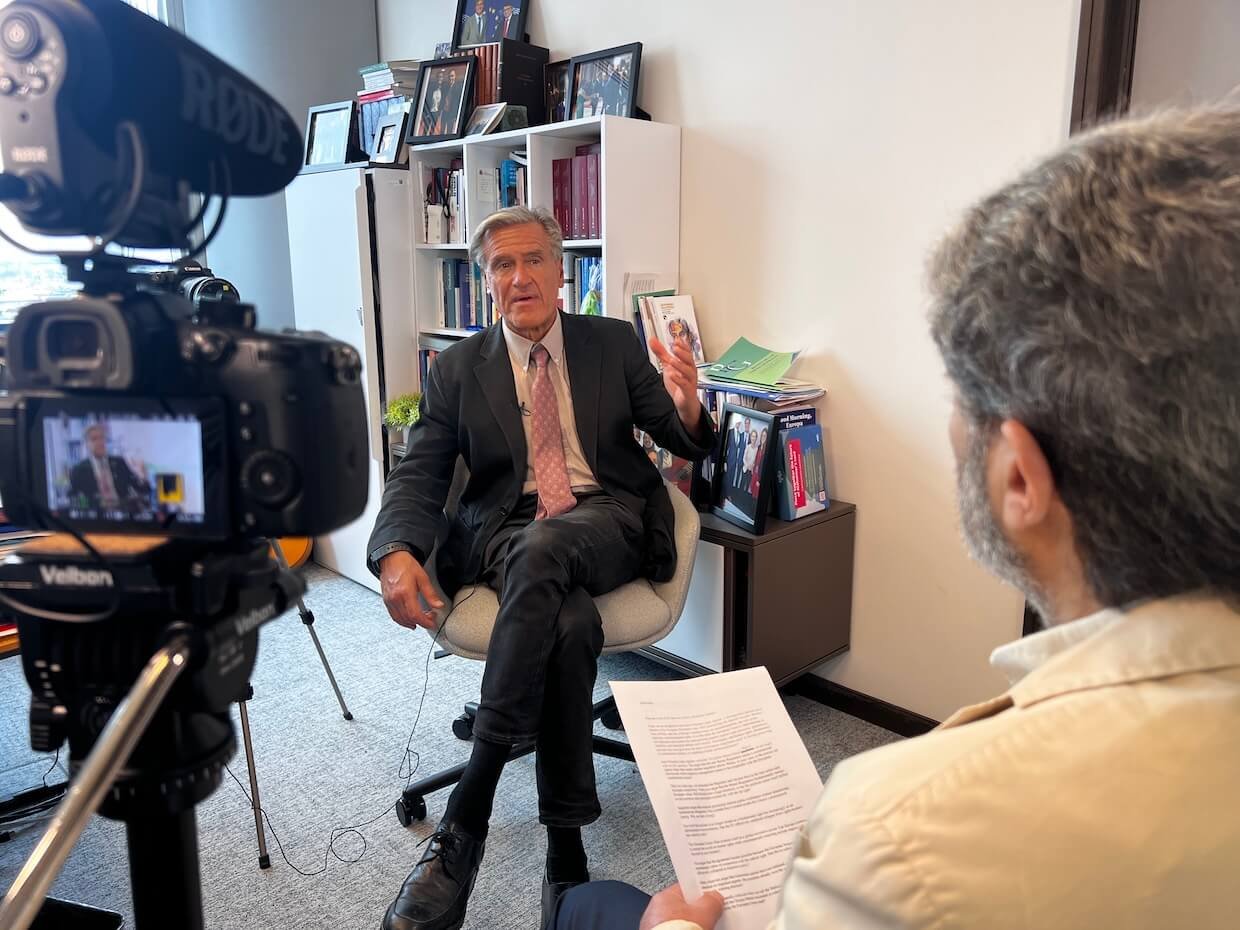
In the aftermath of Denmark’s closely contested 2026 general election on March 24, the country stands at a critical political juncture—marked by fragmented blocs, the resurgence of the populist radical right, and renewed geopolitical tensions over Greenland. While domestic issues such as the cost-of-living crisis and migration shaped the campaign, deeper transformations in political communication and democratic contestation are also unfolding. Giving an in-depth interview to the European Center for Populism Studies (ECPS), Dr. Frederik Møller Henriksen, a postdoctoral researcher at Roskilde University working at the intersection of politics, media, and digital society, whose research on digital counter-publics, alternative media ecosystems, and anti-systemic populism, offers important insights into these developments. 

Reflecting on the election outcome, Dr. Henriksen underscores that “this was a very poor election for the traditional governing parties,” pointing to the historically weak performance of both the Social Democrats and the center-right Venstre. He further highlights that “we now have a highly fragmented parliament,” a development that is likely to render coalition-building both complex and protracted. Indeed, the emergence of multiple competitive actors across the political spectrum has produced what some observers describe as “Dutch conditions” of party fragmentation and even “Belgian conditions” of prolonged government formation.

At the same time, Dr. Henriksen draws attention to the resurgence of the populist radical right, particularly the Danish People’s Party, emphasizing that restrictive policy convergence has not neutralized such forces. As he notes, the Danish case illustrates that strict migration policies do not necessarily diminish the electoral appeal of the radical right, but may instead coincide with renewed voter mobilization around issues of identity, economic anxiety, and national direction.

Beyond electoral dynamics, the interview also engages with the transformation of political communication in digitally mediated environments. While cautious about attributing direct causal effects to alternative media, Dr. Henriksen observes that “it has been very difficult to define” the election in terms of a coherent overarching narrative, suggesting that media fragmentation and hybrid communication systems are reshaping how political competition is structured and understood.

Importantly, despite these shifts, Dr. Henriksen does not interpret recent developments as signaling a systemic crisis of democracy. Denmark, he argues, remains a high-trust society with robust institutional foundations. Yet, it is increasingly “no longer isolated from trends we see elsewhere in Europe,” including fragmentation, anti-incumbent voting, and the growing salience of populist communication.

Taken together, Dr. Henriksen’s reflections situate the Danish election within a broader European trajectory, where established party systems are under pressure, populist actors continue to adapt, and democratic politics is being reshaped by both structural and communicative transformations.

Here is the edited version of our interview with Dr. Frederik Møller Henriksen, revised slightly to improve clarity and flow.

Voters Reward Clearer Political Profiles on Both Sides

Denmark votes in parliamentary elections in Copenhagen.
Denmark votes in parliamentary elections in Copenhagen, Kastrup, Denmark, on November 1, 2022. Voters head to polling stations to cast their ballots in the general election. Photo: Francis Joseph Dean / Dean Pictures / Dreamstime.

Dr. Henriksen, thank you very much for joining our interview series. Let me begin with the electoral outcome itself: How should we interpret the 2026 Danish election results, where both the red and blue blocs fell short of a majority? Does this fragmentation signal a structural transformation of Denmark’s party system?

Dr. Frederik Møller Henriksen: Thank you for this question—it is a very broad one. I will try to narrow it down to a few key takeaways, and then we can elaborate further during the interview.

The first takeaway is that this was a very poor election for the traditional governing parties. The Social Democrats, for instance, remained the largest party, but they fell to a historic low—their worst result since 1903. The center-right party, Venstre, as it is called in Danish, also suffered a historically weak result.

The second takeaway is that we now have a highly fragmented parliament. This means that coalition-building will be unusually difficult and potentially lengthy—at least, that is what commentators are suggesting at the moment.

The third point is that overall voter turnout was lower than usual, although still high by international standards. I interpret this as a sign that voters have been dissatisfied with the centrist government we have had over the past four years.

The fourth point is that there were clear winners outside the old or established center. The Danish People’s Party, for example, performed strongly with 9.1%, and the Socialist People’s Party on the left became the second-largest party.

Thus, the election did not simply produce fragmentation for its own sake; rather, it suggests that voters rewarded parties with clearer profiles on both sides of the political spectrum. In this sense, the Danish People’s Party can be seen as one of the main winners.

I also heard a commentator suggest that these are “Dutch conditions,” in the sense that we now have many parties represented in parliament. There is a political science measure for the effective number of parties, and it has reportedly never been higher in the Danish parliament. Another commentator added that we may face “Belgian conditions,” meaning that it could take a very long time to form a government with so many parties involved. I find this framing quite insightful.

Regarding whether this signals a structural transformation, I would say it is important to view the situation in light of the decline of the Social Democrats. They have been in government for an extended period—first leading a left-leaning government and then a centrist coalition. This development should therefore be understood in the context of their weakening position, including their time in power during COVID-19. It appears they have struggled to maintain momentum, which is reflected in the election results. At the same time, we do see clear signs of fragmentation—this is quite evident.

We can also observe that centrist parties, such as the Moderates, have become highly important in the coalition-building phase. Although relatively small, both blocs—the left and the right—depend on their mandates to form a government. As a result, they are likely to play a very prominent role.

Finally, this election also points to the growing importance of person-driven politics rather than party-driven politics. For voters, the election itself has been quite fragmented. It is not entirely clear what the main issues have been; instead, individual political figures have played a central role. We can see that some of the key figures, such as Martin Messerschmidt and Lars Løkke Rasmussen, have attracted a significant share of the vote. This indicates a broader shift toward more person-driven politics and person-driven electoral outcomes.

Unpopular Reforms Cost the Social Democrats Voter Support

Mette Frederiksen
Denmark’s Prime Minister Mette Frederiksen at a press conference during the COVID-19 crisis, Copenhagen, March 17, 2020. Photo: Francis Dean | Dreamstime.

The Social Democrats emerged as the largest party but recorded one of their weakest results in over a century. To what extent does this outcome reflect voter fatigue with incumbency, and to what extent does it point to deeper shifts in political trust and democratic legitimacy?

Dr. Frederik Møller Henriksen: It’s a very good question. There is clearly an incumbency story here. It is important to situate the Social Democrats’ decline in voter support within a broader anti-incumbent mood among voters, which I alluded to, earlier. After nearly seven years in power, the party has been carrying the burdens of office. As we know from political science, this is challenging for governing parties, particularly when they are associated with unpopular reforms. One notable example is the abolition of a national holiday in 2024, known as the Great Prayer Day. This decision appears to have resonated strongly with voters across the political spectrum, and the party has been penalized for it. I think that when the government abolished the holiday, it did not anticipate the extent of its electoral impact. That is an important factor to consider.

At the same time, it would be too narrow to interpret the result solely as voter fatigue. The Social Democrats were squeezed from both sides. Some left-leaning voters felt that the party had become too restrictive on immigration, while some right-leaning voters continued to distrust it on economic issues. In this sense, the outcome reflects both incumbency effects and the limits of a centrist repositioning, which is relatively unusual in the Danish political context. So, while the party remains electorally dominant in relative terms, its broad coalition appears thinner and more fragile than before. 

That said, I do not see strong evidence—at least at this stage—of a more generalized crisis of democratic legitimacy. Denmark still has stable political institutions, and the economy is in relatively good shape compared to some other EU countries. Voter turnout also remained relatively high, and the election process was fair. Therefore, framing this as a general crisis of democratic legitimacy may be an overstatement. However, much will depend on what kind of government ultimately emerges.

The Danish People’s Party Re-Emerges as a Major Force

The election saw a notable resurgence of the Danish People’s Party and other anti-immigration actors. How do you explain this revival in light of your research on anti-systemic populism? Does it indicate that such movements have successfully re-entered the electoral mainstream?

Dr. Frederik Møller Henriksen: That is a good question. There is clearly a strong case to be made that the Danish People’s Party has re-emerged as a significant force. They moved from around 2–3% to 9.1% of the vote, effectively tripling their support compared to the previous election. They have campaigned on issues such as zero net Muslim migration and cost-of-living concerns, including proposals like abolishing petrol taxes. They have been very successful in doing so, and I would also argue that they have run one of the most effective social media campaigns, which likely contributed to their performance.

This revival suggests that anti-immigration politics have not disappeared; rather, they were partially displaced and fragmented. This election indicates that when economic anxiety, migration, and broader questions about national direction become salient again, these constituencies can be remobilized electorally.

In relation to my own research, I have focused less on elections per se and more on anti-systemic movements and forms of mobilization. From that perspective, the Danish People’s Party has been particularly successful in tapping into this kind of anti-systemic mobilization.

At the same time, we also see another far-right party, the Danish Democrats, led by former minister Inger Støjberg. While they share a similar anti-immigration stance, they have not been as successful in converting this into electoral support. To me, this suggests that additional factors are at play. One key element appears to be the effectiveness of social media campaigning, particularly on the part of the Danish People’s Party and Morten Messerschmidt.

A Key Lesson for Social Democratic Parties in Europe

The Danish case has often been cited as an example of mainstream parties absorbing far-right agendas—particularly on immigration. In light of the latest election results, do you see this strategy as containing or, paradoxically, legitimizing populist radical right discourse within mainstream political competition? Do the election results suggest that this strategy has reached its limits—or even backfired?

Dr. Frederik Møller Henriksen: Yes, I definitely think this election lends support to the argument that the strategy of normalizing far-right rhetoric and policies within the center and the center-left has its limits—perhaps even backfiring to some extent. For example, Denmark has maintained one of Europe’s toughest migration policies, and yet the Danish People’s Party still achieved a very strong electoral result.

When we examine the data, particularly in comparison to the 2022 election, we also observe one of the largest estimated voter shifts from one party to another—specifically from the Social Democrats to the Danish People’s Party. This is based on the data currently available, although it will require further analysis. At the very least, this suggests that voters are moving from the Social Democrats to the Danish People’s Party, and that this shift is closely linked to the migration issue.

What this indicates is that a strict mainstream migration policy does not automatically neutralize the radical right or the far right in electoral terms. This is an important lesson for other social democratic parties across Europe that are observing the Danish election and seeking to shape their own positions on migration and anti-immigration policies in light of these developments.

Far-Right Digital Counter-Publics Remain Highly Active

Your work emphasizes the role of alternative news media in shaping political perceptions. To what extent do you think digital counter-publics and alternative information environments influenced the electoral performance of populist and radical right actors in this election?

Dr. Frederik Møller Henriksen: Let me begin with alternative news media. I would say that, in themselves, they do not have a significant impact on electoral outcomes. I have been collecting articles from Danish alternative news media throughout the election, and only one outlet—one that is somewhat close to the Social Democrats, called PUPU—has actively covered the election. I have also followed debates on national television, where at least one editor from a right-leaning outlet was invited to participate in discussions on migration, particularly concerning Muslims and the Danish Muslim population. So, there is certainly something to this, but it is not an impact that we can clearly observe. 

When it comes to digital counter-publics connected to alternative news media, it is becoming increasingly difficult for researchers to obtain reliable data from platforms, which makes this question quite challenging to answer. Based on my intuition, however, these counter-publics—especially those associated with the far right and the Danish People’s Party—are highly active. I am quite confident that the Danish People’s Party’s social media strategy has aimed to mobilize some of these digital counter-publics. How successful these efforts have been, and the extent of their overall impact, remains difficult to determine—particularly given the ongoing challenges of accessing data from different platforms.

No Electoral Impact from the Greenland Issue

Election campaign posters featuring Liberal leader and former Prime Minister Lars Løkke Rasmussen displayed on a street during the campaign period in Copenhagen, Denmark on June 15, 2015. Photo: Francis Joseph Dean / Dean Pictures / Dreamstime.

Despite intense international attention on the Greenland crisis, domestic issues ultimately dominated the campaign. How do you interpret this gap between geopolitical salience and voter priorities? Was the so-called “Greenland effect” electorally significant or overstated?

Dr. Frederik Møller Henriksen: As I see it, the only politician who really managed to benefit from the “Greenland effect,” or to gain something from it, was the former Minister of Foreign Affairs, Lars Løkke Rasmussen, from the Moderates. There was a documentary film about the days leading up to and during the crisis, when it was at its peak, and Lars Løkke Rasmussen traveled to Washington to meet with American politicians. 

I think he was the only one who really gained something from this in electoral terms, at least. I am not entirely sure why. Mette Frederiksen was certainly in a position to benefit as well, since she played a significant role in managing the situation and coordinating with European counterparts. However, we do not see this reflected in the numbers, at least not in the electoral outcome.

If we consider the Greenland case more broadly, it mattered quite a lot in the run-up to the election. Mette Frederiksen called the election while still benefiting from the visibility and leadership image created by Trump’s pressure over Greenland. During the campaign itself, however, the issue was clearly overshadowed by domestic concerns. These included rising costs of living, the green transition, debates over clean drinking water, healthcare for an aging population, and, of course, immigration. These issues ultimately dominated the campaign. The established parties struggled to mobilize effectively across all of them, although the Social Democrats were more successful on issues such as the green transition and welfare, while the Danish People’s Party mobilized strongly on immigration as well as welfare and healthcare-related concerns.

Potential Spillover into Populist Narratives

At the same time, could the Greenland issue have indirectly shaped the election by reinforcing narratives of sovereignty, external threat, and national unity—particularly within populist communication frames?

Dr. Frederik Møller Henriksen: As I mentioned earlier, perhaps—but not to a very strong extent. I think it is, to some degree, a matter of time. We will have to see whether concerns over Greenland spill over into broader, more classic right-wing populist debates regarding border control, security, national cohesion, and immigration. That said, I would still be somewhat hesitant to answer definitively in the affirmative. It is also a question of timing—we will have to see, especially as the formation of a coalition government will likely take a few months, according to some political analyses. These topics could certainly resurface.

Fragmentation Elevates the Moderates to Kingmaker Status

The Moderates, now positioned as a pivotal kingmaker at the political center, occupy a decisive role in post-election coalition building. From your perspective, does this development represent a stabilizing corrective within Danish democracy, or does it instead point to a deeper fragmentation of political representation?

Dr. Frederik Møller Henriksen: I think it points to a deeper fragmentation of political representation, as you suggest. Today, the left-leaning bloc has chosen the Moderates as the kingmaker, which is entirely new information. However, the left-leaning bloc still needs the mandates from Lars Løkke Rasmussen’s party to succeed, so the most likely scenario is a left-leaning government with the Moderates as part of it—although I would not put my head on the block for that.

It is somewhat striking, because leading up to the election, many expected that Lars Løkke Rasmussen and the Moderates would assume the kingmaker role. However, learning from the last election, the Social Democrats appear to have tried to avoid that situation, as it would have placed considerable pressure on them—even as the largest party—within an increasingly fragmented party system. Time will show what role the Moderates and Lars Løkke Rasmussen—who hold 14 seats in parliament—will ultimately play in forming the government.

One additional point is that Lars Løkke Rasmussen has been the clearest advocate for forming another centrist government. He has maintained this position consistently from the outset. If the government formation process drags on, he may find himself in a particularly strong position, as having a clear and consistent stance can be advantageous in such a fragmented political landscape. There is a great deal at stake, and forming a government will be a difficult political process. It could prove especially interesting for the Moderates.

No Clear Narrative Defines This Election

Danish daily newspapers
Various major Danish daily newspapers in Copenhagen, Denmark, on April 17, 2015 displayed on a table. Photo: Francis Joseph Dean / Dean Pictures / Dreamstime.

Your research highlights how digital environments can foster echo chambers and partisan homophily. Do you see evidence that such dynamics contributed to the electoral polarization—or fragmentation—observed in this election? How might these dynamics have influenced voter alignments in this election, particularly regarding contentious issues such as immigration, economic redistribution, and national sovereignty?

Dr. Frederik Møller Henriksen: The short answer is no, but I think the fact that it was not possible for either political parties or the media to construct a very clear storyline for this election—for voters, at least—really says a lot. It is something that political commentators across the spectrum agree on: this has been an election that has been very difficult to define. It has been unclear whether the election was about policies related to the green transition, immigration, or other issues. It has been highly fragmented, and none of the parties has been able to set the agenda in a decisive way.

My hypothesis—perhaps also from a researcher’s perspective—is that we are witnessing the long-term effects of media fragmentation. Legacy media and social media together are making it increasingly difficult, within this hybrid media environment, for the media to establish a coherent narrative for voters—one that clearly identifies the main dividing lines between parties and presents the election as a unified communicative and political process. Of course, social media is not new to this election, but we may now be seeing its longer-term effects more clearly.

I do not have a definitive answer as to why it has been so difficult for the media. Denmark still has a high-quality, high-trust media system, with outlets that voters generally trust. So it is somewhat puzzling why it has been so difficult to formulate a cohesive narrative about the election.

European Trends Reshape Danish Politics

Denmark is often described as a high-trust, low-polarization society. Yet your work suggests that even such contexts are not immune to the rise of anti-systemic communication. Do the current election dynamics indicate an erosion of this “Nordic exceptionalism,” or rather its adaptation under new digital conditions?

Dr. Frederik Møller Henriksen: I think the fact that the far-right party, the New Right—which we have not discussed—entered parliament in the last election is indicative of this—an erosion of Nordic exceptionalism, at least to some extent. They only entered with 2.1% of the vote, so Denmark remains a high-capacity democracy with fairly high turnout, as we have said—a little lower than in the last couple of elections—and there is still broad institutional legitimacy.

On the other hand, one could argue that Denmark is no longer isolated from trends we see elsewhere in Europe. The fragmentation we discussed, anti-incumbent voting patterns, migration-centered competition, and increased pressure on mainstream, established parties all point in that direction.

However, my analysis is that much of the anti-systemic mobilization and communication has been picked up and channeled very successfully by the Danish People’s Party, particularly through social media campaigns. The Danish People’s Party has been one of the parties that has gained the most from this election. So, it has not been a landslide erosion of democratic trust; rather, it is a sign of an increasingly polarized political landscape. We may also be observing some longer-term effects, particularly the difficulties faced by the media system in providing a clear and coherent narrative of the election for voters.

Nativist Strategies Can Backfire Electorally

Pakistani or Indian migrants in Copenhagen.
Pakistani or Indian migrants in Copenhagen, Denmark, September 22, 2017. Photo: Dreamstime.

In your view, how does the Danish election contribute to our understanding of populism beyond the traditional left–right spectrum? Do we observe forms of “valence” or “anti-systemic” populism that cut across ideological divides, especially in digitally mediated environments?

Dr. Frederik Møller Henriksen: I will have to give a somewhat boring answer to this—and also one that is not particularly favorable for my own research on anti-systemic populism—but I do not see it as the main case here. It is not the central story of this election. There is, however, an interesting argument in how the Social Democrats appropriated a far-right nativist discourse, which appears to have backfired in terms of voter transitions to the Danish People’s Party. I think this is partly because the Danish People’s Party was effective in exploiting the opportunities it was given. What I mean by this is that we do not observe the same voter transition to the Danish Democrats, who did not achieve the electoral success they had anticipated. So, to a large extent, this comes down to the social media campaigning of Morten Messerschmidt and the Danish People’s Party.

Anti-Centrist Voting Defines the Election

The election results indicate gains both for the populist radical right and for certain left-wing actors. Does this suggest that populism in Denmark is increasingly transcending the traditional left–right divide? From a comparative perspective, how does Denmark’s experience relate to broader European trends in populist radical right mobilization? Does the Danish case still represent a distinct model, or is it converging with patterns observed in countries like Germany, Austria, or Sweden?

Dr. Frederik Møller Henriksen: First of all, I would not say that the Danish case shows that populism has fully transcended the left–right divide, at least not in a symmetrical sense. What we do see, however, is a clear revolt against the status quo and the established parties. A more accurate formulation is that this represents a kind of anti-centrist voting, spread across the spectrum on both the left and the right.

On the right, we have the Danish People’s Party, whose recovery was clearly tied to classic populist radical right themes such as immigration, national protection, and related issues. They campaigned on zero net Muslim migration and on cost-of-living grievances. On the left, we see the Socialist People’s Party, which mobilized around classic welfare issues and a stronger green profile.

In comparative terms, Social Democrats in countries such as Sweden, Germany, and perhaps the Netherlands are likely looking at this election and drawing lessons from it—particularly that they should avoid adopting strategies that appropriate nativist tropes from far-right parties. I think that would be my answer to this question.

No Strong Cordon Sanitaire in Danish Politics

A Conservative Party election billboard reading “Stop Nazi Islamism” draws public attention and criticism during the campaign period in Copenhagen, Denmark on April 15, 2015.. Photo: Francis Joseph Dean / Dean Pictures / Dreamstime.

Denmark’s far right has historically been constrained by institutional and cultural factors, including elements of a cordon sanitaire. Do recent developments suggest a weakening of these barriers, particularly through digital mainstreaming processes?

Dr. Frederik Møller Henriksen: Good question. Historically, when we compare Denmark to Sweden and Germany, for instance, we do not have as strong a cordon sanitaire tradition as we see in the German context, where certain parties, such as the AfD, are very actively and explicitly excluded.

The Danish political scene is characterized by a relatively wide spectrum of voices that are allowed in. So, I do not think that the 2% threshold for entering parliament necessarily prevents a broader range of parties from gaining representation; rather, it allows for what one might call a “long tail” of parties. So, I tend to disagree slightly with that premise.

Regarding whether this relates to digital mainstreaming processes, there has certainly been a mainstreaming of nativist discourse. That is quite clear to me. And, as I mentioned before, it is now up to Social Democrats across Europe to consider whether they want to follow the same path as the Social Democrats in Denmark. 

A Left-Leaning Government Is Likely to Emerge

And finally, looking ahead: Based on these election results, what are the key risks and opportunities for Danish democracy? Do you foresee a consolidation of mainstream politics, or further growth of anti-systemic and populist forces in future elections?

Dr. Frederik Møller Henriksen: For this election, and for the government coalition-building process currently underway, I think we will see a left-leaning bloc entering government. As for the long-term effects, this relates more to how difficult it can be to form a centrist government, especially in a political party system that does not have a strong tradition of doing so. I think the three parties that formed the previous government were not very successful in this regard, and we can see that reflected in voter turnout—the voters simply did not like it.

On the other hand, this did not translate into strong anti-systemic mobilization. I think this is more closely related to Denmark being a high-trust society, where people are not concerned about fraud and are not worried about being misinformed by state media, for instance.

I think we need to center our attention on the core pillars of democracy that sustain it, rather than focusing solely on a specific election outcome. Of course, that is also very important, but to understand why we do not see strong anti-systemic mobilization on either the left or the right, we need to look at trust in the media system and the political system.

UNTOLD Europe Workshop

UNTOLD Europe Workshop – Case Study Session Report

DOWNLOAD REPORT

The interactive case study session of the UNTOLD Europe Workshop (Brussels, 21 October 2025) translated critical discussions on colonial legacies, migration narratives, gender, and human rights into comparative policy analysis. Participants worked in four groups examining labour migration to Greece, the EU Migration Pact, the EU–Tunisia Memorandum, and Spain–Morocco circular migration schemes. Across cases, recurring patterns emerged: securitization over protection, racialized labour hierarchies, gendered recruitment structures, and externalisation practices rooted in asymmetrical power relations. By combining structural analysis with creative reframing, the session encouraged participants to challenge dominant narratives and articulate rights-based alternatives. The findings underscore how colonial continuities remain embedded in contemporary migration governance—and highlight the need for dignity-centred, inclusive policy approaches across the Euro-Mediterranean space.


Case Study Session Overview

The case study session, held during the UNTOLD Europe Workshop on Migration Narratives on 21 October 2025 in Brussels, constituted a central interactive component of the workshop and was designed to translate the workshop’s conceptual discussions on colonial legacies, migration narratives, gender, and human rights into concrete and comparative analysis.

Participants were divided into four small working groups of 5-person, each focusing on a distinct case reflecting contemporary forms of migration governance and externalisation in the Euro-Mediterranean context. The session combined collective analysis, critical reflection, and creative reframing, encouraging participants to interrogate how historical power asymmetries and colonial continuities remain embedded in current migration frameworks.

Objectives of the Case Study Session

The case study session pursued three interrelated objectives:
– To analyse how colonial legacies, racialised hierarchies, and unequal power relations shape present-day migration policies and narratives;
– To examine the implications of these frameworks for labour rights, gender equality, and human rights;
– To encourage participants to reframe dominant migration narratives and develop alternative, rights-based perspectives.

Structure and Methodology

The session was conducted in two stages. In the first stage, groups familiarised themselves with their assigned case and identified key narrative frames, policy mechanisms, and governance logics. In the second stage, groups shifted from analysis to reflection and creative reframing. Each group concluded by formulating key observations and insights, which were later shared in the closing plenary.

Case Study Groups and Thematic Focus

Group 1: Labour Migration from Egypt and Bangladesh to Greece

This group examined labour migration pathways from Egypt and Bangladesh to Greece, focusing on temporary and irregular labour regimes in sectors such as agriculture and construction. Discussions highlighted how colonial and postcolonial labour hierarchies shape recruitment practices, legal precarity, and working conditions. Particular attention was paid to racialisation, the commodification of migrant labour, and limited access to rights and legal protection.

Group 2: The EU Migration Pact

This group analysed the EU Migration Pact as a framework reshaping migration governance across the European Union. Discussions focused on securitisation, border procedures, and differentiated treatment of migrants, as well as the broader narrative implications of managing migration primarily through control-oriented approaches.

Group 3: The EU–Tunisia Memorandum of Understanding

This group explored the EU–Tunisia Memorandum of Understanding as an example of migration externalisation. The analysis centred on asymmetrical power relations, the delegation of border management, and the implications for accountability and human rights protection.

Group 4: Spain–Morocco Circular Migration

This group focused on Spain–Morocco circular migration schemes, particularly in seasonal agricultural labour. Discussions examined how controlled mobility regimes reproduce colonial patterns of labour extraction, gendered recruitment, and structural dependency.

Conclusion

Across all four case studies, participants identified recurring themes, including the persistence of colonial and racialised hierarchies, the prioritisation of labour and security concerns over rights, and the gendered dimensions of migration governance. The session enabled participants to connect theoretical discussions with concrete cases and to reflect collectively on alternative narratives grounded in dignity and inclusion.

The case study session underscored the value of participatory and comparative analysis in understanding contemporary migration dynamics. By engaging with diverse cases, participants contributed to a shared reflection on how migration narratives can be critically examined and reimagined beyond colonial continuities.


Untold Europe

Towards Coherent and Human Rights-Based Migration Governance in Europe: Addressing Structural Imbalances in the Light of Colonial Narratives on Migration in Europe

DOWNLOAD DOCUMENT

This policy paper, developed from the Untold Europe workshop (Brussels, 21 October 2025), examines structural imbalances in European migration governance across three domains: circular labour migration, external migration cooperation, and internal EU asylum systems. While each field operates within distinct legal frameworks, comparative analysis reveals a recurring tension between control-oriented management tools and the consistent safeguarding of rights. From employer-dependent seasonal labour schemes to accountability gaps in external partnerships and uneven asylum protection standards within the EU, the findings highlight the need for stronger monitoring, legal clarity, and enforceable safeguards. The paper argues that sustainable migration governance requires integrating mobility management with equal treatment, transparency, and human rights-based benchmarks—ensuring coherence, credibility, and long-term legitimacy across EU migration policies.


Executive Summary

This policy paper synthesises findings from three thematic case studies examined during the Untold Europe workshop in Brussels on 21 October 2025. Each case examined a different layer of European migration governance: circular labour migration, external migration cooperation, and internal asylum governance. Through comparative analysis, the workshop identified recurring structural patterns in how mobility is managed, how responsibilities are distributed, and how protection standards are implemented.

While each policy field has its own legal and institutional logic, the cases revealed common tensions between management objectives and rights safeguards. This paper consolidates those findings into a coherent policy analysis aimed at supporting more balanced, sustainable, and legally consistent migration governance within and beyond the European Union.

Case Study 1 – Circular Labour Migration and Agricultural Work

The first case study focused on circular migration schemes in the agricultural sector, discussed during the workshop as an example of labour mobility designed to address seasonal workforce shortages. Participants examined how such programmes operate in practice, particularly in Southern Europe, and how recruitment, residence status, and working conditions are structured. The discussion highlighted that while these schemes offer employment opportunities and address labour market needs, they frequently rely on highly temporary statuses and employer-dependent residence arrangements.

Workshop participants concluded that this structural design could limit workers’ bargaining power, restrict mobility between employers, and create differentiated access to social and labour rights. The case demonstrated how labour migration governance can unintentionally contribute to segmented labour markets if mobility, equal treatment, and access to remedies are not adequately safeguarded. These findings informed the broader policy recommendation that labour migration frameworks should integrate stronger rights protections alongside economic objectives.

Case Study 2 – External Migration Cooperation and Responsibility Distribution

The second case study addressed EU cooperation with third countries on migration management, examined through the lens of recent partnership frameworks discussed at the workshop. Participants analysed how operational responsibilities related to border control and containment are shared between the EU and partner countries. The discussion focused on governance capacity, accountability mechanisms, and the alignment between financial support and protection standards.

The workshop concluded that external cooperation could contribute to migration management objectives but also creates potential responsibility gaps where monitoring, legal safeguards, and access to remedies are limited. Participants emphasised that policy effectiveness depends not only on reducing movements but also on ensuring that protection outcomes are verifiable and consistent with international and EU legal standards. These conclusions shaped the recommendation that external partnerships should be systematically linked to transparency, independent monitoring, and rights-based benchmarks.

Case Study 3 – Internal EU Asylum Governance and Solidarity Mechanisms

The third case study examined recent developments in EU asylum governance, with particular attention to solidarity mechanisms, procedural harmonisation, and the treatment of vulnerable applicants. Workshop participants explored how reforms aim to improve system functionality and coordination among Member States while managing pressures on national systems.

Discussions highlighted that while solidarity tools are intended to distribute responsibilities more evenly, protection standards and reception conditions remain unevenly implemented across the Union. Participants noted that procedural obligations for asylum seekers are increasingly detailed, whereas enforcement of Member State compliance with protection standards can be inconsistent. The workshop, therefore, concluded that solidarity and system functionality must be closely linked to enforceable protection guarantees to ensure long-term system credibility and legal coherence.

Integrated Analysis

Across the three cases, the workshop identified a shared governance pattern: migration is frequently addressed through instruments designed to manage distribution, containment, and procedural compliance. By contrast, mechanisms ensuring participation, equal treatment, and consistent protection standards often develop more slowly or unevenly.

The comparative discussion showed that these dynamics are not confined to one policy field but arise across labour migration, external cooperation, and asylum governance. This insight underpins the paper’s central argument: strengthening accountability, legal clarity, and rights consistency across all migration governance domains is essential for effective and sustainable policy.

Policy Directions

Building on the workshop conclusions, the paper proposes policy directions aimed at better aligning management tools with protection standards. Strengthened monitoring and accountability mechanisms, clearer procedural standards, and improved access to remedies are key elements across all governance areas.

In labour migration, ensuring mobility rights and equal treatment would support fair labour market outcomes. In external cooperation, linking funding and partnerships to verifiable protection benchmarks would reduce legal and reputational risks. Within the EU, solidarity mechanisms should be directly tied to minimum protection standards to ensure that responsibility-sharing also guarantees rights consistency.

The workshop-based comparative approach demonstrates that structural imbalances between control-oriented measures and protection safeguards can emerge across different migration governance fields. Addressing these imbalances does not require abandoning management objectives but integrating them more closely with legal certainty, accountability, and protection standards.

A more coherent and rights-consistent migration governance framework would strengthen the EU’s capacity to manage migration sustainably and credibly while upholding its legal and normative commitments.


Refugees arriving by inflatable dinghy boats remain in camps on the island of Lesvos, Greece, on October 5, 2015. Photo: Anjo Kan.

The Illiberal Bargain on Migration

Please cite as:
Andersson, Ruben. (2026). “The Illiberal Bargain on Migration.” In: Populism and the Future of Transatlantic Relations: Challenges and Policy Options. (eds). Marianne Riddervold, Guri Rosén and Jessica R. Greenberg. European Center for Populism Studies (ECPS). January 20, 2026. https://doi.org/10.55271/rp00136

DOWNLOAD CHAPTER 15

Abstract
Since the 1990s, Western states have pursued a dual migration strategy: economically liberal policies to secure labour supply and hardline measures against ‘unwanted’ migration. The Trump administration has amplified these long-standing tendencies. Across Europe, governments as different as the UK Labour Party and Italy’s Brothers of Italy are cracking down on asylum and maritime arrivals while muddling through on labour migration. Economic and demographic pressures ensure persistent demand for migrant workers, even as short-term politics reward spectacular enforcement campaigns with damaging consequences. What has shifted is the growing centrality of migration as a security domain. Fears of ‘weaponized’ migration in Europe and Trump’s confrontations with origin states show how trade and aid are being deployed to pressure poorer countries into cooperation on control and deportation. Despite hostile rhetoric, the European Union (EU) and the United States are increasingly converging on coercive, illiberal bargains. Whether labour market needs, practical limits or political resistance can soften this trajectory remains uncertain.

Keywords: migration; borders; liberalism; refugees; security; transatlantic relations


By Ruben Andersson*

Introduction

After the Cold War, it seemed briefly as if a new ‘borderless’ world was emerging. Yet as the Iron Curtain came down, new barriers appeared at the United States–Mexico border – continuing the ‘securitisation’ of especially Latin American migration pushed by Ronald Reagan’s administration in the 1980s. In the European Union, securitization accompanied the establishment of a shared external border. In both cases, a security approach to migration emerged as the liberal vision of free trade and openness ran into deep contradictions. Yet this ‘security model’ has failed. This failure, in turn, has contributed to rising political fervour – fuelling, in the process, even more demand for border security.

Notably, the ‘security model’ short-circuited ordinary political procedure. Measures were frequently pushed through from the top with little democratic scrutiny. Externally, it involved strengthening the repressive apparatus of ‘partner states’. Rather than bolstering democratic values, ‘border security first’ increasingly eroded their importance – as seen most starkly in the European Union’s (EU) collaboration with repressive regimes.

Domestically, ‘border security first’ hindered a robust democratic debate over the realities of migration. In the United States, border enforcement was a stopgap measure to address a central contradiction of the North American Free Trade Agreement (NAFTA): capital and goods moved frictionlessly while workers did not. In the EU, border security similarly rose as a simple ‘fix’ when member states failed to enact a functioning common migration or asylum policy to accompany their new borderless area of free movement and trade.

In the process, a two-faced migration regime was consolidating on both sides of the Atlantic. The promotion of a globalized economy – including for large-scale labour migration – was accompanied by an increased, if selective, securitization of poorer overland migrants and asylum seekers from the south. The two sides of the transatlantic relationship, insofar as migration was concerned, seemed to move as much in lockstep as in other domains such as trade, finance and international security.

These recent historical patterns reveal some remarkable continuities in the politics of migration across the Atlantic. However, in recent years the ‘security model’ against unwanted migration has gained increasing salience despite solid evidence that it has tended to fuel border chaos and stronger smuggling networks while eroding fundamental rights and liberties. The crisis footing over migration has been central to rising ‘populist’ or authoritarian sentiment, to the point where its framing and ‘solutions’ are increasingly mainstream. While this tendency has become especially stark under the second Donald J. Trump presidency, the EU and many of its member states are equally wedded to the security model. Meanwhile, the failure to adequately account for the structural determinants of migration – the supply and demand of labour, deep demographic and economic imbalances, and drivers of forced displacement – will continue to haunt politics on both sides of the Atlantic. The risk is that, on current trends, this ‘unresolved business’ will keep fuelling demand for authoritarian ‘solutions’. Here governments may not simply keep ‘muddling through’ but actively shift towards a renewal of transatlantic relations through hard securitization – including, besides vast investments in rearmament and surveillance, the securitization of mobility on a much wider scale.

The chapter will compare migration politics in the United States and at the EU’s southern external border since the 1990s. We will examine one emblematic case, Spain, which became an important immigration destination around this time. As elsewhere in Europe, both conservative and socialist governments responded to this shift in part by securitizing numerically small movements of African migrants and asylum seekers towards Spanish land and sea borders – a pattern replicated on a much larger scale at the US–Mexico border. The security model has fed further border crises in both cases, while overall migration has continued to fluctuate in response to structural factors, with border security itself providing further impetus for undocumented migration. Next, we shift focus to the present Trump administration and to the increasingly nationalist politics of Europe, showing how the security approach has fed on its own failures while opening a window for radical offerings from the ‘new right’. Throughout, we must understand US and European migration regimes as intertwined: rhetoric, expertise and technology have travelled across the Atlantic while buttressing an increasingly shared political outlook, with one partial exception: Spain itself, which in recent years has opted for a more liberal approach.

Europe’s Two-faced Migration Regime Since the 1990s

A small Spanish enclave at the tip of North Africa is emblematic of the challenges in managing the EU’s external border. At the ‘autonomous city’ of Ceuta, one of the EU’s only two land borders in Africa, Europe erected its first border barriers against migration in the 1990s. Since this time, each new measure at the border has fuelled more dangerous entry methods, as the guards themselves point out. The fences were soon being breached en masse, similarly to the ‘kamikaze runs’ taking place at the San Diego–Tijuana border. When Madrid announced it would reinforce the barrier in 2005, migrants took their chance. The result was one of Europe’s earliest ‘border crises’: an event in which at least fourteen migrants were killed in gunfire, with many more expelled deep into the Sahara desert.

Since that time, crises have periodically recurred. However, this has not stopped Ceuta’s barrier from becoming a prototype for fences that today stretch from Greece to Finland. Spain also provided Europe with a model for ‘externalizing’ controls to African states, first in Morocco and later, when routes shifted due to post-2005 crackdowns, to West Africa.

Meanwhile, Spain pursued diplomatic efforts that fed into the Europeanization of border management. The Frontex agency conducted its first notable operations off the Canary Islands, where the next ‘migration crisis’ occurred in 2006, itself a knock-on effect of the 2005 crackdowns. EU initiatives on border security, development, and even ‘mobility partnerships’ multiplied – a process driven partly by member states such as Spain, keen to offer aid and diplomatic relations in exchange for African states agreeing to patrol migration routes and accept deportees. The carrots-and-sticks approach – articulated by European governments at a 2002 summit in Seville – seemed to offer a ‘solution’ that paired border security with opportunities for cross-regional collaboration.

In the intervening period, the Spanish economy continued to grow at a febrile pace. Amid demographic imbalances and strong labour demand, migrant workers were desperately needed. Madrid ensured a steady supply of workers, especially from Latin America, Eastern Europe and even Morocco. In this context, the spectacle of border enforcement allowed politicians to show a ‘tough’ line on migration while simultaneously encouraging large-scale labour immigration. This disproportionate concern over the external border was a Europe-wide phenomenon: indeed, already in the 1990s, northern European states had been leaning on their southern counterparts to enforce strict measures. Spain also remained emblematic of the wider European ‘muddling through’ on migration as it launched regularization campaigns and released boat arrivals from detention with a deportation order, free to join the informal economy. The two-faced migration regime kept the economy thrumming and the borders ‘secure’ – sending a mixed message picked up in origin states and among European voters.

To critics in politics, advocacy and academia, a small minority of migrants and asylum seekers were seeing their basic rights sacrificed as they faced dangerous expulsions into desert areas by partner forces or extremely risky sea crossings in attempts to evade patrols and radar systems. The heightened salience of a small – and clearly racialized – minority of migrants was, at the same time, channelling right-wing ‘populist’ sentiment towards the borders, fuelling demand for further crackdowns. Meanwhile, deaths owing to ‘Fortress Europe’ policies since 1993 have been estimated at more than 66,000 – a staggering figure (United Against Refugee Deaths 2025).

The United States: A Model of Mismanagement?

A similar trend could be observed in the United States. In 1986, the Immigration Reform and Control Act, similar to Spanish efforts, offered an amnesty to undocumented migrants while paving the way for further crackdowns. President Ronald Reagan hardened rhetoric as he called undocumented migration ‘a threat to national security’ with ‘terrorists and subversives… just two days’ driving time’ from the Texas border – echoing Trump’s later pronouncements (Massey 2015, 288). By the 1990s, army surplus landing mats were stood on their ends outside San Diego to form the first rudimentary border barrier (Harding 2012, 91). Border security operations started multiplying while collaboration deepened with Mexico and Central American states – replicating the ‘externalization’ pattern of Euro–African relations.

Unlike those in Europe, migration flows across the southern US border were of a different magnitude. Very much like in Europe, however, Washington was ‘muddling through’ as it tried at once to satisfy labour needs and project selective toughness. The resulting ‘border game’ (Andreas 2000) offered a stark contrast with the post-Second World War approach. The bracero program – a bilateral agreement between the United States and Mexico that began in 1942 to address wartime US labour shortages and allowed millions of Mexicans to work legally in the United States as seasonal agricultural labourers – had once provided legal pathways for labour migration. Once it ended in the 1960s, irregular migration rose correspondingly as legal routes were replaced by illegal ones (Massey et al. 2015). As border enforcement saw vast sums of investment from the 1980s onwards, migrants still kept arriving – only now, they were easier to exploit.

As in Europe, border security was deployed as a solution to an eminently political problem: it papered over the cracks and contradictions of a ‘free’ transnational market – a market that, through NAFTA, was leading to a ‘migration hump’ as many Mexicans left amid shifting economic opportunities. After 9/11, securitization escalated under the aegis of the U.S. Department of Homeland Security. However, the tremendous efforts did not halt deaths or irregular migration. In 1986, there were some two million undocumented migrants in the United States; after years of heavy border security investment, in 2008, there were twelve million (Massey et al. 2015). Many of these were migrants who no longer felt it safe to return to Mexico after the agricultural season, owing to the fences and patrols. Each new border crisis kept feeding demand for more border security, opening further avenues for authoritarian and right-wing forces to propose ways for breaking the stalemate.

Post-2008: Securitization Gains Momentum

After the financial crisis, the path dependency of the security model was strengthened on both sides of the Atlantic. In the United States, immigration reform became increasingly contingent on ploughing even more funding into border security. While the political battles played out along broadly familiar lines, the underlying security model remained bipartisan, as revealed by Senate wranglings over draconian immigration bills or indeed the record three million people removed under the Obama administration (Foley 2013).

Yet in the early 2010s, Mexican immigration was in fact falling due primarily to demographic and economic factors. Migrant apprehensions were at their lowest numbers in about forty years (WOLA 2025). The security model was taking on a momentum of its own, irrespective of actual migration figures or its actual results.

In Europe, the security model received great impetus from the 2015 border crisis, when record numbers crossed the Mediterranean via Türkiye and Libya. Frontex began operations with a modest budget of €19 million in 2006: by 2022, it had reached €750 million. The allocation to Frontex was but a small part of the expenditure on the national level, or the cost of externalizing controls. The security model was building further momentum via attempts by both ‘partner states’ and hostile actors to use irregular migration as a bargaining chip with Brussels and EU capitals. Favours included financial disbursements – such as €1 billion in aid for Niger, the exact sum it had asked for in 2016 ‘to fight clandestine migration’, or the much larger aid deal struck with Türkiye (Financial Times 2016). It also included political favours, such as Spain’s acquiescence to Morocco’s occupation of Western Sahara as quid pro quo for Rabat playing its on-again-off-again role as Europe’s ‘gendarme.’

In sum, politicians on both sides of the Atlantic converged around a two-faced migration regime: feeding migrants into their labour-hungry economies on the one hand, including illegalized workers who could be readily exploited, and launching tough-seeming crackdowns at physical borders and in third countries, on the other. The result was a growing enforcement industry and a self-sustaining spiral of securitization. In this spiral, there was eventually one clear winner: the challengers on the hard or new right, which actively played the two sides of the border regime against one another – using overall immigration figures as an argument for more crackdowns at external land and sea borders, for instance, or using the frequent crises at those borders as a justification for saying the whole migration system (and by implication, its mainstream political architects) was compromised.

2020s: Total Security

Even as political challengers started becoming more vocal – including in the United Kingdom’s Brexit campaign, in the first Trump presidency, or in the rise of right-wing authoritarian forces across continental Europe – one could still see much transatlantic ‘muddling through’ on migration. However, the two-faced migration regime is tilting further towards securitization. The impetus is not only coming from the Trump administration or from Europe’s authoritarian right. Centrist European governments are also adopting similar rhetoric and objectives, while increasingly following the new right’s lead. Instead of sating popular demand for more border control, however, they contribute to an uncontrollable appetite for more security and for more hard-right solutions.

In the EU, policymakers are increasingly painting migration as a security problem. Measures include crackdowns on ‘instrumentalized’ migration – the tactic of using migrants as a bargaining chip, which developed in direct response to Europe’s migration-induced panic. Even so, governments still adhere to the two-faced migration regime in important respects – including Italy’s ‘populist’ right-wing government, which has opened legal migration pathways into sectors with labour shortages paired with harder crackdowns in the Mediterranean.

In the United States, Trump has shifted focus inland. Raids on homes and workplaces have targeted green card holders and blue-chip technology companies (Financial Times 2025). European visitors have been caught up in crackdowns, adding potential transatlantic friction. Overall, the securitization of US cities and workers shows how the security model increasingly ‘trumps’ the economy. In the ‘Big Beautiful Bill’ of 2025, Immigration and Customs Enforcement (ICE) alone received an estimated $37.5 billion a year while its watchdog was gutted, citizenship-stripping came up for discussion, and the courts and Congress let checks and balances melt away – creating, as one commentator put it, a ‘security state within a state’ (Luce 2025).

On both sides of the Atlantic, there are again some clear winners. First, the hard or far right, which always offers more convincing ‘security theatre’. Second, the defence, security and detention–deportation industries, which are seeing a staggering surge in demand. And third, the human smugglers, who have found themselves with a captive market – a lesson that has consistently been ignored despite clear evidence that criminal syndicates have grown stronger and more predatory on the back of enforcement efforts (Andersson 2024).

Where Next?

The two-faced migration regime has proven remarkably long-lived, as even the most hardline governments struggle to square the circle of economic realities and security politics. However, we may also discern not just a quantitative but a qualitative shift in the security model. Migration is becoming central to how ‘security’ is envisioned, and this is occurring in transatlantic dialogue. We see this, for instance, in the geopolitics of bargaining with migrants played by the Trump administration with origin and ‘dumping’ countries, or in the very similar deals being crafted by the EU and its member states. We see it, notably, in how the earlier emphasis on development and human security, especially in the EU case, has melted away. Even a classical ‘security crisis’ – Russia’s full-scale invasion of Ukraine – has increasingly been framed in terms of ‘instrumentalized’ movements of desperate people.

The Trump administration likes to lecture ‘liberal’ Europe on sleepwalking into an ‘invasion’ – deploying rhetoric not dissimilar to that of Libya’s Muammar Gaddafi when he once used racist language to threaten Europe over engineered migration flows. Yet the rhetorical smoke hides the reality of increasing convergence around treating migration as a security domain. The security model is now hitting legal migrants, permanent residents and sometimes even citizens with invasive surveillance and control. Meanwhile, both the United States and European actors engage in lopsided bargaining with poorer states over responsibility for migration and asylum, ‘instrumentalising’ migrants for domestic and geopolitical ends.

Some dampers exist, especially in the EU, where some aspects of the Union and some member states (Spain being one) hold out for a more liberal approach. In fact, one main risk of a breakdown in transatlantic relations comes from the Trump administration’s putting its thumb on the scale in favour of far-right challengers while undermining checks and balances. Yet for now, the transatlantic bargain is developing, much as in the military domain, with Europe enthusiastically following through on further securitization. While we continue to see much ‘muddling through’ domestically, we are also seeing signs of a ‘renewal’ of transatlantic relations around an illiberal bargain that construes migration as a threat and refugees and migrants as bargaining chips in the international arena.

The Path Forward

For those who wish to reverse this trend, a few things should take priority:

1. Establish a civil liberties compact in the interest of citizens and foreigners alike.

As we can start to discern both in the ICE raids in the United States and in various European initiatives of control and surveillance, efforts to securitize migration eventually start hitting the wider social fabric and affecting citizens’ liberties as well, while frequently fuelling an anxiety that benefits the far right. A compact on liberties can ensure that the EU’s ‘area of freedom, security and justice’ becomes concrete and meaningful for all residents. Baking in privacy and civil liberties safeguards into new control proposals is a start, as even some of the architects of the US homeland security state are now acknowledging. Enshrining such safeguards would show that the EU is still keeping some faith in small-l liberal values – a project that may surprisingly appeal to many of the voters flocking to the new right, who, on the whole, are worried about state surveillance and overreach.

2. Rework relationships with ‘partner states.’

The European externalization of controls has led to a ceding of control to neighbouring states, who have consistently used migration fears to extract political or economic concessions (Chebel d’Appollonia 2012). As border guards themselves recognize, it is a game the Europeans are increasingly losing. Here is an opportunity to shift to a more positive, pragmatic footing. It is in the gift of Brussels and member states to shift the equation back towards economic cooperation, humanitarian and peacebuilding support and reaffirmed democratic rights – but this will require some heavy lifting, including a revival of refugee resettlement programmes offering an alternative to displaced people and some goodwill to the world’s largest refugee hosts in Africa and Asia.

3. Foster positive foreign policy coherence.

The EU and its member states can gear foreign policy towards less distress-inducing migration, not more, as is so frequently the case. The 2015 spike in arrivals was in no small part a knock-on effect of NATO’s disastrous Libya intervention. While the chaos spurred large-scale departures from the country, Russia saw the risk of regime change elsewhere and scaled up involvement in Syria’s civil war. Geopolitical bargaining with Syrian refugees followed. Today, EU support for Israeli war crimes in Gaza may not be adding pressure to Europe’s borders – given the particularities of that context, and the lock-in of its bombarded inhabitants – yet the pattern remains: of foreign policy choices fuelling forced displacement rather than addressing it.

4. Strengthen the social model. 

The EU could be bold and see migration as an opportunity and a source of enrichment. Instead, it has frequently been handled terribly poorly through the two-faced migration regime – as a security problem on the one hand, and as a source of use-and-discard labour on the other. The security model, in other words, distracts from the need to strengthen labour protections. A smart policy would be to turn this around. In fact, a de-securitization of migration can occur in tandem with a strengthening of social security. 

This strengthening would entail adequate labour standards and fair pay for citizens and migrants alike; fortifying the welfare state and so creating attractive jobs; cracking down on unscrupulous employers, not employees; and providing genuine rights for people fleeing persecution through safe routes rather than via the heavily policed borderlands that feed the smuggling economy and partner-state brinkmanship. Such controls would provide pathways to genuine ‘integration’ rather than generating just-in-time labour pools. Paired with targeted funds for local areas where migrants concentrate – as well as sensible policies for ensuring everyone does not end up in the same place – this will reduce costs and increase benefits for citizens. It may well put a damper on international movement as people respond to reduced labour demand. Incidentally, however, this may also help origin countries struggling with large outflows of their working population through unsafe routes. It will also offer migrants a genuine and safe alternative.

It is notable that border guards themselves are alive to the unsustainability of the two-faced border regime and its increasingly illiberal tilt. At Ceuta, the Civil Guard chief presiding over Europe’s first border fences told the author in 2023 that migration had to be returned to the political fold. However, in his view, there was a ‘political cost’ that no government wanted to assume in creating regular labour migration. The EU, he suggested, could recruit workers into seasonal agricultural programmes or develop other pathways that could compete with ‘irregular migration’. At the moment, he noted, there was no competition. Unfortunately, in the political sphere as well, there is increasingly no competing perspective against the disastrous security model, even as it extends its reach ever further into everyday life and into international relations. So far, the only real political winner in the securitization arena is the authoritarian right. For the EU project, and certainly for progressive and liberal actors within it, this should be the time to find a better, more rational, and more humane model that competes with the vision offered by right-wing authoritarian forces and their backers across the Atlantic.


(*) Ruben Andersson is Professor of Social Anthropology at the Department of International Development, University of Oxford. His research has focused on migration, borders and security, with specific reference to the Sahel and southern Europe. He is the author of Illegality, Inc.: Clandestine Migration and the Business of Bordering Europe (California 2014), No Go World: How Fear is Redrawing Our Maps and Infecting Our Politics (California 2019) and, together with David Keen, Wreckonomics: Why it’s Time to End the War on Everything (Oxford 2023). He is currently Principal Investigator on a Leverhulme Major Research Fellowship, which will result in the book Age of Security, forthcoming in 2026 with HarperCollins.


References

Andersson, Ruben. 2014. Illegality, Inc.: Clandestine Migration and the Business of Bordering Europe. Oakland: University of California Press.

Andersson, Ruben. 2024. “Starmer’s Counter-Terror Plan for Migration Woefully Misses the Mark.” OpenDemocracy, November 8. https://www.opendemocracy.net/en/beyond-trafficking-and-slavery/starmers-counter-terror-plan-for-migration-woefully-misses-the-mark-labour-small-boats/

Andreas, Peter. 2009. Border Games: Policing the U.S.–Mexico Divide. Ithaca, NY: Cornell University Press.

Chavez, Leo R. 2025. The Latino Threat: How Alarmist Rhetoric Misrepresents Immigrants, Citizens, and the Nation. Stanford: Stanford University Press.

Chebel d’Appollonia, Ariane. 2012. Frontiers of Fear: Immigration and Insecurity in the United States and Europe. Ithaca, NY: Cornell University Press.

Financial Times. 2016. “Niger Asks EU for €1 Billion to Stem Migrant Flow.” May 4.

Financial Times. 2025. “America’s Draconian Immigration Raids.” September 9.

Foley, Elise. 2013. “Deportations Drop to Under 370,000 in 2013.” HuffPost, December 19, 2013. Updated January 23, 2014. https://www.huffpost.com/entry/obama-deportations_n_4475496

Government Technology and Services Coalition. 2025. “Strengthening Homeland Security: Evolving the Role of DHS.” Online event, September 11.

Harding, Jeremy. 2012. Border Vigils. London: Verso.

Heyman, Josiah. 1995. “Putting Power in the Anthropology of Bureaucracy: The Immigration and Naturalization Service at the Mexico–United States Border.” Current Anthropology 36 (2): 261–87.

Luce, Edward. 2025. “Trump’s Ominous ICE Security State.” Financial Times, July 7.

Martin, Philip L., and J. Edward Taylor. 1996. “The Anatomy of a Migration Hump.” In Development Strategy, Employment, and Migration: Insights from Models, edited by J. E. Taylor, 43–62. Paris: OECD Development Centre.

Massey, Douglas S. 2015. “A Missing Element in Migration Theories.” Migration Letters 12 (3): 279–99. https://doi.org/10.59670/ml.v12i3.280

Massey, Douglas S., Karen A. Pren, and Jorge Durand. 2016. “Why Border Security Backfired.” American Journal of Sociology 121 (5). https://doi.org/10.1086/684200

Nevins, Joseph. 2010. Operation Gatekeeper and Beyond: The War on “Illegals” and the Remaking of the U.S.–Mexico Boundary. 2nd ed. Abingdon: Routledge.

United Against Refugee Deaths. 2025. “The Fatal Policies of Fortress Europe.” United Against Refugee Deaths. https://unitedagainstrefugeedeaths.eu/

Washington Office on Latin America (WOLA). 2025. “Some Graphics About the Border and Migration.  https://borderoversight.org/files/wola_migration_charts.pdf

Protest against ICE following the killing of Renee Nicole Good, a 37-year-old Minneapolis woman fatally shot by a US Immigration and Customs Enforcement (ICE) agent during a federal operation, in Foley Square, Manhattan, NYC, USA on January 8, 2026. The fatal encounter has sparked national outrage and protests demanding accountability and reform of ICE use-of-force policies. Photo: Dreamstime.

Law, Order and the Lives in Between

In this Voice of Youth (VoY) article, Emmanouela Papapavlou delivers a powerful reflection on state violence, immigration enforcement, and the fragile boundaries of democratic accountability. The article critically examines the fatal shooting of a civilian woman by US Immigration and Customs Enforcement (ICE) agents in Minneapolis on January 7, 2026. Moving beyond official narratives of “self-defense,” Papapavlou situates the incident within broader patterns of institutional violence, racialized enforcement, and the erosion of human rights under the banner of security. By drawing historical parallels to the killing of George Floyd and interrogating the politics of “law and order,” the piece challenges readers to reconsider whose lives are protected—and whose are rendered expendable—in contemporary democracies.

By Emmanouela Papapavlou*

In a world where the concept of “security” weighs increasingly heavily on public policy, the use of state violence remains one of the most contentious and polarizing issues. In recent days, news that an agent of the US Immigration and Customs Enforcement (ICE) shot and killed a 37 year-old woman in Minneapolis has reignited the debate over the limits of state power, institutional impunity, and human rights in one of the world’s most developed democracies.

The incident took place on January 7, 2026, during a large-scale operation aimed at enforcing immigration law in the city. Official statements from government authorities described the shooting as an act of self-defense, claiming that the woman attempted to “strike officers” with her vehicle. At the same time, however, video footage and eyewitness accounts contradict this version of events, suggesting that the gunshot was fired as the driver was attempting to leave the scene, without an evident and immediate threat to the officers’ lives.

The government’s effort to justify the action, even employing language such as “domestic terrorism operation,” has sparked outrage and skepticism among local officials, human rights organizations, and ordinary citizens. The mayor of Minneapolis openly stated that the self-defense arguments were “false” and called for ICE to withdraw from the city altogether. Many have described the killing as a clear example of excessive use of force by state authorities, particularly within the context of a large enforcement mission that disproportionately targets vulnerable communities.

But can this case truly be treated as an isolated incident? Or does it represent yet another link in a growing chain of violent encounters that follow a disturbingly familiar pattern? The Minneapolis killing is already being described as at least the fifth fatal outcome of similar federal operations over the past two years, suggesting that law enforcement strategy has evolved into an aggressive and dangerous form of violence, often exercised without meaningful accountability or transparency.

Social scientists and activists point out that the use of force by state authorities, whether in immigration enforcement or neighborhood policing, frequently activates deeper structures of social inequality. When the rhetoric of “law and order” is prioritized over human safety, trust between state institutions and the communities they serve erodes rapidly. And this raises a fundamental question: is the principle of “legality” applied equally to everyone, or is it selectively deployed as a tool of control and discipline over specific social groups?

This case cannot be examined outside its broader historical context. In 2020, in the same city of Minneapolis, George Floyd was killed as a police officer pressed a knee into his neck, turning a routine arrest into a public execution witnessed by the world. That moment became a global symbol of systemic police violence and racial injustice, igniting mass protests and exposing how deeply embedded power, race, and state violence are within modern societies.

And yet, how much has truly changed since then? Even today, the way state violence is addressed, whether through policing or immigration enforcement, continues to be shaped by the same logic that transforms people into threats and human lives into acceptable risks. The stories of those killed become symbols not only of injustice, but of a persistent institutional indifference toward the protection of life and dignity.

The Minneapolis case therefore serves as a reminder that violence exercised by institutions is not merely a “tragic mistake” or an “unfortunate exception.” It is part of a broader relationship between power and vulnerability that tests the very foundations of democracy and human rights. And just as in the aftermath of George Floyd’s killing, a new generation is once again refusing to accept narratives that normalize violence in the name of security. A generation that insists on asking the same uncomfortable question: what does security really mean, when preserving it requires the loss of human life?


(*) Emmanouela Papapavlou is a high school student from Thessaloniki, Greece, deeply passionate about social and political issues. She has actively participated in Model United Nations and other youth forums, serving as a chairperson in multiple conferences and winning awards in Greek debate competitions. Writing is her greatest passion, and she loves using it to explore democracy, civic engagement, and human rights. Her dream is to share her ideas, inspire action, and amplify the voices of young people who want to make a difference. Email: emmanpapapavlou@gmail.com

Ferenc Gyurcsany at a meeting of European Social Democrats in the Willy Brandt House in Berlin on March 24, 2007.  Photo: Mark Waters.

Alcoholic Mobsters and Welfare Criminals: Xenophobia, Welfare Chauvinism and Populism in Gyurcsány Ferenc’s Facebook Posts on Ukrainian Citizens Prior to the War

Please cite as:
Andits, Petra. (2026). “Alcoholic Mobsters and Welfare Criminals: Xenophobia, Welfare Chauvinism and Populism in Gyurcsány Ferenc’s Facebook Posts on Ukrainian Citizens Prior to the War.” Journal of Populism Studies (JPS). January 5, 2026.
https://doi.org/10.55271/JPS000122


Abstract
This article examines how anti-Ukrainian sentiment was mobilized within Hungarian opposition politics prior to the Russian invasion of Ukraine. Focusing on Gyurcsány Ferenc’s 2018 parliamentary election campaign, it analyzes two widely circulated Facebook posts that portrayed Ukrainians as welfare abusers and criminal outsiders. The article demonstrates how xenophobia, welfare chauvinism, and populist political style were combined through visual and narrative strategies to generate moral panic. By situating these representations in relation to Gyurcsány’s post-2022 pro-Ukrainian positioning, the study shows how Ukraine-related narratives function as strategically redeployable political resources rather than stable ideological commitments.


By Petra Andits*

Since the Russian invasion of Ukraine in February 2022, the publication of academic articles, books, and policy briefs focusing on Ukraine has proliferated. In this paper, I discuss the campaign of Gyurcsány Ferenc, the most prominent figure of the Hungarian opposition in 2018, leading up to the 2018 parliamentary elections and I argue that anti-Ukrainian sentiment constituted a significant building block of the campaign. In particular, I examine two infamous Facebook posts on Ukrainians posted by the politician. I investigate how Ukrainians were perceived outside the Russian–Ukrainian context and analyze the historical, cultural, and political references that they evoked. Specifically, I shall investigate three elements of the campaign: xenophobia, welfare chauvinism, and, above all, populism.

The campaign was not only deeply xenophobic but also deployed well-worn welfare-chauvinistic criticisms against Ukrainian citizens: ‘Do you agree that Ukrainian citizens who have never paid pension contributions in Hungary should not be allowed to receive pensions in Hungary?’ Gyurcsány asks voters, having announced in 2018 at the enlarged inaugural meeting of the DK National Council that a petition to this effect would be launched. He stated that hordes of Ukrainians enter Hungary and illegally claim pensions and, subsequently, citizenship rights.

The campaign – and the Facebook posts, in particular – also echoed essentially populist undertones. Interestingly, to date, Gyurcsány’s populist rhetoric has gone entirely unexamined, highlighting a key shortcoming of populist research, whereby the heterogeneity in what may be categorized as ‘populist’ rhetoric is underexplored (Kovács et al., 2022). I argue that ‘populism’ can take various shapes and often operates in accordance with a place-based logic that does not necessarily echo official political discourses (ibid). The Facebook posts reveal a populist moral struggle in which the popular hero (Gyurcsány himself) defeats the devil (Ukrainian welfare criminals backed by Prime Minister Viktor Orbán), and features urgency, crisis, and simplistic solutions – well-known ingredients in populist rhetoric.

The Demokratikus Koalíció’s narrative about Ukrainian pension fraud began to surface near the end of the 2018 election campaign A particularly striking aspect of the campaign is its intentional merging of two wholly distinct issues: first, the planned citizenship rights for minority Hungarians in Ukraine and, second, the pension benefits that some Ukrainians receive from the Hungarian state. Around that time, Orbán was engaged in initial negotiations with the Ukrainian authorities concerning the question of whether dual citizenship should be granted to minority Hungarians. These negotiations were sensitive, given that Ukraine does not allow dual citizenship, and the alignment between Orbán and Russia’s Vladimir Putin further overshadowed the talks. Hungary also has a treaty with Ukraine, based on a 1963 intergovernmental agreement with the Soviet Union, according to which retired Ukrainian citizens who reside permanently in Hungary can apply to have their pensions paid there in Hungarian forints (HUF) (Caglar et al., 2011).

The Hungarian pension system does not simply convert their Ukrainian pensions into HUF but rather determines the amount on the basis of the beneficiary’s former employment using Hungarian mechanisms, as if they had worked in Hungary throughout their lives. This special pension entitlement is associated with residence and ostensibly has nothing to do with Hungarian citizenship,[i] given that any Ukrainian citizen with a permanent address in Hungary is eligible to receive it. Nevertheless, the opposition has intentionally blurred the two issue and incited an anti-Ukrainian hysteria.

In this paper, I have selected for analysis two consecutively published Facebook posts from the campaign in which Gyurcsány disseminated visual materials pertaining to Ukrainian migrants in Hungary. The first is a fact-finding video, entitled ‘In search of the 300,000 Ukrainian pensions’ and featuring Gyurcsány in the guise of a private detective[ii]; the other is a short educational cartoon.[iii] The posts sparked controversy and criticism both in Hungary and from Ukrainian officials, who accused Gyurcsány of spreading false information and promoting anti-Ukrainian sentiment in Hungary.[iv]The incident proved highly significant, as the first video became the second most-watched Hungarian political video of all time on social media,[v] surpassing, for instance, any video made by Orbán.


(*) Dr. Petra Andits is MSCA Seal of Excellence Fellow at the Free University of Bolzano where she leads a project on the emergence of sexual populism in Hungary in the context of migration. Petra is cultural anthropologist by training and holds a Ph.d. in Political and Social Inquiry from the Monash University in Melbourne, Australia. She was research fellow at various universities, among them Universidad Pompeu Fabra in Spain, Tel Aviv University, University of Granada, Ca’Foscari University in Italy as well as the Hungarian Academy of Sciences. She is also an experienced ethnographic and documentary film maker. Email: anditspetra@gmail.com; ORCID ID: 0000-0001-9448-7611


Read Full Article


Refugee children are helped ashore after arriving by boat from Turkey on the Greek island of Lesbos, capturing a moment where relief and suffering coexist. Photo: Aleksandr Lutsenko.

The Humanity of Migration

In this timely and powerful Voice of Youth (VoY) essay, Emmanouela Papapavlou reframes migration not as a crisis or threat, but as a defining human reality of the twenty-first century. Moving beyond populist slogans and fear-based rhetoric, the piece exposes the gap between political discourse and the lived experiences of migrants—marked by legal precarity, exclusion, and everyday vulnerability. It critically interrogates the selective use of “legality” in public debates and highlights how populism redirects anger away from power and toward the powerless. Importantly, the article identifies Generation Z as a potential counterforce, emphasizing its everyday engagement with diversity and its rejection of xenophobic narratives. Published on the occasion of International Migrants Day, the essay is a compelling call to restore dignity, humanity, and ethical responsibility to migration politics.

By Emmanouela Papapavlou*

In an age of global instability, migration is not an exception and not some marginal social phenomenon, it is a defining feature of the modern world. Wars, political persecution, economic collapse, environmental disasters and inequality push millions to leave their homes in search of safety, opportunity, and a sense of dignity. Within this reality, the 18th of December, International Migrants Day, is not just another “awareness day,” it is a powerful reminder that migration is one of the most central human experiences of the twenty-first century, and that the way we talk about it in public spaces has real consequences on real lives.

Despite its profoundly human dimension, migration has become one of the most polarized subjects in global politics. Populist rhetoric, flourishing across Europe, the United States, and beyond, finds in the “migrant” the perfect target, an “other” onto whom fears, insecurities, and imagined threats can be projected. Migrants are framed as a faceless mass, as an economic burden, as a cultural threat, or even as enemies of national security. Yet the reality of migration is dramatically different from these oversimplified narratives.

For millions, migration is not a choice, it is a necessity. And for those who manage to reach countries of arrival, the journey does not end, it begins. Access to legal documents, endless visa backlogs, the slow and often arbitrary asylum process, and the requirements for work authorization create a system that is frequently insurmountable. In the United States, for example, hundreds of thousands of people live for years without papers, not because they refuse to comply, but because the system is designed to delay, discourage, and exclude. Even proving that you qualify for asylum often requires documents that no one could possibly rescue while fleeing a bombed home or a collapsing life.

While political discourse focuses obsessively on “flows” and “invasions,” what almost never gets discussed is the actual everyday reality of migrants, the labor exploitation, the lack of access to healthcare or education, the constant uncertainty of “will I be allowed to stay tomorrow,” the threat of deportation, the social stigma, the ghettoization, the absence of meaningful integration. Many states treat migration as a problem that must be “controlled,” not as a social fact that must be understood, integrated, and addressed with humanity.

International Migrants Day exists precisely because of this gap, the gap between rhetoric and reality, between what is said and what people live. It is a day dedicated to rights and dignity, to the fundamental right to move and to the right to live without fear. It is also a reminder that societies do not show their humanity in how they treat the powerful, but in how they treat the vulnerable.

Here we see another dimension of populism, the selective invocation of “legality.” Public debate suddenly fills with people who appear deeply committed to the rule of law when the conversation turns to migrants. “They came illegally,” they say, as if respect for the law were a consistent personal value and not something invoked only when convenient. Because the same people who express moral outrage at a refugee are often the same people who consider underage drinking normal, who speed on the highway, who drive under the influence, who use recreational substances, who pirate movies, music, and games without a second thought. In those cases, the law becomes a “technicality,” and strictness evaporates.

Yet when the “offender” is someone who ran from war, when it is a mother holding a child in a boat, when it is a young person who left everything behind just to survive, then suddenly the law becomes absolute and unforgiving. And even worse, we almost never see the same outrage when the offenders are powerful, corrupt politicians who steal public funds, evade taxes, exploit systems for personal gain, or embezzle compensations. In those situations, anger disappears. Outrage fades. “Illegality” becomes almost invisible.

This contradiction has nothing to do with the law. It has everything to do with control, with fear, and with the political function of populism, which is to divert collective anger away from those who cause injustice, and direct it instead toward those who are least able to defend themselves.

Yet within this landscape, there is a source of hope, and it comes from Generation Z. Gen Z is the first generation in history to grow up fully online, exposed every day to the lives of people across the world, from every background and every context. Diversity is not perceived as a threat; it is an intrinsic part of reality. For this generation, multiculturalism is not an ideological position, it is the texture of daily life in schools, universities, neighborhoods, and digital spaces.

Young people do not see migrants as outsiders, they are classmates, friends, coworkers, neighbors. They are the stories shared on social media, the voices heard without intermediaries, the people facing the same universal anxieties, work, education, safety, rights. Take the example of someone like Zohran Mamdani, who arrived in the United States as a child refugee and eventually became an elected representative in New York. His story is not an exception, it is a sign of a new era in which identity is shaped not by where you were born, but by who you are and what you contribute to your community.

What becomes clear is that Gen Z, through everyday contact with diverse cultures and people, rejects fear based rhetoric. They are not easily persuaded by politicians who weaponize xenophobia, and they do not accept narratives of “threat” without question. They see migration as a human reality, not as a tool for propaganda. And this generational shift carries enormous political weight for the future.

If we truly want to honor International Migrants Day, it is not enough to acknowledge its existence. We must promote policies that allow for safe, legal, and humane migration, support integration programs that go beyond survival and lead to participation and dignity, reform asylum and legalization systems so they do not trap people in bureaucratic limbo, and build societies that recognize diversity not as a danger but as a collective strength.

Because at the end of the day, the question we must ask is simple, and its simplicity is what makes it so revealing: How can a human being be considered “illegal” on an earth we were all born into? How can anyone be treated as worthless simply because they were born a few kilometers away?

If we cannot answer that clearly, then perhaps International Migrants Day exists to remind us that before borders, politics, and identities, we are, above all, human.


(*) Emmanouela Papapavlou is a high school student from Thessaloniki, Greece, deeply passionate about social and political issues. She has actively participated in Model United Nations and other youth forums, serving as a chairperson in multiple conferences and winning awards in Greek debate competitions. Writing is her greatest passion, and she loves using it to explore democracy, civic engagement, and human rights. Her dream is to share her ideas, inspire action, and amplify the voices of young people who want to make a difference. Email: emmanpapapavlou@gmail.com

The President of Tunisia, Kais Saied  at the press conference with new Libyan Presidential Council head, Mohamed MenfiTripoli, Libya 17 March 2021

Civilizational Populism and Migration Diplomacy: Tunisia, the European Union, and Italy 

Please cite as:

Murphey, Helen L. (2025). “Civilizational Populism and Migration Diplomacy: Tunisia, the European Union, and Italy.” Journal of Populism Studies (JPS). November 23, 2025. https://doi.org/10.55271/JPS000121


Abstract

Civilizational populists prioritize territorial sovereignty in their approach to migration. In instances of North-South inequality, however, transit countries may be incentivized to accede to ideologically unpalatable agreements. To understand how these compromises are legitimized, this paper analyses Tunisia’s negotiations with the European Union following the signing of a Memorandum of Understanding in July 2023 that laid the foundations for cooperation over irregular migration. The deal faced challenges on both the Tunisian and EU sides. Tunisian president Kais Saied, a civilizational populist, chafed at perceived EU paternalism and threats to Tunisia’s sovereignty. The deal was also controversial within the EU due to the Saied regime’s human rights violations, which led to further scrutiny of the Tunisian government’s migration management practices. This article finds that Italy’s mediation, spearheaded by Prime Minister Giorgia Meloni, was successful in addressing these tensions. By positioning Italy as separate from EU paternalism through a shared framework informed by civilizational populism, Saied could justify engaging in positive-sum diplomacy with the Meloni government and symbolically dispel perceptions of diplomatic asymmetry.

Keywords: migration, European Union, Tunisia, populist foreign policy, Italy


By Helen L. Murphey*

Introduction

In April 2024, Italian Prime Minister Giorgia Meloni met with Tunisian President Kais Saied for the fourth time in a year. The visit was presented as a success: the two leaders vowed to deepen cooperation, notably over migration, based on the principle of mutual benefit (Gasteli & Kaval, 2024). This successful outcome followed a tumultuous negotiation period with the European Union over a joint approach to migration governance, as some European Union members drew attention to Tunisia’s human rights record, and Saied reiterated his refusal to act as Europe’s border patrol (Dahmani, 2024). 

A closer examination of Italy’s role in facilitating EU-Tunisian cooperation over migration helps unpack how populists use foreign policy to preserve sovereignty and mount a symbolic defense of an embattled national identity. It is a truism that populists tend to pursue foreign policy programs that strengthen national sovereignty at the expense of greater long-term international cooperation. This pattern is particularly pronounced when authoritarian populists are driven by strong ethnonationalist concerns, resulting in a reticence to adopt policy positions that might benefit other nations or minority groups (Wajner et al., 2024: 1825). Many such ethnonationalist populist actors can be identified as civilizational populists (Morieson, 2023), a phenomenon referring to populists around the world who adopt a culturalized understanding of the ‘people’ as belonging to a civilizational heritage (Yilmaz & Morieson, 2022b). Such rhetoric allows for boundaries to be drawn between insiders and outsiders that imply a concern with race and demography while instead using the language of culture and civilizational continuity (Mandelc, 2025). This both draws on nationalist tropes while also transcending them through reference to a more grandiose imaginary (Brubaker, 2017: 1211). 

For such actors, migration forms a particularly potent issue. Not only is it is seen to threaten the ‘purity’ of the nation or region’s people, but it also is typically associated with the priorities of elites and their neoliberal economic project (Stewart, 2020: 1210). Indeed, civilizational populists’ construction of the ‘elite’ presents them as “culturally deracinated” and antagonistic to cultural and national specificity, in Brubaker’s framing (Brubaker, 2017: 1192). Migration thus combines populism’s tendency to differentiate itself from both global elites and their ideology of cosmopolitanism, as well as the “dangerous” foreigners who are often linked to crime and disorder (Taguieff, 1997: 20). Meloni herself has referred to migration as part of a “globalist” project to render Italy more economically and culturally vulnerable by depriving its citizenry of their natural identities (Kington, 2022). Yet civilizational populism – and its connections to race, religion, and ethnicity – also helps illuminate the logic of why some migrants may be more accepted than others. For example, while the Meloni regime has been critical of policies allowing for the intake of Middle Eastern and African migrants and refugees, it has been more welcoming towards Ukrainians fleeing the conflict.

In Tunisia, the issue of migration has been particularly salient under the Saied regime. Tunisia has long been a country of departure for migrants seeking to reach Europe, a pattern which accelerated after the economic and political instability following the Arab Spring. Yet while in the past, most migrants transiting from Tunisia to Europe have been of Tunisian origin, since 2023 Tunisia has become the largest point of departure for sub-Saharan African migrants embarking for Europe (Abderrahim, 2024). This has introduced new dynamics, including growing racist and anti-sub-Saharan African sentiments, that have been intensified by European policy favoring the externalization of migration governance. 

In referencing migration, Saied has used language typical of civilizational populism: he has presented mass sub-Saharan African migration as a demographic threat to Tunisian identity. Such rhetoric was civilizational rather than solely ethnonationalist: irregular migration, in his words, would transform Tunisia from a member of the Arab-Islamic community to “just another African country” (Al Jazeera, 2023). This statement drew on a long history of contestation within negotiations over Tunisia’s regional identity, as well as long-standing marginalization of the country’s Black population (Mzioudet, 2024). After Saied voiced these sentiments in an infamous and controversial speech, Tunisian police began escalating repression of migrants and punishing organizations that advocate on their behalf. 

Yet in addressing this issue, the Saied regime has had to balance competing priorities, indicating the complex and shifting power dynamics constraining populists’ agency in the foreign policy arena. The EU has been willing to offer much-needed financial support in exchange for Tunisian cooperation over migration governance. This dependency makes it difficult for Saied to adopt a classic civilizational populist positioning, in which sovereignty is performed through pure oppositionality (Dudlak, 2025: 629). In effect, however, more interceptions of migrant crossings at sea have led to increasing numbers of sub-Saharan Africans stranded in Tunisia, unable to work or obtain housing due to stricter government policies and further inflaming tensions with Tunisian citizens.

This article analyses the tensions at work in EU-Tunisian migration negotiations and their resolution through Italian mediation. Through analyzing official statements, politicians’ interviews with the press, media coverage, and debates within the European Union from the signing of the Memorandum of Understanding in 2023 to the development of European-Tunisian migration partnership throughout 2024-2025, it traces the narratives advanced by proponents and antagonists of the MoU about migration within Tunisia, Italy, and the European Union. This allows for populism to be analyzed as both a strategy and ideology, builds on studies that similarly approach populism – and its links to securitized imaginaries – using a qualitative narrative analytical method centering intertextuality (Löfflmann, 2024). 

This study offers theoretical insights linking populist foreign policy to ontological security. Ontological security suggests that states – as well as international bodies – strive for continuity of identity, even at the cost of instability in their foreign relations (Mitzen, 2006). Through analyzing the EU-Italy-Tunisia relationship, this article argues that Meloni’s intercession, fueled in part by shared civilizational populist values between Meloni and Saied, helped the Saied regime cooperate with Europe whilst avoiding the appearance of subservience to the European Union. In so doing, it preserved both the ontological security of the Saied regime and its prioritization of sovereignty, as well as that of the European Union, who could distance themselves from the human rights abuses attending the deal. 

This article suggests that unequal power dynamics between the European Union and Tunisia – and between member states within the European Union – are essential in understanding the Saied regime’s seeming erraticism during migration negotiations. Consequently, it advances that bilateral relations between populists can be improved through symbolically differentiating themselves from multilateral institutions – which, in turn, can further empower populists on the global stage.


(*) Helen L. Murphey is a Post Doctoral Scholar at the Mershon Center for International Security Studies at The Ohio State University. She earned a PhD in International Relations from the University of St Andrews in 2023, where she was a Carnegie PhD Scholar. She has previously held an appointment as a Visiting Assistant Professor of Politics at Whitman College. She is a Research Associate at the Institute of Middle East, Central Asia and Caucasus Studies at the University of St Andrews and an Affiliate at the Center for the Study of Religion at the Ohio State University. Her research interests include populism, conspiracy theories, religious social movements and migration. Email: murphey.27@osu.edu | ORCID: 0000-0002-1504-3818

Read Full Article

Photo: Dreamstime.

What Is the Ideology That Has Attained Social Hegemony? Let Us Call It Simply “Nativism”

In this thought-provoking commentary, Dr. João Ferreira Dias argues that the dominant ideology underpinning contemporary right-wing movements is not populism or illiberalism, but nativism—a worldview centered on defending the “native” population against perceived external and internal threats. Drawing on theorists such as Cas Mudde, Ernesto Laclau, and Fareed Zakaria, Dr. Dias shows that while populism offers the form of political antagonism (“the people” versus “the elites”), nativism provides its substance: the protection of cultural and demographic identity against globalization and multiculturalism. Dr. Dias concludes that nativism’s emotional and existential appeal—rooted in fear of the “other” and longing for cultural homogeneity—has achieved social hegemony across much of the West.

By João Ferreira Dias

We often speak of populism, the radical right, or illiberalism. Yet, to truly understand the rise and entrenchment of the contemporary right, we may need to shift our analytical lens toward nativism. What unites right-wing populist leaders with individuals such as Mr. Armando, the bakery owner; Ms. Aurora, a civil servant; Uncle Venâncio, a retiree; or José Maria, a private school student, is not a coherent philosophical conception of the state. It is something more elemental and psychological: the belief that globalization and multiculturalism—especially in the form of immigration—are dismantling national identities.

When radical right-wing populism first emerged, it proved difficult to classify. While it drew from the Nouvelle Droite (Taguieff, 1993), it also contained a performative, mobilizing dimension, and a radicalism based on the division of society into “us” and “them.”

Cas Mudde (2007), a leading scholar in the field, defined this populism as a “thin-centered ideology,” rooted in the binary logic of “the pure people” versus “the corrupt elites.” Ernesto Laclau (2005), in contrast, identified populism as a political logic—a way of constructing the political—rather than a specific ideological content.

Generally, the radical right populism of recent decades rests on a threefold structure: (i) the moral division between the “pure people” and the “corrupt elites”; (ii) the defense of national identity against multiculturalism; and (iii) the combat against the political left, viewed as conspiring against Western values and the traditional family.

From a governmentality perspective, Fareed Zakaria (1997) introduced the concept of “illiberal democracy” to describe regimes that maintain electoral institutions while eroding liberal principles: consolidating power in a charismatic executive, weakening checks and balances, politicizing the judiciary, and overriding constitutional limits in the name of majority will.

However, illiberalism, in my view, is either inextricably tied to the radical right, or it remains conceptually ambiguous. In fact, the radical left also exhibits illiberal tendencies—engaging in practices such as censorship or moral cancellation—but in favor of minorities and a coercive form of progressive social purification, rather than a majoritarian ethos. This suggests that illiberalism is not exclusive to the right, nor is it sufficient to describe its ideological nucleus.

The term nativism, although first used in 19th-century America to describe anti-immigration movements such as the Know Nothings or the Ku Klux Klan, reemerged in modern academic discourse in the 1950s, particularly through John Higham’s Strangers in the Land (1955). In that work, Higham captures the sense of alienation experienced by native populations facing rapid demographic and cultural transformation.

In the 1990s, as scholarly attention to populism intensified, Paul Taggart and Hans-Georg Betz argued that modern right-wing populism was characterized by a fusion of three elements: populism, nativism, and authoritarianism (Betz, 1994; Taggart, 2000). In the following decade, Cas Mudde (2007) identified nativism as the core ideology of these parties, and populism as their political form. Later refinements clarified this conceptual division: populism provides the structure—the antagonism between “the people” and “the elites”—while nativism offers the content, namely the opposition between natives and foreigners (Mudde & Rovira Kaltwasser, 2017).

This clarification substantiates the central argument of this essay: that nativism should be analyzed as an ideology. Let us consider why.

First, the populist discourse of “us” versus “them” is not exclusive to the radical right. It is equally present on the radical left, which often constructs a similar dichotomy between “the people” and “the elites,” or between the “majority” and “minorities.” The difference lies in the subject being defended and the identity politics at play, rather than in the structure of the discourse.

Second, the radical right is not uniformly illiberal. It exhibits significant internal variation. Many such parties and movements are illiberal with respect to morality—advocating traditionalist or exclusionary cultural values—while remaining economically liberal. Others, though equally illiberal in terms of cultural values (a sine qua non), adopt statist economic models, defending welfare policies but restricting their benefits to the native population. Thus, illiberalism is not a constant across the radical right, but nativism is. It constitutes the shared ideological foundation that allows for otherwise divergent policy positions.

This is why it may be more accurate and analytically fruitful to define these movements simply as nativist, and their ideology as nativism. This classification applies to both political elites and voters alike.

At its core, the ideology’s resonance lies in the perceived demographic threat, most radically articulated in Renaud Camus’ “Great Replacement” theory. This idea has circulated widely, in varying intensities and local adaptations, across Western societies. As native populations decline demographically—due to lower birth rates—and immigration brings culturally distinct newcomers, a so-called “perfect demographic storm” is formed: the “demographic winter” of the native population collides with the “demographic summer” of incoming groups.

The result is a growing sense of existential threat, particularly toward Muslim immigrants, who are seen as both culturally incompatible and demographically ascendant. This sense of threat fuels resentment toward multiculturalism and the progressive left, which is often held responsible for promoting it. What emerges is a feeling of estrangement in one’s own homeland—a central affective dimension of modern nativism.

In sum, the ideology that has achieved social hegemony in many Western societies today is best understood not as populism or illiberalism, but as nativism: a worldview centered on the defense of the native population’s perceived interests, identity, and territorial integrity. Those who support nativist movements are not primarily mobilized by economic platforms, but by a profound distrust of the “other.” This “other” is not necessarily blamed for stealing jobs, but for competing for scarce welfare resources—access to schools, healthcare, housing—or even for altering the cultural landscape of spaces that once symbolized familiarity and social cohesion.

Biology reminds us that the presence of the “other” is often the most basic trigger in the formation of the “we.” Thus, what we are witnessing is not merely populism or illiberalism, but nativism at its core—an instinctive social reaction which, when politicized, seeks to defend what is perceived as the homeland (the nation) and protect those considered its rightful heirs.


References

Betz, H.-G. (1994). Radical Right-Wing Populism in Western Europe. Palgrave Macmillan.

Higham, J. (1955). Strangers in the Land: Patterns of American Nativism, 1860–1925. Rutgers University Press.

Laclau, E. (2005). On Populist Reason. Verso.

Mudde, C. (2007). Populist Radical Right Parties in Europe. Cambridge University Press.

Mudde, C., & Rovira Kaltwasser, C. (2017). Populism: A Very Short Introduction. Oxford University Press.

Taggart, P. (2000). Populism. Open University Press.

Taguieff, P. A. (1993). Origines et métamorphoses de la nouvelle droite. Vingtieme siecle. Revue d’histoire, 3-22.

Zakaria, F. (1997). The Rise of Illiberal Democracy. Foreign Affairs, 76(6), 22–43.