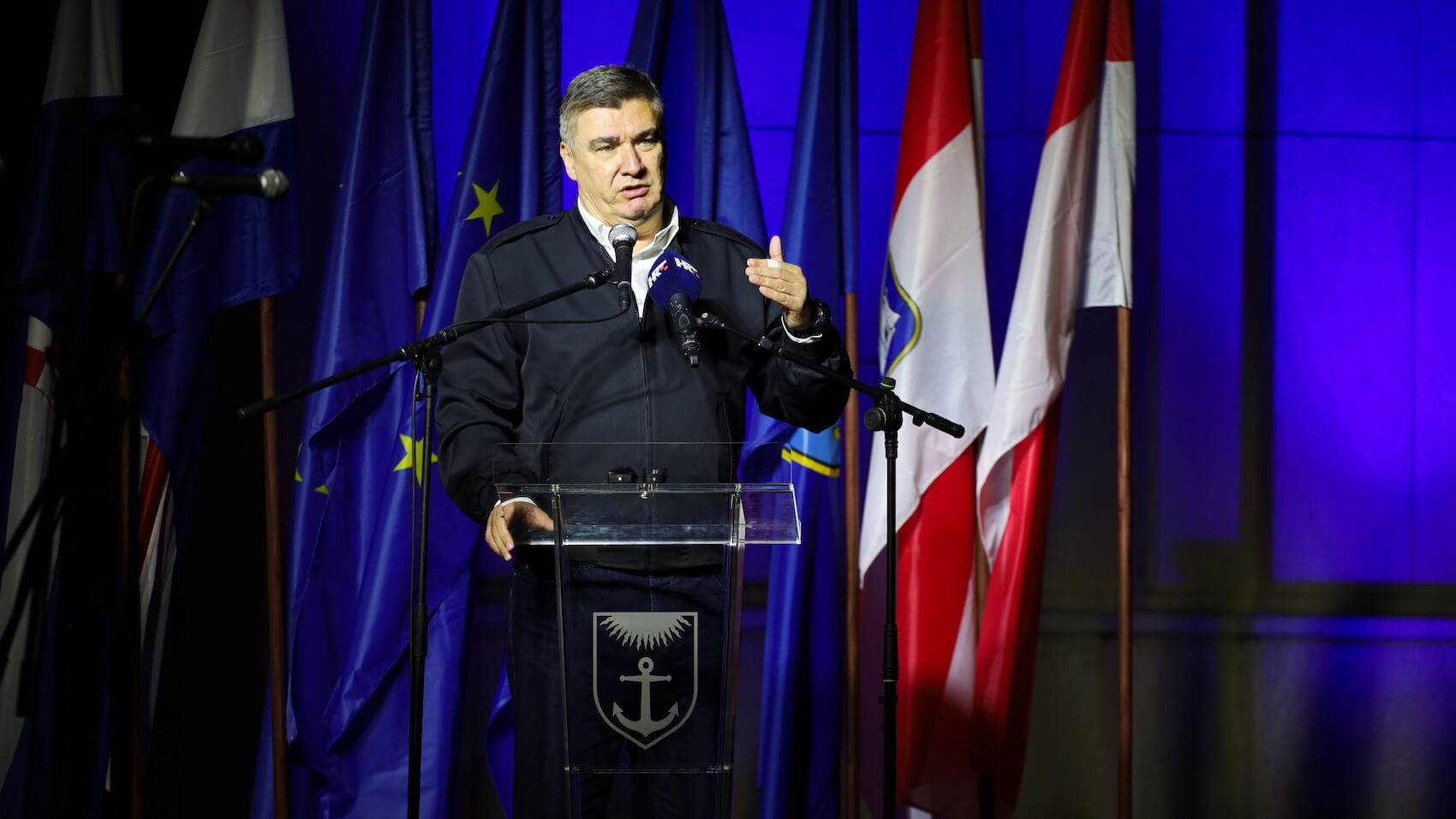
President of Croatia, Zoran Milanović, addresses a press conference in Ploče, Croatia, on September 14, 2024. Photo: Jure Divich.

Dr. Petsinis: Populism in the Balkans Shaped by Persistent Ethno-Nationalism and Euroscepticism

The Balkans, a region deeply influenced by historical tensions and sociopolitical complexities, has become a breeding ground for diverse populist movements. Dr. Vassilis Petsinis, an authority on Central and Eastern European politics, dissects the dynamics driving populism in Croatia, Serbia, and North Macedonia. According to Dr. Petsinis, the persistence of ethno-nationalism is a defining characteristic that distinguishes Balkan populism from its Western European counterparts. His analysis explores the interplay of nationalism, Euroscepticism, and historical grievances, shedding light on how populist actors consolidate power and reshape political landscapes, offering insights into the unique challenges populism poses in the region.

Interview by Selcuk Gultasli

The Balkans, a region marked by historical tensions and complex political dynamics, has emerged as a fertile ground for populist movements in recent years. In this illuminating interview, Dr. Vassilis Petsinis, Associate Professor of Politics, Corvinus University in Budapest and a prominent scholar specializing in Central and Eastern European politics, delves into the factors driving populism in Croatia, Serbia, North Macedonia, and other nations. According to Dr. Petsinis, regarding differences between the Balkans and Western Europe, one key element is the persistence of ethno-nationalism across Balkan societies. Dr. Petsinis sheds light on how these movements leverage nationalism, Euroscepticism, and historical grievances to shape public narratives and consolidate power.

According to Dr. Petsinis, Balkan populism differs significantly from its Western European counterparts. In Croatia, for instance, the Domovinski Pokret (Homeland Movement) capitalizes on anti-establishment sentiment and critiques of European Union policies. The party’s focus on defending Croatian sovereignty and opposing perceived EU intervention resonates strongly with voters disillusioned by traditional parties. However, as Dr. Petsinis observes, the Homeland Movement’s transition into a coalition government has tempered some of its anti-establishment rhetoric, reflecting the fluid nature of populist politics.

In Serbia, Dr. Petsinis highlights how the ruling Serbian Progressive Party (SNS) under President Aleksandar Vučić employs ethno-nationalist narratives centered on Kosovo. By emphasizing the reintegration of Kosovo into Serbia and the protection of Serbian cultural and historical sites, Vučić consolidates support among nationalist constituencies. Meanwhile, in North Macedonia, left-wing populist movements, such as Levica, incorporate nationalist and anti-imperialist themes, favoring alignment with BRICS nations rather than traditional Western alliances.

Dr. Petsinis also explores the influence of external actors, including the European Union, Russia, and China on Balkan populism. Serbia’s populist actors, for example, view Russia as a key ally, particularly in the context of the Kosovo issue. Conversely, Croatia’s populist rhetoric often distances itself from Russia due to historical alignments with Serbia. Dr. Petsinis emphasizes that China’s economic investments in the region offer populist leaders a viable alternative to EU frameworks, further complicating the geopolitical landscape.

With populist leaders like Zoran Milanović in Croatia combining Euroscepticism with domestic critiques of corruption, Dr. Petsinis underscores the delicate balancing act these figures perform to appeal to diverse voter bases. This interview offers a nuanced analysis of Balkan populism, highlighting the interplay between nationalism, external influences, and shifting political landscapes under Dr. Petsinis’s expert guidance.
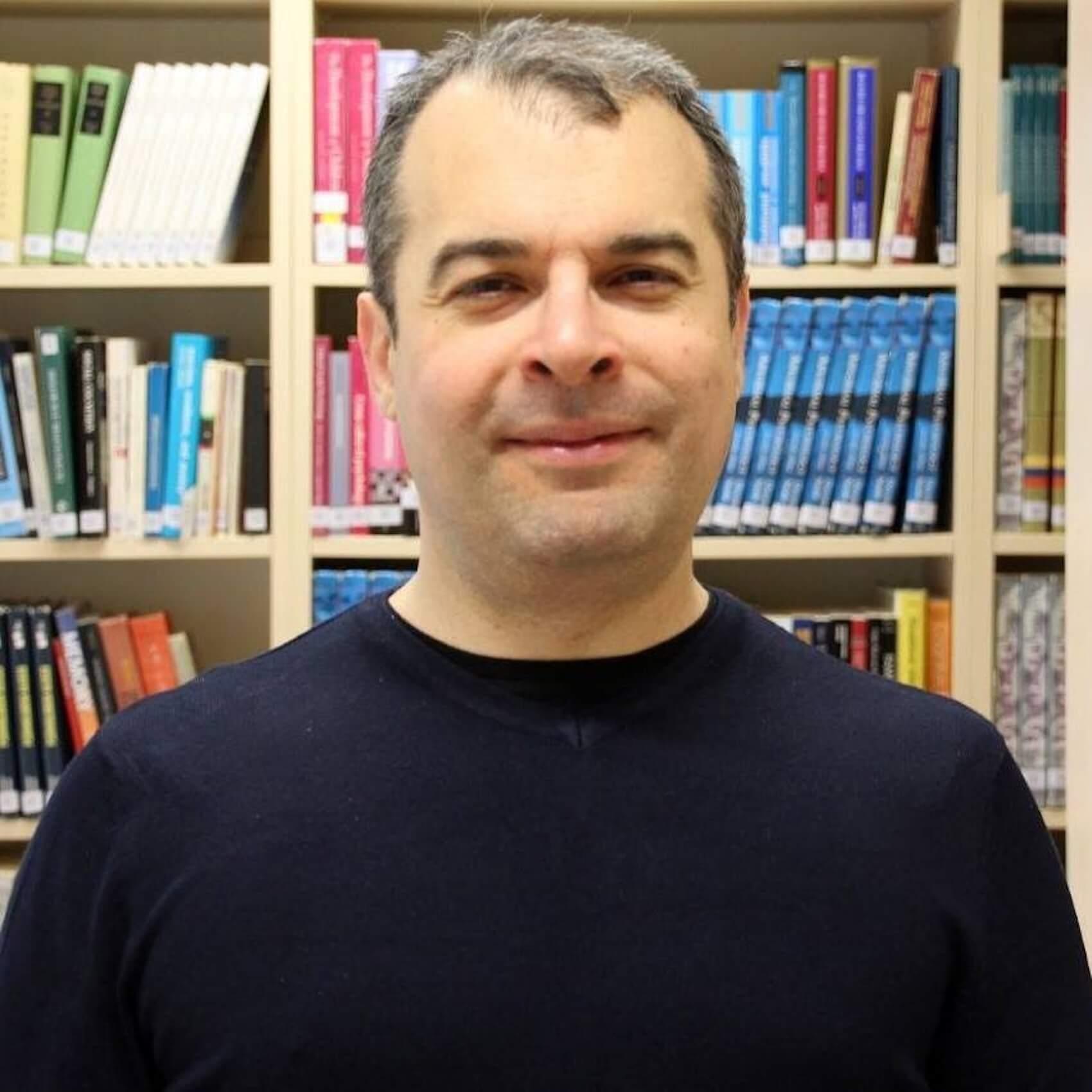
Dr. Vassilis Petsinis, Associate Professor of Politics, Corvinus University in Budapest and a prominent scholar specializing in Central and Eastern European politics.

Here is the transcription of the interview with Dr. Vassilis Petsinis with some edits.

Ethno-Nationalism and Populism in the Balkans: A Unique Political Landscape

Professor Petsinis, thank you very much for joining our interview series. Let me start right away with the first question. What are the key factors driving the rise of populist movements in the Balkan countries such as Serbia, Croatia, and Montenegro, and how do these factors differ from those in Western Europe?

Dr. Vassilis Petsinis: I think that, depending on the perspective, we should first address the question of defining populism. For example, if we start with Serbia, I would suggest that whether we study populism from a more discursive perspective, like that of Ernesto Laclau, or from the ideational approach, as presented by Cas Mudde, we don’t have genuine populist political actors in these countries.

In Serbia, the leading right-wing Serbian Progressive Party could be seen mostly as a cartel or an established right-wing party with certain anti-establishment rhetoric, especially regarding international, global, and European institutions. However, I wouldn’t classify it as a genuinely populist political actor.

In Croatia, we have the Domovinski Pokret (Homeland Movement), which is currently a government partner to HDZ (the Croatian Democratic Union). This right-wing party has incorporated powerful anti-establishment rhetoric since its formation in 2020, focusing on ethno-nationalism, gender-related issues, nativism, and relations between the Church and State. It also emphasizes anti-abortion and pro-life stances. However, last spring, the Homeland Movement quickly entered a coalition government with HDZ, thereby alleviating many of its anti-establishment prerogatives. Overall, it could now be classified more as a national conservative party.

As for North Macedonia, we see an interesting case with the left-wing populist party Levica. This party, while left-wing, also incorporates a nationalist component and expresses a preference for the BRICS global alliance in international politics. Additionally, elements of right-wing populism exist under the umbrella of the leading VMRO-DPMNE party, although its new leadership has sought to curb these tendencies.

Regarding differences between the Balkans and Western Europe, one key element is the persistence of ethno-nationalism across Balkan societies. For example, in Croatia, sociocultural factors such as Vatican contracts with the Roman Catholic Church have strengthened anti-LGBT and pro-life tendencies within populist, radical-right, and national-conservative circles. These factors contribute to the unique landscape of populist movements in the region compared to their Western European counterparts.

How do you interpret the relationship between the rise of right-wing populism in Central and Eastern Europe and its influence on domestic ethnopolitics, particularly in terms of shaping public narratives around minority groups and immigration?

Dr. Vassilis Petsinis: I think it depends on the context. Central and Eastern Europe is such a vast region geographically, politically, and socioculturally. To narrow down the discussion, I would prefer to focus on the countries of the former Yugoslavia, as I have dedicated several reports on Croatia and ethno-nationalism for ECPS.

Starting with ethno-nationalism, there are specific open issues. For instance, in Croatia, for the radical right and the national conservative right, maintaining the country’s national sovereignty is of paramount importance. A common theme in the rhetoric of parties like the Homeland Movement, as well as the right-wing faction within the ruling HDZ in Croatia, is the emphasis on protecting Croatia’s sovereignty. This sovereignty, tied to the country’s independence following the Homeland War of the 1990s, is often framed within the current international context, highlighting the need to maintain autonomy while participating in alliances like NATO and the EU.

In Serbia, the situation revolves around the status of Kosovo, the protection of the ethnic Serbian minority in Kosovo, and the preservation of cultural monuments in the region. These issues fuel ethno-nationalist tendencies and provide substantial material for right-wing populist forces in Serbia.

These specific, contextual ethno-nationalist concerns drive much of the particularistic ethnopolitics in these societies. They fuel ethno-nationalism and provide material for radical right-wing populism, which may not be directly applicable to other societies in Central and Eastern Europe or Europe as a whole.

Populist Rhetoric and Ethnic Identity: Contrasting Strategies in the Baltics and the Balkans

In your comparative analysis of the Baltic States and Western Balkans, what role does populist rhetoric play in framing ethnic minorities as either threats or integral parts of national identity, and how does this rhetoric vary across these regions?

Dr. Vassilis Petsinis: I think it really depends on the country. Starting with Estonia, the main radical right-wing party there, although its popularity has been declining since 2022, initially securitized the collective status of the ethnic Russian minority in Estonia. However, in recent years, they have also attempted to approach this minority by playing the card of allegedly shared conservative values.

In Latvia, the National Conservative National Alliance Party has also been somewhat suspicious of the ethnic Russian minority. It was only after Russia’s invasion of Ukraine that they began calling more emphatically for the securitization of domestic politics in Latvia.

Moving further south to Croatia, the Domovinski Pokret (Homeland Movement) and the right-wing faction within the ruling HDZ have been very skeptical of the ethnic Serb political party, the Serbian Independent Democratic Party. The Homeland Movement, in particular, has included in its political program calls for the semi-securitization of bilateral relations between Serbia and Croatia. They have also demanded that Serbia pay reparations for the war in the 1990s.

In Serbia, the broader radical right and national conservative circles have primarily focused on Kosovo, which they continue to regard as a constitutional part of Serbia. Domestically, however, there is less emphasis on framing ethnic minorities as threats. For example, the ethnic Hungarian community in Vojvodina is no longer perceived as a threat. While there has been some suspicion about the Bosniaks in Sandžak, the focus has shifted toward Euroscepticism and the protection of Serbia’s sovereignty in European and global politics, rather than targeting ethnic minorities in the same way as in the 1990s.

Given your discussion of Euroscepticism and populism, how do populist parties in Central and Eastern Europe balance their critiques of the EU’s influence on sovereignty with their need to engage with EU frameworks on issues like ethnic minority rights and migration?

Dr. Vassilis Petsinis: I think it depends. Again, I would like to focus mostly on Croatia and Serbia, as these are the countries I prepared for this conversation.

In the case of Croatia, the Homeland Movement is rather rigid regarding the protection of national borders by the state itself, rather than relying on the EU. They are against the EU’s common defense policies, and since their formation, they have been skeptical of EU intervention, such as that of the Venice Commission of the Council of Europe, particularly before Croatia’s accession to the EU. This skepticism extends to the enhancement of collective rights for minorities, especially the ethnic Serb minority and their institutional representation in the Croatian Parliament. This is a significant dimension of their emphasis on state sovereignty.

Turning to Latvia, parties such as the National Alliance were, in their early stages, quite skeptical of what they perceived as EU interventionism, which they felt challenged the ethnic democracy model applied in Latvia. A similar sentiment existed in Estonia. However, over time, the context has evolved.

For instance, in Croatia, while nationalist principles are maintained, the focus has shifted primarily to domestic politics, such as efforts to exclude the ethnic Serb minority party from power, without directly blaming the EU for this.

As for Serbia, and also Estonia and Latvia, the context becomes more complex. In Estonia, EKRE (the Conservative People’s Party of Estonia) attempted to approach the ethnic Russian community in recent years. However, Russia’s invasion of Ukraine significantly altered the situation.

Overall, there is no uniform pattern here. The strategies of these populist parties vary depending on the national and geopolitical context.

Populism’s Role in Power Dynamics and Regional Stability in the Balkans
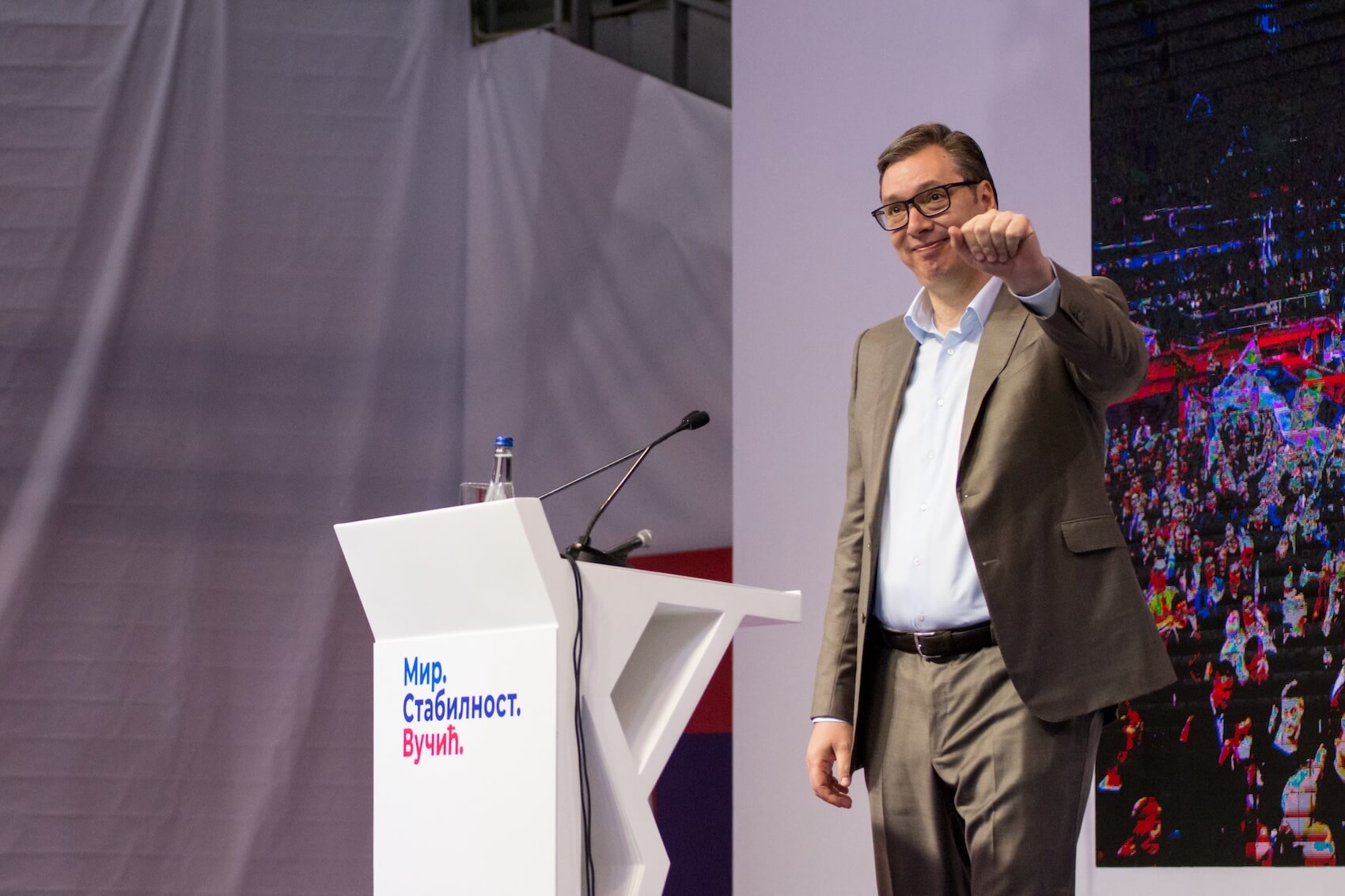
Serbian President Aleksandar Vučić participates in an SNS political campaign at Hall Čair in Niš, Serbia, on March 30, 2022. Photo: Radule Perisic.

To what extent do populist leaders in the Balkans utilize nationalism and historical narratives to consolidate their power, and how does this impact regional stability?

Dr. Vassilis Petsinis: I think it depends on the context. In Serbia, for example, there is the prominent issue of Kosovo. All political parties, including the leading SNS under Aleksandar Vučić, programmatically prioritize the defense of Kosovo, advocating for its effective reintegration into the Serbian state structure. Additionally, they emphasize the protection of the ethnic Serbian minority and Serbian cultural monuments in the region, presenting these as top priorities. This issue holds significant weight in both domestic and international politics.

In Croatia, on the other hand, there is a strong emphasis on the concept of sovereignty. The prevailing notion is that Croatian sovereignty must be staunchly defended and not compromised, whether in relations with Western, Eastern, or other global partners. This focus on sovereignty is a key element of the political narrative.

How have external actors, such as the European Union, Russia, and China, influenced the trajectory of populist politics in Balkan countries?

Dr. Vassilis Petsinis: I think it really depends on the context. In the case of Serbia, right-wing populist actors have long viewed Russia as a key partner, especially since the 1990s. Political parties, including more recent ones like Dveri, as well as the broader radical and national conservative right-wing spectrum, regard Russia as Serbia’s main ally in international politics.

In Croatia, however, the situation is different. There is a more staunch approach, and while China has been viewed as a more reliable economic partner compared to the EU by the broader right-wing spectrum in Serbia, this perspective is not as prevalent in Croatia. The radical and national conservative right in Croatia has historically been open to a degree of economic cooperation with Russia. However, they have always been somewhat suspicious of Russia, largely due to its perceived partnership with Serbia. This skepticism intensified after Russia’s invasion of Ukraine in 2022.

In North Macedonia, we see the example of the Levica party, which adopts a different approach. They are quite open to cooperation with the BRICS countries, including Russia and China, as well as other nations they associate with the Global South. Levica justifies this stance through a quasi-anti-imperialist platform, presenting it as an alternative to traditional Western alliances.

How Religion Fuels Populist Rhetoric and National Identity in the Balkans

What role does religion play in shaping the rhetoric and appeal of populist parties and leaders in the Balkan countries?

Dr. Vassilis Petsinis: Well, of course, it does. In Croatia, for example, parties like the Domovinski Pokret, the right-wing faction within HDZ, and smaller parties such as the Croatian Sovereignty Movement, Bloc for Croatia, and Most (Bridge), to the extent that it can be regarded as a national conservative right party, advocate for a partnership-like relationship between the state and the Roman Catholic Church. They also strongly support the protection and continuation of the so-called Vatican contracts.

In Serbia, the broader right-wing political spectrum emphasizes a similar partnership-like relationship between the state and the Orthodox Church. This includes some particularistic interpretations of the Orthodox doctrine, such as Svetosavlje. This Serbian-specific brand of Orthodox theology, rooted in the teachings of Serbian theologian Justin Popović during the interwar period, remains a distinctive and particularistic interpretation of Orthodoxy. It is often espoused by political actors from the radical right, reinforcing their ideological narratives.

How do the national conservative and radical right-wing parties in Croatia use populist rhetoric to mobilize support, particularly regarding issues like the “Homeland War” and minority rights, and how does this compare to similar movements in other Central and Eastern European countries?

Dr. Vassilis Petsinis: Well, they do. For instance, the Domovinski Pokret (Homeland Movement), founded in 2020, has been very active in protests, both through demonstrations and online campaigns via their websites. A notable example is their opposition to the public use of the Serbian Cyrillic script in areas like Vukovar. Vukovar holds a central symbolic role in contemporary Croatian nationalism due to the resistance mounted by the Croatian military against the Yugoslav People’s Army and Serbian auxiliary forces in 1991.

The Homeland Movement also incorporates ethno-nationalist principles into its broader anti-establishment rhetoric, targeting Croatia’s two major parties: the center-right Croatian Democratic Union (HDZ) and the center-left Social Democratic Party (SDP). However, the interplay between ethno-nationalist principles and anti-establishment rhetoric can be quite malleable. For example, since last spring, the Homeland Movement has been a member of a governing coalition with HDZ.

This intersection of ethno-nationalism and establishment politics shows that parties like the Homeland Movement are not always as anti-establishment as they claim to be. It is worth noting that a faction within the Homeland Movement opposed the coalition pact with HDZ, seeing it as a betrayal of the movement’s anti-establishment principles. In response, this faction formed a new party, Domovinski Otpora (Homeland Resistance), in September 2024.

Euroscepticism and National Sovereignty in a Shifting Political Landscape

In a recent chapter, you discuss the soft Euroscepticism of Croatia’s Homeland Movement (DP). How does the populist framing of national sovereignty by this party challenge or reinforce broader European Union integration narratives?

Dr. Vassilis Petsinis: Well, the Homeland Movement does not have a standard pro-EU stance. They advocate for a Europe of sovereign nations and do not support Eurofederalism.

In your analysis, how have Croatian far-right parties employed populist strategies to address economic grievances, such as rising costs of living and inflation, and how effective has this been in broadening their appeal beyond traditional nationalist bases?

Dr. Vassilis Petsinis: They have consistently accused the government of mismanaging the economy. Like other political actors on the broader right across Europe, they have also blamed the EU’s Green Deal for the increase in energy prices over the last couple of years.

At the same time, there has been a powerful emphasis on ethno-nationalist underpinnings. The Homeland Movement’s critique of alleged economic mismanagement often focuses on the revitalization of Croatian regions such as Slavonia, Lika, or parts of Dalmatia—areas ravaged by war. These regions have a notable presence of wartime veterans or invalids, making them key target groups for the party.

Alongside its critique of economic mismanagement by HDZ and the Social Democratic Party in the past, the Homeland Movement has also promoted a more concrete program for economic support specifically aimed at these categories of the population, particularly war veterans from the Homeland War.

SDP Voters Back Milanović Despite Diverging Views on Euroscepticism
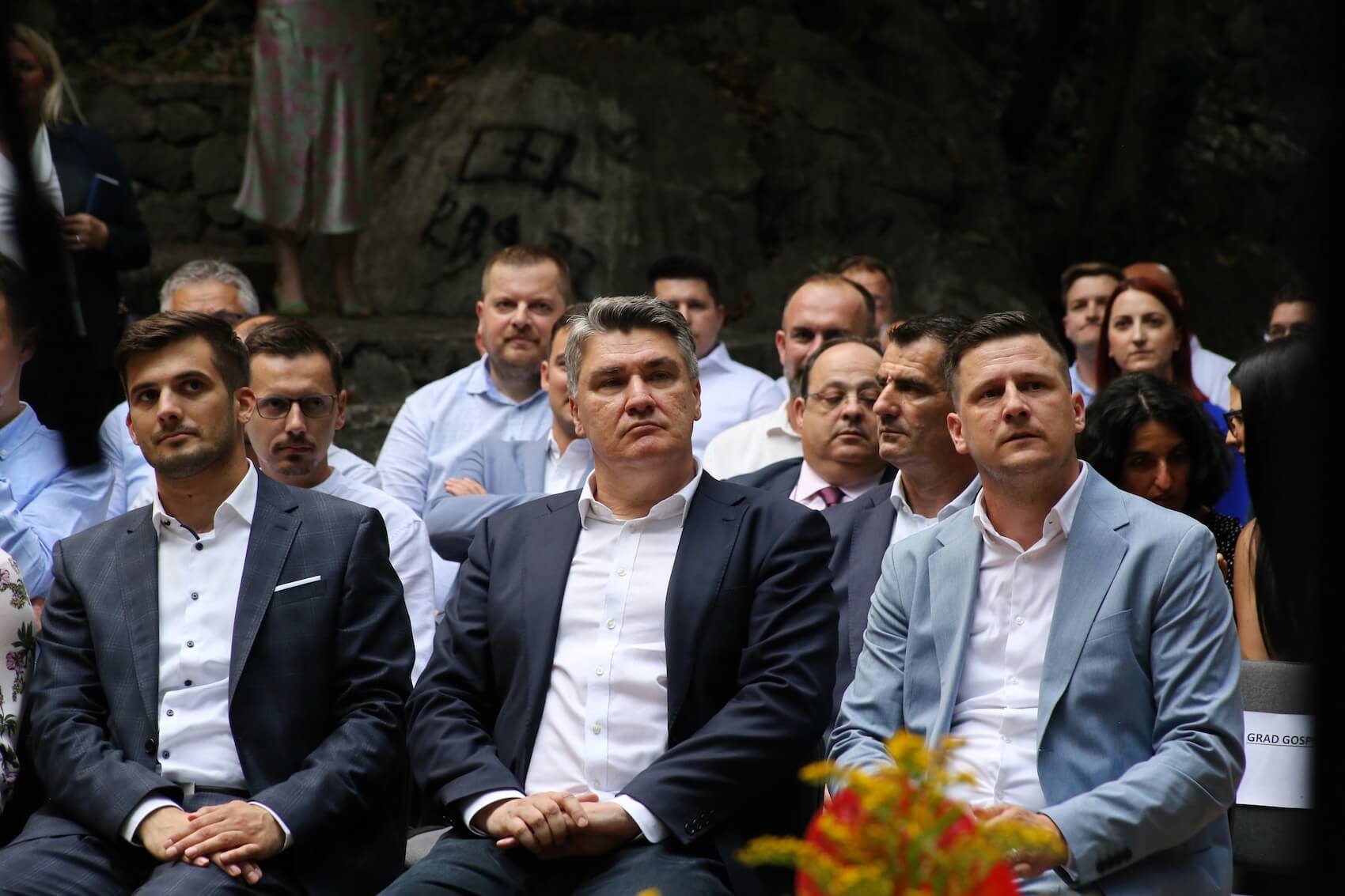
Croatian President Zoran Milanović attends a ceremony in Vrgorac, Croatia, on July 1, 2022. Photo: Jure Divich.

According to Euractiv, Zoran Milanović achieved the highest score by a presidential candidate since Croatia’s independence in 1991. How do you explain this huge success during his second term as president?

Dr. Vassilis Petsinis: I think Zoran Milanović is a rather controversial character, and it’s not easy to pin down his appeal. He has made several contentious statements in the past, particularly regarding relations between Croatia and Bosnia, as well as Croatia and Serbia. He has also expressed doubts about the protection of collective minority rights of ethnic groups in Bosnia. Furthermore, he questioned Serbia’s legitimacy as a candidate for EU membership. More recently, since 2022, he has expressed skepticism about Ukraine’s eligibility for NATO or EU membership. So, he’s been quite a colorful figure, so to speak.

At the same time, his success in the elections likely has several explanations. First, since the constitutional amendments of 2000–2002, the actual powers of the Croatian president have been significantly reduced. The current president has far more limited competencies compared to Franjo Tuđman’s term in office during the 1990s. This semi-parliamentary arrangement doesn’t make the president a purely decorative figure, but the role is definitely less influential compared to the prime minister.

Most likely, Milanović’s success reflects the fact that Croatian voters, who elect the president directly, saw him as a more reliable candidate compared to others.

Last Sunday, after the vote in Zagreb, Milanović criticized Brussels as “in many ways autocratic and unrepresentative,” run by unelected officials. The 58-year-old Milanović regularly blames the HDZ for the party’s long-standing corruption problems and calls Prime Minister Plenković “a Brussels employee.” How much of a role did his attacks on the EU play in his victory in the presidential elections?

Dr. Vassilis Petsinis: I think they did play a part, as he managed to create an umbrella for Eurosceptic trends among the Croatian electorate. These are voters who do not necessarily want to align with the national conservative or radical right and do not want to vote for HDZ. This could be one explanation.

Additionally, Zoran Milanović originates from the Social Democratic Party (SDP), which does not necessarily adopt such strong Eurosceptic stances on a party level or share Milanović’s harsh criticism of the EU. However, having a representative from the SDP in the presidential office could enhance the party’s standing vis-à-vis HDZ in Croatian politics. This may have been another incentive for SDP voters to support Milanović, even if they do not entirely agree with his Eurosceptic views.

Donald Trump has just started his second term as president of the US. How do you think the populist Milanović and other populist leaders in the region will be affected by Trump’s second term?

Dr. Vassilis Petsinis: I think it depends on the context. Milanović has not expressed any real preference, even indirectly, for Donald Trump.

Now, in Serbia, considering the political establishment, particularly the ruling SNS (Serbian Progressive Party) under President Aleksandar Vučić, they may look for a better deal regarding Kosovo during Donald Trump’s term in office. This seems to be what they are aiming for.


Photo: Shutterstock.

Internship Positions at the European Center for Populism Studies (ECPS)

DOWNLOAD ANNOUNCEMENT


Duration: 6 months

Commitment: Part-time (20 hours per week)

Location: Remote internship


Description

The European Center for Populism Studies (ECPS) is looking for motivated interns to join our team. As an intern, you will have the opportunity to enhance your analytical thinking, academic writing, research skills, and organizational and networking abilities in a dynamic multicultural environment. The internship will begin at the end of February and will last for six months.

Main Tasks

    • Conduct academic research (primarily desk research) and write essays, commentaries, and articles on topics covered by ECPS research programs, including authoritarianism, digital populism, economics, gender, migration, environment and climate, extremism and radicalization, foreign policy, human rights, global peace and order, and leadership.
    • Prepare briefs and reports summarizing monthly and annual activities (such as panels, seminars, and conferences) for publication on the ECPS website.
    • Assist ECPS experts in organizing various events (including book talks, seminars, panels, summer schools, and symposiums).
    • Support the ECPS team with communication activities, such as preparing the online newsletter and managing social media accounts.
    • Contribute to project applications (e.g., EU-funded projects).
    • Help implement ongoing projects, including data collection, report writing, dissemination, communication activities, and event organization, depending on ECPS’s role in the project.

    Who We Are

    The European Center for Populism Studies (ECPS) is an independent, nonpartisan, nonprofit organization based in Brussels dedicated to researching and analyzing the challenges posed by rising political populism. ECPS promotes an open society by adhering to the principles of liberal democracy, including the rule of law, human rights, pluralism, freedom of speech, gender equality, social and environmental justice, transparency, and accountability. We facilitate collaboration among networks of academics, practitioners, policymakers, media, and other stakeholders. We offer a platform for exploring policy solutions related to rising populism and provide insights for effective policymaking and critical analysis. To achieve this, ECPS produces research publications, policy reports, white papers, and commentaries, conducts interviews with experts, and organizes events, seminars, workshops, and conferences.

    Qualifications and Experience

    Essentials    

    •           Possess at least a master’s degree in social sciences (applications from master’s students at the stage of dissertation writing will be accepted)

    •           Knowledge and/or interest in global politics and populism-related topics, particularly in, but not limited to, the European context

    •           Knowledge and experience in academic writing

    •           Knowledge of scientific methodology (qualitative or quantitative research methods)

    •           Fluency in the English language (both verbal and written)

    •           Excellent influencing, facilitation and communication skills (both orally and in writing)

    •           Being able to work, organize and prioritize autonomously

    •           Being competent in off-the-shelf software (MS Excel, Word, Outlook and PowerPoint)

    •           A collaborative team member

    •           Experience of work/study in a multicultural environment

    •           Possess a creative, proactive and open mindset with high respect for deadlines.

    What We Offer

    •           Enlarge your network with academics, policymakers, project experts and other stakeholders across Europe

    •           Learn about populism and gain a deeper insight into contemporary issues in European and global politics

    •           Publish your research product and related outputs through ECPS

    •           Take part in the EU events, academic conferences, seminars, workshops, project preparation and implementation activities in Brussels

    •           Improve your organizational, communication and networking skills through actively taking part in ECPS events

    •           Opportunity to be a permanent member of the ECPS Youth

    •           Gain invaluable experience in an international and multicultural environment

    Internship Conditions

    •           The internship is unpaid, remote and part-time for 6 months starting at the end of February 2025. 

    How to Apply?

    If you are interested in joining us and making ECPS your next professional experience, please send your CV and cover letter (a maximum of one page) to Seyma Celem at scelem@populismstudies.org by midnight CET on February 15, 2025, with the subject line “Internship at ECPS.”

    Unfortunately, we cannot respond to every application; only short-listed candidates will be contacted. However, all applications will be kept in file, and candidates will be contacted if a suitable opportunity arises. The information provided in the applications is subject to EU legislation on the protection of personal data and confidentiality of information.

    ECPS is committed to diversity and inclusion to ensure that everyone has equal opportunities for employment, advancement, and retention, regardless of their gender, age, nationality, ethnic origin, religion or belief, cultural background, sexual orientation, or disability.

    Illustration by Lightspring.

    Call for Papers & Panels — ‘We, the People’ and the Future of Democracy: Interdisciplinary Approaches

    DOWNLOAD CALL for PAPER

    Date: July 1-3, 2025

    Venue: European Studies Centre, Oxford University 

    Deadlines

    Abstract Submission: February 28, 2025

    Decision Notification: April 7, 2025

    Draft Paper Submissions: June 9, 2025


    Organisers

    European Center for Populism Studies (ECPS) 

    The Humanities Division, Oxford University

    European Studies Centre, St Antony’s College, Oxford University

    Oxford Network of Peace Studies (OxPeace) 

    Oxford Democracy Network

    Between 2012 and 2024, one-fifth of the world’s democracies eroded. During this period, ‘us vs. them’ rhetoric and divisive politics have severely undermined social cohesion. Yet, in some cases, democracy has demonstrated resilience. A crucial factor in the rise and fall of liberal democracies lies in the use and abuse of the concept of “the people.” This idea can either serve to unite civil society or create deep social divisions by pitting “the (true) people” against “the others.” The dichotomy of “the people vs. the others” is a central focus in populism studies. However, the conditions under which “the people” act as a driving force for democratization or become a tool for majoritarian oppression require further comparative and comprehensive analysis. Understanding this dynamic is critical, as it has profound implications for the future of democracy worldwide.

    This workshop invites submissions of paper and panel proposals, posters, and artwork on the rise and fall of liberal democracies across different periods and contexts while exploring future implications and potential solutions. By bringing together scholarship from the humanities, arts, social sciences, and policy research, the workshop aims to foster a comprehensive and interdisciplinary dialogue on the challenges of democratic decline and pathways to resilience. Key themes include broader settings and contexts that shape “the people,” influence the human condition, and the building, maintenance, or erosion of democracy, democratic institutions and cultures. Researchers at any career stage, especially early career researchers (PhD students, post-docs, and assistant professors), are encouraged to present completed and ongoing research.  

    Potential topics include but are not limited to

    – Theories and political philosophy on the people, public, popular and civil/civic, elite, volk, populus, demos, ochlocracy, proletariat, sovereign, human condition, constitutional imagination

    -The role and use of “the people” in service of nationalism, racism, populism, or democracy

    -The role of civil society in fostering and sustaining democratic systems and creating inclusive and sustainable democratic institutions

    -Local, global and civilizational approaches to “us vs. them” & illiberal democracy (majoritarianism, “global elites,” minorities, Orientalist or Occidentalist rhetoric, etc.)

    -Political economy and psychology shaping the idea of the people and globalization

    -Historical trends, human condition, and future implications for democracy

    -Cultures and subcultures of democracy (community building across differences, public spaces, arts and activism)  

    -The role of the arts (literature, music, film), new media, and AI in shaping “the people” and the people vs. the others

    -Colonial, decolonial, postcolonial, and gendered approaches to the idea of the people

    -Political psychology, civil society, and ways to strengthen domestic and international democratic institutes  

    -Bottom-up approaches to global governance and democracy 

    For submissions, please fill out this form before February 28, 2025: https://docs.google.com/forms/d/e/1FAIpQLSdgyojykmVYiElqFSAxaiCbjyX6eZNAjYhdNUWDEoQFUGKnug/viewform?vc=0&c=0&w=1&flr=0


    Opening Speech

    Janet Royall (Principle of Summerville College, Oxford University and Baroness Royall of Blaisdon).


    Roundtable Contributions

    Naomi Waltham-Smith (Professor, Oxford University, Music Faculty).

    Martin Conway (Professor, Oxford University, History Faculty).

    Luke Bretherton (Professor, Duke University Divinity School; Oxford University Faculty of Theology and Religion).

    Jonathan Wolff (Professor, Oxford University, Blavatnik School and President of the Royal Institute of Philosophy).

    David J. Sanders (Professor, Essex University, Department of Government).

    Aurelien Mondon (Senior Lecturer, University of Bath).

    Angelos Chryssogelos (Reader, London Metropolitan University, Politics & International Relations).

    Clare Woodford (Director of CAPPE Critical Theory Strand, Centre for Applied Philosophy, Politics and Ethics, University of Brighton).


    Editorial Team

    Hugo Bonin (Postdoctoral Fellow, University of Jyväskylä).

    Heidi Hart (Senior Non-resident Research Fellow, ECPS).

    Anne-Margret Wolf (Fellow, All Souls College, University of Oxford).


    Populism & Politics (P&P), a journal of ECPS, offers publication opportunity for select articles. 


    Where to Stay: Accommodation Recommendations

    For those attending the conference, Oxford colleges are often the most affordable and reliable accommodation option. Many operate as B&Bs, but availability during the summer can be limited due to summer school programs. Below is a list of colleges near our venue. If their websites indicate “no availability,” we recommend emailing them directly and mentioning your attendance at the conference, as this may improve your chances of securing a booking.

    Recommended Colleges

    Hotels Near Jesus College

    For those preferring hotels, here are some options close to Jesus College:

    B&B and Self Catering

    The Randolph Hotel, by Graduate Hotels

    George Oxford Hotel

    Vanbrugh House Hotel

    Additional Suggestions

    Royal Oxford Hotel: Conveniently located near the train station and city centre.

    We also recommend comparing prices on various booking platforms such as booking.com, as rates and availability can differ. 

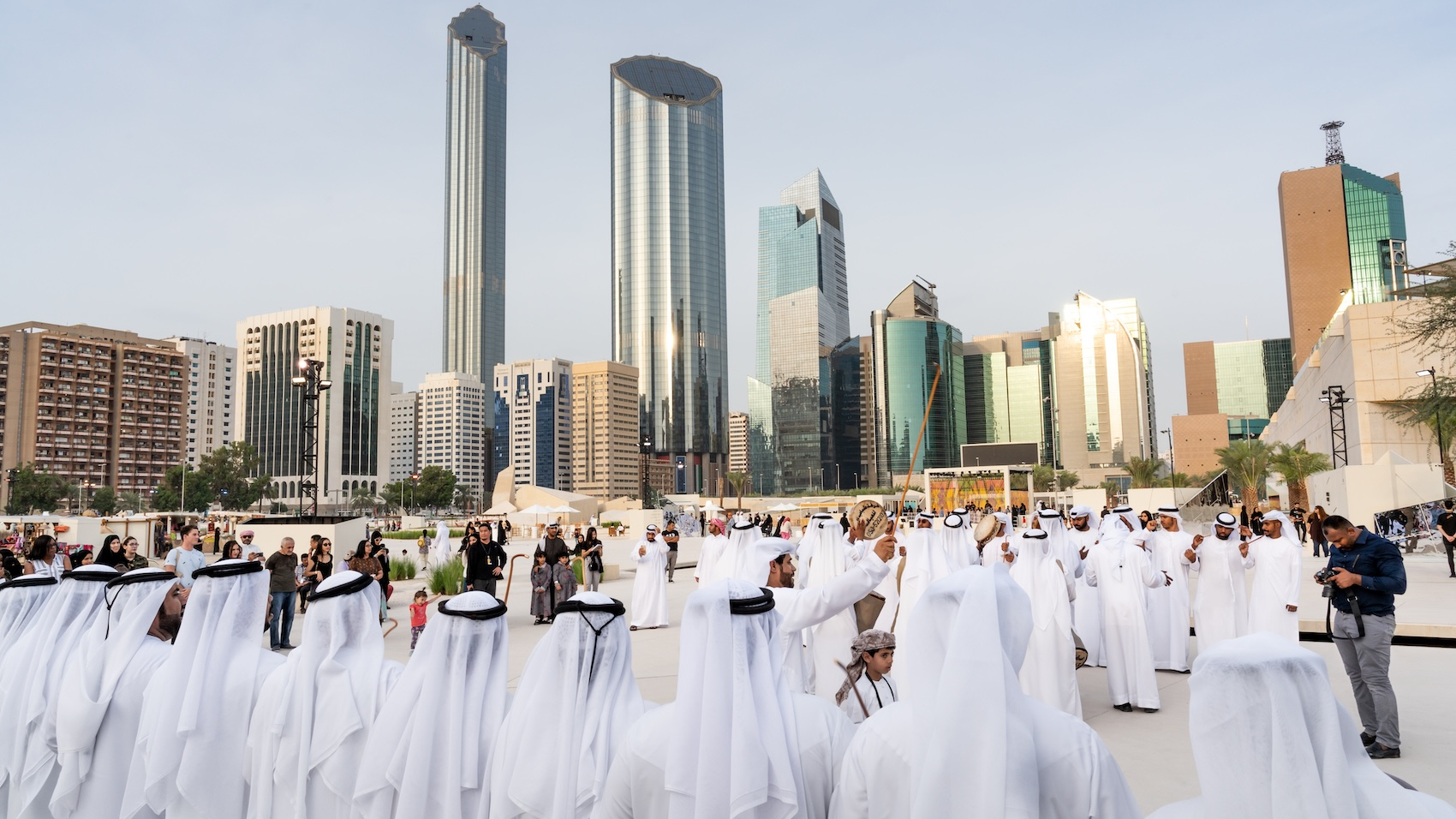
    Emirati men perform the traditional Al Ayala dance in Abu Dhabi, UAE, on December 23, 2019. Photo: Shutterstock.

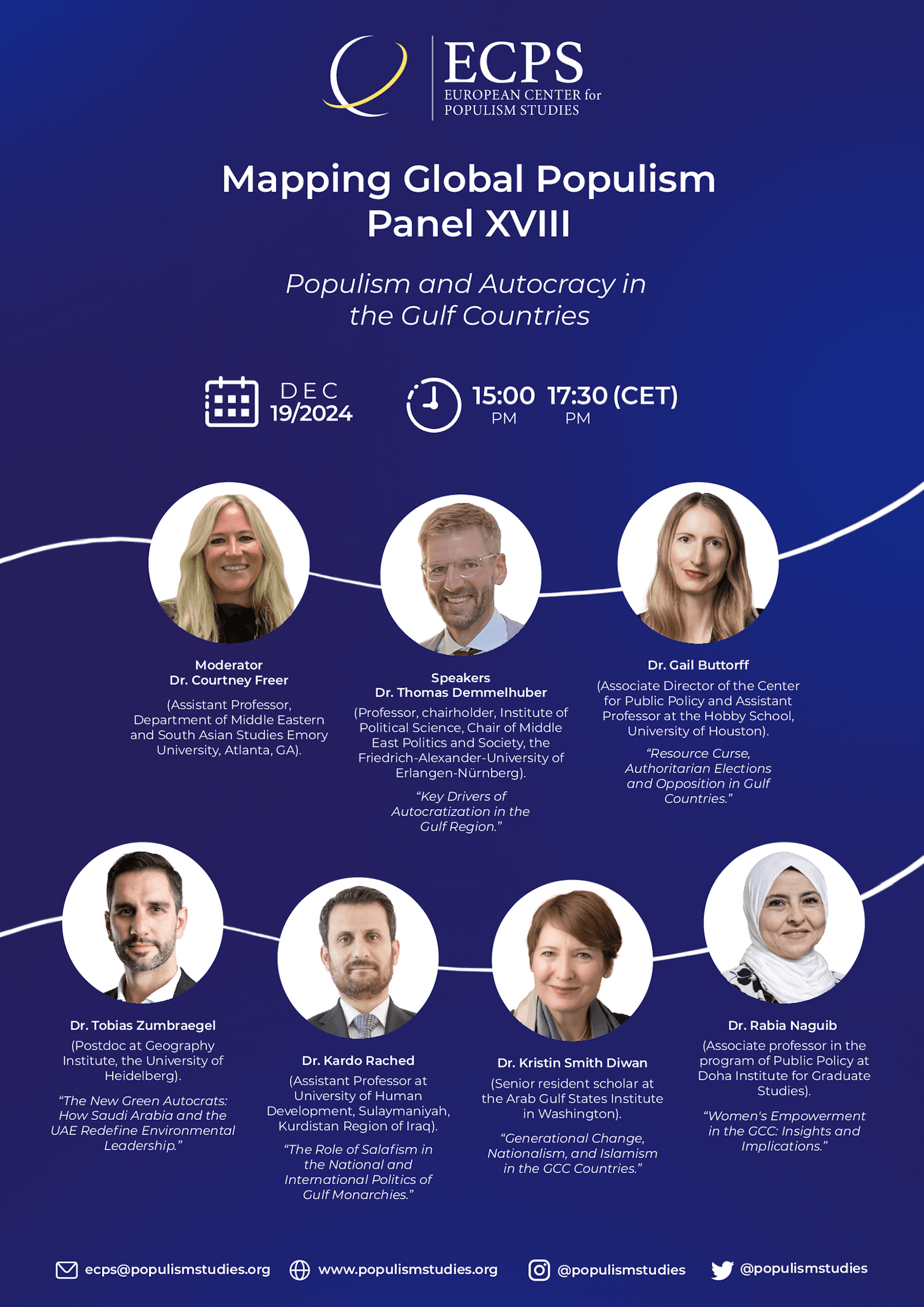
    Mapping Global Populism – Panel XVIII: Populism and Autocracy in the Gulf Countries

    Date/Time: Thursday, December 19, 2024 — 15:00-17:30 (CET)


    Click here to register!


    Moderator

    Dr. Courtney Freer (Assistant Professor, Department of Middle Eastern and South Asian Studies, Emory University, Atlanta, GA).

    Speakers

    “Key Drivers of Autocratization in the Gulf Region,” by Dr. Thomas Demmelhuber (Professor, Chairholder, Institute of Political Science, Chair of Middle East Politics and Society, the Friedrich-Alexander-University of Erlangen-Nürnberg).

    “The Evolving Social Contract in the GCC,” by Dr. Gail Buttorff (Associate Director of the Center for Public Policy and Assistant Professor at the Hobby School, University of Houston).

    “The New Green Autocrats: How Saudi Arabia and the UAE Redefine Environmental Leadership,” by Dr. Tobias Zumbraegel (Postdoc at Geography Institute, the University of Heidelberg).

    “The Role of Salafism in the National and International Politics of Gulf Monarchies,” by Kardo Kareem Rached (Assistant Professor at University of Human Development, Sulaymaniyah, Kurdistan Region of Iraq).

    “Populism in Gulf Monarchies:  Suppression, Cooptation, Adoption,” by Dr. Kristin Smith Diwan (Senior resident scholar at the Arab Gulf States Institute in Washington).

    Click here to register!


    Brief Biographies and Abstracts

    Dr. Courtney Freer is Assistant Professor of Middle Eastern Studies at Emory University and Senior Fellow at Emory’s Center for the Study of Law and Religion. She previously served as Assistant Professorial Research Fellow at the Middle East Centre at the London School of Economics and Political Science (LSE) between 2015-2021. Courtney’s academic work focuses on the domestic politics of the Arab Gulf states, particularly the political role of religion, and Islamism more broadly. She received her DPhil in Politics from the University of Oxford in 2015, having written a thesis examining the socio-political role played by Muslim Brotherhood groups in Kuwait, Qatar, and the United Arab Emirates (UAE). The findings of this work were published by Oxford University Press in 2018 as Rentier Islamism: The Influence of the Muslim Brotherhood in Gulf Monarchies. She previously worked at the Brookings Doha Center in Qatar and the US-Saudi Arabian Business Council in Washington, DC, and holds a BA in Near Eastern Studies from Princeton University and an MA in Middle Eastern Studies from The George Washington University.

    Key Drivers of Autocratization in the Gulf region

    Dr. Thomas Demmelhuber is Professor of Middle East Politics and Society at the Friedrich-Alexander-University Erlangen-Nürnberg (Germany) and visiting professor at the College of Europe (Natolin). He has been researching the Middle East and its transregional entanglements for more than two decades. He has lived and worked in different countries with substantial field work experience all across the region. As PI and Co-PI he has so far been awarded more than EUR 5 Mio. in research grants. Demmelhuber has advised different German ministries, the European Parliament (Subcommittee on Human Rights) and various foundations. He is serving in different scientific advisory councils, e.g. of the German Institute for International and Security Affairs in Berlin (SWP) or the German Orient-Institute in Beirut (Max Weber Foundation). Demmelhuber is also board member and Hon. Secretary of the German Middle East Studies Association. Demmelhuber publishes regularly in leading international journals (e.g. Democratization, Third World Quarterly) and has published/edited numerous books, for example: The comprehensive volume on Authoritarian Gravity Centres: A Cross-Regional Study of Authoritarian Promotion and Diffusion (co-authored with Marianne Kneuer, Routledge 2020, paperback 2021) presents cutting-edge findings on the international dimension of authoritarianism.

    Abstract: There is a scholarly consensus that the countries of the Arabian Peninsula – particularly the Gulf monarchies – exhibit a clustering of autocratic governance. However, it would be fundamentally wrong to perceive this regime type as static. Gulf politics is instead shaped by dynamic and vivid discourses, including domestic debates on regime consolidation (that go well beyond pertinent factors like repression, cooptation et al.), regional efforts to forge a shared regime identity, and international networks that facilitate the diffusion of autocratic practices, ideas, and norms. While structural factors, such as shifts in the international order, play a role, I try to argue in my talk that the primary drivers of autocratization must be understood through the actions and perspectives of individual actors, i.e. the politically relevant elite.

    Resource Curse, Authoritarian Elections and Opposition in Gulf Countries

    Dr. Gail Buttorff  is Research Associate Professor, Hobby School of Public Affairs Associate Director, Center for Public Policy. Dr. Buttorff joined the Hobby School as a Visiting Assistant Professor in 2017. She holds a Ph.D. and M.A. in Political Science from the University of Iowa. Her research interests focus on elections and gender and public policy in the Middle East and Gulf Cooperation Council countries, quantitative and survey methodologies. She is the author of Authoritarian Elections and Opposition Groups in the Arab World. Her work as also been published by Electoral StudiesJournal of Theoretical Politics, and by the Baker Institute for Public Policy, among others.

    The New Green Autocrats: How Saudi Arabia and the UAE Redefine Environmental Leadership

    Dr. Tobias Zumbrägel is a senior researcher and lecturer at the department for Human Geography at Heidelberg University. Prior to this, he worked at the center for excellence Climate, Climatic Change and Society (CLICCS) at the University of Hamburg where he is an associate fellow. He studied History, Political Science and Middle Eastern Studies in Cologne, Tuebingen and Cairo. and holds a Ph.D. from the Friedrich-Alexander University Erlangen-Nuremberg. Zumbrägel is the author of Political Power and Environmental Sustainability in Gulf Monarchies (Palgrave 2022). His main research focuses on questions of legitimacy, power and state authority in the Middle East with a special interest in Political Ecology, Energy Policy, Sustainability and Political Economy.

    Abstract: Especially Saudi Arabia and the United Arab Emirates are leveraging sustainability transformations as strategic tools to enhance domestic legitimacy and project international influence, promoting a model of ‘soft’ authoritarianism. By diversifying energy portfolios and positioning themselves as influential players in global climate policy, both countries aim to foster public consent and strengthen internal regime support. Internationally, they pursue outward-oriented legitimacy by aligning with Western sustainability ideals while collaborating with other authoritarian states to diffuse this model, particularly in developing countries. Through flagship initiatives like Saudi Arabia’s NEOM, the Middle East Green Initiative, and the UAE’s Masdar City, they serve as role models for sustainable development within an authoritarian framework. This approach blends environmental innovation with a new form of governance, advancing their soft power on the global stage.

    The Role of Salafism in the National and International Politics of Gulf Monarchies

    Kardo Rached is a lecturer at the University of Human Development UHD—Sulaimany and Dirctor of the Quality Assurance at UHD. He is also manager of the Turkish Studies Unit at Sbay Research Center – Sulaimany. He has published various articles, most recently: “State-Reconstruction: Iraq after ISIS as a Case Study.” Analecta 13.25 (2023); “Financing of non-state armed groups in the Middle East: Iraqi Popular Mobilization Forces (PMF) as a case study.” Studies in Conflict & Terrorism (2022): 1-26; “Institutionalizing the Salafi Thoughts by the State: The Saudi Salafism as a Case.” Trames 25.2 (2021): 239-255; “United States: A Review of the US Middle East Policy from Harry Truman to Bill Clinton.” (2021); “Post-ISIS Era and the State Dissolution in the Middle East: Iraq as a Case.” Academic Journal of Interdisciplinary Studies (2020); “Post-ISIS Iraq and the Shia Armed Groups.” Central European Journal of International & Security Studies 13.1 (2019); “Article Review of Islamic Mobilization: Social Movement Theory and the Egyptian Muslim Brotherhood.” Canadian Social Science (2018); “Public diplomacy effort across Facebook: A comparative analysis of the US consulate in Erbil and the Kurdistan Representation in Washington.” Sage Open 8.1 (2018); “The Likelihood of a Durable Peace and Longstanding Stability in an Integrated Iraq in the Aftermath of the Military Defeat of the Islamic State (IS) Group.” The Journal for Interdisciplinary Middle Eastern Studies 3 (2018): 73.

    Populism in Gulf Monarchies:  Suppression, Cooptation, Adoption

    Dr. Kristin Diwan is a senior resident scholar at the Arab Gulf States Institute in Washington. Her current projects concern generational change, nationalism, and the evolution of Islamism in the countries of the Gulf Cooperation Council. Recent publications include “The New Industries:  Tourism and Entertainment in a Changing Saudi Arabia,” in Sfakianakis, ed,  The Economy of Saudi Arabia in the 21st Century (Oxford, 2024) andClerical associations in Qatar and the United Arab Emirates: soft power competition in Islamic politics,” International Affairs, 97.4 (2021): 945–963.   Diwan was previously an assistant professor at the American University School of International Service and has held visiting scholar positions at the George Washington University and Georgetown University. She received her PhD from Harvard University.

    Abstract: Gulf monarchies are not immune to the global rise in populist movements, despite their wealth and generous welfare systems.  The adoption of austerity measures alongside the growing concentration of wealth in the hands of political and business elites is fueling a populist response, visible on social media and in Gulf parliaments.  In this talk I will look at examples of populist opposition and how royal leadership is countering it, through suppression, cooptation, and the adoption of populist rhetoric to advance their own ruling agendas.

    Dr. Sorina Christina Soare, Associate Professor of Political Science at the University of Florence.

    Professor Soare: Romania’s Radical Right Populism Reflects Deep-Rooted Socio-Economic Frustrations

    Describing Călin Georgescu’s first-round presidential victory as “shocking,” Professor Sorina Christina Soare highlights the pivotal role of social media, particularly TikTok, in mobilizing young voters. “TikTok’s visual simplicity and limited regulatory scrutiny allowed candidates to amplify anti-establishment narratives, effectively engaging younger demographics,” she explains. She emphasizes Georgescu’s populist appeal, driven by “simple yet resonant nationalist rhetoric” and a well-executed campaign strategy. “Georgescu’s polished image and reassuring tone contrasted with more vocal populist figures, enhancing his credibility,” she notes. Despite warning of potential instability, Professor Soare remains optimistic that Romania’s semi-presidential system and pro-European coalitions can sustain the country’s European trajectory.

    Interview by Selcuk Gultasli

    In a candid and insightful interview with the European Center for Populism Studies (ECPS) on Thursday, Dr. Sorina Christina Soare, Associate Professor of Political Science at the University of Florence, delves into the dynamics shaping Romania’s political landscape. She examines the resurgence of radical-right populist parties (RRPPs), their connections to historical and socio-economic grievances, and the transformative role of social media in contemporary politics.

    Professor Soare begins by contextualizing Romania’s political evolution, emphasizing its “tradition of populist mobilization in post-communist politics” while highlighting systemic issues that have persisted since the democratic transition. She attributes the 2020 resurgence of RRPPs like the Alliance for the Union of Romanians (AUR) to a “perfect storm of pandemic-driven malaise, skilled political entrepreneurship, and strong grassroots mobilization.” She explains, “Significant portions of the Romanian population do not see themselves as beneficiaries of the democratic transition or EU membership, fueling dissatisfaction and driving migration.”

    The interview also explores the rise of far-right parties such as AUR and SOS Romania. Despite their shared emphasis on defending national identity and traditional values, Professor Soare draws a clear distinction between their organizational strategies, noting that AUR is a “rooted party with strong social ties,” whereas SOS operates as a “personal party” reliant on its leader’s visibility. This reflects broader societal trends, she adds, where “diffuse nationalism and skepticism about EU norms cross party lines,” resonating deeply with voters.

    Professor Soare further examines how social media, particularly TikTok, has become a powerful tool for mobilizing young voters, pointing to Călin Georgescu’s “shocking” first-round presidential victory in 2024. “TikTok’s visual simplicity and limited regulatory scrutiny allowed candidates to amplify anti-establishment narratives, effectively engaging younger demographics,” she observes. On Georgescu’s candidacy, she emphasizes its populist appeal, underpinned by “simple yet resonant nationalist rhetoric” and a well-executed campaign strategy. She notes, “Georgescu’s polished image and reassuring tone contrasted with more vocal populist figures, enhancing his credibility.”

    Finally, discussing the implications of Georgescu’s potential presidency, Professor Soare underscores the risks and safeguards within Romania’s semi-presidential system. While cautioning against possible instability, she remains optimistic about the country’s ability to maintain its European trajectory, provided mainstream parties can mobilize effectively. 

    Here is the transcription of the interview with Professor Sorina Cristina Soare with some edits.

    Causes of the Populist Resurgence in Romania

    Professor Soare, thank you very much for joining our interview series. Let me start right away with the first question. In your two articles on Romania for two ECPS reports in 2023 and 2024, you argue that the country was once considered a partial exception to the global diffusion of populism. However, in 2020, Radical Right Populist Parties (RRPPs) made a notable return to Parliament. What factors do you believe have driven this resurgence of RRPPs in Romanian politics?

    Professor Sorina Cristina Soare: Thank you for your question. There are different reasons to consider. Romania has a tradition of populist mobilization in post-communist politics, and this is something we have to take into account, particularly in the 1990s and early 2000s, when different political parties adopted populist platforms with relevance in terms of electoral success.

    What happened in 2020 reflects, on the one hand, a specific event connected to the pandemic and the malaise felt by different segments of the population. On the other hand, it highlights something more systemic that has crossed the political arena since the very beginning of the transition to democracy: the lack of widely distributed economic benefits. This is crucial because significant portions of the Romanian population do not see themselves as beneficiaries of the democratic transition or, later, of the EU membership status achieved in 2007.

    This dissatisfaction helps explain why Romania has one of the highest levels of citizens living abroad. Many emigrated due to the lack of a decent standard of living in Romania, while a smaller but significant minority sought opportunities where their training and high competencies could be better recognized in the job market.

    There was an insightful article published today on Politico that illustrates the stark disparities in Romania, including gaps in education, the economy, and the pronounced divide between Bucharest and the rest of the country, as well as between the major cities and rural areas.

    The 2020 resurgence of RRPPs was the result of a perfect storm: a context of widespread malaise driven by the pandemic, the rise of a skilled political entrepreneur in George Simion’s personality, and the organizational strength of the AUR party. Unlike some other populist movements, AUR cannot be considered a personal party. It has developed strong grassroots mobilization through associations and other structures, which have provided it with stable support over time since 2020.

    The Rise of AUR and SOS Romania

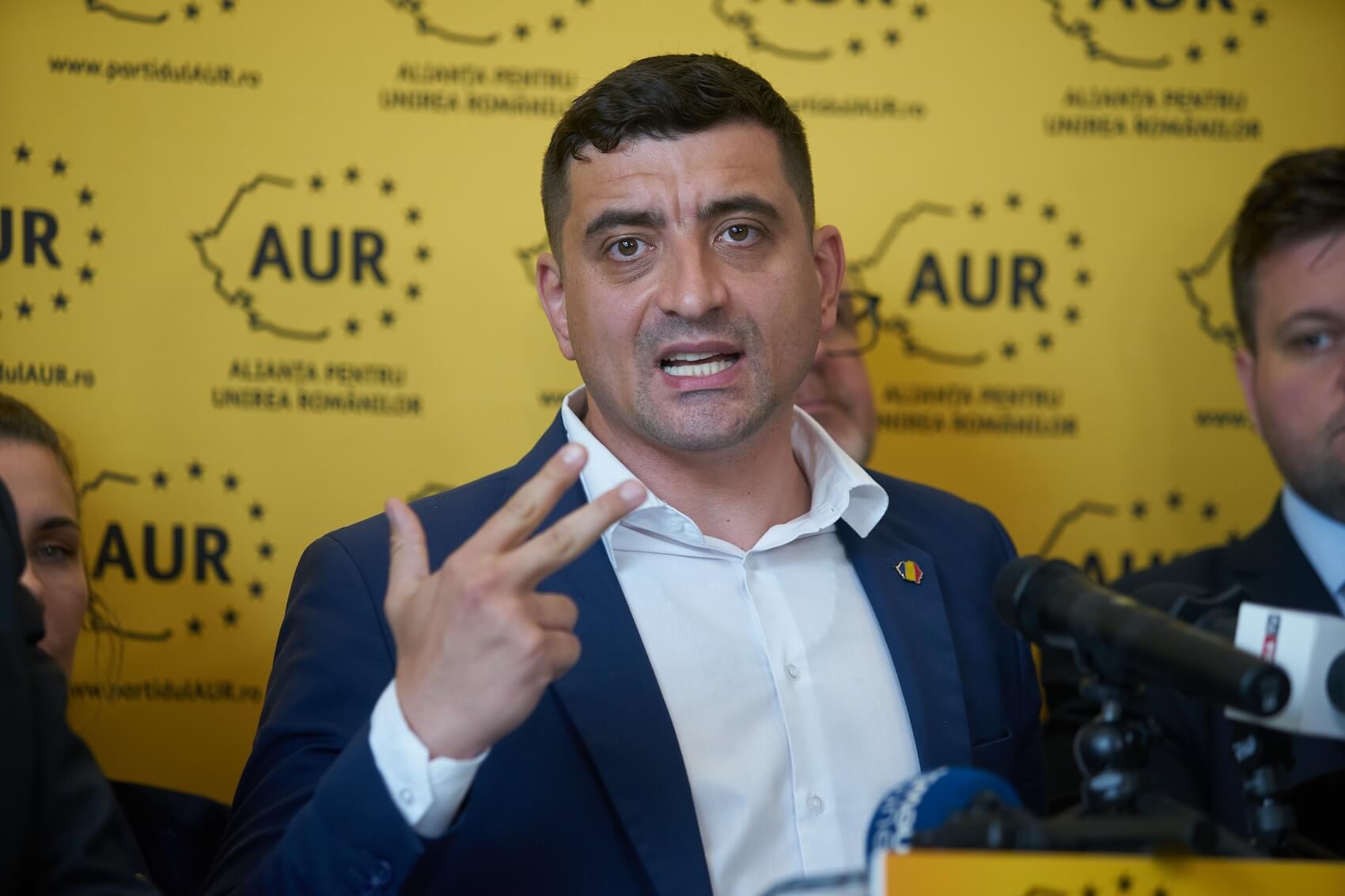
    George Simion, president of the Alliance for the Union of Romanians (AUR), answers journalists’ questions during a press conference at the party’s headquarters in Bucharest, Romania, on May 10, 2023. Photo: Shutterstock.

    How do you interpret the rise of far-right parties like AUR and SOS Romania in the context of Romania’s political landscape? What specific societal or political factors have contributed to their increasing influence? What role do you think Romanian national identity and Euroscepticism play in shaping the populist rhetoric of parties like AUR and SOS Romania, particularly in their emphasis on sovereignty and traditional values?

    Professor Sorina Cristina Soare: Thank you for your question. It is very relevant and covers several aspects. AUR and SOS Romania come from the same origins, or a new class of populist radical-right movements. Considering that SOS Romania’s leadership is represented by Diana Iovanovici Șoșoacă, who was elected as an MP on AUR’s list in 2020, there is some alignment between the two parties. However, the difference is particularly linked to their type of party organization. As I mentioned, AUR is a rooted party with social ties to various associative and activist experiences on the ground. On the other hand, SOS Romania operates more like a personal party, heavily relying on the vocal presence and visibility of its leader.

    Both parties, however, share an emphasis on defending national identity. This emphasis is not unique to them. In the current presidential election, particularly during the first round, we can see that symbols of nationalism and religion are prevalent across the political spectrum. For instance, the candidate presented as pro-European, liberal, and progressive also subtly echoed these themes. She wore a small bracelet with the Romanian flag and a large cross, signaling diffuse nationalism and religious sentiment that transcends party lines.

    What distinguishes AUR and SOS is the intensity with which they voice these themes. AUR increasingly resembles a radical-right party that tries to control the populist elements of its discourse, making it appear more mainstream. In contrast, SOS frequently crosses constitutional boundaries, echoing extremist rhetoric, including anti-semitism, which fundamentally clashes with Romania’s democratic constitutional pillars.

    Regarding the European Union, mainstream parties often temper their criticism due to their positions in government and affiliations with European parliamentary groups. Opposition parties like AUR and SOS, however, are freer to express vocal critiques. AUR does not advocate an EU exit but calls for greater compatibility and synergy between Romanian values and EU expectations. For example, they argue against being forced to accept certain norms, such as those related to the LGBTQI+ community. Interestingly, this stance is not unique to AUR but is voiced more strongly because they are outside the governing establishment.

    What I want to emphasize is that nationalism and skepticism about certain EU-related aspects are widespread in Romania. This sentiment is rooted in society, not concentrated in specific groups, and it crosses party lines. These attitudes were channeled effectively during the 2024 presidential election by a candidate who presented himself as an outsider, not part of the establishment. This provides a bridge to understanding more recent political developments.

    Radical-Right Populism’s Shift in Romania From Ethnicity to Morality

    How do you interpret the shift in focus from ethnic-based exclusion to cultural and religious-based exclusion among Romania’s radical-right populist parties, and what factors might have driven this transformation?

    Professor Sorina Cristina Soare: In my most recent fieldwork, I gained a better understanding of the origins and organization of AUR. During earlier phases of research with Glad and Țufiş, we identified two main roots of AUR’s ideology. One root emphasized the need to restore a “Greater Romania,” particularly through unification with the Republic of Moldova. The other focused on conservative values, which draw on Romania’s history, including the so-called fascist period between the two World Wars. I use “so-called” because the term refers to the legendary movements of that era.

    Beyond these two roots, there is a third, particularly evident in Transylvania, where a group of militants focus on defending Romania’s cultural integrity. This group views the Hungarian minority as a potential threat to the country’s territorial integrity. This tension helps explain why Viktor Orbán was so vocal when AUR joined the ECR group after the 2024 EP elections. However, ethnic minority integration is not a central issue in Romania’s political arena. Instead, AUR and SOS Romania emphasize the need to control the cultural and moral identity of the Romanian people.

    Why is this so? From my interviews with militants, members, voters, and candidates for the EP elections, the explanation is relatively straightforward. There is a widespread frustration that European integration and globalization threaten the survival of Romania’s national identity. On one side, there is the perception that values inconsistent with Romania’s religious traditions—such as a liberal understanding of gender—are being imposed. On the other side, there is economic frustration, with narratives portraying Romania as a “colony” of other countries, forced to import norms and values misaligned with its traditions.

    This frustration extends beyond short-term concerns. For instance, Romania experiences one of the most intense flows of economic migration in Eastern Europe, leading to a population decline. AUR and SOS claim that this shrinking population weakens Romania’s demographic strength and diminishes the relevance of the Romanian majority. While they do not explicitly target the Roma community, other groups, such as Hungarians, are subtly framed as long-term threats.

    This also explains their stance on the role of women in society. AUR and SOS advocate for a traditional role for women, not only as part of Romania’s cultural traditions but also as a strategic element in ensuring the reproduction of the Romanian people. Women are viewed as critical to maintaining and securing the nation’s demographic sustainability in the long run.

    Romania’s 2015 Law Transformed Party Dynamics

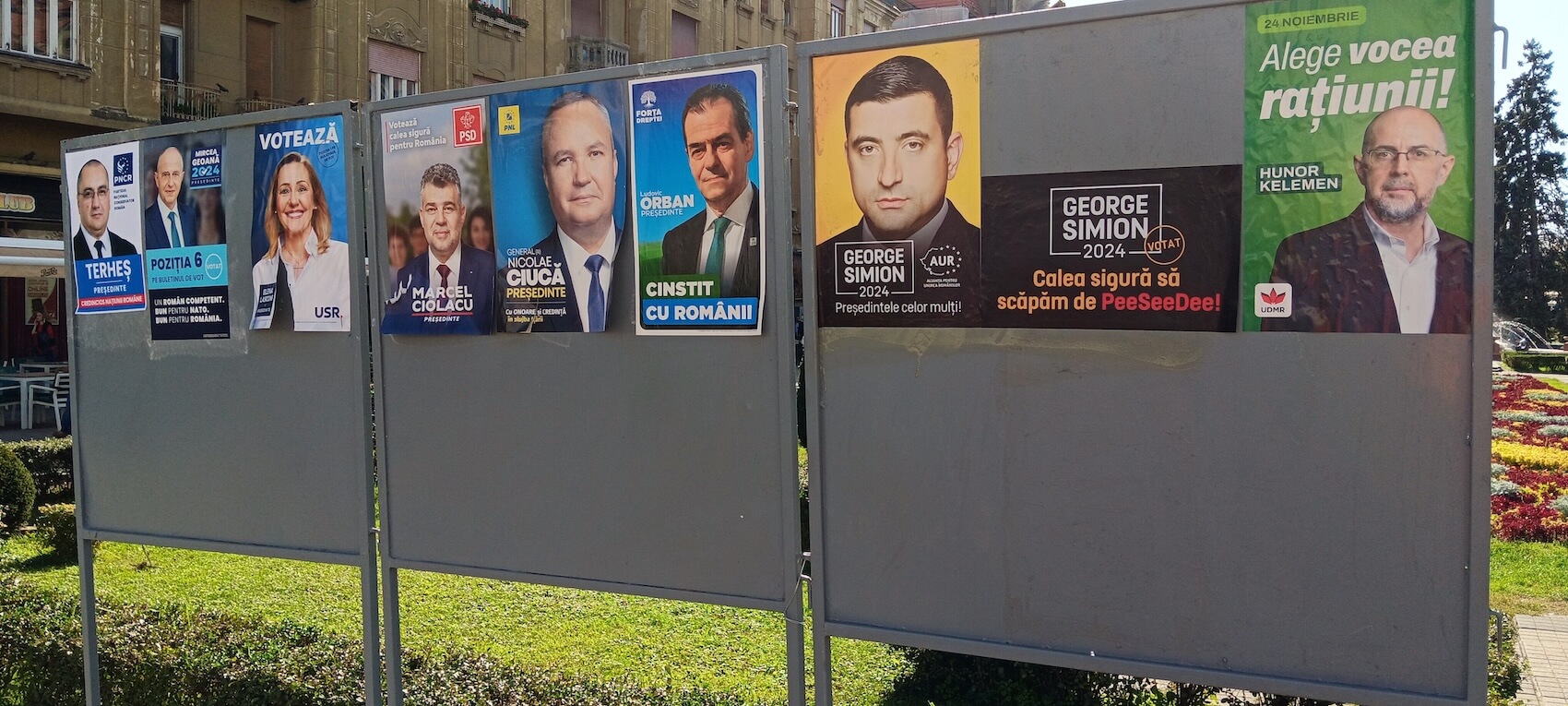
    Official campaign posters for the 2024 Romanian presidential election in Timișoara, Romania, on October 27, 2024, featuring candidates Marcel Ciolacu, Nicolae Ciucă, Mircea Geoană, Elena Lasconi, George Simion, Hunor Kelemen, Ludovic Orban, and Cristian Terheș. Photo: Adrian Păcurariu.

    How changes in Romania’s party registration laws in 2015 created an opportunity for the proliferation of new political parties? To what extent do you believe these changes reflect a broader trend in post-communist democracies, and how sustainable are these new parties in the long term?

    Professor Sorina Cristina Soare: Romania has been criticized, particularly by various NGOs active in democracy advocacy and monitoring, for having one of the most rigid laws regulating political parties. Previously, party registration required a threshold of 10,000 to 25,000 members, along with additional criteria for territorial distribution, and so on.

    The original purpose of this regulation, introduced in the 1990s and amended in the early 2000s, was to reduce fragmentation in the political arena and enhance governability. However, NGOs, experts, and academics highlighted its negative consequences. The most significant issue was the difficulty new parties faced in organizing themselves, which severely restricted opportunities for renewal within the party system. Romania’s party system has often been described in the literature as relatively closed. While this framework provided predictability and stability, it also created an artificially constrained system—a cartel of parties that, through legal regulations on party laws, funding, and electoral thresholds (e.g., requiring a high number of signatures for candidacies), implicitly controlled not only Parliament but also broader political competition, thereby limiting the voice of the people.

    When the party registration law changed, lowering the membership threshold to just two or three members—the same number required to establish an NGO—it symbolically aligned political parties with genuine civil society representation. This change significantly increased the number of new parties being created. As Claudia Țuțuianu and I observed in an article even before 2020, there was already evidence of radicalism in the extra-parliamentary political party landscape, indicating a demand for representation.

    The change in the law facilitated the development of radical parties in Romania. For example, ahead of the legislative elections scheduled for December 1, several new parties associated with former AUR MPs are emerging as potential surprises. One such party, focused on young people, even endorsed the unexpected candidate who won the first round of the 2024 presidential election.

    While the legal reforms certainly encouraged the proliferation of these parties, they did not create them. These parties emerged in response to existing conditions on the ground—political entrepreneurs addressing widespread frustration and a perceived need for greater representation.

    This phenomenon is not unique to Romania and can be observed across Eastern Europe. A useful comparison is Bulgaria, where the political party system also experienced significant changes and increased fragmentation, particularly with the rise of radical right populist parties. These developments highlight similar levels of frustration and disillusionment among the electorate in both countries.

    AUR Mobilized Economic Anxieties and Harnessed Diaspora Support 

    How has the Alliance for the Union of Romanians (AUR) managed to capitalize on economic and social anxieties to expand its political influence despite its controversial ties and radical rhetoric?

    Professor Sorina Cristina Soare: I think one element I forgot to mention in the previous question, but which I will use as the starting point here, is that while the law facilitated the proliferation of parties, some of these parties are well-developed in terms of organizational infrastructure, and AUR is one of them.

    How AUR succeeded in voicing these anxieties is quite simple. First of all, through its origins, particularly at the diaspora level. What we observed in our research with Claudio Țuțuianu was that many militants were already active in providing social services to Romanians in Romania. They were channeling part of their well-being in Western countries to help their families, relatives, and, more broadly, the Romanian community in need back home. 

    By channeling these frustrations and demonstrating that they cared—through recruitment and by creating networks and connections with active individuals in formal and informal diaspora associations—AUR showed credibility. It was not just a political entrepreneur making promises; it presented itself as genuinely engaged. These networks significantly increased its credibility.

    Additionally, George Simion himself was seen as credible because of his involvement in these networks, particularly in projects related to the union with the Republic of Moldova. While SOS Romania uses skilled communication and a highly fluid approach, the capacity of AUR to voice these anxieties is linked to its stability and organizational pervasiveness. The difference lies in AUR’s solid and far-reaching networks compared to SOS’s reliance on skilled political representation, particularly in the person of its leader, Mrs. Șoșoacă.

    What role has the Romanian diaspora played in shaping the electoral success of populist parties like AUR, particularly in the light of their strategic targeting of diaspora voters?

    Professor Sorina Cristina Soare: This is one of the most intensive areas of research on my agenda, so I feel quite comfortable answering it. The Romanian diaspora began to matter politically, becoming a significant actor capable of altering the direction and results of national-level competition, particularly starting with the 2009 presidential election.

    The diaspora did not become active solely with AUR; its mobilization has evolved over time, particularly after 2008, when a change in the electoral law reserved seats in Parliament for diaspora representation. This created an incentive for political parties to mobilize diaspora voters. Of course, when discussing the diaspora, we are referring to a multi-layered and multi-sectoral community.

    Why multi-layered? Because there are different temporal layers corresponding to various waves of migration. Some began their migration trajectory before the fall of the Berlin Wall, others in the early 1990s, and more in the 2000s and beyond. The level of integration within their resident communities varies depending on these chronological trajectories. There is also significant variation in professional trajectories—some diaspora members moved to highly skilled jobs, while others took less-skilled positions. Some exchanged exploitation in Romania for severe exploitation in other areas, particularly in southern Sicily, where there have been numerous reports of Romanian agricultural workers being exploited by Italian entrepreneurs. This triggered mechanisms from the Romanian state to defend its migrant workers.

    The Romanian diaspora is highly heterogeneous. Why have these people felt mobilized by AUR, SOS, and even a credible, liberal party like USR? They have been mobilized primarily by parties presenting themselves as new—whether through their origins, age (as newer parties), or connections with the diaspora—and by their vocal anti-establishment platforms. These parties stood out as different from the traditional offerings of political parties, particularly the Social Democrats and Liberals.

    Diaspora voters tend to vote not only based on the content of party platforms but also on the belief that they need politicians who are fundamentally different from the traditional post-communist elite. They seek politicians who can dismantle the “cartel” of parties, reduce corruption, and bring real change. Interestingly, in my interviews, I found that many diaspora voters expressed a strong desire for a future for themselves in Romania. They viewed their investment in these parties as a way to increase the quality of life and democracy in Romania.

    The people I interviewed were not extremists, to the best of my knowledge. None of them advocated for regime changes or anti-democratic positions. Instead, their concerns centered on increased transparency, reduced corruption, and improved living standards in Romania, which would enable them to return and rebuild. This is, I believe, an important aspect of their motivation.

    Calin Georgescu’s ‘Shocking’ Rise

    Although far-right independent candidate Calin Georgescu was not seen as a serious candidate in almost all the polls, he won the first round of presidential elections which was dubbed as ‘shocking’ by many European experts. What are the key factors behind the unprecedented surge in support for Georgescu, particularly given his low polling numbers before the election? Do you agree with the characterization of his victory as ‘shocking’?

    Professor Sorina Cristina Soare: Yes, it was definitely shocking on different levels. First of all, as you rightly pointed out, it was unexpected based on the analyses and surveys published before the elections, which foresaw a runoff between the candidate endorsed by the Social Democrats and, in second position, a tight fight between the candidates of USR (Uniunea Salvați România-Save Romania Union) and AUR.

    This candidate seemingly came out of nowhere. He was not very well known to the broader public, but he was not entirely new to Romanian politics. Those familiar with Romania’s political landscape and its moments of governmental instability know that his name had been mentioned on various occasions, starting in 2011 and again in 2015, as a potential technocratic Prime Minister. Additionally, after the 2020 elections, AUR initially endorsed Călin Georgescu as a potential Prime Minister before distancing themselves from him. This split occurred after a highly controversial interview in which Georgescu publicly supported two controversial figures in Romanian history—one a leader of the Legionary Movement and the other a marshal who aligned with Nazi Germany during the war in Russia. These statements were widely criticized as aligning with anti-democratic ideals, and Georgescu faced legal scrutiny over them, though the outcome of these proceedings remains unclear.

    Furthermore, Georgescu has been active in publishing books and participating in associations that echo themes deeply rooted in nationalist rhetoric. These themes, while seemingly simple and basic, are reminiscent of ideas prevalent in the 1990s and even earlier. For example, he has espoused an unrefined form of nationalism, portraying Romanians as an extraordinary people and civilization. In one interview, he controversially claimed that proto-Romanian is the basis of Latin, which contradicts conventional historical and linguistic understanding.

    Georgescu has also propagated conspiracy theories, such as denying the moon landing or questioning the official narrative of the September 11 attacks in the United States. While these ideas are contentious, they resonate with certain segments of the population, aligning with the common suspicions and frustrations of everyday people. This ability to connect with widespread sentiments is a hallmark of populism: speaking like the people while presenting oneself as a savior or a figure with extraordinary abilities.

    Georgescu excels in this role. He voices what people think and does so with a reassuring tone and demeanor. He is well-educated, speaks polished Romanian, and appears as a composed and credible figure. These traits contrast with George Simion’s more vocal and aggressive style, which uses a simpler Romanian. Georgescu, by comparison, projects an image of sophistication and calm.

    His campaign also made strategic use of visual and symbolic elements. For example, TikTok videos depicted him on a white horse wearing traditional Romanian clothing or as a wolf with fire emanating from his eyes or mouth, symbolizing strength and purity. These portrayals reinforced his image as a savior or protector. What truly explains his success, however, is his effective use of TikTok. His campaign on the platform was remarkably successful, allowing him to reach a broad audience with simple, relatable messages that resonated deeply with many voters.

    How do you interpret the role of social media, particularly platforms like TikTok, in mobilizing voter support for far-right candidates in Romania? Does this signal a broader trend in European politics?

    Professor Sorina Cristina Soare: I wouldn’t generalize about TikTok at the European level, but it has definitely been both utilized and challenged by different candidates—not only in Romania but also across Europe and in the United States. TikTok is undoubtedly efficient. Why? Because it allows for short, impactful messages. While there is limited space for interaction, there is significant potential for engagement.

    TikTok’s visual nature and simplicity make it highly accessible, which explains why a significant portion of Georgescu’s support came from young people, who are particularly familiar with the platform. Moreover, TikTok has been less scrutinized by regulatory organizations responsible for monitoring campaign activities, giving it an edge in reaching audiences without strict oversight.

    As you may know, there has been ongoing debate in the European Parliament about TikTok’s policies, particularly its claim that it does not allow political campaigns or engagement. However, cases like this reveal vulnerabilities or loopholes in the system that enable mobilization in gray areas. This is a challenge not only for Romania but potentially for Europe and beyond.

    Risks and Scenarios for Romania’s Future in EU and NATO

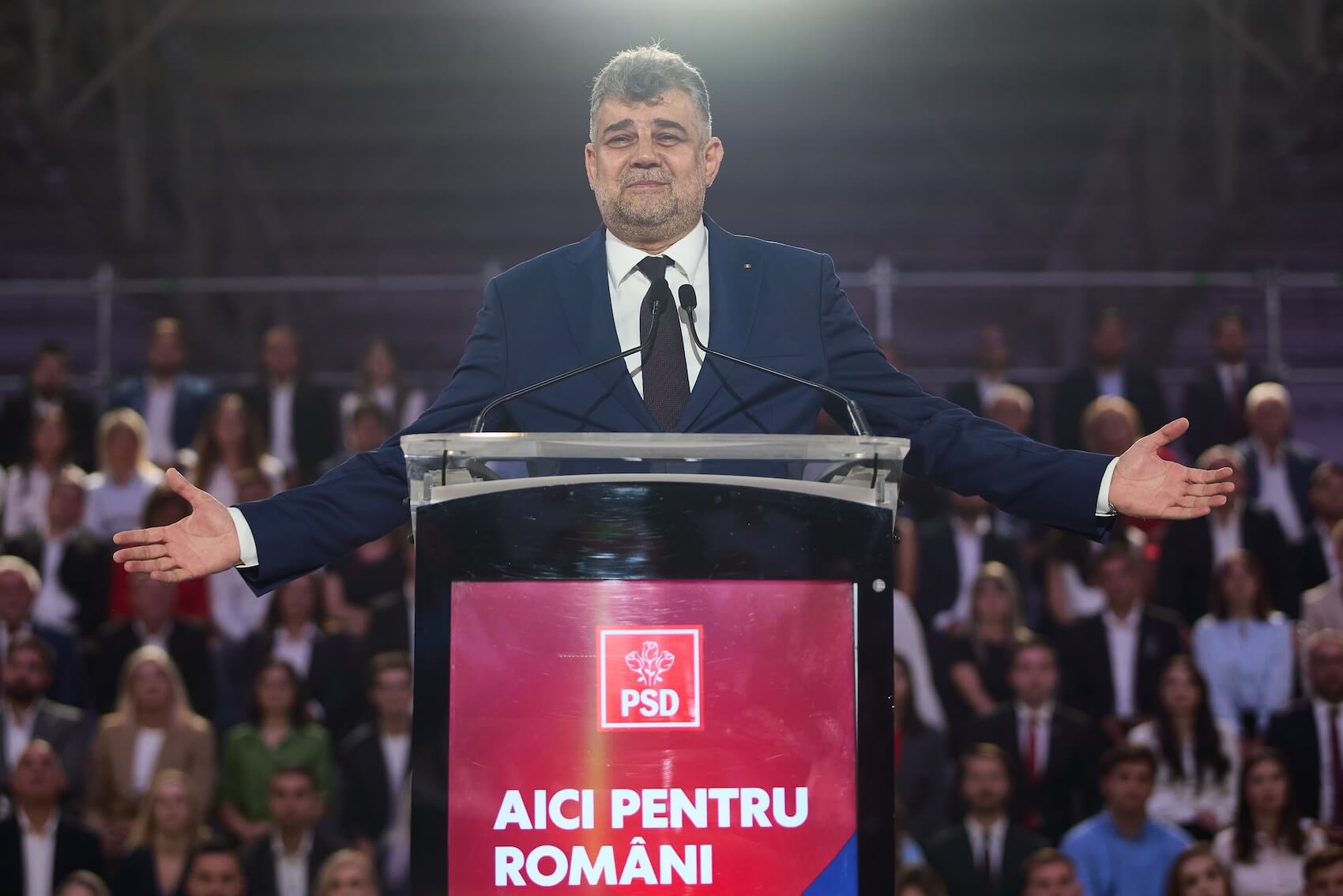
    Marcel Ciolacu, president of the Social Democratic Party (PSD) and Romanian prime minister, delivers a speech at the conclusion of the PSD Congress at ROMEXPO in Bucharest, Romania, on August 22, 2024. Photo: Shutterstock.

    Lastly, Professor Soare. What chance do you give to Calin Georgescu in the second round of presidential elections that will be held on December 8th? If elected, how efficient will he be in challenging EU and NATO’s positions on Ukraine? Given Georgescu’s pro-Russia stance and criticism of NATO, what might his potential presidency mean for Romania’s foreign policy, especially its role as a NATO member and supporter of Ukraine?

    Professor Sorina Cristina Soare: It is difficult to assess Georgescu’s chances at the moment. There has been significant endorsement for his opponent, and a burgeoning cordon sanitaire is forming among mainstream political parties. However, one major factor is missing: the position of the Social Democrats. This is understandable, given the strategic importance of the legislative elections, which are scheduled between the two rounds of the presidential elections. The legislative elections will take place on December 1, followed by the second round of the presidential election on December 8.

    Parties may be hesitant to publicly endorse Elena Lasconi at this stage, as such endorsements could jeopardize their own performance in the legislative elections. This creates a significant risk because Romania is a semi-presidential republic. On one hand, if the legislative elections result in a pro-European and mainstream coalition securing a majority, the risk posed by Georgescu’s presidency could be mitigated. The constitutional court’s rulings over the past decades have circumscribed presidential powers, meaning that control by a pro-European government and Parliament would ensure stability.

    However, there is also a significant risk given that, in the first round, radical right candidates, including Georgescu, collectively received around 37% of the vote. This suggests strong potential for these parties, including smaller ones connected to AUR’s network, like the Party of Young People, which was active in supporting Georgescu’s candidacy. These parties could gain substantial influence in the next Parliament, complicating coalition-building efforts.

    Two scenarios are plausible: i) A co-habitation scenario where Georgescu wins the presidency but is constrained by a pro-European government and Parliament, similar to the political situation in Poland. ii) An alignment between a pro-European coalition and Lasconi’s victory, driven by increased voter mobilization in the second round. This scenario seems credible but faces challenges.

    One significant risk for the second round is that Georgescu could position himself as a victim of the establishment. If voter mobilization for Lasconi fails to materialize, it could instead rally anti-establishment voters behind Georgescu. This risk is heightened by the current complaint filed with the constitutional court, alleging illegal activities related to Georgescu’s TikTok campaign and calling for the annulment of the first round. Such actions could provoke greater sympathy for Georgescu and further energize his supporters, especially those with anti-establishment sentiments.

    If Georgescu wins, however, there are still factors that could maintain Romania’s European trajectory. The alignment of Parliament and government with pro-European forces would act as a counterbalance, ensuring the preservation of Romania’s commitments to the EU and NATO. Thus, while his presidency could introduce instability, the broader political framework offers some safeguards for maintaining the country’s European route.

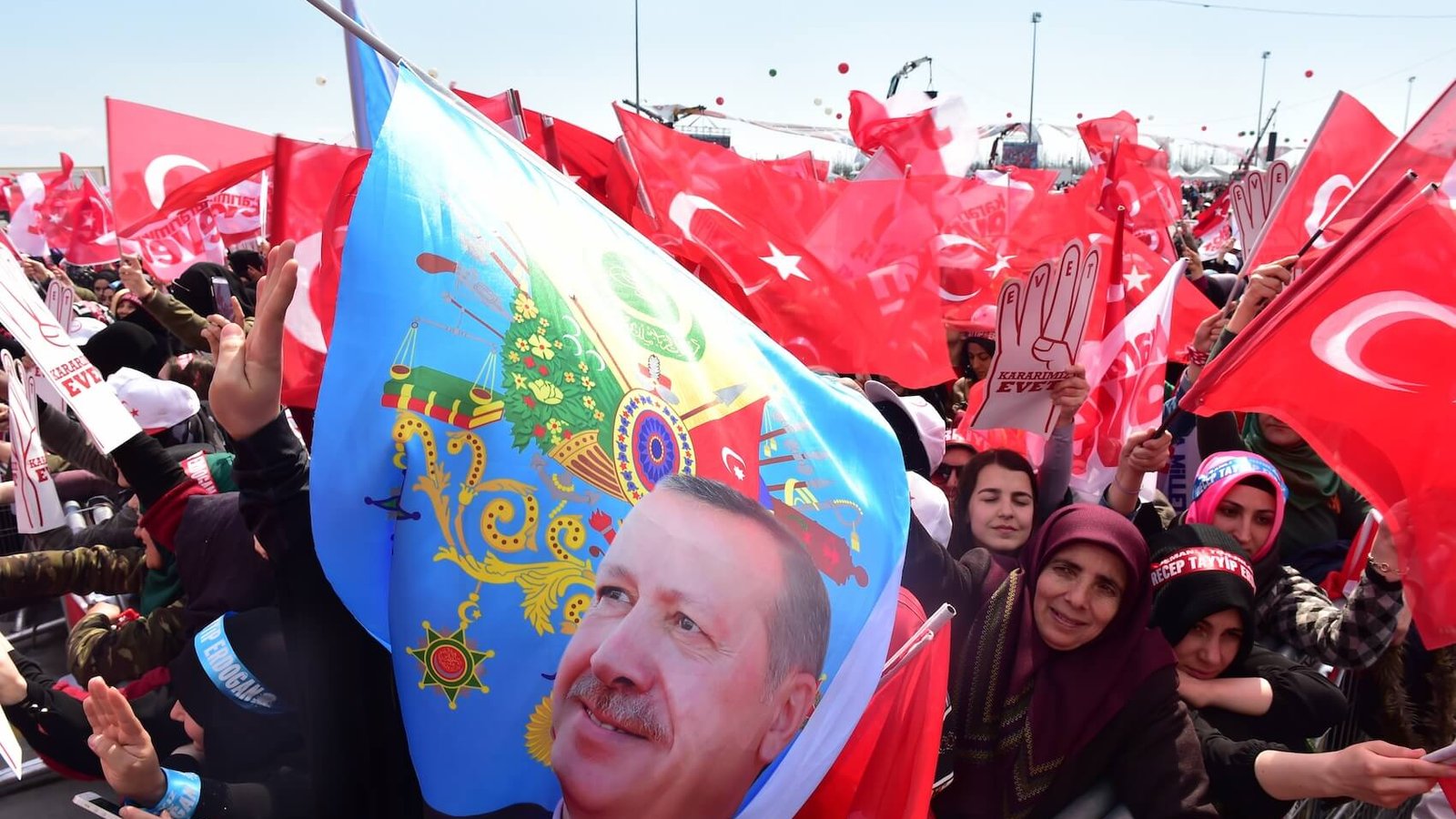
    Supporters await the arrival of Turkish President Recep Tayyip Erdogan at a referendum rally in Istanbul on April 8, 2017. Photo: Thomas Koch.

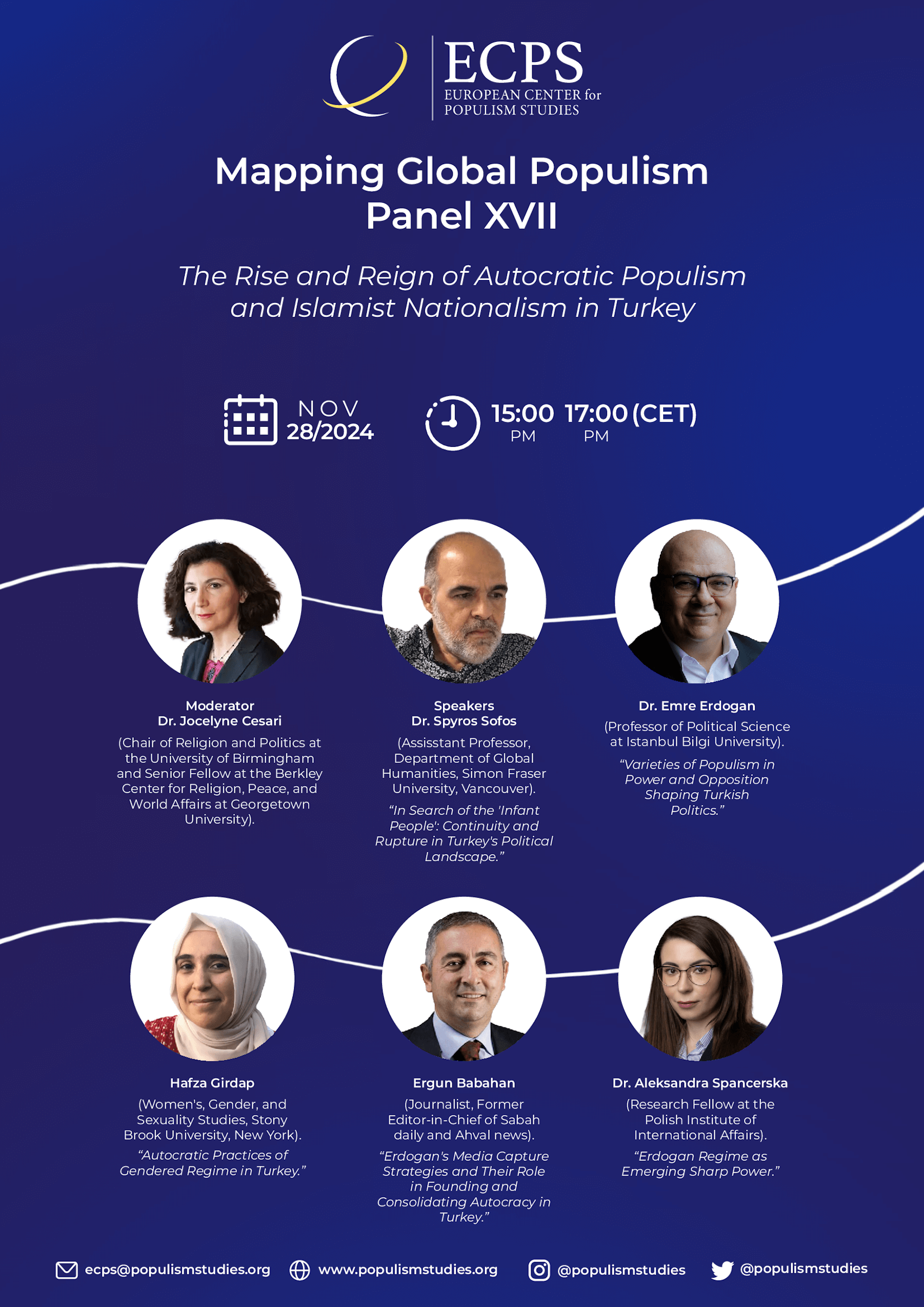
    Mapping Global Populism – Panel XVII: The Rise and Reign of Autocratic Populism and Islamist Nationalism in Turkey

    Date/Time: Thursday, November 28, 2024 — 15:00-17:10 (CET)

    Click here to register!

    Moderator

    Dr. Jocelyne Cesari (Chair of Religion and Politics at the University of Birmingham (UK) and Senior Fellow at the Berkley Center for Religion, Peace, and World Affairs at Georgetown University).

    Speakers

    “In Search of the ‘Infant People’: Continuity and Rupture in Turkey’s Political Landscape,” Dr. Spyros Sofos (Assisstant Professor, Department of Global Humanities, Simon Fraser University, Vancouver).

    “Populism in Transition: Continuities and Shifts in Turkey’s Political Landscape (2023-2024),” by Dr. Emre Erdogan (Professor of Political Science at Istanbul Bilgi University).

    “Autocratic Practices of The Gendered Regime in Turkey,” by Hafza Girdap (Women’s, Gender, and Sexuality Studies, Stony Brook University, New York).

    “Erdogan’s Media Capture Strategies and Their Role in Founding and Consolidating Autocracy in Turkey,” by Ergun Babahan (Journalist, Former Editor-in-Chief of Sabah daily and Ahval news).

    “Erdogan Regime as Emerging Sharp Power,” by Dr. Aleksandra Spancerska (Research Fellow at the Polish Institute of International Affairs).


    Click here to register!


    Brief Biographies and Abstracts

    Professor Jocelyne Cesari holds the Chair of Religion and Politics at the University of Birmingham (UK) and is Senior Fellow at the Berkley Center for Religion, Peace, and World Affairs at Georgetown University. Since 2018, she is the T. J. Dermot Dunphy Visiting Professor of Religion, Violence, and Peacebuilding at Harvard Divinity School. President elect of the European Academy of Religion (2018-19), her work on religion and politics has garnered recognition and awards: 2020 Distinguished Scholar of the religion section of the International Studies Association, Distinguished Fellow of the Carnegie Council for Ethics and International Affairs and the Royal Society for Arts in the United Kingdom. Her new book: We God’s Nations: Political Christianity, Islam and Hinduism in the World of Nations, was published by Cambridge University Press in 2022 (Book Award of the Scientific Society for the Study of Religion). Other publications: What is Political Islam? (Rienner, 2018, Book Award 2019 of  the religion section of the ISA); Islam, Gender and Democracy in a Comparative Perspective (OUP, 2017), The Awakening of Muslim Democracy: Religion, Modernity and the State (CUP, 2014). She is the academic advisor of www.euro-islam.info

    In Search of the ‘Infant People’: Continuity and Rupture in Turkey’s Political Landscape

    Dr. Spyros Sofos is Assistant Professor in Global Humanities at Simon Fraser University, Canada. He has held academic positions in the UK, Sweden, and Italy, including at Lund University and the London School of Economics. His research examines the intersection of societal insecurity, identity, and collective action, with a focus on Turkish politics, nationalism, populism, European Muslim identities, and populism theory. His latest book, Turkish Politics and ‘The People’: Mass Mobilisation and Populism (Edinburgh University Press, 2022), traces the genealogy of populism in contemporary Turkey. He is the founder and lead editor of #RethinkingPopulism, originally launched in collaboration with openDemocracy.

    Abstract: This talk explores the construction and evolution of the concept of “the people” in Turkey’s political discourse. It examines how ideas of popular identity have been historically used to support autocratic regimes, from Ataturk’s secularist rule in early republican Turkey to the tutelary democracies that followed his death and finally to the Islamist-nationalist populism of the present day. Central to this analysis is the metaphor of “the infant people,” a symbol embodying both innocence and helplessness. The talk highlights how political elites have alternately celebrated and patronized “the people,” portraying them as the rightful bearers of sovereignty while simultaneously deeming them unprepared to exercise their rights. This dual approach has fostered a flexible yet exclusionary narrative of nationhood—one that legitimizes authoritarian governance and deepens divisions between the people, their supposed guardians, and perceived enemies. By situating this analysis within broader discussions of populist authoritarianism in the Global South, the talk sheds light on the intersection of identity politics and power.

    Populism in Transition: Continuities and Shifts in Turkey’s Political Landscape (2023-2024)

    Dr. Emre Erdogan is a Professor at the Department of International Relations, Istanbul Bilgi University. With a doctoral degree in Political Science from Bogaziçi University, he has served as researcher and senior consultant in various projects in academia and civil society. His research focuses on political participation, foreign policy and public opinion, child and youth well-being, methodology and statistics. He extensively studies and publishes about youth in Turkey, integration of Syrian refugee youth in Turkey, othering, polarization and populism.

    Abstract: This presentation examines the evolving dynamics of populism in Turkey, focusing on the 2023 presidential and 2024 local elections. It highlights the continuities and shifts in populist strategies, exploring how nationalist rhetoric, religious symbolism, and anti-elitist narratives have persisted as central pillars of political discourse. Simultaneously, the presentation delves into significant changes, such as the impact of economic challenges, the rise of new populist actors, and the opposition’s adoption of populist tactics to counter the ruling party. By analyzing these trends, the study reveals how populism has reshaped Turkey’s political and social landscape over the past two years. It addresses critical themes, including heightened polarization, the strategic use of media, and the enduring focus on identity politics. Special attention will be given to how crises like economic instability and natural disasters have influenced populist rhetoric and voter behavior. The presentation aims to provide a comprehensive understanding of the interplay between continuity and change in Turkish populism, offering insights into its implications for democracy and governance. Through this lens, the audience will gain a nuanced perspective on the strategies employed by political actors and the broader socio-political consequences of rising populism in Turkey.

    Autocratic Practices of the Gendered Regime in Turkey

    Hafza Girdap is an adjunct lecturer in Women’s and Gender Studies at Stony Brook University, New York, where she is also a Ph.D. candidate. She is the spokesperson and program director at Advocates of Silenced Turkey (AST) and a founding member of Set Them Free, focusing on addressing women’s rights violations in Turkey. Girdap’s research examines human rights and the lives of Muslim women, particularly immigrant women’s experiences of integration and cultural identity. Her doctoral work explores self-identification and gendered racialization among immigrant women from Turkey in the US. Beyond academia, Girdap collaborates with research institutes on gender studies, incorporating the voices of women from non-Western contexts. Living in the US since 2016 due to political persecution, she has organized and spoken at UN panels on women’s issues, mentors youth, and runs online global book clubs that address women’s and youth empowerment.

    Abstract: This presentation examines how patriarchy, nationalism, and political Islam intersect to shape women’s status and rights in Turkey, with a specific focus on the Justice and Development Party (AKP) era. Both secular and political Islamist patriarchies impose traditional roles on women, while Sunni nationalist hegemony marginalizes not only ethnic minorities, non-Sunni groups, and LGBTQ+ individuals but also those who fall outside the established identity of the mainstream political framework. Drawing on Islamist discourse, I will explore how the AKP has employed state policies and discursive language to regulate women’s status and justify systemic oppression. These dynamics underscore the gendered dimensions of Turkey’s autocratic regime, where authoritarian practices perpetuate systemic violence and inequality.

    Erdogan’s Media Capture Strategies and Their Role in Founding and Consolidating Autocracy in Turkey

    Ergun Babahan, born in Izmir, Turkey, in 1960, is a senior Turkish journalist. He studied law at Istanbul University, graduating in 1981. After practicing law for a year, he chose journalism as his profession. Over the years, he has worked in various prominent newspapers, including Yeni AsirSozHurriyetSabahAksam, and Star, serving as a reporter, editor, managing editor, editor-in-chief, and columnist. As editor-in-chief of Sabah, then Turkey’s second-largest newspaper, he successfully led the publication out of bankruptcy. Mr. Babahan has also enriched his professional experience internationally, attending the John S. Knight Journalism Fellowship Program at Stanford University through a scholarship from the German Marshall Fund. Additionally, he participated in a seminar on the American Foreign Policy Process at the University of Maryland, supported by the Ford Foundation.

    Abstract: Erdogan once remarked to me, “The media does not bring you to power, but it can easily take you out of power.” This insight shaped his determination to control the media from the beginning of his political career. Having endured significant challenges from a media landscape under the influence of the military tutelage regime, Erdogan sought not to create an independent media but rather to make the media entirely subservient to his authority. He achieved this by exploiting conflicts among media proprietors and leveraging the state’s financial and legal resources. Today, no media structure in Turkey operates independently of Erdogan’s influence—not even outlets that label themselves as opposition. Turkey’s historical tradition of media servitude to those in power has significantly facilitated this process. Erdogan’s unprecedented control over the media now rivals the dominance once held by Mustafa Kemal Ataturk and the architects of military coups, shaping what he terms as “truth.” In this presentation, I will explore why the emergence of an independent media is virtually impossible in a society where reverence for state authority and wealth is deeply ingrained.

    Erdogan Regime as Emerging Sharp Power

    Dr. Aleksandra Maria Spancerska is a research fellow on Türkiye in the Middle East and Africa Programme. She graduated in international cultural studies and international relations with an oriental specialisation from the Faculty of International and Political Studies at the University of Lodz. She received her PhD in 2024 in the field of social sciences in the discipline of political science and administration. She conducts research on Turkish domestic and foreign policy. She speaks English and Turkish.

    Abstract: The concept of sharp power represents a novelty in the study of international relations. It was introduced into scholarly discourse by Christopher Walker and Jessica Ludwig in 2017 at the International Forum for Democratic Studies. The purpose of the speech is to indicate the different areas of Türkiye’s activity in the international forum in terms of sharp power. In my speech I will focus in particular on: technology, modern forms of censorship, political dissidents, and the Turkish diaspora abroad.

    llustration by Spiral Design for International Nelson Mandela Day, via Shutterstock.

    ECPS Book Talk: Remembering Democracy and Peace Building Process of South Africa in the Context of Global Political Climate

    Date/Time: Wednesday, November 20, 2024 – 18:00 (CET)


    Click here to register!


    Speaker

    Revd. Dr. Liz Carmichael (Emeritus Fellow at St John’s College, Oxford)

    Discussants

    Dr. Henning Melber (Extraordinary Professor at the Department of Political Sciences/University of Pretoria and the Centre for Gender and Africa Studies/University of the Free State in Bloemfontein and a Senior Research Fellow at the Institute of Commonwealth Studies at the University of London).

    Dr. Palesa Nqambaza (Postdoctoral fellow in the Department of Political Studies at the University of the Witwatersrand and a Visiting Research Fellow in the School of Philosophy, Religion, and History of Science at the University of Leeds).

    Organizator and Presenter

    Neo Sithole (Non-resident Research Fellow at ECPS Foreign Policy Research Group. Ph.D. researcher at the University of Szeged, Hungary).


    Objective

    In a time when democracies are being tested, understanding how peace-building and democratic transitions succeed is more crucial than ever to remember and think collectively about the democratisation process, ECPS invites you to join the talk to explore Dr. Liz Carmichael’s Peacemaking and Peacebuilding in South Africa: The National Peace Accord, 1991-1994.

    The case of South Africa in negotiating peace and democracy teaches us about resilience and unity and has global significance, especially in today’s world. Thus, this book is more than a historical account. It provides timeless insights into how diverse communities, including businesses, civil groups, religious organizations, and political parties, overcame political violence and fostered a shared vision of national peace. Carmichael shows that even in deeply divided societies, peace and democratization are only possible when carried by the people and not as top-down government projects.

    Brief Biographies

    Revd. Dr. Liz Carmichael MBE is an Emeritus Fellow at St John’s College, Oxford. Born in England, Liz was a doctor at Baragwanath Hospital, Soweto 1975-1981, then studied Theology at Oxford and worked in the Anglican Diocese of Johannesburg 1991-1996, being ordained priest and serving on peace committees under the National Peace Accord. She was Chaplain and Tutor in Theology at St John’s College 1996 -2011, and then held an Emeritus Research Fellowship, 2011-2023, which enabled her to research and write Peacemaking and Peacebuilding in South Africa. The National Peace Accord 1991-1994.

    Dr. Henning Melber is an Extraordinary Professor at the Department of Political Sciences/University of Pretoria and the Centre for Gender and Africa Studies/University of the Free State in Bloemfontein and a Senior Research Fellow at the Institute of Commonwealth Studies at the University of London. Melber came to Namibia as a son of German immigrants in 1967, where he joined the anticolonial movement SWAPO in 1974. He was Director of The Namibian Economic Policy Research Unit in Windhoek, Research Director of the Nordic Africa Institute and Director of the Dag Hammarskjöld Foundation, both in Uppsala/Sweden.

    Dr. Palesa Nqambaza is a scholar specializing in gender studies, political theory, and African philosophy. She is currently a postdoctoral fellow in the Department of Political Studies at the University of the Witwatersrand and a Visiting Research Fellow in the School of Philosophy, Religion, and History of Science at the University of Leeds. Dr Nqambaza’s research engages deeply with contemporary South African politics through cultural expressions, particularly the Amapiano music genre, which she explores as a lens for understanding the socio-political perspectives of young South Africans post-1994. 

    Neo Sithole is a non-resident research fellow at ECPS Foreign Policy Research Group. His Ph.D. at the University of Szeged, Hungary, examines the history and trends of populism and political communication in sub-Saharan Africa. Sithole has contributed to publications on democracy, the influence of populism on Western liberal democracies, democratic legitimation and populism possibilities for alternative kinds of democratic imaginings. His academic interests span African and European populism, Afro-European diplomacy, foreign policy, regional and global security, and promoting international solidarity. Sithole also serves as an ambassador for the Doktoranduszok Országos Szövetsége (DOSZ), the Hungarian Association of Doctoral Students, working to foster an inclusive and integrated scientific community.


    Click here to register!


    In this AI-generated image, US presidential candidates Kamala Harris and Donald Trump appear. Photo: Shutterstock.

    ECPS Panel: What Do the US Election Results Tell Us About the Global Trajectory of Populism?

    Date/Time: Thursday, November 14, 2024 — 15:00-17:00 (CET)


    Click here to register!


    Moderator

    Ali H. Aslan (Washington-based Senior Journalist, Former Washington Correspondent & Columnist of Zaman Daily).

    Speakers

    “It Was (Mostly) the Economy, Stupid: Explaining Trump’s Victory,by Dr. Alan Abramowitz (Professor Emeritus of Political Science at Emory University).

    “Explaining the US Election Outcome and Its Implications for Global Populism,” by Dr. Jennifer McCoy (Regent’s Professor of Political Science at Georgia State University; Nonresident Scholar at the Carnegie Endowment for International Peace & Research Affiliate at CEU’s Democracy Institute in Budapest).

    “The Role of White Evangelicals in the 2024 US Presidential Election: What We Know So Far,” by Dr. Marcia Pally (Professor at New York University, the Mercator Guest Professorship in the theology department at Humboldt University-Berlin).

    “Does Trumpism Cross the Atlantic?” by Dr. Mabel Berezin (Distinguished Professor of Arts & Sciences in Sociology and Director of the Institute for European Studies at Cornell University). 

    “The Return of Trump and the Future of Global Democracy,” by Dr. Marina Nord (Postdoctoral research fellow at the V-Dem Institute, University of Gothenburg).


    Click here to register!


    Bios and Abstracts

    Ali H. Aslan is a Washington-based Senior Journalist, Former Washington Correspondent & Columnist of Zaman Daily. Aslan, who was born in Turkey, holds a bachelor’s degree in business administration from Turkey’s prestigious Bogazici (Bosporus) University. Immediately after college, he started a 27-year journalism career at Zaman newspaper. Having assumed various duties at Zaman Istanbul headquarters including Deputy News Editor, he was assigned as Washington Correspondent of Zaman in 1997. He also wrote weekly columns for Zaman and its English language affiliate Today’s Zaman until they were forcibly taken over by Turkish government in 2016. Specialized in international relations with a focus on US, Turkey and the Middle East, Aslan’s work also appeared occasionally on US publications such as Foreign Policy and European Affairs.

    It Was (Mostly) the Economy, Stupid: Explaining Trump’s Victory

    Dr. Alan Abramowitz is the Alben W. Barkley Professor Emeritus of Political Science at Emory College of Arts and Sciences. His research focuses on American politics, political parties, elections, and voting behavior. His current work examines party realignment in the U.S. and its impact on presidential and congressional elections.

    Abstract: In my presentation, I will discuss how and why Donald Trump managed to win a decisive victory over Kamala Harris in the 2024 presidential election.  I will argue that Trump won the election despite having a higher unfavorable than favorable rating among the electorate, being perceived as too extreme by a majority of voters and supporting unpopular policies on a number of important issues including abortion, health care and climate change. They key to Trump’s victory was that the incumbent Democratic president was deeply unpopular.  Kamala Harris simply could not overcome being closely connected with that incumbent as the candidate of the president’s party and as the sitting vice-president. Nevertheless, Trump’s serious flaws as a candidate allowed Harris to outperform the normal expectations for the candidate from the incumbent party with a deeply unpopular leader. 

    Harris’s defeat followed a pattern that has been seen across western democracies in the aftermath of the 2020-2021 Covid pandemic—widespread discontent with high inflation and other economic problems leading to the defeat of incumbent parties of both the left and right.  I will argue that claims that the 2024 election may presage a realignment of the American party system because of increased support for the Republican candidate among nonwhite voters are premature.  We have seen claims like this before after the 1972, 1984, and 2004 elections and they proved incorrect.  Donald Trump is likely to be as unpopular in his second term as he was in his first and Democrats should be well positioned to make gains in the 2026 midterm elections and in 2028 when Trump will be ineligible to run again. 

    The Role of White Evangelicals in the 2024 US Presidential Election: What We Know So Far

    Dr. Marcia Pally is a Professor at New York University and has held the Mercator Professorship in the Theology Faculty at Humboldt University, Berlin. She continues to serve there as an annual guest professor and is a member of the Center for Interreligious Theology and Religious Studies and the Berlin Institute for Public Theology. In 2019-2020, she was a Fellow at the Center for Theological Inquiry (Princeton). Her recent books include: White Evangelicals and Right-wing Populism: How Did We Get Here?From This Broken Hill I Sing to You: God, Sex, and Politics in the Work of Leonard Cohen; Commonwealth and Covenant: Economics, Politics, and Theologies of RelationalityAmerica’s New Evangelicals: Expanding the Vision of the Common Good.

    Abstract: This presentation will first review the religious and historical factors along with the current conditions that have positioned many white evangelicals for right-wing populist positions and to vote for candidates they believe hold those positions. It will then look at tallies in the US presidential and key state elections and discuss the results (i) for the US presidency, (ii) the composition of federal and state legislative and judicial bodies (iii) speculatively, US influence abroad.

    Does Trumpism Cross the Atlantic?

    Dr. Mabel Berezin is Distinguished Professor of Arts and Sciences in Sociology and Director of the Institute for Europeans Studies at Cornell University.  She writes on challenges to democratic cohesion and solidarity in Europe and the United States.  She is working on The End of Security and the Rise of Populism under contract at Oxford that examines the current global resurgence of nationalism and the populist challenge to democratic practice.

    Abstract:  Whether Trump wins or loses, Trumpism is with us in the United States.  But to what extent does it have a transnational appeal, or to what extent does it influence right wing populists across the globe.  My argument is that the political culture of the US does not translate easily to the European context.  American political culture has a deeply  individualist cast that makes for American exceptionalism in a good and bad way.  My talk will explore American differences in light of the outcome of the presidential election.  My main point will be that it will inspire and embolden some parts of the European right and not be relevant to others—except of course that everyone will have to recognize and engage diplomatically with whomever the American president is.

    Explaining the US Election Outcome and Its Implications for Global Populism

    Dr. Jennifer McCoy is Regent’s Professor of Political Science at Georgia State University and Nonresident Scholar at the Carnegie Endowment for International Peace, as well as Research Affiliate at CEU’s Democracy Institute in Budapest. She was named a 2024 Andrew Carnegie Fellow for her project, “Mitigating Pernicious Polarization through Innovative Civic Educational Interventions.” Her current book project is Depolarizing Politics with Murat Somer, under contract with Princeton University Press. Her latest volume is Polarizing Polities: A Global Threat to Democracy, co-edited with Murat Somer (2019).

    Dr. McCoy’s areas of expertise include democratic resilience, democratic erosion and partisan polarization; crisis prevention and conflict resolution; democracy promotion and collective defense of democracy; election processes and international election observation; and Latin American Politics. McCoy served as Director of the Carter Center’s Americas Program (1998-2015), leading projects on democratic strengthening, mediation and dialogue, and hemispheric cooperation. She has authored or edited six books and dozens of articles.

    The Return of Trump and the Future of Global Democracy

    Dr. Marina Nord is a postdoctoral research fellow at the V-Dem Institute (University of Gothenburg), and a member of the German research network ‘External Democracy Promotion’. Her research focuses on explaining autocratization and democratization processes, and interplay between economic processes and political transformation. Before joining the V-Dem Institute, she worked on several research projects at the Hertie School and at the German Institute for Economic Research, where she became passionate about bridging the gap between academic research and policy domains.

    Abstract: What does the outcome of the US presidential election mean for the future of global democracy? As politics has become more polarized over the last decades, the outcome of the US presidential election is perceived as increasingly high stakes for the future of democracy worldwide. This presentation will give broader context to the story of global democracy and discuss the possible implications of a second Trump administration for the future of liberalism, democratic norms, polarization, and deliberation worldwide.

    EP

    ECPS Panel: Transatlantic Outlook on Populism in the US and Europe in Light of the ECPS 2024 Report on the EP Elections

    Date/Time: November 7, 2024 — 15:00-17:00 CET.

    Venue: European Parliament’s Spaak Building in Brussels / Room: P5B001.


    This event is hosted by MEP Radan Kanev in cooperation with the European Center for Populism Studies (ECPS)


    Moderator

    Dr. Simon P. WATMOUGH (Postdoctoral Researcher at the University of Leipzig in Germany and a Non-resident Research Fellow at ECPS).

    Speakers

    “Opening Remarks” by Irina VON WIESE (Honorary President of the ECPS).

    Welcome and Keynote Speech by Radan KANEV (Member of EP, EPP) on “EU Elections and the Fragmentation of the Right-wing Populism: ‘Normalisation’ vs ‘Cordon Sanitaire’.”

    Keynote Address by Nathalie LOISEAU (Member of EP, Renew) on “A Transatlantic Perspective on the New Composition of the EP and Upcoming Administration in the US, Challenges of Populist Politics and Its Repercussions on the Relations between the US and EU.”

    Presentation of the ECPS Report

    2024 EP Elections under the Shadow of Rising Populism,” by Dr. Emilia ZANKINA (Editor of the Report, ECPS Advisory Board Member, Temple University-Rome) and Dr. Gilles IVALDI (Editor of the Report, ECPS Advisory Board Member, Centre de Recherches Politiques de Sciences Po).

    Objective

    This event will examine the impact of populist politics on the 2024 European Parliament and US presidential elections. The ECPS report provides an analysis of populist party performance in the 2024 European elections, featuring insights from country experts on outcomes across the EU’s 27 member states. Additionally, it highlights the broader challenges that populist successes pose for the EU’s future. The report’s findings will be presented along with an analysis of the potential directions of the upcoming US administration, setting the stage for a discussion on the future of transatlantic relations.


    Brief Biographies

    Dr. Simon P. WATMOUGH is a postdoctoral researcher at the University of Leipzig in Germany and a non-resident research fellow in the research program on authoritarianism at ECPS. He was awarded his Ph.D. from the European University Institute in April 2017 with a dissertation titled “Democracy in the Shadow of the Deep State: Guardian Hybrid Regimes in Turkey and Thailand.” Dr. Watmough’s research interests sit at the intersection of global and comparative politics and include varieties of post-authoritarian states, the political sociology of the state, the role of the military in regime change, and the foreign policy of post-authoritarian states in the Middle East and Southeast Asia. His work has been published in Politics, Religion & IdeologyUrban Studies and Turkish Review. Since 2005, Dr. Watmough has taught international relations, diplomacy, foreign policy, and security studies, as well as Middle Eastern history at universities in Australia and Europe. In 2010–11 he was a research fellow at the Centre for Analysis of Social Exclusion (CASE) at the London School of Economics. He has held Visiting Scholar positions at Boğaziçi University in Istanbul (2012), the University of Queensland (2013), Chulalongkorn University in Bangkok, Thailand (2014) and the University of Graz (2017). In addition to his academic publications, he is also a regular contributor to The Conversation and other media outlets.

    Irina VON WIESE was born in Germany, the daughter and granddaughter of Polish and Russian refugees. After completing her law studies in Cologne, Geneva and Munich, she obtained a scholarship to study at the Harvard Kennedy School where she gained a Master in Public Administration. Her subsequent legal training took her to Berlin, Brussels and Bangkok, and gave her a first insight into the plight of refugees and civil rights defenders across the globe. From 1997 to 2019, Irina lived and worked as a lawyer in private and public sector positions in London. During this time, she volunteered for human rights organisations, advising on migration policy and hosting refugees in her home for many years. In 2019, Irina was elected to represent UK Liberal Democrats in the European Parliament. She served as Vice Chair of the Human Rights Subcommittee and as a member of the cross-party Working Group on Responsible Business Conduct. The Group’s main achievement was the introduction of EU legislation to make human rights due diligence mandatory in global supply chains. During her term, she was also elected to the Executive Committee of the European Endowment for Democracy, whose task is to support grassroots civil society initiatives in fragile democracies. Having lost her seat in the European Parliament after the UK’s withdrawal from the European Union, Irina returned to the UK, where she was elected to the Council of Southwark, one of London’s most diverse boroughs. Her links to Brussels are maintained through an advisory role at FGS Global, where she works on EU law and ESG issues. In addition, Irina is an Affiliate Professor at European business school, the ESCP, teaching international law and politics (including a course entitled ‘Liberalism and Populism’).

    Radan KANEV is a Bulgarian politician who is currently a Member of the European Parliament. A member of the DSB party, which he led from 2013 to 2017, he previously served as Member of the National Assembly from 2014 to 2017. At the 2024 European Parliament election, Kanev was re-elected to the European Parliament. Despite being placed fifth on the PP-DB coalition list, which only won three seats, Kanev was able to receive more preference votes than candidates placed above him. Subsequently, he was to serve 5 more years as an MEP.

    Nathalie LOISEAU is a French politician, diplomat, and academic administrator who has served as a Member of the European Parliament since 2019. Previously, she was the director of the École nationale d’administration (ENA) from 2012 to 2017 and served as France’s Minister for European Affairs from June 21, 2017, to March 27, 2019. She was the lead candidate for the La République En Marche electoral list in the 2019 European elections. She has since been a member of the Committee on Foreign Affairs and the chairwoman of its Subcommittee on Security and Defense. In 2020, she also joined the Special Committee on Foreign Interference in all Democratic Processes in the European Union.

    Dr. Gilles IVALDI is researcher in politics at CEVIPOF and professor at Sciences Po Paris. His main research interests include French politics, parties and elections, the far right, and the comparative study of populism in Europe and the United-States. Dr. Ivaldi is the author of De Le Pen à Trump: le défi populiste (Bruxelles: Editions de l’Université de Bruxelles, 2019), The 2017 French Presidential Elections. A political Reformation? 2018, Palgrave MacMillan, with Jocelyn Evans. He has recently co-edited The Impacts of the Russian Invasion of Ukraine on Right-Wing Populism in Europe, European Center for Populism Studies (ECPS), 2023, with Emilia Zankina. His research has appeared in journals such as Electoral Studies, the International Journal of Forecasting, Revue Européenne des Sciences Sociales, French Politics, Revue Française de Science Politique or Political Research Quarterly.

    Dr. Emilia ZANKINA is an Associate Professor in Political Science, Vice Provost for Global Engagement of Temple University, and Dean of Temple University Rome campus. She holds a Ph.D. in International Affairs and a Certificate in Advanced East European Studies from the University of Pittsburgh. Her research examines populism and political parties, East European politics, civil service reform, and gender political representation. She has published in reputable journals and presses such as West European PoliticsPolitics and GenderEast European PoliticsProblems of Post-communismRepresentation, ECPR Press, Indiana Press, and more. She frequently serves as an expert for Freedom House, V-Democracy, and EU commission projects. In the past, Zankina has served as Provost of the American University in Bulgaria, Associate Director of the Center for Russian and East European Studies at the University of Pittsburgh, Managing Editor of East European Politics and Societies, and Editor-in-Chief of the Newsletter of the Bulgarian Studies Association. She is the recipient of a number of US national grants from IREX, ACLS, American Councils, Wilson Center, and more. 

    Digital

    Hybrid Workshop: Authoritarian Information Manipulation and Dissemination — National, Transnational, and International Perspectives

    Date/Venue: November 7-8, 2024 — Deakin Burwood Corporate Centre (BCC)

    DOWNLOAD WORKSHOP BOOKLET


    Click here to register!


    The emergence of repressive and authoritarian “hybrid regimes” poses one of the most significant threats to democracy today. These regimes and authoritarian actors wield information suppression and manipulation as essential tools to disseminate narratives that erode democratic institutions. This issue transcends national borders; digital technologies now enable authoritarian states to infiltrate robust democracies, allowing them to project their authoritarian narratives globally. The transnationalization of authoritarian politics, facilitated by digital technologies, presents substantial challenges to the integrity of democratic processes and institutions.

    In response to these challenges, our workshop aims to investigate how various actors—governments, non-state organizations, state-sponsored entities, and political parties—suppress and manipulate information to erode trust in democratic processes, both domestically and internationally. The workshop will also examine the darker dimensions of social media, focusing on the interactions between misinformation, negativity, and polarization.

    The workshop, a collaborative effort organized by the Alfred Deakin Institute for Citizenship and Globalisation (ADI) at Deakin University, Australia, and the European Center for Populism Studies (ECPS) in Brussels, Belgium, will also address strategies to counter misinformation and disinformation, along with intervention techniques to mitigate their impacts. It will focus on countering disinformation through activism and explore everyday online experiences with misinformation, emphasizing the importance of evidence-based media literacy education initiatives. Additionally, the event will discuss necessary curricular reforms to combat disinformation, toxicity, and polarization in educational contexts, as well as the responses of political elites to conspiracy theories.

    The organizing team, led by Professor Ihsan Yilmaz, encourages all participants to actively engage in discussions and share insights throughout the workshop. The aim of the workshop, funded by the Australian Political Studies Association (APSA), the Australian Research Council (ARC), and the Gerda Henkel Foundation, is to deepen the understanding of these critical issues and explore collaborative strategies to combat misinformation and disinformation in our increasingly complex digital environment.

    For registration:


    Click here to register!